Visual abstracts
New randomized trials and meta-analyses from leading journals at a glance: who was studied, what was compared, and what was found. Every paper is free to read in full.
All specialtiesCardiology 857Oncology 770Gastroenterology & Hepatology 311Infectious Disease 626Neurology 354Psychiatry & Mental Health 430Pulmonology 370Critical Care 260Endocrinology & Diabetes 484Pediatrics 542Surgery 351Orthopedics & Sports Medicine 166Neurosurgery 115Cardiothoracic & Vascular Surgery 87Plastic & Reconstructive Surgery 144Nephrology 197Rheumatology 108Hematology 183Dermatology 82Ophthalmology 97Obstetrics & Gynecology 266Public & Global Health 168Radiology & Imaging 105Anesthesiology 130Urology 162ENT (Otolaryngology) 115Emergency Medicine 103Allergy & Immunology 58Geriatrics 160Family Medicine & Primary Care 111Medical Genetics & Genomics 91Pathology & Laboratory Medicine 27Physical Medicine & Rehabilitation 149Palliative Care 81Nutrition 223Digital Health & AI 462General Medicine 101
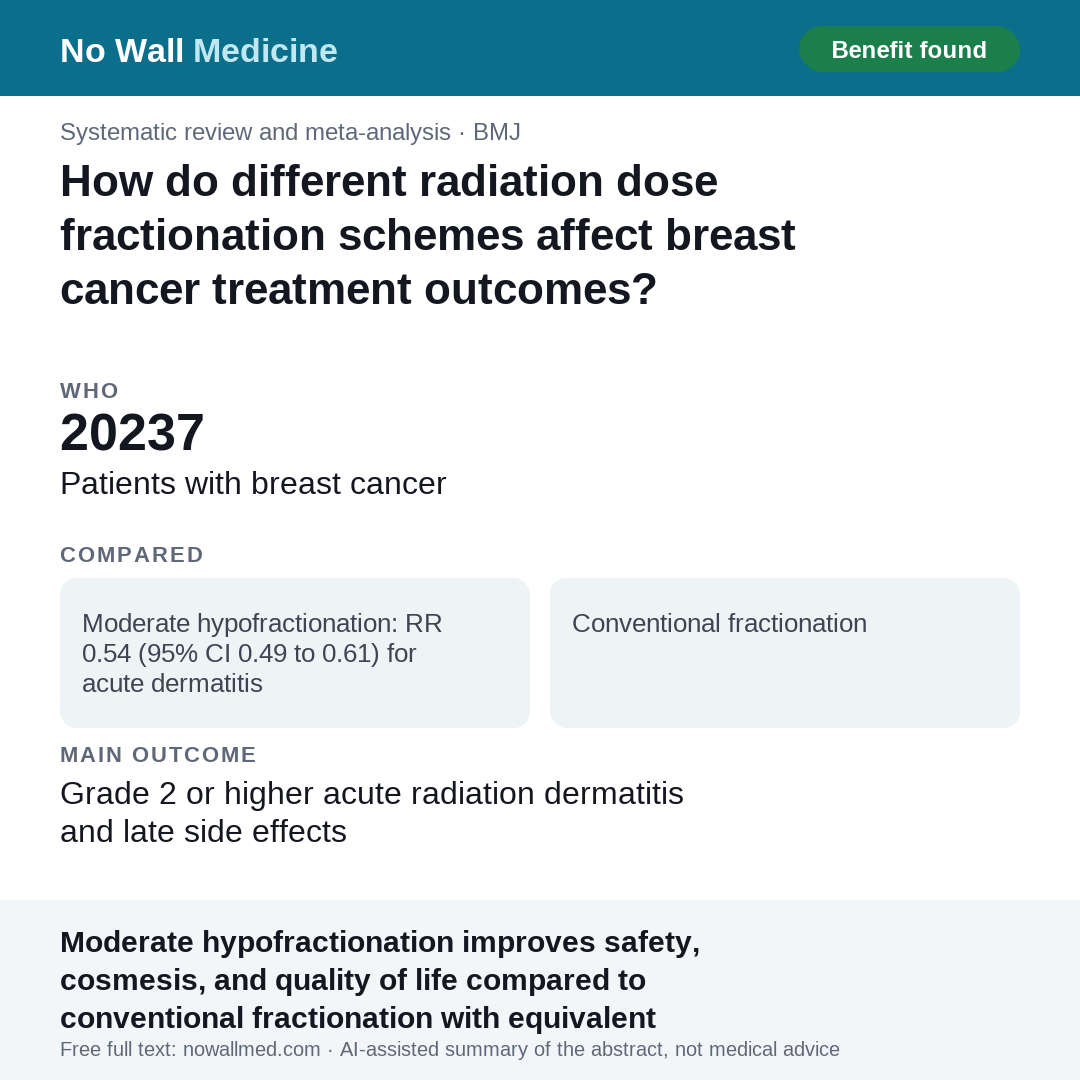
Randomised controlled trials on radiation dose fractionation in breast cancer: systematic review and meta-analysis with emphasis on side effects and cosmesis
Systematic review and meta-analysisBenefit found
How do different radiation dose fractionation schemes affect breast cancer treatment outcomes?
Who
20237
Patients with breast cancer
Compared
Moderate hypofractionation: RR 0.54 (95% CI 0.49 to 0.61) for acute dermatitis
Conventional fractionation
Main outcome
Grade 2 or higher acute radiation dermatitis and late side effects
Result: RR 0.54 (95% CI 0.49 to 0.61)
Bottom line: Moderate hypofractionation improves safety, cosmesis, and quality of life compared to conventional fractionation with equivalent oncological outcomes.
Limitation: 78.4% of outcomes had some concerns or high risk of bias.
BMJ · 2024-09-11Download image
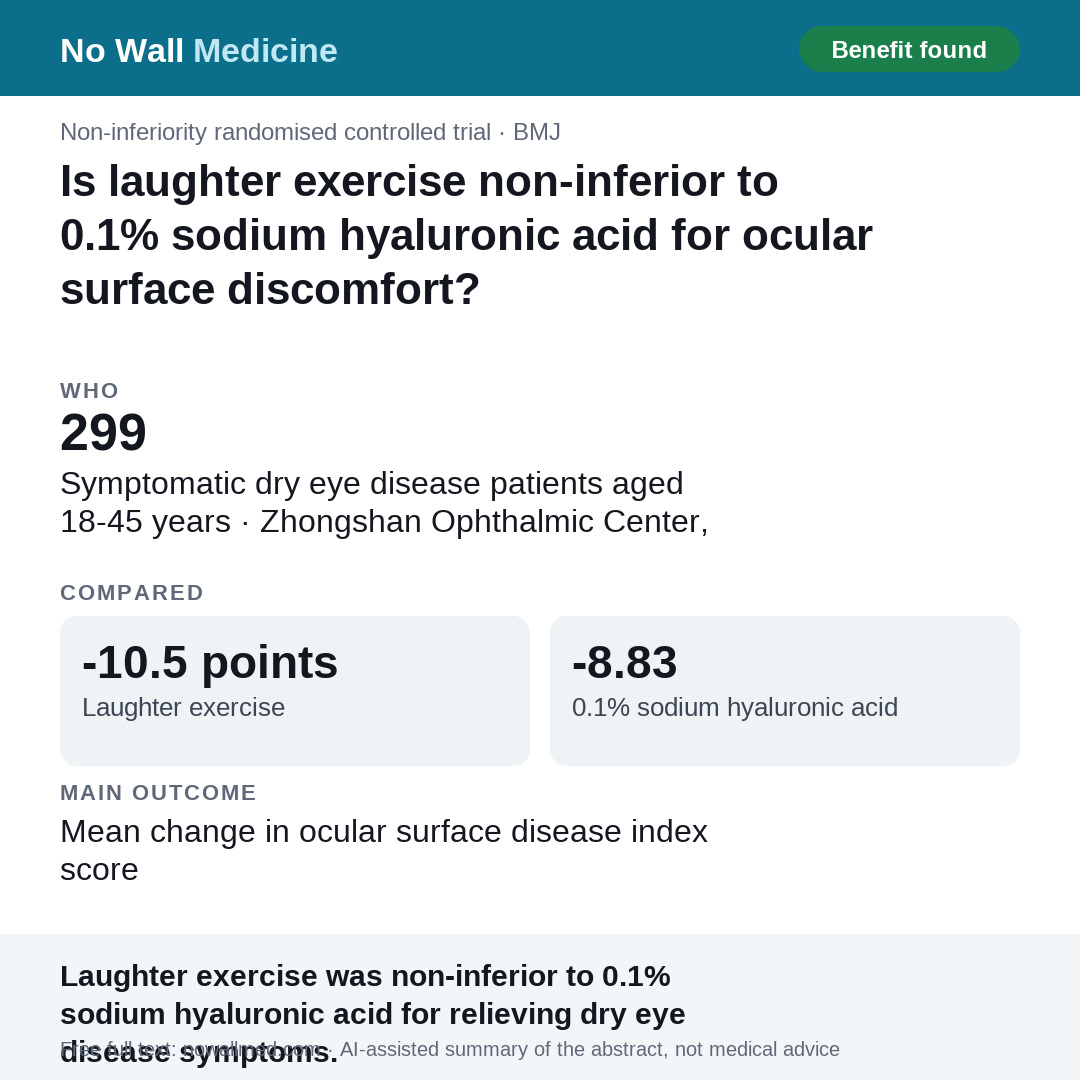
Effect of laughter exercise versus 0.1% sodium hyaluronic acid on ocular surface discomfort in dry eye disease: non-inferiority randomised controlled trial
Non-inferiority randomised controlled trialBenefit found
Is laughter exercise non-inferior to 0.1% sodium hyaluronic acid for ocular surface discomfort?
Who
299
Symptomatic dry eye disease patients aged 18-45 years · Zhongshan Ophthalmic Center, China
Compared
-10.5 pointsLaughter exercise (95% CI -13.1 to -7.82)
-8.830.1% sodium hyaluronic acid (-11.7 to -6.02)
Main outcome
Mean change in ocular surface disease index score
Result: mean difference -1.45 points (95% CI -5.08 to 2.19)
Bottom line: Laughter exercise was non-inferior to 0.1% sodium hyaluronic acid for relieving dry eye disease symptoms.
Limitation: Participants were unmasked to their group assignment for practical reasons.
BMJ · 2024-09-11Download image
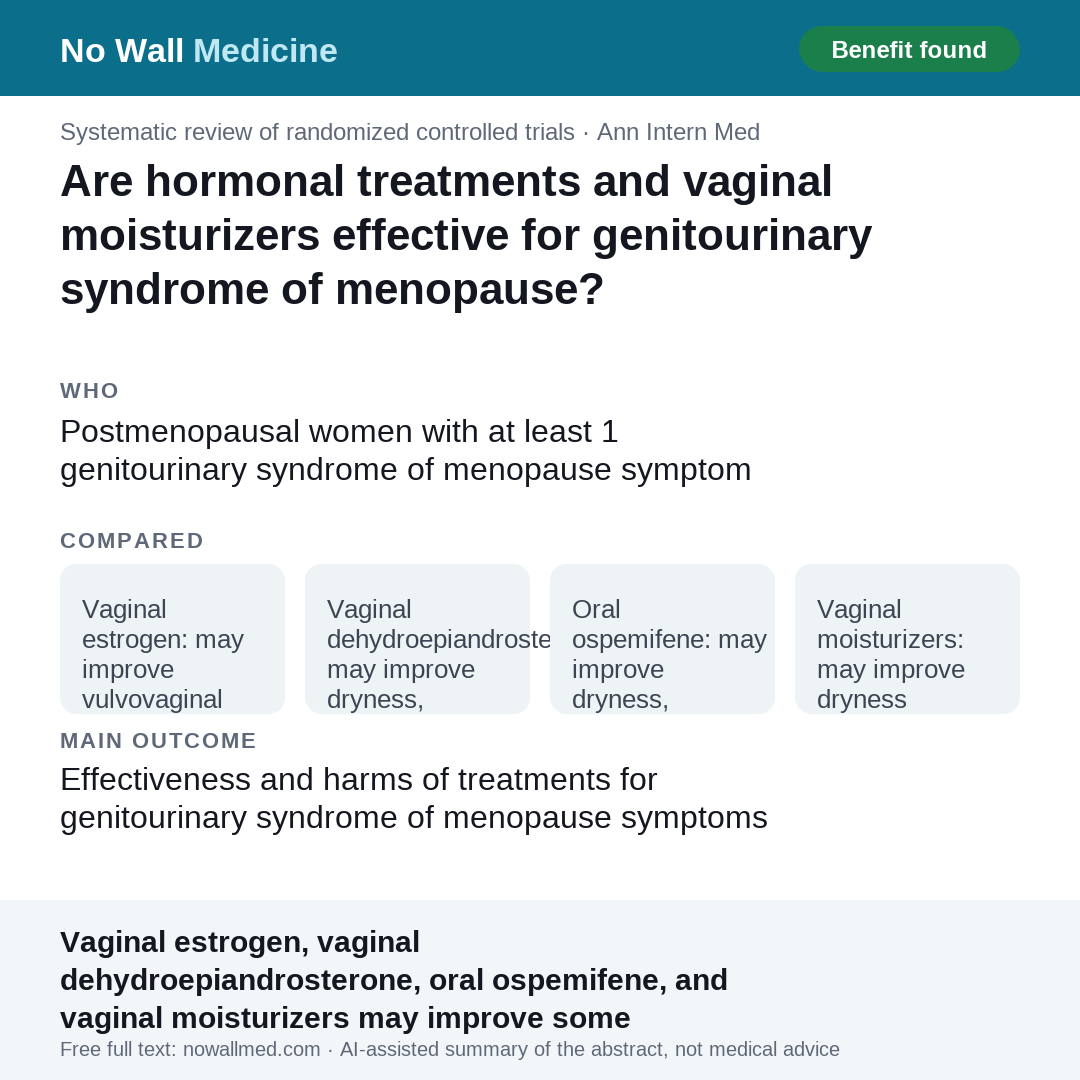
Hormonal Treatments and Vaginal Moisturizers for Genitourinary Syndrome of Menopause : A Systematic Review
Systematic review of randomized controlled trialsBenefit found
Are hormonal treatments and vaginal moisturizers effective for genitourinary syndrome of menopause?
Who
Postmenopausal women with at least 1 genitourinary syndrome of menopause symptom
Compared
Vaginal estrogen: may improve vulvovaginal dryness, dyspareunia, most bothersome symptom, and treatment satisfaction
Vaginal dehydroepiandrosterone: may improve dryness, dyspareunia, and distress, bother, or interference
Oral ospemifene: may improve dryness, dyspareunia, and treatment satisfaction
Vaginal moisturizers: may improve dryness
Main outcome
Effectiveness and harms of treatments for genitourinary syndrome of menopause symptoms
Bottom line: Vaginal estrogen, vaginal dehydroepiandrosterone, oral ospemifene, and vaginal moisturizers may improve some symptoms in the short term.
Limitation: Short-duration studies, heterogeneous diagnostic criteria, and few women with a history of cancer.
Funded by: Agency for Healthcare Research and Quality and Patient-Centered Outcomes Research Institute
Ann Intern Med · 2024-09-10Download image
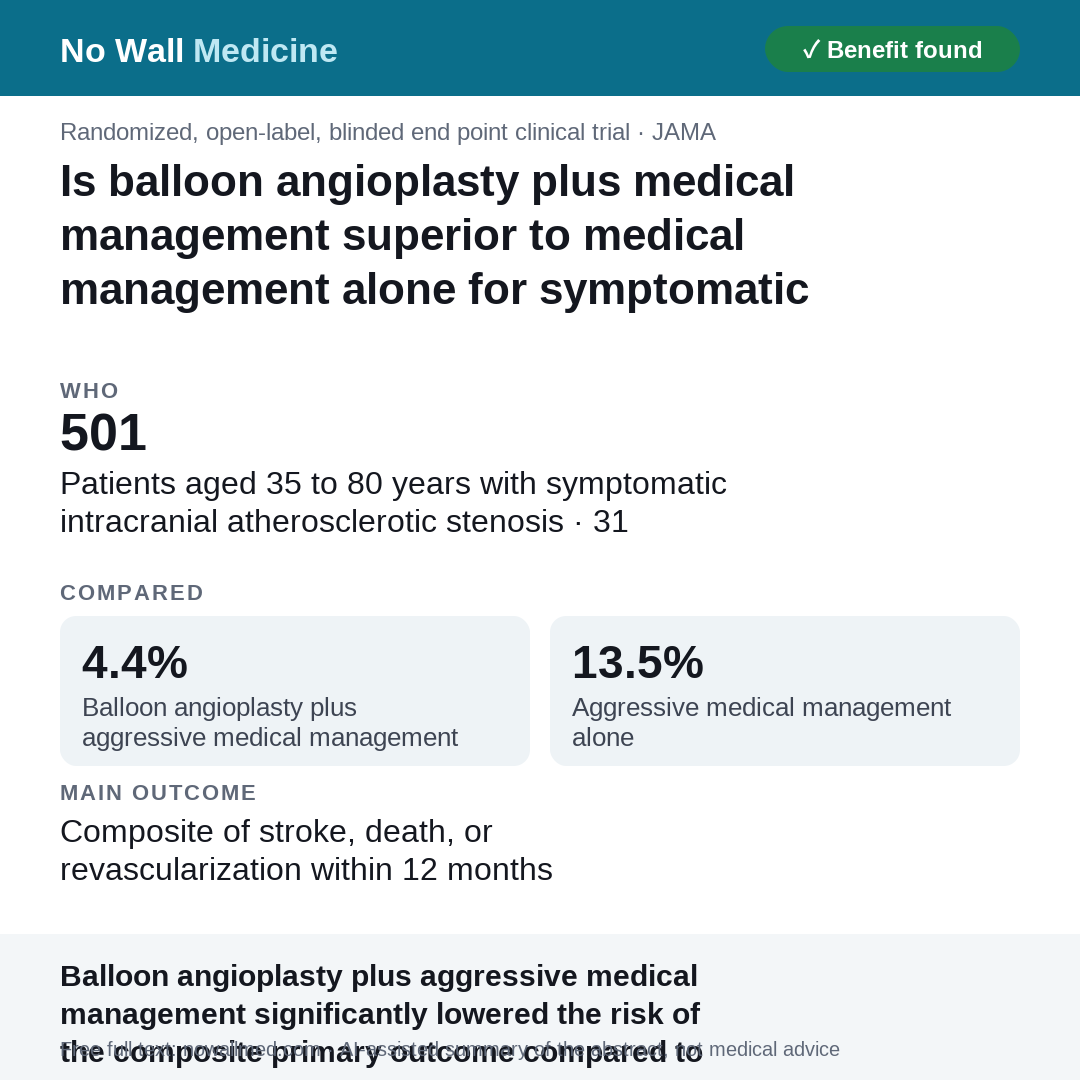
Balloon Angioplasty vs Medical Management for Intracranial Artery Stenosis: The BASIS Randomized Clinical Trial
Randomized, open-label, blinded end point clinical trialBenefit found
Is balloon angioplasty plus medical management superior to medical management alone for symptomatic intracranial atherosclerotic stenosis?
Who
501
Patients aged 35 to 80 years with symptomatic intracranial atherosclerotic stenosis · 31 centers across China
Compared
4.4%Balloon angioplasty plus aggressive medical management
13.5%Aggressive medical management alone
Main outcome
Composite of stroke, death, or revascularization within 12 months
Result: hazard ratio 0.32 (95% CI 0.16-0.63)
Bottom line: Balloon angioplasty plus aggressive medical management significantly lowered the risk of the composite primary outcome compared to medical management alone.
Limitation: The risk of stroke or death within 30 days of balloon angioplasty should be considered.
JAMA · 2024-09-05Download image
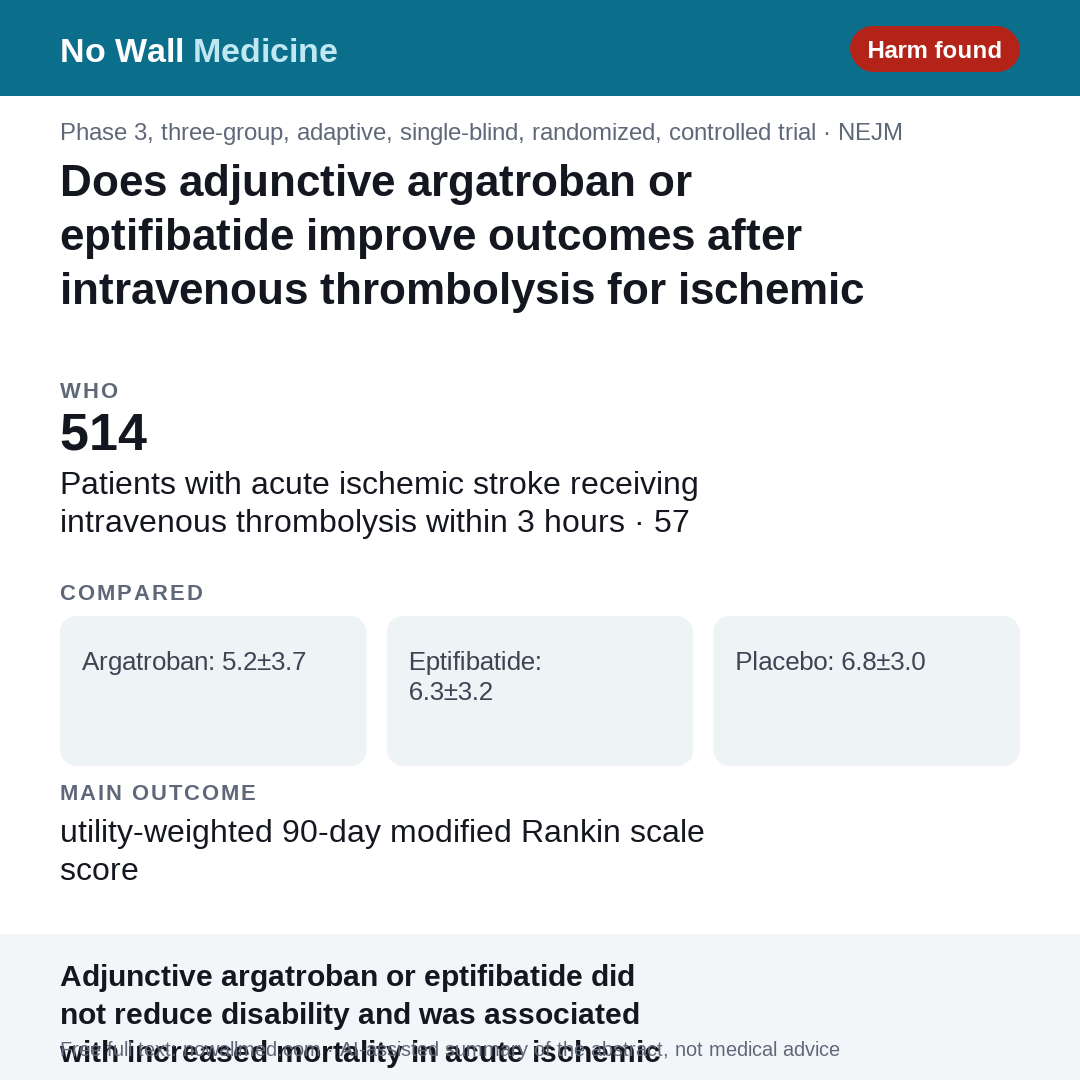
Adjunctive Intravenous Argatroban or Eptifibatide for Ischemic Stroke
Phase 3, three-group, adaptive, single-blind, randomized, controlled trialHarm found
Does adjunctive argatroban or eptifibatide improve outcomes after intravenous thrombolysis for ischemic stroke?
Who
514
Patients with acute ischemic stroke receiving intravenous thrombolysis within 3 hours · 57 sites in the United States
Compared
Argatroban: 5.2±3.7
Eptifibatide: 6.3±3.2
Placebo: 6.8±3.0
Main outcome
utility-weighted 90-day modified Rankin scale score
Result: posterior mean difference -1.51±0.51 for argatroban and -0.50±0.29 for eptifibatide
Bottom line: Adjunctive argatroban or eptifibatide did not reduce disability and was associated with increased mortality in acute ischemic stroke.
Funded by: National Institute of Neurological Disorders and Stroke
NEJM · 2024-09-04Download image
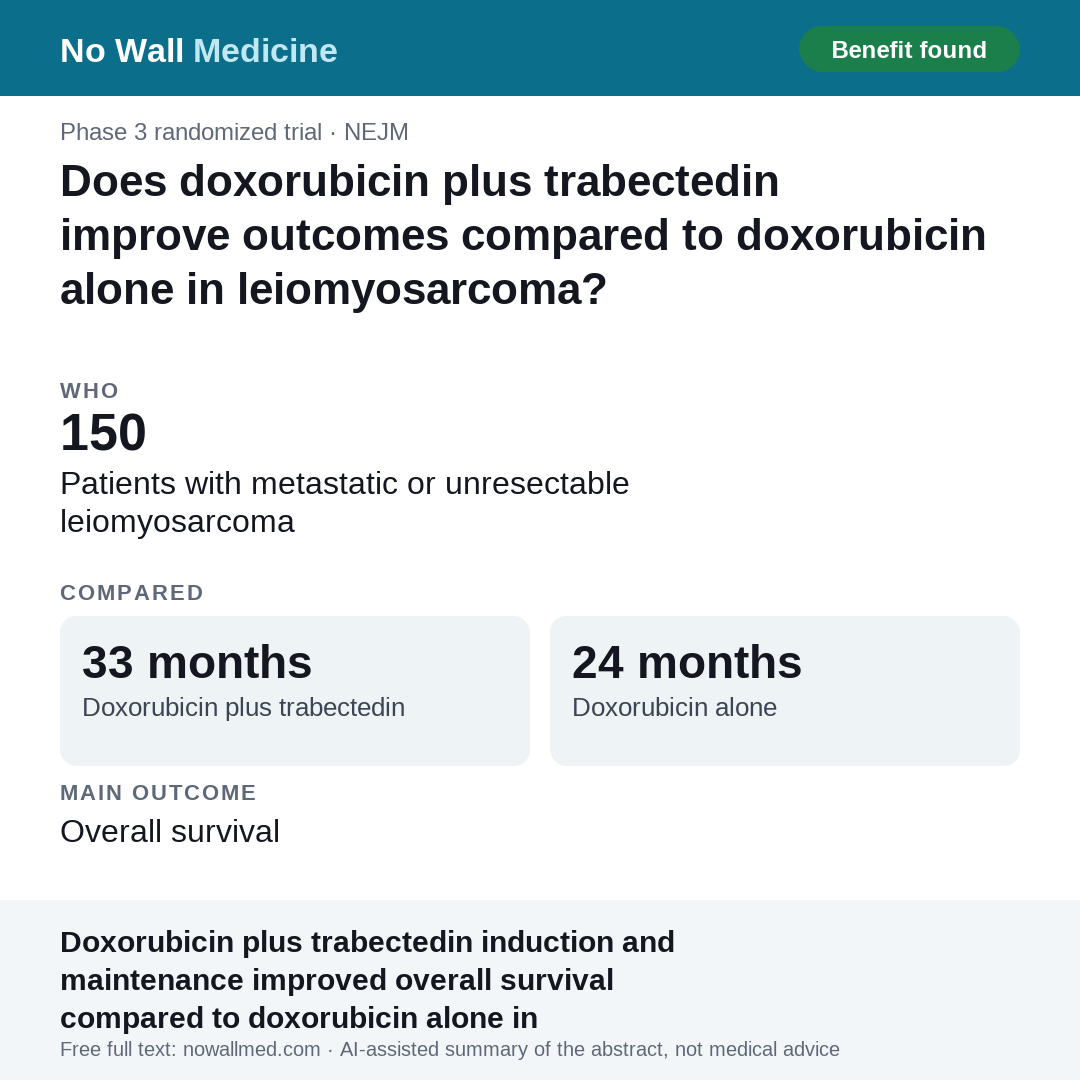
Doxorubicin-Trabectedin with Trabectedin Maintenance in Leiomyosarcoma
Phase 3 randomized trialBenefit found
Does doxorubicin plus trabectedin improve outcomes compared to doxorubicin alone in leiomyosarcoma?
Who
150
Patients with metastatic or unresectable leiomyosarcoma
Compared
33 monthsDoxorubicin plus trabectedin (95% CI, 26 to 48)
24 monthsDoxorubicin alone (95% CI, 19 to 31)
Main outcome
Overall survival
Result: hazard ratio 0.65 (95% CI, 0.44 to 0.95)
Bottom line: Doxorubicin plus trabectedin induction and maintenance improved overall survival compared to doxorubicin alone in leiomyosarcoma.
Funded by: PharmaMar and others
NEJM · 2024-09-04Download image
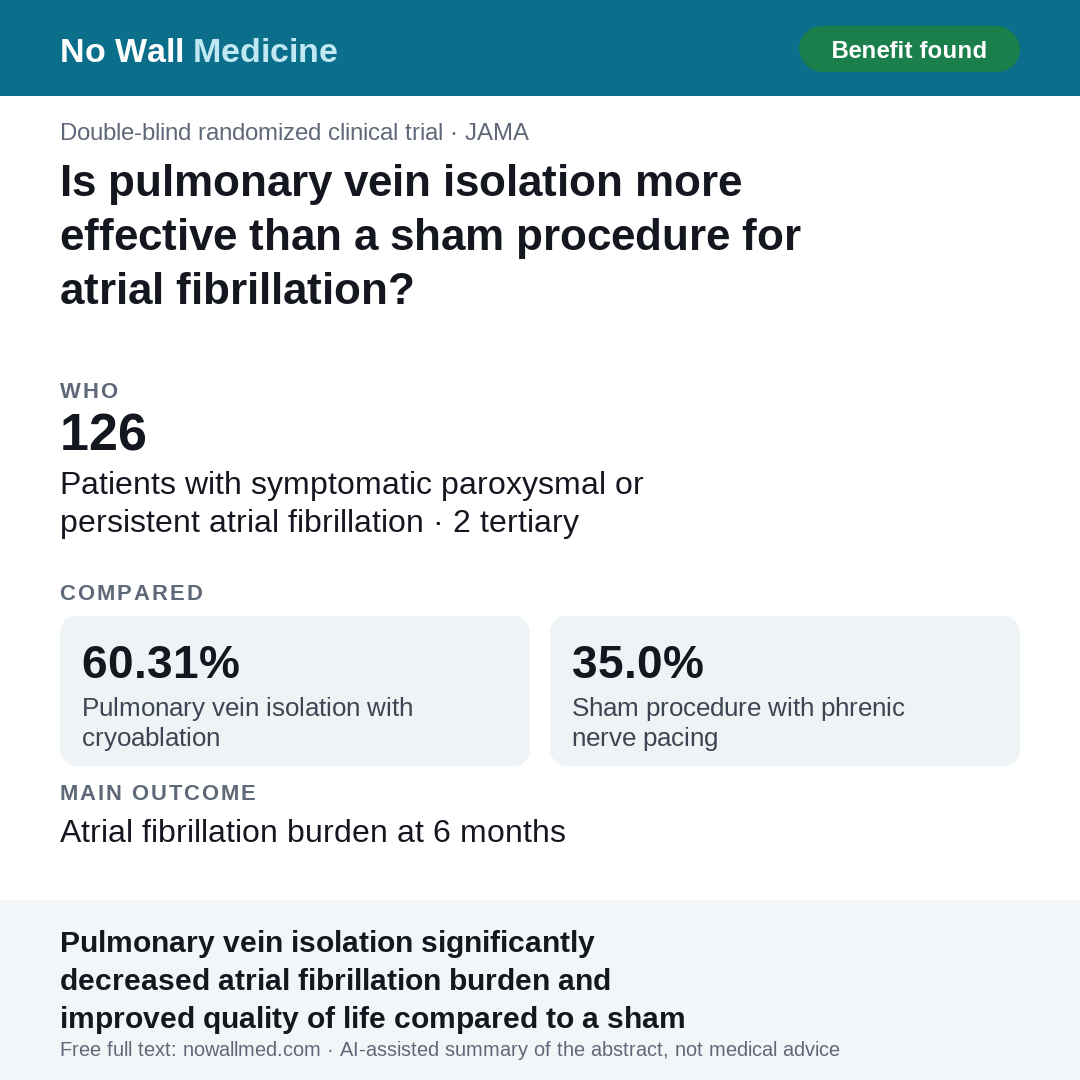
Pulmonary Vein Isolation vs Sham Intervention in Symptomatic Atrial Fibrillation: The SHAM-PVI Randomized Clinical Trial
Double-blind randomized clinical trialBenefit found
Is pulmonary vein isolation more effective than a sham procedure for atrial fibrillation?
Who
126
Patients with symptomatic paroxysmal or persistent atrial fibrillation · 2 tertiary centers in the UK
Compared
60.31%Pulmonary vein isolation with cryoablation
35.0%Sham procedure with phrenic nerve pacing
Main outcome
Atrial fibrillation burden at 6 months
Result: geometric mean difference, 0.25 (95% CI, 0.15-0.42)
Bottom line: Pulmonary vein isolation significantly decreased atrial fibrillation burden and improved quality of life compared to a sham procedure.
JAMA · 2024-09-02Download image
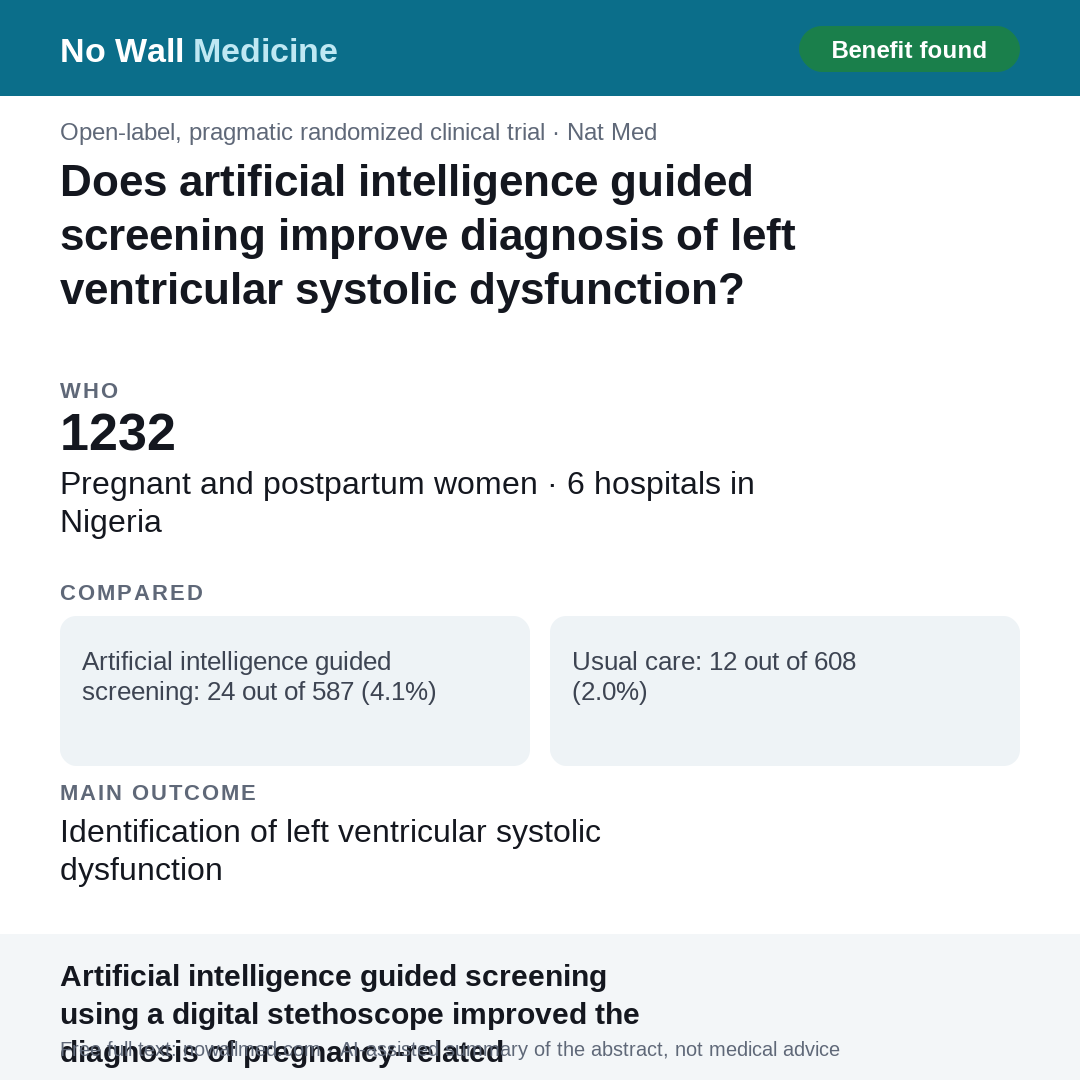
Artificial intelligence guided screening for cardiomyopathies in an obstetric population: a pragmatic randomized clinical trial
Open-label, pragmatic randomized clinical trialBenefit found
Does artificial intelligence guided screening improve diagnosis of left ventricular systolic dysfunction?
Who
1232
Pregnant and postpartum women · 6 hospitals in Nigeria
Compared
Artificial intelligence guided screening: 24 out of 587 (4.1%)
Usual care: 12 out of 608 (2.0%)
Main outcome
Identification of left ventricular systolic dysfunction
Result: odds ratio 2.12 (95% CI 1.05-4.27)
Bottom line: Artificial intelligence guided screening using a digital stethoscope improved the diagnosis of pregnancy-related cardiomyopathy.
Nat Med · 2024-09-02Download image
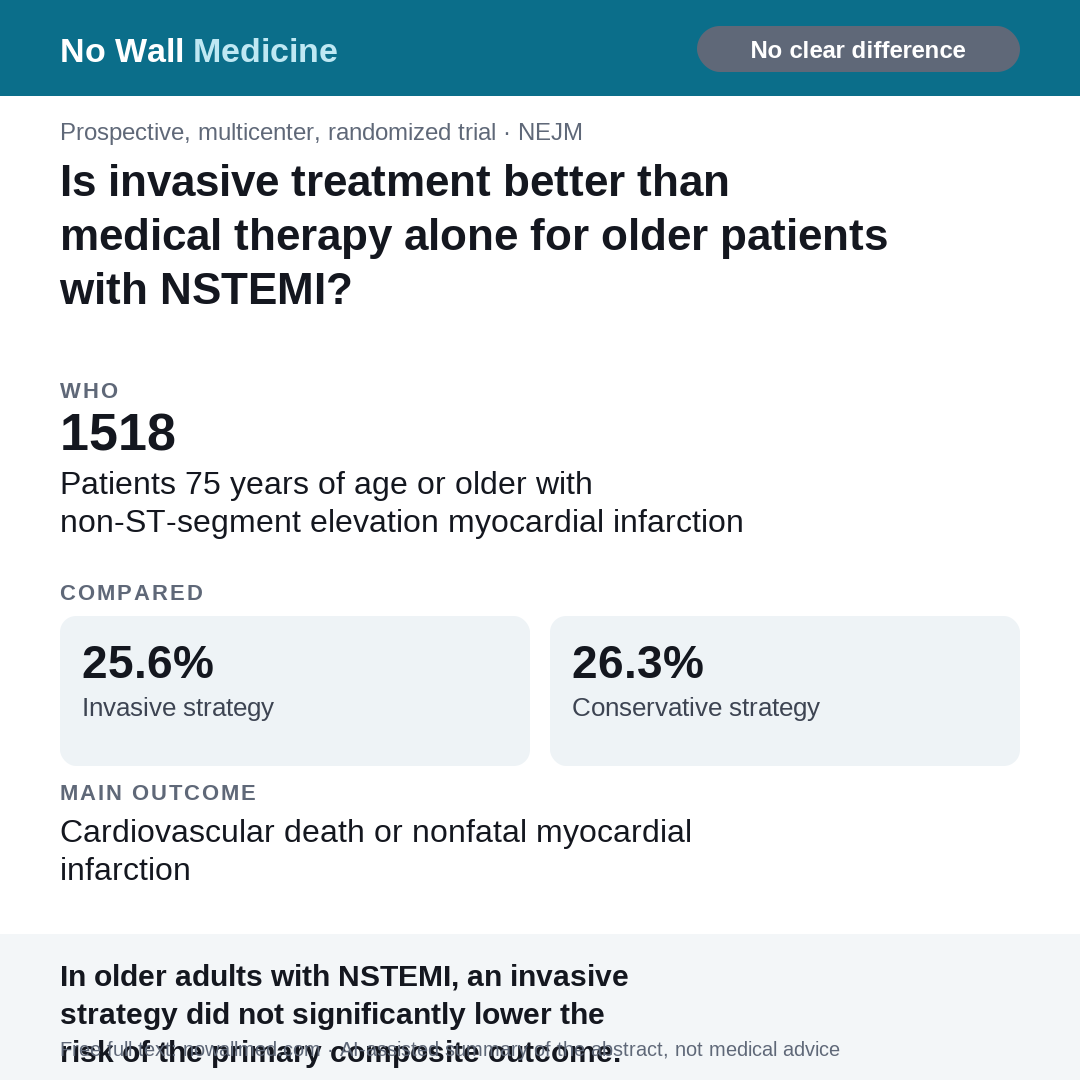
Invasive Treatment Strategy for Older Patients with Myocardial Infarction
Prospective, multicenter, randomized trialNo clear difference
Is invasive treatment better than medical therapy alone for older patients with NSTEMI?
Who
1518
Patients 75 years of age or older with non-ST-segment elevation myocardial infarction · 48 sites in the United Kingdom
Compared
25.6%Invasive strategy (193/753)
26.3%Conservative strategy (201/765)
Main outcome
Cardiovascular death or nonfatal myocardial infarction
Result: hazard ratio 0.94 (95% CI 0.77 to 1.14)
Bottom line: In older adults with NSTEMI, an invasive strategy did not significantly lower the risk of the primary composite outcome.
Funded by: British Heart Foundation
NEJM · 2024-09-01Download image
Mineralocorticoid receptor antagonists in heart failure: an individual patient level meta-analysis
Individual patient level meta-analysisBenefit found
Do mineralocorticoid receptor antagonists reduce cardiovascular death or heart failure hospitalisation?
Who
13846
Patients with heart failure across the ejection fraction range
Compared
Mineralocorticoid receptor antagonists
Placebo
Main outcome
Time to first hospitalisation for heart failure or cardiovascular death
Result: hazard ratio 0·77 (95% CI 0·72-0·83)
Bottom line: Mineralocorticoid receptor antagonists reduce cardiovascular death or heart failure hospitalisation across various ejection fraction levels.
Lancet · 2024-09-01Download image

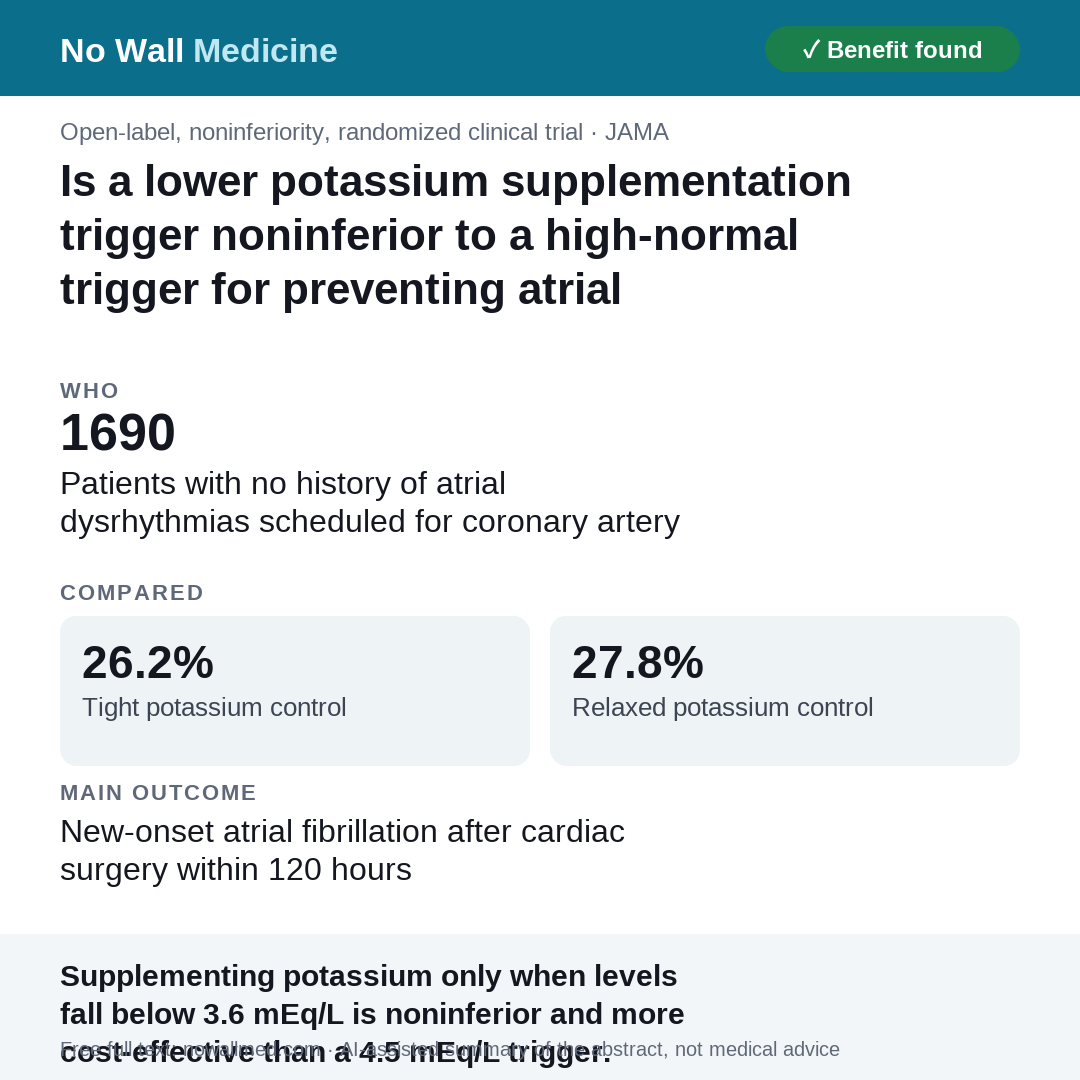
Potassium Supplementation and Prevention of Atrial Fibrillation After Cardiac Surgery: The TIGHT K Randomized Clinical Trial
Open-label, noninferiority, randomized clinical trialBenefit found
Is a lower potassium supplementation trigger noninferior to a high-normal trigger for preventing atrial fibrillation?
Who
1690
Patients with no history of atrial dysrhythmias scheduled for coronary artery bypass grafting · 23 cardiac surgical centers in the United Kingdom and Germany
Compared
26.2%Tight potassium control (n = 219)
27.8%Relaxed potassium control (n = 231)
Main outcome
New-onset atrial fibrillation after cardiac surgery within 120 hours
Result: risk difference of 1.7% (95% CI, -2.6% to 5.9%)
Bottom line: Supplementing potassium only when levels fall below 3.6 mEq/L is noninferior and more cost-effective than a 4.5 mEq/L trigger.
JAMA · 2024-09-01Download image
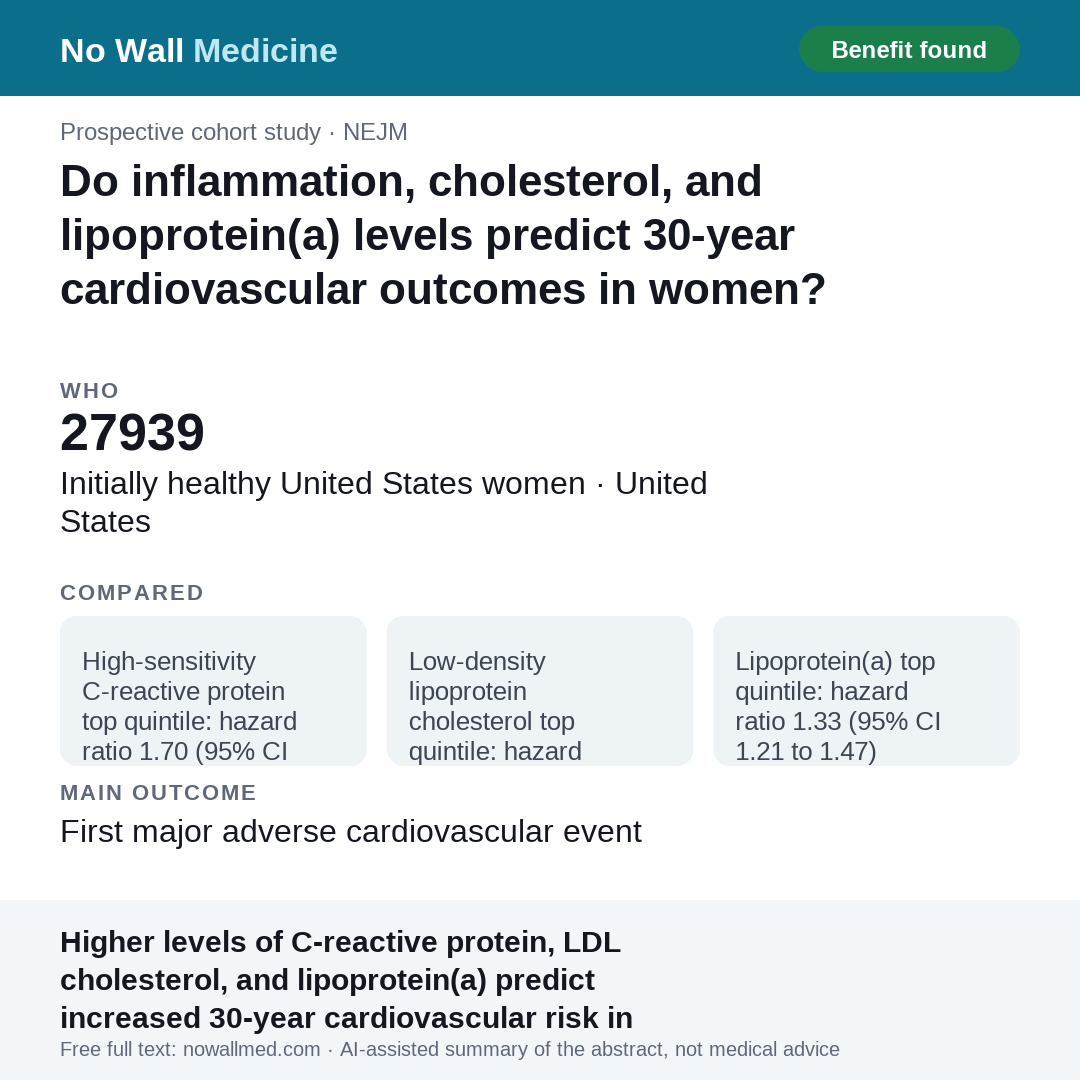
Inflammation, Cholesterol, Lipoprotein(a), and 30-Year Cardiovascular Outcomes in Women
Prospective cohort studyBenefit found
Do inflammation, cholesterol, and lipoprotein(a) levels predict 30-year cardiovascular outcomes in women?
Who
27939
Initially healthy United States women · United States
Compared
High-sensitivity C-reactive protein top quintile: hazard ratio 1.70 (95% CI 1.52 to 1.90)
Low-density lipoprotein cholesterol top quintile: hazard ratio 1.36 (95% CI 1.23 to 1.52)
Lipoprotein(a) top quintile: hazard ratio 1.33 (95% CI 1.21 to 1.47)
Main outcome
First major adverse cardiovascular event
Bottom line: Higher levels of C-reactive protein, LDL cholesterol, and lipoprotein(a) predict increased 30-year cardiovascular risk in healthy women.
Funded by: National Institutes of Health
NEJM · 2024-08-31Download image
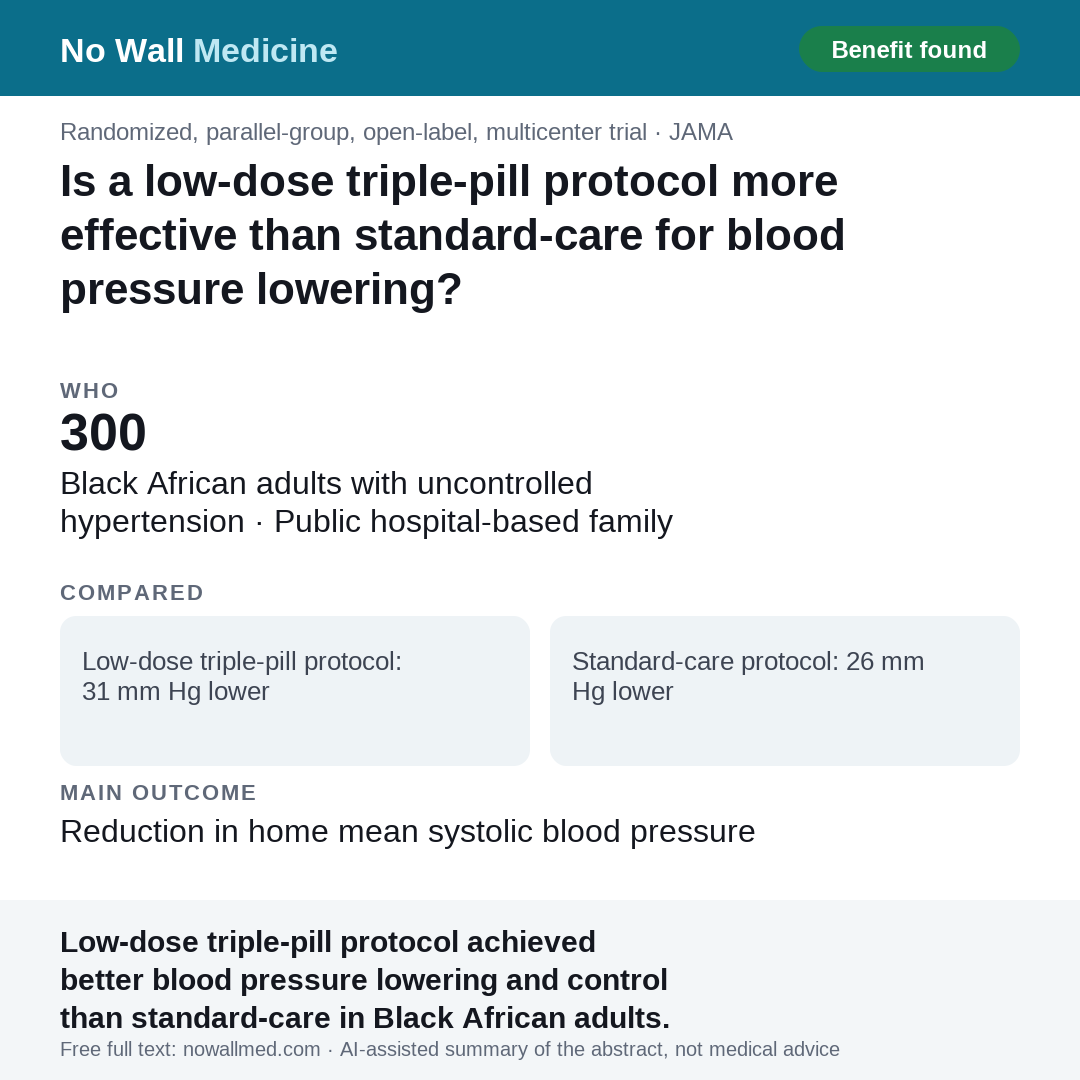
Low-Dose Triple-Pill vs Standard-Care Protocols for Hypertension Treatment in Nigeria: A Randomized Clinical Trial
Randomized, parallel-group, open-label, multicenter trialBenefit found
Is a low-dose triple-pill protocol more effective than standard-care for blood pressure lowering?
Who
300
Black African adults with uncontrolled hypertension · Public hospital-based family medicine clinics in Nigeria
Compared
Low-dose triple-pill protocol: 31 mm Hg lower
Standard-care protocol: 26 mm Hg lower
Main outcome
Reduction in home mean systolic blood pressure
Result: adjusted difference, -5.8 mm Hg (95% CI, -8.0 to -3.6)
Bottom line: Low-dose triple-pill protocol achieved better blood pressure lowering and control than standard-care in Black African adults.
JAMA · 2024-08-31Download image
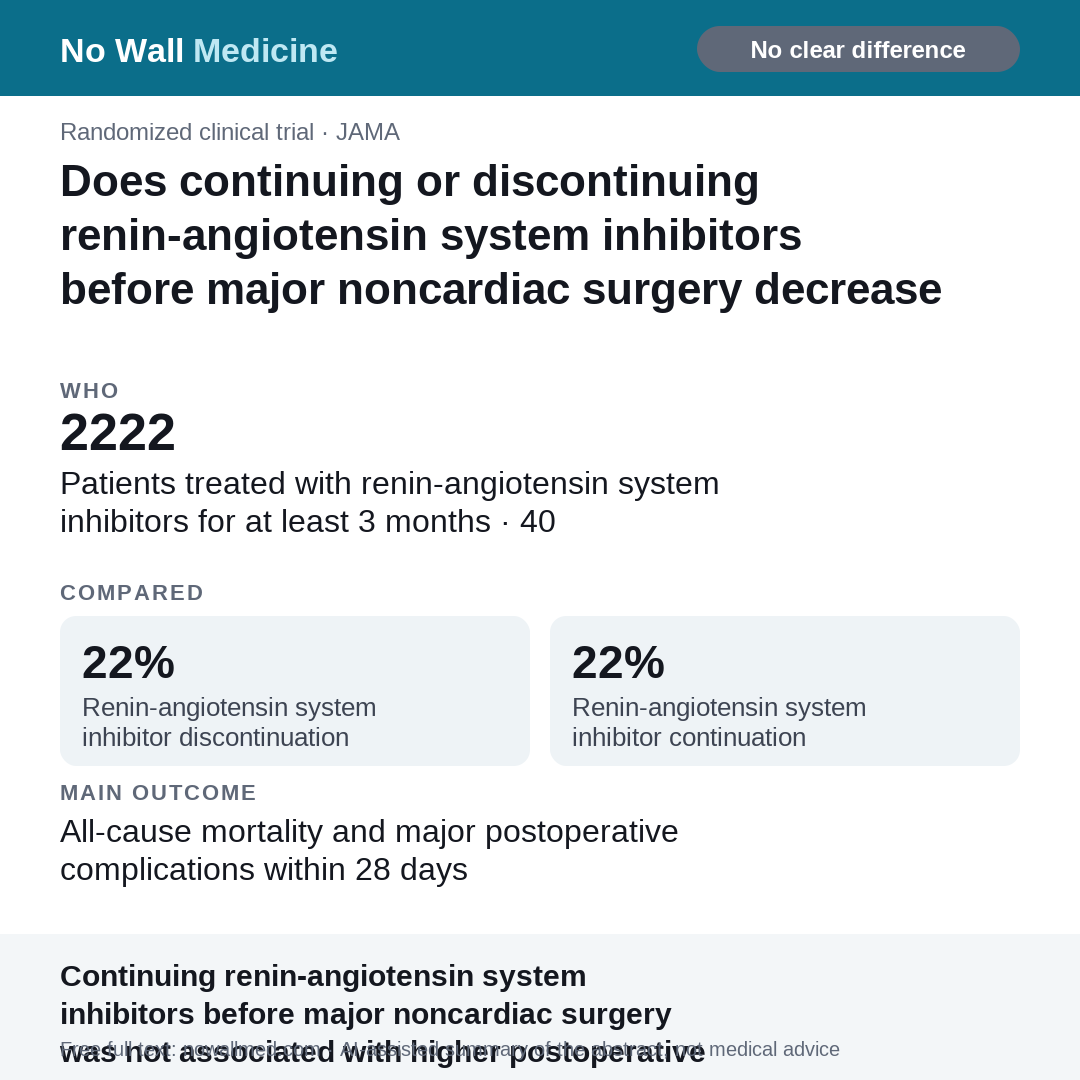
Continuation vs Discontinuation of Renin-Angiotensin System Inhibitors Before Major Noncardiac Surgery: The Stop-or-Not Randomized Clinical Trial
Randomized clinical trialNo clear difference
Does continuing or discontinuing renin-angiotensin system inhibitors before major noncardiac surgery decrease complications?
Who
2222
Patients treated with renin-angiotensin system inhibitors for at least 3 months · 40 hospitals in France
Compared
22%Renin-angiotensin system inhibitor discontinuation (245 of 1115 patients)
22%Renin-angiotensin system inhibitor continuation (247 of 1107 patients)
Main outcome
All-cause mortality and major postoperative complications within 28 days
Result: risk ratio 1.02 (95% CI 0.87-1.19)
Bottom line: Continuing renin-angiotensin system inhibitors before major noncardiac surgery was not associated with higher postoperative complications than discontinuation.
JAMA · 2024-08-31Download image
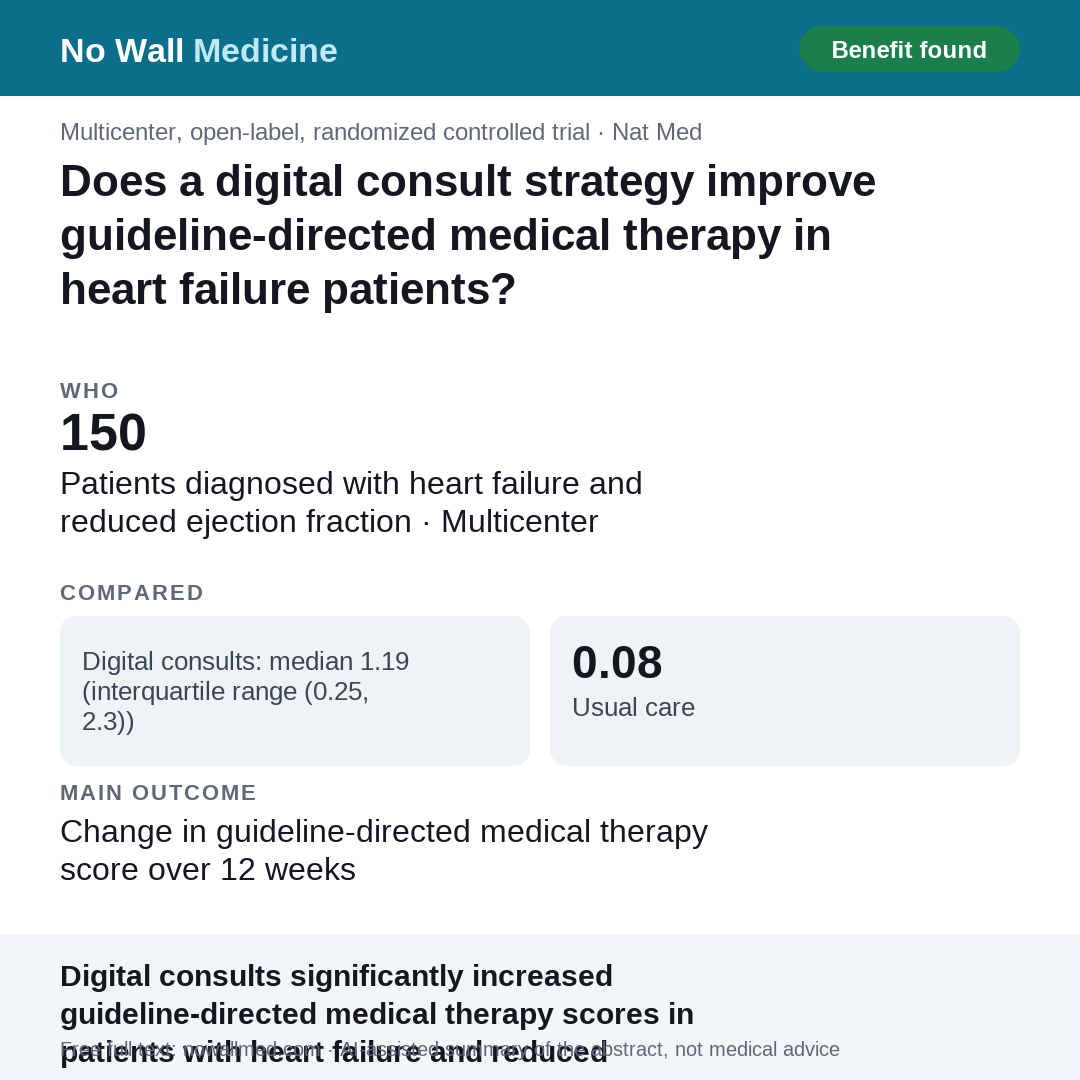
Digital consults in heart failure care: a randomized controlled trial
Multicenter, open-label, randomized controlled trialBenefit found
Does a digital consult strategy improve guideline-directed medical therapy in heart failure patients?
Who
150
Patients diagnosed with heart failure and reduced ejection fraction · Multicenter
Compared
Digital consults: median 1.19 (interquartile range (0.25, 2.3))
0.08Usual care (0.00, 1.00)
Main outcome
Change in guideline-directed medical therapy score over 12 weeks
Result: P < 0.001
Bottom line: Digital consults significantly increased guideline-directed medical therapy scores in patients with heart failure and reduced ejection fraction.
Nat Med · 2024-08-31Download image
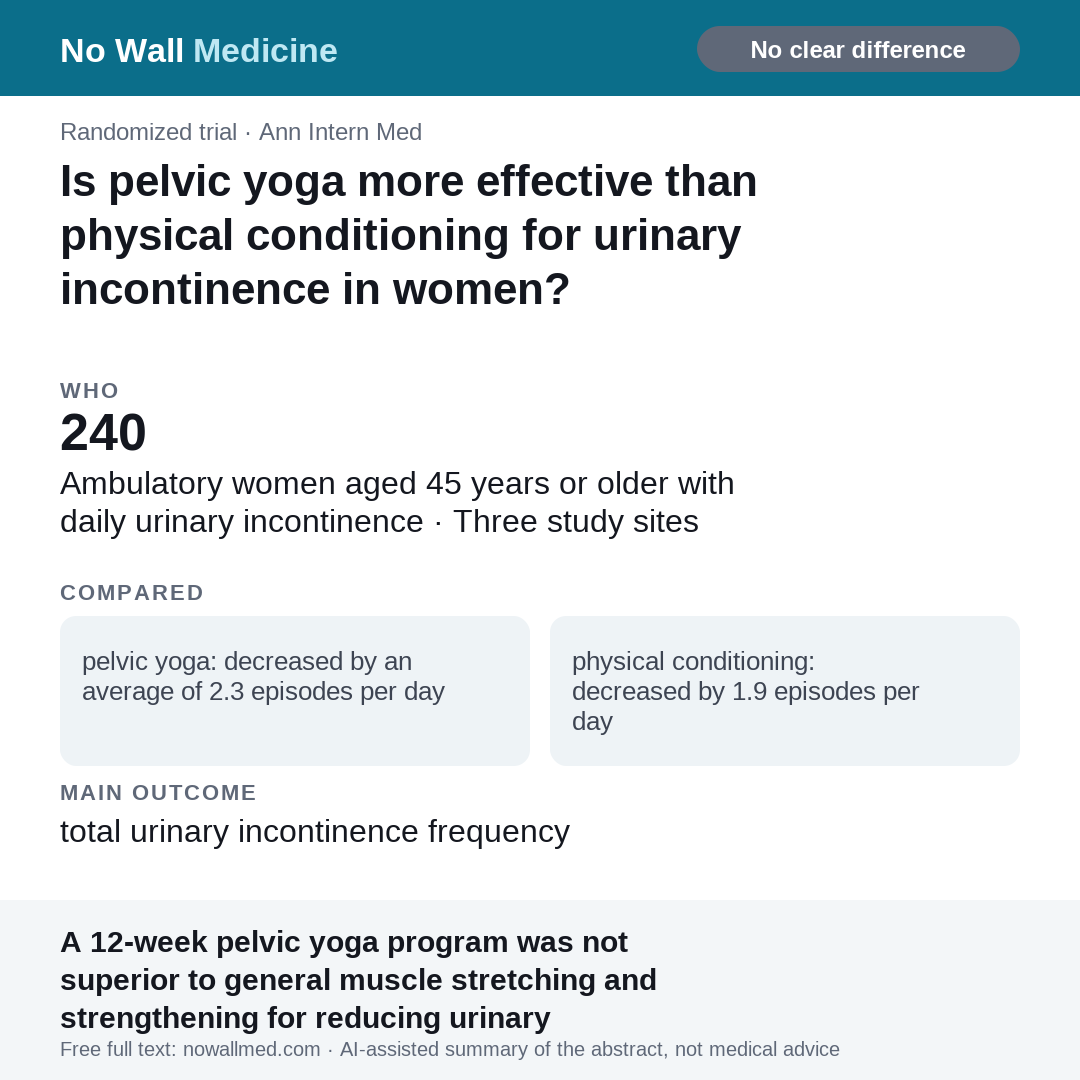
Efficacy of a Therapeutic Pelvic Yoga Program Versus a Physical Conditioning Program on Urinary Incontinence in Women : A Randomized Trial
Randomized trialNo clear difference
Is pelvic yoga more effective than physical conditioning for urinary incontinence in women?
Who
240
Ambulatory women aged 45 years or older with daily urinary incontinence · Three study sites in California, United States
Compared
pelvic yoga: decreased by an average of 2.3 episodes per day
physical conditioning: decreased by 1.9 episodes per day
Main outcome
total urinary incontinence frequency
Result: between-group difference of -0.3 episodes per day (95% CI, -0.7 to 0.0)
Bottom line: A 12-week pelvic yoga program was not superior to general muscle stretching and strengthening for reducing urinary incontinence.
Limitation: No comparison to no treatment or other clinical treatments; conversion to videoconference-based instruction during COVID-19.
Funded by: National Institutes of Health
Ann Intern Med · 2024-08-27Download image
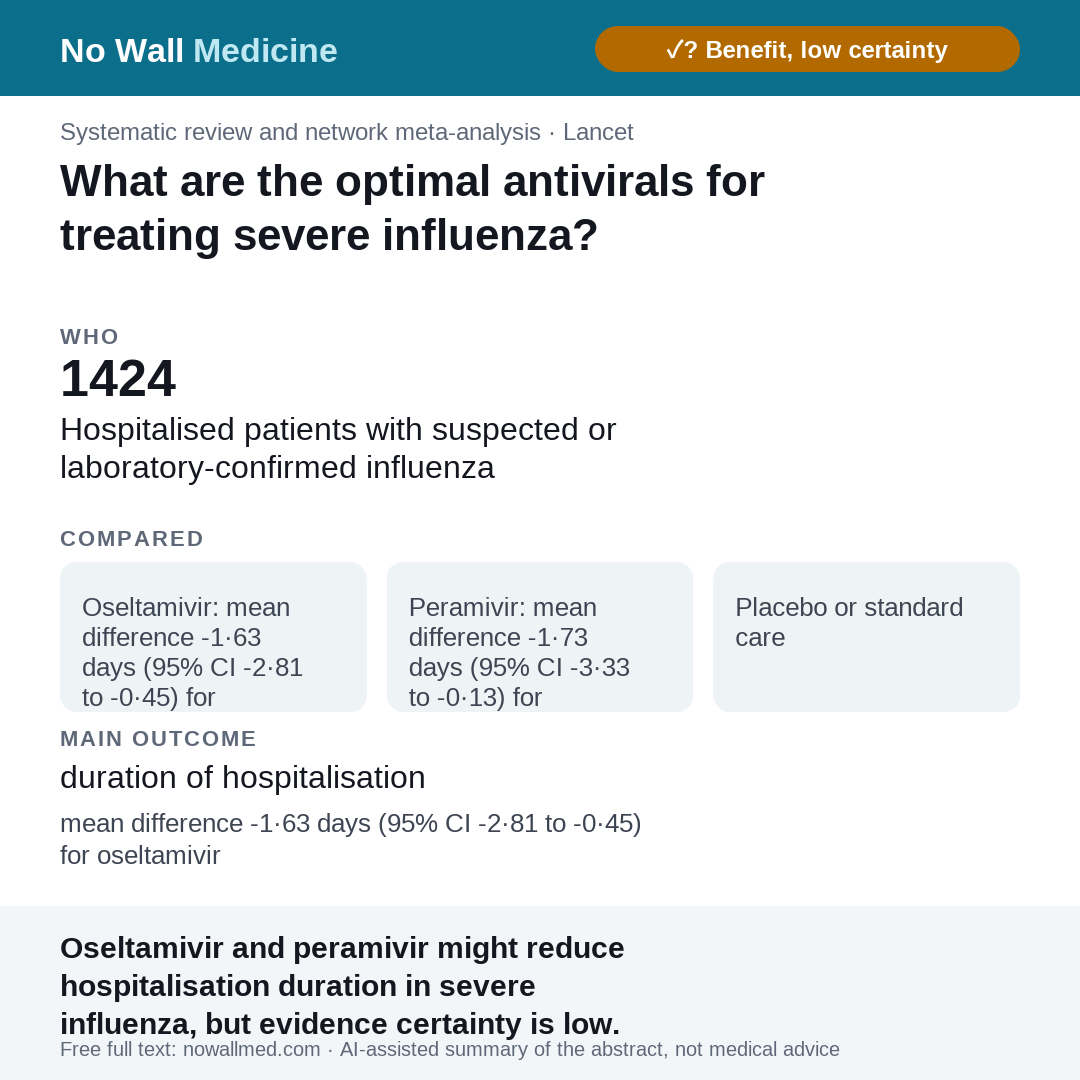
Antivirals for treatment of severe influenza: a systematic review and network meta-analysis of randomised controlled trials
Systematic review and network meta-analysisBenefit found
What are the optimal antivirals for treating severe influenza?
Who
1424
Hospitalised patients with suspected or laboratory-confirmed influenza
Compared
Oseltamivir: mean difference -1·63 days (95% CI -2·81 to -0·45) for hospitalisation
Peramivir: mean difference -1·73 days (95% CI -3·33 to -0·13) for hospitalisation
Placebo or standard care
Main outcome
duration of hospitalisation
Result: mean difference -1·63 days (95% CI -2·81 to -0·45) for oseltamivir
Bottom line: Oseltamivir and peramivir might reduce hospitalisation duration in severe influenza, but evidence certainty is low.
Limitation: Small number of eligible trials prevented testing for publication bias.
Funded by: World Health Organization
Lancet · 2024-08-26Download image
Effect of a digital school-based intervention on adolescent family planning and reproductive health in Rwanda: a cluster-randomized trial
Cluster-randomized hybrid effectiveness-implementation studyNo clear difference
Does a digital school-based intervention affect adolescent family planning and reproductive health?
Who
6078
Adolescents aged 12-19 years in Rwandan secondary schools · Rwanda
Compared
Control
Self-service implementation model
Facilitated implementation model
Main outcome
Modern contraceptive use, childbearing, and HIV testing
Result: prevalence ratio 1.04 (95% CI 0.76, 1.42)
Bottom line: The CyberRwanda digital intervention did not affect modern contraceptive use, childbearing, or HIV testing in the full sample.
Nat Med · 2024-08-23Download image

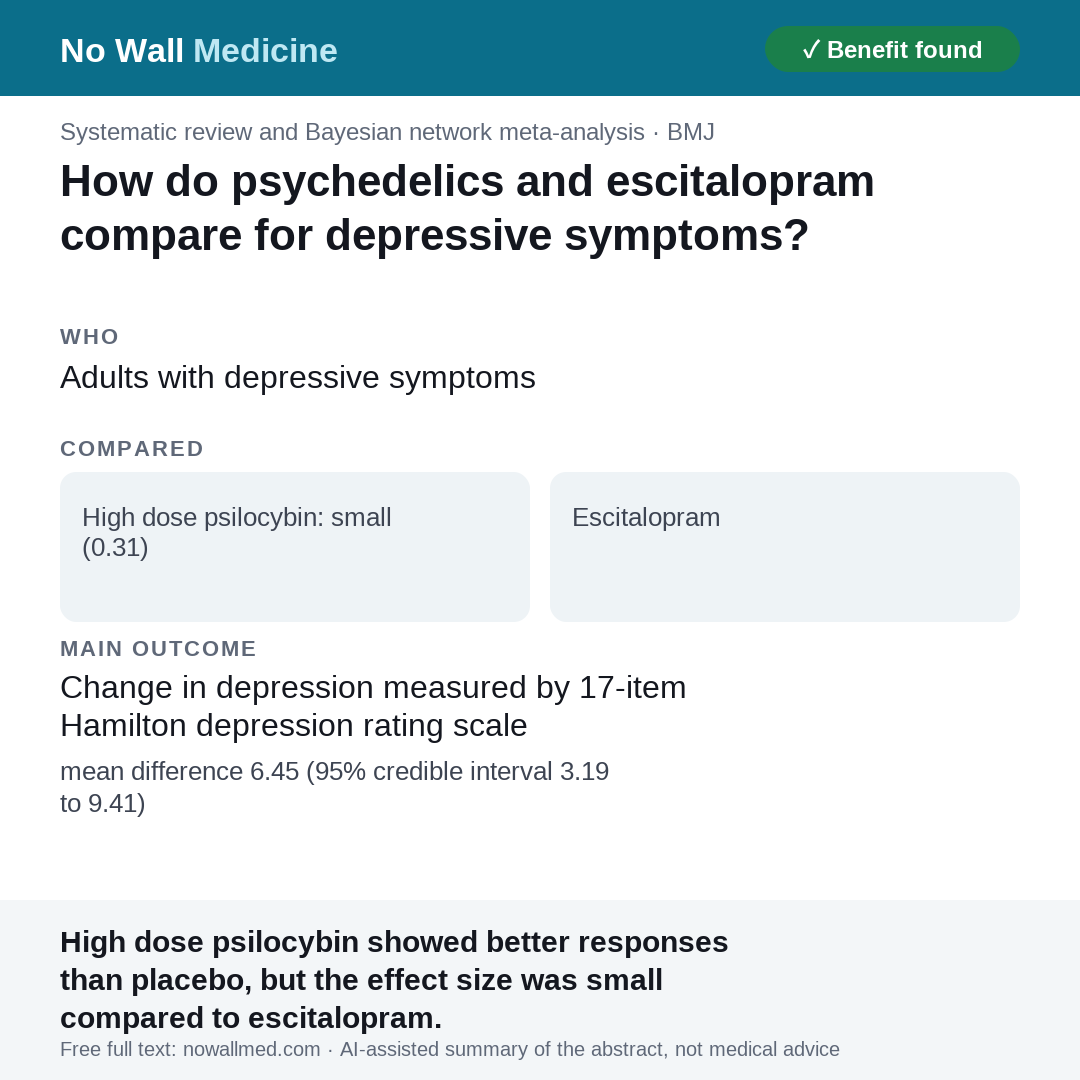
Comparative oral monotherapy of psilocybin, lysergic acid diethylamide, 3,4-methylenedioxymethamphetamine, ayahuasca, and escitalopram for depressive symptoms: systematic review and Bayesian network meta-analysis
Systematic review and Bayesian network meta-analysisBenefit found
How do psychedelics and escitalopram compare for depressive symptoms?
Who
Adults with depressive symptoms
Compared
High dose psilocybin: small (0.31)
Escitalopram
Main outcome
Change in depression measured by 17-item Hamilton depression rating scale
Result: mean difference 6.45 (95% credible interval 3.19 to 9.41)
Bottom line: High dose psilocybin showed better responses than placebo, but the effect size was small compared to escitalopram.
Limitation: Potential for overestimated effectiveness due to unsuccessful blinding.
BMJ · 2024-08-21Download image
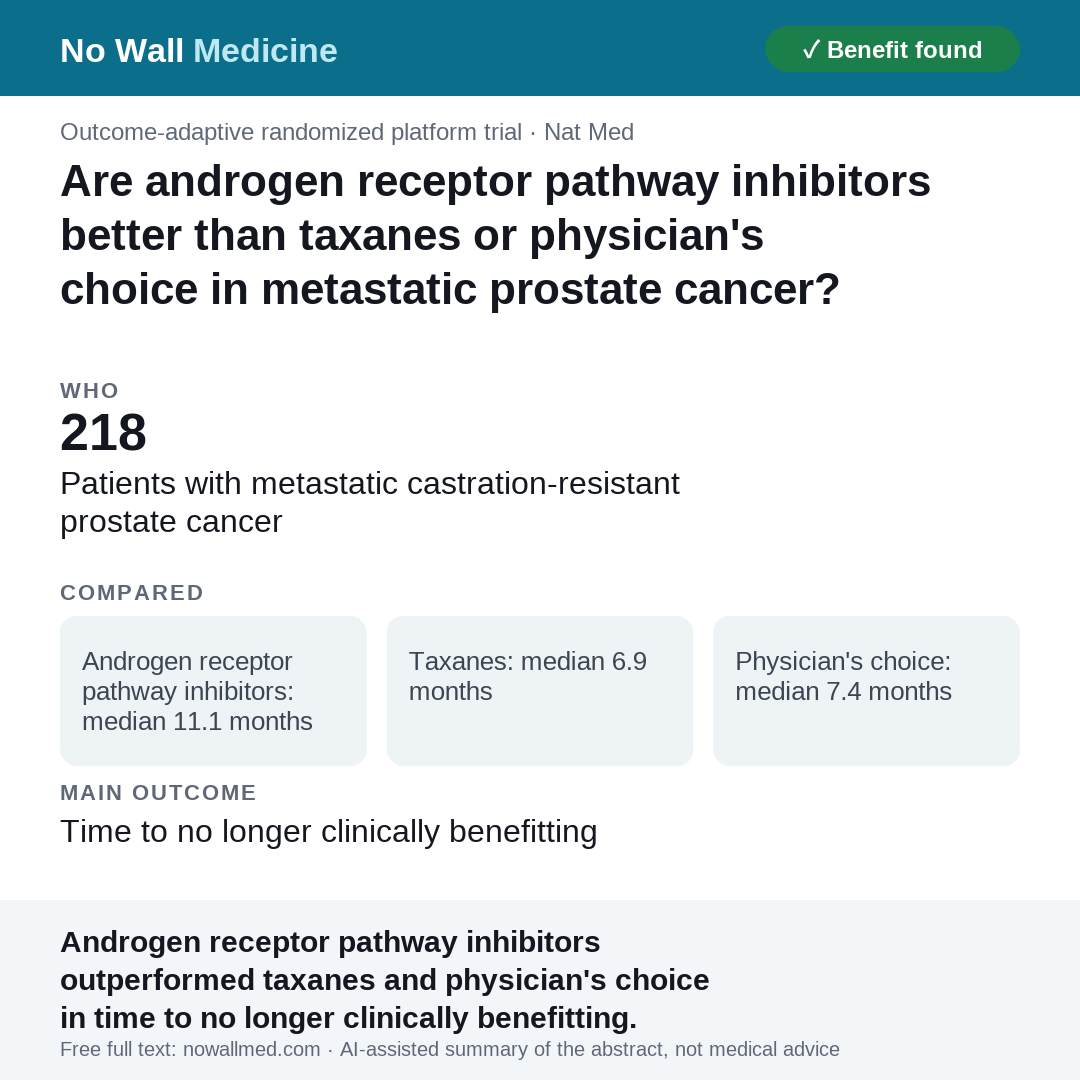
Androgen receptor pathway inhibitors and taxanes in metastatic prostate cancer: an outcome-adaptive randomized platform trial
Outcome-adaptive randomized platform trialBenefit found
Are androgen receptor pathway inhibitors better than taxanes or physician's choice in metastatic prostate cancer?
Who
218
Patients with metastatic castration-resistant prostate cancer
Compared
Androgen receptor pathway inhibitors: median 11.1 months
Taxanes: median 6.9 months
Physician's choice: median 7.4 months
Main outcome
Time to no longer clinically benefitting
Bottom line: Androgen receptor pathway inhibitors outperformed taxanes and physician's choice in time to no longer clinically benefitting.
Nat Med · 2024-08-20Download image