Visual abstracts
New randomized trials and meta-analyses from leading journals at a glance: who was studied, what was compared, and what was found. Every paper is free to read in full.
All specialtiesCardiology 4877Oncology 4138Gastroenterology & Hepatology 1942Infectious Disease 3837Neurology 1905Psychiatry & Mental Health 2273Pulmonology 2143Critical Care 1365Endocrinology & Diabetes 2580Pediatrics 2980Surgery 2559Orthopedics & Sports Medicine 931Neurosurgery 537Cardiothoracic & Vascular Surgery 674Plastic & Reconstructive Surgery 591Nephrology 1133Rheumatology 823Hematology 1109Dermatology 621Ophthalmology 543Obstetrics & Gynecology 1686Public & Global Health 1058Radiology & Imaging 648Anesthesiology 986Urology 764ENT (Otolaryngology) 503Emergency Medicine 511Allergy & Immunology 313Geriatrics 981Family Medicine & Primary Care 562Medical Genetics & Genomics 676Pathology & Laboratory Medicine 159Physical Medicine & Rehabilitation 757Palliative Care 444Nutrition 1588Digital Health & AI 2201General Medicine 321
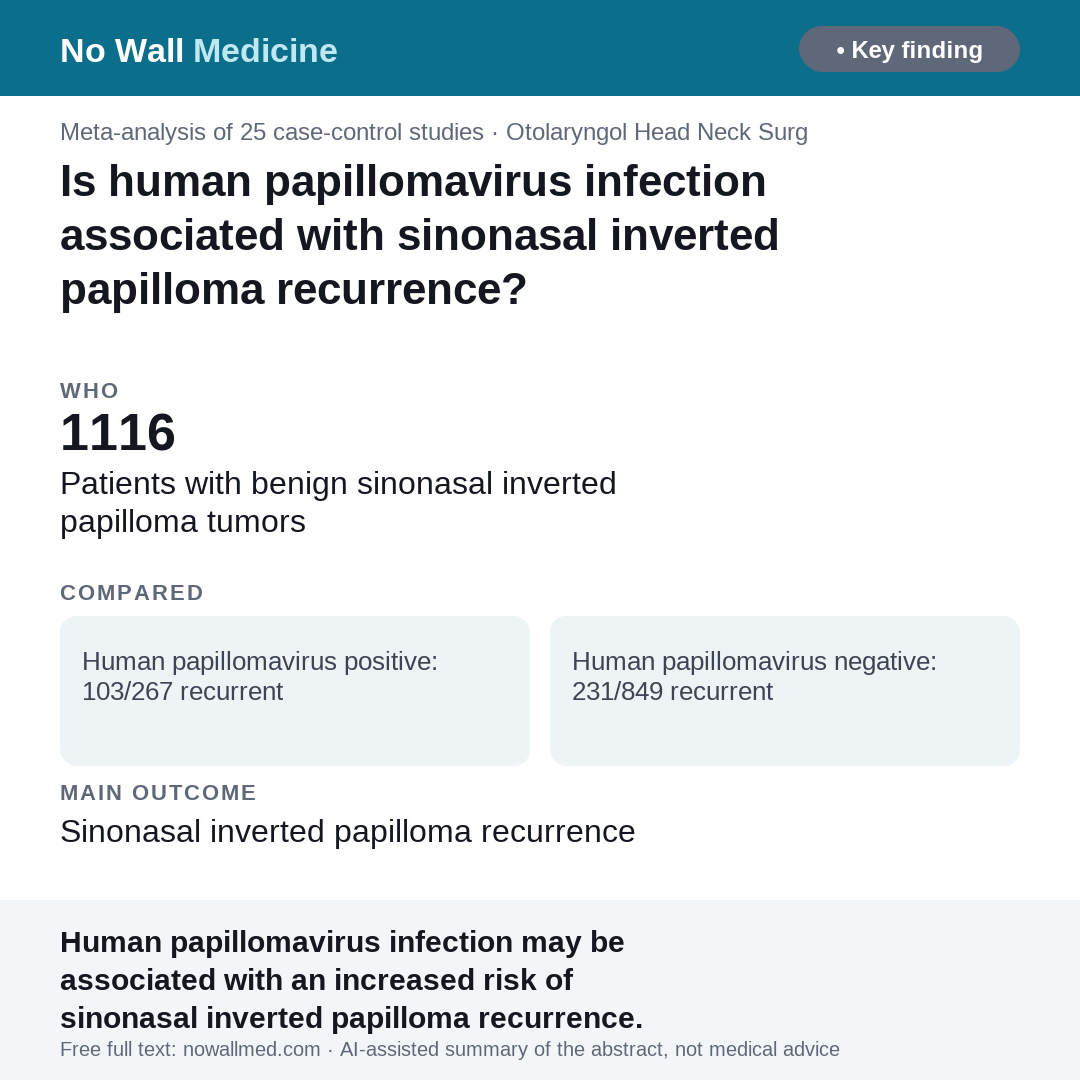
Human Papilloma Virus Infection and Sinonasal Inverted Papilloma Recurrence: A Meta-Analysis
Meta-analysis of 25 case-control studiesBenefit found
Is human papillomavirus infection associated with sinonasal inverted papilloma recurrence?
Who
1116
Patients with benign sinonasal inverted papilloma tumors
Compared
Human papillomavirus positive: 103/267 recurrent
Human papillomavirus negative: 231/849 recurrent
Main outcome
Sinonasal inverted papilloma recurrence
Result: odds ratio 2.05 (95% CI 1.31-3.19)
Bottom line: Human papillomavirus infection may be associated with an increased risk of sinonasal inverted papilloma recurrence.
Limitation: Correlation was variable among recently published studies requiring additional investigation.
Otolaryngol Head Neck Surg · 2024-12-31Download image
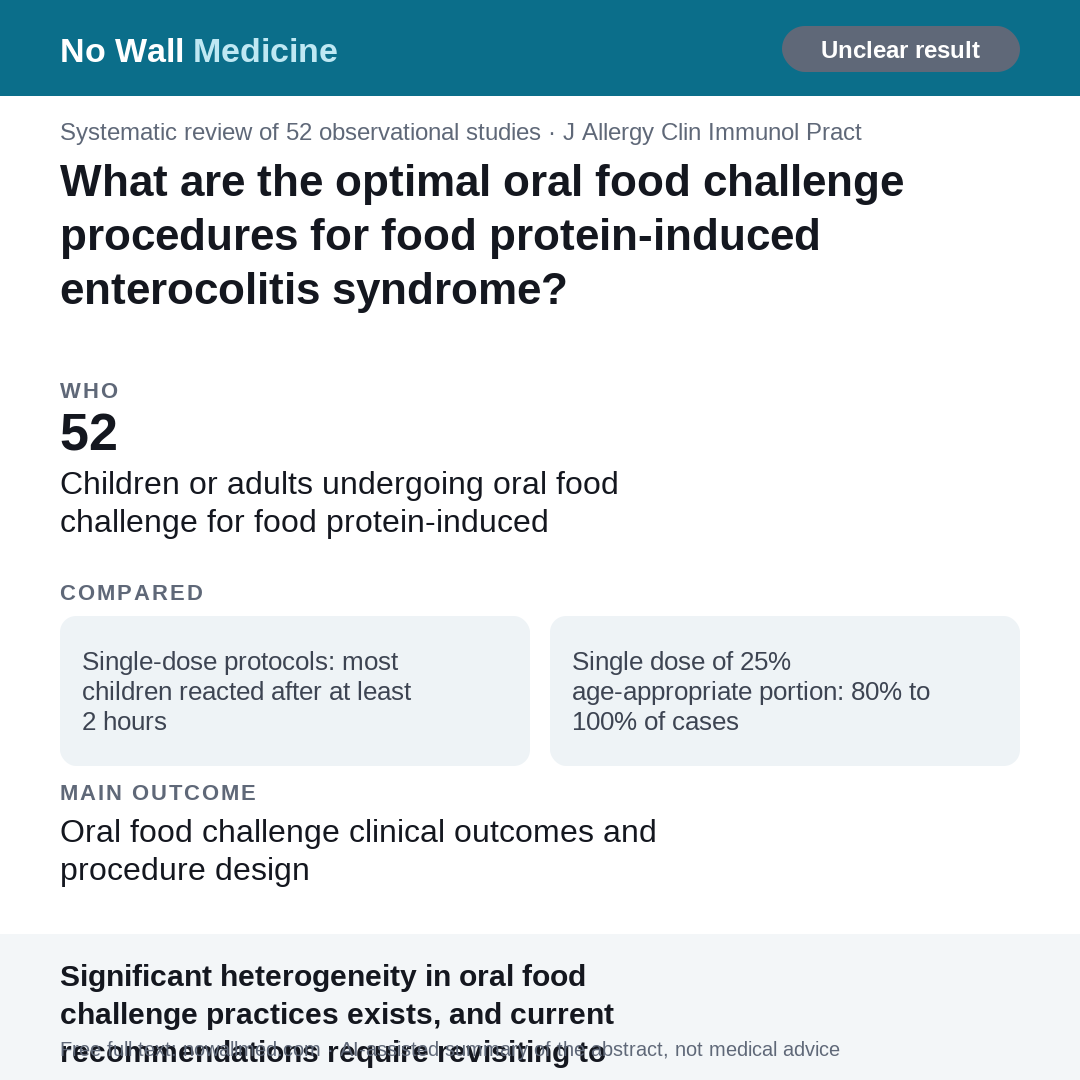
Oral Food Challenge Protocols in Food Protein-Induced Enterocolitis Syndrome: A Systematic Review
Systematic review of 52 observational studiesUnclear result
What are the optimal oral food challenge procedures for food protein-induced enterocolitis syndrome?
Who
52
Children or adults undergoing oral food challenge for food protein-induced enterocolitis syndrome
Compared
Single-dose protocols: most children reacted after at least 2 hours
Single dose of 25% age-appropriate portion: 80% to 100% of cases
Main outcome
Oral food challenge clinical outcomes and procedure design
Bottom line: Significant heterogeneity in oral food challenge practices exists, and current recommendations require revisiting to improve safety and accuracy.
Limitation: Methodological heterogeneity and insufficient outcome reporting prevented assessment of protocol characteristics associated with safer outcomes.
J Allergy Clin Immunol Pract · 2024-12-31Download image
Cost Outcomes of Virtual Surgical Planning in Head and Neck Reconstruction: A Systematic Review
Systematic reviewBenefit found
Is virtual surgical planning cost-beneficial in head and neck reconstruction?
Who
733
Patients undergoing head and neck reconstruction
Compared
Virtual surgical planning: 78% found cost savings or comparable to freehand surgery
Freehand surgery
Main outcome
Economic viability and cost outcomes
Bottom line: Virtual surgical planning is potentially cost-beneficial compared to traditional unplanned surgery.
Limitation: Substantial heterogeneity amongst methods and outcome measures impedes generalizability.
Head Neck · 2024-12-31Download image

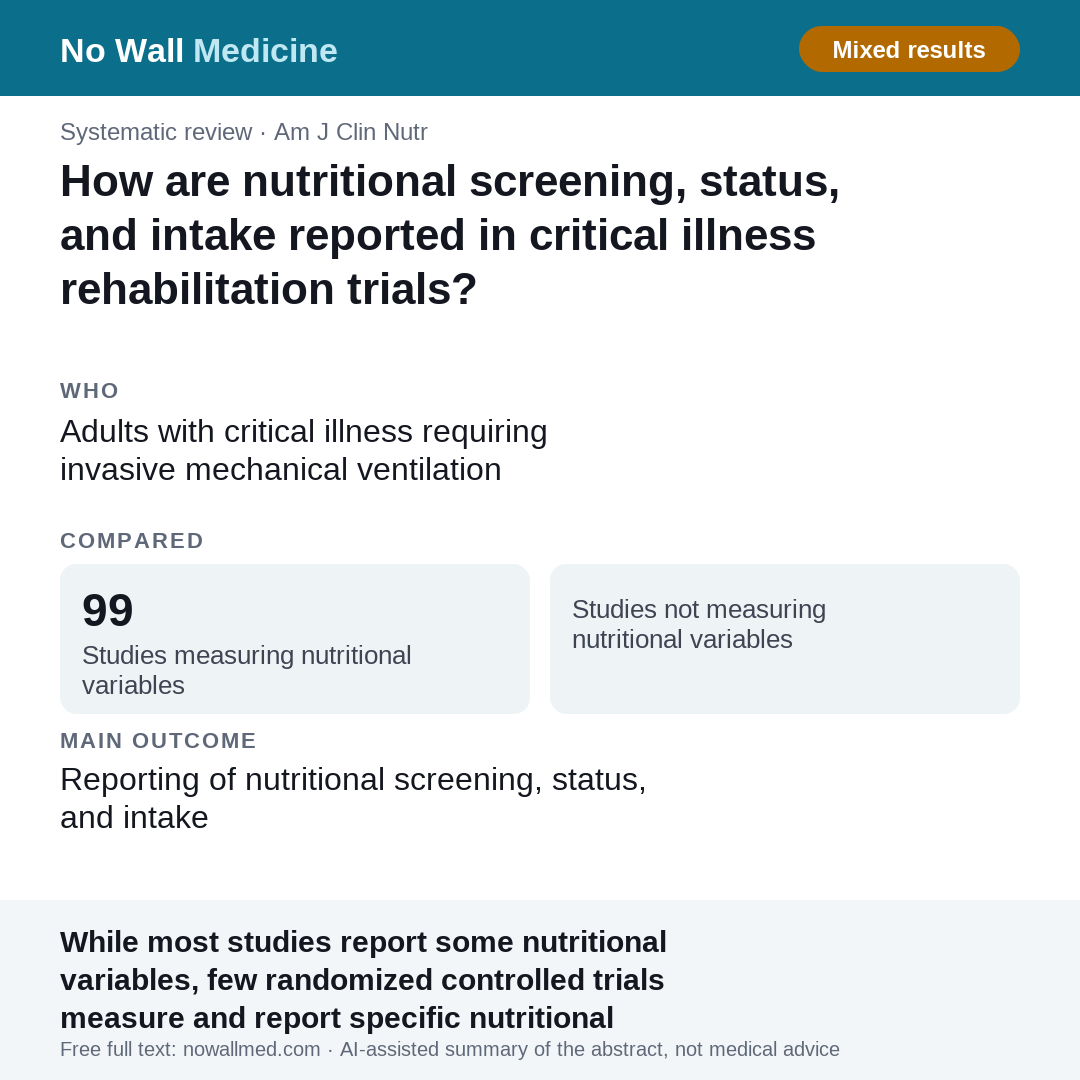
Reporting of nutritional screening, status, and intake in trials of nutritional and physical rehabilitation following critical illness: a systematic review
Systematic reviewMixed results
How are nutritional screening, status, and intake reported in critical illness rehabilitation trials?
Who
123
Adults with critical illness requiring invasive mechanical ventilation
Compared
99Studies measuring nutritional variables (80%)
Studies not measuring nutritional variables
Main outcome
Reporting of nutritional screening, status, and intake
Bottom line: While most studies report some nutritional variables, few randomized controlled trials measure and report specific nutritional factors comprehensively.
Limitation: Only 3 studies were considered to have low risk of bias in all categories.
Am J Clin Nutr · 2024-12-31Download image
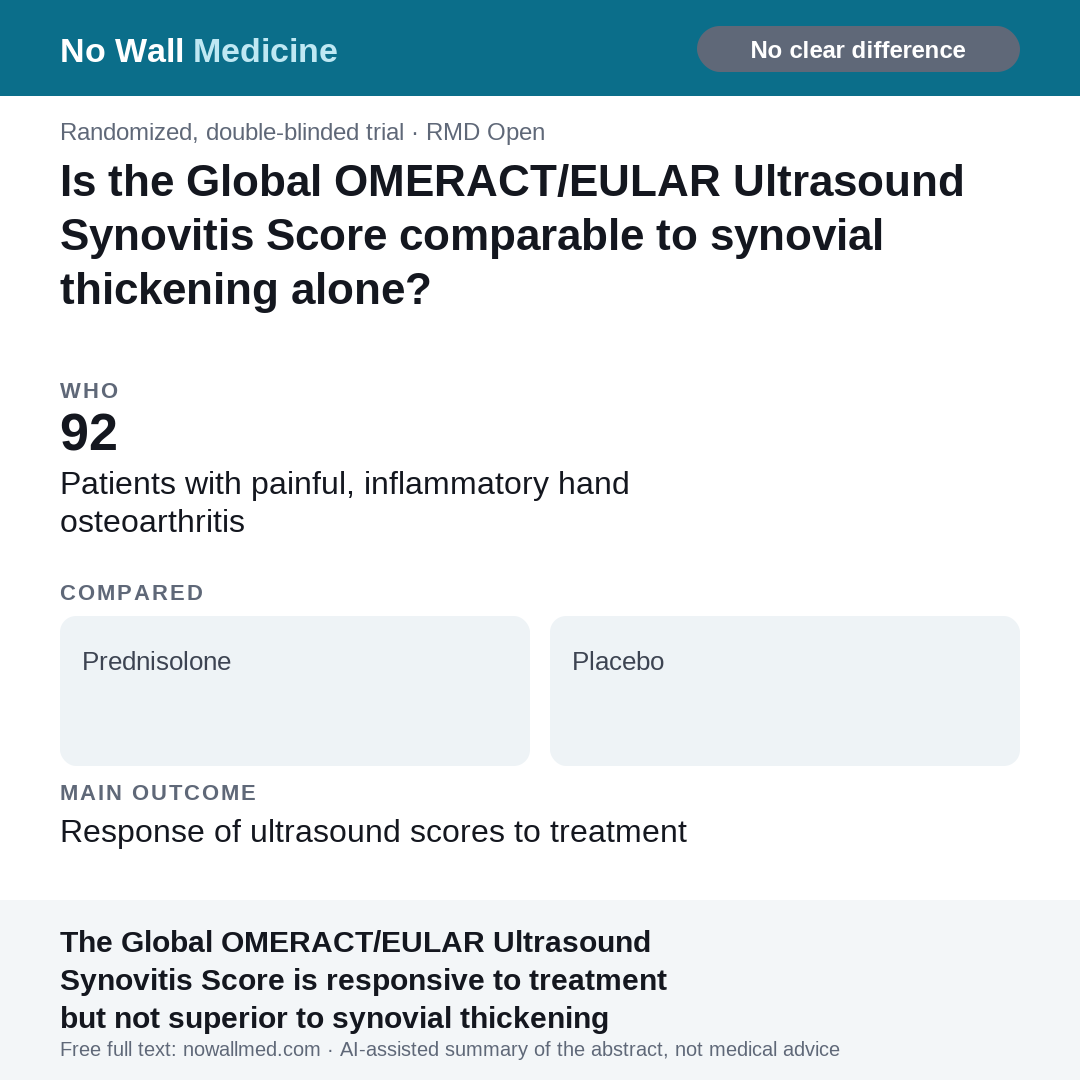
Synovitis scoring in hand osteoarthritis with ultrasonography: the performance of the Global OMERACT/EULAR Ultrasound Synovitis Score (GLOESS) is comparable to synovial thickening alone
Randomized, double-blinded trialNo clear difference
Is the Global OMERACT/EULAR Ultrasound Synovitis Score comparable to synovial thickening alone?
Who
92
Patients with painful, inflammatory hand osteoarthritis
Compared
Prednisolone
Placebo
Main outcome
Response of ultrasound scores to treatment
Bottom line: The Global OMERACT/EULAR Ultrasound Synovitis Score is responsive to treatment but not superior to synovial thickening alone.
RMD Open · 2024-12-31Download image
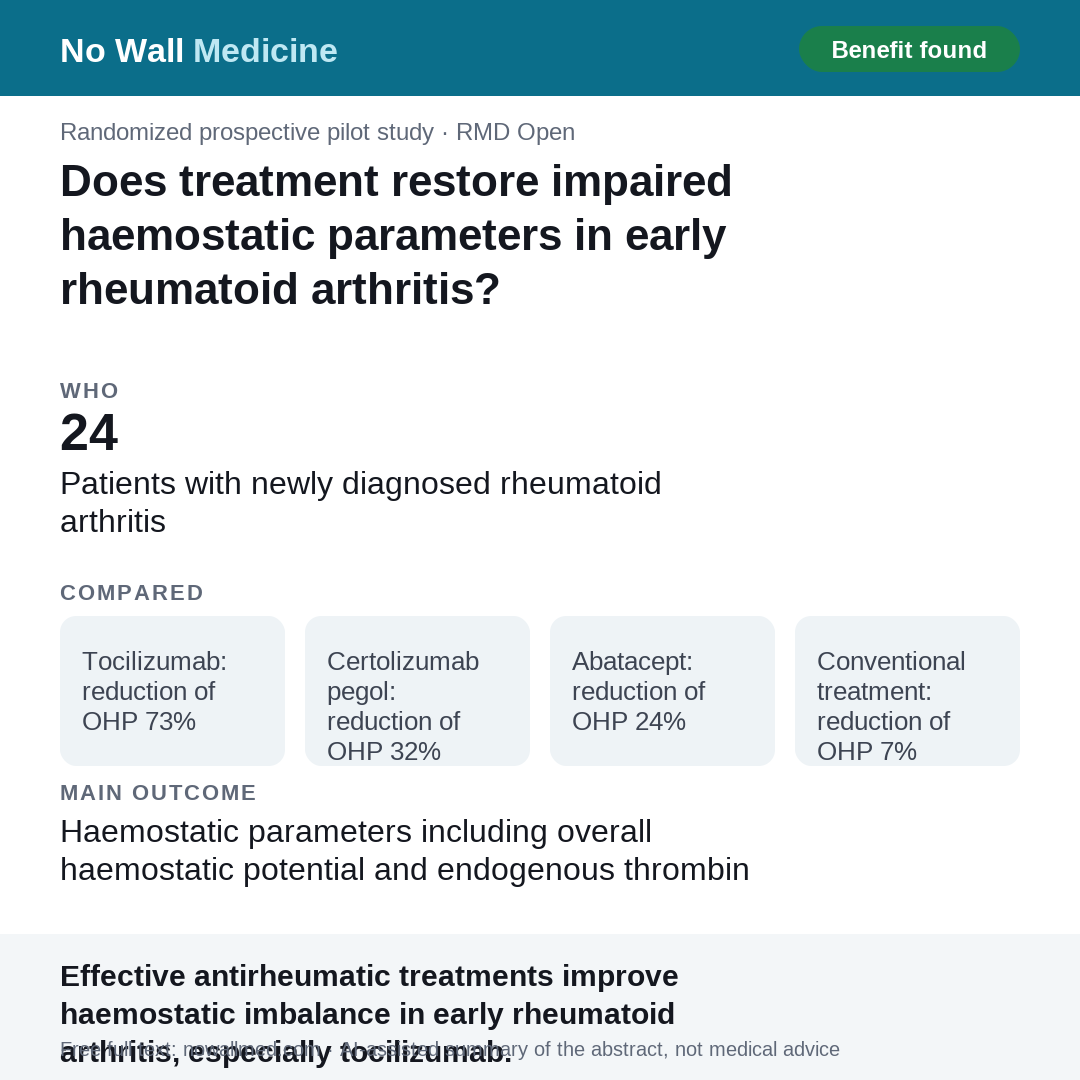
Impaired coagulation parameters in early RA are restored by effective antirheumatic therapy: a prospective pilot study
Randomized prospective pilot studyBenefit found
Does treatment restore impaired haemostatic parameters in early rheumatoid arthritis?
Who
24
Patients with newly diagnosed rheumatoid arthritis
Compared
Tocilizumab: reduction of OHP 73%
Certolizumab pegol: reduction of OHP 32%
Abatacept: reduction of OHP 24%
Conventional treatment: reduction of OHP 7%
Main outcome
Haemostatic parameters including overall haemostatic potential and endogenous thrombin potential
Bottom line: Effective antirheumatic treatments improve haemostatic imbalance in early rheumatoid arthritis, especially tocilizumab.
RMD Open · 2024-12-31Download image
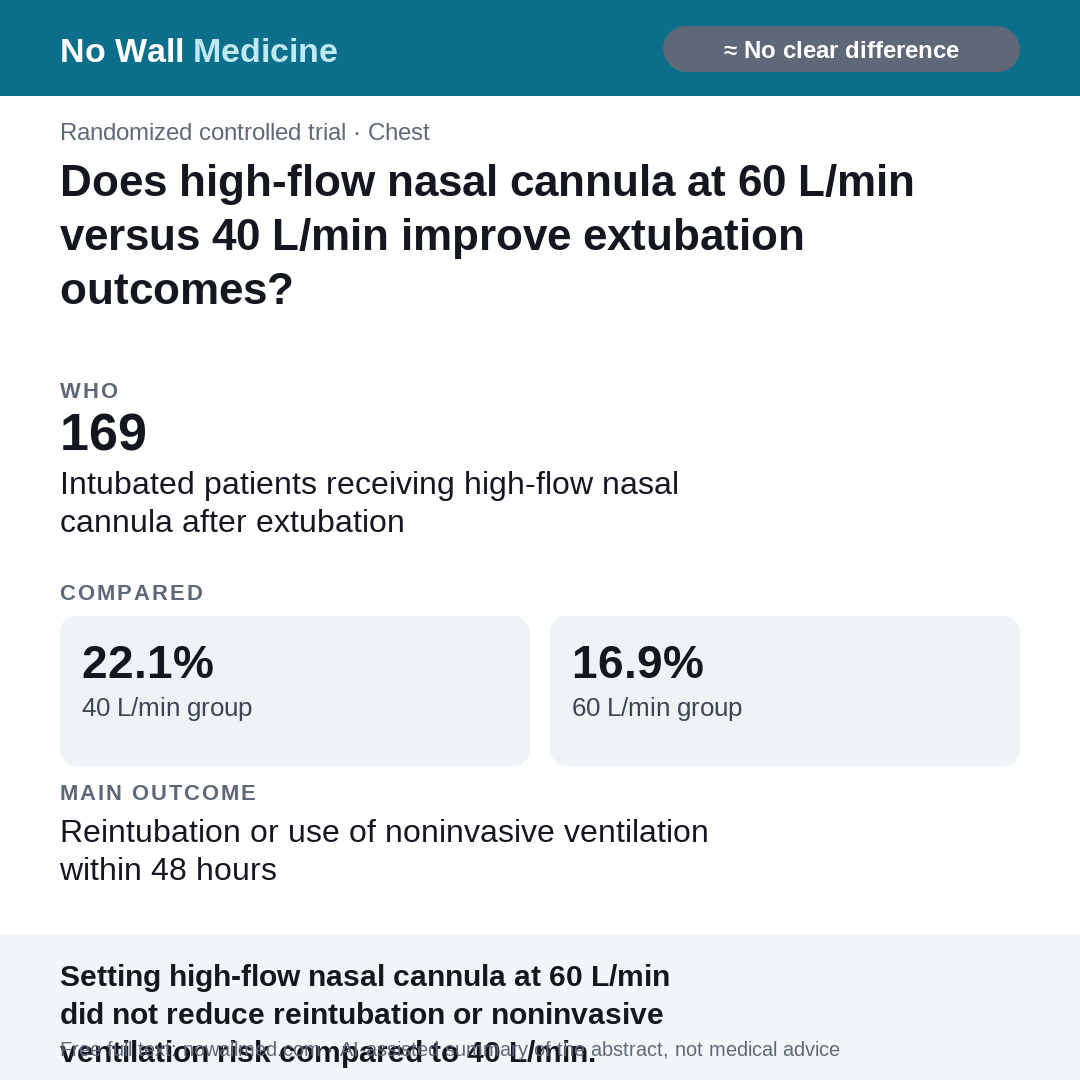
Effect of Flow Rates of High-Flow Nasal Cannula on Extubation Outcomes: A Randomized Controlled Trial
Randomized controlled trialNo clear difference
Does high-flow nasal cannula at 60 L/min versus 40 L/min improve extubation outcomes?
Who
169
Intubated patients receiving high-flow nasal cannula after extubation
Compared
22.1%40 L/min group
16.9%60 L/min group
Main outcome
Reintubation or use of noninvasive ventilation within 48 hours
Result: risk difference, 5.2% (95% CI, -6.7% to 17.1%)
Bottom line: Setting high-flow nasal cannula at 60 L/min did not reduce reintubation or noninvasive ventilation risk compared to 40 L/min.
Limitation: The trial may not have been sufficiently powered to exclude a small between-group difference.
Chest · 2024-12-30Download image
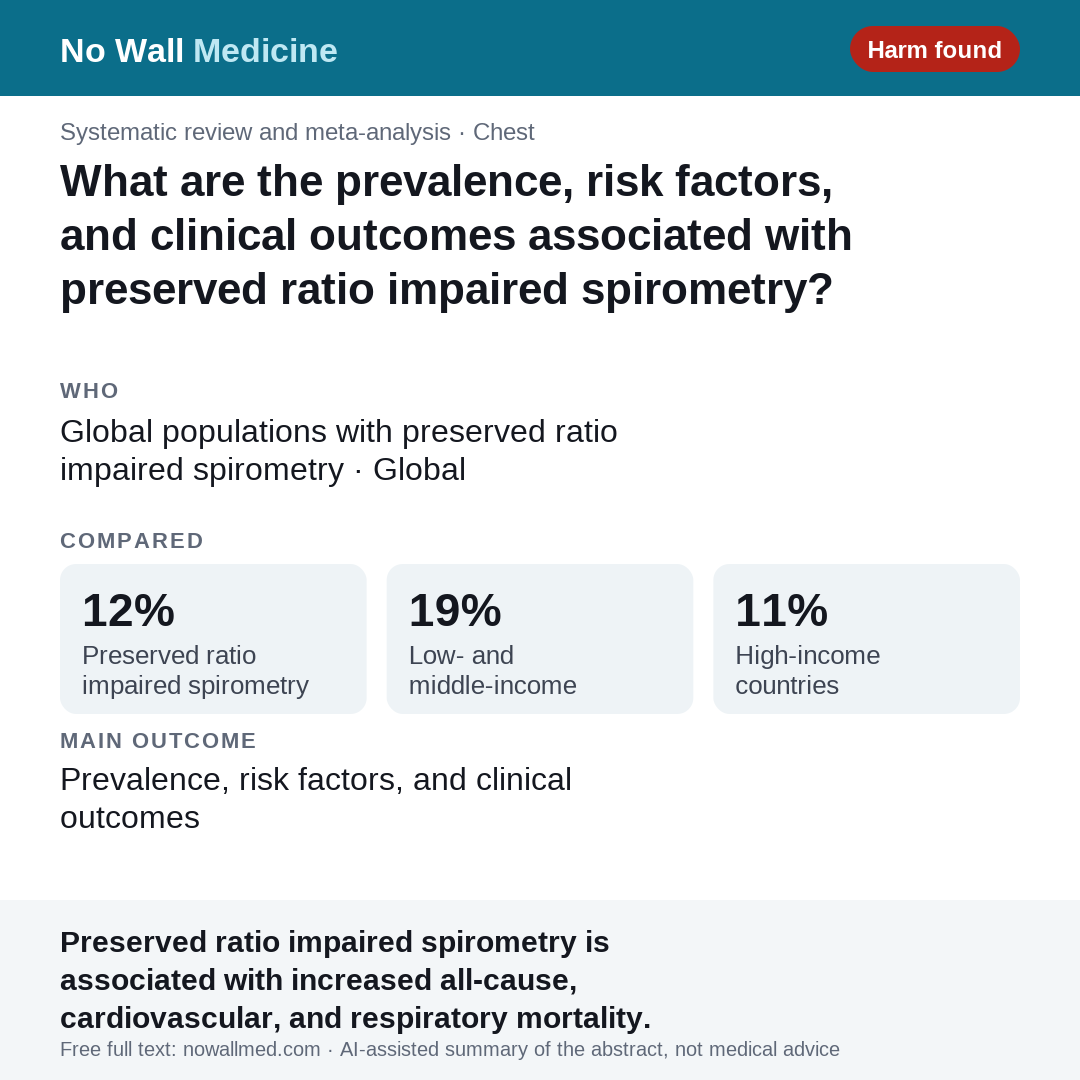
Preserved Ratio Impaired Spirometry Prevalence, Risk Factors, and Outcomes: A Systematic Review and Meta-Analysis
Systematic review and meta-analysisHarm found
What are the prevalence, risk factors, and clinical outcomes associated with preserved ratio impaired spirometry?
Who
Global populations with preserved ratio impaired spirometry · Global
Compared
12%Preserved ratio impaired spirometry (95% CI, 0.10-0.15)
19%Low- and middle-income countries
11%High-income countries
Main outcome
Prevalence, risk factors, and clinical outcomes
Result: all-cause mortality OR 1.41 (95% CI 1.08-1.83)
Bottom line: Preserved ratio impaired spirometry is associated with increased all-cause, cardiovascular, and respiratory mortality.
Chest · 2024-12-30Download image
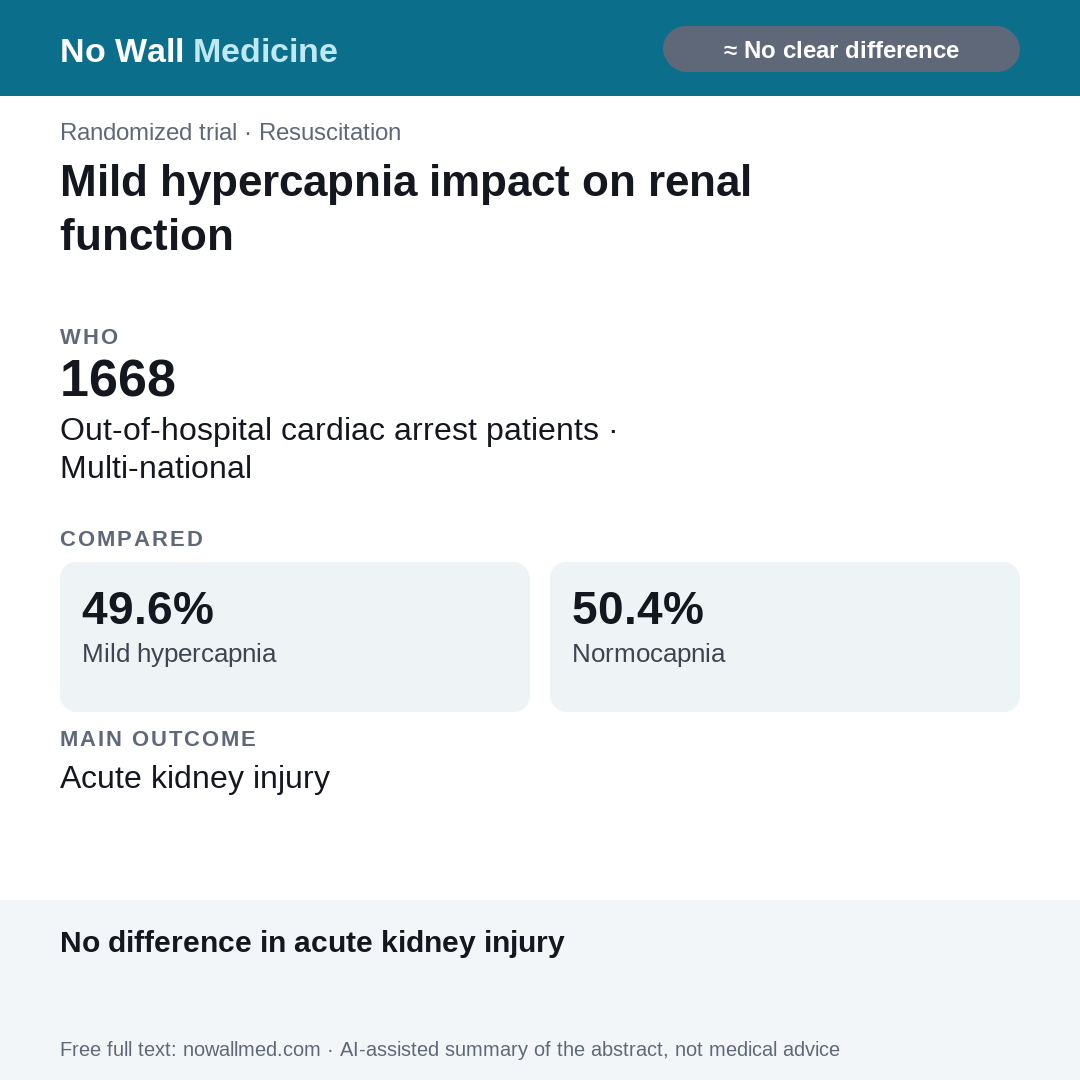
Impact of mild hypercapnia on renal function after out-of-hospital cardiac arrest
Randomized trialNo clear difference
Mild hypercapnia impact on renal function
Who
1668
Out-of-hospital cardiac arrest patients · Multi-national
Compared
49.6%Mild hypercapnia (596/1203)
50.4%Normocapnia (607/1203)
Main outcome
Acute kidney injury
Bottom line: No difference in acute kidney injury
Resuscitation · 2024-12-30Download image
Prediction of good neurological outcome after return of circulation following paediatric cardiac arrest: A systematic review and meta-analysis
Systematic review and meta-analysisBenefit found
Can predictors assess good neurological outcome in children after cardiac arrest?
Who
2974
Children following out-of-hospital or in-hospital cardiac arrest
Compared
High sensitivity predictors: FPR < 30%
Low sensitivity predictors: FPR < 30%
Main outcome
good neurological outcome
Bottom line: Individual clinical, electrophysiological, neuroimaging, or biomarker tests can predict good neurological outcomes in children.
Limitation: Moderate to high risk of bias and heterogeneity in studies.
Resuscitation · 2024-12-30Download image

Intraosseous and intravenous vascular access during adult cardiac arrest: A systematic review and meta-analysis
Systematic review and meta-analysis of three randomized clinical trialsNo clear difference
Is intraosseous vascular access more effective than intravenous access in adult cardiac arrest?
Who
9,332
Adults with out-of-hospital cardiac arrest
Compared
Intraosseous route
Intravenous route
Main outcome
30-day survival
Result: odds ratio 0.99 (95% confidence interval 0.84-1.17)
Bottom line: Intraosseous access compared with intravenous access did not improve 30-day survival in adult cardiac arrest.
Limitation: Low-certainty evidence for favourable neurological outcome at 30-days or hospital discharge.
Resuscitation · 2024-12-30Download image

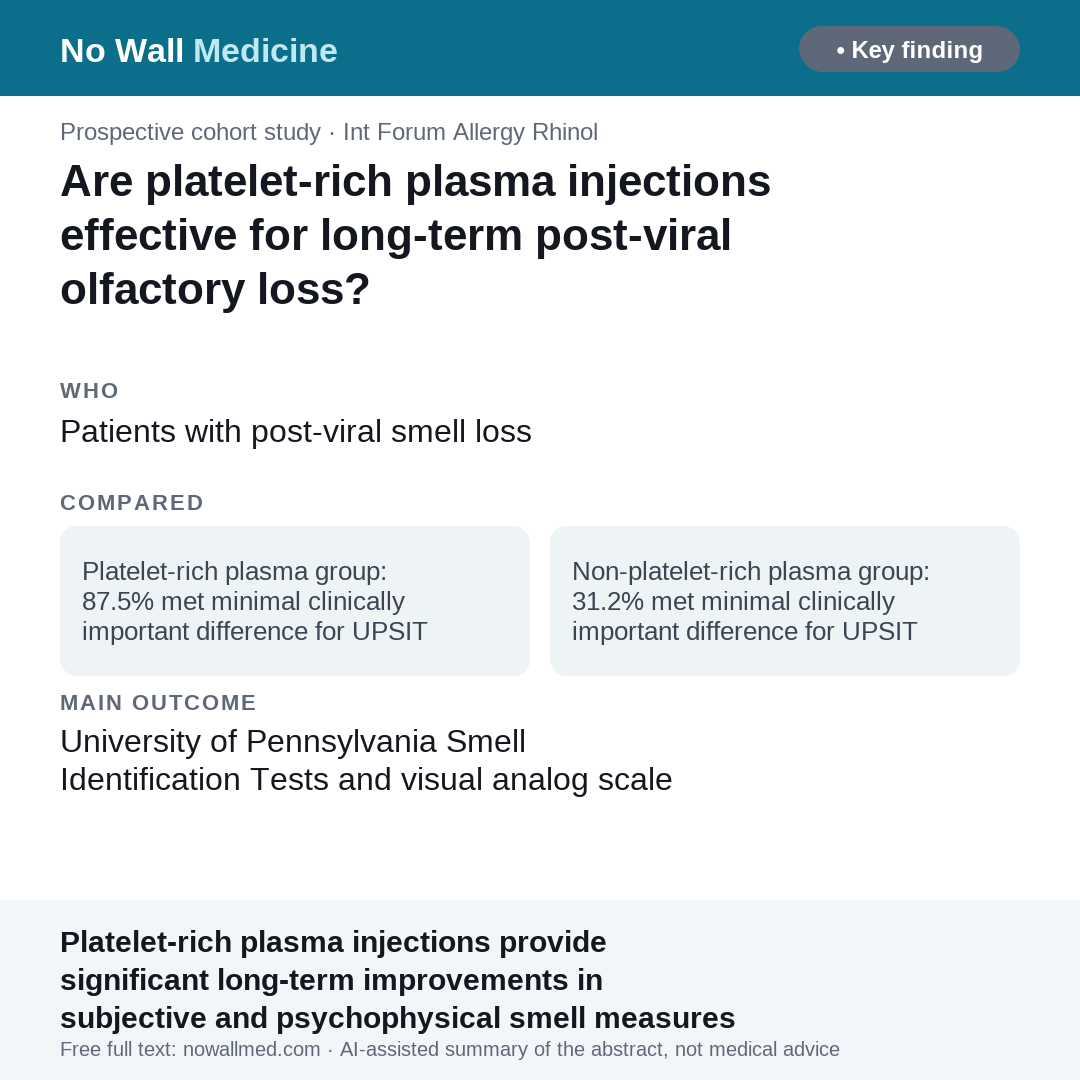
Long-term Outcomes of PRP Injections for Post-viral Olfactory Loss: A Prospective Cohort Study
Prospective cohort studyBenefit found
Are platelet-rich plasma injections effective for long-term post-viral olfactory loss?
Who
Patients with post-viral smell loss
Compared
Platelet-rich plasma group: 87.5% met minimal clinically important difference for UPSIT
Non-platelet-rich plasma group: 31.2% met minimal clinically important difference for UPSIT
Main outcome
University of Pennsylvania Smell Identification Tests and visual analog scale scores
Bottom line: Platelet-rich plasma injections provide significant long-term improvements in subjective and psychophysical smell measures at one year.
Int Forum Allergy Rhinol · 2024-12-30Download image
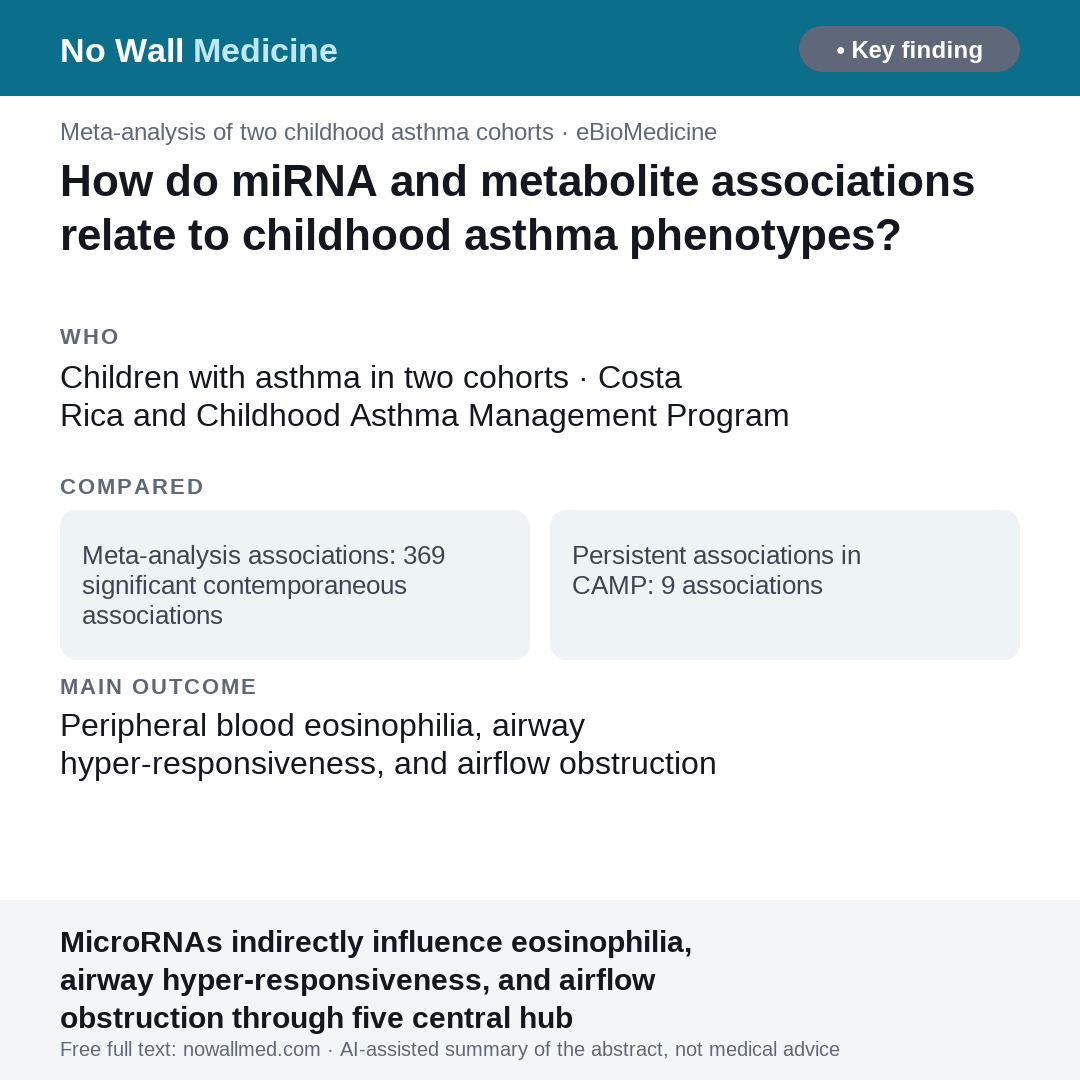
miRNAome-metabolome wide association study reveals effects of miRNA regulation in eosinophilia and airflow obstruction in childhood asthma
Meta-analysis of two childhood asthma cohortsBenefit found
How do miRNA and metabolite associations relate to childhood asthma phenotypes?
Who
Children with asthma in two cohorts · Costa Rica and Childhood Asthma Management Program
Compared
Meta-analysis associations: 369 significant contemporaneous associations
Persistent associations in CAMP: 9 associations
Main outcome
Peripheral blood eosinophilia, airway hyper-responsiveness, and airflow obstruction
Bottom line: MicroRNAs indirectly influence eosinophilia, airway hyper-responsiveness, and airflow obstruction through five central hub metabolites in childhood asthma.
Funded by: National Heart, Lung, and Blood Institute
eBioMedicine · 2024-12-30Download image
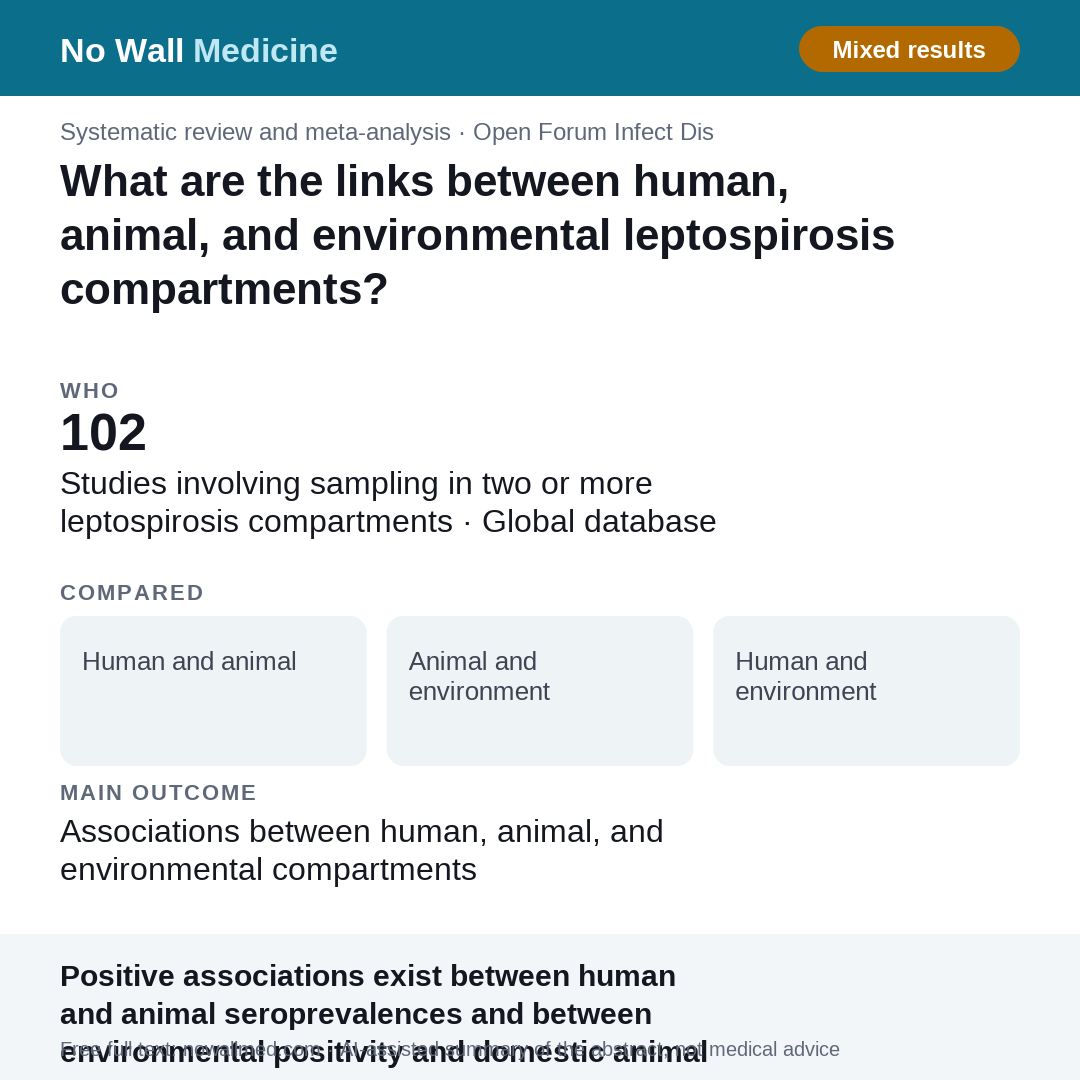
One Health Field Approach Applied to Leptospirosis: A Systematic Review and Meta-Analysis Across Humans, Animals and the Environment
Systematic review and meta-analysisMixed results
What are the links between human, animal, and environmental leptospirosis compartments?
Who
102
Studies involving sampling in two or more leptospirosis compartments · Global database search
Compared
Human and animal
Animal and environment
Human and environment
Main outcome
Associations between human, animal, and environmental compartments
Bottom line: Positive associations exist between human and animal seroprevalences and between environmental positivity and domestic animal seroprevalence.
Limitation: Limited number of studies included and quality of protocols.
Open Forum Infect Dis · 2024-12-30Download image
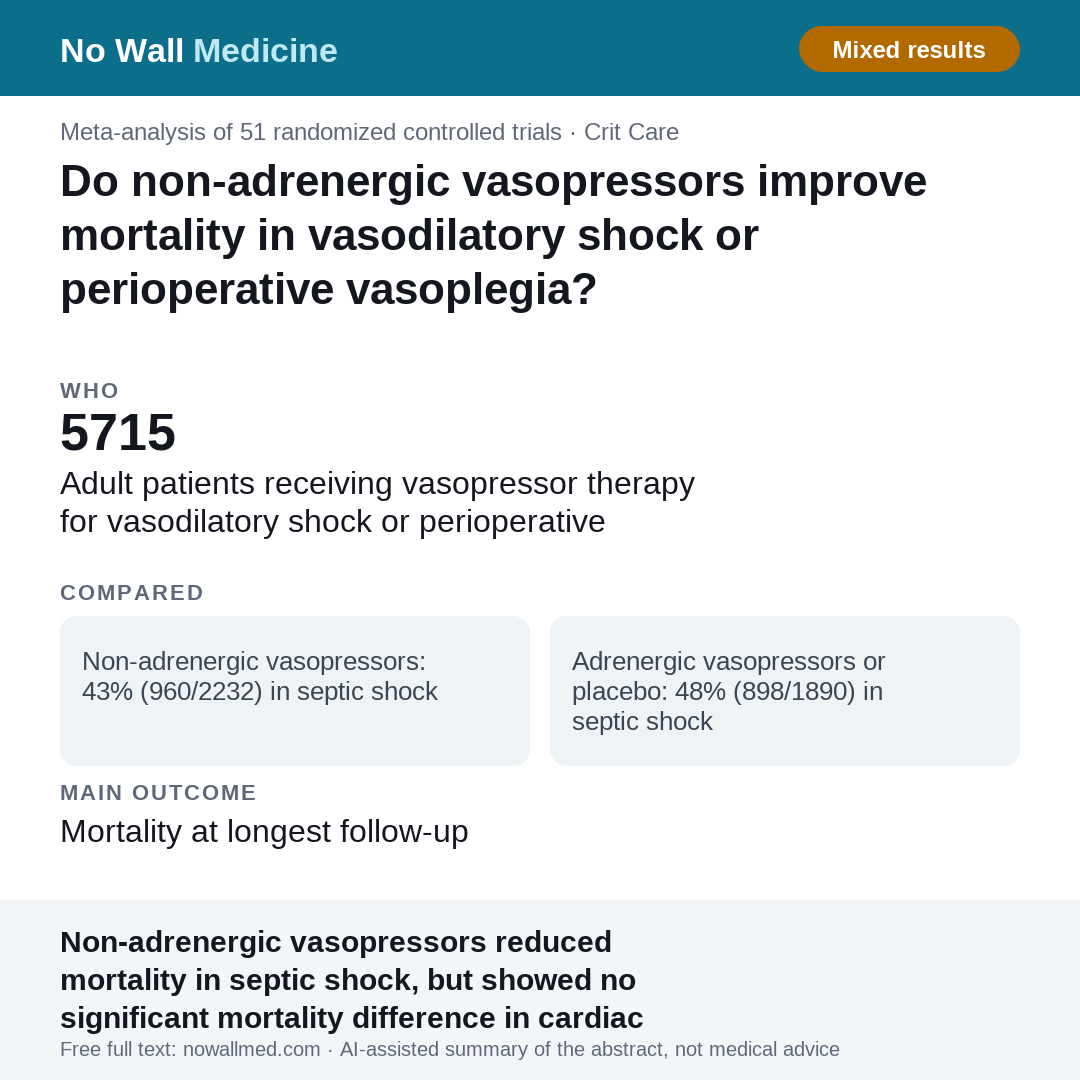
Non-adrenergic vasopressors for vasodilatory shock or perioperative vasoplegia: a meta-analysis of randomized controlled trials
Meta-analysis of 51 randomized controlled trialsMixed results
Do non-adrenergic vasopressors improve mortality in vasodilatory shock or perioperative vasoplegia?
Who
5715
Adult patients receiving vasopressor therapy for vasodilatory shock or perioperative vasoplegia
Compared
Non-adrenergic vasopressors: 43% (960/2232) in septic shock
Adrenergic vasopressors or placebo: 48% (898/1890) in septic shock
Main outcome
Mortality at longest follow-up
Result: risk ratio 0.92 (95% CI 0.86-0.97) in septic shock
Bottom line: Non-adrenergic vasopressors reduced mortality in septic shock, but showed no significant mortality difference in cardiac or non-cardiac surgery patients.
Limitation: No single non-adrenergic vasopressor showed significant survival benefits in separate analyses.
Crit Care · 2024-12-30Download image
The Effectiveness of Video Animations as a Tool to Improve Health Information Recall for Patients: Systematic Review
Systematic review of 15 randomized controlled trialsBenefit found
Do animation videos improve health information recall in adult patients compared to usual delivery?
Who
2454
Adult patients aged 18 years or older · Multiple countries including United States, France, Australia, Canada
Compared
Animation videos
Usual information delivery
Main outcome
Short-term and long-term health information recall
Bottom line: Animation videos significantly improve short-term health information recall in adult patients compared to usual care methods.
Limitation: Some studies had risk of bias concerns and lacked long-term follow-up or validated outcome measures.
J Med Internet Res · 2024-12-30Download image

Prevalence and natural development of thoracolumbar kyphosis in achondroplasia: A systematic review and meta-analysis
Systematic review and meta-analysisMixed results
What is the prevalence and natural development of thoracolumbar kyphosis in achondroplasia?
Who
852
Individuals with achondroplasia
Compared
87%Under two years old (95% CI 80%-91%)
33%Age three (24%-43%)
26%Five to ten years (19%-35%)
23%10-20 years (16%-31%)
Main outcome
Pooled prevalence of thoracolumbar kyphosis stratified by age
Bottom line: Thoracolumbar kyphosis is most prevalent in early childhood and often resolves, but persists in one-fourth of cases into adulthood.
Brain Spine · 2024-12-30Download image

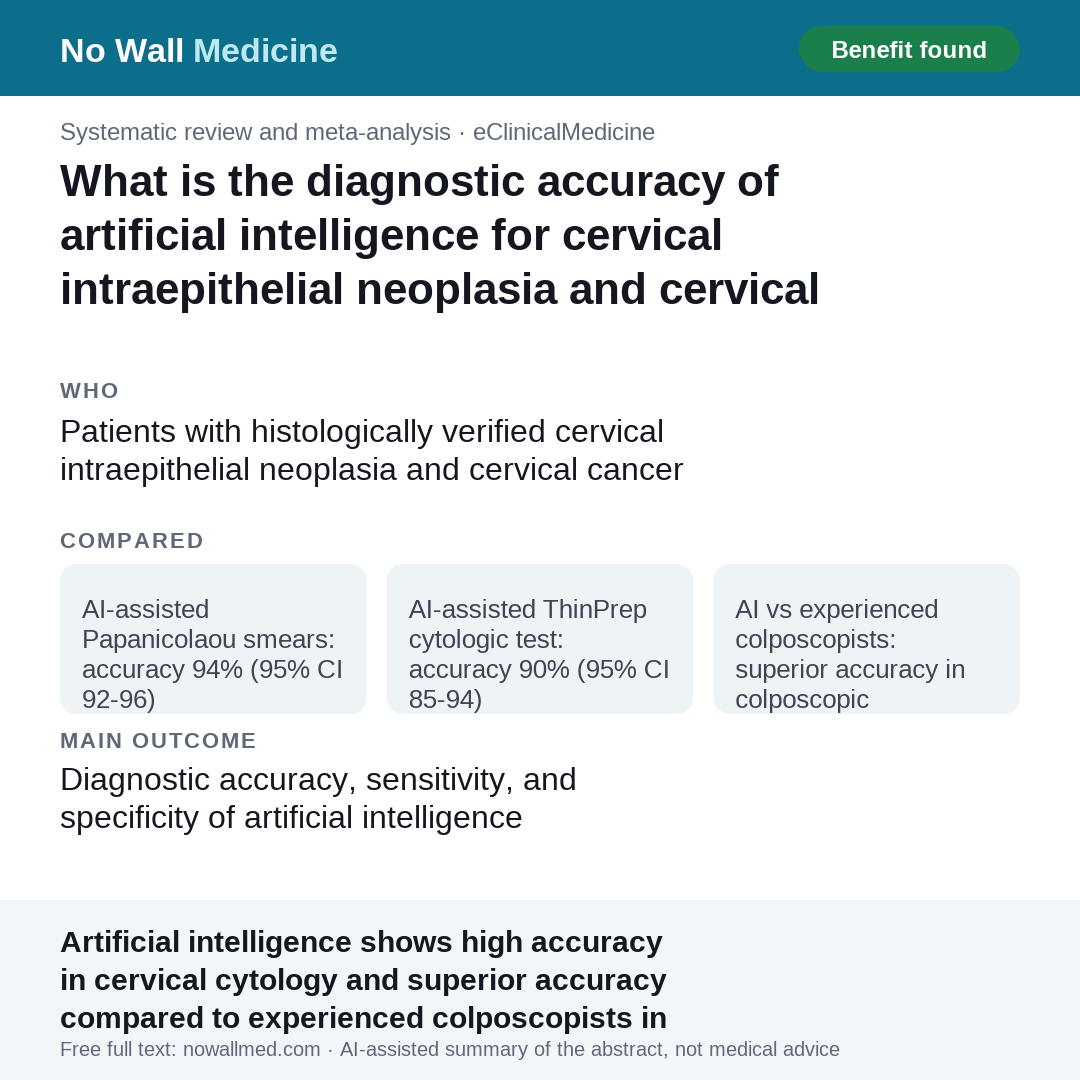
Performance of artificial intelligence for diagnosing cervical intraepithelial neoplasia and cervical cancer: a systematic review and meta-analysis
Systematic review and meta-analysisBenefit found
What is the diagnostic accuracy of artificial intelligence for cervical intraepithelial neoplasia and cervical cancer?
Who
Patients with histologically verified cervical intraepithelial neoplasia and cervical cancer
Compared
AI-assisted Papanicolaou smears: accuracy 94% (95% CI 92-96)
AI-assisted ThinPrep cytologic test: accuracy 90% (95% CI 85-94)
AI vs experienced colposcopists: superior accuracy in colposcopic examinations
Main outcome
Diagnostic accuracy, sensitivity, and specificity of artificial intelligence
Result: odds ratio 1.75 (95% CI 1.33-2.31)
Bottom line: Artificial intelligence shows high accuracy in cervical cytology and superior accuracy compared to experienced colposcopists in colposcopic examinations.
Limitation: Further research is needed for low- and middle-income countries with limited resources.
Funded by: National Natural Science Foundation of China and Shanghai Pujiang Program
eClinicalMedicine · 2024-12-28Download image
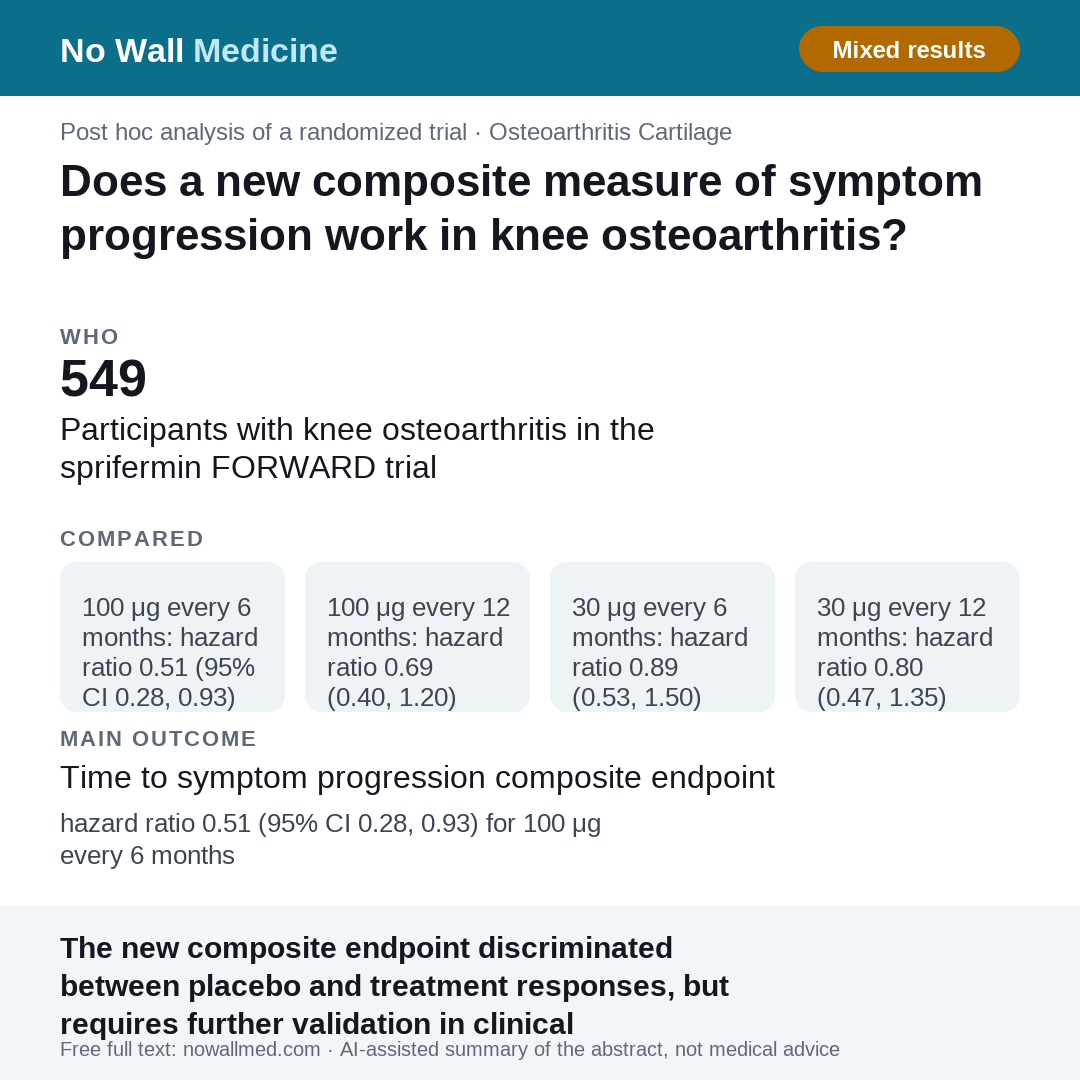
Exploring a novel outcome measure of symptom progression in knee osteoarthritis utilizing a large randomized trial
Post hoc analysis of a randomized trialMixed results
Does a new composite measure of symptom progression work in knee osteoarthritis?
Who
549
Participants with knee osteoarthritis in the sprifermin FORWARD trial
Compared
100 μg every 6 months: hazard ratio 0.51 (95% CI 0.28, 0.93)
100 μg every 12 months: hazard ratio 0.69 (0.40, 1.20)
30 μg every 6 months: hazard ratio 0.89 (0.53, 1.50)
30 μg every 12 months: hazard ratio 0.80 (0.47, 1.35)
Main outcome
Time to symptom progression composite endpoint
Result: hazard ratio 0.51 (95% CI 0.28, 0.93) for 100 μg every 6 months
Bottom line: The new composite endpoint discriminated between placebo and treatment responses, but requires further validation in clinical trials.
Osteoarthritis Cartilage · 2024-12-28Download image
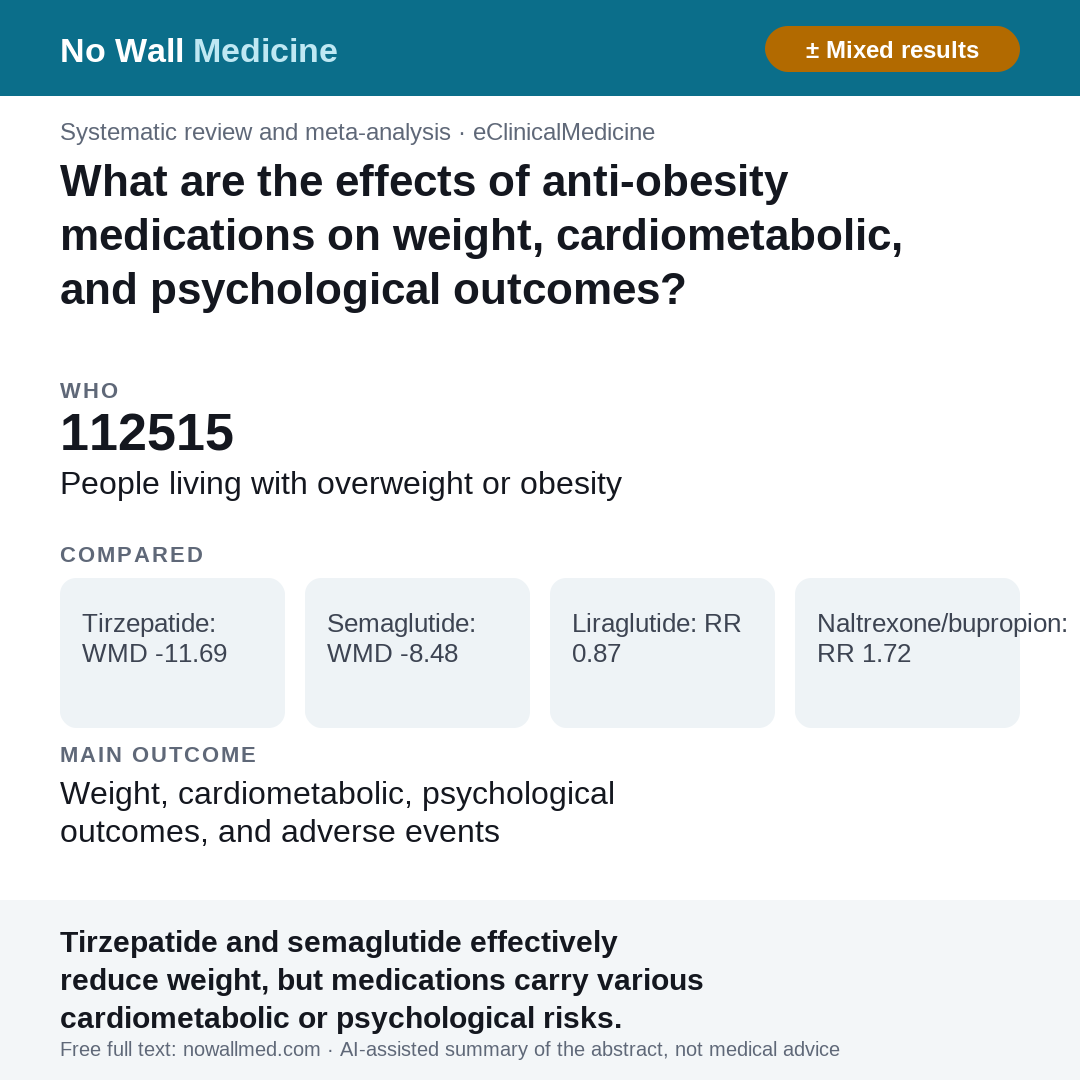
Safety and effects of anti-obesity medications on weight loss, cardiometabolic, and psychological outcomes in people living with overweight or obesity: a systematic review and meta-analysis
Systematic review and meta-analysisMixed results
What are the effects of anti-obesity medications on weight, cardiometabolic, and psychological outcomes?
Who
112515
People living with overweight or obesity
Compared
Tirzepatide: WMD -11.69
Semaglutide: WMD -8.48
Liraglutide: RR 0.87
Naltrexone/bupropion: RR 1.72
Main outcome
Weight, cardiometabolic, psychological outcomes, and adverse events
Bottom line: Tirzepatide and semaglutide effectively reduce weight, but medications carry various cardiometabolic or psychological risks.
Limitation: Limitations related to study heterogeneity.
Funded by: National Natural Science Foundation of China and others
eClinicalMedicine · 2024-12-27Download image