Visual abstracts
New randomized trials and meta-analyses from leading journals at a glance: who was studied, what was compared, and what was found. Every paper is free to read in full.
All specialtiesCardiology 4877Oncology 4138Gastroenterology & Hepatology 1942Infectious Disease 3837Neurology 1905Psychiatry & Mental Health 2273Pulmonology 2143Critical Care 1365Endocrinology & Diabetes 2580Pediatrics 2980Surgery 2559Orthopedics & Sports Medicine 931Neurosurgery 537Cardiothoracic & Vascular Surgery 674Plastic & Reconstructive Surgery 591Nephrology 1133Rheumatology 823Hematology 1109Dermatology 621Ophthalmology 543Obstetrics & Gynecology 1686Public & Global Health 1058Radiology & Imaging 648Anesthesiology 986Urology 764ENT (Otolaryngology) 503Emergency Medicine 511Allergy & Immunology 313Geriatrics 981Family Medicine & Primary Care 562Medical Genetics & Genomics 676Pathology & Laboratory Medicine 159Physical Medicine & Rehabilitation 757Palliative Care 444Nutrition 1588Digital Health & AI 2201General Medicine 321
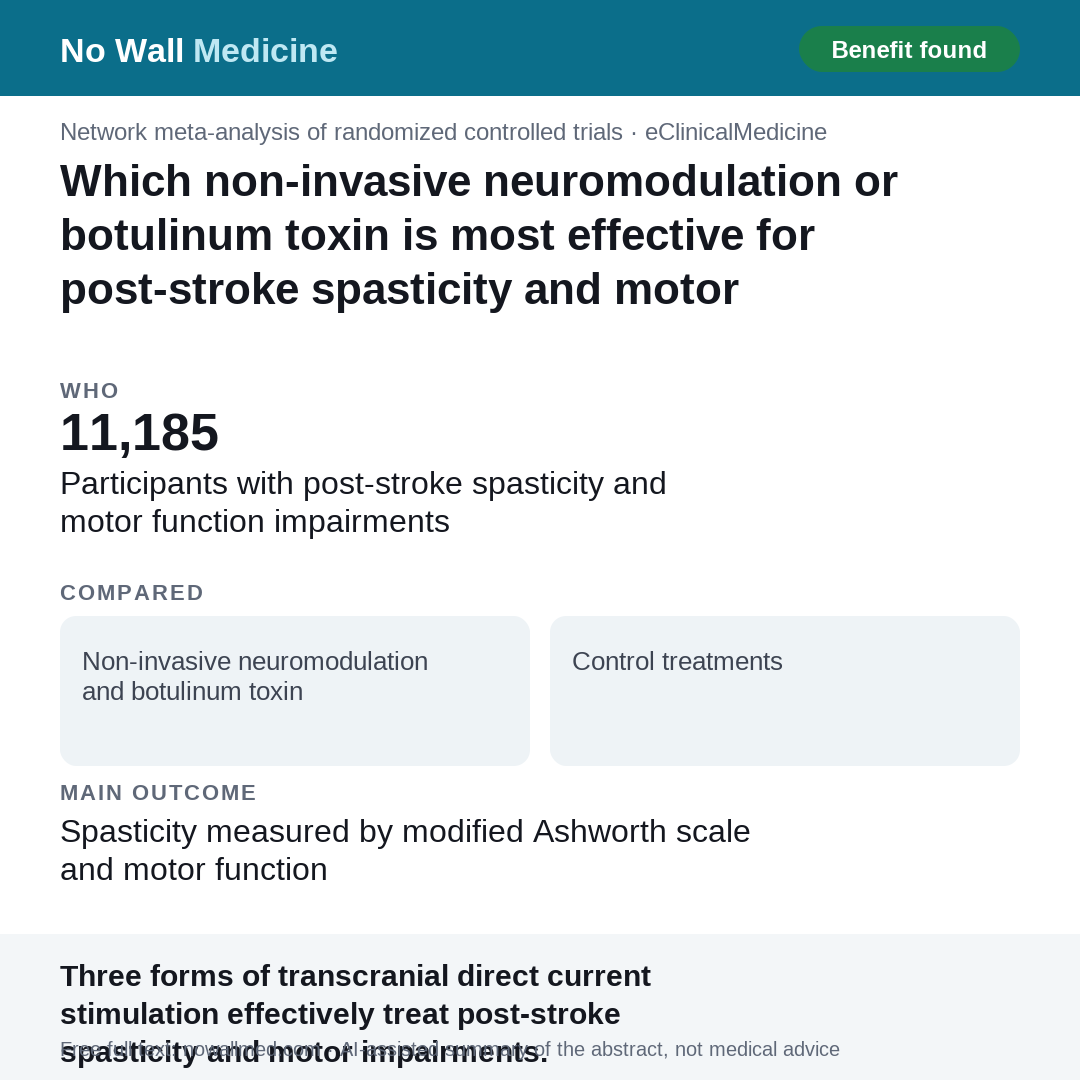
Comparative efficacy and acceptability of non-invasive neuromodulation technologies and botulinum toxin injections for post-stroke spasticity and motor function: a network meta-analysis of randomised controlled trials
Network meta-analysis of randomized controlled trialsBenefit found
Which non-invasive neuromodulation or botulinum toxin is most effective for post-stroke spasticity and motor function?
Who
11,185
Participants with post-stroke spasticity and motor function impairments
Compared
Non-invasive neuromodulation and botulinum toxin
Control treatments
Main outcome
Spasticity measured by modified Ashworth scale and motor function
Bottom line: Three forms of transcranial direct current stimulation effectively treat post-stroke spasticity and motor impairments.
Limitation: Confidence in accordance with CINeMA ranged from high to low.
Funded by: China Postdoctoral Science Foundation
eClinicalMedicine · 2024-12-27Download image
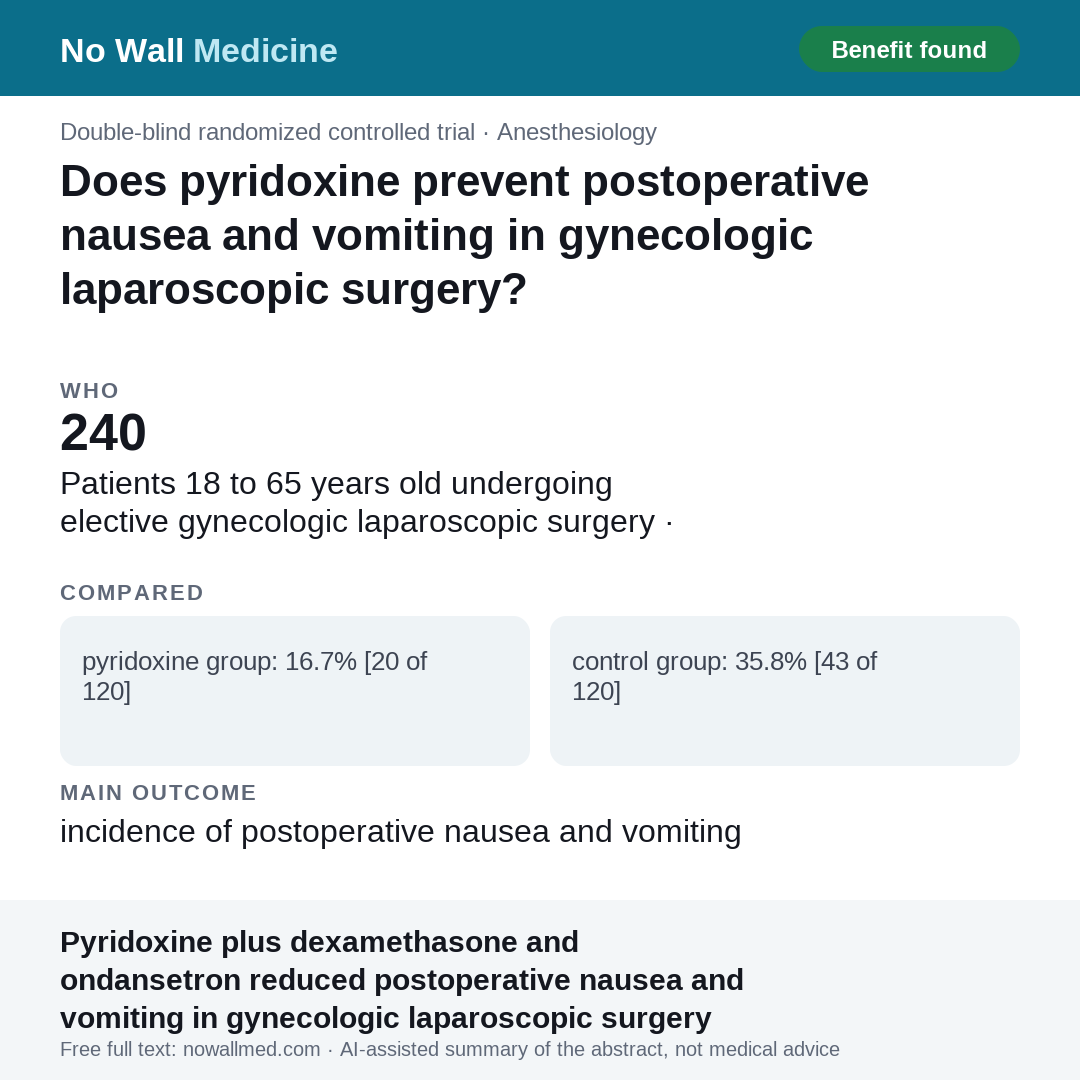
Pyridoxine Prevents Postoperative Nausea and Vomiting in Gynecologic Laparoscopic Surgery: A Double-blind Randomized Controlled Trial
Double-blind randomized controlled trialBenefit found
Does pyridoxine prevent postoperative nausea and vomiting in gynecologic laparoscopic surgery?
Who
240
Patients 18 to 65 years old undergoing elective gynecologic laparoscopic surgery · Single-center
Compared
pyridoxine group: 16.7% [20 of 120]
control group: 35.8% [43 of 120]
Main outcome
incidence of postoperative nausea and vomiting
Result: relative risk = 0.47 [95% CI, 0.29 to 0.74]
Bottom line: Pyridoxine plus dexamethasone and ondansetron reduced postoperative nausea and vomiting in gynecologic laparoscopic surgery patients.
Limitation: Findings need validation in multicenter studies in diverse populations to ensure generalizability.
Anesthesiology · 2024-12-27Download image
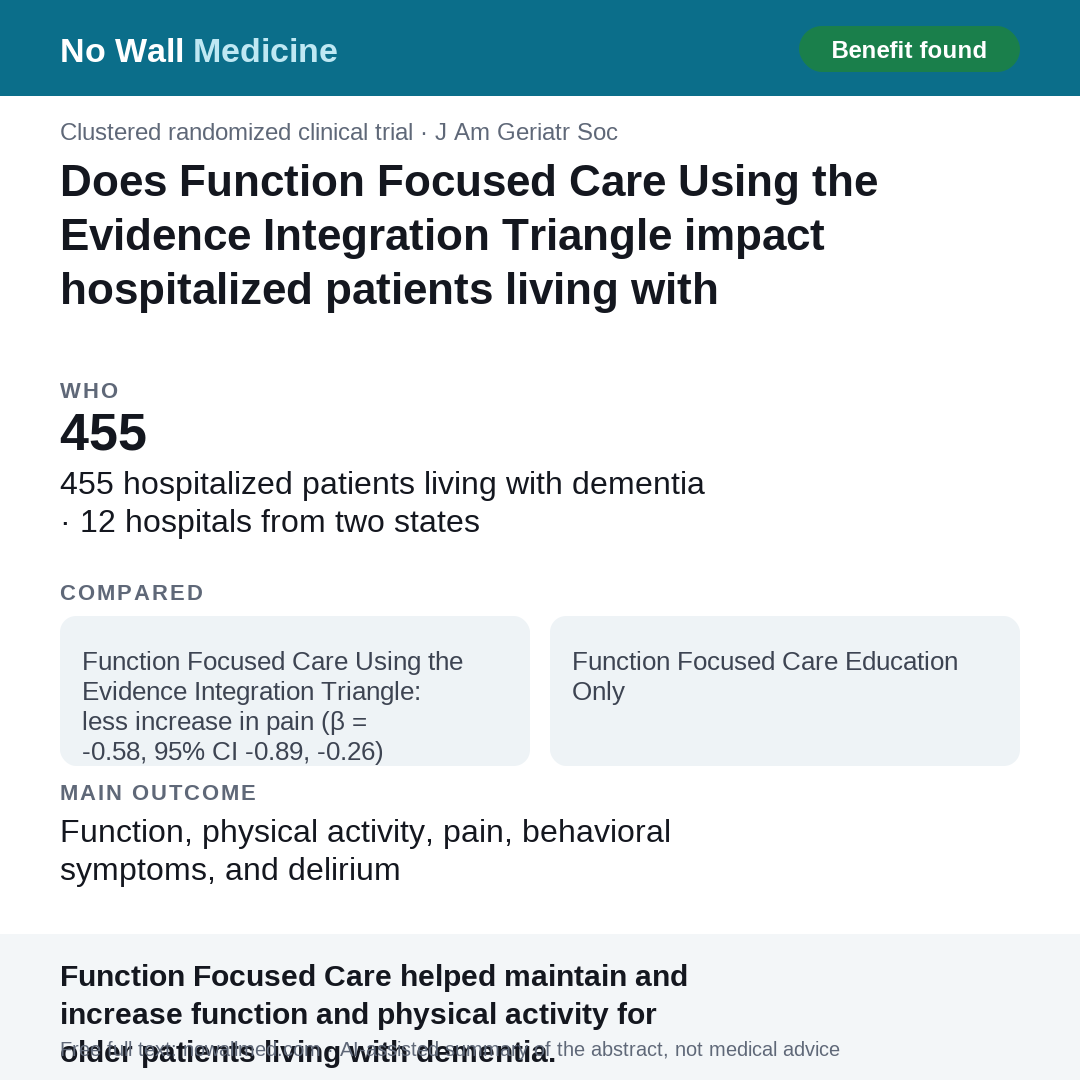
Implementation of Function Focused Care for Acute Care Using the Evidence Integration Triangle
Clustered randomized clinical trialBenefit found
Does Function Focused Care Using the Evidence Integration Triangle impact hospitalized patients living with dementia?
Who
455
455 hospitalized patients living with dementia · 12 hospitals from two states
Compared
Function Focused Care Using the Evidence Integration Triangle: less increase in pain (β = -0.58, 95% CI -0.89, -0.26)
Function Focused Care Education Only
Main outcome
Function, physical activity, pain, behavioral symptoms, and delirium
Result: β = -0.58, 95% CI -0.89, -0.26
Bottom line: Function Focused Care helped maintain and increase function and physical activity for older patients living with dementia.
J Am Geriatr Soc · 2024-12-27Download image
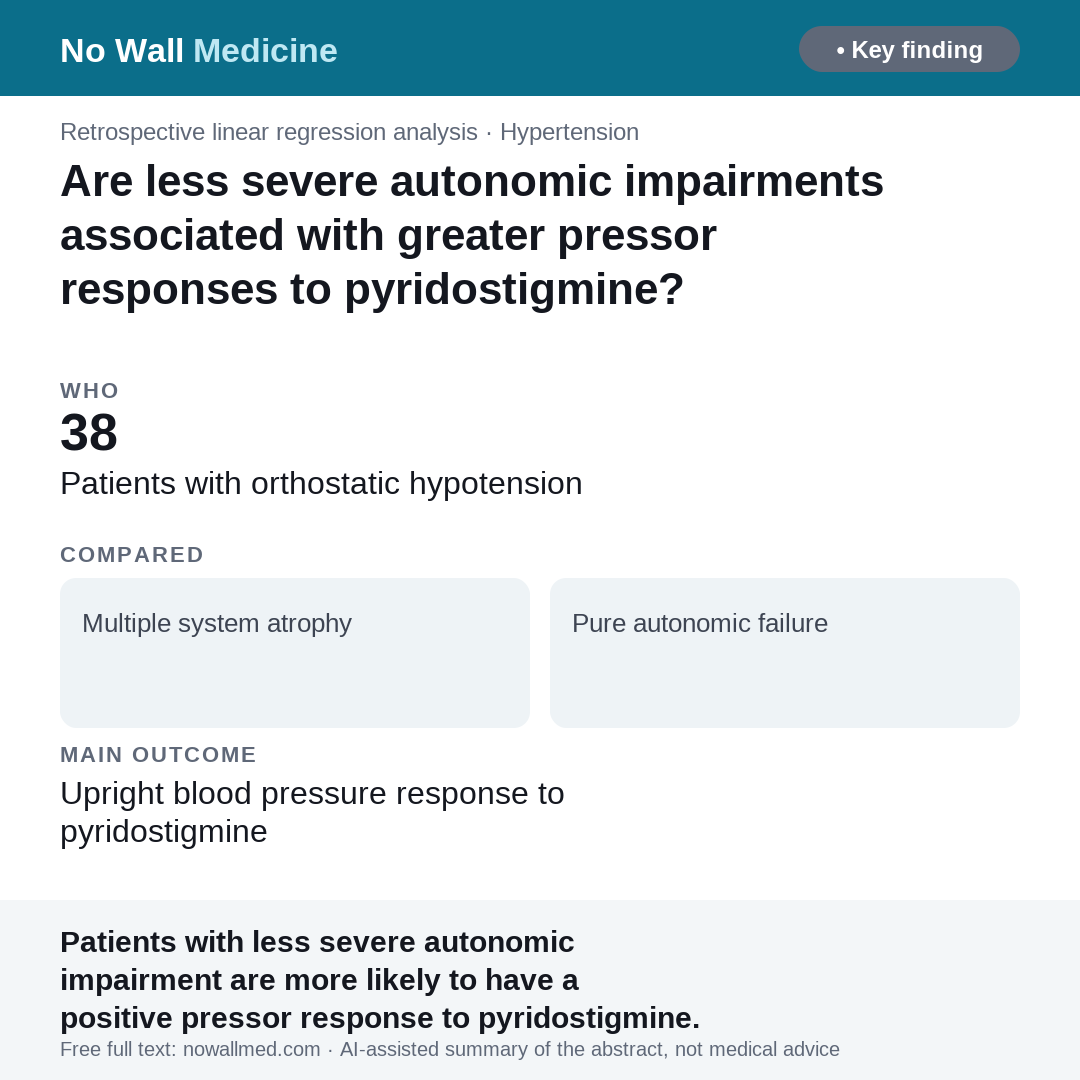
Clinical Correlates of Efficacy of Pyridostigmine in the Treatment of Orthostatic Hypotension
Retrospective linear regression analysisBenefit found
Are less severe autonomic impairments associated with greater pressor responses to pyridostigmine?
Who
38
Patients with orthostatic hypotension
Compared
Multiple system atrophy
Pure autonomic failure
Main outcome
Upright blood pressure response to pyridostigmine
Bottom line: Patients with less severe autonomic impairment are more likely to have a positive pressor response to pyridostigmine.
Hypertension · 2024-12-27Download image
A feasibility randomized controlled trial of an individually delivered, peer support intervention to reduce the impact of psychosis stigma and discrimination for people with psychosis: the let's talk study
Prospective Randomized Open Blinded Evaluation feasibility trialBenefit found
Is an individually delivered peer support intervention feasible for people with psychosis?
Who
70
People with psychosis · Multi-site
Compared
Let's Talk plus treatment as usual: 83% intervention attendance rate
Treatment as usual: 16% adverse event
Main outcome
Feasibility data including recruitment, retention, and intervention attendance
Bottom line: The Let's Talk peer support intervention is feasible and safe for people with psychosis.
Psychol Med · 2024-12-27Download image

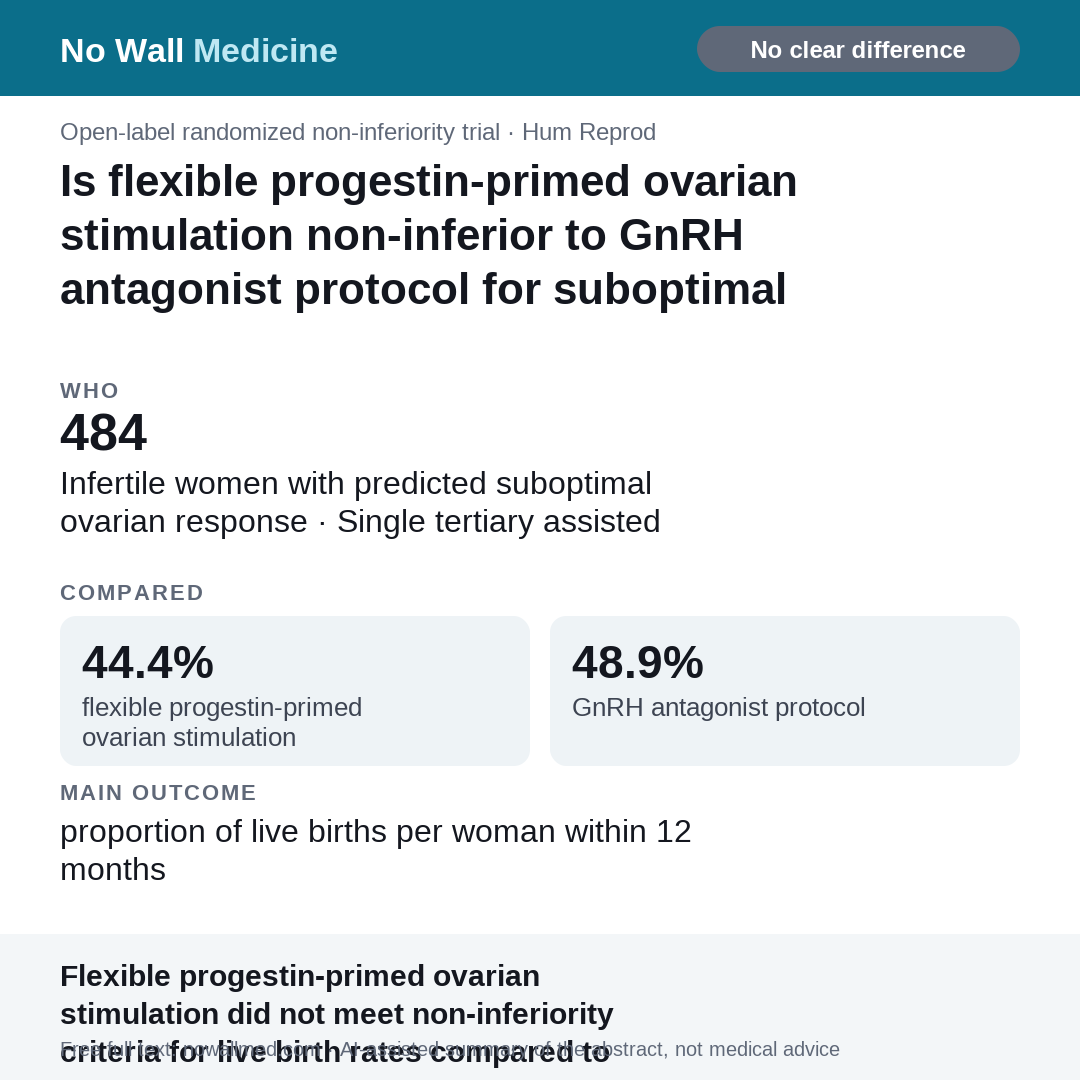
Flexible progestin-primed ovarian stimulation versus a GnRH antagonist protocol in predicted suboptimal responders undergoing freeze-all cycles: a randomized non-inferiority trial
Open-label randomized non-inferiority trialNo clear difference
Is flexible progestin-primed ovarian stimulation non-inferior to GnRH antagonist protocol for suboptimal responders?
Who
484
Infertile women with predicted suboptimal ovarian response · Single tertiary assisted reproduction center
Compared
44.4%flexible progestin-primed ovarian stimulation (96/216)
48.9%GnRH antagonist protocol (114/233)
Main outcome
proportion of live births per woman within 12 months
Result: risk ratio 0.91 (95% CI 0.74, 1.11)
Bottom line: Flexible progestin-primed ovarian stimulation did not meet non-inferiority criteria for live birth rates compared to GnRH antagonist protocol.
Limitation: Open-label design precluded blinding and results are from a single center.
Funded by: Science and Technology Department of Shaanxi Province, China
Hum Reprod · 2024-12-27Download image
A Randomized Control Trial of a Virtually Delivered Program for Increasing Upper Limb Activity After Stroke
Parallel-group, assessor-blinded, randomized control trialBenefit found
Does a virtually delivered program increase upper limb activity after stroke?
Who
73
Community-living adults less than 1 year post stroke · 6 sites across 5 provinces
Compared
Virtual Arm Boot Camp: greater average daily reach-to-grasp counts
Waitlist control
Main outcome
Average daily reach-to-grasp counts
Result: mean difference = 368, 95% confidence interval = 6-730
Bottom line: A virtually delivered upper limb program can increase real-world upper limb activity following stroke.
Neurorehabil Neural Repair · 2024-12-27Download image

Feasibility of a randomized controlled trial of enteral vs intravenous resuscitation for adults with major burn injuries in Nepal
Randomized feasibility studyBenefit found
Is a randomized controlled trial of enteral versus intravenous resuscitation feasible in Nepal?
Who
30
Adults with major burn injuries · A tertiary burn center in Nepal
Compared
Enteral resuscitation: 93% adherence to prescribed volumes
Usual resuscitation
Main outcome
Feasibility, acceptability, and protocol compliance
Bottom line: The study established that conducting a randomized trial of enteral resuscitation is feasible in a low-resource setting.
Burns · 2024-12-27Download image

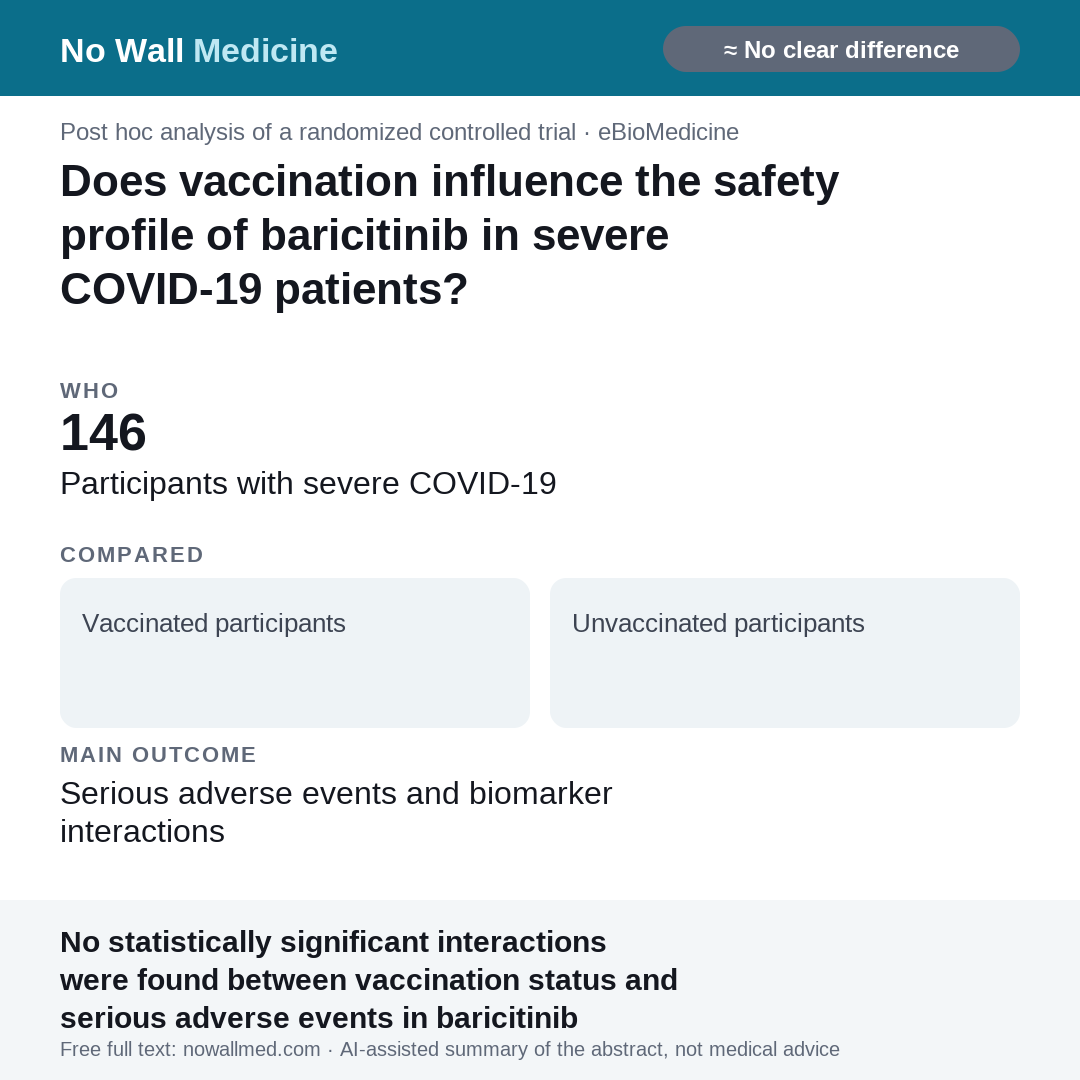
Safety of baricitinib in vaccinated patients with severe and critical COVID-19 sub study of the randomised Bari-SolidAct trial
Post hoc analysis of a randomized controlled trialNo clear difference
Does vaccination influence the safety profile of baricitinib in severe COVID-19 patients?
Who
146
Participants with severe COVID-19
Compared
Vaccinated participants
Unvaccinated participants
Main outcome
Serious adverse events and biomarker interactions
Bottom line: No statistically significant interactions were found between vaccination status and serious adverse events in baricitinib treatment.
Limitation: The study had a moderate sample size.
Funded by: EU Horizon 2020
eBioMedicine · 2024-12-27Download image
Cost-effectiveness analysis of proactive home visits compared with site-based community health worker care on antenatal care outcomes in Mali: a cluster-randomised trial
Cluster-randomised controlled trialBenefit found
Are proactive home visits more cost-effective than site-based community health worker care?
Who
Village clusters in the Bankass health district in Central Mali · Bankass health district, Central Mali
Compared
Proactive home visits: Cost-saving
Community fixed sites only
Main outcome
Antenatal care utilisation
Result: ICERs: -$21.39 to -$79.20 per ANC utilisation outcome
Bottom line: Proactive home visits are cost-saving and produce more value per dollar spent than fixed-site community health worker services.
BMJ Glob Health · 2024-12-27Download image

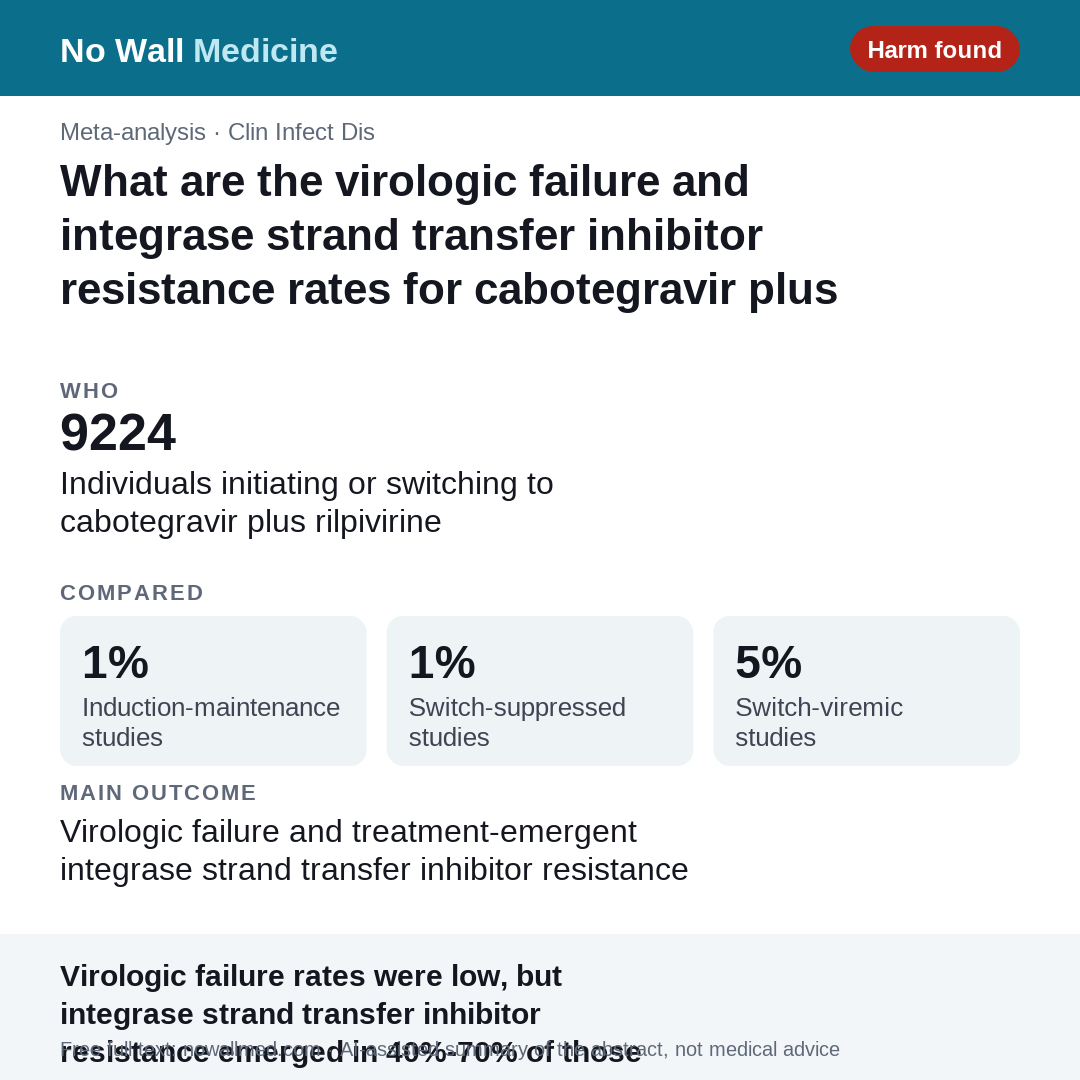
Virologic Failure and Emergent Integrase Strand Transfer Inhibitor Drug Resistance With Long-Acting Cabotegravir for HIV Treatment: A Meta-analysis
Meta-analysisHarm found
What are the virologic failure and integrase strand transfer inhibitor resistance rates for cabotegravir plus rilpivirine?
Who
9224
Individuals initiating or switching to cabotegravir plus rilpivirine
Compared
1%Induction-maintenance studies (95% CI: 1%-3%)
1%Switch-suppressed studies (1%-2%)
5%Switch-viremic studies (3%-10%)
Main outcome
Virologic failure and treatment-emergent integrase strand transfer inhibitor resistance
Bottom line: Virologic failure rates were low, but integrase strand transfer inhibitor resistance emerged in 40%-70% of those experiencing failure.
Clin Infect Dis · 2024-12-26Download image
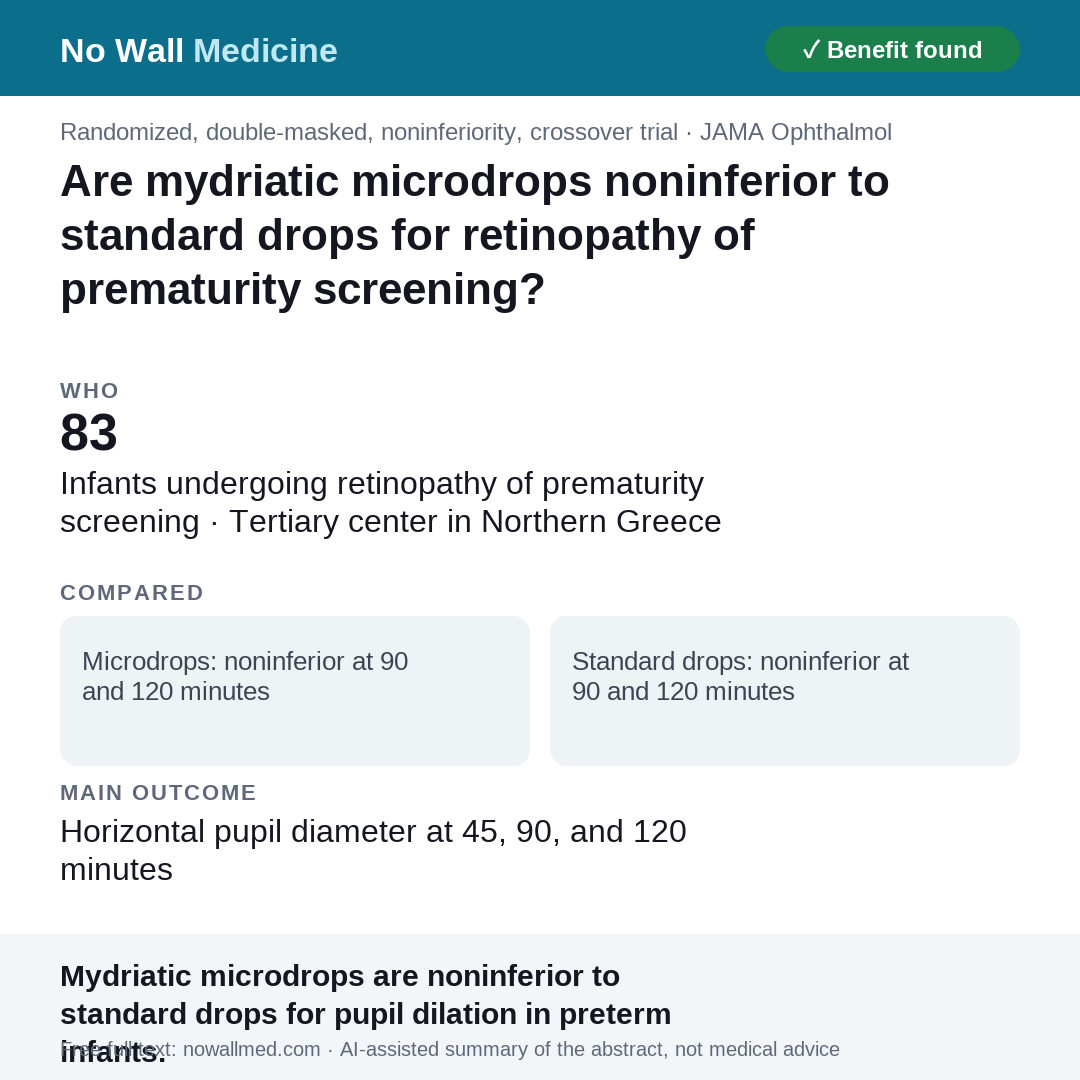
Efficacy and Safety of Mydriatic Microdrops for Retinopathy of Prematurity Screening: The MyMiROPS Randomized Clinical Trial
Randomized, double-masked, noninferiority, crossover trialBenefit found
Are mydriatic microdrops noninferior to standard drops for retinopathy of prematurity screening?
Who
83
Infants undergoing retinopathy of prematurity screening · Tertiary center in Northern Greece
Compared
Microdrops: noninferior at 90 and 120 minutes
Standard drops: noninferior at 90 and 120 minutes
Main outcome
Horizontal pupil diameter at 45, 90, and 120 minutes
Result: mean difference 0.12 (95% CI 0.01 to 0.23) at 45 minutes
Bottom line: Mydriatic microdrops are noninferior to standard drops for pupil dilation in preterm infants.
JAMA Ophthalmol · 2024-12-26Download image
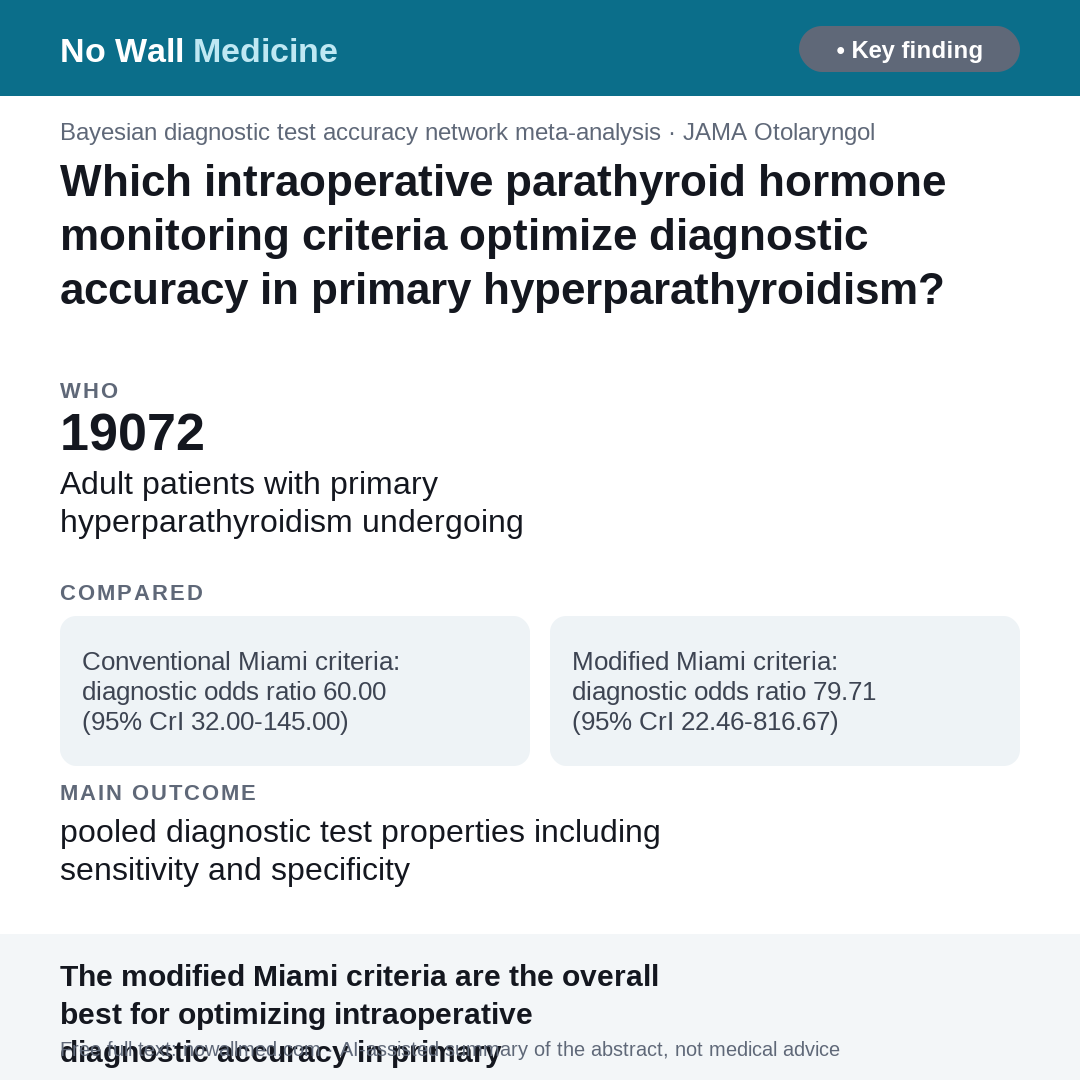
Intraoperative Parathyroid Hormone Monitoring Criteria in Primary Hyperparathyroidism: A Network Meta-Analysis of Diagnostic Test Accuracy
Bayesian diagnostic test accuracy network meta-analysisBenefit found
Which intraoperative parathyroid hormone monitoring criteria optimize diagnostic accuracy in primary hyperparathyroidism?
Who
19072
Adult patients with primary hyperparathyroidism undergoing parathyroidectomy
Compared
Conventional Miami criteria: diagnostic odds ratio 60.00 (95% CrI 32.00-145.00)
Modified Miami criteria: diagnostic odds ratio 79.71 (95% CrI 22.46-816.67)
Main outcome
pooled diagnostic test properties including sensitivity and specificity
Result: diagnostic odds ratio 79.71 (95% CrI 22.46-816.67)
Bottom line: The modified Miami criteria are the overall best for optimizing intraoperative diagnostic accuracy in primary hyperparathyroidism surgery.
Limitation: There are no published Grading of Recommendations, Assessment, Development, and Evaluation resources for diagnostic test accuracy network meta-analysis.
JAMA Otolaryngol · 2024-12-26Download image
Empagliflozin in acute myocardial infarction in patients with and without type 2 diabetes: A pre-specified analysis of the EMPACT-MI trial
Randomized trialMixed results
Does empagliflozin affect outcomes in acute myocardial infarction patients with or without type 2 diabetes?
Who
6522
Patients with acute myocardial infarction and reduced ejection fraction or congestion
Compared
Empagliflozin 10 mg
Placebo
Main outcome
Time to first heart failure hospitalization or all-cause death
Bottom line: Empagliflozin reduced heart failure hospitalizations but not all-cause mortality regardless of type 2 diabetes status.
Eur J Heart Fail · 2024-12-26Download image

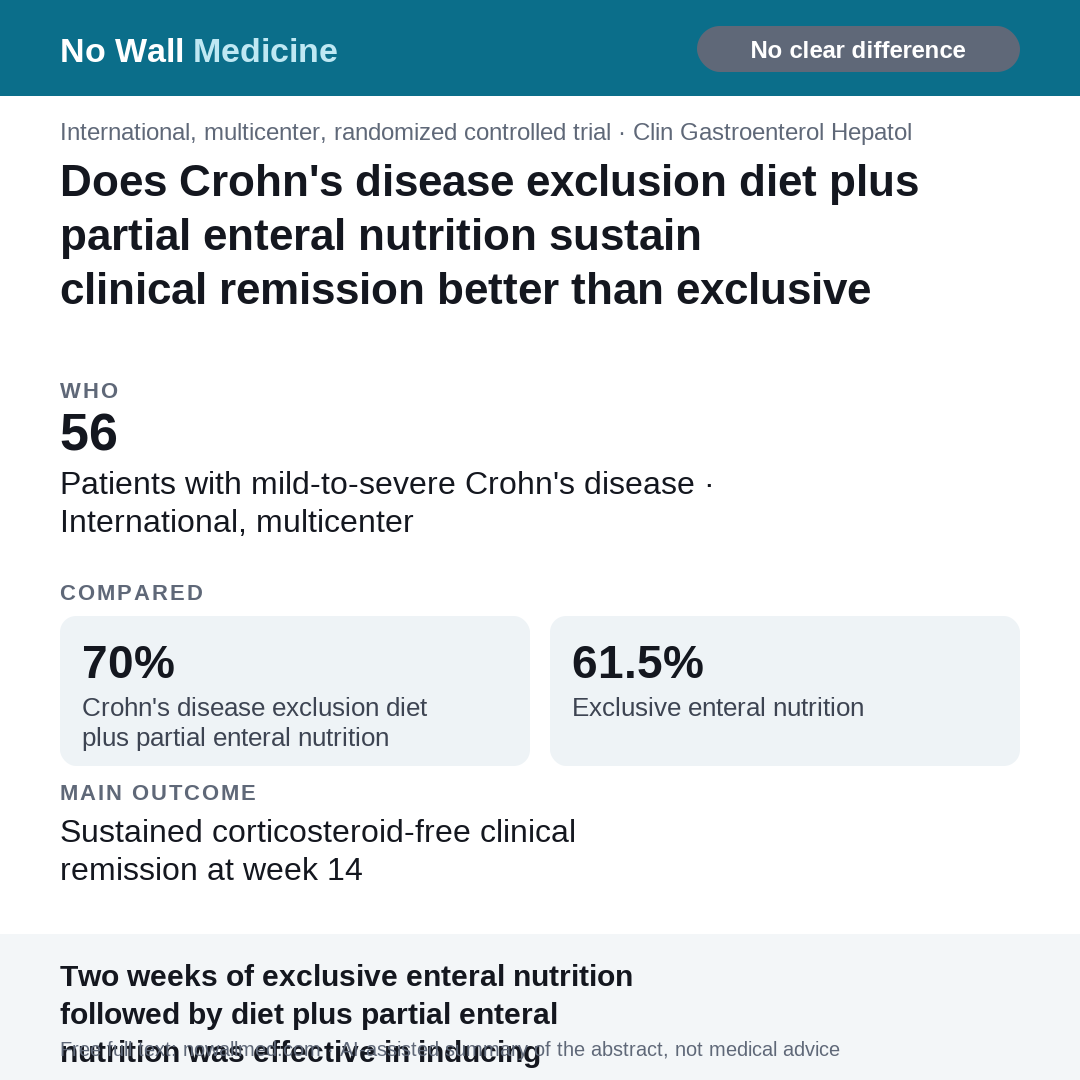
Modified Crohn's Disease Exclusion Diet Maintains Remission in Pediatric Crohn's Disease: Randomized Controlled Trial
International, multicenter, randomized controlled trialNo clear difference
Does Crohn's disease exclusion diet plus partial enteral nutrition sustain clinical remission better than exclusive enteral nutrition?
Who
56
Patients with mild-to-severe Crohn's disease · International, multicenter
Compared
70%Crohn's disease exclusion diet plus partial enteral nutrition (21/30)
61.5%Exclusive enteral nutrition (16/26)
Main outcome
Sustained corticosteroid-free clinical remission at week 14
Bottom line: Two weeks of exclusive enteral nutrition followed by diet plus partial enteral nutrition was effective in inducing remission.
Limitation: The study was underpowered due to failed target recruitment during the COVID-19 pandemic.
Clin Gastroenterol Hepatol · 2024-12-26Download image
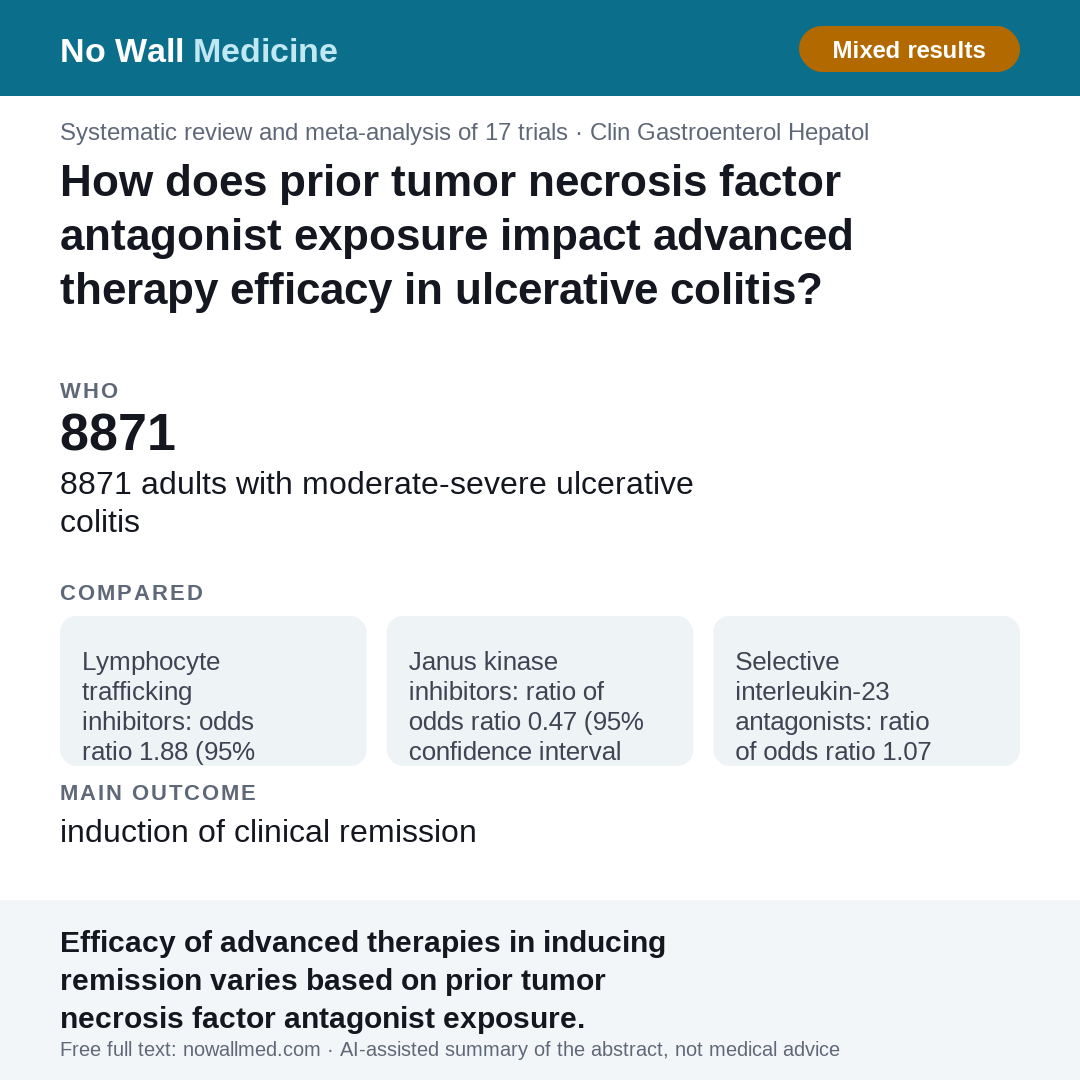
Differential Efficacy of Advanced Therapies in Inducing Remission in Ulcerative Colitis Based on Prior Exposure to TNF Antagonists
Systematic review and meta-analysis of 17 trialsMixed results
How does prior tumor necrosis factor antagonist exposure impact advanced therapy efficacy in ulcerative colitis?
Who
8871
8871 adults with moderate-severe ulcerative colitis
Compared
Lymphocyte trafficking inhibitors: odds ratio 1.88 (95% confidence interval 1.02-3.49)
Janus kinase inhibitors: ratio of odds ratio 0.47 (95% confidence interval 0.22-1.01)
Selective interleukin-23 antagonists: ratio of odds ratio 1.07 (95% confidence interval 0.64-1.80)
Main outcome
induction of clinical remission
Bottom line: Efficacy of advanced therapies in inducing remission varies based on prior tumor necrosis factor antagonist exposure.
Clin Gastroenterol Hepatol · 2024-12-26Download image
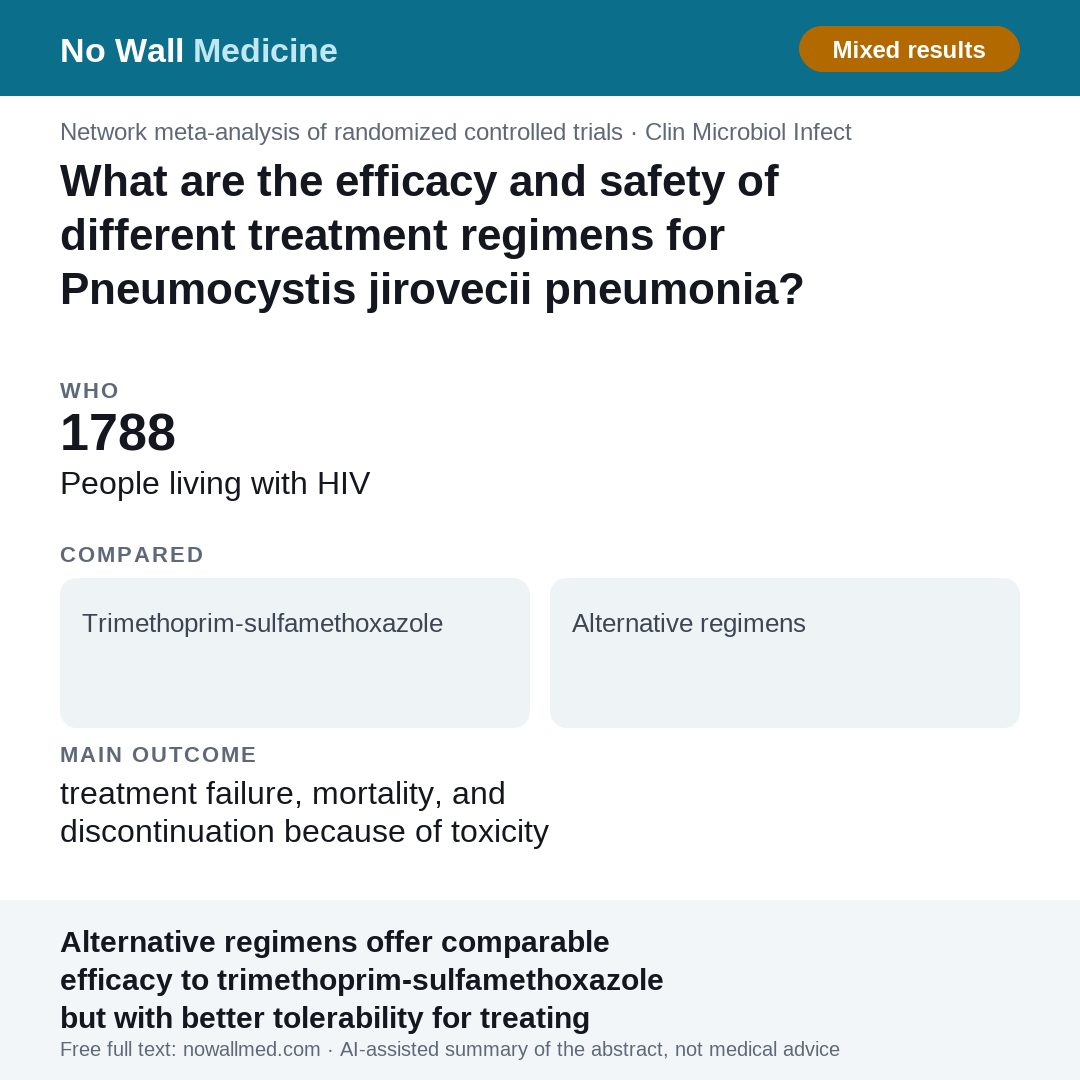
Comparative efficacy and safety of treatment regimens for Pneumocystis jirovecii pneumonia in people living with HIV: a systematic review and network meta-analysis of randomized controlled trials
Network meta-analysis of randomized controlled trialsMixed results
What are the efficacy and safety of different treatment regimens for Pneumocystis jirovecii pneumonia?
Who
1788
People living with HIV
Compared
Trimethoprim-sulfamethoxazole
Alternative regimens
Main outcome
treatment failure, mortality, and discontinuation because of toxicity
Bottom line: Alternative regimens offer comparable efficacy to trimethoprim-sulfamethoxazole but with better tolerability for treating Pneumocystis jirovecii pneumonia.
Clin Microbiol Infect · 2024-12-26Download image
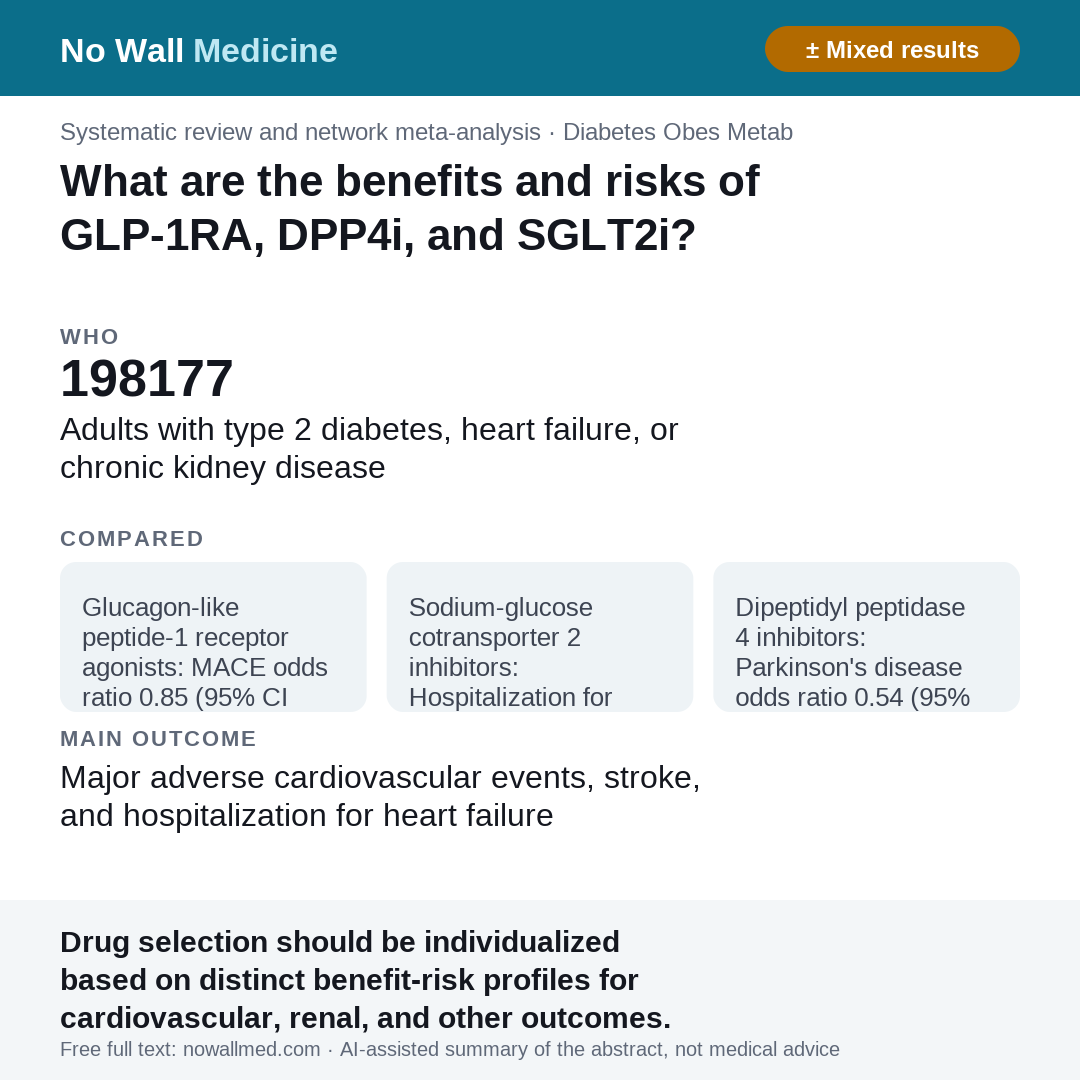
Assessing the benefit-risk profile of newer glucose-lowering drugs: A systematic review and network meta-analysis of randomized outcome trials
Systematic review and network meta-analysisMixed results
What are the benefits and risks of GLP-1RA, DPP4i, and SGLT2i?
Who
198177
Adults with type 2 diabetes, heart failure, or chronic kidney disease
Compared
Glucagon-like peptide-1 receptor agonists: MACE odds ratio 0.85 (95% CI 0.79 to 0.92)
Sodium-glucose cotransporter 2 inhibitors: Hospitalization for heart failure odds ratio 0.68 (95% CI 0.64, 0.73)
Dipeptidyl peptidase 4 inhibitors: Parkinson's disease odds ratio 0.54 (95% CI 0.32, 0.92)
Main outcome
Major adverse cardiovascular events, stroke, and hospitalization for heart failure
Bottom line: Drug selection should be individualized based on distinct benefit-risk profiles for cardiovascular, renal, and other outcomes.
Diabetes Obes Metab · 2024-12-26Download image
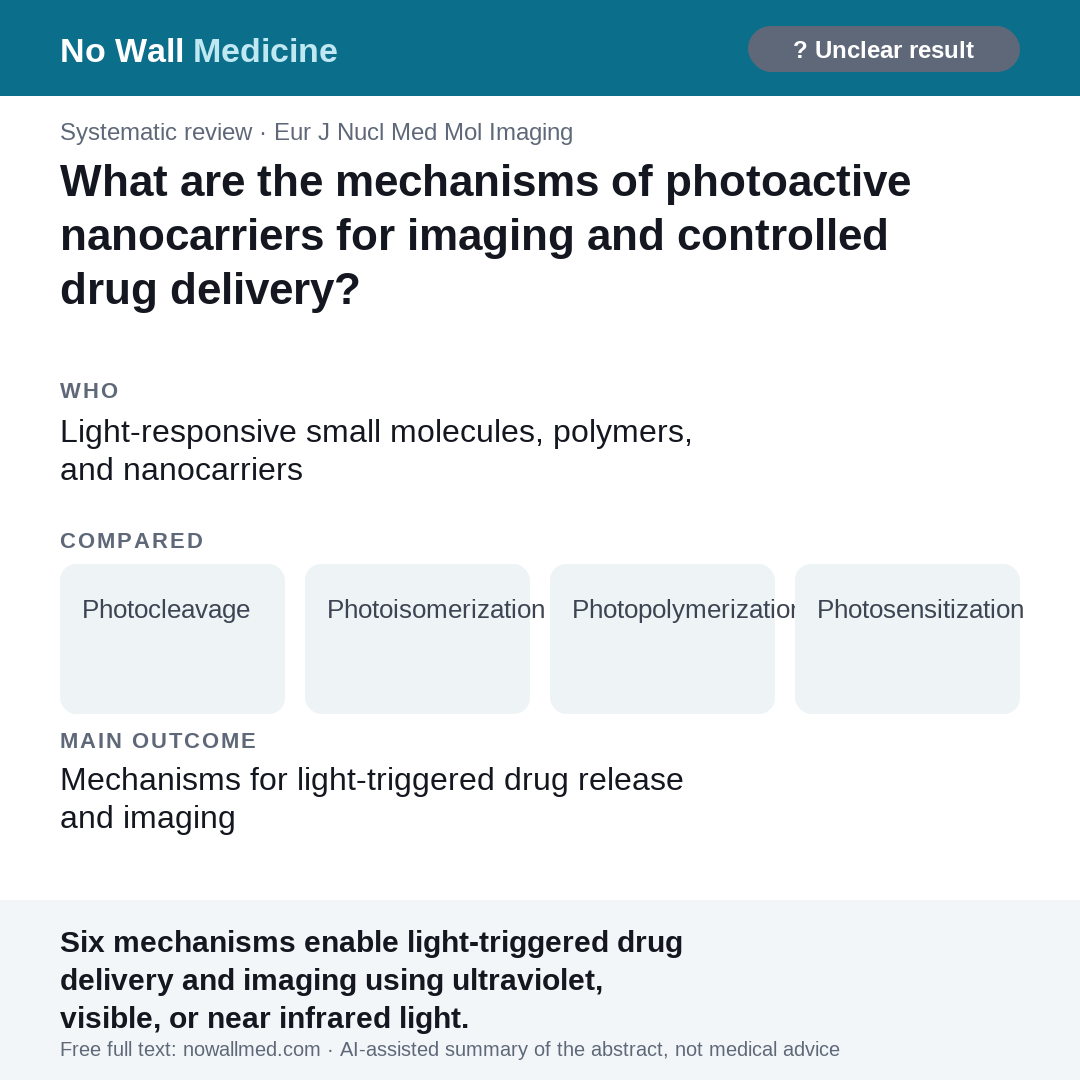
Systematic review: Mechanisms of photoactive nanocarriers for imaging and therapy including controlled drug delivery
Systematic reviewUnclear result
What are the mechanisms of photoactive nanocarriers for imaging and controlled drug delivery?
Who
117
Light-responsive small molecules, polymers, and nanocarriers
Compared
Photocleavage
Photoisomerization
Photopolymerization
Photosensitization
Main outcome
Mechanisms for light-triggered drug release and imaging
Bottom line: Six mechanisms enable light-triggered drug delivery and imaging using ultraviolet, visible, or near infrared light.
Eur J Nucl Med Mol Imaging · 2024-12-26Download image
Neurovascular Structure-adjacent Frozen-section Examination (NeuroSAFE) During Radical Prostatectomy: A Systematic Review and Meta-analysis
Systematic review and meta-analysisBenefit found
Does NeuroSAFE during radical prostatectomy improve oncological and functional outcomes?
Who
15446
Men undergoing radical prostatectomy for prostate cancer
Compared
NeuroSAFE
Controls
Main outcome
positive surgical margins and biochemical recurrence
Result: odds ratio 0.68 (95% CI 0.51-0.91)
Bottom line: NeuroSAFE reduces positive surgical margins and improves potency with similar biochemical recurrence rates.
Limitation: Lack of randomization resulting in selection bias and varying risk of bias.
Eur Urol Oncol · 2024-12-26Download image