Visual abstracts
New randomized trials and meta-analyses from leading journals at a glance: who was studied, what was compared, and what was found. Every paper is free to read in full.
All specialtiesCardiology 1774Oncology 1531Gastroenterology & Hepatology 665Infectious Disease 1120Neurology 729Psychiatry & Mental Health 867Pulmonology 761Critical Care 516Endocrinology & Diabetes 951Pediatrics 1046Surgery 898Orthopedics & Sports Medicine 334Neurosurgery 223Cardiothoracic & Vascular Surgery 195Plastic & Reconstructive Surgery 276Nephrology 365Rheumatology 246Hematology 389Dermatology 192Ophthalmology 211Obstetrics & Gynecology 574Public & Global Health 342Radiology & Imaging 241Anesthesiology 356Urology 310ENT (Otolaryngology) 240Emergency Medicine 199Allergy & Immunology 115Geriatrics 377Family Medicine & Primary Care 214Medical Genetics & Genomics 189Pathology & Laboratory Medicine 55Physical Medicine & Rehabilitation 318Palliative Care 156Nutrition 471Digital Health & AI 934General Medicine 138
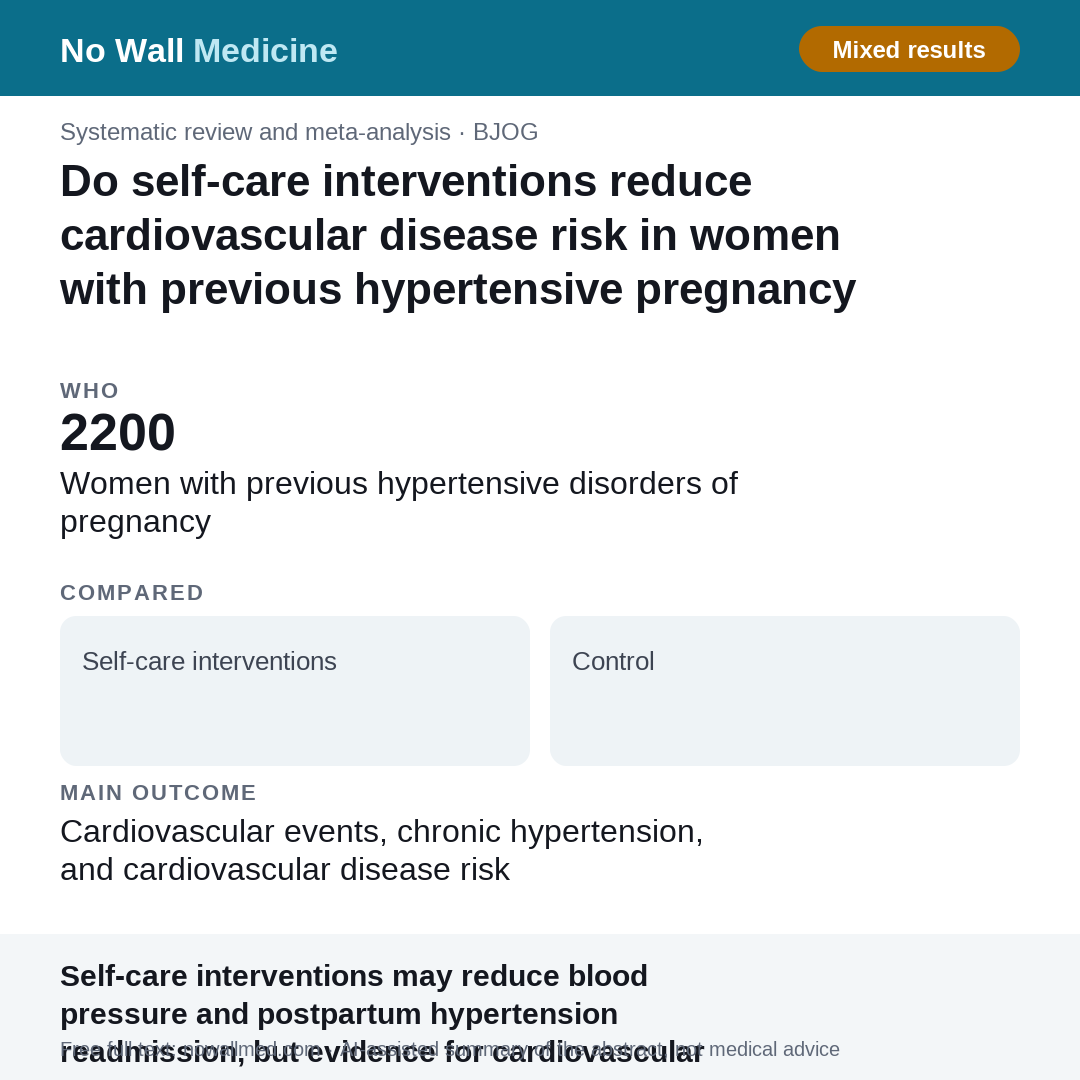
Self-Care Interventions for Preventing Cardiovascular Diseases After Hypertensive Pregnancy Disorders: A Systematic Review and Meta-Analysis
Systematic review and meta-analysisMixed results
Do self-care interventions reduce cardiovascular disease risk in women with previous hypertensive pregnancy disorders?
Who
2200
Women with previous hypertensive disorders of pregnancy
Compared
Self-care interventions
Control
Main outcome
Cardiovascular events, chronic hypertension, and cardiovascular disease risk
Result: mean difference from baseline (MD) -3.24; 95% CI -5.42, -1.06 mmHg
Bottom line: Self-care interventions may reduce blood pressure and postpartum hypertension readmission, but evidence for cardiovascular disease prevention is limited.
Limitation: Limited evidence and insufficient studies to pool results for cardiovascular events and chronic hypertension.
BJOG · 2025-03-28Download image
Potentially inappropriate medication lists for older people: a review of methods applied to the development
Systematic reviewUnclear result
What are the different approaches used to develop potentially inappropriate medication lists?
Who
31
Potentially inappropriate medication lists published from 1990 onwards
Compared
18New lists
8Updates
3Adjustments-validation
2Extensions of old lists
Main outcome
Approaches adopted to develop potentially inappropriate medication lists
Bottom line: Methods for developing potentially inappropriate medication lists vary significantly, necessitating a consensus to standardise development.
Limitation: Extensive variations in organization, panellist selection, and consensus thresholds were observed.
Age Ageing · 2025-03-28Download image

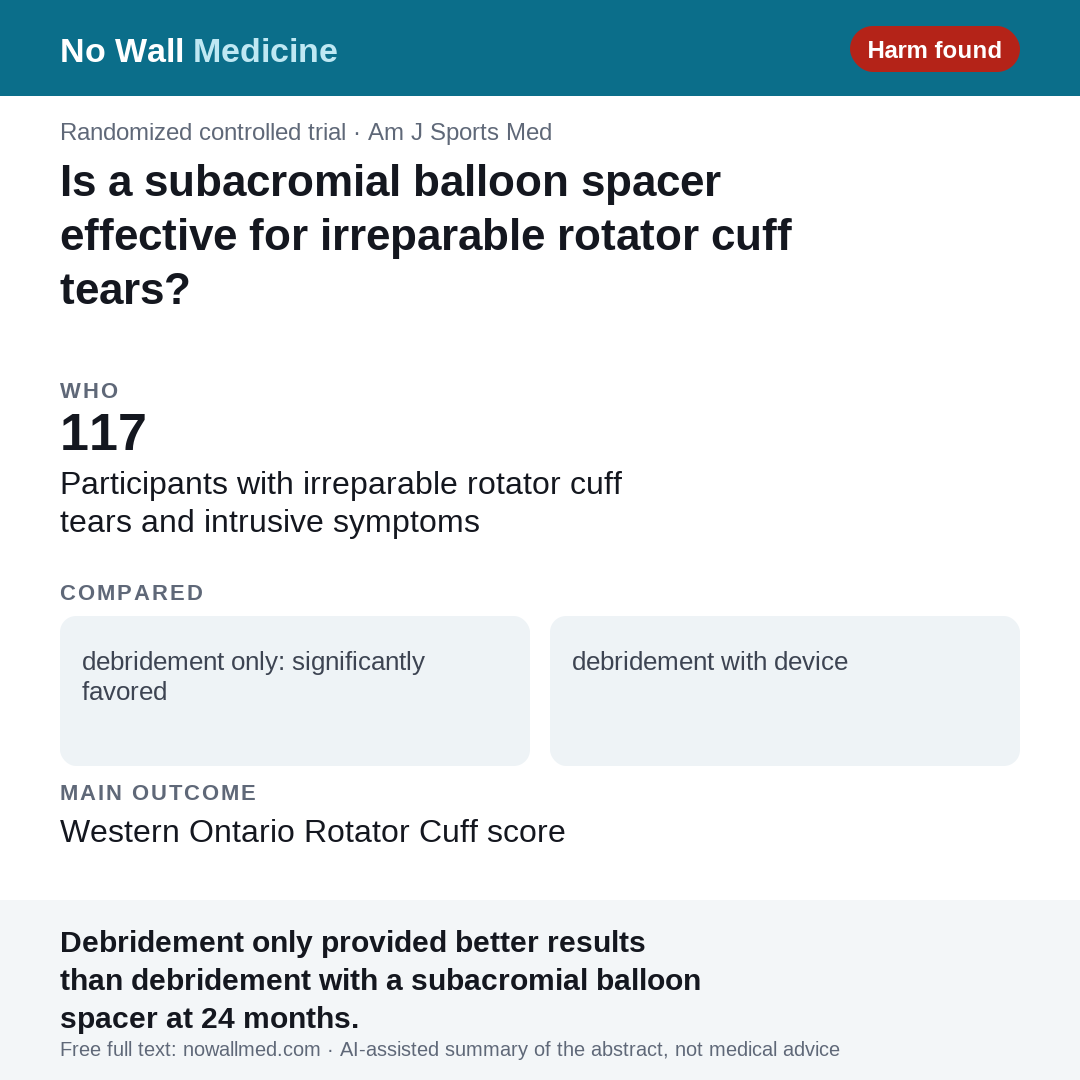
Two-Year Follow-up of a Group-Sequential, Multicenter Randomized Controlled Trial of a Subacromial Balloon Spacer for Irreparable Rotator Cuff Tears of the Shoulder (START:REACTS)
Randomized controlled trialHarm found
Is a subacromial balloon spacer effective for irreparable rotator cuff tears?
Who
117
Participants with irreparable rotator cuff tears and intrusive symptoms
Compared
debridement only: significantly favored
debridement with device
Main outcome
Western Ontario Rotator Cuff score
Result: mean difference, -10.1; 95% CI, -19.5 to -0.8
Bottom line: Debridement only provided better results than debridement with a subacromial balloon spacer at 24 months.
Am J Sports Med · 2025-03-28Download image
A Meta-Analysis and Systematic Review of Cardiac Troponin I vs T in Community Dwelling Adults: Is Specificity at Risk?
Meta-analysis of 54 studiesNo clear difference
Is high-sensitivity cardiac troponin I a superior predictor of cardiovascular outcomes than troponin T?
Who
277498
Community dwelling ambulatory adults
Compared
High-sensitivity cardiac troponin I
High-sensitivity cardiac troponin T
Main outcome
Incident heart failure, myocardial infarction, cardiovascular, and all-cause death
Result: no differences in hazard ratios for most endpoints
Bottom line: High-sensitivity cardiac troponin I and T provide similar prediction of cardiovascular outcomes in ambulatory adults.
Clin Chem · 2025-03-28Download image

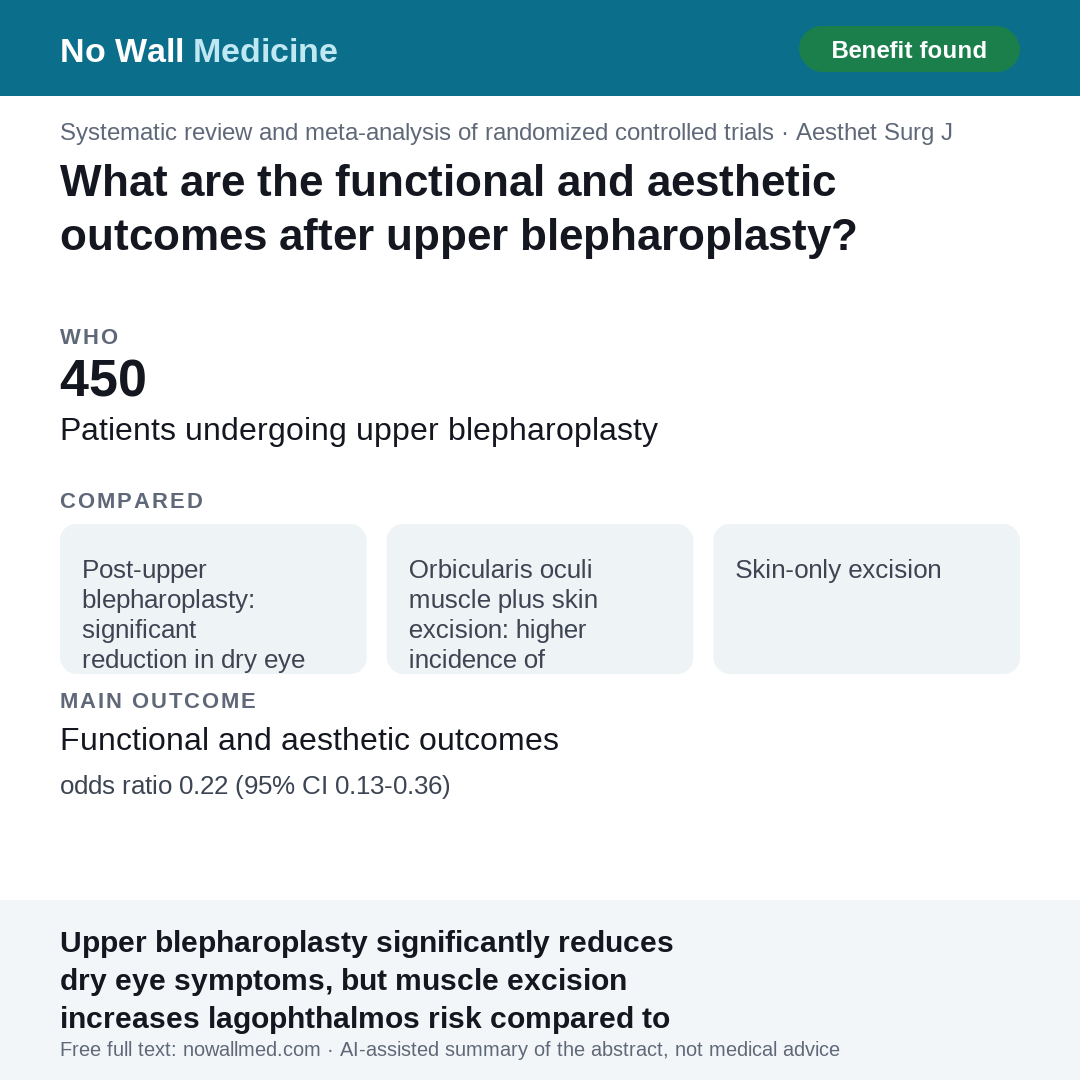
Functional and Aesthetic Outcomes After Upper Blepharoplasty: A Systematic Review and Meta-analysis of Randomized Control Trials
Systematic review and meta-analysis of randomized controlled trialsBenefit found
What are the functional and aesthetic outcomes after upper blepharoplasty?
Who
450
Patients undergoing upper blepharoplasty
Compared
Post-upper blepharoplasty: significant reduction in dry eye symptoms
Orbicularis oculi muscle plus skin excision: higher incidence of lagophthalmos
Skin-only excision
Main outcome
Functional and aesthetic outcomes
Result: odds ratio 0.22 (95% CI 0.13-0.36)
Bottom line: Upper blepharoplasty significantly reduces dry eye symptoms, but muscle excision increases lagophthalmos risk compared to skin-only excision.
Aesthet Surg J · 2025-03-28Download image
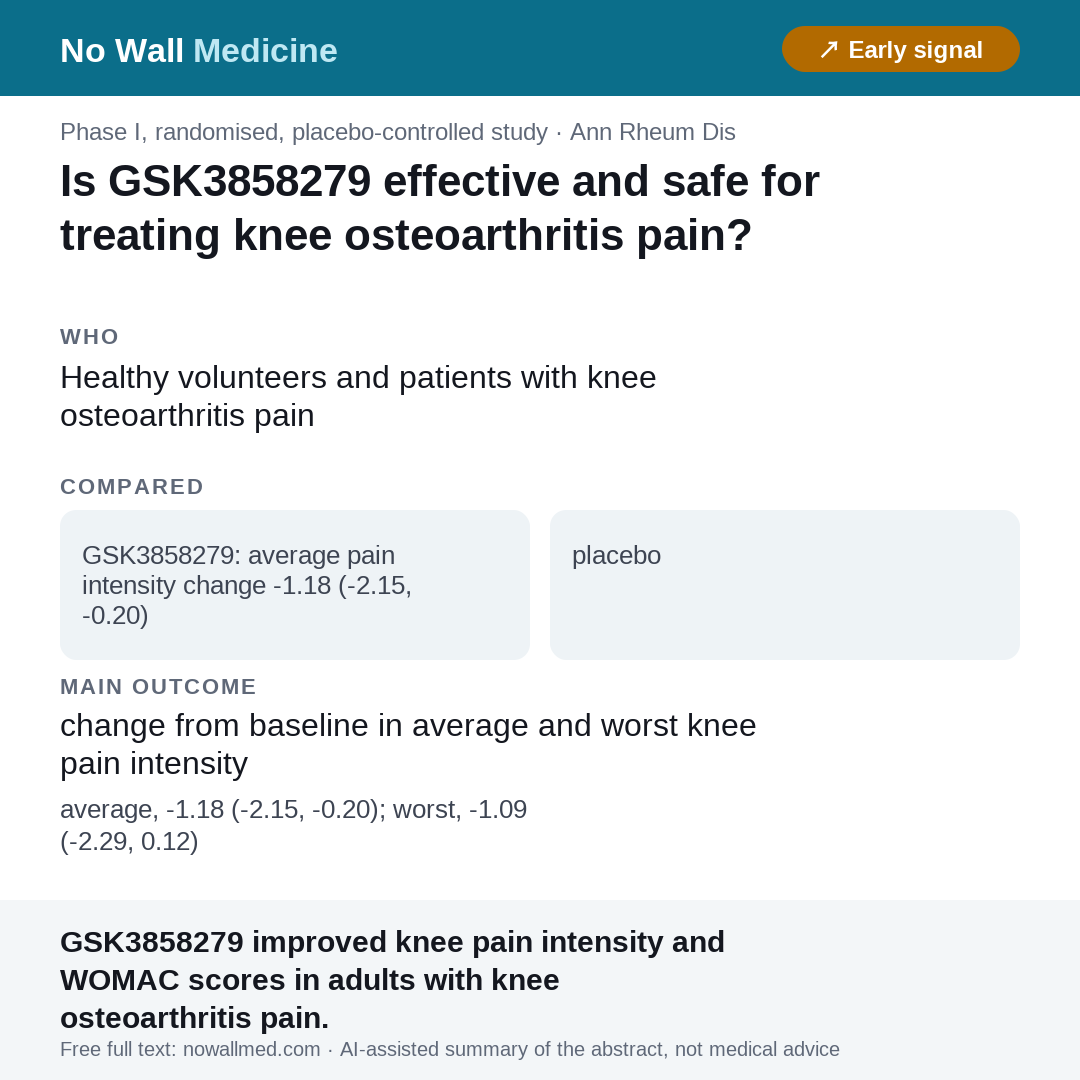
Efficacy, safety and tolerability of GSK3858279, an anti-CCL17 monoclonal antibody and analgesic, in healthy volunteers and patients with knee osteoarthritis pain: a phase I, randomised, double-blind, placebo-controlled, proof-of-mechanism and proof-of-concept study
Phase I, randomised, placebo-controlled studyBenefit found
Is GSK3858279 effective and safe for treating knee osteoarthritis pain?
Who
Healthy volunteers and patients with knee osteoarthritis pain
Compared
GSK3858279: average pain intensity change -1.18 (-2.15, -0.20)
placebo
Main outcome
change from baseline in average and worst knee pain intensity
Result: average, -1.18 (-2.15, -0.20); worst, -1.09 (-2.29, 0.12)
Bottom line: GSK3858279 improved knee pain intensity and WOMAC scores in adults with knee osteoarthritis pain.
Ann Rheum Dis · 2025-03-28Download image
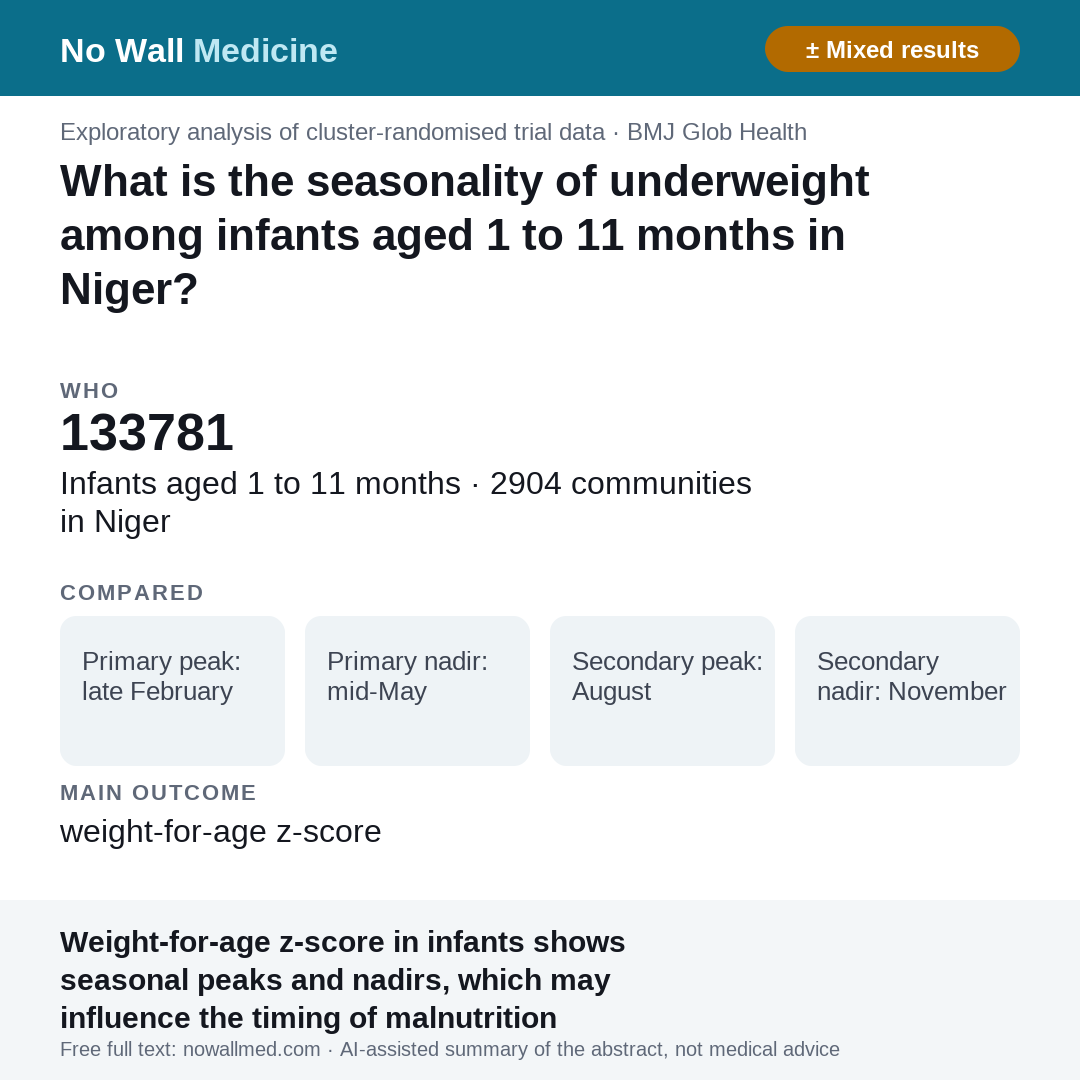
Seasonality of underweight among infants 1-11 months old in Niger: an exploratory analysis of data from a cluster-randomised trial
Exploratory analysis of cluster-randomised trial dataMixed results
What is the seasonality of underweight among infants aged 1 to 11 months in Niger?
Who
133781
Infants aged 1 to 11 months · 2904 communities in Niger
Compared
Primary peak: late February
Primary nadir: mid-May
Secondary peak: August
Secondary nadir: November
Main outcome
weight-for-age z-score
Bottom line: Weight-for-age z-score in infants shows seasonal peaks and nadirs, which may influence the timing of malnutrition programmes.
BMJ Glob Health · 2025-03-28Download image
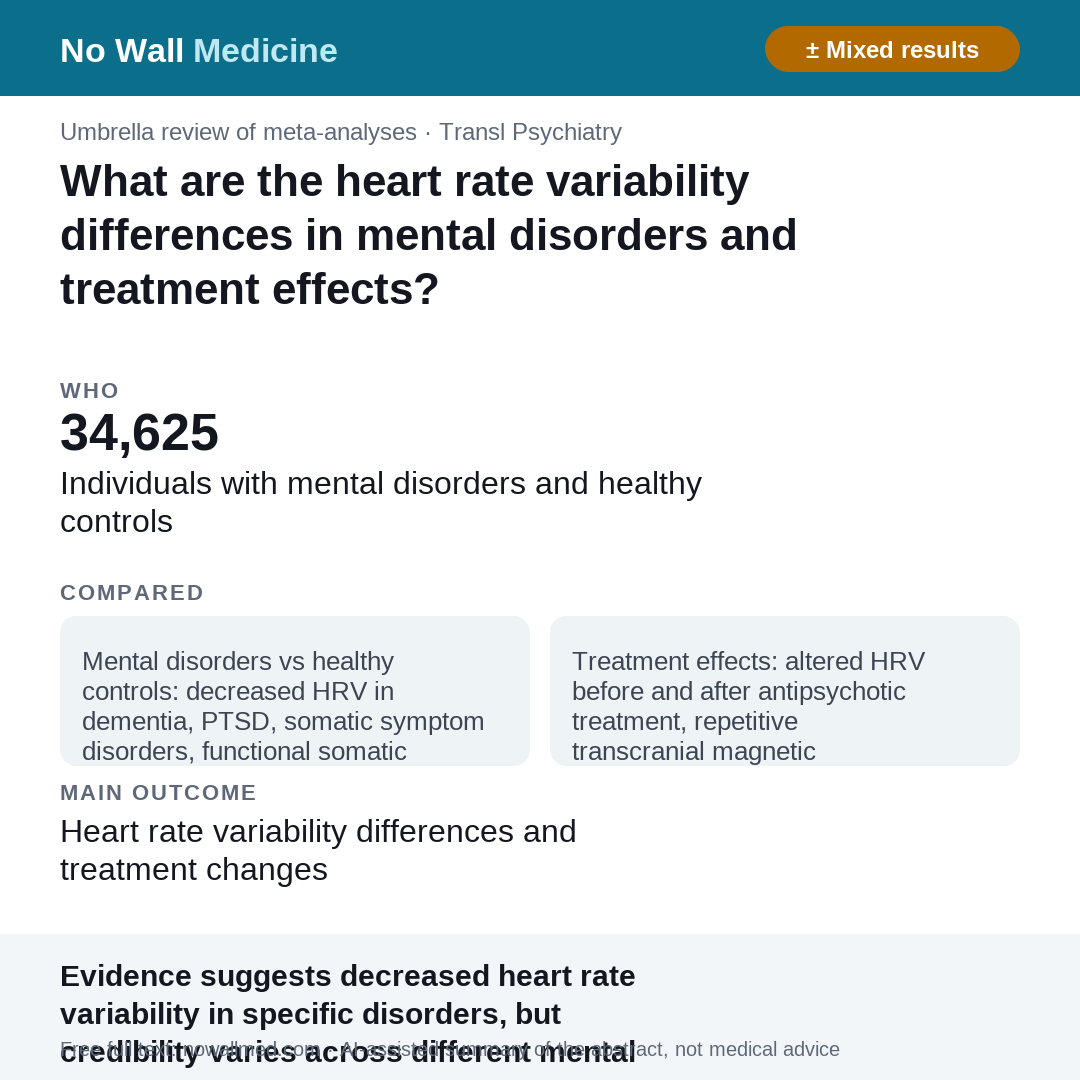
Heart rate variability in mental disorders: an umbrella review of meta-analyses
Umbrella review of meta-analysesMixed results
What are the heart rate variability differences in mental disorders and treatment effects?
Who
34,625
Individuals with mental disorders and healthy controls
Compared
Mental disorders vs healthy controls: decreased HRV in dementia, PTSD, somatic symptom disorders, functional somatic syndromes, and schizophrenia
Treatment effects: altered HRV before and after antipsychotic treatment, repetitive transcranial magnetic stimulation, physiotherapy, and psychotherapy
Main outcome
Heart rate variability differences and treatment changes
Bottom line: Evidence suggests decreased heart rate variability in specific disorders, but credibility varies across different mental health conditions.
Limitation: The credibility of heart rate variability evidence varied across variables and diseases.
Transl Psychiatry · 2025-03-28Download image
Effects of urban airborne particulate matter exposure on the human upper respiratory tract microbiome: a systematic review
Systematic reviewMixed results
How does urban airborne particulate matter exposure affect the upper respiratory tract microbiome?
Who
9
Adult population
Compared
High particulate matter exposure: Actinobacteria phylum declined, Bacteroidetes and Fusobacteria increased
Low particulate matter exposure
Main outcome
Upper respiratory tract microbiome composition
Bottom line: Particulate matter exposure is associated with upper respiratory tract microbial dysbiosis, though bacterial diversity findings were discordant.
Limitation: Heterogeneity regarding sample processing, sequencing methods, and confounder control.
Respir Res · 2025-03-28Download image

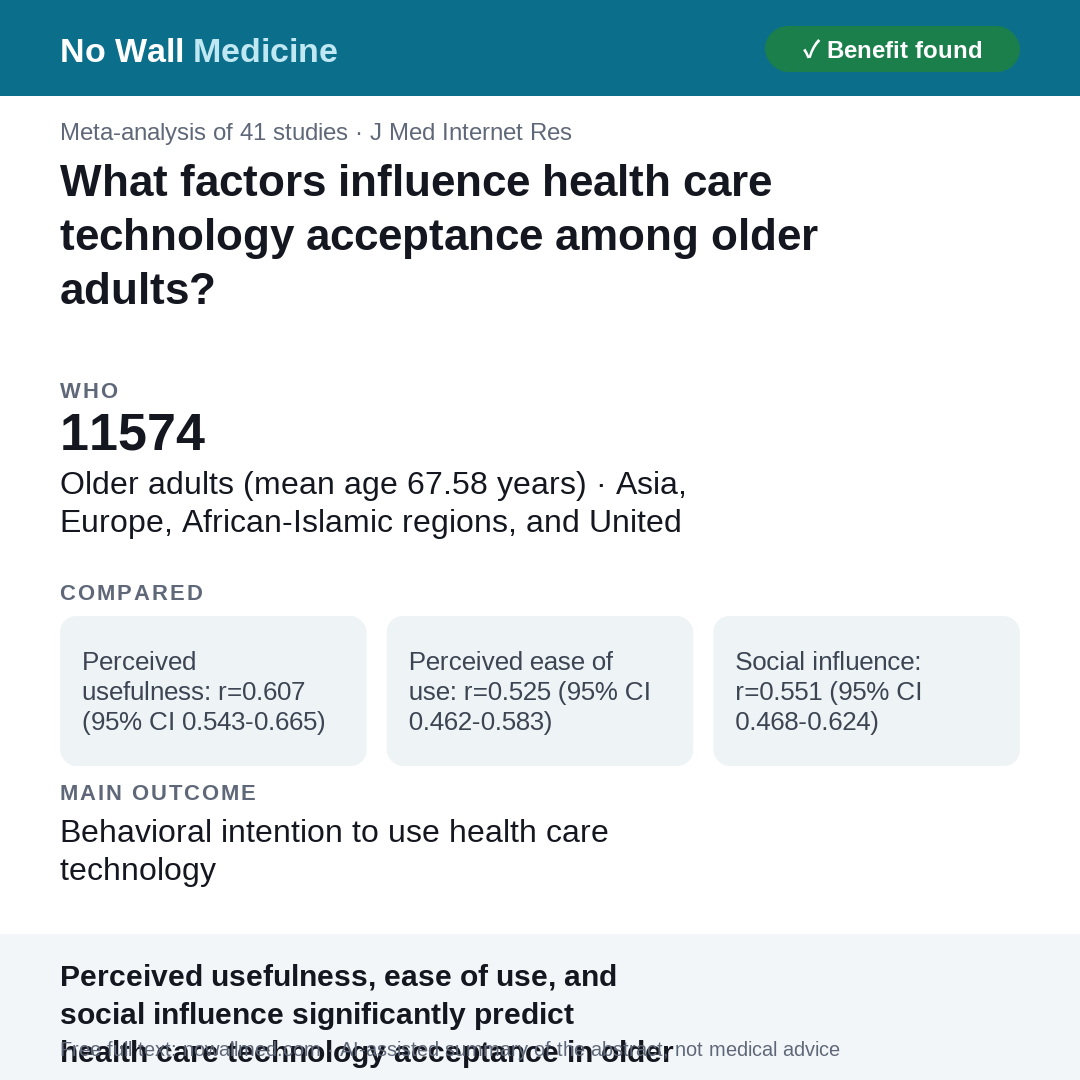
Factors Influencing Health Care Technology Acceptance in Older Adults Based on the Technology Acceptance Model and the Unified Theory of Acceptance and Use of Technology: Meta-Analysis
Meta-analysis of 41 studiesBenefit found
What factors influence health care technology acceptance among older adults?
Who
11574
Older adults (mean age 67.58 years) · Asia, Europe, African-Islamic regions, and United States
Compared
Perceived usefulness: r=0.607 (95% CI 0.543-0.665)
Perceived ease of use: r=0.525 (95% CI 0.462-0.583)
Social influence: r=0.551 (95% CI 0.468-0.624)
Main outcome
Behavioral intention to use health care technology
Bottom line: Perceived usefulness, ease of use, and social influence significantly predict health care technology acceptance in older adults.
Limitation: Varying definitions of older adults and use of correlation coefficients instead of controlled effect sizes.
J Med Internet Res · 2025-03-28Download image
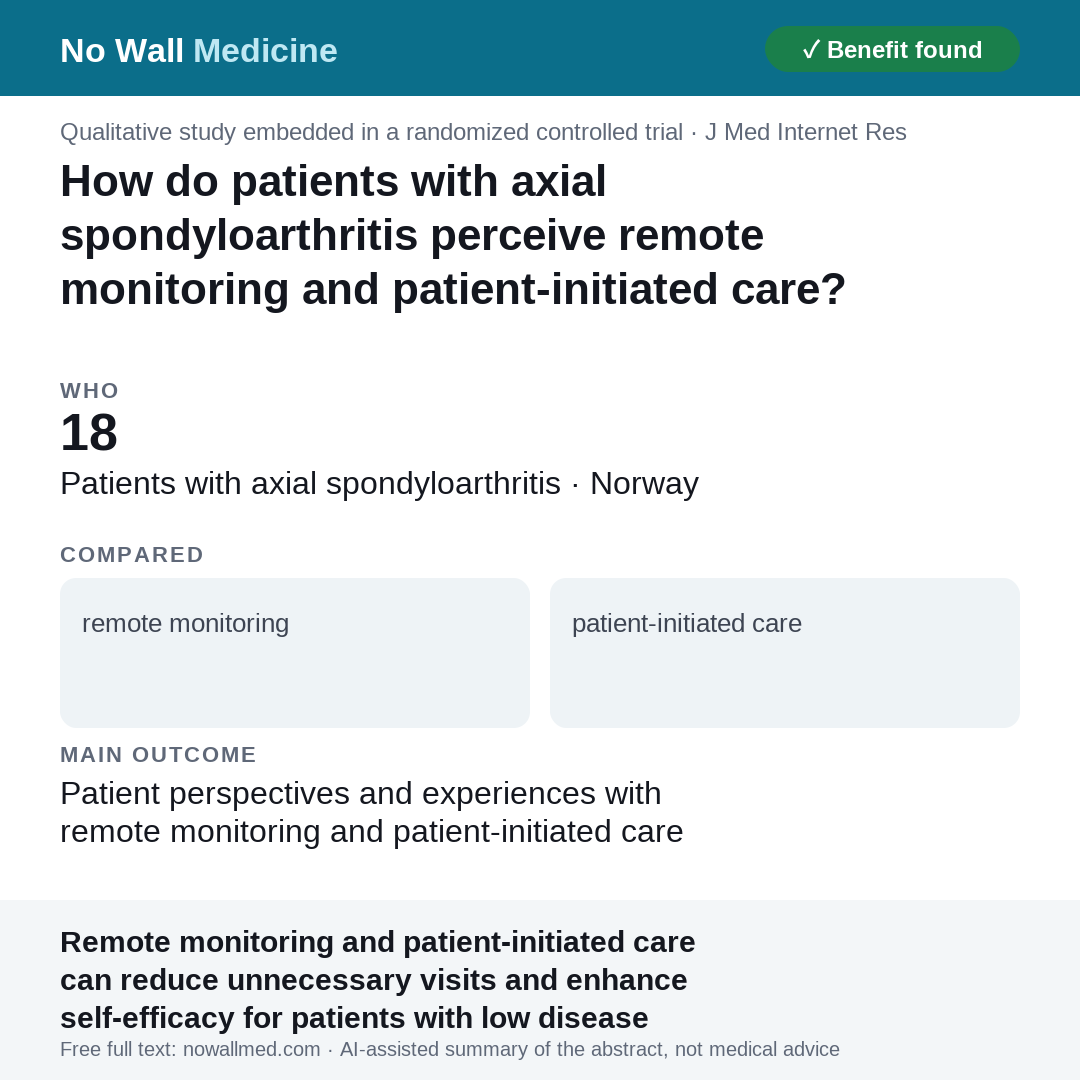
Perspectives on and Experiences With Remote Monitoring and Patient-Initiated Care Among Norwegian Patients With Axial Spondyloarthritis: Qualitative Study
Qualitative study embedded in a randomized controlled trialBenefit found
How do patients with axial spondyloarthritis perceive remote monitoring and patient-initiated care?
Who
18
Patients with axial spondyloarthritis · Norway
Compared
remote monitoring
patient-initiated care
Main outcome
Patient perspectives and experiences with remote monitoring and patient-initiated care
Bottom line: Remote monitoring and patient-initiated care can reduce unnecessary visits and enhance self-efficacy for patients with low disease activity.
Limitation: The qualitative study was based on interviews with only 18 participants from the intervention groups.
J Med Internet Res · 2025-03-28Download image
Polyurethane-coated silicone breast implants: A viable option for primary augmentation mammoplasty: A systematic review and technical considerations
Systematic review and case seriesBenefit found
Are polyurethane-coated silicone breast implants a viable option for primary augmentation mammoplasty?
Who
50
Patients undergoing primary augmentation mammoplasty
Compared
Polyurethane-coated implants: nearly nonexistent occurrence of capsular contracture
Standard textured implants
Main outcome
Safety and efficacy for primary augmentation mammoplasty
Bottom line: Polyurethane-coated implants are a safe, effective option with reduced capsular contracture rates compared to standard textured implants.
JPRAS Open · 2025-03-28Download image

Long-term mortality outcome of a primary care-based mobile health intervention for stroke management: Six-year follow-up of a cluster-randomized controlled trial
Cluster-randomized controlled trial follow-upBenefit found
Does a 12-month mobile health intervention reduce long-term mortality among stroke patients?
Who
1299
Patients experiencing stroke · 50 villages in rural China
Compared
19.0%Intervention arm (121 among 637)
23.4%Control arm (155 among 662)
Main outcome
All-cause mortality
Result: hazard ratio 0.73 (95% CI 0.59, 0.90)
Bottom line: The mobile health intervention was associated with reduced all-cause and cardiovascular cause-specific mortality during six years of follow-up.
Limitation: Unavailability of accurate clinical diagnostic records and potential confounders influencing mortality associations.
PLOS Med · 2025-03-27Download image

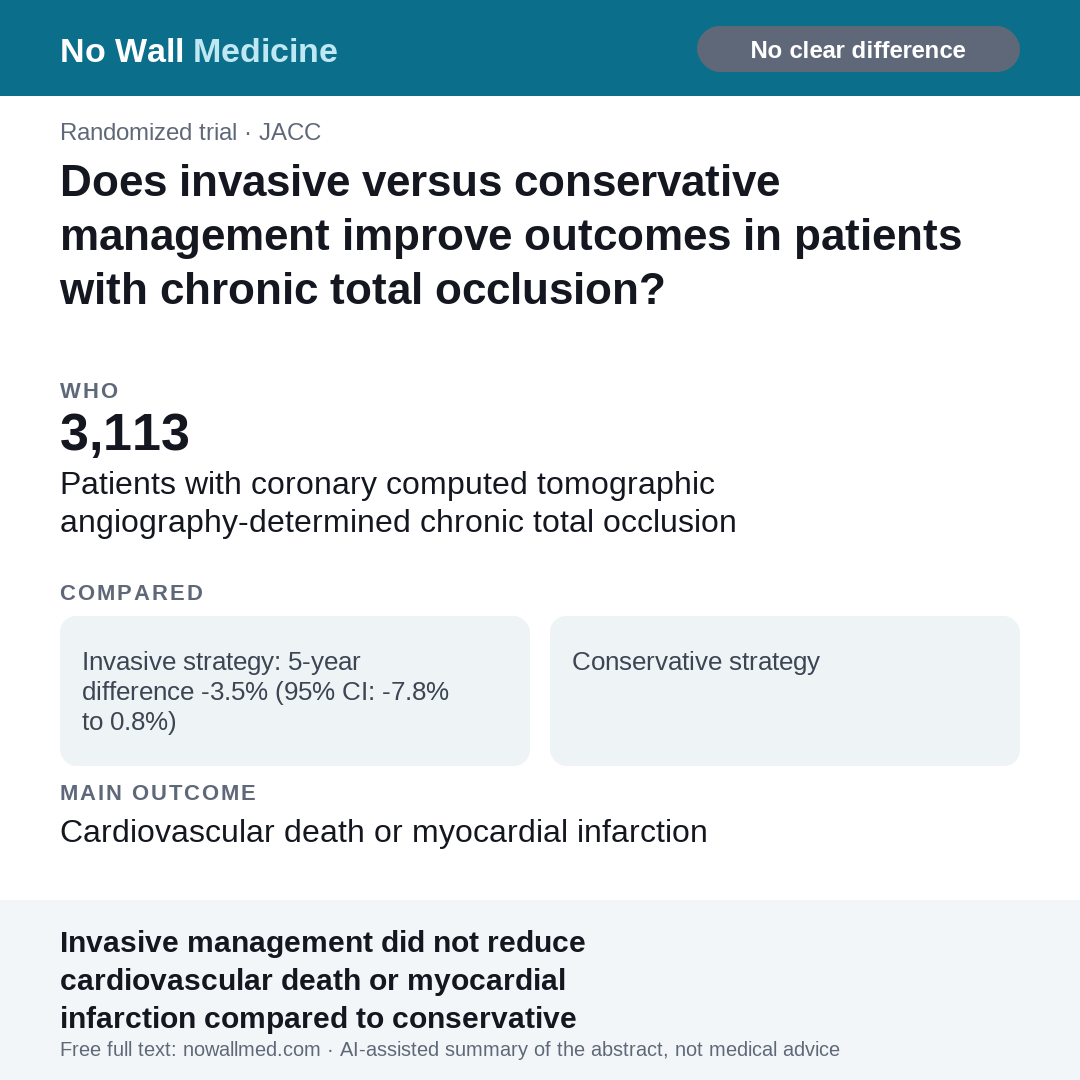
Invasive vs Conservative Management of Patients With Chronic Total Occlusion: Results From the ISCHEMIA Trial
Randomized trialNo clear difference
Does invasive versus conservative management improve outcomes in patients with chronic total occlusion?
Who
3,113
Patients with coronary computed tomographic angiography-determined chronic total occlusion
Compared
Invasive strategy: 5-year difference -3.5% (95% CI: -7.8% to 0.8%)
Conservative strategy
Main outcome
Cardiovascular death or myocardial infarction
Result: 5-year difference -3.5% (95% CI: -7.8% to 0.8%)
Bottom line: Invasive management did not reduce cardiovascular death or myocardial infarction compared to conservative management.
JACC · 2025-03-27Download image
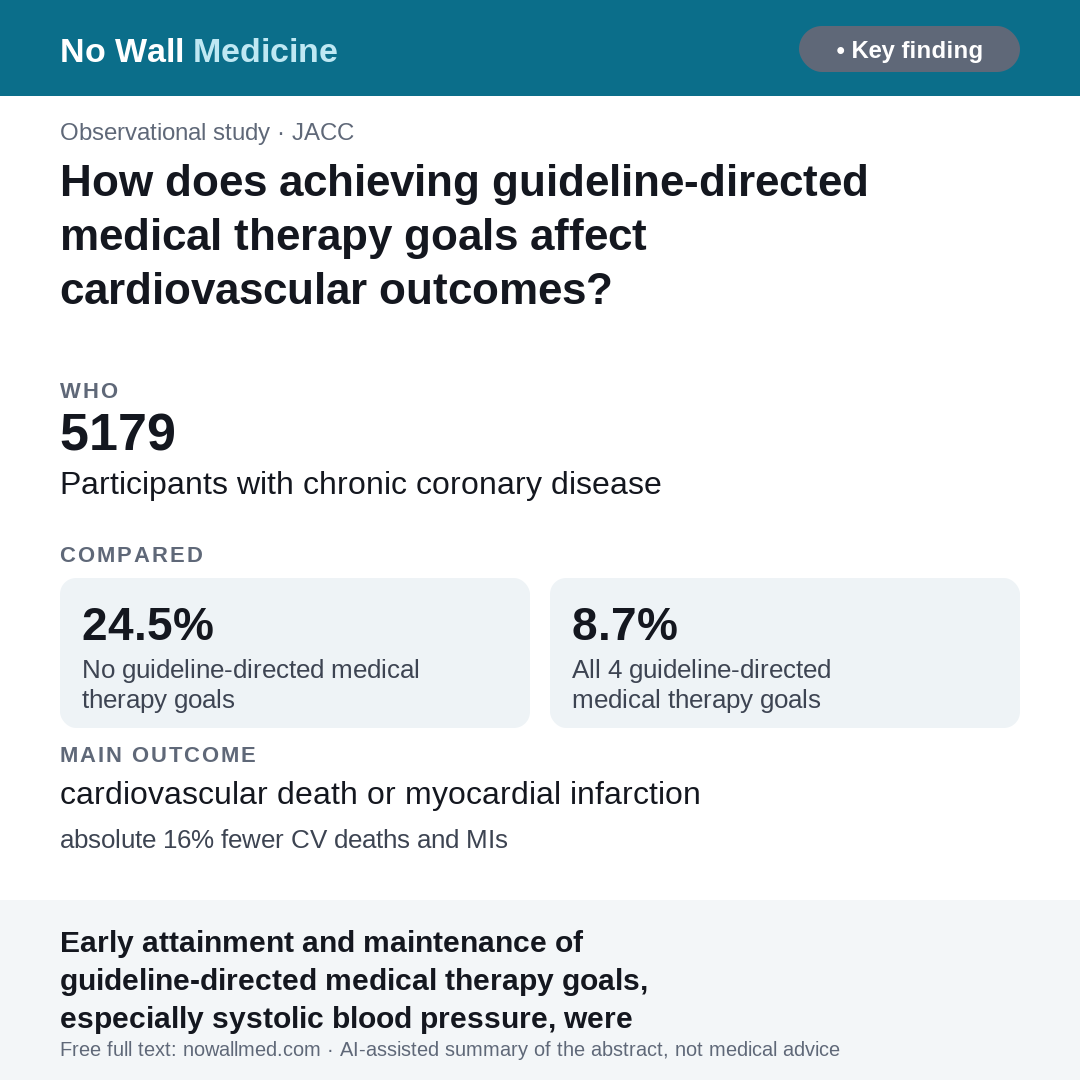
Guideline-Directed Medical Therapy and Outcomes in the ISCHEMIA Trial
Observational studyBenefit found
How does achieving guideline-directed medical therapy goals affect cardiovascular outcomes?
Who
5179
Participants with chronic coronary disease
Compared
24.5%No guideline-directed medical therapy goals (95% credible interval: 13.5%-42.2%)
8.7%All 4 guideline-directed medical therapy goals (95% credible interval: 6.7%-10.9%)
Main outcome
cardiovascular death or myocardial infarction
Result: absolute 16% fewer CV deaths and MIs
Bottom line: Early attainment and maintenance of guideline-directed medical therapy goals, especially systolic blood pressure, were associated with fewer cardiovascular events.
JACC · 2025-03-27Download image
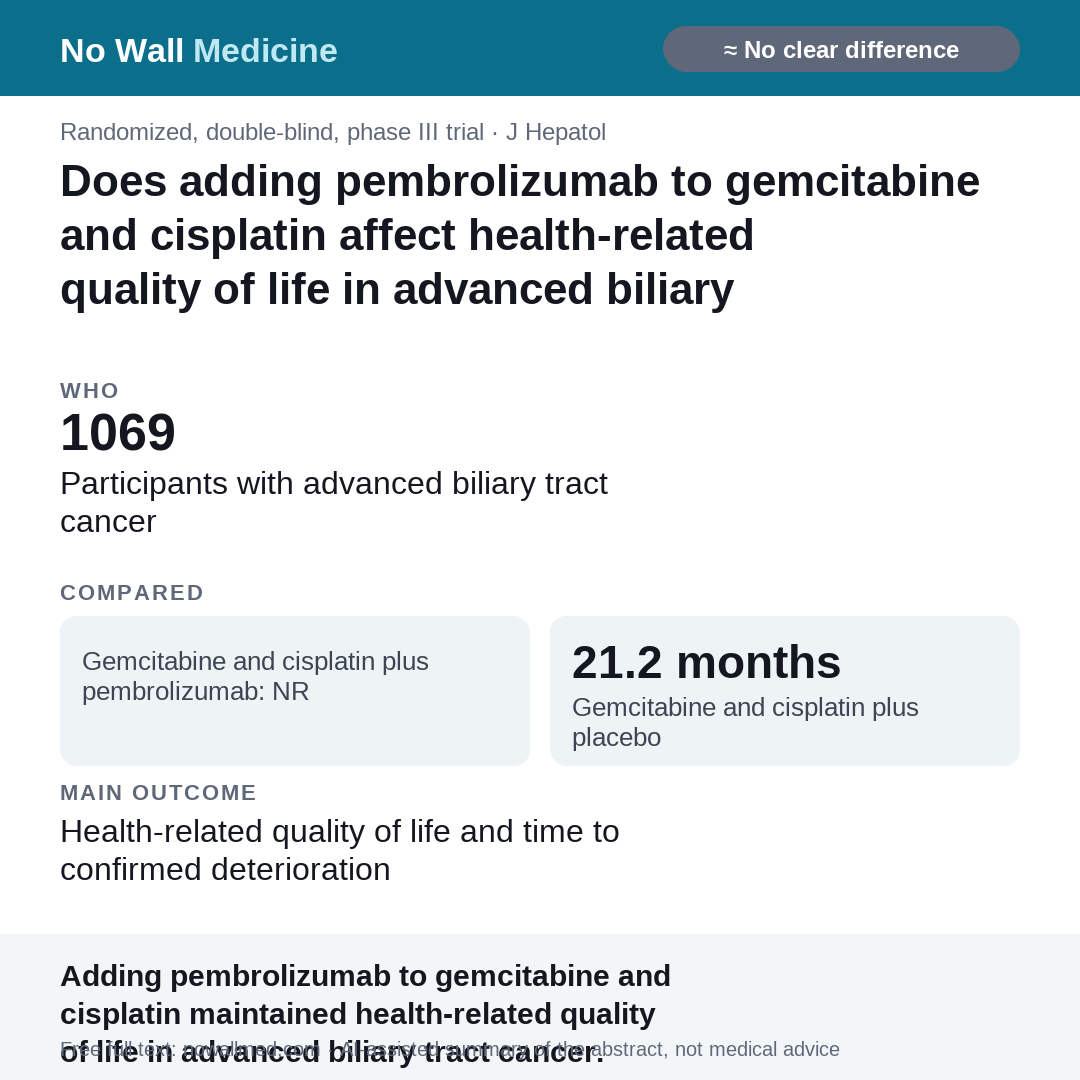
Health-related quality of life in participants with advanced biliary tract cancer from the randomized phase III KEYNOTE-966 study
Randomized, double-blind, phase III trialNo clear difference
Does adding pembrolizumab to gemcitabine and cisplatin affect health-related quality of life in advanced biliary tract cancer?
Who
1069
Participants with advanced biliary tract cancer
Compared
Gemcitabine and cisplatin plus pembrolizumab: NR
21.2 monthsGemcitabine and cisplatin plus placebo
Main outcome
Health-related quality of life and time to confirmed deterioration
Result: hazard ratio 0.86 (95% CI 0.70-1.07)
Bottom line: Adding pembrolizumab to gemcitabine and cisplatin maintained health-related quality of life in advanced biliary tract cancer.
J Hepatol · 2025-03-27Download image
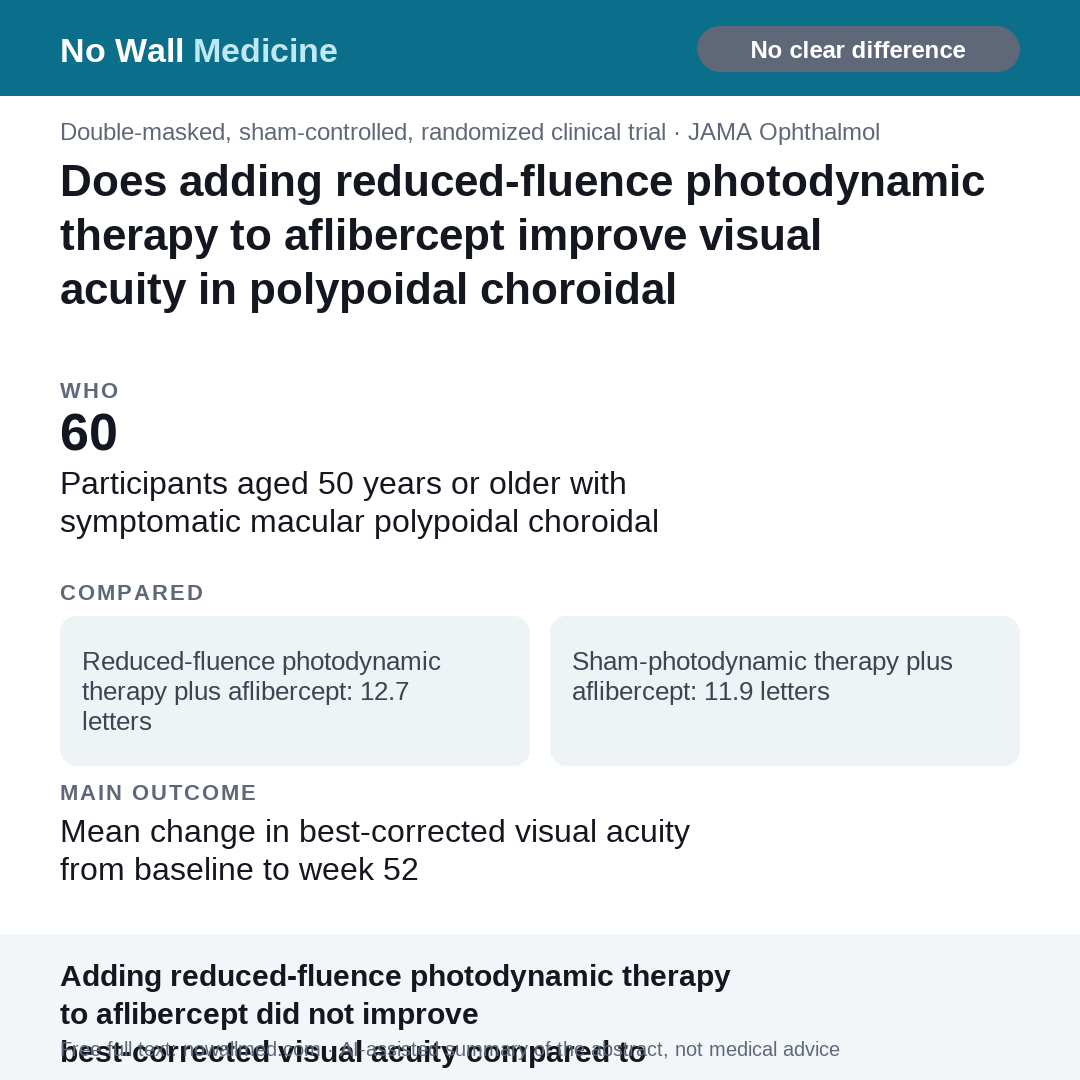
Aflibercept With vs Without Reduced-Fluence Photodynamic Therapy for Polypoidal Choroidal Vasculopathy: A Randomized Clinical Trial
Double-masked, sham-controlled, randomized clinical trialNo clear difference
Does adding reduced-fluence photodynamic therapy to aflibercept improve visual acuity in polypoidal choroidal vasculopathy?
Who
60
Participants aged 50 years or older with symptomatic macular polypoidal choroidal vasculopathy · 2 centers in Singapore
Compared
Reduced-fluence photodynamic therapy plus aflibercept: 12.7 letters
Sham-photodynamic therapy plus aflibercept: 11.9 letters
Main outcome
Mean change in best-corrected visual acuity from baseline to week 52
Result: difference = 0.8 letters; 95% CI, -3.0 to 6.0 letters
Bottom line: Adding reduced-fluence photodynamic therapy to aflibercept did not improve best-corrected visual acuity compared to aflibercept alone.
JAMA Ophthalmol · 2025-03-27Download image
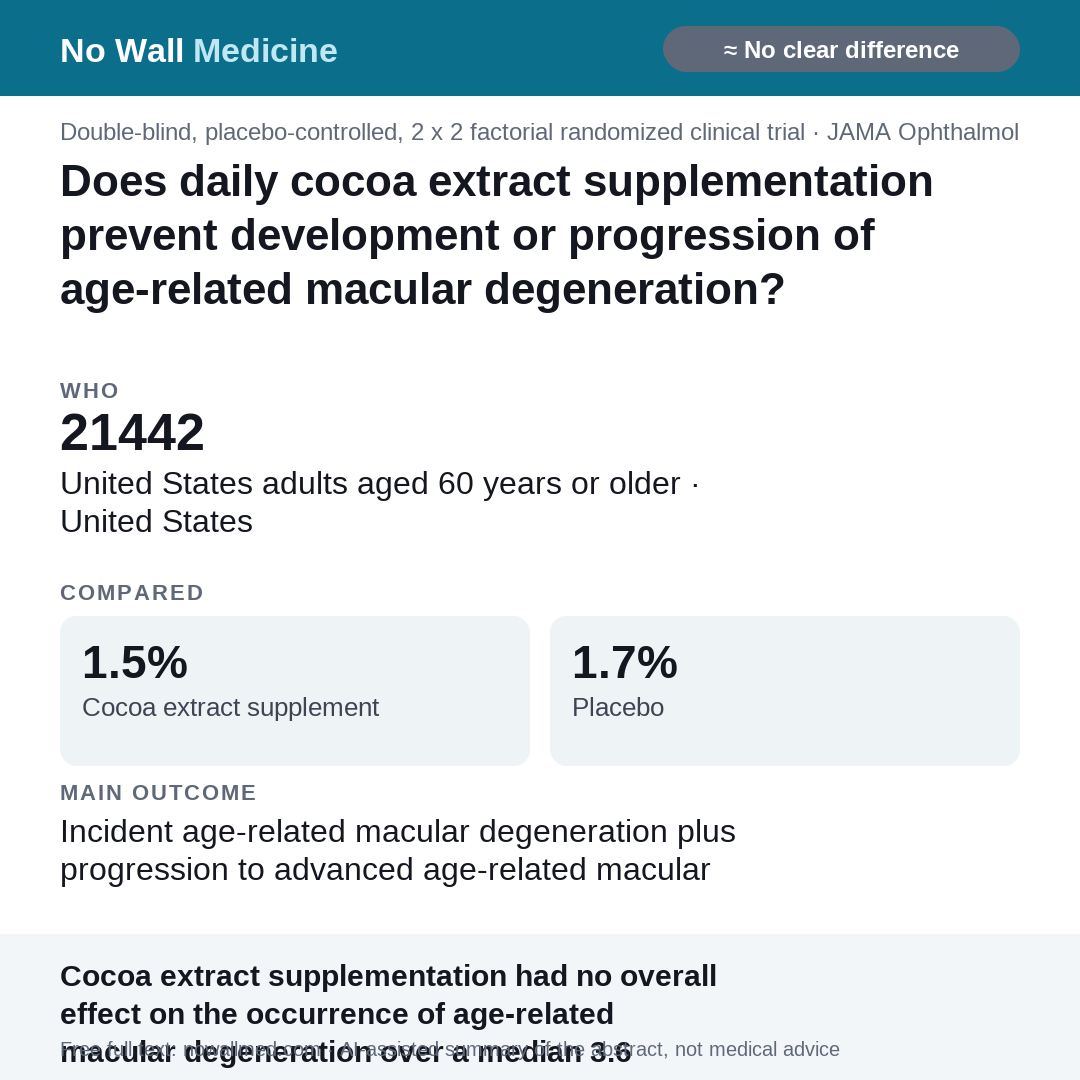
Cocoa Flavanol Supplementation and Risk of Age-Related Macular Degeneration: An Ancillary Study of the COSMOS Randomized Clinical Trial
Double-blind, placebo-controlled, 2 x 2 factorial randomized clinical trialNo clear difference
Does daily cocoa extract supplementation prevent development or progression of age-related macular degeneration?
Who
21442
United States adults aged 60 years or older · United States
Compared
1.5%Cocoa extract supplement
1.7%Placebo
Main outcome
Incident age-related macular degeneration plus progression to advanced age-related macular degeneration
Result: hazard ratio 0.87 (95% CI, 0.71-1.08)
Bottom line: Cocoa extract supplementation had no overall effect on the occurrence of age-related macular degeneration over a median 3.6 years.
Limitation: A possible modest treatment effect early in the trial could not be ruled out.
JAMA Ophthalmol · 2025-03-27Download image
Subcutaneous versus intravenous pembrolizumab, in combination with chemotherapy, for treatment of metastatic non-small-cell lung cancer: the phase III 3475A-D77 trial
Phase III open-label randomized trialBenefit found
Is subcutaneous pembrolizumab noninferior to intravenous pembrolizumab plus chemotherapy in metastatic non-small-cell lung cancer?
Who
377
Newly diagnosed stage IV squamous or nonsquamous non-small-cell lung cancer patients
Compared
45.4%subcutaneous pembrolizumab plus chemotherapy
42.1%intravenous pembrolizumab plus chemotherapy
Main outcome
pharmacokinetic exposure measures of cycle 1 area under the curve and steady-state trough concentration
Result: GMR for cycle 1 AUC0-6 weeks 1.14 (96% CI 1.06-1.22)
Bottom line: Subcutaneous pembrolizumab plus chemotherapy is noninferior to intravenous pembrolizumab plus chemotherapy for metastatic non-small-cell lung cancer.
Ann Oncol · 2025-03-27Download image

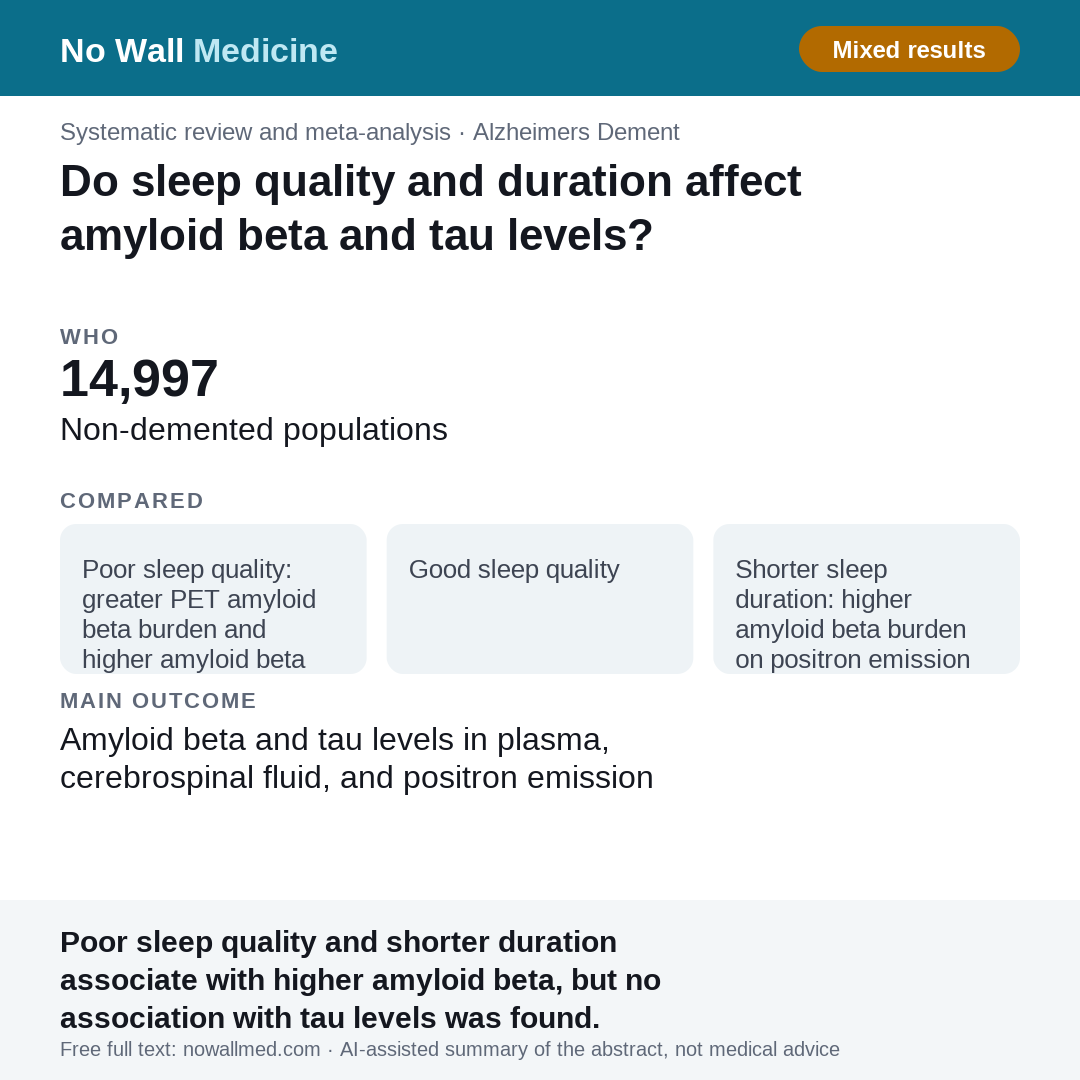
Associations among sleep quality, sleep duration, and Alzheimer's disease biomarkers: A systematic review and meta-analysis
Systematic review and meta-analysisMixed results
Do sleep quality and duration affect amyloid beta and tau levels?
Who
14,997
Non-demented populations
Compared
Poor sleep quality: greater PET amyloid beta burden and higher amyloid beta 42 levels in plasma
Good sleep quality
Shorter sleep duration: higher amyloid beta burden on positron emission tomography
Main outcome
Amyloid beta and tau levels in plasma, cerebrospinal fluid, and positron emission tomography
Bottom line: Poor sleep quality and shorter duration associate with higher amyloid beta, but no association with tau levels was found.
Alzheimers Dement · 2025-03-27Download image