Visual abstracts
New randomized trials and meta-analyses from leading journals at a glance: who was studied, what was compared, and what was found. Every paper is free to read in full.
All specialtiesCardiology 847Oncology 766Gastroenterology & Hepatology 307Infectious Disease 626Neurology 353Psychiatry & Mental Health 430Pulmonology 368Critical Care 252Endocrinology & Diabetes 480Pediatrics 540Surgery 328Orthopedics & Sports Medicine 163Neurosurgery 100Cardiothoracic & Vascular Surgery 87Plastic & Reconstructive Surgery 132Nephrology 197Rheumatology 108Hematology 182Dermatology 80Ophthalmology 97Obstetrics & Gynecology 262Public & Global Health 167Radiology & Imaging 98Anesthesiology 117Urology 162ENT (Otolaryngology) 100Emergency Medicine 84Allergy & Immunology 58Geriatrics 160Family Medicine & Primary Care 111Medical Genetics & Genomics 91Pathology & Laboratory Medicine 24Physical Medicine & Rehabilitation 148Palliative Care 81Nutrition 223Digital Health & AI 460General Medicine 101
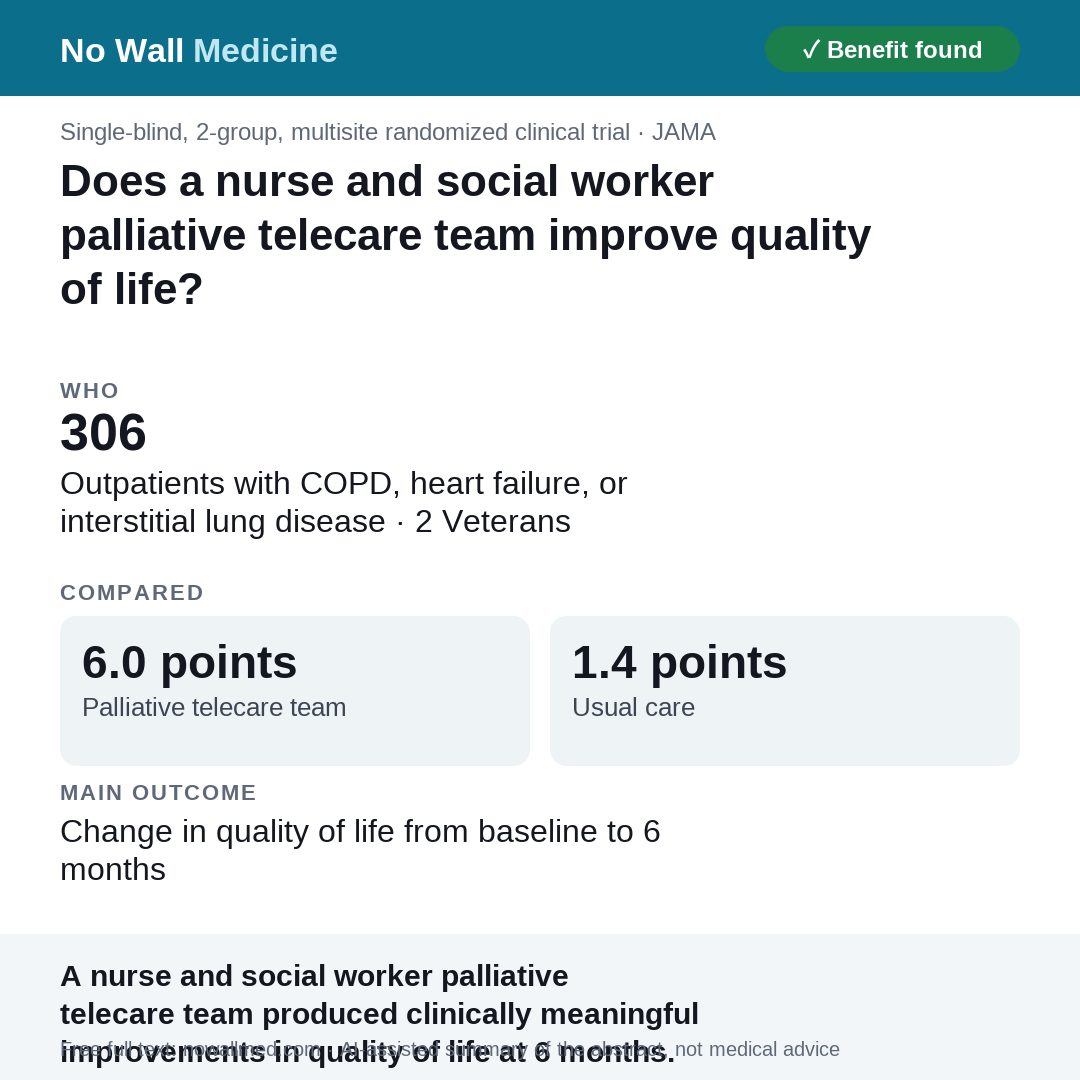
Nurse and Social Worker Palliative Telecare Team and Quality of Life in Patients With COPD, Heart Failure, or Interstitial Lung Disease: The ADAPT Randomized Clinical Trial
Single-blind, 2-group, multisite randomized clinical trialBenefit found
Does a nurse and social worker palliative telecare team improve quality of life?
Who
306
Outpatients with COPD, heart failure, or interstitial lung disease · 2 Veterans Administration health care systems
Compared
6.0 pointsPalliative telecare team
1.4 pointsUsual care
Main outcome
Change in quality of life from baseline to 6 months
Result: difference, 4.6 points [95% CI, 1.8-7.4]
Bottom line: A nurse and social worker palliative telecare team produced clinically meaningful improvements in quality of life at 6 months.
JAMA · 2024-01-16Download image
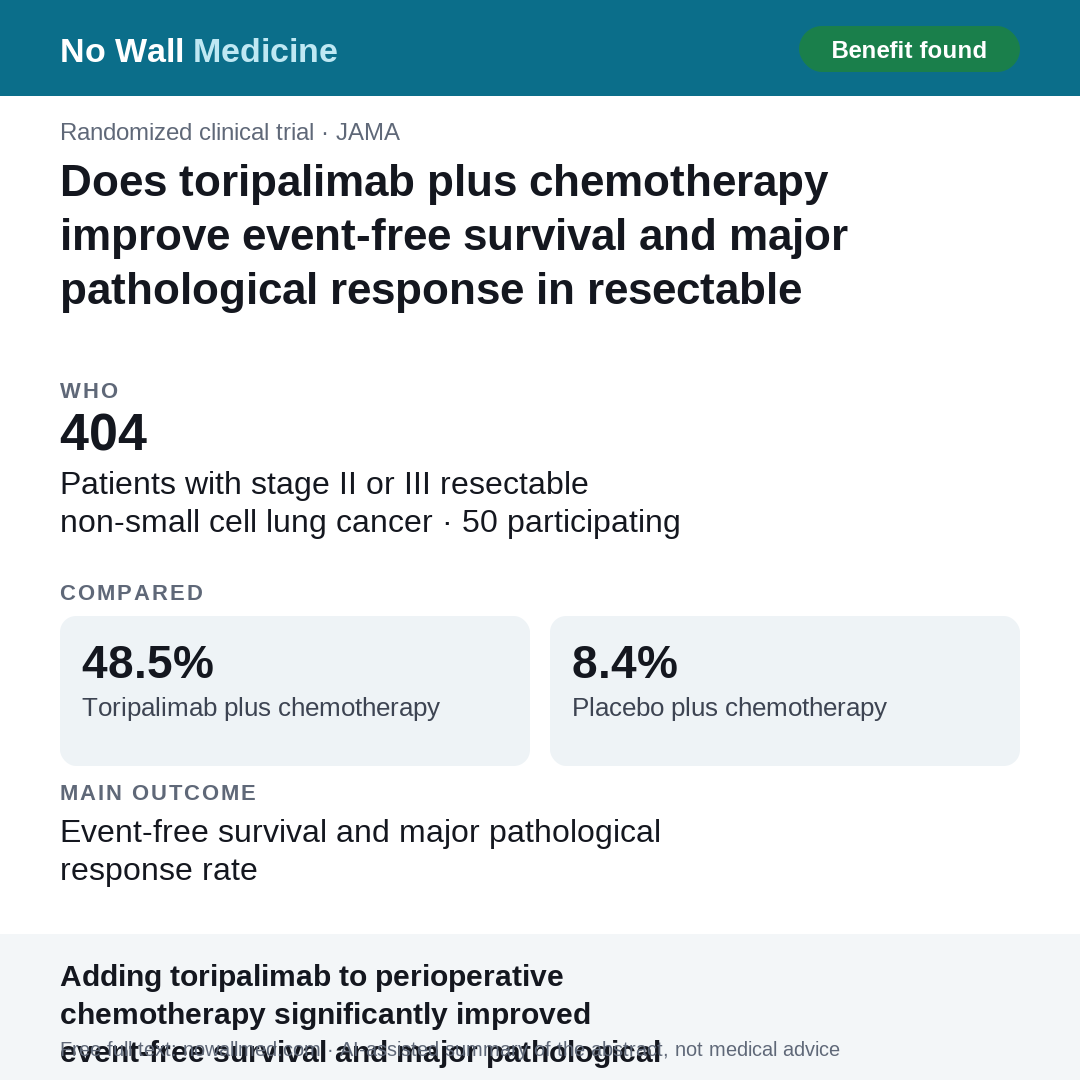
Perioperative Toripalimab Plus Chemotherapy for Patients With Resectable Non-Small Cell Lung Cancer: The Neotorch Randomized Clinical Trial
Randomized clinical trialBenefit found
Does toripalimab plus chemotherapy improve event-free survival and major pathological response in resectable NSCLC?
Who
404
Patients with stage II or III resectable non-small cell lung cancer · 50 participating hospitals in China
Compared
48.5%Toripalimab plus chemotherapy (95% CI, 41.4%-55.6%)
8.4%Placebo plus chemotherapy (95% CI, 5.0%-13.1%)
Main outcome
Event-free survival and major pathological response rate
Result: hazard ratio, 0.40 (95% CI, 0.28-0.57)
Bottom line: Adding toripalimab to perioperative chemotherapy significantly improved event-free survival and major pathological response in stage III non-small cell lung cancer.
Limitation: This interim analysis excluded 97 patients with stage II non-small cell lung cancer.
JAMA · 2024-01-16Download image
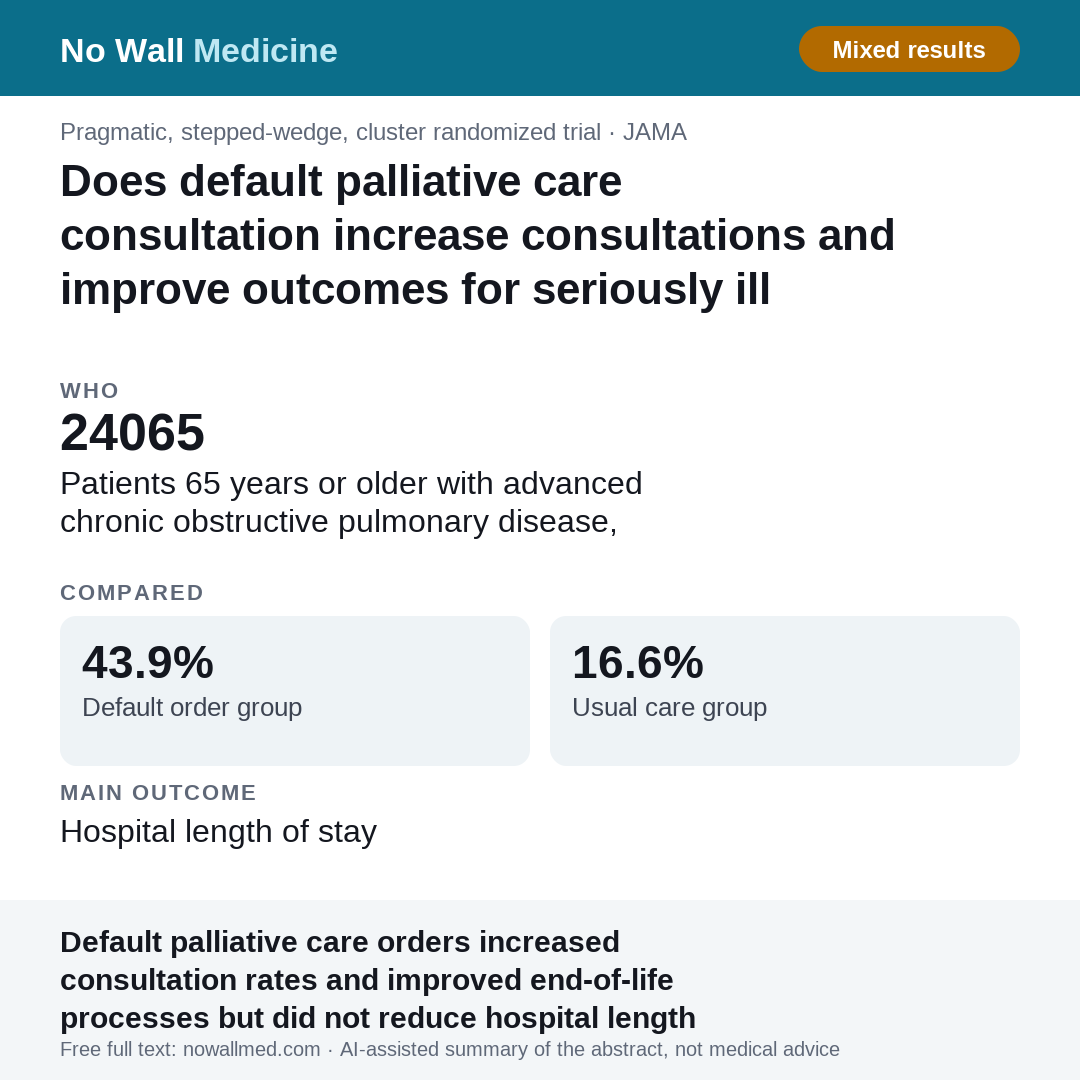
Default Palliative Care Consultation for Seriously Ill Hospitalized Patients: A Pragmatic Cluster Randomized Trial
Pragmatic, stepped-wedge, cluster randomized trialMixed results
Does default palliative care consultation increase consultations and improve outcomes for seriously ill hospitalized patients?
Who
24065
Patients 65 years or older with advanced chronic obstructive pulmonary disease, dementia, or kidney failure · 11 US hospitals
Compared
43.9%Default order group
16.6%Usual care group
Main outcome
Hospital length of stay
Result: percent difference in median length of stay, -0.53% (95% CI, -3.51% to 2.53%)
Bottom line: Default palliative care orders increased consultation rates and improved end-of-life processes but did not reduce hospital length of stay.
JAMA · 2024-01-16Download image
Undervaccination and severe COVID-19 outcomes: meta-analysis of national cohort studies in England, Northern Ireland, Scotland, and Wales
Meta-analysis of cohort studiesHarm found
Undervaccination risk for severe COVID-19
Who
people at least five years old in UK · England, Northern Ireland, Scotland, Wales
Compared
Fully vaccinated
Undervaccinated
Main outcome
severe COVID-19 outcomes
Result: hazard ratio 2.70 (95% CI 2.61 to 2.78) for one dose fewer
Bottom line: Undervaccination increases severe COVID-19 risk
Funded by: UK Research and Innovation
Lancet · 2024-01-15Download image

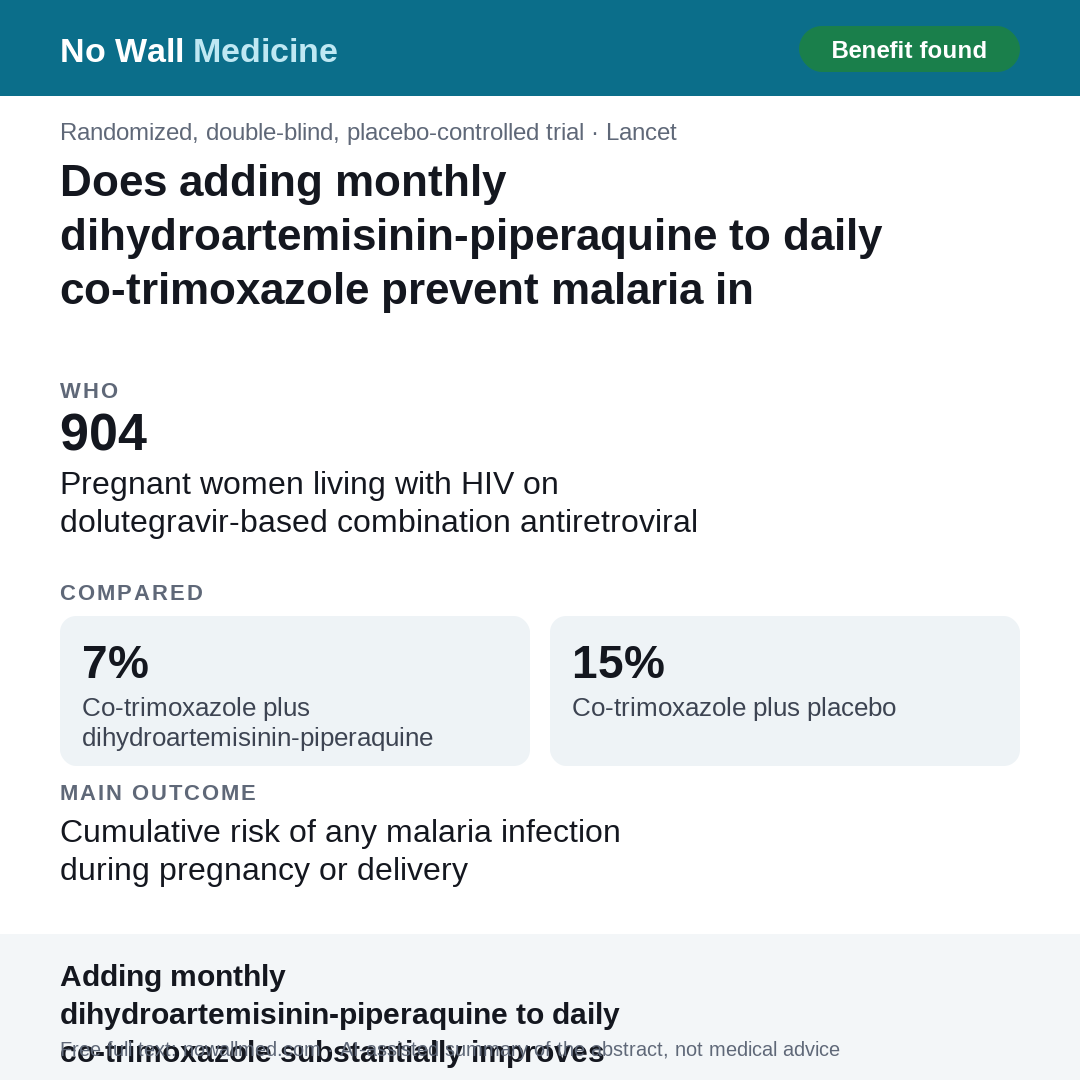
Chemoprevention for malaria with monthly intermittent preventive treatment with dihydroartemisinin-piperaquine in pregnant women living with HIV on daily co-trimoxazole in Kenya and Malawi: a randomised, double-blind, placebo-controlled trial
Randomized, double-blind, placebo-controlled trialBenefit found
Does adding monthly dihydroartemisinin-piperaquine to daily co-trimoxazole prevent malaria in pregnant women living with HIV?
Who
904
Pregnant women living with HIV on dolutegravir-based combination antiretroviral therapy · Kenya and Malawi
Compared
7%Co-trimoxazole plus dihydroartemisinin-piperaquine (31/443)
15%Co-trimoxazole plus placebo (70/452)
Main outcome
Cumulative risk of any malaria infection during pregnancy or delivery
Result: risk ratio 0·45 (95% CI 0·30-0·67)
Bottom line: Adding monthly dihydroartemisinin-piperaquine to daily co-trimoxazole substantially improves malaria prevention in pregnant women living with HIV.
Lancet · 2024-01-12Download image
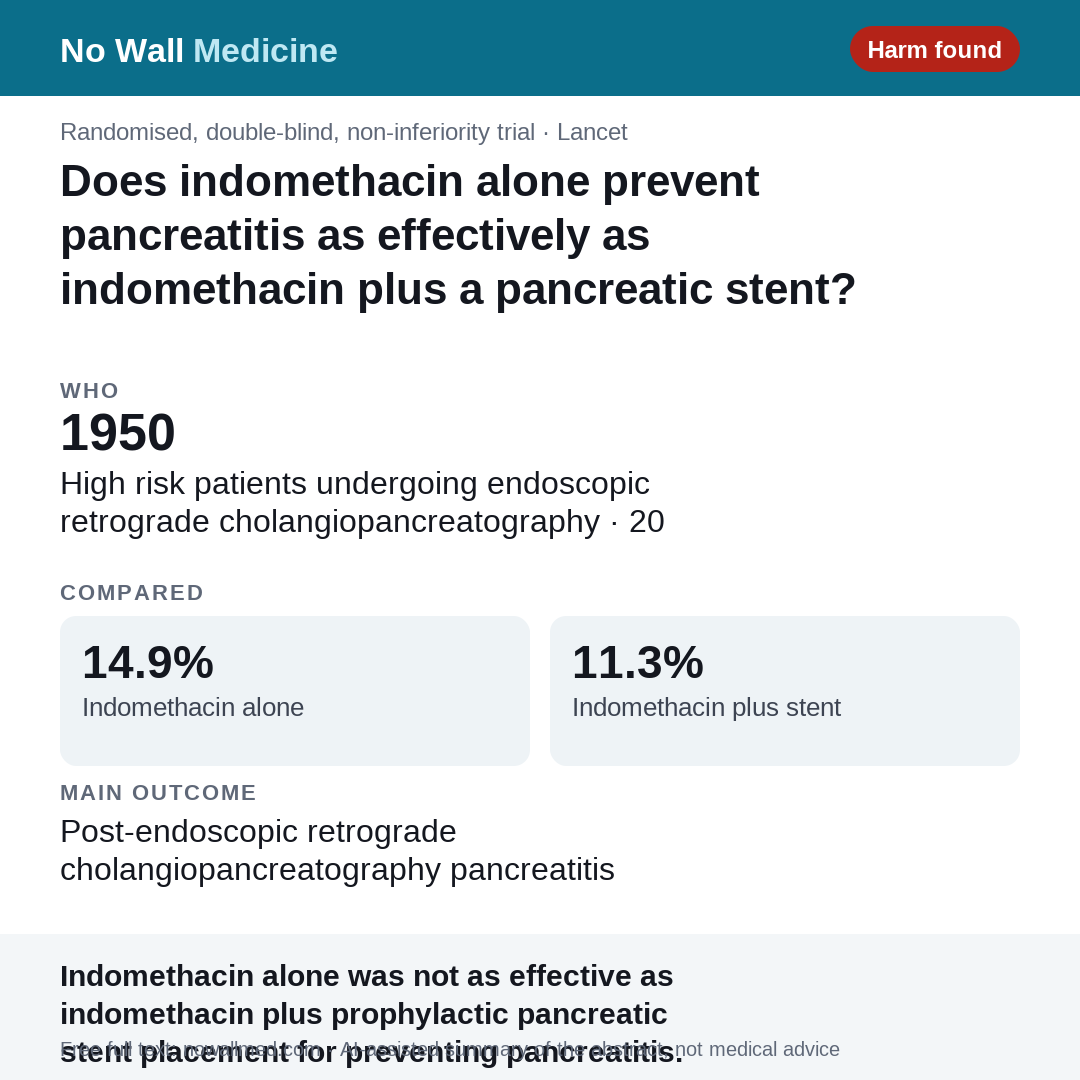
Indomethacin with or without prophylactic pancreatic stent placement to prevent pancreatitis after ERCP: a randomised non-inferiority trial
Randomised, double-blind, non-inferiority trialHarm found
Does indomethacin alone prevent pancreatitis as effectively as indomethacin plus a pancreatic stent?
Who
1950
High risk patients undergoing endoscopic retrograde cholangiopancreatography · 20 referral centres in the USA and Canada
Compared
14.9%Indomethacin alone (145/975)
11.3%Indomethacin plus stent (110/975)
Main outcome
Post-endoscopic retrograde cholangiopancreatography pancreatitis
Result: risk difference 3.6%; 95% CI 0.6-6.6
Bottom line: Indomethacin alone was not as effective as indomethacin plus prophylactic pancreatic stent placement for preventing pancreatitis.
Funded by: US National Institutes of Health
Lancet · 2024-01-11Download image
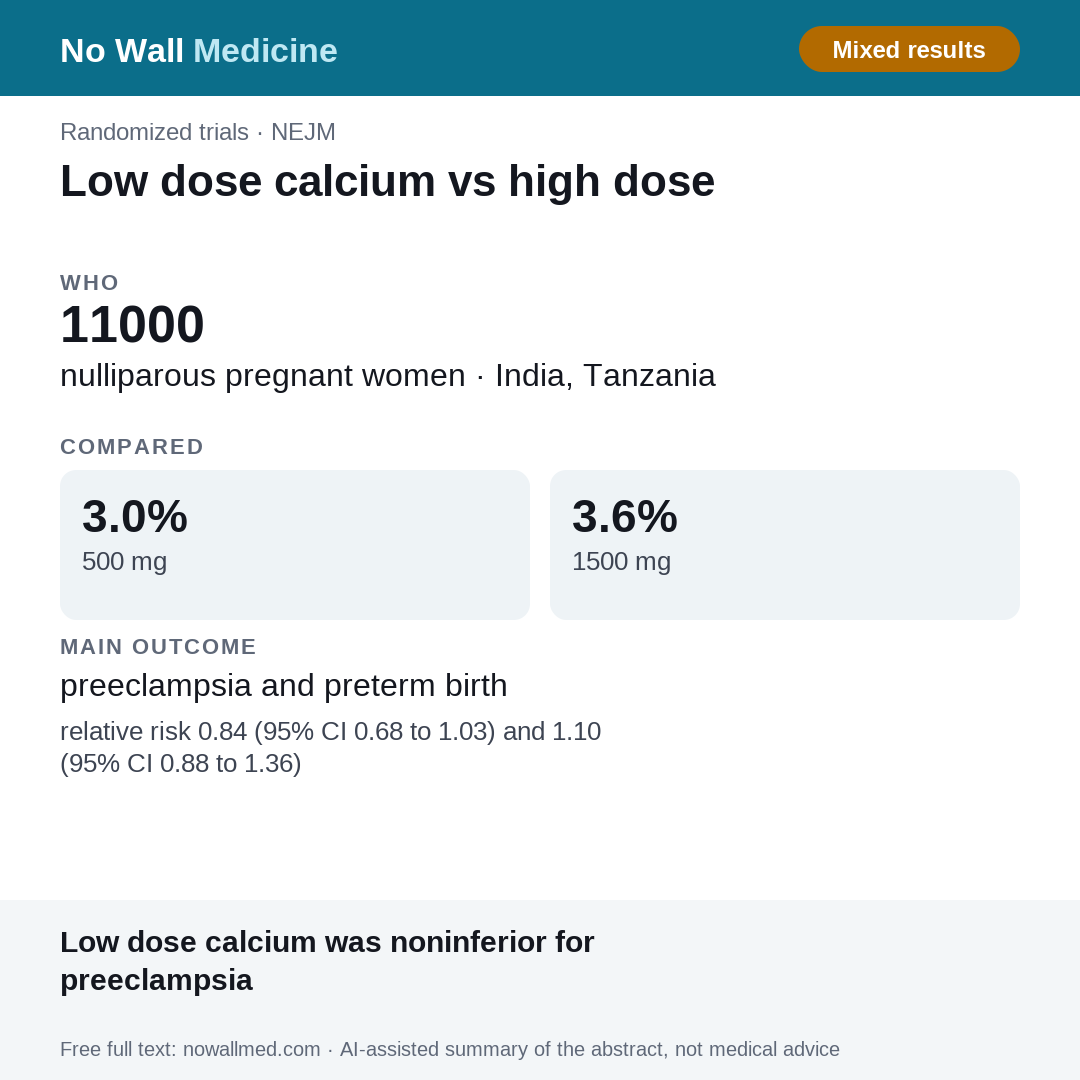
Two Randomized Trials of Low-Dose Calcium Supplementation in Pregnancy
Randomized trialsMixed results
Low dose calcium vs high dose
Who
11000
nulliparous pregnant women · India, Tanzania
Compared
3.0%500 mg
3.6%1500 mg
Main outcome
preeclampsia and preterm birth
Result: relative risk 0.84 (95% CI 0.68 to 1.03) and 1.10 (95% CI 0.88 to 1.36)
Bottom line: Low dose calcium was noninferior for preeclampsia
Funded by: Bill and Melinda Gates Foundation
NEJM · 2024-01-10Download image
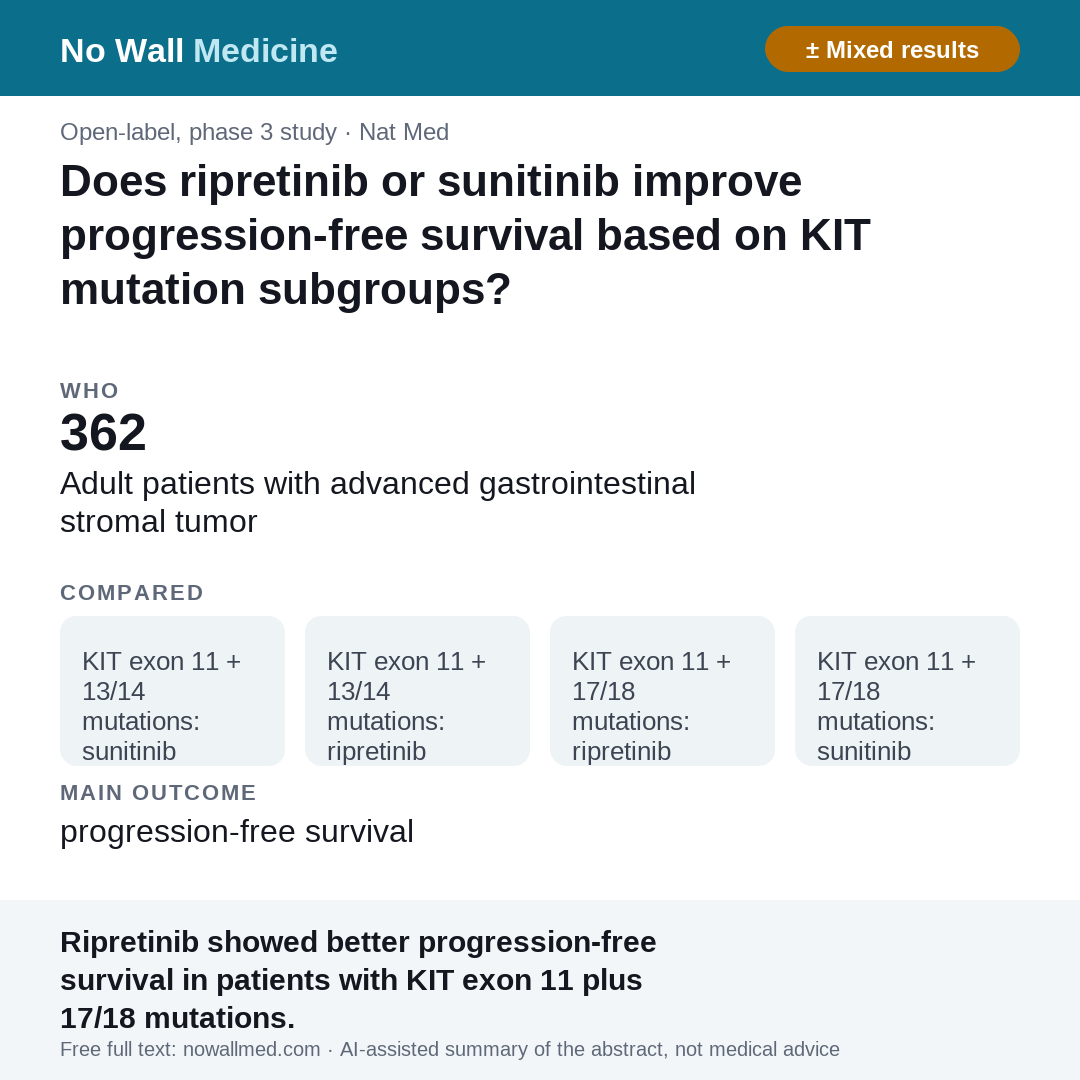
Ripretinib versus sunitinib in gastrointestinal stromal tumor: ctDNA biomarker analysis of the phase 3 INTRIGUE trial
Open-label, phase 3 studyMixed results
Does ripretinib or sunitinib improve progression-free survival based on KIT mutation subgroups?
Who
362
Adult patients with advanced gastrointestinal stromal tumor
Compared
KIT exon 11 + 13/14 mutations: sunitinib median 15.0 months
KIT exon 11 + 13/14 mutations: ripretinib median 4.0 months
KIT exon 11 + 17/18 mutations: ripretinib median 14.2 months
KIT exon 11 + 17/18 mutations: sunitinib median 1.5 months
Main outcome
progression-free survival
Bottom line: Ripretinib showed better progression-free survival in patients with KIT exon 11 plus 17/18 mutations.
Nat Med · 2024-01-05Download image
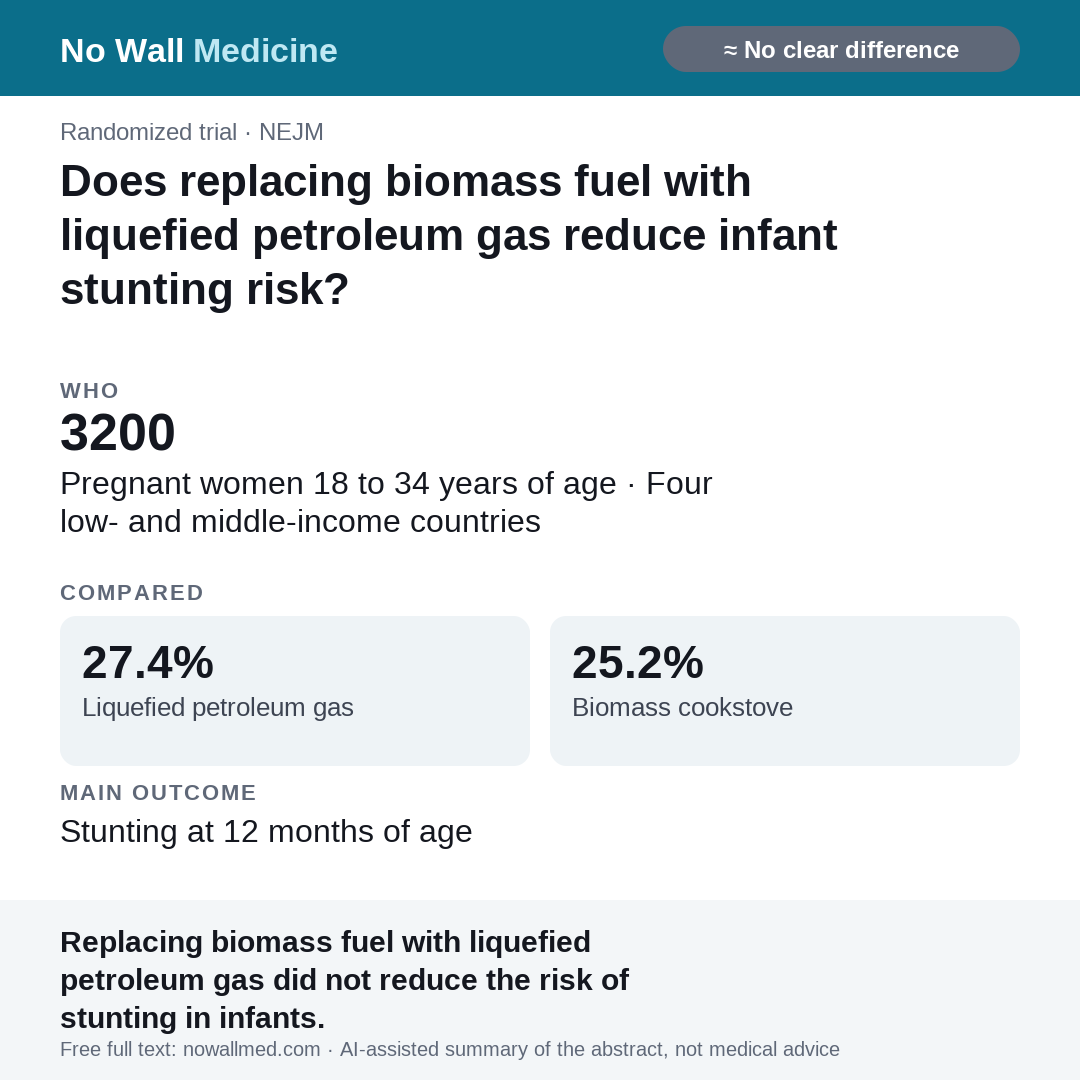
Effects of Cooking with Liquefied Petroleum Gas or Biomass on Stunting in Infants
Randomized trialNo clear difference
Does replacing biomass fuel with liquefied petroleum gas reduce infant stunting risk?
Who
3200
Pregnant women 18 to 34 years of age · Four low- and middle-income countries
Compared
27.4%Liquefied petroleum gas
25.2%Biomass cookstove
Main outcome
Stunting at 12 months of age
Result: relative risk 1.10 (98.75% confidence interval 0.94 to 1.29)
Bottom line: Replacing biomass fuel with liquefied petroleum gas did not reduce the risk of stunting in infants.
Funded by: National Institutes of Health and Bill and Melinda Gates Foundation
NEJM · 2024-01-04Download image
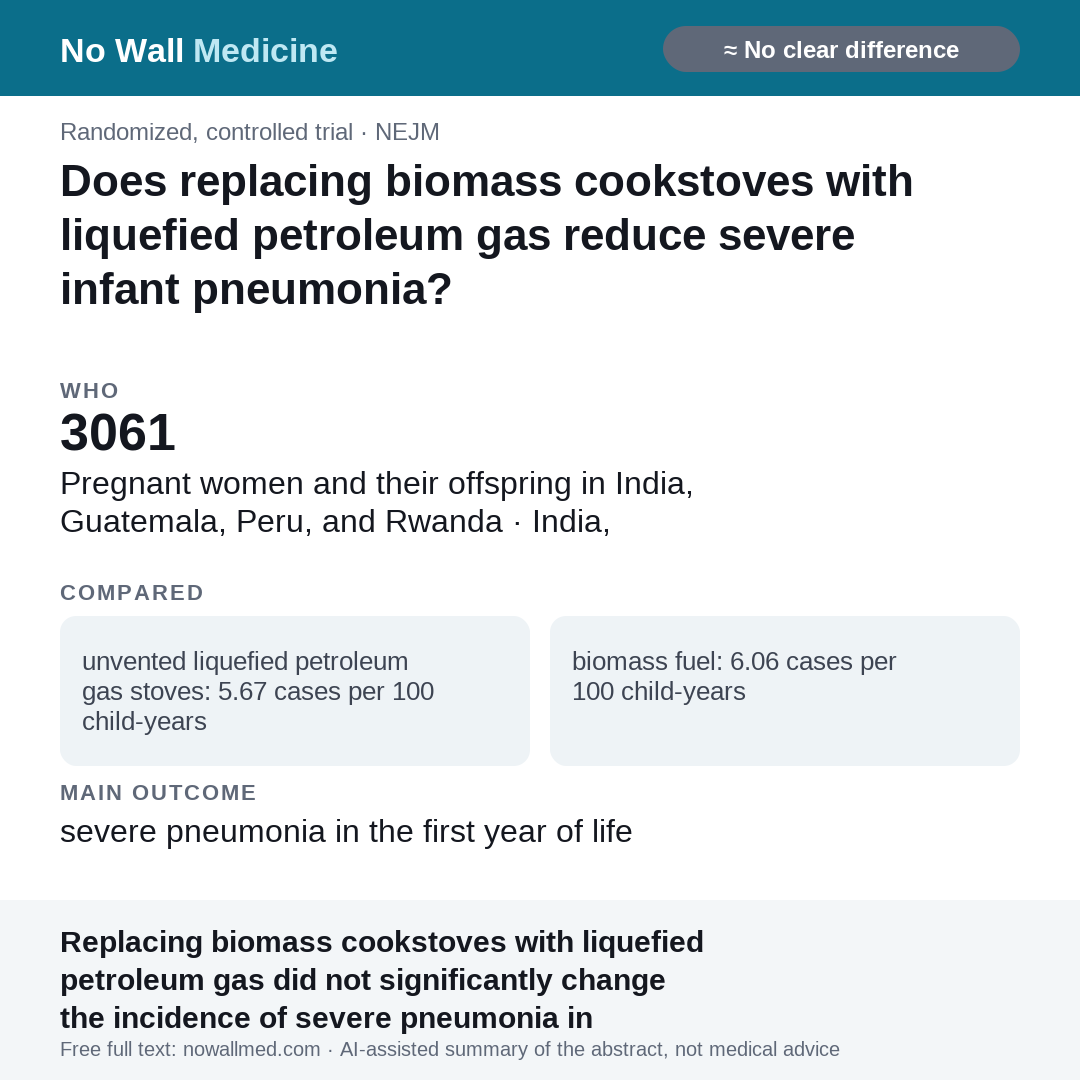
Liquefied Petroleum Gas or Biomass Cooking and Severe Infant Pneumonia
Randomized, controlled trialNo clear difference
Does replacing biomass cookstoves with liquefied petroleum gas reduce severe infant pneumonia?
Who
3061
Pregnant women and their offspring in India, Guatemala, Peru, and Rwanda · India, Guatemala, Peru, and Rwanda
Compared
unvented liquefied petroleum gas stoves: 5.67 cases per 100 child-years
biomass fuel: 6.06 cases per 100 child-years
Main outcome
severe pneumonia in the first year of life
Result: incidence rate ratio 0.96 (98.75% CI 0.64 to 1.44)
Bottom line: Replacing biomass cookstoves with liquefied petroleum gas did not significantly change the incidence of severe pneumonia in infants.
Funded by: National Institutes of Health and Bill and Melinda Gates Foundation
NEJM · 2024-01-04Download image
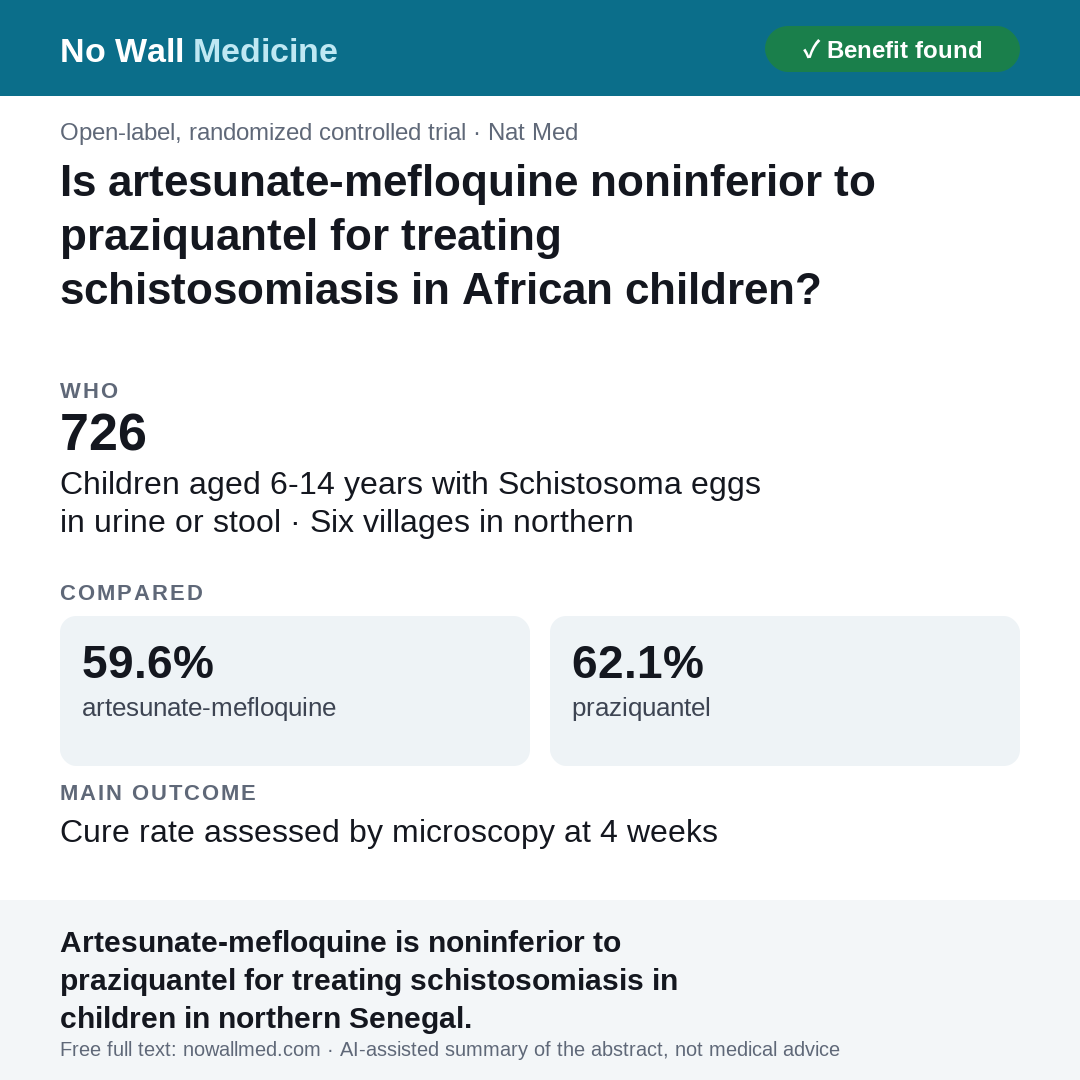
Antimalarial artesunate-mefloquine versus praziquantel in African children with schistosomiasis: an open-label, randomized controlled trial
Open-label, randomized controlled trialBenefit found
Is artesunate-mefloquine noninferior to praziquantel for treating schistosomiasis in African children?
Who
726
Children aged 6-14 years with Schistosoma eggs in urine or stool · Six villages in northern Senegal
Compared
59.6%artesunate-mefloquine (208/349)
62.1%praziquantel (211/340)
Main outcome
Cure rate assessed by microscopy at 4 weeks
Result: -2.5% (95% CI -9.8 to 4.8)
Bottom line: Artesunate-mefloquine is noninferior to praziquantel for treating schistosomiasis in children in northern Senegal.
Nat Med · 2024-01-04Download image
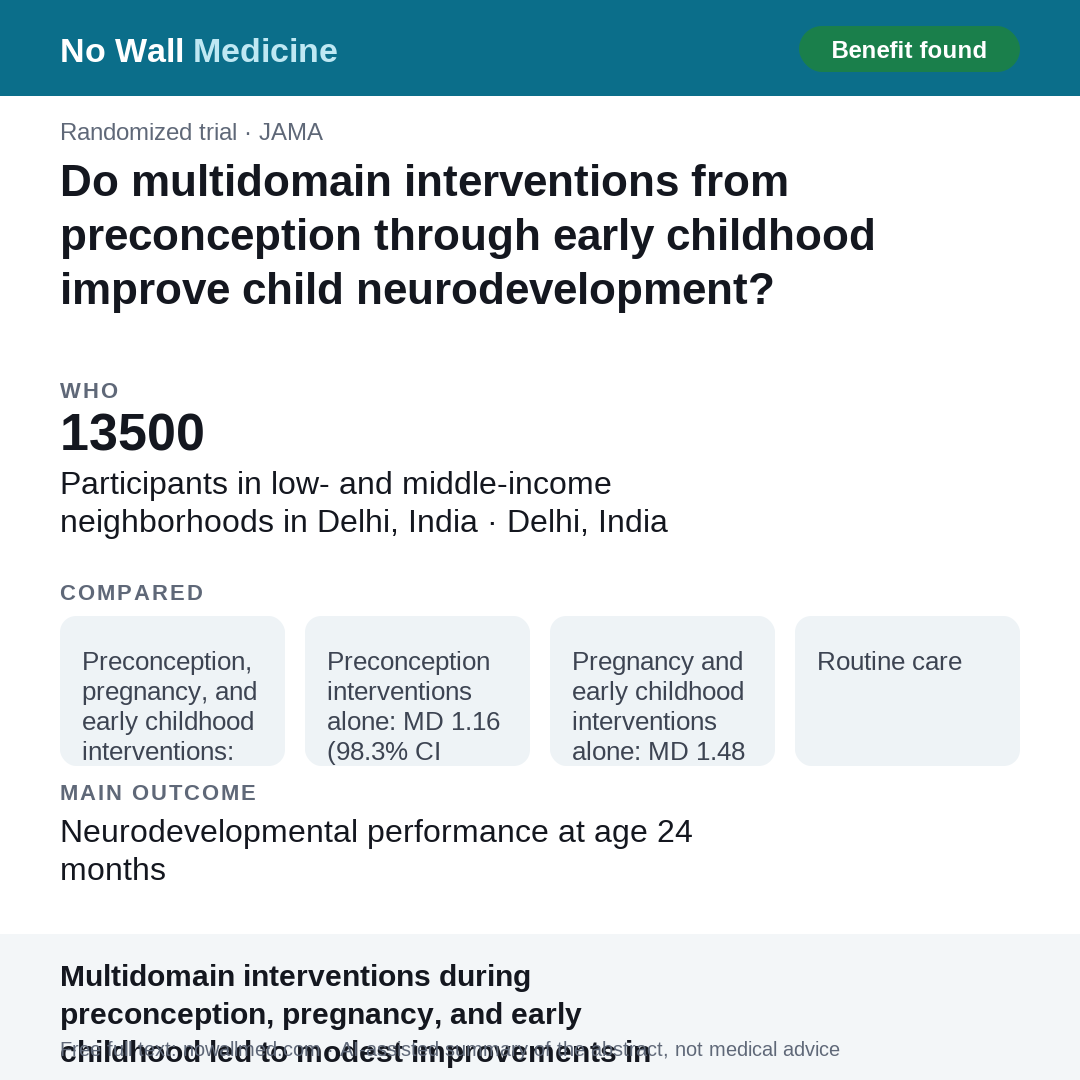
Child Neurodevelopment After Multidomain Interventions From Preconception Through Early Childhood: The WINGS Randomized Clinical Trial
Randomized trialBenefit found
Do multidomain interventions from preconception through early childhood improve child neurodevelopment?
Who
13500
Participants in low- and middle-income neighborhoods in Delhi, India · Delhi, India
Compared
Preconception, pregnancy, and early childhood interventions: MD 2.60 (98.3% CI 1.08-4.12) cognitive
Preconception interventions alone: MD 1.16 (98.3% CI 0.18-2.13) cognitive
Pregnancy and early childhood interventions alone: MD 1.48 (98.3% CI 0.49-2.46) cognitive
Routine care
Main outcome
Neurodevelopmental performance at age 24 months
Result: MD 2.60 (98.3% CI 1.08-4.12) for cognitive scores
Bottom line: Multidomain interventions during preconception, pregnancy, and early childhood led to modest improvements in child neurodevelopment at 24 months.
JAMA · 2024-01-02Download image
Respectful Maternity Care : A Systematic Review
Systematic reviewUnclear result
What are the definitions, measurements, and effectiveness of respectful maternity care?
Who
Pregnant and postpartum individuals
Compared
Respectful maternity care
Usual care
Main outcome
Maternal and infant health outcomes
Bottom line: Evidence is lacking on the effectiveness of respectful maternity care to improve maternal or infant health outcomes.
Limitation: Lack of definition and gold standard limit evaluation of respectful maternity care tools.
Funded by: Agency for Healthcare Research and Quality
Ann Intern Med · 2024-01-02Download image
Development and Validation of a Protein Risk Score for Mortality in Heart Failure : A Community Cohort Study
Community-based cohort studyBenefit found
Can a protein risk score predict mortality in patients with heart failure?
Who
1351
Patients with heart failure · Southeast Minnesota
Compared
Development cohort
Validation cohort
Main outcome
5-year mortality risk
Bottom line: A protein risk score demonstrated good calibration and superior clinical utility for predicting mortality compared to clinical models.
Limitation: Participants were predominantly of European ancestry, potentially limiting generalizability to different populations.
Funded by: National Heart, Lung, and Blood Institute
Ann Intern Med · 2024-01-02Download image
Doxycycline Prophylaxis to Prevent Sexually Transmitted Infections in Women
Randomized, open-label trialNo clear difference
Does doxycycline postexposure prophylaxis prevent sexually transmitted infections in cisgender women?
Who
449
Kenyan women 18 to 30 years old receiving HIV preexposure prophylaxis · Kenya
Compared
Doxycycline postexposure prophylaxis: 25.1 per 100 person-years
Standard care: 29.0 per 100 person-years
Main outcome
Incident infection with Chlamydia trachomatis, Neisseria gonorrhoeae, or Treponema pallidum
Result: relative risk 0.88 (95% CI 0.60 to 1.29)
Bottom line: Doxycycline postexposure prophylaxis did not significantly lower the incidence of sexually transmitted infections among cisgender women.
Funded by: National Institutes of Health
NEJM · 2023-12-20Download image
Association of health benefits and harms of Christmas dessert ingredients in recipes from The Great British Bake Off: umbrella review of umbrella reviews of meta-analyses of observational studies
Umbrella review of umbrella reviews of meta-analysesBenefit found
What are the health benefits and harms of Christmas dessert ingredients?
Who
17 overarching ingredient groups from 48 Christmas dessert recipes
Compared
110Protective associations (74%)
39Harmful associations (26%)
Main outcome
Risk of death or disease
Bottom line: Christmas dessert ingredients are often associated with reductions rather than increases in death or disease risk.
Limitation: limitations of observational nutrition research
BMJ · 2023-12-20Download image

Effect of chair placement on physicians' behavior and patients' satisfaction: randomized deception trial
Single center, double blind, randomized controlled deception trialBenefit found
Does chair placement affect physician sitting behavior and patient satisfaction?
Who
125
51 hospitalist physicians and 125 observed patient encounters · County hospital in Texas, USA
Compared
chair placement: 38 of the 60 physicians sat
usual chair location: five of the 65 physicians sat
Main outcome
physician decision to sit or not sit
Result: odds ratio 20.7 (95% confidence interval 7.2 to 59.4)
Bottom line: Placing a chair near the bedside increases physician sitting and improves patient satisfaction scores.
BMJ · 2023-12-15Download image
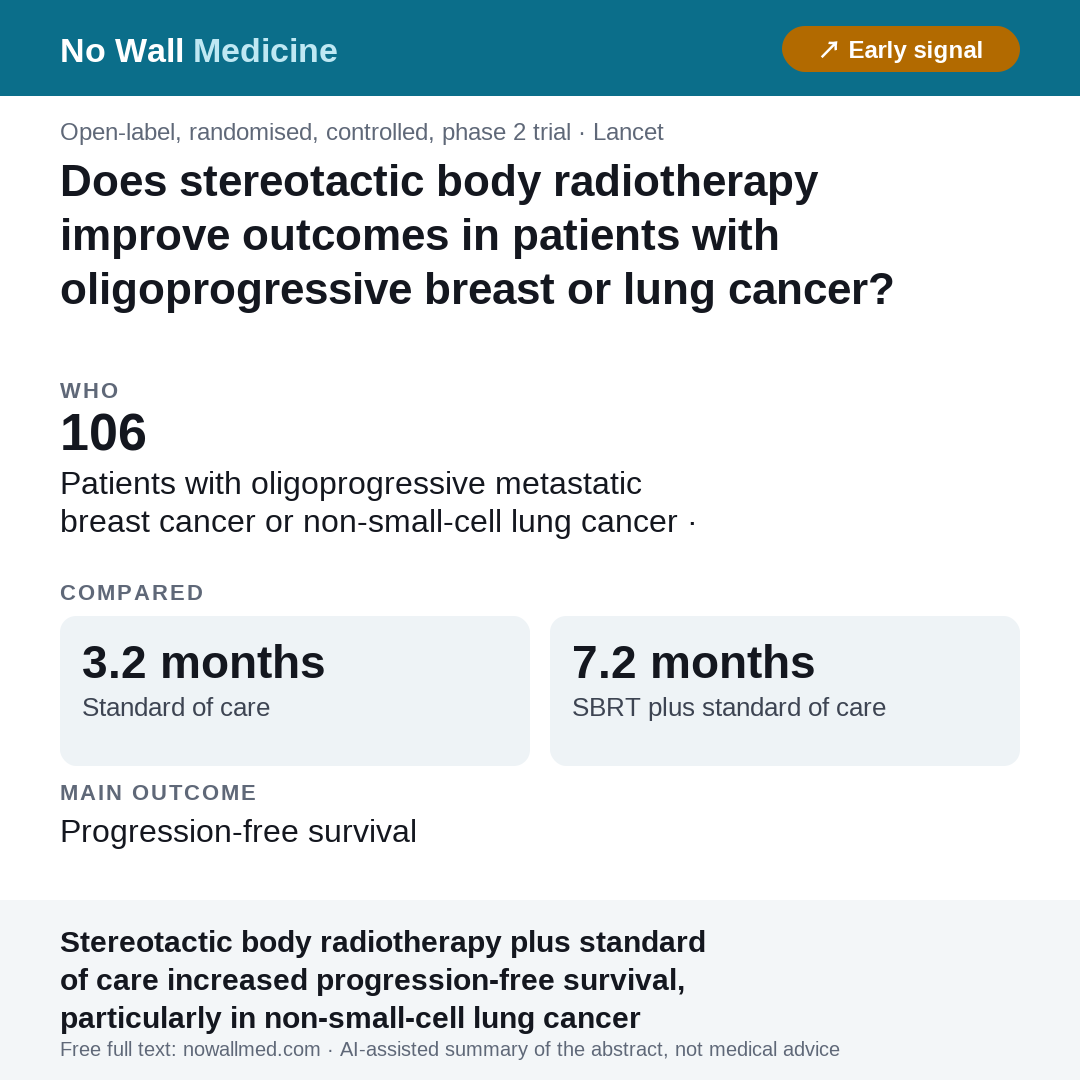
Standard-of-care systemic therapy with or without stereotactic body radiotherapy in patients with oligoprogressive breast cancer or non-small-cell lung cancer (Consolidative Use of Radiotherapy to Block [CURB] oligoprogression): an open-label, randomised, controlled, phase 2 study
Open-label, randomised, controlled, phase 2 trialBenefit found
Does stereotactic body radiotherapy improve outcomes in patients with oligoprogressive breast or lung cancer?
Who
106
Patients with oligoprogressive metastatic breast cancer or non-small-cell lung cancer · New York and New Jersey, USA
Compared
3.2 monthsStandard of care (95% CI 2.0-4.5)
7.2 monthsSBRT plus standard of care (4.5-10.0)
Main outcome
Progression-free survival
Result: hazard ratio 0.53 (95% CI 0.35-0.81)
Bottom line: Stereotactic body radiotherapy plus standard of care increased progression-free survival, particularly in non-small-cell lung cancer patients.
Limitation: The study was closed to accrual before reaching the targeted sample size.
Funded by: National Cancer Institute
Lancet · 2023-12-14Download image
Inhibition of the KCa2 potassium channel in atrial fibrillation: a randomized phase 2 trial
Randomized phase 2 trialBenefit found
Is AP30663 effective for cardioversion in patients with recent-onset atrial fibrillation?
Who
59
Patients with a current episode of atrial fibrillation lasting 7 days or less
Compared
42%3 mg kg-1 AP30663 (5 of 12)
55%5 mg kg-1 AP30663 (12 of 22)
0%Placebo (0 of 25)
Main outcome
Cardioversion from atrial fibrillation to sinus rhythm within 90 minutes
Result: more than 99.9% probability of superiority over placebo
Bottom line: AP30663 demonstrated efficacy in cardioverting patients with recent-onset atrial fibrillation episodes.
Limitation: The trial was prematurely discontinued because of slow enrollment during the coronavirus disease 2019 pandemic.
Nat Med · 2023-12-13Download image

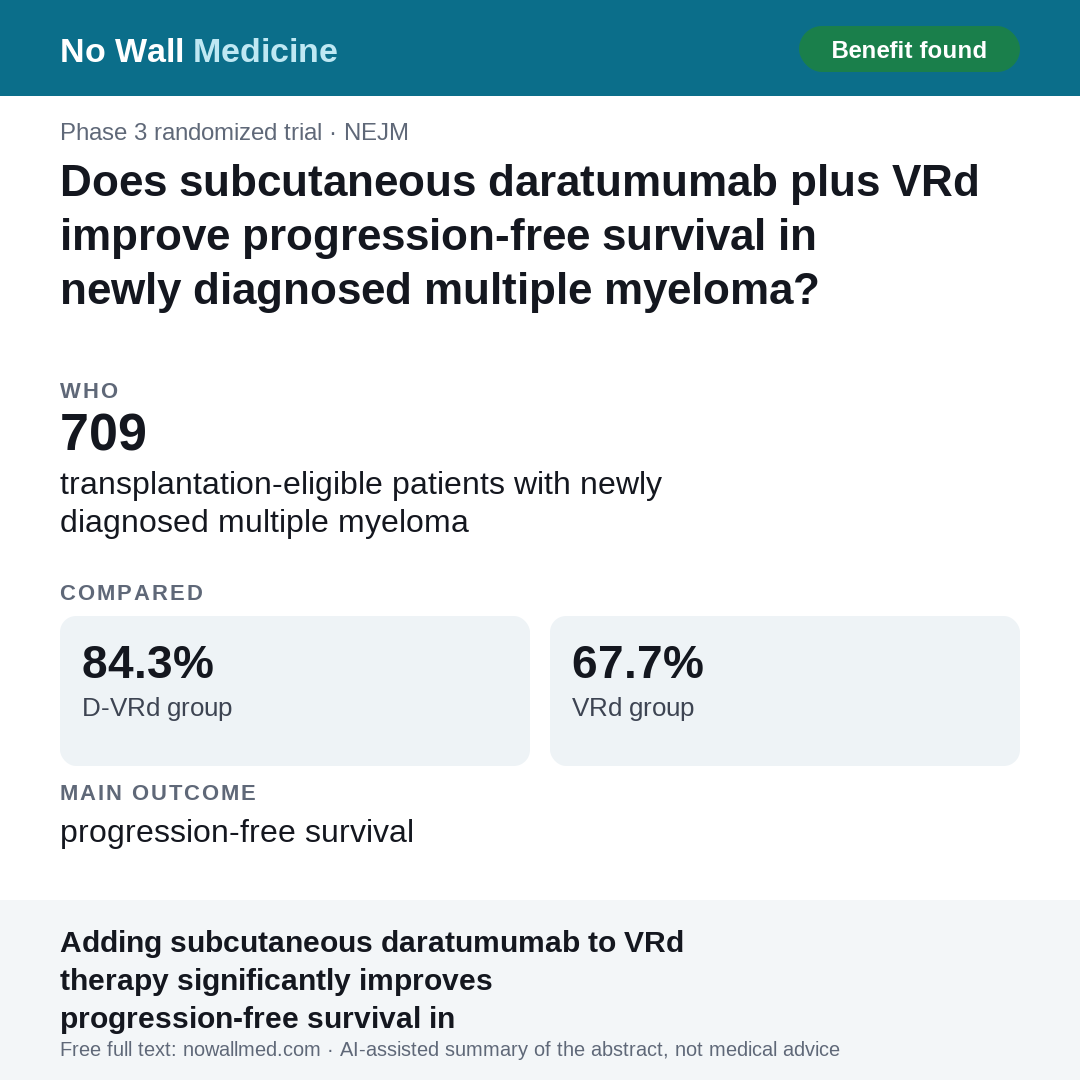
Daratumumab, Bortezomib, Lenalidomide, and Dexamethasone for Multiple Myeloma
Phase 3 randomized trialBenefit found
Does subcutaneous daratumumab plus VRd improve progression-free survival in newly diagnosed multiple myeloma?
Who
709
transplantation-eligible patients with newly diagnosed multiple myeloma
Compared
84.3%D-VRd group
67.7%VRd group
Main outcome
progression-free survival
Result: hazard ratio 0.42 (95% confidence interval, 0.30 to 0.59)
Bottom line: Adding subcutaneous daratumumab to VRd therapy significantly improves progression-free survival in transplantation-eligible patients with newly diagnosed multiple myeloma.
Funded by: European Myeloma Network and Janssen Research and Development
NEJM · 2023-12-12Download image