Visual abstracts
New randomized trials and meta-analyses from leading journals at a glance: who was studied, what was compared, and what was found. Every paper is free to read in full.
All specialtiesCardiology 2421Oncology 2069Gastroenterology & Hepatology 926Infectious Disease 1508Neurology 971Psychiatry & Mental Health 1137Pulmonology 1016Critical Care 677Endocrinology & Diabetes 1263Pediatrics 1420Surgery 1236Orthopedics & Sports Medicine 441Neurosurgery 299Cardiothoracic & Vascular Surgery 267Plastic & Reconstructive Surgery 365Nephrology 503Rheumatology 342Hematology 523Dermatology 277Ophthalmology 284Obstetrics & Gynecology 793Public & Global Health 443Radiology & Imaging 331Anesthesiology 488Urology 408ENT (Otolaryngology) 306Emergency Medicine 277Allergy & Immunology 151Geriatrics 513Family Medicine & Primary Care 282Medical Genetics & Genomics 261Pathology & Laboratory Medicine 77Physical Medicine & Rehabilitation 404Palliative Care 205Nutrition 631Digital Health & AI 1193General Medicine 177
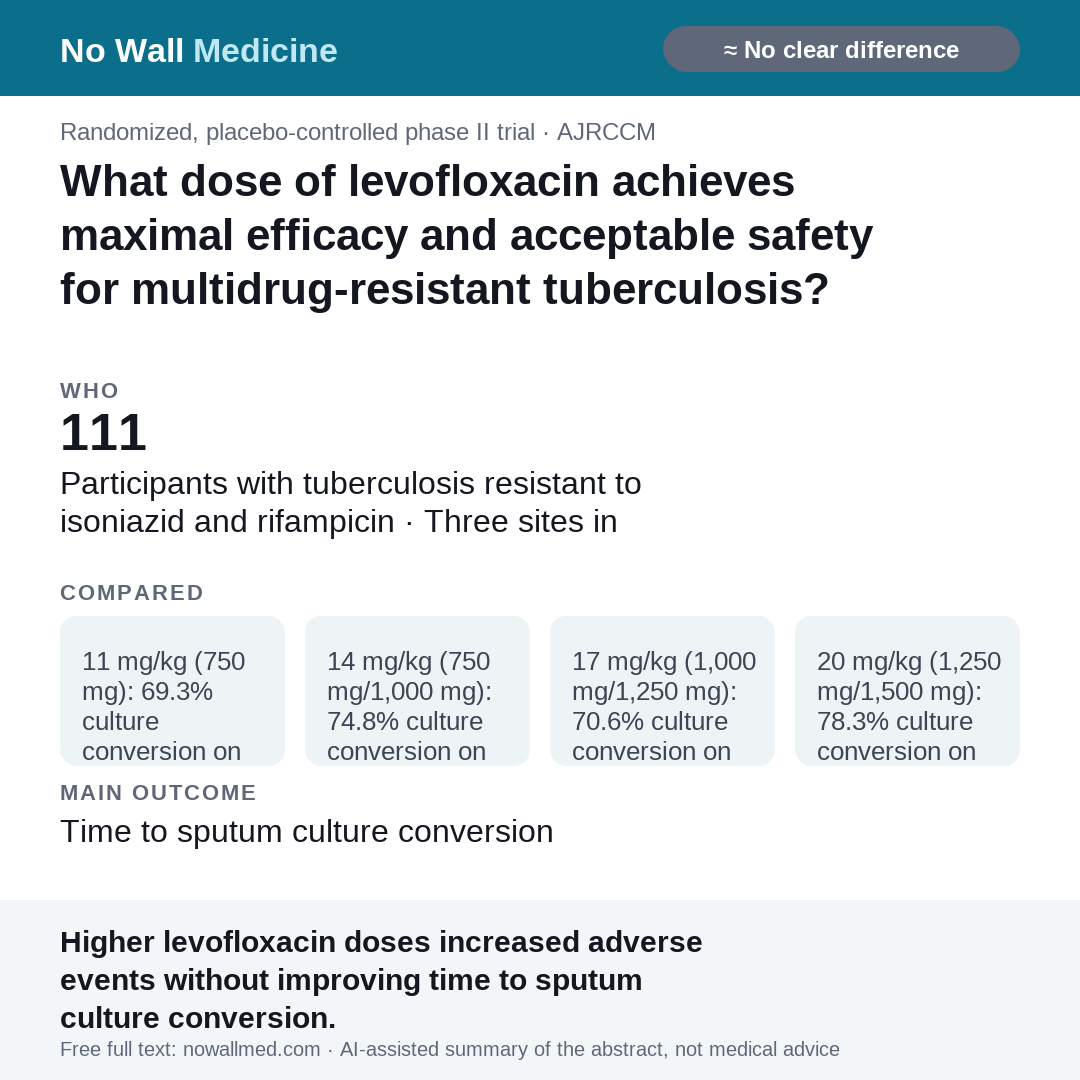
Efficacy and Safety of Higher Doses of Levofloxacin for Multidrug-resistant Tuberculosis: A Randomized, Placebo-controlled Phase II Clinical Trial
Randomized, placebo-controlled phase II trialNo clear difference
What dose of levofloxacin achieves maximal efficacy and acceptable safety for multidrug-resistant tuberculosis?
Who
111
Participants with tuberculosis resistant to isoniazid and rifampicin · Three sites in South Africa and Peru
Compared
11 mg/kg (750 mg): 69.3% culture conversion on solid media
14 mg/kg (750 mg/1,000 mg): 74.8% culture conversion on solid media
17 mg/kg (1,000 mg/1,250 mg): 70.6% culture conversion on solid media
20 mg/kg (1,250 mg/1,500 mg): 78.3% culture conversion on solid media
Main outcome
Time to sputum culture conversion
Bottom line: Higher levofloxacin doses increased adverse events without improving time to sputum culture conversion.
AJRCCM · 2025-03-14Download image
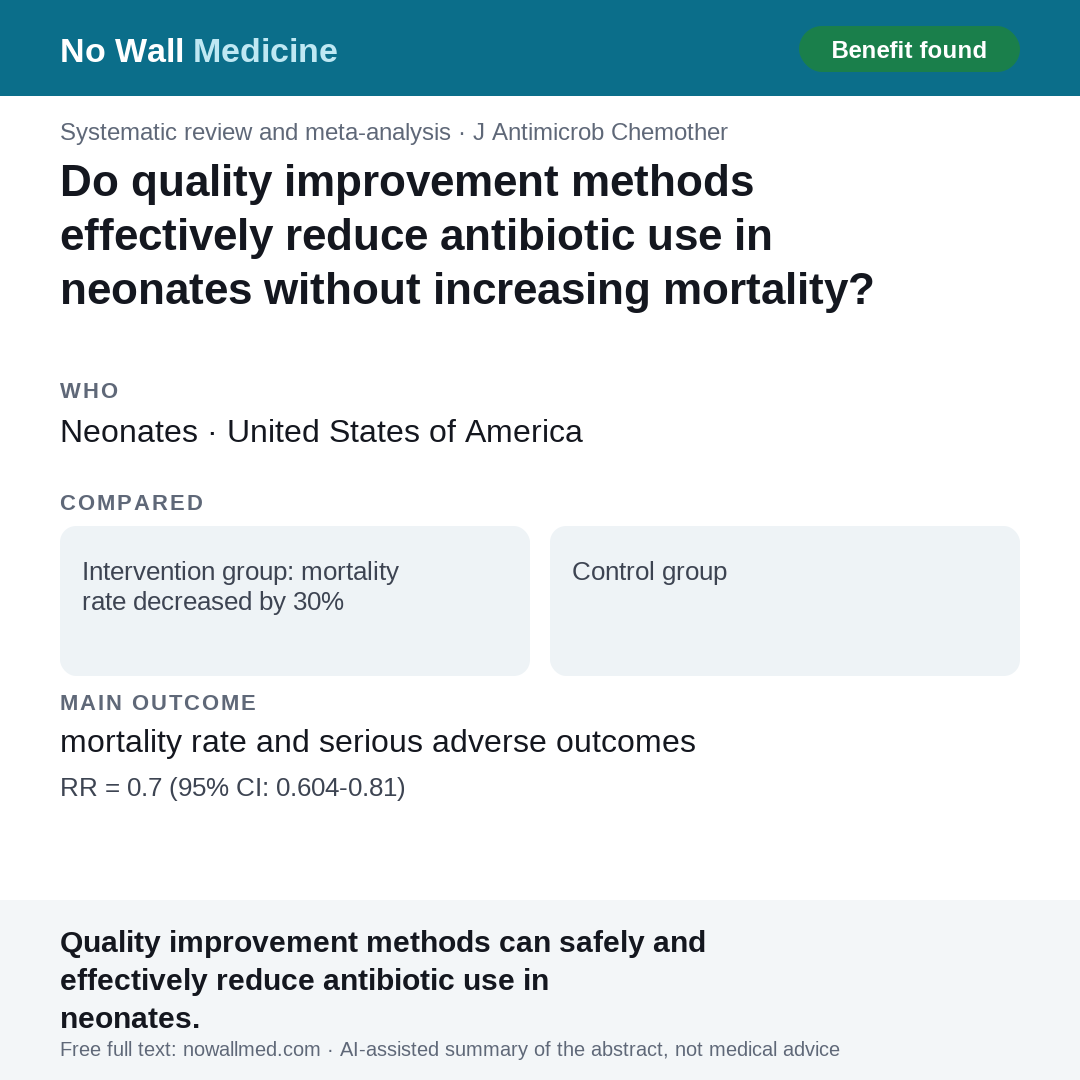
Applying quality improvement methods to reduce antibiotic use in neonates: a systematic review and meta-analysis
Systematic review and meta-analysisBenefit found
Do quality improvement methods effectively reduce antibiotic use in neonates without increasing mortality?
Who
Neonates · United States of America
Compared
Intervention group: mortality rate decreased by 30%
Control group
Main outcome
mortality rate and serious adverse outcomes
Result: RR = 0.7 (95% CI: 0.604-0.81)
Bottom line: Quality improvement methods can safely and effectively reduce antibiotic use in neonates.
J Antimicrob Chemother · 2025-03-14Download image
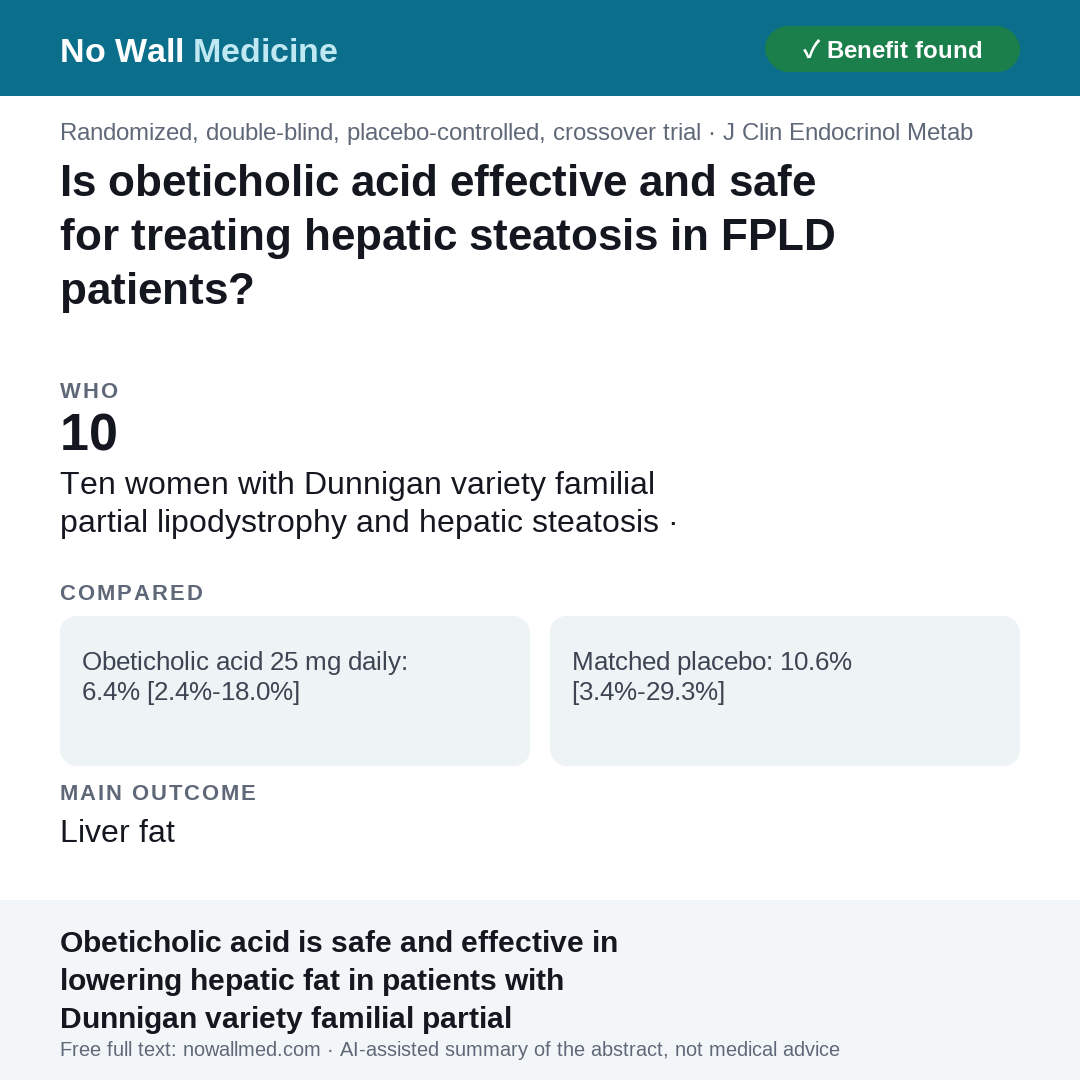
Efficacy and Safety of Obeticholic Acid for Treating Hepatic Steatosis in Patients With Familial Partial Lipodystrophy
Randomized, double-blind, placebo-controlled, crossover trialBenefit found
Is obeticholic acid effective and safe for treating hepatic steatosis in FPLD patients?
Who
10
Ten women with Dunnigan variety familial partial lipodystrophy and hepatic steatosis · Academic referral center
Compared
Obeticholic acid 25 mg daily: 6.4% [2.4%-18.0%]
Matched placebo: 10.6% [3.4%-29.3%]
Main outcome
Liver fat
Bottom line: Obeticholic acid is safe and effective in lowering hepatic fat in patients with Dunnigan variety familial partial lipodystrophy.
J Clin Endocrinol Metab · 2025-03-14Download image
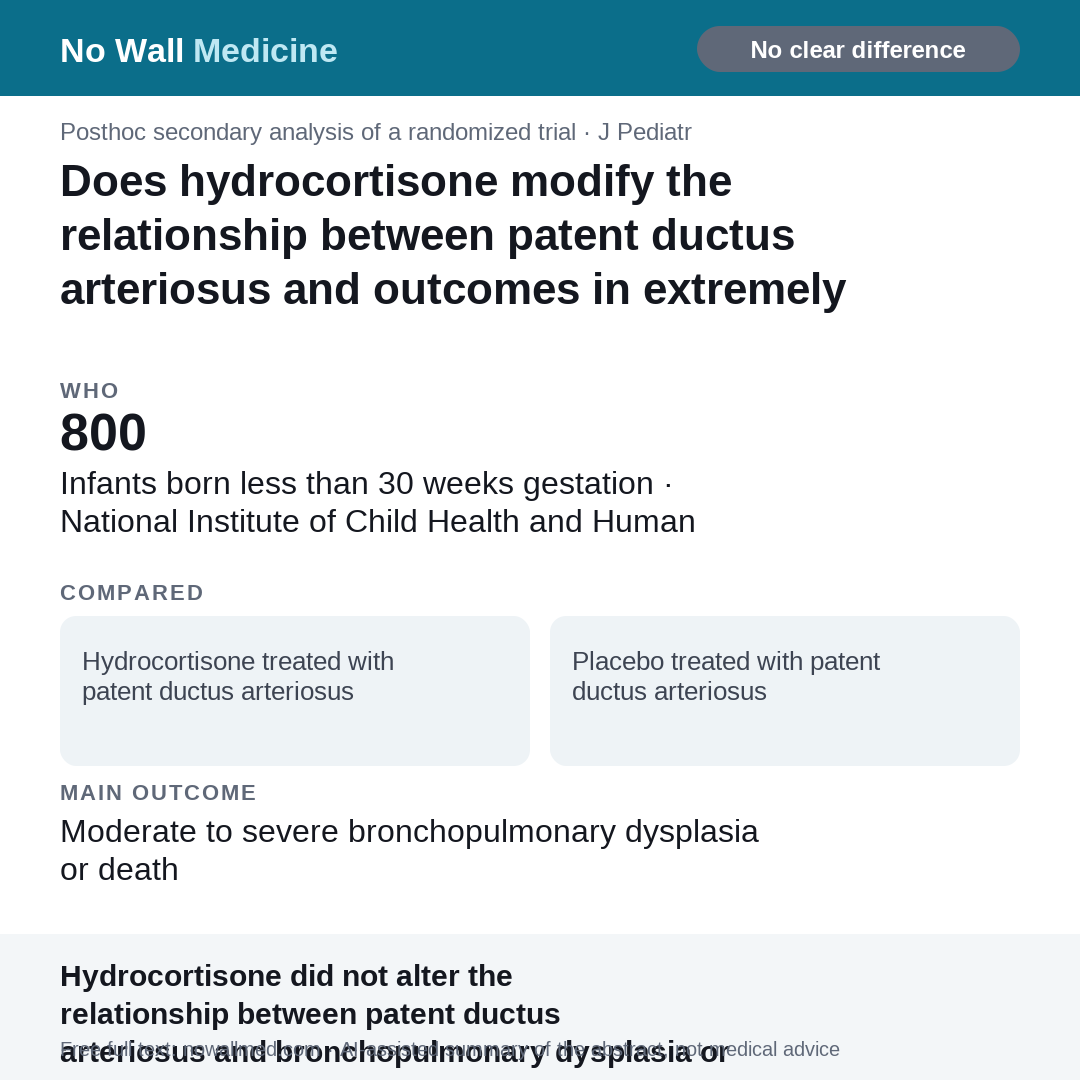
Patent Ductus Arteriosus, Hydrocortisone, and Outcome among Infants Born Extremely Preterm: Secondary Analysis of the Hydrocortisone Trial
Posthoc secondary analysis of a randomized trialNo clear difference
Does hydrocortisone modify the relationship between patent ductus arteriosus and outcomes in extremely preterm infants?
Who
800
Infants born less than 30 weeks gestation · National Institute of Child Health and Human Development Neonatal Research Network
Compared
Hydrocortisone treated with patent ductus arteriosus
Placebo treated with patent ductus arteriosus
Main outcome
Moderate to severe bronchopulmonary dysplasia or death
Bottom line: Hydrocortisone did not alter the relationship between patent ductus arteriosus and bronchopulmonary dysplasia or death.
J Pediatr · 2025-03-14Download image
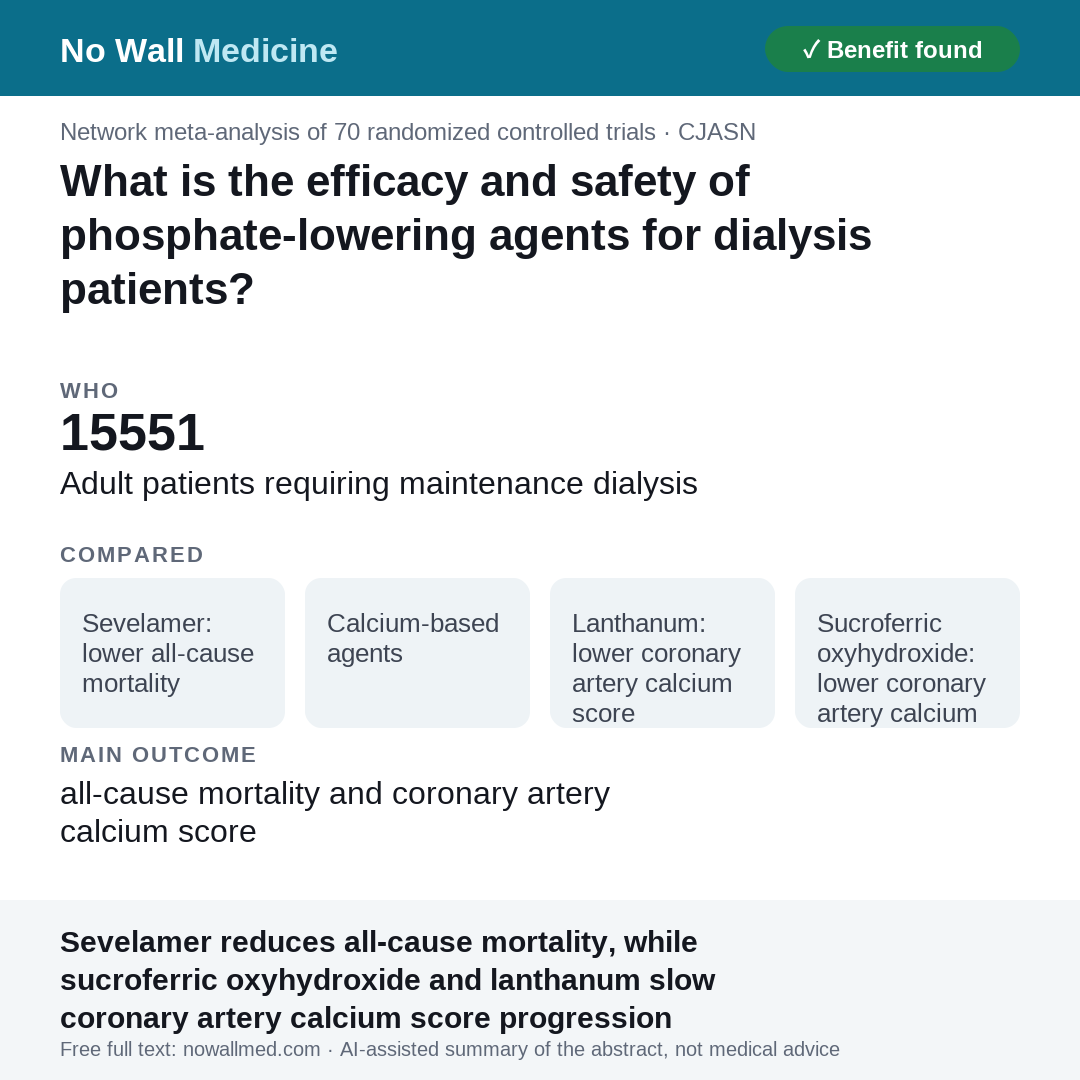
Efficacy and Safety of Phosphate-Lowering Agents for Adult Patients with CKD Requiring Dialysis: A Network Meta-Analysis
Network meta-analysis of 70 randomized controlled trialsBenefit found
What is the efficacy and safety of phosphate-lowering agents for dialysis patients?
Who
15551
Adult patients requiring maintenance dialysis
Compared
Sevelamer: lower all-cause mortality
Calcium-based agents
Lanthanum: lower coronary artery calcium score
Sucroferric oxyhydroxide: lower coronary artery calcium score
Main outcome
all-cause mortality and coronary artery calcium score
Result: risk ratio 0.59 (95% confidence interval 0.37 to 0.94)
Bottom line: Sevelamer reduces all-cause mortality, while sucroferric oxyhydroxide and lanthanum slow coronary artery calcium score progression compared to calcium-based agents.
CJASN · 2025-03-14Download image
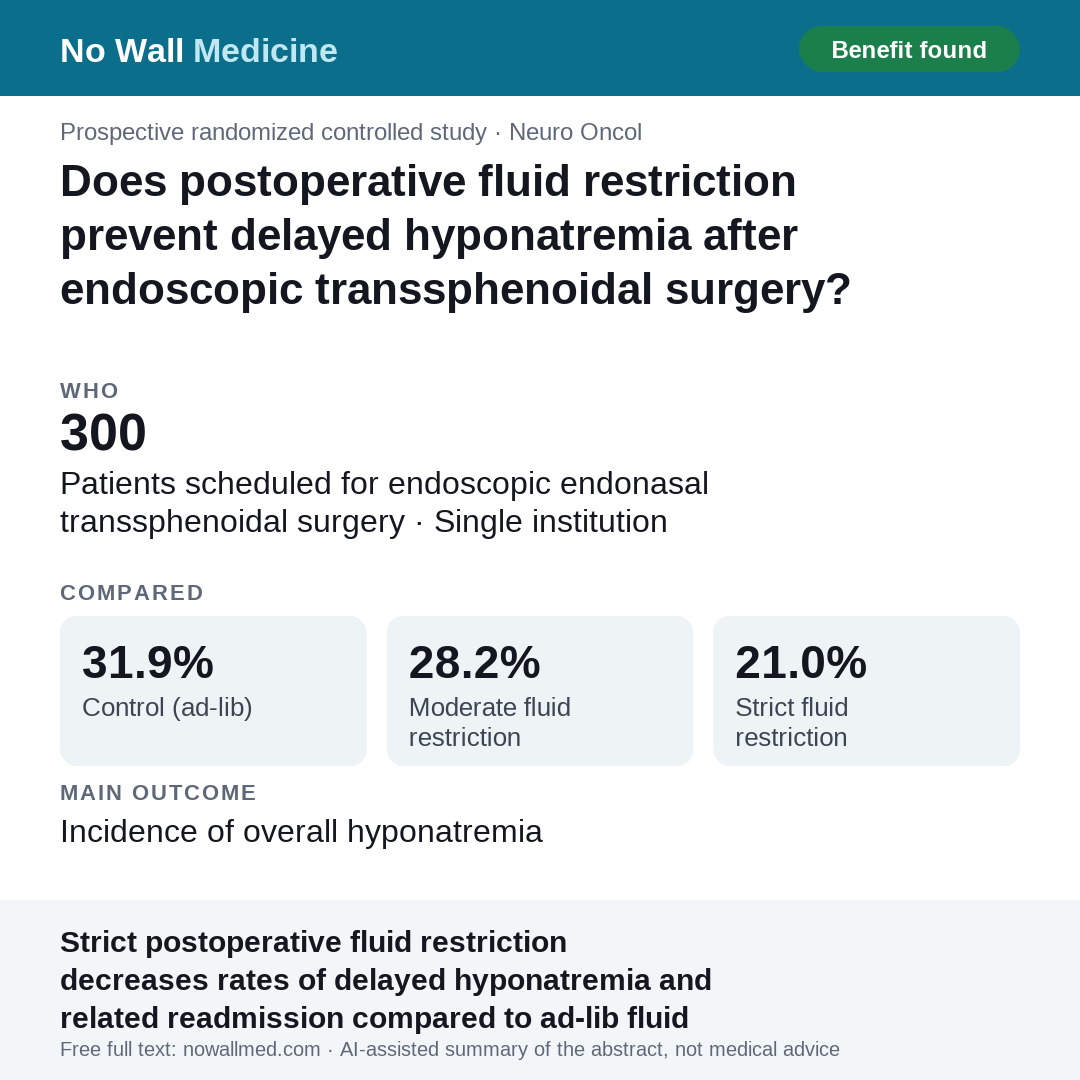
Postoperative fluid restriction to prevent delayed hyponatremia after endoscopic transsphenoidal surgery
Prospective randomized controlled studyBenefit found
Does postoperative fluid restriction prevent delayed hyponatremia after endoscopic transsphenoidal surgery?
Who
300
Patients scheduled for endoscopic endonasal transsphenoidal surgery · Single institution
Compared
31.9%Control (ad-lib)
28.2%Moderate fluid restriction
21.0%Strict fluid restriction
Main outcome
Incidence of overall hyponatremia
Result: Nadir sodium level higher (1.81 mEq/L; 95% CI, 0.34 to 3.27)
Bottom line: Strict postoperative fluid restriction decreases rates of delayed hyponatremia and related readmission compared to ad-lib fluid intake.
Neuro Oncol · 2025-03-14Download image
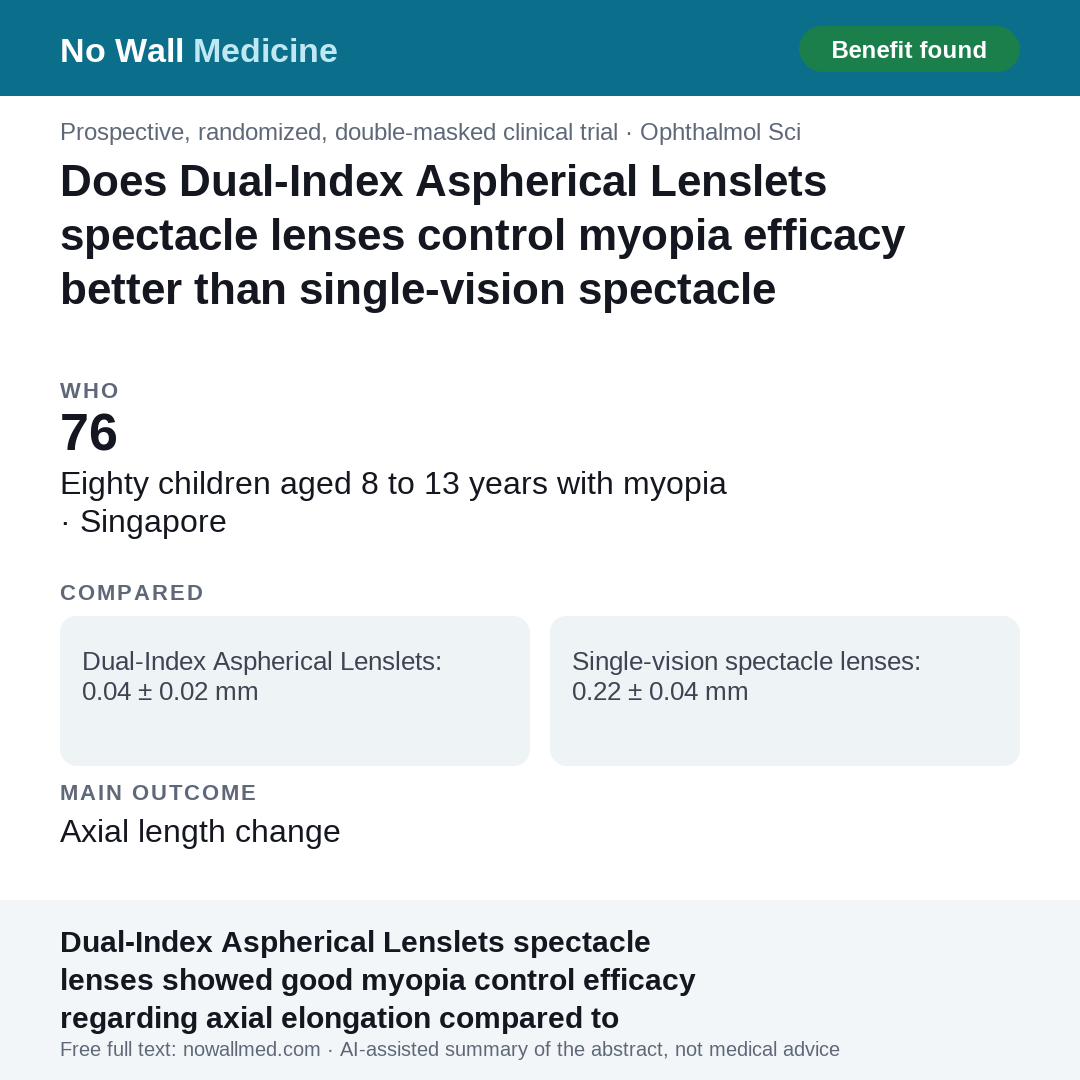
Myopia Control Efficacy of Spectacle Lenses with Dual-Index Aspherical Lenslets: A 1-Year Randomized Clinical Trial
Prospective, randomized, double-masked clinical trialBenefit found
Does Dual-Index Aspherical Lenslets spectacle lenses control myopia efficacy better than single-vision spectacle lenses?
Who
76
Eighty children aged 8 to 13 years with myopia · Singapore
Compared
Dual-Index Aspherical Lenslets: 0.04 ± 0.02 mm
Single-vision spectacle lenses: 0.22 ± 0.04 mm
Main outcome
Axial length change
Result: -0.18 mm (95% CI, -0.26 to -0.10 mm)
Bottom line: Dual-Index Aspherical Lenslets spectacle lenses showed good myopia control efficacy regarding axial elongation compared to single-vision spectacle lenses.
Ophthalmol Sci · 2025-03-14Download image
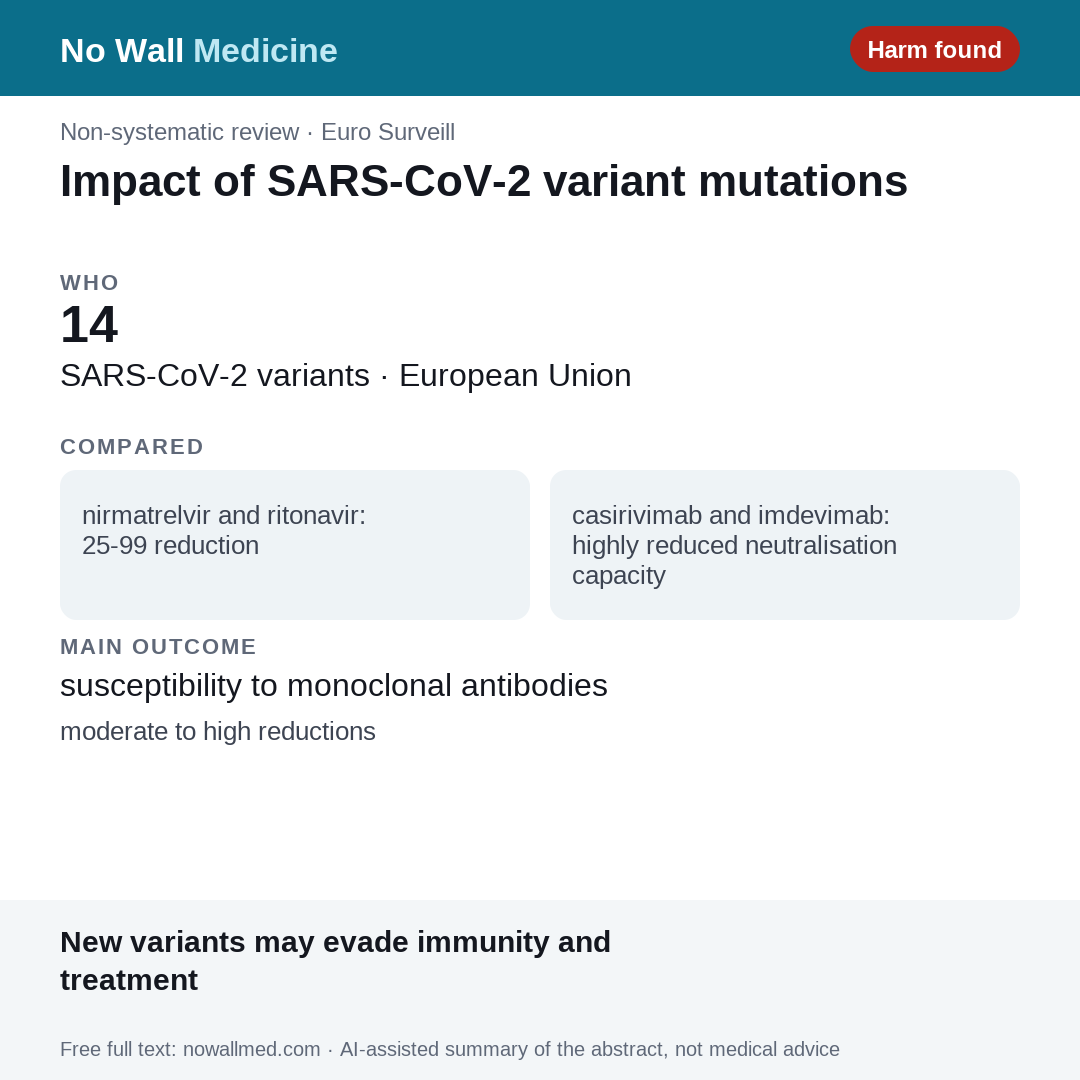
Impact of SARS-CoV-2 variant mutations on susceptibility to monoclonal antibodies and antiviral drugs: a non-systematic review, April 2022 to October 2024
Non-systematic reviewHarm found
Impact of SARS-CoV-2 variant mutations
Who
14
SARS-CoV-2 variants · European Union
Compared
nirmatrelvir and ritonavir: 25-99 reduction
casirivimab and imdevimab: highly reduced neutralisation capacity
Main outcome
susceptibility to monoclonal antibodies
Result: moderate to high reductions
Bottom line: New variants may evade immunity and treatment
Euro Surveill · 2025-03-14Download image
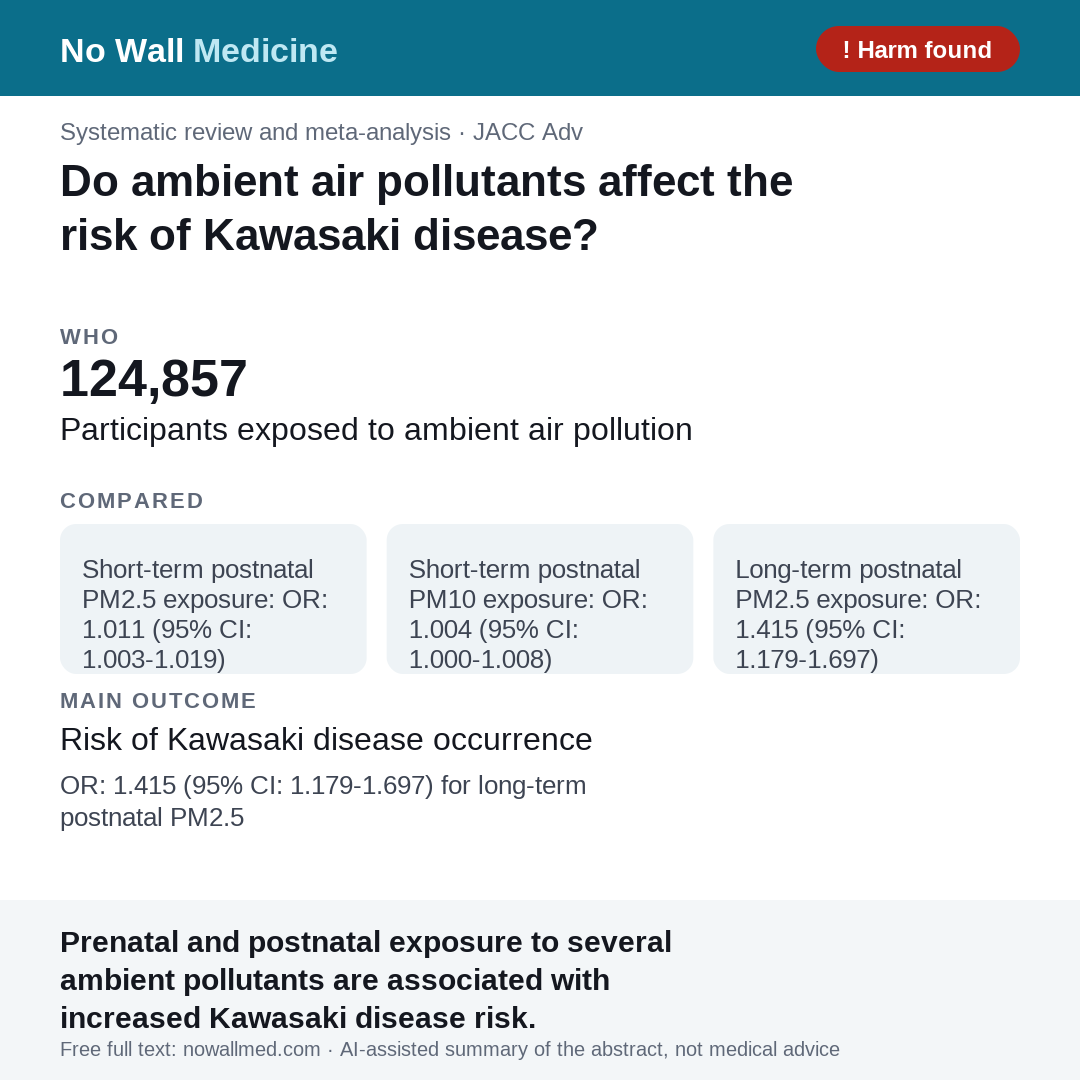
Prenatal and Postnatal Ambient Air Pollution and Kawasaki Disease: A Systematic Review and Meta-Analysis
Systematic review and meta-analysisHarm found
Do ambient air pollutants affect the risk of Kawasaki disease?
Who
124,857
Participants exposed to ambient air pollution
Compared
Short-term postnatal PM2.5 exposure: OR: 1.011 (95% CI: 1.003-1.019)
Short-term postnatal PM10 exposure: OR: 1.004 (95% CI: 1.000-1.008)
Long-term postnatal PM2.5 exposure: OR: 1.415 (95% CI: 1.179-1.697)
Main outcome
Risk of Kawasaki disease occurrence
Result: OR: 1.415 (95% CI: 1.179-1.697) for long-term postnatal PM2.5
Bottom line: Prenatal and postnatal exposure to several ambient pollutants are associated with increased Kawasaki disease risk.
Limitation: Seven studies were at high risk of bias.
JACC Adv · 2025-03-14Download image
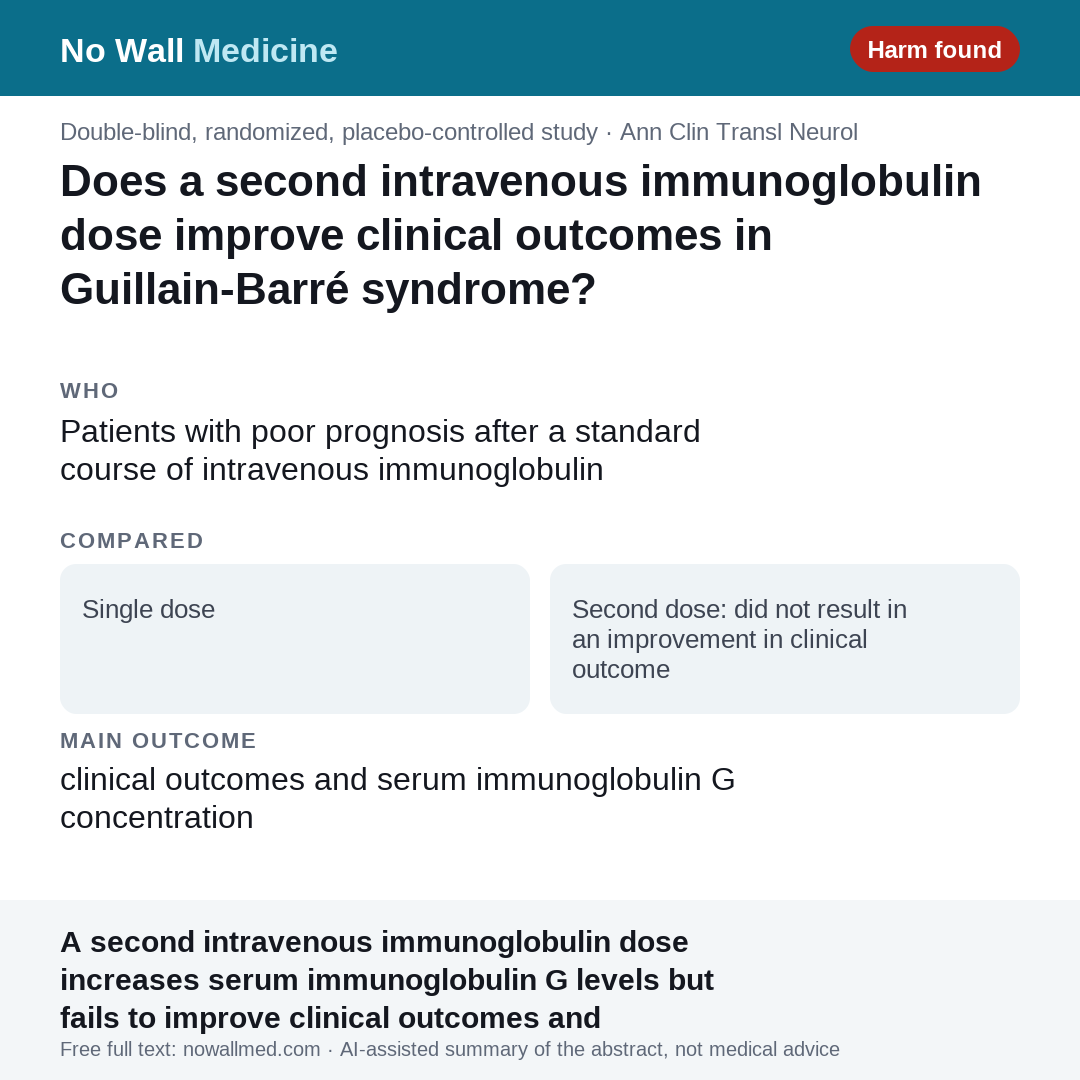
If it does not help, it might hurt: Pharmacodynamics of a second IVIg course in Guillain-Barré syndrome
Double-blind, randomized, placebo-controlled studyHarm found
Does a second intravenous immunoglobulin dose improve clinical outcomes in Guillain-Barré syndrome?
Who
Patients with poor prognosis after a standard course of intravenous immunoglobulin
Compared
Single dose
Second dose: did not result in an improvement in clinical outcome
Main outcome
clinical outcomes and serum immunoglobulin G concentration
Bottom line: A second intravenous immunoglobulin dose increases serum immunoglobulin G levels but fails to improve clinical outcomes and increases serious adverse events.
Ann Clin Transl Neurol · 2025-03-14Download image
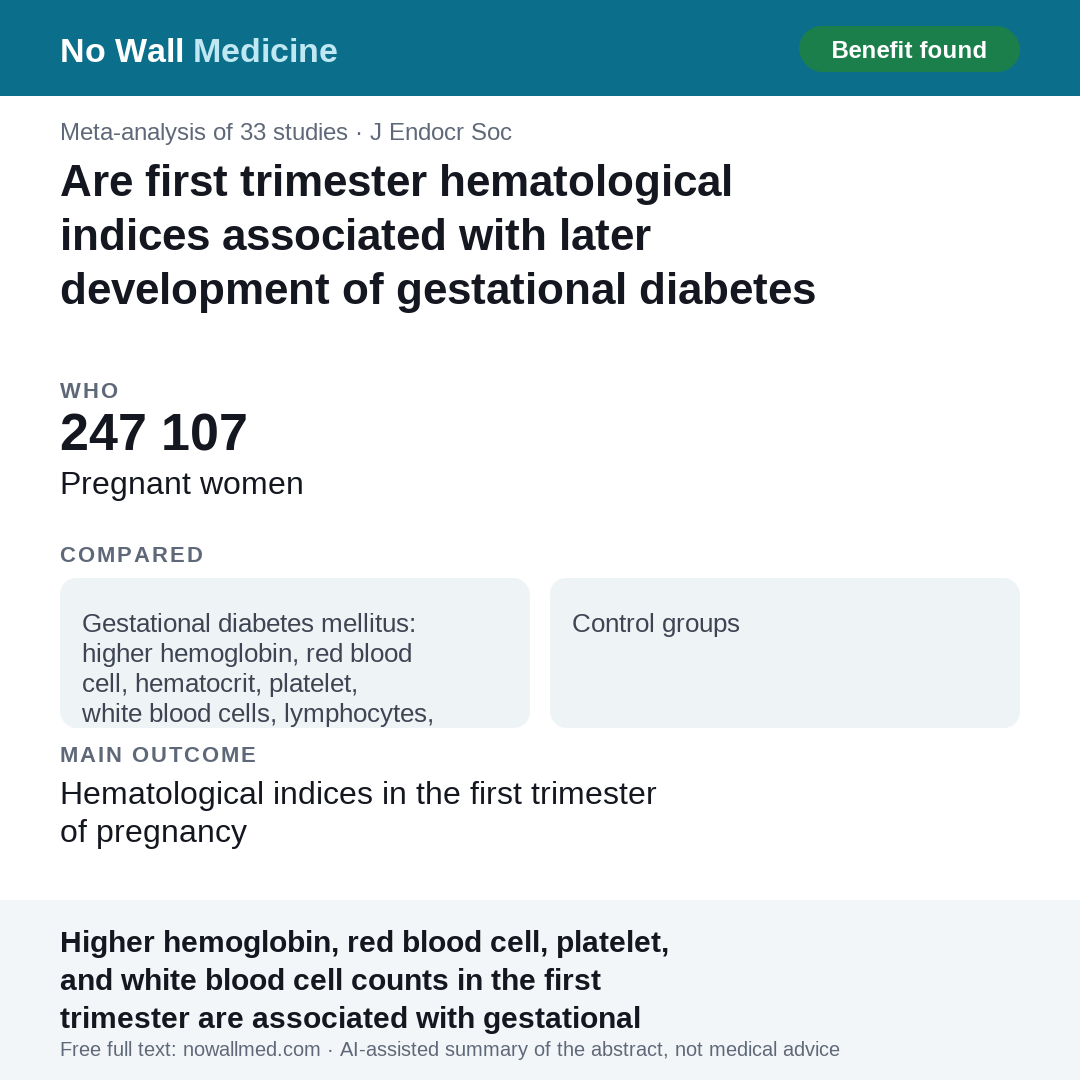
First Trimester Hematological Indices in Gestational Diabetes Mellitus: A Meta-Analysis
Meta-analysis of 33 studiesBenefit found
Are first trimester hematological indices associated with later development of gestational diabetes mellitus?
Who
247 107
Pregnant women
Compared
Gestational diabetes mellitus: higher hemoglobin, red blood cell, hematocrit, platelet, white blood cells, lymphocytes, neutrophils, and neutrophil-lymphocyte ratio
Control groups
Main outcome
Hematological indices in the first trimester of pregnancy
Result: standardized mean differences (95% CI) provided for multiple indices
Bottom line: Higher hemoglobin, red blood cell, platelet, and white blood cell counts in the first trimester are associated with gestational diabetes.
J Endocr Soc · 2025-03-14Download image
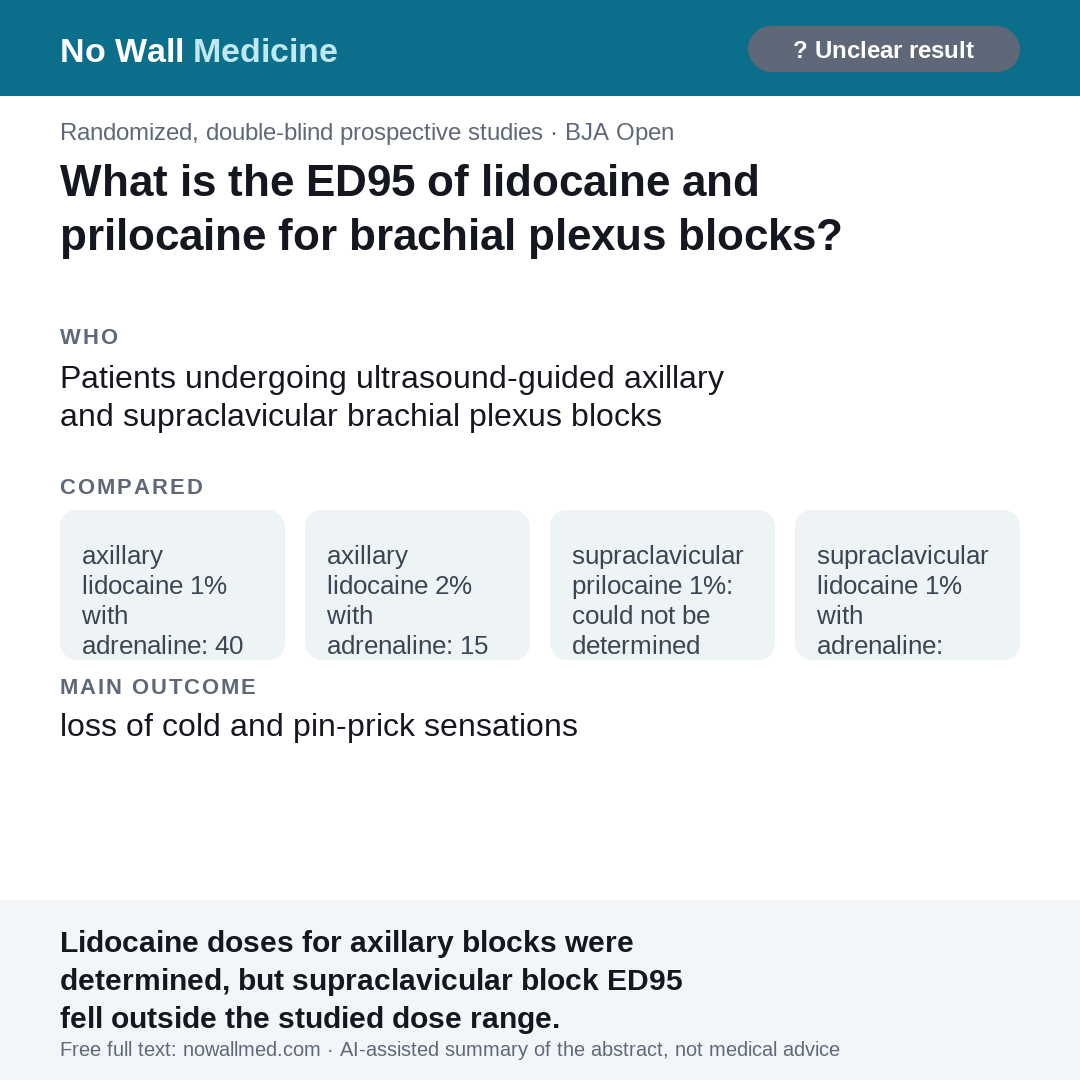
The ED<sub>95</sub> of lidocaine and prilocaine for ultrasound-guided brachial plexus blocks for surgical anaesthesia: a randomised controlled clinical trial
Randomized, double-blind prospective studiesUnclear result
What is the ED95 of lidocaine and prilocaine for brachial plexus blocks?
Who
Patients undergoing ultrasound-guided axillary and supraclavicular brachial plexus blocks
Compared
axillary lidocaine 1% with adrenaline: 40 ml
axillary lidocaine 2% with adrenaline: 15 ml
supraclavicular prilocaine 1%: could not be determined
supraclavicular lidocaine 1% with adrenaline: could not be determined
Main outcome
loss of cold and pin-prick sensations
Bottom line: Lidocaine doses for axillary blocks were determined, but supraclavicular block ED95 fell outside the studied dose range.
BJA Open · 2025-03-14Download image
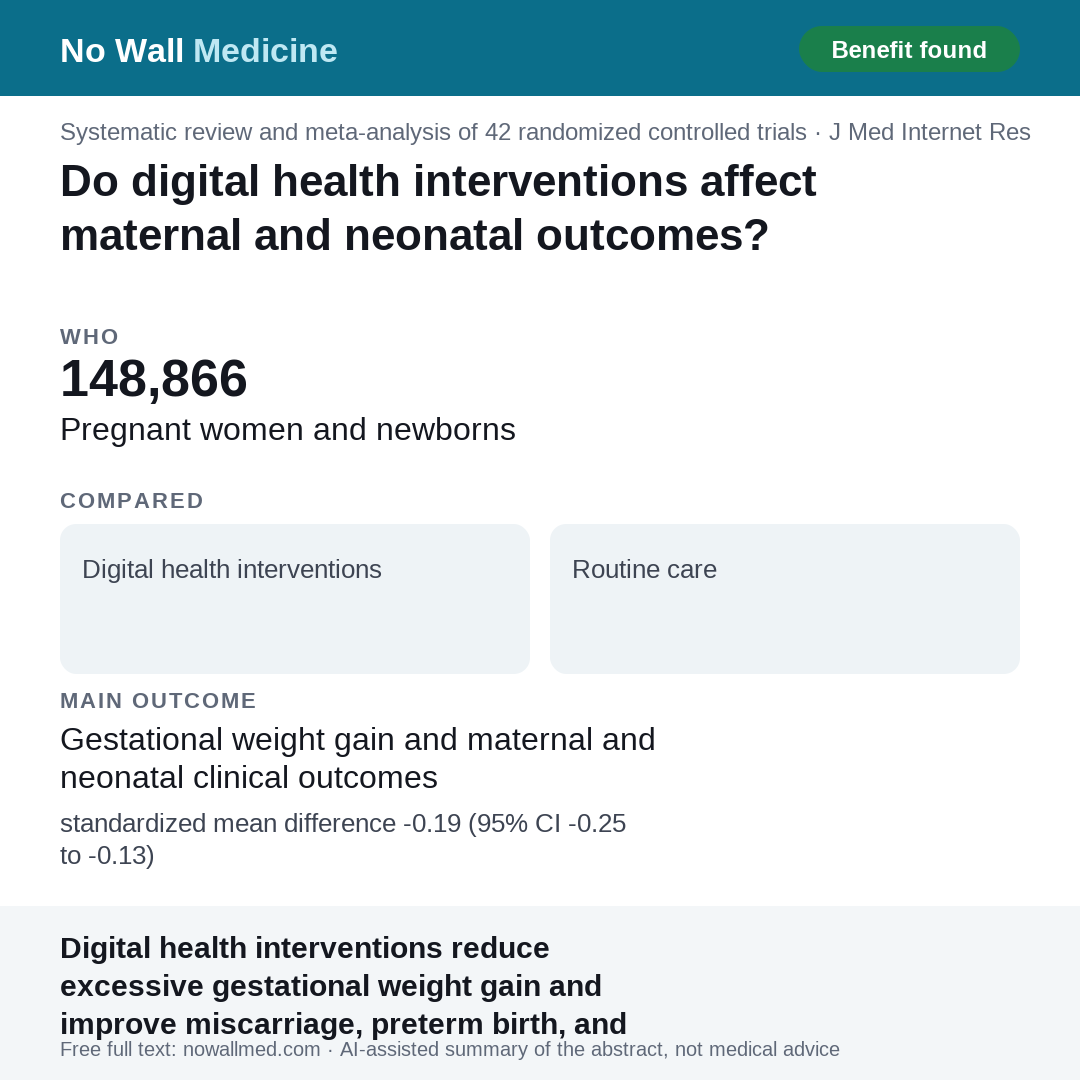
Association of Digital Health Interventions With Maternal and Neonatal Outcomes: Systematic Review and Meta-Analysis
Systematic review and meta-analysis of 42 randomized controlled trialsBenefit found
Do digital health interventions affect maternal and neonatal outcomes?
Who
148,866
Pregnant women and newborns
Compared
Digital health interventions
Routine care
Main outcome
Gestational weight gain and maternal and neonatal clinical outcomes
Result: standardized mean difference -0.19 (95% CI -0.25 to -0.13)
Bottom line: Digital health interventions reduce excessive gestational weight gain and improve miscarriage, preterm birth, and complex neonatal outcomes.
J Med Internet Res · 2025-03-14Download image
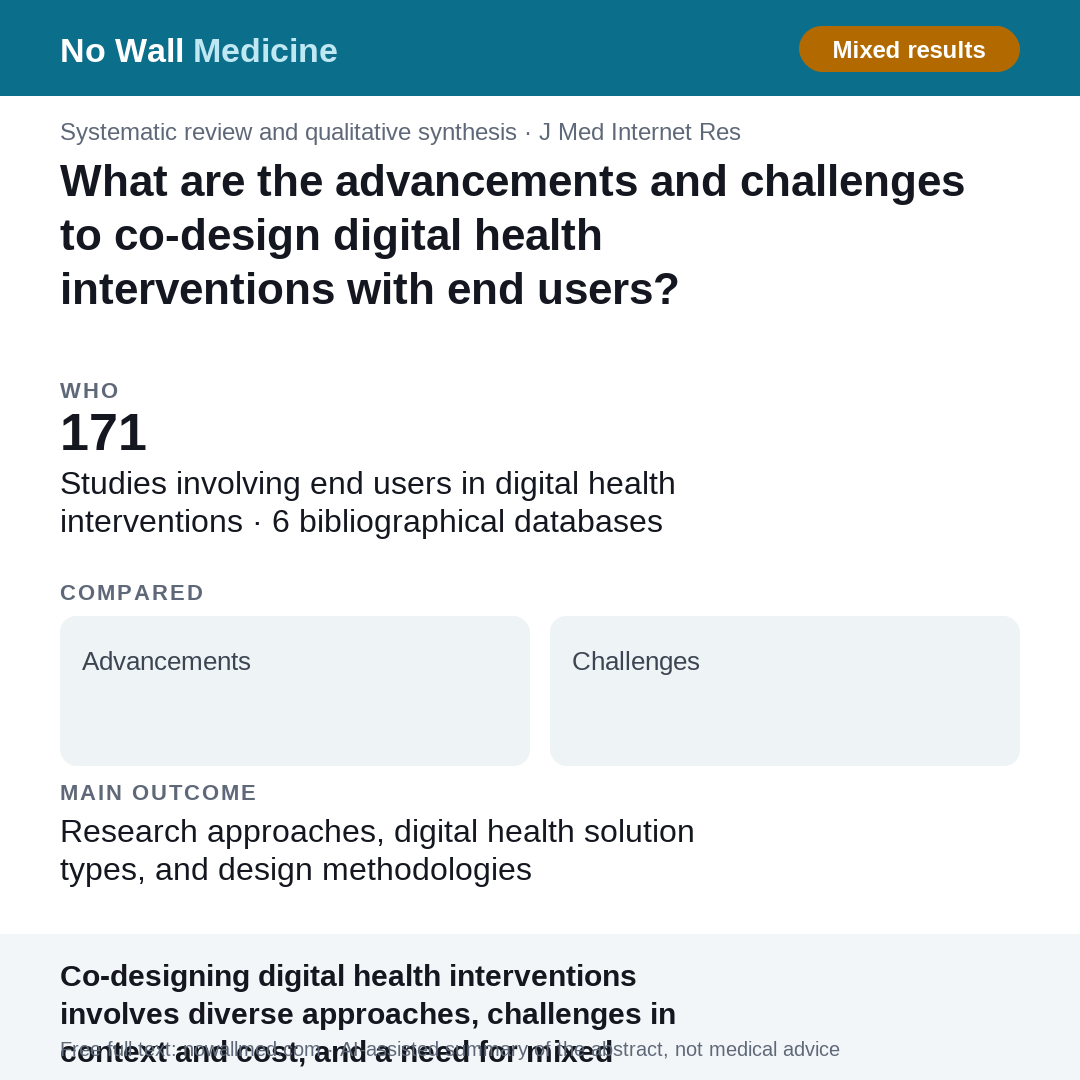
Examining Challenges to Co-Design Digital Health Interventions With End Users: Systematic Review
Systematic review and qualitative synthesisMixed results
What are the advancements and challenges to co-design digital health interventions with end users?
Who
171
Studies involving end users in digital health interventions · 6 bibliographical databases
Compared
Advancements
Challenges
Main outcome
Research approaches, digital health solution types, and design methodologies
Bottom line: Co-designing digital health interventions involves diverse approaches, challenges in context and cost, and a need for mixed methods.
J Med Internet Res · 2025-03-14Download image
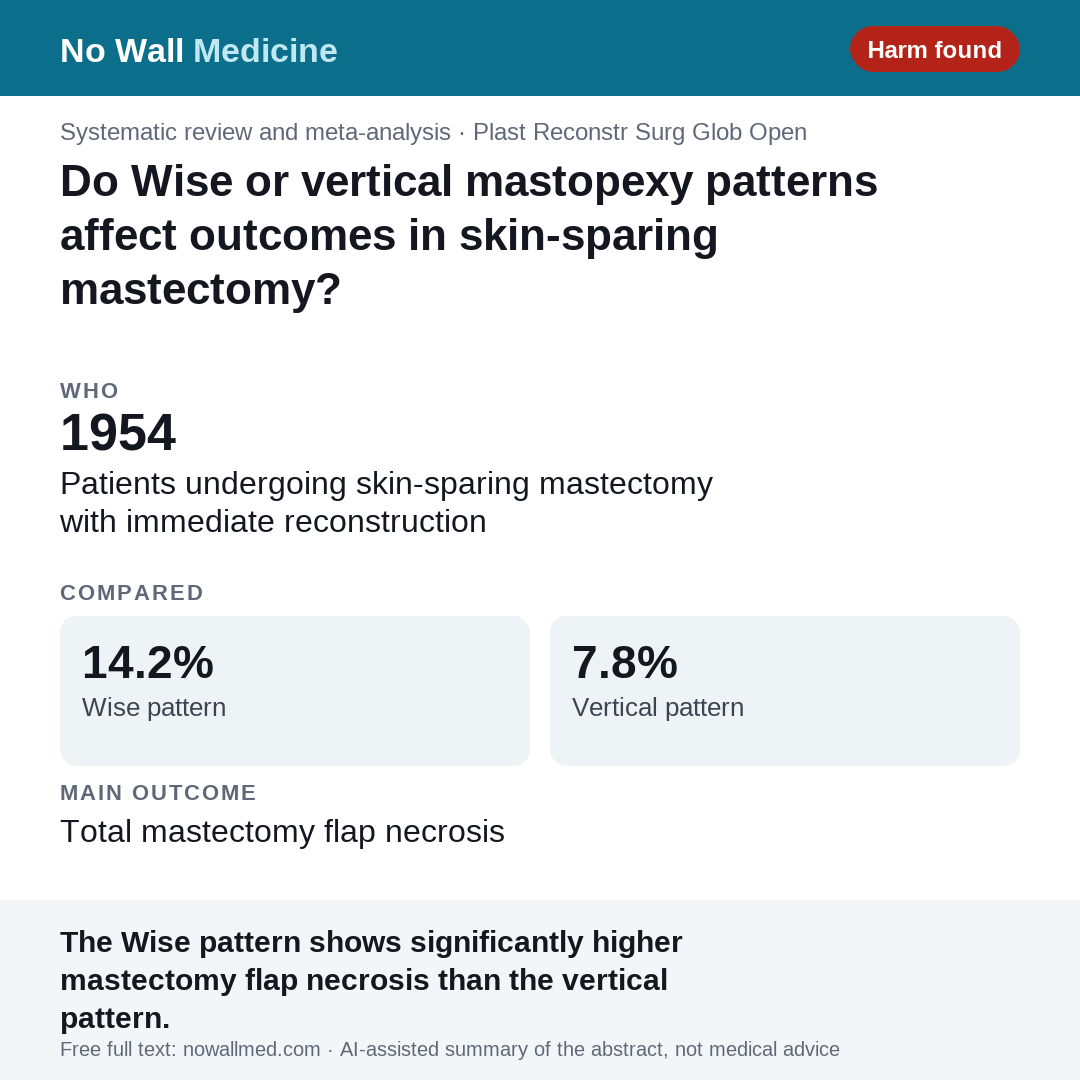
Wise Versus Vertical Mastopexy Pattern Skin-reducing Mastectomy With Immediate Breast Reconstruction: Systematic Review and Meta-analysis
Systematic review and meta-analysisHarm found
Do Wise or vertical mastopexy patterns affect outcomes in skin-sparing mastectomy?
Who
1954
Patients undergoing skin-sparing mastectomy with immediate reconstruction
Compared
14.2%Wise pattern (95% confidence interval: 10%-20%)
7.8%Vertical pattern (95% confidence interval: 5%-12%)
Main outcome
Total mastectomy flap necrosis
Bottom line: The Wise pattern shows significantly higher mastectomy flap necrosis than the vertical pattern.
Limitation: Future studies should focus on larger, high-quality randomized controlled trials.
Plast Reconstr Surg Glob Open · 2025-03-14Download image
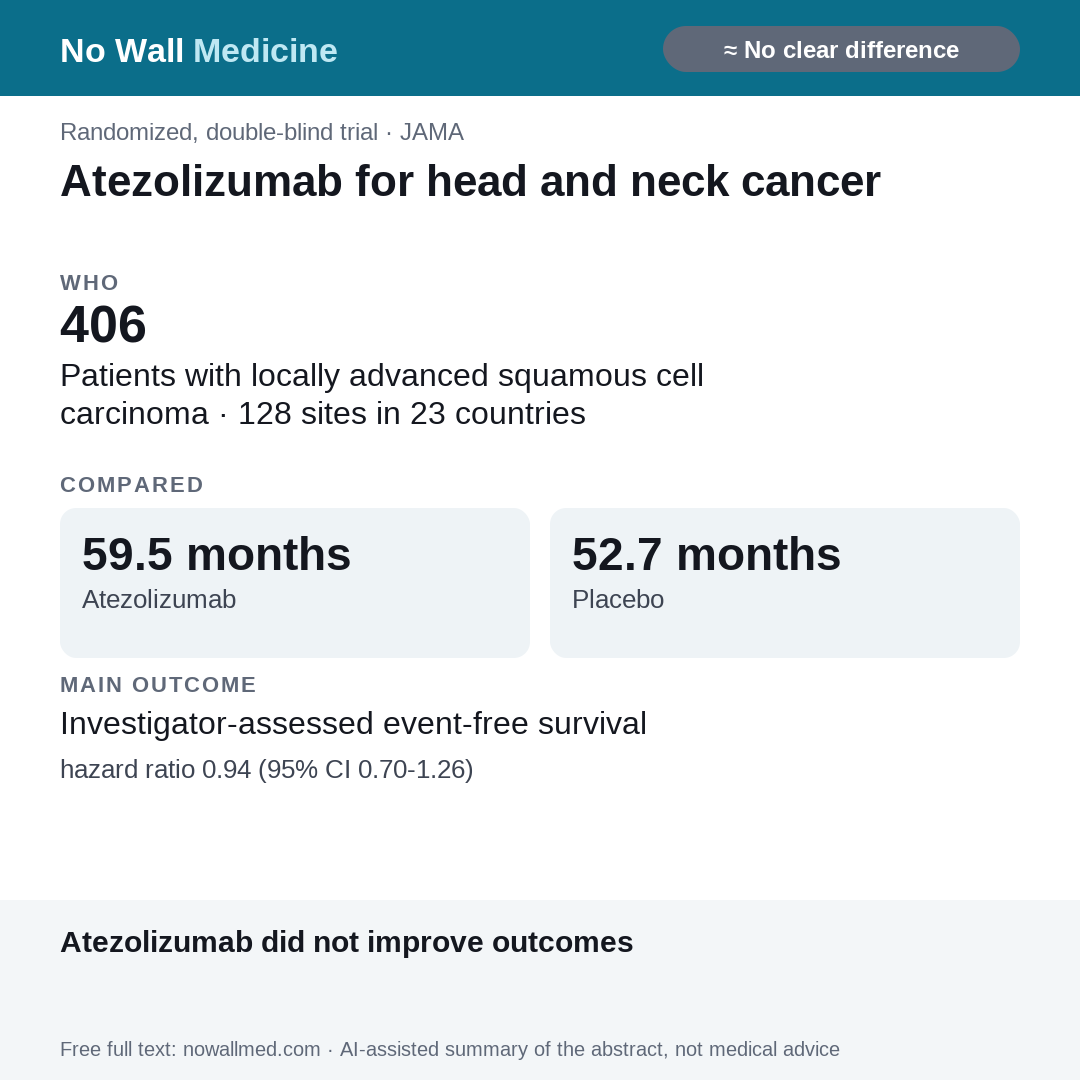
Atezolizumab in High-Risk Locally Advanced Squamous Cell Carcinoma of the Head and Neck: A Randomized Clinical Trial
Randomized, double-blind trialNo clear difference
Atezolizumab for head and neck cancer
Who
406
Patients with locally advanced squamous cell carcinoma · 128 sites in 23 countries
Compared
59.5 monthsAtezolizumab
52.7 monthsPlacebo
Main outcome
Investigator-assessed event-free survival
Result: hazard ratio 0.94 (95% CI 0.70-1.26)
Bottom line: Atezolizumab did not improve outcomes
JAMA · 2025-03-13Download image
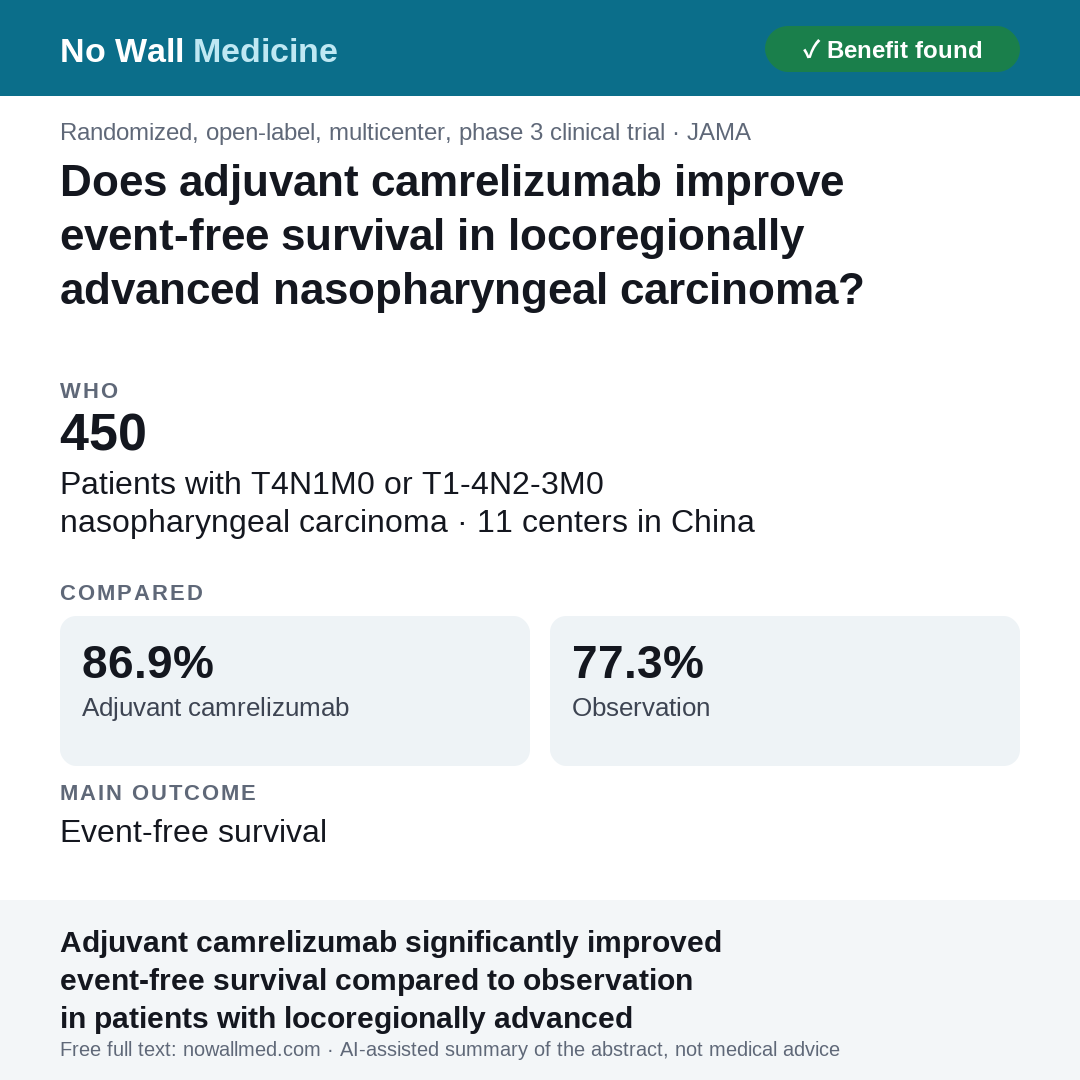
Adjuvant PD-1 Blockade With Camrelizumab for Nasopharyngeal Carcinoma: The DIPPER Randomized Clinical Trial
Randomized, open-label, multicenter, phase 3 clinical trialBenefit found
Does adjuvant camrelizumab improve event-free survival in locoregionally advanced nasopharyngeal carcinoma?
Who
450
Patients with T4N1M0 or T1-4N2-3M0 nasopharyngeal carcinoma · 11 centers in China
Compared
86.9%Adjuvant camrelizumab
77.3%Observation
Main outcome
Event-free survival
Result: stratified hazard ratio 0.56 (95% CI 0.36 to 0.89)
Bottom line: Adjuvant camrelizumab significantly improved event-free survival compared to observation in patients with locoregionally advanced nasopharyngeal carcinoma.
JAMA · 2025-03-13Download image
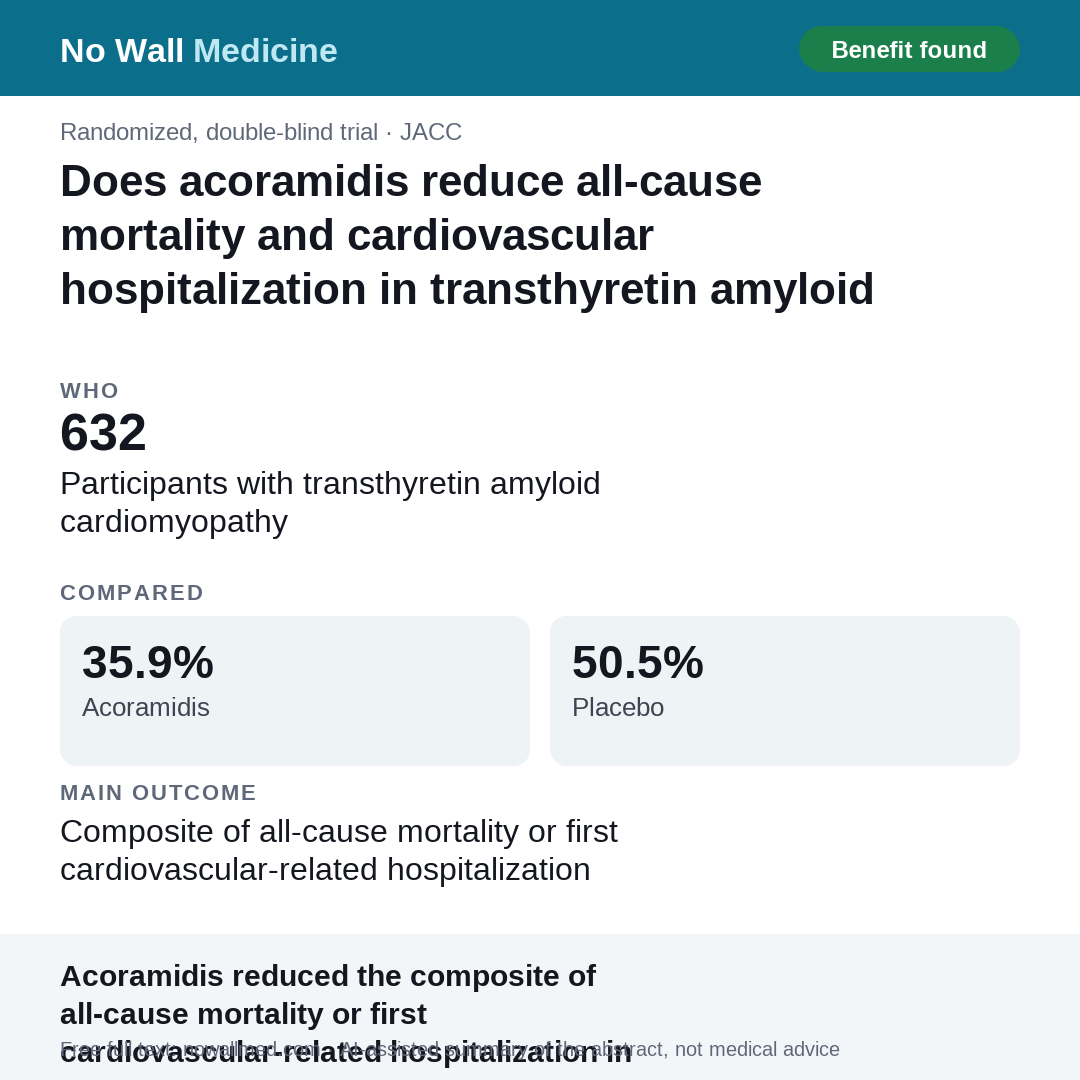
Efficacy of Acoramidis on All-Cause Mortality and Cardiovascular Hospitalization in Transthyretin Amyloid Cardiomyopathy
Randomized, double-blind trialBenefit found
Does acoramidis reduce all-cause mortality and cardiovascular hospitalization in transthyretin amyloid cardiomyopathy?
Who
632
Participants with transthyretin amyloid cardiomyopathy
Compared
35.9%Acoramidis
50.5%Placebo
Main outcome
Composite of all-cause mortality or first cardiovascular-related hospitalization
Result: hazard ratio 0.64 (95% CI 0.50-0.83)
Bottom line: Acoramidis reduced the composite of all-cause mortality or first cardiovascular-related hospitalization in patients with transthyretin amyloid cardiomyopathy.
JACC · 2025-03-13Download image
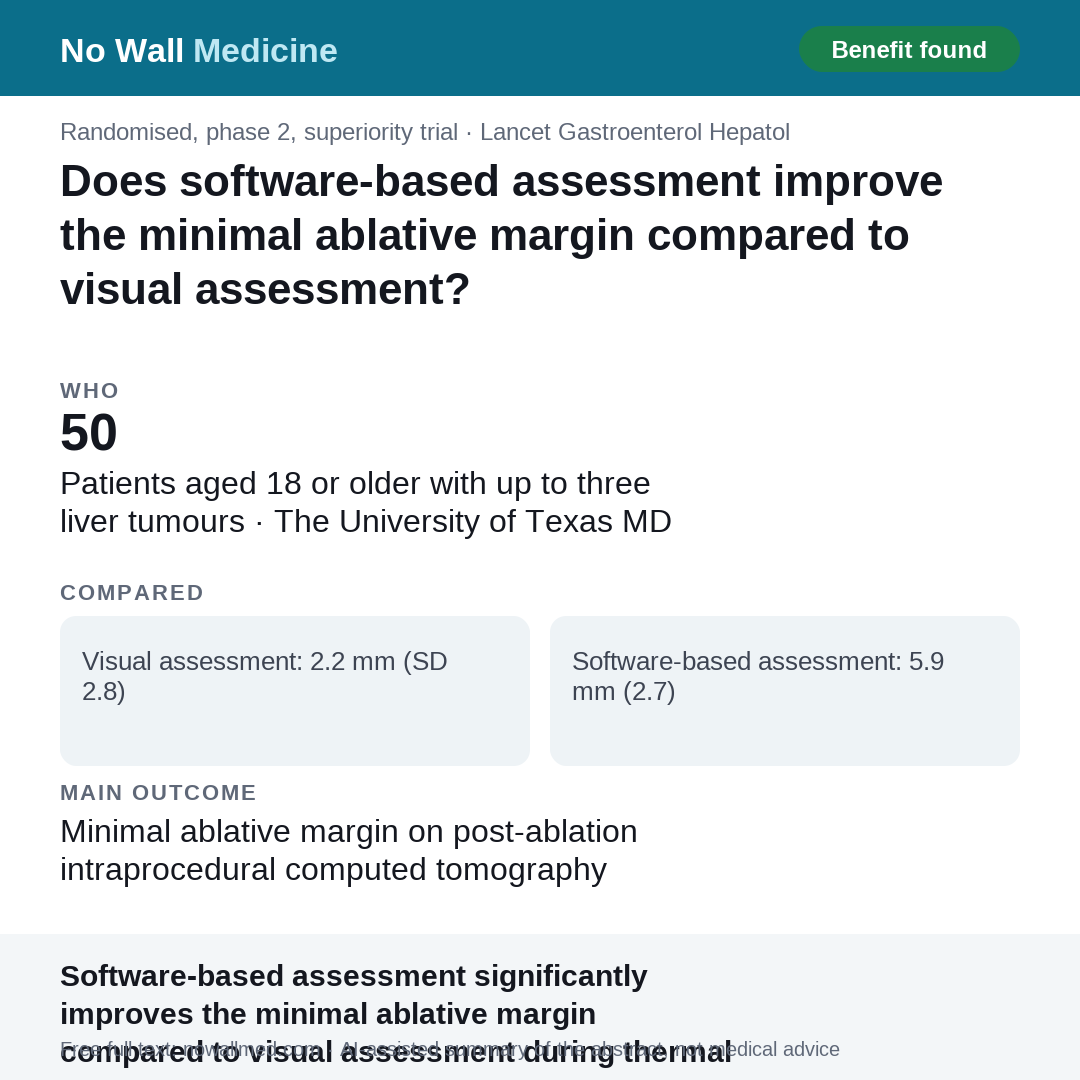
Software-based versus visual assessment of the minimal ablative margin in patients with liver tumours undergoing percutaneous thermal ablation (COVER-ALL): a randomised phase 2 trial
Randomised, phase 2, superiority trialBenefit found
Does software-based assessment improve the minimal ablative margin compared to visual assessment?
Who
50
Patients aged 18 or older with up to three liver tumours · The University of Texas MD Anderson Cancer Center, USA
Compared
Visual assessment: 2.2 mm (SD 2.8)
Software-based assessment: 5.9 mm (2.7)
Main outcome
Minimal ablative margin on post-ablation intraprocedural computed tomography
Result: p<0.0001
Bottom line: Software-based assessment significantly improves the minimal ablative margin compared to visual assessment during thermal ablation.
Limitation: The trial included a non-randomised experimental group after the interim analysis.
Funded by: US National Institutes of Health and US National Cancer Institute
Lancet Gastroenterol Hepatol · 2025-03-13Download image
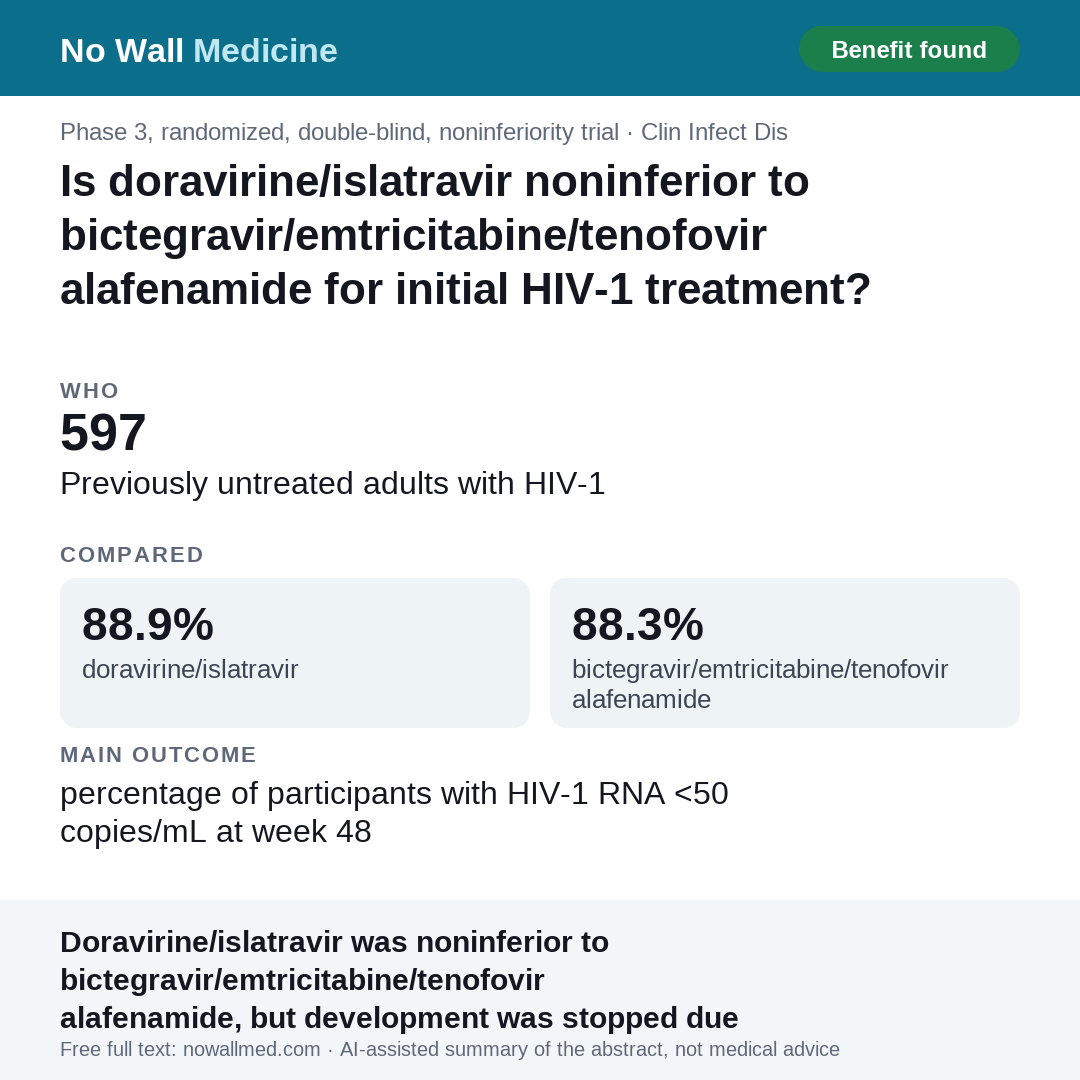
Doravirine/Islatravir (100/0.75 mg) Once-Daily Compared With Bictegravir/Emtricitabine/Tenofovir Alafenamide as Initial HIV-1 Treatment: 48-Week Results From a Phase 3, Randomized, Controlled, Double-Blind, Noninferiority Trial
Phase 3, randomized, double-blind, noninferiority trialBenefit found
Is doravirine/islatravir noninferior to bictegravir/emtricitabine/tenofovir alafenamide for initial HIV-1 treatment?
Who
597
Previously untreated adults with HIV-1
Compared
88.9%doravirine/islatravir (265/298)
88.3%bictegravir/emtricitabine/tenofovir alafenamide (264/299)
Main outcome
percentage of participants with HIV-1 RNA <50 copies/mL at week 48
Result: difference, 0.5%; 95% confidence interval [-4.7, 5.6]
Bottom line: Doravirine/islatravir was noninferior to bictegravir/emtricitabine/tenofovir alafenamide, but development was stopped due to decreased CD4 and lymphocyte counts.
Clin Infect Dis · 2025-03-13Download image