Visual abstracts
New randomized trials and meta-analyses from leading journals at a glance: who was studied, what was compared, and what was found. Every paper is free to read in full.
All specialtiesCardiology 3512Oncology 3017Gastroenterology & Hepatology 1382Infectious Disease 2465Neurology 1417Psychiatry & Mental Health 1663Pulmonology 1504Critical Care 1009Endocrinology & Diabetes 1793Pediatrics 2136Surgery 1859Orthopedics & Sports Medicine 651Neurosurgery 417Cardiothoracic & Vascular Surgery 417Plastic & Reconstructive Surgery 490Nephrology 764Rheumatology 559Hematology 792Dermatology 432Ophthalmology 391Obstetrics & Gynecology 1204Public & Global Health 670Radiology & Imaging 494Anesthesiology 717Urology 581ENT (Otolaryngology) 385Emergency Medicine 381Allergy & Immunology 217Geriatrics 741Family Medicine & Primary Care 407Medical Genetics & Genomics 452Pathology & Laboratory Medicine 113Physical Medicine & Rehabilitation 546Palliative Care 324Nutrition 1052Digital Health & AI 1648General Medicine 253
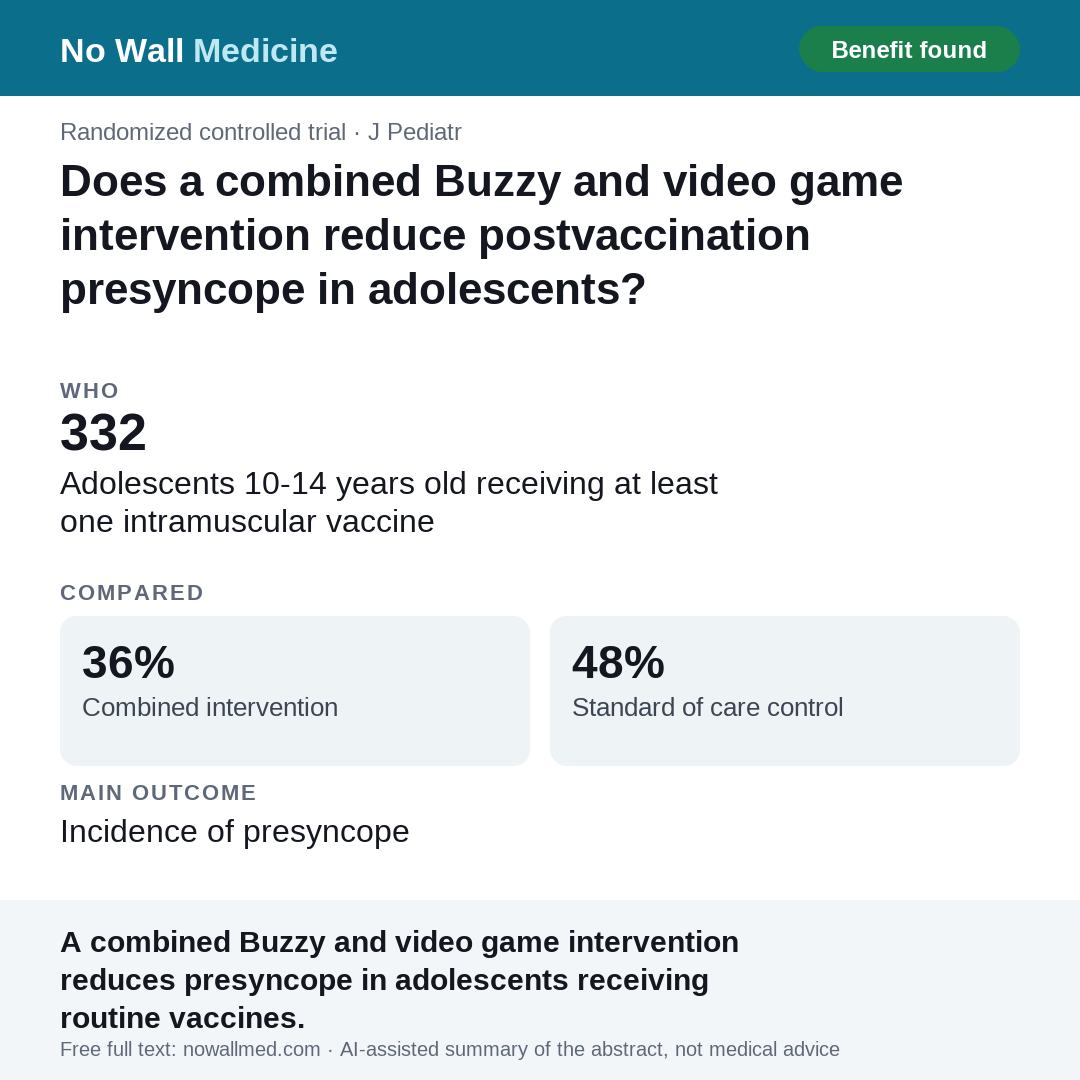
Preventing Postvaccination Presyncope and Syncope in Adolescents: A Randomized Controlled Trial of a Clinic-Based Intervention
Randomized controlled trialBenefit found
Does a combined Buzzy and video game intervention reduce postvaccination presyncope in adolescents?
Who
332
Adolescents 10-14 years old receiving at least one intramuscular vaccine
Compared
36%Combined intervention
48%Standard of care control
Main outcome
Incidence of presyncope
Bottom line: A combined Buzzy and video game intervention reduces presyncope in adolescents receiving routine vaccines.
J Pediatr · 2026-02-13Download image
Genetics of thrombotic thrombocytopenic purpura: systematic review in immune and congenital thrombotic thrombocytopenic purpura
Systematic reviewMixed results
What are the genetic factors influencing immune and congenital thrombotic thrombocytopenic purpura?
Who
Patients with immune and congenital thrombotic thrombocytopenic purpura
Compared
immune thrombotic thrombocytopenic purpura: HLA-DRB1*11 associated with increased risk
congenital thrombotic thrombocytopenic purpura: 364 variants identified
Main outcome
Genetic factors influencing disease risk and response
Bottom line: Genetic factors in thrombotic thrombocytopenic purpura are complex, involving HLA alleles and ADAMTS13 variants.
J Thromb Haemost · 2026-02-13Download image

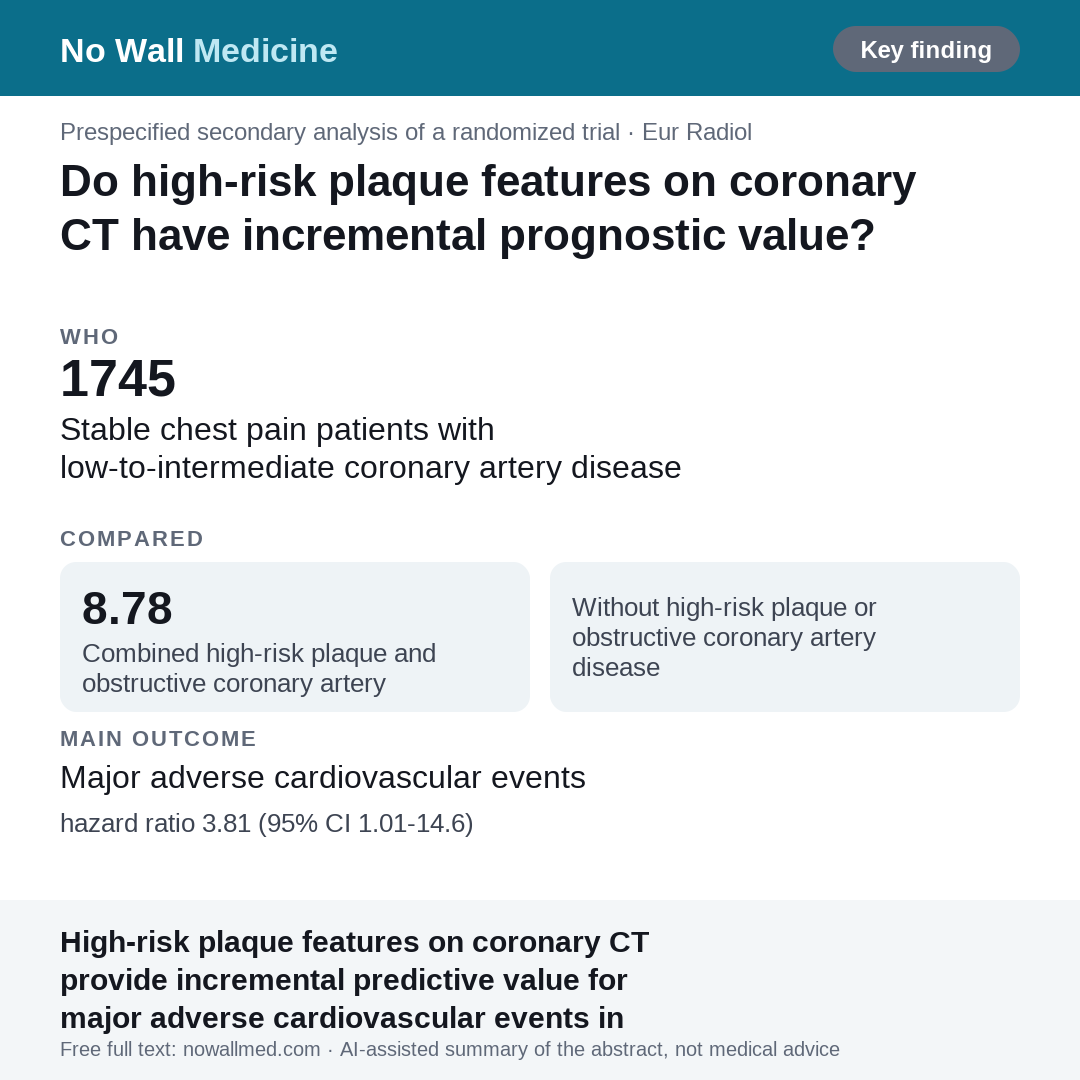
Association of high-risk CT coronary artery plaque features with major adverse cardiovascular events: a prespecified secondary analysis of the DISCHARGE trial
Prespecified secondary analysis of a randomized trialBenefit found
Do high-risk plaque features on coronary CT have incremental prognostic value?
Who
1745
Stable chest pain patients with low-to-intermediate coronary artery disease probability · 26-center European cohort
Compared
8.78Combined high-risk plaque and obstructive coronary artery disease (95% CI 2.90-26.6)
Without high-risk plaque or obstructive coronary artery disease
Main outcome
Major adverse cardiovascular events
Result: hazard ratio 3.81 (95% CI 1.01-14.6)
Bottom line: High-risk plaque features on coronary CT provide incremental predictive value for major adverse cardiovascular events in stable chest pain patients.
Eur Radiol · 2026-02-13Download image
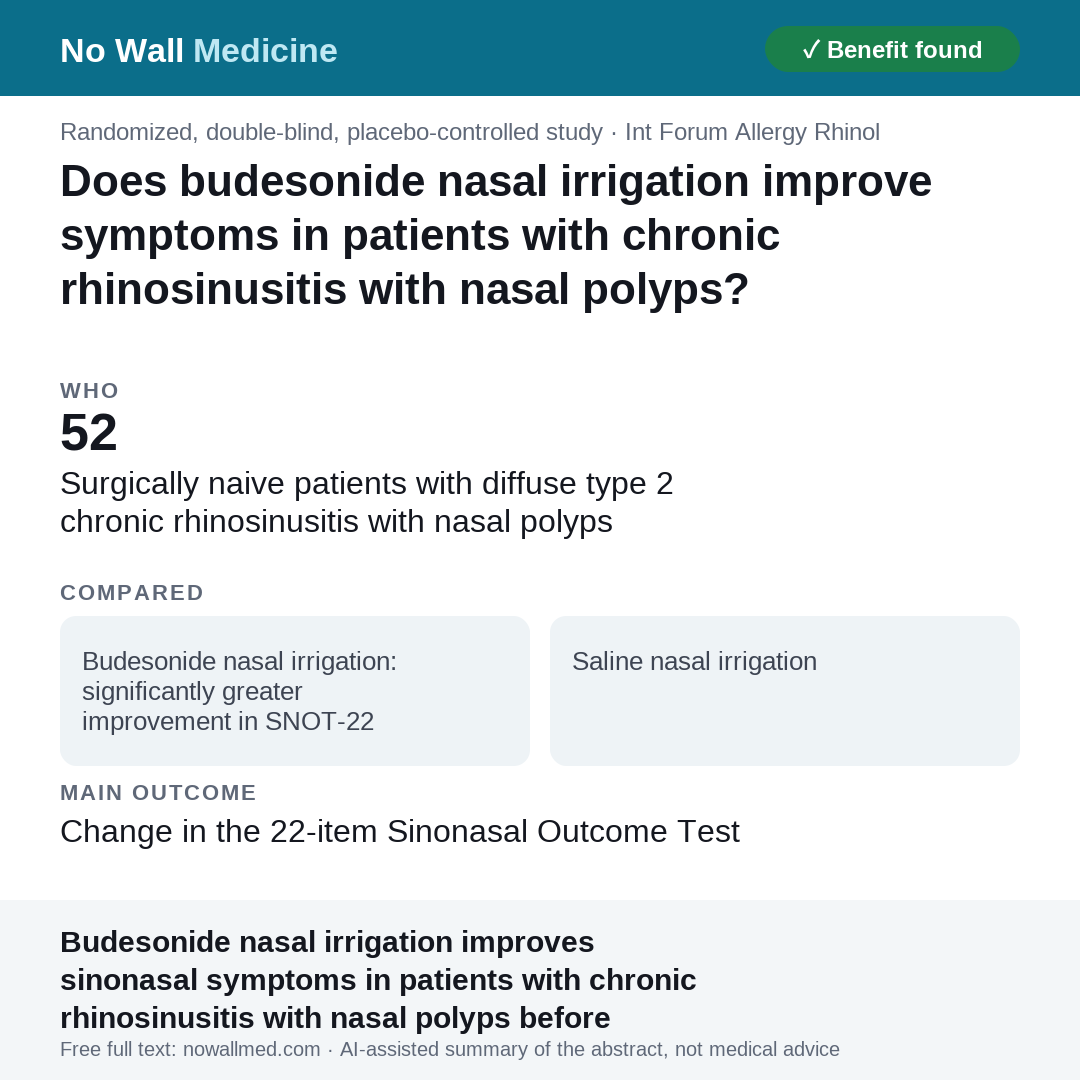
Effect of Budesonide Nasal Irrigation in Patients With Chronic Rhinosinusitis With Nasal Polyps Without Prior Sinus Surgery: A Randomized, Double-Blind, Placebo-Controlled Study
Randomized, double-blind, placebo-controlled studyBenefit found
Does budesonide nasal irrigation improve symptoms in patients with chronic rhinosinusitis with nasal polyps?
Who
52
Surgically naive patients with diffuse type 2 chronic rhinosinusitis with nasal polyps
Compared
Budesonide nasal irrigation: significantly greater improvement in SNOT-22
Saline nasal irrigation
Main outcome
Change in the 22-item Sinonasal Outcome Test
Result: mean difference: 18.1 points (95% CI: 3.4 to 32.8)
Bottom line: Budesonide nasal irrigation improves sinonasal symptoms in patients with chronic rhinosinusitis with nasal polyps before surgery.
Int Forum Allergy Rhinol · 2026-02-13Download image
Antimuscarinic medication used for the treatment of overactive bladder in women and the risk of cognitive decline, cardiovascular disease and mortality-a systematic review
Systematic review and meta-analysisHarm found
Do bladder antimuscarinics increase risk of cognitive decline, cardiovascular disease, and mortality?
Who
Adult women exposed to antimuscarinics
Compared
Antimuscarinics
Placebo or non-use
Main outcome
Cognitive decline, cardiovascular disease, or mortality
Result: odds ratio 1.33 (95% CI 1.10-1.61) for cognitive decline
Bottom line: Antimuscarinics may increase long-term risks of dementia, cardiovascular events, and mortality in older women.
Limitation: Findings are constrained by the low quality of the underlying evidence and risk of bias.
Age Ageing · 2026-02-13Download image

Editor's Choice - Systematic Review on the Cost Effectiveness of Abdominal Aortic Aneurysm Screening in Women
Systematic review of nine studiesMixed results
Is abdominal aortic aneurysm screening cost effective in all women or high risk subgroups?
Who
Women or high risk subgroups of women · European or North American populations
Compared
Screening all women: Incremental cost effectiveness ratios exceeded typical willingness to pay thresholds
Screening women smokers: $24 000 per quality adjusted life year
Main outcome
Cost effectiveness of abdominal aortic aneurysm screening
Bottom line: Routine screening for all women is unlikely cost effective, but targeted screening of high risk subgroups may be economically viable.
Limitation: Six studies at moderate and three at serious risk of bias
Eur J Vasc Endovasc Surg · 2026-02-13Download image

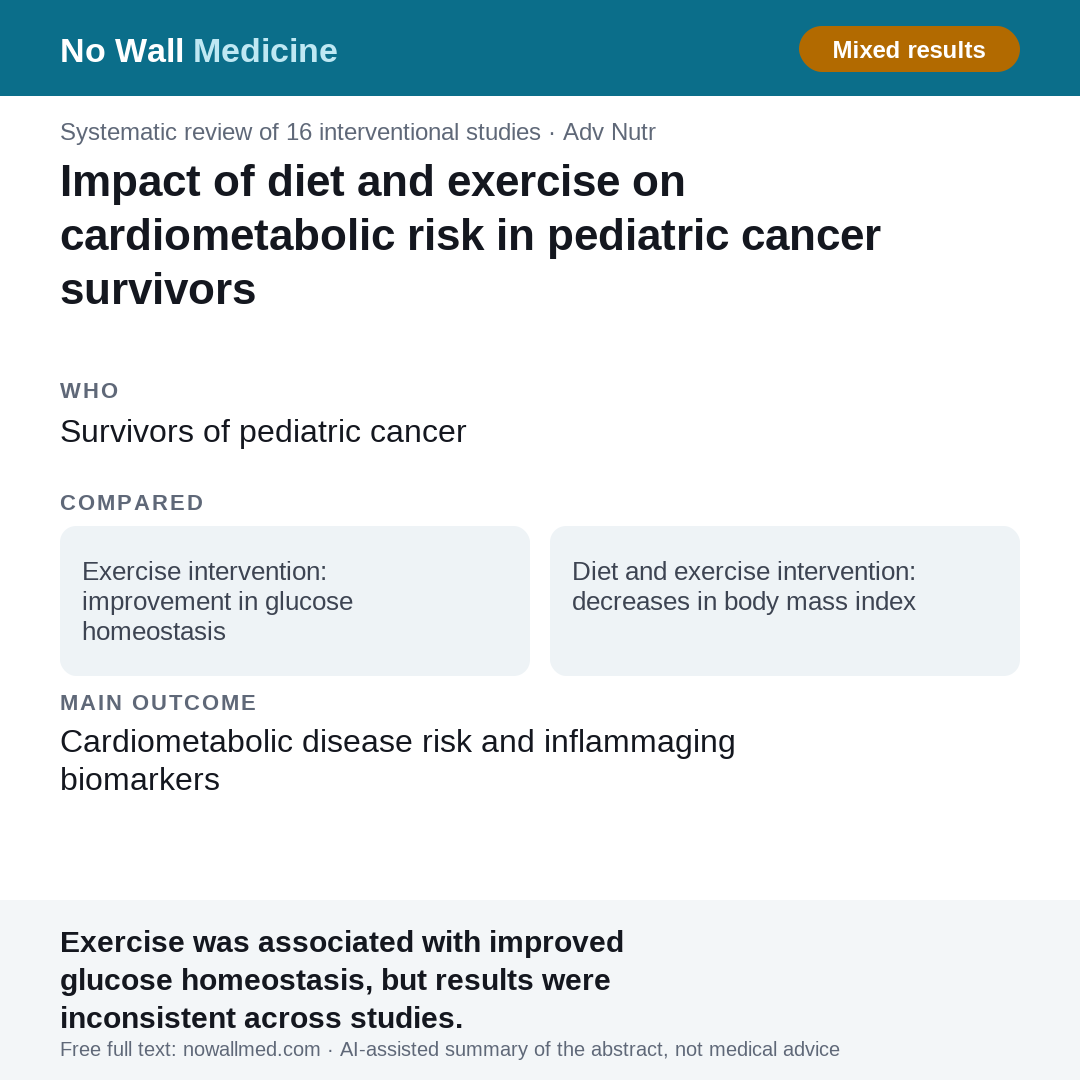
Diet and Exercise Interventions in Pediatric Cancer Survivors and Effects on Cardiometabolic Disease Risk and Inflammaging Biomarkers: A Systematic Review
Systematic review of 16 trialsMixed results
Do diet and exercise affect disease risk
Who
pediatric cancer survivors in the United States
Compared
diet intervention
exercise intervention
combined diet and exercise
Main outcome
cardiometabolic disease risk
Bottom line: Exercise improves glucose homeostasis
Limitation: high risk of bias
Adv Nutr · 2026-02-13Download image
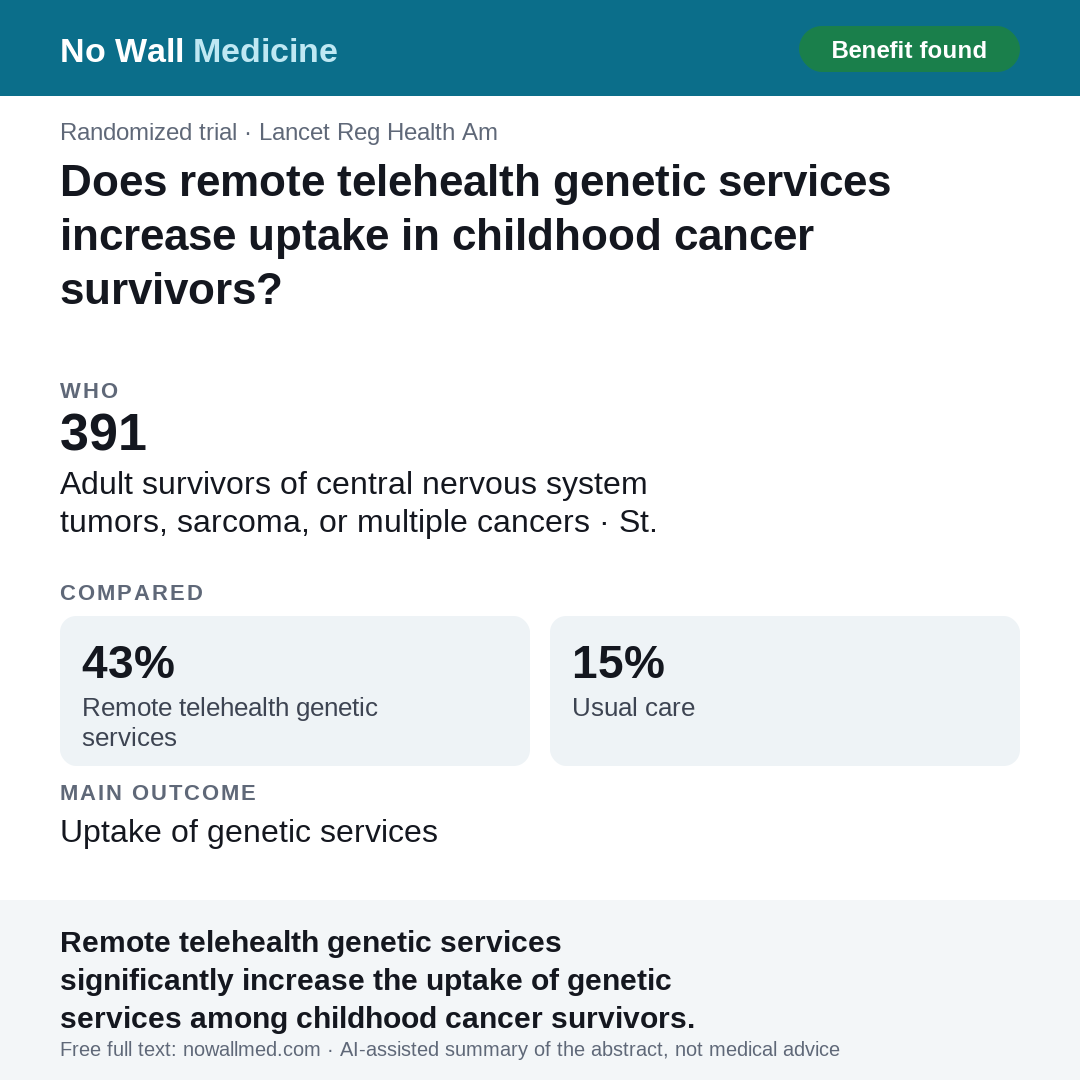
The ENGAGE study: a randomized trial optimizing uptake of germline cancer genetic services in childhood cancer survivors
Randomized trialBenefit found
Does remote telehealth genetic services increase uptake in childhood cancer survivors?
Who
391
Adult survivors of central nervous system tumors, sarcoma, or multiple cancers · St. Jude Research Hospital
Compared
43%Remote telehealth genetic services (113/262)
15%Usual care (19/129)
Main outcome
Uptake of genetic services
Result: odds ratio 4.4 (95% CI 2.5-8.0)
Bottom line: Remote telehealth genetic services significantly increase the uptake of genetic services among childhood cancer survivors.
Funded by: National Cancer Institute
Lancet Reg Health Am · 2026-02-13Download image
Automated algorithms for identifying patients requiring palliative care: a systematic review and meta‑analysis
Systematic review and meta-analysisBenefit found
Do automated electronic health record algorithms increase palliative care identification and interventions?
Who
125,666
Patients identified via electronic health record algorithms
Compared
Automated algorithms
Control
Main outcome
Palliative care consultations and do-not-resuscitate documentation
Result: noncancer: risk ratio 2.19 (95% CI 1.12 to 4.28); cancer: risk ratio 5.31 (95% CI 3.49 to 8.09)
Bottom line: Automated electronic health record algorithms increase palliative care consultations and do-not-resuscitate documentation.
NPJ Digit Med · 2026-02-13Download image

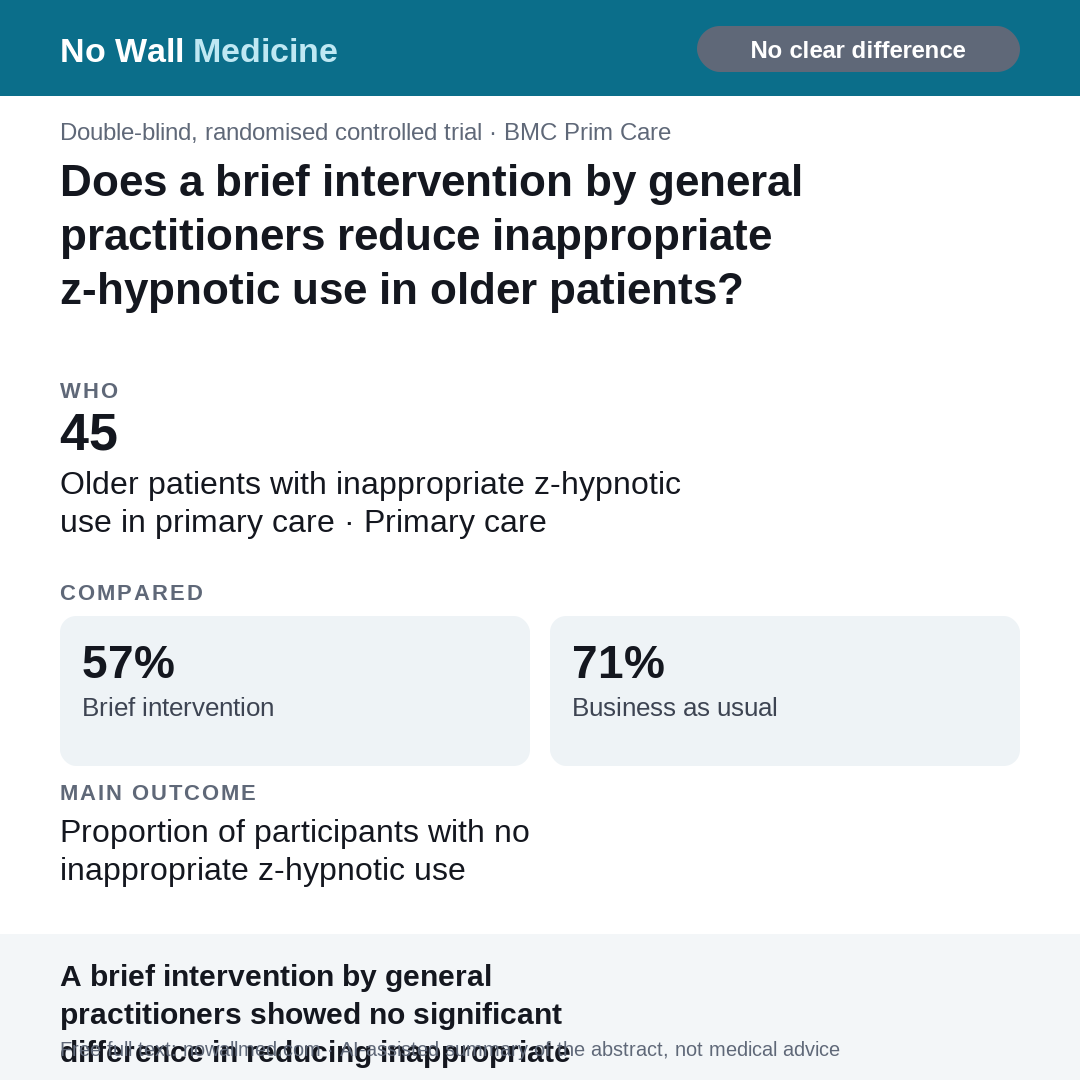
A brief intervention to discontinue inappropriate z-hypnotics use by older patients in primary care: a randomised controlled trial
Double-blind, randomised controlled trialNo clear difference
Does a brief intervention by general practitioners reduce inappropriate z-hypnotic use in older patients?
Who
45
Older patients with inappropriate z-hypnotic use in primary care · Primary care
Compared
57%Brief intervention
71%Business as usual
Main outcome
Proportion of participants with no inappropriate z-hypnotic use
Bottom line: A brief intervention by general practitioners showed no significant difference in reducing inappropriate z-hypnotic use compared to business as usual.
Limitation: The study became underpowered.
BMC Prim Care · 2026-02-13Download image
Cross-ancestry genome-wide association studies of liver function biomarkers uncover pleiotropic variants, systemic disease links and therapeutic targets
Cross-ancestry genome-wide association studies meta-analysesBenefit found
What is the genetic architecture of seven liver function-related quantitative biomarkers?
Who
456,000
Individuals of East Asian, European, South Asian, and African ancestries
Compared
5,507Lead signals (P < 5 × 10⁻⁹)
210Novel lead signals
Main outcome
Genetic architecture of seven liver function-related quantitative biomarkers
Bottom line: Cross-ancestry meta-analyses identified 5,507 lead signals and prioritized genes for potential liver disease therapies.
Genome Med · 2026-02-13Download image

Perioperative Analgesia and Postoperative Nausea and Vomiting Management in Otoplasty: A Systematic Review
Systematic reviewBenefit found
What are the best techniques for pain and nausea management after otoplasty?
Who
370
Patients undergoing otoplasty for prominent ear deformity
Compared
Regional nerve block: mean pain score at 6 hours 0.25
Local infiltration anesthesia: mean pain score at 6 hours 2.34
16%Propofol and hyoscine patches
48%Placebo
Main outcome
Pain scores, opioid use, and postoperative nausea and vomiting
Bottom line: Regional nerve block improves pain scores and reduces opioid use, while propofol and hyoscine reduce postoperative nausea and vomiting.
Limitation: Overall methodological quality was moderate and heterogeneity precluded meta-analysis.
Plast Reconstr Surg Glob Open · 2026-02-13Download image

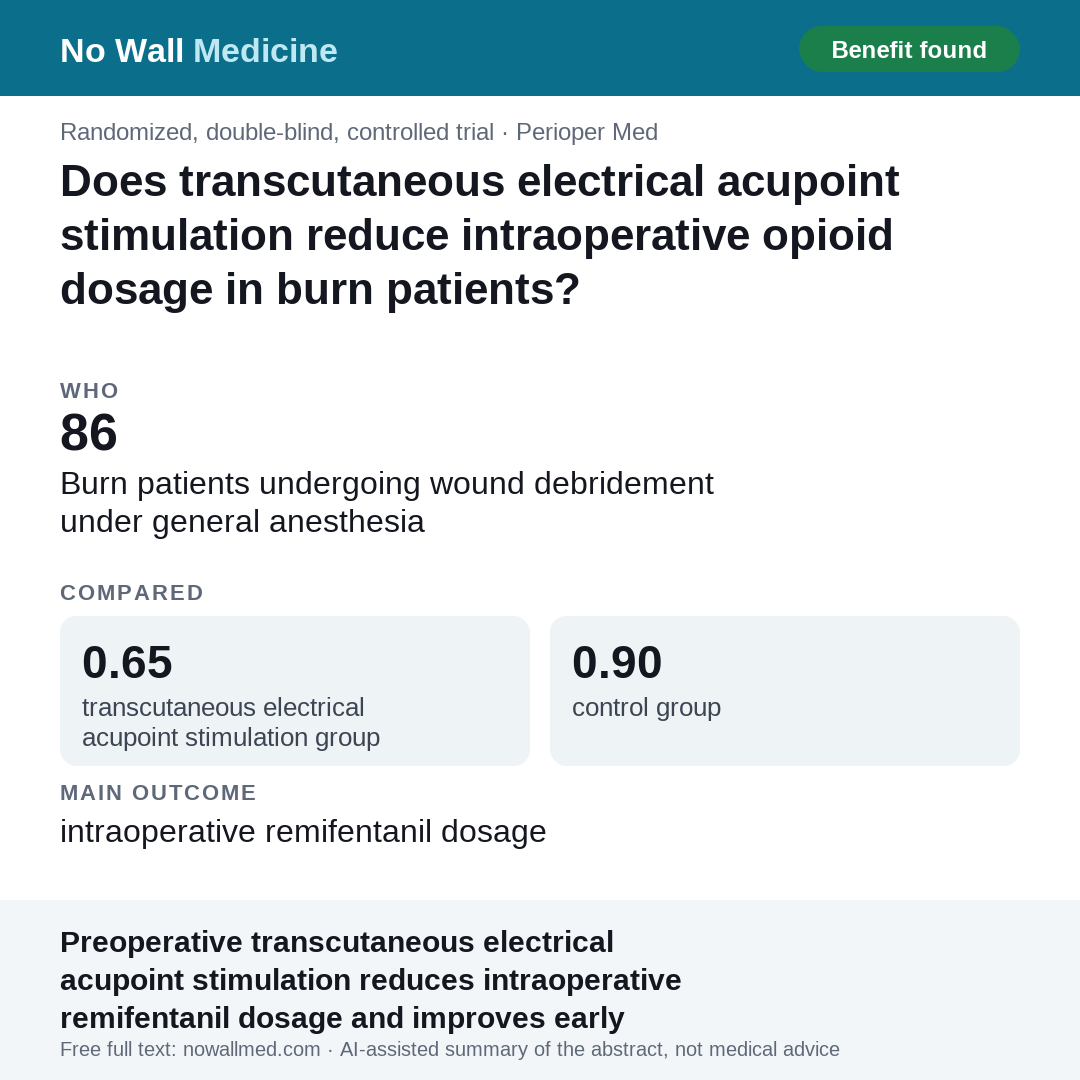
Effect of transcutaneous electrical acupoint stimulation for preemptive analgesia on intraoperative opioid dosage in burn patients: a randomized, double-blind, controlled trial
Randomized, double-blind, controlled trialBenefit found
Does transcutaneous electrical acupoint stimulation reduce intraoperative opioid dosage in burn patients?
Who
86
Burn patients undergoing wound debridement under general anesthesia
Compared
0.65transcutaneous electrical acupoint stimulation group (0.45,1.00)
0.90control group (0.67,1.23)
Main outcome
intraoperative remifentanil dosage
Bottom line: Preoperative transcutaneous electrical acupoint stimulation reduces intraoperative remifentanil dosage and improves early postoperative analgesia and gastrointestinal adverse reactions.
Perioper Med · 2026-02-13Download image
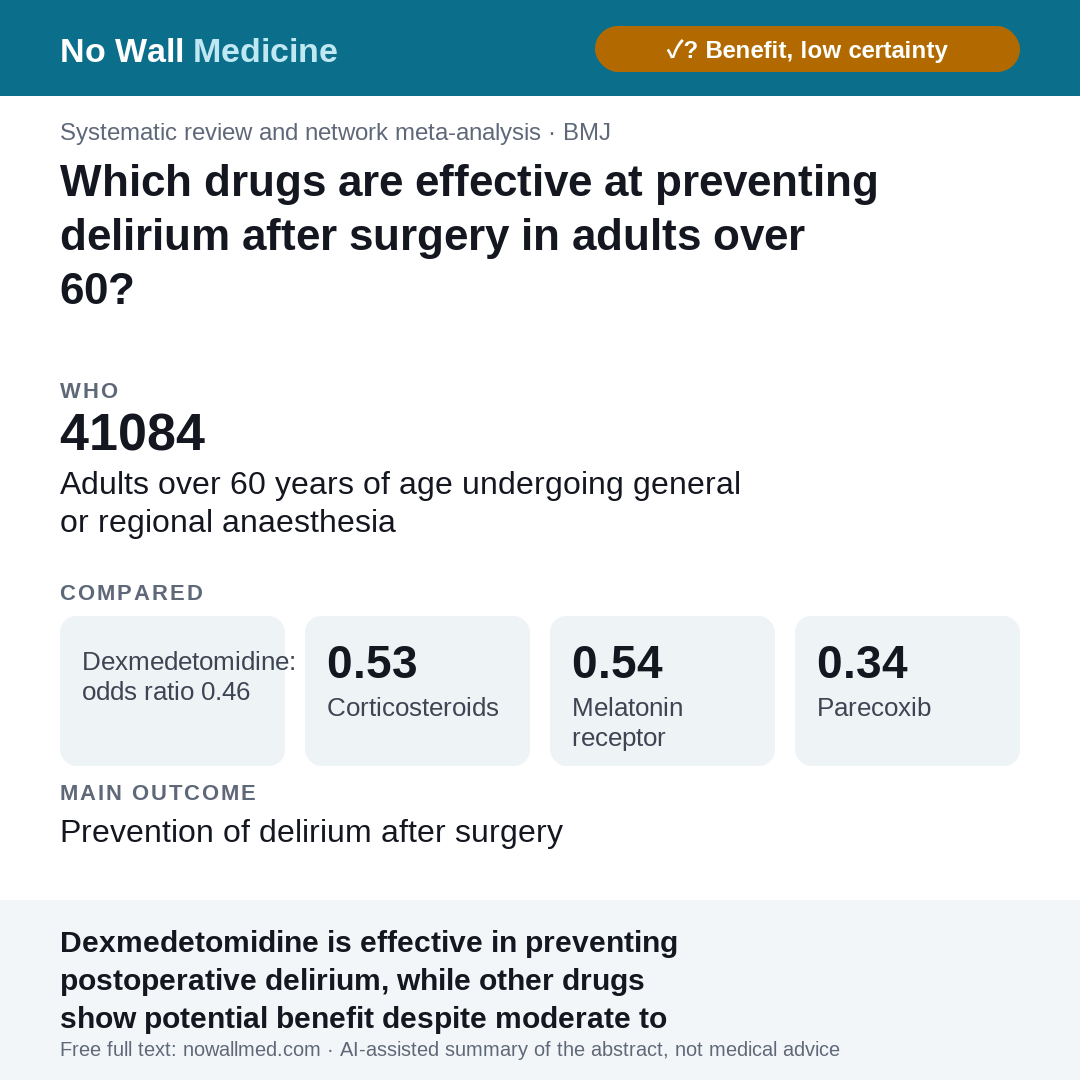
Effectiveness of drug interventions to prevent delirium after surgery for older adults: systematic review and network meta-analysis of randomised controlled trials
Systematic review and network meta-analysisBenefit found
Which drugs are effective at preventing delirium after surgery in adults over 60?
Who
41084
Adults over 60 years of age undergoing general or regional anaesthesia
Compared
Dexmedetomidine: odds ratio 0.46
0.53Corticosteroids
0.54Melatonin receptor agonists
0.34Parecoxib
Main outcome
Prevention of delirium after surgery
Result: dexmedetomidine odds ratio 0.46 (95% credible interval 0.36 to 0.57)
Bottom line: Dexmedetomidine is effective in preventing postoperative delirium, while other drugs show potential benefit despite moderate to very low quality evidence.
Limitation: Inadequate trial registration practices and incomplete adoption of core outcome sets.
BMJ · 2026-02-12Download image
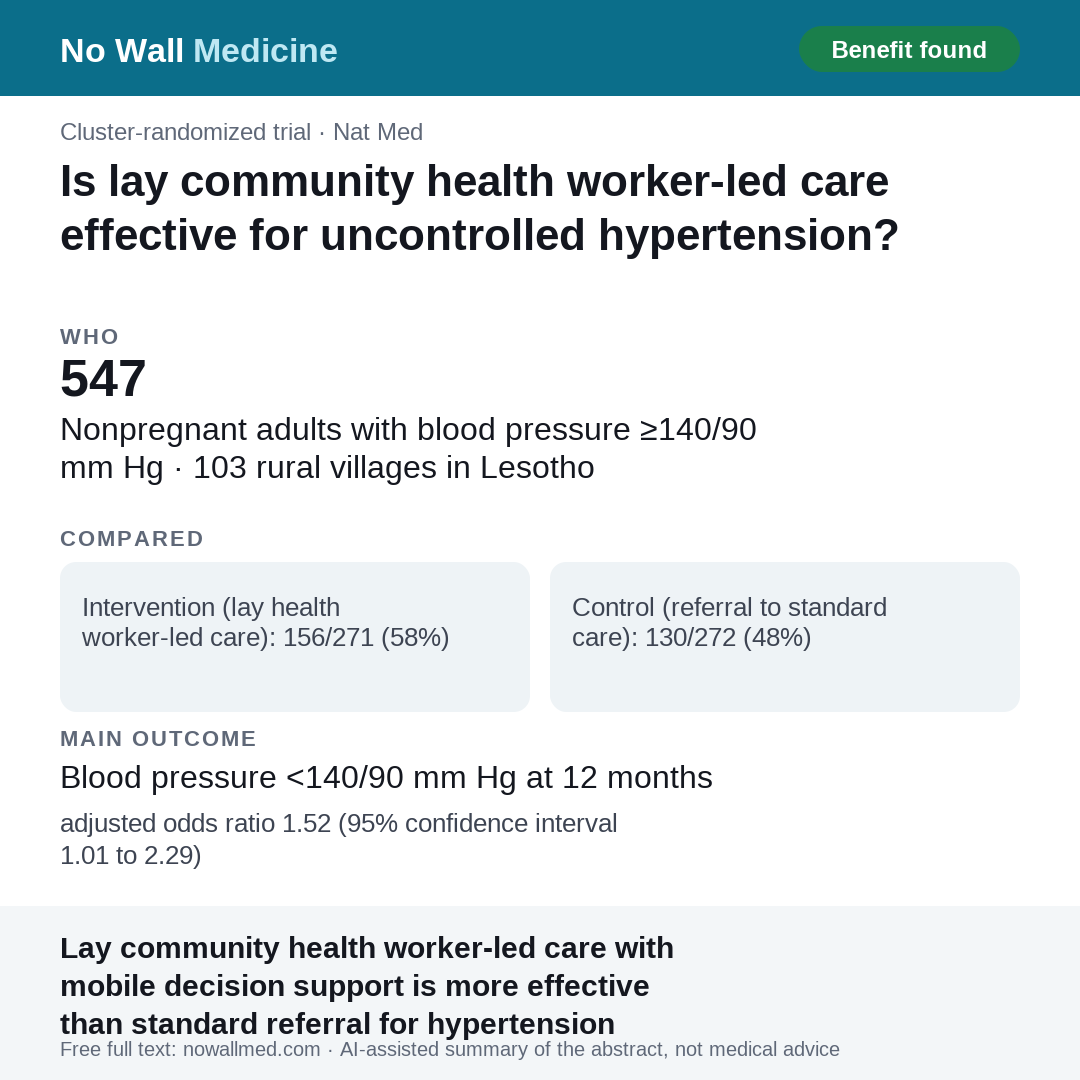
Lay community health worker-led care with mobile decision support for uncontrolled hypertension: a cluster-randomized trial
Cluster-randomized trialBenefit found
Is lay community health worker-led care effective for uncontrolled hypertension?
Who
547
Nonpregnant adults with blood pressure ≥140/90 mm Hg · 103 rural villages in Lesotho
Compared
Intervention (lay health worker-led care): 156/271 (58%)
Control (referral to standard care): 130/272 (48%)
Main outcome
Blood pressure <140/90 mm Hg at 12 months
Result: adjusted odds ratio 1.52 (95% confidence interval 1.01 to 2.29)
Bottom line: Lay community health worker-led care with mobile decision support is more effective than standard referral for hypertension control.
Nat Med · 2026-02-12Download image
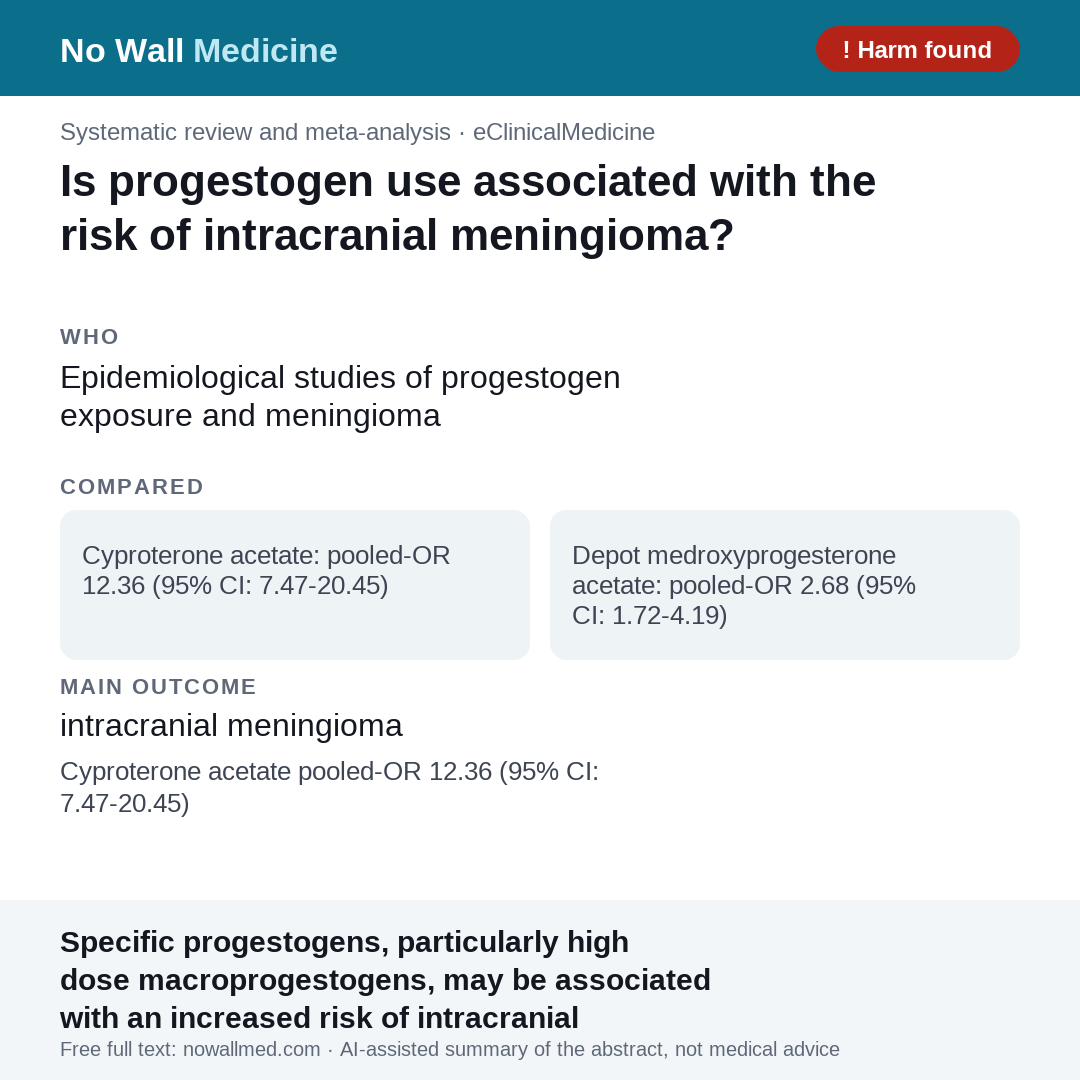
Progestogen use and the risk of intracranial meningioma: a systematic review and meta-analysis
Systematic review and meta-analysisHarm found
Is progestogen use associated with the risk of intracranial meningioma?
Who
Epidemiological studies of progestogen exposure and meningioma
Compared
Cyproterone acetate: pooled-OR 12.36 (95% CI: 7.47-20.45)
Depot medroxyprogesterone acetate: pooled-OR 2.68 (95% CI: 1.72-4.19)
Main outcome
intracranial meningioma
Result: Cyproterone acetate pooled-OR 12.36 (95% CI: 7.47-20.45)
Bottom line: Specific progestogens, particularly high dose macroprogestogens, may be associated with an increased risk of intracranial meningioma.
Limitation: Observational design, residual confounding, heterogeneity, and imprecision for some exposures.
eClinicalMedicine · 2026-02-12Download image
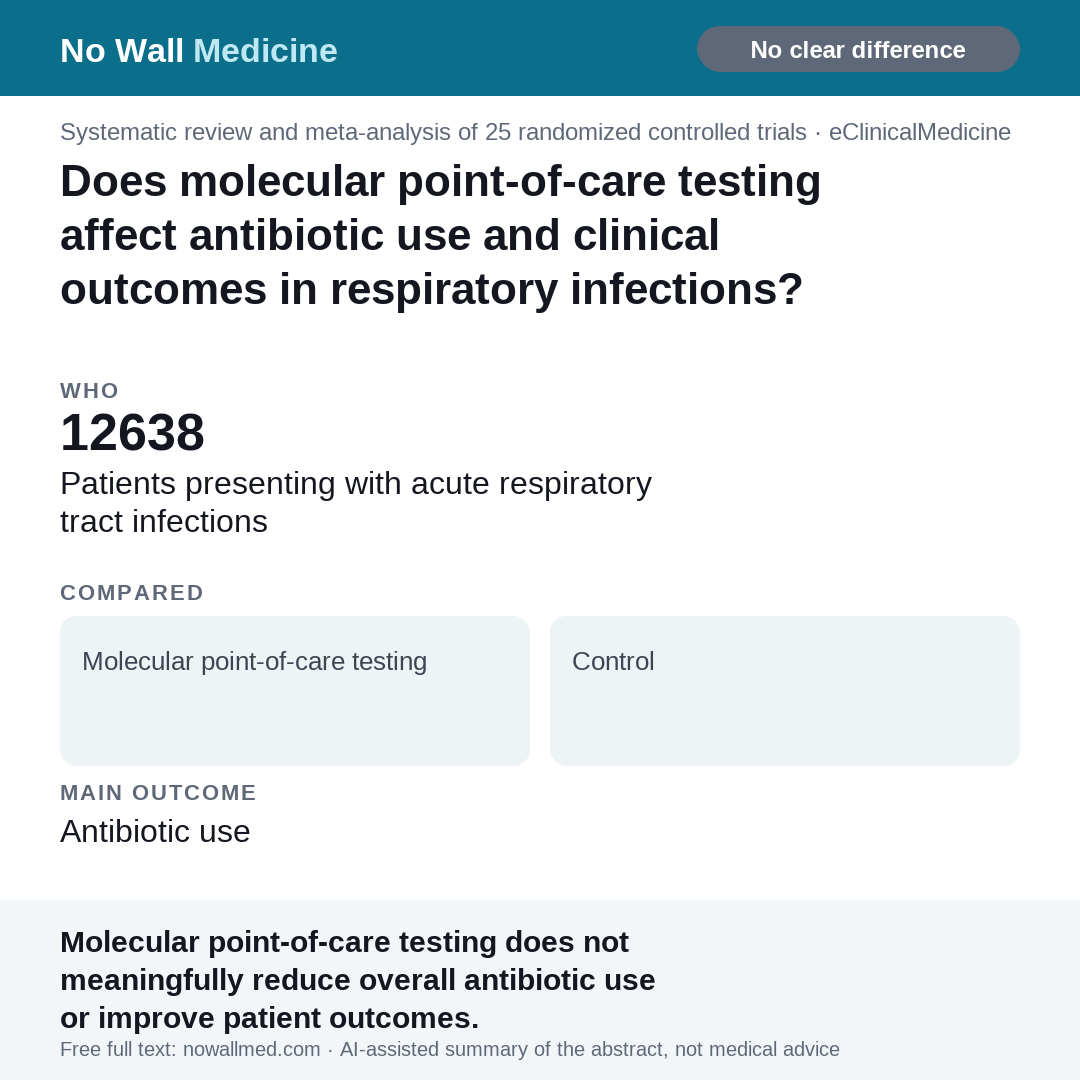
Impact of molecular point-of-care testing for respiratory pathogens on antibiotic use and clinical outcomes in acute respiratory tract infections: a systematic review and meta-analysis
Systematic review and meta-analysis of 25 randomized controlled trialsNo clear difference
Does molecular point-of-care testing affect antibiotic use and clinical outcomes in respiratory infections?
Who
12638
Patients presenting with acute respiratory tract infections
Compared
Molecular point-of-care testing
Control
Main outcome
Antibiotic use
Result: risk ratio 0.95 (95% CI 0.90-1.00)
Bottom line: Molecular point-of-care testing does not meaningfully reduce overall antibiotic use or improve patient outcomes.
Limitation: Low-certainty evidence for potential reduction in antibiotic use in children.
Funded by: National Natural Science Foundation of China and others
eClinicalMedicine · 2026-02-12Download image
Brief individual psychological intervention for people with probable personality disorder: a multicentre, researcher-masked, randomised, controlled superiority trial in England
Multicentre, researcher-masked, randomised, controlled superiority trialNo clear difference
Is a brief individual psychological intervention effective for people with probable personality disorder?
Who
336
Adults with probable personality disorder · Seven mental health Trusts in England
Compared
Structured Psychological Support plus treatment-as-usual: standardised coefficient 0·12
Treatment-as-usual
Main outcome
Social functioning at 12 months measured by Work and Social Adjustment Scale
Result: standardised coefficient 0·12 (95% CI -2·14 to 2·38)
Bottom line: A brief individual psychological intervention showed no difference in social functioning compared to treatment-as-usual over 12 months.
Lancet Psychiatry · 2026-02-12Download image

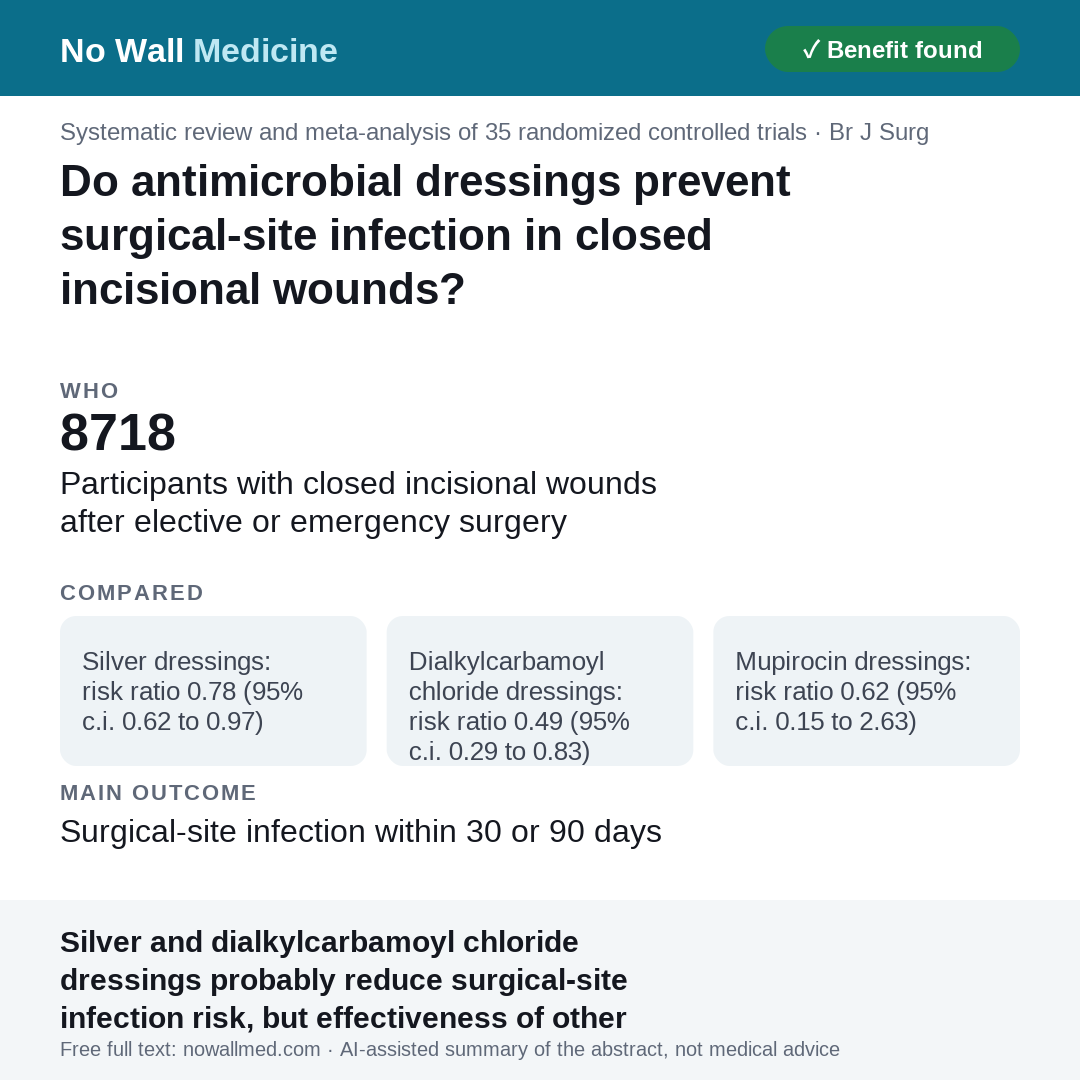
Antimicrobial dressings for the prevention of surgical-site infection: systematic review and meta-analysis
Systematic review and meta-analysis of 35 randomized controlled trialsBenefit found
Do antimicrobial dressings prevent surgical-site infection in closed incisional wounds?
Who
8718
Participants with closed incisional wounds after elective or emergency surgery
Compared
Silver dressings: risk ratio 0.78 (95% c.i. 0.62 to 0.97)
Dialkylcarbamoyl chloride dressings: risk ratio 0.49 (95% c.i. 0.29 to 0.83)
Mupirocin dressings: risk ratio 0.62 (95% c.i. 0.15 to 2.63)
Main outcome
Surgical-site infection within 30 or 90 days
Result: silver risk ratio 0.78 (95% c.i. 0.62 to 0.97); DACC risk ratio 0.49 (95% c.i. 0.29 to 0.83)
Bottom line: Silver and dialkylcarbamoyl chloride dressings probably reduce surgical-site infection risk, but effectiveness of other antimicrobial dressings remains uncertain.
Limitation: Evidence for other antimicrobial agents was insufficient.
Br J Surg · 2026-02-12Download image
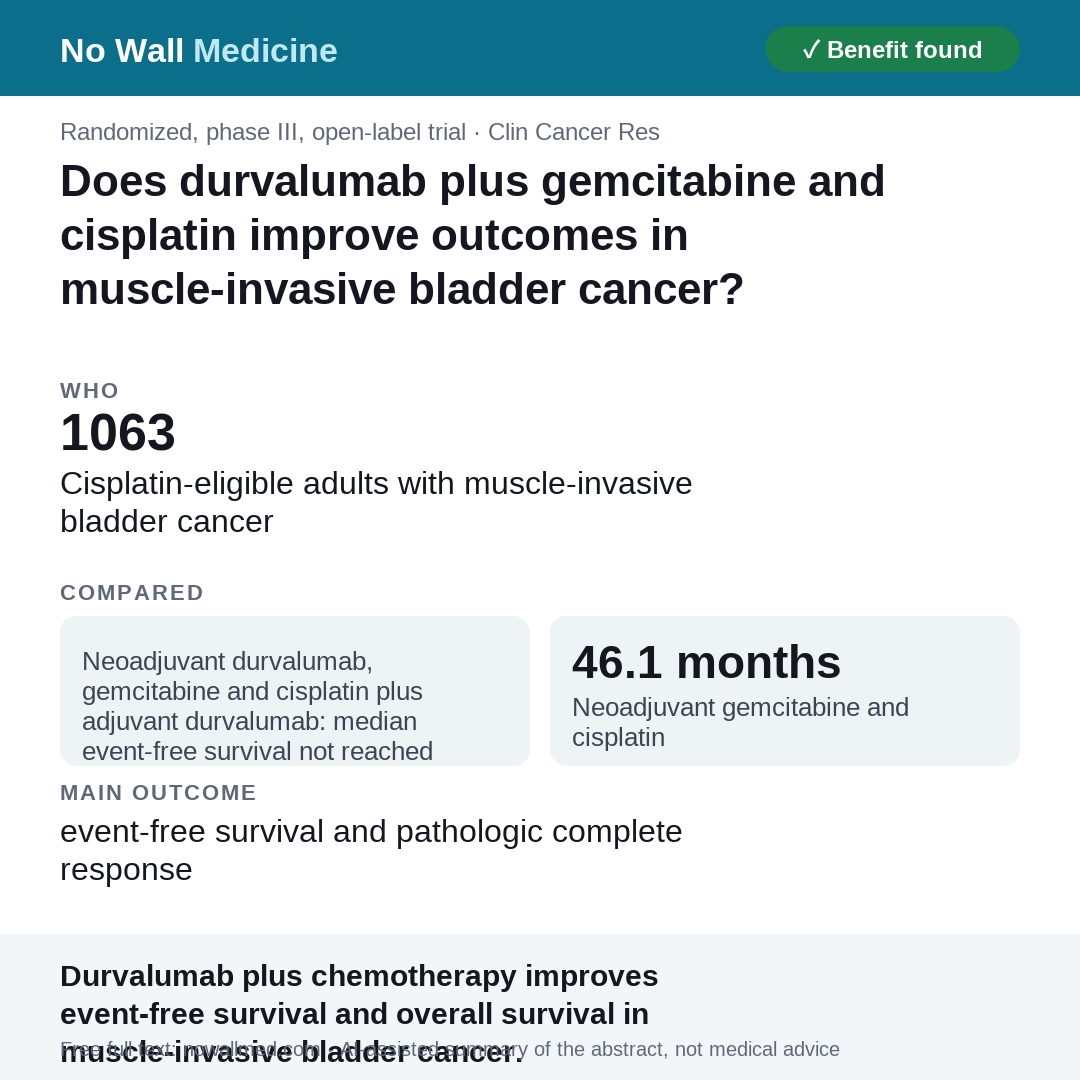
FDA Approval Summary: Durvalumab for the Treatment of Adult Patients with Muscle-Invasive Bladder Cancer
Randomized, phase III, open-label trialBenefit found
Does durvalumab plus gemcitabine and cisplatin improve outcomes in muscle-invasive bladder cancer?
Who
1063
Cisplatin-eligible adults with muscle-invasive bladder cancer
Compared
Neoadjuvant durvalumab, gemcitabine and cisplatin plus adjuvant durvalumab: median event-free survival not reached
46.1 monthsNeoadjuvant gemcitabine and cisplatin (95% CI 32.3-NR)
Main outcome
event-free survival and pathologic complete response
Result: hazard ratio 0.68 (95% CI 0.56-0.82)
Bottom line: Durvalumab plus chemotherapy improves event-free survival and overall survival in muscle-invasive bladder cancer.
Clin Cancer Res · 2026-02-12Download image