Visual abstracts
New randomized trials and meta-analyses from leading journals at a glance: who was studied, what was compared, and what was found. Every paper is free to read in full.
All specialtiesCardiology 840Oncology 760Gastroenterology & Hepatology 306Infectious Disease 626Neurology 350Psychiatry & Mental Health 430Pulmonology 365Critical Care 243Endocrinology & Diabetes 480Pediatrics 534Surgery 319Orthopedics & Sports Medicine 161Neurosurgery 89Cardiothoracic & Vascular Surgery 87Plastic & Reconstructive Surgery 118Nephrology 197Rheumatology 108Hematology 181Dermatology 78Ophthalmology 97Obstetrics & Gynecology 261Public & Global Health 167Radiology & Imaging 96Anesthesiology 107Urology 162ENT (Otolaryngology) 86Emergency Medicine 68Allergy & Immunology 58Geriatrics 160Family Medicine & Primary Care 111Medical Genetics & Genomics 91Pathology & Laboratory Medicine 24Physical Medicine & Rehabilitation 148Palliative Care 81Nutrition 223Digital Health & AI 460General Medicine 101
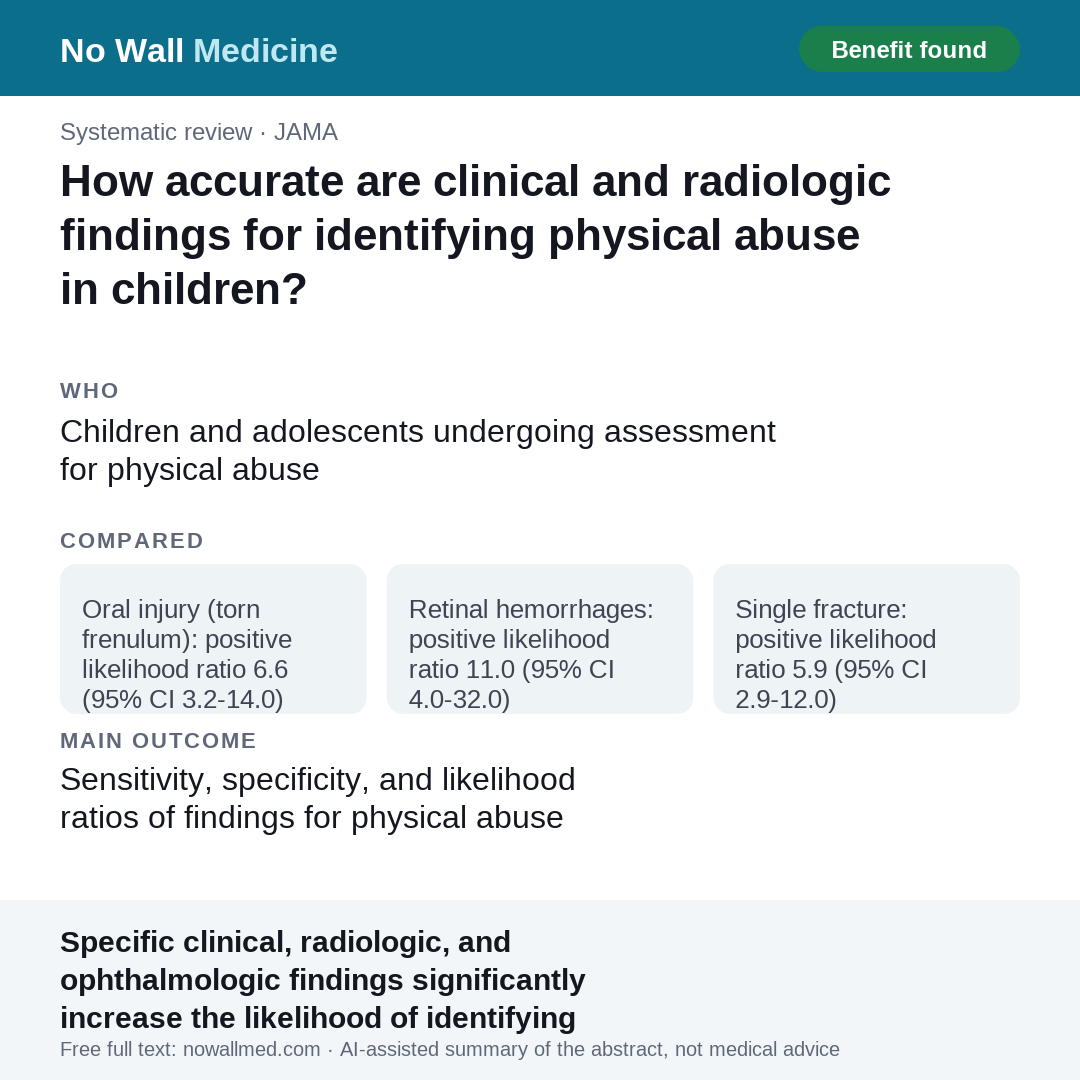
Has This Child Experienced Physical Abuse?: The Rational Clinical Examination Systematic Review
Systematic reviewBenefit found
How accurate are clinical and radiologic findings for identifying physical abuse in children?
Who
Children and adolescents undergoing assessment for physical abuse
Compared
Oral injury (torn frenulum): positive likelihood ratio 6.6 (95% CI 3.2-14.0)
Retinal hemorrhages: positive likelihood ratio 11.0 (95% CI 4.0-32.0)
Single fracture: positive likelihood ratio 5.9 (95% CI 2.9-12.0)
Main outcome
Sensitivity, specificity, and likelihood ratios of findings for physical abuse
Bottom line: Specific clinical, radiologic, and ophthalmologic findings significantly increase the likelihood of identifying physical abuse in children.
JAMA · 2025-04-21Download image
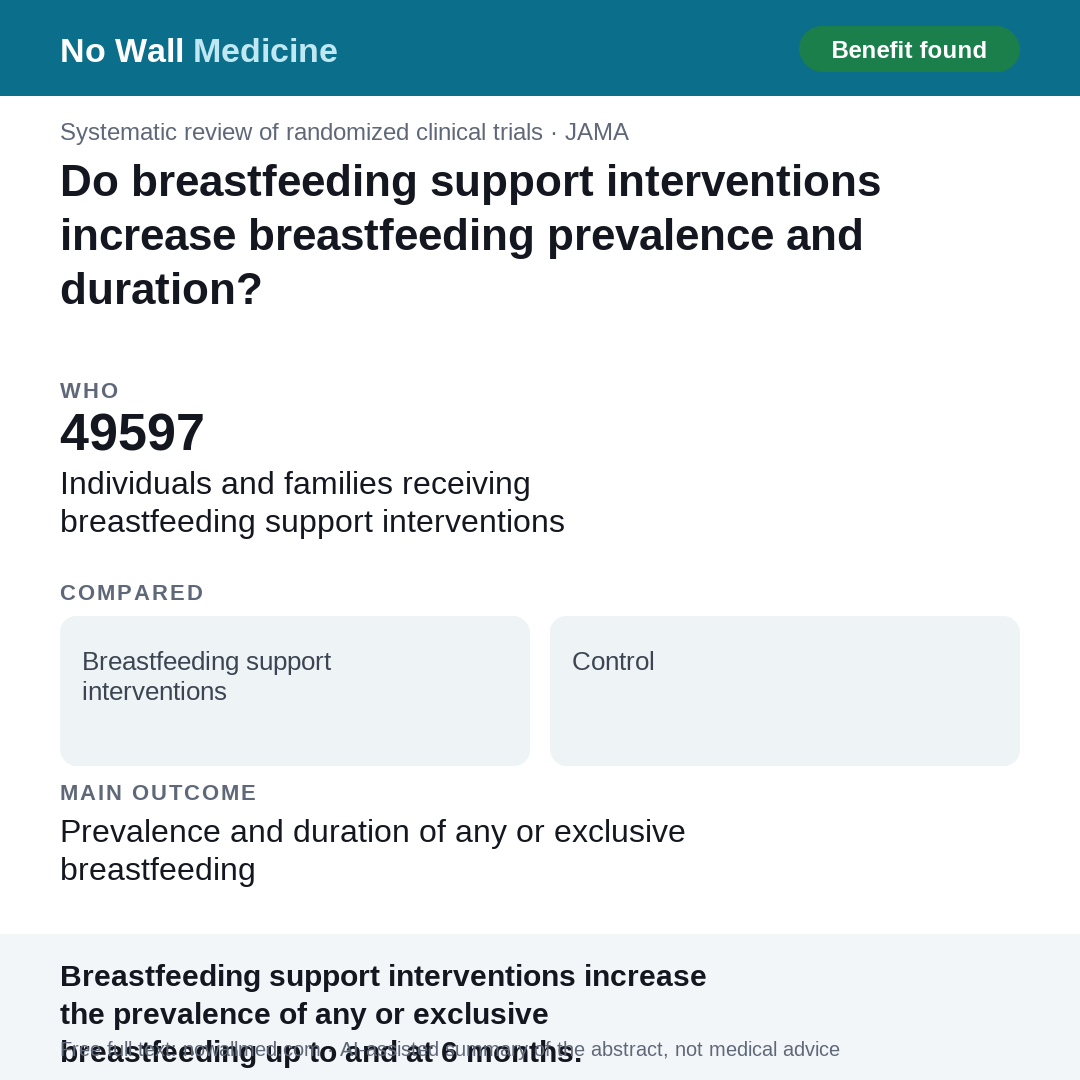
Interventions to Support Breastfeeding: Updated Evidence Report and Systematic Review for the US Preventive Services Task Force
Systematic review of randomized clinical trialsBenefit found
Do breastfeeding support interventions increase breastfeeding prevalence and duration?
Who
49597
Individuals and families receiving breastfeeding support interventions
Compared
Breastfeeding support interventions
Control
Main outcome
Prevalence and duration of any or exclusive breastfeeding
Result: any breastfeeding: risk ratio, 1.13 (95% CI, 1.05-1.22); exclusive breastfeeding: risk ratio, 1.46 (95% CI, 1.20-1.78)
Bottom line: Breastfeeding support interventions increase the prevalence of any or exclusive breastfeeding up to and at 6 months.
Limitation: Limited and mixed evidence on infant health outcomes and maternal mental health symptoms.
JAMA · 2025-04-08Download image
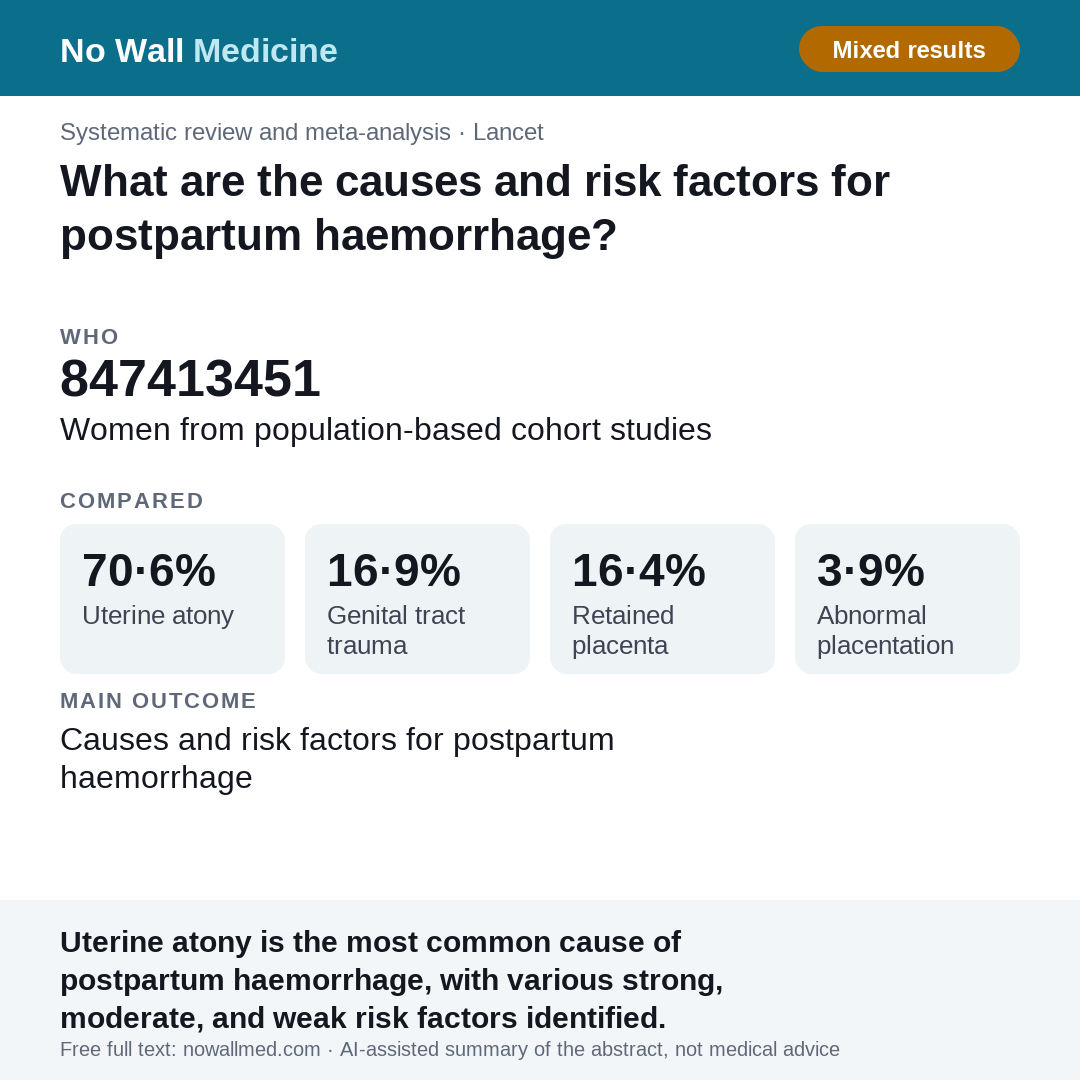
Causes of and risk factors for postpartum haemorrhage: a systematic review and meta-analysis
Systematic review and meta-analysisMixed results
What are the causes and risk factors for postpartum haemorrhage?
Who
847413451
Women from population-based cohort studies
Compared
70·6%Uterine atony (95% CI 63·9-77·3)
16·9%Genital tract trauma (9·3-24·6)
16·4%Retained placenta (12·3-20·5)
3·9%Abnormal placentation (0·1-7·6)
Main outcome
Causes and risk factors for postpartum haemorrhage
Bottom line: Uterine atony is the most common cause of postpartum haemorrhage, with various strong, moderate, and weak risk factors identified.
Funded by: Gates Foundation
Lancet · 2025-04-03Download image
Systematic review and meta-analysis of intravenous iron therapy for patients with heart failure and iron deficiency
Meta-analysis of six trialsBenefit found
Intravenous iron for heart failure with iron deficiency
Who
7175
Patients with heart failure and iron deficiency
Compared
Intravenous iron
Placebo
Main outcome
Heart failure hospitalizations and cardiovascular mortality
Result: risk ratio 0.72 (95% CI 0.55 to 0.89)
Bottom line: Intravenous iron reduces heart failure events
Nat Med · 2025-03-30Download image

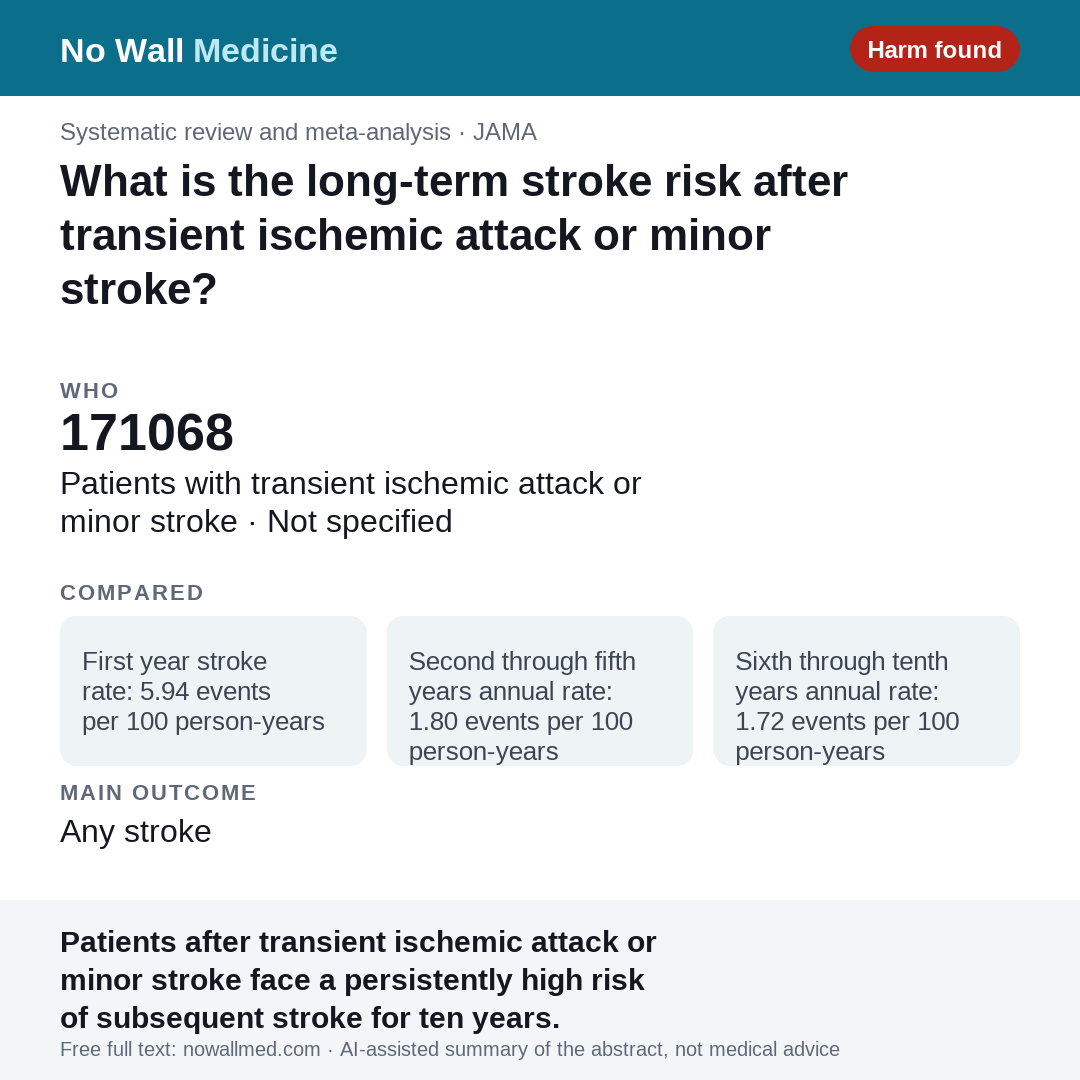
Long-Term Risk of Stroke After Transient Ischemic Attack or Minor Stroke: A Systematic Review and Meta-Analysis
Systematic review and meta-analysisHarm found
What is the long-term stroke risk after transient ischemic attack or minor stroke?
Who
171068
Patients with transient ischemic attack or minor stroke · Not specified
Compared
First year stroke rate: 5.94 events per 100 person-years
Second through fifth years annual rate: 1.80 events per 100 person-years
Sixth through tenth years annual rate: 1.72 events per 100 person-years
Main outcome
Any stroke
Result: 5-year cumulative incidence 12.5% (95% CI, 11.0%-14.1%)
Bottom line: Patients after transient ischemic attack or minor stroke face a persistently high risk of subsequent stroke for ten years.
JAMA · 2025-03-26Download image
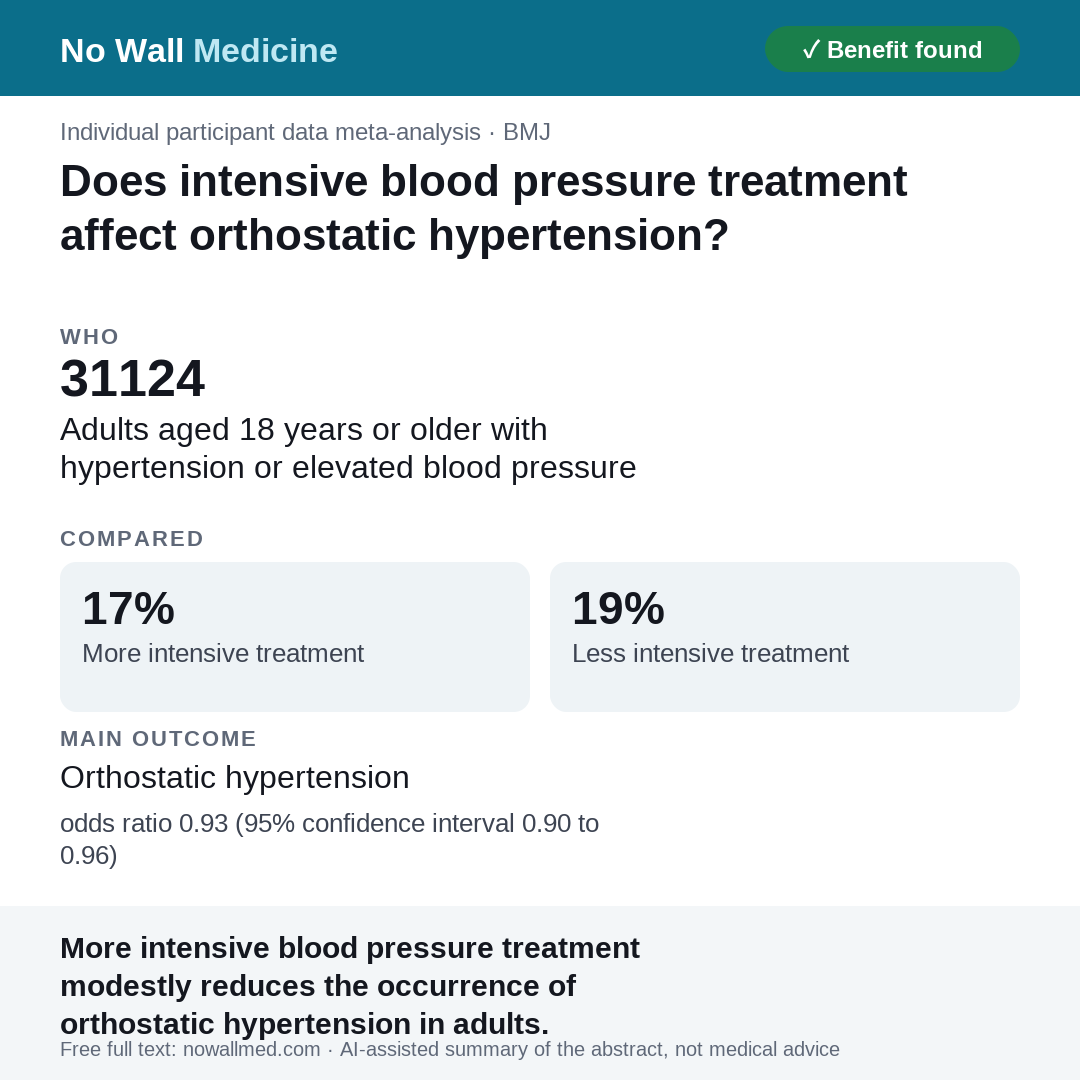
Effects of intensive blood pressure treatment on orthostatic hypertension: individual level meta-analysis
Individual participant data meta-analysisBenefit found
Does intensive blood pressure treatment affect orthostatic hypertension?
Who
31124
Adults aged 18 years or older with hypertension or elevated blood pressure
Compared
17%More intensive treatment
19%Less intensive treatment
Main outcome
Orthostatic hypertension
Result: odds ratio 0.93 (95% confidence interval 0.90 to 0.96)
Bottom line: More intensive blood pressure treatment modestly reduces the occurrence of orthostatic hypertension in adults.
BMJ · 2025-03-25Download image
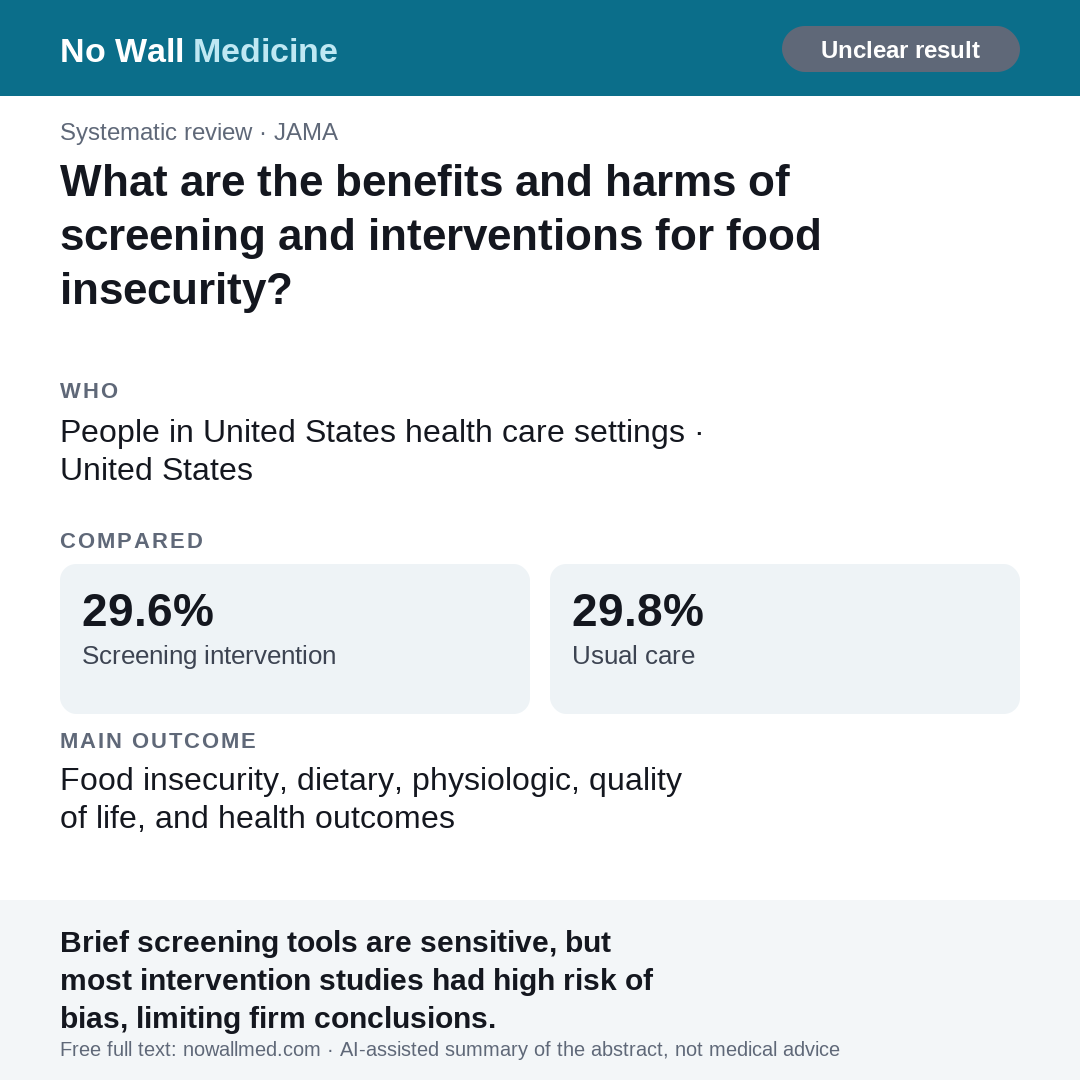
Preventive Services for Food Insecurity: Evidence Report and Systematic Review for the US Preventive Services Task Force
Systematic reviewUnclear result
What are the benefits and harms of screening and interventions for food insecurity?
Who
People in United States health care settings · United States
Compared
29.6%Screening intervention
29.8%Usual care
Main outcome
Food insecurity, dietary, physiologic, quality of life, and health outcomes
Bottom line: Brief screening tools are sensitive, but most intervention studies had high risk of bias, limiting firm conclusions.
Limitation: Most studies of interventions to improve food insecurity had high risk of bias.
JAMA · 2025-03-12Download image
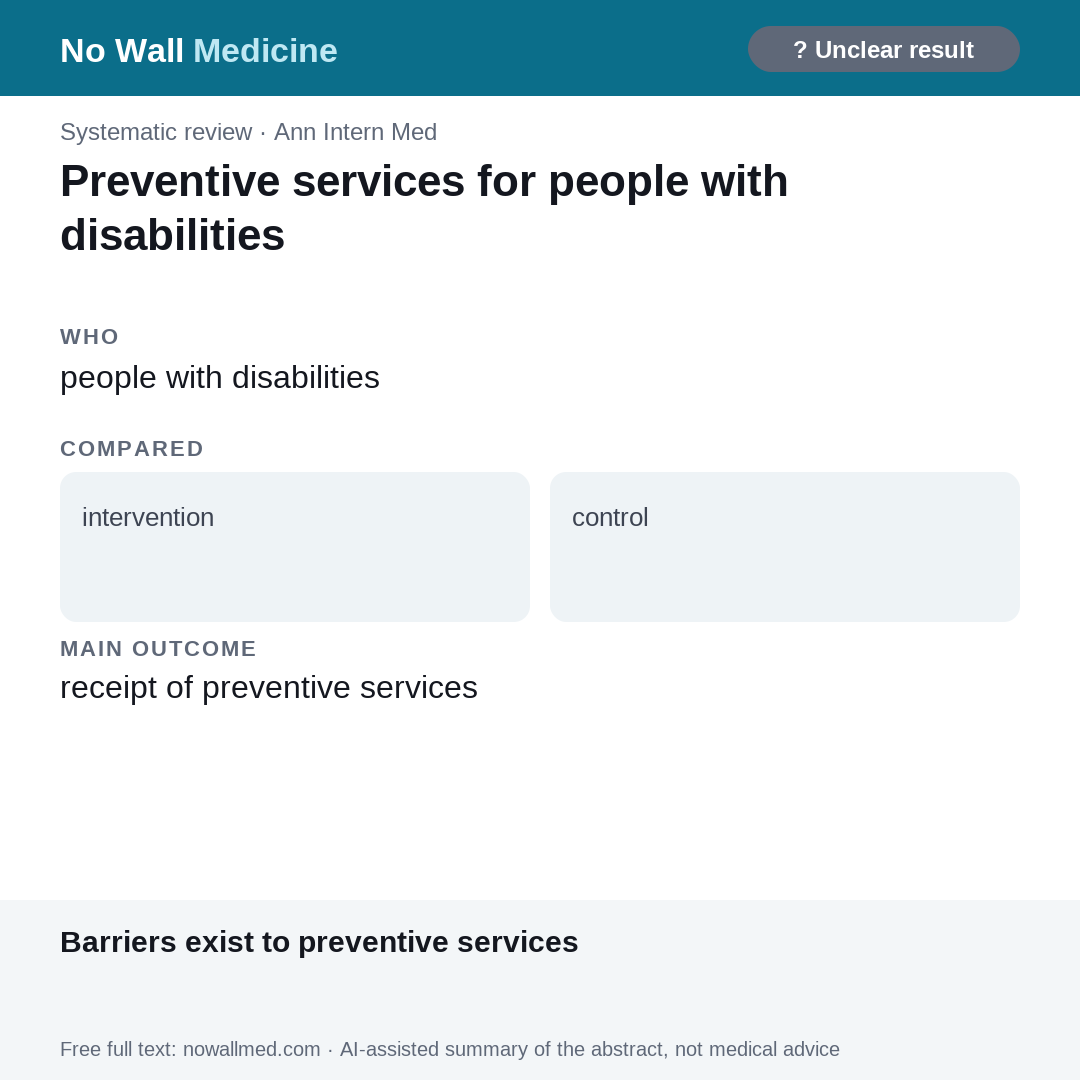
Health Care Delivery of Clinical Preventive Services for People With Disabilities : A Systematic Review
Systematic reviewUnclear result
Preventive services for people with disabilities
Who
74
people with disabilities
Compared
intervention
control
Main outcome
receipt of preventive services
Bottom line: Barriers exist to preventive services
Limitation: high methodological heterogeneity
Funded by: Agency for Healthcare Research and Quality
Ann Intern Med · 2025-03-11Download image
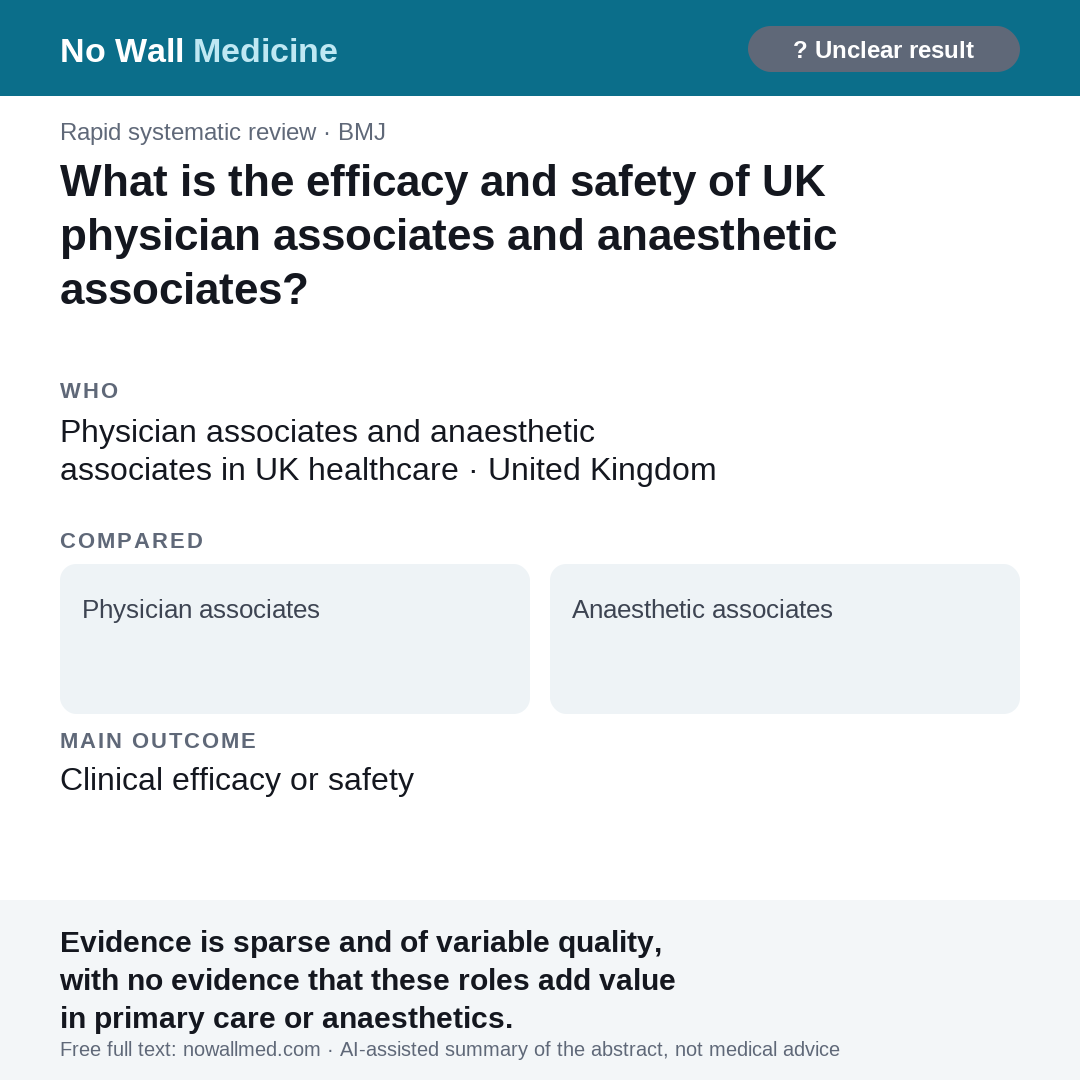
Physician associates and anaesthetic associates in UK: rapid systematic review of recent UK based research
Rapid systematic reviewUnclear result
What is the efficacy and safety of UK physician associates and anaesthetic associates?
Who
Physician associates and anaesthetic associates in UK healthcare · United Kingdom
Compared
Physician associates
Anaesthetic associates
Main outcome
Clinical efficacy or safety
Bottom line: Evidence is sparse and of variable quality, with no evidence that these roles add value in primary care or anaesthetics.
Limitation: Literature is sparse, of variable quality, and some is outdated.
BMJ · 2025-03-06Download image
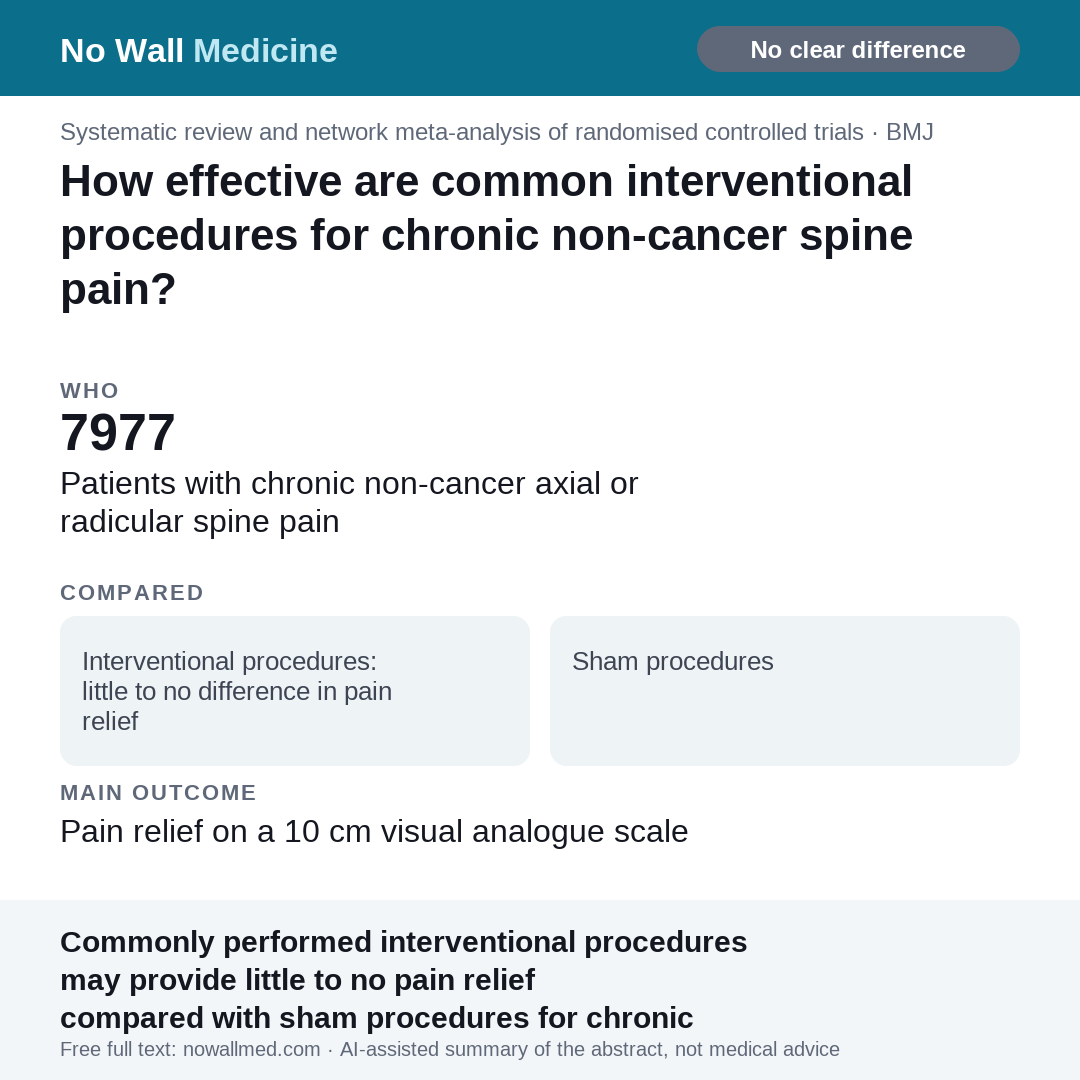
Common interventional procedures for chronic non-cancer spine pain: a systematic review and network meta-analysis of randomised trials
Systematic review and network meta-analysis of randomised controlled trialsNo clear difference
How effective are common interventional procedures for chronic non-cancer spine pain?
Who
7977
Patients with chronic non-cancer axial or radicular spine pain
Compared
Interventional procedures: little to no difference in pain relief
Sham procedures
Main outcome
Pain relief on a 10 cm visual analogue scale
Bottom line: Commonly performed interventional procedures may provide little to no pain relief compared with sham procedures for chronic spine pain.
Limitation: Certainty of evidence ranged from very low to moderate.
BMJ · 2025-02-19Download image
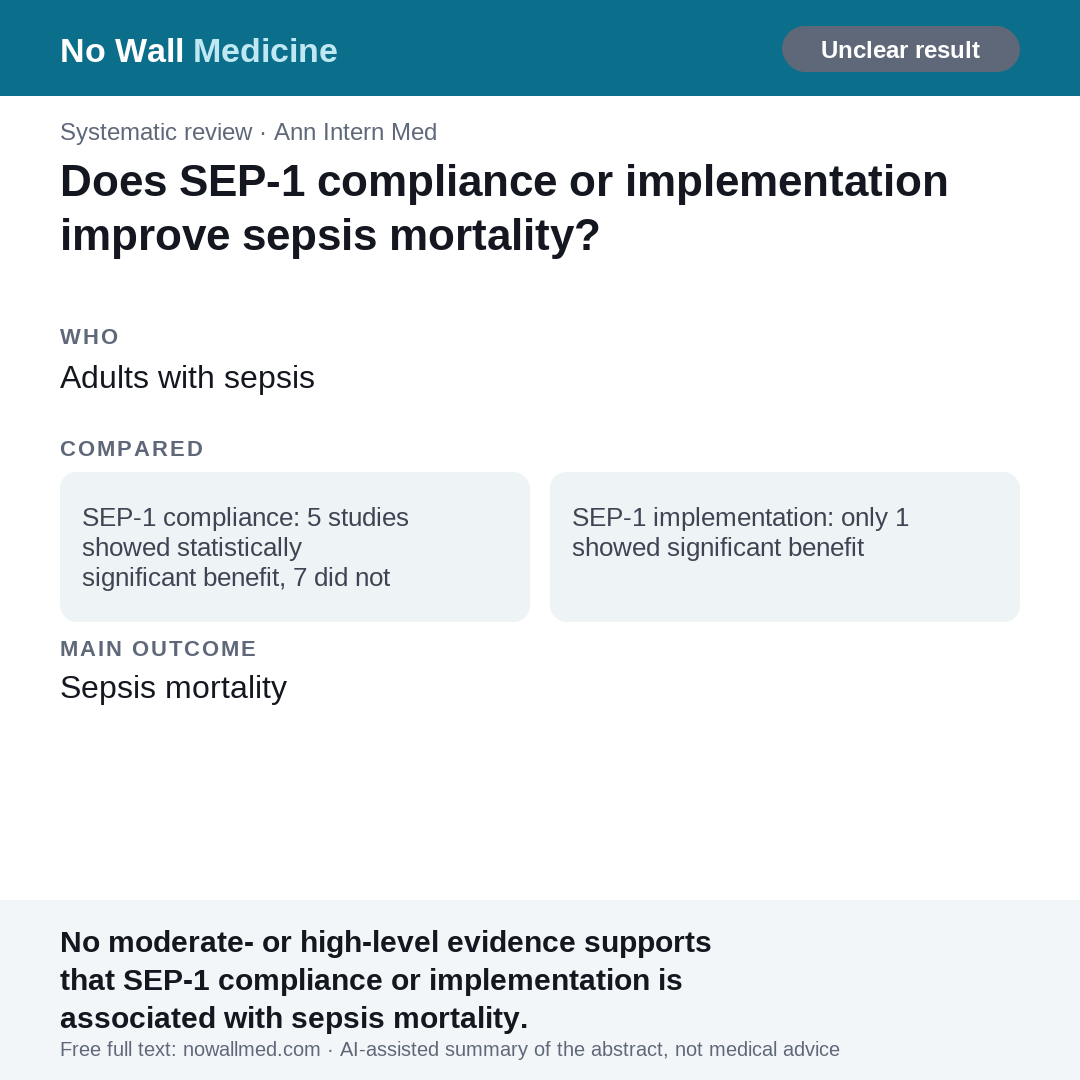
The Effect of Severe Sepsis and Septic Shock Management Bundle (SEP-1) Compliance and Implementation on Mortality Among Patients With Sepsis : A Systematic Review
Systematic reviewUnclear result
Does SEP-1 compliance or implementation improve sepsis mortality?
Who
Adults with sepsis
Compared
SEP-1 compliance: 5 studies showed statistically significant benefit, 7 did not
SEP-1 implementation: only 1 showed significant benefit
Main outcome
Sepsis mortality
Bottom line: No moderate- or high-level evidence supports that SEP-1 compliance or implementation is associated with sepsis mortality.
Limitation: All 17 studies were observational and none had low risk of bias.
Ann Intern Med · 2025-02-18Download image
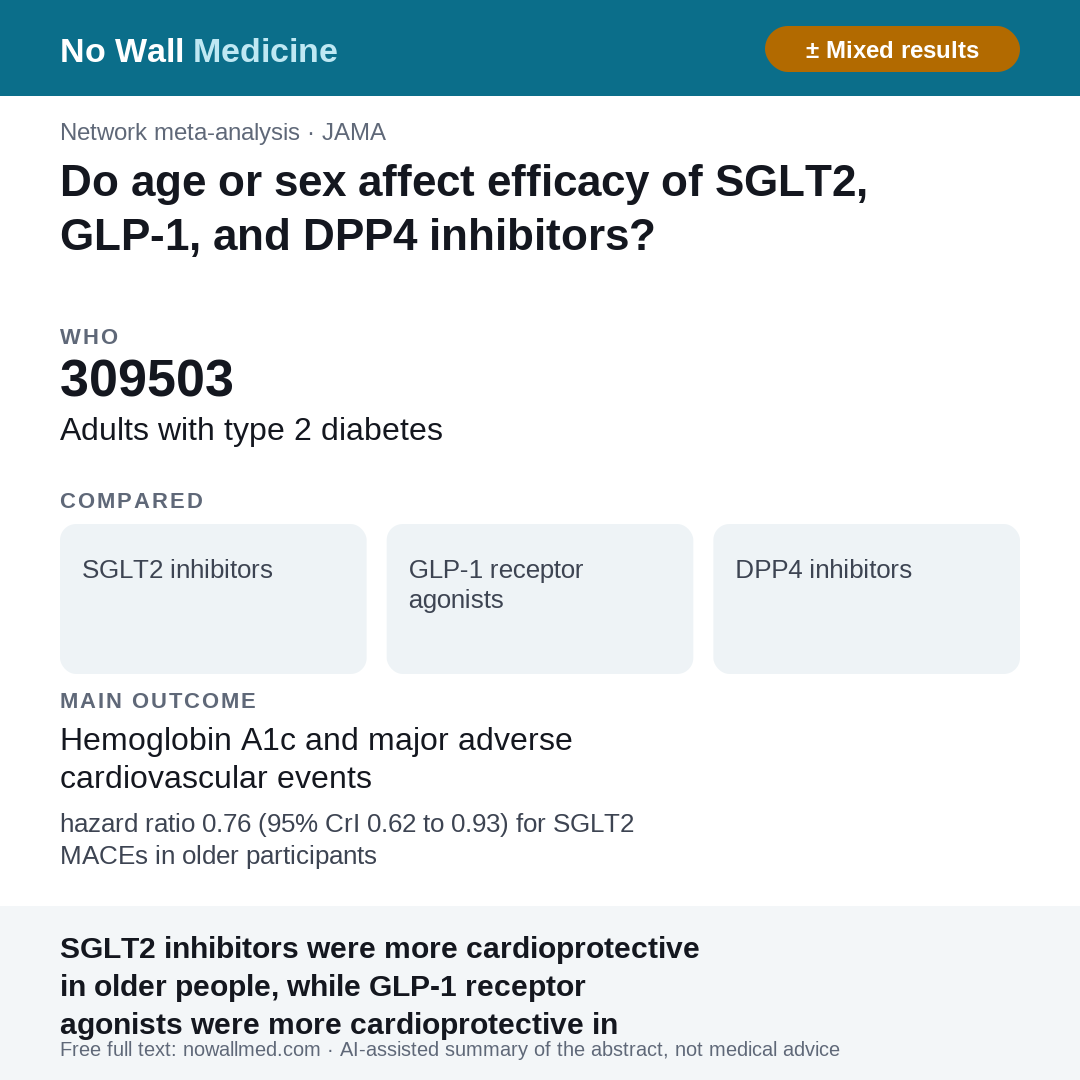
Age and Sex Differences in Efficacy of Treatments for Type 2 Diabetes: A Network Meta-Analysis
Network meta-analysisMixed results
Do age or sex affect efficacy of SGLT2, GLP-1, and DPP4 inhibitors?
Who
309503
Adults with type 2 diabetes
Compared
SGLT2 inhibitors
GLP-1 receptor agonists
DPP4 inhibitors
Main outcome
Hemoglobin A1c and major adverse cardiovascular events
Result: hazard ratio 0.76 (95% CrI 0.62 to 0.93) for SGLT2 MACEs in older participants
Bottom line: SGLT2 inhibitors were more cardioprotective in older people, while GLP-1 receptor agonists were more cardioprotective in younger people.
JAMA · 2025-02-03Download image
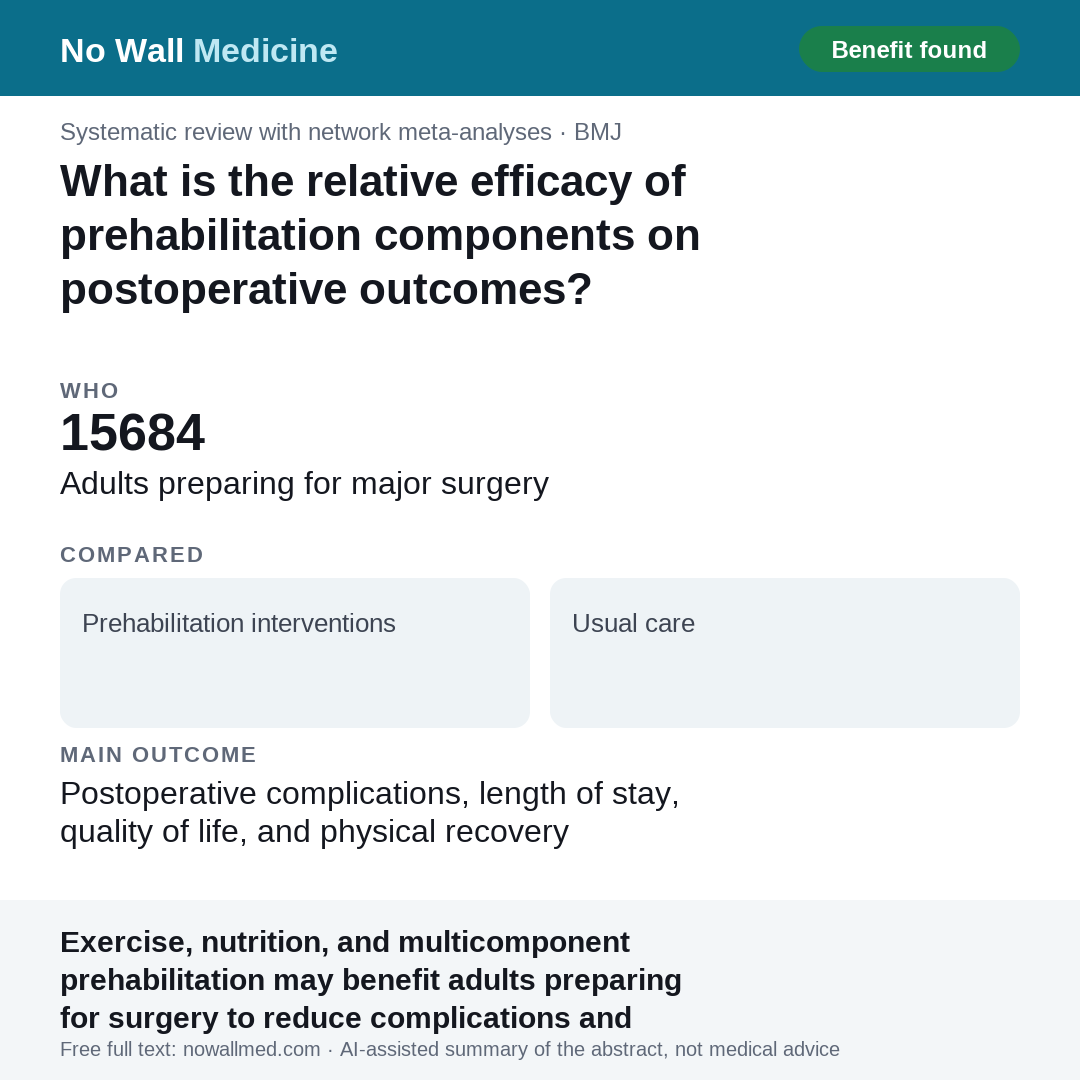
Relative efficacy of prehabilitation interventions and their components: systematic review with network and component network meta-analyses of randomised controlled trials
Systematic review with network meta-analysesBenefit found
What is the relative efficacy of prehabilitation components on postoperative outcomes?
Who
15684
Adults preparing for major surgery
Compared
Prehabilitation interventions
Usual care
Main outcome
Postoperative complications, length of stay, quality of life, and physical recovery
Result: isolated exercise odds ratio 0.50 (95% CI 0.39 to 0.64)
Bottom line: Exercise, nutrition, and multicomponent prehabilitation may benefit adults preparing for surgery to reduce complications and improve recovery.
Limitation: Certainty was low to very low due to trial level risk of bias and imprecision.
BMJ · 2025-01-22Download image
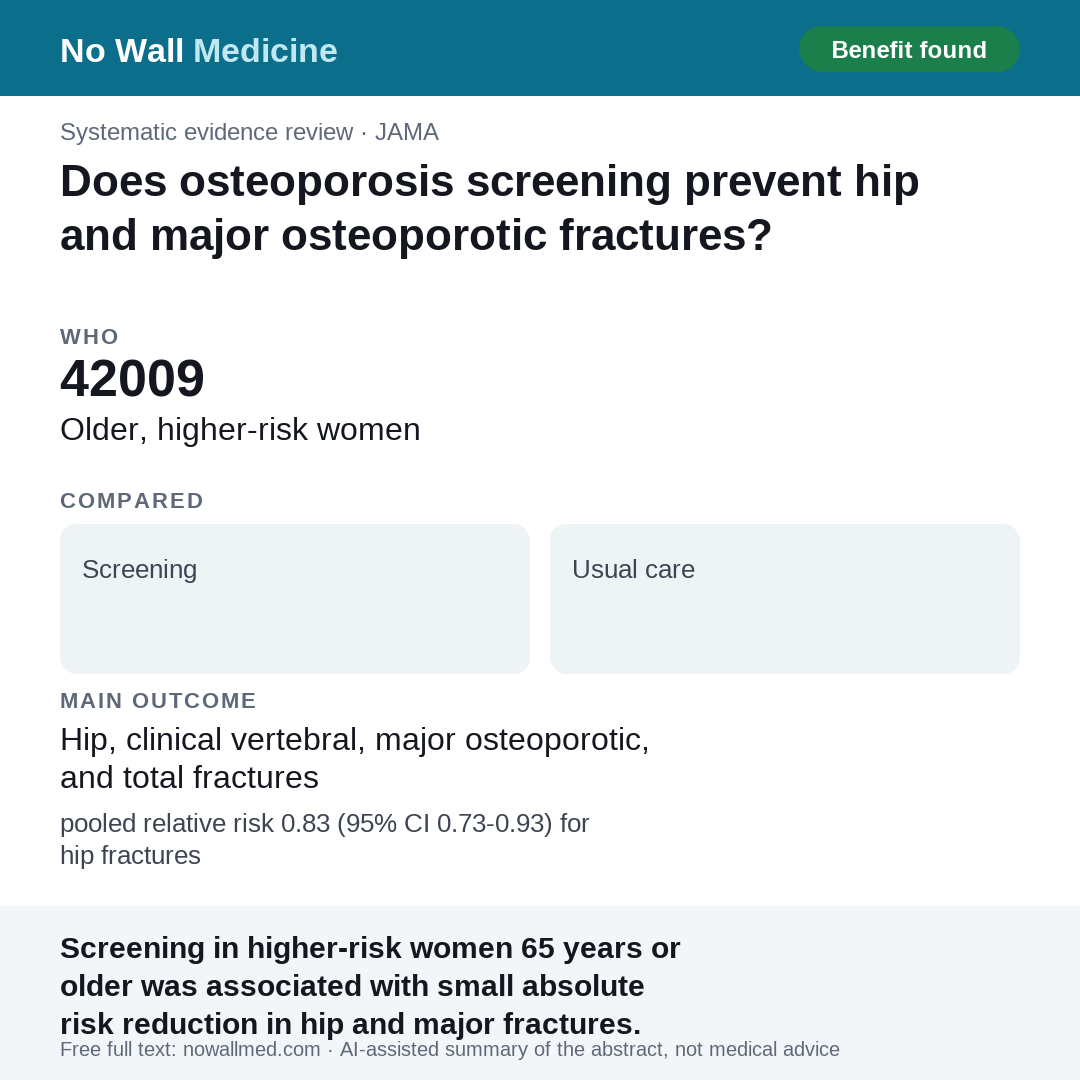
Screening for Osteoporosis to Prevent Fractures: A Systematic Evidence Review for the US Preventive Services Task Force
Systematic evidence reviewBenefit found
Does osteoporosis screening prevent hip and major osteoporotic fractures?
Who
42009
Older, higher-risk women
Compared
Screening
Usual care
Main outcome
Hip, clinical vertebral, major osteoporotic, and total fractures
Result: pooled relative risk 0.83 (95% CI 0.73-0.93) for hip fractures
Bottom line: Screening in higher-risk women 65 years or older was associated with small absolute risk reduction in hip and major fractures.
Limitation: No evidence evaluated screening with bone mineral density alone or screening in men or younger women.
JAMA · 2025-01-14Download image
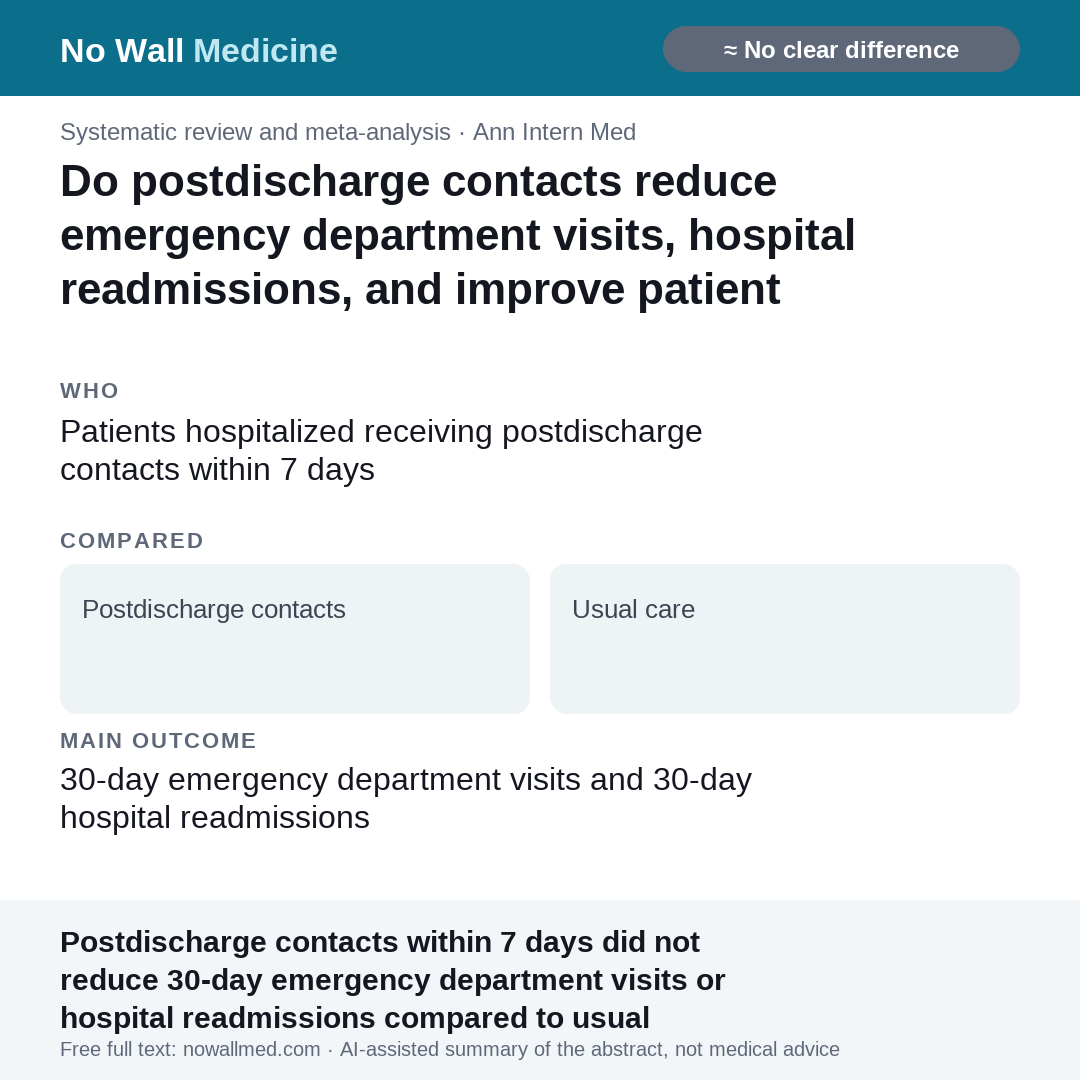
Effectiveness of Synchronous Postdischarge Contacts on Health Care Use and Patient Satisfaction : A Systematic Review and Meta-analysis
Systematic review and meta-analysisNo clear difference
Do postdischarge contacts reduce emergency department visits, hospital readmissions, and improve patient satisfaction?
Who
Patients hospitalized receiving postdischarge contacts within 7 days
Compared
Postdischarge contacts
Usual care
Main outcome
30-day emergency department visits and 30-day hospital readmissions
Result: risk difference 0.00 (95% CI -0.02 to 0.03) for emergency department visits; risk difference 0.00 (CI -0.02 to 0.02) for hospital readmissions
Bottom line: Postdischarge contacts within 7 days did not reduce 30-day emergency department visits or hospital readmissions compared to usual care.
Limitation: Adherence and fidelity to postdischarge contact interventions were poorly described.
Funded by: Department of Veterans Affairs
Ann Intern Med · 2025-01-14Download image
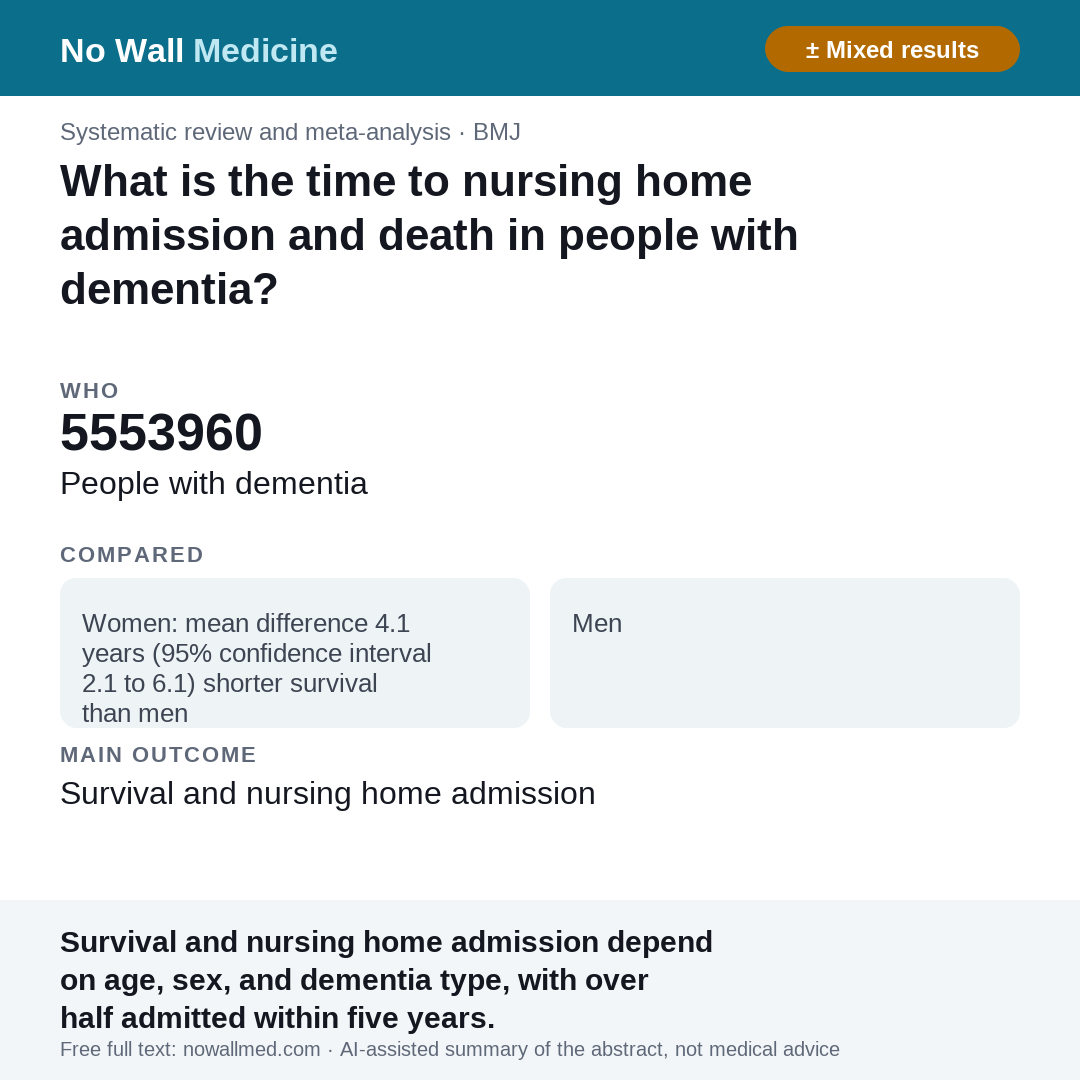
Time to nursing home admission and death in people with dementia: systematic review and meta-analysis
Systematic review and meta-analysisMixed results
What is the time to nursing home admission and death in people with dementia?
Who
5553960
People with dementia
Compared
Women: mean difference 4.1 years (95% confidence interval 2.1 to 6.1) shorter survival than men
Men
Main outcome
Survival and nursing home admission
Bottom line: Survival and nursing home admission depend on age, sex, and dementia type, with over half admitted within five years.
BMJ · 2025-01-08Download image
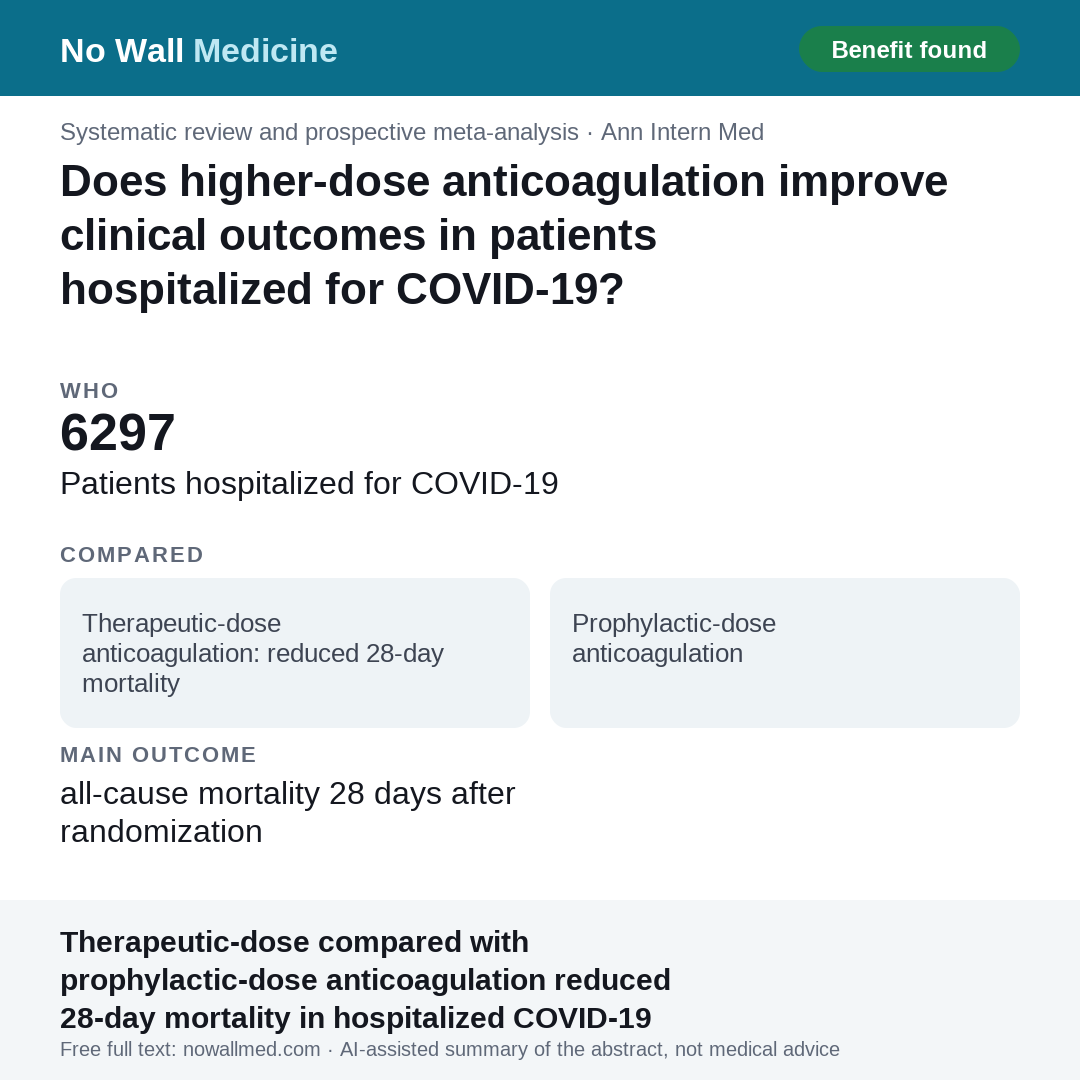
Anticoagulation Among Patients Hospitalized for COVID-19 : A Systematic Review and Prospective Meta-analysis
Systematic review and prospective meta-analysisBenefit found
Does higher-dose anticoagulation improve clinical outcomes in patients hospitalized for COVID-19?
Who
6297
Patients hospitalized for COVID-19
Compared
Therapeutic-dose anticoagulation: reduced 28-day mortality
Prophylactic-dose anticoagulation
Main outcome
all-cause mortality 28 days after randomization
Result: OR, 0.77 (95% CI, 0.64 to 0.93)
Bottom line: Therapeutic-dose compared with prophylactic-dose anticoagulation reduced 28-day mortality in hospitalized COVID-19 patients.
Limitation: some analyses were limited in power
Ann Intern Med · 2024-12-24Download image
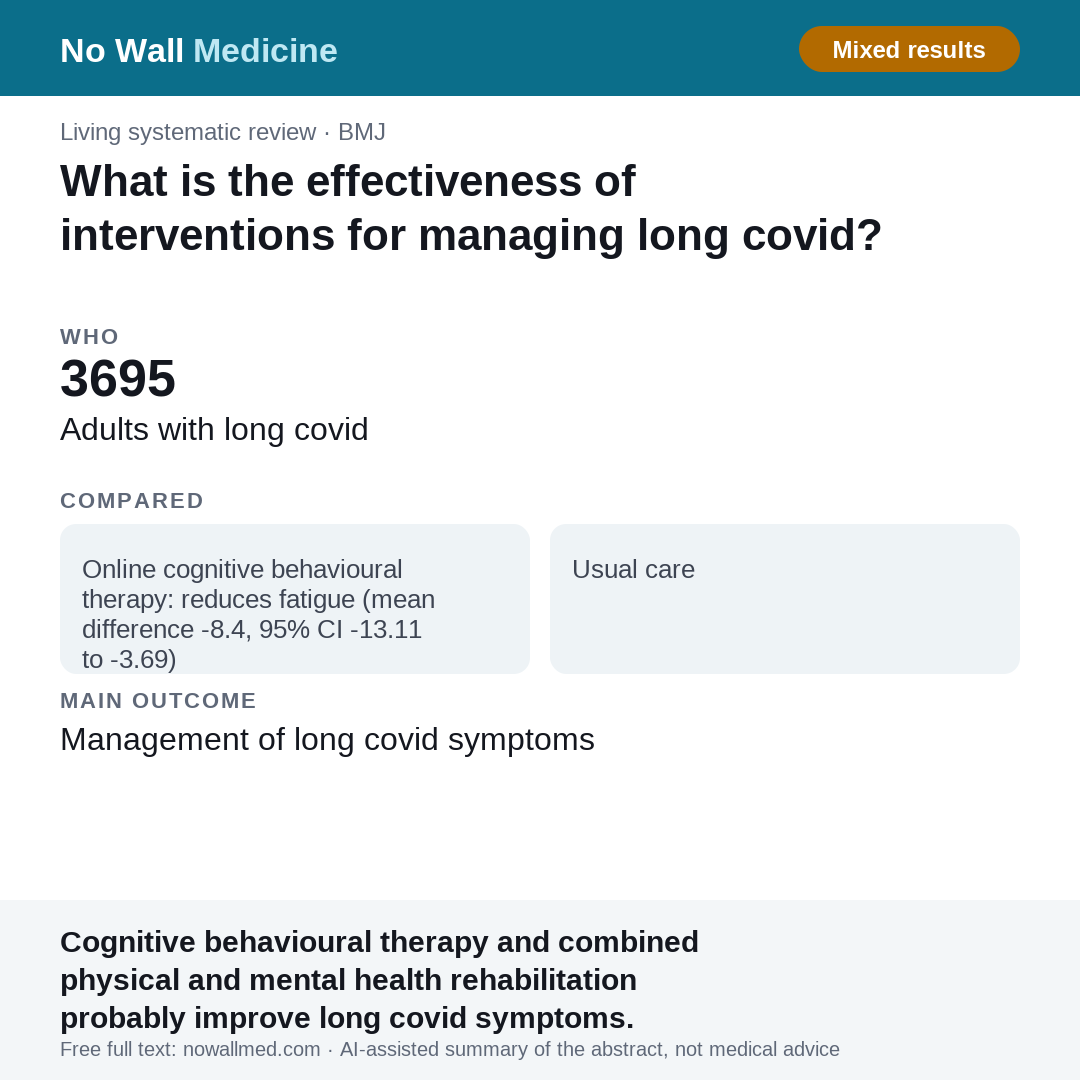
Interventions for the management of long covid (post-covid condition): living systematic review
Living systematic reviewMixed results
What is the effectiveness of interventions for managing long covid?
Who
3695
Adults with long covid
Compared
Online cognitive behavioural therapy: reduces fatigue (mean difference -8.4, 95% CI -13.11 to -3.69)
Usual care
Main outcome
Management of long covid symptoms
Bottom line: Cognitive behavioural therapy and combined physical and mental health rehabilitation probably improve long covid symptoms.
BMJ · 2024-11-27Download image
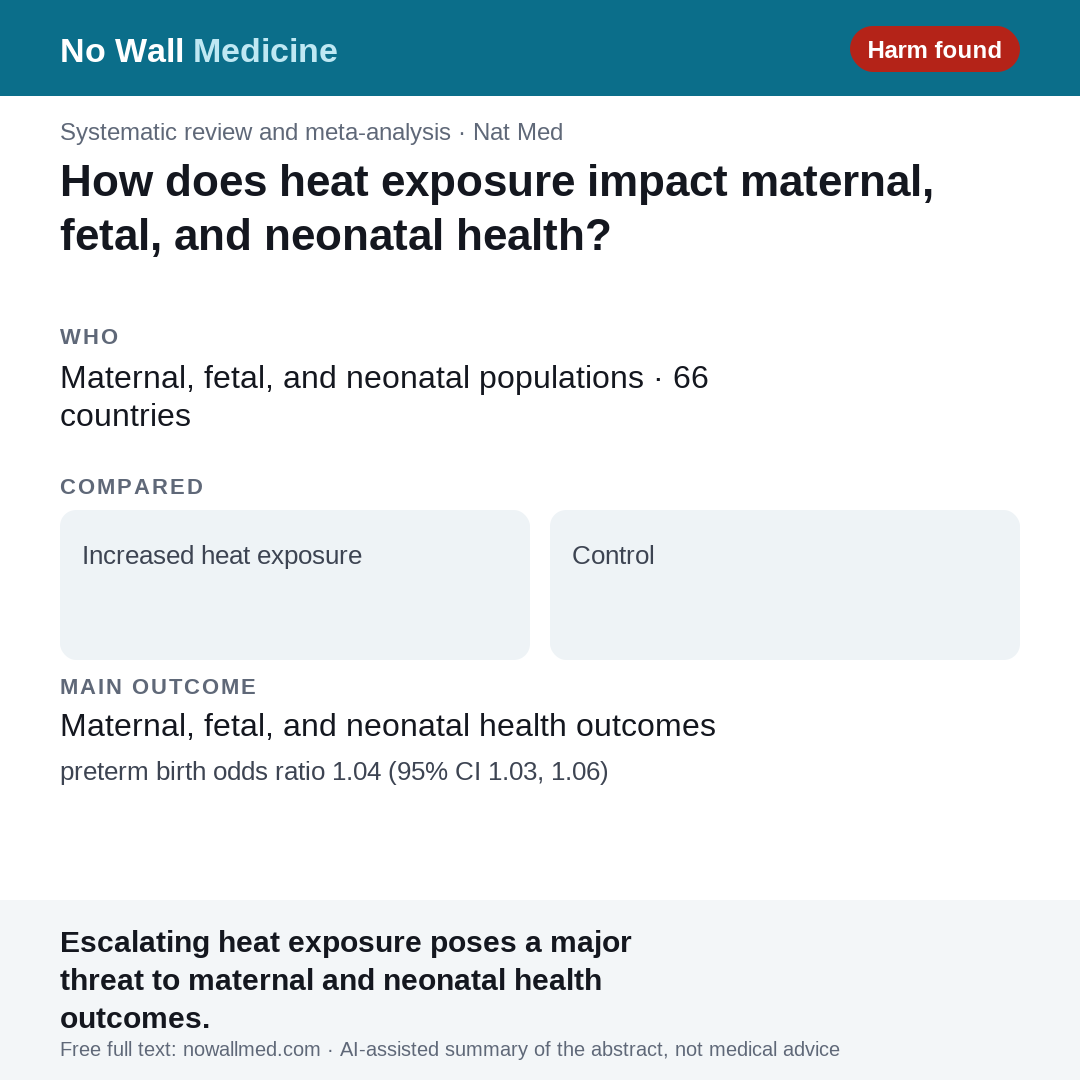
A systematic review and meta-analysis of heat exposure impacts on maternal, fetal and neonatal health
Systematic review and meta-analysisHarm found
How does heat exposure impact maternal, fetal, and neonatal health?
Who
Maternal, fetal, and neonatal populations · 66 countries
Compared
Increased heat exposure
Control
Main outcome
Maternal, fetal, and neonatal health outcomes
Result: preterm birth odds ratio 1.04 (95% CI 1.03, 1.06)
Bottom line: Escalating heat exposure poses a major threat to maternal and neonatal health outcomes.
Limitation: Heterogeneity in exposure metrics and study designs.
Nat Med · 2024-11-05Download image
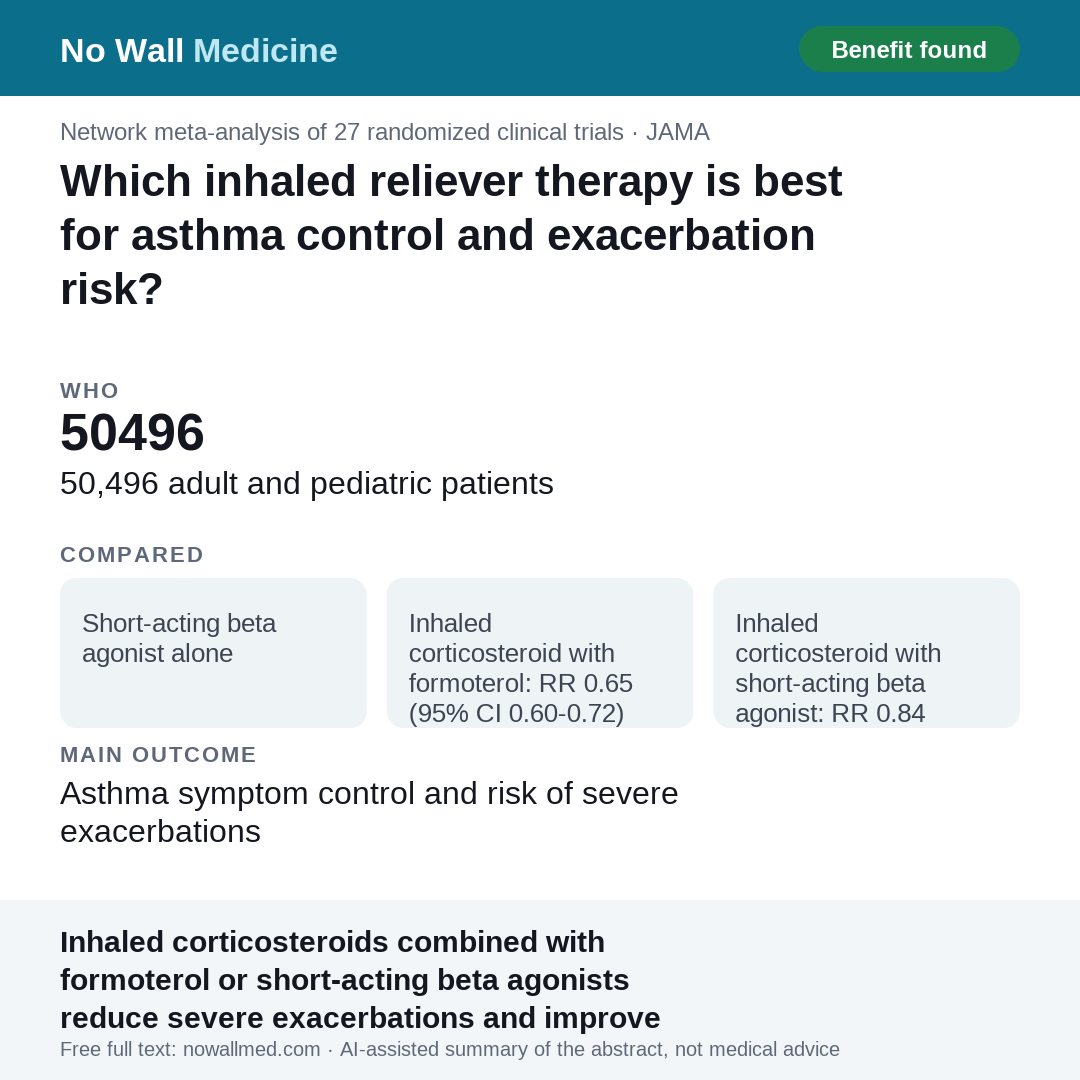
Inhaled Reliever Therapies for Asthma: A Systematic Review and Meta-Analysis
Network meta-analysis of 27 randomized clinical trialsBenefit found
Which inhaled reliever therapy is best for asthma control and exacerbation risk?
Who
50496
50,496 adult and pediatric patients
Compared
Short-acting beta agonist alone
Inhaled corticosteroid with formoterol: RR 0.65 (95% CI 0.60-0.72) for severe exacerbations
Inhaled corticosteroid with short-acting beta agonist: RR 0.84 (95% CI 0.73-0.95) for severe exacerbations
Main outcome
Asthma symptom control and risk of severe exacerbations
Result: ICS-formoterol RR 0.65 (95% CI 0.60-0.72) for severe exacerbations
Bottom line: Inhaled corticosteroids combined with formoterol or short-acting beta agonists reduce severe exacerbations and improve asthma control compared to short-acting beta agonists alone.
JAMA · 2024-10-28Download image