Visual abstracts
New randomized trials and meta-analyses from leading journals at a glance: who was studied, what was compared, and what was found. Every paper is free to read in full.
All specialtiesCardiology 4763Oncology 4042Gastroenterology & Hepatology 1902Infectious Disease 3756Neurology 1872Psychiatry & Mental Health 2214Pulmonology 2042Critical Care 1319Endocrinology & Diabetes 2544Pediatrics 2889Surgery 2479Orthopedics & Sports Medicine 917Neurosurgery 525Cardiothoracic & Vascular Surgery 656Plastic & Reconstructive Surgery 574Nephrology 1107Rheumatology 810Hematology 1090Dermatology 611Ophthalmology 532Obstetrics & Gynecology 1645Public & Global Health 1037Radiology & Imaging 617Anesthesiology 957Urology 745ENT (Otolaryngology) 494Emergency Medicine 481Allergy & Immunology 309Geriatrics 972Family Medicine & Primary Care 533Medical Genetics & Genomics 659Pathology & Laboratory Medicine 156Physical Medicine & Rehabilitation 734Palliative Care 421Nutrition 1560Digital Health & AI 2133General Medicine 318
Impact of exposure to opioids in pregnancy on offspring developmental outcomes in the preschool years: an umbrella review
Umbrella reviewMixed results
Does prenatal opioid exposure affect offspring developmental outcomes in the preschool years?
Who
Children exposed to opioids in pregnancy up to age 5
Compared
Prenatal opioid exposure: associated with visual function, motor skills, externalising problems and language difficulties
No conclusive evidence: cognitive development or internalising symptoms
Main outcome
Preschool developmental outcomes
Bottom line: Prenatal opioid exposure is associated with several developmental issues, but the evidence remains weak.
Limitation: Poor quality research in original studies, small sample sizes, and lack of controlling for confounding.
BMJ Paediatr Open · 2025-01-09Download image

Efficacy and safety of non-pharmacological, pharmacological and surgical treatments for hand osteoarthritis in 2024: a systematic review
Systematic review of randomized controlled trialsMixed results
What are the efficacy and safety of treatments for hand osteoarthritis?
Who
Patients with hand osteoarthritis
Compared
Non-pharmacological interventions
Pharmacological interventions
Surgical treatments
Main outcome
Pain, function, grip strength, and OMERACT/OARSI responders
Bottom line: Current treatments show limited evidence and lack interventions that efficiently improve grip strength.
Limitation: Evidence for most current treatments is still limited.
RMD Open · 2025-01-09Download image

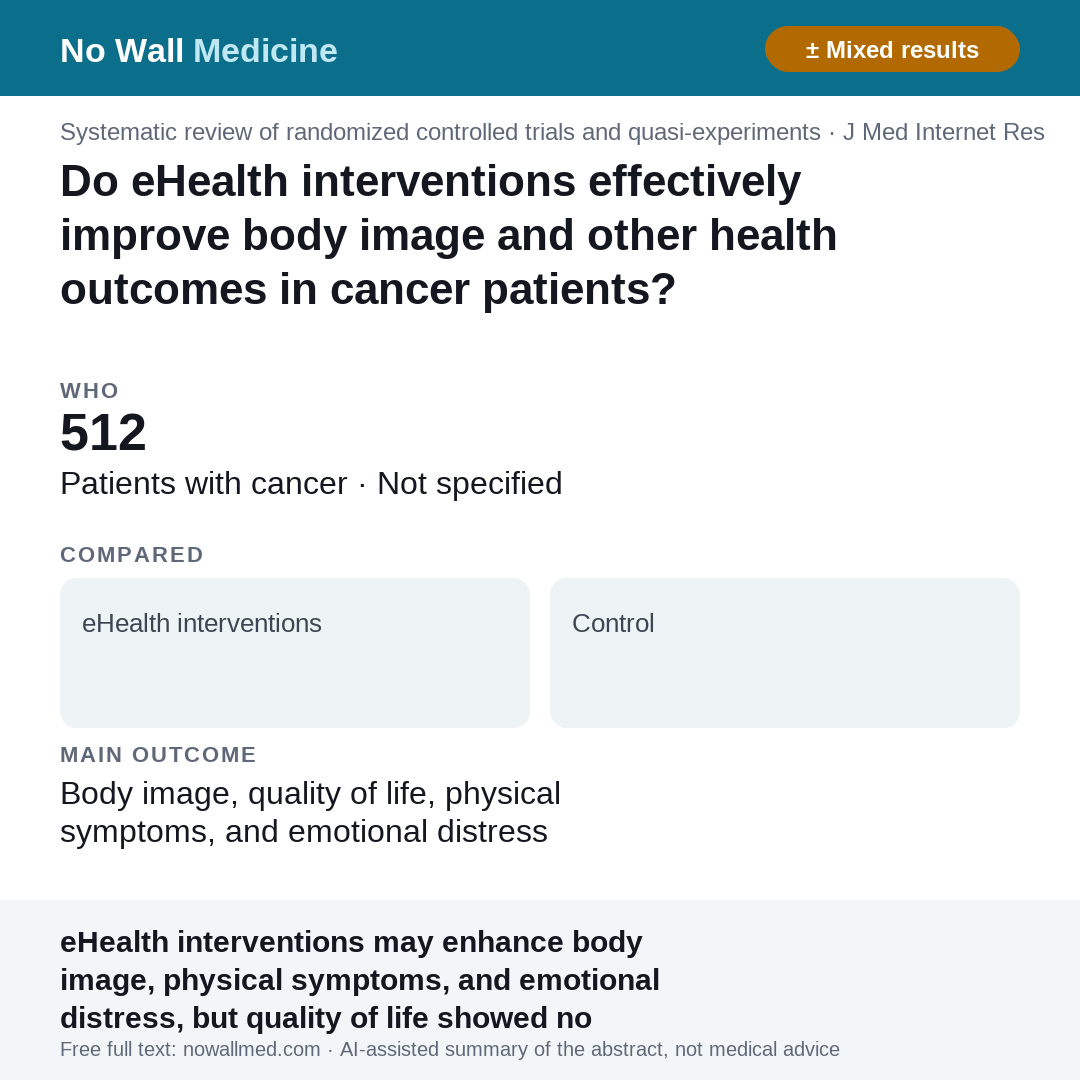
Effect of eHealth Interventions on Body Image of Patients With Cancer: Systematic Review
Systematic review of randomized controlled trials and quasi-experimentsMixed results
Do eHealth interventions effectively improve body image and other health outcomes in cancer patients?
Who
512
Patients with cancer · Not specified
Compared
eHealth interventions
Control
Main outcome
Body image, quality of life, physical symptoms, and emotional distress
Bottom line: eHealth interventions may enhance body image, physical symptoms, and emotional distress, but quality of life showed no notable enhancement.
Limitation: More rigorous experiments are needed to elucidate effectiveness and address challenges.
J Med Internet Res · 2025-01-09Download image
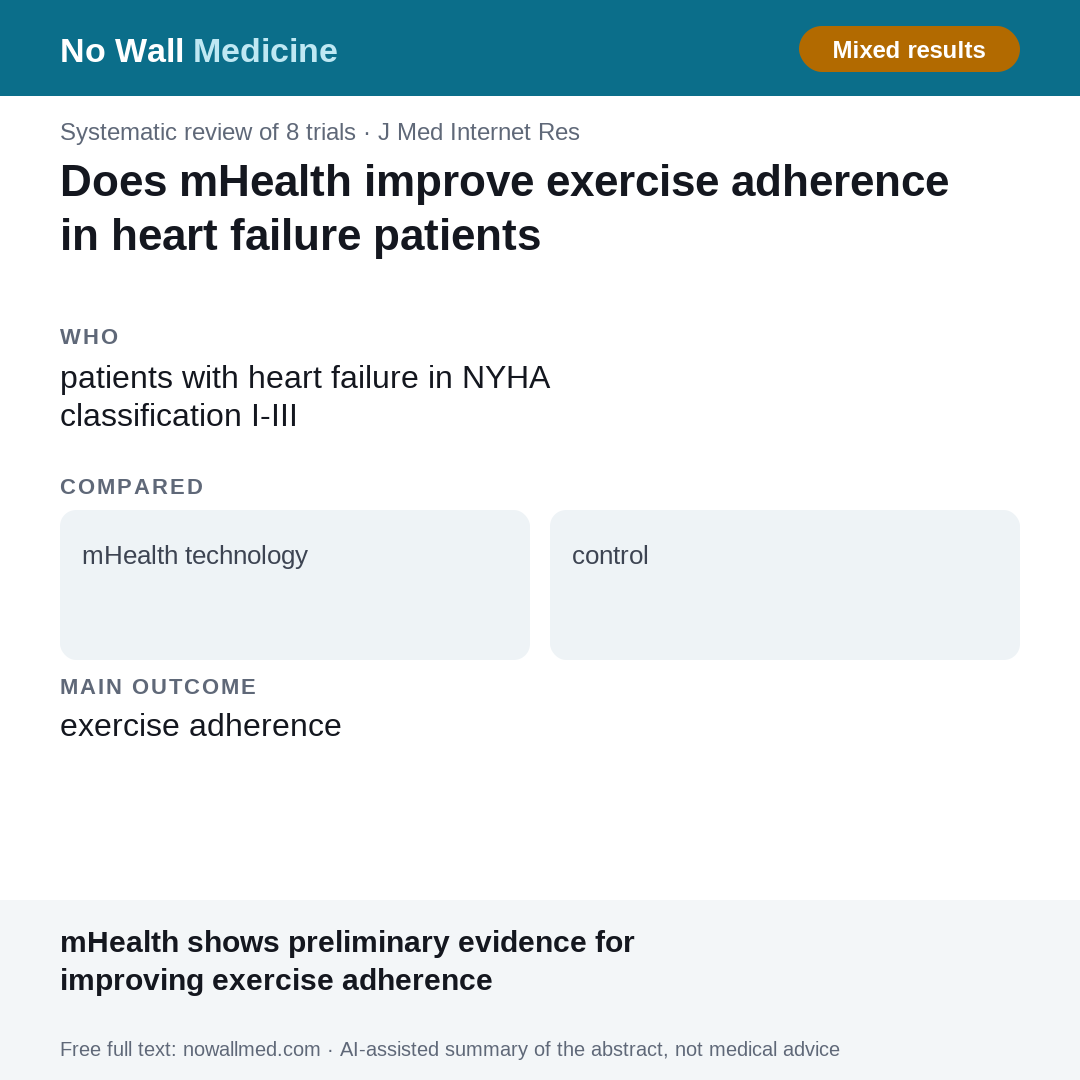
Use of mHealth Technology for Improving Exercise Adherence in Patients With Heart Failure: Systematic Review
Systematic review of 8 trialsMixed results
Does mHealth improve exercise adherence in heart failure patients
Who
patients with heart failure in NYHA classification I-III
Compared
mHealth technology
control
Main outcome
exercise adherence
Bottom line: mHealth shows preliminary evidence for improving exercise adherence
Limitation: theoretically sound and fully powered studies lacking
J Med Internet Res · 2025-01-09Download image
Effectiveness of Integrated Digital Solutions to Empower Older Adults in Aspects Related to Their Health: Systematic Review and Meta-Analysis
Systematic review and meta-analysisBenefit, low certainty
Are integrated digital solutions effective for empowering older adults in health-related aspects?
Who
Older adults
Compared
Digital intervention
Usual care
Main outcome
Empowerment domains including knowledge, capacities, social support, and behaviors
Result: knowledge ES=0.40 (95% CI 0.07-0.73); capacities d=0.29 (95% CI 0.07-0.52)
Bottom line: Digital solutions may increase knowledge and capacities in older adults, though certainty of evidence remains very low to low.
J Med Internet Res · 2025-01-09Download image

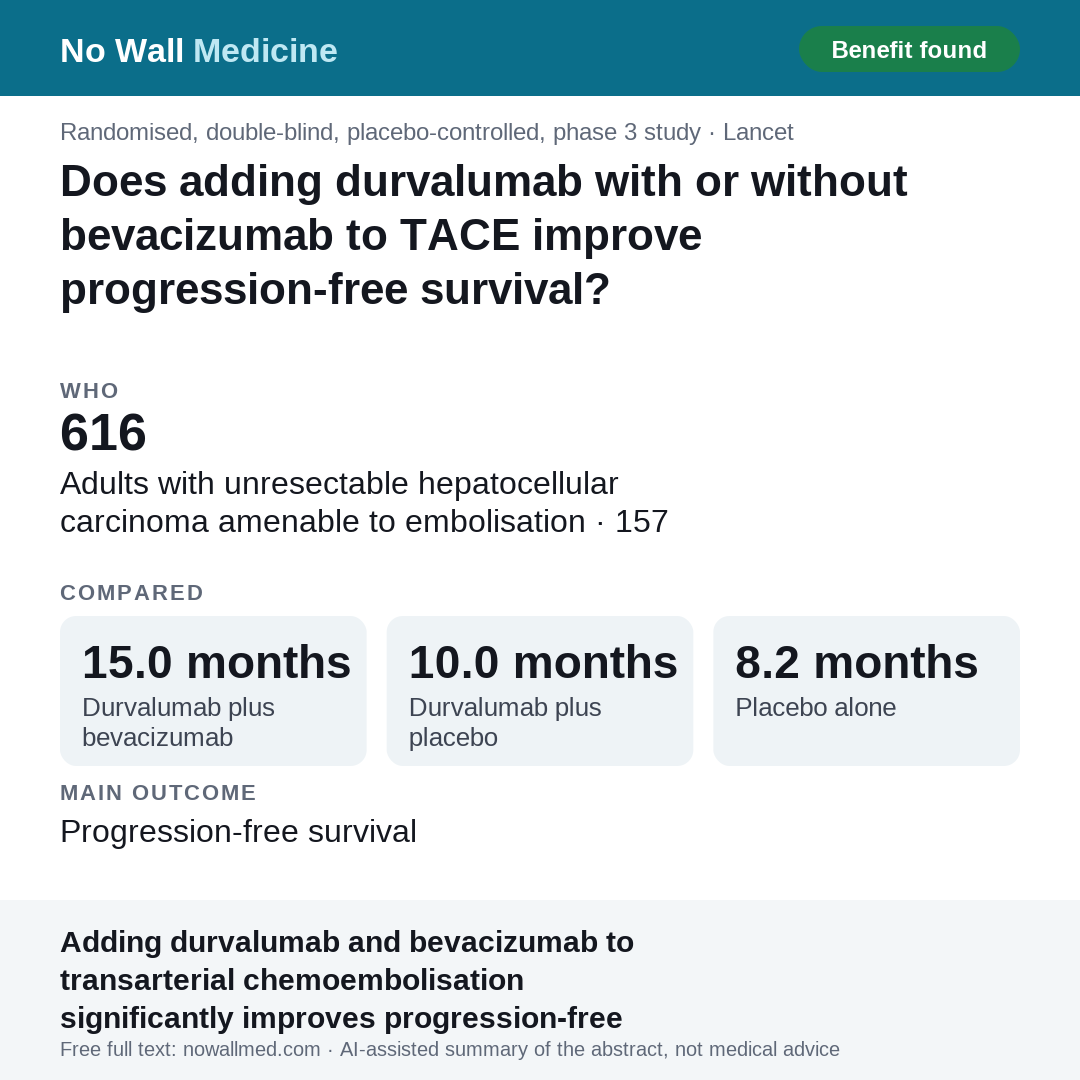
Durvalumab with or without bevacizumab with transarterial chemoembolisation in hepatocellular carcinoma (EMERALD-1): a multiregional, randomised, double-blind, placebo-controlled, phase 3 study
Randomised, double-blind, placebo-controlled, phase 3 studyBenefit found
Does adding durvalumab with or without bevacizumab to TACE improve progression-free survival?
Who
616
Adults with unresectable hepatocellular carcinoma amenable to embolisation · 157 medical sites in 18 countries
Compared
15.0 monthsDurvalumab plus bevacizumab (95% CI 11.1-18.9)
10.0 monthsDurvalumab plus placebo (9.0-12.7)
8.2 monthsPlacebo alone (6.9-11.1)
Main outcome
Progression-free survival
Result: hazard ratio 0.77 (95% CI 0.61-0.98)
Bottom line: Adding durvalumab and bevacizumab to transarterial chemoembolisation significantly improves progression-free survival in patients with unresectable hepatocellular carcinoma.
Lancet · 2025-01-08Download image
Time to nursing home admission and death in people with dementia: systematic review and meta-analysis
Systematic review and meta-analysisMixed results
What is the time to nursing home admission and death in people with dementia?
Who
5553960
People with dementia
Compared
Women: mean difference 4.1 years (95% confidence interval 2.1 to 6.1) shorter survival than men
Men
Main outcome
Survival and nursing home admission
Bottom line: Survival and nursing home admission depend on age, sex, and dementia type, with over half admitted within five years.
BMJ · 2025-01-08Download image

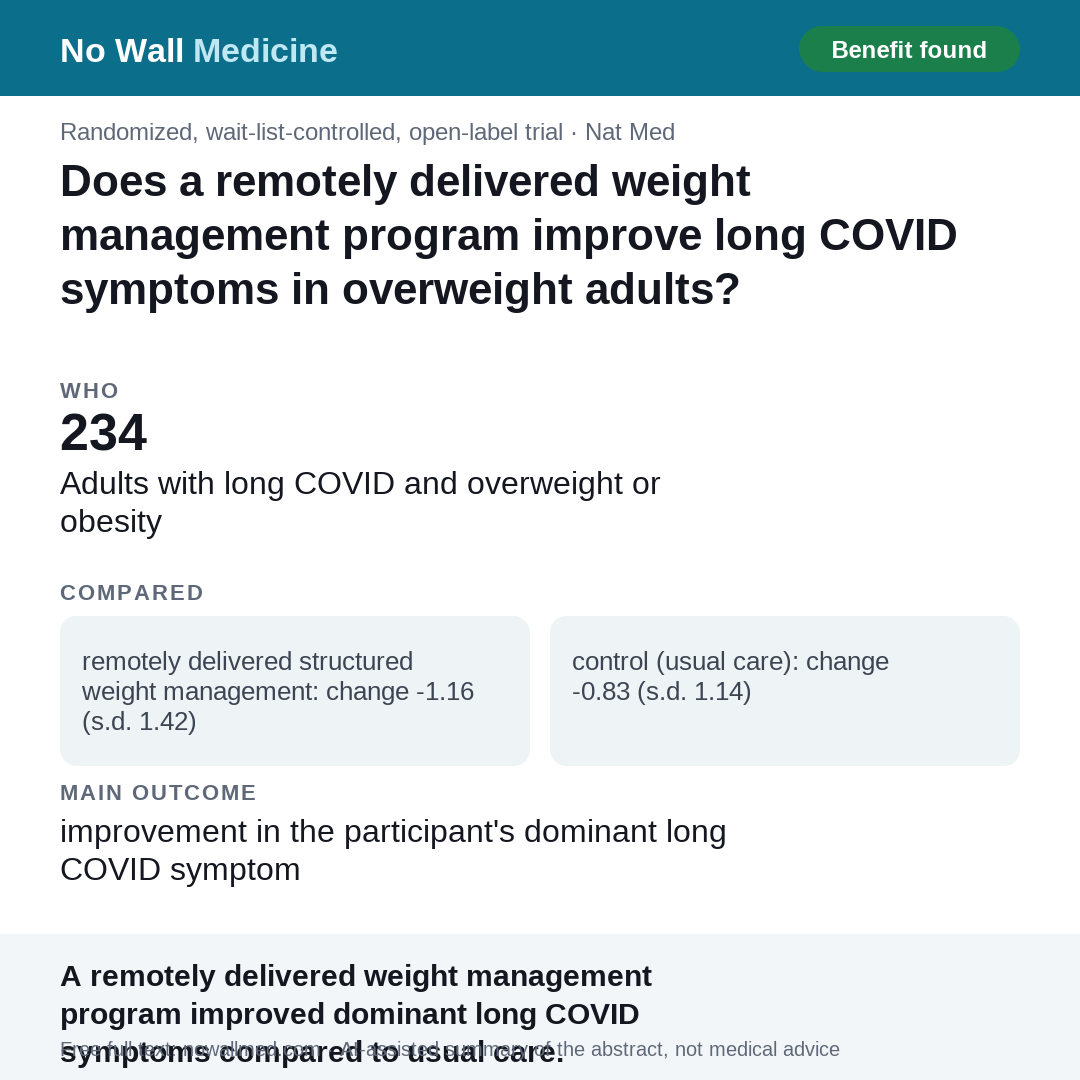
Remotely delivered weight management for people with long COVID and overweight: the randomized wait-list-controlled ReDIRECT trial
Randomized, wait-list-controlled, open-label trialBenefit found
Does a remotely delivered weight management program improve long COVID symptoms in overweight adults?
Who
234
Adults with long COVID and overweight or obesity
Compared
remotely delivered structured weight management: change -1.16 (s.d. 1.42)
control (usual care): change -0.83 (s.d. 1.14)
Main outcome
improvement in the participant's dominant long COVID symptom
Result: -0.34 (95% confidence interval -0.67 to -0.01)
Bottom line: A remotely delivered weight management program improved dominant long COVID symptoms compared to usual care.
Nat Med · 2025-01-08Download image
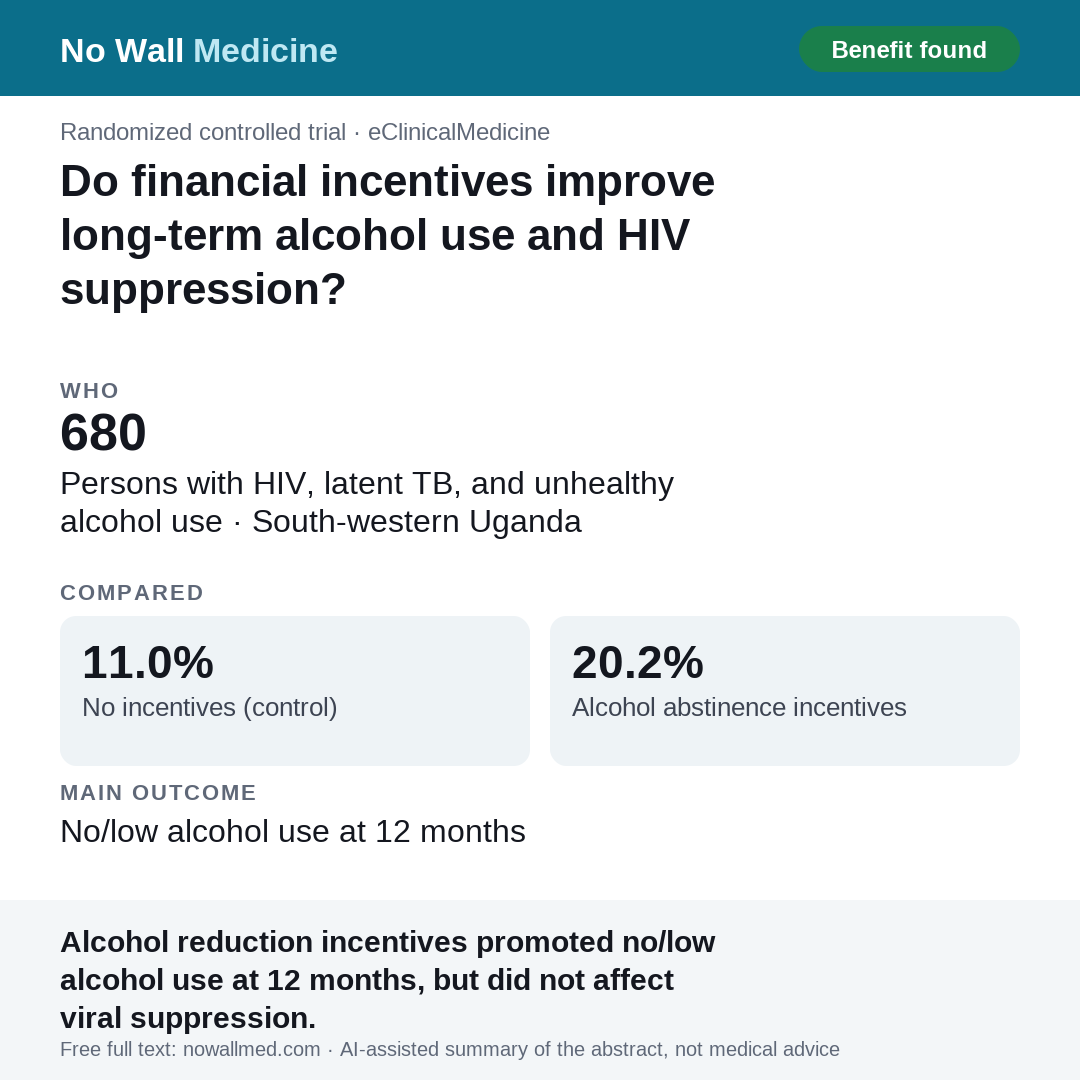
Alcohol use and HIV suppression after completion of financial incentives for alcohol abstinence and isoniazid adherence: a randomized controlled trial
Randomized controlled trialBenefit found
Do financial incentives improve long-term alcohol use and HIV suppression?
Who
680
Persons with HIV, latent TB, and unhealthy alcohol use · South-western Uganda
Compared
11.0%No incentives (control) (33/300)
20.2%Alcohol abstinence incentives (64/317)
Main outcome
No/low alcohol use at 12 months
Result: adjusted risk difference 8.4% (95% CI: 3.3-13.4)
Bottom line: Alcohol reduction incentives promoted no/low alcohol use at 12 months, but did not affect viral suppression.
Funded by: National Institutes of Health (NIH/NIAAA)
eClinicalMedicine · 2025-01-08Download image
Preoperative and intraoperative neuromonitoring and mapping techniques impact oncological and functional outcomes in supratentorial function-eloquent brain tumours: a systematic review and meta-analysis
Systematic review and meta-analysis of 19 studiesMixed results
Do mapping techniques affect resection and deficits in eloquent brain tumours?
Who
992
Patients undergoing surgery for supratentorial function-eloquent brain tumours
Compared
49.13%Combined preoperative and intraoperative
41.23%Intraoperative neuromonitoring and mapping
Main outcome
Gross total resection rates
Bottom line: Combined techniques were linked to higher resection in language-eloquent tumours, but intraoperative alone had more permanent deficits.
eClinicalMedicine · 2025-01-08Download image

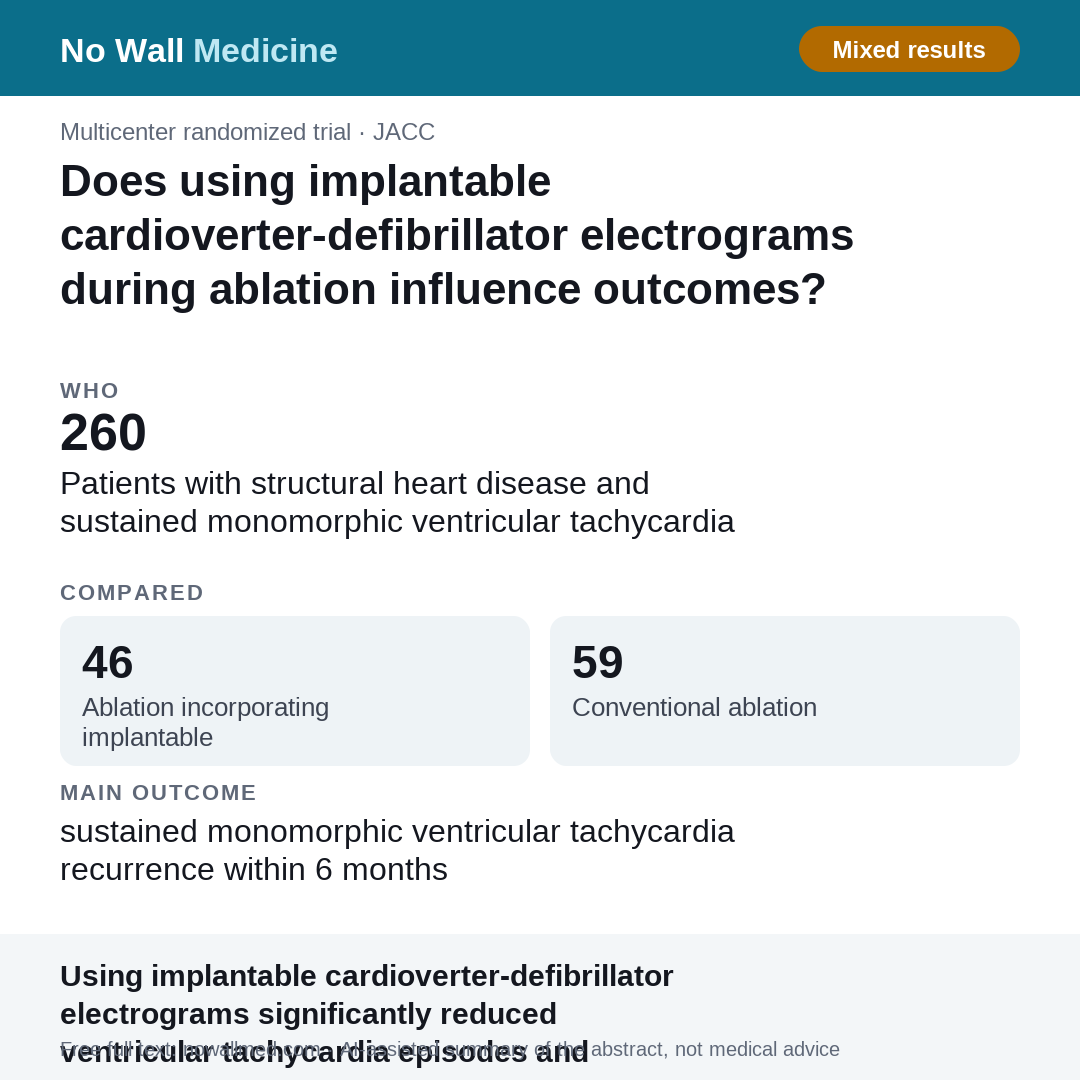
Can ICD Electrograms Help Ventricular Tachycardia Ablation?: Results From the Multicenter Randomized AIDEG-VTA Trial
Multicenter randomized trialMixed results
Does using implantable cardioverter-defibrillator electrograms during ablation influence outcomes?
Who
260
Patients with structural heart disease and sustained monomorphic ventricular tachycardia · 15 centers
Compared
46Ablation incorporating implantable cardioverter-defibrillator electrogram data (36%)
59Conventional ablation (46%)
Main outcome
sustained monomorphic ventricular tachycardia recurrence within 6 months
Result: hazard ratio 0.73 (95% CI 0.49-1.07)
Bottom line: Using implantable cardioverter-defibrillator electrograms significantly reduced ventricular tachycardia episodes and electrical storm but did not significantly decrease recurrence.
JACC · 2025-01-08Download image
The Nonsyndromic Ascending Thoracic Aorta in a Population-Based Setting: A 5-Year Prospective Cohort Study
Prospective cohort studyMixed results
What are the growth rates and adverse aortic event occurrences in nonsyndromic ascending aortas?
Who
14962
Nonsyndromic individuals without connective tissue disorders or bicuspid aortic valves · Denmark, multicenter
Compared
Men: 0.07 ± 0.5 mm/year
Women: 0.13 ± 0.3 mm/year
Main outcome
Ascending aorta growth rates and adverse aortic events
Result: hazard ratio 1.24 (95% CI 1.16-1.33) per 1-mm increase
Bottom line: Aortic growth is slow, but adverse events occur even in diameters below 50.0 mm.
JACC · 2025-01-08Download image

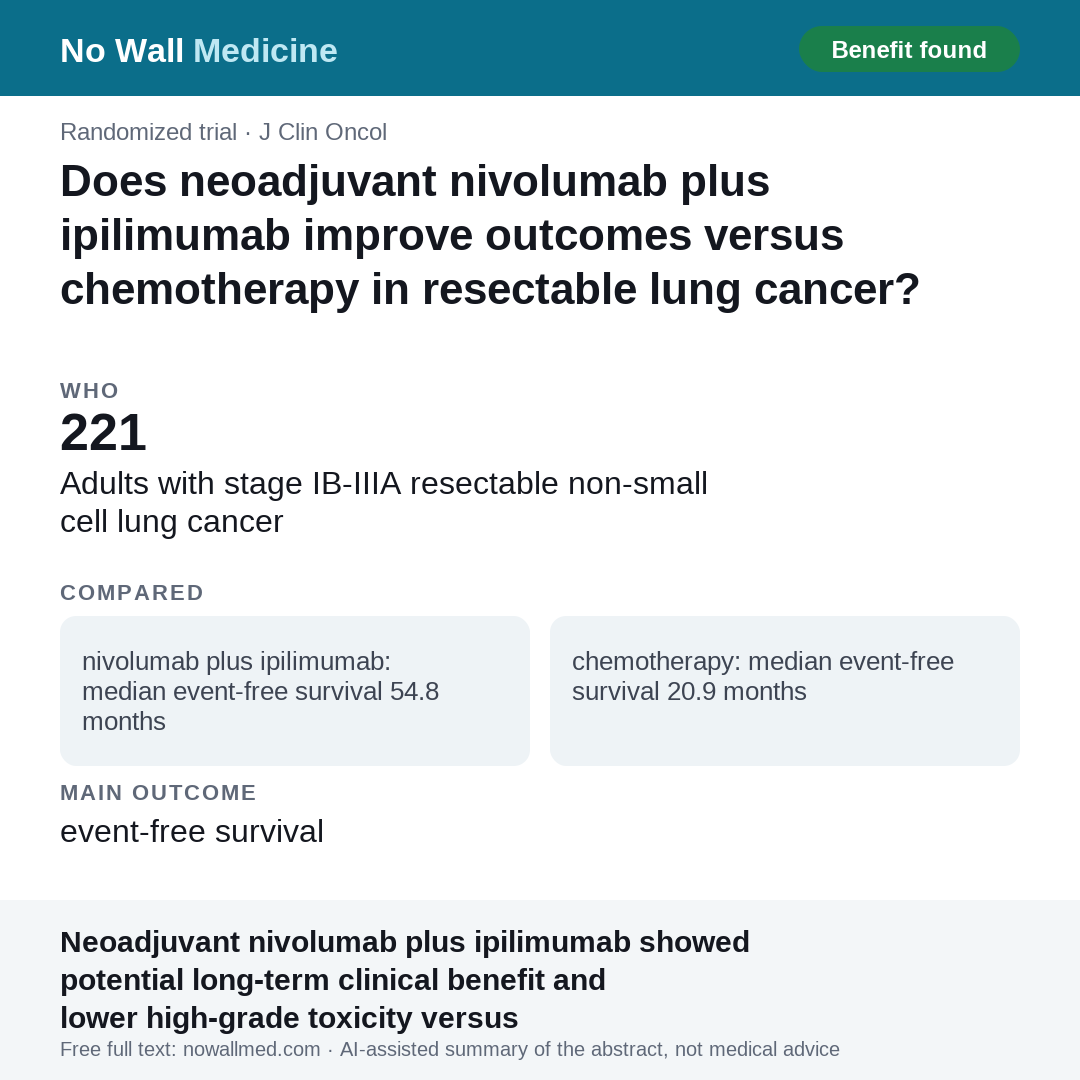
Neoadjuvant Nivolumab Plus Ipilimumab Versus Chemotherapy in Resectable Lung Cancer
Randomized trialBenefit found
Does neoadjuvant nivolumab plus ipilimumab improve outcomes versus chemotherapy in resectable lung cancer?
Who
221
Adults with stage IB-IIIA resectable non-small cell lung cancer
Compared
nivolumab plus ipilimumab: median event-free survival 54.8 months
chemotherapy: median event-free survival 20.9 months
Main outcome
event-free survival
Result: hazard ratio 0.77 (95% CI 0.51 to 1.15)
Bottom line: Neoadjuvant nivolumab plus ipilimumab showed potential long-term clinical benefit and lower high-grade toxicity versus chemotherapy.
Limitation: early crossing of event-free survival curves in the preoperative phase
J Clin Oncol · 2025-01-08Download image
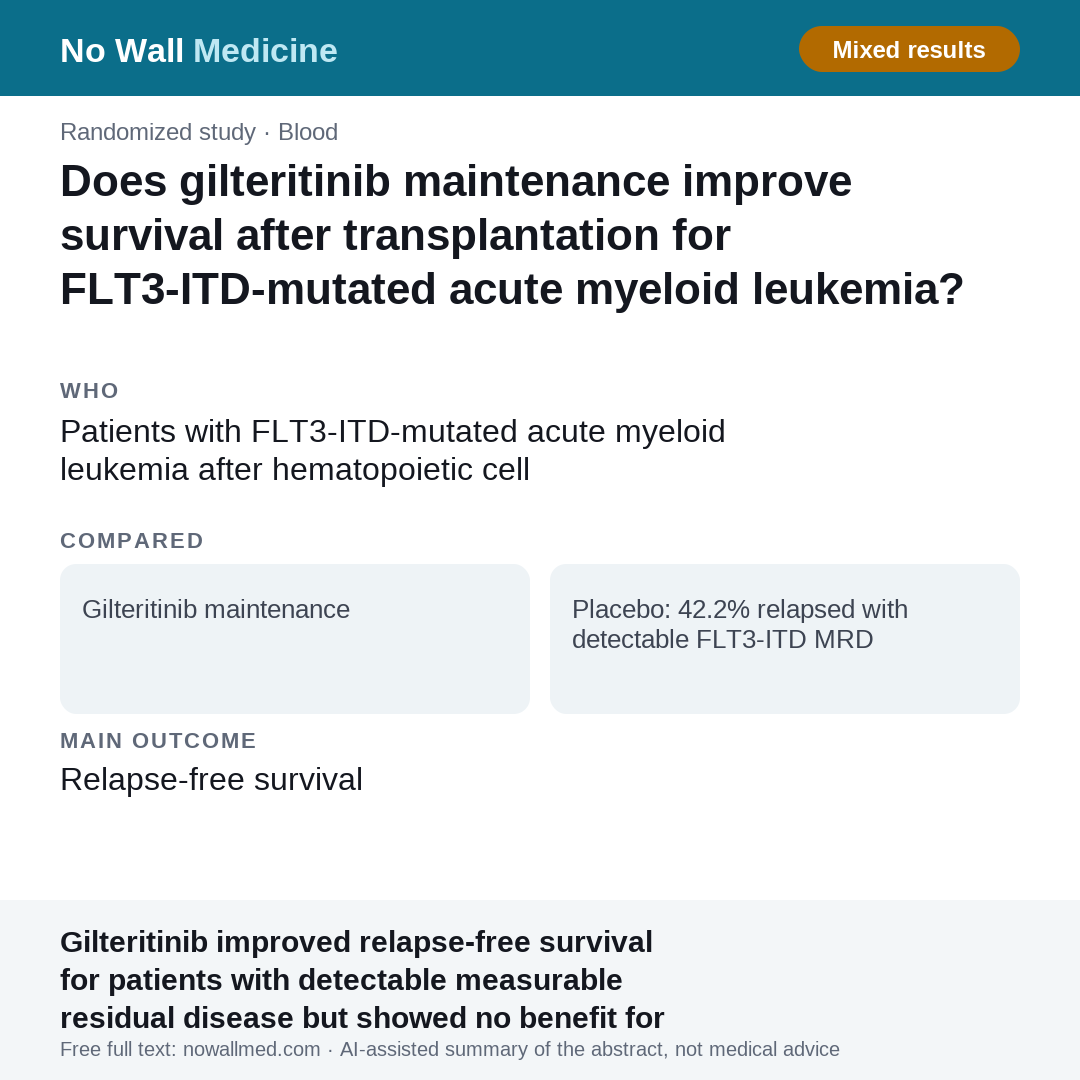
Measurable residual disease and posttransplantation gilteritinib maintenance for patients with FLT3-ITD-mutated AML
Randomized studyMixed results
Does gilteritinib maintenance improve survival after transplantation for FLT3-ITD-mutated acute myeloid leukemia?
Who
Patients with FLT3-ITD-mutated acute myeloid leukemia after hematopoietic cell transplantation · Blood and Marrow Transplant Clinical Trials Network
Compared
Gilteritinib maintenance
Placebo: 42.2% relapsed with detectable FLT3-ITD MRD
Main outcome
Relapse-free survival
Bottom line: Gilteritinib improved relapse-free survival for patients with detectable measurable residual disease but showed no benefit for those without.
Blood · 2025-01-08Download image
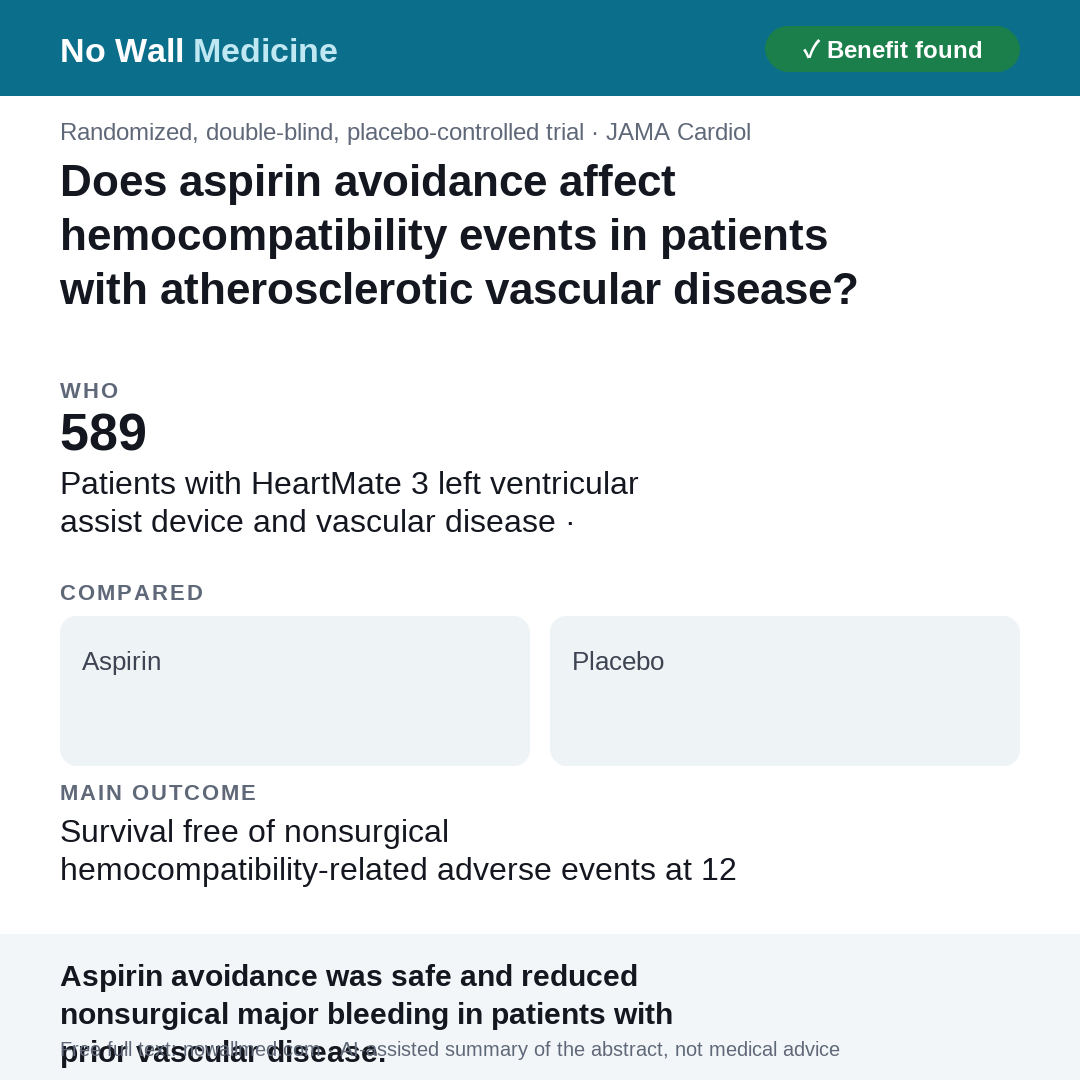
Aspirin and Hemocompatibility After LVAD Implantation in Patients With Atherosclerotic Vascular Disease: A Secondary Analysis From the ARIES-HM3 Randomized Clinical Trial
Randomized, double-blind, placebo-controlled trialBenefit found
Does aspirin avoidance affect hemocompatibility events in patients with atherosclerotic vascular disease?
Who
589
Patients with HeartMate 3 left ventricular assist device and vascular disease · International, multicenter, 51 centers
Compared
Aspirin
Placebo
Main outcome
Survival free of nonsurgical hemocompatibility-related adverse events at 12 months
Bottom line: Aspirin avoidance was safe and reduced nonsurgical major bleeding in patients with prior vascular disease.
JAMA Cardiol · 2025-01-08Download image
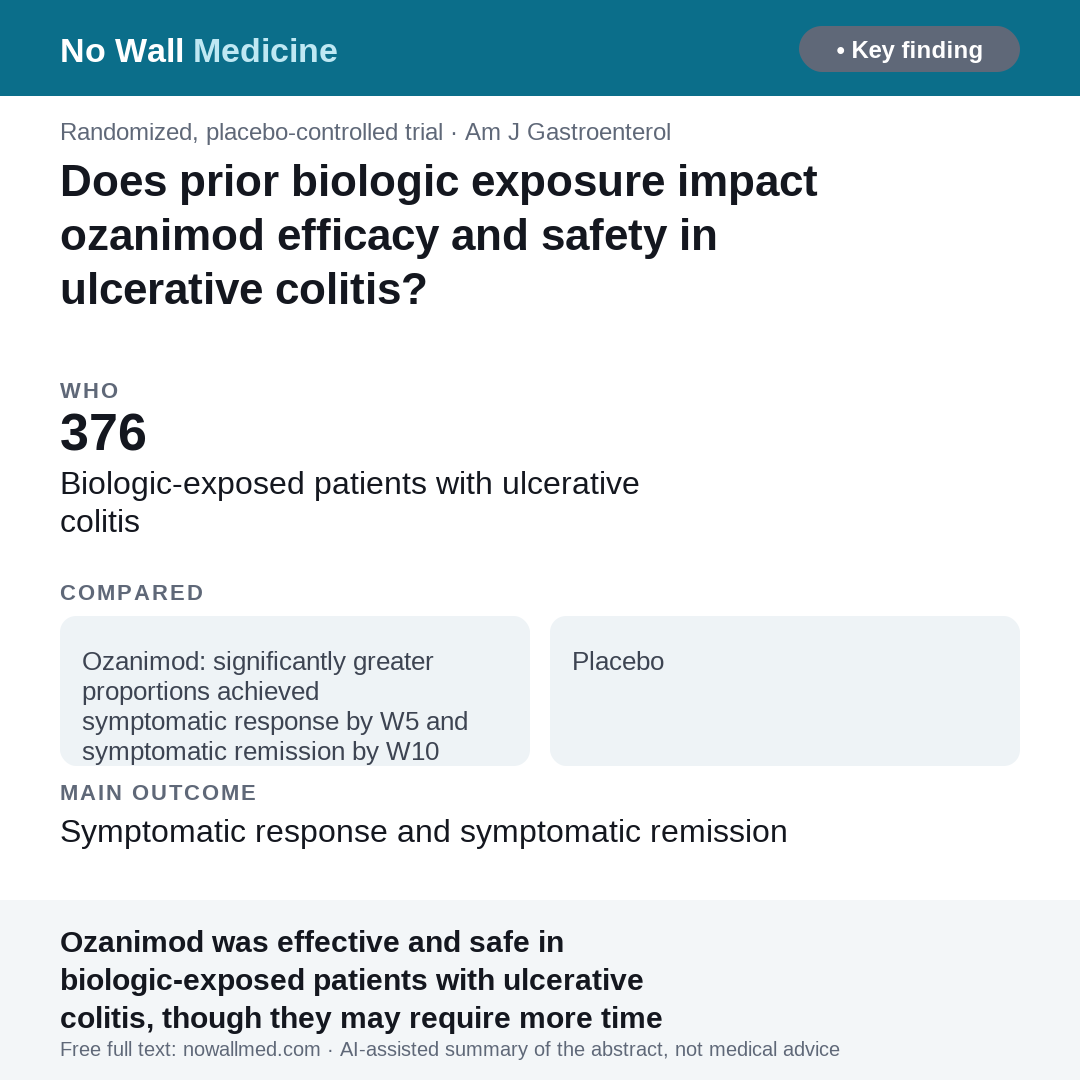
Impact of Prior Biologic Exposure on Ozanimod Efficacy and Safety in the Phase 3 True North Clinical Trial
Randomized, placebo-controlled trialKey finding
Does prior biologic exposure impact ozanimod efficacy and safety in ulcerative colitis?
Who
376
Biologic-exposed patients with ulcerative colitis
Compared
Ozanimod: significantly greater proportions achieved symptomatic response by W5 and symptomatic remission by W10
Placebo
Main outcome
Symptomatic response and symptomatic remission
Bottom line: Ozanimod was effective and safe in biologic-exposed patients with ulcerative colitis, though they may require more time to respond.
Am J Gastroenterol · 2025-01-08Download image
Safety and efficacy of long-acting cabotegravir/rilpivirine versus standard oral antiretroviral therapy: a systematic review and meta-analysis
Systematic review and meta-analysis of six randomized controlled trialsMixed results
Is long-acting antiretroviral therapy as safe and effective as standard oral treatment?
Who
2829
People living with HIV
Compared
Long-acting antiretrovirals: HIV RNA < 50 copies/mL non-inferior
Standard oral treatment: HIV RNA < 50 copies/mL
Main outcome
HIV RNA suppression, adverse events, and drug resistance
Result: Risk Ratio 1.22 (95% CI 1.12-1.33) for grade 1-4 adverse events
Bottom line: Long-acting antiretrovirals have non-inferior efficacy but higher risks of drug resistance and adverse events than standard oral therapy.
J Antimicrob Chemother · 2025-01-08Download image

Updated appropriate use criteria for amyloid and tau PET: A report from the Alzheimer's Association and Society for Nuclear Medicine and Molecular Imaging Workgroup
Guideline updateUnclear result
Use of amyloid and tau PET
Who
patients with cognitive decline
Compared
Amyloid PET
Tau PET
Main outcome
appropriate use
Bottom line: Updated criteria for amyloid and tau PET use
Alzheimers Dement · 2025-01-08Download image

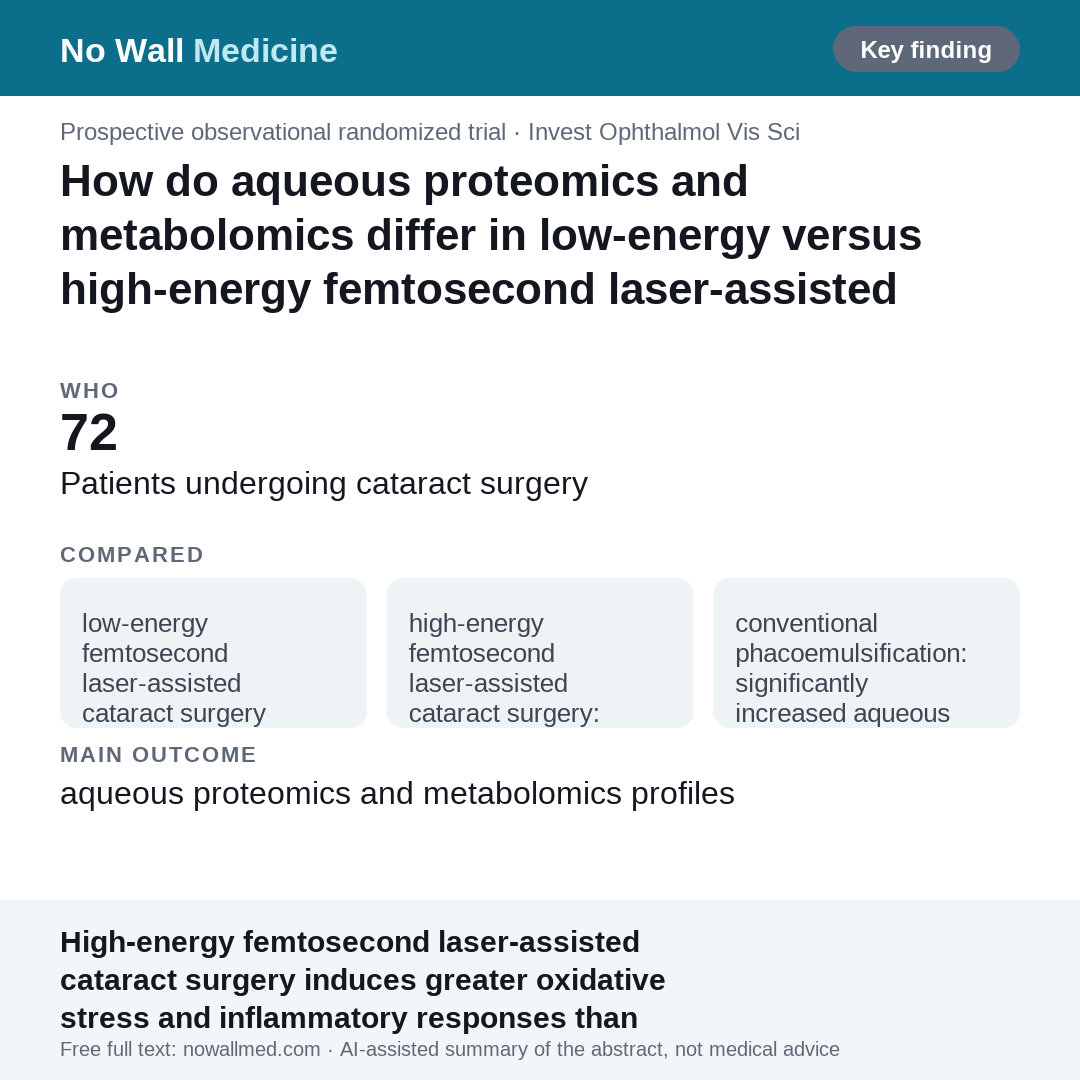
Aqueous Proteomic and Metabolomic Profiles in Low-Energy vs High-Energy Femtosecond Laser-Assisted Cataract Surgery
Prospective observational randomized trialKey finding
How do aqueous proteomics and metabolomics differ in low-energy versus high-energy femtosecond laser-assisted cataract surgery?
Who
72
Patients undergoing cataract surgery
Compared
low-energy femtosecond laser-assisted cataract surgery
high-energy femtosecond laser-assisted cataract surgery: significantly elevated aqueous hemoglobin subunit beta, G protein subunit beta, carbonic anhydrase 1, and asymmetric dimethylarginine
conventional phacoemulsification: significantly increased aqueous proteins and metabolites related to immune and inflammation and oxidative stress
Main outcome
aqueous proteomics and metabolomics profiles
Bottom line: High-energy femtosecond laser-assisted cataract surgery induces greater oxidative stress and inflammatory responses than low-energy laser or conventional surgery.
Invest Ophthalmol Vis Sci · 2025-01-08Download image
Spread of local anaesthetic after erector spinae plane block: a randomised, three-dimensional reconstruction, imaging study
Randomised, three-dimensional reconstruction, imaging studyBenefit found
Does patient position affect paravertebral spread after erector spinae plane block?
Who
84
Patients receiving erector spinae plane block at T7
Compared
Prone position: 5.0 [1.9] thoracic levels paravertebral spread
Supine position: 3.1 [1.7] thoracic levels paravertebral spread
Lateral position
Main outcome
Paravertebral space local anaesthetic spread
Result: difference [95% confidence interval, CI]: 1.9 [0.8-3.0] levels
Bottom line: Prone positioning significantly enhances local anaesthetic spread to the paravertebral space, intercostal space, and neural foramina.
Br J Anaesth · 2025-01-08Download image