Visual abstracts
New randomized trials and meta-analyses from leading journals at a glance: who was studied, what was compared, and what was found. Every paper is free to read in full.
All specialtiesCardiology 1953Oncology 1672Gastroenterology & Hepatology 742Infectious Disease 1240Neurology 808Psychiatry & Mental Health 955Pulmonology 840Critical Care 565Endocrinology & Diabetes 1050Pediatrics 1171Surgery 985Orthopedics & Sports Medicine 364Neurosurgery 248Cardiothoracic & Vascular Surgery 214Plastic & Reconstructive Surgery 304Nephrology 406Rheumatology 279Hematology 423Dermatology 223Ophthalmology 229Obstetrics & Gynecology 635Public & Global Health 382Radiology & Imaging 270Anesthesiology 392Urology 339ENT (Otolaryngology) 263Emergency Medicine 219Allergy & Immunology 126Geriatrics 414Family Medicine & Primary Care 230Medical Genetics & Genomics 212Pathology & Laboratory Medicine 64Physical Medicine & Rehabilitation 340Palliative Care 171Nutrition 526Digital Health & AI 1026General Medicine 152
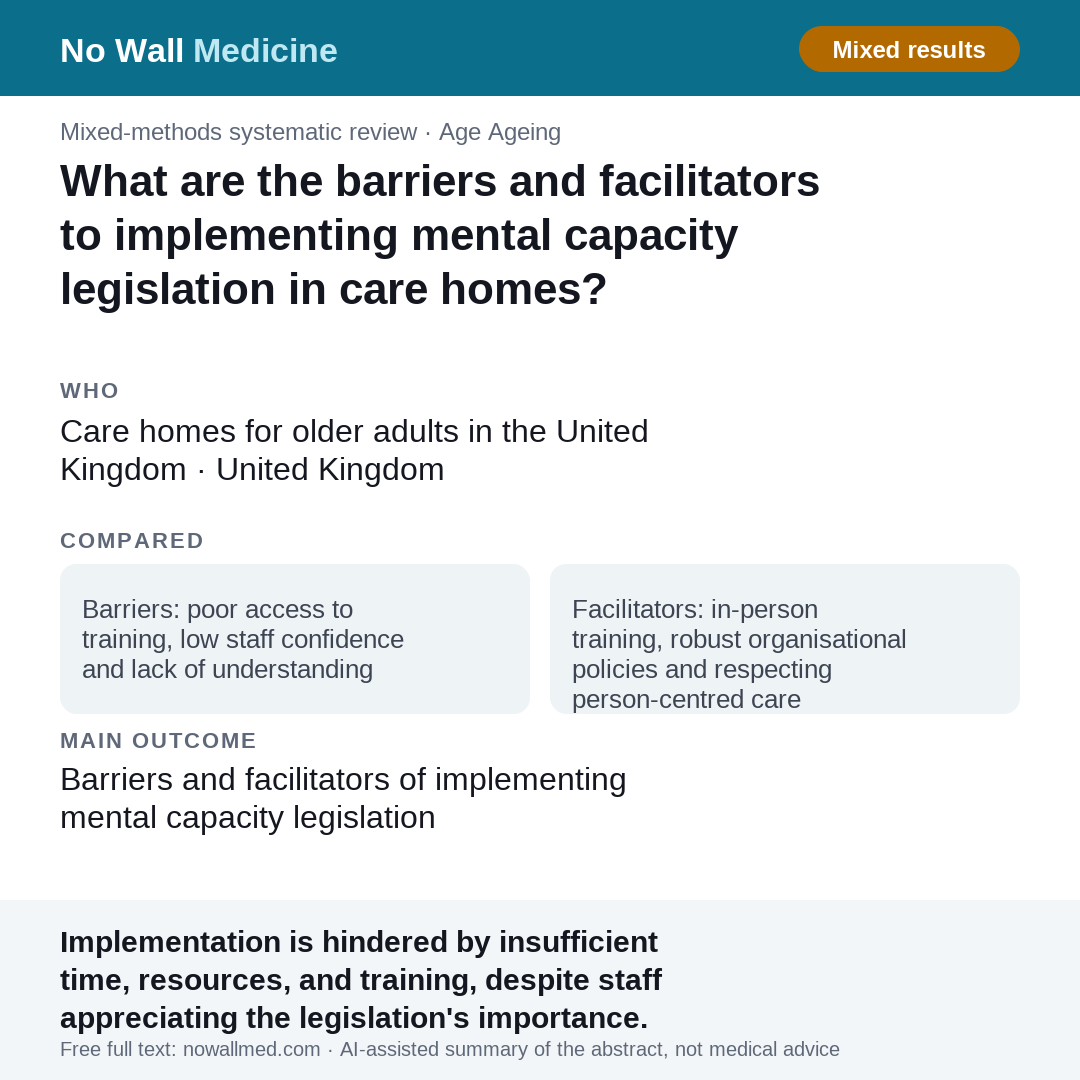
Barriers and facilitators to implementation of mental capacity legislation in care homes for older adults in the United Kingdom: a mixed-methods systematic review
Mixed-methods systematic reviewMixed results
What are the barriers and facilitators to implementing mental capacity legislation in care homes?
Who
Care homes for older adults in the United Kingdom · United Kingdom
Compared
Barriers: poor access to training, low staff confidence and lack of understanding
Facilitators: in-person training, robust organisational policies and respecting person-centred care
Main outcome
Barriers and facilitators of implementing mental capacity legislation
Bottom line: Implementation is hindered by insufficient time, resources, and training, despite staff appreciating the legislation's importance.
Age Ageing · 2025-05-15Download image
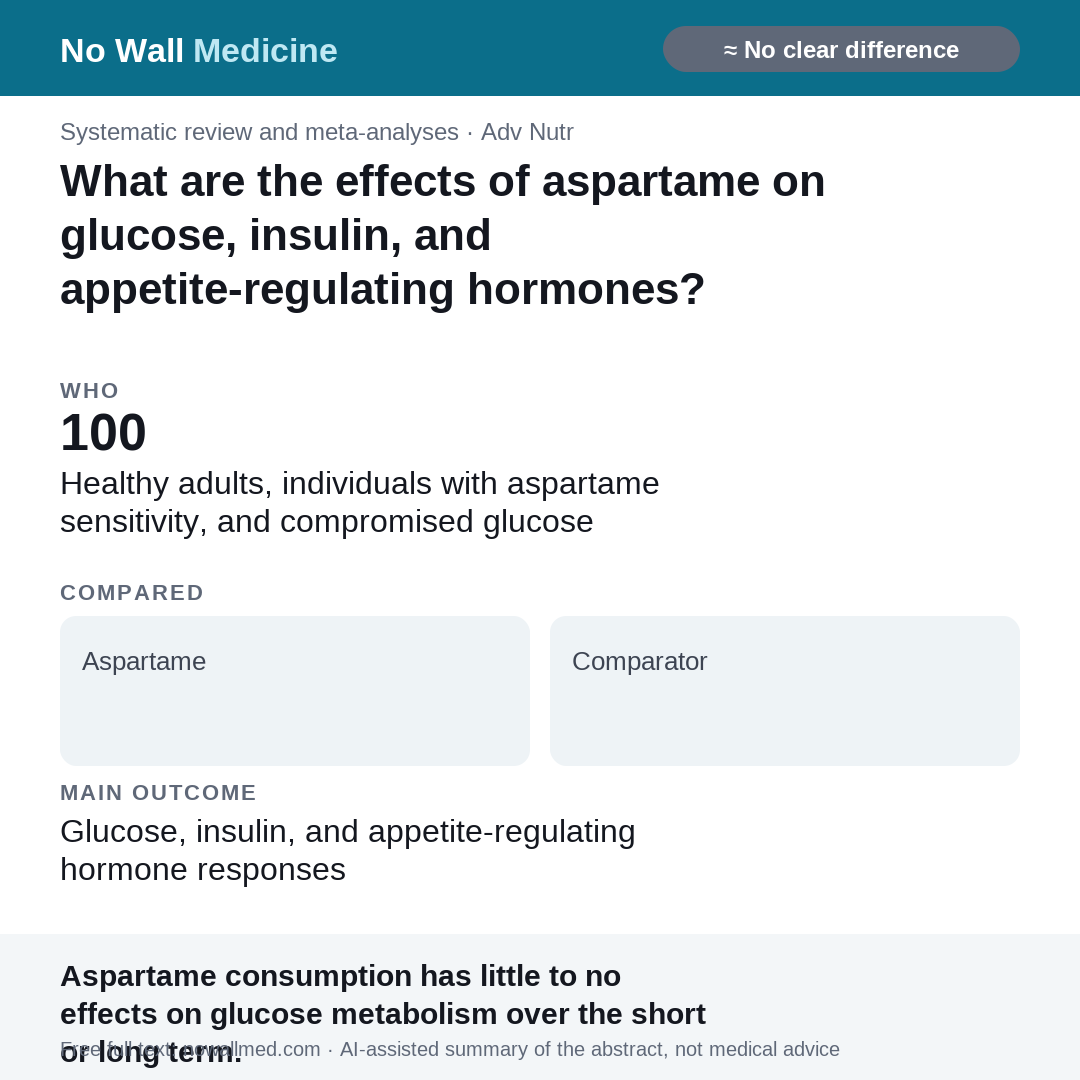
The Effects of Aspartame on Glucose, Insulin, and Appetite-Regulating Hormone Responses in Humans: Systematic Review and Meta-Analyses
Systematic review and meta-analysesNo clear difference
What are the effects of aspartame on glucose, insulin, and appetite-regulating hormones?
Who
100
Healthy adults, individuals with aspartame sensitivity, and compromised glucose metabolism
Compared
Aspartame
Comparator
Main outcome
Glucose, insulin, and appetite-regulating hormone responses
Bottom line: Aspartame consumption has little to no effects on glucose metabolism over the short or long term.
Limitation: Certainty of evidence was very low and high heterogeneity remained between studies.
Adv Nutr · 2025-05-15Download image
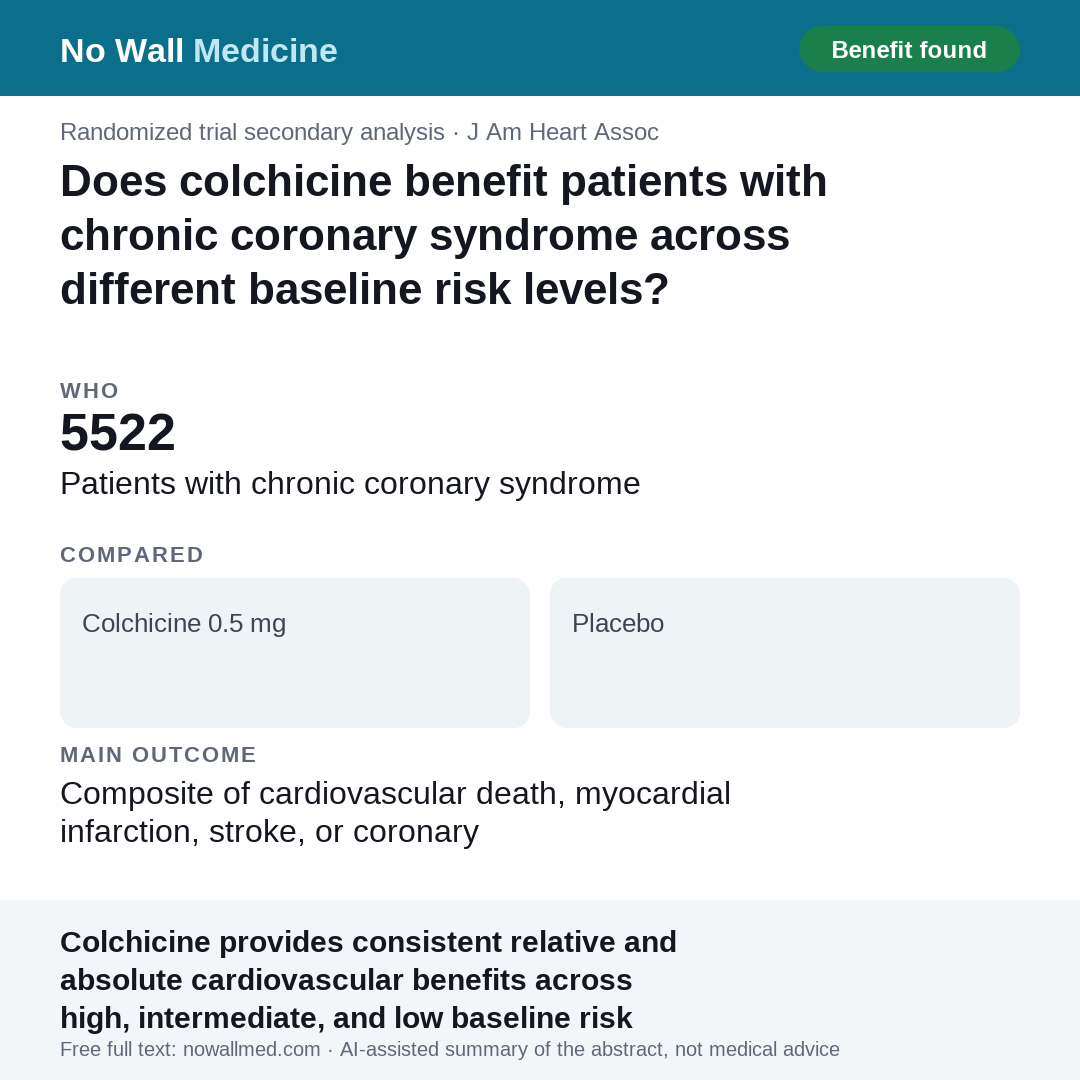
Cardiovascular Benefit of Colchicine in Relation to Baseline Risk: A Secondary Analysis of the LoDoCo2 Trial
Randomized trial secondary analysisBenefit found
Does colchicine benefit patients with chronic coronary syndrome across different baseline risk levels?
Who
5522
Patients with chronic coronary syndrome
Compared
Colchicine 0.5 mg
Placebo
Main outcome
Composite of cardiovascular death, myocardial infarction, stroke, or coronary revascularization
Result: hazard ratio 0.72 (95% CI 0.56-0.94) in high-risk patients
Bottom line: Colchicine provides consistent relative and absolute cardiovascular benefits across high, intermediate, and low baseline risk patients.
J Am Heart Assoc · 2025-05-15Download image
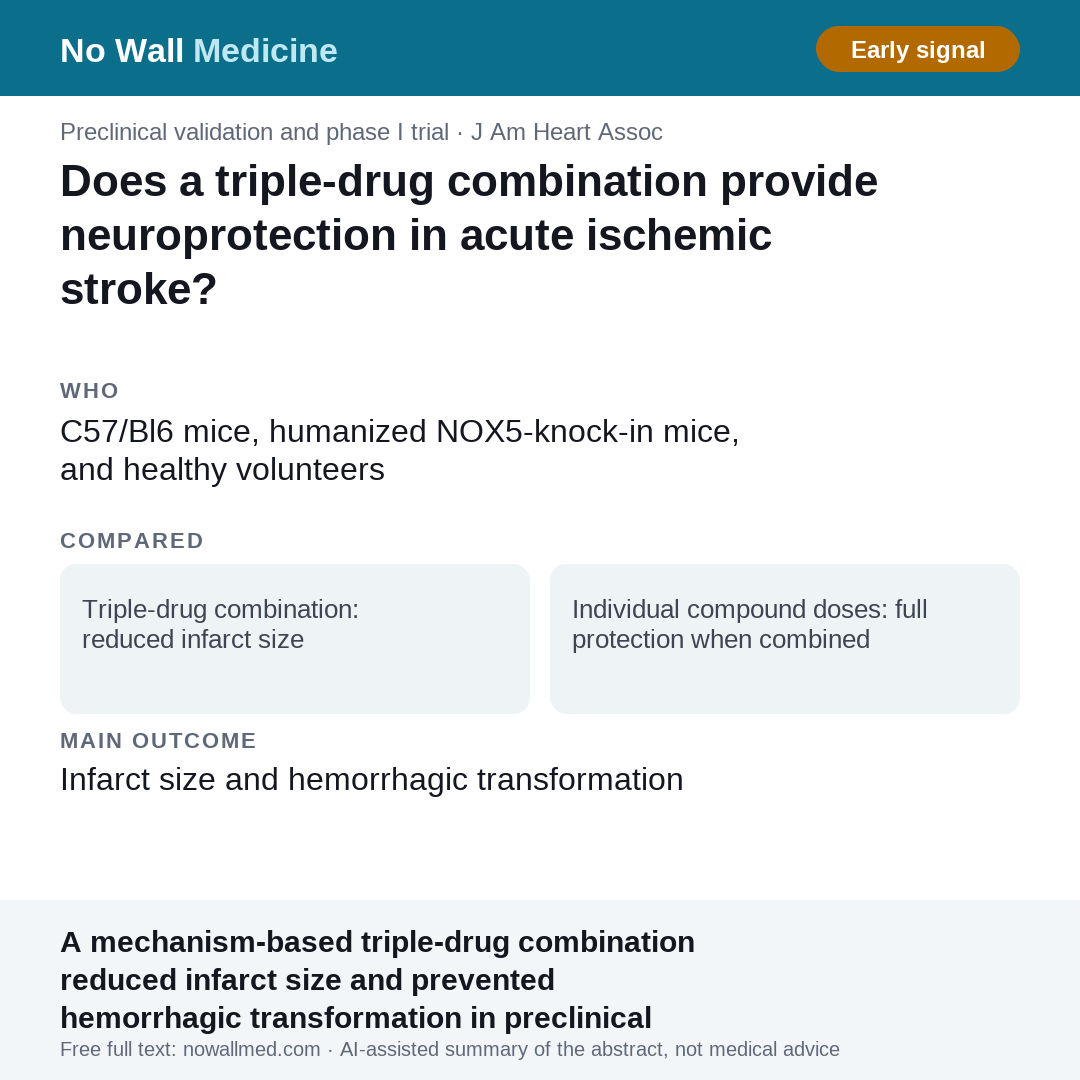
Synergistic Network Pharmacology: Preclinical Validation and Clinical Safety in Acute Ischemic Stroke
Preclinical validation and phase I trialBenefit found
Does a triple-drug combination provide neuroprotection in acute ischemic stroke?
Who
C57/Bl6 mice, humanized NOX5-knock-in mice, and healthy volunteers
Compared
Triple-drug combination: reduced infarct size
Individual compound doses: full protection when combined
Main outcome
Infarct size and hemorrhagic transformation
Bottom line: A mechanism-based triple-drug combination reduced infarct size and prevented hemorrhagic transformation in preclinical stroke models.
J Am Heart Assoc · 2025-05-15Download image
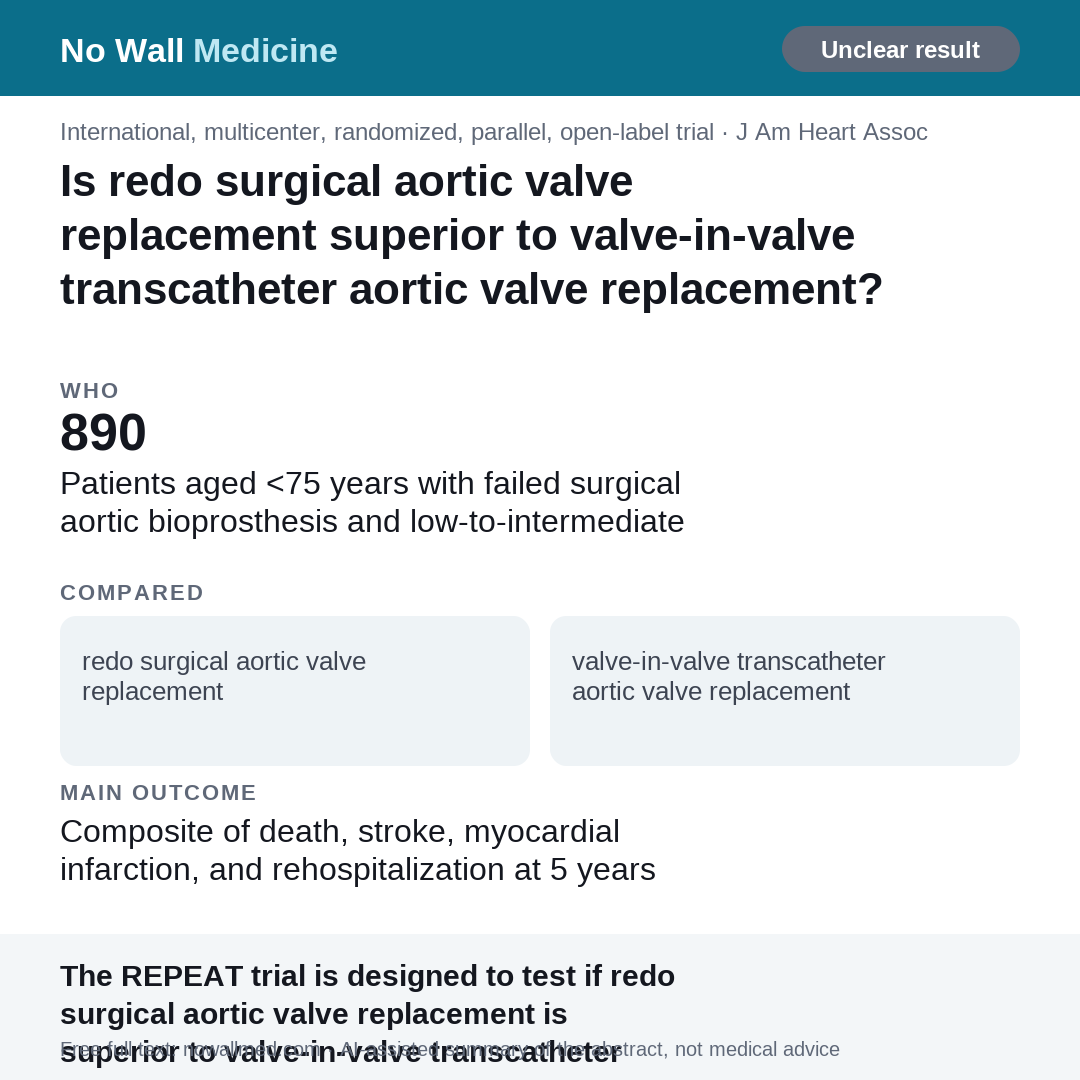
Rationale and Design of the REPEAT Trial: A Multicenter Randomized Trial Comparing Redo Surgical Aortic Valve Replacement to Valve-in-Valve Transcatheter Aortic Valve Replacement
International, multicenter, randomized, parallel, open-label trialUnclear result
Is redo surgical aortic valve replacement superior to valve-in-valve transcatheter aortic valve replacement?
Who
890
Patients aged <75 years with failed surgical aortic bioprosthesis and low-to-intermediate risk · International, multicenter
Compared
redo surgical aortic valve replacement
valve-in-valve transcatheter aortic valve replacement
Main outcome
Composite of death, stroke, myocardial infarction, and rehospitalization at 5 years
Bottom line: The REPEAT trial is designed to test if redo surgical aortic valve replacement is superior to valve-in-valve transcatheter aortic valve replacement.
J Am Heart Assoc · 2025-05-15Download image
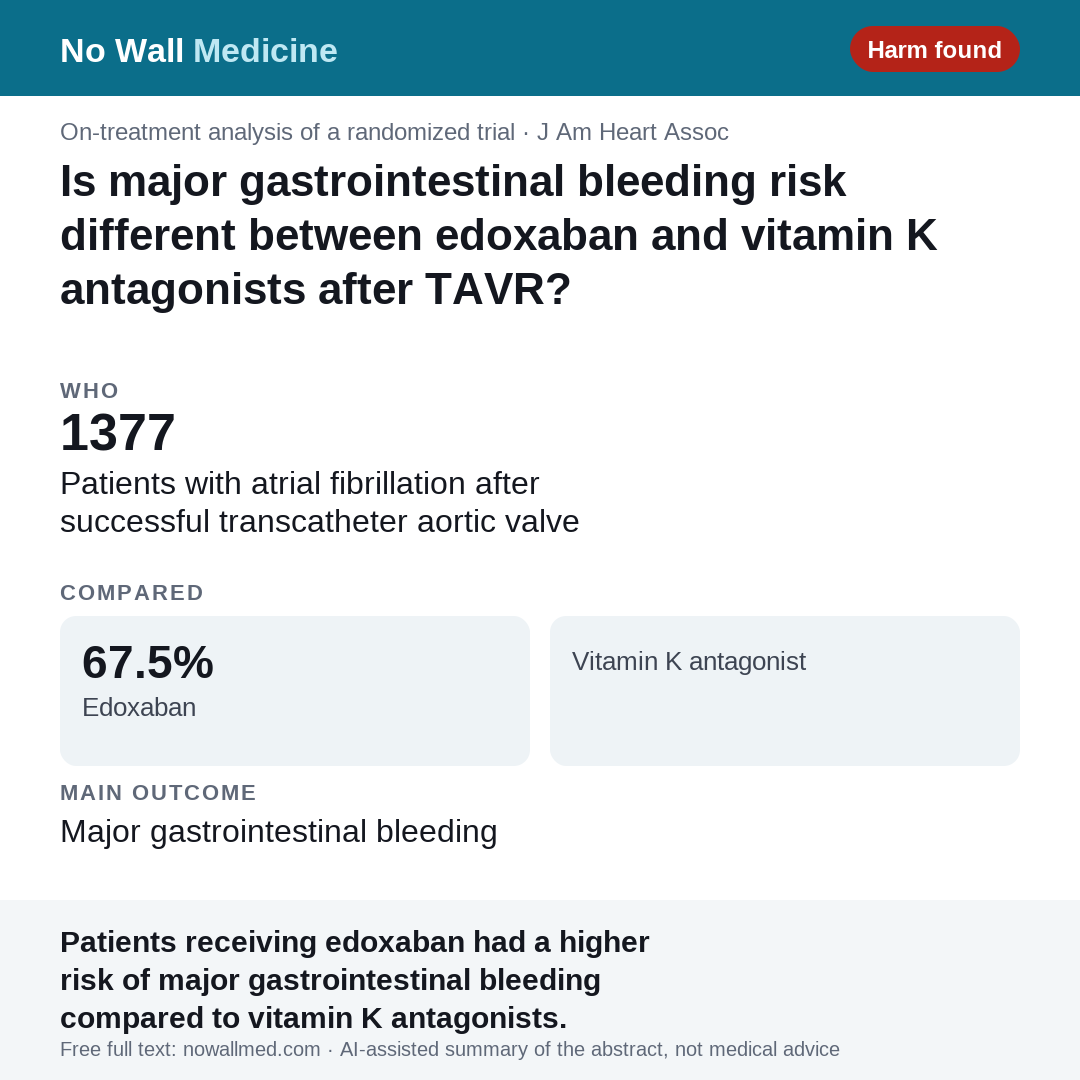
Comparing Major Gastrointestinal Bleeding in Patients Receiving Edoxaban Versus Warfarin After Transcatheter Aortic Valve Replacement: Results From the Randomized ENVISAGE-TAVI AF Trial
On-treatment analysis of a randomized trialHarm found
Is major gastrointestinal bleeding risk different between edoxaban and vitamin K antagonists after TAVR?
Who
1377
Patients with atrial fibrillation after successful transcatheter aortic valve replacement
Compared
67.5%Edoxaban
Vitamin K antagonist
Main outcome
Major gastrointestinal bleeding
Bottom line: Patients receiving edoxaban had a higher risk of major gastrointestinal bleeding compared to vitamin K antagonists.
J Am Heart Assoc · 2025-05-15Download image
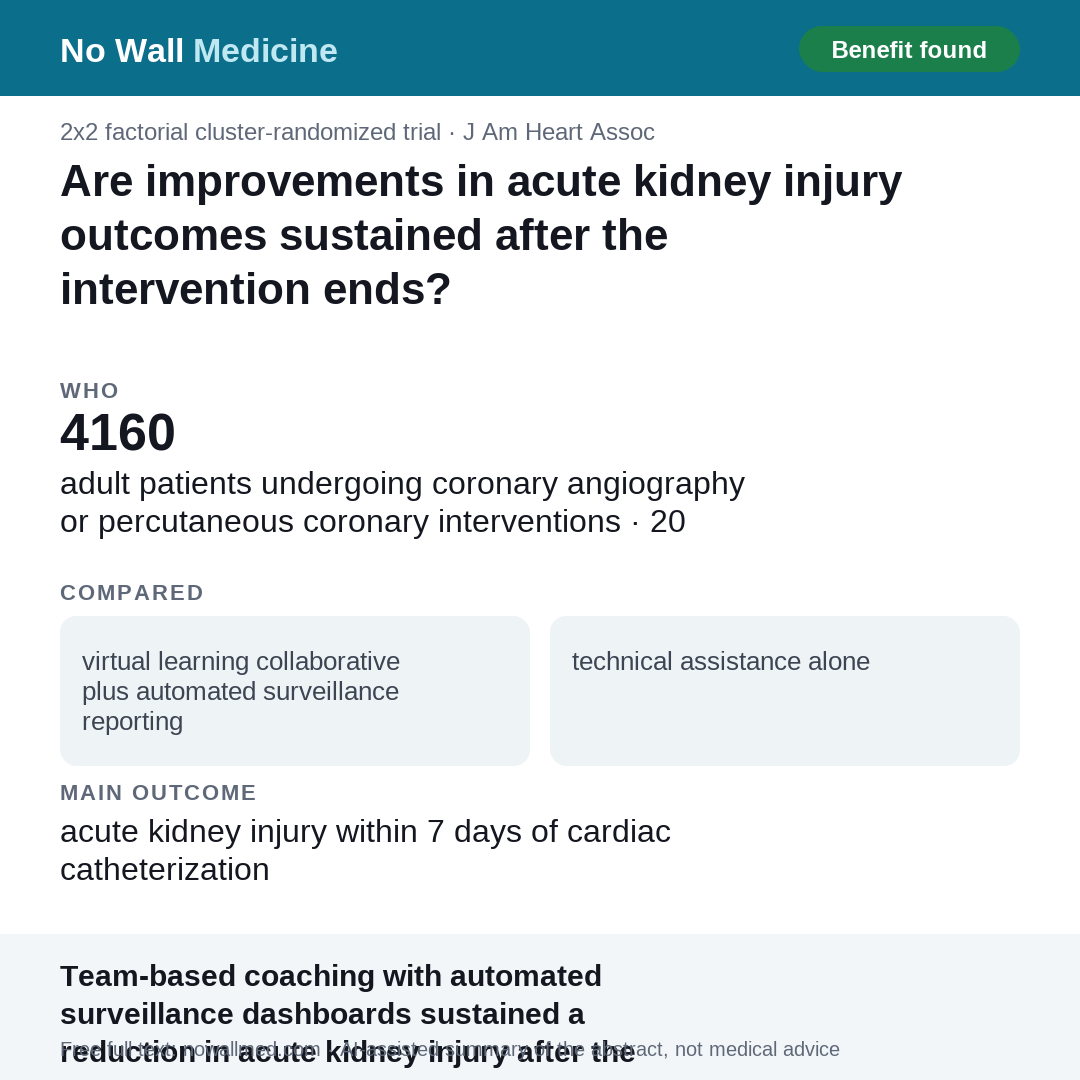
Sustained Improvements After Intervention to Prevent Contrast-Associated Acute Kidney Injury: A Randomized Controlled Trial
2x2 factorial cluster-randomized trialBenefit found
Are improvements in acute kidney injury outcomes sustained after the intervention ends?
Who
4160
adult patients undergoing coronary angiography or percutaneous coronary interventions · 20 Veterans Affairs sites
Compared
virtual learning collaborative plus automated surveillance reporting
technical assistance alone
Main outcome
acute kidney injury within 7 days of cardiac catheterization
Result: adjusted odds ratio 0.60 (95% CI 0.42-0.86)
Bottom line: Team-based coaching with automated surveillance dashboards sustained a reduction in acute kidney injury after the intervention ended.
J Am Heart Assoc · 2025-05-15Download image
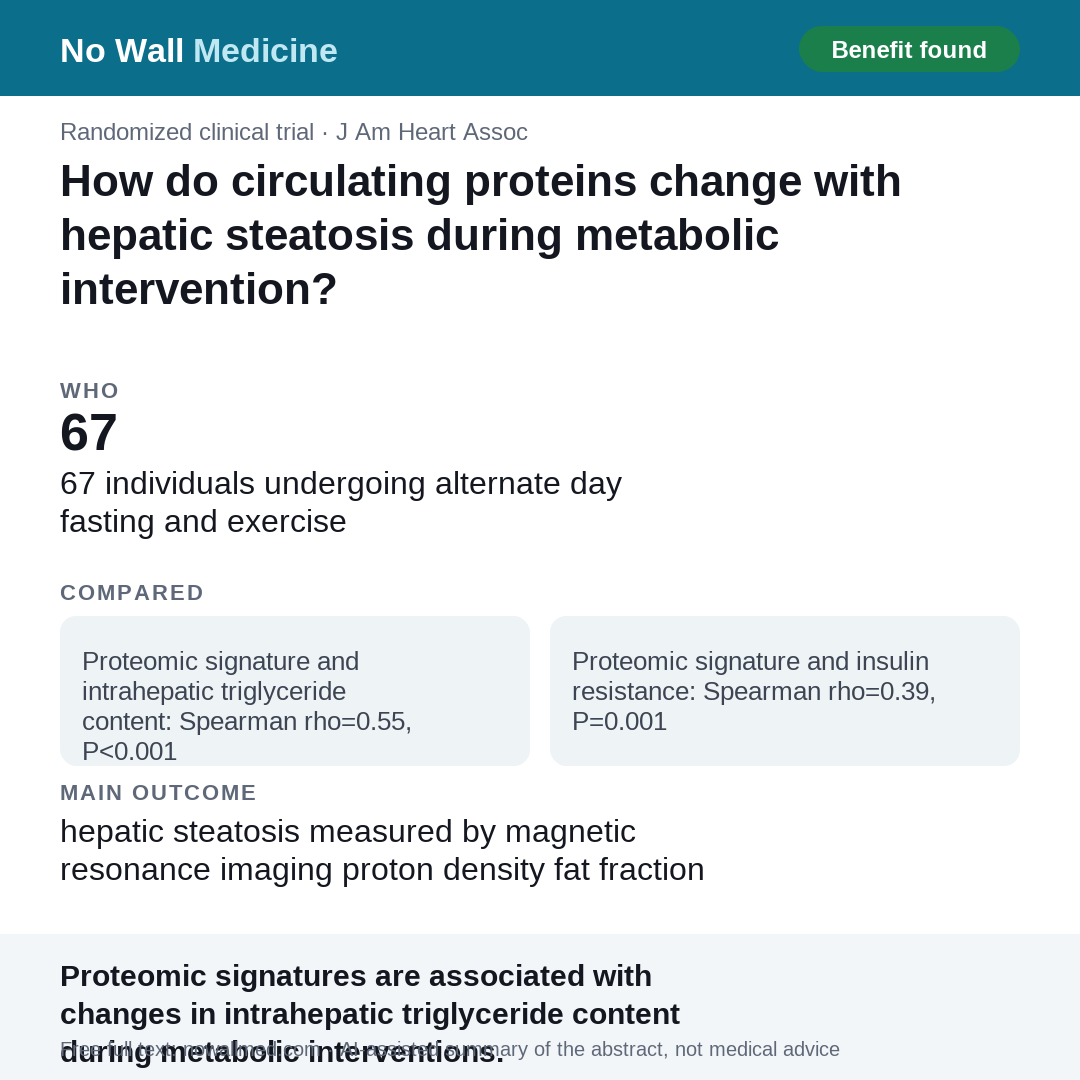
Circulating Proteomics Identifies a Dynamic Profile of Hepatic Steatosis During Metabolic Intervention
Randomized clinical trialBenefit found
How do circulating proteins change with hepatic steatosis during metabolic intervention?
Who
67
67 individuals undergoing alternate day fasting and exercise
Compared
Proteomic signature and intrahepatic triglyceride content: Spearman rho=0.55, P<0.001
Proteomic signature and insulin resistance: Spearman rho=0.39, P=0.001
Main outcome
hepatic steatosis measured by magnetic resonance imaging proton density fat fraction
Result: beta=0.12, P<0.001
Bottom line: Proteomic signatures are associated with changes in intrahepatic triglyceride content during metabolic interventions.
J Am Heart Assoc · 2025-05-15Download image
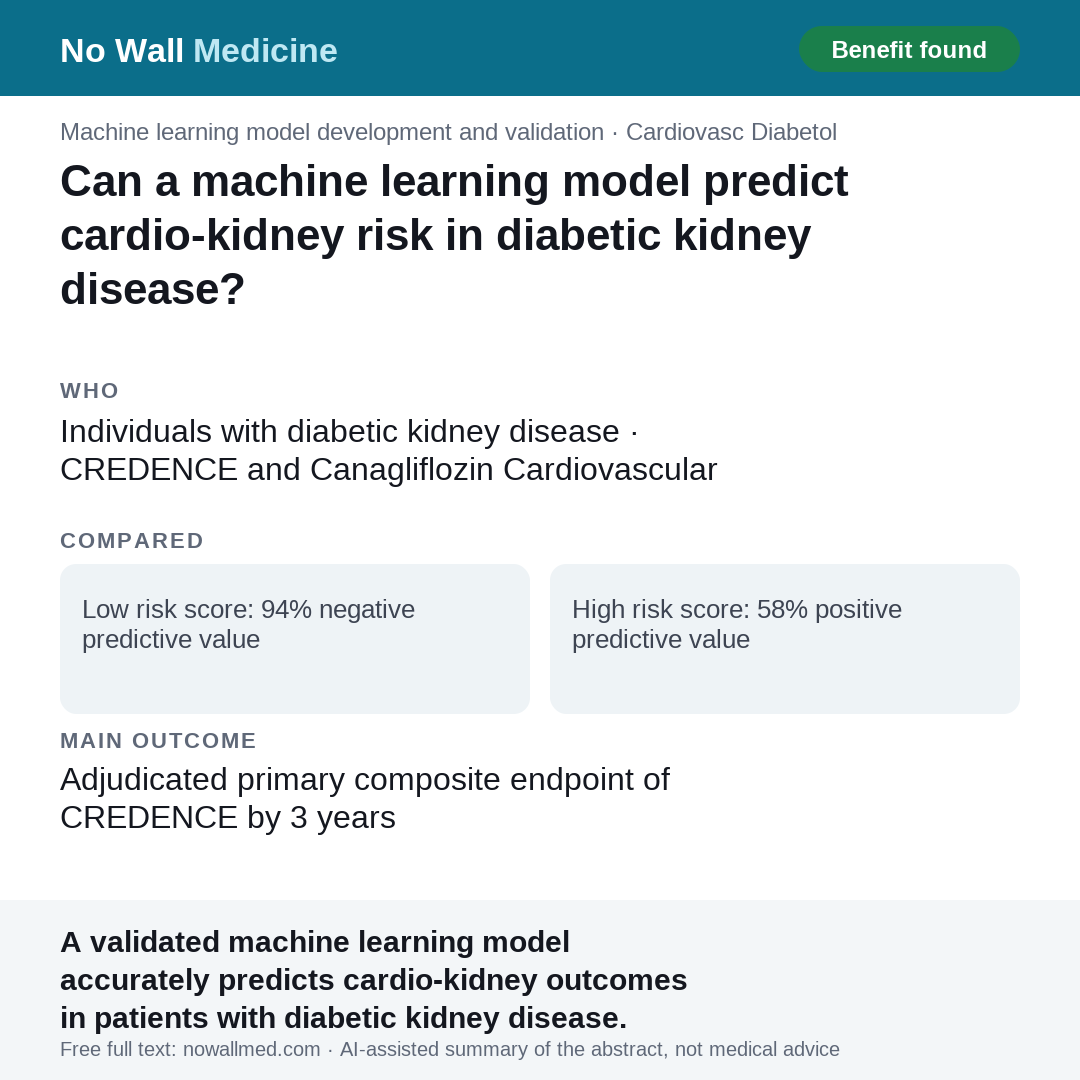
A validated multivariable machine learning model to predict cardio-kidney risk in diabetic kidney disease
Machine learning model development and validationBenefit found
Can a machine learning model predict cardio-kidney risk in diabetic kidney disease?
Who
Individuals with diabetic kidney disease · CREDENCE and Canagliflozin Cardiovascular Assessment Study cohorts
Compared
Low risk score: 94% negative predictive value
High risk score: 58% positive predictive value
Main outcome
Adjudicated primary composite endpoint of CREDENCE by 3 years
Result: hazard ratio 3.43 (95% CI 2.72-4.32)
Bottom line: A validated machine learning model accurately predicts cardio-kidney outcomes in patients with diabetic kidney disease.
Cardiovasc Diabetol · 2025-05-15Download image
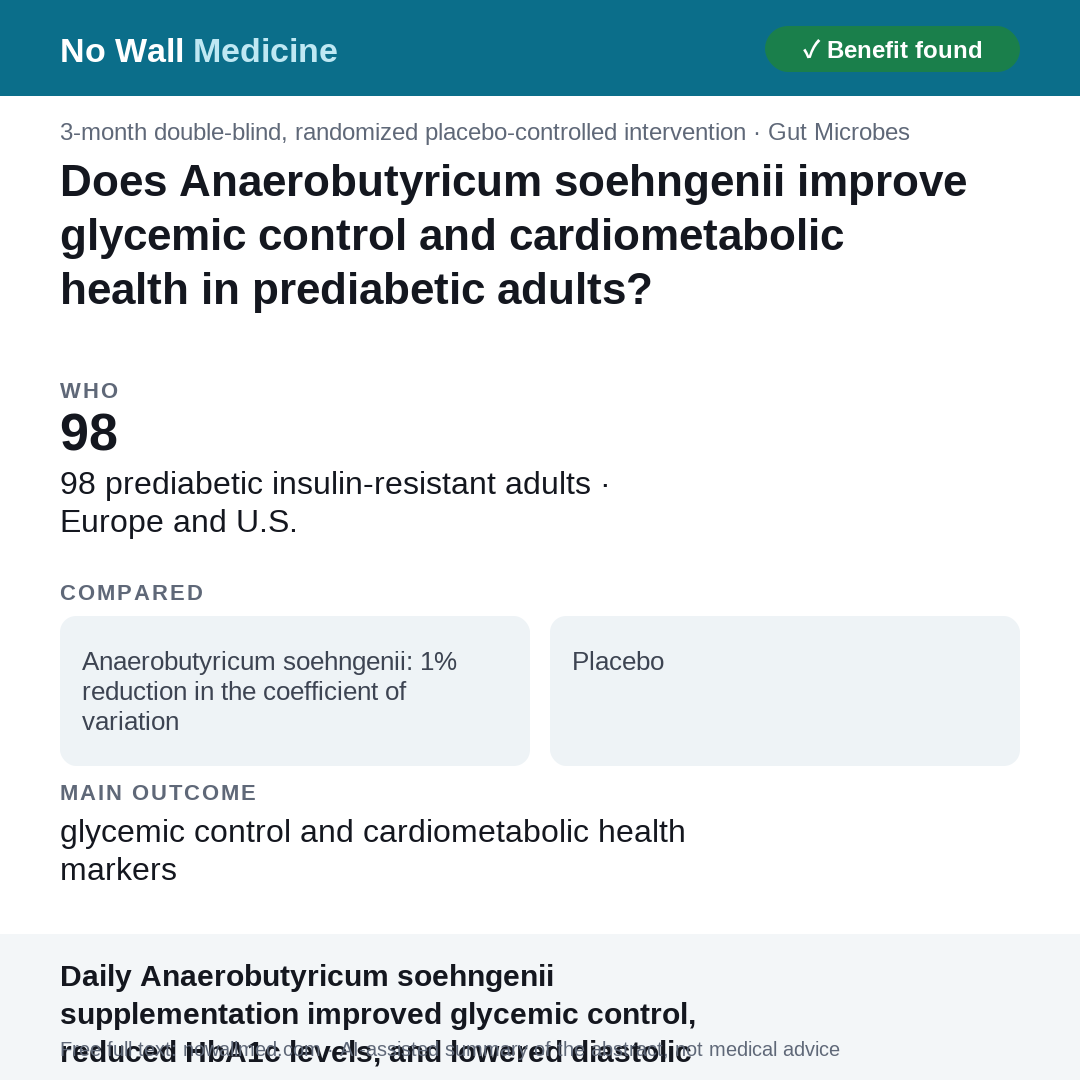
Anaerobutyricum soehngenii improves glycemic control and other markers of cardio-metabolic health in adults at risk of type 2 diabetes
3-month double-blind, randomized placebo-controlled interventionBenefit found
Does Anaerobutyricum soehngenii improve glycemic control and cardiometabolic health in prediabetic adults?
Who
98
98 prediabetic insulin-resistant adults · Europe and U.S.
Compared
Anaerobutyricum soehngenii: 1% reduction in the coefficient of variation
Placebo
Main outcome
glycemic control and cardiometabolic health markers
Bottom line: Daily Anaerobutyricum soehngenii supplementation improved glycemic control, reduced HbA1c levels, and lowered diastolic blood pressure in prediabetic adults.
Gut Microbes · 2025-05-15Download image
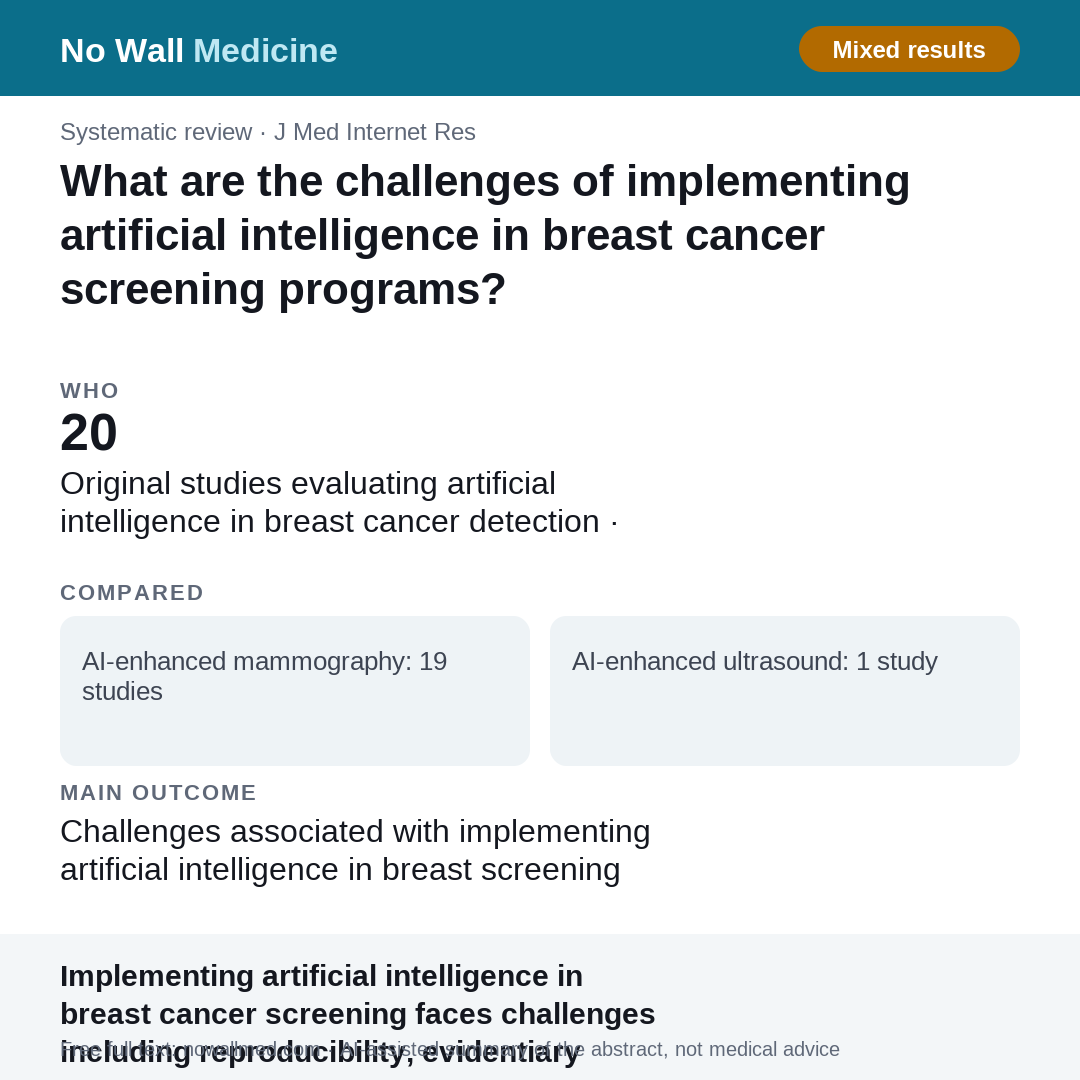
Challenges in Implementing Artificial Intelligence in Breast Cancer Screening Programs: Systematic Review and Framework for Safe Adoption
Systematic reviewMixed results
What are the challenges of implementing artificial intelligence in breast cancer screening programs?
Who
20
Original studies evaluating artificial intelligence in breast cancer detection · United States and United Kingdom
Compared
AI-enhanced mammography: 19 studies
AI-enhanced ultrasound: 1 study
Main outcome
Challenges associated with implementing artificial intelligence in breast screening
Bottom line: Implementing artificial intelligence in breast cancer screening faces challenges including reproducibility, evidentiary standards, technological concerns, trust, and ethical issues.
J Med Internet Res · 2025-05-15Download image
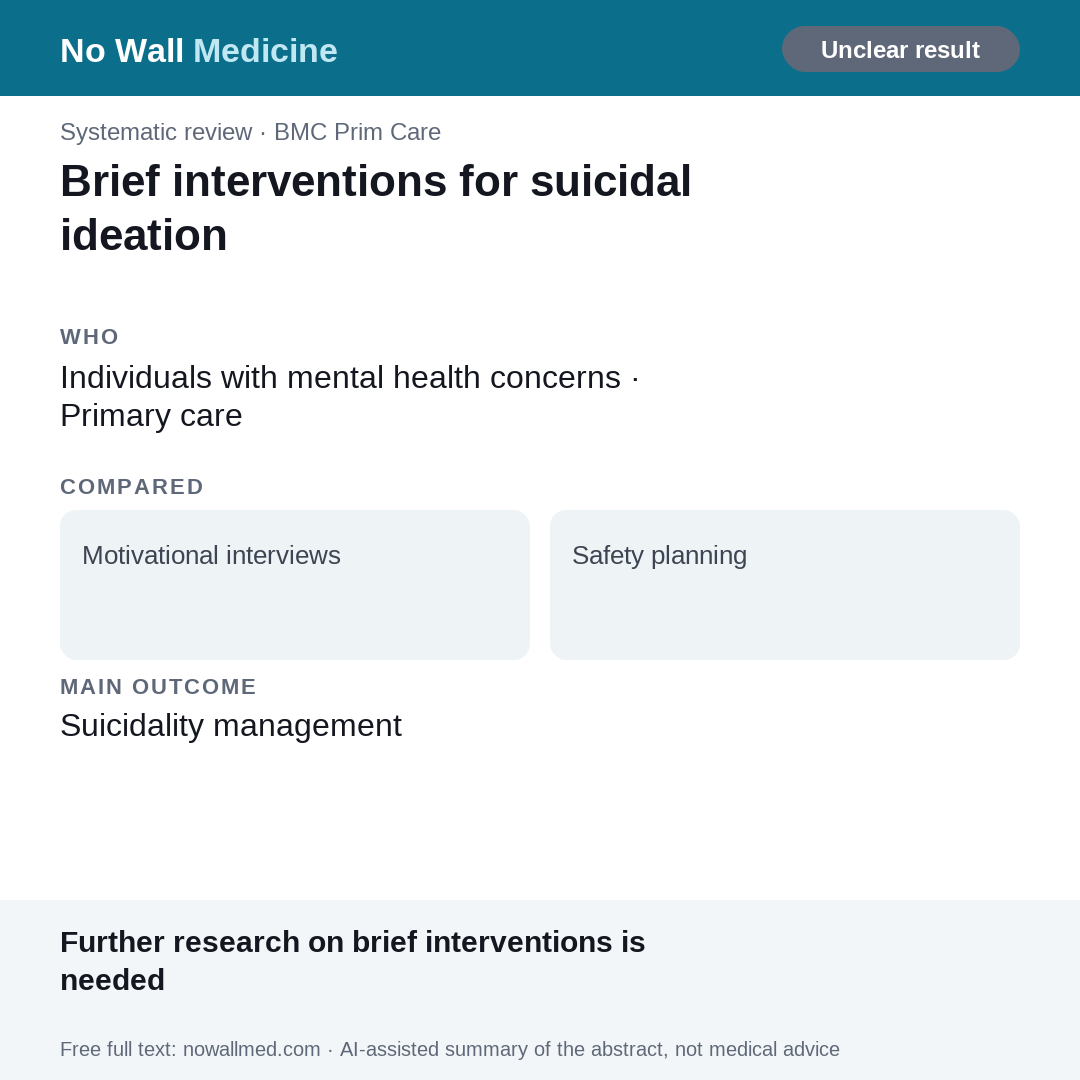
Brief interventions for suicidal ideation in primary care: a systematic review
Systematic reviewUnclear result
Brief interventions for suicidal ideation
Who
Individuals with mental health concerns · Primary care
Compared
Motivational interviews
Safety planning
Main outcome
Suicidality management
Bottom line: Further research on brief interventions is needed
BMC Prim Care · 2025-05-15Download image
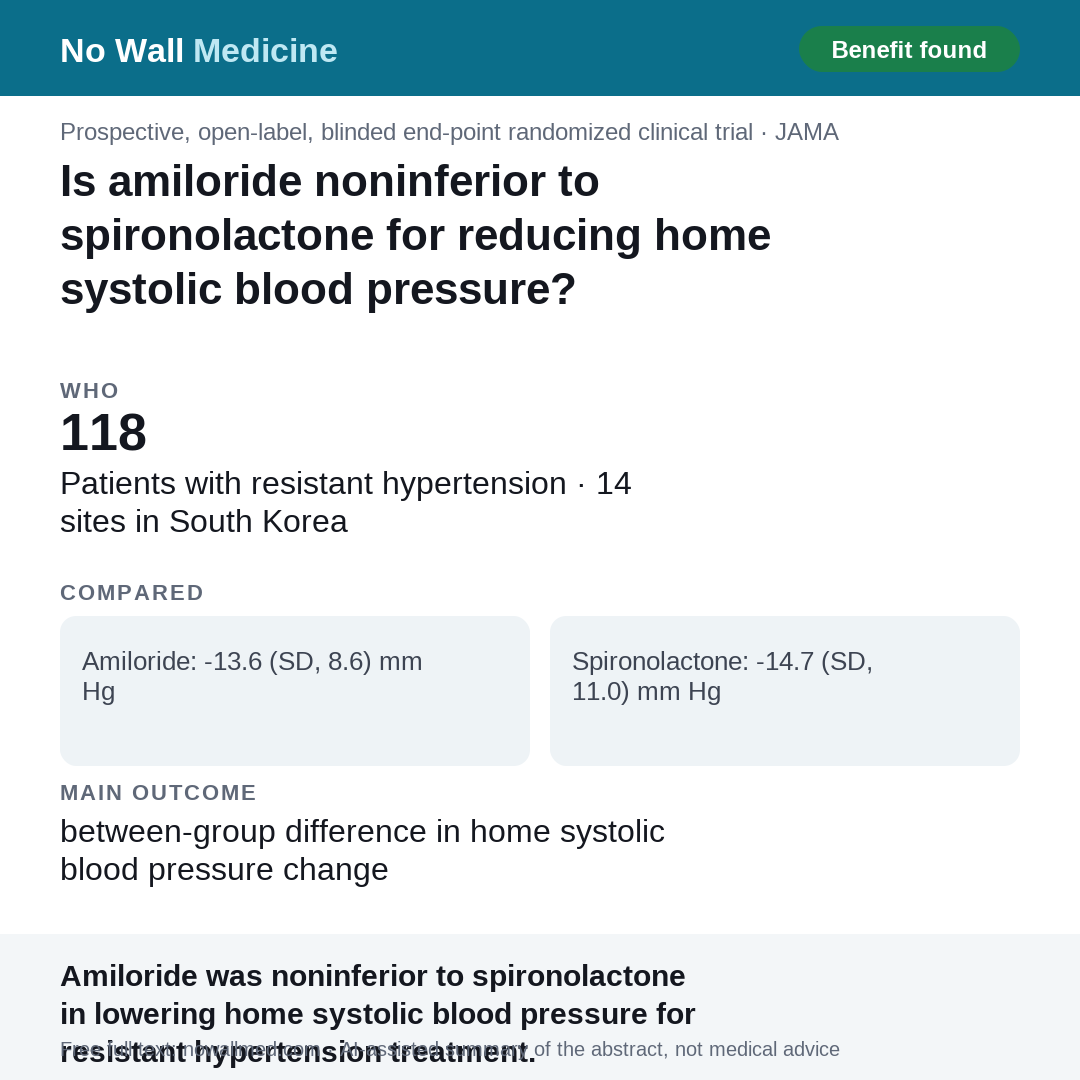
Spironolactone vs Amiloride for Resistant Hypertension: A Randomized Clinical Trial
Prospective, open-label, blinded end-point randomized clinical trialBenefit found
Is amiloride noninferior to spironolactone for reducing home systolic blood pressure?
Who
118
Patients with resistant hypertension · 14 sites in South Korea
Compared
Amiloride: -13.6 (SD, 8.6) mm Hg
Spironolactone: -14.7 (SD, 11.0) mm Hg
Main outcome
between-group difference in home systolic blood pressure change
Result: -0.68 mm Hg; 90% CI, -3.50 to 2.14 mm Hg
Bottom line: Amiloride was noninferior to spironolactone in lowering home systolic blood pressure for resistant hypertension treatment.
JAMA · 2025-05-14Download image
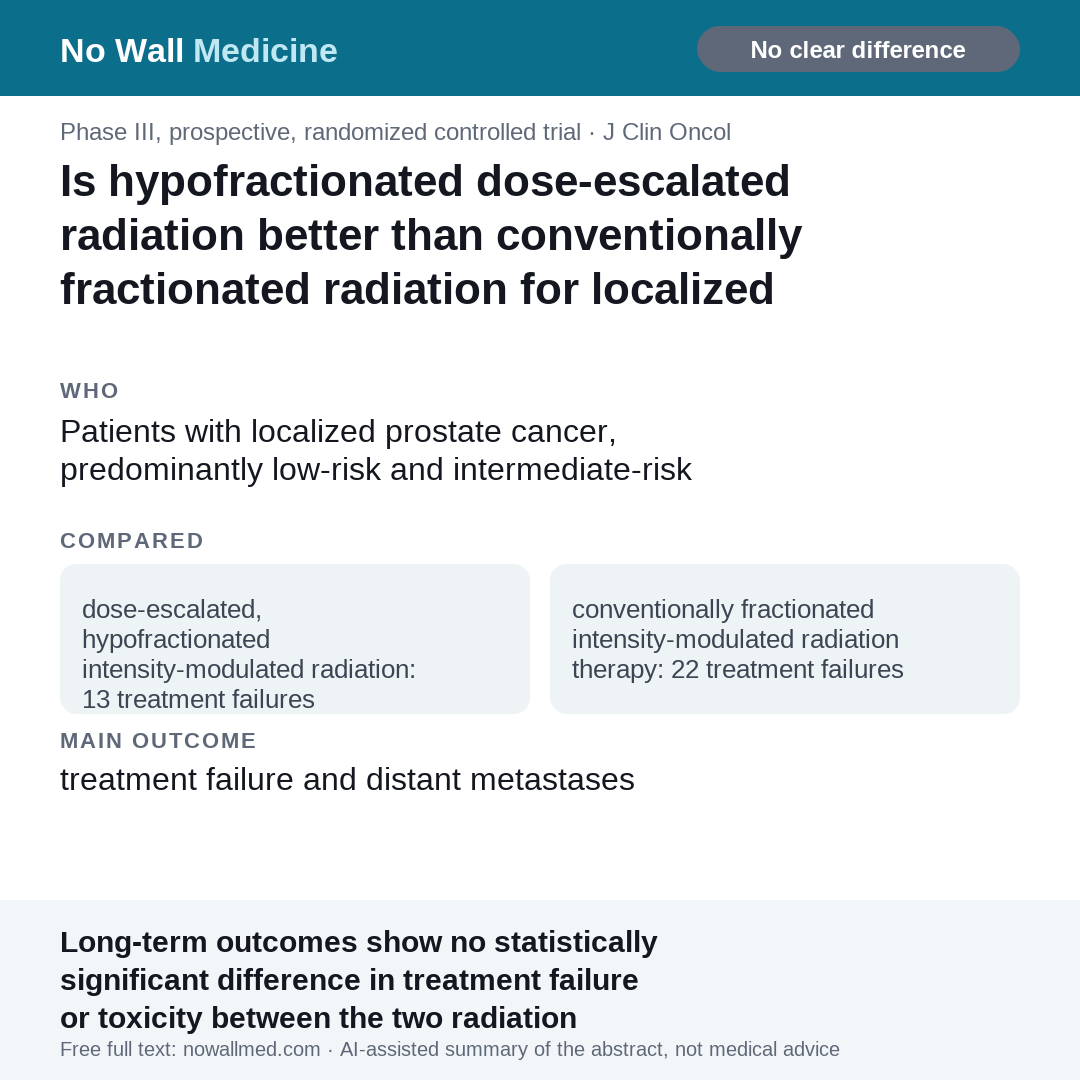
Hypofractionated, Dose-Escalated Radiation Versus Conventionally Fractionated Radiation for Localized Prostate Cancer: Long-Term Update of a Phase III, Prospective, Randomized Controlled Trial
Phase III, prospective, randomized controlled trialNo clear difference
Is hypofractionated dose-escalated radiation better than conventionally fractionated radiation for localized prostate cancer?
Who
Patients with localized prostate cancer, predominantly low-risk and intermediate-risk disease · MD Anderson
Compared
dose-escalated, hypofractionated intensity-modulated radiation: 13 treatment failures
conventionally fractionated intensity-modulated radiation therapy: 22 treatment failures
Main outcome
treatment failure and distant metastases
Bottom line: Long-term outcomes show no statistically significant difference in treatment failure or toxicity between the two radiation methods.
J Clin Oncol · 2025-05-14Download image
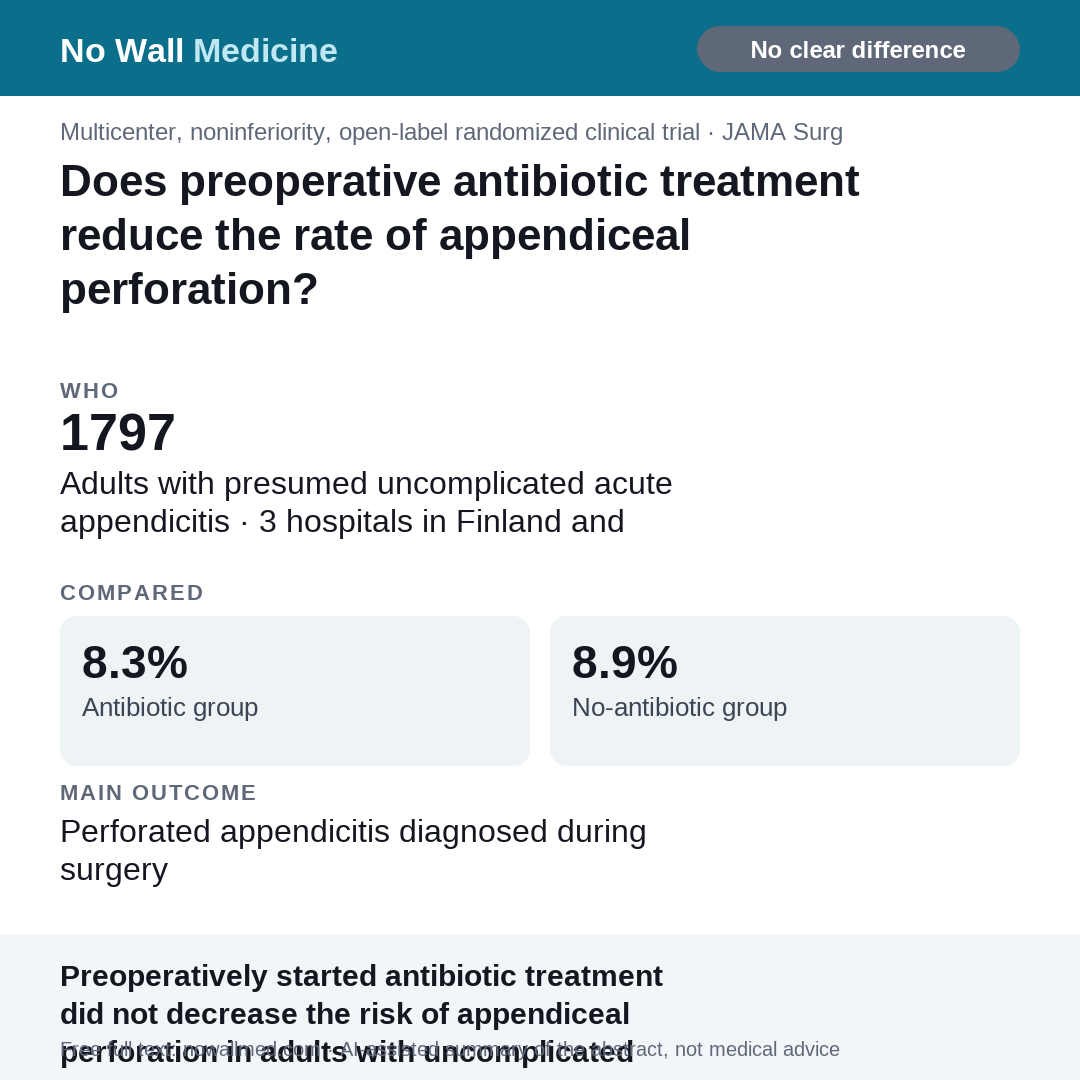
Role of Preoperative Antibiotic Treatment While Awaiting Appendectomy: The PERFECT-Antibiotics Randomized Clinical Trial
Multicenter, noninferiority, open-label randomized clinical trialNo clear difference
Does preoperative antibiotic treatment reduce the rate of appendiceal perforation?
Who
1797
Adults with presumed uncomplicated acute appendicitis · 3 hospitals in Finland and Norway
Compared
8.3%Antibiotic group
8.9%No-antibiotic group
Main outcome
Perforated appendicitis diagnosed during surgery
Result: risk ratio 1.07 (95% CI 0.79 to 1.45)
Bottom line: Preoperatively started antibiotic treatment did not decrease the risk of appendiceal perforation in adults with uncomplicated acute appendicitis.
JAMA Surg · 2025-05-14Download image
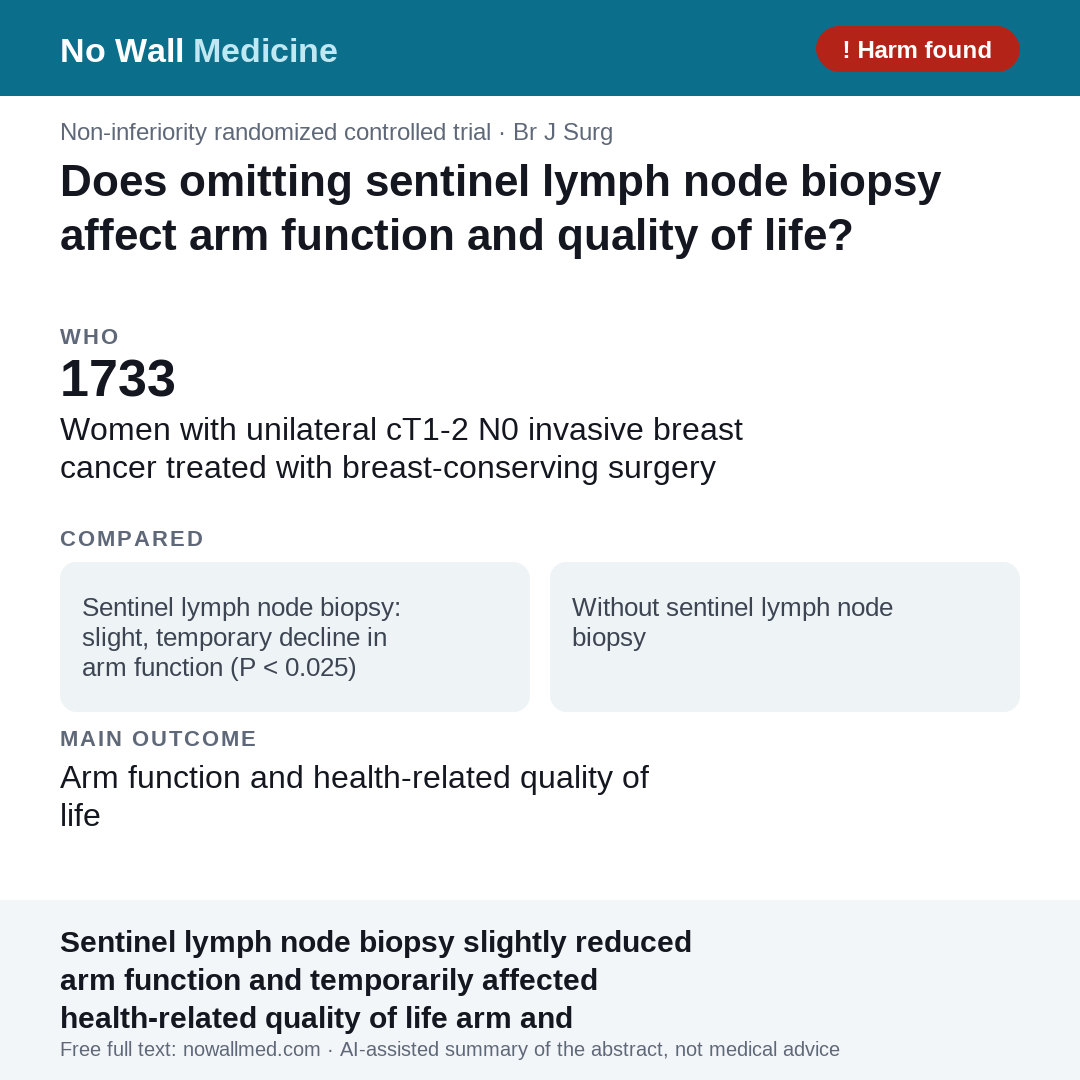
Three-year patient-reported outcomes of the BOOG 2013-08 RCT evaluating omission of sentinel lymph node biopsy in early-stage breast cancer patients treated with breast conserving surgery: Impact of personality traits on health-related quality of life
Non-inferiority randomized controlled trialHarm found
Does omitting sentinel lymph node biopsy affect arm function and quality of life?
Who
1733
Women with unilateral cT1-2 N0 invasive breast cancer treated with breast-conserving surgery
Compared
Sentinel lymph node biopsy: slight, temporary decline in arm function (P < 0.025)
Without sentinel lymph node biopsy
Main outcome
Arm function and health-related quality of life
Bottom line: Sentinel lymph node biopsy slightly reduced arm function and temporarily affected health-related quality of life arm and breast symptoms.
Br J Surg · 2025-05-14Download image
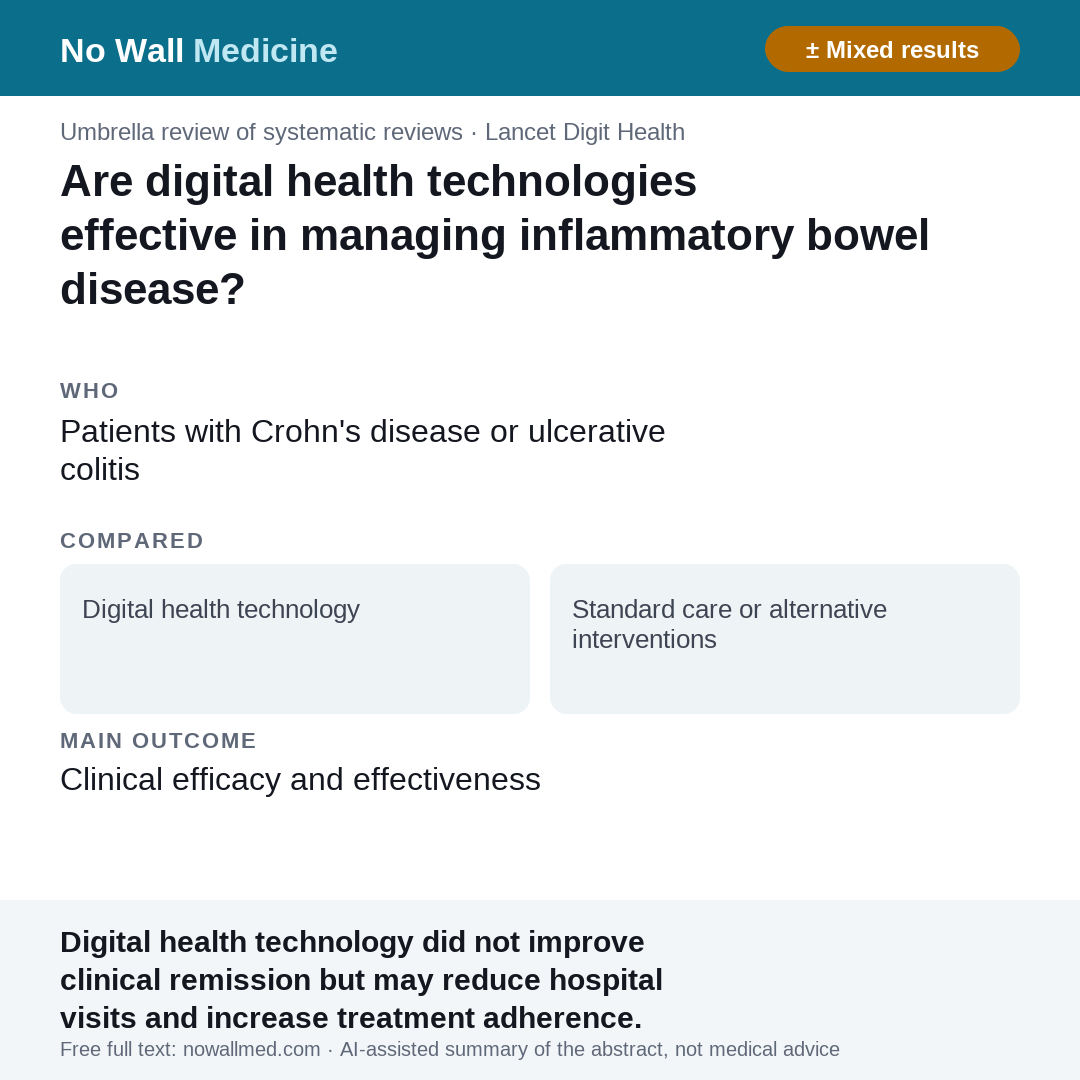
Efficacy of digital health technologies in the management of inflammatory bowel disease: an umbrella review
Umbrella review of systematic reviewsMixed results
Are digital health technologies effective in managing inflammatory bowel disease?
Who
Patients with Crohn's disease or ulcerative colitis
Compared
Digital health technology
Standard care or alternative interventions
Main outcome
Clinical efficacy and effectiveness
Bottom line: Digital health technology did not improve clinical remission but may reduce hospital visits and increase treatment adherence.
Limitation: Five of the nine included reviews were rated as critically low quality.
Lancet Digit Health · 2025-05-14Download image
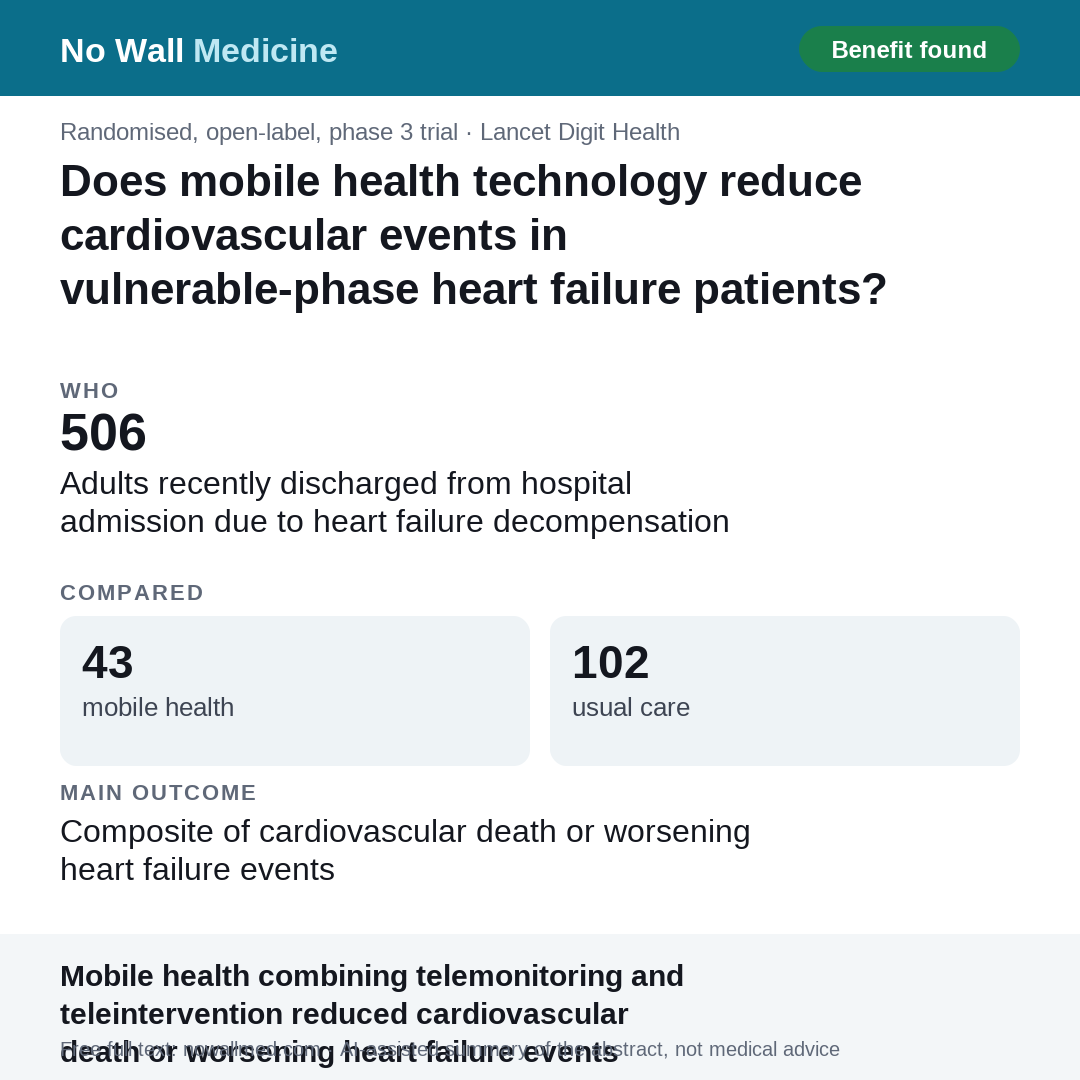
Evaluation of mobile health technology combining telemonitoring and teleintervention versus usual care in vulnerable-phase heart failure management (HERMeS): a multicentre, randomised controlled trial
Randomised, open-label, phase 3 trialBenefit found
Does mobile health technology reduce cardiovascular events in vulnerable-phase heart failure patients?
Who
506
Adults recently discharged from hospital admission due to heart failure decompensation · Ten centres in Spain
Compared
43mobile health (17%)
102usual care (41%)
Main outcome
Composite of cardiovascular death or worsening heart failure events
Result: hazard ratio 0·35 (95% CI 0·24-0·50)
Bottom line: Mobile health combining telemonitoring and teleintervention reduced cardiovascular death or worsening heart failure events compared to usual care.
Funded by: Novartis
Lancet Digit Health · 2025-05-14Download image
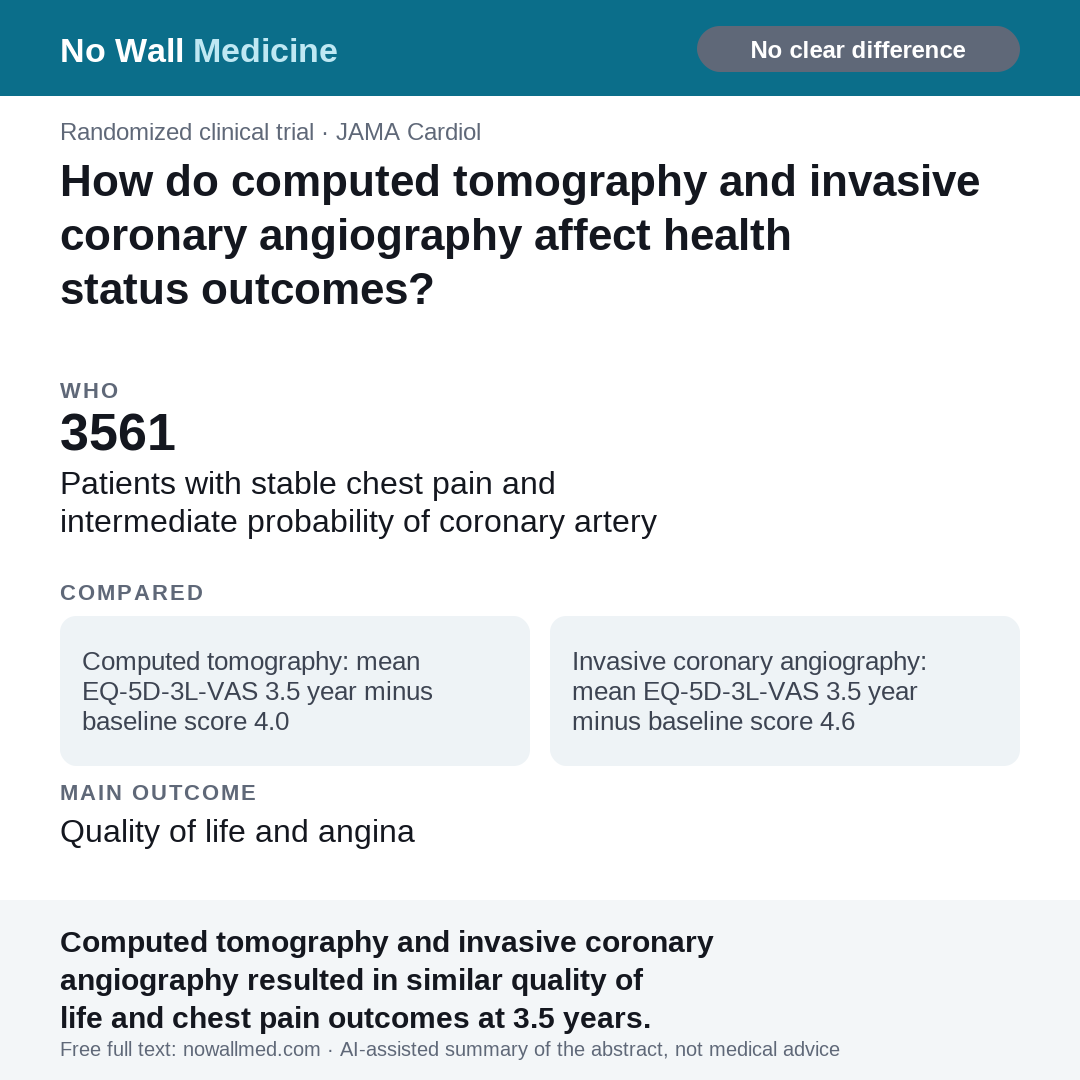
Health Status Outcomes After Computed Tomography or Invasive Coronary Angiography for Stable Chest Pain: A Prespecified Secondary Analysis of the DISCHARGE Randomized Clinical Trial
Randomized clinical trialNo clear difference
How do computed tomography and invasive coronary angiography affect health status outcomes?
Who
3561
Patients with stable chest pain and intermediate probability of coronary artery disease · 26 European centers
Compared
Computed tomography: mean EQ-5D-3L-VAS 3.5 year minus baseline score 4.0
Invasive coronary angiography: mean EQ-5D-3L-VAS 3.5 year minus baseline score 4.6
Main outcome
Quality of life and angina
Bottom line: Computed tomography and invasive coronary angiography resulted in similar quality of life and chest pain outcomes at 3.5 years.
JAMA Cardiol · 2025-05-14Download image
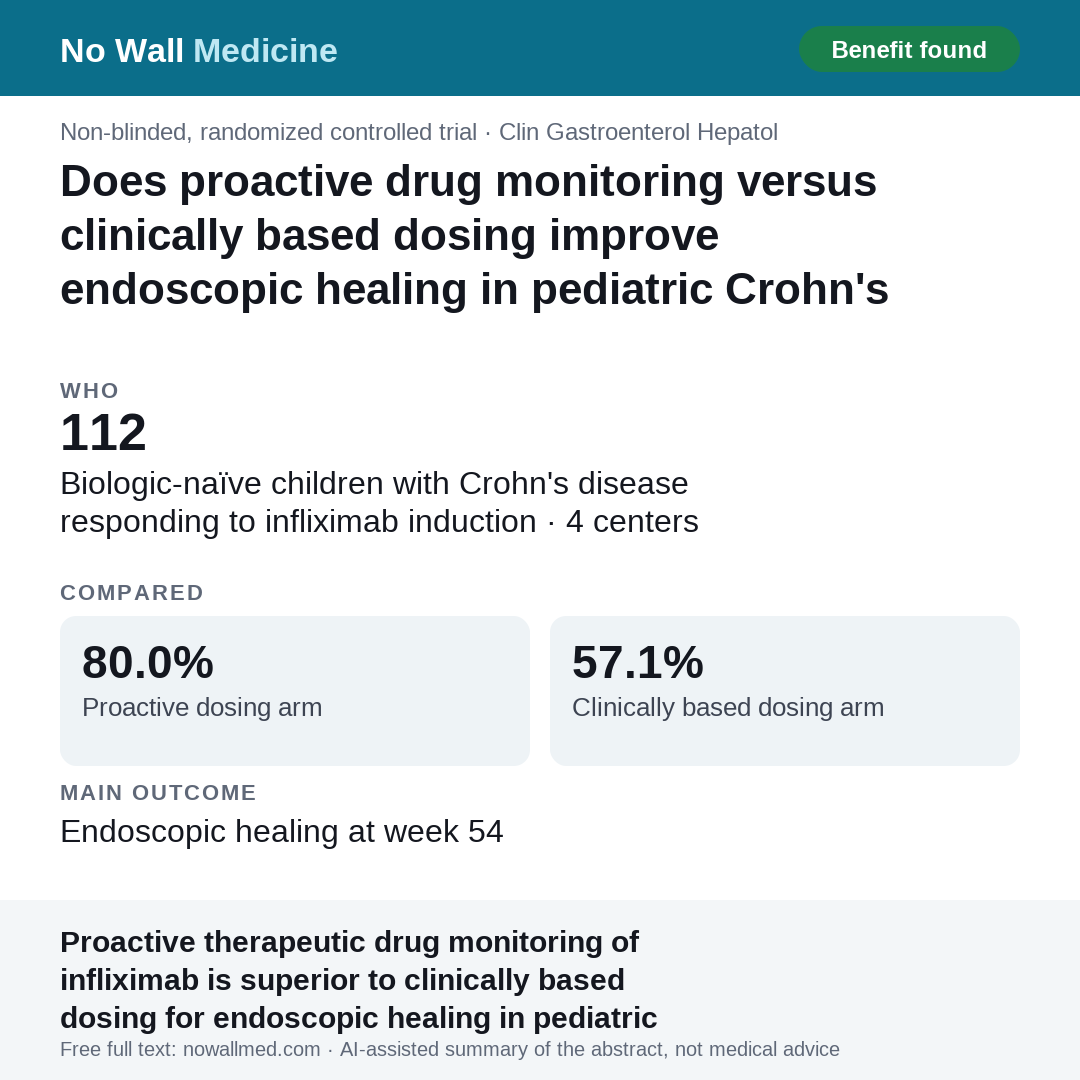
Proactive Drug Monitoring Versus Clinically Based Dosing for Endoscopic Healing in Pediatric Crohn's Disease Receiving Infliximab
Non-blinded, randomized controlled trialBenefit found
Does proactive drug monitoring versus clinically based dosing improve endoscopic healing in pediatric Crohn's disease?
Who
112
Biologic-naïve children with Crohn's disease responding to infliximab induction · 4 centers in South Korea
Compared
80.0%Proactive dosing arm (40/50)
57.1%Clinically based dosing arm (28/49)
Main outcome
Endoscopic healing at week 54
Result: odds ratio 3.48 (95% confidence interval 1.26-10.43)
Bottom line: Proactive therapeutic drug monitoring of infliximab is superior to clinically based dosing for endoscopic healing in pediatric Crohn's disease.
Clin Gastroenterol Hepatol · 2025-05-14Download image