Visual abstracts
New randomized trials and meta-analyses from leading journals at a glance: who was studied, what was compared, and what was found. Every paper is free to read in full.
All specialtiesCardiology 2020Oncology 1740Gastroenterology & Hepatology 768Infectious Disease 1281Neurology 831Psychiatry & Mental Health 992Pulmonology 865Critical Care 576Endocrinology & Diabetes 1078Pediatrics 1201Surgery 1024Orthopedics & Sports Medicine 376Neurosurgery 251Cardiothoracic & Vascular Surgery 216Plastic & Reconstructive Surgery 309Nephrology 420Rheumatology 285Hematology 444Dermatology 231Ophthalmology 232Obstetrics & Gynecology 657Public & Global Health 391Radiology & Imaging 278Anesthesiology 404Urology 355ENT (Otolaryngology) 269Emergency Medicine 223Allergy & Immunology 128Geriatrics 433Family Medicine & Primary Care 238Medical Genetics & Genomics 219Pathology & Laboratory Medicine 66Physical Medicine & Rehabilitation 356Palliative Care 174Nutrition 550Digital Health & AI 1051General Medicine 155
Immunogenicity and Efficacy of Subcutaneous Infliximab Monotherapy vs Combination Therapy in Inflammatory Bowel Disease: A Systematic Review and Meta-analysis
Systematic review and meta-analysisMixed results
Is subcutaneous infliximab monotherapy as effective as combination therapy in inflammatory bowel disease?
Who
3172
Patients with inflammatory bowel disease treated with subcutaneous infliximab
Compared
Subcutaneous infliximab monotherapy: median, 68%
48%Combination treatment
Main outcome
Anti-drug antibody formation within 12 months
Result: odds ratio 3.29 (95% CI 1.71-6.31)
Bottom line: Subcutaneous infliximab monotherapy has higher immunogenicity than combination therapy, though clinical response rates were comparable.
Clin Gastroenterol Hepatol · 2025-05-14Download image

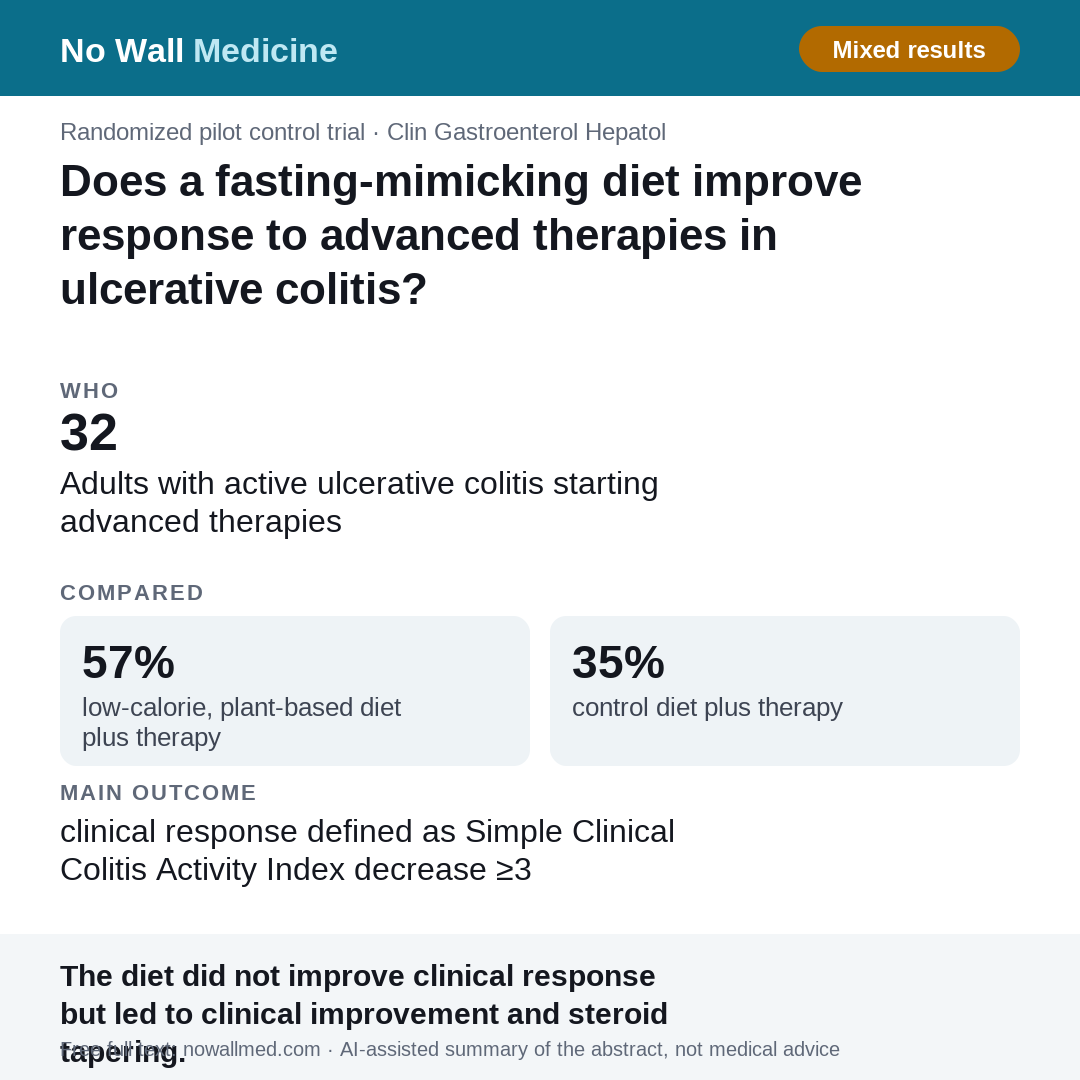
A Pilot Randomized Control Trial to Assess the Adjunctive Effect of Diet on Response to Advanced Therapies in Patients With Ulcerative Colitis
Randomized pilot control trialMixed results
Does a fasting-mimicking diet improve response to advanced therapies in ulcerative colitis?
Who
32
Adults with active ulcerative colitis starting advanced therapies
Compared
57%low-calorie, plant-based diet plus therapy (n = 8 of 14)
35%control diet plus therapy (n = 6 of 17)
Main outcome
clinical response defined as Simple Clinical Colitis Activity Index decrease ≥3
Bottom line: The diet did not improve clinical response but led to clinical improvement and steroid tapering.
Limitation: Results were limited by sample size due to early study end.
Clin Gastroenterol Hepatol · 2025-05-14Download image
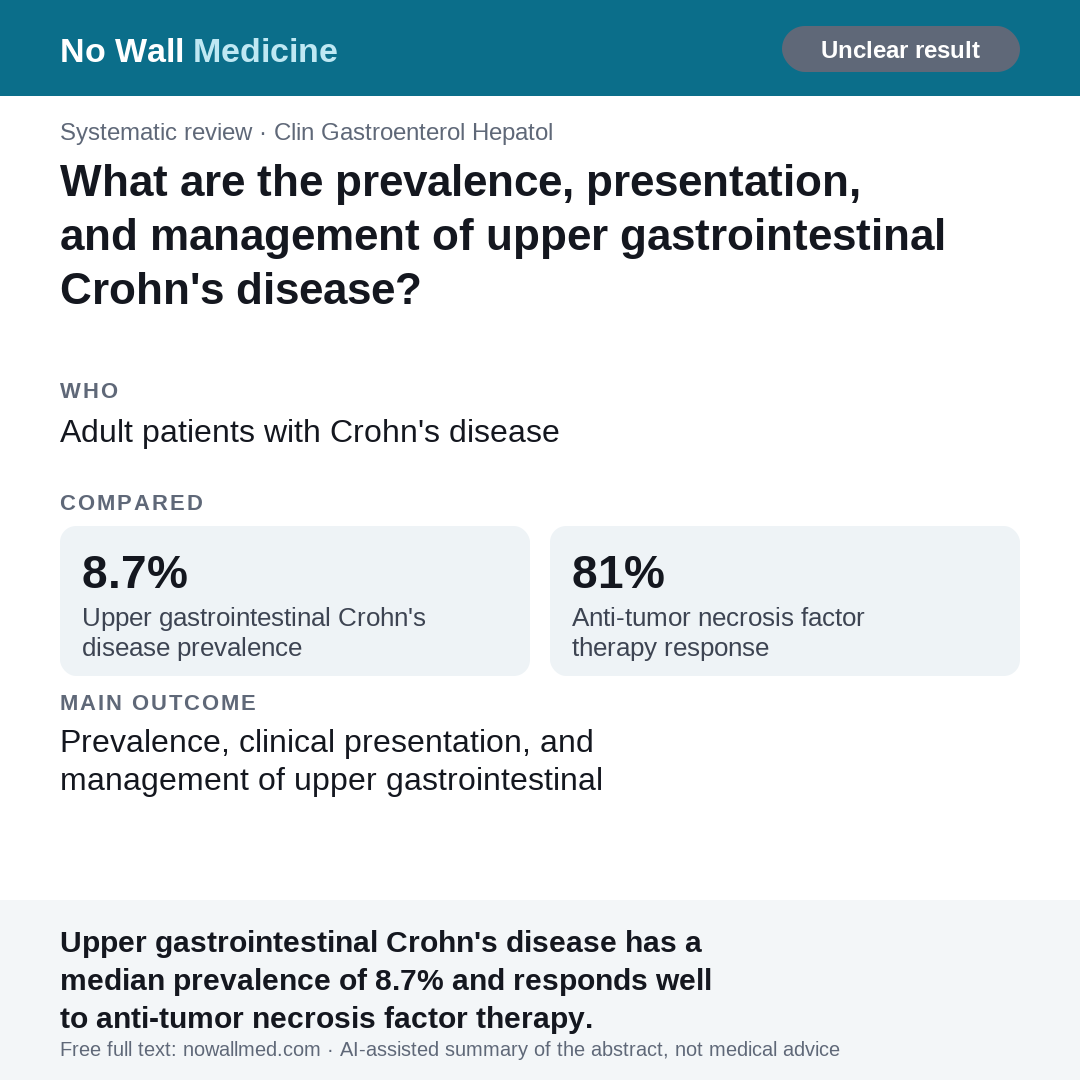
Diagnosis and Management of Upper Gastrointestinal Involvement in Adult Patients With Crohn's Disease: A Systematic Review
Systematic reviewUnclear result
What are the prevalence, presentation, and management of upper gastrointestinal Crohn's disease?
Who
Adult patients with Crohn's disease
Compared
8.7%Upper gastrointestinal Crohn's disease prevalence (interquartile range, 4.74%-24.36%)
81%Anti-tumor necrosis factor therapy response
Main outcome
Prevalence, clinical presentation, and management of upper gastrointestinal involvement
Bottom line: Upper gastrointestinal Crohn's disease has a median prevalence of 8.7% and responds well to anti-tumor necrosis factor therapy.
Limitation: Significant heterogeneity in study design, definitions, diagnosis, and outcome measures.
Clin Gastroenterol Hepatol · 2025-05-14Download image
PTSD and epigenetic aging: a longitudinal meta-analysis
Longitudinal meta-analysisBenefit found
Does new-onset PTSD or symptom severity changes associate with epigenetic aging changes?
Who
1,367
Military and civilian cohorts · 7 military and civilian cohorts
Compared
New-onset PTSD: meta β = 0.16
Increased PTSD symptom severity: meta β = 0.24
Main outcome
Change in Horvath and GrimAge epigenetic aging metrics
Result: meta β = 0.16 (p-adj = 0.03) for Horvath age residuals
Bottom line: New-onset PTSD or increased symptom severity is associated with greater epigenetic age acceleration over time.
Psychol Med · 2025-05-14Download image

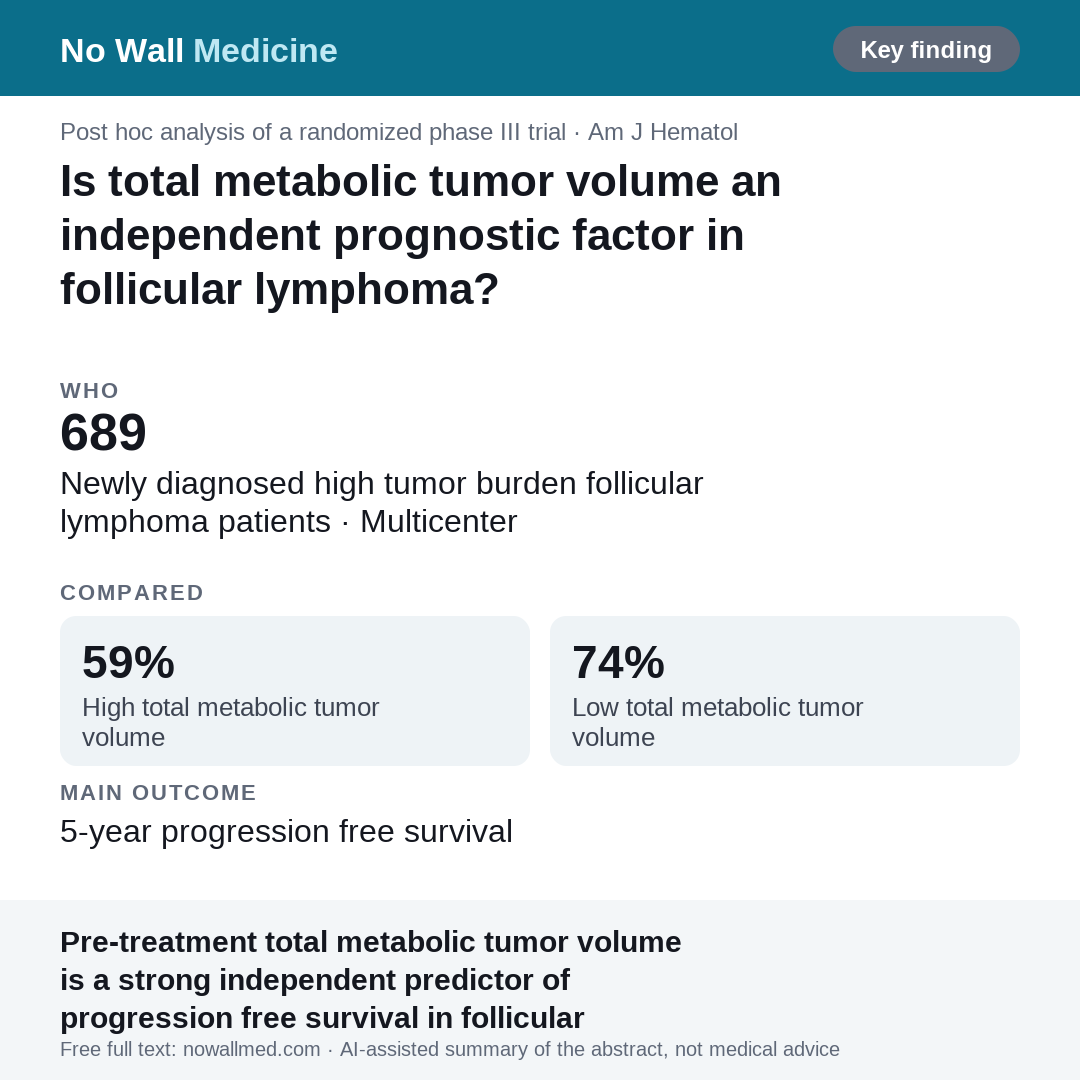
Total Metabolic Tumor Volume Is a Strong Independent Prognostic Factor in Follicular Lymphomas: Results From a Sub-Study of the FOLL12 Trial
Post hoc analysis of a randomized phase III trialBenefit found
Is total metabolic tumor volume an independent prognostic factor in follicular lymphoma?
Who
689
Newly diagnosed high tumor burden follicular lymphoma patients · Multicenter
Compared
59%High total metabolic tumor volume (95% CI, 53-65%)
74%Low total metabolic tumor volume (95% CI, 69-78%)
Main outcome
5-year progression free survival
Result: hazard ratio 1.61 (95% CI, 1.24-2.09)
Bottom line: Pre-treatment total metabolic tumor volume is a strong independent predictor of progression free survival in follicular lymphoma.
Am J Hematol · 2025-05-14Download image
Benefits of anticoagulation prophylaxis in children undergoing kidney transplant: systematic review and meta-analysis
Systematic review and meta-analysisBenefit found
Is thromboprophylaxis effective and safe in children undergoing kidney transplant?
Who
2094
Children aged 0 to 21 years undergoing kidney transplant
Compared
Thromboprophylaxis
No preventive measures
Main outcome
Graft thrombosis
Result: odds ratio 0.31 (95% CI 0.18-0.53)
Bottom line: Thromboprophylaxis is effective in preventing kidney graft loss from vascular thrombosis in pediatric recipients.
Limitation: High clinical and methodologic heterogeneity in study populations and protocols.
J Thromb Haemost · 2025-05-14Download image

Efficacy and safety of ruxolitinib cream in children aged 2 to 11 years with atopic dermatitis: Results from TRuE-AD3, a phase 3, randomized double-blind study
Phase 3, randomized, double-blind studyBenefit found
Is ruxolitinib cream effective and safe for children with mild-to-moderate atopic dermatitis?
Who
330
Children aged 2 to 11 years with mild-to-moderate atopic dermatitis · North America
Compared
36.6%0.75% ruxolitinib cream
56.5%1.5% ruxolitinib cream
10.8%vehicle
Main outcome
proportion of patients achieving Investigator's Global Assessment treatment success
Bottom line: Ruxolitinib cream provided superior improvements in atopic dermatitis signs and symptoms compared to vehicle in children.
Limitation: Enrollment was limited to patients in North America.
J Am Acad Dermatol · 2025-05-14Download image

Impact of Aspirin on Timing of Birth in Pregnancies With Clinical Manifestations of Placental Dysfunction: Evidence From a Multicentre Randomised Clinical Trial
Secondary analysis of a cluster randomised trialBenefit found
Does aspirin delay gestational age at delivery in pregnancies with placental dysfunction?
Who
Singleton pregnancies examined at 11-13+6 weeks · 18 maternity/diagnostic units in Asia
Compared
Aspirin administration: prolongation of 2.85 weeks at 24 weeks gestation
Placental dysfunction < 32 weeks: adjusted relative risk 0.543 (95% CI: 0.330-0.864)
Main outcome
gestational age at delivery in pregnancies with placental dysfunction
Result: adjusted relative risk 0.543 (95% CI: 0.330-0.864)
Bottom line: Aspirin administration may delay gestational age at delivery in pregnancies with placental dysfunction, particularly at earlier gestations.
BJOG · 2025-05-14Download image

Impact of Implementation Tools for Spontaneous Preterm Birth Guidelines: A Systematic Review and Meta-Analysis
Systematic review and meta-analysisBenefit found
Do guideline implementation tools improve adherence to preterm birth guideline recommendations?
Who
20961
People in studies measuring preterm birth guideline adherence
Compared
34.6%No implementation tool (3871/11195)
67.6%With implementation tool (6607/9766)
Main outcome
Adherence to preterm birth guideline recommendations
Result: odds ratio 13.8 (95% CI 6.02-31.71)
Bottom line: Implementation tools significantly improve adherence to evidence-based preterm birth guidelines.
BJOG · 2025-05-14Download image

Multimodal prehabilitation before lung resection surgery: a multicentre randomised controlled trial
Multicentre, randomised controlled trialBenefit found
Does multimodal prehabilitation reduce postoperative complications and hospital stay before lung resection?
Who
122
High-risk individuals undergoing lung resection surgery · Multicentre
Compared
Multimodal prehabilitation: 20/58 (34%)
Usual care: 35/64 (55%)
Main outcome
Postoperative pulmonary and cardiovascular complications
Result: odds ratio 2.29 (95% confidence interval 1.10-4.77)
Bottom line: Multimodal prehabilitation reduced postoperative pulmonary complications and hospital length of stay in high-risk lung resection patients.
Br J Anaesth · 2025-05-14Download image

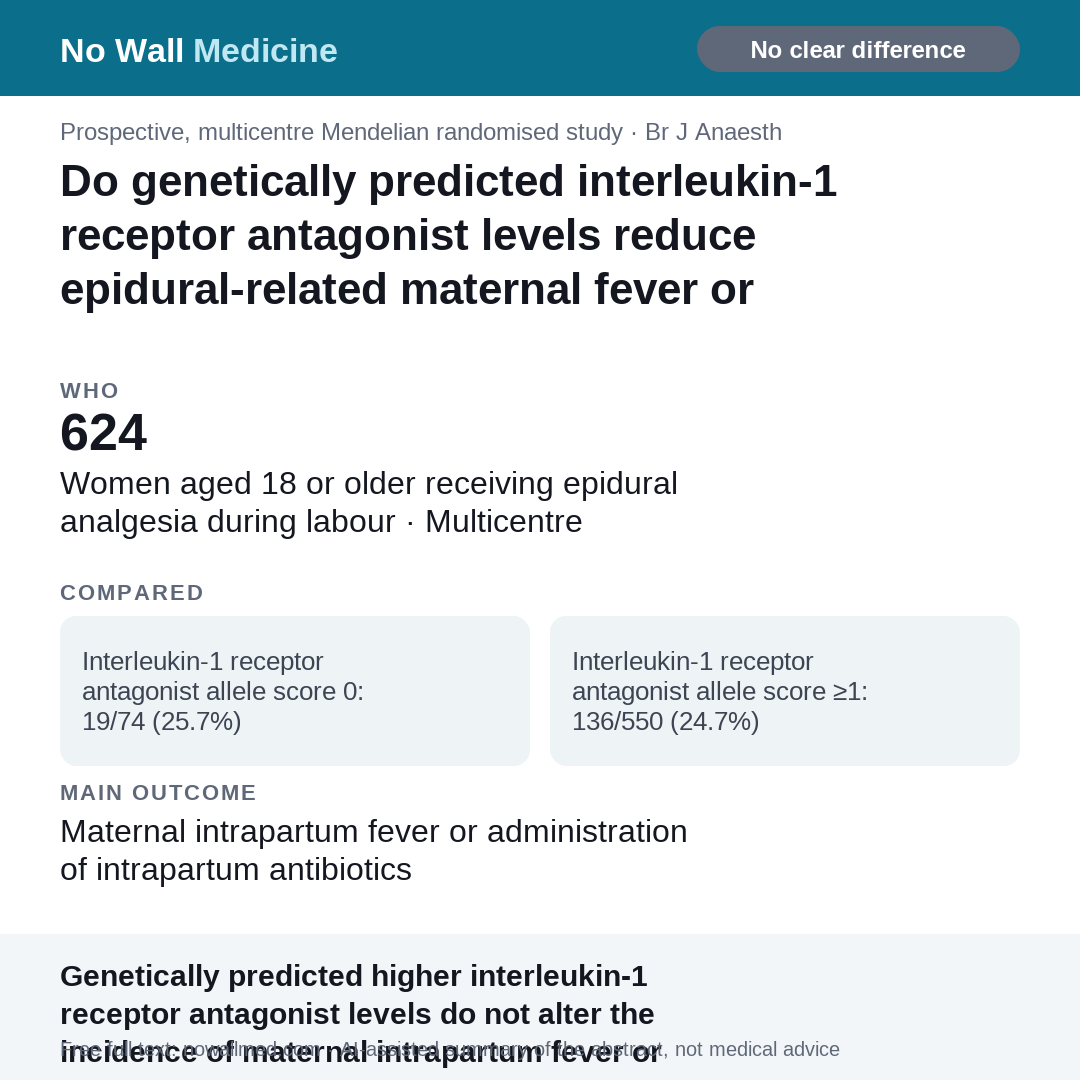
Interleukin-1 receptor antagonist polymorphisms in women receiving epidural analgesia who develop maternal intrapartum fever: a prospective, multicentre Mendelian randomised study
Prospective, multicentre Mendelian randomised studyNo clear difference
Do genetically predicted interleukin-1 receptor antagonist levels reduce epidural-related maternal fever or antibiotic use?
Who
624
Women aged 18 or older receiving epidural analgesia during labour · Multicentre
Compared
Interleukin-1 receptor antagonist allele score 0: 19/74 (25.7%)
Interleukin-1 receptor antagonist allele score ≥1: 136/550 (24.7%)
Main outcome
Maternal intrapartum fever or administration of intrapartum antibiotics
Result: odds ratio 1.05 (95% confidence interval 0.60-1.83)
Bottom line: Genetically predicted higher interleukin-1 receptor antagonist levels do not alter the incidence of maternal intrapartum fever or antibiotic use.
Br J Anaesth · 2025-05-14Download image
Temporal-Parotid Resection for Malignant Parotid Tumors: A Systematic Review
Systematic reviewBenefit found
What are the survival outcomes and margin status for temporal-parotid resection?
Who
336
Patients with parotid malignancies involving the temporal bone
Compared
Temporal-parotid resection: 74.5% negative surgical margins
Temporal-parotid resection: 64.0% local disease control
Main outcome
Survival outcomes and margin status
Bottom line: Temporal-parotid resection is a viable strategy for achieving safe margins and local disease control.
Laryngoscope · 2025-05-14Download image

Safety and efficacy of pegtibatinase enzyme replacement therapy in adults with classical homocystinuria in the COMPOSE phase 1/2 randomized trial
Phase 1/2 randomized trialBenefit found
Is pegtibatinase enzyme replacement therapy safe and effective for classical homocystinuria?
Who
24
Adults aged 12 to 65 years with classical homocystinuria
Compared
Pegtibatinase: 62.5% experienced ≥1 treatment-related treatment-emergent adverse event
Placebo
Main outcome
Adverse event incidence, immunogenicity, and total plasma homocysteine change
Bottom line: Pegtibatinase was well tolerated and substantially reduced total plasma homocysteine levels in adults with classical homocystinuria.
Genet Med · 2025-05-14Download image

Social Determinants of Health-Related Outcomes in an Intervention Following Initial Implantable Cardioverter-Defibrillator Implantation
Randomized trial analysisNo clear difference
Do social factors affect ICD outcomes
Who
301
Patients with initial implantable cardioverter defibrillator
Compared
Low income
White participants
Rural residents
Main outcome
ICD shocks, hospitalization, death
Bottom line: Social factors did not affect most outcomes
J Am Heart Assoc · 2025-05-14Download image

Outcome Predictors of Candida Prosthetic Joint Infections: A Systematic Review and Meta-analysis
Systematic review and meta-analysisMixed results
What are the predictors of outcome in Candida prosthetic joint infections?
Who
385
Adult patients with Candida prosthetic joint infections
Compared
Co-infection with Staphylococcus aureus: odds ratio 0.4 (95% confidence interval 0.18-0.92)
0.25Debridement/retention of the prosthesis (0.11-0.55)
3.18First-line therapy with amphotericin B (1.25-9.87)
Main outcome
Predictors of failure or success in Candida prosthetic joint infections
Bottom line: Amphotericin B is associated with success, while Staphylococcus aureus co-infection and prosthesis retention predict failure.
Open Forum Infect Dis · 2025-05-14Download image

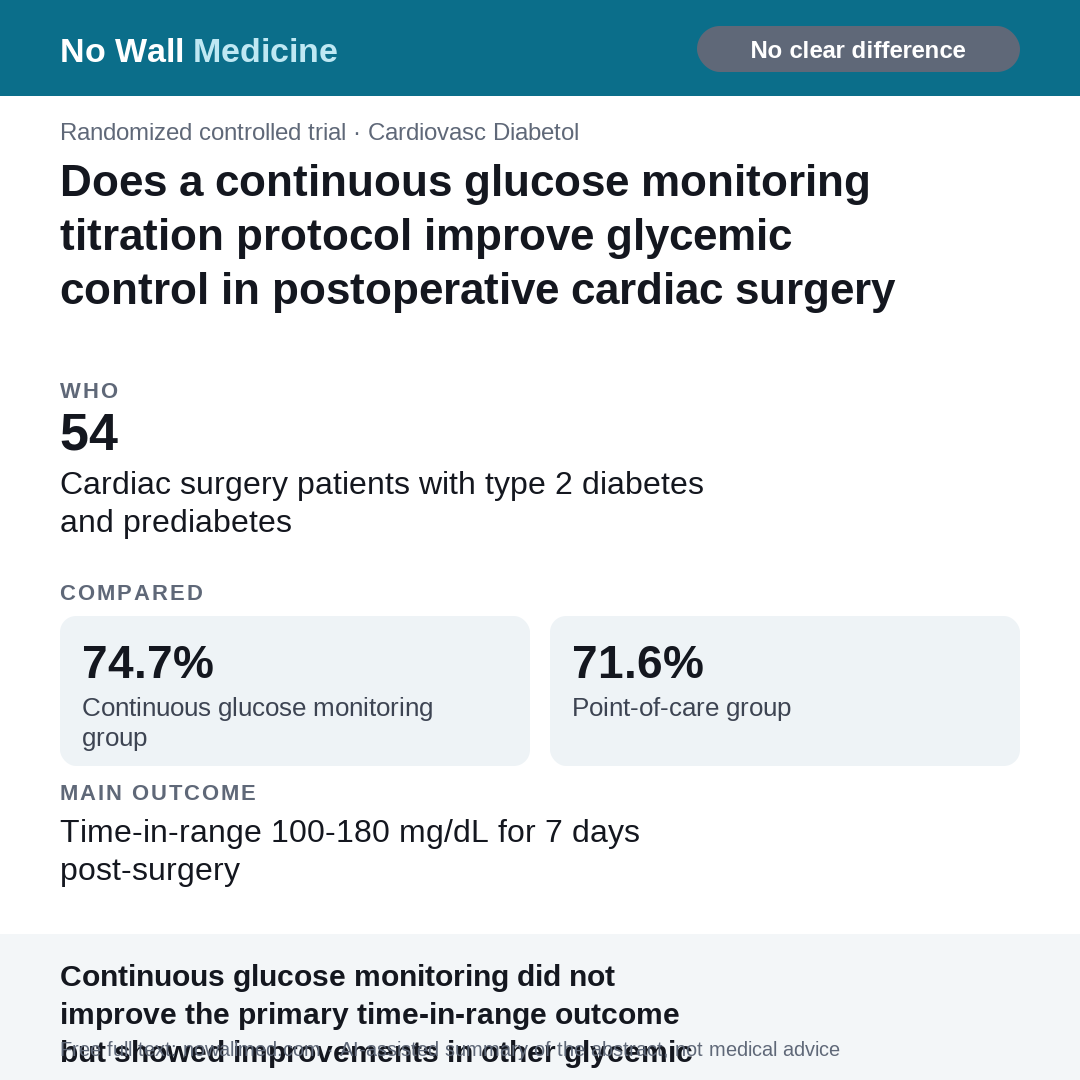
Use of an insulin titration protocol based on continuous glucose monitoring in postoperative cardiac surgery patients with type 2 diabetes and prediabetes: a randomized controlled trial
Randomized controlled trialNo clear difference
Does a continuous glucose monitoring titration protocol improve glycemic control in postoperative cardiac surgery patients?
Who
54
Cardiac surgery patients with type 2 diabetes and prediabetes
Compared
74.7%Continuous glucose monitoring group
71.6%Point-of-care group
Main outcome
Time-in-range 100-180 mg/dL for 7 days post-surgery
Bottom line: Continuous glucose monitoring did not improve the primary time-in-range outcome but showed improvements in other glycemic metrics.
Cardiovasc Diabetol · 2025-05-14Download image
Predictive Value of Tumor Regression Grading on the Prognosis of Neoadjuvant Chemotherapy for Locally Advanced Gastric Cancer: A Systematic Review and Meta-Analysis
Systematic review and meta-analysisBenefit found
Does tumor regression grade influence prognosis in locally advanced gastric cancer patients?
Who
2733
Patients with locally advanced gastric cancer receiving neoadjuvant chemotherapy
Compared
Lower tumor regression grade
Higher tumor regression grade
Main outcome
disease-free survival and overall survival
Result: hazard ratio 0.53 (95% CI 0.32-0.88) for disease-free survival; hazard ratio 0.59 (95% CI 0.39-0.87) for overall survival
Bottom line: Lower tumor regression grade is associated with improved disease-free survival and overall survival in locally advanced gastric cancer.
Limitation: Publication bias was identified for overall survival.
Clin Transl Gastroenterol · 2025-05-14Download image

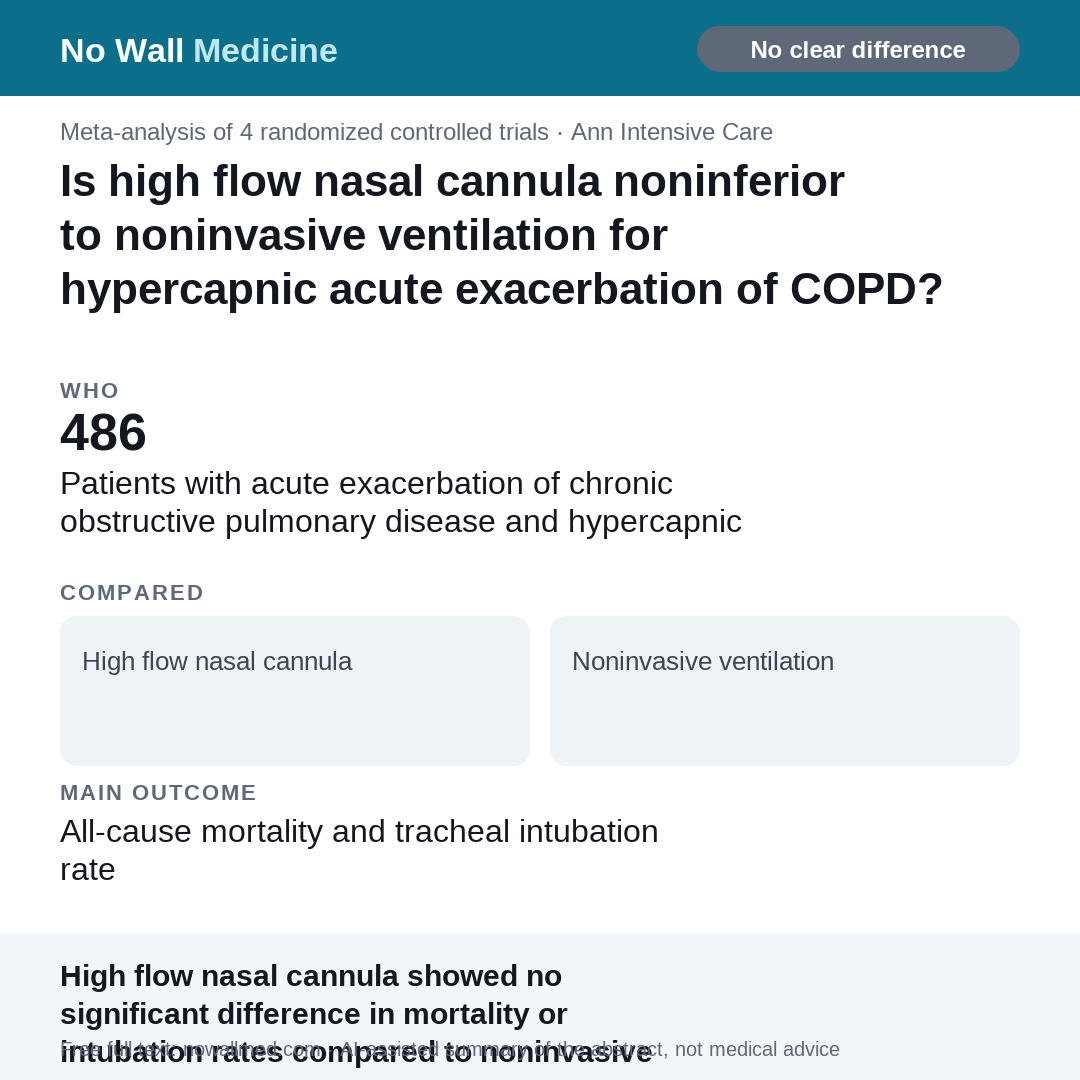
High flow nasal therapy versus noninvasive ventilation for AECOPD with acute hypercapnic respiratory failure: a meta-analysis of randomized controlled trials
Meta-analysis of 4 randomized controlled trialsNo clear difference
Is high flow nasal cannula noninferior to noninvasive ventilation for hypercapnic acute exacerbation of COPD?
Who
486
Patients with acute exacerbation of chronic obstructive pulmonary disease and hypercapnic acute respiratory failure
Compared
High flow nasal cannula
Noninvasive ventilation
Main outcome
All-cause mortality and tracheal intubation rate
Result: mortality RR 0.97 (95% CI 0.56 to 1.68), intubation rate RR 1.67 (95% CI 0.99 to 2.83)
Bottom line: High flow nasal cannula showed no significant difference in mortality or intubation rates compared to noninvasive ventilation.
Ann Intensive Care · 2025-05-14Download image
Automated oxygen control in preterm babies on respiratory support: protocol for a randomised crossover trial
Single-centre, non-blinded, randomised crossover trialUnclear result
Is automated oxygen control more effective than manual control in preterm babies?
Who
26
Preterm babies needing invasive or non-invasive respiratory support · Aga Khan University Hospital Karachi
Compared
Automated oxygen control
Manual oxygen control
Main outcome
Efficacy to keep oxygen saturation in target range
Bottom line: This is a study protocol to compare automated versus manual oxygen control in preterm babies.
BMJ Paediatr Open · 2025-05-14Download image

The feasibility and surgical outcomes of robotic vaginal natural orifice transluminal endoscopic single port hysterectomy for benign gynecologic diseases: a systematic review and meta-analysis
Meta-analysis of 10 studiesBenefit found
Is R-vNOTES feasible for benign gynecologic diseases
Who
patients with benign gynecologic diseases
Compared
R-vNOTES
RALH
Main outcome
surgical outcomes and safety
Result: R-vNOTES: shorter operation time and less blood loss
Bottom line: R-vNOTES is feasible with favorable safety profile
AJOG Glob Rep · 2025-05-14Download image