Visual abstracts
New randomized trials and meta-analyses from leading journals at a glance: who was studied, what was compared, and what was found. Every paper is free to read in full.
All specialtiesCardiology 842Oncology 763Gastroenterology & Hepatology 307Infectious Disease 626Neurology 350Psychiatry & Mental Health 430Pulmonology 366Critical Care 245Endocrinology & Diabetes 480Pediatrics 536Surgery 324Orthopedics & Sports Medicine 162Neurosurgery 93Cardiothoracic & Vascular Surgery 87Plastic & Reconstructive Surgery 124Nephrology 197Rheumatology 108Hematology 182Dermatology 80Ophthalmology 97Obstetrics & Gynecology 261Public & Global Health 167Radiology & Imaging 98Anesthesiology 114Urology 162ENT (Otolaryngology) 91Emergency Medicine 73Allergy & Immunology 58Geriatrics 160Family Medicine & Primary Care 111Medical Genetics & Genomics 91Pathology & Laboratory Medicine 24Physical Medicine & Rehabilitation 148Palliative Care 81Nutrition 223Digital Health & AI 460General Medicine 101
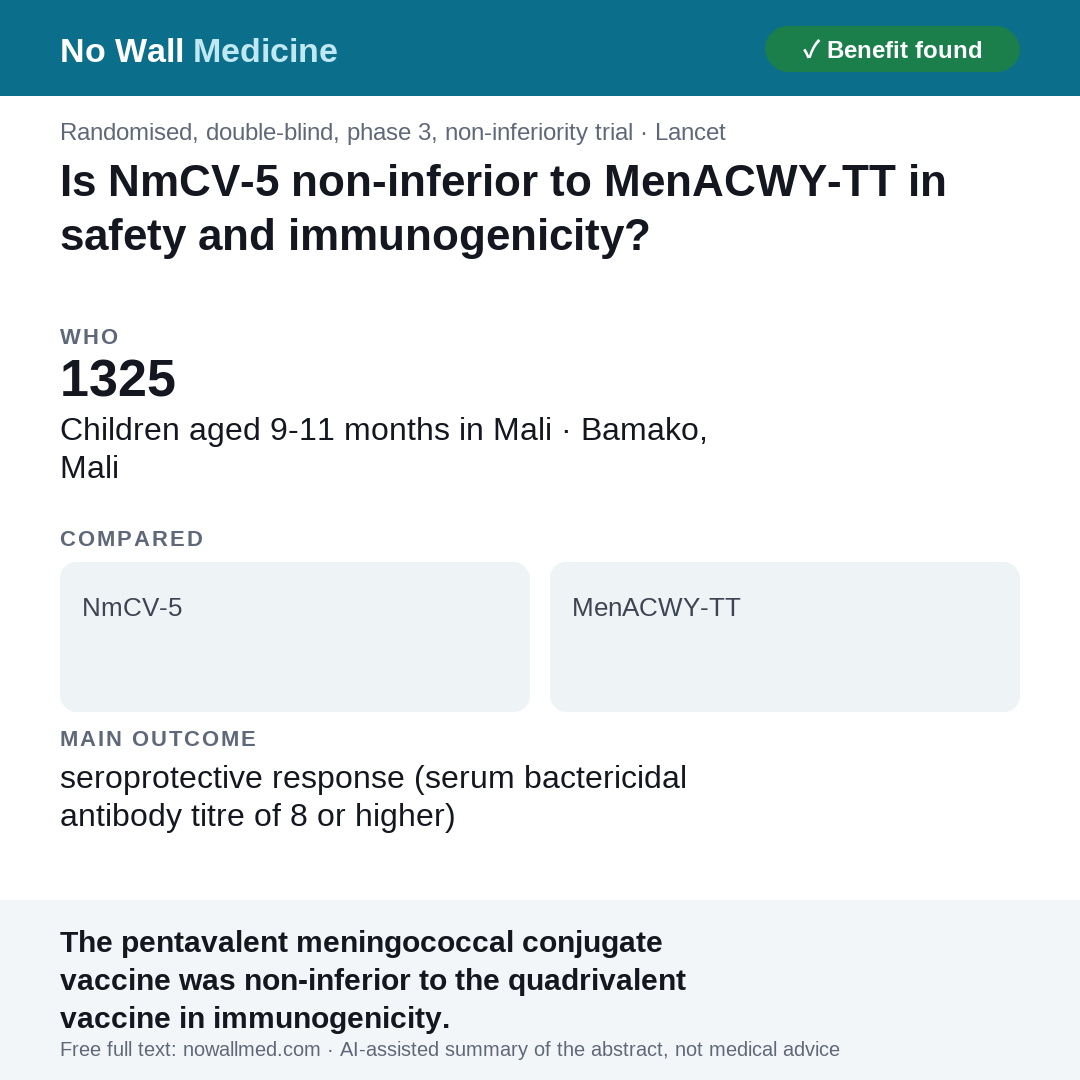
Safety and immunogenicity of a pentavalent meningococcal conjugate vaccine targeting serogroups A, C, W, Y, and X when co-administered with routine childhood vaccines at ages 9 months and 15 months in Mali: a single-centre, double-blind, randomised, controlled, phase 3, non-inferiority trial
Randomised, double-blind, phase 3, non-inferiority trialBenefit found
Is NmCV-5 non-inferior to MenACWY-TT in safety and immunogenicity?
Who
1325
Children aged 9-11 months in Mali · Bamako, Mali
Compared
NmCV-5
MenACWY-TT
Main outcome
seroprotective response (serum bactericidal antibody titre of 8 or higher)
Bottom line: The pentavalent meningococcal conjugate vaccine was non-inferior to the quadrivalent vaccine in immunogenicity.
Lancet · 2025-03-11Download image
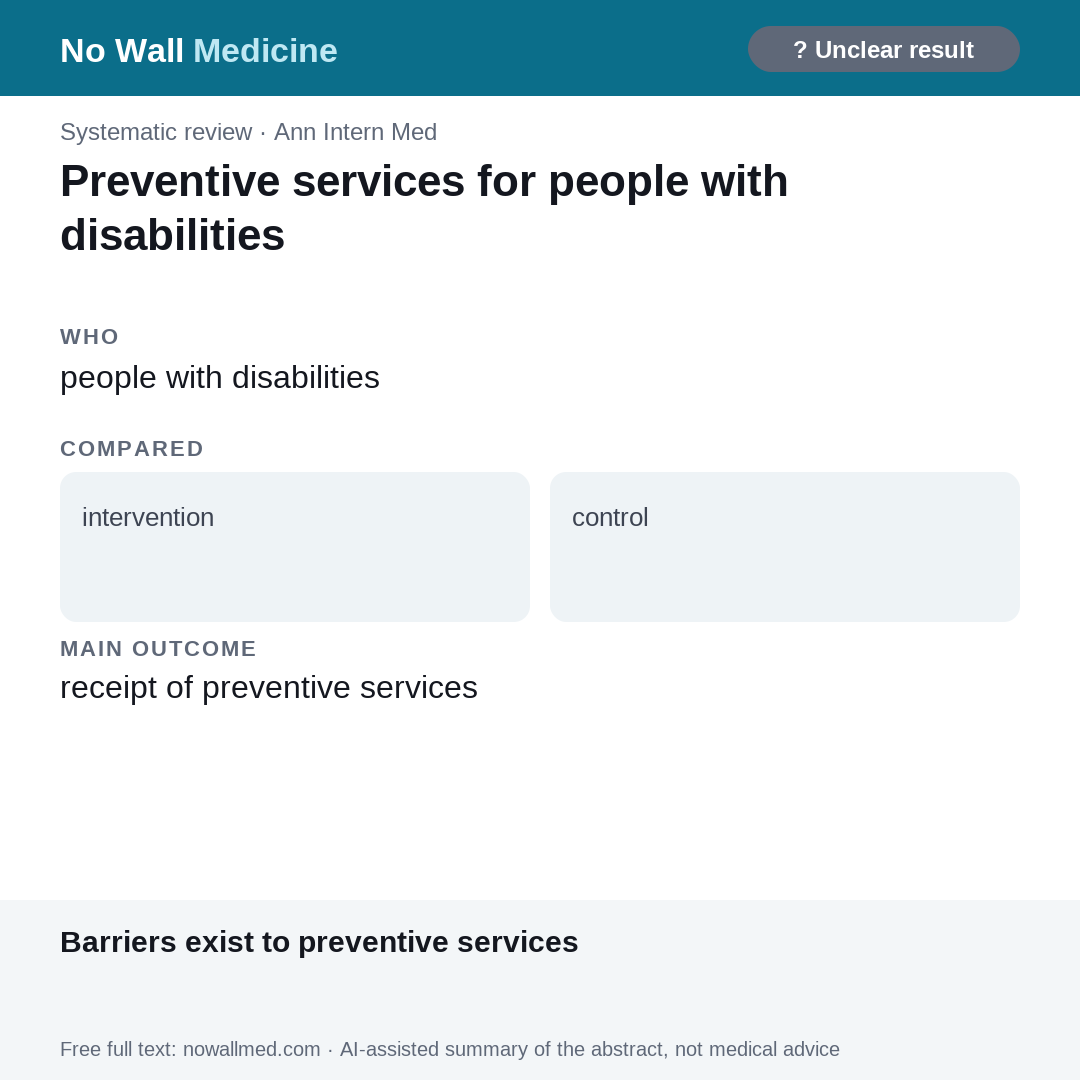
Health Care Delivery of Clinical Preventive Services for People With Disabilities : A Systematic Review
Systematic reviewUnclear result
Preventive services for people with disabilities
Who
74
people with disabilities
Compared
intervention
control
Main outcome
receipt of preventive services
Bottom line: Barriers exist to preventive services
Limitation: high methodological heterogeneity
Funded by: Agency for Healthcare Research and Quality
Ann Intern Med · 2025-03-11Download image
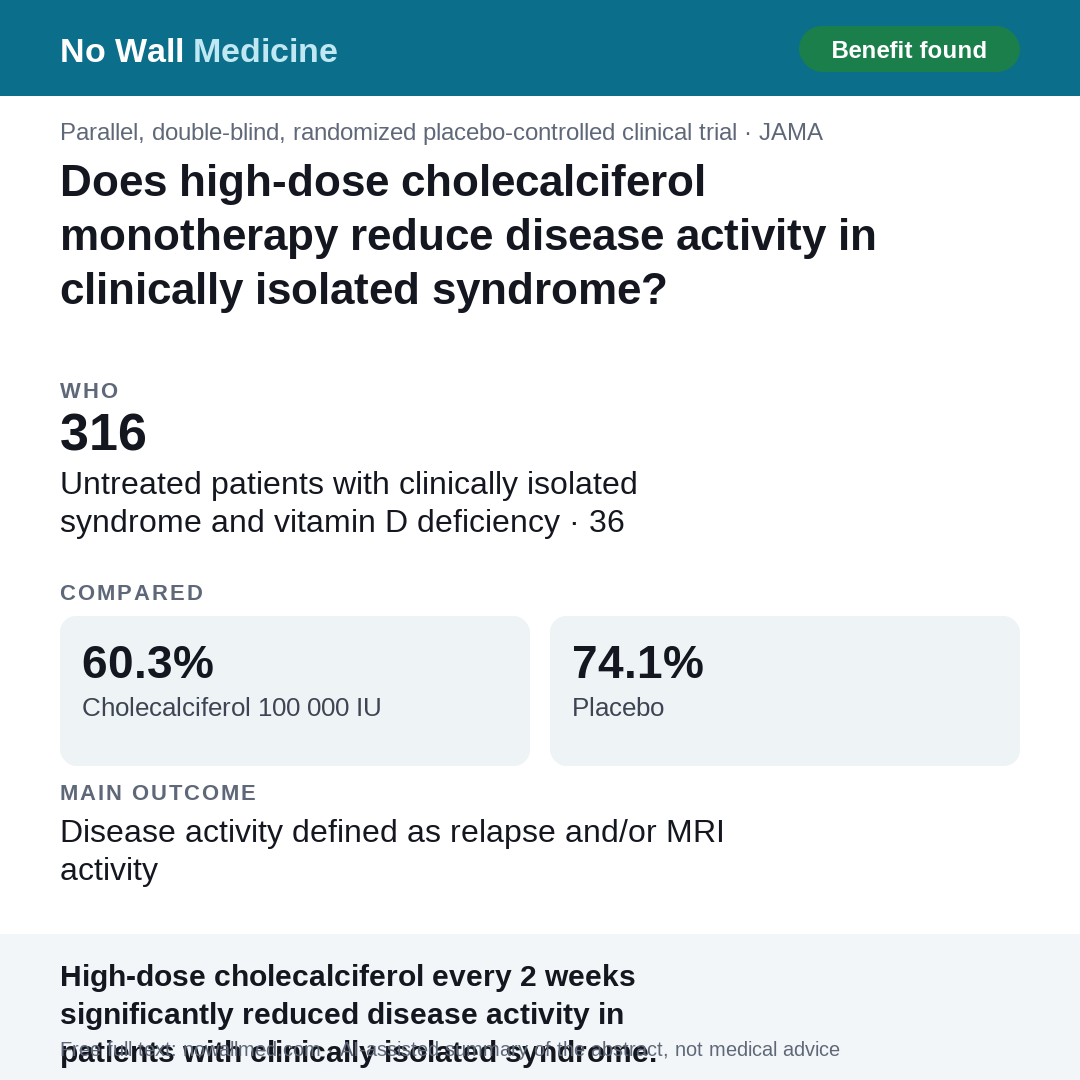
High-Dose Vitamin D in Clinically Isolated Syndrome Typical of Multiple Sclerosis: The D-Lay MS Randomized Clinical Trial
Parallel, double-blind, randomized placebo-controlled clinical trialBenefit found
Does high-dose cholecalciferol monotherapy reduce disease activity in clinically isolated syndrome?
Who
316
Untreated patients with clinically isolated syndrome and vitamin D deficiency · 36 multiple sclerosis centers in France
Compared
60.3%Cholecalciferol 100 000 IU
74.1%Placebo
Main outcome
Disease activity defined as relapse and/or MRI activity
Result: hazard ratio 0.66 (95% CI 0.50-0.87)
Bottom line: High-dose cholecalciferol every 2 weeks significantly reduced disease activity in patients with clinically isolated syndrome.
JAMA · 2025-03-10Download image
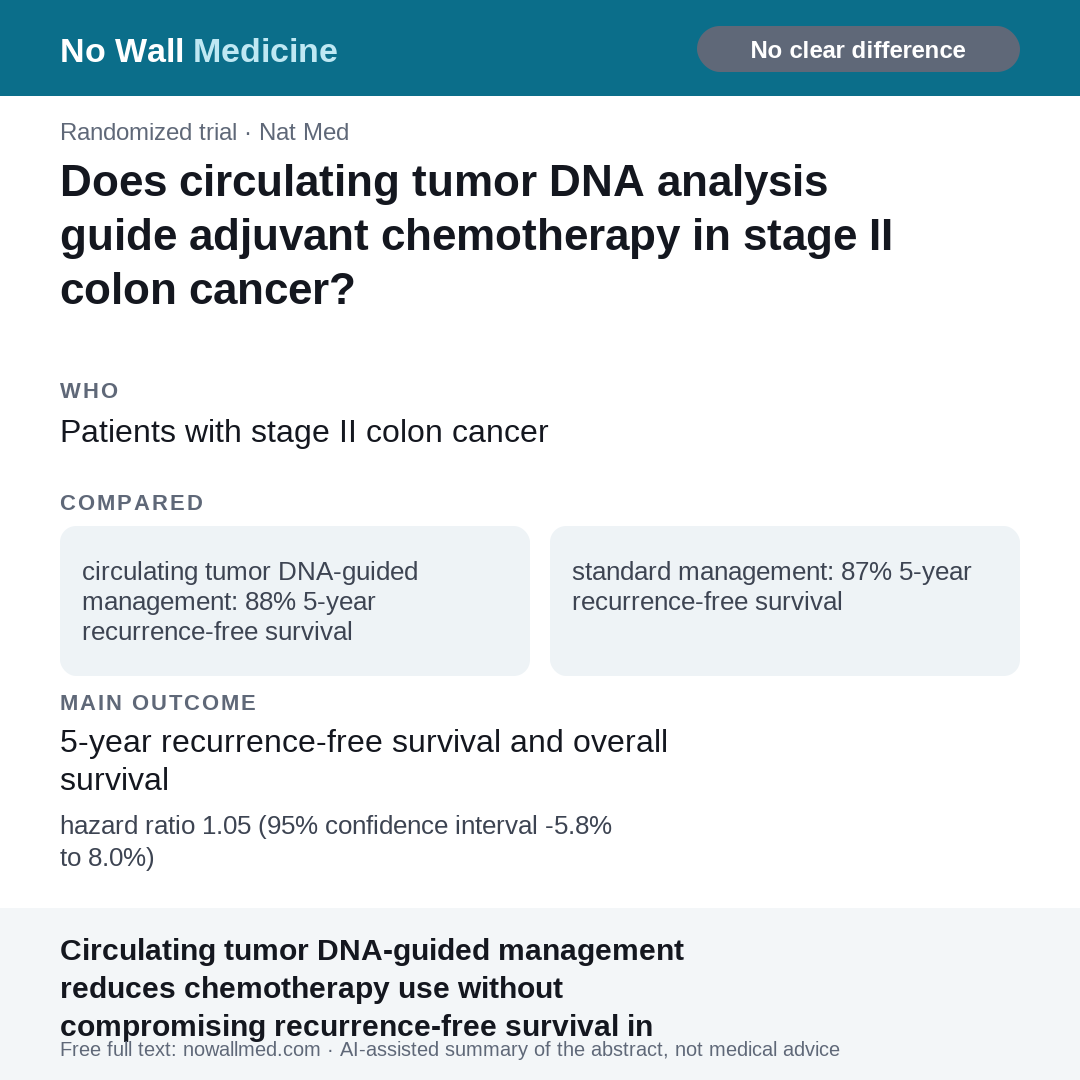
Circulating tumor DNA analysis guiding adjuvant therapy in stage II colon cancer: 5-year outcomes of the randomized DYNAMIC trial
Randomized trialNo clear difference
Does circulating tumor DNA analysis guide adjuvant chemotherapy in stage II colon cancer?
Who
Patients with stage II colon cancer
Compared
circulating tumor DNA-guided management: 88% 5-year recurrence-free survival
standard management: 87% 5-year recurrence-free survival
Main outcome
5-year recurrence-free survival and overall survival
Result: hazard ratio 1.05 (95% confidence interval -5.8% to 8.0%)
Bottom line: Circulating tumor DNA-guided management reduces chemotherapy use without compromising recurrence-free survival in stage II colon cancer.
Nat Med · 2025-03-07Download image
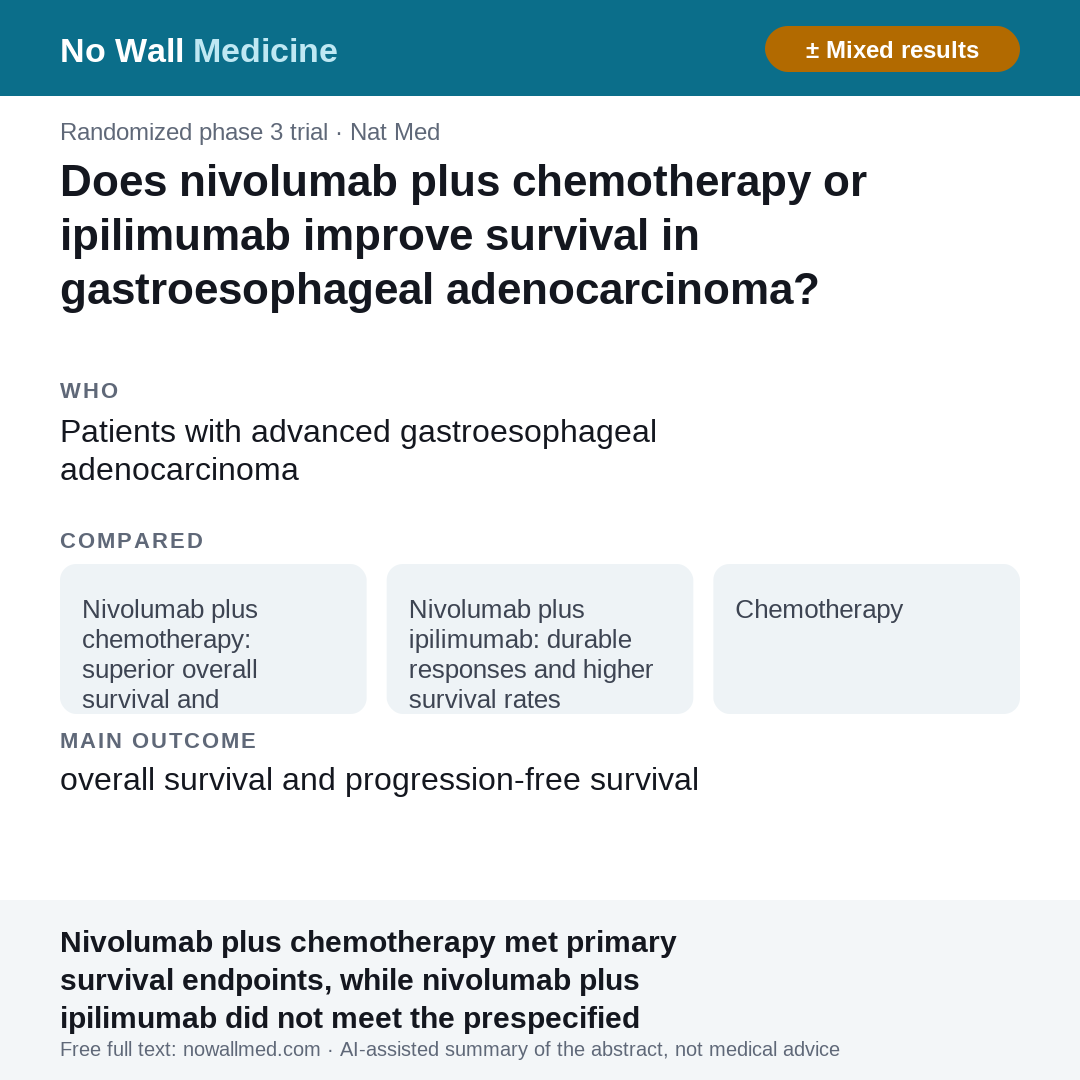
Nivolumab plus chemotherapy or ipilimumab in gastroesophageal cancer: exploratory biomarker analyses of a randomized phase 3 trial
Randomized phase 3 trialMixed results
Does nivolumab plus chemotherapy or ipilimumab improve survival in gastroesophageal adenocarcinoma?
Who
Patients with advanced gastroesophageal adenocarcinoma
Compared
Nivolumab plus chemotherapy: superior overall survival and progression-free survival
Nivolumab plus ipilimumab: durable responses and higher survival rates
Chemotherapy
Main outcome
overall survival and progression-free survival
Bottom line: Nivolumab plus chemotherapy met primary survival endpoints, while nivolumab plus ipilimumab did not meet the prespecified significance boundary.
Limitation: post hoc exploratory analyses
Nat Med · 2025-03-07Download image
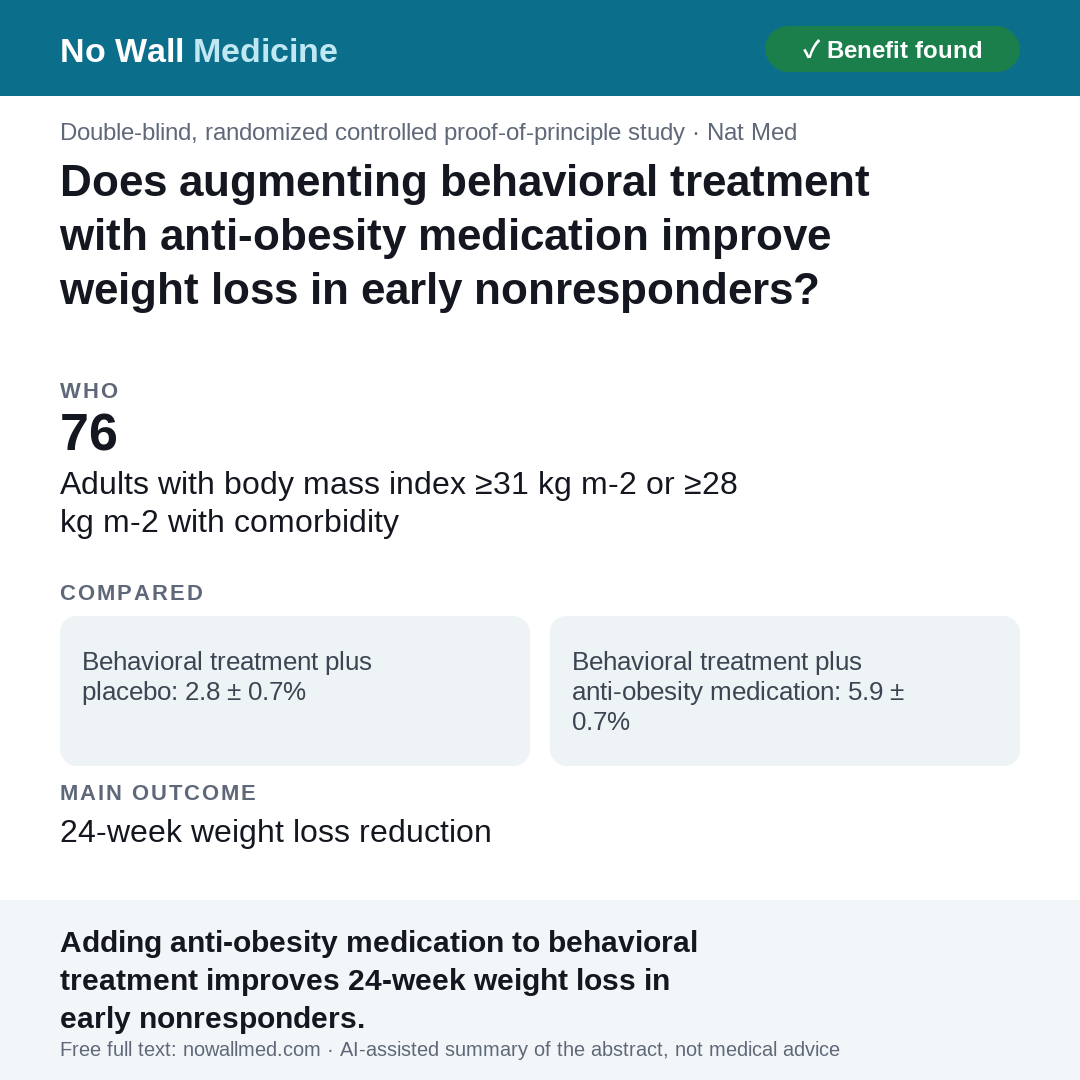
Anti-obesity medication for weight loss in early nonresponders to behavioral treatment: a randomized controlled trial
Double-blind, randomized controlled proof-of-principle studyBenefit found
Does augmenting behavioral treatment with anti-obesity medication improve weight loss in early nonresponders?
Who
76
Adults with body mass index ≥31 kg m-2 or ≥28 kg m-2 with comorbidity
Compared
Behavioral treatment plus placebo: 2.8 ± 0.7%
Behavioral treatment plus anti-obesity medication: 5.9 ± 0.7%
Main outcome
24-week weight loss reduction
Result: mean difference = 3.1 ± 1.0, 95% confidence interval = 1.1-5.1%
Bottom line: Adding anti-obesity medication to behavioral treatment improves 24-week weight loss in early nonresponders.
Nat Med · 2025-03-07Download image
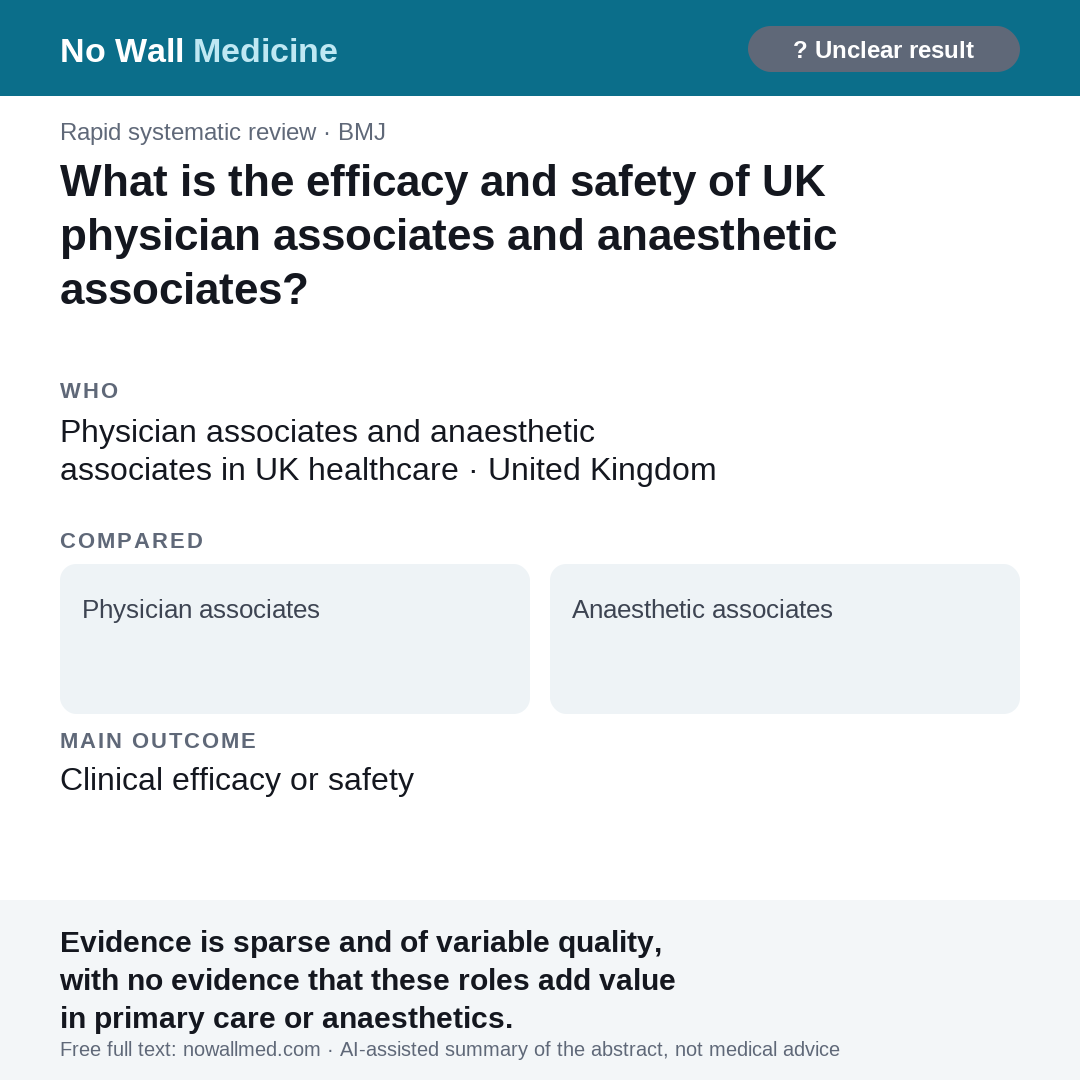
Physician associates and anaesthetic associates in UK: rapid systematic review of recent UK based research
Rapid systematic reviewUnclear result
What is the efficacy and safety of UK physician associates and anaesthetic associates?
Who
Physician associates and anaesthetic associates in UK healthcare · United Kingdom
Compared
Physician associates
Anaesthetic associates
Main outcome
Clinical efficacy or safety
Bottom line: Evidence is sparse and of variable quality, with no evidence that these roles add value in primary care or anaesthetics.
Limitation: Literature is sparse, of variable quality, and some is outdated.
BMJ · 2025-03-06Download image
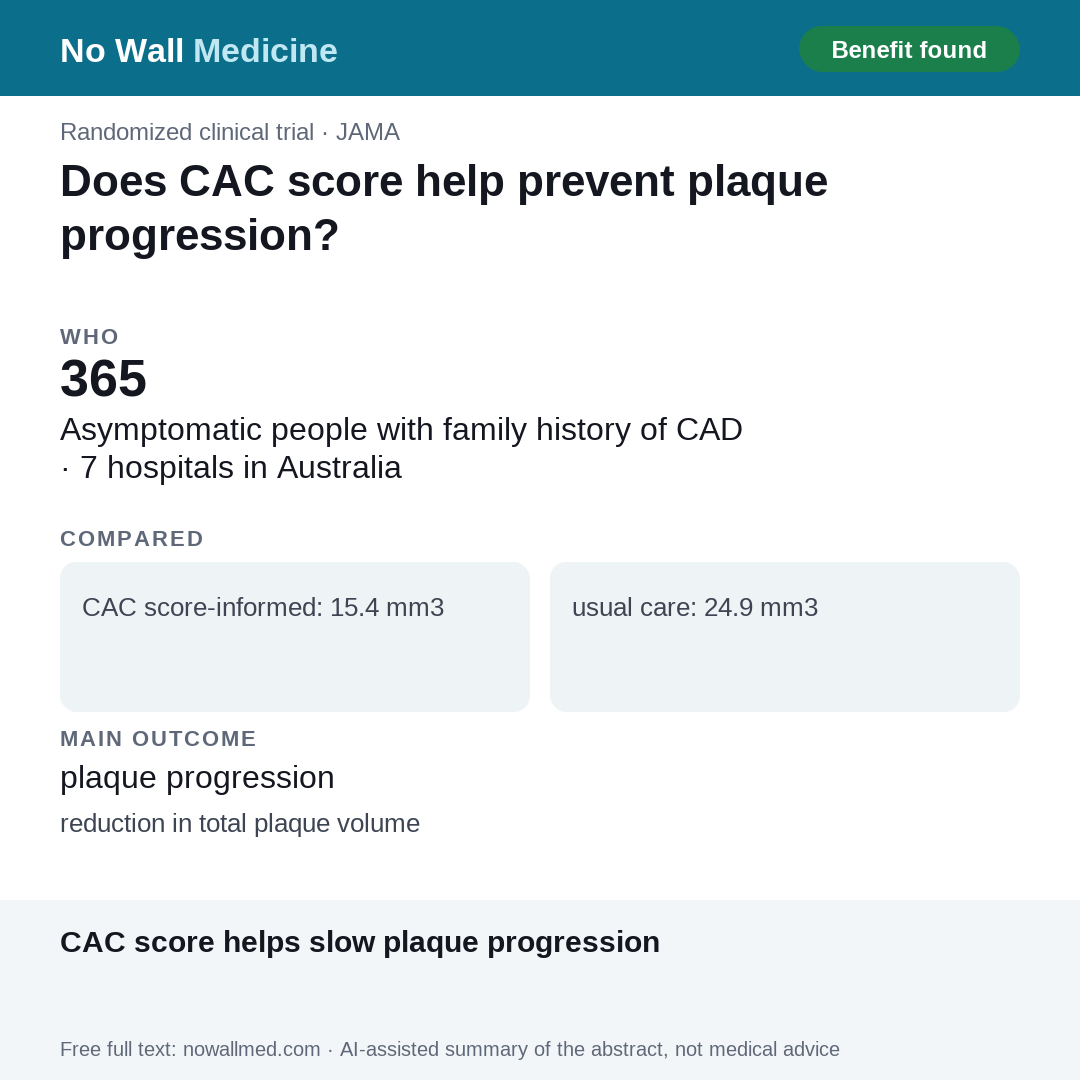
Effects of Combining Coronary Calcium Score With Treatment on Plaque Progression in Familial Coronary Artery Disease: A Randomized Clinical Trial
Randomized clinical trialBenefit found
Does CAC score help prevent plaque progression?
Who
365
Asymptomatic people with family history of CAD · 7 hospitals in Australia
Compared
CAC score-informed: 15.4 mm3
usual care: 24.9 mm3
Main outcome
plaque progression
Result: reduction in total plaque volume
Bottom line: CAC score helps slow plaque progression
JAMA · 2025-03-05Download image
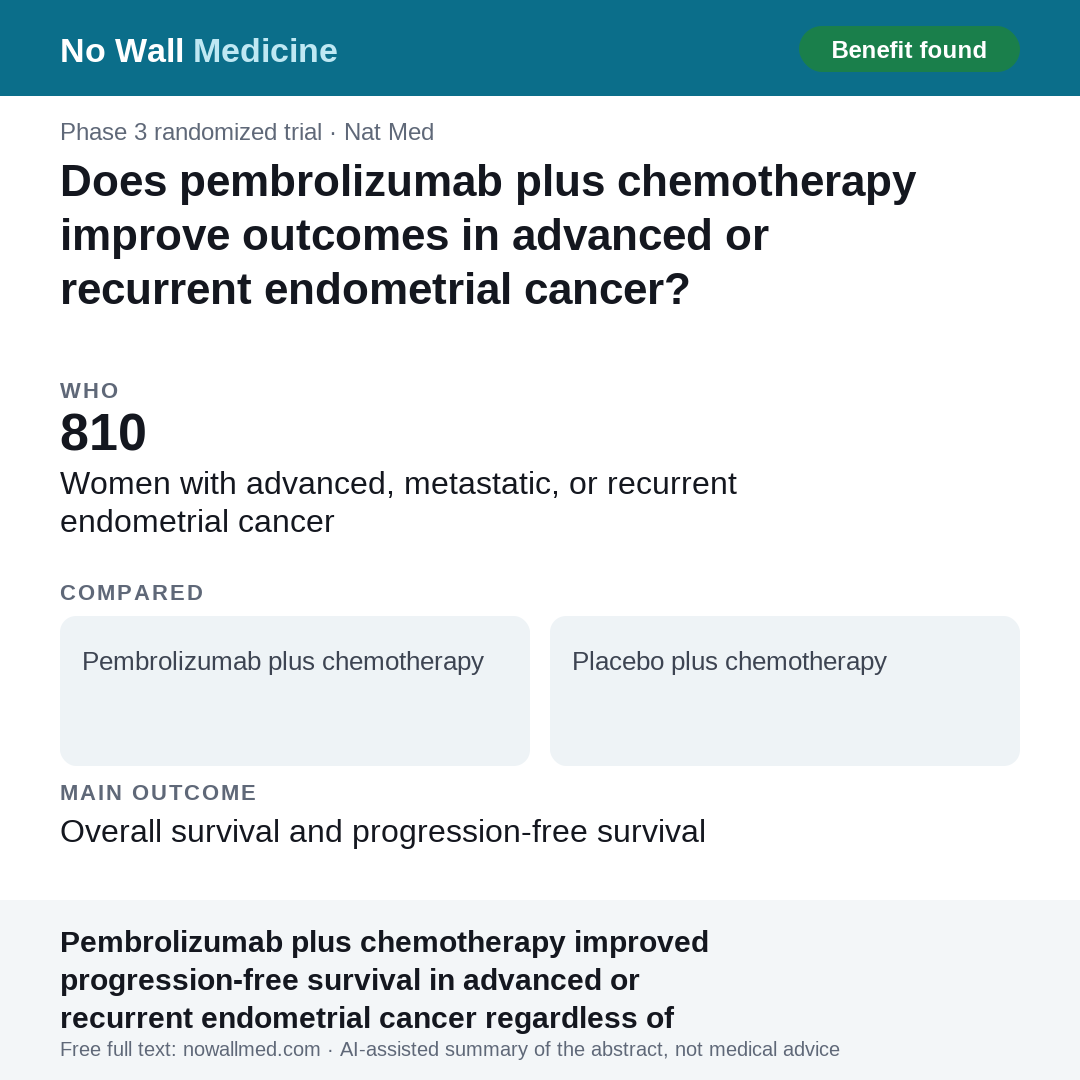
Pembrolizumab plus chemotherapy in advanced or recurrent endometrial cancer: overall survival and exploratory analyses of the NRG GY018 phase 3 randomized trial
Phase 3 randomized trialBenefit found
Does pembrolizumab plus chemotherapy improve outcomes in advanced or recurrent endometrial cancer?
Who
810
Women with advanced, metastatic, or recurrent endometrial cancer
Compared
Pembrolizumab plus chemotherapy
Placebo plus chemotherapy
Main outcome
Overall survival and progression-free survival
Result: mismatch repair-proficient PFS hazard ratio 0.64 (95% CI 0.49 to 0.85)
Bottom line: Pembrolizumab plus chemotherapy improved progression-free survival in advanced or recurrent endometrial cancer regardless of mismatch repair status.
Nat Med · 2025-03-05Download image
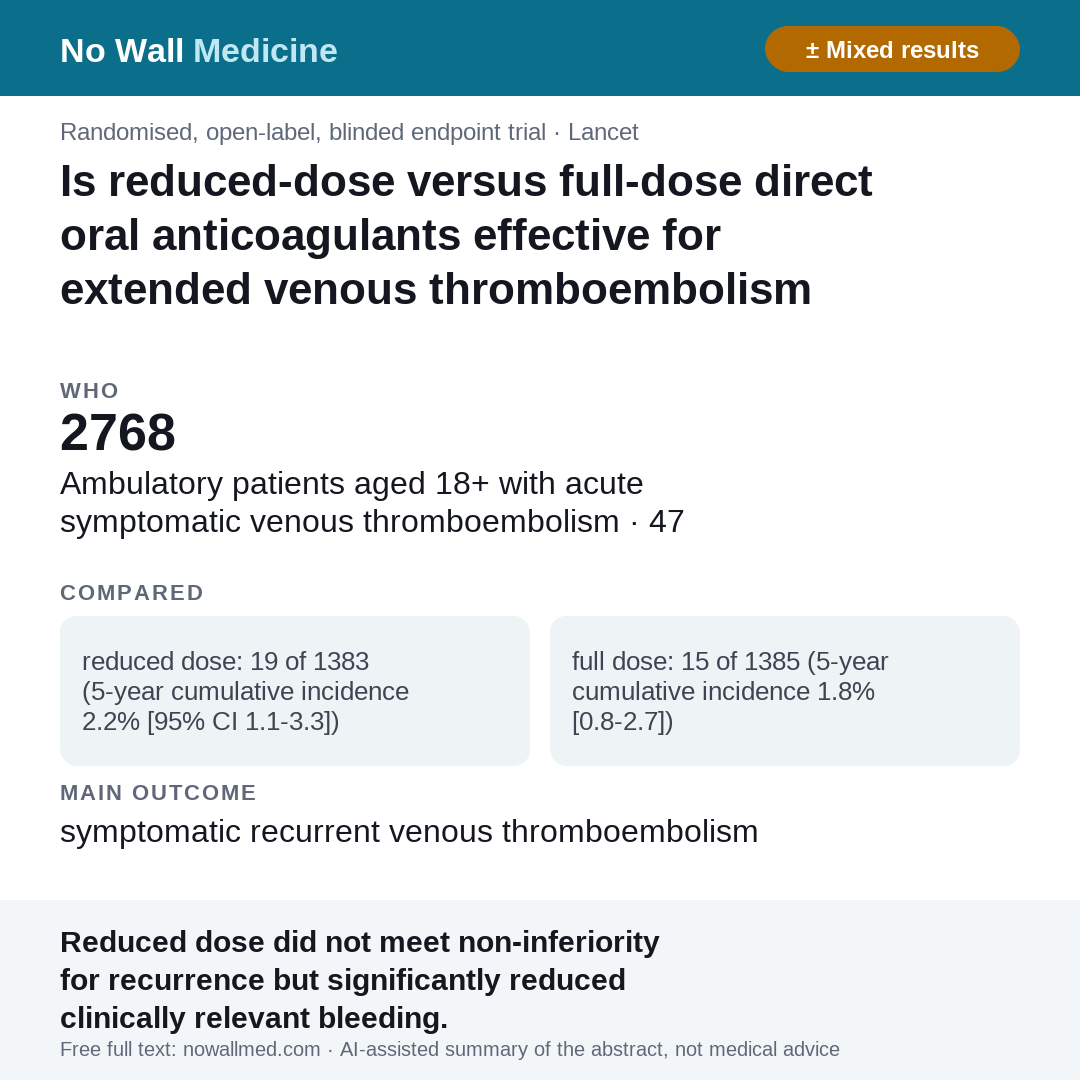
Extended treatment of venous thromboembolism with reduced-dose versus full-dose direct oral anticoagulants in patients at high risk of recurrence: a non-inferiority, multicentre, randomised, open-label, blinded endpoint trial
Randomised, open-label, blinded endpoint trialMixed results
Is reduced-dose versus full-dose direct oral anticoagulants effective for extended venous thromboembolism treatment?
Who
2768
Ambulatory patients aged 18+ with acute symptomatic venous thromboembolism · 47 hospitals in France
Compared
reduced dose: 19 of 1383 (5-year cumulative incidence 2.2% [95% CI 1.1-3.3])
full dose: 15 of 1385 (5-year cumulative incidence 1.8% [0.8-2.7])
Main outcome
symptomatic recurrent venous thromboembolism
Result: adjusted HR 1.32 (95% CI 0.67-2.60)
Bottom line: Reduced dose did not meet non-inferiority for recurrence but significantly reduced clinically relevant bleeding.
Lancet · 2025-03-03Download image
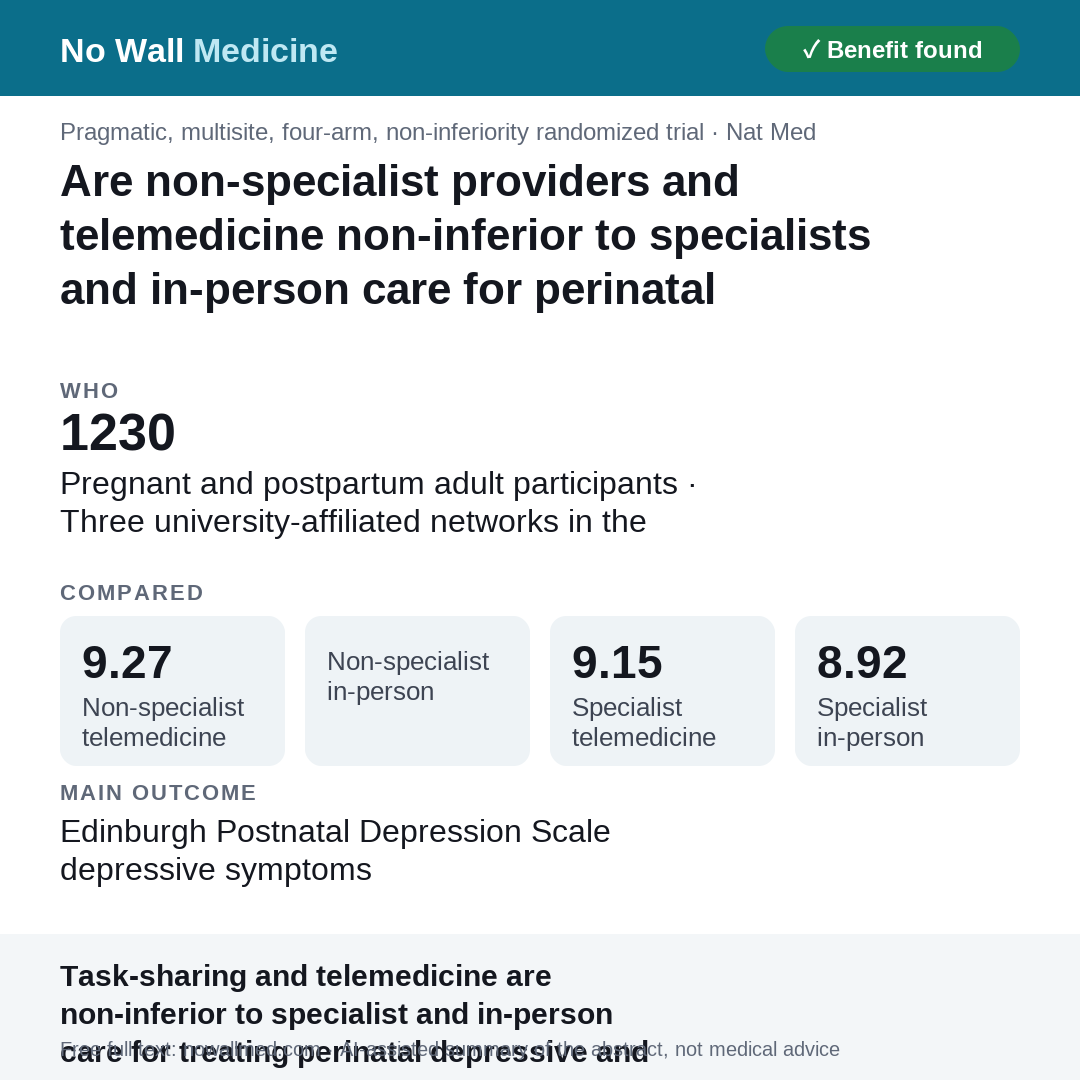
Task-sharing and telemedicine delivery of psychotherapy to treat perinatal depression: a pragmatic, noninferiority randomized trial
Pragmatic, multisite, four-arm, non-inferiority randomized trialBenefit found
Are non-specialist providers and telemedicine non-inferior to specialists and in-person care for perinatal depression?
Who
1230
Pregnant and postpartum adult participants · Three university-affiliated networks in the United States and Canada
Compared
9.27Non-specialist telemedicine (95% CI 8.85-9.70)
Non-specialist in-person
9.15Specialist telemedicine (95% CI 8.79-9.50)
8.92Specialist in-person (95% CI 8.39-9.45)
Main outcome
Edinburgh Postnatal Depression Scale depressive symptoms
Bottom line: Task-sharing and telemedicine are non-inferior to specialist and in-person care for treating perinatal depressive and anxiety symptoms.
Nat Med · 2025-03-03Download image
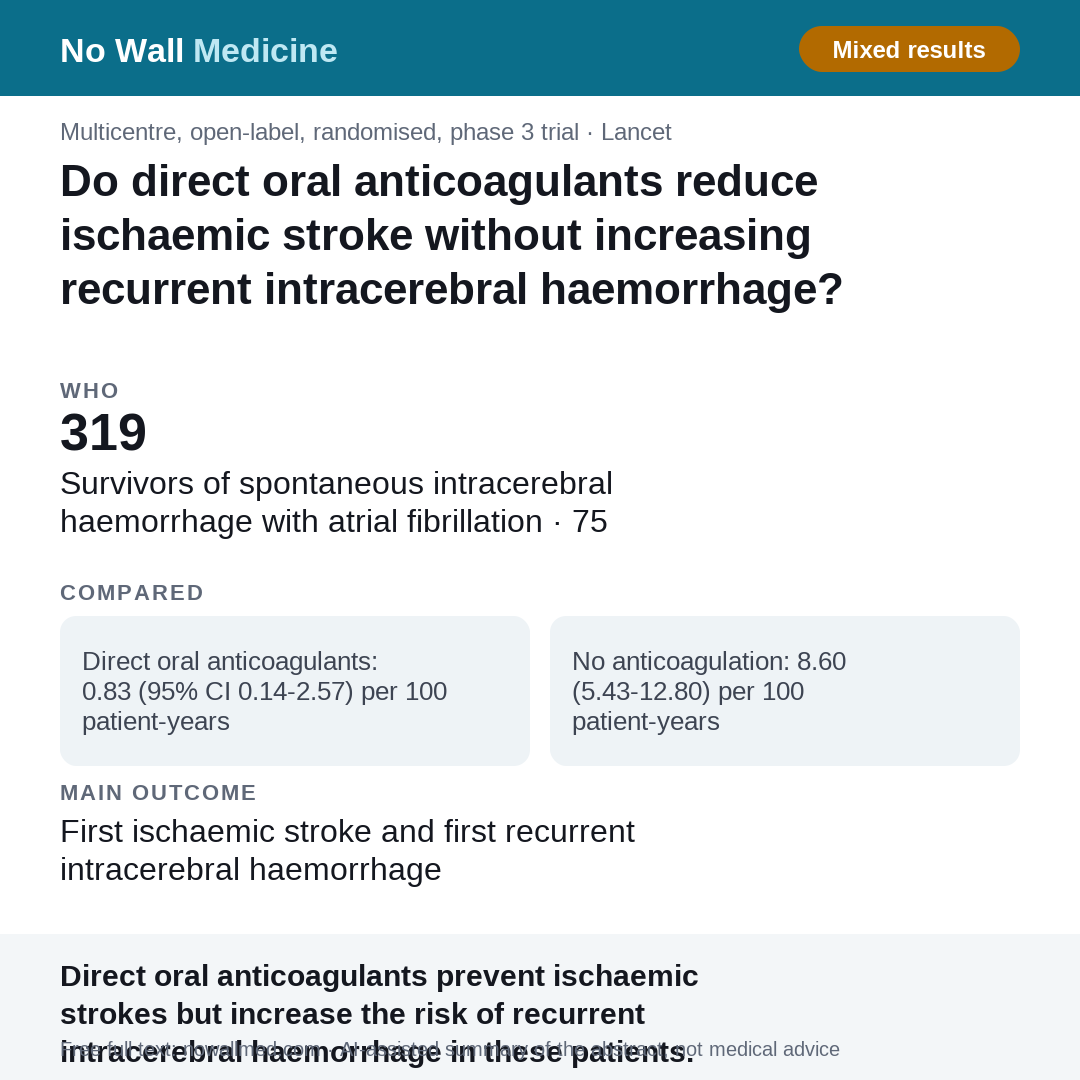
Direct oral anticoagulants versus no anticoagulation for the prevention of stroke in survivors of intracerebral haemorrhage with atrial fibrillation (PRESTIGE-AF): a multicentre, open-label, randomised, phase 3 trial
Multicentre, open-label, randomised, phase 3 trialMixed results
Do direct oral anticoagulants reduce ischaemic stroke without increasing recurrent intracerebral haemorrhage?
Who
319
Survivors of spontaneous intracerebral haemorrhage with atrial fibrillation · 75 hospitals in six European countries
Compared
Direct oral anticoagulants: 0.83 (95% CI 0.14-2.57) per 100 patient-years
No anticoagulation: 8.60 (5.43-12.80) per 100 patient-years
Main outcome
First ischaemic stroke and first recurrent intracerebral haemorrhage
Result: hazard ratio 0.05 (95% CI 0.01-0.36)
Bottom line: Direct oral anticoagulants prevent ischaemic strokes but increase the risk of recurrent intracerebral haemorrhage in these patients.
Funded by: European Commission
Lancet · 2025-02-26Download image
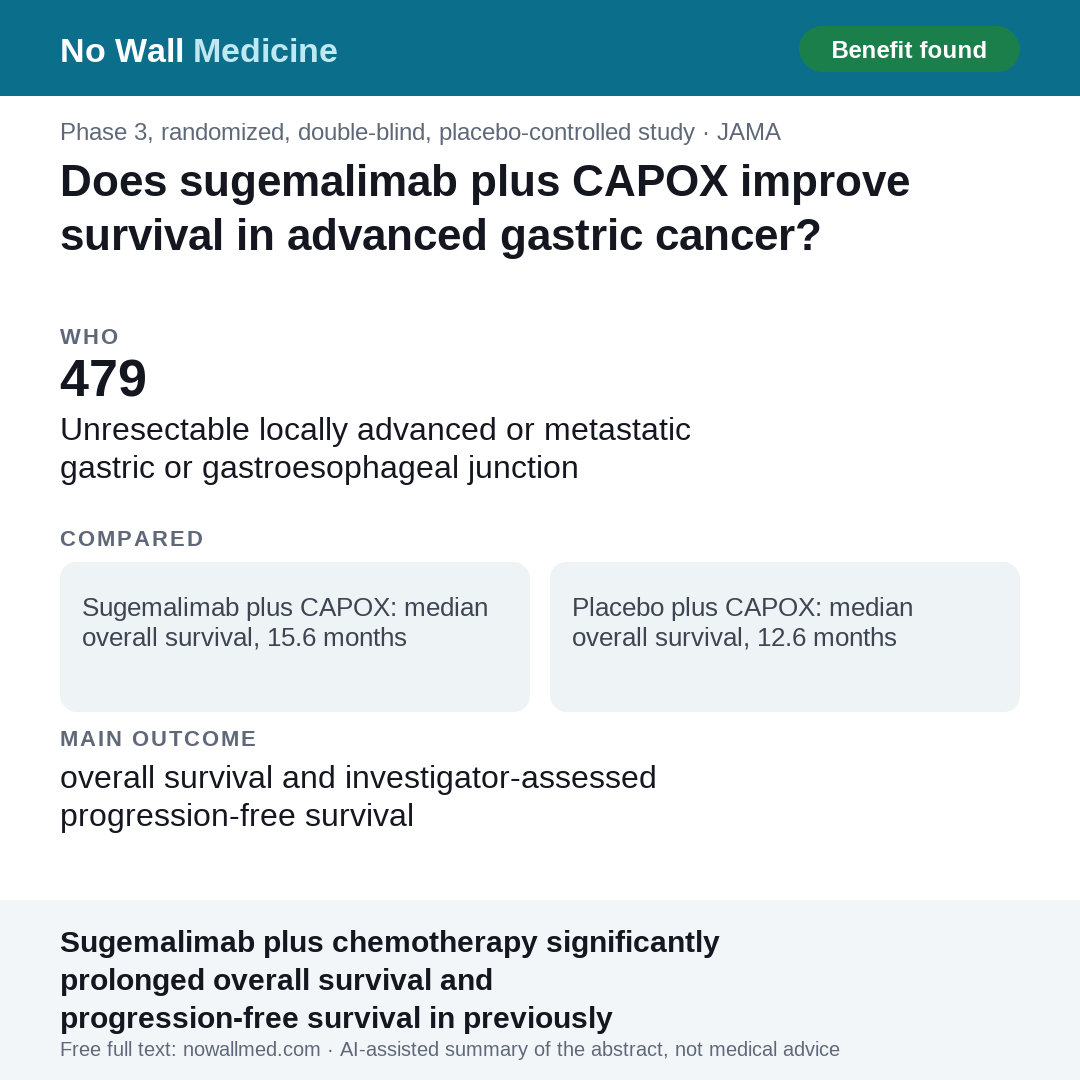
First-Line Sugemalimab Plus Chemotherapy for Advanced Gastric Cancer: The GEMSTONE-303 Randomized Clinical Trial
Phase 3, randomized, double-blind, placebo-controlled studyBenefit found
Does sugemalimab plus CAPOX improve survival in advanced gastric cancer?
Who
479
Unresectable locally advanced or metastatic gastric or gastroesophageal junction adenocarcinoma with PD-L1 CPS 5 or greater · 54 sites in China
Compared
Sugemalimab plus CAPOX: median overall survival, 15.6 months
Placebo plus CAPOX: median overall survival, 12.6 months
Main outcome
overall survival and investigator-assessed progression-free survival
Result: hazard ratio, 0.75 (95% CI, 0.61-0.92)
Bottom line: Sugemalimab plus chemotherapy significantly prolonged overall survival and progression-free survival in previously untreated advanced gastric cancer patients.
JAMA · 2025-02-24Download image
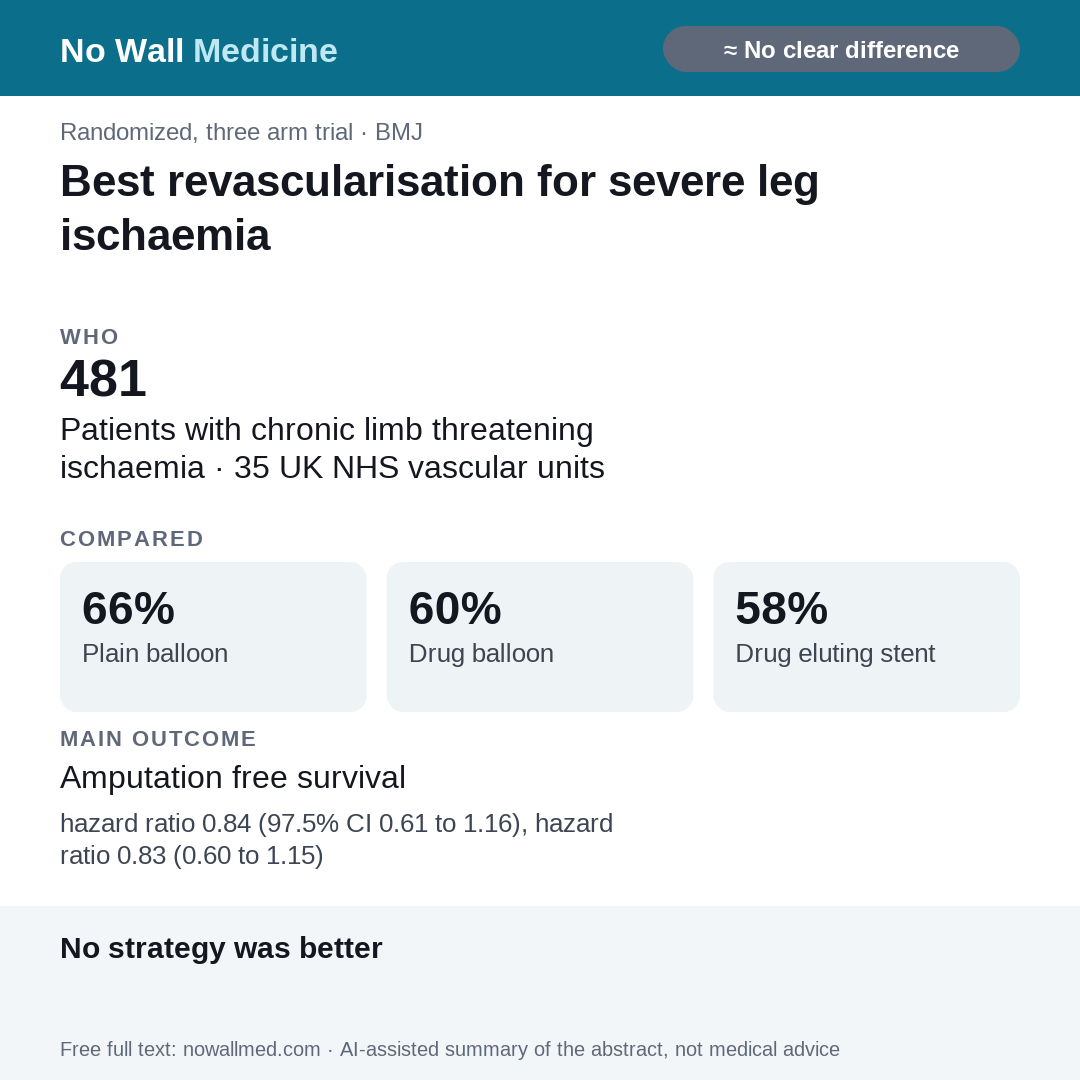
Plain versus drug balloon and stenting in severe ischaemia of the leg (BASIL-3): open label, three arm, randomised, multicentre, phase 3 trial
Randomized, three arm trialNo clear difference
Best revascularisation for severe leg ischaemia
Who
481
Patients with chronic limb threatening ischaemia · 35 UK NHS vascular units
Compared
66%Plain balloon (106/160)
60%Drug balloon (97/161)
58%Drug eluting stent (93/159)
Main outcome
Amputation free survival
Result: hazard ratio 0.84 (97.5% CI 0.61 to 1.16), hazard ratio 0.83 (0.60 to 1.15)
Bottom line: No strategy was better
BMJ · 2025-02-24Download image
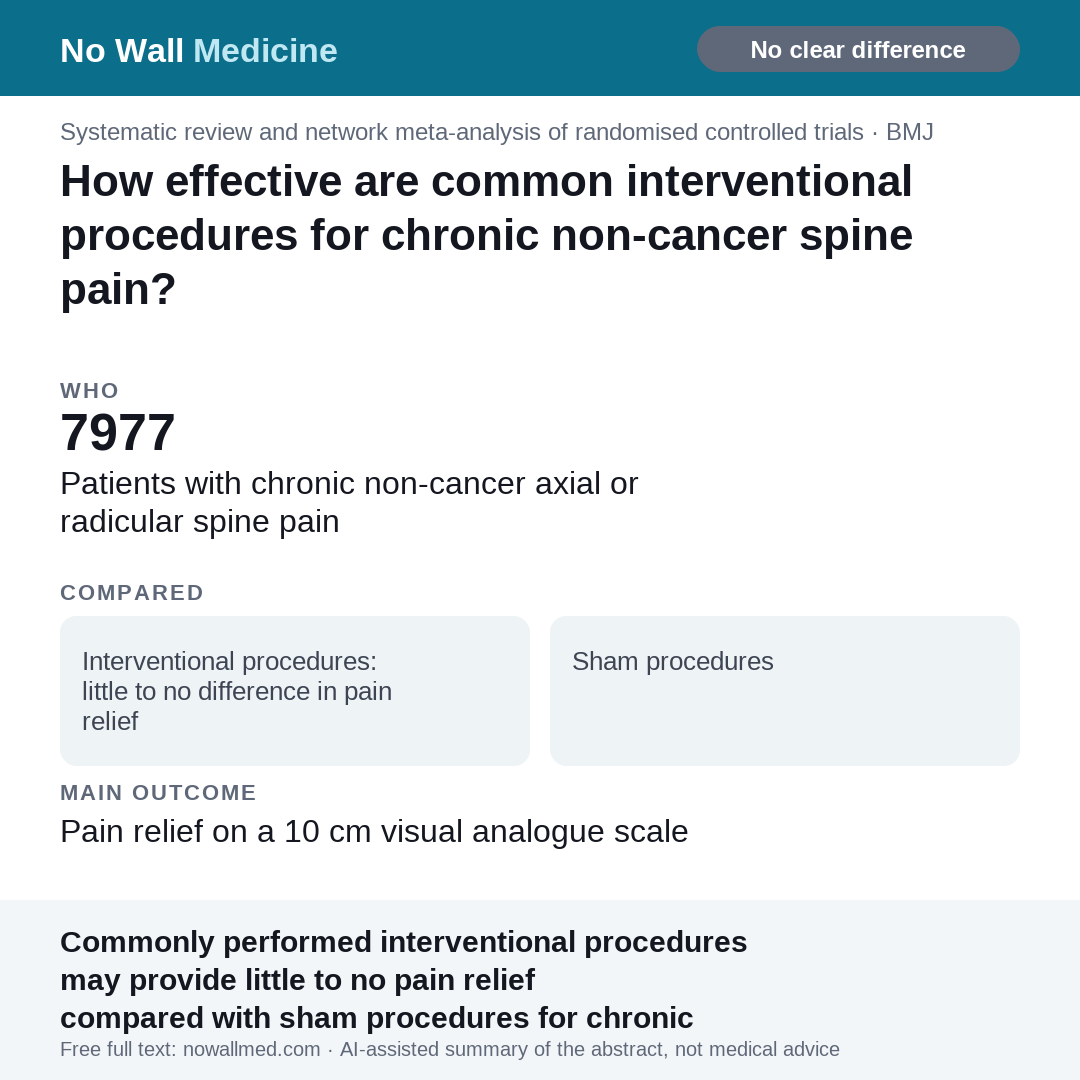
Common interventional procedures for chronic non-cancer spine pain: a systematic review and network meta-analysis of randomised trials
Systematic review and network meta-analysis of randomised controlled trialsNo clear difference
How effective are common interventional procedures for chronic non-cancer spine pain?
Who
7977
Patients with chronic non-cancer axial or radicular spine pain
Compared
Interventional procedures: little to no difference in pain relief
Sham procedures
Main outcome
Pain relief on a 10 cm visual analogue scale
Bottom line: Commonly performed interventional procedures may provide little to no pain relief compared with sham procedures for chronic spine pain.
Limitation: Certainty of evidence ranged from very low to moderate.
BMJ · 2025-02-19Download image
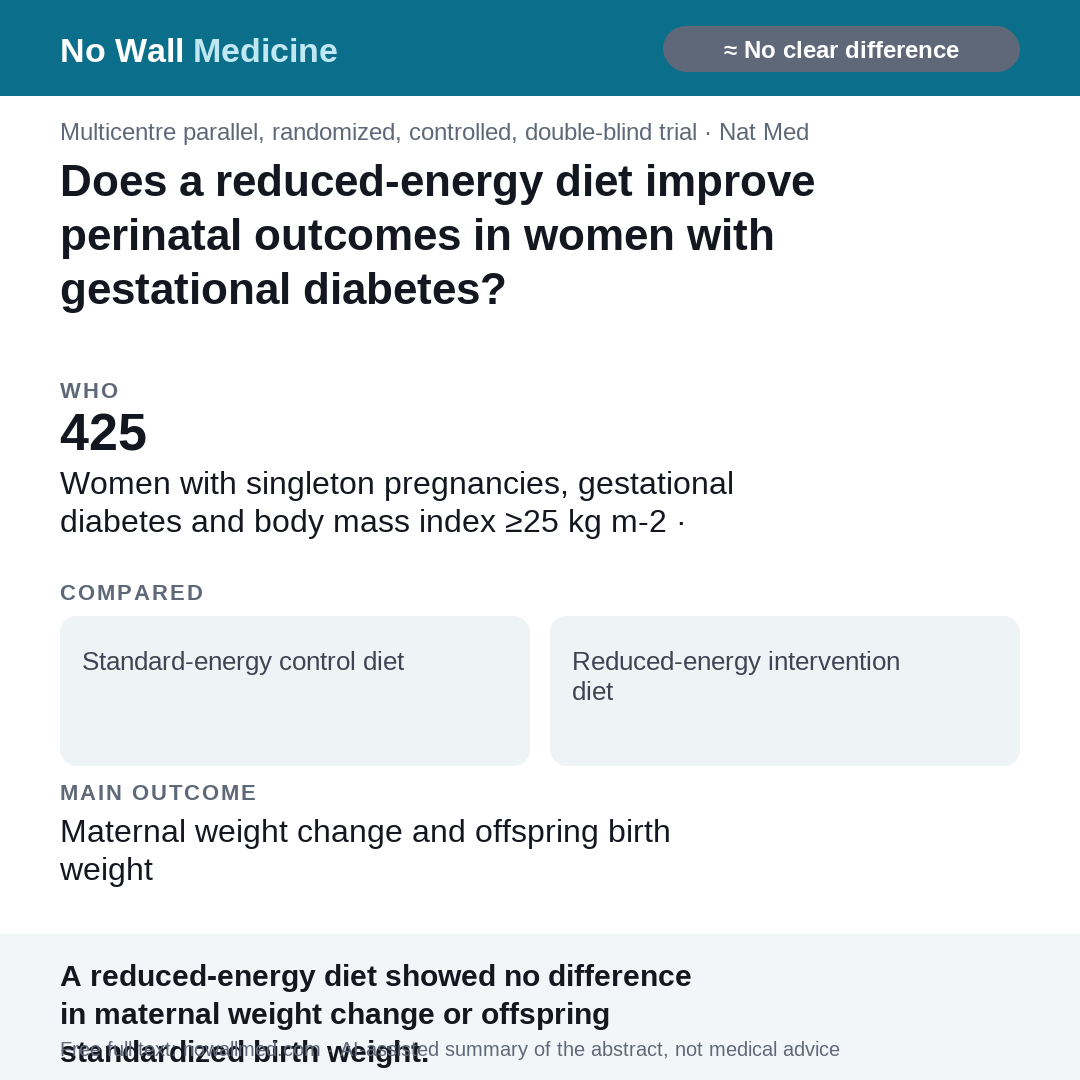
Reduced-energy diet in women with gestational diabetes: the dietary intervention in gestational diabetes DiGest randomized clinical trial
Multicentre parallel, randomized, controlled, double-blind trialNo clear difference
Does a reduced-energy diet improve perinatal outcomes in women with gestational diabetes?
Who
425
Women with singleton pregnancies, gestational diabetes and body mass index ≥25 kg m-2 · Multicentre
Compared
Standard-energy control diet
Reduced-energy intervention diet
Main outcome
Maternal weight change and offspring birth weight
Result: intervention effect -0.20 (95% confidence interval -1.01, 0.61)
Bottom line: A reduced-energy diet showed no difference in maternal weight change or offspring standardized birth weight.
Nat Med · 2025-02-19Download image
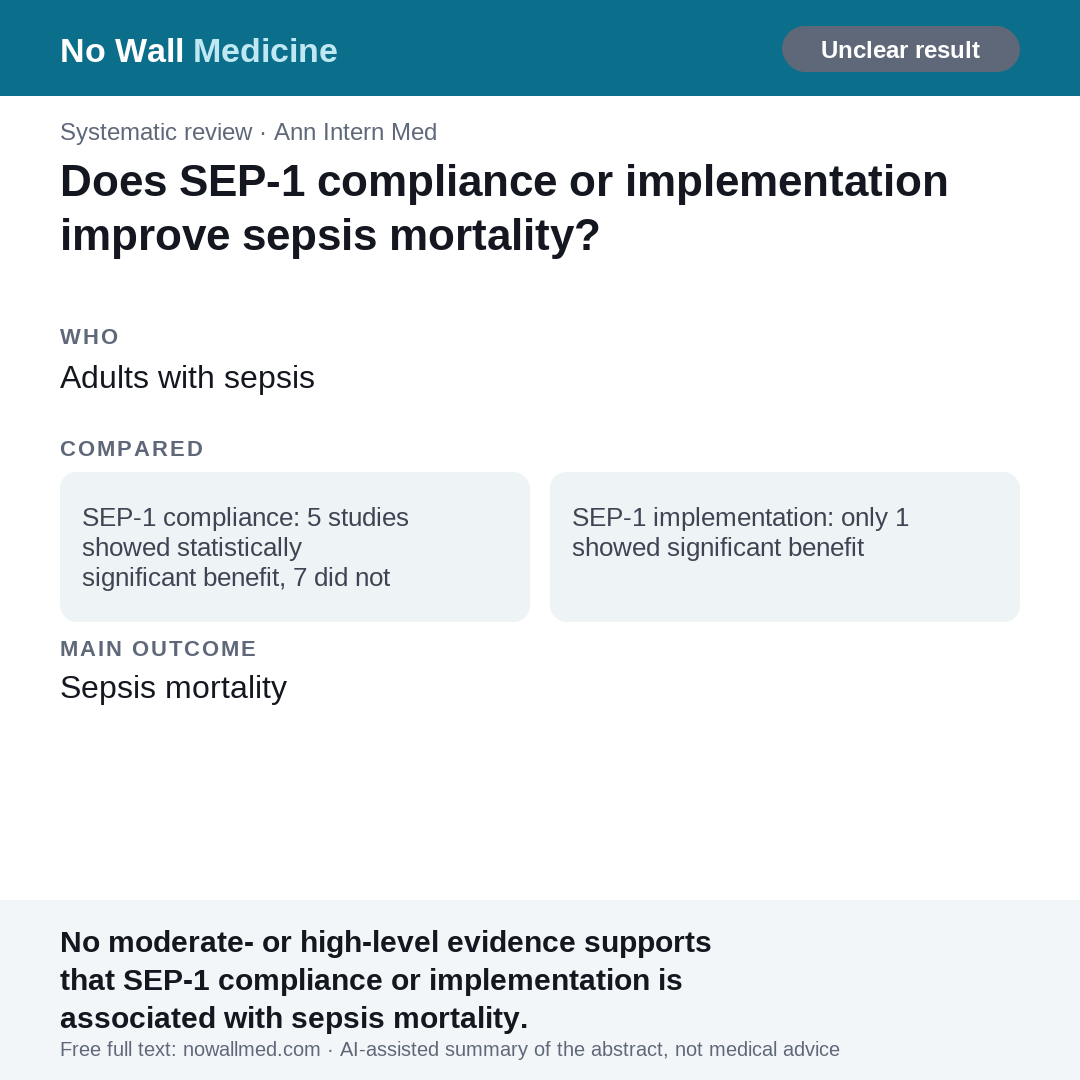
The Effect of Severe Sepsis and Septic Shock Management Bundle (SEP-1) Compliance and Implementation on Mortality Among Patients With Sepsis : A Systematic Review
Systematic reviewUnclear result
Does SEP-1 compliance or implementation improve sepsis mortality?
Who
Adults with sepsis
Compared
SEP-1 compliance: 5 studies showed statistically significant benefit, 7 did not
SEP-1 implementation: only 1 showed significant benefit
Main outcome
Sepsis mortality
Bottom line: No moderate- or high-level evidence supports that SEP-1 compliance or implementation is associated with sepsis mortality.
Limitation: All 17 studies were observational and none had low risk of bias.
Ann Intern Med · 2025-02-18Download image
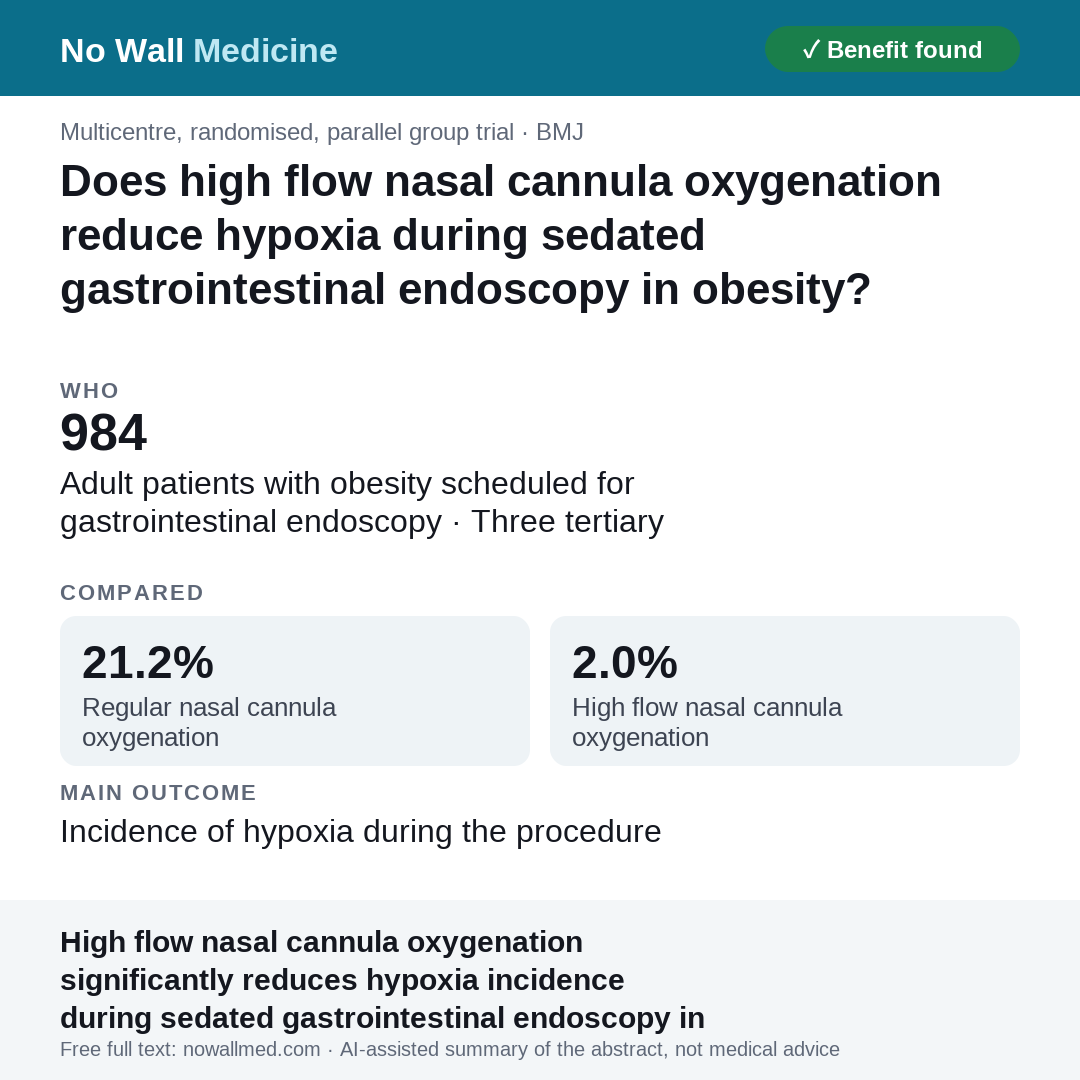
Effect of high flow nasal cannula oxygenation on incidence of hypoxia during sedated gastrointestinal endoscopy in patients with obesity: multicentre randomised controlled trial
Multicentre, randomised, parallel group trialBenefit found
Does high flow nasal cannula oxygenation reduce hypoxia during sedated gastrointestinal endoscopy in obesity?
Who
984
Adult patients with obesity scheduled for gastrointestinal endoscopy · Three tertiary hospitals in Shanghai, China
Compared
21.2%Regular nasal cannula oxygenation (103/487)
2.0%High flow nasal cannula oxygenation (10/497)
Main outcome
Incidence of hypoxia during the procedure
Result: difference -19.14, 95% confidence interval -23.09 to -15.36
Bottom line: High flow nasal cannula oxygenation significantly reduces hypoxia incidence during sedated gastrointestinal endoscopy in patients with obesity.
BMJ · 2025-02-11Download image
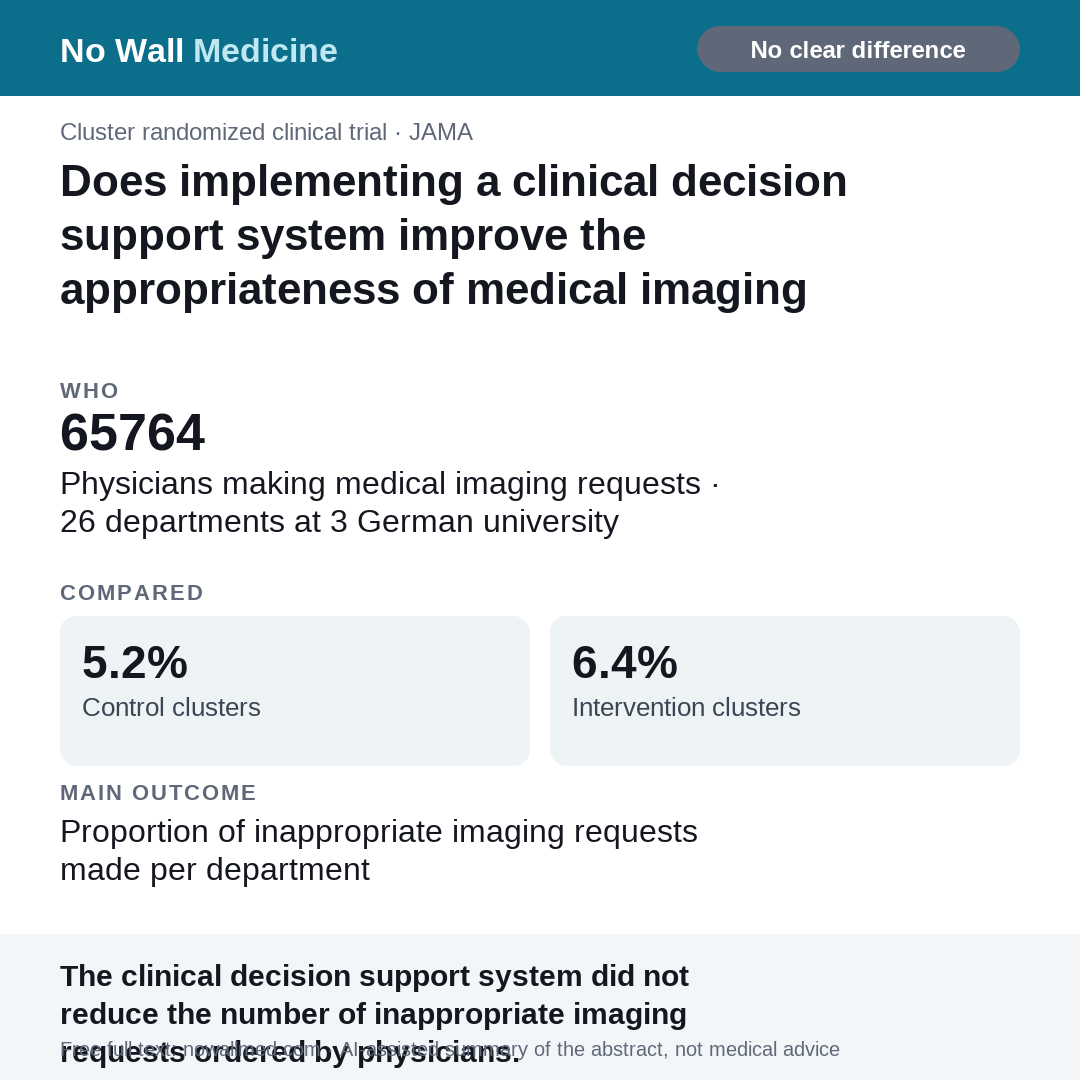
Evaluation of a Clinical Decision Support System for Imaging Requests: A Cluster Randomized Clinical Trial
Cluster randomized clinical trialNo clear difference
Does implementing a clinical decision support system improve the appropriateness of medical imaging ordering behavior?
Who
65764
Physicians making medical imaging requests · 26 departments at 3 German university hospitals
Compared
5.2%Control clusters
6.4%Intervention clusters
Main outcome
Proportion of inappropriate imaging requests made per department
Result: difference-in-differences 1.3 percentage points (99% CI, -2.0 to 1.8 percentage points)
Bottom line: The clinical decision support system did not reduce the number of inappropriate imaging requests ordered by physicians.
JAMA · 2025-02-10Download image
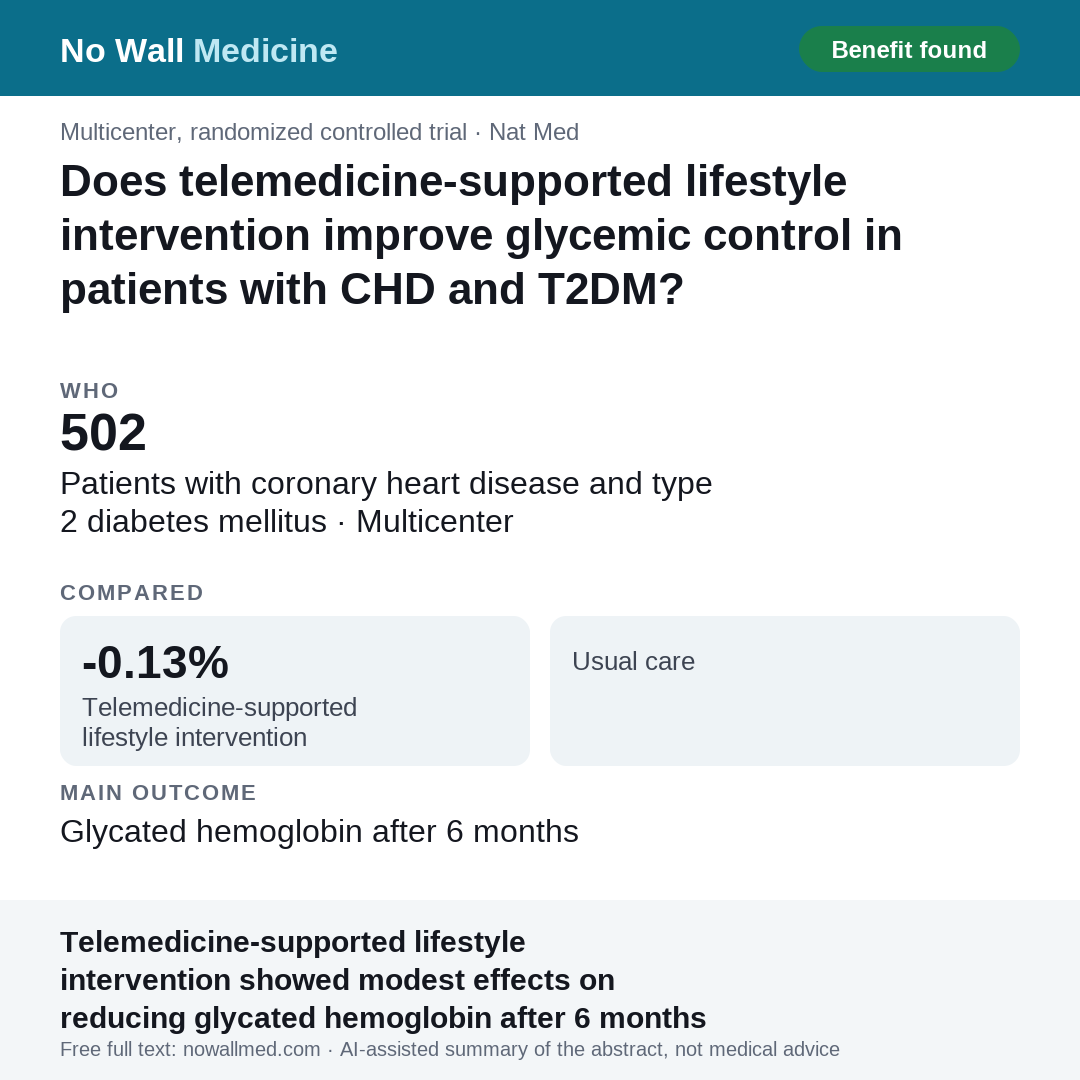
Telemedicine-supported lifestyle intervention for glycemic control in patients with CHD and T2DM: multicenter, randomized controlled trial
Multicenter, randomized controlled trialBenefit found
Does telemedicine-supported lifestyle intervention improve glycemic control in patients with CHD and T2DM?
Who
502
Patients with coronary heart disease and type 2 diabetes mellitus · Multicenter
Compared
-0.13%Telemedicine-supported lifestyle intervention (95% confidence interval, -0.25 to -0.01)
Usual care
Main outcome
Glycated hemoglobin after 6 months
Result: -0.13% (95% confidence interval, -0.25 to -0.01)
Bottom line: Telemedicine-supported lifestyle intervention showed modest effects on reducing glycated hemoglobin after 6 months in patients.
Limitation: No statistically significant between-group differences were observed at 12 months.
Nat Med · 2025-02-07Download image