Visual abstracts
New randomized trials and meta-analyses from leading journals at a glance: who was studied, what was compared, and what was found. Every paper is free to read in full.
All specialtiesCardiology 4763Oncology 4043Gastroenterology & Hepatology 1903Infectious Disease 3756Neurology 1872Psychiatry & Mental Health 2216Pulmonology 2044Critical Care 1319Endocrinology & Diabetes 2544Pediatrics 2889Surgery 2480Orthopedics & Sports Medicine 917Neurosurgery 525Cardiothoracic & Vascular Surgery 656Plastic & Reconstructive Surgery 574Nephrology 1107Rheumatology 810Hematology 1090Dermatology 611Ophthalmology 532Obstetrics & Gynecology 1645Public & Global Health 1037Radiology & Imaging 619Anesthesiology 958Urology 745ENT (Otolaryngology) 494Emergency Medicine 481Allergy & Immunology 309Geriatrics 972Family Medicine & Primary Care 534Medical Genetics & Genomics 659Pathology & Laboratory Medicine 156Physical Medicine & Rehabilitation 734Palliative Care 421Nutrition 1560Digital Health & AI 2137General Medicine 318
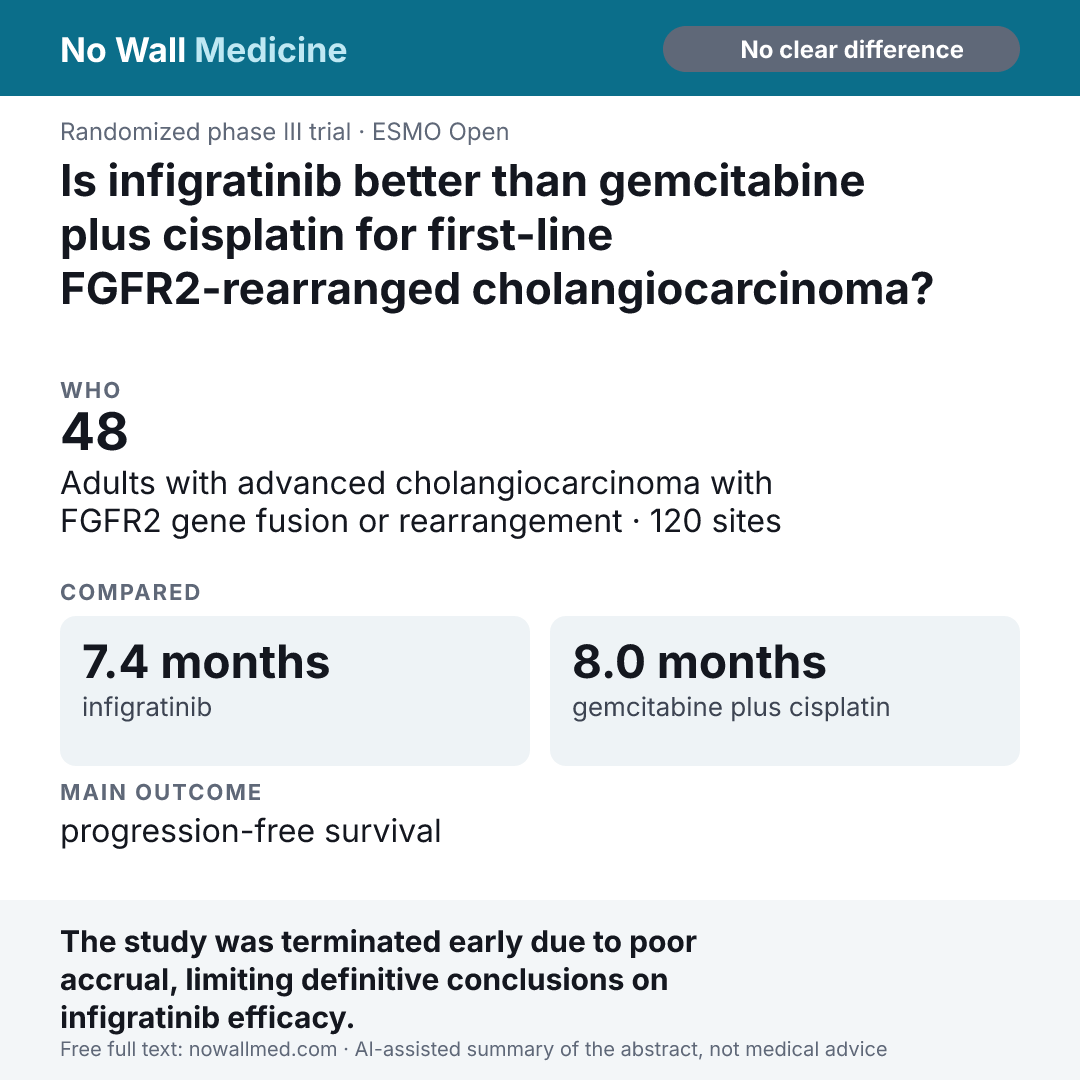
Phase III trial of infigratinib versus gemcitabine/cisplatin in adults with advanced cholangiocarcinoma with FGFR2 gene fusion or rearrangement: results and reflections on early termination of PROOF 301
Randomized phase III trialNo clear difference
Is infigratinib better than gemcitabine plus cisplatin for first-line FGFR2-rearranged cholangiocarcinoma?
Who
48
Adults with advanced cholangiocarcinoma with FGFR2 gene fusion or rearrangement · 120 sites
Compared
7.4 monthsinfigratinib
8.0 monthsgemcitabine plus cisplatin
Main outcome
progression-free survival
Bottom line: The study was terminated early due to poor accrual, limiting definitive conclusions on infigratinib efficacy.
Limitation: Study was terminated early due to poor accrual, limiting ability to draw definitive conclusions.
ESMO Open · 2026-03-17 · Save PNG
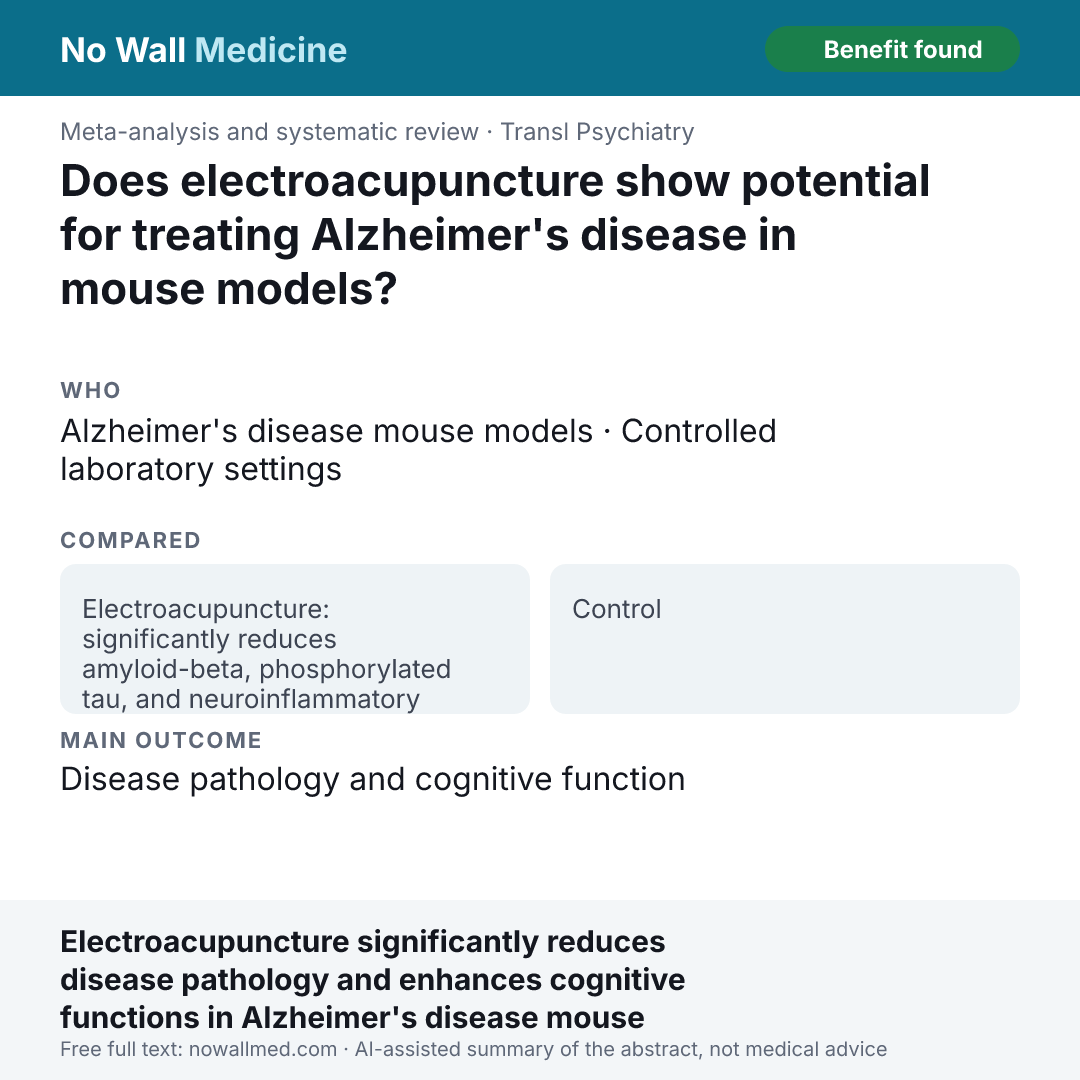
Evaluating the potential of acupuncture for Alzheimer's disease treatment: A meta-analysis and systematic review of mouse model studies
Meta-analysis and systematic reviewBenefit found
Does electroacupuncture show potential for treating Alzheimer's disease in mouse models?
Who
Alzheimer's disease mouse models · Controlled laboratory settings
Compared
Electroacupuncture: significantly reduces amyloid-beta, phosphorylated tau, and neuroinflammatory biomarkers
Control
Main outcome
Disease pathology and cognitive function
Bottom line: Electroacupuncture significantly reduces disease pathology and enhances cognitive functions in Alzheimer's disease mouse models.
Transl Psychiatry · 2026-03-17 · Save PNG
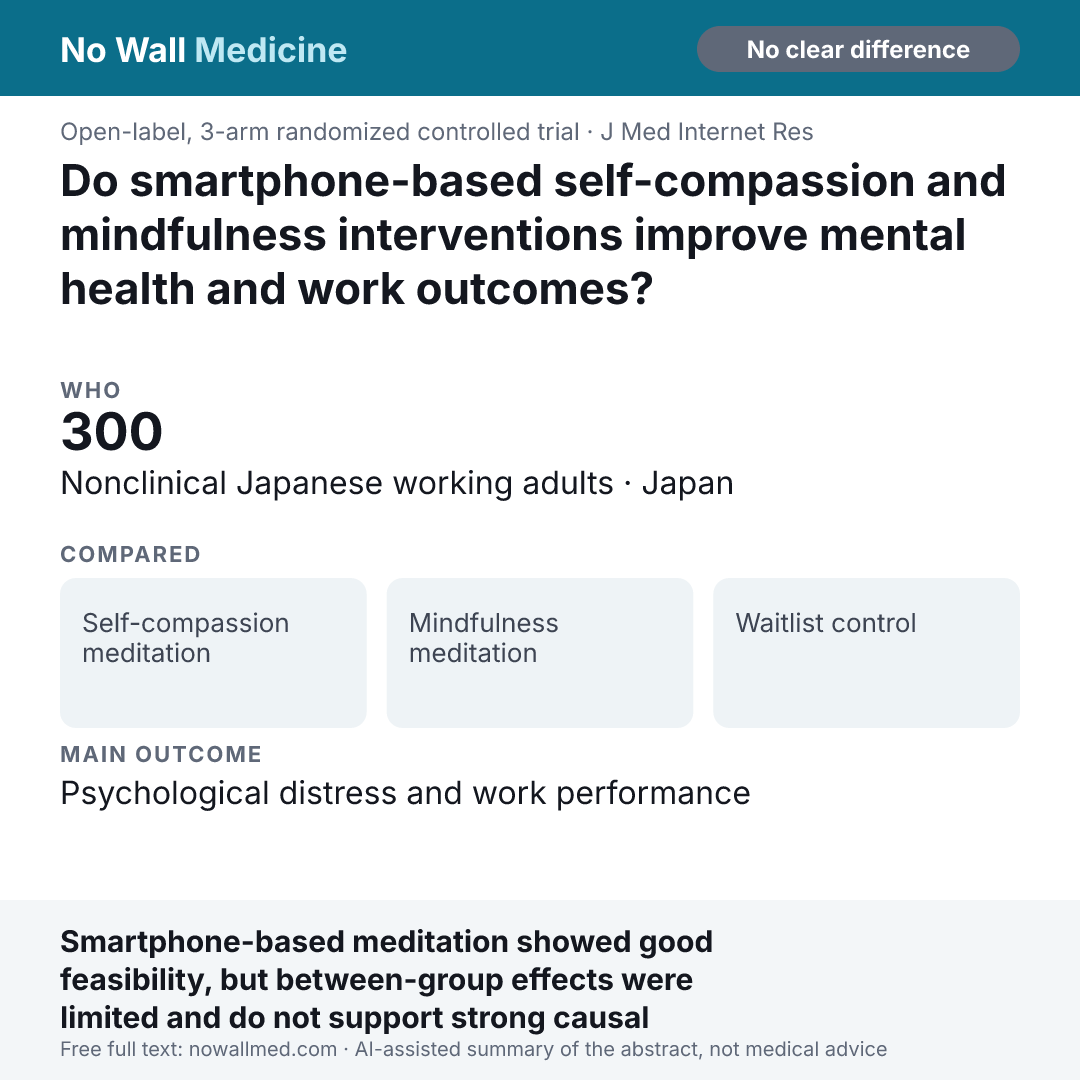
Effects of Self-Compassion and Mindfulness Interventions on Mental Health and Work-Related Outcomes Among Japanese Workers: Randomized Controlled Trial
Open-label, 3-arm randomized controlled trialNo clear difference
Do smartphone-based self-compassion and mindfulness interventions improve mental health and work outcomes?
Who
300
Nonclinical Japanese working adults · Japan
Compared
Self-compassion meditation
Mindfulness meditation
Waitlist control
Main outcome
Psychological distress and work performance
Bottom line: Smartphone-based meditation showed good feasibility, but between-group effects were limited and do not support strong causal claims.
Limitation: Findings are preliminary and clinical significance remains unclear in this nonclinical sample.
J Med Internet Res · 2026-03-17 · Save PNG
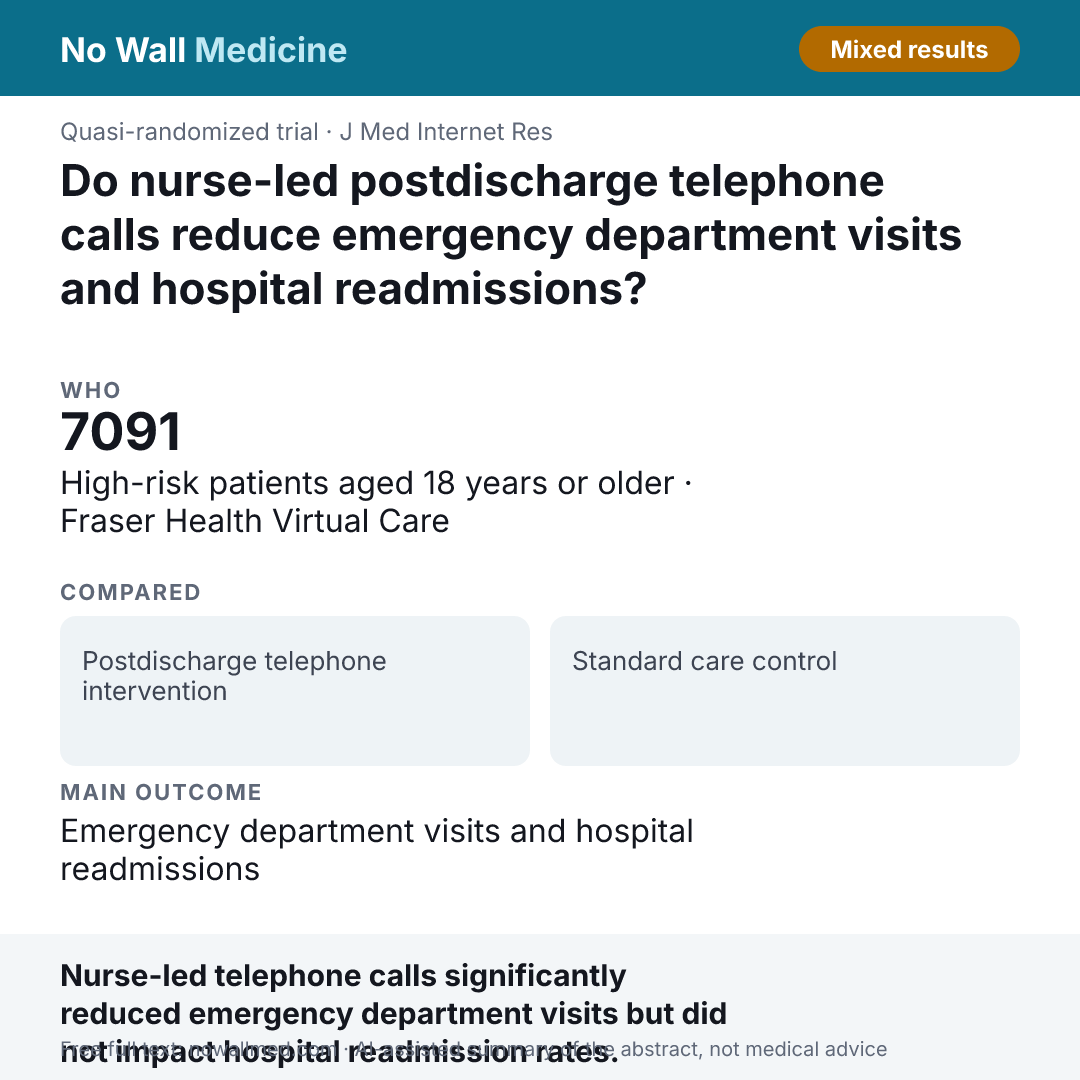
Effectiveness of Postdischarge Telephone Calls in Reducing Hospital Utilization: Quasi-Randomized Controlled Trial
Quasi-randomized trialMixed results
Do nurse-led postdischarge telephone calls reduce emergency department visits and hospital readmissions?
Who
7091
High-risk patients aged 18 years or older · Fraser Health Virtual Care
Compared
Postdischarge telephone intervention
Standard care control
Main outcome
Emergency department visits and hospital readmissions
Result: adjusted IRR 0.719 (95% CI 0.617-0.837) for 7-day emergency department visits
Bottom line: Nurse-led telephone calls significantly reduced emergency department visits but did not impact hospital readmission rates.
J Med Internet Res · 2026-03-17 · Save PNG
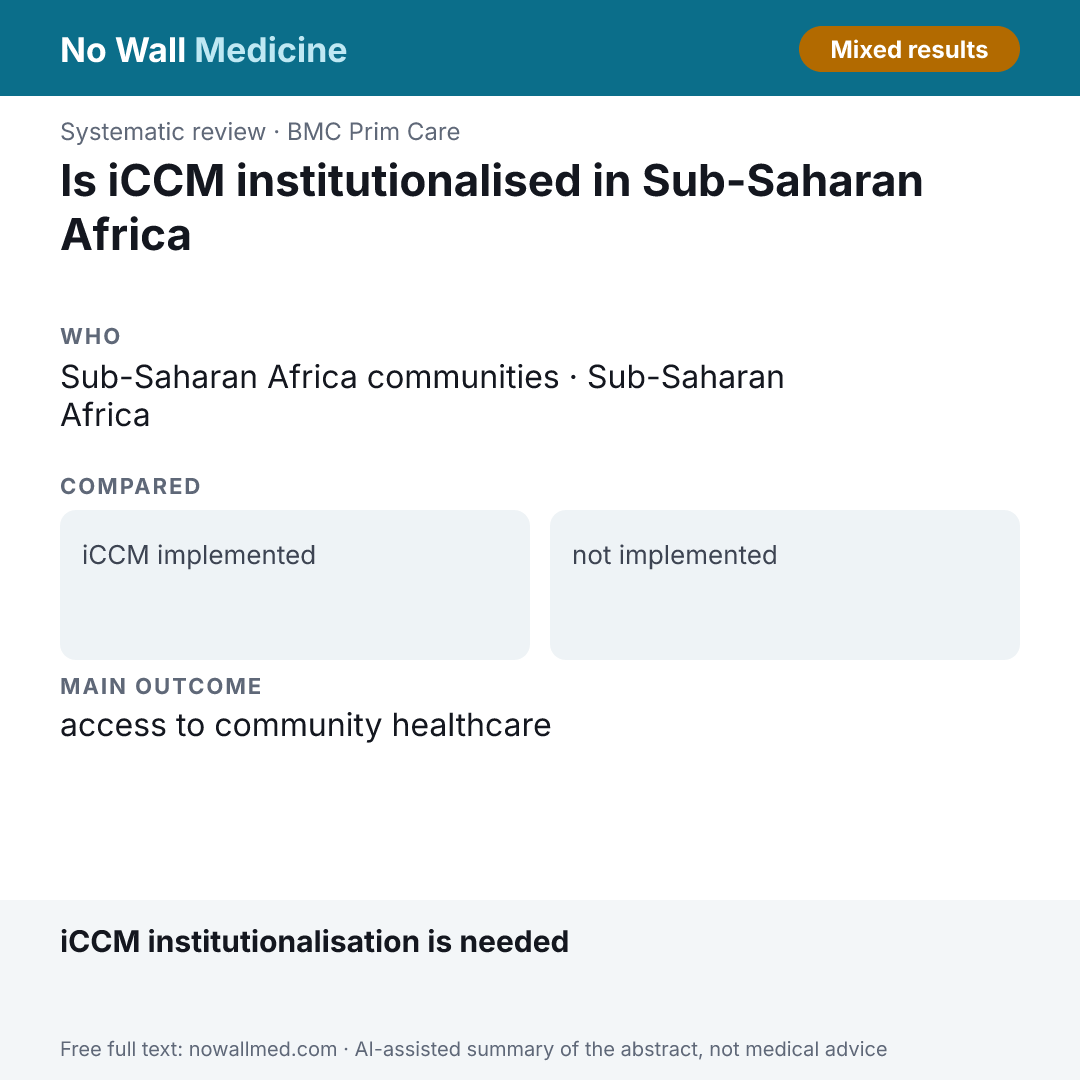
Analysis of the institutionalisation of Integrated Community Case Management and its implications for access to community healthcare since 2019 in Sub-Saharan Africa: a systematic review
Systematic reviewMixed results
Is iCCM institutionalised in Sub-Saharan Africa
Who
Sub-Saharan Africa communities · Sub-Saharan Africa
Compared
iCCM implemented
not implemented
Main outcome
access to community healthcare
Bottom line: iCCM institutionalisation is needed
BMC Prim Care · 2026-03-17 · Save PNG
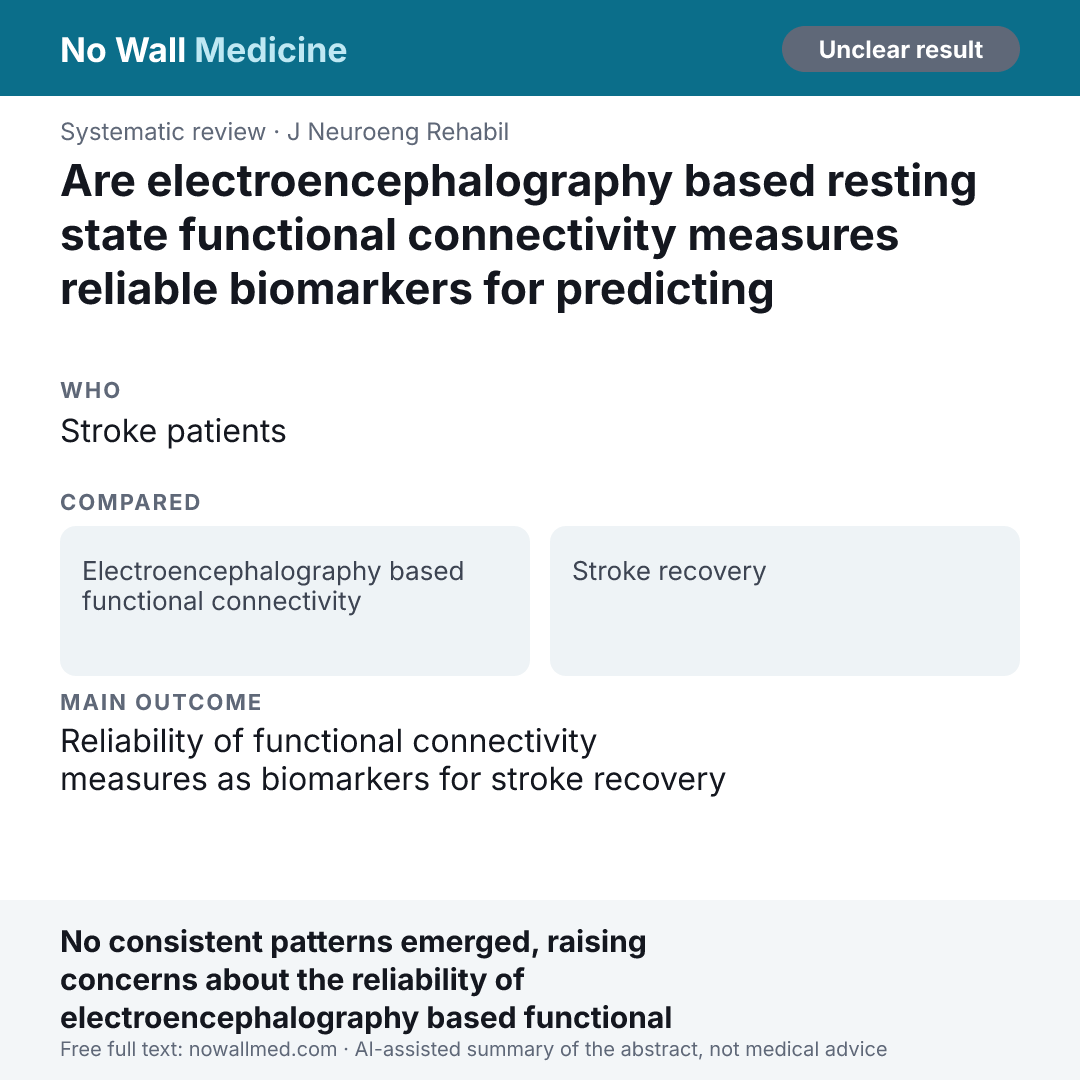
Biomarkers of stroke recovery using EEG-based resting-state functional connectivity: a systematic review
Systematic reviewUnclear result
Are electroencephalography based resting state functional connectivity measures reliable biomarkers for predicting stroke recovery?
Who
Stroke patients
Compared
Electroencephalography based functional connectivity
Stroke recovery
Main outcome
Reliability of functional connectivity measures as biomarkers for stroke recovery
Bottom line: No consistent patterns emerged, raising concerns about the reliability of electroencephalography based functional connectivity as stroke recovery biomarkers.
Limitation: Significant methodological heterogeneity in analysis, study design, and connectivity measures.
J Neuroeng Rehabil · 2026-03-17 · Save PNG
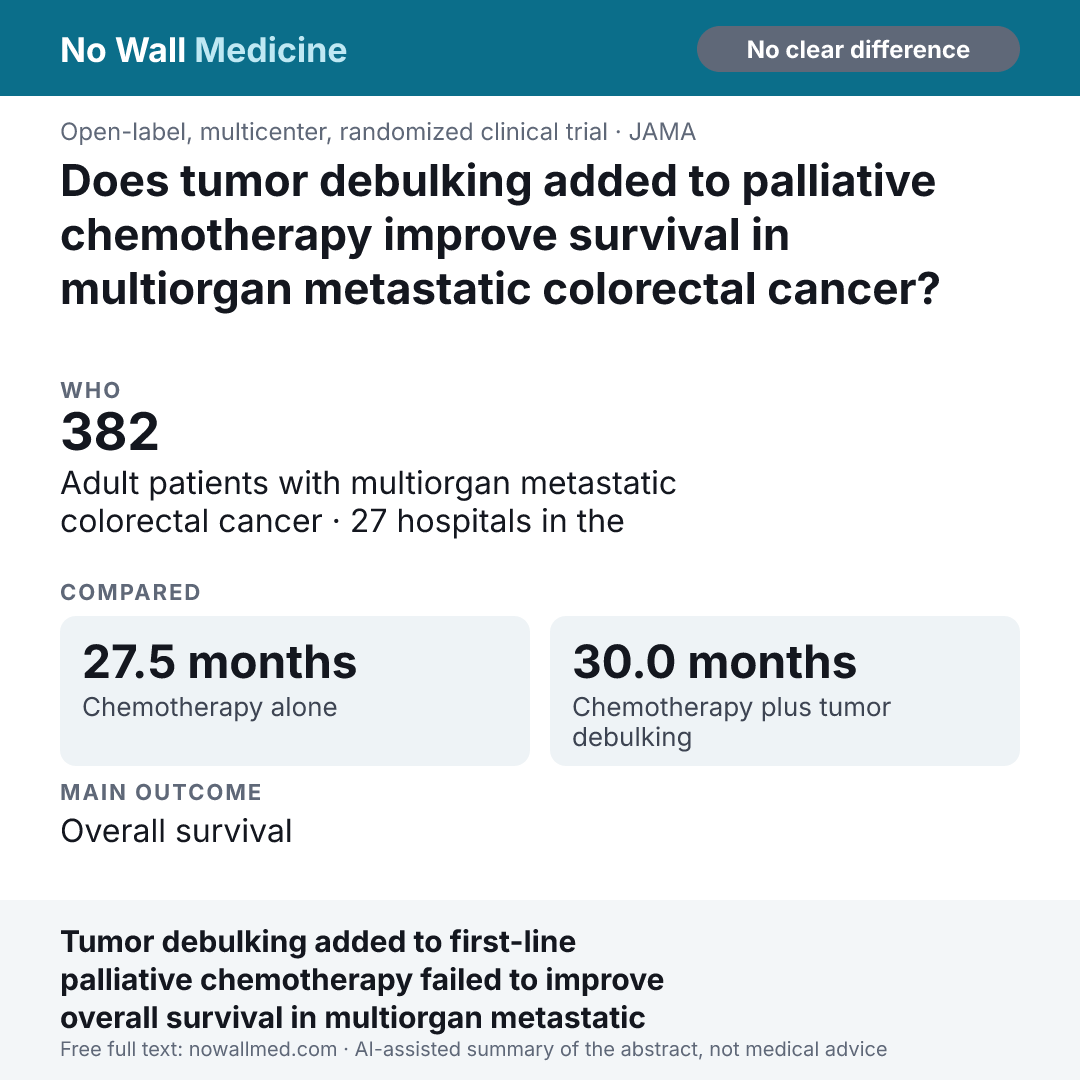
Tumor Debulking in Combination With Chemotherapy in Multiorgan Metastatic Colorectal Cancer: The ORCHESTRA Randomized Clinical Trial
Open-label, multicenter, randomized clinical trialNo clear difference
Does tumor debulking added to palliative chemotherapy improve survival in multiorgan metastatic colorectal cancer?
Who
382
Adult patients with multiorgan metastatic colorectal cancer · 27 hospitals in the Netherlands and 1 in the UK
Compared
27.5 monthsChemotherapy alone
30.0 monthsChemotherapy plus tumor debulking
Main outcome
Overall survival
Result: adjusted hazard ratio 0.88 (95% CI 0.70-1.10)
Bottom line: Tumor debulking added to first-line palliative chemotherapy failed to improve overall survival in multiorgan metastatic colorectal cancer.
JAMA · 2026-03-16 · Save PNG
Pyrotinib or placebo in combination with trastuzumab and docetaxel for HER2 positive metastatic breast cancer: long term survival results from randomised phase 3 PHILA trial
Multicentre, double blind, randomised, placebo controlled phase 3 trialBenefit found
Does pyrotinib plus trastuzumab and docetaxel improve survival in HER2 positive metastatic breast cancer?
Who
590
590 female patients with untreated human epidermal growth factor receptor 2 positive metastatic breast cancer · 40 centres in China
Compared
pyrotinib plus trastuzumab and docetaxel: 20% died
placebo plus trastuzumab and docetaxel: 30% died
Main outcome
progression-free survival and overall survival
Result: hazard ratio 0.64 (95% CI 0.46 to 0.89)
Bottom line: Pyrotinib combined with trastuzumab and docetaxel improved both progression-free survival and overall survival in untreated HER2 positive metastatic breast cancer.
BMJ · 2026-03-16 · Save PNG
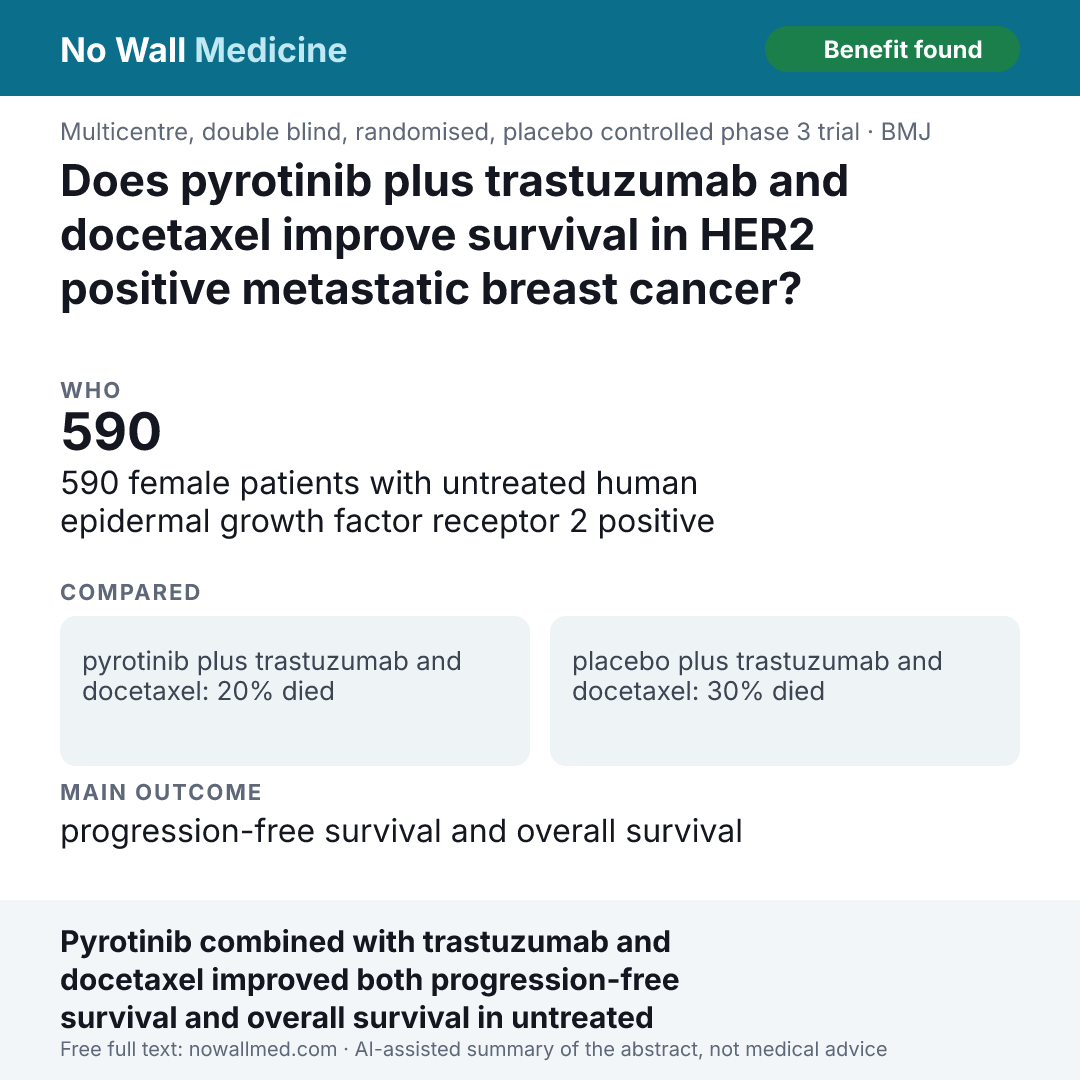
Glenzocimab Efficacy and Safety Added to Intravenous Thrombolysis With or Without Mechanical Thrombectomy in Patients With Acute Ischemic Stroke-ACTISAVE: A Prospective, Randomized, Double-Blind Study
Randomized, double-blind, placebo-controlled phase 2/3 studyNo clear difference
Does glenzocimab improve outcomes in acute ischemic stroke patients receiving thrombolysis?
Who
421
Patients with stroke treated by thrombolysis within 4.5 hours · 54 stroke centers in 10 countries
Compared
21.6%Glenzocimab
15.3%Placebo
Main outcome
modified Rankin Scale score of 4 to 6 at day 90
Result: odds ratio 1.51 (95% CI 0.90-2.54)
Bottom line: Glenzocimab failed to confirm a beneficial effect on functional outcomes in acute ischemic stroke patients.
Stroke · 2026-03-16 · Save PNG
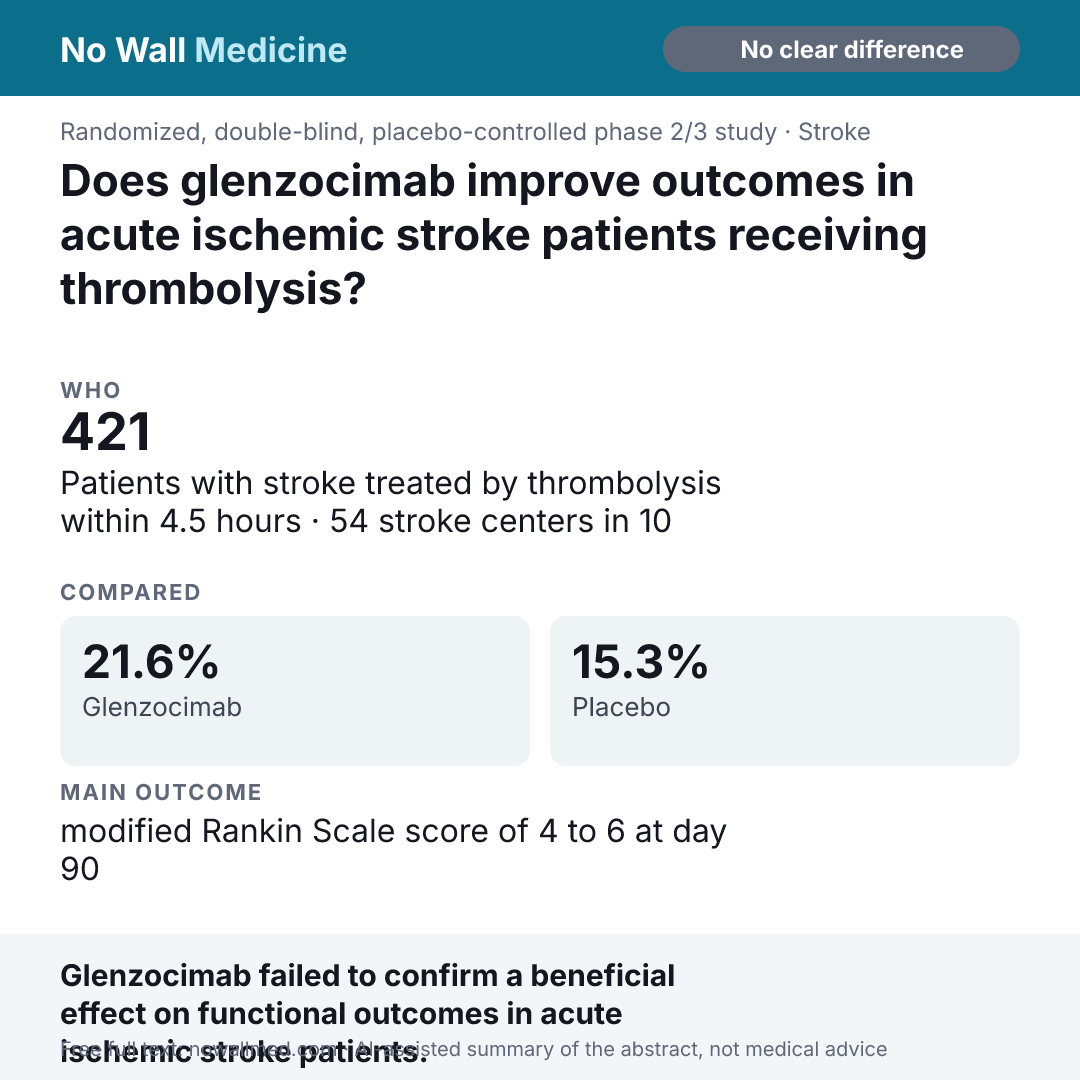
The timing of the commencement of pulmonary rehabilitation in hospitalized patients with acute exacerbation of COPD: a systematic review and network meta-analysis
Systematic review and network meta-analysisMixed results
What is the optimal timing for initiating pulmonary rehabilitation after acute exacerbation of COPD?
Who
1,800
Hospitalized patients with acute exacerbation of chronic obstructive pulmonary disease
Compared
Pulmonary rehabilitation within 2 weeks after discharge: statistically effective in reducing hospital readmissions
Pulmonary rehabilitation after 48 hours of hospital admission: statistically effective in improving six-minute walk test
Usual care
Main outcome
Hospital readmissions
Bottom line: Post-discharge rehabilitation reduces readmissions, while in-hospital initiation after 48 hours improves exercise capacity.
Limitation: Further high-quality randomized controlled trials are needed to confirm optimal timing strategies.
BMC Med · 2026-03-16 · Save PNG
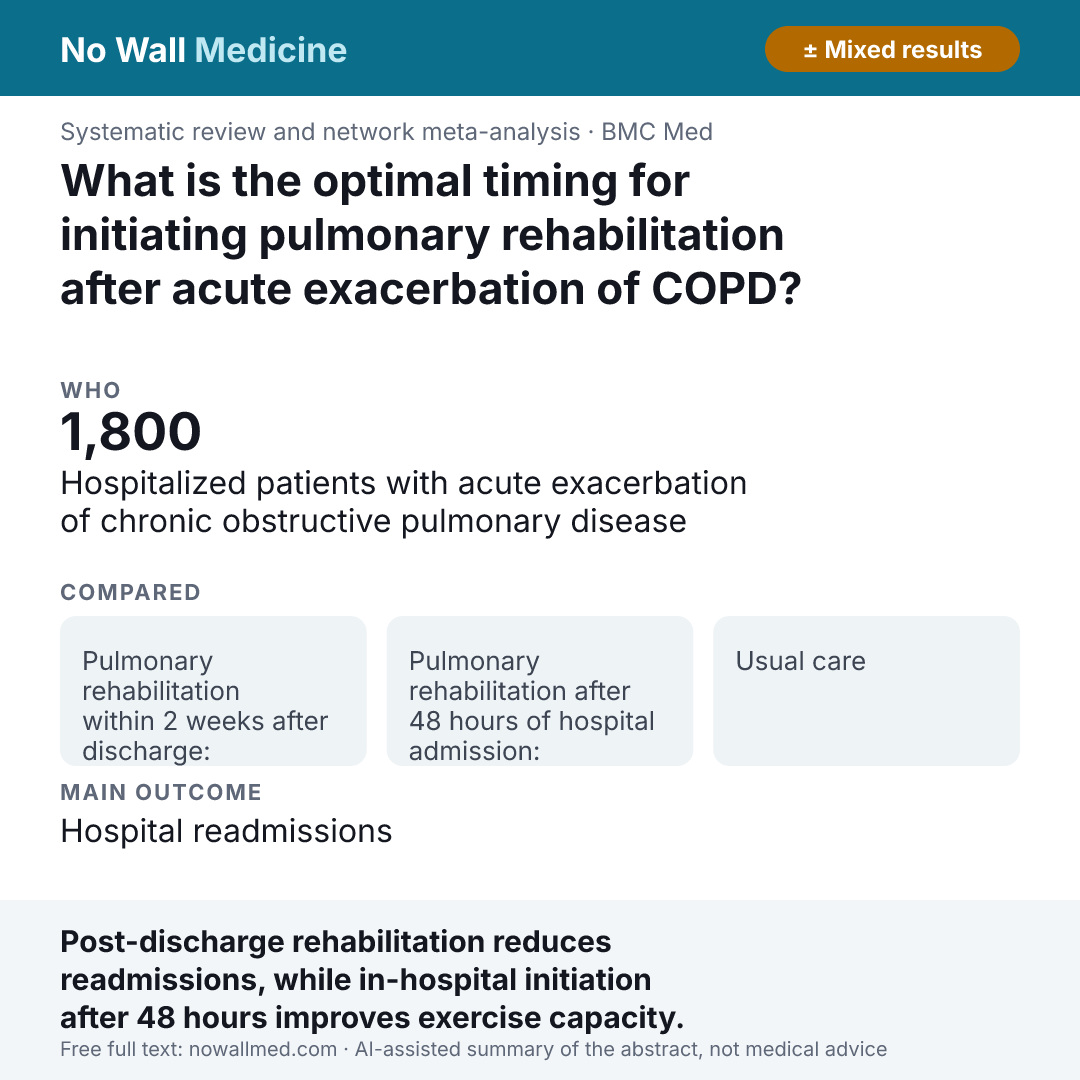
Safety and Efficacy of PrimeC in Amyotrophic Lateral Sclerosis: The PARADIGM Randomized Clinical Trial
Randomized, double-blind, placebo-controlled, phase 2b trialMixed results
Is PrimeC safe and effective in people living with amyotrophic lateral sclerosis?
Who
68
Adults with definite or probable amyotrophic lateral sclerosis · 4 ALS referral centers
Compared
PrimeC: 66.7% adverse event rate
Placebo: 65.2% adverse event rate
Main outcome
Safety, tolerability, and ALS Functional Rating Scale-Revised score
Result: hazard ratio 0.36 (95% CI, 0.15-0.85)
Bottom line: PrimeC was safe and showed potential functional benefits and lower complication risks in amyotrophic lateral sclerosis.
Limitation: The trial was not powered for efficacy.
JAMA Neurol · 2026-03-16 · Save PNG
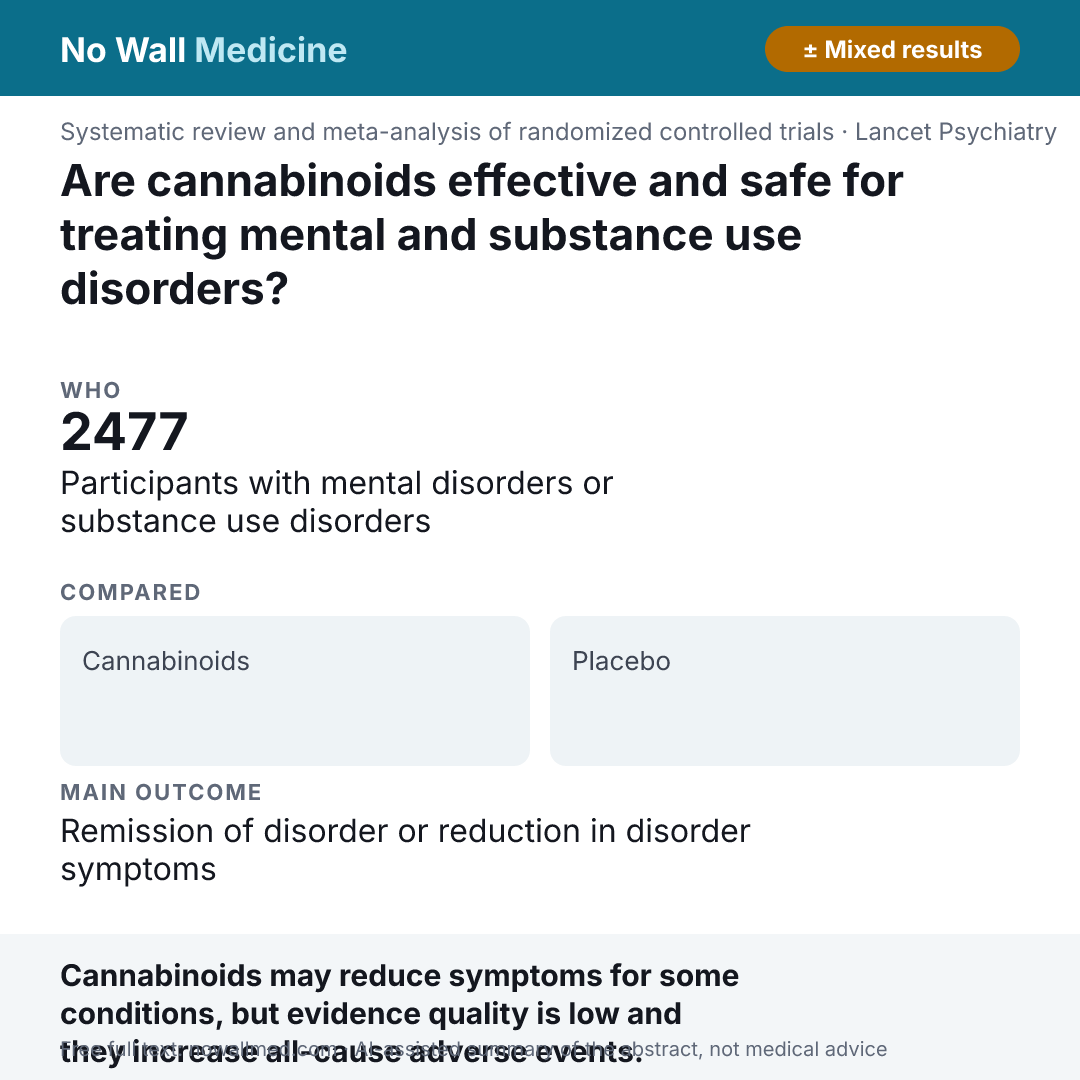
The efficacy and safety of cannabinoids for the treatment of mental disorders and substance use disorders: a systematic review and meta-analysis
Systematic review and meta-analysis of randomized controlled trialsMixed results
Are cannabinoids effective and safe for treating mental and substance use disorders?
Who
2477
Participants with mental disorders or substance use disorders
Compared
Cannabinoids
Placebo
Main outcome
Remission of disorder or reduction in disorder symptoms
Result: OR 1.75 (95% CI 1.25 to 2.46) for all-cause adverse events
Bottom line: Cannabinoids may reduce symptoms for some conditions, but evidence quality is low and they increase all-cause adverse events.
Limitation: Twenty-four of the trials had a high risk of bias and certainty of evidence was low.
Funded by: National Health and Medical Research Council
Lancet Psychiatry · 2026-03-16 · Save PNG
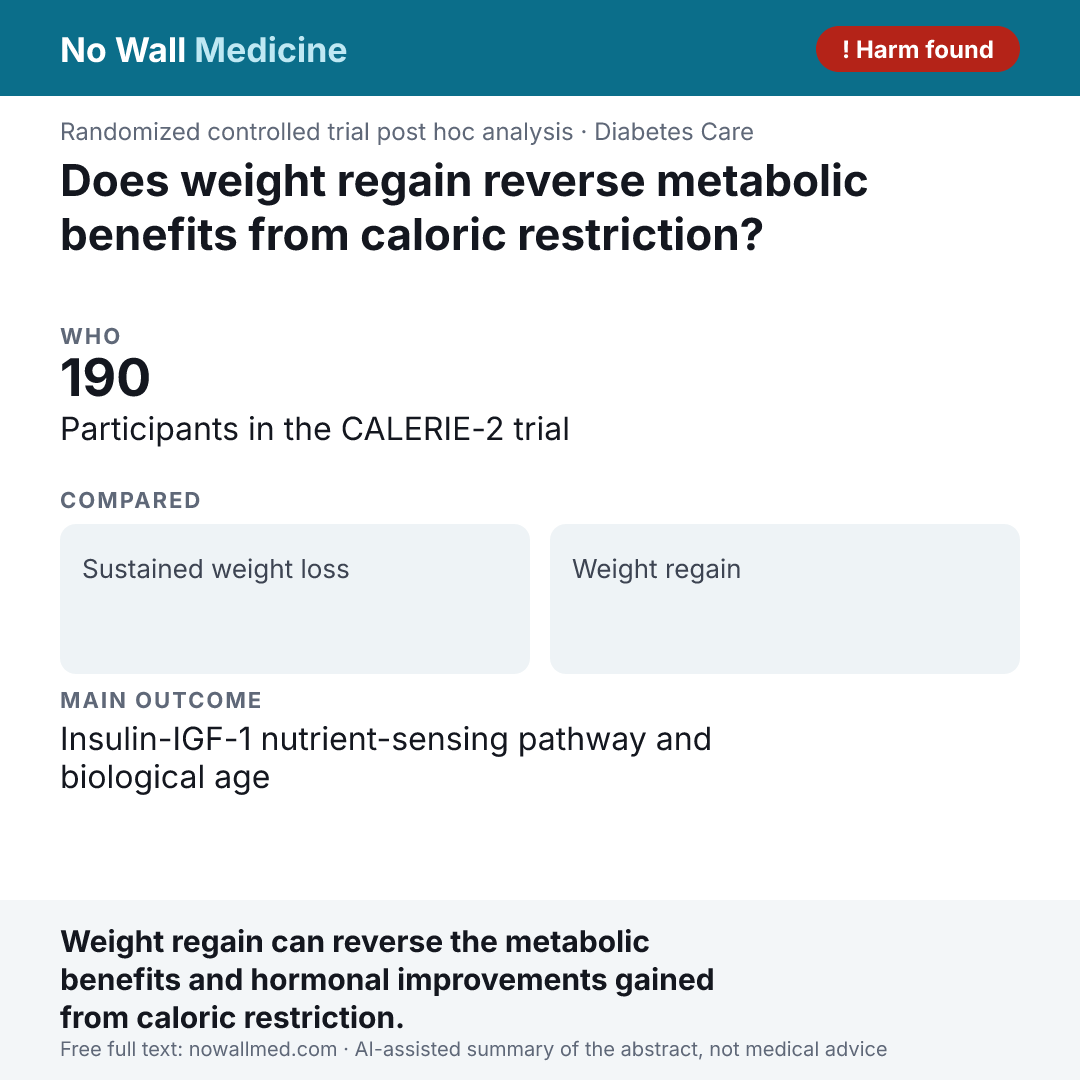
Weight Regain Reverses Caloric Restriction-Induced Benefits on the Insulin-IGF-1 Nutrient-Sensing Pathway: Post Hoc Analysis From the CALERIE-2 Randomized Controlled Trial
Randomized controlled trial post hoc analysisHarm found
Does weight regain reverse metabolic benefits from caloric restriction?
Who
190
Participants in the CALERIE-2 trial
Compared
Sustained weight loss
Weight regain
Main outcome
Insulin-IGF-1 nutrient-sensing pathway and biological age
Bottom line: Weight regain can reverse the metabolic benefits and hormonal improvements gained from caloric restriction.
Diabetes Care · 2026-03-16 · Save PNG
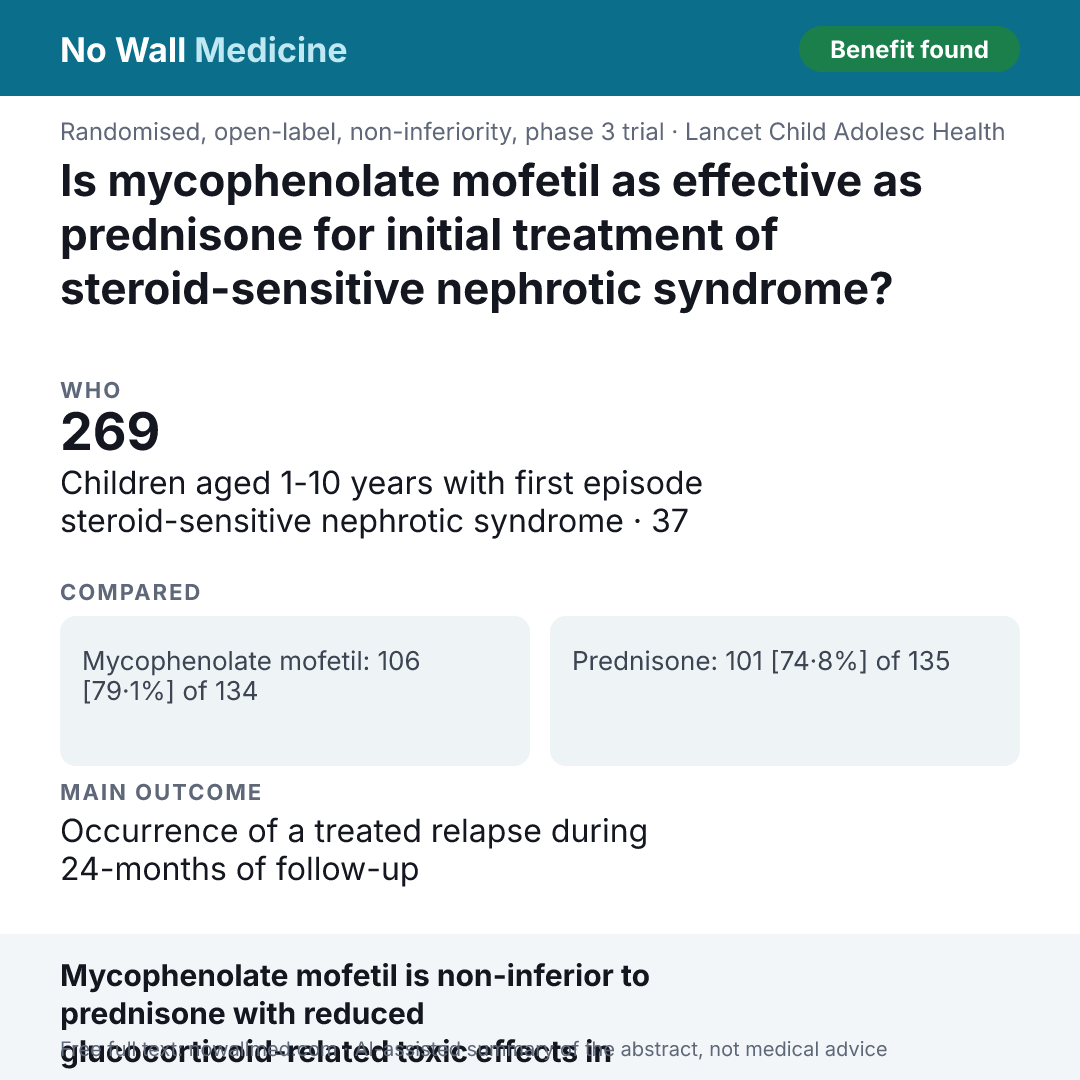
Mycophenolate mofetil versus prednisone for the initial treatment of idiopathic steroid-sensitive nephrotic syndrome in children in Germany (INTENT): a multicentre, open-label, randomised, controlled, parallel-group, non-inferiority, phase 3 trial
Randomised, open-label, non-inferiority, phase 3 trialBenefit found
Is mycophenolate mofetil as effective as prednisone for initial treatment of steroid-sensitive nephrotic syndrome?
Who
269
Children aged 1-10 years with first episode steroid-sensitive nephrotic syndrome · 37 hospitals in Germany
Compared
Mycophenolate mofetil: 106 [79·1%] of 134
Prednisone: 101 [74·8%] of 135
Main outcome
Occurrence of a treated relapse during 24-months of follow-up
Result: difference 4·3% [90% CIs -4·2 to 12·7]
Bottom line: Mycophenolate mofetil is non-inferior to prednisone with reduced glucocorticoid-related toxic effects in children.
Funded by: German Federal Ministry of Education and Research
Lancet Child Adolesc Health · 2026-03-16 · Save PNG
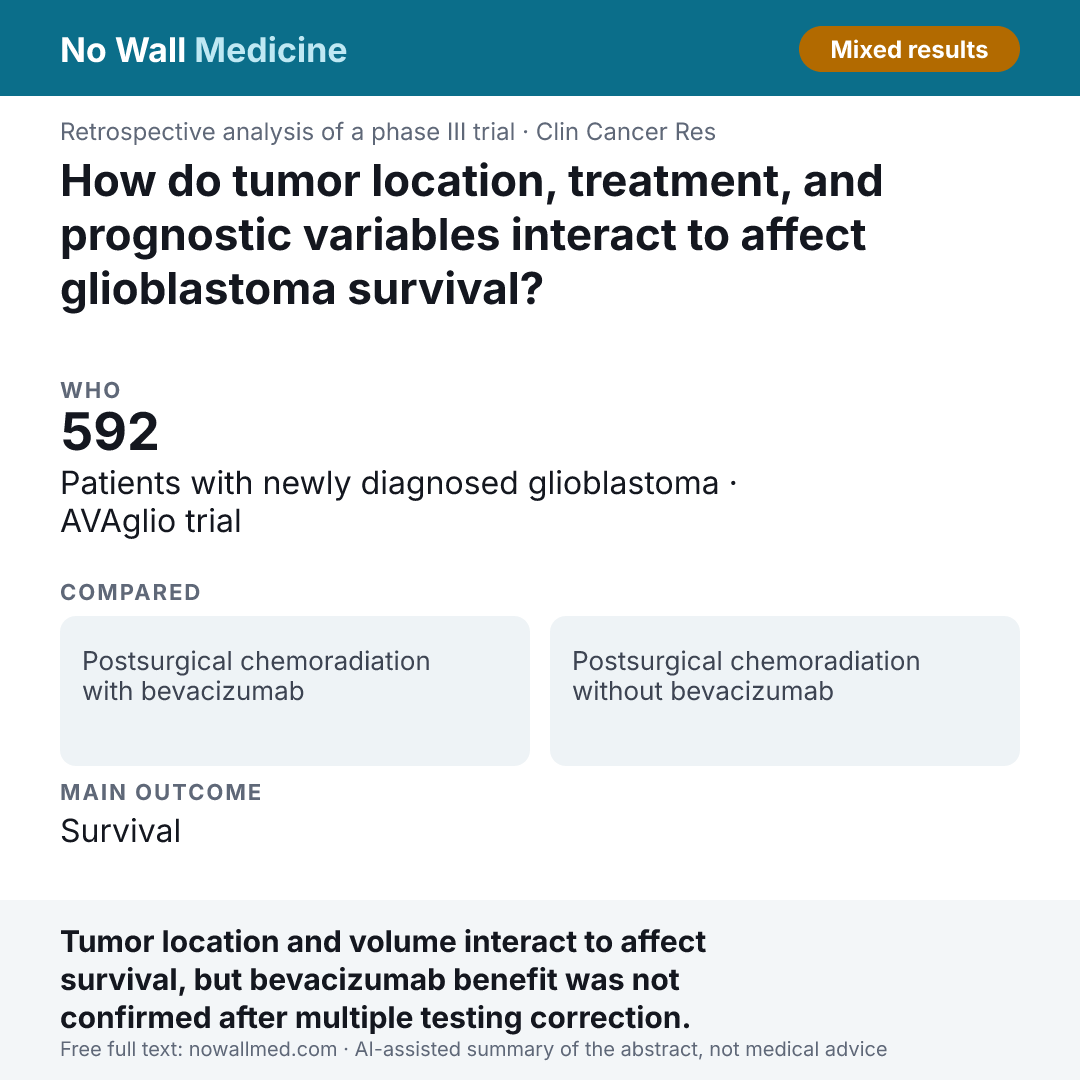
Framework for Statistical Parametric Mapping of the Interactions between Glioblastoma Location, Treatment, Prognostic Variables, and Survival Using a Phase III Trial
Retrospective analysis of a phase III trialMixed results
How do tumor location, treatment, and prognostic variables interact to affect glioblastoma survival?
Who
592
Patients with newly diagnosed glioblastoma · AVAglio trial
Compared
Postsurgical chemoradiation with bevacizumab
Postsurgical chemoradiation without bevacizumab
Main outcome
Survival
Bottom line: Tumor location and volume interact to affect survival, but bevacizumab benefit was not confirmed after multiple testing correction.
Clin Cancer Res · 2026-03-16 · Save PNG
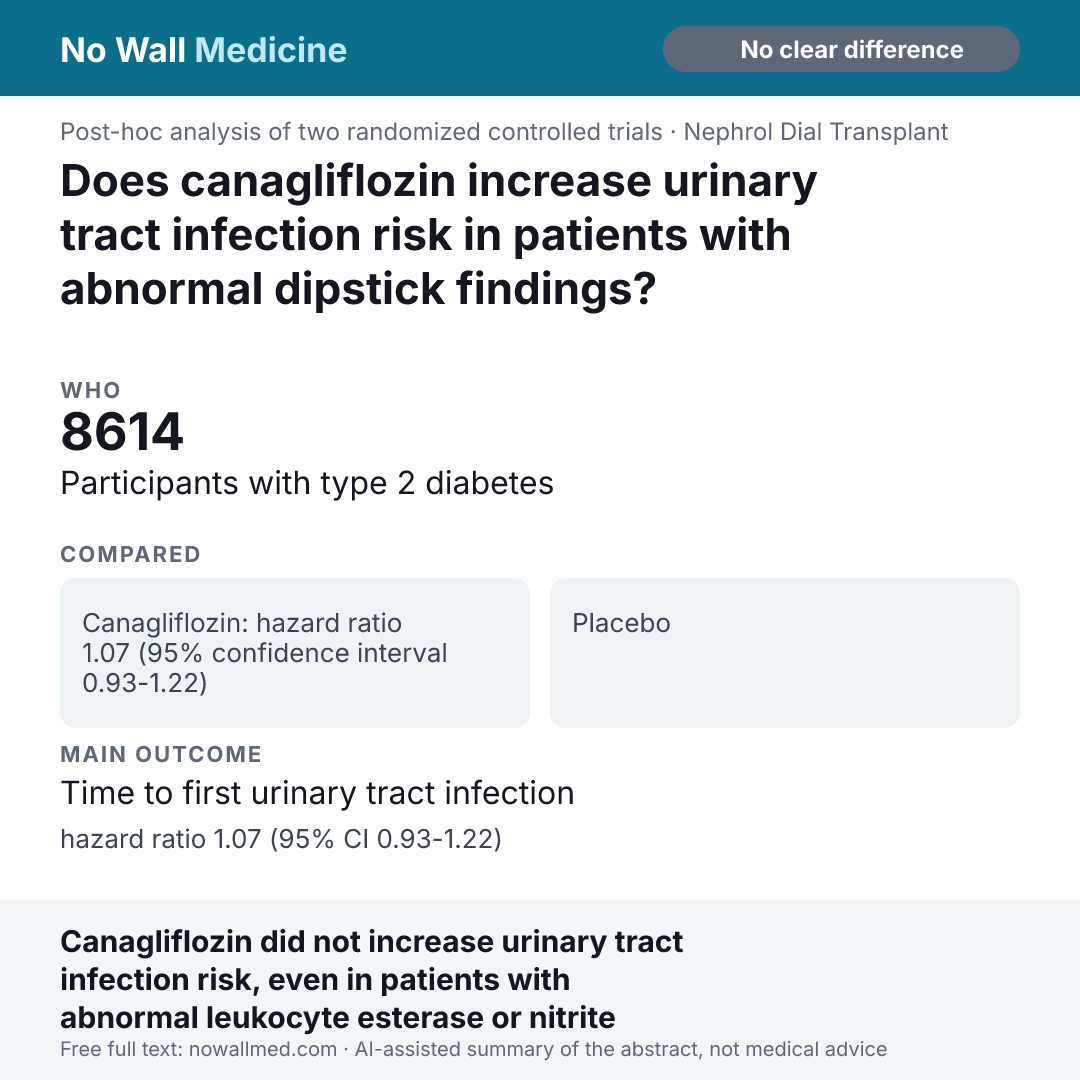
Urinary dipstick findings and UTI risk with SGLT2 inhibitors: a post-hoc analysis of the CANVAS and CREDENCE trials
Post-hoc analysis of two randomized controlled trialsNo clear difference
Does canagliflozin increase urinary tract infection risk in patients with abnormal dipstick findings?
Who
8614
Participants with type 2 diabetes
Compared
Canagliflozin: hazard ratio 1.07 (95% confidence interval 0.93-1.22)
Placebo
Main outcome
Time to first urinary tract infection
Result: hazard ratio 1.07 (95% CI 0.93-1.22)
Bottom line: Canagliflozin did not increase urinary tract infection risk, even in patients with abnormal leukocyte esterase or nitrite findings.
Nephrol Dial Transplant · 2026-03-16 · Save PNG
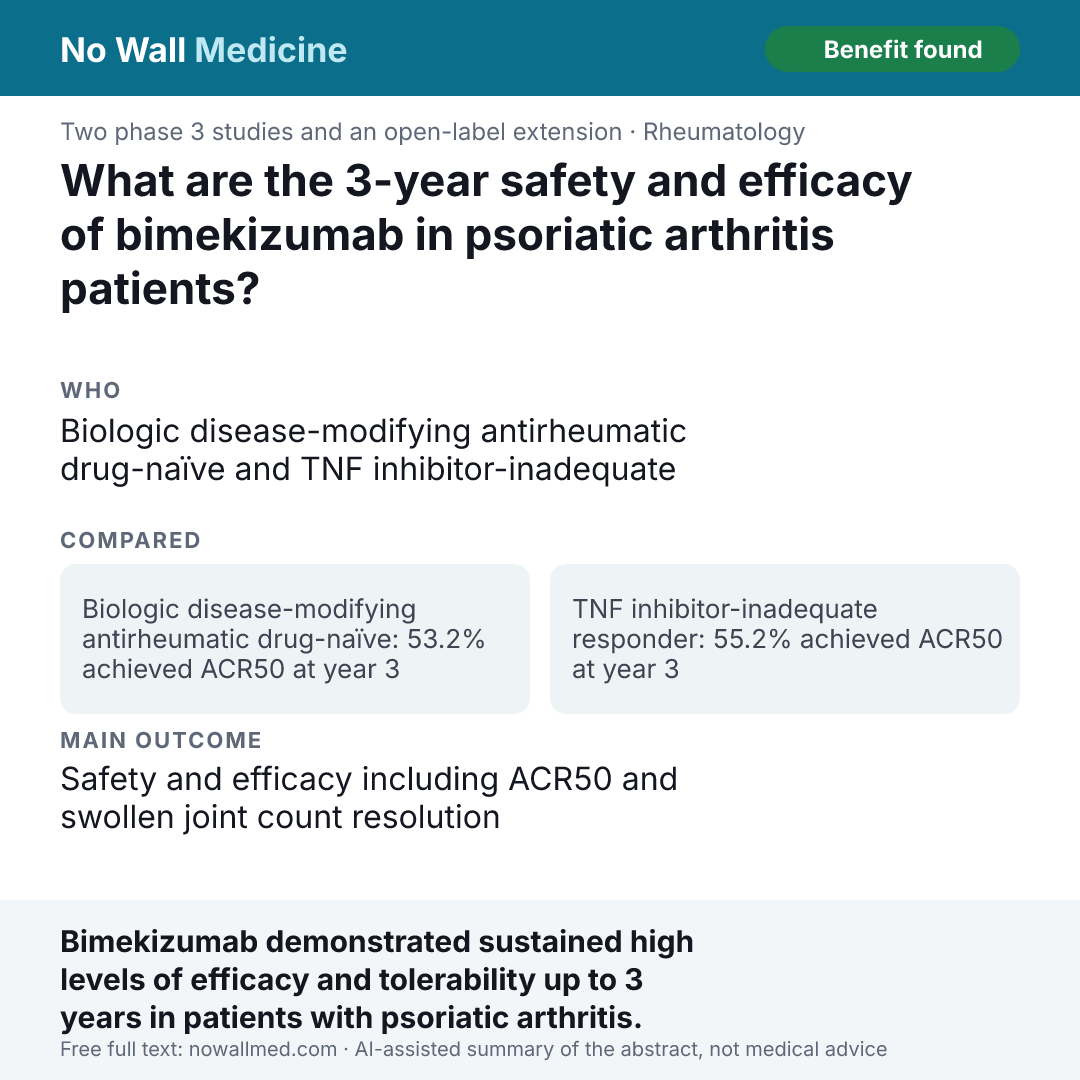
Bimekizumab safety and efficacy in patients with psoriatic arthritis: 3-year results from two phase 3 studies
Two phase 3 studies and an open-label extensionBenefit found
What are the 3-year safety and efficacy of bimekizumab in psoriatic arthritis patients?
Who
Biologic disease-modifying antirheumatic drug-naïve and TNF inhibitor-inadequate responder patients
Compared
Biologic disease-modifying antirheumatic drug-naïve: 53.2% achieved ACR50 at year 3
TNF inhibitor-inadequate responder: 55.2% achieved ACR50 at year 3
Main outcome
Safety and efficacy including ACR50 and swollen joint count resolution
Bottom line: Bimekizumab demonstrated sustained high levels of efficacy and tolerability up to 3 years in patients with psoriatic arthritis.
Rheumatology · 2026-03-16 · Save PNG
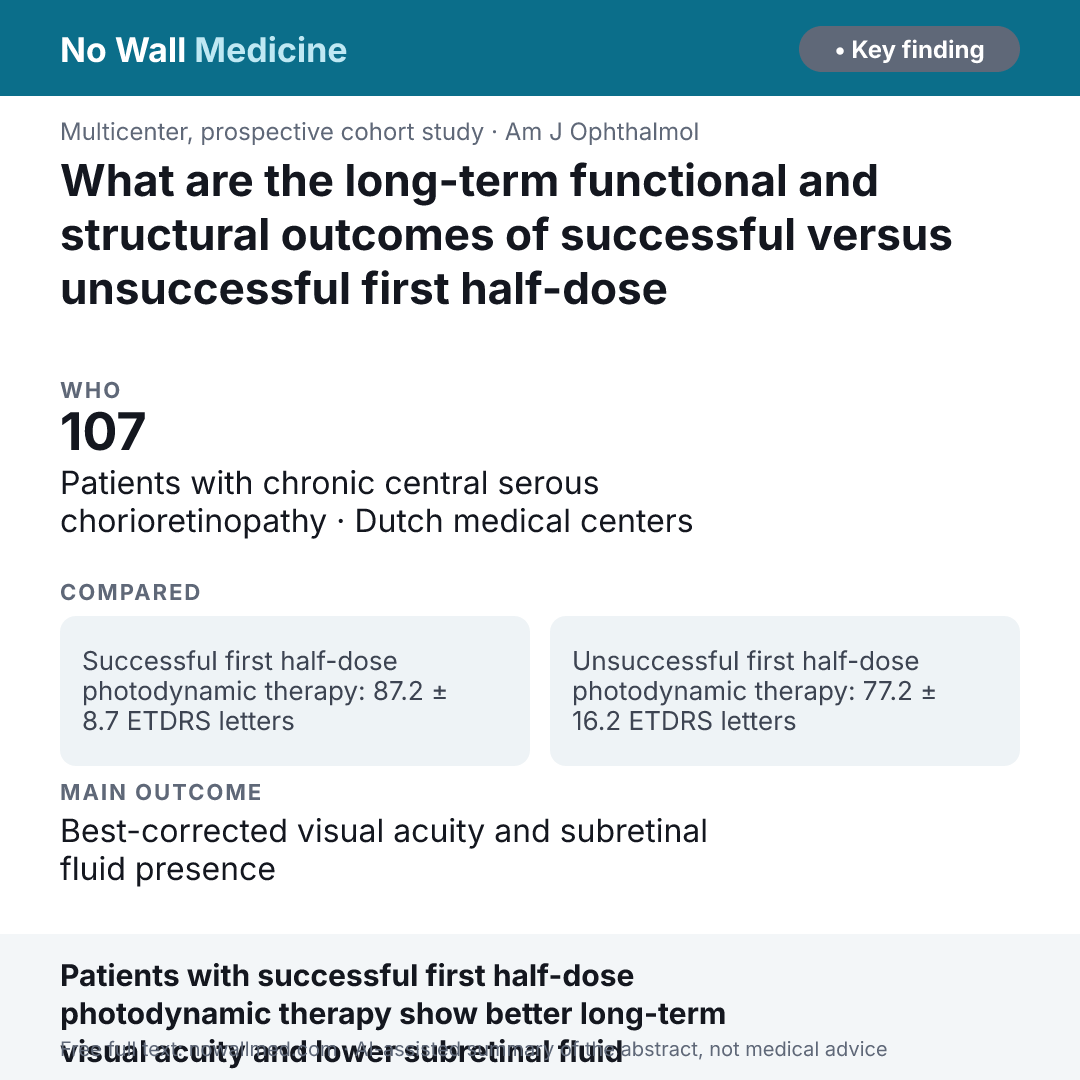
Long-Term Follow-Up of PLACE and SPECTRA Trials: Outcomes After Successful and Unsuccessful Half-Dose Photodynamic Therapy for Chronic Central Serous Chorioretinopathy
Multicenter, prospective cohort studyKey finding
What are the long-term functional and structural outcomes of successful versus unsuccessful first half-dose photodynamic therapy?
Who
107
Patients with chronic central serous chorioretinopathy · Dutch medical centers
Compared
Successful first half-dose photodynamic therapy: 87.2 ± 8.7 ETDRS letters
Unsuccessful first half-dose photodynamic therapy: 77.2 ± 16.2 ETDRS letters
Main outcome
Best-corrected visual acuity and subretinal fluid presence
Bottom line: Patients with successful first half-dose photodynamic therapy show better long-term visual acuity and lower subretinal fluid rates.
Am J Ophthalmol · 2026-03-16 · Save PNG
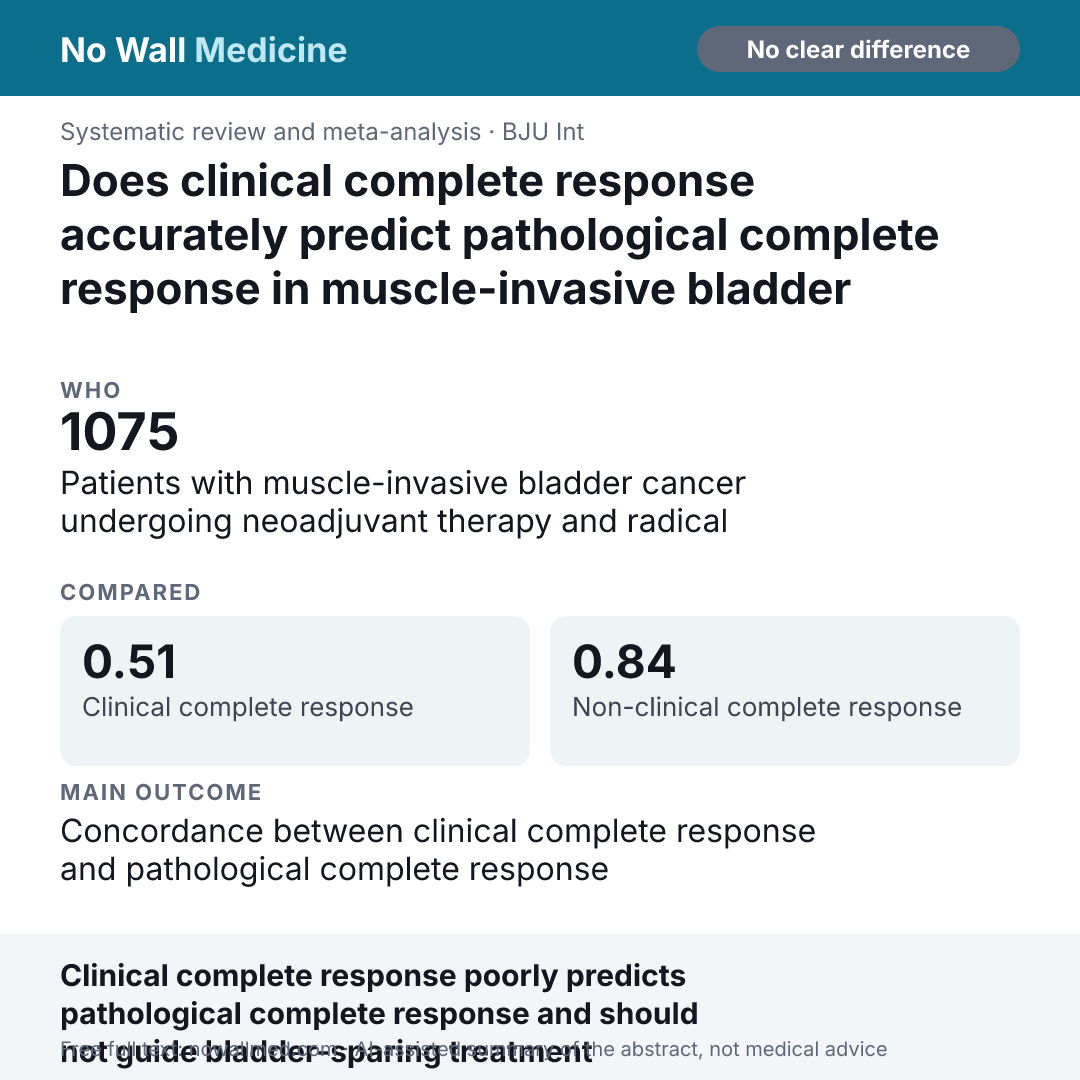
Clinical complete response as a surrogate for pathological response in bladder cancer: a systematic review and meta-analysis
Systematic review and meta-analysisNo clear difference
Does clinical complete response accurately predict pathological complete response in muscle-invasive bladder cancer?
Who
1075
Patients with muscle-invasive bladder cancer undergoing neoadjuvant therapy and radical cystectomy
Compared
0.51Clinical complete response (95% CI 0.42-0.60)
0.84Non-clinical complete response (95% CI 0.70-0.92)
Main outcome
Concordance between clinical complete response and pathological complete response
Result: 0.51 (95% CI 0.42-0.60)
Bottom line: Clinical complete response poorly predicts pathological complete response and should not guide bladder-sparing treatment decisions alone.
Limitation: Moderate concerns regarding bias and examiner-dependent bias of cystoscopy-based assessment.
BJU Int · 2026-03-16 · Save PNG
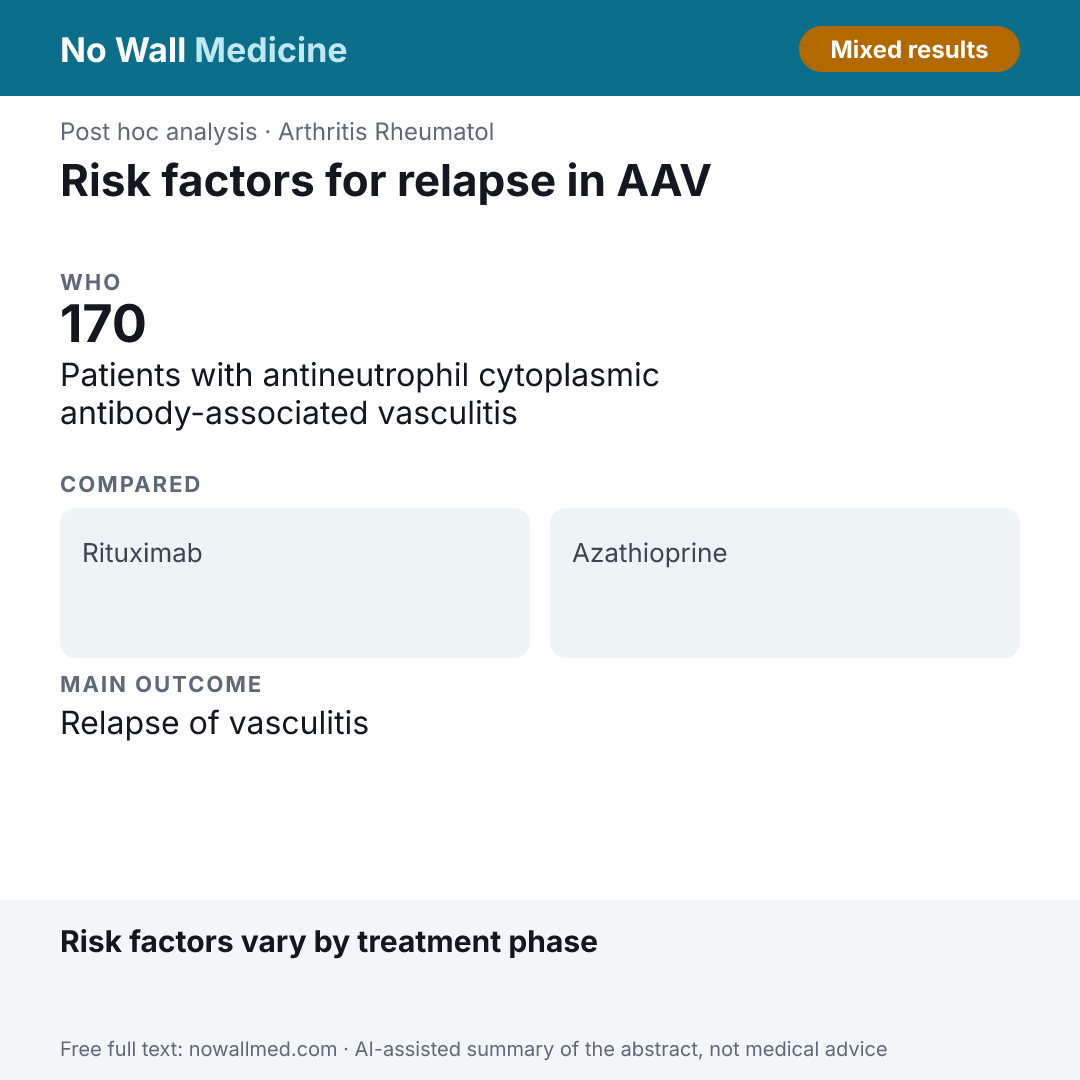
Risk Factors for Relapse in Antineutrophil Cytoplasmic Antibody-Associated Vasculitis Among Patients With Relapse After Induction of Remission With Rituximab
Post hoc analysisMixed results
Risk factors for relapse in AAV
Who
170
Patients with antineutrophil cytoplasmic antibody-associated vasculitis
Compared
Rituximab
Azathioprine
Main outcome
Relapse of vasculitis
Bottom line: Risk factors vary by treatment phase
Arthritis Rheumatol · 2026-03-16 · Save PNG