Visual abstracts
New randomized trials and meta-analyses from leading journals at a glance: who was studied, what was compared, and what was found. Every paper is free to read in full.
All specialtiesCardiology 3518Oncology 3021Gastroenterology & Hepatology 1385Infectious Disease 2470Neurology 1419Psychiatry & Mental Health 1666Pulmonology 1507Critical Care 1009Endocrinology & Diabetes 1798Pediatrics 2136Surgery 1859Orthopedics & Sports Medicine 651Neurosurgery 417Cardiothoracic & Vascular Surgery 418Plastic & Reconstructive Surgery 490Nephrology 764Rheumatology 562Hematology 792Dermatology 434Ophthalmology 391Obstetrics & Gynecology 1206Public & Global Health 673Radiology & Imaging 494Anesthesiology 717Urology 582ENT (Otolaryngology) 385Emergency Medicine 381Allergy & Immunology 218Geriatrics 741Family Medicine & Primary Care 407Medical Genetics & Genomics 452Pathology & Laboratory Medicine 113Physical Medicine & Rehabilitation 546Palliative Care 324Nutrition 1057Digital Health & AI 1650General Medicine 253
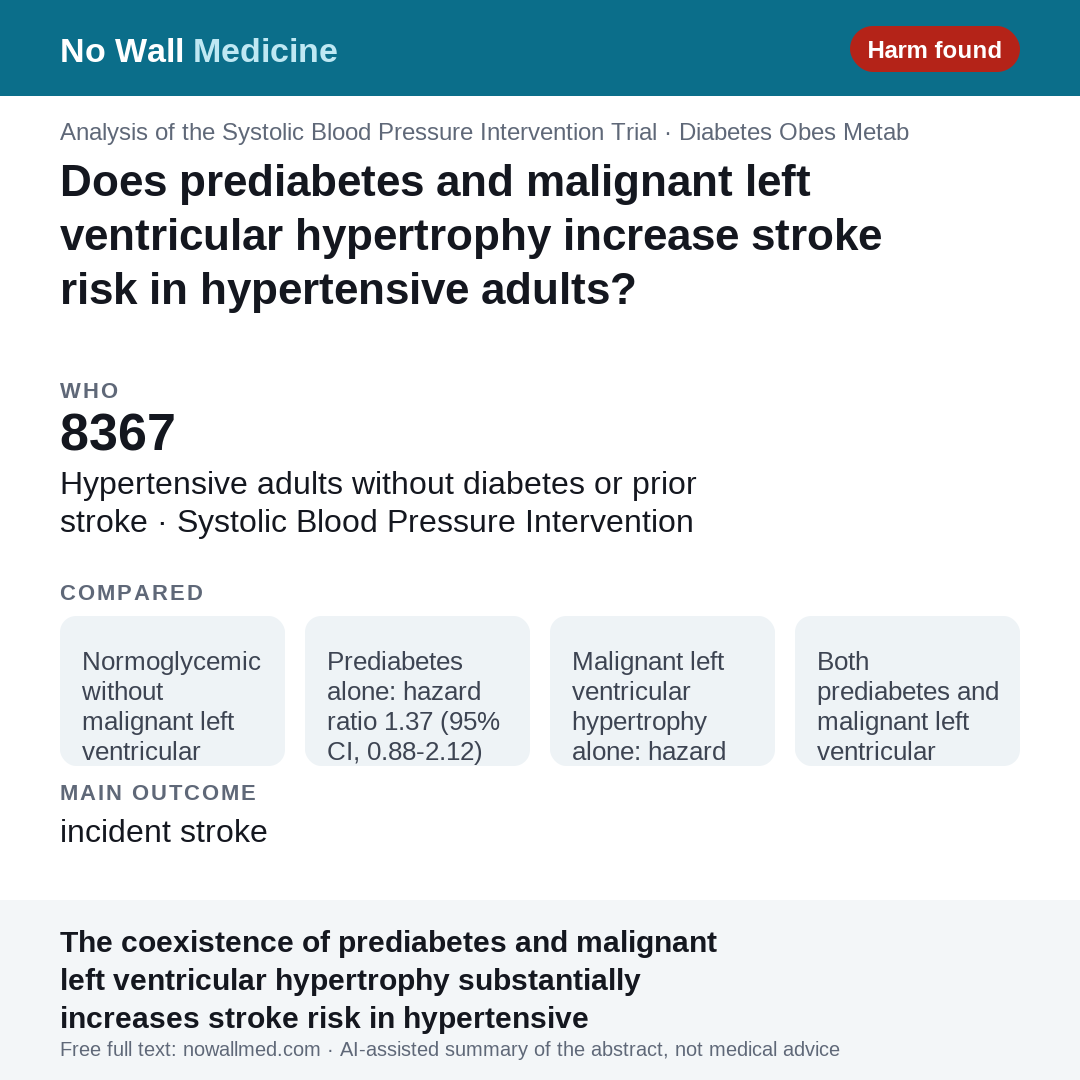
Prediabetes, Malignant Ventricular Hypertrophy and Stroke: The SPRINT Trial
Analysis of the Systolic Blood Pressure Intervention TrialHarm found
Does prediabetes and malignant left ventricular hypertrophy increase stroke risk in hypertensive adults?
Who
8367
Hypertensive adults without diabetes or prior stroke · Systolic Blood Pressure Intervention Trial
Compared
Normoglycemic without malignant left ventricular hypertrophy
Prediabetes alone: hazard ratio 1.37 (95% CI, 0.88-2.12)
Malignant left ventricular hypertrophy alone: hazard ratio 1.94 (95% CI, 1.06-3.53)
Both prediabetes and malignant left ventricular hypertrophy: hazard ratio 3.07 (95% CI, 1.66-5.70)
Main outcome
incident stroke
Result: hazard ratio 3.07 (95% CI, 1.66-5.70) for both conditions
Bottom line: The coexistence of prediabetes and malignant left ventricular hypertrophy substantially increases stroke risk in hypertensive adults.
Diabetes Obes Metab · 2026-05-11Download image
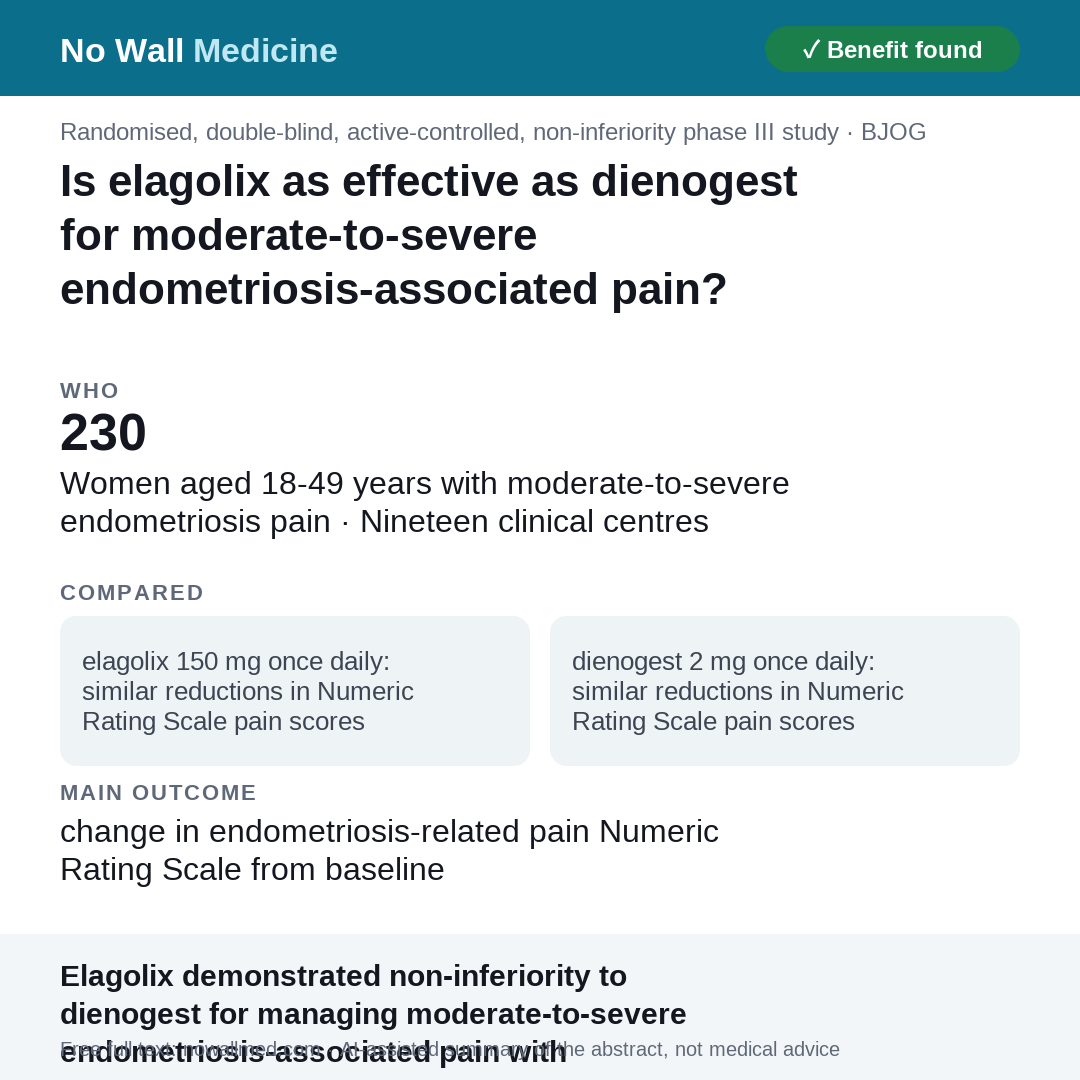
Efficacy and Safety of Elagolix Versus Dienogest for Treatment of Moderate-to-Severe Endometriosis Pain: A Phase III, Multicentric, Double-Blind, Active-Controlled, Non-Inferiority Study
Randomised, double-blind, active-controlled, non-inferiority phase III studyBenefit found
Is elagolix as effective as dienogest for moderate-to-severe endometriosis-associated pain?
Who
230
Women aged 18-49 years with moderate-to-severe endometriosis pain · Nineteen clinical centres across India
Compared
elagolix 150 mg once daily: similar reductions in Numeric Rating Scale pain scores
dienogest 2 mg once daily: similar reductions in Numeric Rating Scale pain scores
Main outcome
change in endometriosis-related pain Numeric Rating Scale from baseline
Result: treatment difference 0.04 (95% CI: -0.3, 0.37)
Bottom line: Elagolix demonstrated non-inferiority to dienogest for managing moderate-to-severe endometriosis-associated pain with acceptable safety.
BJOG · 2026-05-11Download image
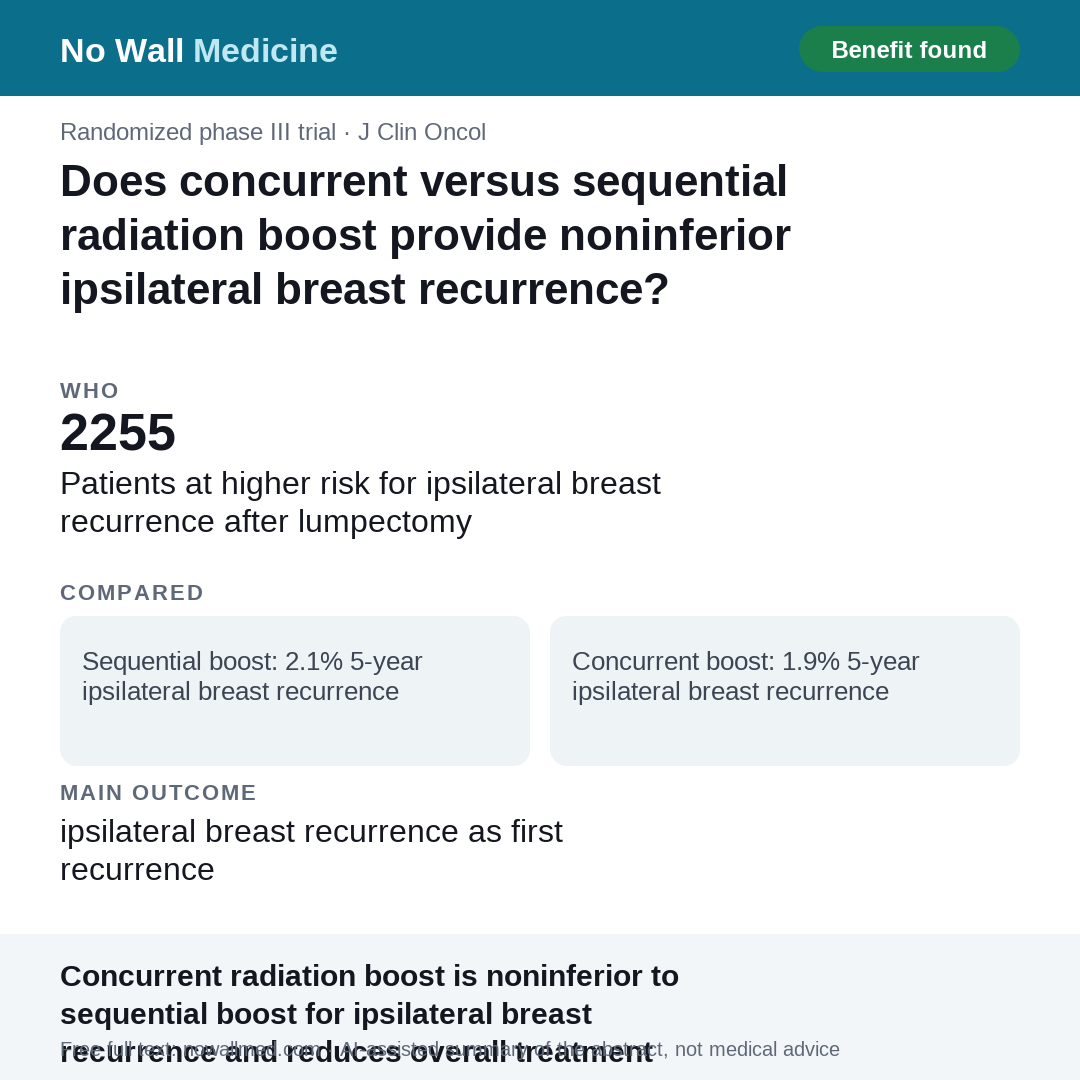
Concurrent Versus Sequential Radiation Dose Escalation to the Surgical Cavity for Conservative Treatment of High-Risk Early Breast Cancer: NRG/RTOG 1005 Phase III Trial
Randomized phase III trialBenefit found
Does concurrent versus sequential radiation boost provide noninferior ipsilateral breast recurrence?
Who
2255
Patients at higher risk for ipsilateral breast recurrence after lumpectomy
Compared
Sequential boost: 2.1% 5-year ipsilateral breast recurrence
Concurrent boost: 1.9% 5-year ipsilateral breast recurrence
Main outcome
ipsilateral breast recurrence as first recurrence
Result: hazard ratio 1.31 (90% CI 0.84 to 2.04)
Bottom line: Concurrent radiation boost is noninferior to sequential boost for ipsilateral breast recurrence and reduces overall treatment time.
J Clin Oncol · 2026-05-11Download image
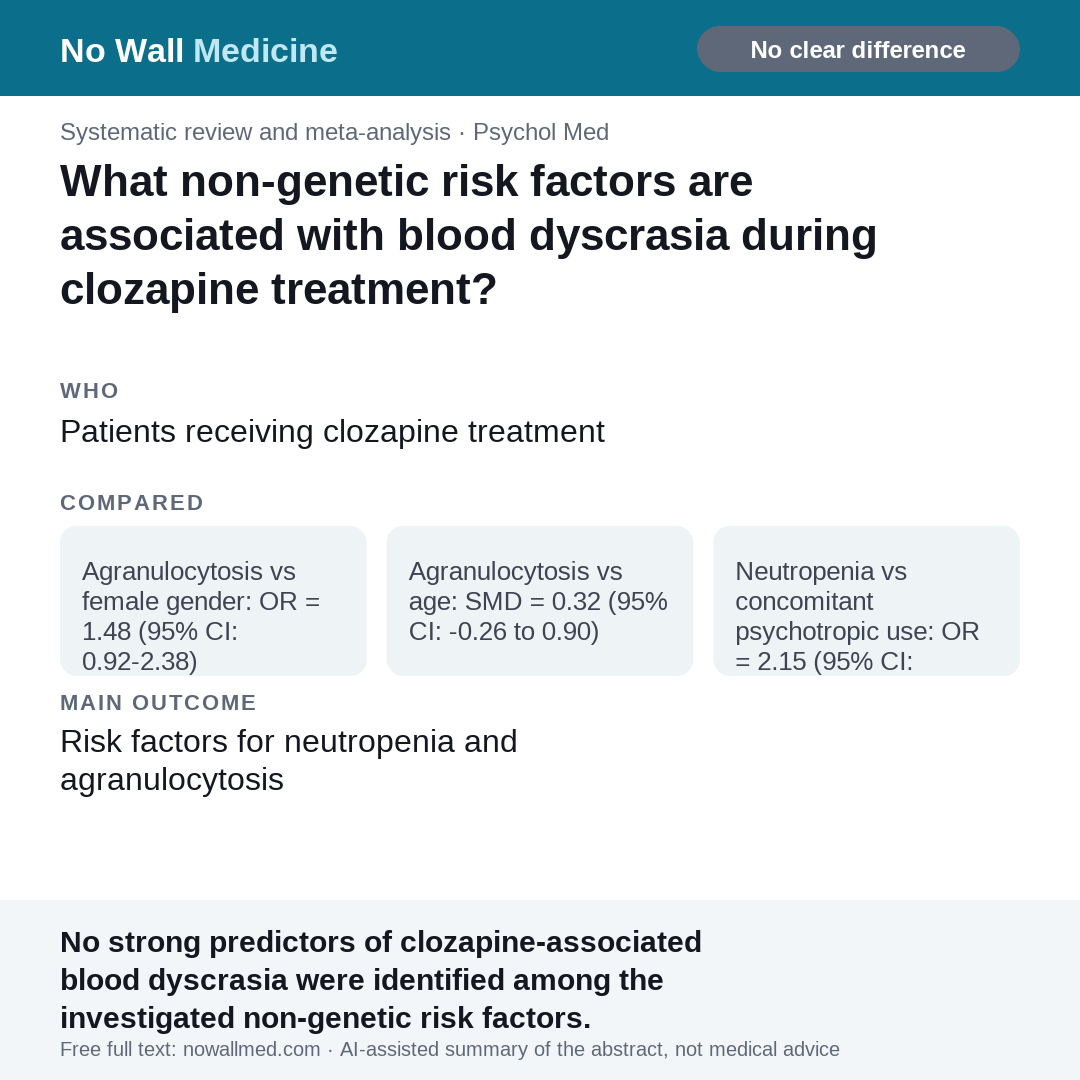
Risk factors associated with blood dyscrasia during clozapine treatment: a systematic review and meta-analysis
Systematic review and meta-analysisNo clear difference
What non-genetic risk factors are associated with blood dyscrasia during clozapine treatment?
Who
Patients receiving clozapine treatment
Compared
Agranulocytosis vs female gender: OR = 1.48 (95% CI: 0.92-2.38)
Agranulocytosis vs age: SMD = 0.32 (95% CI: -0.26 to 0.90)
Neutropenia vs concomitant psychotropic use: OR = 2.15 (95% CI: 1.13-4.07)
Main outcome
Risk factors for neutropenia and agranulocytosis
Bottom line: No strong predictors of clozapine-associated blood dyscrasia were identified among the investigated non-genetic risk factors.
Limitation: Study variability, surveillance bias, and lack of consistent differentiation between agranulocytosis and milder neutropenia.
Psychol Med · 2026-05-11Download image
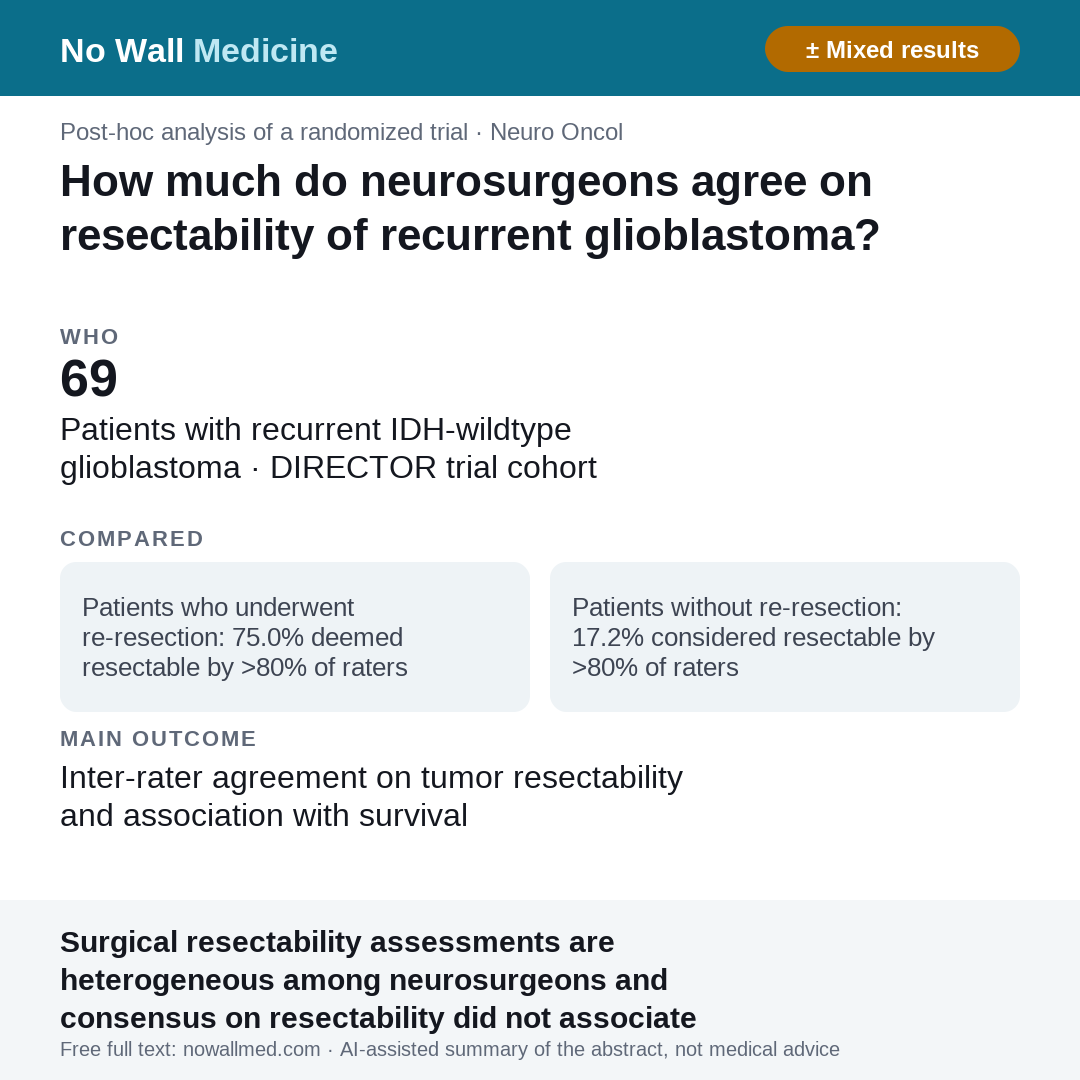
Discrepancies in inter-rater agreement on resectability of recurrent glioblastoma: Complementary post-hoc analysis of the prospective, randomized DIRECTOR trial
Post-hoc analysis of a randomized trialMixed results
How much do neurosurgeons agree on resectability of recurrent glioblastoma?
Who
69
Patients with recurrent IDH-wildtype glioblastoma · DIRECTOR trial cohort
Compared
Patients who underwent re-resection: 75.0% deemed resectable by >80% of raters
Patients without re-resection: 17.2% considered resectable by >80% of raters
Main outcome
Inter-rater agreement on tumor resectability and association with survival
Bottom line: Surgical resectability assessments are heterogeneous among neurosurgeons and consensus on resectability did not associate with prolonged overall survival.
Limitation: Findings are limited by the number of surgical raters and the size of the cohort.
Neuro Oncol · 2026-05-11Download image
DNA methylation signatures of bilateral hippocampal volume, asymmetry and atrophy: a cross-omics analysis in the general population
Meta-analysis of six cohortsUnclear result
DNA methylation and hippocampal volume link
Who
8156
healthy adults in general population
Compared
left hippocampal volume
right hippocampal volume
Main outcome
hippocampal volume and asymmetry
Bottom line: DNA methylation linked to hippocampal volume
Funded by: Institutional funds and others
eBioMedicine · 2026-05-11Download image
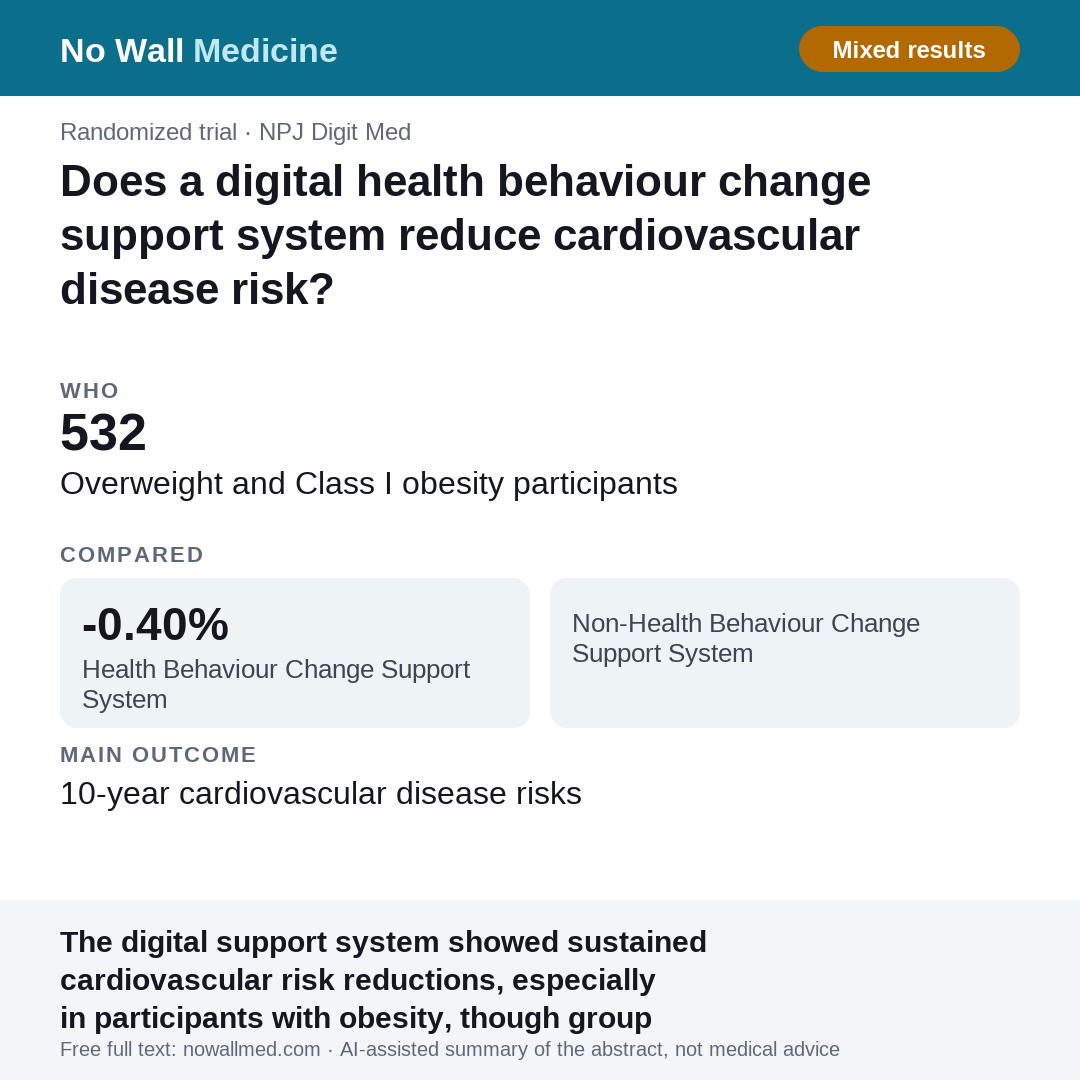
Effect of a digital health behaviour change support system on cardiovascular disease risk in a randomized weight loss trial
Randomized trialMixed results
Does a digital health behaviour change support system reduce cardiovascular disease risk?
Who
532
Overweight and Class I obesity participants
Compared
-0.40%Health Behaviour Change Support System
Non-Health Behaviour Change Support System
Main outcome
10-year cardiovascular disease risks
Bottom line: The digital support system showed sustained cardiovascular risk reductions, especially in participants with obesity, though group differences were not significant.
Limitation: Differences between groups were not significant in any analyses conducted.
NPJ Digit Med · 2026-05-11Download image
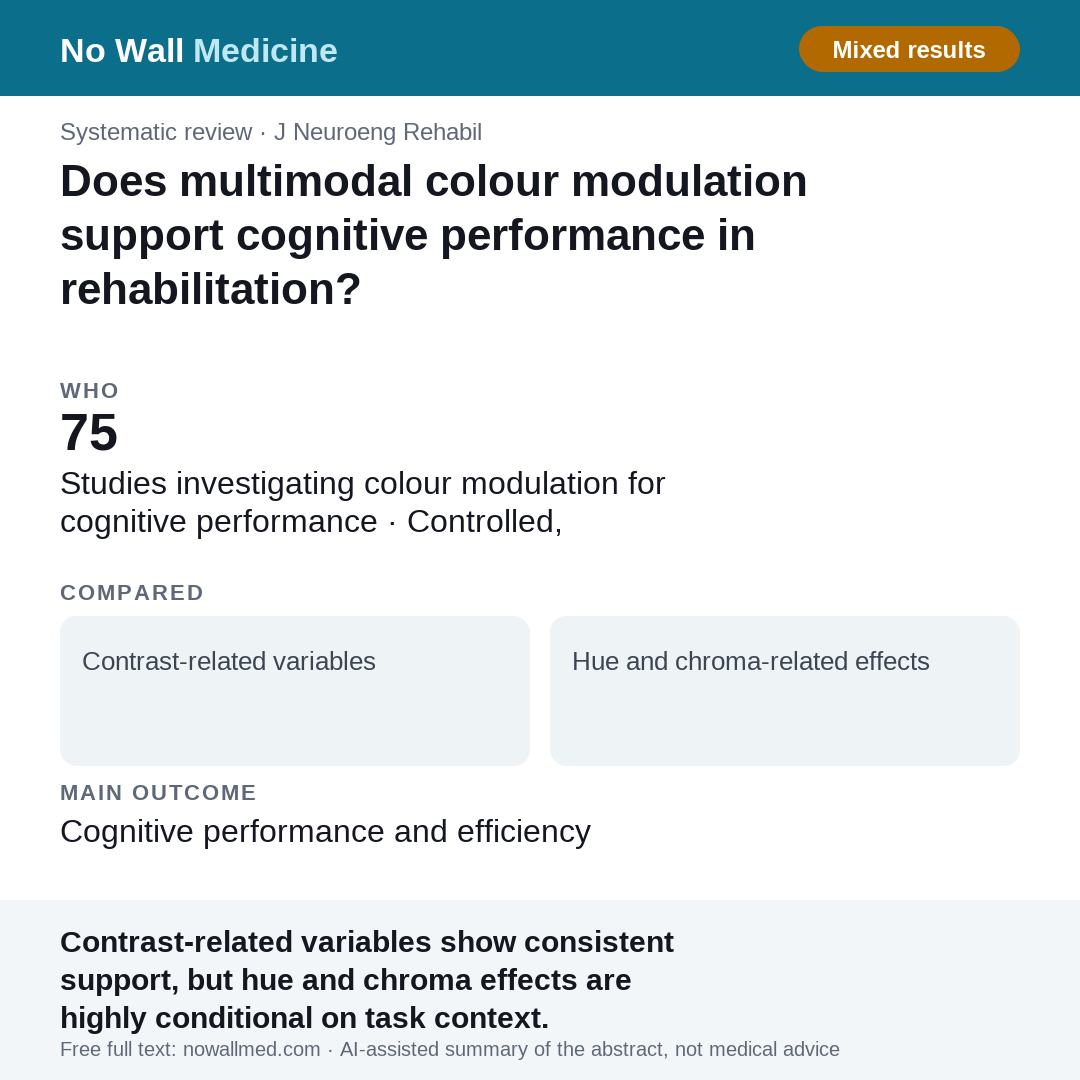
Multimodal colour modulation for cognitive enhancement in intelligent rehabilitation: a systematic review and translational guidance
Systematic reviewMixed results
Does multimodal colour modulation support cognitive performance in rehabilitation?
Who
75
Studies investigating colour modulation for cognitive performance · Controlled, predominantly non-clinical task settings
Compared
Contrast-related variables
Hue and chroma-related effects
Main outcome
Cognitive performance and efficiency
Bottom line: Contrast-related variables show consistent support, but hue and chroma effects are highly conditional on task context.
Limitation: Most evidence derives from controlled, non-clinical settings rather than direct rehabilitation deployment.
J Neuroeng Rehabil · 2026-05-11Download image
Risk factors for sudden cardiac death or sudden unexplained death in patients treated with clozapine: systematic review
Systematic reviewHarm found
Risk factors for sudden cardiac death in clozapine patients
Who
498
clozapine-treated patients with schizophrenia
Compared
high dose
low dose
Main outcome
sudden cardiac death
Bottom line: Clozapine increases risk of sudden cardiac death
Limitation: study heterogeneity
BJPsych Open · 2026-05-11Download image

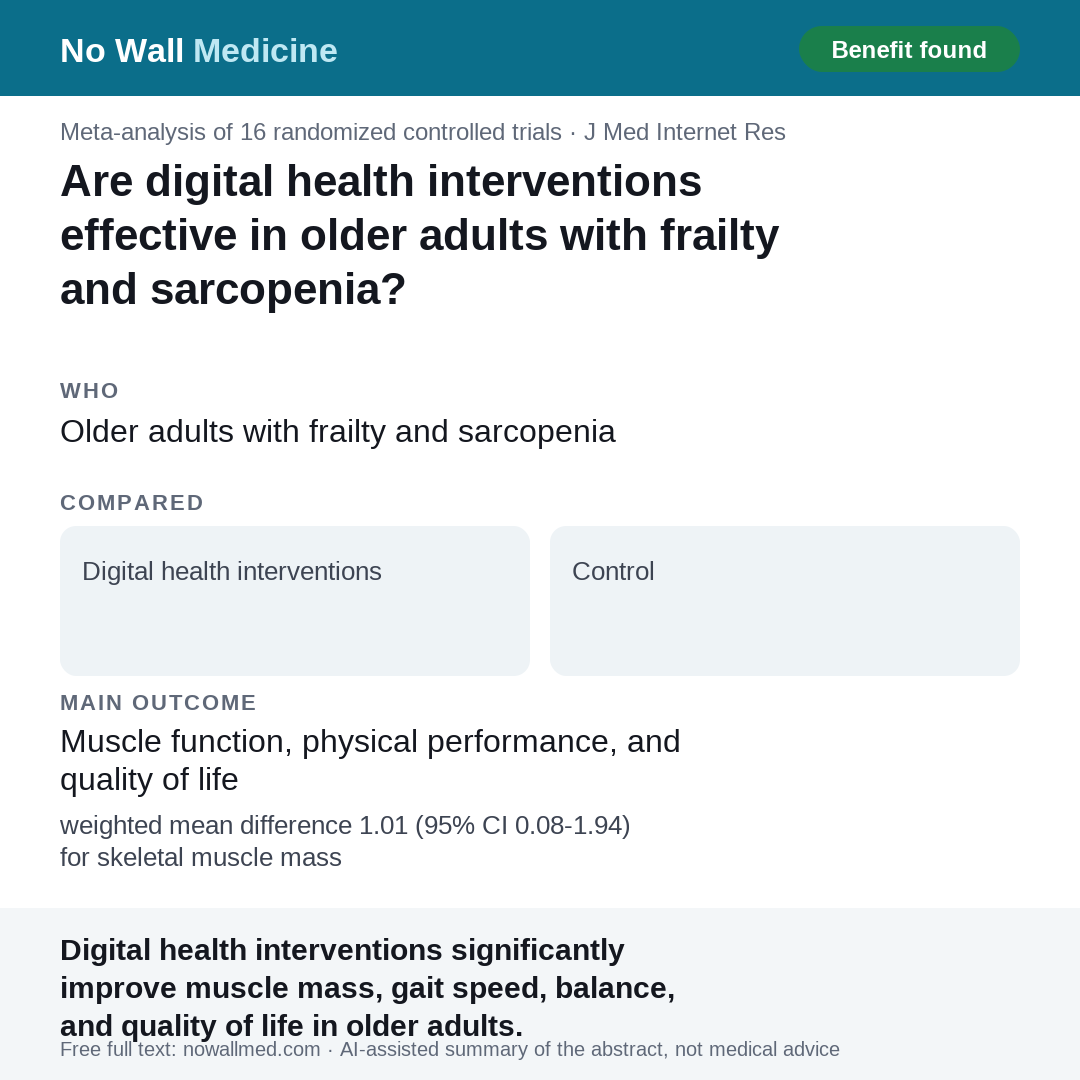
Effectiveness of Digital Health Interventions in Older Adults With Frailty and Sarcopenia: Systematic Review and Meta-Analysis of Randomized Controlled Trials
Meta-analysis of 16 randomized controlled trialsBenefit found
Are digital health interventions effective in older adults with frailty and sarcopenia?
Who
Older adults with frailty and sarcopenia
Compared
Digital health interventions
Control
Main outcome
Muscle function, physical performance, and quality of life
Result: weighted mean difference 1.01 (95% CI 0.08-1.94) for skeletal muscle mass
Bottom line: Digital health interventions significantly improve muscle mass, gait speed, balance, and quality of life in older adults.
Limitation: Low evidence quality and substantial between-study heterogeneity indicated by wide prediction intervals.
J Med Internet Res · 2026-05-11Download image
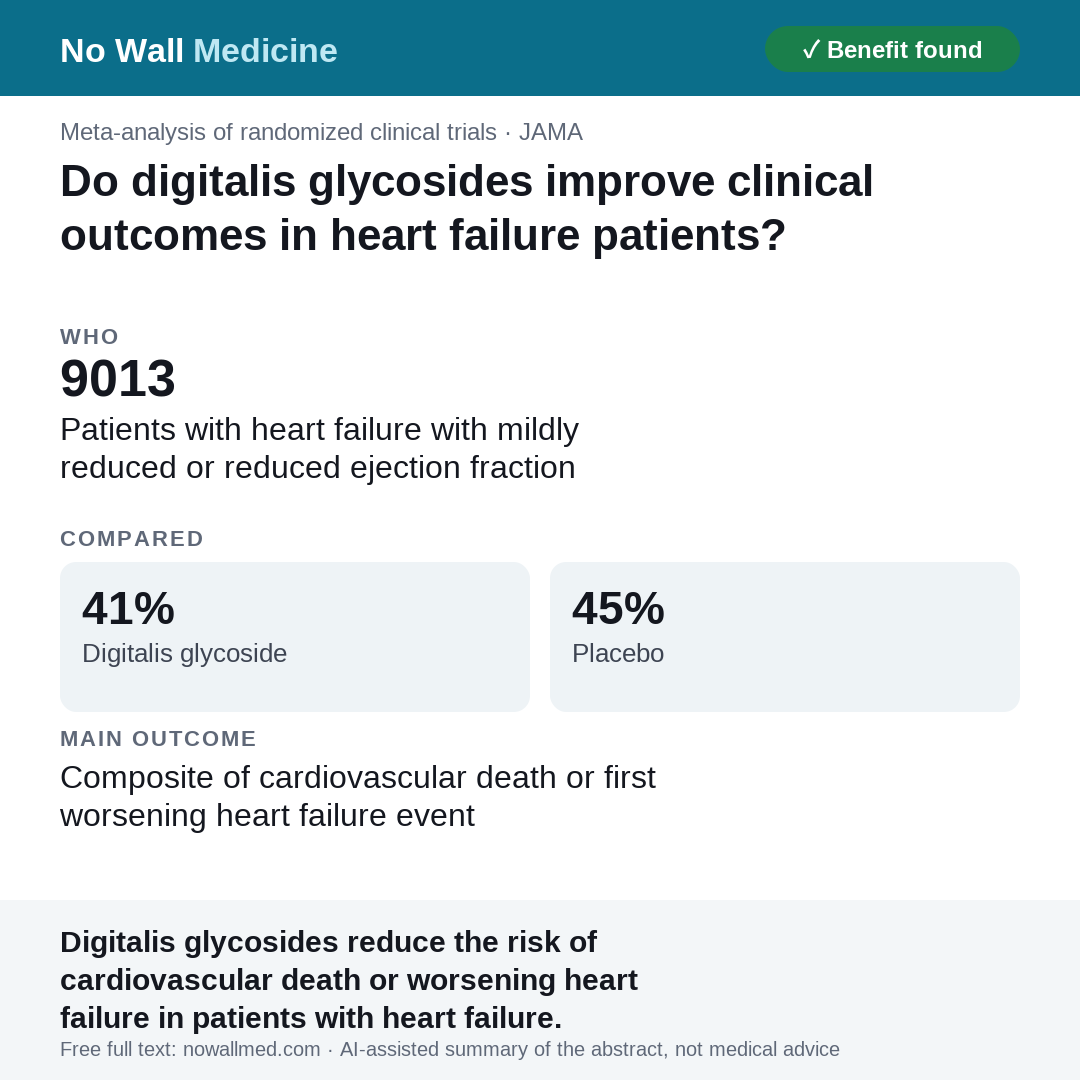
Efficacy and Safety of Digitalis Glycosides in Heart Failure: A Meta-Analysis
Meta-analysis of randomized clinical trialsBenefit found
Do digitalis glycosides improve clinical outcomes in heart failure patients?
Who
9013
Patients with heart failure with mildly reduced or reduced ejection fraction
Compared
41%Digitalis glycoside (1852/4510)
45%Placebo (2037/4503)
Main outcome
Composite of cardiovascular death or first worsening heart failure event
Result: hazard ratio 0.85 (95% CI 0.80-0.90)
Bottom line: Digitalis glycosides reduce the risk of cardiovascular death or worsening heart failure in patients with heart failure.
JAMA · 2026-05-10Download image
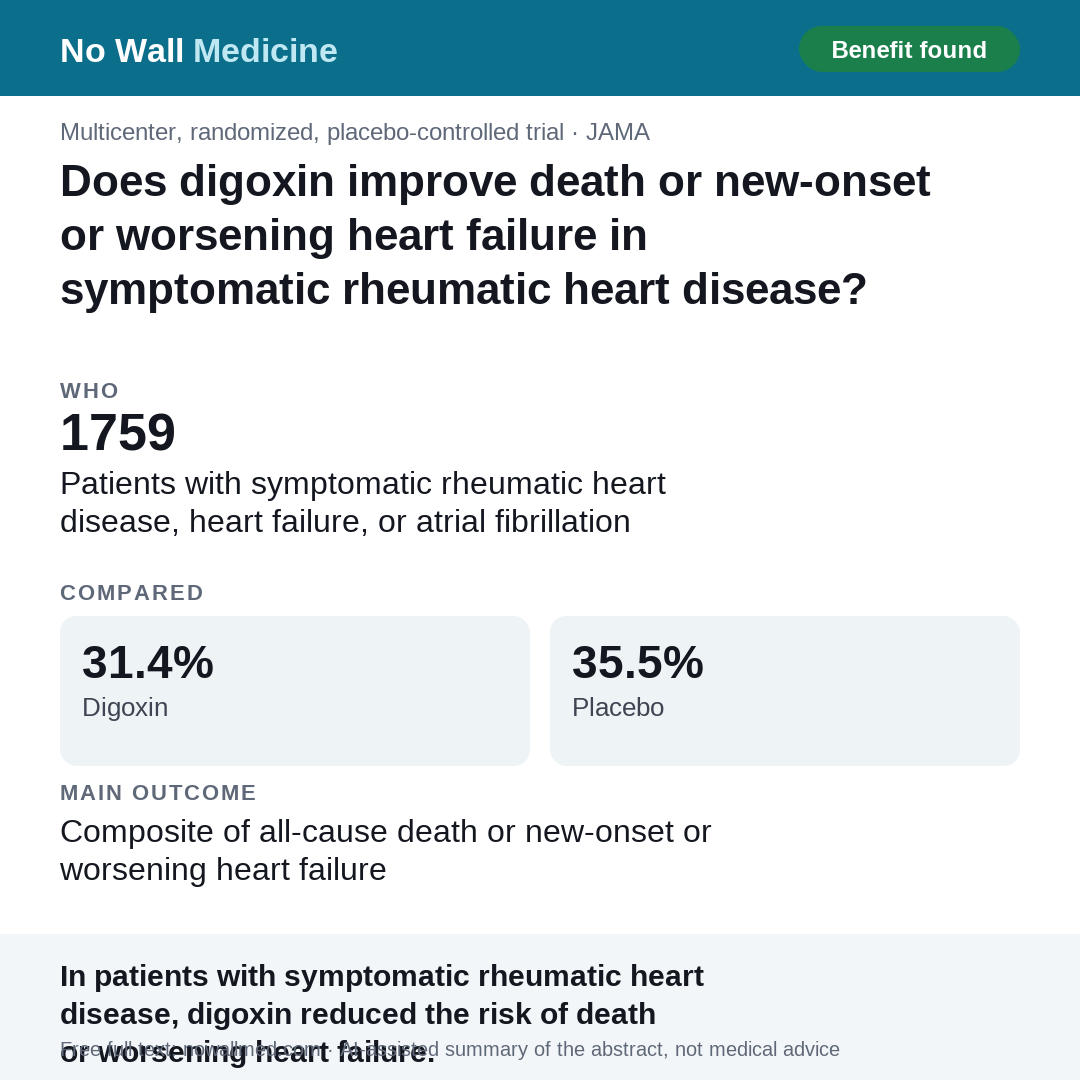
Digoxin in Patients With Symptomatic Rheumatic Heart Disease: A Randomized Clinical Trial
Multicenter, randomized, placebo-controlled trialBenefit found
Does digoxin improve death or new-onset or worsening heart failure in symptomatic rheumatic heart disease?
Who
1759
Patients with symptomatic rheumatic heart disease, heart failure, or atrial fibrillation · 12 tertiary care hospitals in India
Compared
31.4%Digoxin
35.5%Placebo
Main outcome
Composite of all-cause death or new-onset or worsening heart failure
Result: hazard ratio 0.82 (95% CI 0.70-0.97)
Bottom line: In patients with symptomatic rheumatic heart disease, digoxin reduced the risk of death or worsening heart failure.
JAMA · 2026-05-10Download image
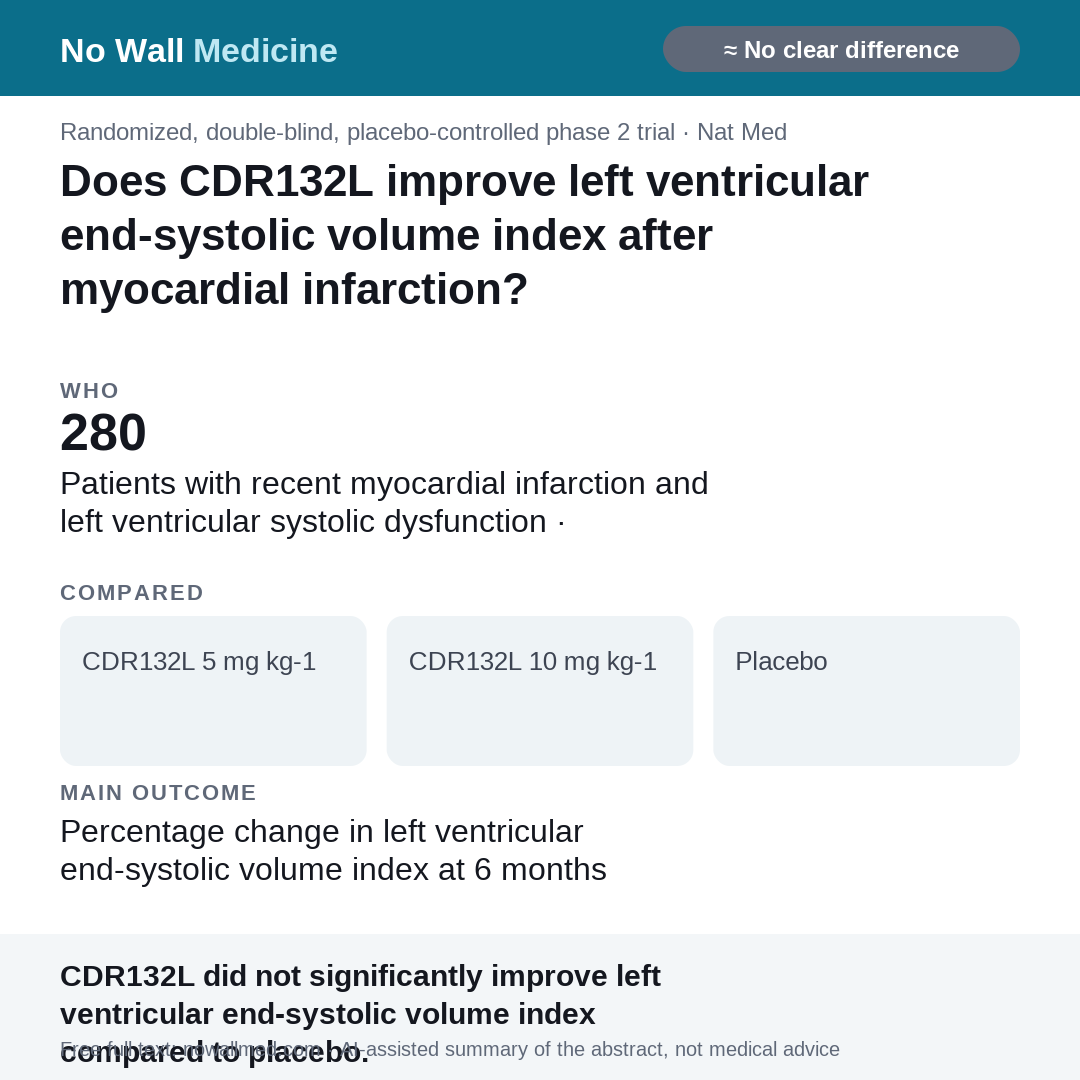
The microRNA inhibitor CDR132L in patients with reduced left ventricular ejection fraction after myocardial infarction: a randomized phase 2 trial
Randomized, double-blind, placebo-controlled phase 2 trialNo clear difference
Does CDR132L improve left ventricular end-systolic volume index after myocardial infarction?
Who
280
Patients with recent myocardial infarction and left ventricular systolic dysfunction · Multinational
Compared
CDR132L 5 mg kg-1
CDR132L 10 mg kg-1
Placebo
Main outcome
Percentage change in left ventricular end-systolic volume index at 6 months
Bottom line: CDR132L did not significantly improve left ventricular end-systolic volume index compared to placebo.
Nat Med · 2026-05-10Download image
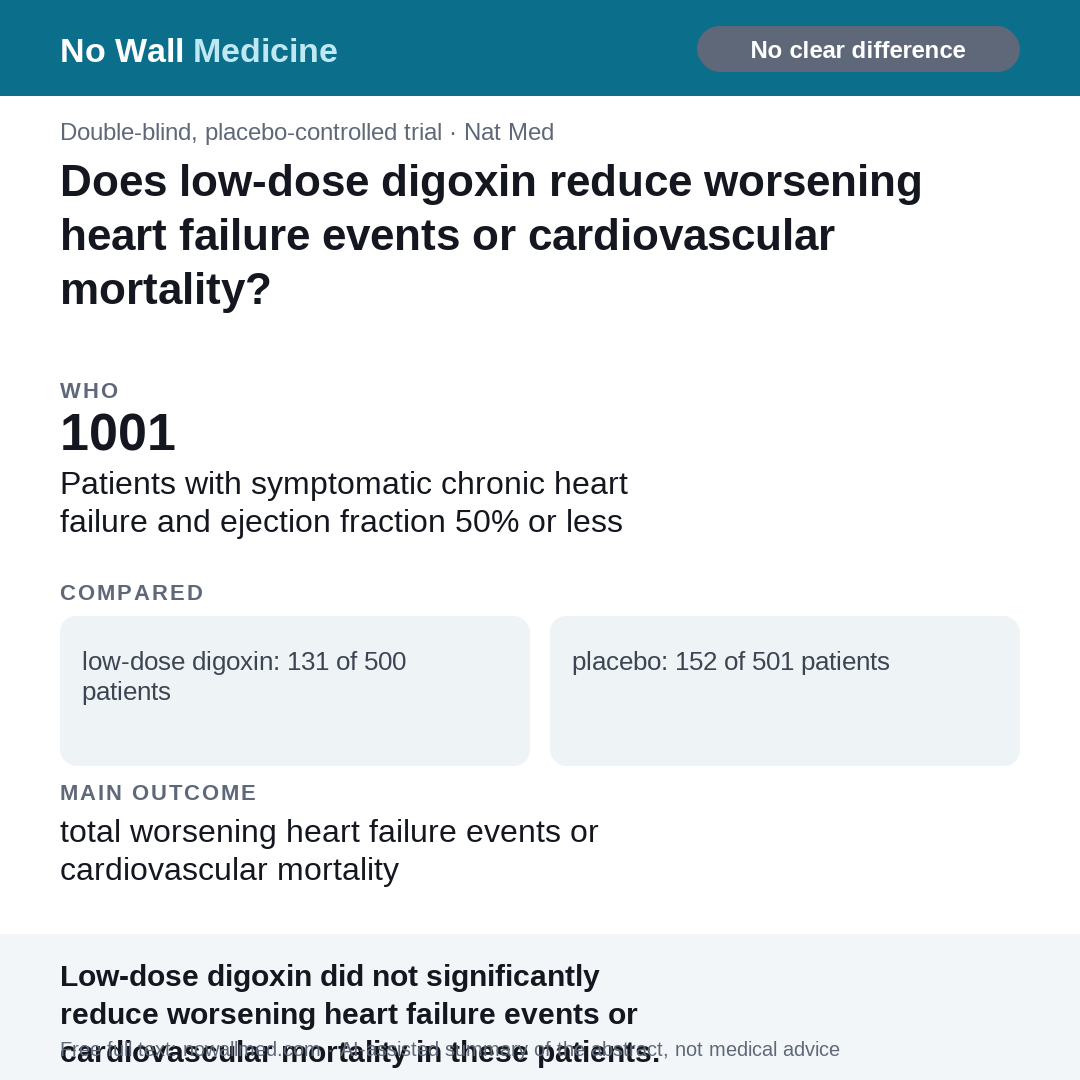
Low-dose digoxin in patients with heart failure with reduced or mildly reduced ejection fraction: a randomized controlled trial
Double-blind, placebo-controlled trialNo clear difference
Does low-dose digoxin reduce worsening heart failure events or cardiovascular mortality?
Who
1001
Patients with symptomatic chronic heart failure and ejection fraction 50% or less
Compared
low-dose digoxin: 131 of 500 patients
placebo: 152 of 501 patients
Main outcome
total worsening heart failure events or cardiovascular mortality
Result: rate ratio 0.81 (95% CI 0.61-1.07)
Bottom line: Low-dose digoxin did not significantly reduce worsening heart failure events or cardiovascular mortality in these patients.
Nat Med · 2026-05-10Download image
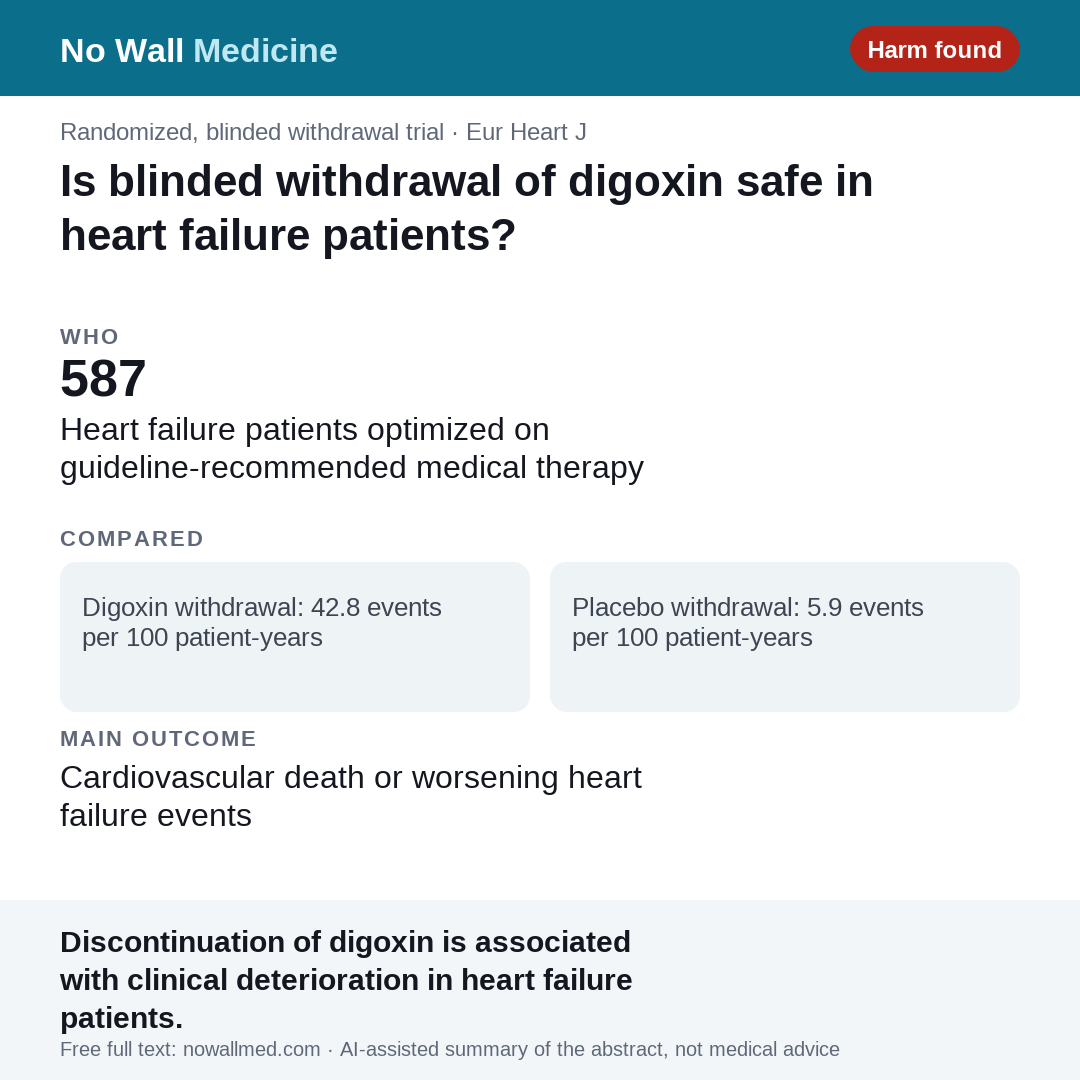
Blinded withdrawal of randomized treatment with low-dose digoxin or placebo in heart failure: the DECISION trial
Randomized, blinded withdrawal trialHarm found
Is blinded withdrawal of digoxin safe in heart failure patients?
Who
587
Heart failure patients optimized on guideline-recommended medical therapy
Compared
Digoxin withdrawal: 42.8 events per 100 patient-years
Placebo withdrawal: 5.9 events per 100 patient-years
Main outcome
Cardiovascular death or worsening heart failure events
Result: rate ratio 7.37 (95% CI 1.56-34.88)
Bottom line: Discontinuation of digoxin is associated with clinical deterioration in heart failure patients.
Eur Heart J · 2026-05-10Download image
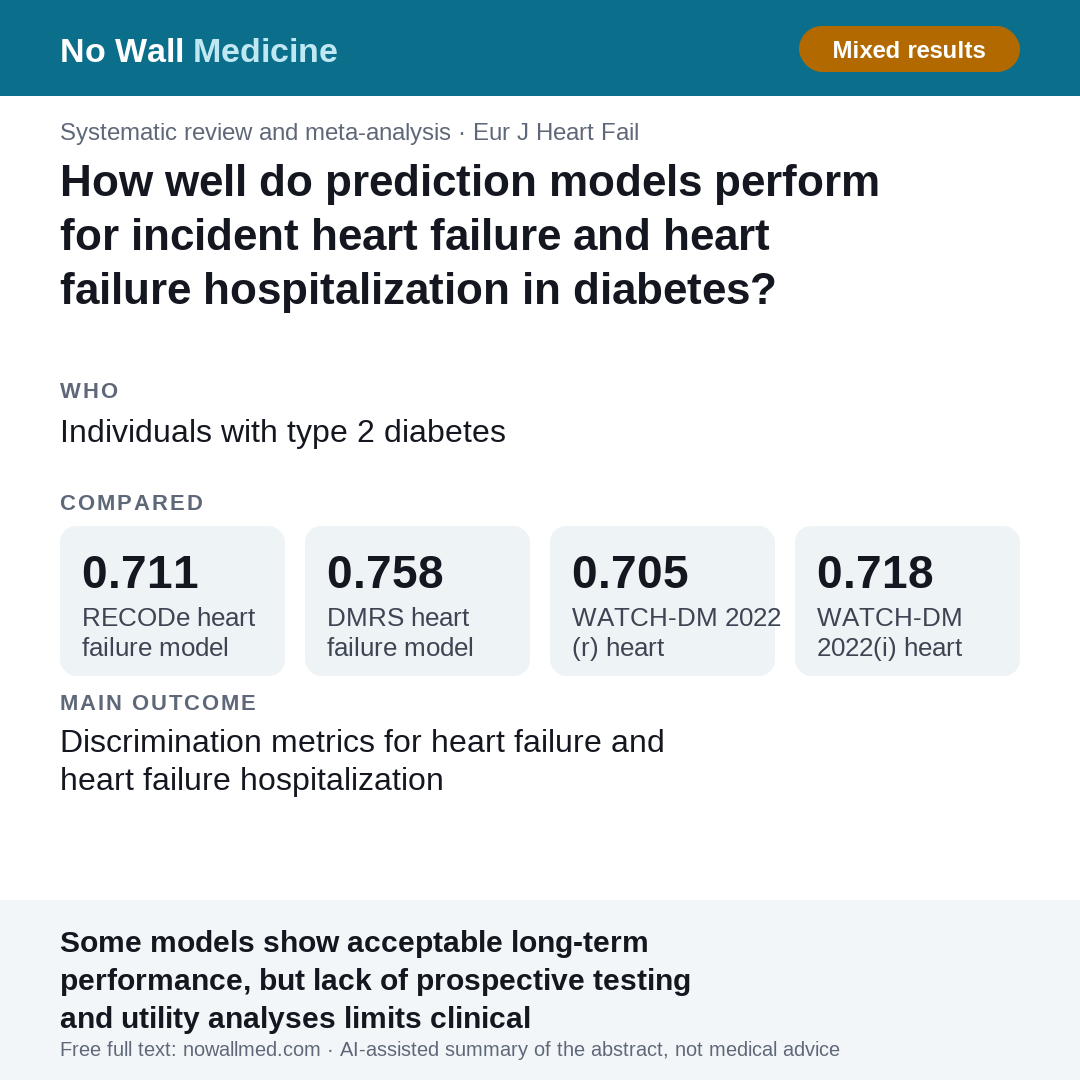
Performance of prediction models for incident heart failure and heart failure hospitalization in individuals with type 2 diabetes: a systematic review and meta-analysis
Systematic review and meta-analysisMixed results
How well do prediction models perform for incident heart failure and heart failure hospitalization in diabetes?
Who
Individuals with type 2 diabetes
Compared
0.711RECODe heart failure model (95% CI 0.651-0.767)
0.758DMRS heart failure model (95% CI 0.684-0.827)
0.705WATCH-DM 2022 (r) heart failure hospitalization model (95% CI, 0.624-0.795)
0.718WATCH-DM 2022(i) heart failure hospitalization model (95% CI 0.587-0.850)
Main outcome
Discrimination metrics for heart failure and heart failure hospitalization
Bottom line: Some models show acceptable long-term performance, but lack of prospective testing and utility analyses limits clinical translation.
Limitation: None of the models were prospectively tested and only three underwent clinical utility analysis.
Eur J Heart Fail · 2026-05-10Download image
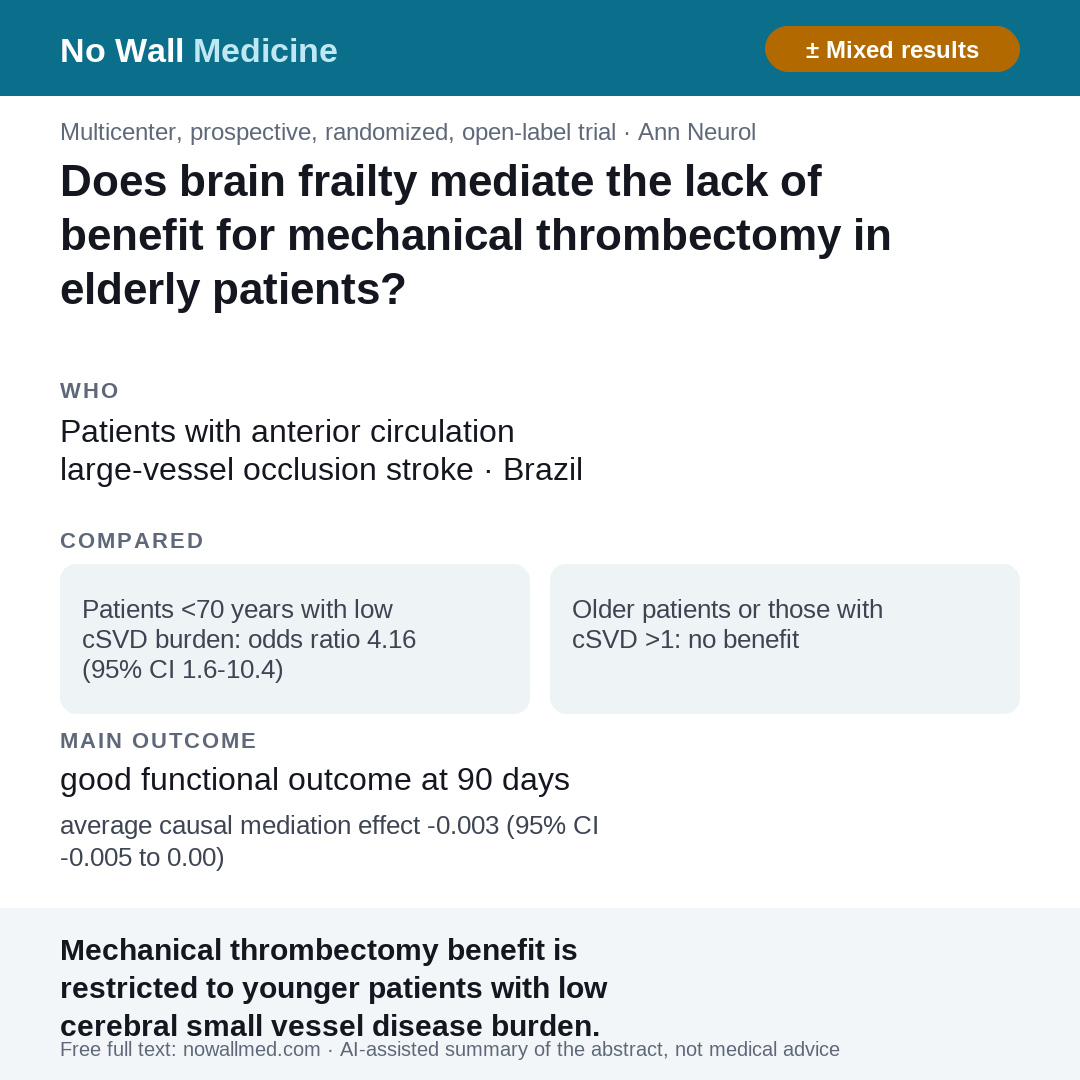
Brain Frailty Rather than Age Alone Mediates the Lack of Benefit for Endovascular Thrombectomy in the Elderly Population of the RESILIENT Trial
Multicenter, prospective, randomized, open-label trialMixed results
Does brain frailty mediate the lack of benefit for mechanical thrombectomy in elderly patients?
Who
Patients with anterior circulation large-vessel occlusion stroke · Brazil
Compared
Patients <70 years with low cSVD burden: odds ratio 4.16 (95% CI 1.6-10.4)
Older patients or those with cSVD >1: no benefit
Main outcome
good functional outcome at 90 days
Result: average causal mediation effect -0.003 (95% CI -0.005 to 0.00)
Bottom line: Mechanical thrombectomy benefit is restricted to younger patients with low cerebral small vessel disease burden.
Ann Neurol · 2026-05-10Download image
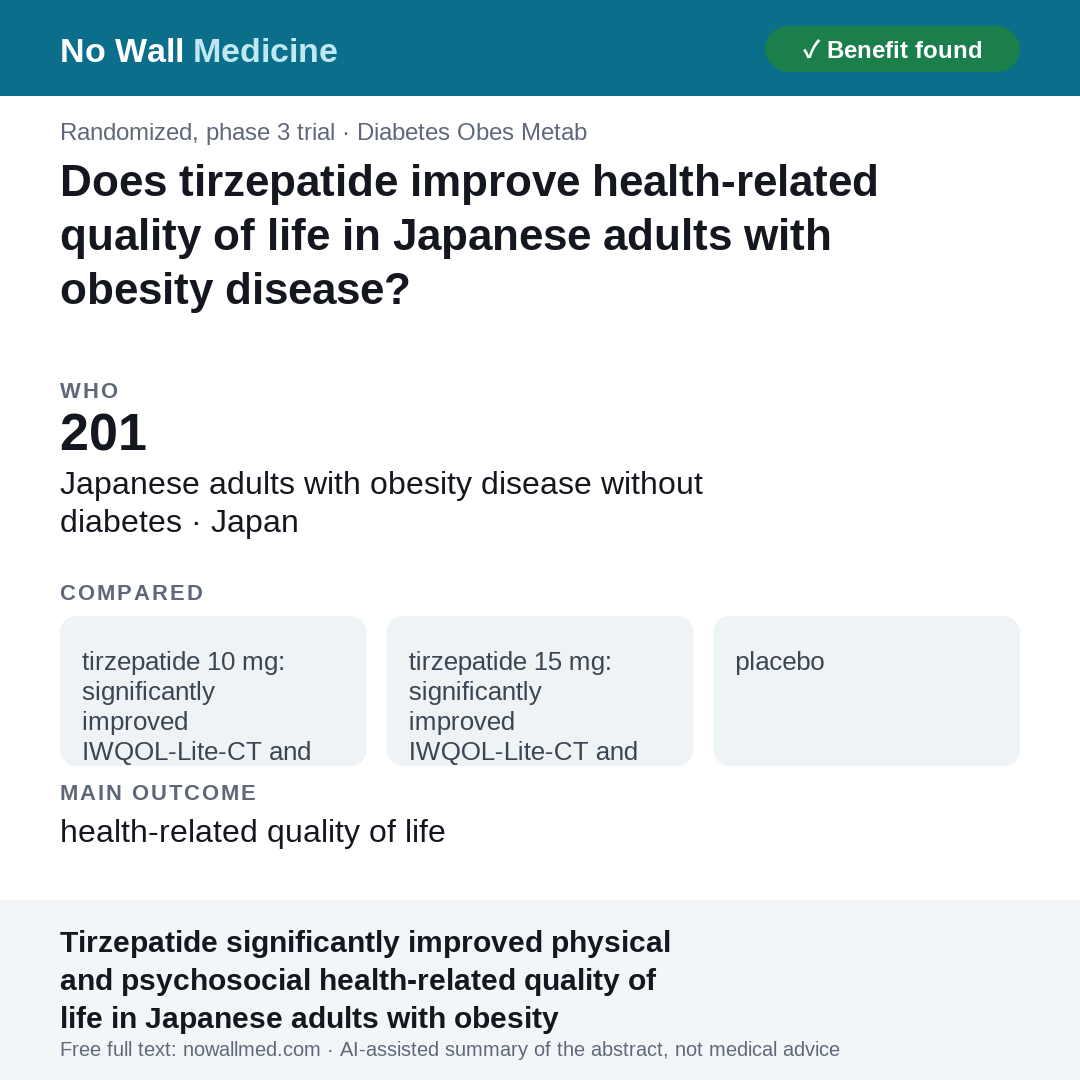
Effect of Tirzepatide on Health-Related Quality of Life in Japanese Patients With Obesity Disease: Patient-Reported Outcomes From the SURMOUNT-J Study
Randomized, phase 3 trialBenefit found
Does tirzepatide improve health-related quality of life in Japanese adults with obesity disease?
Who
201
Japanese adults with obesity disease without diabetes · Japan
Compared
tirzepatide 10 mg: significantly improved IWQOL-Lite-CT and SF-36v2 scores
tirzepatide 15 mg: significantly improved IWQOL-Lite-CT and SF-36v2 scores
placebo
Main outcome
health-related quality of life
Bottom line: Tirzepatide significantly improved physical and psychosocial health-related quality of life in Japanese adults with obesity disease.
Diabetes Obes Metab · 2026-05-10Download image
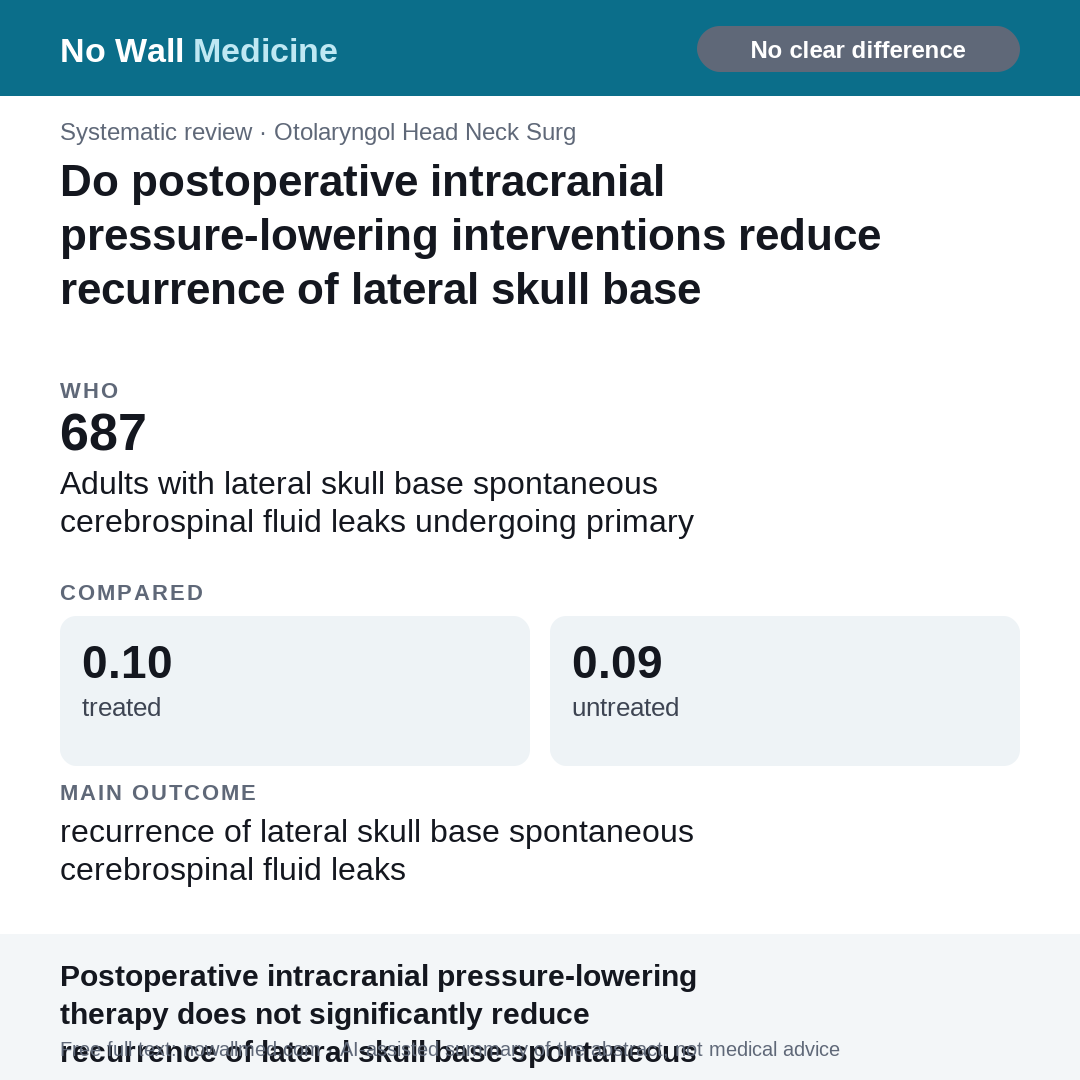
Risk Reduction of Recurrent Cerebrospinal Fluid Leaks With Postoperative Intracranial Pressure Management: A Systematic Review
Systematic reviewNo clear difference
Do postoperative intracranial pressure-lowering interventions reduce recurrence of lateral skull base spontaneous cerebrospinal fluid leaks?
Who
687
Adults with lateral skull base spontaneous cerebrospinal fluid leaks undergoing primary repair
Compared
0.10treated (95% CI: 0.04-0.26)
0.09untreated (95% CI: 0.07-0.12)
Main outcome
recurrence of lateral skull base spontaneous cerebrospinal fluid leaks
Result: risk ratio 1.16 (95% CI 0.14-9.76)
Bottom line: Postoperative intracranial pressure-lowering therapy does not significantly reduce recurrence of lateral skull base spontaneous cerebrospinal fluid leaks.
Limitation: heterogeneity in patient selection and intervention practices
Otolaryngol Head Neck Surg · 2026-05-10Download image
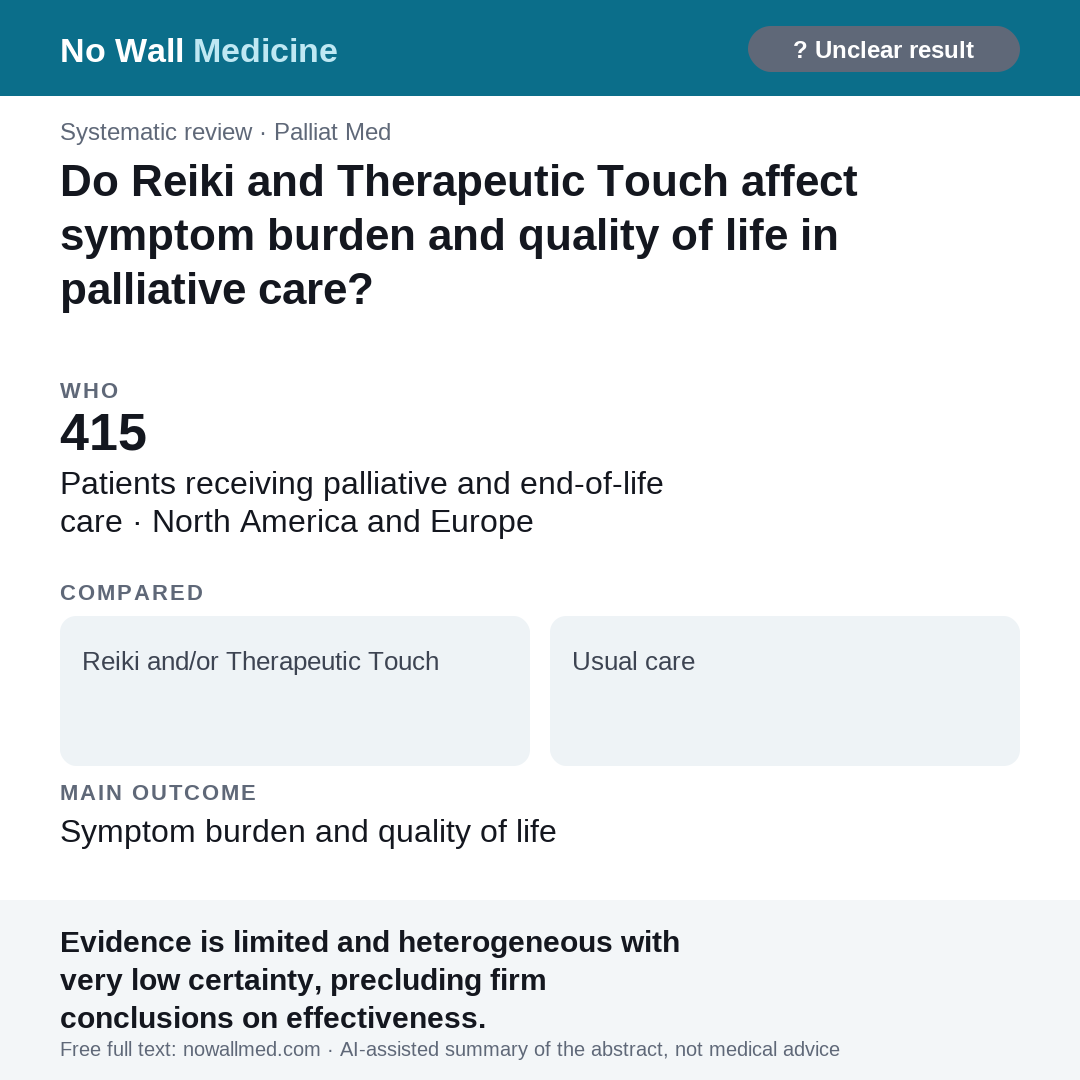
Reiki and Therapeutic Touch for symptom burden and quality of life in palliative settings: A systematic review
Systematic reviewUnclear result
Do Reiki and Therapeutic Touch affect symptom burden and quality of life in palliative care?
Who
415
Patients receiving palliative and end-of-life care · North America and Europe
Compared
Reiki and/or Therapeutic Touch
Usual care
Main outcome
Symptom burden and quality of life
Bottom line: Evidence is limited and heterogeneous with very low certainty, precluding firm conclusions on effectiveness.
Limitation: Very low certainty of evidence and risk of bias in included studies.
Palliat Med · 2026-05-10Download image