Visual abstracts
New randomized trials and meta-analyses from leading journals at a glance: who was studied, what was compared, and what was found. Every paper is free to read in full.
All specialtiesCardiology 4877Oncology 4138Gastroenterology & Hepatology 1942Infectious Disease 3837Neurology 1905Psychiatry & Mental Health 2273Pulmonology 2143Critical Care 1365Endocrinology & Diabetes 2580Pediatrics 2980Surgery 2559Orthopedics & Sports Medicine 931Neurosurgery 537Cardiothoracic & Vascular Surgery 674Plastic & Reconstructive Surgery 591Nephrology 1133Rheumatology 823Hematology 1109Dermatology 621Ophthalmology 543Obstetrics & Gynecology 1686Public & Global Health 1058Radiology & Imaging 648Anesthesiology 986Urology 764ENT (Otolaryngology) 503Emergency Medicine 511Allergy & Immunology 313Geriatrics 981Family Medicine & Primary Care 562Medical Genetics & Genomics 676Pathology & Laboratory Medicine 159Physical Medicine & Rehabilitation 757Palliative Care 444Nutrition 1588Digital Health & AI 2201General Medicine 321
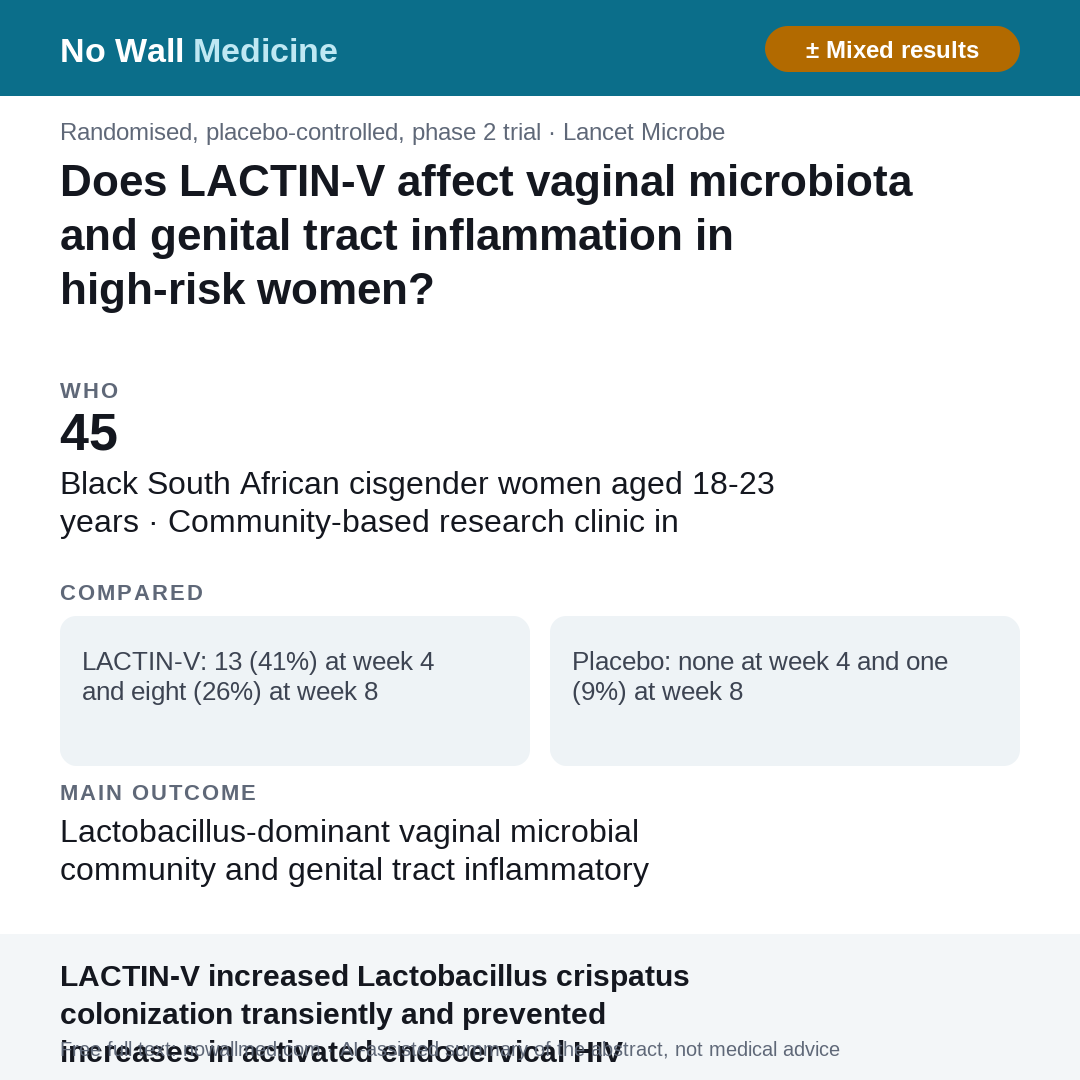
Effect of the vaginal live biotherapeutic LACTIN-V (Lactobacillus crispatus CTV-05) on vaginal microbiota and genital tract inflammation among women at high risk of HIV acquisition in South Africa: a phase 2, randomised, placebo-controlled trial
Randomised, placebo-controlled, phase 2 trialMixed results
Does LACTIN-V affect vaginal microbiota and genital tract inflammation in high-risk women?
Who
45
Black South African cisgender women aged 18-23 years · Community-based research clinic in South Africa
Compared
LACTIN-V: 13 (41%) at week 4 and eight (26%) at week 8
Placebo: none at week 4 and one (9%) at week 8
Main outcome
Lactobacillus-dominant vaginal microbial community and genital tract inflammatory markers
Result: p=0.0088 at week 4; p=0.40 at week 8
Bottom line: LACTIN-V increased Lactobacillus crispatus colonization transiently and prevented increases in activated endocervical HIV target cells.
Lancet Microbe · 2025-04-04Download image
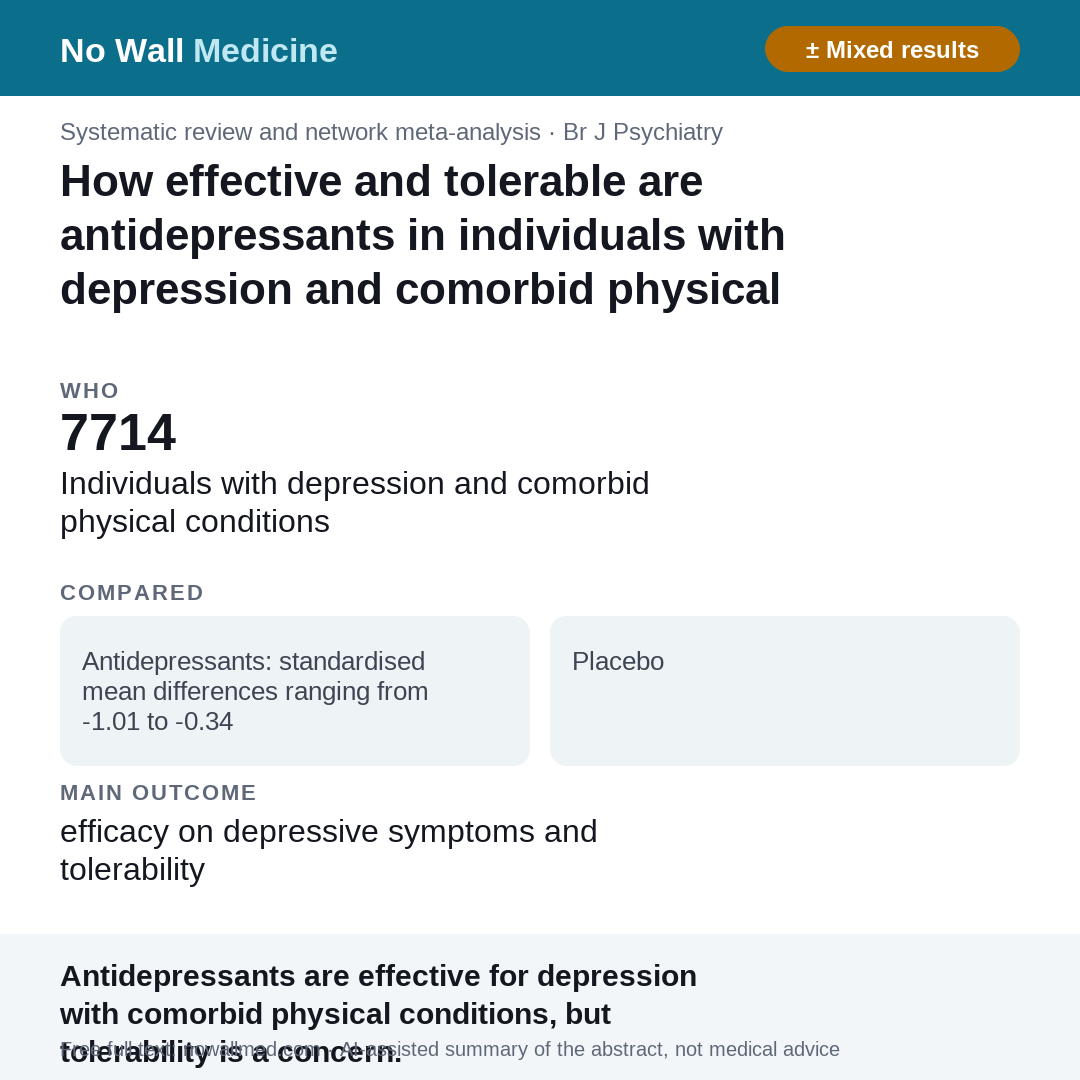
Efficacy and tolerability of antidepressants in individuals suffering from physical conditions and depressive disorders: network meta-analysis
Systematic review and network meta-analysisMixed results
How effective and tolerable are antidepressants in individuals with depression and comorbid physical conditions?
Who
7714
Individuals with depression and comorbid physical conditions
Compared
Antidepressants: standardised mean differences ranging from -1.01 to -0.34
Placebo
Main outcome
efficacy on depressive symptoms and tolerability
Bottom line: Antidepressants are effective for depression with comorbid physical conditions, but tolerability is a concern.
Limitation: certainty of evidence was low or very low for most comparisons
Br J Psychiatry · 2025-04-04Download image
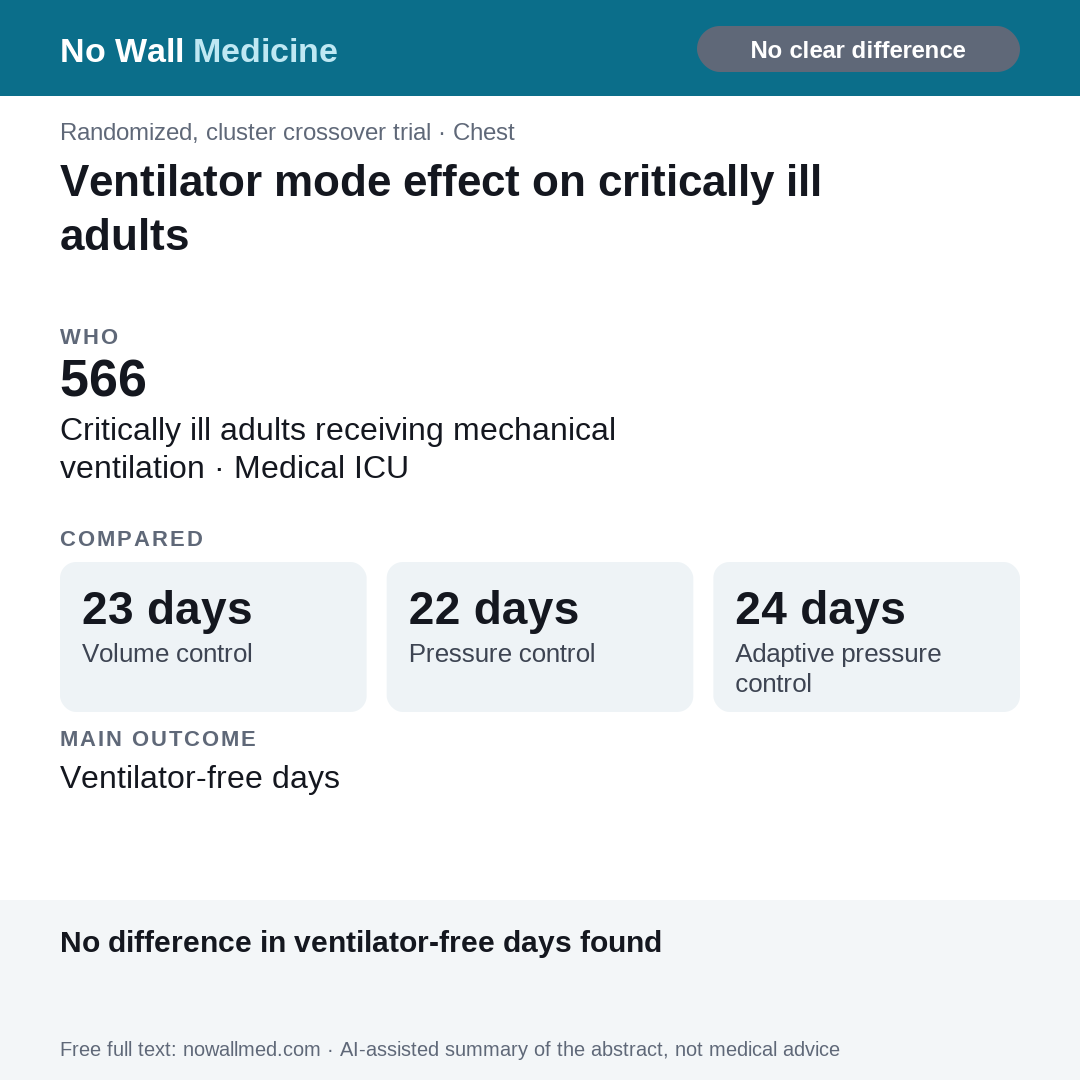
Effect of Ventilator Mode on Ventilator-Free Days in Critically Ill Adults: A Randomized Clinical Trial
Randomized, cluster crossover trialNo clear difference
Ventilator mode effect on critically ill adults
Who
566
Critically ill adults receiving mechanical ventilation · Medical ICU
Compared
23 daysVolume control (0-26 days)
22 daysPressure control (0-26 days)
24 daysAdaptive pressure control (0-26 days)
Main outcome
Ventilator-free days
Bottom line: No difference in ventilator-free days found
Chest · 2025-04-04Download image
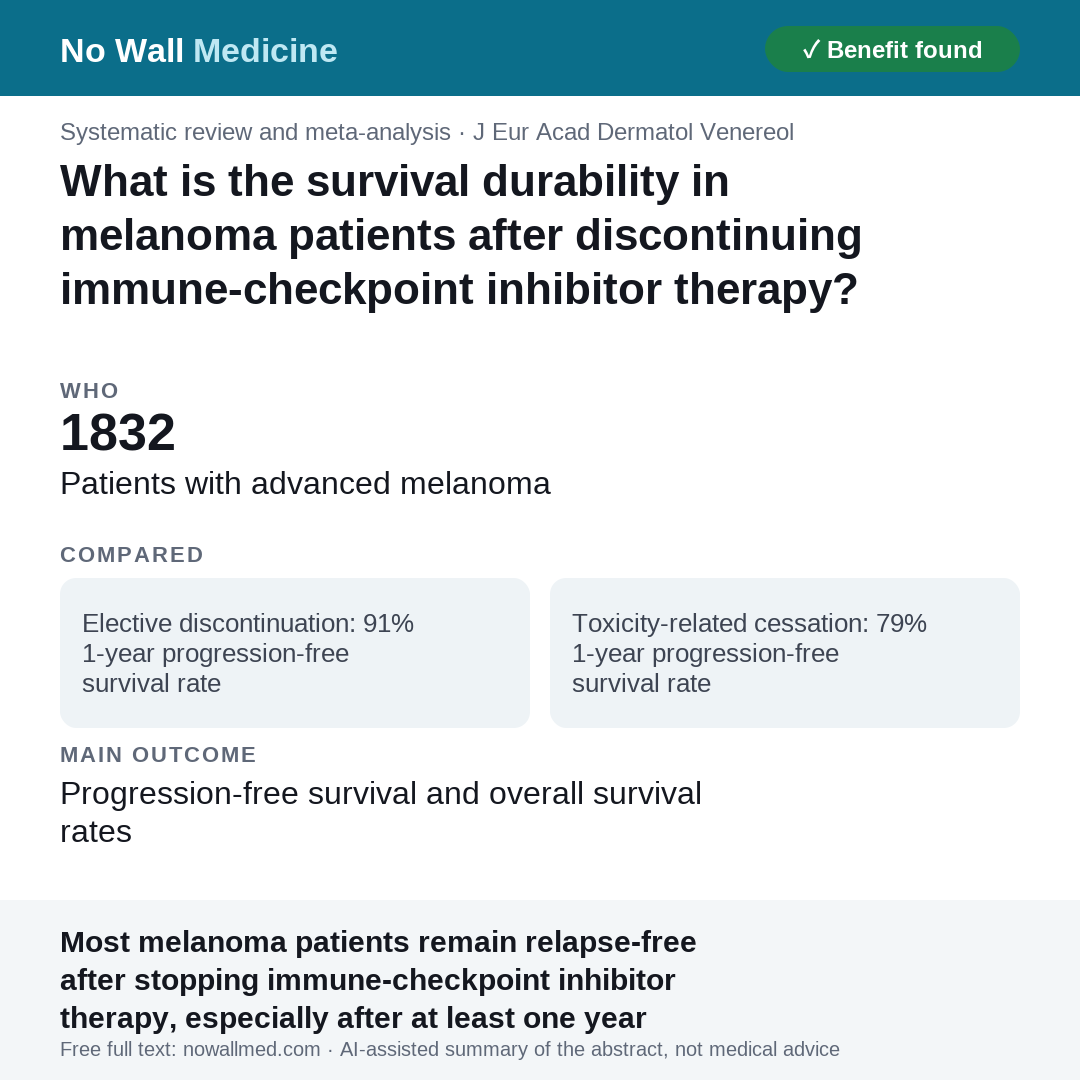
Survival after cessation of immunotherapies in melanoma: A systematic review and meta-analysis
Systematic review and meta-analysisBenefit found
What is the survival durability in melanoma patients after discontinuing immune-checkpoint inhibitor therapy?
Who
1832
Patients with advanced melanoma
Compared
Elective discontinuation: 91% 1-year progression-free survival rate
Toxicity-related cessation: 79% 1-year progression-free survival rate
Main outcome
Progression-free survival and overall survival rates
Result: 1-year progression-free survival 86% (95% CI 80%-91%)
Bottom line: Most melanoma patients remain relapse-free after stopping immune-checkpoint inhibitor therapy, especially after at least one year of treatment.
J Eur Acad Dermatol Venereol · 2025-04-04Download image
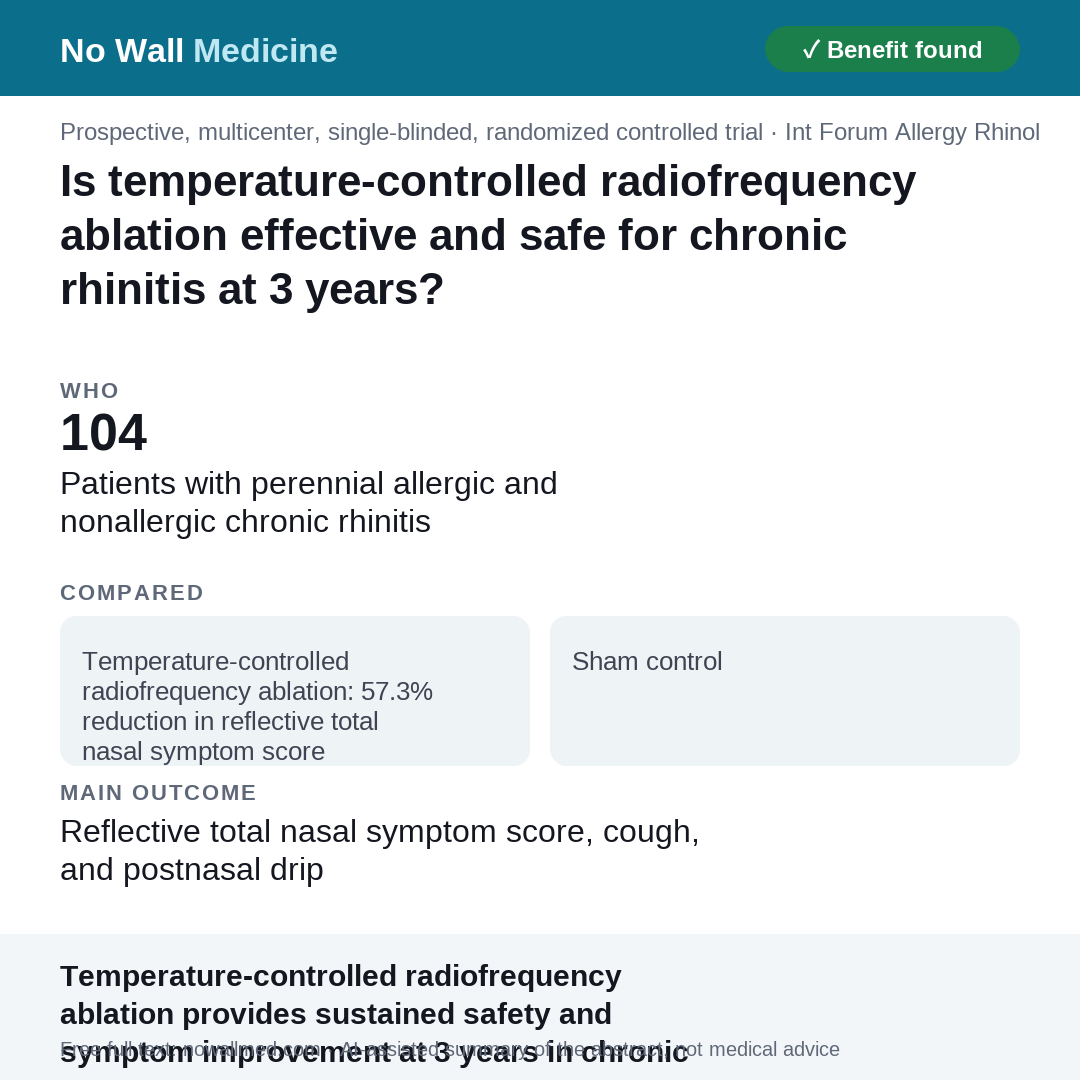
3-Year Outcomes of Temperature-Controlled Radiofrequency Ablation of the Posterior Nasal Nerve in Patients With Chronic Rhinitis
Prospective, multicenter, single-blinded, randomized controlled trialBenefit found
Is temperature-controlled radiofrequency ablation effective and safe for chronic rhinitis at 3 years?
Who
104
Patients with perennial allergic and nonallergic chronic rhinitis
Compared
Temperature-controlled radiofrequency ablation: 57.3% reduction in reflective total nasal symptom score
Sham control
Main outcome
Reflective total nasal symptom score, cough, and postnasal drip
Bottom line: Temperature-controlled radiofrequency ablation provides sustained safety and symptom improvement at 3 years in chronic rhinitis patients.
Int Forum Allergy Rhinol · 2025-04-04Download image
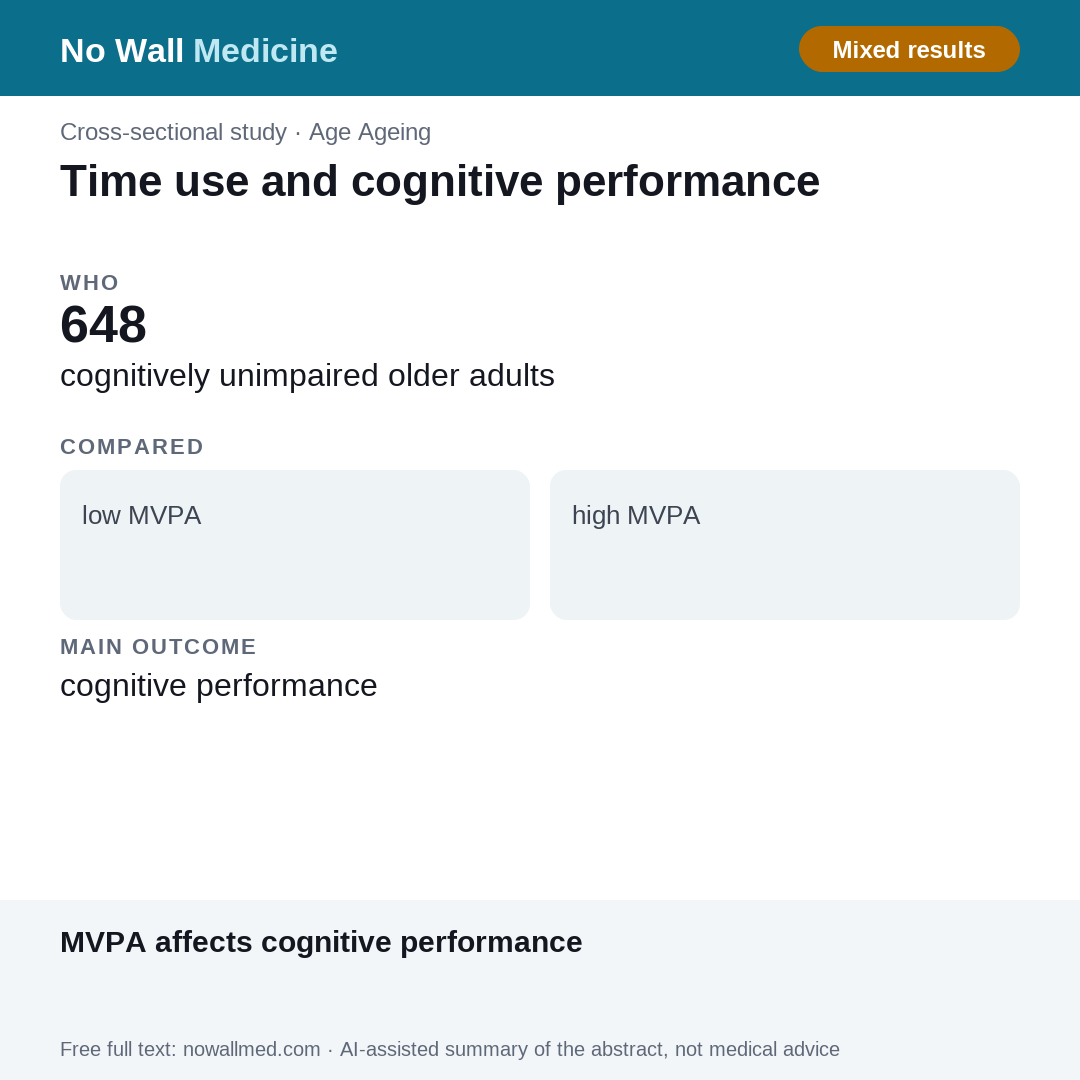
24-Hour time use and cognitive performance in late adulthood: results from the Investigating Gains in Neurocognition in an Intervention Trial of Exercise (IGNITE) study
Cross-sectional studyMixed results
Time use and cognitive performance
Who
648
cognitively unimpaired older adults
Compared
low MVPA
high MVPA
Main outcome
cognitive performance
Bottom line: MVPA affects cognitive performance
Age Ageing · 2025-04-04Download image
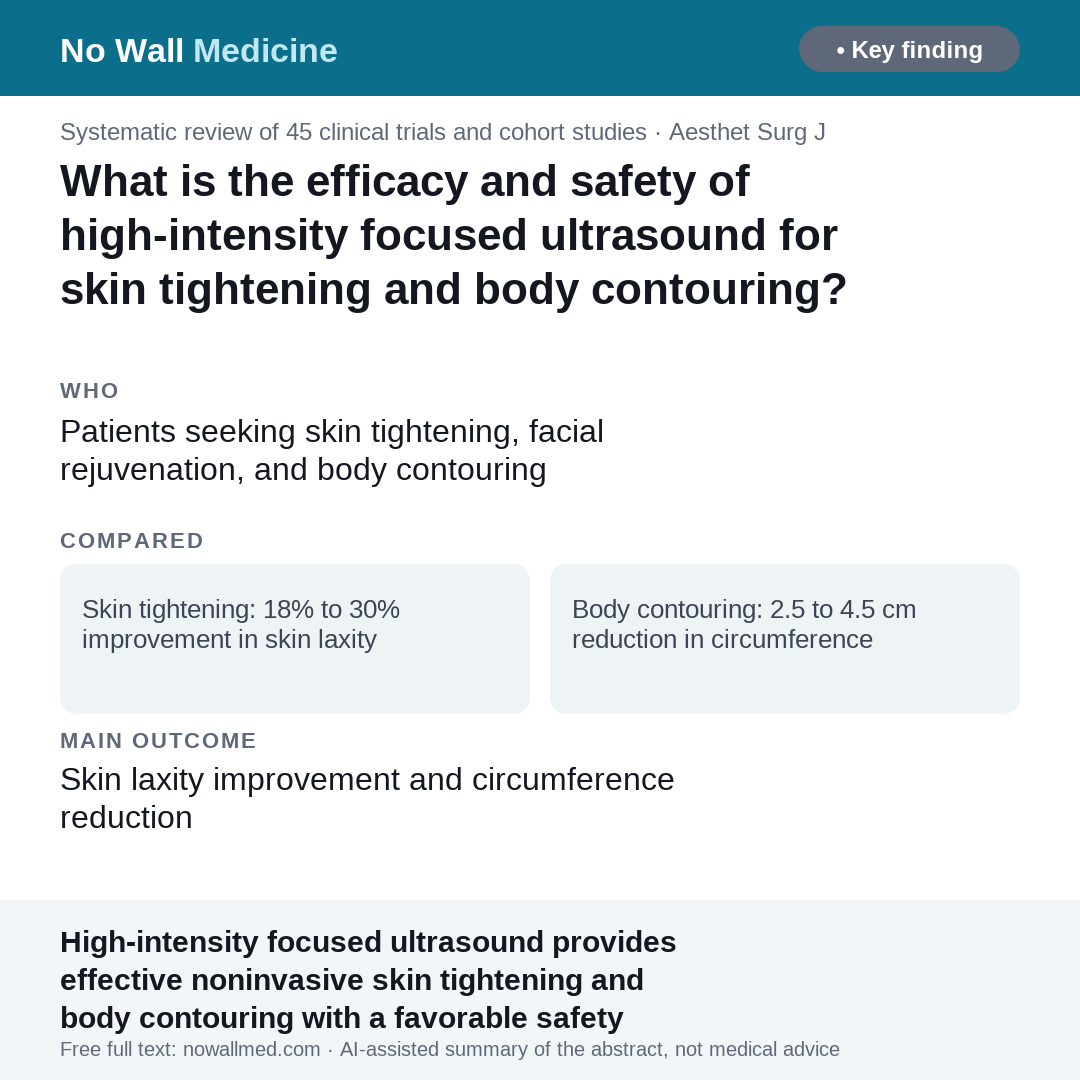
A Systematic Review of High-Intensity Focused Ultrasound in Skin Tightening and Body Contouring
Systematic review of 45 clinical trials and cohort studiesBenefit found
What is the efficacy and safety of high-intensity focused ultrasound for skin tightening and body contouring?
Who
Patients seeking skin tightening, facial rejuvenation, and body contouring
Compared
Skin tightening: 18% to 30% improvement in skin laxity
Body contouring: 2.5 to 4.5 cm reduction in circumference
Main outcome
Skin laxity improvement and circumference reduction
Bottom line: High-intensity focused ultrasound provides effective noninvasive skin tightening and body contouring with a favorable safety profile.
Aesthet Surg J · 2025-04-04Download image
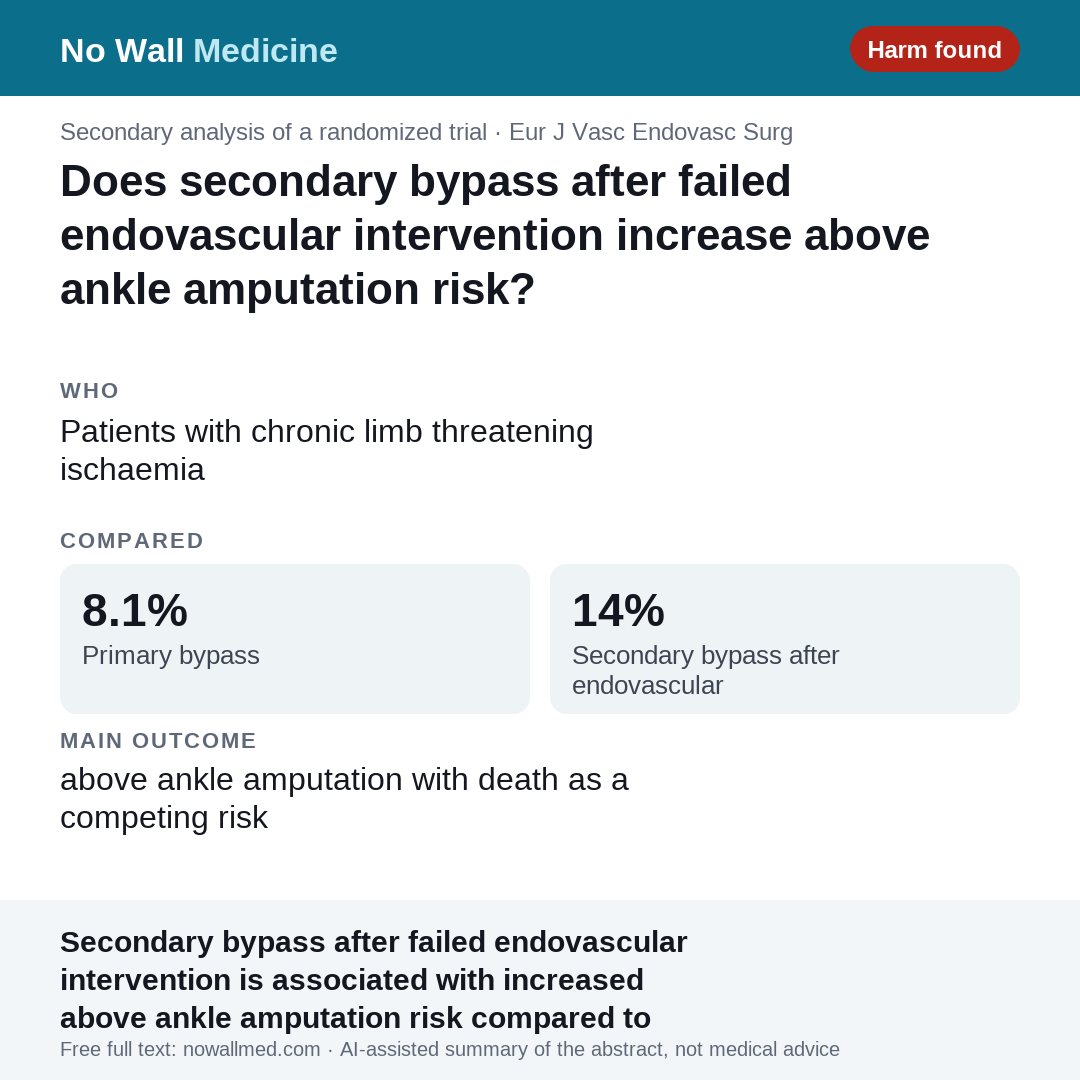
Editor's Choice - Bypass After Failed Endovascular Intervention Is Associated with an Increased Risk of Above Ankle Amputation Among Patients with Chronic Limb Threatening Ischaemia in a Randomised Trial Population
Secondary analysis of a randomized trialHarm found
Does secondary bypass after failed endovascular intervention increase above ankle amputation risk?
Who
Patients with chronic limb threatening ischaemia
Compared
8.1%Primary bypass
14%Secondary bypass after endovascular
Main outcome
above ankle amputation with death as a competing risk
Result: hazard ratio 1.72 (95% CI 1.08 - 2.73)
Bottom line: Secondary bypass after failed endovascular intervention is associated with increased above ankle amputation risk compared to primary bypass.
Eur J Vasc Endovasc Surg · 2025-04-04Download image
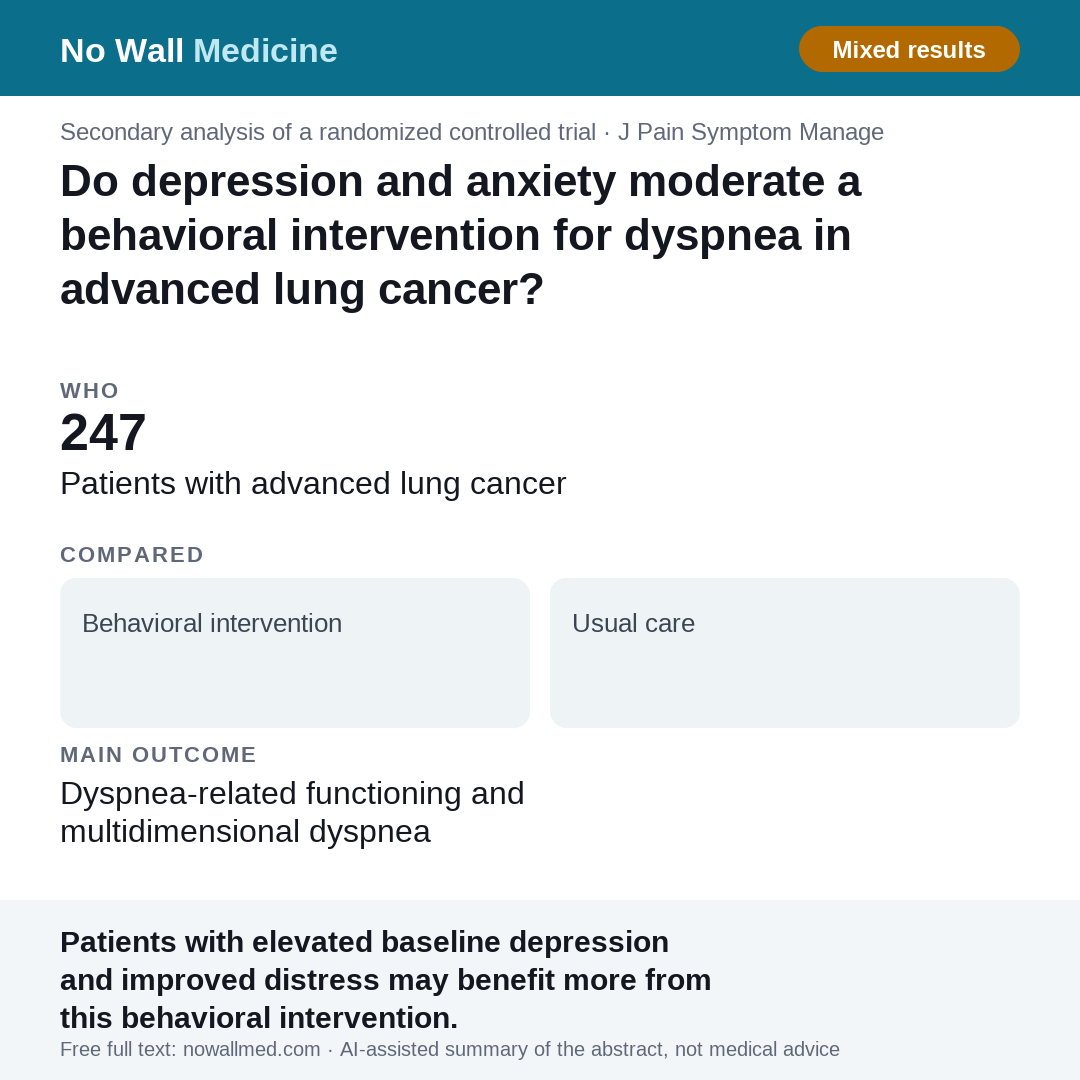
Depression and Anxiety as Moderators for a Behavioral Treatment for Dyspnea in Advanced Lung Cancer
Secondary analysis of a randomized controlled trialMixed results
Do depression and anxiety moderate a behavioral intervention for dyspnea in advanced lung cancer?
Who
247
Patients with advanced lung cancer
Compared
Behavioral intervention
Usual care
Main outcome
Dyspnea-related functioning and multidimensional dyspnea
Bottom line: Patients with elevated baseline depression and improved distress may benefit more from this behavioral intervention.
Limitation: Reduced power in testing moderators.
J Pain Symptom Manage · 2025-04-04Download image
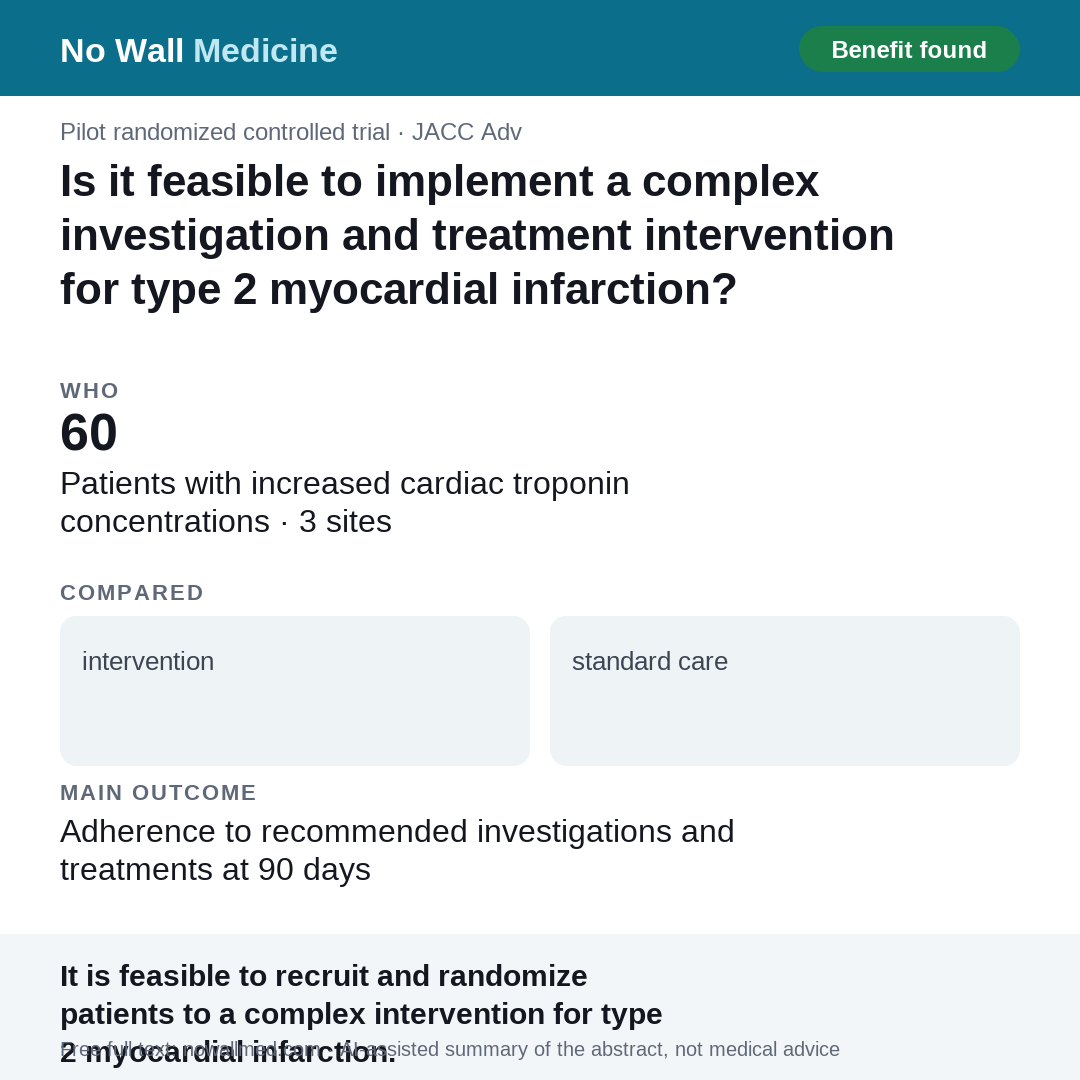
Targeting Investigation and Treatment in Type 2 Myocardial Infarction: A Pilot Randomized Controlled Trial
Pilot randomized controlled trialBenefit found
Is it feasible to implement a complex investigation and treatment intervention for type 2 myocardial infarction?
Who
60
Patients with increased cardiac troponin concentrations · 3 sites
Compared
intervention
standard care
Main outcome
Adherence to recommended investigations and treatments at 90 days
Result: 90.7% (95% CI: 85.3%-96.1%)
Bottom line: It is feasible to recruit and randomize patients to a complex intervention for type 2 myocardial infarction.
JACC Adv · 2025-04-04Download image
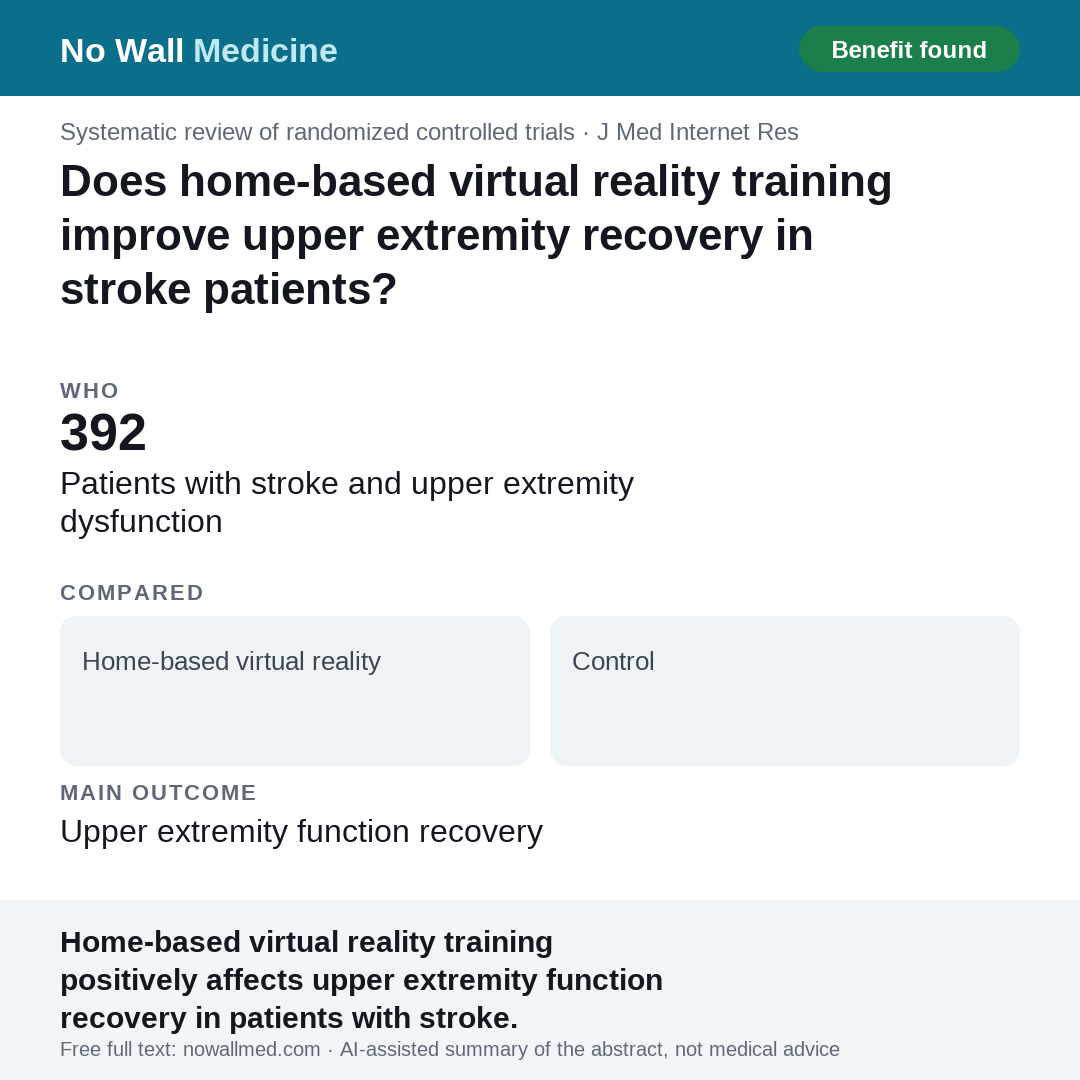
Effect of Home-Based Virtual Reality Training on Upper Extremity Recovery in Patients With Stroke: Systematic Review
Systematic review of randomized controlled trialsBenefit found
Does home-based virtual reality training improve upper extremity recovery in stroke patients?
Who
392
Patients with stroke and upper extremity dysfunction
Compared
Home-based virtual reality
Control
Main outcome
Upper extremity function recovery
Bottom line: Home-based virtual reality training positively affects upper extremity function recovery in patients with stroke.
Limitation: Heterogeneity in study design and differences in outcome measures affect reliability.
J Med Internet Res · 2025-04-04Download image
The Role of AI in Nursing Education and Practice: Umbrella Review
Umbrella reviewMixed results
What are the implications of integrating artificial intelligence into nursing practice and education?
Who
18
Nursing professionals, students, educators, and researchers
Compared
Ethical and social implications
Nursing education transformation
Integration strategies
Main outcome
Integration of artificial intelligence into nursing practice and education
Bottom line: Artificial intelligence shows promise but requires ethical frameworks, updated curricula, and equitable access for successful nursing integration.
Limitation: Heterogeneity of included studies and potential publication bias.
J Med Internet Res · 2025-04-04Download image

Surgical Scar Management and Outcomes in Racial/Ethnic Minorities: A Systematic Review
Systematic reviewUnclear result
What are the surgical scar outcomes and management options for racial and ethnic minorities?
Who
Minority patients with darker skin
Compared
fractional carbon dioxide laser interventions: improvement in scar outcomes and overall patient satisfaction
silicone sheet, topical silicone, and surgery
Main outcome
surgical scar outcomes and management
Bottom line: Laser interventions show promise for improving scar management outcomes in ethnic patients, but more research is needed.
Plast Reconstr Surg Glob Open · 2025-04-04Download image

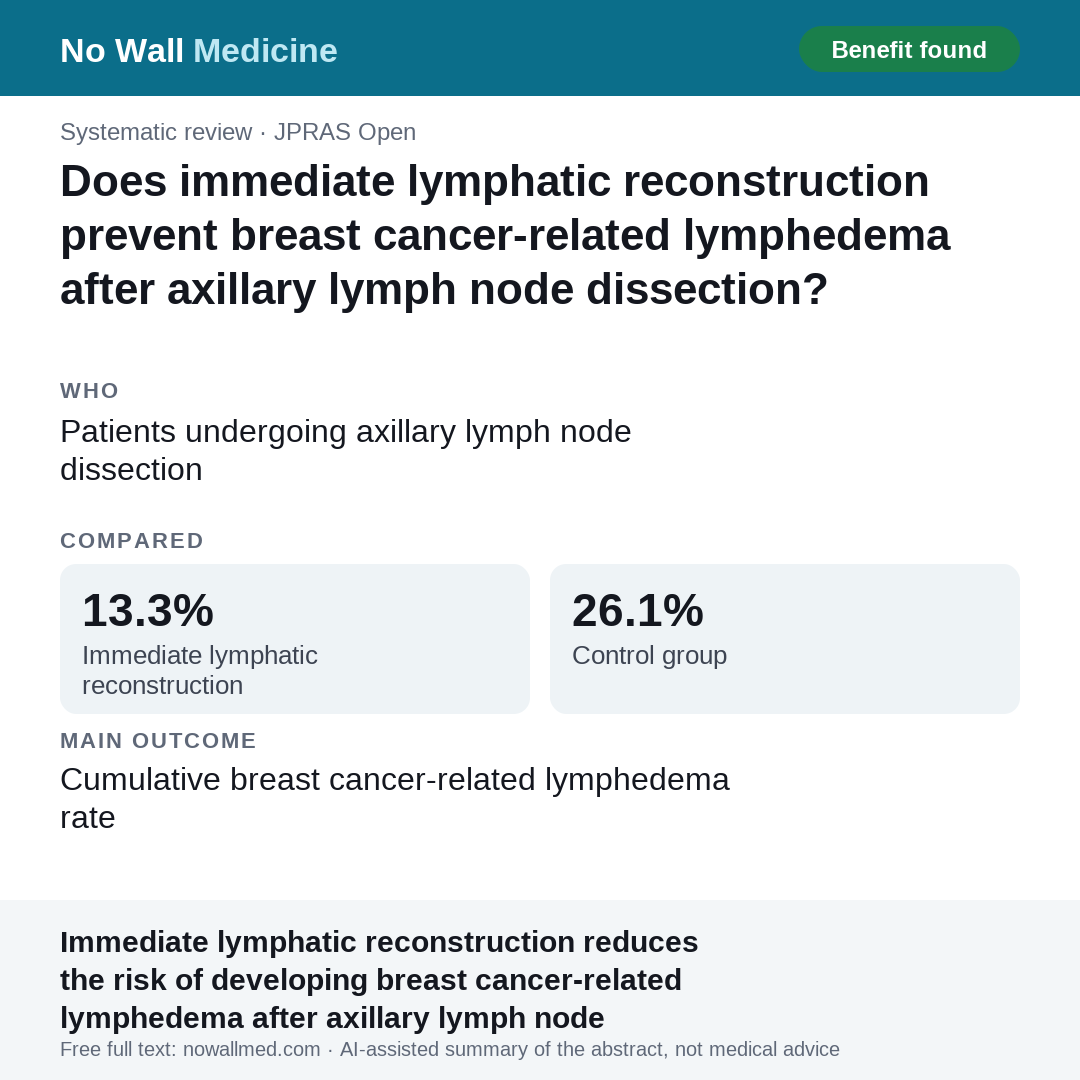
Immediate lymphatic reconstruction for breast cancer-related lymphedema prevention: A systematic review
Systematic reviewBenefit found
Does immediate lymphatic reconstruction prevent breast cancer-related lymphedema after axillary lymph node dissection?
Who
Patients undergoing axillary lymph node dissection
Compared
13.3%Immediate lymphatic reconstruction
26.1%Control group
Main outcome
Cumulative breast cancer-related lymphedema rate
Result: relative risk 0.51
Bottom line: Immediate lymphatic reconstruction reduces the risk of developing breast cancer-related lymphedema after axillary lymph node dissection.
JPRAS Open · 2025-04-04Download image
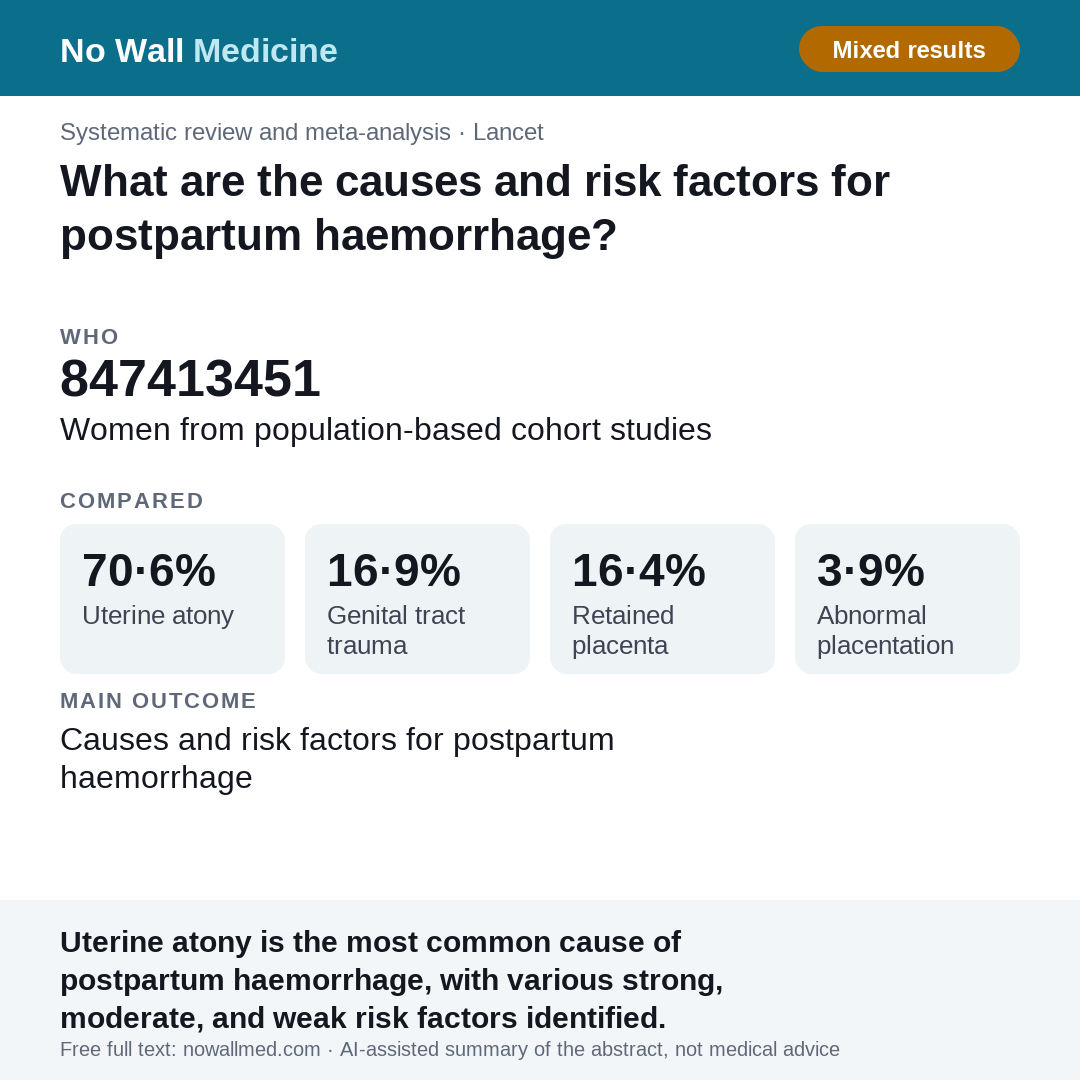
Causes of and risk factors for postpartum haemorrhage: a systematic review and meta-analysis
Systematic review and meta-analysisMixed results
What are the causes and risk factors for postpartum haemorrhage?
Who
847413451
Women from population-based cohort studies
Compared
70·6%Uterine atony (95% CI 63·9-77·3)
16·9%Genital tract trauma (9·3-24·6)
16·4%Retained placenta (12·3-20·5)
3·9%Abnormal placentation (0·1-7·6)
Main outcome
Causes and risk factors for postpartum haemorrhage
Bottom line: Uterine atony is the most common cause of postpartum haemorrhage, with various strong, moderate, and weak risk factors identified.
Funded by: Gates Foundation
Lancet · 2025-04-03Download image
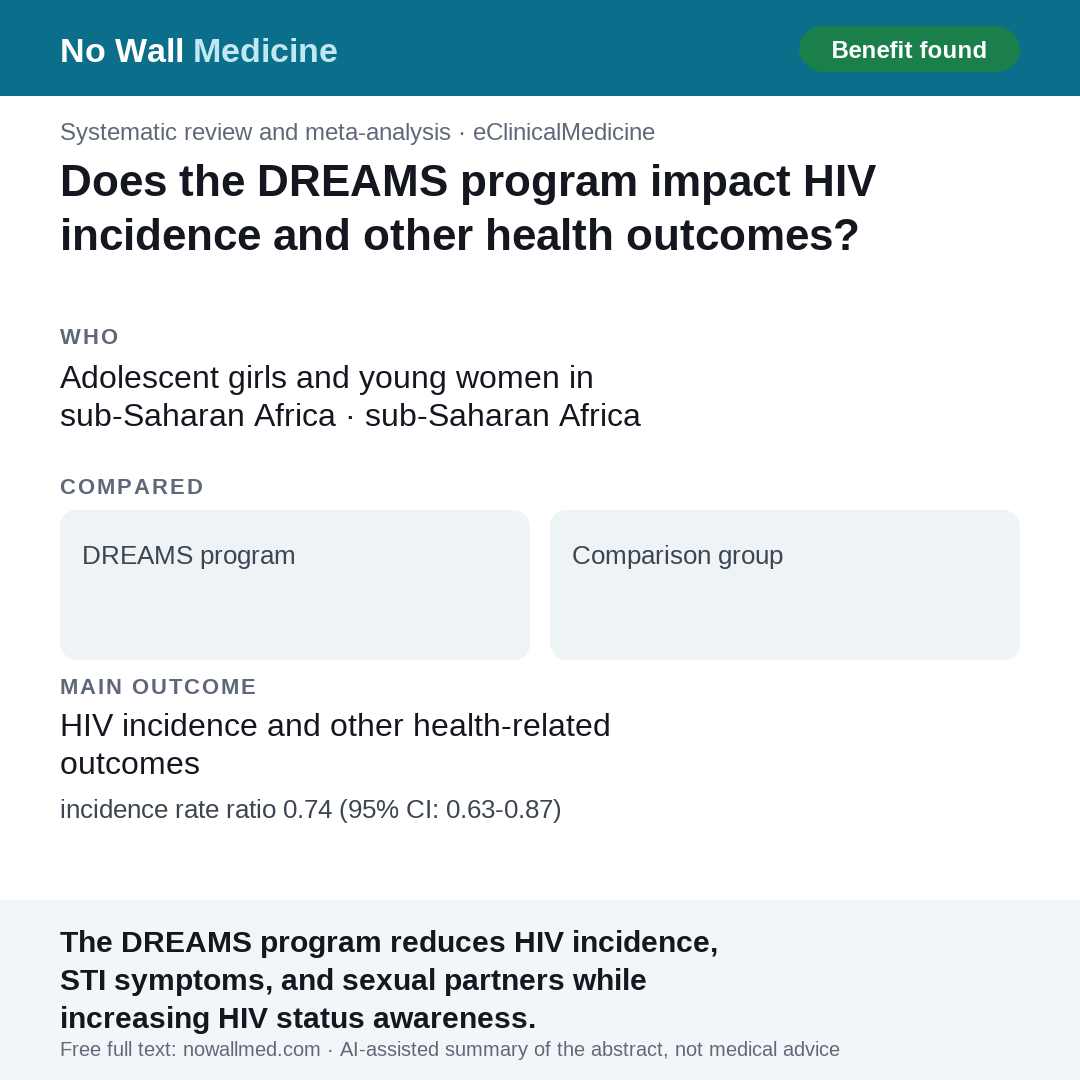
The effects of the Determined, Resilient, Empowered, AIDS-free, Mentored, and Safe (DREAMS) program on HIV incidence and other health-related outcomes among adolescent girls and young women: a systematic review and meta-analysis
Systematic review and meta-analysisBenefit found
Does the DREAMS program impact HIV incidence and other health outcomes?
Who
Adolescent girls and young women in sub-Saharan Africa · sub-Saharan Africa
Compared
DREAMS program
Comparison group
Main outcome
HIV incidence and other health-related outcomes
Result: incidence rate ratio 0.74 (95% CI: 0.63-0.87)
Bottom line: The DREAMS program reduces HIV incidence, STI symptoms, and sexual partners while increasing HIV status awareness.
Limitation: Developing a unified and granular evaluation framework would be beneficial for advancing research.
eClinicalMedicine · 2025-04-03Download image
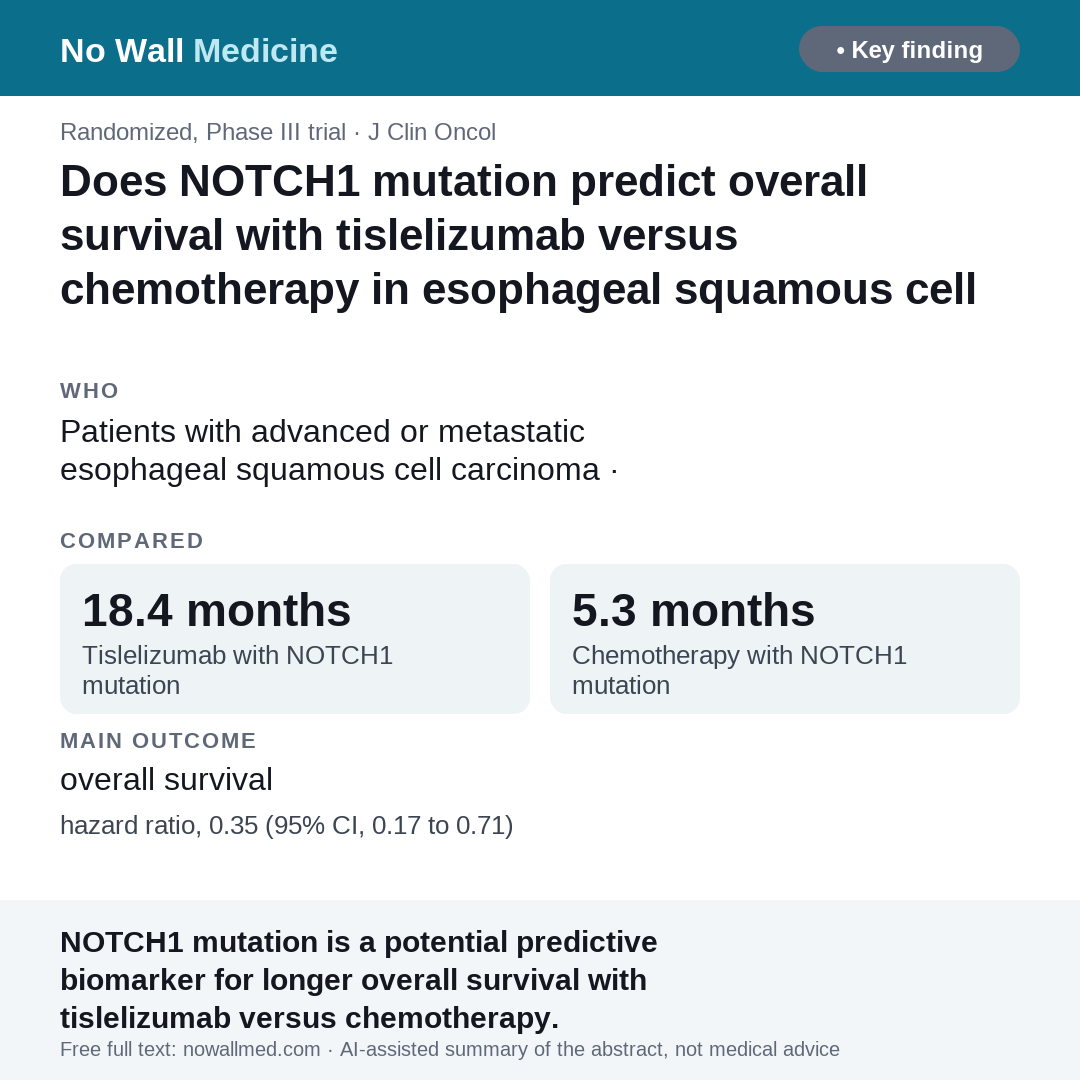
NOTCH1 Mutation and Survival Analysis of Tislelizumab in Advanced or Metastatic Esophageal Squamous Cell Carcinoma: A Biomarker Analysis From the Randomized, Phase III, RATIONALE-302 Trial
Randomized, Phase III trialBenefit found
Does NOTCH1 mutation predict overall survival with tislelizumab versus chemotherapy in esophageal squamous cell carcinoma?
Who
Patients with advanced or metastatic esophageal squamous cell carcinoma · RATIONALE-302 study
Compared
18.4 monthsTislelizumab with NOTCH1 mutation
5.3 monthsChemotherapy with NOTCH1 mutation
Main outcome
overall survival
Result: hazard ratio, 0.35 (95% CI, 0.17 to 0.71)
Bottom line: NOTCH1 mutation is a potential predictive biomarker for longer overall survival with tislelizumab versus chemotherapy.
J Clin Oncol · 2025-04-03Download image
Enhanced Influenza Vaccines Extend A(H3N2) Antibody Reactivity in Older Adults but Prior Vaccination Effects Persist
Randomized trialMixed results
Do enhanced influenza vaccines extend A(H3N2) antibody reactivity in older adults?
Who
Adults aged 65 years or older in Hong Kong · Hong Kong
Compared
Standard-dose vaccine, 0/5 prior years
Recombinant hemagglutinin vaccine, 0/5 prior years: titers ≥40 and titer rises ≥4-fold against significantly more strains
Adjuvanted vaccine, 0/5 prior years: titers ≥40 and titer rises ≥4-fold against significantly more strains
High-dose vaccine, 0/5 prior years
Main outcome
Breadth of A(H3N2)-reactive antibodies via hemagglutination inhibition
Bottom line: Enhanced vaccines may improve antibody breadth, but repeated vaccination may attenuate these immune responses in older adults.
Clin Infect Dis · 2025-04-03Download image
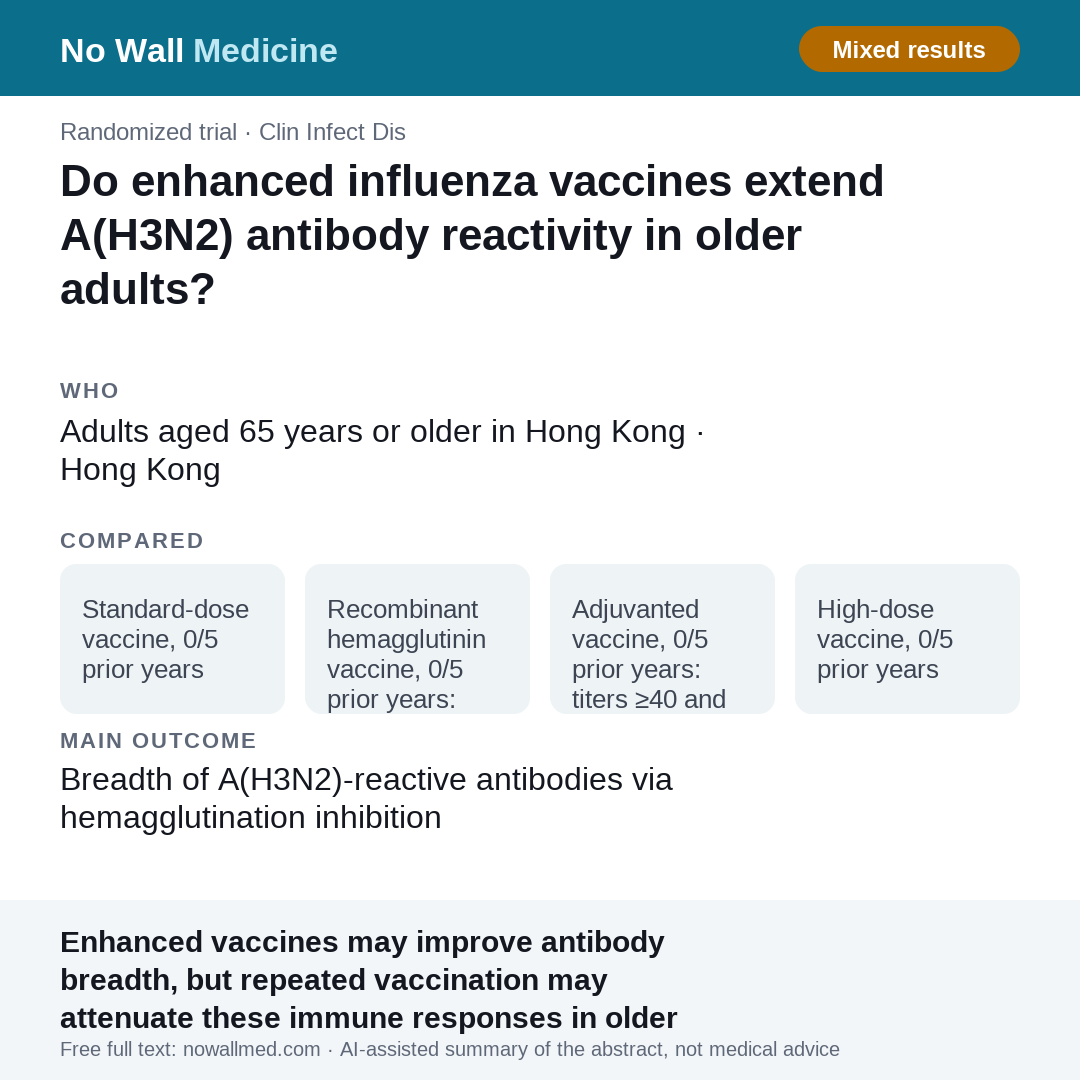
A 3-week pause versus continued Bruton tyrosine kinase inhibitor use during COVID-19 vaccination in individuals with chronic lymphocytic leukaemia (IMPROVE trial): a randomised, open-label, superiority trial
Randomised, open-label, superiority trialNo clear difference
Does a 3-week pause of Bruton tyrosine kinase inhibitor improve spike protein immunity?
Who
99
Individuals with chronic lymphocytic leukaemia taking Bruton tyrosine kinase inhibitor therapy · Secondary-care haematology clinics in 11 UK hospitals
Compared
Pause Bruton tyrosine kinase inhibitor: 153.4 U/mL (103.2)
Continue Bruton tyrosine kinase inhibitor: 218.8 U/mL (SD 122.9)
Main outcome
Anti-spike-receptor binding domain-specific antibody titre 3 weeks after vaccination
Result: geometric mean ratio 1.104 (95% CI 0.565-2.158, p=0.77)
Bottom line: Pausing Bruton tyrosine kinase inhibitor therapy around vaccination does not improve spike protein immunity in chronic lymphocytic leukaemia.
Limitation: The study was slightly underpowered.
Funded by: National Institute for Health and Care Research
Lancet Haematol · 2025-04-03Download image
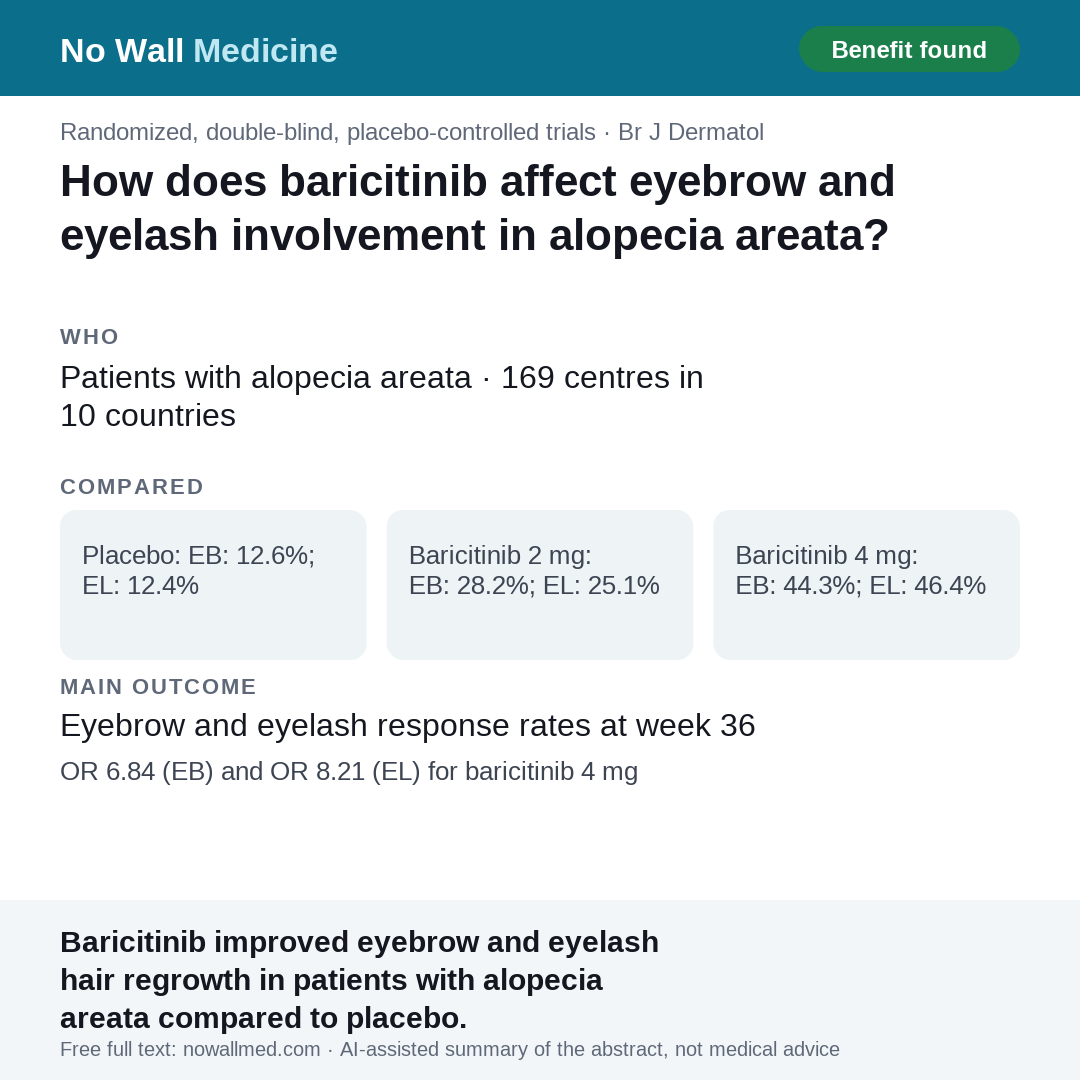
Understanding eyebrow and eyelash involvement in patients with alopecia areata and responsiveness to treatment with baricitinib
Randomized, double-blind, placebo-controlled trialsBenefit found
How does baricitinib affect eyebrow and eyelash involvement in alopecia areata?
Who
Patients with alopecia areata · 169 centres in 10 countries
Compared
Placebo: EB: 12.6%; EL: 12.4%
Baricitinib 2 mg: EB: 28.2%; EL: 25.1%
Baricitinib 4 mg: EB: 44.3%; EL: 46.4%
Main outcome
Eyebrow and eyelash response rates at week 36
Result: OR 6.84 (EB) and OR 8.21 (EL) for baricitinib 4 mg
Bottom line: Baricitinib improved eyebrow and eyelash hair regrowth in patients with alopecia areata compared to placebo.
Br J Dermatol · 2025-04-03Download image