Visual abstracts
New randomized trials and meta-analyses from leading journals at a glance: who was studied, what was compared, and what was found. Every paper is free to read in full.
All specialtiesCardiology 935Oncology 840Gastroenterology & Hepatology 345Infectious Disease 661Neurology 382Psychiatry & Mental Health 464Pulmonology 409Critical Care 277Endocrinology & Diabetes 518Pediatrics 588Surgery 383Orthopedics & Sports Medicine 169Neurosurgery 119Cardiothoracic & Vascular Surgery 89Plastic & Reconstructive Surgery 145Nephrology 207Rheumatology 116Hematology 200Dermatology 89Ophthalmology 113Obstetrics & Gynecology 286Public & Global Health 185Radiology & Imaging 117Anesthesiology 150Urology 179ENT (Otolaryngology) 121Emergency Medicine 104Allergy & Immunology 64Geriatrics 171Family Medicine & Primary Care 116Medical Genetics & Genomics 94Pathology & Laboratory Medicine 30Physical Medicine & Rehabilitation 151Palliative Care 83Nutrition 231Digital Health & AI 485General Medicine 105
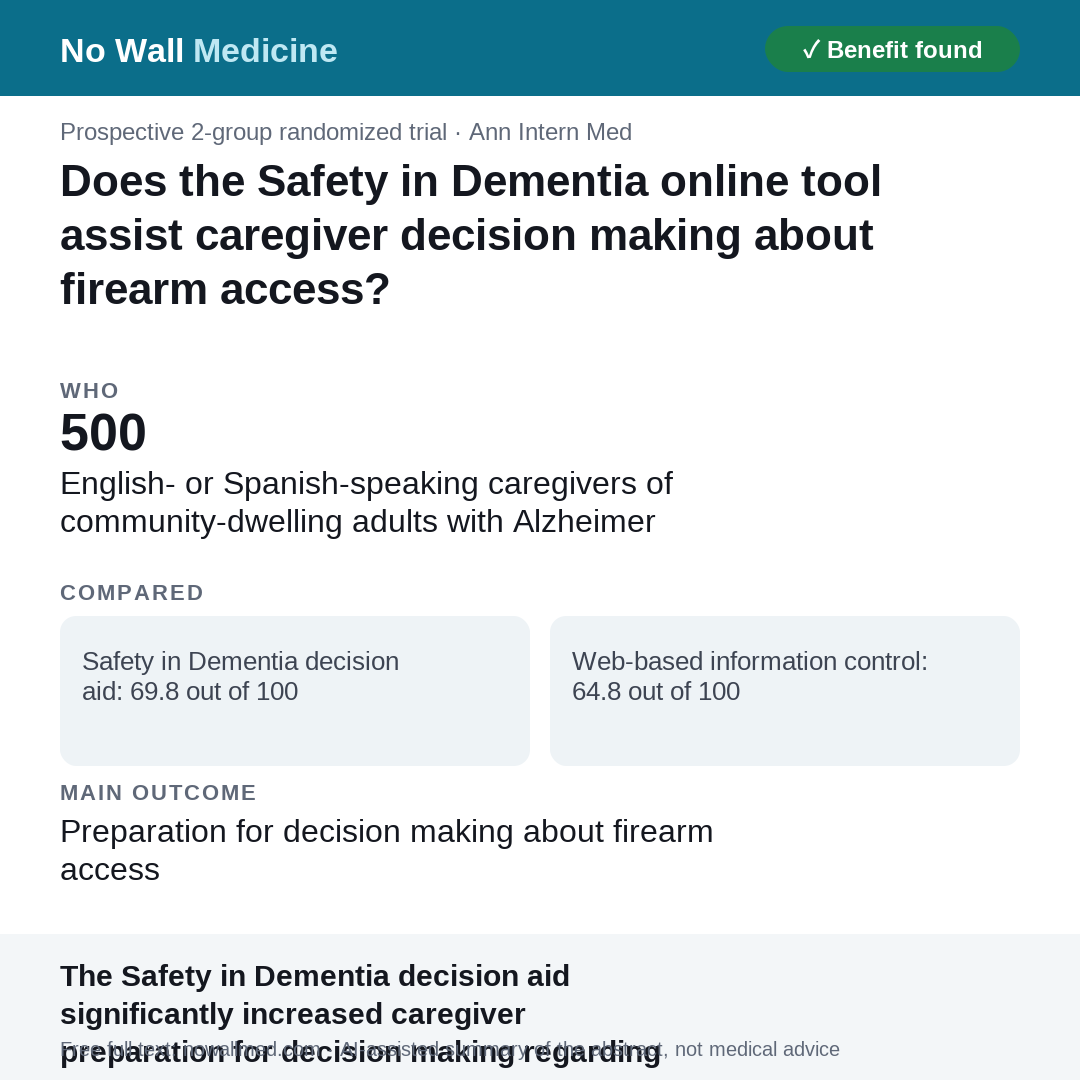
The Effect of the "Safety in Dementia" Online Tool to Assist Decision Making for Caregivers of Persons With Dementia and Access to Firearms : A Randomized Trial
Prospective 2-group randomized trialBenefit found
Does the Safety in Dementia online tool assist caregiver decision making about firearm access?
Who
500
English- or Spanish-speaking caregivers of community-dwelling adults with Alzheimer disease and related dementias · United States
Compared
Safety in Dementia decision aid: 69.8 out of 100
Web-based information control: 64.8 out of 100
Main outcome
Preparation for decision making about firearm access
Result: mean difference, 4.80 (95% CI, 0.53 to 9.07)
Bottom line: The Safety in Dementia decision aid significantly increased caregiver preparation for decision making regarding firearm access.
Limitation: The results may not be generalizable to non-English-speaking populations.
Funded by: National Institute on Aging, National Institutes of Health
Ann Intern Med · 2024-10-22Download image
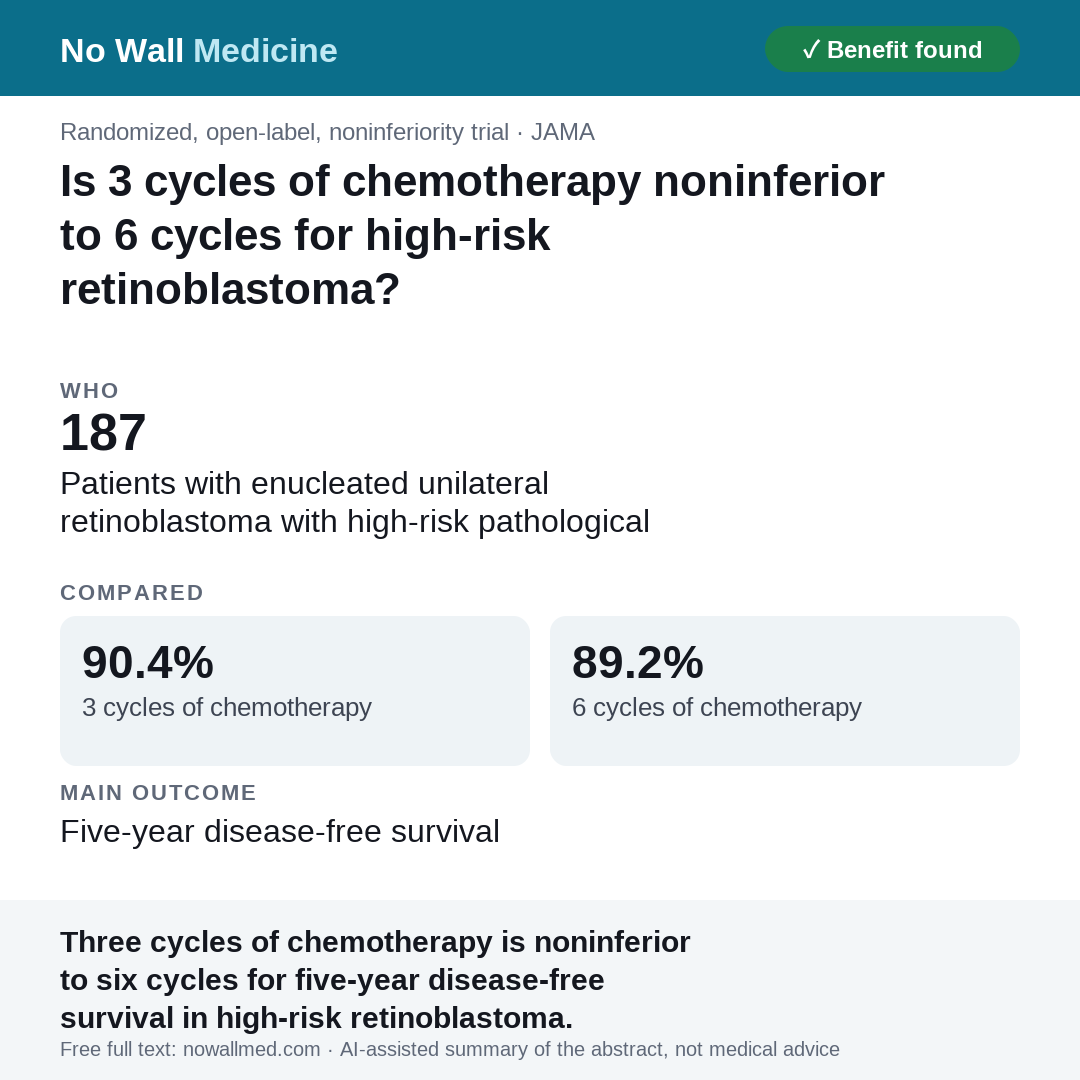
Three vs 6 Cycles of Chemotherapy for High-Risk Retinoblastoma: A Randomized Clinical Trial
Randomized, open-label, noninferiority trialBenefit found
Is 3 cycles of chemotherapy noninferior to 6 cycles for high-risk retinoblastoma?
Who
187
Patients with enucleated unilateral retinoblastoma with high-risk pathological features · 2 premier eye centers in China
Compared
90.4%3 cycles of chemotherapy
89.2%6 cycles of chemotherapy
Main outcome
Five-year disease-free survival
Result: difference, 1.2% (95% CI, -7.5% to 9.8%)
Bottom line: Three cycles of chemotherapy is noninferior to six cycles for five-year disease-free survival in high-risk retinoblastoma.
JAMA · 2024-10-21Download image
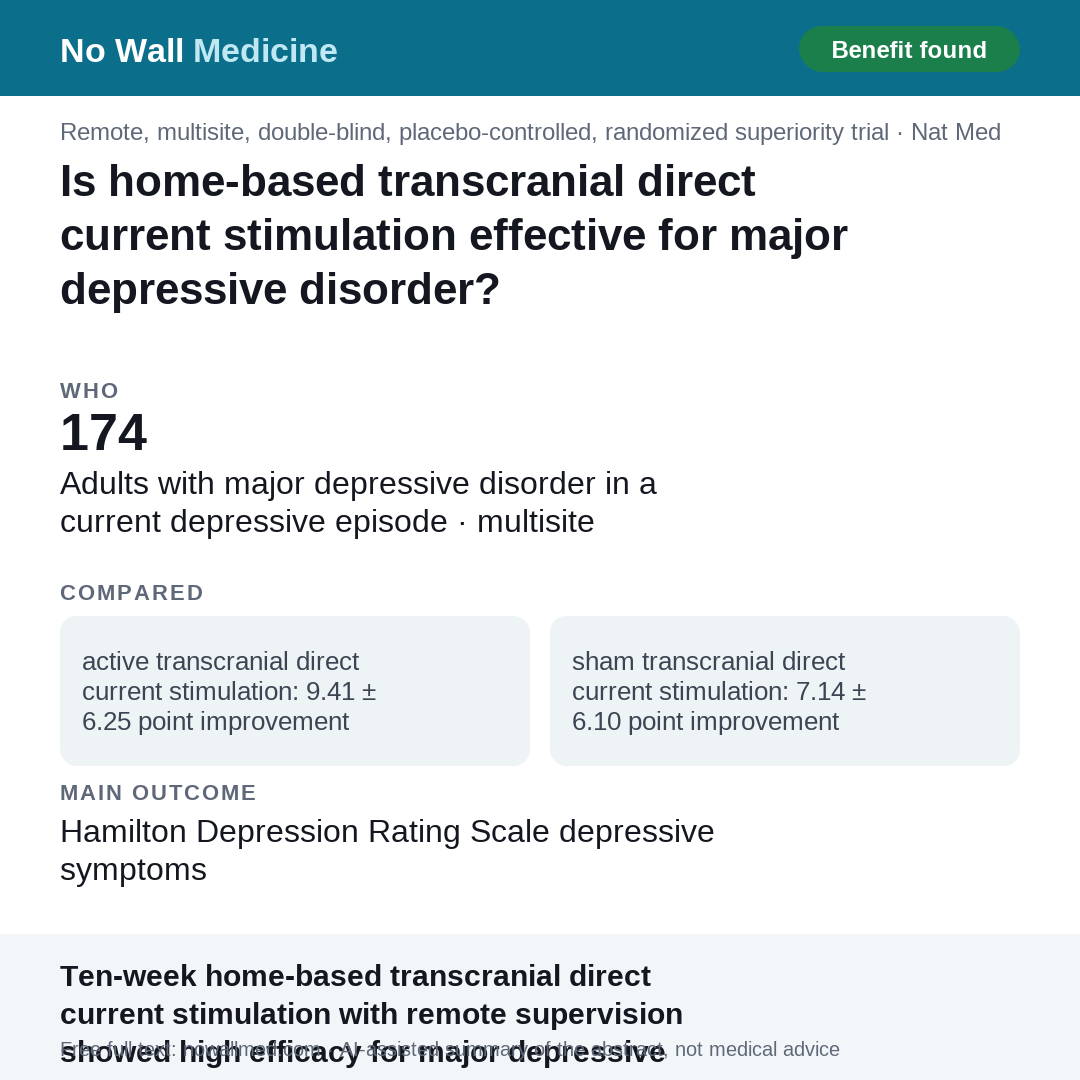
Home-based transcranial direct current stimulation treatment for major depressive disorder: a fully remote phase 2 randomized sham-controlled trial
Remote, multisite, double-blind, placebo-controlled, randomized superiority trialBenefit found
Is home-based transcranial direct current stimulation effective for major depressive disorder?
Who
174
Adults with major depressive disorder in a current depressive episode · multisite
Compared
active transcranial direct current stimulation: 9.41 ± 6.25 point improvement
sham transcranial direct current stimulation: 7.14 ± 6.10 point improvement
Main outcome
Hamilton Depression Rating Scale depressive symptoms
Result: 95% confidence interval = 0.51-4.01, P = 0.012
Bottom line: Ten-week home-based transcranial direct current stimulation with remote supervision showed high efficacy for major depressive disorder.
Nat Med · 2024-10-21Download image
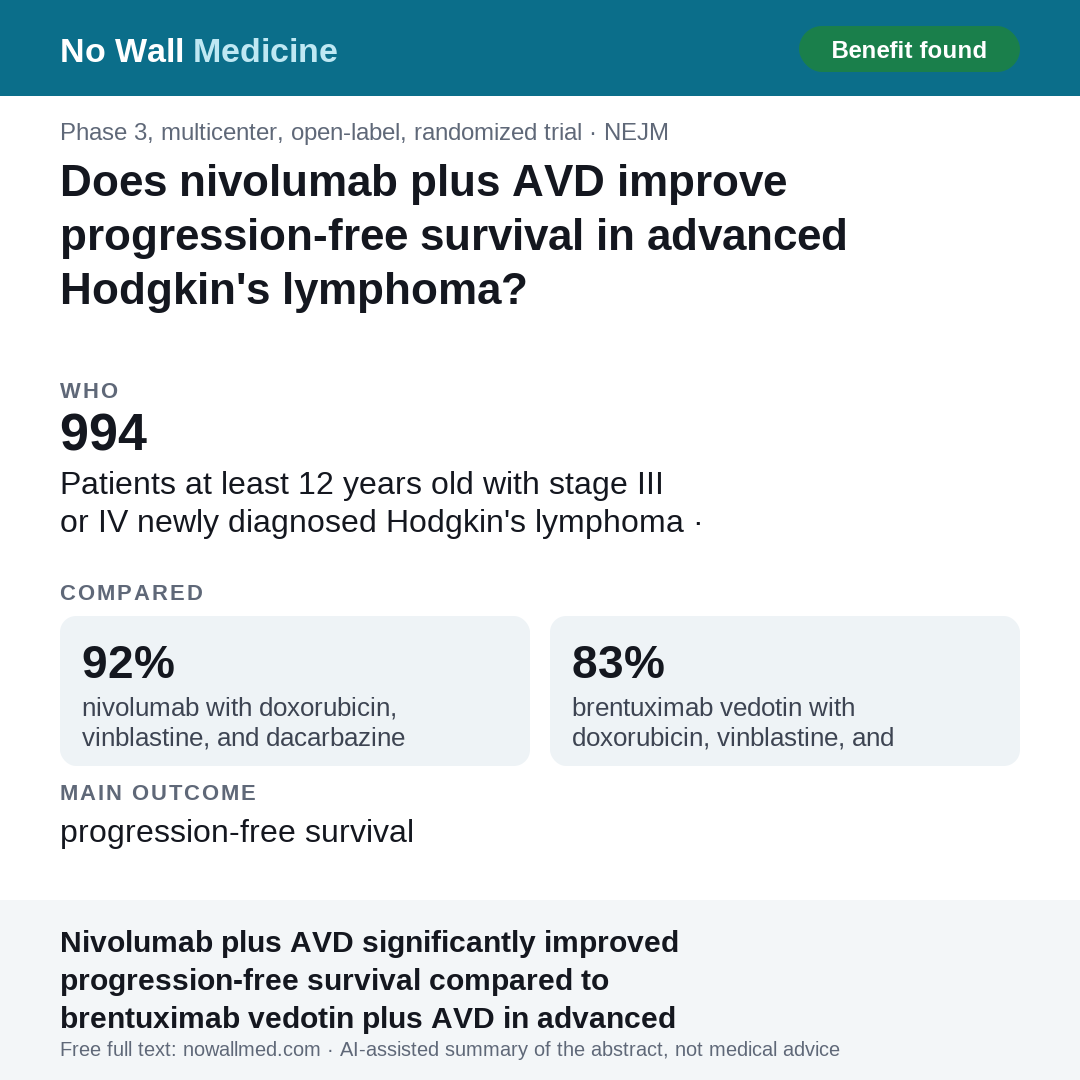
Nivolumab+AVD in Advanced-Stage Classic Hodgkin's Lymphoma
Phase 3, multicenter, open-label, randomized trialBenefit found
Does nivolumab plus AVD improve progression-free survival in advanced Hodgkin's lymphoma?
Who
994
Patients at least 12 years old with stage III or IV newly diagnosed Hodgkin's lymphoma · multicenter
Compared
92%nivolumab with doxorubicin, vinblastine, and dacarbazine (95% CI, 89 to 94)
83%brentuximab vedotin with doxorubicin, vinblastine, and dacarbazine (95% CI, 79 to 86)
Main outcome
progression-free survival
Result: hazard ratio 0.45 (95% CI, 0.30 to 0.65)
Bottom line: Nivolumab plus AVD significantly improved progression-free survival compared to brentuximab vedotin plus AVD in advanced Hodgkin's lymphoma.
Limitation: short follow-up time
Funded by: National Cancer Institute of the National Institutes of Health
NEJM · 2024-10-16Download image
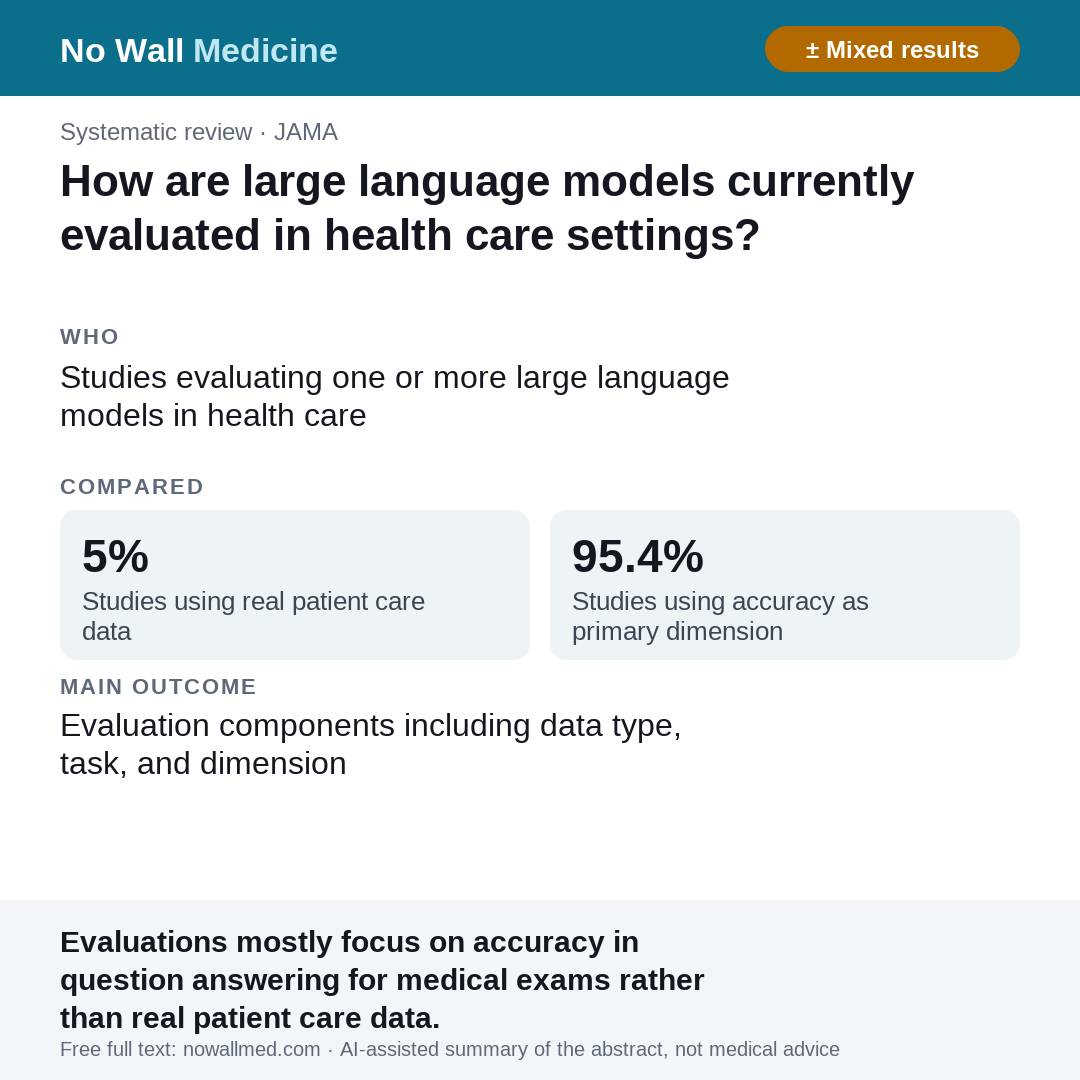
Testing and Evaluation of Health Care Applications of Large Language Models: A Systematic Review
Systematic reviewMixed results
How are large language models currently evaluated in health care settings?
Who
519
Studies evaluating one or more large language models in health care
Compared
5%Studies using real patient care data
95.4%Studies using accuracy as primary dimension
Main outcome
Evaluation components including data type, task, and dimension
Bottom line: Evaluations mostly focus on accuracy in question answering for medical exams rather than real patient care data.
JAMA · 2024-10-15Download image
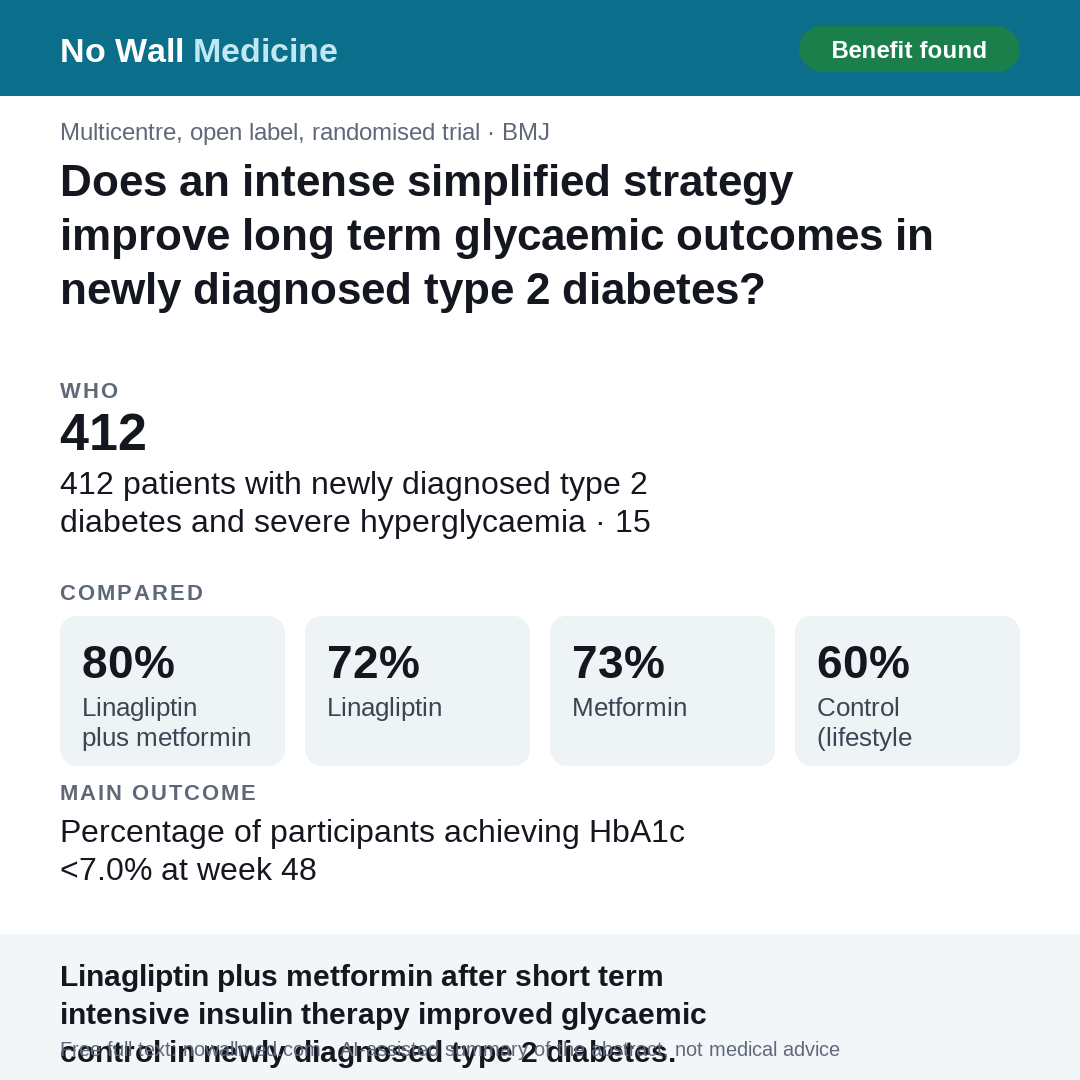
Intense simplified strategy for newly diagnosed type 2 diabetes in patients with severe hyperglycaemia: multicentre, open label, randomised trial
Multicentre, open label, randomised trialBenefit found
Does an intense simplified strategy improve long term glycaemic outcomes in newly diagnosed type 2 diabetes?
Who
412
412 patients with newly diagnosed type 2 diabetes and severe hyperglycaemia · 15 hospitals in China
Compared
80%Linagliptin plus metformin (78/97)
72%Linagliptin (63/88)
73%Metformin (69/95)
60%Control (lifestyle modification) (56/93)
Main outcome
Percentage of participants achieving HbA1c <7.0% at week 48
Result: odds ratio 2.78 (95% confidence interval 1.37 to 5.65)
Bottom line: Linagliptin plus metformin after short term intensive insulin therapy improved glycaemic control in newly diagnosed type 2 diabetes.
BMJ · 2024-10-15Download image
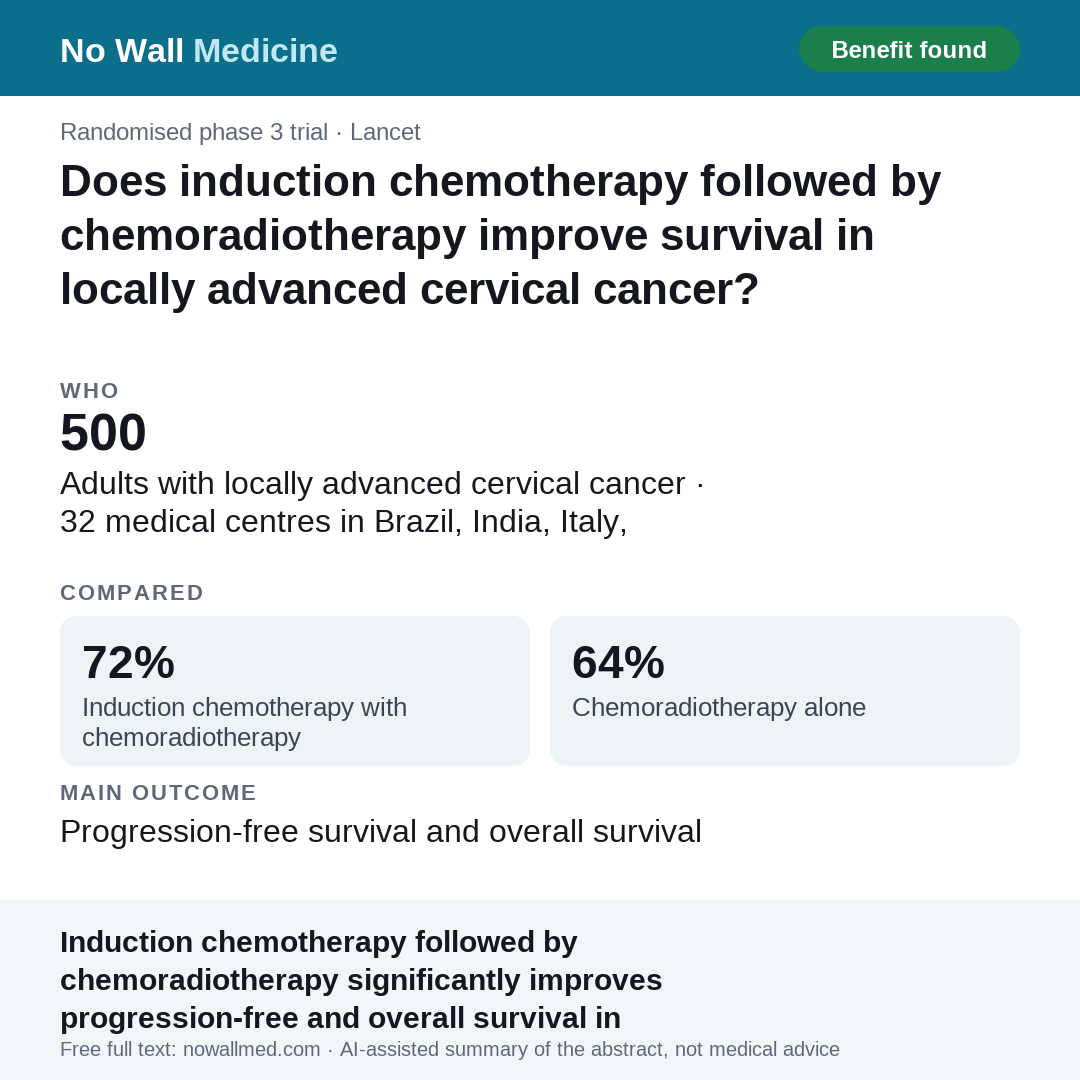
Induction chemotherapy followed by standard chemoradiotherapy versus standard chemoradiotherapy alone in patients with locally advanced cervical cancer (GCIG INTERLACE): an international, multicentre, randomised phase 3 trial
Randomised phase 3 trialBenefit found
Does induction chemotherapy followed by chemoradiotherapy improve survival in locally advanced cervical cancer?
Who
500
Adults with locally advanced cervical cancer · 32 medical centres in Brazil, India, Italy, Mexico, and UK
Compared
72%Induction chemotherapy with chemoradiotherapy (5-year progression-free survival)
64%Chemoradiotherapy alone (5-year progression-free survival)
Main outcome
Progression-free survival and overall survival
Result: hazard ratio 0·65 (95% CI 0·46-0·91)
Bottom line: Induction chemotherapy followed by chemoradiotherapy significantly improves progression-free and overall survival in locally advanced cervical cancer.
Funded by: Cancer Research UK and University College London
Lancet · 2024-10-14Download image
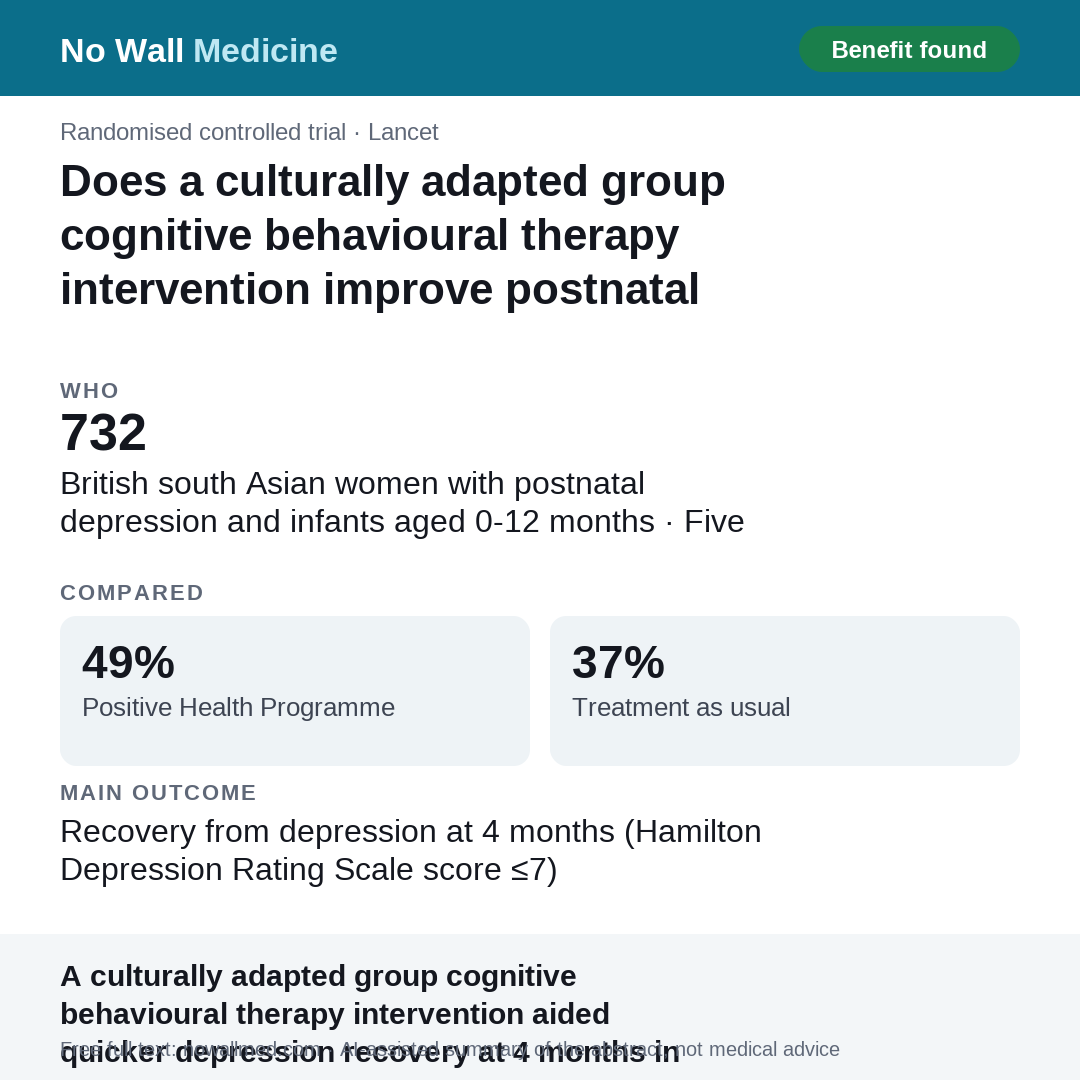
Efficacy of a culturally adapted, cognitive behavioural therapy-based intervention for postnatal depression in British south Asian women (ROSHNI-2): a multicentre, randomised controlled trial
Randomised controlled trialBenefit found
Does a culturally adapted group cognitive behavioural therapy intervention improve postnatal depression recovery?
Who
732
British south Asian women with postnatal depression and infants aged 0-12 months · Five centres across the United Kingdom
Compared
49%Positive Health Programme (138/281)
37%Treatment as usual (105/281)
Main outcome
Recovery from depression at 4 months (Hamilton Depression Rating Scale score ≤7)
Result: adjusted odds ratio 1.97 (95% CI 1.26-3.10)
Bottom line: A culturally adapted group cognitive behavioural therapy intervention aided quicker depression recovery at 4 months in British south Asian women.
Funded by: UK National Institute for Health and Care Research
Lancet · 2024-10-13Download image
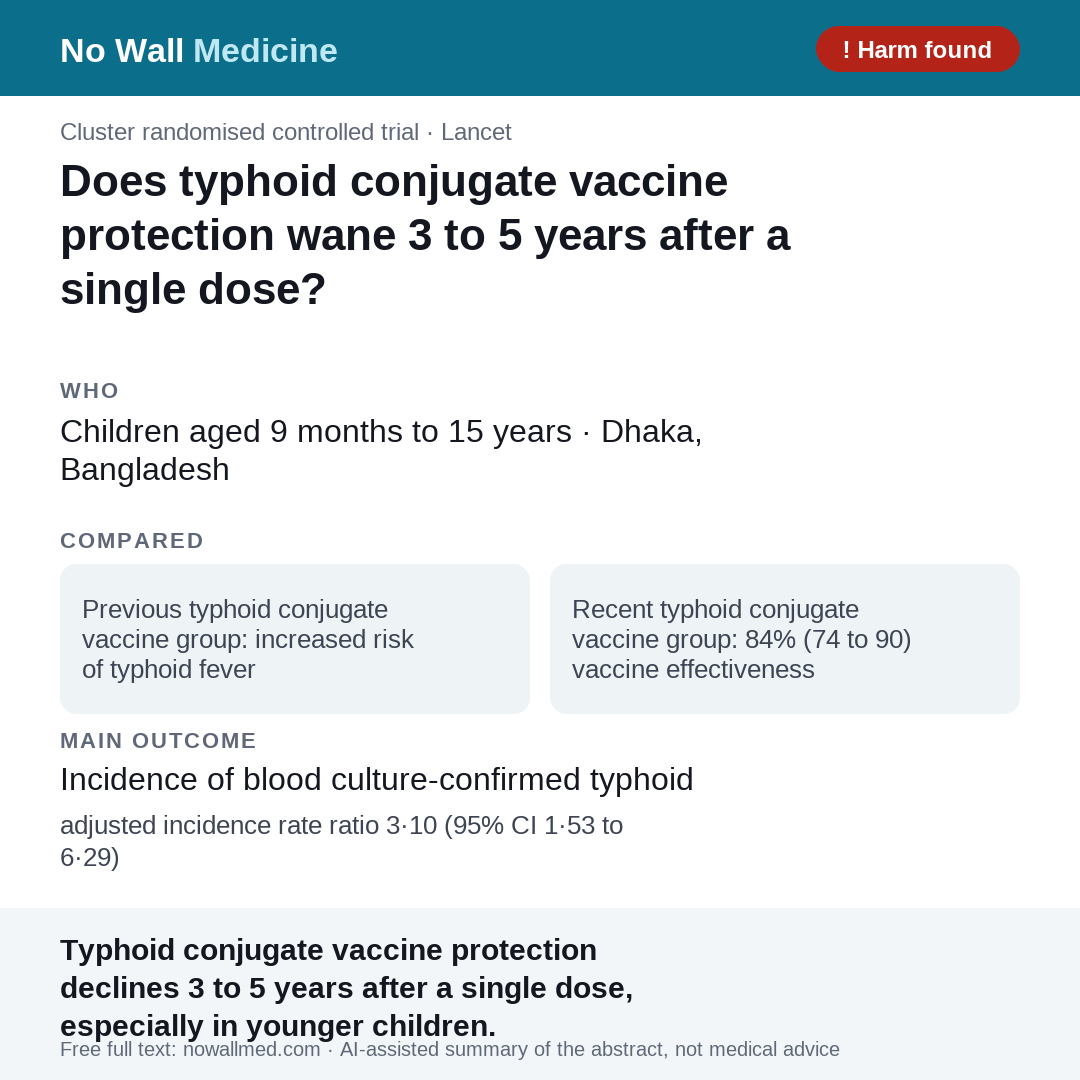
5-year vaccine protection following a single dose of Vi-tetanus toxoid conjugate vaccine in Bangladeshi children (TyVOID): a cluster randomised trial
Cluster randomised controlled trialHarm found
Does typhoid conjugate vaccine protection wane 3 to 5 years after a single dose?
Who
Children aged 9 months to 15 years · Dhaka, Bangladesh
Compared
Previous typhoid conjugate vaccine group: increased risk of typhoid fever
Recent typhoid conjugate vaccine group: 84% (74 to 90) vaccine effectiveness
Main outcome
Incidence of blood culture-confirmed typhoid
Result: adjusted incidence rate ratio 3·10 (95% CI 1·53 to 6·29)
Bottom line: Typhoid conjugate vaccine protection declines 3 to 5 years after a single dose, especially in younger children.
Funded by: Bill & Melinda Gates Foundation
Lancet · 2024-10-13Download image
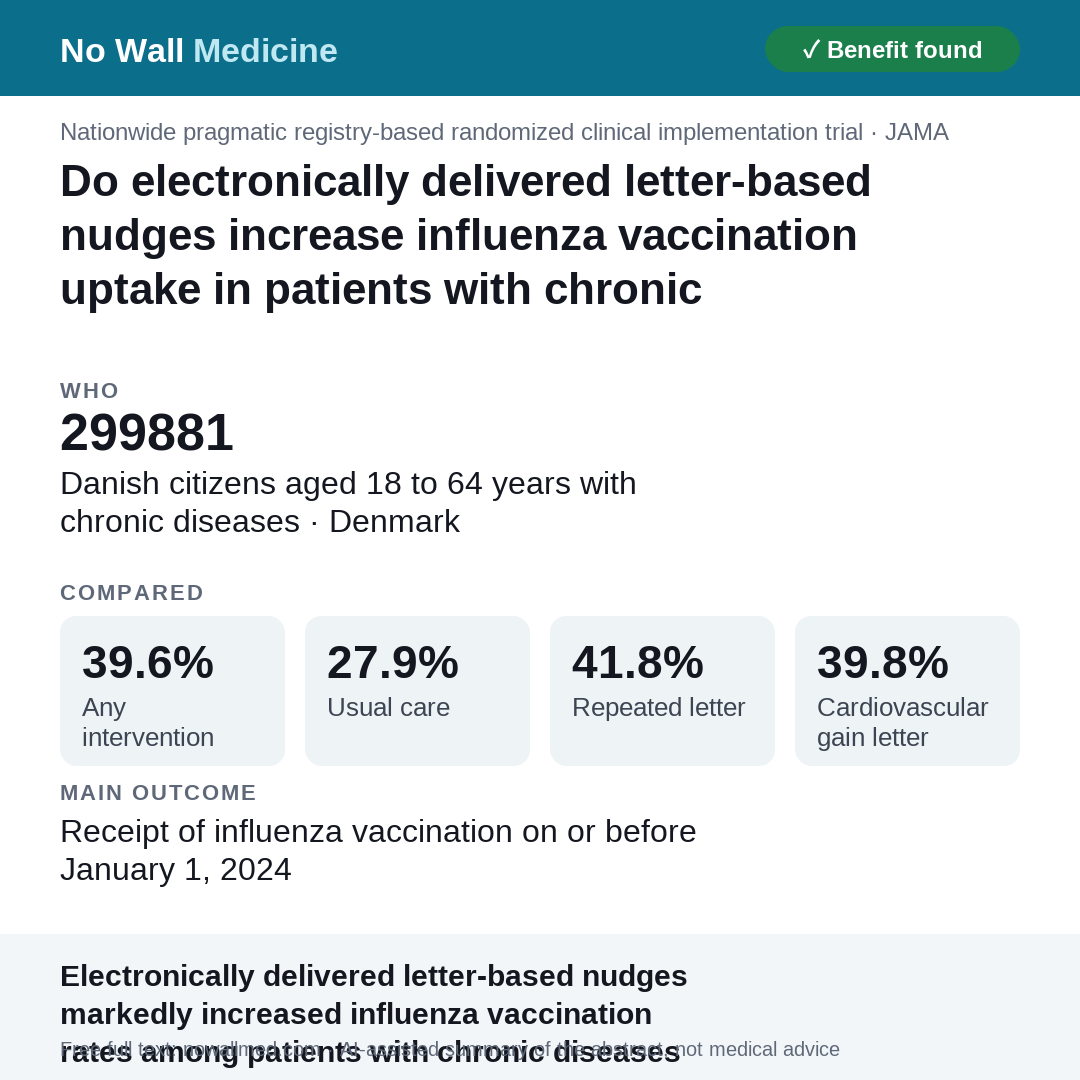
Electronic Nudges to Increase Influenza Vaccination in Patients With Chronic Diseases: A Randomized Clinical Trial
Nationwide pragmatic registry-based randomized clinical implementation trialBenefit found
Do electronically delivered letter-based nudges increase influenza vaccination uptake in patients with chronic diseases?
Who
299881
Danish citizens aged 18 to 64 years with chronic diseases · Denmark
Compared
39.6%Any intervention letter
27.9%Usual care
41.8%Repeated letter
39.8%Cardiovascular gain letter
Main outcome
Receipt of influenza vaccination on or before January 1, 2024
Result: difference, 11.7 percentage points; 99.29% CI, 11.2-12.2 percentage points
Bottom line: Electronically delivered letter-based nudges markedly increased influenza vaccination rates among patients with chronic diseases compared to usual care.
JAMA · 2024-10-11Download image
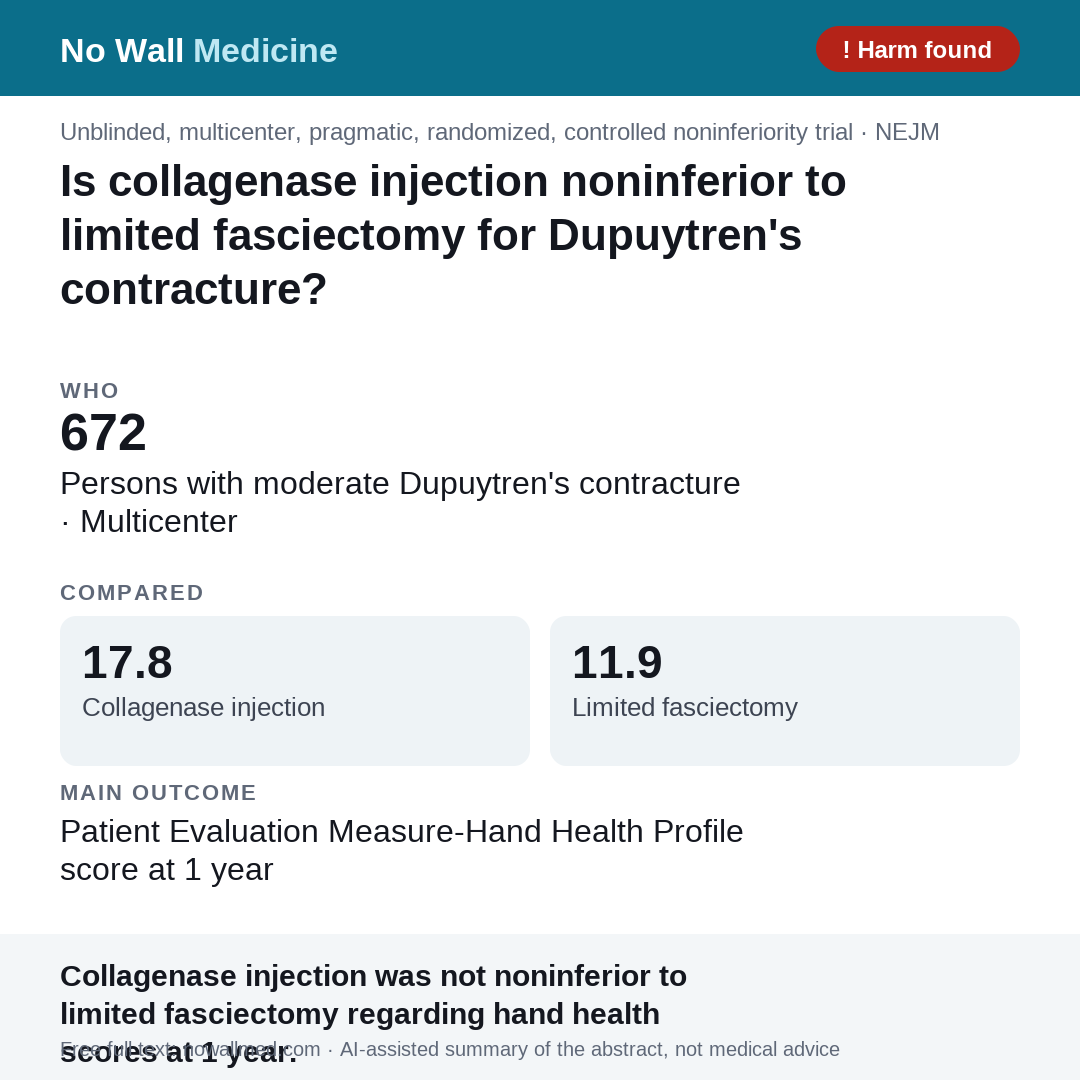
Collagenase Injection versus Limited Fasciectomy for Dupuytren's Contracture
Unblinded, multicenter, pragmatic, randomized, controlled noninferiority trialHarm found
Is collagenase injection noninferior to limited fasciectomy for Dupuytren's contracture?
Who
672
Persons with moderate Dupuytren's contracture · Multicenter
Compared
17.8Collagenase injection
11.9Limited fasciectomy
Main outcome
Patient Evaluation Measure-Hand Health Profile score at 1 year
Result: estimated difference, 5.9 points; 95% confidence interval [CI], 3.1 to 8.8
Bottom line: Collagenase injection was not noninferior to limited fasciectomy regarding hand health scores at 1 year.
Funded by: National Institute for Health and Care Research
NEJM · 2024-10-09Download image
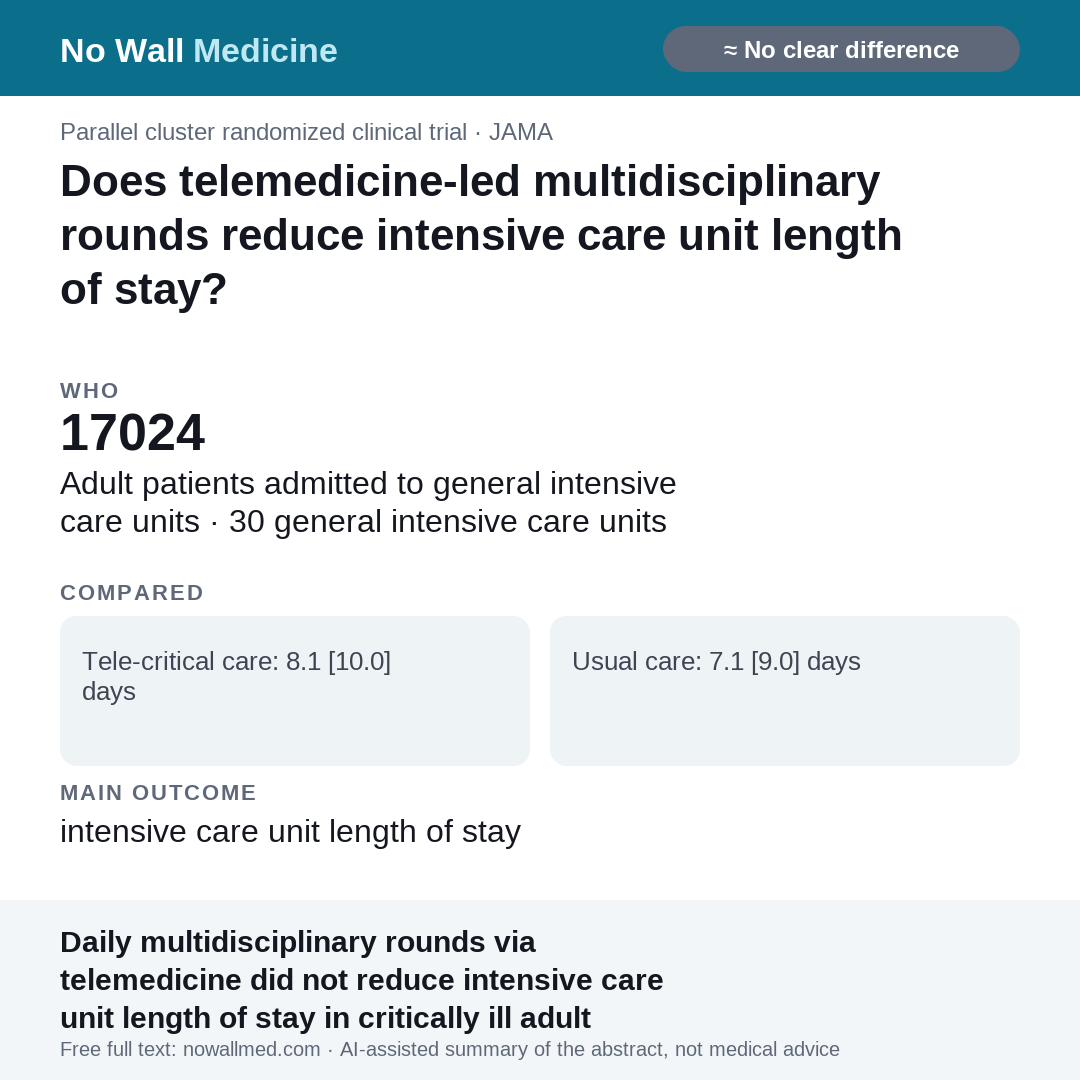
Effect of Tele-ICU on Clinical Outcomes of Critically Ill Patients: The TELESCOPE Randomized Clinical Trial
Parallel cluster randomized clinical trialNo clear difference
Does telemedicine-led multidisciplinary rounds reduce intensive care unit length of stay?
Who
17024
Adult patients admitted to general intensive care units · 30 general intensive care units in Brazil
Compared
Tele-critical care: 8.1 [10.0] days
Usual care: 7.1 [9.0] days
Main outcome
intensive care unit length of stay
Result: percentage change, 8.2% (95% CI, -5.4% to 23.8%)
Bottom line: Daily multidisciplinary rounds via telemedicine did not reduce intensive care unit length of stay in critically ill adult patients.
JAMA · 2024-10-09Download image
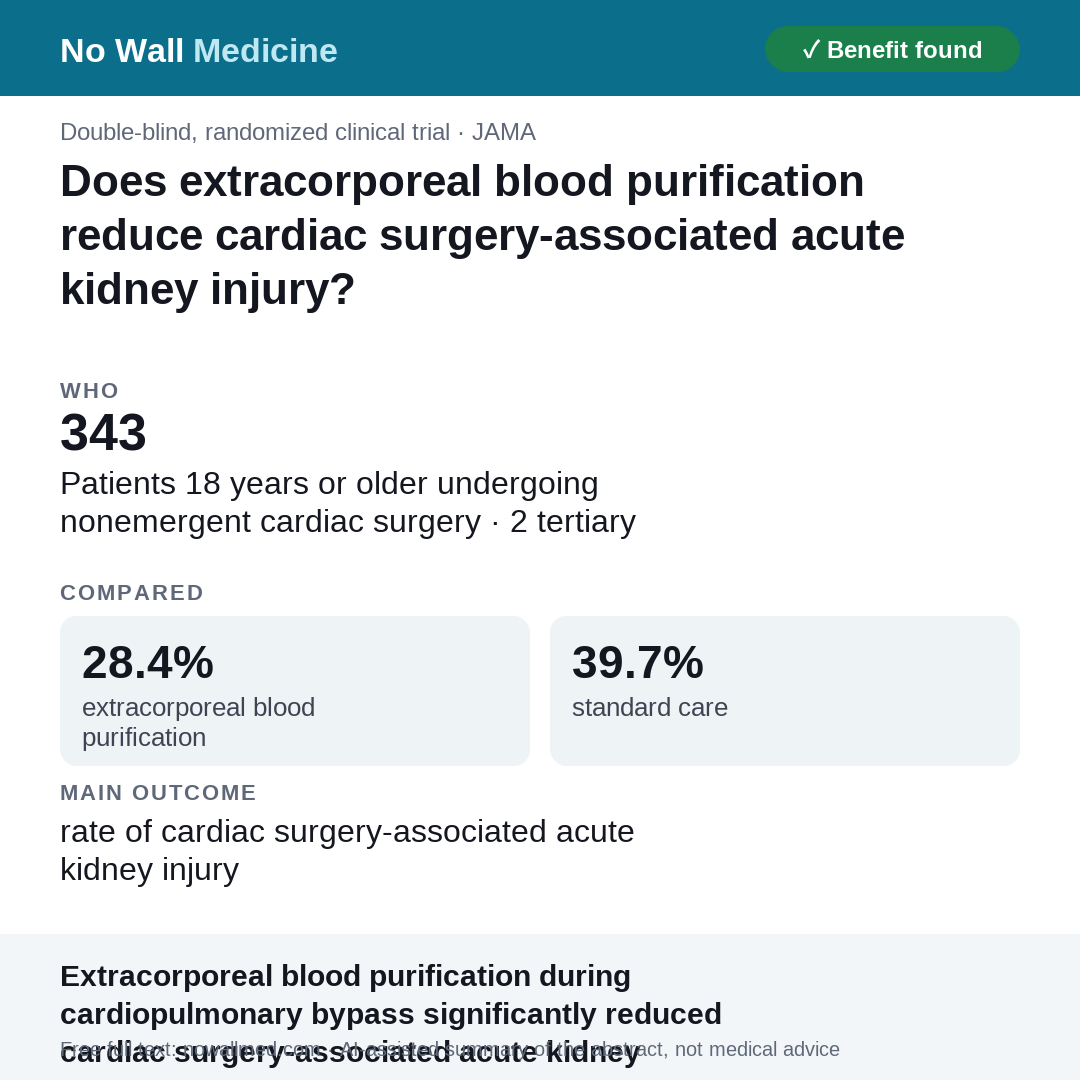
Extracorporeal Blood Purification and Acute Kidney Injury in Cardiac Surgery: The SIRAKI02 Randomized Clinical Trial
Double-blind, randomized clinical trialBenefit found
Does extracorporeal blood purification reduce cardiac surgery-associated acute kidney injury?
Who
343
Patients 18 years or older undergoing nonemergent cardiac surgery · 2 tertiary hospitals in Spain
Compared
28.4%extracorporeal blood purification (95% CI, 21.7%-35.8%)
39.7%standard care (95% CI, 32.3%-47.3%)
Main outcome
rate of cardiac surgery-associated acute kidney injury
Result: adjusted difference of 10.4% (95% CI, 2.3%-18.5%)
Bottom line: Extracorporeal blood purification during cardiopulmonary bypass significantly reduced cardiac surgery-associated acute kidney injury within 7 days.
JAMA · 2024-10-09Download image
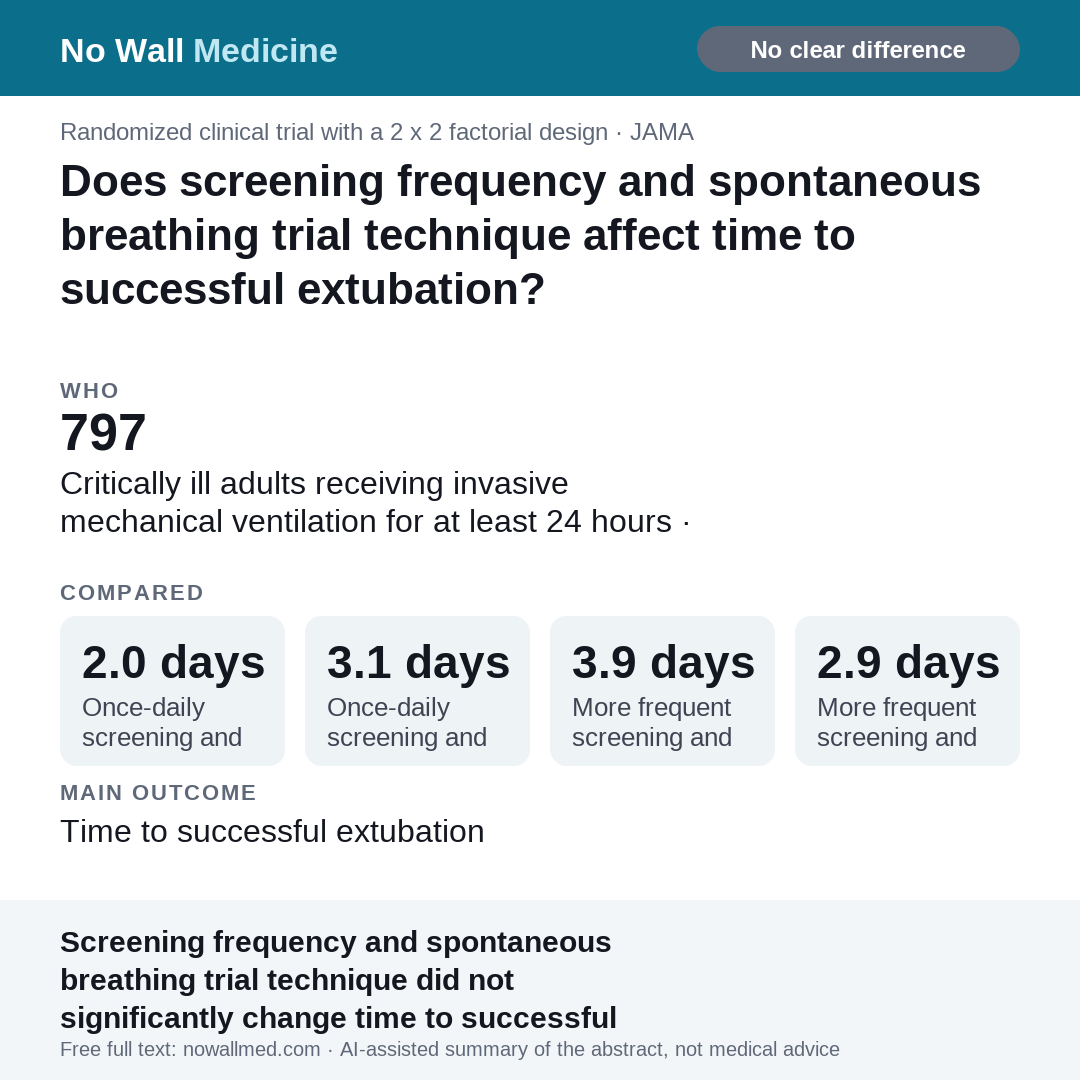
Frequency of Screening and Spontaneous Breathing Trial Techniques: A Randomized Clinical Trial
Randomized clinical trial with a 2 x 2 factorial designNo clear difference
Does screening frequency and spontaneous breathing trial technique affect time to successful extubation?
Who
797
Critically ill adults receiving invasive mechanical ventilation for at least 24 hours · 23 intensive care units in North America
Compared
2.0 daysOnce-daily screening and pressure-supported SBT (95% CI, 1.7-2.7)
3.1 daysOnce-daily screening and T-piece SBT (95% CI, 2.7-4.8)
3.9 daysMore frequent screening and pressure-supported SBT (95% CI, 2.9-4.7)
2.9 daysMore frequent screening and T-piece SBT (95% CI, 2.0-3.1)
Main outcome
Time to successful extubation
Result: hazard ratio 0.88 (95% CI, 0.76-1.03) for screening; hazard ratio 1.06 (95% CI, 0.91-1.23) for technique
Bottom line: Screening frequency and spontaneous breathing trial technique did not significantly change time to successful extubation.
JAMA · 2024-10-09Download image
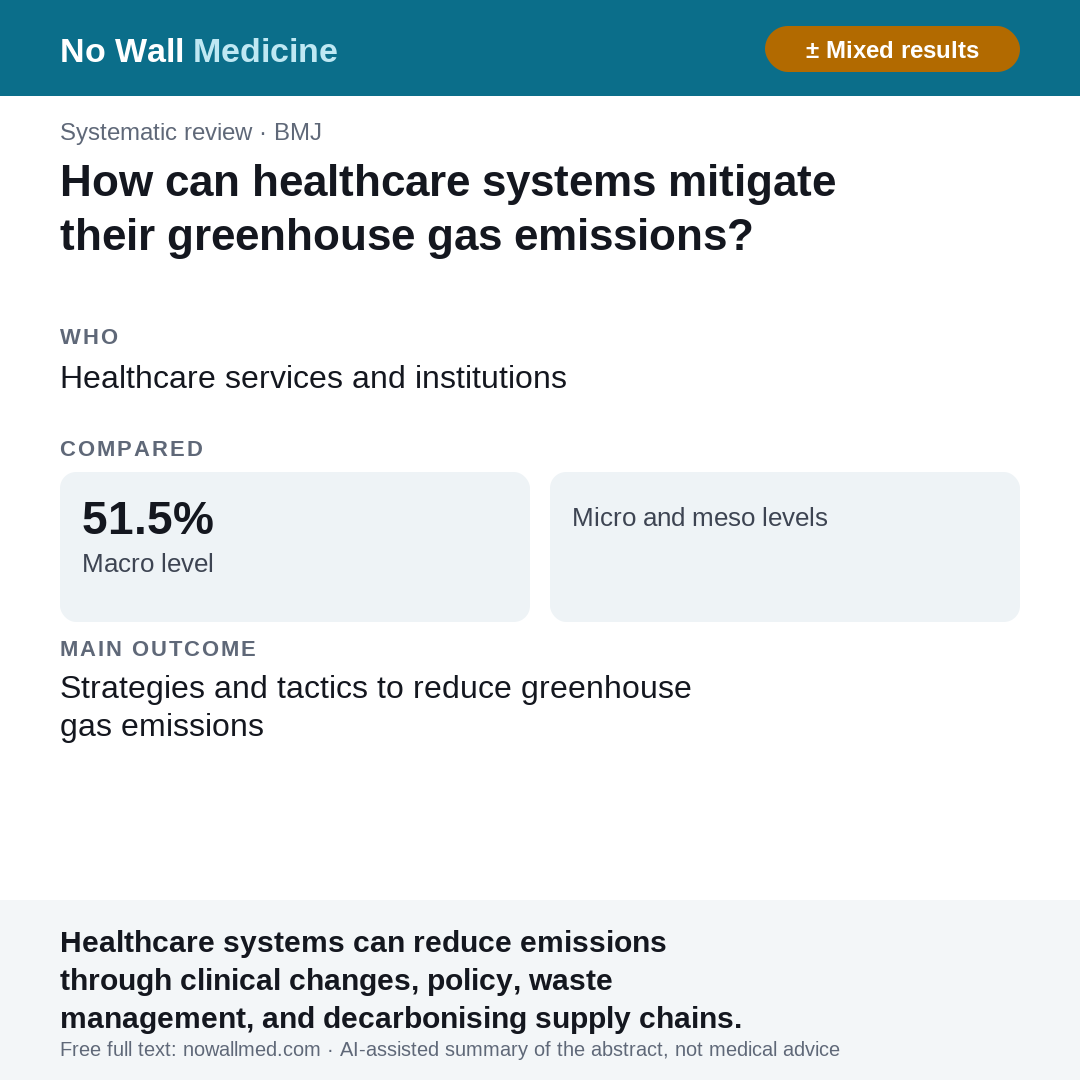
Strategies and tactics to reduce the impact of healthcare on climate change: systematic review
Systematic reviewMixed results
How can healthcare systems mitigate their greenhouse gas emissions?
Who
205
Healthcare services and institutions
Compared
51.5%Macro level
Micro and meso levels
Main outcome
Strategies and tactics to reduce greenhouse gas emissions
Bottom line: Healthcare systems can reduce emissions through clinical changes, policy, waste management, and decarbonising supply chains.
BMJ · 2024-10-08Download image
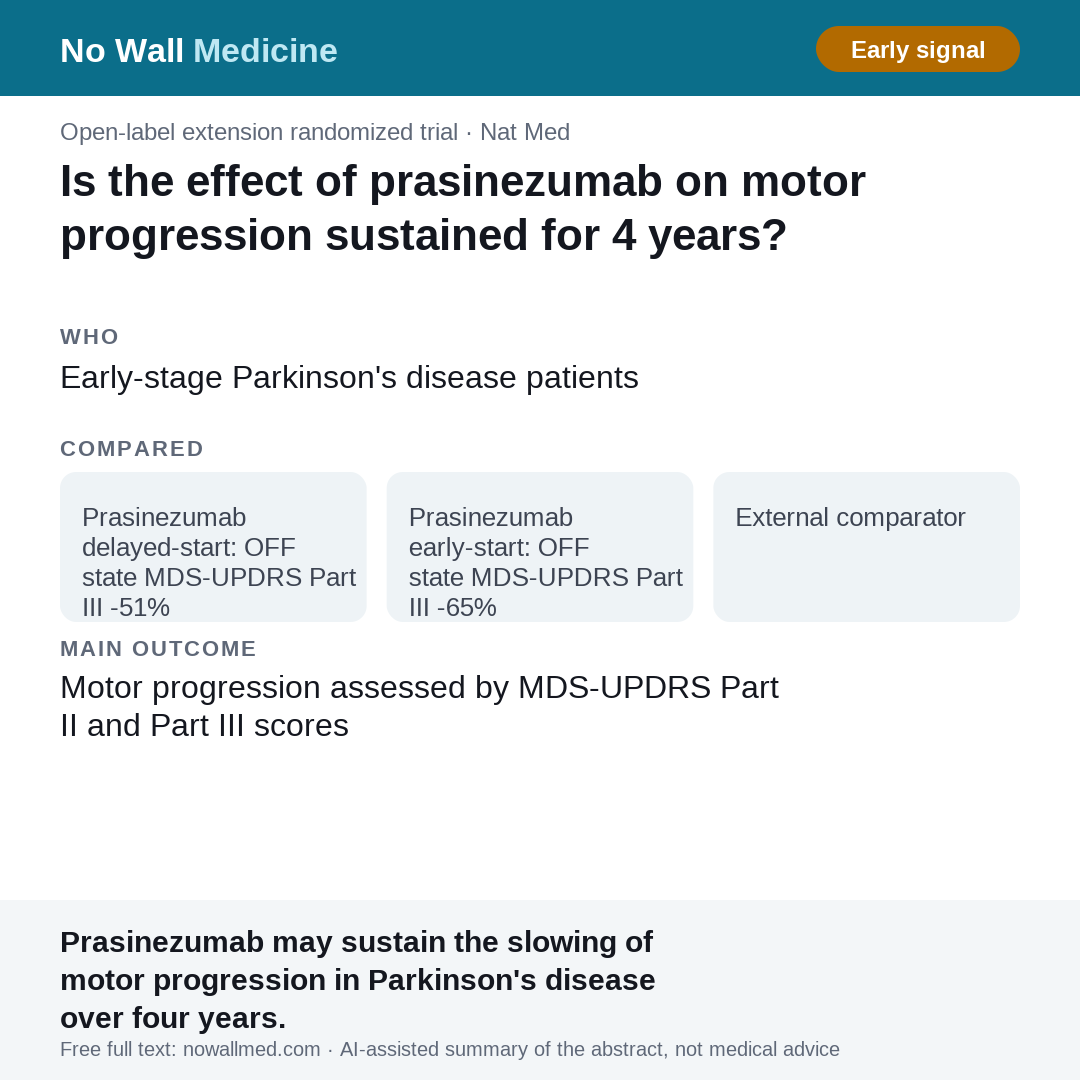
Sustained effect of prasinezumab on Parkinson's disease motor progression in the open-label extension of the PASADENA trial
Open-label extension randomized trialBenefit found
Is the effect of prasinezumab on motor progression sustained for 4 years?
Who
Early-stage Parkinson's disease patients
Compared
Prasinezumab delayed-start: OFF state MDS-UPDRS Part III -51%
Prasinezumab early-start: OFF state MDS-UPDRS Part III -65%
External comparator
Main outcome
Motor progression assessed by MDS-UPDRS Part II and Part III scores
Bottom line: Prasinezumab may sustain the slowing of motor progression in Parkinson's disease over four years.
Nat Med · 2024-10-08Download image
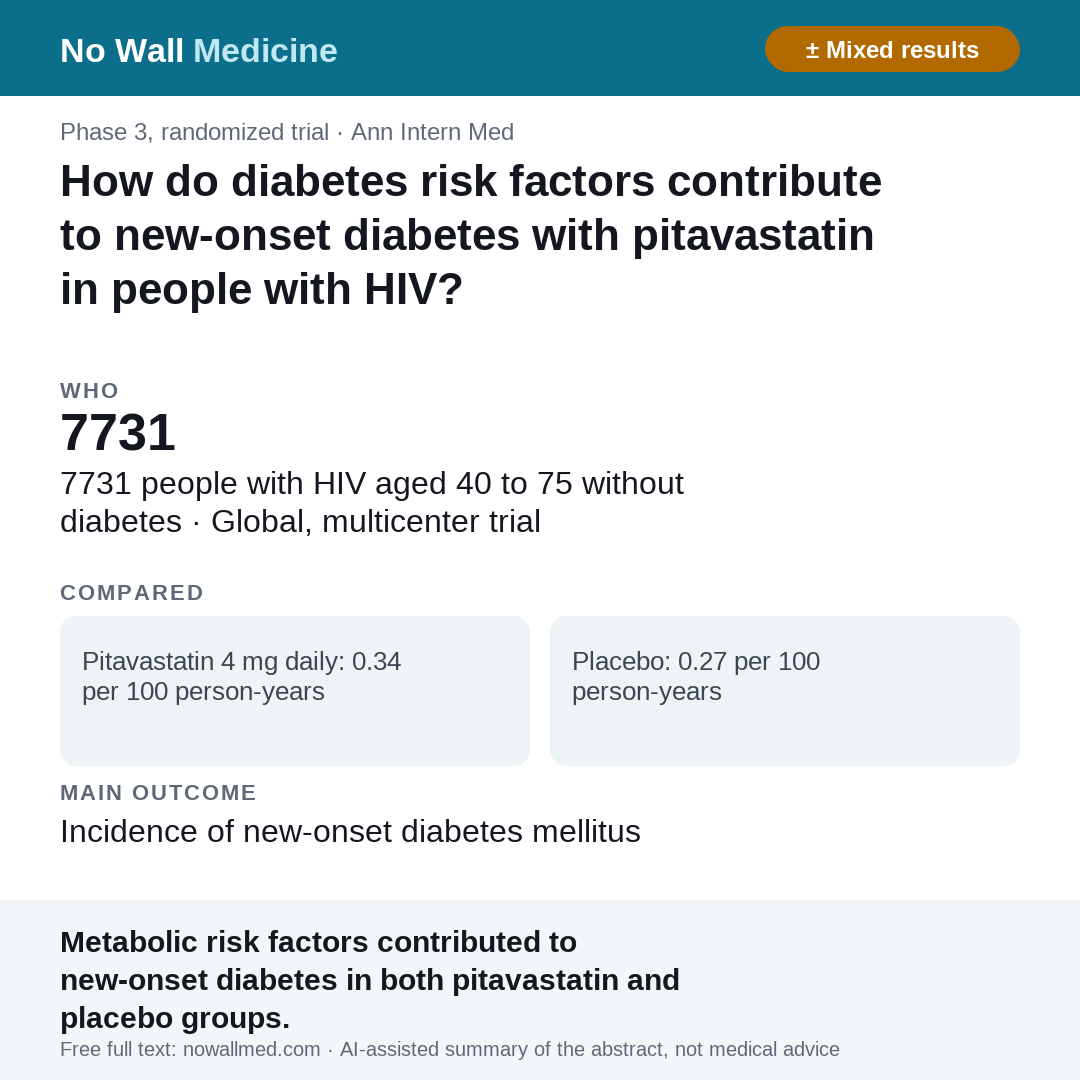
Diabetes Risk Factors in People With HIV Receiving Pitavastatin Versus Placebo for Cardiovascular Disease Prevention : A Randomized Trial
Phase 3, randomized trialMixed results
How do diabetes risk factors contribute to new-onset diabetes with pitavastatin in people with HIV?
Who
7731
7731 people with HIV aged 40 to 75 without diabetes · Global, multicenter trial
Compared
Pitavastatin 4 mg daily: 0.34 per 100 person-years
Placebo: 0.27 per 100 person-years
Main outcome
Incidence of new-onset diabetes mellitus
Bottom line: Metabolic risk factors contributed to new-onset diabetes in both pitavastatin and placebo groups.
Limitation: Pitavastatin was the only statin assessed; diabetes was assessed clinically.
Funded by: National Heart, Lung, and Blood Institute
Ann Intern Med · 2024-10-08Download image
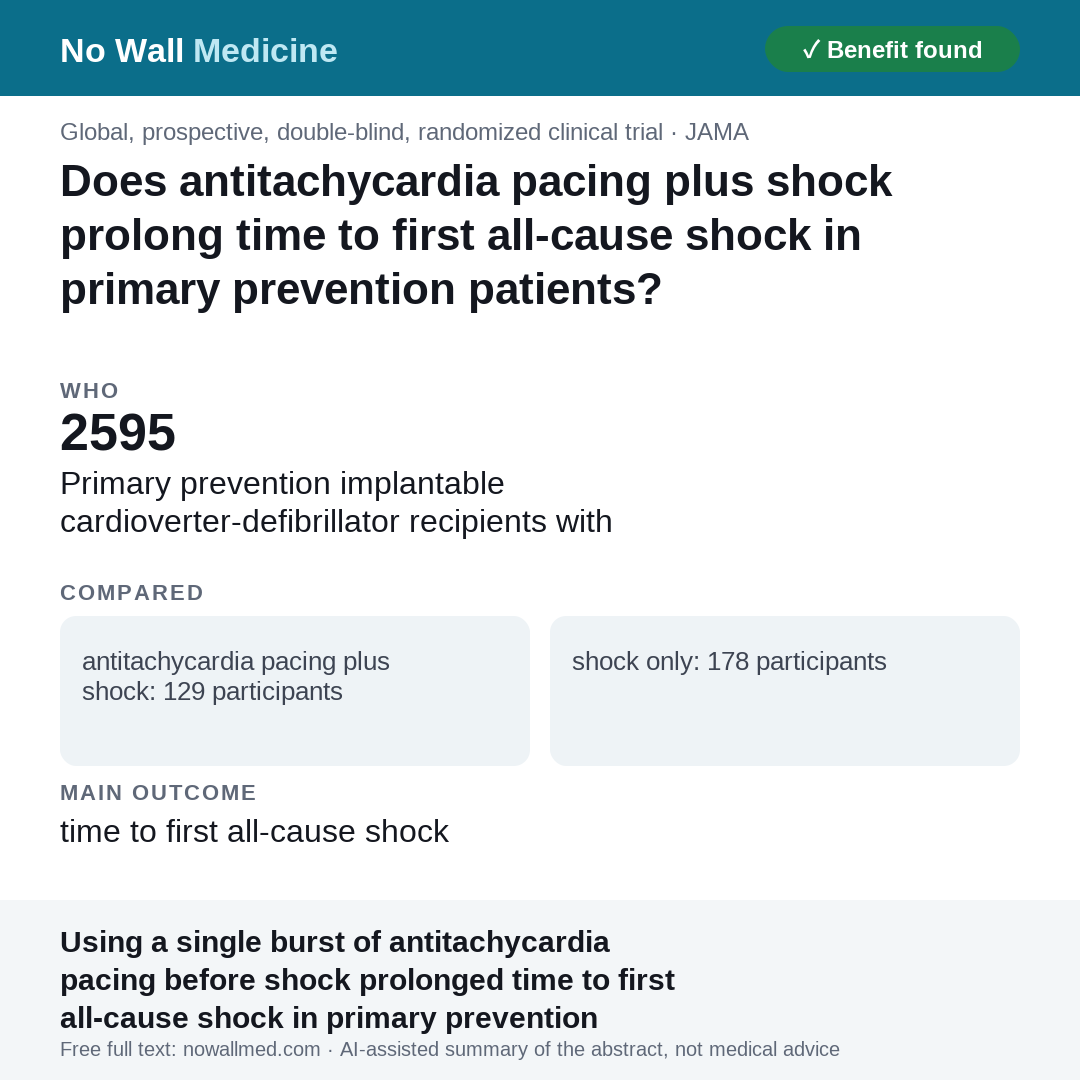
Assessment of Antitachycardia Pacing in Primary Prevention Patients: The APPRAISE ATP Randomized Clinical Trial
Global, prospective, double-blind, randomized clinical trialBenefit found
Does antitachycardia pacing plus shock prolong time to first all-cause shock in primary prevention patients?
Who
2595
Primary prevention implantable cardioverter-defibrillator recipients with left ventricular ejection fraction ≤35% · 134 sites in 8 countries
Compared
antitachycardia pacing plus shock: 129 participants
shock only: 178 participants
Main outcome
time to first all-cause shock
Result: hazard ratio 0.72 (95.9% CI, 0.57-0.92)
Bottom line: Using a single burst of antitachycardia pacing before shock prolonged time to first all-cause shock in primary prevention patients.
JAMA · 2024-10-03Download image
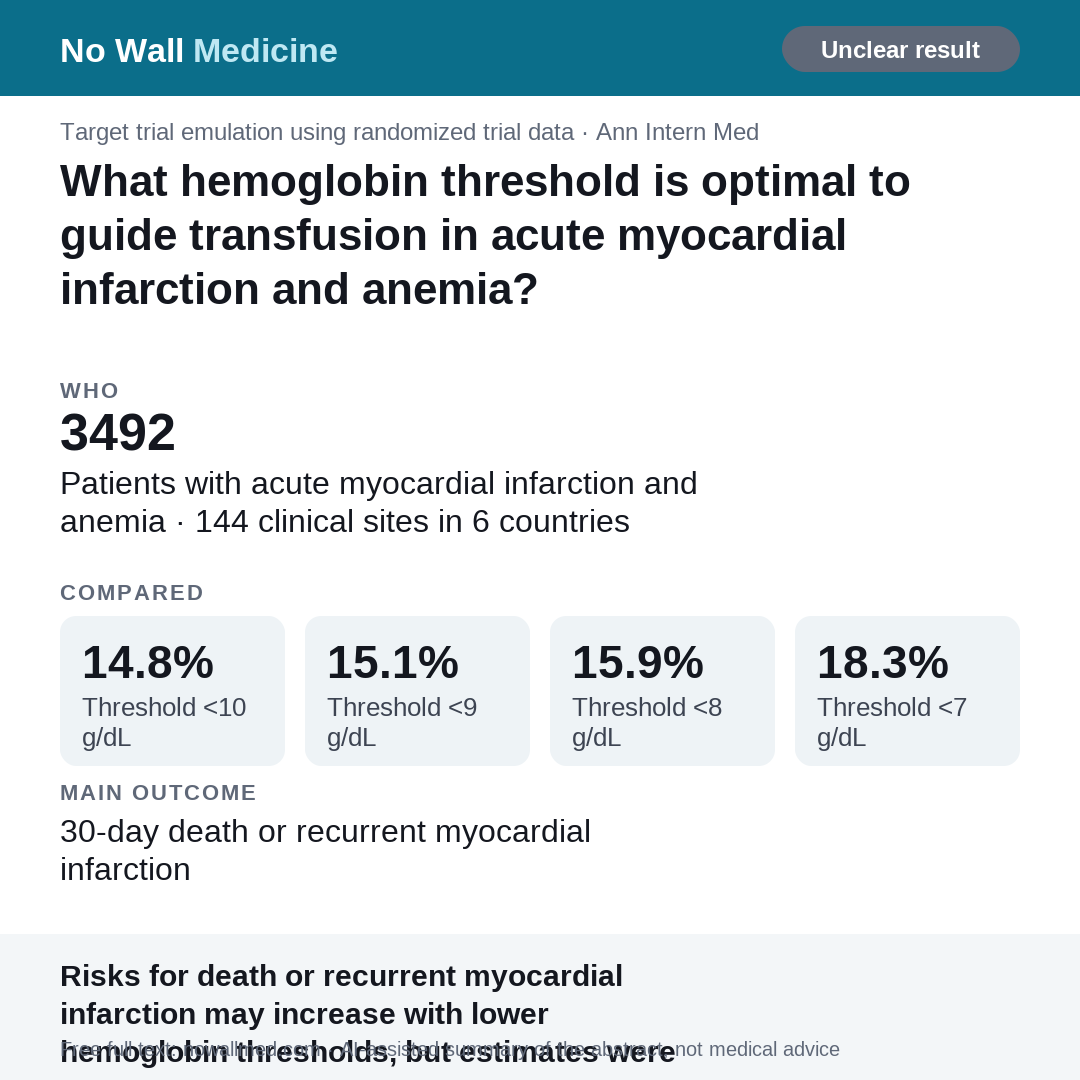
Effect of Four Hemoglobin Transfusion Threshold Strategies in Patients With Acute Myocardial Infarction and Anemia : A Target Trial Emulation Using MINT Trial Data
Target trial emulation using randomized trial dataUnclear result
What hemoglobin threshold is optimal to guide transfusion in acute myocardial infarction and anemia?
Who
3492
Patients with acute myocardial infarction and anemia · 144 clinical sites in 6 countries
Compared
14.8%Threshold <10 g/dL (95% CI, 11.8% to 18.4%)
15.1%Threshold <9 g/dL (CI, 11.7% to 18.2%)
15.9%Threshold <8 g/dL (CI, 12.4% to 19.0%)
18.3%Threshold <7 g/dL (CI, 14.6% to 22.0%)
Main outcome
30-day death or recurrent myocardial infarction
Bottom line: Risks for death or recurrent myocardial infarction may increase with lower hemoglobin thresholds, but estimates were imprecise.
Limitation: Unmeasured confounding may have persisted despite adjustment.
Funded by: National Heart, Lung, and Blood Institute
Ann Intern Med · 2024-10-01Download image
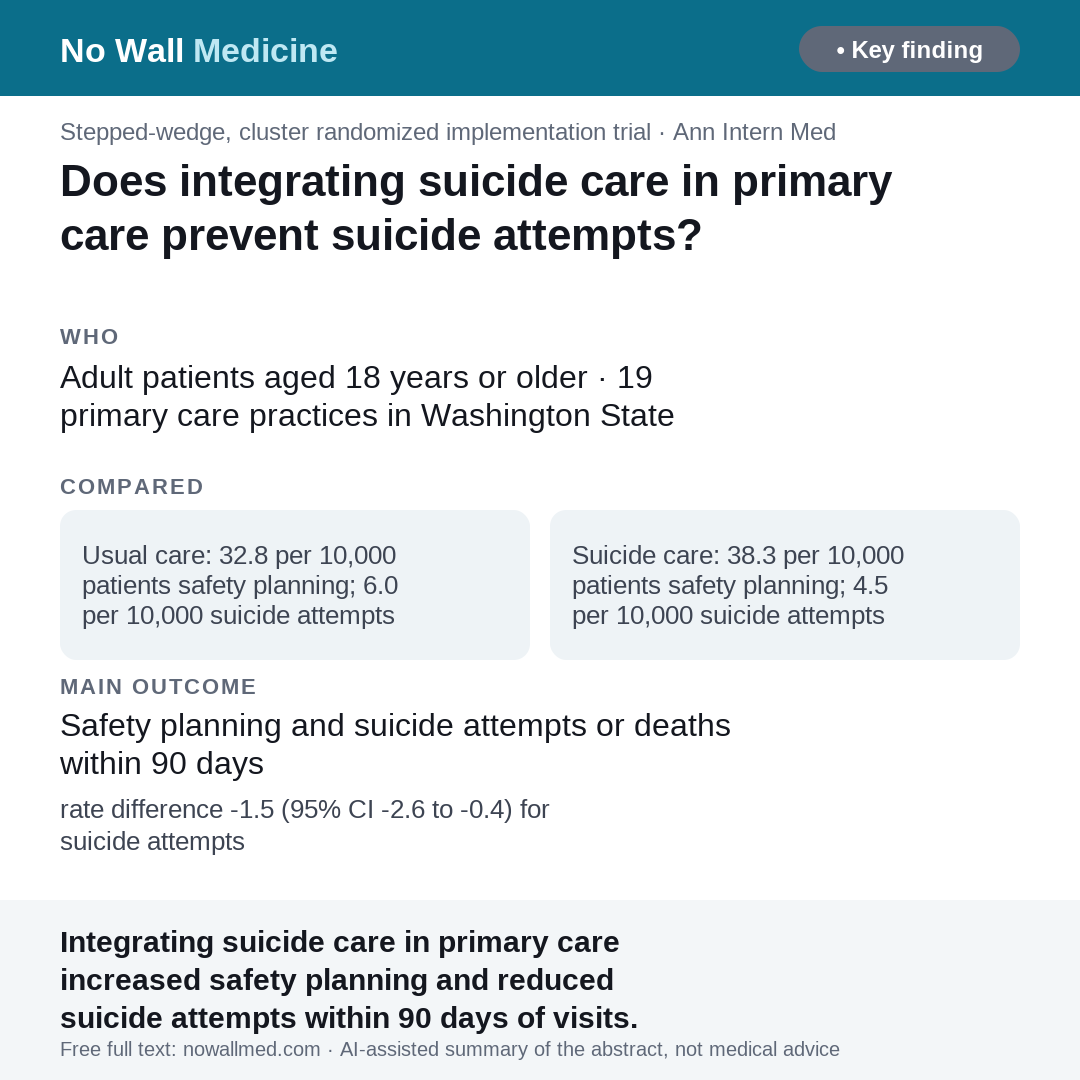
Effectiveness of Integrating Suicide Care in Primary Care : Secondary Analysis of a Stepped-Wedge, Cluster Randomized Implementation Trial
Stepped-wedge, cluster randomized implementation trialBenefit found
Does integrating suicide care in primary care prevent suicide attempts?
Who
Adult patients aged 18 years or older · 19 primary care practices in Washington State
Compared
Usual care: 32.8 per 10,000 patients safety planning; 6.0 per 10,000 suicide attempts
Suicide care: 38.3 per 10,000 patients safety planning; 4.5 per 10,000 suicide attempts
Main outcome
Safety planning and suicide attempts or deaths within 90 days
Result: rate difference -1.5 (95% CI -2.6 to -0.4) for suicide attempts
Bottom line: Integrating suicide care in primary care increased safety planning and reduced suicide attempts within 90 days of visits.
Limitation: Suicide care was implemented in combination with care for depression and substance use.
Funded by: National Institute of Mental Health
Ann Intern Med · 2024-10-01Download image