Visual abstracts
New randomized trials and meta-analyses from leading journals at a glance: who was studied, what was compared, and what was found. Every paper is free to read in full.
All specialtiesCardiology 4877Oncology 4138Gastroenterology & Hepatology 1942Infectious Disease 3837Neurology 1905Psychiatry & Mental Health 2273Pulmonology 2143Critical Care 1365Endocrinology & Diabetes 2580Pediatrics 2980Surgery 2559Orthopedics & Sports Medicine 931Neurosurgery 537Cardiothoracic & Vascular Surgery 674Plastic & Reconstructive Surgery 591Nephrology 1133Rheumatology 823Hematology 1109Dermatology 621Ophthalmology 543Obstetrics & Gynecology 1686Public & Global Health 1058Radiology & Imaging 648Anesthesiology 986Urology 764ENT (Otolaryngology) 503Emergency Medicine 511Allergy & Immunology 313Geriatrics 981Family Medicine & Primary Care 562Medical Genetics & Genomics 676Pathology & Laboratory Medicine 159Physical Medicine & Rehabilitation 757Palliative Care 444Nutrition 1588Digital Health & AI 2201General Medicine 321
Child Obesity Prevention From Pregnancy: Long-Term Follow-Up of the Starting Early Program Trial
Randomized controlled trialNo clear difference
Does a child obesity prevention program from pregnancy to age 3 affect weight outcomes?
Who
Low-income Hispanic families
Compared
Starting Early Program intervention: 0.59 [1.08] mean weight-for-age z score at age 4
Standard care control: 0.52 [1.16] mean weight-for-age z score at age 4
Main outcome
Weight-for-age z scores and obesity status
Bottom line: The obesity prevention program was not associated with postintervention differences in child weight at ages 4 and 5.
Pediatrics · 2025-04-01Download image

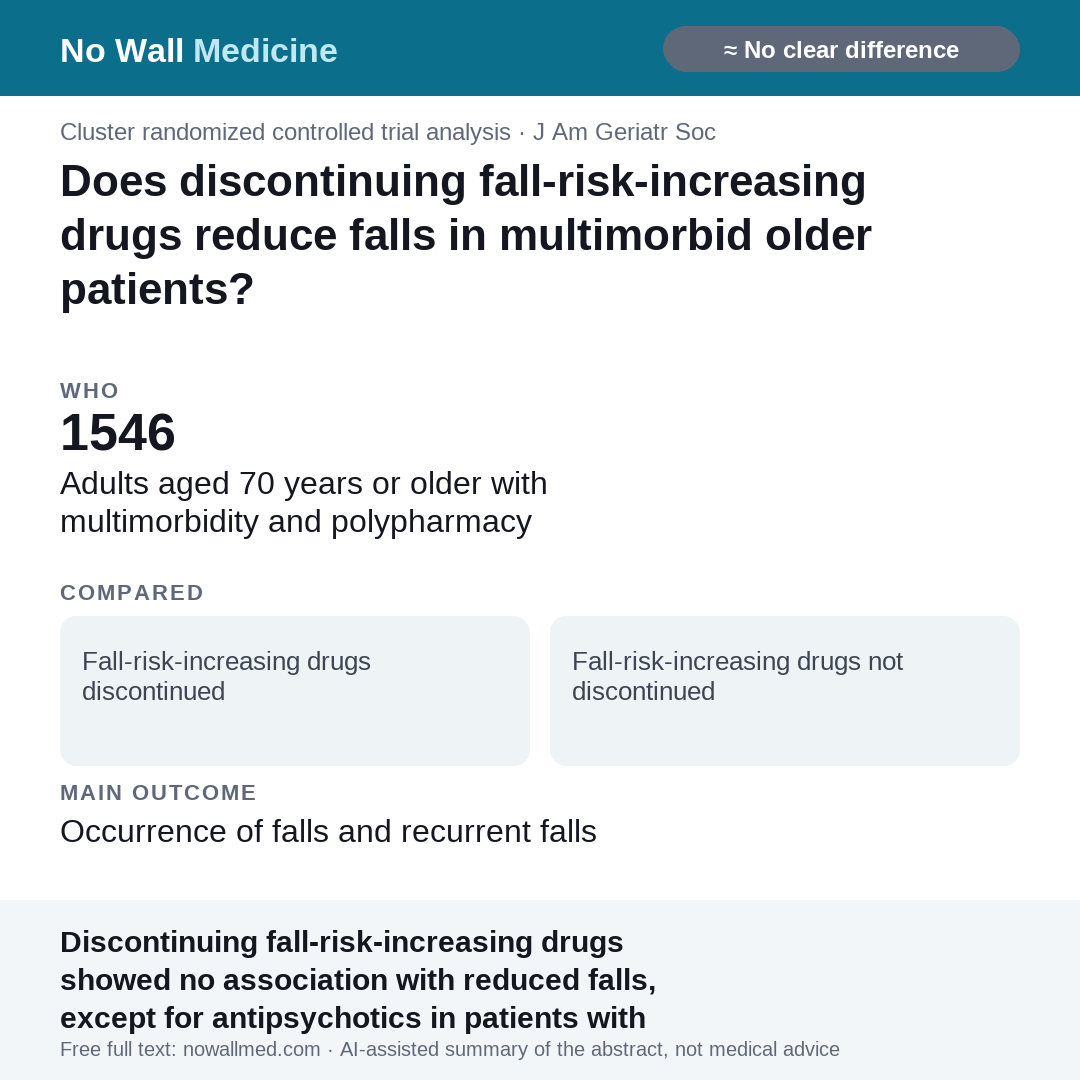
Impact of Discontinuation of Fall-Risk-Increasing Drugs on Falls in Multimorbid Older Patients With Polypharmacy
Cluster randomized controlled trial analysisNo clear difference
Does discontinuing fall-risk-increasing drugs reduce falls in multimorbid older patients?
Who
1546
Adults aged 70 years or older with multimorbidity and polypharmacy
Compared
Fall-risk-increasing drugs discontinued
Fall-risk-increasing drugs not discontinued
Main outcome
Occurrence of falls and recurrent falls
Bottom line: Discontinuing fall-risk-increasing drugs showed no association with reduced falls, except for antipsychotics in patients with previous falls.
J Am Geriatr Soc · 2025-04-01Download image
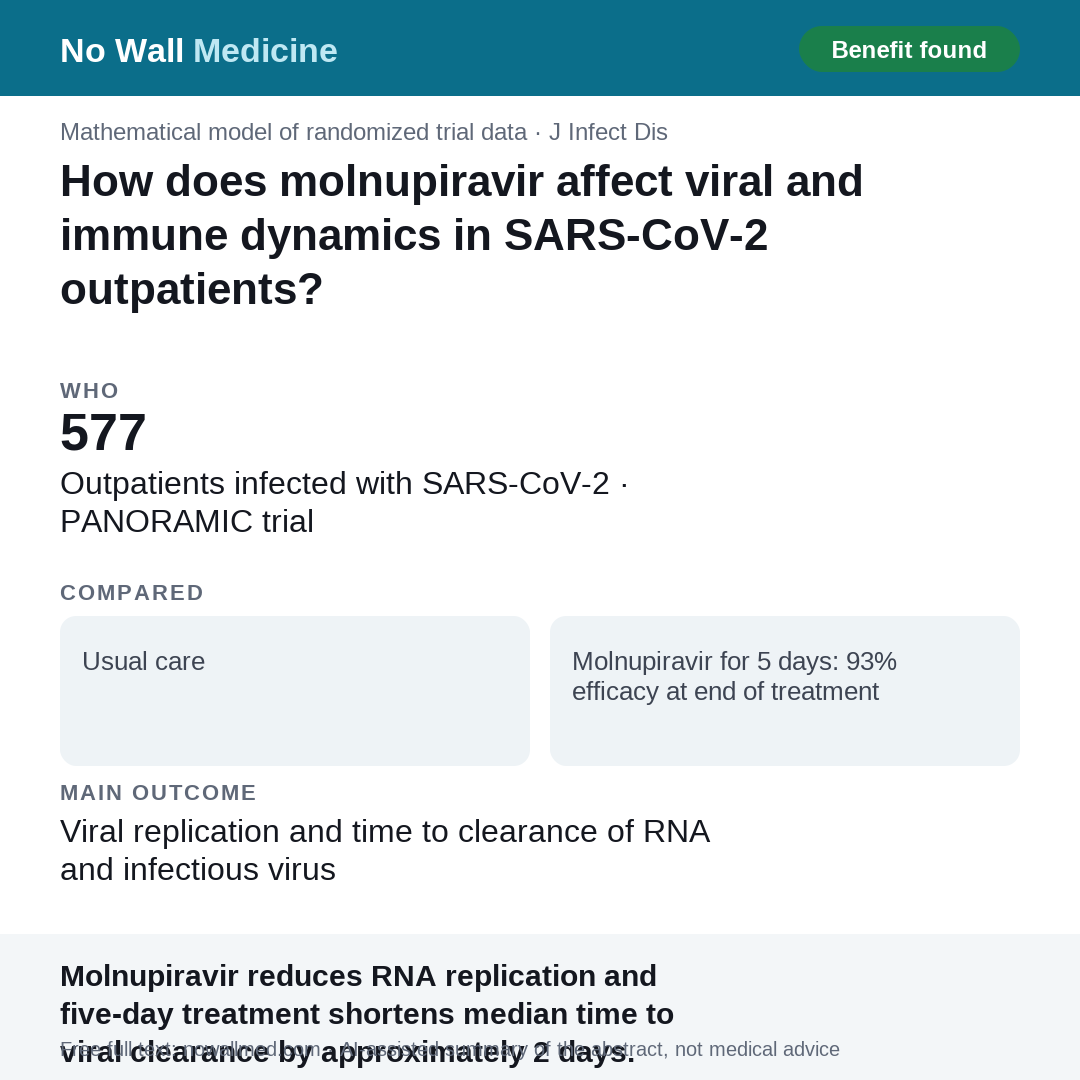
A Viroimmunologic Model to Characterize the Antiviral Effect of Molnupiravir in Outpatients Infected With SARS-CoV-2: Implication for Treatment Duration
Mathematical model of randomized trial dataBenefit found
How does molnupiravir affect viral and immune dynamics in SARS-CoV-2 outpatients?
Who
577
Outpatients infected with SARS-CoV-2 · PANORAMIC trial
Compared
Usual care
Molnupiravir for 5 days: 93% efficacy at end of treatment
Main outcome
Viral replication and time to clearance of RNA and infectious virus
Bottom line: Molnupiravir reduces RNA replication and five-day treatment shortens median time to viral clearance by approximately 2 days.
J Infect Dis · 2025-04-01Download image
Systematic review of the efficacy of pharmacological and non-pharmacological interventions for improving quality of life of people with dementia
Systematic review and meta-analysisBenefit found
Do pharmacological or non-pharmacological interventions improve quality of life for people with dementia?
Who
People with dementia
Compared
Group cognitive stimulation therapy: standardised mean difference 0.25
Other non-pharmacological interventions
Pharmacological interventions: limited
Main outcome
Quality of life
Result: standardised mean difference 0.25; P = 0.003
Bottom line: Non-pharmacological interventions, especially group cognitive stimulation therapy, improve quality of life for people with dementia.
Limitation: Current evidence supporting the use of any pharmacological intervention is limited.
Br J Psychiatry · 2025-04-01Download image

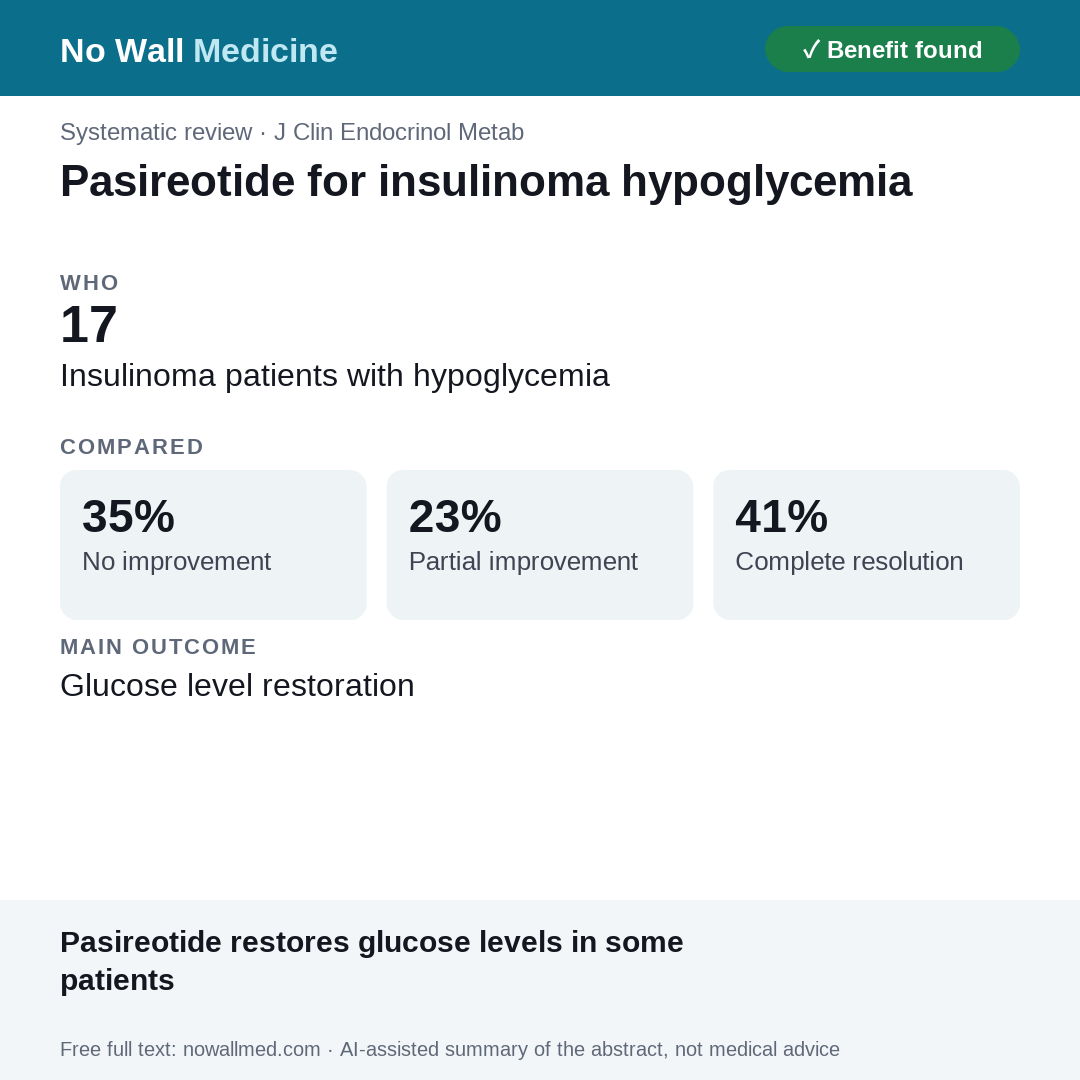
Efficacy and Safety of Pasireotide in Insulinoma-Associated Hypoglycemia
Systematic reviewBenefit found
Pasireotide for insulinoma hypoglycemia
Who
17
Insulinoma patients with hypoglycemia
Compared
35%No improvement
23%Partial improvement
41%Complete resolution
Main outcome
Glucose level restoration
Bottom line: Pasireotide restores glucose levels in some patients
Limitation: Small number of cases
J Clin Endocrinol Metab · 2025-04-01Download image
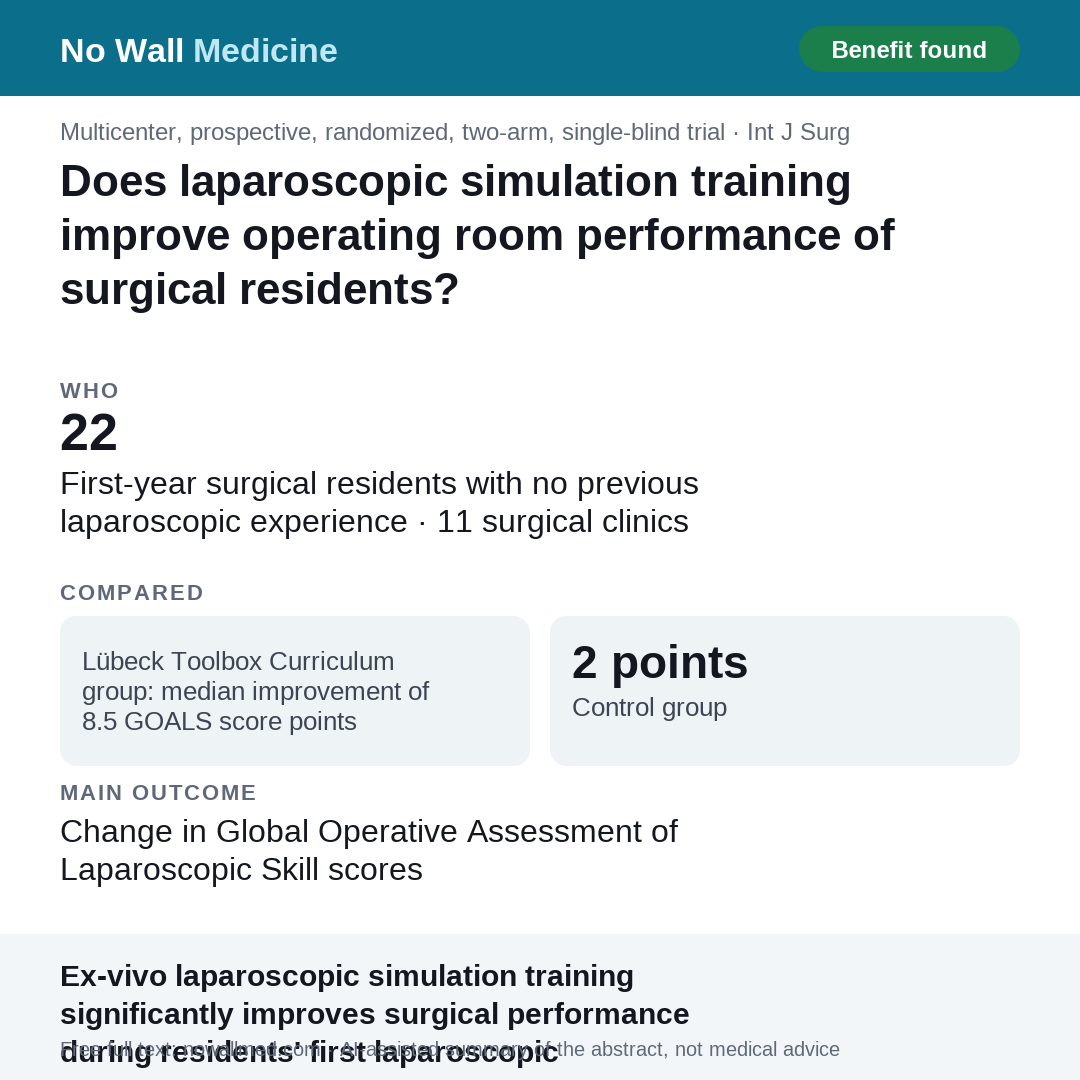
Laparoscopic simulation training improves operating room performance of surgical residents: a multicenter randomized trial (NOVICE)
Multicenter, prospective, randomized, two-arm, single-blind trialBenefit found
Does laparoscopic simulation training improve operating room performance of surgical residents?
Who
22
First-year surgical residents with no previous laparoscopic experience · 11 surgical clinics in Germany
Compared
Lübeck Toolbox Curriculum group: median improvement of 8.5 GOALS score points
2 pointsControl group
Main outcome
Change in Global Operative Assessment of Laparoscopic Skill scores
Result: 95%CI: 1-15 points, P = 0.013
Bottom line: Ex-vivo laparoscopic simulation training significantly improves surgical performance during residents' first laparoscopic cholecystectomies.
Limitation: 4 residents dropped out
Int J Surg · 2025-04-01Download image
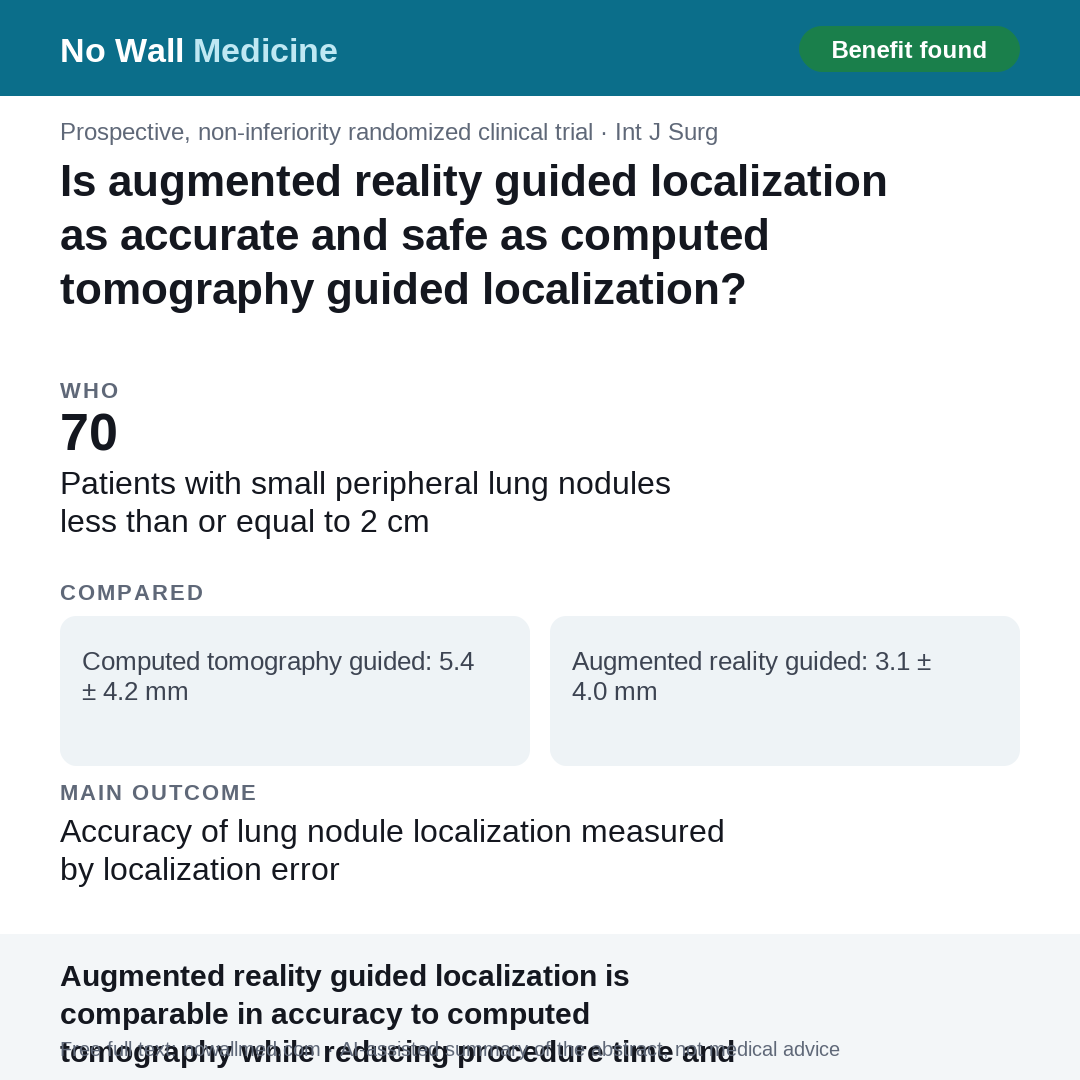
Augmented reality guided versus computed tomography guided percutaneous lung nodule localization: a noninferiority randomized clinical trial
Prospective, non-inferiority randomized clinical trialBenefit found
Is augmented reality guided localization as accurate and safe as computed tomography guided localization?
Who
70
Patients with small peripheral lung nodules less than or equal to 2 cm
Compared
Computed tomography guided: 5.4 ± 4.2 mm
Augmented reality guided: 3.1 ± 4.0 mm
Main outcome
Accuracy of lung nodule localization measured by localization error
Result: mean difference -2.3 mm (95% CI: -4.2 to -0.3 mm)
Bottom line: Augmented reality guided localization is comparable in accuracy to computed tomography while reducing procedure time and radiation exposure.
Int J Surg · 2025-04-01Download image
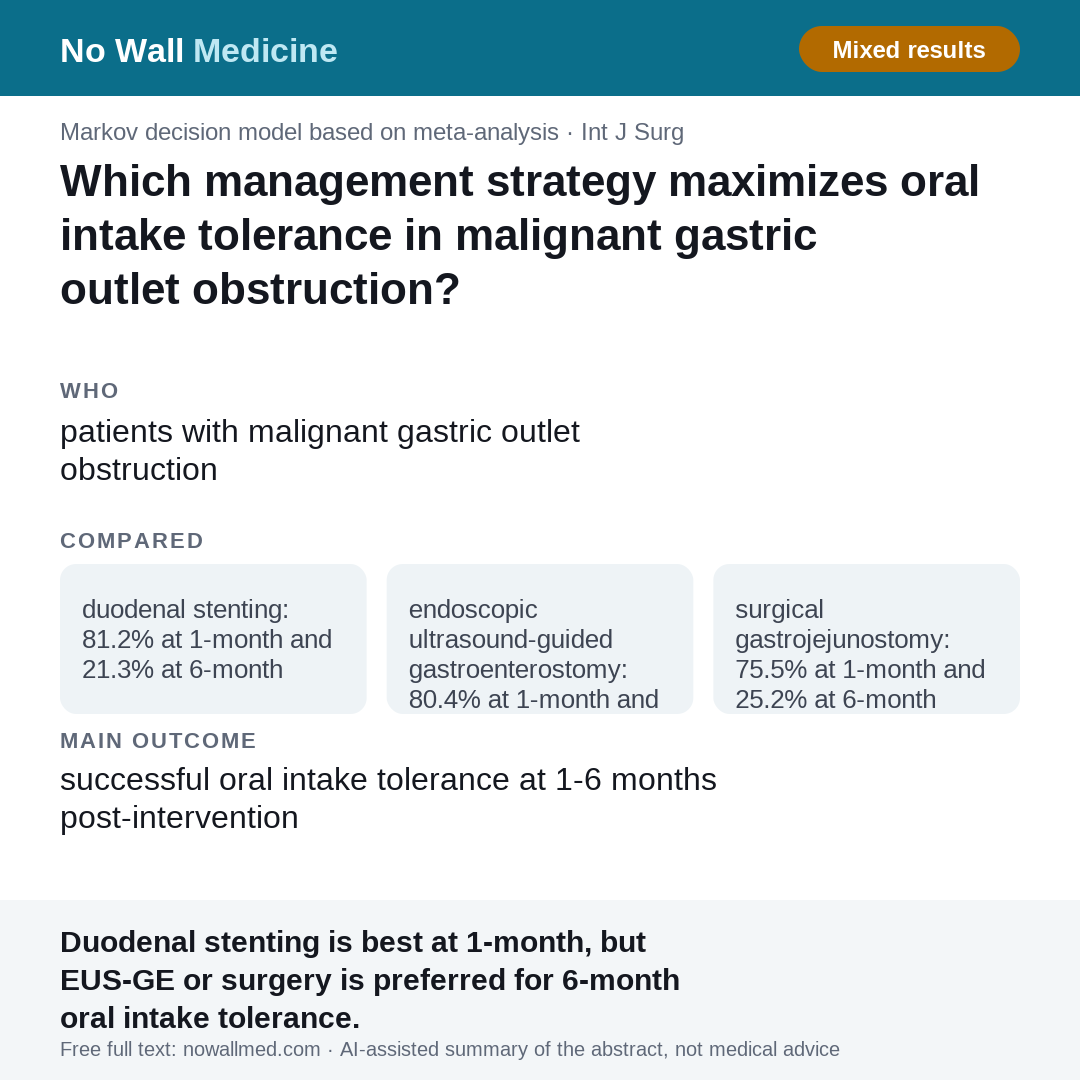
Maximizing oral intake tolerance in malignant gastric outlet obstruction - a Markov decision tree analysis comparing duodenal stenting, endoscopic ultrasound-guided gastroenterostomy and surgical gastrojejunostomy based on a meta-analysis of randomized controlled trials
Markov decision model based on meta-analysisMixed results
Which management strategy maximizes oral intake tolerance in malignant gastric outlet obstruction?
Who
patients with malignant gastric outlet obstruction
Compared
duodenal stenting: 81.2% at 1-month and 21.3% at 6-month
endoscopic ultrasound-guided gastroenterostomy: 80.4% at 1-month and 23.8% at 6-month
surgical gastrojejunostomy: 75.5% at 1-month and 25.2% at 6-month
Main outcome
successful oral intake tolerance at 1-6 months post-intervention
Bottom line: Duodenal stenting is best at 1-month, but EUS-GE or surgery is preferred for 6-month oral intake tolerance.
Limitation: scarcity of randomized controlled trials for endoscopic ultrasound-guided gastroenterostomy
Int J Surg · 2025-04-01Download image
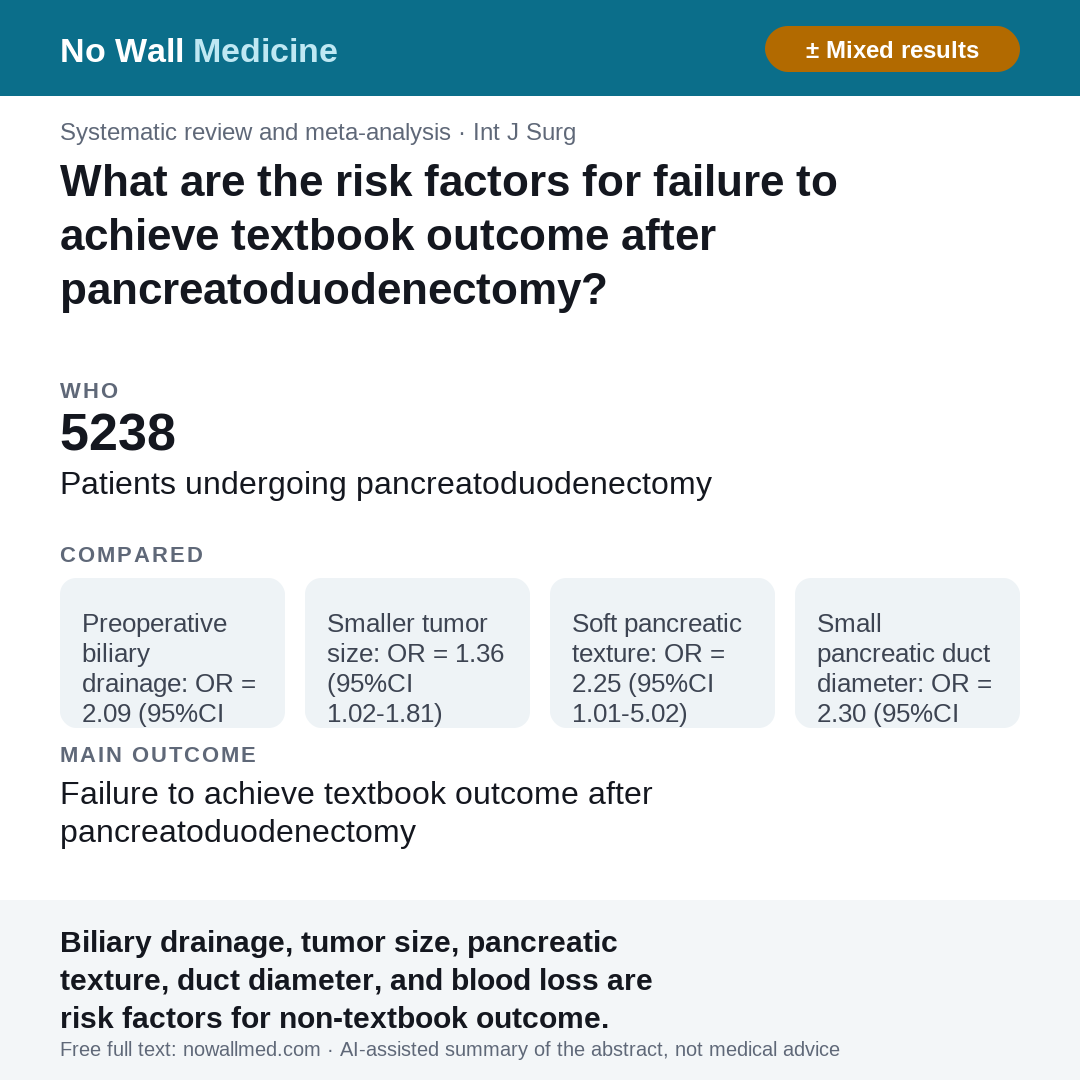
Risk factors of failure to achieve textbook outcome in patients after pancreatoduodenectomy: a systematic review and meta-analysis
Systematic review and meta-analysisMixed results
What are the risk factors for failure to achieve textbook outcome after pancreatoduodenectomy?
Who
5238
Patients undergoing pancreatoduodenectomy
Compared
Preoperative biliary drainage: OR = 2.09 (95%CI 1.30-3.36)
Smaller tumor size: OR = 1.36 (95%CI 1.02-1.81)
Soft pancreatic texture: OR = 2.25 (95%CI 1.01-5.02)
Small pancreatic duct diameter: OR = 2.30 (95%CI 1.62-3.28)
Main outcome
Failure to achieve textbook outcome after pancreatoduodenectomy
Bottom line: Biliary drainage, tumor size, pancreatic texture, duct diameter, and blood loss are risk factors for non-textbook outcome.
Int J Surg · 2025-04-01Download image
Rectal cancer approach strategies after neoadjuvant treatment - a systematic review and network meta-analysis
Systematic review and network meta-analysisMixed results
What are the long-term outcomes of different rectal cancer approach strategies after neoadjuvant treatment?
Who
2778
Patients with rectal cancer after neoadjuvant chemoradiotherapy
Compared
Total mesorectal excision surgery
Watch-and-wait: OR, 0.20; 95% CI, 0.12-0.35
Local excision: 3.00; 1.60-5.80
Main outcome
2-year local regrowth rate and overall survival
Result: OR, 0.37; 95% CI, 0.09-0.95
Bottom line: Total mesorectal excision reduces 2-year local regrowth, but watch-and-wait and local excision show noninferiority in long-term survival.
Limitation: Low-certainty evidence for 2-year local regrowth rate
Int J Surg · 2025-04-01Download image
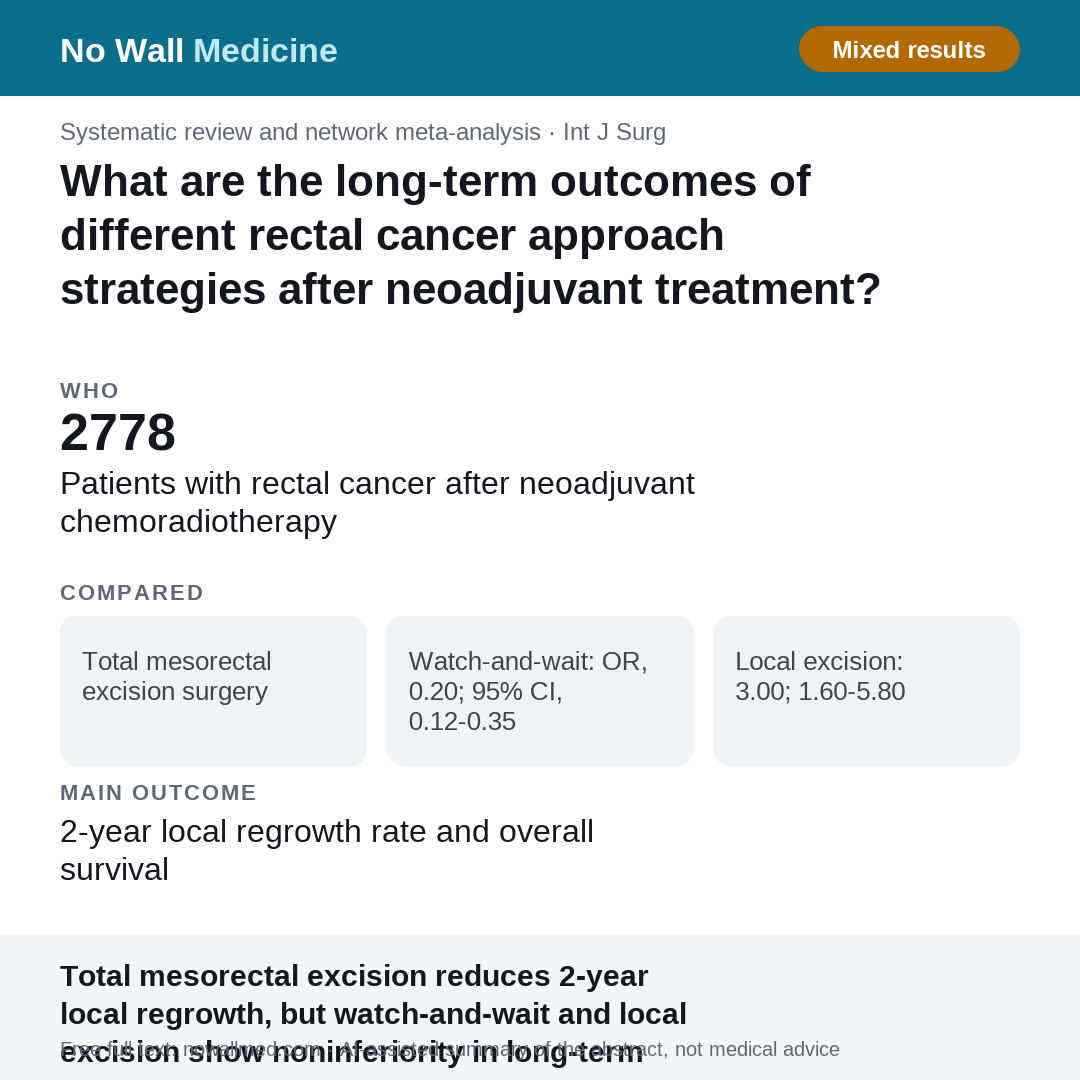
An updated systematic review, meta-analysis, and trial sequential analysis of the efficacy and safety of en bloc transurethral resection vs. conventional transurethral resection for nonmuscle-invasive bladder tumor
Meta-analysis of 12 randomized controlled trialsBenefit found
Is en bloc transurethral resection better than conventional transurethral resection for nonmuscle-invasive bladder tumor?
Who
2097
Patients with nonmuscle-invasive bladder tumor
Compared
En bloc transurethral resection
Conventional transurethral resection
Main outcome
Efficacy and safety of resection methods
Bottom line: En bloc resection improves muscle identification and reduces tumor recurrence and complications compared to conventional resection.
Int J Surg · 2025-04-01Download image
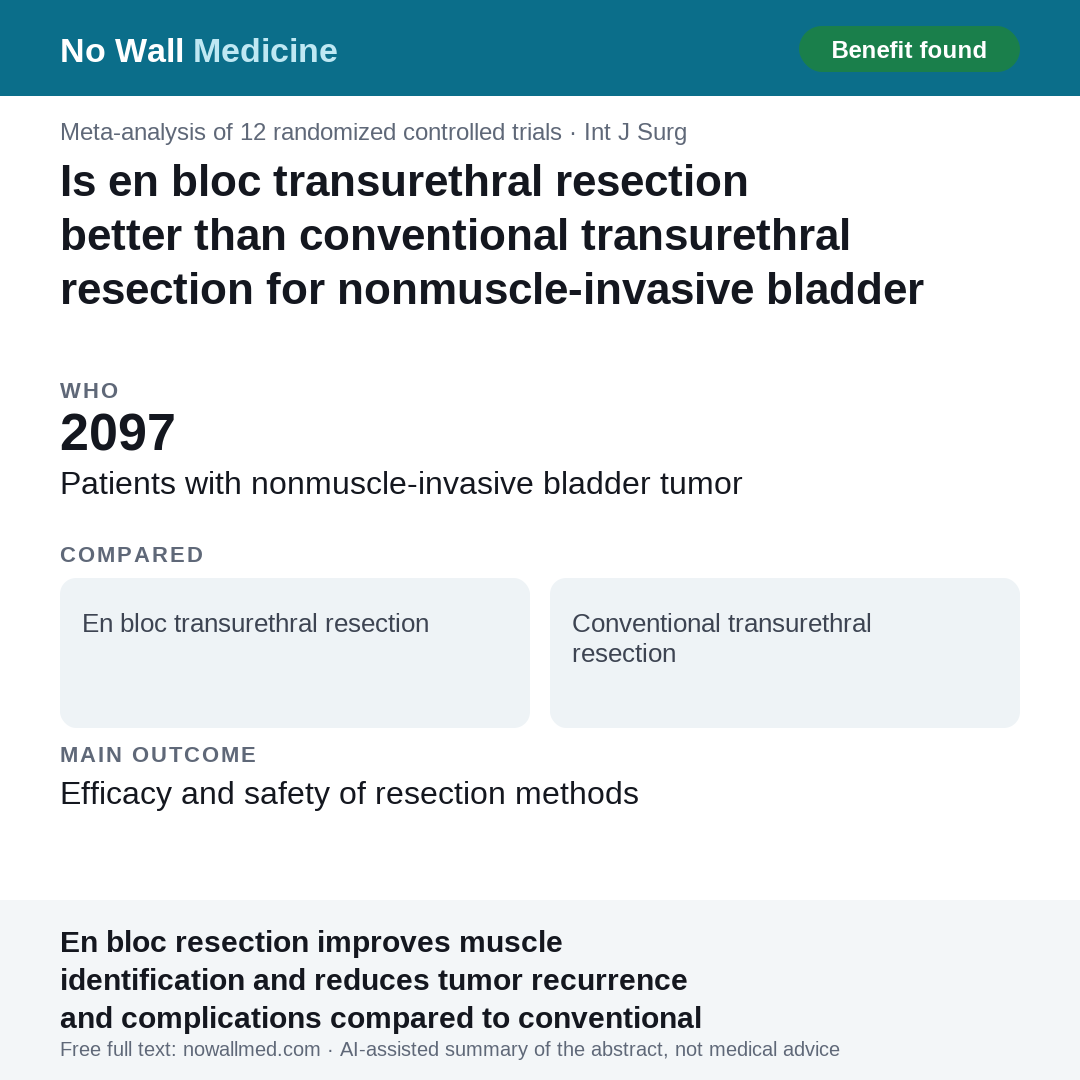
Essential components and validation of multi-specialty robotic surgical training curricula: a systematic review
Systematic reviewMixed results
What are the essential components and validity of multi-specialty robotic surgical training curricula?
Who
66
Studies reporting on robotic surgical training curricula · MEDLINE, EMBASE, Emcare, and CINAHL databases
Compared
Common curriculum components: didactic teaching (n = 48, 72.7%)
Common curriculum components: dry laboratory skills (n = 46, 69.7%)
Common curriculum components: virtual reality simulation (n = 44, 66.7%)
Main outcome
Essential components and validity of robotic training curricula
Bottom line: Robotic training includes didactic teaching, dry lab, and simulation, but assessment methods vary and validation gaps remain.
Limitation: Majority of studies were single-center and observational with moderate methodological quality.
Int J Surg · 2025-04-01Download image

Individualized blood pressure regulation and acute kidney injury in older patients having major abdominal surgery: a pilot randomized trial
Pilot randomized trialNo clear difference
Does individualized intraoperative blood pressure regulation reduce postoperative acute kidney injury in older surgical patients?
Who
179
Patients 60 years or older undergoing elective major abdominal surgery
Compared
11%Individualized blood pressure management
16%Routine pressure management
Main outcome
Incidence of acute kidney injury
Result: relative risk 0.72 (95% confidence interval, 0.34-1.54)
Bottom line: Individualized blood pressure management reduced hypotension but did not significantly reduce acute kidney injury incidence in this pilot trial.
Limitation: As expected in a pilot trial, the reduction in acute kidney injury was not statistically significant.
Int J Surg · 2025-04-01Download image
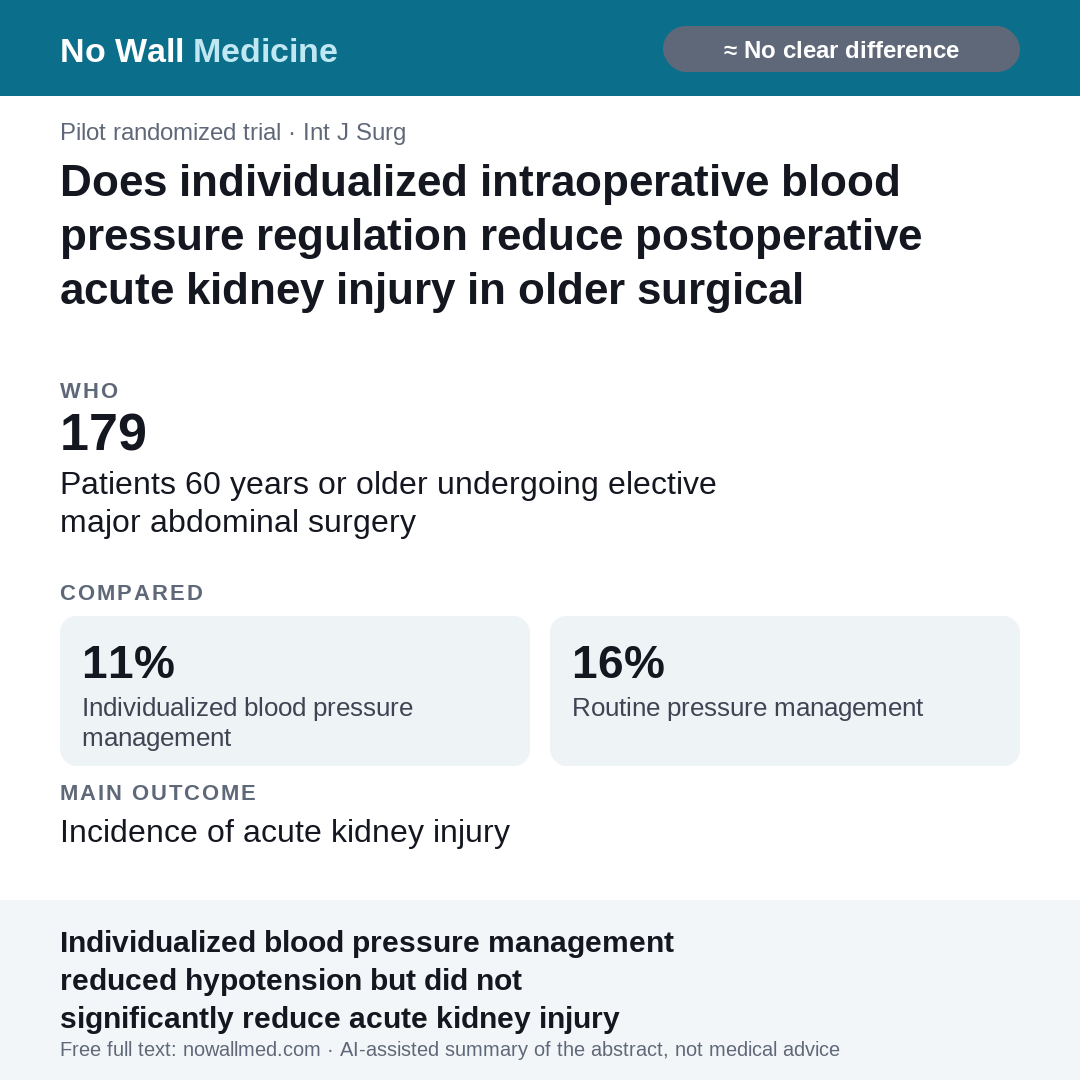
Performance of sentinel lymph node biopsy after neoadjuvant chemotherapy in clinically node-positive breast cancer patients: systematic review and meta-analysis
Systematic review and meta-analysisBenefit found
Is sentinel lymph node biopsy accurate after neoadjuvant chemotherapy in node-positive breast cancer?
Who
4624
Breast cancer patients with positive lymph nodes at diagnosis
Compared
88%Sentinel lymph node biopsy (95% confidence interval 86-90)
13%False negative rate (95% confidence interval 11-15)
Main outcome
Identification rate and false negative rate
Result: pooled identification rate 88% (95% CI 86-90) and pooled false negative rate 13% (95% CI 11-15)
Bottom line: Sentinel lymph node biopsy is a feasible and accurate less invasive approach for selected patients after neoadjuvant chemotherapy.
Int J Surg · 2025-04-01Download image
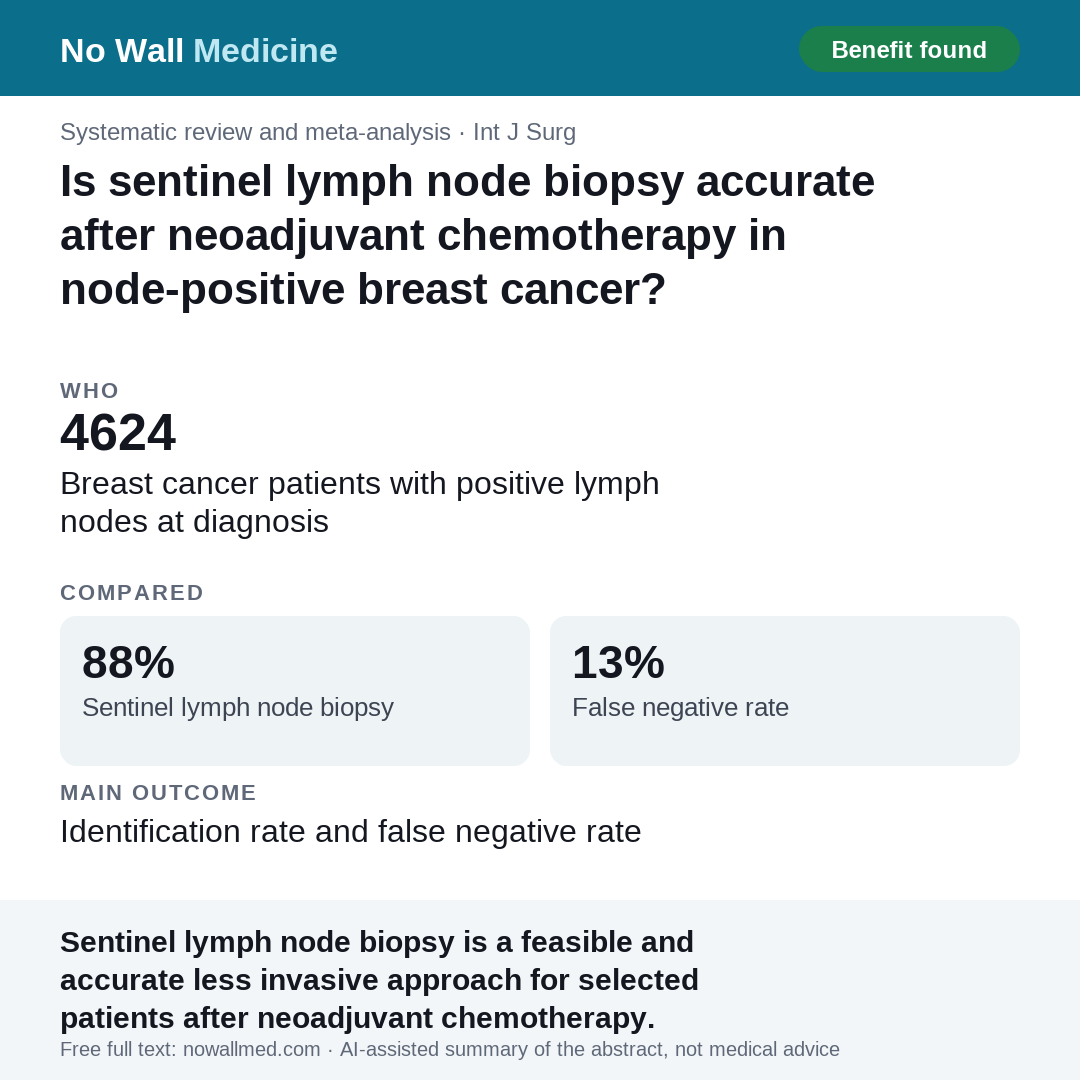
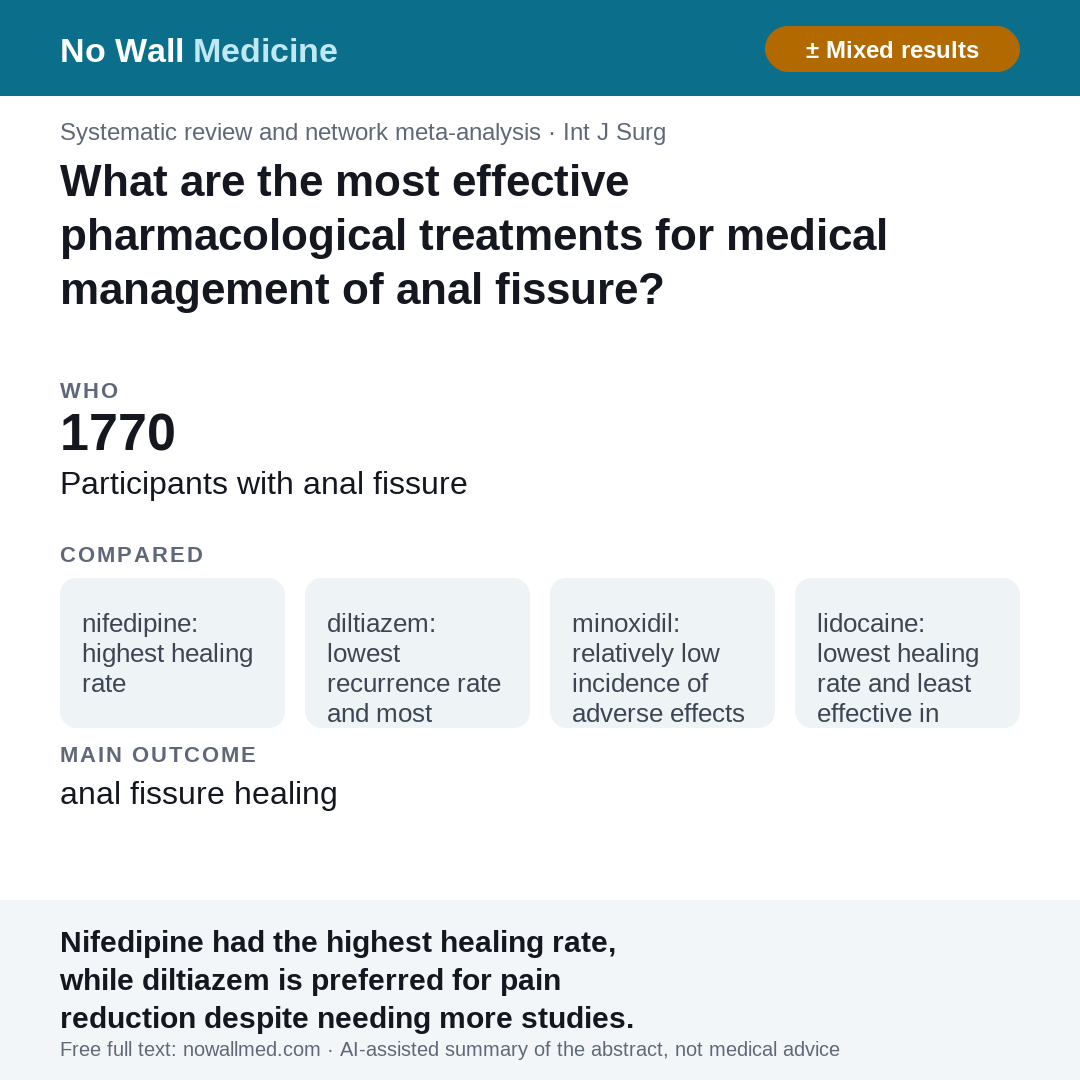
The efficacy of diltiazem, glyceryl trinitrate, nifedipine, minoxidil, and lidocaine for the medical management of anal fissure: a systematic review and network meta-analysis of randomized controlled trials
Systematic review and network meta-analysisMixed results
What are the most effective pharmacological treatments for medical management of anal fissure?
Who
1770
Participants with anal fissure
Compared
nifedipine: highest healing rate
diltiazem: lowest recurrence rate and most effective in pain reduction
minoxidil: relatively low incidence of adverse effects
lidocaine: lowest healing rate and least effective in alleviating pain
Main outcome
anal fissure healing
Bottom line: Nifedipine had the highest healing rate, while diltiazem is preferred for pain reduction despite needing more studies.
Int J Surg · 2025-04-01Download image
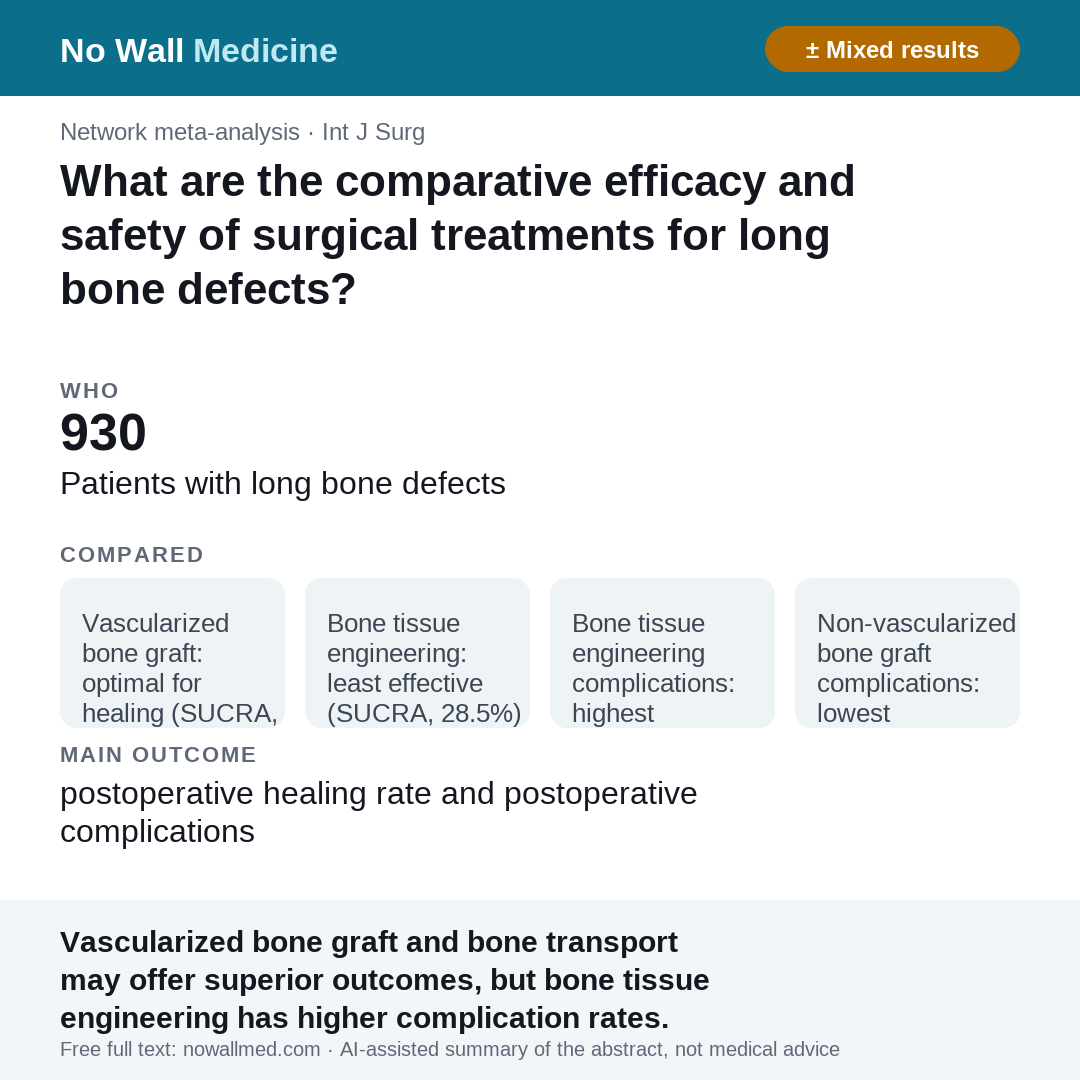
Evaluation of the comparative efficacy and safety of surgical strategies for long bone defects: a network meta-analysis
Network meta-analysisMixed results
What are the comparative efficacy and safety of surgical treatments for long bone defects?
Who
930
Patients with long bone defects
Compared
Vascularized bone graft: optimal for healing (SUCRA, 75.1%)
Bone tissue engineering: least effective (SUCRA, 28.5%)
Bone tissue engineering complications: highest complication rate (SUCRA, 90.9%)
Non-vascularized bone graft complications: lowest complication rate (SUCRA, 27.6%)
Main outcome
postoperative healing rate and postoperative complications
Bottom line: Vascularized bone graft and bone transport may offer superior outcomes, but bone tissue engineering has higher complication rates.
Limitation: Further high-quality, large-sample randomized controlled trials are required to confirm these findings.
Int J Surg · 2025-04-01Download image
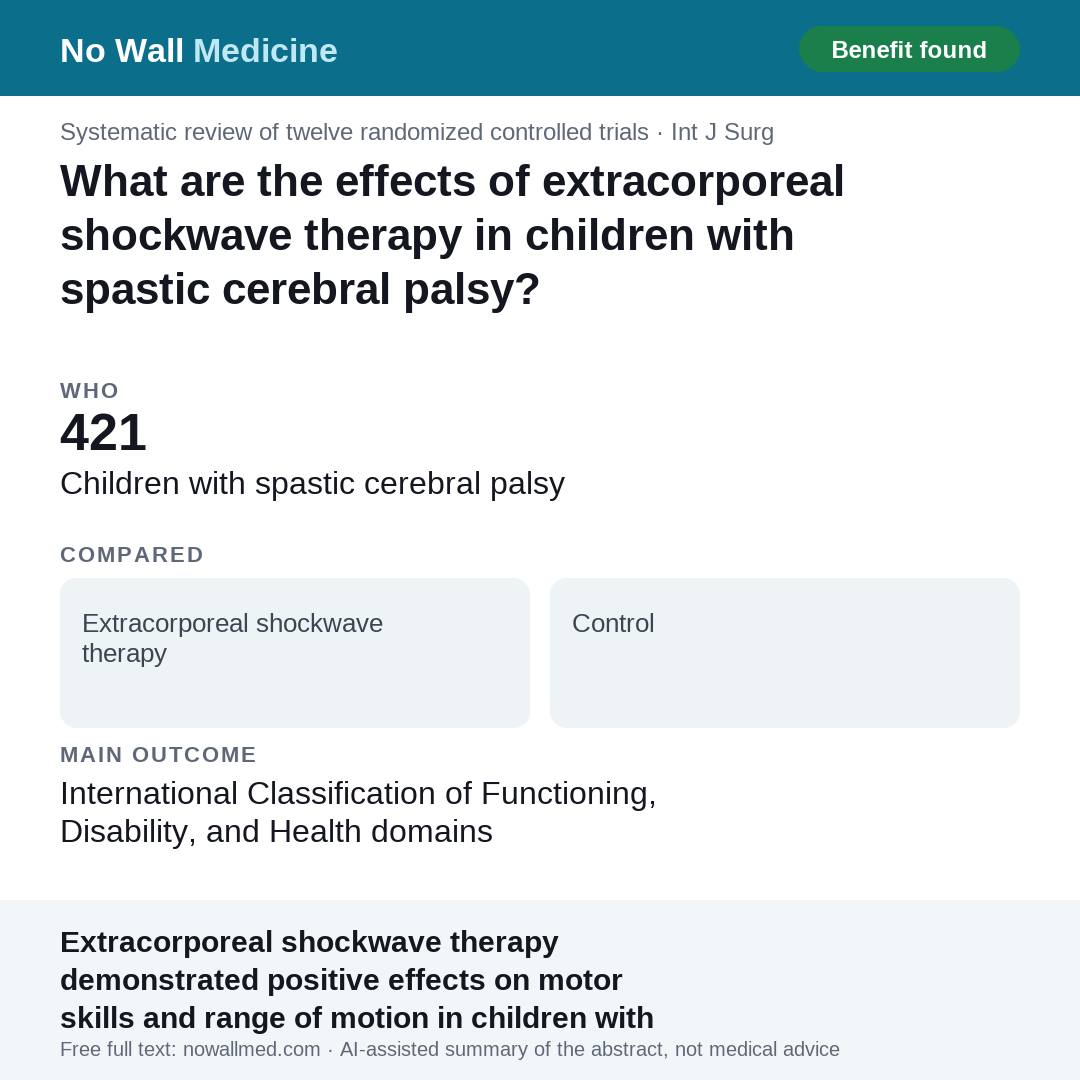
The effects of extracorporeal shock wave therapy in children with cerebral palsy: a systematic review
Systematic review of twelve randomized controlled trialsBenefit found
What are the effects of extracorporeal shockwave therapy in children with spastic cerebral palsy?
Who
421
Children with spastic cerebral palsy
Compared
Extracorporeal shockwave therapy
Control
Main outcome
International Classification of Functioning, Disability, and Health domains
Result: effect sizes ranging from moderate (0.65) to very large (14.62)
Bottom line: Extracorporeal shockwave therapy demonstrated positive effects on motor skills and range of motion in children with spastic cerebral palsy.
Limitation: PEDro scores ranged from three to eight
Int J Surg · 2025-04-01Download image
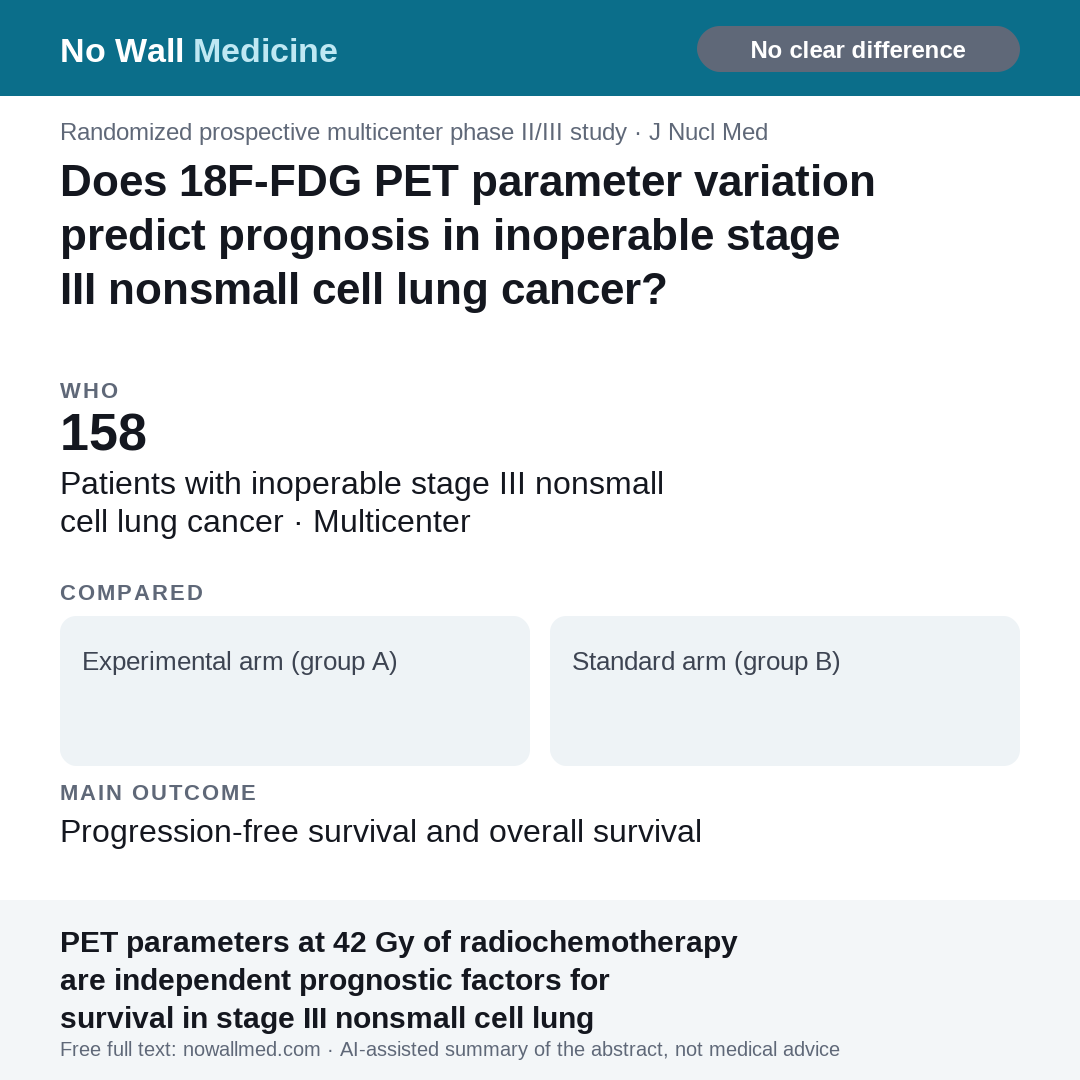
Prognostic Value of FDG PET Metabolic Parameters Before and After 42 Gy of Radiochemotherapy in Patients with Inoperable Stage III Nonsmall Cell Lung Cancer
Randomized prospective multicenter phase II/III studyNo clear difference
Does 18F-FDG PET parameter variation predict prognosis in inoperable stage III nonsmall cell lung cancer?
Who
158
Patients with inoperable stage III nonsmall cell lung cancer · Multicenter
Compared
Experimental arm (group A)
Standard arm (group B)
Main outcome
Progression-free survival and overall survival
Bottom line: PET parameters at 42 Gy of radiochemotherapy are independent prognostic factors for survival in stage III nonsmall cell lung cancer.
J Nucl Med · 2025-04-01Download image
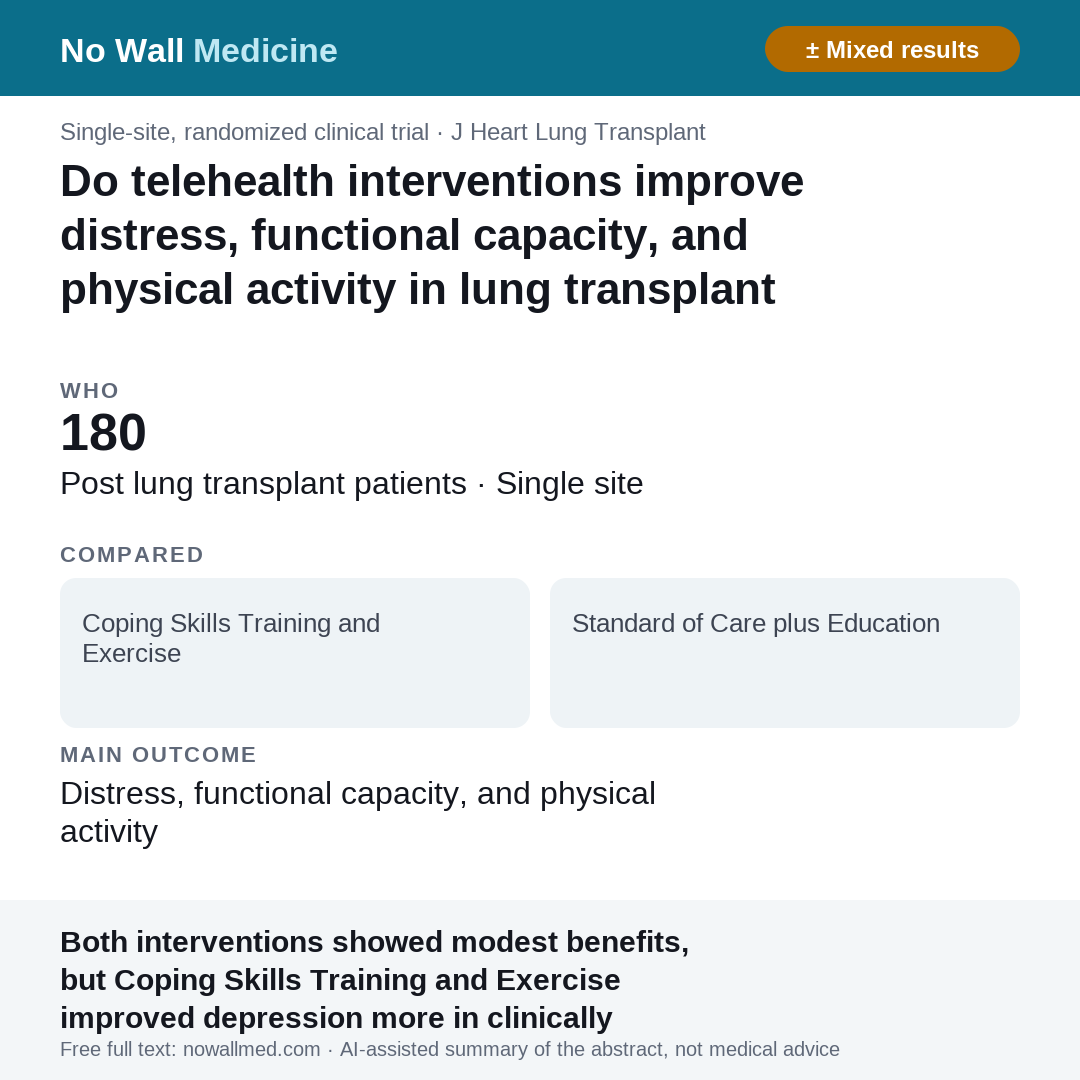
Telehealth interventions to improve outcomes in lung transplant recipients: Primary results of the INSPIRE-III randomized clinical trial
Single-site, randomized clinical trialMixed results
Do telehealth interventions improve distress, functional capacity, and physical activity in lung transplant recipients?
Who
180
Post lung transplant patients · Single site
Compared
Coping Skills Training and Exercise
Standard of Care plus Education
Main outcome
Distress, functional capacity, and physical activity
Bottom line: Both interventions showed modest benefits, but Coping Skills Training and Exercise improved depression more in clinically depressed patients.
J Heart Lung Transplant · 2025-04-01Download image
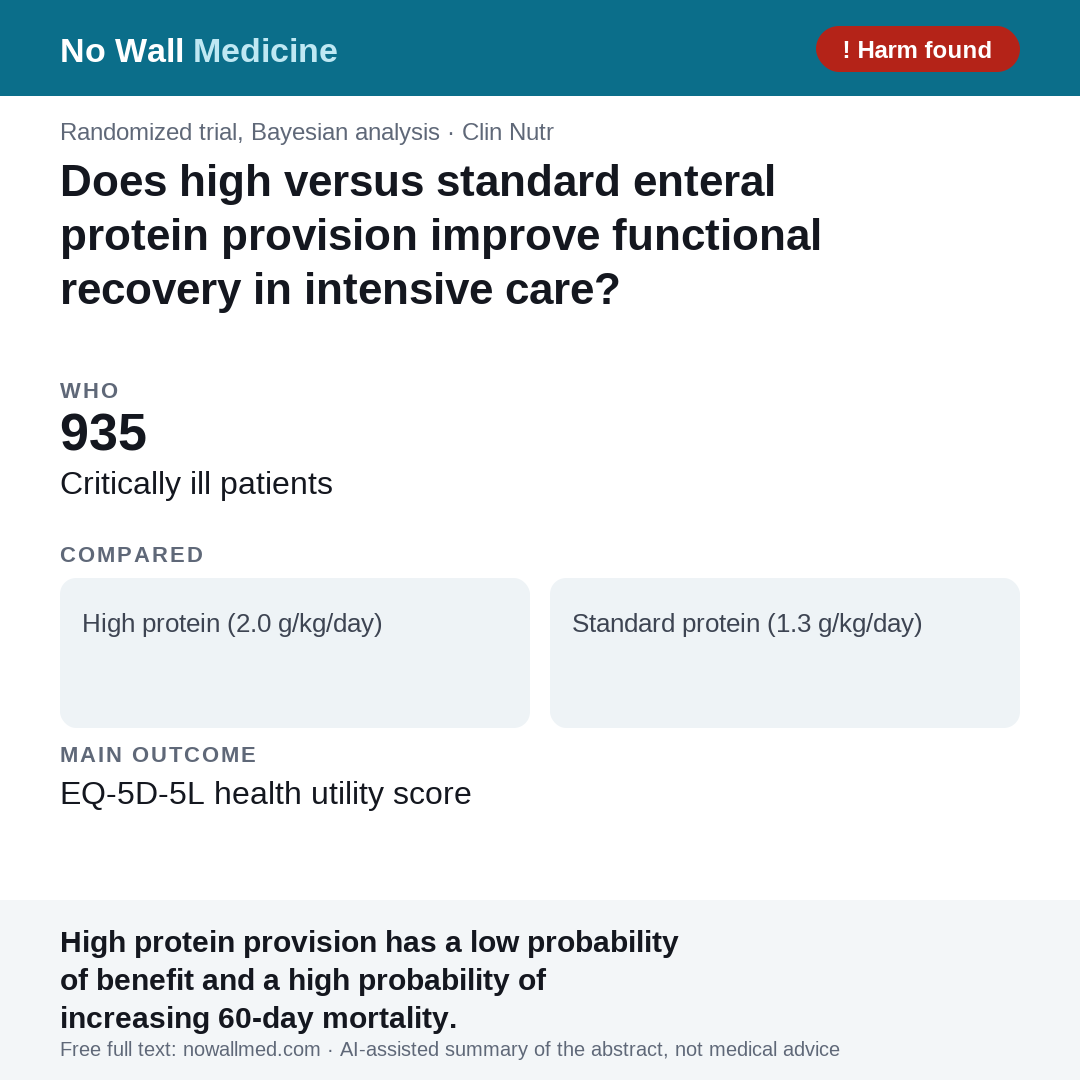
The impact of high versus standard enteral protein provision on functional recovery following intensive care admission: A pre-planned Bayesian analysis of the PRECISe trial
Randomized trial, Bayesian analysisHarm found
Does high versus standard enteral protein provision improve functional recovery in intensive care?
Who
935
Critically ill patients
Compared
High protein (2.0 g/kg/day)
Standard protein (1.3 g/kg/day)
Main outcome
EQ-5D-5L health utility score
Bottom line: High protein provision has a low probability of benefit and a high probability of increasing 60-day mortality.
Limitation: The study was not powered to draw definitive conclusions under a frequentist framework.
Clin Nutr · 2025-04-01Download image