Visual abstracts
New randomized trials and meta-analyses from leading journals at a glance: who was studied, what was compared, and what was found. Every paper is free to read in full.
All specialtiesCardiology 4763Oncology 4043Gastroenterology & Hepatology 1903Infectious Disease 3756Neurology 1872Psychiatry & Mental Health 2216Pulmonology 2044Critical Care 1319Endocrinology & Diabetes 2544Pediatrics 2889Surgery 2480Orthopedics & Sports Medicine 917Neurosurgery 525Cardiothoracic & Vascular Surgery 656Plastic & Reconstructive Surgery 574Nephrology 1107Rheumatology 810Hematology 1090Dermatology 611Ophthalmology 532Obstetrics & Gynecology 1645Public & Global Health 1037Radiology & Imaging 619Anesthesiology 958Urology 745ENT (Otolaryngology) 494Emergency Medicine 481Allergy & Immunology 309Geriatrics 972Family Medicine & Primary Care 534Medical Genetics & Genomics 659Pathology & Laboratory Medicine 156Physical Medicine & Rehabilitation 734Palliative Care 421Nutrition 1560Digital Health & AI 2137General Medicine 318
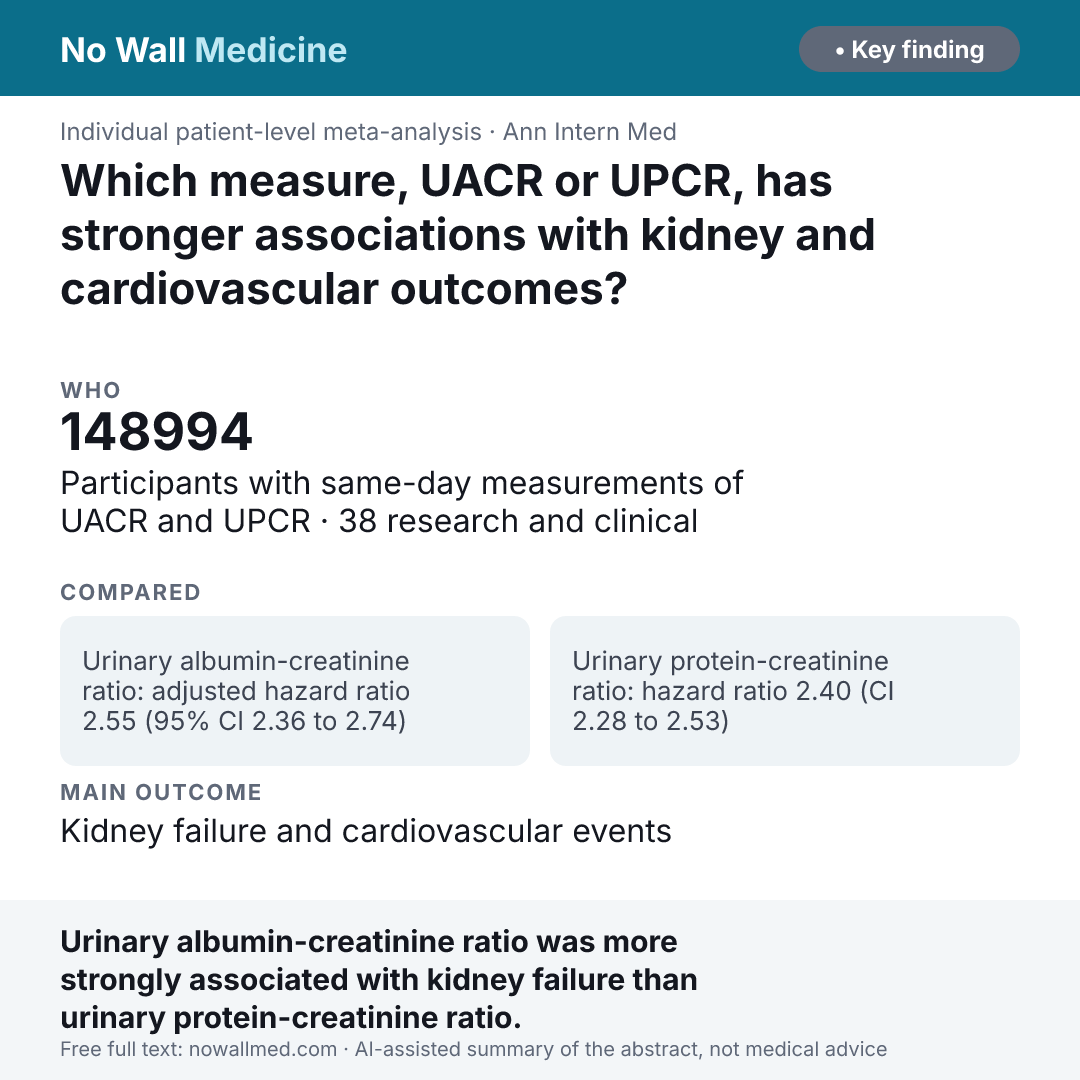
Proteinuria or Albuminuria as Markers of Kidney and Cardiovascular Disease Risk : An Individual Patient-Level Meta-analysis
Individual patient-level meta-analysisKey finding
Which measure, UACR or UPCR, has stronger associations with kidney and cardiovascular outcomes?
Who
148994
Participants with same-day measurements of UACR and UPCR · 38 research and clinical cohorts
Compared
Urinary albumin-creatinine ratio: adjusted hazard ratio 2.55 (95% CI 2.36 to 2.74)
Urinary protein-creatinine ratio: hazard ratio 2.40 (CI 2.28 to 2.53)
Main outcome
Kidney failure and cardiovascular events
Result: adjusted hazard ratio 2.55 (95% CI 2.36 to 2.74) vs 2.40 (CI 2.28 to 2.53)
Bottom line: Urinary albumin-creatinine ratio was more strongly associated with kidney failure than urinary protein-creatinine ratio.
Limitation: Assessment of UACR and UPCR in spot urine samples.
Funded by: National Kidney Foundation and National Institute of Diabetes and Digestive and Kidney Diseases
Ann Intern Med · 2025-11-04 · Save PNG
Structural rather than functional brain alterations that characterize the differences between major depressive disorder and primary insomnia: a comparative meta-analysis
Comparative meta-analysisMixed results
What are the structural and functional brain differences between major depressive disorder and primary insomnia?
Who
Patients with major depressive disorder and primary insomnia
Compared
Major depressive disorder
Primary insomnia
Main outcome
Gray matter volume and resting-state amplitude of low-frequency fluctuations
Bottom line: Major depressive disorder and primary insomnia share functional activation but differ in structural gray matter volume patterns.
BMC Med · 2025-11-04 · Save PNG

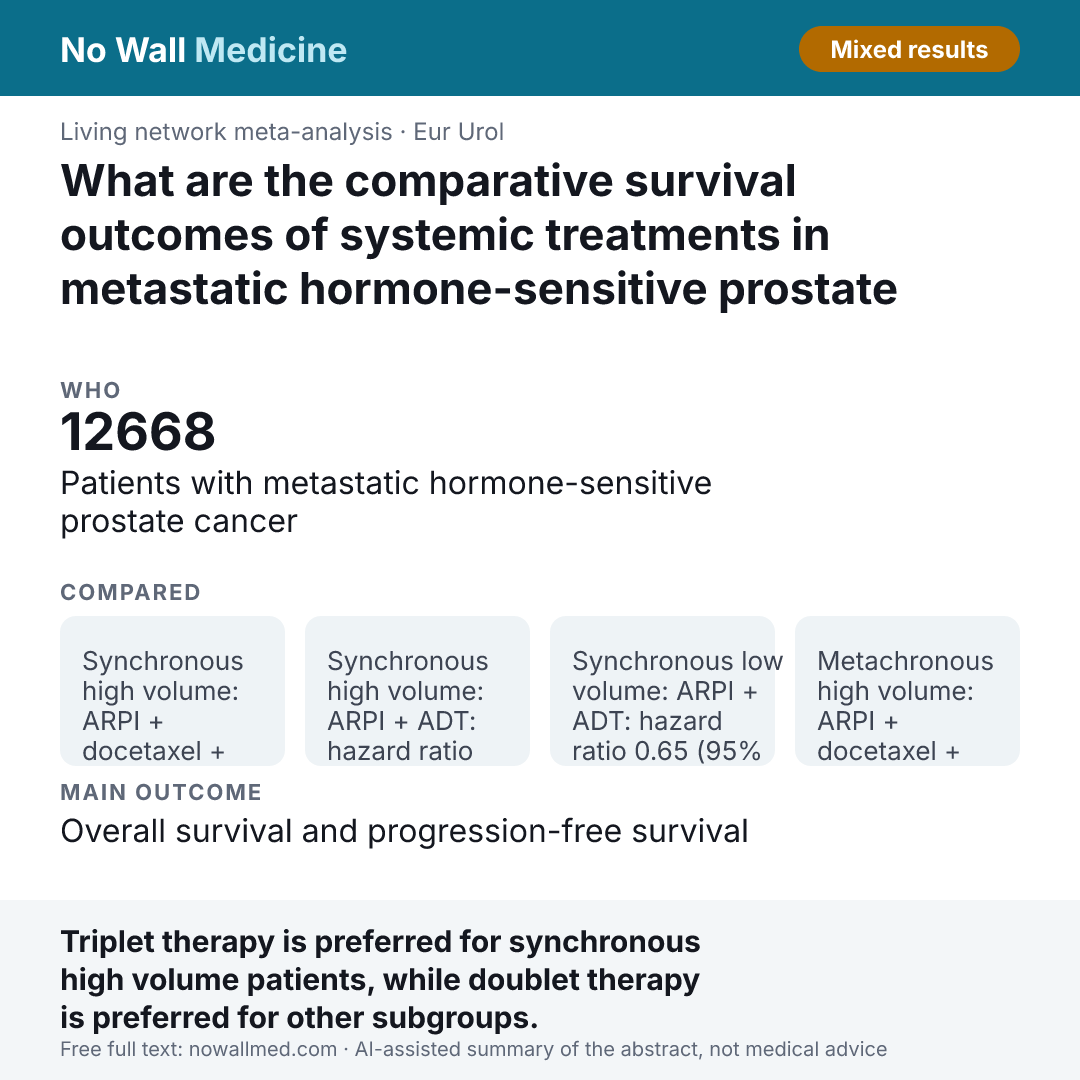
Comparative Survival in Metastatic Hormone-sensitive Prostate Cancer by Volume of Disease and Timing of Metastasis: A Living Network Meta-analysis
Living network meta-analysisMixed results
What are the comparative survival outcomes of systemic treatments in metastatic hormone-sensitive prostate cancer subgroups?
Who
12668
Patients with metastatic hormone-sensitive prostate cancer
Compared
Synchronous high volume: ARPI + docetaxel + ADT: hazard ratio 0.72 (95% CI 0.62-0.83) vs docetaxel + ADT
Synchronous high volume: ARPI + ADT: hazard ratio 0.71 (95% CI 0.53-0.97) vs docetaxel + ADT
Synchronous low volume: ARPI + ADT: hazard ratio 0.65 (95% CI 0.52-0.80) vs ADT alone
Metachronous high volume: ARPI + docetaxel + ADT: hazard ratio 0.89 (95% CI 0.43-1.85) vs ARPI + ADT
Main outcome
Overall survival and progression-free survival
Bottom line: Triplet therapy is preferred for synchronous high volume patients, while doublet therapy is preferred for other subgroups.
Limitation: Inability to account for patient- and cancer-related factors influencing physician decisions to offer docetaxel.
Eur Urol · 2025-11-04 · Save PNG
Finerenone in patients with severe heart failure: The FINEARTS-HF trial
Randomized trialBenefit found
Does finerenone reduce heart failure events and cardiovascular death in severe heart failure?
Who
888
Patients with heart failure and varying levels of severity
Compared
Severe heart failure: 5.9 per 100 patient-years absolute rate reduction
Non-severe heart failure: 2.2 per 100 patient-years absolute rate reduction
Main outcome
Total heart failure events and cardiovascular death
Bottom line: Finerenone is safe and effective in reducing heart failure events and cardiovascular death regardless of heart failure severity.
Eur J Heart Fail · 2025-11-04 · Save PNG

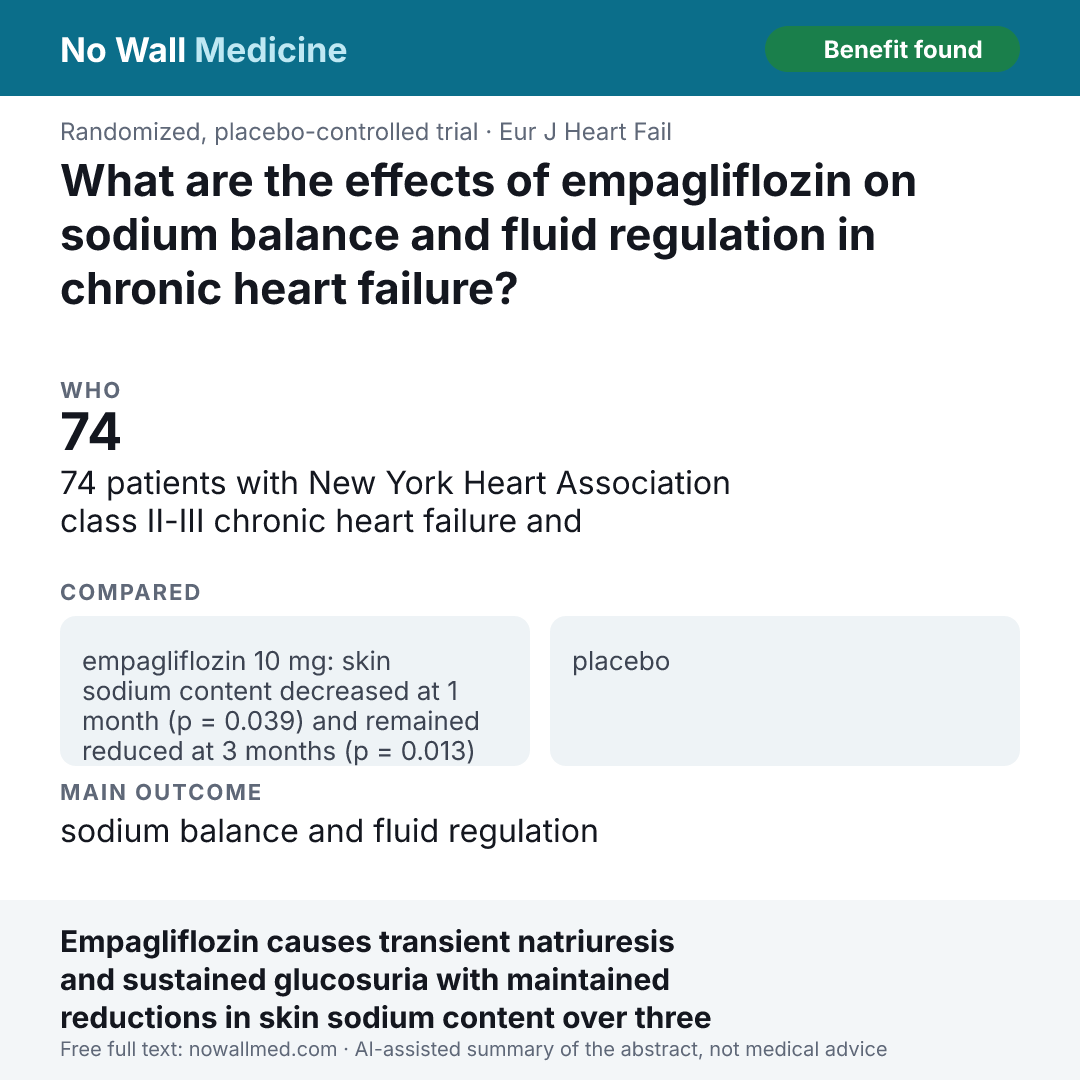
Short- and mid-term effects of empagliflozin on sodium balance and fluid regulation in chronic heart failure
Randomized, placebo-controlled trialBenefit found
What are the effects of empagliflozin on sodium balance and fluid regulation in chronic heart failure?
Who
74
74 patients with New York Heart Association class II-III chronic heart failure and ejection fraction ≤49%
Compared
empagliflozin 10 mg: skin sodium content decreased at 1 month (p = 0.039) and remained reduced at 3 months (p = 0.013)
placebo
Main outcome
sodium balance and fluid regulation
Bottom line: Empagliflozin causes transient natriuresis and sustained glucosuria with maintained reductions in skin sodium content over three months.
Eur J Heart Fail · 2025-11-04 · Save PNG
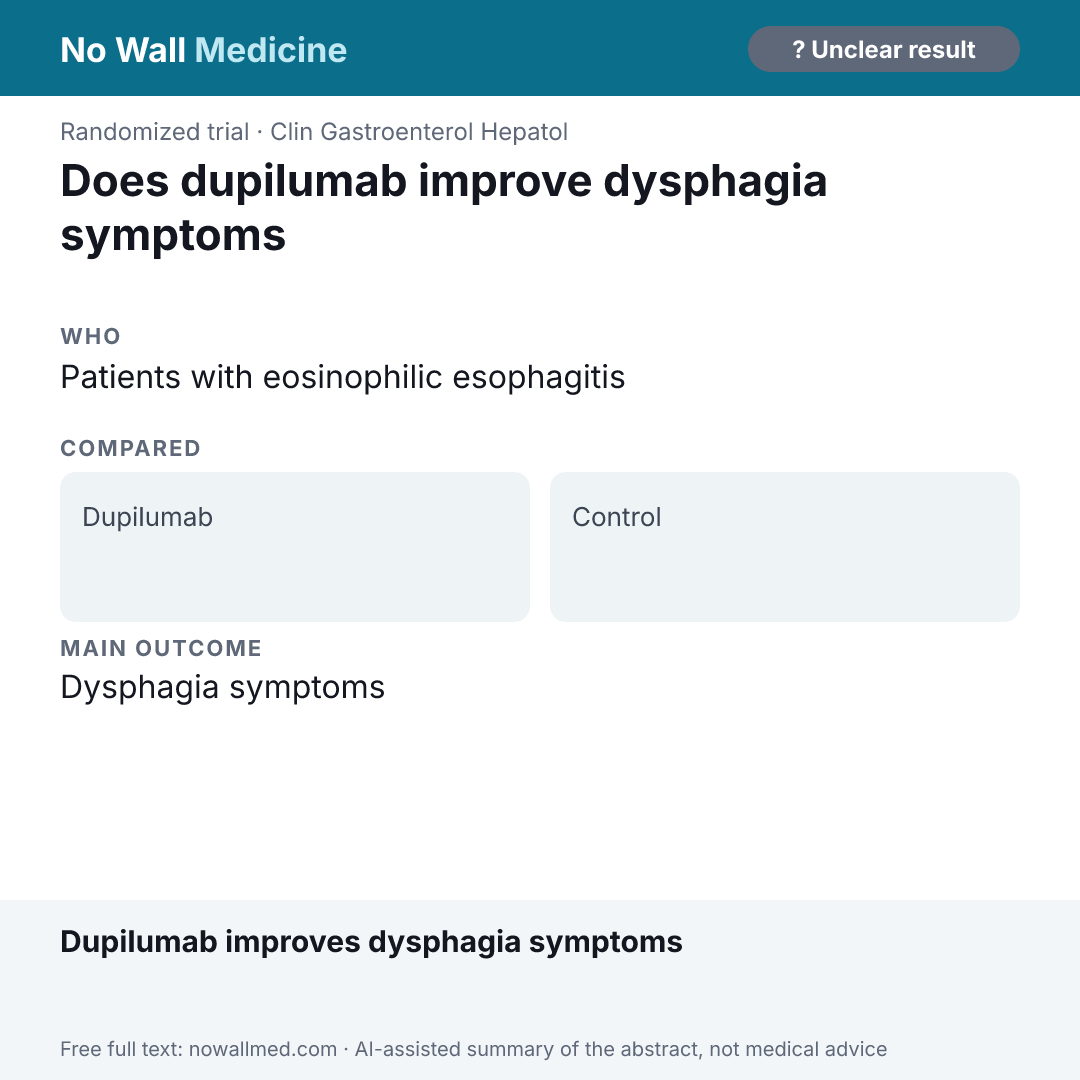
Dupilumab Improves Multiple Aspects of Dysphagia Symptoms in a Randomized Trial of Eosinophilic Esophagitis
Randomized trialUnclear result
Does dupilumab improve dysphagia symptoms
Who
Patients with eosinophilic esophagitis
Compared
Dupilumab
Control
Main outcome
Dysphagia symptoms
Bottom line: Dupilumab improves dysphagia symptoms
Clin Gastroenterol Hepatol · 2025-11-04 · Save PNG
Interim Effects of Zoledronate, Denosumab, or Teriparatide on Bone Microarchitecture in Type 2 Diabetes: A Pilot Trial
Randomized, open-label, blinded-end point pilot trialMixed results
What are the interim effects of zoledronate, denosumab, or teriparatide on bone microarchitecture?
Who
129
Postmenopausal women with type 2 diabetes and high fracture risk · Single tertiary care center in India
Compared
Zoledronate: improved only tibial total volumetric bone mineral density
Denosumab: improved tibial trabecular volumetric bone mineral density and trabecular number
Teriparatide: significantly improved total and trabecular volumetric bone mineral density
Standard of care
Main outcome
Changes in bone microarchitecture assessed by high-resolution peripheral quantitative computed tomography
Bottom line: Teriparatide showed early bone microarchitecture improvements, while denosumab showed a modest increase in tibial stiffness.
Limitation: Larger, adequately powered studies are needed to clarify relative effects.
J Clin Endocrinol Metab · 2025-11-04 · Save PNG

Metastatic Disease in Phaeochromocytomas and Paragangliomas in Various Genotypes-A Systematic Review and Meta-analysis
Systematic review and meta-analysisKey finding
Is there an association between genotype and metastatic disease risk in phaeochromocytomas and paragangliomas?
Who
Patients with phaeochromocytomas and paragangliomas
Compared
No identified variant: 1.55 per 100 patient-years
Pathogenic germline variants: significantly increased rate
Main outcome
Rate of metastatic disease per 100 followed patient-years
Bottom line: Patients with pathogenic genetic variants have a higher rate of metastases than those with no identified variant.
J Clin Endocrinol Metab · 2025-11-04 · Save PNG

Improved health-related quality of life with tirzepatide versus semaglutide in adults with obesity or overweight from the SURMOUNT-5 trial
Randomized trialBenefit found
Does tirzepatide improve health-related quality of life more than semaglutide in adults with obesity?
Who
Adults with obesity without type 2 diabetes
Compared
Tirzepatide: General Health score improvement 5.45
Semaglutide: General Health score improvement 4.20
Main outcome
Health-related quality of life scores at week 72
Result: p = 0.003 for General Health improvement
Bottom line: Tirzepatide provided greater improvements in General Health scores compared to semaglutide at week 72.
Diabetes Obes Metab · 2025-11-04 · Save PNG

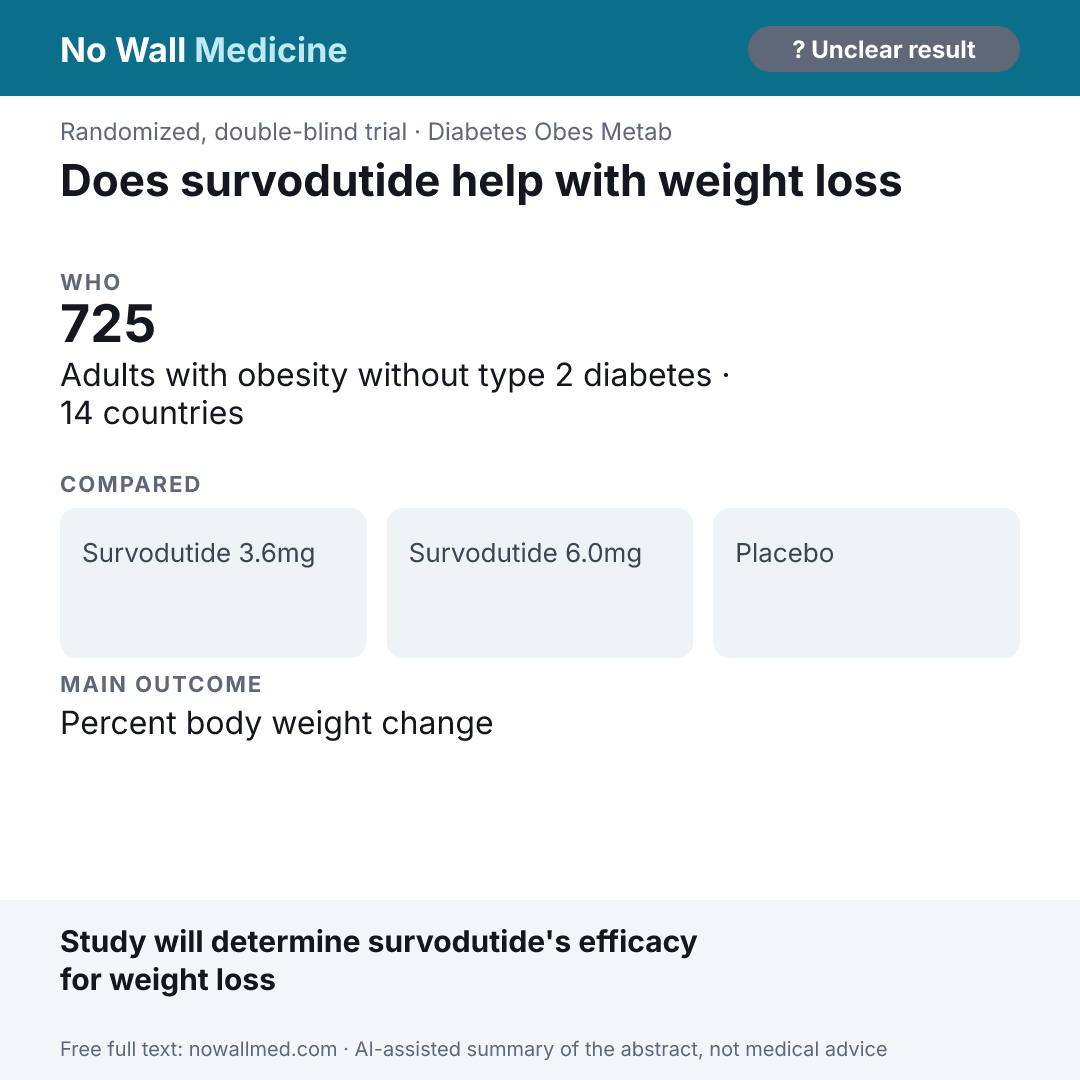
Survodutide for treatment of obesity: Baseline characteristics of participants in a randomized, double-blind, placebo-controlled, phase 3 trial (SYNCHRONIZE™-1)
Randomized, double-blind trialUnclear result
Does survodutide help with weight loss
Who
725
Adults with obesity without type 2 diabetes · 14 countries
Compared
Survodutide 3.6mg
Survodutide 6.0mg
Placebo
Main outcome
Percent body weight change
Bottom line: Study will determine survodutide's efficacy for weight loss
Diabetes Obes Metab · 2025-11-04 · Save PNG
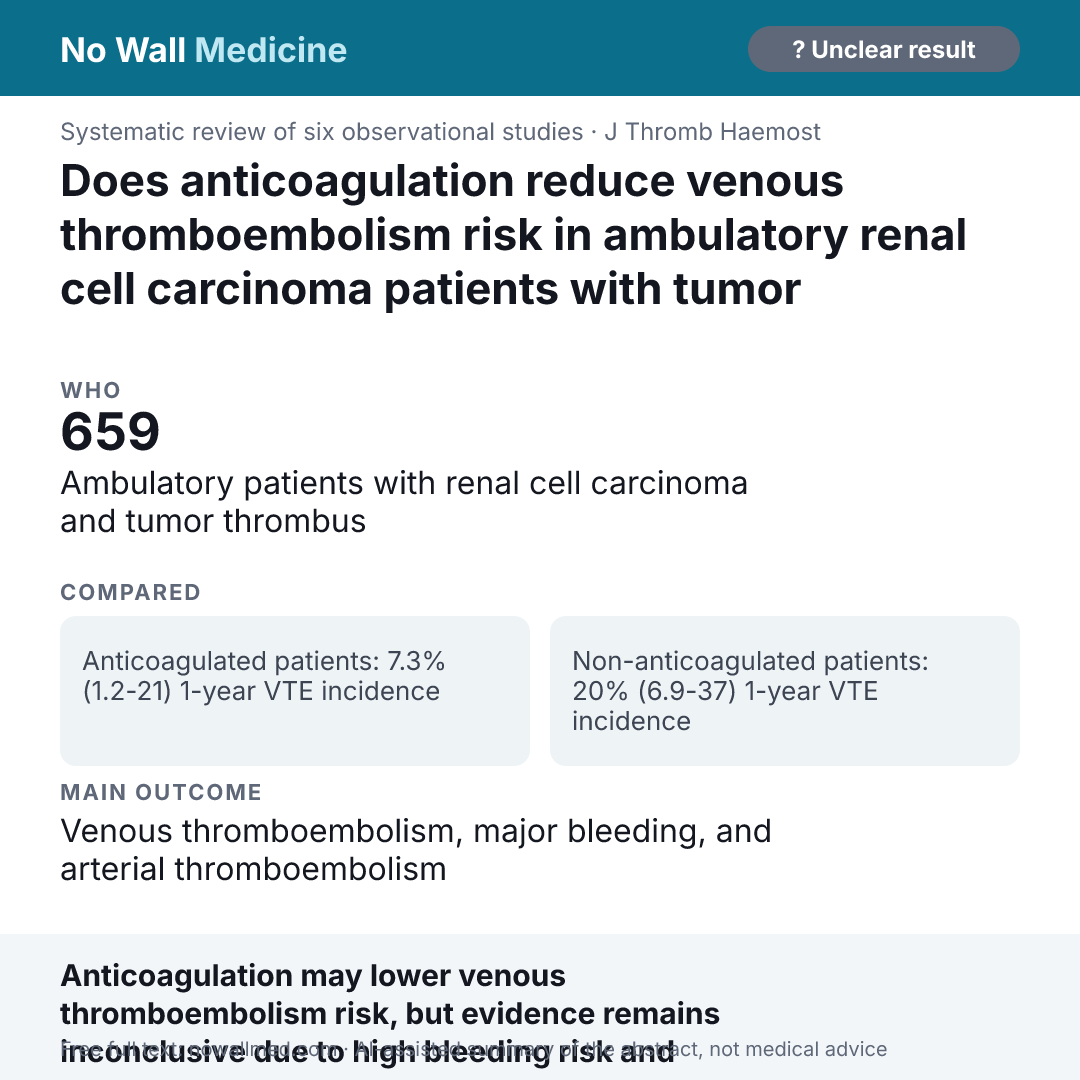
Outcomes of anticoagulation treatment for renal cell carcinoma tumor thrombi: a systematic review
Systematic review of six observational studiesUnclear result
Does anticoagulation reduce venous thromboembolism risk in ambulatory renal cell carcinoma patients with tumor thrombus?
Who
659
Ambulatory patients with renal cell carcinoma and tumor thrombus
Compared
Anticoagulated patients: 7.3% (1.2-21) 1-year VTE incidence
Non-anticoagulated patients: 20% (6.9-37) 1-year VTE incidence
Main outcome
Venous thromboembolism, major bleeding, and arterial thromboembolism
Bottom line: Anticoagulation may lower venous thromboembolism risk, but evidence remains inconclusive due to high bleeding risk and study bias.
Limitation: All studies had considerable risk of bias and wide confidence intervals.
J Thromb Haemost · 2025-11-04 · Save PNG
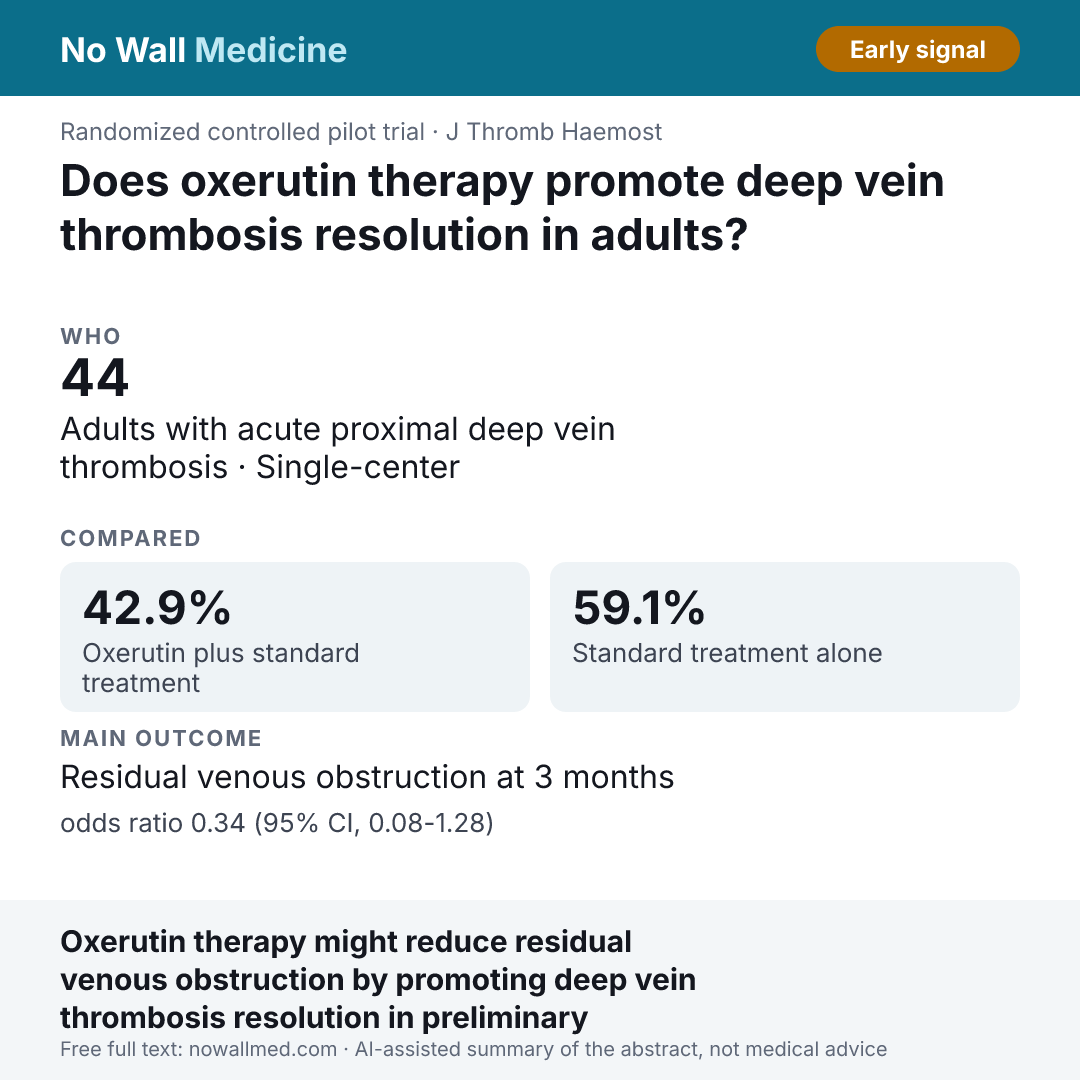
Additional oxerutin therapy to promote deep vein thrombus resolution (RESOLVE-DVT): a randomized controlled pilot trial
Randomized controlled pilot trialEarly signal
Does oxerutin therapy promote deep vein thrombosis resolution in adults?
Who
44
Adults with acute proximal deep vein thrombosis · Single-center
Compared
42.9%Oxerutin plus standard treatment (for residual venous obstruction ≥2mm)
59.1%Standard treatment alone (for residual venous obstruction ≥2mm)
Main outcome
Residual venous obstruction at 3 months
Result: odds ratio 0.34 (95% CI, 0.08-1.28)
Bottom line: Oxerutin therapy might reduce residual venous obstruction by promoting deep vein thrombosis resolution in preliminary findings.
J Thromb Haemost · 2025-11-04 · Save PNG
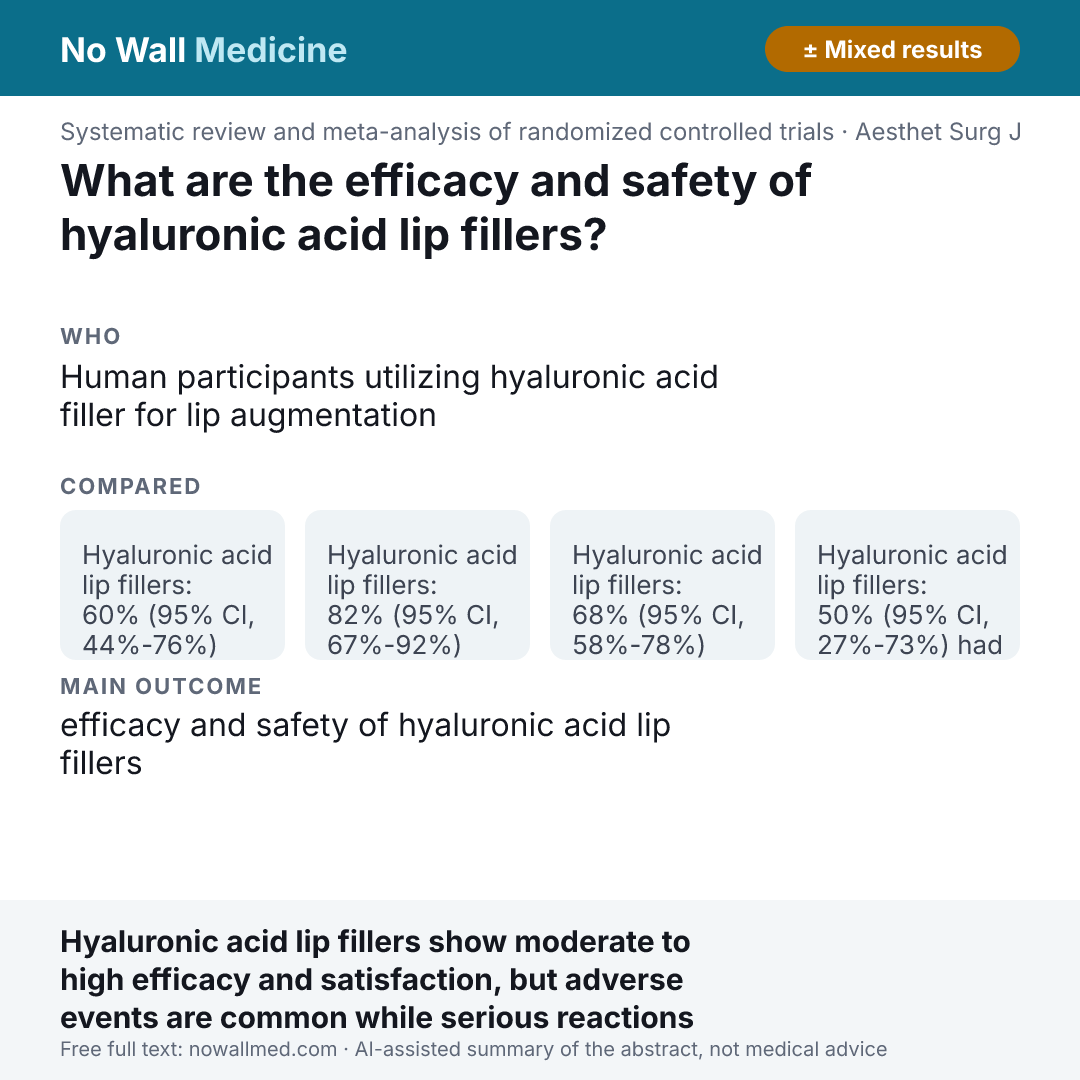
Efficacy and Safety of Hyaluronic Acid Lip Fillers: A Systematic Review and Meta-Analysis of Randomized Controlled Trials
Systematic review and meta-analysis of randomized controlled trialsMixed results
What are the efficacy and safety of hyaluronic acid lip fillers?
Who
Human participants utilizing hyaluronic acid filler for lip augmentation
Compared
Hyaluronic acid lip fillers: 60% (95% CI, 44%-76%) improvement in lip fullness
Hyaluronic acid lip fillers: 82% (95% CI, 67%-92%) improvement in aesthetic appearance
Hyaluronic acid lip fillers: 68% (95% CI, 58%-78%) reported satisfaction
Hyaluronic acid lip fillers: 50% (95% CI, 27%-73%) had adverse events
Main outcome
efficacy and safety of hyaluronic acid lip fillers
Bottom line: Hyaluronic acid lip fillers show moderate to high efficacy and satisfaction, but adverse events are common while serious reactions are rare.
Aesthet Surg J · 2025-11-04 · Save PNG
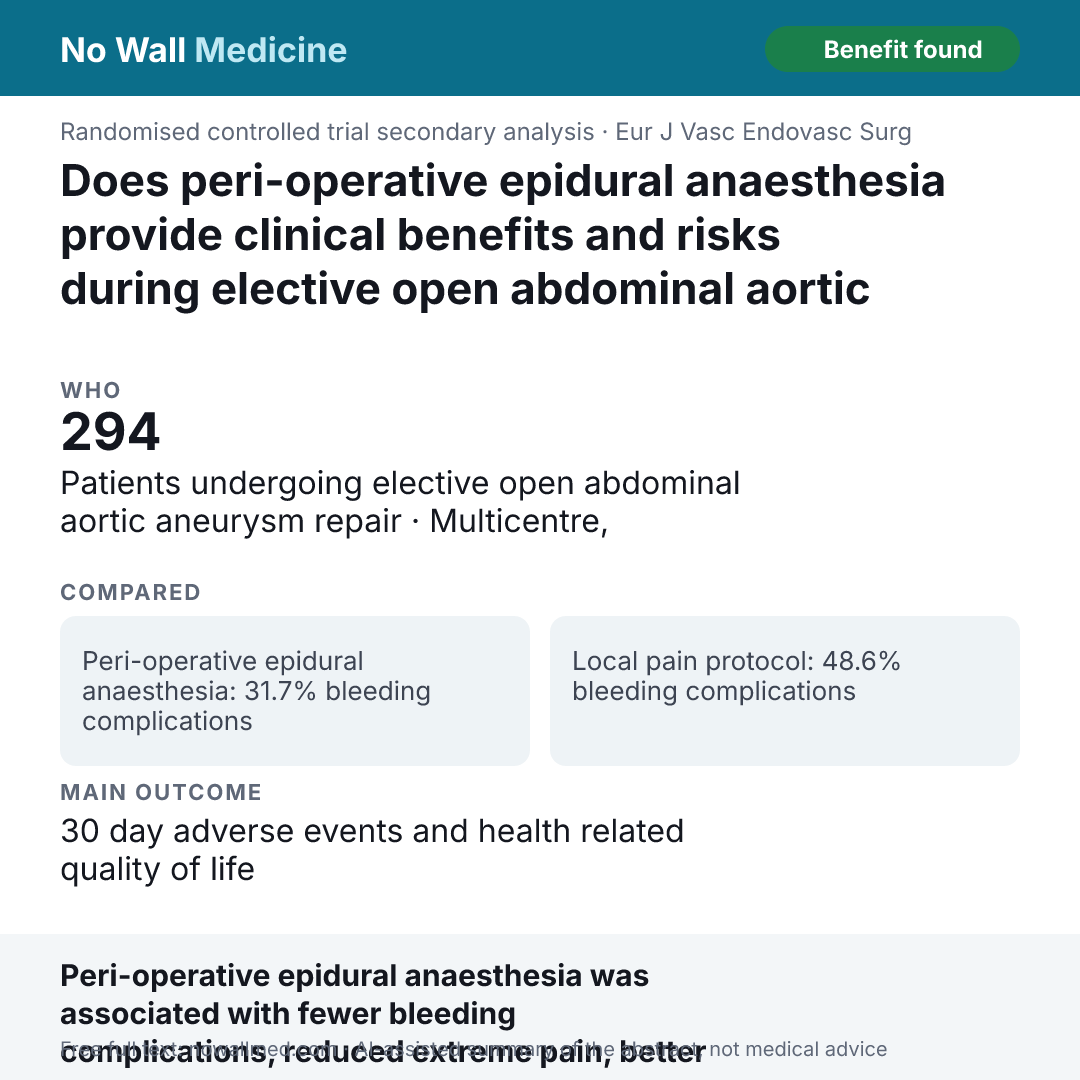
Role of Epidural Anaesthesia in Elective Open Abdominal Aortic Aneurysm Repair: Secondary Analysis of a Randomised Trial
Randomised controlled trial secondary analysisBenefit found
Does peri-operative epidural anaesthesia provide clinical benefits and risks during elective open abdominal aortic aneurysm repair?
Who
294
Patients undergoing elective open abdominal aortic aneurysm repair · Multicentre, international
Compared
Peri-operative epidural anaesthesia: 31.7% bleeding complications
Local pain protocol: 48.6% bleeding complications
Main outcome
30 day adverse events and health related quality of life
Bottom line: Peri-operative epidural anaesthesia was associated with fewer bleeding complications, reduced extreme pain, better mobility, and improved quality of life.
Limitation: This is an exploratory post hoc analysis of the ACTION-1 trial.
Eur J Vasc Endovasc Surg · 2025-11-04 · Save PNG
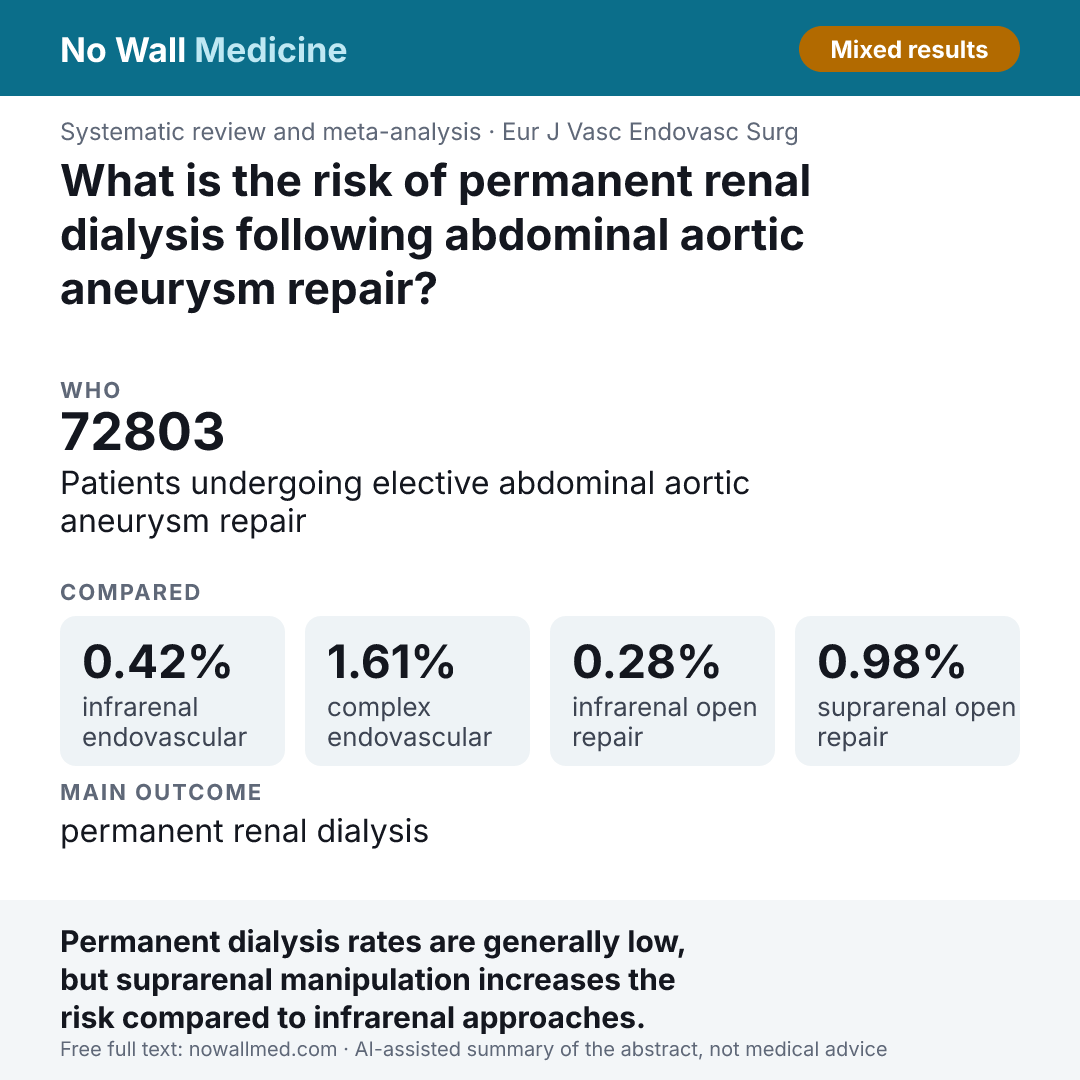
Editor's Choice - Permanent Dialysis following Abdominal Aortic Aneurysm Repair: a Systematic Review and Meta-analysis
Systematic review and meta-analysisMixed results
What is the risk of permanent renal dialysis following abdominal aortic aneurysm repair?
Who
72803
Patients undergoing elective abdominal aortic aneurysm repair
Compared
0.42%infrarenal endovascular aortic repair (95%CI 0.22-0.62%)
1.61%complex endovascular aortic repair (0.65-2.57%)
0.28%infrarenal open repair (0.03-0.53%)
0.98%suprarenal open repair (0.49-1.46%)
Main outcome
permanent renal dialysis
Result: odds ratio 2.38 [1.19-4.78] for suprarenal versus infrarenal fixation EVAR
Bottom line: Permanent dialysis rates are generally low, but suprarenal manipulation increases the risk compared to infrarenal approaches.
Eur J Vasc Endovasc Surg · 2025-11-04 · Save PNG
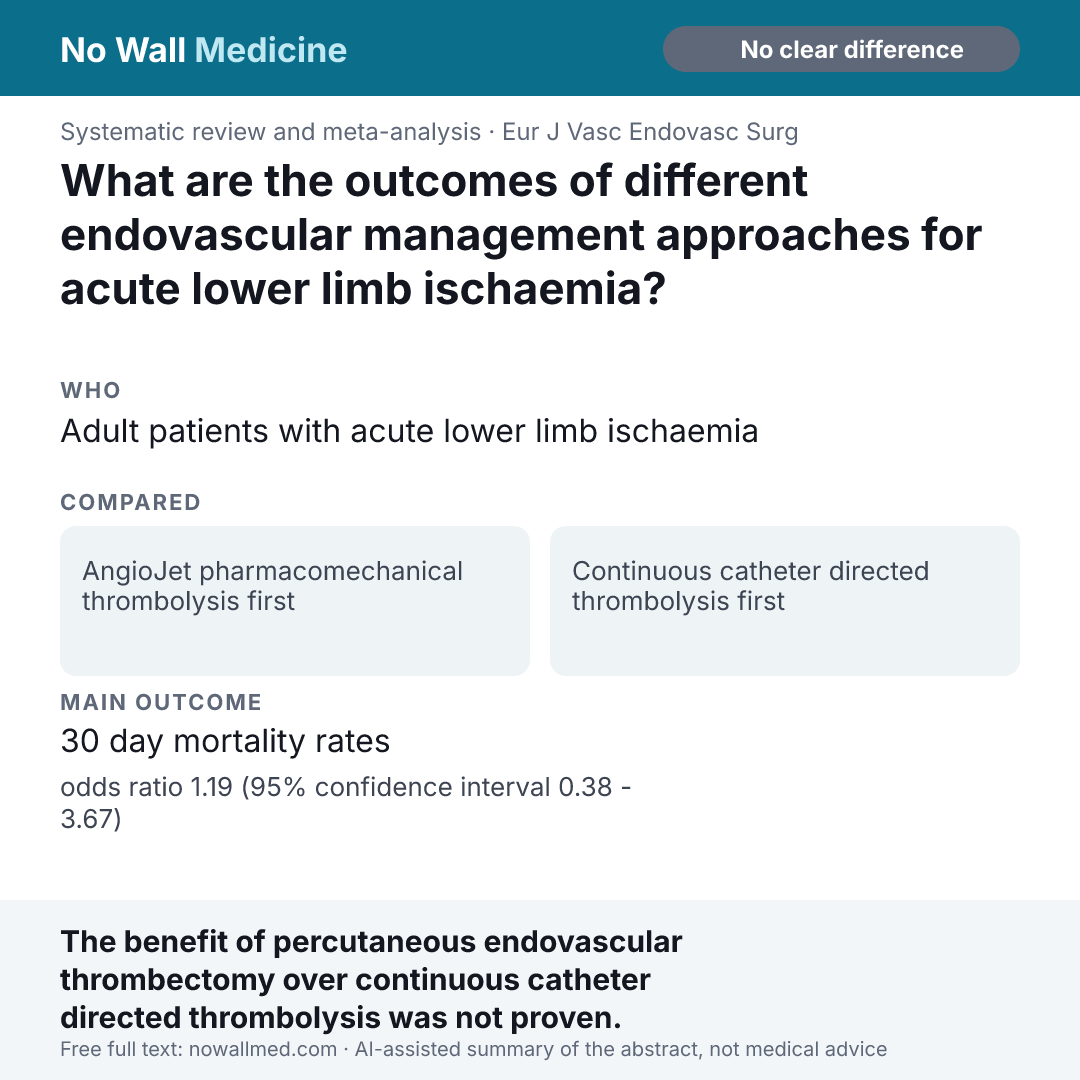
Endovascular Management of Acute Lower Limb Ischaemia in Adult Patients: A Systematic Review and Meta-analysis
Systematic review and meta-analysisNo clear difference
What are the outcomes of different endovascular management approaches for acute lower limb ischaemia?
Who
Adult patients with acute lower limb ischaemia
Compared
AngioJet pharmacomechanical thrombolysis first
Continuous catheter directed thrombolysis first
Main outcome
30 day mortality rates
Result: odds ratio 1.19 (95% confidence interval 0.38 - 3.67)
Bottom line: The benefit of percutaneous endovascular thrombectomy over continuous catheter directed thrombolysis was not proven.
Eur J Vasc Endovasc Surg · 2025-11-04 · Save PNG
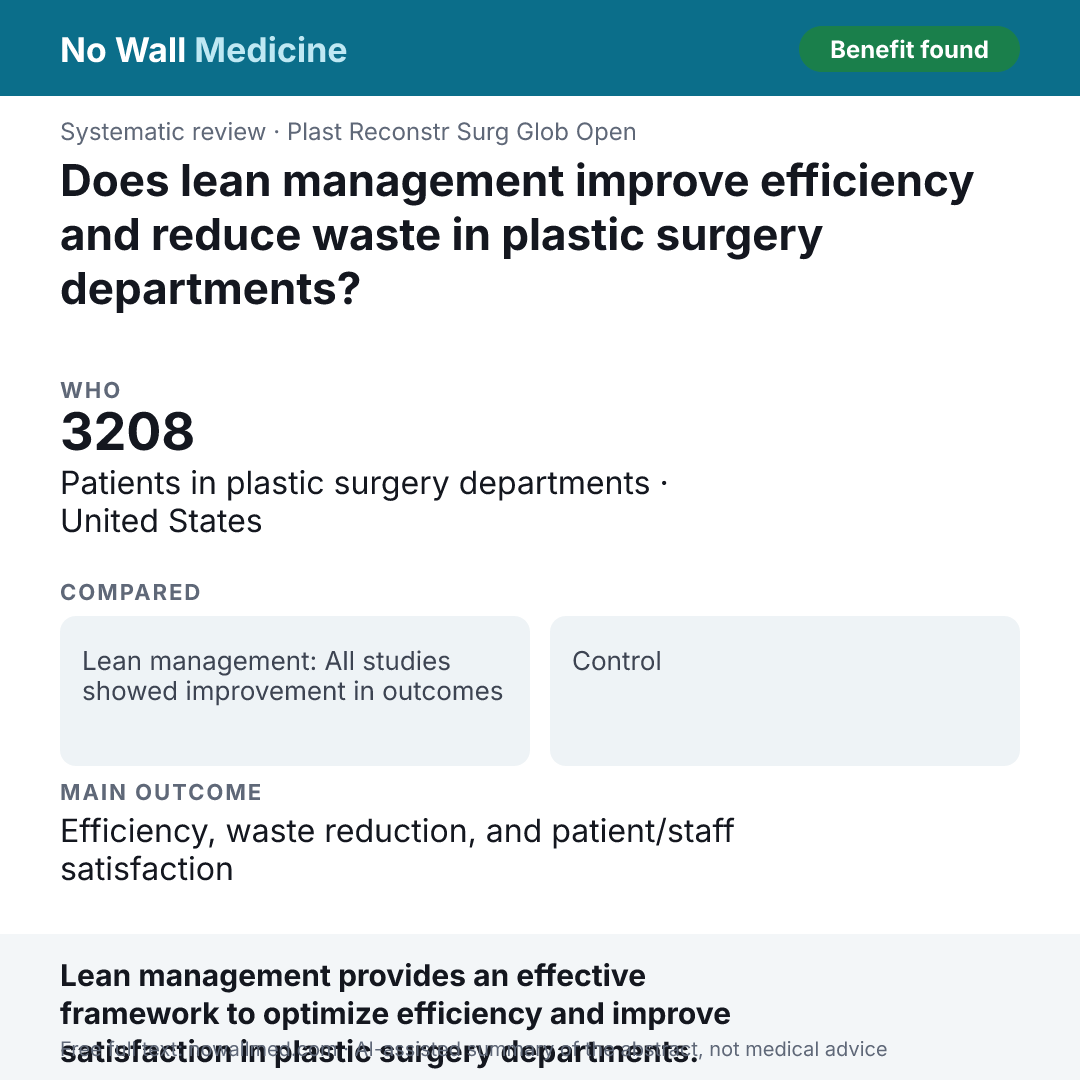
Application of Lean Methodologies in Plastic Surgery: A Systematic Review
Systematic reviewBenefit found
Does lean management improve efficiency and reduce waste in plastic surgery departments?
Who
3208
Patients in plastic surgery departments · United States
Compared
Lean management: All studies showed improvement in outcomes
Control
Main outcome
Efficiency, waste reduction, and patient/staff satisfaction
Bottom line: Lean management provides an effective framework to optimize efficiency and improve satisfaction in plastic surgery departments.
Plast Reconstr Surg Glob Open · 2025-11-04 · Save PNG
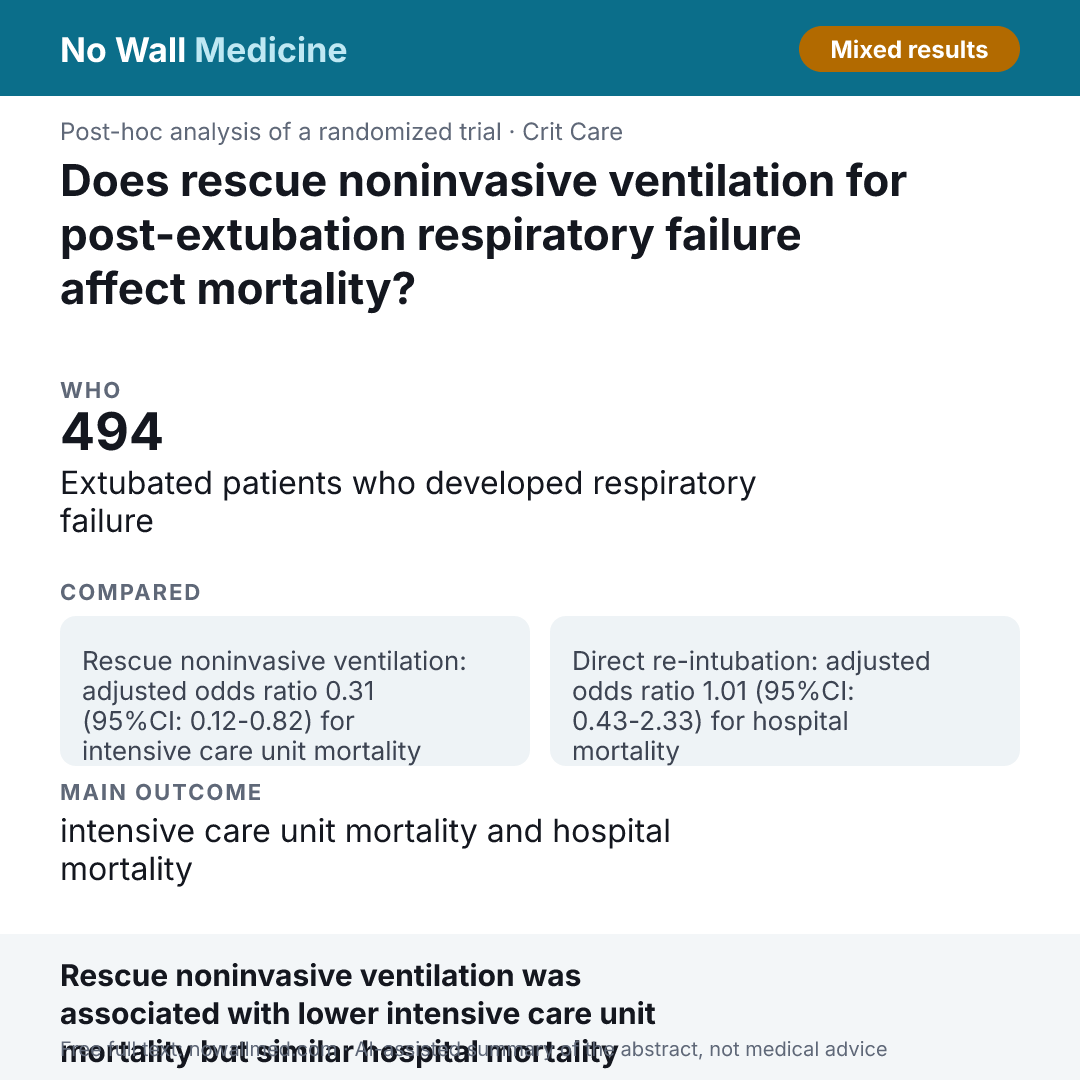
Use of rescue noninvasive ventilation for post-extubation respiratory failure
Post-hoc analysis of a randomized trialMixed results
Does rescue noninvasive ventilation for post-extubation respiratory failure affect mortality?
Who
494
Extubated patients who developed respiratory failure
Compared
Rescue noninvasive ventilation: adjusted odds ratio 0.31 (95%CI: 0.12-0.82) for intensive care unit mortality
Direct re-intubation: adjusted odds ratio 1.01 (95%CI: 0.43-2.33) for hospital mortality
Main outcome
intensive care unit mortality and hospital mortality
Result: adjusted odds ratio 0.31 (95%CI: 0.12-0.82) for intensive care unit mortality
Bottom line: Rescue noninvasive ventilation was associated with lower intensive care unit mortality but similar hospital mortality compared to direct re-intubation.
Limitation: This was a post-hoc analysis of a randomized trial.
Crit Care · 2025-11-04 · Save PNG
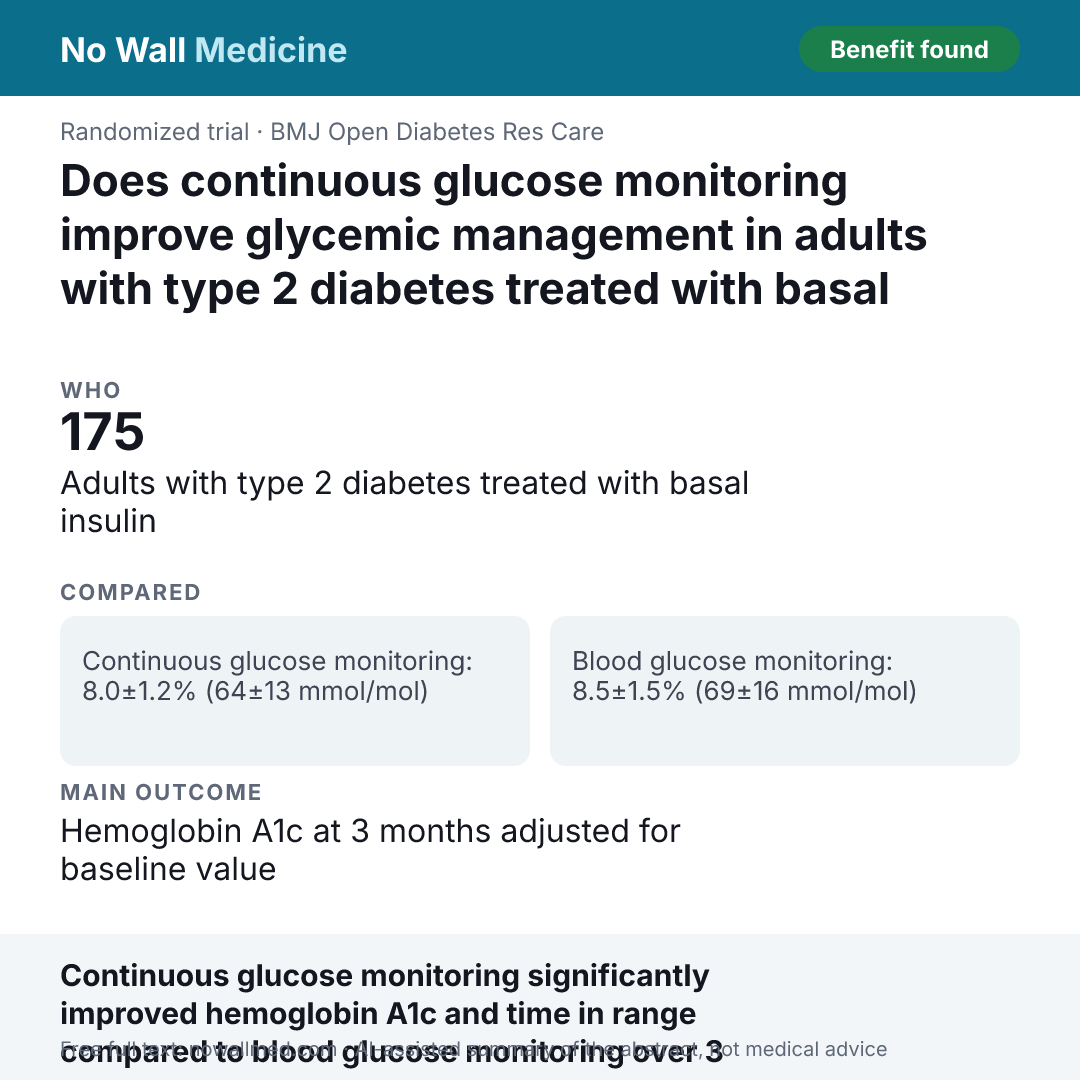
Rapid improvements in glycemic management with use of continuous glucose monitoring in adults with type 2 diabetes treated with basal insulin: 3-month analysis of the MOBILE study
Randomized trialBenefit found
Does continuous glucose monitoring improve glycemic management in adults with type 2 diabetes treated with basal insulin?
Who
175
Adults with type 2 diabetes treated with basal insulin
Compared
Continuous glucose monitoring: 8.0±1.2% (64±13 mmol/mol)
Blood glucose monitoring: 8.5±1.5% (69±16 mmol/mol)
Main outcome
Hemoglobin A1c at 3 months adjusted for baseline value
Result: -0.6% (95% CI -0.9% to -0.3%)
Bottom line: Continuous glucose monitoring significantly improved hemoglobin A1c and time in range compared to blood glucose monitoring over 3 months.
BMJ Open Diabetes Res Care · 2025-11-04 · Save PNG
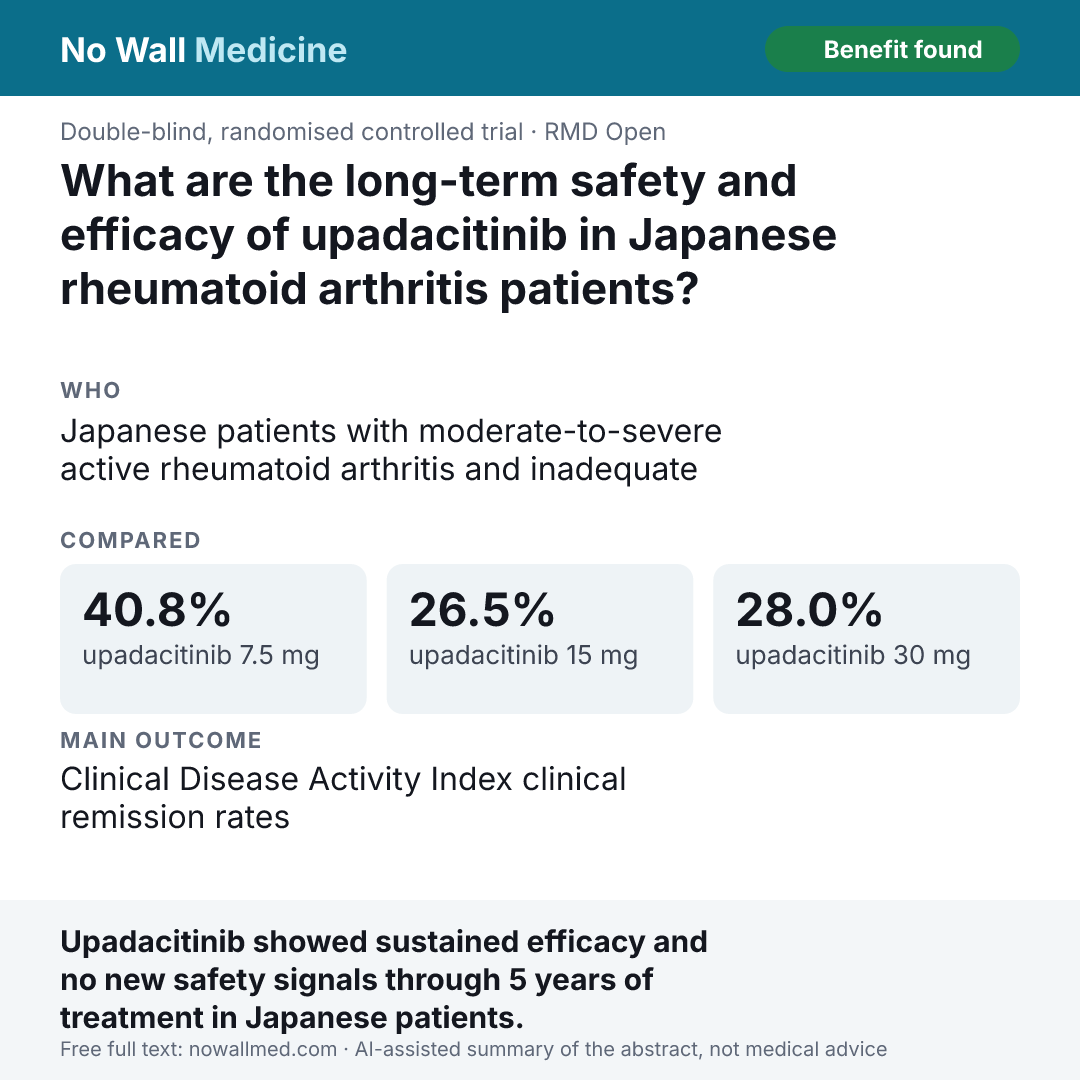
Long-term safety and efficacy of upadacitinib in Japanese patients with rheumatoid arthritis and inadequate response to conventional synthetic disease-modifying antirheumatic drugs: 5-year results from the SELECT-SUNRISE randomised controlled trial
Double-blind, randomised controlled trialBenefit found
What are the long-term safety and efficacy of upadacitinib in Japanese rheumatoid arthritis patients?
Who
Japanese patients with moderate-to-severe active rheumatoid arthritis and inadequate response to conventional synthetic disease-modifying antirheumatic drugs · Japan
Compared
40.8%upadacitinib 7.5 mg
26.5%upadacitinib 15 mg
28.0%upadacitinib 30 mg
Main outcome
Clinical Disease Activity Index clinical remission rates
Bottom line: Upadacitinib showed sustained efficacy and no new safety signals through 5 years of treatment in Japanese patients.
RMD Open · 2025-11-04 · Save PNG