Visual abstracts
New randomized trials and meta-analyses from leading journals at a glance: who was studied, what was compared, and what was found. Every paper is free to read in full.
All specialtiesCardiology 4763Oncology 4043Gastroenterology & Hepatology 1903Infectious Disease 3756Neurology 1872Psychiatry & Mental Health 2216Pulmonology 2044Critical Care 1319Endocrinology & Diabetes 2544Pediatrics 2889Surgery 2480Orthopedics & Sports Medicine 917Neurosurgery 525Cardiothoracic & Vascular Surgery 656Plastic & Reconstructive Surgery 574Nephrology 1107Rheumatology 810Hematology 1090Dermatology 611Ophthalmology 532Obstetrics & Gynecology 1645Public & Global Health 1037Radiology & Imaging 619Anesthesiology 958Urology 745ENT (Otolaryngology) 494Emergency Medicine 481Allergy & Immunology 309Geriatrics 972Family Medicine & Primary Care 534Medical Genetics & Genomics 659Pathology & Laboratory Medicine 156Physical Medicine & Rehabilitation 734Palliative Care 421Nutrition 1560Digital Health & AI 2137General Medicine 318
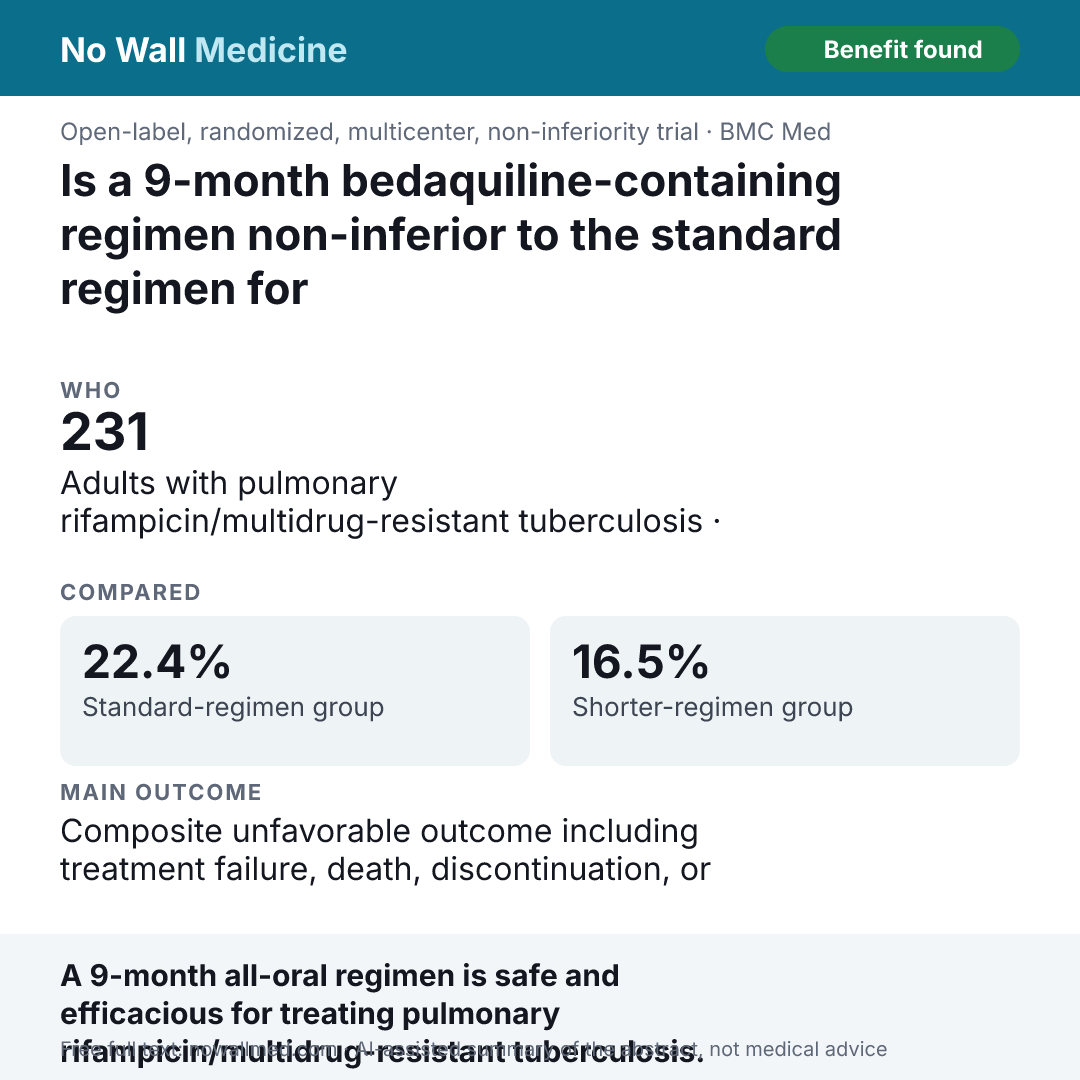
Nine months of bedaquiline, linezolid, levofloxacin, clofazimine, and cycloserine chemotherapy for rifampicin/multidrug-resistant tuberculosis: a multicenter, randomized, open-label non-inferiority trial in China
Open-label, randomized, multicenter, non-inferiority trialBenefit found
Is a 9-month bedaquiline-containing regimen non-inferior to the standard regimen for rifampicin/multidrug-resistant tuberculosis?
Who
231
Adults with pulmonary rifampicin/multidrug-resistant tuberculosis · Sixteen hospitals in China
Compared
22.4%Standard-regimen group
16.5%Shorter-regimen group
Main outcome
Composite unfavorable outcome including treatment failure, death, discontinuation, or loss to follow-up
Result: risk difference 5.9 percentage points (97.5% CI -5.8 to 17.5)
Bottom line: A 9-month all-oral regimen is safe and efficacious for treating pulmonary rifampicin/multidrug-resistant tuberculosis.
BMC Med · 2024-09-19 · Save PNG
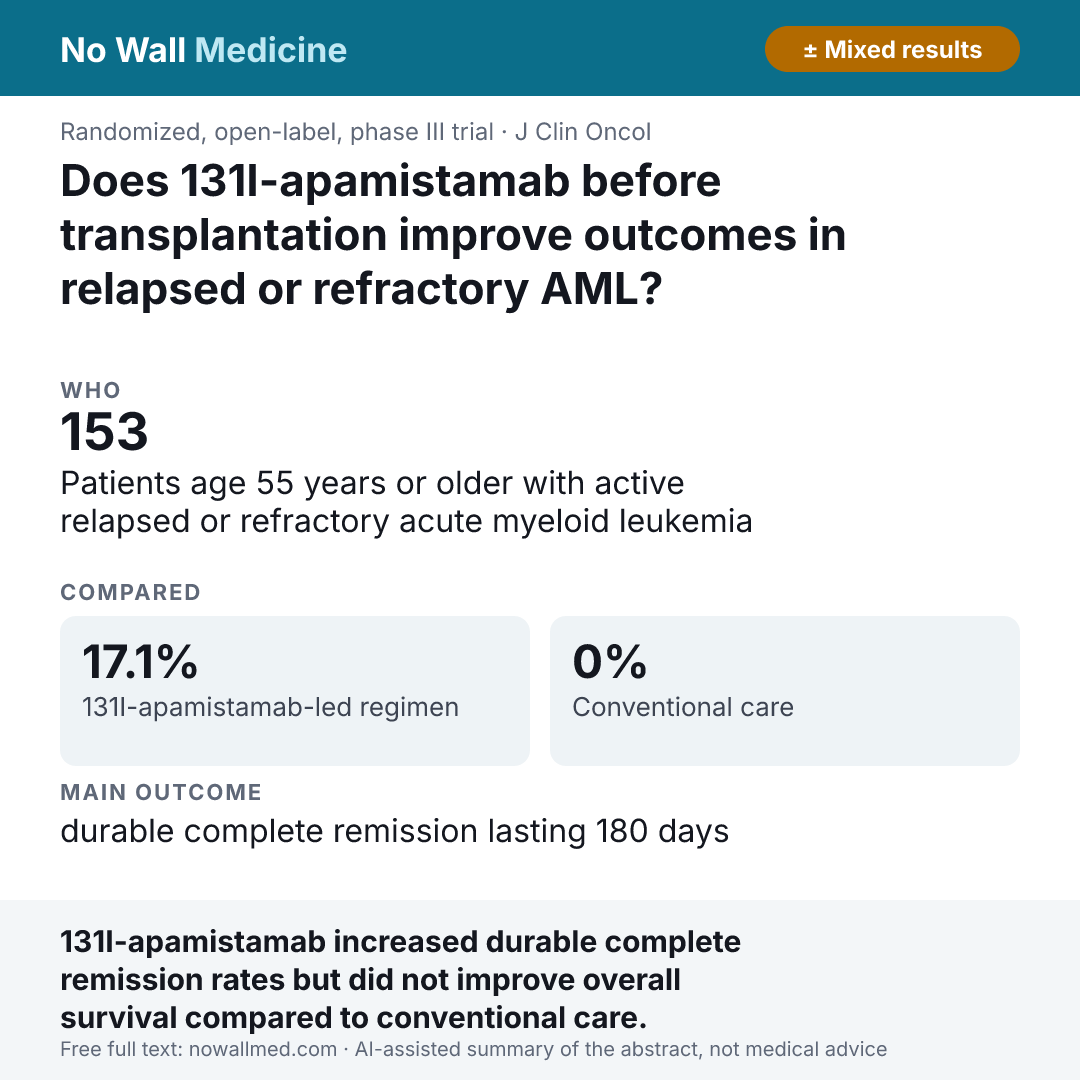
Randomized Phase III SIERRA Trial of 131I-Apamistamab Before Allogeneic Hematopoietic Cell Transplantation Versus Conventional Care for Relapsed/Refractory AML
Randomized, open-label, phase III trialMixed results
Does 131I-apamistamab before transplantation improve outcomes in relapsed or refractory AML?
Who
153
Patients age 55 years or older with active relapsed or refractory acute myeloid leukemia
Compared
17.1%131I-apamistamab-led regimen (95% CI, 9.4 to 27.5)
0%Conventional care (95% CI, 0 to 4.7)
Main outcome
durable complete remission lasting 180 days
Result: hazard ratio 0.23 (95% CI 0.15 to 0.34) for event-free survival
Bottom line: 131I-apamistamab increased durable complete remission rates but did not improve overall survival compared to conventional care.
J Clin Oncol · 2024-09-19 · Save PNG
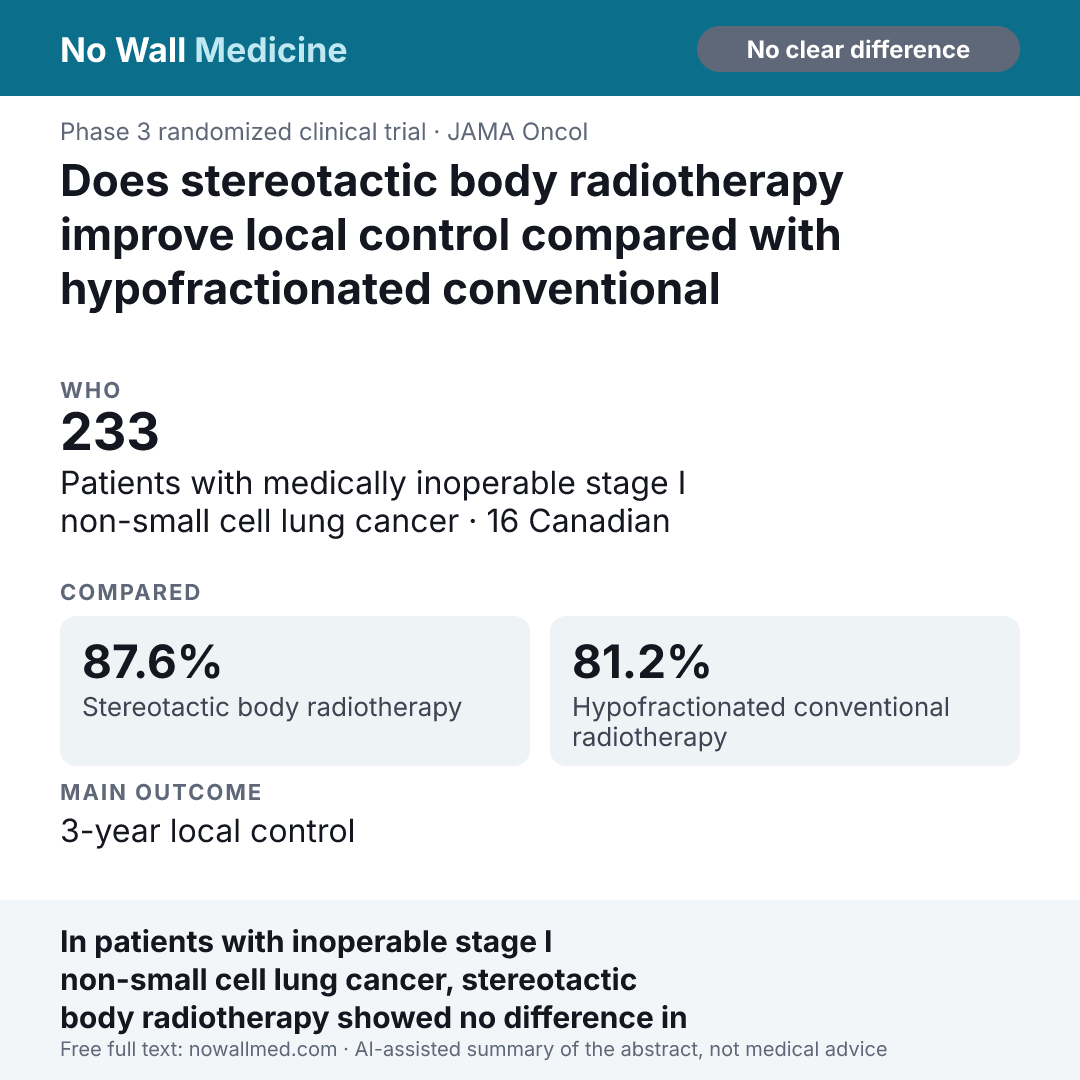
Stereotactic vs Hypofractionated Radiotherapy for Inoperable Stage I Non-Small Cell Lung Cancer: The LUSTRE Phase 3 Randomized Clinical Trial
Phase 3 randomized clinical trialNo clear difference
Does stereotactic body radiotherapy improve local control compared with hypofractionated conventional radiotherapy?
Who
233
Patients with medically inoperable stage I non-small cell lung cancer · 16 Canadian centers
Compared
87.6%Stereotactic body radiotherapy (95% CI, 81.9%-93.4%)
81.2%Hypofractionated conventional radiotherapy (95% CI, 71.9%-90.5%)
Main outcome
3-year local control
Result: hazard ratio 0.61 (95% CI, 0.31-1.20)
Bottom line: In patients with inoperable stage I non-small cell lung cancer, stereotactic body radiotherapy showed no difference in local control compared with conventional radiotherapy.
Limitation: further research is necessary to determine if SBRT is more effective for peripheral and central non-small cell lung cancer
JAMA Oncol · 2024-09-19 · Save PNG
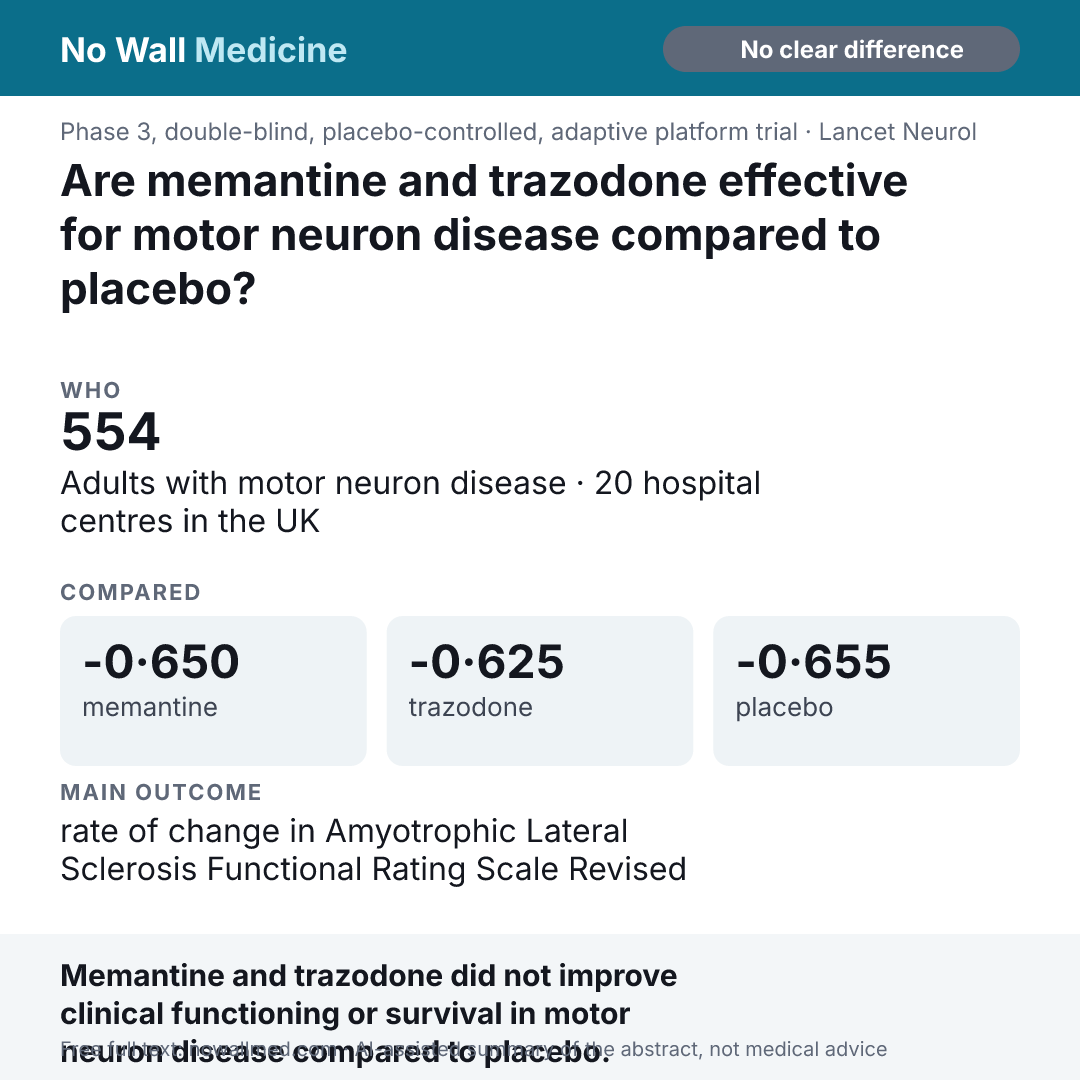
Safety and efficacy of memantine and trazodone versus placebo for motor neuron disease (MND SMART): stage two interim analysis from the first cycle of a phase 3, multiarm, multistage, randomised, adaptive platform trial
Phase 3, double-blind, placebo-controlled, adaptive platform trialNo clear difference
Are memantine and trazodone effective for motor neuron disease compared to placebo?
Who
554
Adults with motor neuron disease · 20 hospital centres in the UK
Compared
-0·650memantine
-0·625trazodone
-0·655placebo
Main outcome
rate of change in Amyotrophic Lateral Sclerosis Functional Rating Scale Revised
Result: memantine versus placebo estimated mean difference 0·033, one-sided 90% CI lower level -0·085
Bottom line: Memantine and trazodone did not improve clinical functioning or survival in motor neuron disease compared to placebo.
Funded by: Euan MacDonald Centre, MND Scotland, My Name'5 Doddie Foundation, Baillie Gifford
Lancet Neurol · 2024-09-19 · Save PNG
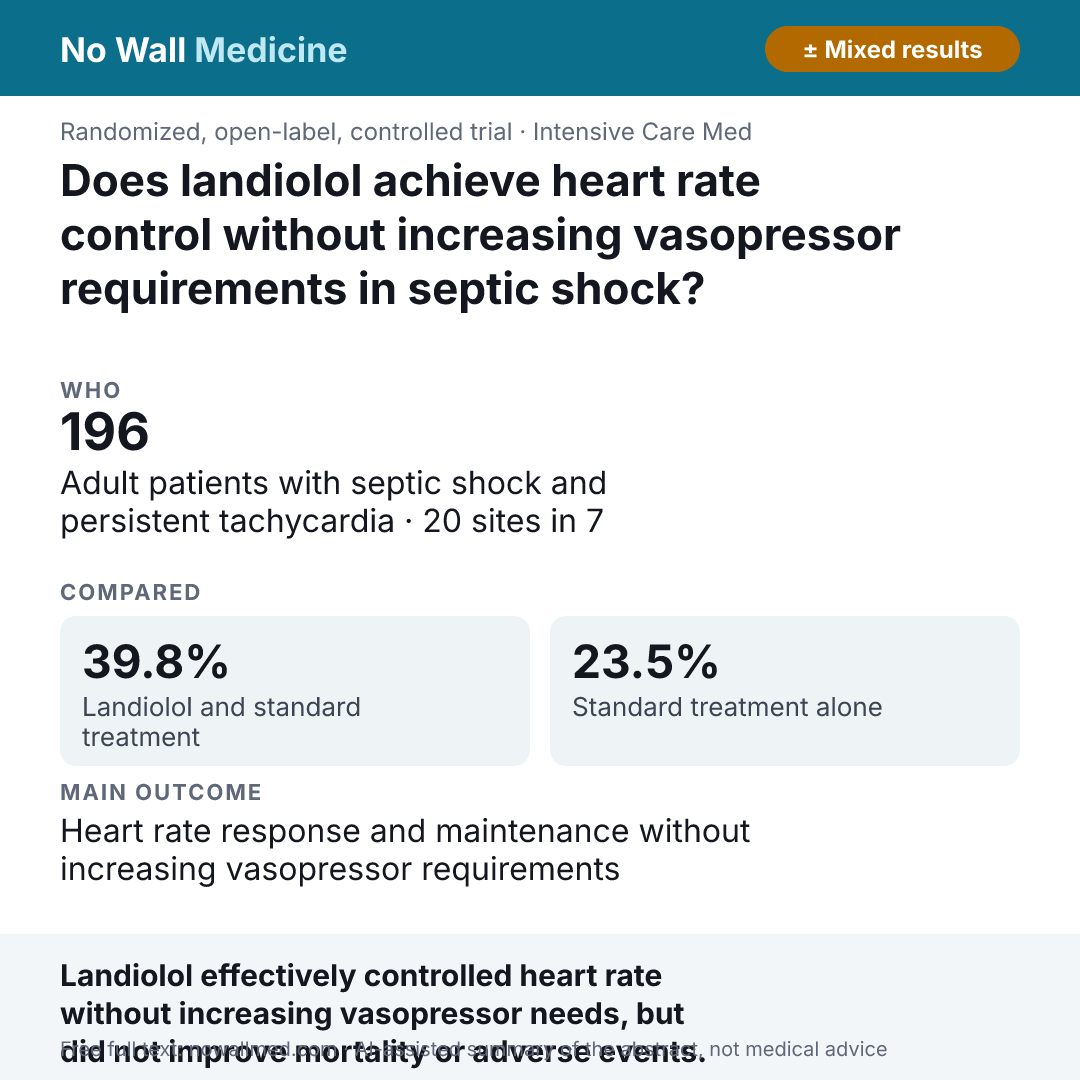
Landiolol for heart rate control in patients with septic shock and persistent tachycardia. A multicenter randomized clinical trial (Landi-SEP)
Randomized, open-label, controlled trialMixed results
Does landiolol achieve heart rate control without increasing vasopressor requirements in septic shock?
Who
196
Adult patients with septic shock and persistent tachycardia · 20 sites in 7 European countries
Compared
39.8%Landiolol and standard treatment (39/98)
23.5%Standard treatment alone (23/98)
Main outcome
Heart rate response and maintenance without increasing vasopressor requirements
Result: between-group difference of 16.5% (95% CI 3.4-28.8%; p = 0.013)
Bottom line: Landiolol effectively controlled heart rate without increasing vasopressor needs, but did not improve mortality or adverse events.
Intensive Care Med · 2024-09-19 · Save PNG
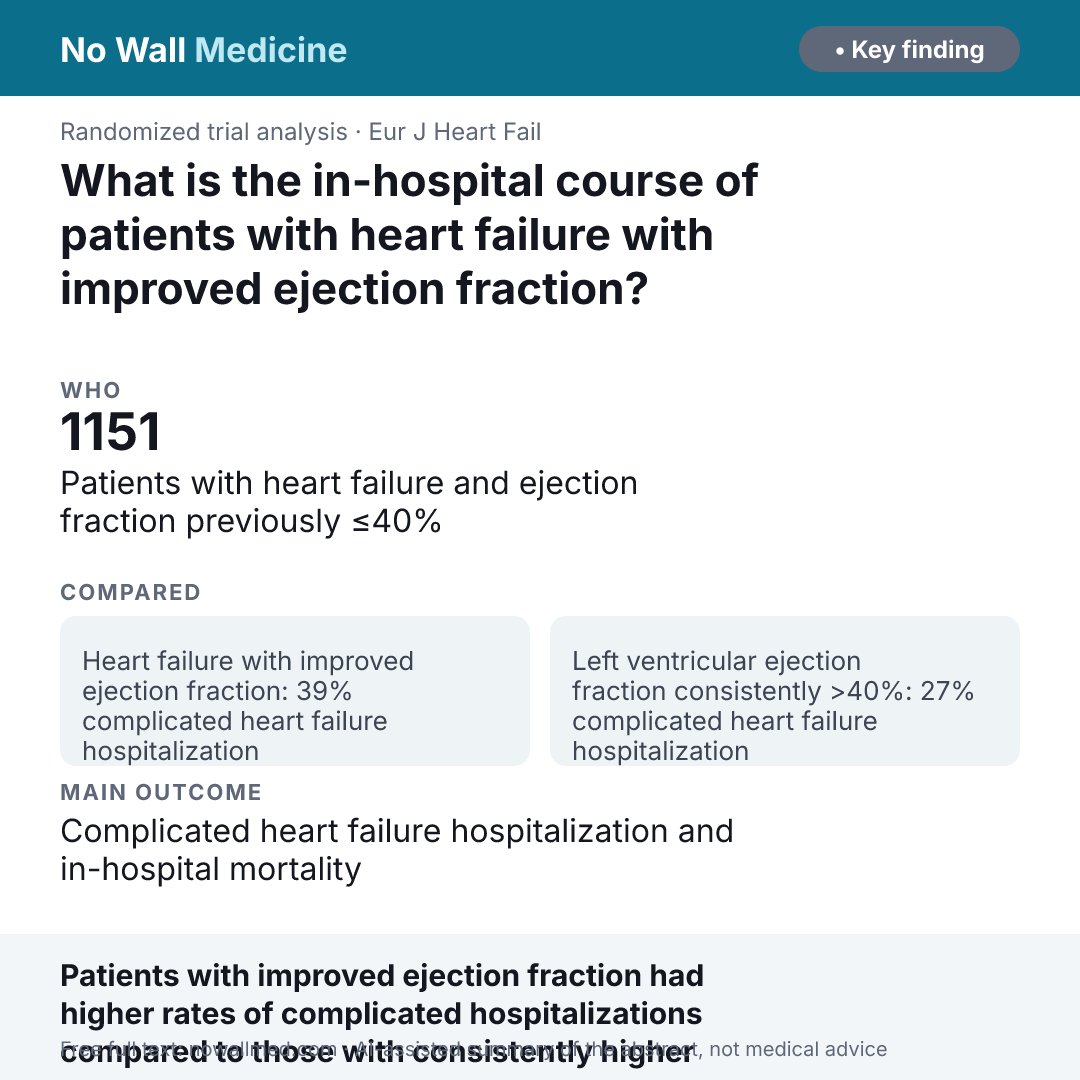
In-hospital course of patients with heart failure with improved ejection fraction in the DELIVER trial
Randomized trial analysisKey finding
What is the in-hospital course of patients with heart failure with improved ejection fraction?
Who
1151
Patients with heart failure and ejection fraction previously ≤40%
Compared
Heart failure with improved ejection fraction: 39% complicated heart failure hospitalization
Left ventricular ejection fraction consistently >40%: 27% complicated heart failure hospitalization
Main outcome
Complicated heart failure hospitalization and in-hospital mortality
Bottom line: Patients with improved ejection fraction had higher rates of complicated hospitalizations compared to those with consistently higher ejection fraction.
Eur J Heart Fail · 2024-09-19 · Save PNG
Contraception use and changes in young women with newly diagnosed breast cancer
Secondary analysis of a cluster randomized trialMixed results
How did contraception use and changes occur among young women with newly diagnosed breast cancer?
Who
312
Patients with newly diagnosed breast cancer age 45 years or younger · 54 US oncology practices
Compared
Before breast cancer diagnosis: 39% highly effective methods
3 months after diagnosis: 52% highly effective methods
Main outcome
Contraceptive use and changes in methods
Bottom line: Highly effective contraceptive use increased, but nearly half used less than highly effective methods after diagnosis.
Fertil Steril · 2024-09-19 · Save PNG

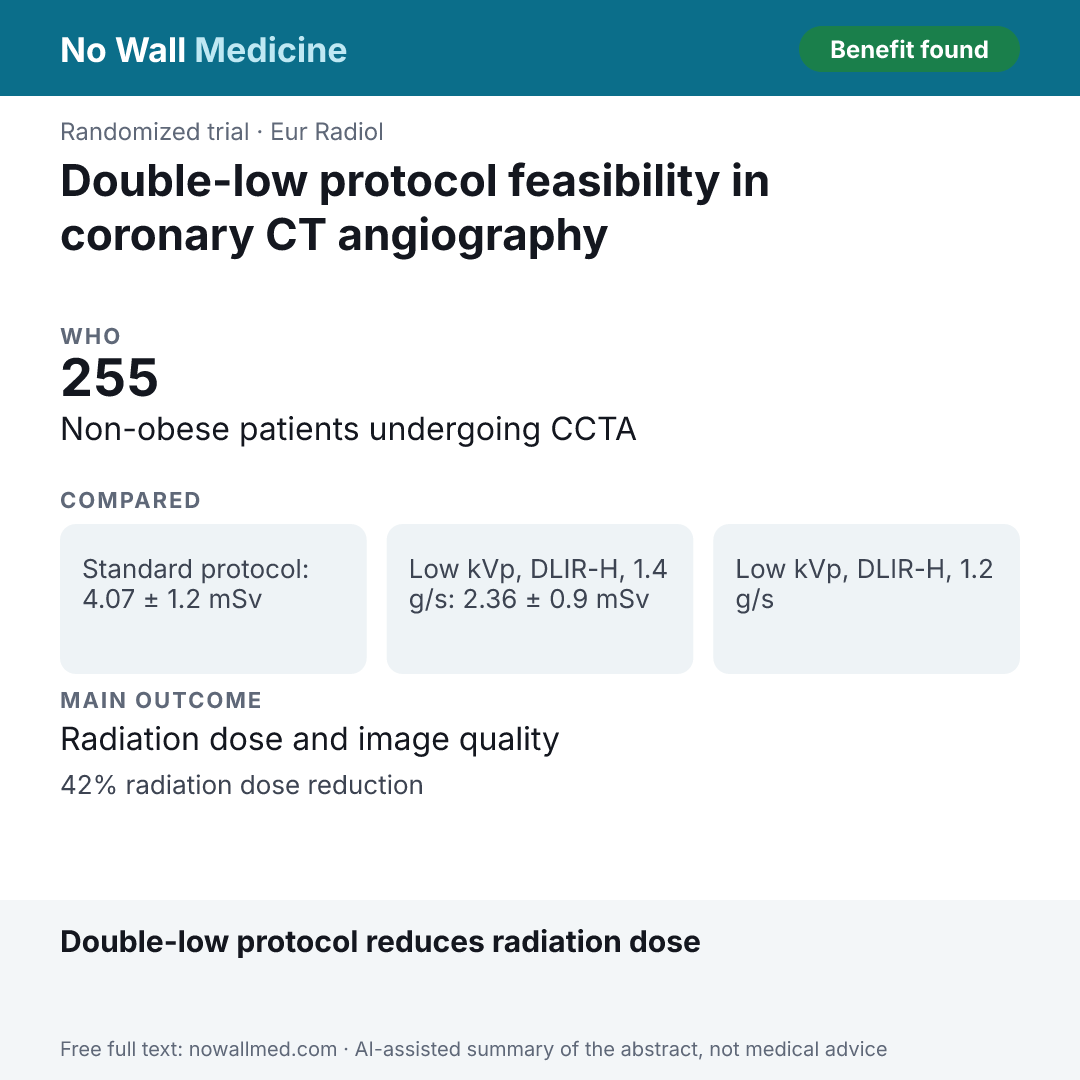
Deep learning reconstruction algorithm and high-concentration contrast medium: feasibility of a double-low protocol in coronary computed tomography angiography
Randomized trialBenefit found
Double-low protocol feasibility in coronary CT angiography
Who
255
Non-obese patients undergoing CCTA
Compared
Standard protocol: 4.07 ± 1.2 mSv
Low kVp, DLIR-H, 1.4 g/s: 2.36 ± 0.9 mSv
Low kVp, DLIR-H, 1.2 g/s
Main outcome
Radiation dose and image quality
Result: 42% radiation dose reduction
Bottom line: Double-low protocol reduces radiation dose
Eur Radiol · 2024-09-19 · Save PNG
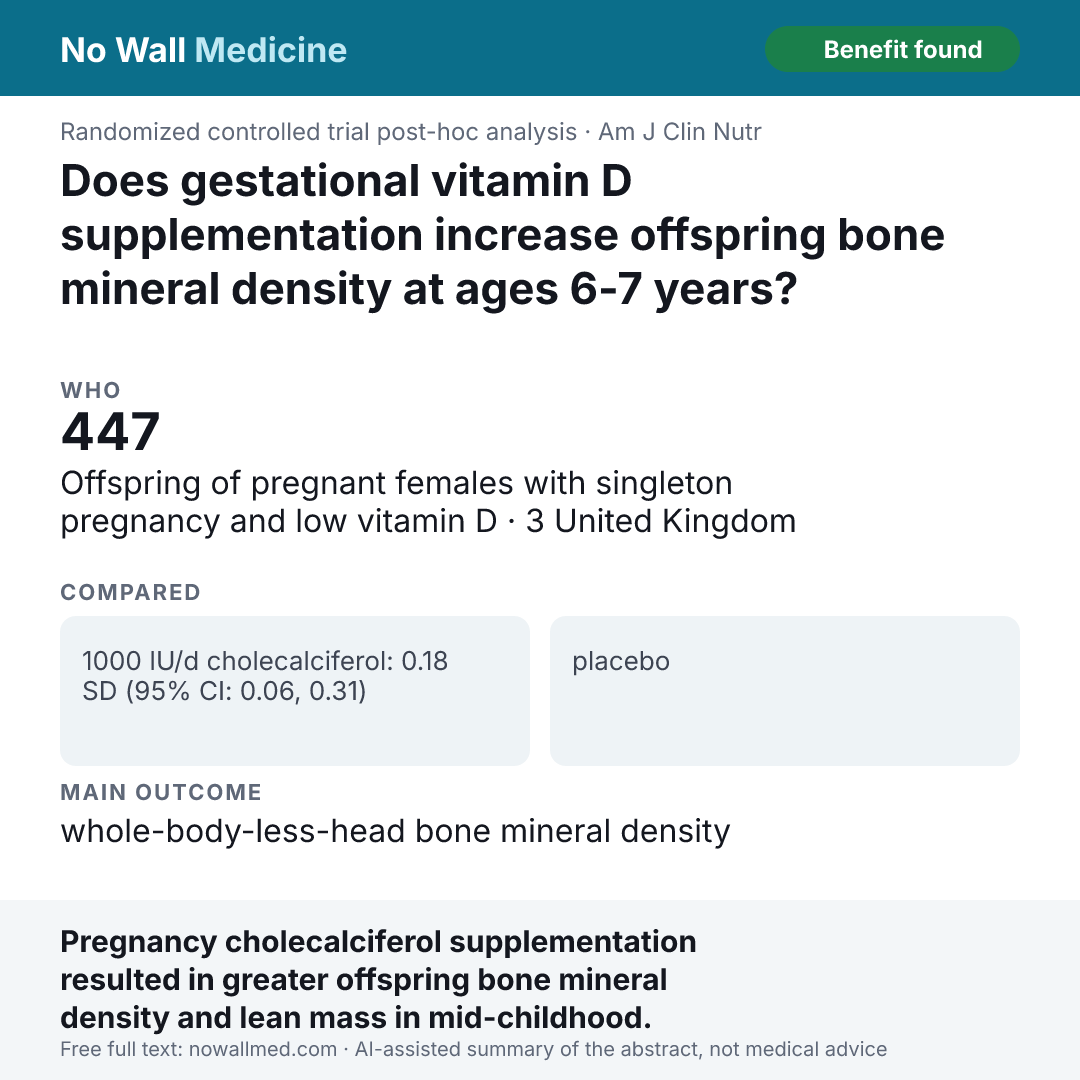
Pregnancy vitamin D supplementation and offspring bone mineral density in childhood follow-up of a randomized controlled trial
Randomized controlled trial post-hoc analysisBenefit found
Does gestational vitamin D supplementation increase offspring bone mineral density at ages 6-7 years?
Who
447
Offspring of pregnant females with singleton pregnancy and low vitamin D · 3 United Kingdom hospitals
Compared
1000 IU/d cholecalciferol: 0.18 SD (95% CI: 0.06, 0.31)
placebo
Main outcome
whole-body-less-head bone mineral density
Result: 0.18 SD (95% CI: 0.06, 0.31)
Bottom line: Pregnancy cholecalciferol supplementation resulted in greater offspring bone mineral density and lean mass in mid-childhood.
Am J Clin Nutr · 2024-09-19 · Save PNG
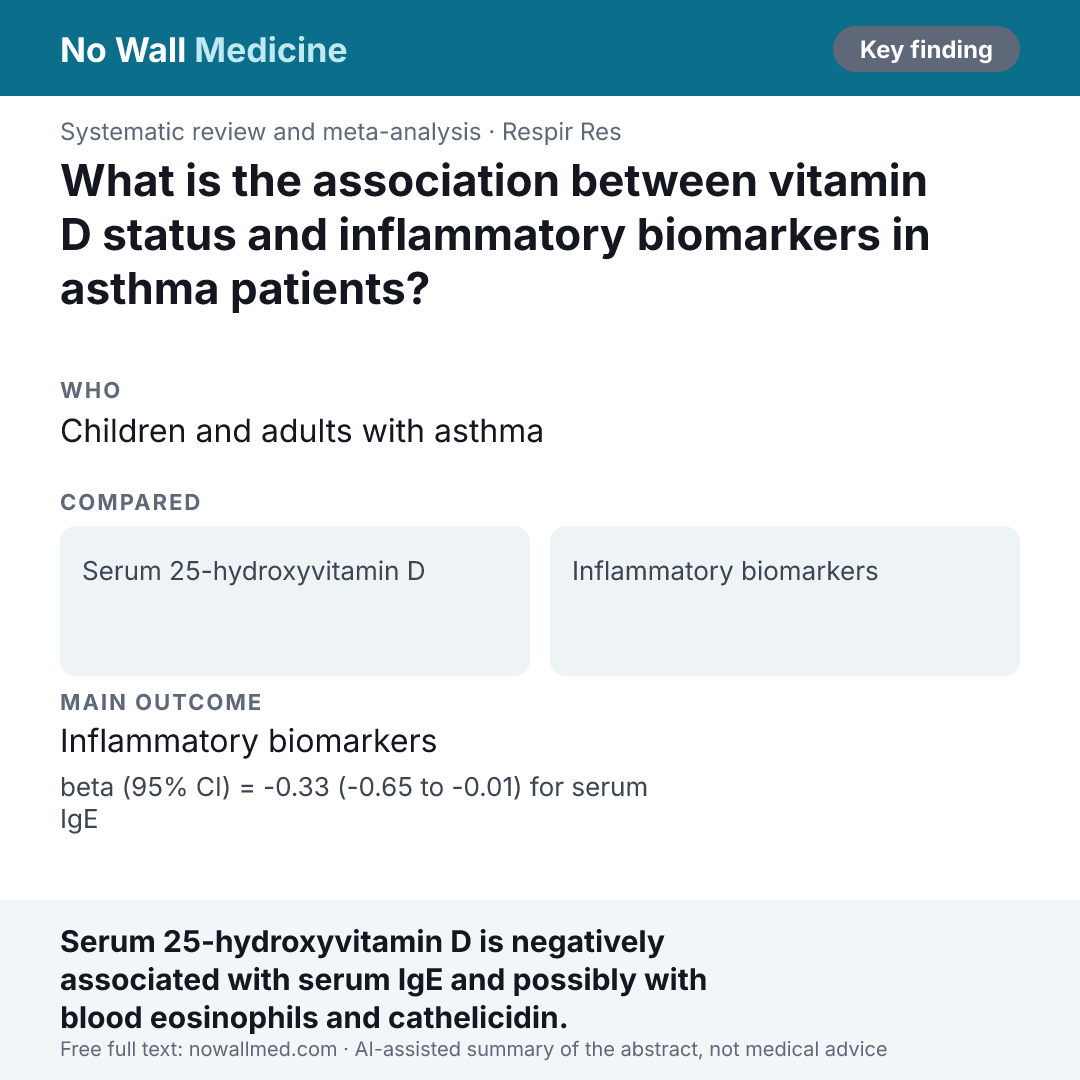
Associations between vitamin D status and biomarkers linked with inflammation in patients with asthma: a systematic review and meta-analysis of interventional and observational studies
Systematic review and meta-analysisKey finding
What is the association between vitamin D status and inflammatory biomarkers in asthma patients?
Who
Children and adults with asthma
Compared
Serum 25-hydroxyvitamin D
Inflammatory biomarkers
Main outcome
Inflammatory biomarkers
Result: beta (95% CI) = -0.33 (-0.65 to -0.01) for serum IgE
Bottom line: Serum 25-hydroxyvitamin D is negatively associated with serum IgE and possibly with blood eosinophils and cathelicidin.
Limitation: Future research should employ rigorous methodologies and standardized reporting for meta-analysis aggregation.
Respir Res · 2024-09-19 · Save PNG
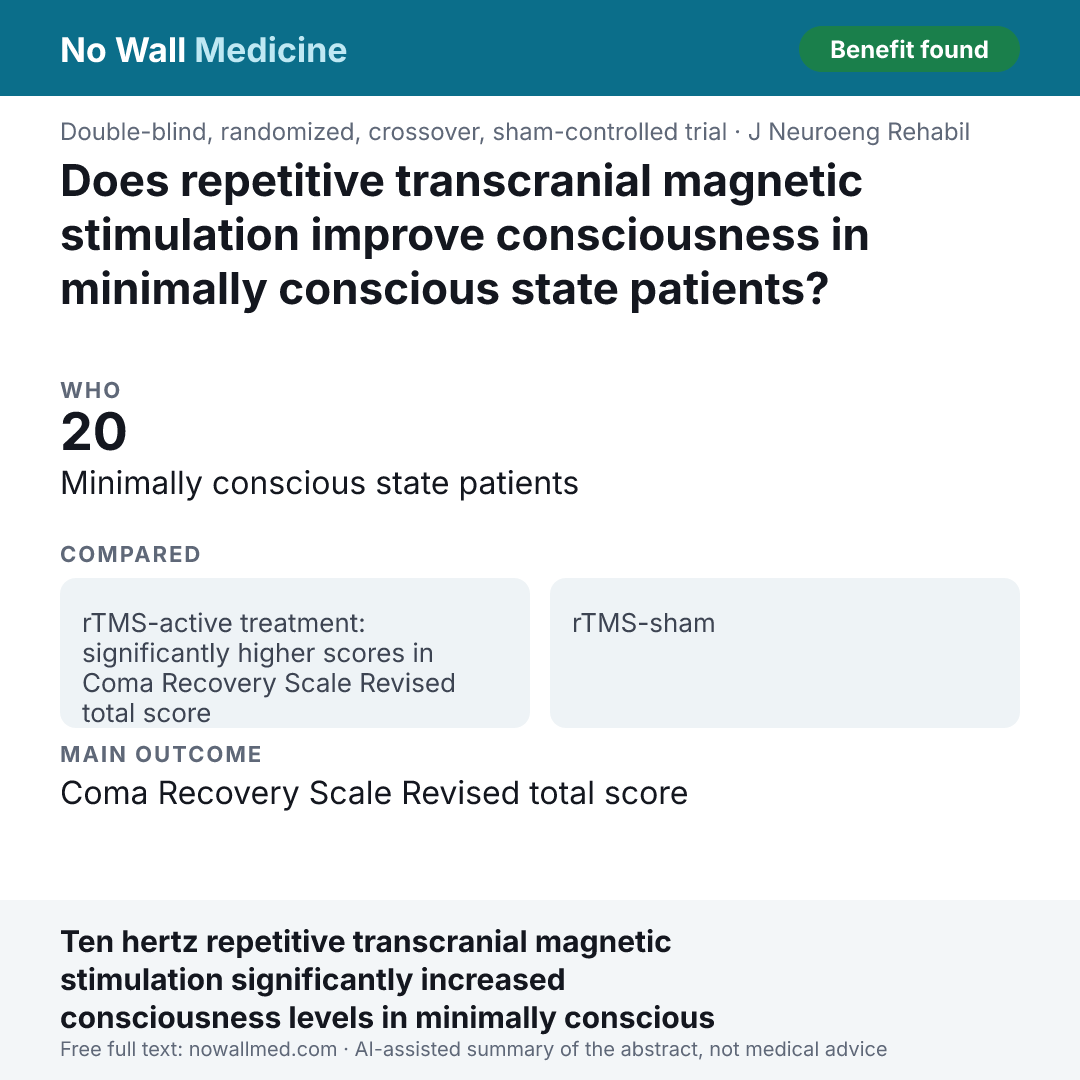
Perturbational complexity index in assessing responsiveness to rTMS treatment in patients with disorders of consciousness: a cross-over randomized controlled trial study
Double-blind, randomized, crossover, sham-controlled trialBenefit found
Does repetitive transcranial magnetic stimulation improve consciousness in minimally conscious state patients?
Who
20
Minimally conscious state patients
Compared
rTMS-active treatment: significantly higher scores in Coma Recovery Scale Revised total score
rTMS-sham
Main outcome
Coma Recovery Scale Revised total score
Bottom line: Ten hertz repetitive transcranial magnetic stimulation significantly increased consciousness levels in minimally conscious state patients.
J Neuroeng Rehabil · 2024-09-19 · Save PNG
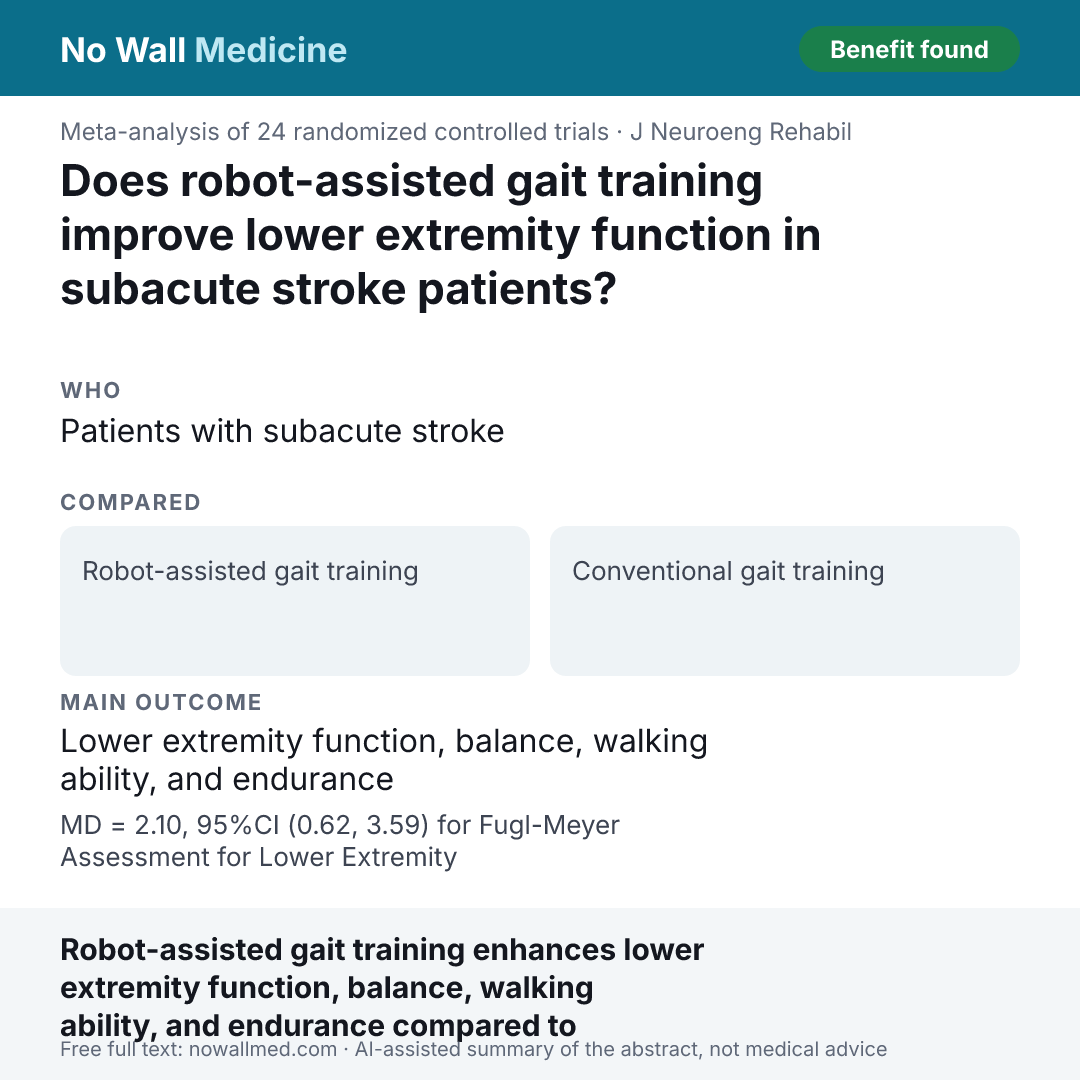
Efficacy of robot-assisted gait training on lower extremity function in subacute stroke patients: a systematic review and meta-analysis
Meta-analysis of 24 randomized controlled trialsBenefit found
Does robot-assisted gait training improve lower extremity function in subacute stroke patients?
Who
Patients with subacute stroke
Compared
Robot-assisted gait training
Conventional gait training
Main outcome
Lower extremity function, balance, walking ability, and endurance
Result: MD = 2.10, 95%CI (0.62, 3.59) for Fugl-Meyer Assessment for Lower Extremity
Bottom line: Robot-assisted gait training enhances lower extremity function, balance, walking ability, and endurance compared to conventional gait training.
Limitation: The quality of evidence for improvements in gait speed remains low.
J Neuroeng Rehabil · 2024-09-19 · Save PNG
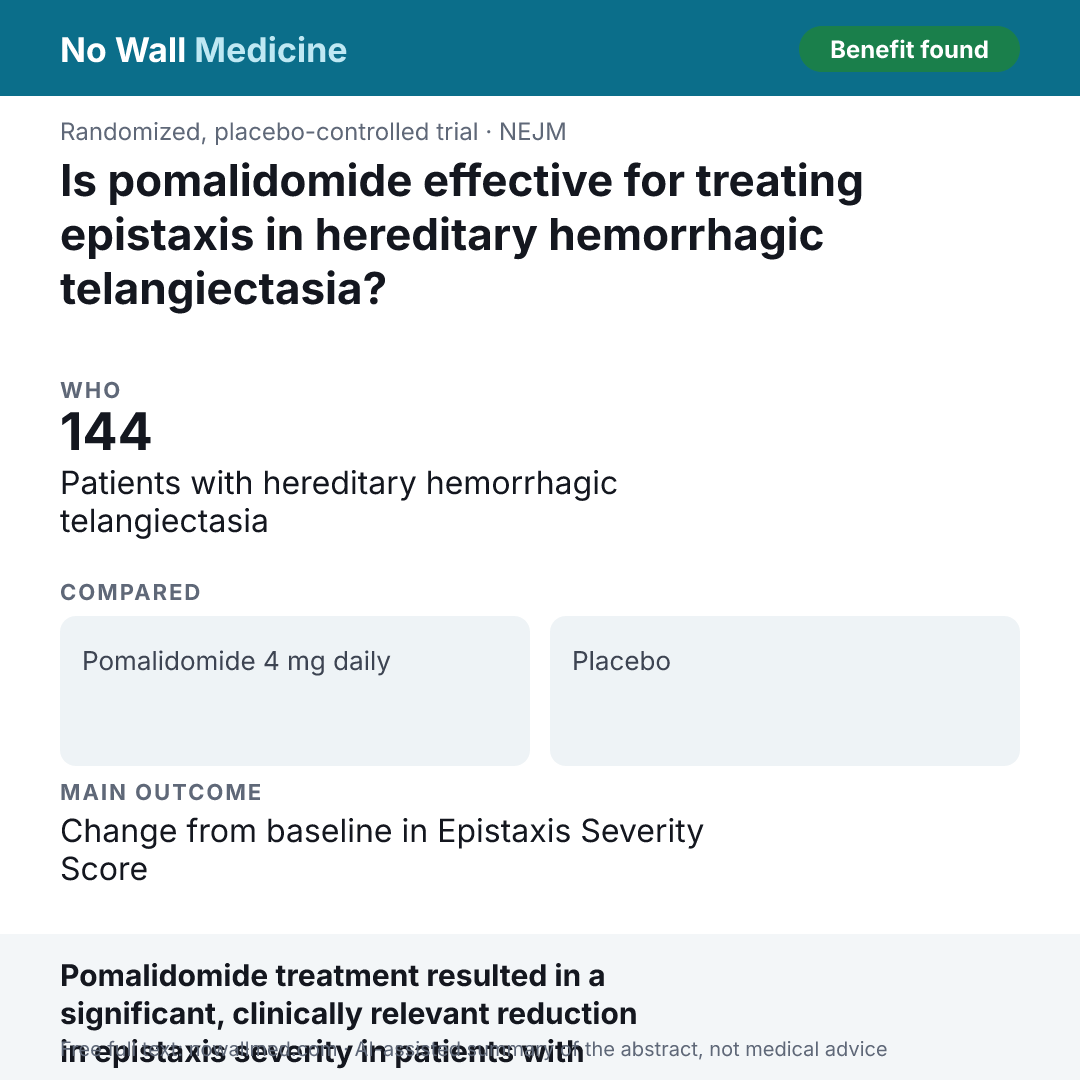
Pomalidomide for Epistaxis in Hereditary Hemorrhagic Telangiectasia
Randomized, placebo-controlled trialBenefit found
Is pomalidomide effective for treating epistaxis in hereditary hemorrhagic telangiectasia?
Who
144
Patients with hereditary hemorrhagic telangiectasia
Compared
Pomalidomide 4 mg daily
Placebo
Main outcome
Change from baseline in Epistaxis Severity Score
Result: mean difference -0.94 points (95% CI -1.57 to -0.31)
Bottom line: Pomalidomide treatment resulted in a significant, clinically relevant reduction in epistaxis severity in patients with hereditary hemorrhagic telangiectasia.
Funded by: National Heart, Lung, and Blood Institute
NEJM · 2024-09-18 · Save PNG
Comparative effects of drug interventions for the acute management of migraine episodes in adults: systematic review and network meta-analysis
Systematic review and network meta-analysisBenefit found
Which oral monotherapies are most effective for acute migraine management in adults?
Who
89445
Adults with a diagnosis of migraine
Compared
Active interventions
Placebo
Main outcome
Pain freedom at two hours and sustained pain freedom to 24 hours
Result: odds ratios from 1.73 (95% CI 1.27 to 2.34) to 5.19 (4.25 to 6.33)
Bottom line: Eletriptan, rizatriptan, sumatriptan, and zolmitriptan were most effective for acute migraine treatment.
Limitation: Confidence in accordance with CINeMA ranged from high to very low.
BMJ · 2024-09-18 · Save PNG

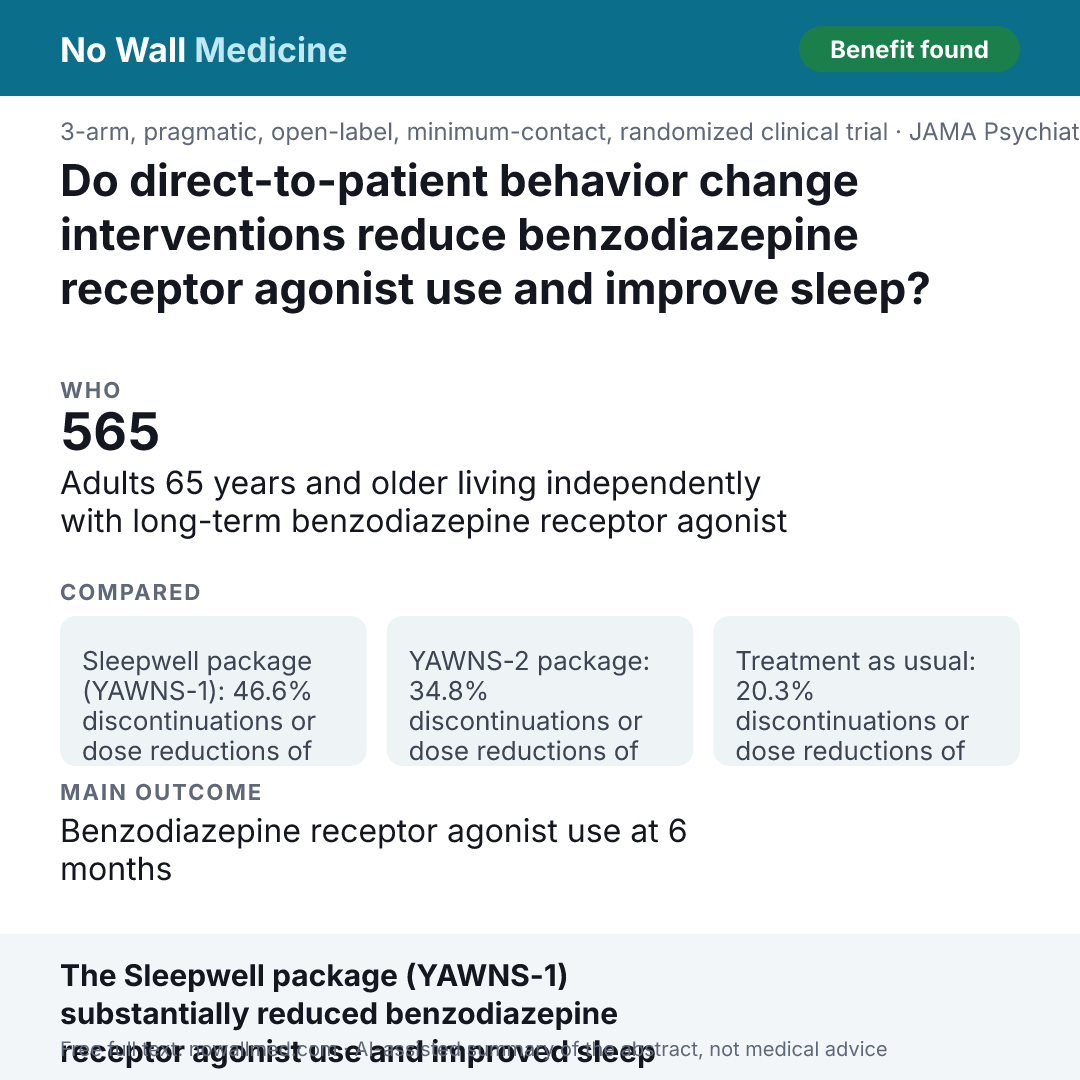
Patient Self-Guided Interventions to Reduce Sedative Use and Improve Sleep: The YAWNS NB Randomized Clinical Trial
3-arm, pragmatic, open-label, minimum-contact, randomized clinical trialBenefit found
Do direct-to-patient behavior change interventions reduce benzodiazepine receptor agonist use and improve sleep?
Who
565
Adults 65 years and older living independently with long-term benzodiazepine receptor agonist use and insomnia · Communities across New Brunswick, Canada
Compared
Sleepwell package (YAWNS-1): 46.6% discontinuations or dose reductions of 25% or greater
YAWNS-2 package: 34.8% discontinuations or dose reductions of 25% or greater
Treatment as usual: 20.3% discontinuations or dose reductions of 25% or greater
Main outcome
Benzodiazepine receptor agonist use at 6 months
Bottom line: The Sleepwell package (YAWNS-1) substantially reduced benzodiazepine receptor agonist use and improved sleep outcomes in older adults.
JAMA Psychiatry · 2024-09-18 · Save PNG
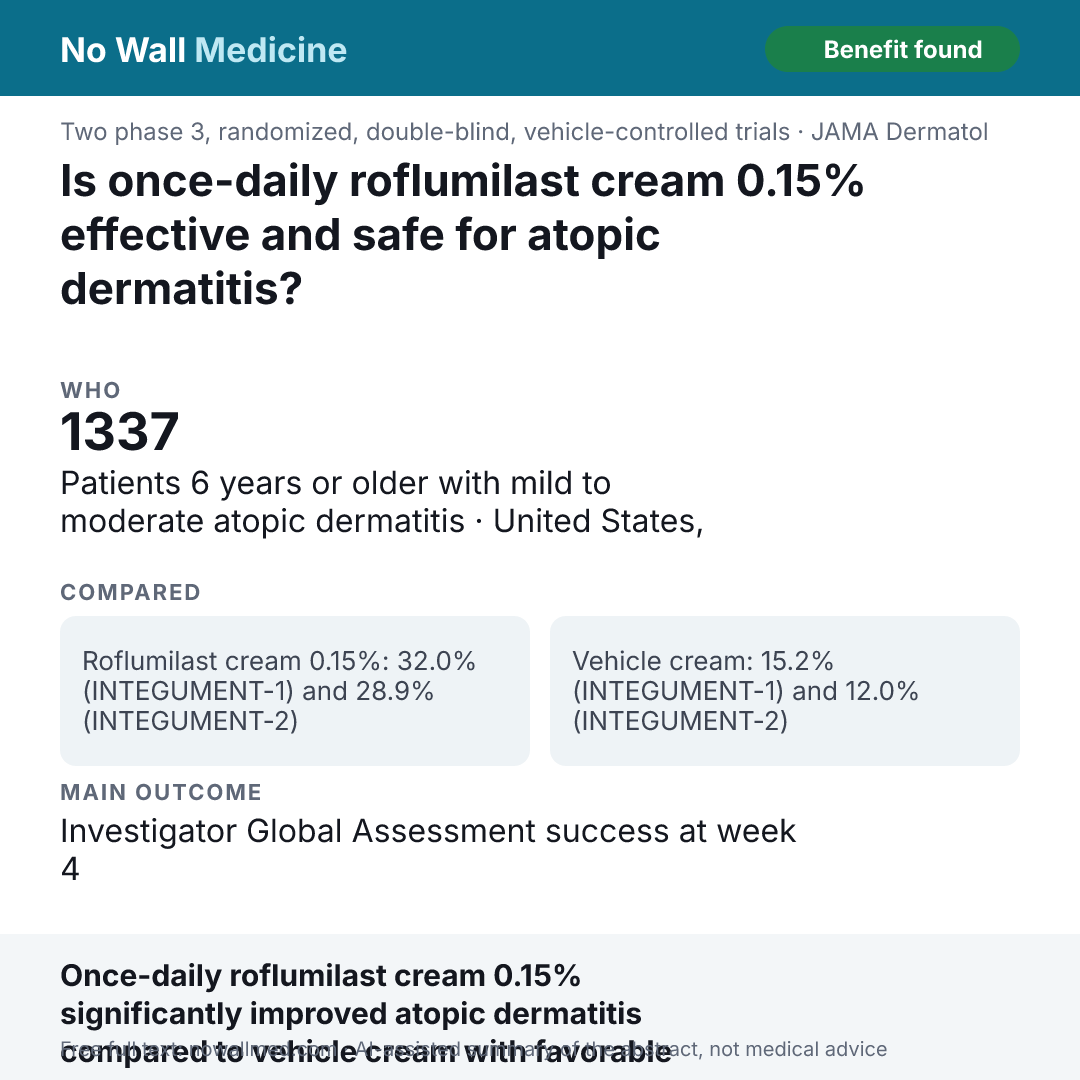
Roflumilast Cream, 0.15%, for Atopic Dermatitis in Adults and Children: INTEGUMENT-1 and INTEGUMENT-2 Randomized Clinical Trials
Two phase 3, randomized, double-blind, vehicle-controlled trialsBenefit found
Is once-daily roflumilast cream 0.15% effective and safe for atopic dermatitis?
Who
1337
Patients 6 years or older with mild to moderate atopic dermatitis · United States, Canada, and Poland
Compared
Roflumilast cream 0.15%: 32.0% (INTEGUMENT-1) and 28.9% (INTEGUMENT-2)
Vehicle cream: 15.2% (INTEGUMENT-1) and 12.0% (INTEGUMENT-2)
Main outcome
Investigator Global Assessment success at week 4
Bottom line: Once-daily roflumilast cream 0.15% significantly improved atopic dermatitis compared to vehicle cream with favorable safety.
JAMA Dermatol · 2024-09-18 · Save PNG
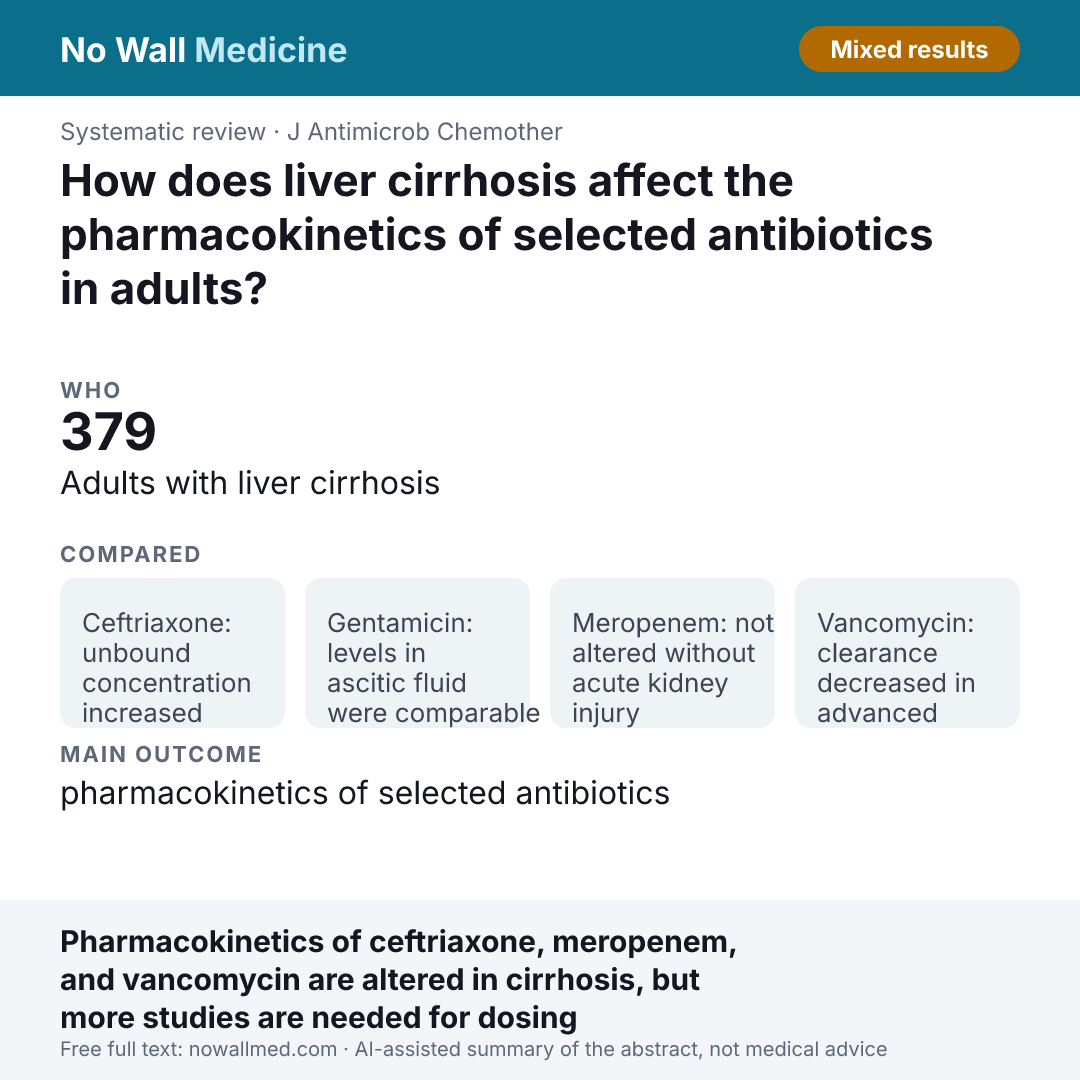
Pharmacokinetics of ceftriaxone, gentamicin, meropenem and vancomycin in liver cirrhosis: a systematic review
Systematic reviewMixed results
How does liver cirrhosis affect the pharmacokinetics of selected antibiotics in adults?
Who
379
Adults with liver cirrhosis
Compared
Ceftriaxone: unbound concentration increased
Gentamicin: levels in ascitic fluid were comparable to plasma
Meropenem: not altered without acute kidney injury
Vancomycin: clearance decreased in advanced cirrhosis
Main outcome
pharmacokinetics of selected antibiotics
Bottom line: Pharmacokinetics of ceftriaxone, meropenem, and vancomycin are altered in cirrhosis, but more studies are needed for dosing recommendations.
J Antimicrob Chemother · 2024-09-18 · Save PNG
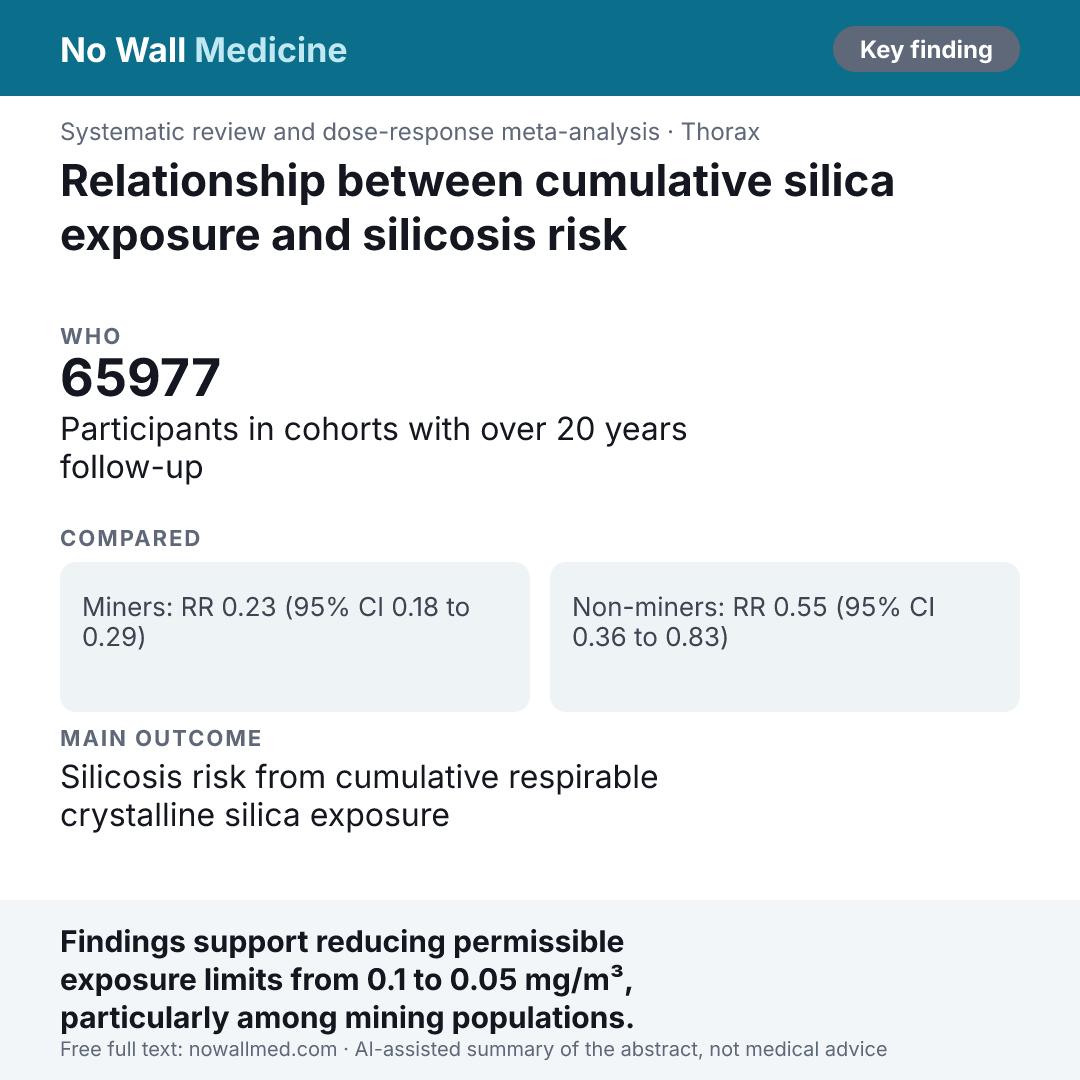
Relationship between cumulative silica exposure and silicosis: a systematic review and dose-response meta-analysis
Systematic review and dose-response meta-analysisKey finding
Relationship between cumulative silica exposure and silicosis risk
Who
65977
Participants in cohorts with over 20 years follow-up
Compared
Miners: RR 0.23 (95% CI 0.18 to 0.29)
Non-miners: RR 0.55 (95% CI 0.36 to 0.83)
Main outcome
Silicosis risk from cumulative respirable crystalline silica exposure
Result: Miners RR 0.23 (95% CI 0.18 to 0.29); Non-miners RR 0.55 (95% CI 0.36 to 0.83)
Bottom line: Findings support reducing permissible exposure limits from 0.1 to 0.05 mg/m³, particularly among mining populations.
Thorax · 2024-09-18 · Save PNG
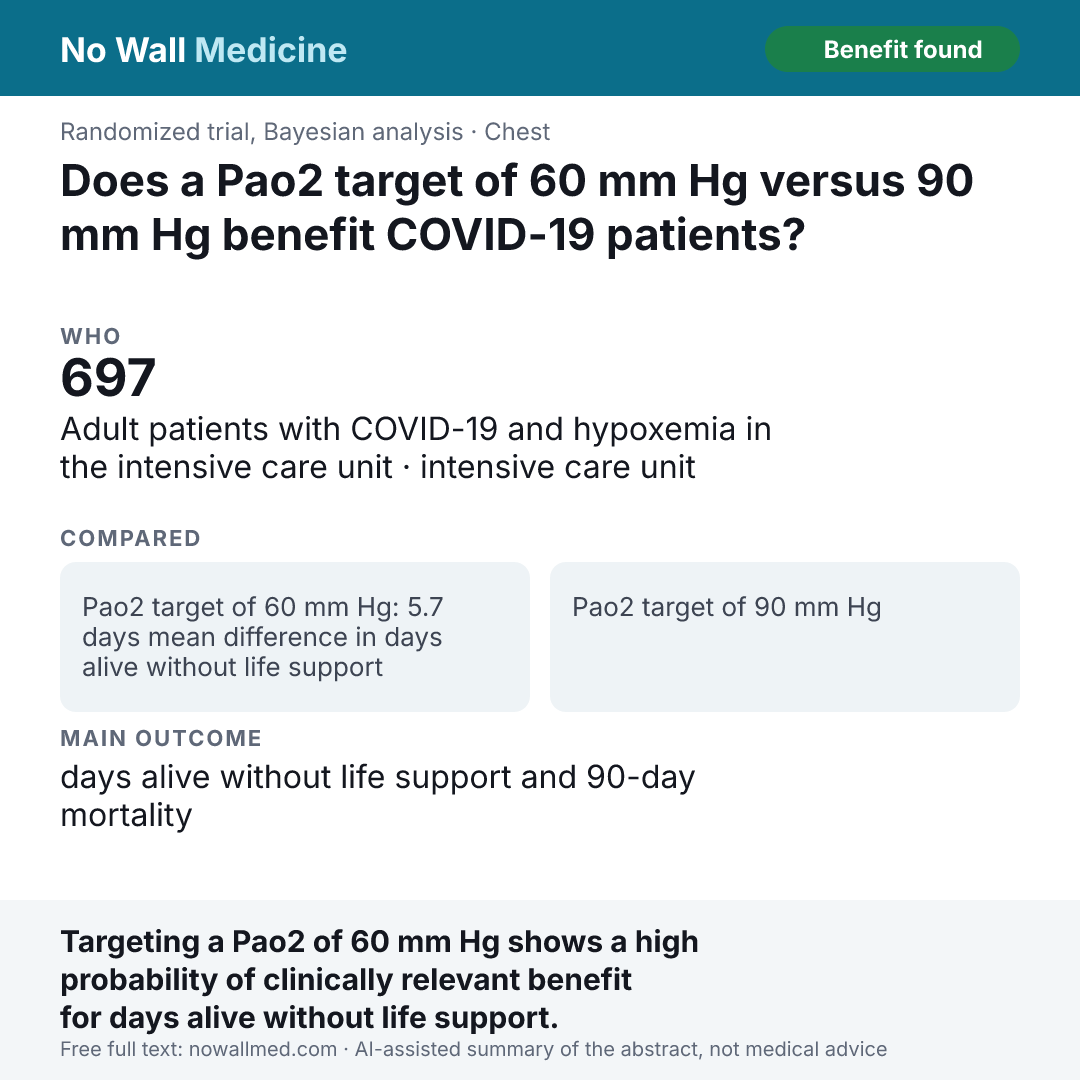
Lower or Higher Oxygenation Targets in Patients With COVID-19 in the ICU: A Secondary Bayesian Analysis of the Handling Oxygenation Targets in COVID-19 Trial
Randomized trial, Bayesian analysisBenefit found
Does a Pao2 target of 60 mm Hg versus 90 mm Hg benefit COVID-19 patients?
Who
697
Adult patients with COVID-19 and hypoxemia in the intensive care unit · intensive care unit
Compared
Pao2 target of 60 mm Hg: 5.7 days mean difference in days alive without life support
Pao2 target of 90 mm Hg
Main outcome
days alive without life support and 90-day mortality
Result: mean difference 5.7 days (95% credible interval, 0.2-11.2)
Bottom line: Targeting a Pao2 of 60 mm Hg shows a high probability of clinically relevant benefit for days alive without life support.
Chest · 2024-09-18 · Save PNG
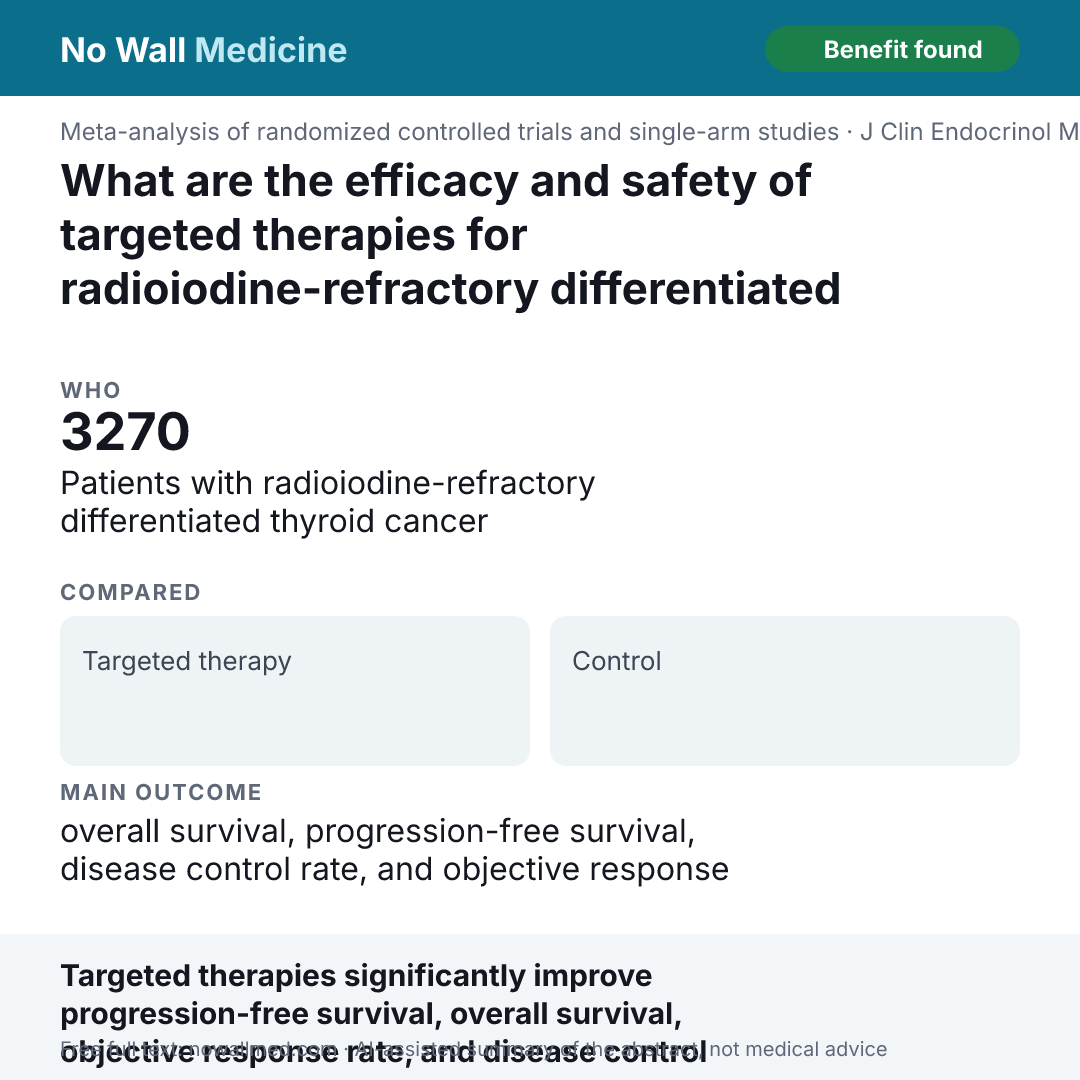
Efficacy and Safety of Targeted Therapy for Radioiodine-Refractory Differentiated Thyroid Cancer
Meta-analysis of randomized controlled trials and single-arm studiesBenefit found
What are the efficacy and safety of targeted therapies for radioiodine-refractory differentiated thyroid cancer?
Who
3270
Patients with radioiodine-refractory differentiated thyroid cancer
Compared
Targeted therapy
Control
Main outcome
overall survival, progression-free survival, disease control rate, and objective response rate
Result: hazard ratio 0.35 (95% CI 0.23-0.53) for progression-free survival and 0.53 (95% CI 0.32-0.86) for overall survival
Bottom line: Targeted therapies significantly improve progression-free survival, overall survival, objective response rate, and disease control rate in these patients.
J Clin Endocrinol Metab · 2024-09-18 · Save PNG