Visual abstracts
New randomized trials and meta-analyses from leading journals at a glance: who was studied, what was compared, and what was found. Every paper is free to read in full.
All specialtiesCardiology 1662Oncology 1443Gastroenterology & Hepatology 618Infectious Disease 1060Neurology 680Psychiatry & Mental Health 832Pulmonology 718Critical Care 487Endocrinology & Diabetes 907Pediatrics 976Surgery 828Orthopedics & Sports Medicine 311Neurosurgery 210Cardiothoracic & Vascular Surgery 190Plastic & Reconstructive Surgery 260Nephrology 343Rheumatology 227Hematology 363Dermatology 181Ophthalmology 196Obstetrics & Gynecology 537Public & Global Health 320Radiology & Imaging 224Anesthesiology 333Urology 298ENT (Otolaryngology) 225Emergency Medicine 189Allergy & Immunology 107Geriatrics 360Family Medicine & Primary Care 206Medical Genetics & Genomics 179Pathology & Laboratory Medicine 53Physical Medicine & Rehabilitation 288Palliative Care 147Nutrition 443Digital Health & AI 876General Medicine 134
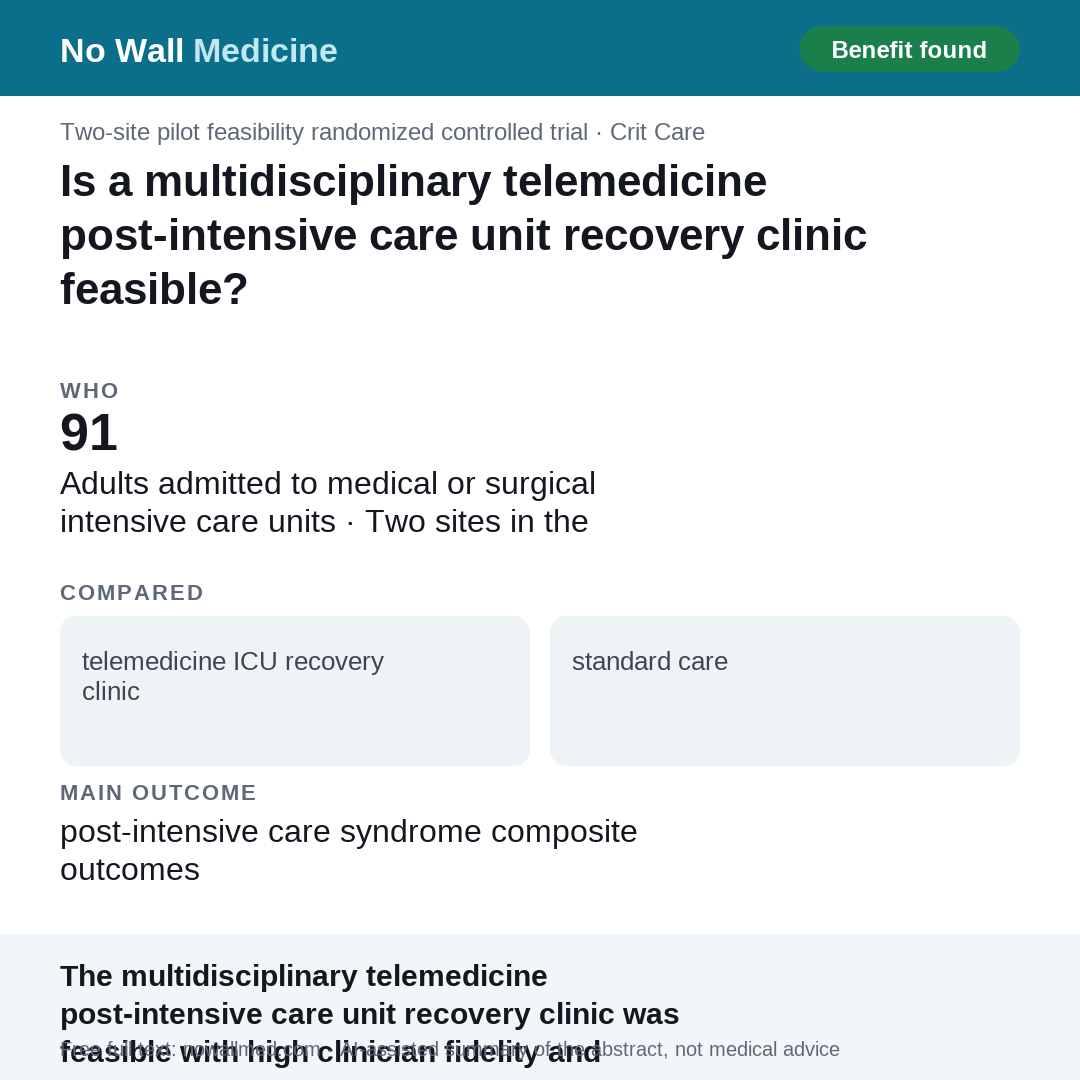
Multidisciplinary telemedicine intervention for ICU recovery: the TelePORT feasibility randomized trial
Two-site pilot feasibility randomized controlled trialBenefit found
Is a multidisciplinary telemedicine post-intensive care unit recovery clinic feasible?
Who
91
Adults admitted to medical or surgical intensive care units · Two sites in the southeastern United States
Compared
telemedicine ICU recovery clinic
standard care
Main outcome
post-intensive care syndrome composite outcomes
Bottom line: The multidisciplinary telemedicine post-intensive care unit recovery clinic was feasible with high clinician fidelity and favorable participant ratings.
Crit Care · 2026-06-27Download image
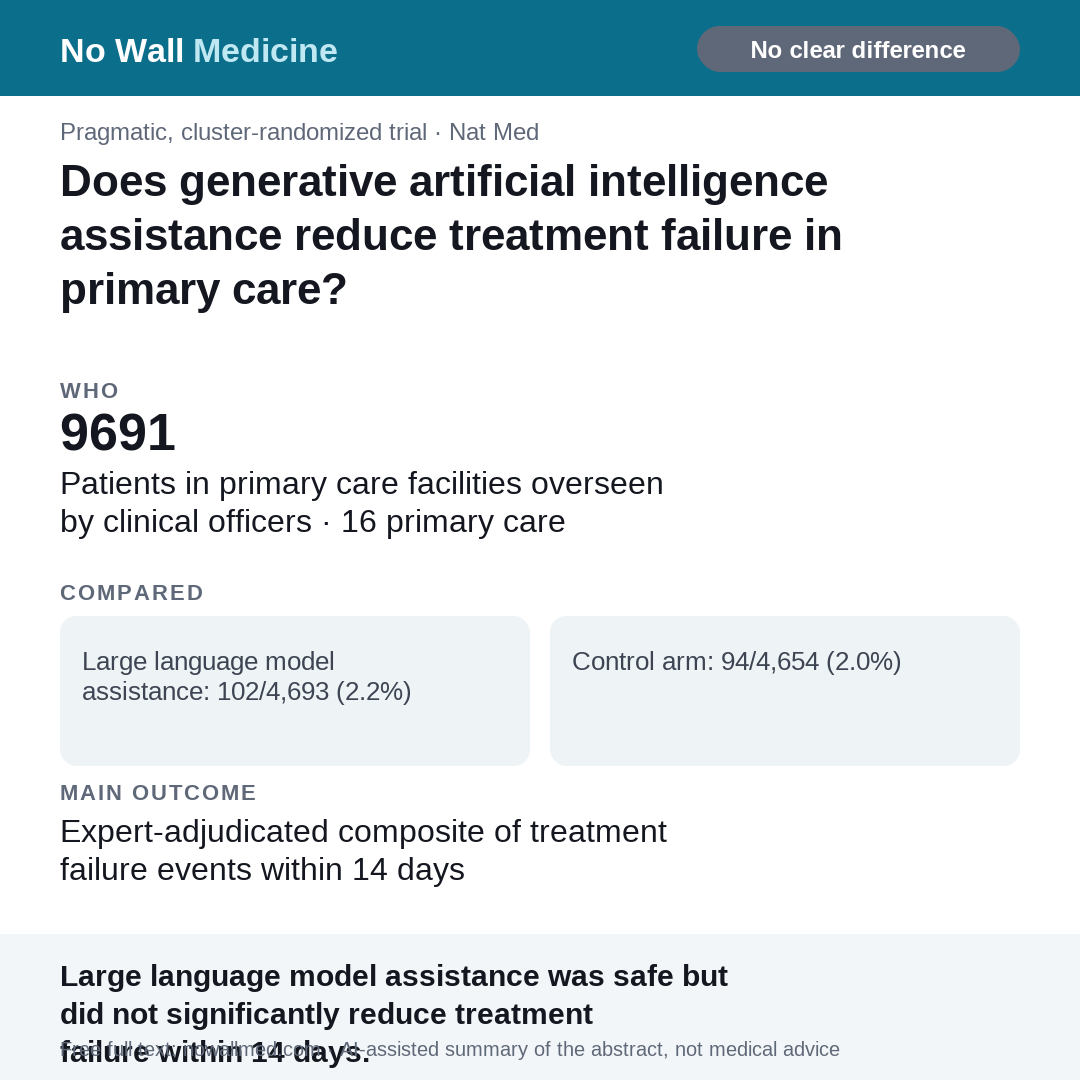
Generative AI-enabled clinical decision support system in primary care: a pragmatic, cluster-randomized trial
Pragmatic, cluster-randomized trialNo clear difference
Does generative artificial intelligence assistance reduce treatment failure in primary care?
Who
9691
Patients in primary care facilities overseen by clinical officers · 16 primary care facilities in Kenya
Compared
Large language model assistance: 102/4,693 (2.2%)
Control arm: 94/4,654 (2.0%)
Main outcome
Expert-adjudicated composite of treatment failure events within 14 days
Result: adjusted odds ratio 0.77 (95% confidence interval 0.55 to 1.08)
Bottom line: Large language model assistance was safe but did not significantly reduce treatment failure within 14 days.
Nat Med · 2026-06-26Download image
Immersive virtual reality with synchronous neurostimulation for upper-limb recovery after stroke: a randomized feasibility trial
Randomized feasibility trialBenefit found
Is immersive virtual reality with synchronous neurostimulation feasible and effective for stroke recovery?
Who
25
Patients with chronic stroke
Compared
MultiSensy intervention: FMA-UE 13.17 ± 1.30
Conventional rehabilitation: FMA-UE 7.54 ± 1.48
Main outcome
Motor function assessed by Fugl-Meyer Assessment Upper Extremity and Action Research Arm Test
Bottom line: MultiSensy intervention resulted in greater motor improvement compared to conventional rehabilitation in patients with chronic stroke.
Limitation: The study was a small feasibility trial with a limited sample size.
Nat Med · 2026-06-26Download image

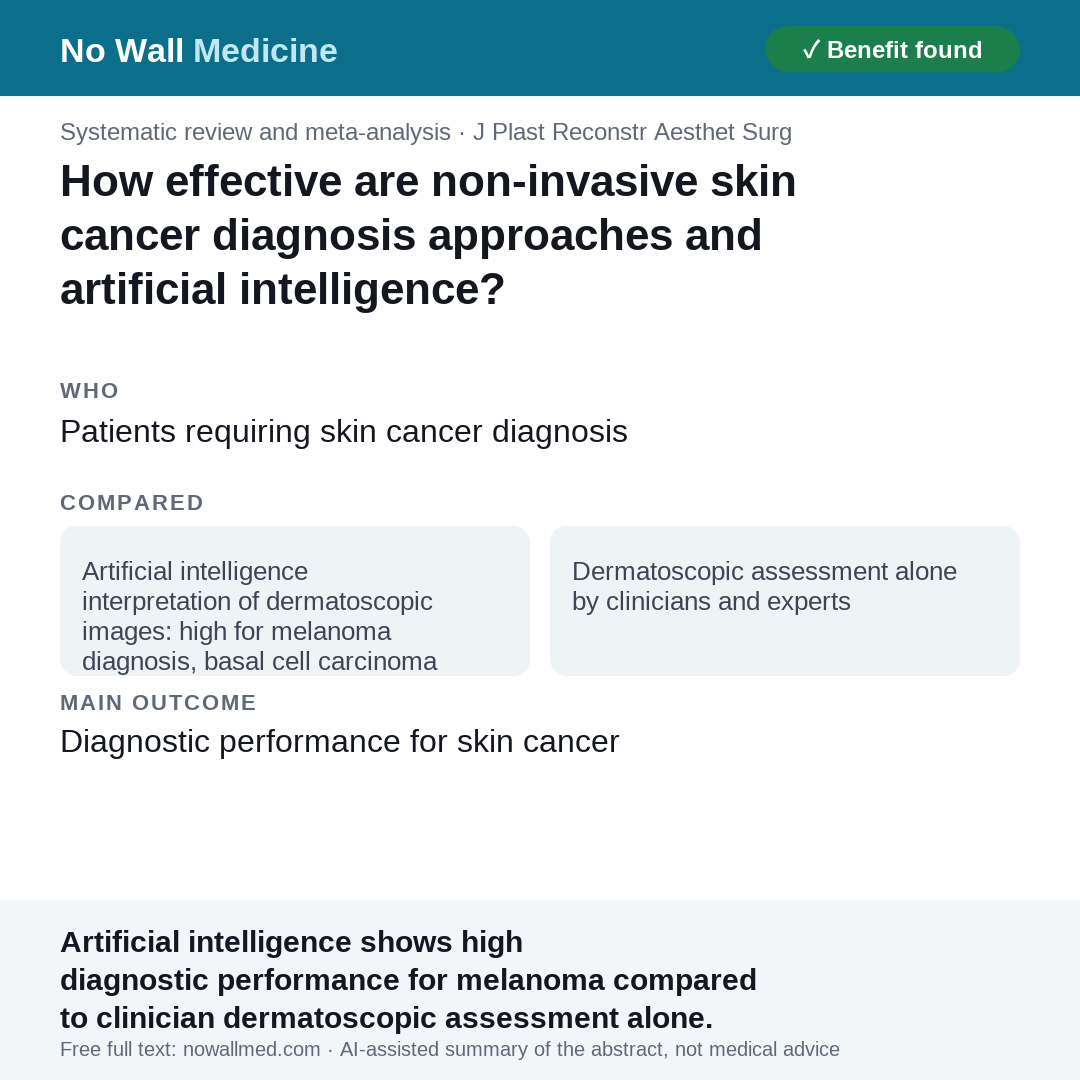
Efficacy of current approaches to non-invasive diagnosis of skin cancer and the potential impact of artificial intelligence: A systematic review and meta-analysis
Systematic review and meta-analysisBenefit found
How effective are non-invasive skin cancer diagnosis approaches and artificial intelligence?
Who
Patients requiring skin cancer diagnosis
Compared
Artificial intelligence interpretation of dermatoscopic images: high for melanoma diagnosis, basal cell carcinoma or malignancy
Dermatoscopic assessment alone by clinicians and experts
Main outcome
Diagnostic performance for skin cancer
Bottom line: Artificial intelligence shows high diagnostic performance for melanoma compared to clinician dermatoscopic assessment alone.
J Plast Reconstr Aesthet Surg · 2026-06-26Download image
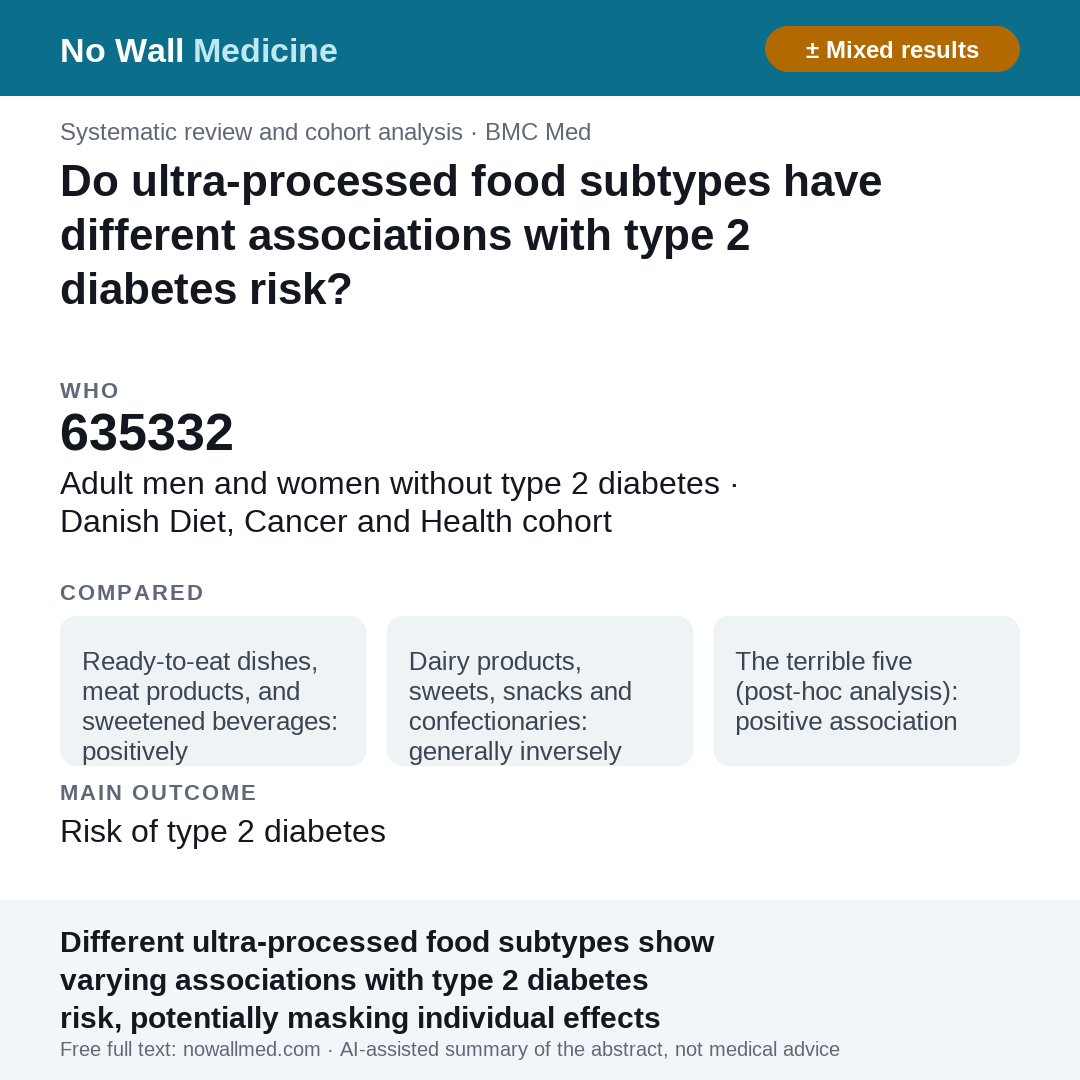
A systematic review of ultra-processed food subtypes and risk of type 2 diabetes, combined with a cohort analysis, question the utility of broad food classifications for public health policy
Systematic review and cohort analysisMixed results
Do ultra-processed food subtypes have different associations with type 2 diabetes risk?
Who
635332
Adult men and women without type 2 diabetes · Danish Diet, Cancer and Health cohort
Compared
Ready-to-eat dishes, meat products, and sweetened beverages: positively associated
Dairy products, sweets, snacks and confectionaries: generally inversely associated
The terrible five (post-hoc analysis): positive association
Main outcome
Risk of type 2 diabetes
Bottom line: Different ultra-processed food subtypes show varying associations with type 2 diabetes risk, potentially masking individual effects in broad categories.
Limitation: Overall risk of bias was considered moderate to high in all included studies.
BMC Med · 2026-06-26Download image
40 Hz biparietal transcranial alternating current stimulation for Alzheimer's disease: a prospective study
Randomized prospective studyBenefit found
Is biparietal 40 Hz transcranial alternating current stimulation effective for Alzheimer's disease?
Who
Patients with mild Alzheimer's disease · First Hospital of Hebei Medical University
Compared
tACS group: improvements in global cognition, memory, language, attention, and executive functions
Sham group: clinical efficacies were not obvious
Main outcome
global cognition, memory, language, attention, executive functions, and neuropsychiatric inventory scores
Bottom line: Biparietal 40 Hz transcranial alternating current stimulation is a potentially safe and effective treatment for mild Alzheimer's disease.
BMC Med · 2026-06-26Download image

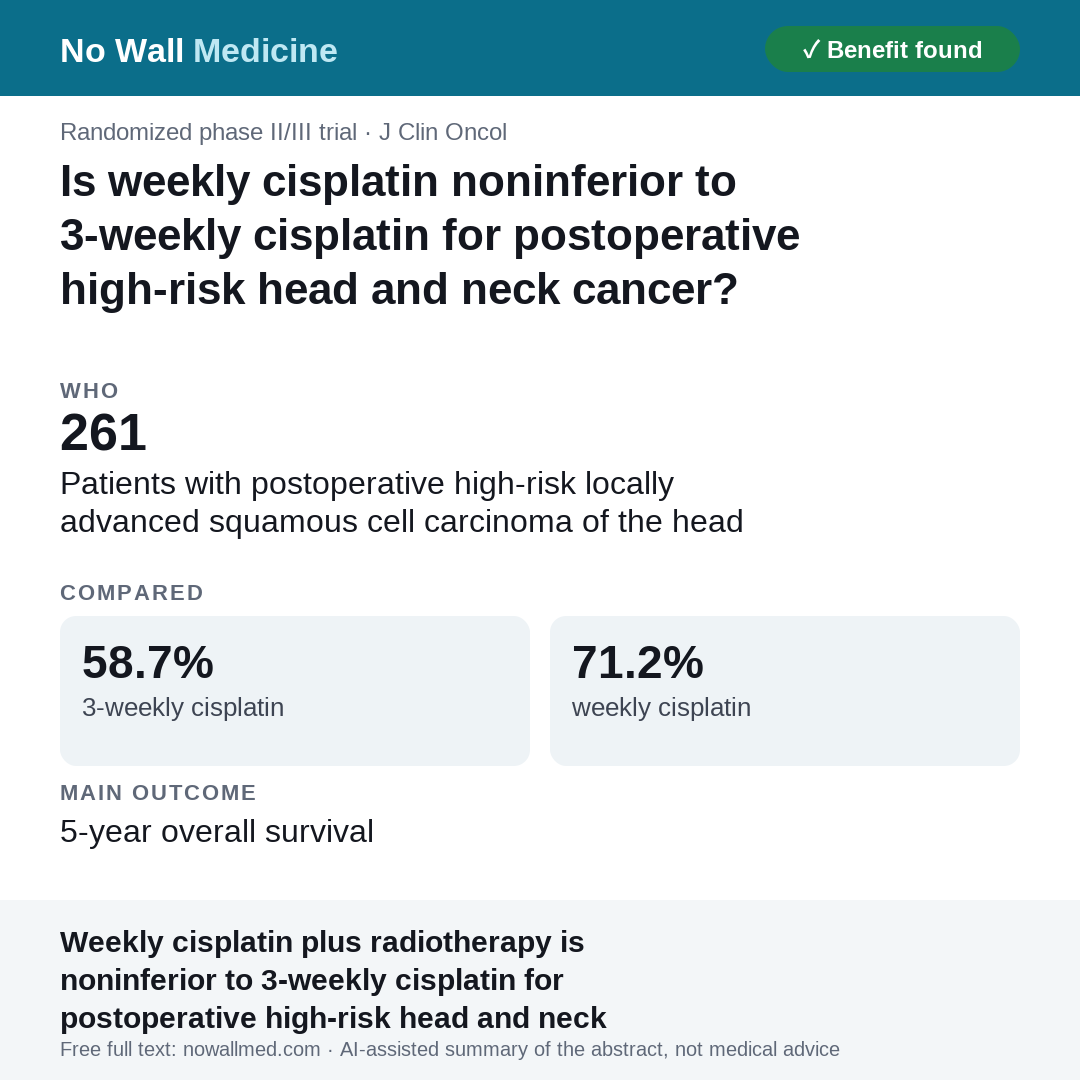
Long-Term Follow-Up of JCOG1008, a Randomized Phase II/III Trial of Chemoradiotherapy Comparing 3-Weekly Cisplatin With Weekly Cisplatin in Postoperative Head and Neck Cancer
Randomized phase II/III trialBenefit found
Is weekly cisplatin noninferior to 3-weekly cisplatin for postoperative high-risk head and neck cancer?
Who
261
Patients with postoperative high-risk locally advanced squamous cell carcinoma of the head and neck
Compared
58.7%3-weekly cisplatin
71.2%weekly cisplatin
Main outcome
5-year overall survival
Result: hazard ratio 0.76 (95% CI 0.52 to 1.12 [<1.32])
Bottom line: Weekly cisplatin plus radiotherapy is noninferior to 3-weekly cisplatin for postoperative high-risk head and neck cancer.
J Clin Oncol · 2026-06-26Download image
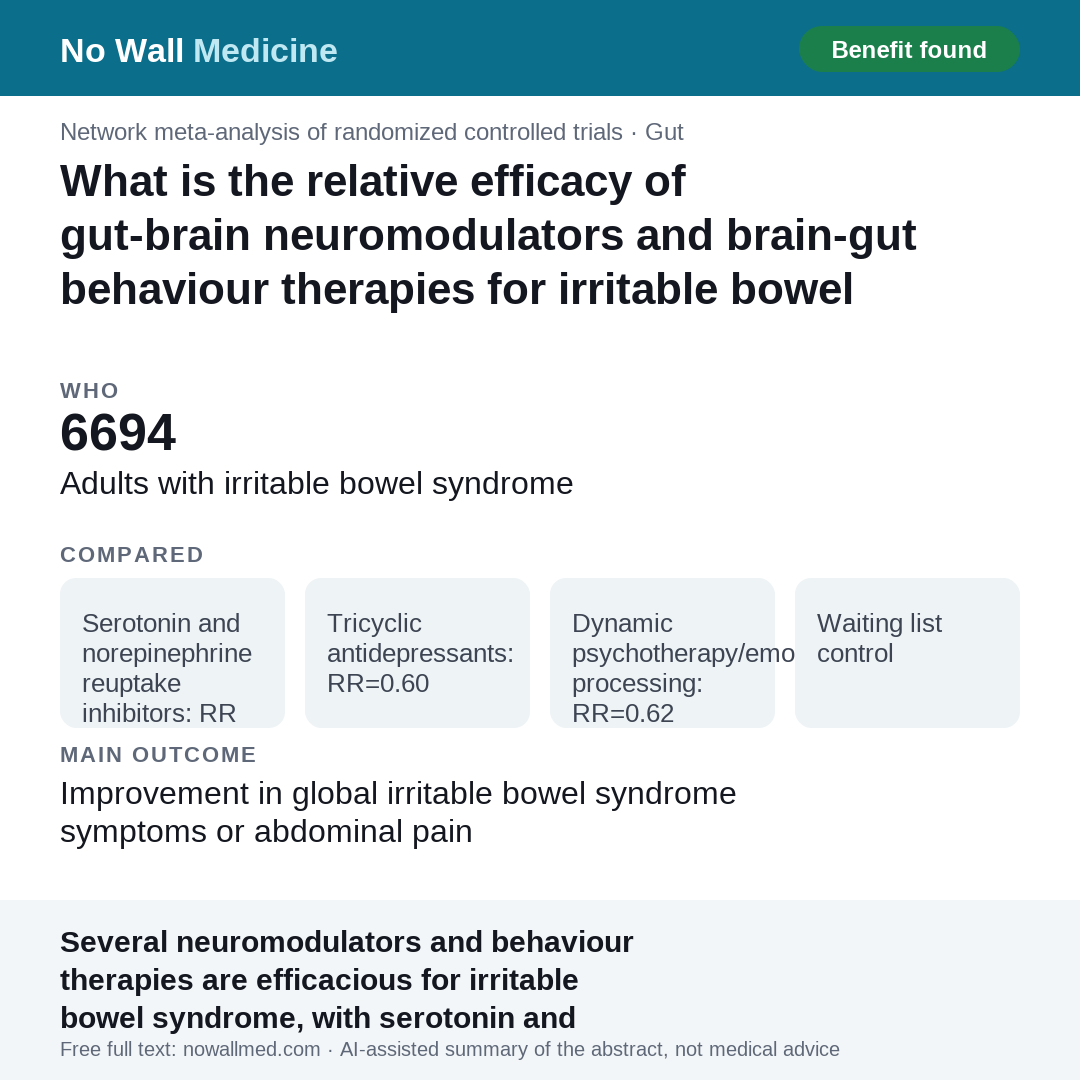
Efficacy of gut-brain neuromodulators and brain-gut behaviour therapies for irritable bowel syndrome: systematic review and network meta-analysis
Network meta-analysis of randomized controlled trialsBenefit found
What is the relative efficacy of gut-brain neuromodulators and brain-gut behaviour therapies for irritable bowel syndrome?
Who
6694
Adults with irritable bowel syndrome
Compared
Serotonin and norepinephrine reuptake inhibitors: RR of global IBS symptoms or abdominal pain not improving=0.49
Tricyclic antidepressants: RR=0.60
Dynamic psychotherapy/emotional processing: RR=0.62
Waiting list control
Main outcome
Improvement in global irritable bowel syndrome symptoms or abdominal pain
Result: RR of global IBS symptoms or abdominal pain not improving=0.49 (95% CI 0.32 to 0.75)
Bottom line: Several neuromodulators and behaviour therapies are efficacious for irritable bowel syndrome, with serotonin and norepinephrine reuptake inhibitors ranking first.
Limitation: No trials were at low risk of bias and overall certainty was low or very low.
Gut · 2026-06-26Download image
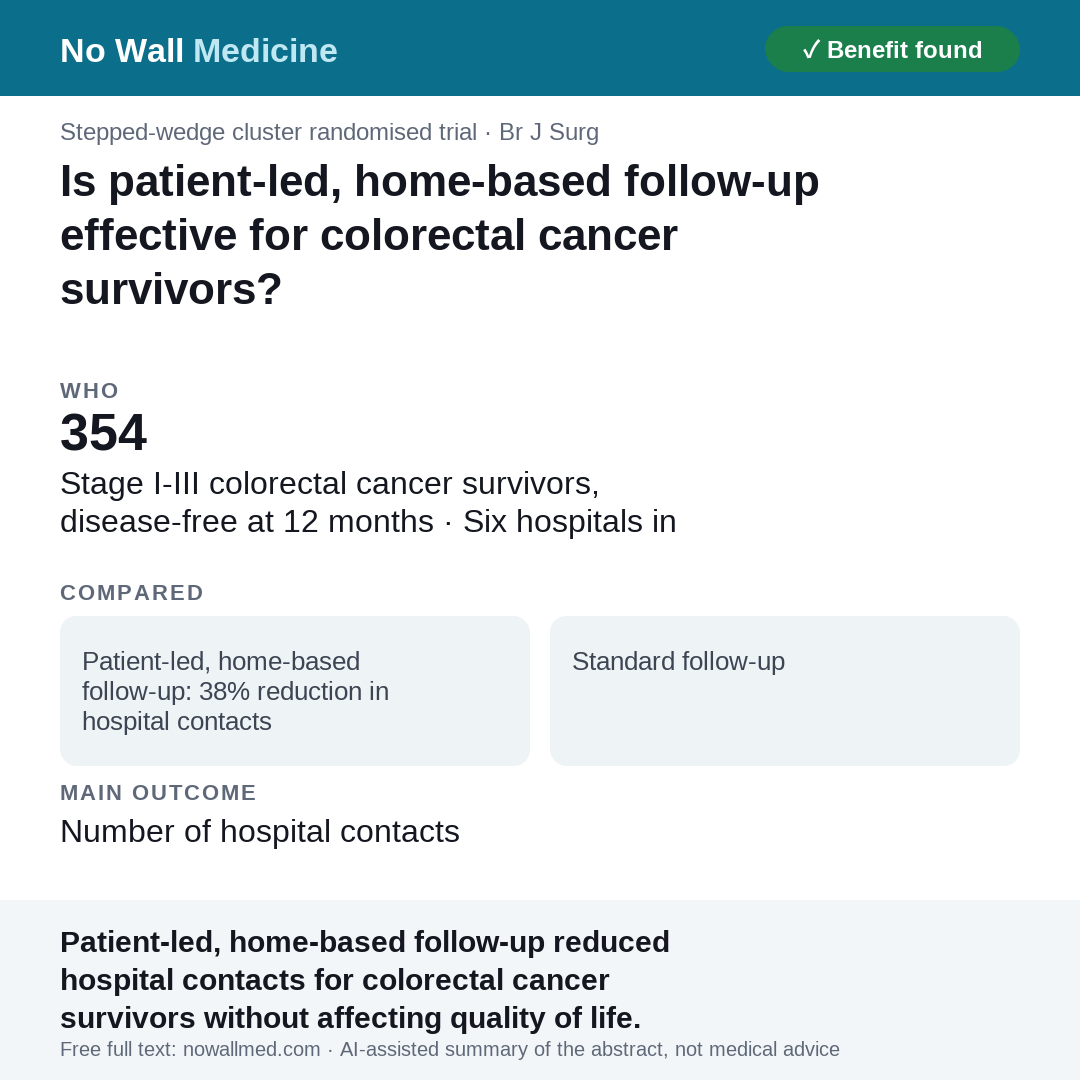
Patient-led, home-based follow-up for colorectal cancer: DISTANCE multicentre stepped-wedge cluster randomised trial
Stepped-wedge cluster randomised trialBenefit found
Is patient-led, home-based follow-up effective for colorectal cancer survivors?
Who
354
Stage I-III colorectal cancer survivors, disease-free at 12 months · Six hospitals in the Netherlands
Compared
Patient-led, home-based follow-up: 38% reduction in hospital contacts
Standard follow-up
Main outcome
Number of hospital contacts
Result: rate ratio 0.62 (95% c.i. 0.51 to 0.75)
Bottom line: Patient-led, home-based follow-up reduced hospital contacts for colorectal cancer survivors without affecting quality of life.
Br J Surg · 2026-06-26Download image
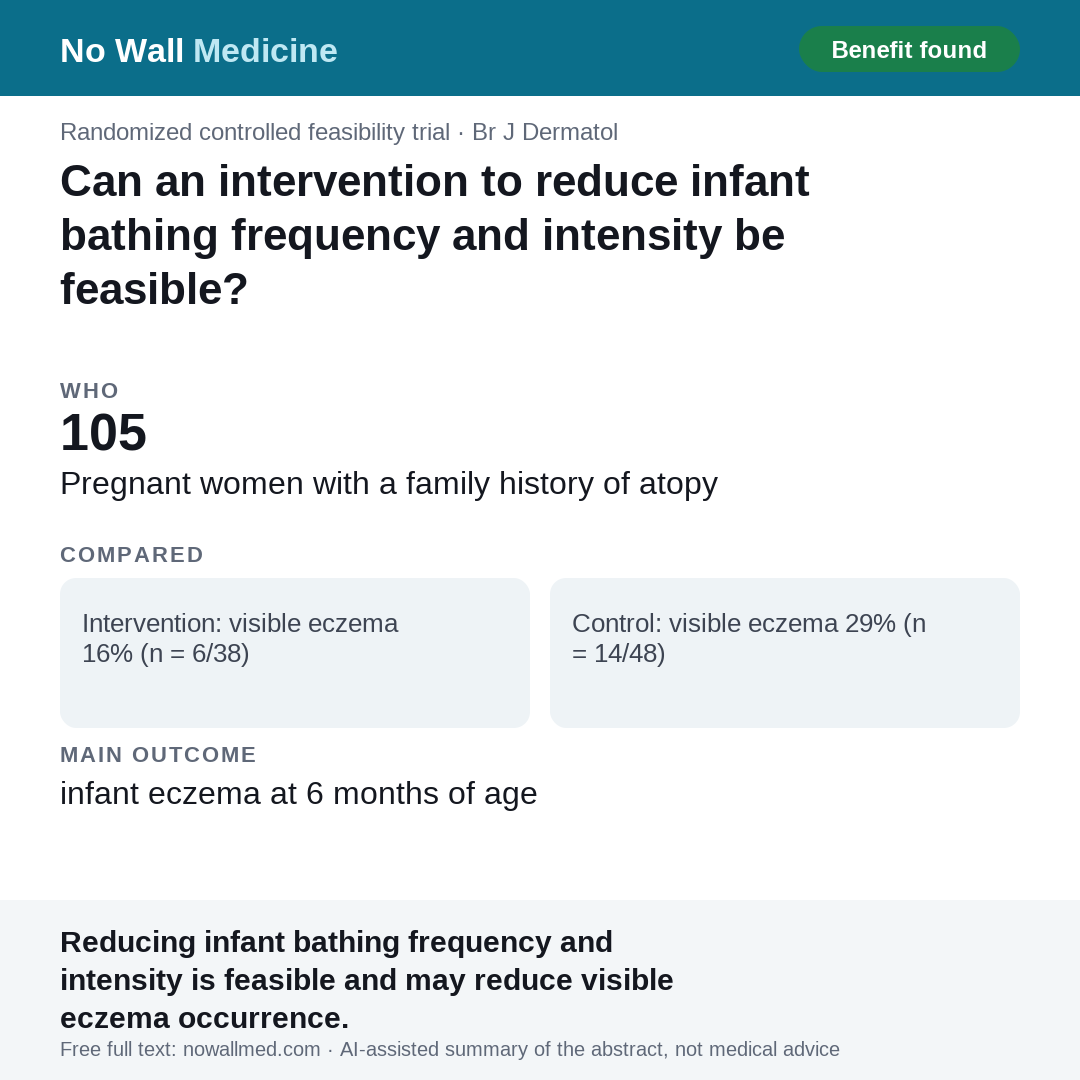
Randomized controlled feasibility trial of an intervention to reduce infant bathing
Randomized controlled feasibility trialBenefit found
Can an intervention to reduce infant bathing frequency and intensity be feasible?
Who
105
Pregnant women with a family history of atopy
Compared
Intervention: visible eczema 16% (n = 6/38)
Control: visible eczema 29% (n = 14/48)
Main outcome
infant eczema at 6 months of age
Bottom line: Reducing infant bathing frequency and intensity is feasible and may reduce visible eczema occurrence.
Br J Dermatol · 2026-06-26Download image
Artificial intelligence in genitourinary oncology: publication trends and systematic review
Systematic review and publication trend analysisBenefit found
What are the publication trends and current state of artificial intelligence in genitourinary oncology?
Who
1220
Articles related to artificial intelligence and genitourinary oncology
Compared
AI-based diagnostics: improved performance over conventional methods
AI in prognostication and treatment planning: improved gains in imaging interpretation and operational efficiency
Main outcome
Publication trends and randomized controlled trial results
Bottom line: Artificial intelligence research in genitourinary oncology is growing rapidly, showing promise in diagnostics, prognostication, and treatment planning.
Limitation: High-level evidence from randomized controlled trials remains limited.
BJU Int · 2026-06-26Download image

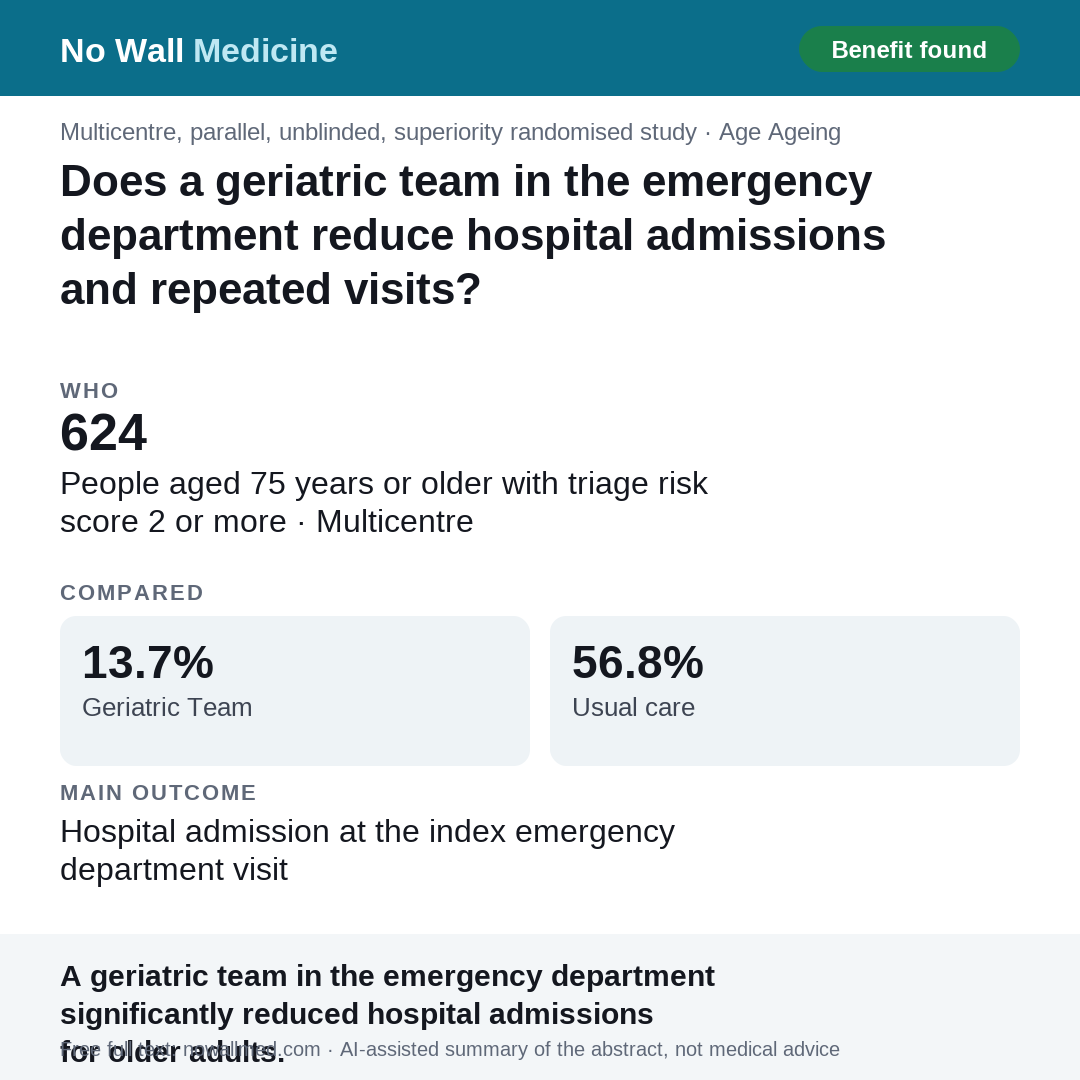
Geriatric team support in the emergency department-a randomised trial investigating the effects on hospital admission and community care in older adults (GerED-21)
Multicentre, parallel, unblinded, superiority randomised studyBenefit found
Does a geriatric team in the emergency department reduce hospital admissions and repeated visits?
Who
624
People aged 75 years or older with triage risk score 2 or more · Multicentre
Compared
13.7%Geriatric Team
56.8%Usual care
Main outcome
Hospital admission at the index emergency department visit
Bottom line: A geriatric team in the emergency department significantly reduced hospital admissions for older adults.
Age Ageing · 2026-06-26Download image
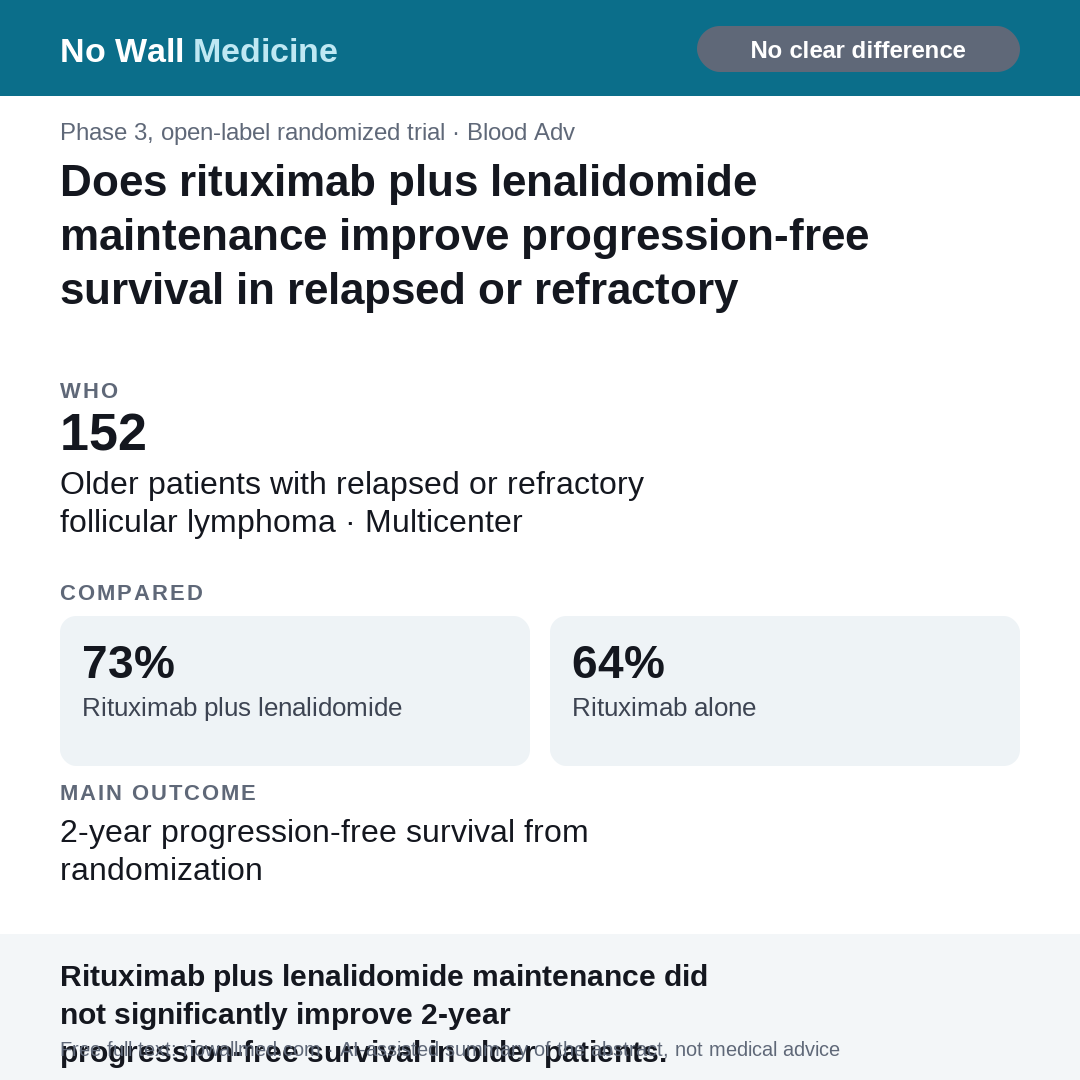
RENOIR phase 3 rituximab-lenalidomide vs rituximab as maintenance treatment in relapsed/refractory follicular lymphoma
Phase 3, open-label randomized trialNo clear difference
Does rituximab plus lenalidomide maintenance improve progression-free survival in relapsed or refractory follicular lymphoma?
Who
152
Older patients with relapsed or refractory follicular lymphoma · Multicenter
Compared
73%Rituximab plus lenalidomide
64%Rituximab alone
Main outcome
2-year progression-free survival from randomization
Bottom line: Rituximab plus lenalidomide maintenance did not significantly improve 2-year progression-free survival in older patients.
Blood Adv · 2026-06-26Download image
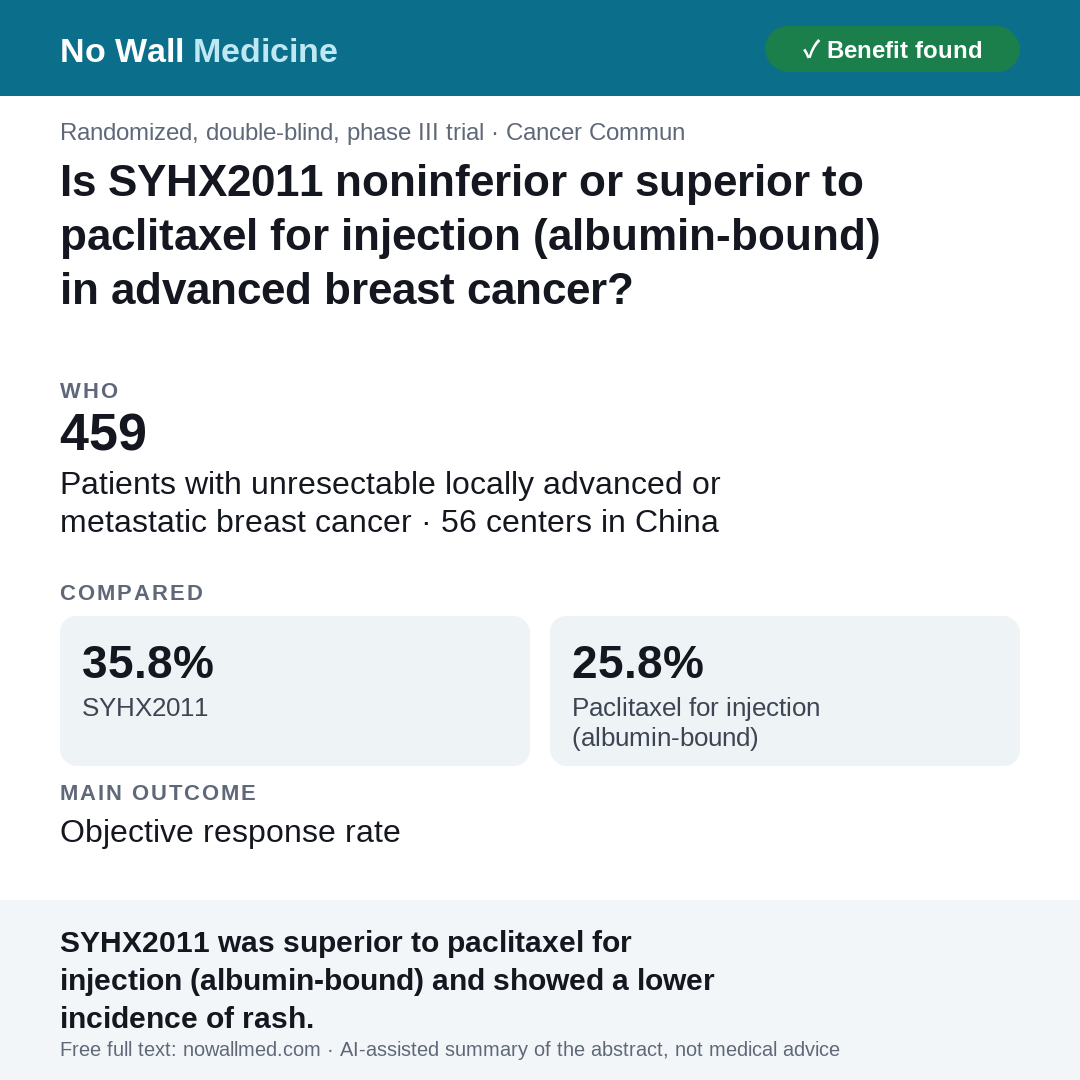
Albumin-Bound Paclitaxel (SYHX2011) in Patients with Advanced Breast Cancer: A Multicenter, Randomized, Double-Blind, Phase III Study
Randomized, double-blind, phase III trialBenefit found
Is SYHX2011 noninferior or superior to paclitaxel for injection (albumin-bound) in advanced breast cancer?
Who
459
Patients with unresectable locally advanced or metastatic breast cancer · 56 centers in China
Compared
35.8%SYHX2011 (95% CI 29.4% to 42.6%)
25.8%Paclitaxel for injection (albumin-bound) (95% CI 20.2% to 32.1%)
Main outcome
Objective response rate
Result: rate ratio = 1.38, 95% CI 1.04 to 1.84
Bottom line: SYHX2011 was superior to paclitaxel for injection (albumin-bound) and showed a lower incidence of rash.
Cancer Commun · 2026-06-26Download image
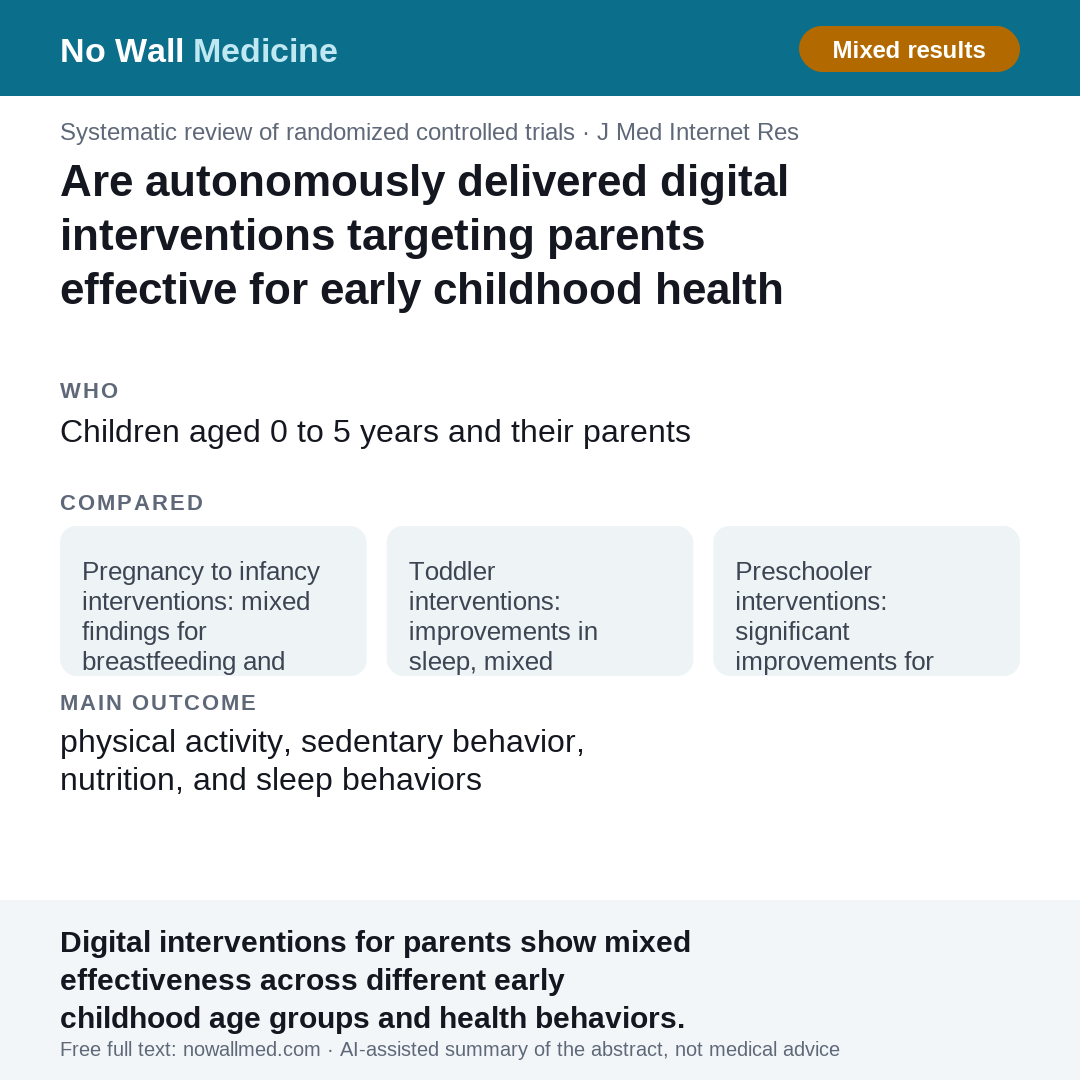
Digital Interventions Targeting Parents to Improve Early Childhood Movement, Nutrition, and Sleep Behaviors: Systematic Review
Systematic review of randomized controlled trialsMixed results
Are autonomously delivered digital interventions targeting parents effective for early childhood health behaviors?
Who
Children aged 0 to 5 years and their parents
Compared
Pregnancy to infancy interventions: mixed findings for breastfeeding and feeding practices
Toddler interventions: improvements in sleep, mixed findings for diet and screen time
Preschooler interventions: significant improvements for feeding practices and diet
Main outcome
physical activity, sedentary behavior, nutrition, and sleep behaviors
Bottom line: Digital interventions for parents show mixed effectiveness across different early childhood age groups and health behaviors.
Limitation: Heterogeneous designs, inconsistent outcome measures, and mixed risk-of-bias ratings across studies.
J Med Internet Res · 2026-06-26Download image
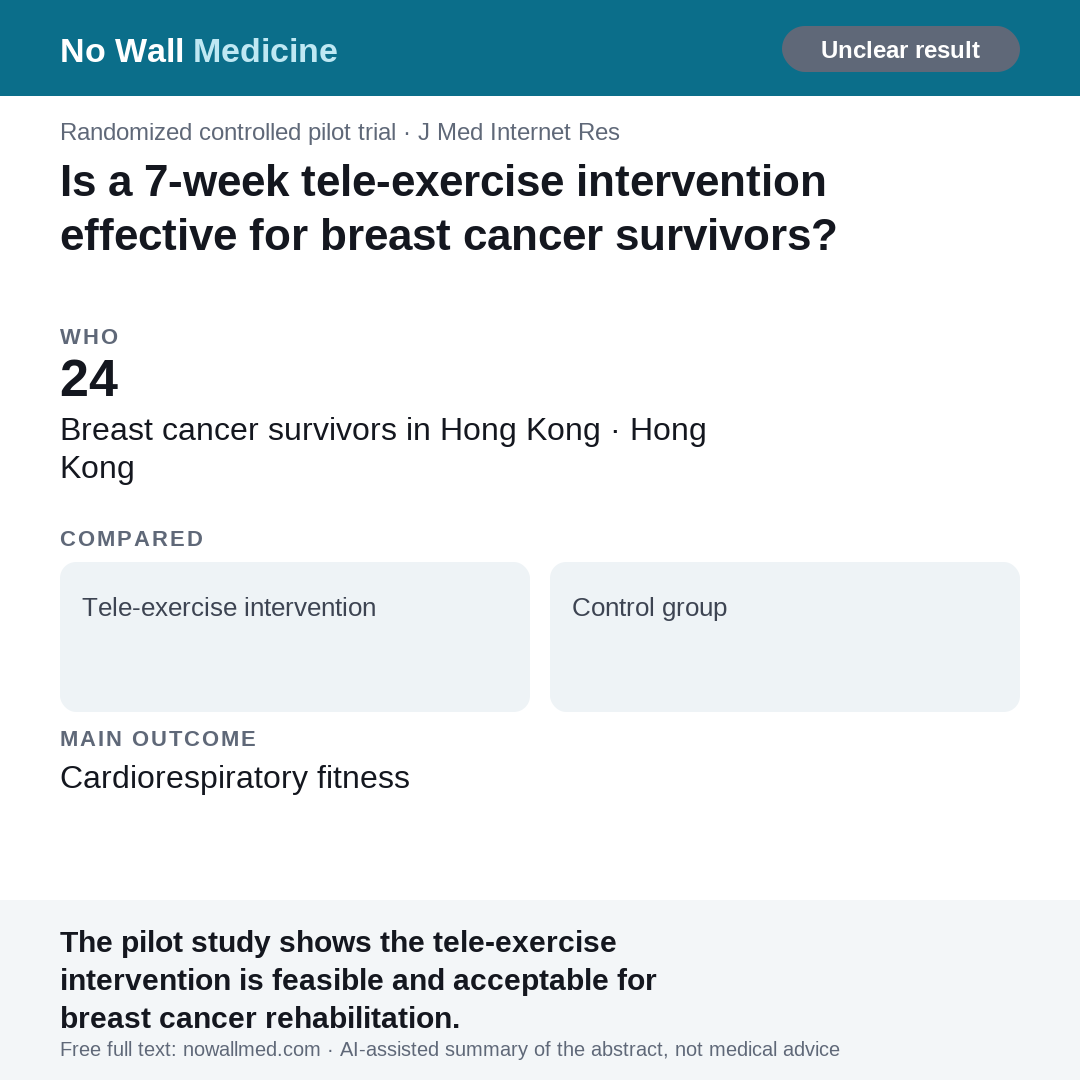
Effectiveness of a Home-Based and Group-Based Tele-Exercise Program for Breast Cancer Survivors: Pilot Randomized Controlled Trial
Randomized controlled pilot trialUnclear result
Is a 7-week tele-exercise intervention effective for breast cancer survivors?
Who
24
Breast cancer survivors in Hong Kong · Hong Kong
Compared
Tele-exercise intervention
Control group
Main outcome
Cardiorespiratory fitness
Bottom line: The pilot study shows the tele-exercise intervention is feasible and acceptable for breast cancer rehabilitation.
Limitation: Small sample size and need for a larger trial with longer follow-up.
J Med Internet Res · 2026-06-26Download image
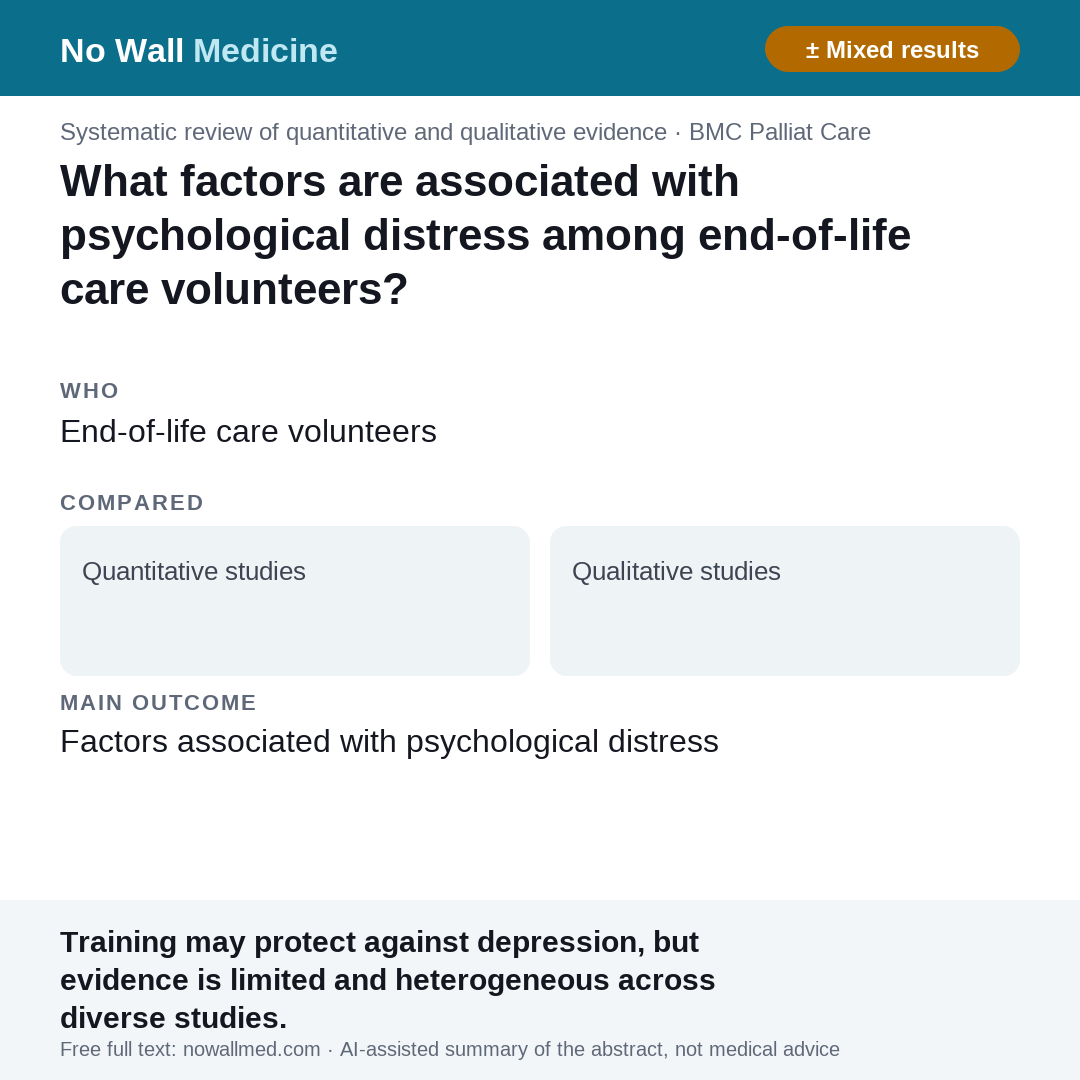
Factors associated with psychological distress among end-of-life care volunteers: a systematic review of quantitative and qualitative evidence
Systematic review of quantitative and qualitative evidenceMixed results
What factors are associated with psychological distress among end-of-life care volunteers?
Who
End-of-life care volunteers
Compared
Quantitative studies
Qualitative studies
Main outcome
Factors associated with psychological distress
Bottom line: Training may protect against depression, but evidence is limited and heterogeneous across diverse studies.
Limitation: Substantial heterogeneity and a small, methodologically diverse evidence base limit firm conclusions.
BMC Palliat Care · 2026-06-26Download image
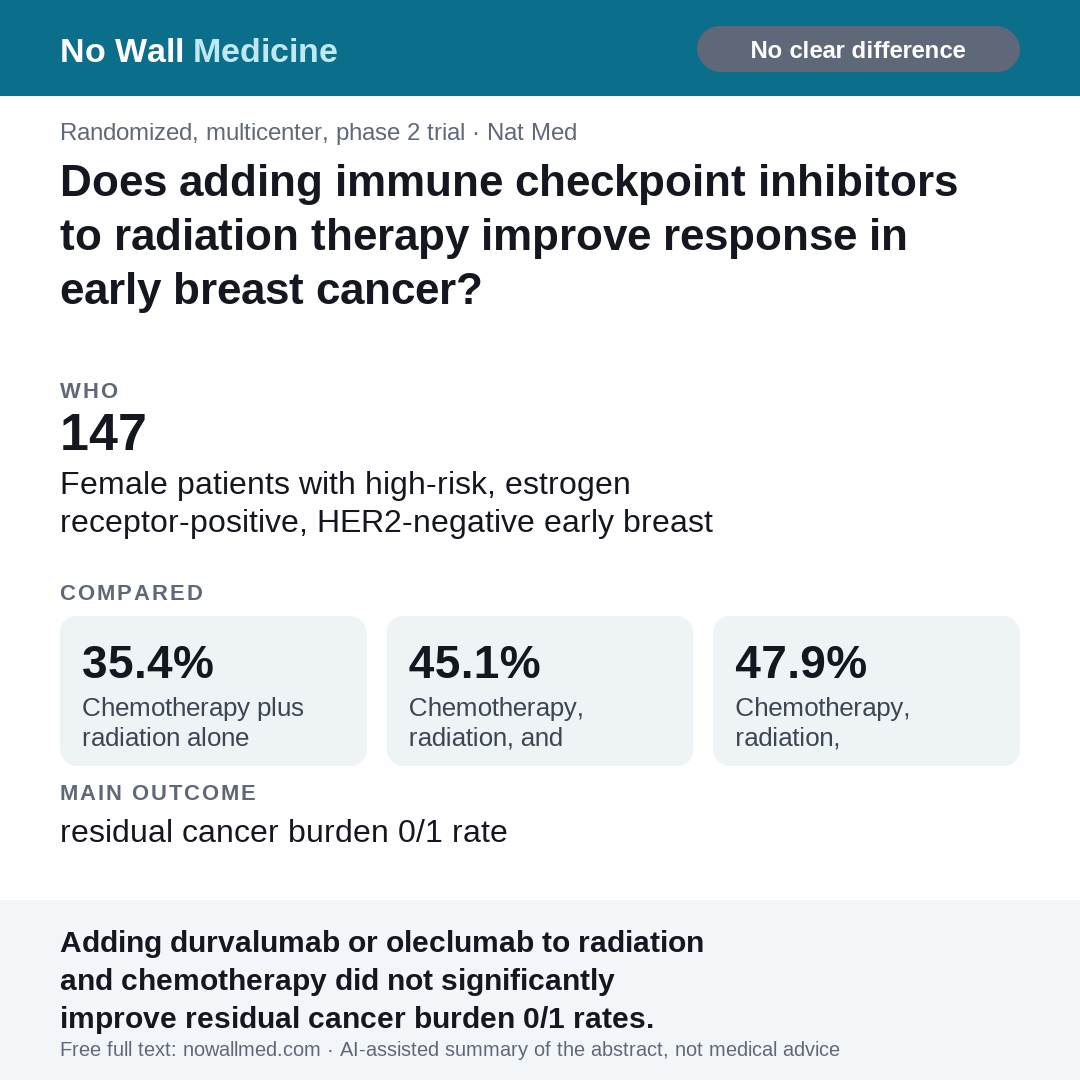
Neoadjuvant stereotactic body radiation therapy with durvalumab and oleclumab in ER+HER2- breast cancer: a randomized phase 2 trial
Randomized, multicenter, phase 2 trialNo clear difference
Does adding immune checkpoint inhibitors to radiation therapy improve response in early breast cancer?
Who
147
Female patients with high-risk, estrogen receptor-positive, HER2-negative early breast cancer · multicenter
Compared
35.4%Chemotherapy plus radiation alone
45.1%Chemotherapy, radiation, and durvalumab
47.9%Chemotherapy, radiation, durvalumab, and oleclumab
Main outcome
residual cancer burden 0/1 rate
Bottom line: Adding durvalumab or oleclumab to radiation and chemotherapy did not significantly improve residual cancer burden 0/1 rates.
Nat Med · 2026-06-25Download image
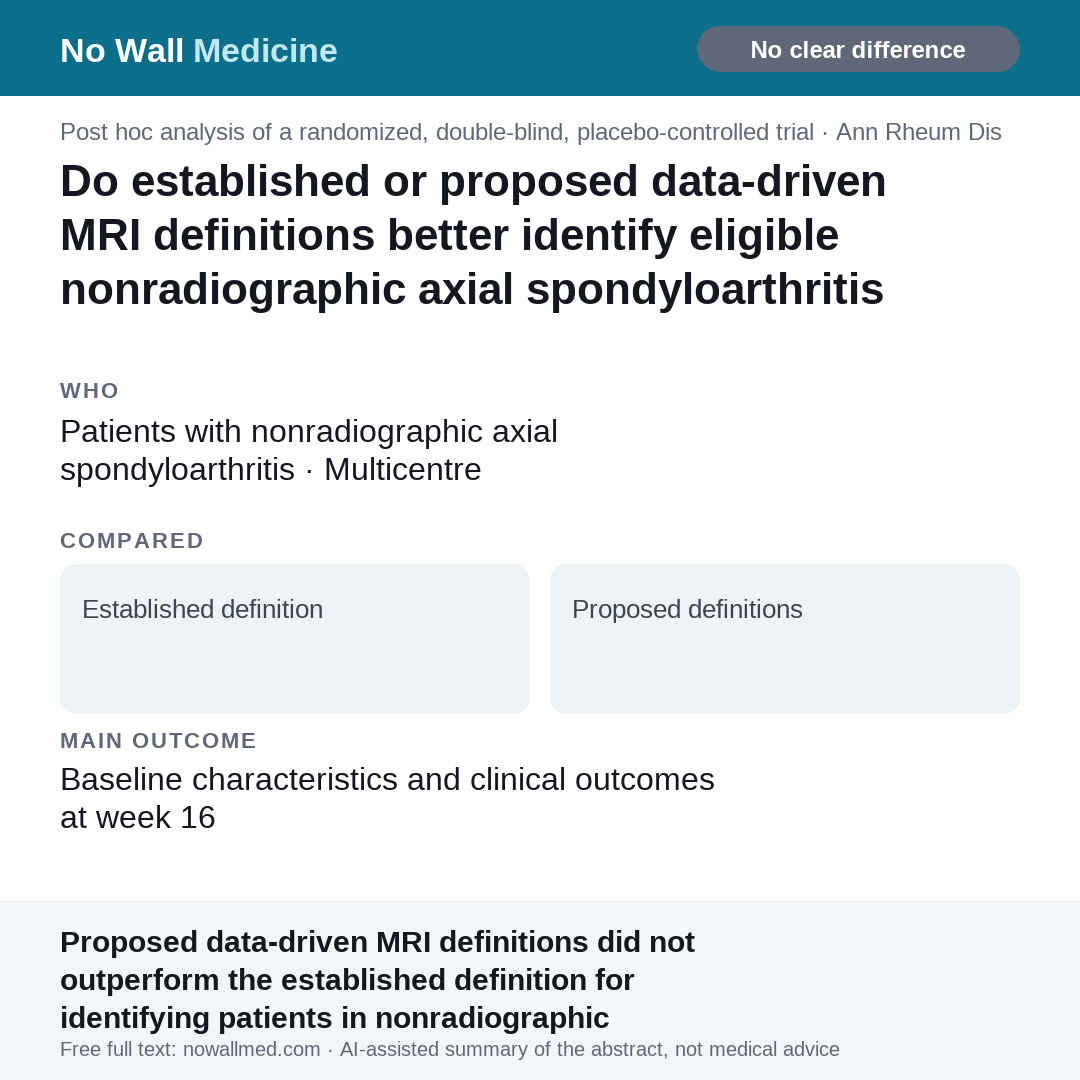
Comparison of the established ASAS definition and preliminary proposed data-driven cut-offs for inflammatory and structural MRI lesions in the sacroiliac joints for eligibility of patients with nonradiographic axial spondyloarthritis in clinical trials
Post hoc analysis of a randomized, double-blind, placebo-controlled trialNo clear difference
Do established or proposed data-driven MRI definitions better identify eligible nonradiographic axial spondyloarthritis patients?
Who
Patients with nonradiographic axial spondyloarthritis · Multicentre
Compared
Established definition
Proposed definitions
Main outcome
Baseline characteristics and clinical outcomes at week 16
Bottom line: Proposed data-driven MRI definitions did not outperform the established definition for identifying patients in nonradiographic axial spondyloarthritis.
Ann Rheum Dis · 2026-06-25Download image
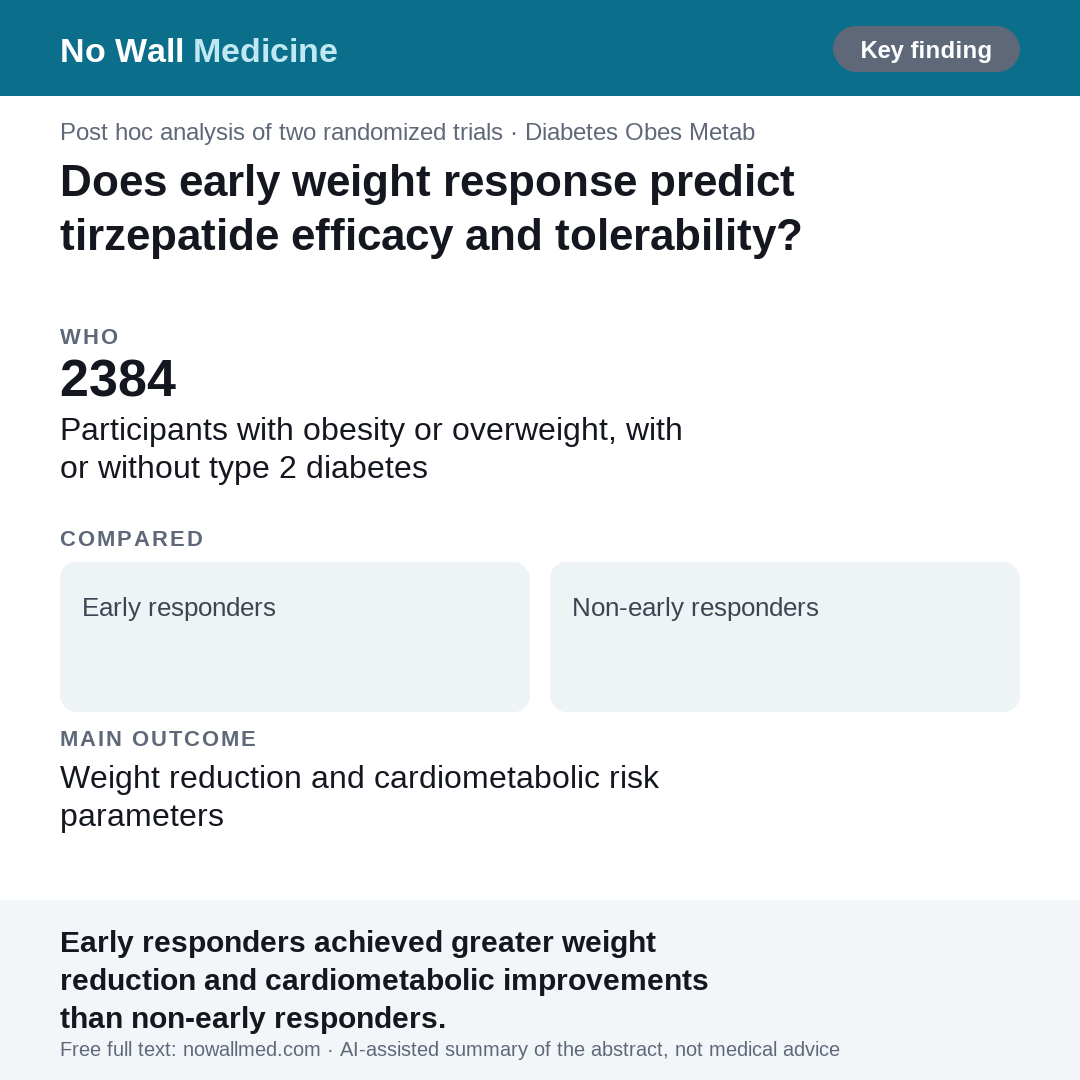
Tirzepatide Efficacy and Tolerability According to Early Weight Response: A Post Hoc Analysis of the SURMOUNT-1 and SURMOUNT-2 Trials
Post hoc exploratory analysis of phase 3 randomized trialsBenefit found
How does early weight response to tirzepatide affect weight reduction and cardiometabolic risk parameters?
Who
2384
Individuals with obesity or overweight with or without type 2 diabetes · multicentre
Compared
early responders: significantly greater improvements in weight reduction and cardiometabolic risk parameters
nonearly responders: clinically meaningful weight reduction and improvements in cardiometabolic risk parameters
Main outcome
weight reduction and cardiometabolic risk parameters
Bottom line: Tirzepatide treated participants with early weight response achieved greater weight reduction and cardiometabolic improvements than nonearly responders.
Limitation: This was a post hoc exploratory analysis
Diabetes Obes Metab · 2026-06-25Download image