Visual abstracts
New randomized trials and meta-analyses from leading journals at a glance: who was studied, what was compared, and what was found. Every paper is free to read in full.
All specialtiesCardiology 3354Oncology 2879Gastroenterology & Hepatology 1324Infectious Disease 2284Neurology 1347Psychiatry & Mental Health 1589Pulmonology 1427Critical Care 954Endocrinology & Diabetes 1710Pediatrics 2037Surgery 1794Orthopedics & Sports Medicine 611Neurosurgery 397Cardiothoracic & Vascular Surgery 390Plastic & Reconstructive Surgery 469Nephrology 720Rheumatology 525Hematology 755Dermatology 416Ophthalmology 377Obstetrics & Gynecology 1136Public & Global Health 642Radiology & Imaging 473Anesthesiology 687Urology 567ENT (Otolaryngology) 369Emergency Medicine 363Allergy & Immunology 210Geriatrics 707Family Medicine & Primary Care 389Medical Genetics & Genomics 419Pathology & Laboratory Medicine 110Physical Medicine & Rehabilitation 530Palliative Care 306Nutrition 1009Digital Health & AI 1594General Medicine 237
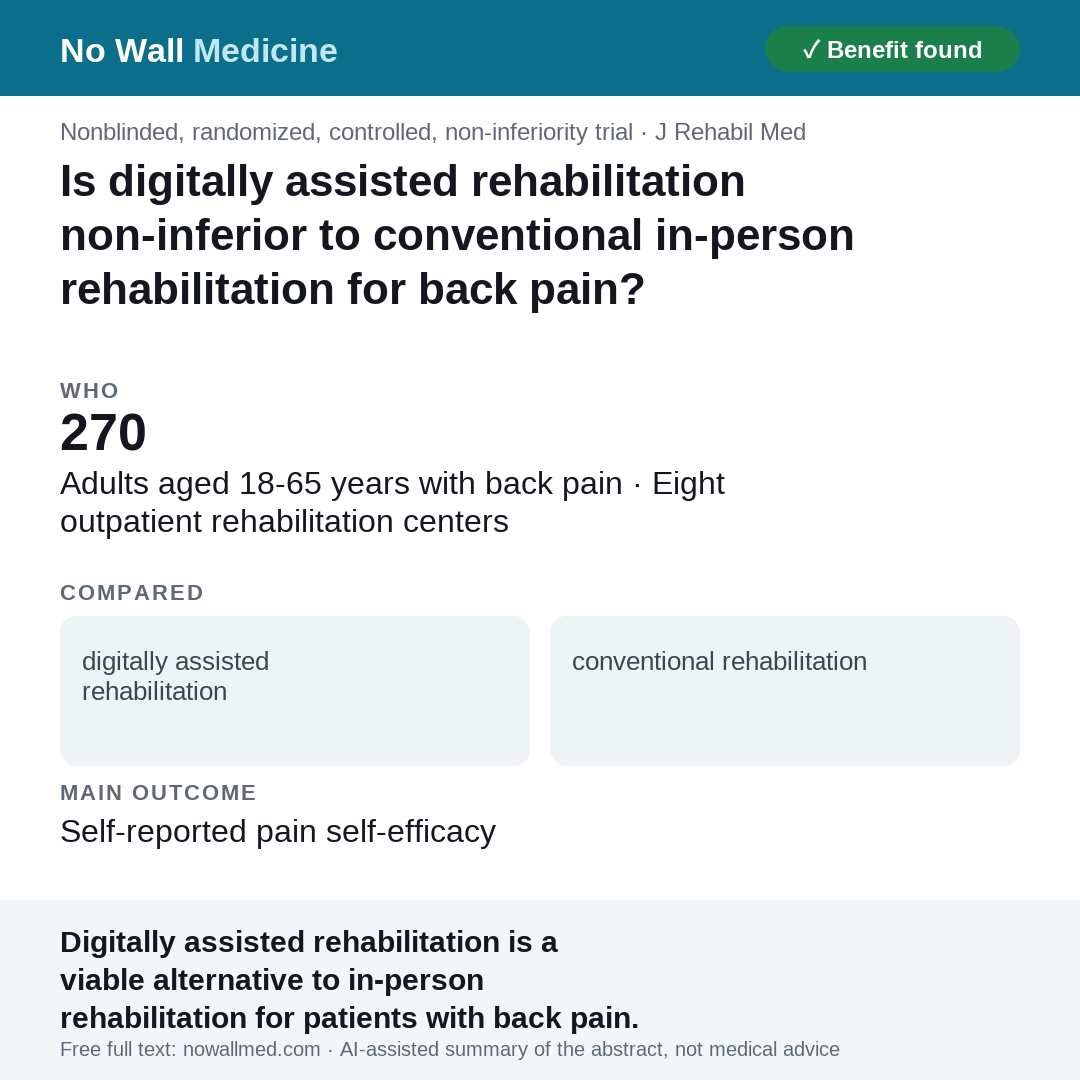
Non-inferiority of digitally assisted outpatient rehabilitation in patients with back pain: 12-month follow-up of a randomized controlled trial
Nonblinded, randomized, controlled, non-inferiority trialBenefit found
Is digitally assisted rehabilitation non-inferior to conventional in-person rehabilitation for back pain?
Who
270
Adults aged 18-65 years with back pain · Eight outpatient rehabilitation centers
Compared
digitally assisted rehabilitation
conventional rehabilitation
Main outcome
Self-reported pain self-efficacy
Result: b = 0.48 (95% CI = -3.09 to ∞)
Bottom line: Digitally assisted rehabilitation is a viable alternative to in-person rehabilitation for patients with back pain.
J Rehabil Med · 2026-05-20Download image
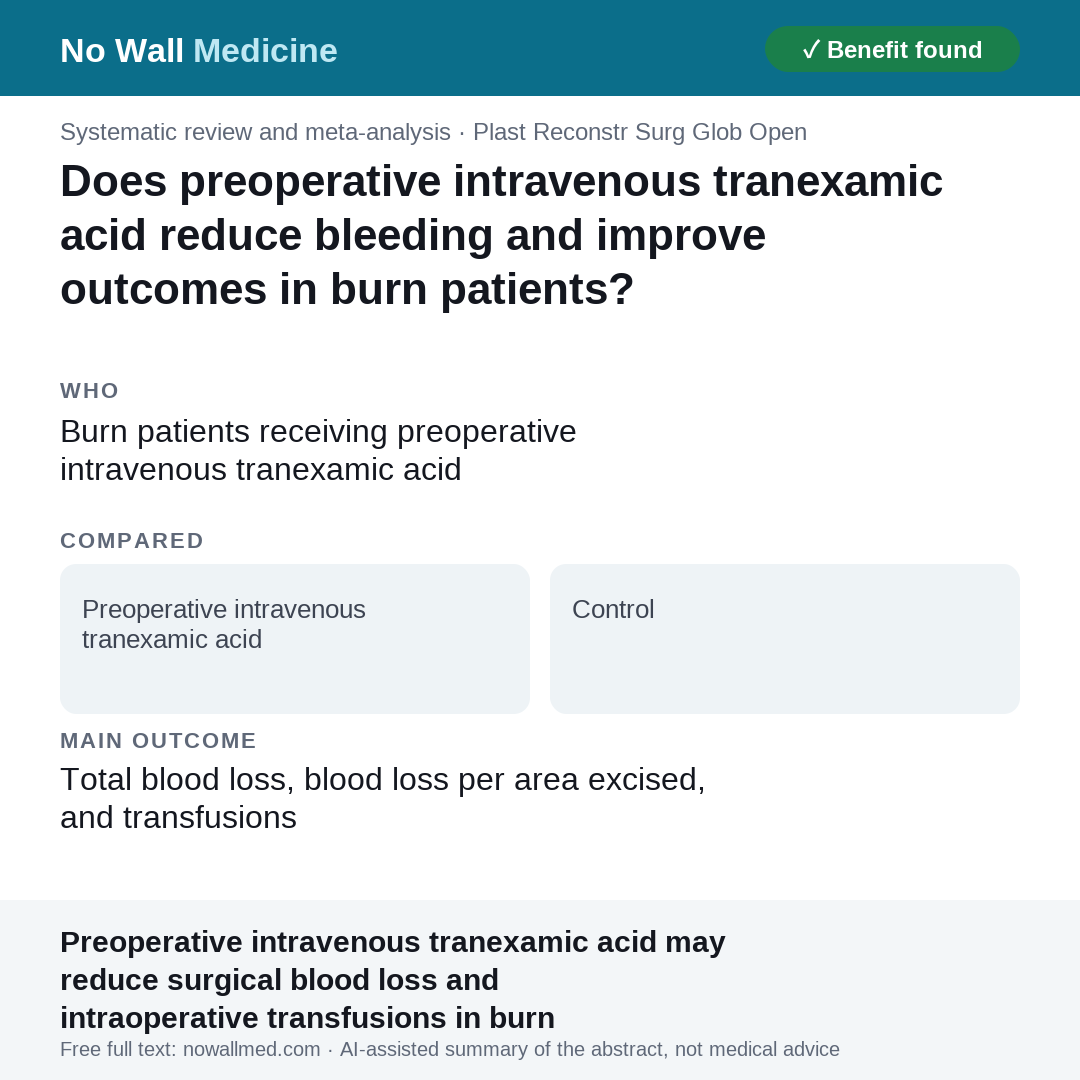
Efficacy and Safety of the Use of Tranexamic Acid in Burn Patients: A Systematic Review and Meta-analysis
Systematic review and meta-analysisBenefit found
Does preoperative intravenous tranexamic acid reduce bleeding and improve outcomes in burn patients?
Who
Burn patients receiving preoperative intravenous tranexamic acid
Compared
Preoperative intravenous tranexamic acid
Control
Main outcome
Total blood loss, blood loss per area excised, and transfusions
Result: standardized mean difference -0.65 for total blood loss; -3.66 for blood loss per area excised; -0.48 for packed red blood cell units
Bottom line: Preoperative intravenous tranexamic acid may reduce surgical blood loss and intraoperative transfusions in burn patients.
Limitation: Impact on graft survival and overall transfusion needs is uncertain.
Plast Reconstr Surg Glob Open · 2026-05-20Download image
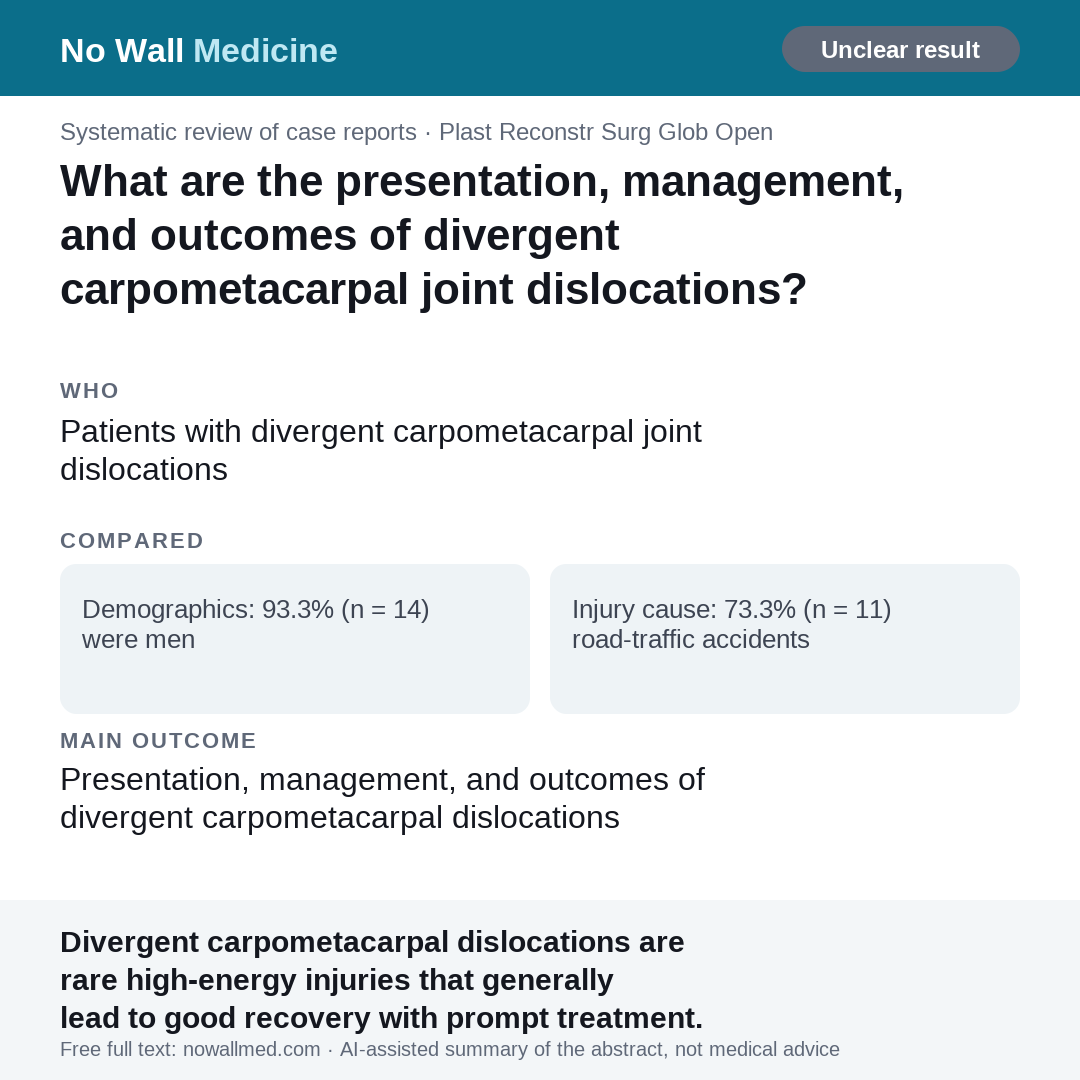
Divergent Dislocation of the Carpometacarpal Joints: A Case Report and Systematic Review
Systematic review of case reportsUnclear result
What are the presentation, management, and outcomes of divergent carpometacarpal joint dislocations?
Who
15
Patients with divergent carpometacarpal joint dislocations
Compared
Demographics: 93.3% (n = 14) were men
Injury cause: 73.3% (n = 11) road-traffic accidents
Main outcome
Presentation, management, and outcomes of divergent carpometacarpal dislocations
Bottom line: Divergent carpometacarpal dislocations are rare high-energy injuries that generally lead to good recovery with prompt treatment.
Limitation: Evidence is limited to case reports.
Plast Reconstr Surg Glob Open · 2026-05-20Download image
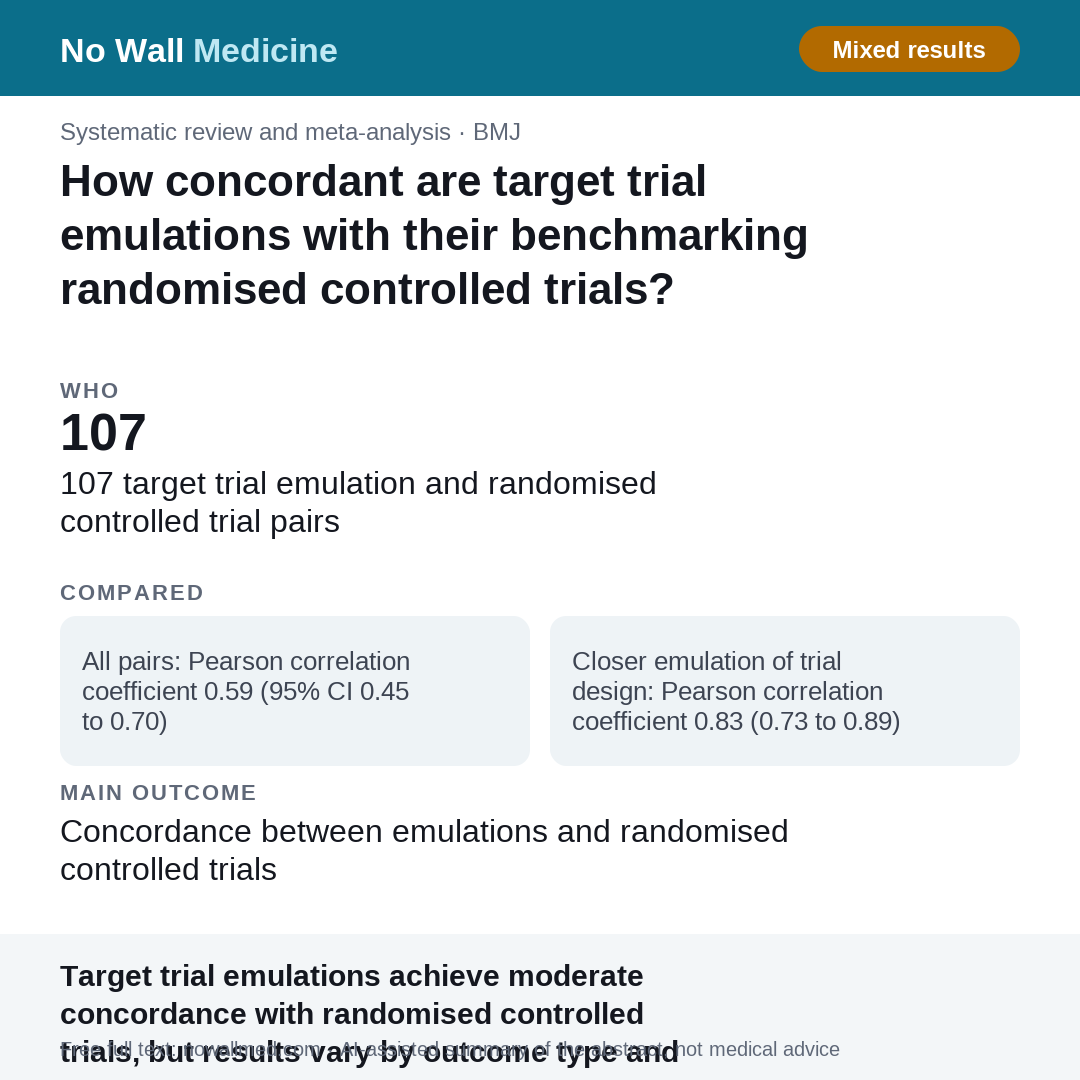
Concordance between target trial emulation and randomised controlled trials: systematic review and meta-analysis
Systematic review and meta-analysisMixed results
How concordant are target trial emulations with their benchmarking randomised controlled trials?
Who
107
107 target trial emulation and randomised controlled trial pairs
Compared
All pairs: Pearson correlation coefficient 0.59 (95% CI 0.45 to 0.70)
Closer emulation of trial design: Pearson correlation coefficient 0.83 (0.73 to 0.89)
Main outcome
Concordance between emulations and randomised controlled trials
Result: summary ratio of ratios 0.96 (95% CI 0.92 to 1.01)
Bottom line: Target trial emulations achieve moderate concordance with randomised controlled trials, but results vary by outcome type and data source.
BMJ · 2026-05-19Download image
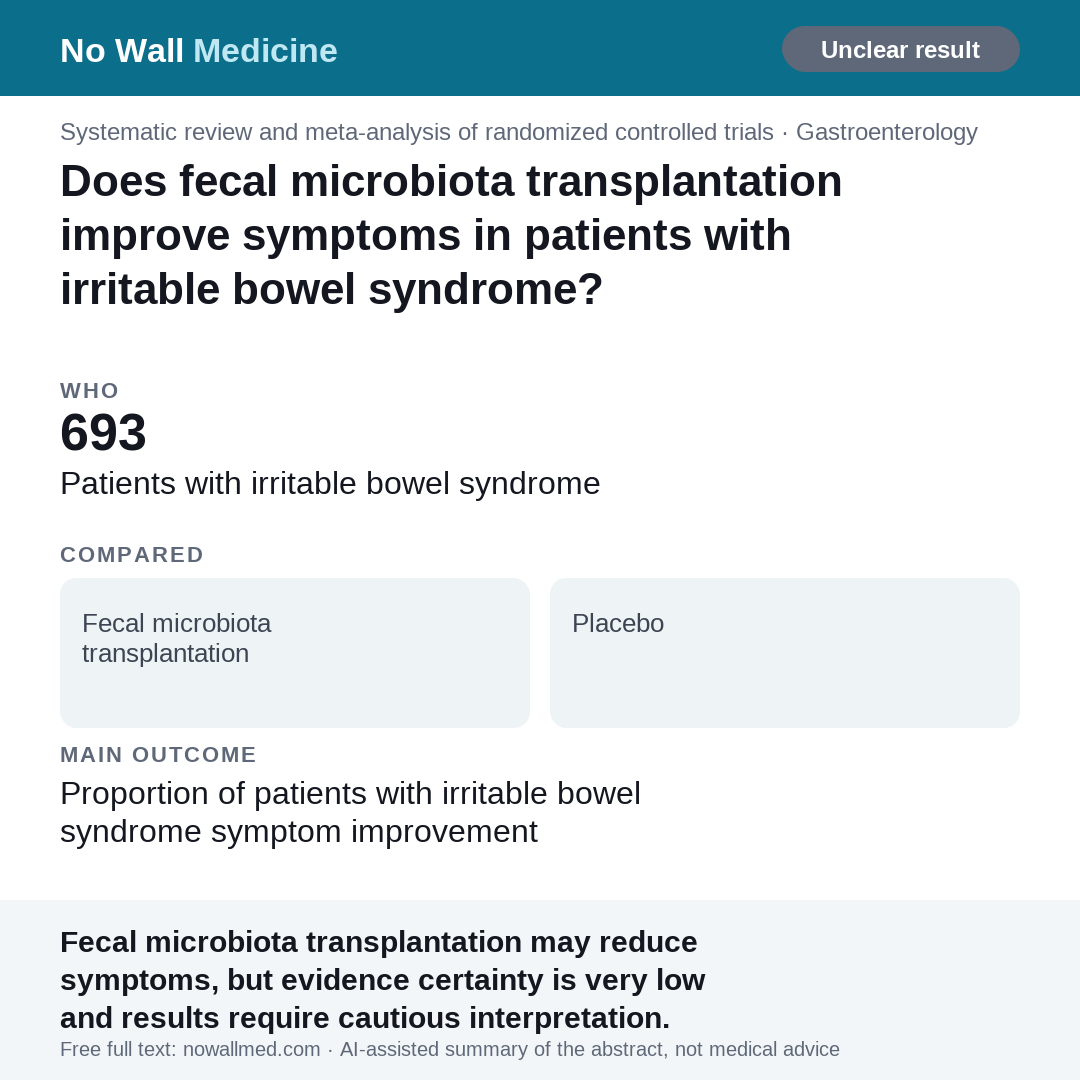
Fecal Microbiota Transplantation for Symptom Improvement in Patients With Irritable Bowel Syndrome: Systematic Review and Meta-Analysis of Randomized Controlled Trials
Systematic review and meta-analysis of randomized controlled trialsUnclear result
Does fecal microbiota transplantation improve symptoms in patients with irritable bowel syndrome?
Who
693
Patients with irritable bowel syndrome
Compared
Fecal microbiota transplantation
Placebo
Main outcome
Proportion of patients with irritable bowel syndrome symptom improvement
Result: risk ratio 0.72 (95% CI 0.50-1.03)
Bottom line: Fecal microbiota transplantation may reduce symptoms, but evidence certainty is very low and results require cautious interpretation.
Limitation: The certainty of evidence is very uncertain or very low.
Gastroenterology · 2026-05-19Download image
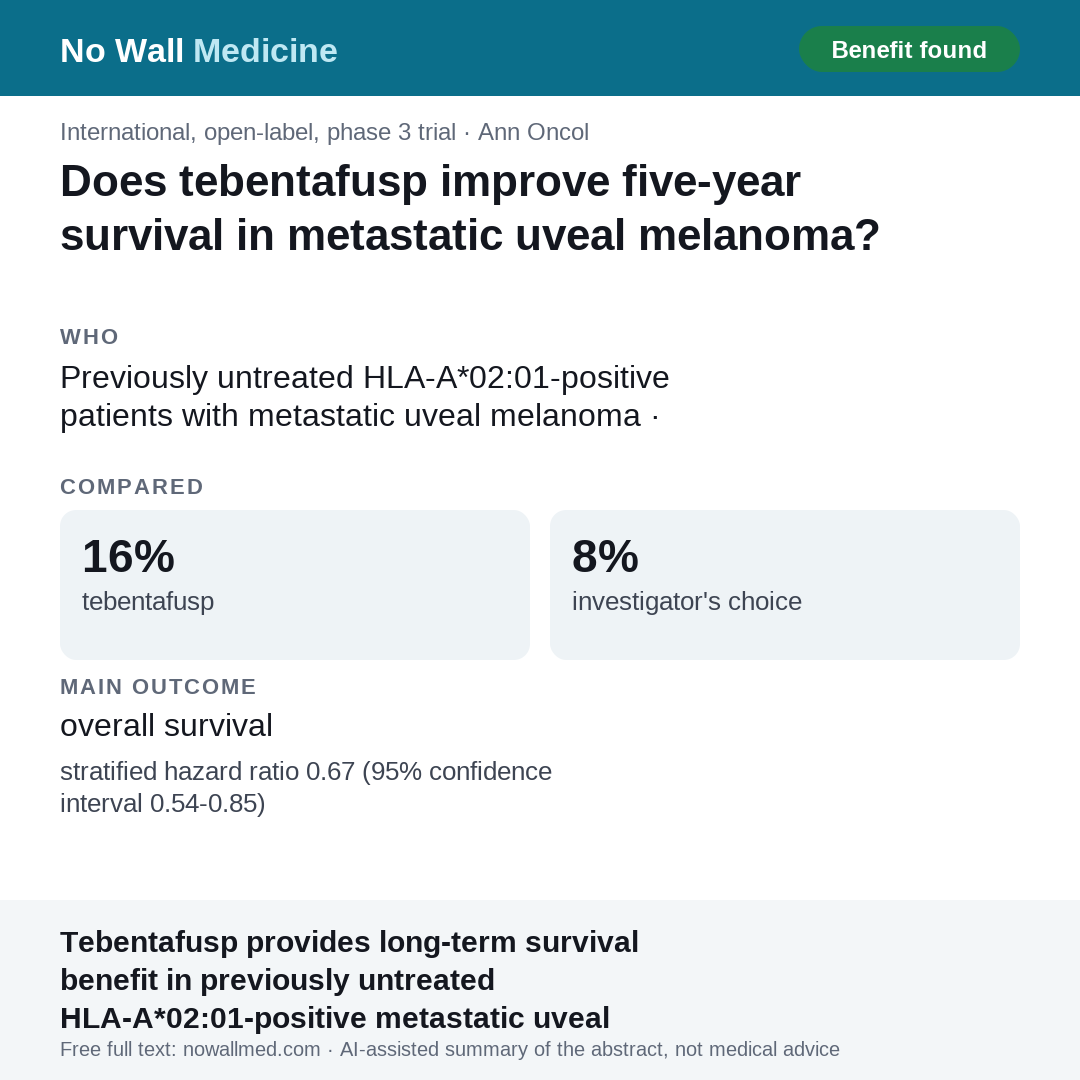
Five-year survival with tebentafusp in metastatic uveal melanoma
International, open-label, phase 3 trialBenefit found
Does tebentafusp improve five-year survival in metastatic uveal melanoma?
Who
Previously untreated HLA-A*02:01-positive patients with metastatic uveal melanoma · International
Compared
16%tebentafusp
8%investigator's choice
Main outcome
overall survival
Result: stratified hazard ratio 0.67 (95% confidence interval 0.54-0.85)
Bottom line: Tebentafusp provides long-term survival benefit in previously untreated HLA-A*02:01-positive metastatic uveal melanoma patients.
Ann Oncol · 2026-05-19Download image
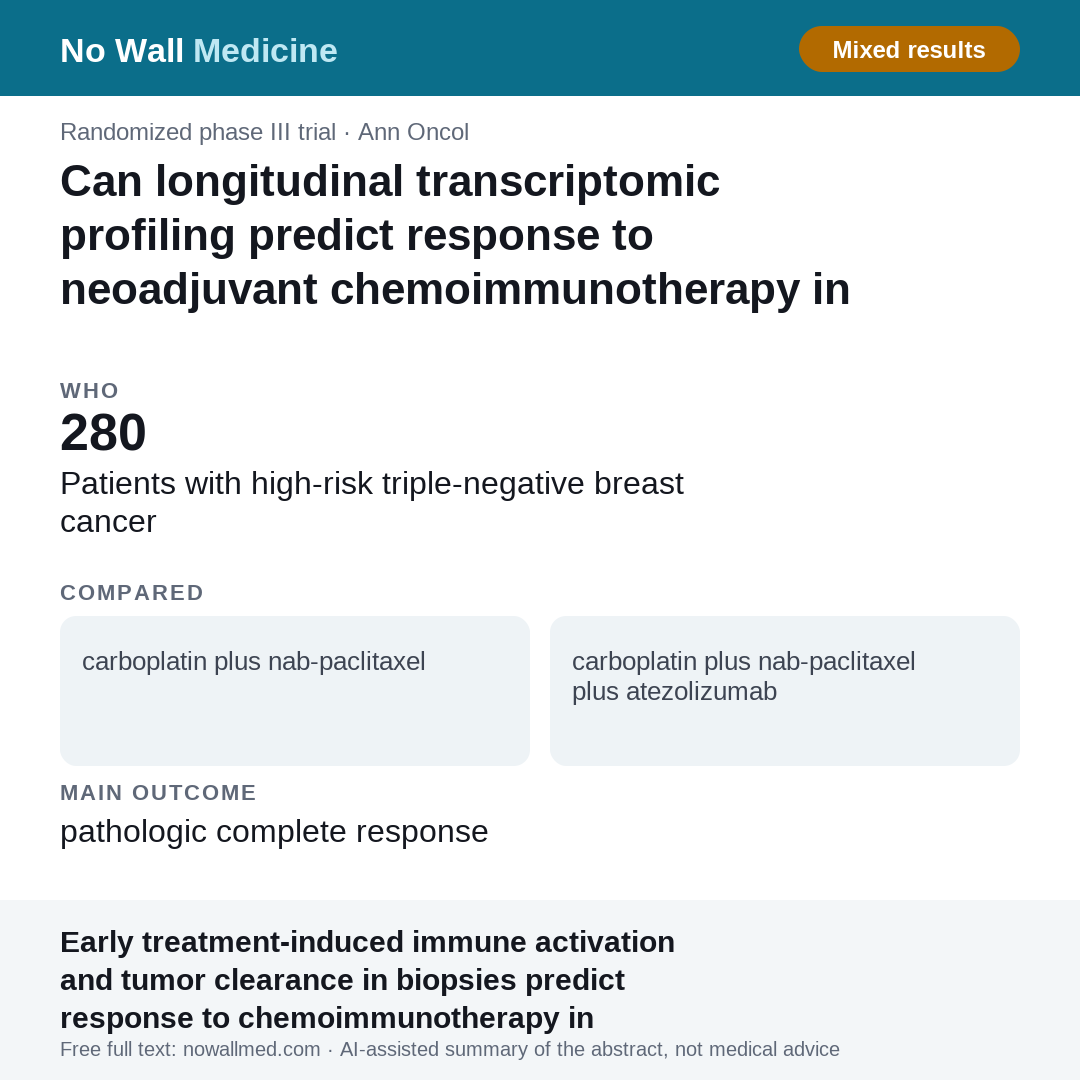
Longitudinal transcriptomic profiling identifies predictors of response to neoadjuvant chemoimmunotherapy in triple-negative breast cancer: results from the NeoTRIPaPDL1 trial
Randomized phase III trialMixed results
Can longitudinal transcriptomic profiling predict response to neoadjuvant chemoimmunotherapy in triple-negative breast cancer?
Who
280
Patients with high-risk triple-negative breast cancer
Compared
carboplatin plus nab-paclitaxel
carboplatin plus nab-paclitaxel plus atezolizumab
Main outcome
pathologic complete response
Bottom line: Early treatment-induced immune activation and tumor clearance in biopsies predict response to chemoimmunotherapy in triple-negative breast cancer.
Ann Oncol · 2026-05-19Download image
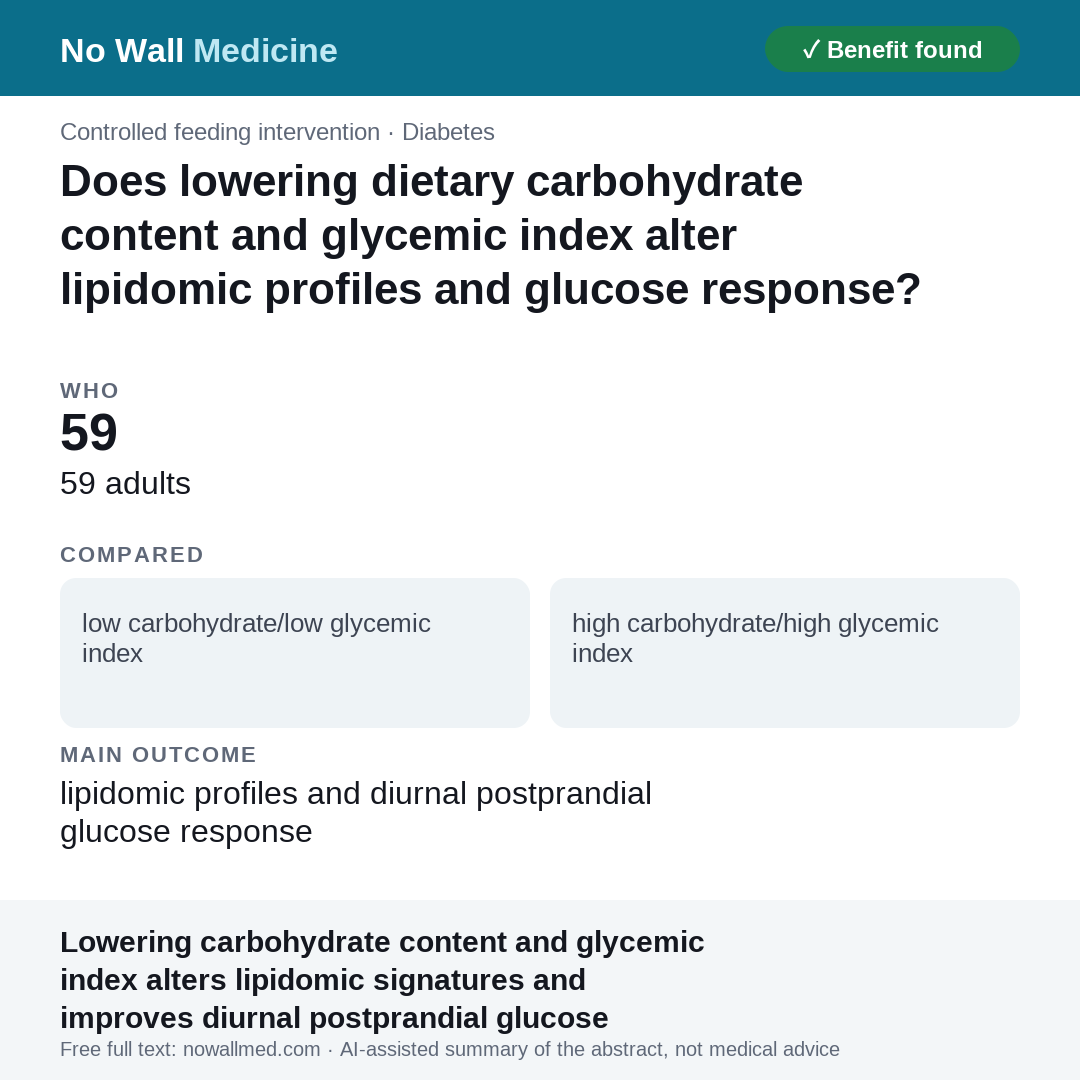
Effects of Dietary Carbohydrate Amount and Glycemic Index on Blood Lipidomic Signatures and Diurnal Postprandial Glucose Responses: The OmniCarb Trial
Controlled feeding interventionBenefit found
Does lowering dietary carbohydrate content and glycemic index alter lipidomic profiles and glucose response?
Who
59
59 adults
Compared
low carbohydrate/low glycemic index
high carbohydrate/high glycemic index
Main outcome
lipidomic profiles and diurnal postprandial glucose response
Bottom line: Lowering carbohydrate content and glycemic index alters lipidomic signatures and improves diurnal postprandial glucose responses.
Diabetes · 2026-05-19Download image
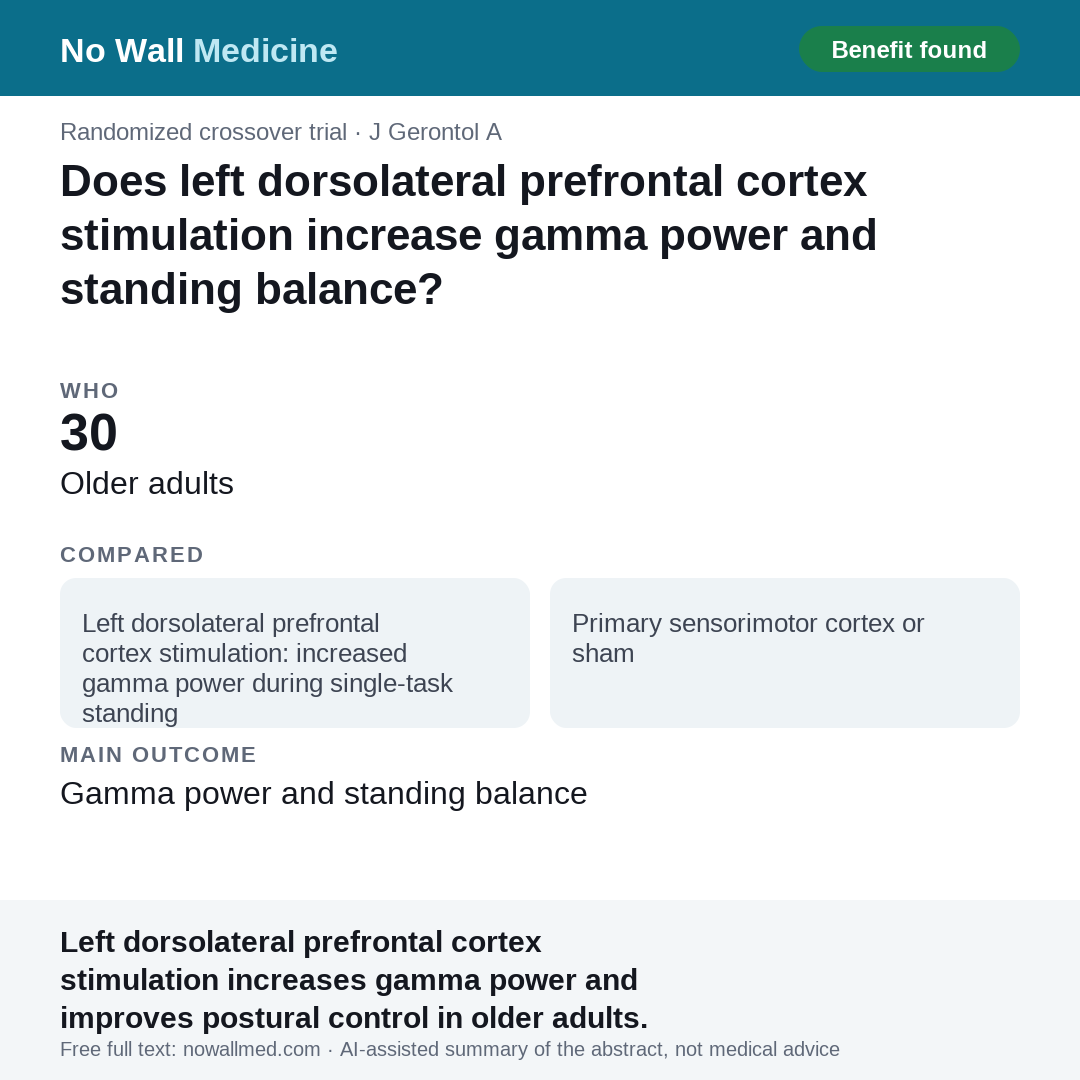
Transcranial direct current stimulation targeting the left dorsolateral prefrontal cortex increases gamma power and standing balance in older adults
Randomized crossover trialBenefit found
Does left dorsolateral prefrontal cortex stimulation increase gamma power and standing balance?
Who
30
Older adults
Compared
Left dorsolateral prefrontal cortex stimulation: increased gamma power during single-task standing
Primary sensorimotor cortex or sham
Main outcome
Gamma power and standing balance
Bottom line: Left dorsolateral prefrontal cortex stimulation increases gamma power and improves postural control in older adults.
J Gerontol A · 2026-05-19Download image
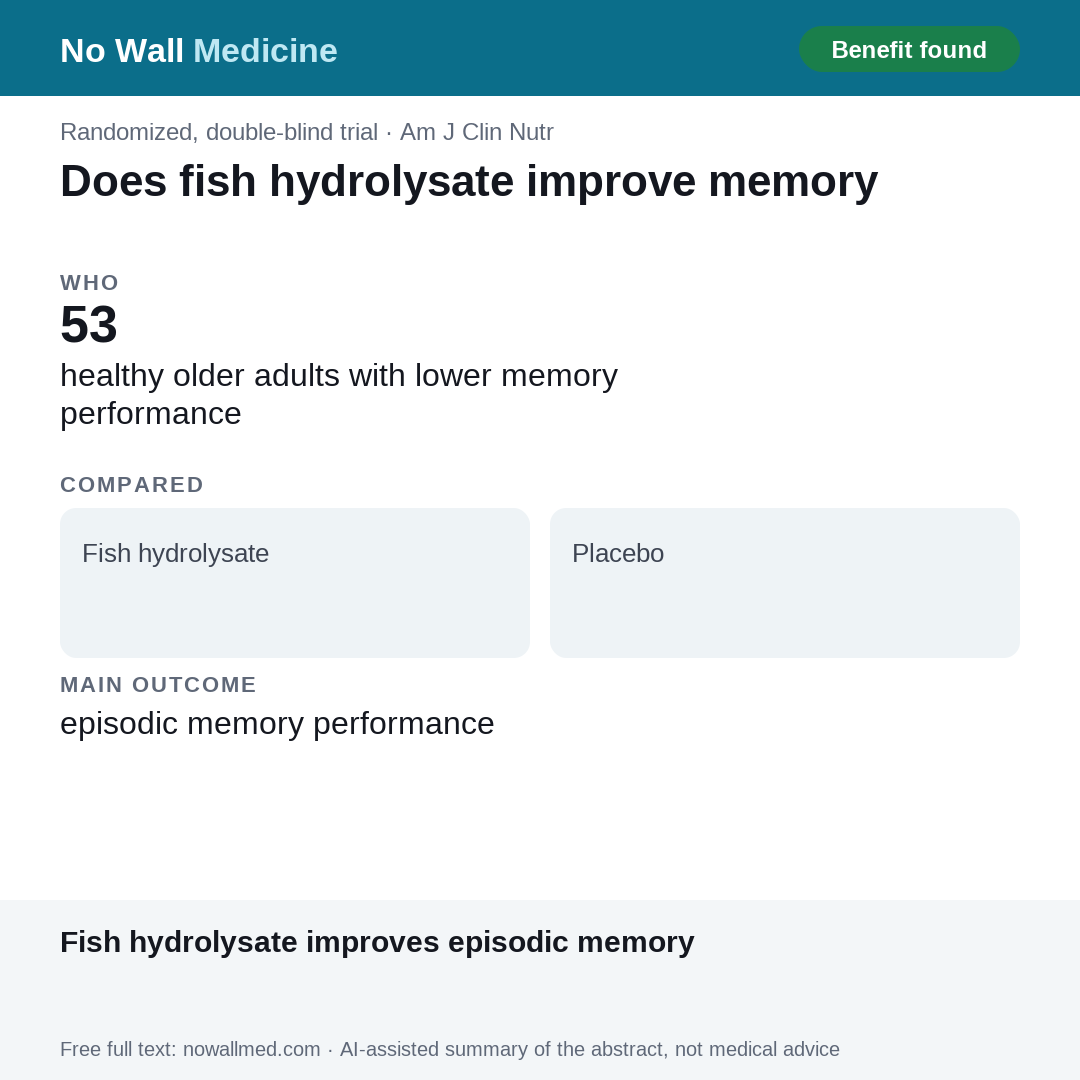
Dietary fish hydrolysate improves episodic memory in healthy elderly with lower level of memory performance: a double-blind, randomized, placebo-controlled clinical study
Randomized, double-blind trialBenefit found
Does fish hydrolysate improve memory
Who
53
healthy older adults with lower memory performance
Compared
Fish hydrolysate
Placebo
Main outcome
episodic memory performance
Bottom line: Fish hydrolysate improves episodic memory
Am J Clin Nutr · 2026-05-19Download image
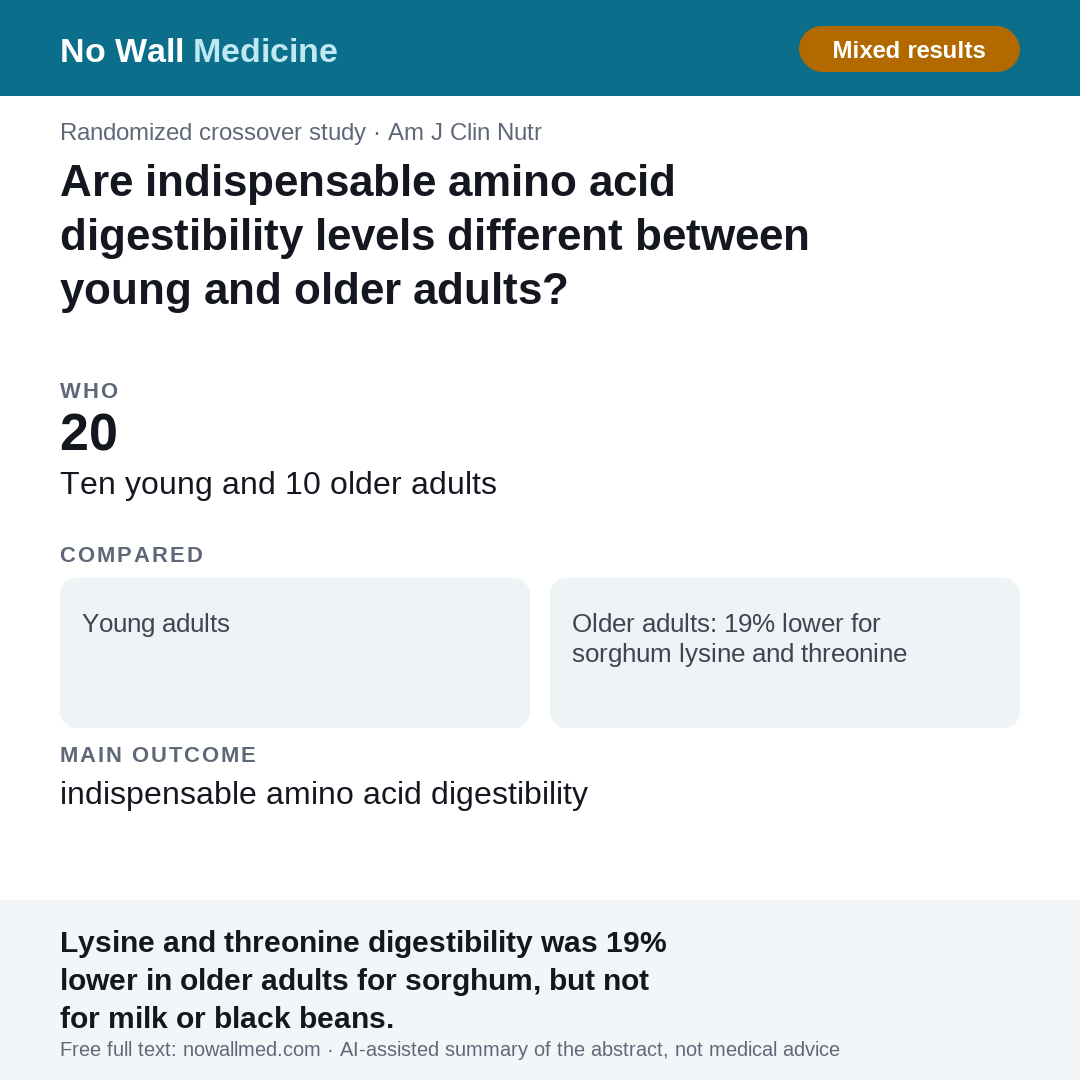
Differences in amino acid digestibility between young and older adults: a randomized crossover study using the dual tracer method
Randomized crossover studyMixed results
Are indispensable amino acid digestibility levels different between young and older adults?
Who
20
Ten young and 10 older adults
Compared
Young adults
Older adults: 19% lower for sorghum lysine and threonine
Main outcome
indispensable amino acid digestibility
Bottom line: Lysine and threonine digestibility was 19% lower in older adults for sorghum, but not for milk or black beans.
Am J Clin Nutr · 2026-05-19Download image
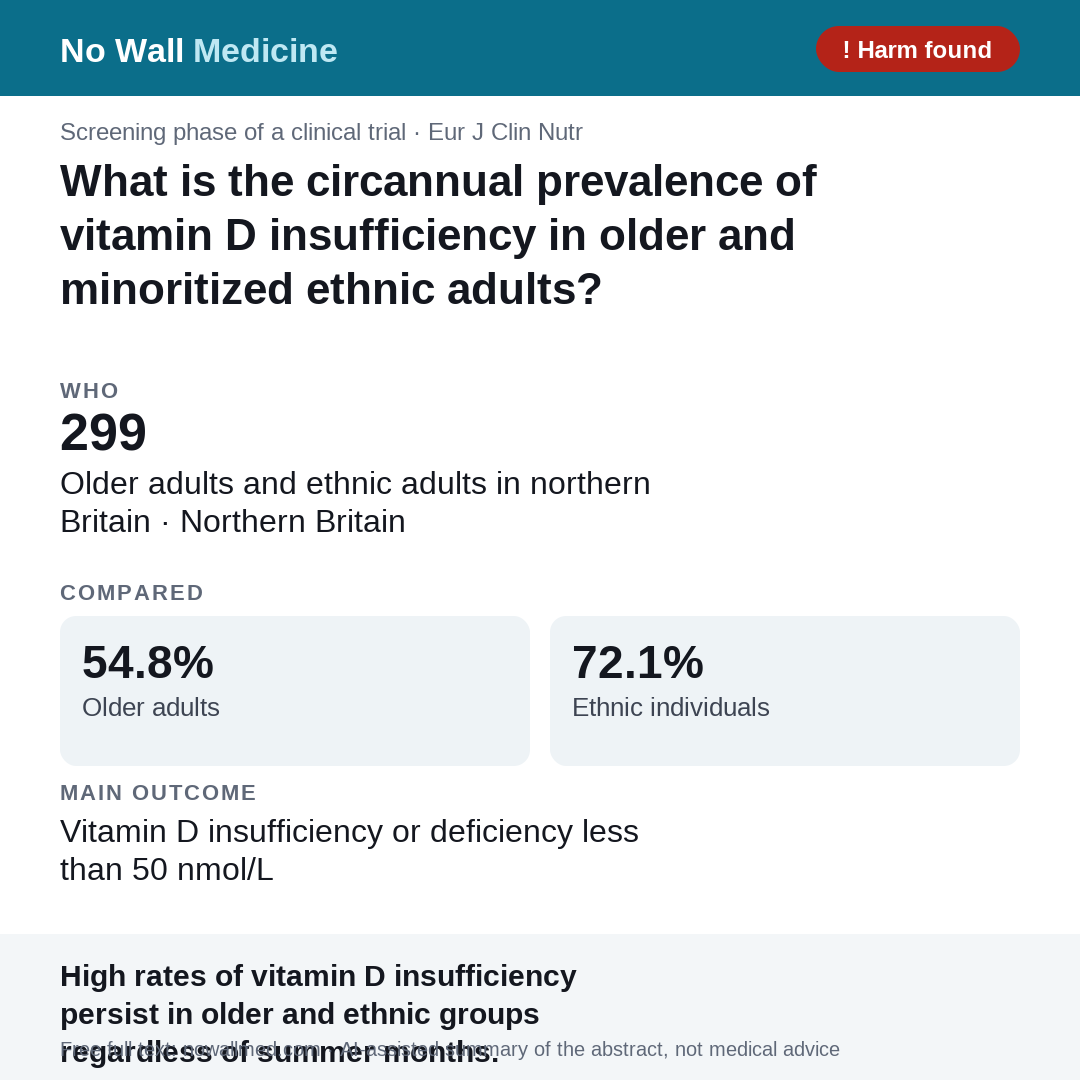
Circannual prevalence of vitamin D insufficiency in older and minoritized ethnic adults in Northern Britain: screening outcomes from a clinical trial
Screening phase of a clinical trialHarm found
What is the circannual prevalence of vitamin D insufficiency in older and minoritized ethnic adults?
Who
299
Older adults and ethnic adults in northern Britain · Northern Britain
Compared
54.8%Older adults
72.1%Ethnic individuals
Main outcome
Vitamin D insufficiency or deficiency less than 50 nmol/L
Bottom line: High rates of vitamin D insufficiency persist in older and ethnic groups regardless of summer months.
Eur J Clin Nutr · 2026-05-19Download image
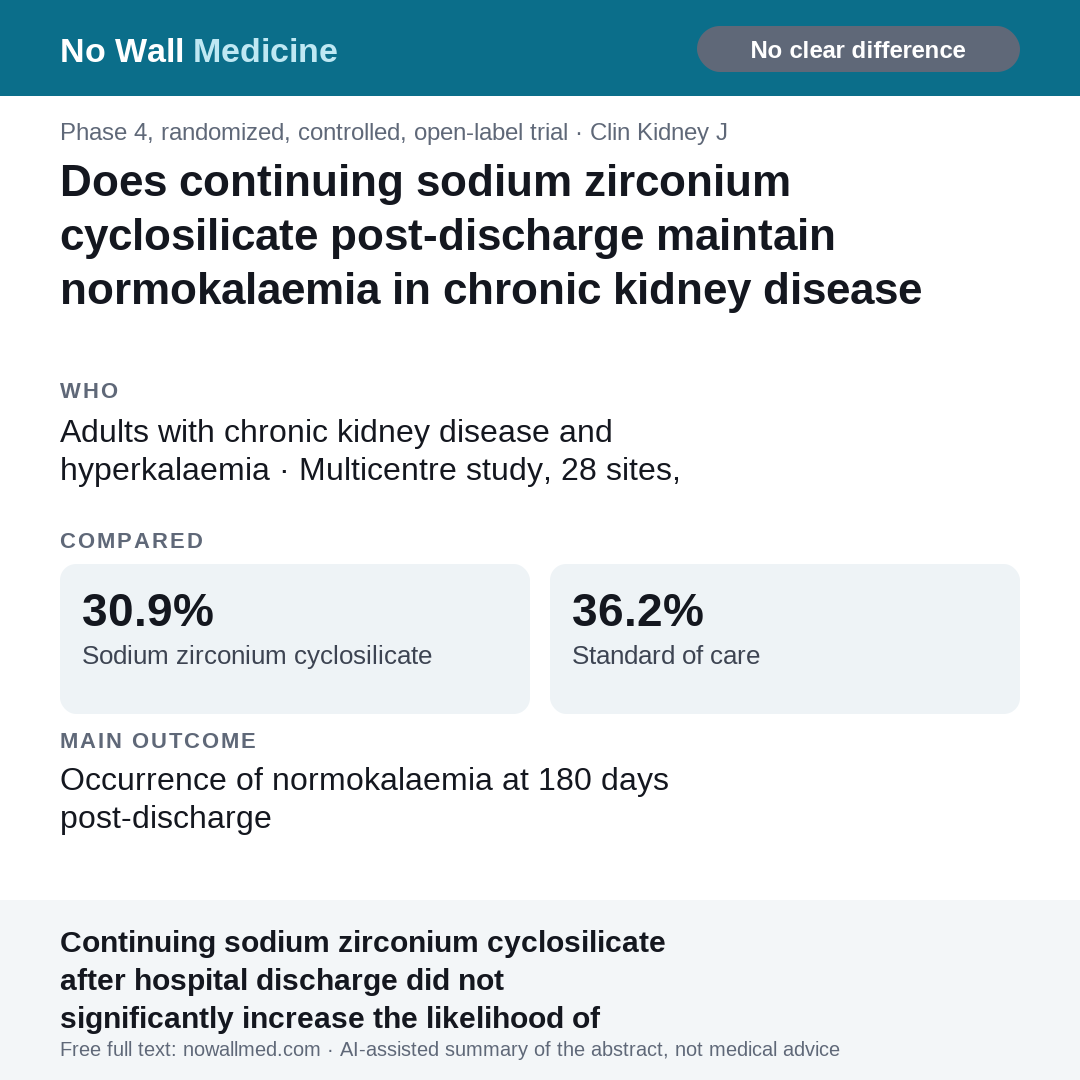
Sodium zirconium cyclosilicate post hospital discharge to prevent hyperkalaemia: phase 4, randomized CONTINUITY trial
Phase 4, randomized, controlled, open-label trialNo clear difference
Does continuing sodium zirconium cyclosilicate post-discharge maintain normokalaemia in chronic kidney disease patients?
Who
Adults with chronic kidney disease and hyperkalaemia · Multicentre study, 28 sites, six European countries
Compared
30.9%Sodium zirconium cyclosilicate
36.2%Standard of care
Main outcome
Occurrence of normokalaemia at 180 days post-discharge
Result: odds ratio 0.81 (95% CI 0.39-1.66)
Bottom line: Continuing sodium zirconium cyclosilicate after hospital discharge did not significantly increase the likelihood of maintaining normokalaemia.
Limitation: High and imbalanced levels of missing serum potassium measurements at 180 days.
Clin Kidney J · 2026-05-19Download image
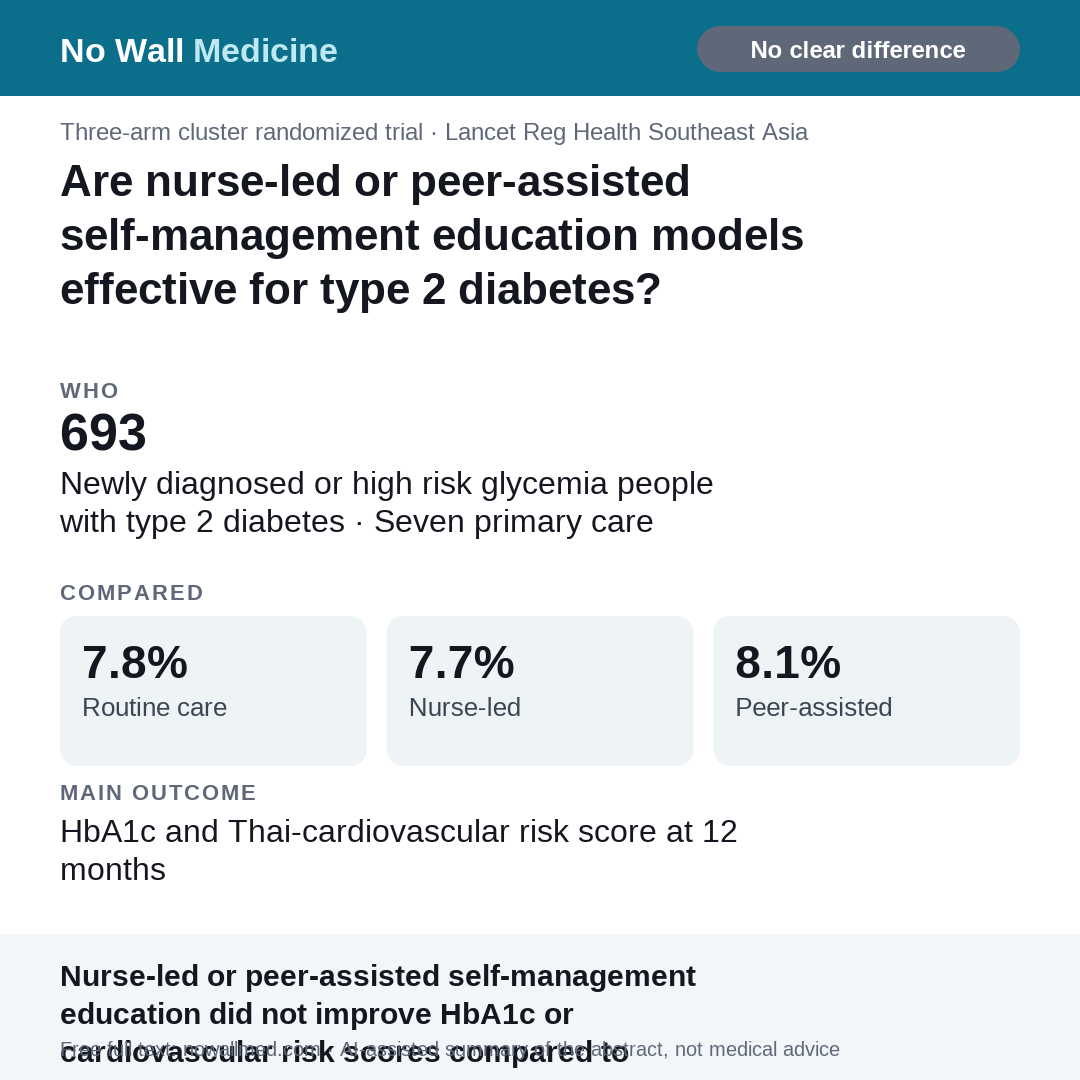
Self-management education and support for type 2 diabetes in Thailand: a cluster randomized trial (2019-2021)
Three-arm cluster randomized trialNo clear difference
Are nurse-led or peer-assisted self-management education models effective for type 2 diabetes?
Who
693
Newly diagnosed or high risk glycemia people with type 2 diabetes · Seven primary care units in Thailand
Compared
7.8%Routine care (SD 1.6)
7.7%Nurse-led (SD 1.3)
8.1%Peer-assisted (SD 1.6)
Main outcome
HbA1c and Thai-cardiovascular risk score at 12 months
Result: HbA1c difference: -0.1% (-0.4 to 0.1) and 0.1% (-0.2 to 0.5)
Bottom line: Nurse-led or peer-assisted self-management education did not improve HbA1c or cardiovascular risk scores compared to routine care.
Funded by: UK Medical Research Council and Thailand Research Fund
Lancet Reg Health Southeast Asia · 2026-05-19Download image
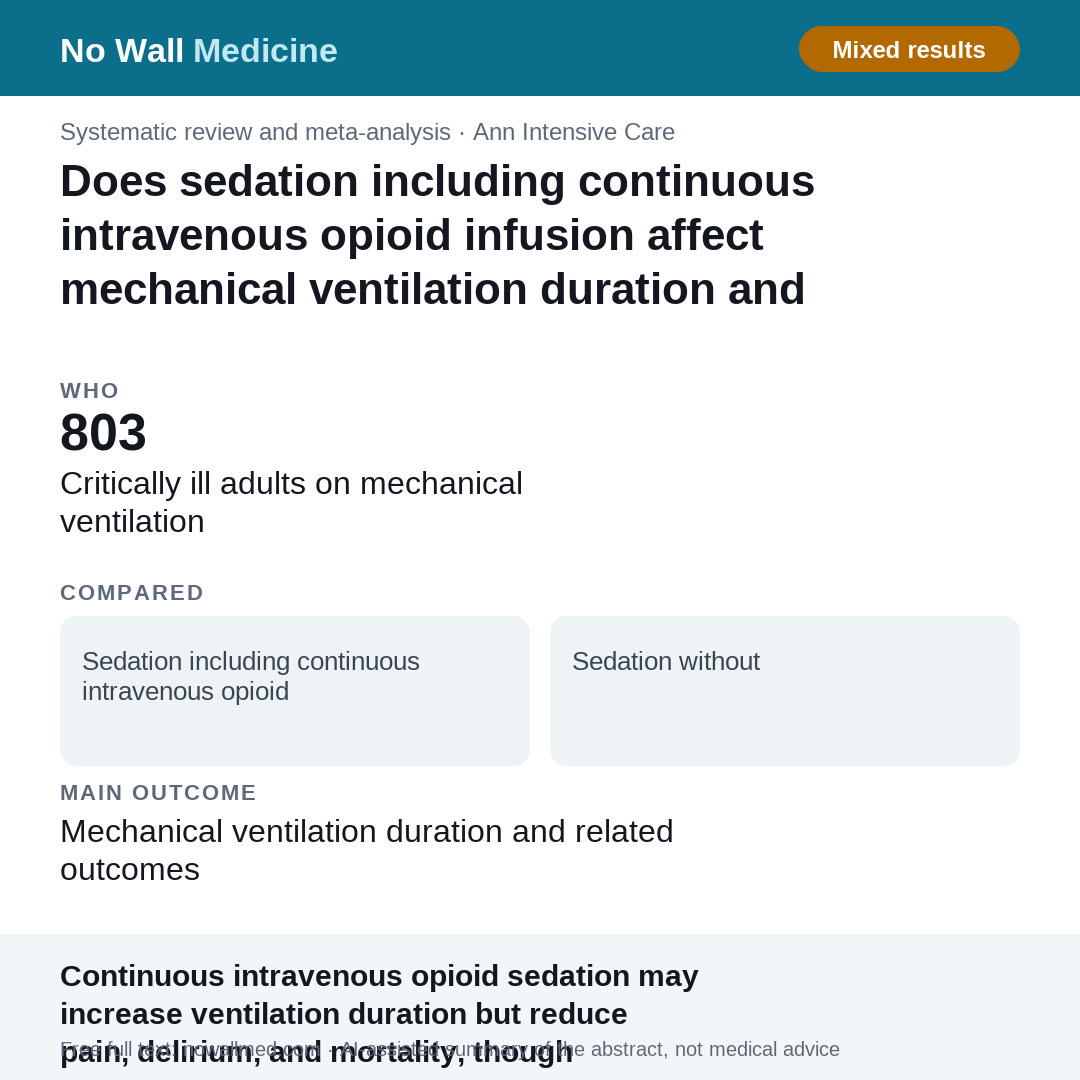
Association between opioid infusion use and duration of mechanical ventilation and related outcomes in critically ill adults: a systematic review and meta-analysis
Systematic review and meta-analysisMixed results
Does sedation including continuous intravenous opioid infusion affect mechanical ventilation duration and outcomes?
Who
803
Critically ill adults on mechanical ventilation
Compared
Sedation including continuous intravenous opioid
Sedation without
Main outcome
Mechanical ventilation duration and related outcomes
Result: mean difference 3.63 h (95% CI 2.27-4.99)
Bottom line: Continuous intravenous opioid sedation may increase ventilation duration but reduce pain, delirium, and mortality, though certainty remains very low.
Limitation: Risk of bias was critical for most studies.
Ann Intensive Care · 2026-05-19Download image
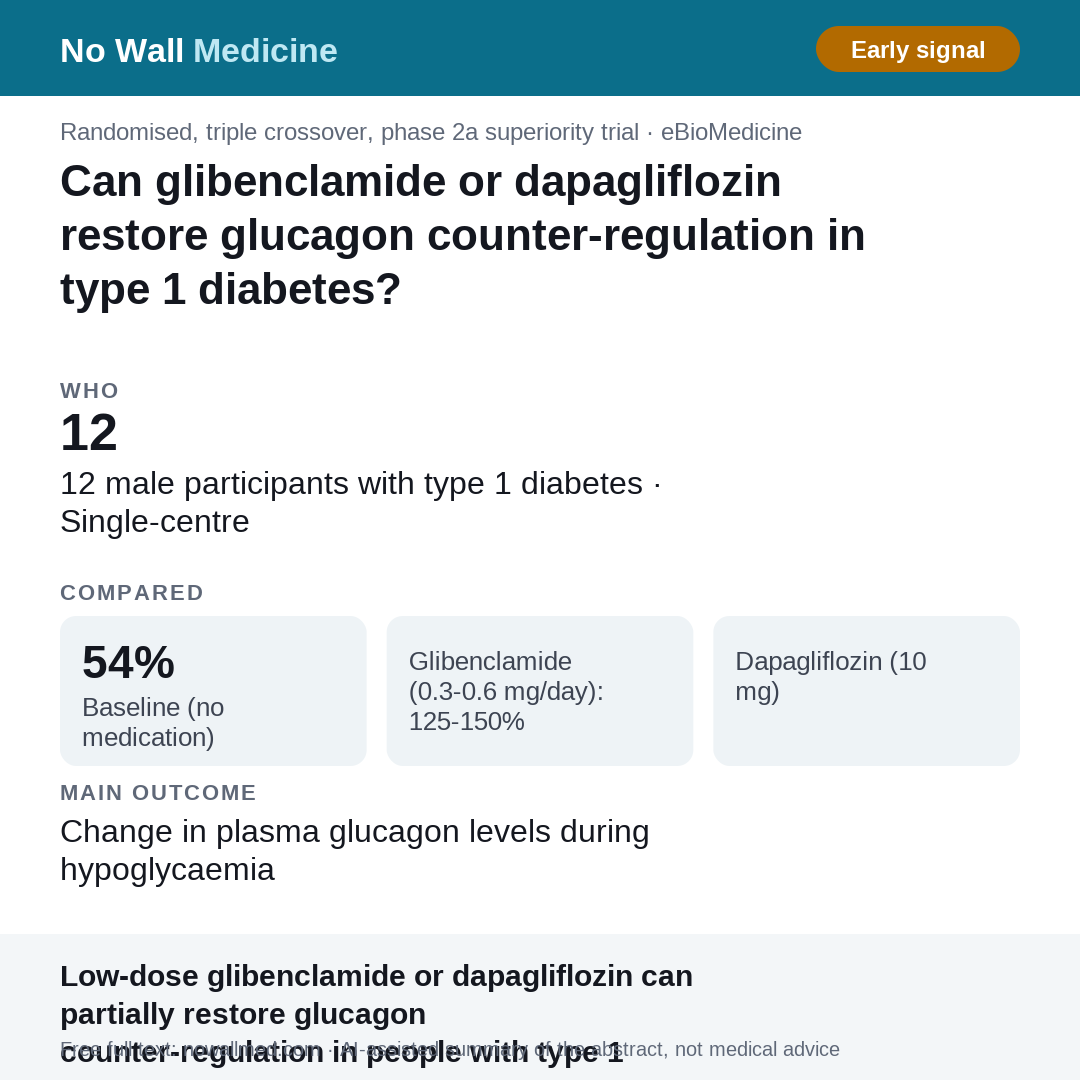
Partial restoration of counterregulatory circulating glucagon by dapagliflozin and low-dose glibenclamide in men with type 1 diabetes: in vitro studies and randomised clinical crossover trial
Randomised, triple crossover, phase 2a superiority trialBenefit found
Can glibenclamide or dapagliflozin restore glucagon counter-regulation in type 1 diabetes?
Who
12
12 male participants with type 1 diabetes · Single-centre
Compared
54%Baseline (no medication)
Glibenclamide (0.3-0.6 mg/day): 125-150%
Dapagliflozin (10 mg)
Main outcome
Change in plasma glucagon levels during hypoglycaemia
Bottom line: Low-dose glibenclamide or dapagliflozin can partially restore glucagon counter-regulation in people with type 1 diabetes.
Funded by: The Leona M. and Harry B. Helmsley Charitable Trust
eBioMedicine · 2026-05-19Download image
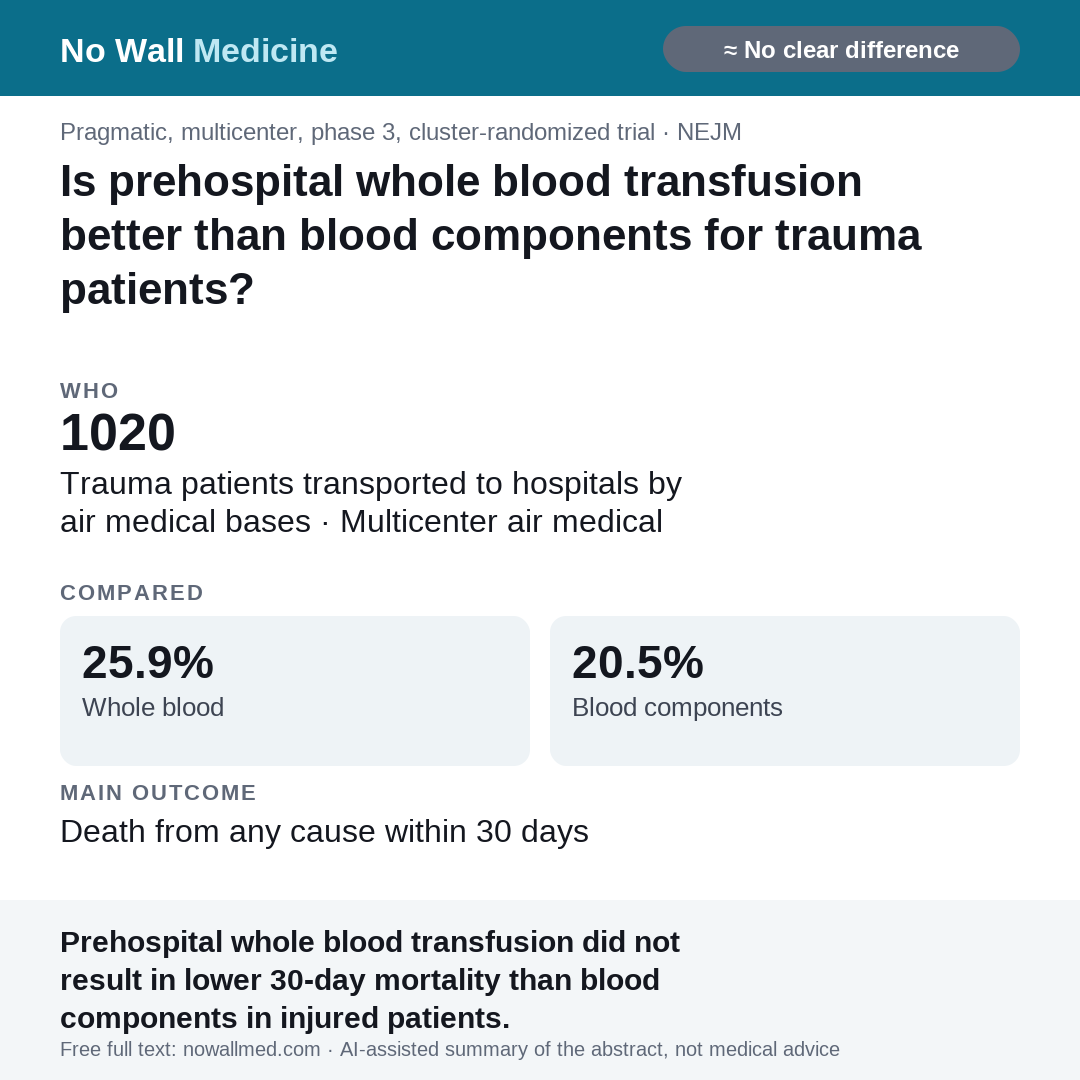
Prehospital Resuscitation with Type O Whole Blood for Trauma and Hemorrhage
Pragmatic, multicenter, phase 3, cluster-randomized trialNo clear difference
Is prehospital whole blood transfusion better than blood components for trauma patients?
Who
1020
Trauma patients transported to hospitals by air medical bases · Multicenter air medical bases
Compared
25.9%Whole blood
20.5%Blood components
Main outcome
Death from any cause within 30 days
Result: adjusted odds ratio 1.24 (95% CI 0.87 to 1.76)
Bottom line: Prehospital whole blood transfusion did not result in lower 30-day mortality than blood components in injured patients.
Funded by: Defense Health Agency Research Technology Portfolio Management
NEJM · 2026-05-18Download image
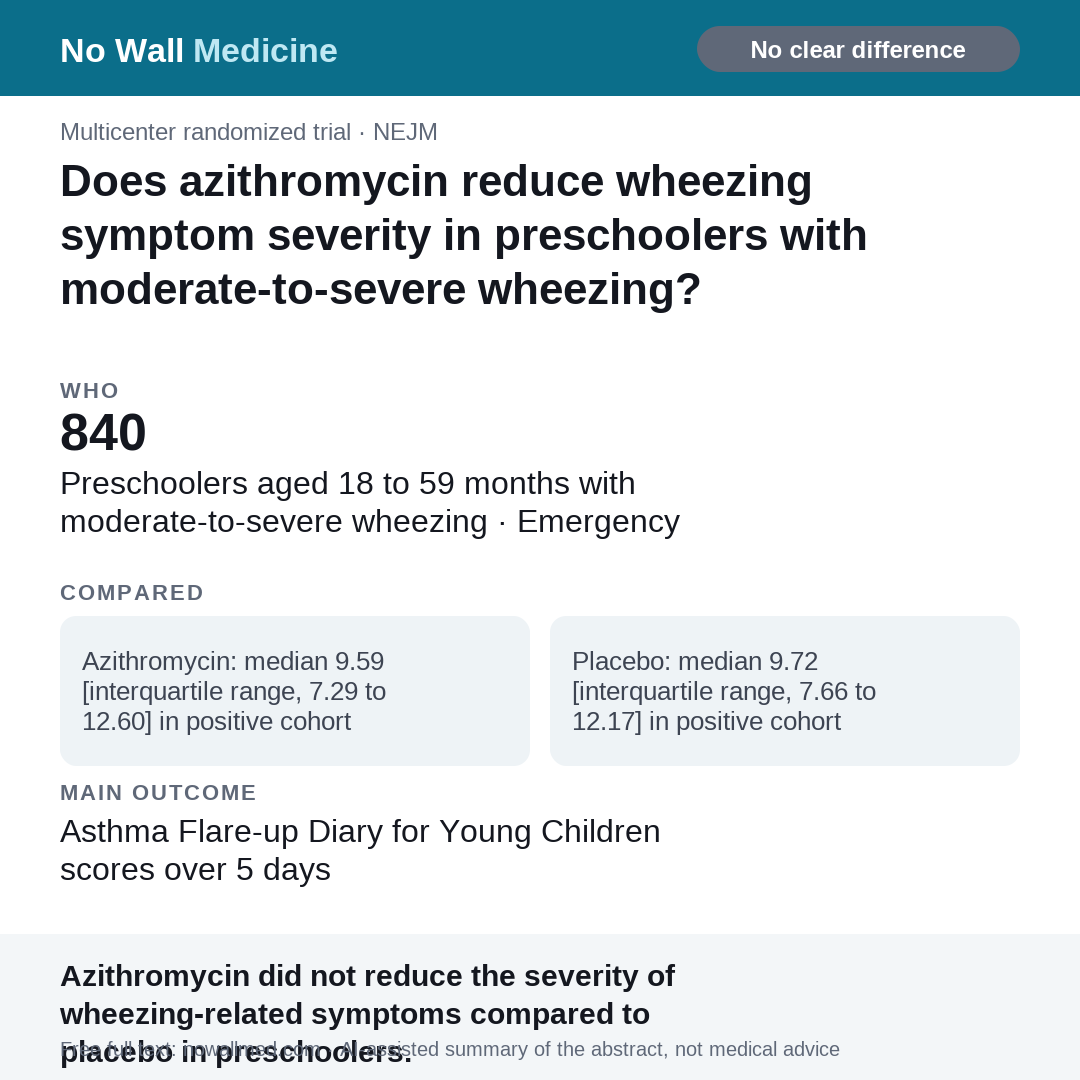
Azithromycin for Preschoolers with Wheezing in the Emergency Department
Multicenter randomized trialNo clear difference
Does azithromycin reduce wheezing symptom severity in preschoolers with moderate-to-severe wheezing?
Who
840
Preschoolers aged 18 to 59 months with moderate-to-severe wheezing · Emergency department
Compared
Azithromycin: median 9.59 [interquartile range, 7.29 to 12.60] in positive cohort
Placebo: median 9.72 [interquartile range, 7.66 to 12.17] in positive cohort
Main outcome
Asthma Flare-up Diary for Young Children scores over 5 days
Bottom line: Azithromycin did not reduce the severity of wheezing-related symptoms compared to placebo in preschoolers.
Funded by: National Heart, Lung, and Blood Institute and others
NEJM · 2026-05-18Download image
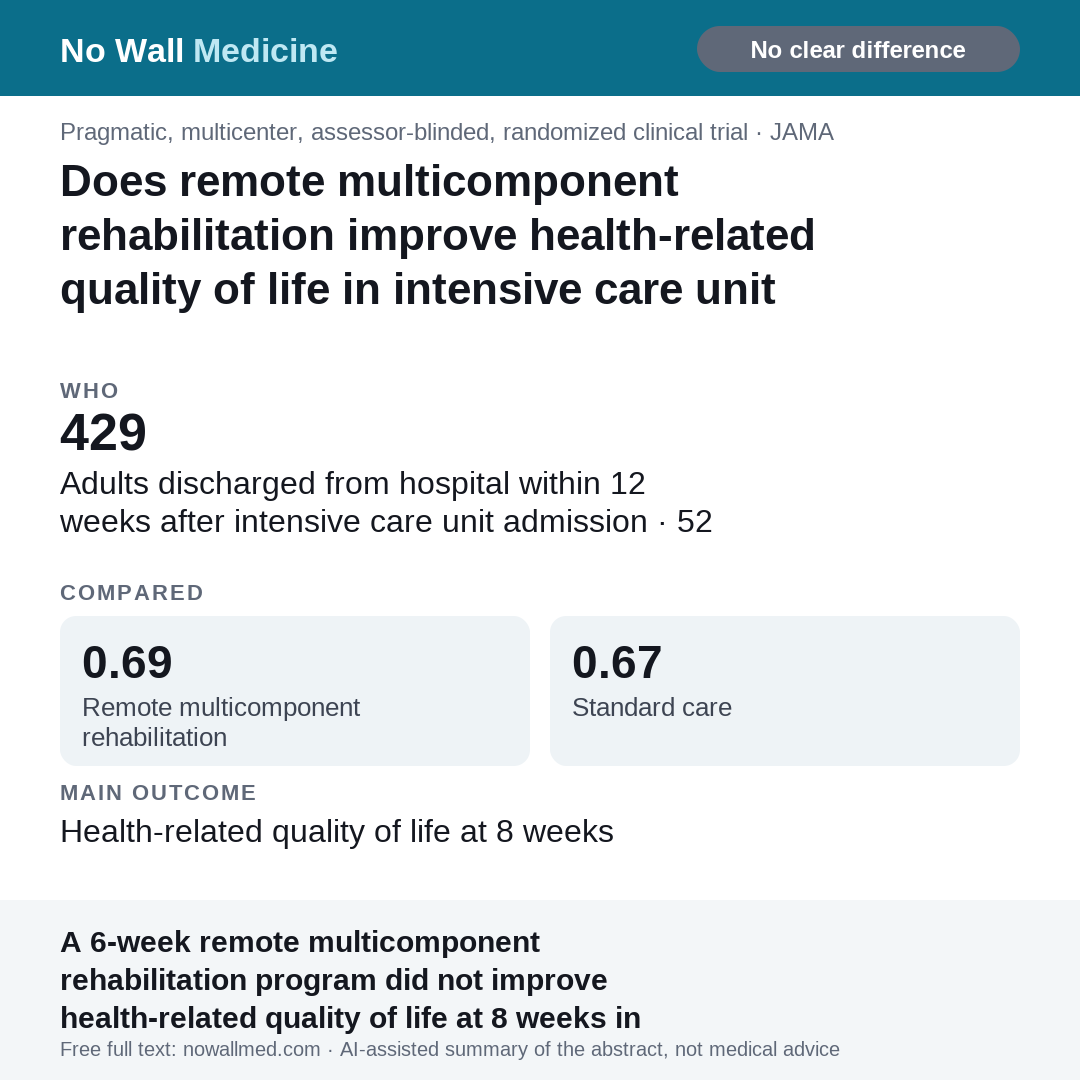
Remote Multicomponent Rehabilitation in Intensive Care Unit Survivors: A Randomized Clinical Trial
Pragmatic, multicenter, assessor-blinded, randomized clinical trialNo clear difference
Does remote multicomponent rehabilitation improve health-related quality of life in intensive care unit survivors?
Who
429
Adults discharged from hospital within 12 weeks after intensive care unit admission · 52 National Health Service hospitals in the UK
Compared
0.69Remote multicomponent rehabilitation (SD, 0.26)
0.67Standard care (SD, 0.27)
Main outcome
Health-related quality of life at 8 weeks
Result: adjusted mean difference, 0.04 (95% CI, -0.001 to 0.09)
Bottom line: A 6-week remote multicomponent rehabilitation program did not improve health-related quality of life at 8 weeks in intensive care survivors.
JAMA · 2026-05-18Download image
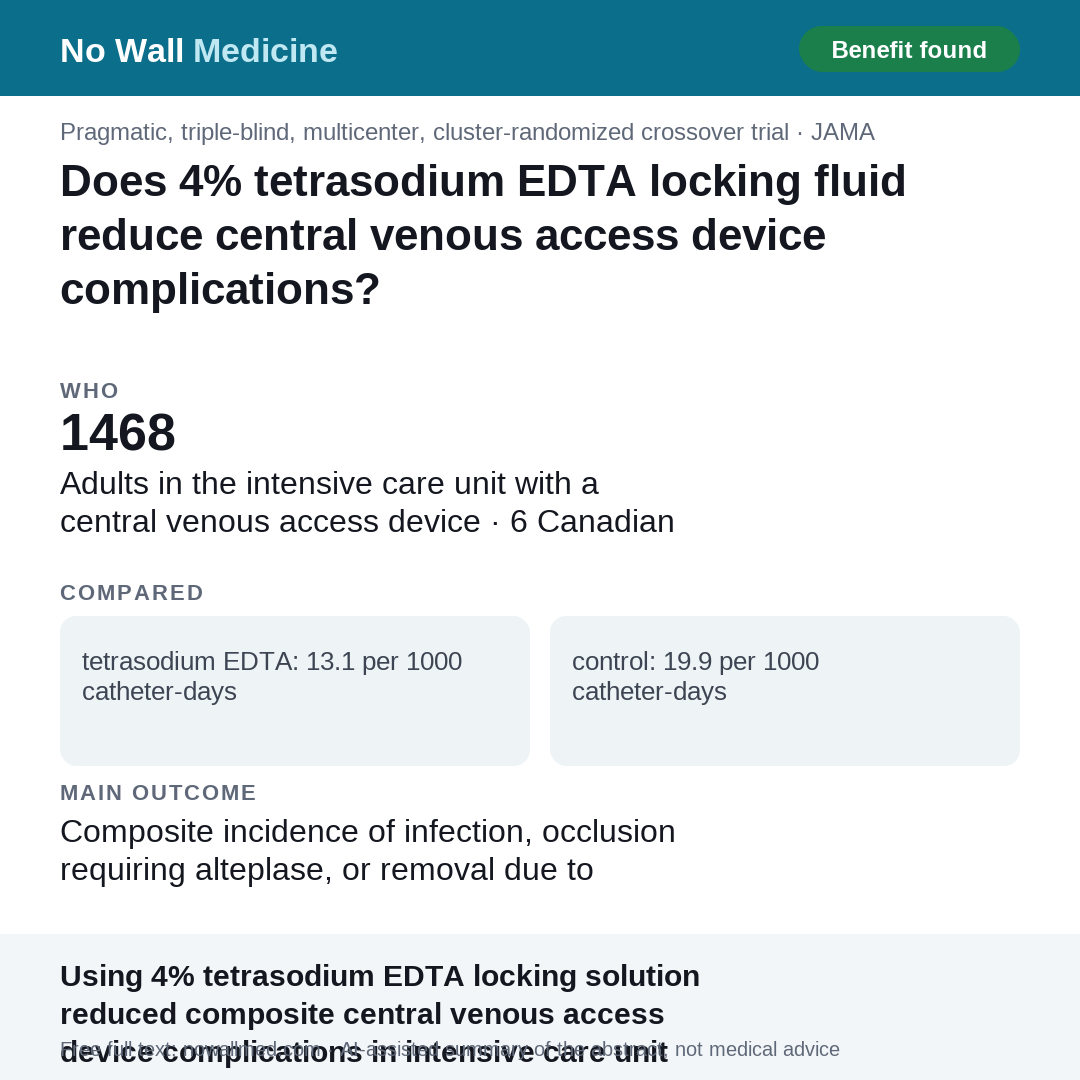
4% Tetrasodium EDTA to Prevent Central Venous Access Device-Associated Complications: A Randomized Clinical Trial
Pragmatic, triple-blind, multicenter, cluster-randomized crossover trialBenefit found
Does 4% tetrasodium EDTA locking fluid reduce central venous access device complications?
Who
1468
Adults in the intensive care unit with a central venous access device · 6 Canadian hospitals
Compared
tetrasodium EDTA: 13.1 per 1000 catheter-days
control: 19.9 per 1000 catheter-days
Main outcome
Composite incidence of infection, occlusion requiring alteplase, or removal due to occlusion
Result: rate ratio 0.68 (95% CI 0.47-0.96)
Bottom line: Using 4% tetrasodium EDTA locking solution reduced composite central venous access device complications in intensive care unit patients.
JAMA · 2026-05-18Download image