Visual abstracts
New randomized trials and meta-analyses from leading journals at a glance: who was studied, what was compared, and what was found. Every paper is free to read in full.
All specialtiesCardiology 857Oncology 770Gastroenterology & Hepatology 311Infectious Disease 626Neurology 354Psychiatry & Mental Health 430Pulmonology 370Critical Care 260Endocrinology & Diabetes 484Pediatrics 542Surgery 351Orthopedics & Sports Medicine 166Neurosurgery 115Cardiothoracic & Vascular Surgery 87Plastic & Reconstructive Surgery 144Nephrology 197Rheumatology 108Hematology 183Dermatology 82Ophthalmology 97Obstetrics & Gynecology 266Public & Global Health 168Radiology & Imaging 105Anesthesiology 130Urology 162ENT (Otolaryngology) 115Emergency Medicine 103Allergy & Immunology 58Geriatrics 160Family Medicine & Primary Care 111Medical Genetics & Genomics 91Pathology & Laboratory Medicine 27Physical Medicine & Rehabilitation 149Palliative Care 81Nutrition 223Digital Health & AI 462General Medicine 101
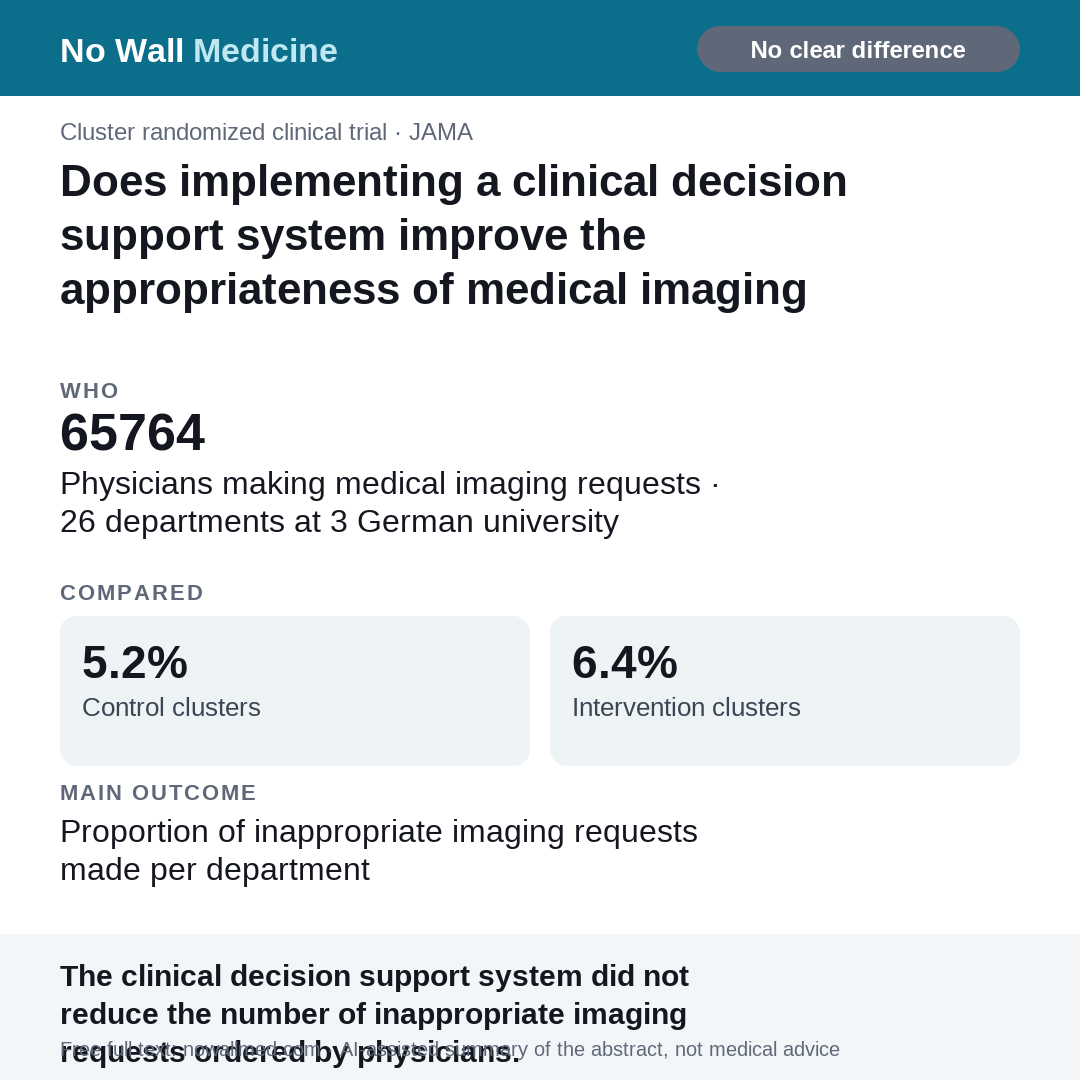
Evaluation of a Clinical Decision Support System for Imaging Requests: A Cluster Randomized Clinical Trial
Cluster randomized clinical trialNo clear difference
Does implementing a clinical decision support system improve the appropriateness of medical imaging ordering behavior?
Who
65764
Physicians making medical imaging requests · 26 departments at 3 German university hospitals
Compared
5.2%Control clusters
6.4%Intervention clusters
Main outcome
Proportion of inappropriate imaging requests made per department
Result: difference-in-differences 1.3 percentage points (99% CI, -2.0 to 1.8 percentage points)
Bottom line: The clinical decision support system did not reduce the number of inappropriate imaging requests ordered by physicians.
JAMA · 2025-02-10Download image
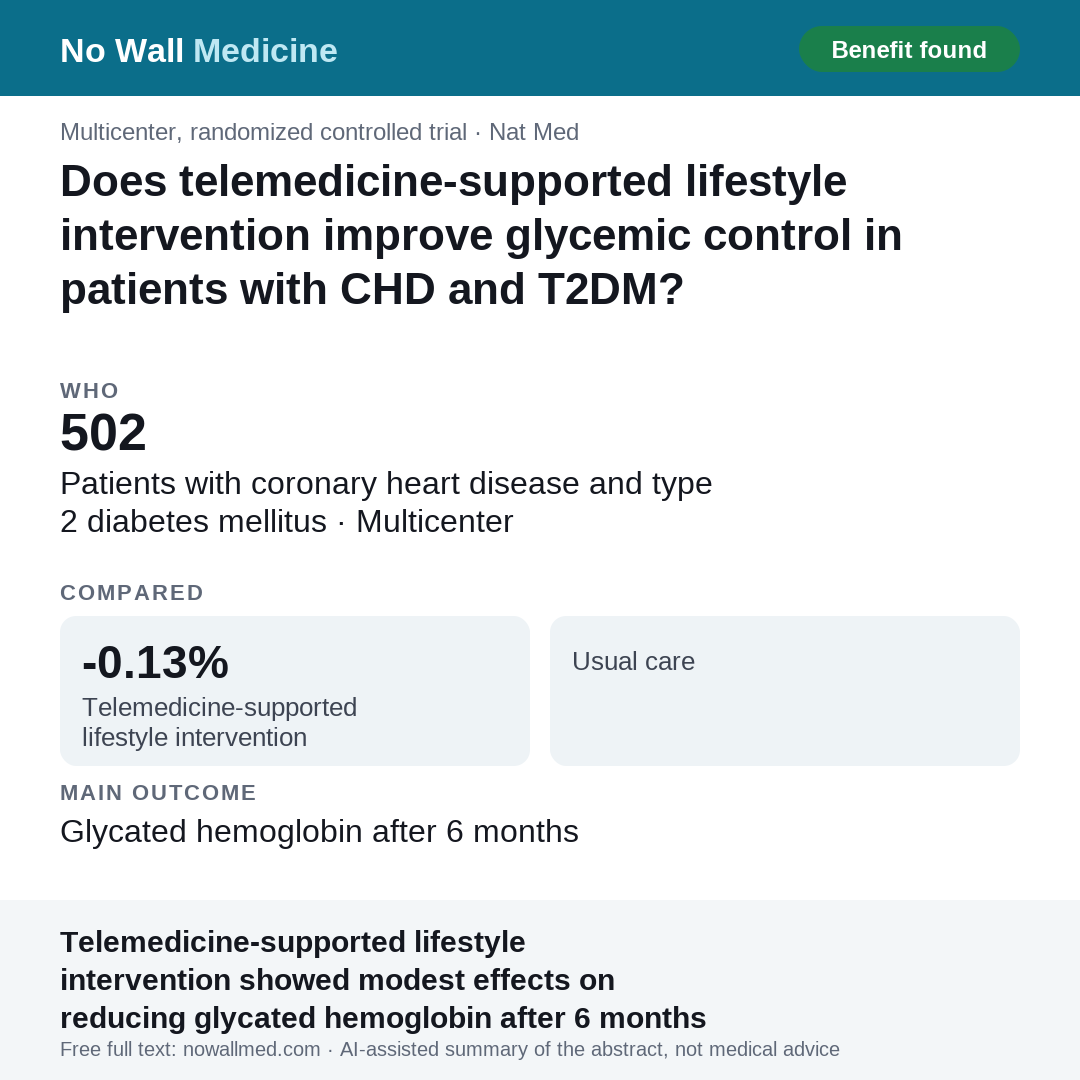
Telemedicine-supported lifestyle intervention for glycemic control in patients with CHD and T2DM: multicenter, randomized controlled trial
Multicenter, randomized controlled trialBenefit found
Does telemedicine-supported lifestyle intervention improve glycemic control in patients with CHD and T2DM?
Who
502
Patients with coronary heart disease and type 2 diabetes mellitus · Multicenter
Compared
-0.13%Telemedicine-supported lifestyle intervention (95% confidence interval, -0.25 to -0.01)
Usual care
Main outcome
Glycated hemoglobin after 6 months
Result: -0.13% (95% confidence interval, -0.25 to -0.01)
Bottom line: Telemedicine-supported lifestyle intervention showed modest effects on reducing glycated hemoglobin after 6 months in patients.
Limitation: No statistically significant between-group differences were observed at 12 months.
Nat Med · 2025-02-07Download image
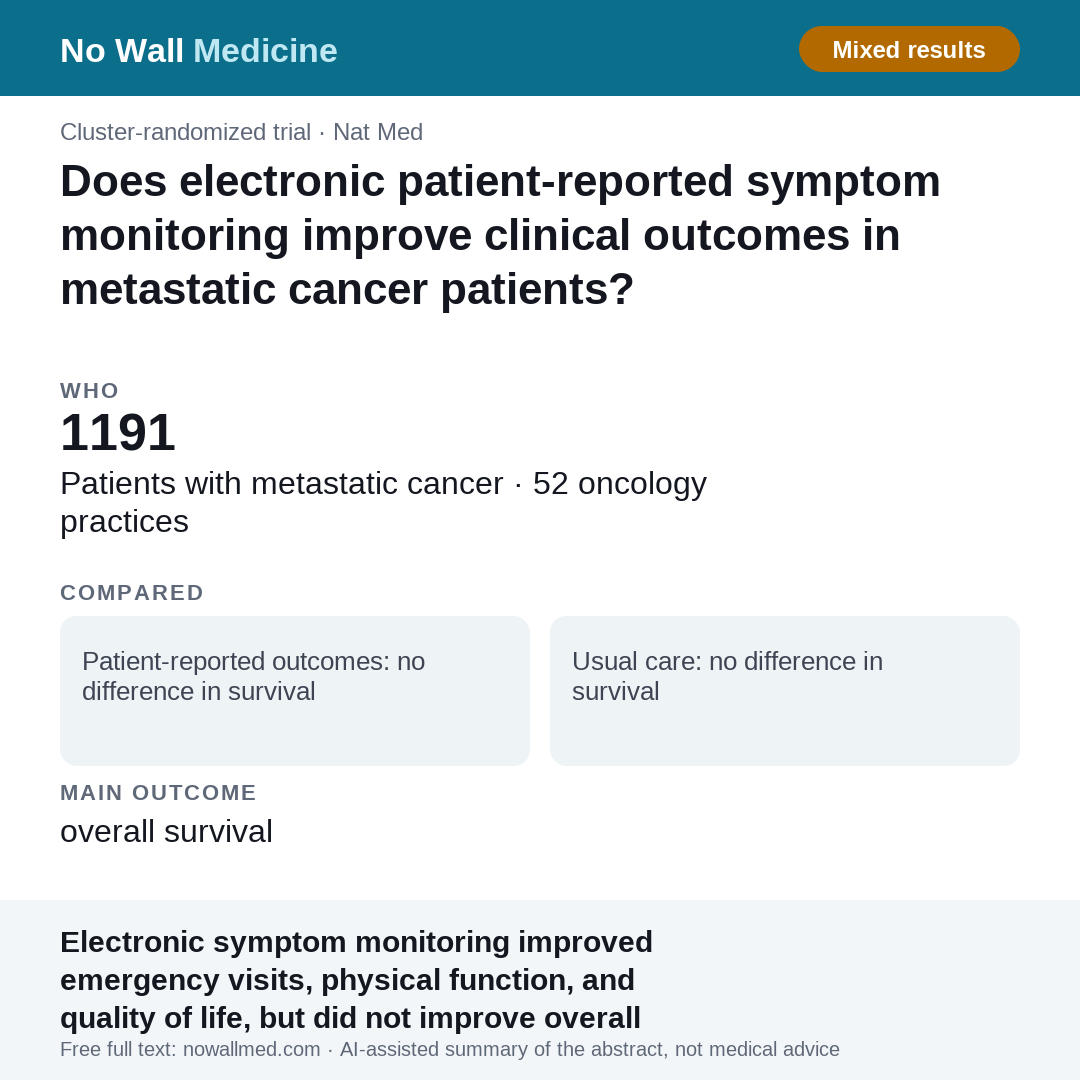
Symptom monitoring with electronic patient-reported outcomes during cancer treatment: final results of the PRO-TECT cluster-randomized trial
Cluster-randomized trialMixed results
Does electronic patient-reported symptom monitoring improve clinical outcomes in metastatic cancer patients?
Who
1191
Patients with metastatic cancer · 52 oncology practices
Compared
Patient-reported outcomes: no difference in survival
Usual care: no difference in survival
Main outcome
overall survival
Result: hazard ratio 0.99 (95% confidence interval 0.83-1.17)
Bottom line: Electronic symptom monitoring improved emergency visits, physical function, and quality of life, but did not improve overall survival.
Nat Med · 2025-02-07Download image
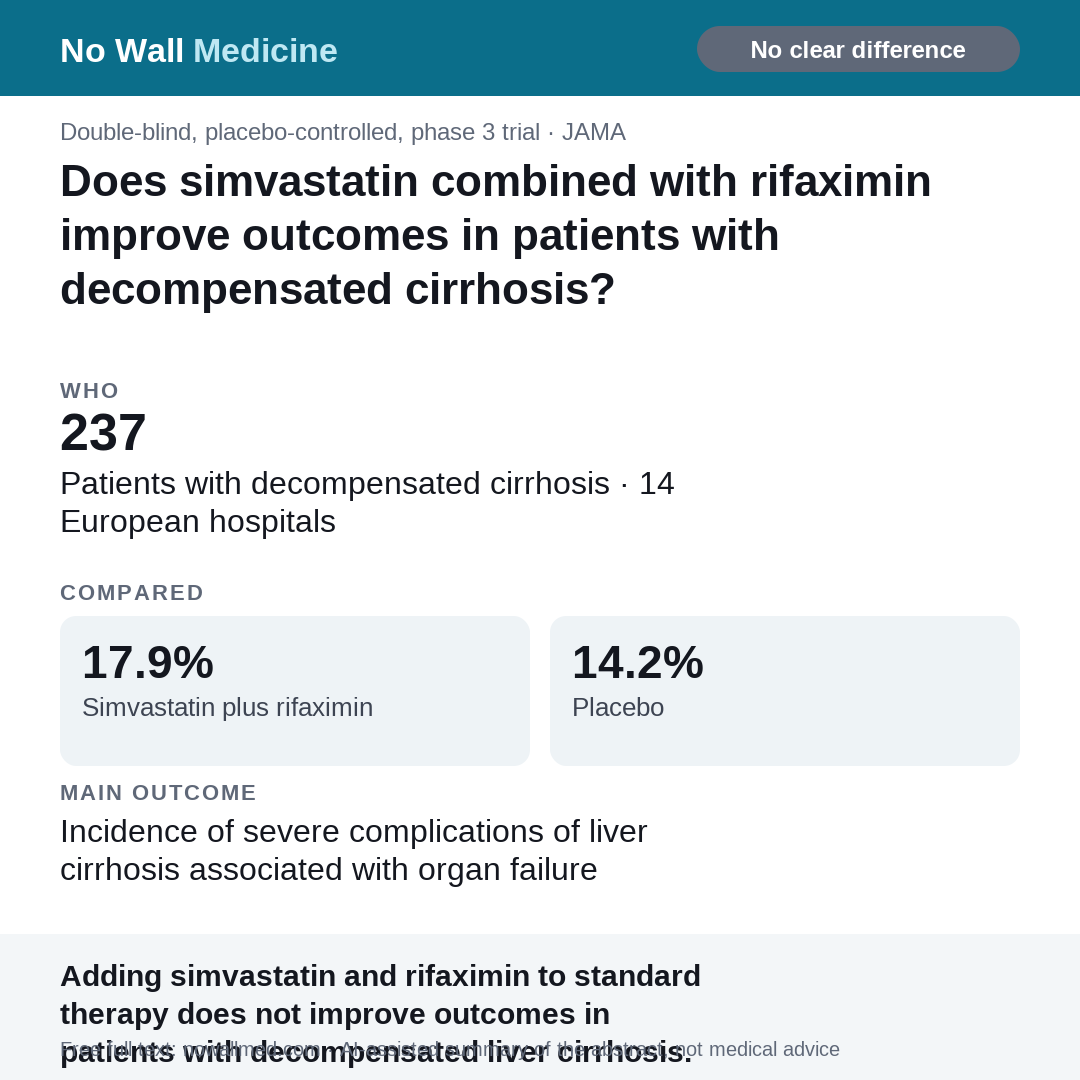
Simvastatin and Rifaximin in Decompensated Cirrhosis: A Randomized Clinical Trial
Double-blind, placebo-controlled, phase 3 trialNo clear difference
Does simvastatin combined with rifaximin improve outcomes in patients with decompensated cirrhosis?
Who
237
Patients with decompensated cirrhosis · 14 European hospitals
Compared
17.9%Simvastatin plus rifaximin
14.2%Placebo
Main outcome
Incidence of severe complications of liver cirrhosis associated with organ failure
Result: hazard ratio 1.23 (95% CI 0.65-2.34)
Bottom line: Adding simvastatin and rifaximin to standard therapy does not improve outcomes in patients with decompensated liver cirrhosis.
JAMA · 2025-02-05Download image
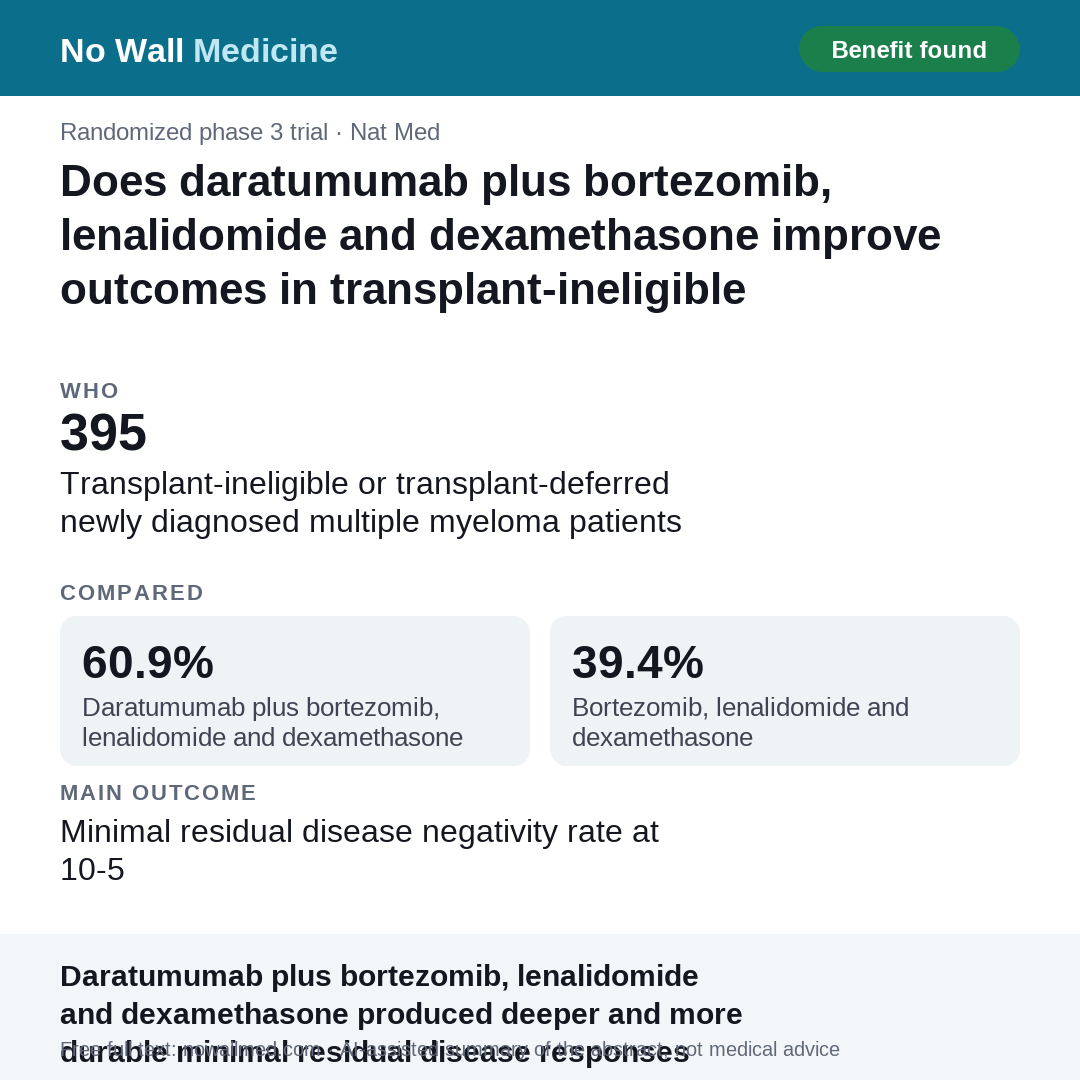
Daratumumab plus bortezomib, lenalidomide and dexamethasone for transplant-ineligible or transplant-deferred newly diagnosed multiple myeloma: the randomized phase 3 CEPHEUS trial
Randomized phase 3 trialBenefit found
Does daratumumab plus bortezomib, lenalidomide and dexamethasone improve outcomes in transplant-ineligible multiple myeloma?
Who
395
Transplant-ineligible or transplant-deferred newly diagnosed multiple myeloma patients
Compared
60.9%Daratumumab plus bortezomib, lenalidomide and dexamethasone
39.4%Bortezomib, lenalidomide and dexamethasone
Main outcome
Minimal residual disease negativity rate at 10-5
Result: odds ratio 2.37 (95% CI 1.58-3.55)
Bottom line: Daratumumab plus bortezomib, lenalidomide and dexamethasone produced deeper and more durable minimal residual disease responses than bortezomib, lenalidomide and dexamethasone.
Nat Med · 2025-02-05Download image
GPT-4 assistance for improvement of physician performance on patient care tasks: a randomized controlled trial
Prospective, randomized, controlled trialBenefit found
Does GPT-4 assistance improve physician performance on open-ended management reasoning tasks?
Who
92
92 practicing physicians · simulated setting
Compared
GPT-4 plus conventional resources
conventional resources alone
Main outcome
total score on expert-developed scoring rubrics
Result: mean difference 6.5% (95% CI 2.7 to 10.2)
Bottom line: GPT-4 assistance improves physician management reasoning in complex clinical vignettes compared to conventional resources.
Nat Med · 2025-02-05Download image

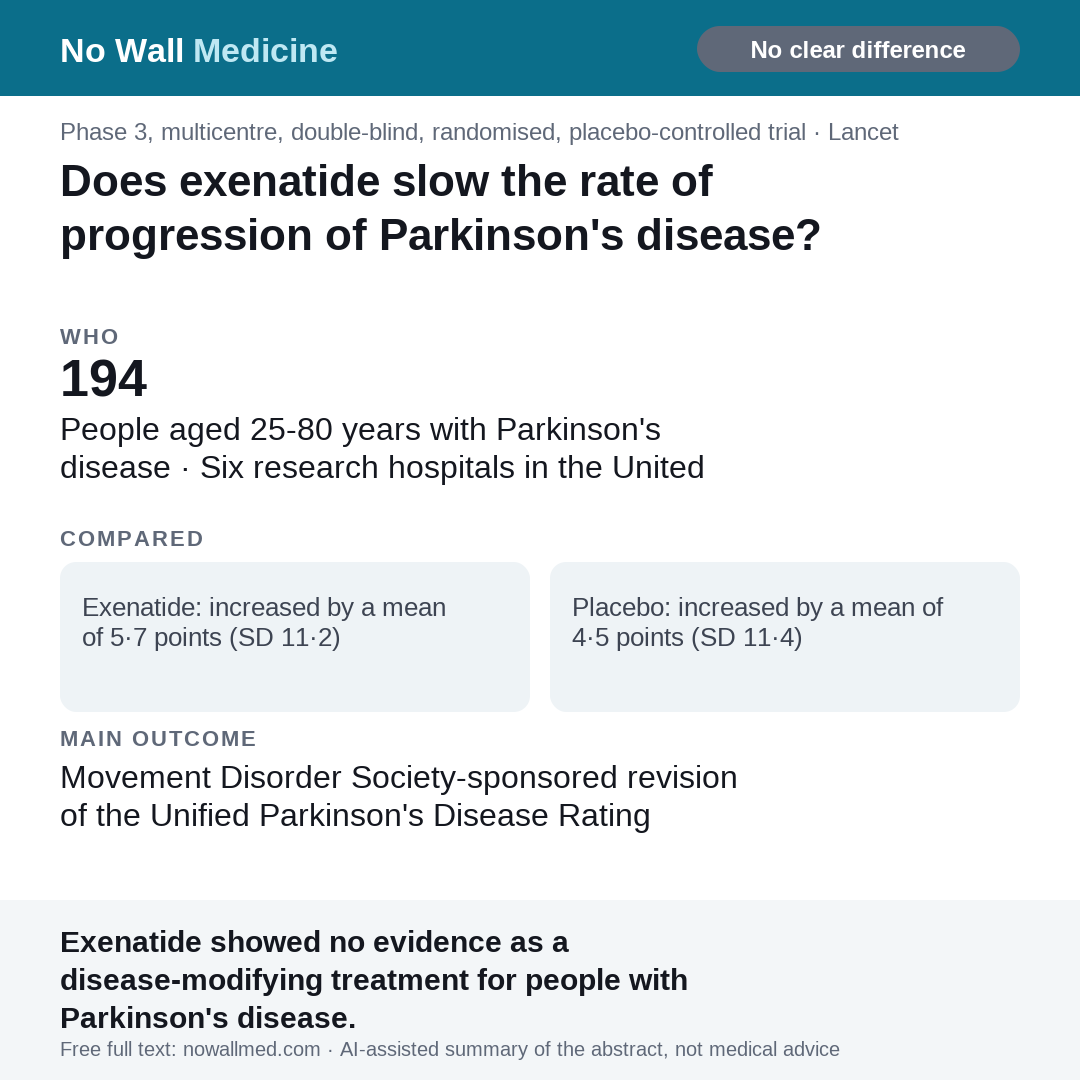
Exenatide once a week versus placebo as a potential disease-modifying treatment for people with Parkinson's disease in the UK: a phase 3, multicentre, double-blind, parallel-group, randomised, placebo-controlled trial
Phase 3, multicentre, double-blind, randomised, placebo-controlled trialNo clear difference
Does exenatide slow the rate of progression of Parkinson's disease?
Who
194
People aged 25-80 years with Parkinson's disease · Six research hospitals in the United Kingdom
Compared
Exenatide: increased by a mean of 5·7 points (SD 11·2)
Placebo: increased by a mean of 4·5 points (SD 11·4)
Main outcome
Movement Disorder Society-sponsored revision of the Unified Parkinson's Disease Rating Scale part III score
Result: adjusted coefficient 0·92 (95% CI -1·56 to 3·39)
Bottom line: Exenatide showed no evidence as a disease-modifying treatment for people with Parkinson's disease.
Funded by: National Institute for Health and Care Research and Cure Parkinson's
Lancet · 2025-02-04Download image
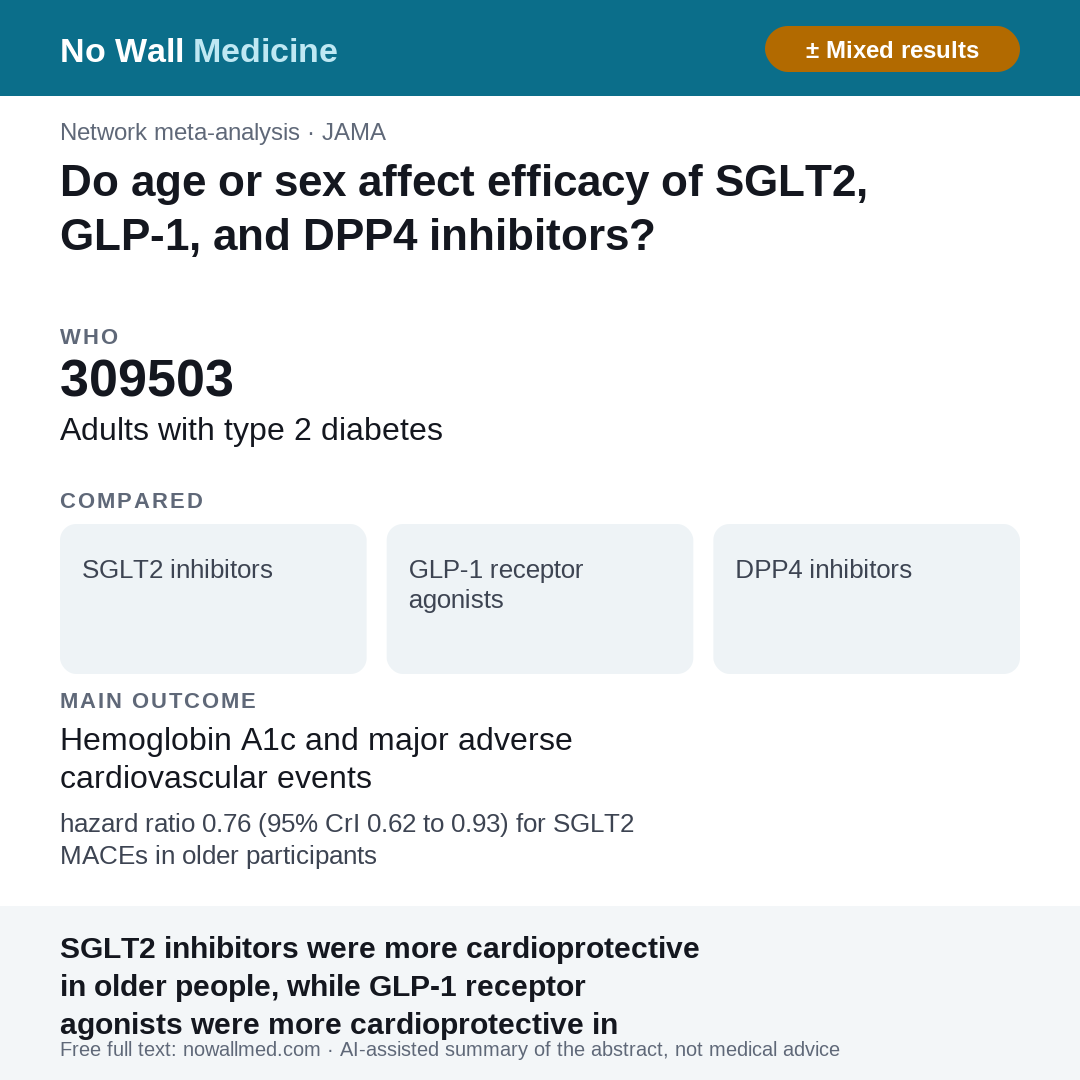
Age and Sex Differences in Efficacy of Treatments for Type 2 Diabetes: A Network Meta-Analysis
Network meta-analysisMixed results
Do age or sex affect efficacy of SGLT2, GLP-1, and DPP4 inhibitors?
Who
309503
Adults with type 2 diabetes
Compared
SGLT2 inhibitors
GLP-1 receptor agonists
DPP4 inhibitors
Main outcome
Hemoglobin A1c and major adverse cardiovascular events
Result: hazard ratio 0.76 (95% CrI 0.62 to 0.93) for SGLT2 MACEs in older participants
Bottom line: SGLT2 inhibitors were more cardioprotective in older people, while GLP-1 receptor agonists were more cardioprotective in younger people.
JAMA · 2025-02-03Download image
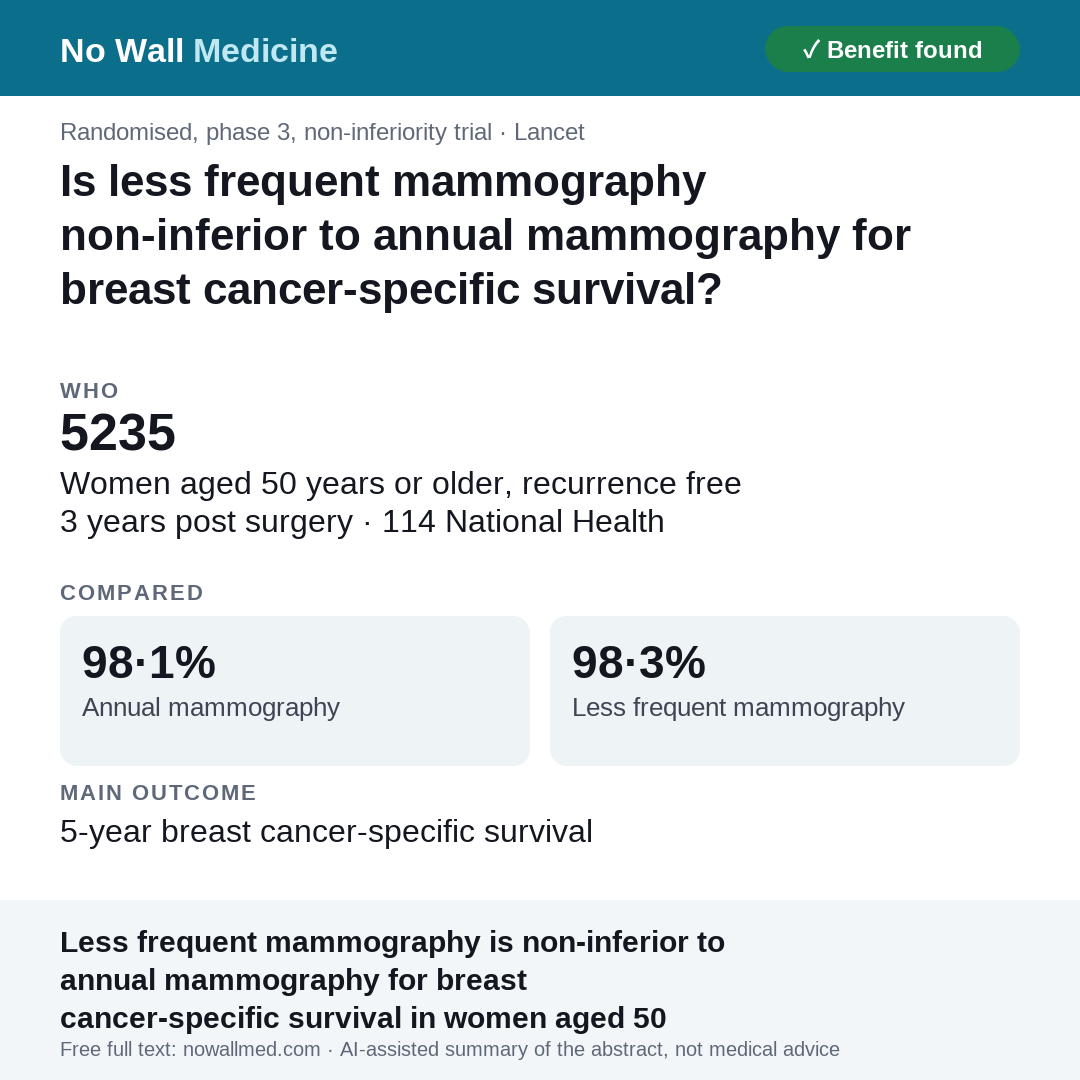
Annual versus less frequent mammographic surveillance in people with breast cancer aged 50 years and older in the UK (Mammo-50): a multicentre, randomised, phase 3, non-inferiority trial
Randomised, phase 3, non-inferiority trialBenefit found
Is less frequent mammography non-inferior to annual mammography for breast cancer-specific survival?
Who
5235
Women aged 50 years or older, recurrence free 3 years post surgery · 114 National Health Service hospitals in the UK
Compared
98·1%Annual mammography (95% CI 97·5-98·6)
98·3%Less frequent mammography (97·8-98·8)
Main outcome
5-year breast cancer-specific survival
Result: hazard ratio 0·92, 95% CI 0·64-1·32
Bottom line: Less frequent mammography is non-inferior to annual mammography for breast cancer-specific survival in women aged 50 years or older.
Funded by: National Institute for Health Research Health Technology Assessment programme
Lancet · 2025-02-02Download image
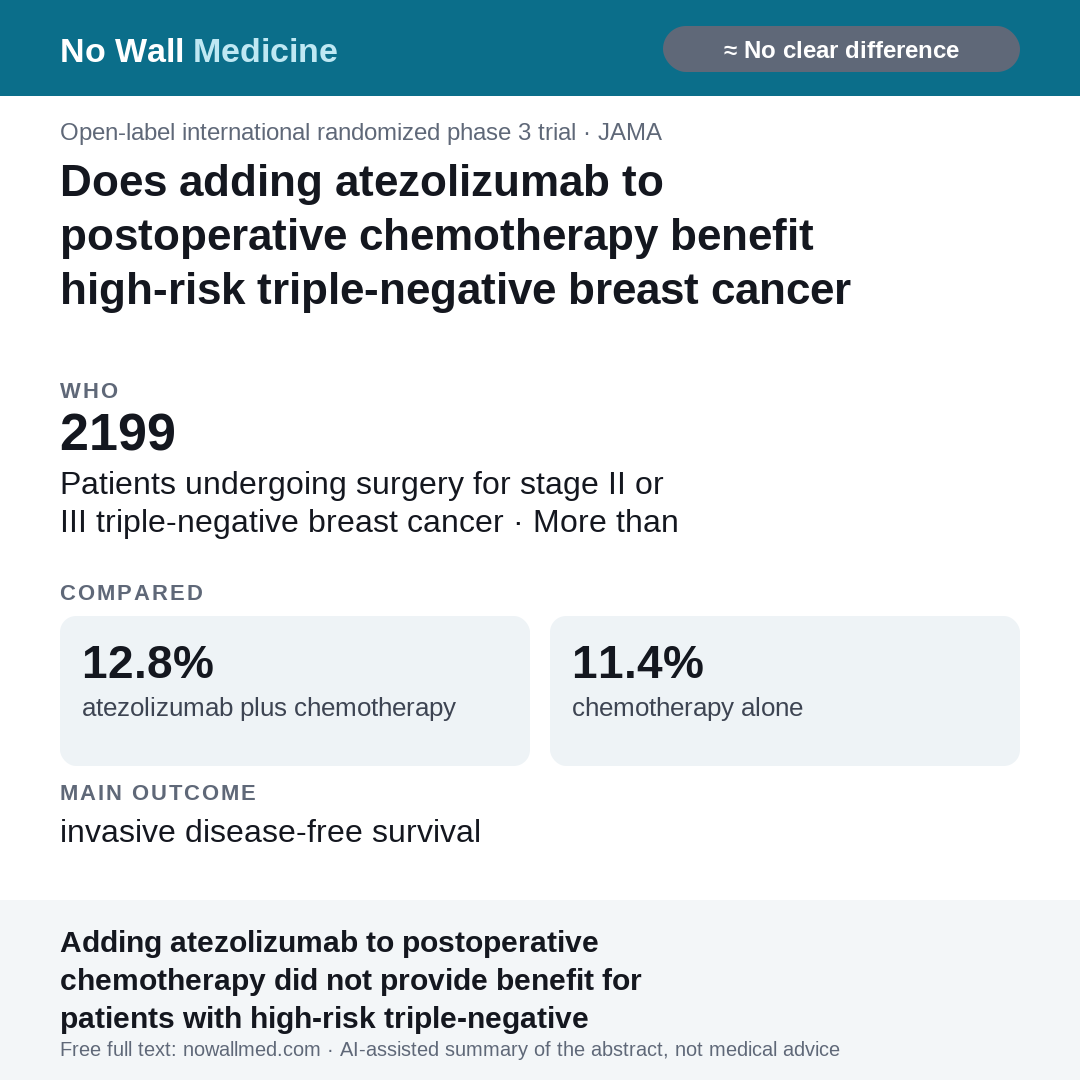
Adjuvant Atezolizumab for Early Triple-Negative Breast Cancer: The ALEXANDRA/IMpassion030 Randomized Clinical Trial
Open-label international randomized phase 3 trialNo clear difference
Does adding atezolizumab to postoperative chemotherapy benefit high-risk triple-negative breast cancer patients?
Who
2199
Patients undergoing surgery for stage II or III triple-negative breast cancer · More than 330 centers in 31 countries
Compared
12.8%atezolizumab plus chemotherapy
11.4%chemotherapy alone
Main outcome
invasive disease-free survival
Result: hazard ratio 1.11 (95% CI, 0.87-1.42)
Bottom line: Adding atezolizumab to postoperative chemotherapy did not provide benefit for patients with high-risk triple-negative breast cancer.
Limitation: The trial continued to a premature final analysis.
JAMA · 2025-01-30Download image
Palliative Care Program for Community-Dwelling Individuals With Dementia and Caregivers: The IN-PEACE Randomized Clinical Trial
Randomized clinical trialMixed results
Does integrated dementia palliative care reduce symptoms, caregiver distress, and healthcare utilization?
Who
201
Community-dwelling patients with moderate to severe dementia and their caregivers · 2 sites in central Indiana
Compared
9.15Dementia palliative care
9.39Usual care
Main outcome
Neuropsychiatric Inventory Questionnaire severity score
Result: -0.24 (95% CI, -2.33 to 1.84)
Bottom line: Palliative care did not improve neuropsychiatric symptoms but reduced combined emergency department and hospitalization events.
JAMA · 2025-01-29Download image

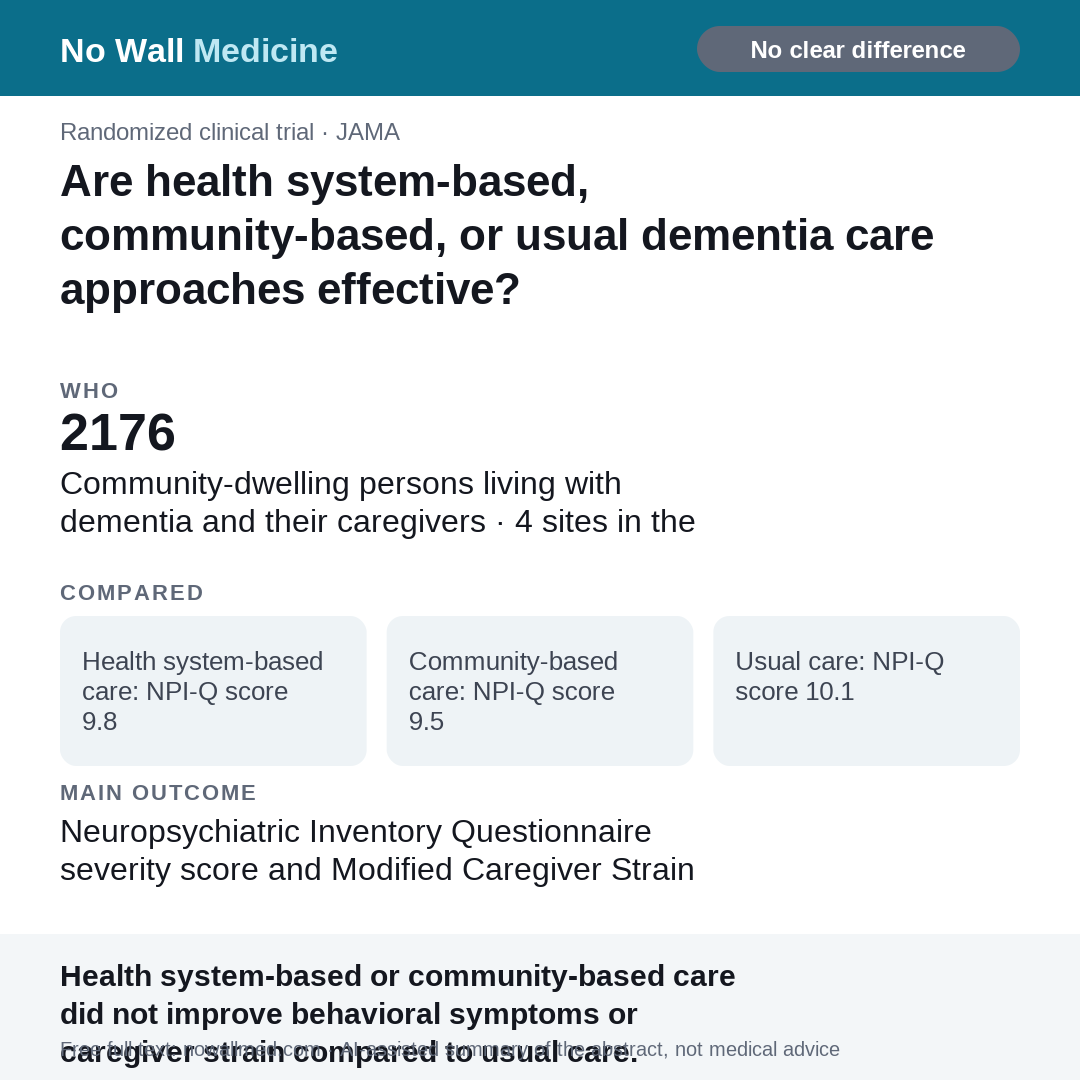
Health System, Community-Based, or Usual Dementia Care for Persons With Dementia and Caregivers: The D-CARE Randomized Clinical Trial
Randomized clinical trialNo clear difference
Are health system-based, community-based, or usual dementia care approaches effective?
Who
2176
Community-dwelling persons living with dementia and their caregivers · 4 sites in the US
Compared
Health system-based care: NPI-Q score 9.8
Community-based care: NPI-Q score 9.5
Usual care: NPI-Q score 10.1
Main outcome
Neuropsychiatric Inventory Questionnaire severity score and Modified Caregiver Strain Index
Result: difference between health system vs usual care, -0.33 (97.5% CI, -1.32 to 0.67)
Bottom line: Health system-based or community-based care did not improve behavioral symptoms or caregiver strain compared to usual care.
JAMA · 2025-01-29Download image
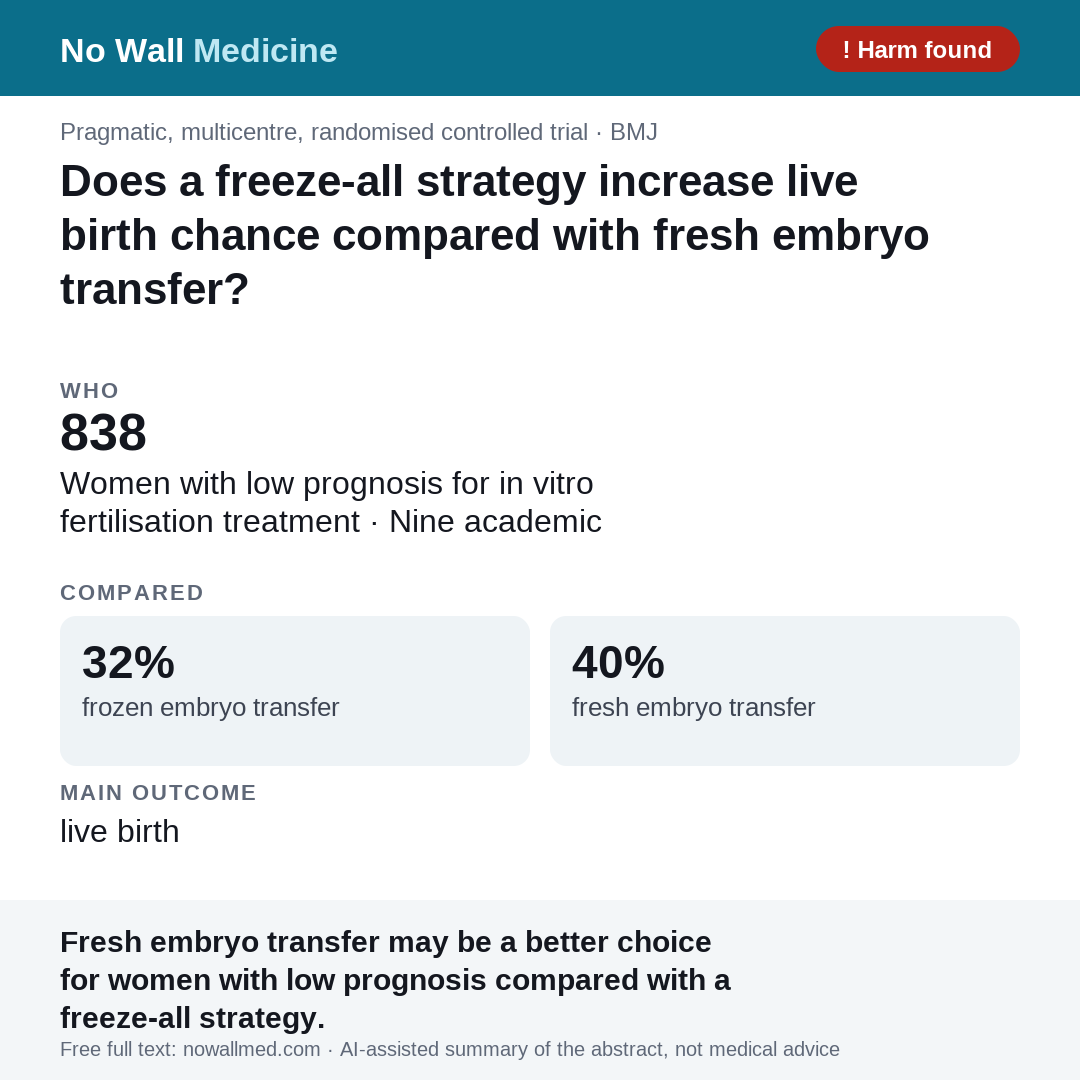
Frozen versus fresh embryo transfer in women with low prognosis for in vitro fertilisation treatment: pragmatic, multicentre, randomised controlled trial
Pragmatic, multicentre, randomised controlled trialHarm found
Does a freeze-all strategy increase live birth chance compared with fresh embryo transfer?
Who
838
Women with low prognosis for in vitro fertilisation treatment · Nine academic fertility centres in China
Compared
32%frozen embryo transfer (132 of 419)
40%fresh embryo transfer (168 of 419)
Main outcome
live birth
Result: relative ratio 0.79 (95% confidence interval 0.65 to 0.94)
Bottom line: Fresh embryo transfer may be a better choice for women with low prognosis compared with a freeze-all strategy.
BMJ · 2025-01-29Download image
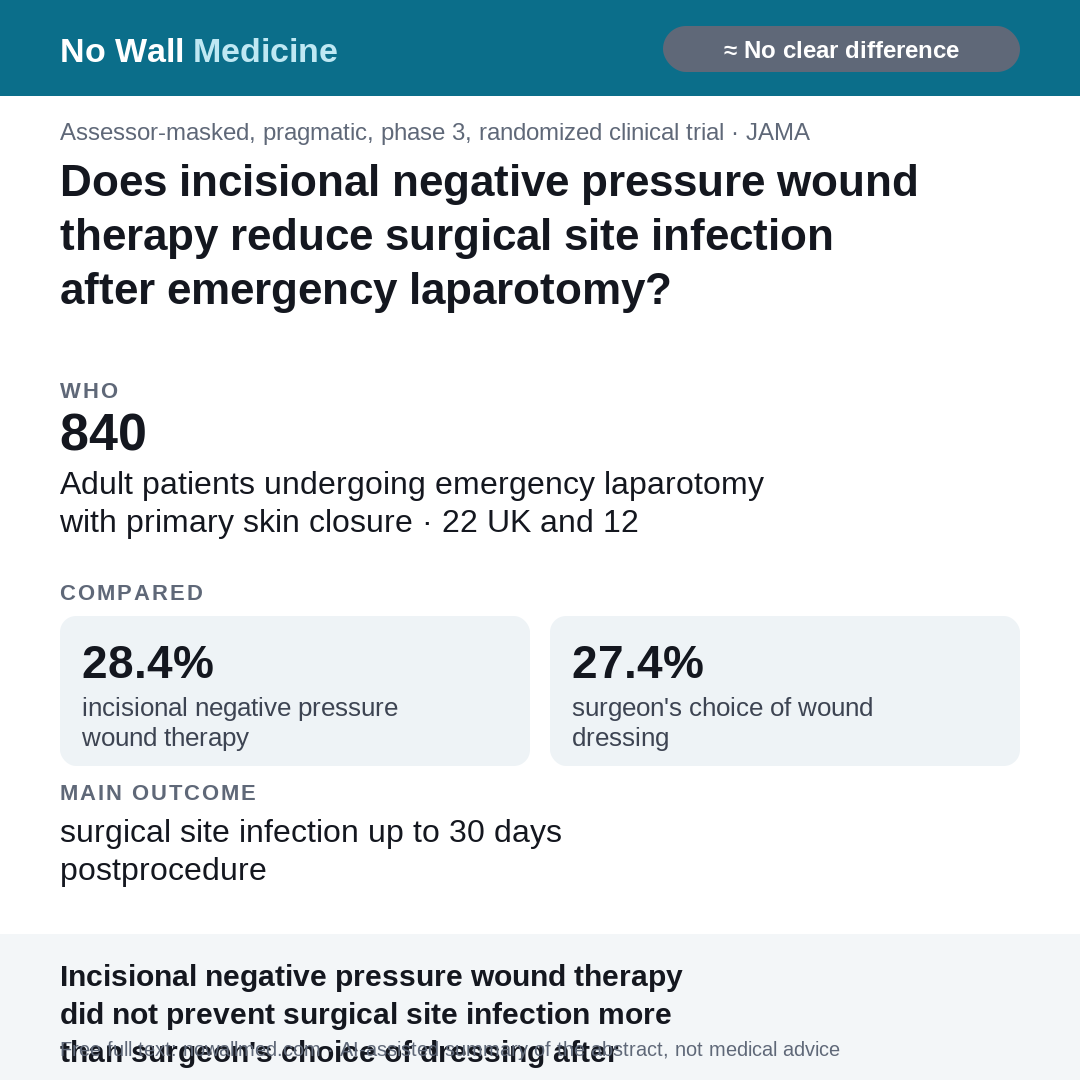
Negative Pressure Dressings to Prevent Surgical Site Infection After Emergency Laparotomy: The SUNRRISE Randomized Clinical Trial
Assessor-masked, pragmatic, phase 3, randomized clinical trialNo clear difference
Does incisional negative pressure wound therapy reduce surgical site infection after emergency laparotomy?
Who
840
Adult patients undergoing emergency laparotomy with primary skin closure · 22 UK and 12 Australian hospitals
Compared
28.4%incisional negative pressure wound therapy (112/394)
27.4%surgeon's choice of wound dressing (108/394)
Main outcome
surgical site infection up to 30 days postprocedure
Result: relative risk 1.03 (95% CI 0.83-1.28)
Bottom line: Incisional negative pressure wound therapy did not prevent surgical site infection more than surgeon's choice of dressing after emergency laparotomy.
JAMA · 2025-01-27Download image
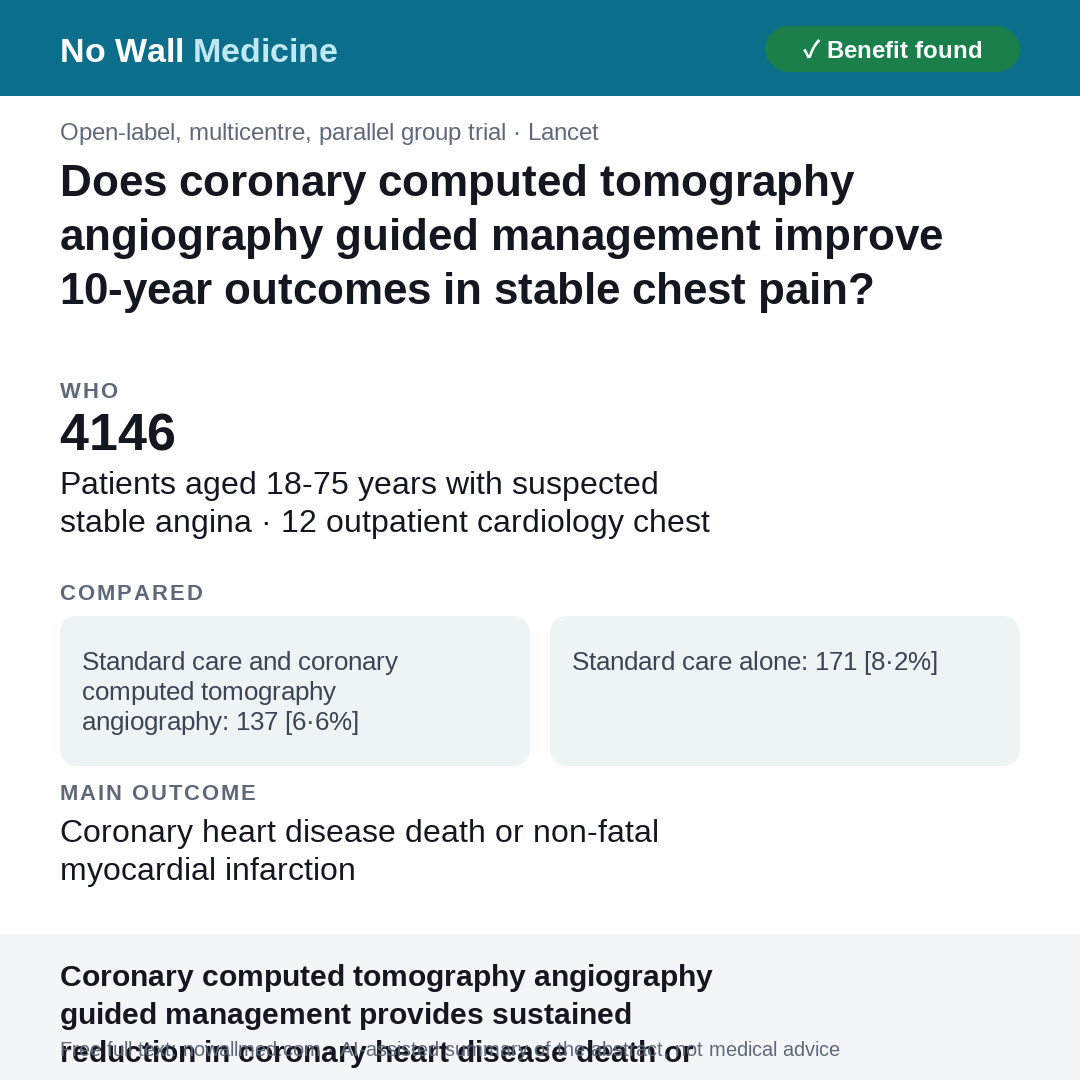
Coronary CT angiography-guided management of patients with stable chest pain: 10-year outcomes from the SCOT-HEART randomised controlled trial in Scotland
Open-label, multicentre, parallel group trialBenefit found
Does coronary computed tomography angiography guided management improve 10-year outcomes in stable chest pain?
Who
4146
Patients aged 18-75 years with suspected stable angina · 12 outpatient cardiology chest pain clinics in Scotland
Compared
Standard care and coronary computed tomography angiography: 137 [6·6%]
Standard care alone: 171 [8·2%]
Main outcome
Coronary heart disease death or non-fatal myocardial infarction
Result: hazard ratio 0·79 (95% CI 0·63-0·99)
Bottom line: Coronary computed tomography angiography guided management provides sustained reduction in coronary heart disease death or non-fatal myocardial infarction after 10 years.
Funded by: Scottish Government, Lothian's Health Foundation Trust, British Heart Foundation
Lancet · 2025-01-26Download image
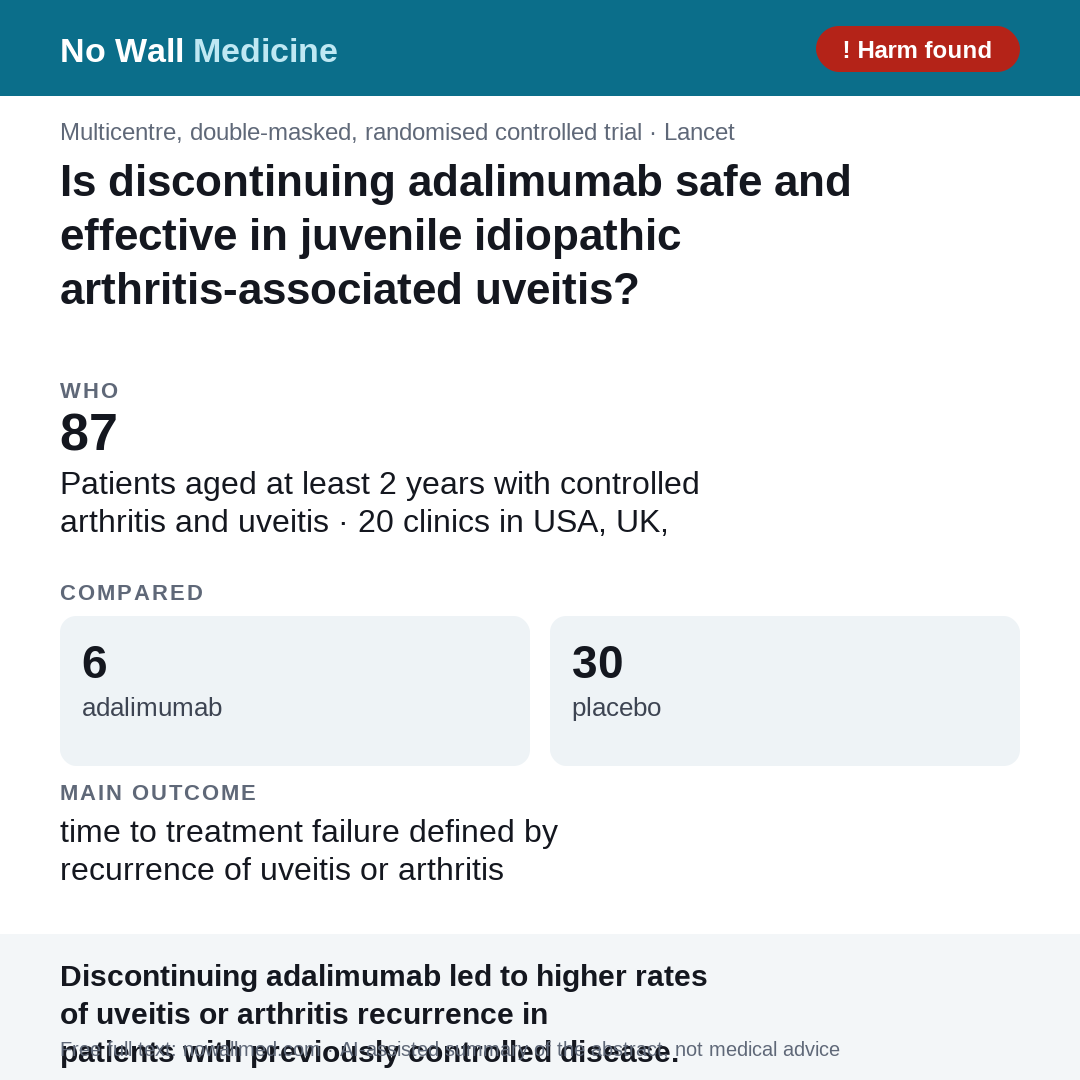
Stopping of adalimumab in juvenile idiopathic arthritis-associated uveitis (ADJUST): a multicentre, double-masked, randomised controlled trial
Multicentre, double-masked, randomised controlled trialHarm found
Is discontinuing adalimumab safe and effective in juvenile idiopathic arthritis-associated uveitis?
Who
87
Patients aged at least 2 years with controlled arthritis and uveitis · 20 clinics in USA, UK, and Australia
Compared
6adalimumab (14%)
30placebo (68%)
Main outcome
time to treatment failure defined by recurrence of uveitis or arthritis
Result: hazard ratio 8·7 (95% CI 3·6-21·2)
Bottom line: Discontinuing adalimumab led to higher rates of uveitis or arthritis recurrence in patients with previously controlled disease.
Funded by: US National Institutes of Health (National Eye Institute)
Lancet · 2025-01-26Download image
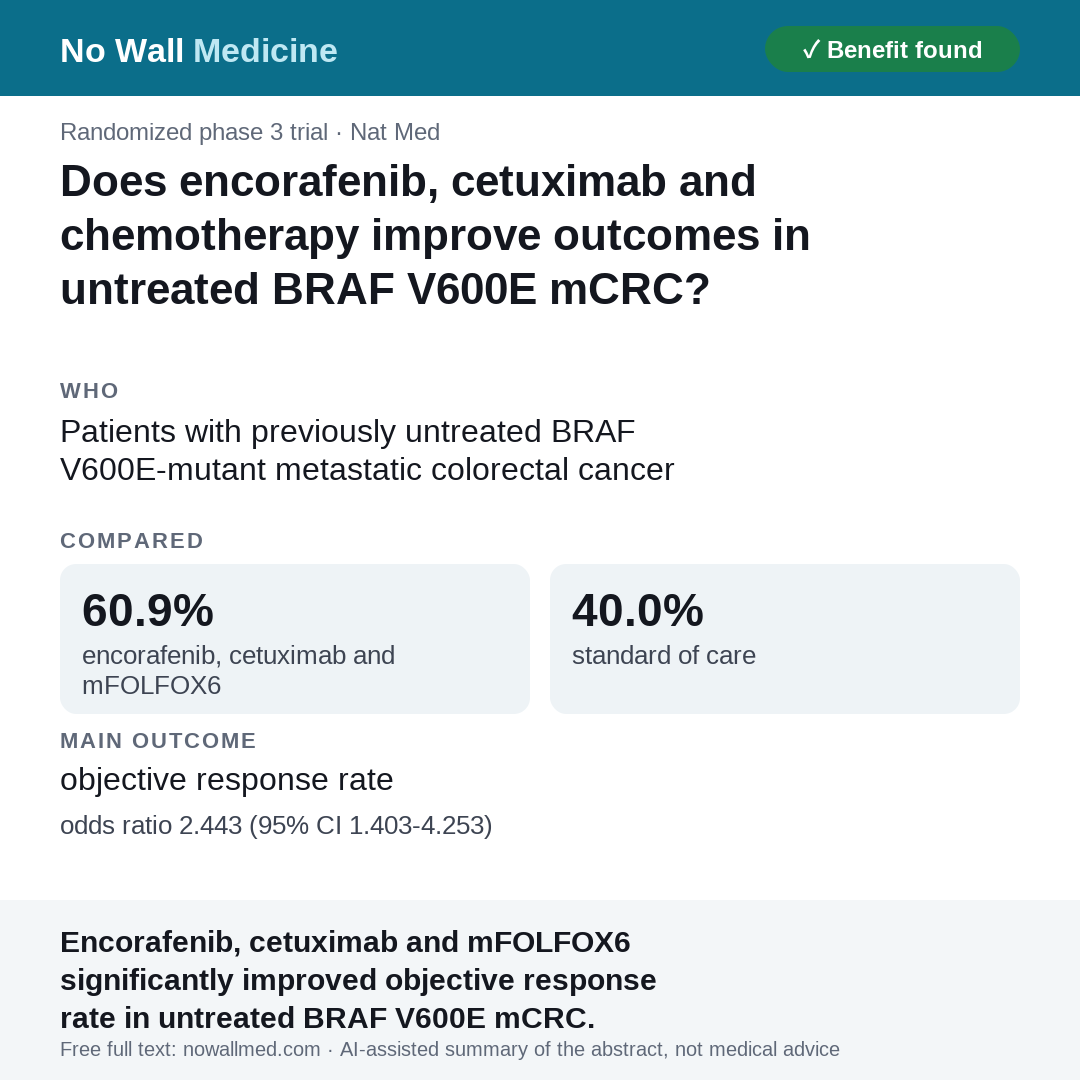
Encorafenib, cetuximab and chemotherapy in BRAF-mutant colorectal cancer: a randomized phase 3 trial
Randomized phase 3 trialBenefit found
Does encorafenib, cetuximab and chemotherapy improve outcomes in untreated BRAF V600E mCRC?
Who
Patients with previously untreated BRAF V600E-mutant metastatic colorectal cancer
Compared
60.9%encorafenib, cetuximab and mFOLFOX6
40.0%standard of care
Main outcome
objective response rate
Result: odds ratio 2.443 (95% CI 1.403-4.253)
Bottom line: Encorafenib, cetuximab and mFOLFOX6 significantly improved objective response rate in untreated BRAF V600E mCRC.
Limitation: data were not mature for the progression-free survival endpoint
Nat Med · 2025-01-25Download image
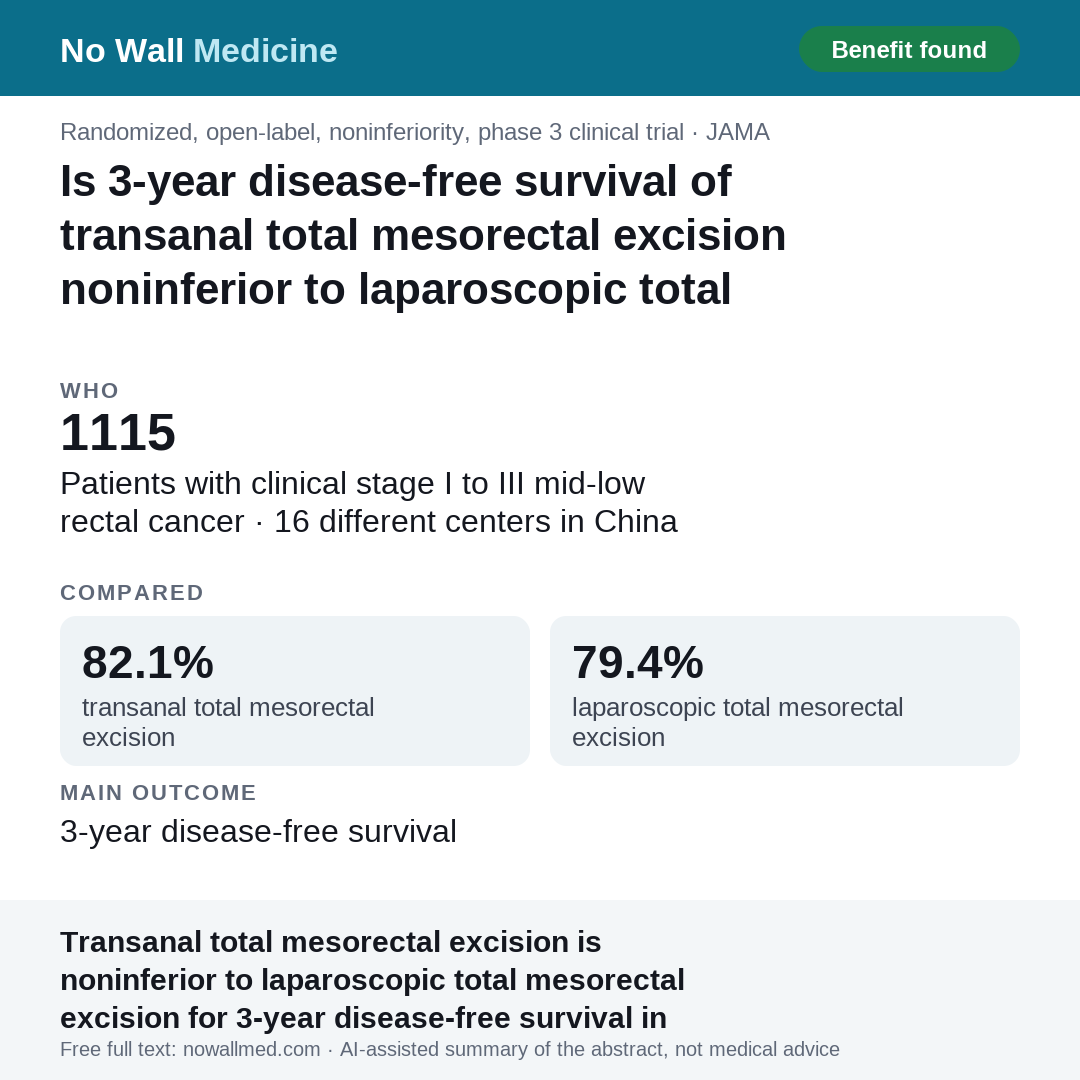
Transanal vs Laparoscopic Total Mesorectal Excision and 3-Year Disease-Free Survival in Rectal Cancer: The TaLaR Randomized Clinical Trial
Randomized, open-label, noninferiority, phase 3 clinical trialBenefit found
Is 3-year disease-free survival of transanal total mesorectal excision noninferior to laparoscopic total mesorectal excision?
Who
1115
Patients with clinical stage I to III mid-low rectal cancer · 16 different centers in China
Compared
82.1%transanal total mesorectal excision (97.5% CI, 78.4%-85.8%)
79.4%laparoscopic total mesorectal excision (97.5% CI, 75.6%-83.4%)
Main outcome
3-year disease-free survival
Result: difference of 2.7% (97.5% CI, -3.0% to 8.1%)
Bottom line: Transanal total mesorectal excision is noninferior to laparoscopic total mesorectal excision for 3-year disease-free survival in mid-low rectal cancer.
JAMA · 2025-01-23Download image
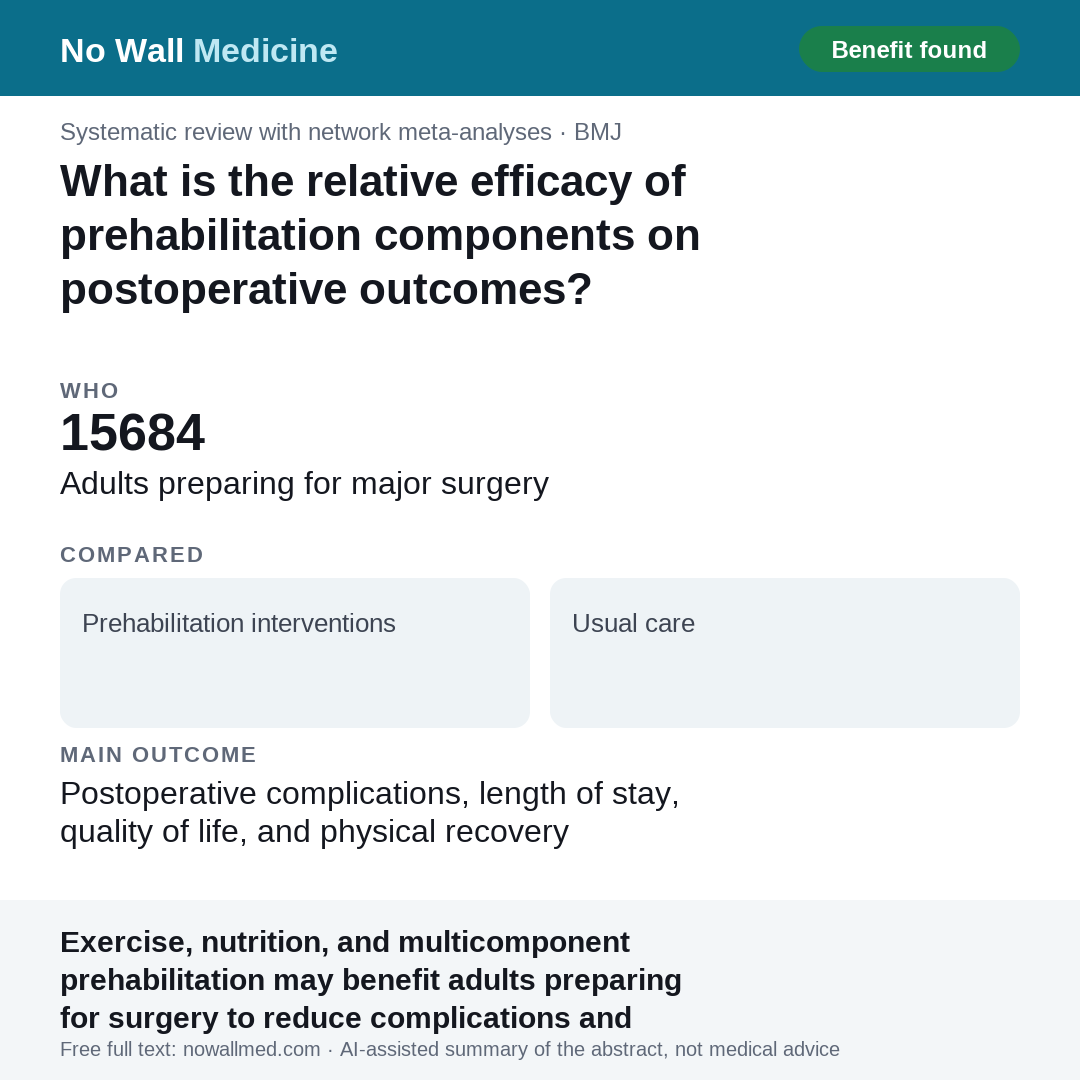
Relative efficacy of prehabilitation interventions and their components: systematic review with network and component network meta-analyses of randomised controlled trials
Systematic review with network meta-analysesBenefit found
What is the relative efficacy of prehabilitation components on postoperative outcomes?
Who
15684
Adults preparing for major surgery
Compared
Prehabilitation interventions
Usual care
Main outcome
Postoperative complications, length of stay, quality of life, and physical recovery
Result: isolated exercise odds ratio 0.50 (95% CI 0.39 to 0.64)
Bottom line: Exercise, nutrition, and multicomponent prehabilitation may benefit adults preparing for surgery to reduce complications and improve recovery.
Limitation: Certainty was low to very low due to trial level risk of bias and imprecision.
BMJ · 2025-01-22Download image
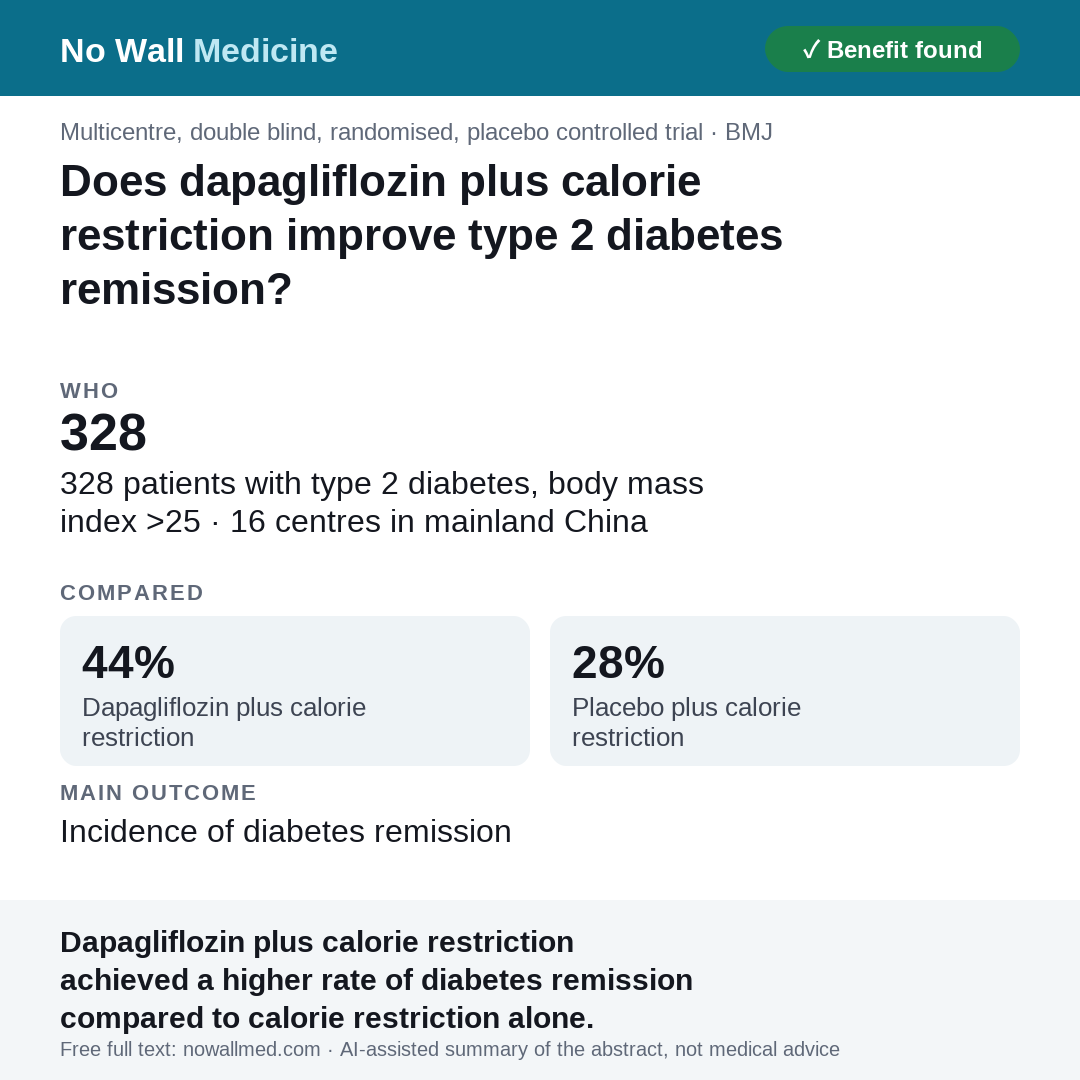
Dapagliflozin plus calorie restriction for remission of type 2 diabetes: multicentre, double blind, randomised, placebo controlled trial
Multicentre, double blind, randomised, placebo controlled trialBenefit found
Does dapagliflozin plus calorie restriction improve type 2 diabetes remission?
Who
328
328 patients with type 2 diabetes, body mass index >25 · 16 centres in mainland China
Compared
44%Dapagliflozin plus calorie restriction (73/165)
28%Placebo plus calorie restriction (46/163)
Main outcome
Incidence of diabetes remission
Result: risk ratio 1.56 (95% CI 1.17 to 2.09)
Bottom line: Dapagliflozin plus calorie restriction achieved a higher rate of diabetes remission compared to calorie restriction alone.
BMJ · 2025-01-22Download image