Visual abstracts
New randomized trials and meta-analyses from leading journals at a glance: who was studied, what was compared, and what was found. Every paper is free to read in full.
All specialtiesCardiology 840Oncology 760Gastroenterology & Hepatology 306Infectious Disease 626Neurology 350Psychiatry & Mental Health 430Pulmonology 365Critical Care 243Endocrinology & Diabetes 480Pediatrics 534Surgery 319Orthopedics & Sports Medicine 161Neurosurgery 89Cardiothoracic & Vascular Surgery 87Plastic & Reconstructive Surgery 118Nephrology 197Rheumatology 108Hematology 181Dermatology 78Ophthalmology 97Obstetrics & Gynecology 261Public & Global Health 167Radiology & Imaging 96Anesthesiology 107Urology 162ENT (Otolaryngology) 86Emergency Medicine 68Allergy & Immunology 58Geriatrics 160Family Medicine & Primary Care 111Medical Genetics & Genomics 91Pathology & Laboratory Medicine 24Physical Medicine & Rehabilitation 148Palliative Care 81Nutrition 223Digital Health & AI 460General Medicine 101
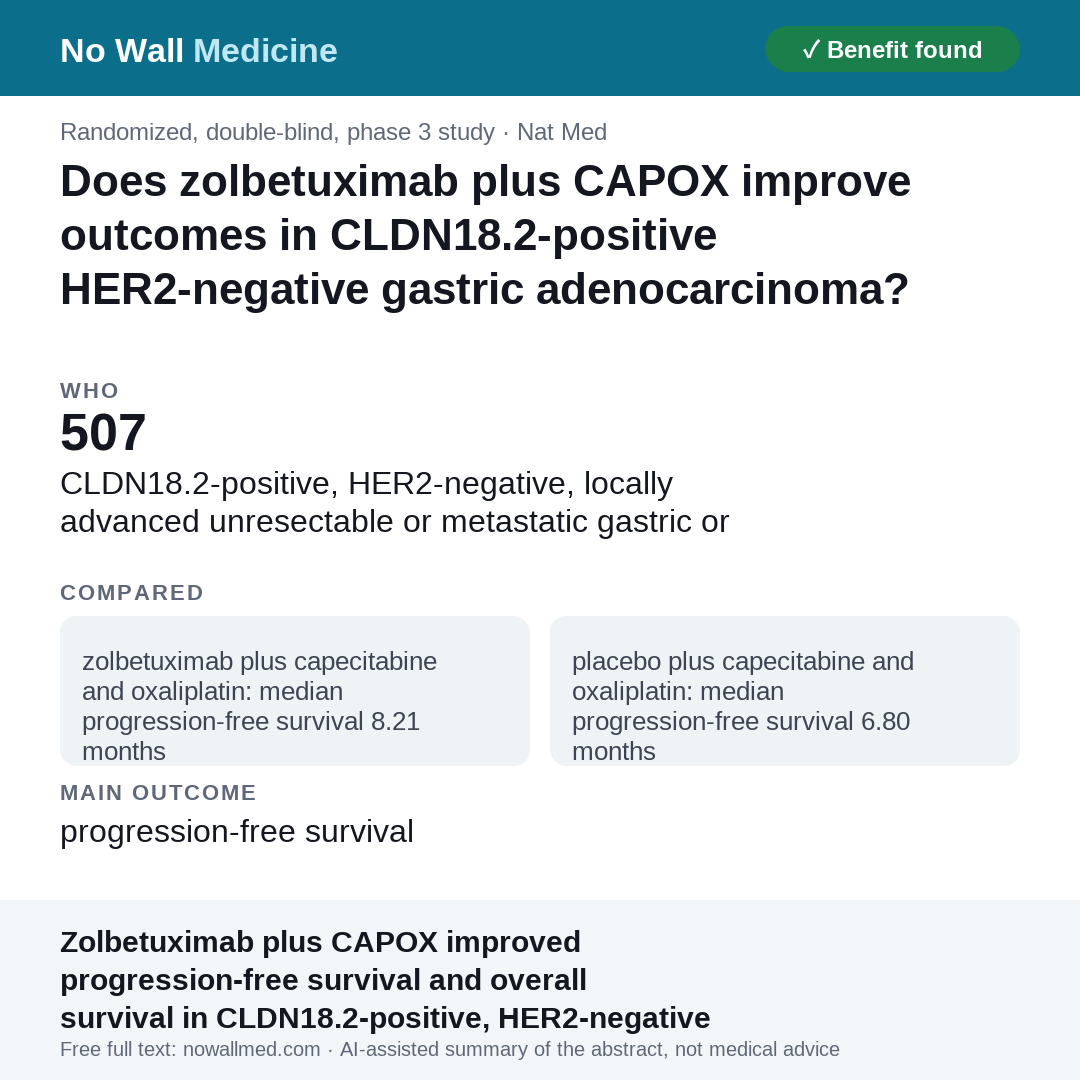
Zolbetuximab plus CAPOX in CLDN18.2-positive gastric or gastroesophageal junction adenocarcinoma: the randomized, phase 3 GLOW trial
Randomized, double-blind, phase 3 studyBenefit found
Does zolbetuximab plus CAPOX improve outcomes in CLDN18.2-positive HER2-negative gastric adenocarcinoma?
Who
507
CLDN18.2-positive, HER2-negative, locally advanced unresectable or metastatic gastric or gastroesophageal junction adenocarcinoma · global
Compared
zolbetuximab plus capecitabine and oxaliplatin: median progression-free survival 8.21 months
placebo plus capecitabine and oxaliplatin: median progression-free survival 6.80 months
Main outcome
progression-free survival
Result: hazard ratio 0.687 (95% CI 0.544-0.866)
Bottom line: Zolbetuximab plus CAPOX improved progression-free survival and overall survival in CLDN18.2-positive, HER2-negative gastric adenocarcinoma.
Nat Med · 2023-07-31Download image
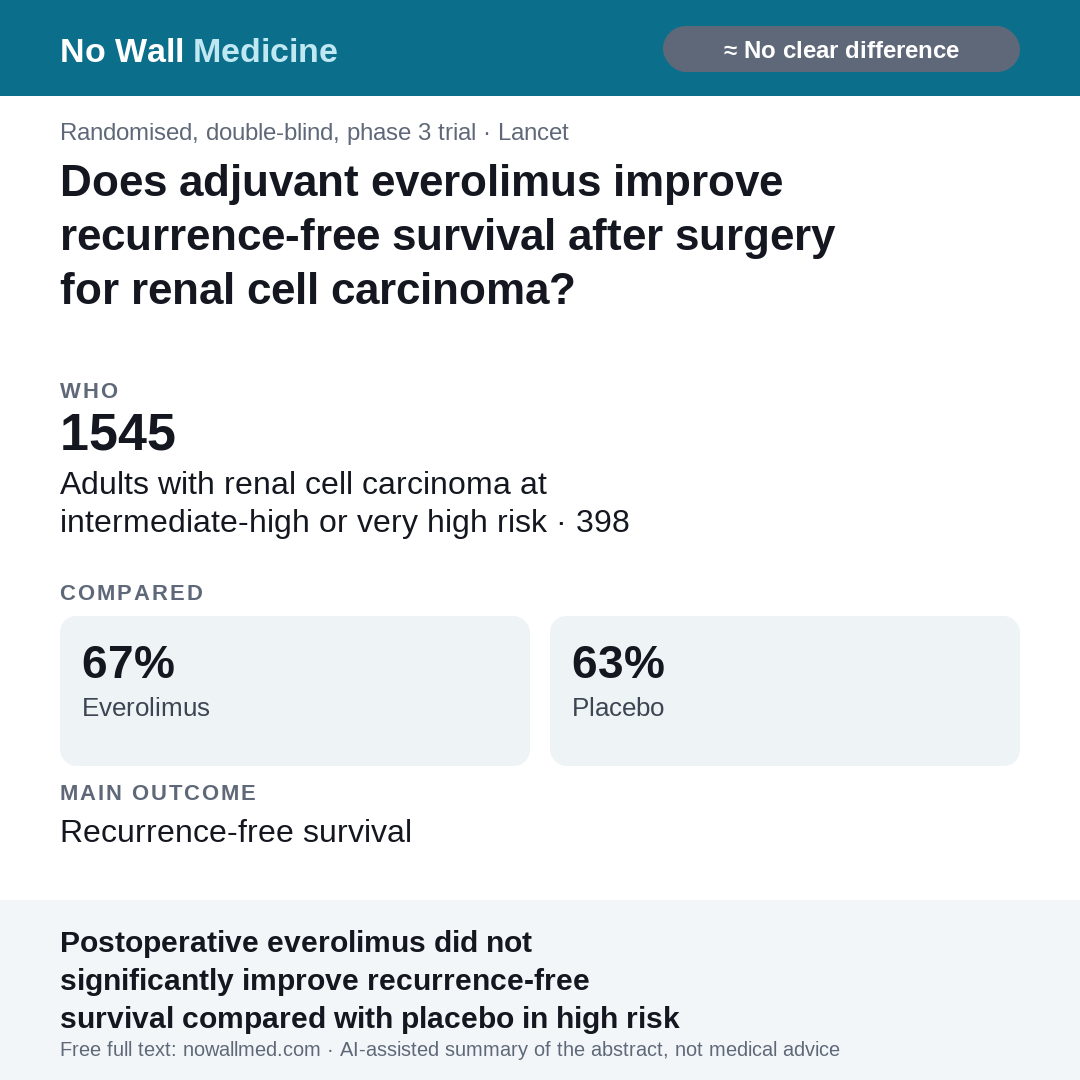
Adjuvant everolimus after surgery for renal cell carcinoma (EVEREST): a double-blind, placebo-controlled, randomised, phase 3 trial
Randomised, double-blind, phase 3 trialNo clear difference
Does adjuvant everolimus improve recurrence-free survival after surgery for renal cell carcinoma?
Who
1545
Adults with renal cell carcinoma at intermediate-high or very high risk · 398 academic and community institution centres in the USA
Compared
67%Everolimus (5-year recurrence-free survival)
63%Placebo (5-year recurrence-free survival)
Main outcome
Recurrence-free survival
Result: hazard ratio 0.85, 95% CI 0.72-1.00
Bottom line: Postoperative everolimus did not significantly improve recurrence-free survival compared with placebo in high risk renal cell carcinoma patients.
Funded by: US National Institutes of Health, National Cancer Institute, Novartis Pharmaceuticals Corporation
Lancet · 2023-07-28Download image
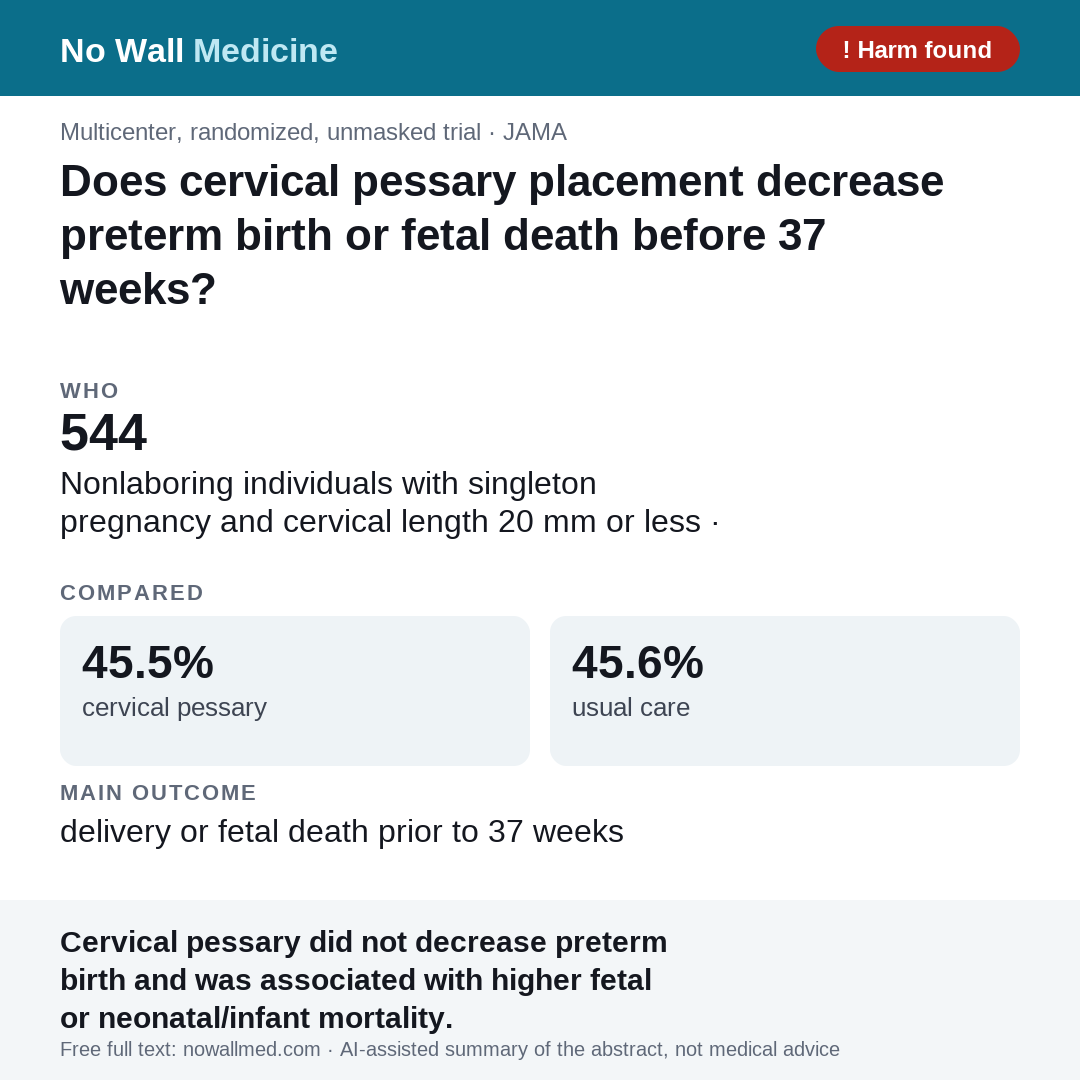
Cervical Pessary for Prevention of Preterm Birth in Individuals With a Short Cervix: The TOPS Randomized Clinical Trial
Multicenter, randomized, unmasked trialHarm found
Does cervical pessary placement decrease preterm birth or fetal death before 37 weeks?
Who
544
Nonlaboring individuals with singleton pregnancy and cervical length 20 mm or less · 12 centers in the United States
Compared
45.5%cervical pessary
45.6%usual care
Main outcome
delivery or fetal death prior to 37 weeks
Result: relative risk 1.00 (95% CI, 0.83-1.20)
Bottom line: Cervical pessary did not decrease preterm birth and was associated with higher fetal or neonatal/infant mortality.
JAMA · 2023-07-25Download image
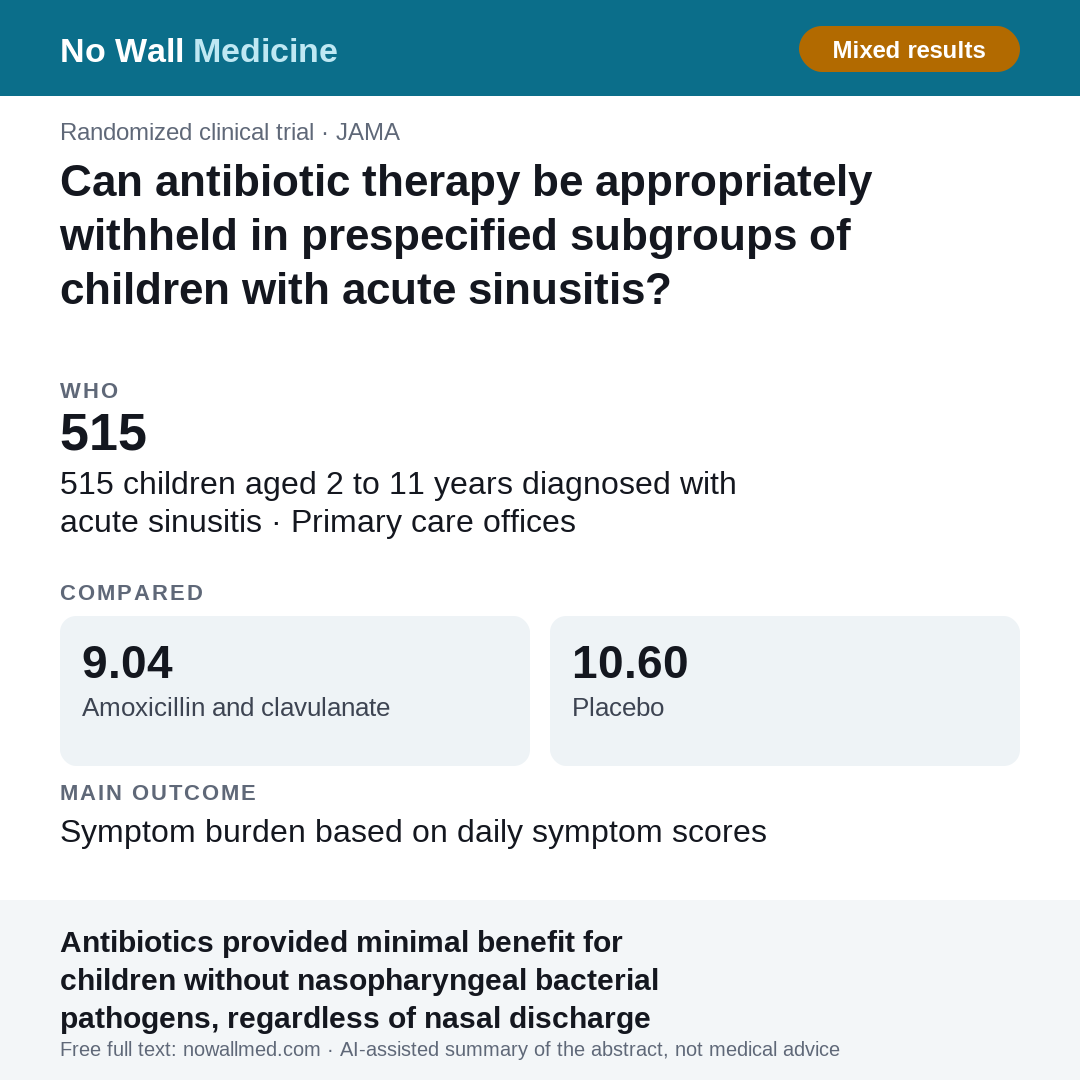
Identifying Children Likely to Benefit From Antibiotics for Acute Sinusitis: A Randomized Clinical Trial
Randomized clinical trialMixed results
Can antibiotic therapy be appropriately withheld in prespecified subgroups of children with acute sinusitis?
Who
515
515 children aged 2 to 11 years diagnosed with acute sinusitis · Primary care offices affiliated with 6 US institutions
Compared
9.04Amoxicillin and clavulanate (95% CI, 8.71 to 9.37)
10.60Placebo (95% CI, 10.27 to 10.93)
Main outcome
Symptom burden based on daily symptom scores
Result: -1.69 (95% CI, -2.07 to -1.31)
Bottom line: Antibiotics provided minimal benefit for children without nasopharyngeal bacterial pathogens, regardless of nasal discharge color.
JAMA · 2023-07-25Download image
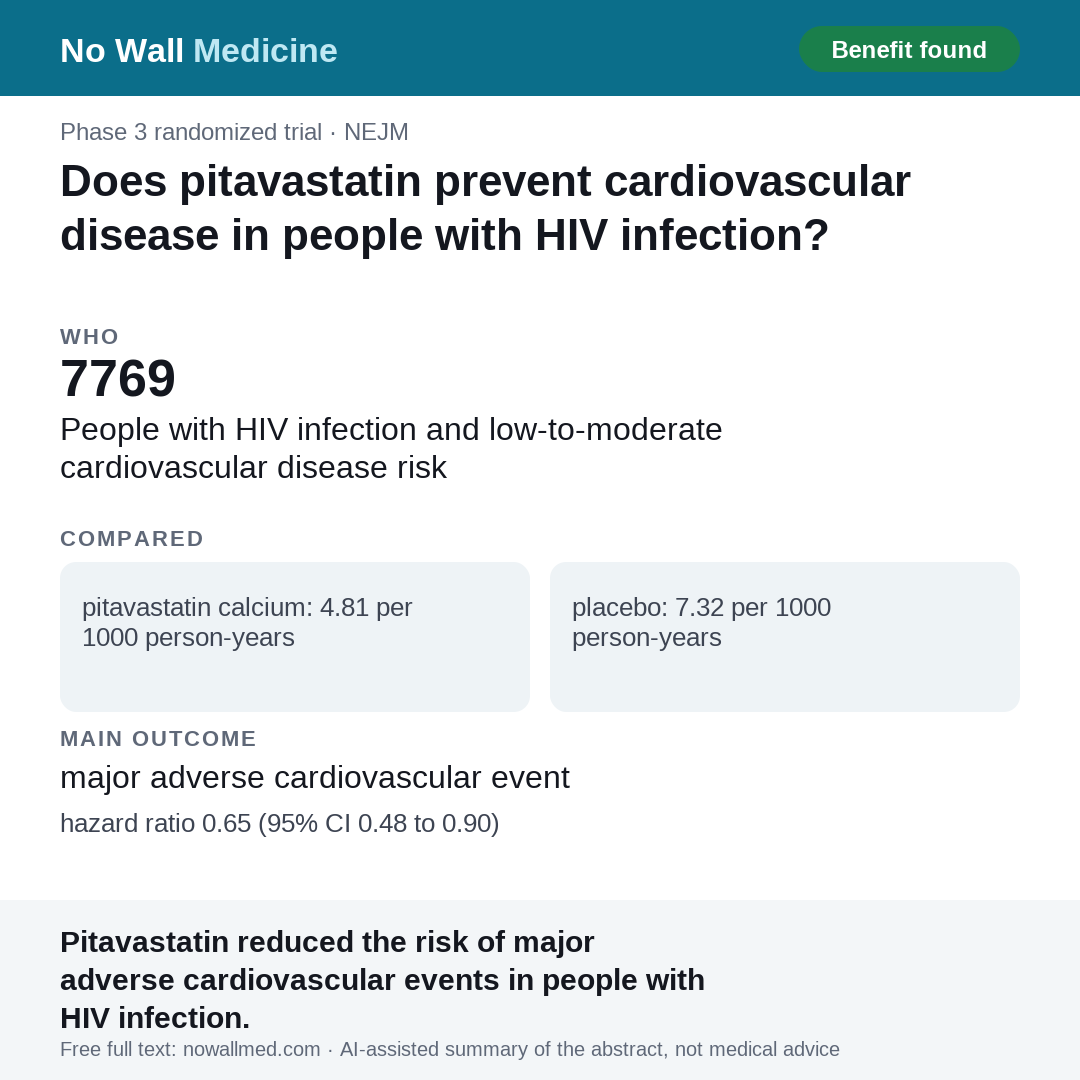
Pitavastatin to Prevent Cardiovascular Disease in HIV Infection
Phase 3 randomized trialBenefit found
Does pitavastatin prevent cardiovascular disease in people with HIV infection?
Who
7769
People with HIV infection and low-to-moderate cardiovascular disease risk
Compared
pitavastatin calcium: 4.81 per 1000 person-years
placebo: 7.32 per 1000 person-years
Main outcome
major adverse cardiovascular event
Result: hazard ratio 0.65 (95% CI 0.48 to 0.90)
Bottom line: Pitavastatin reduced the risk of major adverse cardiovascular events in people with HIV infection.
Funded by: National Institutes of Health and others
NEJM · 2023-07-23Download image
Trial of the MIND Diet for Prevention of Cognitive Decline in Older Persons
Randomized, controlled trialNo clear difference
Does the MIND diet prevent cognitive decline in older adults with dementia family history?
Who
604
Older adults without cognitive impairment, family history of dementia, and suboptimal diet · Two-site trial
Compared
MIND diet group: 0.205 standardized units increase
Control diet group: 0.170 standardized units increase
Main outcome
Change from baseline in global cognition score
Result: mean difference 0.035 standardized units (95% CI -0.022 to 0.092)
Bottom line: The MIND diet did not significantly improve cognitive performance compared to a control diet over three years.
Limitation: MRI outcomes were measured in a nonrandom sample of participants
Funded by: National Institute on Aging
NEJM · 2023-07-18Download image

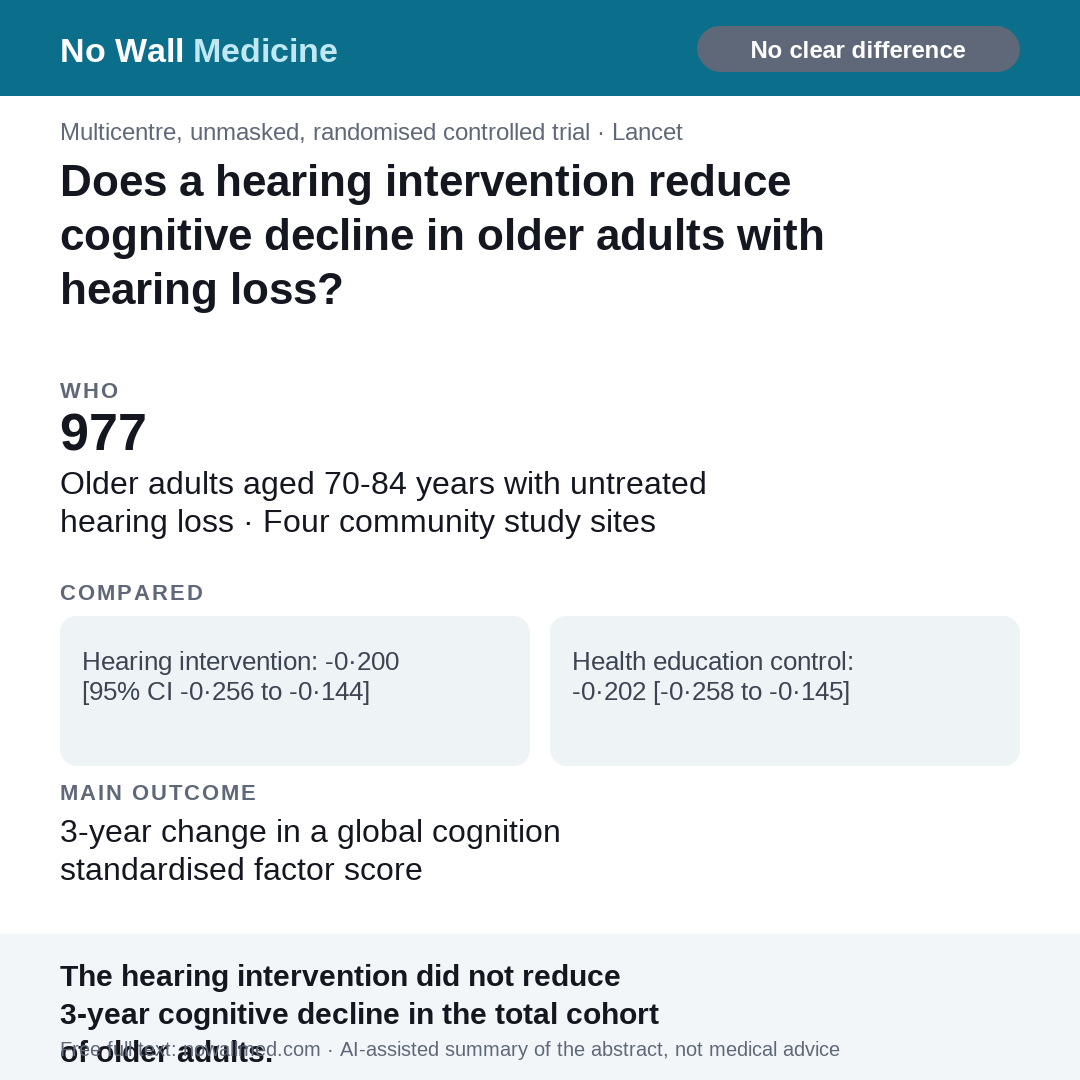
Hearing intervention versus health education control to reduce cognitive decline in older adults with hearing loss in the USA (ACHIEVE): a multicentre, randomised controlled trial
Multicentre, unmasked, randomised controlled trialNo clear difference
Does a hearing intervention reduce cognitive decline in older adults with hearing loss?
Who
977
Older adults aged 70-84 years with untreated hearing loss · Four community study sites across the USA
Compared
Hearing intervention: -0·200 [95% CI -0·256 to -0·144]
Health education control: -0·202 [-0·258 to -0·145]
Main outcome
3-year change in a global cognition standardised factor score
Result: difference 0·002 [-0·077 to 0·081]
Bottom line: The hearing intervention did not reduce 3-year cognitive decline in the total cohort of older adults.
Limitation: The effect of the hearing intervention differed between the ARIC and de novo study populations.
Funded by: US National Institutes of Health
Lancet · 2023-07-18Download image
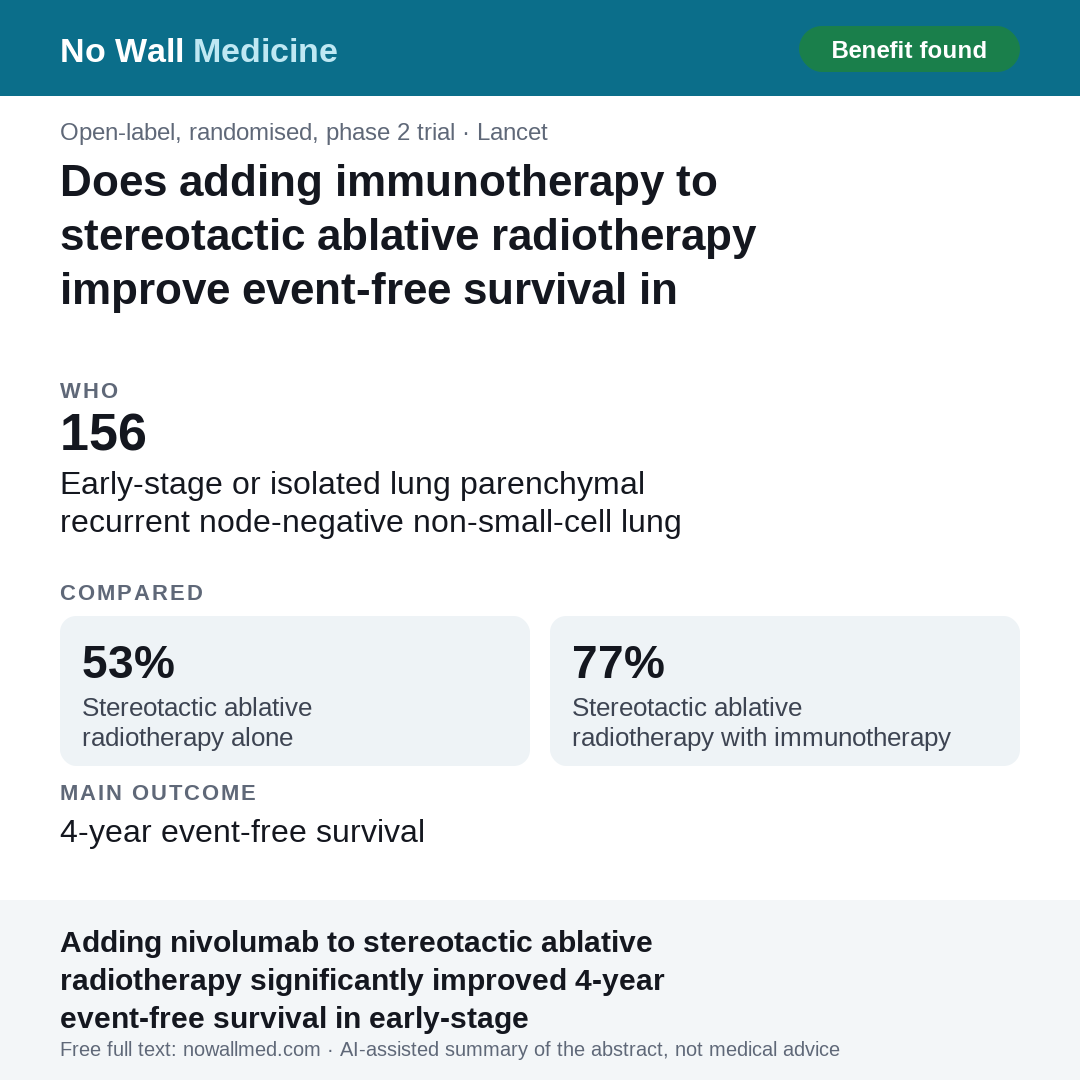
Stereotactic ablative radiotherapy with or without immunotherapy for early-stage or isolated lung parenchymal recurrent node-negative non-small-cell lung cancer: an open-label, randomised, phase 2 trial
Open-label, randomised, phase 2 trialBenefit found
Does adding immunotherapy to stereotactic ablative radiotherapy improve event-free survival in early-stage non-small-cell lung cancer?
Who
156
Early-stage or isolated lung parenchymal recurrent node-negative non-small-cell lung cancer · Three hospitals in Texas, USA
Compared
53%Stereotactic ablative radiotherapy alone (95% CI 42-67%)
77%Stereotactic ablative radiotherapy with immunotherapy (66-91%)
Main outcome
4-year event-free survival
Result: hazard ratio 0.38 (95% CI 0.19-0.75)
Bottom line: Adding nivolumab to stereotactic ablative radiotherapy significantly improved 4-year event-free survival in early-stage non-small-cell lung cancer.
Funded by: Bristol-Myers Squibb, MD Anderson Cancer Center Alliance, and National Cancer Institute
Lancet · 2023-07-18Download image
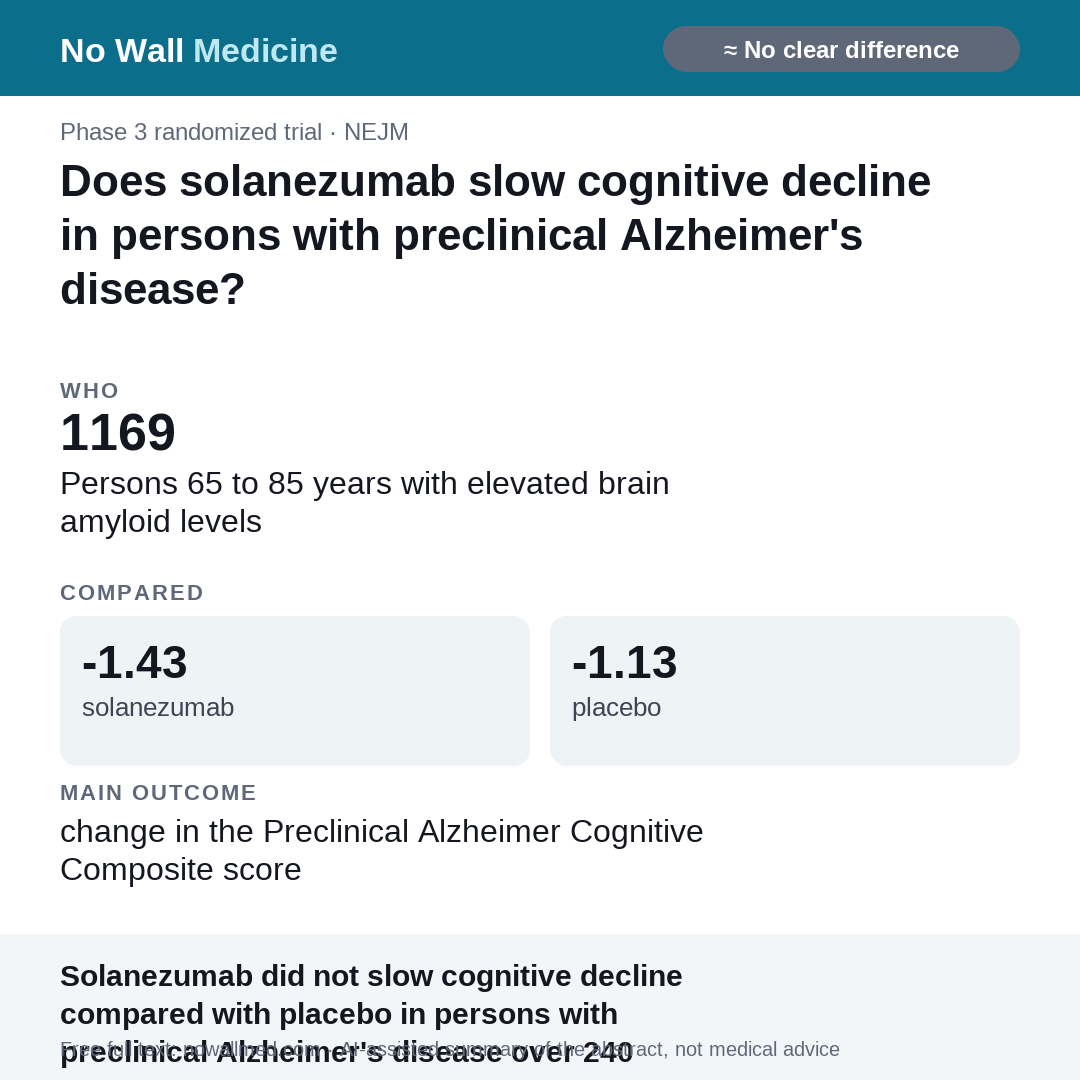
Trial of Solanezumab in Preclinical Alzheimer's Disease
Phase 3 randomized trialNo clear difference
Does solanezumab slow cognitive decline in persons with preclinical Alzheimer's disease?
Who
1169
Persons 65 to 85 years with elevated brain amyloid levels
Compared
-1.43solanezumab
-1.13placebo
Main outcome
change in the Preclinical Alzheimer Cognitive Composite score
Result: difference, -0.30 (95% confidence interval, -0.82 to 0.22)
Bottom line: Solanezumab did not slow cognitive decline compared with placebo in persons with preclinical Alzheimer's disease over 240 weeks.
Funded by: National Institute on Aging and others
NEJM · 2023-07-17Download image
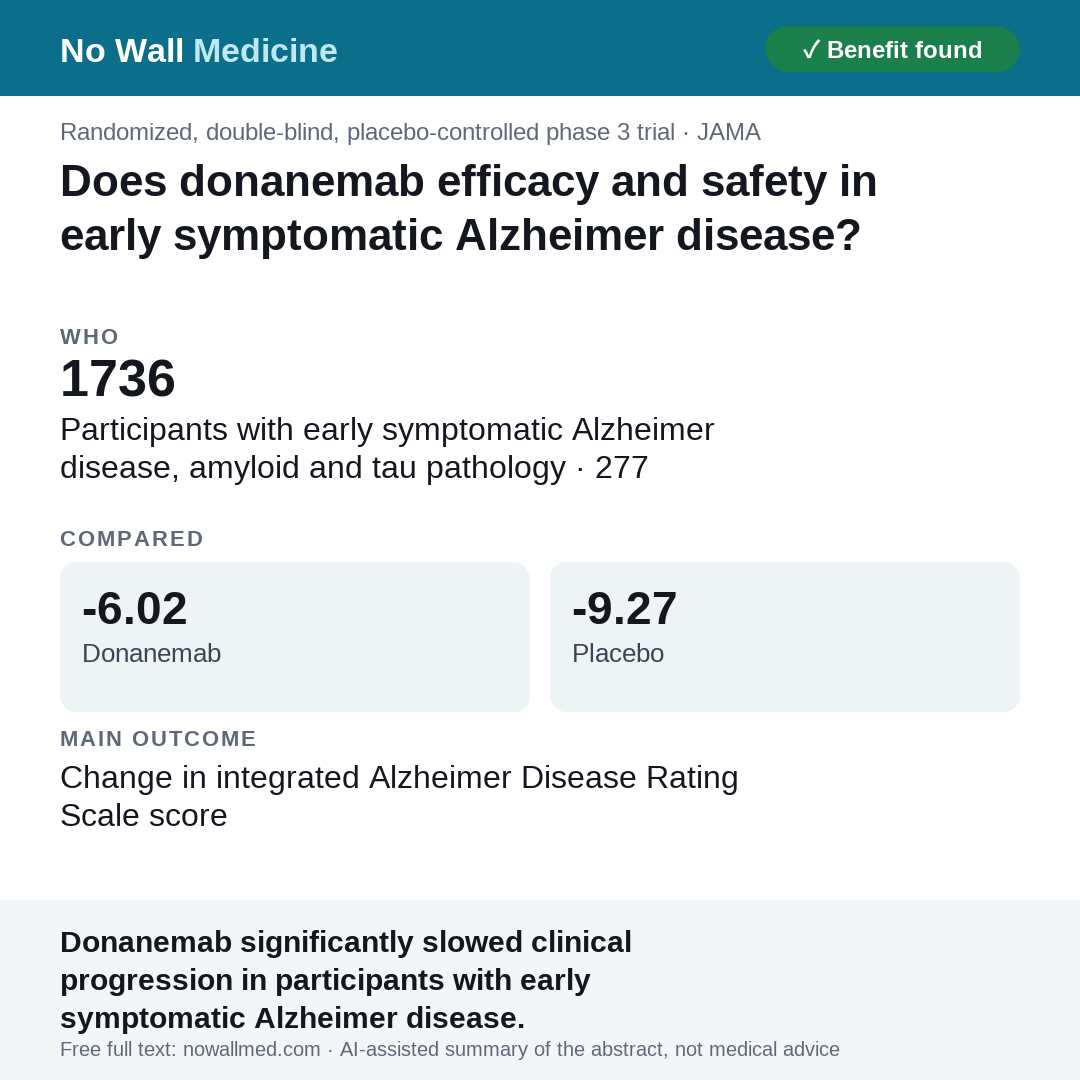
Donanemab in Early Symptomatic Alzheimer Disease: The TRAILBLAZER-ALZ 2 Randomized Clinical Trial
Randomized, double-blind, placebo-controlled phase 3 trialBenefit found
Does donanemab efficacy and safety in early symptomatic Alzheimer disease?
Who
1736
Participants with early symptomatic Alzheimer disease, amyloid and tau pathology · 277 medical research centers/hospitals in 8 countries
Compared
-6.02Donanemab (95% CI, -7.01 to -5.03)
-9.27Placebo (95% CI, -10.23 to -8.31)
Main outcome
Change in integrated Alzheimer Disease Rating Scale score
Result: difference, 3.25 (95% CI, 1.88-4.62)
Bottom line: Donanemab significantly slowed clinical progression in participants with early symptomatic Alzheimer disease.
JAMA · 2023-07-17Download image
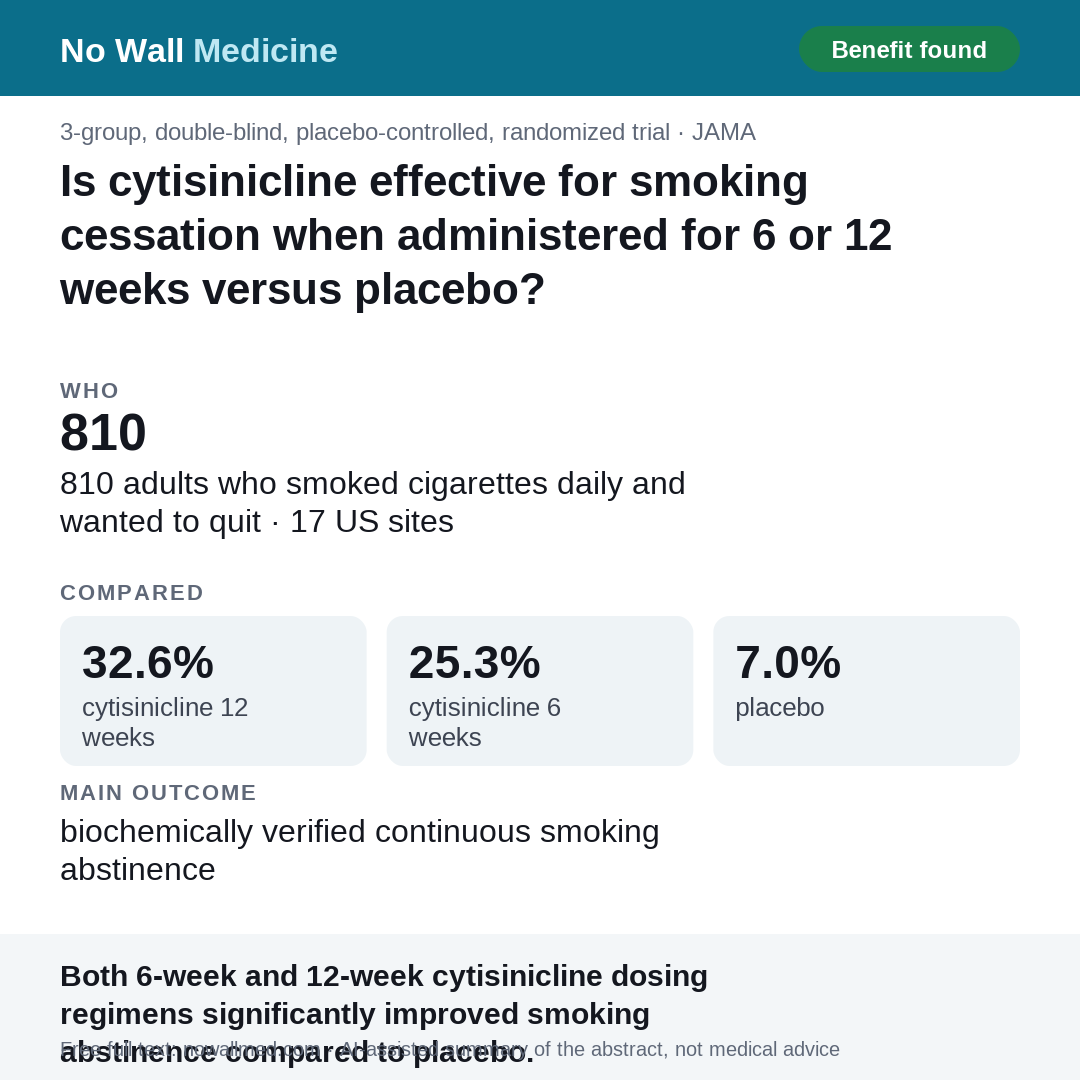
Cytisinicline for Smoking Cessation: A Randomized Clinical Trial
3-group, double-blind, placebo-controlled, randomized trialBenefit found
Is cytisinicline effective for smoking cessation when administered for 6 or 12 weeks versus placebo?
Who
810
810 adults who smoked cigarettes daily and wanted to quit · 17 US sites
Compared
32.6%cytisinicline 12 weeks (weeks 9 to 12)
25.3%cytisinicline 6 weeks (weeks 3 to 6)
7.0%placebo (weeks 9 to 12)
Main outcome
biochemically verified continuous smoking abstinence
Result: OR 6.3 (95% CI 3.7-11.6) for 12-week course
Bottom line: Both 6-week and 12-week cytisinicline dosing regimens significantly improved smoking abstinence compared to placebo.
JAMA · 2023-07-11Download image
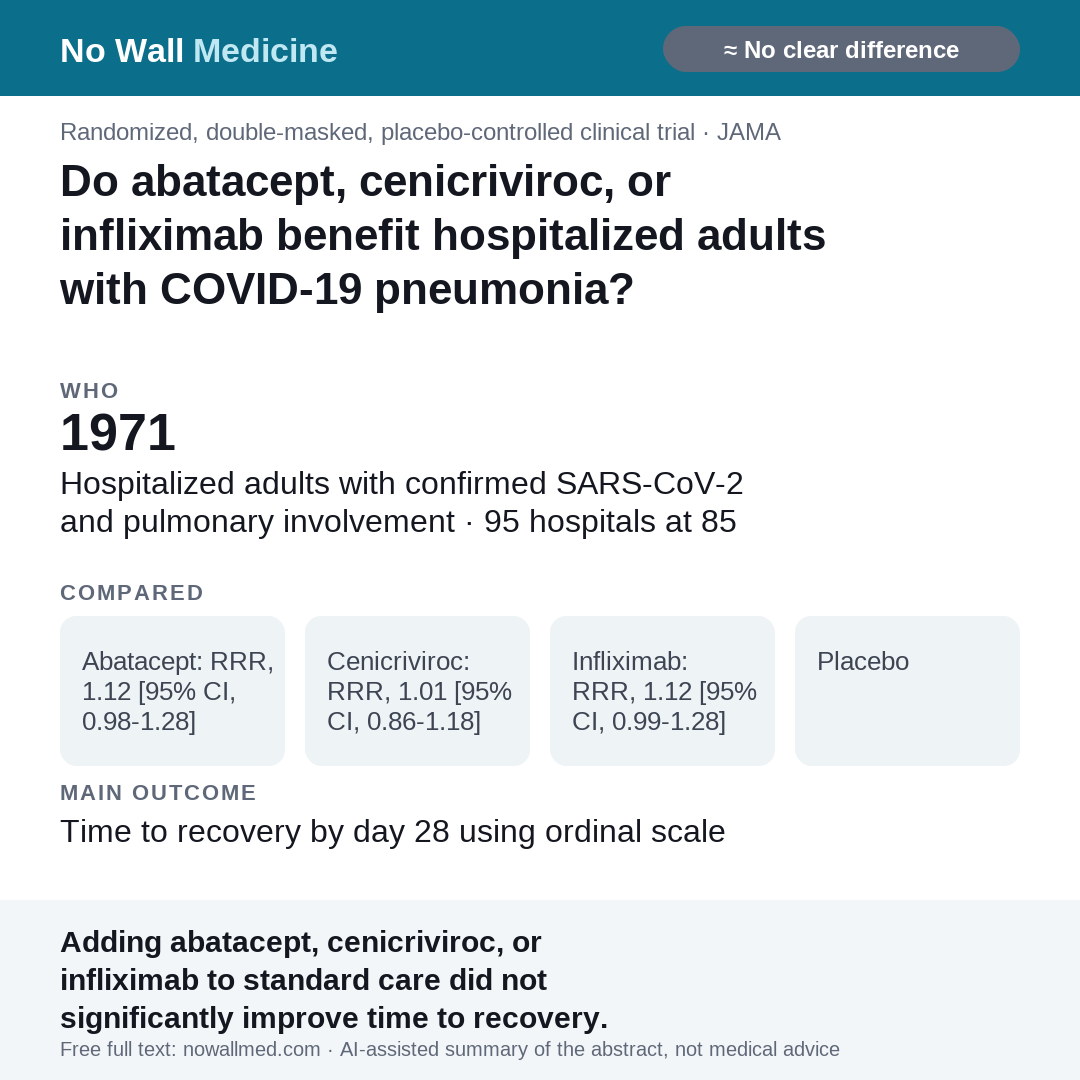
Abatacept, Cenicriviroc, or Infliximab for Treatment of Adults Hospitalized With COVID-19 Pneumonia: A Randomized Clinical Trial
Randomized, double-masked, placebo-controlled clinical trialNo clear difference
Do abatacept, cenicriviroc, or infliximab benefit hospitalized adults with COVID-19 pneumonia?
Who
1971
Hospitalized adults with confirmed SARS-CoV-2 and pulmonary involvement · 95 hospitals at 85 sites in US and Latin America
Compared
Abatacept: RRR, 1.12 [95% CI, 0.98-1.28]
Cenicriviroc: RRR, 1.01 [95% CI, 0.86-1.18]
Infliximab: RRR, 1.12 [95% CI, 0.99-1.28]
Placebo
Main outcome
Time to recovery by day 28 using ordinal scale
Bottom line: Adding abatacept, cenicriviroc, or infliximab to standard care did not significantly improve time to recovery.
JAMA · 2023-07-10Download image
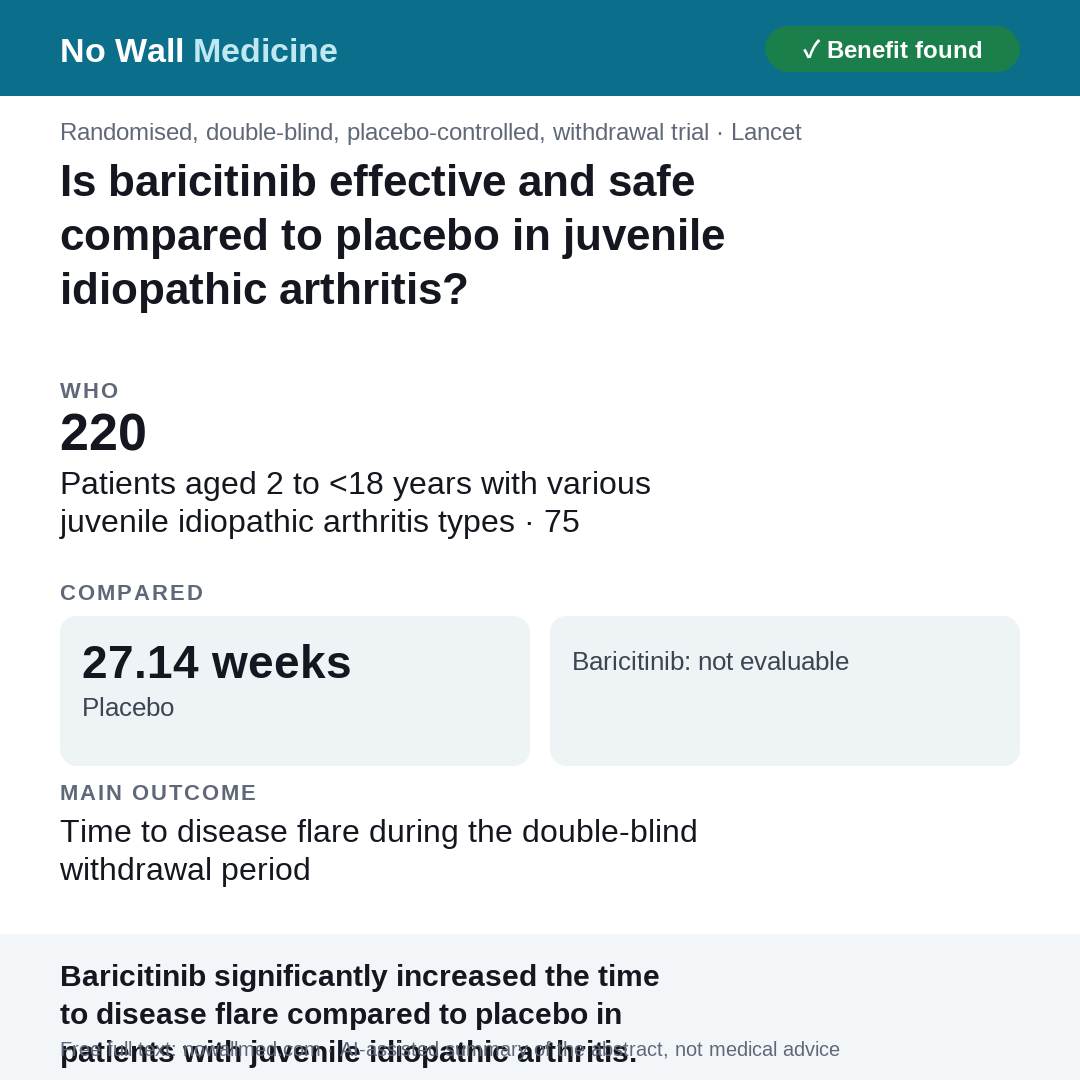
Baricitinib in juvenile idiopathic arthritis: an international, phase 3, randomised, double-blind, placebo-controlled, withdrawal, efficacy, and safety trial
Randomised, double-blind, placebo-controlled, withdrawal trialBenefit found
Is baricitinib effective and safe compared to placebo in juvenile idiopathic arthritis?
Who
220
Patients aged 2 to <18 years with various juvenile idiopathic arthritis types · 75 centres in 20 countries
Compared
27.14 weeksPlacebo (95% CI 15.29-not estimable)
Baricitinib: not evaluable
Main outcome
Time to disease flare during the double-blind withdrawal period
Result: hazard ratio 0.241 (95% CI 0.128-0.453)
Bottom line: Baricitinib significantly increased the time to disease flare compared to placebo in patients with juvenile idiopathic arthritis.
Lancet · 2023-07-06Download image
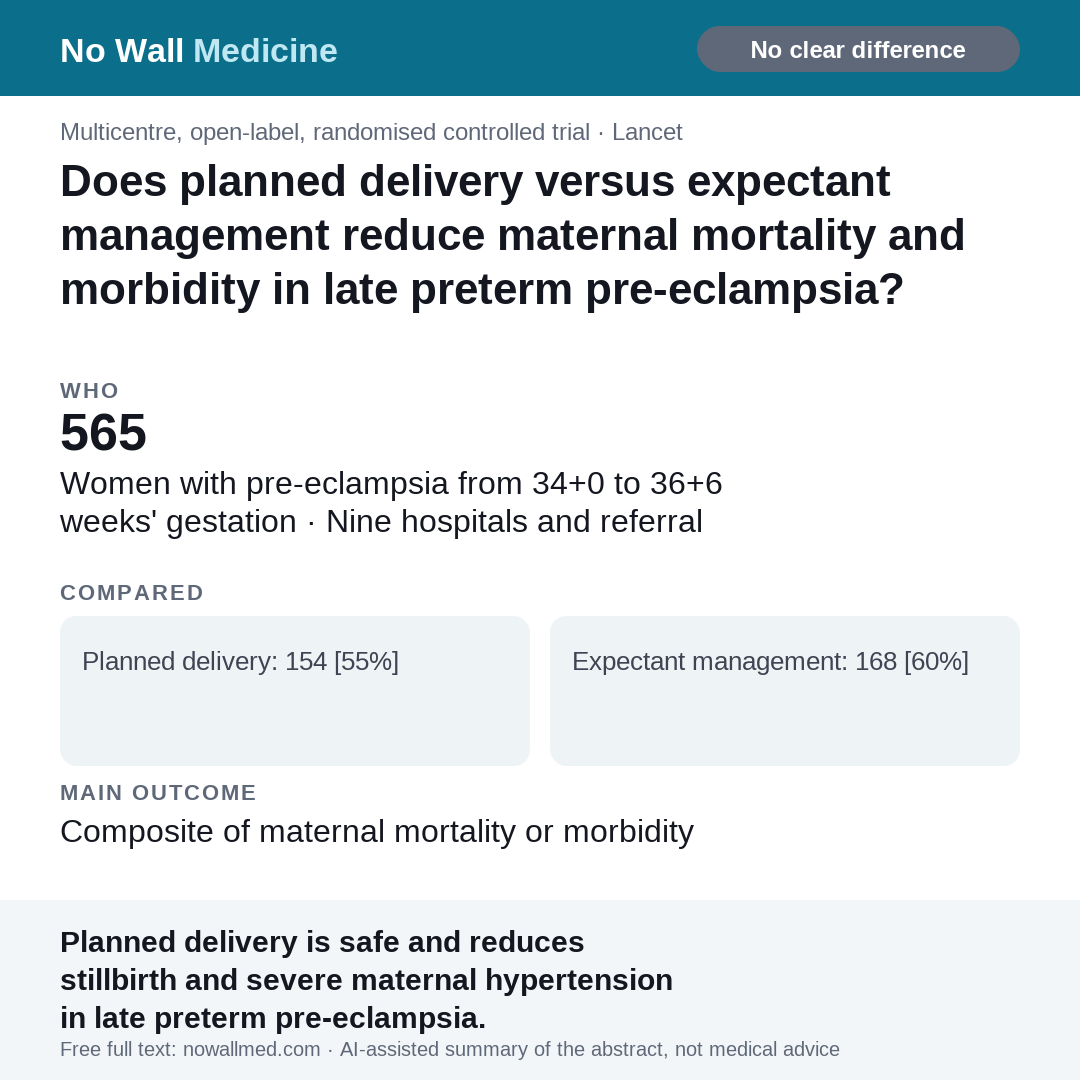
Planned delivery or expectant management for late preterm pre-eclampsia in low-income and middle-income countries (CRADLE-4): a multicentre, open-label, randomised controlled trial
Multicentre, open-label, randomised controlled trialNo clear difference
Does planned delivery versus expectant management reduce maternal mortality and morbidity in late preterm pre-eclampsia?
Who
565
Women with pre-eclampsia from 34+0 to 36+6 weeks' gestation · Nine hospitals and referral facilities in India and Zambia
Compared
Planned delivery: 154 [55%]
Expectant management: 168 [60%]
Main outcome
Composite of maternal mortality or morbidity
Result: adjusted risk ratio 0·91, 95% CI 0·79 to 1·05
Bottom line: Planned delivery is safe and reduces stillbirth and severe maternal hypertension in late preterm pre-eclampsia.
Funded by: UK Medical Research Council and Indian Department of Biotechnology
Lancet · 2023-06-29Download image
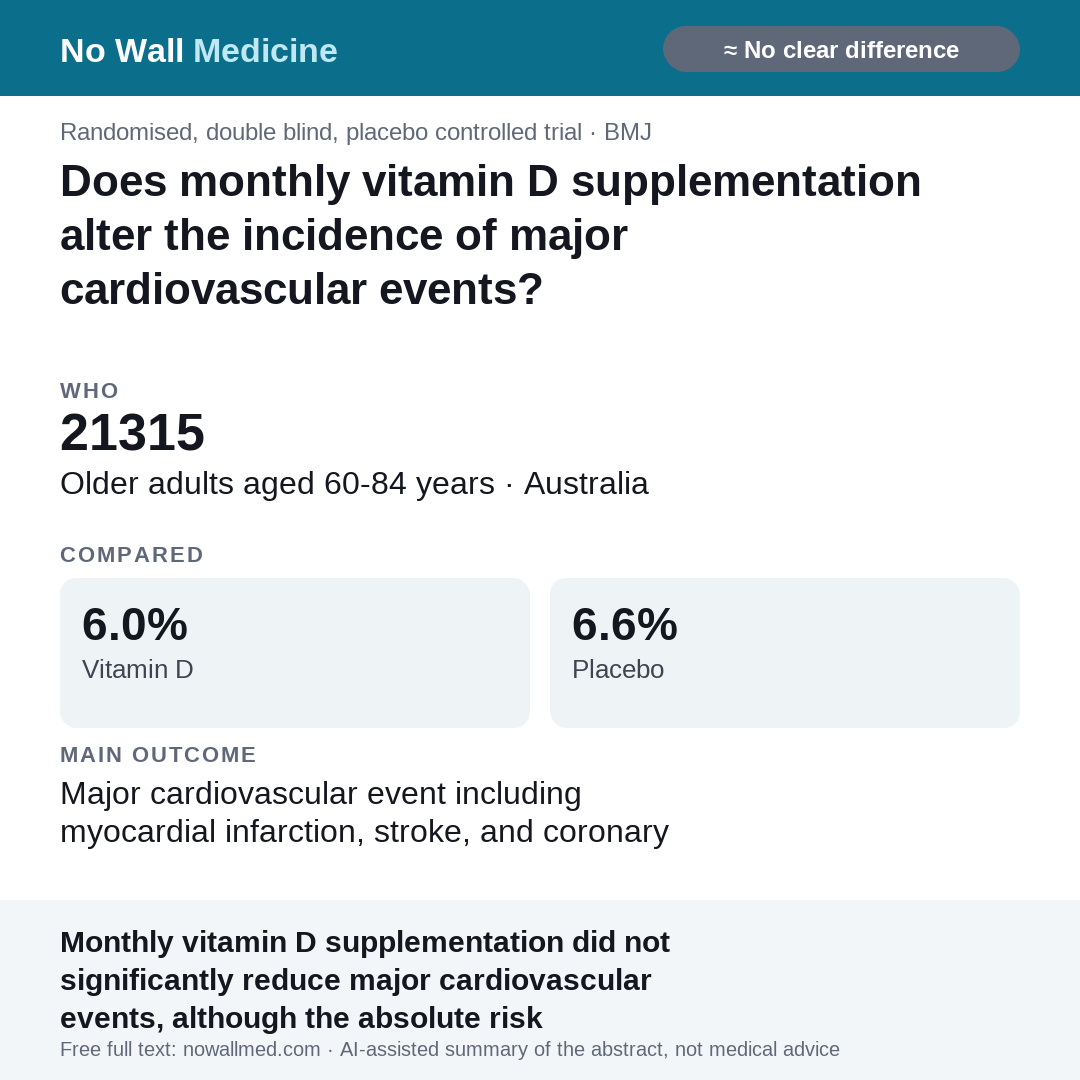
Vitamin D supplementation and major cardiovascular events: D-Health randomised controlled trial
Randomised, double blind, placebo controlled trialNo clear difference
Does monthly vitamin D supplementation alter the incidence of major cardiovascular events?
Who
21315
Older adults aged 60-84 years · Australia
Compared
6.0%Vitamin D
6.6%Placebo
Main outcome
Major cardiovascular event including myocardial infarction, stroke, and coronary revascularisation
Result: hazard ratio 0.91 (95% confidence interval 0.81 to 1.01)
Bottom line: Monthly vitamin D supplementation did not significantly reduce major cardiovascular events, although the absolute risk difference was small.
BMJ · 2023-06-28Download image
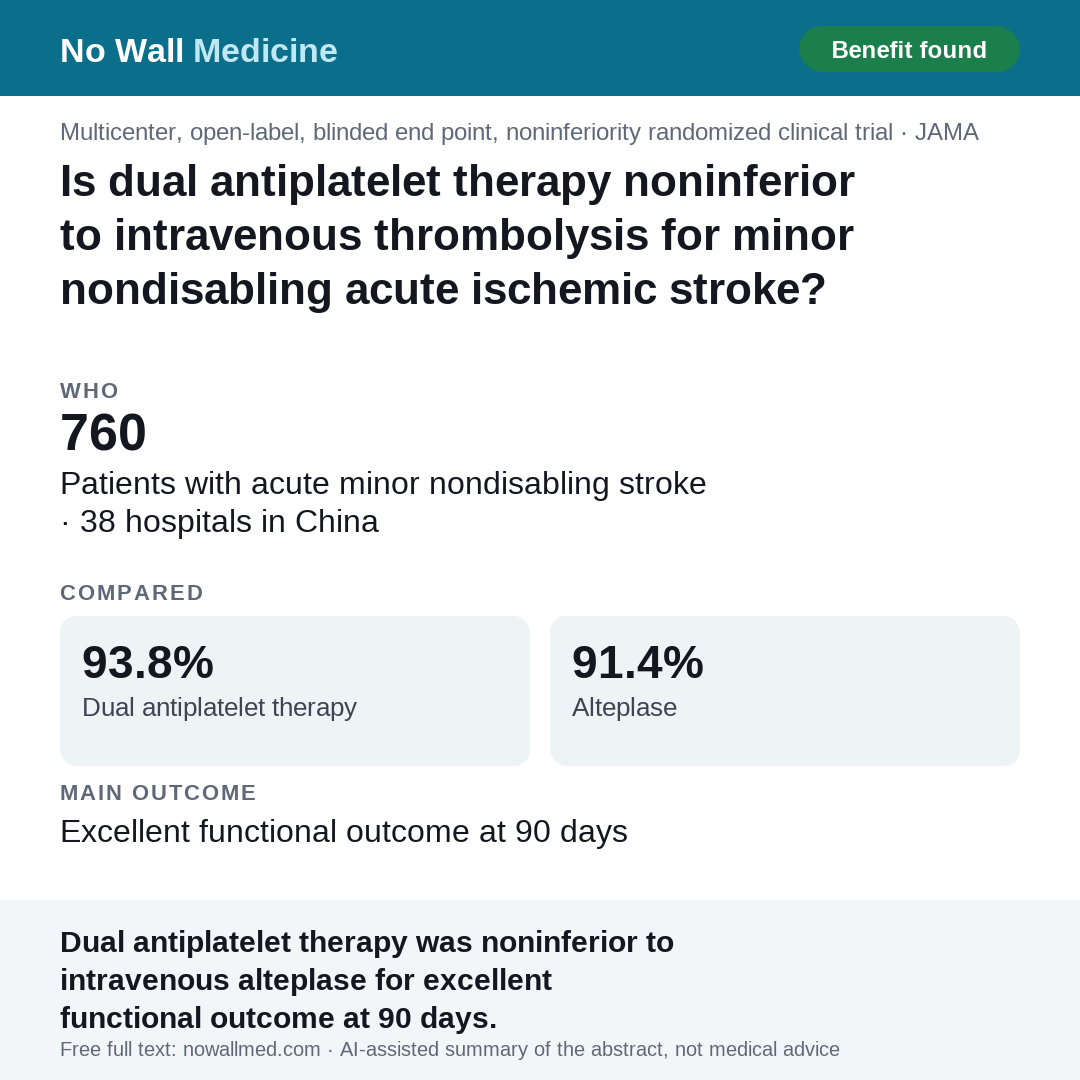
Dual Antiplatelet Therapy vs Alteplase for Patients With Minor Nondisabling Acute Ischemic Stroke: The ARAMIS Randomized Clinical Trial
Multicenter, open-label, blinded end point, noninferiority randomized clinical trialBenefit found
Is dual antiplatelet therapy noninferior to intravenous thrombolysis for minor nondisabling acute ischemic stroke?
Who
760
Patients with acute minor nondisabling stroke · 38 hospitals in China
Compared
93.8%Dual antiplatelet therapy (346/369)
91.4%Alteplase (320/350)
Main outcome
Excellent functional outcome at 90 days
Result: risk difference, 2.3% (95% CI, -1.5% to 6.2%)
Bottom line: Dual antiplatelet therapy was noninferior to intravenous alteplase for excellent functional outcome at 90 days.
JAMA · 2023-06-27Download image
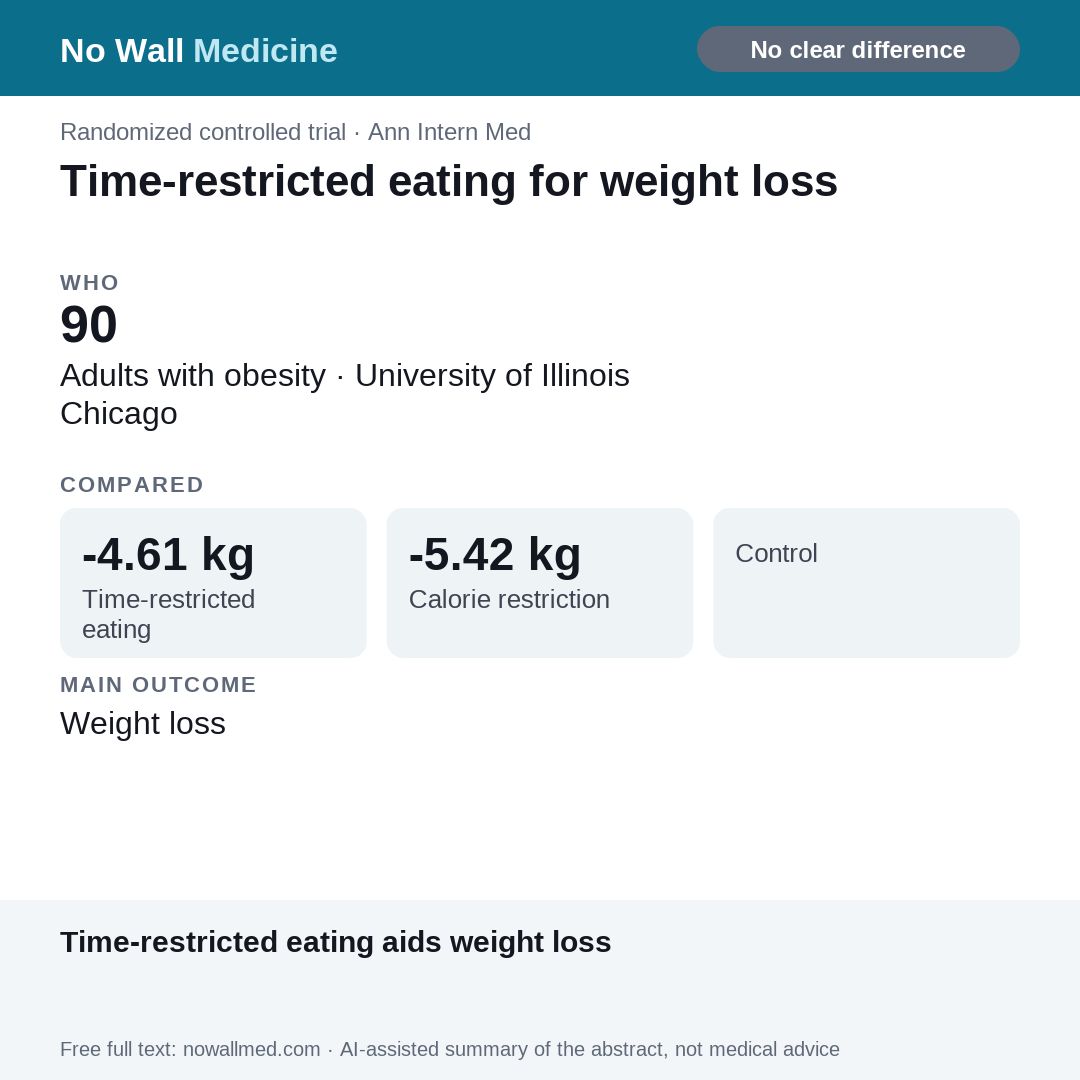
Time-Restricted Eating Without Calorie Counting for Weight Loss in a Racially Diverse Population : A Randomized Controlled Trial
Randomized controlled trialNo clear difference
Time-restricted eating for weight loss
Who
90
Adults with obesity · University of Illinois Chicago
Compared
-4.61 kgTime-restricted eating
-5.42 kgCalorie restriction
Control
Main outcome
Weight loss
Bottom line: Time-restricted eating aids weight loss
Limitation: Not blinded, underpowered
Funded by: National Institutes of Health
Ann Intern Med · 2023-06-27Download image
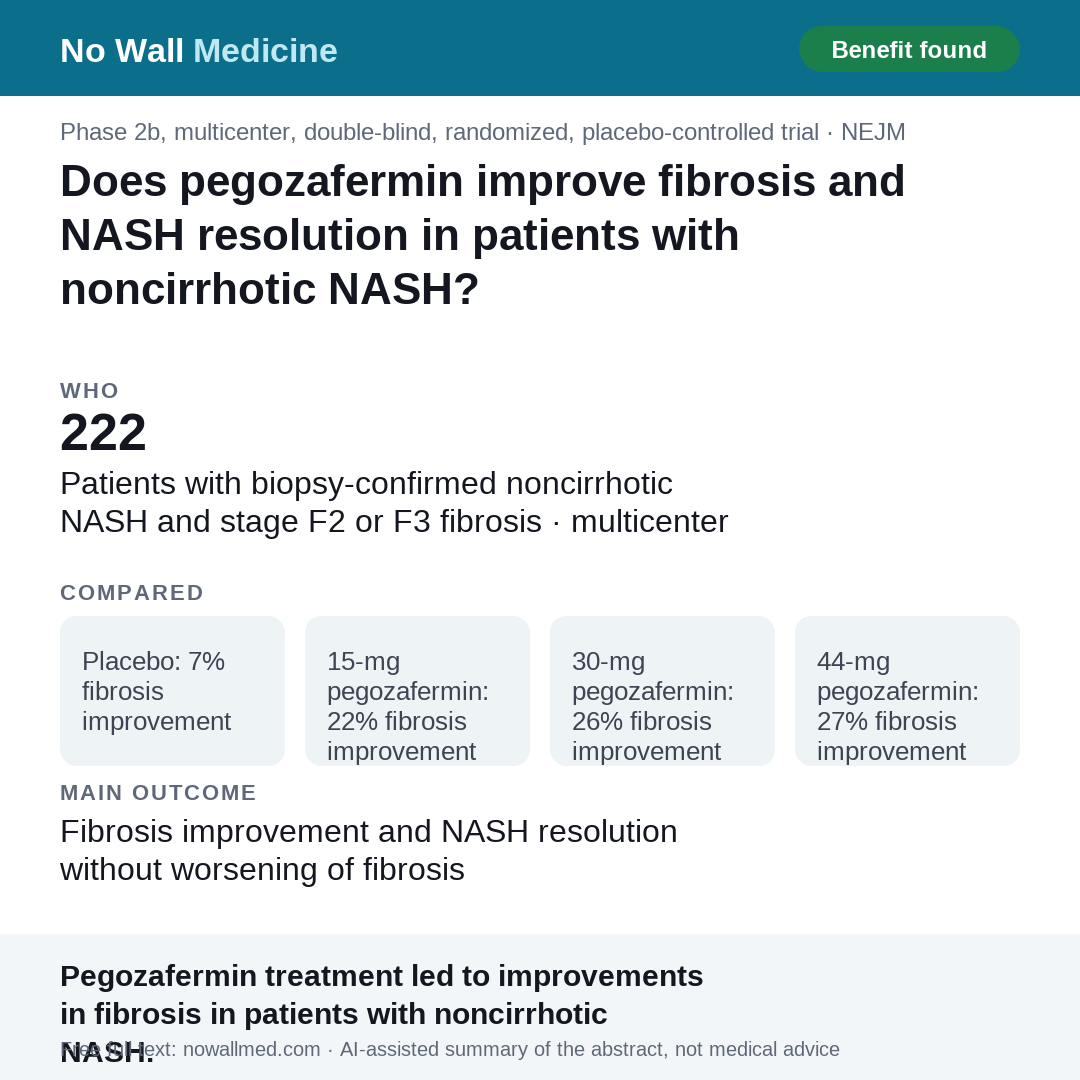
Randomized, Controlled Trial of the FGF21 Analogue Pegozafermin in NASH
Phase 2b, multicenter, double-blind, randomized, placebo-controlled trialBenefit found
Does pegozafermin improve fibrosis and NASH resolution in patients with noncirrhotic NASH?
Who
222
Patients with biopsy-confirmed noncirrhotic NASH and stage F2 or F3 fibrosis · multicenter
Compared
Placebo: 7% fibrosis improvement
15-mg pegozafermin: 22% fibrosis improvement
30-mg pegozafermin: 26% fibrosis improvement
44-mg pegozafermin: 27% fibrosis improvement
Main outcome
Fibrosis improvement and NASH resolution without worsening of fibrosis
Bottom line: Pegozafermin treatment led to improvements in fibrosis in patients with noncirrhotic NASH.
Funded by: 89bio
NEJM · 2023-06-24Download image
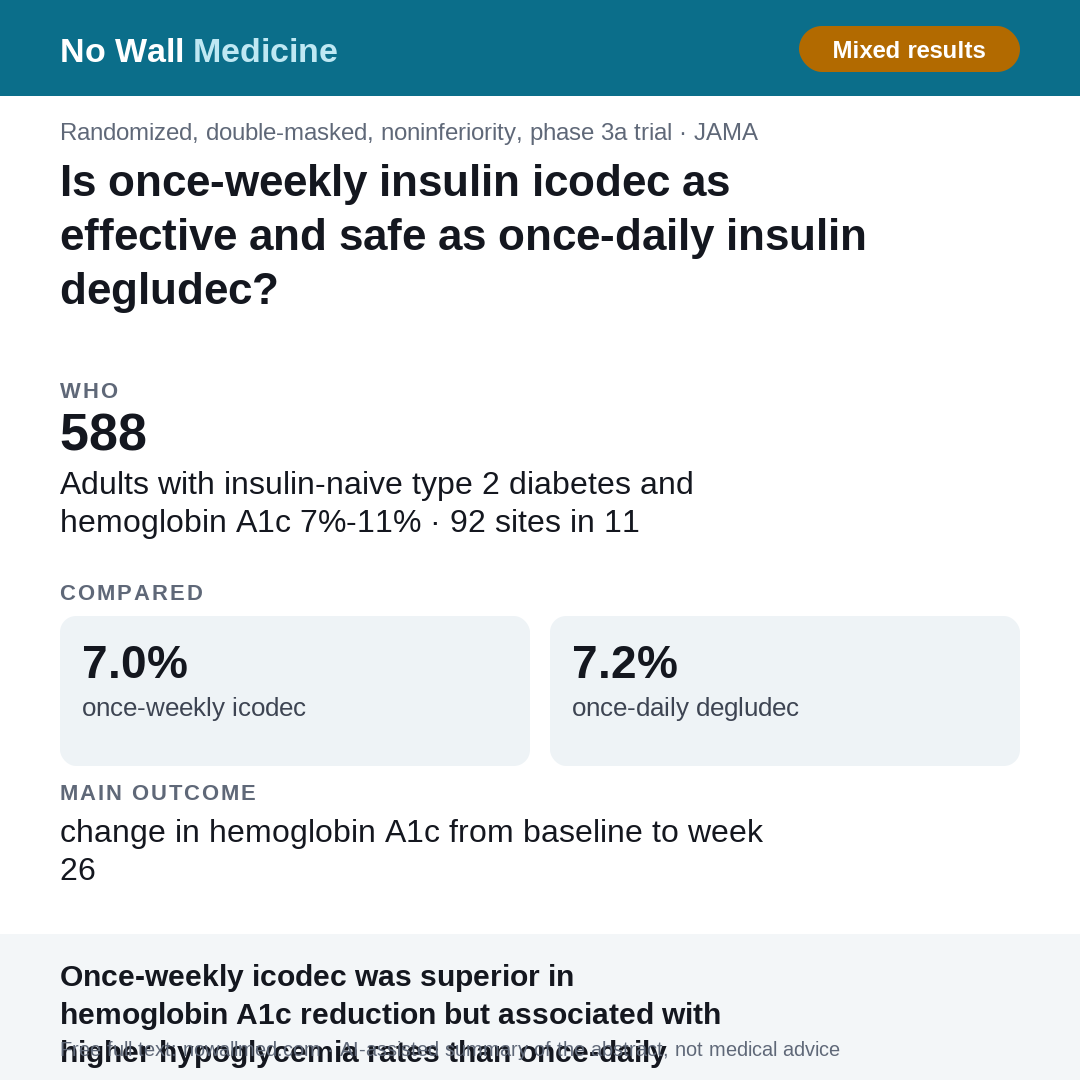
Once-Weekly Insulin Icodec vs Once-Daily Insulin Degludec in Adults With Insulin-Naive Type 2 Diabetes: The ONWARDS 3 Randomized Clinical Trial
Randomized, double-masked, noninferiority, phase 3a trialMixed results
Is once-weekly insulin icodec as effective and safe as once-daily insulin degludec?
Who
588
Adults with insulin-naive type 2 diabetes and hemoglobin A1c 7%-11% · 92 sites in 11 countries
Compared
7.0%once-weekly icodec (estimated)
7.2%once-daily degludec (estimated)
Main outcome
change in hemoglobin A1c from baseline to week 26
Result: estimated treatment difference -0.2 (95% CI -0.3 to -0.1) percentage points
Bottom line: Once-weekly icodec was superior in hemoglobin A1c reduction but associated with higher hypoglycemia rates than once-daily degludec.
JAMA · 2023-06-24Download image
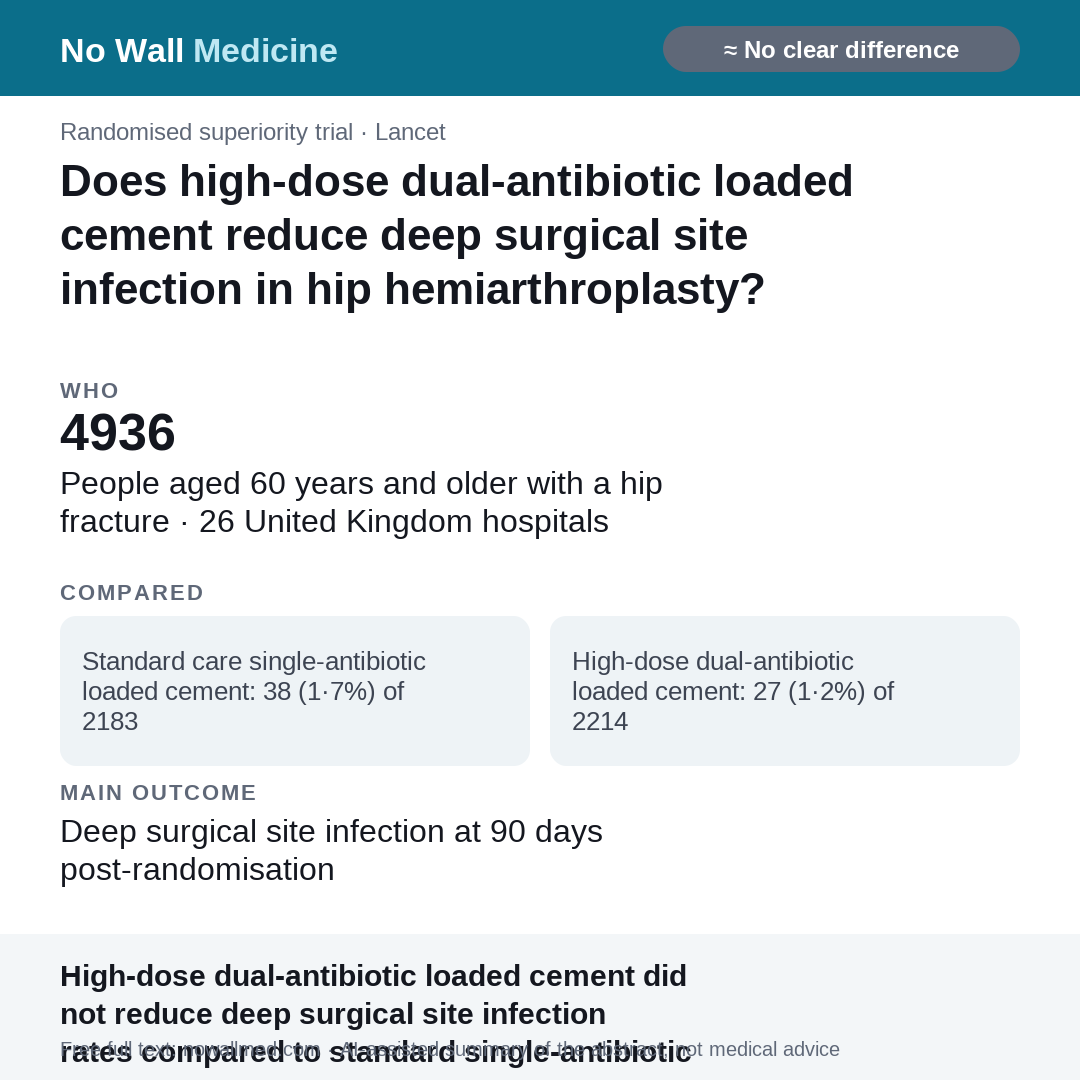
High-dose dual-antibiotic loaded cement for hip hemiarthroplasty in the UK (WHiTE 8): a randomised controlled trial
Randomised superiority trialNo clear difference
Does high-dose dual-antibiotic loaded cement reduce deep surgical site infection in hip hemiarthroplasty?
Who
4936
People aged 60 years and older with a hip fracture · 26 United Kingdom hospitals
Compared
Standard care single-antibiotic loaded cement: 38 (1·7%) of 2183
High-dose dual-antibiotic loaded cement: 27 (1·2%) of 2214
Main outcome
Deep surgical site infection at 90 days post-randomisation
Result: adjusted odds ratio 1·43 (95% CI 0·87-2·35)
Bottom line: High-dose dual-antibiotic loaded cement did not reduce deep surgical site infection rates compared to standard single-antibiotic cement.
Funded by: Heraeus Medical and UK National Institute for Health and Care Research
Lancet · 2023-06-21Download image