Visual abstracts
New randomized trials and meta-analyses from leading journals at a glance: who was studied, what was compared, and what was found. Every paper is free to read in full.
All specialtiesCardiology 4877Oncology 4138Gastroenterology & Hepatology 1942Infectious Disease 3837Neurology 1905Psychiatry & Mental Health 2273Pulmonology 2143Critical Care 1365Endocrinology & Diabetes 2580Pediatrics 2980Surgery 2559Orthopedics & Sports Medicine 931Neurosurgery 537Cardiothoracic & Vascular Surgery 674Plastic & Reconstructive Surgery 591Nephrology 1133Rheumatology 823Hematology 1109Dermatology 621Ophthalmology 543Obstetrics & Gynecology 1686Public & Global Health 1058Radiology & Imaging 648Anesthesiology 986Urology 764ENT (Otolaryngology) 503Emergency Medicine 511Allergy & Immunology 313Geriatrics 981Family Medicine & Primary Care 562Medical Genetics & Genomics 676Pathology & Laboratory Medicine 159Physical Medicine & Rehabilitation 757Palliative Care 444Nutrition 1588Digital Health & AI 2201General Medicine 321
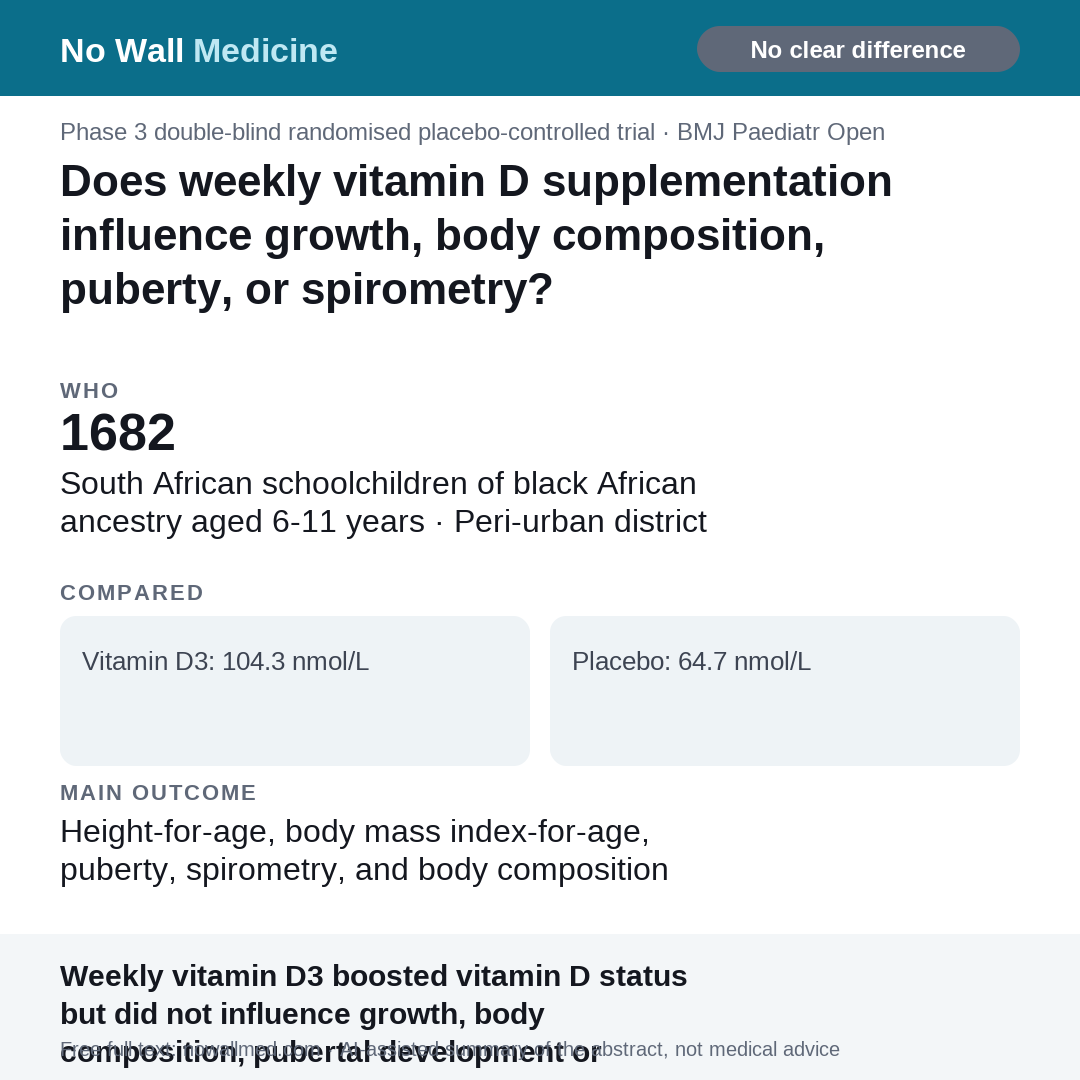
Influence of vitamin D supplementation on growth, body composition, pubertal development and spirometry in South African schoolchildren: a randomised controlled trial (ViDiKids)
Phase 3 double-blind randomised placebo-controlled trialNo clear difference
Does weekly vitamin D supplementation influence growth, body composition, puberty, or spirometry?
Who
1682
South African schoolchildren of black African ancestry aged 6-11 years · Peri-urban district of Cape Town, South Africa
Compared
Vitamin D3: 104.3 nmol/L
Placebo: 64.7 nmol/L
Main outcome
Height-for-age, body mass index-for-age, puberty, spirometry, and body composition
Result: adjusted mean difference -0.08 (95% CI -0.19 to 0.03) for height-for-age
Bottom line: Weekly vitamin D3 boosted vitamin D status but did not influence growth, body composition, pubertal development or spirometric outcomes.
BMJ Paediatr Open · 2024-04-10Download image
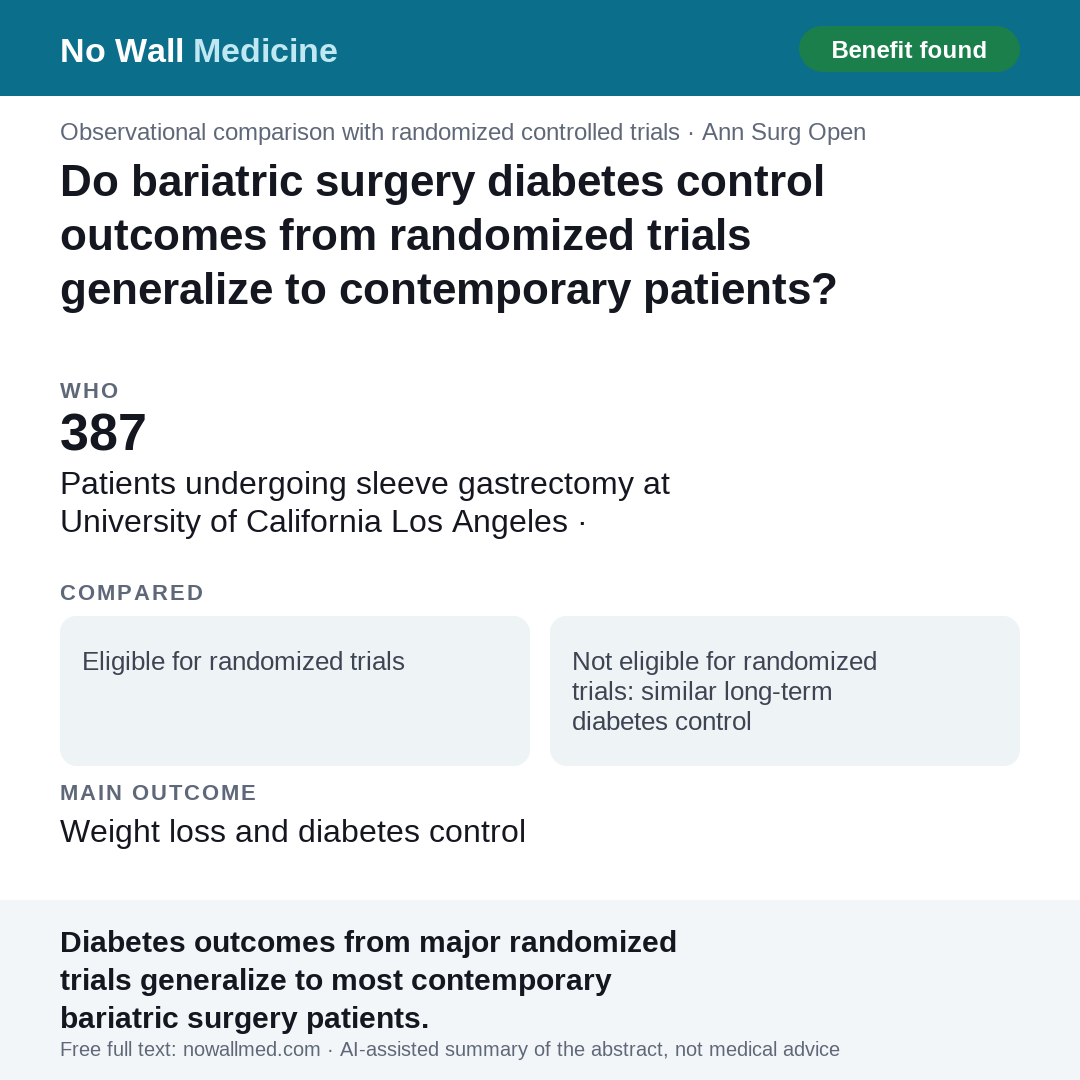
Generalizability of Randomized Clinical Trial Outcomes for Diabetes Control Resulting From Bariatric Surgery
Observational comparison with randomized controlled trialsBenefit found
Do bariatric surgery diabetes control outcomes from randomized trials generalize to contemporary patients?
Who
387
Patients undergoing sleeve gastrectomy at University of California Los Angeles · University of California Los Angeles
Compared
Eligible for randomized trials
Not eligible for randomized trials: similar long-term diabetes control
Main outcome
Weight loss and diabetes control
Bottom line: Diabetes outcomes from major randomized trials generalize to most contemporary bariatric surgery patients.
Ann Surg Open · 2024-04-10Download image
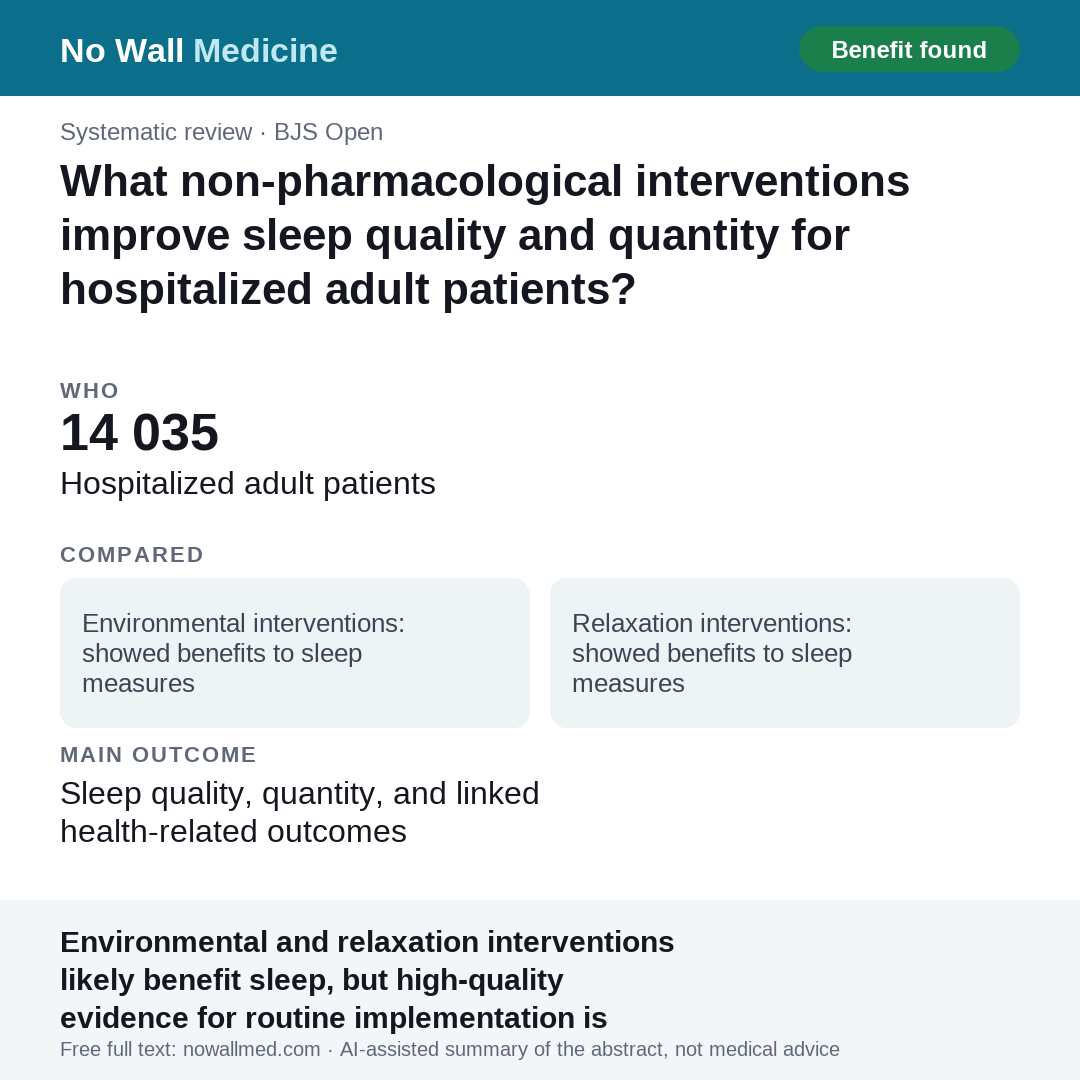
Non-pharmacological interventions to improve sleep quality and quantity for hospitalized adult patients-co-produced study with surgical patient partners: systematic review
Systematic reviewBenefit found
What non-pharmacological interventions improve sleep quality and quantity for hospitalized adult patients?
Who
14 035
Hospitalized adult patients
Compared
Environmental interventions: showed benefits to sleep measures
Relaxation interventions: showed benefits to sleep measures
Main outcome
Sleep quality, quantity, and linked health-related outcomes
Bottom line: Environmental and relaxation interventions likely benefit sleep, but high-quality evidence for routine implementation is lacking.
Limitation: Lack of standardized sleep measurement and moderate to high risk of bias across studies.
BJS Open · 2024-04-10Download image
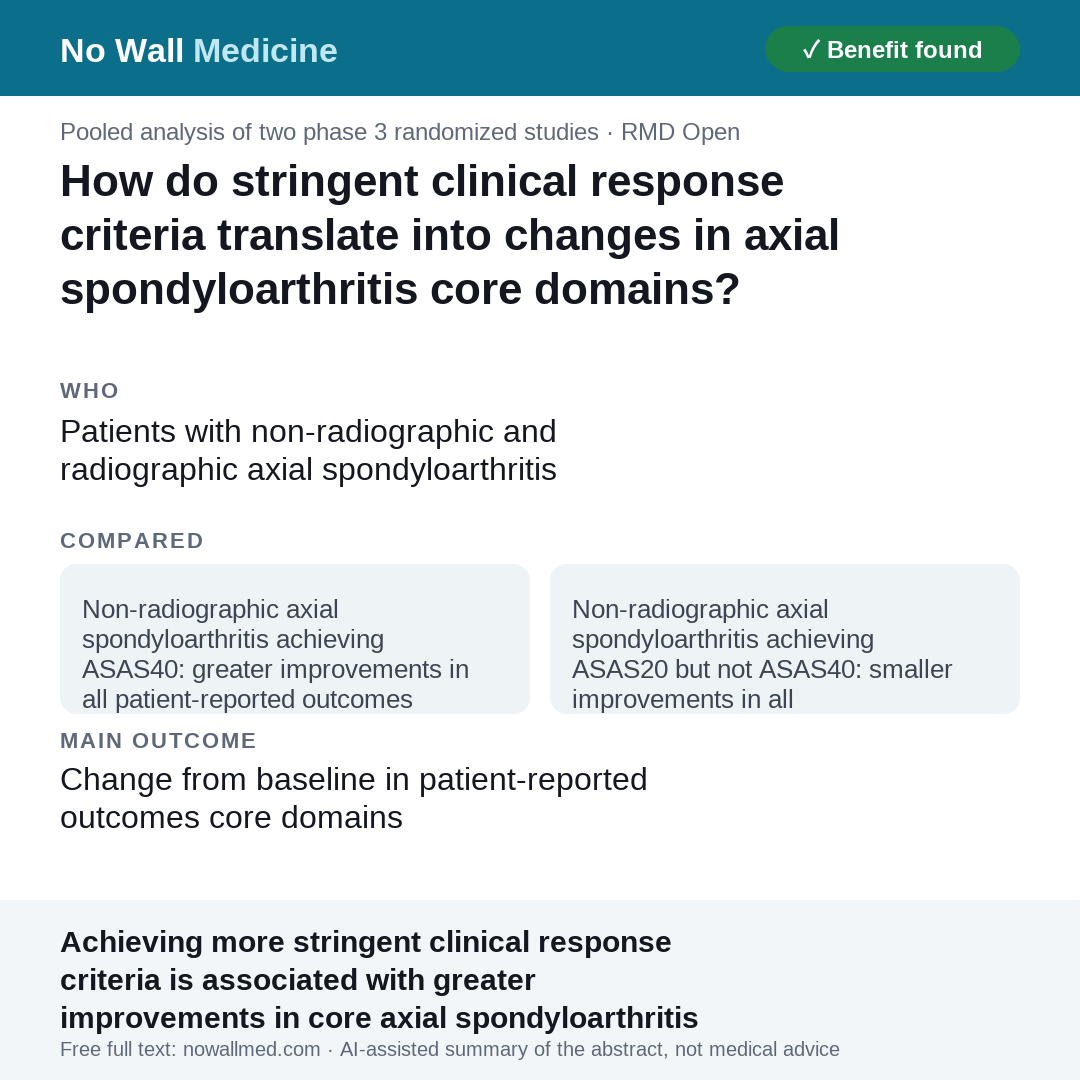
Association of clinical response criteria and disease activity levels with axial spondyloarthritis core domains: results from two phase 3 randomised studies, BE MOBILE 1 and 2
Pooled analysis of two phase 3 randomized studiesBenefit found
How do stringent clinical response criteria translate into changes in axial spondyloarthritis core domains?
Who
Patients with non-radiographic and radiographic axial spondyloarthritis
Compared
Non-radiographic axial spondyloarthritis achieving ASAS40: greater improvements in all patient-reported outcomes
Non-radiographic axial spondyloarthritis achieving ASAS20 but not ASAS40: smaller improvements in all patient-reported outcomes
Main outcome
Change from baseline in patient-reported outcomes core domains
Bottom line: Achieving more stringent clinical response criteria is associated with greater improvements in core axial spondyloarthritis domains.
RMD Open · 2024-04-10Download image
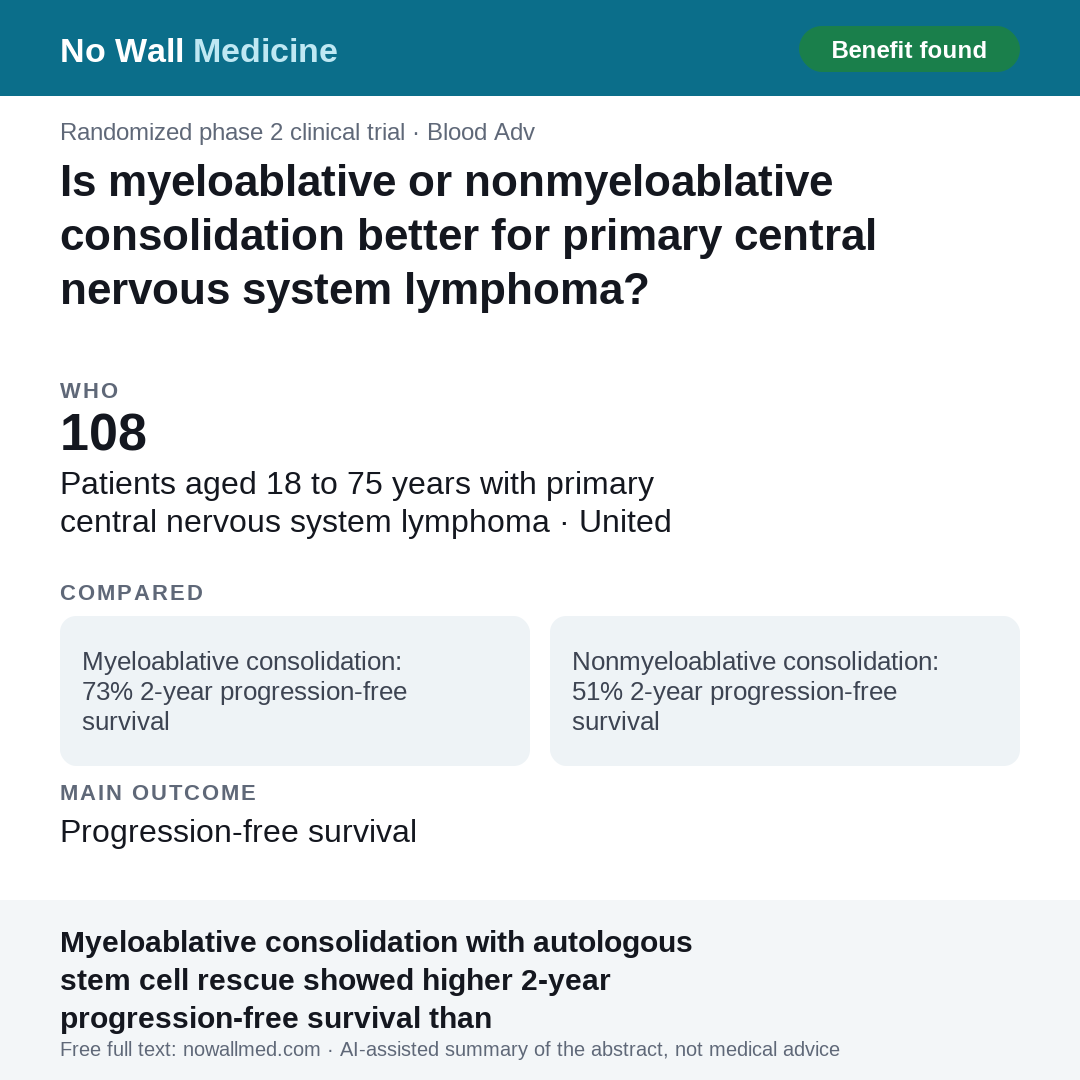
Myeloablative vs nonmyeloablative consolidation for primary central nervous system lymphoma: results of Alliance 51101
Randomized phase 2 clinical trialBenefit found
Is myeloablative or nonmyeloablative consolidation better for primary central nervous system lymphoma?
Who
108
Patients aged 18 to 75 years with primary central nervous system lymphoma · United States
Compared
Myeloablative consolidation: 73% 2-year progression-free survival
Nonmyeloablative consolidation: 51% 2-year progression-free survival
Main outcome
Progression-free survival
Bottom line: Myeloablative consolidation with autologous stem cell rescue showed higher 2-year progression-free survival than nonmyeloablative consolidation.
Limitation: Landmark analysis showed no significant difference in progression-free survival among those completing consolidation therapy.
Blood Adv · 2024-04-10Download image
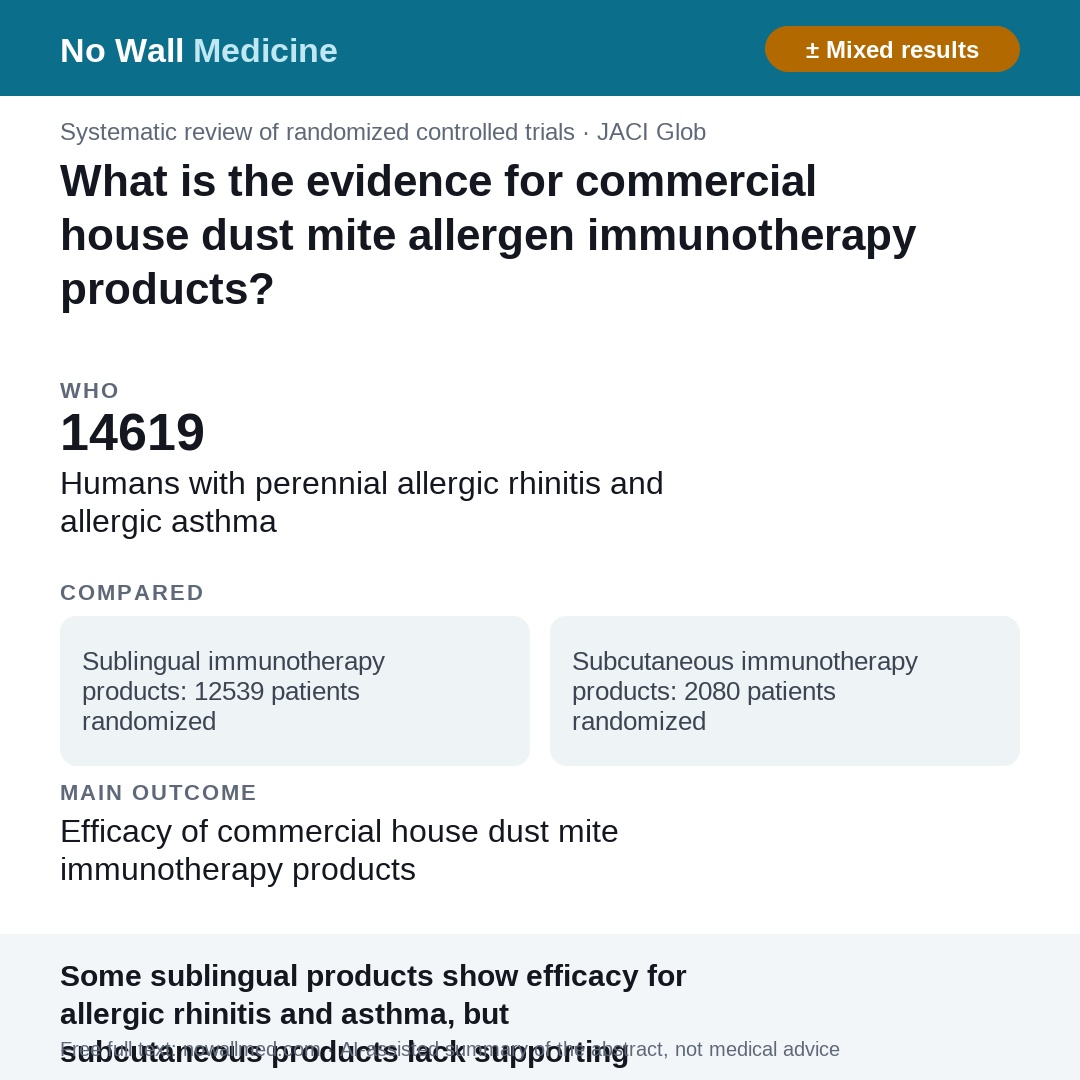
The evidence for commercial house dust mite immunotherapy products: A pragmatic systematic review with narrative synthesis
Systematic review of randomized controlled trialsMixed results
What is the evidence for commercial house dust mite allergen immunotherapy products?
Who
14619
Humans with perennial allergic rhinitis and allergic asthma
Compared
Sublingual immunotherapy products: 12539 patients randomized
Subcutaneous immunotherapy products: 2080 patients randomized
Main outcome
Efficacy of commercial house dust mite immunotherapy products
Bottom line: Some sublingual products show efficacy for allergic rhinitis and asthma, but subcutaneous products lack supporting dose-finding and definitive studies.
JACI Glob · 2024-04-10Download image
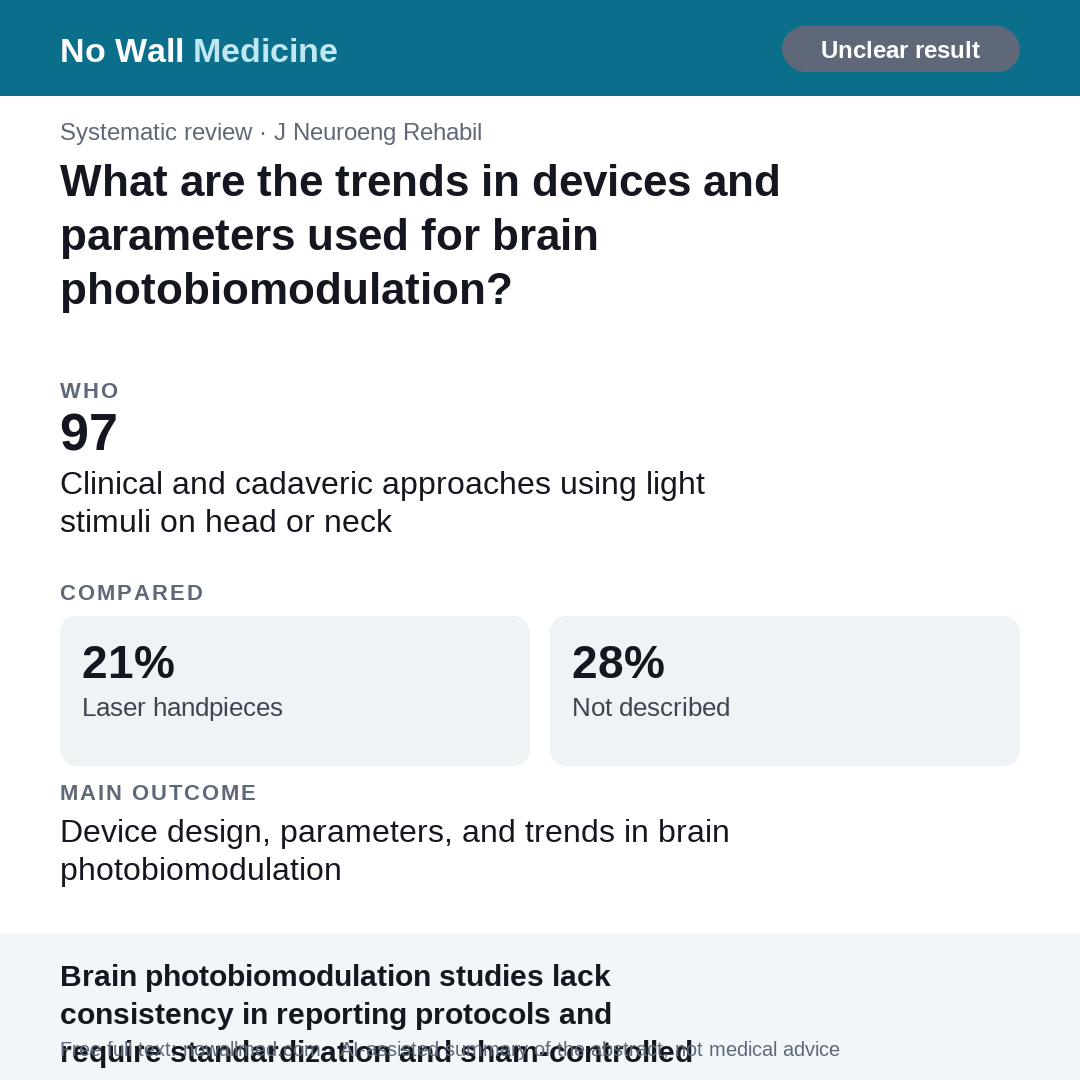
Devices used for photobiomodulation of the brain-a comprehensive and systematic review
Systematic reviewUnclear result
What are the trends in devices and parameters used for brain photobiomodulation?
Who
97
Clinical and cadaveric approaches using light stimuli on head or neck
Compared
21%Laser handpieces
28%Not described
Main outcome
Device design, parameters, and trends in brain photobiomodulation
Bottom line: Brain photobiomodulation studies lack consistency in reporting protocols and require standardization and sham-controlled comparative studies.
J Neuroeng Rehabil · 2024-04-10Download image
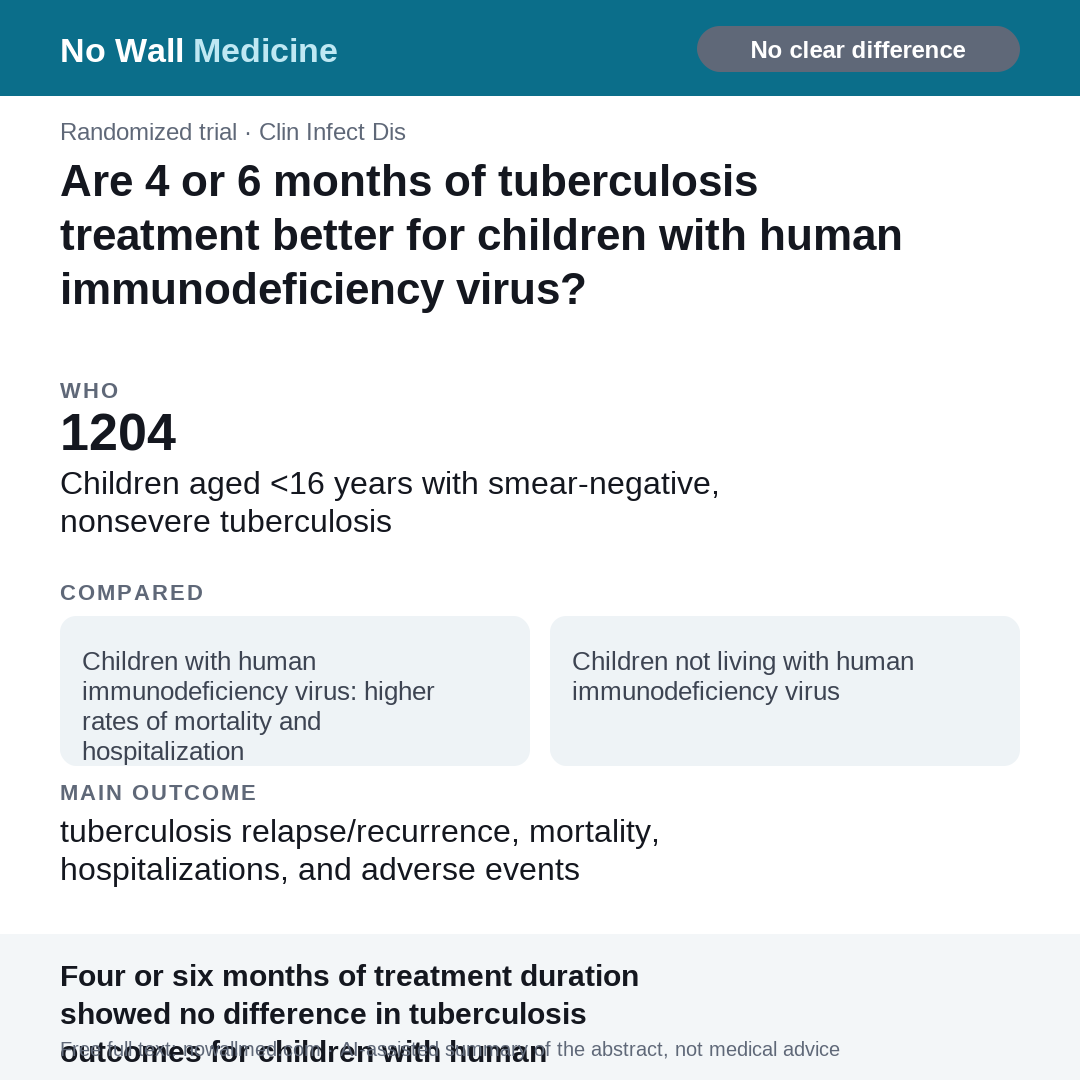
Clinical Outcomes in Children With Human Immunodeficiency Virus Treated for Nonsevere Tuberculosis in the SHINE Trial
Randomized trialNo clear difference
Are 4 or 6 months of tuberculosis treatment better for children with human immunodeficiency virus?
Who
1204
Children aged <16 years with smear-negative, nonsevere tuberculosis
Compared
Children with human immunodeficiency virus: higher rates of mortality and hospitalization
Children not living with human immunodeficiency virus
Main outcome
tuberculosis relapse/recurrence, mortality, hospitalizations, and adverse events
Bottom line: Four or six months of treatment duration showed no difference in tuberculosis outcomes for children with human immunodeficiency virus.
Clin Infect Dis · 2024-04-09Download image
Health-related quality of life in patients with conditions affecting the hand: meta-analysis
Systematic review and meta-analysisHarm found
What are the pooled health state utility values for common hand conditions?
Who
Adult patients with hand conditions
Compared
0.69Carpal tunnel syndrome before surgical intervention (95% c.i. 0.66 to 0.73)
0.63Hand osteoarthritis before surgical intervention (95% c.i. 0.60 to 0.67)
Main outcome
Health state utility values
Bottom line: Untreated carpal tunnel syndrome and hand osteoarthritis significantly reduce health-related quality of life compared to population norms.
Br J Surg · 2024-04-09Download image

Effectiveness of preoxygenation strategies: a systematic review and network meta-analysis
Systematic review and network meta-analysisBenefit found
What is the most effective preoxygenation technique for adult patients undergoing general anaesthesia?
Who
3914
Adult patients aged 16 years or older receiving general anaesthesia
Compared
High-flow nasal oxygen in head-up position
Facemask in supine position
Facemask in head-up position
Main outcome
safe apnoea time
Result: mean difference 291 (95% credible interval 138-456) s
Bottom line: High-flow nasal oxygen with patients in a head-up position most effectively prolongs safe apnoea time.
Br J Anaesth · 2024-04-09Download image

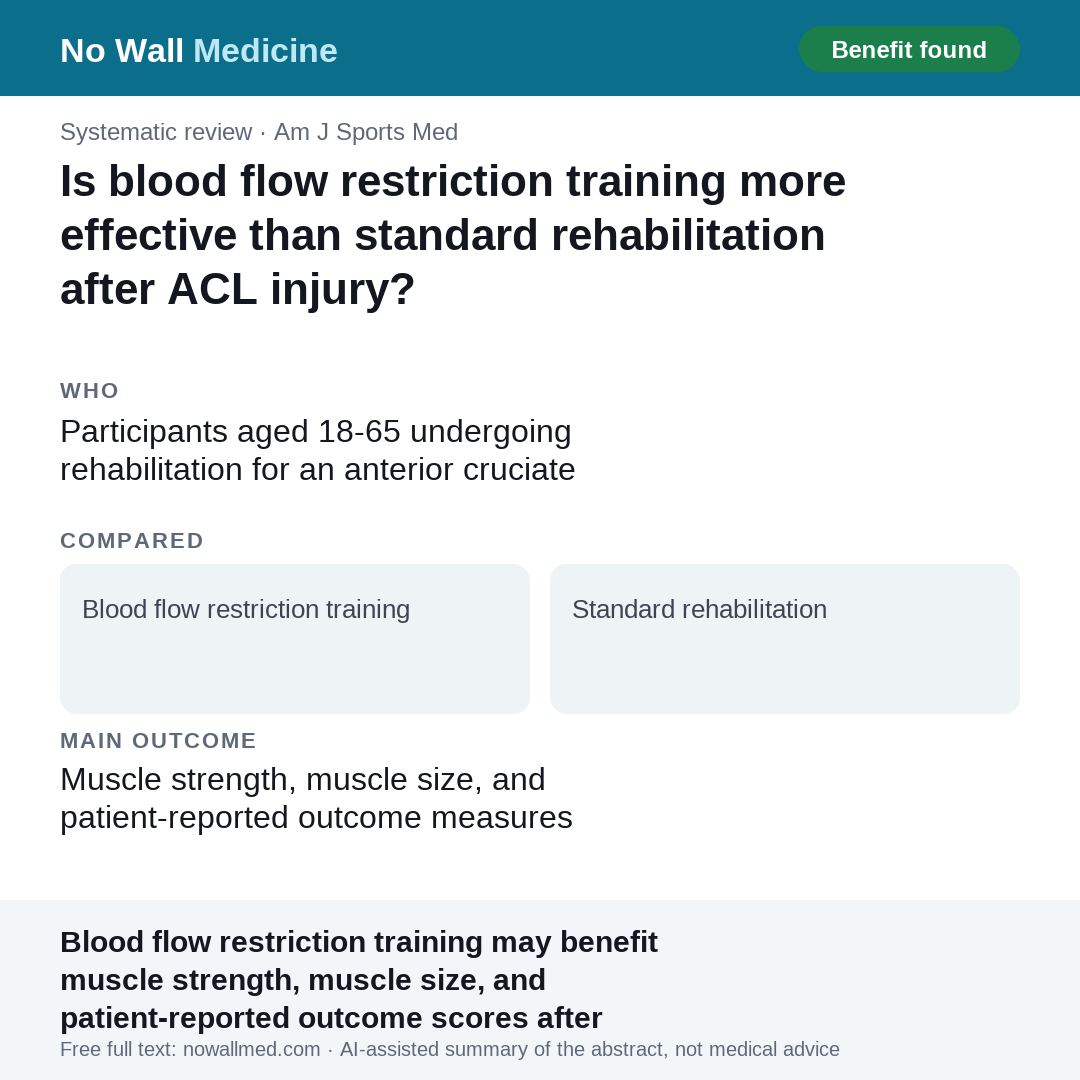
Comparison of Blood Flow Restriction Interventions to Standard Rehabilitation After an Anterior Cruciate Ligament Injury: A Systematic Review
Systematic reviewBenefit found
Is blood flow restriction training more effective than standard rehabilitation after ACL injury?
Who
Participants aged 18-65 undergoing rehabilitation for an anterior cruciate ligament injury
Compared
Blood flow restriction training
Standard rehabilitation
Main outcome
Muscle strength, muscle size, and patient-reported outcome measures
Bottom line: Blood flow restriction training may benefit muscle strength, muscle size, and patient-reported outcome scores after anterior cruciate ligament injury.
Limitation: Only one large study included all outcomes, which has yet to be replicated.
Am J Sports Med · 2024-04-09Download image
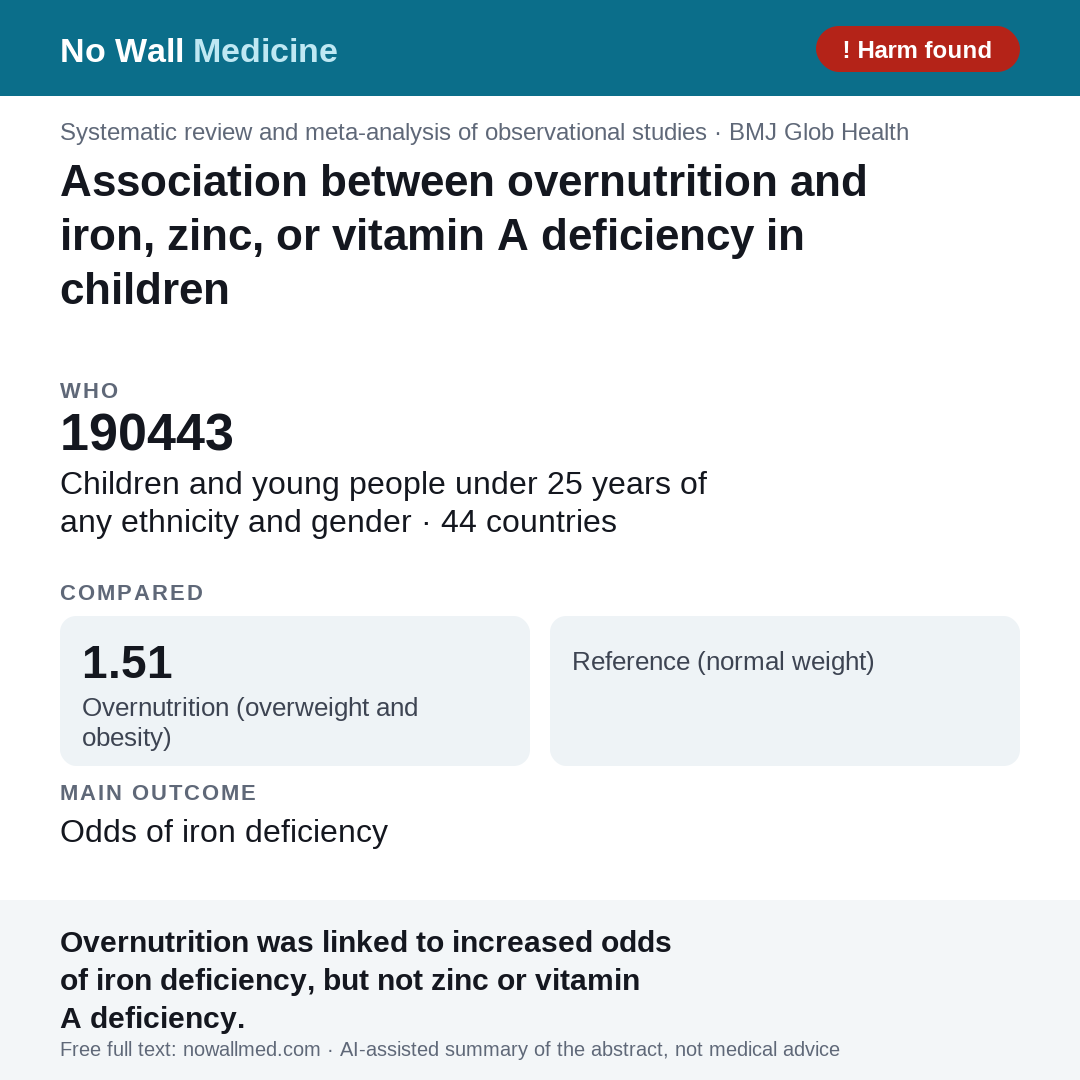
Overnutrition is a risk factor for iron, but not for zinc or vitamin A deficiency in children and young people: a systematic review and meta-analysis
Systematic review and meta-analysisMixed results
Does overnutrition increase risk of iron, zinc, or vitamin A deficiency?
Who
190443
Children and young people under 25 years of age · 44 countries
Compared
Overnutrition: increased odds of iron deficiency
Normal weight
Main outcome
Odds of iron, zinc, and vitamin A deficiency
Result: odds ratio 1.51 (95% CI 1.20 to 1.82)
Bottom line: Overnutrition increases the risk of iron deficiency but not zinc or vitamin A deficiencies in children and young people.
Limitation: Significant heterogeneity in biomarker reporting and inadequate accounting for inflammation status.
BMJ Glob Health · 2024-04-09Download image
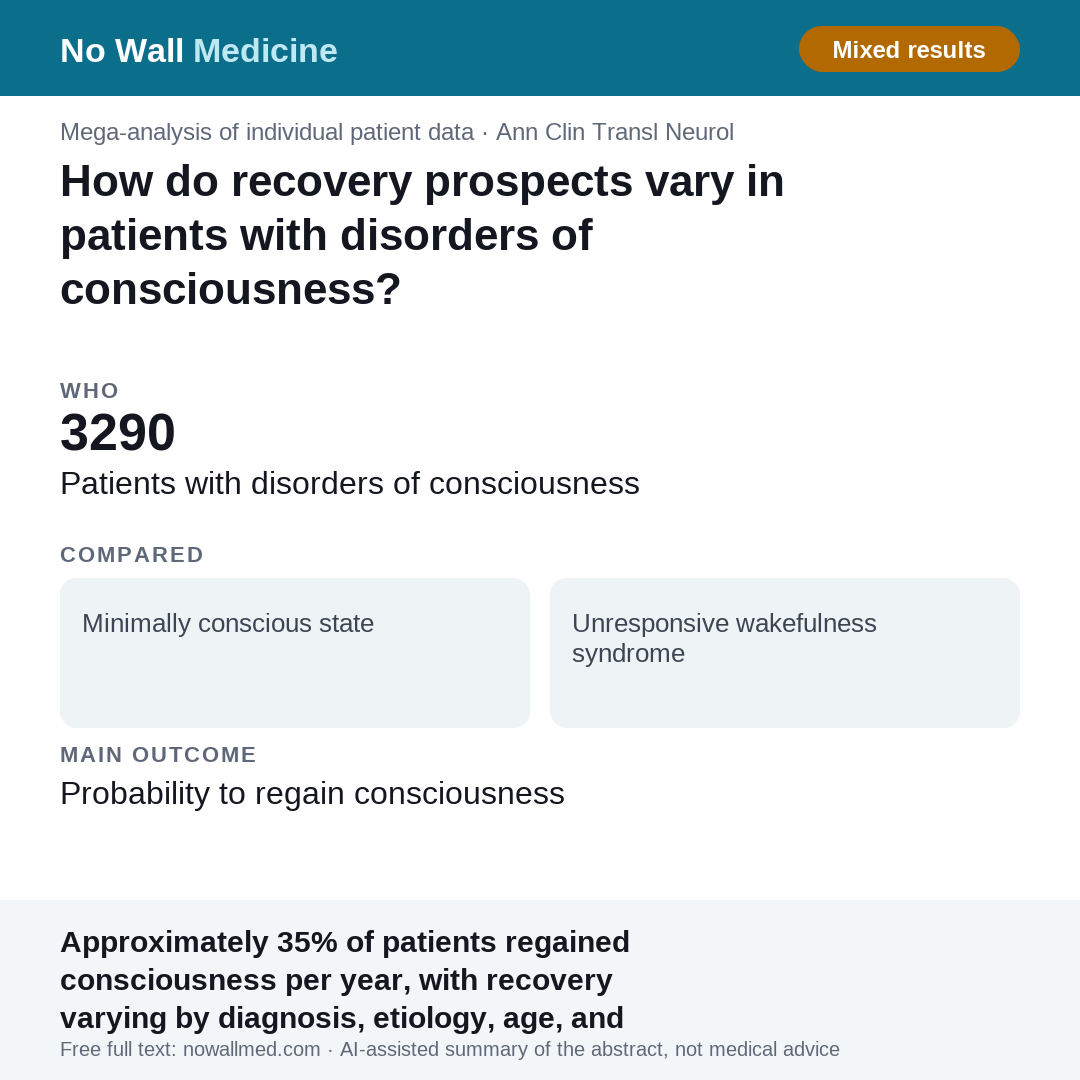
Predicting outcome in disorders of consciousness: A mega-analysis
Mega-analysis of individual patient dataMixed results
How do recovery prospects vary in patients with disorders of consciousness?
Who
3290
Patients with disorders of consciousness
Compared
Minimally conscious state
Unresponsive wakefulness syndrome
Main outcome
Probability to regain consciousness
Bottom line: Approximately 35% of patients regained consciousness per year, with recovery varying by diagnosis, etiology, age, and sex.
Ann Clin Transl Neurol · 2024-04-09Download image
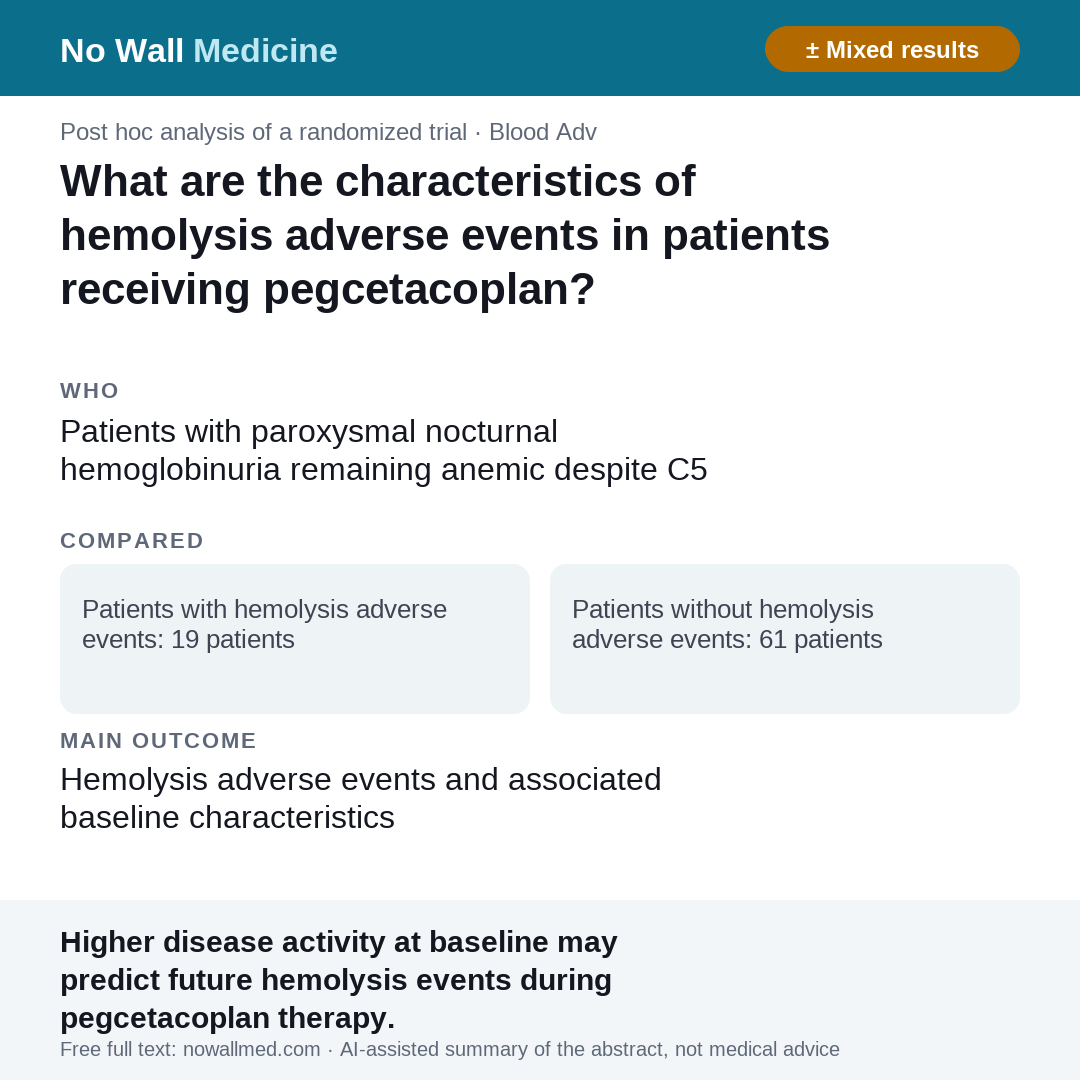
Hemolysis events in the phase 3 PEGASUS study of pegcetacoplan in patients with paroxysmal nocturnal hemoglobinuria
Post hoc analysis of a randomized trialMixed results
What are the characteristics of hemolysis adverse events in patients receiving pegcetacoplan?
Who
Patients with paroxysmal nocturnal hemoglobinuria remaining anemic despite C5 inhibitor therapy
Compared
Patients with hemolysis adverse events: 19 patients
Patients without hemolysis adverse events: 61 patients
Main outcome
Hemolysis adverse events and associated baseline characteristics
Bottom line: Higher disease activity at baseline may predict future hemolysis events during pegcetacoplan therapy.
Limitation: This is a post hoc analysis of the phase 3 PEGASUS trial.
Blood Adv · 2024-04-09Download image
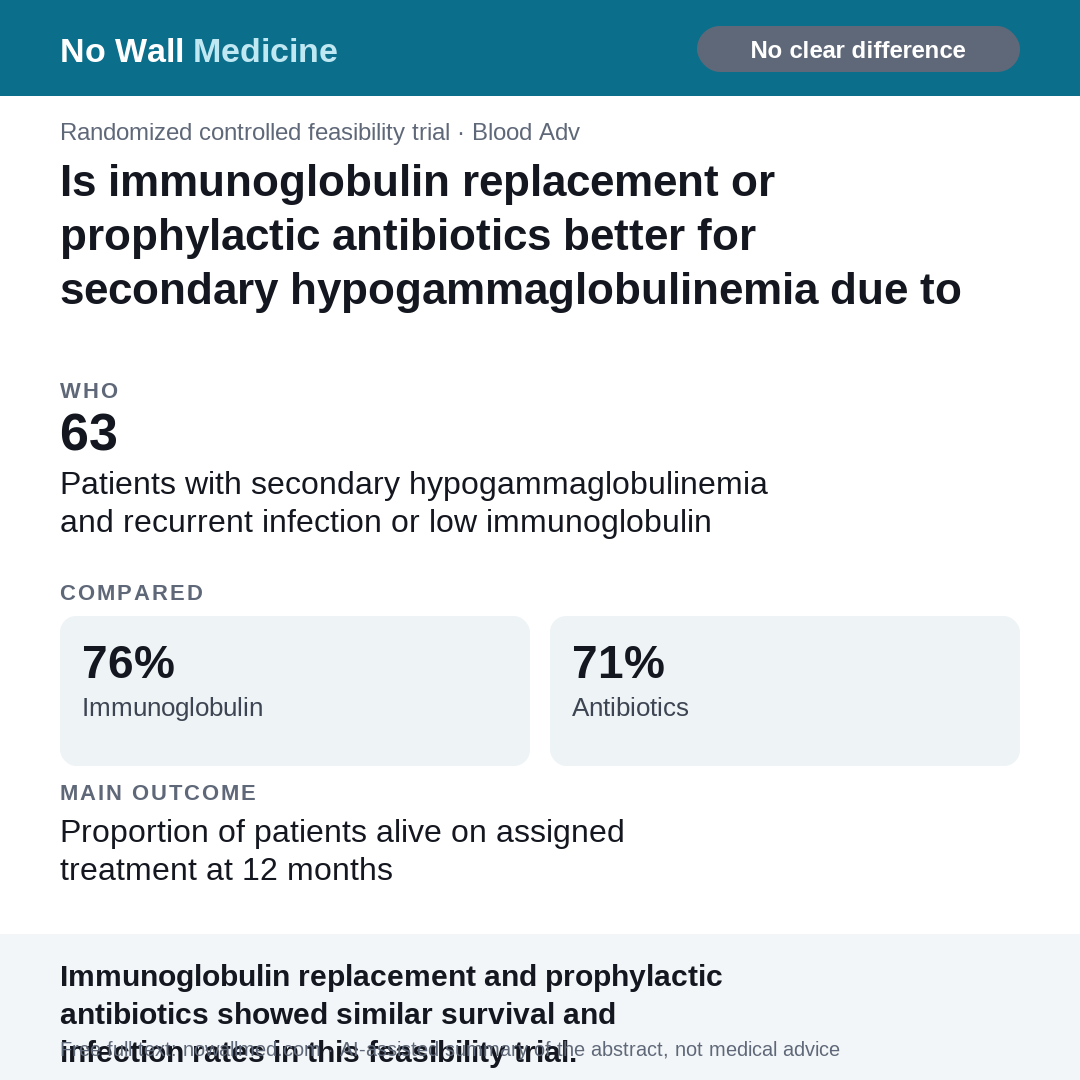
Immunoglobulin replacement vs prophylactic antibiotics for hypogammaglobulinemia secondary to hematological malignancy
Randomized controlled feasibility trialNo clear difference
Is immunoglobulin replacement or prophylactic antibiotics better for secondary hypogammaglobulinemia due to hematological malignancy?
Who
63
Patients with secondary hypogammaglobulinemia and recurrent infection or low immunoglobulin G · 7 hospitals in Australia and New Zealand
Compared
76%Immunoglobulin
71%Antibiotics
Main outcome
Proportion of patients alive on assigned treatment at 12 months
Result: odds ratio, 0.78 (95% CI, 0.22-2.52)
Bottom line: Immunoglobulin replacement and prophylactic antibiotics showed similar survival and infection rates in this feasibility trial.
Blood Adv · 2024-04-09Download image
Human-AI interaction in skin cancer diagnosis: a systematic review and meta-analysis
Systematic review and meta-analysisBenefit found
Does artificial intelligence assistance affect the accuracy of skin cancer diagnosis by clinicians?
Who
Clinicians diagnosing at least one skin cancer
Compared
Clinicians without artificial intelligence assistance: sensitivity 74.8% (95% CI 68.6-80.1) and specificity 81.5% (95% CI 73.9-87.3)
Artificial intelligence assisted clinicians: sensitivity 81.1% (95% CI 74.4-86.5) and specificity 86.1% (95% CI 79.2-90.9)
Main outcome
Diagnostic accuracy of skin cancer diagnosis
Bottom line: Artificial intelligence assistance has the potential to improve diagnostic accuracy in skin cancer diagnosis for clinicians.
Limitation: Most studies were conducted in experimental settings rather than real-life settings.
NPJ Digit Med · 2024-04-09Download image

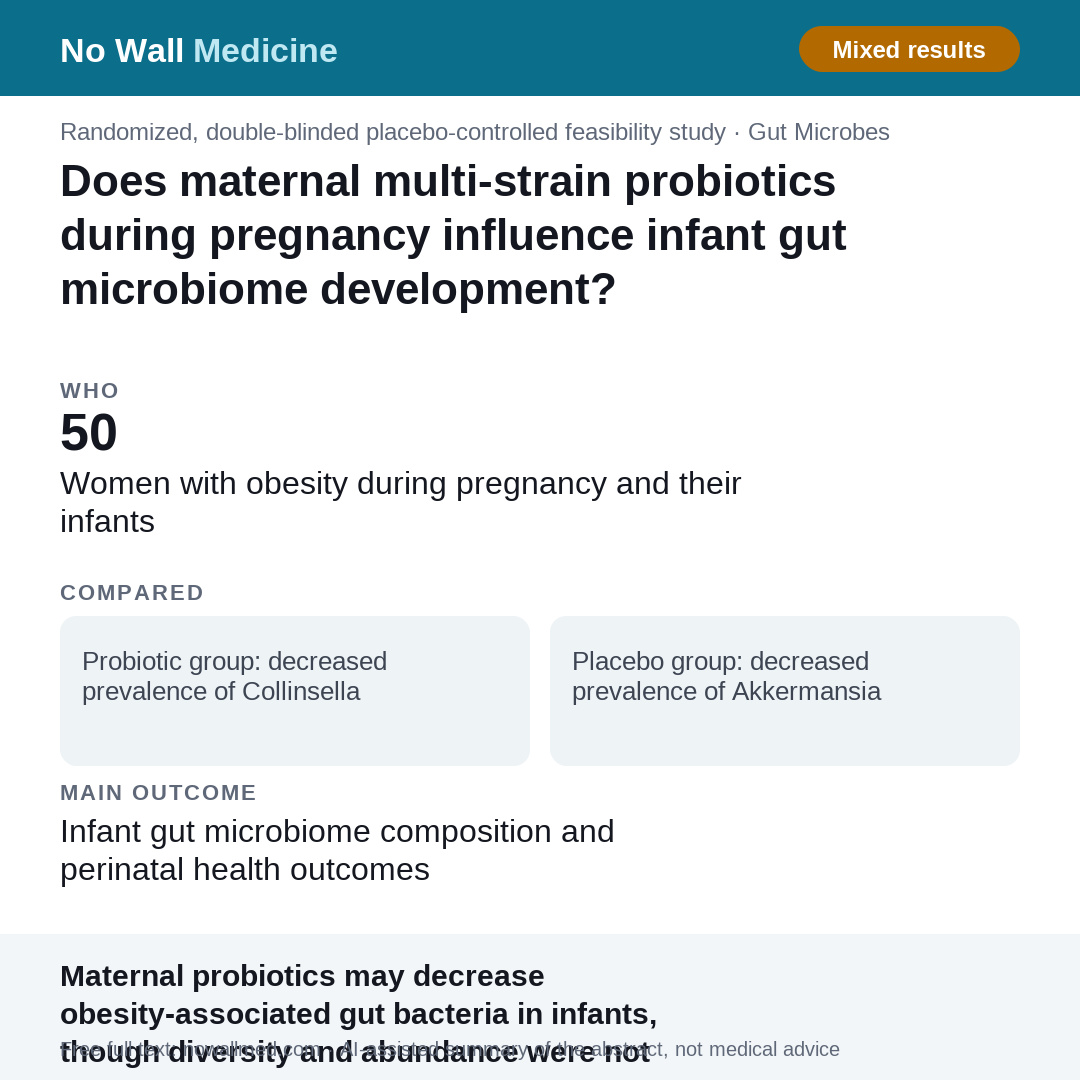
Multi-strain probiotics during pregnancy in women with obesity influence infant gut microbiome development: results from a randomized, double-blind placebo-controlled study
Randomized, double-blinded placebo-controlled feasibility studyMixed results
Does maternal multi-strain probiotics during pregnancy influence infant gut microbiome development?
Who
50
Women with obesity during pregnancy and their infants
Compared
Probiotic group: decreased prevalence of Collinsella
Placebo group: decreased prevalence of Akkermansia
Main outcome
Infant gut microbiome composition and perinatal health outcomes
Bottom line: Maternal probiotics may decrease obesity-associated gut bacteria in infants, though diversity and abundance were not significantly altered.
Limitation: This was a feasibility study.
Gut Microbes · 2024-04-09Download image
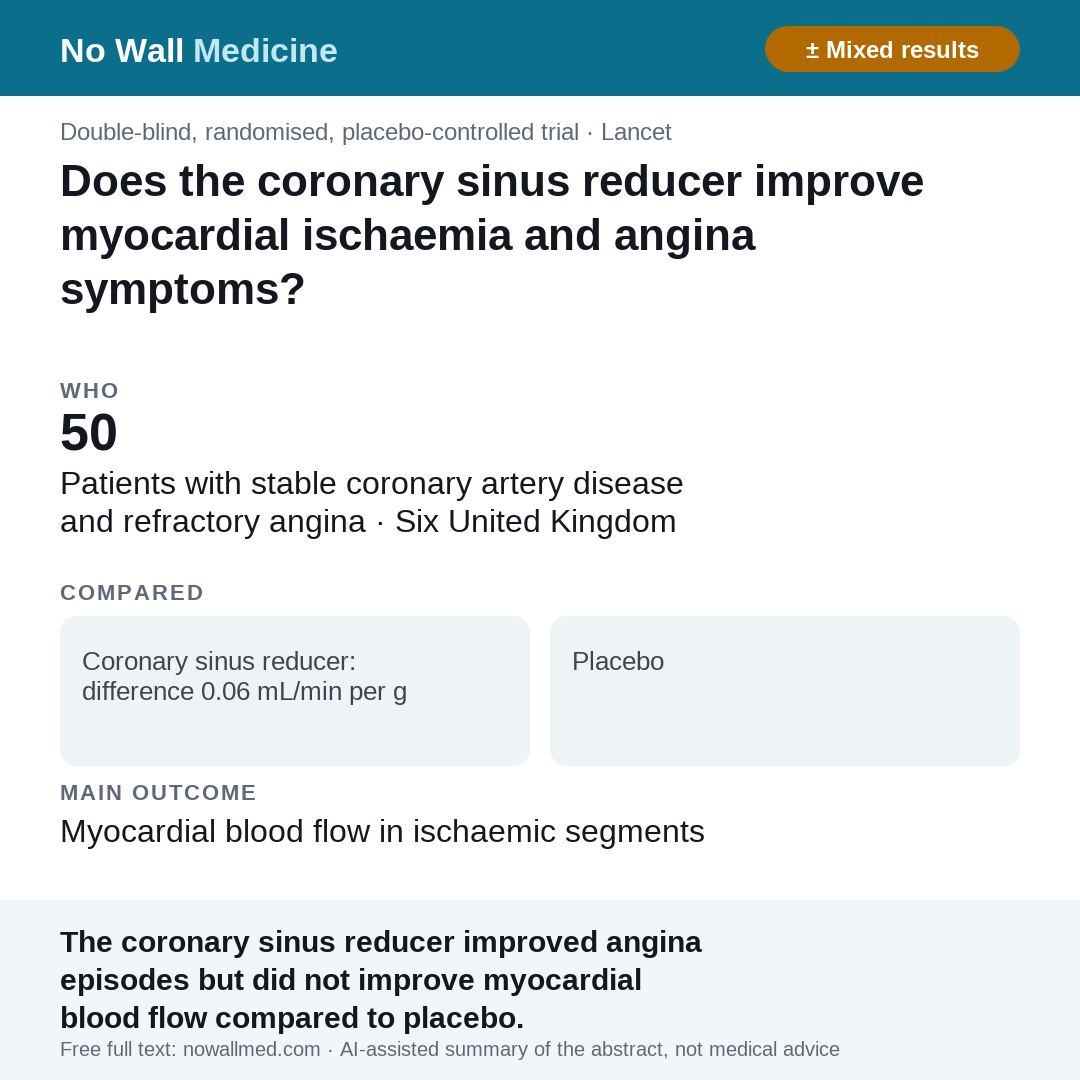
Coronary sinus reducer for the treatment of refractory angina (ORBITA-COSMIC): a randomised, placebo-controlled trial
Double-blind, randomised, placebo-controlled trialMixed results
Does the coronary sinus reducer improve myocardial ischaemia and angina symptoms?
Who
50
Patients with stable coronary artery disease and refractory angina · Six United Kingdom hospitals
Compared
Coronary sinus reducer: difference 0.06 mL/min per g
Placebo
Main outcome
Myocardial blood flow in ischaemic segments
Result: difference 0.06 mL/min per g (95% CrI -0.09 to 0.20)
Bottom line: The coronary sinus reducer improved angina episodes but did not improve myocardial blood flow compared to placebo.
Funded by: Medical Research Council and others
Lancet · 2024-04-08Download image
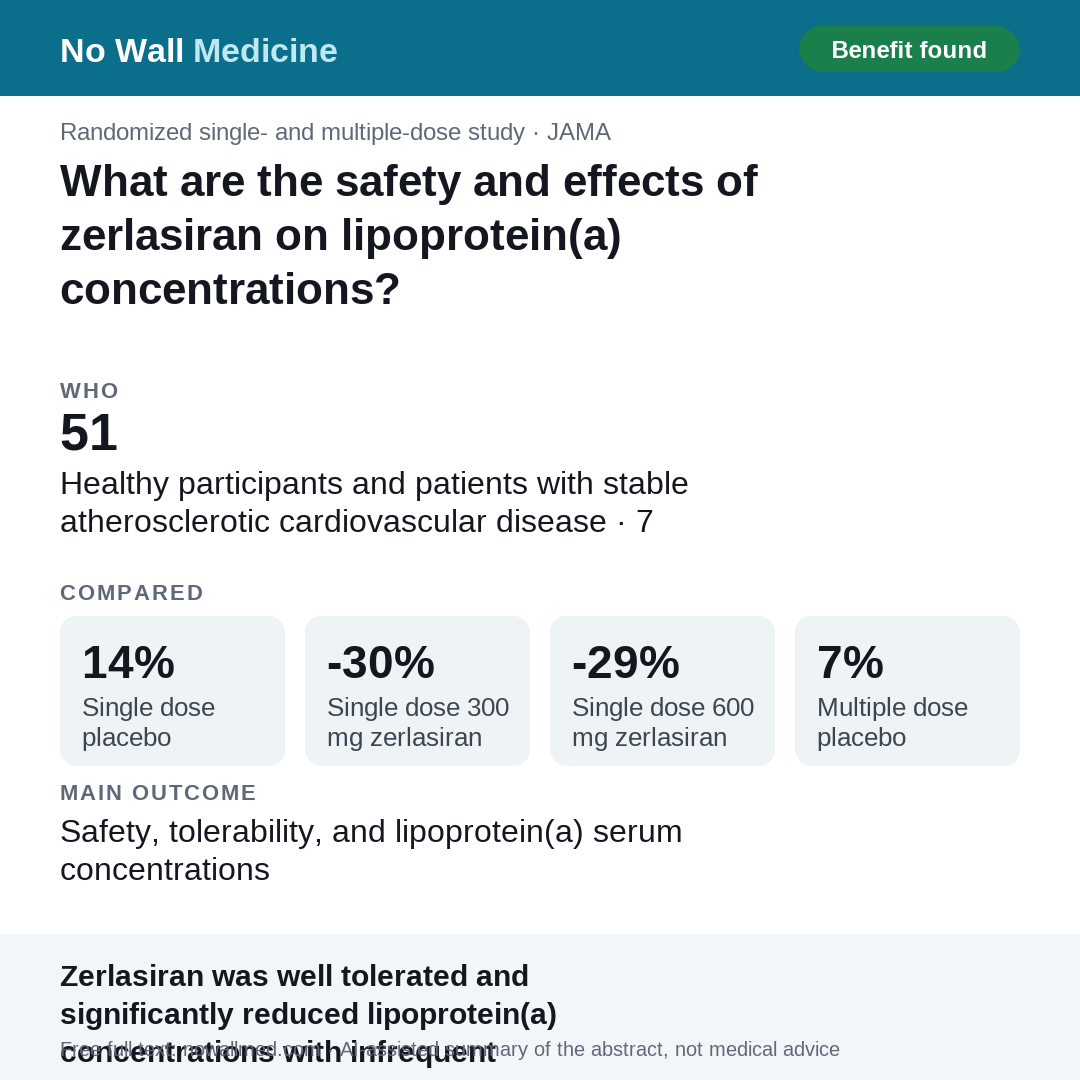
Single Ascending and Multiple-Dose Trial of Zerlasiran, a Short Interfering RNA Targeting Lipoprotein(a): A Randomized Clinical Trial
Randomized single- and multiple-dose studyBenefit found
What are the safety and effects of zerlasiran on lipoprotein(a) concentrations?
Who
51
Healthy participants and patients with stable atherosclerotic cardiovascular disease · 7 research sites in US, Netherlands, UK, and Australia
Compared
14%Single dose placebo (IQR, 13% to 15%)
-30%Single dose 300 mg zerlasiran (IQR, -51% to -18%)
-29%Single dose 600 mg zerlasiran (IQR, -39% to -7%)
7%Multiple dose placebo (IQR, -4% to 21%)
Main outcome
Safety, tolerability, and lipoprotein(a) serum concentrations
Bottom line: Zerlasiran was well tolerated and significantly reduced lipoprotein(a) concentrations with infrequent administration.
JAMA · 2024-04-08Download image
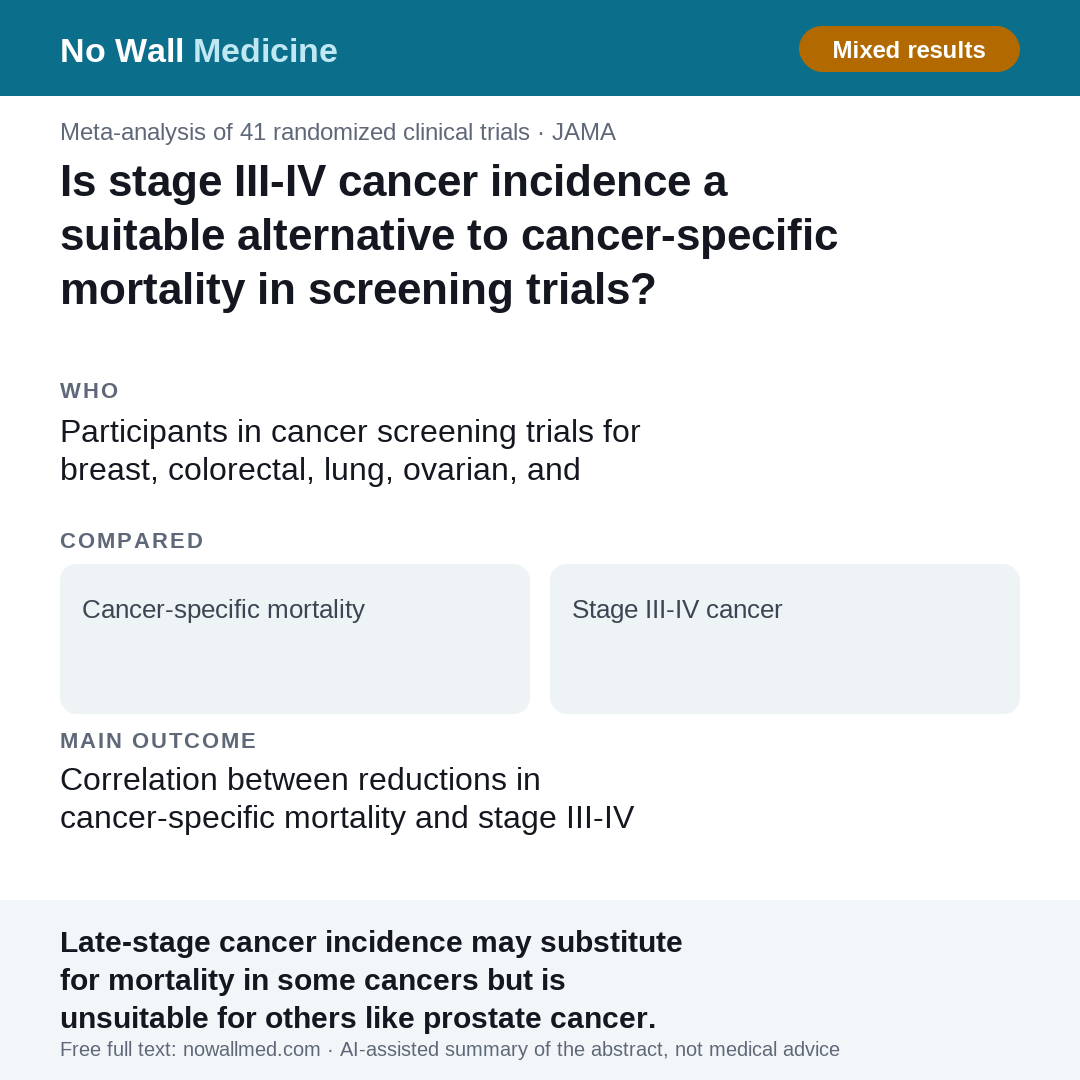
Cancer Stage Compared With Mortality as End Points in Randomized Clinical Trials of Cancer Screening: A Systematic Review and Meta-Analysis
Meta-analysis of 41 randomized clinical trialsMixed results
Is stage III-IV cancer incidence a suitable alternative to cancer-specific mortality in screening trials?
Who
Participants in cancer screening trials for breast, colorectal, lung, ovarian, and prostate cancers · Europe, North America, and Asia
Compared
Cancer-specific mortality
Stage III-IV cancer
Main outcome
Correlation between reductions in cancer-specific mortality and stage III-IV cancer
Bottom line: Late-stage cancer incidence may substitute for mortality in some cancers but is unsuitable for others like prostate cancer.
JAMA · 2024-04-08Download image