Visual abstracts
New randomized trials and meta-analyses from leading journals at a glance: who was studied, what was compared, and what was found. Every paper is free to read in full.
All specialtiesCardiology 4877Oncology 4138Gastroenterology & Hepatology 1942Infectious Disease 3837Neurology 1905Psychiatry & Mental Health 2273Pulmonology 2143Critical Care 1365Endocrinology & Diabetes 2580Pediatrics 2980Surgery 2559Orthopedics & Sports Medicine 931Neurosurgery 537Cardiothoracic & Vascular Surgery 674Plastic & Reconstructive Surgery 591Nephrology 1133Rheumatology 823Hematology 1109Dermatology 621Ophthalmology 543Obstetrics & Gynecology 1686Public & Global Health 1058Radiology & Imaging 648Anesthesiology 986Urology 764ENT (Otolaryngology) 503Emergency Medicine 511Allergy & Immunology 313Geriatrics 981Family Medicine & Primary Care 562Medical Genetics & Genomics 676Pathology & Laboratory Medicine 159Physical Medicine & Rehabilitation 757Palliative Care 444Nutrition 1588Digital Health & AI 2201General Medicine 321
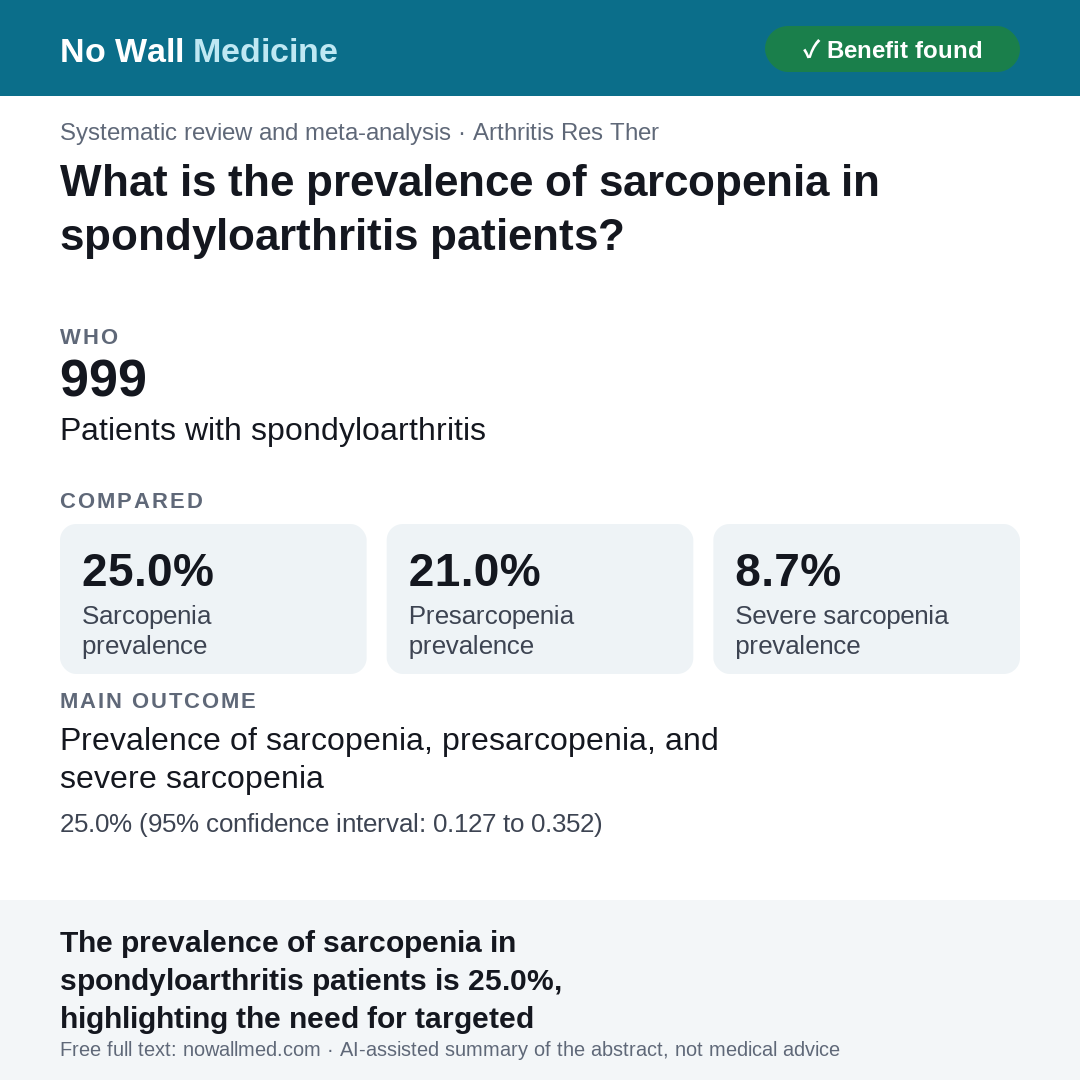
The prevalence of sarcopenia in spondyloarthritis patients: a meta-analysis
Systematic review and meta-analysisBenefit found
What is the prevalence of sarcopenia in spondyloarthritis patients?
Who
999
Patients with spondyloarthritis
Compared
25.0%Sarcopenia prevalence
21.0%Presarcopenia prevalence
8.7%Severe sarcopenia prevalence
Main outcome
Prevalence of sarcopenia, presarcopenia, and severe sarcopenia
Result: 25.0% (95% confidence interval: 0.127 to 0.352)
Bottom line: The prevalence of sarcopenia in spondyloarthritis patients is 25.0%, highlighting the need for targeted interventions.
Limitation: Further research is needed to explore underlying mechanisms and potential therapeutic strategies.
Arthritis Res Ther · 2024-03-16Download image
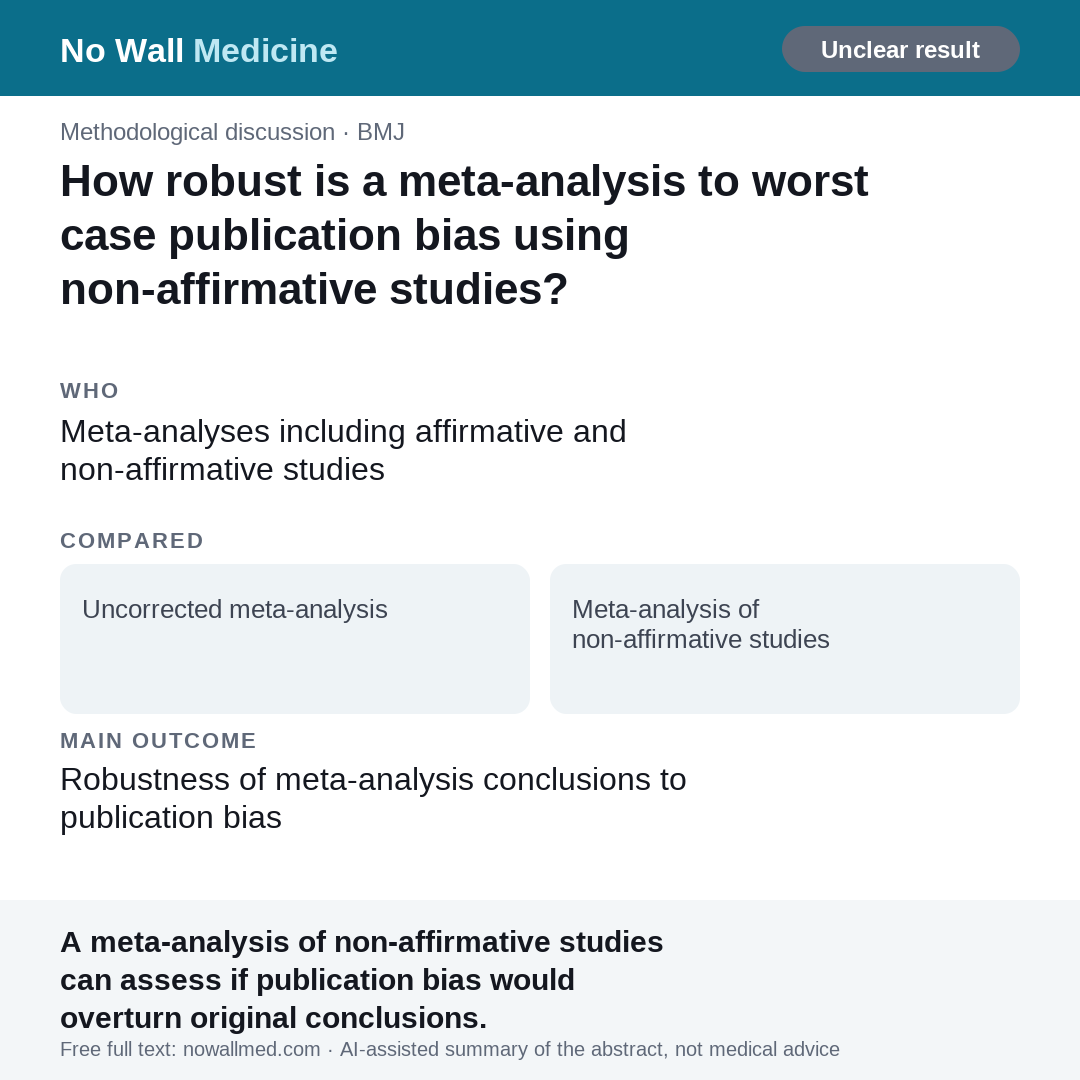
Assessing robustness to worst case publication bias using a simple subset meta-analysis
Methodological discussionUnclear result
How robust is a meta-analysis to worst case publication bias using non-affirmative studies?
Who
Meta-analyses including affirmative and non-affirmative studies
Compared
Uncorrected meta-analysis
Meta-analysis of non-affirmative studies
Main outcome
Robustness of meta-analysis conclusions to publication bias
Bottom line: A meta-analysis of non-affirmative studies can assess if publication bias would overturn original conclusions.
BMJ · 2024-03-15Download image
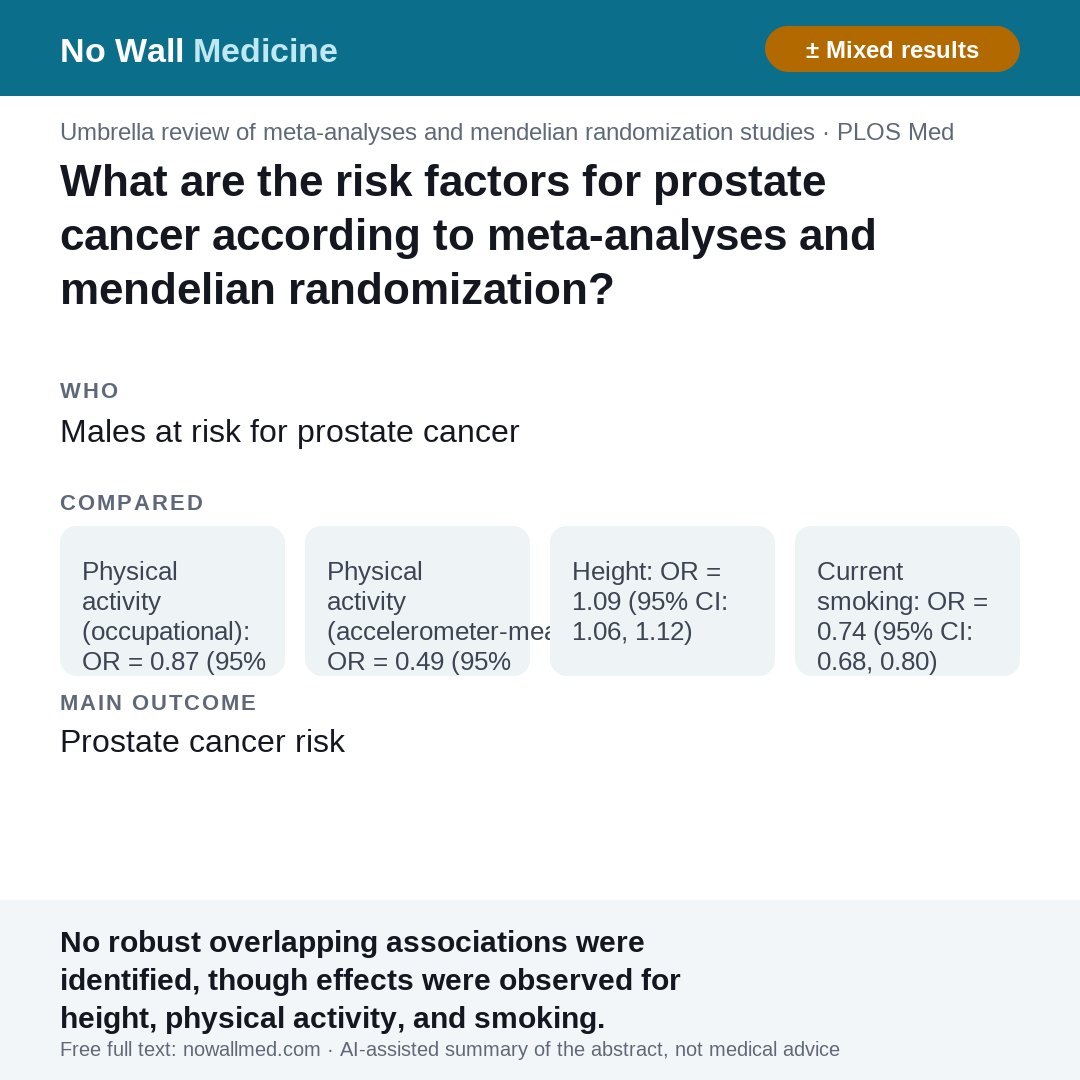
Risk factors for prostate cancer: An umbrella review of prospective observational studies and mendelian randomization analyses
Umbrella review of meta-analyses and mendelian randomization studiesMixed results
What are the risk factors for prostate cancer according to meta-analyses and mendelian randomization?
Who
Males at risk for prostate cancer
Compared
Physical activity (occupational): OR = 0.87 (95% CI: 0.80, 0.94)
Physical activity (accelerometer-measured): OR = 0.49 (95% CI: 0.33, 0.72)
Height: OR = 1.09 (95% CI: 1.06, 1.12)
Current smoking: OR = 0.74 (95% CI: 0.68, 0.80)
Main outcome
Prostate cancer risk
Bottom line: No robust overlapping associations were identified, though effects were observed for height, physical activity, and smoking.
Limitation: The evidence grading criteria could be expanded by considering more indices.
PLOS Med · 2024-03-15Download image
Point-of-care testing and treatment of sexually transmitted and genital infections to improve birth outcomes in high-burden, low-resource settings (WANTAIM): a pragmatic cluster randomised crossover trial in Papua New Guinea
Pragmatic cluster randomised crossover trialNo clear difference
Does point-of-care testing and treatment improve preterm birth and low birthweight outcomes?
Who
4526
Women attending an antenatal clinic at 26 weeks' gestation or earlier · Ten primary health facilities in Papua New Guinea
Compared
18·8%Intervention group (SD 4·7%)
17·8%Control group
Main outcome
Preterm birth, low birthweight, or both
Result: risk ratio 1·06 (95% CI 0·78-1·42)
Bottom line: Point-of-care testing and treatment did not reduce preterm birth or low birthweight compared with standard care.
Funded by: UK DHSC, FCDO, MRC, Wellcome Trust, NHMRC, and Swiss National Science Foundation
Lancet Glob Health · 2024-03-15Download image

Deucrictibant for angioedema due to acquired C1-inhibitor deficiency: A randomized-controlled trial
Randomized, double-blind, placebo-controlled crossover studyBenefit found
Is deucrictibant effective for acute and prophylactic treatment of acquired C1-inhibitor deficiency angioedema?
Who
3
Patients with angioedema due to acquired C1-inhibitor deficiency
Compared
Deucrictibant: 0.0 mean monthly attack rate
Placebo: 2.0, 0.6, and 1.0 mean monthly attack rates
Main outcome
Reduction in attack severity and monthly attack rates
Bottom line: Deucrictibant shows potential to effectively and safely treat and prevent angioedema attacks in this condition.
JACI · 2024-03-15Download image

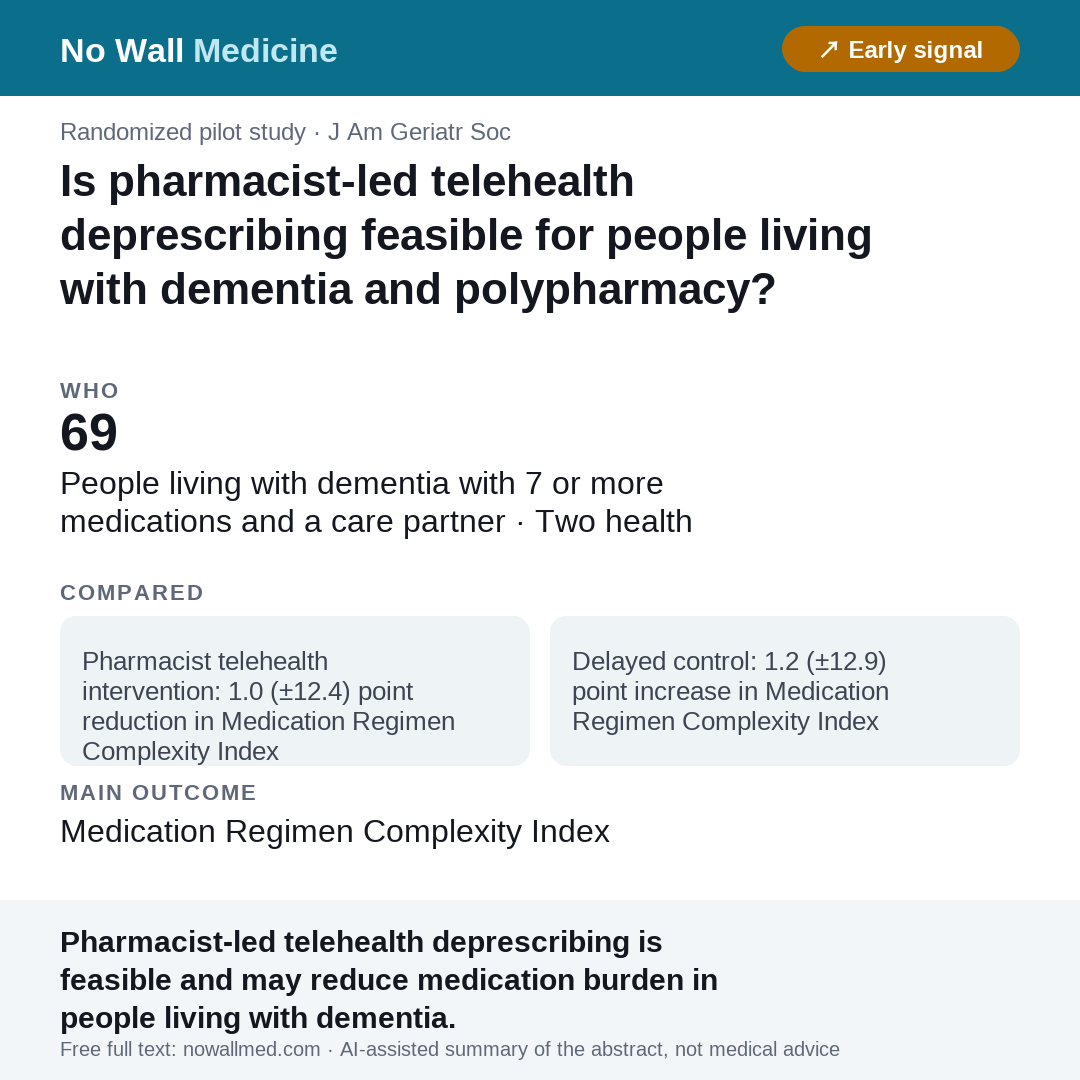
Pharmacist-led telehealth deprescribing for people living with dementia and polypharmacy in primary care: A pilot study
Randomized pilot studyBenefit found
Is pharmacist-led telehealth deprescribing feasible for people living with dementia and polypharmacy?
Who
69
People living with dementia with 7 or more medications and a care partner · Two health systems
Compared
Pharmacist telehealth intervention: 1.0 (±12.4) point reduction in Medication Regimen Complexity Index
Delayed control: 1.2 (±12.9) point increase in Medication Regimen Complexity Index
Main outcome
Medication Regimen Complexity Index
Bottom line: Pharmacist-led telehealth deprescribing is feasible and may reduce medication burden in people living with dementia.
J Am Geriatr Soc · 2024-03-15Download image
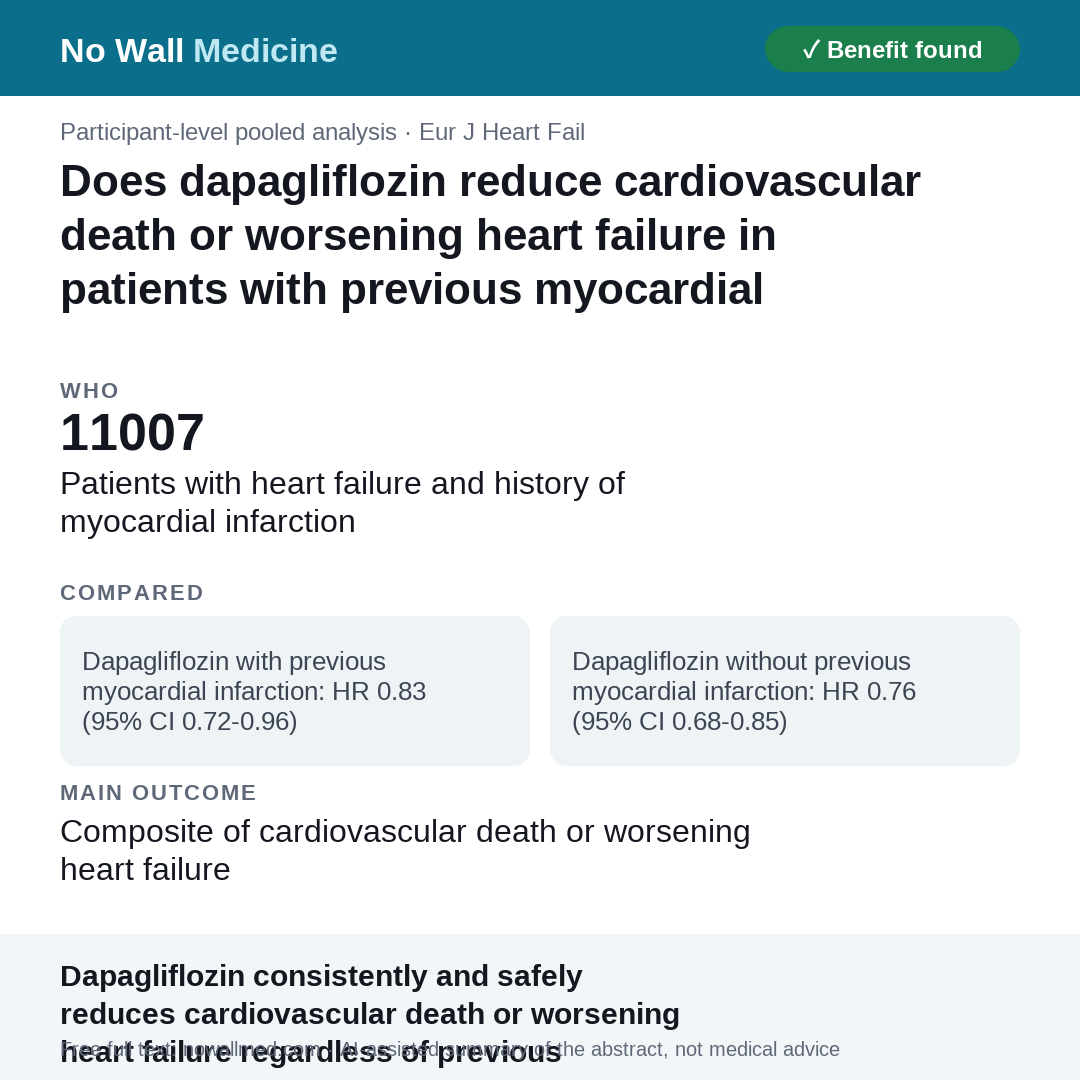
Dapagliflozin in patients with heart failure and previous myocardial infarction: A participant-level pooled analysis of DAPA-HF and DELIVER
Participant-level pooled analysisBenefit found
Does dapagliflozin reduce cardiovascular death or worsening heart failure in patients with previous myocardial infarction?
Who
11007
Patients with heart failure and history of myocardial infarction
Compared
Dapagliflozin with previous myocardial infarction: HR 0.83 (95% CI 0.72-0.96)
Dapagliflozin without previous myocardial infarction: HR 0.76 (95% CI 0.68-0.85)
Main outcome
Composite of cardiovascular death or worsening heart failure
Result: HR 0.83 (95% CI 0.72-0.96) in patients with previous myocardial infarction
Bottom line: Dapagliflozin consistently and safely reduces cardiovascular death or worsening heart failure regardless of previous myocardial infarction history.
Eur J Heart Fail · 2024-03-15Download image
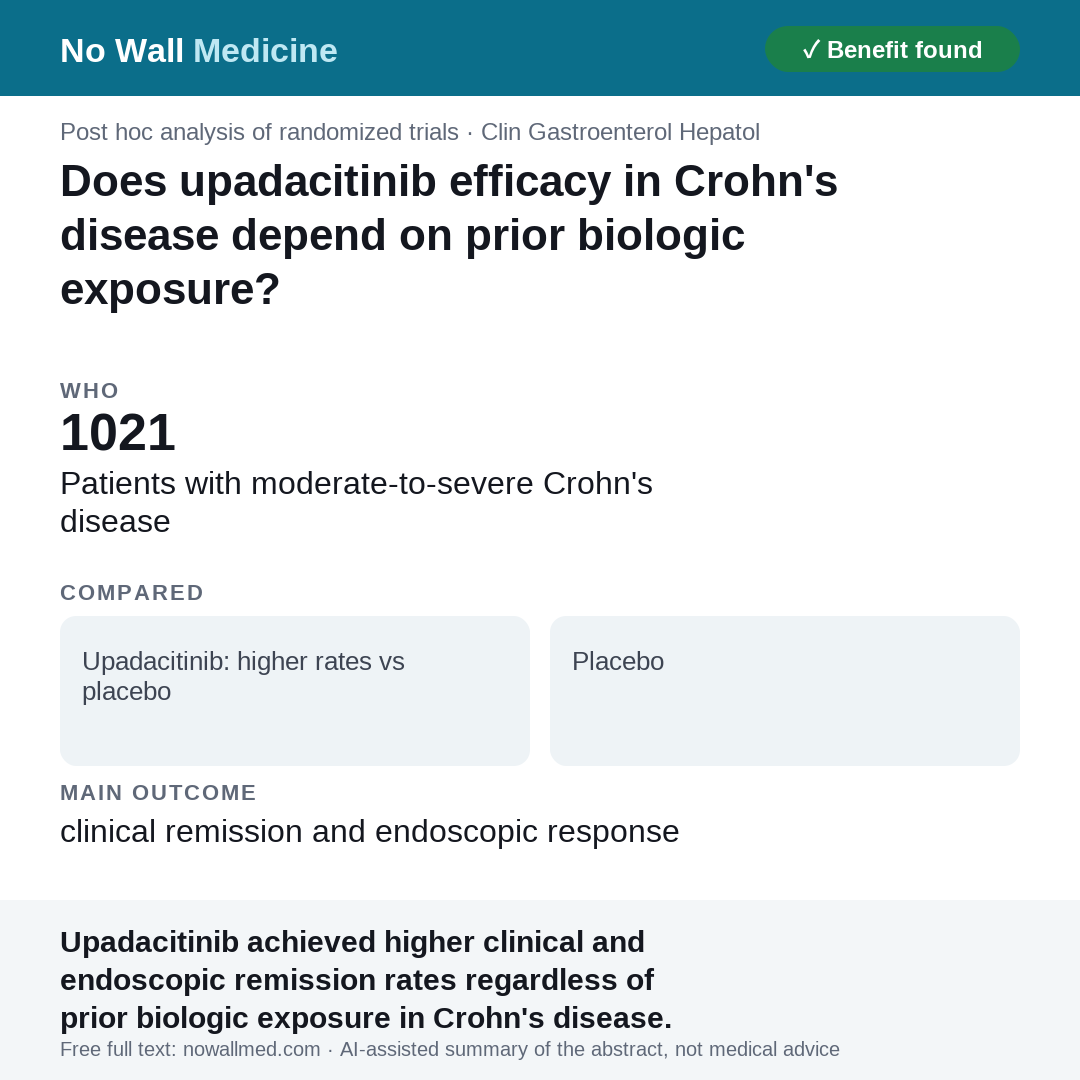
Upadacitinib Achieves Clinical and Endoscopic Outcomes in Crohn's Disease Regardless of Prior Biologic Exposure
Post hoc analysis of randomized trialsBenefit found
Does upadacitinib efficacy in Crohn's disease depend on prior biologic exposure?
Who
1021
Patients with moderate-to-severe Crohn's disease
Compared
Upadacitinib: higher rates vs placebo
Placebo
Main outcome
clinical remission and endoscopic response
Bottom line: Upadacitinib achieved higher clinical and endoscopic remission rates regardless of prior biologic exposure in Crohn's disease.
Clin Gastroenterol Hepatol · 2024-03-15Download image
Upadacitinib Reduces Crohn's Disease Symptoms Within the First Week of Induction Therapy
Post hoc analysis of pooled phase 3 trialsBenefit found
Does upadacitinib 45 mg provide rapid symptomatic improvement in Crohn's disease?
Who
1021
Patients with moderately to severely active Crohn's disease · Multicenter
Compared
Upadacitinib 45 mg: 21.1% clinical remission
Placebo: 8.9% clinical remission
Main outcome
Stool frequency and abdominal pain score clinical remission
Bottom line: Upadacitinib 45 mg provided rapid relief of clinical symptoms within the first week of treatment.
Clin Gastroenterol Hepatol · 2024-03-15Download image

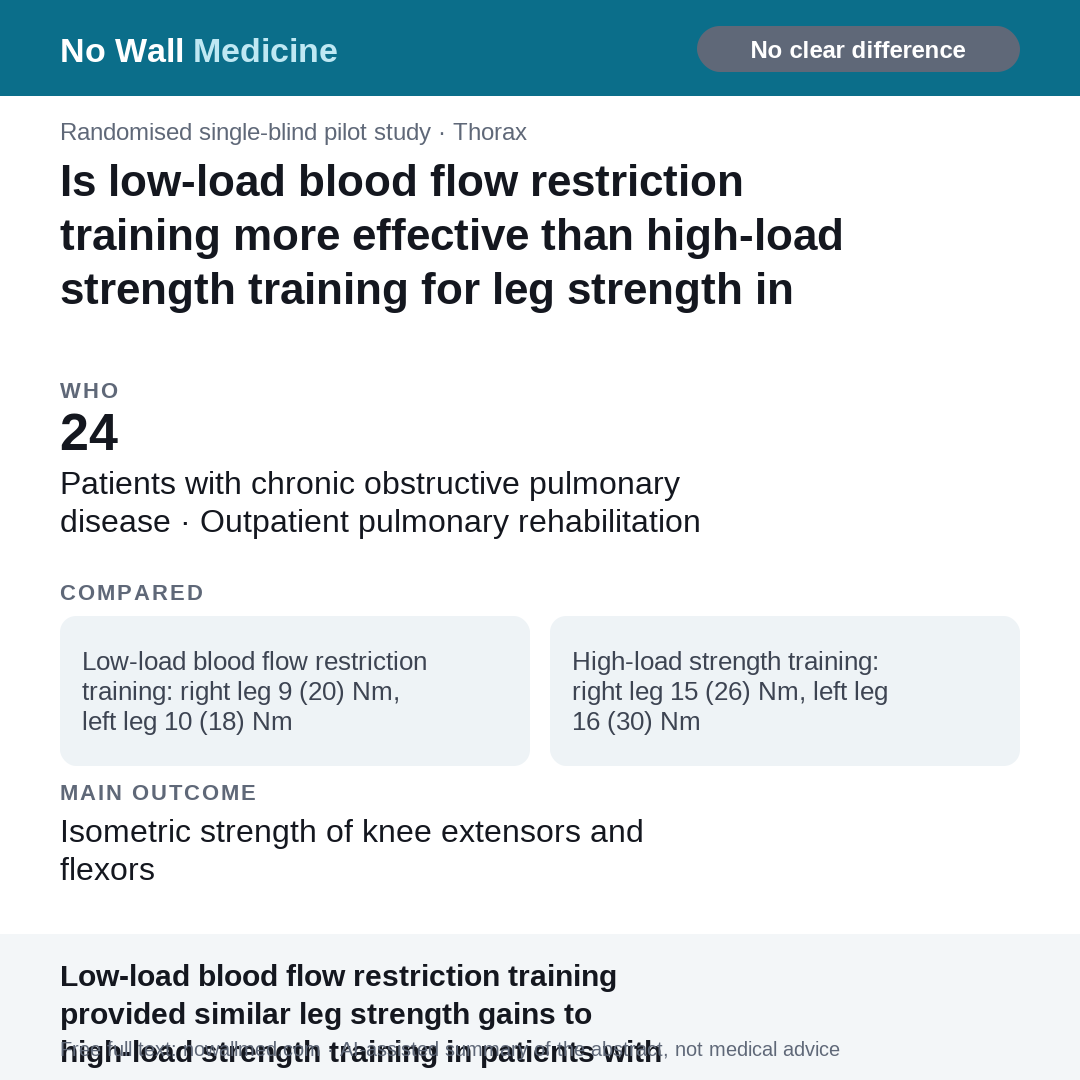
Low-load blood flow restriction strength training in patients with COPD: a randomised single-blind pilot study
Randomised single-blind pilot studyNo clear difference
Is low-load blood flow restriction training more effective than high-load strength training for leg strength in COPD?
Who
24
Patients with chronic obstructive pulmonary disease · Outpatient pulmonary rehabilitation
Compared
Low-load blood flow restriction training: right leg 9 (20) Nm, left leg 10 (18) Nm
High-load strength training: right leg 15 (26) Nm, left leg 16 (30) Nm
Main outcome
Isometric strength of knee extensors and flexors
Result: right leg mean difference= -6.4, 95% CI= -13.20 to 25.92 Nm
Bottom line: Low-load blood flow restriction training provided similar leg strength gains to high-load strength training in patients with COPD.
Thorax · 2024-03-15Download image
Effects of Supplemental Vitamin D3, Omega-3 Fatty Acids on Physical Performance Measures in the VITamin D and OmegA-3 TriaL
Double-blinded, placebo-controlled randomized trialNo clear difference
Does vitamin D3 or omega-3 fatty acid supplementation improve physical performance in older adults?
Who
1054
New England subcohort of adults aged men 50 and women 55 · Center for Clinical Investigations in Boston
Compared
Vitamin D3 and/or omega-3 fatty acids
Placebo
Main outcome
2-year changes in physical performance measures
Bottom line: Two years of vitamin D3 or omega-3 fatty acid supplementation did not improve physical performance measures.
J Clin Endocrinol Metab · 2024-03-15Download image

Effect of Glucagon-like Peptide-1 Receptor Agonists (GLP-1RA) on Weight Loss Following Bariatric Treatment
Systematic review and meta-analysisBenefit found
Do glucagon-like peptide-1 receptor agonists affect weight changes after metabolic bariatric surgery?
Who
1164
Patients who previously underwent metabolic bariatric surgery
Compared
Observational studies (GLP-1RA): weight-7.83 kg
4.36 kgRandomized controlled trials (GLP-1RA)
Randomized controlled trials (placebo)
Main outcome
Weight changes in kilograms
Result: weight reduction of 4.36 kg (95% CI, -0.42 to -8.30) compared to placebo
Bottom line: Glucagon-like peptide-1 receptor agonists can promote significant weight reduction with an acceptable safety profile after bariatric surgery.
J Clin Endocrinol Metab · 2024-03-15Download image

Thromboembolic risk of carfilzomib or bortezomib in combination with lenalidomide and dexamethasone for newly diagnosed multiple myeloma: A comparative systematic review and meta-analysis
Meta-analysis of one randomized trial and five cohort studiesBenefit found
What is the thromboembolic risk of carfilzomib versus bortezomib with lenalidomide and dexamethasone?
Who
2304
Patients with newly diagnosed multiple myeloma
Compared
Bortezomib, lenalidomide and dexamethasone: 6.16% VTE; 0.91% ATE
Carfilzomib, lenalidomide and dexamethasone: 8.87% VTE; 1.16% ATE
Main outcome
Venous thromboembolism and arterial thromboembolism
Result: odds ratio 0.53 (95% CI 0.32-0.88) for VTE
Bottom line: Bortezomib combination therapy showed lower venous thromboembolism risk compared to carfilzomib combination therapy in newly diagnosed multiple myeloma.
Limitation: Potential biases from retrospective studies, heterogeneity, and limited access to patient-level data.
Am J Hematol · 2024-03-15Download image

Prenatal Genome-Wide Sequencing analysis (Exome or Genome) in detecting pathogenic Single Nucleotide Variants in fetal Central Nervous System Anomalies: systematic review and meta-analysis
Systematic review and meta-analysisBenefit found
Does prenatal exome or genome sequencing increase diagnostic yield in fetal central nervous system anomalies?
Who
428
Fetuses with central nervous system anomalies
Compared
Prenatal exome or genome sequencing
Karyotype and chromosomal microarray analysis
Main outcome
Incremental diagnostic yield of pathogenic single nucleotide variants
Result: 38% (95% C.I.: [29%;47%])
Bottom line: Prenatal exome or genome sequencing provides a significant incremental diagnostic yield over karyotype and chromosomal microarray analysis in fetal central nervous system anomalies.
Eur J Hum Genet · 2024-03-15Download image

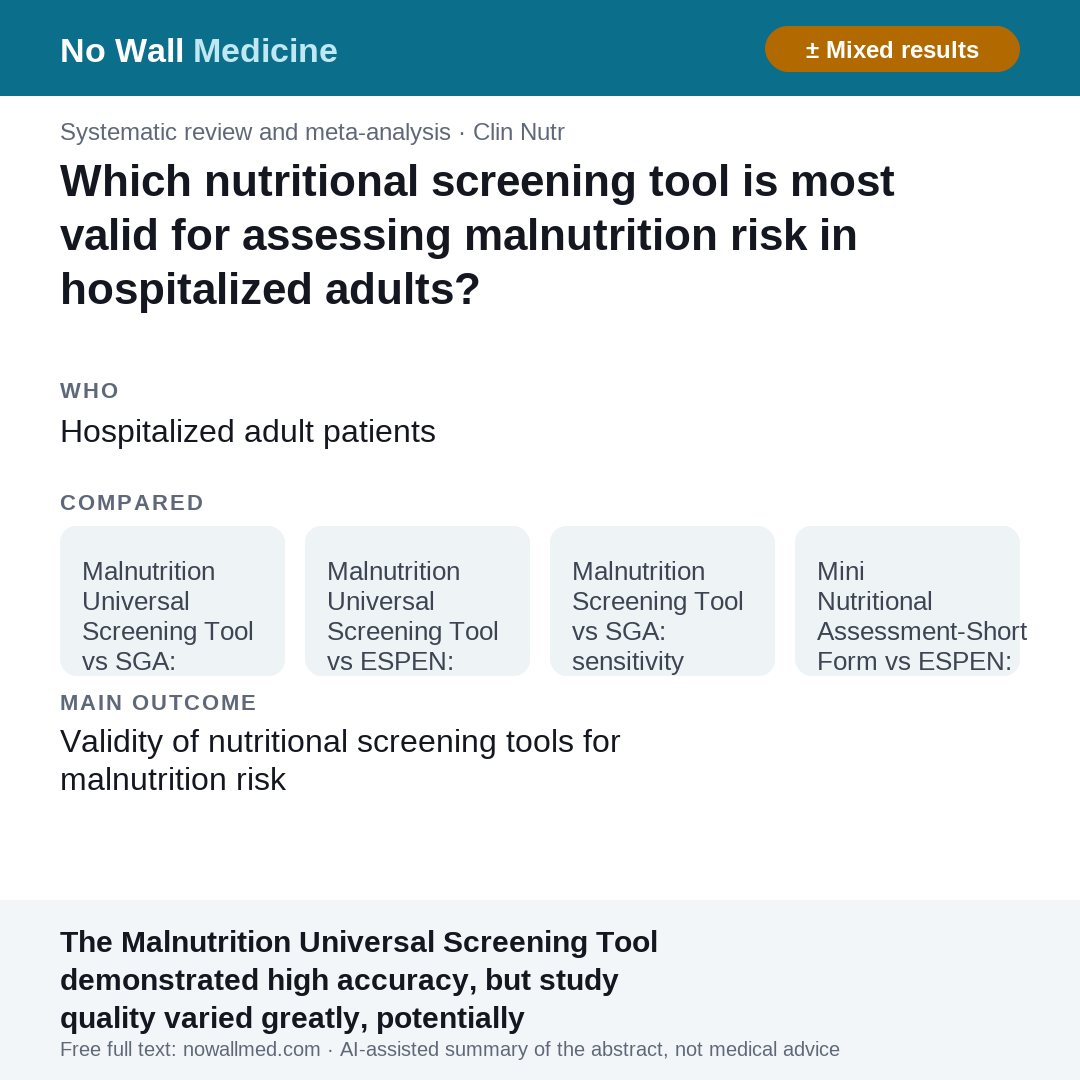
Validity of nutrition screening tools for risk of malnutrition among hospitalized adult patients: A systematic review and meta-analysis
Systematic review and meta-analysisMixed results
Which nutritional screening tool is most valid for assessing malnutrition risk in hospitalized adults?
Who
Hospitalized adult patients
Compared
Malnutrition Universal Screening Tool vs SGA: sensitivity 0.84 (95% CI 0.73-0.91), specificity 0.85 (0.75-0.91)
Malnutrition Universal Screening Tool vs ESPEN: sensitivity 0.97 (0.53-0.99), specificity 0.80 (0.50-0.94)
Malnutrition Screening Tool vs SGA: sensitivity 0.81 (0.67-0.90), specificity 0.79 (0.72-0.74)
Mini Nutritional Assessment-Short Form vs ESPEN: sensitivity 0.99 (0.41-0.99), specificity 0.60 (0.45-0.73)
Main outcome
Validity of nutritional screening tools for malnutrition risk
Bottom line: The Malnutrition Universal Screening Tool demonstrated high accuracy, but study quality varied greatly, potentially introducing bias.
Limitation: The quality of the included studies varied greatly, possibly introducing bias in the results.
Clin Nutr · 2024-03-15Download image
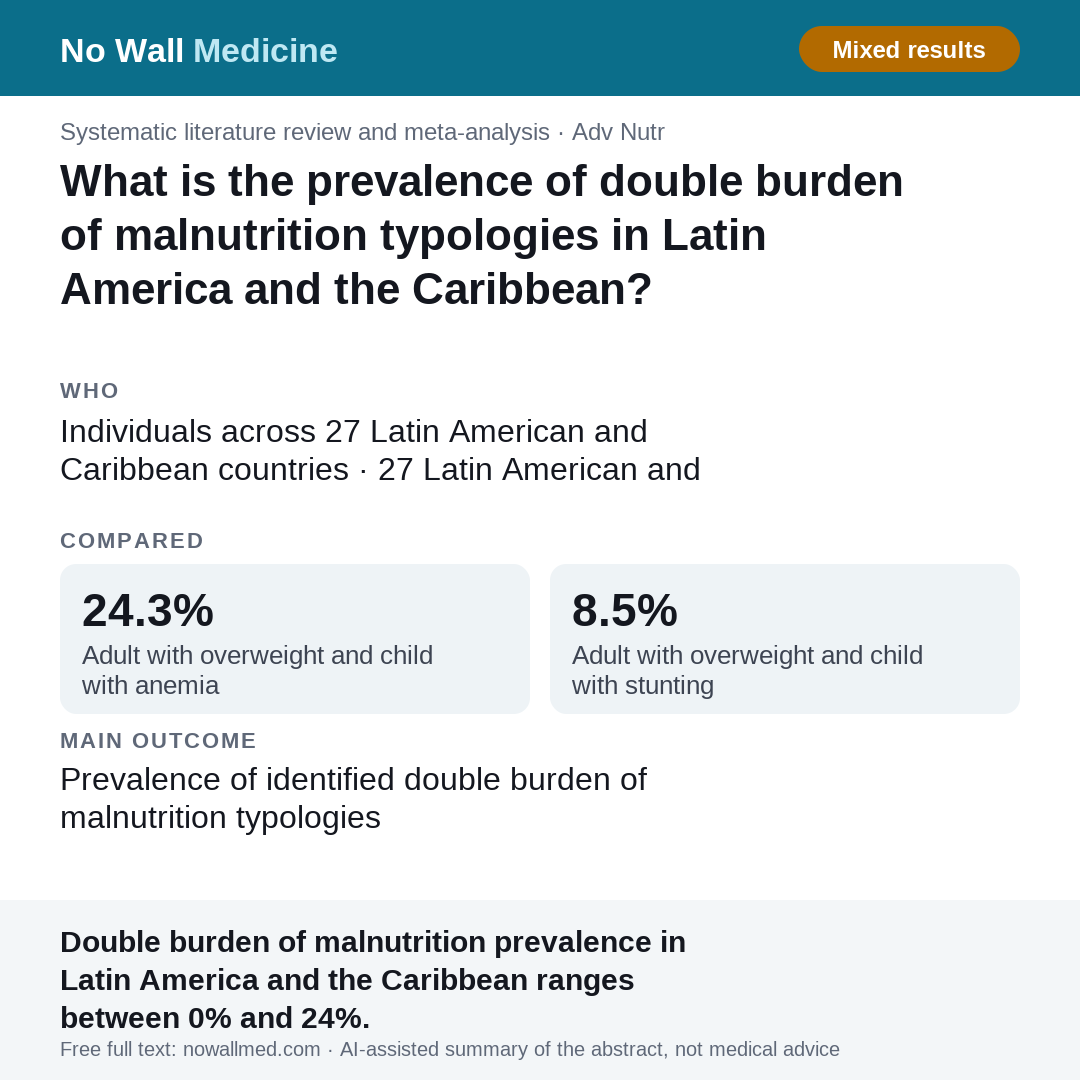
Quantifying Overlapping Forms of Malnutrition Across Latin America: A Systematic Literature Review and Meta-Analysis of Prevalence Estimates
Systematic literature review and meta-analysisMixed results
What is the prevalence of double burden of malnutrition typologies in Latin America and the Caribbean?
Who
Individuals across 27 Latin American and Caribbean countries · 27 Latin American and Caribbean countries
Compared
24.3%Adult with overweight and child with anemia (95% CI: 18.8%, 30.2%)
8.5%Adult with overweight and child with stunting (95% CI: 7.7, 9.3)
Main outcome
Prevalence of identified double burden of malnutrition typologies
Bottom line: Double burden of malnutrition prevalence in Latin America and the Caribbean ranges between 0% and 24%.
Limitation: All prevalences carried large heterogeneity (I2>90%) and life course estimates were insufficient.
Adv Nutr · 2024-03-15Download image
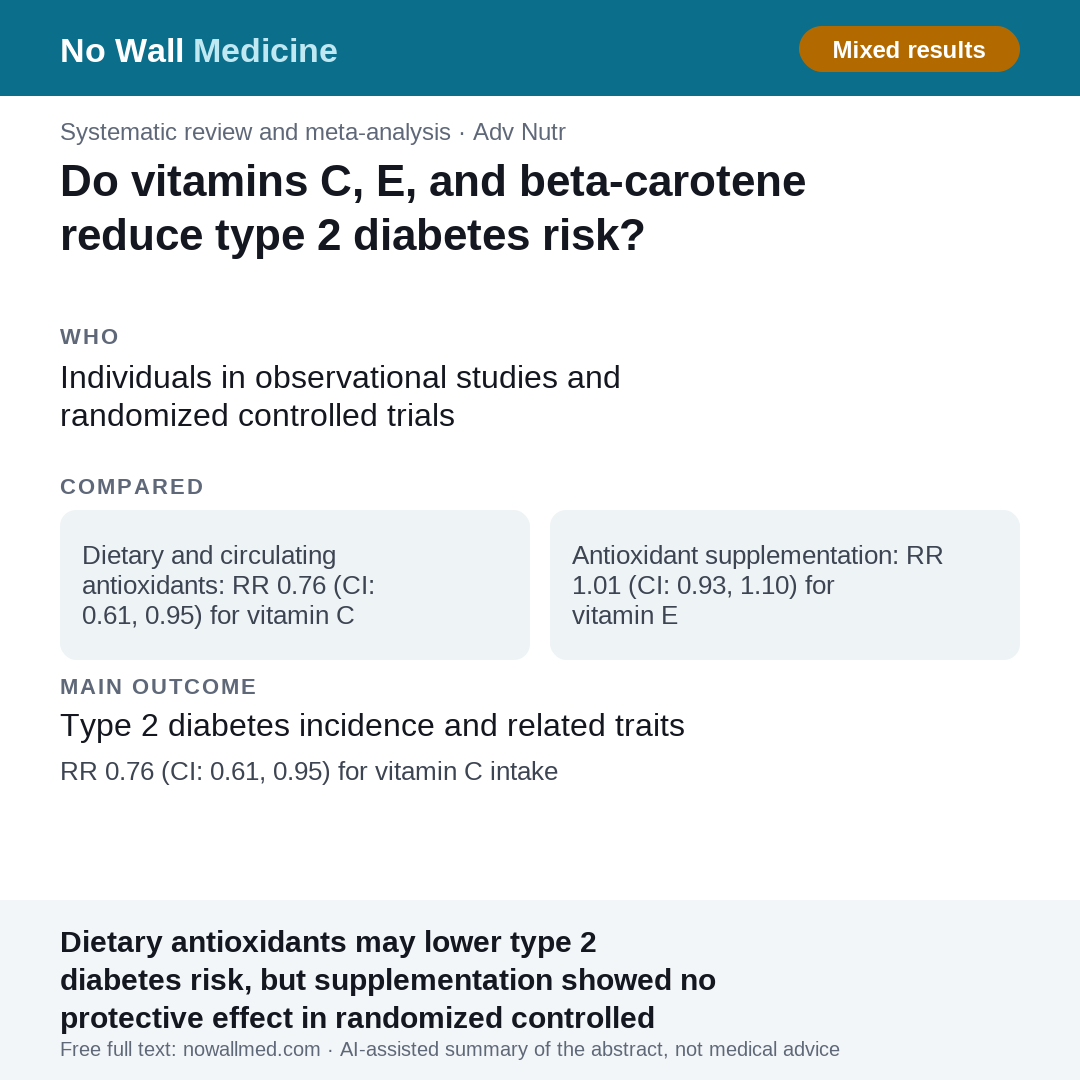
Vitamins C, E, and β-Carotene and Risk of Type 2 Diabetes: A Systematic Review and Meta-Analysis
Systematic review and meta-analysisMixed results
Do vitamins C, E, and beta-carotene reduce type 2 diabetes risk?
Who
Individuals in observational studies and randomized controlled trials
Compared
Dietary and circulating antioxidants: RR 0.76 (CI: 0.61, 0.95) for vitamin C
Antioxidant supplementation: RR 1.01 (CI: 0.93, 1.10) for vitamin E
Main outcome
Type 2 diabetes incidence and related traits
Result: RR 0.76 (CI: 0.61, 0.95) for vitamin C intake
Bottom line: Dietary antioxidants may lower type 2 diabetes risk, but supplementation showed no protective effect in randomized controlled trials.
Limitation: Certainty of evidence was low to moderate for several associations.
Adv Nutr · 2024-03-15Download image
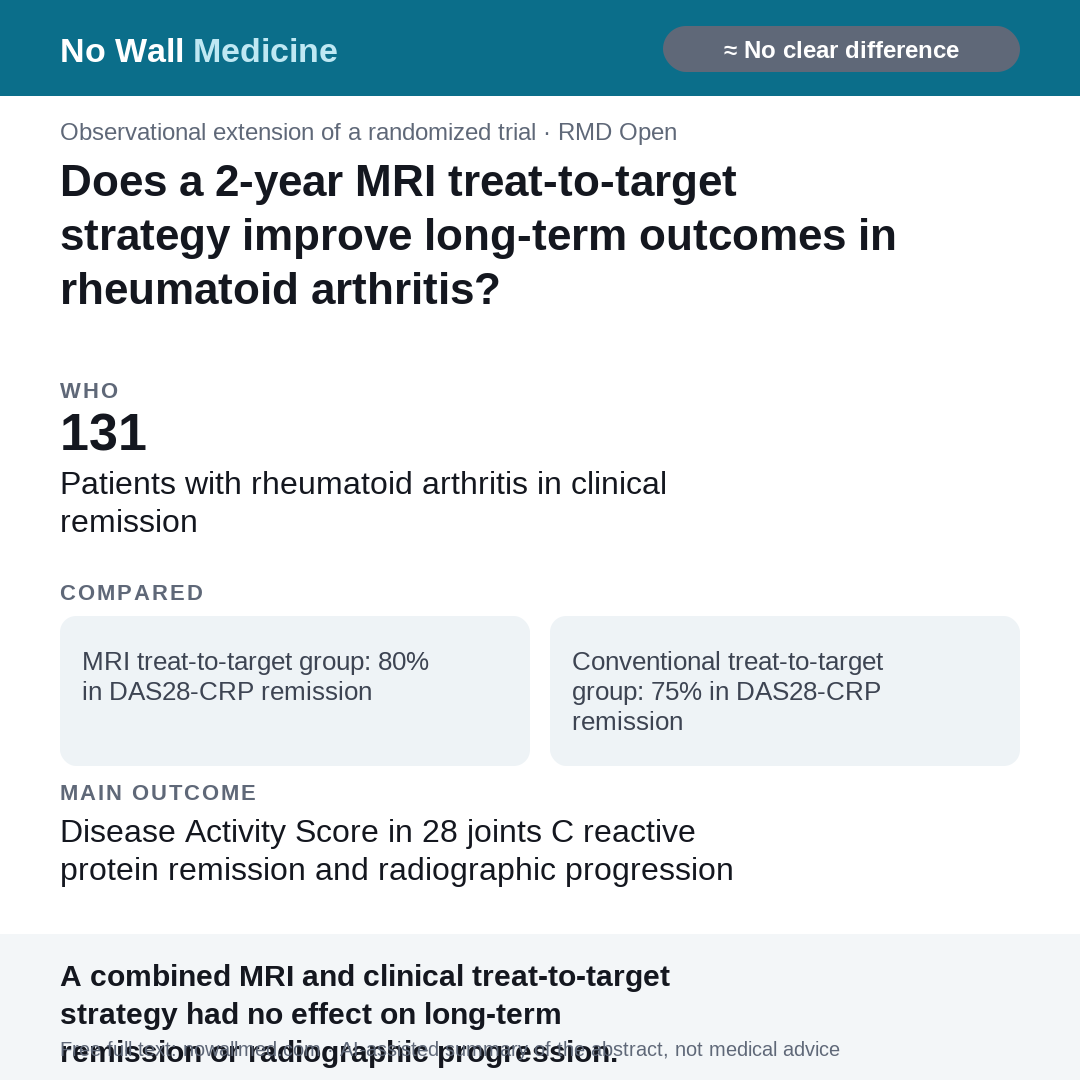
Long-term efficacy of a 2-year MRI treat-to-target strategy on disease activity and radiographic progression in patients with rheumatoid arthritis in clinical remission: 5-year follow-up of the IMAGINE-RA randomised trial
Observational extension of a randomized trialNo clear difference
Does a 2-year MRI treat-to-target strategy improve long-term outcomes in rheumatoid arthritis?
Who
131
Patients with rheumatoid arthritis in clinical remission
Compared
MRI treat-to-target group: 80% in DAS28-CRP remission
Conventional treat-to-target group: 75% in DAS28-CRP remission
Main outcome
Disease Activity Score in 28 joints C reactive protein remission and radiographic progression
Result: OR 2.00 (95% CI 0.76 to 5.28); OR 0.70 (95% CI 0.28 to 1.71)
Bottom line: A combined MRI and clinical treat-to-target strategy had no effect on long-term remission or radiographic progression.
RMD Open · 2024-03-15Download image
Concordance and agreement between different activity scores in polymyalgia rheumatica
Post hoc analysis of a randomized trialBenefit found
What is the correlation and concordance between different polymyalgia rheumatica activity scores?
Who
100
Patients with active polymyalgia rheumatica · SEMAPHORE trial
Compared
CRP-PMR-AS
Other three scores
Main outcome
Correlation and concordance between different activity scores
Result: ICC and kappa >0.85
Bottom line: The correlation between all polymyalgia rheumatica activity scores was excellent, allowing their use in clinical trials.
RMD Open · 2024-03-15Download image

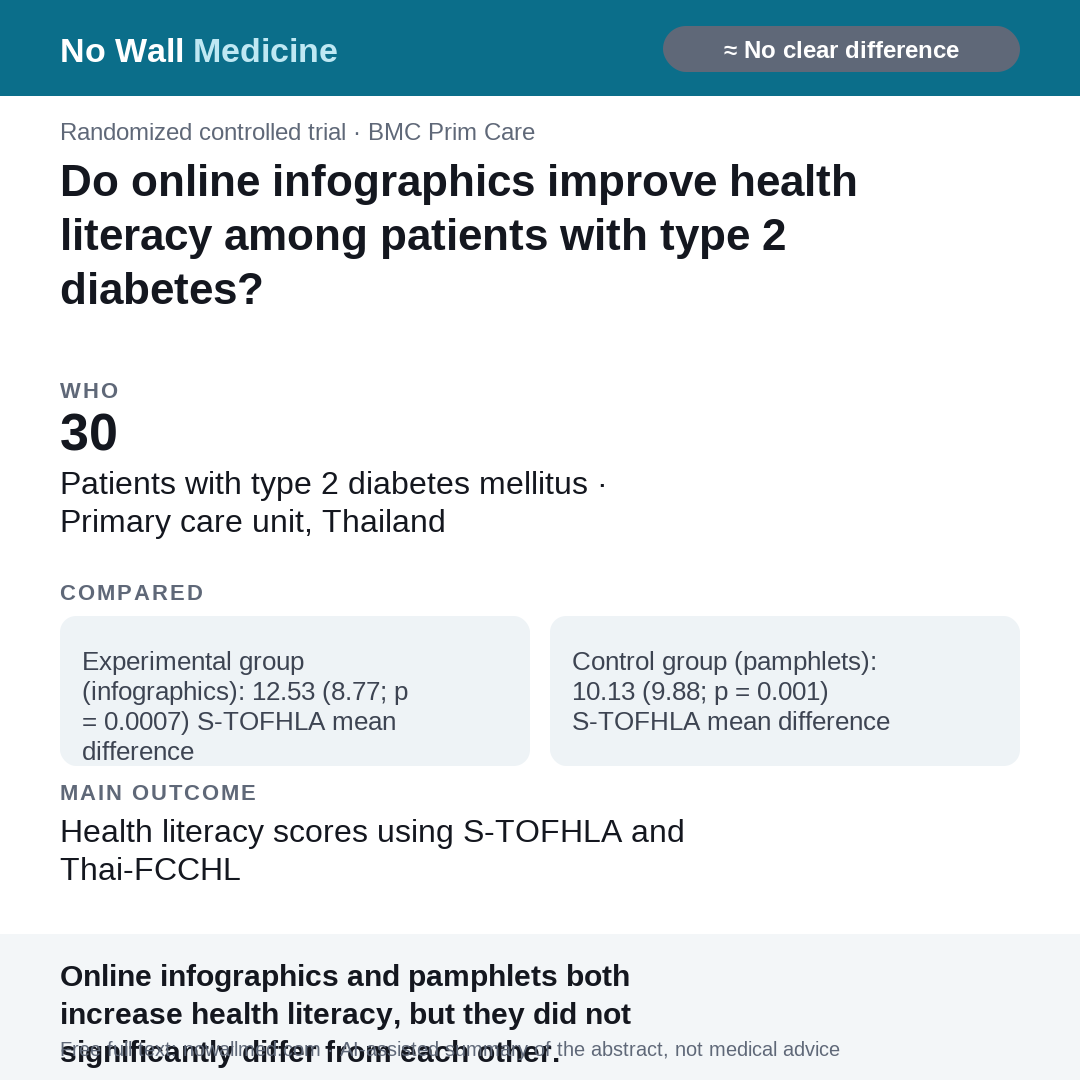
Effect of online infographics for enhancing health literacy among patients with type 2 diabetes in primary care unit during the COVID-19 pandemic: a randomized controlled trial
Randomized controlled trialNo clear difference
Do online infographics improve health literacy among patients with type 2 diabetes?
Who
30
Patients with type 2 diabetes mellitus · Primary care unit, Thailand
Compared
Experimental group (infographics): 12.53 (8.77; p = 0.0007) S-TOFHLA mean difference
Control group (pamphlets): 10.13 (9.88; p = 0.001) S-TOFHLA mean difference
Main outcome
Health literacy scores using S-TOFHLA and Thai-FCCHL
Bottom line: Online infographics and pamphlets both increase health literacy, but they did not significantly differ from each other.
Limitation: Further larger-scale studies should be performed to examine the impact of other educational media.
BMC Prim Care · 2024-03-15Download image