Visual abstracts
New randomized trials and meta-analyses from leading journals at a glance: who was studied, what was compared, and what was found. Every paper is free to read in full.
All specialtiesCardiology 4763Oncology 4043Gastroenterology & Hepatology 1903Infectious Disease 3756Neurology 1872Psychiatry & Mental Health 2216Pulmonology 2044Critical Care 1319Endocrinology & Diabetes 2544Pediatrics 2889Surgery 2480Orthopedics & Sports Medicine 917Neurosurgery 525Cardiothoracic & Vascular Surgery 656Plastic & Reconstructive Surgery 574Nephrology 1107Rheumatology 810Hematology 1090Dermatology 611Ophthalmology 532Obstetrics & Gynecology 1645Public & Global Health 1037Radiology & Imaging 619Anesthesiology 958Urology 745ENT (Otolaryngology) 494Emergency Medicine 481Allergy & Immunology 309Geriatrics 972Family Medicine & Primary Care 534Medical Genetics & Genomics 659Pathology & Laboratory Medicine 156Physical Medicine & Rehabilitation 734Palliative Care 421Nutrition 1560Digital Health & AI 2137General Medicine 318
Efficacy and Safety of Different Atropine Regimens for the Treatment of Myopia in Children: Three-Year Results of the MOSAIC Randomized Clinical Trial
Double-masked, randomized clinical trialBenefit found
What are the efficacy and safety of different atropine regimens for myopia in children?
Who
199
Children and adolescents with myopia · Centre for Eye Research Ireland, Dublin, Ireland
Compared
Placebo then 0.05% atropine: 0.13-D less myopia progression and 0.06-mm less axial elongation
0.01% atropine then placebo or tapering: more spherical equivalent progression and axial elongation
Main outcome
Changes in cycloplegic spherical equivalent refraction and axial length
Result: adjusted difference, -0.13 diopters (95% CI, -0.22 to -0.04 D)
Bottom line: Using 0.05% atropine after placebo was more effective at slowing myopia progression than 0.01% atropine regimens.
JAMA Ophthalmol · 2025-01-09 · Save PNG

Re-encountering the phobic cue within days after a reconsolidation intervention is crucial to observe a lasting fear reduction in spider phobia
Randomized, placebo-controlled studyBenefit found
Is re-encountering the phobic cue within days after reconsolidation necessary for lasting fear reduction?
Who
69
Individuals with spider phobia
Compared
Reconsolidation intervention with re-encounter at two days: less tarantula avoidance behaviour and self-reported fear over the course of one year
Reconsolidation intervention with re-encounter at four weeks
Placebo with re-encounter at two days
Main outcome
spider avoidance behaviour and self-reported fear
Bottom line: Lasting fear reduction requires re-encountering the phobic stimulus within days after the reconsolidation intervention.
Mol Psychiatry · 2025-01-09 · Save PNG

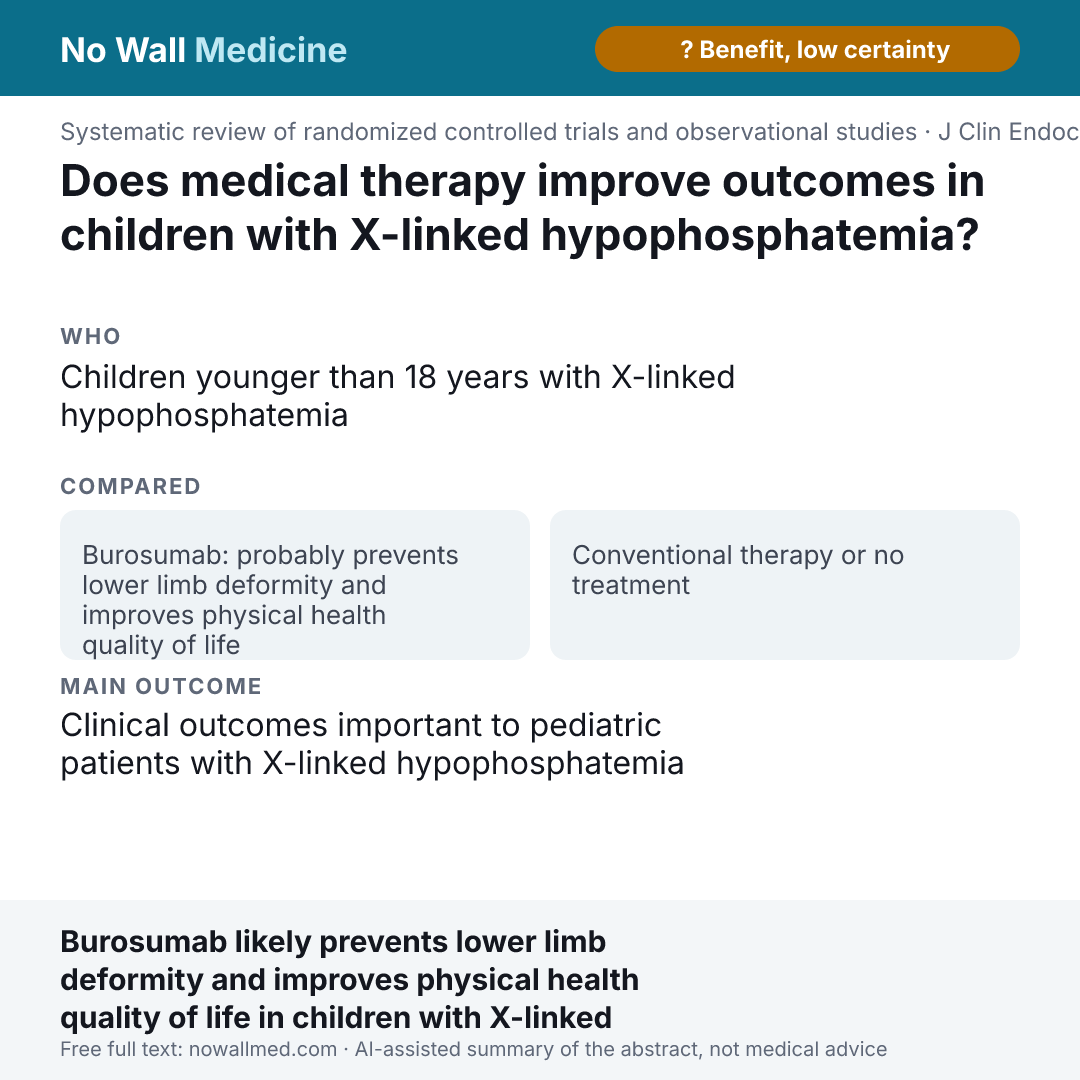
Systematic Review: Efficacy of Medical Therapy on Outcomes Important to Pediatric Patients With X-Linked Hypophosphatemia
Systematic review of randomized controlled trials and observational studiesBenefit, low certainty
Does medical therapy improve outcomes in children with X-linked hypophosphatemia?
Who
Children younger than 18 years with X-linked hypophosphatemia
Compared
Burosumab: probably prevents lower limb deformity and improves physical health quality of life
Conventional therapy or no treatment
Main outcome
Clinical outcomes important to pediatric patients with X-linked hypophosphatemia
Bottom line: Burosumab likely prevents lower limb deformity and improves physical health quality of life in children with X-linked hypophosphatemia.
Limitation: High risk of bias in included studies and low certainty of evidence.
J Clin Endocrinol Metab · 2025-01-09 · Save PNG
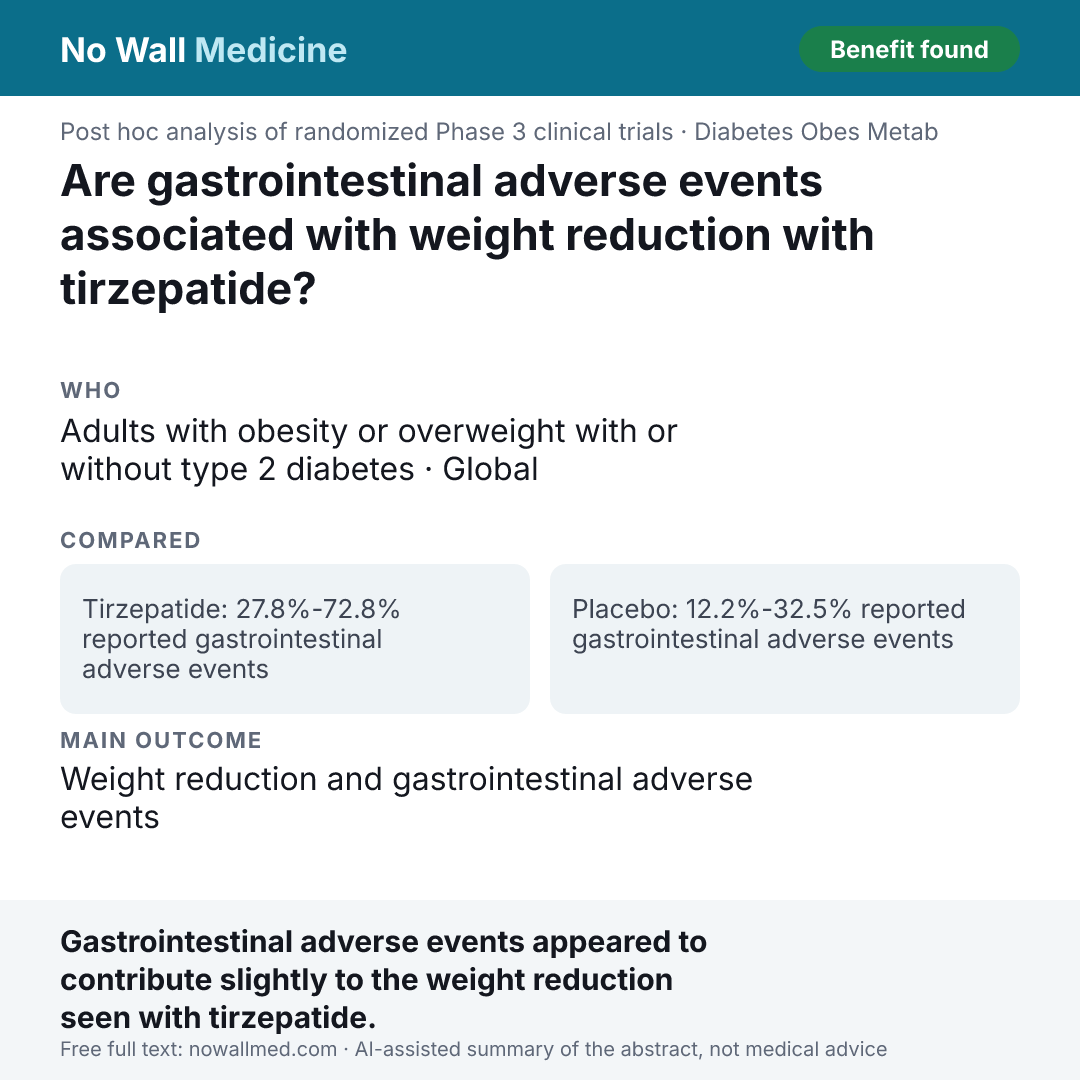
Gastrointestinal tolerability and weight reduction associated with tirzepatide in adults with obesity or overweight with and without type 2 diabetes in the SURMOUNT-1 to -4 trials
Post hoc analysis of randomized Phase 3 clinical trialsBenefit found
Are gastrointestinal adverse events associated with weight reduction with tirzepatide?
Who
Adults with obesity or overweight with or without type 2 diabetes · Global
Compared
Tirzepatide: 27.8%-72.8% reported gastrointestinal adverse events
Placebo: 12.2%-32.5% reported gastrointestinal adverse events
Main outcome
Weight reduction and gastrointestinal adverse events
Bottom line: Gastrointestinal adverse events appeared to contribute slightly to the weight reduction seen with tirzepatide.
Diabetes Obes Metab · 2025-01-09 · Save PNG
Evaluating Minimal Residual Disease Negativity as a Surrogate Endpoint for Treatment Efficacy in Multiple Myeloma: A Meta-Analysis of Randomized Controlled Trials
Meta-analysis of randomized controlled trialsBenefit found
Is minimal residual disease negativity a surrogate endpoint for treatment efficacy in multiple myeloma?
Who
15304
Patients with multiple myeloma
Compared
Minimal residual disease negativity
Survival outcomes
Main outcome
Progression free survival and overall survival
Result: beta progression free survival = -0.20, p < 0.001, beta overall survival = -0.12, p = 0.023
Bottom line: Minimal residual disease negativity is a surrogate for survival in multiple myeloma.
Am J Hematol · 2025-01-09 · Save PNG

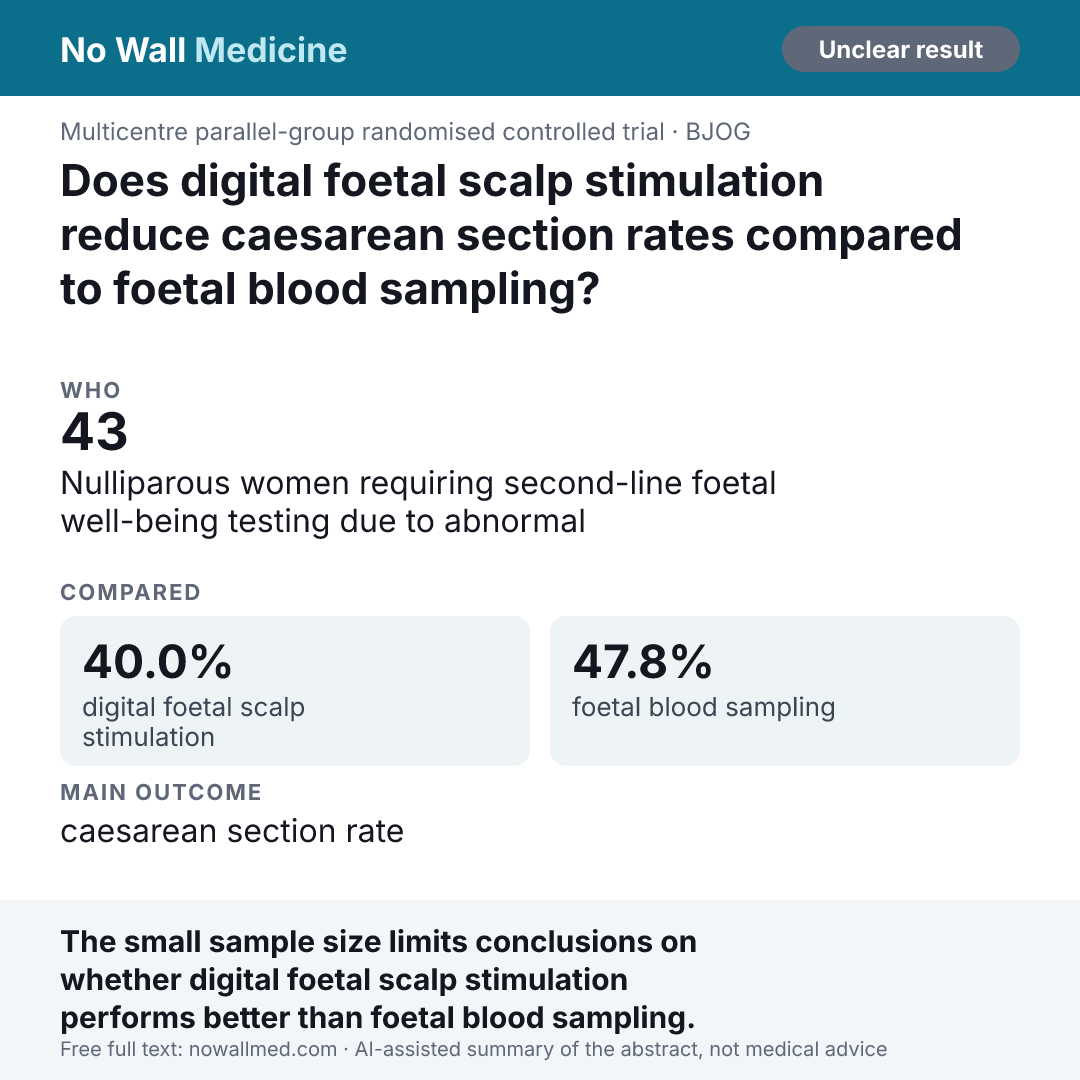
Digital Foetal Scalp Stimulation Versus Foetal Blood Sampling to Assess Foetal Well-Being in Labour: A Multicentre Randomised Controlled Trial
Multicentre parallel-group randomised controlled trialUnclear result
Does digital foetal scalp stimulation reduce caesarean section rates compared to foetal blood sampling?
Who
43
Nulliparous women requiring second-line foetal well-being testing due to abnormal cardiotocography · Maternity centres in Ireland
Compared
40.0%digital foetal scalp stimulation (8/20)
47.8%foetal blood sampling (11/23)
Main outcome
caesarean section rate
Result: OR 0.73, 95% CI 0.22-2.44
Bottom line: The small sample size limits conclusions on whether digital foetal scalp stimulation performs better than foetal blood sampling.
Limitation: The small sample size limits the ability to conclude whether digital foetal scalp stimulation performs better.
BJOG · 2025-01-09 · Save PNG
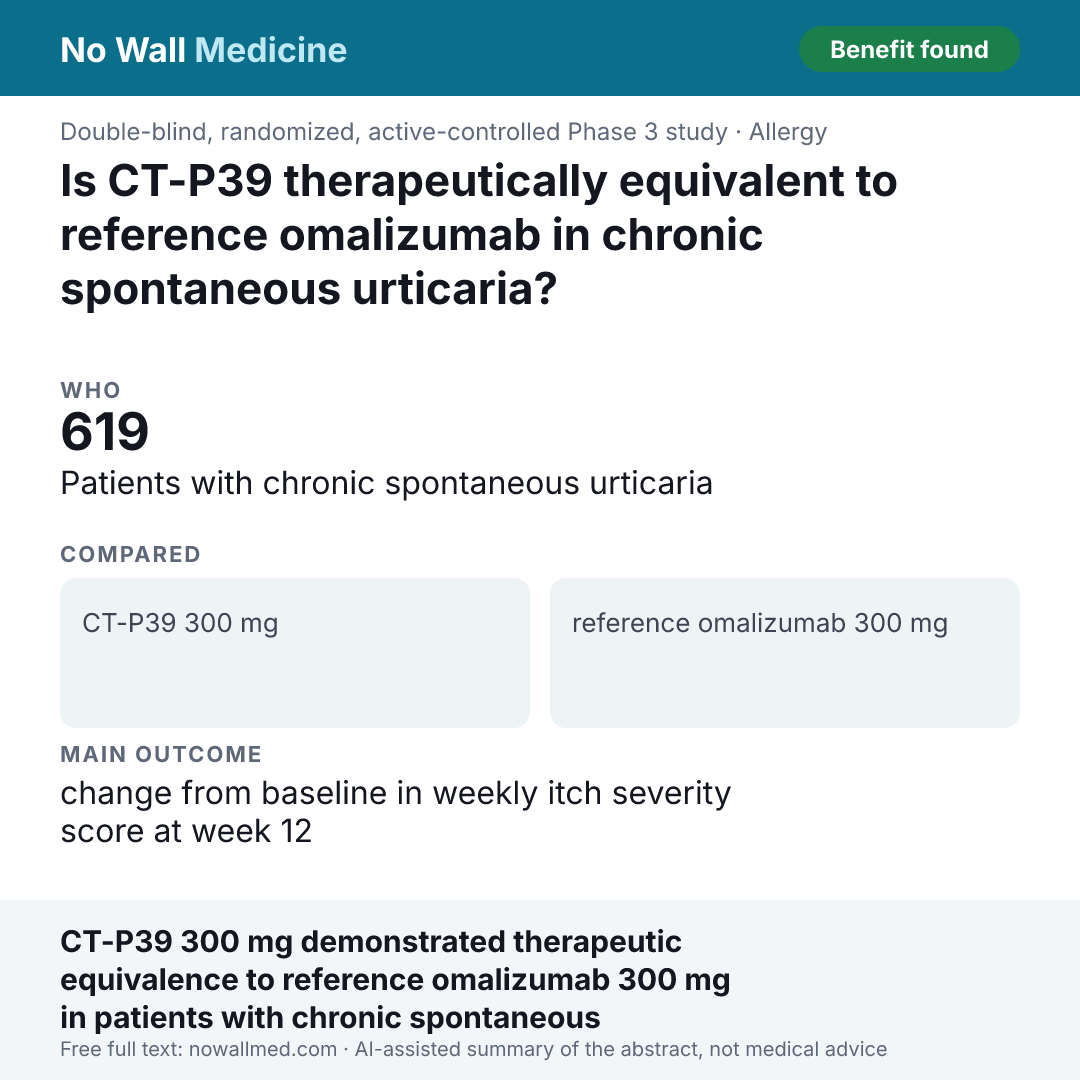
CT-P39 Compared With Reference Omalizumab in Chronic Spontaneous Urticaria: Results From a Double-Blind, Randomized, Active-Controlled, Phase 3 Study
Double-blind, randomized, active-controlled Phase 3 studyBenefit found
Is CT-P39 therapeutically equivalent to reference omalizumab in chronic spontaneous urticaria?
Who
619
Patients with chronic spontaneous urticaria
Compared
CT-P39 300 mg
reference omalizumab 300 mg
Main outcome
change from baseline in weekly itch severity score at week 12
Result: treatment difference 0.77, 95% CI -0.37 to 1.90
Bottom line: CT-P39 300 mg demonstrated therapeutic equivalence to reference omalizumab 300 mg in patients with chronic spontaneous urticaria.
Allergy · 2025-01-09 · Save PNG
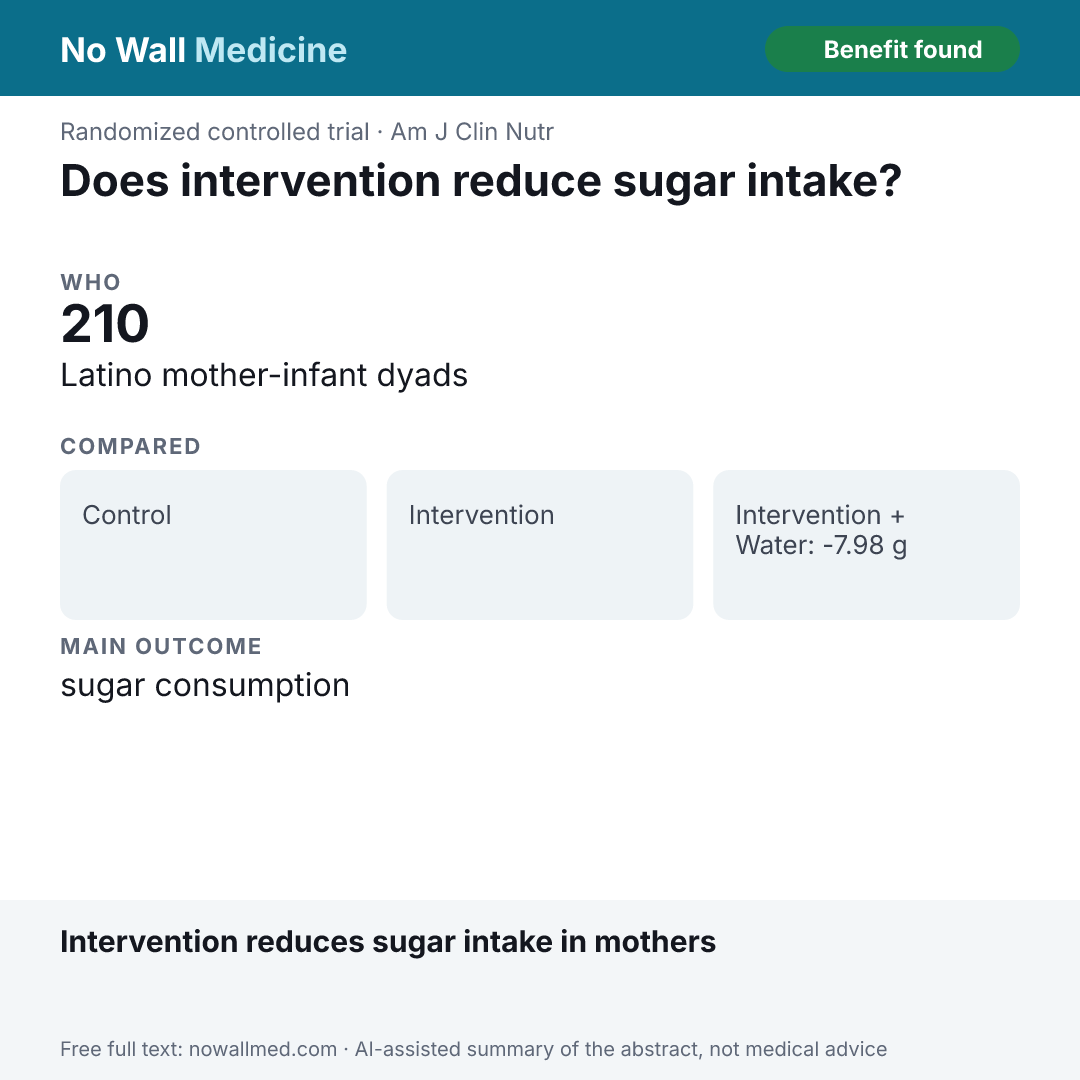
Better Mental Health and Fewer Depressive Symptoms Are Associated With Greater Psychological Resilience After Hip Fracture
Randomized trialBenefit found
What factors are associated with increased psychological resilience in older women after hip fracture?
Who
129
Women aged 65 years or older with recent surgically repaired hip fractures
Compared
57High resilience (44%)
Low resilience
Main outcome
Psychological resilience measured by the Brief Resilience Scale
Result: adjusted odds ratio 0.76 (95% CI, 0.61, 0.93) for depressive symptoms
Bottom line: Fewer depressive symptoms and better mental health are associated with higher psychological resilience in older women after hip fracture.
J Gerontol A · 2025-01-09 · Save PNG
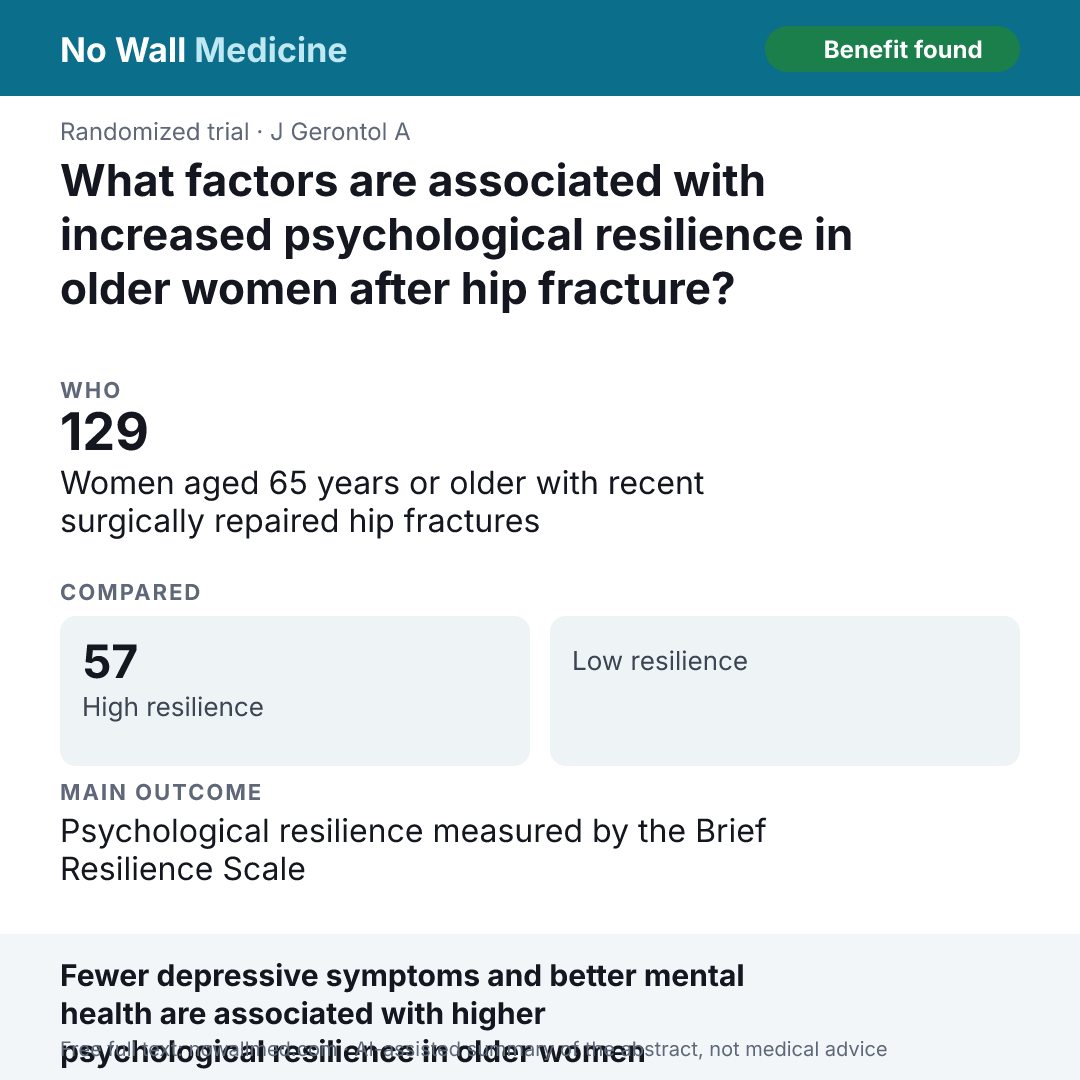
Performance of Noninvasive Tests for Metabolic Dysfunction-Associated Steatohepatitis and Liver Fibrosis Resolution after Bariatric Surgery
Randomized controlled trialKey finding
Do PLIN2 and RAB14 predict MASH and fibrosis resolution after bariatric surgery?
Who
Individuals with obesity undergoing bariatric surgery
Compared
MASH improvement or resolution: significant decrease in PLIN2 expression
Fibrosis improvement: increase in RAB14
Cytokeratin-18: No differences
Main outcome
MASH and fibrosis resolution or improvement
Bottom line: PLIN2 and RAB14 are superior markers for monitoring MASH and fibrosis improvement after bariatric surgery compared to cytokeratin-18.
Clin Chem · 2025-01-09 · Save PNG
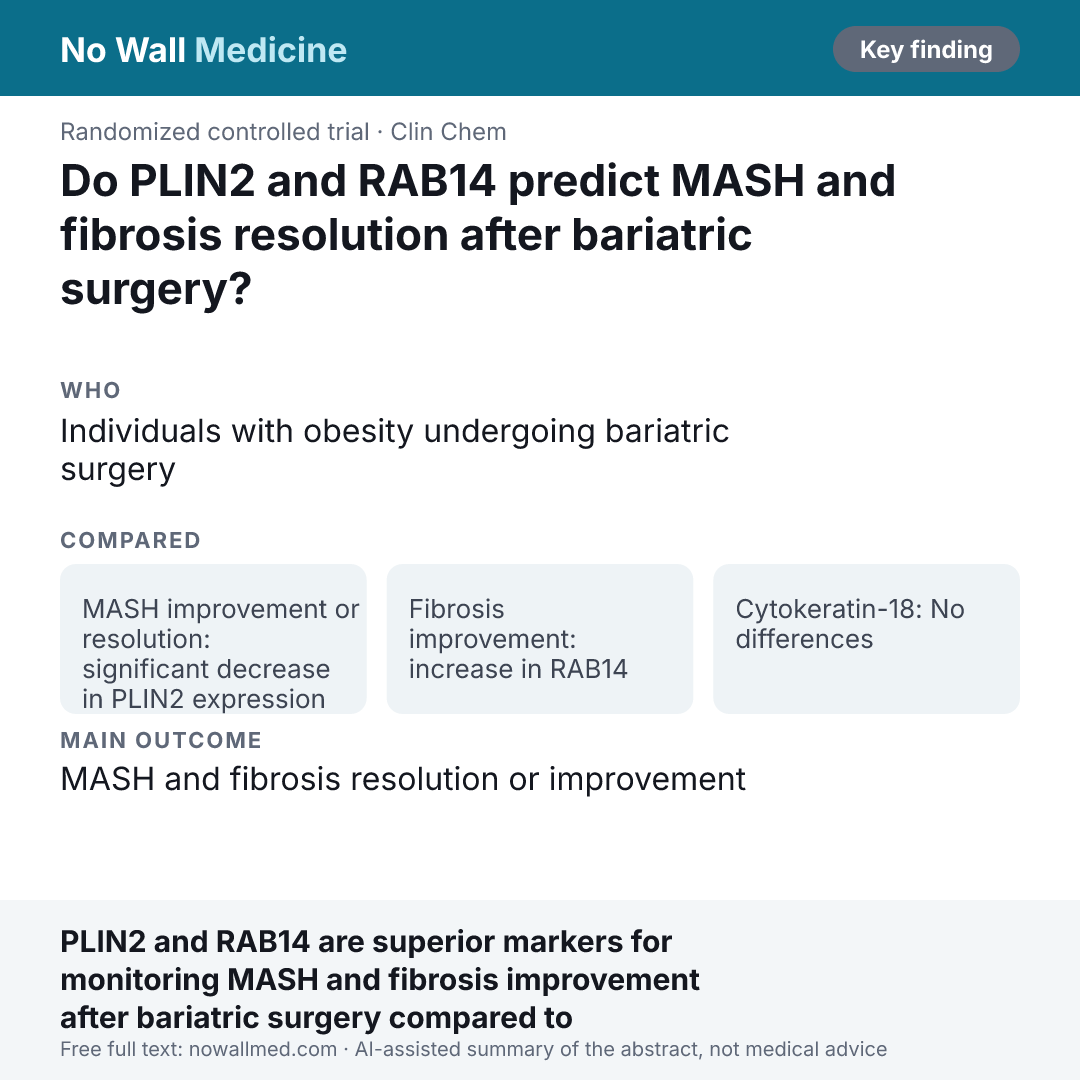
Improving Outcomes for Care Partners of Individuals With Traumatic Brain Injury: Results for a mHealth Randomized Control Trial of the CareQOL App
Randomized controlled trialNo clear difference
Does the CareQOL mobile health app improve outcomes for traumatic brain injury care partners?
Who
254
Care partners of individuals with traumatic brain injury · Two academic medical centers
Compared
Self-monitoring alone
Self-monitoring plus self-care push notifications
Main outcome
Health-related quality of life, physical activity, and sleep
Bottom line: The intervention did not show overall improvements in health-related quality of life, physical activity, or sleep.
Arch Phys Med Rehabil · 2025-01-09 · Save PNG
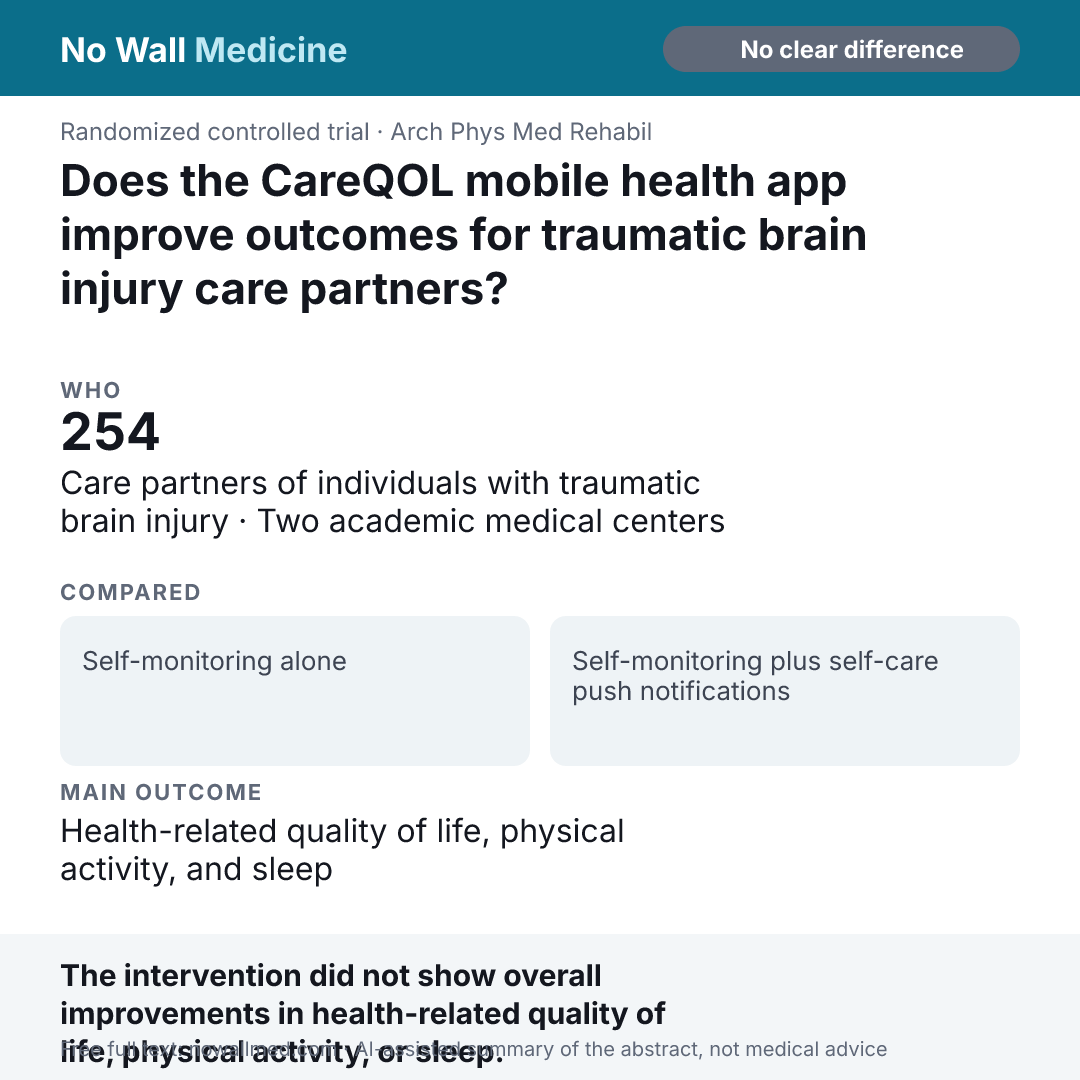
Efficacy of a 24-month behavioral intervention focused on sugary beverage reduction for Latino mother-infant dyads: evidence from a randomized controlled trial
Randomized controlled trialBenefit found
Does intervention reduce sugar intake?
Who
210
Latino mother-infant dyads
Compared
Control
Intervention
Intervention + Water: -7.98 g
Main outcome
sugar consumption
Bottom line: Intervention reduces sugar intake in mothers
Limitation: effect not maintained
Am J Clin Nutr · 2025-01-09 · Save PNG
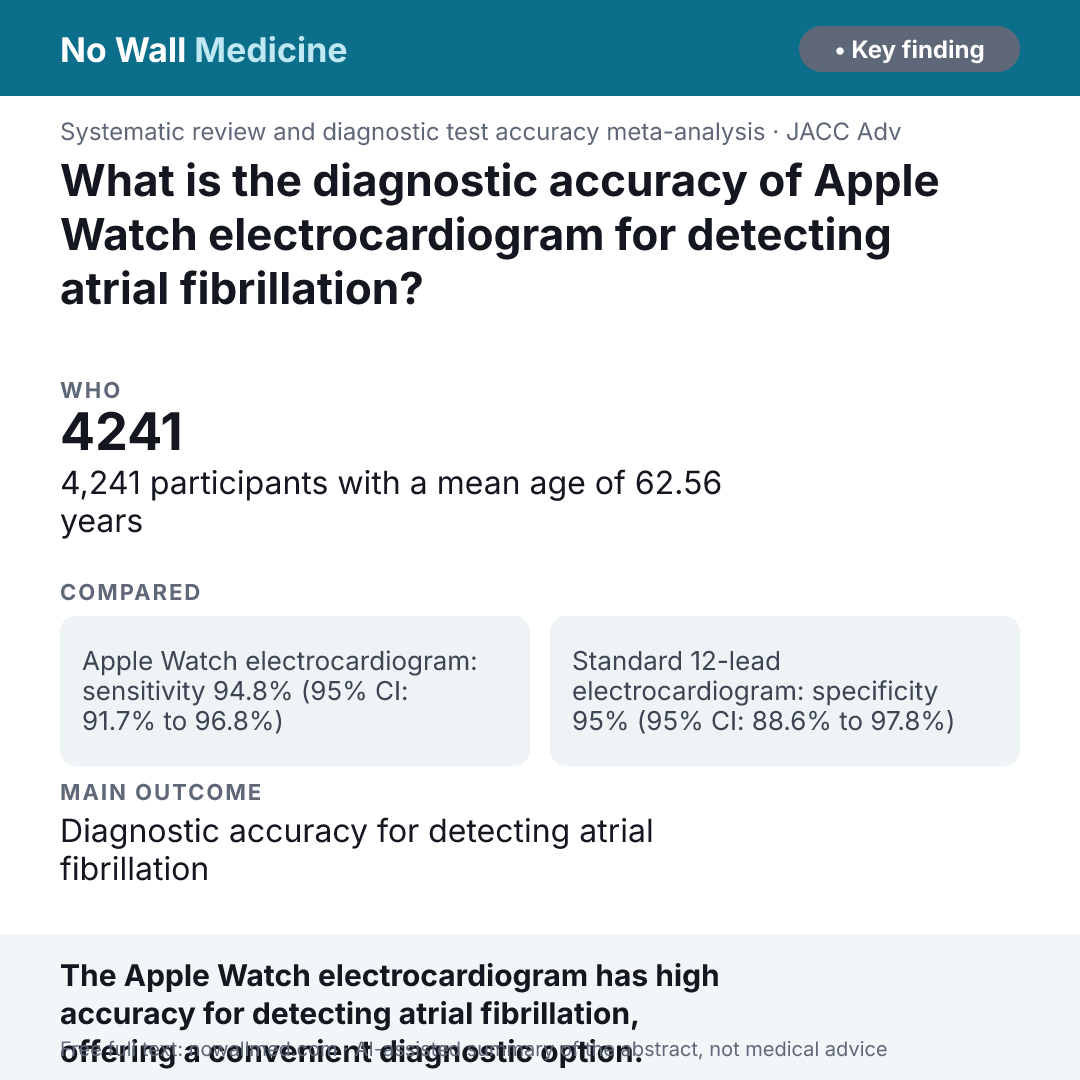
Diagnostic Accuracy of Apple Watch Electrocardiogram for Atrial Fibrillation: A Systematic Review and Meta-Analysis
Systematic review and diagnostic test accuracy meta-analysisKey finding
What is the diagnostic accuracy of Apple Watch electrocardiogram for detecting atrial fibrillation?
Who
4241
4,241 participants with a mean age of 62.56 years
Compared
Apple Watch electrocardiogram: sensitivity 94.8% (95% CI: 91.7% to 96.8%)
Standard 12-lead electrocardiogram: specificity 95% (95% CI: 88.6% to 97.8%)
Main outcome
Diagnostic accuracy for detecting atrial fibrillation
Result: area under the receiver operating characteristic curve 0.96 (95% CI: 0.92-0.97)
Bottom line: The Apple Watch electrocardiogram has high accuracy for detecting atrial fibrillation, offering a convenient diagnostic option.
JACC Adv · 2025-01-09 · Save PNG
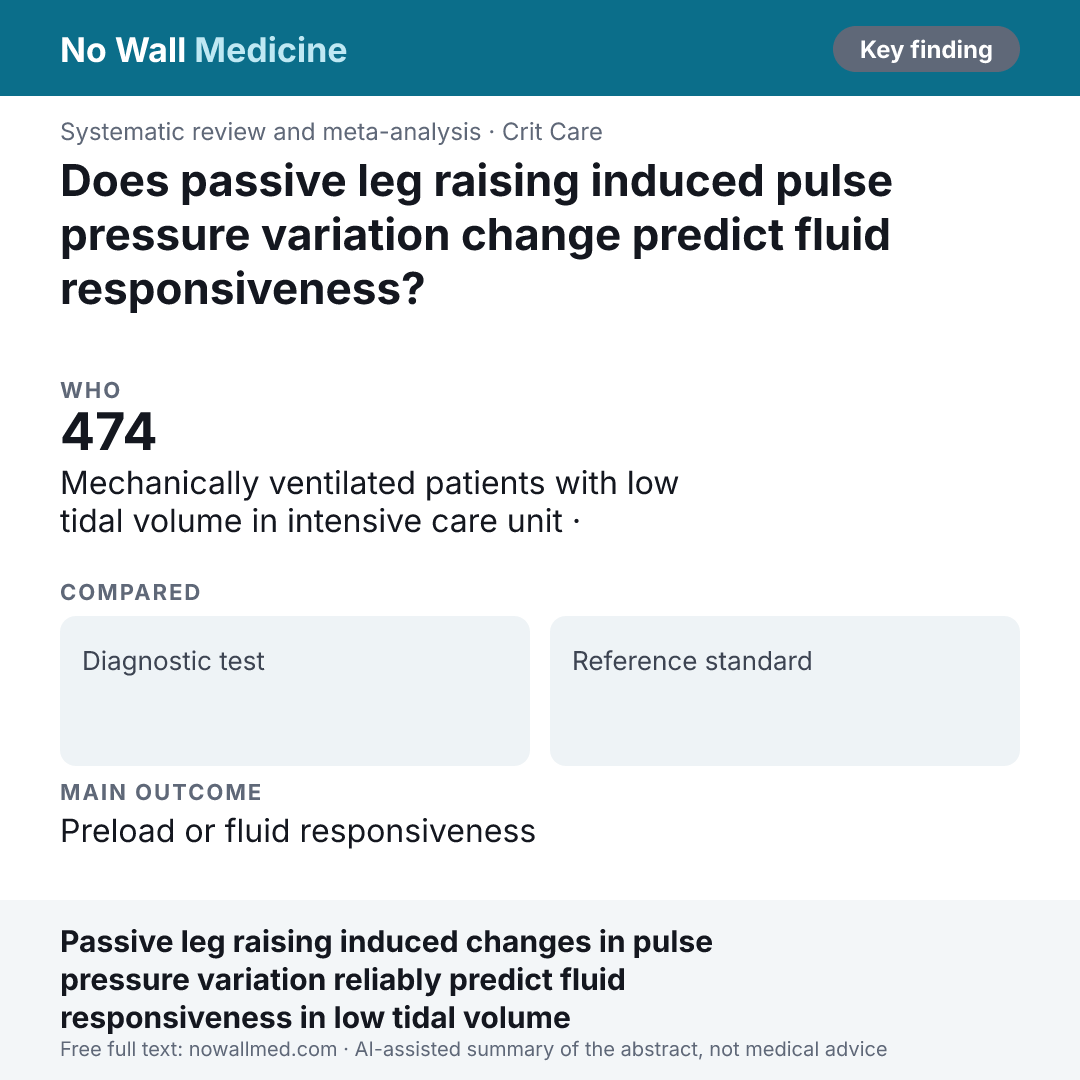
Changes in pulse pressure variation induced by passive leg raising test to predict preload responsiveness in mechanically ventilated patients with low tidal volume in ICU: a systematic review and meta-analysis
Systematic review and meta-analysisKey finding
Does passive leg raising induced pulse pressure variation change predict fluid responsiveness?
Who
474
Mechanically ventilated patients with low tidal volume in intensive care unit · Intensive care unit
Compared
Diagnostic test
Reference standard
Main outcome
Preload or fluid responsiveness
Result: area under the curve 0.91 (95% CI 0.88-0.93)
Bottom line: Passive leg raising induced changes in pulse pressure variation reliably predict fluid responsiveness in low tidal volume ventilated patients.
Crit Care · 2025-01-09 · Save PNG
Impact of exposure to opioids in pregnancy on offspring developmental outcomes in the preschool years: an umbrella review
Umbrella reviewMixed results
Does prenatal opioid exposure affect offspring developmental outcomes in the preschool years?
Who
Children exposed to opioids in pregnancy up to age 5
Compared
Prenatal opioid exposure: associated with visual function, motor skills, externalising problems and language difficulties
No conclusive evidence: cognitive development or internalising symptoms
Main outcome
Preschool developmental outcomes
Bottom line: Prenatal opioid exposure is associated with several developmental issues, but the evidence remains weak.
Limitation: Poor quality research in original studies, small sample sizes, and lack of controlling for confounding.
BMJ Paediatr Open · 2025-01-09 · Save PNG

Efficacy and safety of non-pharmacological, pharmacological and surgical treatments for hand osteoarthritis in 2024: a systematic review
Systematic review of randomized controlled trialsMixed results
What are the efficacy and safety of treatments for hand osteoarthritis?
Who
Patients with hand osteoarthritis
Compared
Non-pharmacological interventions
Pharmacological interventions
Surgical treatments
Main outcome
Pain, function, grip strength, and OMERACT/OARSI responders
Bottom line: Current treatments show limited evidence and lack interventions that efficiently improve grip strength.
Limitation: Evidence for most current treatments is still limited.
RMD Open · 2025-01-09 · Save PNG

Effect of eHealth Interventions on Body Image of Patients With Cancer: Systematic Review
Systematic review of randomized controlled trials and quasi-experimentsMixed results
Do eHealth interventions effectively improve body image and other health outcomes in cancer patients?
Who
512
Patients with cancer · Not specified
Compared
eHealth interventions
Control
Main outcome
Body image, quality of life, physical symptoms, and emotional distress
Bottom line: eHealth interventions may enhance body image, physical symptoms, and emotional distress, but quality of life showed no notable enhancement.
Limitation: More rigorous experiments are needed to elucidate effectiveness and address challenges.
J Med Internet Res · 2025-01-09 · Save PNG

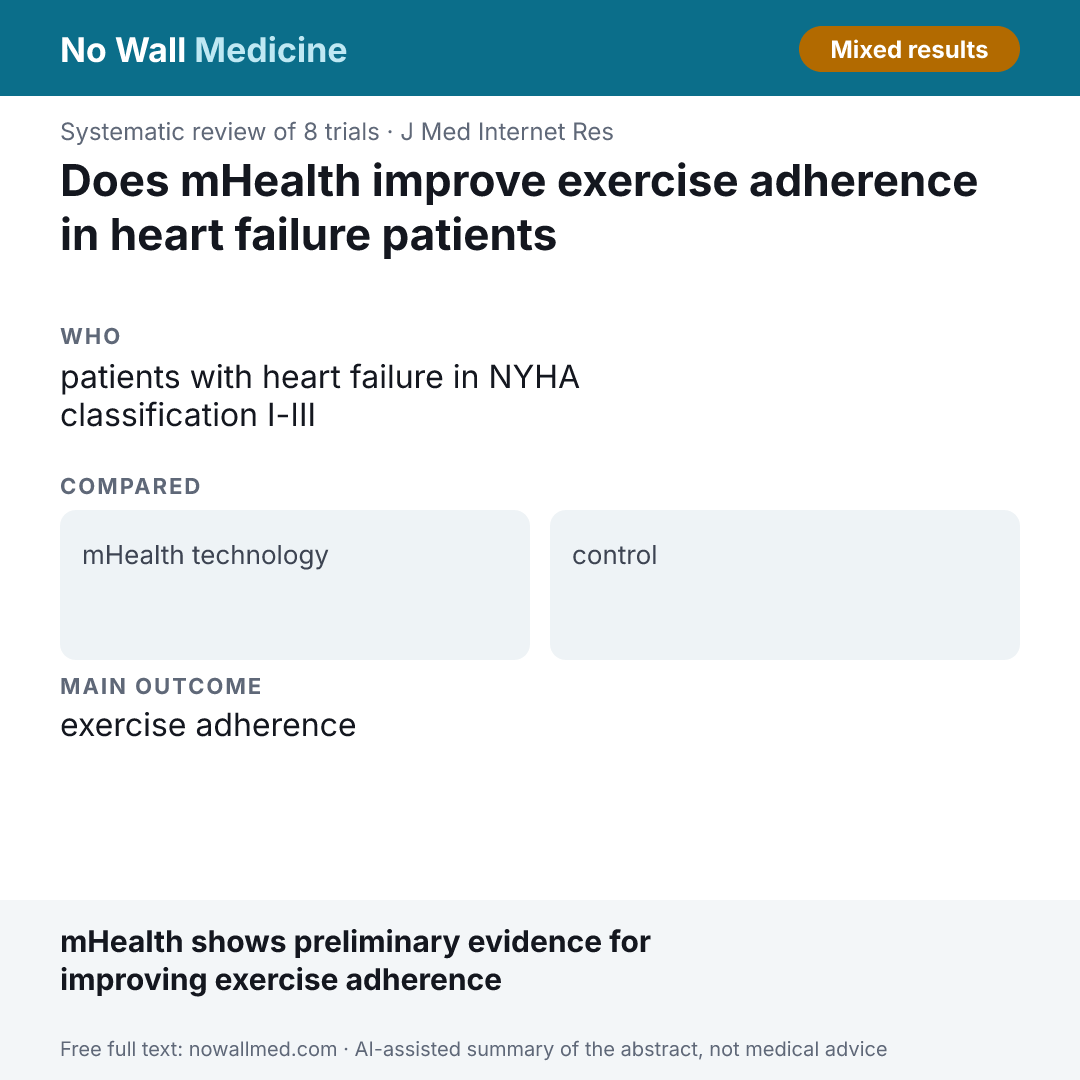
Use of mHealth Technology for Improving Exercise Adherence in Patients With Heart Failure: Systematic Review
Systematic review of 8 trialsMixed results
Does mHealth improve exercise adherence in heart failure patients
Who
patients with heart failure in NYHA classification I-III
Compared
mHealth technology
control
Main outcome
exercise adherence
Bottom line: mHealth shows preliminary evidence for improving exercise adherence
Limitation: theoretically sound and fully powered studies lacking
J Med Internet Res · 2025-01-09 · Save PNG
Effectiveness of Integrated Digital Solutions to Empower Older Adults in Aspects Related to Their Health: Systematic Review and Meta-Analysis
Systematic review and meta-analysisBenefit, low certainty
Are integrated digital solutions effective for empowering older adults in health-related aspects?
Who
Older adults
Compared
Digital intervention
Usual care
Main outcome
Empowerment domains including knowledge, capacities, social support, and behaviors
Result: knowledge ES=0.40 (95% CI 0.07-0.73); capacities d=0.29 (95% CI 0.07-0.52)
Bottom line: Digital solutions may increase knowledge and capacities in older adults, though certainty of evidence remains very low to low.
J Med Internet Res · 2025-01-09 · Save PNG

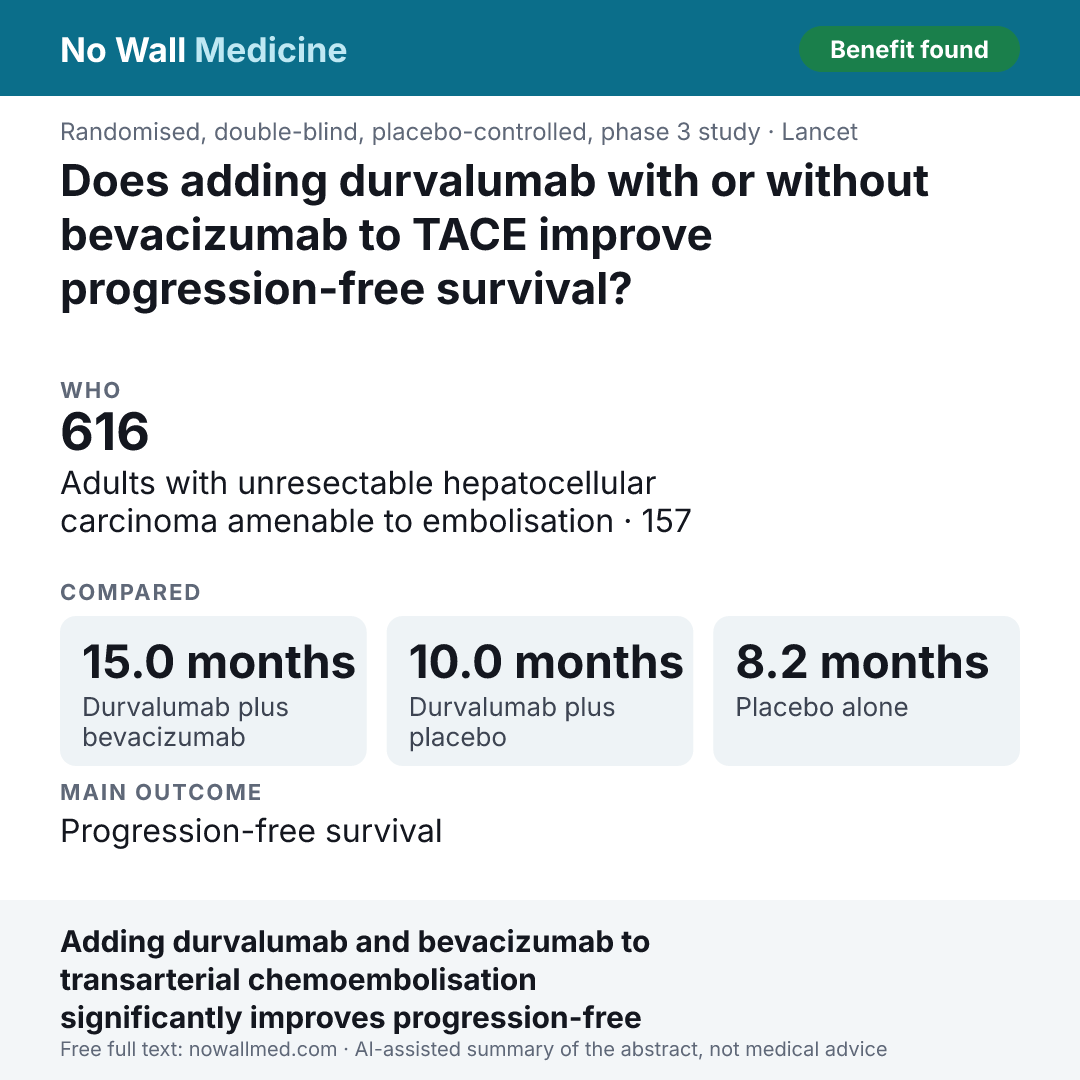
Durvalumab with or without bevacizumab with transarterial chemoembolisation in hepatocellular carcinoma (EMERALD-1): a multiregional, randomised, double-blind, placebo-controlled, phase 3 study
Randomised, double-blind, placebo-controlled, phase 3 studyBenefit found
Does adding durvalumab with or without bevacizumab to TACE improve progression-free survival?
Who
616
Adults with unresectable hepatocellular carcinoma amenable to embolisation · 157 medical sites in 18 countries
Compared
15.0 monthsDurvalumab plus bevacizumab (95% CI 11.1-18.9)
10.0 monthsDurvalumab plus placebo (9.0-12.7)
8.2 monthsPlacebo alone (6.9-11.1)
Main outcome
Progression-free survival
Result: hazard ratio 0.77 (95% CI 0.61-0.98)
Bottom line: Adding durvalumab and bevacizumab to transarterial chemoembolisation significantly improves progression-free survival in patients with unresectable hepatocellular carcinoma.
Lancet · 2025-01-08 · Save PNG
Time to nursing home admission and death in people with dementia: systematic review and meta-analysis
Systematic review and meta-analysisMixed results
What is the time to nursing home admission and death in people with dementia?
Who
5553960
People with dementia
Compared
Women: mean difference 4.1 years (95% confidence interval 2.1 to 6.1) shorter survival than men
Men
Main outcome
Survival and nursing home admission
Bottom line: Survival and nursing home admission depend on age, sex, and dementia type, with over half admitted within five years.
BMJ · 2025-01-08 · Save PNG