Visual abstracts
New randomized trials and meta-analyses from leading journals at a glance: who was studied, what was compared, and what was found. Every paper is free to read in full.
All specialtiesCardiology 4763Oncology 4043Gastroenterology & Hepatology 1903Infectious Disease 3756Neurology 1872Psychiatry & Mental Health 2216Pulmonology 2044Critical Care 1319Endocrinology & Diabetes 2544Pediatrics 2889Surgery 2480Orthopedics & Sports Medicine 917Neurosurgery 525Cardiothoracic & Vascular Surgery 656Plastic & Reconstructive Surgery 574Nephrology 1107Rheumatology 810Hematology 1090Dermatology 611Ophthalmology 532Obstetrics & Gynecology 1645Public & Global Health 1037Radiology & Imaging 619Anesthesiology 958Urology 745ENT (Otolaryngology) 494Emergency Medicine 481Allergy & Immunology 309Geriatrics 972Family Medicine & Primary Care 534Medical Genetics & Genomics 659Pathology & Laboratory Medicine 156Physical Medicine & Rehabilitation 734Palliative Care 421Nutrition 1560Digital Health & AI 2137General Medicine 318
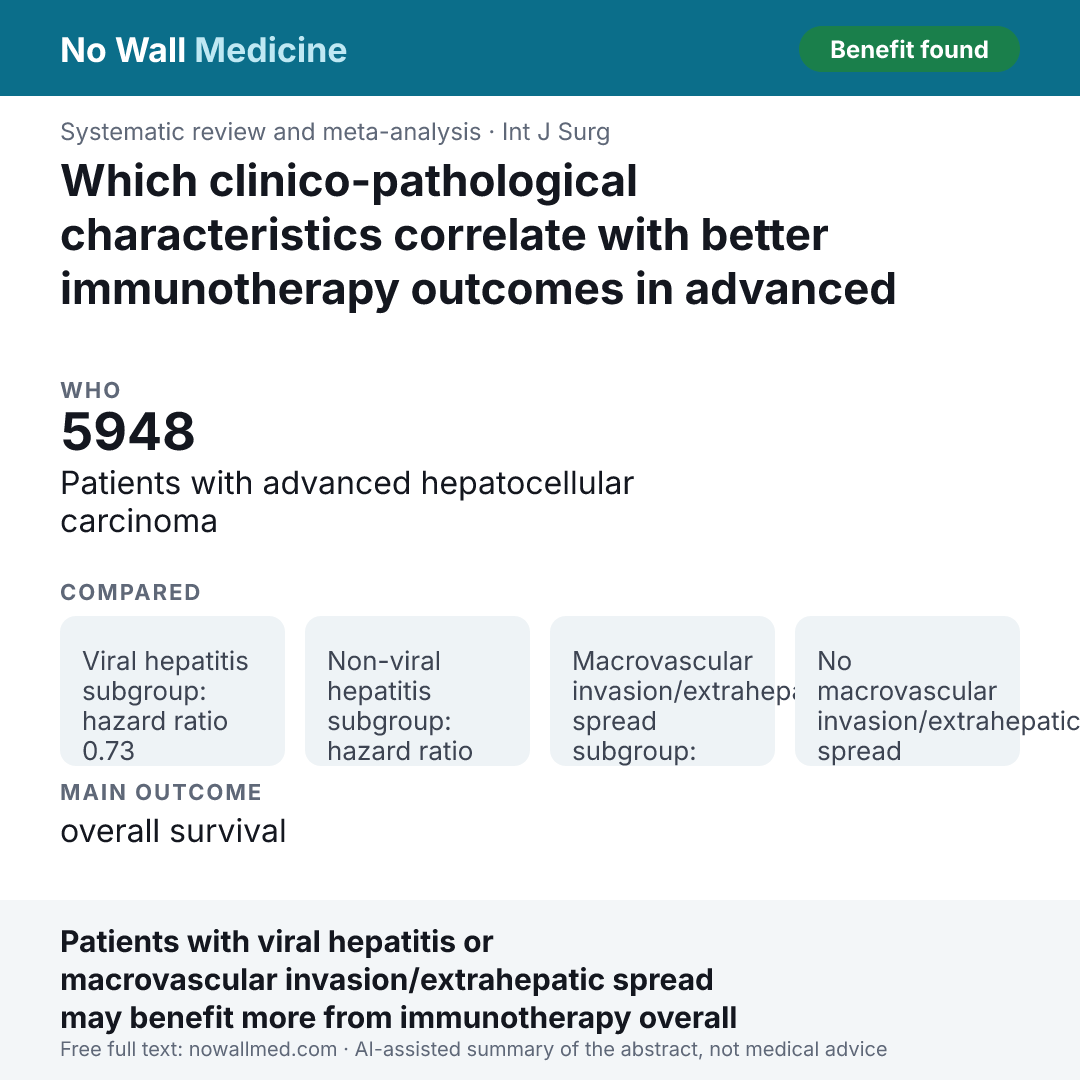
Clinico-characteristics of patients which correlated with preferable treatment outcomes in immunotherapy for advanced hepatocellular carcinoma: a systematic review and meta-analysis
Systematic review and meta-analysisBenefit found
Which clinico-pathological characteristics correlate with better immunotherapy outcomes in advanced hepatocellular carcinoma?
Who
5948
Patients with advanced hepatocellular carcinoma
Compared
Viral hepatitis subgroup: hazard ratio 0.73
Non-viral hepatitis subgroup: hazard ratio 0.87
Macrovascular invasion/extrahepatic spread subgroup: hazard ratio 0.73
No macrovascular invasion/extrahepatic spread subgroup: hazard ratio 0.89
Main outcome
overall survival
Result: hazard ratio 0.73 (P for interaction=0.02)
Bottom line: Patients with viral hepatitis or macrovascular invasion/extrahepatic spread may benefit more from immunotherapy overall survival.
Int J Surg · 2023-11-01 · Save PNG
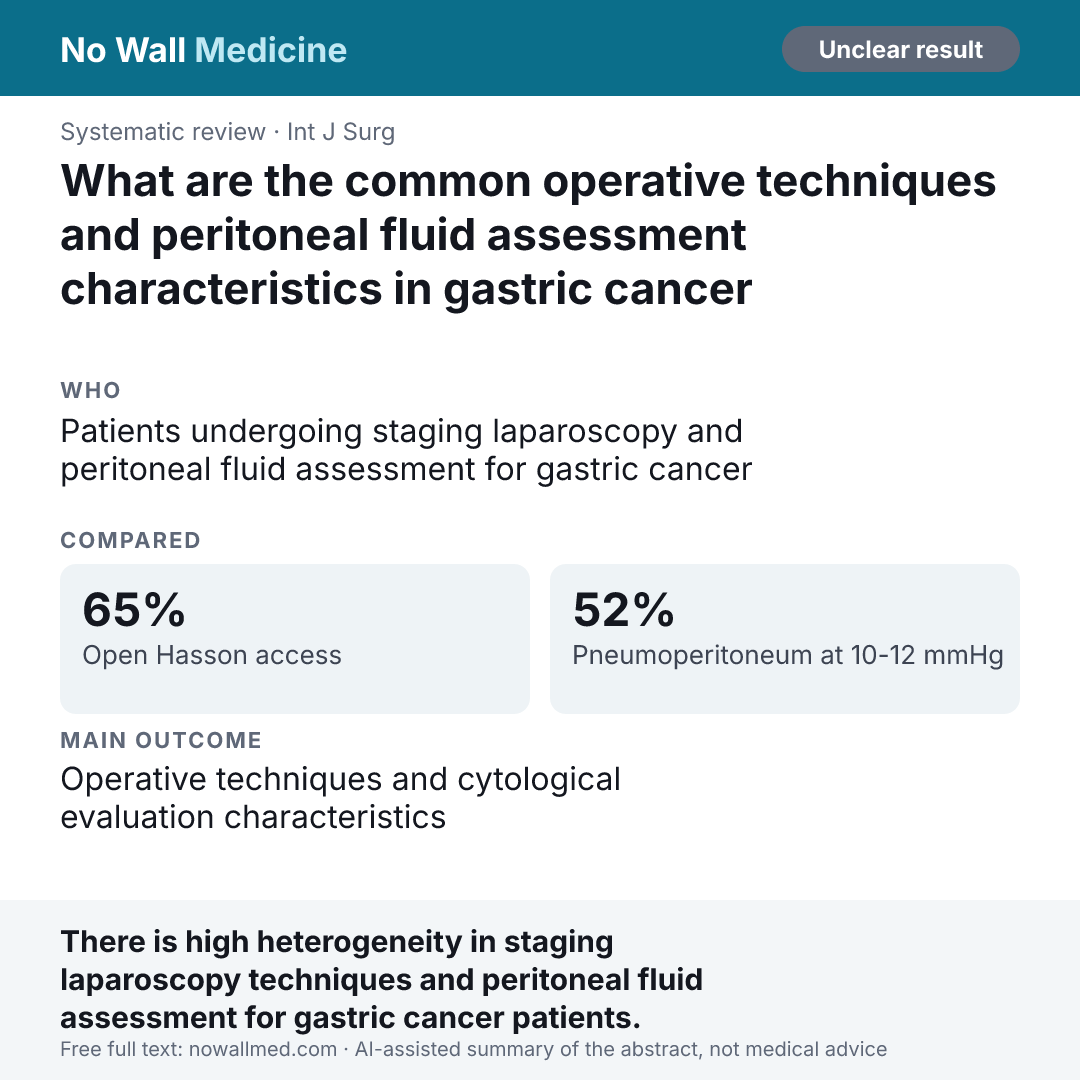
Techniques of staging laparoscopy and peritoneal fluid assessment in gastric cancer: a systematic review
Systematic reviewUnclear result
What are the common operative techniques and peritoneal fluid assessment characteristics in gastric cancer staging?
Who
Patients undergoing staging laparoscopy and peritoneal fluid assessment for gastric cancer
Compared
65%Open Hasson access
52%Pneumoperitoneum at 10-12 mmHg
Main outcome
Operative techniques and cytological evaluation characteristics
Bottom line: There is high heterogeneity in staging laparoscopy techniques and peritoneal fluid assessment for gastric cancer patients.
Limitation: No studies compared different methods of operative techniques or analysis of ascites/fluid.
Int J Surg · 2023-11-01 · Save PNG
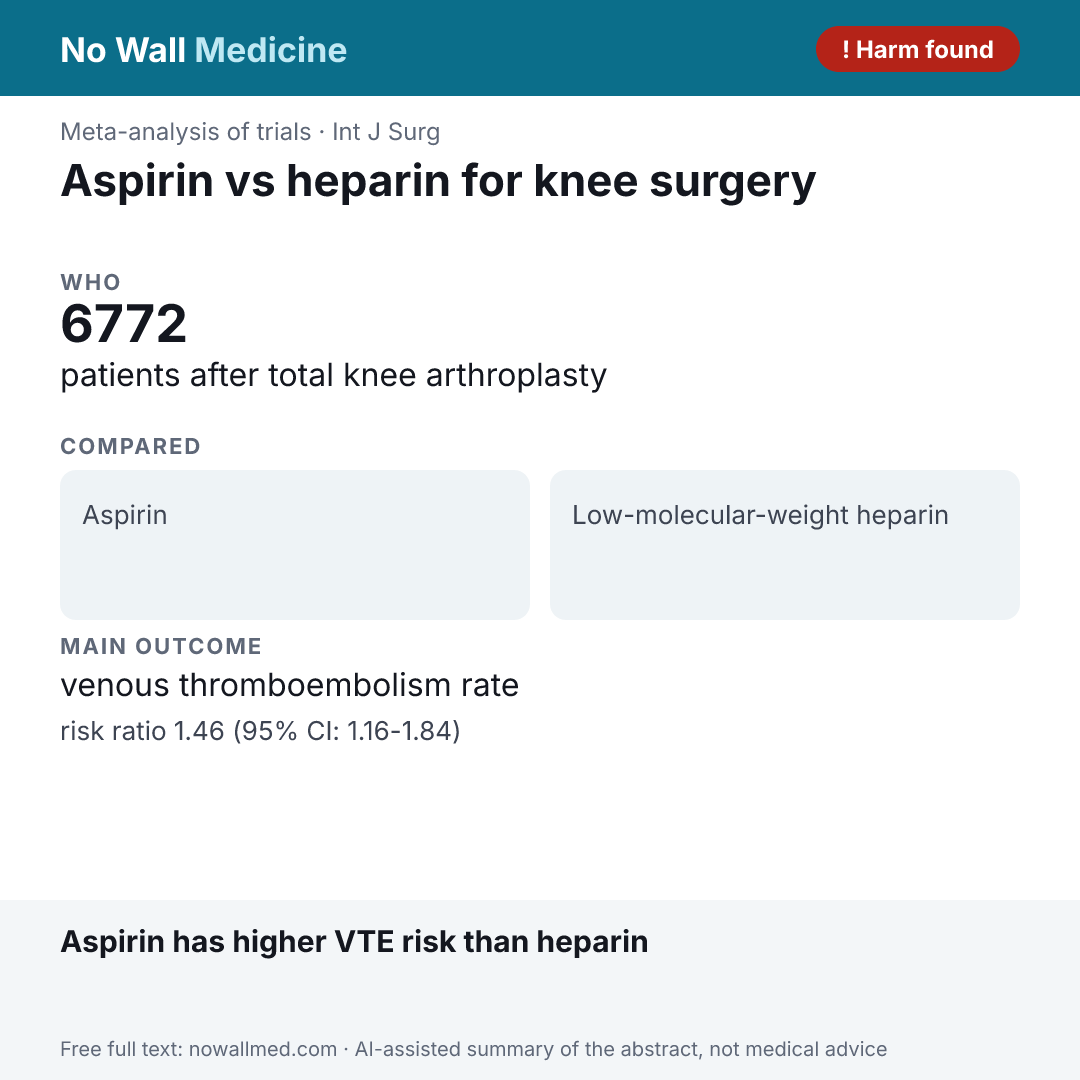
The role of aspirin versus low-molecular-weight heparin for venous thromboembolism prophylaxis after total knee arthroplasty: a meta-analysis of randomized controlled trials
Meta-analysis of trialsHarm found
Aspirin vs heparin for knee surgery
Who
6772
patients after total knee arthroplasty
Compared
Aspirin
Low-molecular-weight heparin
Main outcome
venous thromboembolism rate
Result: risk ratio 1.46 (95% CI: 1.16-1.84)
Bottom line: Aspirin has higher VTE risk than heparin
Int J Surg · 2023-11-01 · Save PNG
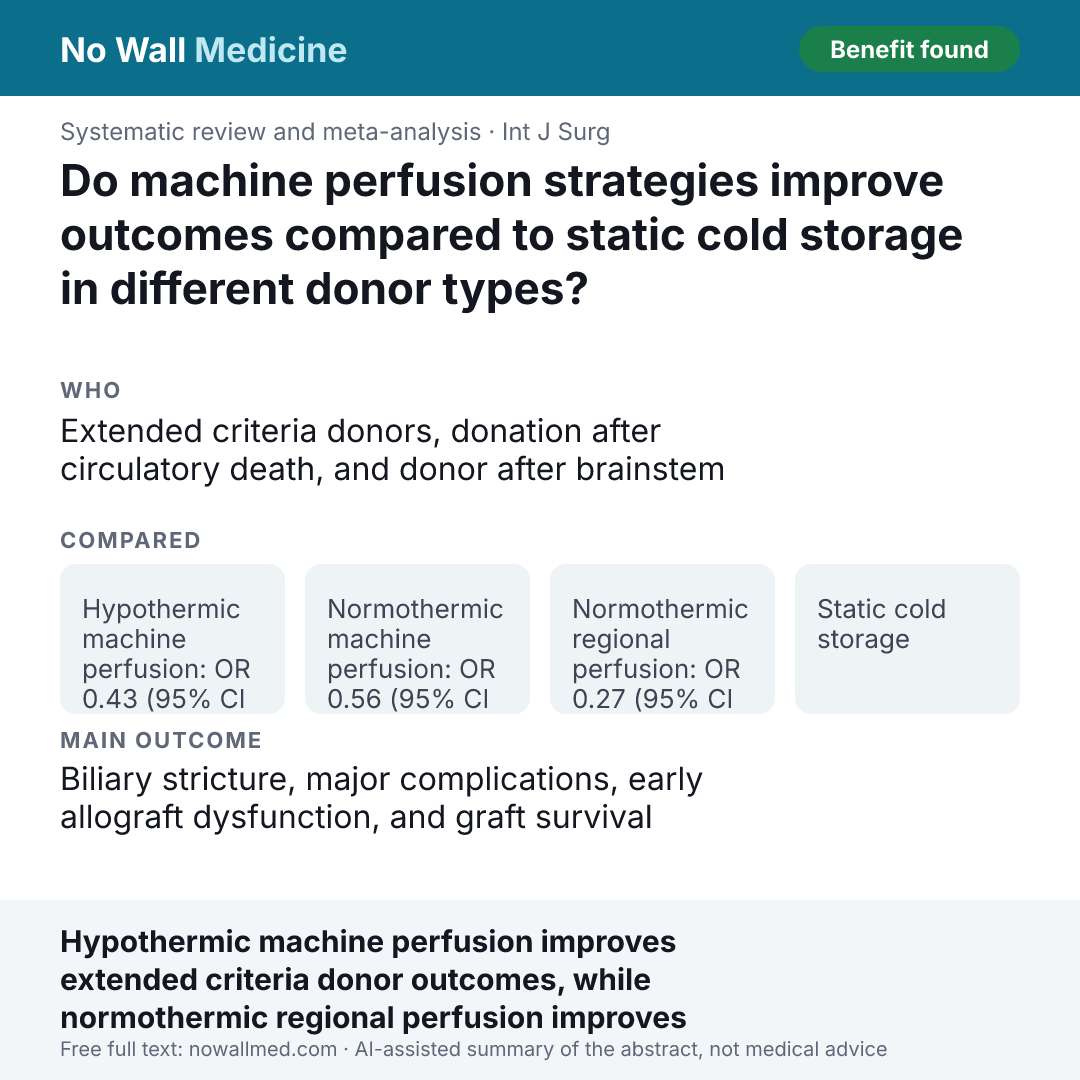
Effects of machine perfusion strategies on different donor types in liver transplantation: a systematic review and meta-analysis
Systematic review and meta-analysisBenefit found
Do machine perfusion strategies improve outcomes compared to static cold storage in different donor types?
Who
Extended criteria donors, donation after circulatory death, and donor after brainstem death
Compared
Hypothermic machine perfusion: OR 0.43 (95% CI 0.26-0.72) for non-anastomotic biliary stricture in ECD
Normothermic machine perfusion: OR 0.56 (95% CI 0.34-0.94) for major complications in ECD
Normothermic regional perfusion: OR 0.27 (95% CI 0.11-0.68) for non-anastomotic biliary stricture in DCD
Static cold storage
Main outcome
Biliary stricture, major complications, early allograft dysfunction, and graft survival
Bottom line: Hypothermic machine perfusion improves extended criteria donor outcomes, while normothermic regional perfusion improves donation after circulatory death outcomes.
Int J Surg · 2023-11-01 · Save PNG
Probiotics for the management of irritable bowel syndrome: a systematic review and three-level meta-analysis
Three-level meta-analysis of randomized controlled trialsBenefit found
Do probiotics improve irritable bowel syndrome symptoms compared to placebo?
Who
Patients with irritable bowel syndrome
Compared
Probiotics
Placebo
Main outcome
Improvement in severity of global irritable bowel syndrome symptoms
Result: standardized mean difference -0.55 (95% CI -0.76 to -0.34)
Bottom line: Probiotics provide a medium effect size improvement in global irritable bowel syndrome symptoms, especially with shorter treatment durations.
Int J Surg · 2023-11-01 · Save PNG

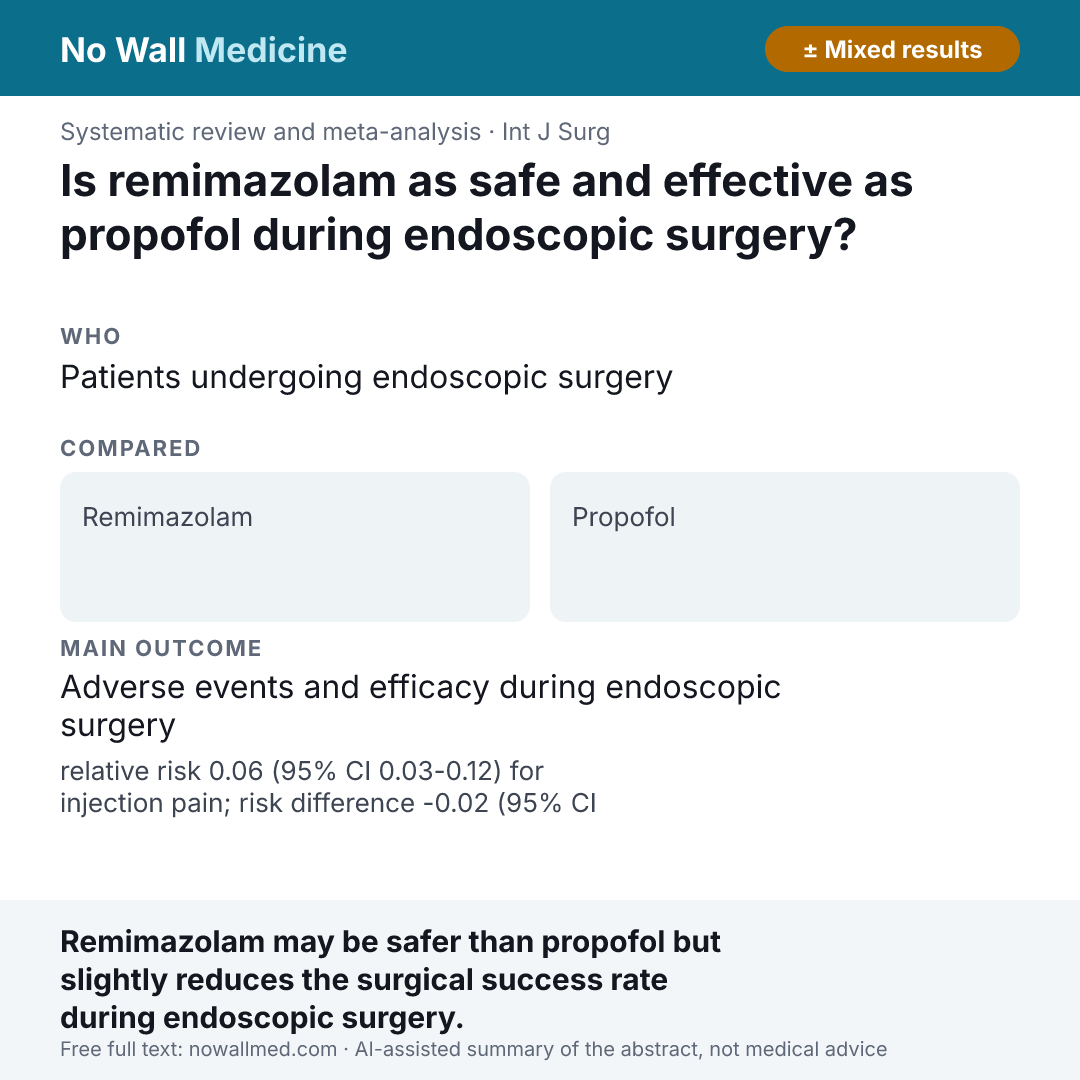
The safety and efficacy between remimazolam and propofol in intravenous anesthesia of endoscopy operation: a systematic review and meta-analysis
Systematic review and meta-analysisMixed results
Is remimazolam as safe and effective as propofol during endoscopic surgery?
Who
Patients undergoing endoscopic surgery
Compared
Remimazolam
Propofol
Main outcome
Adverse events and efficacy during endoscopic surgery
Result: relative risk 0.06 (95% CI 0.03-0.12) for injection pain; risk difference -0.02 (95% CI -0.04 to -0.01) for success rate
Bottom line: Remimazolam may be safer than propofol but slightly reduces the surgical success rate during endoscopic surgery.
Limitation: further research is required to determine their utility
Int J Surg · 2023-11-01 · Save PNG
Efficacy of nonopioid analgesics and regional techniques for perioperative pain management in laparoscopic gynecological surgery: a systematic review and network meta-analysis
Systematic review and network meta-analysisBenefit found
What are the most effective nonopioid and regional analgesia strategies for laparoscopic gynecological surgery?
Who
9582
Adults undergoing elective laparoscopic gynecological surgery under general anesthesia
Compared
Monotherapies: mostly ineffective
Combinations of two or more interventions: better efficacy and longer duration in reducing postoperative pain and opioid consumption
Main outcome
Pain score at rest and cumulative oral morphine milligram equivalents
Bottom line: Combining regional techniques with nonopioid systemic analgesics is more effective than monotherapies for pain and opioid reduction.
Limitation: Low confidence levels for certain interventions and need for larger, higher quality trials.
Int J Surg · 2023-11-01 · Save PNG

Perioperative ketamine administration to prevent delirium and neurocognitive disorders after surgery: a systematic review and meta-analysis
Systematic review and meta-analysisNo clear difference
Does perioperative ketamine prevent postoperative delirium and neurocognitive disorders?
Who
1618
Adult patients undergoing surgery
Compared
Ketamine
Placebo or no intervention
Main outcome
Postoperative delirium and postoperative neurocognitive disorders
Result: odds ratio 0.93 (95% CI 0.51-1.70) for delirium; OR 0.52 (95% CI 0.15-1.80) for neurocognitive disorders
Bottom line: Perioperative ketamine does not prevent postoperative delirium or postoperative neurocognitive disorders in adult patients.
Limitation: Significant study heterogeneity and low-moderate risk of bias in half of the trials.
Int J Surg · 2023-11-01 · Save PNG

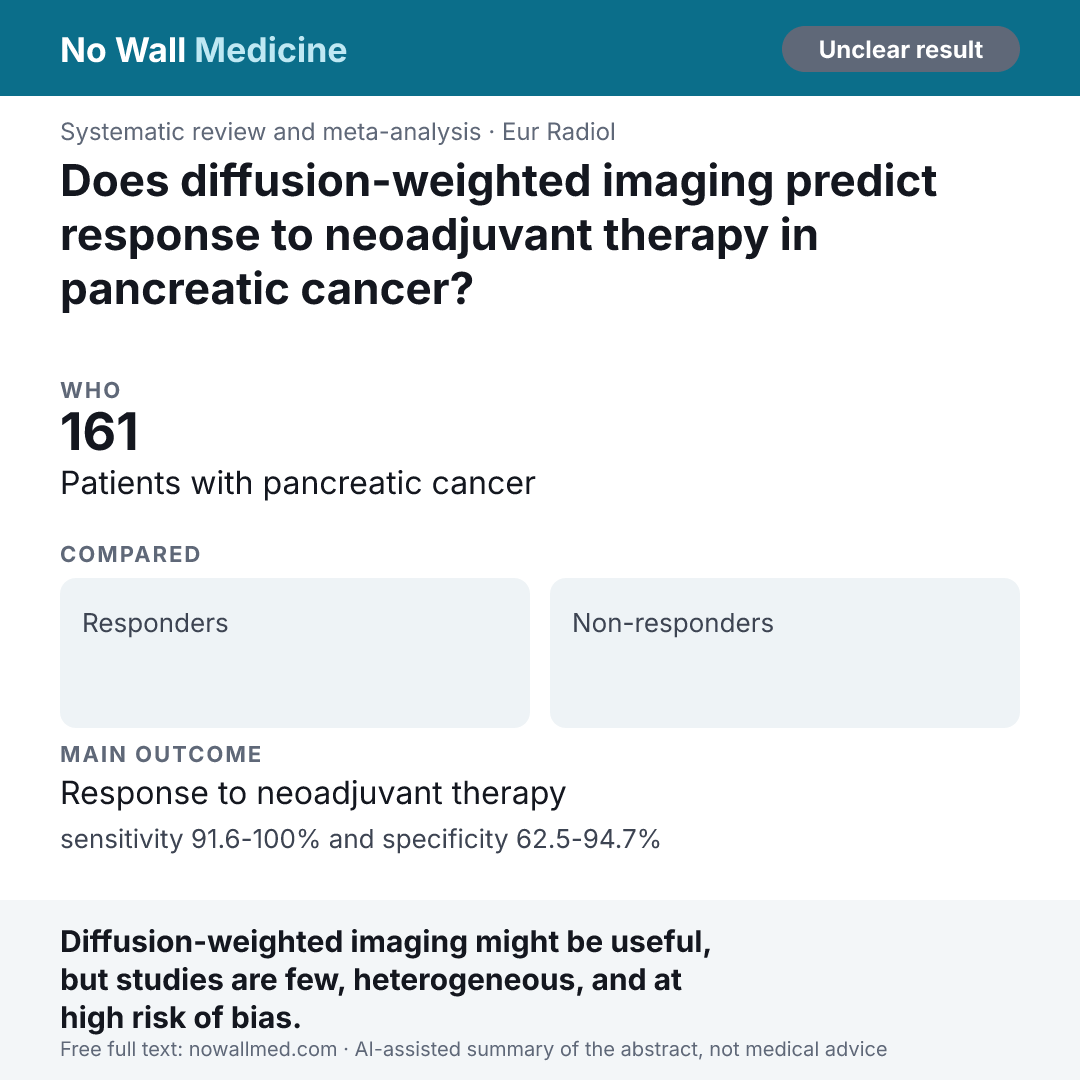
Diffusion-weighted imaging for determining response to neoadjuvant therapy in pancreatic cancer: a systematic review and meta-analysis
Systematic review and meta-analysisUnclear result
Does diffusion-weighted imaging predict response to neoadjuvant therapy in pancreatic cancer?
Who
161
Patients with pancreatic cancer
Compared
Responders
Non-responders
Main outcome
Response to neoadjuvant therapy
Result: sensitivity 91.6-100% and specificity 62.5-94.7%
Bottom line: Diffusion-weighted imaging might be useful, but studies are few, heterogeneous, and at high risk of bias.
Limitation: Heterogeneity and high risk of bias in patient selection, index test, and reference standard.
Eur Radiol · 2023-11-01 · Save PNG
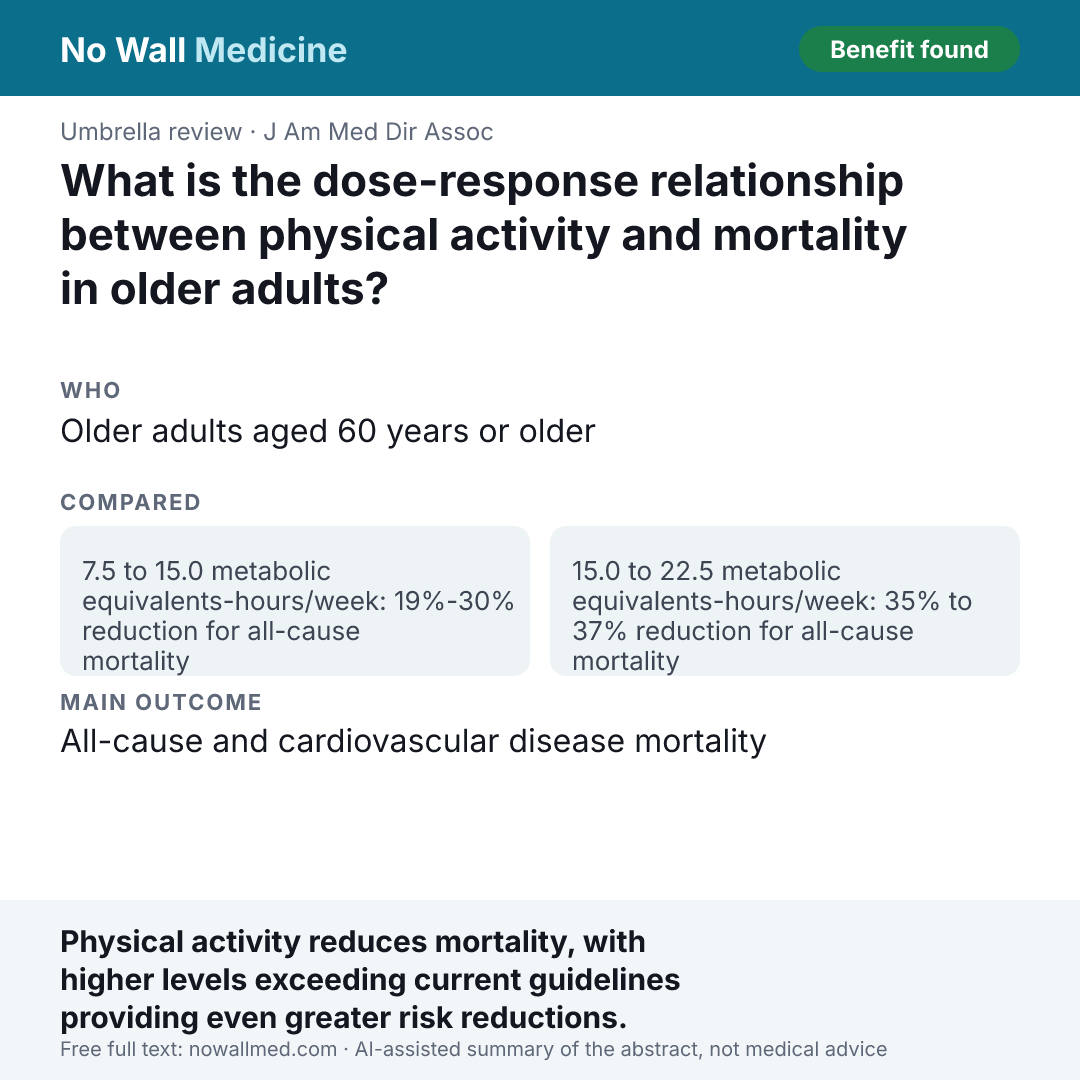
Dose-Response Relationship of Physical Activity with All-Cause Mortality among Older Adults: An Umbrella Review
Umbrella reviewBenefit found
What is the dose-response relationship between physical activity and mortality in older adults?
Who
Older adults aged 60 years or older
Compared
7.5 to 15.0 metabolic equivalents-hours/week: 19%-30% reduction for all-cause mortality
15.0 to 22.5 metabolic equivalents-hours/week: 35% to 37% reduction for all-cause mortality
Main outcome
All-cause and cardiovascular disease mortality
Bottom line: Physical activity reduces mortality, with higher levels exceeding current guidelines providing even greater risk reductions.
J Am Med Dir Assoc · 2023-11-01 · Save PNG
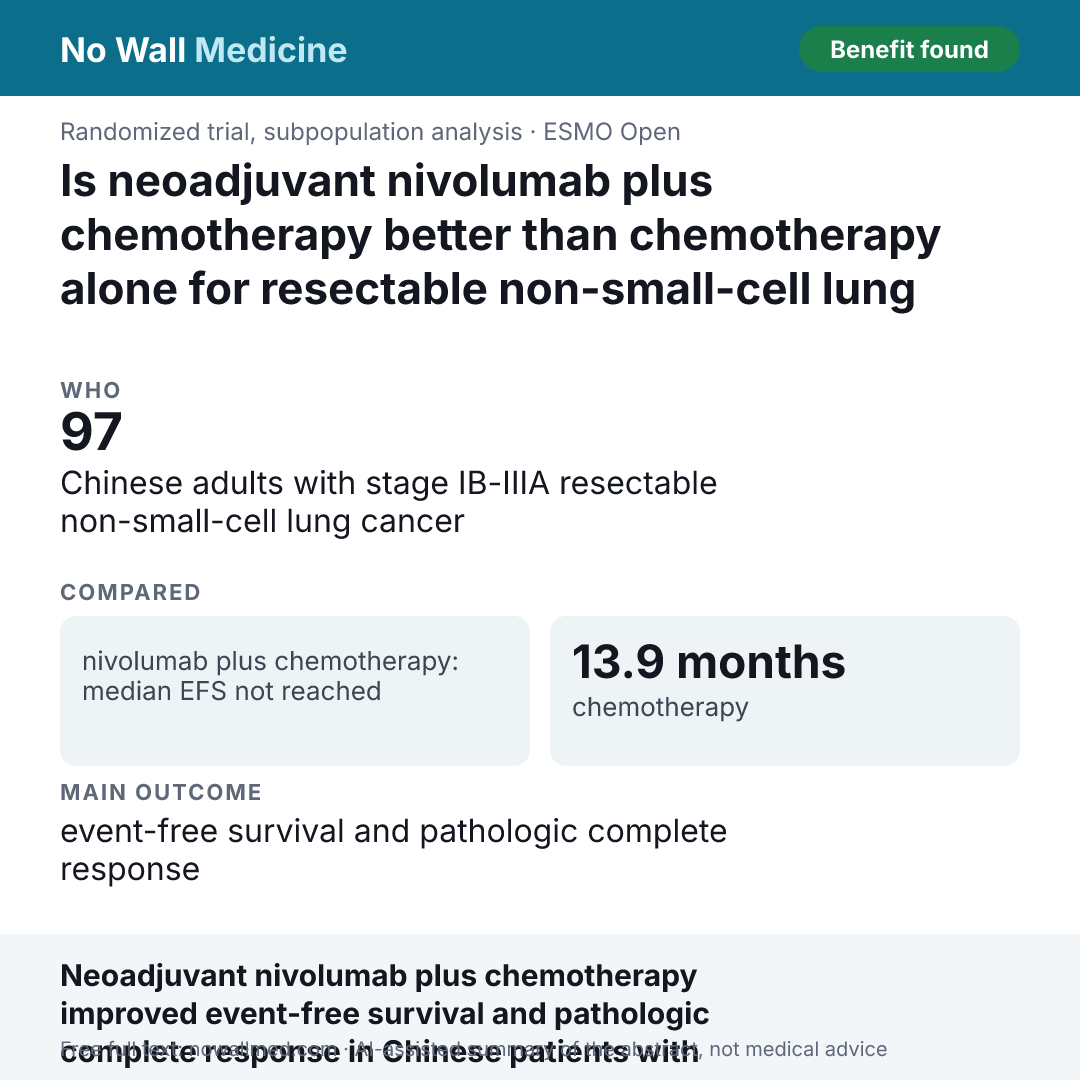
Neoadjuvant nivolumab plus chemotherapy versus chemotherapy for resectable NSCLC: subpopulation analysis of Chinese patients in CheckMate 816
Randomized trial, subpopulation analysisBenefit found
Is neoadjuvant nivolumab plus chemotherapy better than chemotherapy alone for resectable non-small-cell lung cancer?
Who
97
Chinese adults with stage IB-IIIA resectable non-small-cell lung cancer
Compared
nivolumab plus chemotherapy: median EFS not reached
13.9 monthschemotherapy (95% CI 8.3-34.3 months)
Main outcome
event-free survival and pathologic complete response
Result: hazard ratio 0.47 (95% CI 0.25-0.88)
Bottom line: Neoadjuvant nivolumab plus chemotherapy improved event-free survival and pathologic complete response in Chinese patients with resectable non-small-cell lung cancer.
ESMO Open · 2023-11-01 · Save PNG
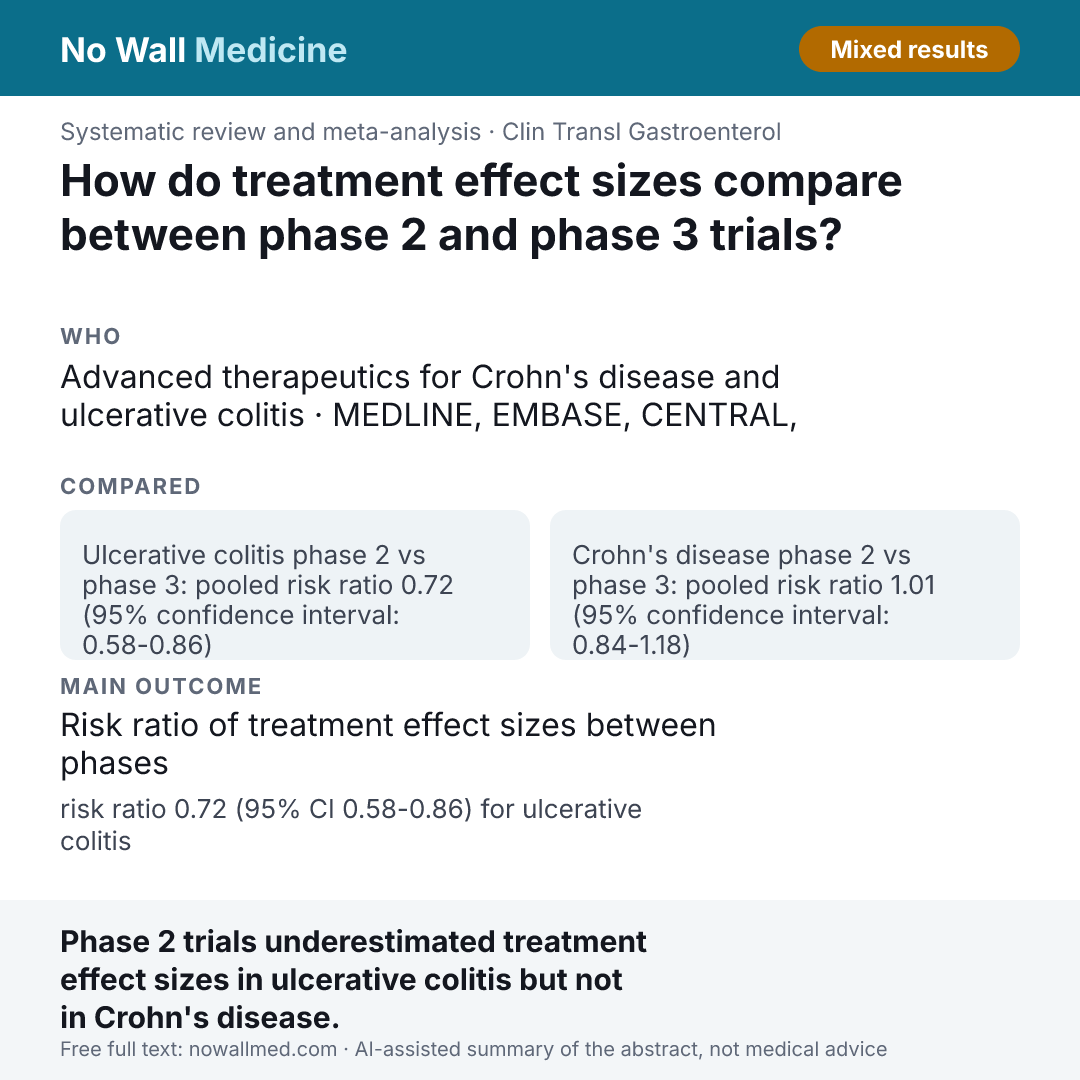
A Comparison of Treatment Effect Sizes in Matched Phase 2 and Phase 3 Trials of Advanced Therapeutics in Inflammatory Bowel Disease: Systematic Review and Meta-Analysis
Systematic review and meta-analysisMixed results
How do treatment effect sizes compare between phase 2 and phase 3 trials?
Who
Advanced therapeutics for Crohn's disease and ulcerative colitis · MEDLINE, EMBASE, CENTRAL, and Cochrane library
Compared
Ulcerative colitis phase 2 vs phase 3: pooled risk ratio 0.72 (95% confidence interval: 0.58-0.86)
Crohn's disease phase 2 vs phase 3: pooled risk ratio 1.01 (95% confidence interval: 0.84-1.18)
Main outcome
Risk ratio of treatment effect sizes between phases
Result: risk ratio 0.72 (95% CI 0.58-0.86) for ulcerative colitis
Bottom line: Phase 2 trials underestimated treatment effect sizes in ulcerative colitis but not in Crohn's disease.
Clin Transl Gastroenterol · 2023-11-01 · Save PNG
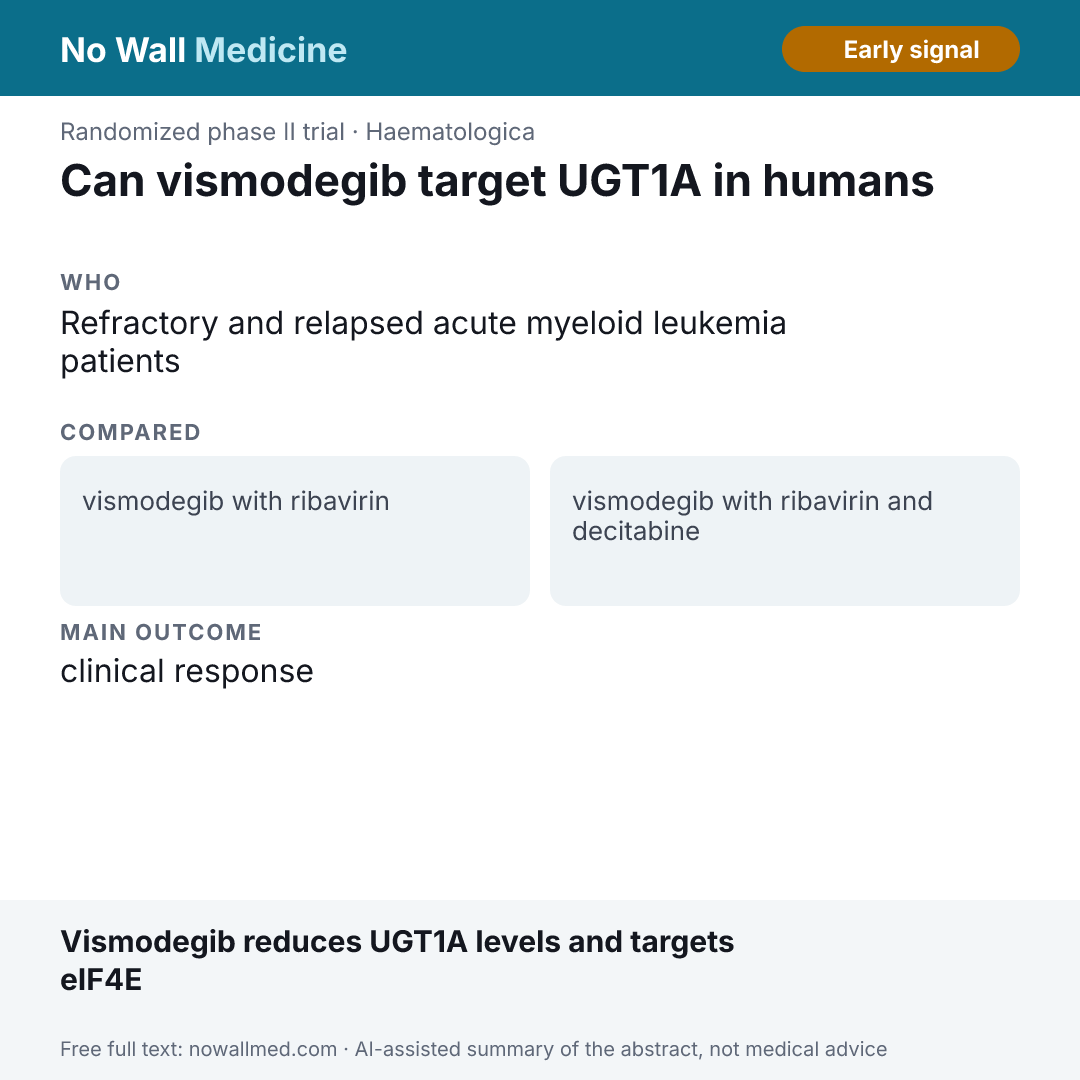
Molecular targeting of the UDP-glucuronosyltransferase enzymes in high-eukaryotic translation initiation factor 4E refractory/relapsed acute myeloid leukemia patients: a randomized phase II trial of vismodegib, ribavirin with or without decitabine
Randomized phase II trialEarly signal
Can vismodegib target UGT1A in humans
Who
Refractory and relapsed acute myeloid leukemia patients
Compared
vismodegib with ribavirin
vismodegib with ribavirin and decitabine
Main outcome
clinical response
Bottom line: Vismodegib reduces UGT1A levels and targets eIF4E
Haematologica · 2023-11-01 · Save PNG
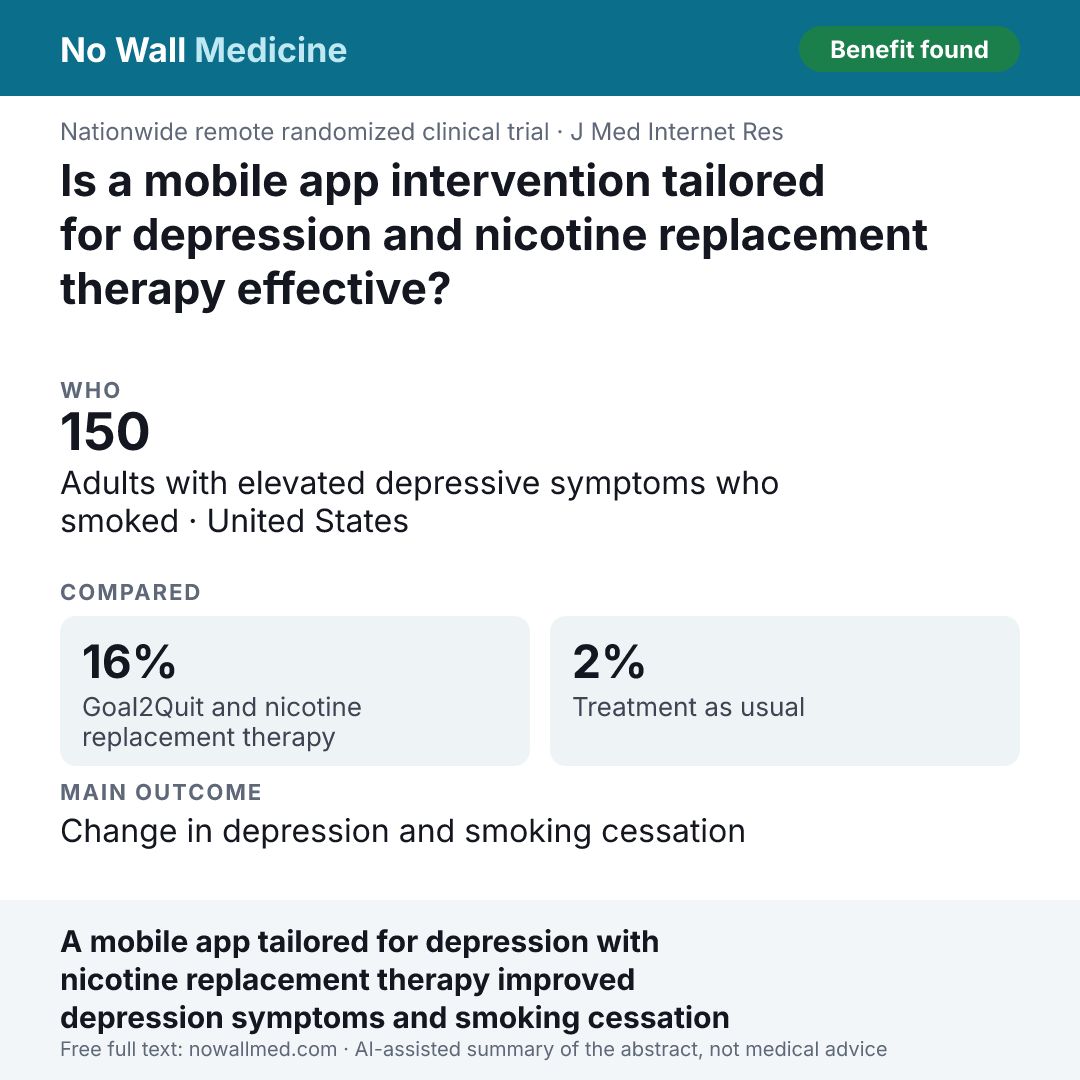
Behavioral Activation-Based Digital Smoking Cessation Intervention for Individuals With Depressive Symptoms: Randomized Clinical Trial
Nationwide remote randomized clinical trialBenefit found
Is a mobile app intervention tailored for depression and nicotine replacement therapy effective?
Who
150
Adults with elevated depressive symptoms who smoked · United States
Compared
16%Goal2Quit and nicotine replacement therapy (7-day point prevalence abstinence at week 12)
2%Treatment as usual (7-day point prevalence abstinence at week 12)
Main outcome
Change in depression and smoking cessation
Result: difference of mean 3.72, SE 1.37 points less
Bottom line: A mobile app tailored for depression with nicotine replacement therapy improved depression symptoms and smoking cessation rates.
J Med Internet Res · 2023-11-01 · Save PNG
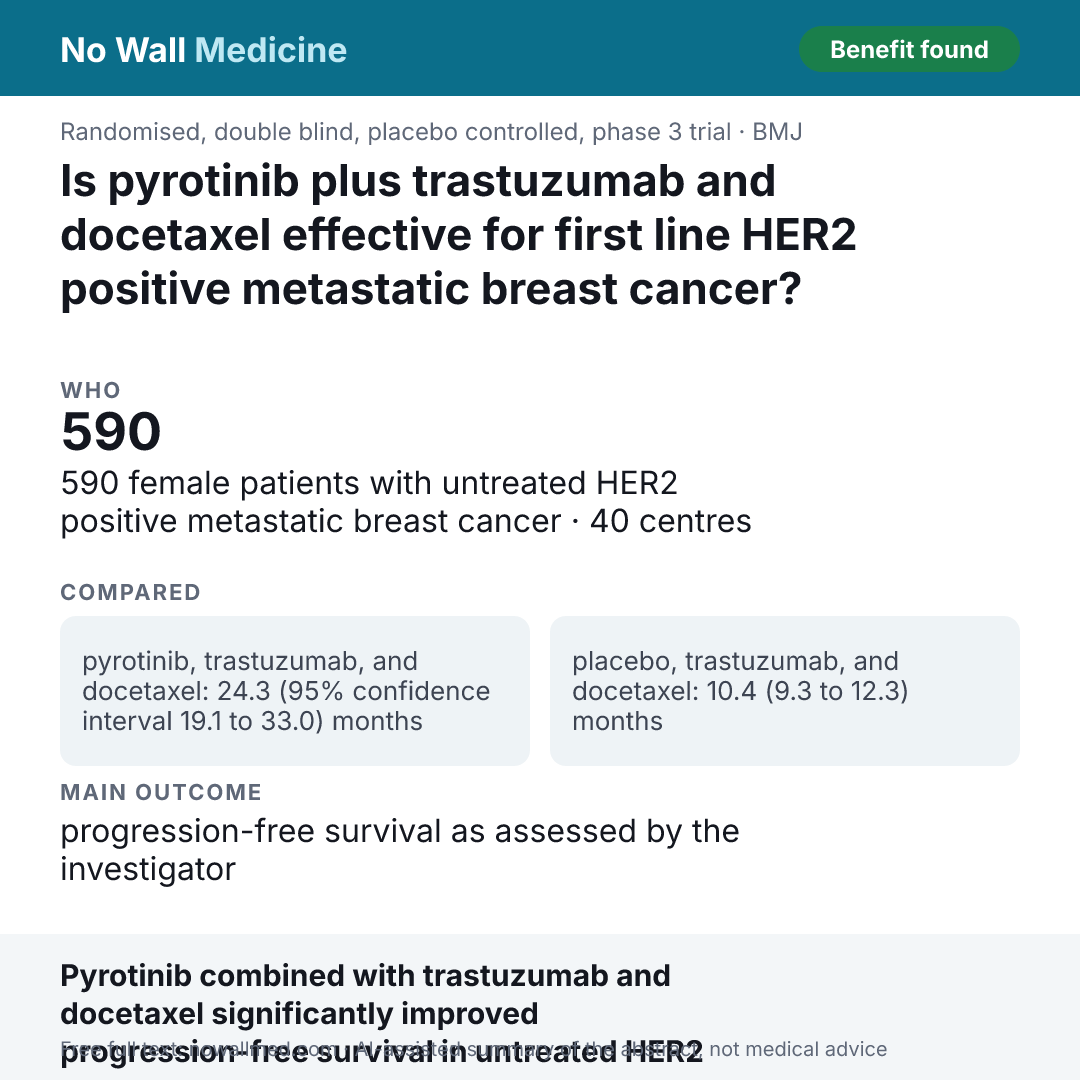
Pyrotinib versus placebo in combination with trastuzumab and docetaxel as first line treatment in patients with HER2 positive metastatic breast cancer (PHILA): randomised, double blind, multicentre, phase 3 trial
Randomised, double blind, placebo controlled, phase 3 trialBenefit found
Is pyrotinib plus trastuzumab and docetaxel effective for first line HER2 positive metastatic breast cancer?
Who
590
590 female patients with untreated HER2 positive metastatic breast cancer · 40 centres in China
Compared
pyrotinib, trastuzumab, and docetaxel: 24.3 (95% confidence interval 19.1 to 33.0) months
placebo, trastuzumab, and docetaxel: 10.4 (9.3 to 12.3) months
Main outcome
progression-free survival as assessed by the investigator
Result: hazard ratio 0.41 (95% confidence interval 0.32 to 0.53)
Bottom line: Pyrotinib combined with trastuzumab and docetaxel significantly improved progression-free survival in untreated HER2 positive metastatic breast cancer.
BMJ · 2023-10-31 · Save PNG
Clinical Effectiveness of Cognitively Enhanced Tai Ji Quan Training on Global Cognition and Dual-Task Performance During Walking in Older Adults With Mild Cognitive Impairment or Self-Reported Memory Concerns : A Randomized Controlled Trial
Randomized trialBenefit found
Tai Ji Quan for cognitive impairment
Who
318
Older adults with mild cognitive impairment · Community homes
Compared
Cognitively enhanced: 1.5 points improvement
Standard tai ji
Stretching
Main outcome
Global cognition and dual-task walking
Result: mean difference, 1.5 points (98.75% CI, 0.7 to 2.2 points)
Bottom line: Tai Ji Quan improves cognition in older adults
Limitation: No nonexercise control group
Funded by: National Institute on Aging
Ann Intern Med · 2023-10-31 · Save PNG

Life expectancy and years of potential life lost in people with mental disorders: a systematic review and meta-analysis
Systematic review and meta-analysisKey finding
What are the life expectancy and years of potential life lost in people with mental disorders?
Who
12171909
Patients of all ages with any mental disorders · 24 countries or regions
Compared
63.85 yearsMental disorders (95% CI 62.63-65.06)
General population
Main outcome
Life expectancy and years of potential life lost
Result: pooled YPLL was 14.66 years (95% CI 13.88-15.98)
Bottom line: Mental disorders are associated with substantially reduced life expectancy and increased years of potential life lost across various diagnoses.
Limitation: Significant cross-study heterogeneity was observed.
eClinicalMedicine · 2023-10-31 · Save PNG

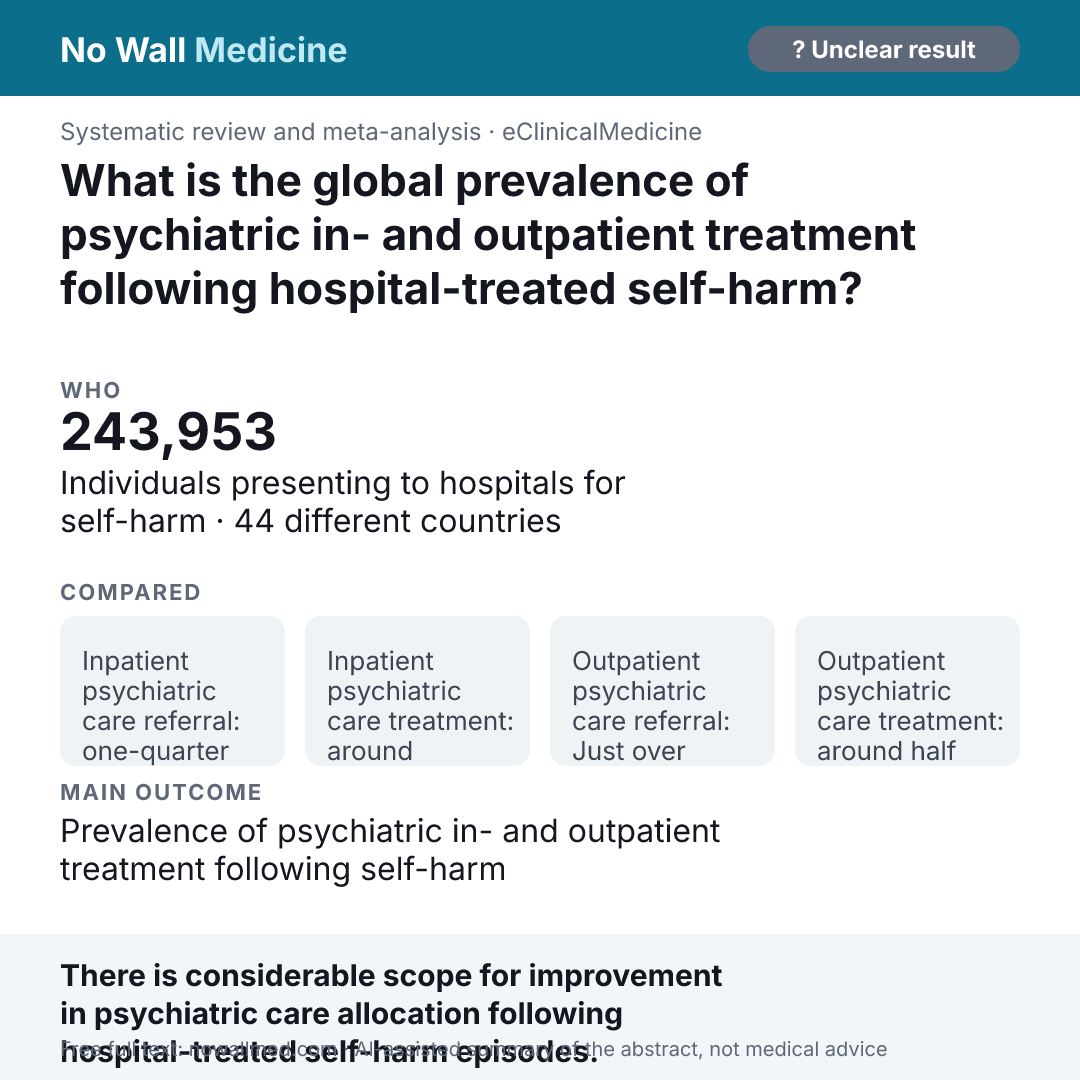
Global prevalence of psychiatric in- and out-patient treatment following hospital-presenting self-harm: a systematic review and meta-analysis
Systematic review and meta-analysisUnclear result
What is the global prevalence of psychiatric in- and outpatient treatment following hospital-treated self-harm?
Who
243,953
Individuals presenting to hospitals for self-harm · 44 different countries
Compared
Inpatient psychiatric care referral: one-quarter
Inpatient psychiatric care treatment: around one-fifth
Outpatient psychiatric care referral: Just over one-third
Outpatient psychiatric care treatment: around half
Main outcome
Prevalence of psychiatric in- and outpatient treatment following self-harm
Bottom line: There is considerable scope for improvement in psychiatric care allocation following hospital-treated self-harm episodes.
eClinicalMedicine · 2023-10-31 · Save PNG
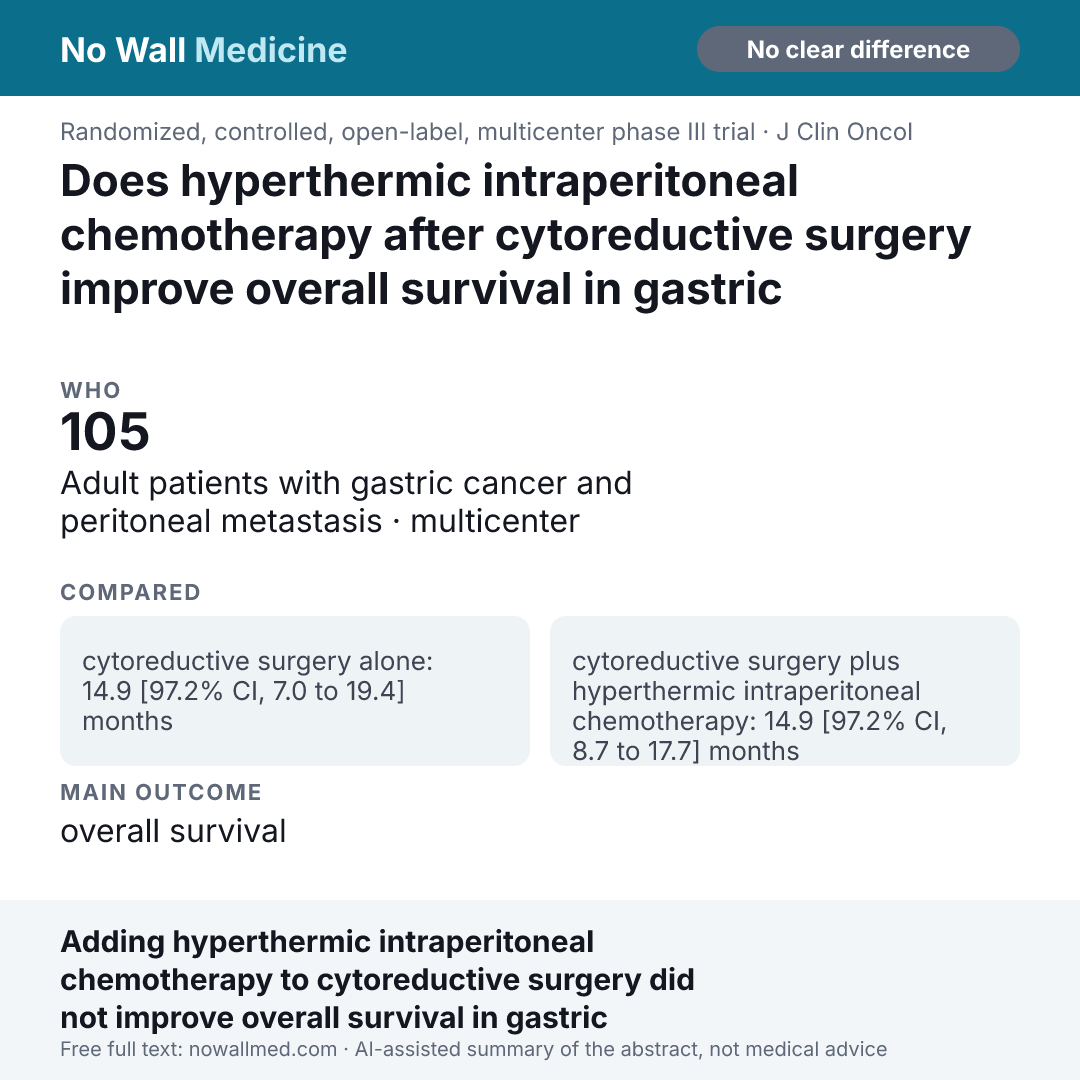
Effect of Hyperthermic Intraperitoneal Chemotherapy on Cytoreductive Surgery in Gastric Cancer With Synchronous Peritoneal Metastases: The Phase III GASTRIPEC-I Trial
Randomized, controlled, open-label, multicenter phase III trialNo clear difference
Does hyperthermic intraperitoneal chemotherapy after cytoreductive surgery improve overall survival in gastric cancer?
Who
105
Adult patients with gastric cancer and peritoneal metastasis · multicenter
Compared
cytoreductive surgery alone: 14.9 [97.2% CI, 7.0 to 19.4] months
cytoreductive surgery plus hyperthermic intraperitoneal chemotherapy: 14.9 [97.2% CI, 8.7 to 17.7] months
Main outcome
overall survival
Bottom line: Adding hyperthermic intraperitoneal chemotherapy to cytoreductive surgery did not improve overall survival in gastric cancer patients.
J Clin Oncol · 2023-10-31 · Save PNG
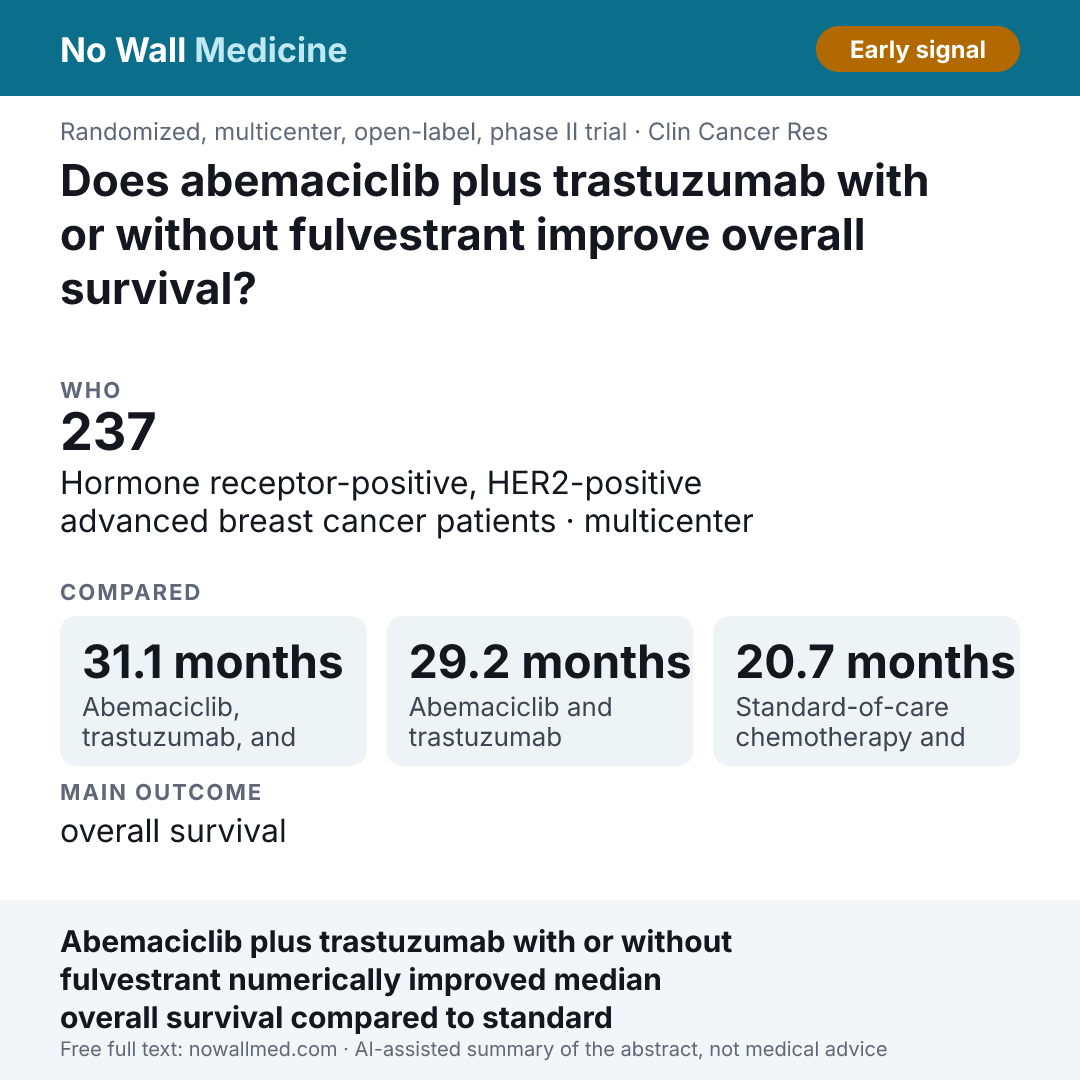
Overall Survival and Exploratory Biomarker Analyses of Abemaciclib plus Trastuzumab with or without Fulvestrant versus Trastuzumab plus Chemotherapy in HR+, HER2+ Metastatic Breast Cancer Patients
Randomized, multicenter, open-label, phase II trialEarly signal
Does abemaciclib plus trastuzumab with or without fulvestrant improve overall survival?
Who
237
Hormone receptor-positive, HER2-positive advanced breast cancer patients · multicenter
Compared
31.1 monthsAbemaciclib, trastuzumab, and fulvestrant
29.2 monthsAbemaciclib and trastuzumab
20.7 monthsStandard-of-care chemotherapy and trastuzumab
Main outcome
overall survival
Result: hazard ratio 0.71 (95% CI, 0.48-1.05)
Bottom line: Abemaciclib plus trastuzumab with or without fulvestrant numerically improved median overall survival compared to standard chemotherapy.
Clin Cancer Res · 2023-10-31 · Save PNG