Visual abstracts
New randomized trials and meta-analyses from leading journals at a glance: who was studied, what was compared, and what was found. Every paper is free to read in full.
All specialtiesCardiology 4877Oncology 4138Gastroenterology & Hepatology 1942Infectious Disease 3837Neurology 1905Psychiatry & Mental Health 2273Pulmonology 2143Critical Care 1365Endocrinology & Diabetes 2580Pediatrics 2980Surgery 2559Orthopedics & Sports Medicine 931Neurosurgery 537Cardiothoracic & Vascular Surgery 674Plastic & Reconstructive Surgery 591Nephrology 1133Rheumatology 823Hematology 1109Dermatology 621Ophthalmology 543Obstetrics & Gynecology 1686Public & Global Health 1058Radiology & Imaging 648Anesthesiology 986Urology 764ENT (Otolaryngology) 503Emergency Medicine 511Allergy & Immunology 313Geriatrics 981Family Medicine & Primary Care 562Medical Genetics & Genomics 676Pathology & Laboratory Medicine 159Physical Medicine & Rehabilitation 757Palliative Care 444Nutrition 1588Digital Health & AI 2201General Medicine 321
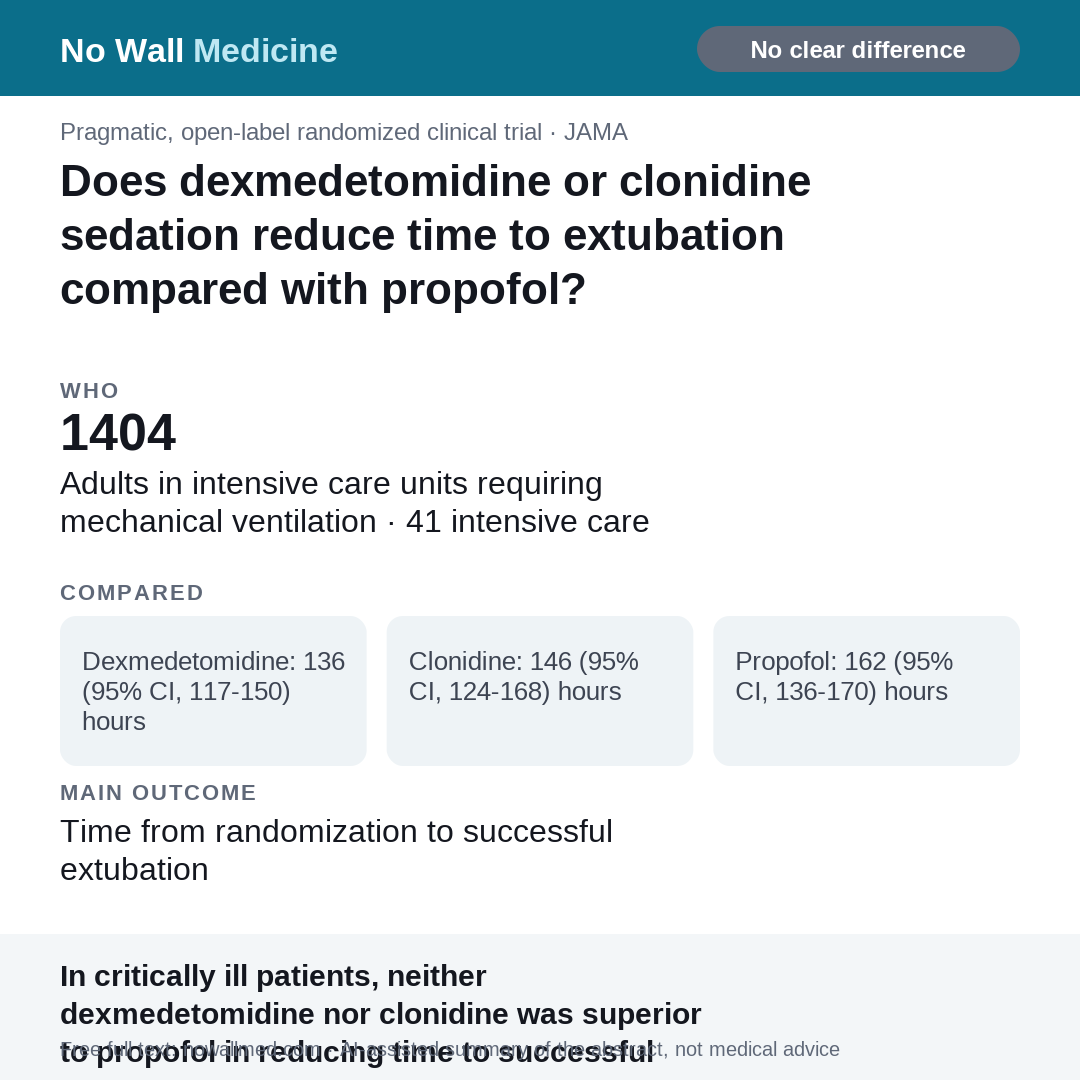
Dexmedetomidine- or Clonidine-Based Sedation Compared With Propofol in Critically Ill Patients: The A2B Randomized Clinical Trial
Pragmatic, open-label randomized clinical trialNo clear difference
Does dexmedetomidine or clonidine sedation reduce time to extubation compared with propofol?
Who
1404
Adults in intensive care units requiring mechanical ventilation · 41 intensive care units in the United Kingdom
Compared
Dexmedetomidine: 136 (95% CI, 117-150) hours
Clonidine: 146 (95% CI, 124-168) hours
Propofol: 162 (95% CI, 136-170) hours
Main outcome
Time from randomization to successful extubation
Result: subdistribution hazard ratio 1.09 (95% CI, 0.96-1.25) for dexmedetomidine vs propofol
Bottom line: In critically ill patients, neither dexmedetomidine nor clonidine was superior to propofol in reducing time to successful extubation.
JAMA · 2025-05-20Download image
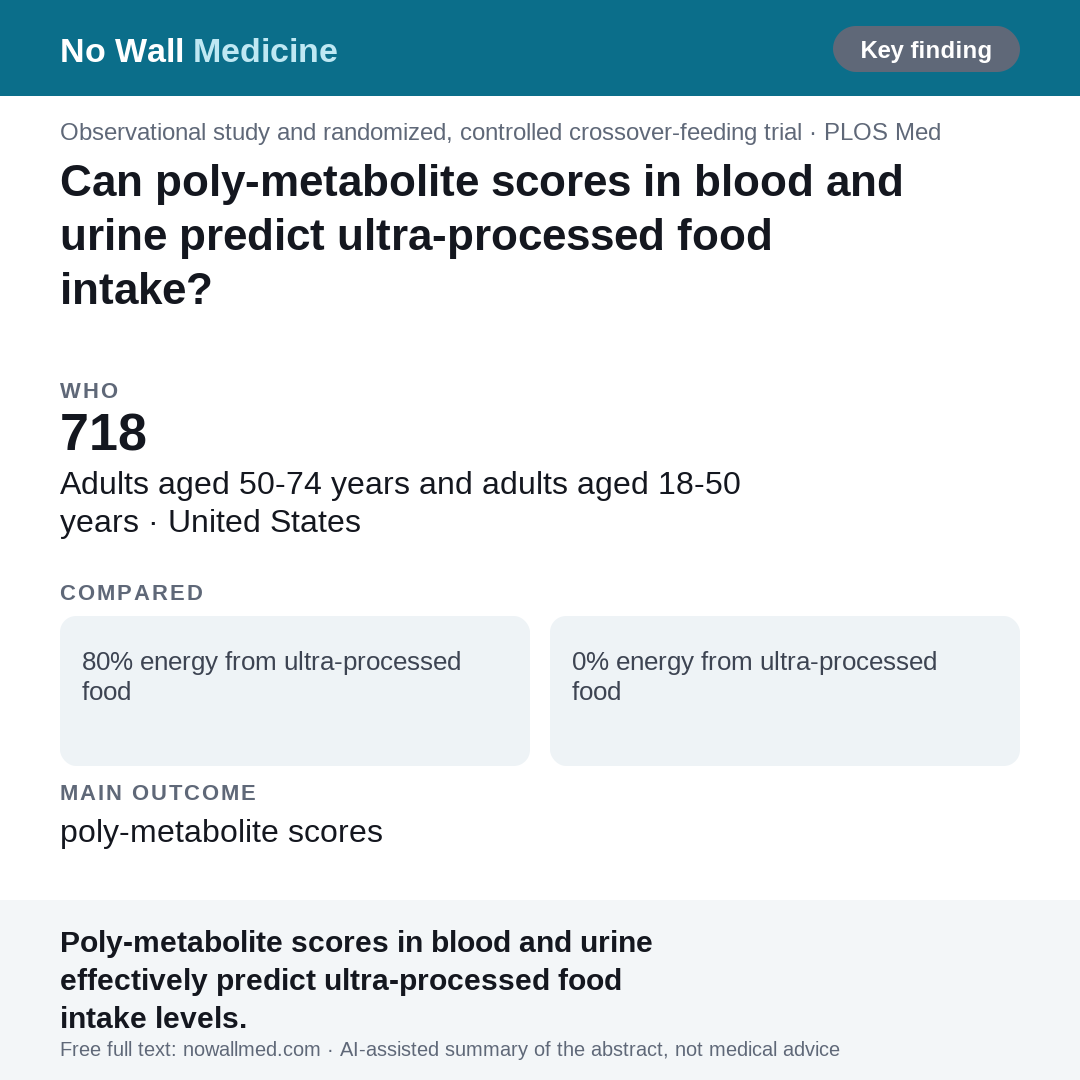
Identification and validation of poly-metabolite scores for diets high in ultra-processed food: An observational study and post-hoc randomized controlled crossover-feeding trial
Observational study and randomized, controlled crossover-feeding trialBenefit found
Can poly-metabolite scores in blood and urine predict ultra-processed food intake?
Who
718
Adults aged 50-74 years and adults aged 18-50 years · United States
Compared
80% energy from ultra-processed food
0% energy from ultra-processed food
Main outcome
poly-metabolite scores
Bottom line: Poly-metabolite scores in blood and urine effectively predict ultra-processed food intake levels.
PLOS Med · 2025-05-20Download image
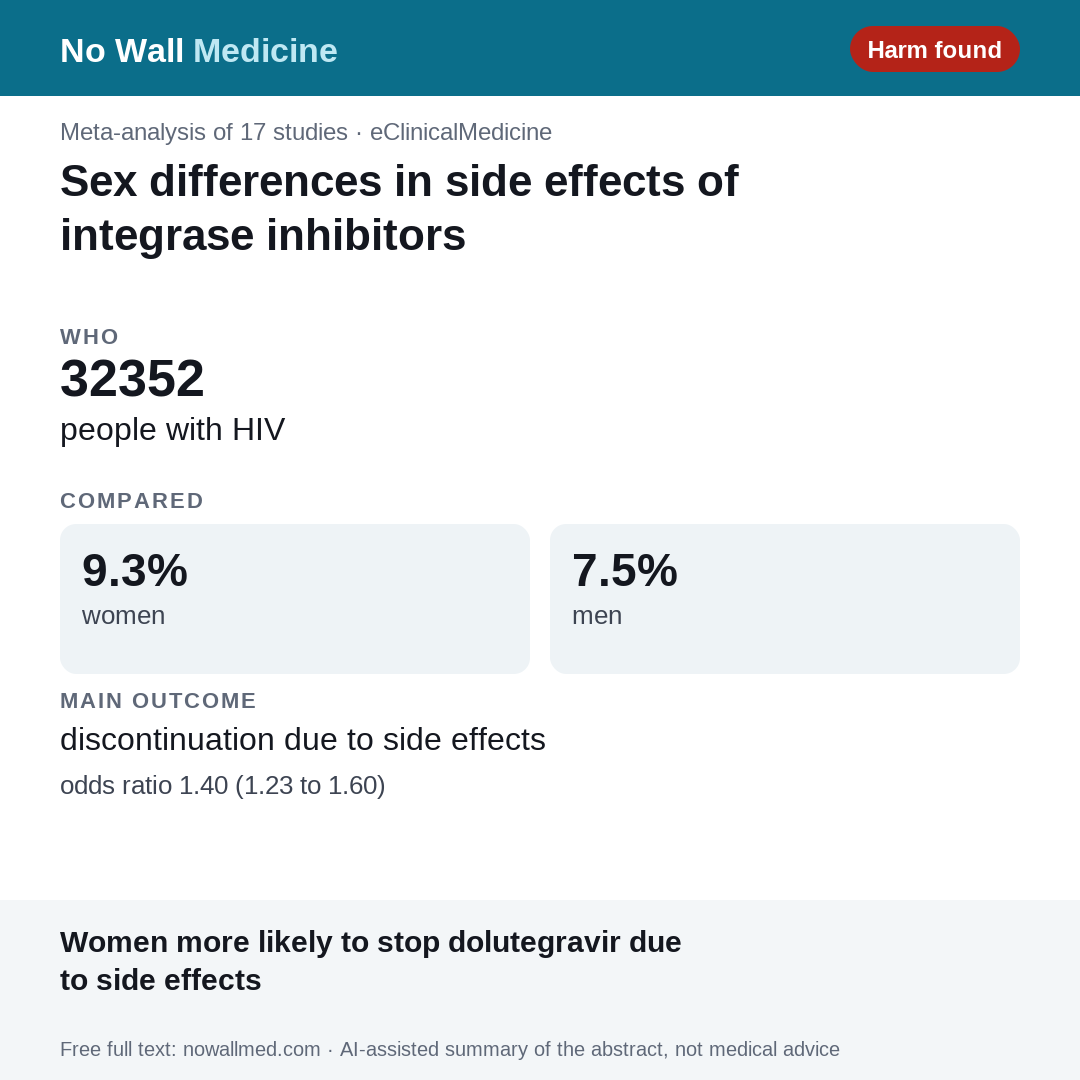
Sex differences in discontinuations due to side effects of second-generation integrase strand transfer inhibitors: a systematic review and meta-analysis
Meta-analysis of 17 studiesHarm found
Sex differences in side effects of integrase inhibitors
Who
32352
people with HIV
Compared
9.3%women
7.5%men
Main outcome
discontinuation due to side effects
Result: odds ratio 1.40 (1.23 to 1.60)
Bottom line: Women more likely to stop dolutegravir due to side effects
Limitation: lack of sex-disaggregated reporting
eClinicalMedicine · 2025-05-20Download image
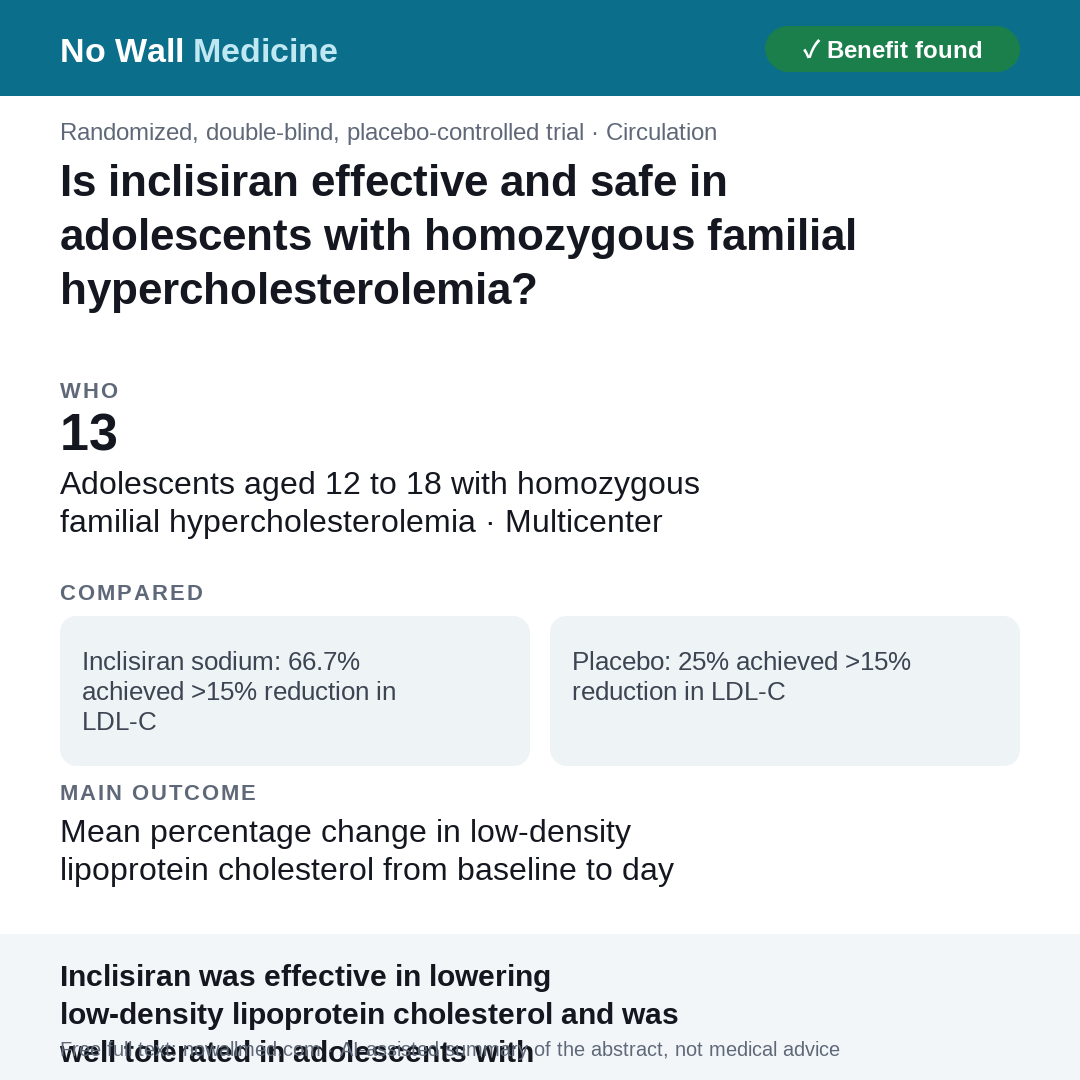
Efficacy and Safety of Inclisiran in Adolescents With Genetically Confirmed Homozygous Familial Hypercholesterolemia: Results From the Double-Blind, Placebo-Controlled Part of the ORION-13 Randomized Trial
Randomized, double-blind, placebo-controlled trialBenefit found
Is inclisiran effective and safe in adolescents with homozygous familial hypercholesterolemia?
Who
13
Adolescents aged 12 to 18 with homozygous familial hypercholesterolemia · Multicenter study
Compared
Inclisiran sodium: 66.7% achieved >15% reduction in LDL-C
Placebo: 25% achieved >15% reduction in LDL-C
Main outcome
Mean percentage change in low-density lipoprotein cholesterol from baseline to day 330
Result: -33.3% (-59.2% to -7.3%)
Bottom line: Inclisiran was effective in lowering low-density lipoprotein cholesterol and was well tolerated in adolescents with homozygous familial hypercholesterolemia.
Circulation · 2025-05-20Download image
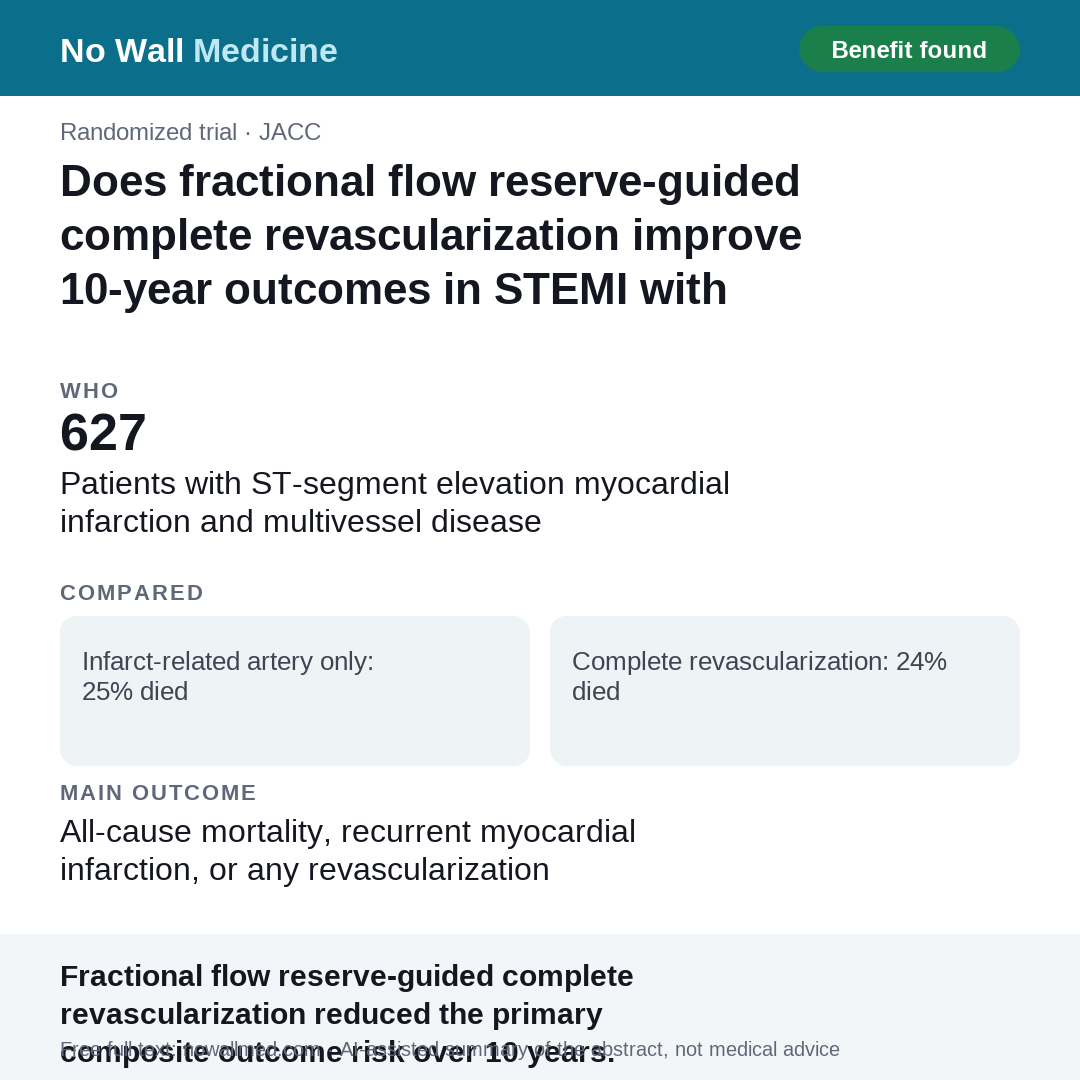
10-Year Outcome of Complete or Infarct Artery-Only Revascularization in STEMI With Multivessel Disease: The DANAMI-3-PRIMULTI Study
Randomized trialBenefit found
Does fractional flow reserve-guided complete revascularization improve 10-year outcomes in STEMI with multivessel disease?
Who
627
Patients with ST-segment elevation myocardial infarction and multivessel disease
Compared
Infarct-related artery only: 25% died
Complete revascularization: 24% died
Main outcome
All-cause mortality, recurrent myocardial infarction, or any revascularization
Result: hazard ratio 0.76 (95% CI 0.60-0.94)
Bottom line: Fractional flow reserve-guided complete revascularization reduced the primary composite outcome risk over 10 years.
JACC · 2025-05-20Download image
Antithrombotic treatment following revascularization for chronic limb-threatening ischaemia: a scientific statement of the European Society of Cardiology Working Group on Aorta and Peripheral Vascular Diseases and the European Society of Cardiology Working Group on Cardiovascular Pharmacotherapy
Scientific statement based on systematic reviewBenefit found
What is the best antithrombotic treatment following revascularization for chronic limb-threatening ischaemia?
Who
Patients with chronic limb-threatening ischaemia following lower limb revascularization
Compared
Dual pathway inhibition: reduced the risk of major adverse limb events, major adverse cardiovascular events, and unplanned target limb revascularization
Other antithrombotic regimens
Main outcome
major adverse limb events and major adverse cardiovascular events
Bottom line: Intensified antithrombotic treatment, specifically dual pathway inhibition or dual antiplatelet therapy, may reduce limb and cardiovascular events.
Eur Heart J · 2025-05-20Download image

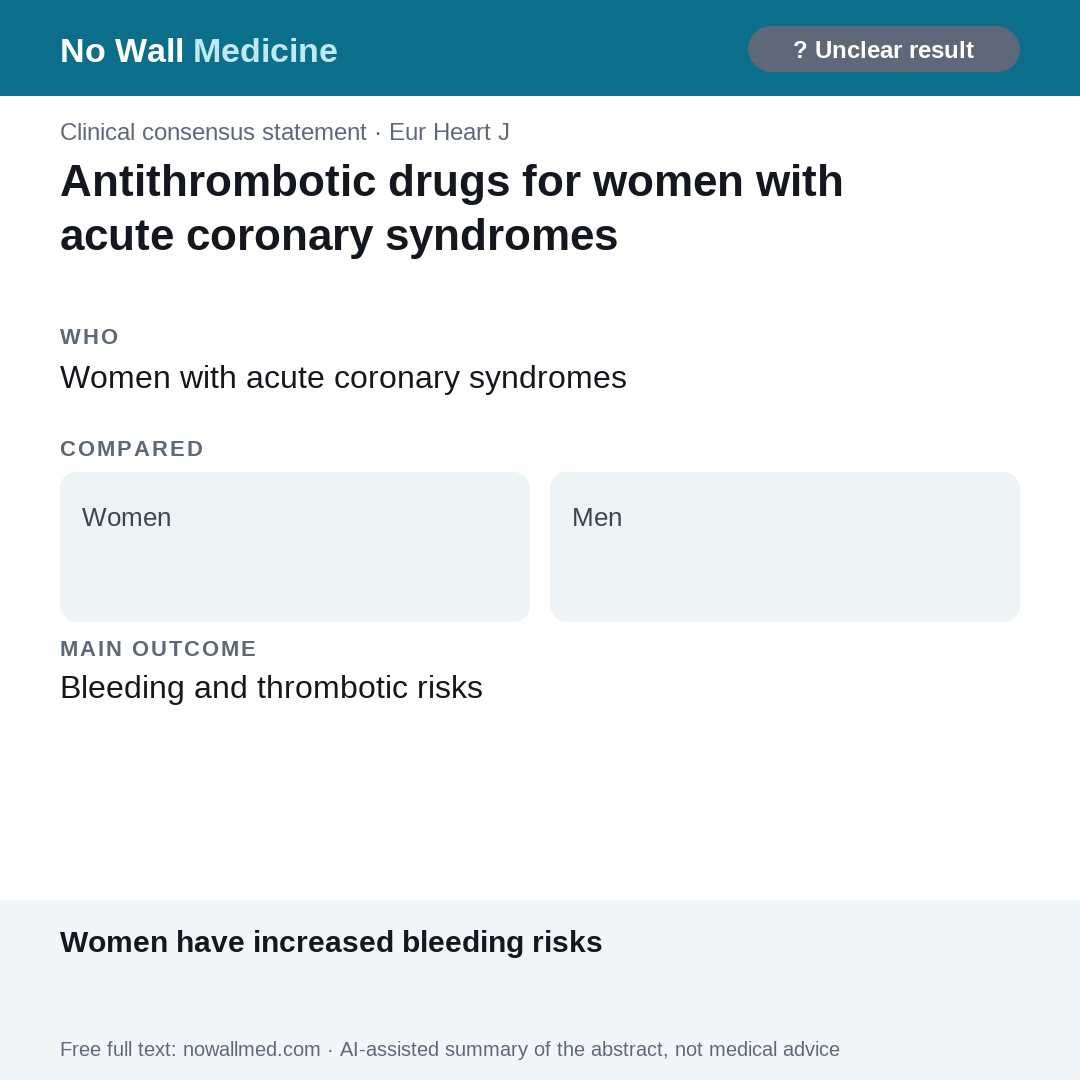
Antithrombotic drugs for acute coronary syndromes in women: sex-adjusted treatment and female representation in randomised clinical trials. A clinical consensus statement of the European Association of Percutaneous Cardiovascular Interventions (EAPCI) and the ESC Working Group on Thrombosis
Clinical consensus statementUnclear result
Antithrombotic drugs for women with acute coronary syndromes
Who
Women with acute coronary syndromes
Compared
Women
Men
Main outcome
Bleeding and thrombotic risks
Bottom line: Women have increased bleeding risks
Limitation: Underrepresentation of women in trials
Eur Heart J · 2025-05-20Download image
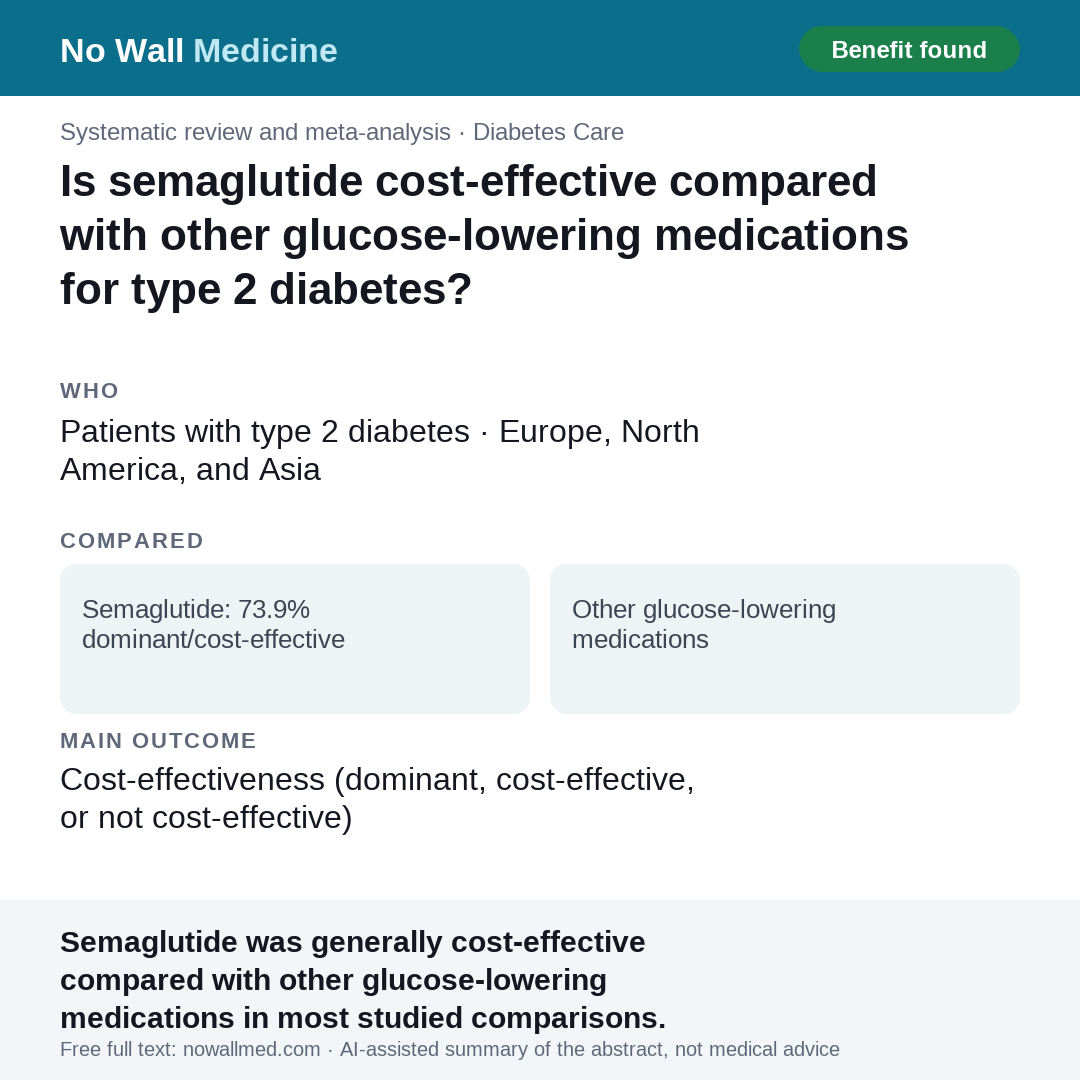
Cost-effectiveness of Semaglutide Compared With Other Glucose-Lowering Medications in Treating Type 2 Diabetes: A Comprehensive Systematic Review and Meta-analysis
Systematic review and meta-analysisBenefit found
Is semaglutide cost-effective compared with other glucose-lowering medications for type 2 diabetes?
Who
Patients with type 2 diabetes · Europe, North America, and Asia
Compared
Semaglutide: 73.9% dominant/cost-effective
Other glucose-lowering medications
Main outcome
Cost-effectiveness (dominant, cost-effective, or not cost-effective)
Bottom line: Semaglutide was generally cost-effective compared with other glucose-lowering medications in most studied comparisons.
Limitation: Less detailed demographic information for more granular analyses.
Diabetes Care · 2025-05-20Download image
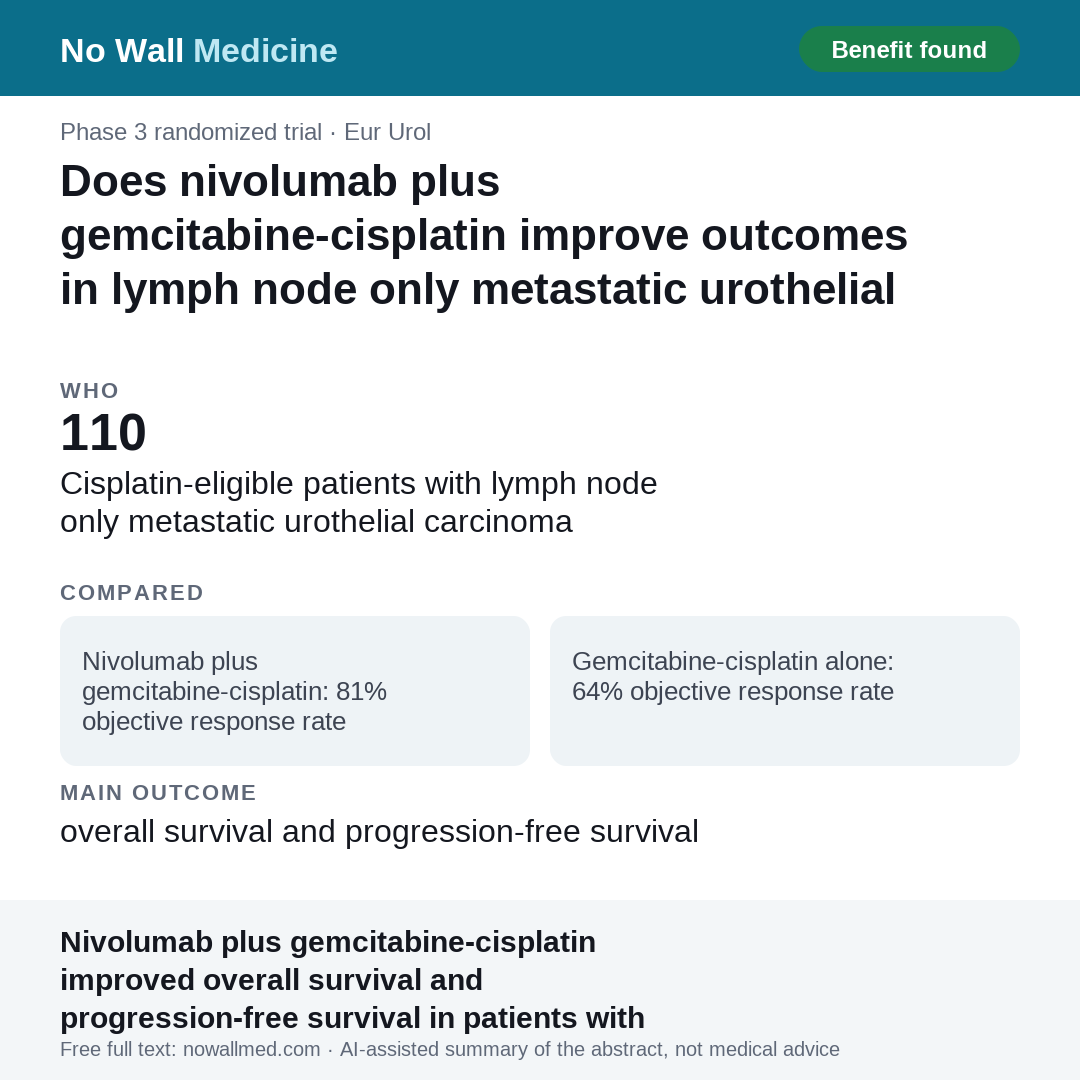
Characterization of Patients with Lymph Node Only Metastatic Urothelial Carcinoma Treated with Nivolumab Plus Gemcitabine-Cisplatin Versus Gemcitabine-Cisplatin Alone from the CheckMate 901 Trial
Phase 3 randomized trialBenefit found
Does nivolumab plus gemcitabine-cisplatin improve outcomes in lymph node only metastatic urothelial carcinoma?
Who
110
Cisplatin-eligible patients with lymph node only metastatic urothelial carcinoma
Compared
Nivolumab plus gemcitabine-cisplatin: 81% objective response rate
Gemcitabine-cisplatin alone: 64% objective response rate
Main outcome
overall survival and progression-free survival
Result: hazard ratio 0.58 (95% CI 0.34-1.00) for overall survival
Bottom line: Nivolumab plus gemcitabine-cisplatin improved overall survival and progression-free survival in patients with lymph node only disease.
Eur Urol · 2025-05-20Download image
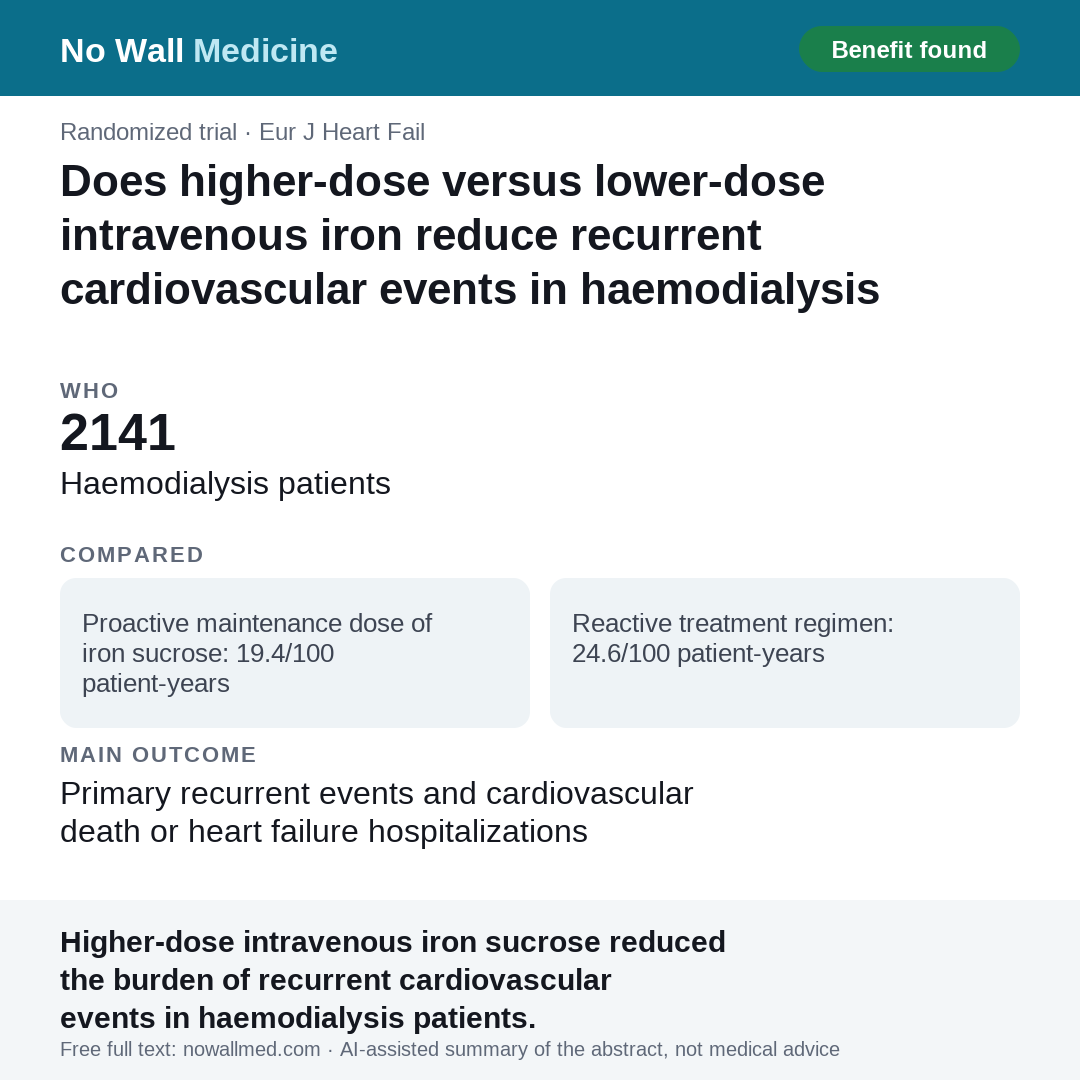
Recurrent event analyses in patients receiving maintenance dialysis and the effect of higher- versus lower-dose chronic intravenous iron therapy: A report focusing on heart failure events from the PIVOTAL trial
Randomized trialBenefit found
Does higher-dose versus lower-dose intravenous iron reduce recurrent cardiovascular events in haemodialysis patients?
Who
2141
Haemodialysis patients
Compared
Proactive maintenance dose of iron sucrose: 19.4/100 patient-years
Reactive treatment regimen: 24.6/100 patient-years
Main outcome
Primary recurrent events and cardiovascular death or heart failure hospitalizations
Result: rate ratio 0.77 (95% CI 0.66-0.92)
Bottom line: Higher-dose intravenous iron sucrose reduced the burden of recurrent cardiovascular events in haemodialysis patients.
Eur J Heart Fail · 2025-05-20Download image
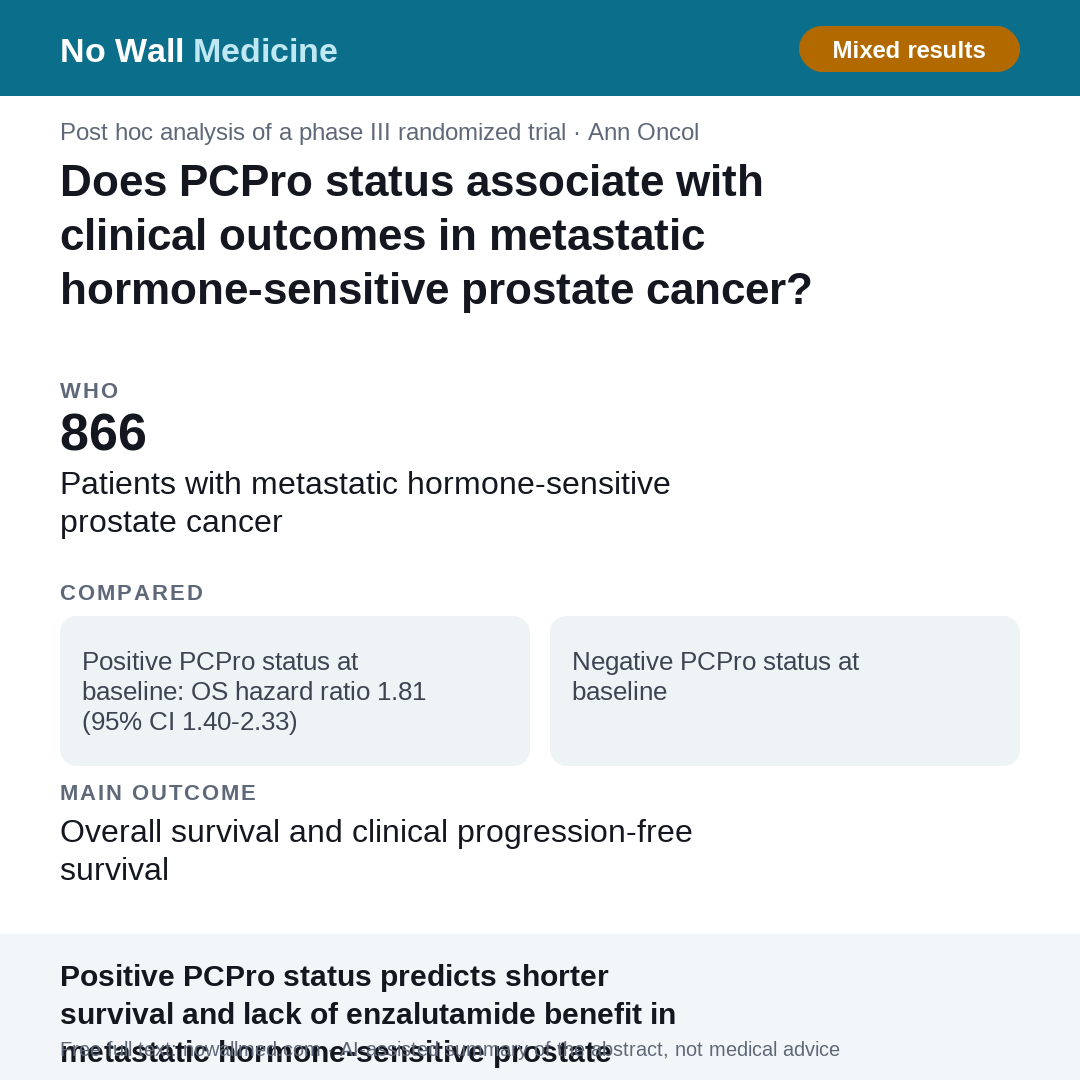
Association of the circulating lipid panel, PCPro, with clinical outcomes in metastatic hormone-sensitive prostate cancer: post hoc analysis of the ENZAMET phase III randomised trial (ANZUP 1304)
Post hoc analysis of a phase III randomized trialMixed results
Does PCPro status associate with clinical outcomes in metastatic hormone-sensitive prostate cancer?
Who
866
Patients with metastatic hormone-sensitive prostate cancer
Compared
Positive PCPro status at baseline: OS hazard ratio 1.81 (95% CI 1.40-2.33)
Negative PCPro status at baseline
Main outcome
Overall survival and clinical progression-free survival
Result: hazard ratio 1.81 (95% CI 1.40-2.33)
Bottom line: Positive PCPro status predicts shorter survival and lack of enzalutamide benefit in metastatic hormone-sensitive prostate cancer.
Limitation: This was a post hoc analysis of the ENZAMET trial.
Ann Oncol · 2025-05-20Download image
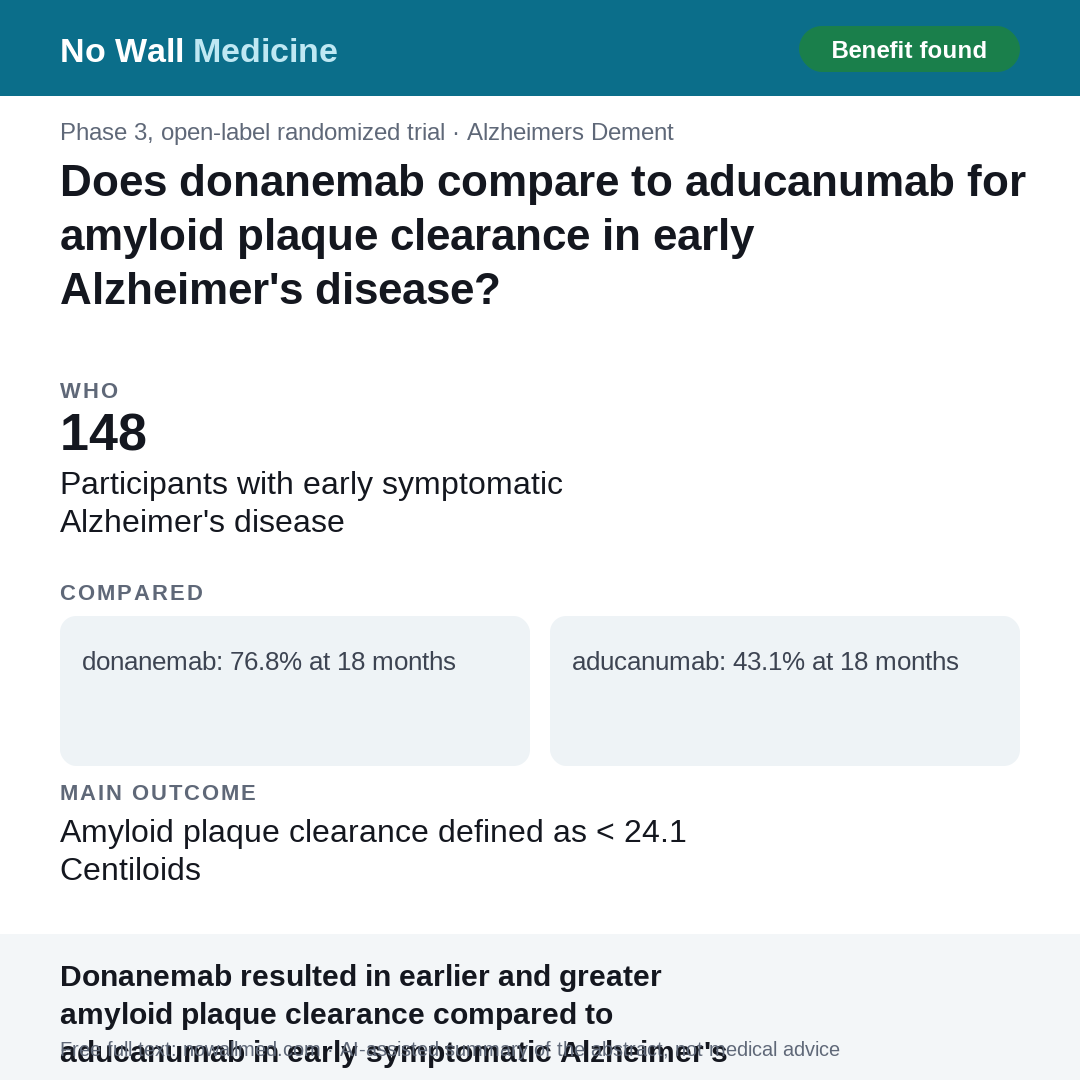
TRAILBLAZER-ALZ 4: A phase 3 trial comparing donanemab with aducanumab on amyloid plaque clearance in early, symptomatic Alzheimer's disease
Phase 3, open-label randomized trialBenefit found
Does donanemab compare to aducanumab for amyloid plaque clearance in early Alzheimer's disease?
Who
148
Participants with early symptomatic Alzheimer's disease
Compared
donanemab: 76.8% at 18 months
aducanumab: 43.1% at 18 months
Main outcome
Amyloid plaque clearance defined as < 24.1 Centiloids
Bottom line: Donanemab resulted in earlier and greater amyloid plaque clearance compared to aducanumab in early symptomatic Alzheimer's disease.
Alzheimers Dement · 2025-05-20Download image
Cholinergic system in schizophrenia: A systematic review and meta-analysis
Systematic review and meta-analysisHarm found
Are there alterations in the central cholinergic system in schizophrenia or schizoaffective disorder?
Who
Individuals with schizophrenia or schizoaffective disorder compared to controls
Compared
Schizophrenia/schizoaffective disorder: 74% of studies described significant alterations
Control population
Main outcome
Muscarinic and nicotinic receptor levels
Result: M1/M4 muscarinic receptors: striatum g = -0.809, hippocampus g = -0.872, fronto-cingulate cortex g = -0.438
Bottom line: Schizophrenia is associated with widespread decreases in muscarinic and nicotinic receptor levels.
Mol Psychiatry · 2025-05-20Download image

The event-related potential components across psychiatric disorders: a systematic review and network meta-analysis
Systematic review and network meta-analysisMixed results
How do event-related potential components compare across various psychiatric disorders and healthy individuals?
Who
Patients with schizophrenia, bipolar disorder, depression, anxiety, and obsessive-compulsive disorder
Compared
Psychiatric disorders: significant reduction in amplitudes and latency delay of P300, and reduced mismatch negative amplitude
Healthy controls
Main outcome
Event-related potential components
Bottom line: Schizophrenia exhibited the most pronounced electrophysiological abnormalities, particularly in the P300 and P50 components.
Mol Psychiatry · 2025-05-20Download image

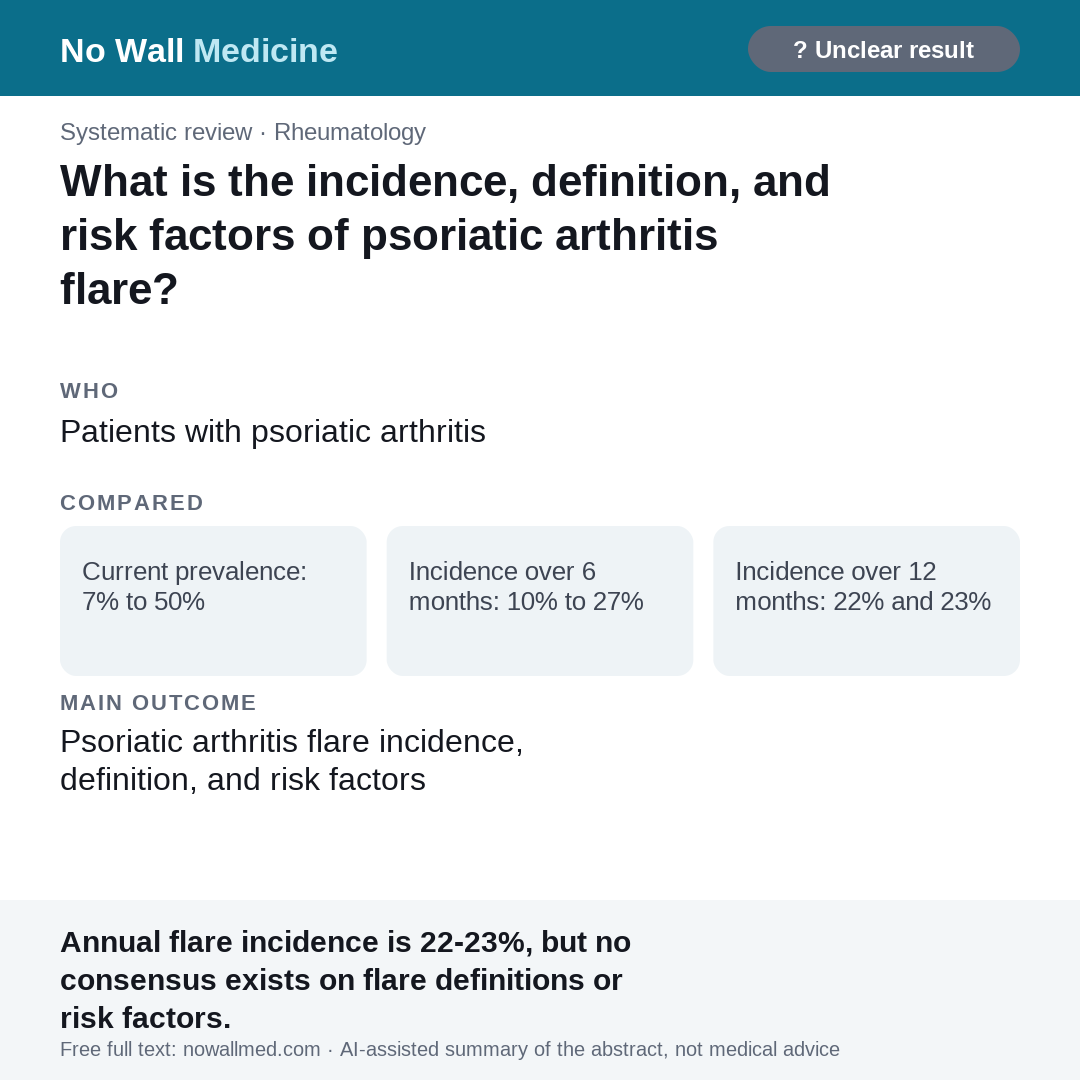
Psoriatic arthritis flare incidence, definition and risk factors: a systematic review
Systematic reviewUnclear result
What is the incidence, definition, and risk factors of psoriatic arthritis flare?
Who
Patients with psoriatic arthritis
Compared
Current prevalence: 7% to 50%
Incidence over 6 months: 10% to 27%
Incidence over 12 months: 22% and 23%
Main outcome
Psoriatic arthritis flare incidence, definition, and risk factors
Bottom line: Annual flare incidence is 22-23%, but no consensus exists on flare definitions or risk factors.
Limitation: Risk factors showed limited or unclear evidence.
Rheumatology · 2025-05-20Download image
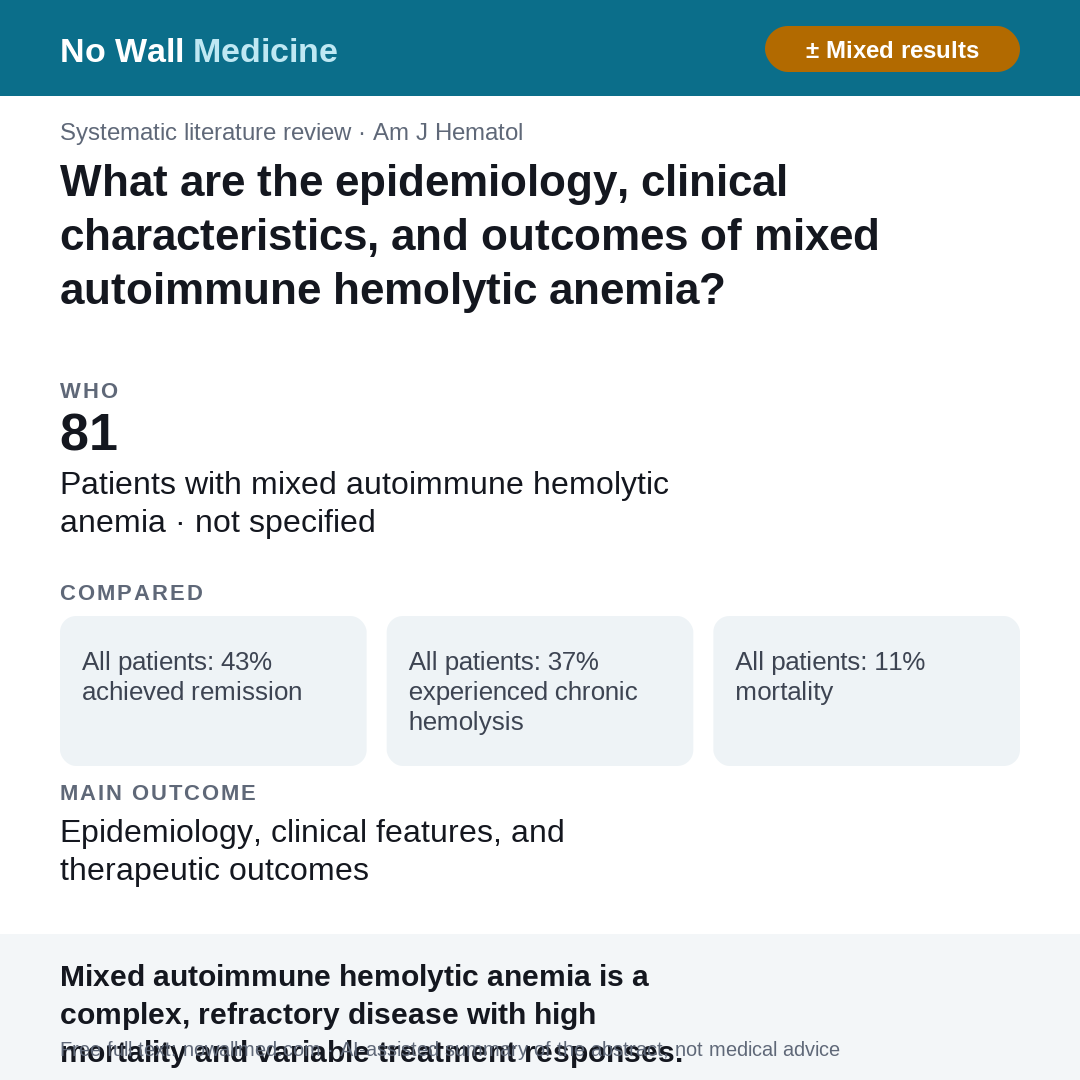
Mixed Autoimmune Hemolytic Anemia: A Systematic Review of Epidemiology, Clinical Characteristics, Therapies, and Outcomes
Systematic literature reviewMixed results
What are the epidemiology, clinical characteristics, and outcomes of mixed autoimmune hemolytic anemia?
Who
81
Patients with mixed autoimmune hemolytic anemia · not specified
Compared
All patients: 43% achieved remission
All patients: 37% experienced chronic hemolysis
All patients: 11% mortality
Main outcome
Epidemiology, clinical features, and therapeutic outcomes
Bottom line: Mixed autoimmune hemolytic anemia is a complex, refractory disease with high mortality and variable treatment responses.
Limitation: Substantial variability in diagnostic and therapeutic approaches and limited data.
Am J Hematol · 2025-05-20Download image
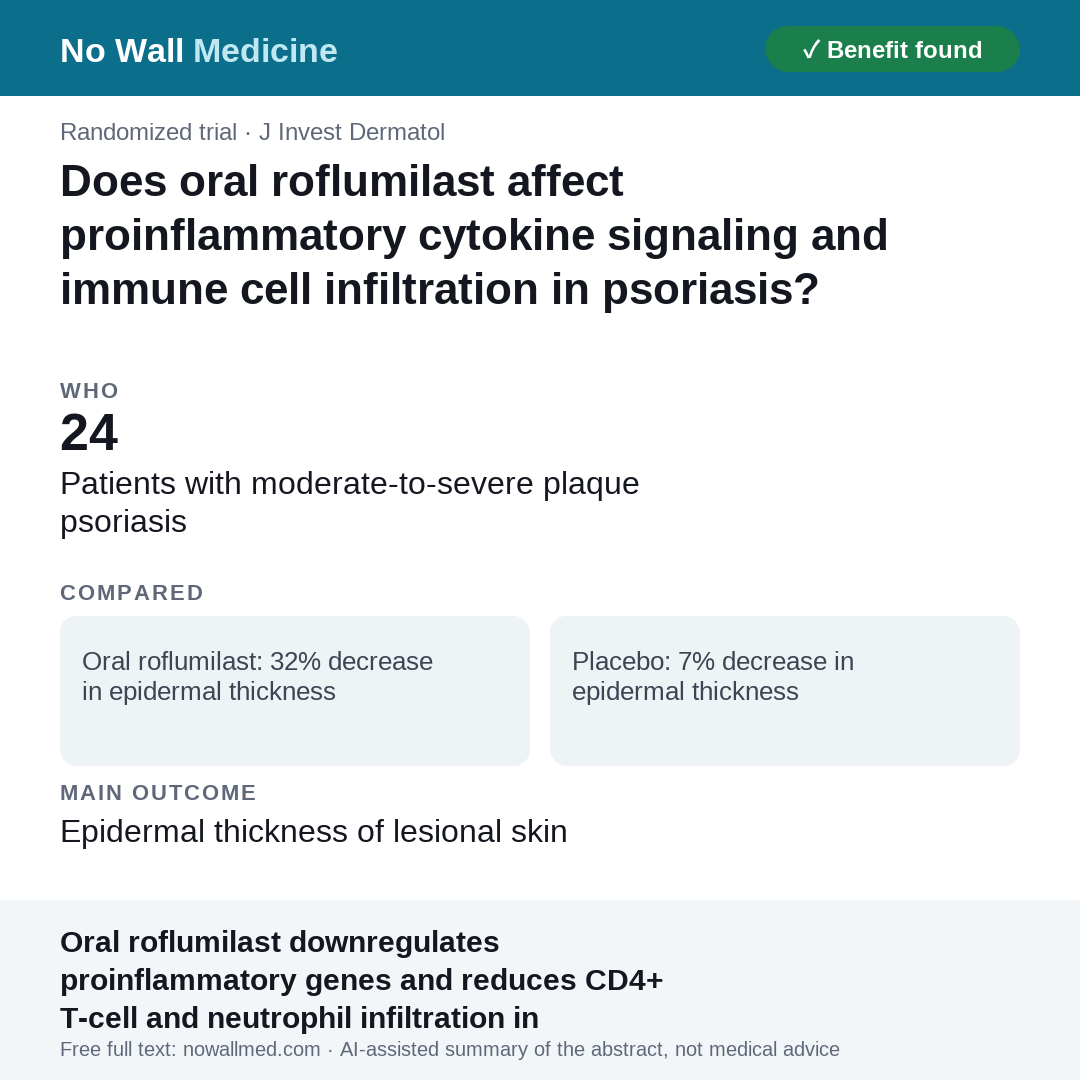
Oral Roflumilast Suppresses Proinflammatory Cytokine Signaling and Reduces CD4+ T-Cell and Neutrophil Infiltration in Psoriasis
Randomized trialBenefit found
Does oral roflumilast affect proinflammatory cytokine signaling and immune cell infiltration in psoriasis?
Who
24
Patients with moderate-to-severe plaque psoriasis
Compared
Oral roflumilast: 32% decrease in epidermal thickness
Placebo: 7% decrease in epidermal thickness
Main outcome
Epidermal thickness of lesional skin
Bottom line: Oral roflumilast downregulates proinflammatory genes and reduces CD4+ T-cell and neutrophil infiltration in psoriasis.
J Invest Dermatol · 2025-05-20Download image
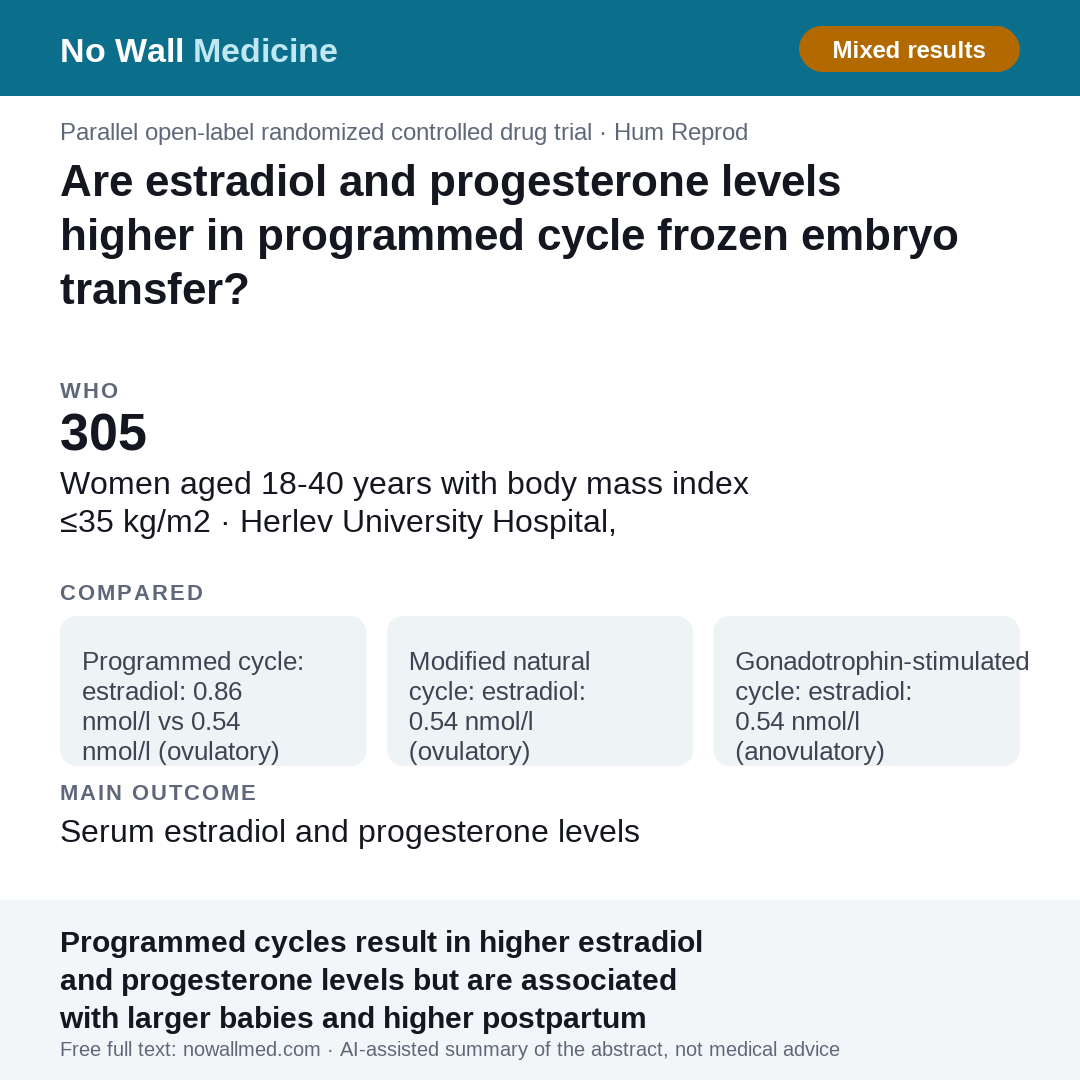
Estradiol and progesterone levels in early pregnancy after modified natural, programmed, and gonadotrophin-stimulated frozen embryo transfer cycles: a randomized controlled trial
Parallel open-label randomized controlled drug trialMixed results
Are estradiol and progesterone levels higher in programmed cycle frozen embryo transfer?
Who
305
Women aged 18-40 years with body mass index ≤35 kg/m2 · Herlev University Hospital, Denmark
Compared
Programmed cycle: estradiol: 0.86 nmol/l vs 0.54 nmol/l (ovulatory)
Modified natural cycle: estradiol: 0.54 nmol/l (ovulatory)
Gonadotrophin-stimulated cycle: estradiol: 0.54 nmol/l (anovulatory)
Main outcome
Serum estradiol and progesterone levels
Bottom line: Programmed cycles result in higher estradiol and progesterone levels but are associated with larger babies and higher postpartum hemorrhage risk.
Limitation: The target sample size of 100 cycles was not achieved in either anovulatory arm.
Funded by: Gedeon Richter Nordics AB, Gangsted-Rasmussen Foundation, Herlev University Hospital
Hum Reprod · 2025-05-20Download image
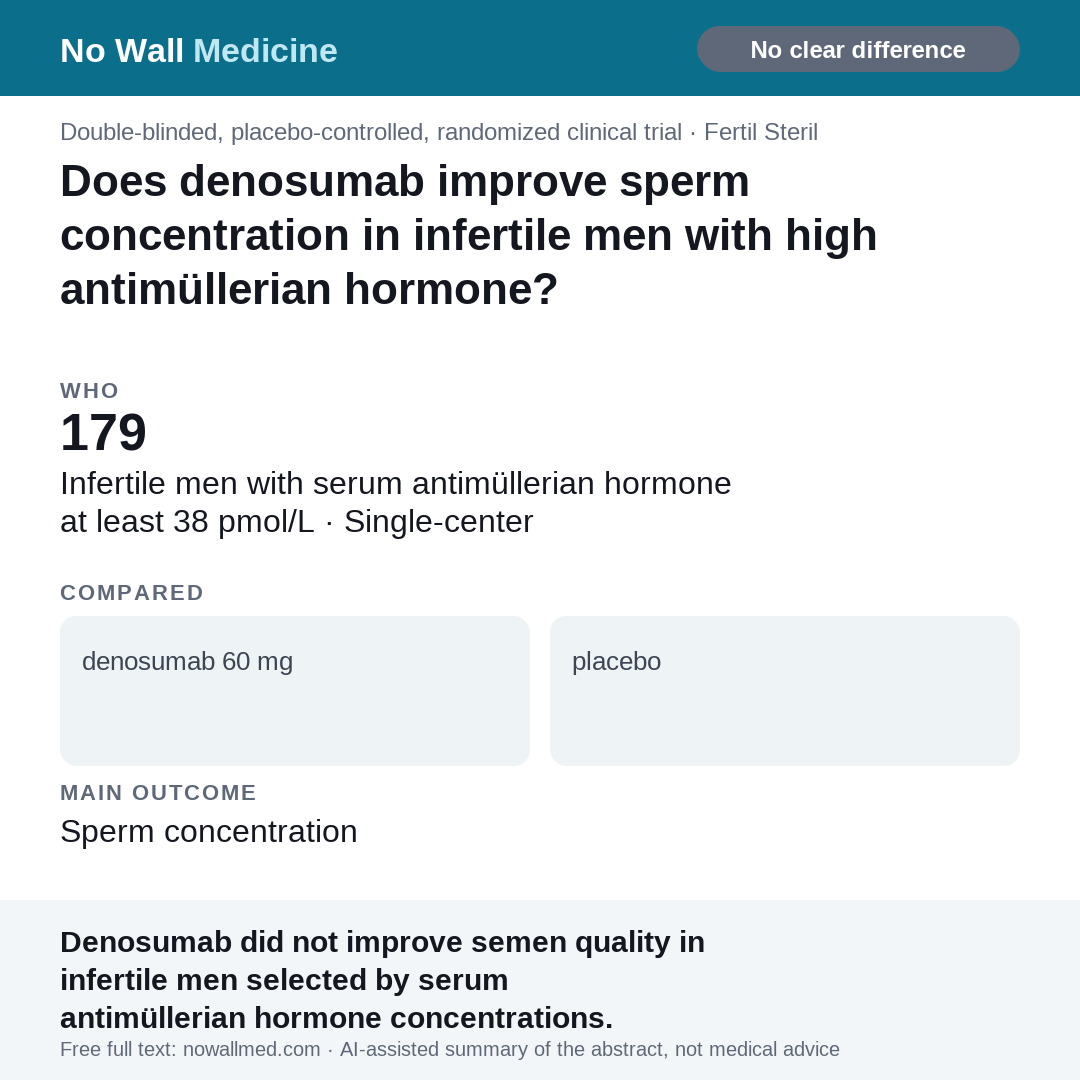
Effect of denosumab on semen quality in infertile men selected by serum level of antimüllerian hormone: a randomized controlled trial
Double-blinded, placebo-controlled, randomized clinical trialNo clear difference
Does denosumab improve sperm concentration in infertile men with high antimüllerian hormone?
Who
179
Infertile men with serum antimüllerian hormone at least 38 pmol/L · Single-center
Compared
denosumab 60 mg
placebo
Main outcome
Sperm concentration
Result: difference of -1.0 million/mL (95% CI -2.7, 1.1)
Bottom line: Denosumab did not improve semen quality in infertile men selected by serum antimüllerian hormone concentrations.
Fertil Steril · 2025-05-20Download image
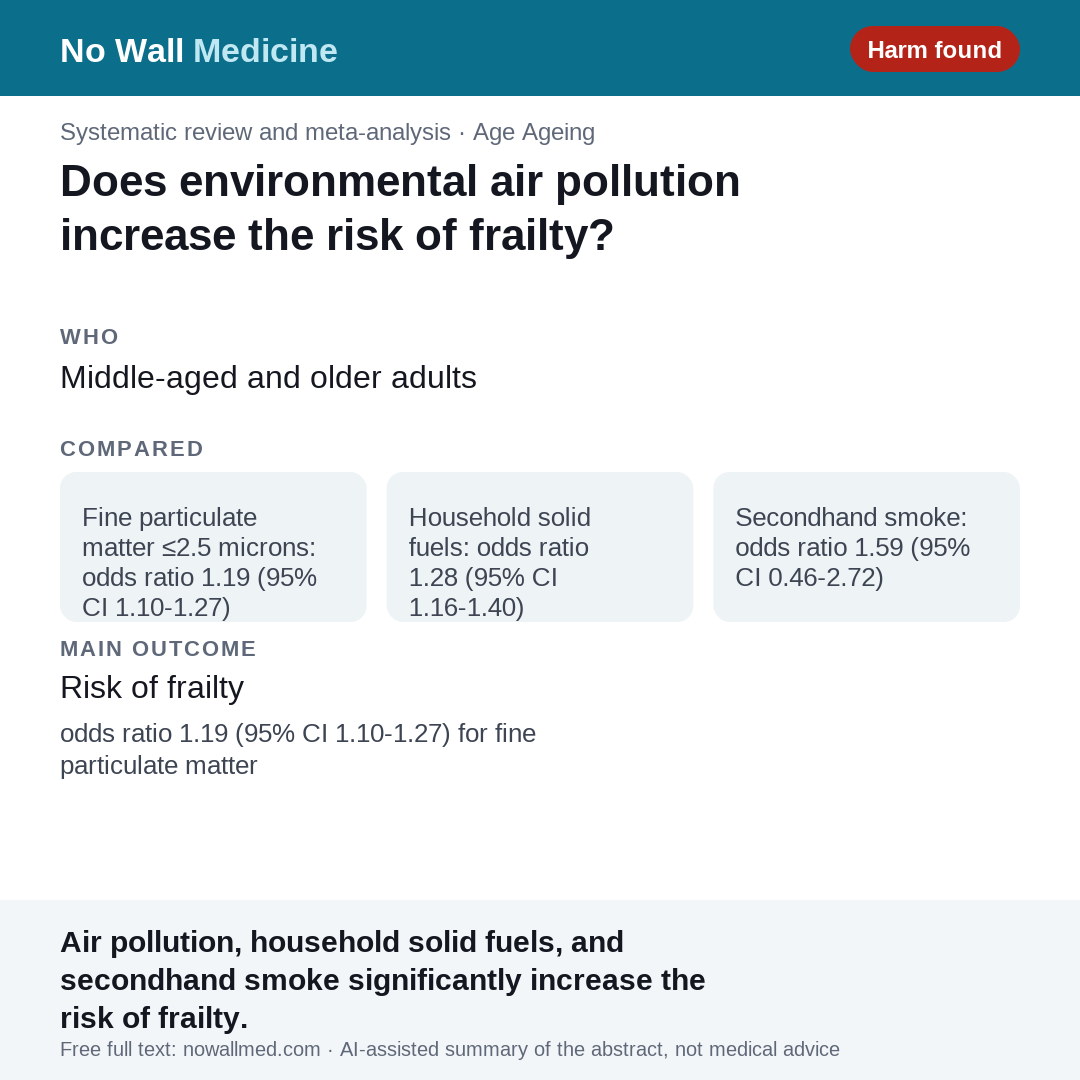
A systematic review and meta-analysis of air pollution and increased risk of frailty
Systematic review and meta-analysisHarm found
Does environmental air pollution increase the risk of frailty?
Who
Middle-aged and older adults
Compared
Fine particulate matter ≤2.5 microns: odds ratio 1.19 (95% CI 1.10-1.27)
Household solid fuels: odds ratio 1.28 (95% CI 1.16-1.40)
Secondhand smoke: odds ratio 1.59 (95% CI 0.46-2.72)
Main outcome
Risk of frailty
Result: odds ratio 1.19 (95% CI 1.10-1.27) for fine particulate matter
Bottom line: Air pollution, household solid fuels, and secondhand smoke significantly increase the risk of frailty.
Limitation: Heterogeneity or risk of publication bias was observed in the air pollution meta-analysis.
Age Ageing · 2025-05-20Download image