Visual abstracts
New randomized trials and meta-analyses from leading journals at a glance: who was studied, what was compared, and what was found. Every paper is free to read in full.
All specialtiesCardiology 840Oncology 760Gastroenterology & Hepatology 306Infectious Disease 626Neurology 350Psychiatry & Mental Health 430Pulmonology 365Critical Care 243Endocrinology & Diabetes 480Pediatrics 534Surgery 319Orthopedics & Sports Medicine 161Neurosurgery 89Cardiothoracic & Vascular Surgery 87Plastic & Reconstructive Surgery 118Nephrology 197Rheumatology 108Hematology 181Dermatology 78Ophthalmology 97Obstetrics & Gynecology 261Public & Global Health 167Radiology & Imaging 96Anesthesiology 107Urology 162ENT (Otolaryngology) 86Emergency Medicine 68Allergy & Immunology 58Geriatrics 160Family Medicine & Primary Care 111Medical Genetics & Genomics 91Pathology & Laboratory Medicine 24Physical Medicine & Rehabilitation 148Palliative Care 81Nutrition 223Digital Health & AI 460General Medicine 101
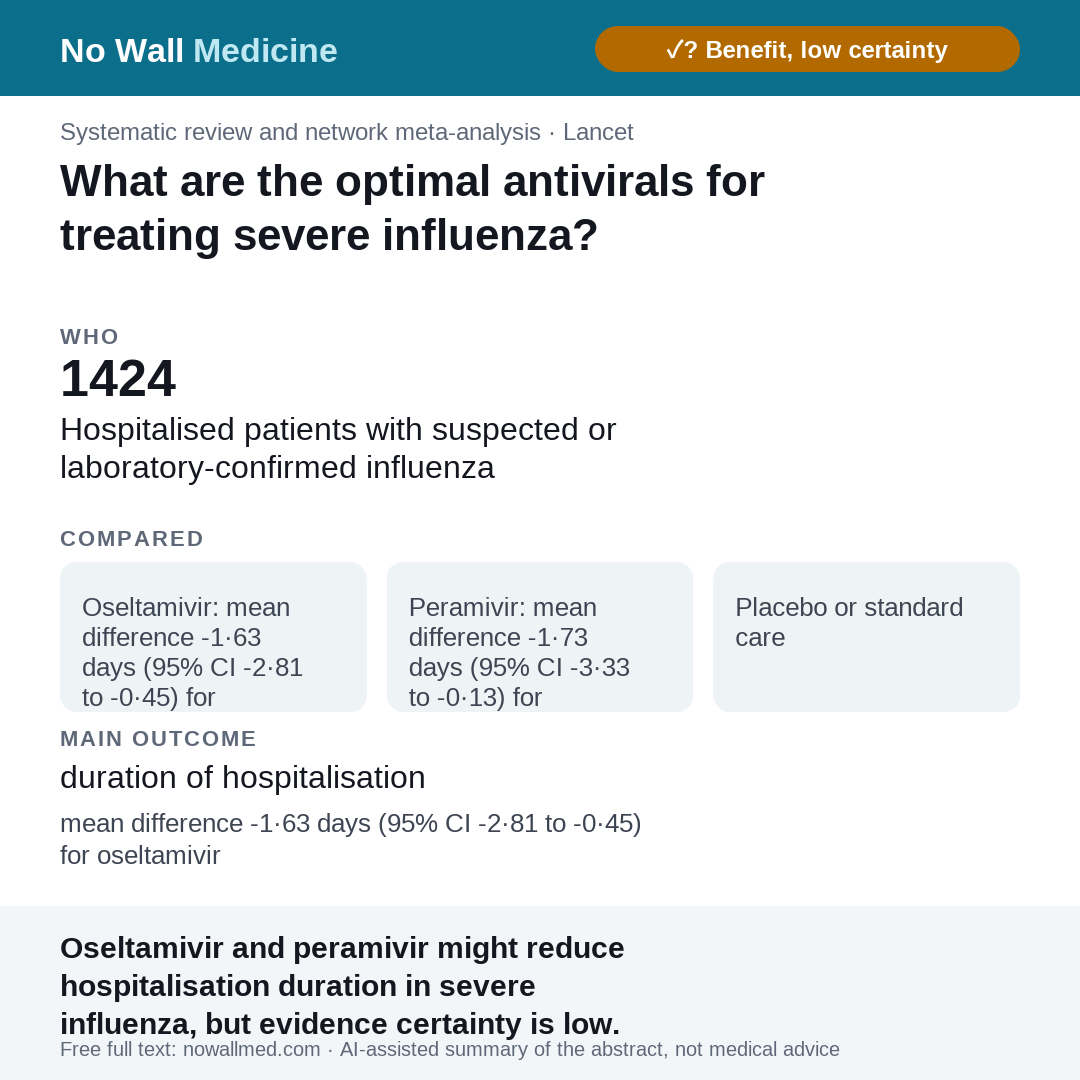
Antivirals for treatment of severe influenza: a systematic review and network meta-analysis of randomised controlled trials
Systematic review and network meta-analysisBenefit found
What are the optimal antivirals for treating severe influenza?
Who
1424
Hospitalised patients with suspected or laboratory-confirmed influenza
Compared
Oseltamivir: mean difference -1·63 days (95% CI -2·81 to -0·45) for hospitalisation
Peramivir: mean difference -1·73 days (95% CI -3·33 to -0·13) for hospitalisation
Placebo or standard care
Main outcome
duration of hospitalisation
Result: mean difference -1·63 days (95% CI -2·81 to -0·45) for oseltamivir
Bottom line: Oseltamivir and peramivir might reduce hospitalisation duration in severe influenza, but evidence certainty is low.
Limitation: Small number of eligible trials prevented testing for publication bias.
Funded by: World Health Organization
Lancet · 2024-08-26Download image
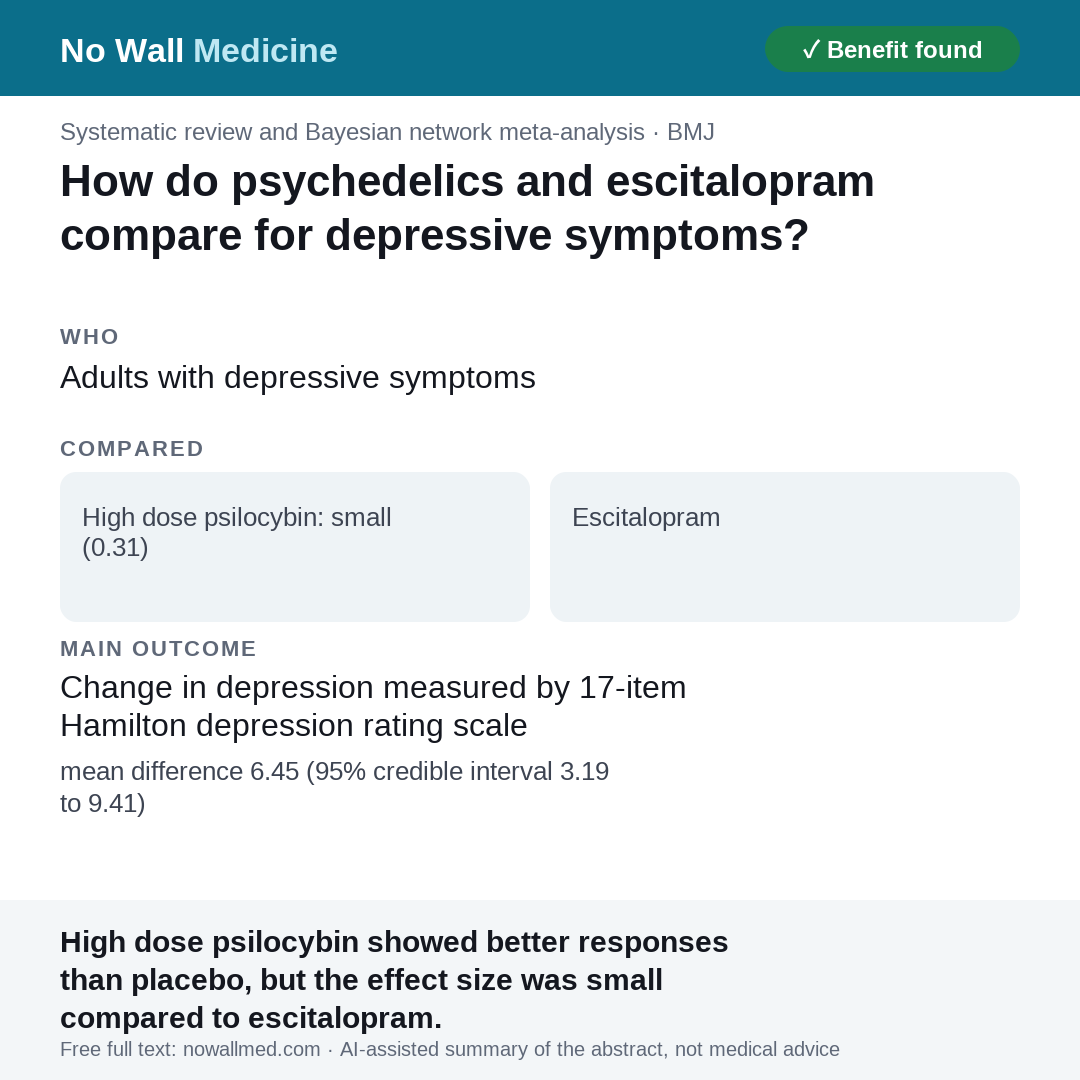
Comparative oral monotherapy of psilocybin, lysergic acid diethylamide, 3,4-methylenedioxymethamphetamine, ayahuasca, and escitalopram for depressive symptoms: systematic review and Bayesian network meta-analysis
Systematic review and Bayesian network meta-analysisBenefit found
How do psychedelics and escitalopram compare for depressive symptoms?
Who
Adults with depressive symptoms
Compared
High dose psilocybin: small (0.31)
Escitalopram
Main outcome
Change in depression measured by 17-item Hamilton depression rating scale
Result: mean difference 6.45 (95% credible interval 3.19 to 9.41)
Bottom line: High dose psilocybin showed better responses than placebo, but the effect size was small compared to escitalopram.
Limitation: Potential for overestimated effectiveness due to unsuccessful blinding.
BMJ · 2024-08-21Download image
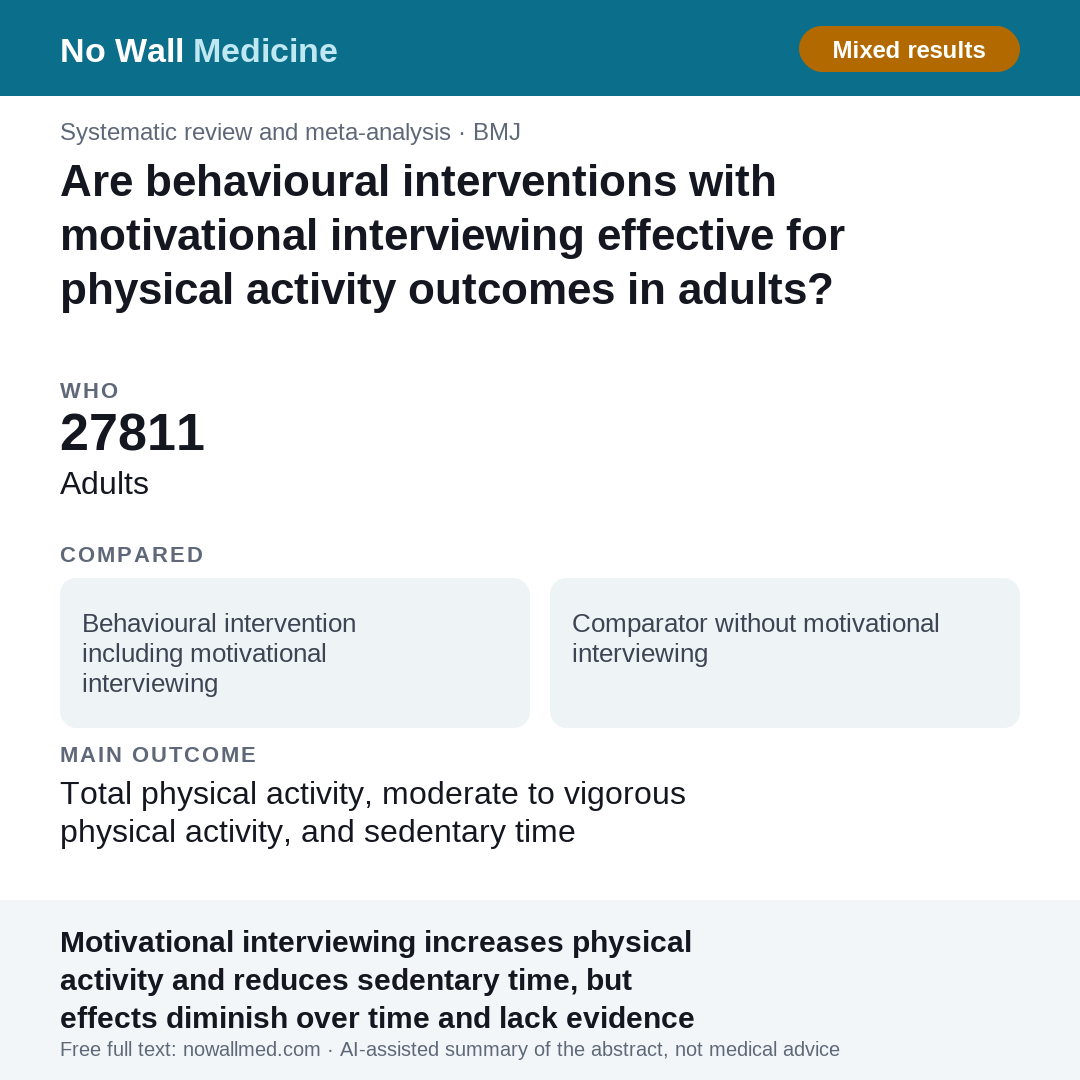
Effectiveness of behavioural interventions with motivational interviewing on physical activity outcomes in adults: systematic review and meta-analysis
Systematic review and meta-analysisMixed results
Are behavioural interventions with motivational interviewing effective for physical activity outcomes in adults?
Who
27811
Adults
Compared
Behavioural intervention including motivational interviewing
Comparator without motivational interviewing
Main outcome
Total physical activity, moderate to vigorous physical activity, and sedentary time
Result: SMD 0.45 (95% CI 0.33 to 0.65) for total physical activity
Bottom line: Motivational interviewing increases physical activity and reduces sedentary time, but effects diminish over time and lack evidence beyond one year.
Limitation: Effectiveness waned over time and evidence of benefit beyond one year was lacking.
BMJ · 2024-07-10Download image
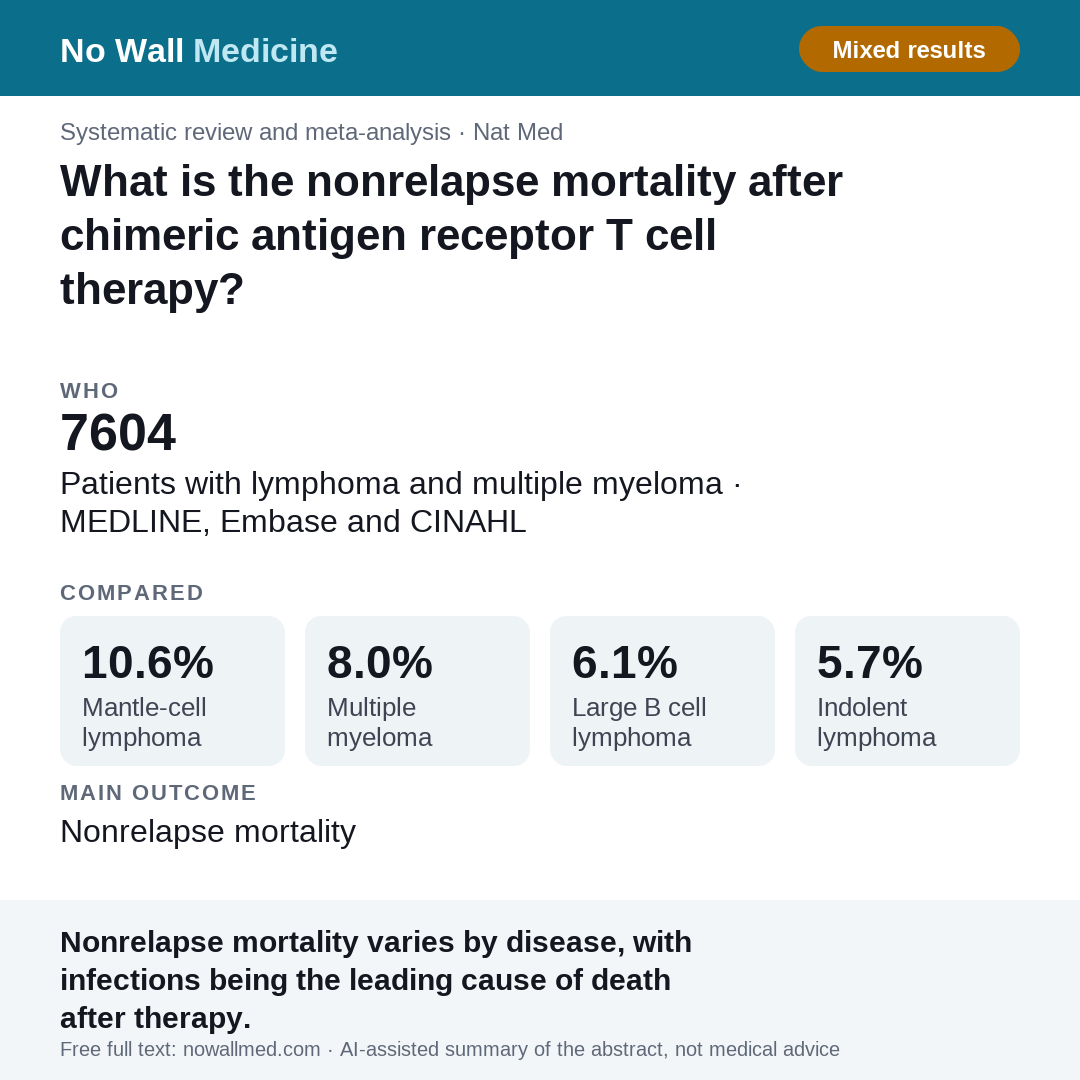
A systematic review and meta-analysis of nonrelapse mortality after CAR T cell therapy
Systematic review and meta-analysisMixed results
What is the nonrelapse mortality after chimeric antigen receptor T cell therapy?
Who
7604
Patients with lymphoma and multiple myeloma · MEDLINE, Embase and CINAHL
Compared
10.6%Mantle-cell lymphoma
8.0%Multiple myeloma
6.1%Large B cell lymphoma
5.7%Indolent lymphoma
Main outcome
Nonrelapse mortality
Bottom line: Nonrelapse mortality varies by disease, with infections being the leading cause of death after therapy.
Nat Med · 2024-07-08Download image
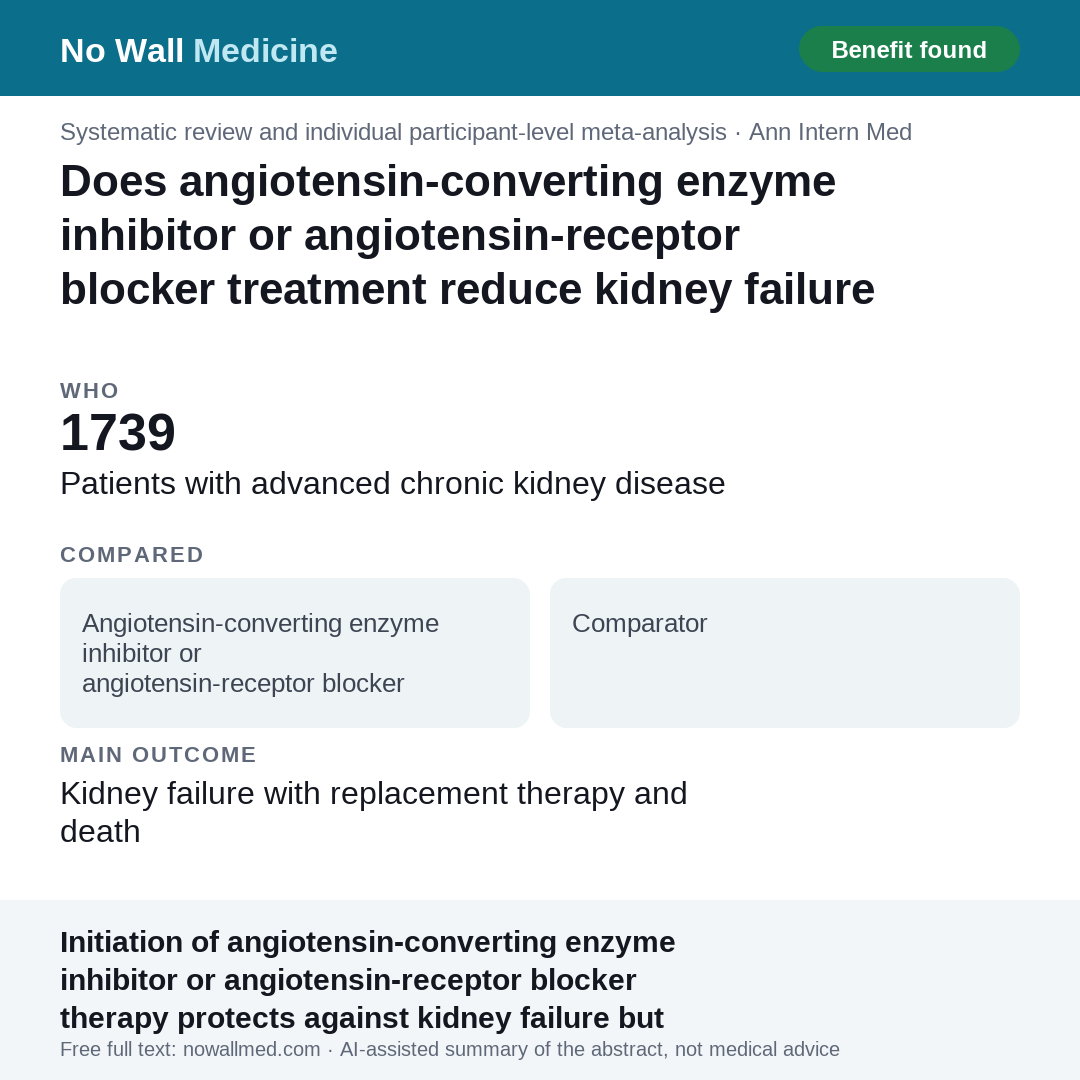
Angiotensin-Converting Enzyme Inhibitors or Angiotensin-Receptor Blockers for Advanced Chronic Kidney Disease : A Systematic Review and Retrospective Individual Participant-Level Meta-analysis of Clinical Trials
Systematic review and individual participant-level meta-analysisBenefit found
Does angiotensin-converting enzyme inhibitor or angiotensin-receptor blocker treatment reduce kidney failure or death?
Who
1739
Patients with advanced chronic kidney disease
Compared
Angiotensin-converting enzyme inhibitor or angiotensin-receptor blocker
Comparator
Main outcome
Kidney failure with replacement therapy and death
Result: adjusted hazard ratio 0.66 (95% CI 0.55 to 0.79) for kidney failure
Bottom line: Initiation of angiotensin-converting enzyme inhibitor or angiotensin-receptor blocker therapy protects against kidney failure but not death in advanced chronic kidney disease.
Limitation: Individual participant-level data for hyperkalemia or acute kidney injury were not available.
Funded by: National Institutes of Health
Ann Intern Med · 2024-07-02Download image
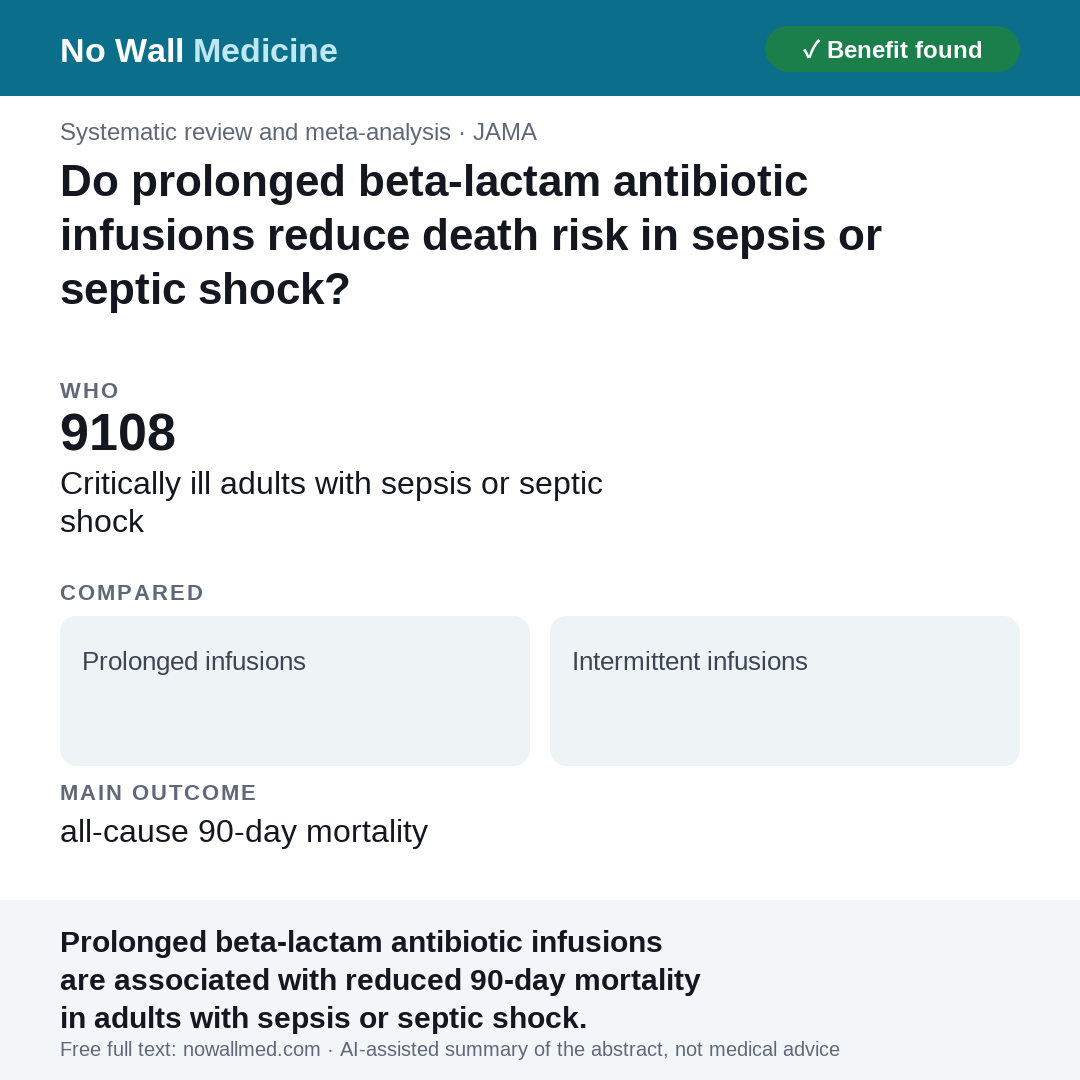
Prolonged vs Intermittent Infusions of β-Lactam Antibiotics in Adults With Sepsis or Septic Shock: A Systematic Review and Meta-Analysis
Systematic review and meta-analysisBenefit found
Do prolonged beta-lactam antibiotic infusions reduce death risk in sepsis or septic shock?
Who
9108
Critically ill adults with sepsis or septic shock
Compared
Prolonged infusions
Intermittent infusions
Main outcome
all-cause 90-day mortality
Result: risk ratio 0.86 (95% credible interval, 0.72-0.98)
Bottom line: Prolonged beta-lactam antibiotic infusions are associated with reduced 90-day mortality in adults with sepsis or septic shock.
JAMA · 2024-06-12Download image
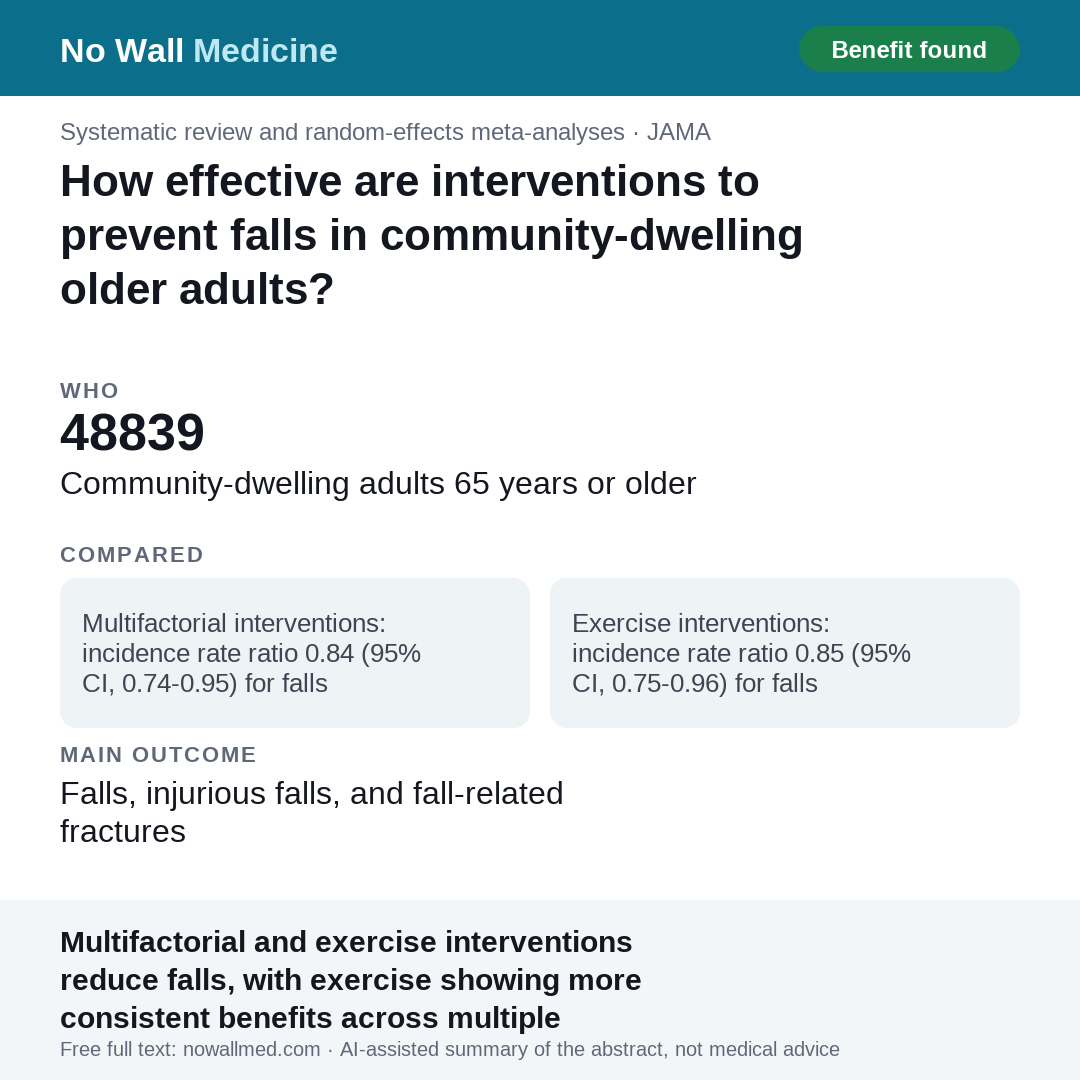
Interventions to Prevent Falls in Older Adults: Updated Evidence Report and Systematic Review for the US Preventive Services Task Force
Systematic review and random-effects meta-analysesBenefit found
How effective are interventions to prevent falls in community-dwelling older adults?
Who
48839
Community-dwelling adults 65 years or older
Compared
Multifactorial interventions: incidence rate ratio 0.84 (95% CI, 0.74-0.95) for falls
Exercise interventions: incidence rate ratio 0.85 (95% CI, 0.75-0.96) for falls
Main outcome
Falls, injurious falls, and fall-related fractures
Bottom line: Multifactorial and exercise interventions reduce falls, with exercise showing more consistent benefits across multiple outcomes.
JAMA · 2024-06-04Download image
Revisiting Race and the Benefit of RAS Blockade in Heart Failure: A Meta-Analysis of Randomized Clinical Trials
Meta-analysis of randomized clinical trialsBenefit found
Do renin-angiotensin system blockers benefit Black versus non-Black patients with heart failure?
Who
8825
Adults with heart failure and reduced ejection fraction
Compared
Black patients: hazard ratio 0.84 (95% CI, 0.69-1.03)
non-Black patients: hazard ratio 0.73 (95% CI, 0.67-0.79)
Main outcome
first hospitalization for heart failure or cardiovascular death
Result: hazard ratio 0.84 (95% CI, 0.69-1.03) in Black patients and 0.73 (95% CI, 0.67-0.79) in non-Black patients
Bottom line: Renin-angiotensin system blockade provides similar mortality benefits for both Black and non-Black patients with heart failure.
JAMA · 2024-05-29Download image

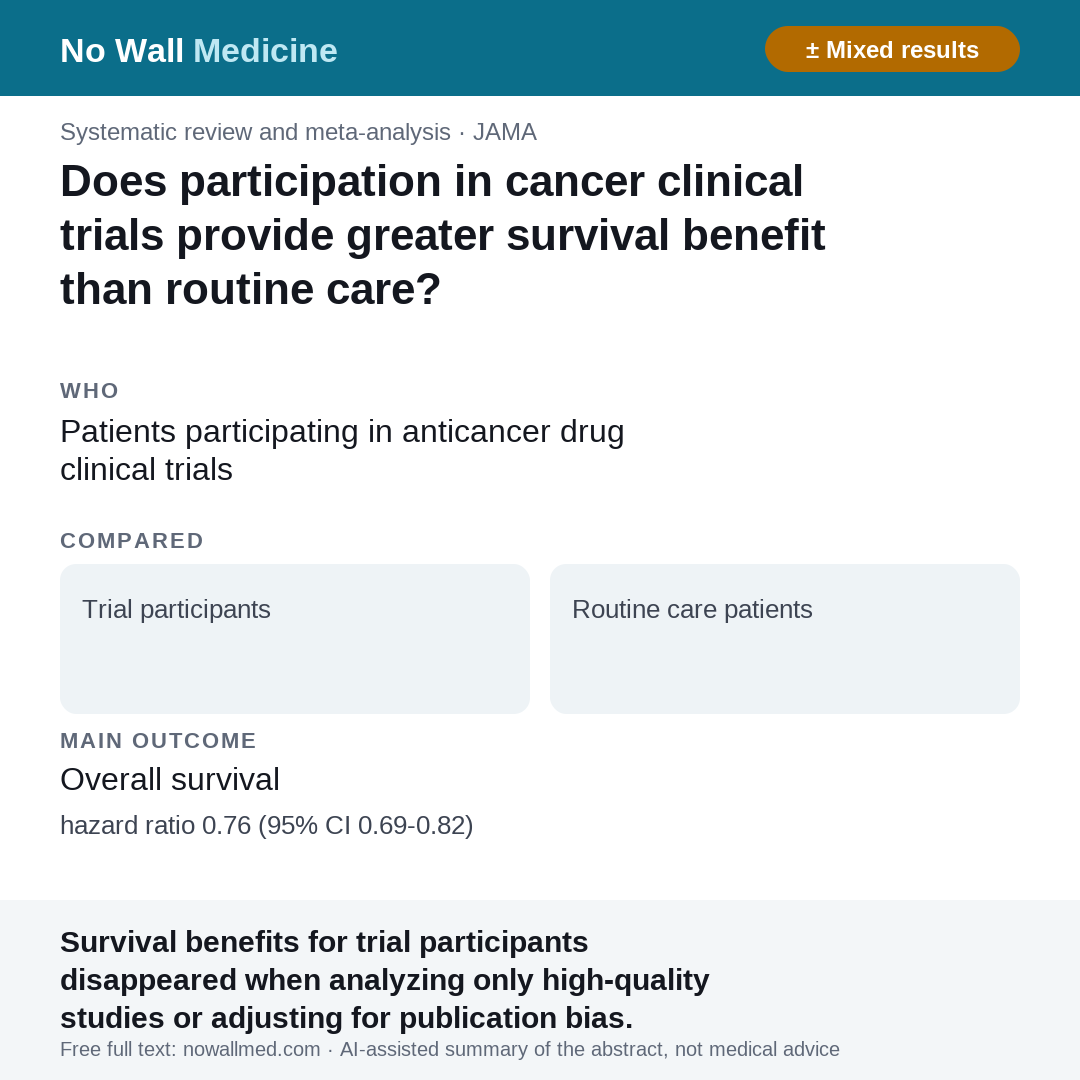
Survival Benefit Associated With Participation in Clinical Trials of Anticancer Drugs: A Systematic Review and Meta-Analysis
Systematic review and meta-analysisMixed results
Does participation in cancer clinical trials provide greater survival benefit than routine care?
Who
Patients participating in anticancer drug clinical trials
Compared
Trial participants
Routine care patients
Main outcome
Overall survival
Result: hazard ratio 0.76 (95% CI 0.69-0.82)
Bottom line: Survival benefits for trial participants disappeared when analyzing only high-quality studies or adjusting for publication bias.
Limitation: Benefits were not detected in studies addressing important sources of bias and confounding.
JAMA · 2024-05-20Download image
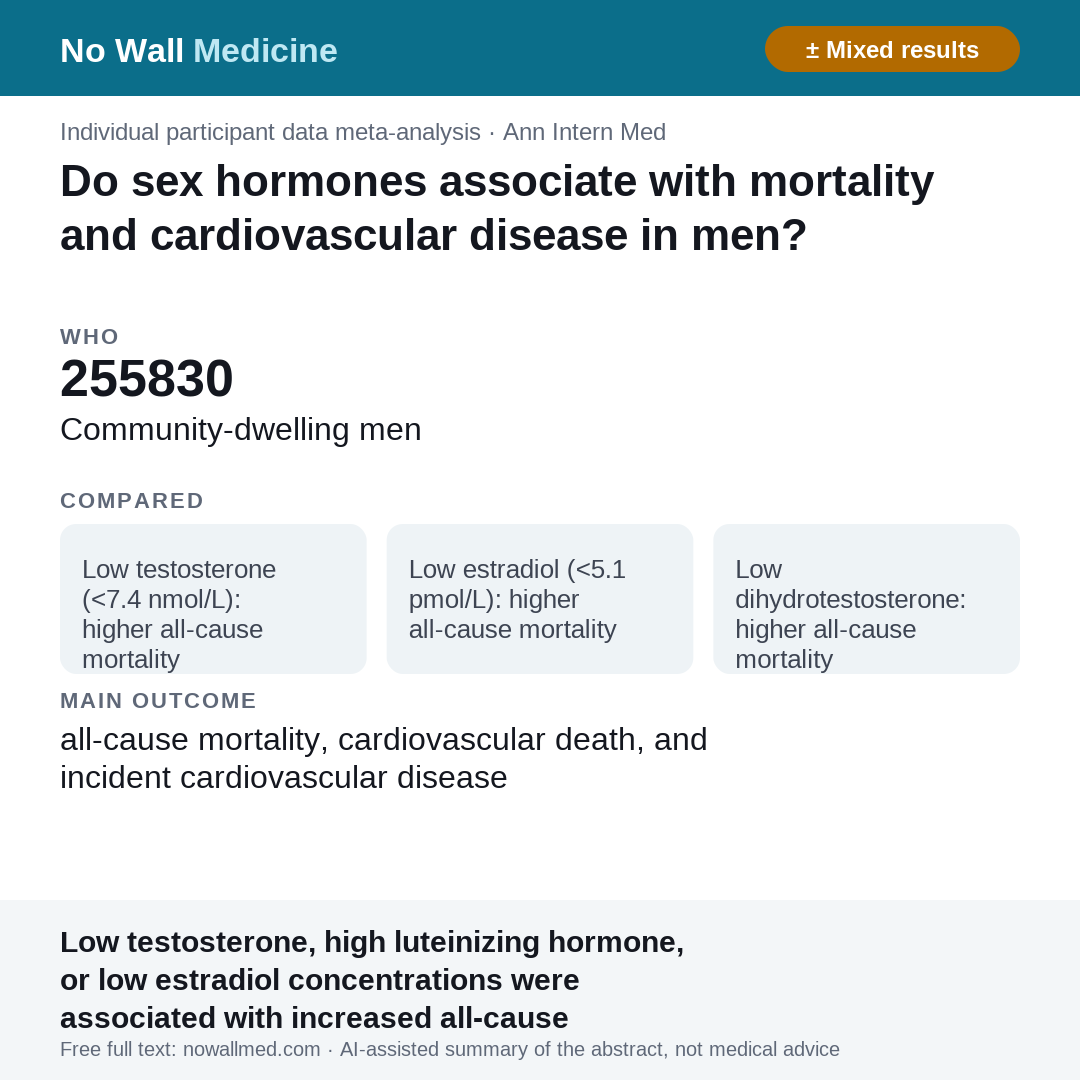
Associations of Testosterone and Related Hormones With All-Cause and Cardiovascular Mortality and Incident Cardiovascular Disease in Men : Individual Participant Data Meta-analyses
Individual participant data meta-analysisMixed results
Do sex hormones associate with mortality and cardiovascular disease in men?
Who
255830
Community-dwelling men
Compared
Low testosterone (<7.4 nmol/L): higher all-cause mortality
Low estradiol (<5.1 pmol/L): higher all-cause mortality
Low dihydrotestosterone: higher all-cause mortality
Main outcome
all-cause mortality, cardiovascular death, and incident cardiovascular disease
Bottom line: Low testosterone, high luteinizing hormone, or low estradiol concentrations were associated with increased all-cause mortality in men.
Limitation: Observational study design, heterogeneity among studies, and imputation of missing data.
Funded by: Medical Research Future Fund, Government of Western Australia, Lawley Pharmaceuticals
Ann Intern Med · 2024-05-14Download image
Efficacy of psilocybin for treating symptoms of depression: systematic review and meta-analysis
Systematic review and meta-analysisBenefit found
Is psilocybin effective for treating symptoms of depression compared to placebo or non-psychoactive drugs?
Who
436
Adults with clinically significant symptoms of depression
Compared
Psilocybin
Placebo or non-psychoactive drugs
Main outcome
Change in depression scores
Result: Hedges’ g=0.66 (95% CI 0.46 to 0.86)
Bottom line: Psilocybin showed significant benefit in reducing depression symptoms compared to placebo or non-psychoactive drugs.
Limitation: All studies had a moderate risk of bias.
BMJ · 2024-05-01Download image

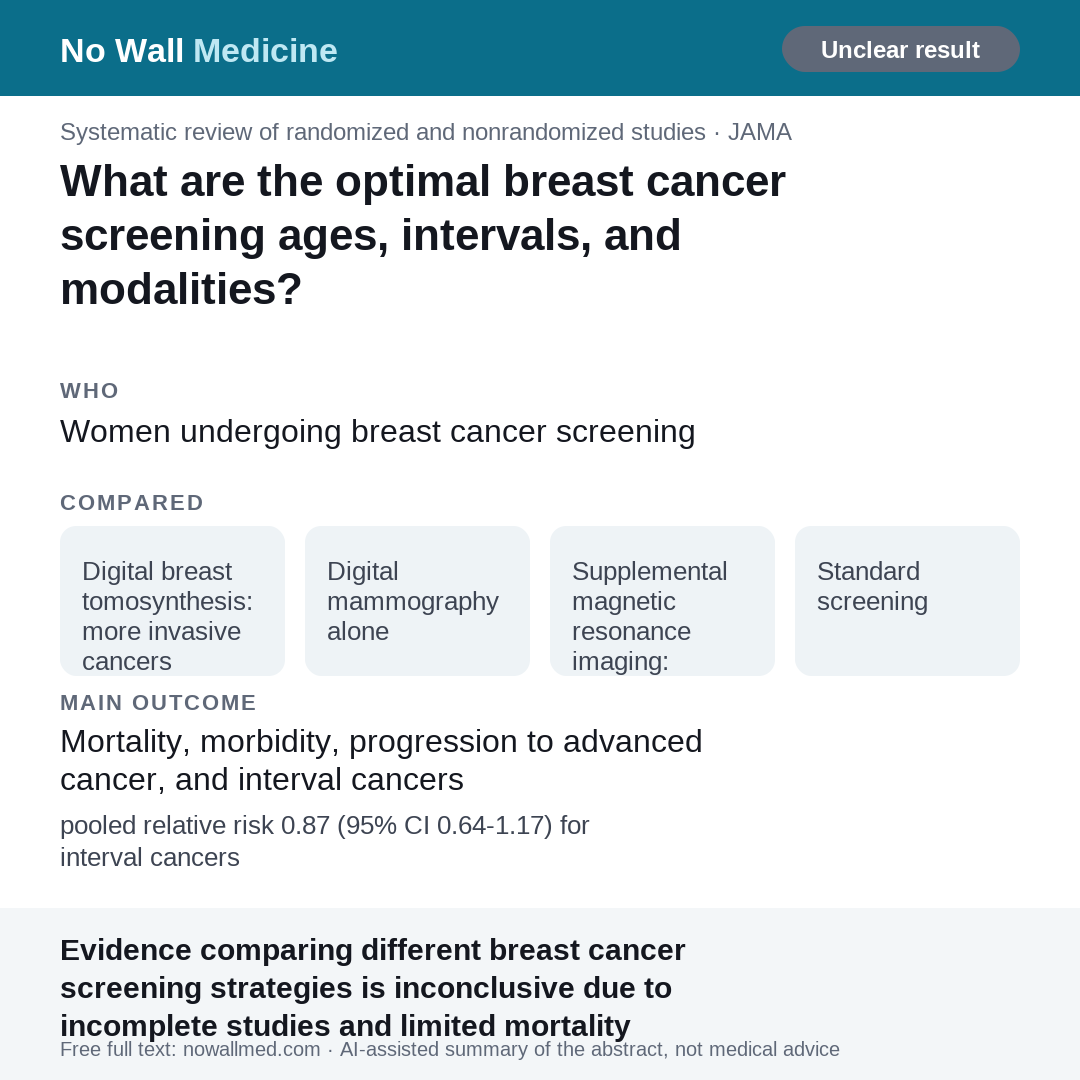
Screening for Breast Cancer: Evidence Report and Systematic Review for the US Preventive Services Task Force
Systematic review of randomized and nonrandomized studiesUnclear result
What are the optimal breast cancer screening ages, intervals, and modalities?
Who
Women undergoing breast cancer screening
Compared
Digital breast tomosynthesis: more invasive cancers detected at first round
Digital mammography alone
Supplemental magnetic resonance imaging: relative risk 0.47 (95% CI 0.29-0.77) for interval cancer
Standard screening
Main outcome
Mortality, morbidity, progression to advanced cancer, and interval cancers
Result: pooled relative risk 0.87 (95% CI 0.64-1.17) for interval cancers
Bottom line: Evidence comparing different breast cancer screening strategies is inconclusive due to incomplete studies and limited mortality outcome data.
Limitation: Key studies are not yet completed and few report stage shift or mortality outcomes.
JAMA · 2024-04-30Download image
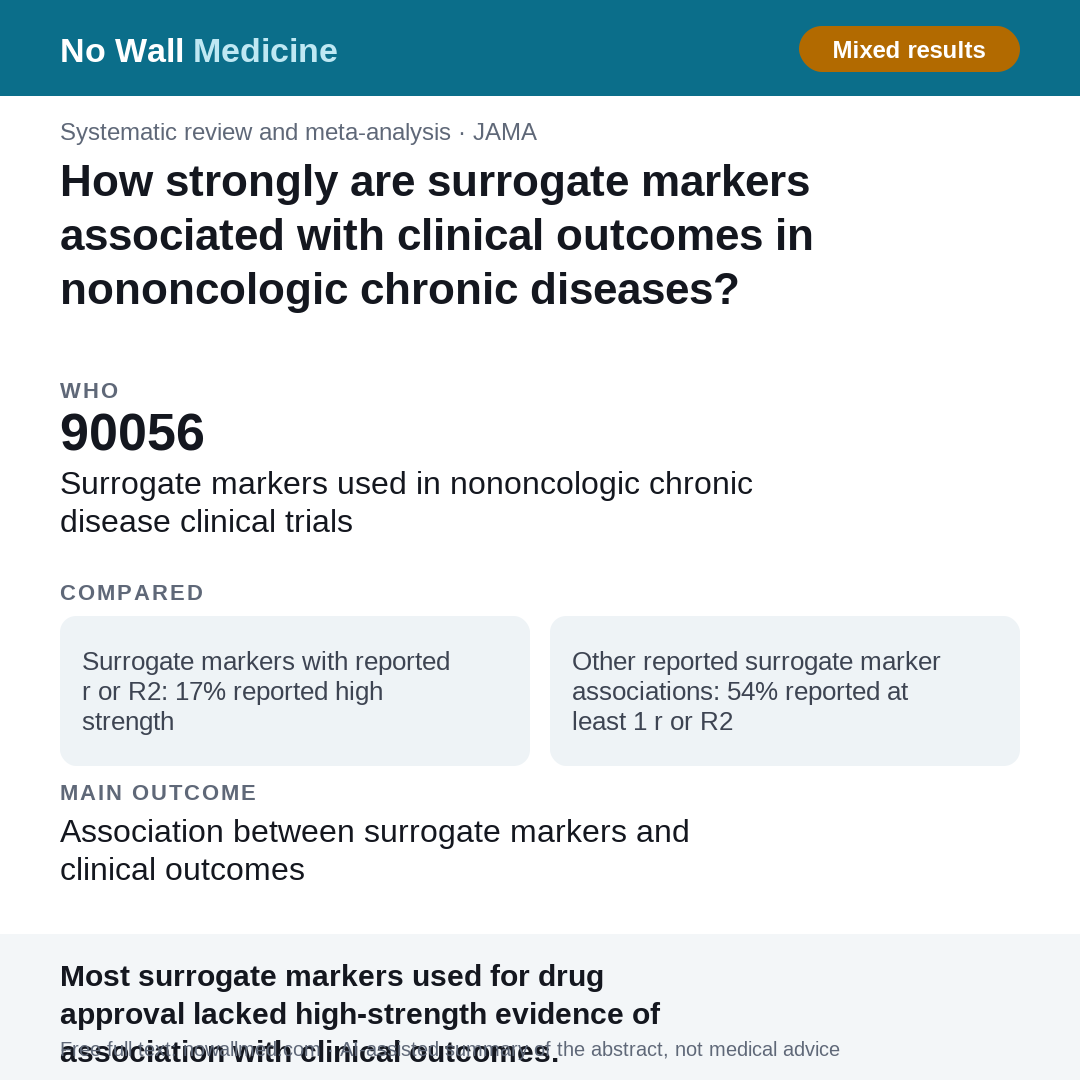
Associations Between Surrogate Markers and Clinical Outcomes for Nononcologic Chronic Disease Treatments
Systematic review and meta-analysisMixed results
How strongly are surrogate markers associated with clinical outcomes in nononcologic chronic diseases?
Who
90056
Surrogate markers used in nononcologic chronic disease clinical trials
Compared
Surrogate markers with reported r or R2: 17% reported high strength
Other reported surrogate marker associations: 54% reported at least 1 r or R2
Main outcome
Association between surrogate markers and clinical outcomes
Bottom line: Most surrogate markers used for drug approval lacked high-strength evidence of association with clinical outcomes.
JAMA · 2024-04-22Download image
Newer Pharmacologic Treatments in Adults With Type 2 Diabetes: A Systematic Review and Network Meta-analysis for the American College of Physicians
Network meta-analysis of 84 randomized controlled trialsBenefit found
How effective are newer diabetes medications for mortality, cardiovascular, and renal outcomes?
Who
Adults with type 2 diabetes mellitus
Compared
SGLT2 inhibitors and GLP1 agonists: reduce all-cause mortality and major adverse cardiovascular events
Usual care
Main outcome
mortality, cardiovascular outcomes, and renal outcomes
Bottom line: SGLT2 inhibitors and GLP1 agonists reduce mortality and major adverse cardiovascular events compared to usual care in adults.
Limitation: Infrequent direct comparisons, sparse data, and insufficient data on predefined subgroups.
Funded by: American College of Physicians
Ann Intern Med · 2024-04-19Download image
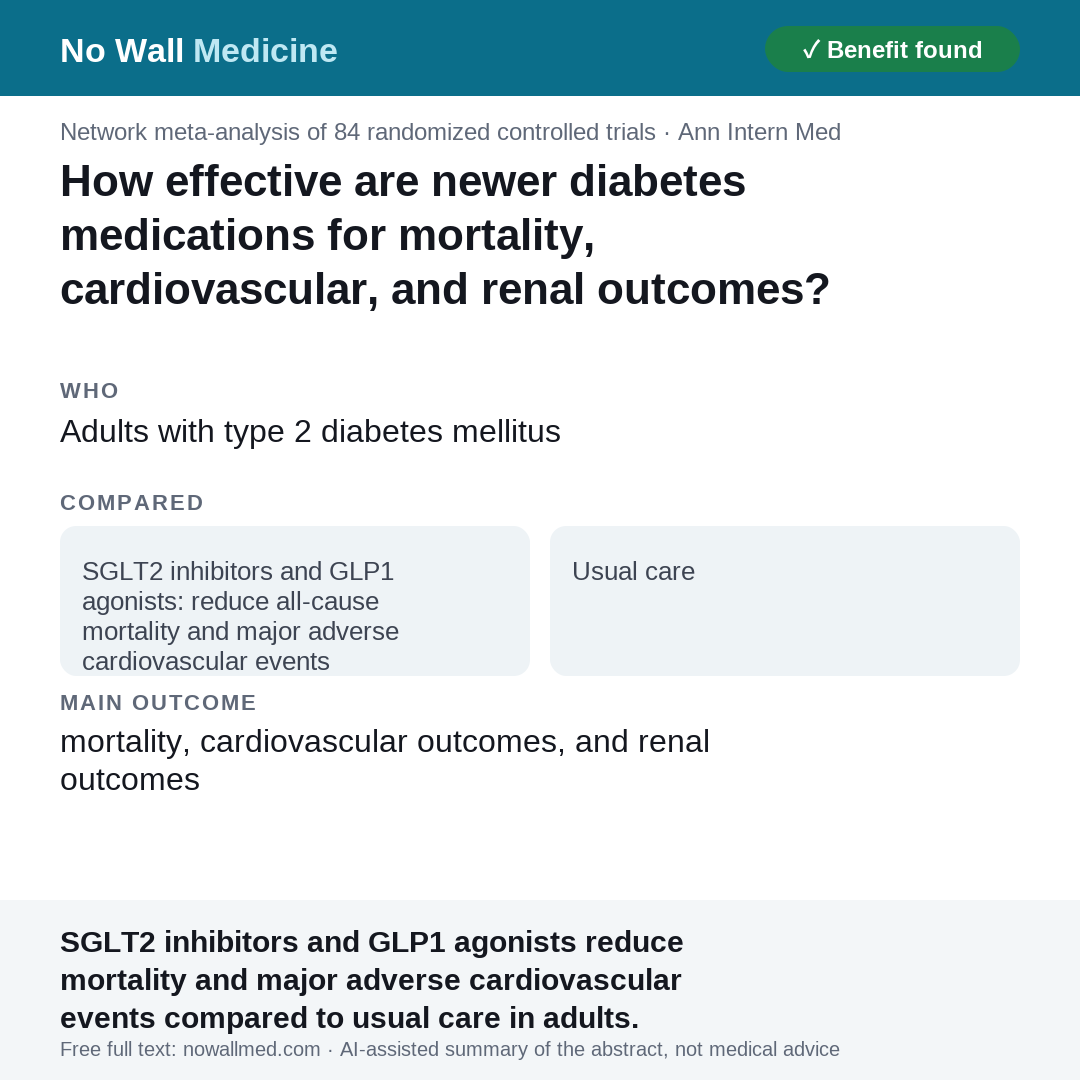
Cost-Effectiveness of Newer Pharmacologic Treatments in Adults With Type 2 Diabetes: A Systematic Review of Cost-Effectiveness Studies for the American College of Physicians
Systematic review of cost-effectiveness analysesMixed results
What is the cost-effectiveness of newer antidiabetes medications for type 2 diabetes?
Who
Adults with type 2 diabetes · United States
Compared
GLP1a and SGLT2i as first-line: low value
GLP1a and SGLT2i added to metformin: may be of intermediate value
Insulin analogues vs NPH insulin: more expensive
Main outcome
Cost per quality-adjusted life-year gained
Bottom line: Glucagon-like peptide-1 agonists and SGLT2i are low value first-line but may be intermediate value when added to metformin.
Limitation: Cost-effectiveness analyses varied in methodological approach, assumptions, and drug comparisons.
Funded by: American College of Physicians
Ann Intern Med · 2024-04-19Download image
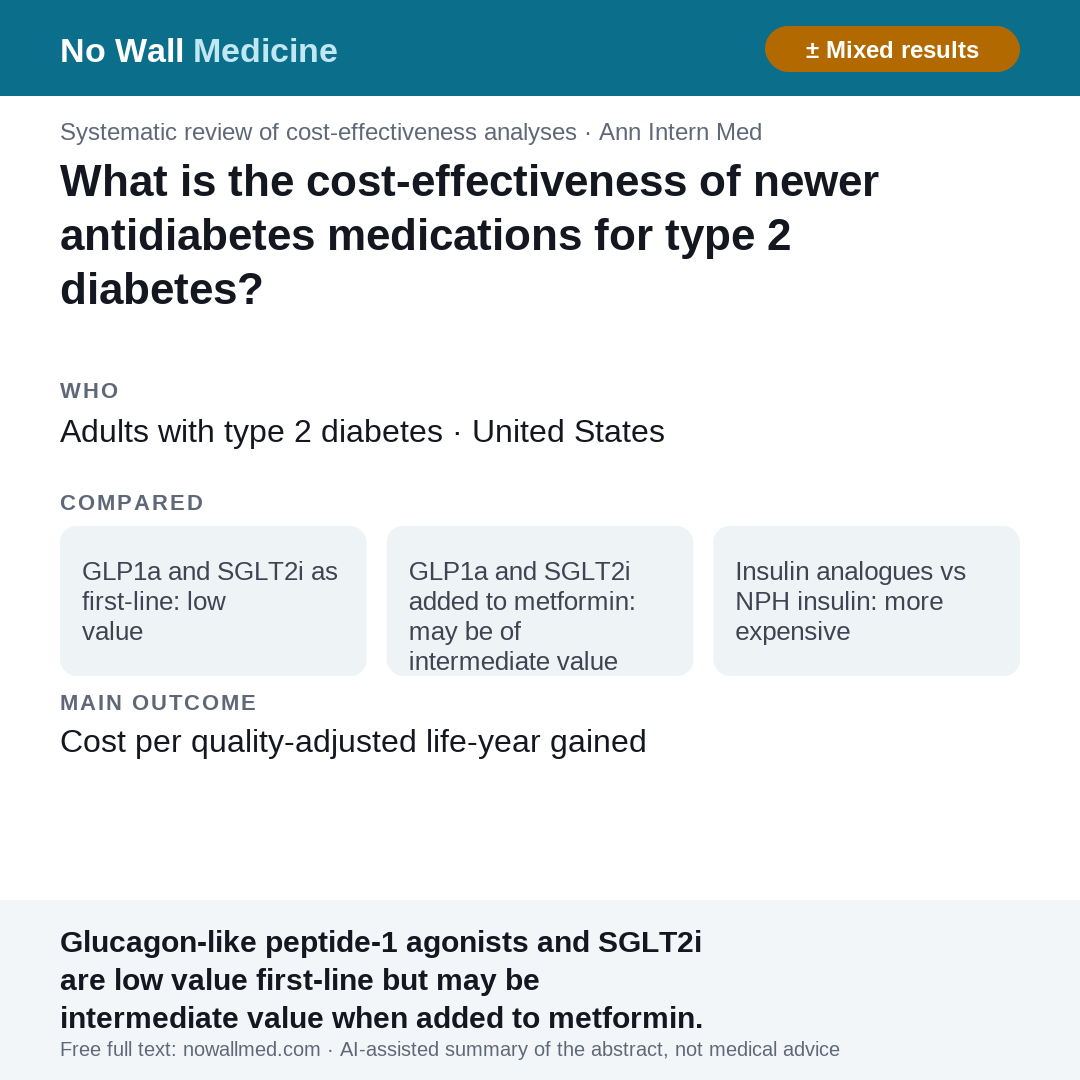
Cancer Stage Compared With Mortality as End Points in Randomized Clinical Trials of Cancer Screening: A Systematic Review and Meta-Analysis
Meta-analysis of 41 randomized clinical trialsMixed results
Is stage III-IV cancer incidence a suitable alternative to cancer-specific mortality in screening trials?
Who
Participants in cancer screening trials for breast, colorectal, lung, ovarian, and prostate cancers · Europe, North America, and Asia
Compared
Cancer-specific mortality
Stage III-IV cancer
Main outcome
Correlation between reductions in cancer-specific mortality and stage III-IV cancer
Bottom line: Late-stage cancer incidence may substitute for mortality in some cancers but is unsuitable for others like prostate cancer.
JAMA · 2024-04-08Download image
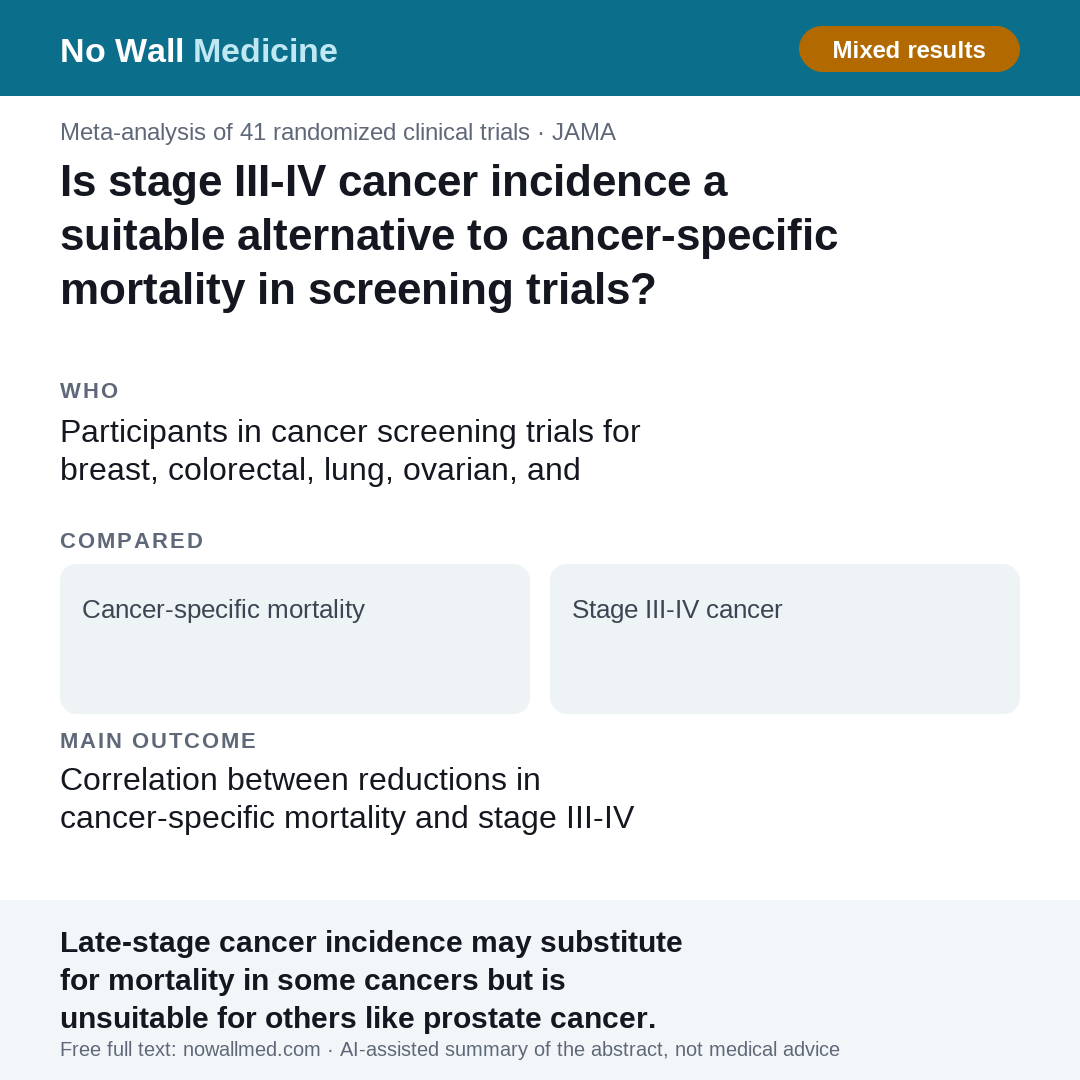
Management of Inpatient Elevated Blood Pressures : A Systematic Review of Clinical Practice Guidelines
Systematic review of clinical practice guidelinesUnclear result
How should elevated blood pressure be managed in hospitalized adults?
Who
Adult and older adult populations · Ambulatory, emergency department, and inpatient settings
Compared
Outpatient setting: goals varying between 130/80 and 140/90 mm Hg
Inpatient setting: no guidelines provided goals for inpatient blood pressure
Main outcome
guidelines on blood pressure management targets and treatments
Bottom line: Guidance for managing asymptomatic moderately elevated blood pressure in the hospital is currently lacking.
Limitation: Exclusion of non-English-language guidelines and guidelines specific to subpopulations.
Funded by: National Institute on Aging
Ann Intern Med · 2024-04-02Download image
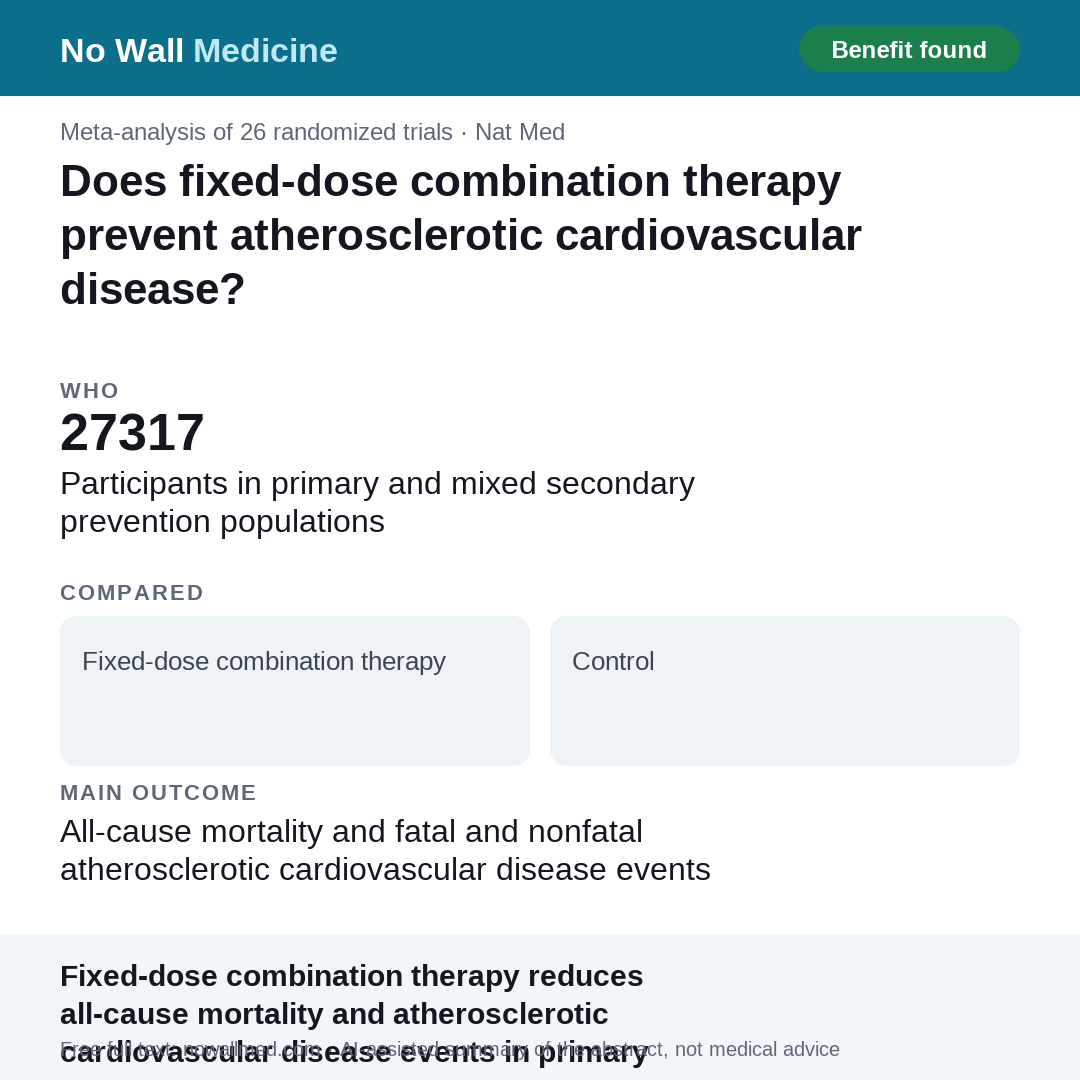
Fixed-dose combination therapy for the prevention of atherosclerotic cardiovascular disease
Meta-analysis of 26 randomized trialsBenefit found
Does fixed-dose combination therapy prevent atherosclerotic cardiovascular disease?
Who
27317
Participants in primary and mixed secondary prevention populations
Compared
Fixed-dose combination therapy
Control
Main outcome
All-cause mortality and fatal and nonfatal atherosclerotic cardiovascular disease events
Result: relative risk 0.89 (95% confidence interval 0.78 to 1.00) for mortality; relative risk 0.71 (95% confidence interval 0.63 to 0.79) for events
Bottom line: Fixed-dose combination therapy reduces all-cause mortality and atherosclerotic cardiovascular disease events in primary prevention populations.
Nat Med · 2024-03-26Download image
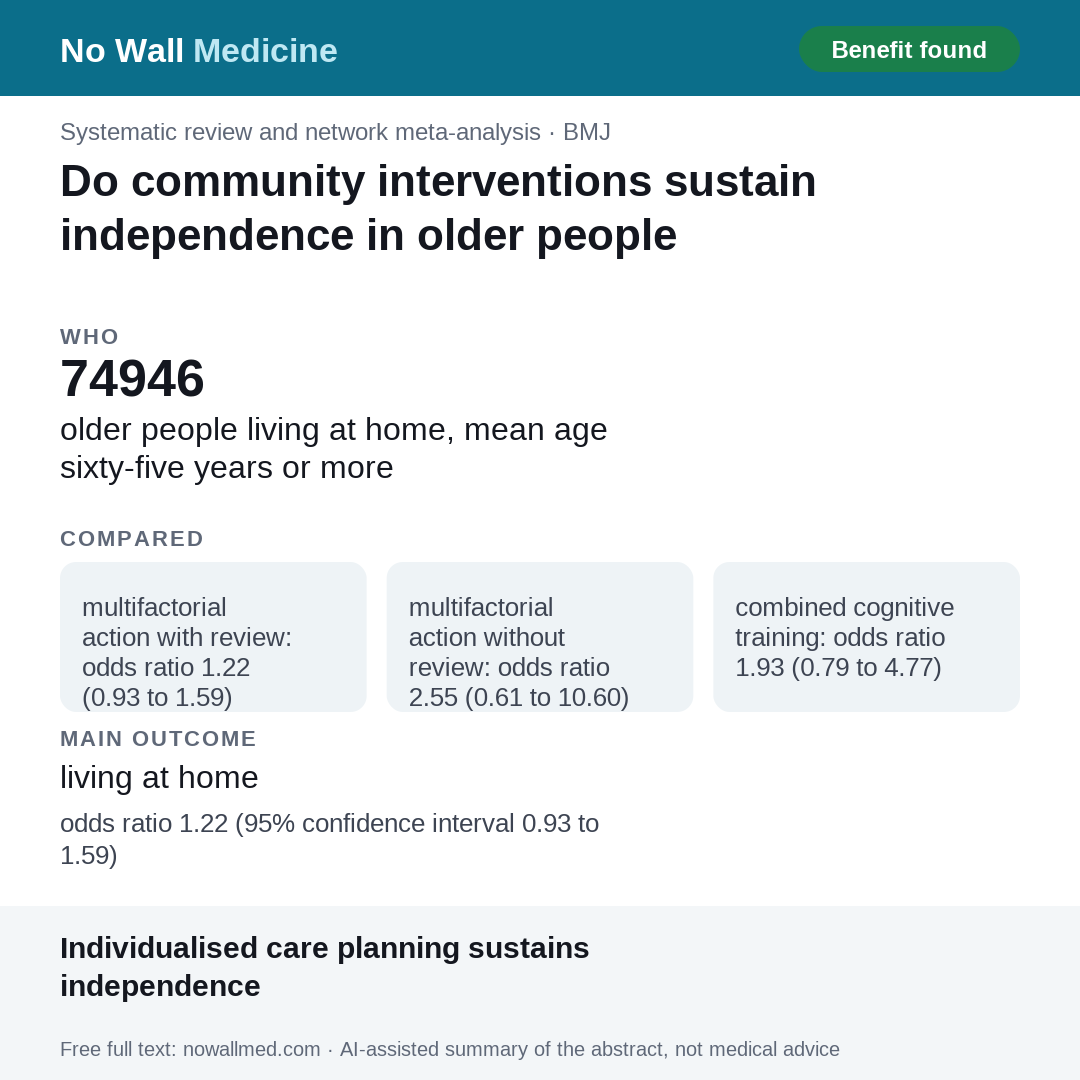
Community based complex interventions to sustain independence in older people: systematic review and network meta-analysis
Systematic review and network meta-analysisBenefit found
Do community interventions sustain independence in older people
Who
74946
older people living at home, mean age sixty-five years or more
Compared
multifactorial action with review: odds ratio 1.22 (0.93 to 1.59)
multifactorial action without review: odds ratio 2.55 (0.61 to 10.60)
combined cognitive training: odds ratio 1.93 (0.79 to 4.77)
Main outcome
living at home
Result: odds ratio 1.22 (95% confidence interval 0.93 to 1.59)
Bottom line: Individualised care planning sustains independence
Limitation: high risk of bias and imprecise estimates
BMJ · 2024-03-21Download image
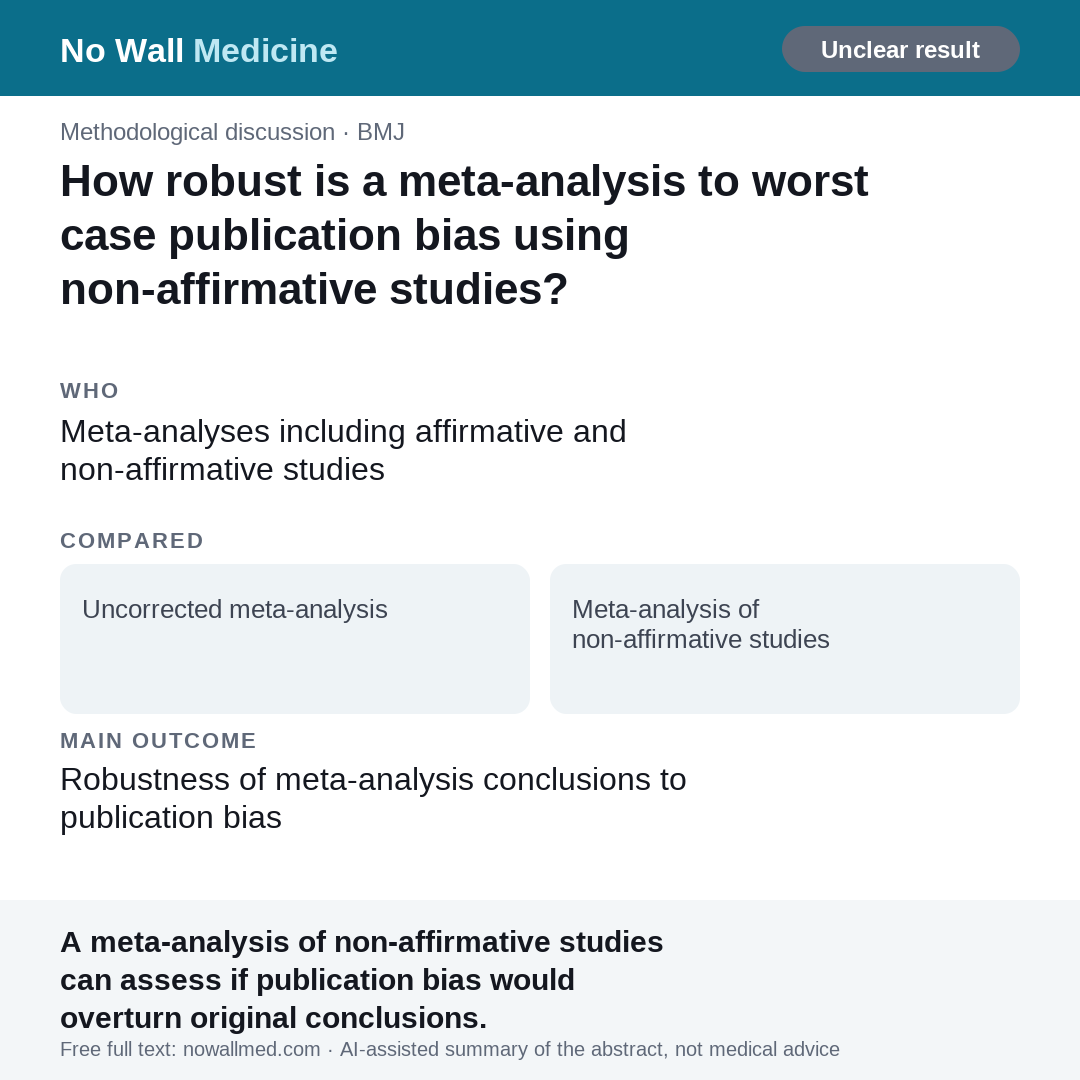
Assessing robustness to worst case publication bias using a simple subset meta-analysis
Methodological discussionUnclear result
How robust is a meta-analysis to worst case publication bias using non-affirmative studies?
Who
Meta-analyses including affirmative and non-affirmative studies
Compared
Uncorrected meta-analysis
Meta-analysis of non-affirmative studies
Main outcome
Robustness of meta-analysis conclusions to publication bias
Bottom line: A meta-analysis of non-affirmative studies can assess if publication bias would overturn original conclusions.
BMJ · 2024-03-15Download image