Visual abstracts
New randomized trials and meta-analyses from leading journals at a glance: who was studied, what was compared, and what was found. Every paper is free to read in full.
All specialtiesCardiology 4877Oncology 4138Gastroenterology & Hepatology 1942Infectious Disease 3837Neurology 1905Psychiatry & Mental Health 2273Pulmonology 2143Critical Care 1365Endocrinology & Diabetes 2580Pediatrics 2980Surgery 2559Orthopedics & Sports Medicine 931Neurosurgery 537Cardiothoracic & Vascular Surgery 674Plastic & Reconstructive Surgery 591Nephrology 1133Rheumatology 823Hematology 1109Dermatology 621Ophthalmology 543Obstetrics & Gynecology 1686Public & Global Health 1058Radiology & Imaging 648Anesthesiology 986Urology 764ENT (Otolaryngology) 503Emergency Medicine 511Allergy & Immunology 313Geriatrics 981Family Medicine & Primary Care 562Medical Genetics & Genomics 676Pathology & Laboratory Medicine 159Physical Medicine & Rehabilitation 757Palliative Care 444Nutrition 1588Digital Health & AI 2201General Medicine 321
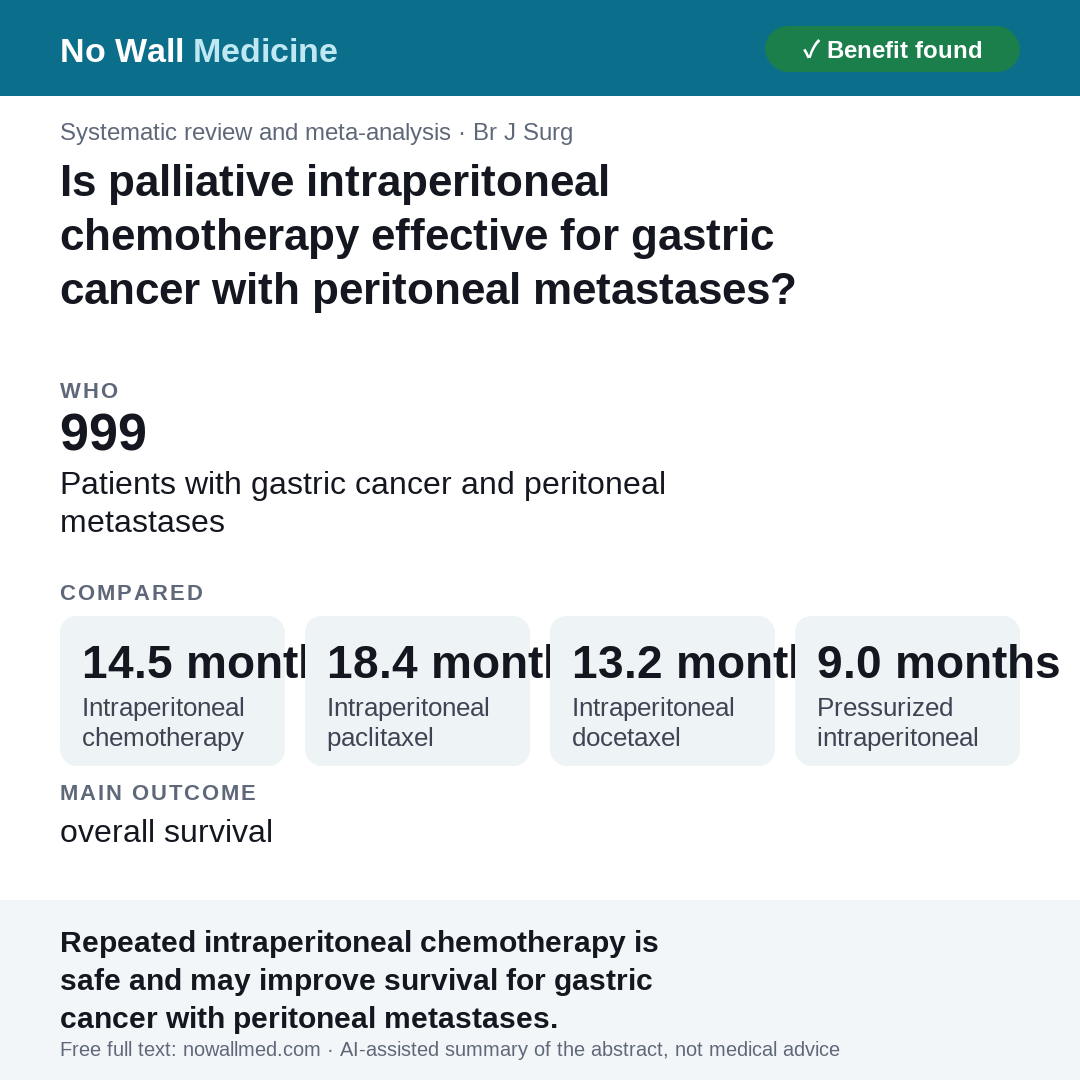
Intraperitoneal chemotherapy for peritoneal metastases of gastric origin: a systematic review and meta-analysis
Systematic review and meta-analysisBenefit found
Is palliative intraperitoneal chemotherapy effective for gastric cancer with peritoneal metastases?
Who
999
Patients with gastric cancer and peritoneal metastases
Compared
14.5 monthsIntraperitoneal chemotherapy
18.4 monthsIntraperitoneal paclitaxel
13.2 monthsIntraperitoneal docetaxel
9.0 monthsPressurized intraperitoneal aerosol chemotherapy
Main outcome
overall survival
Result: hazard ratio favoured the intraperitoneal chemotherapy arm
Bottom line: Repeated intraperitoneal chemotherapy is safe and may improve survival for gastric cancer with peritoneal metastases.
Br J Surg · 2024-05-10Download image
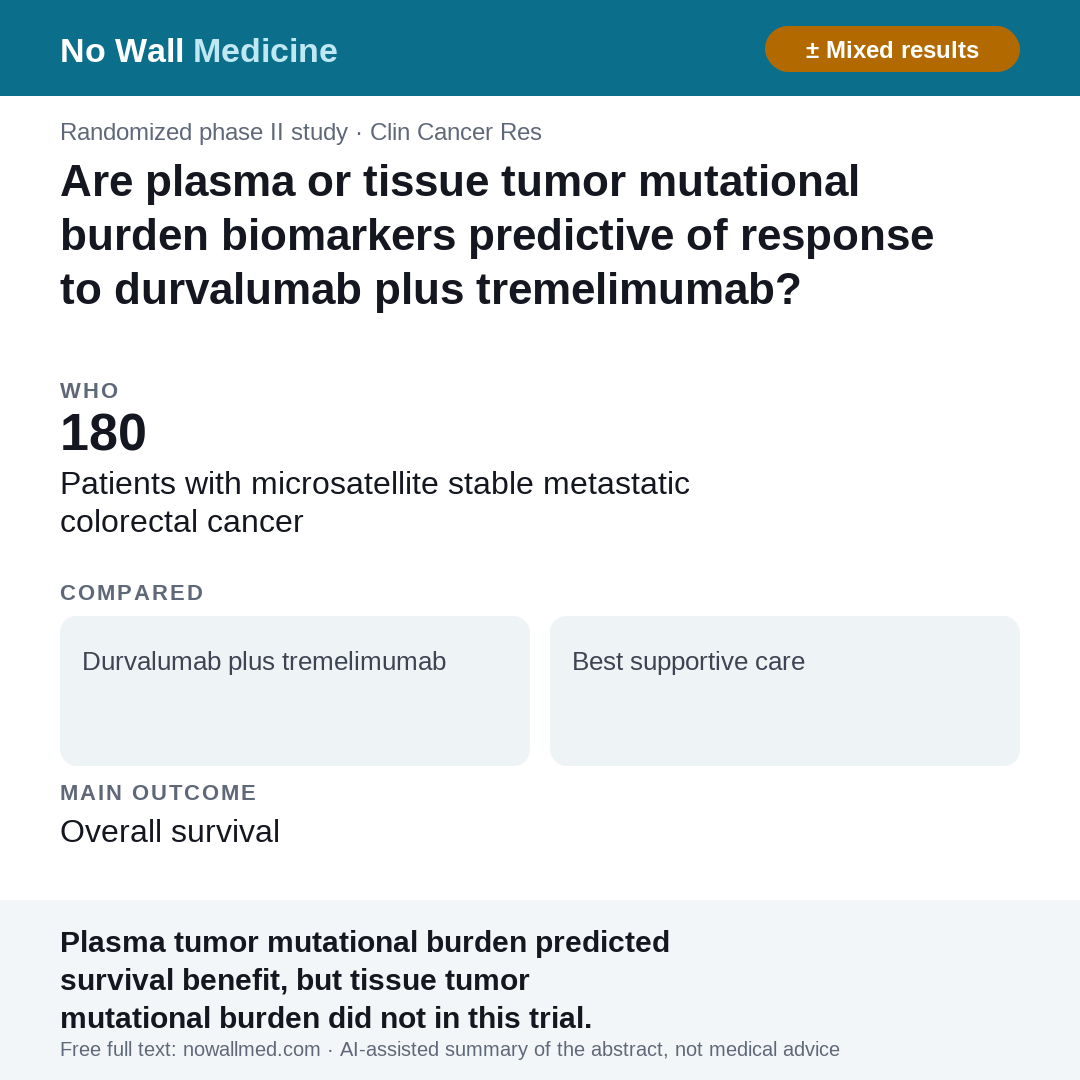
Plasma versus Tissue Tumor Mutational Burden as Biomarkers of Durvalumab plus Tremelimumab Response in Patients with Metastatic Colorectal Cancer in the CO.26 Trial
Randomized phase II studyMixed results
Are plasma or tissue tumor mutational burden biomarkers predictive of response to durvalumab plus tremelimumab?
Who
180
Patients with microsatellite stable metastatic colorectal cancer
Compared
Durvalumab plus tremelimumab
Best supportive care
Main outcome
Overall survival
Result: hazard ratio 0.34 (95% CI 0.13 to 0.85) for plasma TMB ≥28 mutations/Mb
Bottom line: Plasma tumor mutational burden predicted survival benefit, but tissue tumor mutational burden did not in this trial.
Limitation: validation is required
Clin Cancer Res · 2024-05-10Download image
Declining Antibody Affinity Over Time After Human Vaccination With a Plasmodium falciparum Merozoite Vaccine Candidate
Phase 1 malaria vaccine trialHarm found
How does antibody affinity change over time after vaccination with a malaria vaccine candidate?
Who
Participants receiving a Plasmodium falciparum merozoite vaccine candidate
Compared
After second vaccination: increased
Over 12 months: declined substantially
Main outcome
antibody affinity
Bottom line: Antibody affinity increased after a second vaccination but declined substantially over 12 months.
J Infect Dis · 2024-05-10Download image

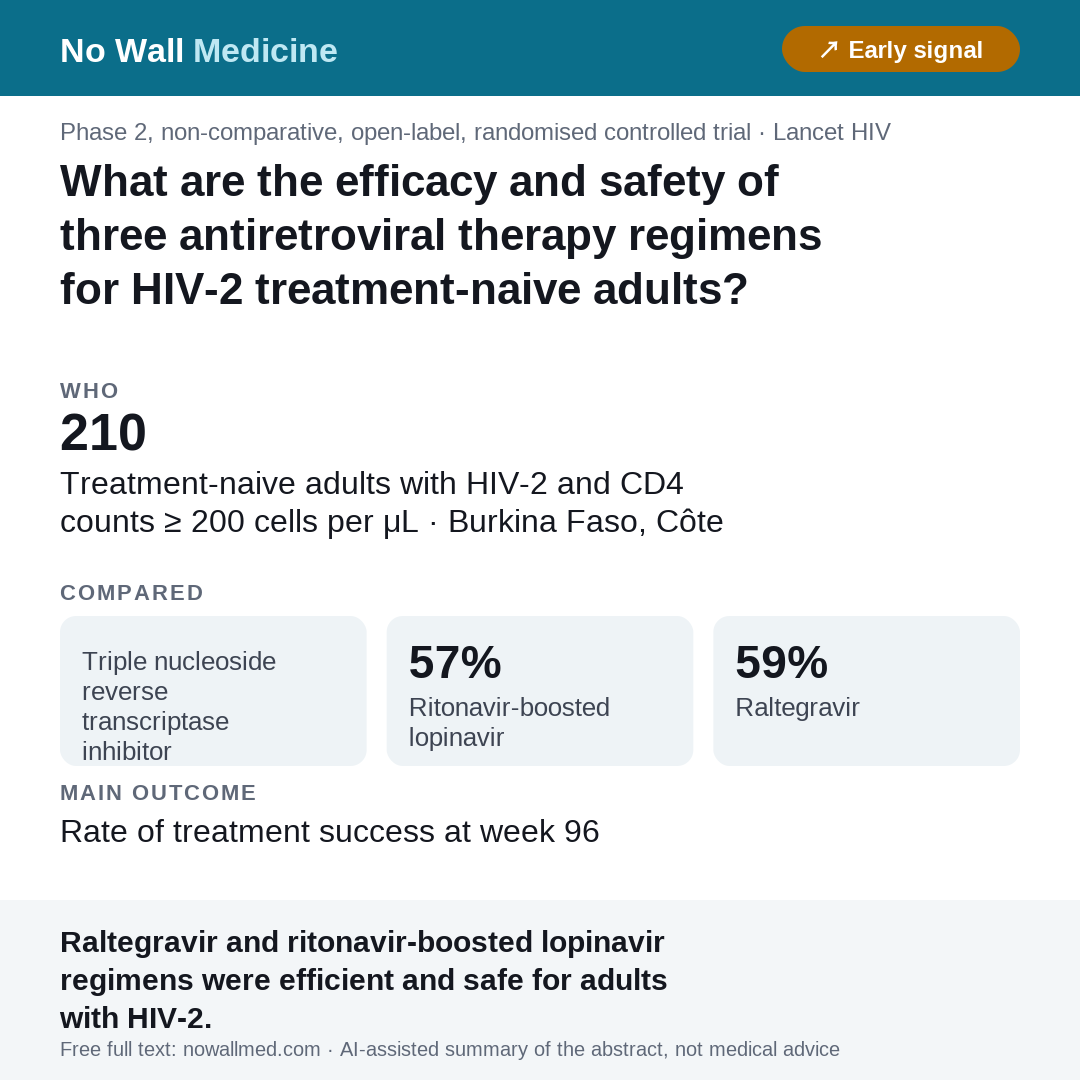
Efficacy and safety of three antiretroviral therapy regimens for treatment-naive African adults living with HIV-2 (FIT-2): a pilot, phase 2, non-comparative, open-label, randomised controlled trial
Phase 2, non-comparative, open-label, randomised controlled trialBenefit found
What are the efficacy and safety of three antiretroviral therapy regimens for HIV-2 treatment-naive adults?
Who
210
Treatment-naive adults with HIV-2 and CD4 counts ≥ 200 cells per μL · Burkina Faso, Côte d'Ivoire, Senegal, and Togo
Compared
Triple nucleoside reverse transcriptase inhibitor
57%Ritonavir-boosted lopinavir (95% CI 47-66)
59%Raltegravir (49-68)
Main outcome
Rate of treatment success at week 96
Bottom line: Raltegravir and ritonavir-boosted lopinavir regimens were efficient and safe for adults with HIV-2.
Funded by: ANRS MIE
Lancet HIV · 2024-05-10Download image
Absolute and relative outcomes of psychotherapies for eight mental disorders: a systematic review and meta-analysis
Meta-analysis of 441 randomized controlled trialsBenefit found
What are the absolute and relative outcomes of psychotherapies for eight mental disorders?
Who
33881
Patients with eight mental disorders
Compared
Psychotherapies
Control conditions
Main outcome
Absolute rate of response
Bottom line: Psychotherapies are effective compared with control conditions, but absolute response rates are modest across eight mental disorders.
World Psychiatry · 2024-05-10Download image

Algorithm-based modular psychotherapy vs. cognitive-behavioral therapy for patients with depression, psychiatric comorbidities and early trauma: a proof-of-concept randomized controlled trial
Proof-of-concept randomized controlled trialMixed results
Is algorithm-based modular psychotherapy more effective than cognitive-behavioral therapy for depression with comorbidities and trauma?
Who
70
70 adult outpatients with major depressive disorder, comorbidities, and early trauma
Compared
Cognitive-behavioral therapy: 11.4% remission
Algorithm-based modular psychotherapy: 29.4% remission
Main outcome
Hamilton Rating Scale for Depression-24 score at post-treatment
Result: odds ratio 3.2 (95% CI 0.9-11.6)
Bottom line: Algorithm-based modular psychotherapy showed feasibility and higher remission rates, though superiority over cognitive-behavioral therapy was non-significant.
Limitation: Potential interindividual heterogeneity and need for fully powered confirmation trials.
World Psychiatry · 2024-05-10Download image

Predicting short- to medium-term care home admission risk in older adults: a systematic review of externally validated models
Systematic review of external validationsMixed results
How accurately do prediction models predict care home admission risk in older adults?
Who
Adults aged 65 years or older
Compared
1-year prediction models with acceptable discrimination: area under the receiver operating characteristic curve 0.70-0.79
1-year prediction models with poor discrimination: area under the receiver operating characteristic curve < 0.70
Main outcome
Model discrimination and calibration for care home admission risk
Bottom line: Prediction models showed at best acceptable discrimination and often failed to account for competing mortality risk.
Limitation: Risk of bias was mostly high due to not reporting model calibration.
Age Ageing · 2024-05-10Download image

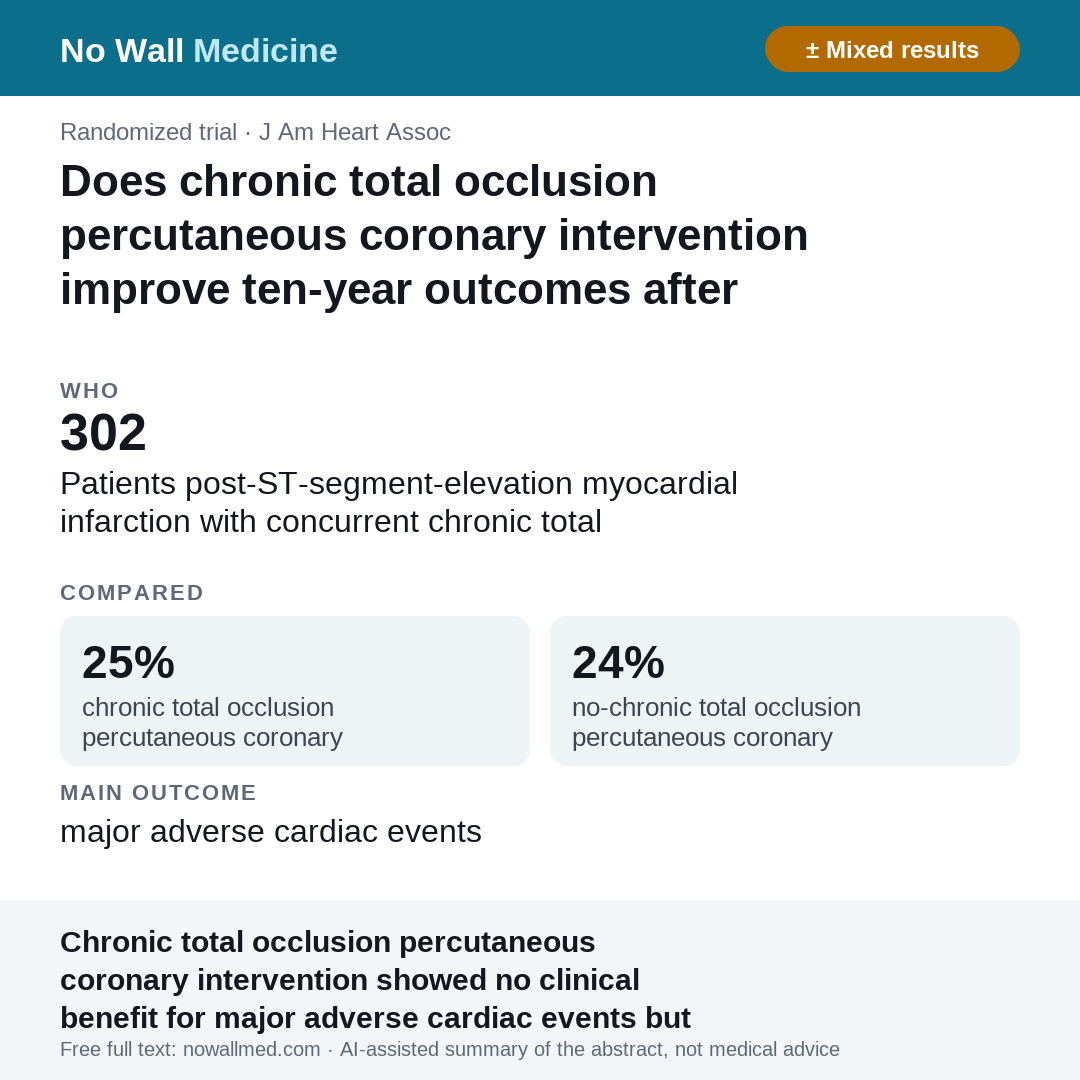
Ten-Year Outcome of Recanalization or Medical Therapy for Concomitant Chronic Total Occlusion After Myocardial Infarction
Randomized trialMixed results
Does chronic total occlusion percutaneous coronary intervention improve ten-year outcomes after myocardial infarction?
Who
302
Patients post-ST-segment-elevation myocardial infarction with concurrent chronic total occlusion
Compared
25%chronic total occlusion percutaneous coronary intervention
24%no-chronic total occlusion percutaneous coronary intervention
Main outcome
major adverse cardiac events
Result: hazard ratio 1.11 (95% CI 0.70-1.76)
Bottom line: Chronic total occlusion percutaneous coronary intervention showed no clinical benefit for major adverse cardiac events but higher cardiovascular mortality.
J Am Heart Assoc · 2024-05-10Download image
Agreement of Fractional Flow Reserve Estimated by Computed Tomography With Invasively Measured Fractional Flow Reserve: A Systematic Review and Meta-Analysis
Systematic review and meta-analysisBenefit found
What is the agreement and diagnostic accuracy of computed tomography estimated fractional flow reserve?
Who
5236
7291 blood vessels from 5236 patients
Compared
Computed tomography estimated fractional flow reserve: 82.2% diagnostic accuracy
Invasively measured fractional flow reserve
Main outcome
Diagnostic accuracy of computed tomography estimated fractional flow reserve
Result: sensitivity 80.9%, specificity 83.1%
Bottom line: Computed tomography estimated fractional flow reserve shows moderate agreement and useful diagnostic accuracy for identifying hemodynamically significant lesions.
J Am Heart Assoc · 2024-05-10Download image

Effect of Incorporating 1 Avocado per Day Versus Habitual Diet on Vascular Function in Adults With Abdominal Obesity: An Ancillary Study of HAT, a Randomized Controlled Trial
Randomized, controlled, parallel-arm studyNo clear difference
Does adding 1 avocado per day improve vascular function in adults with abdominal obesity?
Who
134
Adults with abdominal obesity · Pennsylvania State University, University Park study center
Compared
1 avocado per day
Habitual diet low in avocados
Main outcome
Flow-mediated dilation and carotid-femoral pulse wave velocity
Result: mean difference -0.62% (95% CI -1.70 to 0.46) for flow-mediated dilation
Bottom line: Adding one avocado per day for 6 months did not improve vascular function in adults with abdominal obesity.
J Am Heart Assoc · 2024-05-10Download image

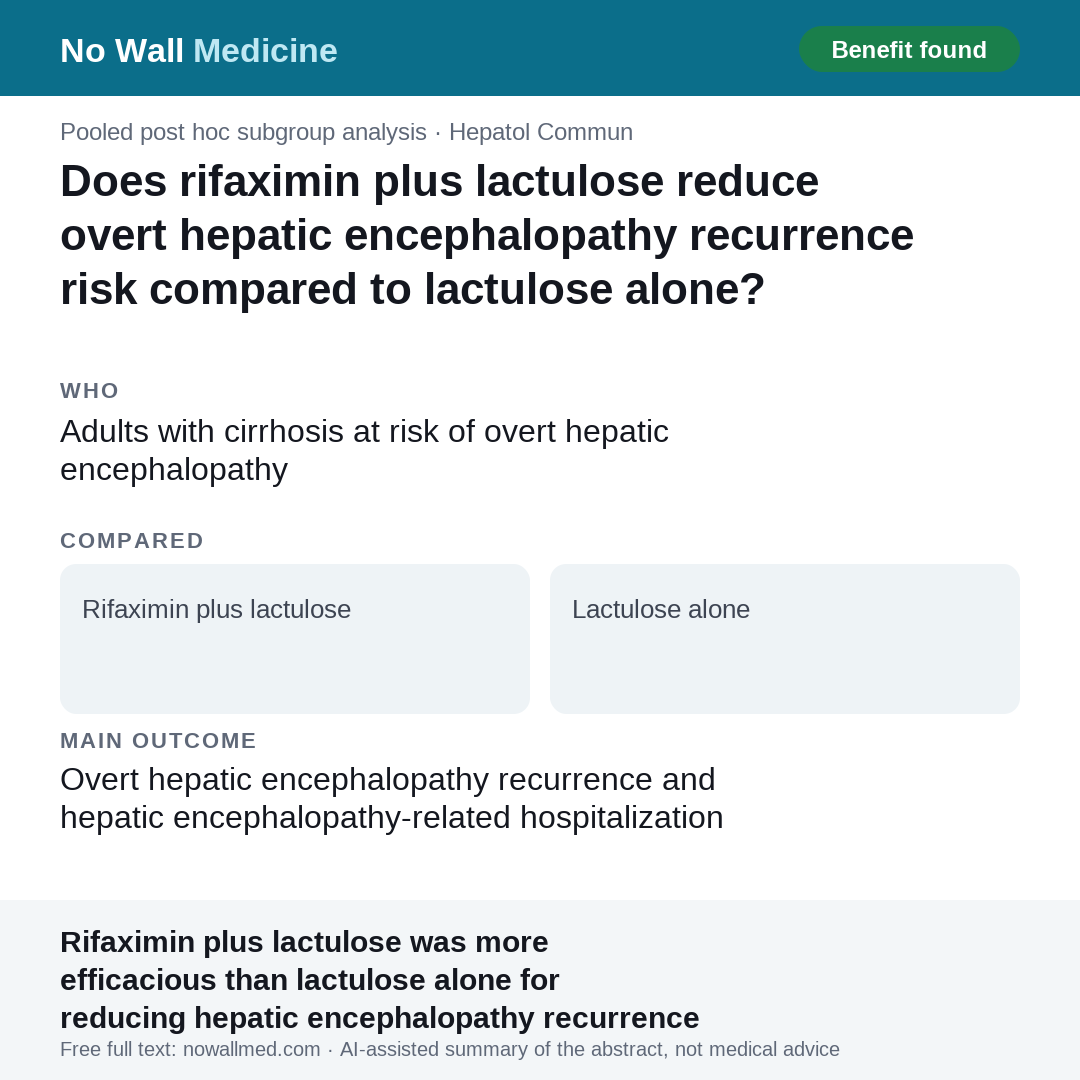
Rifaximin plus lactulose versus lactulose alone for reducing the risk of HE recurrence
Pooled post hoc subgroup analysisBenefit found
Does rifaximin plus lactulose reduce overt hepatic encephalopathy recurrence risk compared to lactulose alone?
Who
Adults with cirrhosis at risk of overt hepatic encephalopathy
Compared
Rifaximin plus lactulose
Lactulose alone
Main outcome
Overt hepatic encephalopathy recurrence and hepatic encephalopathy-related hospitalization
Bottom line: Rifaximin plus lactulose was more efficacious than lactulose alone for reducing hepatic encephalopathy recurrence and hospitalization.
Hepatol Commun · 2024-05-10Download image
Sexually transmitted infections, sexual life and risk behaviours of people living with schizophrenia: systematic review and meta-analysis
Systematic review and random-effects meta-analysisHarm found
What is the prevalence of sexually transmitted infections and sexual risk behaviours in schizophrenia?
Who
2459456
People living with schizophrenia
Compared
Schizophrenia patients: high prevalence of STIs
Healthy controls
Main outcome
Prevalence of sexually transmitted infections and sexual risk behaviours
Result: odds ratio 2.11 (95% CI 1.23-3.63) for HIV
Bottom line: People with schizophrenia have high sexually transmitted infection prevalence and increased risks for HIV, hepatitis C, and hepatitis B.
BJPsych Open · 2024-05-10Download image

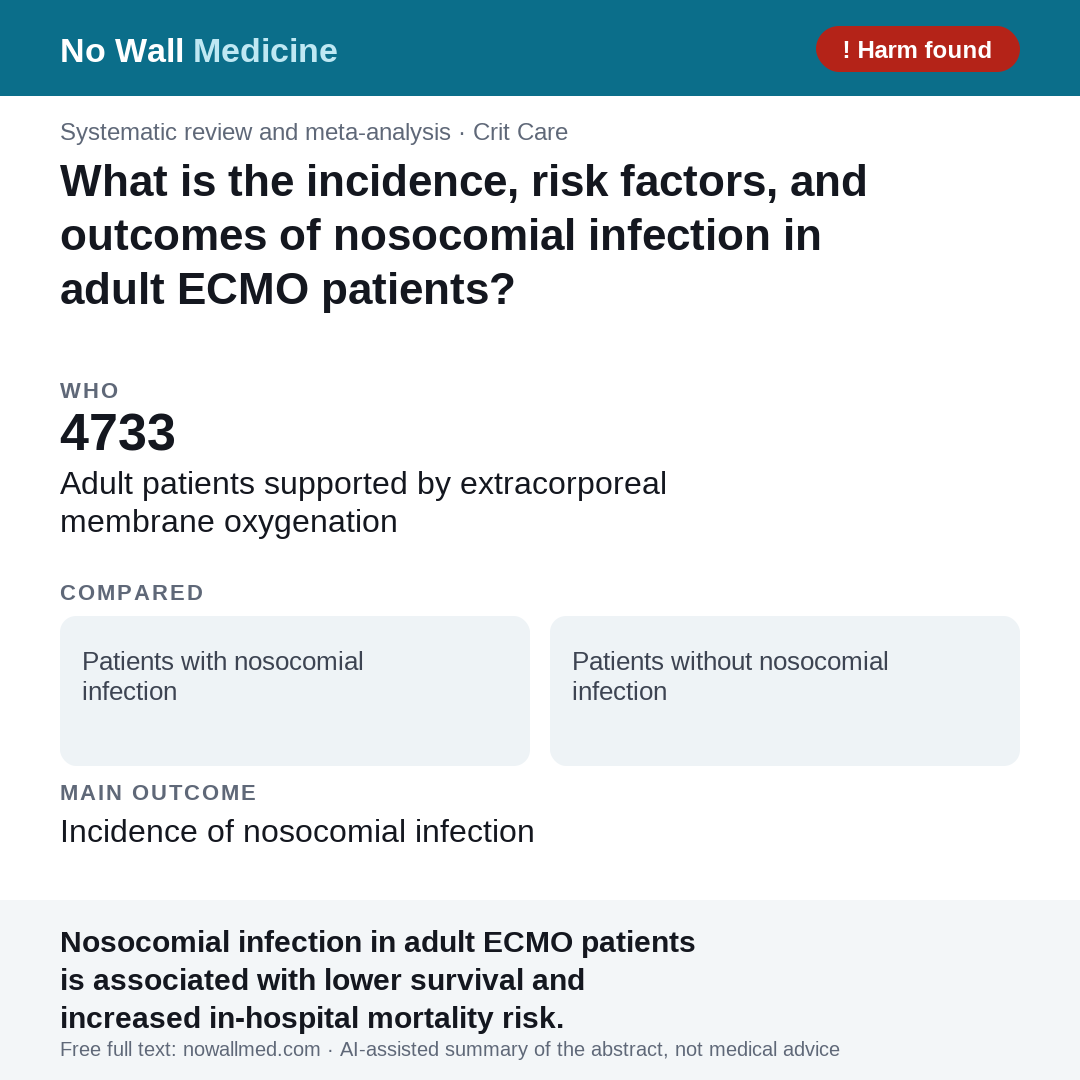
Incidence, risk factors and outcomes of nosocomial infection in adult patients supported by extracorporeal membrane oxygenation: a systematic review and meta-analysis
Systematic review and meta-analysisHarm found
What is the incidence, risk factors, and outcomes of nosocomial infection in adult ECMO patients?
Who
4733
Adult patients supported by extracorporeal membrane oxygenation
Compared
Patients with nosocomial infection
Patients without nosocomial infection
Main outcome
Incidence of nosocomial infection
Result: risk ratio 0.84 (95% CI 0.74-0.96) for ECMO survival
Bottom line: Nosocomial infection in adult ECMO patients is associated with lower survival and increased in-hospital mortality risk.
Crit Care · 2024-05-10Download image
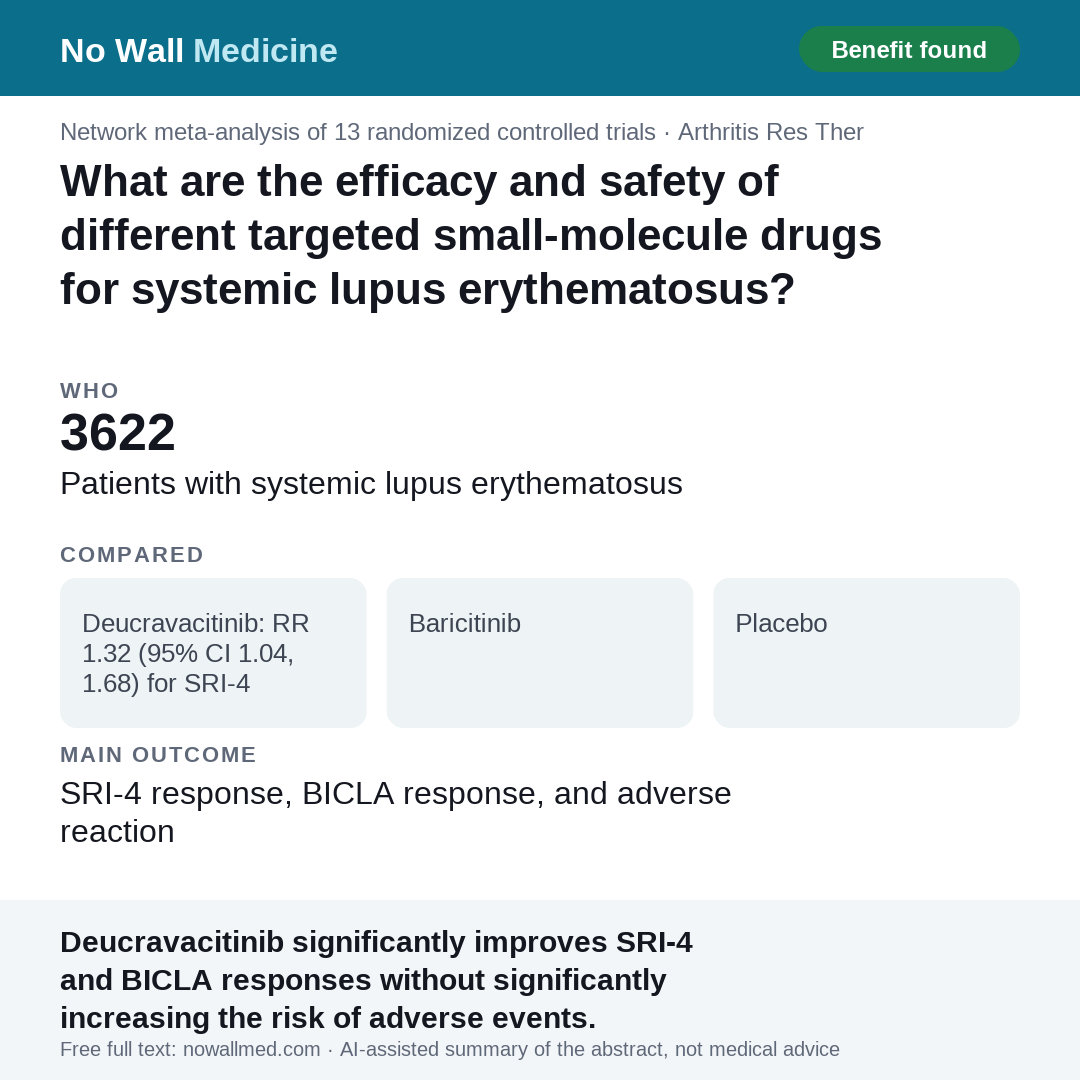
Efficacy and safety study of targeted small-molecule drugs in the treatment of systemic lupus erythematosus
Network meta-analysis of 13 randomized controlled trialsBenefit found
What are the efficacy and safety of different targeted small-molecule drugs for systemic lupus erythematosus?
Who
3622
Patients with systemic lupus erythematosus
Compared
Deucravacitinib: RR 1.32 (95% CI 1.04, 1.68) for SRI-4
Baricitinib
Placebo
Main outcome
SRI-4 response, BICLA response, and adverse reaction
Result: RR 1.32 (95% CI 1.04, 1.68) for SRI-4; RR 1.55 (95% CI 1.20, 2.02) for BICLA
Bottom line: Deucravacitinib significantly improves SRI-4 and BICLA responses without significantly increasing the risk of adverse events.
Limitation: Small number of included studies requires more high-quality clinical evidence.
Arthritis Res Ther · 2024-05-10Download image
Systematic review and meta-analysis of vaginal natural orifice transluminal endoscopic surgery hysterectomy versus vaginal hysterectomy for benign indications
Systematic review and meta-analysisNo clear difference
Is vaginal natural orifice transluminal endoscopic surgery hysterectomy as safe and effective as vaginal hysterectomy?
Who
Women undergoing hysterectomy for benign indications
Compared
vaginal natural orifice transluminal endoscopic surgery
conventional vaginal hysterectomy
Main outcome
blood loss, operation time, hospital stay, pain, and complications
Result: mean difference -44.70 (-99.97 to 10.57) for estimated blood loss
Bottom line: Vaginal natural orifice transluminal endoscopic surgery hysterectomy shows no significant differences in safety or effectiveness compared to conventional vaginal hysterectomy.
AJOG Glob Rep · 2024-05-10Download image

A Digital Cognitive-Physical Intervention for Attention-Deficit/Hyperactivity Disorder: Randomized Controlled Trial
Randomized controlled trialBenefit found
Is BrainFit efficacious in reducing ADHD symptoms and executive function among school-aged children?
Who
80
School-aged children aged 6-12 years with ADHD · ADHD outpatient clinic
Compared
BrainFit intervention: significantly larger improvement in total ADHD symptoms
Waitlist control
Main outcome
parent-rated ADHD symptoms and executive function skills
Result: β=-12.203, 95% CI -17.882 to -6.523
Bottom line: A digital cognitive-physical intervention significantly reduced ADHD symptoms and improved executive function in school-aged children.
Limitation: A larger multicenter effectiveness trial with longer follow-up is warranted to confirm findings.
J Med Internet Res · 2024-05-10Download image

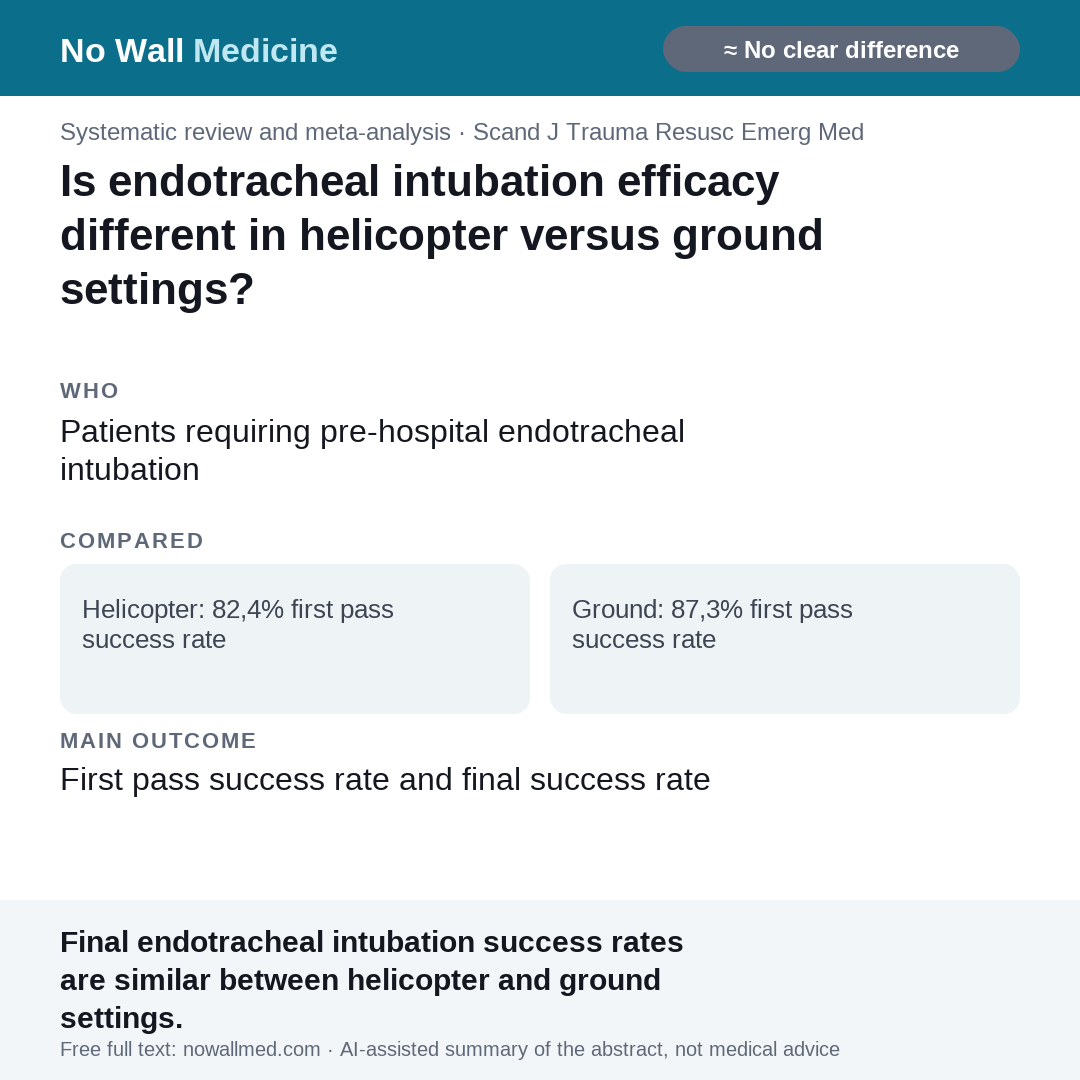
Efficacy of endotracheal intubation in helicopter cabin vs. ground: a systematic review and meta-analysis
Systematic review and meta-analysisNo clear difference
Is endotracheal intubation efficacy different in helicopter versus ground settings?
Who
Patients requiring pre-hospital endotracheal intubation
Compared
Helicopter: 82,4% first pass success rate
Ground: 87,3% first pass success rate
Main outcome
First pass success rate and final success rate
Bottom line: Final endotracheal intubation success rates are similar between helicopter and ground settings.
Limitation: Limited number of studies reporting on environmental factors and intubation parameters.
Scand J Trauma Resusc Emerg Med · 2024-05-10Download image
Acceptance and Commitment Therapy plus usual care for improving quality of life in people with motor neuron disease (COMMEND): a multicentre, parallel, randomised controlled trial in the UK
Multicentre, parallel, randomised controlled trialBenefit found
Does acceptance and commitment therapy plus usual care improve quality of life in motor neuron disease?
Who
191
People aged 18 or older with motor neuron disease · 16 UK motor neuron disease care centres or clinics
Compared
Acceptance and Commitment Therapy plus usual care
Usual care alone
Main outcome
Quality of life using the McGill Quality of Life Questionnaire-Revised
Result: adjusted mean difference 0·66 (95% CI 0·22-1·10)
Bottom line: Acceptance and commitment therapy plus usual care is clinically effective for maintaining or improving quality of life in motor neuron disease.
Funded by: National Institute for Health and Care Research and Motor Neurone Disease Association
Lancet · 2024-05-09Download image

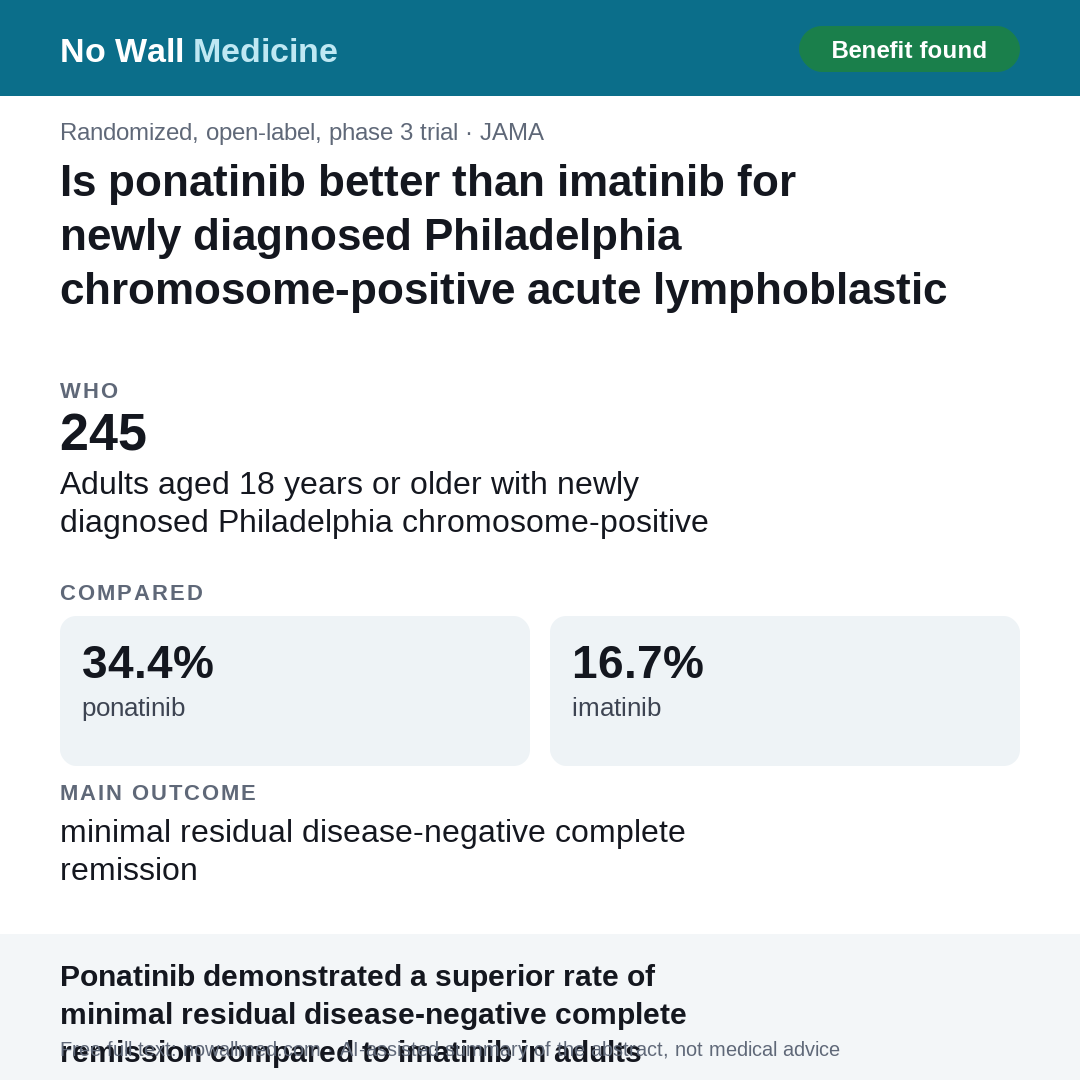
Ponatinib vs Imatinib in Frontline Philadelphia Chromosome-Positive Acute Lymphoblastic Leukemia: A Randomized Clinical Trial
Randomized, open-label, phase 3 trialBenefit found
Is ponatinib better than imatinib for newly diagnosed Philadelphia chromosome-positive acute lymphoblastic leukemia?
Who
245
Adults aged 18 years or older with newly diagnosed Philadelphia chromosome-positive acute lymphoblastic leukemia · Global, 77 sites
Compared
34.4%ponatinib (53/154)
16.7%imatinib (13/78)
Main outcome
minimal residual disease-negative complete remission
Result: risk difference 0.18 (95% CI 0.06-0.29)
Bottom line: Ponatinib demonstrated a superior rate of minimal residual disease-negative complete remission compared to imatinib in adults with newly diagnosed Philadelphia chromosome-positive acute lymphoblastic leukemia.
JAMA · 2024-05-09Download image
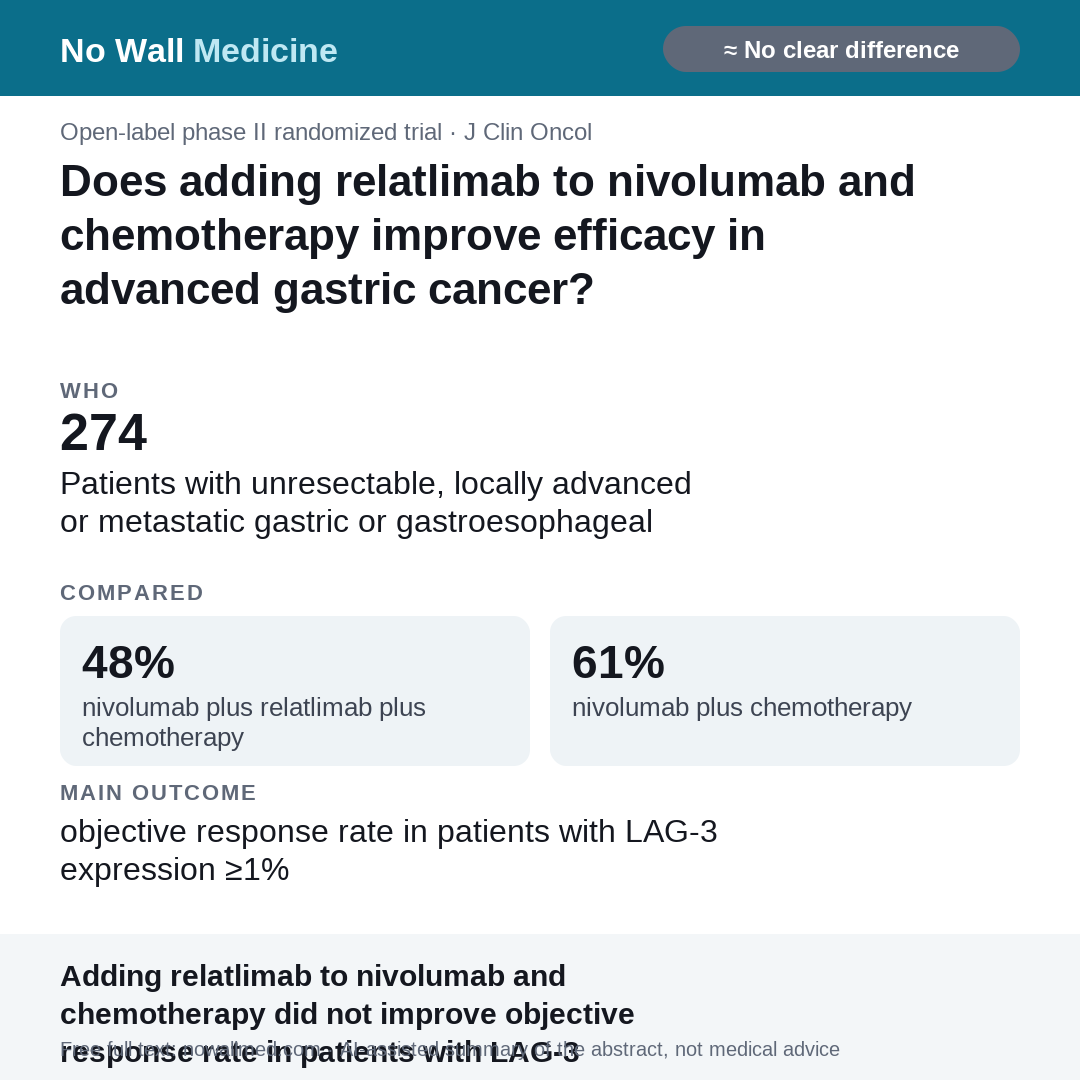
First-Line Nivolumab and Relatlimab Plus Chemotherapy for Gastric or Gastroesophageal Junction Adenocarcinoma: The Phase II RELATIVITY-060 Study
Open-label phase II randomized trialNo clear difference
Does adding relatlimab to nivolumab and chemotherapy improve efficacy in advanced gastric cancer?
Who
274
Patients with unresectable, locally advanced or metastatic gastric or gastroesophageal junction adenocarcinoma
Compared
48%nivolumab plus relatlimab plus chemotherapy (38 to 59)
61%nivolumab plus chemotherapy (51 to 71)
Main outcome
objective response rate in patients with LAG-3 expression ≥1%
Result: hazard ratio 1.41 (95% CI, 0.97 to 2.05)
Bottom line: Adding relatlimab to nivolumab and chemotherapy did not improve objective response rate in patients with LAG-3 expression ≥1%.
J Clin Oncol · 2024-05-09Download image