Visual abstracts
New randomized trials and meta-analyses from leading journals at a glance: who was studied, what was compared, and what was found. Every paper is free to read in full.
All specialtiesCardiology 4763Oncology 4042Gastroenterology & Hepatology 1902Infectious Disease 3756Neurology 1872Psychiatry & Mental Health 2214Pulmonology 2042Critical Care 1319Endocrinology & Diabetes 2544Pediatrics 2889Surgery 2479Orthopedics & Sports Medicine 917Neurosurgery 525Cardiothoracic & Vascular Surgery 656Plastic & Reconstructive Surgery 574Nephrology 1107Rheumatology 810Hematology 1090Dermatology 611Ophthalmology 532Obstetrics & Gynecology 1645Public & Global Health 1037Radiology & Imaging 617Anesthesiology 957Urology 745ENT (Otolaryngology) 494Emergency Medicine 481Allergy & Immunology 309Geriatrics 972Family Medicine & Primary Care 533Medical Genetics & Genomics 659Pathology & Laboratory Medicine 156Physical Medicine & Rehabilitation 734Palliative Care 421Nutrition 1560Digital Health & AI 2133General Medicine 318
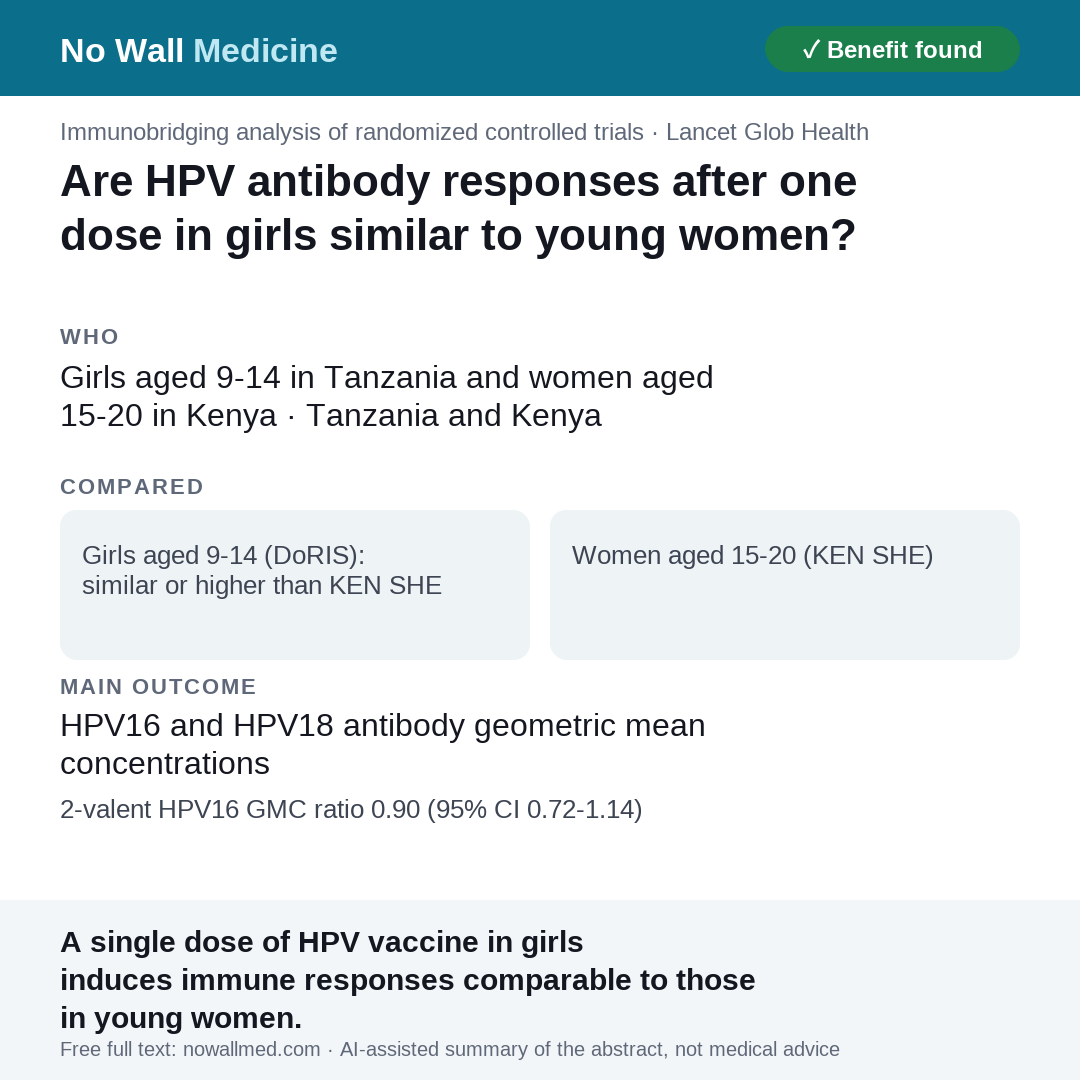
Comparing one dose of HPV vaccine in girls aged 9-14 years in Tanzania (DoRIS) with one dose in young women aged 15-20 years in Kenya (KEN SHE): an immunobridging analysis of randomised controlled trials
Immunobridging analysis of randomized controlled trialsBenefit found
Are HPV antibody responses after one dose in girls similar to young women?
Who
Girls aged 9-14 in Tanzania and women aged 15-20 in Kenya · Tanzania and Kenya
Compared
Girls aged 9-14 (DoRIS): similar or higher than KEN SHE
Women aged 15-20 (KEN SHE)
Main outcome
HPV16 and HPV18 antibody geometric mean concentrations
Result: 2-valent HPV16 GMC ratio 0.90 (95% CI 0.72-1.14)
Bottom line: A single dose of HPV vaccine in girls induces immune responses comparable to those in young women.
Funded by: UK Department of Health and Social Care, Bill and Melinda Gates Foundation, and others
Lancet Glob Health · 2024-02-17Download image
Is detection of enteropathogens and human or animal faecal markers in the environment associated with subsequent child enteric infections and growth: an individual participant data meta-analysis
Individual participant data meta-analysisMixed results
Are environmental enteropathogens and faecal markers associated with child enteric infections and growth?
Who
8603
Children younger than 5 years
Compared
Environmental pathogen detection: lower HAZ (ΔHAZ -0·09 [95% CI -0·17 to -0·01])
Microbial source tracking markers: ΔHAZ -0·01 [-0·13 to 0·11] for human markers
Main outcome
Diarrhoea prevalence and height-for-age Z-scores
Result: ΔHAZ -0·09 (95% CI -0·17 to -0·01)
Bottom line: Environmental pathogen detection was associated with lower height-for-age Z-scores and increased infection prevalence, but not diarrhoea.
Funded by: Bill & Melinda Gates Foundation and UK FCDO
Lancet Glob Health · 2024-02-17Download image

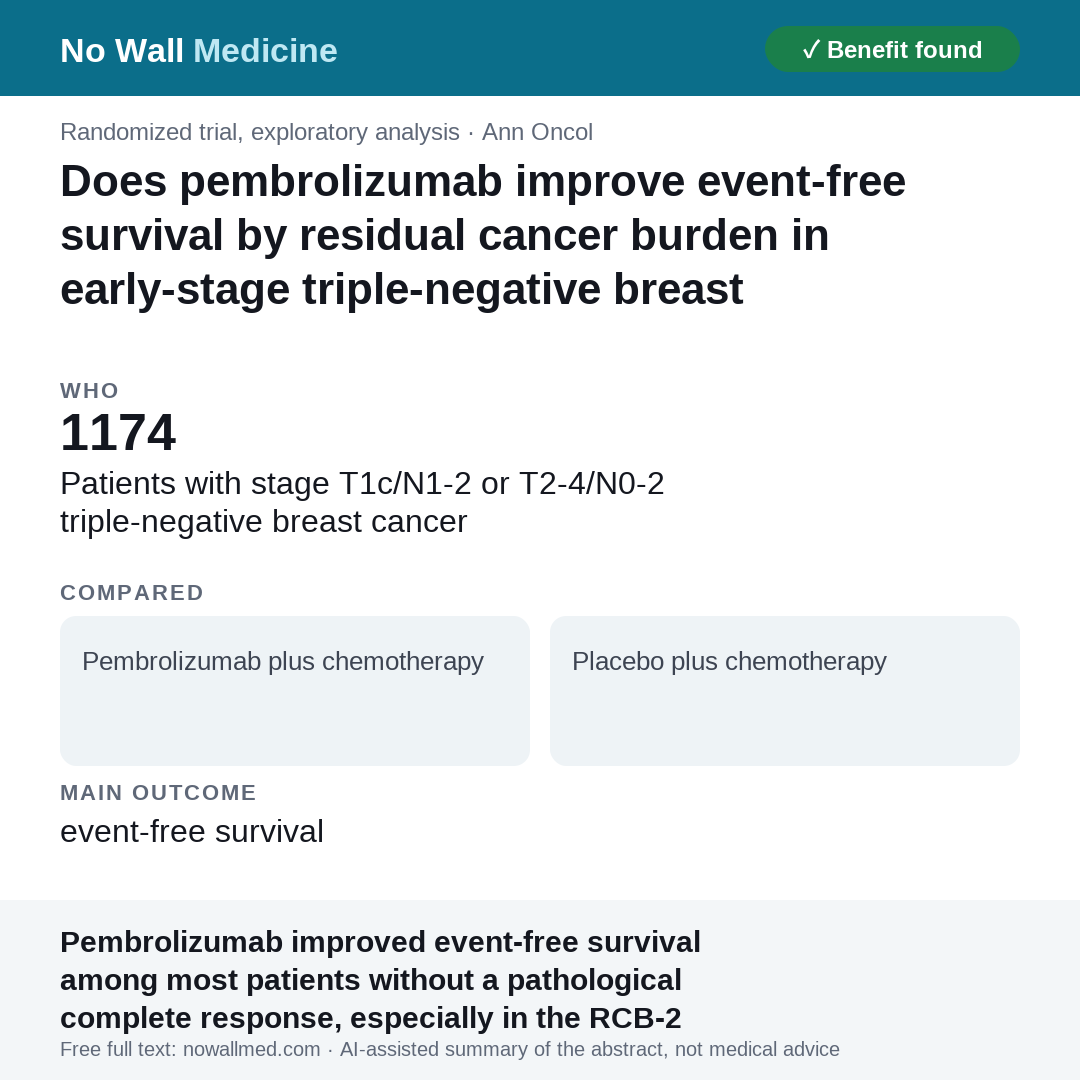
Event-free survival by residual cancer burden with pembrolizumab in early-stage TNBC: exploratory analysis from KEYNOTE-522
Randomized trial, exploratory analysisBenefit found
Does pembrolizumab improve event-free survival by residual cancer burden in early-stage triple-negative breast cancer?
Who
1174
Patients with stage T1c/N1-2 or T2-4/N0-2 triple-negative breast cancer
Compared
Pembrolizumab plus chemotherapy
Placebo plus chemotherapy
Main outcome
event-free survival
Result: hazard ratio 0.52 (95% CI 0.32 to 0.82) for RCB-2
Bottom line: Pembrolizumab improved event-free survival among most patients without a pathological complete response, especially in the RCB-2 category.
Ann Oncol · 2024-02-17Download image
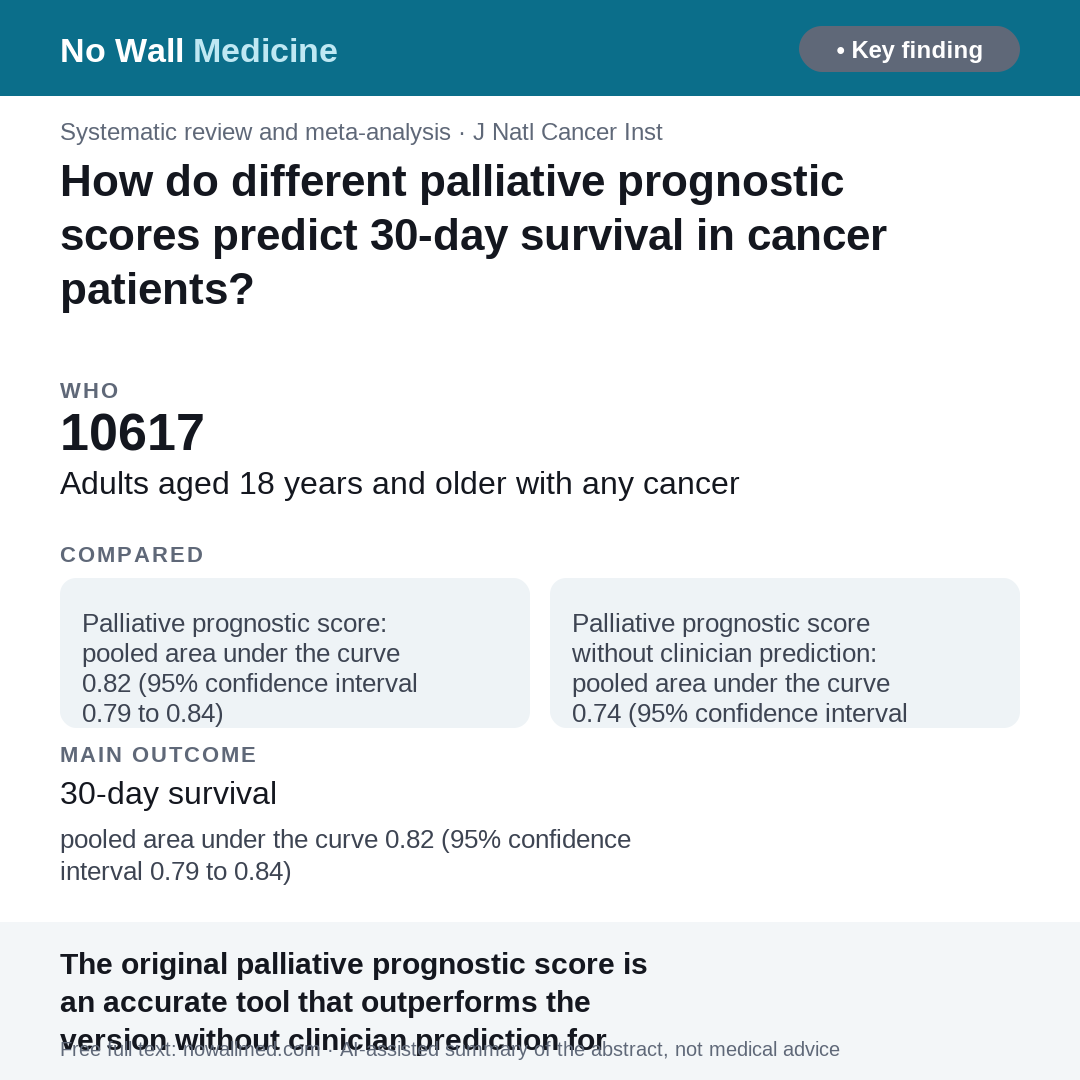
Palliative prognostic scores for survival prediction of cancer patients: a systematic review and meta-analysis
Systematic review and meta-analysisKey finding
How do different palliative prognostic scores predict 30-day survival in cancer patients?
Who
10617
Adults aged 18 years and older with any cancer
Compared
Palliative prognostic score: pooled area under the curve 0.82 (95% confidence interval 0.79 to 0.84)
Palliative prognostic score without clinician prediction: pooled area under the curve 0.74 (95% confidence interval 0.71 to 0.78)
Main outcome
30-day survival
Result: pooled area under the curve 0.82 (95% confidence interval 0.79 to 0.84)
Bottom line: The original palliative prognostic score is an accurate tool that outperforms the version without clinician prediction for predicting survival.
Limitation: Most studies were at high risk of bias because calibration was not assessed.
J Natl Cancer Inst · 2024-02-17Download image
The impact of autoantibodies on the efficacy of biological disease-modifying anti-rheumatic drugs in rheumatoid arthritis: meta-analysis of randomized controlled trials
Meta-analysis of 28 randomized controlled trialsNo clear difference
Does autoantibody status impact the efficacy of biological disease-modifying anti-rheumatic drugs in rheumatoid arthritis?
Who
Patients with rheumatoid arthritis
Compared
Autoantibody-positive patients
Autoantibody-negative patients
Main outcome
Efficacy of biological disease-modifying anti-rheumatic drugs
Result: 6-month ACR20 RRR 1.02 (0.88-1.18) in csDMARD-naive and 1.09 (0.90-1.32) in csDMARD-IR
Bottom line: Biological drug efficacy is generally comparable in patients with or without rheumatoid factor or anti-citrullinated protein antibodies.
Rheumatology · 2024-02-17Download image

Patient satisfaction with coronary CT angiography versus invasive coronary angiography: results of a single-center randomized trial
Single-center randomized trialBenefit found
Is patient satisfaction different between coronary computed tomography angiography and invasive coronary angiography?
Who
329
Patients with suspected coronary artery disease · Single-center
Compared
Coronary computed tomography angiography: 6.9 ± 14.7
Invasive coronary angiography: 17.1 ± 22.7
Main outcome
Patient satisfaction and subjective pain
Bottom line: Patients reported higher satisfaction and lower subjective pain with coronary computed tomography angiography compared to invasive coronary angiography.
Eur Radiol · 2024-02-17Download image

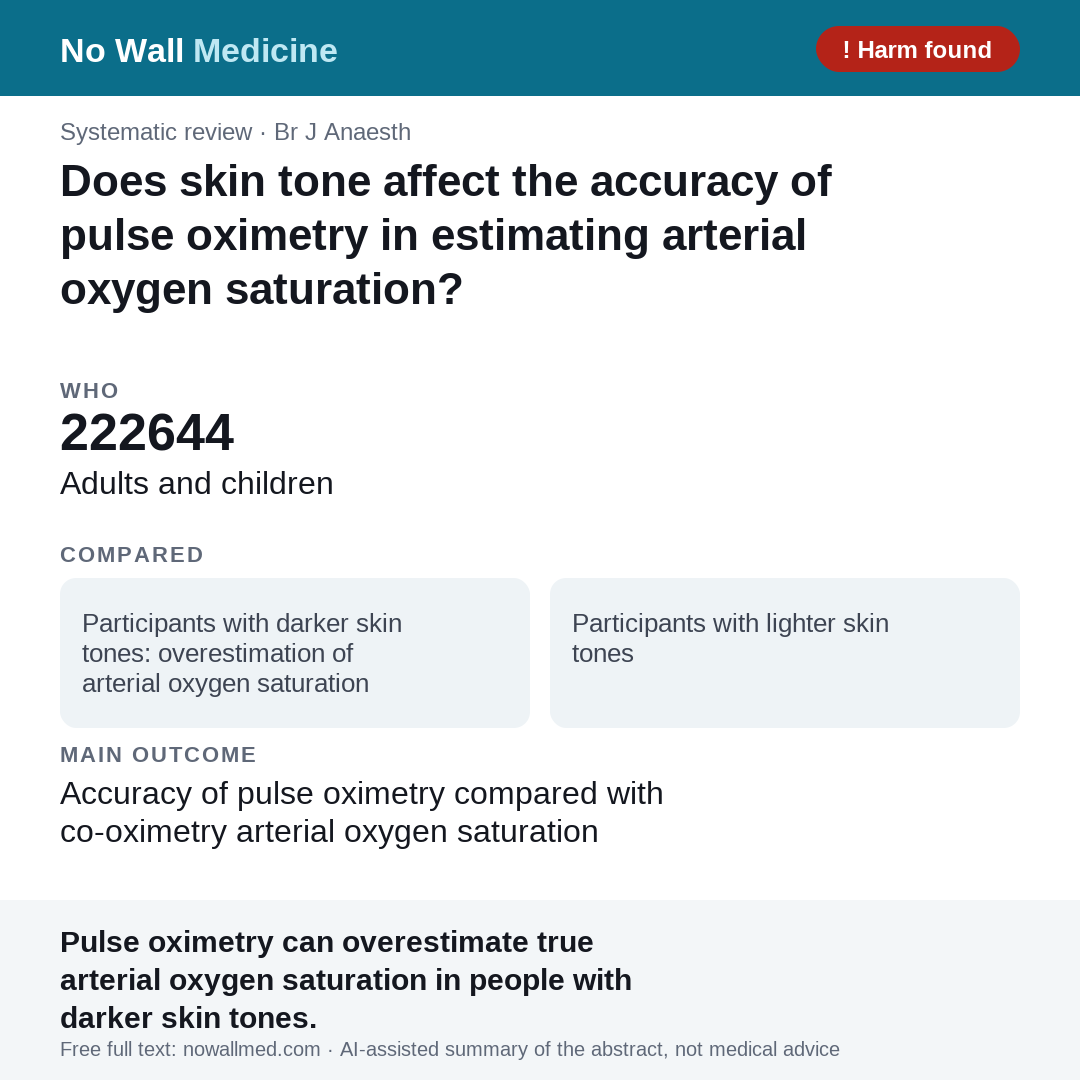
Effect of skin tone on the accuracy of the estimation of arterial oxygen saturation by pulse oximetry: a systematic review
Systematic reviewHarm found
Does skin tone affect the accuracy of pulse oximetry in estimating arterial oxygen saturation?
Who
222644
Adults and children
Compared
Participants with darker skin tones: overestimation of arterial oxygen saturation
Participants with lighter skin tones
Main outcome
Accuracy of pulse oximetry compared with co-oximetry arterial oxygen saturation
Bottom line: Pulse oximetry can overestimate true arterial oxygen saturation in people with darker skin tones.
Limitation: High risk of bias in 64% of studies and considerable heterogeneity.
Br J Anaesth · 2024-02-17Download image
Patient-reported outcome measure use among older adults after emergency department care: A systematic review
Systematic reviewMixed results
How are patient-reported outcome measures used among older adults after emergency department care?
Who
56
Older adults aged 65 years or older after emergency department care
Compared
Physical function domain: 47/56 (84%)
Assessed at 1-3 months: 113/304 (37%)
Assessed at >6 months: 91/304 (30%)
Assessed at 4-6 months: 88/304 (29%)
Main outcome
Use and timing of patient-reported outcome measures
Bottom line: Patient-reported outcome measures frequently measure physical function, but few assessments occur within one month after an emergency department visit.
Limitation: Interventional studies had varying risk of bias, with nine studies having high risk of bias.
Acad Emerg Med · 2024-02-17Download image

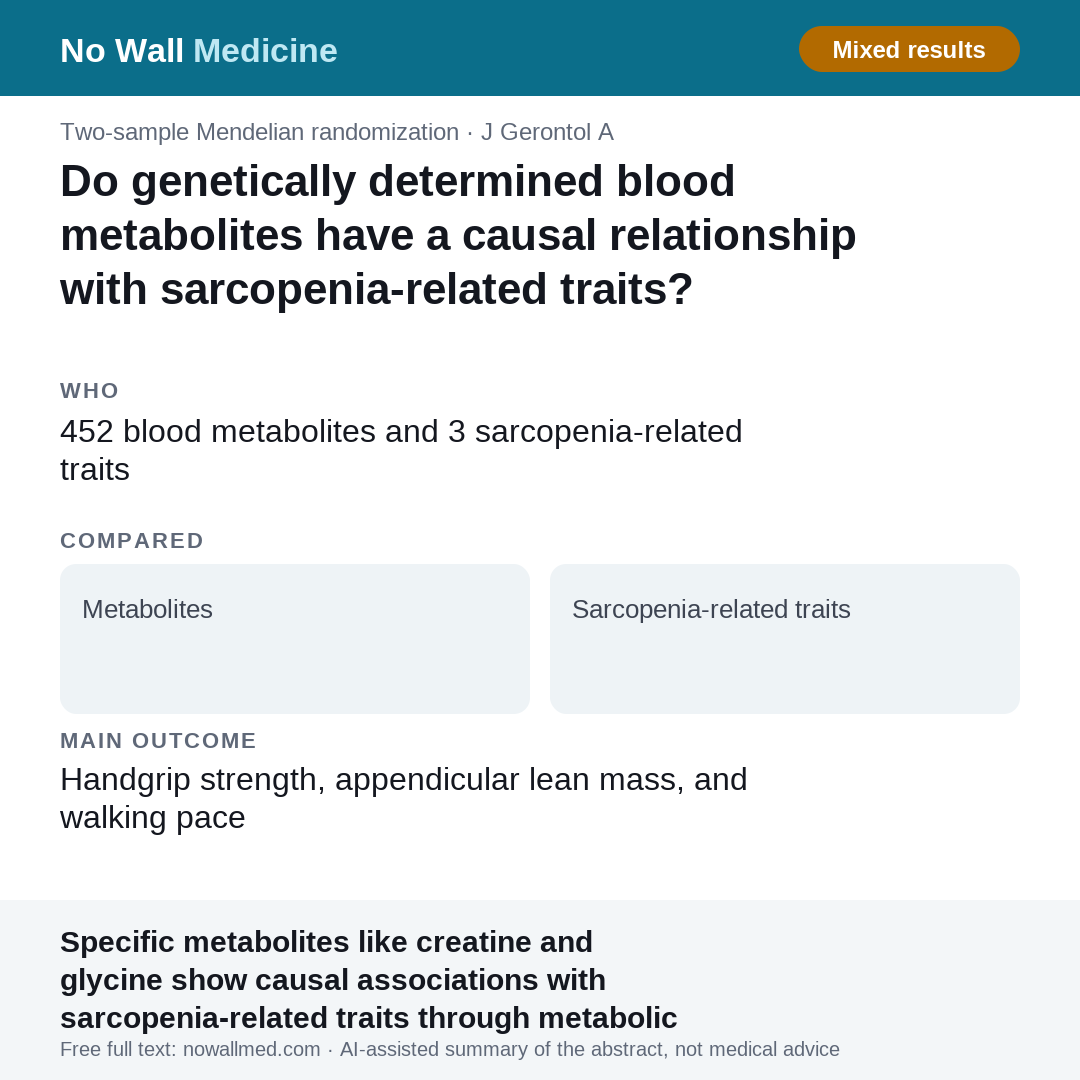
Metabolome-Wide Mendelian Randomization Assessing the Causal Relationship Between Blood Metabolites and Sarcopenia-Related Traits
Two-sample Mendelian randomizationMixed results
Do genetically determined blood metabolites have a causal relationship with sarcopenia-related traits?
Who
452 blood metabolites and 3 sarcopenia-related traits
Compared
Metabolites
Sarcopenia-related traits
Main outcome
Handgrip strength, appendicular lean mass, and walking pace
Bottom line: Specific metabolites like creatine and glycine show causal associations with sarcopenia-related traits through metabolic pathways.
J Gerontol A · 2024-02-17Download image
Life-Space of Older Adults after Discharge from Skilled Nursing Facilities
Secondary analysis of a cluster randomized trialHarm found
What are the life-space scores and associated factors for older adults after skilled nursing facility discharge?
Who
245
Patient and caregiver dyads after skilled nursing facility discharge · Six skilled nursing facilities in North Carolina
Compared
22.6Composite Life-Space score (16.09)
1.6Assisted Life-Space score (1.47)
Main outcome
Life-Space Assessment scores
Bottom line: Older adults reported very low life-space scores thirty days after discharge from skilled nursing facilities.
J Am Med Dir Assoc · 2024-02-17Download image

Question answering systems for health professionals at the point of care-a systematic review
Systematic review and narrative synthesisMixed results
What are the characteristics and suitability of biomedical question answering systems for healthcare?
Who
Biomedical question answering systems described in peer-reviewed literature
Compared
Systems meeting clinical utility criteria: 8 studies
Systems reporting user evaluations: 7 studies
Main outcome
Suitability and utility of biomedical question answering systems
Bottom line: Most biomedical question answering systems lack clinical utility, user evaluations, and realistic healthcare information needs.
Limitation: Many studies suffered from high risks of bias and applicability concerns.
J Am Med Inform Assoc · 2024-02-17Download image

Comparison of Functional and Cosmetic Outcomes Between Dorsal Preservation and Spreader Flap Rhinoplasty: A Randomized Trial
Randomized trialNo clear difference
Are functional and cosmetic outcomes different between dorsal preservation and spreader flap rhinoplasty?
Who
84
Rhinoplasty applicants
Compared
Conventional dorsal hump resection with spreader flap
Dorsal preservation rhinoplasty with modified subdorsal strip
Main outcome
Aesthetic and functional outcomes including residual hump, width, projection, and rotation
Bottom line: Dorsal preservation rhinoplasty provides comparable aesthetic and functional outcomes to spreader flap midvault reconstruction.
Aesthet Surg J · 2024-02-17Download image

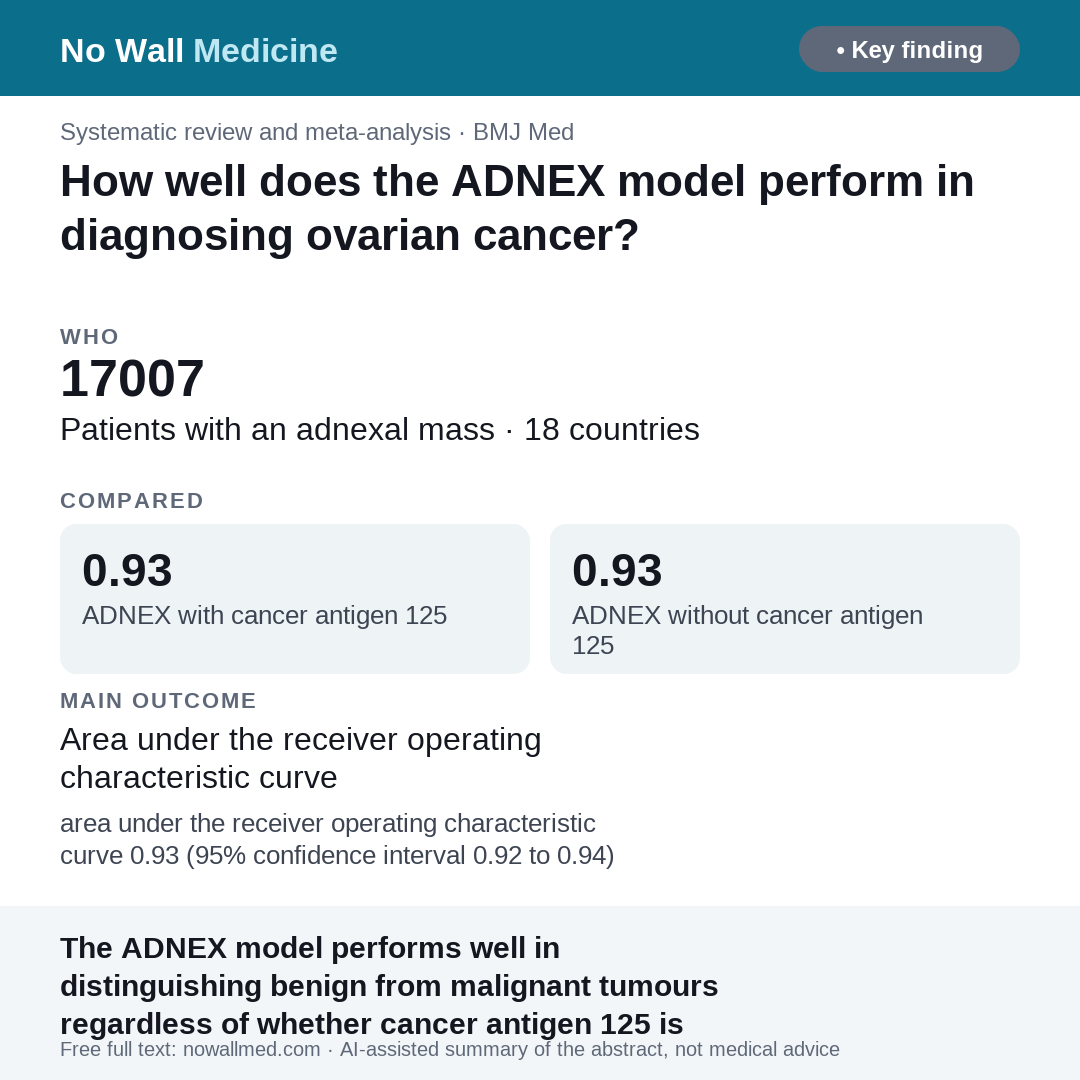
ADNEX risk prediction model for diagnosis of ovarian cancer: systematic review and meta-analysis of external validation studies
Systematic review and meta-analysisKey finding
How well does the ADNEX model perform in diagnosing ovarian cancer?
Who
17007
Patients with an adnexal mass · 18 countries
Compared
0.93ADNEX with cancer antigen 125
0.93ADNEX without cancer antigen 125
Main outcome
Area under the receiver operating characteristic curve
Result: area under the receiver operating characteristic curve 0.93 (95% confidence interval 0.92 to 0.94)
Bottom line: The ADNEX model performs well in distinguishing benign from malignant tumours regardless of whether cancer antigen 125 is used.
Limitation: Calibration was rarely assessed and most validations were at high risk of bias.
BMJ Med · 2024-02-17Download image
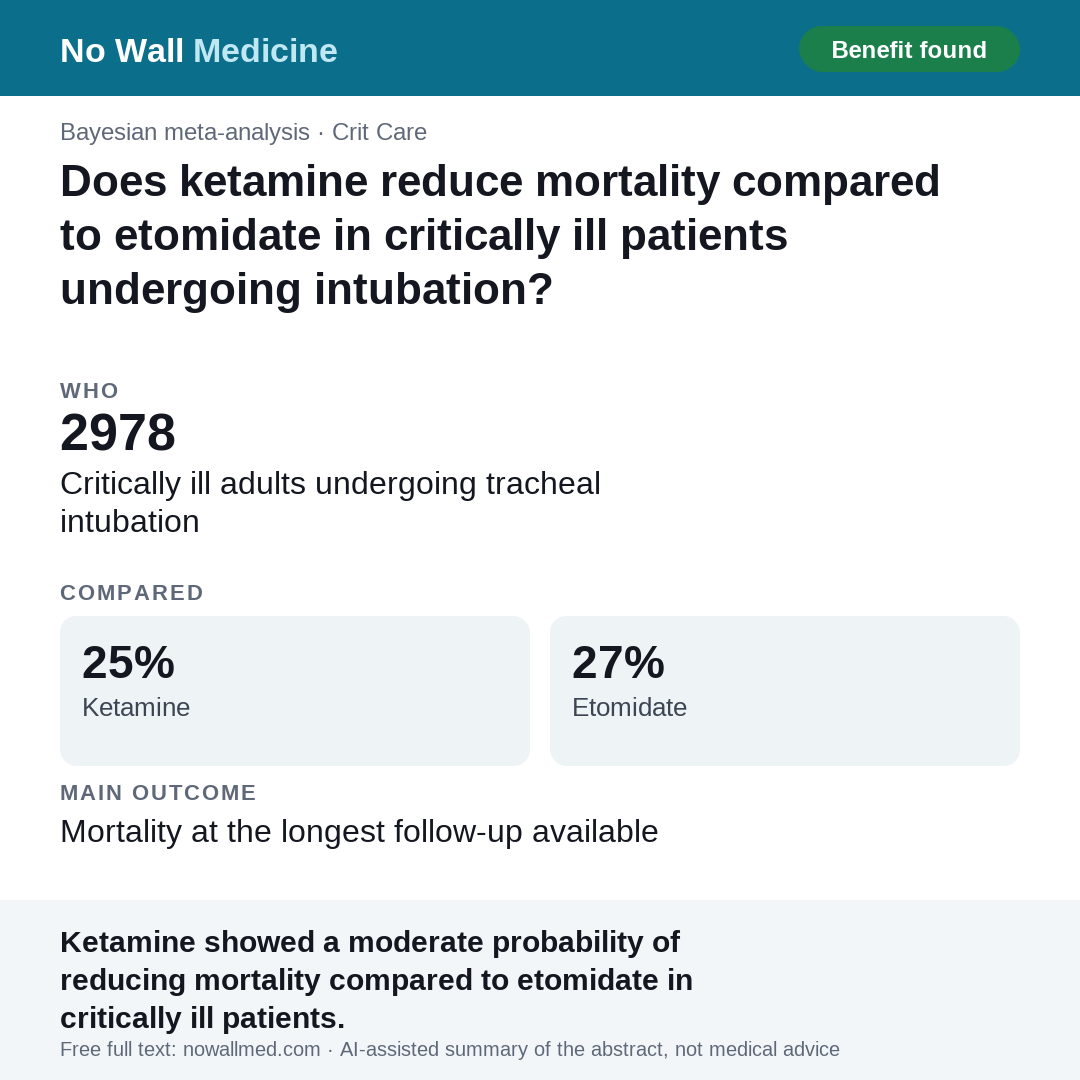
Ketamine versus etomidate as an induction agent for tracheal intubation in critically ill adults: a Bayesian meta-analysis
Bayesian meta-analysisBenefit found
Does ketamine reduce mortality compared to etomidate in critically ill patients undergoing intubation?
Who
2978
Critically ill adults undergoing tracheal intubation
Compared
25%Ketamine (376/1475)
27%Etomidate (411/1503)
Main outcome
Mortality at the longest follow-up available
Result: risk ratio 0.93 (95% CrI 0.79-1.08)
Bottom line: Ketamine showed a moderate probability of reducing mortality compared to etomidate in critically ill patients.
Crit Care · 2024-02-17Download image
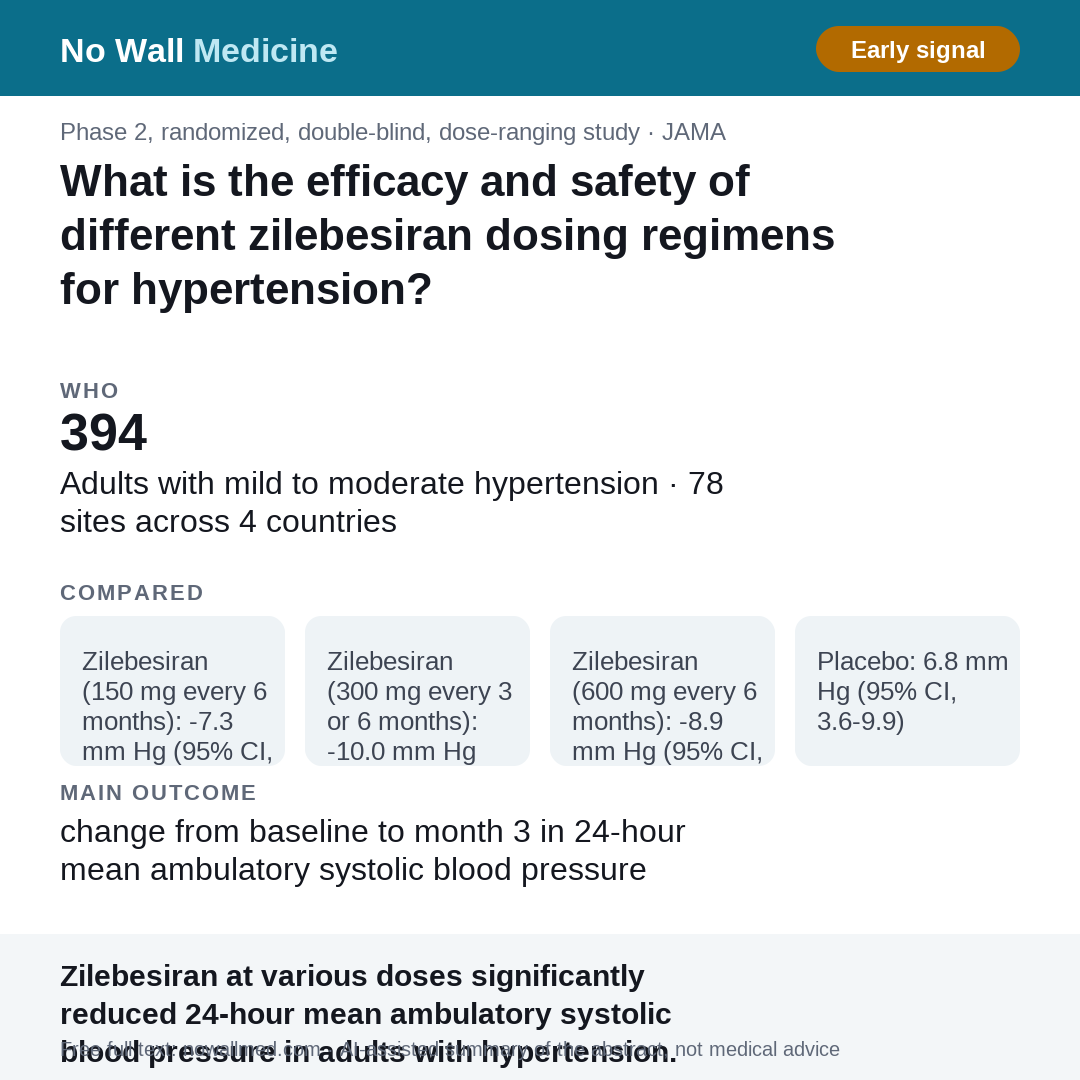
RNA Interference With Zilebesiran for Mild to Moderate Hypertension: The KARDIA-1 Randomized Clinical Trial
Phase 2, randomized, double-blind, dose-ranging studyEarly signal
What is the efficacy and safety of different zilebesiran dosing regimens for hypertension?
Who
394
Adults with mild to moderate hypertension · 78 sites across 4 countries
Compared
Zilebesiran (150 mg every 6 months): -7.3 mm Hg (95% CI, -10.3 to -4.4)
Zilebesiran (300 mg every 3 or 6 months): -10.0 mm Hg (95% CI, -12.0 to -7.9)
Zilebesiran (600 mg every 6 months): -8.9 mm Hg (95% CI, -11.9 to -6.0)
Placebo: 6.8 mm Hg (95% CI, 3.6-9.9)
Main outcome
change from baseline to month 3 in 24-hour mean ambulatory systolic blood pressure
Result: LSM differences vs placebo: -14.1 mm Hg (95% CI, -19.2 to -9.0) to -16.7 mm Hg (95% CI, -21.2 to -12.3)
Bottom line: Zilebesiran at various doses significantly reduced 24-hour mean ambulatory systolic blood pressure in adults with hypertension.
JAMA · 2024-02-16Download image
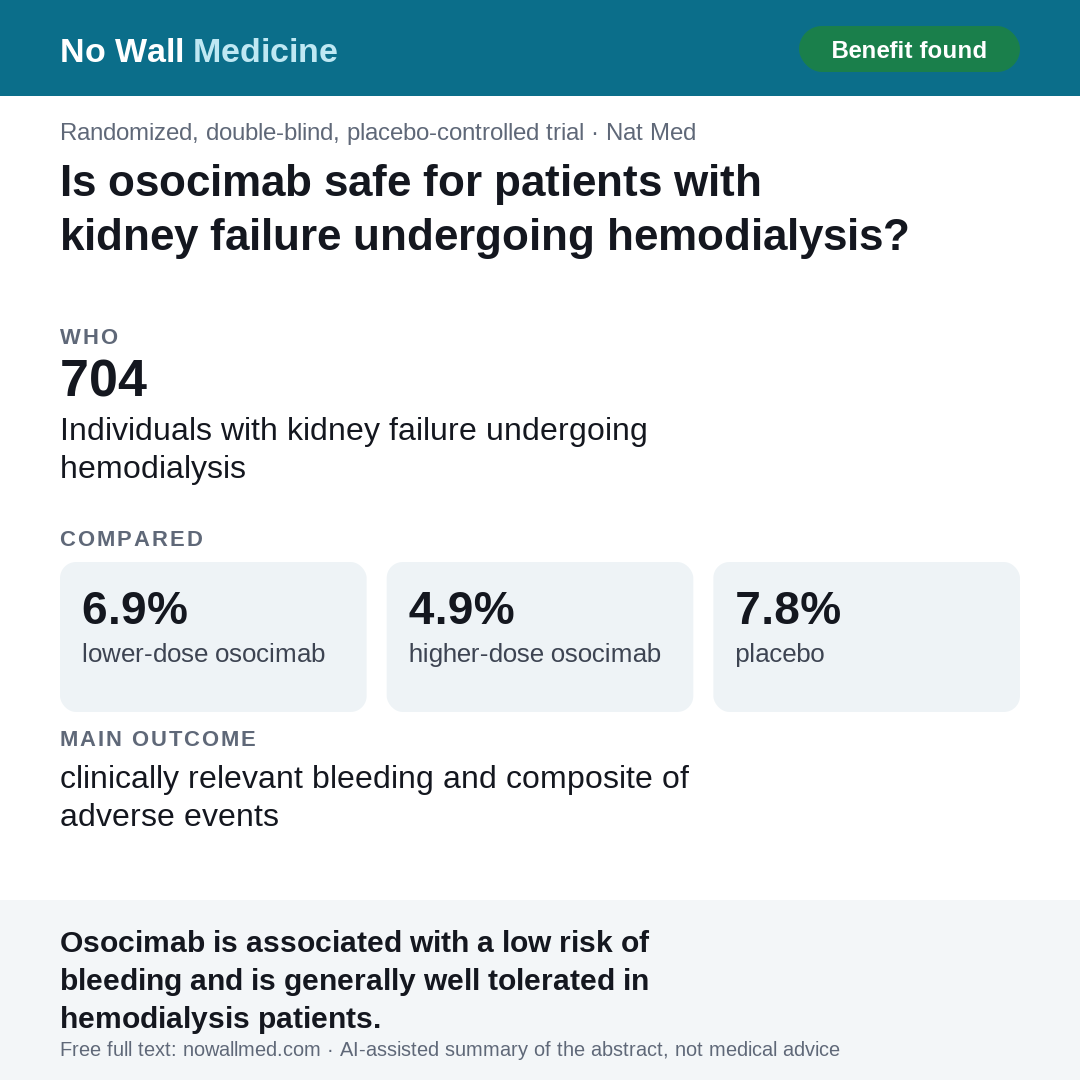
Anticoagulation with osocimab in patients with kidney failure undergoing hemodialysis: a randomized phase 2 trial
Randomized, double-blind, placebo-controlled trialBenefit found
Is osocimab safe for patients with kidney failure undergoing hemodialysis?
Who
704
Individuals with kidney failure undergoing hemodialysis
Compared
6.9%lower-dose osocimab
4.9%higher-dose osocimab
7.8%placebo
Main outcome
clinically relevant bleeding and composite of adverse events
Bottom line: Osocimab is associated with a low risk of bleeding and is generally well tolerated in hemodialysis patients.
Nat Med · 2024-02-16Download image
Anxiety-focused cognitive behavioral therapy delivered by non-specialists to prevent postnatal depression: a randomized, phase 3 trial
Phase 3, single-blind, randomized controlled trialBenefit found
Does anxiety-focused cognitive behavioral therapy by non-specialists prevent postnatal common mental disorders?
Who
755
Pregnant women with mild anxiety but no clinical depression · Pakistan
Compared
12%Happy Mother-Healthy Baby program
41%Enhanced care alone
Main outcome
Major depression, generalized anxiety disorder, or both at 6 weeks postpartum
Result: adjusted odds ratio 0.19 (95% CI 0.14-0.28)
Bottom line: Anxiety-focused cognitive behavioral therapy delivered by non-specialists during pregnancy reduces postpartum depression and anxiety.
Nat Med · 2024-02-16Download image

A first-in-class leucyl-tRNA synthetase inhibitor, ganfeborole, for rifampicin-susceptible tuberculosis: a phase 2a open-label, randomized trial
Phase 2a, open-label, randomized trialEarly signal
What is the early bactericidal activity and safety of ganfeborole for tuberculosis?
Who
75
Participants with untreated, rifampicin-susceptible pulmonary tuberculosis · single-center
Compared
ganfeborole (1/5/15/30 mg): numerical reductions in daily sputum-derived colony-forming units
standard of care
Main outcome
early bactericidal activity
Bottom line: Ganfeborole showed bactericidal activity and an acceptable safety profile in participants with rifampicin-susceptible pulmonary tuberculosis.
Nat Med · 2024-02-16Download image

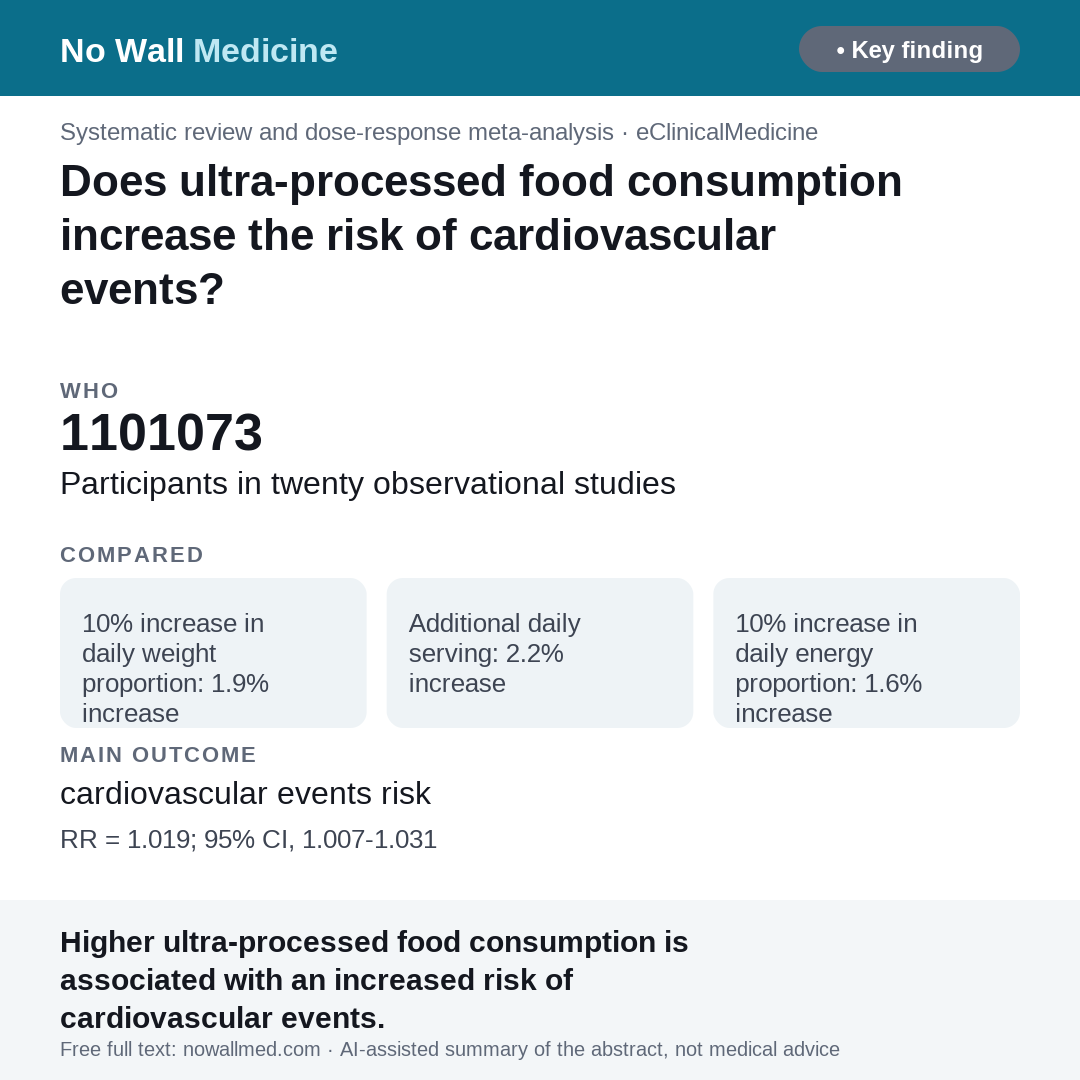
Ultra-processed food consumption and risk of cardiovascular events: a systematic review and dose-response meta-analysis
Systematic review and dose-response meta-analysisKey finding
Does ultra-processed food consumption increase the risk of cardiovascular events?
Who
1101073
Participants in twenty observational studies
Compared
10% increase in daily weight proportion: 1.9% increase
Additional daily serving: 2.2% increase
10% increase in daily energy proportion: 1.6% increase
Main outcome
cardiovascular events risk
Result: RR = 1.019; 95% CI, 1.007-1.031
Bottom line: Higher ultra-processed food consumption is associated with an increased risk of cardiovascular events.
Funded by: Key Research and Development Program of Shaanxi Province
eClinicalMedicine · 2024-02-16Download image
Pharmacological treatments for psychotic depression: a systematic review and network meta-analysis
Systematic review and network meta-analysisBenefit found
What are the most effective pharmacological treatments for psychotic depression?
Who
1161
Individuals with major depressive episode with psychotic features
Compared
Fluoxetine plus olanzapine: risk ratio 1.91 (95% CI 1.27-2.85)
Placebo
Main outcome
Response rate and acceptability
Result: risk ratio 1.91 (95% CI 1.27-2.85)
Bottom line: Combining a selective serotonin reuptake inhibitor with a second-generation antipsychotic, especially fluoxetine and olanzapine, may be optimal for psychotic depression.
Limitation: the conclusions should be interpreted cautiously
Lancet Psychiatry · 2024-02-16Download image