Visual abstracts
New randomized trials and meta-analyses from leading journals at a glance: who was studied, what was compared, and what was found. Every paper is free to read in full.
All specialtiesCardiology 2020Oncology 1742Gastroenterology & Hepatology 768Infectious Disease 1281Neurology 833Psychiatry & Mental Health 993Pulmonology 865Critical Care 576Endocrinology & Diabetes 1078Pediatrics 1201Surgery 1024Orthopedics & Sports Medicine 376Neurosurgery 252Cardiothoracic & Vascular Surgery 216Plastic & Reconstructive Surgery 309Nephrology 420Rheumatology 285Hematology 445Dermatology 231Ophthalmology 232Obstetrics & Gynecology 657Public & Global Health 391Radiology & Imaging 278Anesthesiology 404Urology 357ENT (Otolaryngology) 269Emergency Medicine 223Allergy & Immunology 128Geriatrics 433Family Medicine & Primary Care 238Medical Genetics & Genomics 219Pathology & Laboratory Medicine 66Physical Medicine & Rehabilitation 356Palliative Care 174Nutrition 550Digital Health & AI 1051General Medicine 155
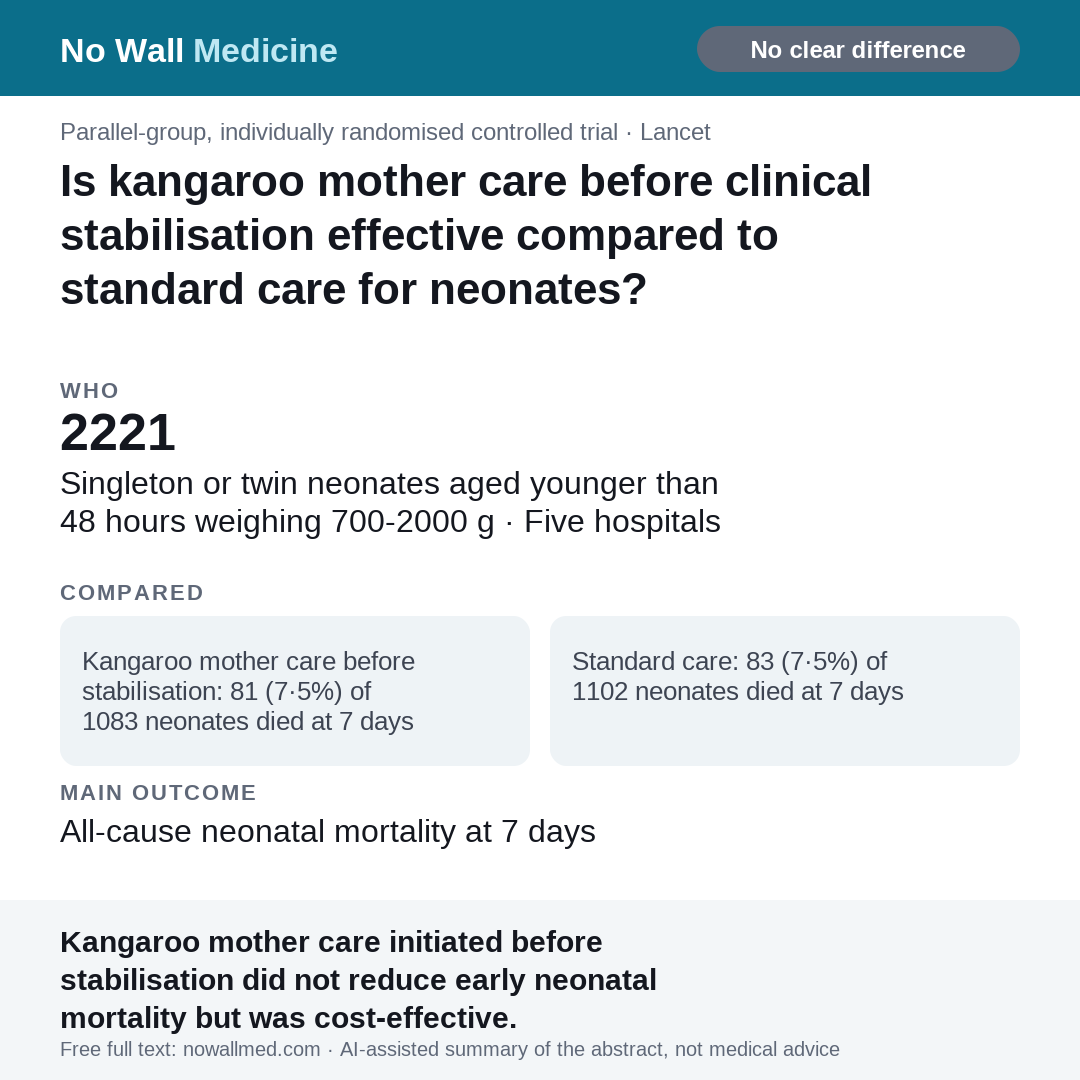
Effectiveness of kangaroo mother care before clinical stabilisation versus standard care among neonates at five hospitals in Uganda (OMWaNA): a parallel-group, individually randomised controlled trial and economic evaluation
Parallel-group, individually randomised controlled trialNo clear difference
Is kangaroo mother care before clinical stabilisation effective compared to standard care for neonates?
Who
2221
Singleton or twin neonates aged younger than 48 hours weighing 700-2000 g · Five hospitals in Uganda
Compared
Kangaroo mother care before stabilisation: 81 (7·5%) of 1083 neonates died at 7 days
Standard care: 83 (7·5%) of 1102 neonates died at 7 days
Main outcome
All-cause neonatal mortality at 7 days
Result: relative risk 0·97 (95% CI 0·74-1·28)
Bottom line: Kangaroo mother care initiated before stabilisation did not reduce early neonatal mortality but was cost-effective.
Funded by: Joint Global Health Trials scheme, UKRI Medical Research Council, Wellcome Trust, and NIH
Lancet · 2024-05-13Download image
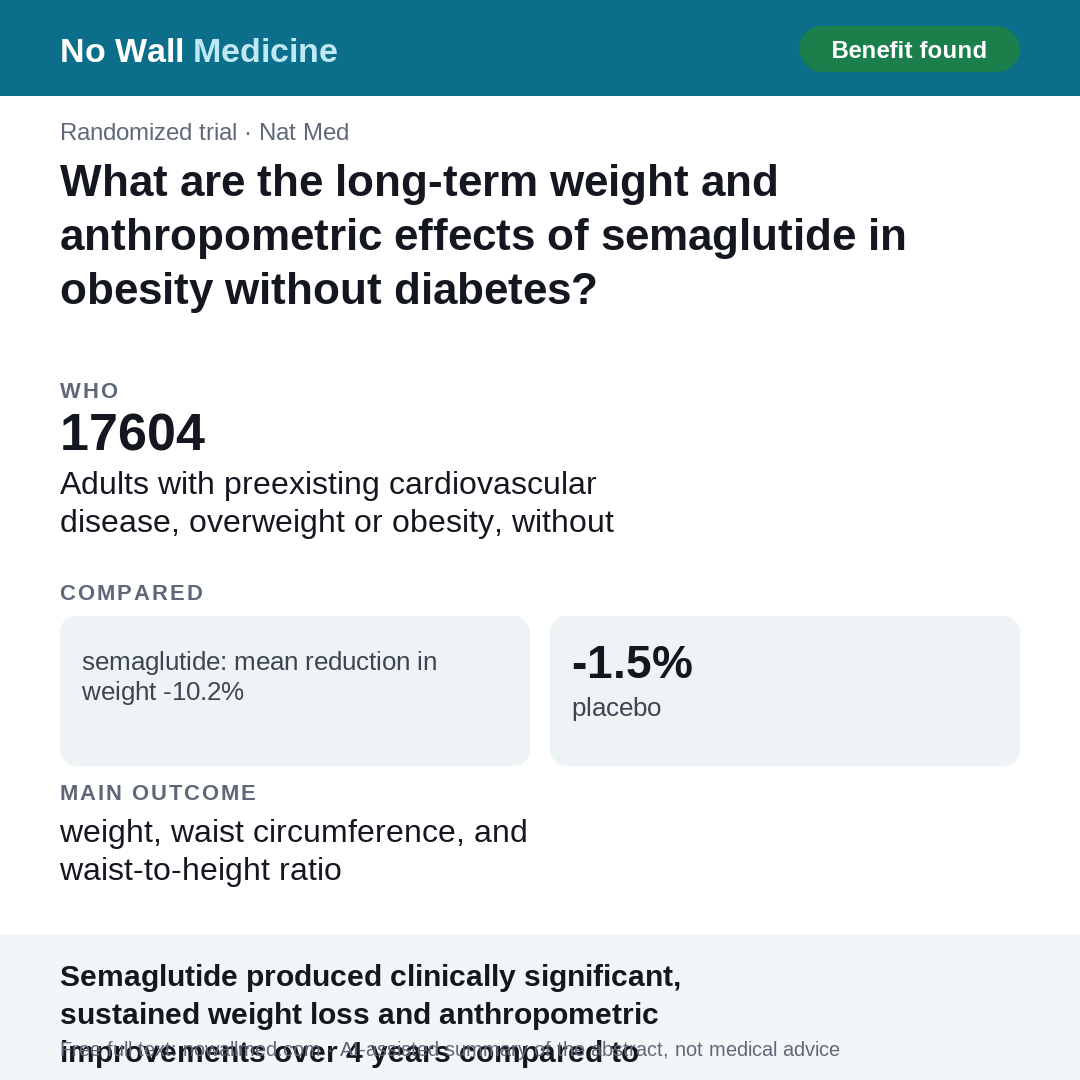
Long-term weight loss effects of semaglutide in obesity without diabetes in the SELECT trial
Randomized trialBenefit found
What are the long-term weight and anthropometric effects of semaglutide in obesity without diabetes?
Who
17604
Adults with preexisting cardiovascular disease, overweight or obesity, without diabetes
Compared
semaglutide: mean reduction in weight -10.2%
-1.5%placebo
Main outcome
weight, waist circumference, and waist-to-height ratio
Bottom line: Semaglutide produced clinically significant, sustained weight loss and anthropometric improvements over 4 years compared to placebo.
Nat Med · 2024-05-13Download image
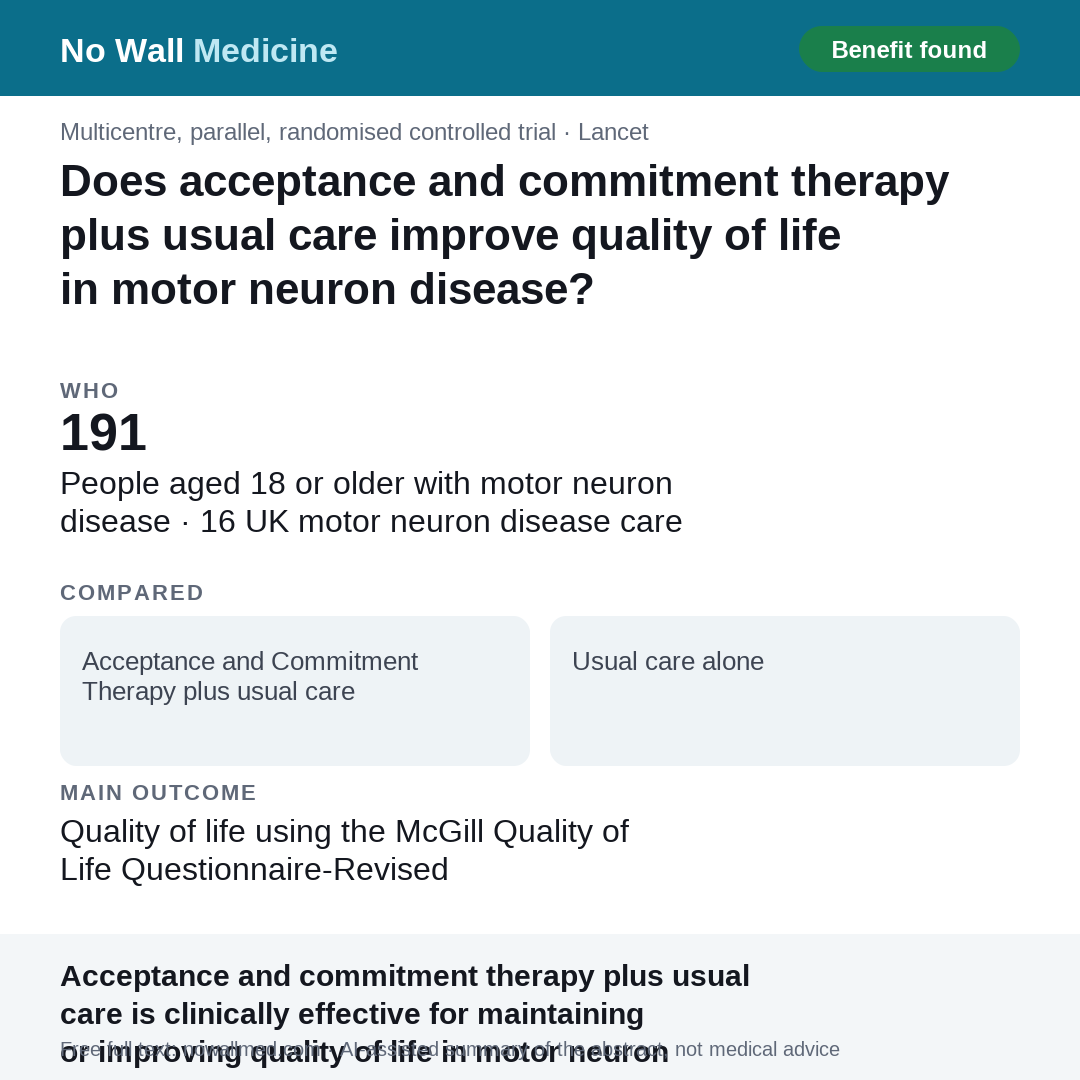
Acceptance and Commitment Therapy plus usual care for improving quality of life in people with motor neuron disease (COMMEND): a multicentre, parallel, randomised controlled trial in the UK
Multicentre, parallel, randomised controlled trialBenefit found
Does acceptance and commitment therapy plus usual care improve quality of life in motor neuron disease?
Who
191
People aged 18 or older with motor neuron disease · 16 UK motor neuron disease care centres or clinics
Compared
Acceptance and Commitment Therapy plus usual care
Usual care alone
Main outcome
Quality of life using the McGill Quality of Life Questionnaire-Revised
Result: adjusted mean difference 0·66 (95% CI 0·22-1·10)
Bottom line: Acceptance and commitment therapy plus usual care is clinically effective for maintaining or improving quality of life in motor neuron disease.
Funded by: National Institute for Health and Care Research and Motor Neurone Disease Association
Lancet · 2024-05-09Download image
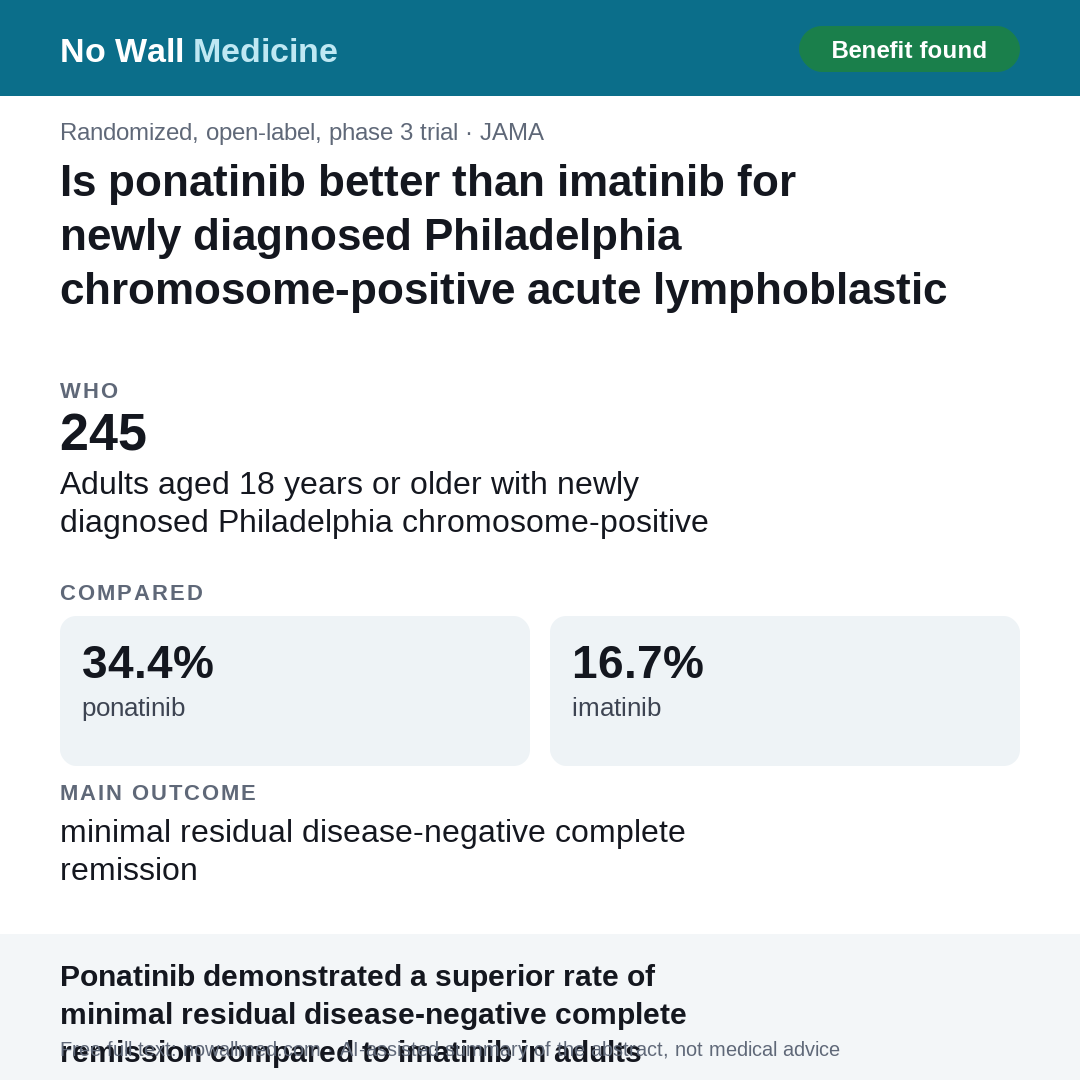
Ponatinib vs Imatinib in Frontline Philadelphia Chromosome-Positive Acute Lymphoblastic Leukemia: A Randomized Clinical Trial
Randomized, open-label, phase 3 trialBenefit found
Is ponatinib better than imatinib for newly diagnosed Philadelphia chromosome-positive acute lymphoblastic leukemia?
Who
245
Adults aged 18 years or older with newly diagnosed Philadelphia chromosome-positive acute lymphoblastic leukemia · Global, 77 sites
Compared
34.4%ponatinib (53/154)
16.7%imatinib (13/78)
Main outcome
minimal residual disease-negative complete remission
Result: risk difference 0.18 (95% CI 0.06-0.29)
Bottom line: Ponatinib demonstrated a superior rate of minimal residual disease-negative complete remission compared to imatinib in adults with newly diagnosed Philadelphia chromosome-positive acute lymphoblastic leukemia.
JAMA · 2024-05-09Download image
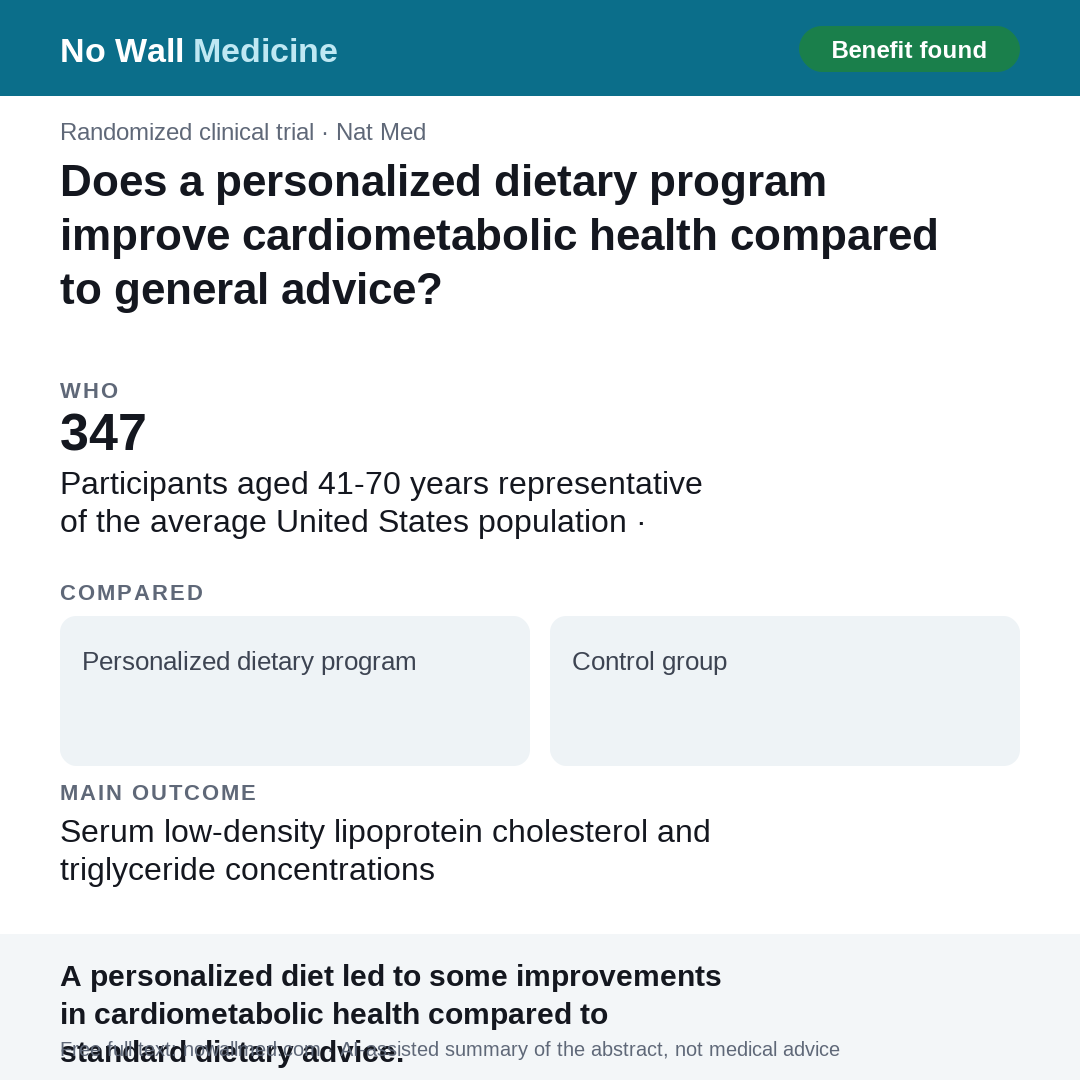
Effects of a personalized nutrition program on cardiometabolic health: a randomized controlled trial
Randomized clinical trialBenefit found
Does a personalized dietary program improve cardiometabolic health compared to general advice?
Who
347
Participants aged 41-70 years representative of the average United States population · United States
Compared
Personalized dietary program
Control group
Main outcome
Serum low-density lipoprotein cholesterol and triglyceride concentrations
Result: mean difference -0.13 mmol l-1 (log-transformed 95% confidence interval -0.07 to -0.01)
Bottom line: A personalized diet led to some improvements in cardiometabolic health compared to standard dietary advice.
Nat Med · 2024-05-08Download image
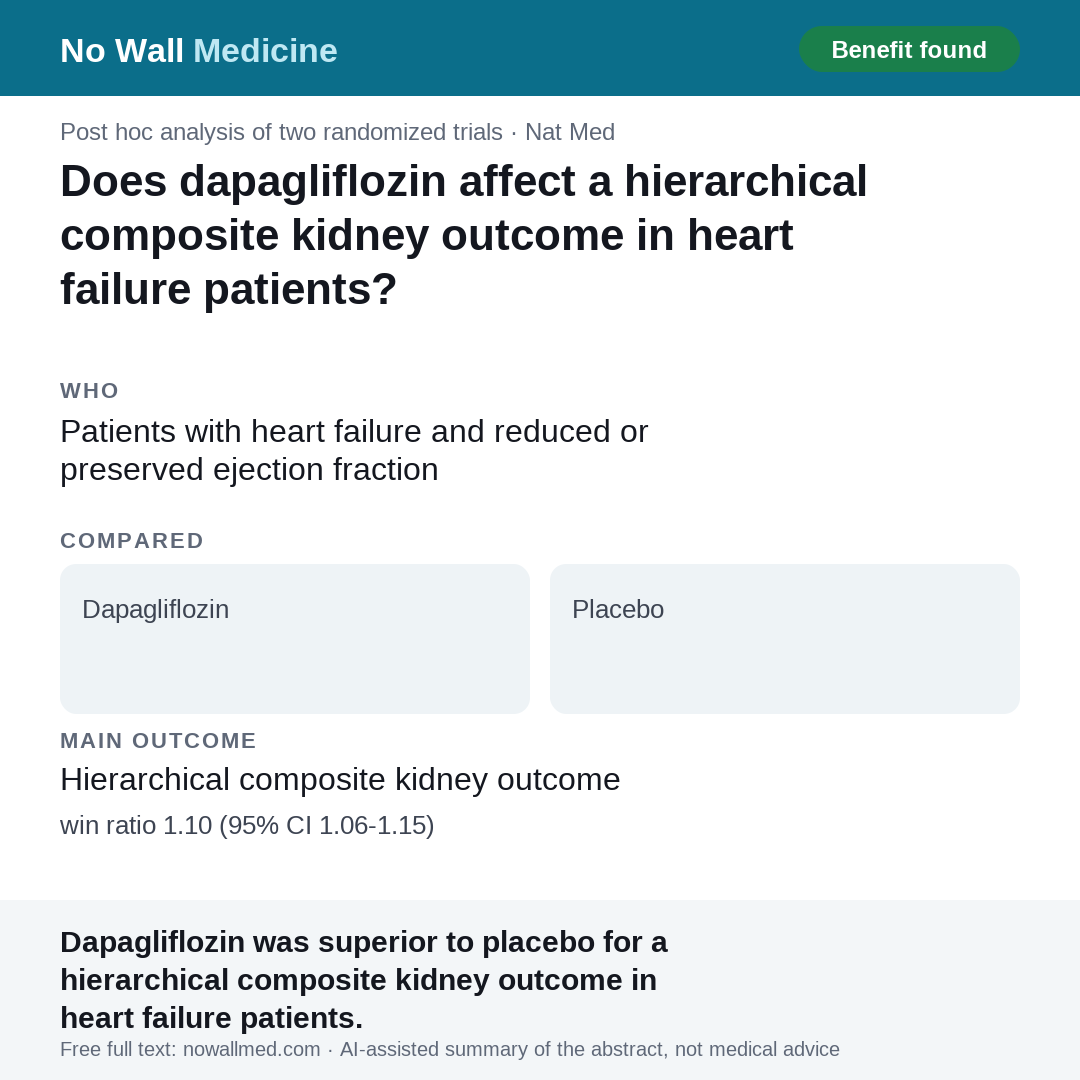
A hierarchical kidney outcome using win statistics in patients with heart failure from the DAPA-HF and DELIVER trials
Post hoc analysis of two randomized trialsBenefit found
Does dapagliflozin affect a hierarchical composite kidney outcome in heart failure patients?
Who
Patients with heart failure and reduced or preserved ejection fraction
Compared
Dapagliflozin
Placebo
Main outcome
Hierarchical composite kidney outcome
Result: win ratio 1.10 (95% CI 1.06-1.15)
Bottom line: Dapagliflozin was superior to placebo for a hierarchical composite kidney outcome in heart failure patients.
Nat Med · 2024-05-06Download image
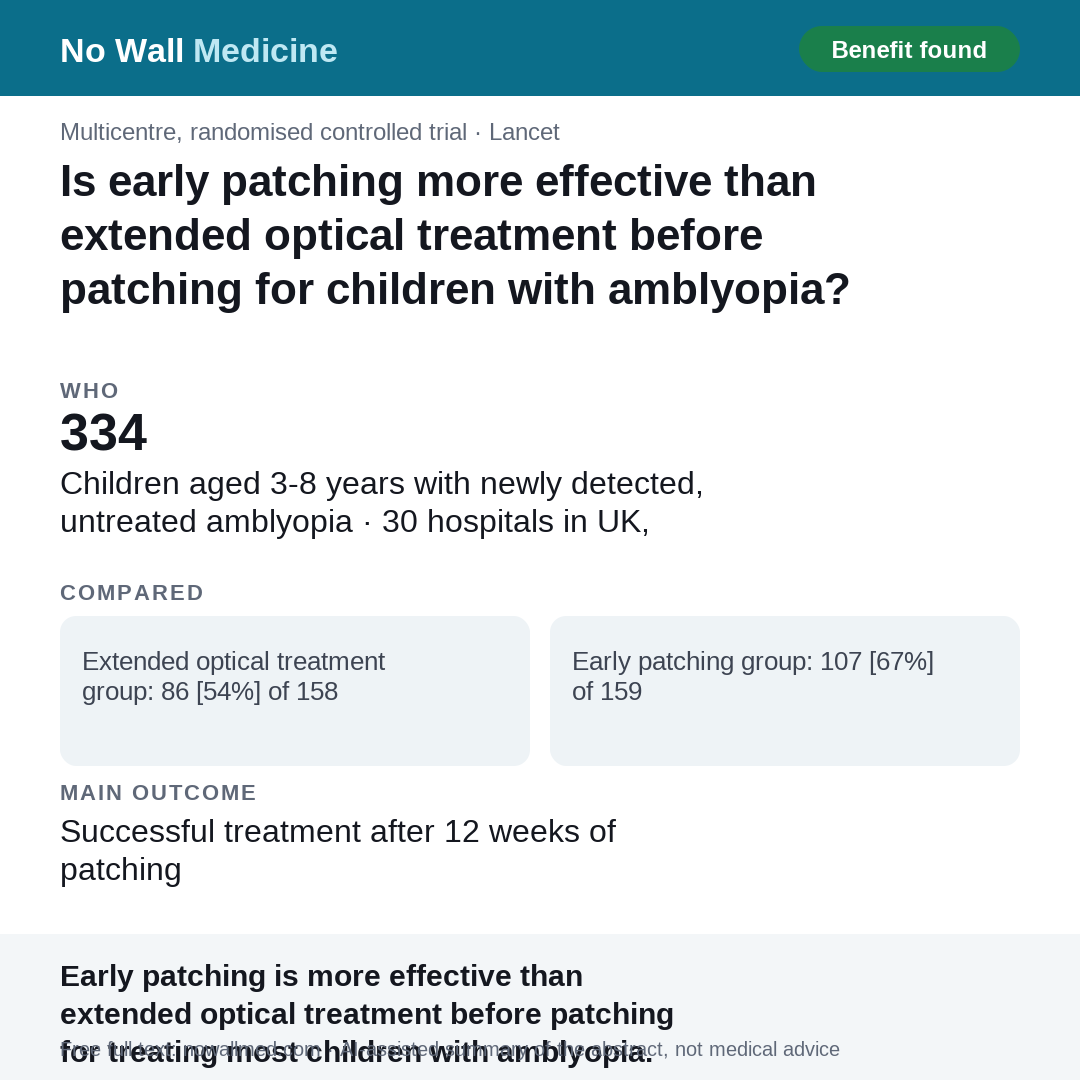
Extended optical treatment versus early patching with an intensive patching regimen in children with amblyopia in Europe (EuPatch): a multicentre, randomised controlled trial
Multicentre, randomised controlled trialBenefit found
Is early patching more effective than extended optical treatment before patching for children with amblyopia?
Who
334
Children aged 3-8 years with newly detected, untreated amblyopia · 30 hospitals in UK, Greece, Austria, Germany, and Switzerland
Compared
Extended optical treatment group: 86 [54%] of 158
Early patching group: 107 [67%] of 159
Main outcome
Successful treatment after 12 weeks of patching
Result: 13% difference; p=0·019
Bottom line: Early patching is more effective than extended optical treatment before patching for treating most children with amblyopia.
Funded by: Action Medical Research, NIHR Clinical Research Network, and Ulverscroft Foundation
Lancet · 2024-05-05Download image
Recombinant ADAMTS13 in Congenital Thrombotic Thrombocytopenic Purpura
Phase 3, open-label, crossover trialBenefit found
Is recombinant ADAMTS13 effective and safe for prophylaxis in congenital TTP?
Who
48
Patients with congenital thrombotic thrombocytopenic purpura
Compared
recombinant ADAMTS13: 0 acute TTP events
standard therapy: 1 acute TTP event
Main outcome
acute TTP events
Bottom line: Recombinant ADAMTS13 prophylaxis prevented acute TTP events and reached approximately 100% normal ADAMTS13 activity levels.
Funded by: Takeda Development Center Americas and Baxalta Innovations
NEJM · 2024-05-02Download image
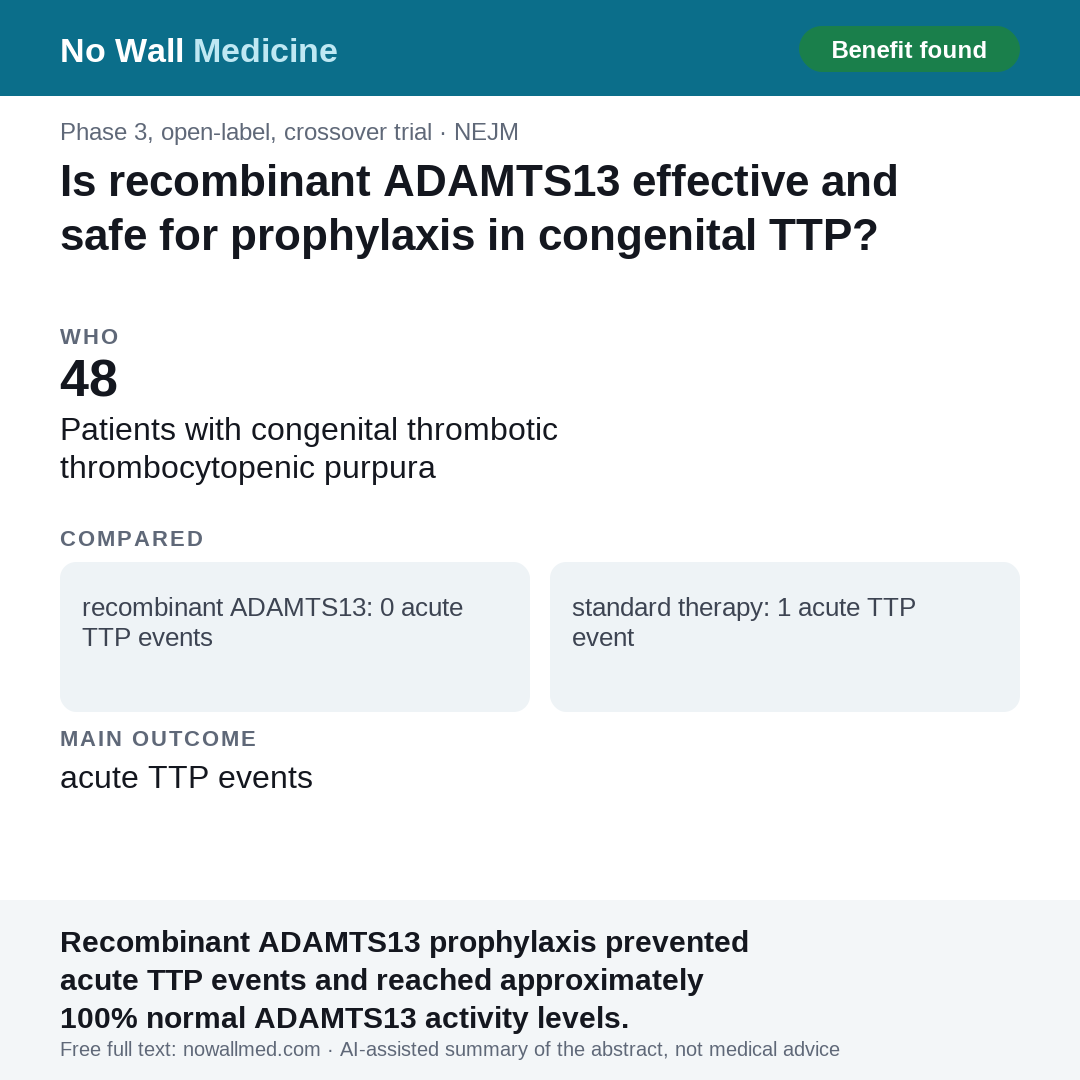
Ibrutinib combined with immunochemotherapy with or without autologous stem-cell transplantation versus immunochemotherapy and autologous stem-cell transplantation in previously untreated patients with mantle cell lymphoma (TRIANGLE): a three-arm, randomised, open-label, phase 3 superiority trial of the European Mantle Cell Lymphoma Network
Randomised, open-label, phase 3 superiority trialBenefit found
Does adding ibrutinib to immunochemotherapy improve outcomes in untreated mantle cell lymphoma?
Who
870
Untreated stage II-IV mantle cell lymphoma patients aged 18-65 years · 165 centres in 13 European countries and Israel
Compared
72%Immunochemotherapy and autologous stem-cell transplantation (95% CI 67-79)
88%Ibrutinib plus immunochemotherapy and autologous stem-cell transplantation (95% CI 84-92)
86%Ibrutinib plus immunochemotherapy without autologous stem-cell transplantation (82-91)
Main outcome
failure-free survival
Result: hazard ratio 0·52 (one-sided 98·3% CI 0-0·86)
Bottom line: Adding ibrutinib to first-line treatment improved failure-free survival in younger mantle cell lymphoma patients.
Funded by: Janssen and Leukemia & Lymphoma Society
Lancet · 2024-05-02Download image
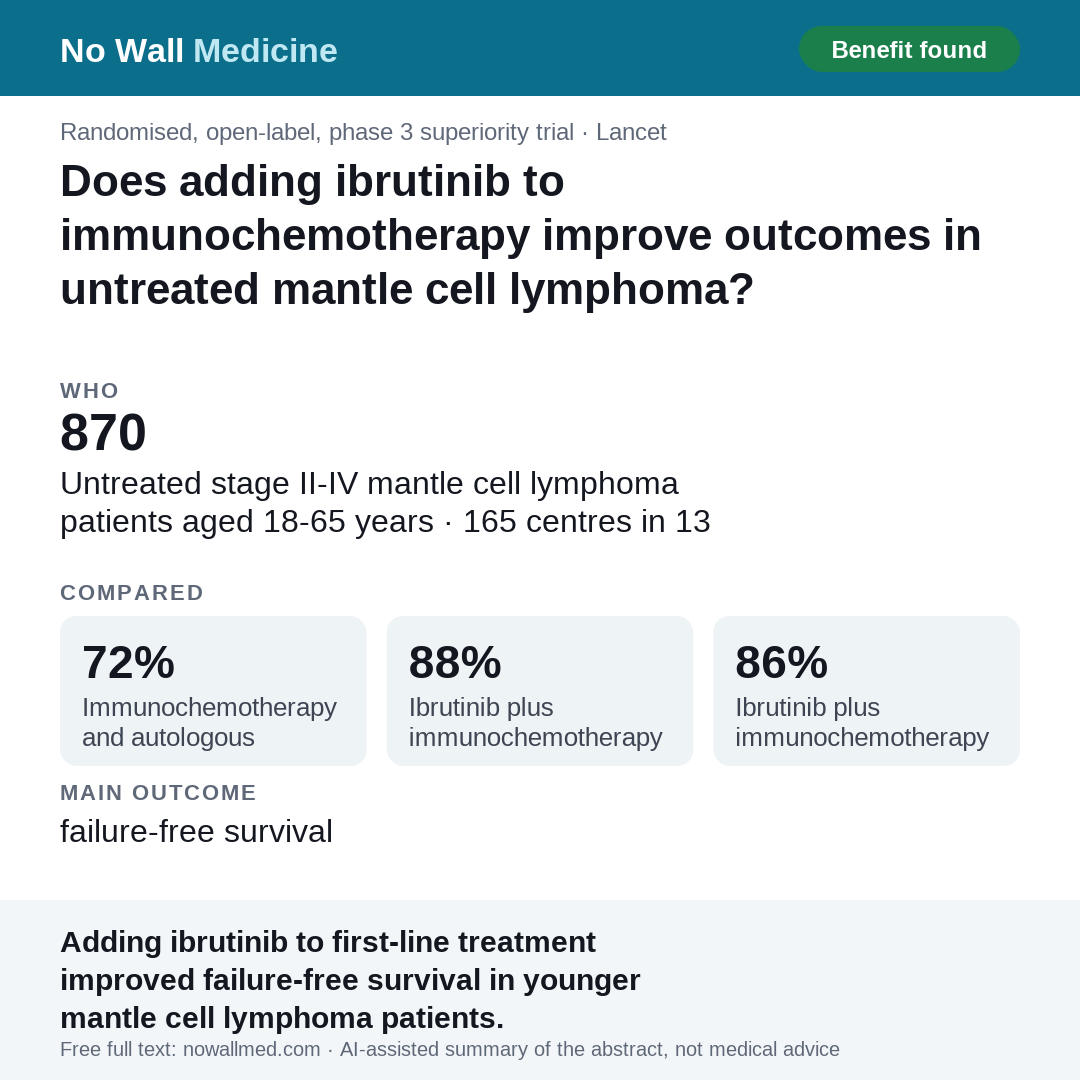
Smoking Cessation After Initial Treatment Failure With Varenicline or Nicotine Replacement: A Randomized Clinical Trial
Double-blind, placebo-controlled, sequential multiple assignment randomized trialMixed results
What is the best strategy for nonabstinence after initial varenicline or nicotine replacement therapy?
Who
490
490 volunteers who failed initial smoking cessation treatment · Texas tobacco treatment clinic
Compared
8%CNRT: continue dosage
14%CNRT: increase dosage
14%CNRT: switch to varenicline
3%Varenicline: continue dosage
Main outcome
Biochemically verified 7-day point prevalence abstinence at 12 weeks
Result: absolute risk difference 6% (95% CrI, 6% to 11%) for CNRT switch
Bottom line: Increasing varenicline dosage or switching CNRT users to varenicline improves abstinence rates after initial treatment failure.
JAMA · 2024-05-02Download image
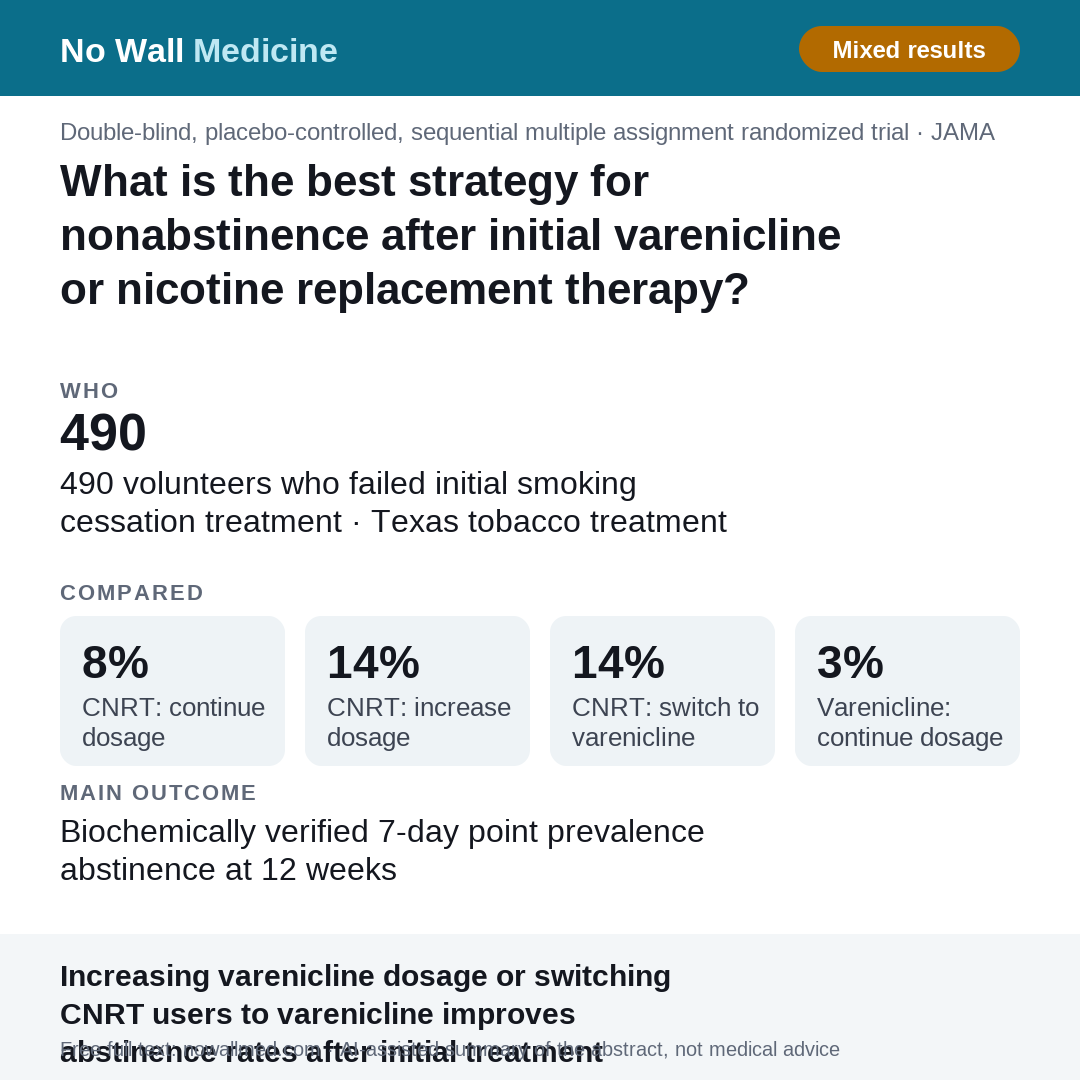
Efficacy of psilocybin for treating symptoms of depression: systematic review and meta-analysis
Systematic review and meta-analysisBenefit found
Is psilocybin effective for treating symptoms of depression compared to placebo or non-psychoactive drugs?
Who
436
Adults with clinically significant symptoms of depression
Compared
Psilocybin
Placebo or non-psychoactive drugs
Main outcome
Change in depression scores
Result: Hedges’ g=0.66 (95% CI 0.46 to 0.86)
Bottom line: Psilocybin showed significant benefit in reducing depression symptoms compared to placebo or non-psychoactive drugs.
Limitation: All studies had a moderate risk of bias.
BMJ · 2024-05-01Download image
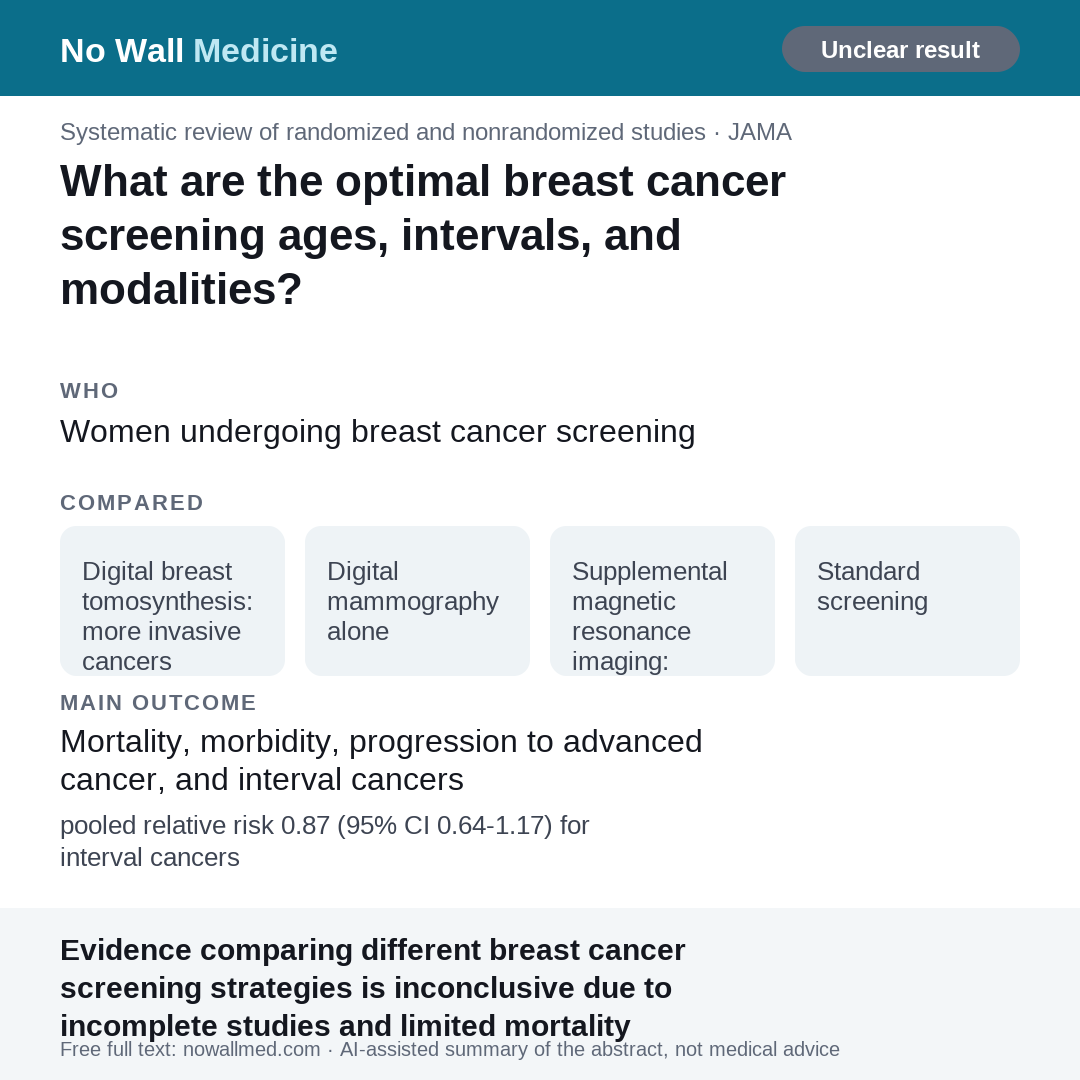
Screening for Breast Cancer: Evidence Report and Systematic Review for the US Preventive Services Task Force
Systematic review of randomized and nonrandomized studiesUnclear result
What are the optimal breast cancer screening ages, intervals, and modalities?
Who
Women undergoing breast cancer screening
Compared
Digital breast tomosynthesis: more invasive cancers detected at first round
Digital mammography alone
Supplemental magnetic resonance imaging: relative risk 0.47 (95% CI 0.29-0.77) for interval cancer
Standard screening
Main outcome
Mortality, morbidity, progression to advanced cancer, and interval cancers
Result: pooled relative risk 0.87 (95% CI 0.64-1.17) for interval cancers
Bottom line: Evidence comparing different breast cancer screening strategies is inconclusive due to incomplete studies and limited mortality outcome data.
Limitation: Key studies are not yet completed and few report stage shift or mortality outcomes.
JAMA · 2024-04-30Download image
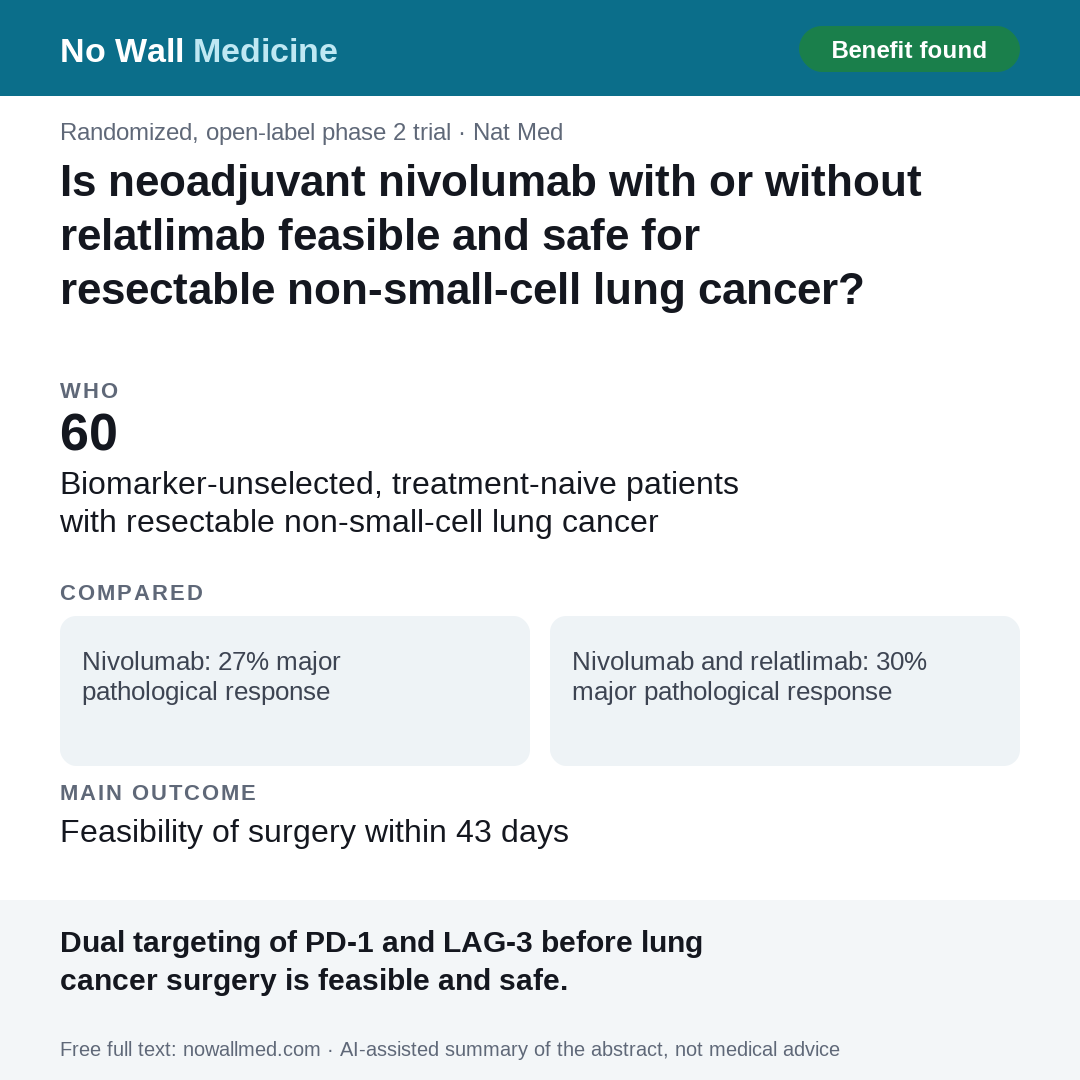
Neoadjuvant nivolumab with or without relatlimab in resectable non-small-cell lung cancer: a randomized phase 2 trial
Randomized, open-label phase 2 trialBenefit found
Is neoadjuvant nivolumab with or without relatlimab feasible and safe for resectable non-small-cell lung cancer?
Who
60
Biomarker-unselected, treatment-naive patients with resectable non-small-cell lung cancer
Compared
Nivolumab: 27% major pathological response
Nivolumab and relatlimab: 30% major pathological response
Main outcome
Feasibility of surgery within 43 days
Bottom line: Dual targeting of PD-1 and LAG-3 before lung cancer surgery is feasible and safe.
Nat Med · 2024-04-30Download image
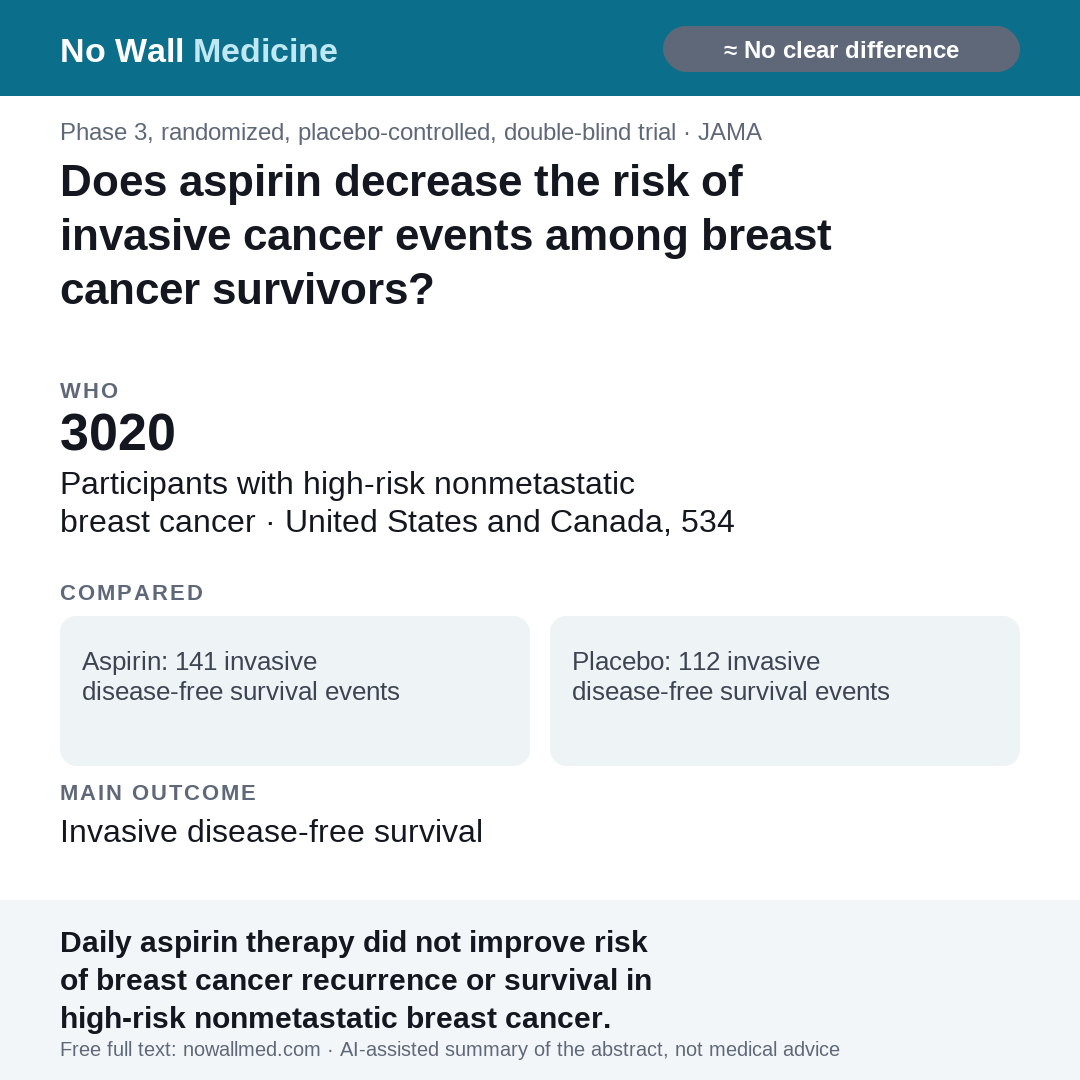
Aspirin vs Placebo as Adjuvant Therapy for Breast Cancer: The Alliance A011502 Randomized Trial
Phase 3, randomized, placebo-controlled, double-blind trialNo clear difference
Does aspirin decrease the risk of invasive cancer events among breast cancer survivors?
Who
3020
Participants with high-risk nonmetastatic breast cancer · United States and Canada, 534 sites
Compared
Aspirin: 141 invasive disease-free survival events
Placebo: 112 invasive disease-free survival events
Main outcome
Invasive disease-free survival
Result: hazard ratio 1.27 (95% CI, 0.99-1.63)
Bottom line: Daily aspirin therapy did not improve risk of breast cancer recurrence or survival in high-risk nonmetastatic breast cancer.
JAMA · 2024-04-29Download image
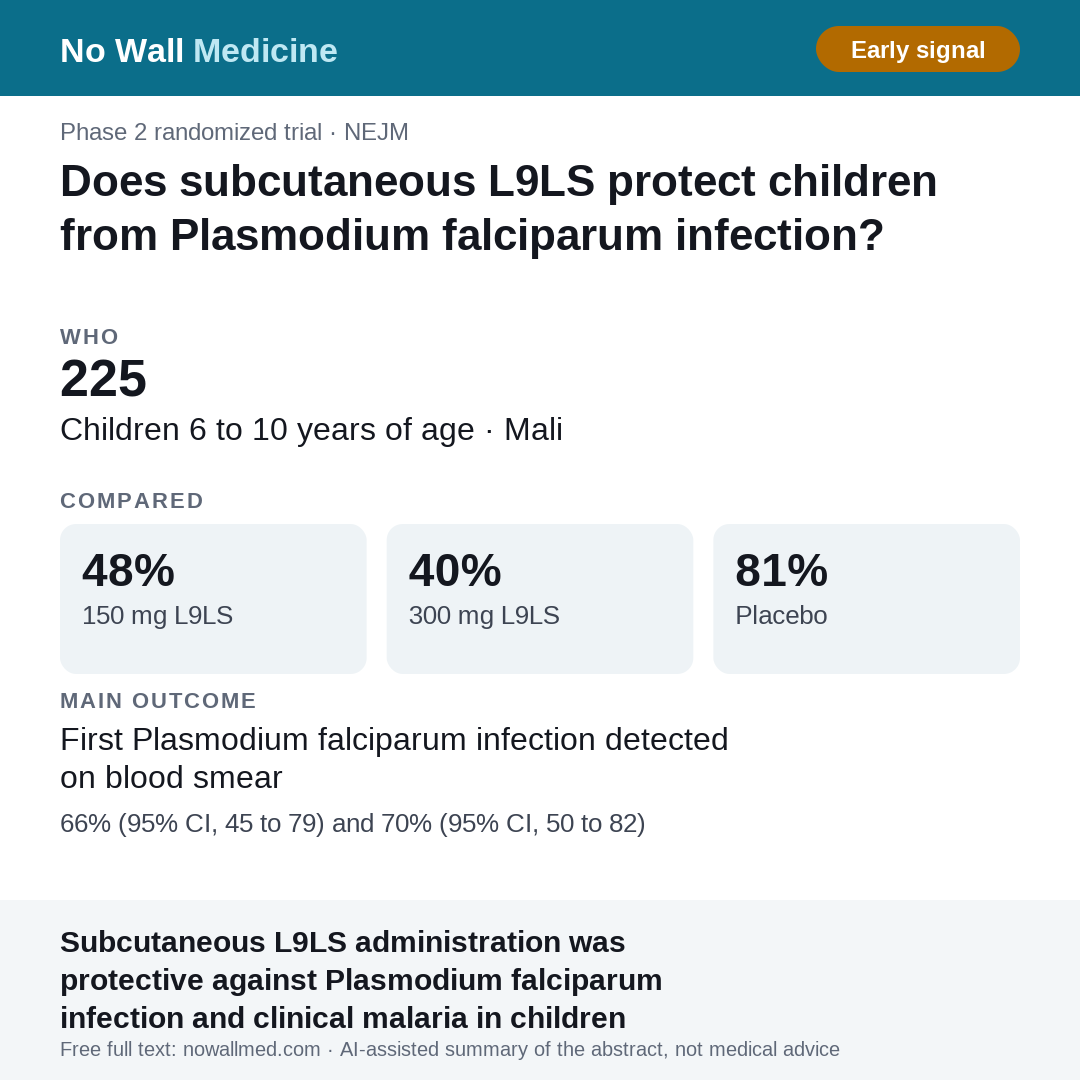
Subcutaneous Administration of a Monoclonal Antibody to Prevent Malaria
Phase 2 randomized trialBenefit found
Does subcutaneous L9LS protect children from Plasmodium falciparum infection?
Who
225
Children 6 to 10 years of age · Mali
Compared
48%150 mg L9LS
40%300 mg L9LS
81%Placebo
Main outcome
First Plasmodium falciparum infection detected on blood smear
Result: 66% (95% CI, 45 to 79) and 70% (95% CI, 50 to 82)
Bottom line: Subcutaneous L9LS administration was protective against Plasmodium falciparum infection and clinical malaria in children over 6 months.
Funded by: National Institute of Allergy and Infectious Diseases
NEJM · 2024-04-26Download image
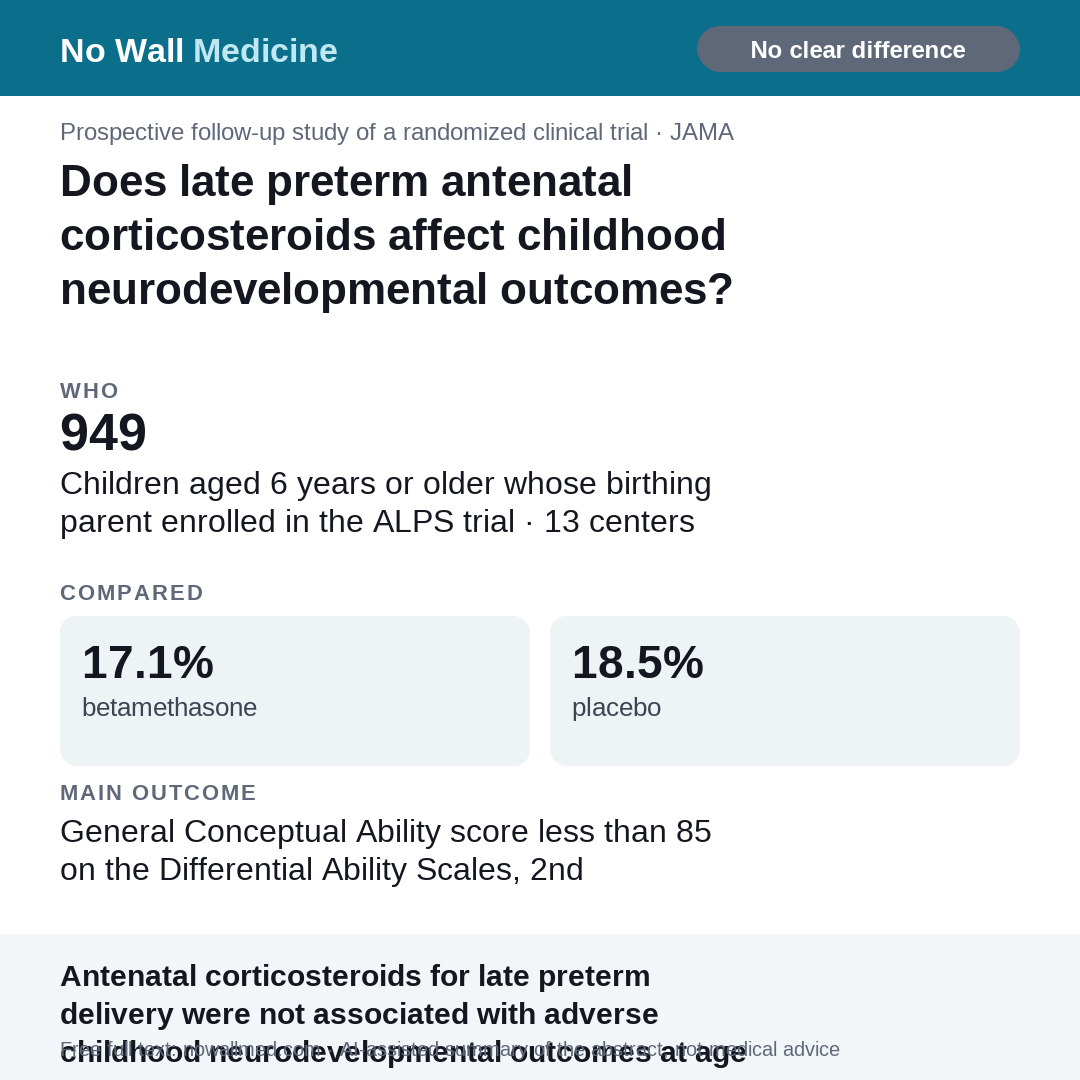
Neurodevelopmental Outcomes After Late Preterm Antenatal Corticosteroids: The ALPS Follow-Up Study
Prospective follow-up study of a randomized clinical trialNo clear difference
Does late preterm antenatal corticosteroids affect childhood neurodevelopmental outcomes?
Who
949
Children aged 6 years or older whose birthing parent enrolled in the ALPS trial · 13 centers in the Maternal-Fetal Medicine Units Network
Compared
17.1%betamethasone (82/479)
18.5%placebo (87/470)
Main outcome
General Conceptual Ability score less than 85 on the Differential Ability Scales, 2nd Edition
Result: adjusted relative risk 0.94 (95% CI 0.73-1.22)
Bottom line: Antenatal corticosteroids for late preterm delivery were not associated with adverse childhood neurodevelopmental outcomes at age 6 years or older.
JAMA · 2024-04-24Download image
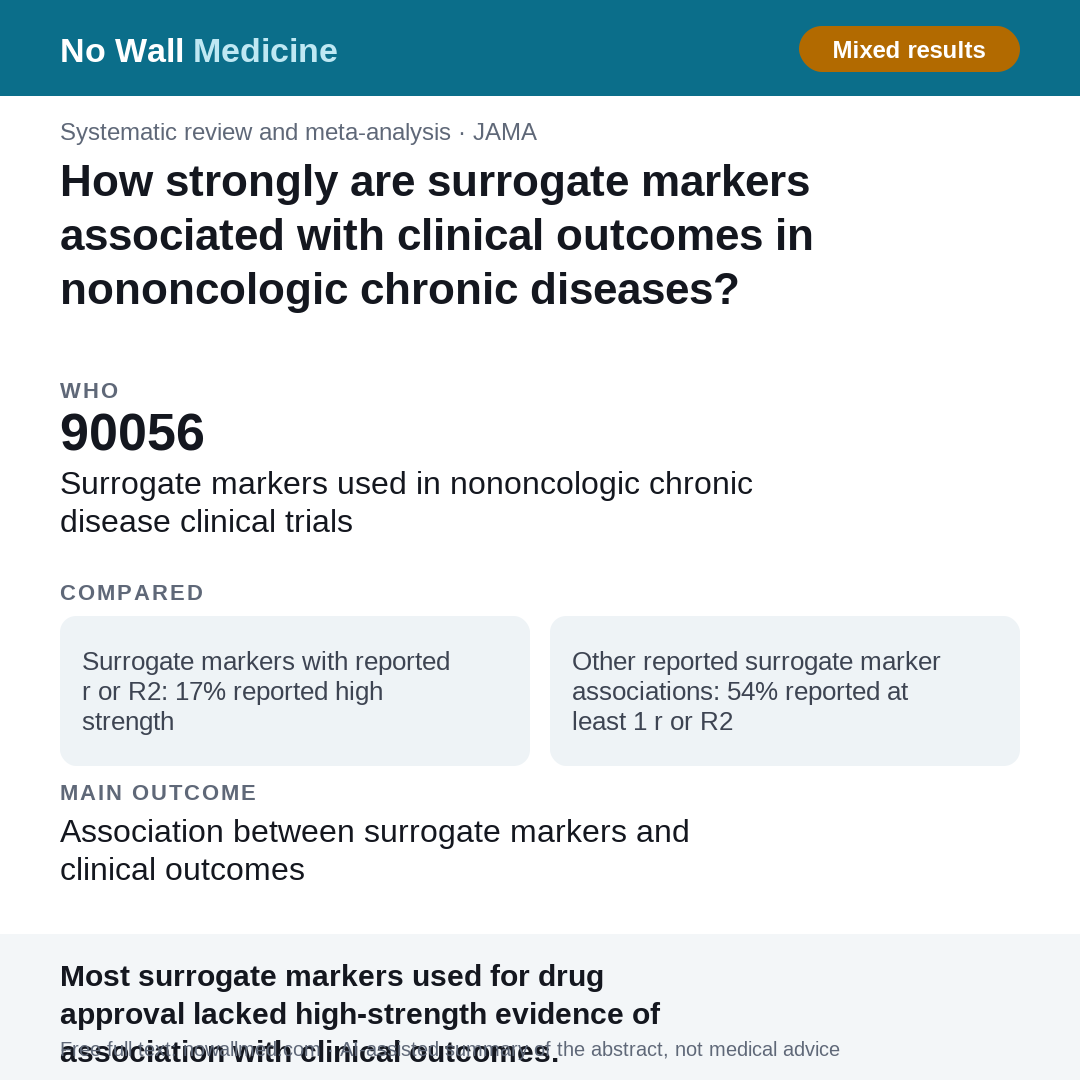
Associations Between Surrogate Markers and Clinical Outcomes for Nononcologic Chronic Disease Treatments
Systematic review and meta-analysisMixed results
How strongly are surrogate markers associated with clinical outcomes in nononcologic chronic diseases?
Who
90056
Surrogate markers used in nononcologic chronic disease clinical trials
Compared
Surrogate markers with reported r or R2: 17% reported high strength
Other reported surrogate marker associations: 54% reported at least 1 r or R2
Main outcome
Association between surrogate markers and clinical outcomes
Bottom line: Most surrogate markers used for drug approval lacked high-strength evidence of association with clinical outcomes.
JAMA · 2024-04-22Download image
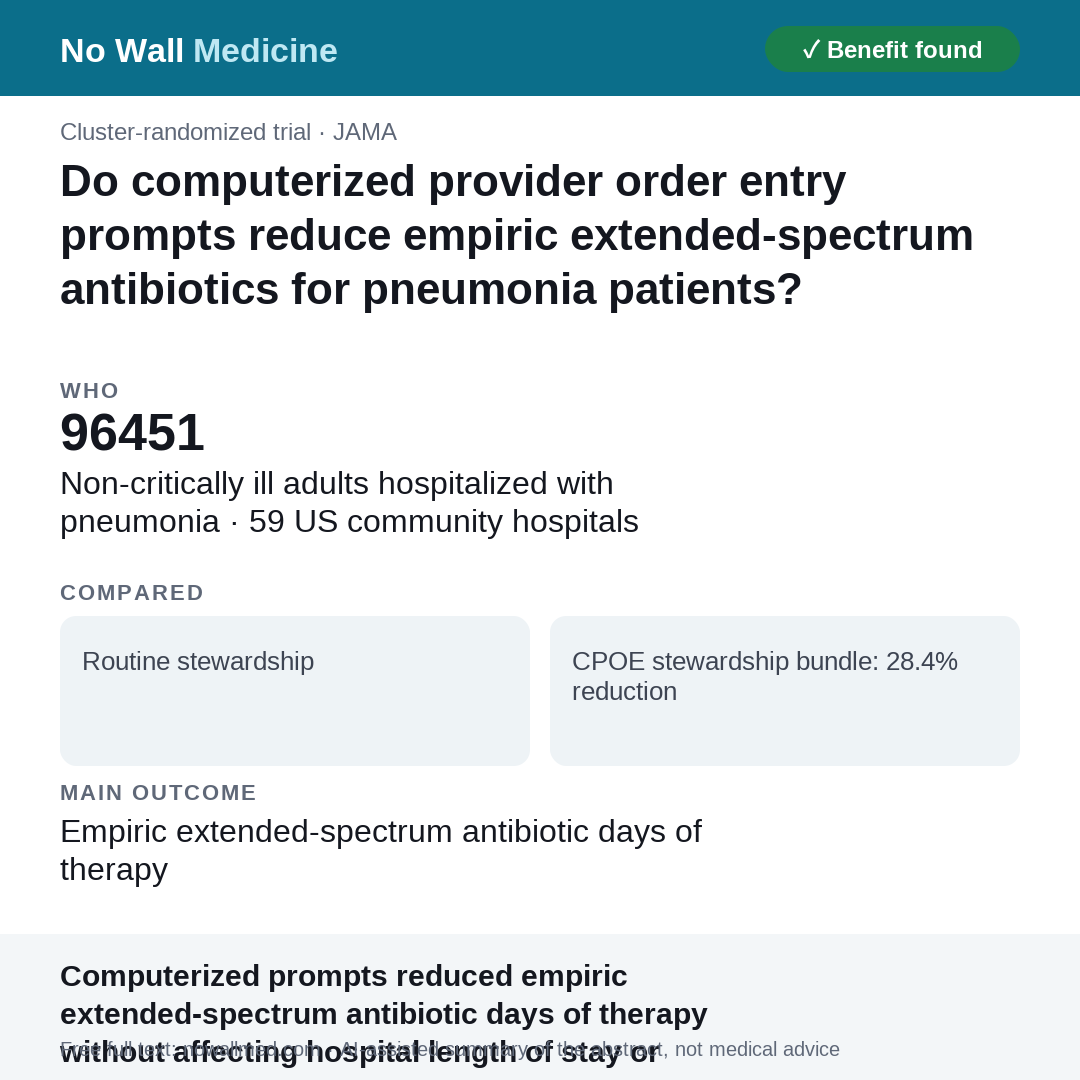
Stewardship Prompts to Improve Antibiotic Selection for Pneumonia: The INSPIRE Randomized Clinical Trial
Cluster-randomized trialBenefit found
Do computerized provider order entry prompts reduce empiric extended-spectrum antibiotics for pneumonia patients?
Who
96451
Non-critically ill adults hospitalized with pneumonia · 59 US community hospitals
Compared
Routine stewardship
CPOE stewardship bundle: 28.4% reduction
Main outcome
Empiric extended-spectrum antibiotic days of therapy
Result: rate ratio, 0.72 (95% CI, 0.66-0.78)
Bottom line: Computerized prompts reduced empiric extended-spectrum antibiotic days of therapy without affecting hospital length of stay or intensive care unit transfer.
JAMA · 2024-04-19Download image
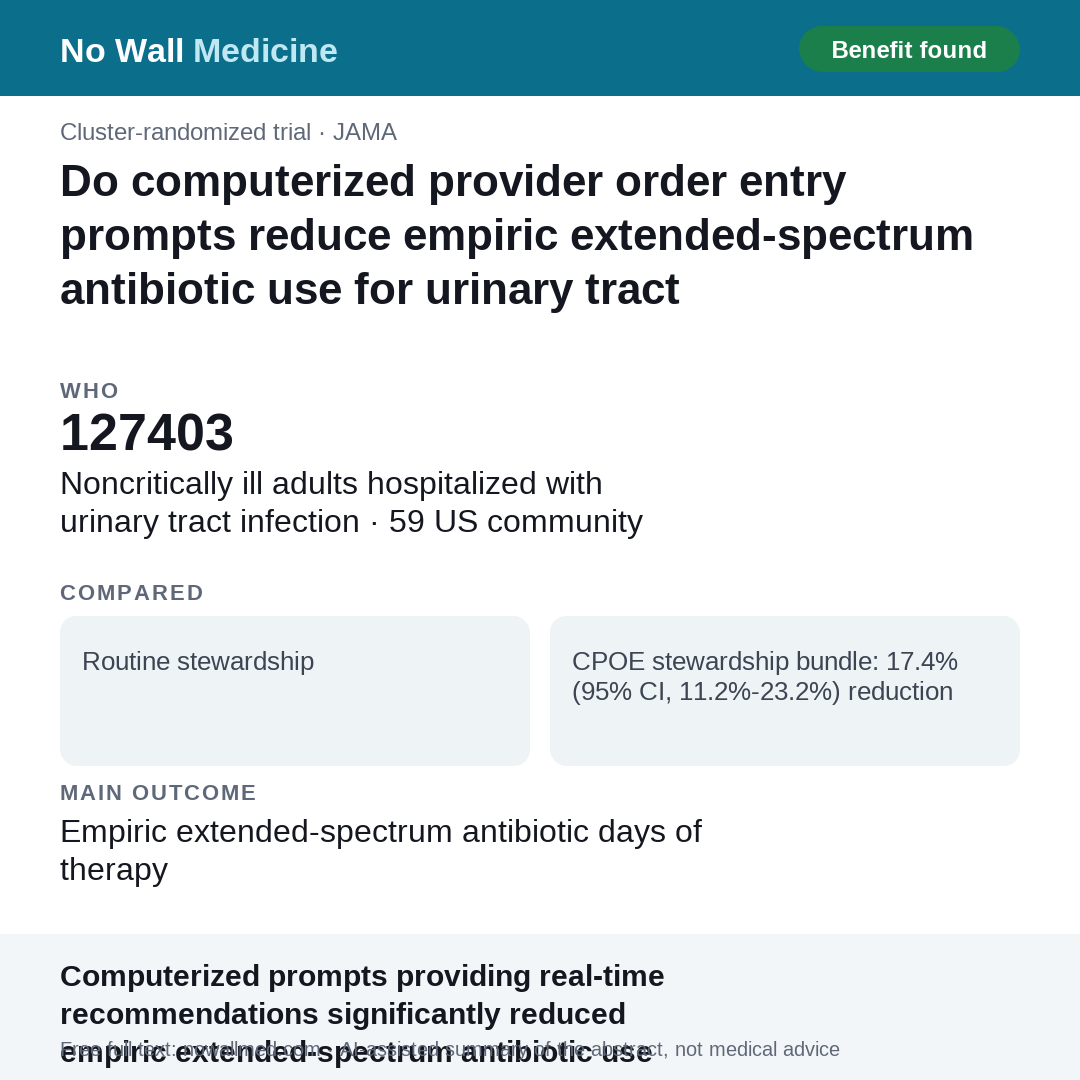
Stewardship Prompts to Improve Antibiotic Selection for Urinary Tract Infection: The INSPIRE Randomized Clinical Trial
Cluster-randomized trialBenefit found
Do computerized provider order entry prompts reduce empiric extended-spectrum antibiotic use for urinary tract infection?
Who
127403
Noncritically ill adults hospitalized with urinary tract infection · 59 US community hospitals
Compared
Routine stewardship
CPOE stewardship bundle: 17.4% (95% CI, 11.2%-23.2%) reduction
Main outcome
Empiric extended-spectrum antibiotic days of therapy
Result: rate ratio, 0.83 (95% CI, 0.77-0.89)
Bottom line: Computerized prompts providing real-time recommendations significantly reduced empiric extended-spectrum antibiotic use without affecting hospital length of stay.
JAMA · 2024-04-19Download image
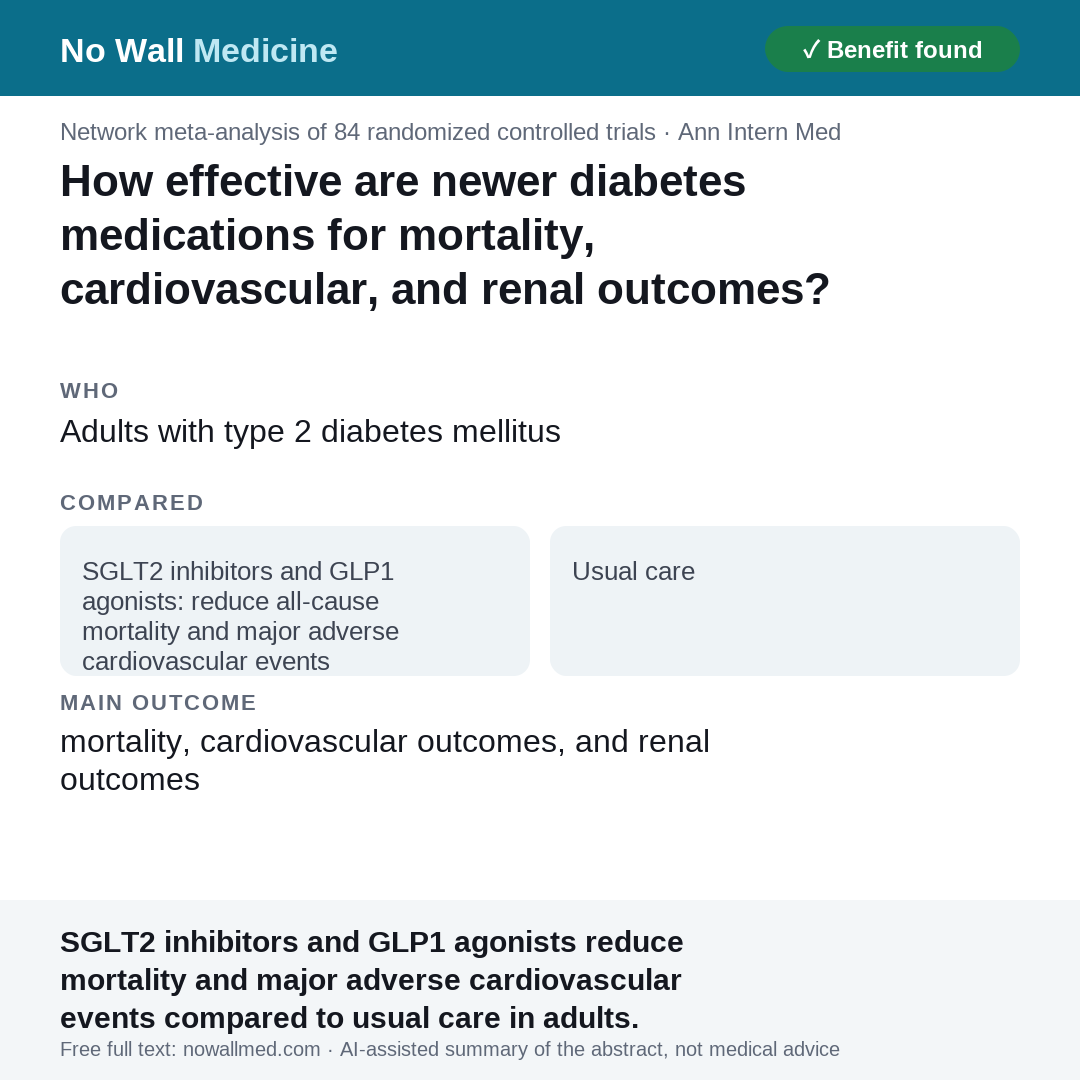
Newer Pharmacologic Treatments in Adults With Type 2 Diabetes: A Systematic Review and Network Meta-analysis for the American College of Physicians
Network meta-analysis of 84 randomized controlled trialsBenefit found
How effective are newer diabetes medications for mortality, cardiovascular, and renal outcomes?
Who
Adults with type 2 diabetes mellitus
Compared
SGLT2 inhibitors and GLP1 agonists: reduce all-cause mortality and major adverse cardiovascular events
Usual care
Main outcome
mortality, cardiovascular outcomes, and renal outcomes
Bottom line: SGLT2 inhibitors and GLP1 agonists reduce mortality and major adverse cardiovascular events compared to usual care in adults.
Limitation: Infrequent direct comparisons, sparse data, and insufficient data on predefined subgroups.
Funded by: American College of Physicians
Ann Intern Med · 2024-04-19Download image