Visual abstracts
New randomized trials and meta-analyses from leading journals at a glance: who was studied, what was compared, and what was found. Every paper is free to read in full.
All specialtiesCardiology 4763Oncology 4043Gastroenterology & Hepatology 1903Infectious Disease 3756Neurology 1872Psychiatry & Mental Health 2216Pulmonology 2044Critical Care 1319Endocrinology & Diabetes 2544Pediatrics 2889Surgery 2480Orthopedics & Sports Medicine 917Neurosurgery 525Cardiothoracic & Vascular Surgery 656Plastic & Reconstructive Surgery 574Nephrology 1107Rheumatology 810Hematology 1090Dermatology 611Ophthalmology 532Obstetrics & Gynecology 1645Public & Global Health 1037Radiology & Imaging 619Anesthesiology 958Urology 745ENT (Otolaryngology) 494Emergency Medicine 481Allergy & Immunology 309Geriatrics 972Family Medicine & Primary Care 534Medical Genetics & Genomics 659Pathology & Laboratory Medicine 156Physical Medicine & Rehabilitation 734Palliative Care 421Nutrition 1560Digital Health & AI 2137General Medicine 318
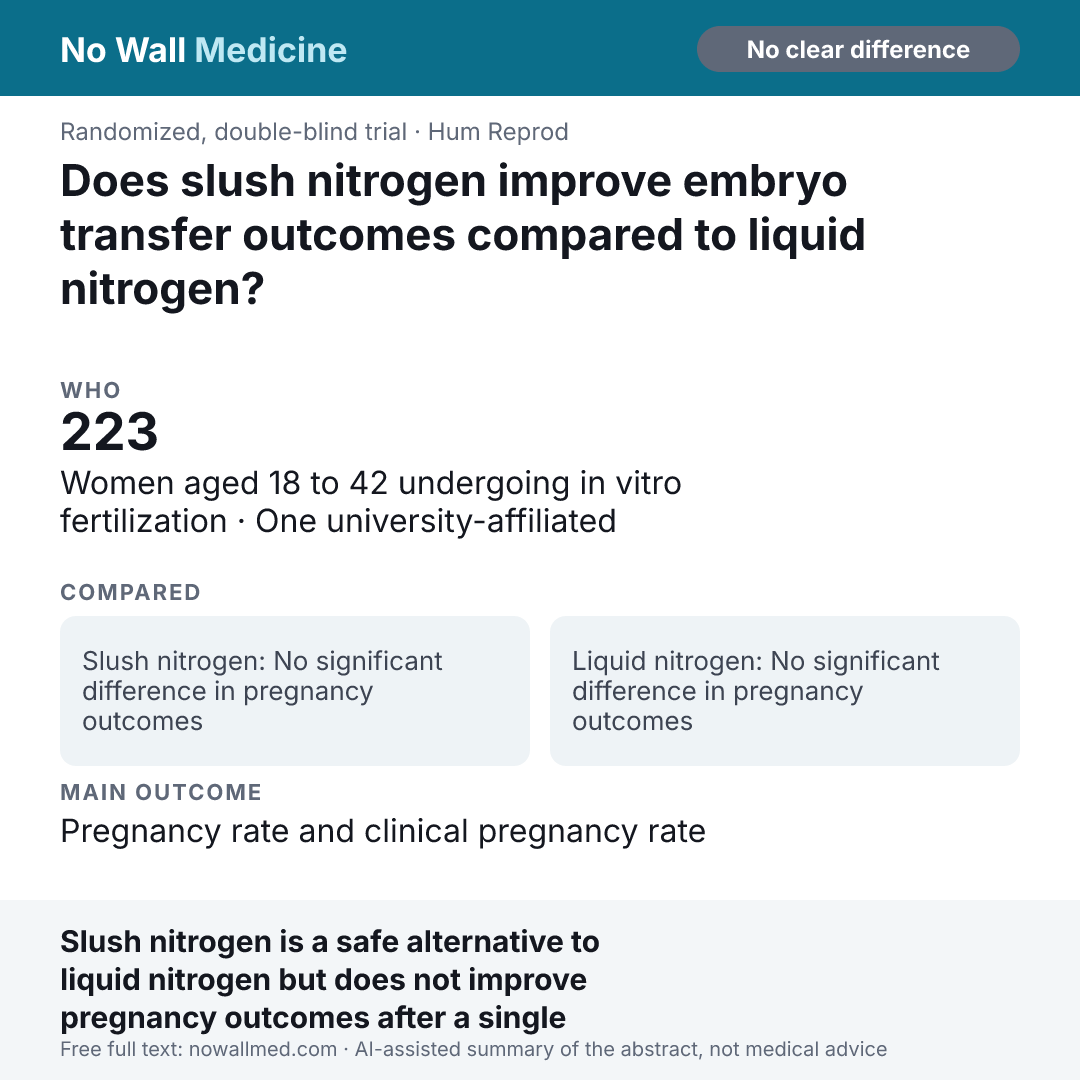
A randomized controlled trial comparing embryo vitrification with slush nitrogen to liquid nitrogen in women undergoing frozen embryo transfer: embryology and clinical outcomes
Randomized, double-blind trialNo clear difference
Does slush nitrogen improve embryo transfer outcomes compared to liquid nitrogen?
Who
223
Women aged 18 to 42 undergoing in vitro fertilization · One university-affiliated infertility center
Compared
Slush nitrogen: No significant difference in pregnancy outcomes
Liquid nitrogen: No significant difference in pregnancy outcomes
Main outcome
Pregnancy rate and clinical pregnancy rate
Bottom line: Slush nitrogen is a safe alternative to liquid nitrogen but does not improve pregnancy outcomes after a single freeze-thaw cycle.
Limitation: Termination based on futility analysis precludes a conclusion of equivalence; neonatal outcomes were not assessed.
Funded by: Foundation for Embryonic Competence
Hum Reprod · 2025-01-22 · Save PNG
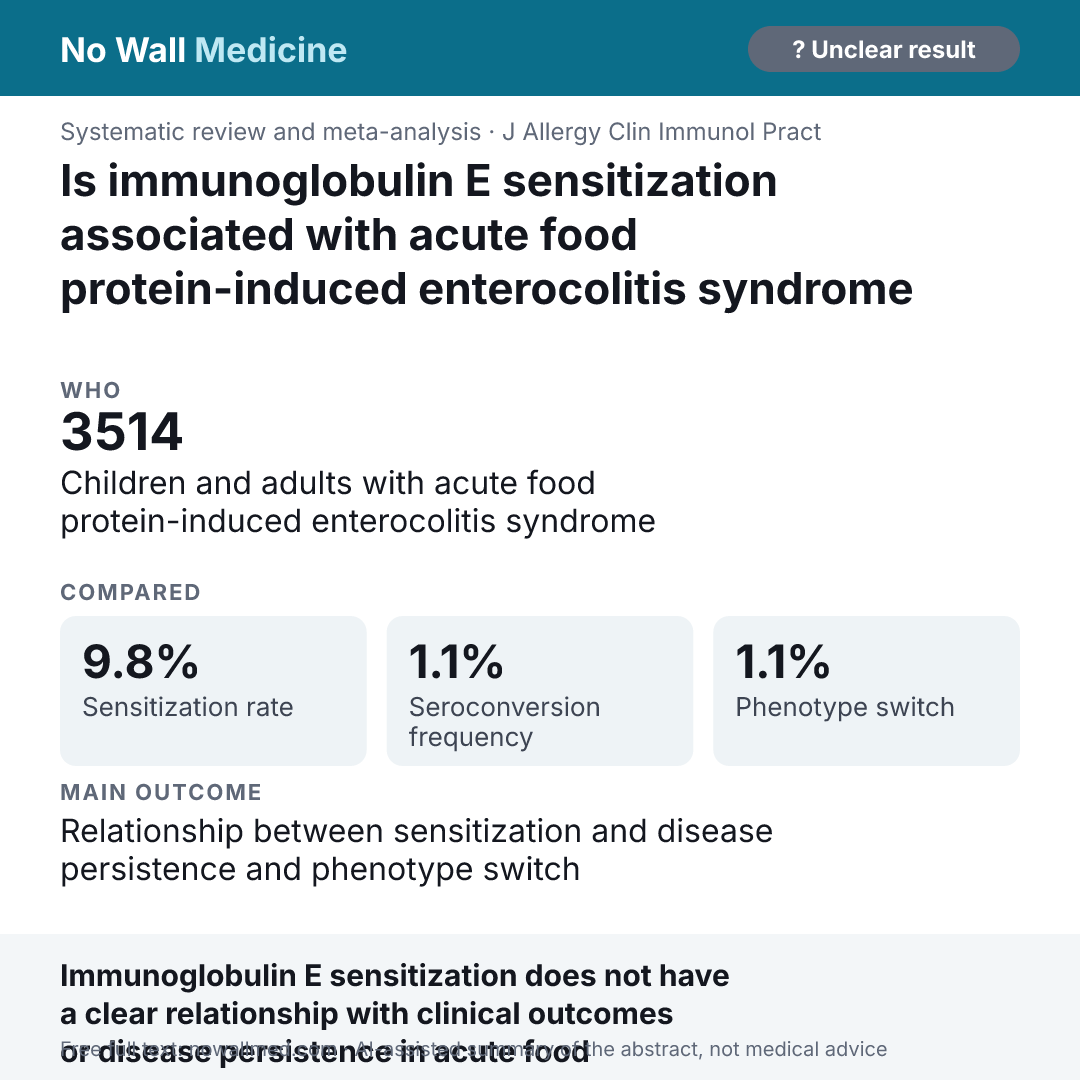
The Role of IgE Sensitization in Acute FPIES: A Systematic Review and Meta-Analysis
Systematic review and meta-analysisUnclear result
Is immunoglobulin E sensitization associated with acute food protein-induced enterocolitis syndrome outcomes?
Who
3514
Children and adults with acute food protein-induced enterocolitis syndrome
Compared
9.8%Sensitization rate (95% confidence interval 7.4%-12.1%)
1.1%Seroconversion frequency (95% confidence interval 0.1%-2.1%)
1.1%Phenotype switch (95% confidence interval 0.4%-1.7%)
Main outcome
Relationship between sensitization and disease persistence and phenotype switch
Bottom line: Immunoglobulin E sensitization does not have a clear relationship with clinical outcomes or disease persistence in acute food protein-induced enterocolitis syndrome.
Limitation: Studies showed inconsistent evidence regarding the relationship between sensitization and disease persistence.
J Allergy Clin Immunol Pract · 2025-01-22 · Save PNG
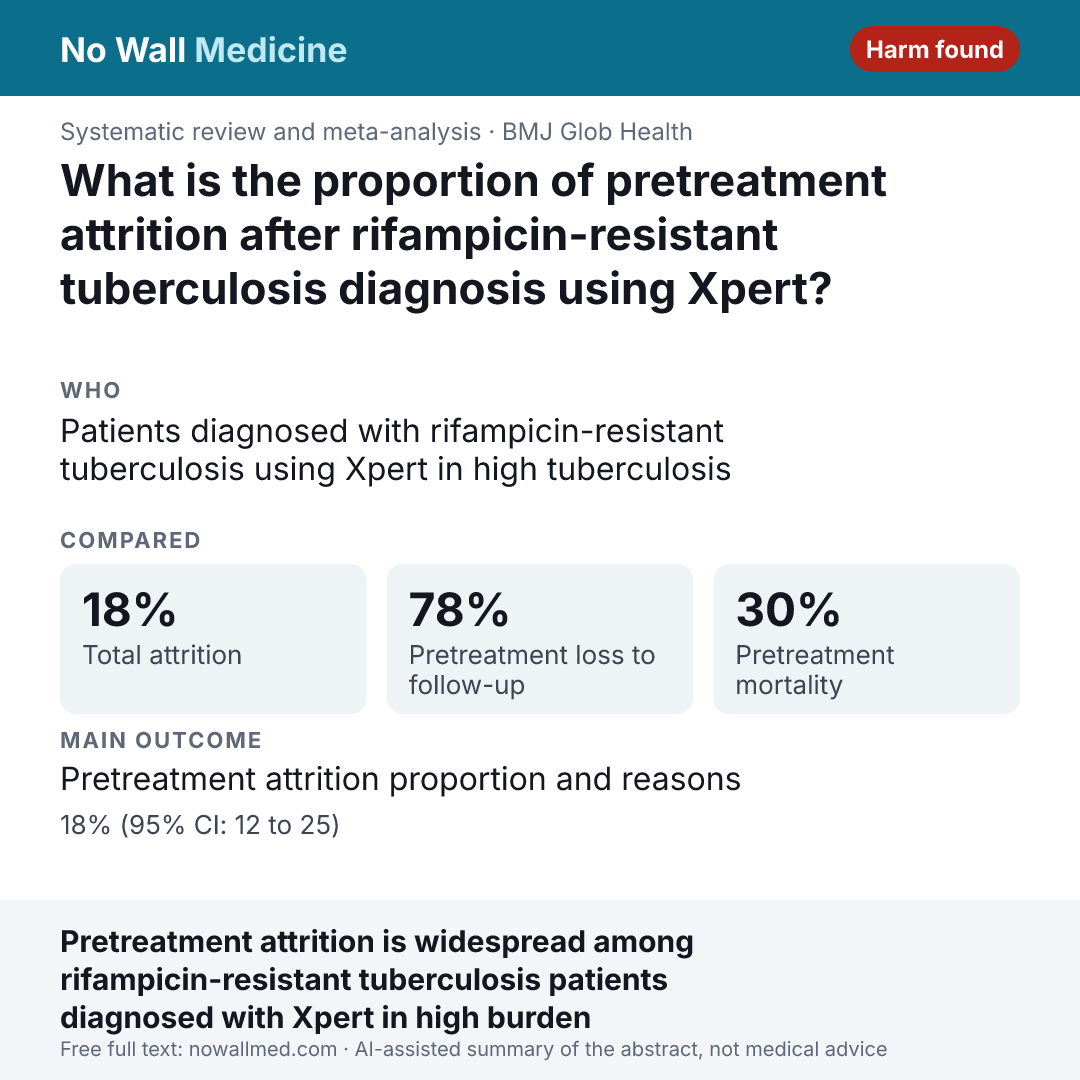
Pretreatment attrition after rifampicin-resistant tuberculosis diagnosis with Xpert MTB/RIF or ultra in high TB burden countries: a systematic review and meta-analysis
Systematic review and meta-analysisHarm found
What is the proportion of pretreatment attrition after rifampicin-resistant tuberculosis diagnosis using Xpert?
Who
Patients diagnosed with rifampicin-resistant tuberculosis using Xpert in high tuberculosis burden countries · 21 countries
Compared
18%Total attrition (95% CI: 12 to 25)
78%Pretreatment loss to follow-up (95% CI: 51% to 92%)
30%Pretreatment mortality (95% CI: 15% to 52%)
Main outcome
Pretreatment attrition proportion and reasons
Result: 18% (95% CI: 12 to 25)
Bottom line: Pretreatment attrition is widespread among rifampicin-resistant tuberculosis patients diagnosed with Xpert in high burden countries.
Limitation: Significant heterogeneity between included studies and most studies used routine programme data.
BMJ Glob Health · 2025-01-22 · Save PNG
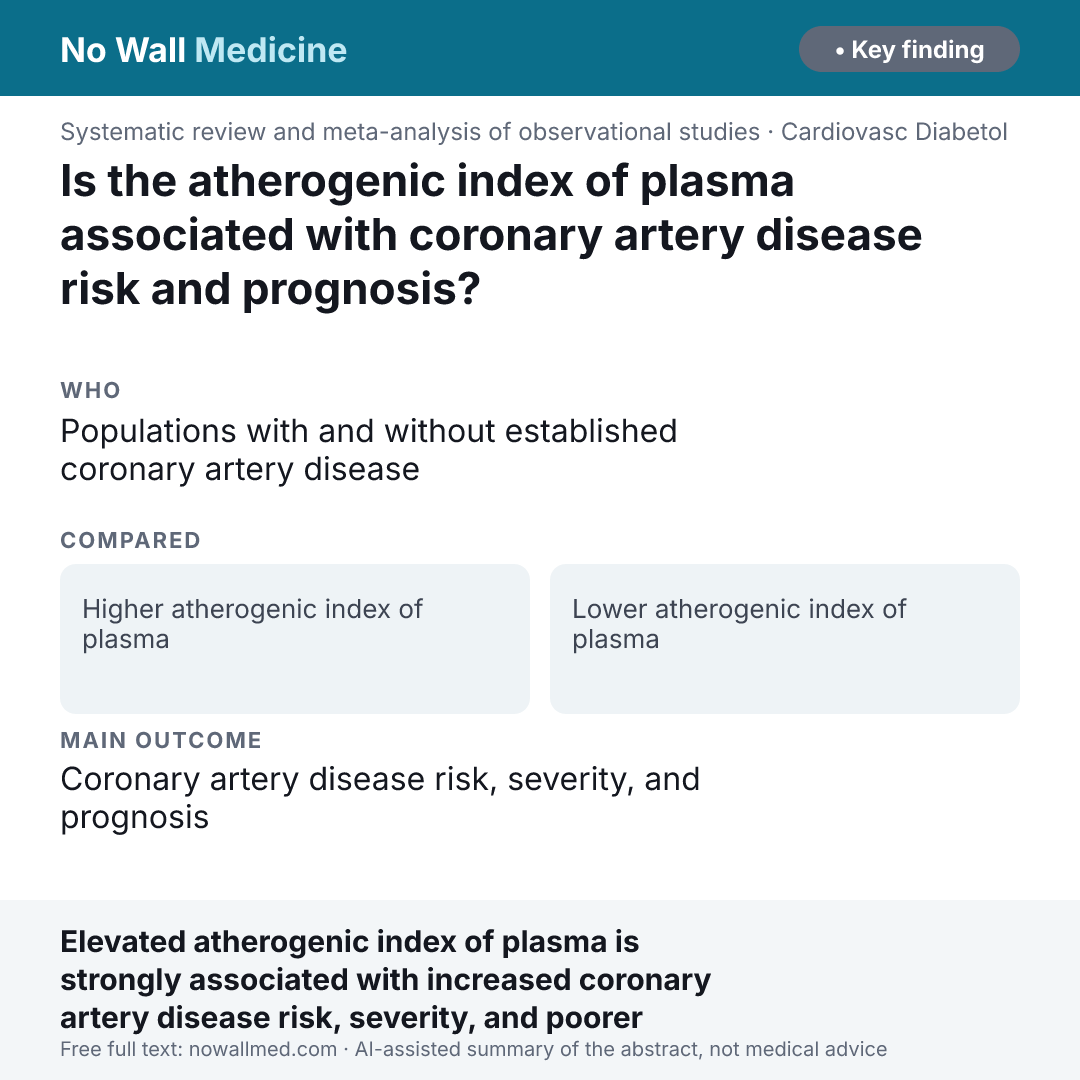
Atherogenic index of plasma and coronary artery disease: a systematic review and meta-analysis of observational studies
Systematic review and meta-analysis of observational studiesKey finding
Is the atherogenic index of plasma associated with coronary artery disease risk and prognosis?
Who
Populations with and without established coronary artery disease
Compared
Higher atherogenic index of plasma
Lower atherogenic index of plasma
Main outcome
Coronary artery disease risk, severity, and prognosis
Result: odds ratio 2.79 (95% CI 1.75-4.45)
Bottom line: Elevated atherogenic index of plasma is strongly associated with increased coronary artery disease risk, severity, and poorer prognosis.
Limitation: More studies are needed to evaluate predictive performance and determine the optimal cut-off.
Cardiovasc Diabetol · 2025-01-22 · Save PNG
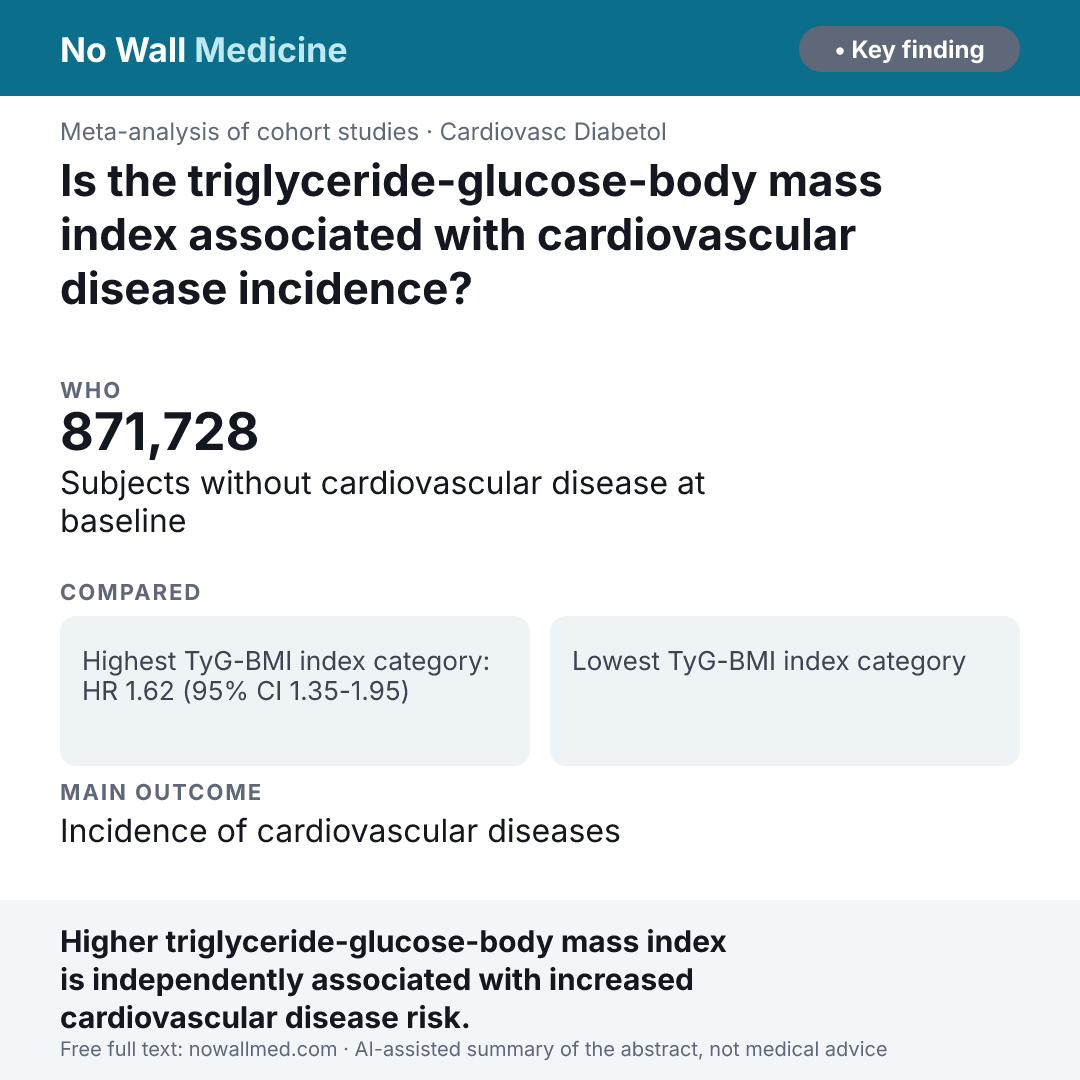
Triglyceride-glucose-body mass index and the incidence of cardiovascular diseases: a meta-analysis of cohort studies
Meta-analysis of cohort studiesKey finding
Is the triglyceride-glucose-body mass index associated with cardiovascular disease incidence?
Who
871,728
Subjects without cardiovascular disease at baseline
Compared
Highest TyG-BMI index category: HR 1.62 (95% CI 1.35-1.95)
Lowest TyG-BMI index category
Main outcome
Incidence of cardiovascular diseases
Result: hazard ratio 1.62 (95% CI 1.35-1.95)
Bottom line: Higher triglyceride-glucose-body mass index is independently associated with increased cardiovascular disease risk.
Cardiovasc Diabetol · 2025-01-22 · Save PNG
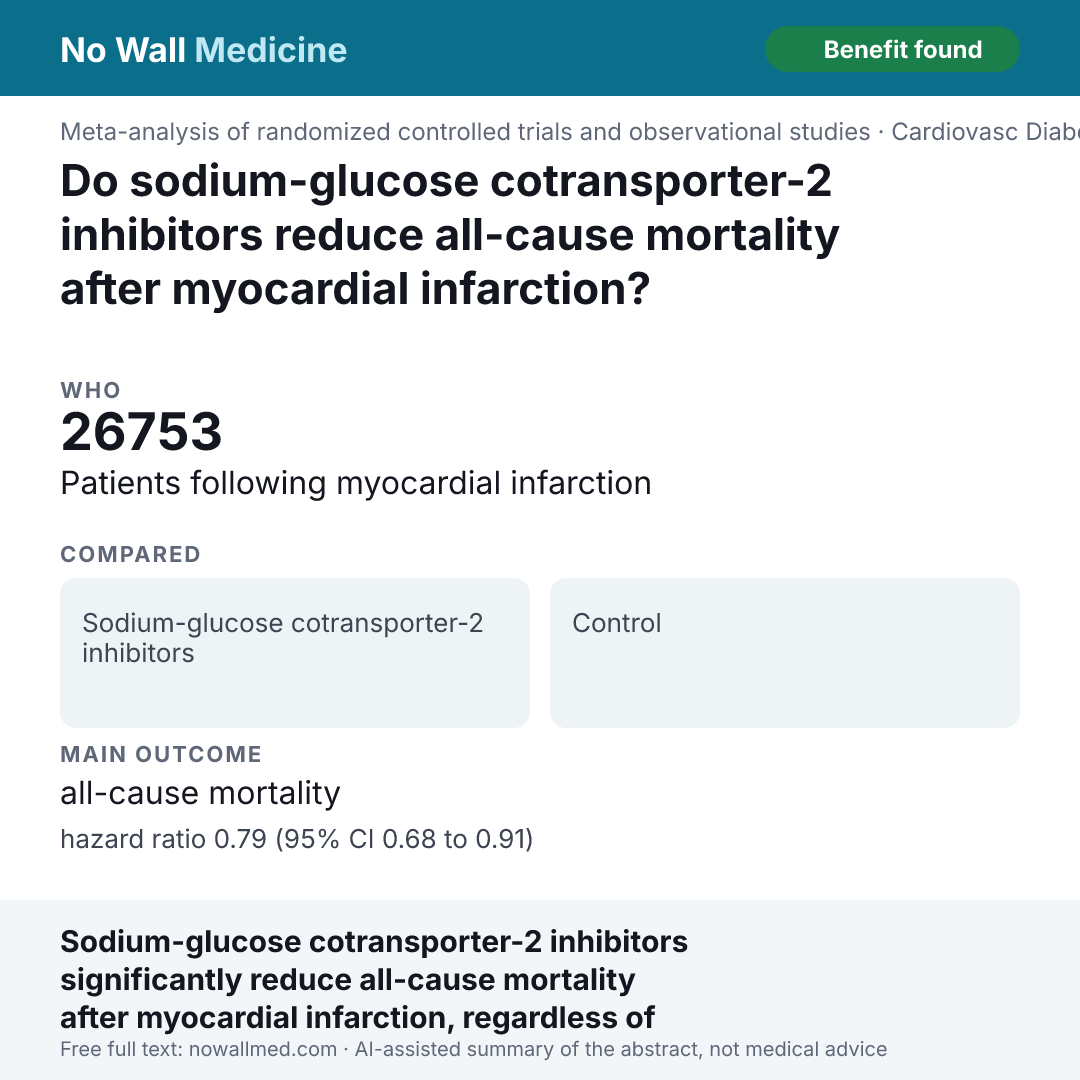
Association of sodium-glucose cotransporter-2 inhibitors with mortality across the spectrum of myocardial infarction: a systematic review and meta-analysis
Meta-analysis of randomized controlled trials and observational studiesBenefit found
Do sodium-glucose cotransporter-2 inhibitors reduce all-cause mortality after myocardial infarction?
Who
26753
Patients following myocardial infarction
Compared
Sodium-glucose cotransporter-2 inhibitors
Control
Main outcome
all-cause mortality
Result: hazard ratio 0.79 (95% CI 0.68 to 0.91)
Bottom line: Sodium-glucose cotransporter-2 inhibitors significantly reduce all-cause mortality after myocardial infarction, regardless of early or delayed treatment.
Cardiovasc Diabetol · 2025-01-22 · Save PNG
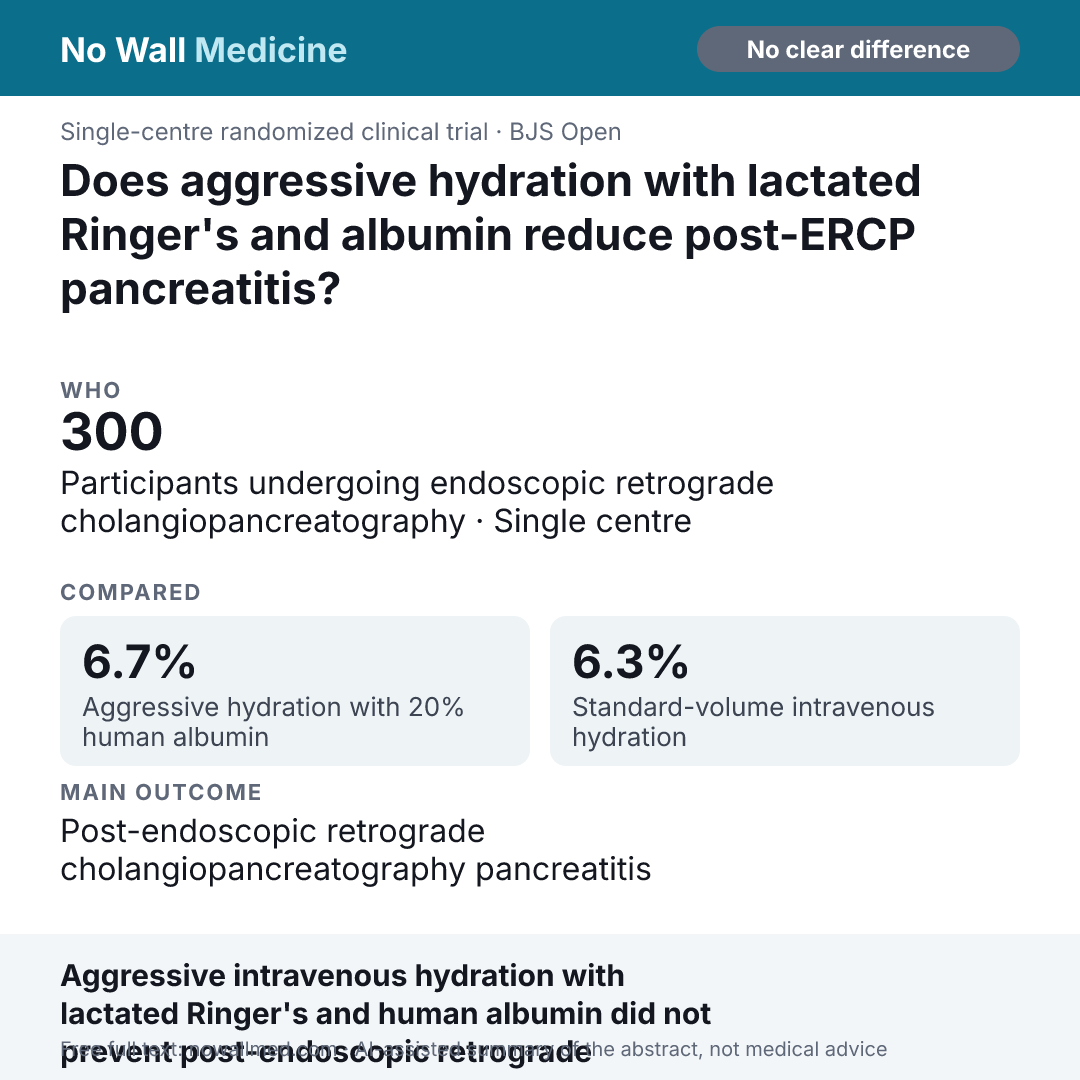
High-volume lactated Ringer's solution with human albumin versus standard-volume infusion as a prophylactic treatment for post-endoscopic retrograde cholangiopancreatography pancreatitis: randomized clinical trial
Single-centre randomized clinical trialNo clear difference
Does aggressive hydration with lactated Ringer's and albumin reduce post-ERCP pancreatitis?
Who
300
Participants undergoing endoscopic retrograde cholangiopancreatography · Single centre
Compared
6.7%Aggressive hydration with 20% human albumin
6.3%Standard-volume intravenous hydration
Main outcome
Post-endoscopic retrograde cholangiopancreatography pancreatitis
Bottom line: Aggressive intravenous hydration with lactated Ringer's and human albumin did not prevent post-endoscopic retrograde cholangiopancreatography pancreatitis.
BJS Open · 2025-01-22 · Save PNG
Efficacy and safety of pharmacological treatments in inclusion body myositis: a systematic review
Meta-analysis of 2 trialsNo clear difference
Do drugs help inclusion body myositis?
Who
adults with inclusion body myositis
Compared
treatment
control
Main outcome
muscle strength and function
Bottom line: Drugs do not help inclusion body myositis
Limitation: inconsistency of outcome measures
RMD Open · 2025-01-22 · Save PNG

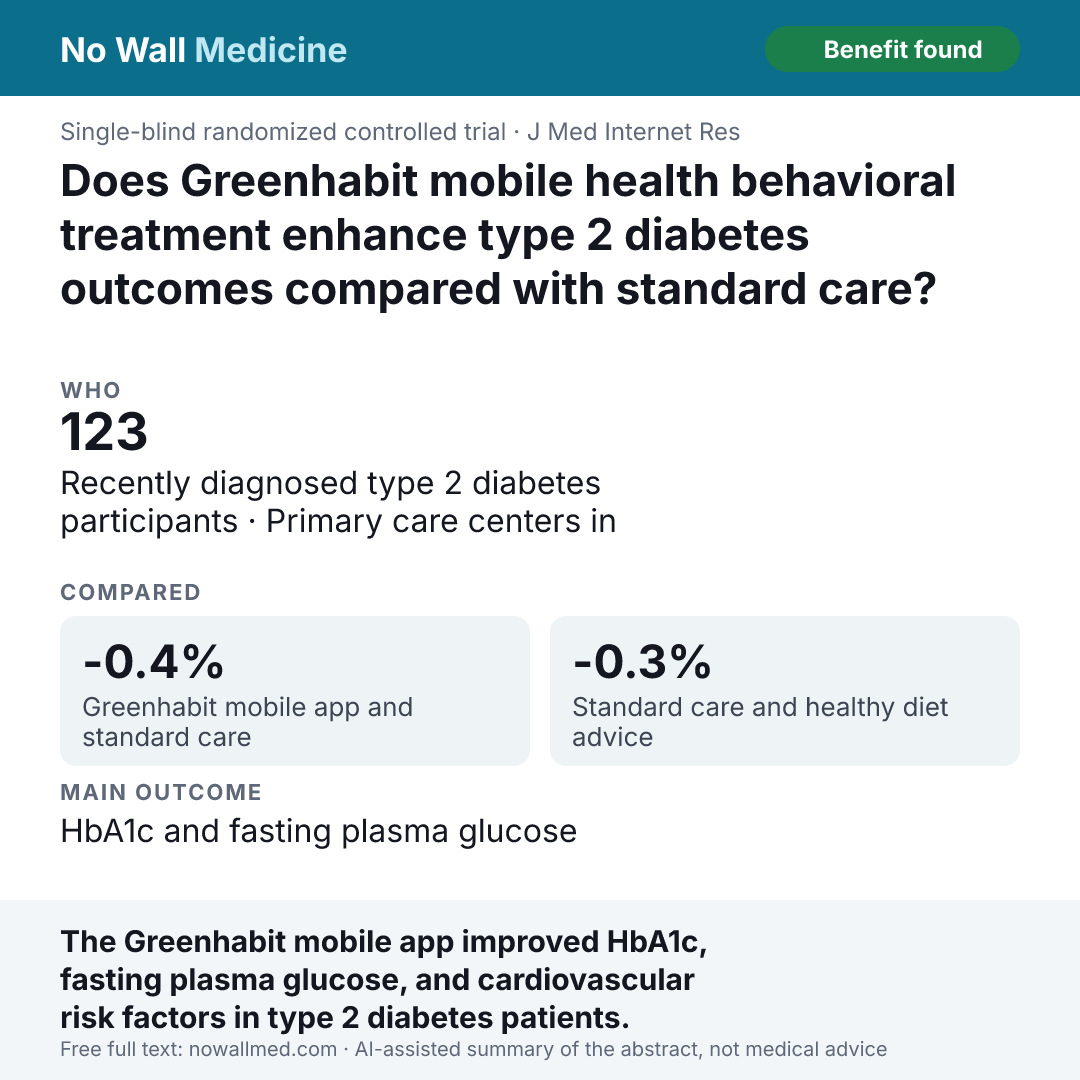
Efficacy of a Mobile Health-Based Behavioral Treatment for Lifestyle Modification in Type 2 Diabetes Self-Management: Greenhabit Randomized Controlled Trial
Single-blind randomized controlled trialBenefit found
Does Greenhabit mobile health behavioral treatment enhance type 2 diabetes outcomes compared with standard care?
Who
123
Recently diagnosed type 2 diabetes participants · Primary care centers in Barcelona, Spain
Compared
-0.4%Greenhabit mobile app and standard care
-0.3%Standard care and healthy diet advice
Main outcome
HbA1c and fasting plasma glucose
Bottom line: The Greenhabit mobile app improved HbA1c, fasting plasma glucose, and cardiovascular risk factors in type 2 diabetes patients.
J Med Internet Res · 2025-01-22 · Save PNG
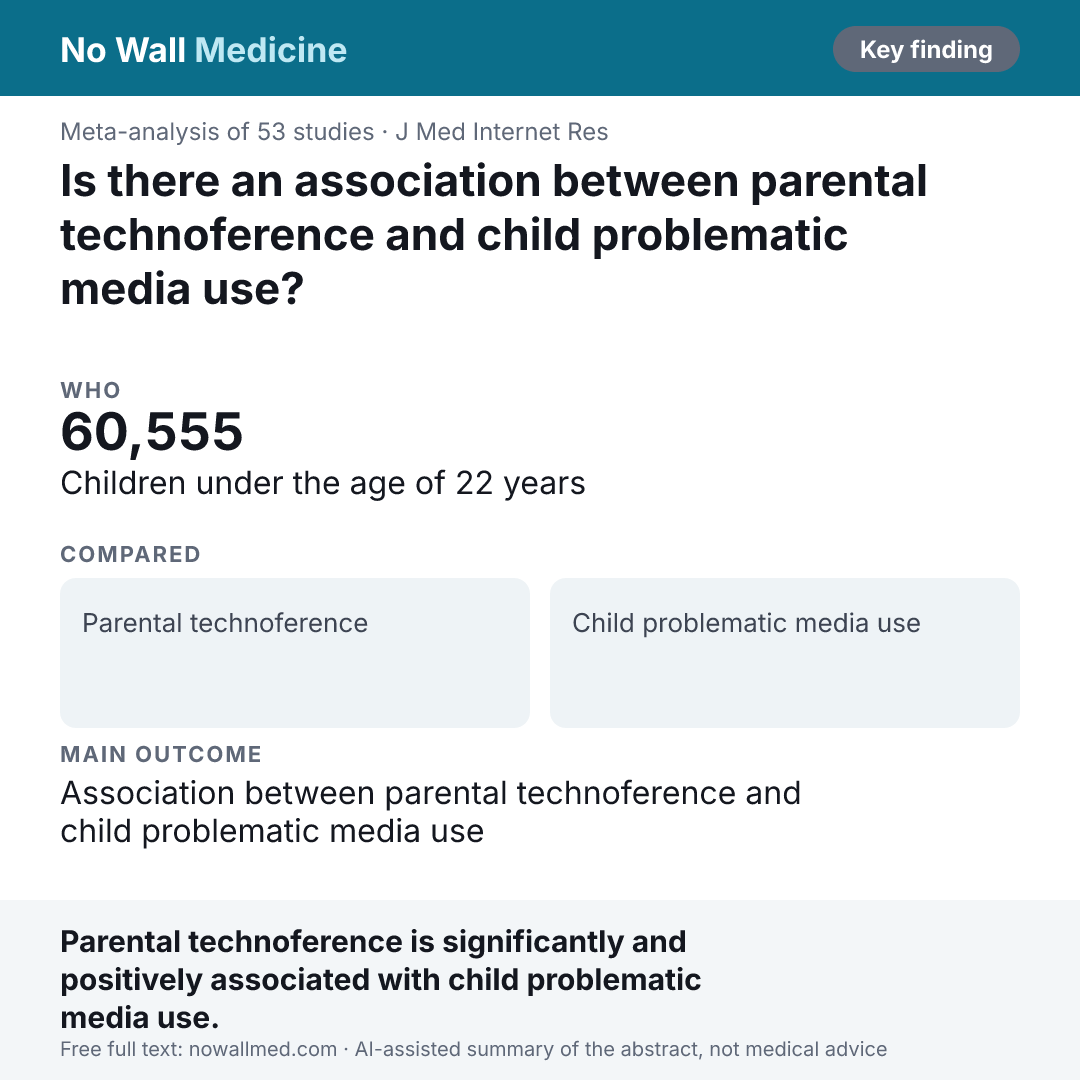
Parental Technoference and Child Problematic Media Use: Meta-Analysis
Meta-analysis of 53 studiesKey finding
Is there an association between parental technoference and child problematic media use?
Who
60,555
Children under the age of 22 years
Compared
Parental technoference
Child problematic media use
Main outcome
Association between parental technoference and child problematic media use
Result: r=0.296, 95% CI 0.259-0.331
Bottom line: Parental technoference is significantly and positively associated with child problematic media use.
Limitation: The study highlights the need for longitudinal research to understand temporal dynamics.
J Med Internet Res · 2025-01-22 · Save PNG
Impact of the Smarter Safer Homes Solution on Quality of Life and Health Outcomes in Older People Living in Their Own Homes: Randomized Controlled Trial
Open-label, parallel-group randomized controlled trialMixed results
Does smart home monitoring impact quality of life and health outcomes in older people?
Who
130
Older people living in their own homes
Compared
Control group
Intervention group: mean difference 0.045 (95% CI 0.001 to 0.089) at 6 months
Main outcome
Adult Social Care Outcomes Toolkit score
Result: mean difference 0.045 (95% CI 0.001 to 0.089) at 6 months
Bottom line: Smart home monitoring improved social care-related quality of life at 6 months, but the improvement was not sustained at 12 months.
Limitation: The influence of the COVID-19 pandemic during the later stage of the trial.
J Med Internet Res · 2025-01-22 · Save PNG

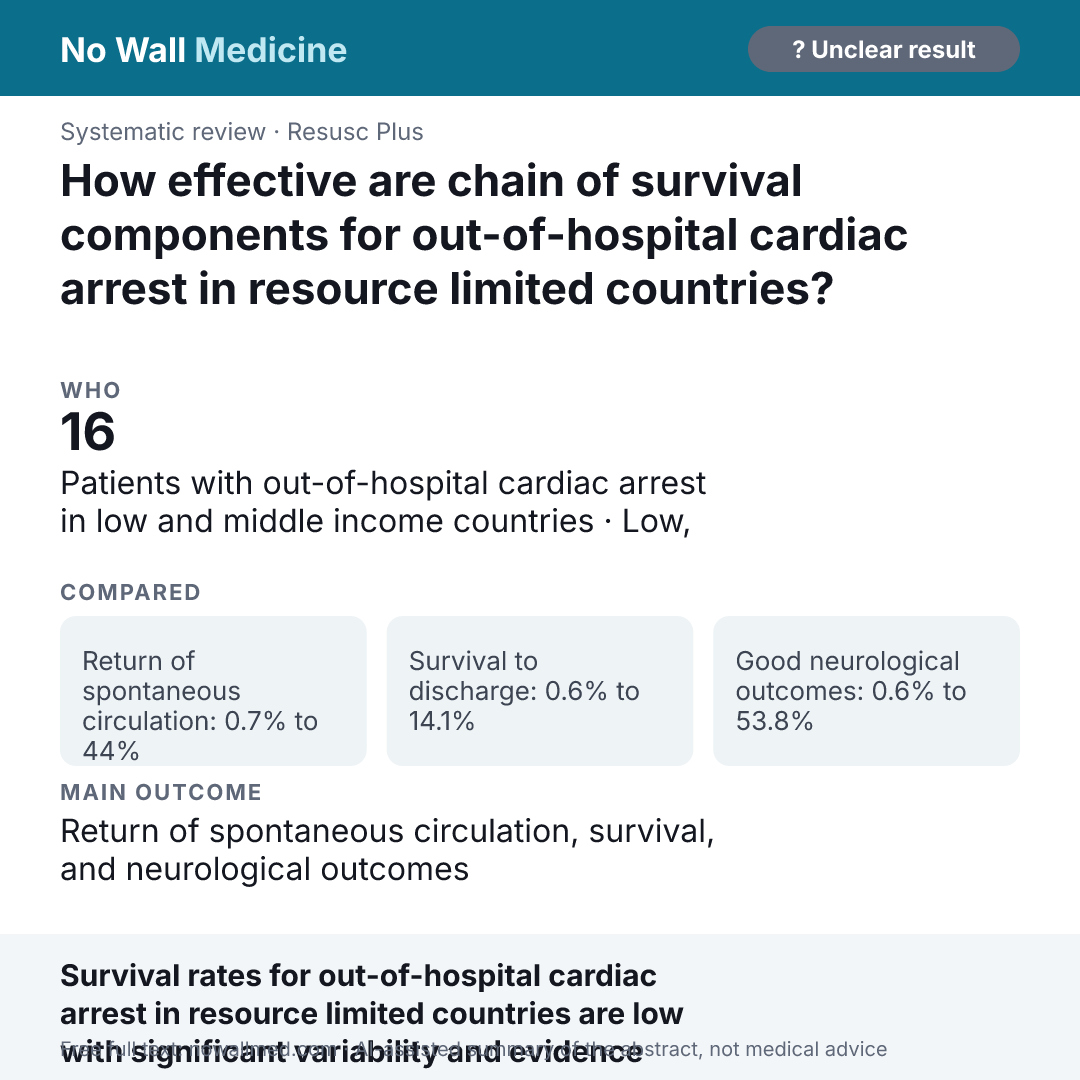
Effectiveness of chain of survival for out-of-hospital-cardiac-arrest (OHCA) in resource limited countries: A systematic review
Systematic reviewUnclear result
How effective are chain of survival components for out-of-hospital cardiac arrest in resource limited countries?
Who
16
Patients with out-of-hospital cardiac arrest in low and middle income countries · Low, lower-middle, and upper-middle-income countries
Compared
Return of spontaneous circulation: 0.7% to 44%
Survival to discharge: 0.6% to 14.1%
Good neurological outcomes: 0.6% to 53.8%
Main outcome
Return of spontaneous circulation, survival, and neurological outcomes
Bottom line: Survival rates for out-of-hospital cardiac arrest in resource limited countries are low with significant variability and evidence gaps.
Limitation: Moderate to high risk of bias due to selection bias and inconsistent reporting.
Resusc Plus · 2025-01-22 · Save PNG
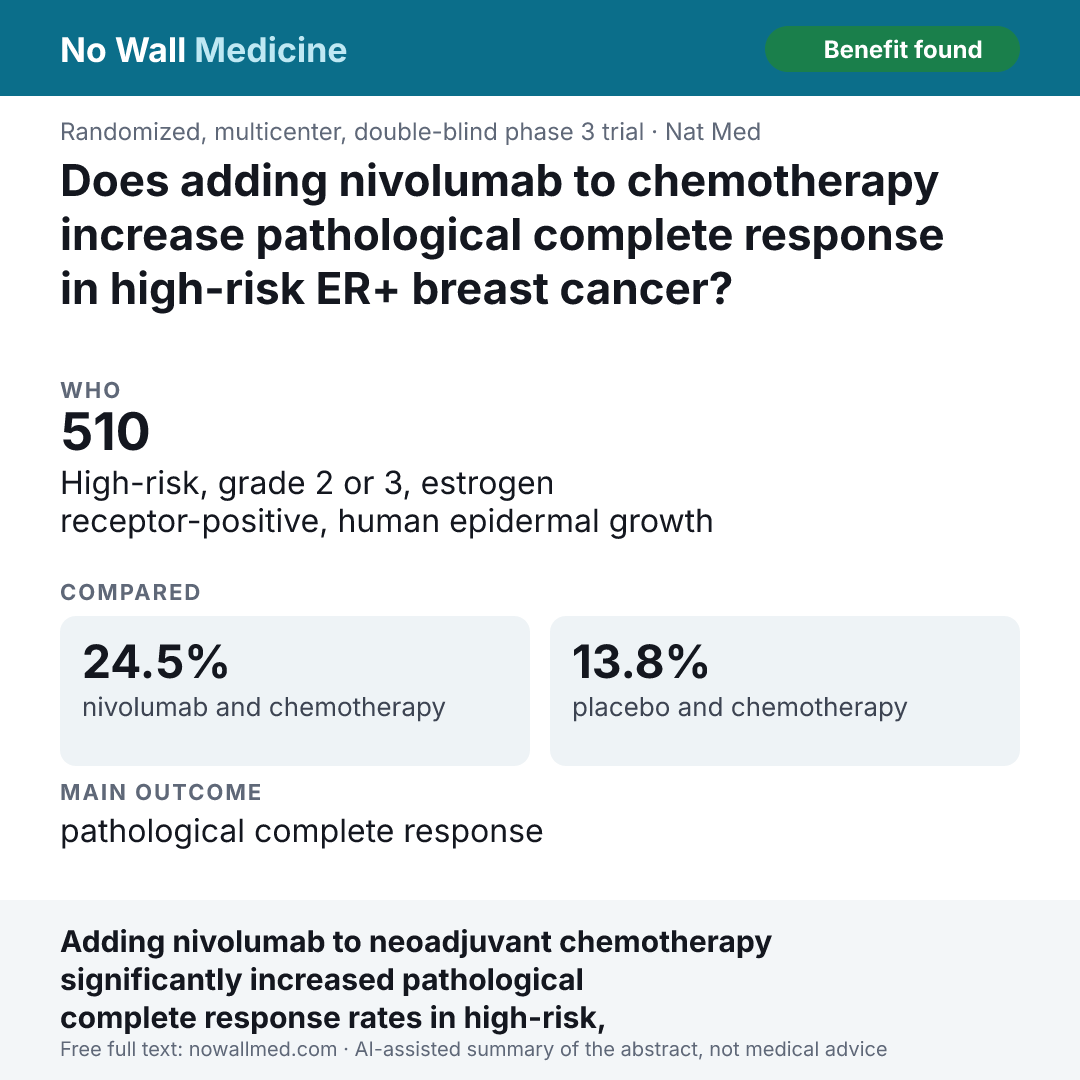
Neoadjuvant nivolumab and chemotherapy in early estrogen receptor-positive breast cancer: a randomized phase 3 trial
Randomized, multicenter, double-blind phase 3 trialBenefit found
Does adding nivolumab to chemotherapy increase pathological complete response in high-risk ER+ breast cancer?
Who
510
High-risk, grade 2 or 3, estrogen receptor-positive, human epidermal growth factor receptor 2-negative primary breast cancer · multicenter
Compared
24.5%nivolumab and chemotherapy
13.8%placebo and chemotherapy
Main outcome
pathological complete response
Bottom line: Adding nivolumab to neoadjuvant chemotherapy significantly increased pathological complete response rates in high-risk, early-stage estrogen receptor-positive breast cancer.
Nat Med · 2025-01-21 · Save PNG
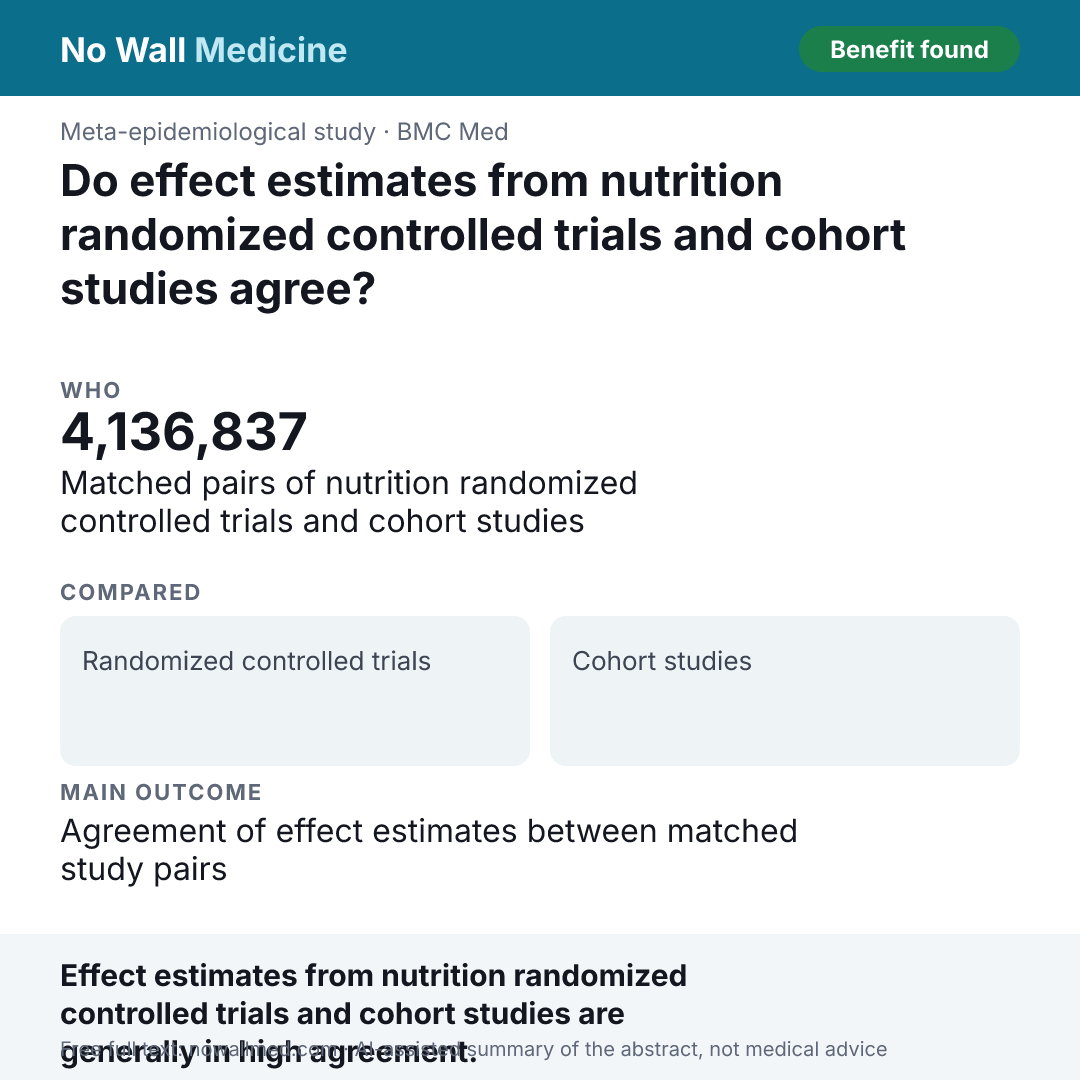
Evaluating agreement between individual nutrition randomised controlled trials and cohort studies - a meta-epidemiological study
Meta-epidemiological studyBenefit found
Do effect estimates from nutrition randomized controlled trials and cohort studies agree?
Who
4,136,837
Matched pairs of nutrition randomized controlled trials and cohort studies
Compared
Randomized controlled trials
Cohort studies
Main outcome
Agreement of effect estimates between matched study pairs
Result: ratio of risk ratios 1.00 (95% CI 0.91-1.10)
Bottom line: Effect estimates from nutrition randomized controlled trials and cohort studies are generally in high agreement.
Limitation: Cohort studies were mostly rated with some concerns or high risk of bias.
BMC Med · 2025-01-21 · Save PNG
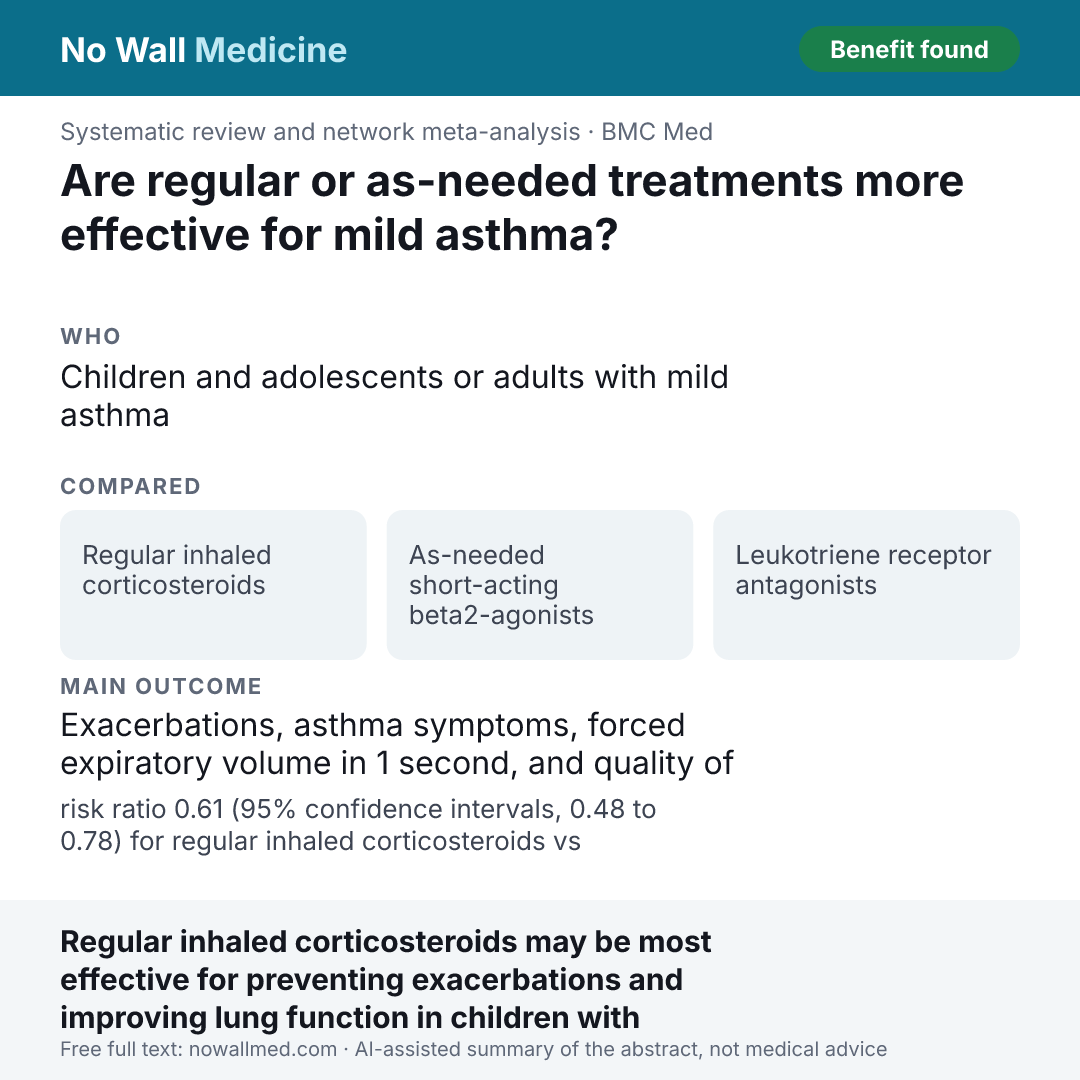
Regular versus as-needed treatments for mild asthma in children, adolescents, and adults: a systematic review and network meta-analysis
Systematic review and network meta-analysisBenefit found
Are regular or as-needed treatments more effective for mild asthma?
Who
Children and adolescents or adults with mild asthma
Compared
Regular inhaled corticosteroids
As-needed short-acting beta2-agonists
Leukotriene receptor antagonists
Main outcome
Exacerbations, asthma symptoms, forced expiratory volume in 1 second, and quality of life
Result: risk ratio 0.61 (95% confidence intervals, 0.48 to 0.78) for regular inhaled corticosteroids vs as-needed short-acting beta2-agonists
Bottom line: Regular inhaled corticosteroids may be most effective for preventing exacerbations and improving lung function in children with mild asthma.
Limitation: varying degrees of heterogeneity
BMC Med · 2025-01-21 · Save PNG
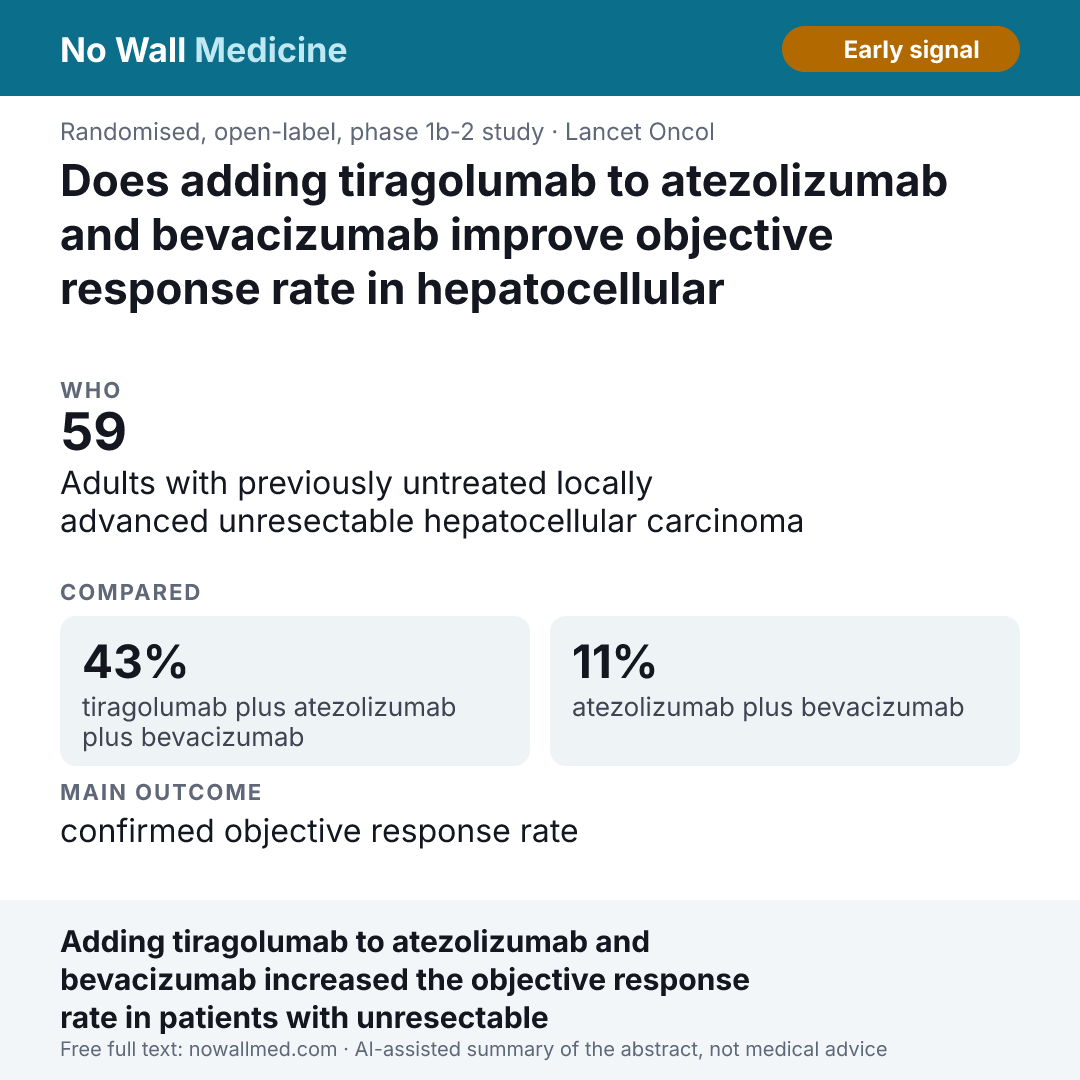
Tiragolumab in combination with atezolizumab and bevacizumab in patients with unresectable, locally advanced or metastatic hepatocellular carcinoma (MORPHEUS-Liver): a randomised, open-label, phase 1b-2, study
Randomised, open-label, phase 1b-2 studyEarly signal
Does adding tiragolumab to atezolizumab and bevacizumab improve objective response rate in hepatocellular carcinoma?
Who
59
Adults with previously untreated locally advanced unresectable hepatocellular carcinoma · 26 centres across seven countries
Compared
43%tiragolumab plus atezolizumab plus bevacizumab (95% CI 27-59, n=17)
11%atezolizumab plus bevacizumab (1-35, n=2)
Main outcome
confirmed objective response rate
Bottom line: Adding tiragolumab to atezolizumab and bevacizumab increased the objective response rate in patients with unresectable hepatocellular carcinoma.
Lancet Oncol · 2025-01-21 · Save PNG
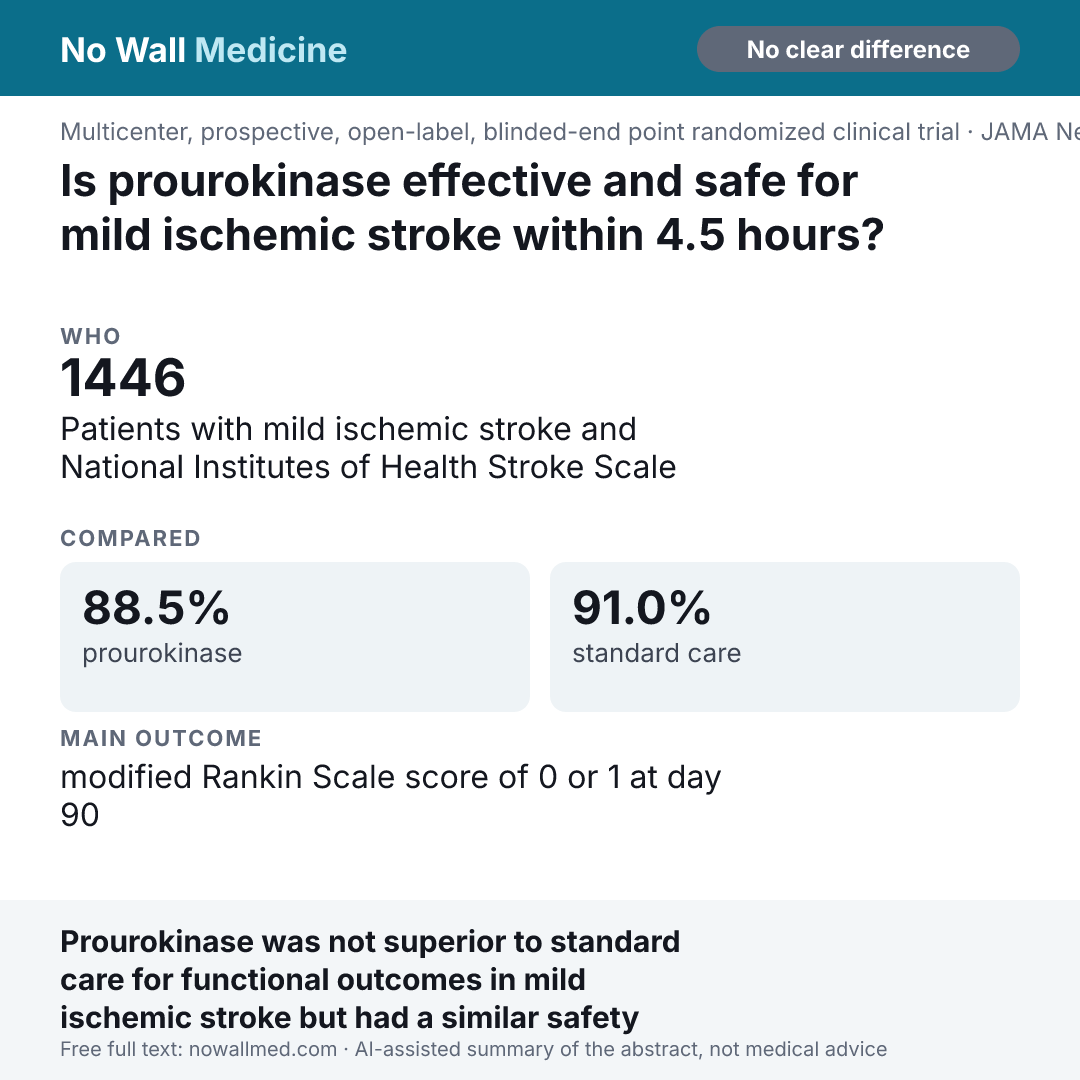
Prourokinase vs Standard Care for Patients With Mild Ischemic Stroke: The PUMICE Randomized Clinical Trial
Multicenter, prospective, open-label, blinded-end point randomized clinical trialNo clear difference
Is prourokinase effective and safe for mild ischemic stroke within 4.5 hours?
Who
1446
Patients with mild ischemic stroke and National Institutes of Health Stroke Scale score ≤ 5 · 89 hospitals in China
Compared
88.5%prourokinase (639/723)
91.0%standard care (658/723)
Main outcome
modified Rankin Scale score of 0 or 1 at day 90
Result: relative risk 0.97 (95% CI 0.94 to 1.01)
Bottom line: Prourokinase was not superior to standard care for functional outcomes in mild ischemic stroke but had a similar safety profile.
JAMA Neurol · 2025-01-21 · Save PNG
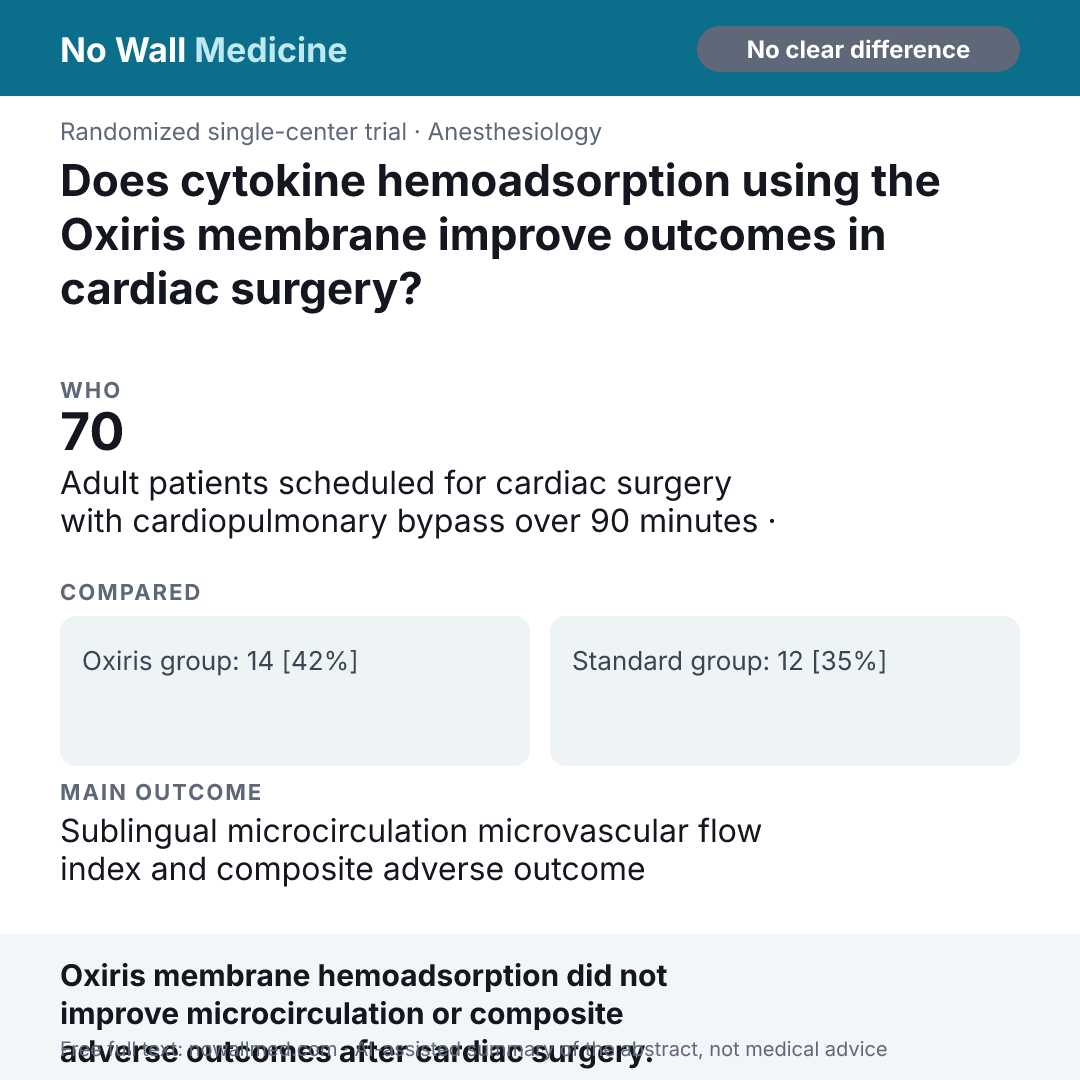
Cytokine Hemoadsorption versus Standard Care in Cardiac Surgery Using the Oxiris Membrane: The OXICARD Single-center Randomized Trial
Randomized single-center trialNo clear difference
Does cytokine hemoadsorption using the Oxiris membrane improve outcomes in cardiac surgery?
Who
70
Adult patients scheduled for cardiac surgery with cardiopulmonary bypass over 90 minutes · Amiens University Hospital, France
Compared
Oxiris group: 14 [42%]
Standard group: 12 [35%]
Main outcome
Sublingual microcirculation microvascular flow index and composite adverse outcome
Result: -0.17 (95% CI -0.44 to 0.10)
Bottom line: Oxiris membrane hemoadsorption did not improve microcirculation or composite adverse outcomes after cardiac surgery.
Anesthesiology · 2025-01-21 · Save PNG
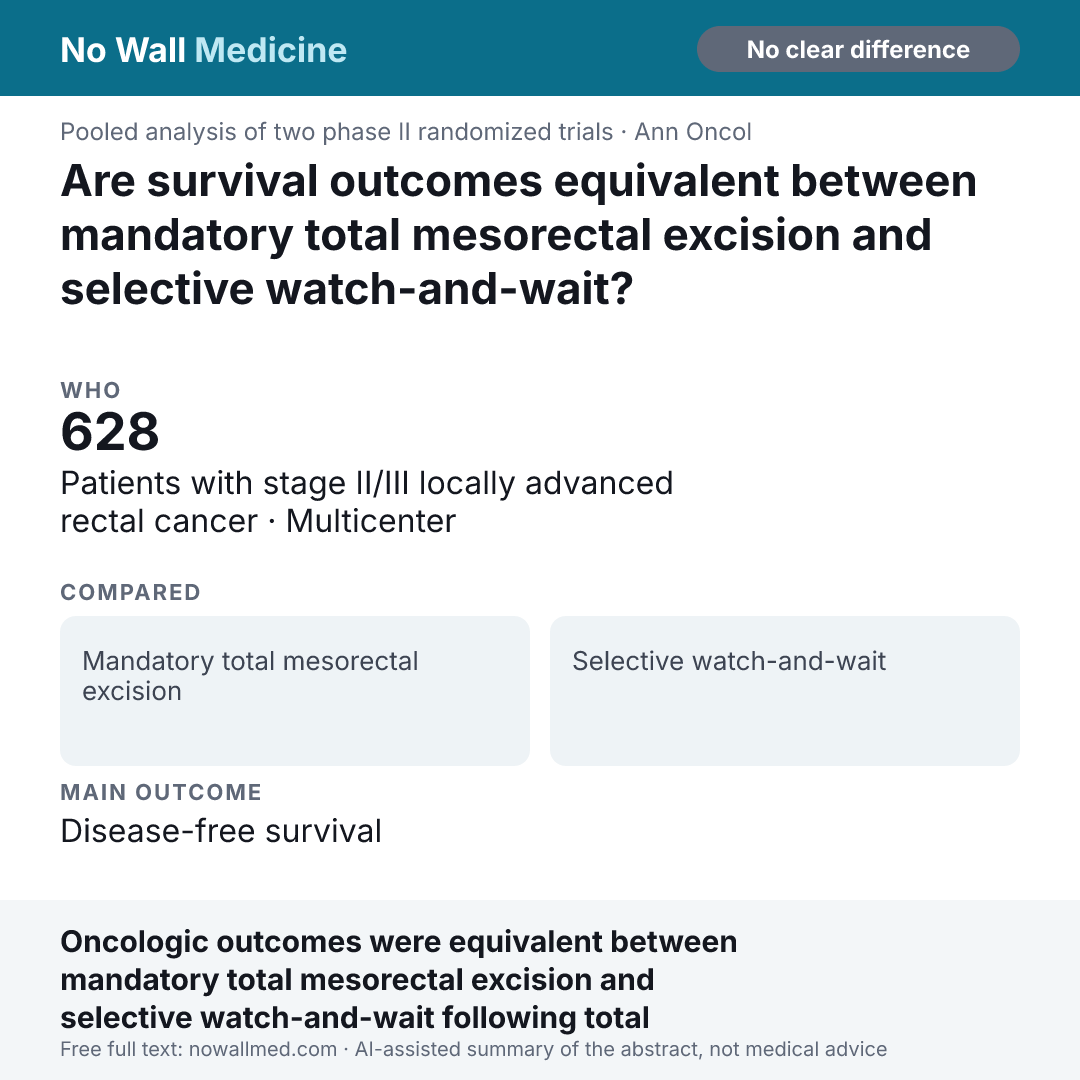
Survival among patients treated with total mesorectal excision or selective watch-and-wait after total neoadjuvant therapy: a pooled analysis of the CAO/ARO/AIO-12 and OPRA randomized phase II trials
Pooled analysis of two phase II randomized trialsNo clear difference
Are survival outcomes equivalent between mandatory total mesorectal excision and selective watch-and-wait?
Who
628
Patients with stage II/III locally advanced rectal cancer · Multicenter
Compared
Mandatory total mesorectal excision
Selective watch-and-wait
Main outcome
Disease-free survival
Bottom line: Oncologic outcomes were equivalent between mandatory total mesorectal excision and selective watch-and-wait following total neoadjuvant therapy.
Ann Oncol · 2025-01-21 · Save PNG
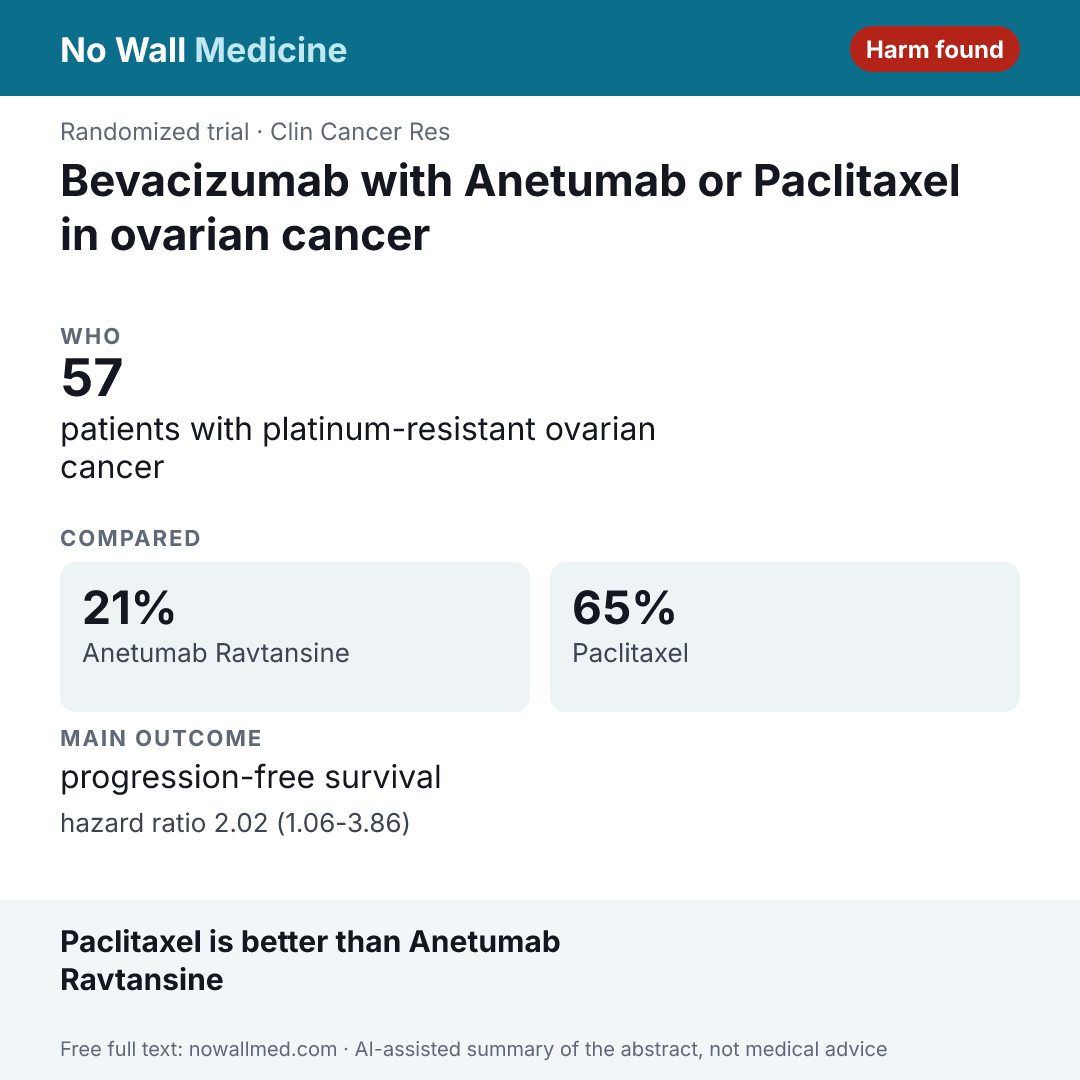
Randomized Phase II Study of Bevacizumab with Weekly Anetumab Ravtansine or Weekly Paclitaxel in Platinum-Resistant/Refractory High-Grade Ovarian Cancer (NCI Trial)
Randomized trialHarm found
Bevacizumab with Anetumab or Paclitaxel in ovarian cancer
Who
57
patients with platinum-resistant ovarian cancer
Compared
21%Anetumab Ravtansine
65%Paclitaxel
Main outcome
progression-free survival
Result: hazard ratio 2.02 (1.06-3.86)
Bottom line: Paclitaxel is better than Anetumab Ravtansine
Clin Cancer Res · 2025-01-21 · Save PNG