Visual abstracts
New randomized trials and meta-analyses from leading journals at a glance: who was studied, what was compared, and what was found. Every paper is free to read in full.
All specialtiesCardiology 4877Oncology 4138Gastroenterology & Hepatology 1942Infectious Disease 3837Neurology 1905Psychiatry & Mental Health 2273Pulmonology 2143Critical Care 1365Endocrinology & Diabetes 2580Pediatrics 2980Surgery 2559Orthopedics & Sports Medicine 931Neurosurgery 537Cardiothoracic & Vascular Surgery 674Plastic & Reconstructive Surgery 591Nephrology 1133Rheumatology 823Hematology 1109Dermatology 621Ophthalmology 543Obstetrics & Gynecology 1686Public & Global Health 1058Radiology & Imaging 648Anesthesiology 986Urology 764ENT (Otolaryngology) 503Emergency Medicine 511Allergy & Immunology 313Geriatrics 981Family Medicine & Primary Care 562Medical Genetics & Genomics 676Pathology & Laboratory Medicine 159Physical Medicine & Rehabilitation 757Palliative Care 444Nutrition 1588Digital Health & AI 2201General Medicine 321
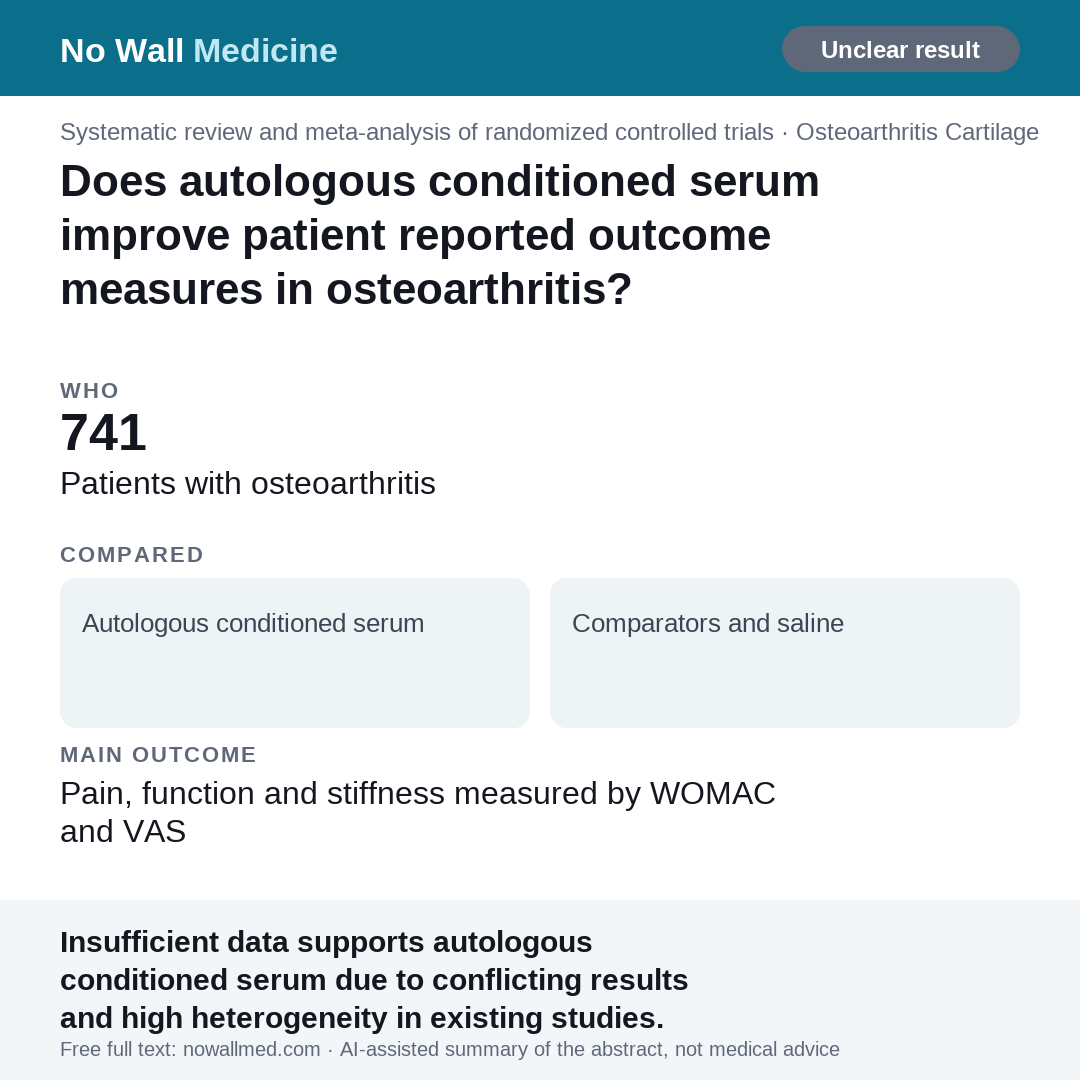
Is there a role for autologous conditioned serum injections in osteoarthritis? A systematic review and meta-analysis of randomised controlled trials
Systematic review and meta-analysis of randomized controlled trialsUnclear result
Does autologous conditioned serum improve patient reported outcome measures in osteoarthritis?
Who
741
Patients with osteoarthritis
Compared
Autologous conditioned serum
Comparators and saline
Main outcome
Pain, function and stiffness measured by WOMAC and VAS
Result: SMD -0.61 (95% CI -1.01 to -0.21) for WOMAC with all comparators
Bottom line: Insufficient data supports autologous conditioned serum due to conflicting results and high heterogeneity in existing studies.
Limitation: High heterogeneity and risk of bias in included studies.
Osteoarthritis Cartilage · 2024-06-13Download image
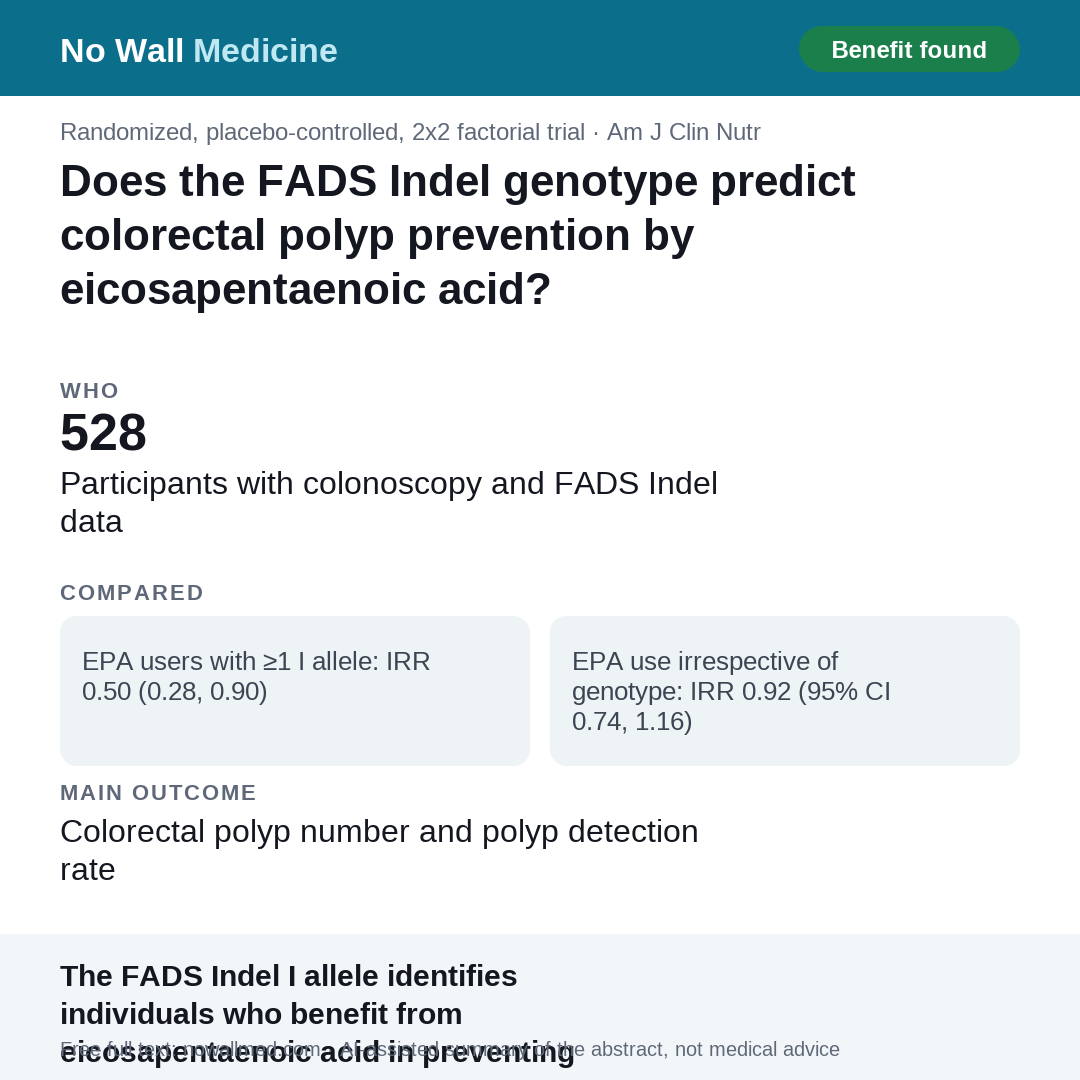
Fatty acid desaturase insertion-deletion polymorphism rs66698963 predicts colorectal polyp prevention by the n-3 fatty acid eicosapentaenoic acid: a secondary analysis of the seAFOod polyp prevention trial
Randomized, placebo-controlled, 2x2 factorial trialBenefit found
Does the FADS Indel genotype predict colorectal polyp prevention by eicosapentaenoic acid?
Who
528
Participants with colonoscopy and FADS Indel data
Compared
EPA users with ≥1 I allele: IRR 0.50 (0.28, 0.90)
EPA use irrespective of genotype: IRR 0.92 (95% CI 0.74, 1.16)
Main outcome
Colorectal polyp number and polyp detection rate
Result: IRR 0.50 (95% CI 0.28, 0.90) for I allele carriers
Bottom line: The FADS Indel I allele identifies individuals who benefit from eicosapentaenoic acid in preventing colorectal polyps.
Limitation: Assessment in other populations and healthcare settings is warranted.
Am J Clin Nutr · 2024-06-13Download image
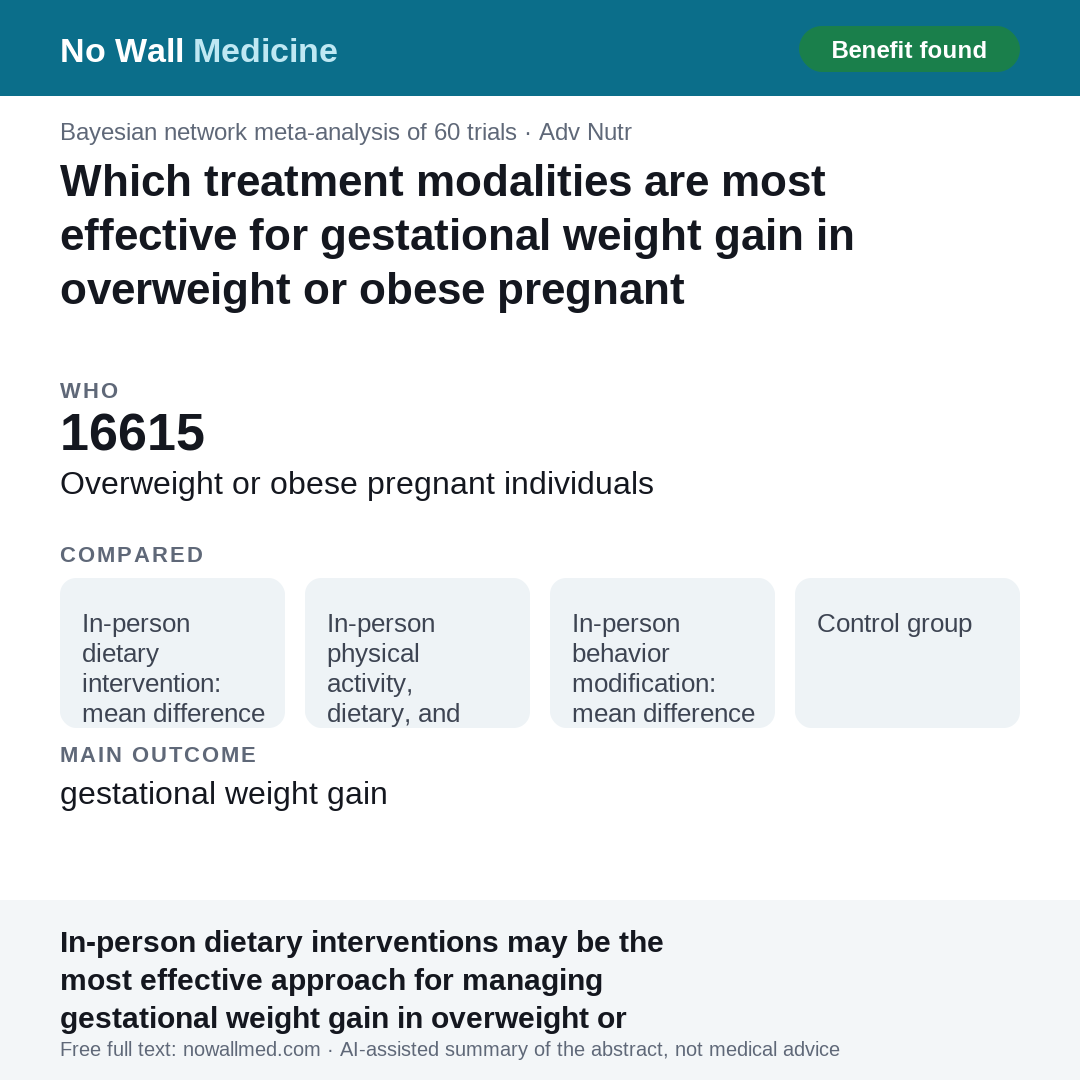
A Systematic Review and Bayesian Network Meta-Analysis Comparing In-Person, Remote, and Blended Interventions in Physical Activity, Diet, Education, and Behavioral Modification on Gestational Weight Gain among Overweight or Obese Pregnant Individuals
Bayesian network meta-analysis of 60 trialsBenefit found
Which treatment modalities are most effective for gestational weight gain in overweight or obese pregnant individuals?
Who
16615
Overweight or obese pregnant individuals
Compared
In-person dietary intervention: mean difference -1.27 (95% CI -2.23, -0.32)
In-person physical activity, dietary, and behavior modification: mean difference -0.60 (95% CI -1.19, -0.00)
In-person behavior modification: mean difference -0.34 (95% CI -0.57, -0.10)
Control group
Main outcome
gestational weight gain
Bottom line: In-person dietary interventions may be the most effective approach for managing gestational weight gain in overweight or obese pregnant women.
Limitation: Evidence of limited quality and directness, including insufficient data on physical activity components.
Adv Nutr · 2024-06-13Download image
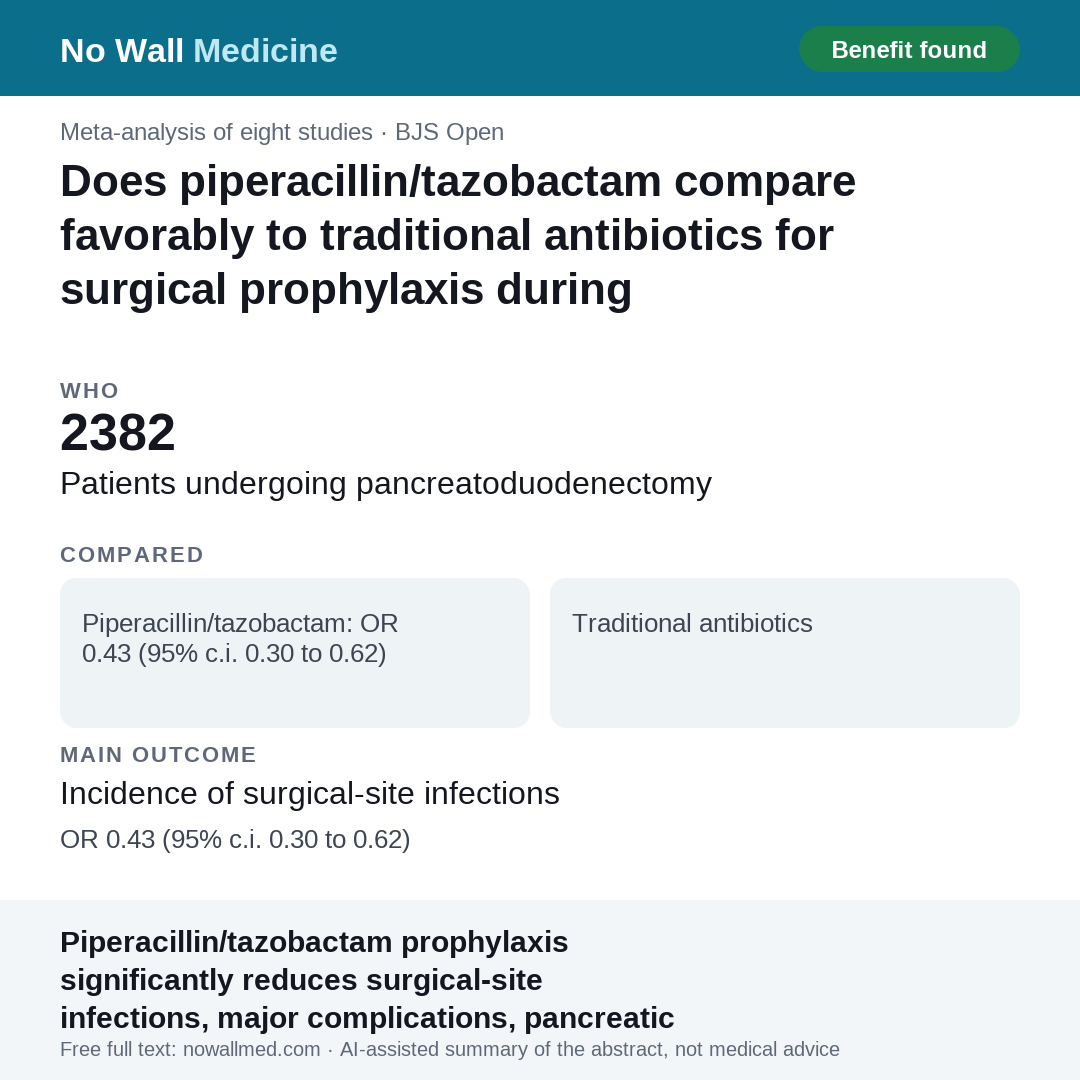
Piperacillin/tazobactam for surgical prophylaxis during pancreatoduodenectomy: meta-analysis
Meta-analysis of eight studiesBenefit found
Does piperacillin/tazobactam compare favorably to traditional antibiotics for surgical prophylaxis during pancreatoduodenectomy?
Who
2382
Patients undergoing pancreatoduodenectomy
Compared
Piperacillin/tazobactam: OR 0.43 (95% c.i. 0.30 to 0.62)
Traditional antibiotics
Main outcome
Incidence of surgical-site infections
Result: OR 0.43 (95% c.i. 0.30 to 0.62)
Bottom line: Piperacillin/tazobactam prophylaxis significantly reduces surgical-site infections, major complications, pancreatic fistulas, and mortality in pancreatoduodenectomy patients.
BJS Open · 2024-06-13Download image
A systematic review of normal tissue neurovascular unit damage following brain irradiation-Factors affecting damage severity and timing of effects
Systematic reviewMixed results
What factors affect neurovascular unit damage following brain irradiation?
Who
Rodents, canines, rabbits, and humans · Preclinical and clinical literature
Compared
Irradiated neurovascular unit: increased blood-brain barrier permeability, reduced endothelial cell number and extracellular matrix proteoglycans
Non-irradiated neurovascular unit
Main outcome
Neurovascular unit damage severity and timing
Bottom line: Irradiation causes widespread neurovascular unit damage, with vascular effects often occurring early and persisting.
Limitation: More studies are needed to confirm sequence of damages and cognitive dysfunction mechanisms.
Neurooncol Adv · 2024-06-13Download image

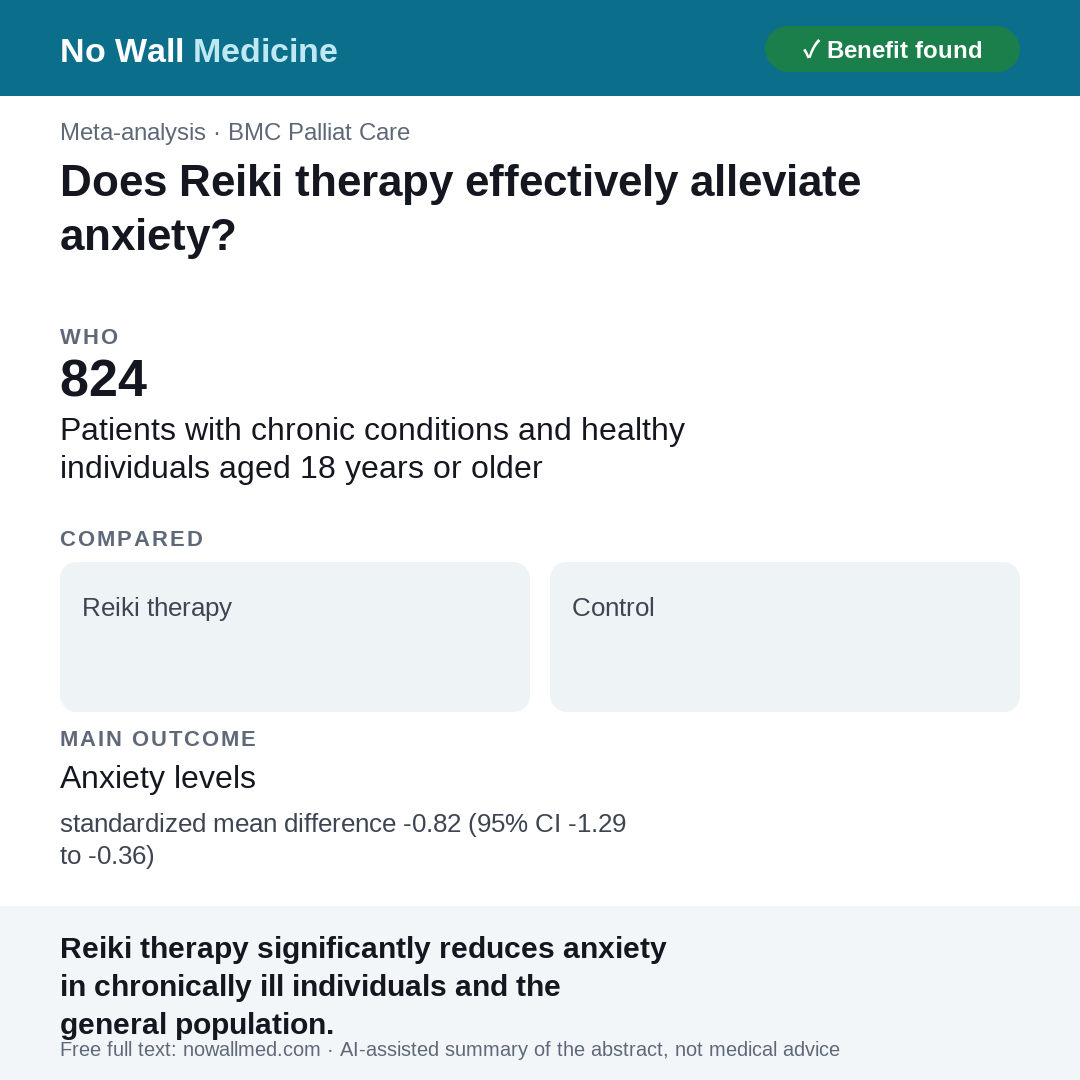
Therapeutic effects of Reiki on interventions for anxiety: a meta-analysis
Meta-analysisBenefit found
Does Reiki therapy effectively alleviate anxiety?
Who
824
Patients with chronic conditions and healthy individuals aged 18 years or older
Compared
Reiki therapy
Control
Main outcome
Anxiety levels
Result: standardized mean difference -0.82 (95% CI -1.29 to -0.36)
Bottom line: Reiki therapy significantly reduces anxiety in chronically ill individuals and the general population.
BMC Palliat Care · 2024-06-13Download image
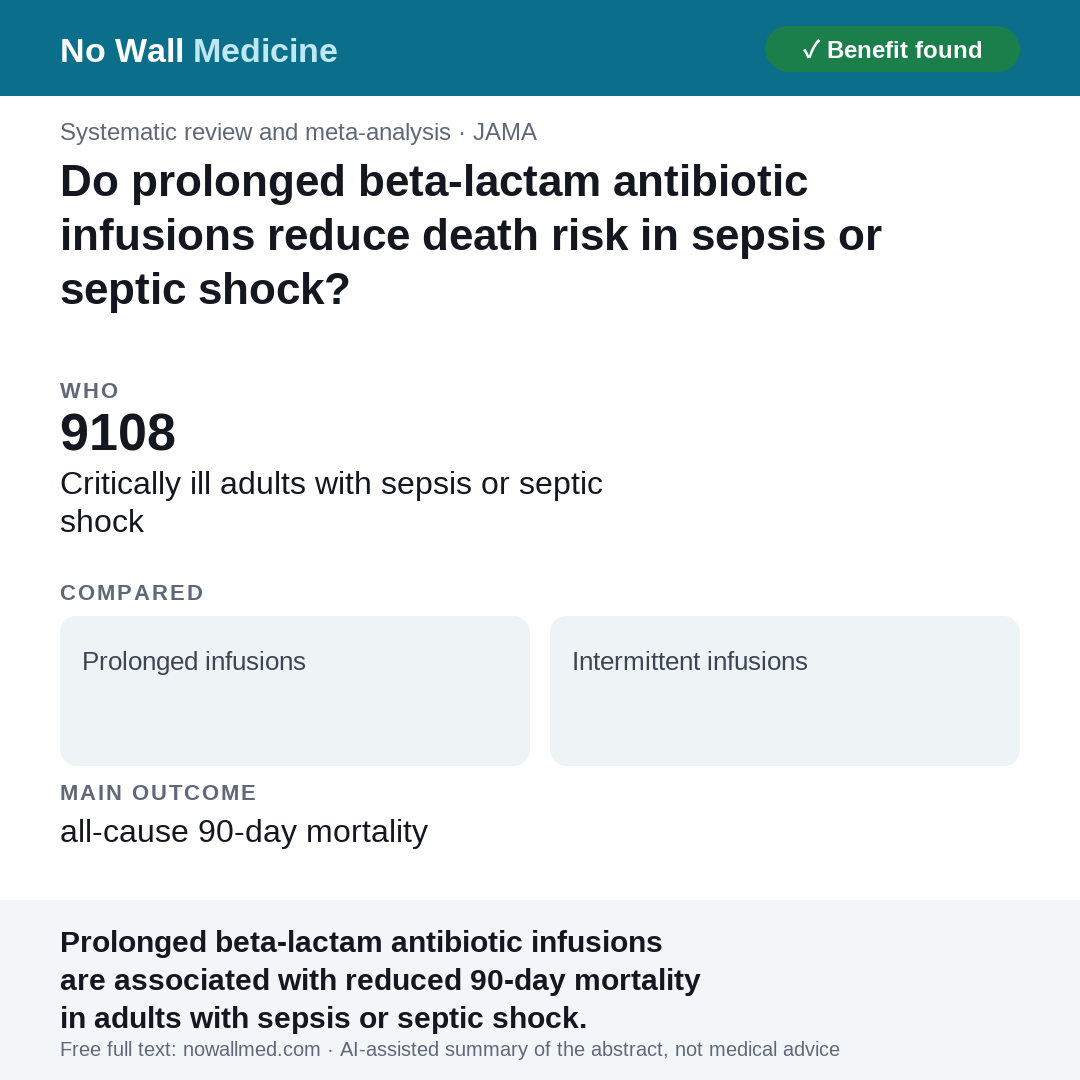
Prolonged vs Intermittent Infusions of β-Lactam Antibiotics in Adults With Sepsis or Septic Shock: A Systematic Review and Meta-Analysis
Systematic review and meta-analysisBenefit found
Do prolonged beta-lactam antibiotic infusions reduce death risk in sepsis or septic shock?
Who
9108
Critically ill adults with sepsis or septic shock
Compared
Prolonged infusions
Intermittent infusions
Main outcome
all-cause 90-day mortality
Result: risk ratio 0.86 (95% credible interval, 0.72-0.98)
Bottom line: Prolonged beta-lactam antibiotic infusions are associated with reduced 90-day mortality in adults with sepsis or septic shock.
JAMA · 2024-06-12Download image
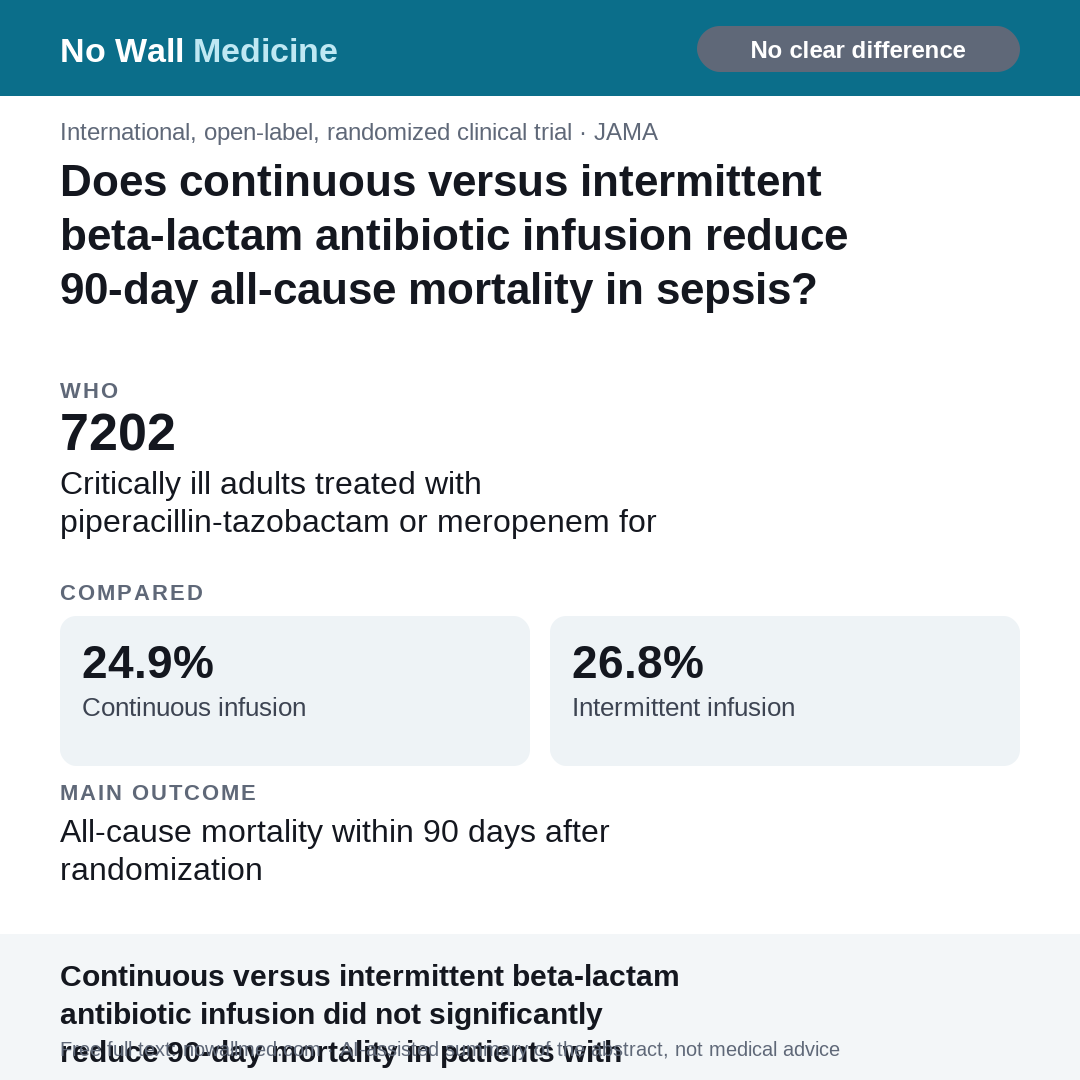
Continuous vs Intermittent β-Lactam Antibiotic Infusions in Critically Ill Patients With Sepsis: The BLING III Randomized Clinical Trial
International, open-label, randomized clinical trialNo clear difference
Does continuous versus intermittent beta-lactam antibiotic infusion reduce 90-day all-cause mortality in sepsis?
Who
7202
Critically ill adults treated with piperacillin-tazobactam or meropenem for sepsis · 104 intensive care units in seven countries
Compared
24.9%Continuous infusion (864/3474)
26.8%Intermittent infusion (939/3507)
Main outcome
All-cause mortality within 90 days after randomization
Result: odds ratio 0.91 (95% CI 0.81 to 1.01)
Bottom line: Continuous versus intermittent beta-lactam antibiotic infusion did not significantly reduce 90-day mortality in patients with sepsis.
Limitation: The confidence interval includes the possibility of both no important effect and a clinically important benefit.
JAMA · 2024-06-12Download image
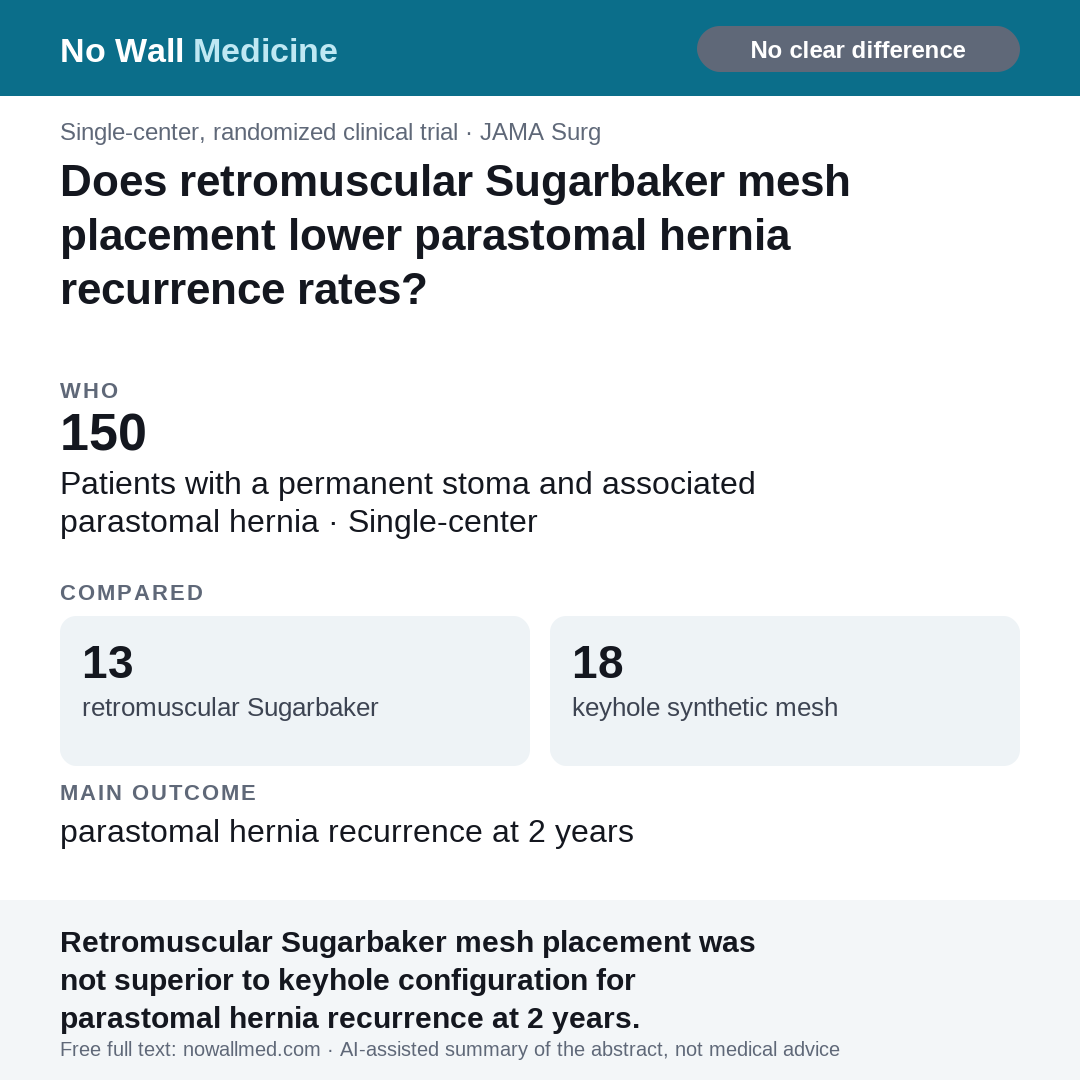
Open Retromuscular Sugarbaker vs Keyhole Mesh Placement for Parastomal Hernia Repair: A Randomized Clinical Trial
Single-center, randomized clinical trialNo clear difference
Does retromuscular Sugarbaker mesh placement lower parastomal hernia recurrence rates?
Who
150
Patients with a permanent stoma and associated parastomal hernia · Single-center
Compared
13retromuscular Sugarbaker (17%)
18keyhole synthetic mesh (24%)
Main outcome
parastomal hernia recurrence at 2 years
Result: adjusted risk ratio, 0.87; 95% CI, 0.42 to 1.69
Bottom line: Retromuscular Sugarbaker mesh placement was not superior to keyhole configuration for parastomal hernia recurrence at 2 years.
JAMA Surg · 2024-06-12Download image
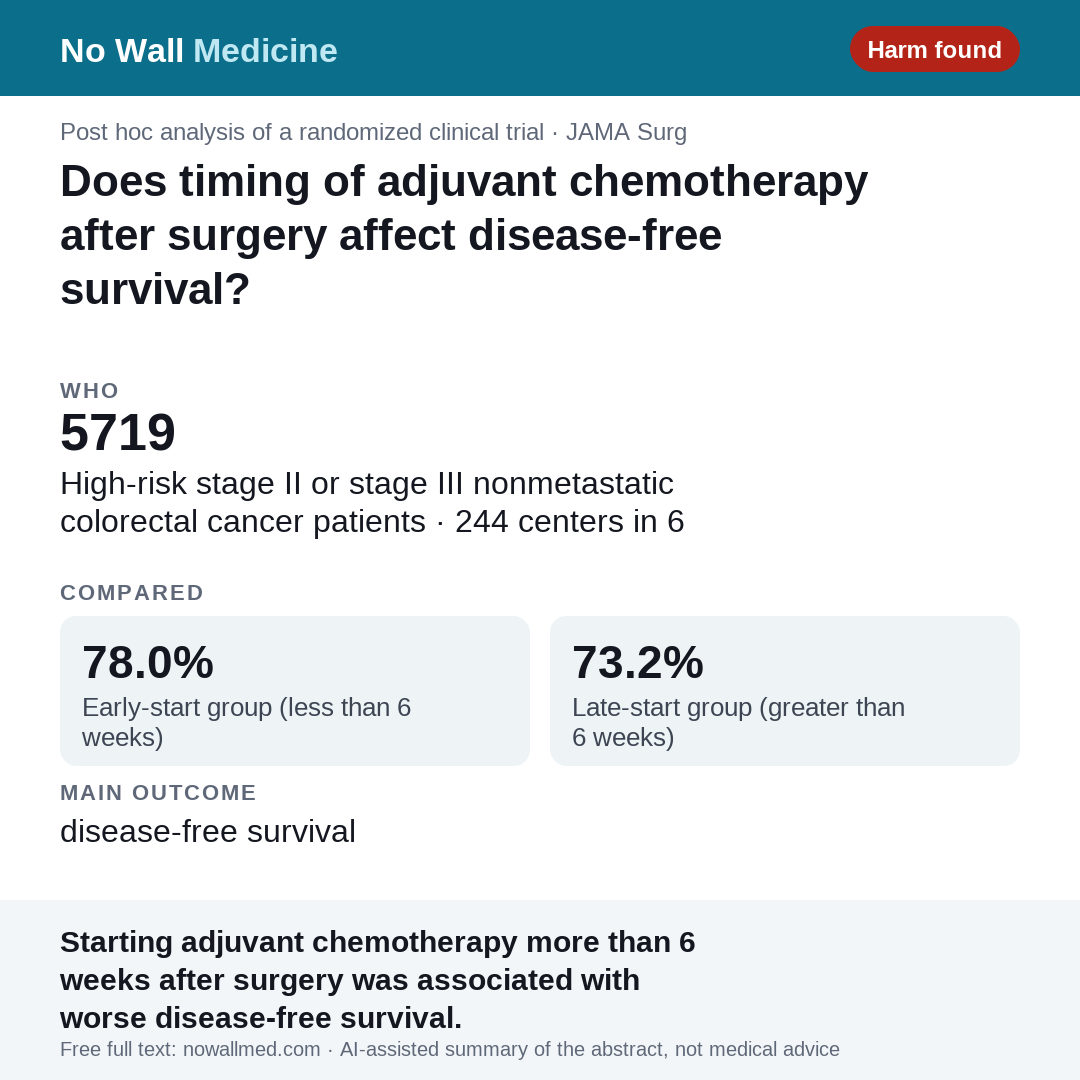
Time From Colorectal Cancer Surgery to Adjuvant Chemotherapy: Post Hoc Analysis of the SCOT Randomized Clinical Trial
Post hoc analysis of a randomized clinical trialHarm found
Does timing of adjuvant chemotherapy after surgery affect disease-free survival?
Who
5719
High-risk stage II or stage III nonmetastatic colorectal cancer patients · 244 centers in 6 countries
Compared
78.0%Early-start group (less than 6 weeks) (95% CI, 75.3%-80.8%)
73.2%Late-start group (greater than 6 weeks) (95% CI, 72.0%-74.5%)
Main outcome
disease-free survival
Result: hazard ratio 1.24 (95% CI 1.06-1.46)
Bottom line: Starting adjuvant chemotherapy more than 6 weeks after surgery was associated with worse disease-free survival.
JAMA Surg · 2024-06-12Download image
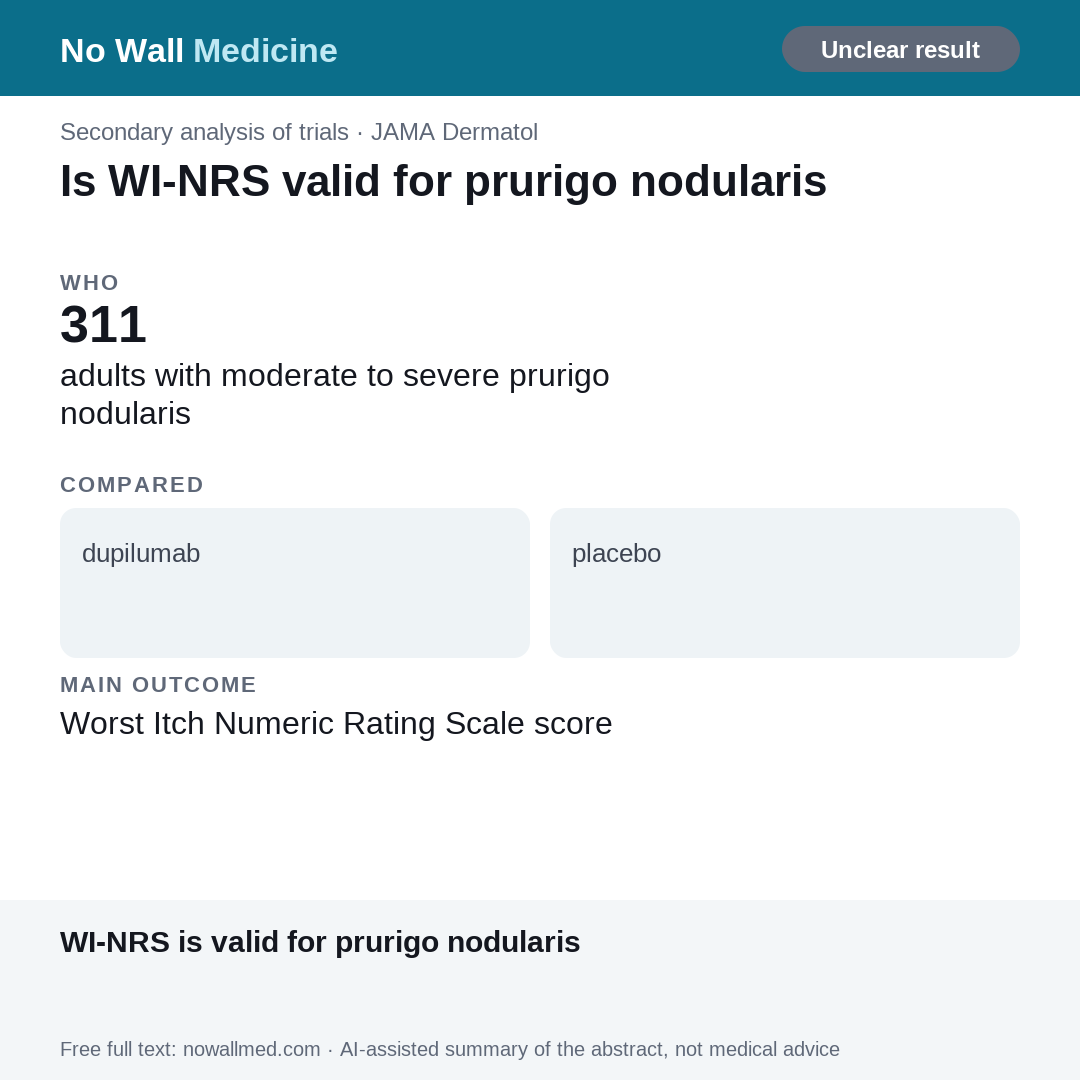
Worst Itch Numeric Rating Scale for Prurigo Nodularis: A Secondary Analysis of 2 Randomized Clinical Trials
Secondary analysis of trialsUnclear result
Is WI-NRS valid for prurigo nodularis
Who
311
adults with moderate to severe prurigo nodularis
Compared
dupilumab
placebo
Main outcome
Worst Itch Numeric Rating Scale score
Bottom line: WI-NRS is valid for prurigo nodularis
JAMA Dermatol · 2024-06-12Download image
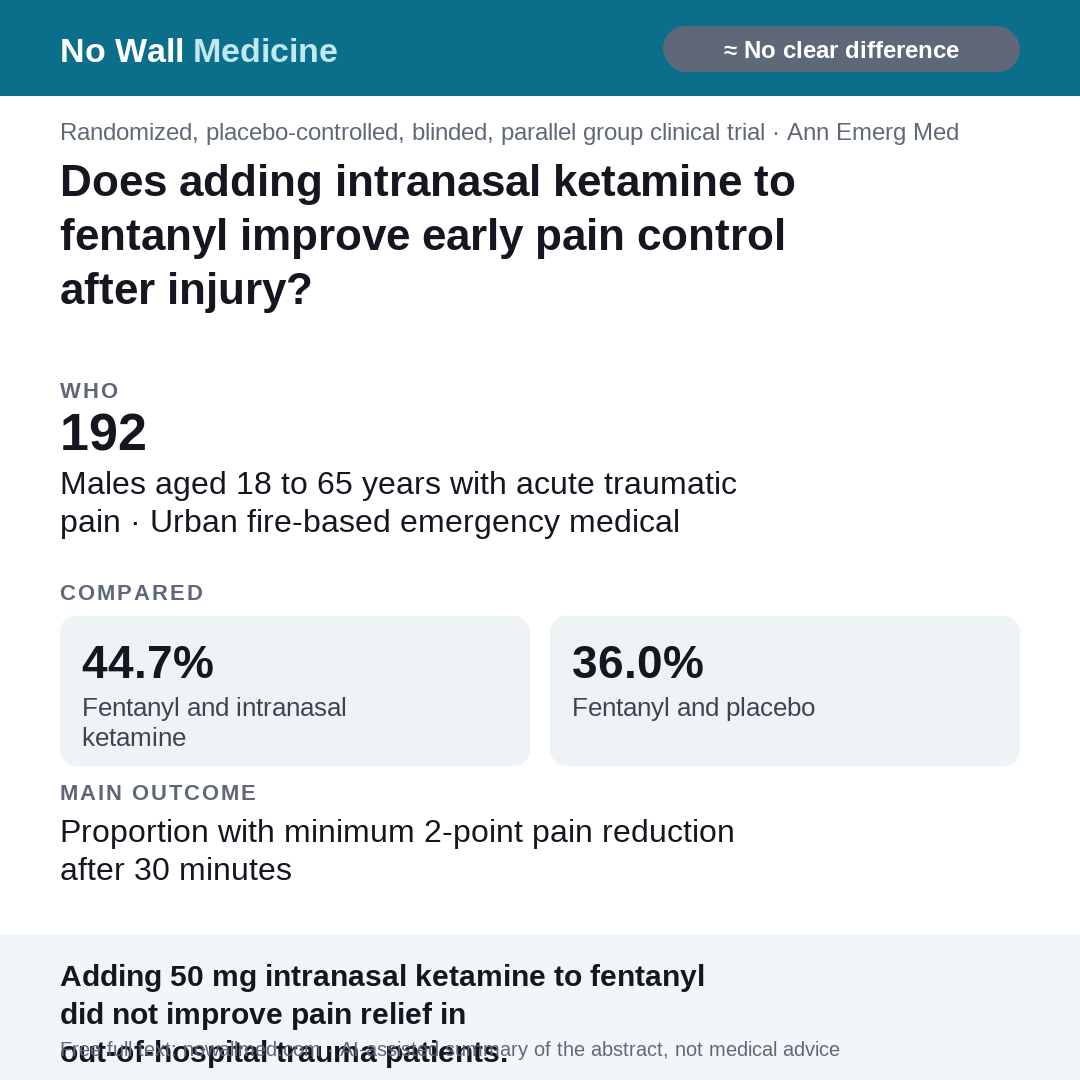
Out-of-Hospital Intranasal Ketamine as an Adjunct to Fentanyl for the Treatment of Acute Traumatic Pain: A Randomized Clinical Trial
Randomized, placebo-controlled, blinded, parallel group clinical trialNo clear difference
Does adding intranasal ketamine to fentanyl improve early pain control after injury?
Who
192
Males aged 18 to 65 years with acute traumatic pain · Urban fire-based emergency medical services agency
Compared
44.7%Fentanyl and intranasal ketamine
36.0%Fentanyl and placebo
Main outcome
Proportion with minimum 2-point pain reduction after 30 minutes
Result: difference in proportions, 8.7%; 95% confidence interval, -5.1% to 22.5%
Bottom line: Adding 50 mg intranasal ketamine to fentanyl did not improve pain relief in out-of-hospital trauma patients.
Ann Emerg Med · 2024-06-12Download image
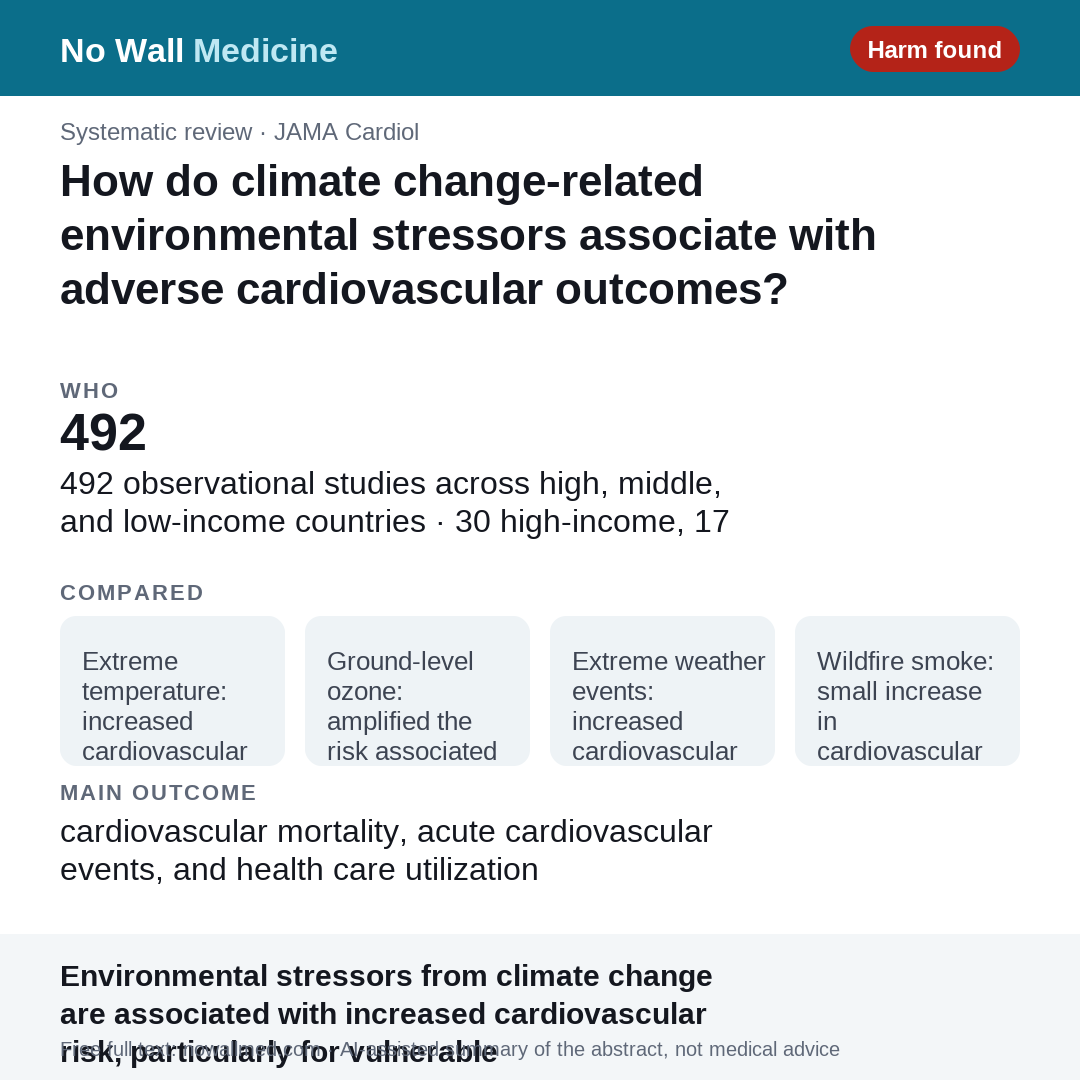
Climate Change and Cardiovascular Health: A Systematic Review
Systematic reviewHarm found
How do climate change-related environmental stressors associate with adverse cardiovascular outcomes?
Who
492
492 observational studies across high, middle, and low-income countries · 30 high-income, 17 middle-income, and 1 low-income countries
Compared
Extreme temperature: increased cardiovascular mortality and morbidity
Ground-level ozone: amplified the risk associated with higher temperatures
Extreme weather events: increased cardiovascular risk that persisted for many months
Wildfire smoke: small increase in cardiovascular mortality, out-of-hospital cardiac arrests, and hospitalizations
Main outcome
cardiovascular mortality, acute cardiovascular events, and health care utilization
Bottom line: Environmental stressors from climate change are associated with increased cardiovascular risk, particularly for vulnerable populations.
Limitation: data on outcomes in low-income countries are lacking
JAMA Cardiol · 2024-06-12Download image
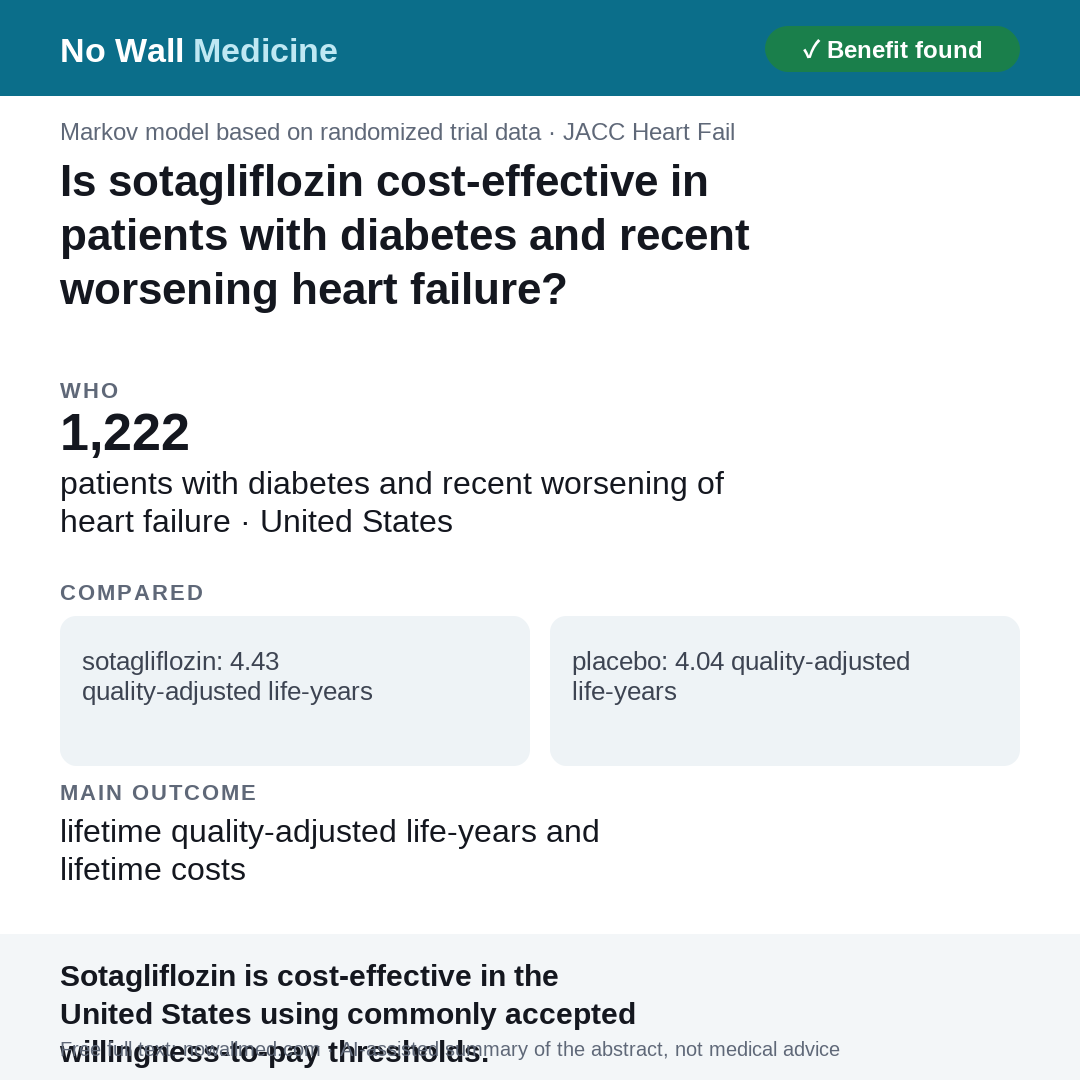
Cost-Effectiveness of Sotagliflozin in SOLOIST-WHF
Markov model based on randomized trial dataBenefit found
Is sotagliflozin cost-effective in patients with diabetes and recent worsening heart failure?
Who
1,222
patients with diabetes and recent worsening of heart failure · United States
Compared
sotagliflozin: 4.43 quality-adjusted life-years
placebo: 4.04 quality-adjusted life-years
Main outcome
lifetime quality-adjusted life-years and lifetime costs
Result: $81,823 per quality-adjusted life-year gained
Bottom line: Sotagliflozin is cost-effective in the United States using commonly accepted willingness-to-pay thresholds.
JACC Heart Fail · 2024-06-12Download image
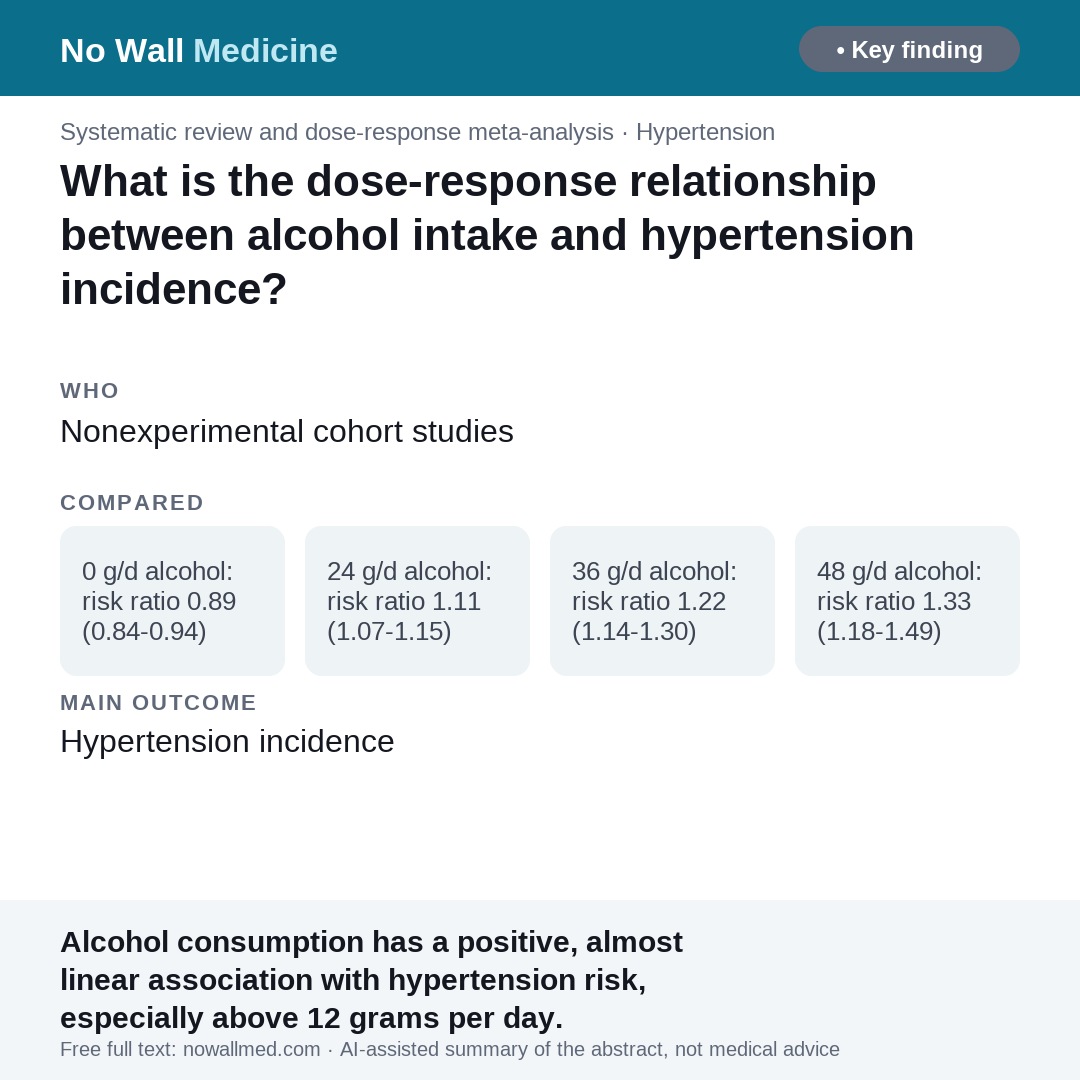
Alcohol Intake and Risk of Hypertension: A Systematic Review and Dose-Response Meta-Analysis of Nonexperimental Cohort Studies
Systematic review and dose-response meta-analysisHarm found
What is the dose-response relationship between alcohol intake and hypertension incidence?
Who
Nonexperimental cohort studies
Compared
0 g/d alcohol: risk ratio 0.89 (0.84-0.94)
24 g/d alcohol: risk ratio 1.11 (1.07-1.15)
36 g/d alcohol: risk ratio 1.22 (1.14-1.30)
48 g/d alcohol: risk ratio 1.33 (1.18-1.49)
Main outcome
Hypertension incidence
Bottom line: Alcohol consumption has a positive, almost linear association with hypertension risk, especially above 12 grams per day.
Hypertension · 2024-06-12Download image
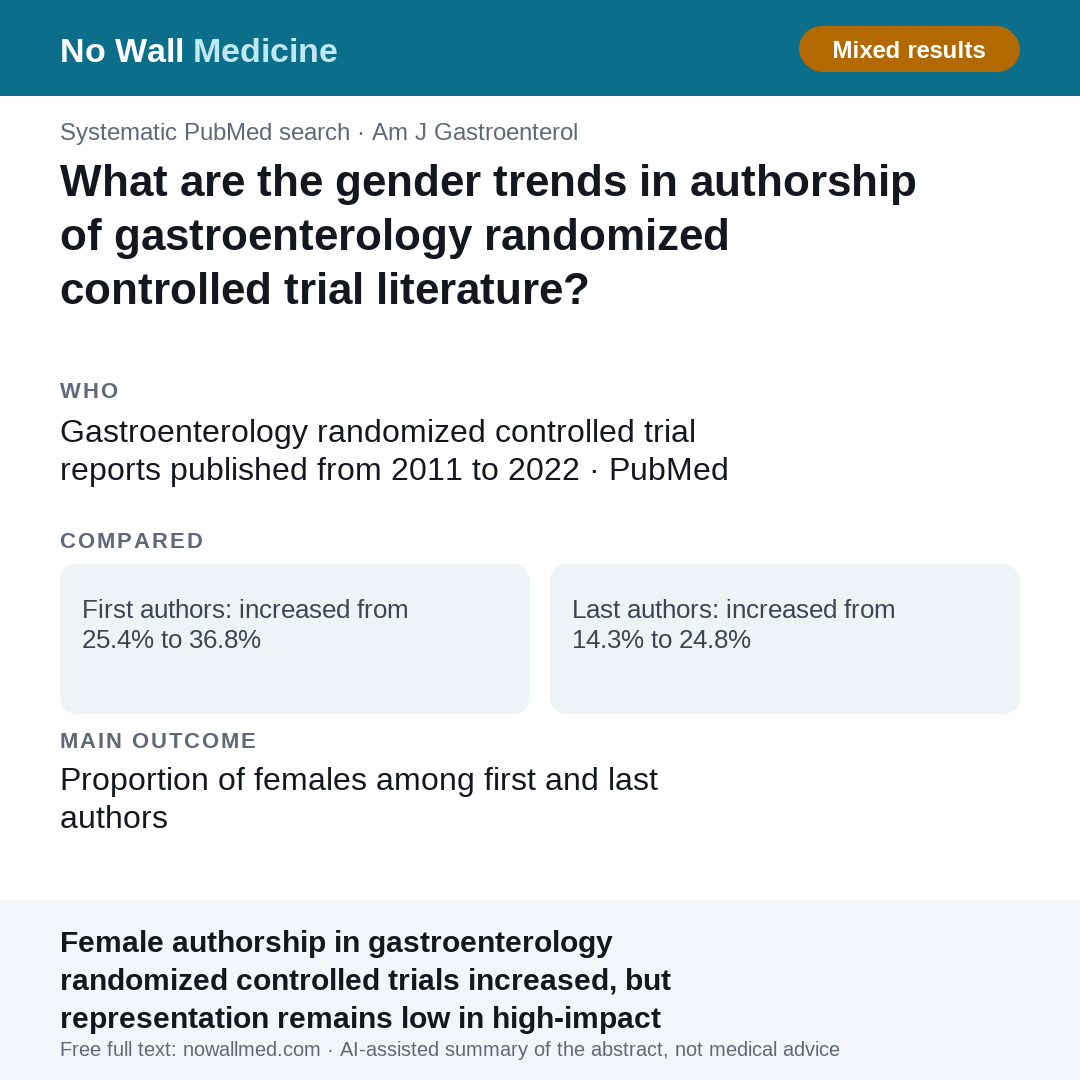
Gender Trends in Authorship of Gastroenterology Randomized Controlled Trial Literature
Systematic PubMed searchMixed results
What are the gender trends in authorship of gastroenterology randomized controlled trial literature?
Who
Gastroenterology randomized controlled trial reports published from 2011 to 2022 · PubMed
Compared
First authors: increased from 25.4% to 36.8%
Last authors: increased from 14.3% to 24.8%
Main outcome
Proportion of females among first and last authors
Bottom line: Female authorship in gastroenterology randomized controlled trials increased, but representation remains low in high-impact journals and senior authorship.
Am J Gastroenterol · 2024-06-12Download image
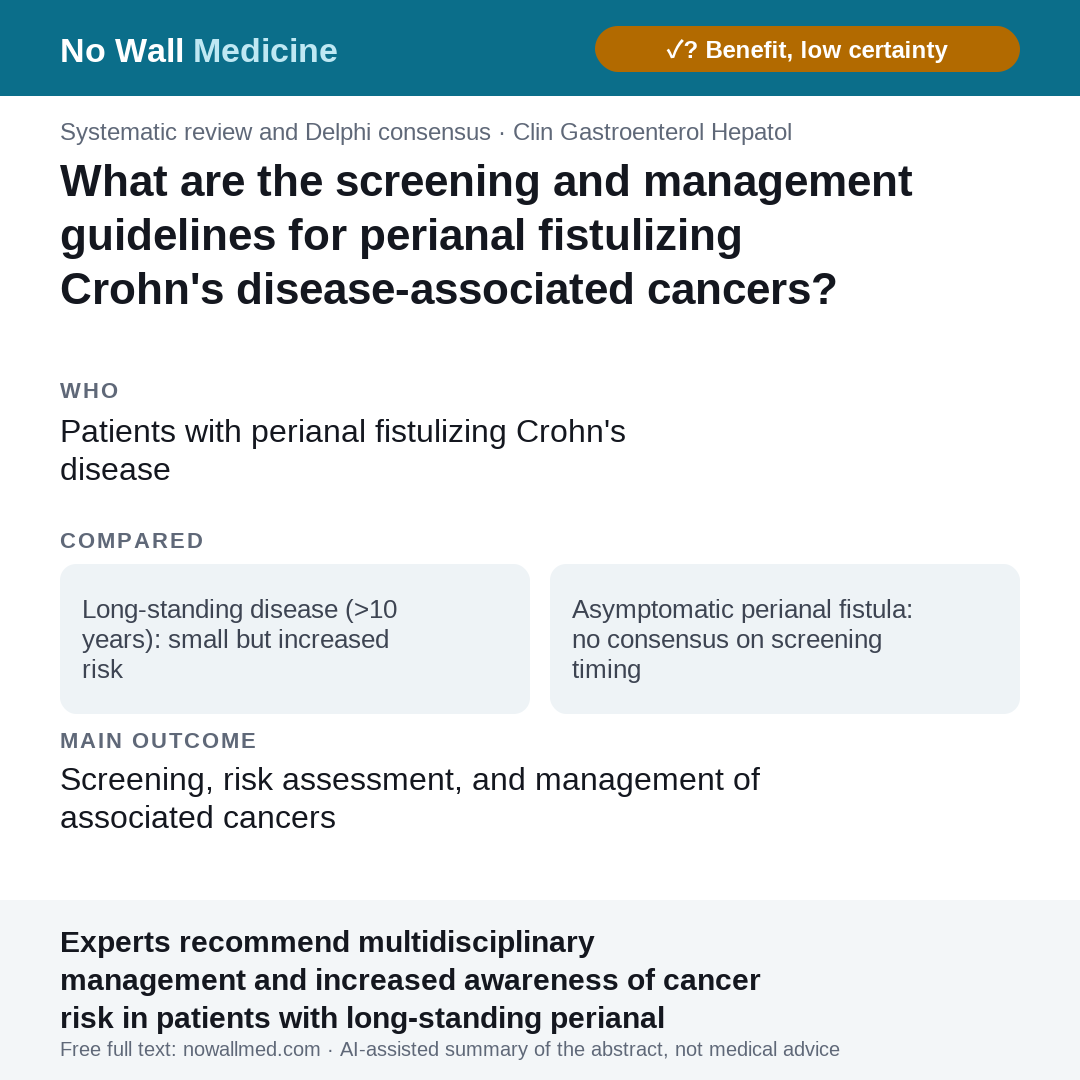
Perianal Fistulizing Crohn's Disease-Associated Anorectal and Fistula Cancers: Systematic Review and Expert Consensus
Systematic review and Delphi consensusBenefit found
What are the screening and management guidelines for perianal fistulizing Crohn's disease-associated cancers?
Who
Patients with perianal fistulizing Crohn's disease
Compared
Long-standing disease (>10 years): small but increased risk
Asymptomatic perianal fistula: no consensus on screening timing
Main outcome
Screening, risk assessment, and management of associated cancers
Bottom line: Experts recommend multidisciplinary management and increased awareness of cancer risk in patients with long-standing perianal fistulizing Crohn's disease.
Limitation: The overall quality of evidence was low.
Clin Gastroenterol Hepatol · 2024-06-12Download image
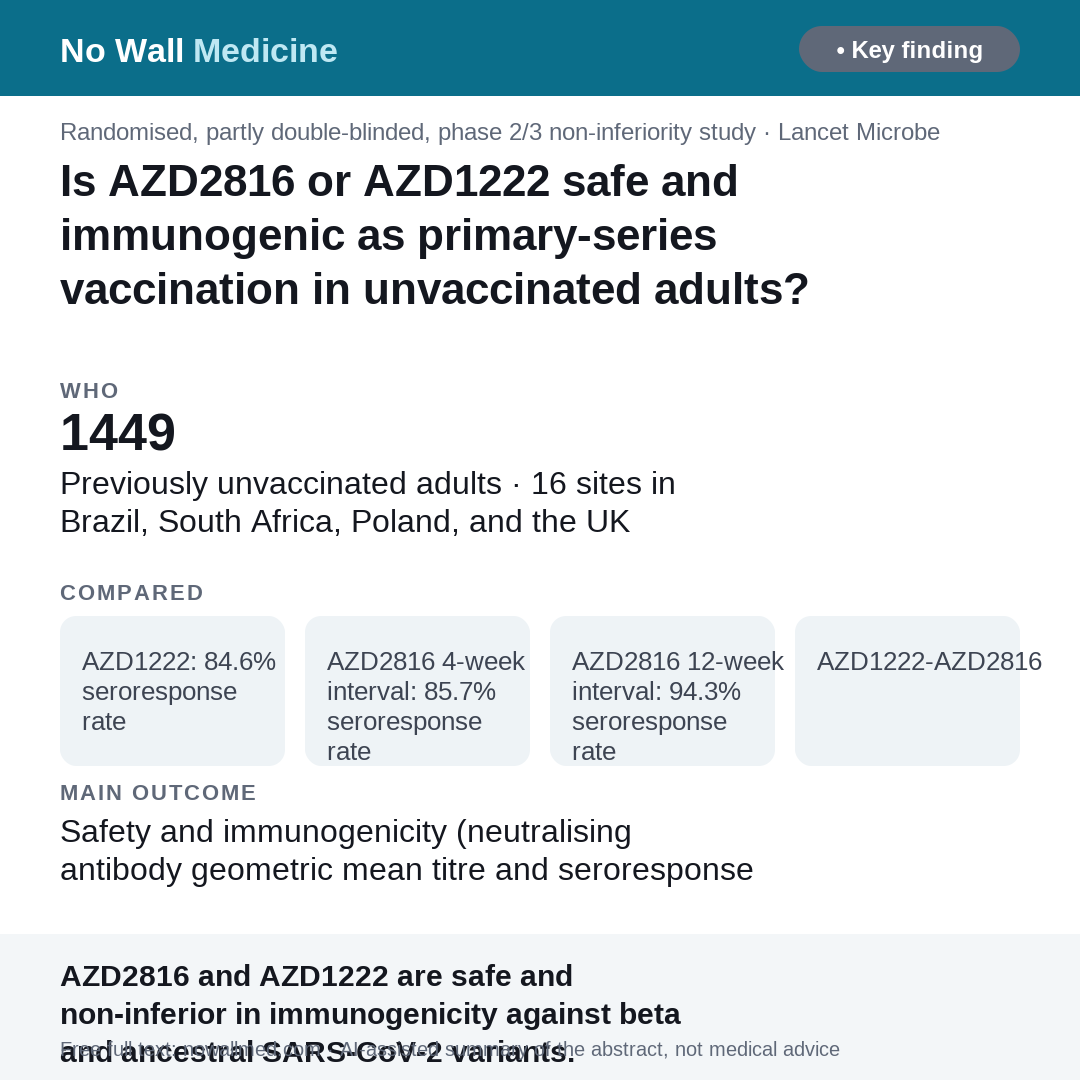
Immunogenicity and safety of beta variant COVID-19 vaccine AZD2816 and AZD1222 (ChAdOx1 nCoV-19) as primary-series vaccination for previously unvaccinated adults in Brazil, South Africa, Poland, and the UK: a randomised, partly double-blinded, phase 2/3 non-inferiority immunobridging study
Randomised, partly double-blinded, phase 2/3 non-inferiority studyBenefit found
Is AZD2816 or AZD1222 safe and immunogenic as primary-series vaccination in unvaccinated adults?
Who
1449
Previously unvaccinated adults · 16 sites in Brazil, South Africa, Poland, and the UK
Compared
AZD1222: 84.6% seroresponse rate
AZD2816 4-week interval: 85.7% seroresponse rate
AZD2816 12-week interval: 94.3% seroresponse rate
AZD1222-AZD2816
Main outcome
Safety and immunogenicity (neutralising antibody geometric mean titre and seroresponse rate)
Result: neutralising antibody GMT ratio 1.19 (95% CI 1.08-1.32)
Bottom line: AZD2816 and AZD1222 are safe and non-inferior in immunogenicity against beta and ancestral SARS-CoV-2 variants.
Funded by: AstraZeneca
Lancet Microbe · 2024-06-12Download image
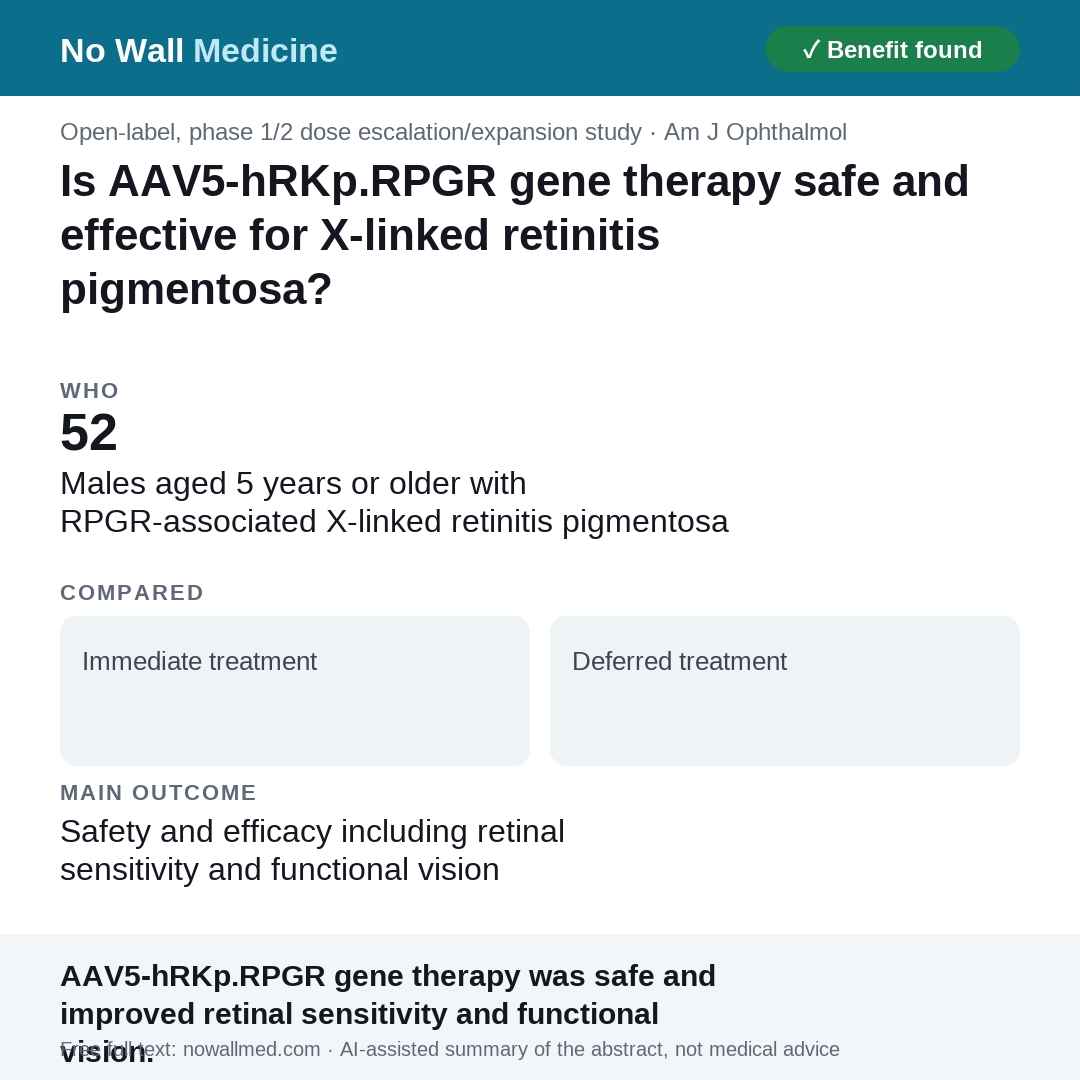
Phase 1/2 AAV5-hRKp.RPGR (Botaretigene Sparoparvovec) Gene Therapy: Safety and Efficacy in RPGR-Associated X-Linked Retinitis Pigmentosa
Open-label, phase 1/2 dose escalation/expansion studyBenefit found
Is AAV5-hRKp.RPGR gene therapy safe and effective for X-linked retinitis pigmentosa?
Who
52
Males aged 5 years or older with RPGR-associated X-linked retinitis pigmentosa
Compared
Immediate treatment
Deferred treatment
Main outcome
Safety and efficacy including retinal sensitivity and functional vision
Bottom line: AAV5-hRKp.RPGR gene therapy was safe and improved retinal sensitivity and functional vision.
Am J Ophthalmol · 2024-06-12Download image
No pain relief by virtual reality during hysterosalpingography (HSG): results from a randomized controlled trial
Two-centre open-label randomized controlled trialNo clear difference
Is virtual reality an effective tool to reduce procedural pain during hysterosalpingography?
Who
134
Women scheduled for hysterosalpingography as part of infertility work-up · Two centres
Compared
Hysterosalpingography with virtual reality: 6.80 cm (SD 2.25)
Hysterosalpingography without virtual reality: 6.60 cm (SD 2.40)
Main outcome
Peak procedural pain measured using visual analogue scale
Result: mean difference 0.28 (95% CI -0.57, 1.12)
Bottom line: Virtual reality does not reduce procedural pain scores during hysterosalpingography compared to no virtual reality.
Limitation: The study was not blinded and potential selection bias from declining participation.
Hum Reprod · 2024-06-12Download image