Visual abstracts
New randomized trials and meta-analyses from leading journals at a glance: who was studied, what was compared, and what was found. Every paper is free to read in full.
All specialtiesCardiology 834Oncology 758Gastroenterology & Hepatology 306Infectious Disease 626Neurology 348Psychiatry & Mental Health 430Pulmonology 363Critical Care 240Endocrinology & Diabetes 480Pediatrics 533Surgery 317Orthopedics & Sports Medicine 160Neurosurgery 80Cardiothoracic & Vascular Surgery 86Plastic & Reconstructive Surgery 107Nephrology 197Rheumatology 108Hematology 181Dermatology 74Ophthalmology 97Obstetrics & Gynecology 261Public & Global Health 167Radiology & Imaging 93Anesthesiology 107Urology 162ENT (Otolaryngology) 82Emergency Medicine 64Allergy & Immunology 58Geriatrics 160Family Medicine & Primary Care 111Medical Genetics & Genomics 91Pathology & Laboratory Medicine 23Physical Medicine & Rehabilitation 147Palliative Care 81Nutrition 223Digital Health & AI 459General Medicine 101
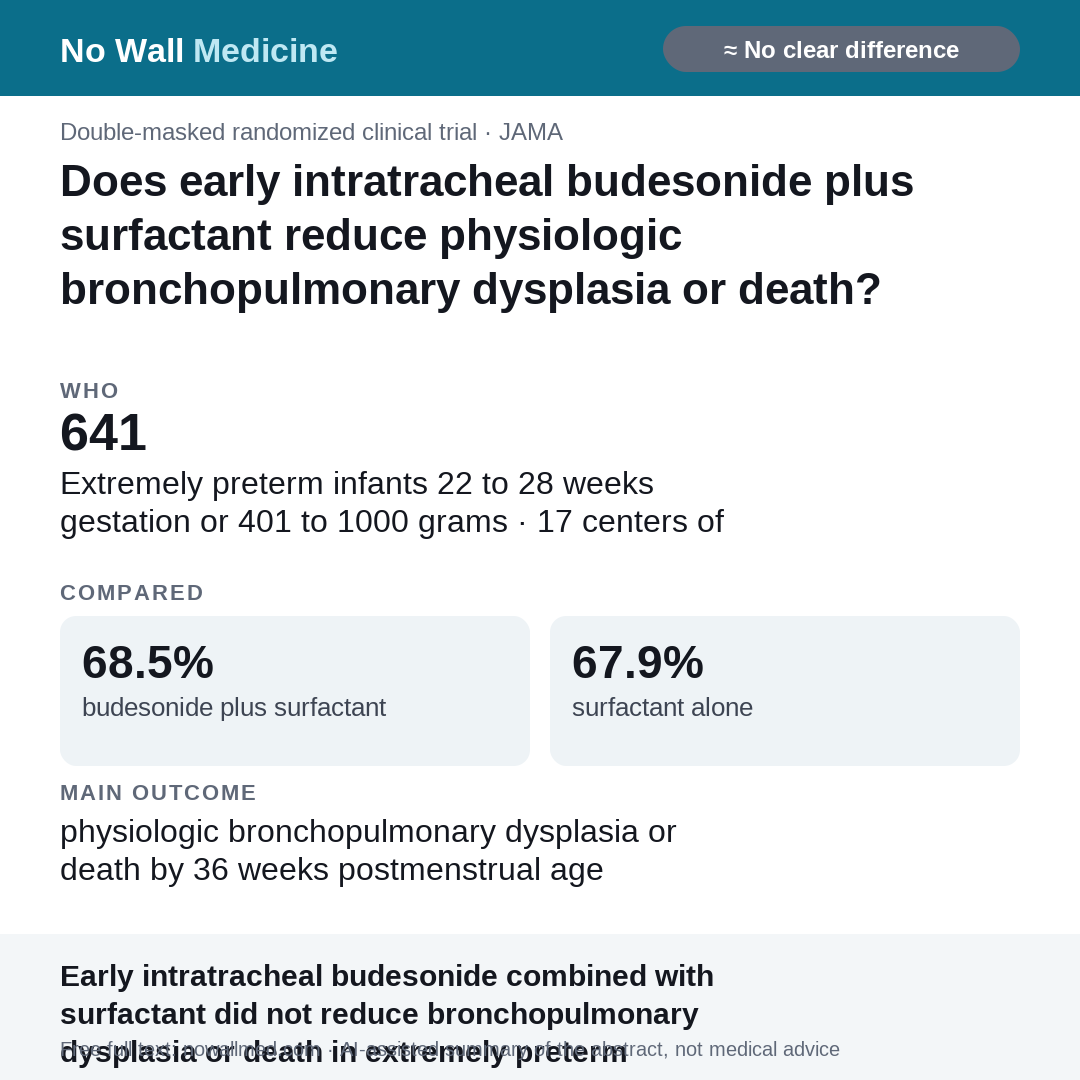
Early Intratracheal Budesonide to Reduce Bronchopulmonary Dysplasia in Extremely Preterm Infants: The Budesonide in Babies (BiB) Randomized Clinical Trial
Double-masked randomized clinical trialNo clear difference
Does early intratracheal budesonide plus surfactant reduce physiologic bronchopulmonary dysplasia or death?
Who
641
Extremely preterm infants 22 to 28 weeks gestation or 401 to 1000 grams · 17 centers of the United States Neonatal Research Network
Compared
68.5%budesonide plus surfactant
67.9%surfactant alone
Main outcome
physiologic bronchopulmonary dysplasia or death by 36 weeks postmenstrual age
Result: adjusted relative risk 1.00 (95% CI 0.90-1.11)
Bottom line: Early intratracheal budesonide combined with surfactant did not reduce bronchopulmonary dysplasia or death in extremely preterm infants.
JAMA · 2025-09-30Download image
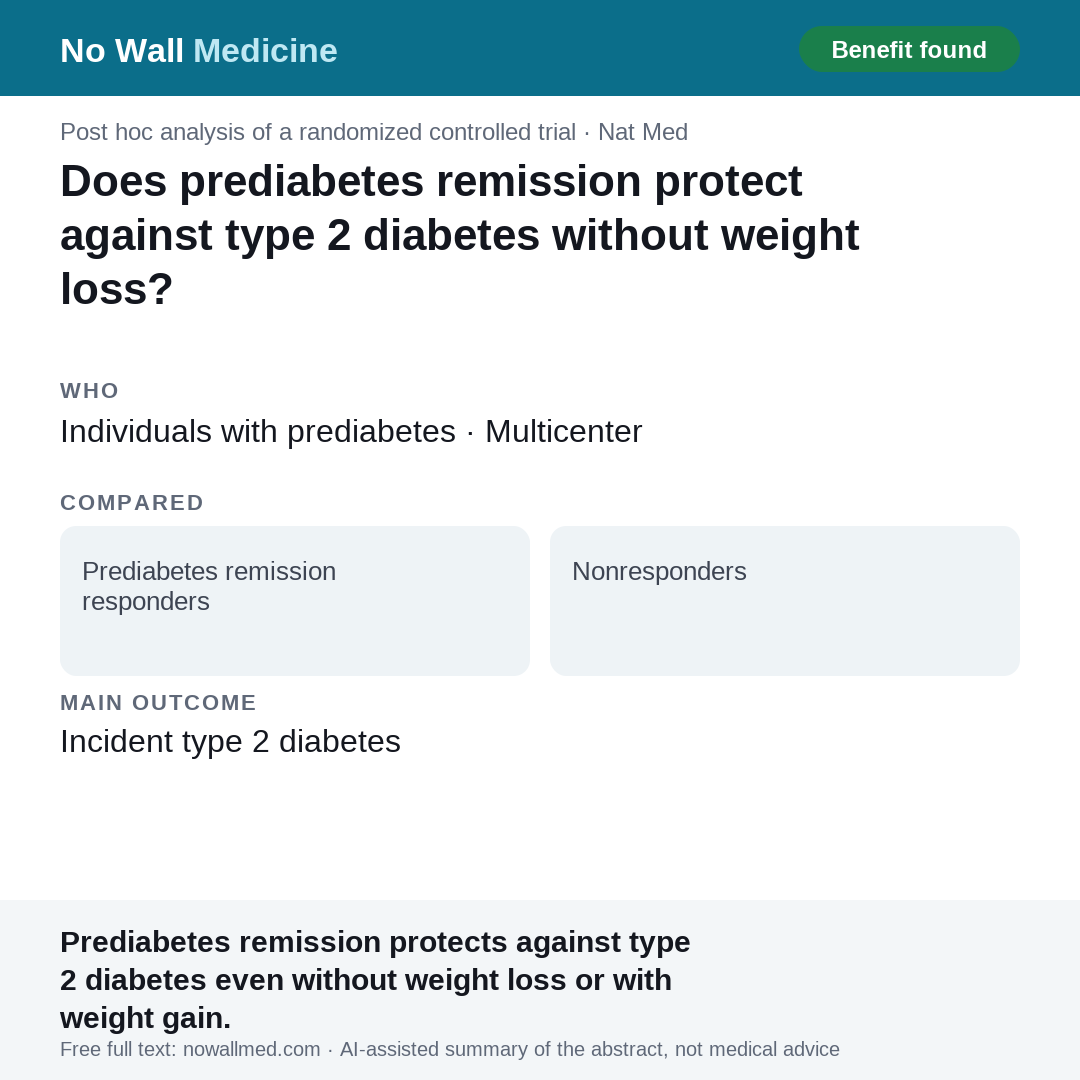
Prevention of type 2 diabetes through prediabetes remission without weight loss
Post hoc analysis of a randomized controlled trialBenefit found
Does prediabetes remission protect against type 2 diabetes without weight loss?
Who
Individuals with prediabetes · Multicenter
Compared
Prediabetes remission responders
Nonresponders
Main outcome
Incident type 2 diabetes
Bottom line: Prediabetes remission protects against type 2 diabetes even without weight loss or with weight gain.
Nat Med · 2025-09-29Download image
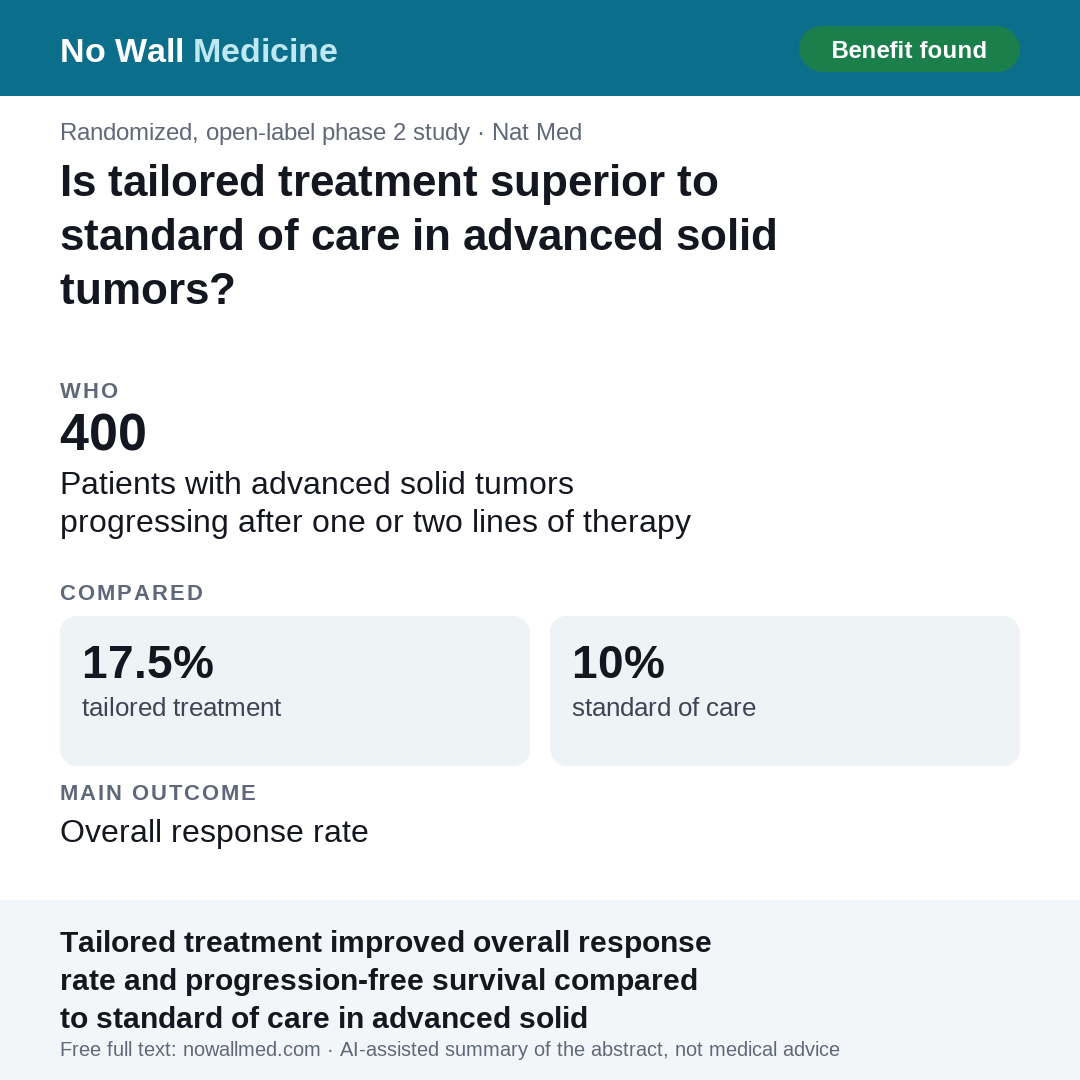
Genomically matched therapy in advanced solid tumors: the randomized phase 2 ROME trial
Randomized, open-label phase 2 studyBenefit found
Is tailored treatment superior to standard of care in advanced solid tumors?
Who
400
Patients with advanced solid tumors progressing after one or two lines of therapy · Multicenter
Compared
17.5%tailored treatment
10%standard of care
Main outcome
Overall response rate
Result: hazard ratio = 0.66 (0.53-0.82)
Bottom line: Tailored treatment improved overall response rate and progression-free survival compared to standard of care in advanced solid tumors.
Limitation: Median overall survival was similar, with a 52% crossover rate.
Nat Med · 2025-09-29Download image
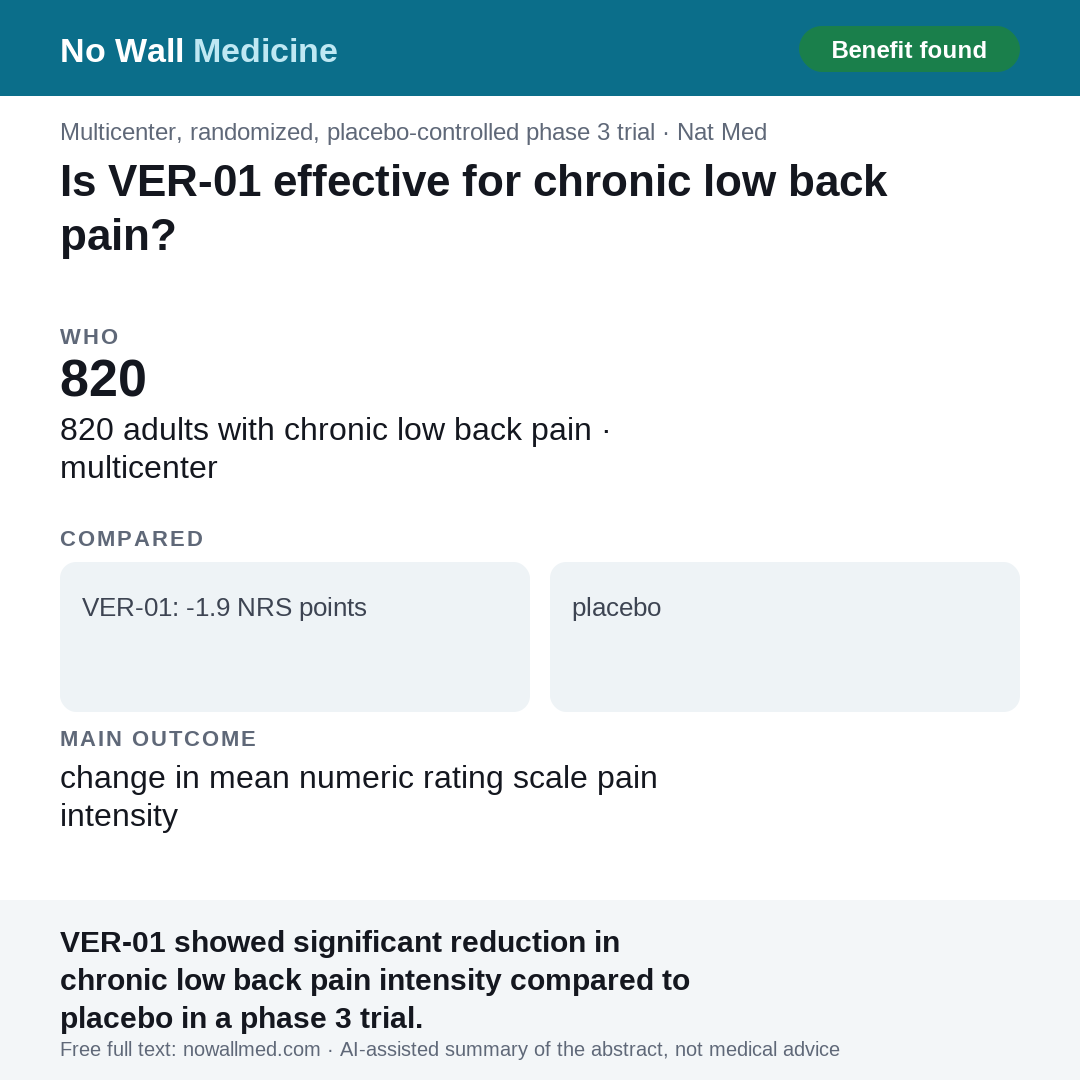
Full-spectrum extract from Cannabis sativa DKJ127 for chronic low back pain: a phase 3 randomized placebo-controlled trial
Multicenter, randomized, placebo-controlled phase 3 trialBenefit found
Is VER-01 effective for chronic low back pain?
Who
820
820 adults with chronic low back pain · multicenter
Compared
VER-01: -1.9 NRS points
placebo
Main outcome
change in mean numeric rating scale pain intensity
Result: mean difference -0.6 (95% CI -0.9 to -0.3)
Bottom line: VER-01 showed significant reduction in chronic low back pain intensity compared to placebo in a phase 3 trial.
Limitation: phase D did not meet its primary endpoint regarding time to treatment failure
Nat Med · 2025-09-29Download image
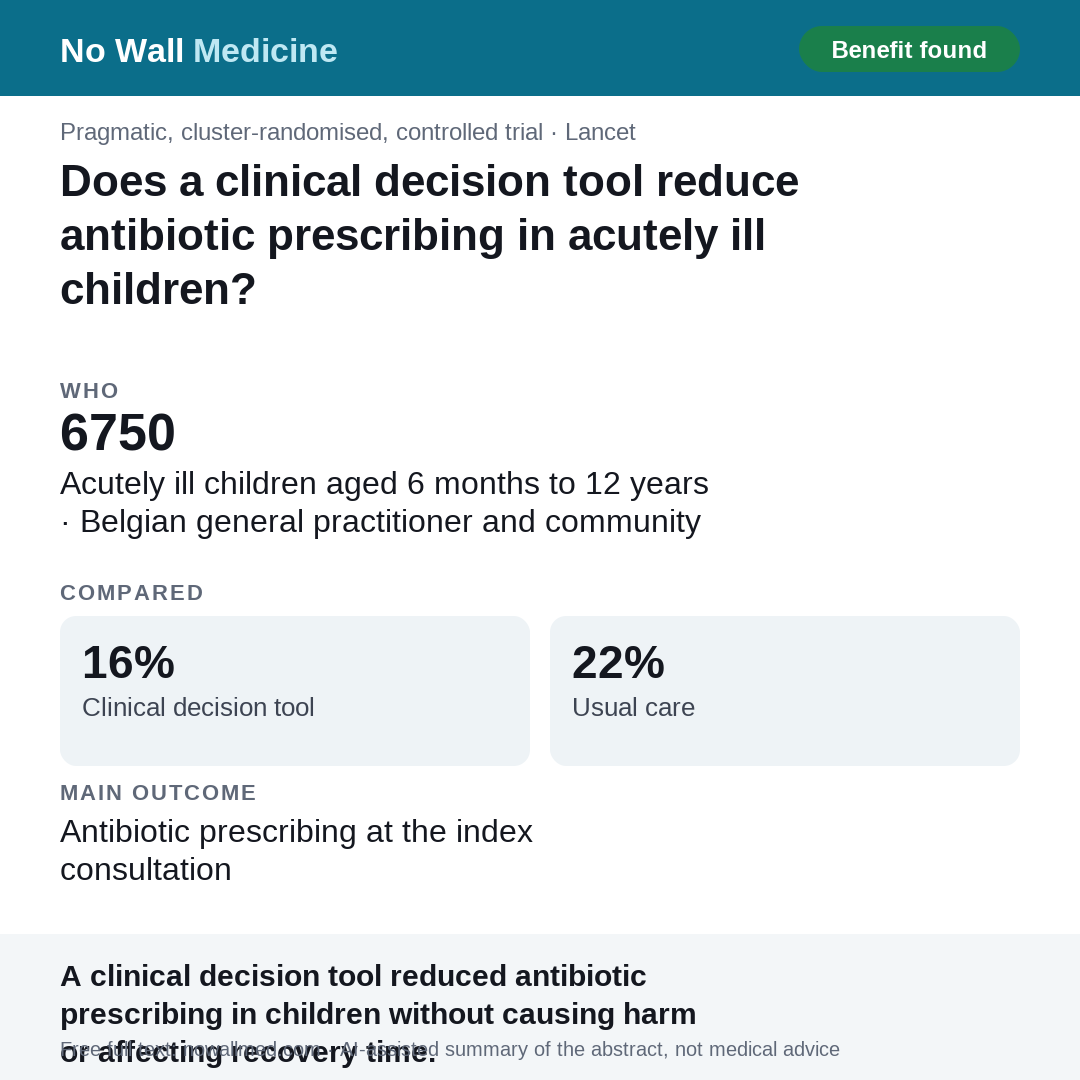
A clinical decision tool including a decision tree, point-of-care testing of CRP, and safety-netting advice to guide antibiotic prescribing in acutely ill children in primary care in Belgium (ARON): a pragmatic, cluster-randomised, controlled trial
Pragmatic, cluster-randomised, controlled trialBenefit found
Does a clinical decision tool reduce antibiotic prescribing in acutely ill children?
Who
6750
Acutely ill children aged 6 months to 12 years · Belgian general practitioner and community paediatrician practices
Compared
16%Clinical decision tool
22%Usual care
Main outcome
Antibiotic prescribing at the index consultation
Result: adjusted odds ratio 0·72 (95% CI 0·55-0·94)
Bottom line: A clinical decision tool reduced antibiotic prescribing in children without causing harm or affecting recovery time.
Funded by: Belgian Health Care Knowledge Centre
Lancet · 2025-09-25Download image
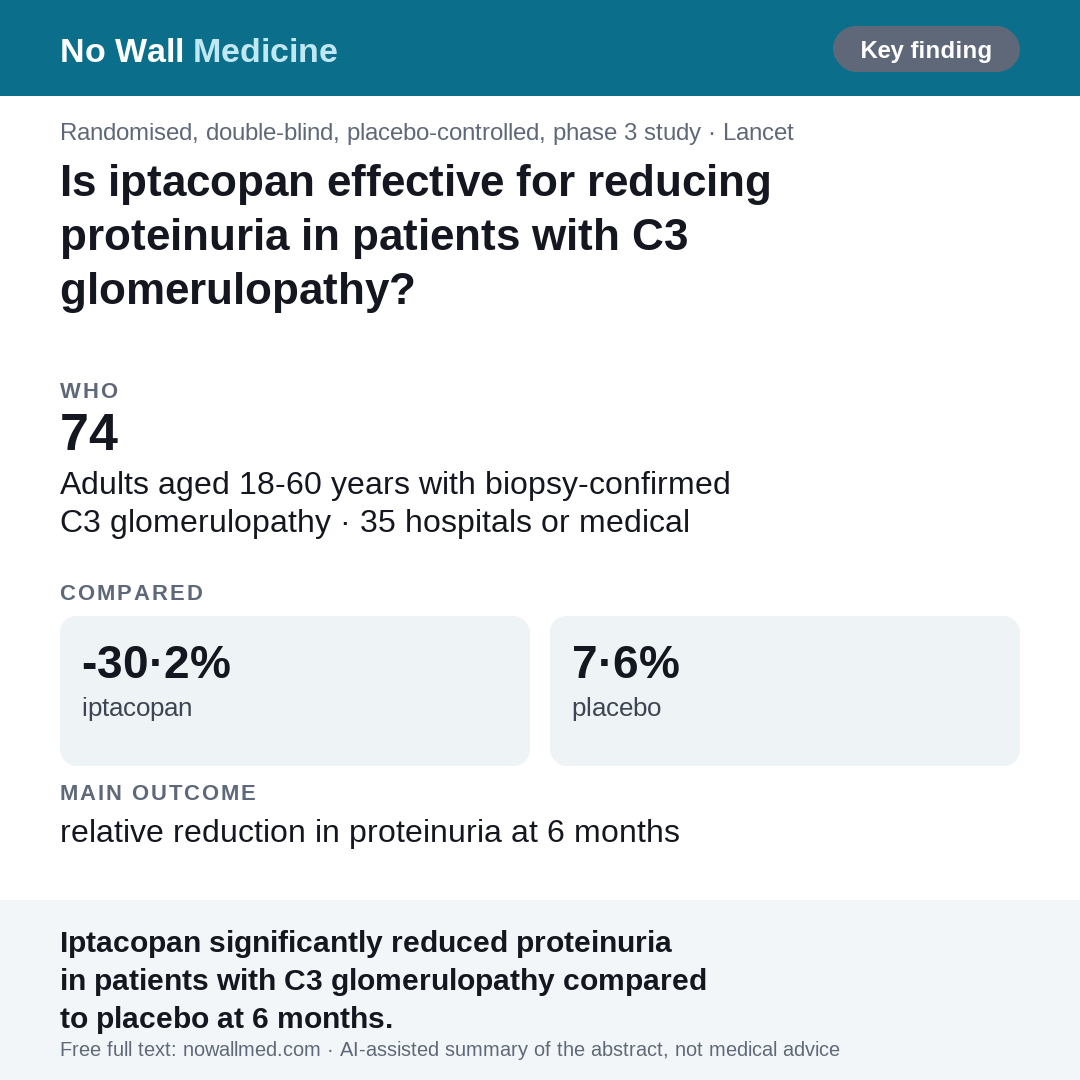
Oral iptacopan therapy in patients with C3 glomerulopathy: a randomised, double-blind, parallel group, multicentre, placebo-controlled, phase 3 study
Randomised, double-blind, placebo-controlled, phase 3 studyBenefit found
Is iptacopan effective for reducing proteinuria in patients with C3 glomerulopathy?
Who
74
Adults aged 18-60 years with biopsy-confirmed C3 glomerulopathy · 35 hospitals or medical centres in 18 countries
Compared
-30·2%iptacopan (95% CI -42·8 to -14·8)
7·6%placebo (-11·9 to 31·3)
Main outcome
relative reduction in proteinuria at 6 months
Result: 35·1% (13·8 to 51·1; p=0·0014)
Bottom line: Iptacopan significantly reduced proteinuria in patients with C3 glomerulopathy compared to placebo at 6 months.
Funded by: Novartis Pharma
Lancet · 2025-09-25Download image
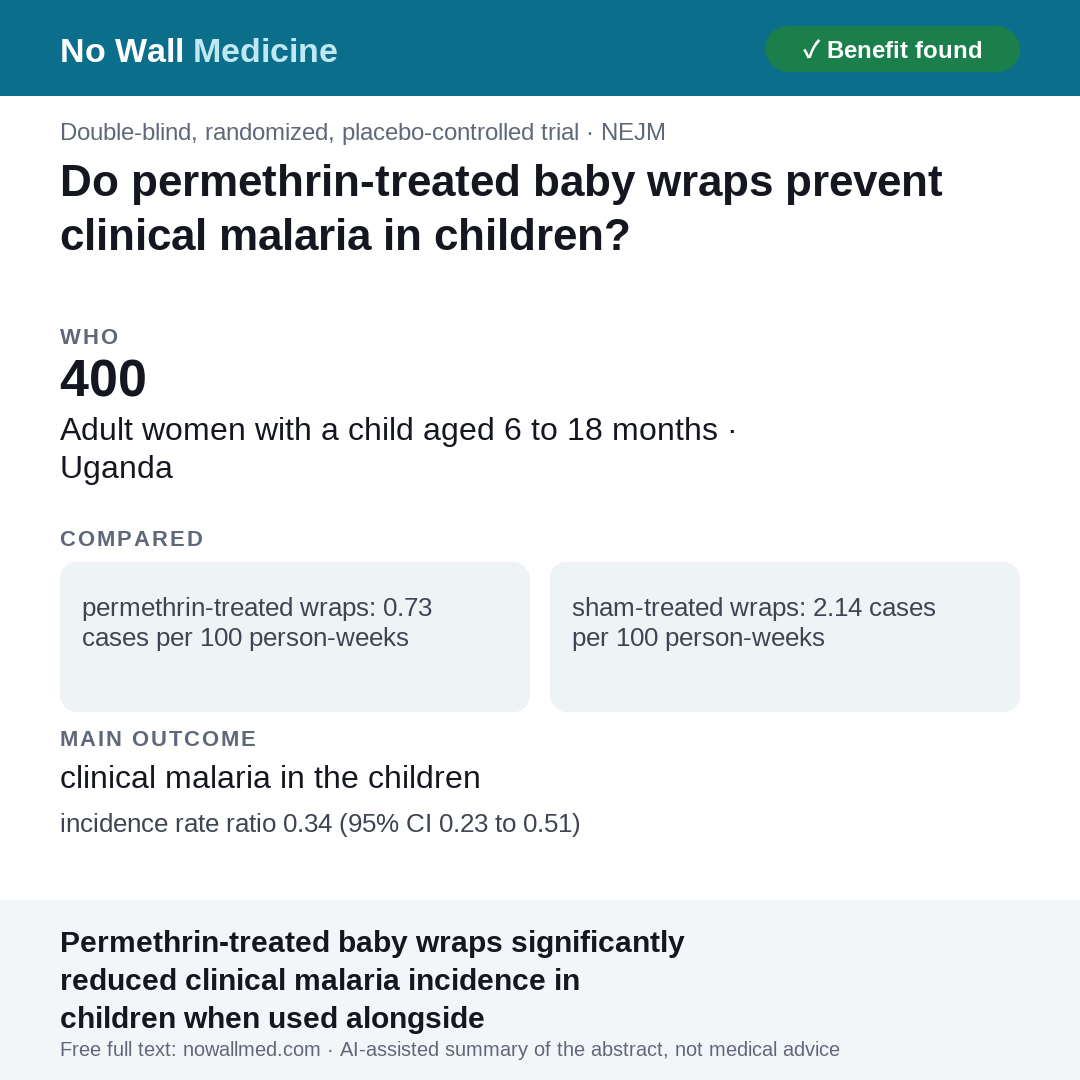
Permethrin-Treated Baby Wraps for the Prevention of Malaria
Double-blind, randomized, placebo-controlled trialBenefit found
Do permethrin-treated baby wraps prevent clinical malaria in children?
Who
400
Adult women with a child aged 6 to 18 months · Uganda
Compared
permethrin-treated wraps: 0.73 cases per 100 person-weeks
sham-treated wraps: 2.14 cases per 100 person-weeks
Main outcome
clinical malaria in the children
Result: incidence rate ratio 0.34 (95% CI 0.23 to 0.51)
Bottom line: Permethrin-treated baby wraps significantly reduced clinical malaria incidence in children when used alongside insecticide-treated bed nets.
Funded by: Doris Duke Foundation and others
NEJM · 2025-09-24Download image
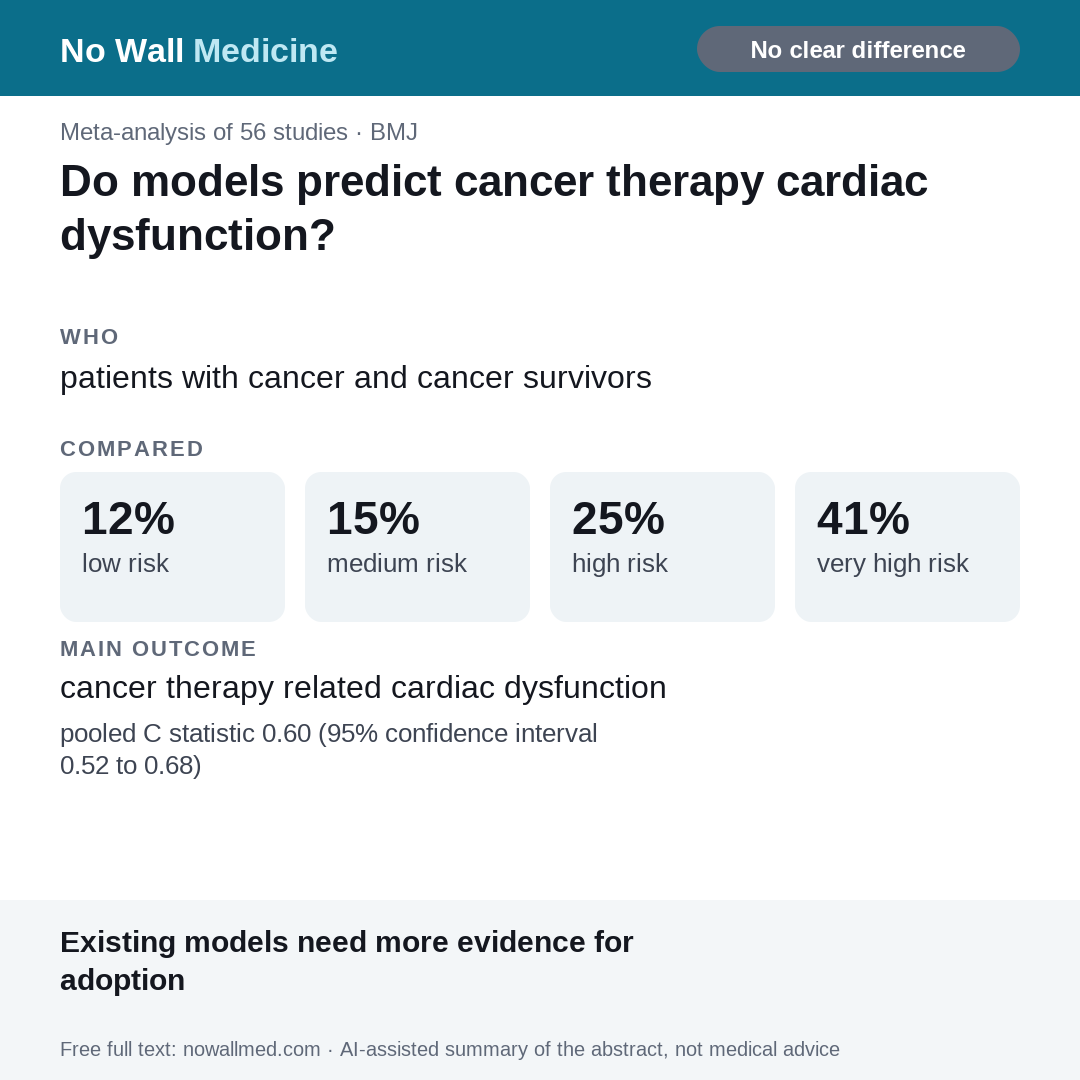
Risk prediction models for cancer therapy related cardiac dysfunction in patients with cancer and cancer survivors: systematic review and meta-analysis
Meta-analysis of 56 studiesNo clear difference
Do models predict cancer therapy cardiac dysfunction?
Who
patients with cancer and cancer survivors
Compared
12%low risk
15%medium risk
25%high risk
41%very high risk
Main outcome
cancer therapy related cardiac dysfunction
Result: pooled C statistic 0.60 (95% confidence interval 0.52 to 0.68)
Bottom line: Existing models need more evidence for adoption
Limitation: poor reporting and limited validation
BMJ · 2025-09-23Download image
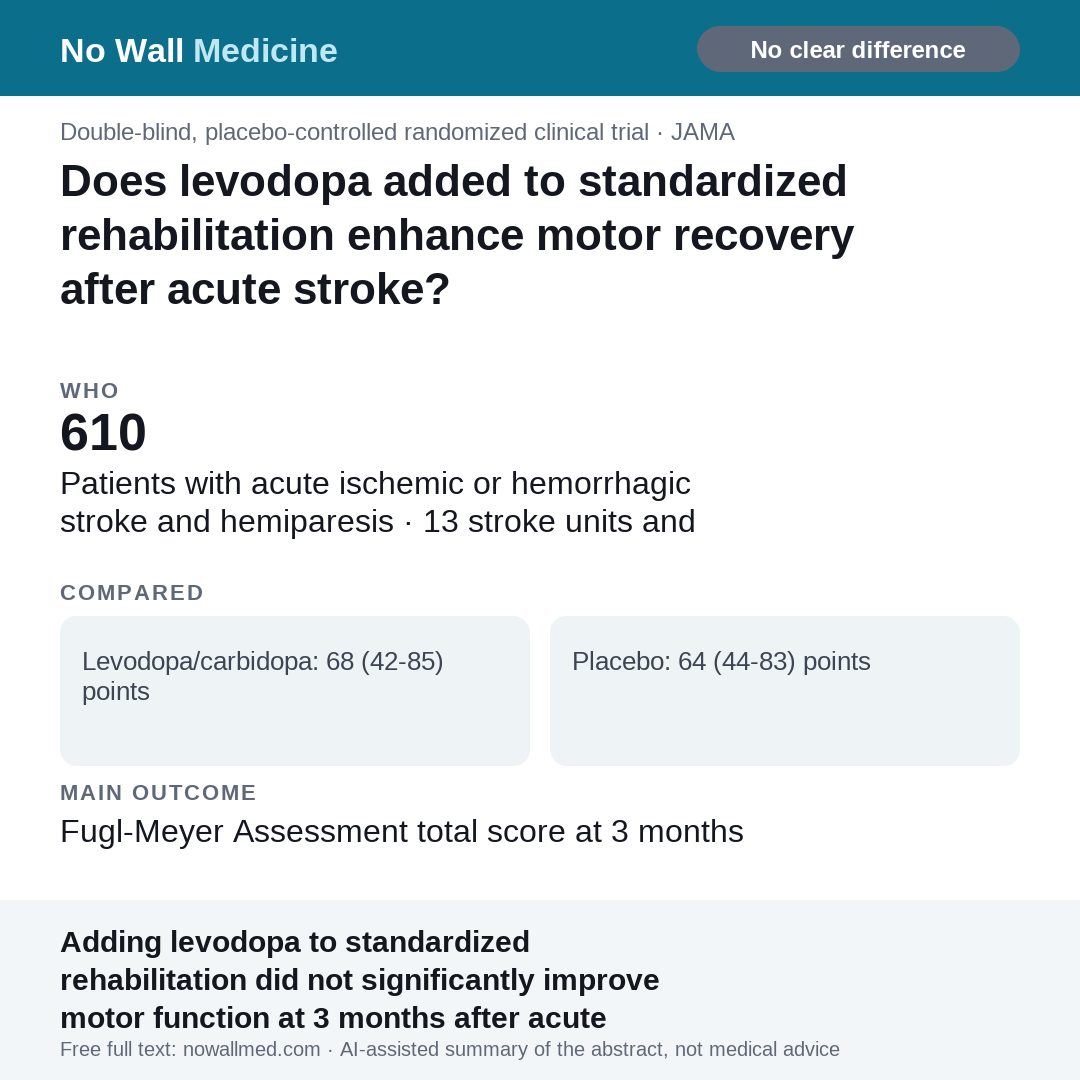
Levodopa Added to Stroke Rehabilitation: The ESTREL Randomized Clinical Trial
Double-blind, placebo-controlled randomized clinical trialNo clear difference
Does levodopa added to standardized rehabilitation enhance motor recovery after acute stroke?
Who
610
Patients with acute ischemic or hemorrhagic stroke and hemiparesis · 13 stroke units and 11 rehabilitation centers in Switzerland
Compared
Levodopa/carbidopa: 68 (42-85) points
Placebo: 64 (44-83) points
Main outcome
Fugl-Meyer Assessment total score at 3 months
Result: -0.90 points (95% CI, -3.78 to 1.98)
Bottom line: Adding levodopa to standardized rehabilitation did not significantly improve motor function at 3 months after acute stroke.
JAMA · 2025-09-22Download image
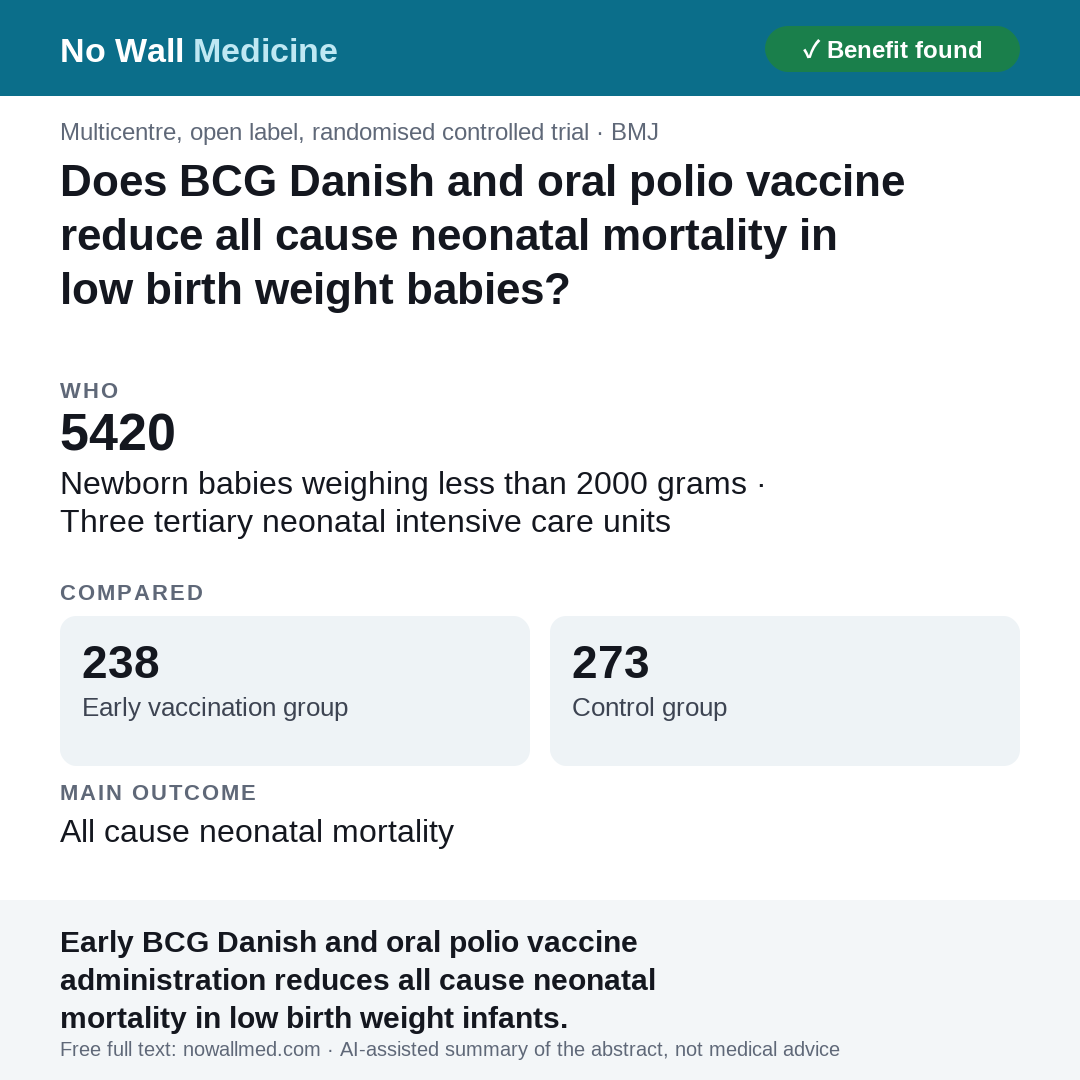
Effect of BCG Danish and oral polio vaccine on neonatal mortality in newborn babies weighing less than 2000 g in India: multicentre open label randomised controlled trial (BLOW2)
Multicentre, open label, randomised controlled trialBenefit found
Does BCG Danish and oral polio vaccine reduce all cause neonatal mortality in low birth weight babies?
Who
5420
Newborn babies weighing less than 2000 grams · Three tertiary neonatal intensive care units in southeast India
Compared
238Early vaccination group (8.8%)
273Control group (10.1%)
Main outcome
All cause neonatal mortality
Result: adjusted hazard ratio 0.83 (95% CI 0.69 to 0.98)
Bottom line: Early BCG Danish and oral polio vaccine administration reduces all cause neonatal mortality in low birth weight infants.
BMJ · 2025-09-22Download image
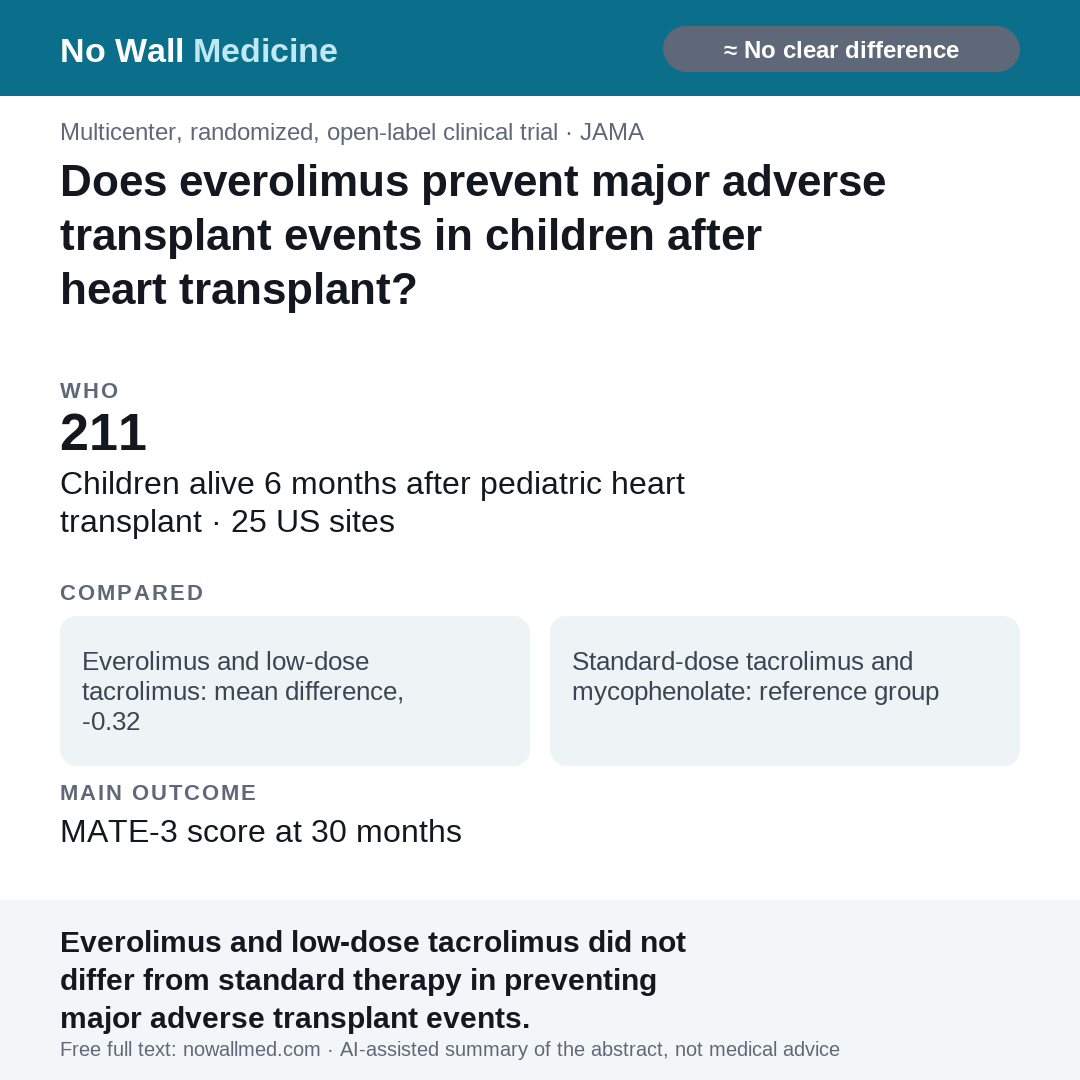
Everolimus and Low-Dose Tacrolimus After Heart Transplant in Children: A Randomized Clinical Trial
Multicenter, randomized, open-label, clinical trialNo clear difference
Is everolimus and low-dose tacrolimus safe and effective for preventing major adverse transplant events in children?
Who
211
Children alive 6 months after pediatric heart transplant · 25 US sites
Compared
everolimus and low-dose tacrolimus
standard-dose tacrolimus and mycophenolate mofetil
Main outcome
MATE-3 score (acute cellular rejection, CAV, and CKD)
Result: mean difference, -0.32 (95% CI, -0.90 to 0.20)
Bottom line: Everolimus and low-dose tacrolimus were safe and noninferior to standard therapy for preventing major adverse transplant events.
JAMA · 2025-09-17Download image
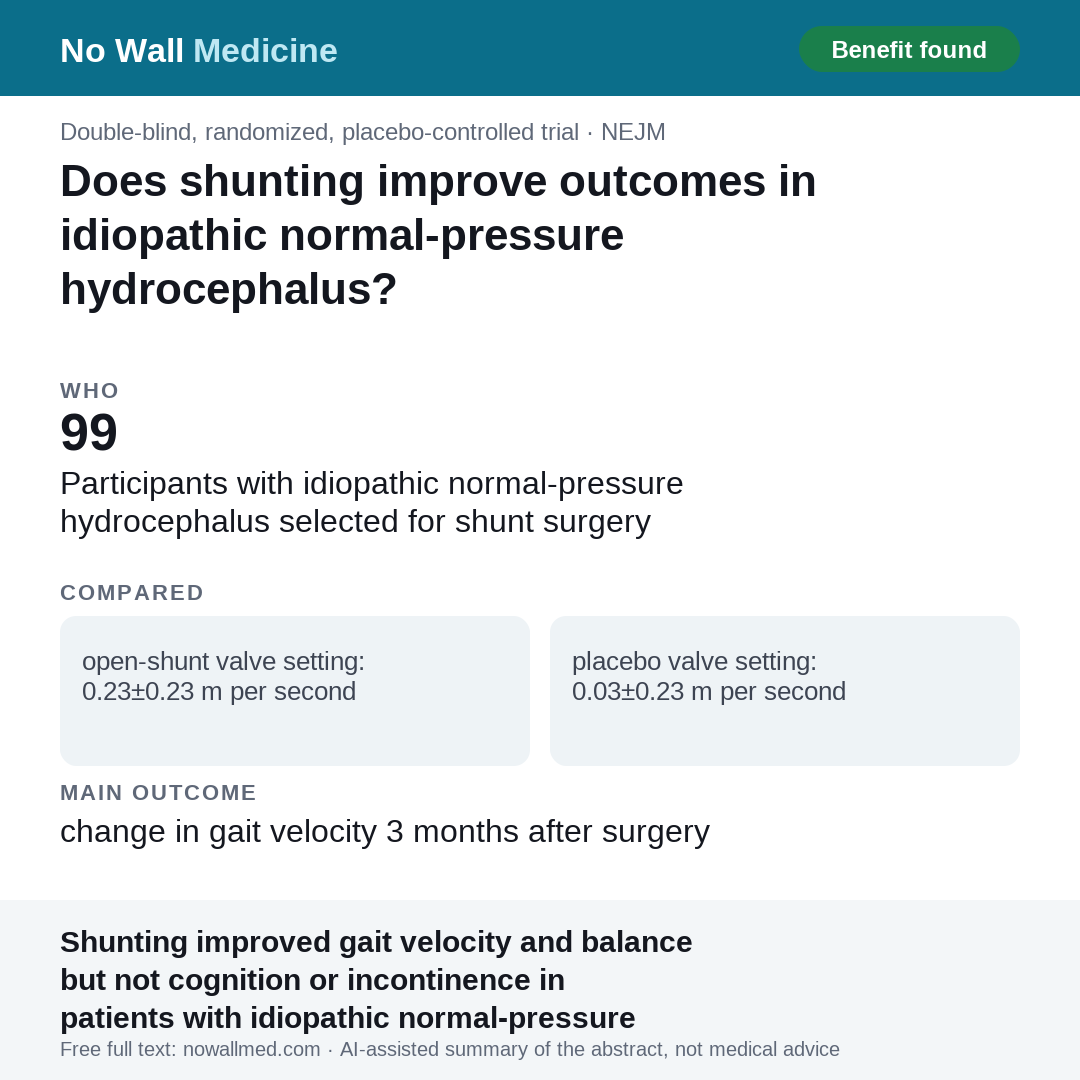
A Randomized Trial of Shunting for Idiopathic Normal-Pressure Hydrocephalus
Double-blind, randomized, placebo-controlled trialBenefit found
Does shunting improve outcomes in idiopathic normal-pressure hydrocephalus?
Who
99
Participants with idiopathic normal-pressure hydrocephalus selected for shunt surgery
Compared
open-shunt valve setting: 0.23±0.23 m per second
placebo valve setting: 0.03±0.23 m per second
Main outcome
change in gait velocity 3 months after surgery
Result: treatment difference of 0.21 m per second (95% confidence interval, 0.12 to 0.31)
Bottom line: Shunting improved gait velocity and balance but not cognition or incontinence in patients with idiopathic normal-pressure hydrocephalus.
Funded by: National Institute of Neurological Disorders and Stroke and Trial Innovation Network
NEJM · 2025-09-16Download image
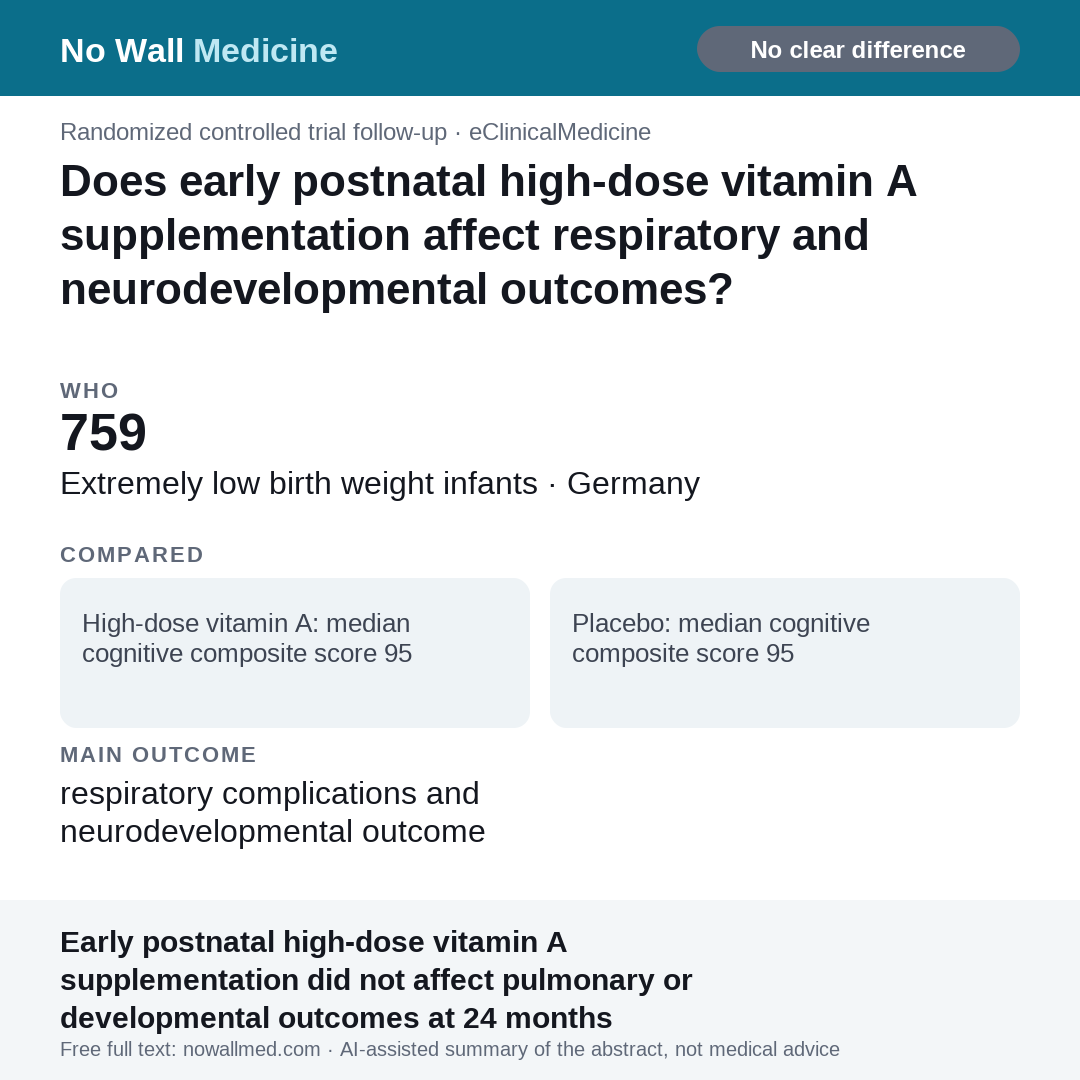
Two-year outcomes after early postnatal high-dose fat-soluble enteral vitamin A supplementation in extremely low birth weight infants: follow-up of the NeoVitaA randomized controlled trial
Randomized controlled trial follow-upNo clear difference
Does early postnatal high-dose vitamin A supplementation affect respiratory and neurodevelopmental outcomes?
Who
759
Extremely low birth weight infants · Germany
Compared
High-dose vitamin A: median cognitive composite score 95
Placebo: median cognitive composite score 95
Main outcome
respiratory complications and neurodevelopmental outcome
Result: median difference 0.0 (95%-CI -5.0 to 0.0)
Bottom line: Early postnatal high-dose vitamin A supplementation did not affect pulmonary or developmental outcomes at 24 months corrected age.
Funded by: Deutsche Forschungsgemeinschaft and European Clinical Research Infrastructures Network
eClinicalMedicine · 2025-09-15Download image
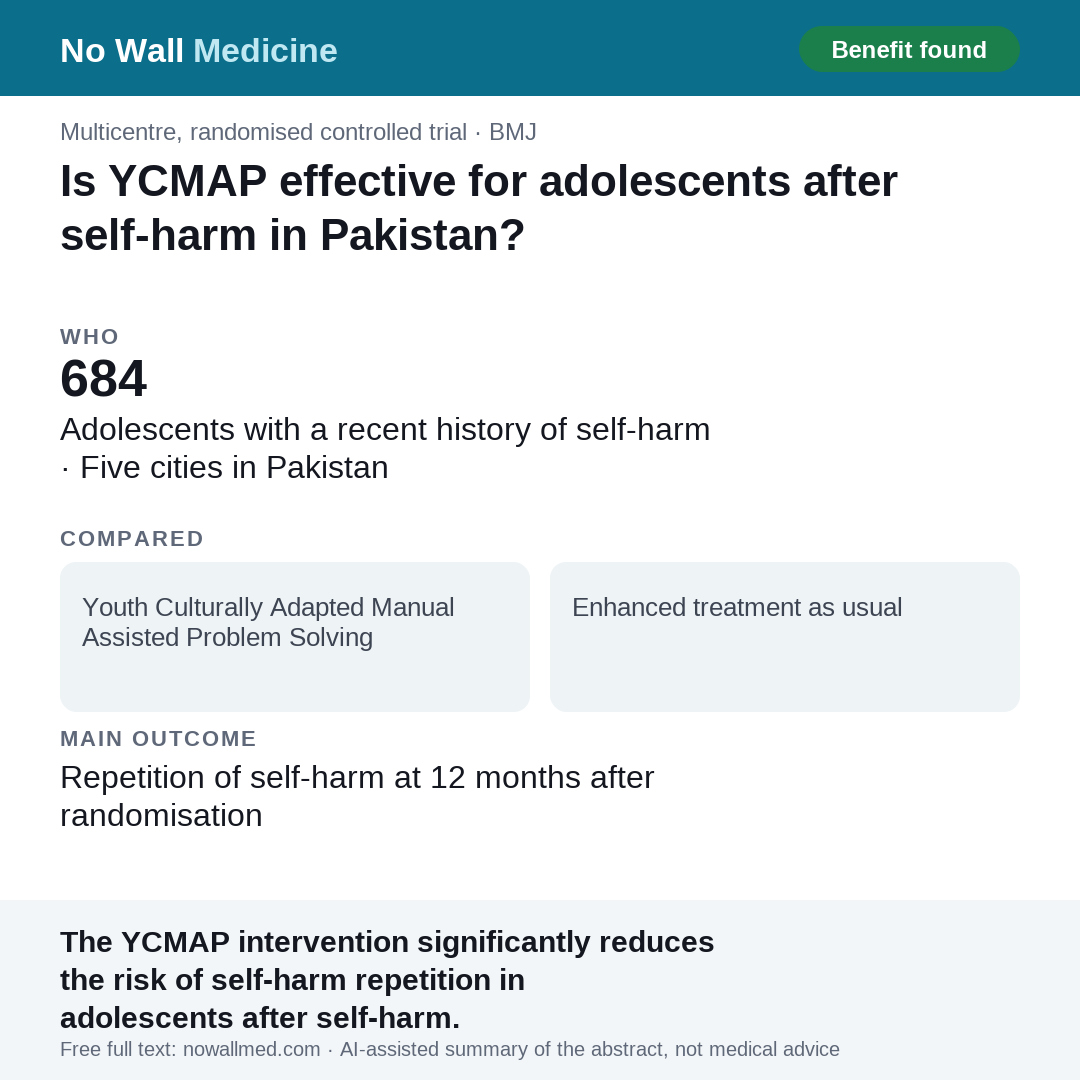
Effectiveness of YCMAP (youth culturally adapted manual assisted problem solving) intervention in adolescents after self-harm in Pakistan: multicentre, randomised controlled trial
Multicentre, randomised controlled trialBenefit found
Is YCMAP effective for adolescents after self-harm in Pakistan?
Who
684
Adolescents with a recent history of self-harm · Five cities in Pakistan
Compared
Youth Culturally Adapted Manual Assisted Problem Solving
Enhanced treatment as usual
Main outcome
Repetition of self-harm at 12 months after randomisation
Result: odds ratio 0.20 (95% confidence interval 0.06 to 0.70)
Bottom line: The YCMAP intervention significantly reduces the risk of self-harm repetition in adolescents after self-harm.
BMJ · 2025-09-12Download image
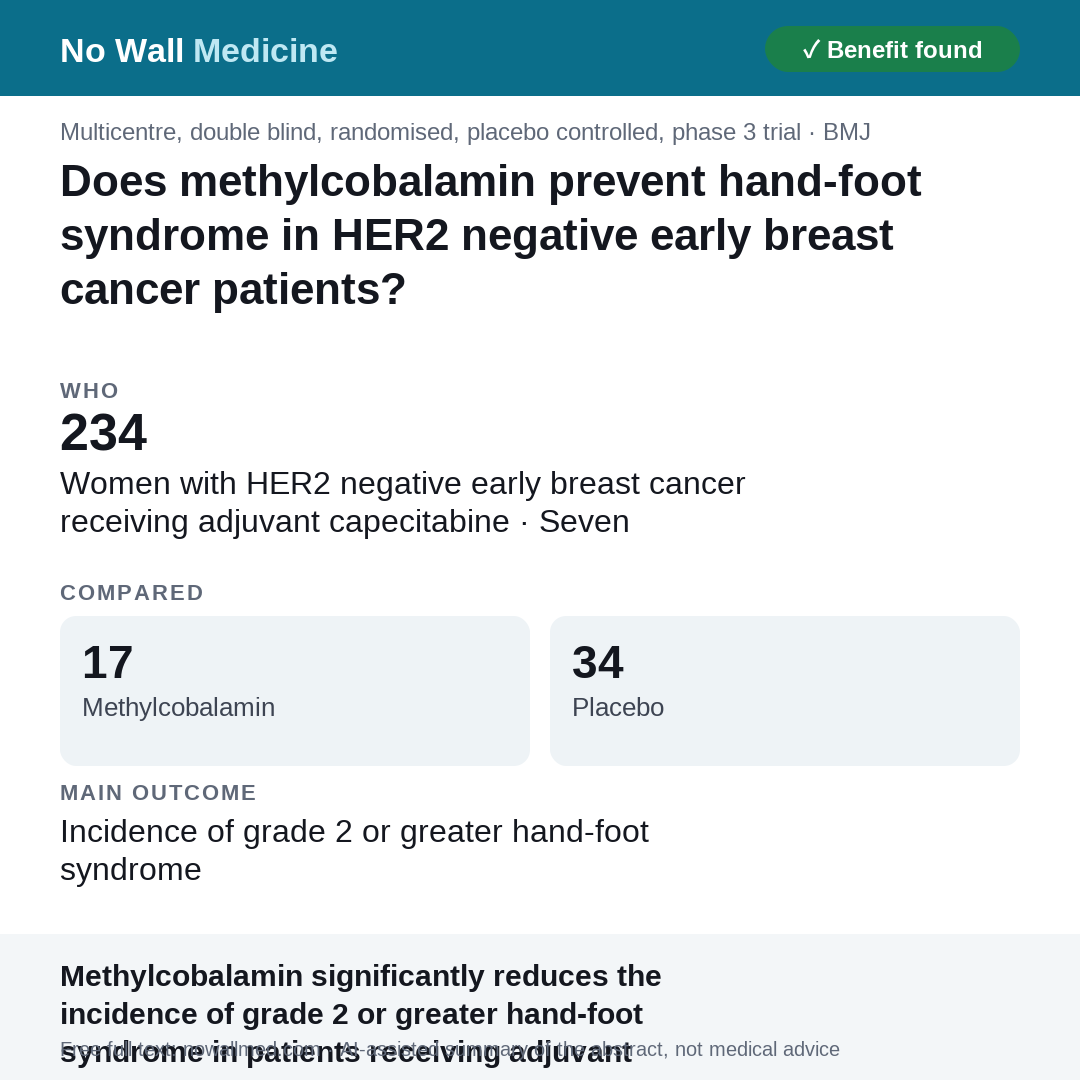
Effect of methylcobalamin on capecitabine induced hand-foot syndrome in patients with HER2 negative early breast cancer: multicentre, double blind, randomised, placebo controlled, phase 3 trial
Multicentre, double blind, randomised, placebo controlled, phase 3 trialBenefit found
Does methylcobalamin prevent hand-foot syndrome in HER2 negative early breast cancer patients?
Who
234
Women with HER2 negative early breast cancer receiving adjuvant capecitabine · Seven hospitals in China
Compared
17Methylcobalamin (14.5%)
34Placebo (29.1%)
Main outcome
Incidence of grade 2 or greater hand-foot syndrome
Result: risk difference -14.5%, 95% confidence interval -24.9% to -4.1%
Bottom line: Methylcobalamin significantly reduces the incidence of grade 2 or greater hand-foot syndrome in patients receiving adjuvant capecitabine.
BMJ · 2025-09-11Download image
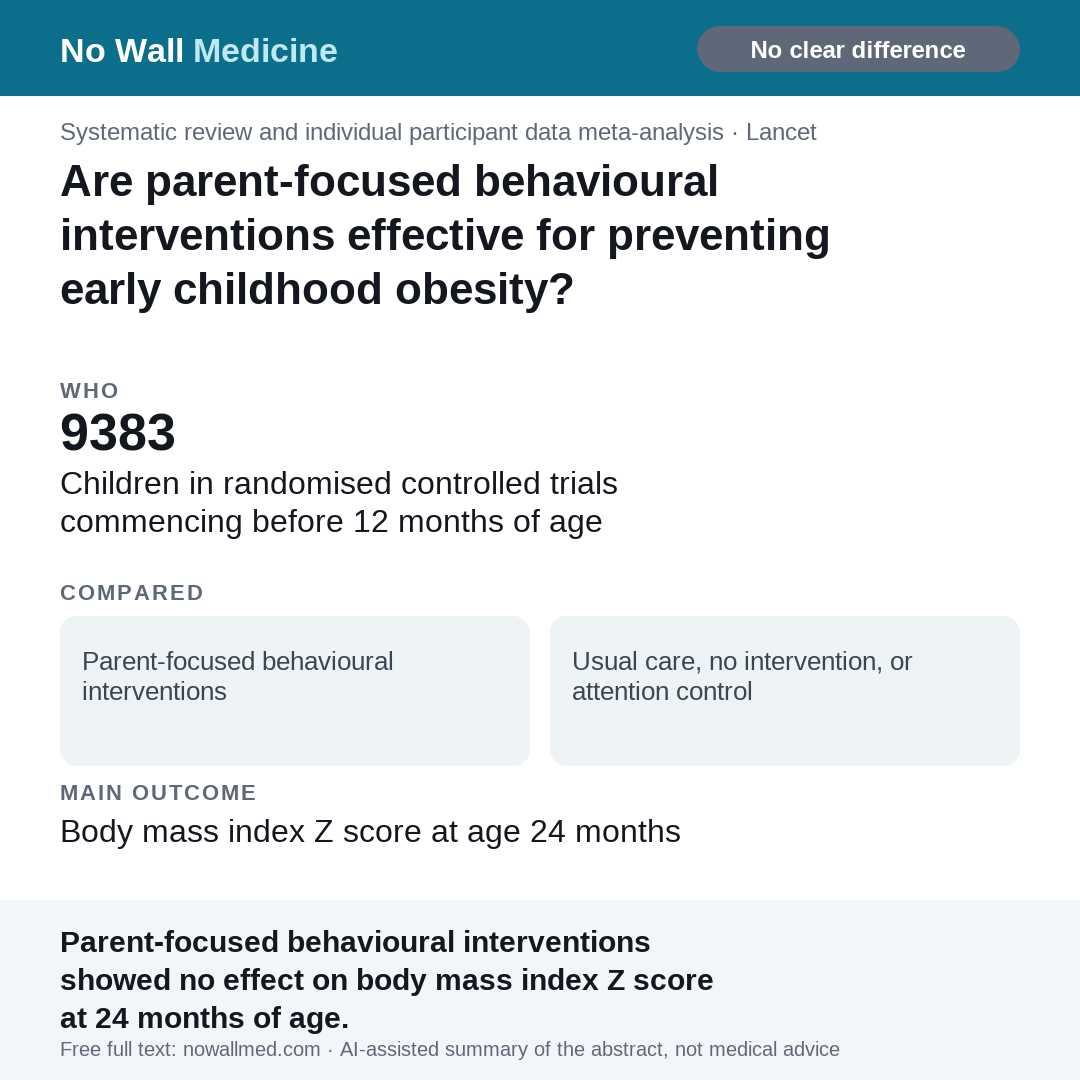
Parent-focused behavioural interventions for the prevention of early childhood obesity (TOPCHILD): a systematic review and individual participant data meta-analysis
Systematic review and individual participant data meta-analysisNo clear difference
Are parent-focused behavioural interventions effective for preventing early childhood obesity?
Who
9383
Children in randomised controlled trials commencing before 12 months of age
Compared
Parent-focused behavioural interventions
Usual care, no intervention, or attention control
Main outcome
Body mass index Z score at age 24 months
Result: mean difference -0·01 (95% CI -0·08 to 0·05)
Bottom line: Parent-focused behavioural interventions showed no effect on body mass index Z score at 24 months of age.
Limitation: 2623 participants had missing data for the primary outcome.
Funded by: Australian National Health and Medical Research Council
Lancet · 2025-09-10Download image
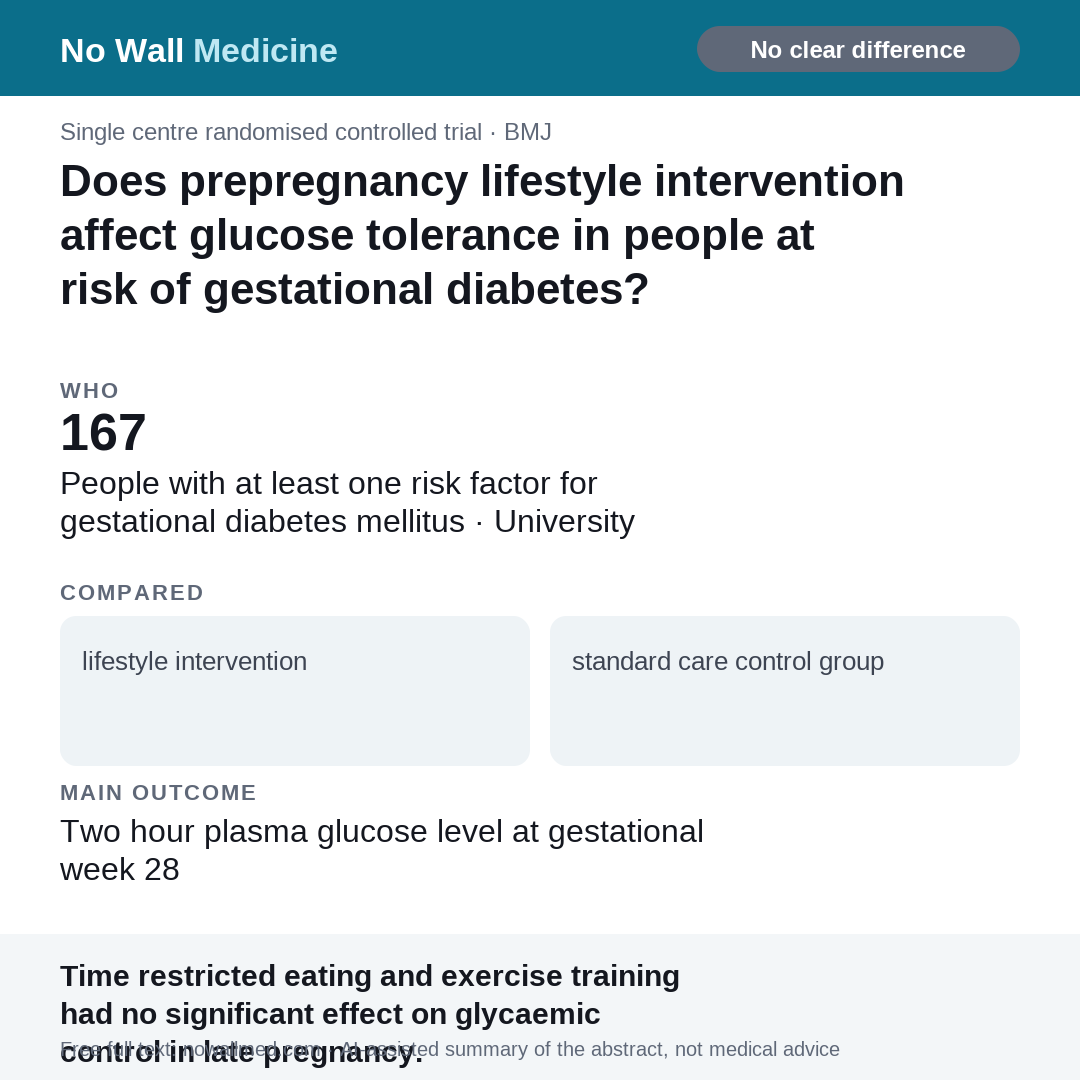
Time restricted eating and exercise training before and during pregnancy for people with increased risk of gestational diabetes: single centre randomised controlled trial (BEFORE THE BEGINNING)
Single centre randomised controlled trialNo clear difference
Does prepregnancy lifestyle intervention affect glucose tolerance in people at risk of gestational diabetes?
Who
167
People with at least one risk factor for gestational diabetes mellitus · University hospital in Trondheim, Norway
Compared
lifestyle intervention
standard care control group
Main outcome
Two hour plasma glucose level at gestational week 28
Result: mean difference 0.48 mmol/L, 95% confidence interval -0.05 to 1.01
Bottom line: Time restricted eating and exercise training had no significant effect on glycaemic control in late pregnancy.
BMJ · 2025-09-09Download image
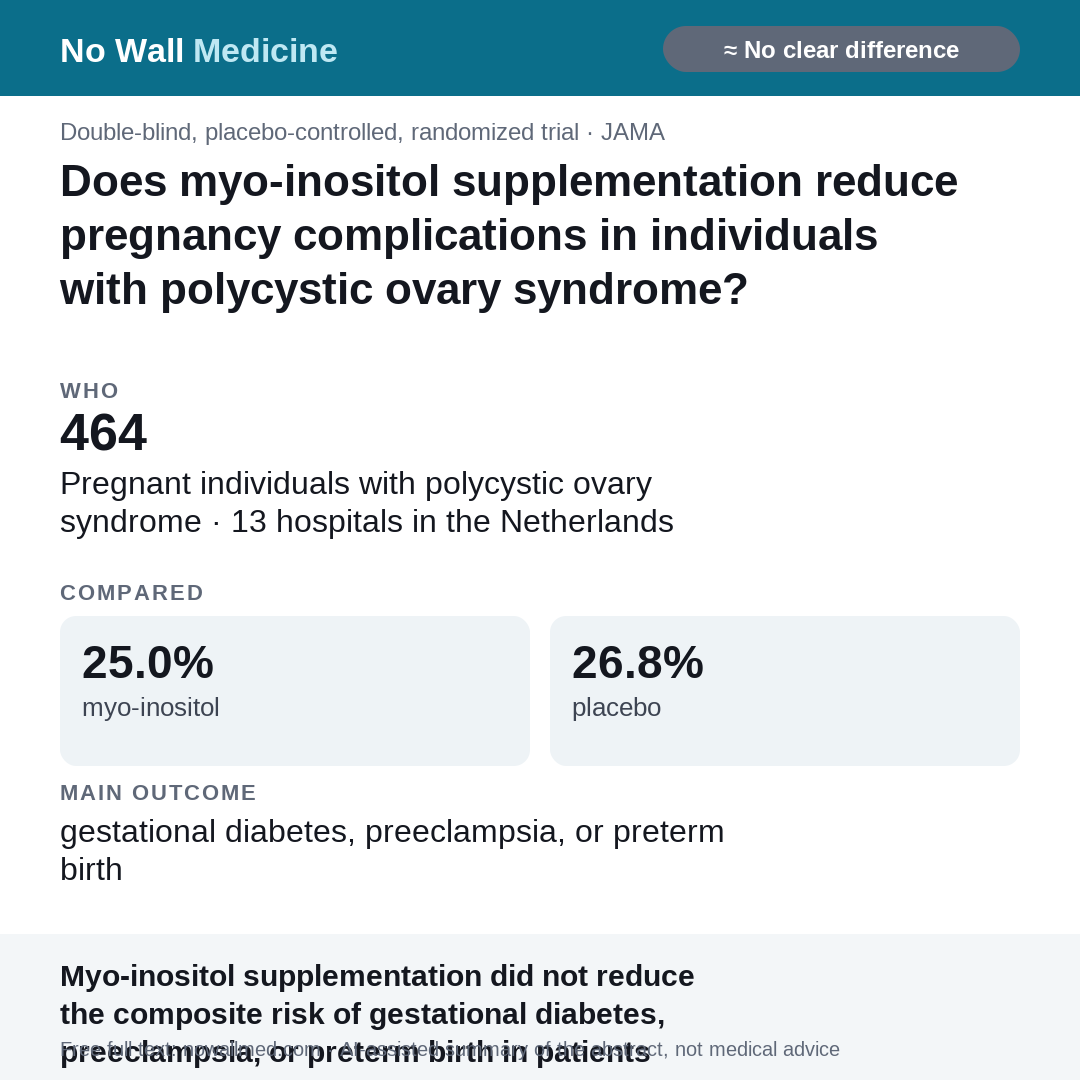
Myo-inositol Supplementation to Prevent Pregnancy Complications in Polycystic Ovary Syndrome: A Randomized Clinical Trial
Double-blind, placebo-controlled, randomized trialNo clear difference
Does myo-inositol supplementation reduce pregnancy complications in individuals with polycystic ovary syndrome?
Who
464
Pregnant individuals with polycystic ovary syndrome · 13 hospitals in the Netherlands
Compared
25.0%myo-inositol (56/230)
26.8%placebo (61/234)
Main outcome
gestational diabetes, preeclampsia, or preterm birth
Result: relative risk 0.93 (95% CI 0.68-1.28)
Bottom line: Myo-inositol supplementation did not reduce the composite risk of gestational diabetes, preeclampsia, or preterm birth in patients with polycystic ovary syndrome.
JAMA · 2025-09-08Download image
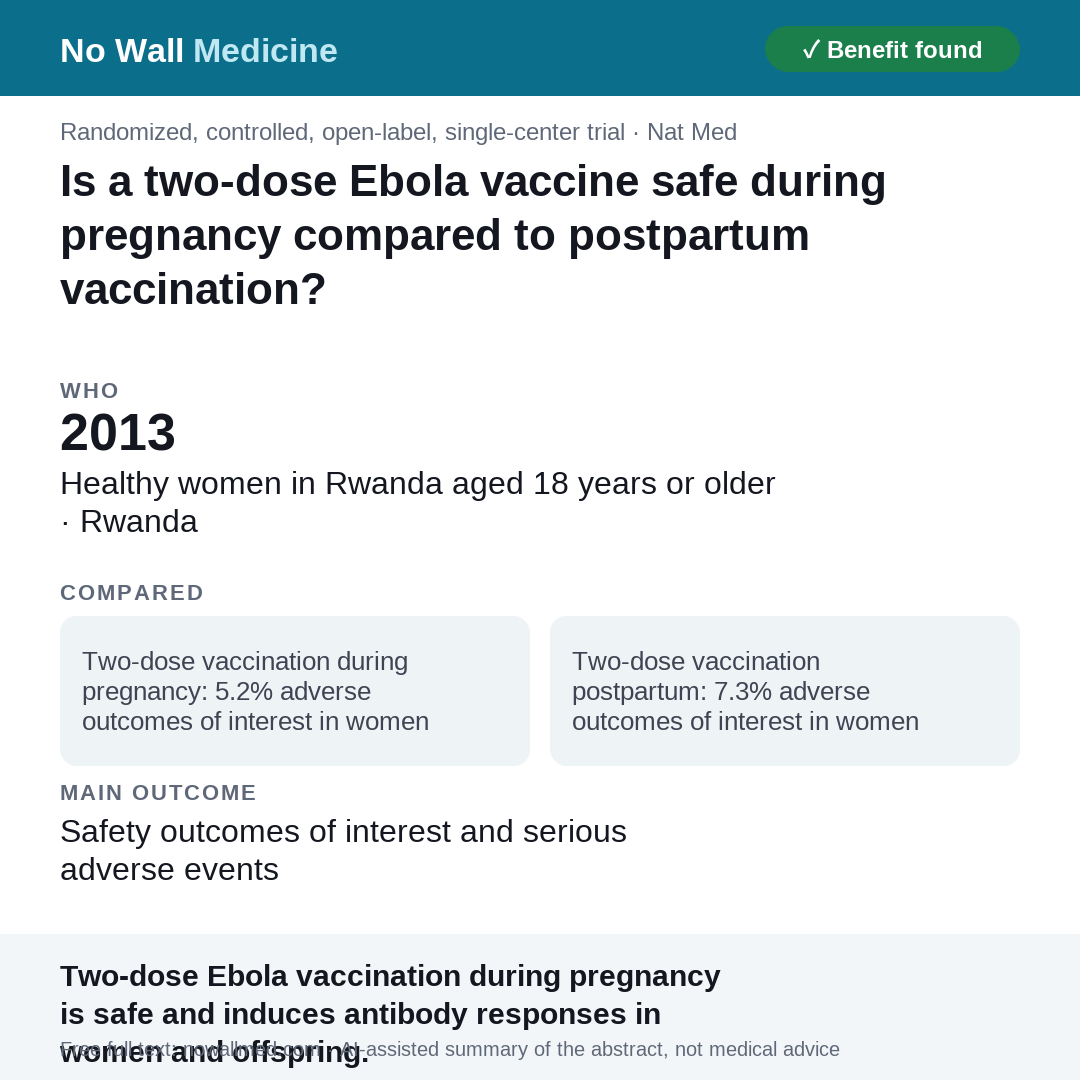
Heterologous two-dose Ebola vaccine regimen in pregnant women in Rwanda: a randomized controlled phase 3 trial
Randomized, controlled, open-label, single-center trialBenefit found
Is a two-dose Ebola vaccine safe during pregnancy compared to postpartum vaccination?
Who
2013
Healthy women in Rwanda aged 18 years or older · Rwanda
Compared
Two-dose vaccination during pregnancy: 5.2% adverse outcomes of interest in women
Two-dose vaccination postpartum: 7.3% adverse outcomes of interest in women
Main outcome
Safety outcomes of interest and serious adverse events
Bottom line: Two-dose Ebola vaccination during pregnancy is safe and induces antibody responses in women and offspring.
Nat Med · 2025-09-08Download image
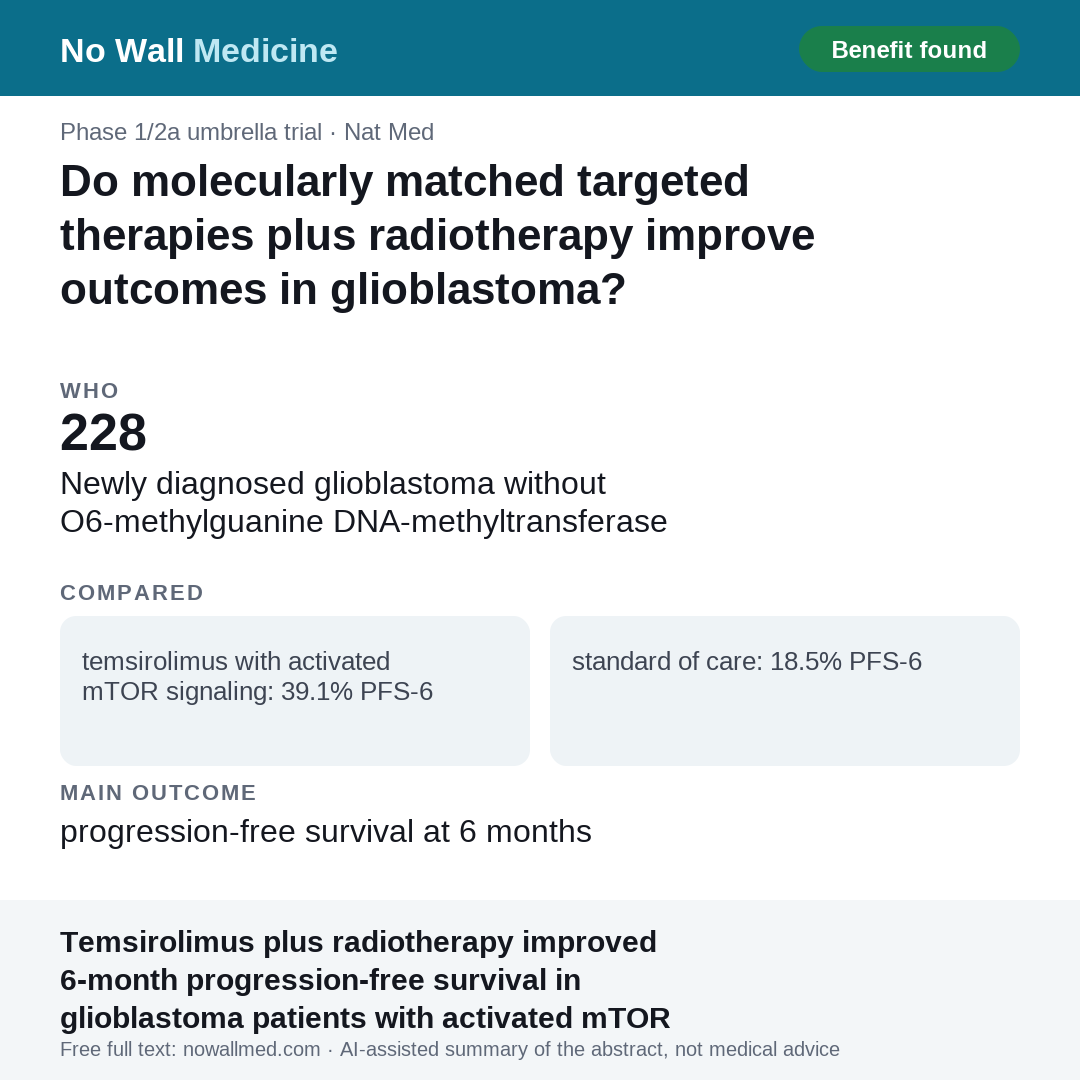
Molecularly matched targeted therapies plus radiotherapy in glioblastoma: the phase 1/2a N2M2 umbrella trial
Phase 1/2a umbrella trialBenefit found
Do molecularly matched targeted therapies plus radiotherapy improve outcomes in glioblastoma?
Who
228
Newly diagnosed glioblastoma without O6-methylguanine DNA-methyltransferase promoter hypermethylation
Compared
temsirolimus with activated mTOR signaling: 39.1% PFS-6
standard of care: 18.5% PFS-6
Main outcome
progression-free survival at 6 months
Bottom line: Temsirolimus plus radiotherapy improved 6-month progression-free survival in glioblastoma patients with activated mTOR signaling.
Nat Med · 2025-09-05Download image