Visual abstracts
New randomized trials and meta-analyses from leading journals at a glance: who was studied, what was compared, and what was found. Every paper is free to read in full.
All specialtiesCardiology 857Oncology 770Gastroenterology & Hepatology 311Infectious Disease 626Neurology 354Psychiatry & Mental Health 430Pulmonology 370Critical Care 260Endocrinology & Diabetes 484Pediatrics 542Surgery 351Orthopedics & Sports Medicine 166Neurosurgery 115Cardiothoracic & Vascular Surgery 87Plastic & Reconstructive Surgery 144Nephrology 197Rheumatology 108Hematology 183Dermatology 82Ophthalmology 97Obstetrics & Gynecology 266Public & Global Health 168Radiology & Imaging 105Anesthesiology 130Urology 162ENT (Otolaryngology) 115Emergency Medicine 103Allergy & Immunology 58Geriatrics 160Family Medicine & Primary Care 111Medical Genetics & Genomics 91Pathology & Laboratory Medicine 27Physical Medicine & Rehabilitation 149Palliative Care 81Nutrition 223Digital Health & AI 462General Medicine 101
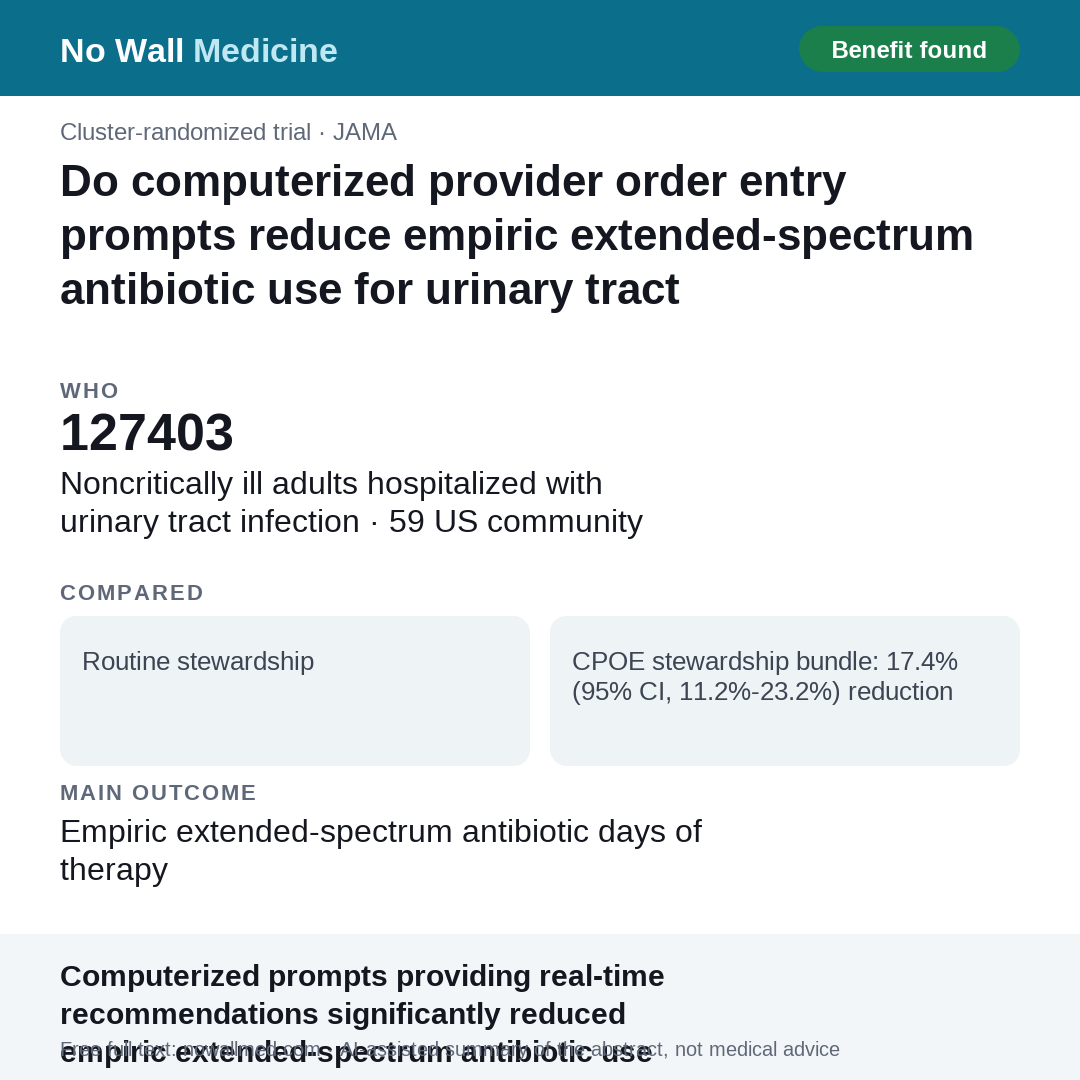
Stewardship Prompts to Improve Antibiotic Selection for Urinary Tract Infection: The INSPIRE Randomized Clinical Trial
Cluster-randomized trialBenefit found
Do computerized provider order entry prompts reduce empiric extended-spectrum antibiotic use for urinary tract infection?
Who
127403
Noncritically ill adults hospitalized with urinary tract infection · 59 US community hospitals
Compared
Routine stewardship
CPOE stewardship bundle: 17.4% (95% CI, 11.2%-23.2%) reduction
Main outcome
Empiric extended-spectrum antibiotic days of therapy
Result: rate ratio, 0.83 (95% CI, 0.77-0.89)
Bottom line: Computerized prompts providing real-time recommendations significantly reduced empiric extended-spectrum antibiotic use without affecting hospital length of stay.
JAMA · 2024-04-19Download image
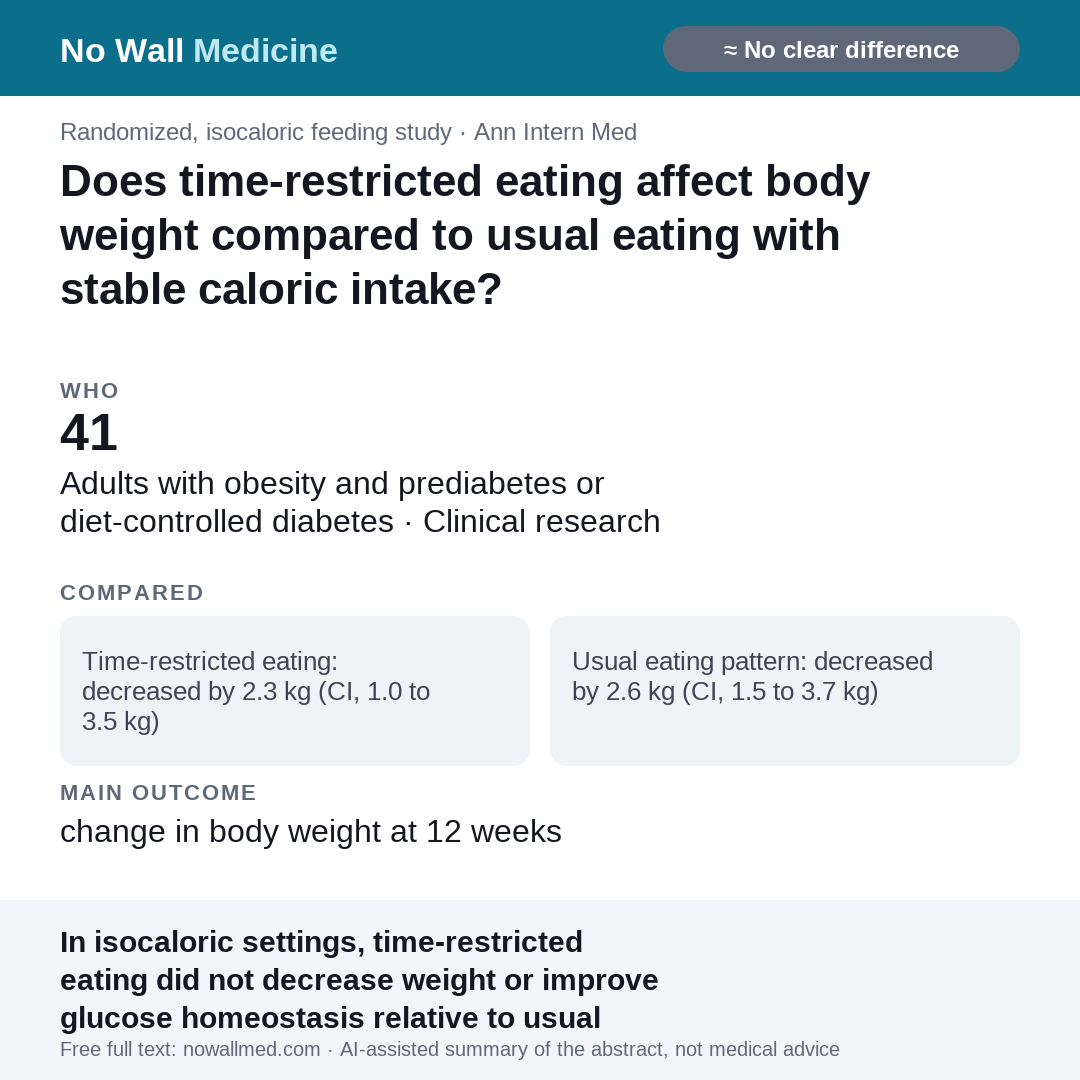
Effect of Isocaloric, Time-Restricted Eating on Body Weight in Adults With Obesity : A Randomized Controlled Trial
Randomized, isocaloric feeding studyNo clear difference
Does time-restricted eating affect body weight compared to usual eating with stable caloric intake?
Who
41
Adults with obesity and prediabetes or diet-controlled diabetes · Clinical research unit
Compared
Time-restricted eating: decreased by 2.3 kg (CI, 1.0 to 3.5 kg)
Usual eating pattern: decreased by 2.6 kg (CI, 1.5 to 3.7 kg)
Main outcome
change in body weight at 12 weeks
Result: average difference 0.3 kg (CI, -1.2 to 1.9 kg)
Bottom line: In isocaloric settings, time-restricted eating did not decrease weight or improve glucose homeostasis relative to usual eating.
Limitation: Small, single-site study; baseline differences in weight by group.
Funded by: American Heart Association
Ann Intern Med · 2024-04-19Download image
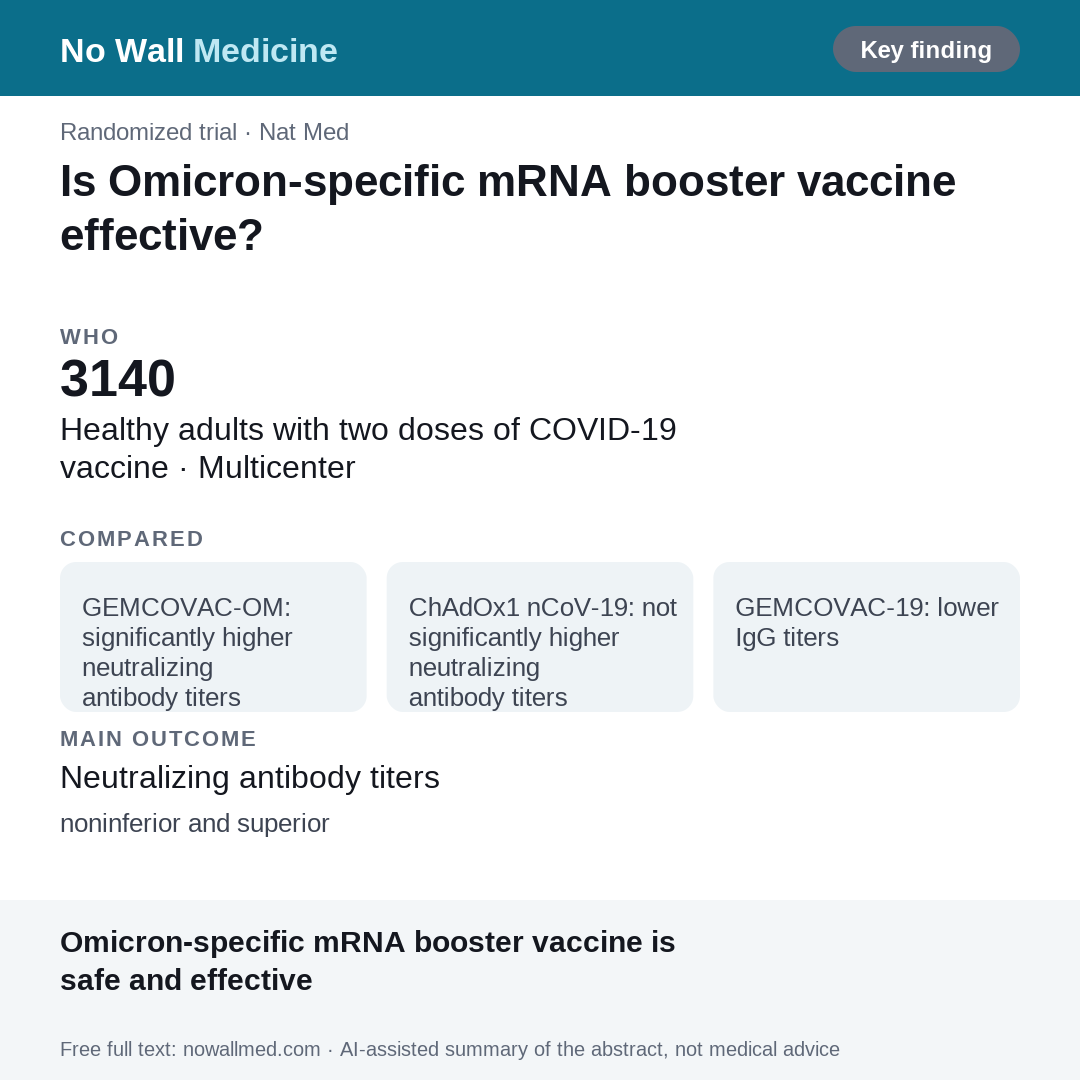
An Omicron-specific, self-amplifying mRNA booster vaccine for COVID-19: a phase 2/3 randomized trial
Randomized trialBenefit found
Is Omicron-specific mRNA booster vaccine effective?
Who
3140
Healthy adults with two doses of COVID-19 vaccine · Multicenter
Compared
GEMCOVAC-OM: significantly higher neutralizing antibody titers
ChAdOx1 nCoV-19: not significantly higher neutralizing antibody titers
GEMCOVAC-19: lower IgG titers
Main outcome
Neutralizing antibody titers
Result: noninferior and superior
Bottom line: Omicron-specific mRNA booster vaccine is safe and effective
Nat Med · 2024-04-18Download image
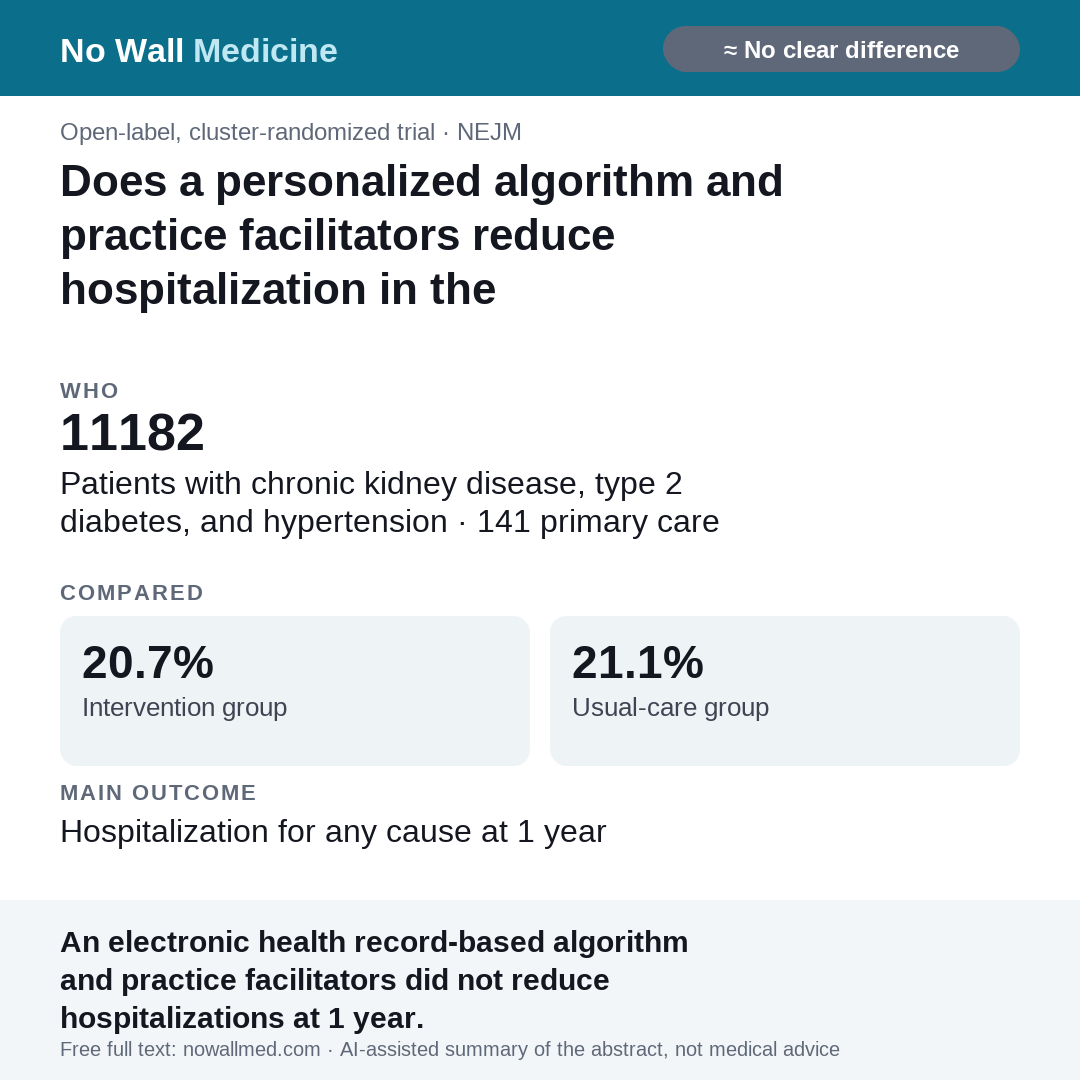
Pragmatic Trial of Hospitalization Rate in Chronic Kidney Disease
Open-label, cluster-randomized trialNo clear difference
Does a personalized algorithm and practice facilitators reduce hospitalization in the kidney-dysfunction triad?
Who
11182
Patients with chronic kidney disease, type 2 diabetes, and hypertension · 141 primary care clinics
Compared
20.7%Intervention group (95% confidence interval, 19.7 to 21.8)
21.1%Usual-care group (95% confidence interval, 20.1 to 22.2)
Main outcome
Hospitalization for any cause at 1 year
Result: between-group difference, 0.4 percentage points; P = 0.58
Bottom line: An electronic health record-based algorithm and practice facilitators did not reduce hospitalizations at 1 year.
Funded by: National Institutes of Health and others
NEJM · 2024-04-10Download image
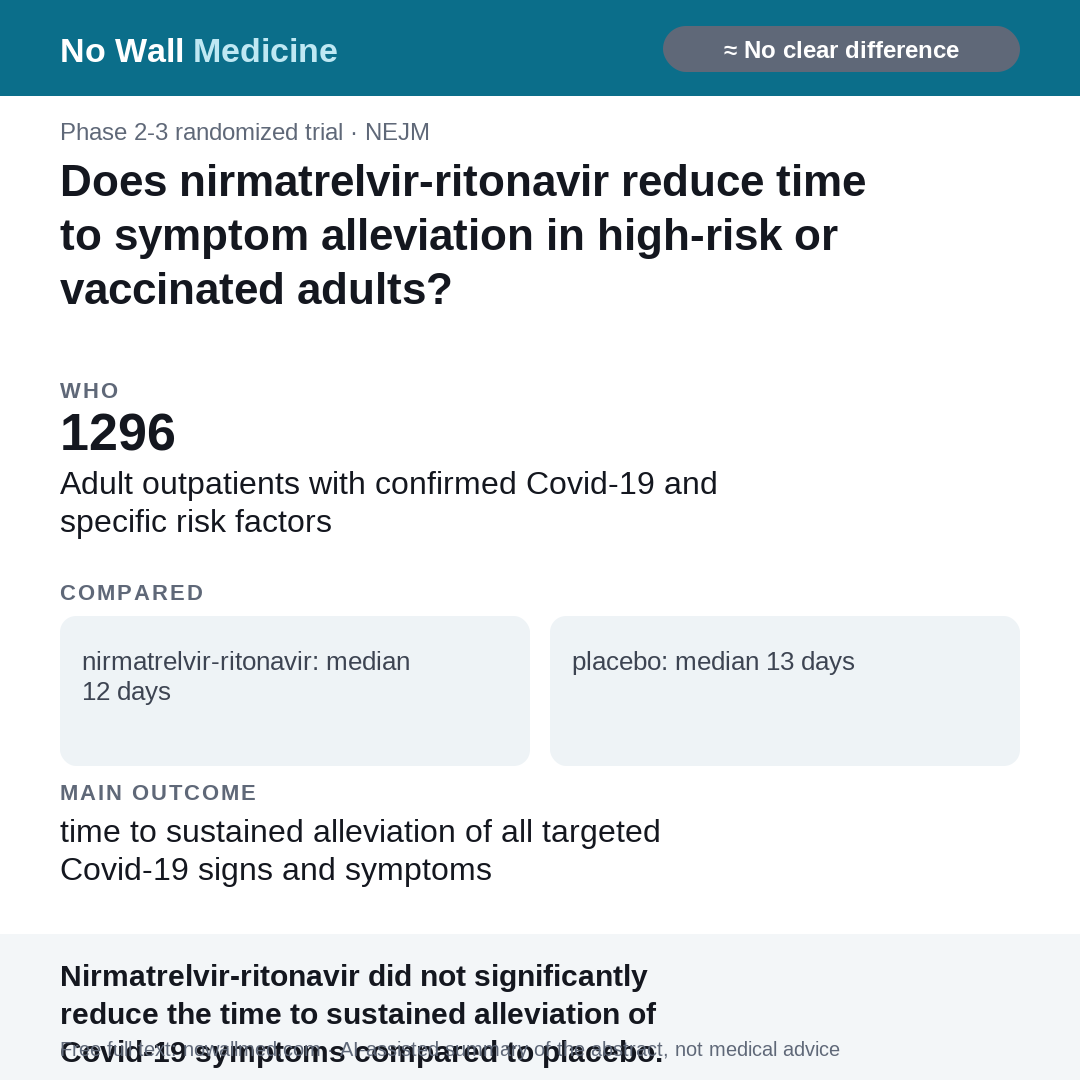
Nirmatrelvir for Vaccinated or Unvaccinated Adult Outpatients with Covid-19
Phase 2-3 randomized trialNo clear difference
Does nirmatrelvir-ritonavir reduce time to symptom alleviation in high-risk or vaccinated adults?
Who
1296
Adult outpatients with confirmed Covid-19 and specific risk factors
Compared
nirmatrelvir-ritonavir: median 12 days
placebo: median 13 days
Main outcome
time to sustained alleviation of all targeted Covid-19 signs and symptoms
Result: difference, -0.8 percentage points; 95% confidence interval, -2.0 to 0.4
Bottom line: Nirmatrelvir-ritonavir did not significantly reduce the time to sustained alleviation of Covid-19 symptoms compared to placebo.
Funded by: Pfizer
NEJM · 2024-04-10Download image
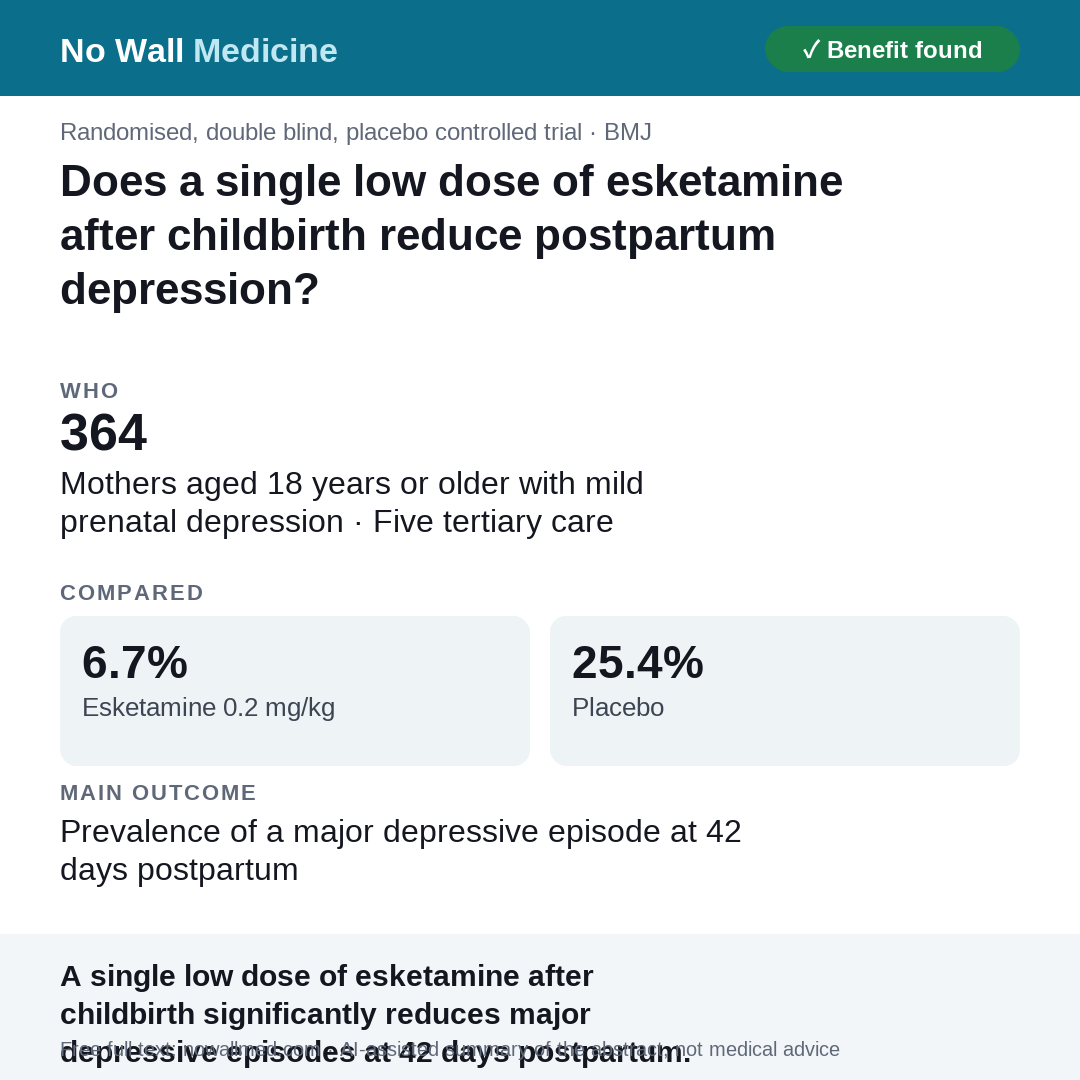
Efficacy of a single low dose of esketamine after childbirth for mothers with symptoms of prenatal depression: randomised clinical trial
Randomised, double blind, placebo controlled trialBenefit found
Does a single low dose of esketamine after childbirth reduce postpartum depression?
Who
364
Mothers aged 18 years or older with mild prenatal depression · Five tertiary care hospitals in China
Compared
6.7%Esketamine 0.2 mg/kg (12/180)
25.4%Placebo (46/181)
Main outcome
Prevalence of a major depressive episode at 42 days postpartum
Result: relative risk 0.26 (95% CI 0.14 to 0.48)
Bottom line: A single low dose of esketamine after childbirth significantly reduces major depressive episodes at 42 days postpartum.
BMJ · 2024-04-10Download image
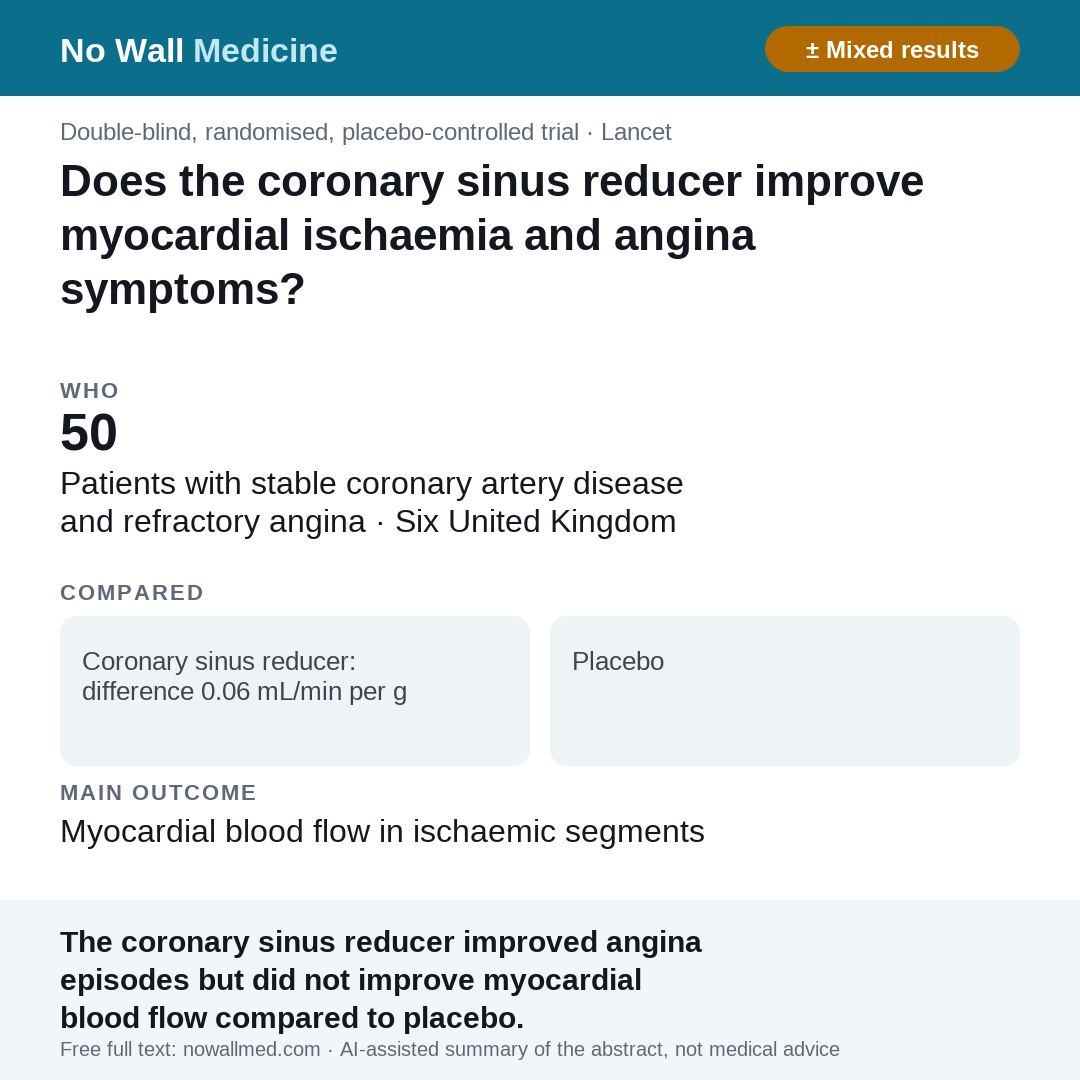
Coronary sinus reducer for the treatment of refractory angina (ORBITA-COSMIC): a randomised, placebo-controlled trial
Double-blind, randomised, placebo-controlled trialMixed results
Does the coronary sinus reducer improve myocardial ischaemia and angina symptoms?
Who
50
Patients with stable coronary artery disease and refractory angina · Six United Kingdom hospitals
Compared
Coronary sinus reducer: difference 0.06 mL/min per g
Placebo
Main outcome
Myocardial blood flow in ischaemic segments
Result: difference 0.06 mL/min per g (95% CrI -0.09 to 0.20)
Bottom line: The coronary sinus reducer improved angina episodes but did not improve myocardial blood flow compared to placebo.
Funded by: Medical Research Council and others
Lancet · 2024-04-08Download image
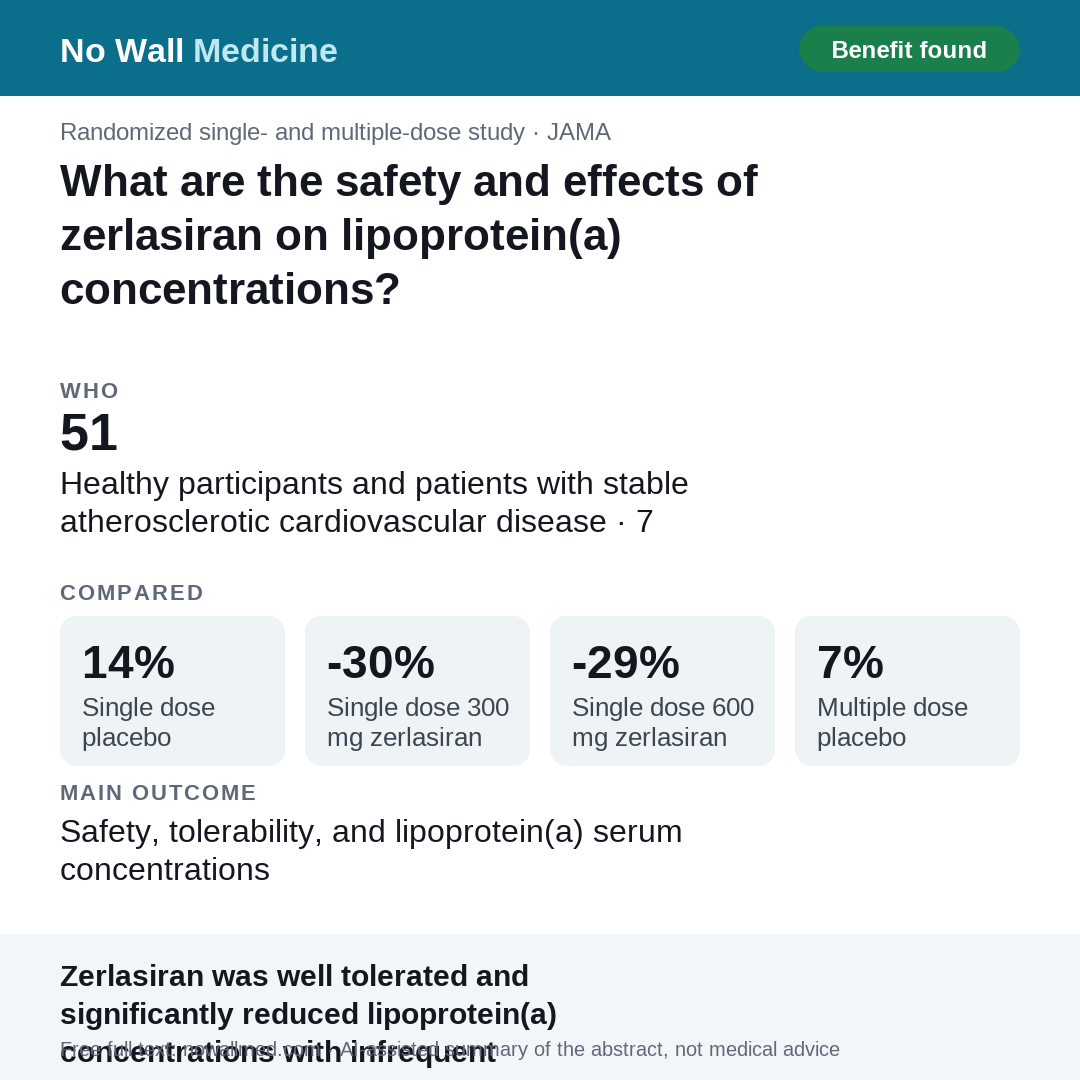
Single Ascending and Multiple-Dose Trial of Zerlasiran, a Short Interfering RNA Targeting Lipoprotein(a): A Randomized Clinical Trial
Randomized single- and multiple-dose studyBenefit found
What are the safety and effects of zerlasiran on lipoprotein(a) concentrations?
Who
51
Healthy participants and patients with stable atherosclerotic cardiovascular disease · 7 research sites in US, Netherlands, UK, and Australia
Compared
14%Single dose placebo (IQR, 13% to 15%)
-30%Single dose 300 mg zerlasiran (IQR, -51% to -18%)
-29%Single dose 600 mg zerlasiran (IQR, -39% to -7%)
7%Multiple dose placebo (IQR, -4% to 21%)
Main outcome
Safety, tolerability, and lipoprotein(a) serum concentrations
Bottom line: Zerlasiran was well tolerated and significantly reduced lipoprotein(a) concentrations with infrequent administration.
JAMA · 2024-04-08Download image
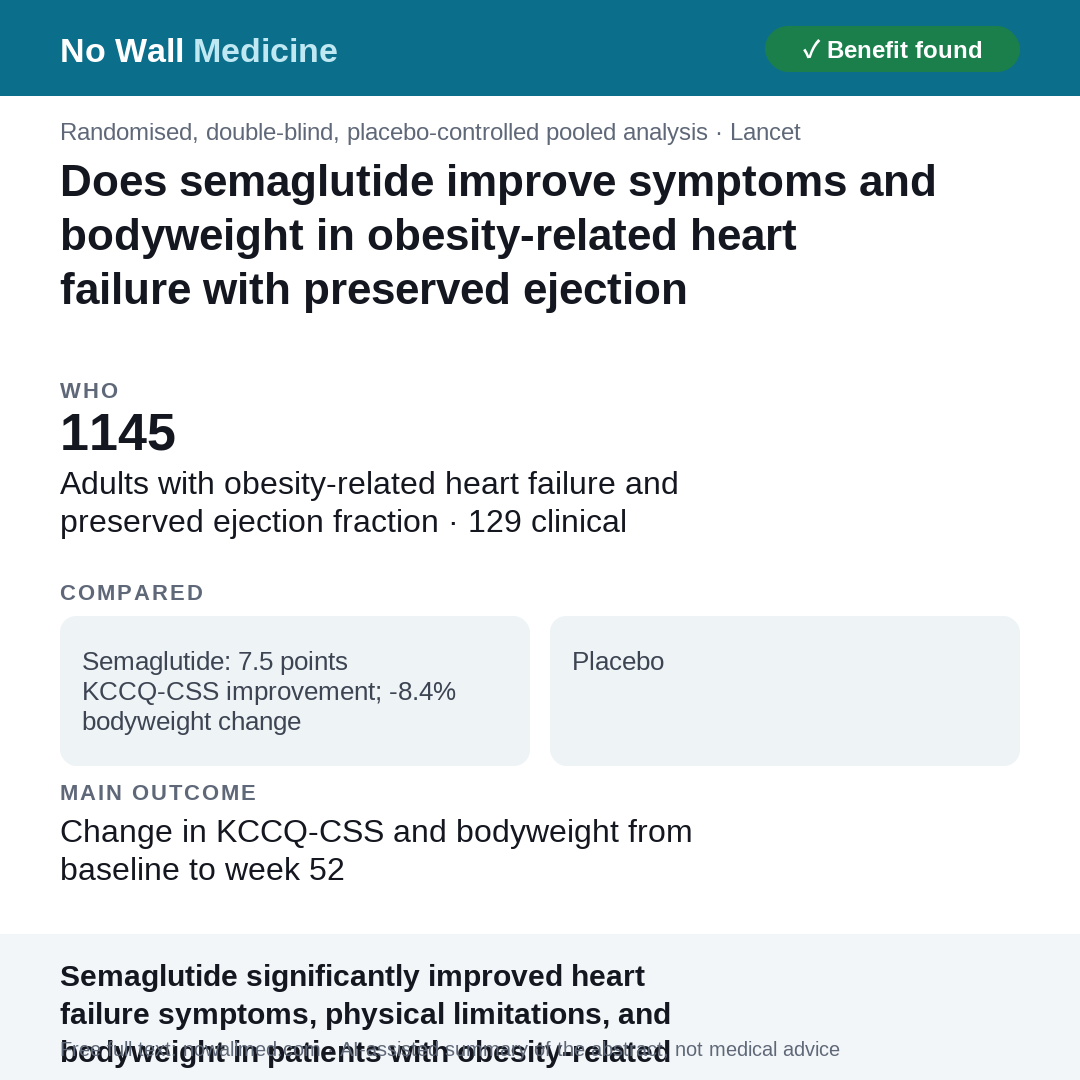
Semaglutide versus placebo in people with obesity-related heart failure with preserved ejection fraction: a pooled analysis of the STEP-HFpEF and STEP-HFpEF DM randomised trials
Randomised, double-blind, placebo-controlled pooled analysisBenefit found
Does semaglutide improve symptoms and bodyweight in obesity-related heart failure with preserved ejection fraction?
Who
1145
Adults with obesity-related heart failure and preserved ejection fraction · 129 clinical research sites in 18 countries
Compared
Semaglutide: 7.5 points KCCQ-CSS improvement; -8.4% bodyweight change
Placebo
Main outcome
Change in KCCQ-CSS and bodyweight from baseline to week 52
Result: mean between-group difference for KCCQ-CSS 7·5 points (95% CI 5·3 to 9·8)
Bottom line: Semaglutide significantly improved heart failure symptoms, physical limitations, and bodyweight in patients with obesity-related preserved ejection fraction.
Lancet · 2024-04-07Download image
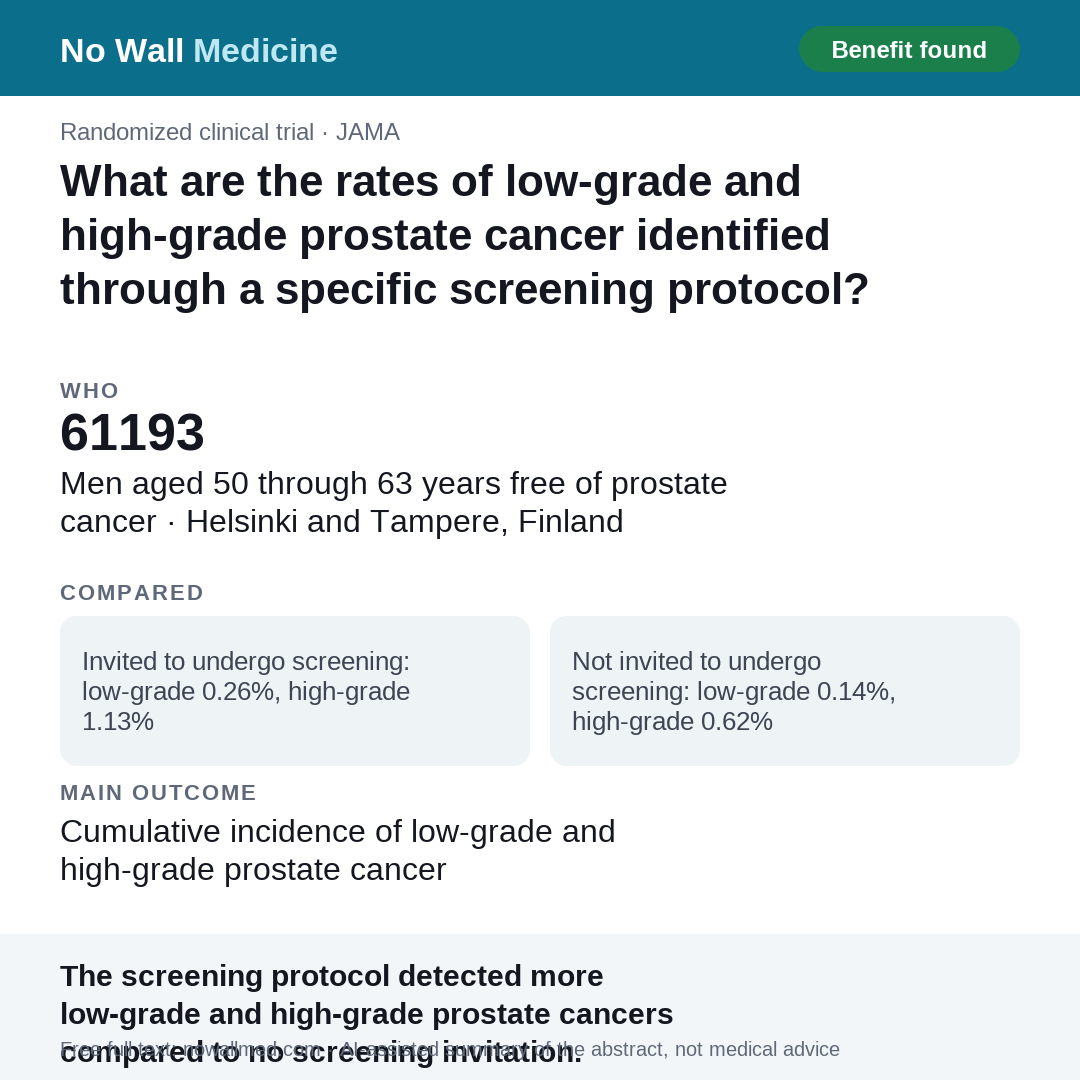
Prostate Cancer Screening With PSA, Kallikrein Panel, and MRI: The ProScreen Randomized Trial
Randomized clinical trialBenefit found
What are the rates of low-grade and high-grade prostate cancer identified through a specific screening protocol?
Who
61193
Men aged 50 through 63 years free of prostate cancer · Helsinki and Tampere, Finland
Compared
Invited to undergo screening: low-grade 0.26%, high-grade 1.13%
Not invited to undergo screening: low-grade 0.14%, high-grade 0.62%
Main outcome
Cumulative incidence of low-grade and high-grade prostate cancer
Result: risk difference 0.11% (95% CI, 0.03%-0.20%) for low-grade and 0.51% (95% CI, 0.33%-0.70%) for high-grade cancer
Bottom line: The screening protocol detected more low-grade and high-grade prostate cancers compared to no screening invitation.
JAMA · 2024-04-06Download image
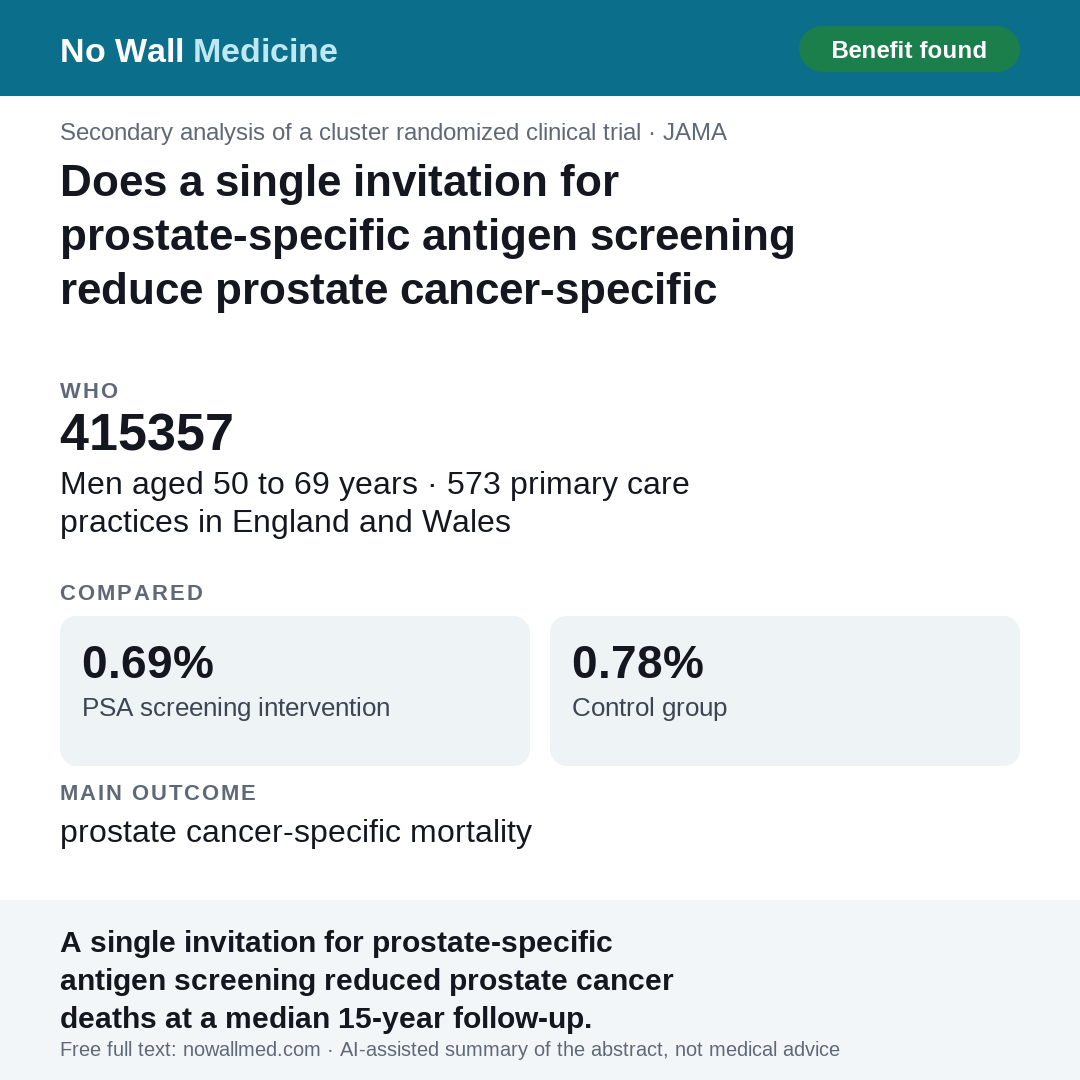
Prostate-Specific Antigen Screening and 15-Year Prostate Cancer Mortality: A Secondary Analysis of the CAP Randomized Clinical Trial
Secondary analysis of a cluster randomized clinical trialBenefit found
Does a single invitation for prostate-specific antigen screening reduce prostate cancer-specific mortality?
Who
415357
Men aged 50 to 69 years · 573 primary care practices in England and Wales
Compared
0.69%PSA screening intervention (95% CI, 0.65%-0.73%)
0.78%Control group (95% CI, 0.73%-0.82%)
Main outcome
prostate cancer-specific mortality
Result: rate ratio 0.92 (95% CI, 0.85-0.99)
Bottom line: A single invitation for prostate-specific antigen screening reduced prostate cancer deaths at a median 15-year follow-up.
Limitation: the absolute reduction in deaths was small
JAMA · 2024-04-06Download image
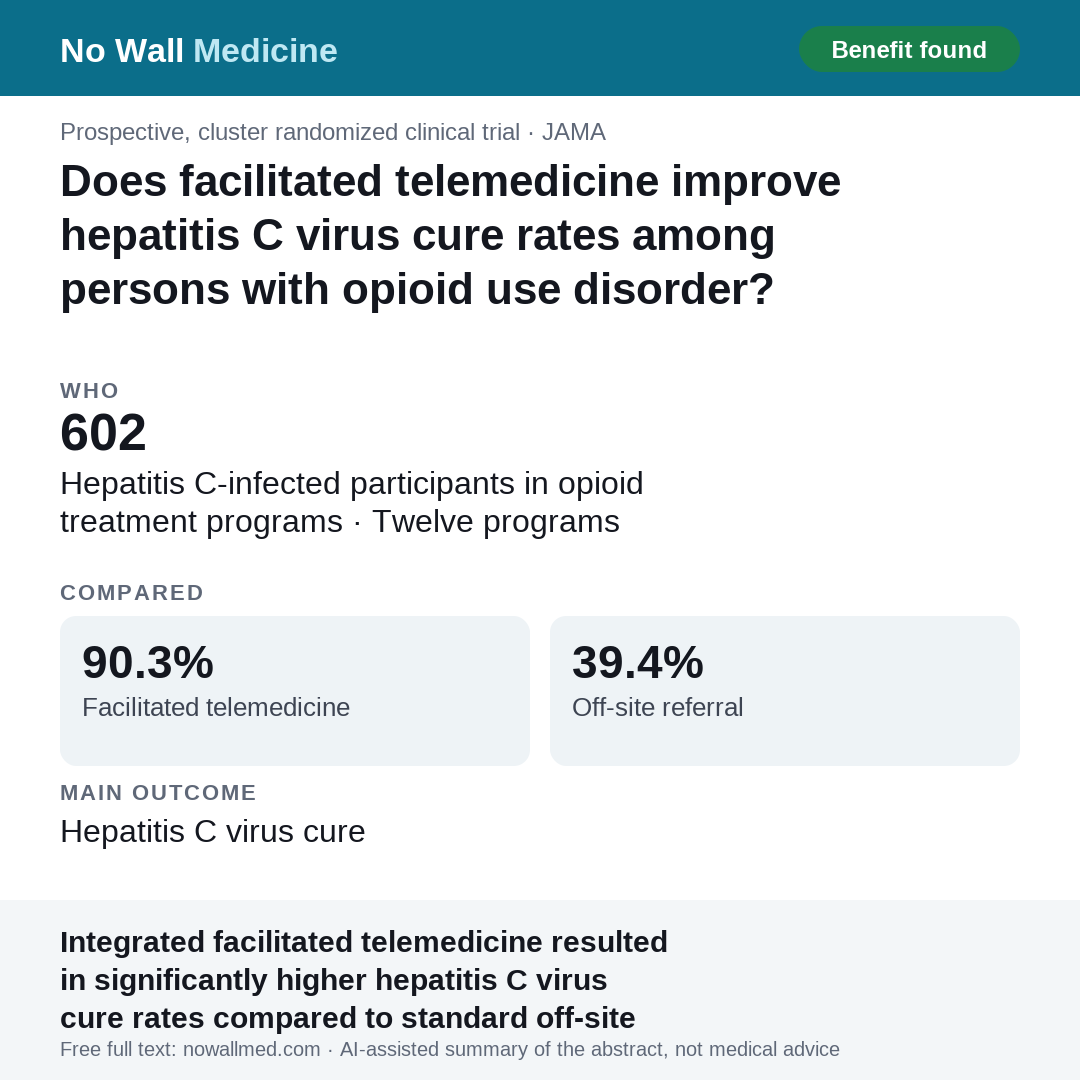
Integrated Hepatitis C-Opioid Use Disorder Care Through Facilitated Telemedicine: A Randomized Trial
Prospective, cluster randomized clinical trialBenefit found
Does facilitated telemedicine improve hepatitis C virus cure rates among persons with opioid use disorder?
Who
602
Hepatitis C-infected participants in opioid treatment programs · Twelve programs throughout New York State
Compared
90.3%Facilitated telemedicine (262 of 290)
39.4%Off-site referral (123 of 312)
Main outcome
Hepatitis C virus cure
Result: logarithmic odds ratio 2.9 (95% CI 2.0-3.5)
Bottom line: Integrated facilitated telemedicine resulted in significantly higher hepatitis C virus cure rates compared to standard off-site referral.
JAMA · 2024-04-03Download image
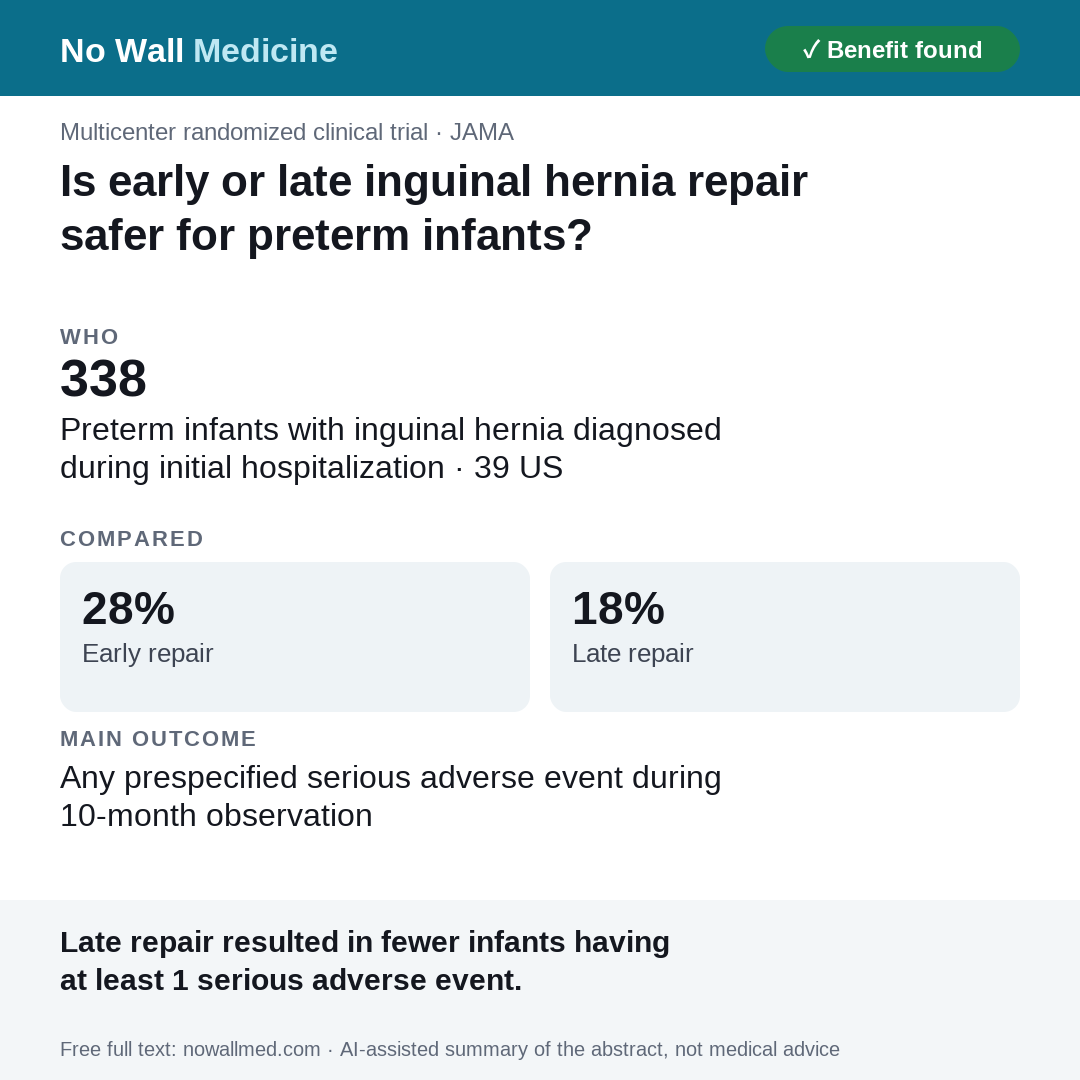
Effect of Early vs Late Inguinal Hernia Repair on Serious Adverse Event Rates in Preterm Infants: A Randomized Clinical Trial
Multicenter randomized clinical trialBenefit found
Is early or late inguinal hernia repair safer for preterm infants?
Who
338
Preterm infants with inguinal hernia diagnosed during initial hospitalization · 39 US hospitals
Compared
28%Early repair (159/149)
18%Late repair (149/149)
Main outcome
Occurrence of any prespecified serious adverse event
Result: risk difference, -7.9% (95% credible interval, -16.9% to 0%)
Bottom line: Late inguinal hernia repair resulted in fewer serious adverse events among preterm infants compared to early repair.
JAMA · 2024-03-26Download image
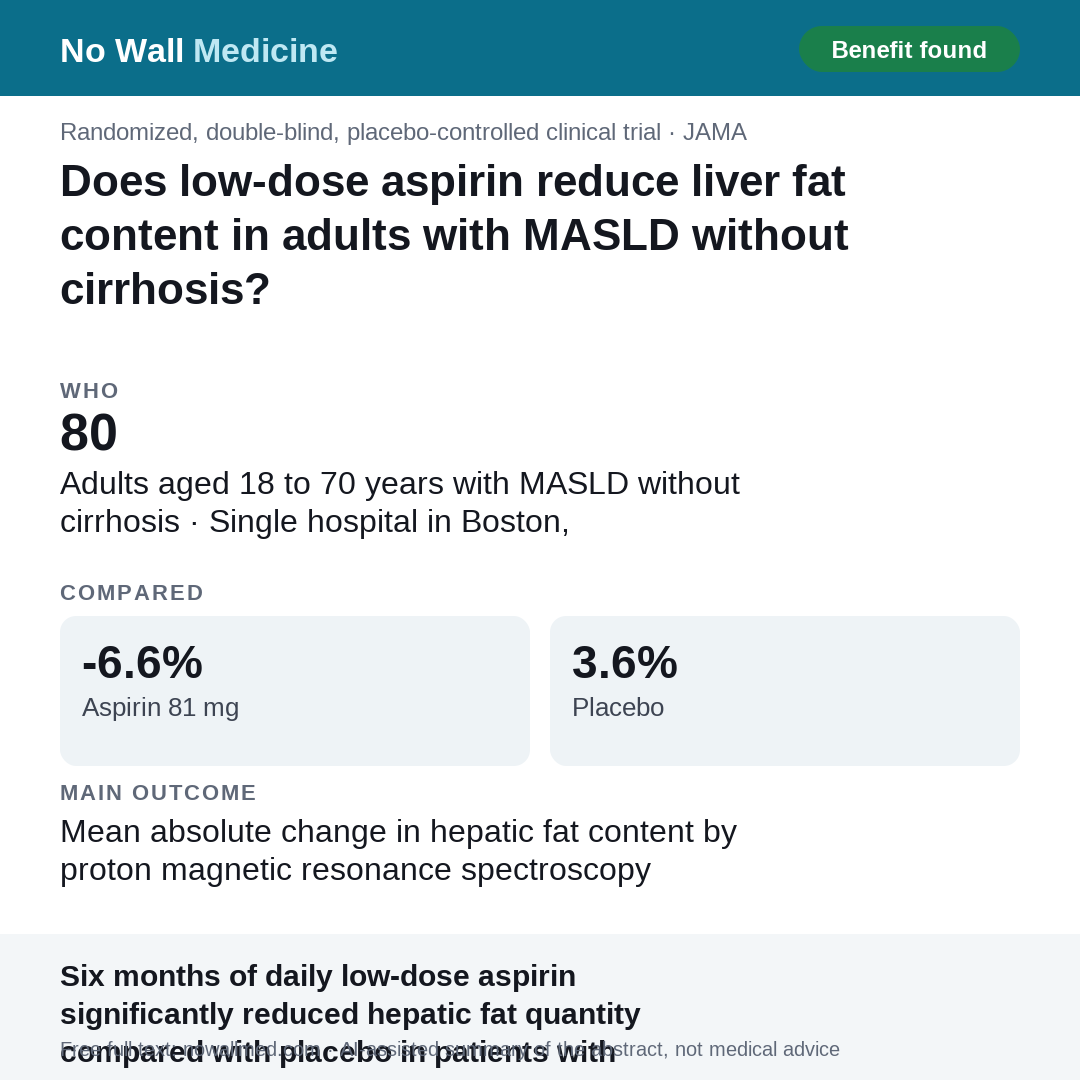
Aspirin for Metabolic Dysfunction-Associated Steatotic Liver Disease Without Cirrhosis: A Randomized Clinical Trial
Randomized, double-blind, placebo-controlled clinical trialBenefit found
Does low-dose aspirin reduce liver fat content in adults with MASLD without cirrhosis?
Who
80
Adults aged 18 to 70 years with MASLD without cirrhosis · Single hospital in Boston, Massachusetts
Compared
-6.6%Aspirin 81 mg
3.6%Placebo
Main outcome
Mean absolute change in hepatic fat content by proton magnetic resonance spectroscopy
Result: difference, -10.2% (95% CI, -27.7% to -2.6%)
Bottom line: Six months of daily low-dose aspirin significantly reduced hepatic fat quantity compared with placebo in patients with MASLD.
Limitation: Further study in a larger sample size is necessary to confirm these findings.
JAMA · 2024-03-19Download image
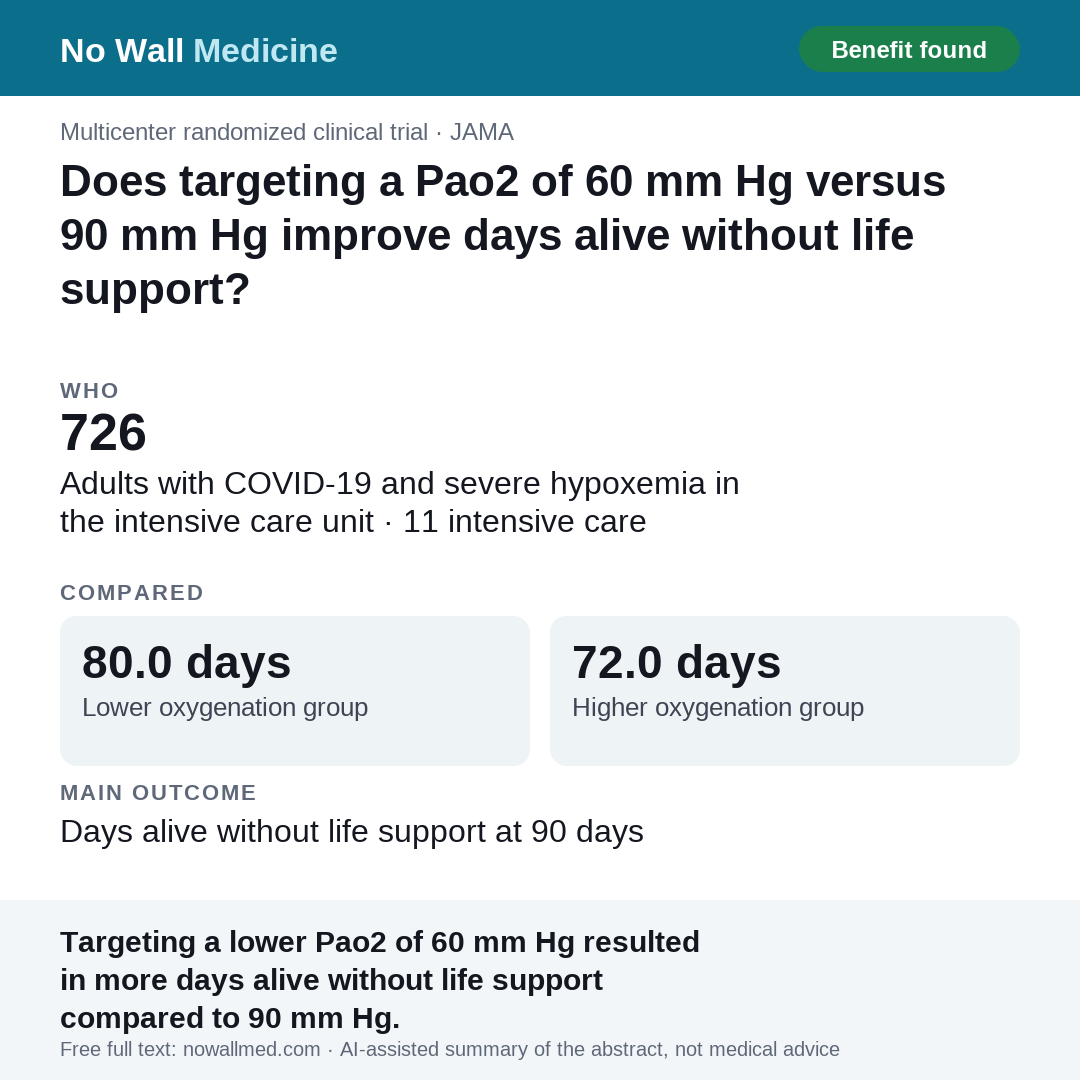
Lower vs Higher Oxygenation Target and Days Alive Without Life Support in COVID-19: The HOT-COVID Randomized Clinical Trial
Multicenter randomized clinical trialBenefit found
Does targeting a Pao2 of 60 mm Hg versus 90 mm Hg improve days alive without life support?
Who
726
Adults with COVID-19 and severe hypoxemia in the intensive care unit · 11 intensive care units in Europe
Compared
80.0 daysLower oxygenation group (IQR, 9.0-89.0 days)
72.0 daysHigher oxygenation group (IQR, 2.0-88.0 days)
Main outcome
Days alive without life support at 90 days
Result: adjusted mean difference, 5.8 days (95% CI, 0.2-11.5 days)
Bottom line: Targeting a lower Pao2 of 60 mm Hg resulted in more days alive without life support compared to 90 mm Hg.
JAMA · 2024-03-19Download image
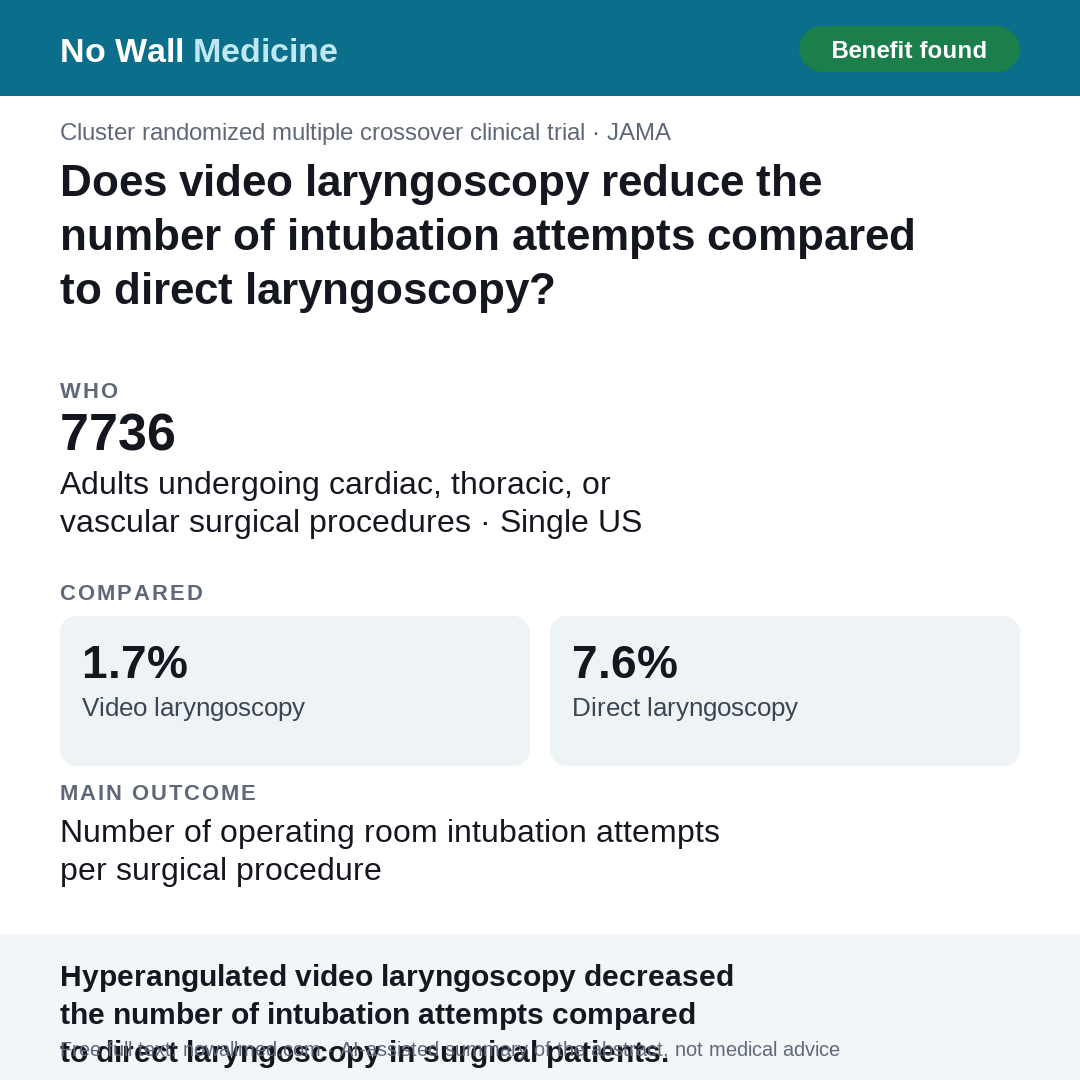
Video Laryngoscopy vs Direct Laryngoscopy for Endotracheal Intubation in the Operating Room: A Cluster Randomized Clinical Trial
Cluster randomized multiple crossover clinical trialBenefit found
Does video laryngoscopy reduce the number of intubation attempts compared to direct laryngoscopy?
Who
7736
Adults undergoing cardiac, thoracic, or vascular surgical procedures · Single US academic hospital
Compared
1.7%Video laryngoscopy
7.6%Direct laryngoscopy
Main outcome
Number of operating room intubation attempts per surgical procedure
Result: proportional odds ratio 0.20 (95% CI, 0.14-0.28)
Bottom line: Hyperangulated video laryngoscopy decreased the number of intubation attempts compared to direct laryngoscopy in surgical patients.
JAMA · 2024-03-18Download image
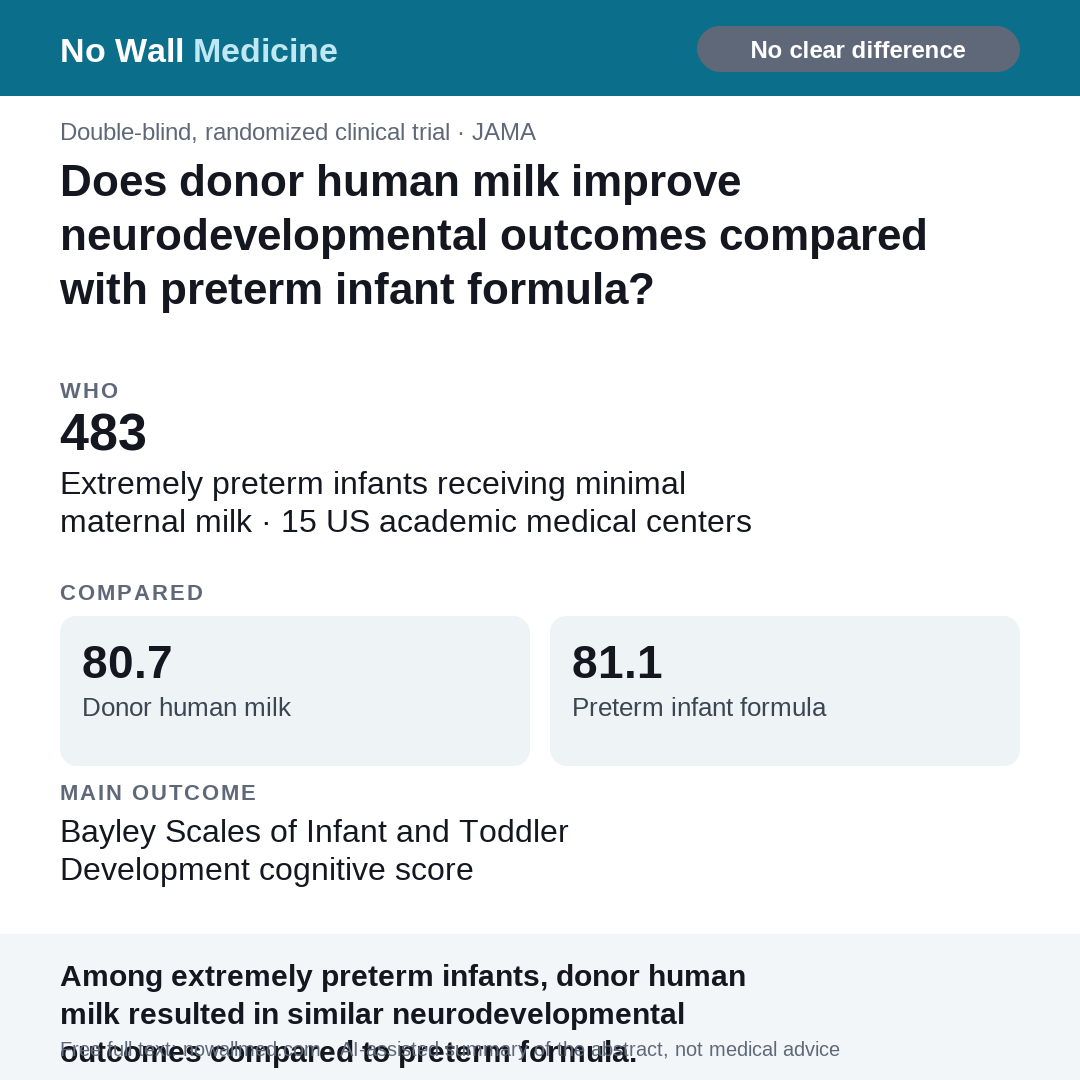
Neurodevelopmental Outcomes of Extremely Preterm Infants Fed Donor Milk or Preterm Infant Formula: A Randomized Clinical Trial
Double-blind, randomized clinical trialNo clear difference
Does donor human milk improve neurodevelopmental outcomes compared with preterm infant formula?
Who
483
Extremely preterm infants receiving minimal maternal milk · 15 US academic medical centers
Compared
80.7Donor human milk (SD, 17.4)
81.1Preterm infant formula (SD, 16.7)
Main outcome
Bayley Scales of Infant and Toddler Development cognitive score
Result: adjusted mean difference, -0.77 (95% CI, -3.93 to 2.39)
Bottom line: Among extremely preterm infants, donor human milk resulted in similar neurodevelopmental outcomes compared to preterm formula.
JAMA · 2024-03-18Download image
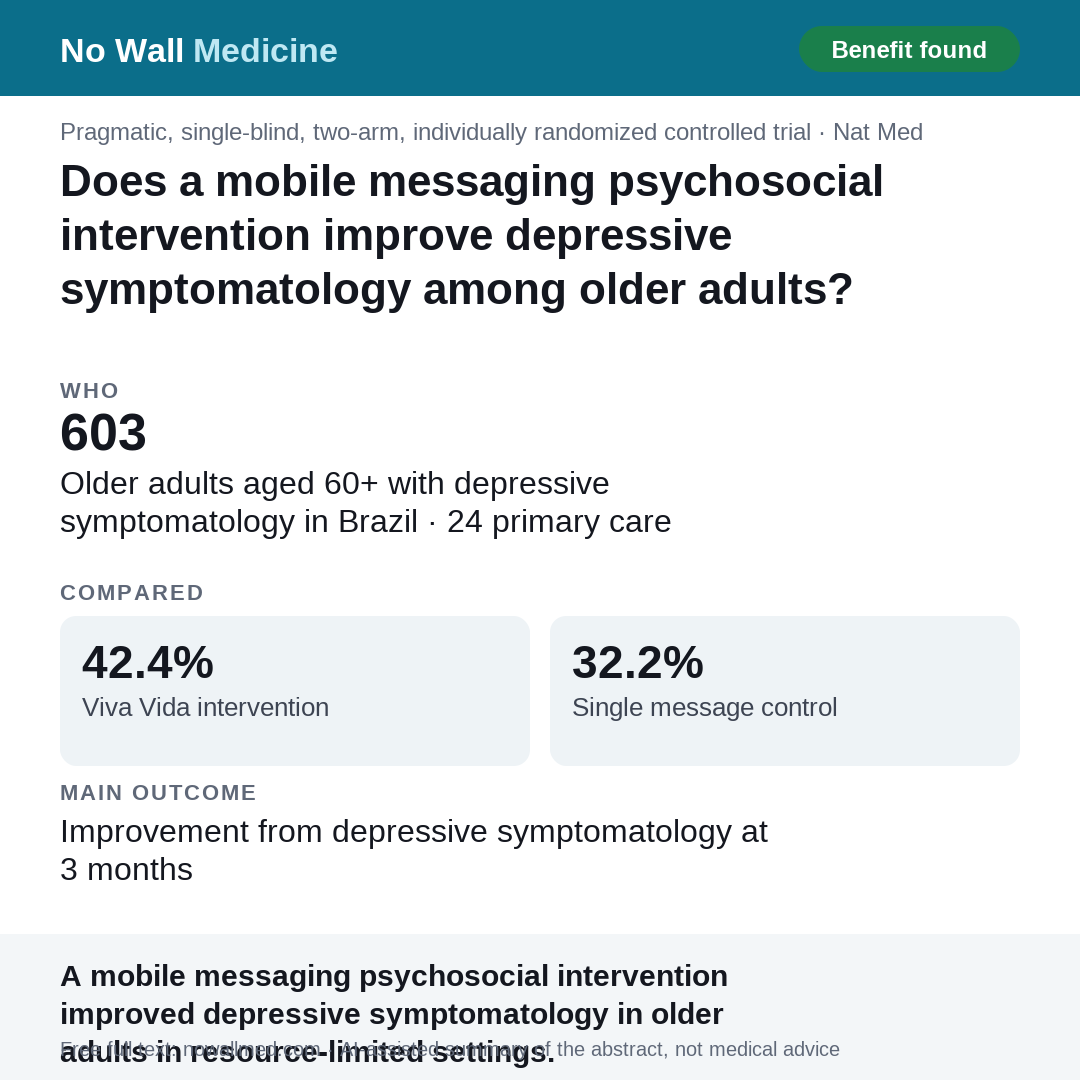
Self-help mobile messaging intervention for depression among older adults in resource-limited settings: a randomized controlled trial
Pragmatic, single-blind, two-arm, individually randomized controlled trialBenefit found
Does a mobile messaging psychosocial intervention improve depressive symptomatology among older adults?
Who
603
Older adults aged 60+ with depressive symptomatology in Brazil · 24 primary care clinics in Guarulhos, Brazil
Compared
42.4%Viva Vida intervention (109/257)
32.2%Single message control (87/270)
Main outcome
Improvement from depressive symptomatology at 3 months
Result: adjusted odds ratio 1.57 (95% confidence interval 1.07-2.29)
Bottom line: A mobile messaging psychosocial intervention improved depressive symptomatology in older adults in resource-limited settings.
Nat Med · 2024-03-14Download image
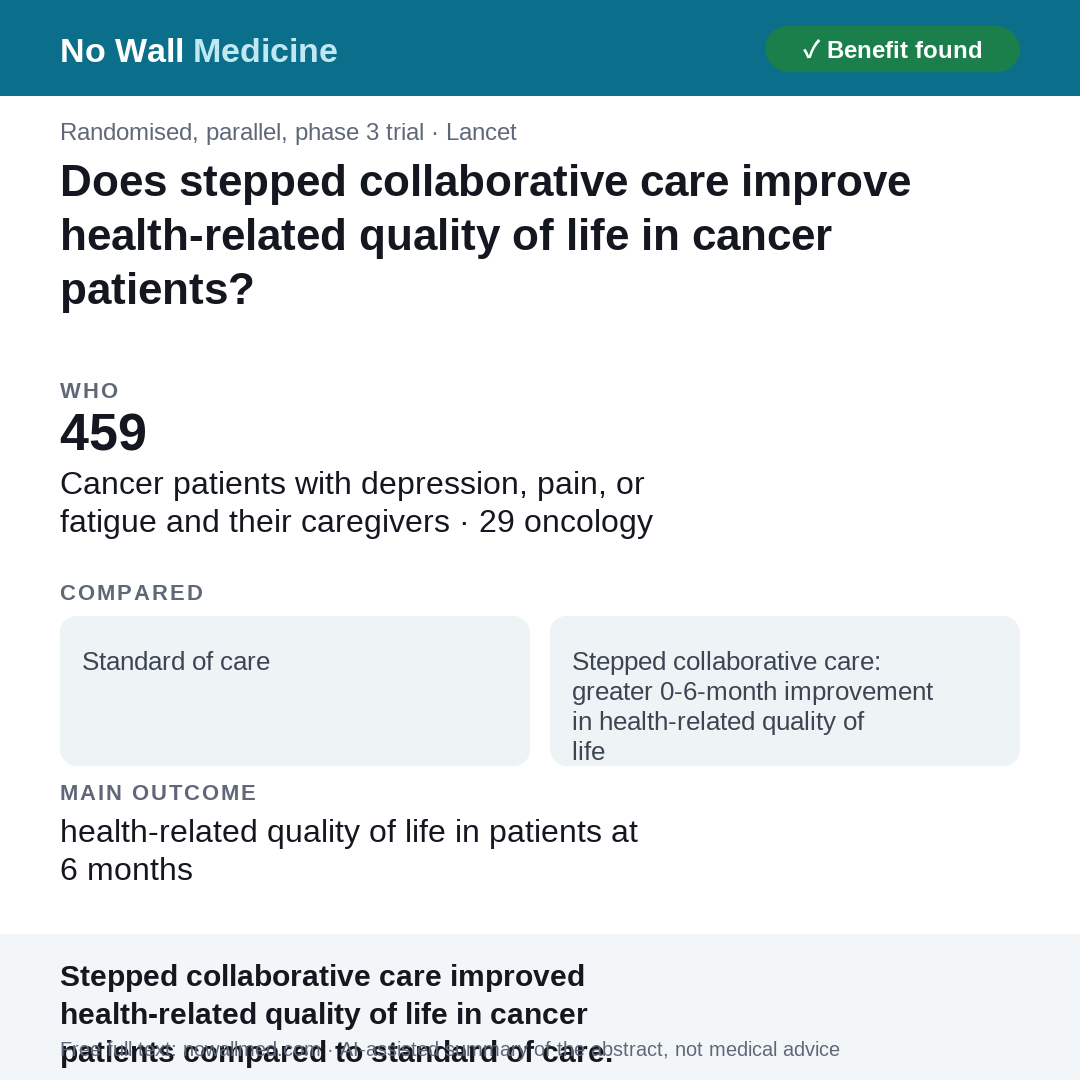
Patient, family caregiver, and economic outcomes of an integrated screening and novel stepped collaborative care intervention in the oncology setting in the USA (CARES): a randomised, parallel, phase 3 trial
Randomised, parallel, phase 3 trialBenefit found
Does stepped collaborative care improve health-related quality of life in cancer patients?
Who
459
Cancer patients with depression, pain, or fatigue and their caregivers · 29 oncology outpatient clinics in the USA
Compared
Standard of care
Stepped collaborative care: greater 0-6-month improvement in health-related quality of life
Main outcome
health-related quality of life in patients at 6 months
Result: effect size 0·09 (p=0·013)
Bottom line: Stepped collaborative care improved health-related quality of life in cancer patients compared to standard of care.
Funded by: US National Cancer Institute
Lancet · 2024-03-12Download image
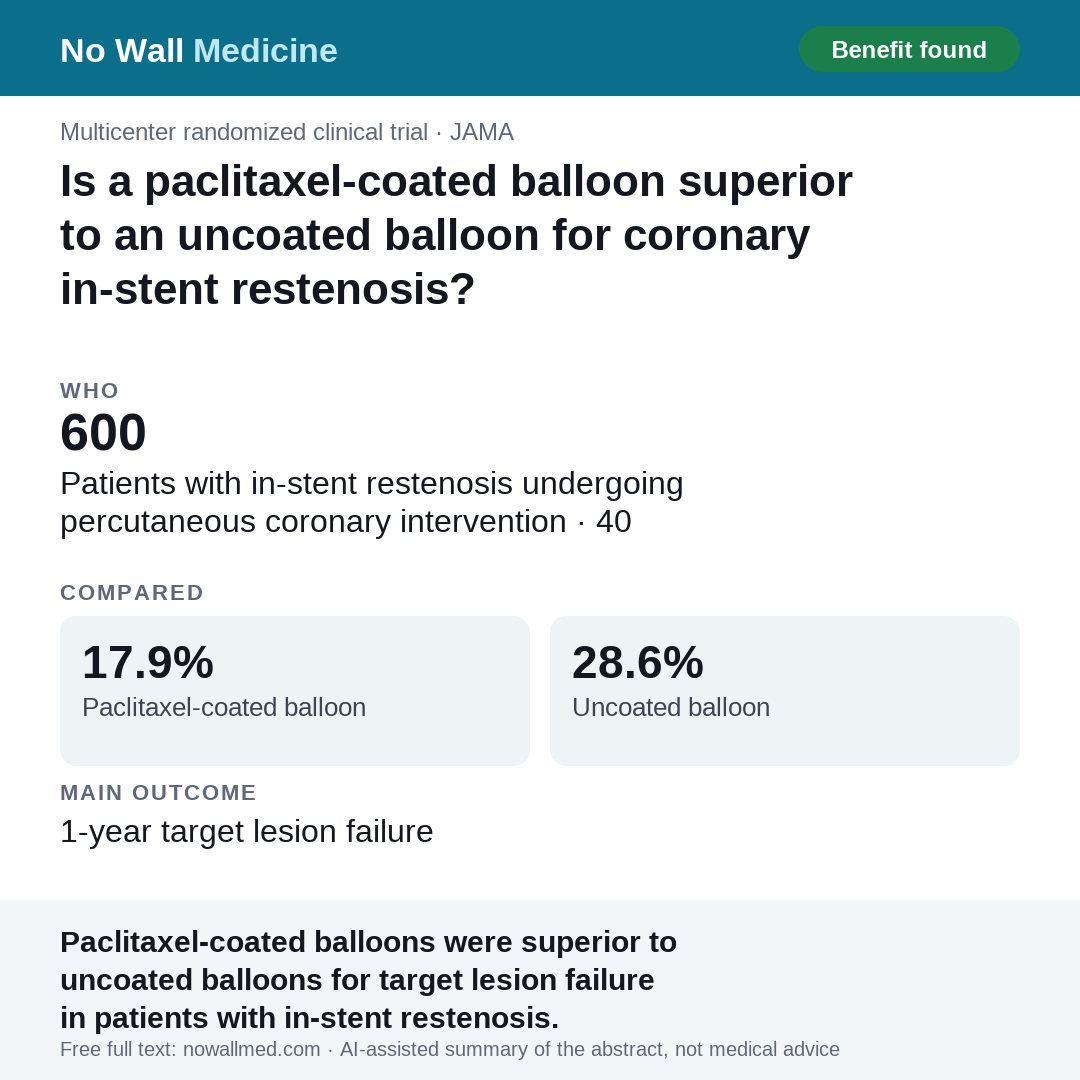
Paclitaxel-Coated Balloon vs Uncoated Balloon for Coronary In-Stent Restenosis: The AGENT IDE Randomized Clinical Trial
Multicenter randomized clinical trialBenefit found
Is a paclitaxel-coated balloon superior to an uncoated balloon for coronary in-stent restenosis?
Who
600
Patients with in-stent restenosis undergoing percutaneous coronary intervention · 40 centers across the United States
Compared
17.9%Paclitaxel-coated balloon
28.6%Uncoated balloon
Main outcome
1-year target lesion failure
Result: hazard ratio 0.59 (95% CI 0.42-0.84)
Bottom line: Paclitaxel-coated balloons were superior to uncoated balloons for target lesion failure in patients with in-stent restenosis.
JAMA · 2024-03-09Download image