Visual abstracts
New randomized trials and meta-analyses from leading journals at a glance: who was studied, what was compared, and what was found. Every paper is free to read in full.
All specialtiesCardiology 4763Oncology 4042Gastroenterology & Hepatology 1902Infectious Disease 3756Neurology 1872Psychiatry & Mental Health 2214Pulmonology 2042Critical Care 1319Endocrinology & Diabetes 2544Pediatrics 2889Surgery 2479Orthopedics & Sports Medicine 917Neurosurgery 525Cardiothoracic & Vascular Surgery 656Plastic & Reconstructive Surgery 574Nephrology 1107Rheumatology 810Hematology 1090Dermatology 611Ophthalmology 532Obstetrics & Gynecology 1645Public & Global Health 1037Radiology & Imaging 617Anesthesiology 957Urology 745ENT (Otolaryngology) 494Emergency Medicine 481Allergy & Immunology 309Geriatrics 972Family Medicine & Primary Care 533Medical Genetics & Genomics 659Pathology & Laboratory Medicine 156Physical Medicine & Rehabilitation 734Palliative Care 421Nutrition 1560Digital Health & AI 2133General Medicine 318
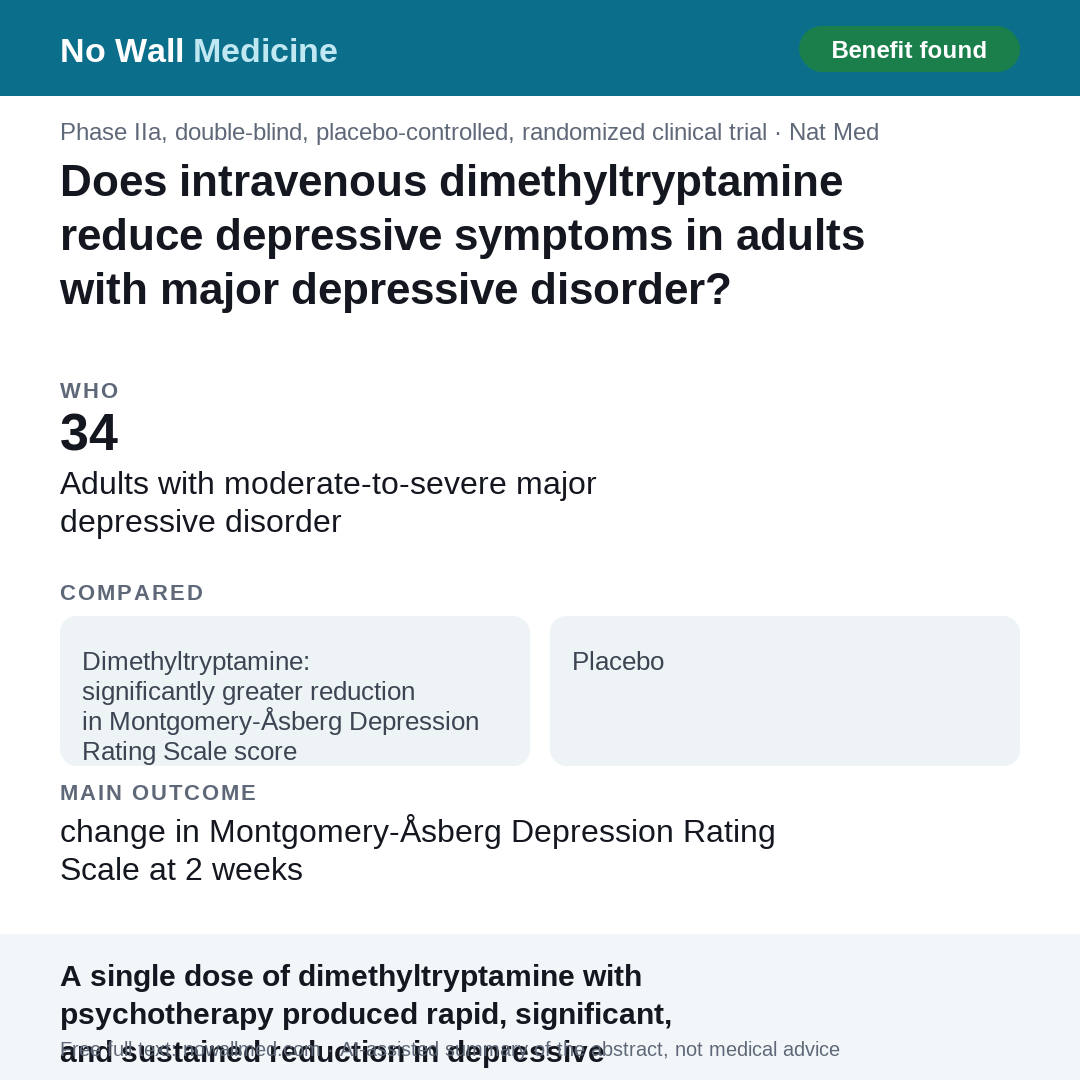
A short-acting psychedelic intervention for major depressive disorder: a phase IIa randomized placebo-controlled trial
Phase IIa, double-blind, placebo-controlled, randomized clinical trialEarly signal
Does intravenous dimethyltryptamine reduce depressive symptoms in adults with major depressive disorder?
Who
34
Adults with moderate-to-severe major depressive disorder
Compared
Dimethyltryptamine: significantly greater reduction in Montgomery-Åsberg Depression Rating Scale score
Placebo
Main outcome
change in Montgomery-Åsberg Depression Rating Scale at 2 weeks
Result: mean difference -7.35 (95% CI -13.62 to -1.08)
Bottom line: A single dose of dimethyltryptamine with psychotherapy produced rapid, significant, and sustained reduction in depressive symptoms.
Nat Med · 2026-02-16Download image
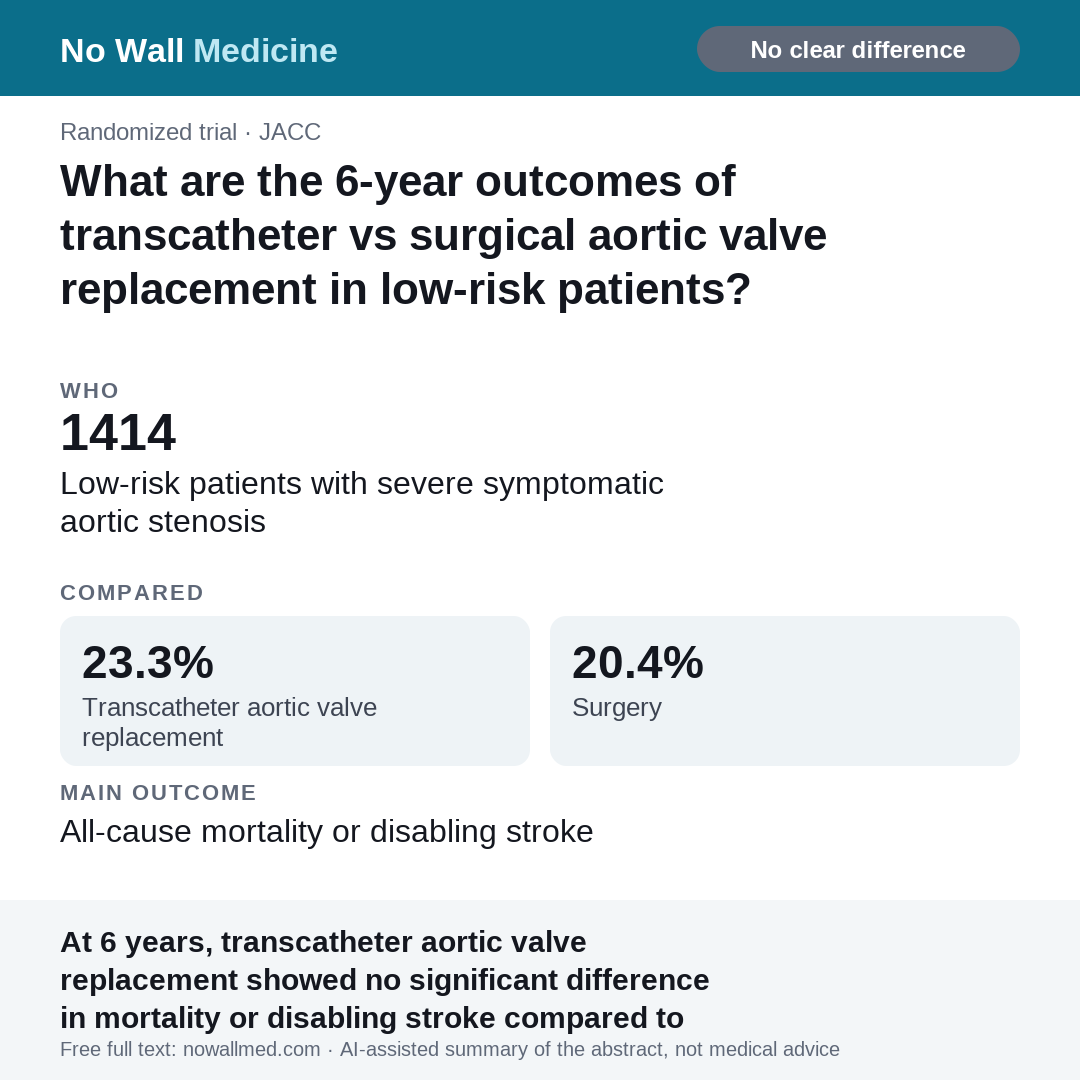
Six-Year Outcomes After Transcatheter vs Surgical Aortic Valve Replacement in Low-Risk Patients With Aortic Stenosis
Randomized trialNo clear difference
What are the 6-year outcomes of transcatheter vs surgical aortic valve replacement in low-risk patients?
Who
1414
Low-risk patients with severe symptomatic aortic stenosis
Compared
23.3%Transcatheter aortic valve replacement
20.4%Surgery
Main outcome
All-cause mortality or disabling stroke
Result: difference: 2.8% (95% CI: -1.9% to 7.6%)
Bottom line: At 6 years, transcatheter aortic valve replacement showed no significant difference in mortality or disabling stroke compared to surgery.
JACC · 2026-02-16Download image
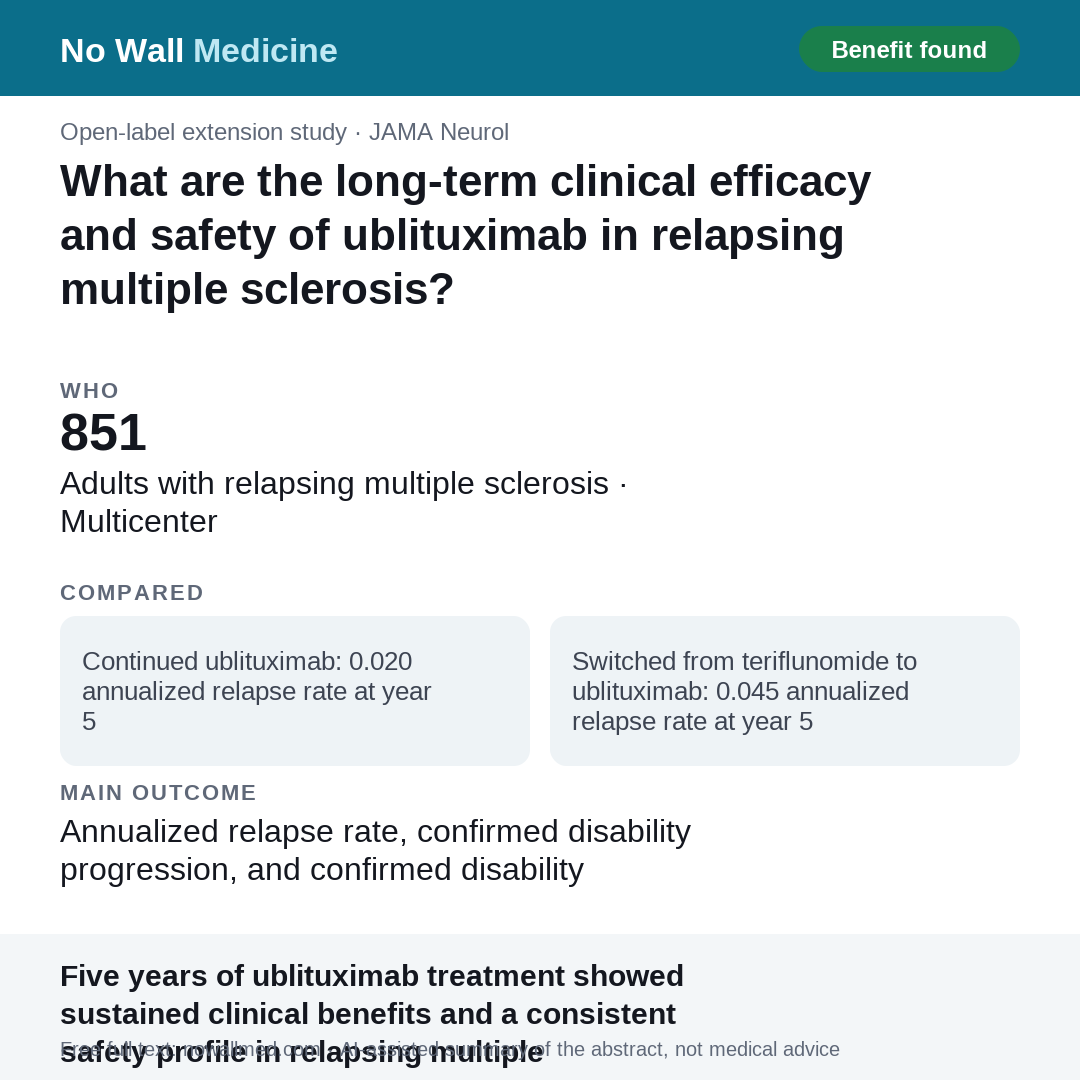
Five Years of Ublituximab in Multiple Sclerosis: ULTIMATE I and II Open-Label Extension Study
Open-label extension studyBenefit found
What are the long-term clinical efficacy and safety of ublituximab in relapsing multiple sclerosis?
Who
851
Adults with relapsing multiple sclerosis · Multicenter
Compared
Continued ublituximab: 0.020 annualized relapse rate at year 5
Switched from teriflunomide to ublituximab: 0.045 annualized relapse rate at year 5
Main outcome
Annualized relapse rate, confirmed disability progression, and confirmed disability improvement
Result: rate ratio 0.42 (95% CI 0.29 to 0.60)
Bottom line: Five years of ublituximab treatment showed sustained clinical benefits and a consistent safety profile in relapsing multiple sclerosis.
JAMA Neurol · 2026-02-16Download image
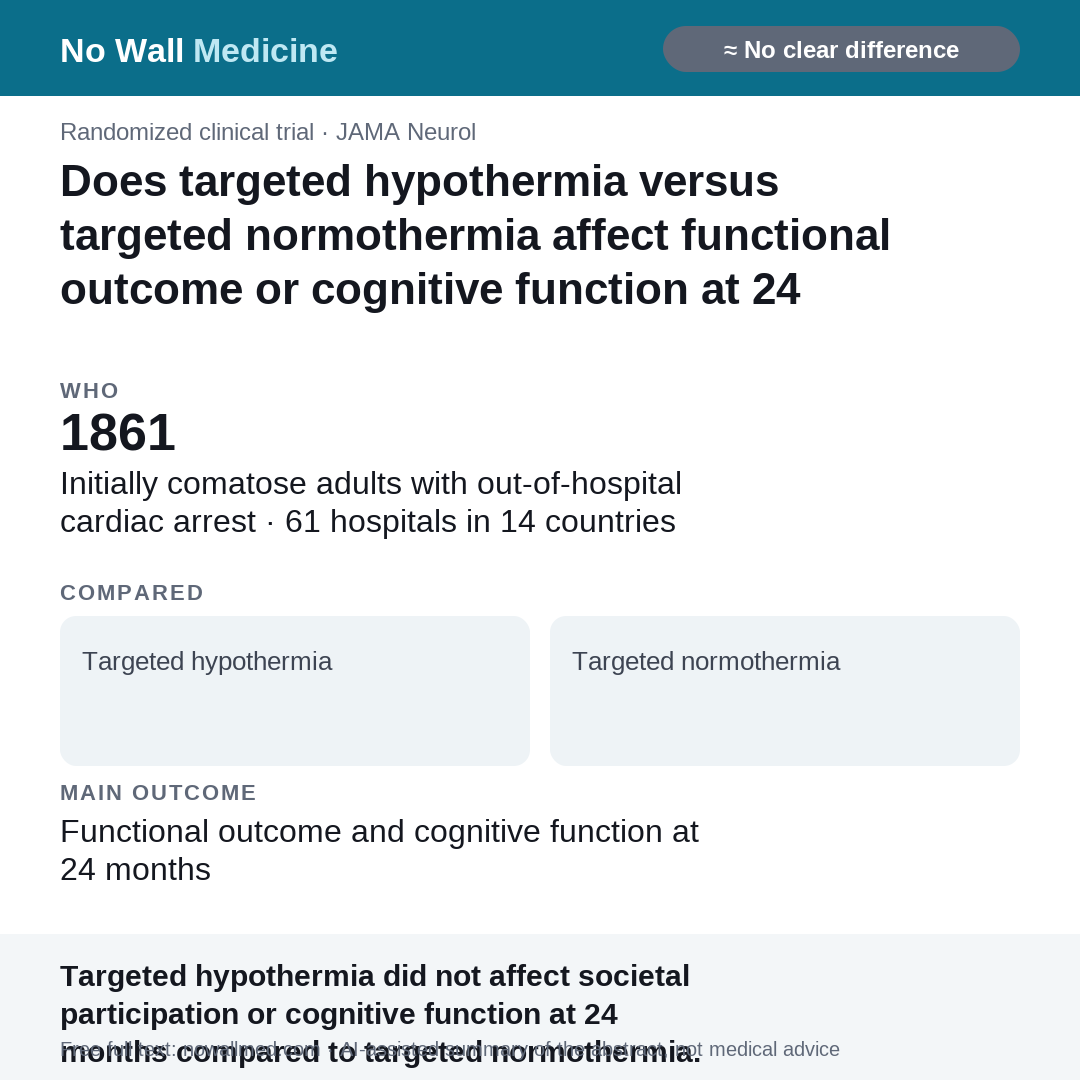
Long-Term Outcomes and Recovery Trajectories in Out-of-Hospital Cardiac Arrest: A 2-Year Follow-Up of the Randomized Clinical TTM2 Trial
Randomized clinical trialNo clear difference
Does targeted hypothermia versus targeted normothermia affect functional outcome or cognitive function at 24 months?
Who
1861
Initially comatose adults with out-of-hospital cardiac arrest · 61 hospitals in 14 countries
Compared
Targeted hypothermia
Targeted normothermia
Main outcome
Functional outcome and cognitive function at 24 months
Result: odds ratio 0.97 (95% CI 0.72-1.30)
Bottom line: Targeted hypothermia did not affect societal participation or cognitive function at 24 months compared to targeted normothermia.
JAMA Neurol · 2026-02-16Download image
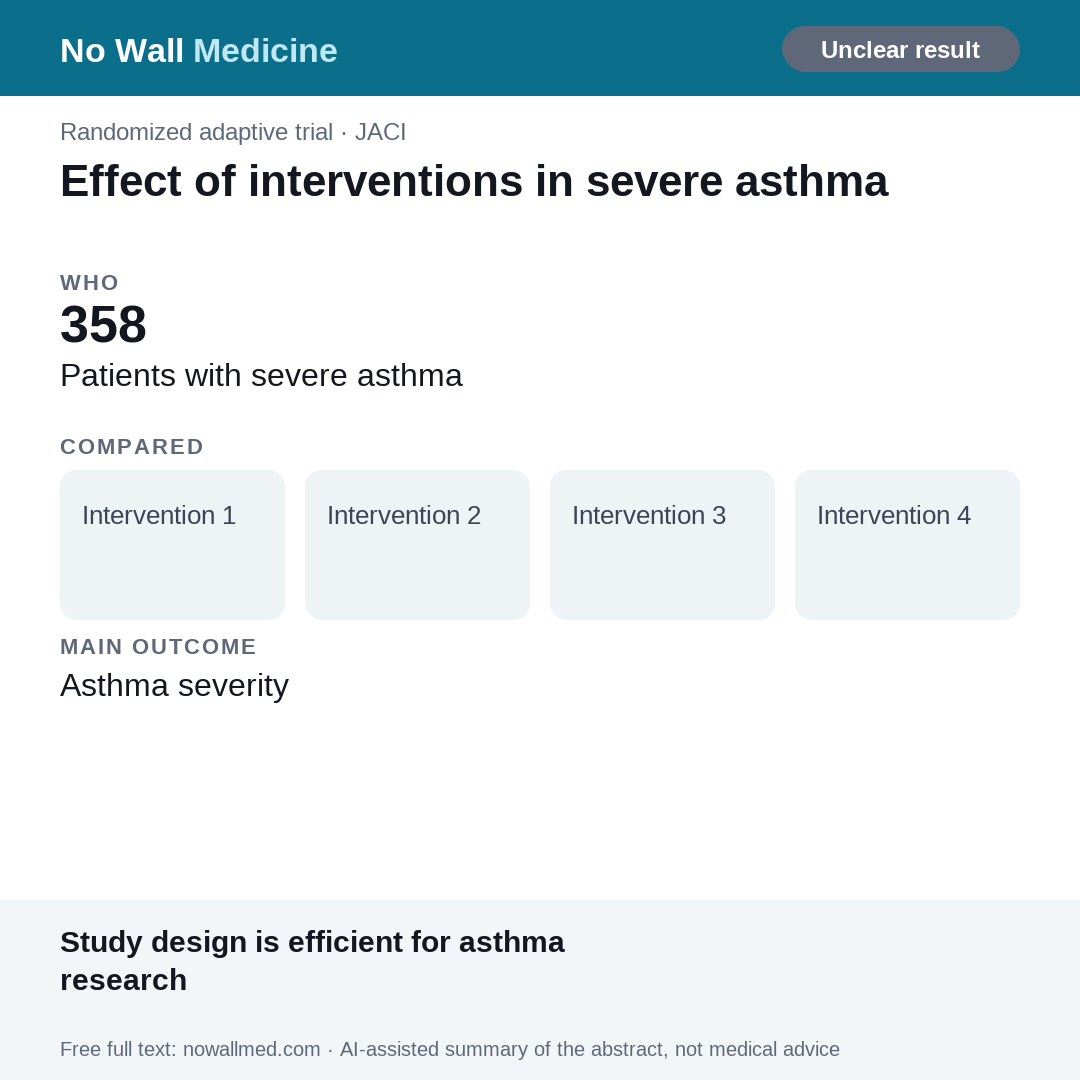
PrecISE-a biomarker-stratified adaptive trial of 5 interventions in severe asthma: Final protocol and the baseline cohort
Randomized adaptive trialUnclear result
Effect of interventions in severe asthma
Who
358
Patients with severe asthma
Compared
Intervention 1
Intervention 2
Intervention 3
Intervention 4
Main outcome
Asthma severity
Bottom line: Study design is efficient for asthma research
JACI · 2026-02-16Download image
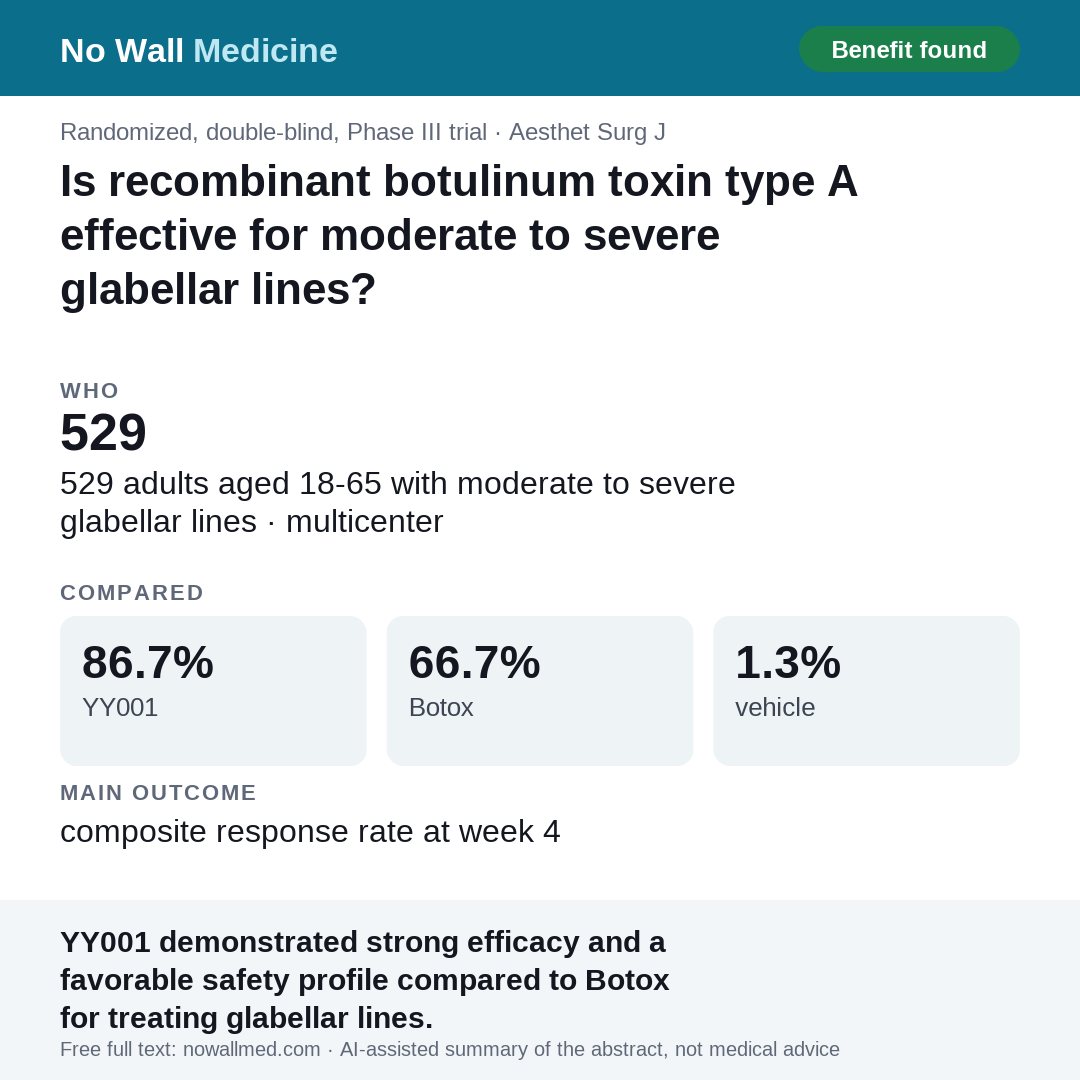
Therapeutic Efficacy and Safety of Recombinant Botulinum Toxin Type A for Moderate to Severe Glabellar Lines: A Randomized, Controlled, Double-blind, Phase III Trial in Chinese Adults
Randomized, double-blind, Phase III trialBenefit found
Is recombinant botulinum toxin type A effective for moderate to severe glabellar lines?
Who
529
529 adults aged 18-65 with moderate to severe glabellar lines · multicenter
Compared
86.7%YY001
66.7%Botox
1.3%vehicle
Main outcome
composite response rate at week 4
Bottom line: YY001 demonstrated strong efficacy and a favorable safety profile compared to Botox for treating glabellar lines.
Limitation: 12-week follow-up and ethnically homogenous population may limit generalizability.
Aesthet Surg J · 2026-02-16Download image
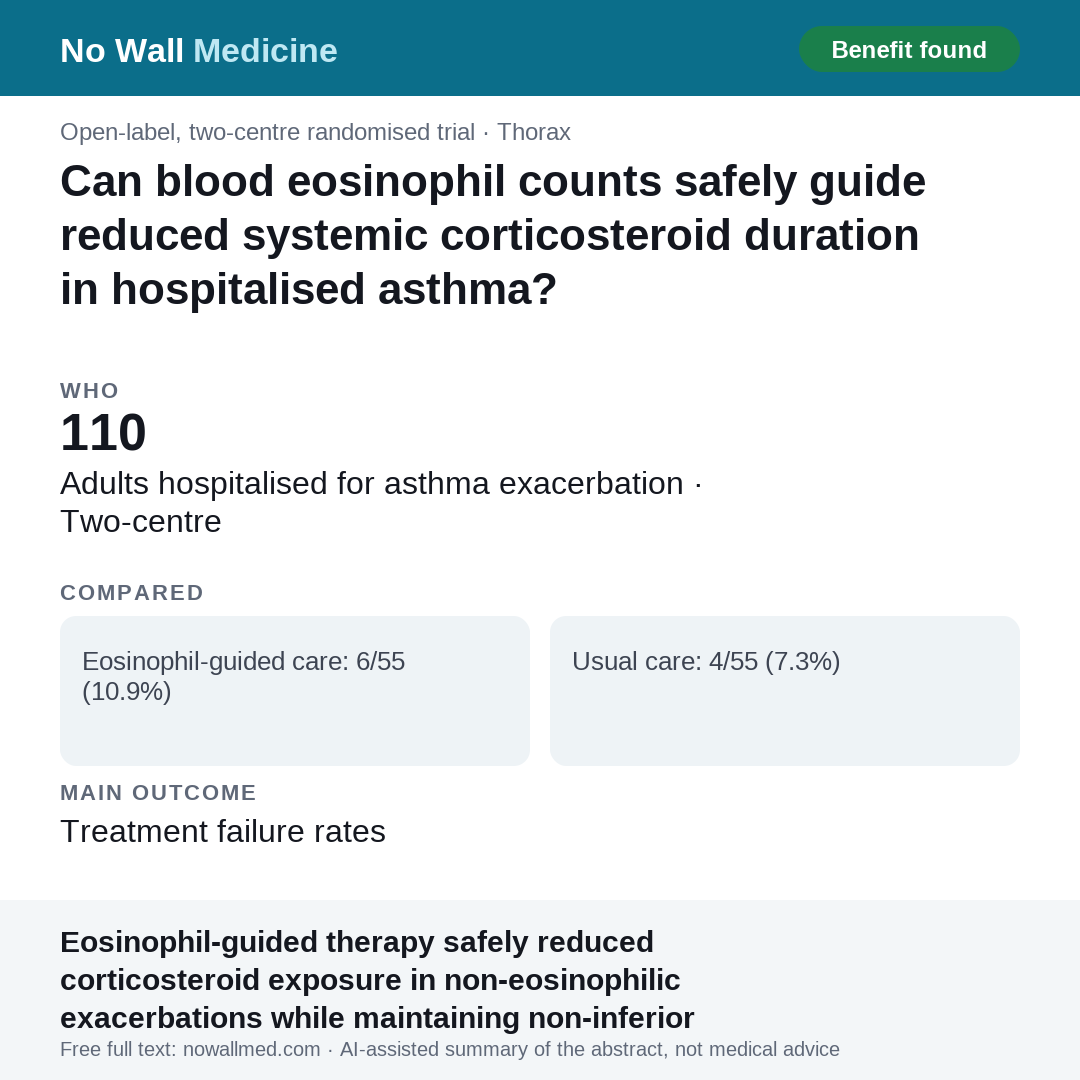
Blood eosinophil-guided systemic corticosteroid duration in adults hospitalised for asthma exacerbation: a randomised, controlled, open-label, non-inferiority trial
Open-label, two-centre randomised trialBenefit found
Can blood eosinophil counts safely guide reduced systemic corticosteroid duration in hospitalised asthma?
Who
110
Adults hospitalised for asthma exacerbation · Two-centre
Compared
Eosinophil-guided care: 6/55 (10.9%)
Usual care: 4/55 (7.3%)
Main outcome
Treatment failure rates
Result: 3.6% absolute difference (95% CI -8.9% to 16.2%)
Bottom line: Eosinophil-guided therapy safely reduced corticosteroid exposure in non-eosinophilic exacerbations while maintaining non-inferior outcomes.
Thorax · 2026-02-16Download image
A bioelectric dressing improves postderoofing outcomes in hidradenitis suppurativa by microbiome modulation: A split-body, randomized clinical trial
Randomized, single-center, split-body trialBenefit found
Does a bioelectric dressing improve outcomes after hidradenitis suppurativa deroofing compared to standard care?
Who
12
Patients with bilateral Hurley stages II-III axillary disease · Single-center
Compared
Bioelectric wound dressing: Minimal recurrences
Standard of care: Multiple recurrences
Main outcome
Healing rates and surgical site recurrence
Bottom line: Bioelectric wound dressings may reduce surgical site recurrence and reverse microbial dysbiosis after hidradenitis suppurativa deroofing.
JID Innov · 2026-02-16Download image

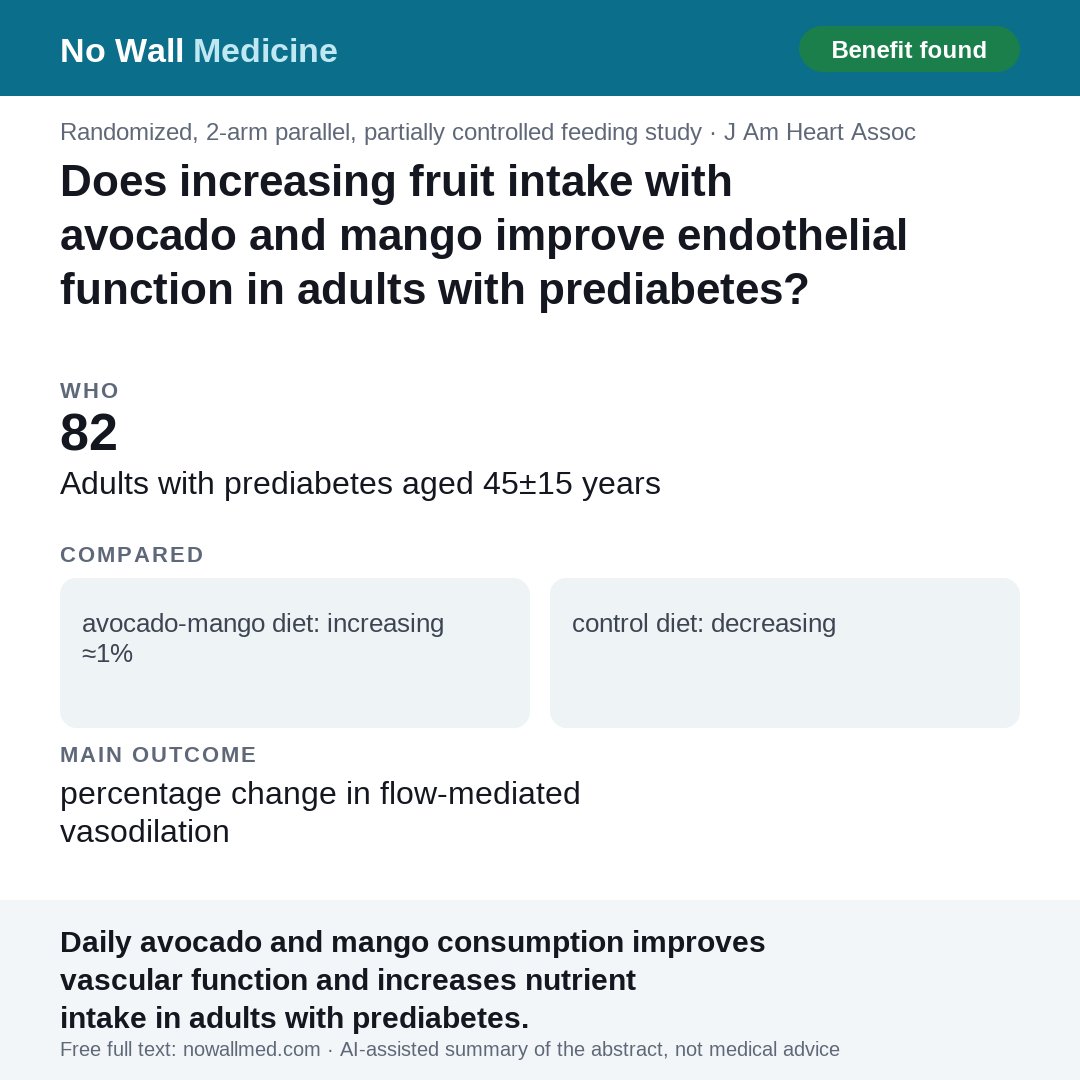
Effects of Increasing Total Fruit Intake With Avocado and Mango on Endothelial Function and Cardiometabolic Risk Factors in Adults With Prediabetes
Randomized, 2-arm parallel, partially controlled feeding studyBenefit found
Does increasing fruit intake with avocado and mango improve endothelial function in adults with prediabetes?
Who
82
Adults with prediabetes aged 45±15 years
Compared
avocado-mango diet: increasing ≈1%
control diet: decreasing
Main outcome
percentage change in flow-mediated vasodilation
Result: -2.11±0.77%; P=0.008
Bottom line: Daily avocado and mango consumption improves vascular function and increases nutrient intake in adults with prediabetes.
J Am Heart Assoc · 2026-02-16Download image
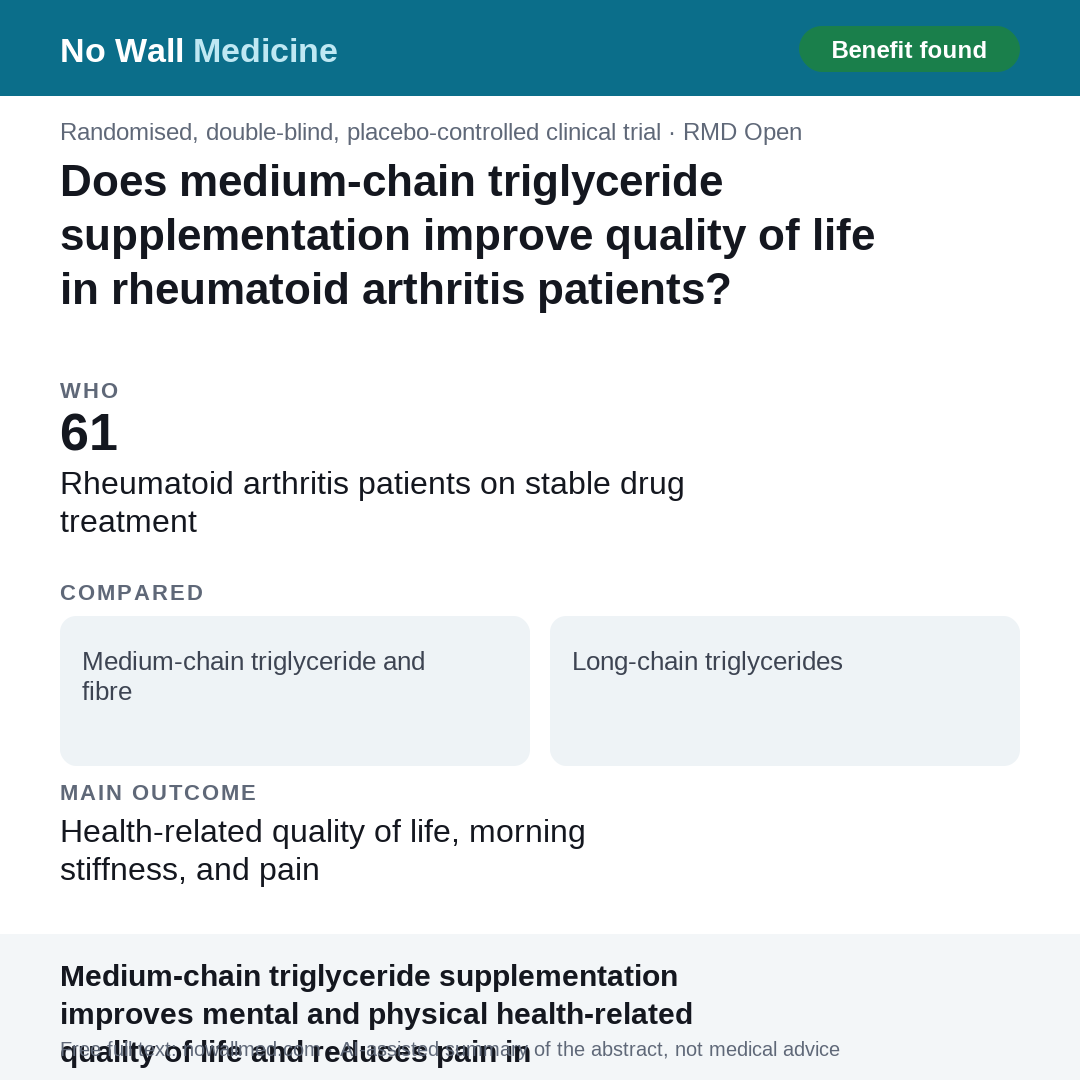
Improvements in quality-of-life dimensions through medium-chain triglyceride (MCT) supplementation in rheumatoid arthritis: updated findings from a randomised clinical trial
Randomised, double-blind, placebo-controlled clinical trialBenefit found
Does medium-chain triglyceride supplementation improve quality of life in rheumatoid arthritis patients?
Who
61
Rheumatoid arthritis patients on stable drug treatment
Compared
Medium-chain triglyceride and fibre
Long-chain triglycerides
Main outcome
Health-related quality of life, morning stiffness, and pain
Bottom line: Medium-chain triglyceride supplementation improves mental and physical health-related quality of life and reduces pain in rheumatoid arthritis.
RMD Open · 2026-02-16Download image
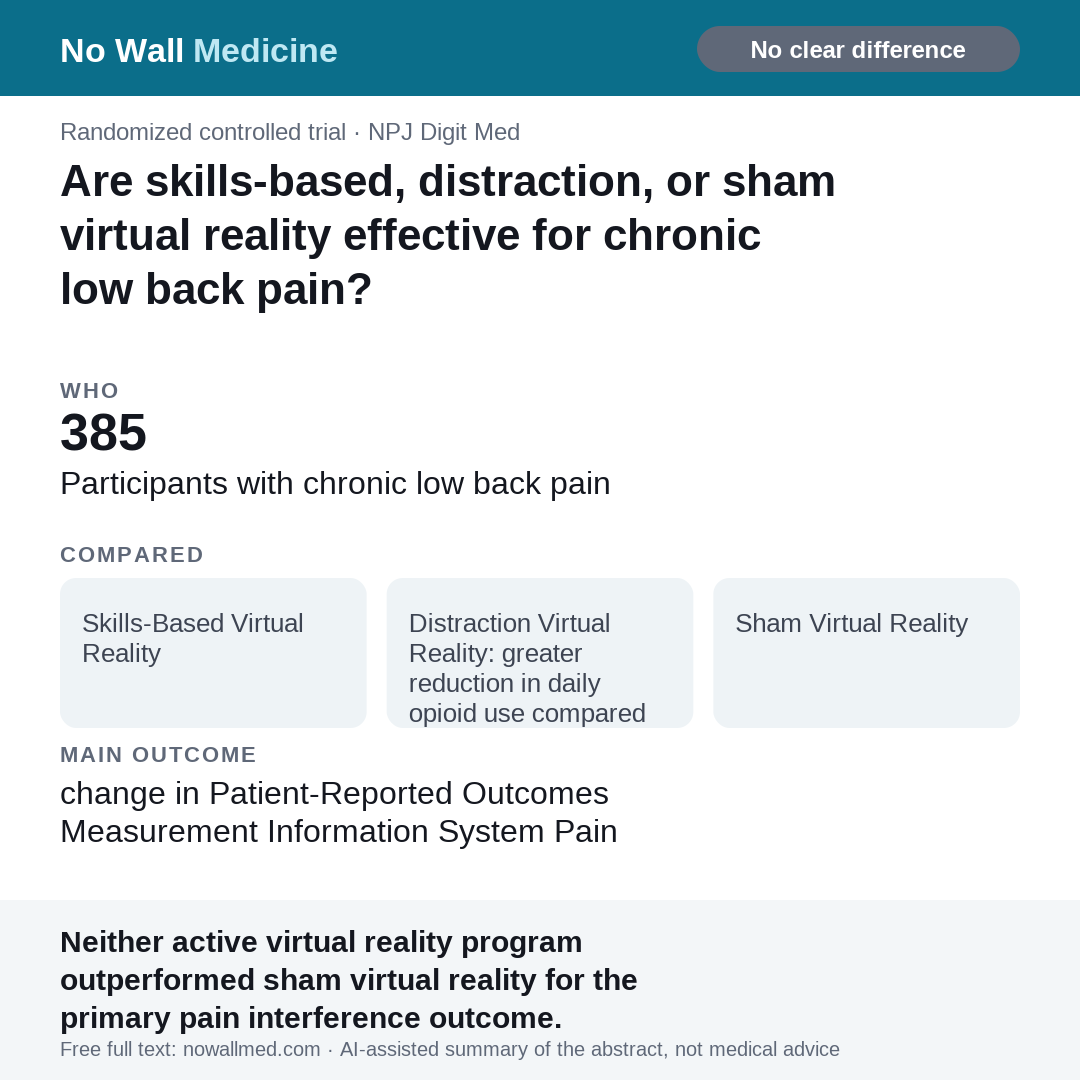
Randomized-controlled trial of skills-based vr vs. distraction vr vs. sham VR for chronic low back pain
Randomized controlled trialNo clear difference
Are skills-based, distraction, or sham virtual reality effective for chronic low back pain?
Who
385
Participants with chronic low back pain
Compared
Skills-Based Virtual Reality
Distraction Virtual Reality: greater reduction in daily opioid use compared to Sham VR
Sham Virtual Reality
Main outcome
change in Patient-Reported Outcomes Measurement Information System Pain Interference
Bottom line: Neither active virtual reality program outperformed sham virtual reality for the primary pain interference outcome.
Limitation: Future studies are needed to test anxiety-moderated effects and opioid-use reduction as primary outcomes.
NPJ Digit Med · 2026-02-16Download image
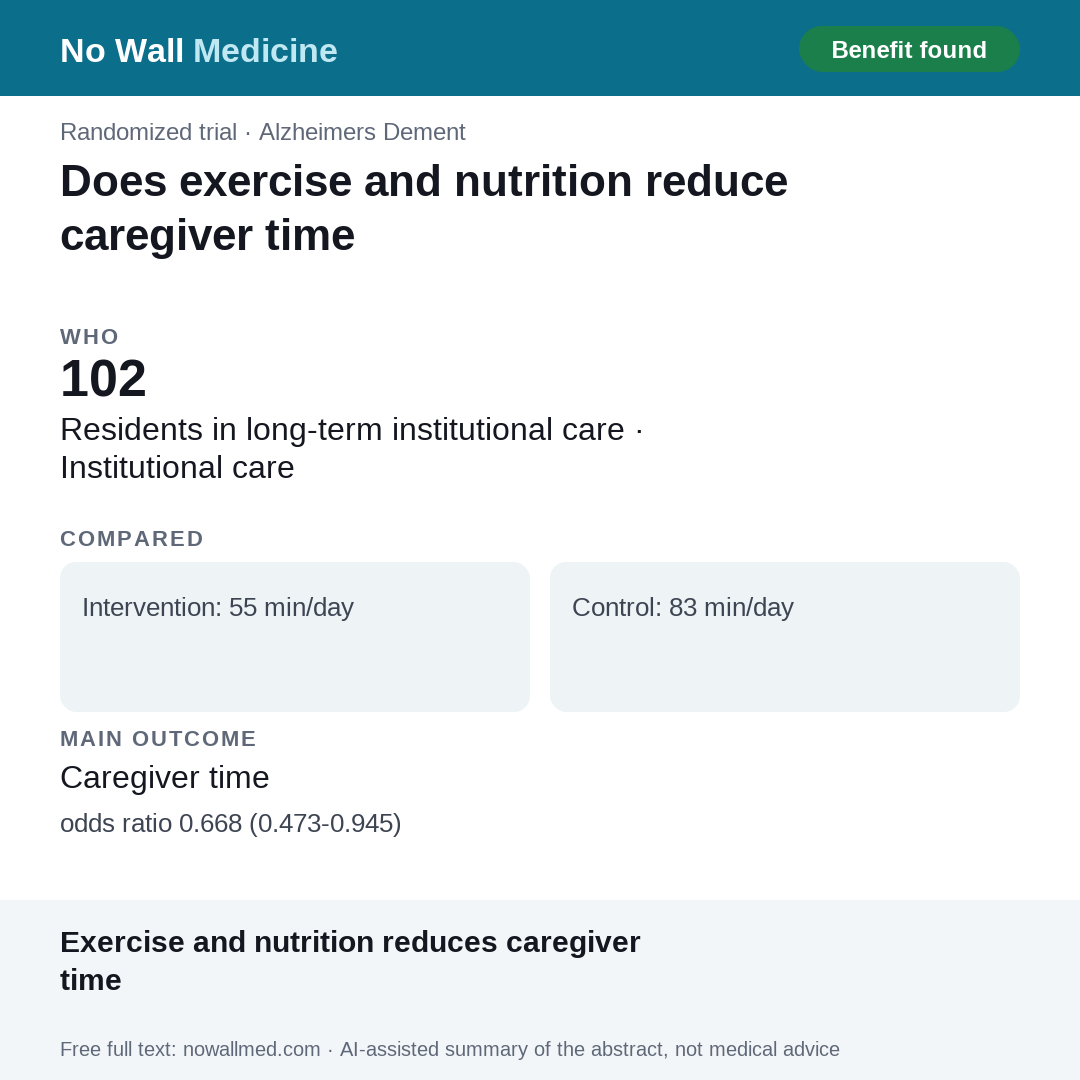
Impact of an exercise and nutrition program on caregiver time with residents in institutional care-A secondary analysis
Randomized trialBenefit found
Does exercise and nutrition reduce caregiver time
Who
102
Residents in long-term institutional care · Institutional care
Compared
Intervention: 55 min/day
Control: 83 min/day
Main outcome
Caregiver time
Result: odds ratio 0.668 (0.473-0.945)
Bottom line: Exercise and nutrition reduces caregiver time
Alzheimers Dement · 2026-02-15Download image
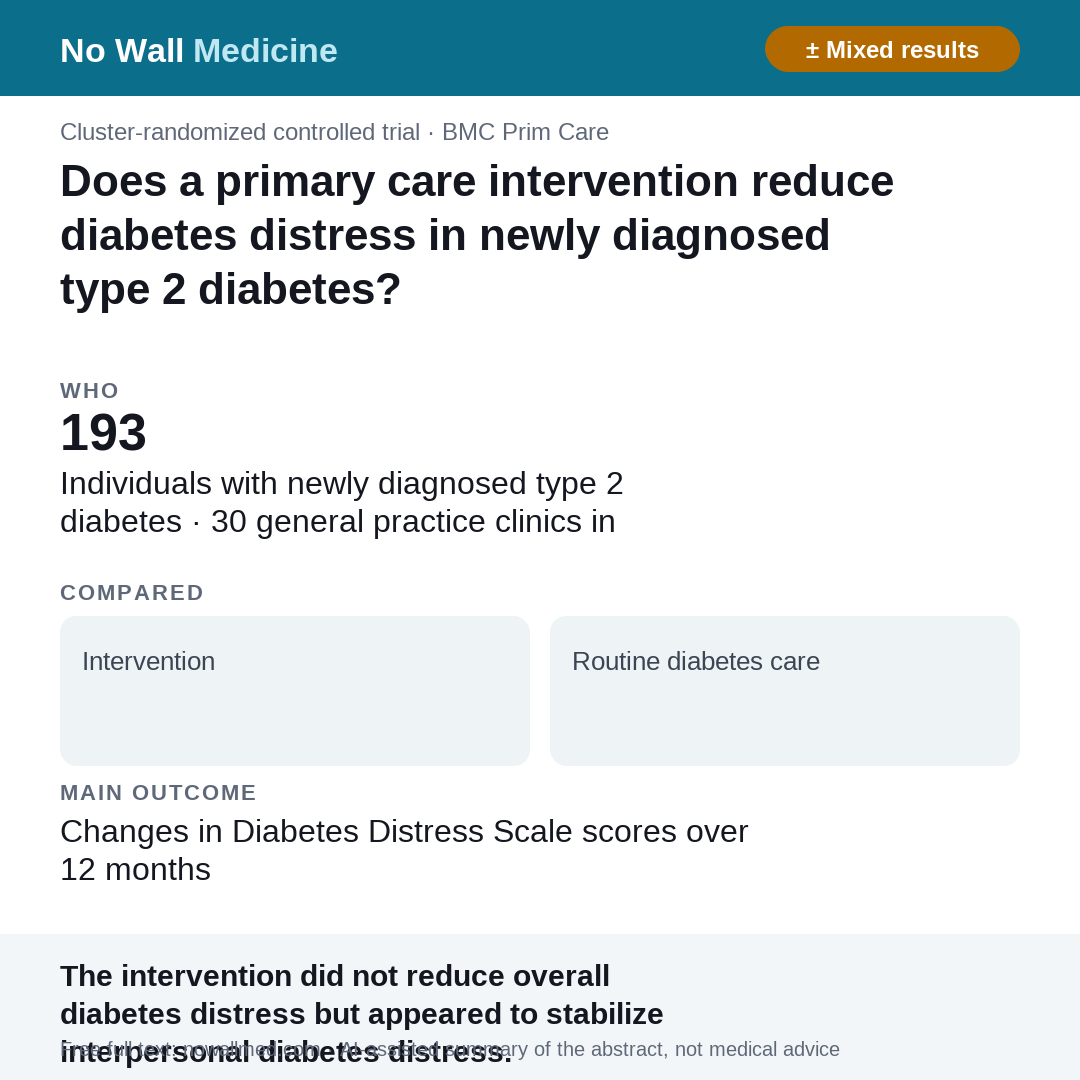
The effect of a primary care intervention on diabetes distress in individuals with newly diagnosed type 2 diabetes: a cluster-randomized controlled trial
Cluster-randomized controlled trialMixed results
Does a primary care intervention reduce diabetes distress in newly diagnosed type 2 diabetes?
Who
193
Individuals with newly diagnosed type 2 diabetes · 30 general practice clinics in Southern Denmark
Compared
Intervention
Routine diabetes care
Main outcome
Changes in Diabetes Distress Scale scores over 12 months
Result: β = −0.25, 95% CI = −0.49, 0.00
Bottom line: The intervention did not reduce overall diabetes distress but appeared to stabilize interpersonal diabetes distress.
Limitation: Low baseline distress, participant attrition, high quality routine care, and design limitations.
BMC Prim Care · 2026-02-15Download image
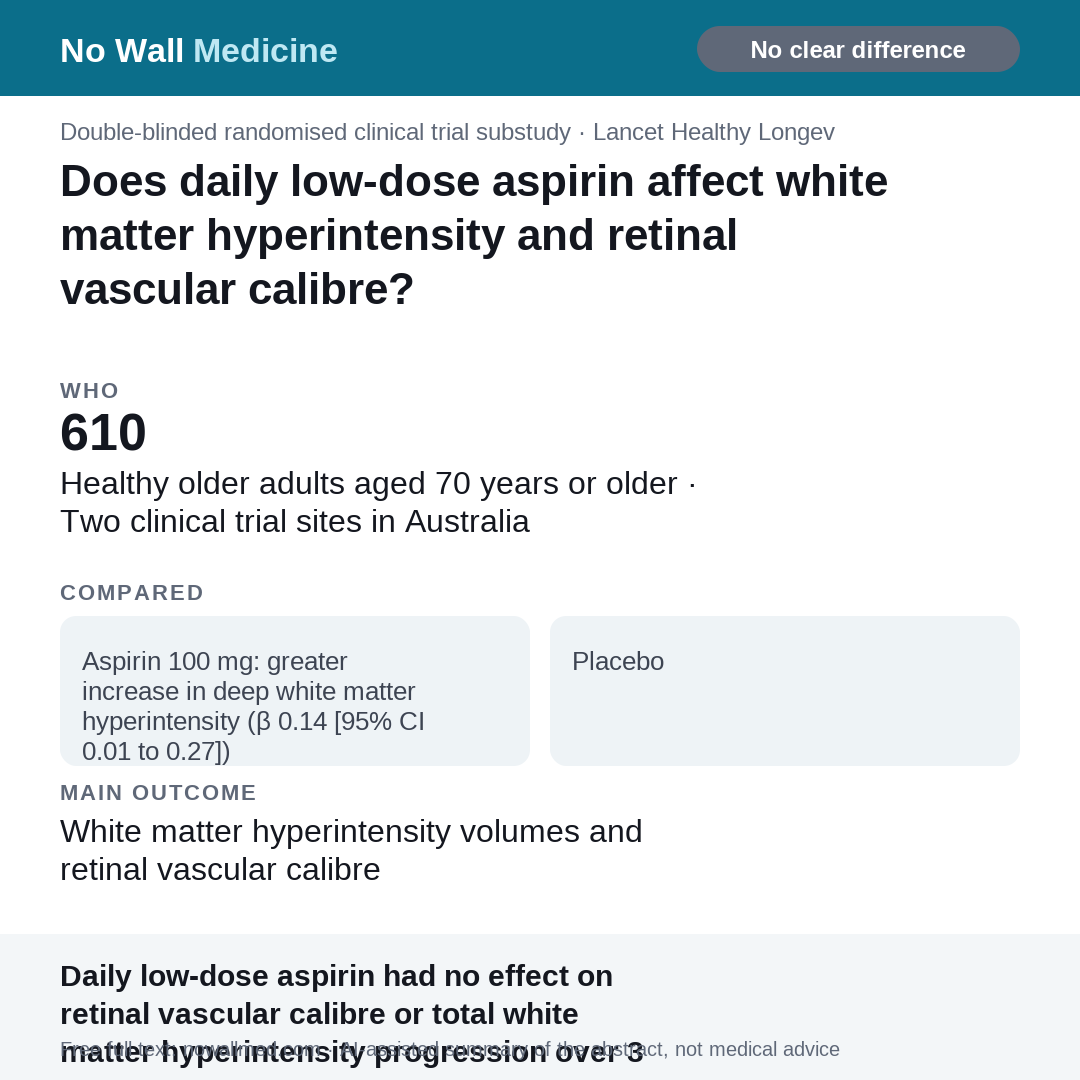
The effects of daily low-dose aspirin on white matter hyperintensity lesions and retinal vascular calibre in healthy older adults: the ENVIS-ion exploratory neuroimaging substudy of the ASPREE randomised clinical trial
Double-blinded randomised clinical trial substudyNo clear difference
Does daily low-dose aspirin affect white matter hyperintensity and retinal vascular calibre?
Who
610
Healthy older adults aged 70 years or older · Two clinical trial sites in Australia
Compared
Aspirin 100 mg: greater increase in deep white matter hyperintensity (β 0.14 [95% CI 0.01 to 0.27])
Placebo
Main outcome
White matter hyperintensity volumes and retinal vascular calibre
Bottom line: Daily low-dose aspirin had no effect on retinal vascular calibre or total white matter hyperintensity progression over 3 years.
Funded by: National Health and Medical Research Council of Australia
Lancet Healthy Longev · 2026-02-14Download image
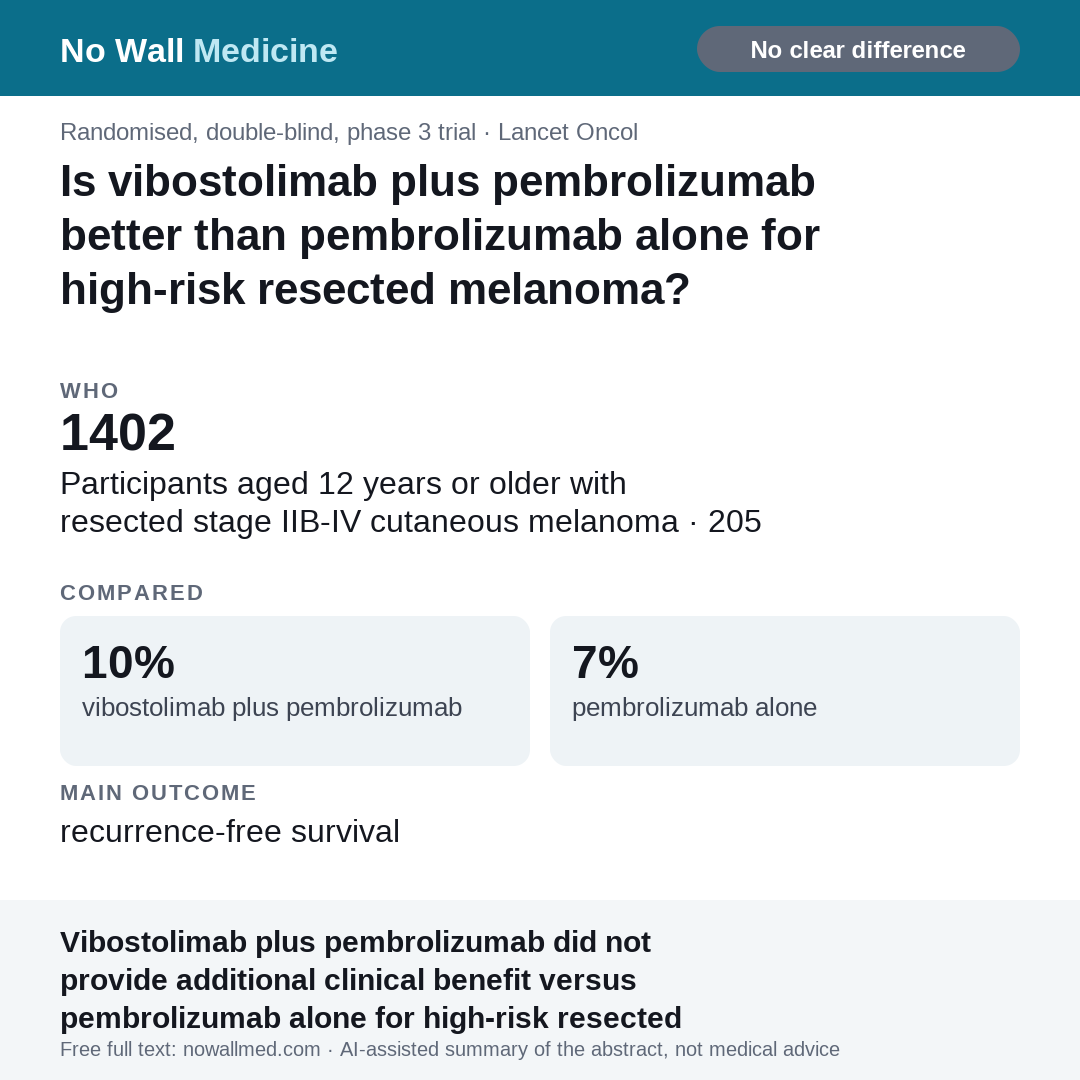
Vibostolimab coformulated with pembrolizumab versus pembrolizumab alone as adjuvant therapy for high-risk stage IIB-IV melanoma (KEYVIBE-010): a randomised, double-blind, phase 3 study
Randomised, double-blind, phase 3 trialNo clear difference
Is vibostolimab plus pembrolizumab better than pembrolizumab alone for high-risk resected melanoma?
Who
1402
Participants aged 12 years or older with resected stage IIB-IV cutaneous melanoma · 205 global sites
Compared
10%vibostolimab plus pembrolizumab (67/701)
7%pembrolizumab alone (52/701)
Main outcome
recurrence-free survival
Result: hazard ratio 1·25 (95% CI 0·9-1·8)
Bottom line: Vibostolimab plus pembrolizumab did not provide additional clinical benefit versus pembrolizumab alone for high-risk resected melanoma.
Funded by: Merck Sharp & Dohme
Lancet Oncol · 2026-02-13Download image
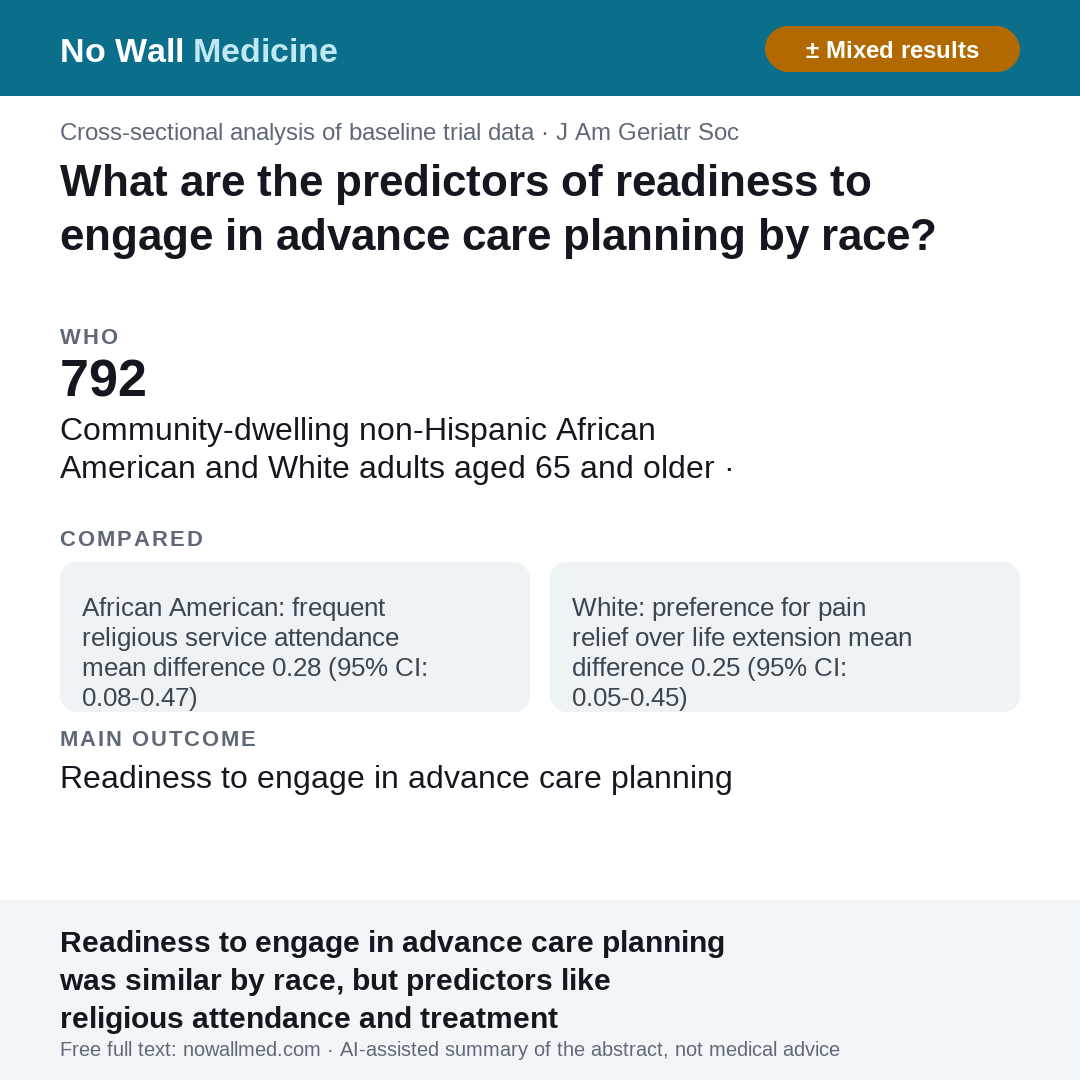
Predictors of Readiness to Engage in Advance Care Planning Among Older Adults With Serious Illness: Baseline Findings From the EQUAL ACP Study
Cross-sectional analysis of baseline trial dataMixed results
What are the predictors of readiness to engage in advance care planning by race?
Who
792
Community-dwelling non-Hispanic African American and White adults aged 65 and older · 10 primary care clinics across five Southern United States states
Compared
African American: frequent religious service attendance mean difference 0.28 (95% CI: 0.08-0.47)
White: preference for pain relief over life extension mean difference 0.25 (95% CI: 0.05-0.45)
Main outcome
Readiness to engage in advance care planning
Bottom line: Readiness to engage in advance care planning was similar by race, but predictors like religious attendance and treatment preferences varied.
J Am Geriatr Soc · 2026-02-13Download image
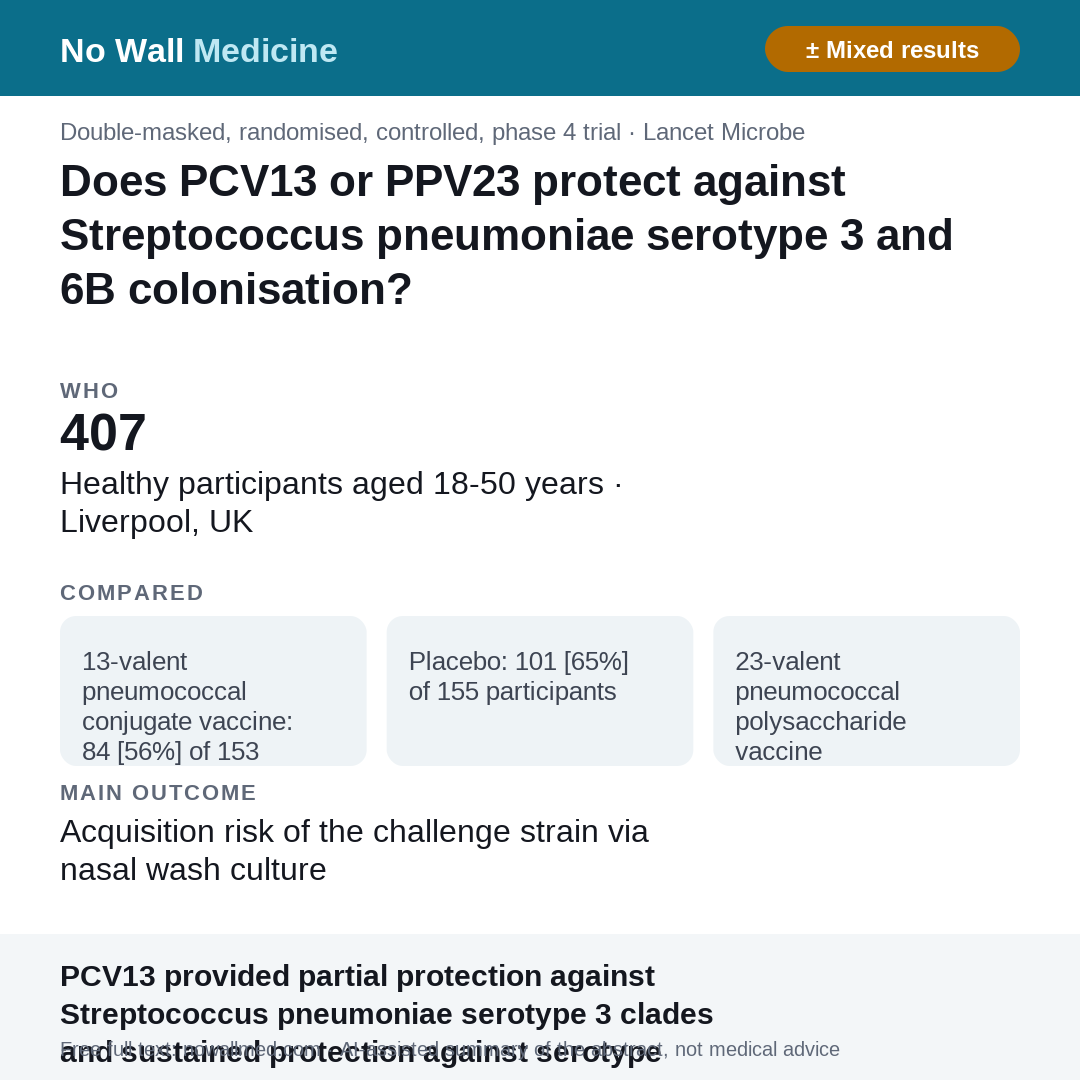
The effect of pneumococcal conjugate vaccine and pneumococcal polysaccharide vaccine on nasopharyngeal colonisation following human infection challenge with serotype 3 and serotype 6B (PREVENTING PNEUMO 2): a double-masked, randomised, controlled, phase 4 trial
Double-masked, randomised, controlled, phase 4 trialMixed results
Does PCV13 or PPV23 protect against Streptococcus pneumoniae serotype 3 and 6B colonisation?
Who
407
Healthy participants aged 18-50 years · Liverpool, UK
Compared
13-valent pneumococcal conjugate vaccine: 84 [56%] of 153 participants
Placebo: 101 [65%] of 155 participants
23-valent pneumococcal polysaccharide vaccine
Main outcome
Acquisition risk of the challenge strain via nasal wash culture
Result: relative risk 0·84, 95% CI 0·70-1·01
Bottom line: PCV13 provided partial protection against Streptococcus pneumoniae serotype 3 clades and sustained protection against serotype 6B, while PPV23 showed no protection.
Limitation: Recruitment for the second challenge was discontinued once the target number of participants was reached.
Lancet Microbe · 2026-02-13Download image
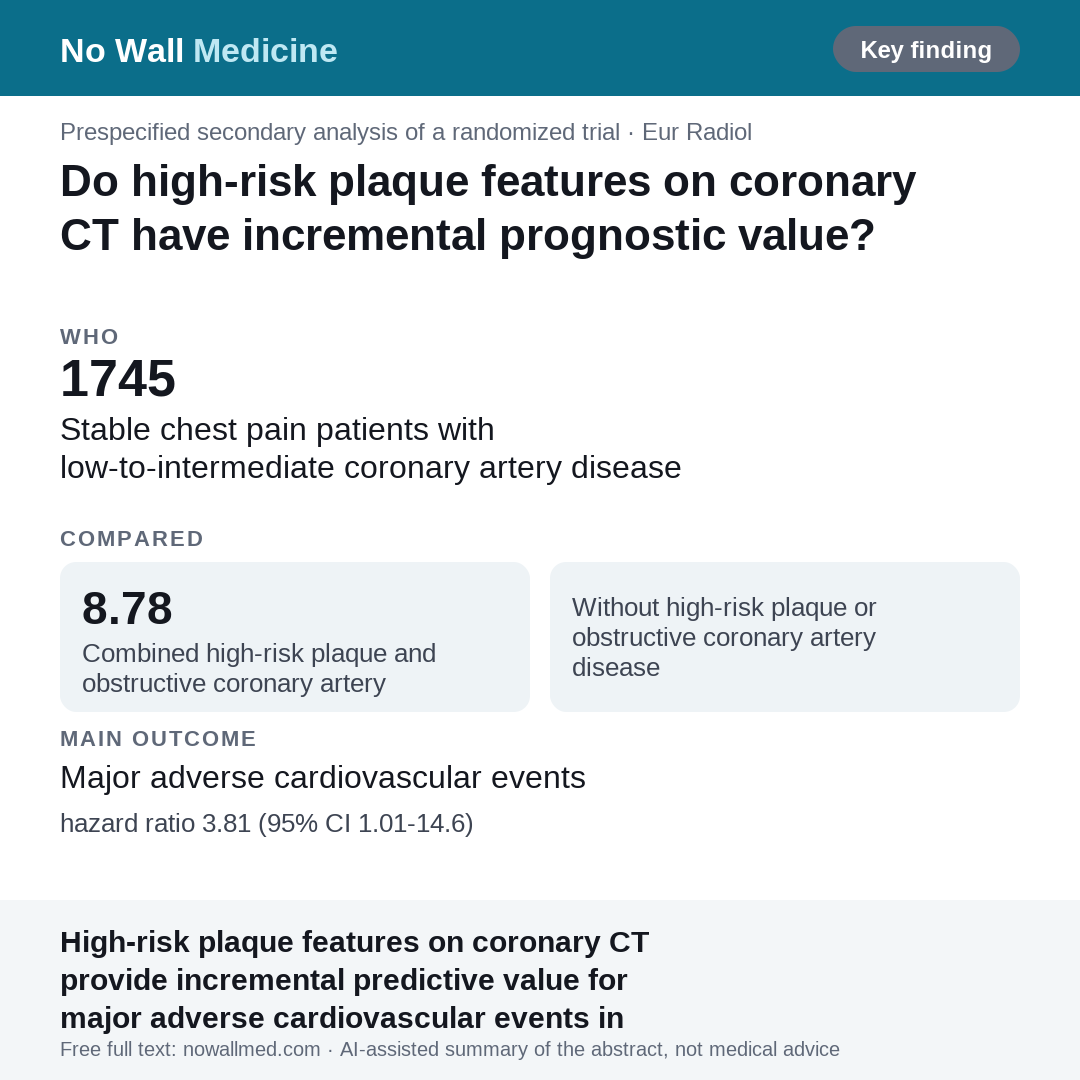
Association of high-risk CT coronary artery plaque features with major adverse cardiovascular events: a prespecified secondary analysis of the DISCHARGE trial
Prespecified secondary analysis of a randomized trialKey finding
Do high-risk plaque features on coronary CT have incremental prognostic value?
Who
1745
Stable chest pain patients with low-to-intermediate coronary artery disease probability · 26-center European cohort
Compared
8.78Combined high-risk plaque and obstructive coronary artery disease (95% CI 2.90-26.6)
Without high-risk plaque or obstructive coronary artery disease
Main outcome
Major adverse cardiovascular events
Result: hazard ratio 3.81 (95% CI 1.01-14.6)
Bottom line: High-risk plaque features on coronary CT provide incremental predictive value for major adverse cardiovascular events in stable chest pain patients.
Eur Radiol · 2026-02-13Download image
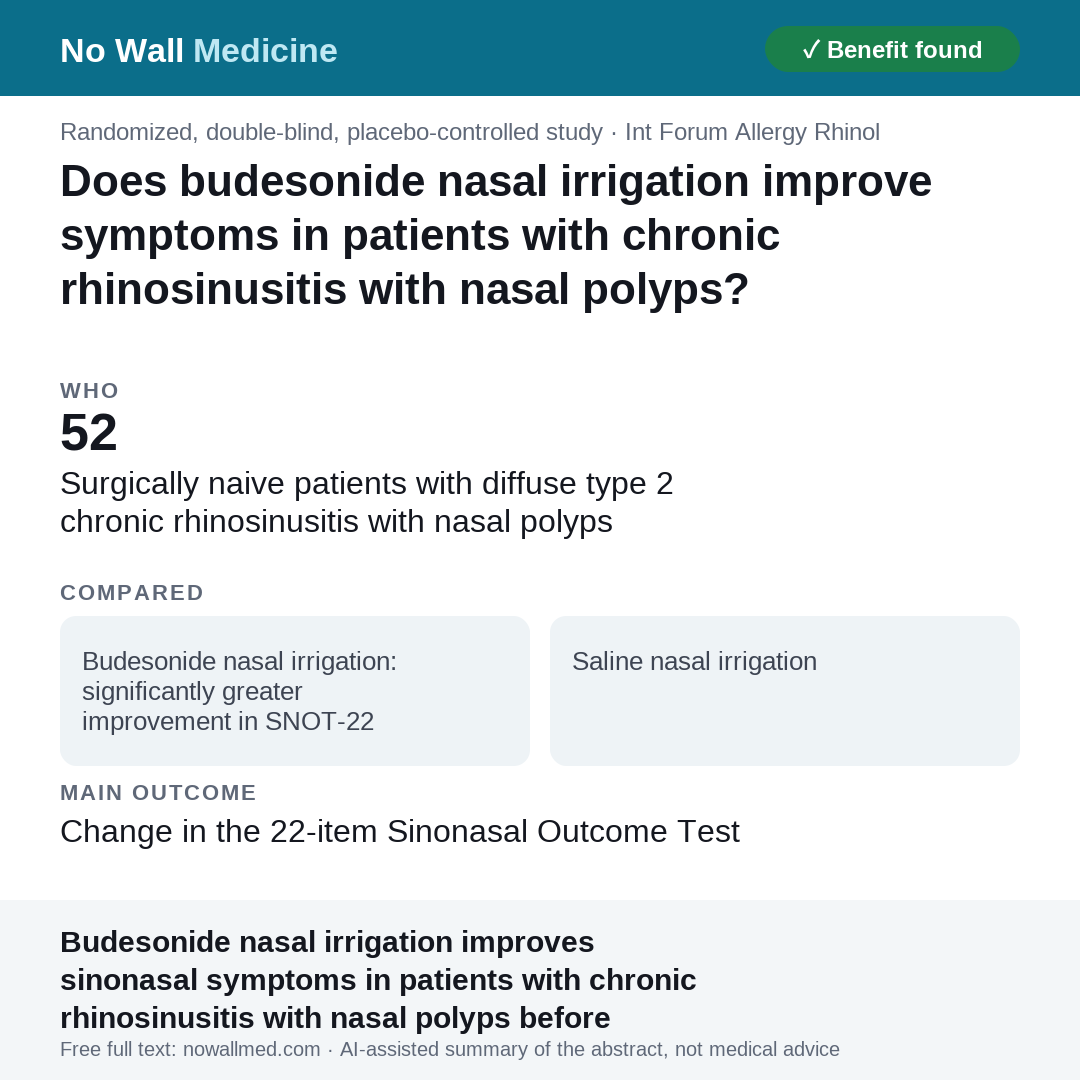
Effect of Budesonide Nasal Irrigation in Patients With Chronic Rhinosinusitis With Nasal Polyps Without Prior Sinus Surgery: A Randomized, Double-Blind, Placebo-Controlled Study
Randomized, double-blind, placebo-controlled studyBenefit found
Does budesonide nasal irrigation improve symptoms in patients with chronic rhinosinusitis with nasal polyps?
Who
52
Surgically naive patients with diffuse type 2 chronic rhinosinusitis with nasal polyps
Compared
Budesonide nasal irrigation: significantly greater improvement in SNOT-22
Saline nasal irrigation
Main outcome
Change in the 22-item Sinonasal Outcome Test
Result: mean difference: 18.1 points (95% CI: 3.4 to 32.8)
Bottom line: Budesonide nasal irrigation improves sinonasal symptoms in patients with chronic rhinosinusitis with nasal polyps before surgery.
Int Forum Allergy Rhinol · 2026-02-13Download image
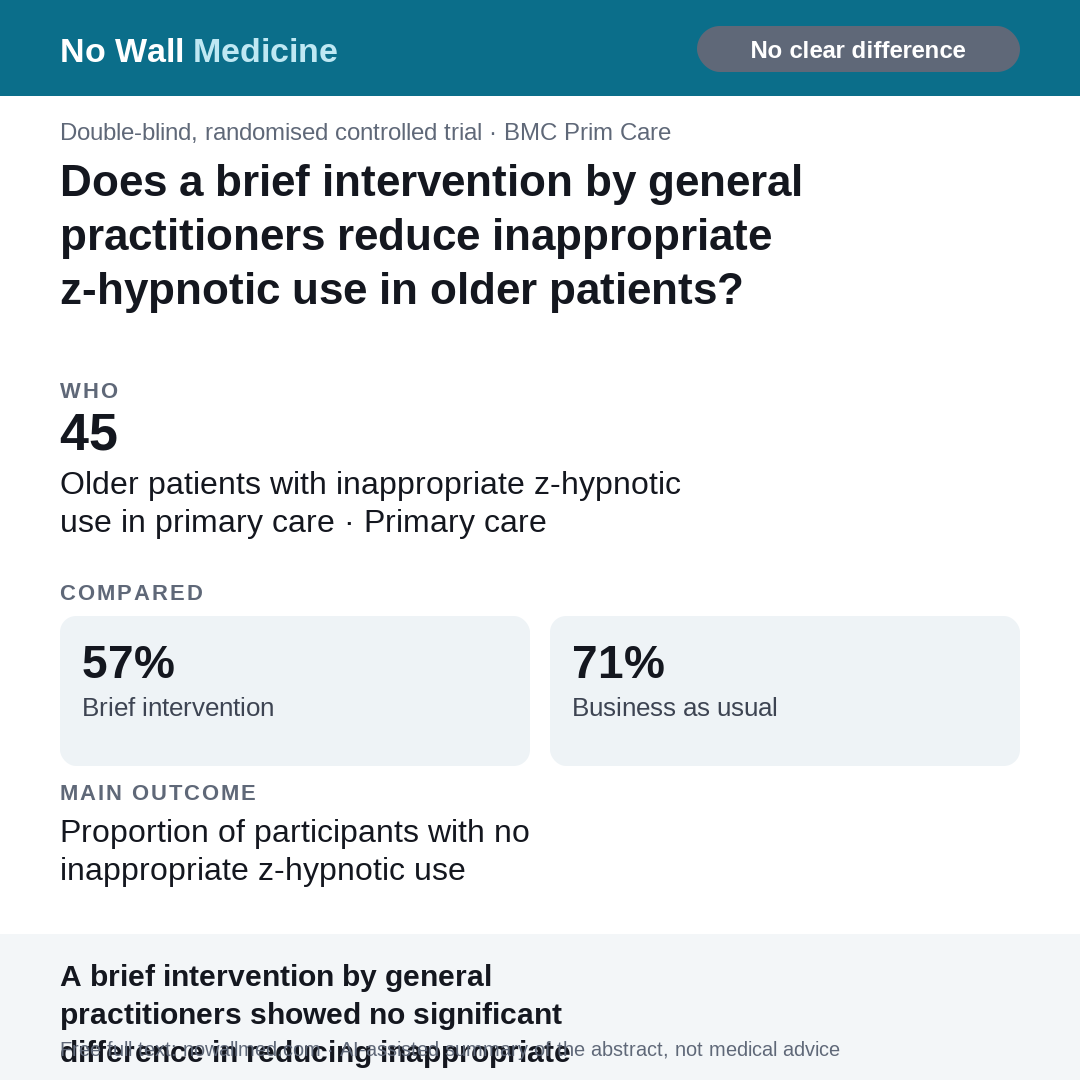
A brief intervention to discontinue inappropriate z-hypnotics use by older patients in primary care: a randomised controlled trial
Double-blind, randomised controlled trialNo clear difference
Does a brief intervention by general practitioners reduce inappropriate z-hypnotic use in older patients?
Who
45
Older patients with inappropriate z-hypnotic use in primary care · Primary care
Compared
57%Brief intervention
71%Business as usual
Main outcome
Proportion of participants with no inappropriate z-hypnotic use
Bottom line: A brief intervention by general practitioners showed no significant difference in reducing inappropriate z-hypnotic use compared to business as usual.
Limitation: The study became underpowered.
BMC Prim Care · 2026-02-13Download image