Visual abstracts
New randomized trials and meta-analyses from leading journals at a glance: who was studied, what was compared, and what was found. Every paper is free to read in full.
All specialtiesCardiology 4763Oncology 4043Gastroenterology & Hepatology 1903Infectious Disease 3756Neurology 1872Psychiatry & Mental Health 2216Pulmonology 2044Critical Care 1319Endocrinology & Diabetes 2544Pediatrics 2889Surgery 2480Orthopedics & Sports Medicine 917Neurosurgery 525Cardiothoracic & Vascular Surgery 656Plastic & Reconstructive Surgery 574Nephrology 1107Rheumatology 810Hematology 1090Dermatology 611Ophthalmology 532Obstetrics & Gynecology 1645Public & Global Health 1037Radiology & Imaging 619Anesthesiology 958Urology 745ENT (Otolaryngology) 494Emergency Medicine 481Allergy & Immunology 309Geriatrics 972Family Medicine & Primary Care 534Medical Genetics & Genomics 659Pathology & Laboratory Medicine 156Physical Medicine & Rehabilitation 734Palliative Care 421Nutrition 1560Digital Health & AI 2137General Medicine 318
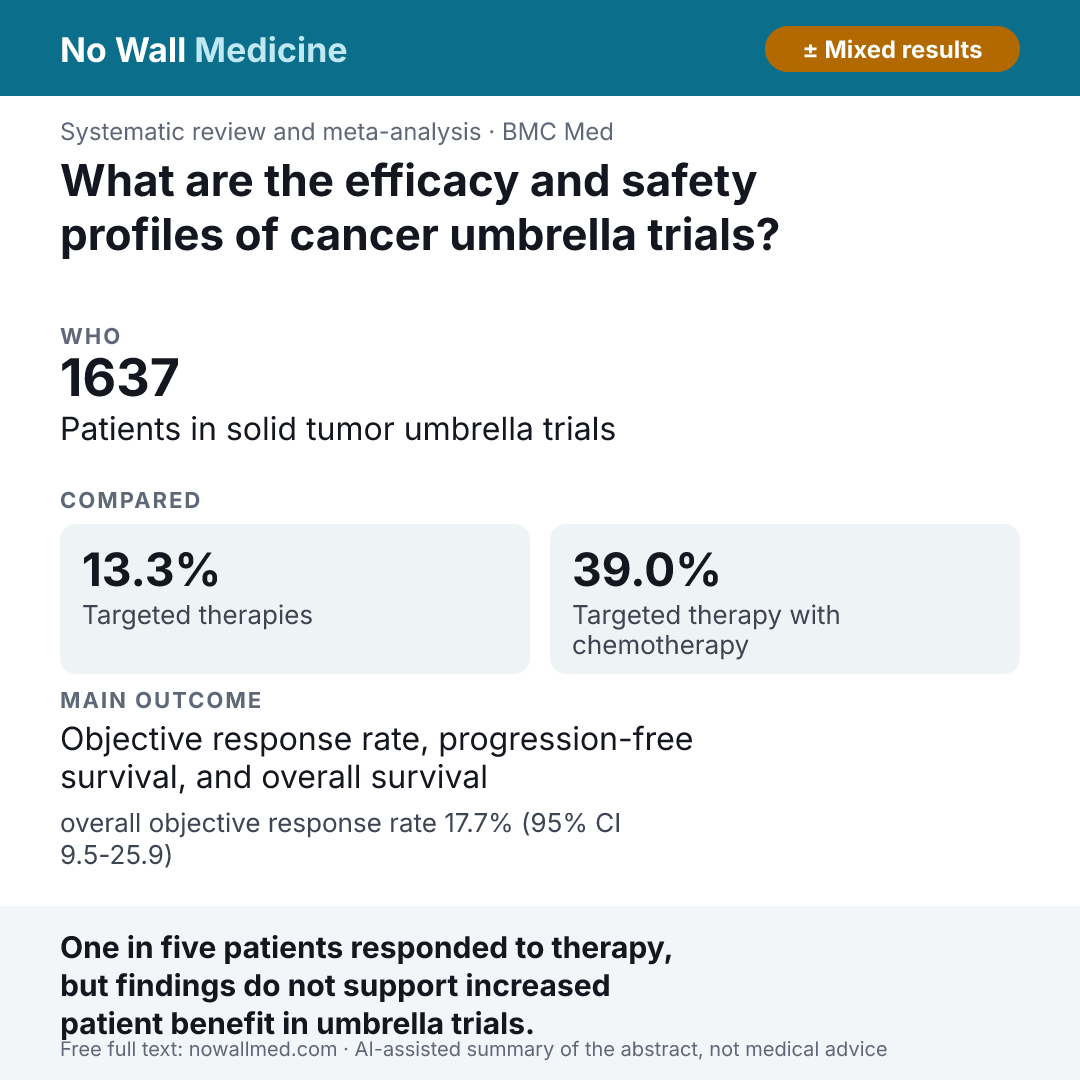
Risk and benefit for umbrella trials in oncology: a systematic review and meta-analysis
Systematic review and meta-analysisMixed results
What are the efficacy and safety profiles of cancer umbrella trials?
Who
1637
Patients in solid tumor umbrella trials
Compared
13.3%Targeted therapies
39.0%Targeted therapy with chemotherapy
Main outcome
Objective response rate, progression-free survival, and overall survival
Result: overall objective response rate 17.7% (95% CI 9.5-25.9)
Bottom line: One in five patients responded to therapy, but findings do not support increased patient benefit in umbrella trials.
BMC Med · 2022-07-08 · Save PNG
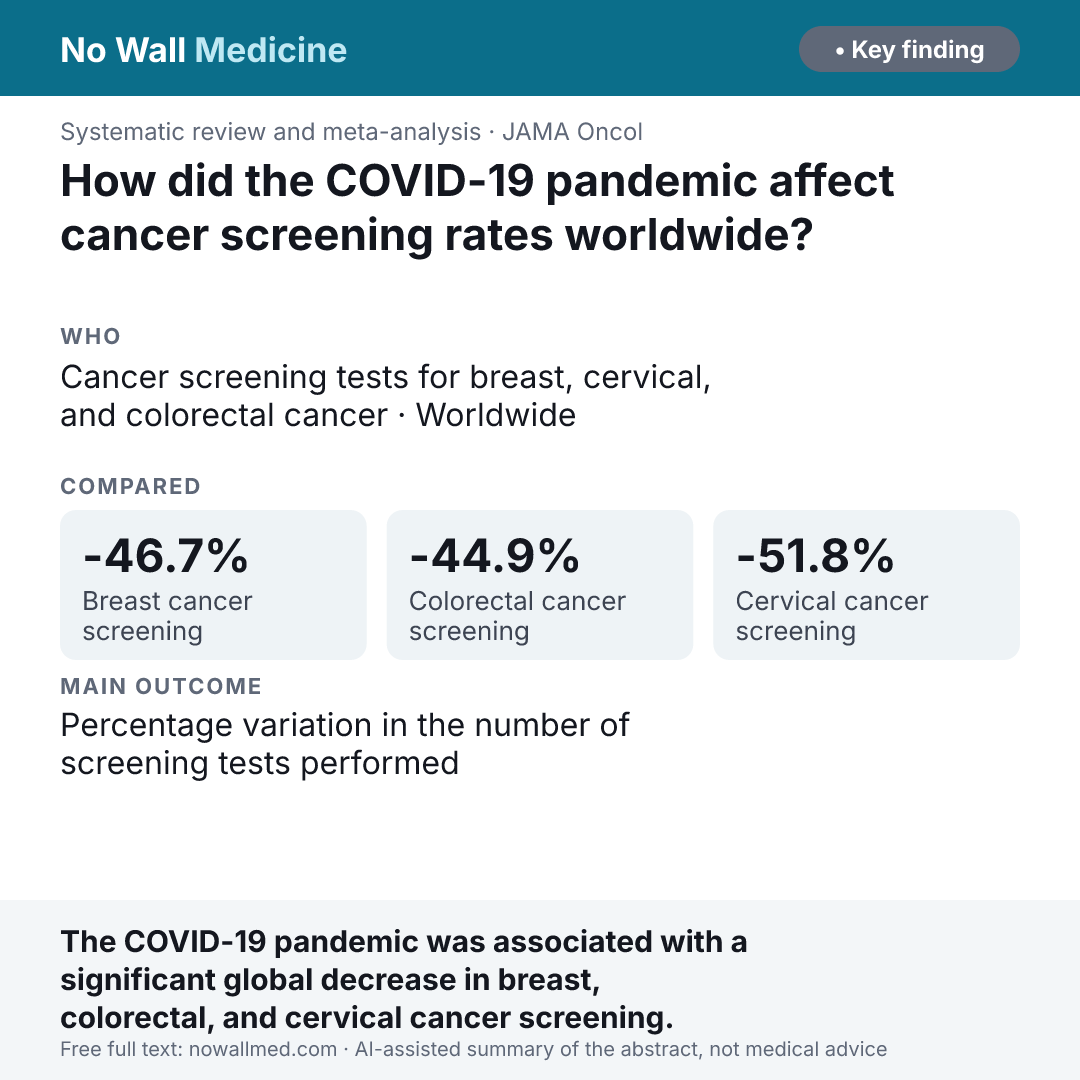
Global Association of COVID-19 Pandemic Measures With Cancer Screening: A Systematic Review and Meta-analysis
Systematic review and meta-analysisKey finding
How did the COVID-19 pandemic affect cancer screening rates worldwide?
Who
Cancer screening tests for breast, cervical, and colorectal cancer · Worldwide
Compared
-46.7%Breast cancer screening (95% CI, -55.5% to -37.8%)
-44.9%Colorectal cancer screening (95% CI, -53.8% to -36.1%)
-51.8%Cervical cancer screening (95% CI, -64.7% to -38.9%)
Main outcome
Percentage variation in the number of screening tests performed
Bottom line: The COVID-19 pandemic was associated with a significant global decrease in breast, colorectal, and cervical cancer screening.
JAMA Oncol · 2022-07-08 · Save PNG
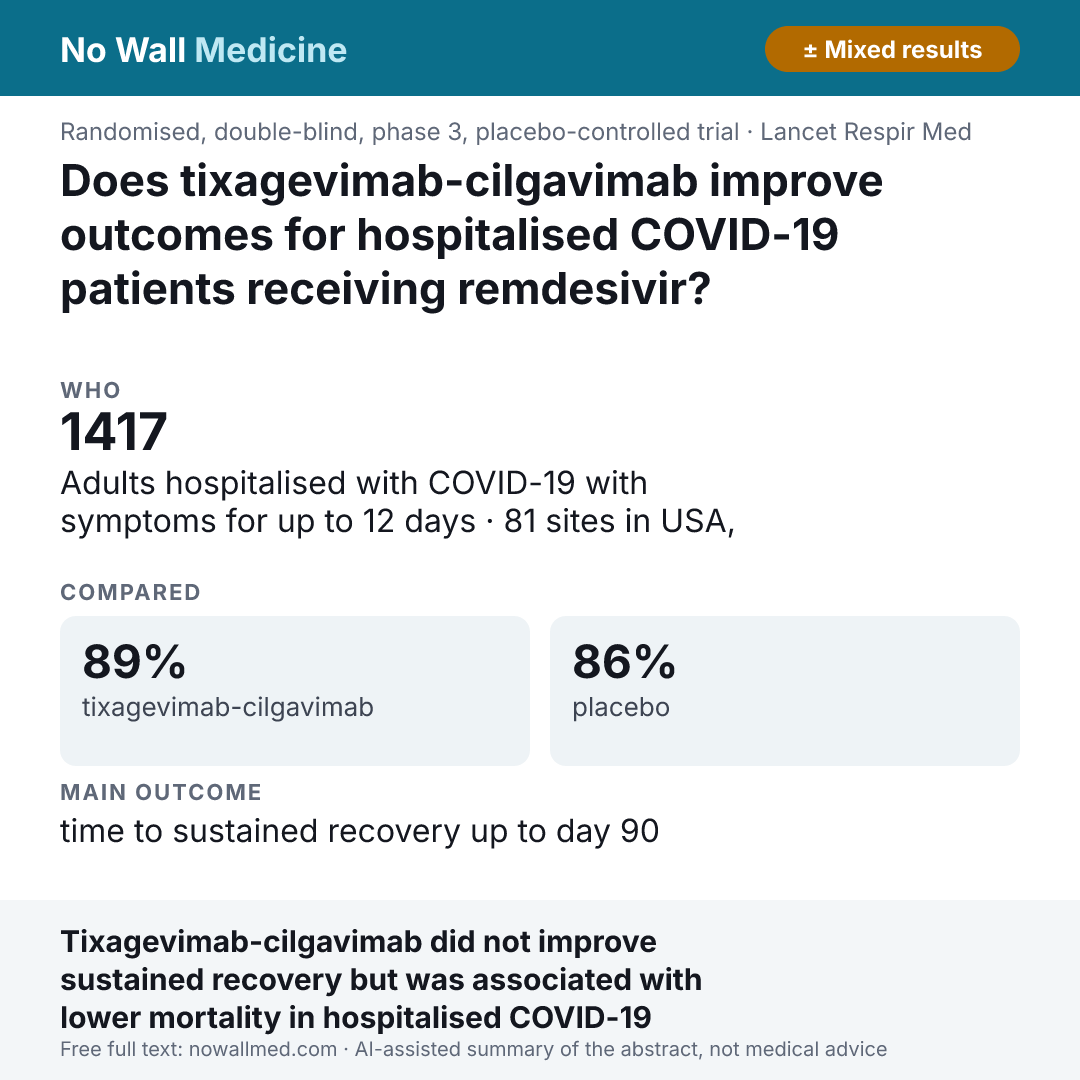
Tixagevimab-cilgavimab for treatment of patients hospitalised with COVID-19: a randomised, double-blind, phase 3 trial
Randomised, double-blind, phase 3, placebo-controlled trialMixed results
Does tixagevimab-cilgavimab improve outcomes for hospitalised COVID-19 patients receiving remdesivir?
Who
1417
Adults hospitalised with COVID-19 with symptoms for up to 12 days · 81 sites in USA, Europe, Uganda, and Singapore
Compared
89%tixagevimab-cilgavimab
86%placebo
Main outcome
time to sustained recovery up to day 90
Result: recovery rate ratio 1·08 (95% CI 0·97-1·20)
Bottom line: Tixagevimab-cilgavimab did not improve sustained recovery but was associated with lower mortality in hospitalised COVID-19 patients.
Funded by: US National Institutes of Health and Operation Warp Speed
Lancet Respir Med · 2022-07-08 · Save PNG
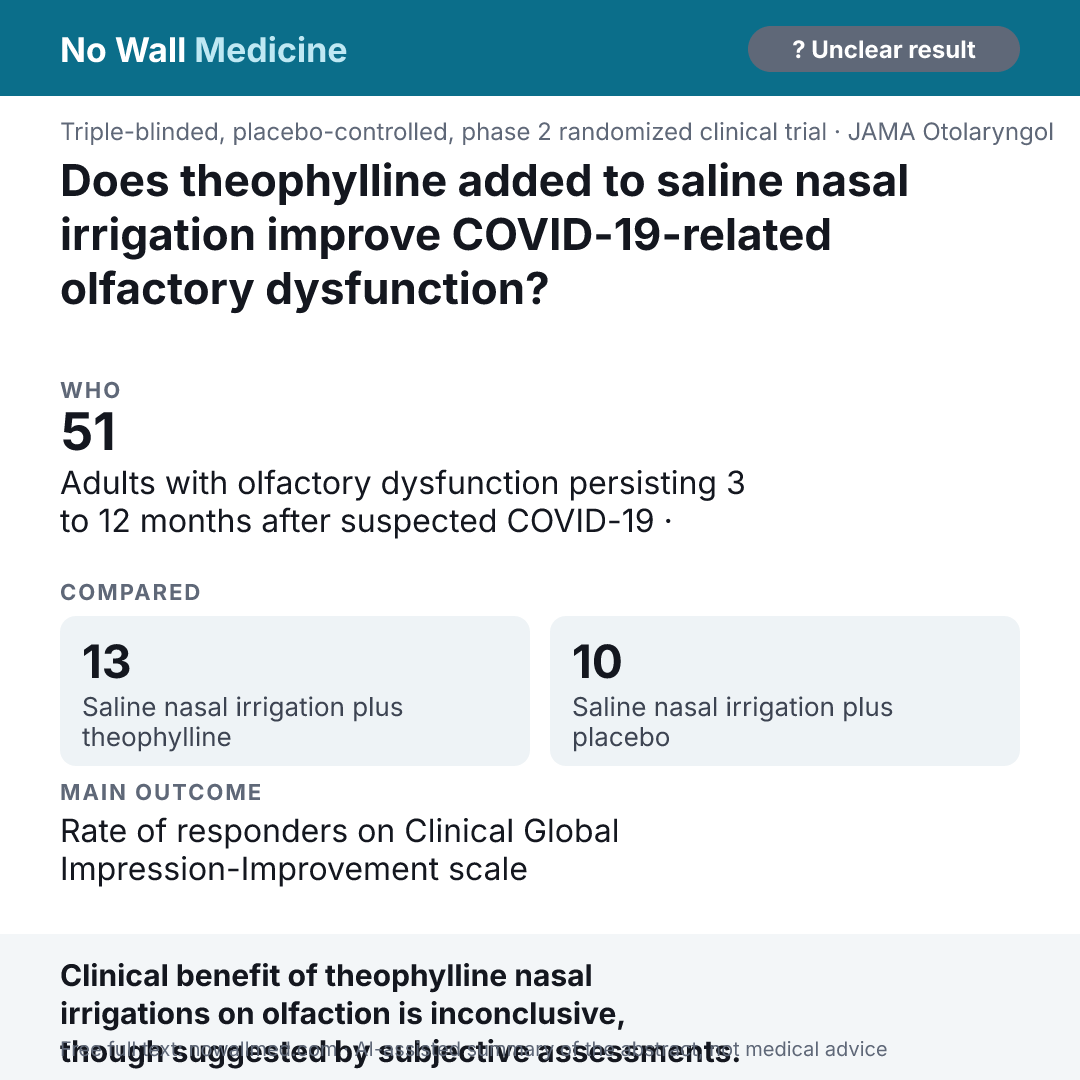
Efficacy and Safety of Saline Nasal Irrigation Plus Theophylline for Treatment of COVID-19-Related Olfactory Dysfunction: The SCENT2 Phase 2 Randomized Clinical Trial
Triple-blinded, placebo-controlled, phase 2 randomized clinical trialUnclear result
Does theophylline added to saline nasal irrigation improve COVID-19-related olfactory dysfunction?
Who
51
Adults with olfactory dysfunction persisting 3 to 12 months after suspected COVID-19 · Virtually, Missouri or Illinois
Compared
13Saline nasal irrigation plus theophylline (59%)
10Saline nasal irrigation plus placebo (43%)
Main outcome
Rate of responders on Clinical Global Impression-Improvement scale
Result: absolute difference, 15.6%; 95% CI, -13.2% to 44.5%
Bottom line: Clinical benefit of theophylline nasal irrigations on olfaction is inconclusive, though suggested by subjective assessments.
JAMA Otolaryngol · 2022-07-08 · Save PNG
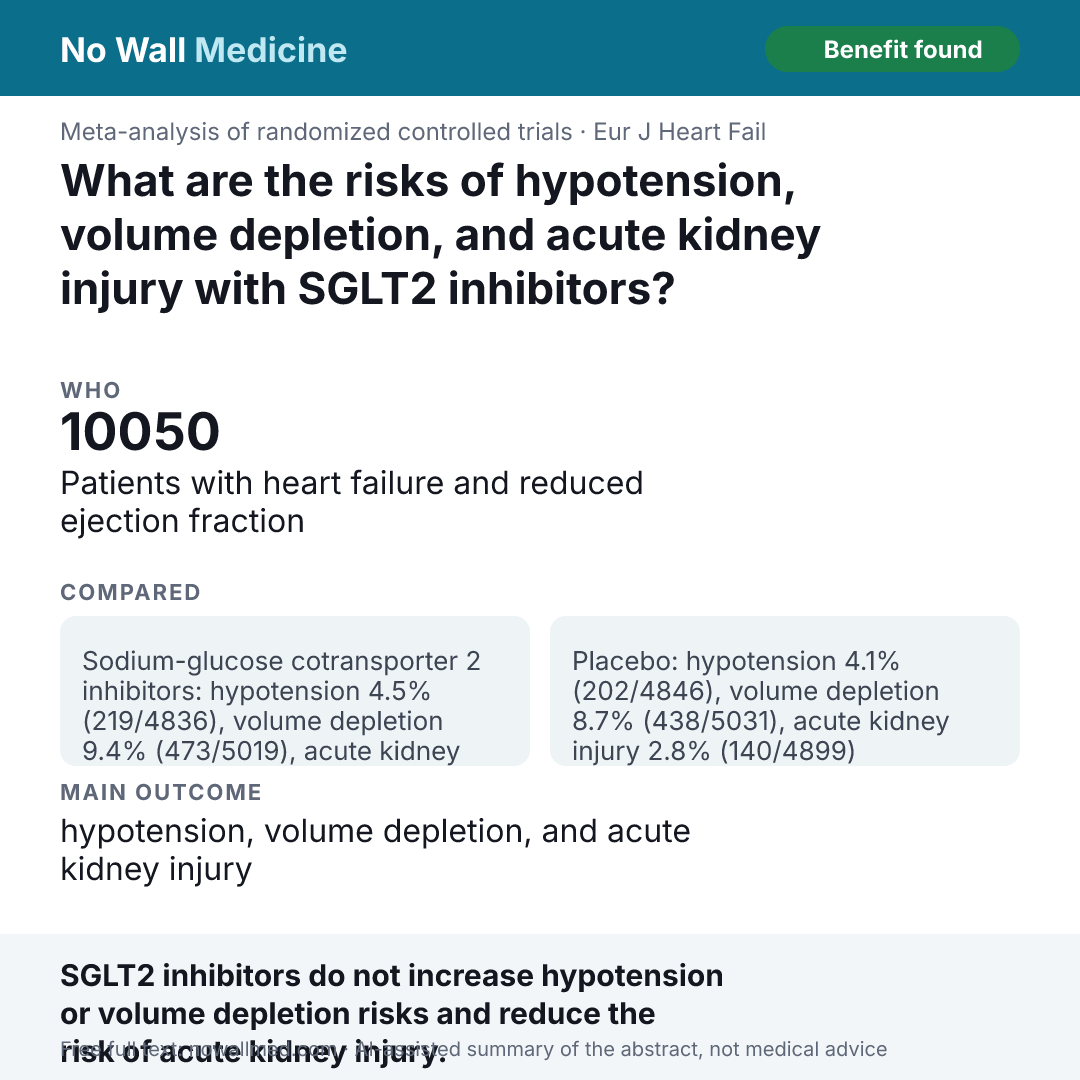
Side effects and treatment initiation barriers of sodium-glucose cotransporter 2 inhibitors in heart failure: a systematic review and meta-analysis
Meta-analysis of randomized controlled trialsBenefit found
What are the risks of hypotension, volume depletion, and acute kidney injury with SGLT2 inhibitors?
Who
10050
Patients with heart failure and reduced ejection fraction
Compared
Sodium-glucose cotransporter 2 inhibitors: hypotension 4.5% (219/4836), volume depletion 9.4% (473/5019), acute kidney injury 1.9% (95/4888)
Placebo: hypotension 4.1% (202/4846), volume depletion 8.7% (438/5031), acute kidney injury 2.8% (140/4899)
Main outcome
hypotension, volume depletion, and acute kidney injury
Result: RR 0.69 (95% CI 0.51-0.93) for acute kidney injury
Bottom line: SGLT2 inhibitors do not increase hypotension or volume depletion risks and reduce the risk of acute kidney injury.
Eur J Heart Fail · 2022-07-08 · Save PNG
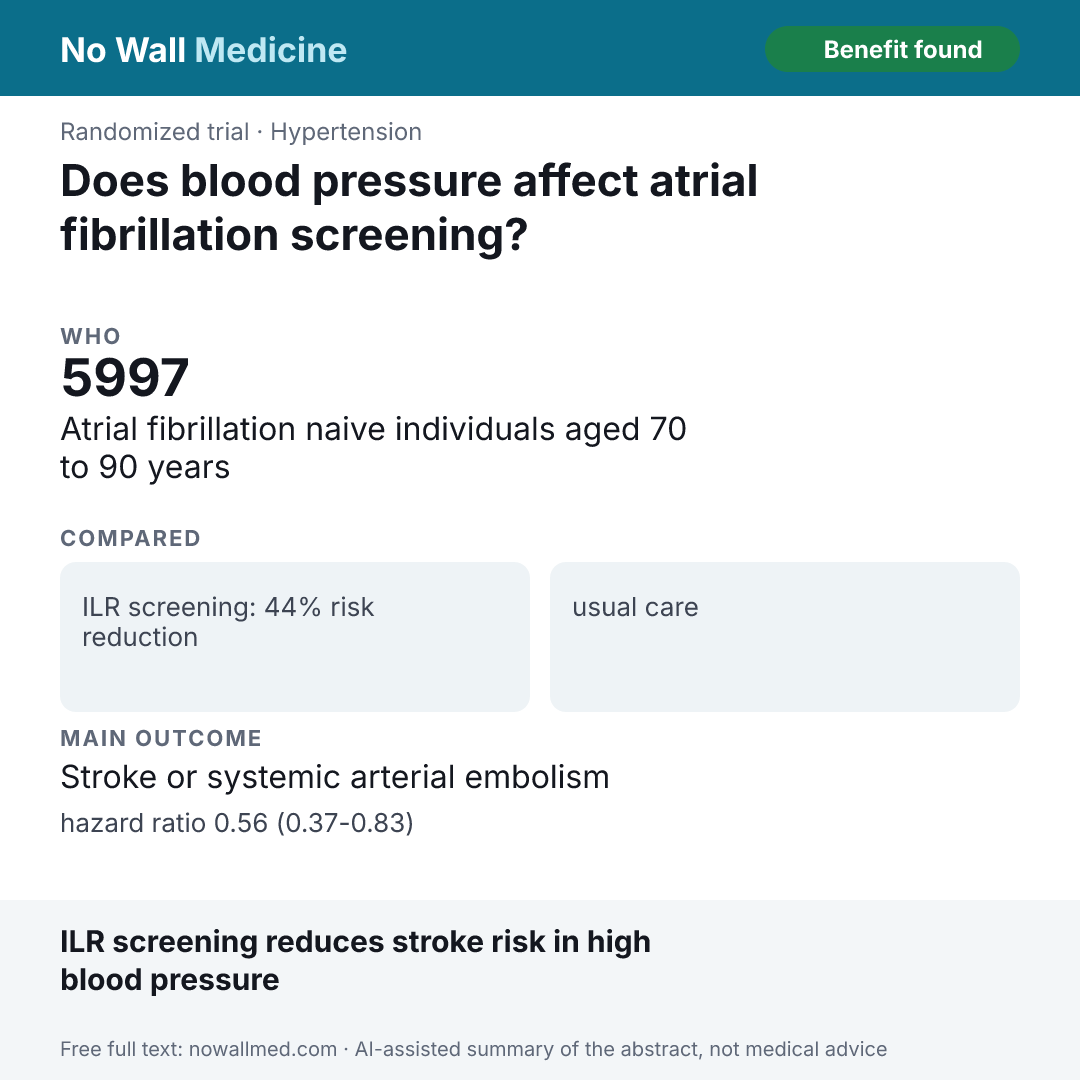
Systolic Blood Pressure and Effects of Screening for Atrial Fibrillation With Long-Term Continuous Monitoring (a LOOP Substudy)
Randomized trialBenefit found
Does blood pressure affect atrial fibrillation screening?
Who
5997
Atrial fibrillation naive individuals aged 70 to 90 years
Compared
ILR screening: 44% risk reduction
usual care
Main outcome
Stroke or systemic arterial embolism
Result: hazard ratio 0.56 (0.37-0.83)
Bottom line: ILR screening reduces stroke risk in high blood pressure
Hypertension · 2022-07-08 · Save PNG
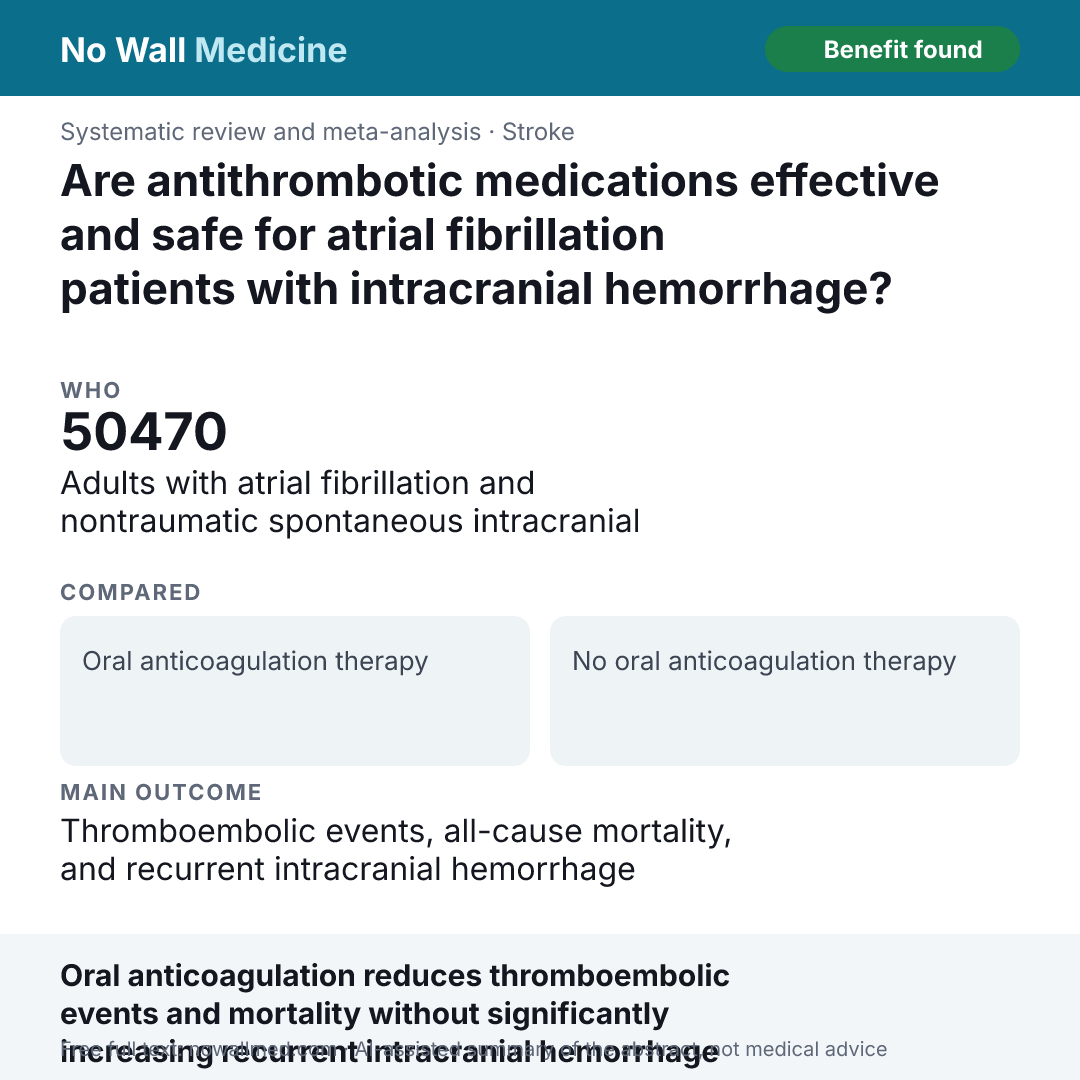
Effectiveness and Safety of Antithrombotic Medication in Patients With Atrial Fibrillation and Intracranial Hemorrhage: Systematic Review and Meta-Analysis
Systematic review and meta-analysisBenefit found
Are antithrombotic medications effective and safe for atrial fibrillation patients with intracranial hemorrhage?
Who
50470
Adults with atrial fibrillation and nontraumatic spontaneous intracranial hemorrhage
Compared
Oral anticoagulation therapy
No oral anticoagulation therapy
Main outcome
Thromboembolic events, all-cause mortality, and recurrent intracranial hemorrhage
Result: summary relative risk 0.51 (95% CI 0.30-0.86) for thromboembolic events
Bottom line: Oral anticoagulation reduces thromboembolic events and mortality without significantly increasing recurrent intracranial hemorrhage risk in these patients.
Stroke · 2022-07-08 · Save PNG
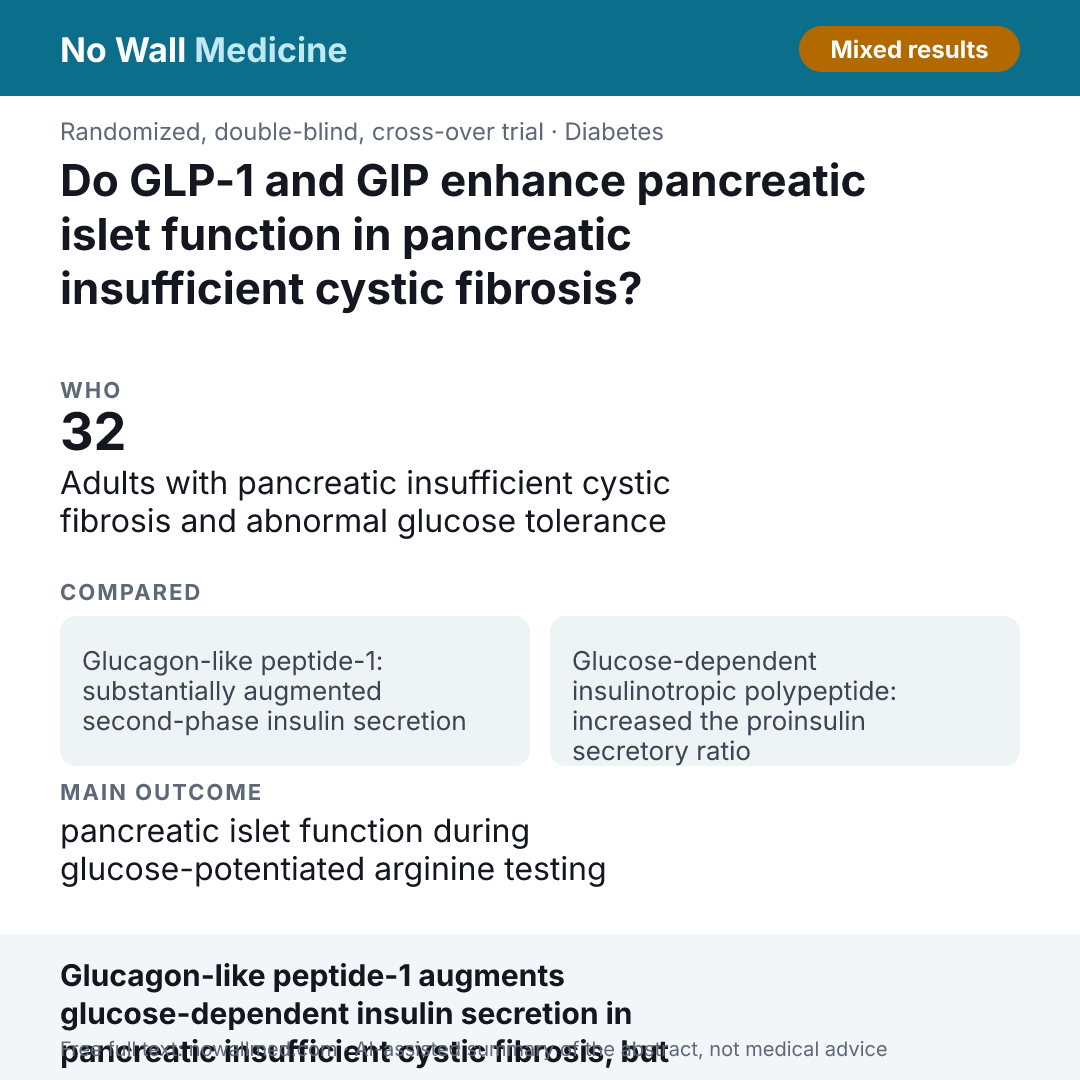
Effects of GLP-1 and GIP on Islet Function in Glucose-Intolerant, Pancreatic-Insufficient Cystic Fibrosis
Randomized, double-blind, cross-over trialMixed results
Do GLP-1 and GIP enhance pancreatic islet function in pancreatic insufficient cystic fibrosis?
Who
32
Adults with pancreatic insufficient cystic fibrosis and abnormal glucose tolerance
Compared
Glucagon-like peptide-1: substantially augmented second-phase insulin secretion
Glucose-dependent insulinotropic polypeptide: increased the proinsulin secretory ratio
Main outcome
pancreatic islet function during glucose-potentiated arginine testing
Bottom line: Glucagon-like peptide-1 augments glucose-dependent insulin secretion in pancreatic insufficient cystic fibrosis, but glucose-dependent insulinotropic polypeptide does not.
Diabetes · 2022-07-08 · Save PNG
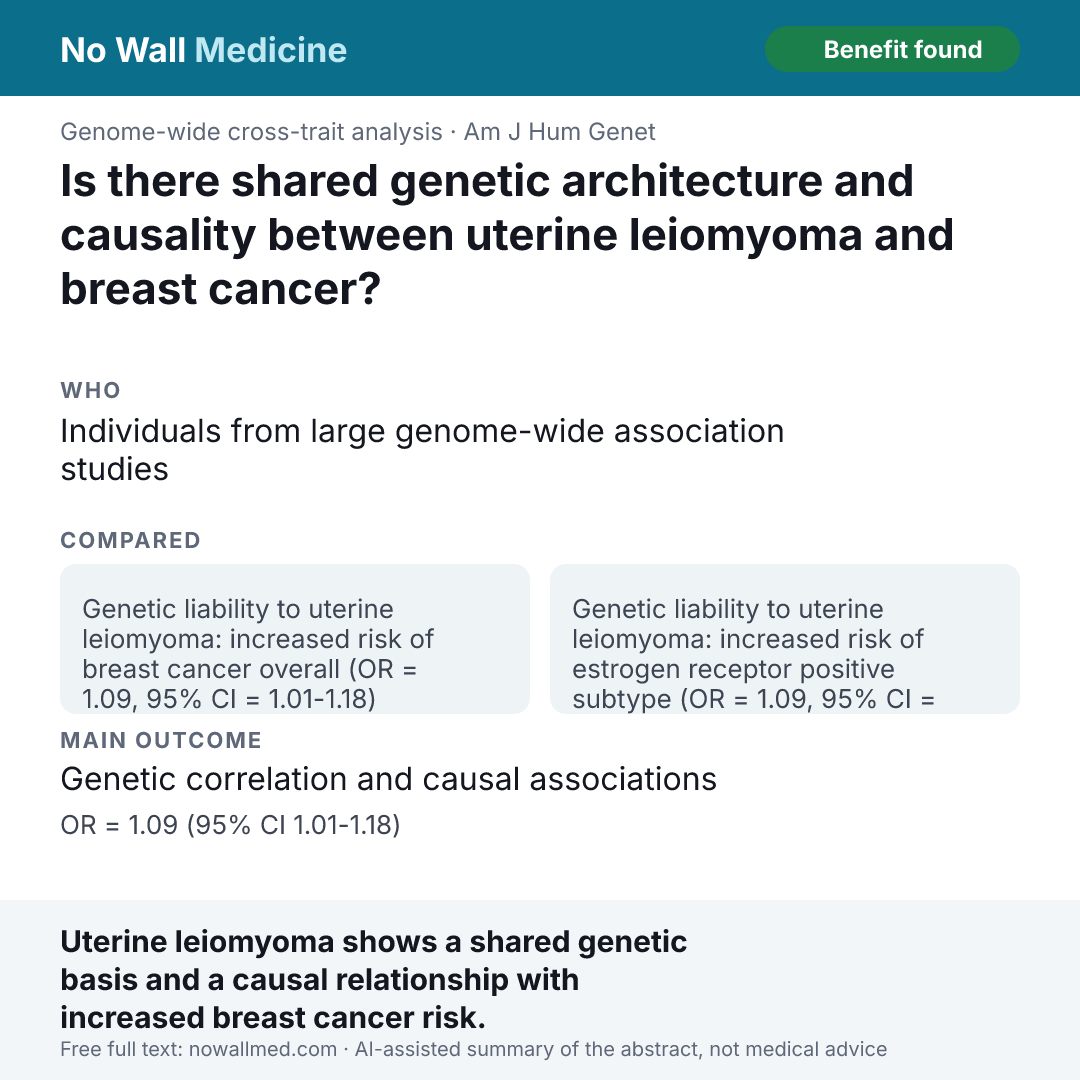
Investigating the shared genetic architecture of uterine leiomyoma and breast cancer: A genome-wide cross-trait analysis
Genome-wide cross-trait analysisBenefit found
Is there shared genetic architecture and causality between uterine leiomyoma and breast cancer?
Who
Individuals from large genome-wide association studies
Compared
Genetic liability to uterine leiomyoma: increased risk of breast cancer overall (OR = 1.09, 95% CI = 1.01-1.18)
Genetic liability to uterine leiomyoma: increased risk of estrogen receptor positive subtype (OR = 1.09, 95% CI = 1.01-1.17)
Main outcome
Genetic correlation and causal associations
Result: OR = 1.09 (95% CI 1.01-1.18)
Bottom line: Uterine leiomyoma shows a shared genetic basis and a causal relationship with increased breast cancer risk.
Am J Hum Genet · 2022-07-08 · Save PNG
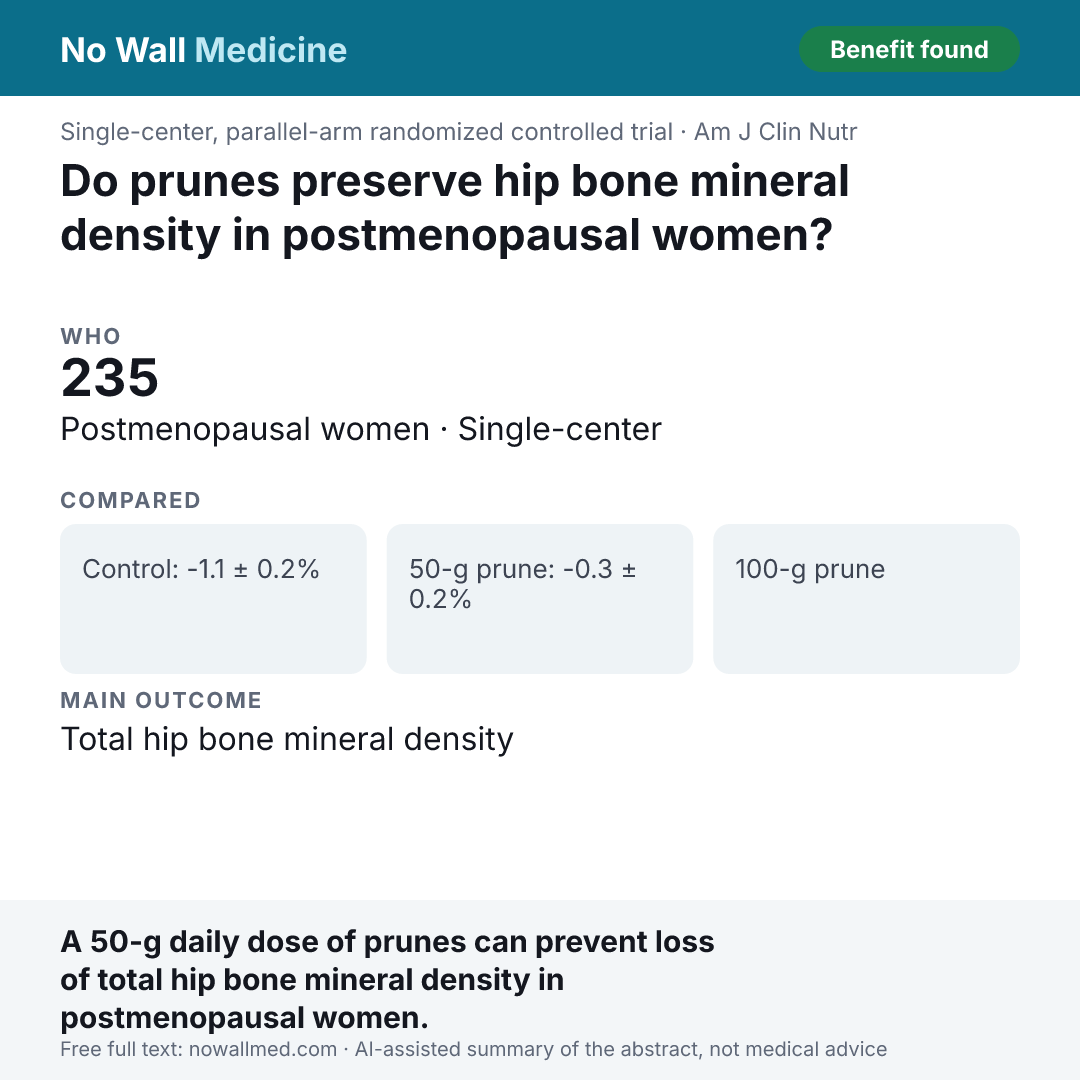
Prunes preserve hip bone mineral density in a 12-month randomized controlled trial in postmenopausal women: the Prune Study
Single-center, parallel-arm randomized controlled trialBenefit found
Do prunes preserve hip bone mineral density in postmenopausal women?
Who
235
Postmenopausal women · Single-center
Compared
Control: -1.1 ± 0.2%
50-g prune: -0.3 ± 0.2%
100-g prune
Main outcome
Total hip bone mineral density
Bottom line: A 50-g daily dose of prunes can prevent loss of total hip bone mineral density in postmenopausal women.
Limitation: Dropout was 41% for the 100-g prune group.
Am J Clin Nutr · 2022-07-08 · Save PNG
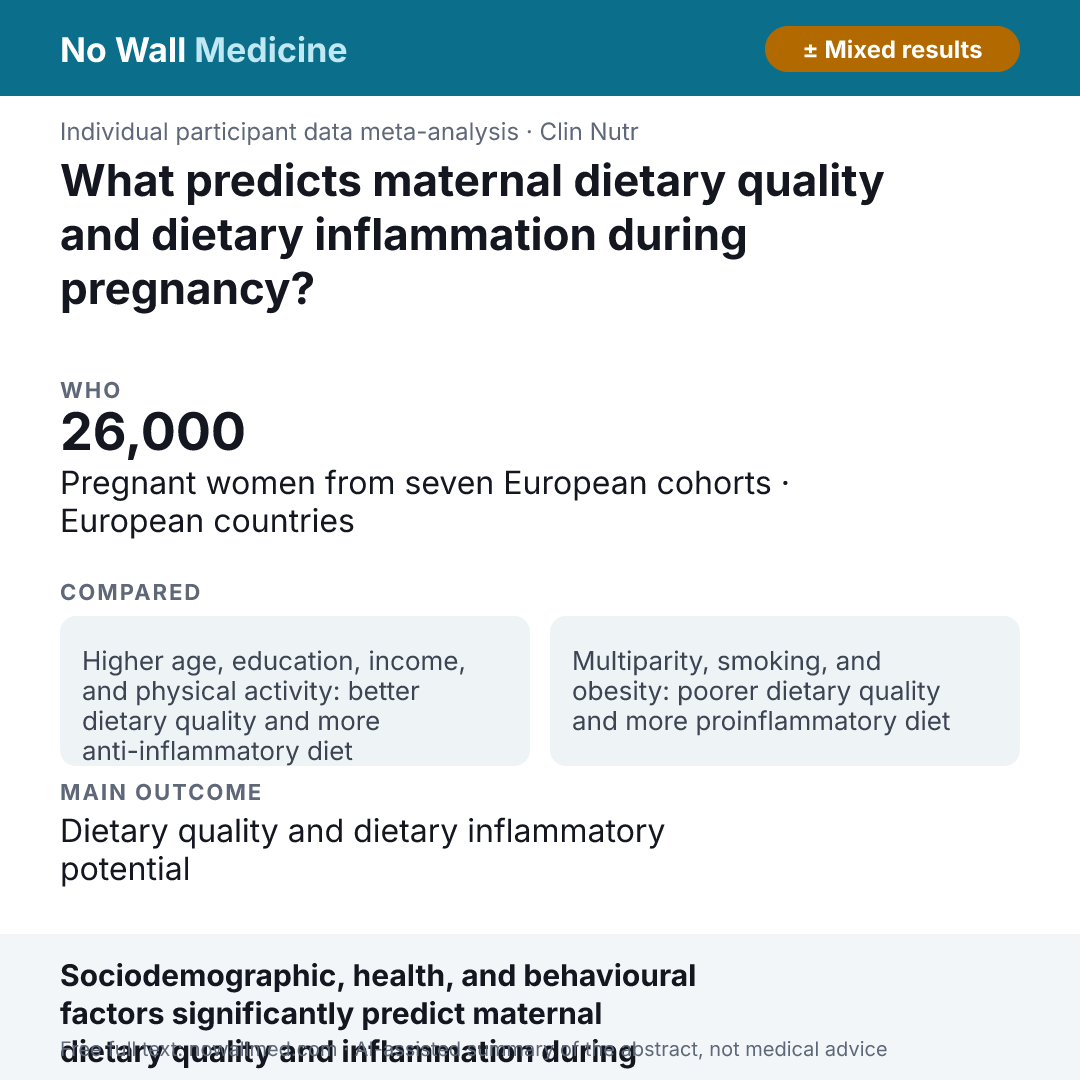
Predictors of maternal dietary quality and dietary inflammation during pregnancy: An individual participant data meta-analysis of seven European cohorts from the ALPHABET consortium
Individual participant data meta-analysisMixed results
What predicts maternal dietary quality and dietary inflammation during pregnancy?
Who
26,000
Pregnant women from seven European cohorts · European countries
Compared
Higher age, education, income, and physical activity: better dietary quality and more anti-inflammatory diet
Multiparity, smoking, and obesity: poorer dietary quality and more proinflammatory diet
Main outcome
Dietary quality and dietary inflammatory potential
Bottom line: Sociodemographic, health, and behavioural factors significantly predict maternal dietary quality and inflammation during pregnancy.
Clin Nutr · 2022-07-08 · Save PNG
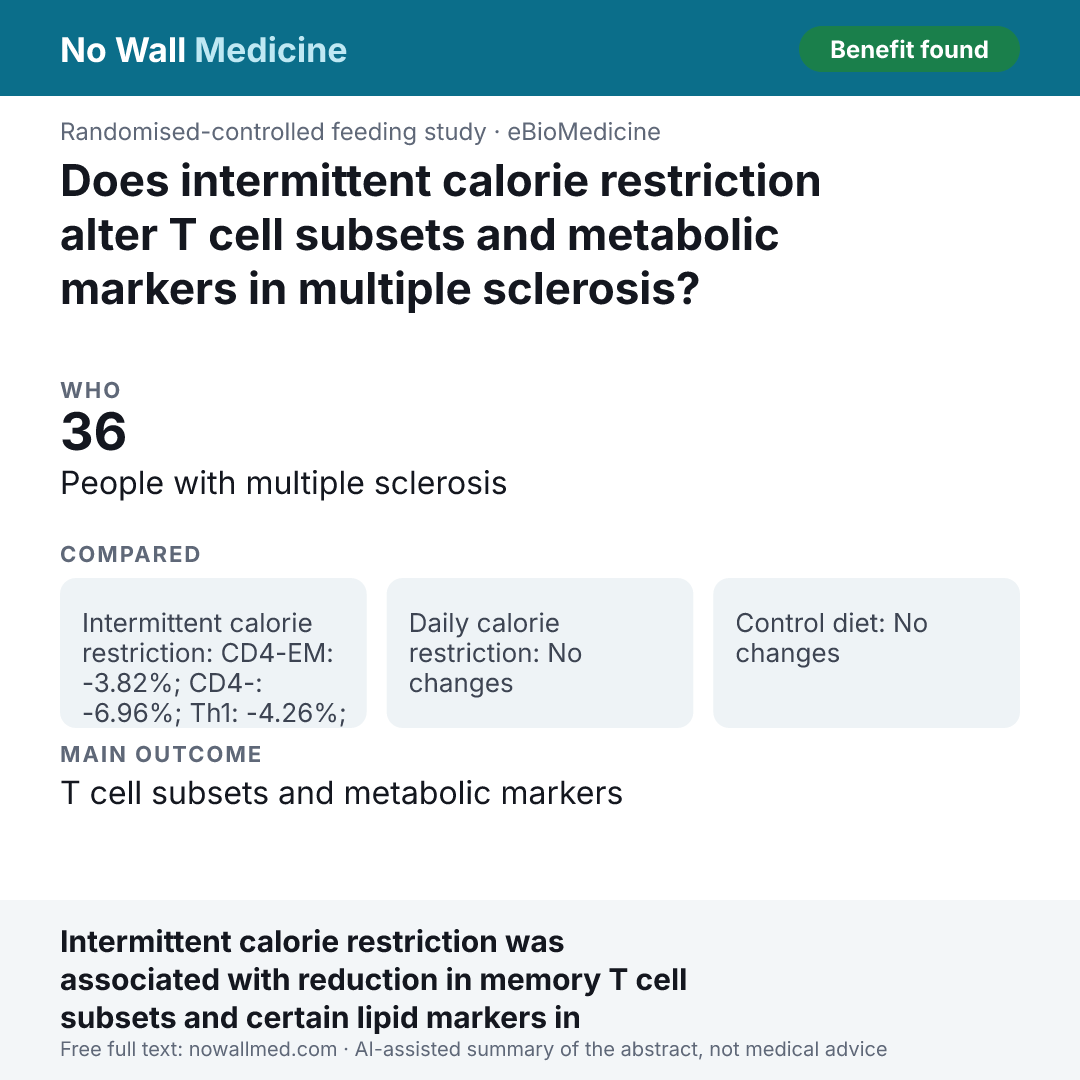
Intermittent calorie restriction alters T cell subsets and metabolic markers in people with multiple sclerosis
Randomised-controlled feeding studyBenefit found
Does intermittent calorie restriction alter T cell subsets and metabolic markers in multiple sclerosis?
Who
36
People with multiple sclerosis
Compared
Intermittent calorie restriction: CD4-EM: -3.82%; CD4-: -6.96%; Th1: -4.26%; CD4- naïve: 10.11%
Daily calorie restriction: No changes
Control diet: No changes
Main outcome
T cell subsets and metabolic markers
Bottom line: Intermittent calorie restriction was associated with reduction in memory T cell subsets and certain lipid markers in multiple sclerosis.
Funded by: National MS Society, NIH, Johns Hopkins Catalyst Award
eBioMedicine · 2022-07-08 · Save PNG
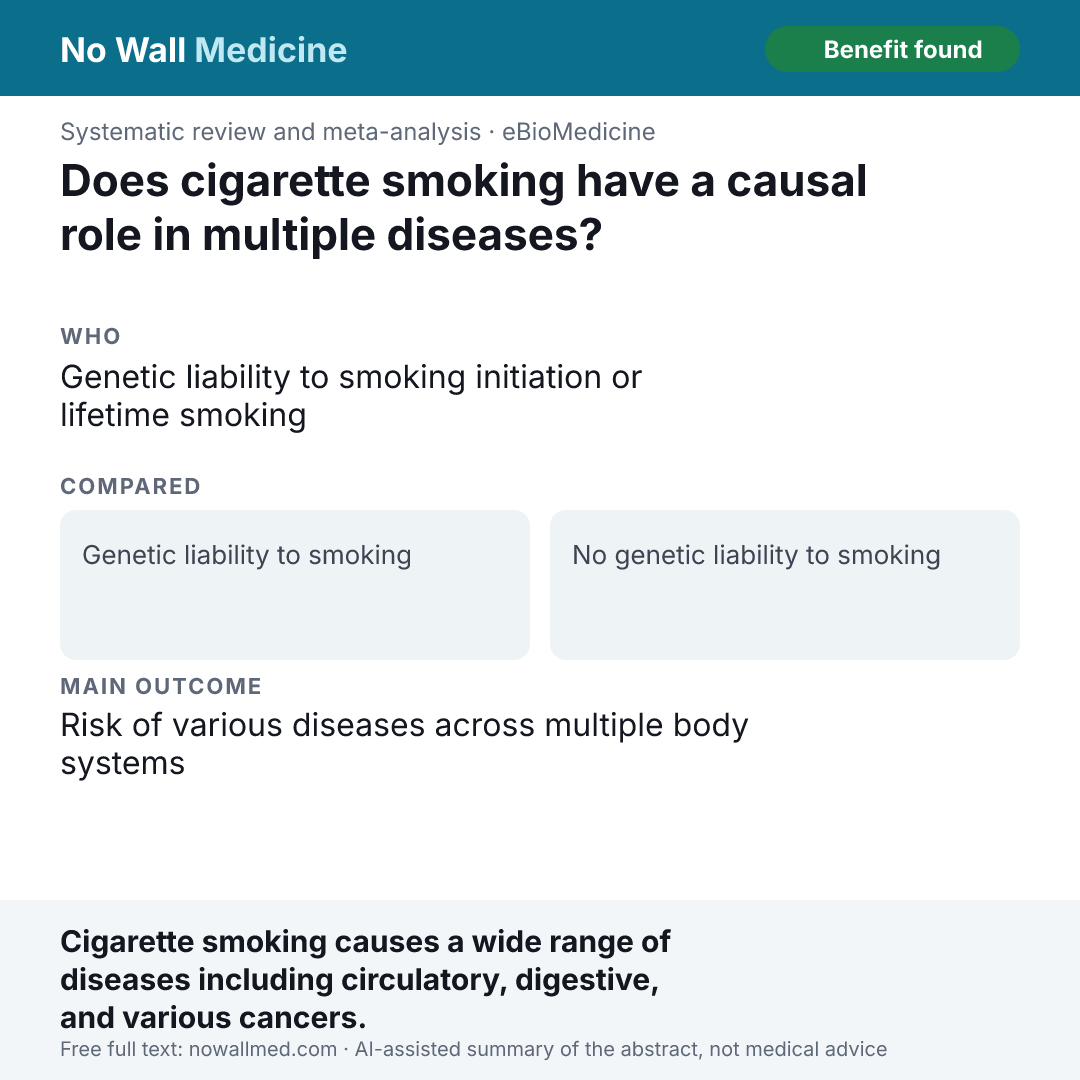
Appraising the causal role of smoking in multiple diseases: A systematic review and meta-analysis of Mendelian randomization studies
Systematic review and meta-analysisBenefit found
Does cigarette smoking have a causal role in multiple diseases?
Who
Genetic liability to smoking initiation or lifetime smoking
Compared
Genetic liability to smoking
No genetic liability to smoking
Main outcome
Risk of various diseases across multiple body systems
Bottom line: Cigarette smoking causes a wide range of diseases including circulatory, digestive, and various cancers.
Funded by: Swedish Cancer Society, Swedish Heart Lung Foundation, Forte, Vetenskapsrådet
eBioMedicine · 2022-07-08 · Save PNG
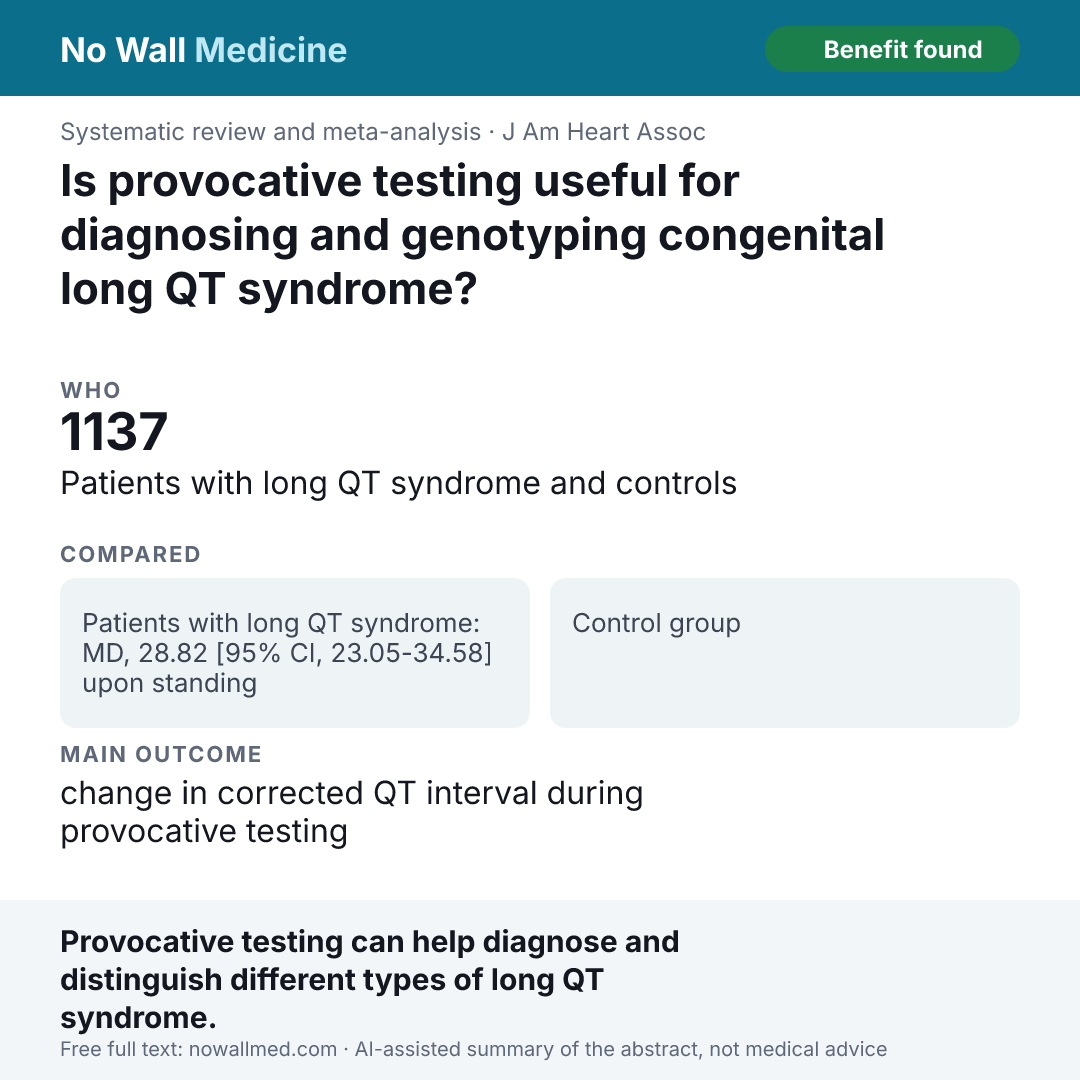
Utility of Provocative Testing in the Diagnosis and Genotyping of Congenital Long QT Syndrome: A Systematic Review and Meta-Analysis
Systematic review and meta-analysisBenefit found
Is provocative testing useful for diagnosing and genotyping congenital long QT syndrome?
Who
1137
Patients with long QT syndrome and controls
Compared
Patients with long QT syndrome: MD, 28.82 [95% CI, 23.05-34.58] upon standing
Control group
Main outcome
change in corrected QT interval during provocative testing
Result: MD, 28.82 [95% CI, 23.05-34.58]
Bottom line: Provocative testing can help diagnose and distinguish different types of long QT syndrome.
J Am Heart Assoc · 2022-07-08 · Save PNG
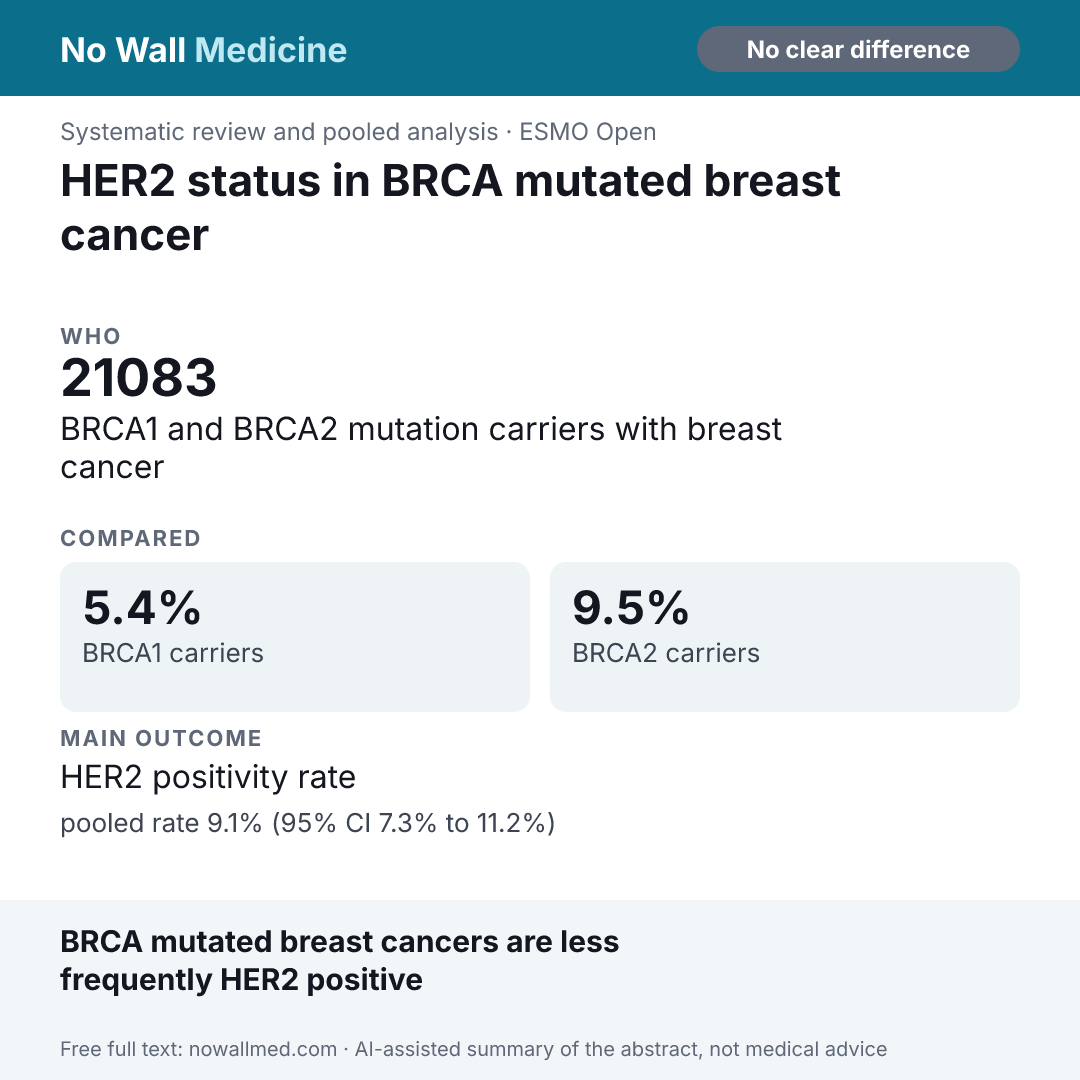
Characterization of the HER2 status in BRCA-mutated breast cancer: a single institutional series and systematic review with pooled analysis
Systematic review and pooled analysisNo clear difference
HER2 status in BRCA mutated breast cancer
Who
21083
BRCA1 and BRCA2 mutation carriers with breast cancer
Compared
5.4%BRCA1 carriers
9.5%BRCA2 carriers
Main outcome
HER2 positivity rate
Result: pooled rate 9.1% (95% CI 7.3% to 11.2%)
Bottom line: BRCA mutated breast cancers are less frequently HER2 positive
ESMO Open · 2022-07-08 · Save PNG
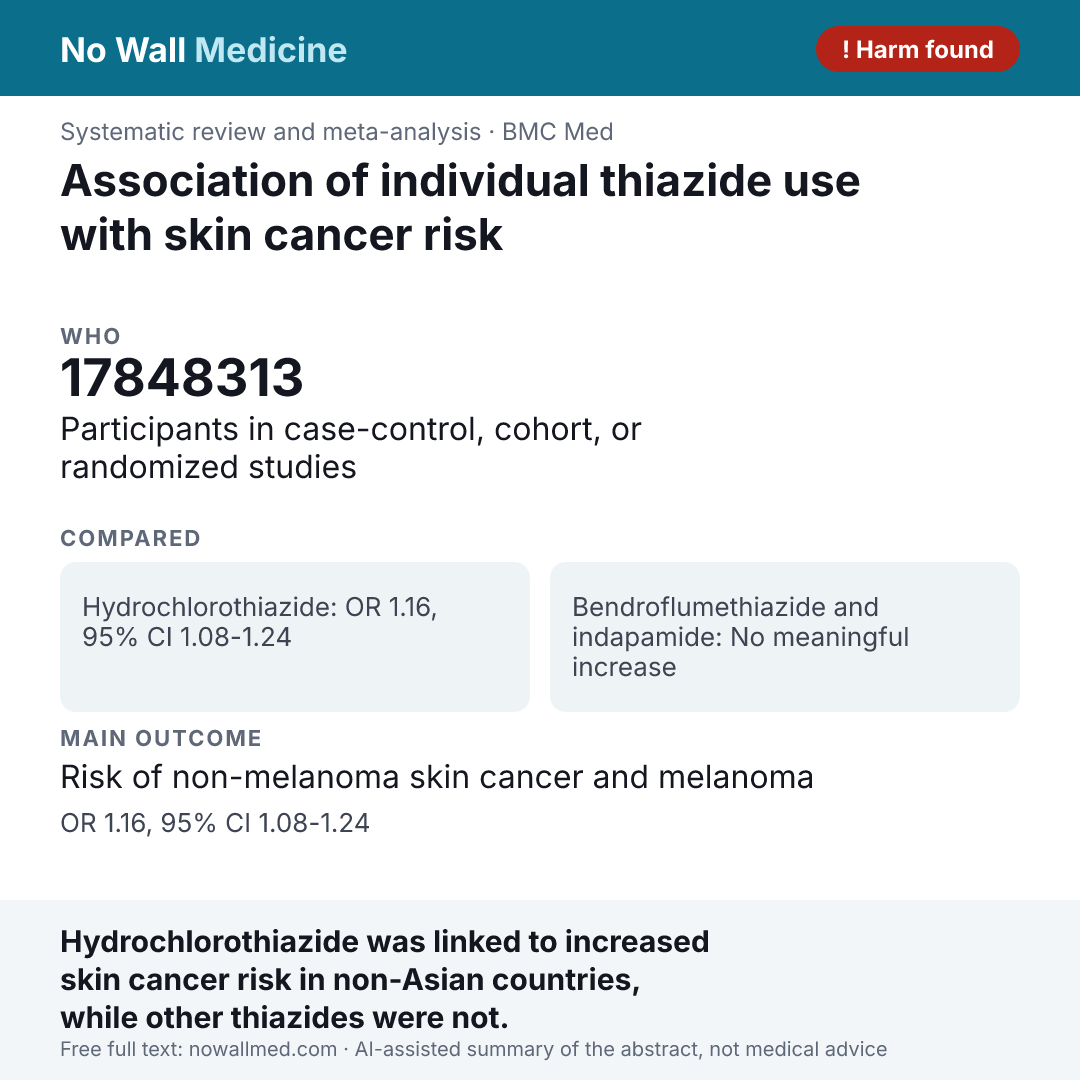
Associations of thiazide use with skin cancers: a systematic review and meta-analysis
Systematic review and meta-analysisHarm found
Association of individual thiazide use with skin cancer risk
Who
17848313
Participants in case-control, cohort, or randomized studies
Compared
Hydrochlorothiazide: OR 1.16, 95% CI 1.08-1.24
Bendroflumethiazide and indapamide: No meaningful increase
Main outcome
Risk of non-melanoma skin cancer and melanoma
Result: OR 1.16, 95% CI 1.08-1.24
Bottom line: Hydrochlorothiazide was linked to increased skin cancer risk in non-Asian countries, while other thiazides were not.
BMC Med · 2022-07-07 · Save PNG
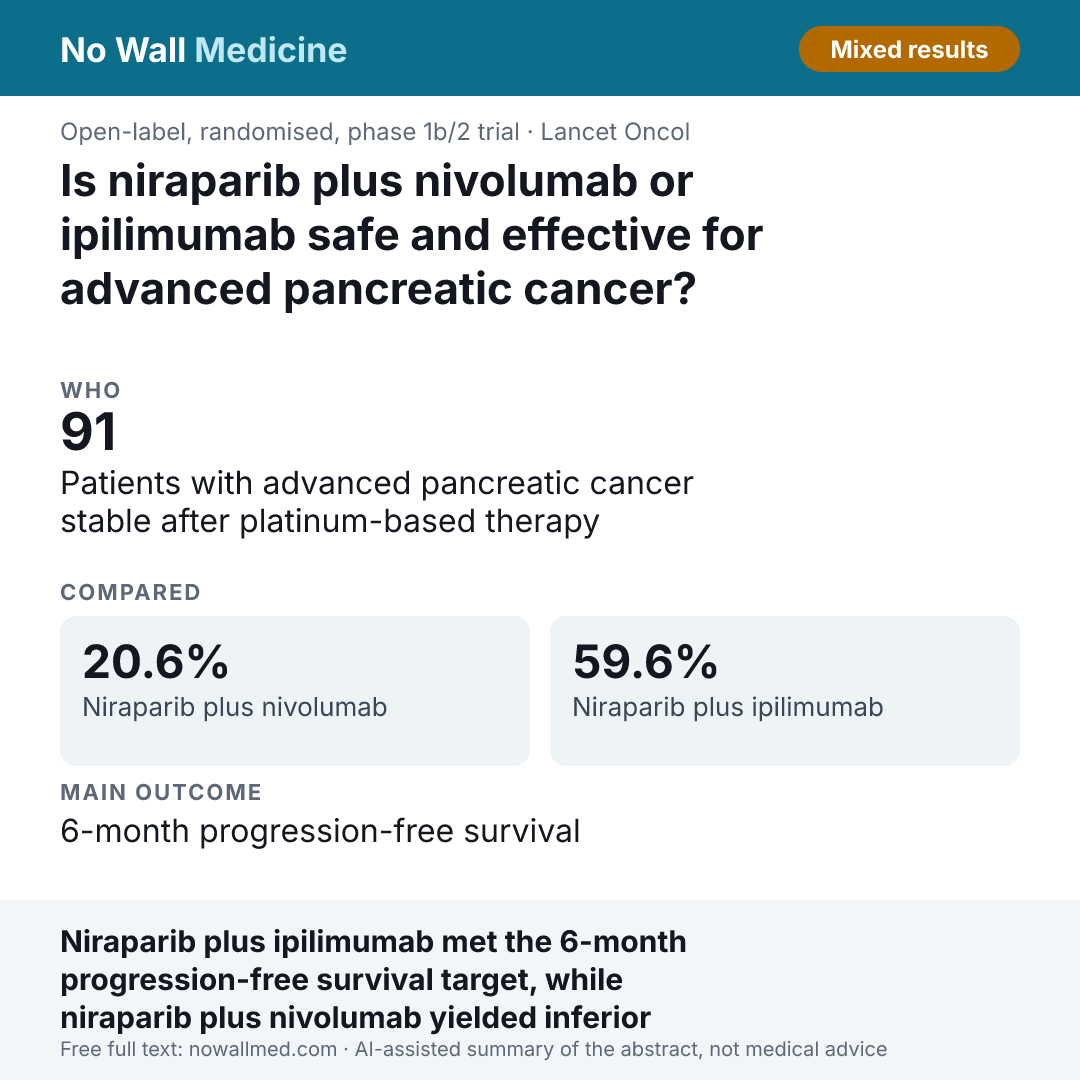
Niraparib plus nivolumab or niraparib plus ipilimumab in patients with platinum-sensitive advanced pancreatic cancer: a randomised, phase 1b/2 trial
Open-label, randomised, phase 1b/2 trialMixed results
Is niraparib plus nivolumab or ipilimumab safe and effective for advanced pancreatic cancer?
Who
91
Patients with advanced pancreatic cancer stable after platinum-based therapy
Compared
20.6%Niraparib plus nivolumab (95% CI 8.3-32.9)
59.6%Niraparib plus ipilimumab (44.3-74.9)
Main outcome
6-month progression-free survival
Bottom line: Niraparib plus ipilimumab met the 6-month progression-free survival target, while niraparib plus nivolumab yielded inferior results.
Funded by: Bristol Myers Squibb, GlaxoSmithKline, NIH, and others
Lancet Oncol · 2022-07-07 · Save PNG
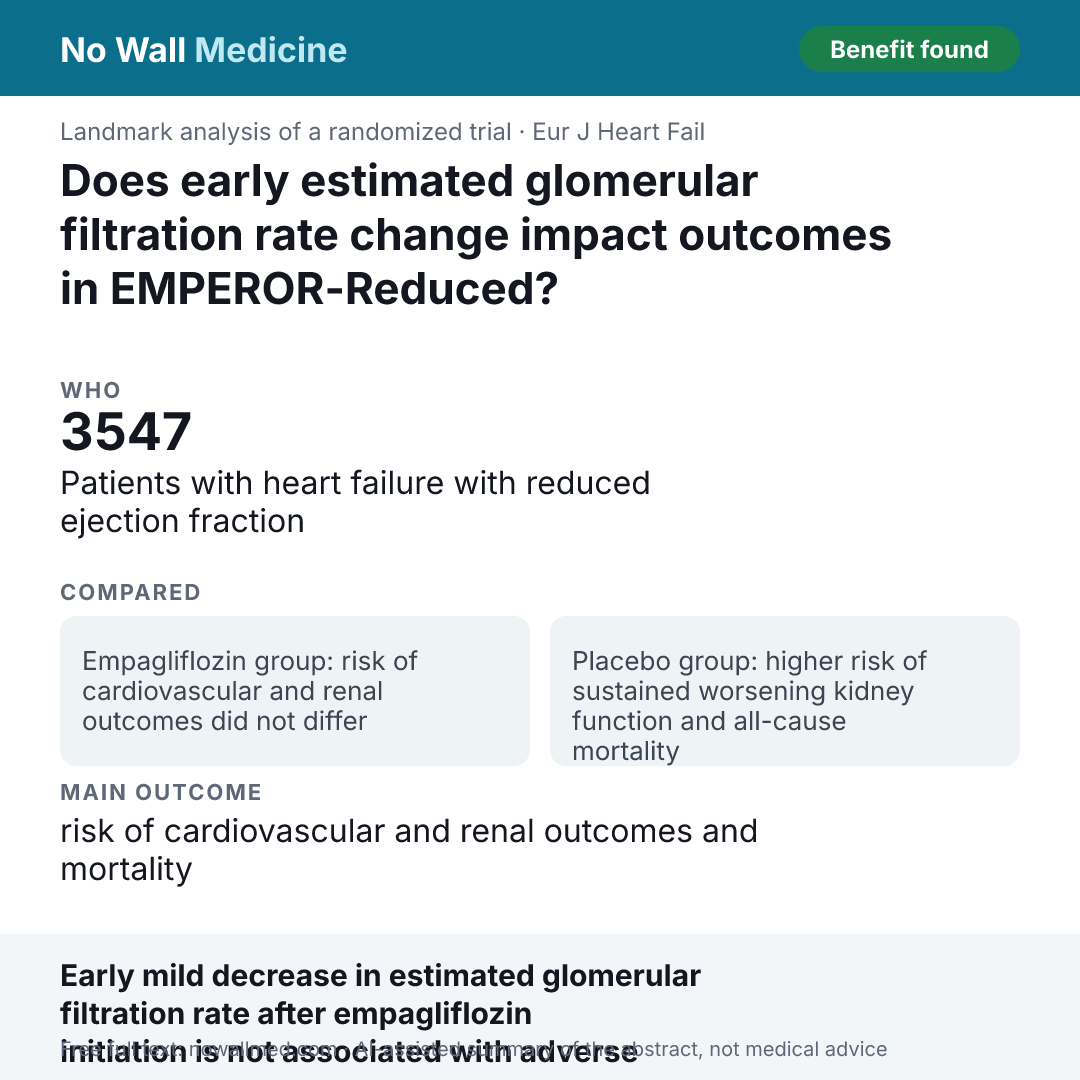
Early changes in estimated glomerular filtration rate post-initiation of empagliflozin in EMPEROR-Reduced
Landmark analysis of a randomized trialBenefit found
Does early estimated glomerular filtration rate change impact outcomes in EMPEROR-Reduced?
Who
3547
Patients with heart failure with reduced ejection fraction
Compared
Empagliflozin group: risk of cardiovascular and renal outcomes did not differ
Placebo group: higher risk of sustained worsening kidney function and all-cause mortality
Main outcome
risk of cardiovascular and renal outcomes and mortality
Result: hazard ratio 2.38 (95% CI 1.25-4.55) and HR 1.37 (95% CI 1.01-1.85)
Bottom line: Early mild decrease in estimated glomerular filtration rate after empagliflozin initiation is not associated with adverse clinical outcomes.
Eur J Heart Fail · 2022-07-07 · Save PNG
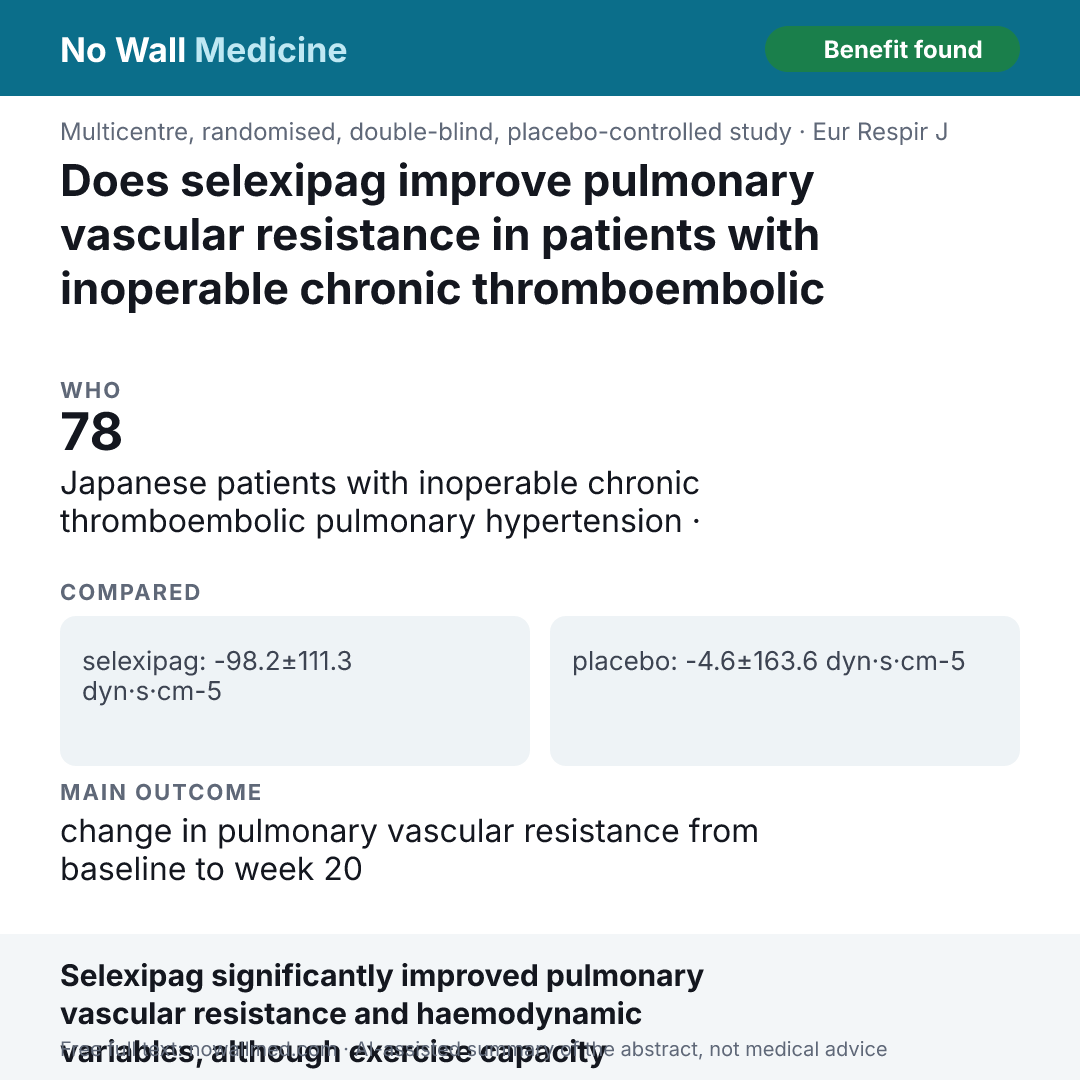
Selexipag for the treatment of chronic thromboembolic pulmonary hypertension
Multicentre, randomised, double-blind, placebo-controlled studyBenefit found
Does selexipag improve pulmonary vascular resistance in patients with inoperable chronic thromboembolic pulmonary hypertension?
Who
78
Japanese patients with inoperable chronic thromboembolic pulmonary hypertension · Multicentre
Compared
selexipag: -98.2±111.3 dyn·s·cm-5
placebo: -4.6±163.6 dyn·s·cm-5
Main outcome
change in pulmonary vascular resistance from baseline to week 20
Result: mean difference -93.5 dyn·s·cm-5 (95% CI -156.8 to -30.3)
Bottom line: Selexipag significantly improved pulmonary vascular resistance and haemodynamic variables, although exercise capacity remained unchanged.
Limitation: Further large-scale investigation is necessary to prove the role of selexipag in chronic thromboembolic pulmonary hypertension.
Eur Respir J · 2022-07-07 · Save PNG
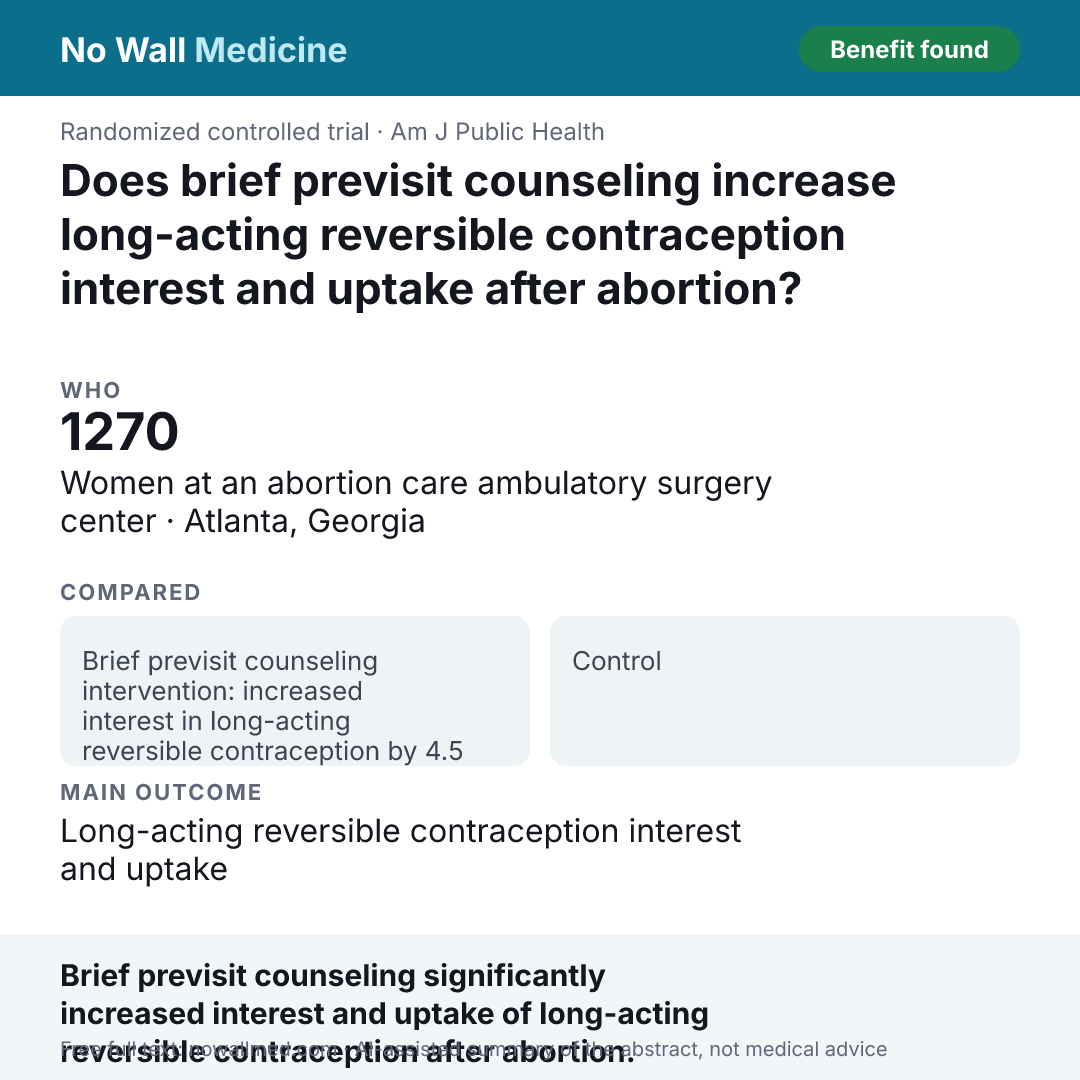
Interest in and Uptake of Postabortion Long-Acting Reversible Contraception After Counseling at a Free-Standing Abortion Care Ambulatory Surgery Center, Atlanta, Georgia, 2017‒2018
Randomized controlled trialBenefit found
Does brief previsit counseling increase long-acting reversible contraception interest and uptake after abortion?
Who
1270
Women at an abortion care ambulatory surgery center · Atlanta, Georgia
Compared
Brief previsit counseling intervention: increased interest in long-acting reversible contraception by 4.5 percentage points
Control
Main outcome
Long-acting reversible contraception interest and uptake
Bottom line: Brief previsit counseling significantly increased interest and uptake of long-acting reversible contraception after abortion.
Am J Public Health · 2022-07-07 · Save PNG