Visual abstracts
New randomized trials and meta-analyses from leading journals at a glance: who was studied, what was compared, and what was found. Every paper is free to read in full.
All specialtiesCardiology 4877Oncology 4138Gastroenterology & Hepatology 1942Infectious Disease 3837Neurology 1905Psychiatry & Mental Health 2273Pulmonology 2143Critical Care 1365Endocrinology & Diabetes 2580Pediatrics 2980Surgery 2559Orthopedics & Sports Medicine 931Neurosurgery 537Cardiothoracic & Vascular Surgery 674Plastic & Reconstructive Surgery 591Nephrology 1133Rheumatology 823Hematology 1109Dermatology 621Ophthalmology 543Obstetrics & Gynecology 1686Public & Global Health 1058Radiology & Imaging 648Anesthesiology 986Urology 764ENT (Otolaryngology) 503Emergency Medicine 511Allergy & Immunology 313Geriatrics 981Family Medicine & Primary Care 562Medical Genetics & Genomics 676Pathology & Laboratory Medicine 159Physical Medicine & Rehabilitation 757Palliative Care 444Nutrition 1588Digital Health & AI 2201General Medicine 321
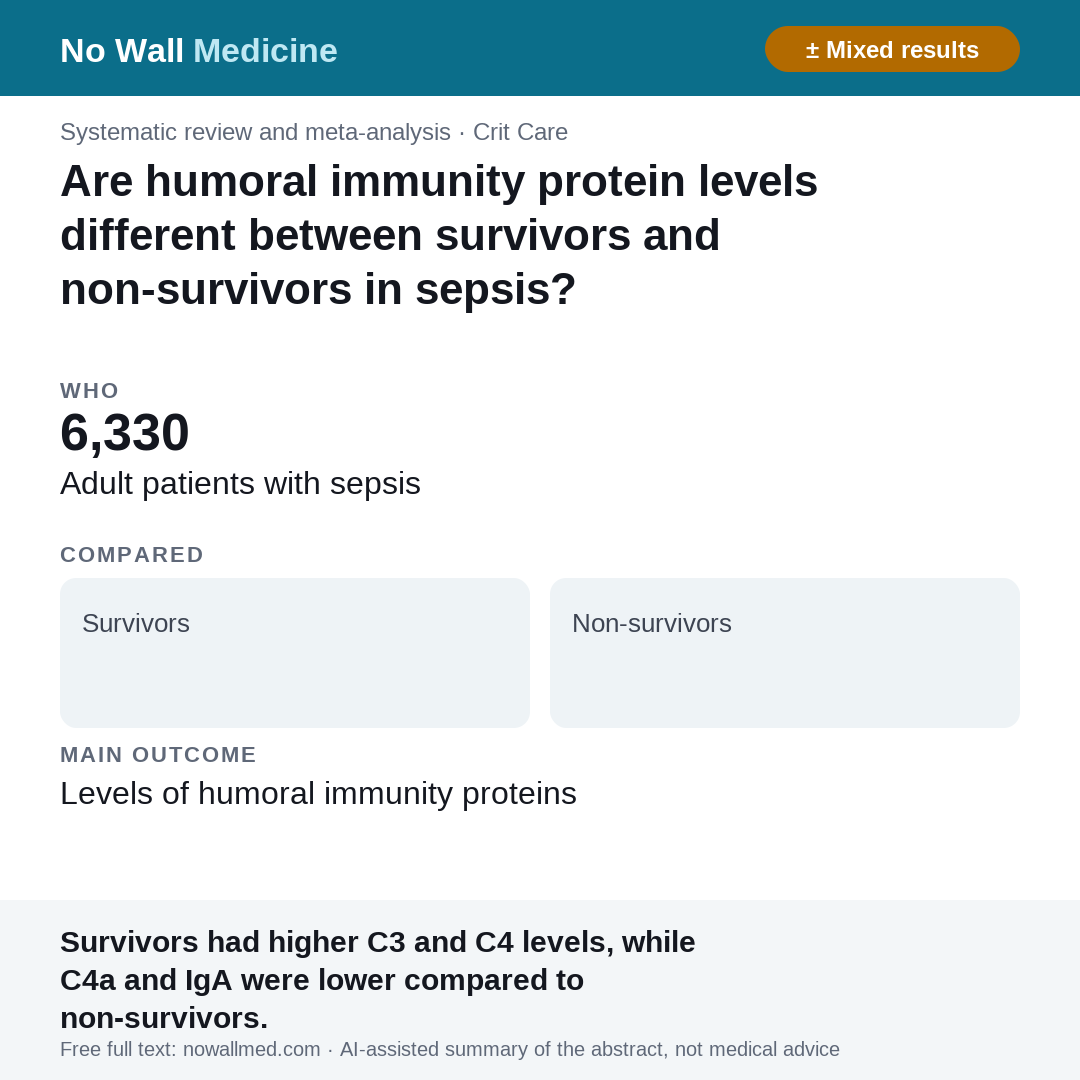
Systematic review and meta-analysis of humoral immunity proteins and mortality in sepsis
Systematic review and meta-analysisMixed results
Are humoral immunity protein levels different between survivors and non-survivors in sepsis?
Who
6,330
Adult patients with sepsis
Compared
Survivors
Non-survivors
Main outcome
Levels of humoral immunity proteins
Bottom line: Survivors had higher C3 and C4 levels, while C4a and IgA were lower compared to non-survivors.
Crit Care · 2025-12-22Download image
Prognostic Prediction Models for Ulcerative Colitis: Systematic Review and Meta-Analysis
Meta-analysis of 30 studiesMixed results
Do prognostic models predict ulcerative colitis outcomes
Who
7452
patients with ulcerative colitis · China and Japan
Compared
prognostic models
control
Main outcome
predictive performance
Result: pooled area under the curve 0.84 (95% CI 0.77-0.92)
Bottom line: Prognostic models have potential but high bias risk
Limitation: high risk of bias and limited generalizability
J Med Internet Res · 2025-12-22Download image

Barriers to and Facilitators of Implementation of Internet-Delivered Therapist-Guided Therapy in Child and Adolescent Mental Health Services: Systematic Review and Bayesian Meta-Analysis
Systematic review and Bayesian meta-analysisBenefit found
What are the barriers, facilitators, and implementation outcomes of internet-delivered therapist-guided therapy in child mental health services?
Who
50
Children and adolescents aged 8-18 years in outpatient services · Western Europe, Northern America, and Oceania
Compared
Dropout rates: ~20% (95% CI 14%-27%)
Module completion: ~68% (95% CI 60%-75%)
Therapist time: 24 min per wk per patient (95% CI 19-28)
Patient satisfaction (CSQ-8): 24/32 (95% CI 22-27)
Main outcome
Implementation outcomes including fidelity, cost-effectiveness, and acceptability
Bottom line: Internet-delivered therapist-guided therapy shows high acceptability and resource efficiency with modest dropout rates in child mental health services.
J Med Internet Res · 2025-12-22Download image

Radiofrequency identification tag localization of nonpalpable breast lesions: a systematic review and meta-analysis
Systematic review and meta-analysisBenefit found
Is radiofrequency identification tag localization effective compared to wire-guided localization for nonpalpable breast lesions?
Who
3234
3,234 patients with 497 benign and 2,741 malignant lesions
Compared
Radiofrequency identification tag localization: 12% positive margins
Wire-guided localization
Main outcome
Positive margins and re-excision rates
Result: odds ratio 0.71 (95% CI 0.54-0.95) for positive margins
Bottom line: Radiofrequency identification tag localization has significantly lower positive margin rates than wire-guided localization for nonpalpable breast lesions.
Limitation: Moderate bias was reported in 16/19 studies, serious bias in 3/19.
Eur Radiol Exp · 2025-12-22Download image

Prevalence of type 2 diabetes among global Indigenous adult populations: a systematic review
Systematic reviewHarm found
What is the prevalence of type 2 diabetes among global Indigenous adult populations?
Who
Indigenous adult populations aged 18 years and older · 37 countries
Compared
Indigenous populations: 0 to 40%
Global prevalence
Main outcome
Type 2 diabetes prevalence
Bottom line: Type 2 diabetes prevalence among Indigenous adults was markedly higher than global averages from 1980 to 2020.
Limitation: Potential publication bias, which may have led to fewer studies being included.
Diabetologia · 2025-12-21Download image

Burnout among paediatric surgeons: a systematic review and meta-analysis
Systematic review and meta-analysisBenefit found
What is the prevalence of burnout among paediatric surgeons?
Who
2757
Paediatric surgeons
Compared
22.4%Maslach Burnout Inventory tools
44.9%Non-Maslach Burnout Inventory tools
Main outcome
Burnout prevalence
Result: 29.4% (95% CI 20.3% to 40.5%)
Bottom line: Nearly one in three paediatric surgeons experience burnout, with a pooled prevalence of 29.4%.
Limitation: Substantial heterogeneity (I²=96.4%) was observed among the included studies.
BMJ Paediatr Open · 2025-12-21Download image

Reliability of physical examination tests for assessing hip flexor flexibility: A systematic review and meta-analysis
Systematic review and meta-analysisBenefit found
How reliable are physical examination tests for assessing hip flexor flexibility?
Who
1056
Participants undergoing hip flexor flexibility clinical tests
Compared
0.90Intrarater reliability (95% CI, 0.85-0.95)
0.80Interrater reliability (95% CI, 0.71-0.88)
Main outcome
Intraclass correlation coefficient for hip flexor flexibility tests
Bottom line: Physical examination tests for hip flexor flexibility demonstrate generally high intrarater and interrater reliability.
Limitation: Substantial heterogeneity was observed, particularly for the Modified Thomas Test and Thomas Test.
PM R · 2025-12-20Download image

Technologies for the three-dimensional assessment and treatment of unilateral spatial neglect in individuals with stroke: a systematic review
Systematic reviewUnclear result
What are the features and outcomes of three-dimensional technologies for unilateral spatial neglect?
Who
Individuals with unilateral spatial neglect following stroke
Compared
Assessment studies: 15 studies
Treatment studies: 17 studies
Technical studies: 5 studies
Main outcome
Features, development level, and reported outcomes of three-dimensional technologies
Bottom line: Three-dimensional technologies for unilateral spatial neglect are in early experimental phases with significant methodological variability.
Limitation: Methodological variability, heterogeneity of technologies and outcomes, and lack of standardized protocols.
J Neuroeng Rehabil · 2025-12-20Download image

A multi-ancestry meta genome-wide association study of migraine among veterans: associations with traumatic brain injury, depression, and post-traumatic stress disorder
Meta-analysis of a genome-wide association studyMixed results
What are the genetic associations of migraine and its links to psychiatric comorbidities in Veterans?
Who
433,000
Predominantly male Veterans · Million Veteran Program
Compared
87,859Migraine cases
Migraine and neuropsychiatric disorders: high genetic correlations
Main outcome
Genome-wide significant loci and causal links to psychiatric disorders
Bottom line: The study identified 49 significant loci but found no causal links between migraine and psychiatric disorders.
Limitation: Minimal vascular tissue enrichment potentially reflecting the predominantly male Veteran sample composition.
Mol Psychiatry · 2025-12-19Download image

Etiology-specific optimal timing of surgical intervention for intracranial hemorrhage: a systematic review and network meta-analysis
Systematic review and network meta-analysisMixed results
What is the optimal timing for surgical intervention in intracranial hemorrhage?
Who
5919
Patients with intracranial hemorrhage including intracerebral and aneurysmal subarachnoid hemorrhage
Compared
Surgery within 24 hours: OR: 0.53 (95% CI: 0.31-0.92) for poor Glasgow Outcome Scale
Surgery delayed beyond 7 days: worse functional recovery
Main outcome
Glasgow Outcome Scale scores, mortality, and rebleeding
Result: OR: 0.53 (95% CI: 0.31-0.92) for poor Glasgow Outcome Scale
Bottom line: Early surgery within 24-48 hours improves outcomes, but optimal timing depends on the specific type of hemorrhage.
Limitation: Further high-quality randomized trials are needed to refine clinical guidelines.
Int J Surg · 2025-12-19Download image

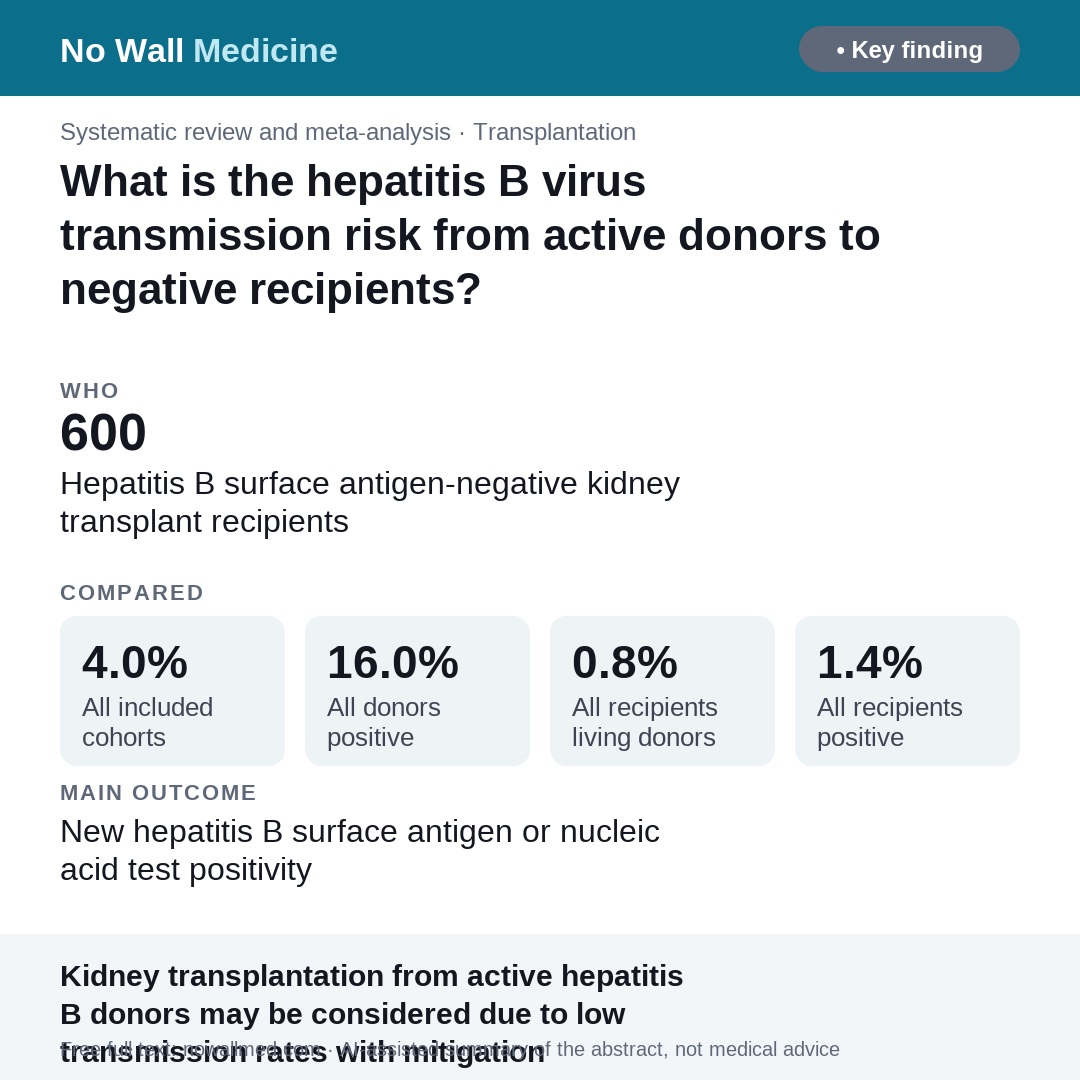
Transmission Risk of Intentional Transplantation of Kidneys From Donors With Active Hepatitis B to Recipients Without Active Hepatitis B: A Systematic Review and Meta-Analysis
Systematic review and meta-analysisBenefit found
What is the hepatitis B virus transmission risk from active donors to negative recipients?
Who
600
Hepatitis B surface antigen-negative kidney transplant recipients
Compared
4.0%All included cohorts
16.0%All donors positive nucleic acid test
0.8%All recipients living donors
1.4%All recipients positive surface antibody
Main outcome
New hepatitis B surface antigen or nucleic acid test positivity
Result: 4.0% (95% CI, 1.8%-8.3%)
Bottom line: Kidney transplantation from active hepatitis B donors may be considered due to low transmission rates with mitigation strategies.
Limitation: Some between-study variance was observed.
Transplantation · 2025-12-19Download image
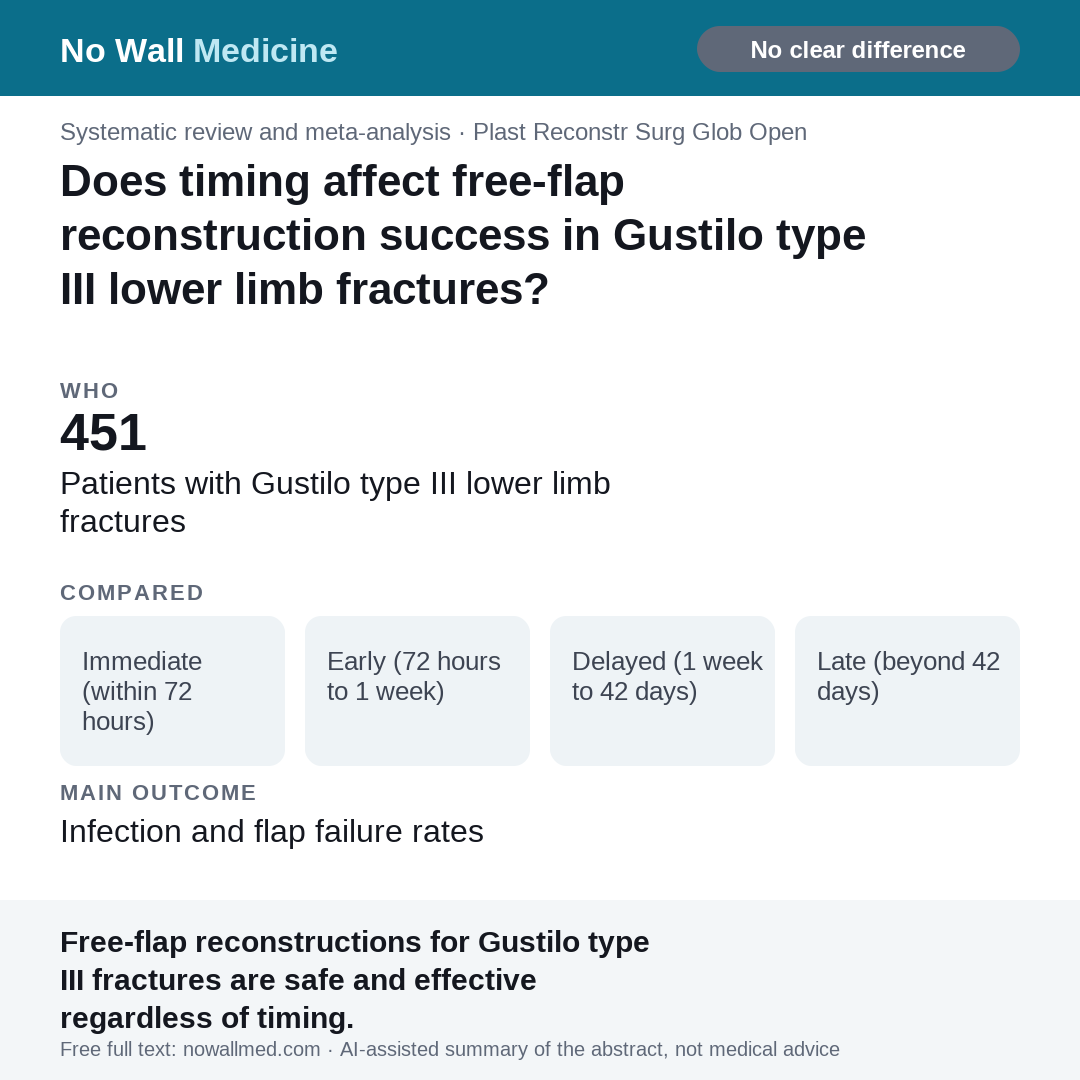
Timing for Free-Flap Reconstruction for Gustilo Type III Lower Limb Fractures: Systematic Review and Meta-analysis
Systematic review and meta-analysisNo clear difference
Does timing affect free-flap reconstruction success in Gustilo type III lower limb fractures?
Who
451
Patients with Gustilo type III lower limb fractures
Compared
Immediate (within 72 hours)
Early (72 hours to 1 week)
Delayed (1 week to 42 days)
Late (beyond 42 days)
Main outcome
Infection and flap failure rates
Bottom line: Free-flap reconstructions for Gustilo type III fractures are safe and effective regardless of timing.
Limitation: Comprehensive data assessing the effect of timing on outcomes are still limited.
Plast Reconstr Surg Glob Open · 2025-12-19Download image
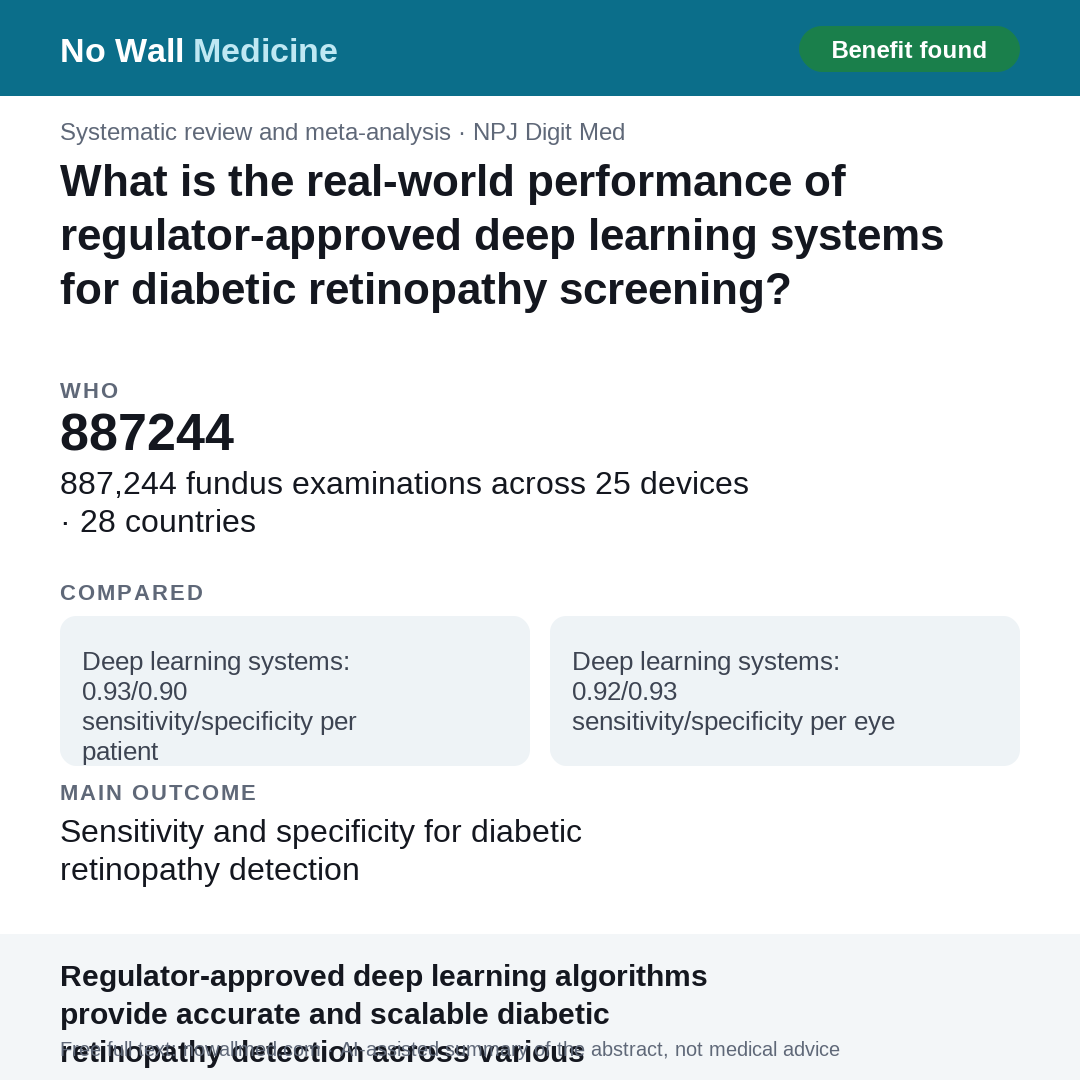
Systematic review and meta-analysis of regulator-approved deep learning systems for fundus diabetic retinopathy detections
Systematic review and meta-analysisBenefit found
What is the real-world performance of regulator-approved deep learning systems for diabetic retinopathy screening?
Who
887244
887,244 fundus examinations across 25 devices · 28 countries
Compared
Deep learning systems: 0.93/0.90 sensitivity/specificity per patient
Deep learning systems: 0.92/0.93 sensitivity/specificity per eye
Main outcome
Sensitivity and specificity for diabetic retinopathy detection
Bottom line: Regulator-approved deep learning algorithms provide accurate and scalable diabetic retinopathy detection across various settings.
Limitation: Heterogeneity explained by disease severity, income level, image gradability, and diagnostic criteria.
NPJ Digit Med · 2025-12-19Download image
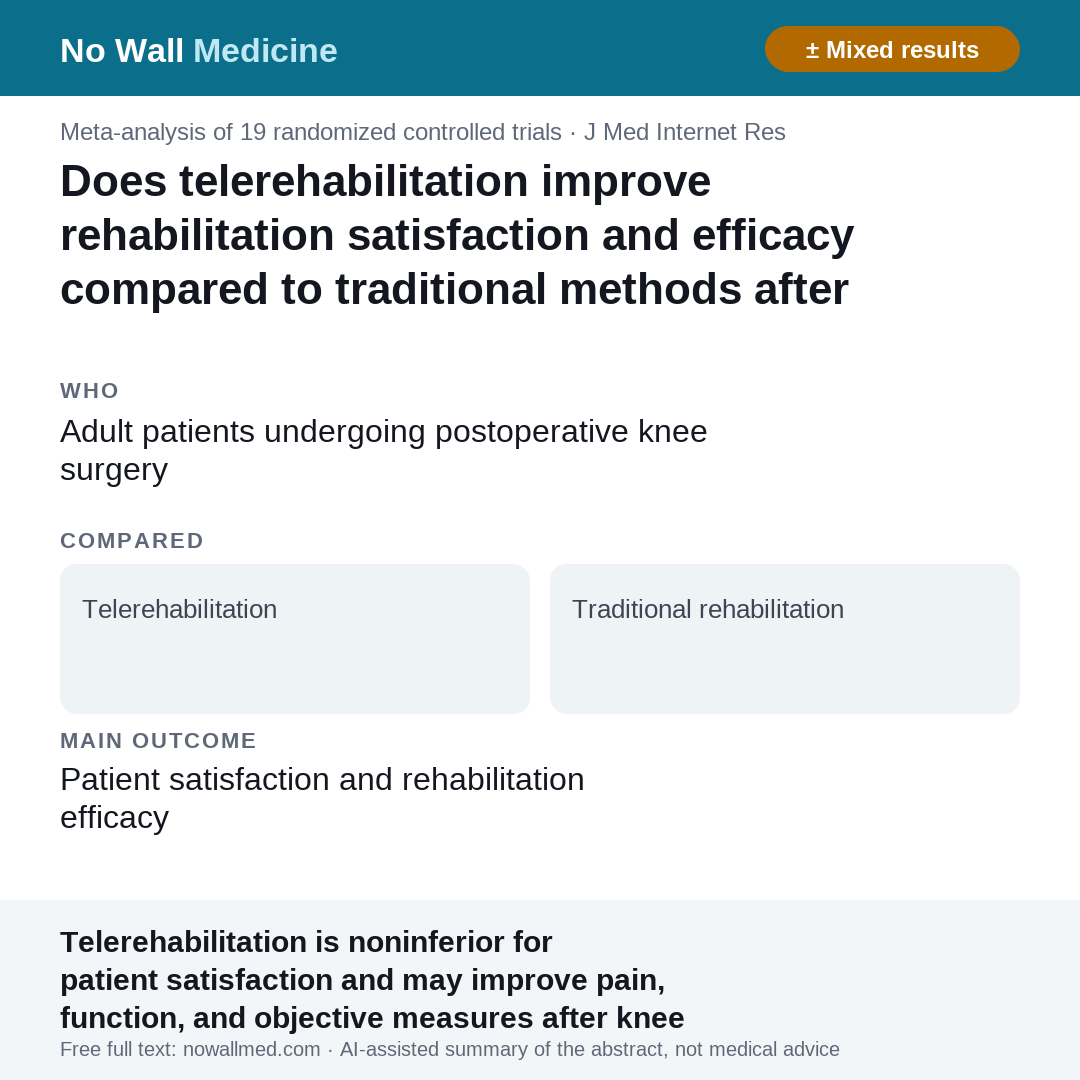
Impact of Telerehabilitation on Rehabilitation Efficacy and Patient Satisfaction After Knee Surgery: Systematic Review and Meta-Analysis of Randomized Controlled Trials
Meta-analysis of 19 randomized controlled trialsMixed results
Does telerehabilitation improve rehabilitation satisfaction and efficacy compared to traditional methods after knee surgery?
Who
Adult patients undergoing postoperative knee surgery
Compared
Telerehabilitation
Traditional rehabilitation
Main outcome
Patient satisfaction and rehabilitation efficacy
Result: standardized mean difference 0.15 (95% CI -0.48 to 0.78) for satisfaction
Bottom line: Telerehabilitation is noninferior for patient satisfaction and may improve pain, function, and objective measures after knee surgery.
Limitation: Between-study variability indicates that effects vary by context, requiring individualized implementation.
J Med Internet Res · 2025-12-19Download image
Identifying subtypes of Long COVID: a systematic review
Systematic review and meta-analysisMixed results
What are the existing clustering and classification approaches for Long COVID subtypes and symptoms?
Who
2
Long COVID patients · 20 countries
Compared
Respiratory symptom cluster: 47% [95% CI: 29%-65%]
Neurological symptom cluster: 31% [95% CI: 3%-60%]
Gastrointestinal symptom cluster: 28% [95% CI: 0%-57%]}
Main outcome
Percentage of organ system-based symptom clusters
Bottom line: Long COVID can be categorized by symptom co-occurrence or organ systems, with respiratory, neurological, and gastrointestinal clusters identified.
Funded by: K. C. Wong Education Foundation and several Chinese medical funds
eClinicalMedicine · 2025-12-18Download image

Meta-analysis and external validation of a risk model for gastrointestinal bleeding after percutaneous coronary intervention
Meta-analysis and external validationBenefit found
What risk factors predict gastrointestinal bleeding after percutaneous coronary intervention?
Who
7211114
Patients undergoing percutaneous coronary intervention · Two tertiary hospitals for external validation
Compared
Model I: AUC 0.842
CRUSADE score: AUC 0.770
PRECISE-DAPT score: AUC 0.772
Main outcome
Predictive performance for gastrointestinal bleeding
Bottom line: Model I outperformed CRUSADE and PRECISE-DAPT scores in predicting gastrointestinal bleeding after percutaneous coronary intervention.
BMC Med · 2025-12-18Download image

Postpartum management of the hypertensive disorders of pregnancy: a systematic review and meta-analysis
Systematic review and meta-analysisMixed results
What are the effective and safe management strategies for postpartum hypertension?
Who
Participants with postpartum hypertension
Compared
Diuretics plus antihypertensive: better blood pressure control
Placebo or no therapy
Self-monitoring/management or lifestyle change: lower blood pressure 8 months postpartum
Usual care
Main outcome
maternal blood pressure and laboratory parameters
Bottom line: Diuretics may aid blood pressure control with antihypertensives, and self-monitoring or lifestyle changes lower long-term blood pressure.
Limitation: Certainty of evidence was low or very low.
AJOG · 2025-12-18Download image

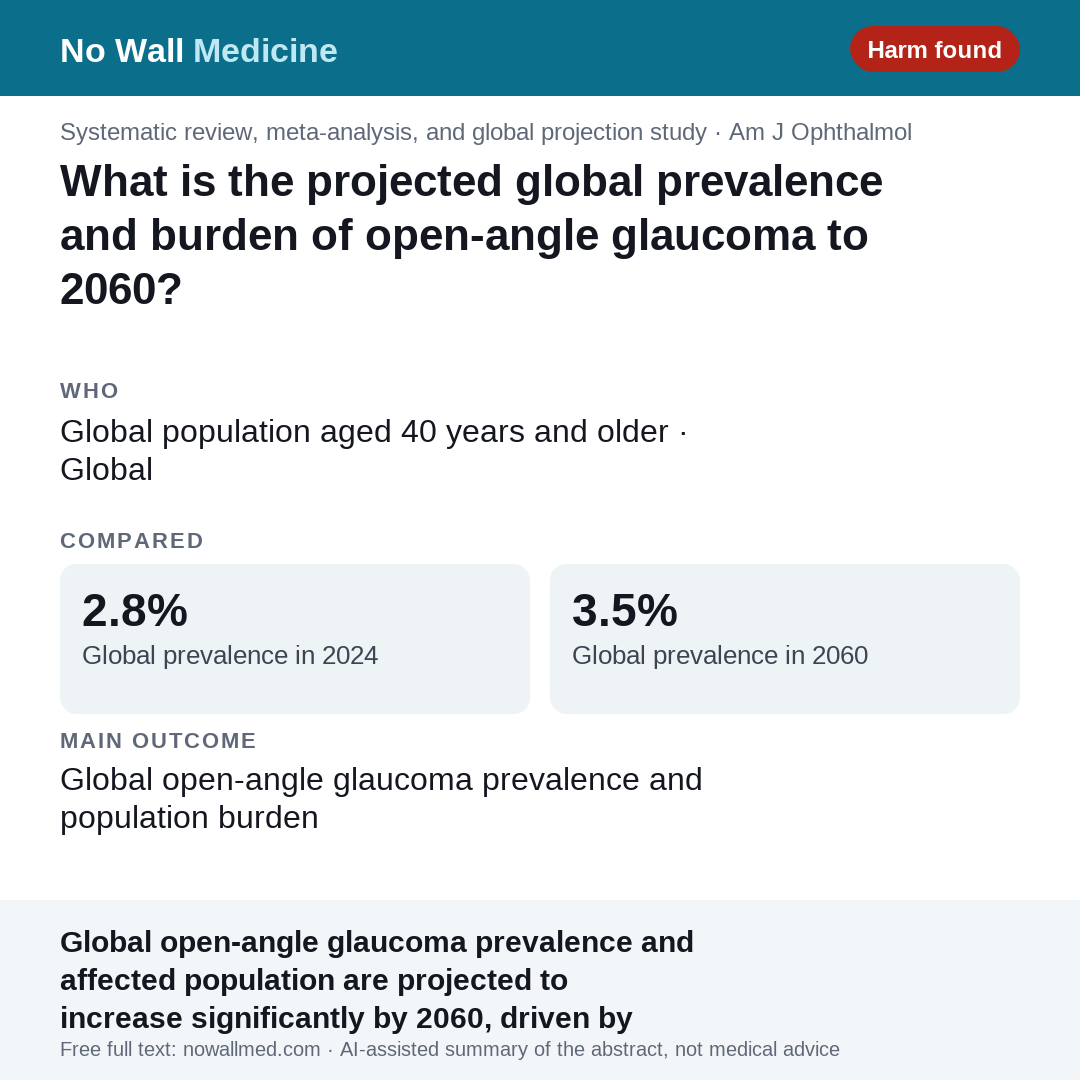
Global Glaucoma Prevalence: Burden and Projection to 2060
Systematic review, meta-analysis, and global projection studyHarm found
What is the projected global prevalence and burden of open-angle glaucoma to 2060?
Who
Global population aged 40 years and older · Global
Compared
2.8%Global prevalence in 2024 (95% CI, 2.6%-3.0%)
3.5%Global prevalence in 2060 (95% CI, 3.2%-3.8%)
Main outcome
Global open-angle glaucoma prevalence and population burden
Bottom line: Global open-angle glaucoma prevalence and affected population are projected to increase significantly by 2060, driven by aging and myopia.
Am J Ophthalmol · 2025-12-18Download image
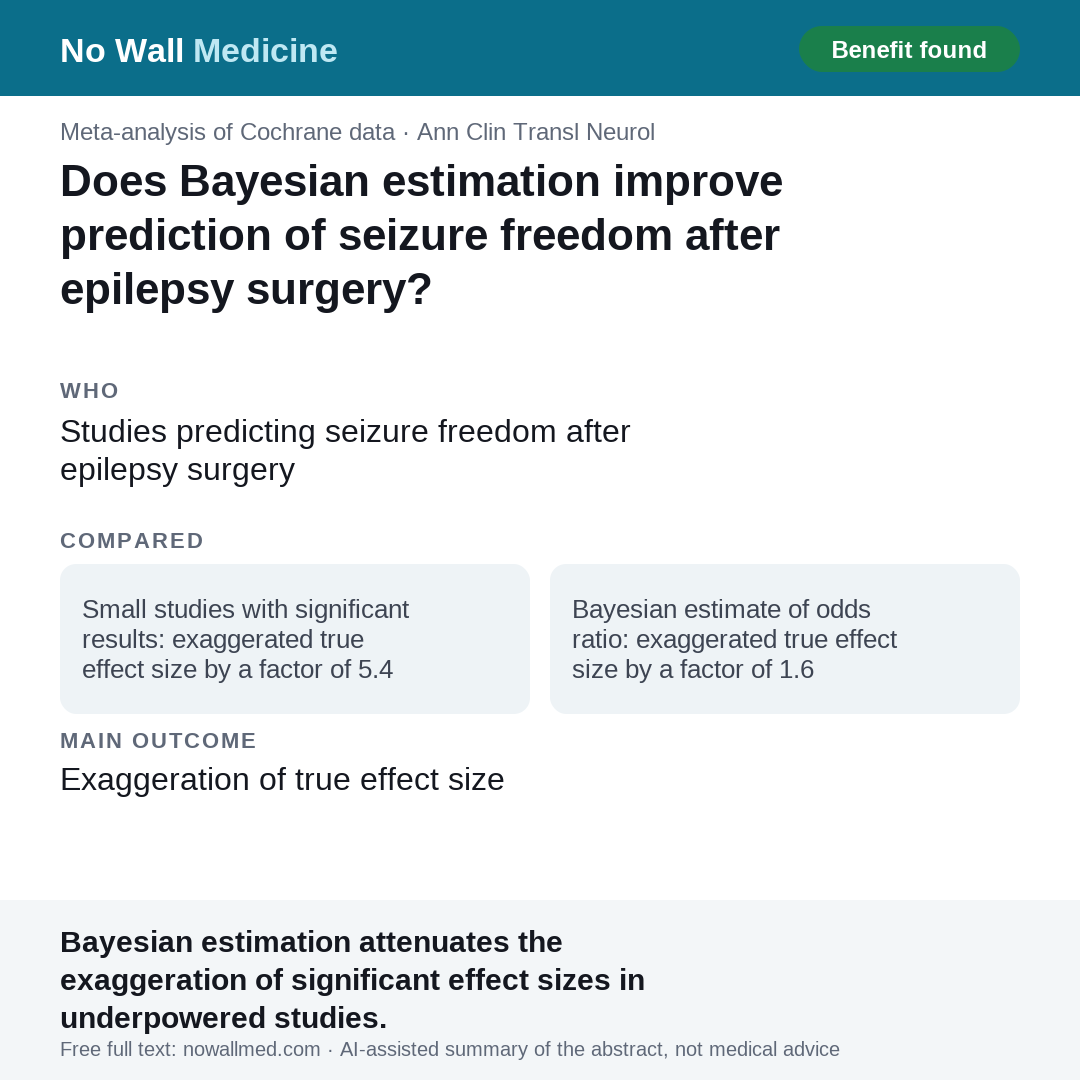
Bayesian Estimation Improves Prediction of Outcomes After Epilepsy Surgery
Meta-analysis of Cochrane dataBenefit found
Does Bayesian estimation improve prediction of seizure freedom after epilepsy surgery?
Who
Studies predicting seizure freedom after epilepsy surgery
Compared
Small studies with significant results: exaggerated true effect size by a factor of 5.4
Bayesian estimate of odds ratio: exaggerated true effect size by a factor of 1.6
Main outcome
Exaggeration of true effect size
Bottom line: Bayesian estimation attenuates the exaggeration of significant effect sizes in underpowered studies.
Ann Clin Transl Neurol · 2025-12-18Download image
Application and performance of deep learning models for the automated diagnosis of cervical central spinal stenosis on MRI: a systematic review
Systematic reviewUnclear result
Can AI diagnose cervical central spinal stenosis
Who
Adults with spinal cord dysfunction
Compared
AI models
Human diagnosis
Main outcome
Diagnostic performance
Bottom line: AI shows promise for diagnosing spinal stenosis
Limitation: Small, single-centre cohorts
Brain Spine · 2025-12-18Download image