Visual abstracts
New randomized trials and meta-analyses from leading journals at a glance: who was studied, what was compared, and what was found. Every paper is free to read in full.
All specialtiesCardiology 4877Oncology 4138Gastroenterology & Hepatology 1942Infectious Disease 3837Neurology 1905Psychiatry & Mental Health 2273Pulmonology 2143Critical Care 1365Endocrinology & Diabetes 2580Pediatrics 2980Surgery 2559Orthopedics & Sports Medicine 931Neurosurgery 537Cardiothoracic & Vascular Surgery 674Plastic & Reconstructive Surgery 591Nephrology 1133Rheumatology 823Hematology 1109Dermatology 621Ophthalmology 543Obstetrics & Gynecology 1686Public & Global Health 1058Radiology & Imaging 648Anesthesiology 986Urology 764ENT (Otolaryngology) 503Emergency Medicine 511Allergy & Immunology 313Geriatrics 981Family Medicine & Primary Care 562Medical Genetics & Genomics 676Pathology & Laboratory Medicine 159Physical Medicine & Rehabilitation 757Palliative Care 444Nutrition 1588Digital Health & AI 2201General Medicine 321
Prevalence of surgery in Indigenous people with cancer: a systematic review and meta-analysis
Systematic review and meta-analysisHarm found
What is the prevalence of surgery in Indigenous people with cancer?
Who
Indigenous adults with cancer · Canada, Australia, New Zealand, and the United States
Compared
56.2%Indigenous people (95% CI: 45.4-66.7%)
Non-Indigenous people
Main outcome
Prevalence of surgery
Result: 3% (95% CI: 0-6%) less surgery than non-Indigenous people
Bottom line: Indigenous people have a 56.2% surgery prevalence, receiving marginally less cancer surgery than non-Indigenous people.
Funded by: The Research Alliance for Urban Goori Health
Lancet Reg Health West Pac · 2025-03-26Download image

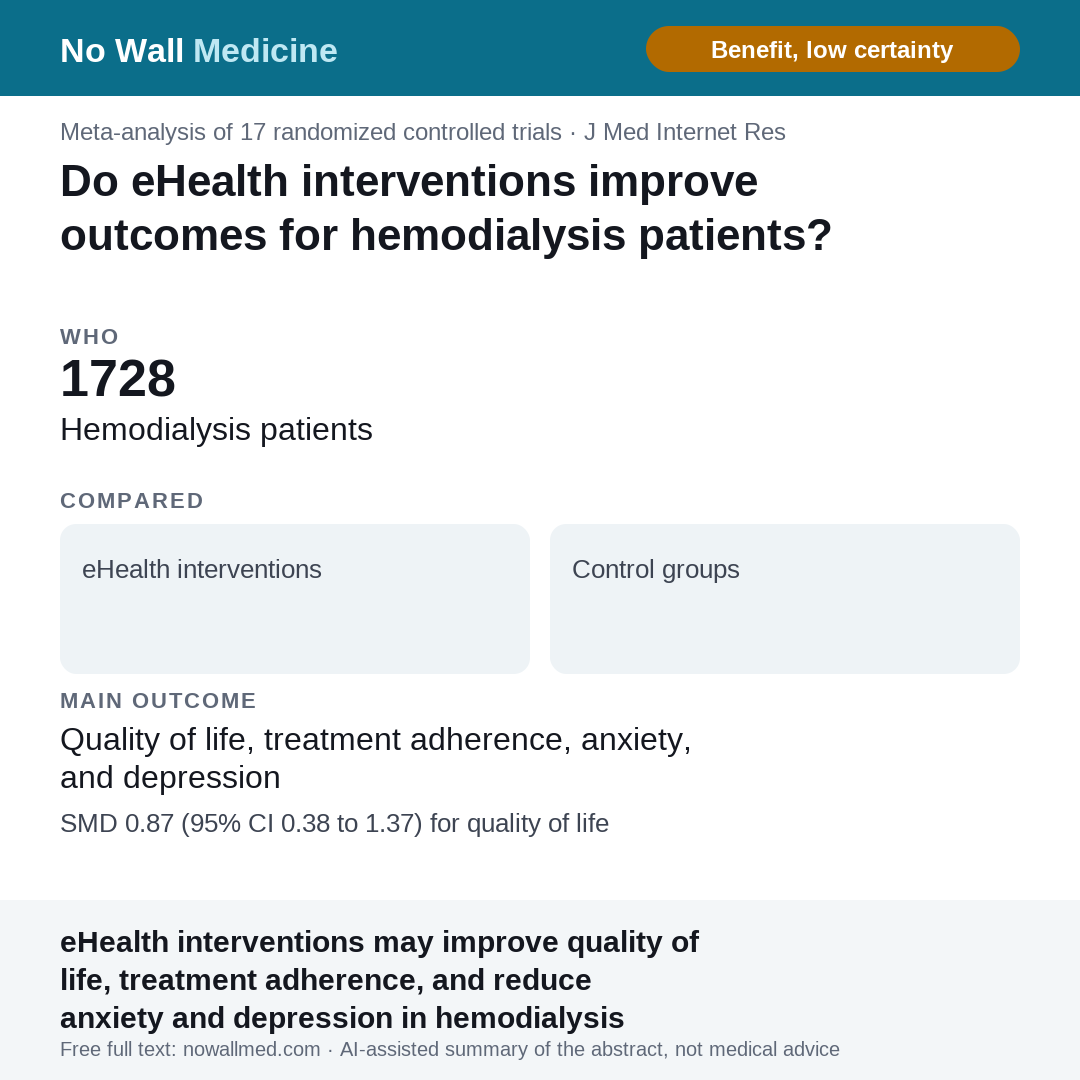
Efficacy of eHealth Interventions for Hemodialysis Patients: Systematic Review and Meta-Analysis
Meta-analysis of 17 randomized controlled trialsBenefit found
Do eHealth interventions improve outcomes for hemodialysis patients?
Who
1728
Hemodialysis patients
Compared
eHealth interventions
Control groups
Main outcome
Quality of life, treatment adherence, anxiety, and depression
Result: SMD 0.87 (95% CI 0.38 to 1.37) for quality of life
Bottom line: eHealth interventions may improve quality of life, treatment adherence, and reduce anxiety and depression in hemodialysis patients.
Limitation: High risk of performance and detection bias in most included trials.
J Med Internet Res · 2025-03-26Download image
Social Media and eHealth Literacy Among Older Adults: Systematic Literature Review
Systematic literature reviewBenefit found
What is the relationship between social media use and eHealth literacy in older adults?
Who
16
Older individuals
Compared
Social media use behaviors: reciprocal relationship with eHealth literacy
eHealth literacy: reciprocal relationship with social media use behaviors
Main outcome
Correlation between social media behaviors and eHealth literacy
Bottom line: Older adults' social media use and eHealth literacy have a reciprocal relationship that mutually reinforces health practices.
J Med Internet Res · 2025-03-26Download image

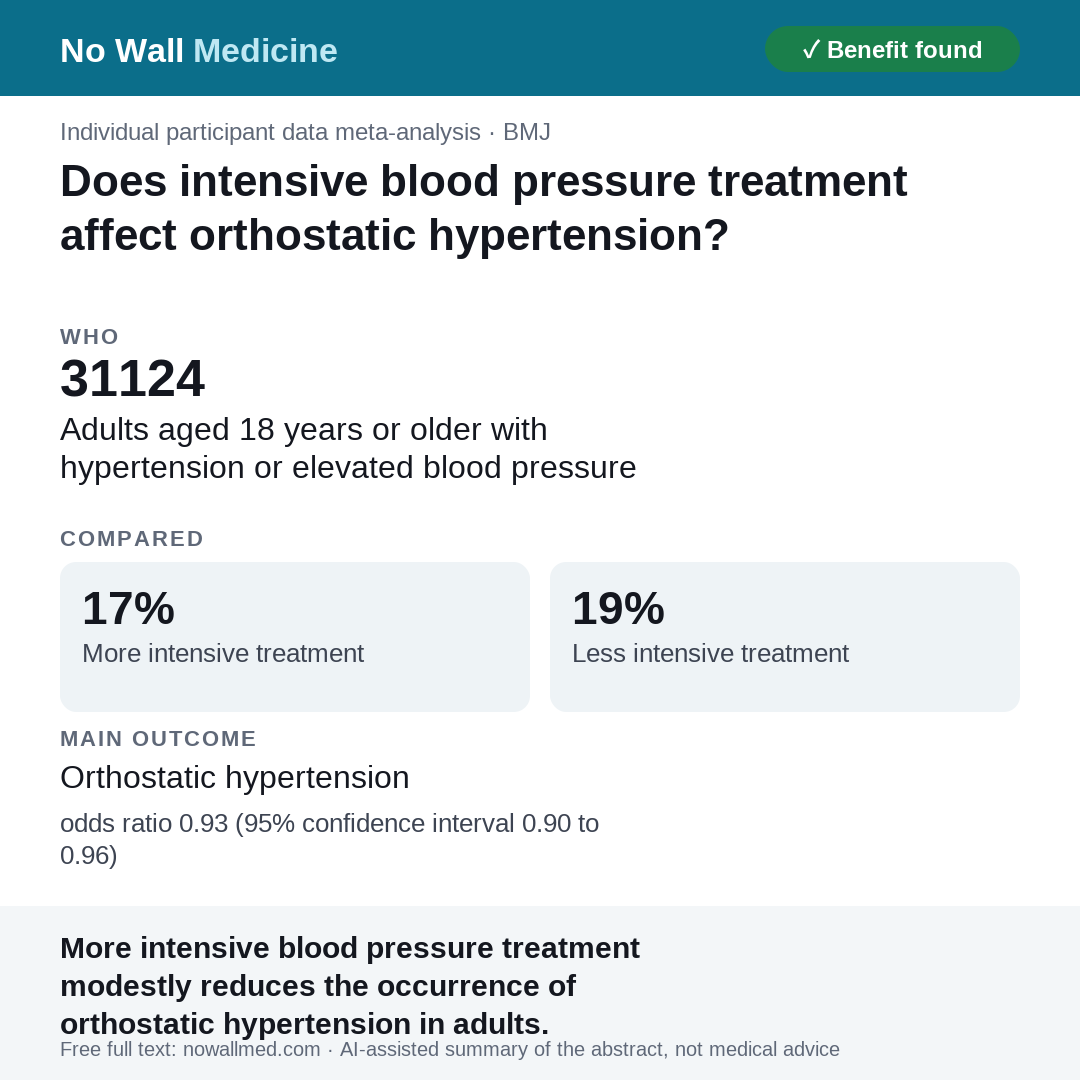
Effects of intensive blood pressure treatment on orthostatic hypertension: individual level meta-analysis
Individual participant data meta-analysisBenefit found
Does intensive blood pressure treatment affect orthostatic hypertension?
Who
31124
Adults aged 18 years or older with hypertension or elevated blood pressure
Compared
17%More intensive treatment
19%Less intensive treatment
Main outcome
Orthostatic hypertension
Result: odds ratio 0.93 (95% confidence interval 0.90 to 0.96)
Bottom line: More intensive blood pressure treatment modestly reduces the occurrence of orthostatic hypertension in adults.
BMJ · 2025-03-25Download image
The Child Opportunity Index and Children's Health: A Meta-Analysis
Meta-analysisBenefit found
What are the associations between the Child Opportunity Index and pediatric health?
Who
Children in United States based observational studies · United States
Compared
Very low/low Child Opportunity Index: higher odds of mortality
High/very high Child Opportunity Index
Main outcome
Mortality, emergency department use, and hospital use
Result: OR, 1.50; 95% CI, 1.31-1.94
Bottom line: Lower Child Opportunity Index is associated with higher mortality and specific healthcare use among children.
Limitation: Meta-analyses were unadjusted.
Pediatrics · 2025-03-25Download image

Intracranial GCA: a comprehensive systematic review
Systematic reviewUnclear result
What are the presentations, investigations, treatments, and outcomes of intracranial giant cell arteritis?
Who
340
Patients with intracranial giant cell arteritis
Compared
240Patients with stroke (70.6%)
67Patients with isolated imaging or histologic changes (19.7%)
Patients with reported follow-up outcomes: relapse 40 (22.1%), death 59 (32.6%)
Main outcome
Clinical presentations, treatments, and follow-up outcomes
Bottom line: Intracranial giant cell arteritis is a potentially severe manifestation with high stroke rates and significant mortality.
Rheumatology · 2025-03-25Download image

Effects of opioids on tumour growth and metastasis in animal models: a systematic review
Systematic review of preclinical literatureNo clear difference
Do opioids affect tumour growth and metastasis in animal models?
Who
Animal models in published in vivo preclinical literature
Compared
Studies reporting anti-cancer effect: 94/168 (56%)
31Studies reporting pro-cancer effect (18%)
Main outcome
Tumour growth and metastasis
Bottom line: Opioid category and dose were associated with outcomes, but no organ-specific cancer-promoting effect was found.
Br J Anaesth · 2025-03-25Download image

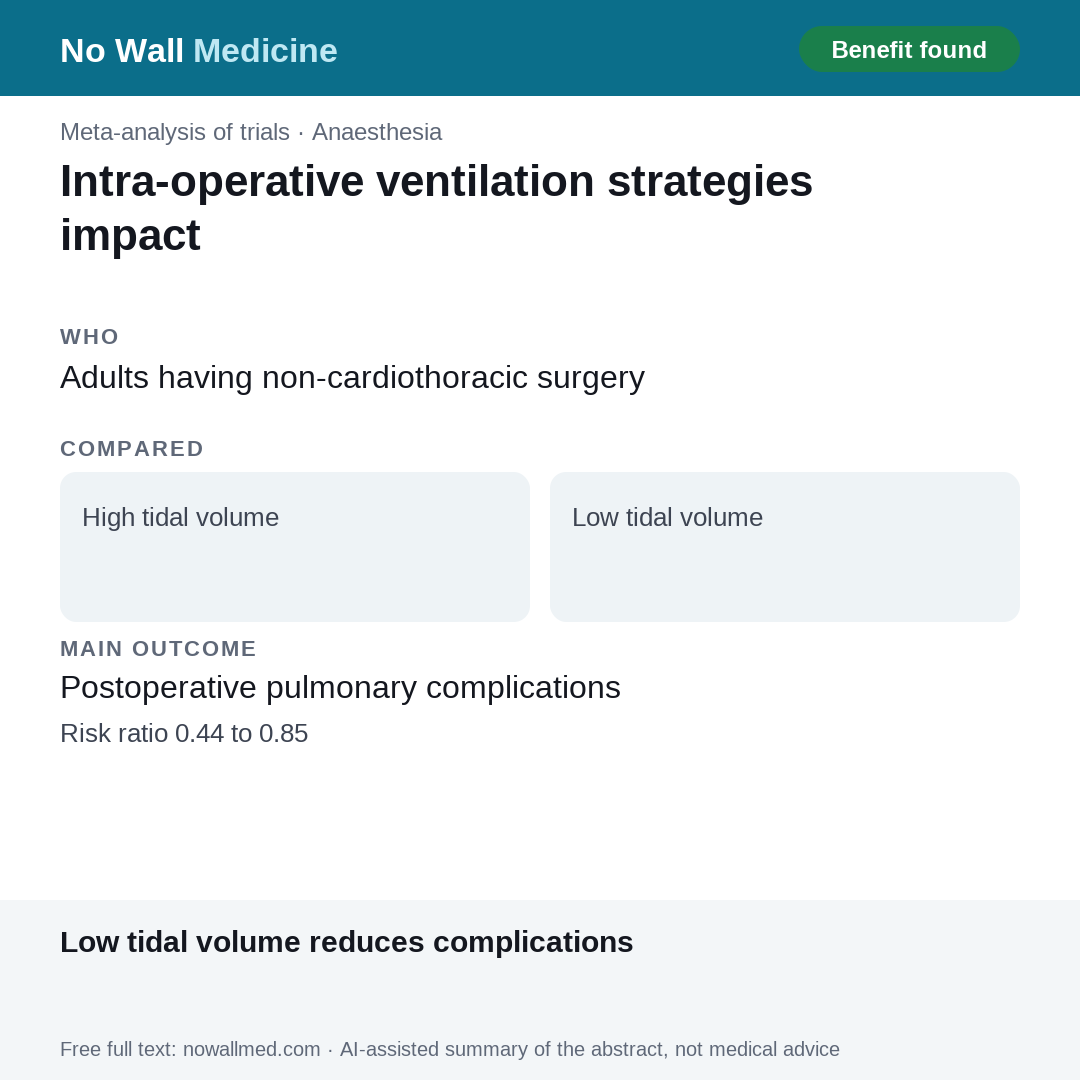
Intra-operative ventilation strategies and their impact on clinical outcomes: a systematic review and network meta-analysis of randomised trials
Meta-analysis of trialsBenefit found
Intra-operative ventilation strategies impact
Who
51
Adults having non-cardiothoracic surgery
Compared
High tidal volume
Low tidal volume
Main outcome
Postoperative pulmonary complications
Result: Risk ratio 0.44 to 0.85
Bottom line: Low tidal volume reduces complications
Anaesthesia · 2025-03-25Download image
Indocyanine-guided ureter resection for radical cystectomy - a systematic review and meta-analysis
Systematic review and meta-analysisBenefit found
Does indocyanine green guided ureter resection reduce uretero-intestinal stenosis during radical cystectomy?
Who
1339
Patients undergoing radical cystectomy
Compared
Indocyanine green guided resection
Standard of care
Main outcome
Rate of uretero-intestinal stenosis per patient
Result: odds ratio 0.20 (95% confidence interval 0.07-0.52)
Bottom line: Indocyanine green guided resection lowers the rate of uretero-intestinal stenosis per patient and per ureter.
Limitation: Certainty of evidence was low.
BJU Int · 2025-03-25Download image

Minimal invasive extracorporeal circulation versus conventional cardiopulmonary bypass in cardiac surgery: a contemporary systematic review and meta-analysis
Meta-analysis of 36 randomized controlled trialsBenefit found
Does minimally invasive extracorporeal circulation improve outcomes compared to conventional cardiopulmonary bypass?
Who
4849
Patients undergoing cardiac surgery
Compared
Minimally invasive extracorporeal circulation
Conventional cardiopulmonary bypass
Main outcome
Mortality
Result: odds ratio 0.66 (95% CI 0.53-0.81)
Bottom line: Minimally invasive extracorporeal circulation reduces mortality, myocardial infarction, cerebrovascular events, and hospital stay after cardiac surgery.
Eur J Cardiothorac Surg · 2025-03-25Download image

Right bundle branch in ventricular septal defects
Systematic literature reviewUnclear result
What are the anatomical variations of the right bundle branch in ventricular septal defects?
Who
100
Normal hearts and various ventricular septal defect subtypes
Compared
Normal heart: runs posterior to Lancisi's muscle
Perimembranous outlet VSDs: deviate towards the left ventricle beneath the defect's edge
Tetralogy of Fallot with perimembranous outlet VSDs: courses approximately 2 mm anterior to the medial papillary muscle in 63-86% of cases
Main outcome
Anatomical variations of the right bundle branch
Bottom line: The right bundle branch position varies significantly between normal hearts and different ventricular septal defect subtypes.
Eur J Cardiothorac Surg · 2025-03-25Download image

Prevalence of anxiety disorders in Latin America: a systematic review and meta-analysis
Meta-analysis of 36 studiesMixed results
Anxiety disorders prevalence in Latin America
Who
Adult population in Latin America · Latin America
Compared
14.55%Lifetime prevalence (95% Confidence Interval 12.32%-17.11%)
6.61%12-month prevalence (5.20-8.37)
3.27%Current prevalence (2.34-4.56)
Main outcome
Anxiety disorders prevalence
Bottom line: One in seven people experience anxiety disorders
Limitation: Substantial heterogeneity between studies
Funded by: Pfizer Independent Medical Education Grant
Lancet Reg Health Am · 2025-03-25Download image

Advances in individualization of systemic treatment for locoregionally advanced nasopharyngeal carcinoma: a systematic review
Systematic reviewMixed results
What is the optimal systemic treatment strategy for locoregionally advanced nasopharyngeal carcinoma?
Who
Patients with locoregionally advanced nasopharyngeal carcinoma
Compared
Induction chemotherapy
Adjuvant chemotherapy
Main outcome
Optimal treatment strategy and prognostic biomarkers
Bottom line: Induction chemotherapy is usually preferred over adjuvant chemotherapy, and Epstein-Barr virus DNA is a potential prognostic marker.
Limitation: Need to standardize test and cut-off levels for Epstein-Barr virus DNA.
ESMO Open · 2025-03-25Download image

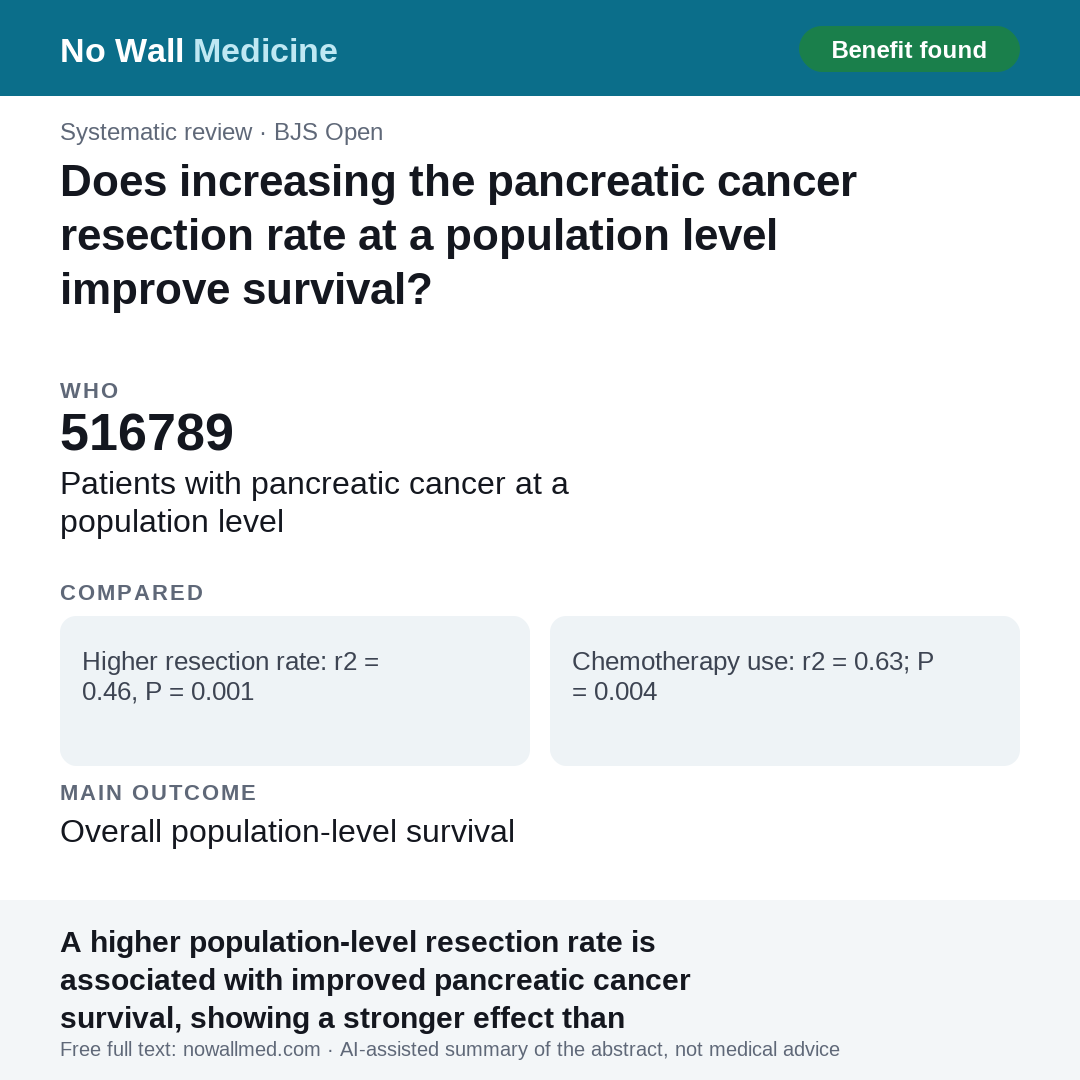
Relationship between pancreatic cancer resection rate and survival at population level: systematic review
Systematic reviewBenefit found
Does increasing the pancreatic cancer resection rate at a population level improve survival?
Who
516789
Patients with pancreatic cancer at a population level
Compared
Higher resection rate: r2 = 0.46, P = 0.001
Chemotherapy use: r2 = 0.63; P = 0.004
Main outcome
Overall population-level survival
Bottom line: A higher population-level resection rate is associated with improved pancreatic cancer survival, showing a stronger effect than chemotherapy.
BJS Open · 2025-03-25Download image
Effects of Digital Intelligent Interventions on Self-Management of Patients With Diabetic Foot: Systematic Review
Systematic review of randomized controlled trialsBenefit found
Do digital intelligent interventions improve self-management in patients with diabetic foot?
Who
Patients with diabetic foot
Compared
Digital intelligent interventions: 17/18 studies showed significant improvement
Routine care: 1/18 studies showed no significant difference
Main outcome
Self-management behaviors including diabetes control, foot care, and blood glucose monitoring
Bottom line: Digital intelligent interventions can improve self-management behaviors and capabilities in patients with diabetic foot.
Limitation: All included studies were rated as having a high risk of bias.
J Med Internet Res · 2025-03-25Download image

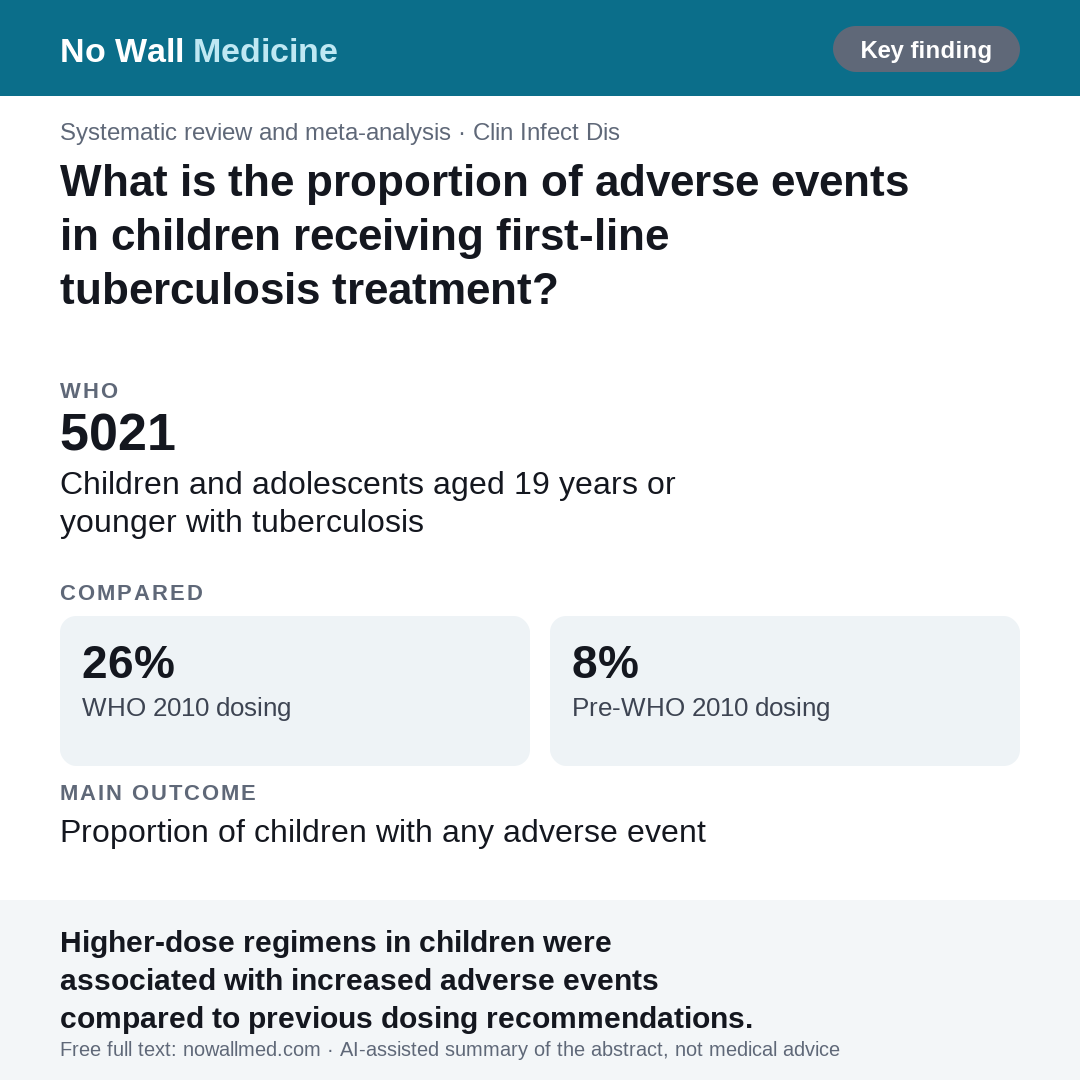
Adverse Events of First-Line Therapy for Pediatric Tuberculosis: A Systematic Review and Meta-Analysis
Systematic review and meta-analysisHarm found
What is the proportion of adverse events in children receiving first-line tuberculosis treatment?
Who
5021
Children and adolescents aged 19 years or younger with tuberculosis
Compared
26%WHO 2010 dosing (95% CI, 18%-34%)
8%Pre-WHO 2010 dosing (95% CI, 4%-15%)
Main outcome
Proportion of children with any adverse event
Bottom line: Higher-dose regimens in children were associated with increased adverse events compared to previous dosing recommendations.
Limitation: Findings are limited by publication bias in observational trials.
Clin Infect Dis · 2025-03-24Download image
The Use of Computed Tomography Densitometry for the Assessment of Emphysema in Clinical Trials: A Position Paper from the Fleischner Society
Systematic literature reviewBenefit found
Can computed tomography densitometry serve as diagnostic, prognostic, and progression monitoring biomarkers?
Who
Patients with emphysema or chronic obstructive pulmonary disease
Compared
Diagnostic and prognostic metrics: 0.99 scan-rescan intraclass correlation coefficient
Disease monitoring metric: 0.99 scan-rescan intraclass correlation coefficient
Main outcome
Computed tomography densitometry as a biomarker for emphysema
Bottom line: Computed tomography densitometry is a validated, highly reproducible biomarker for emphysema diagnosis, prognosis, and monitoring.
AJRCCM · 2025-03-24Download image

Evolving patterns of macrolide and fluoroquinolone resistance in Mycoplasma genitalium: an updated systematic review and meta-analysis
Systematic review and meta-analysisMixed results
What are the contemporary prevalence estimates of macrolide and fluoroquinolone resistance in Mycoplasma genitalium?
Who
Mycoplasma genitalium samples · 41 countries
Compared
33·3%Macrolide resistance (2018-21) (95% CI 27·2-39·7)
13·3%Fluoroquinolone resistance (2018-21) (10·0-17·0)
6·5%Dual-class resistance (2018-21) (4·0-9·4)
Main outcome
Prevalence of antibiotic resistance
Bottom line: In 2018-21, macrolide, fluoroquinolone, and dual-class resistance rates were 33.3%, 13.3%, and 6.5% respectively.
Funded by: Australian Research Council
Lancet Microbe · 2025-03-24Download image

Incidence and prevalence of functional neurological disorder: a systematic review
Systematic reviewUnclear result
What are the incidence and prevalence rates of functional neurological disorder?
Who
General population
Compared
Incidence of functional neurological disorder: 10-22/100 000
Prevalence of functional neurological disorder: 80-140/100 000
Main outcome
Incidence and prevalence rates of functional neurological disorder
Bottom line: Functional neurological disorder shows wide variation in incidence and prevalence estimates across studies with significant heterogeneity.
Limitation: Methodological differences and significant heterogeneity among studies, with likely underestimates.
J Neurol Neurosurg Psychiatry · 2025-03-24Download image

Association between cardiovascular risk factors and the occurrence of giant cell arteritis: a systematic review and meta-analysis
Systematic review and meta-analysisMixed results
What is the association between cardiovascular risk factors and giant cell arteritis onset?
Who
Individuals with cardiovascular risk factors
Compared
Type 2 diabetes: odds ratio 0.75 (95% CI 0.61-0.93)
History of cardiovascular disease: odds ratio 1.28 (95% CI 1.18-1.38)
Overweight: odds ratio 0.64 (95% CI 0.41-1.00)
Main outcome
Risk of giant cell arteritis occurrence
Bottom line: Type 2 diabetes is inversely associated with giant cell arteritis, while cardiovascular disease history is positively associated.
Rheumatology · 2025-03-24Download image