Visual abstracts
New randomized trials and meta-analyses from leading journals at a glance: who was studied, what was compared, and what was found. Every paper is free to read in full.
All specialtiesCardiology 832Oncology 757Gastroenterology & Hepatology 306Infectious Disease 625Neurology 346Psychiatry & Mental Health 428Pulmonology 362Critical Care 237Endocrinology & Diabetes 478Pediatrics 532Surgery 333Orthopedics & Sports Medicine 160Neurosurgery 75Cardiothoracic & Vascular Surgery 86Plastic & Reconstructive Surgery 100Nephrology 197Rheumatology 108Hematology 172Dermatology 72Ophthalmology 97Obstetrics & Gynecology 262Public & Global Health 166Radiology & Imaging 92Anesthesiology 105Urology 162ENT (Otolaryngology) 73Emergency Medicine 88Allergy & Immunology 58Geriatrics 160Family Medicine & Primary Care 111Medical Genetics & Genomics 92Pathology & Laboratory Medicine 22Physical Medicine & Rehabilitation 147Palliative Care 81Nutrition 222Digital Health & AI 457General Medicine 97
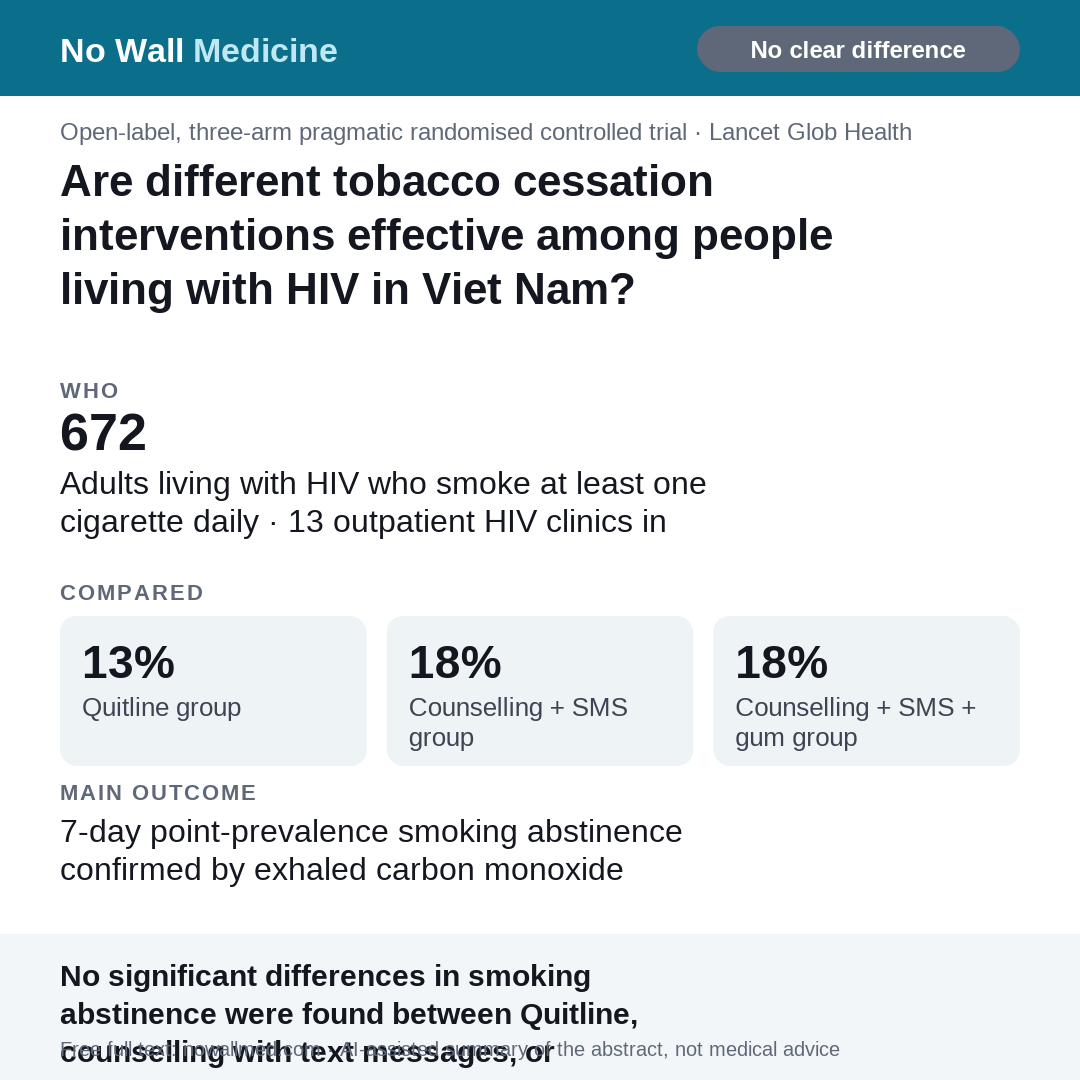
Effectiveness of behavioural tobacco cessation interventions with and without pharmacotherapy among people living with HIV in Viet Nam: a three-arm pragmatic randomised controlled trial
Open-label, three-arm pragmatic randomised controlled trialNo clear difference
Are different tobacco cessation interventions effective among people living with HIV in Viet Nam?
Who
672
Adults living with HIV who smoke at least one cigarette daily · 13 outpatient HIV clinics in Hanoi, Viet Nam
Compared
13%Quitline group
18%Counselling + SMS group
18%Counselling + SMS + gum group
Main outcome
7-day point-prevalence smoking abstinence confirmed by exhaled carbon monoxide
Result: odds ratio 1.48 (95% CI 0.78-2.81) for Counselling + SMS versus Quitline
Bottom line: No significant differences in smoking abstinence were found between Quitline, counselling with text messages, or counselling with nicotine gum.
Funded by: US National Cancer Institute
Lancet Glob Health · 2026-02-20Download image
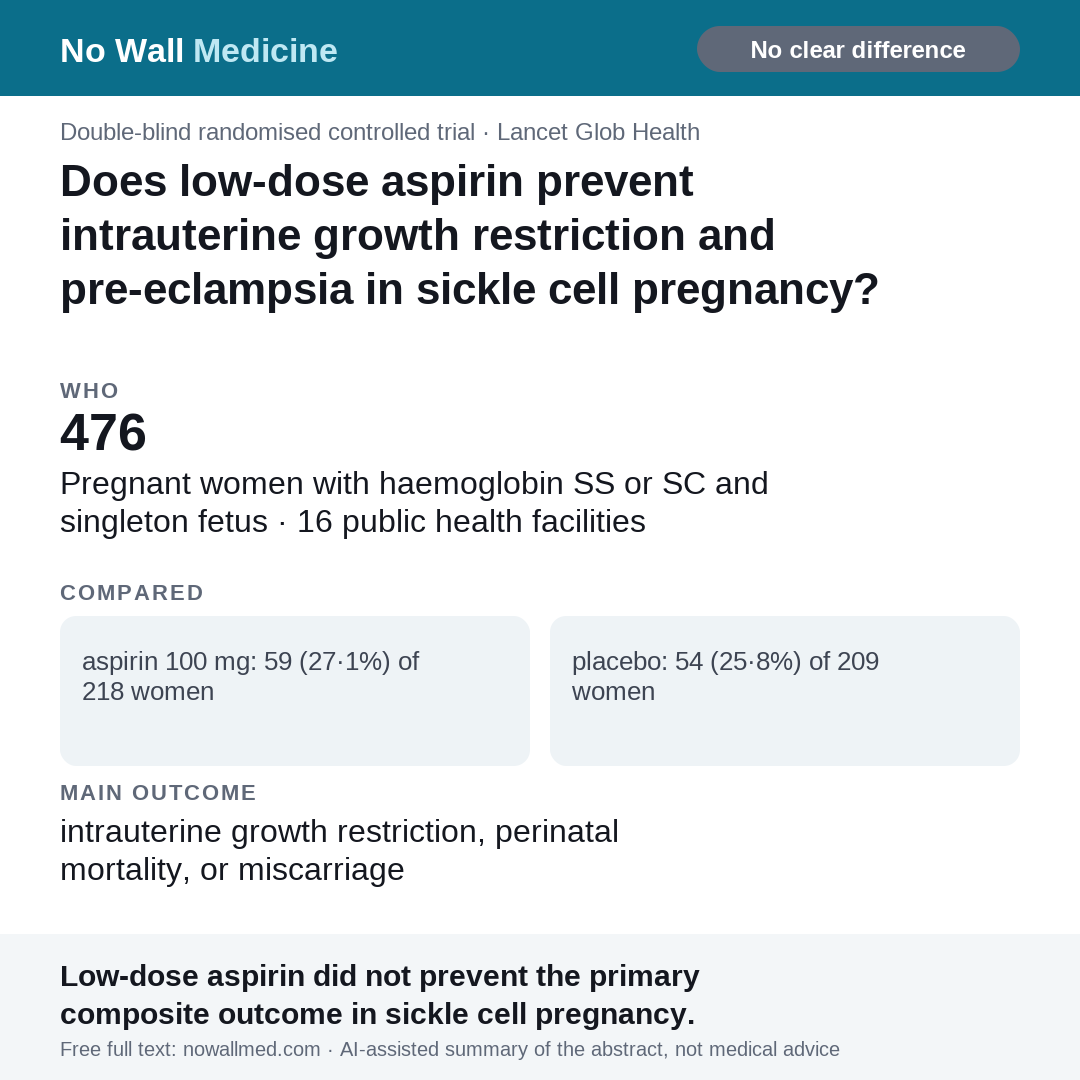
Low-dose aspirin for preventing intrauterine growth restriction and pre-eclampsia in sickle cell pregnancy in Nigeria (PIPSICKLE): a randomised controlled trial
Double-blind randomised controlled trialNo clear difference
Does low-dose aspirin prevent intrauterine growth restriction and pre-eclampsia in sickle cell pregnancy?
Who
476
Pregnant women with haemoglobin SS or SC and singleton fetus · 16 public health facilities in southwest Nigeria
Compared
aspirin 100 mg: 59 (27·1%) of 218 women
placebo: 54 (25·8%) of 209 women
Main outcome
intrauterine growth restriction, perinatal mortality, or miscarriage
Result: risk ratio 1·05 (95% CI 0·75-1·46)
Bottom line: Low-dose aspirin did not prevent the primary composite outcome in sickle cell pregnancy.
Limitation: conclusion is limited by late initiation of the medication after 16 weeks' gestation in three-quarters of the participants
Funded by: Tertiary Education Trust Fund Nigeria
Lancet Glob Health · 2026-02-20Download image
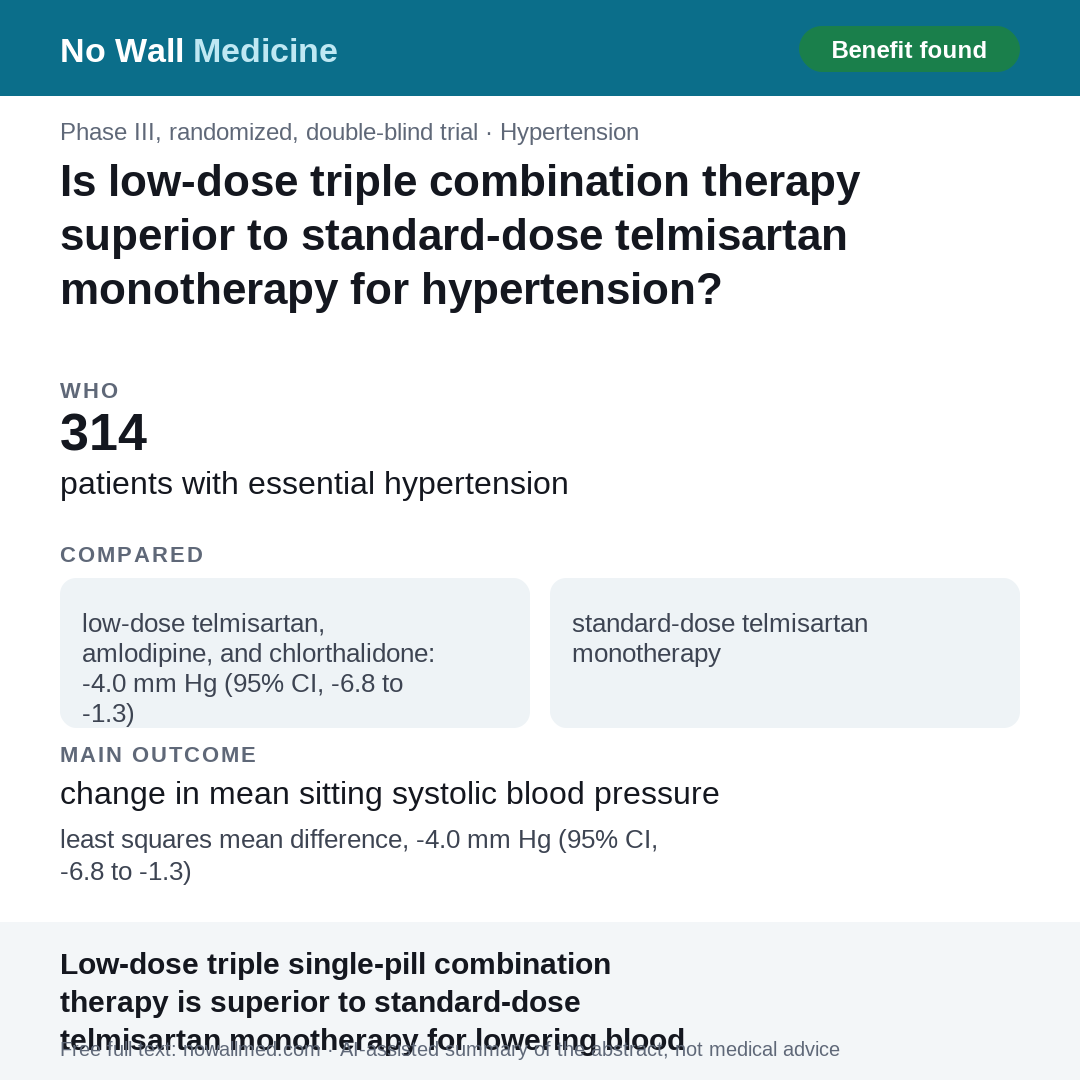
Low-Dose TEL/AML/CHTD SPC Versus Standard-Dose TEL in Hypertension: Phase III RCT
Phase III, randomized, double-blind trialBenefit found
Is low-dose triple combination therapy superior to standard-dose telmisartan monotherapy for hypertension?
Who
314
patients with essential hypertension
Compared
low-dose telmisartan, amlodipine, and chlorthalidone: -4.0 mm Hg (95% CI, -6.8 to -1.3)
standard-dose telmisartan monotherapy
Main outcome
change in mean sitting systolic blood pressure
Result: least squares mean difference, -4.0 mm Hg (95% CI, -6.8 to -1.3)
Bottom line: Low-dose triple single-pill combination therapy is superior to standard-dose telmisartan monotherapy for lowering blood pressure.
Hypertension · 2026-02-20Download image
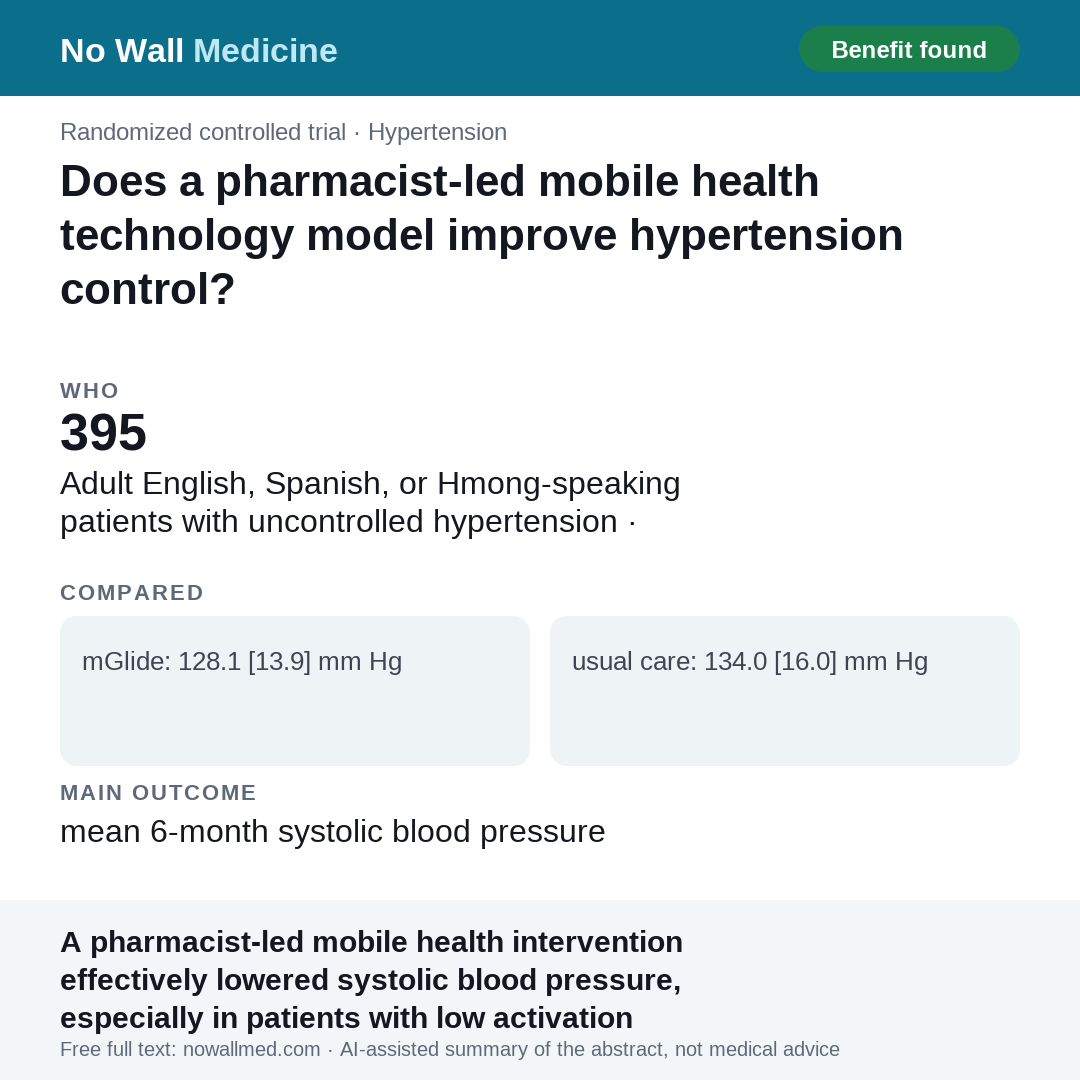
mHealth Intervention to Improve Hypertension Care in High-Risk Patients
Randomized controlled trialBenefit found
Does a pharmacist-led mobile health technology model improve hypertension control?
Who
395
Adult English, Spanish, or Hmong-speaking patients with uncontrolled hypertension · Large health care system and community clinics
Compared
mGlide: 128.1 [13.9] mm Hg
usual care: 134.0 [16.0] mm Hg
Main outcome
mean 6-month systolic blood pressure
Result: -5.8 mm Hg (95% CI, -8.6 to -3.0)
Bottom line: A pharmacist-led mobile health intervention effectively lowered systolic blood pressure, especially in patients with low activation levels.
Hypertension · 2026-02-20Download image
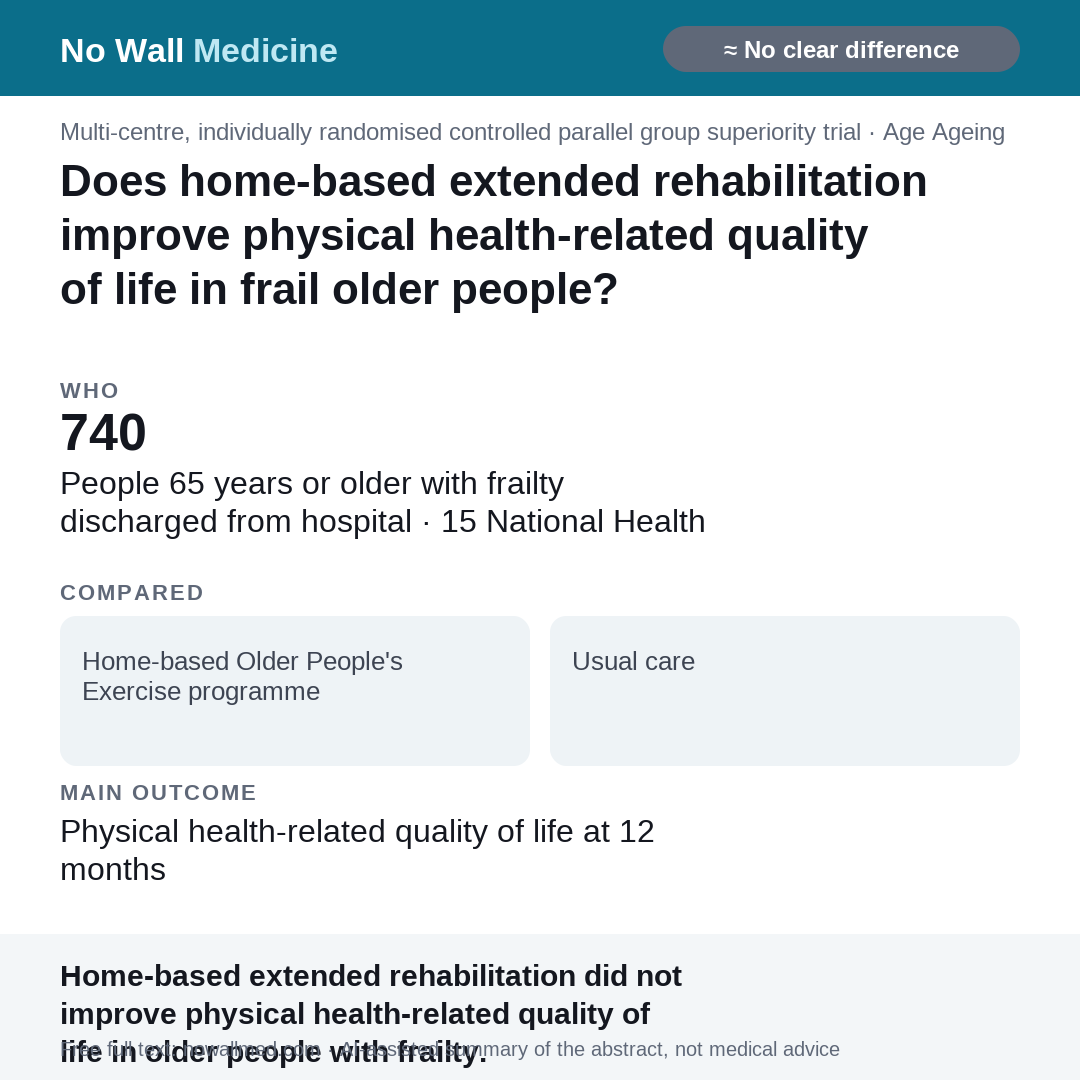
Home-based extended rehabilitation for older people with frailty (HERO): a randomised controlled trial
Multi-centre, individually randomised controlled parallel group superiority trialNo clear difference
Does home-based extended rehabilitation improve physical health-related quality of life in frail older people?
Who
740
People 65 years or older with frailty discharged from hospital · 15 National Health Service Trusts in England
Compared
Home-based Older People's Exercise programme
Usual care
Main outcome
Physical health-related quality of life at 12 months
Result: adjusted mean difference -0.22 (95% CI -1.47 to 1.03)
Bottom line: Home-based extended rehabilitation did not improve physical health-related quality of life in older people with frailty.
Age Ageing · 2026-02-20Download image
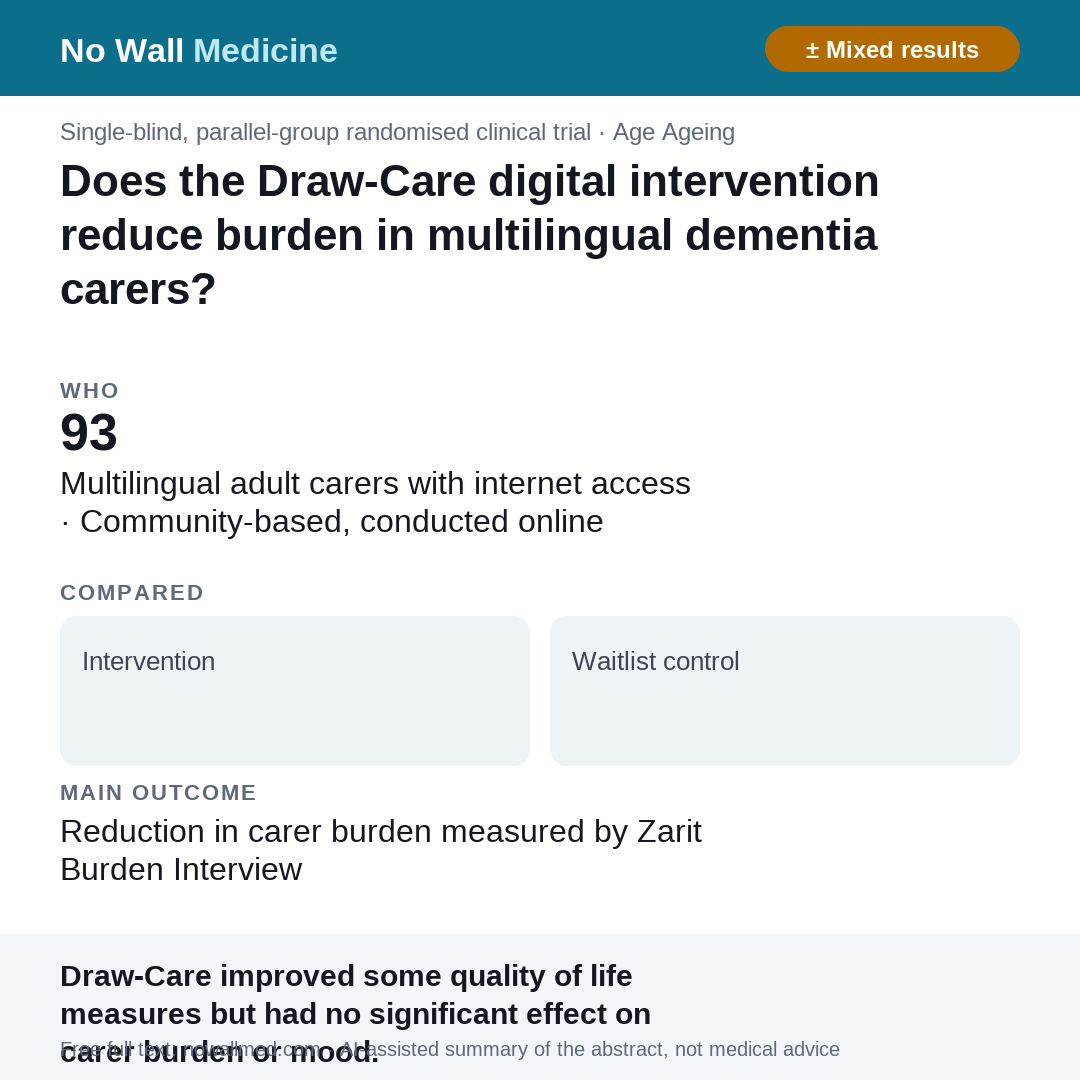
Evaluating the effects of the World Health Organisation's online intervention 'iSupport lite' to reduce burden in multilingual dementia carers: results from the Australian Draw-Care randomised clinical trial
Single-blind, parallel-group randomised clinical trialMixed results
Does the Draw-Care digital intervention reduce burden in multilingual dementia carers?
Who
93
Multilingual adult carers with internet access · Community-based, conducted online
Compared
Intervention
Waitlist control
Main outcome
Reduction in carer burden measured by Zarit Burden Interview
Result: mean difference 0.75 (95% CL: 0.25 to 1.24) for CarerQoL-VAS
Bottom line: Draw-Care improved some quality of life measures but had no significant effect on carer burden or mood.
Age Ageing · 2026-02-20Download image
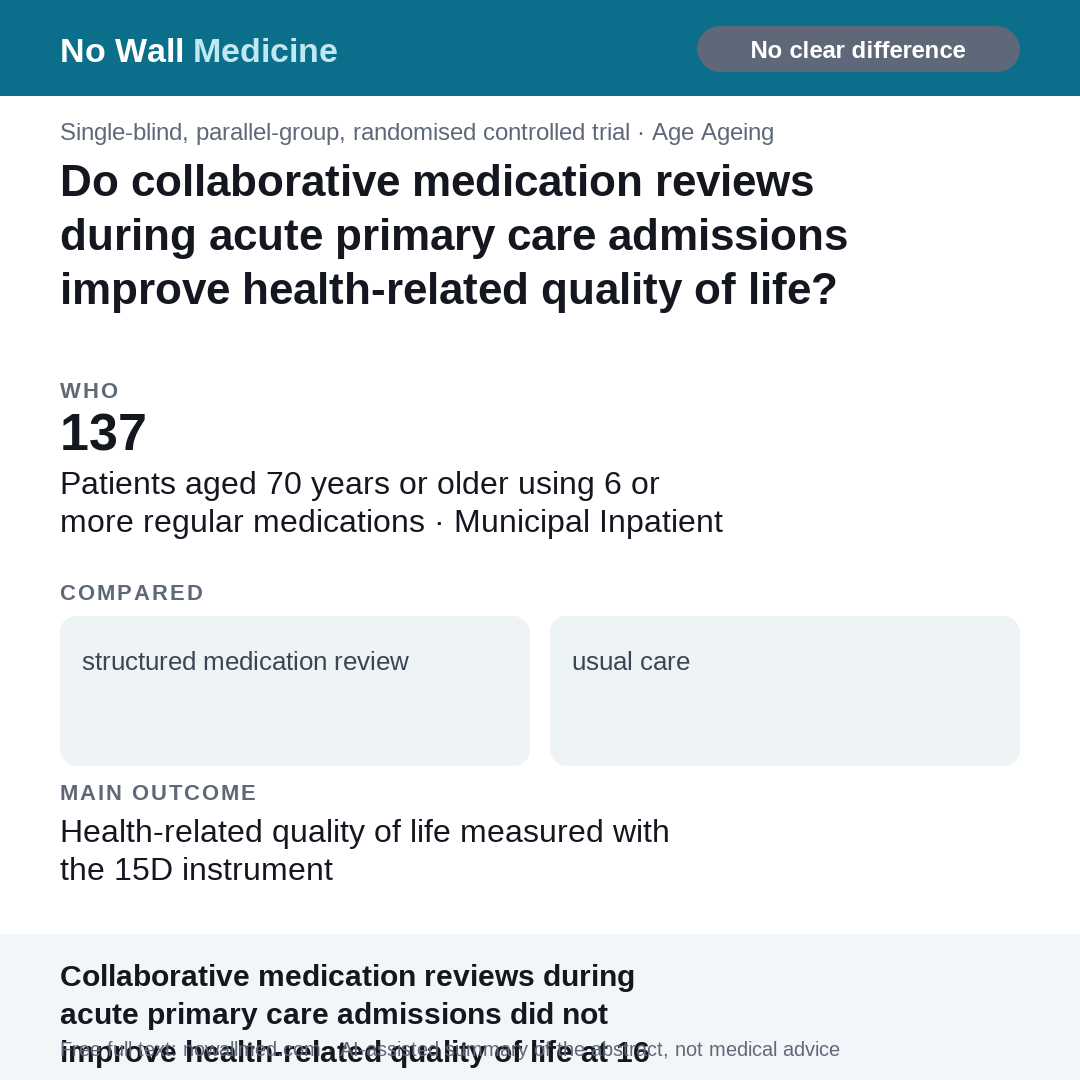
Collaborative medication reviews during acute primary care admissions for older adults with polypharmacy: a randomised controlled trial
Single-blind, parallel-group, randomised controlled trialNo clear difference
Do collaborative medication reviews during acute primary care admissions improve health-related quality of life?
Who
137
Patients aged 70 years or older using 6 or more regular medications · Municipal Inpatient Acute Care unit in Oslo, Norway
Compared
structured medication review
usual care
Main outcome
Health-related quality of life measured with the 15D instrument
Result: mean difference 0.009 (95% CI, -0.063 to 0.079)
Bottom line: Collaborative medication reviews during acute primary care admissions did not improve health-related quality of life at 16 weeks.
Age Ageing · 2026-02-20Download image
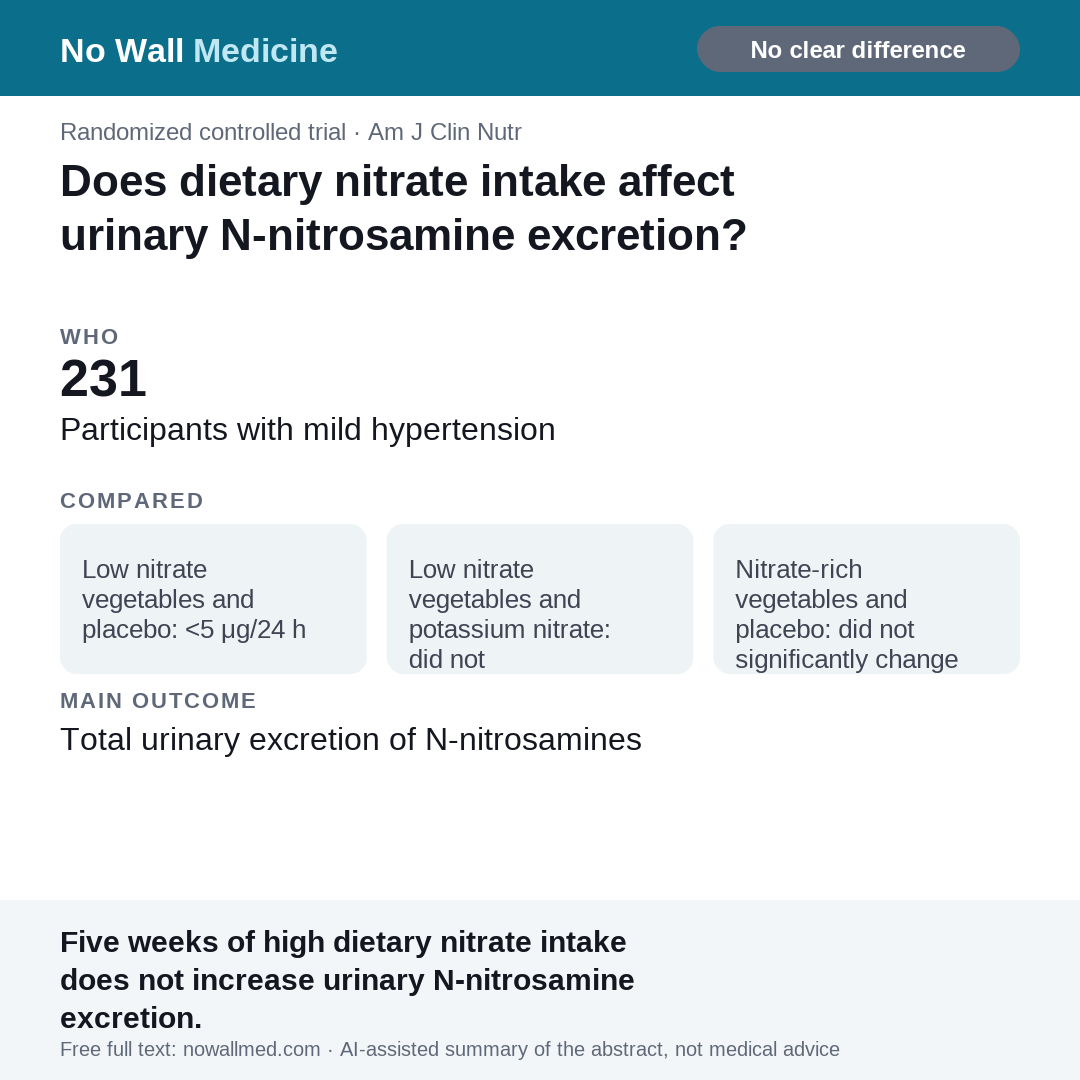
A clinical study examining the effects of dietary nitrate on urinary N-nitrosamines
Randomized controlled trialNo clear difference
Does dietary nitrate intake affect urinary N-nitrosamine excretion?
Who
231
Participants with mild hypertension
Compared
Low nitrate vegetables and placebo: <5 μg/24 h
Low nitrate vegetables and potassium nitrate: did not significantly change
Nitrate-rich vegetables and placebo: did not significantly change
Main outcome
Total urinary excretion of N-nitrosamines
Bottom line: Five weeks of high dietary nitrate intake does not increase urinary N-nitrosamine excretion.
Am J Clin Nutr · 2026-02-20Download image
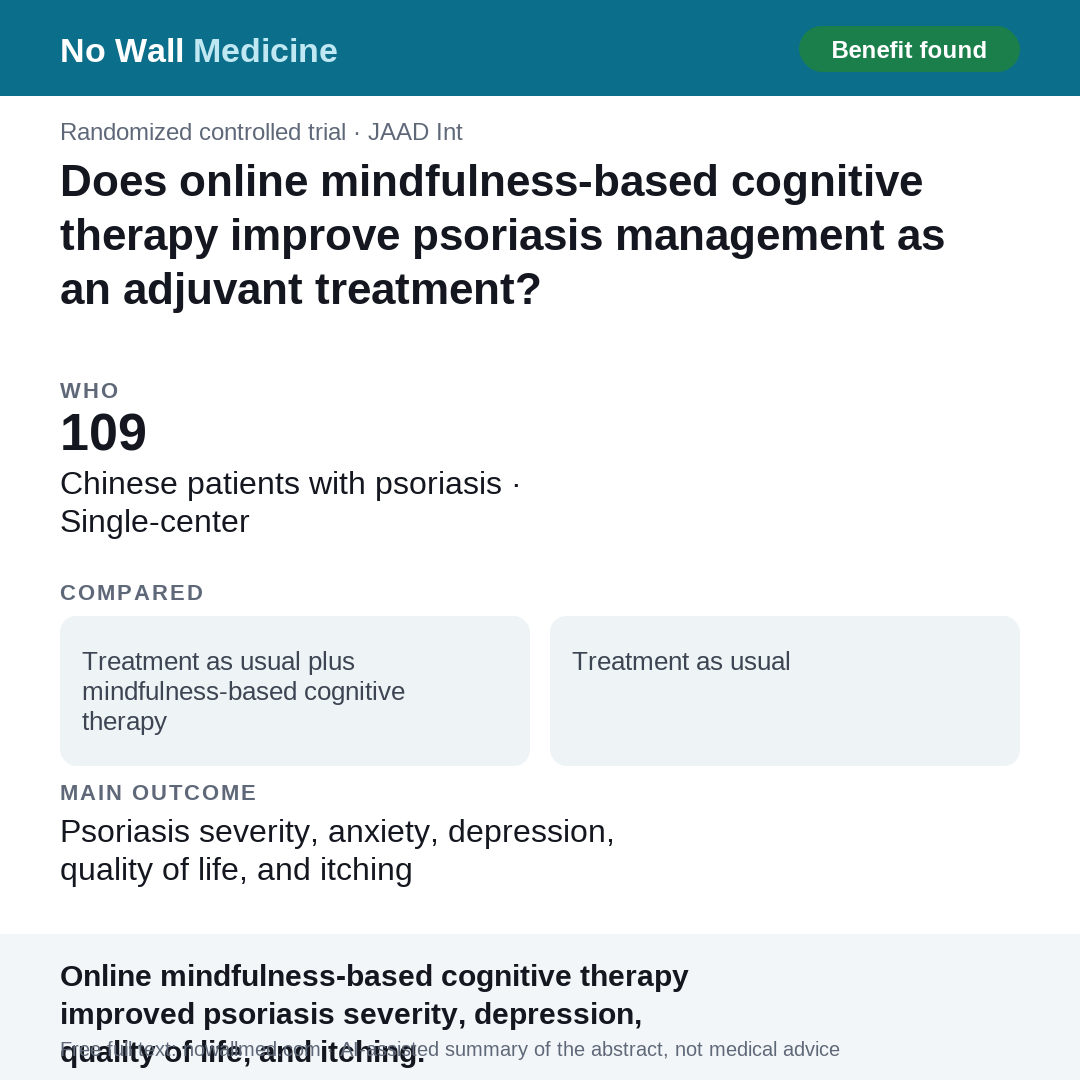
Online mindfulness-based cognitive therapy as an adjuvant-treatment for Chinese patients with psoriasis: A randomized controlled trial
Randomized controlled trialBenefit found
Does online mindfulness-based cognitive therapy improve psoriasis management as an adjuvant treatment?
Who
109
Chinese patients with psoriasis · Single-center
Compared
Treatment as usual plus mindfulness-based cognitive therapy
Treatment as usual
Main outcome
Psoriasis severity, anxiety, depression, quality of life, and itching
Bottom line: Online mindfulness-based cognitive therapy improved psoriasis severity, depression, quality of life, and itching.
Limitation: Single-center
JAAD Int · 2026-02-20Download image
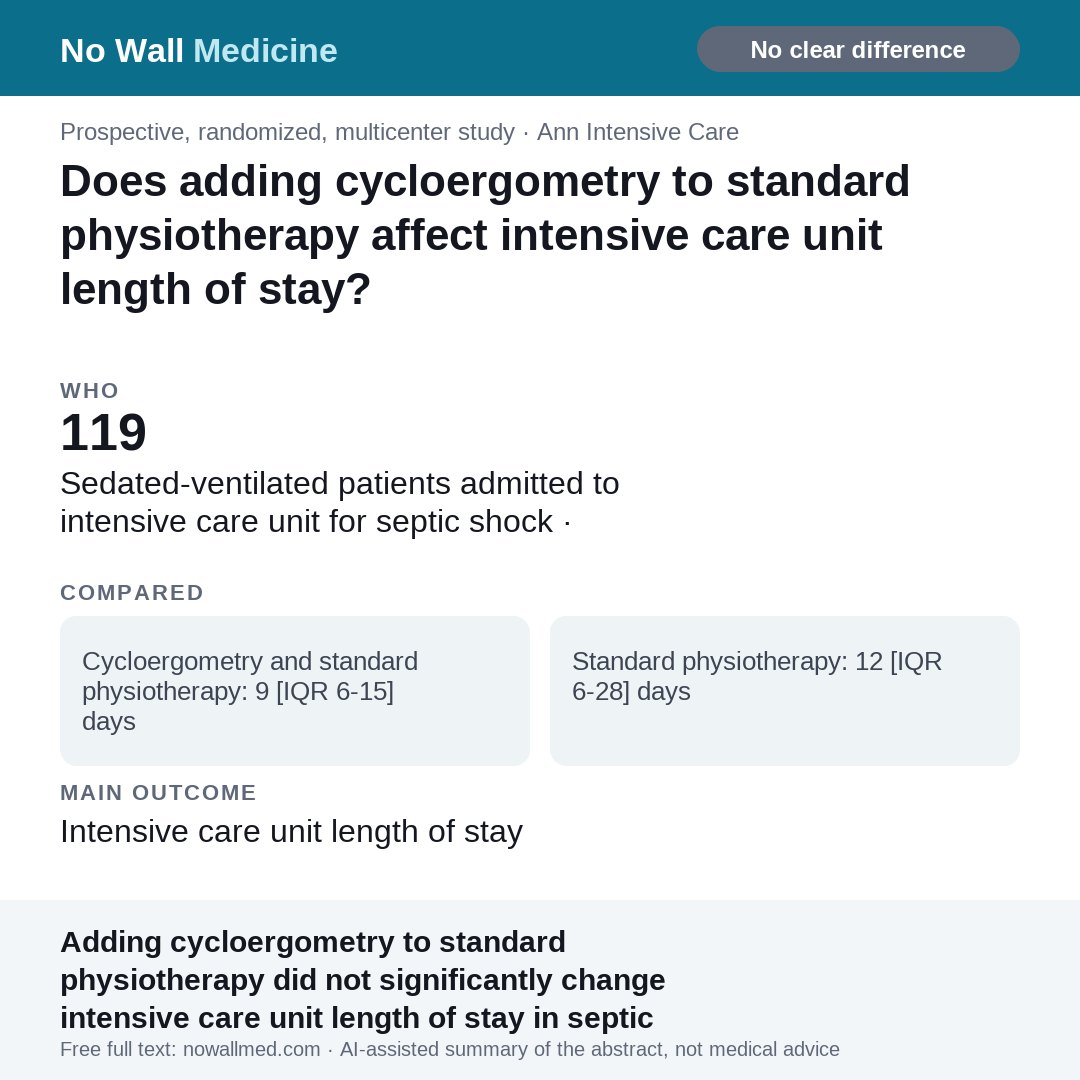
Early mobilization with or without cycloergometry in patients with septic shock in Intensive Care Unit: a randomized controlled trial
Prospective, randomized, multicenter studyNo clear difference
Does adding cycloergometry to standard physiotherapy affect intensive care unit length of stay?
Who
119
Sedated-ventilated patients admitted to intensive care unit for septic shock · Multicenter
Compared
Cycloergometry and standard physiotherapy: 9 [IQR 6-15] days
Standard physiotherapy: 12 [IQR 6-28] days
Main outcome
Intensive care unit length of stay
Bottom line: Adding cycloergometry to standard physiotherapy did not significantly change intensive care unit length of stay in septic shock patients.
Ann Intensive Care · 2026-02-20Download image
Safety and Efficacy of Early Aspirin Administration After Intravenous Thrombolysis for Acute Ischemic Stroke (TREND-IVT): Rationale and Design of a Multicenter, Randomized, Placebo-Controlled Clinical Trial
Randomized, placebo-controlled trialUnclear result
Aspirin after thrombolysis for stroke
Who
1184
patients with acute ischemic stroke · China, multiple sites
Compared
Early aspirin
Placebo
Main outcome
excellent functional outcome
Bottom line: Evaluating aspirin after thrombolysis for stroke
J Am Heart Assoc · 2026-02-20Download image

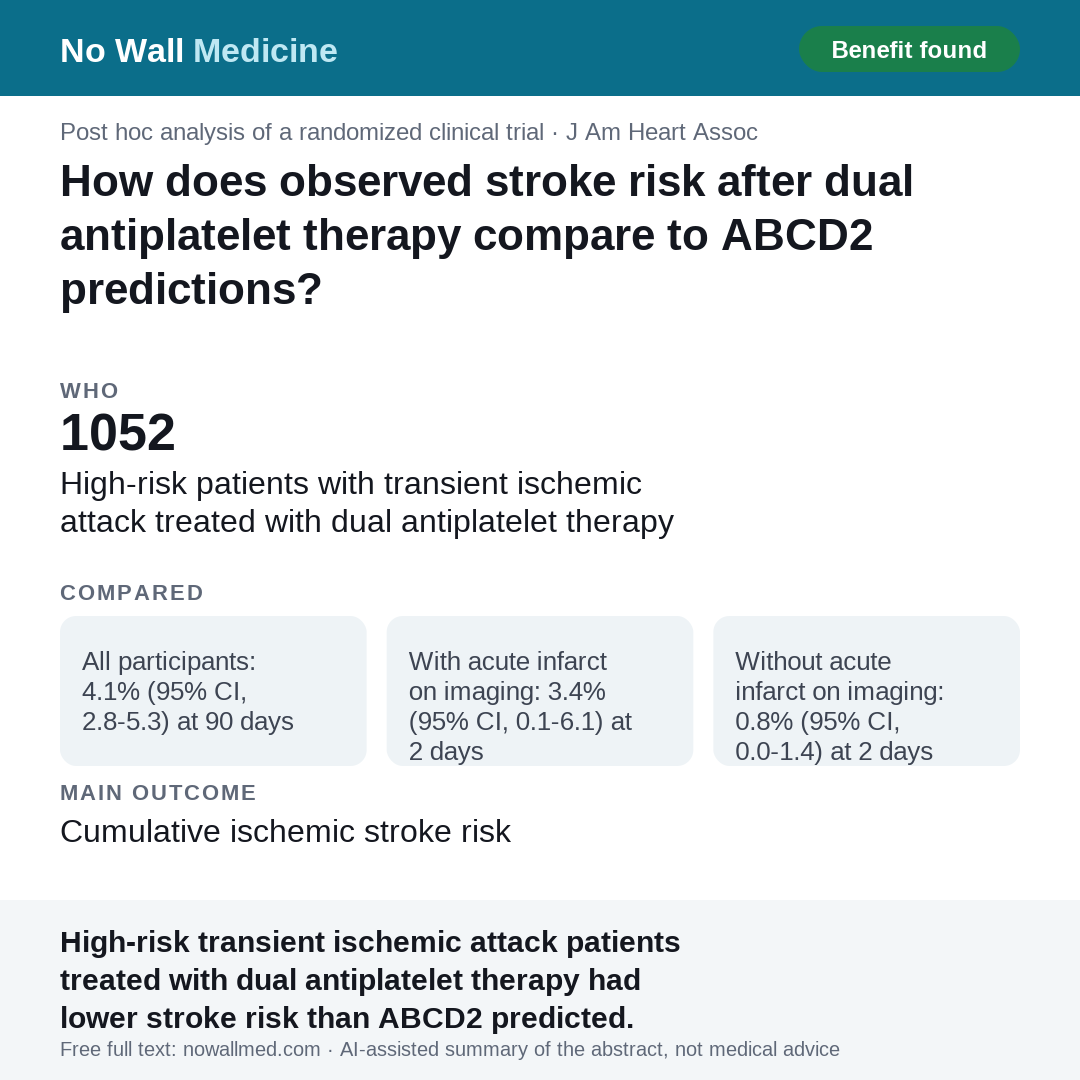
Observed Versus Predicted Stroke Risk After Transient Ischemic Attack: A Post Hoc Analysis of a Randomized Clinical Trial
Post hoc analysis of a randomized clinical trialBenefit found
How does observed stroke risk after dual antiplatelet therapy compare to ABCD2 predictions?
Who
1052
High-risk patients with transient ischemic attack treated with dual antiplatelet therapy
Compared
All participants: 4.1% (95% CI, 2.8-5.3) at 90 days
With acute infarct on imaging: 3.4% (95% CI, 0.1-6.1) at 2 days
Without acute infarct on imaging: 0.8% (95% CI, 0.0-1.4) at 2 days
Main outcome
Cumulative ischemic stroke risk
Bottom line: High-risk transient ischemic attack patients treated with dual antiplatelet therapy had lower stroke risk than ABCD2 predicted.
Limitation: This was a post hoc analysis of a randomized clinical trial.
J Am Heart Assoc · 2026-02-20Download image
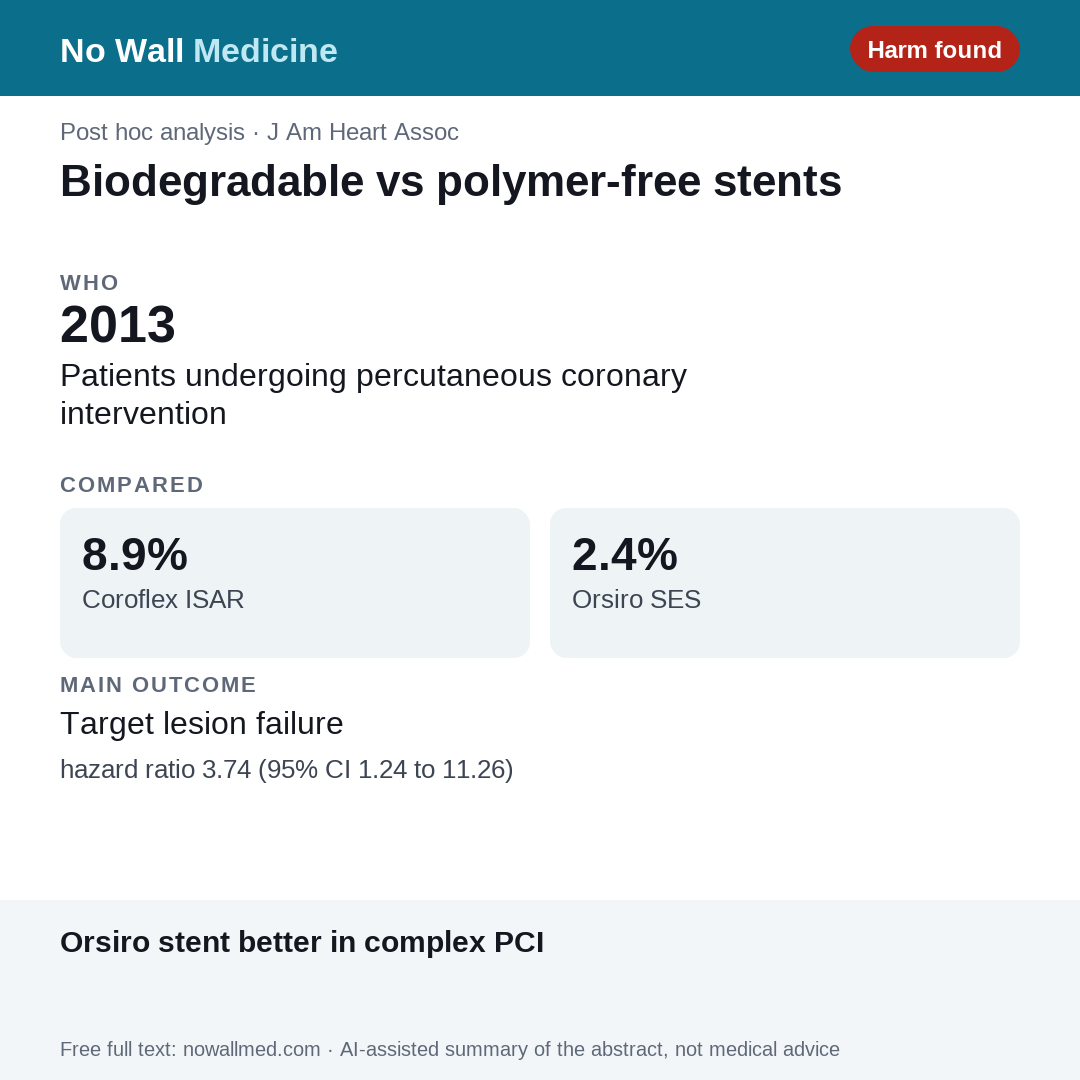
Biodegradable Polymer Versus Polymer-Free Ultrathin Sirolimus-Eluting Stents in Complex Percutaneous Coronary Intervention: Post Hoc Analysis of the Stent Arm Registry From the HOST-IDEA Randomized Trial
Post hoc analysisHarm found
Biodegradable vs polymer-free stents
Who
2013
Patients undergoing percutaneous coronary intervention
Compared
8.9%Coroflex ISAR
2.4%Orsiro SES
Main outcome
Target lesion failure
Result: hazard ratio 3.74 (95% CI 1.24 to 11.26)
Bottom line: Orsiro stent better in complex PCI
J Am Heart Assoc · 2026-02-20Download image
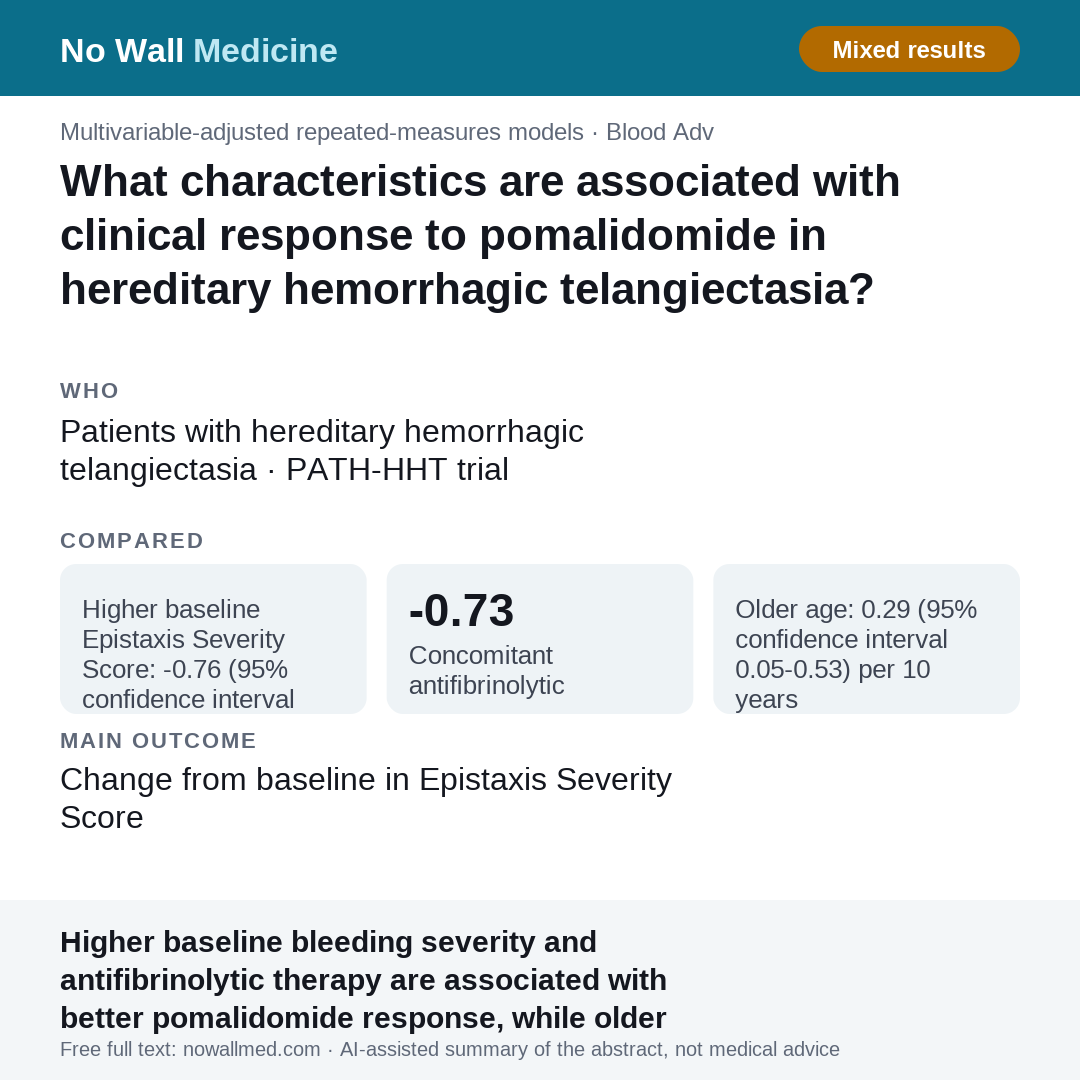
Characteristics associated with clinical response to pomalidomide in hereditary hemorrhagic telangiectasia
Multivariable-adjusted repeated-measures modelsMixed results
What characteristics are associated with clinical response to pomalidomide in hereditary hemorrhagic telangiectasia?
Who
Patients with hereditary hemorrhagic telangiectasia · PATH-HHT trial
Compared
Higher baseline Epistaxis Severity Score: -0.76 (95% confidence interval -0.99 to -0.54) points
-0.73Concomitant antifibrinolytic therapy (95% confidence interval -1.48 to 0.01)
Older age: 0.29 (95% confidence interval 0.05-0.53) per 10 years
Main outcome
Change from baseline in Epistaxis Severity Score
Bottom line: Higher baseline bleeding severity and antifibrinolytic therapy are associated with better pomalidomide response, while older age is associated with less response.
Blood Adv · 2026-02-20Download image
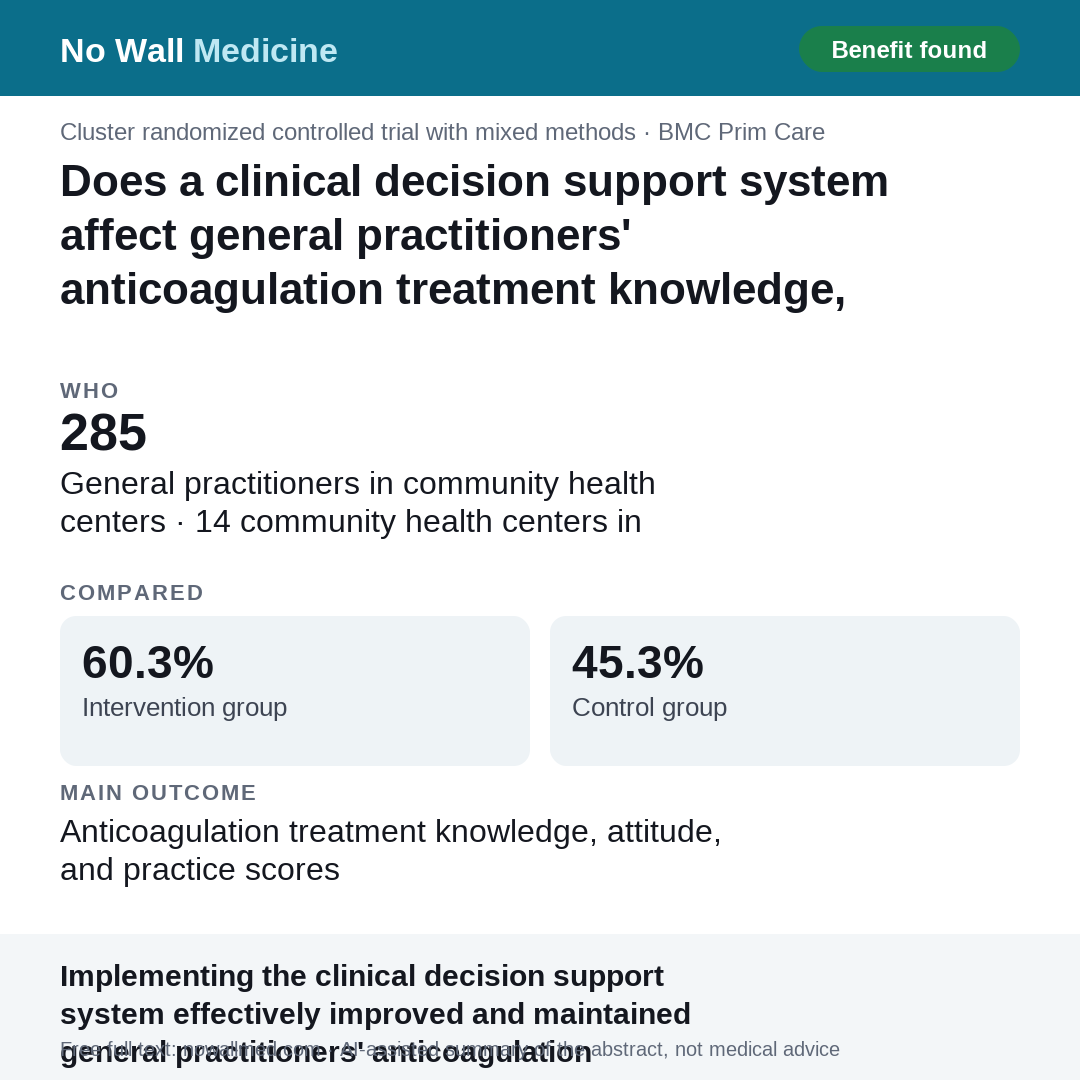
Influence of a clinical decision support system on the anticoagulation treatment knowledge, attitude and practice of general practitioners and their using experience: a mixed method study
Cluster randomized controlled trial with mixed methodsBenefit found
Does a clinical decision support system affect general practitioners' anticoagulation treatment knowledge, attitude, and practice?
Who
285
General practitioners in community health centers · 14 community health centers in Shanghai, China
Compared
60.3%Intervention group
45.3%Control group
Main outcome
Anticoagulation treatment knowledge, attitude, and practice scores
Result: p = 0.002
Bottom line: Implementing the clinical decision support system effectively improved and maintained general practitioners' anticoagulation treatment knowledge, attitude, and practice.
BMC Prim Care · 2026-02-20Download image
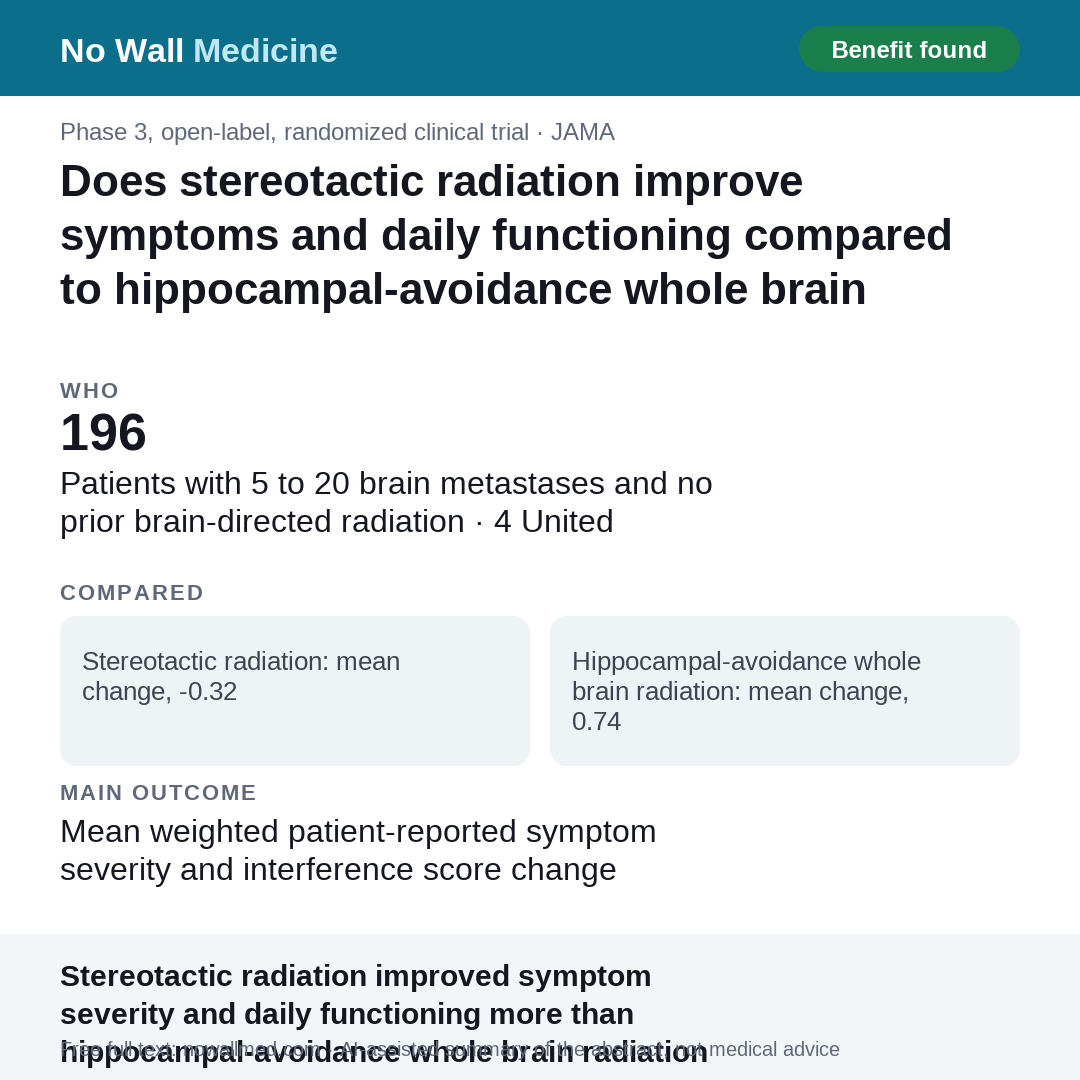
Treatment for Brain Metastases With Stereotactic Radiation vs Hippocampal-Avoidance Whole Brain Radiation: A Randomized Clinical Trial
Phase 3, open-label, randomized clinical trialBenefit found
Does stereotactic radiation improve symptoms and daily functioning compared to hippocampal-avoidance whole brain radiation?
Who
196
Patients with 5 to 20 brain metastases and no prior brain-directed radiation · 4 United States-based centers
Compared
Stereotactic radiation: mean change, -0.32
Hippocampal-avoidance whole brain radiation: mean change, 0.74
Main outcome
Mean weighted patient-reported symptom severity and interference score change
Result: mean difference, -1.06 (95% CI, -1.54 to -0.58)
Bottom line: Stereotactic radiation improved symptom severity and daily functioning more than hippocampal-avoidance whole brain radiation in patients with multiple brain metastases.
JAMA · 2026-02-19Download image
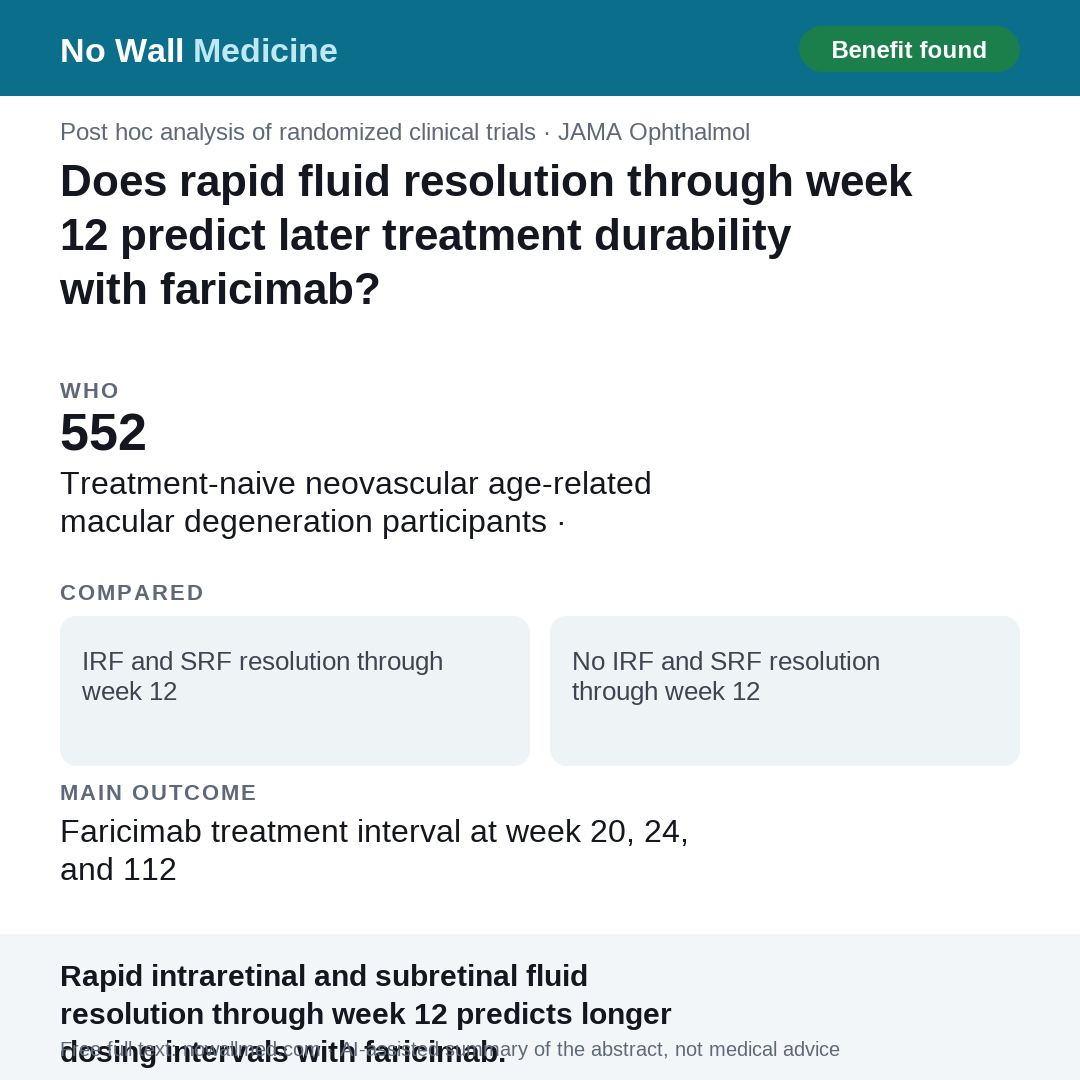
Rapid Fluid Resolution and Durability With Faricimab in Neovascular Age-Related Macular Degeneration
Post hoc analysis of randomized clinical trialsBenefit found
Does rapid fluid resolution through week 12 predict later treatment durability with faricimab?
Who
552
Treatment-naive neovascular age-related macular degeneration participants · Multicenter
Compared
IRF and SRF resolution through week 12
No IRF and SRF resolution through week 12
Main outcome
Faricimab treatment interval at week 20, 24, and 112
Result: odds ratio 1.99 (95% CI 1.23-3.21) for every-16-week dosing
Bottom line: Rapid intraretinal and subretinal fluid resolution through week 12 predicts longer dosing intervals with faricimab.
JAMA Ophthalmol · 2026-02-19Download image
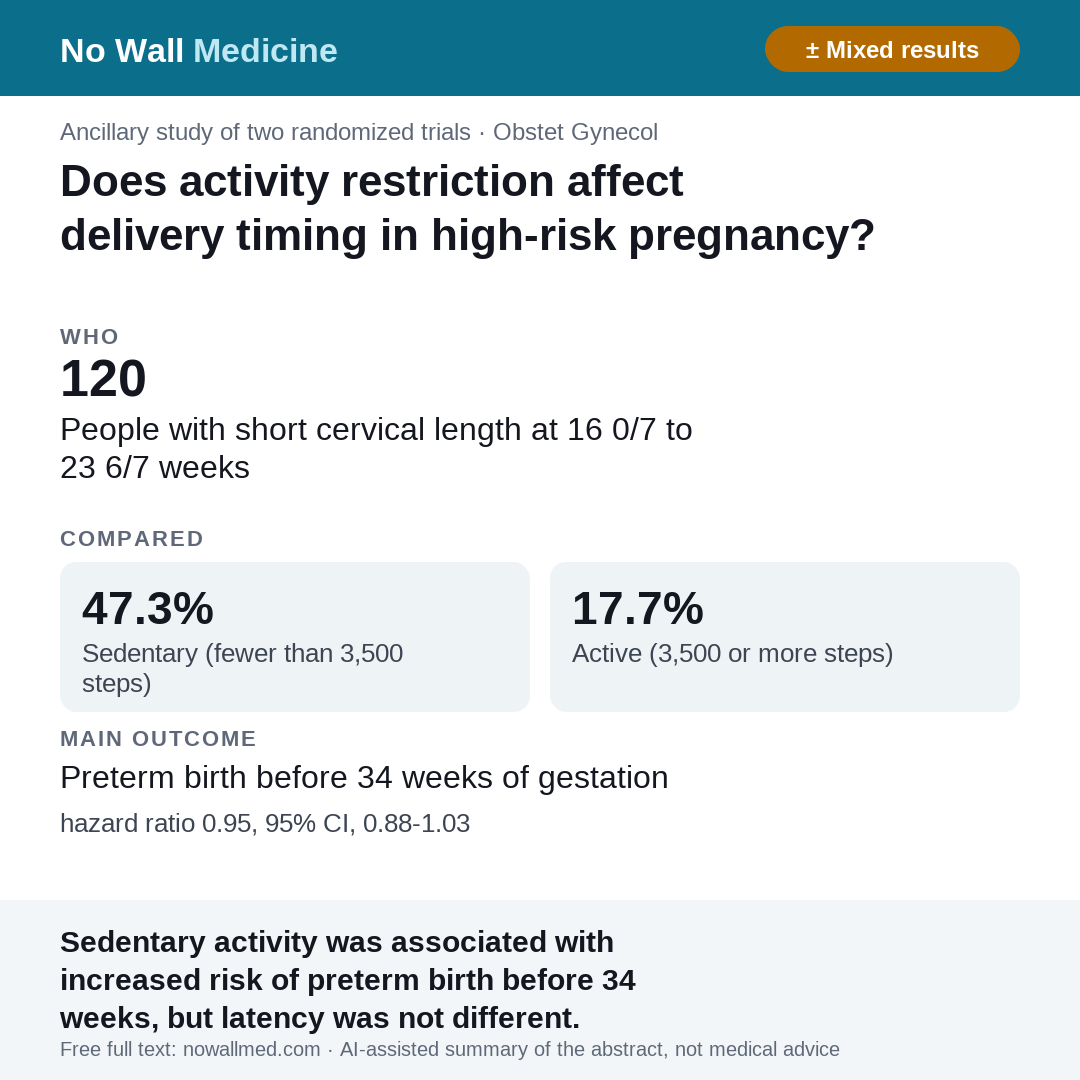
Activity Restriction in Pregnancy and the Risk of Early Delivery: The AWARE Study
Ancillary study of two randomized trialsMixed results
Does sedentary activity affect pregnancy latency and preterm birth risk in high-risk patients?
Who
120
People at high risk for preterm birth with short cervical length
Compared
34.9 weeksFewer than 3,500 median steps per day
37.7 weeks3,500 or more median steps per day
Main outcome
Latency from time of enrollment to delivery
Result: hazard ratio 0.95 (95% CI, 0.88-1.03)
Bottom line: Sedentary activity was associated with earlier delivery and increased preterm birth risk before 34 weeks.
Obstet Gynecol · 2026-02-19Download image
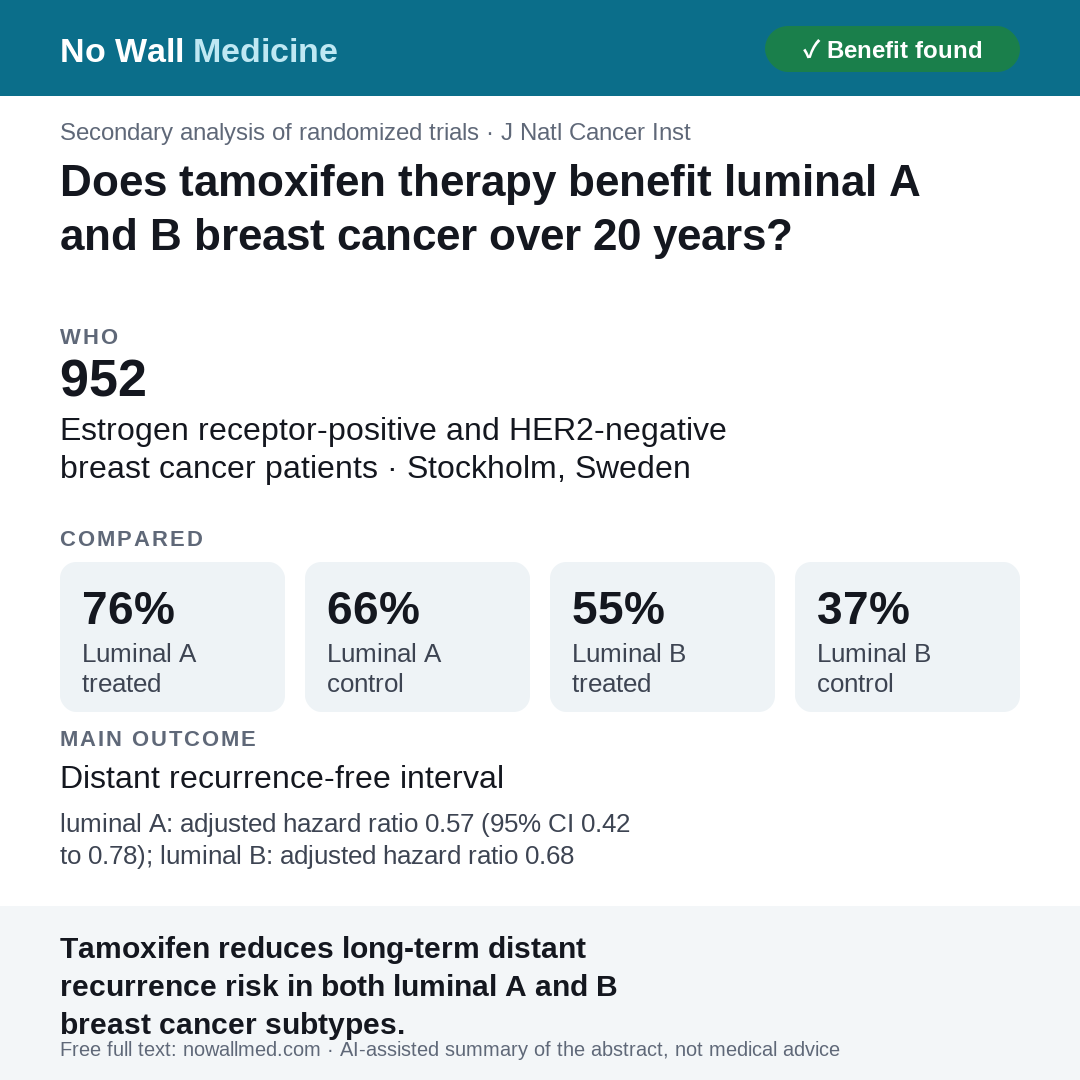
Tamoxifen therapy benefit in luminal A and B breast cancer with 20-year follow-up
Secondary analysis of randomized trialsBenefit found
Does tamoxifen therapy benefit luminal A and B breast cancer over 20 years?
Who
952
Estrogen receptor-positive and HER2-negative breast cancer patients · Stockholm, Sweden
Compared
76%Luminal A treated (20-year distant recurrence-free interval)
66%Luminal A control (20-year distant recurrence-free interval)
55%Luminal B treated (20-year distant recurrence-free interval)
37%Luminal B control (20-year distant recurrence-free interval)
Main outcome
Distant recurrence-free interval
Result: luminal A: adjusted hazard ratio 0.57 (95% CI 0.42 to 0.78); luminal B: adjusted hazard ratio 0.68 (95% CI 0.46 to 0.99)
Bottom line: Tamoxifen reduces long-term distant recurrence risk in both luminal A and B breast cancer subtypes.
J Natl Cancer Inst · 2026-02-19Download image
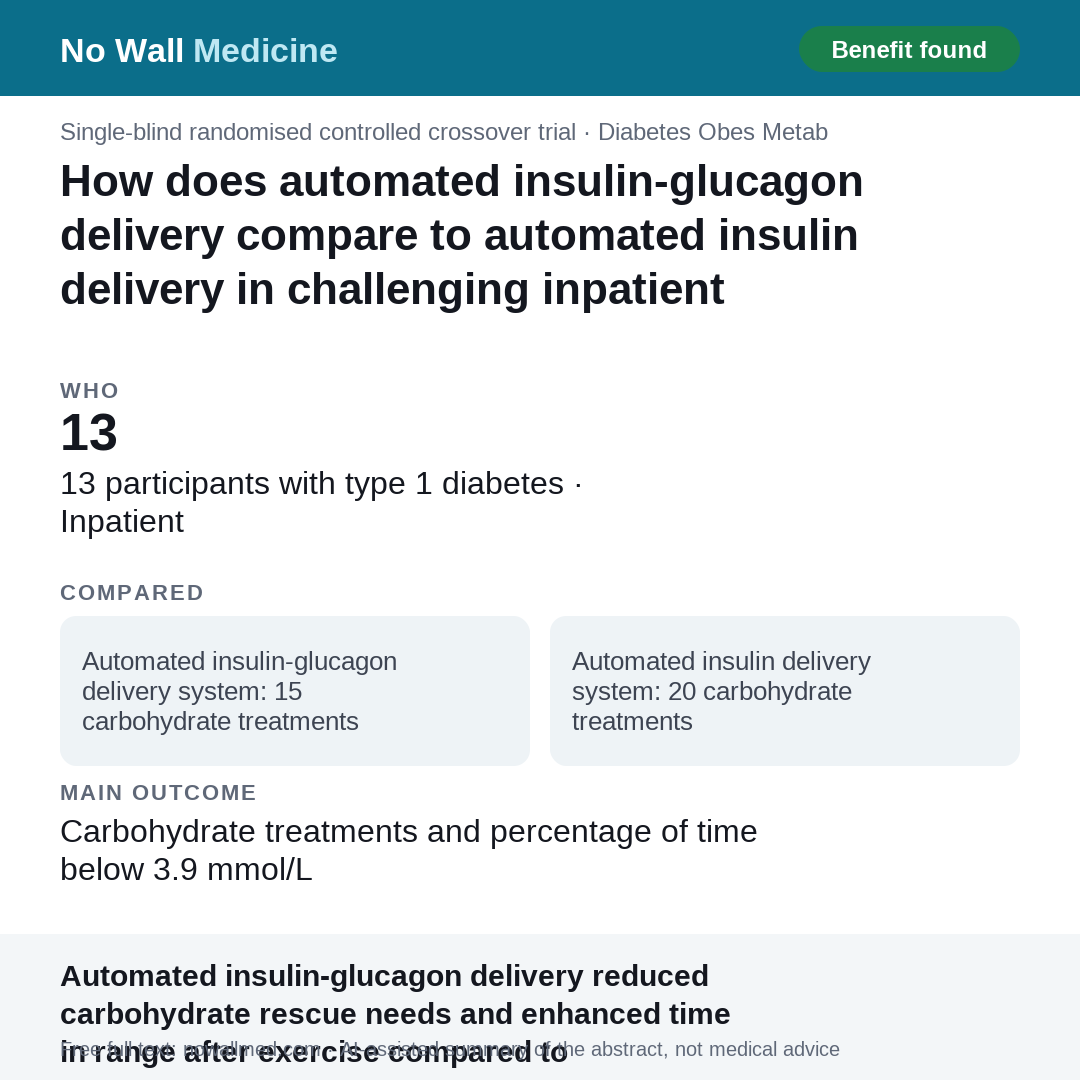
Performance of an automated insulin-glucagon delivery system versus automated insulin delivery system during challenging inpatient conditions. A single-blind randomised controlled crossover trial
Single-blind randomised controlled crossover trialBenefit found
How does automated insulin-glucagon delivery compare to automated insulin delivery in challenging inpatient conditions?
Who
13
13 participants with type 1 diabetes · Inpatient
Compared
Automated insulin-glucagon delivery system: 15 carbohydrate treatments
Automated insulin delivery system: 20 carbohydrate treatments
Main outcome
Carbohydrate treatments and percentage of time below 3.9 mmol/L
Bottom line: Automated insulin-glucagon delivery reduced carbohydrate rescue needs and enhanced time in range after exercise compared to automated insulin delivery.
Diabetes Obes Metab · 2026-02-19Download image