Visual abstracts
New randomized trials and meta-analyses from leading journals at a glance: who was studied, what was compared, and what was found. Every paper is free to read in full.
All specialtiesCardiology 4877Oncology 4138Gastroenterology & Hepatology 1942Infectious Disease 3837Neurology 1905Psychiatry & Mental Health 2273Pulmonology 2143Critical Care 1365Endocrinology & Diabetes 2580Pediatrics 2980Surgery 2559Orthopedics & Sports Medicine 931Neurosurgery 537Cardiothoracic & Vascular Surgery 674Plastic & Reconstructive Surgery 591Nephrology 1133Rheumatology 823Hematology 1109Dermatology 621Ophthalmology 543Obstetrics & Gynecology 1686Public & Global Health 1058Radiology & Imaging 648Anesthesiology 986Urology 764ENT (Otolaryngology) 503Emergency Medicine 511Allergy & Immunology 313Geriatrics 981Family Medicine & Primary Care 562Medical Genetics & Genomics 676Pathology & Laboratory Medicine 159Physical Medicine & Rehabilitation 757Palliative Care 444Nutrition 1588Digital Health & AI 2201General Medicine 321
Dynamic infrared thermography in free flap surgery: A systematic review
Systematic reviewBenefit found
What is the diagnostic performance of dynamic infrared thermography in free flap surgery?
Who
Patients undergoing free flap surgery
Compared
Dynamic infrared thermography: 84 % to 95 % sensitivity for perforator detection
Computed tomography angiography: comparable
Hand-held Doppler: inferior
Main outcome
Perforator detection sensitivity
Bottom line: Dynamic infrared thermography is an effective, non-invasive technique for perforator selection in free flap surgery.
Limitation: Lower resolution and shallow detection depth
JPRAS Open · 2025-11-27Download image

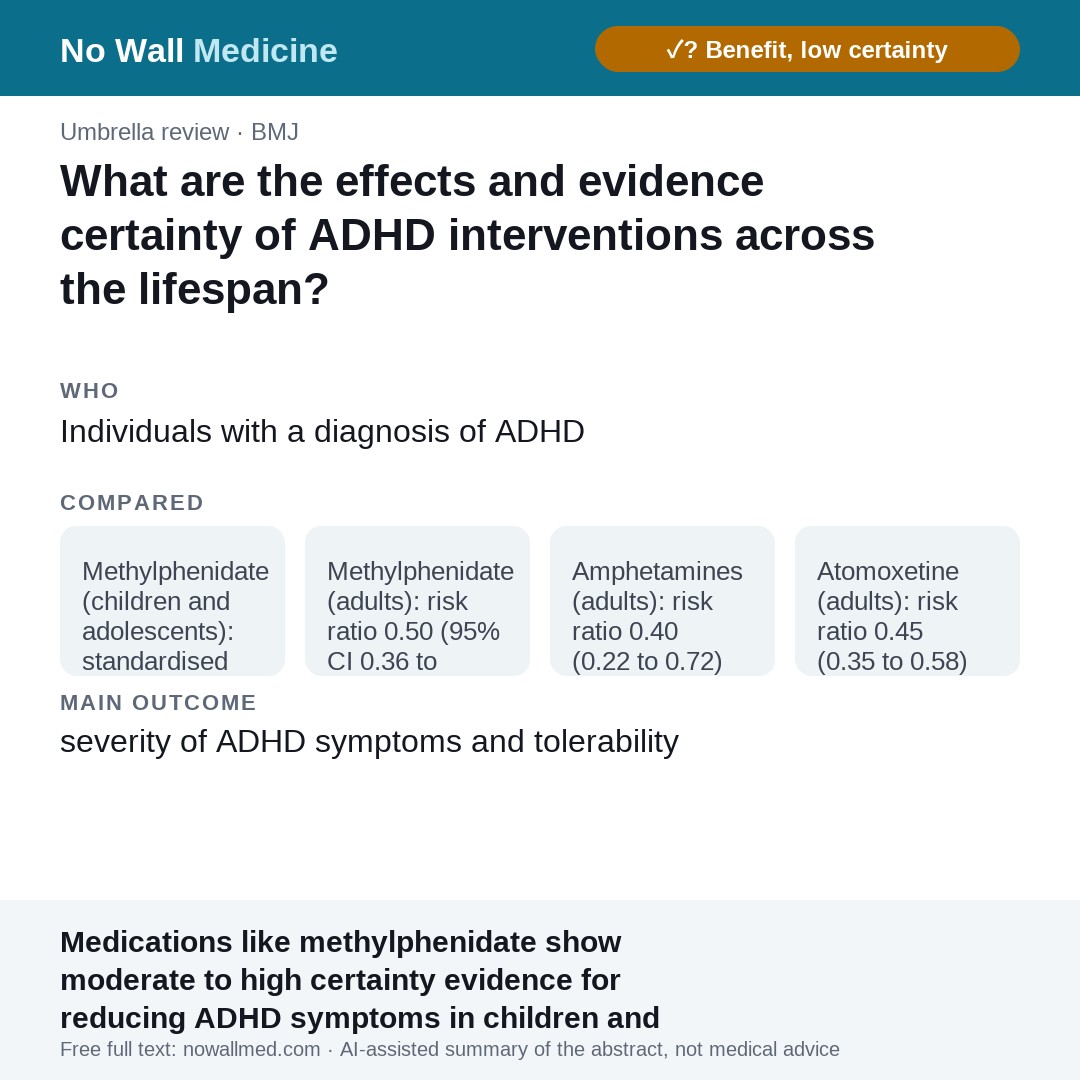
Benefits and harms of ADHD interventions: umbrella review and platform for shared decision making
Umbrella reviewBenefit found
What are the effects and evidence certainty of ADHD interventions across the lifespan?
Who
Individuals with a diagnosis of ADHD
Compared
Methylphenidate (children and adolescents): standardised mean difference >0.75 (95% CI 0.56 to 1.03)
Methylphenidate (adults): risk ratio 0.50 (95% CI 0.36 to 0.69)
Amphetamines (adults): risk ratio 0.40 (0.22 to 0.72)
Atomoxetine (adults): risk ratio 0.45 (0.35 to 0.58)
Main outcome
severity of ADHD symptoms and tolerability
Bottom line: Medications like methylphenidate show moderate to high certainty evidence for reducing ADHD symptoms in children and adolescents.
BMJ · 2025-11-26Download image
Assisted reproductive technology and reproductive, perinatal, and maternal outcomes: evidence from an umbrella review of systematic reviews with meta-analyses of randomized controlled trials
Umbrella review of systematic reviewsMixed results
What are the effects of assisted reproductive technology on reproductive, perinatal, and maternal outcomes?
Who
Patients undergoing assisted reproductive technology
Compared
Frozen embryo transfer: reduced risk of ectopic pregnancy
Fresh embryo transfer
Main outcome
reproductive, perinatal, and maternal outcomes
Bottom line: Assisted reproductive technology presents trade-offs between improved pregnancy rates and potential perinatal or maternal risks.
BMC Med · 2025-11-26Download image

Sex Differences in Dilated Cardiomyopathy: Evidence Gaps and Future Directions
Systematic review and meta-analysisMixed results
How do sex and genotype influence clinical outcomes in dilated cardiomyopathy?
Who
Patients with dilated cardiomyopathy
Compared
Male patients with specific variants: higher arrhythmic event rates with PLN, DSP, and LMNA
Female patients with specific variants: highest arrhythmic risk with RBM20, DSP, and PLN
Main outcome
arrhythmic event rates and heart failure risk
Bottom line: Clinical outcomes in dilated cardiomyopathy are significantly influenced by both sex and specific genetic variants.
JACC · 2025-11-26Download image

Patient Preferences for Dementia Interventions: A Scoping Review With a Systematic Review of Medications and Choice-Based Methods
Scoping review with a systematic reviewUnclear result
What are patient preferences for dementia treatment and care-related interventions?
Who
82
Patients with Alzheimer's disease and related dementias
Compared
Non-pharmacological interventions
Medications
Main outcome
Stated preferences for dementia treatment and care-related interventions
Bottom line: Patients value memory improvement and social support, but research gaps exist regarding medication preferences.
J Am Geriatr Soc · 2025-11-26Download image

Instruments for assessing insight in psychosis: A systematic review of psychometric properties
Systematic reviewUnclear result
Instruments for assessing insight in psychosis
Who
2184
patients with schizophrenia-spectrum
Compared
clinician-rated
self-report
Main outcome
psychometric properties
Bottom line: Most scales showed adequate validity and reliability
Limitation: responsiveness to clinical change rarely tested
Psychol Med · 2025-11-26Download image

Prevalence, risk factors and management of pressure injuries and their implications for palliative care: A rapid overview of reviews
Rapid overview of reviewsUnclear result
What is the prevalence, risk factors, prevention, and treatment of pressure injuries in palliative care?
Who
5,856,293
Adult patients in inpatient Palliative Care Units or end-of-life care settings · Non-acute care settings
Compared
Repositioning and nutritional interventions: may reduce incidence or surface area
Other interventions: limited and inconclusive evidence
Main outcome
Prevalence, risk factors, prevention, and treatment of pressure injuries
Bottom line: Evidence for pressure injury management in palliative care is weak, indirect, and offers insufficient guidance for clinical practice.
Limitation: Low to very low certainty due to poor trial design and population and setting variations.
Palliat Med · 2025-11-26Download image

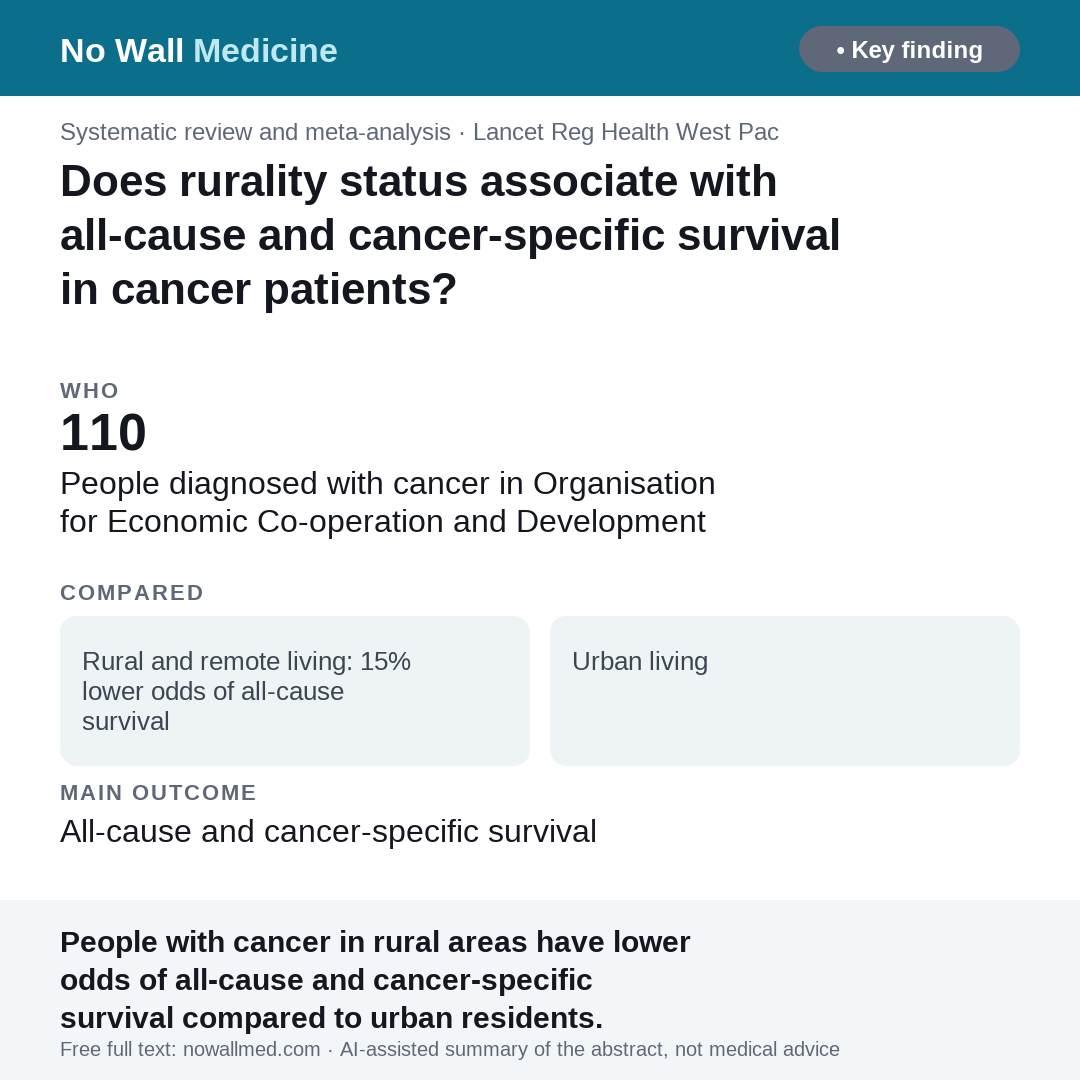
Association of rurality status with all-cause and cancer-specific survival: a systematic review and meta-analysis adjusting for clinical factors, demographics, and geographical remoteness
Systematic review and meta-analysisHarm found
Does rurality status associate with all-cause and cancer-specific survival in cancer patients?
Who
110
People diagnosed with cancer in Organisation for Economic Co-operation and Development countries · Organisation for Economic Co-operation and Development countries
Compared
Rural and remote living: 15% lower odds of all-cause survival
Urban living
Main outcome
All-cause and cancer-specific survival
Result: OR 0.85 (95% CI 0.74, 0.97) for all-cause survival; OR 0.90 (95% CI 0.86, 0.95) for cancer-specific survival
Bottom line: People with cancer in rural areas have lower odds of all-cause and cancer-specific survival compared to urban residents.
Funded by: Commonwealth of Australia's Medical Research Future Fund
Lancet Reg Health West Pac · 2025-11-26Download image
The Effectiveness of AI Chatbots in Alleviating Mental Distress and Promoting Health Behaviors Among Adolescents and Young Adults: Systematic Review and Meta-Analysis
Systematic review and meta-analysis of 31 randomized controlled trialsBenefit found
Are artificial intelligence chatbots effective for mental distress and health behaviors in adolescents and young adults?
Who
29637
Adolescents and young adults aged 15 to 39 years
Compared
Artificial intelligence chatbots
Control conditions
Main outcome
Mental distress and health behaviors
Result: standard mean difference -0.35 (95% CI -0.46 to -0.24) for mental distress; SMD 0.11 (95% CI 0.03 to 0.19) for health behaviors
Bottom line: Artificial intelligence chatbots show small-to-moderate effects in mitigating mental distress and promoting health behaviors among adolescents and young adults.
Limitation: Effectiveness varied by target samples, control conditions, design features, and user engagement barriers.
J Med Internet Res · 2025-11-26Download image

Efficacy and safety of DPP-1 inhibitors in bronchiectasis: a GRADE-assessed meta-analysis of randomized controlled trials
Meta-analysis of 4 randomized controlled trialsBenefit found
Are dipeptidyl peptidase-1 inhibitors effective and safe in adults with bronchiectasis?
Who
2,523
Adults with bronchiectasis
Compared
Dipeptidyl peptidase-1 inhibitors
Placebo
Main outcome
Exacerbation frequency, severity, and respiratory symptom scores
Result: risk ratio 0.64 (95% CI: 0.52-0.78) for one exacerbation
Bottom line: Dipeptidyl peptidase-1 inhibitors reduce exacerbation frequency and improve respiratory symptoms in bronchiectasis without compromising safety.
Respir Res · 2025-11-26Download image

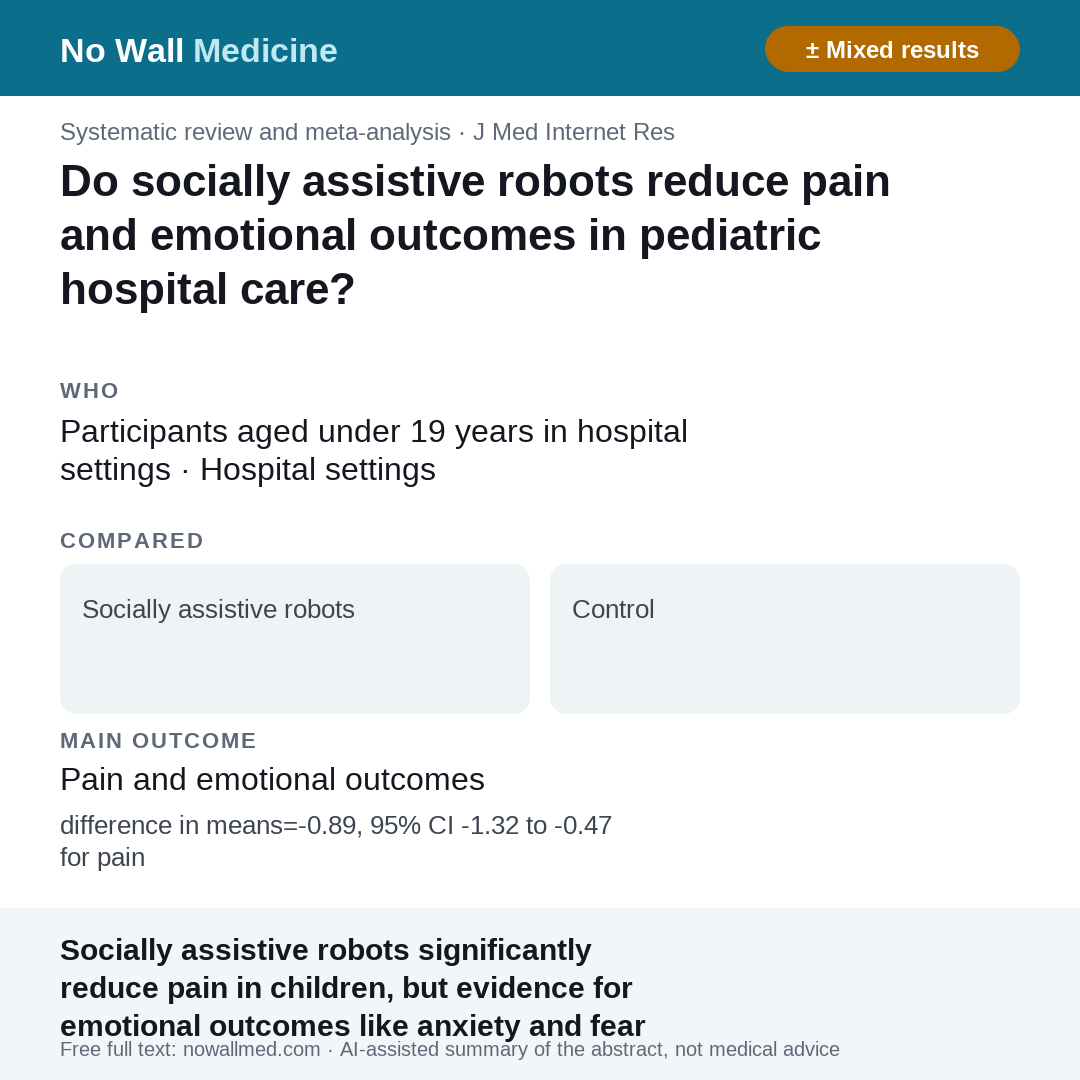
Socially Assistive Robots for Pain Management and Emotional Responses in Pediatric Hospital Care: Systematic Review and Meta-Analysis
Systematic review and meta-analysisMixed results
Do socially assistive robots reduce pain and emotional outcomes in pediatric hospital care?
Who
Participants aged under 19 years in hospital settings · Hospital settings
Compared
Socially assistive robots
Control
Main outcome
Pain and emotional outcomes
Result: difference in means=-0.89, 95% CI -1.32 to -0.47 for pain
Bottom line: Socially assistive robots significantly reduce pain in children, but evidence for emotional outcomes like anxiety and fear remains ambiguous.
Limitation: Risk of bias due to nonblinded interventions and small number of studies
J Med Internet Res · 2025-11-26Download image
Clinical prediction rules for cognitive outcomes post-stroke: an updated systematic review and meta-analysis
Systematic review and meta-analysisBenefit found
What is the prognostic accuracy of multicomponent risk models for post-stroke cognitive syndromes?
Who
Stroke survivors aged 18 years or older without baseline cognitive impairment · Global, most models developed in Asia
Compared
0.81Post-stroke cognitive impairment and delirium (95% CI 0.77-0.85)
0.85Post-stroke delirium (95% CI 0.77-0.93)
Main outcome
Prognostic accuracy of multicomponent risk models
Result: c-statistic 0.81 (95% CI 0.77-0.85) for impairment/delirium; 0.85 (95% CI 0.77-0.93) for delirium
Bottom line: Multicomponent risk models show good accuracy for predicting post-stroke cognitive impairment and delirium, though evidence certainty remains low.
Limitation: Development cohorts remain small, largely developed in Asia, with low certainty of evidence and few transportability assessments.
Funded by: National Institute for Health and Care Research Advanced Fellowship
eClinicalMedicine · 2025-11-25Download image

Comparative efficacy and safety of CFTR modulators for people with cystic fibrosis with phe508del mutation: a systematic review and bayesian network meta-analysis
Bayesian network meta-analysis of 29 trialsBenefit found
What are the comparative efficacy and safety of CFTR modulators for cystic fibrosis with phe508del mutation?
Who
6450
Children and adults with cystic fibrosis and phe508del mutation
Compared
vanzacaftor 10 mg-tezacaftor 100 mg-deutivacaftor 150 mg: MD: 15.9 (95% CrI: 7.2-24.2)
placebo
Main outcome
percent predicted forced expiratory volume and sweat chloride
Result: MD: 15.9; 95% CrI: 7.2-24.2
Bottom line: Vanzacaftor-tezacaftor-deutivacaftor and elexacaftor-tezacaftor-ivacaftor are the most effective treatment options for adults.
Limitation: Safety analyses were limited by low serious adverse event rates and low quality of existing evidence.
eClinicalMedicine · 2025-11-25Download image

Antibiotic stewardship and point-of-care testing for children in 25 low-income and lower-middle-income countries: a systematic review and meta-analysis
Meta-analysis of 78 reportsBenefit found
Do antibiotic stewardship and point-of-care testing work in children
Who
11191
children in low and lower-middle-income countries · 13 African and 12 Asian countries
Compared
73%ASPs alone
80%POCTs alone
85%ASPs and POCTs
Main outcome
antibiotic prescribing
Result: overall odds ratio 0.17 (95% CI 0.07 to 0.45)
Bottom line: Antibiotic stewardship and testing reduce antibiotic use
Limitation: need for large-scale implementation studies
Funded by: Italian National Recovery and Resilience Plan
eClinicalMedicine · 2025-11-25Download image

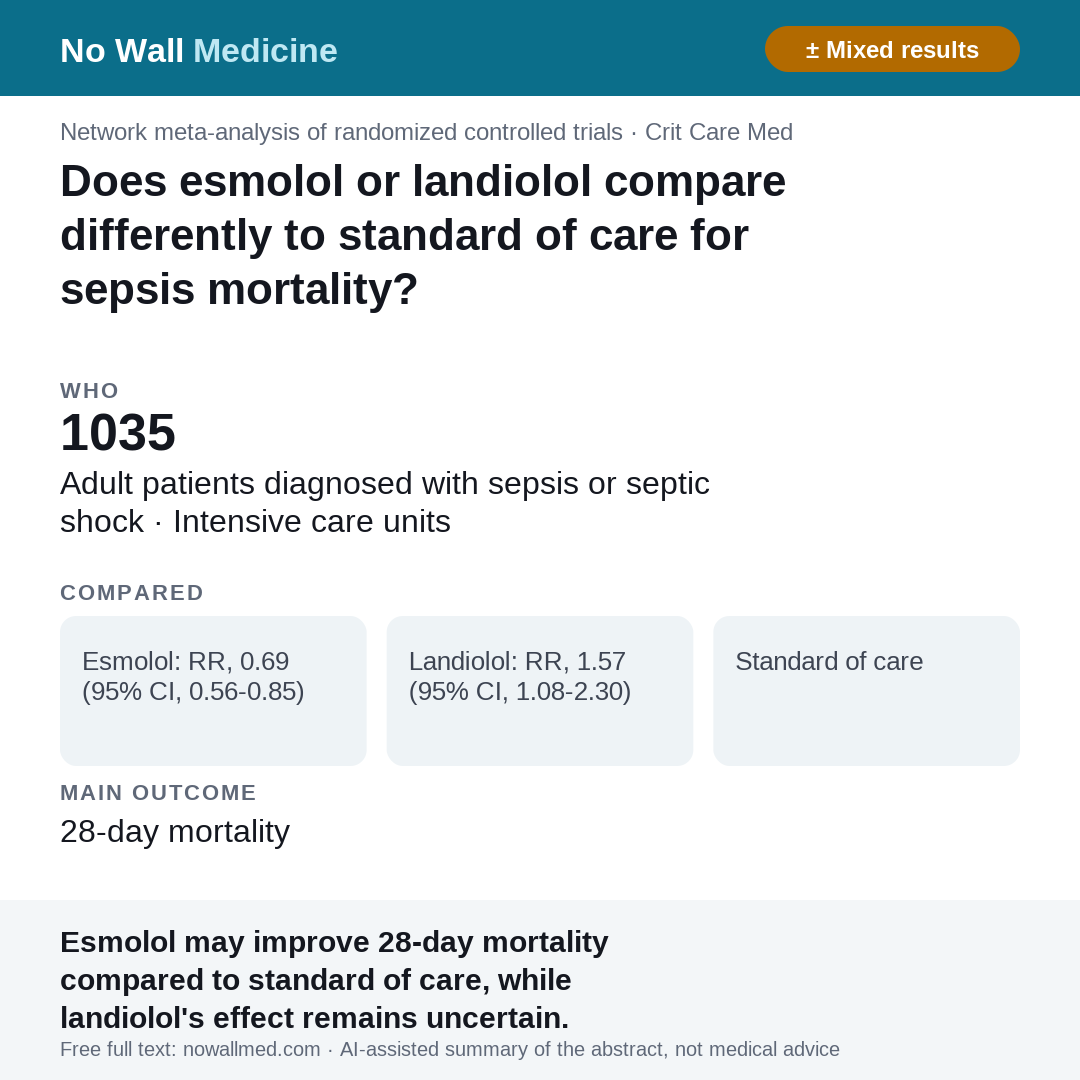
Comparison of Esmolol Versus Landiolol on Mortality in Adult Patients With Sepsis: A Systematic Review and Network Meta-Analysis
Network meta-analysis of randomized controlled trialsMixed results
Does esmolol or landiolol compare differently to standard of care for sepsis mortality?
Who
1035
Adult patients diagnosed with sepsis or septic shock · Intensive care units
Compared
Esmolol: RR, 0.69 (95% CI, 0.56-0.85)
Landiolol: RR, 1.57 (95% CI, 1.08-2.30)
Standard of care
Main outcome
28-day mortality
Result: relative risk 1.57 (95% CI, 1.08-2.30) for landiolol versus esmolol
Bottom line: Esmolol may improve 28-day mortality compared to standard of care, while landiolol's effect remains uncertain.
Limitation: Low certainty of evidence for landiolol outcomes.
Crit Care Med · 2025-11-25Download image
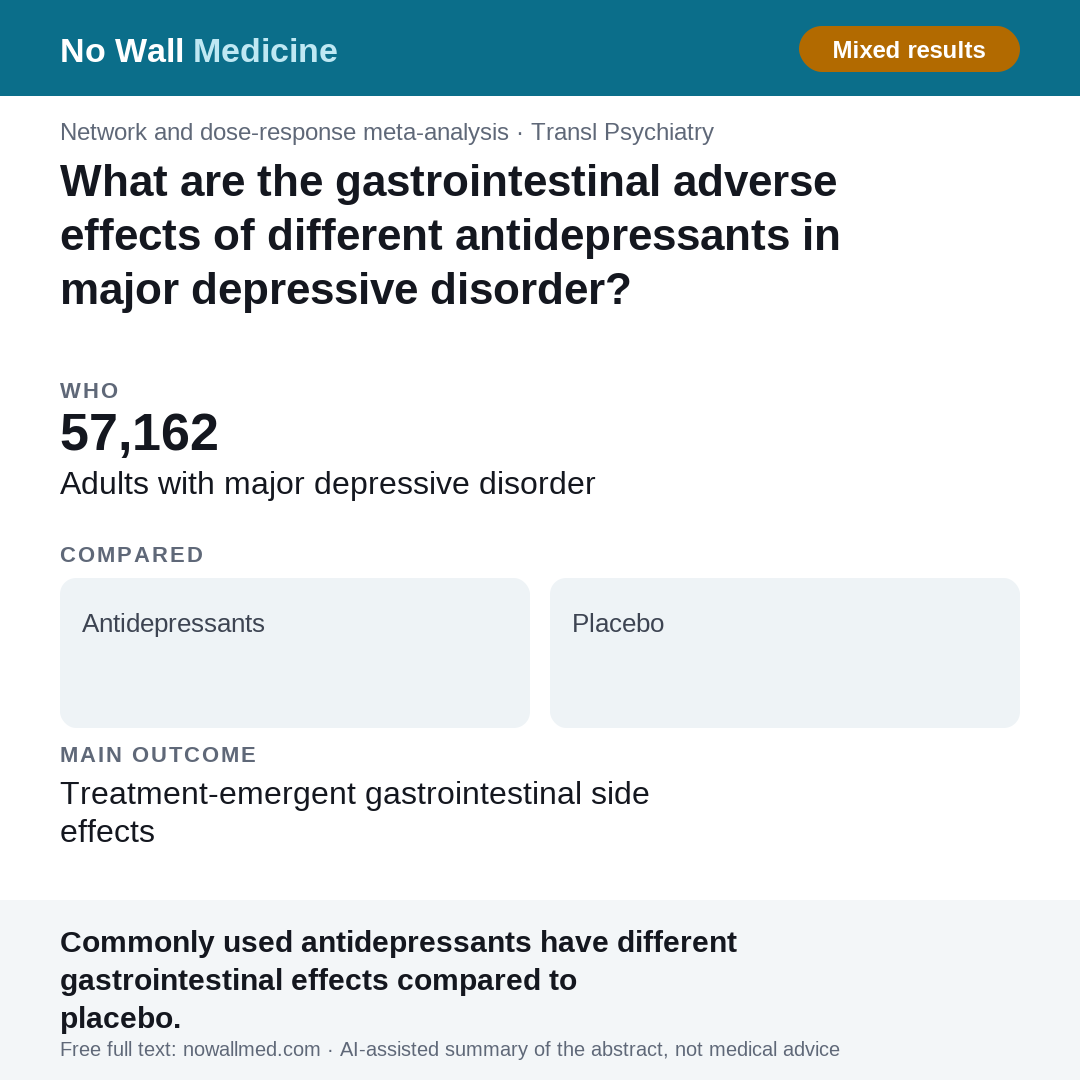
Comparative gastrointestinal effects of antidepressants for the acute treatment of adults with major depressive disorder: a network and dose‒response meta-analysis
Network and dose-response meta-analysisMixed results
What are the gastrointestinal adverse effects of different antidepressants in major depressive disorder?
Who
57,162
Adults with major depressive disorder
Compared
Antidepressants
Placebo
Main outcome
Treatment-emergent gastrointestinal side effects
Bottom line: Commonly used antidepressants have different gastrointestinal effects compared to placebo.
Transl Psychiatry · 2025-11-25Download image
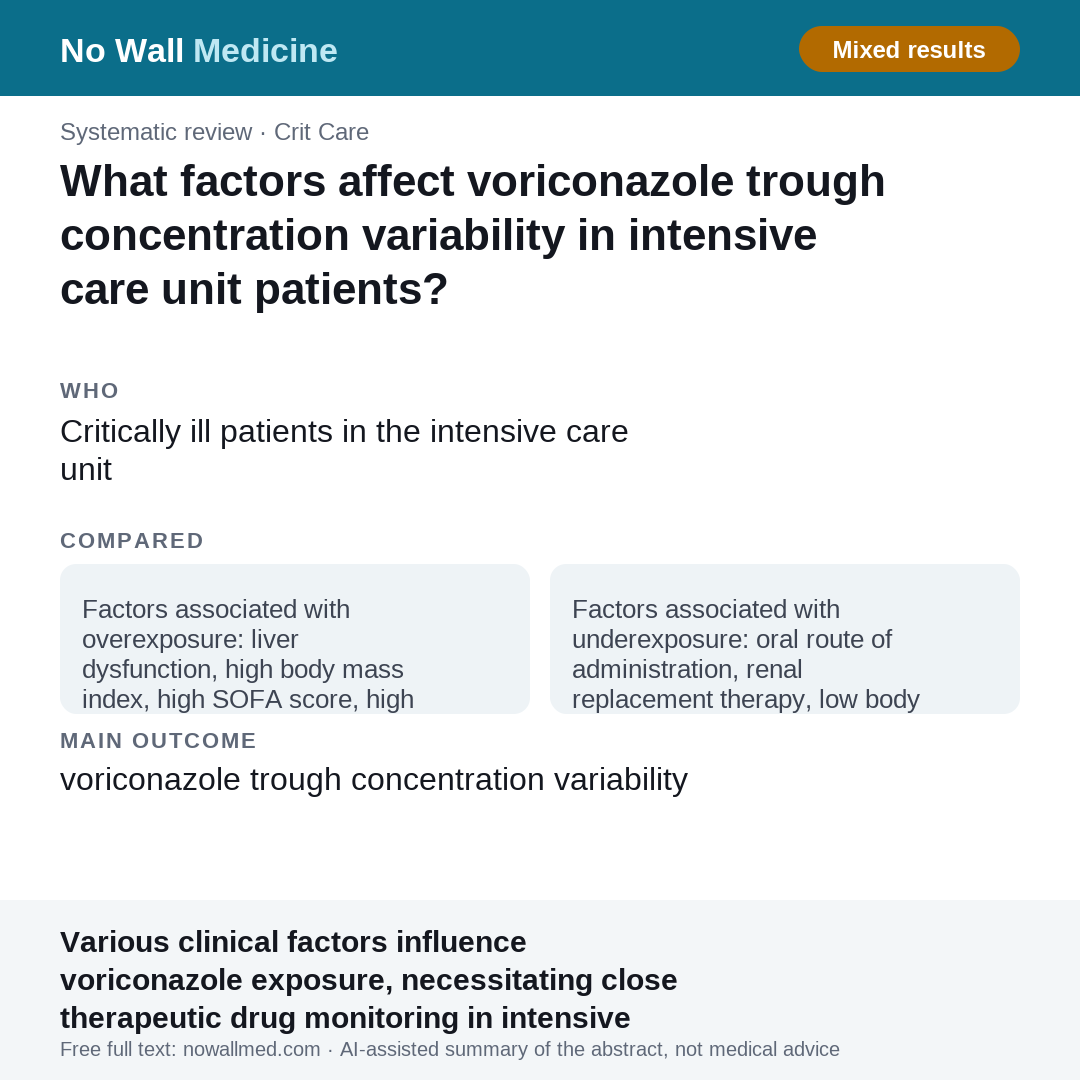
Factors affecting voriconazole pharmacokinetic variability in critically ill patients: a systematic review
Systematic reviewMixed results
What factors affect voriconazole trough concentration variability in intensive care unit patients?
Who
Critically ill patients in the intensive care unit
Compared
Factors associated with overexposure: liver dysfunction, high body mass index, high SOFA score, high inflammation status
Factors associated with underexposure: oral route of administration, renal replacement therapy, low body mass index
Main outcome
voriconazole trough concentration variability
Bottom line: Various clinical factors influence voriconazole exposure, necessitating close therapeutic drug monitoring in intensive care unit patients.
Crit Care · 2025-11-25Download image
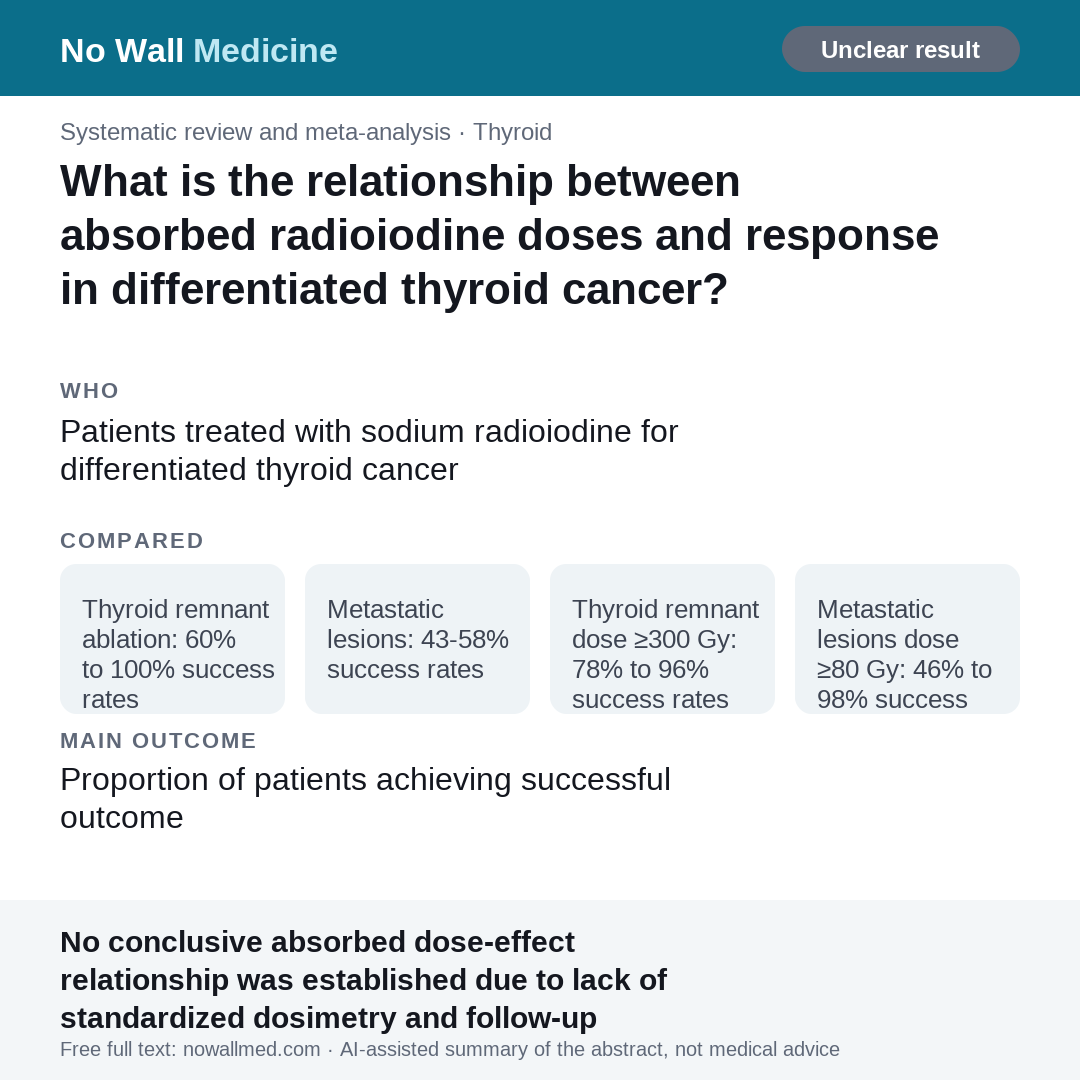
A Systematic Review of Absorbed Doses and Response in Patients Treated with Radioiodine for Differentiated Thyroid Cancer
Systematic review and meta-analysisUnclear result
What is the relationship between absorbed radioiodine doses and response in differentiated thyroid cancer?
Who
Patients treated with sodium radioiodine for differentiated thyroid cancer
Compared
Thyroid remnant ablation: 60% to 100% success rates
Metastatic lesions: 43-58% success rates
Thyroid remnant dose ≥300 Gy: 78% to 96% success rates
Metastatic lesions dose ≥80 Gy: 46% to 98% success rates
Main outcome
Proportion of patients achieving successful outcome
Bottom line: No conclusive absorbed dose-effect relationship was established due to lack of standardized dosimetry and follow-up criteria.
Thyroid · 2025-11-24Download image
The adverse effects associated with semaglutide use in patients at increased risk of cardiovascular events: a systematic review with meta-analysis and Trial Sequential Analysis
Systematic review and meta-analysisMixed results
What are the adverse effects of semaglutide compared with placebo in patients at increased cardiovascular risk?
Who
54972
Patients at increased risk of cardiovascular events
Compared
Semaglutide
Placebo
Main outcome
All-cause mortality, serious adverse events, and myocardial infarction
Result: relative risk 0.85 (95% CI 0.79 to 0.91) for all-cause mortality
Bottom line: Semaglutide reduced mortality, serious adverse events, and myocardial infarction but increased non-serious gastrointestinal adverse events.
BMC Med · 2025-11-24Download image

Approaches to early intervention for common mental health problems in young people: a systematic review
Systematic review and narrative synthesisBenefit found
What are the outcomes of early intervention approaches for young people with common mental health problems?
Who
Young people aged 11 to 25 years with initial symptoms of depression and anxiety
Compared
Early intervention approaches
Control groups
Main outcome
Mental health, wellbeing, access, and experience of care
Bottom line: Early intervention models show promise in improving access, experience, and mental health outcomes for young people.
Limitation: High heterogeneity of interventions and outcomes measured limits certainty.
BMC Med · 2025-11-24Download image