Visual abstracts
New randomized trials and meta-analyses from leading journals at a glance: who was studied, what was compared, and what was found. Every paper is free to read in full.
All specialtiesCardiology 4777Oncology 4080Gastroenterology & Hepatology 1914Infectious Disease 3771Neurology 1883Psychiatry & Mental Health 2238Pulmonology 2058Critical Care 1330Endocrinology & Diabetes 2549Pediatrics 2908Surgery 2496Orthopedics & Sports Medicine 922Neurosurgery 532Cardiothoracic & Vascular Surgery 662Plastic & Reconstructive Surgery 583Nephrology 1110Rheumatology 811Hematology 1094Dermatology 617Ophthalmology 537Obstetrics & Gynecology 1656Public & Global Health 1041Radiology & Imaging 637Anesthesiology 957Urology 751ENT (Otolaryngology) 495Emergency Medicine 484Allergy & Immunology 310Geriatrics 973Family Medicine & Primary Care 538Medical Genetics & Genomics 662Pathology & Laboratory Medicine 156Physical Medicine & Rehabilitation 744Palliative Care 422Nutrition 1564Digital Health & AI 2188General Medicine 318
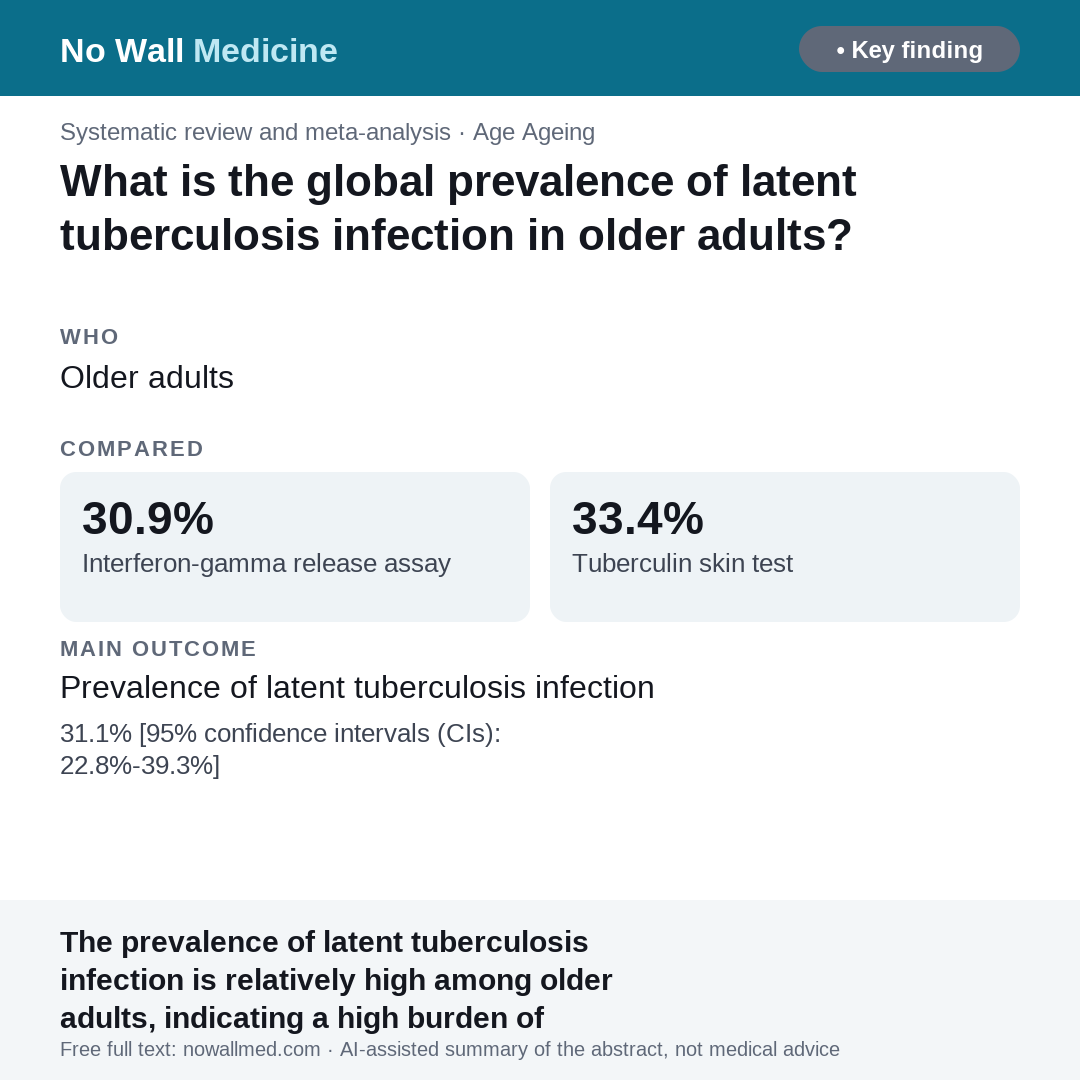
Prevalence of latent tuberculosis infection in older adults: a systematic review and meta-analysis
Systematic review and meta-analysisBenefit found
What is the global prevalence of latent tuberculosis infection in older adults?
Who
Older adults
Compared
30.9%Interferon-gamma release assay (95% CI: 23.9%-37.9%)
33.4%Tuberculin skin test (95% CI: 25.9%-40.8%)
Main outcome
Prevalence of latent tuberculosis infection
Result: 31.1% [95% confidence intervals (CIs): 22.8%-39.3%]
Bottom line: The prevalence of latent tuberculosis infection is relatively high among older adults, indicating a high burden of undetected infection.
Age Ageing · 2025-09-25Download image
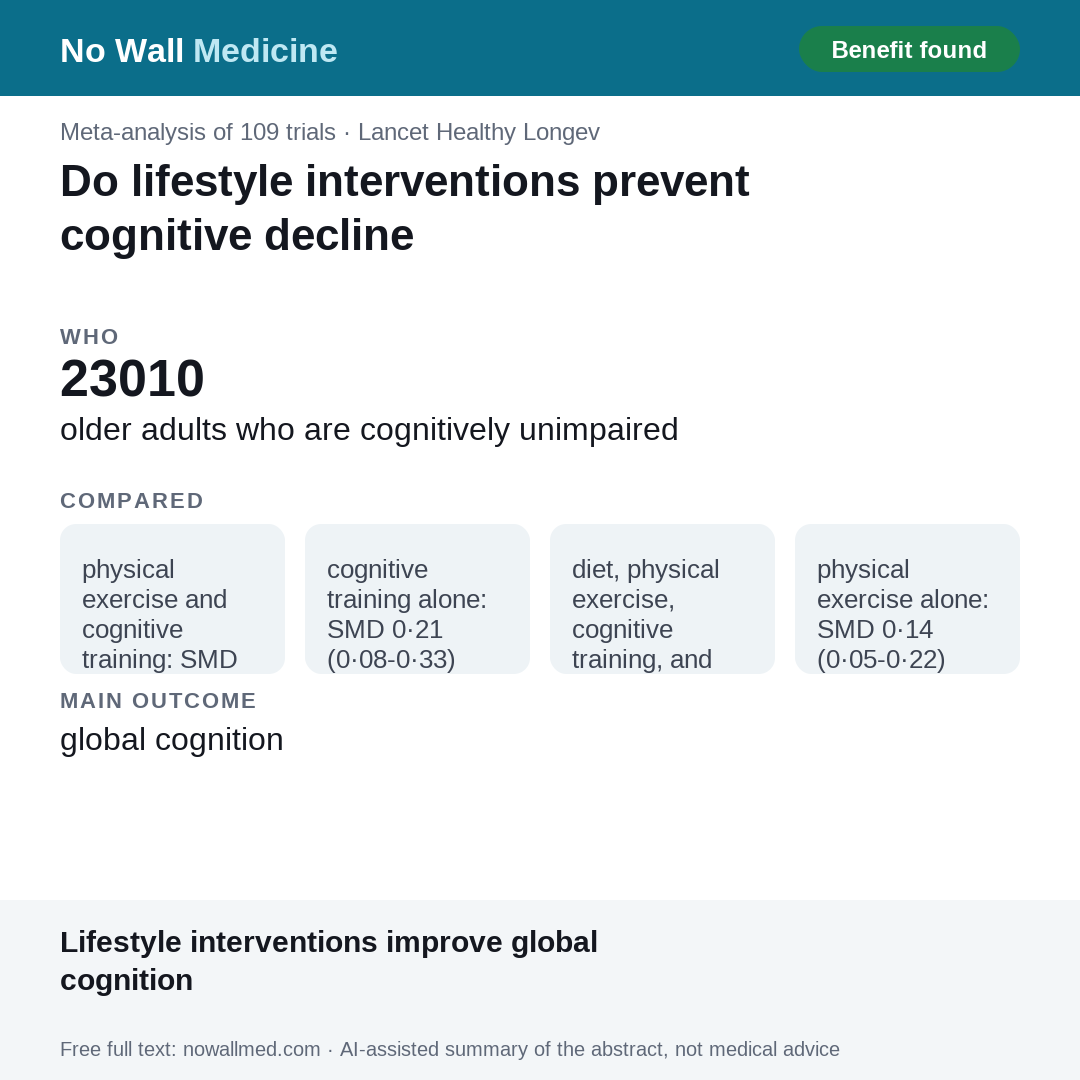
Single-domain and multidomain lifestyle interventions for the prevention of cognitive decline in older adults who are cognitively unimpaired: a systematic review and network meta-analysis
Meta-analysis of 109 trialsBenefit found
Do lifestyle interventions prevent cognitive decline
Who
23010
older adults who are cognitively unimpaired
Compared
physical exercise and cognitive training: SMD 0·26 (95% CI 0·10-0·42)
cognitive training alone: SMD 0·21 (0·08-0·33)
diet, physical exercise, cognitive training, and health education: SMD 0·14 (0·02-0·27)
physical exercise alone: SMD 0·14 (0·05-0·22)
Main outcome
global cognition
Bottom line: Lifestyle interventions improve global cognition
Limitation: high risk of bias in 40% of studies
Lancet Healthy Longev · 2025-09-25Download image
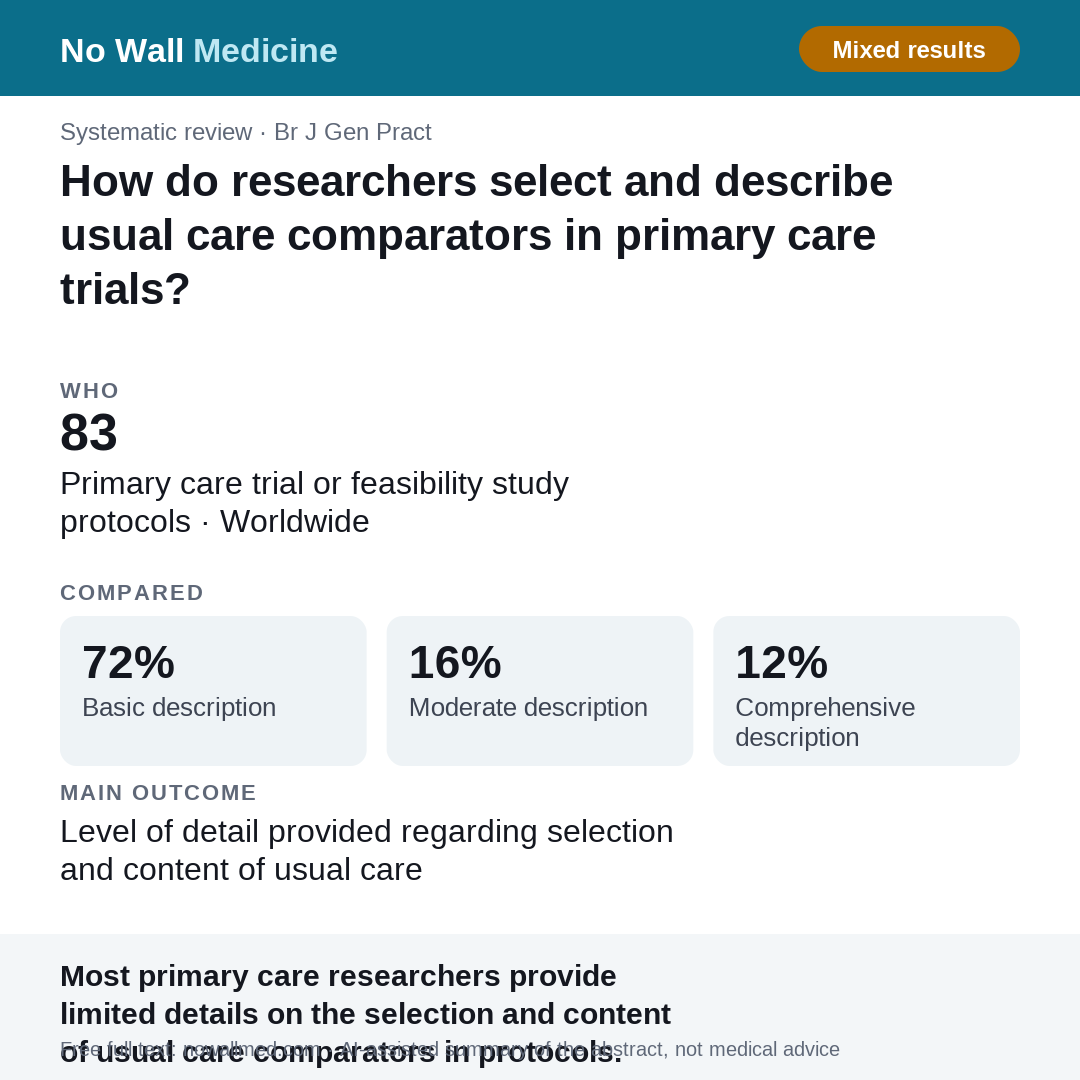
Selection and reporting of usual care comparators when designing primary care trials of complex health interventions: a systematic review
Systematic reviewMixed results
How do researchers select and describe usual care comparators in primary care trials?
Who
83
Primary care trial or feasibility study protocols · Worldwide
Compared
72%Basic description
16%Moderate description
12%Comprehensive description
Main outcome
Level of detail provided regarding selection and content of usual care
Bottom line: Most primary care researchers provide limited details on the selection and content of usual care comparators in protocols.
Br J Gen Pract · 2025-09-25Download image
Static and Dynamic Effects of Stroke Onset on Depressive Symptoms in Middle-Aged and Older Adults: Evidence Across 21 Countries
Pooled multicohort studyBenefit found
Does stroke onset cause depressive symptoms in middle-aged and older adults?
Who
Individuals aged 50 years or older · 21 countries
Compared
Stroke onset
No stroke onset
Main outcome
Depressive symptoms
Bottom line: Stroke onset has a robust causal linkage to both anticipatory and sustained depressive symptoms.
J Am Heart Assoc · 2025-09-25Download image
Factors influencing multidisciplinary clinical decision-making in the critical care unit: a systematic review and mixed-methods meta-synthesis
Systematic review and mixed-methods meta-synthesisUnclear result
What factors and processes influence multidisciplinary clinical decision-making regarding organ support in intensive care?
Who
Clinicians making organ support decisions in intensive care units
Compared
Human factors
Team factors
System factors
Patient factors
Main outcome
Factors and processes influencing organ support treatment decisions
Bottom line: Decision-making is complex, influenced by human, team, system, and patient factors.
Limitation: Further studies are needed to understand interventions and direct effects on patient outcomes.
BJA Open · 2025-09-25Download image

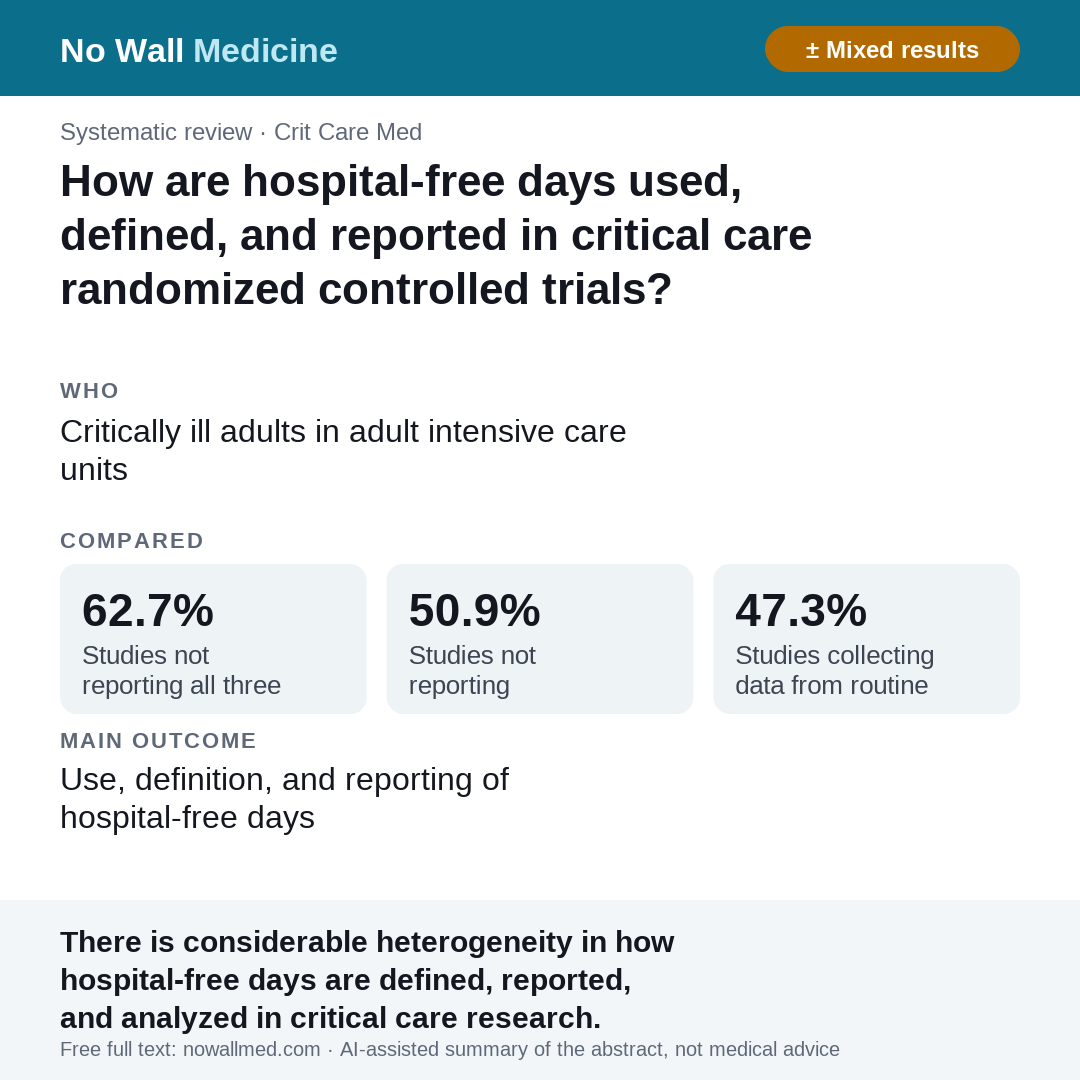
Reporting of Hospital-Free Days As an Outcome Measure in Critical Care Trials: A Systematic Review
Systematic reviewMixed results
How are hospital-free days used, defined, and reported in critical care randomized controlled trials?
Who
Critically ill adults in adult intensive care units
Compared
62.7%Studies not reporting all three components
50.9%Studies not reporting hospital-free days if patient died
47.3%Studies collecting data from routine healthcare records
Main outcome
Use, definition, and reporting of hospital-free days
Bottom line: There is considerable heterogeneity in how hospital-free days are defined, reported, and analyzed in critical care research.
Crit Care Med · 2025-09-24Download image
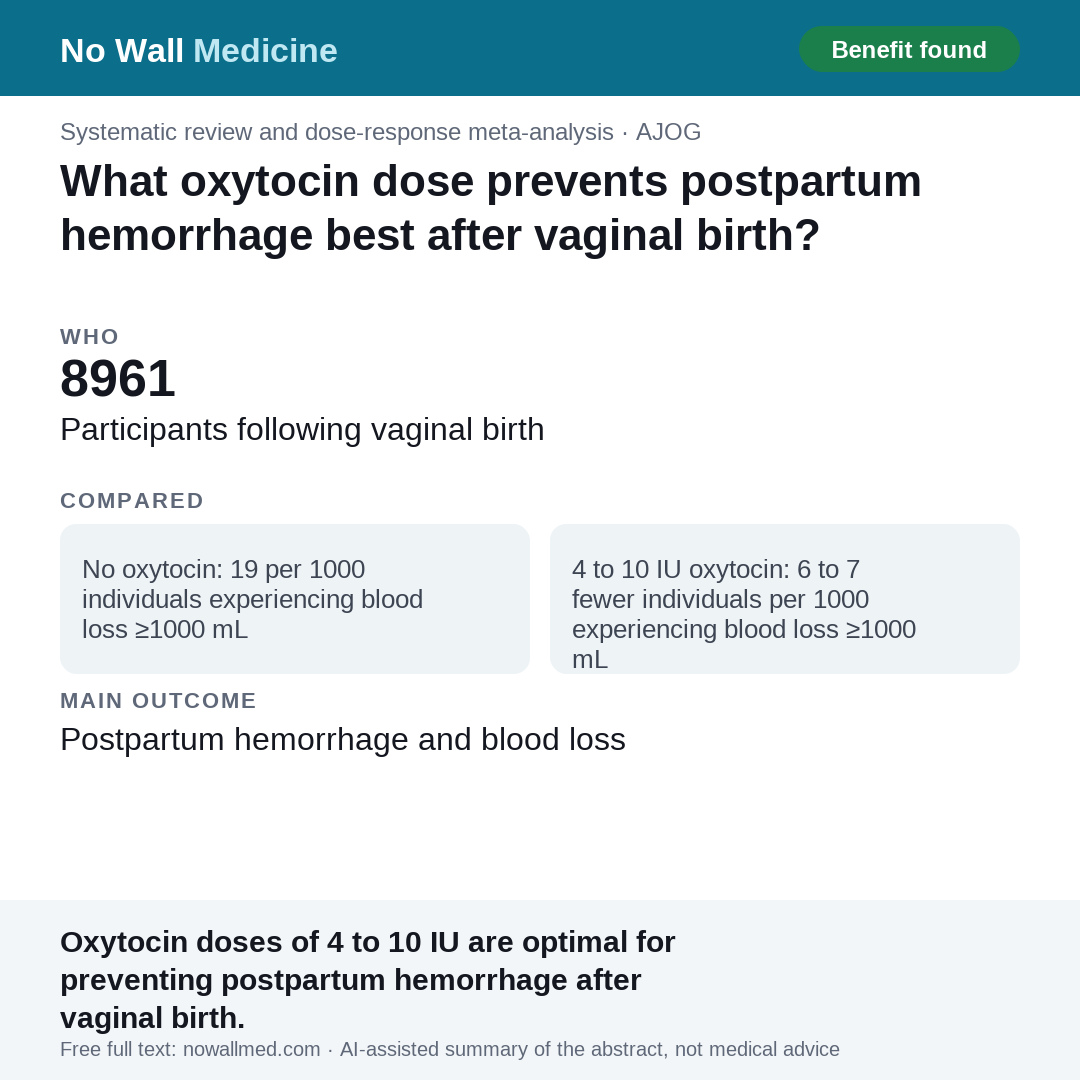
Prophylactic oxytocin dose following vaginal birth to prevent postpartum hemorrhage: a systematic review and dose-response meta-analysis
Systematic review and dose-response meta-analysisBenefit found
What oxytocin dose prevents postpartum hemorrhage best after vaginal birth?
Who
8961
Participants following vaginal birth
Compared
No oxytocin: 19 per 1000 individuals experiencing blood loss ≥1000 mL
4 to 10 IU oxytocin: 6 to 7 fewer individuals per 1000 experiencing blood loss ≥1000 mL
Main outcome
Postpartum hemorrhage and blood loss
Bottom line: Oxytocin doses of 4 to 10 IU are optimal for preventing postpartum hemorrhage after vaginal birth.
Limitation: Narrow dose ranges, under-representation of high-risk populations, and inconsistent reporting of safety outcomes.
AJOG · 2025-09-24Download image
Cardiovascular and Renal Outcomes Following Acute Kidney Injury in Pregnancy: A Systematic Review and Meta-Analysis
Systematic review and meta-analysisHarm found
What are the cardiovascular and renal risks following acute kidney injury in pregnancy?
Who
50285836
Pregnant women with and without acute kidney injury
Compared
Acute kidney injury: OR 52.37 (renal), OR 22.55 (heart failure), OR 22.92 (stroke)
No acute kidney injury
Main outcome
Adverse cardiovascular and renal outcomes
Result: OR 52.37 (95% CI 4.67-587.63) for composite adverse renal outcomes
Bottom line: Acute kidney injury in pregnancy is associated with significantly increased risks of renal, cardiovascular, and mortality outcomes.
BJOG · 2025-09-24Download image

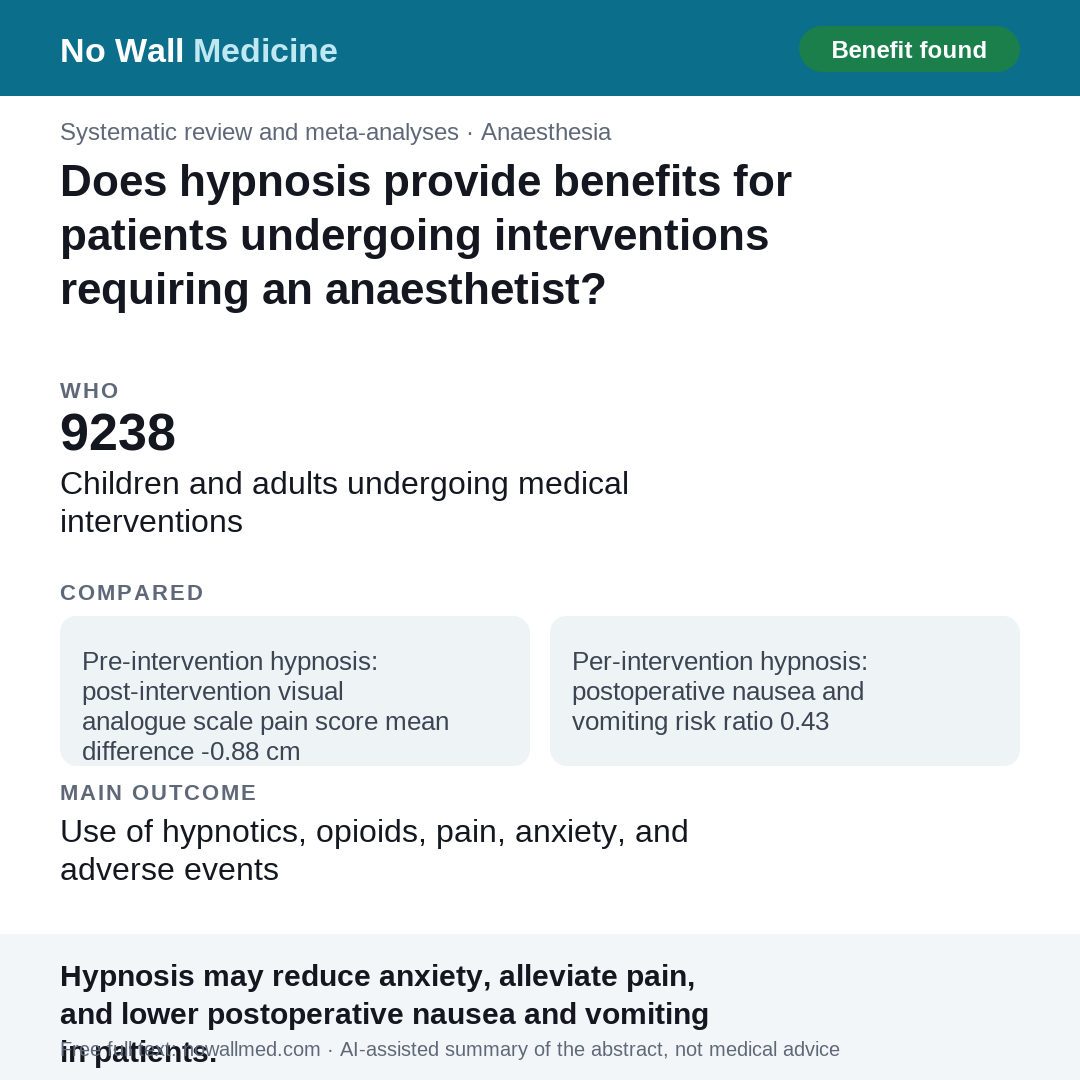
Hypnosis for anaesthetists: a systematic review and meta-analyses
Systematic review and meta-analysesBenefit found
Does hypnosis provide benefits for patients undergoing interventions requiring an anaesthetist?
Who
9238
Children and adults undergoing medical interventions
Compared
Pre-intervention hypnosis: post-intervention visual analogue scale pain score mean difference -0.88 cm
Per-intervention hypnosis: postoperative nausea and vomiting risk ratio 0.43
Main outcome
Use of hypnotics, opioids, pain, anxiety, and adverse events
Result: mean difference -0.88 cm (95% CI -1.72 to -0.05)
Bottom line: Hypnosis may reduce anxiety, alleviate pain, and lower postoperative nausea and vomiting in patients.
Limitation: Impact on most outcomes remains unknown despite the large number of patients included.
Anaesthesia · 2025-09-24Download image
Impact of same day emergency care services on urgent and emergency care delivery outcomes: a systematic review
Systematic review and narrative synthesisMixed results
What is the impact of same day emergency care on healthcare delivery outcomes?
Who
Patients receiving same day emergency care · United Kingdom and Australia
Compared
Same day emergency care: same-day discharge ranging from 38.3% to >92%
Alternative services
Main outcome
Urgent and emergency healthcare delivery outcomes
Bottom line: Same day emergency care is feasible and may increase same-day discharge, but evidence is limited and heterogeneous.
Limitation: Clinical heterogeneity, limited reporting, and high risk of bias and confounding in study designs.
Emerg Med J · 2025-09-24Download image

Arthroscopic Bankart Repair With Remplissage Results in Low Recurrent Instability Rates Without Reducing Shoulder Range of Motion at Midterm Follow-up: A Systematic Review of Studies With Minimum 5-Year Outcomes
Systematic reviewBenefit found
What are the long-term outcomes of arthroscopic Bankart repair with remplissage?
Who
144
Patients with anterior shoulder instability and subcritical glenoid bone loss
Compared
Preoperative: Rowe score 49
Postoperative: Rowe score 97
Main outcome
Functional outcomes, range of motion, and recurrence rates
Bottom line: Arthroscopic Bankart repair with remplissage shows excellent functional outcomes and low recurrence rates without restricting range of motion.
Am J Sports Med · 2025-09-24Download image

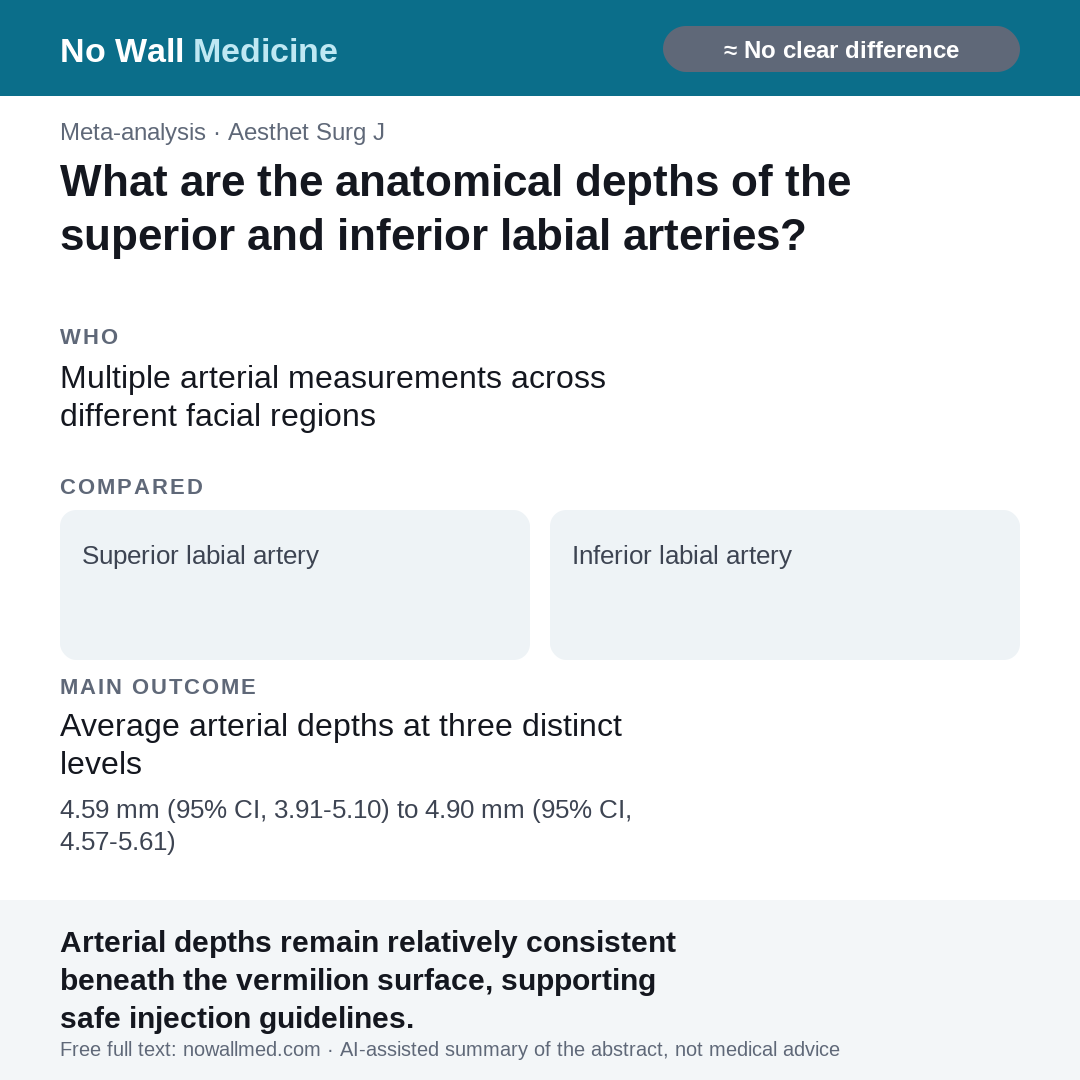
Anatomical Depth of Labial Arteries in Dermal Filler Procedures: A Meta-analysis With Clinical Implications
Meta-analysisNo clear difference
What are the anatomical depths of the superior and inferior labial arteries?
Who
Multiple arterial measurements across different facial regions
Compared
Superior labial artery
Inferior labial artery
Main outcome
Average arterial depths at three distinct levels
Result: 4.59 mm (95% CI, 3.91-5.10) to 4.90 mm (95% CI, 4.57-5.61)
Bottom line: Arterial depths remain relatively consistent beneath the vermilion surface, supporting safe injection guidelines.
Aesthet Surg J · 2025-09-24Download image
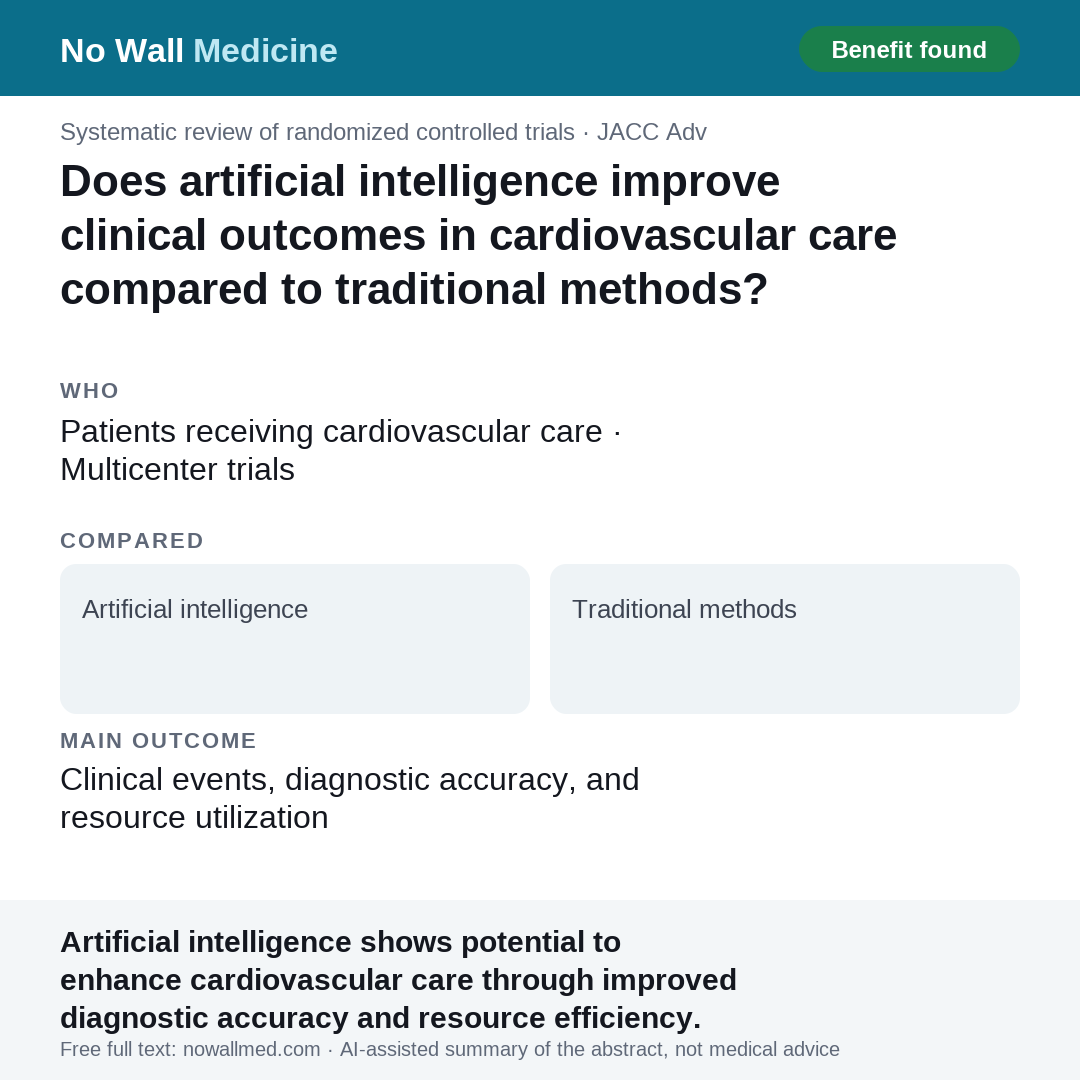
Randomized Controlled Trials Evaluating Artificial Intelligence in Cardiovascular Care: A Systematic Review
Systematic review of randomized controlled trialsBenefit found
Does artificial intelligence improve clinical outcomes in cardiovascular care compared to traditional methods?
Who
Patients receiving cardiovascular care · Multicenter trials
Compared
Artificial intelligence
Traditional methods
Main outcome
Clinical events, diagnostic accuracy, and resource utilization
Bottom line: Artificial intelligence shows potential to enhance cardiovascular care through improved diagnostic accuracy and resource efficiency.
Limitation: The limited number of randomized controlled trials indicates a need for more high-quality studies.
JACC Adv · 2025-09-24Download image
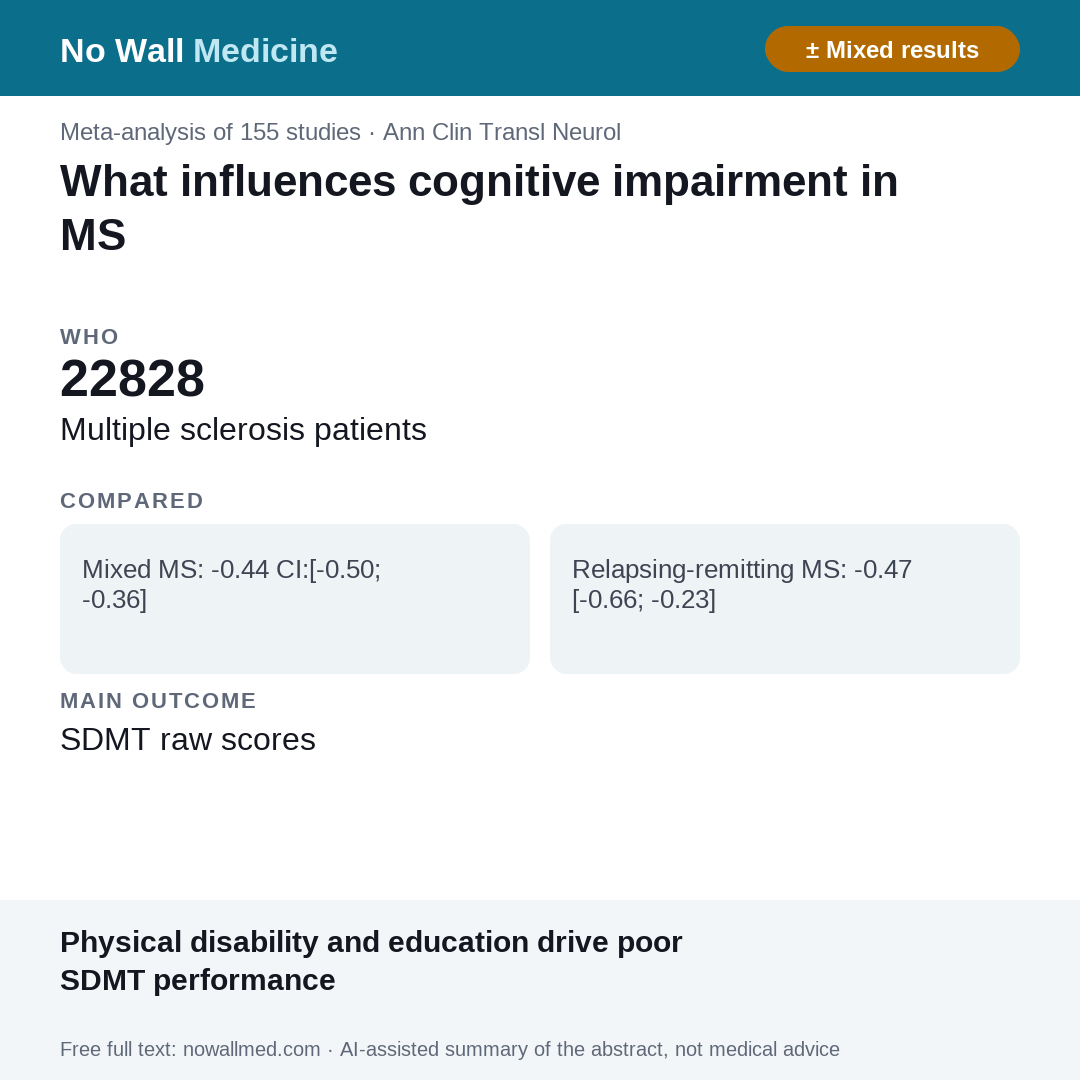
Cognitive Impairment in Multiple Sclerosis: The Role of Clinical and Sociodemographic Factors - A Systematic Review and Meta-Analysis
Meta-analysis of 155 studiesMixed results
What influences cognitive impairment in MS
Who
22828
Multiple sclerosis patients
Compared
Mixed MS: -0.44 CI:[-0.50; -0.36]
Relapsing-remitting MS: -0.47 [-0.66; -0.23]
Main outcome
SDMT raw scores
Bottom line: Physical disability and education drive poor SDMT performance
Limitation: Cross-sectional design and heterogeneity
Ann Clin Transl Neurol · 2025-09-24Download image
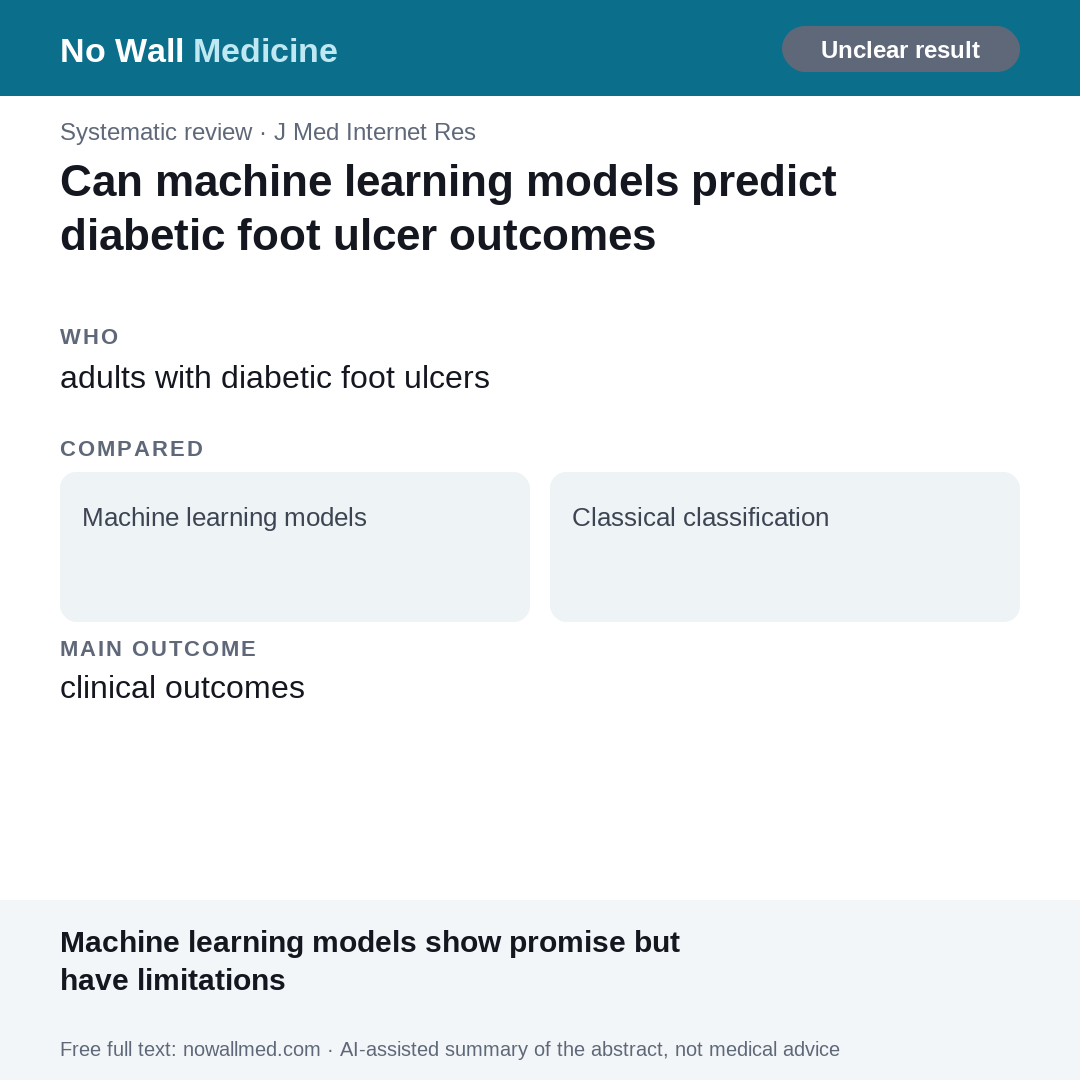
Diabetic Foot Ulcer Classification Models Using Artificial Intelligence and Machine Learning Techniques: Systematic Review
Systematic reviewUnclear result
Can machine learning models predict diabetic foot ulcer outcomes
Who
adults with diabetic foot ulcers
Compared
Machine learning models
Classical classification
Main outcome
clinical outcomes
Bottom line: Machine learning models show promise but have limitations
Limitation: high risk of bias and lack of uniform definitions
J Med Internet Res · 2025-09-24Download image
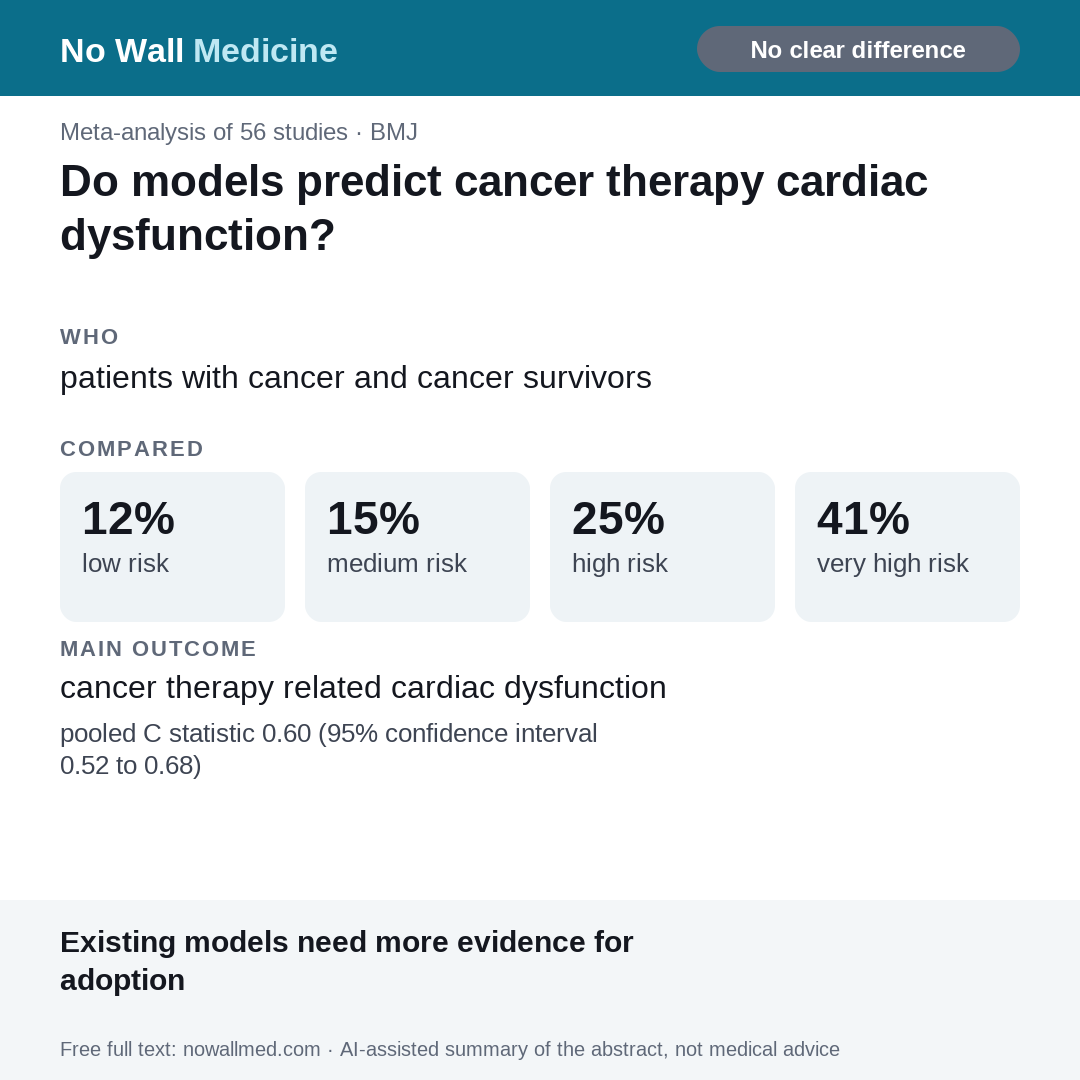
Risk prediction models for cancer therapy related cardiac dysfunction in patients with cancer and cancer survivors: systematic review and meta-analysis
Meta-analysis of 56 studiesNo clear difference
Do models predict cancer therapy cardiac dysfunction?
Who
patients with cancer and cancer survivors
Compared
12%low risk
15%medium risk
25%high risk
41%very high risk
Main outcome
cancer therapy related cardiac dysfunction
Result: pooled C statistic 0.60 (95% confidence interval 0.52 to 0.68)
Bottom line: Existing models need more evidence for adoption
Limitation: poor reporting and limited validation
BMJ · 2025-09-23Download image
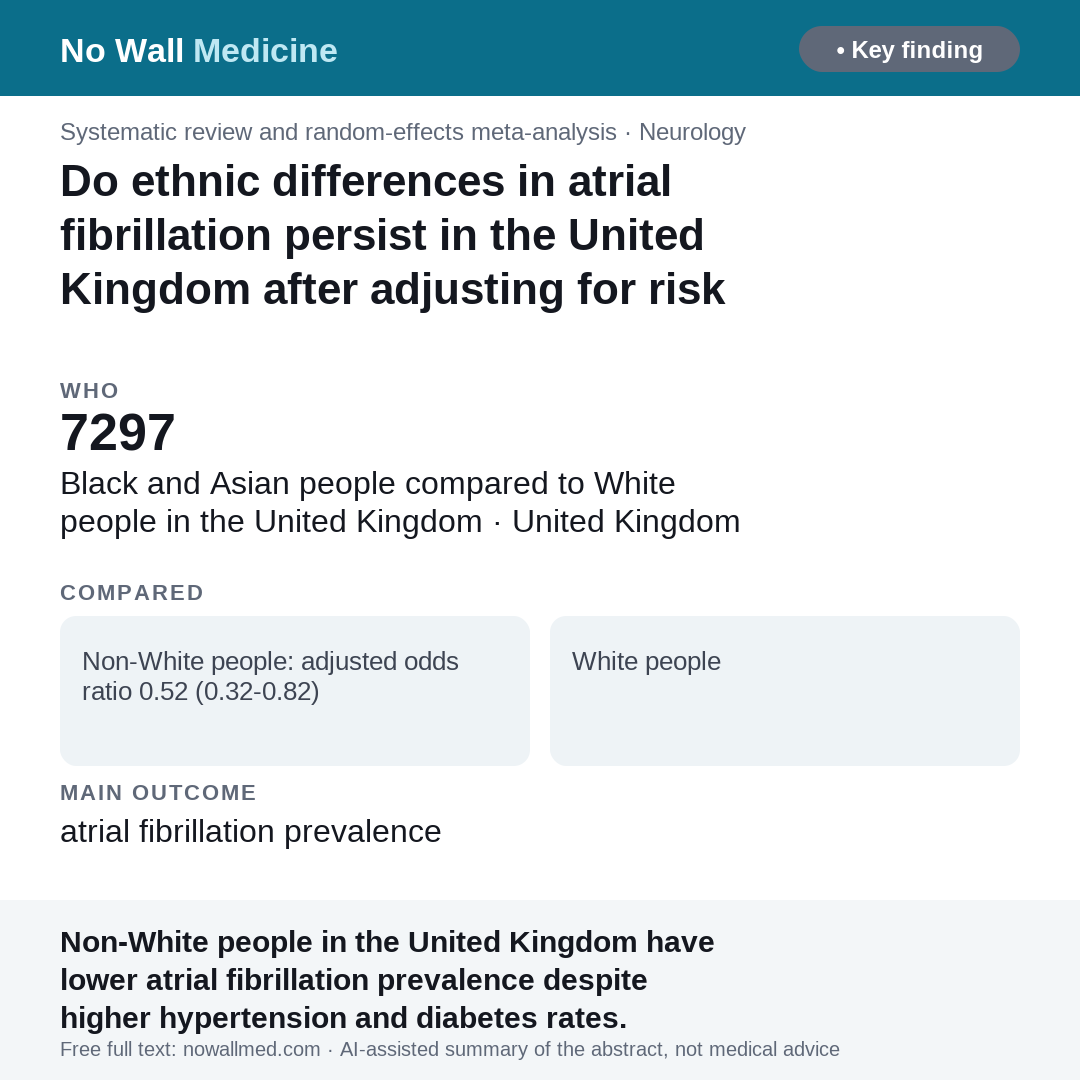
Ethnic Contrasts in Stroke Risk Factors and the Atrial Fibrillation Paradox in the United Kingdom: Population-Based Study and Meta-Analysis
Systematic review and random-effects meta-analysisBenefit found
Do ethnic differences in atrial fibrillation persist in the United Kingdom after adjusting for risk factors?
Who
7297
Black and Asian people compared to White people in the United Kingdom · United Kingdom
Compared
Non-White people: adjusted odds ratio 0.52 (0.32-0.82)
White people
Main outcome
atrial fibrillation prevalence
Result: adjusted odds ratio 0.52 (95% CI 0.32 to 0.82)
Bottom line: Non-White people in the United Kingdom have lower atrial fibrillation prevalence despite higher hypertension and diabetes rates.
Neurology · 2025-09-23Download image
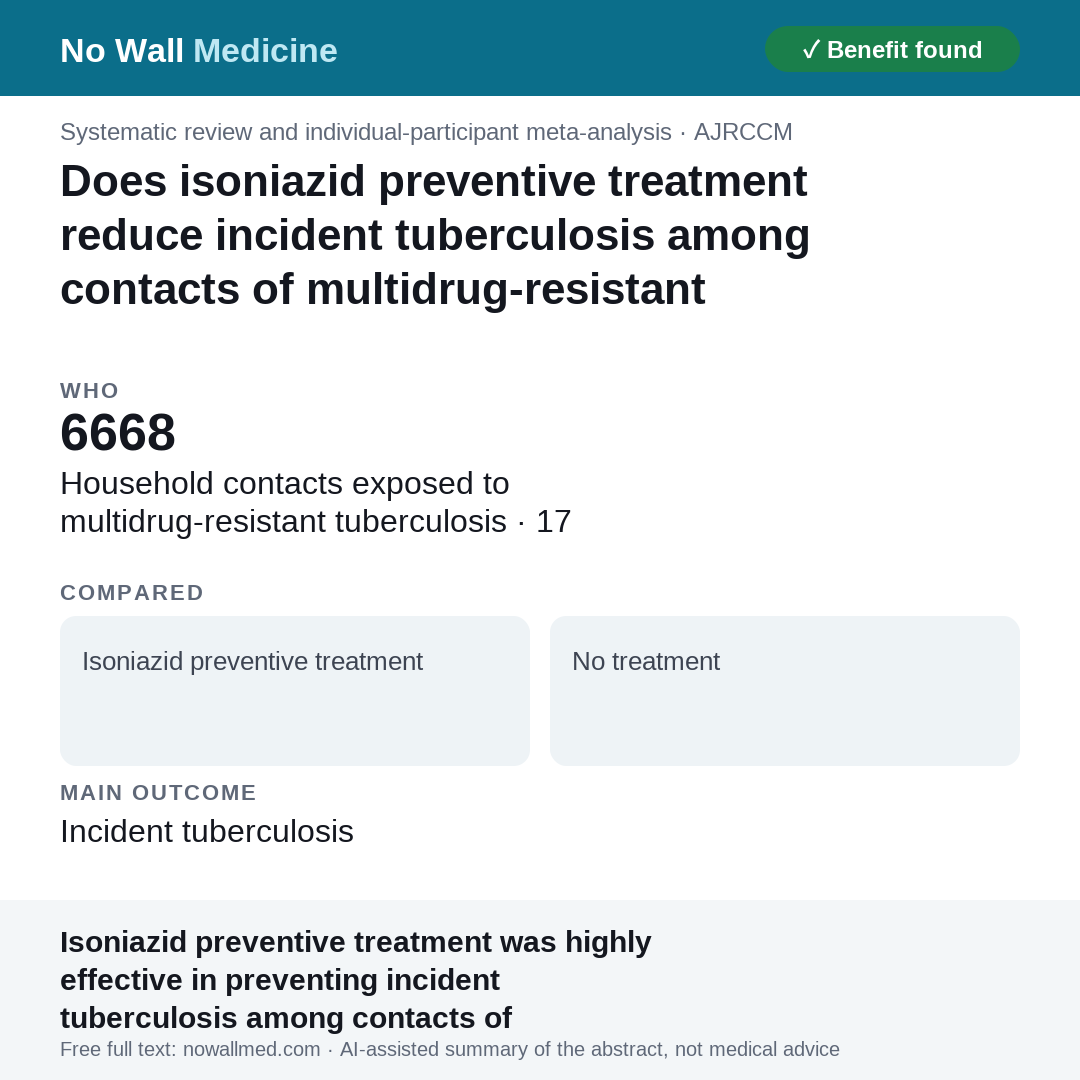
The effectiveness of isoniazid preventive treatment among contacts of multidrug-resistant tuberculosis: a systematic review and individual-participant meta-analysis
Systematic review and individual-participant meta-analysisBenefit found
Does isoniazid preventive treatment reduce incident tuberculosis among contacts of multidrug-resistant tuberculosis cases?
Who
6668
Household contacts exposed to multidrug-resistant tuberculosis · 17 countries
Compared
Isoniazid preventive treatment
No treatment
Main outcome
Incident tuberculosis
Result: adjusted hazard ratio 0.43 (95% CI 0.26-0.71)
Bottom line: Isoniazid preventive treatment was highly effective in preventing incident tuberculosis among contacts of multidrug-resistant tuberculosis cases.
Limitation: Effectiveness waned after 2 years of follow-up.
AJRCCM · 2025-09-23Download image
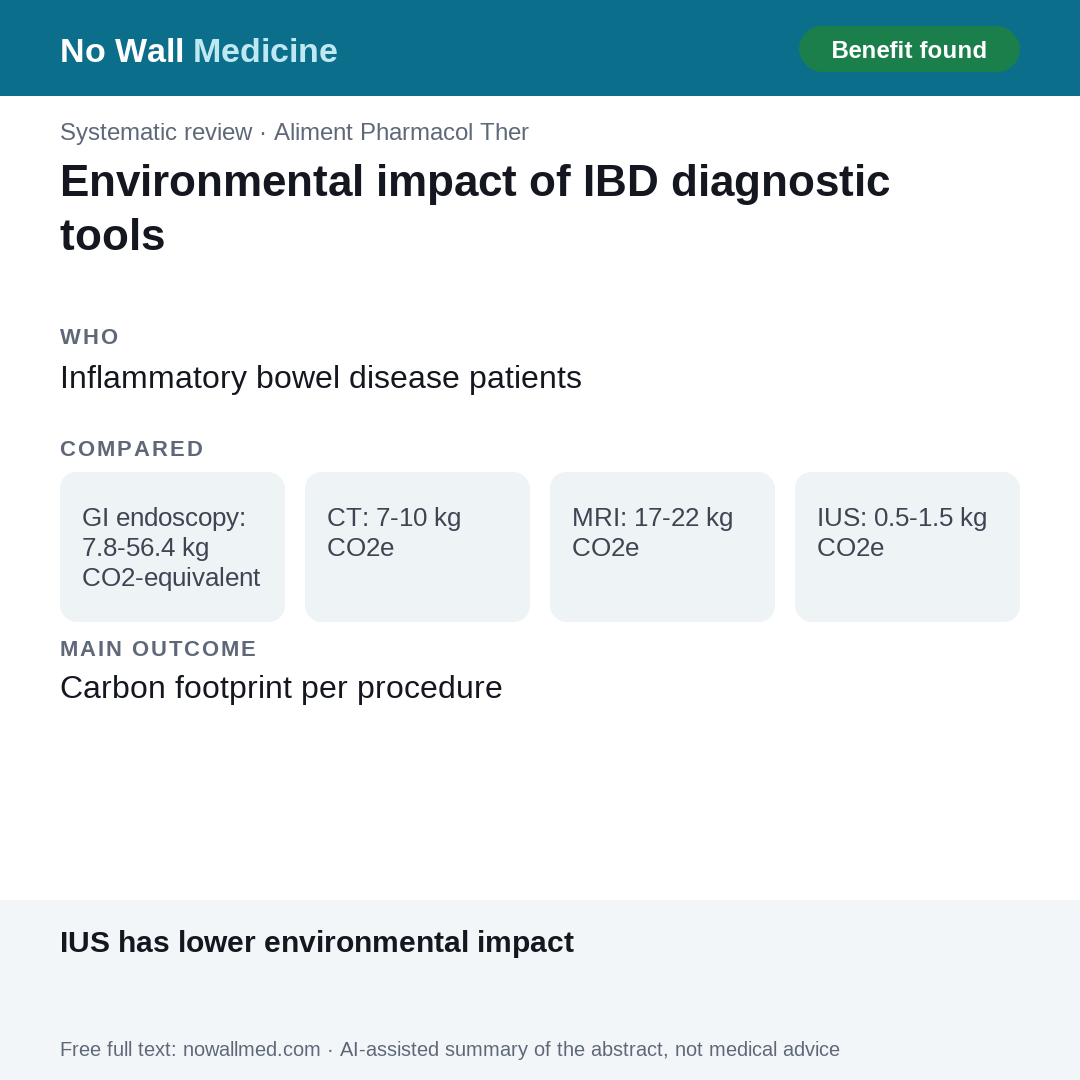
Systematic Review: Ultrasound Goes Echo-Decarbonising Inflammatory Bowel Disease Care Through Intestinal Ultrasound
Systematic reviewBenefit found
Environmental impact of IBD diagnostic tools
Who
Inflammatory bowel disease patients
Compared
GI endoscopy: 7.8-56.4 kg CO2-equivalent
CT: 7-10 kg CO2e
MRI: 17-22 kg CO2e
IUS: 0.5-1.5 kg CO2e
Main outcome
Carbon footprint per procedure
Bottom line: IUS has lower environmental impact
Aliment Pharmacol Ther · 2025-09-23Download image
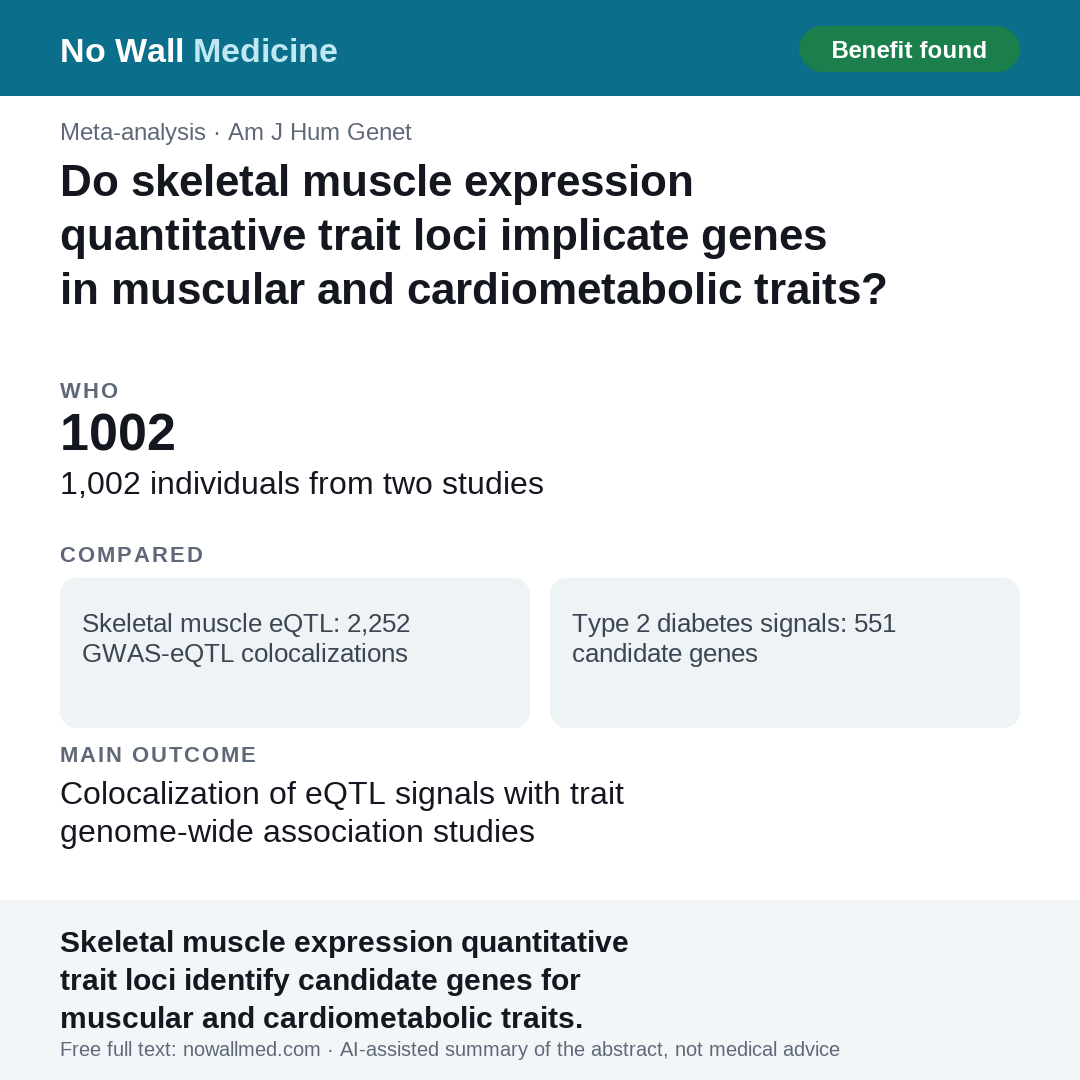
Skeletal muscle eQTL meta-analysis implicates genes in the genetic architecture of muscular and cardiometabolic traits
Meta-analysisBenefit found
Do skeletal muscle expression quantitative trait loci implicate genes in muscular and cardiometabolic traits?
Who
1,002 individuals from two studies
Compared
Skeletal muscle eQTL: 2,252 GWAS-eQTL colocalizations
Type 2 diabetes signals: 551 candidate genes
Main outcome
Colocalization of eQTL signals with trait genome-wide association studies
Bottom line: Skeletal muscle expression quantitative trait loci identify candidate genes for muscular and cardiometabolic traits.
Am J Hum Genet · 2025-09-23Download image