Visual abstracts
New randomized trials and meta-analyses from leading journals at a glance: who was studied, what was compared, and what was found. Every paper is free to read in full.
All specialtiesCardiology 4763Oncology 4043Gastroenterology & Hepatology 1903Infectious Disease 3756Neurology 1872Psychiatry & Mental Health 2216Pulmonology 2044Critical Care 1319Endocrinology & Diabetes 2544Pediatrics 2889Surgery 2480Orthopedics & Sports Medicine 917Neurosurgery 525Cardiothoracic & Vascular Surgery 656Plastic & Reconstructive Surgery 574Nephrology 1107Rheumatology 810Hematology 1090Dermatology 611Ophthalmology 532Obstetrics & Gynecology 1645Public & Global Health 1037Radiology & Imaging 619Anesthesiology 958Urology 745ENT (Otolaryngology) 494Emergency Medicine 481Allergy & Immunology 309Geriatrics 972Family Medicine & Primary Care 534Medical Genetics & Genomics 659Pathology & Laboratory Medicine 156Physical Medicine & Rehabilitation 734Palliative Care 421Nutrition 1560Digital Health & AI 2137General Medicine 318
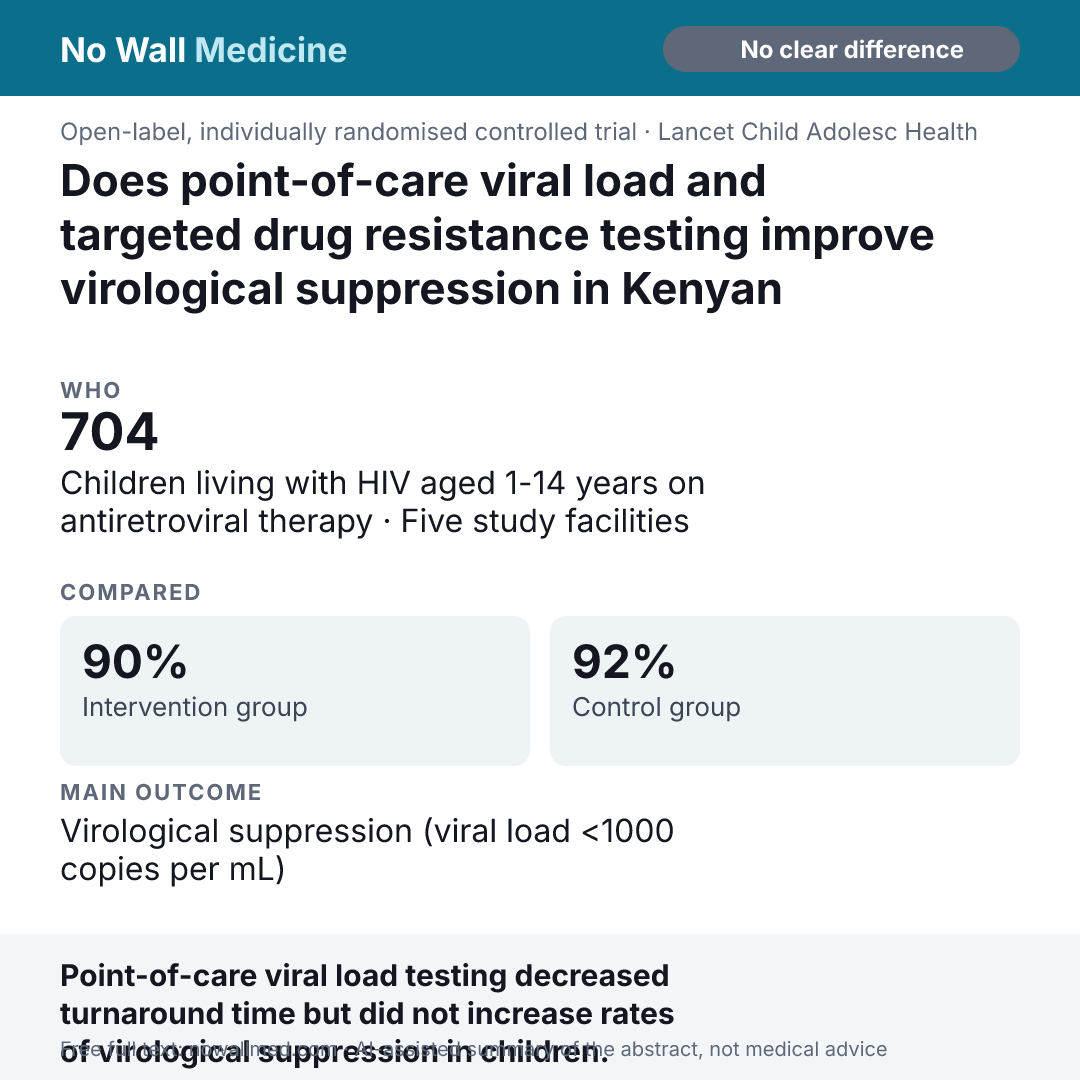
Point-of-care HIV viral load and targeted drug resistance mutation testing versus standard care for Kenyan children on antiretroviral therapy (Opt4Kids): an open-label, randomised controlled trial
Open-label, individually randomised controlled trialNo clear difference
Does point-of-care viral load and targeted drug resistance testing improve virological suppression in Kenyan children?
Who
704
Children living with HIV aged 1-14 years on antiretroviral therapy · Five study facilities in Kenya
Compared
90%Intervention group (283/313)
92%Control group (289/315)
Main outcome
Virological suppression (viral load <1000 copies per mL)
Result: risk ratio 0·99 (95% CI 0·94-1·03)
Bottom line: Point-of-care viral load testing decreased turnaround time but did not increase rates of virological suppression in children.
Funded by: National Institutes of Mental Health and Thrasher Research Fund
Lancet Child Adolesc Health · 2022-08-18 · Save PNG
The association between early-life gut microbiota and childhood respiratory diseases: a systematic review
Systematic reviewMixed results
Is early-life gut microbiota composition associated with childhood respiratory diseases?
Who
Infants aged 0-12 months
Compared
Low alpha diversity and specific bacteria
Childhood respiratory diseases
Main outcome
Childhood respiratory infections, wheezing, or asthma
Bottom line: Low alpha diversity and specific bacteria are associated with childhood respiratory diseases, but results are inconsistent.
Limitation: Insufficient bacterial species characterization, heterogeneous outcome definitions, residual confounding, and small sample sizes.
Lancet Microbe · 2022-08-18 · Save PNG

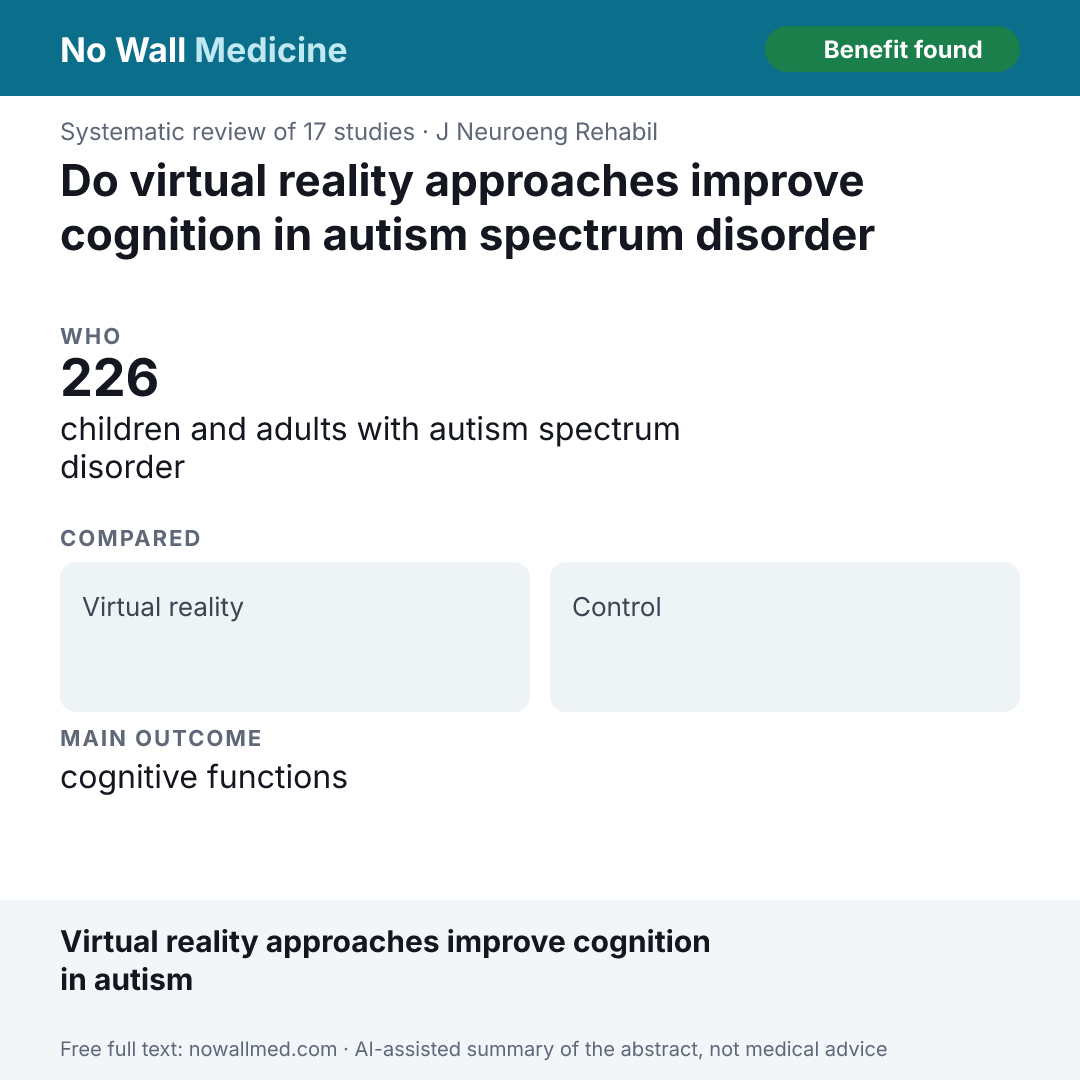
Cognitive rehabilitation in people with autism spectrum disorder: a systematic review of emerging virtual reality-based approaches
Systematic review of 17 studiesBenefit found
Do virtual reality approaches improve cognition in autism spectrum disorder
Who
226
children and adults with autism spectrum disorder
Compared
Virtual reality
Control
Main outcome
cognitive functions
Bottom line: Virtual reality approaches improve cognition in autism
Limitation: cost and device limitations
J Neuroeng Rehabil · 2022-08-18 · Save PNG
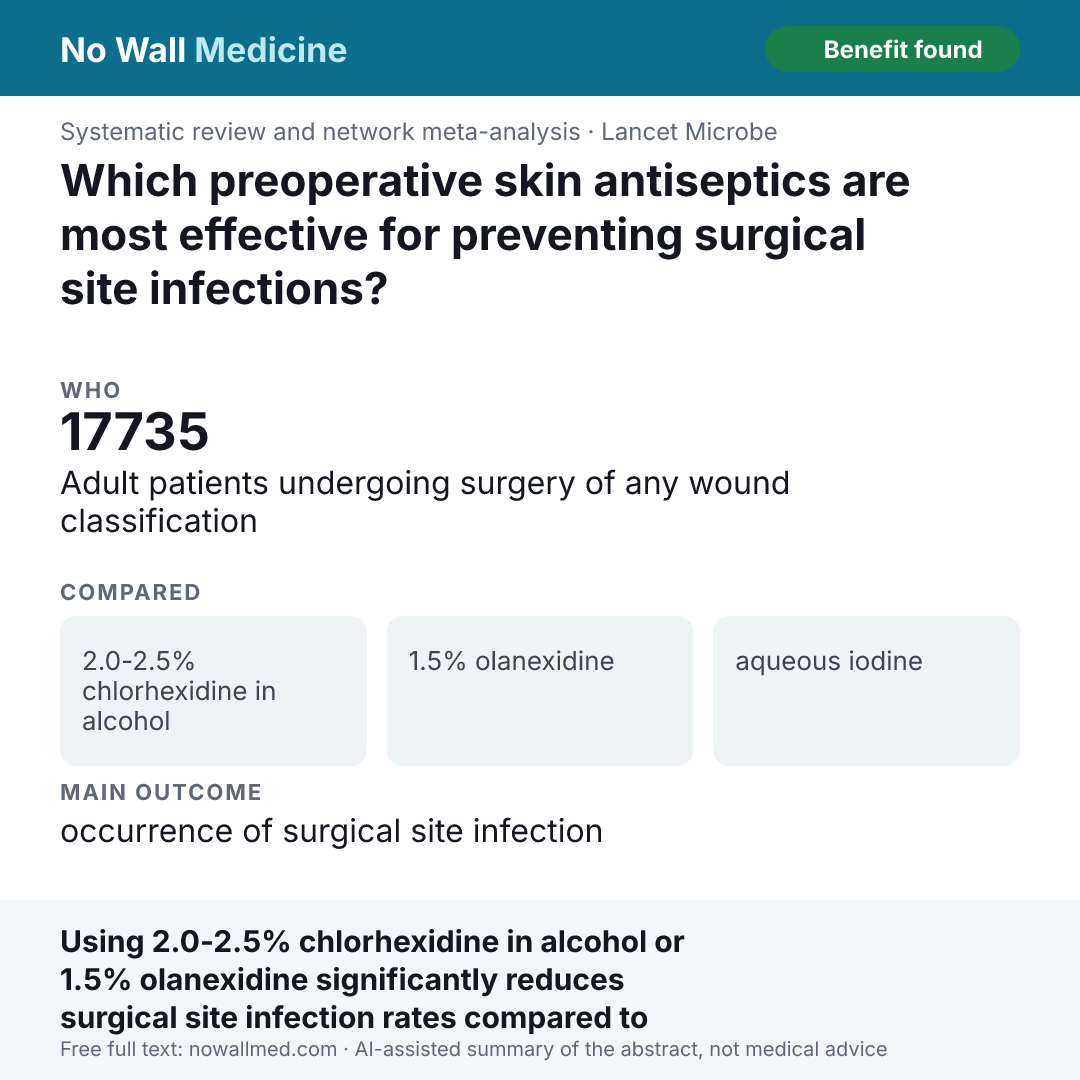
Efficacy of different preoperative skin antiseptics on the incidence of surgical site infections: a systematic review, GRADE assessment, and network meta-analysis
Systematic review and network meta-analysisBenefit found
Which preoperative skin antiseptics are most effective for preventing surgical site infections?
Who
17735
Adult patients undergoing surgery of any wound classification
Compared
2.0-2.5% chlorhexidine in alcohol
1.5% olanexidine
aqueous iodine
Main outcome
occurrence of surgical site infection
Result: relative risk 0.75 (95% CI 0.61-0.92) for chlorhexidine; 0.49 (95% CI 0.26-0.92) for olanexidine
Bottom line: Using 2.0-2.5% chlorhexidine in alcohol or 1.5% olanexidine significantly reduces surgical site infection rates compared to aqueous iodine.
Limitation: The efficacy of olanexidine was established by a single randomised trial.
Funded by: Dutch Association for Quality Funds Medical Specialists
Lancet Microbe · 2022-08-16 · Save PNG
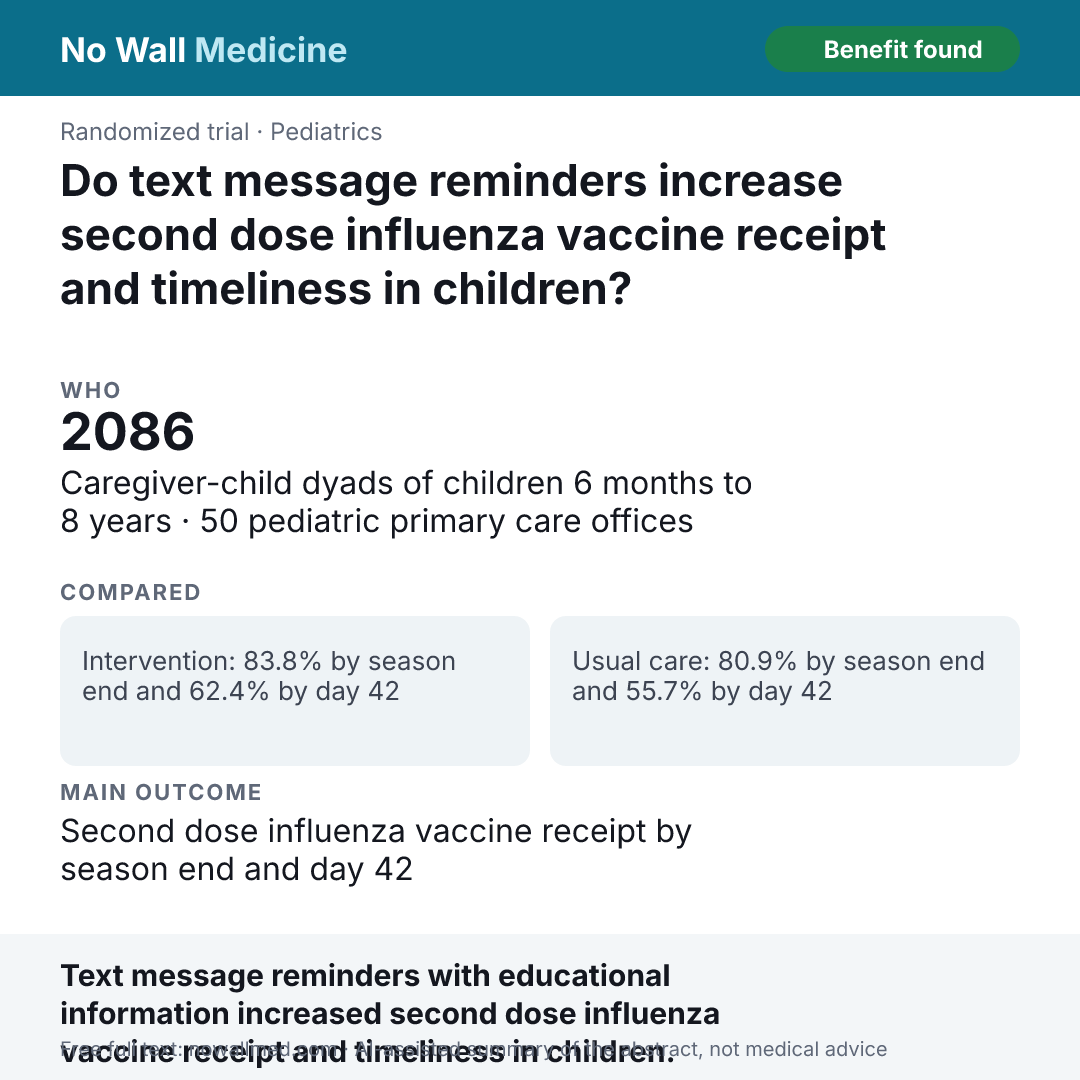
Text Message Reminders for the Second Dose of Influenza Vaccine for Children: An RCT
Randomized trialBenefit found
Do text message reminders increase second dose influenza vaccine receipt and timeliness in children?
Who
2086
Caregiver-child dyads of children 6 months to 8 years · 50 pediatric primary care offices across 24 states
Compared
Intervention: 83.8% by season end and 62.4% by day 42
Usual care: 80.9% by season end and 55.7% by day 42
Main outcome
Second dose influenza vaccine receipt by season end and day 42
Result: adjusted risk difference 3.8% (95% CI 0.1 to 7.5) and 8.3% (95% CI 3.6 to 13.0)
Bottom line: Text message reminders with educational information increased second dose influenza vaccine receipt and timeliness in children.
Pediatrics · 2022-08-15 · Save PNG
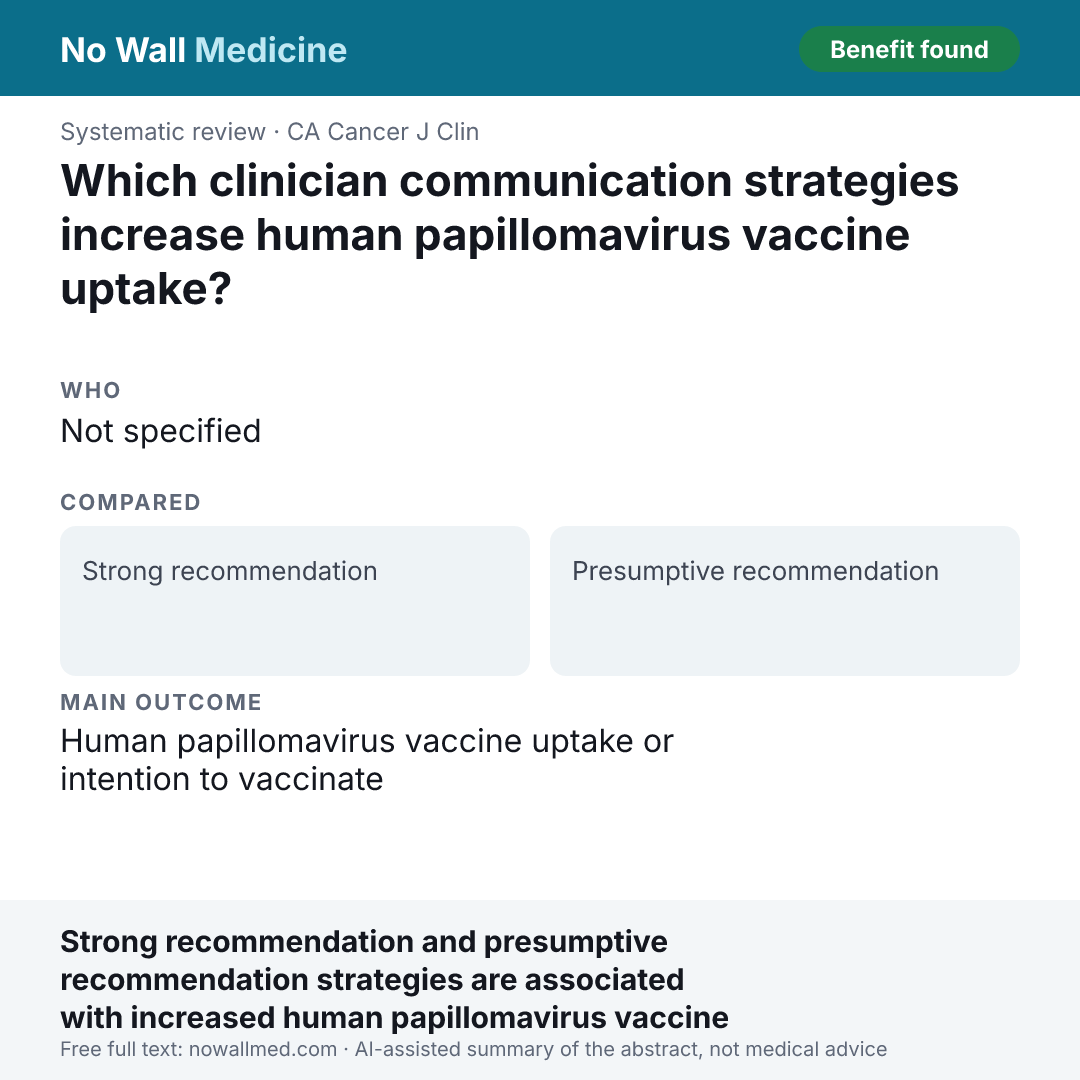
Clinician communication strategies associated with increased uptake of the human papillomavirus (HPV) vaccine: A systematic review
Systematic reviewBenefit found
Which clinician communication strategies increase human papillomavirus vaccine uptake?
Who
Not specified
Compared
Strong recommendation
Presumptive recommendation
Main outcome
Human papillomavirus vaccine uptake or intention to vaccinate
Bottom line: Strong recommendation and presumptive recommendation strategies are associated with increased human papillomavirus vaccine uptake.
Limitation: Determinations about a causal relationship were limited by the small numbers of randomized controlled trials.
CA Cancer J Clin · 2022-08-15 · Save PNG
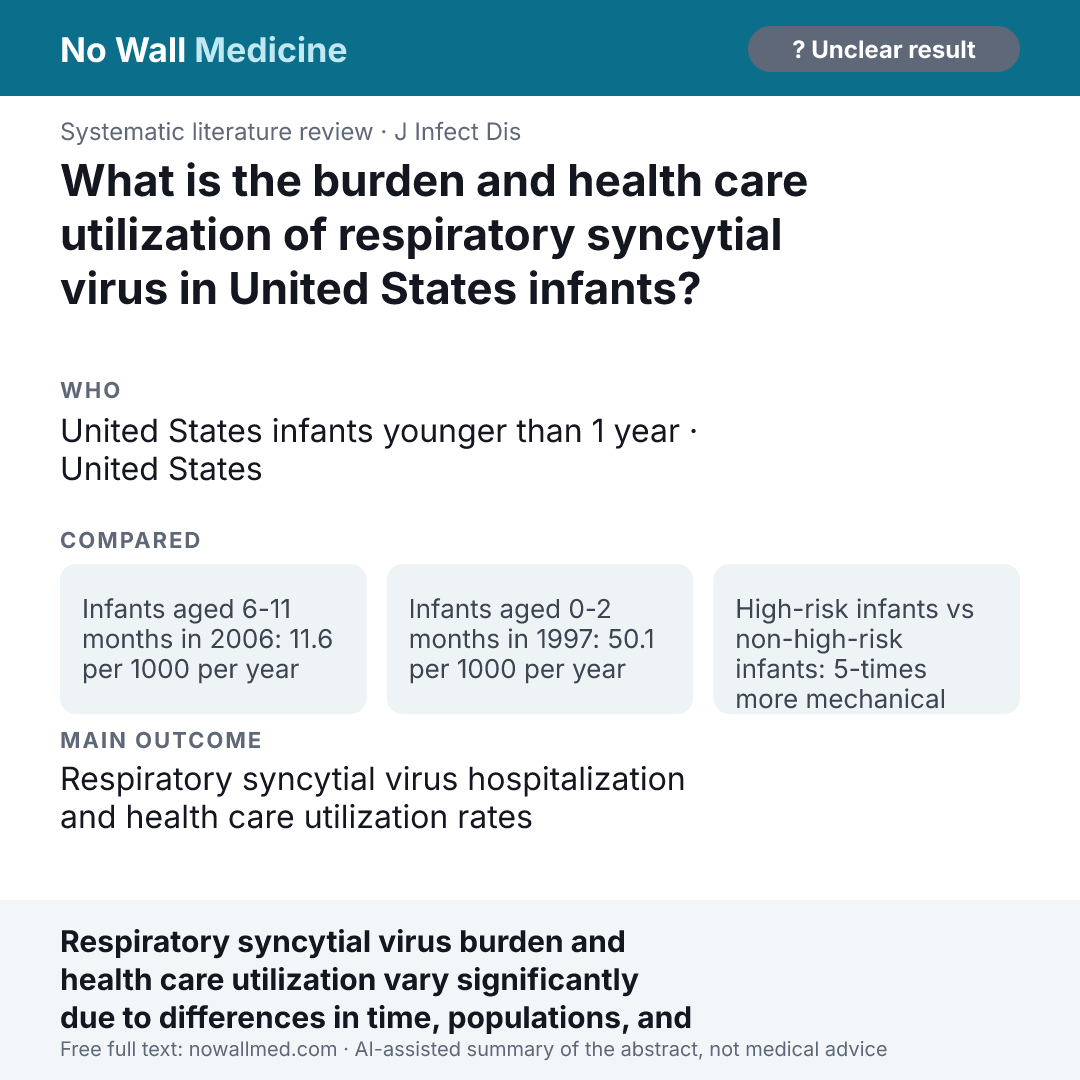
A Systematic Literature Review of the Burden of Respiratory Syncytial Virus and Health Care Utilization Among United States Infants Younger Than 1 Year
Systematic literature reviewUnclear result
What is the burden and health care utilization of respiratory syncytial virus in United States infants?
Who
United States infants younger than 1 year · United States
Compared
Infants aged 6-11 months in 2006: 11.6 per 1000 per year
Infants aged 0-2 months in 1997: 50.1 per 1000 per year
High-risk infants vs non-high-risk infants: 5-times more mechanical ventilation use
Main outcome
Respiratory syncytial virus hospitalization and health care utilization rates
Bottom line: Respiratory syncytial virus burden and health care utilization vary significantly due to differences in time, populations, and locations.
J Infect Dis · 2022-08-15 · Save PNG
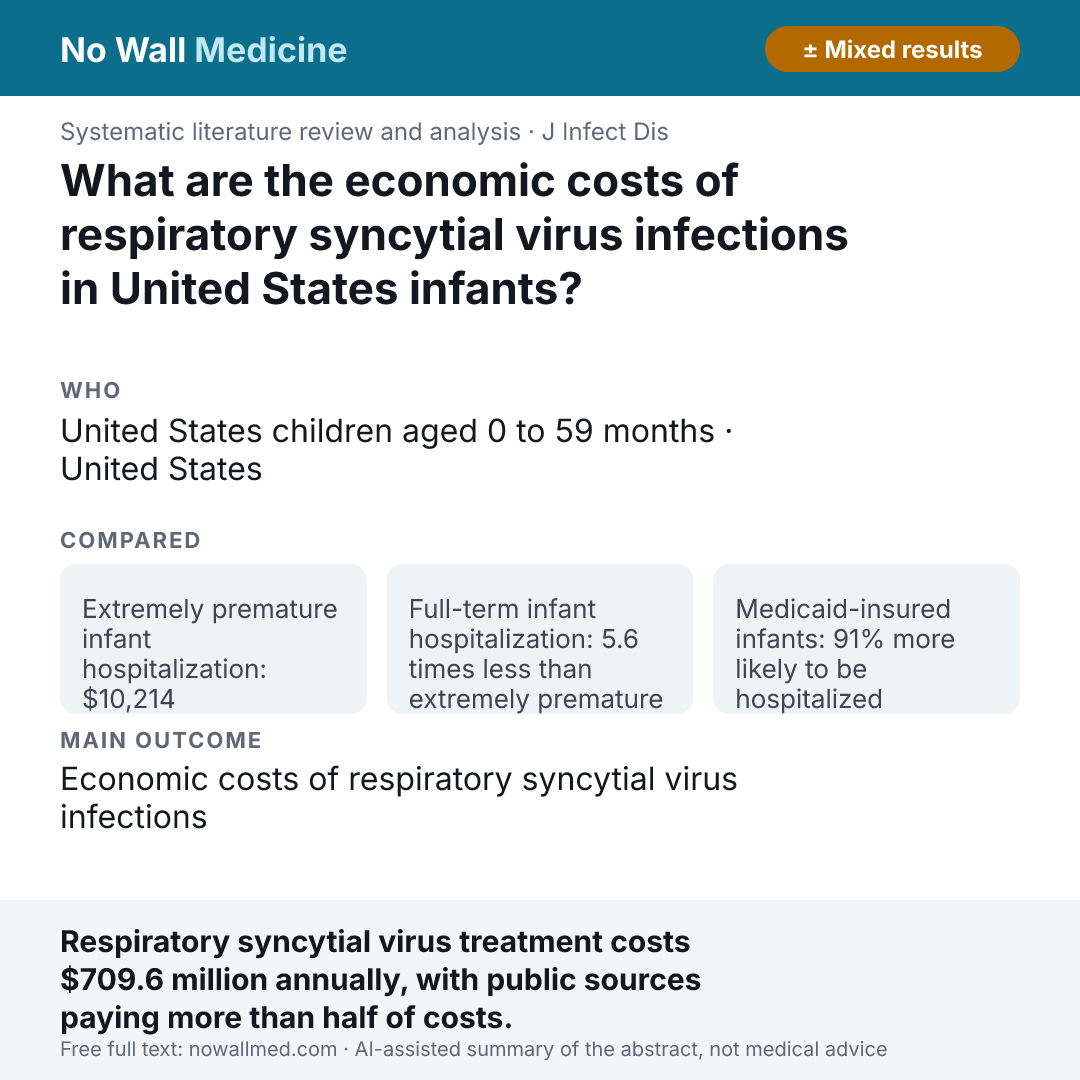
Cost of Respiratory Syncytial Virus Infections in US Infants: Systematic Literature Review and Analysis
Systematic literature review and analysisMixed results
What are the economic costs of respiratory syncytial virus infections in United States infants?
Who
United States children aged 0 to 59 months · United States
Compared
Extremely premature infant hospitalization: $10,214
Full-term infant hospitalization: 5.6 times less than extremely premature
Medicaid-insured infants: 91% more likely to be hospitalized
Main outcome
Economic costs of respiratory syncytial virus infections
Bottom line: Respiratory syncytial virus treatment costs $709.6 million annually, with public sources paying more than half of costs.
J Infect Dis · 2022-08-15 · Save PNG
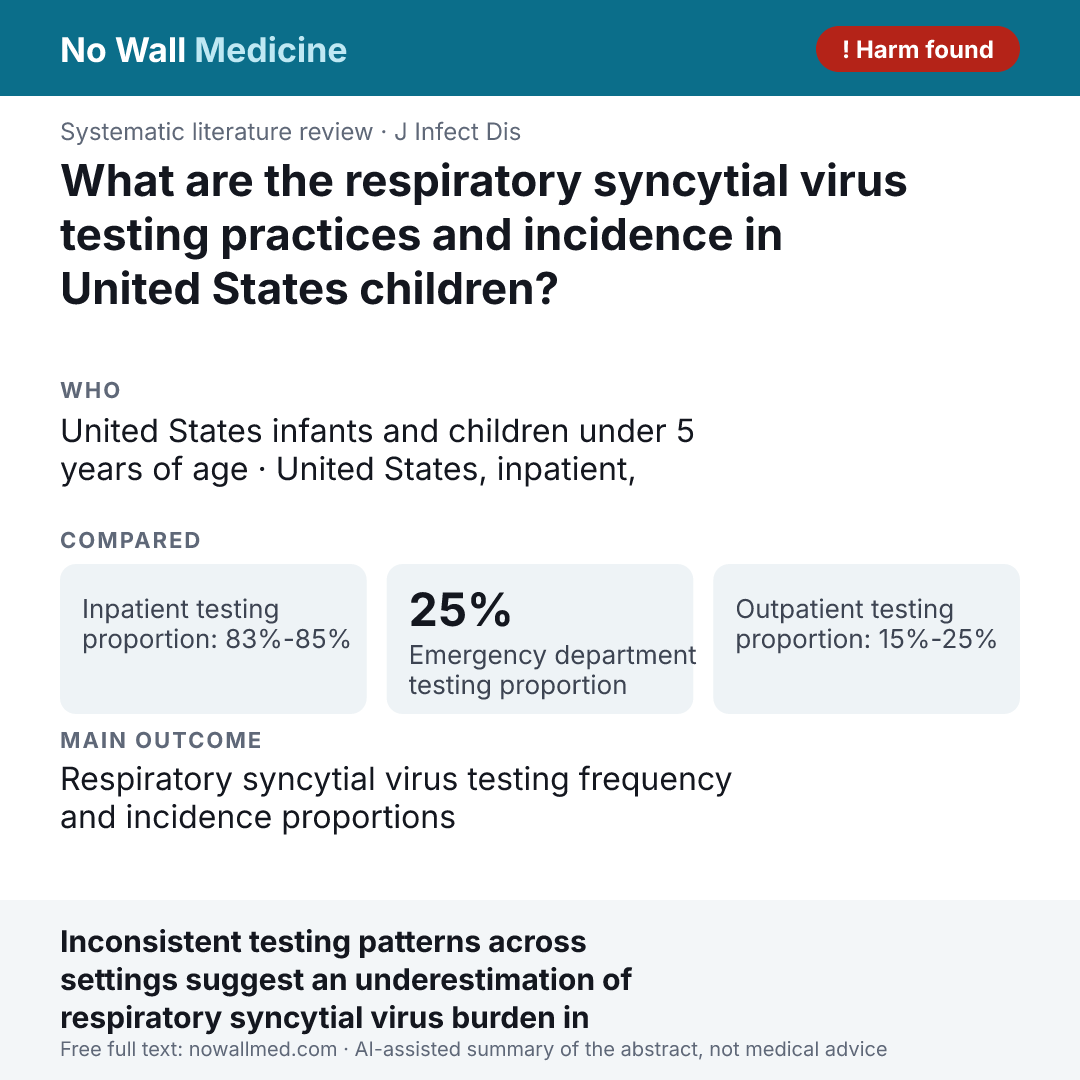
Systematic Literature Review of Respiratory Syncytial Virus Laboratory Testing Practices and Incidence in United States Infants and Children <5 Years of Age
Systematic literature reviewHarm found
What are the respiratory syncytial virus testing practices and incidence in United States children?
Who
United States infants and children under 5 years of age · United States, inpatient, emergency department, outpatient, and urgent care
Compared
Inpatient testing proportion: 83%-85%
25%Emergency department testing proportion
Outpatient testing proportion: 15%-25%
Main outcome
Respiratory syncytial virus testing frequency and incidence proportions
Bottom line: Inconsistent testing patterns across settings suggest an underestimation of respiratory syncytial virus burden in children.
J Infect Dis · 2022-08-15 · Save PNG
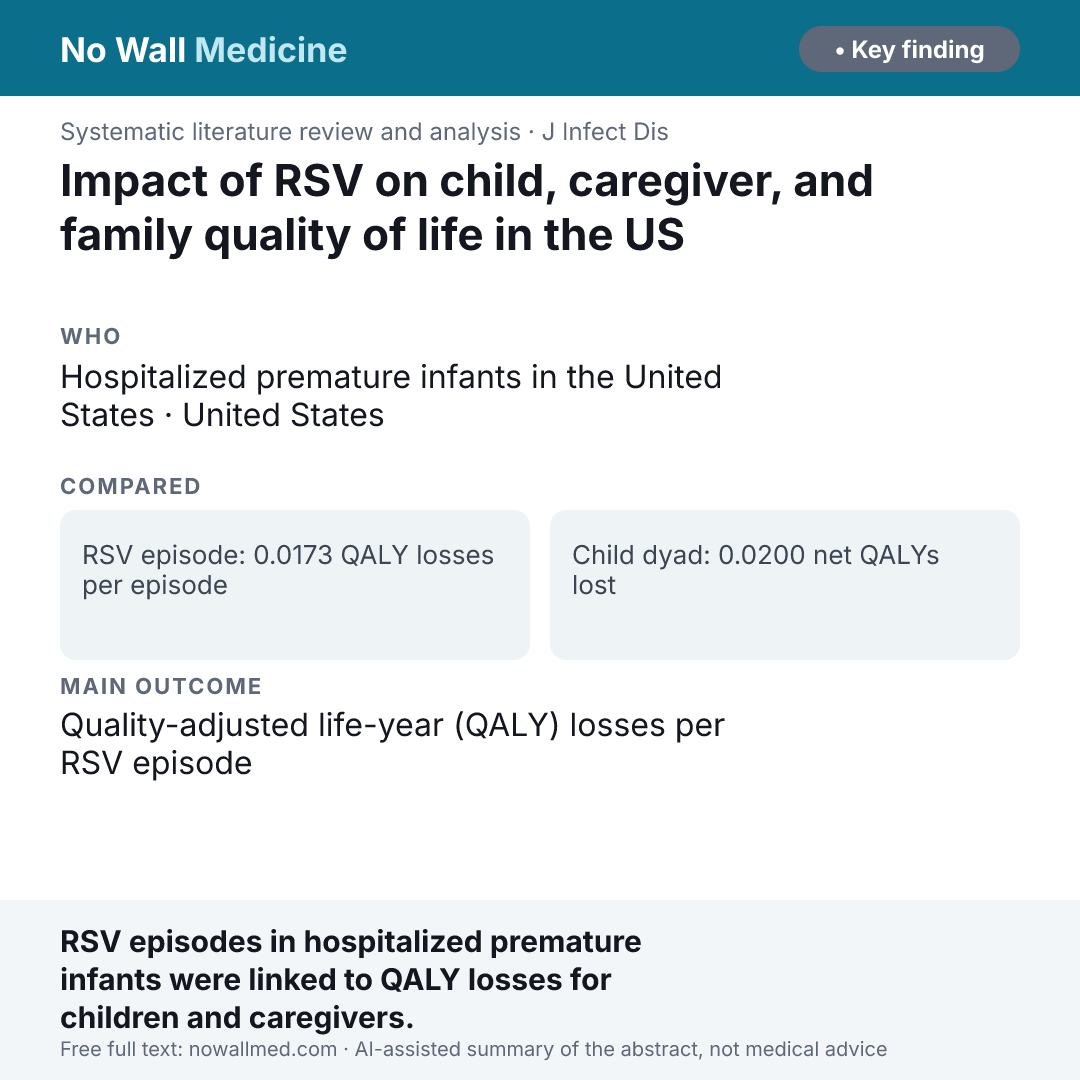
Impact of Respiratory Syncytial Virus on Child, Caregiver, and Family Quality of Life in the United States: Systematic Literature Review and Analysis
Systematic literature review and analysisKey finding
Impact of RSV on child, caregiver, and family quality of life in the US
Who
Hospitalized premature infants in the United States · United States
Compared
RSV episode: 0.0173 QALY losses per episode
Child dyad: 0.0200 net QALYs lost
Main outcome
Quality-adjusted life-year (QALY) losses per RSV episode
Bottom line: RSV episodes in hospitalized premature infants were linked to QALY losses for children and caregivers.
J Infect Dis · 2022-08-15 · Save PNG
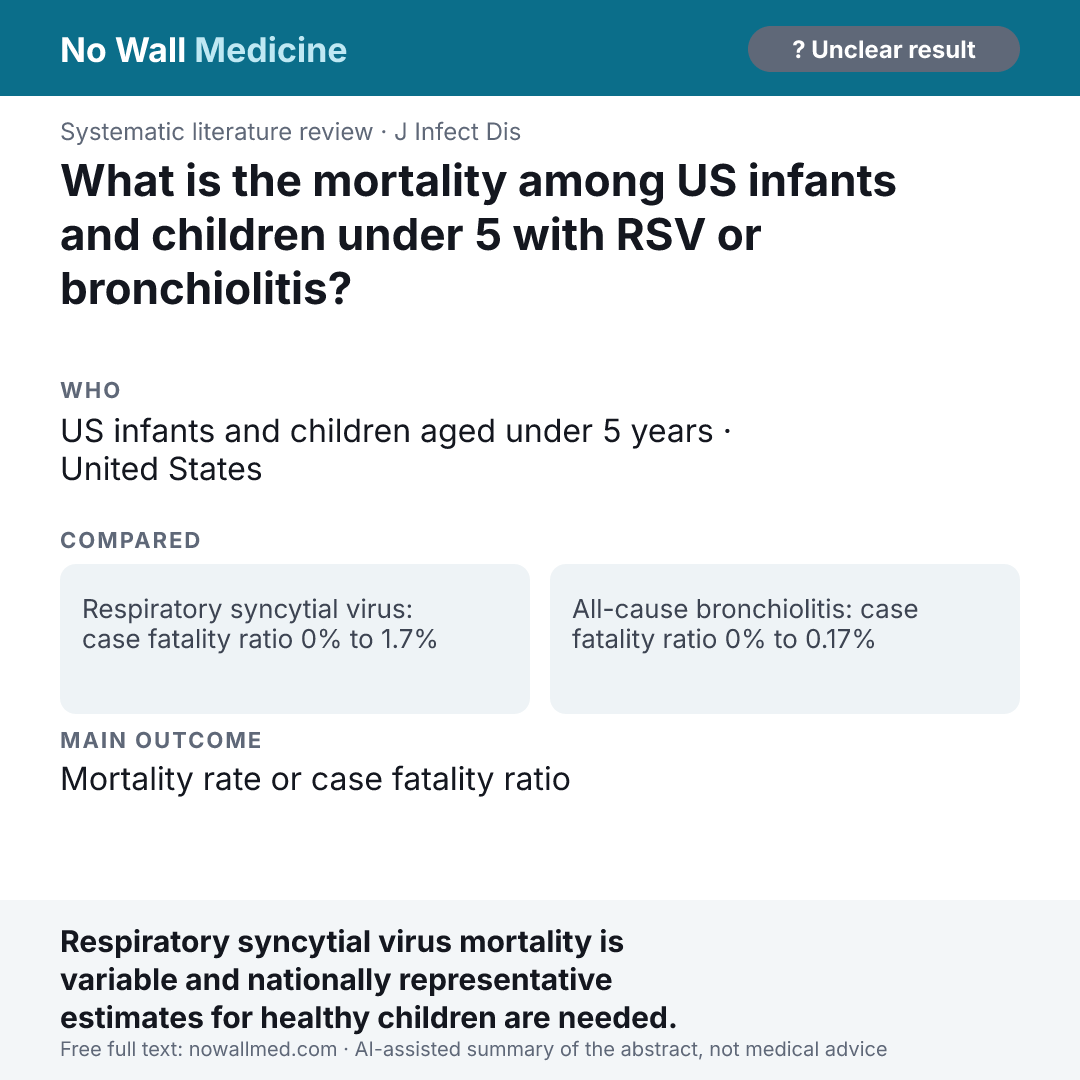
Mortality Among US Infants and Children Under 5 Years of Age with Respiratory Syncytial Virus and Bronchiolitis: A Systematic Literature Review
Systematic literature reviewUnclear result
What is the mortality among US infants and children under 5 with RSV or bronchiolitis?
Who
US infants and children aged under 5 years · United States
Compared
Respiratory syncytial virus: case fatality ratio 0% to 1.7%
All-cause bronchiolitis: case fatality ratio 0% to 0.17%
Main outcome
Mortality rate or case fatality ratio
Bottom line: Respiratory syncytial virus mortality is variable and nationally representative estimates for healthy children are needed.
Limitation: Definitions varied across studies and no study reported systematic testing for respiratory syncytial virus.
J Infect Dis · 2022-08-15 · Save PNG
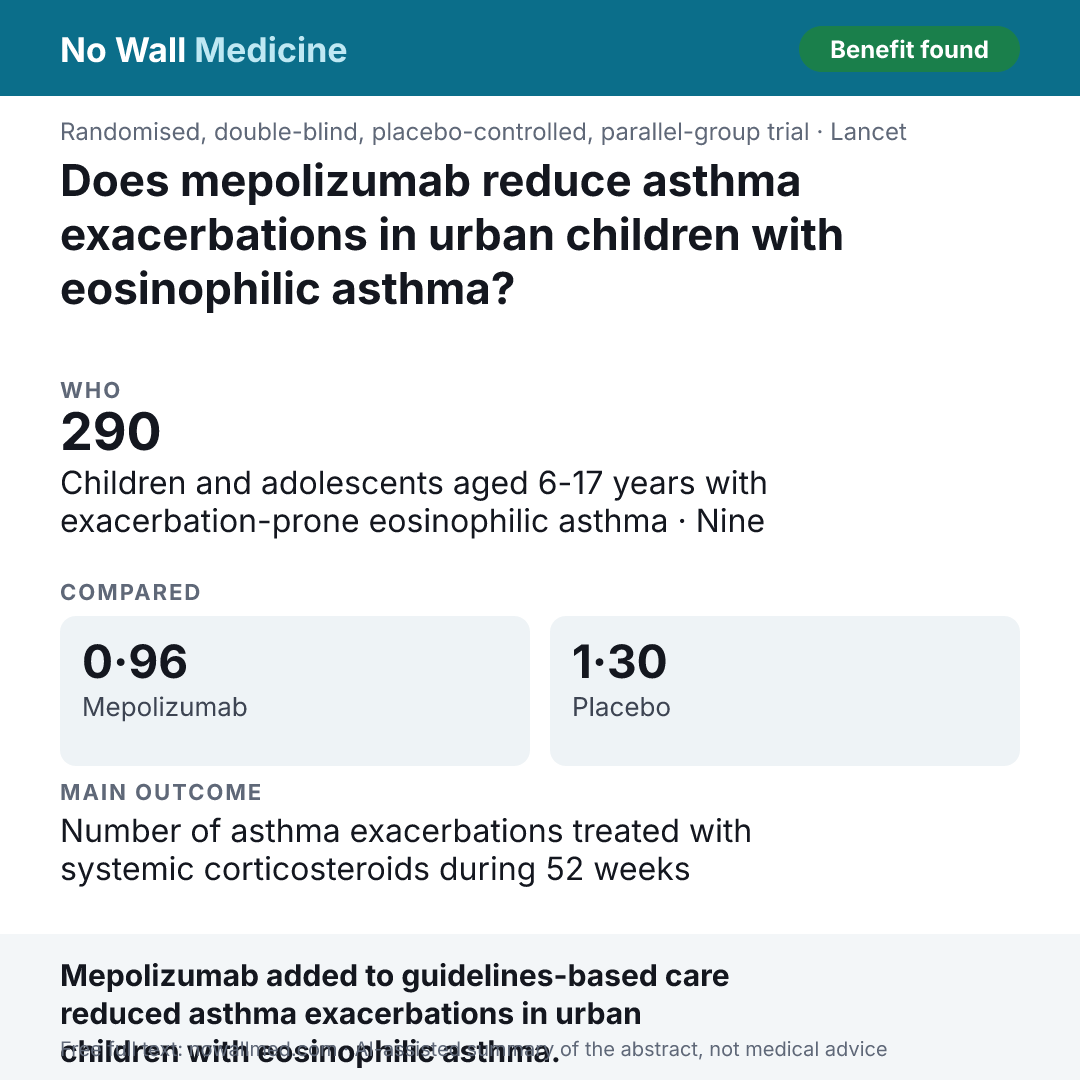
Mepolizumab for urban children with exacerbation-prone eosinophilic asthma in the USA (MUPPITS-2): a randomised, double-blind, placebo-controlled, parallel-group trial
Randomised, double-blind, placebo-controlled, parallel-group trialBenefit found
Does mepolizumab reduce asthma exacerbations in urban children with eosinophilic asthma?
Who
290
Children and adolescents aged 6-17 years with exacerbation-prone eosinophilic asthma · Nine urban medical centres in the USA
Compared
0·96Mepolizumab (95% CI 0·78-1·17)
1·30Placebo (1·08-1·57)
Main outcome
Number of asthma exacerbations treated with systemic corticosteroids during 52 weeks
Result: rate ratio 0·73 (95% CI 0·56-0·96)
Bottom line: Mepolizumab added to guidelines-based care reduced asthma exacerbations in urban children with eosinophilic asthma.
Funded by: US National Institute of Allergy and Infectious Diseases and GlaxoSmithKline
Lancet · 2022-08-14 · Save PNG
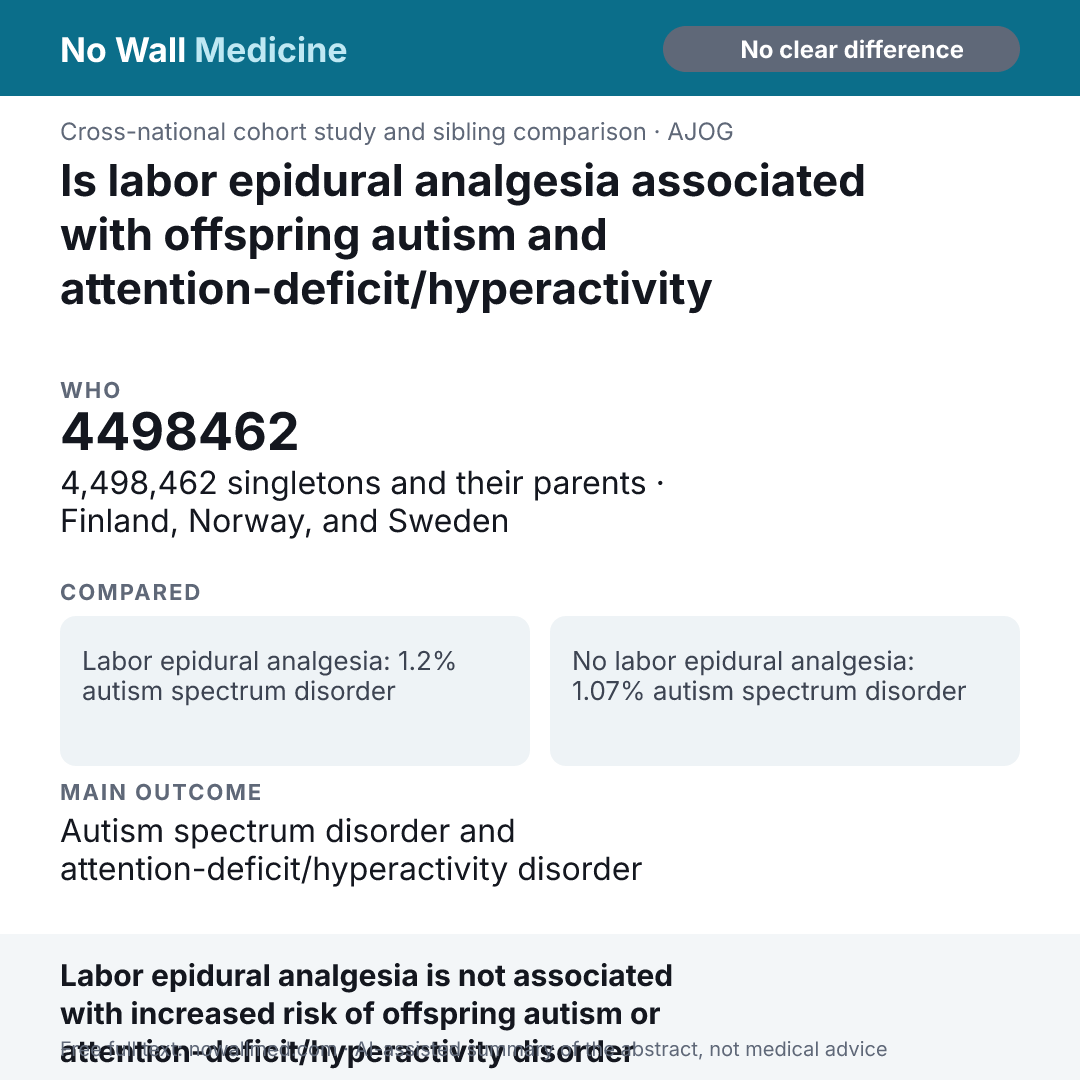
Labor epidural analgesia and subsequent risk of offspring autism spectrum disorder and attention-deficit/hyperactivity disorder: a cross-national cohort study of 4.5 million individuals and their siblings
Cross-national cohort study and sibling comparisonNo clear difference
Is labor epidural analgesia associated with offspring autism and attention-deficit/hyperactivity disorder?
Who
4498462
4,498,462 singletons and their parents · Finland, Norway, and Sweden
Compared
Labor epidural analgesia: 1.2% autism spectrum disorder
No labor epidural analgesia: 1.07% autism spectrum disorder
Main outcome
Autism spectrum disorder and attention-deficit/hyperactivity disorder
Result: adjusted hazard ratio 0.98 (95% confidence interval, 0.93-1.03) for autism spectrum disorder
Bottom line: Labor epidural analgesia is not associated with increased risk of offspring autism or attention-deficit/hyperactivity disorder when accounting for familial confounding.
AJOG · 2022-08-13 · Save PNG
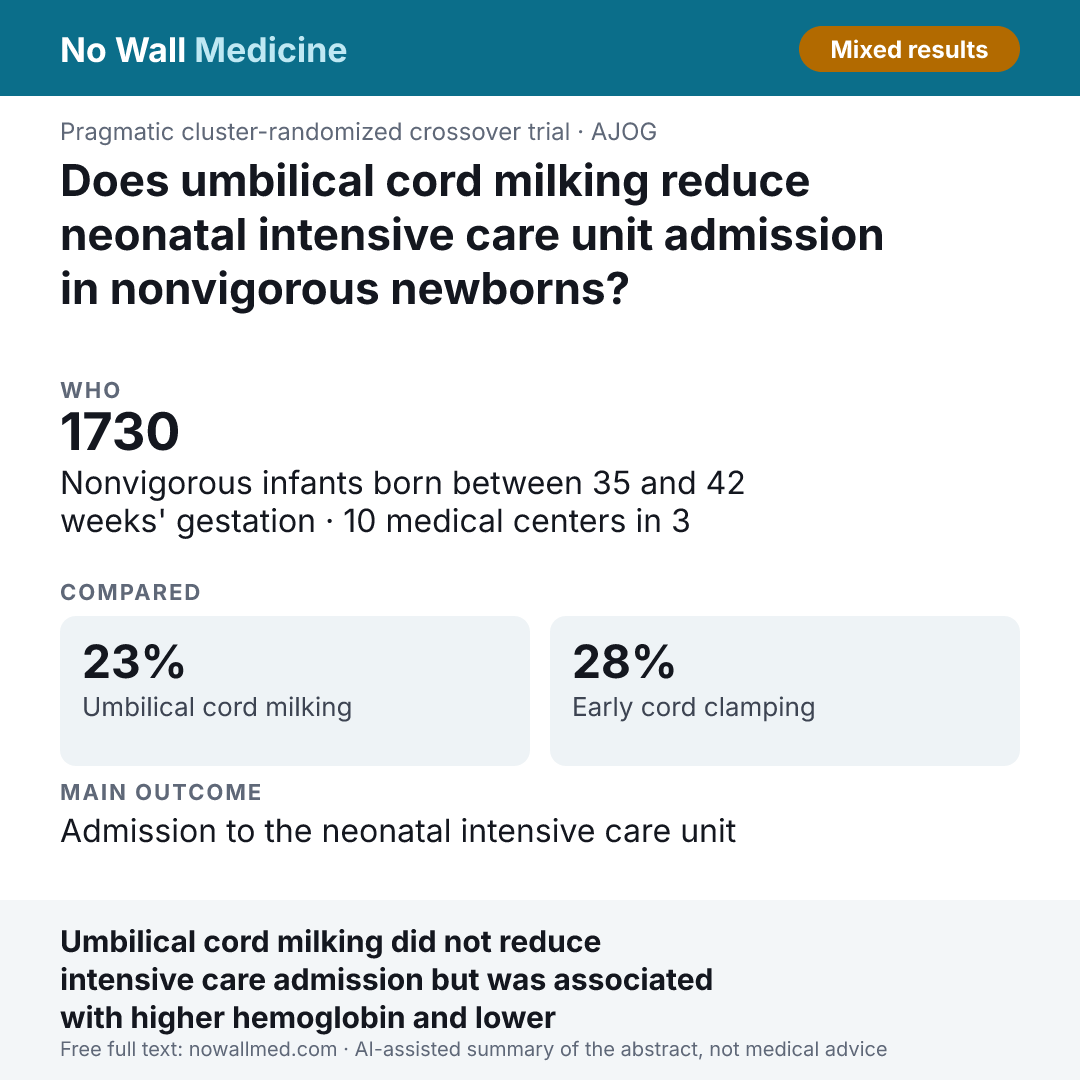
Umbilical cord milking in nonvigorous infants: a cluster-randomized crossover trial
Pragmatic cluster-randomized crossover trialMixed results
Does umbilical cord milking reduce neonatal intensive care unit admission in nonvigorous newborns?
Who
1730
Nonvigorous infants born between 35 and 42 weeks' gestation · 10 medical centers in 3 countries
Compared
23%Umbilical cord milking
28%Early cord clamping
Main outcome
Admission to the neonatal intensive care unit
Result: modeled odds ratio 0.69 (95% confidence interval 0.41-1.14)
Bottom line: Umbilical cord milking did not reduce intensive care admission but was associated with higher hemoglobin and lower hypoxic-ischemic encephalopathy.
AJOG · 2022-08-13 · Save PNG
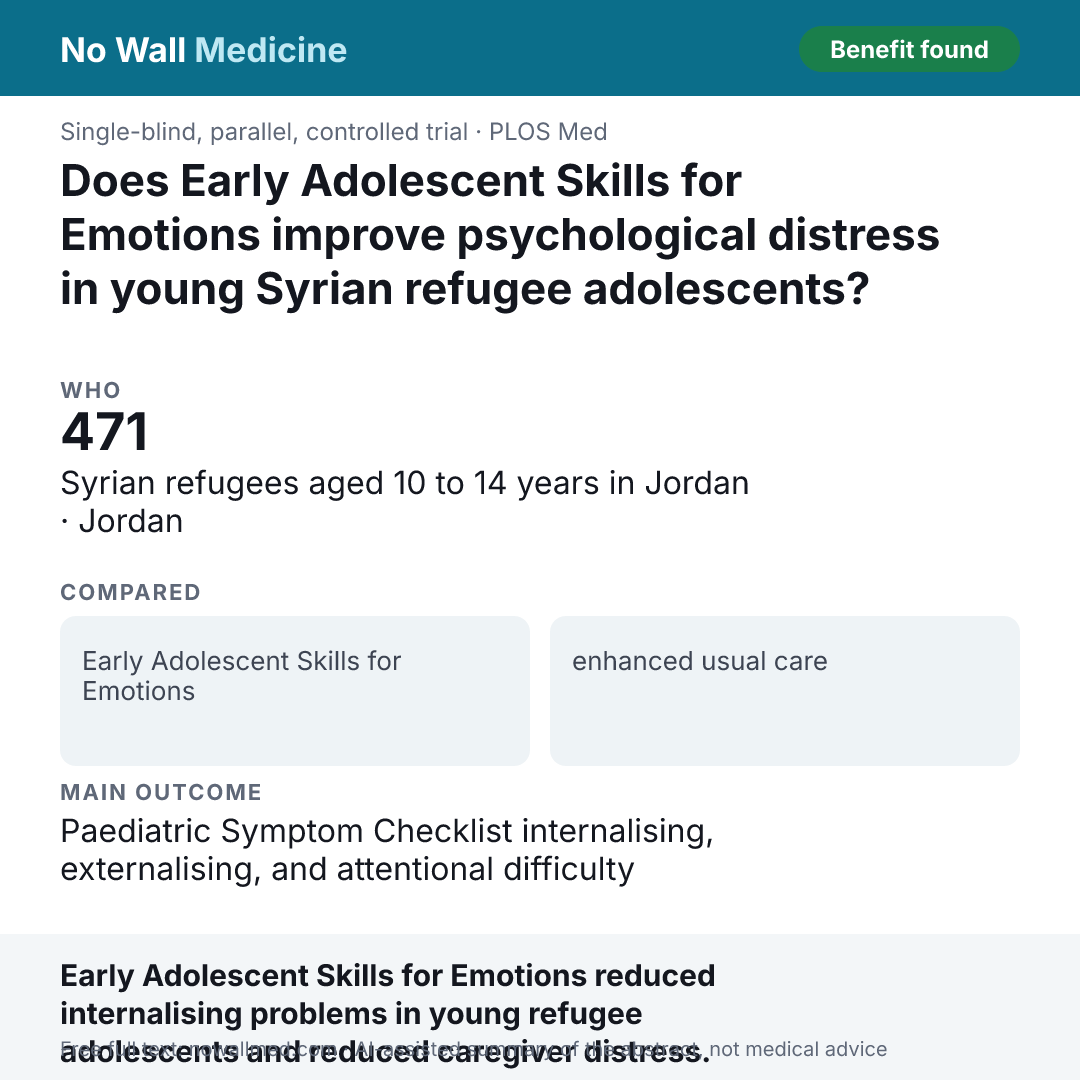
Effectiveness of a brief group behavioural intervention on psychological distress in young adolescent Syrian refugees: A randomised controlled trial
Single-blind, parallel, controlled trialBenefit found
Does Early Adolescent Skills for Emotions improve psychological distress in young Syrian refugee adolescents?
Who
471
Syrian refugees aged 10 to 14 years in Jordan · Jordan
Compared
Early Adolescent Skills for Emotions
enhanced usual care
Main outcome
Paediatric Symptom Checklist internalising, externalising, and attentional difficulty scales
Result: estimated mean difference 0.69, 95% CI 0.19 to 1.19
Bottom line: Early Adolescent Skills for Emotions reduced internalising problems in young refugee adolescents and reduced caregiver distress.
Limitation: enhanced usual care was not matched to intervention in terms of facilitator attention or group involvement
PLOS Med · 2022-08-12 · Save PNG
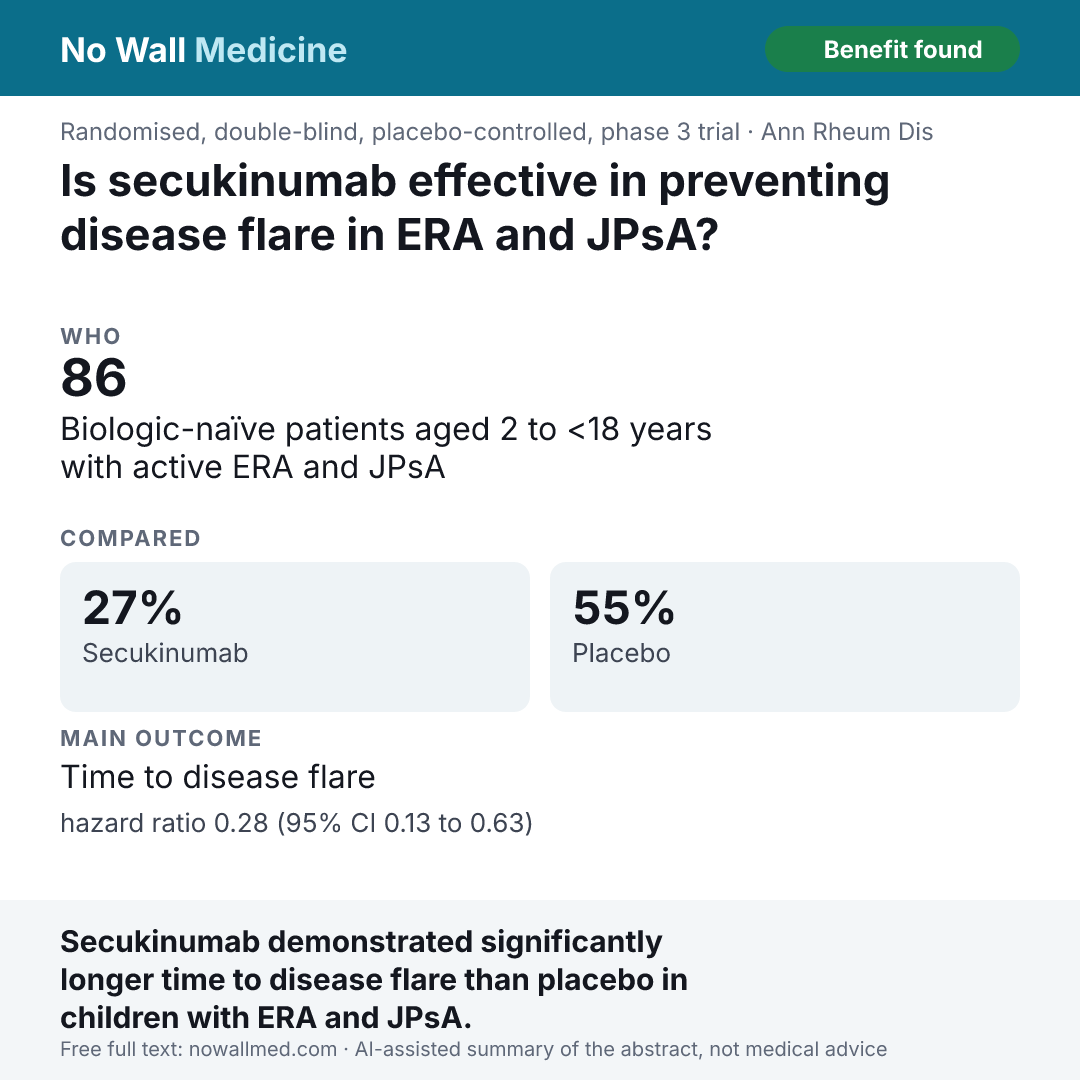
Secukinumab in enthesitis-related arthritis and juvenile psoriatic arthritis: a randomised, double-blind, placebo-controlled, treatment withdrawal, phase 3 trial
Randomised, double-blind, placebo-controlled, phase 3 trialBenefit found
Is secukinumab effective in preventing disease flare in ERA and JPsA?
Who
86
Biologic-naïve patients aged 2 to <18 years with active ERA and JPsA
Compared
27%Secukinumab
55%Placebo
Main outcome
Time to disease flare
Result: hazard ratio 0.28 (95% CI 0.13 to 0.63)
Bottom line: Secukinumab demonstrated significantly longer time to disease flare than placebo in children with ERA and JPsA.
Ann Rheum Dis · 2022-08-12 · Save PNG
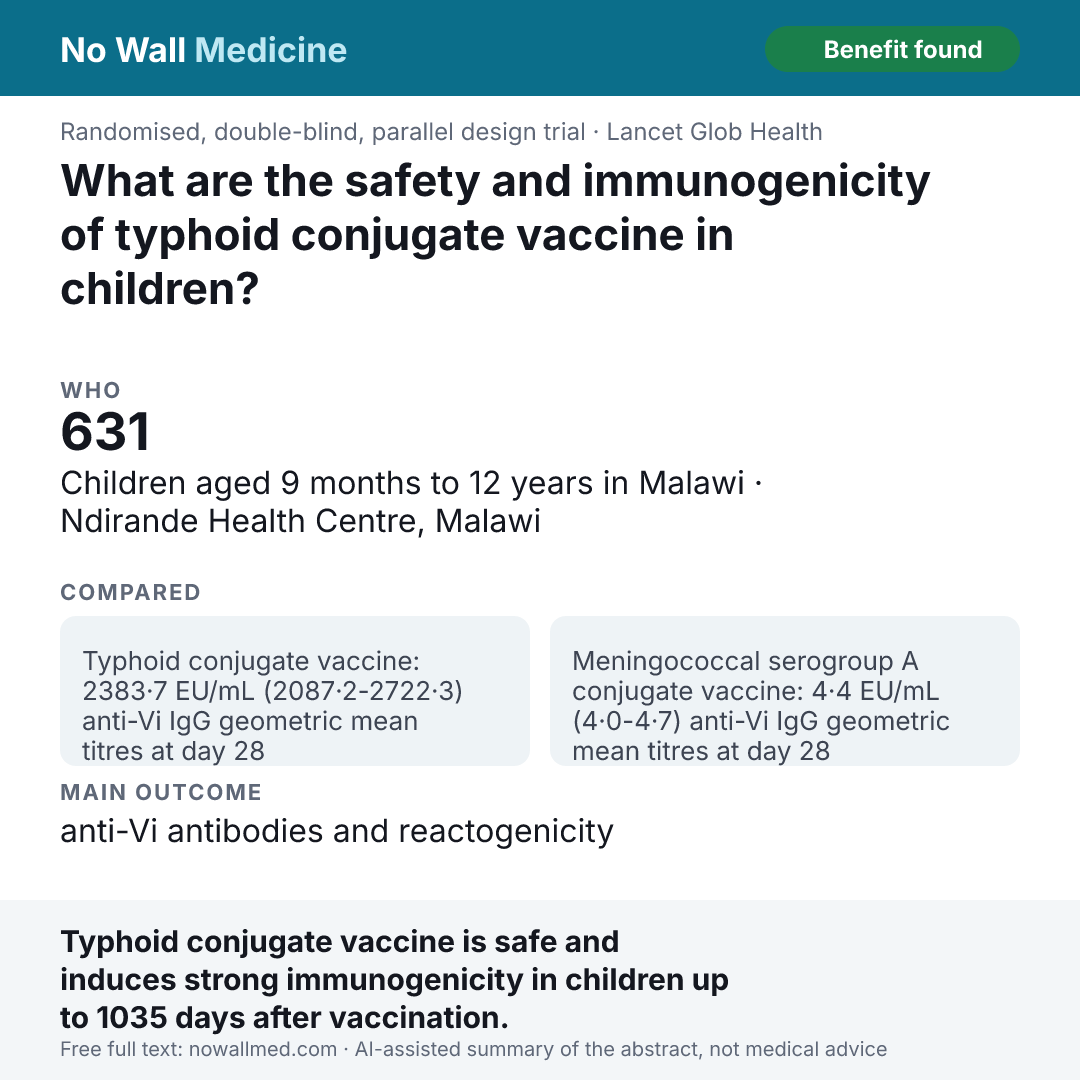
Safety and immunogenicity of a typhoid conjugate vaccine among children aged 9 months to 12 years in Malawi: a nested substudy of a double-blind, randomised controlled trial
Randomised, double-blind, parallel design trialBenefit found
What are the safety and immunogenicity of typhoid conjugate vaccine in children?
Who
631
Children aged 9 months to 12 years in Malawi · Ndirande Health Centre, Malawi
Compared
Typhoid conjugate vaccine: 2383·7 EU/mL (2087·2-2722·3) anti-Vi IgG geometric mean titres at day 28
Meningococcal serogroup A conjugate vaccine: 4·4 EU/mL (4·0-4·7) anti-Vi IgG geometric mean titres at day 28
Main outcome
anti-Vi antibodies and reactogenicity
Bottom line: Typhoid conjugate vaccine is safe and induces strong immunogenicity in children up to 1035 days after vaccination.
Funded by: Bill & Melinda Gates Foundation
Lancet Glob Health · 2022-08-12 · Save PNG
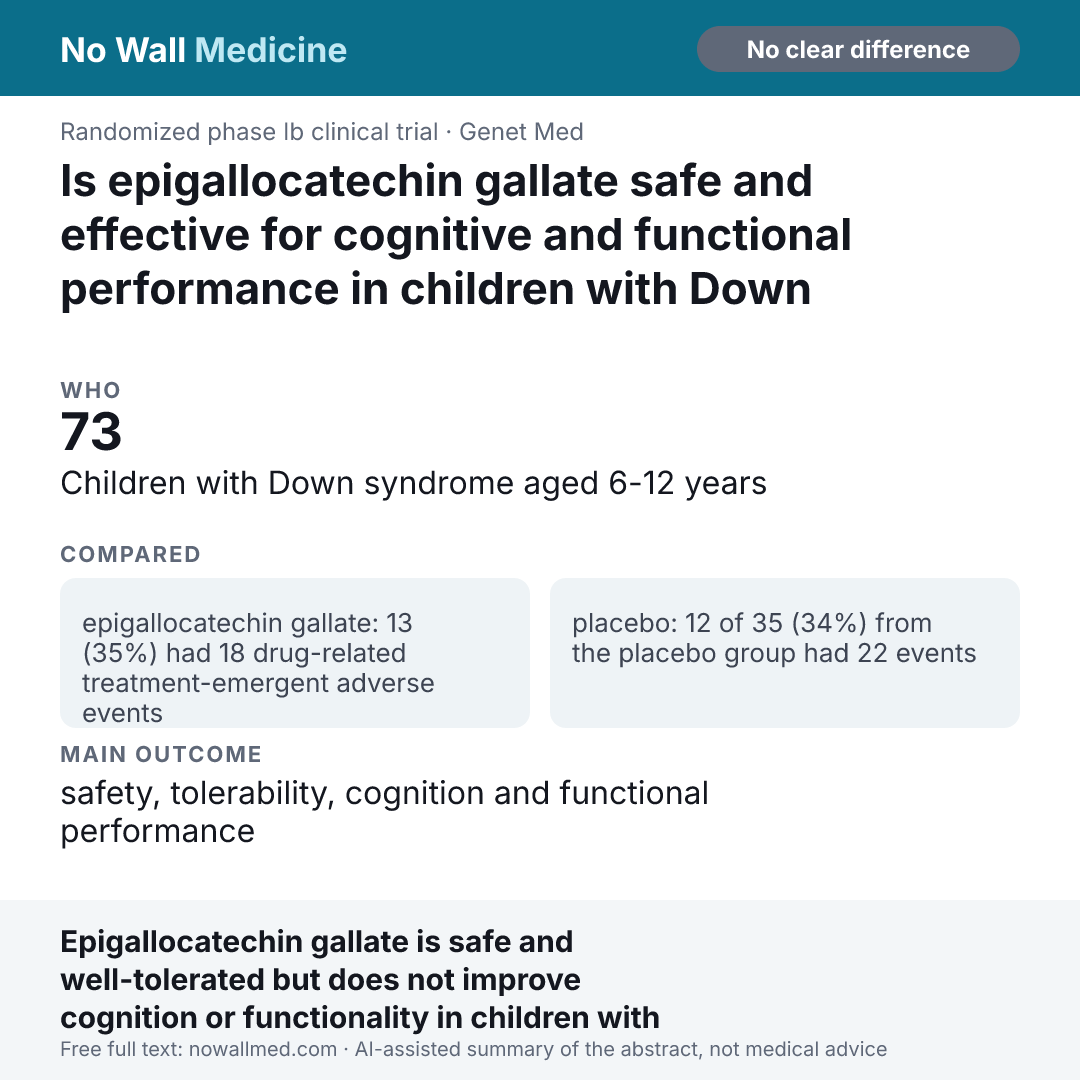
Safety and preliminary efficacy on cognitive performance and adaptive functionality of epigallocatechin gallate (EGCG) in children with Down syndrome. A randomized phase Ib clinical trial (PERSEUS study)
Randomized phase Ib clinical trialNo clear difference
Is epigallocatechin gallate safe and effective for cognitive and functional performance in children with Down syndrome?
Who
73
Children with Down syndrome aged 6-12 years
Compared
epigallocatechin gallate: 13 (35%) had 18 drug-related treatment-emergent adverse events
placebo: 12 of 35 (34%) from the placebo group had 22 events
Main outcome
safety, tolerability, cognition and functional performance
Bottom line: Epigallocatechin gallate is safe and well-tolerated but does not improve cognition or functionality in children with Down syndrome.
Genet Med · 2022-08-11 · Save PNG
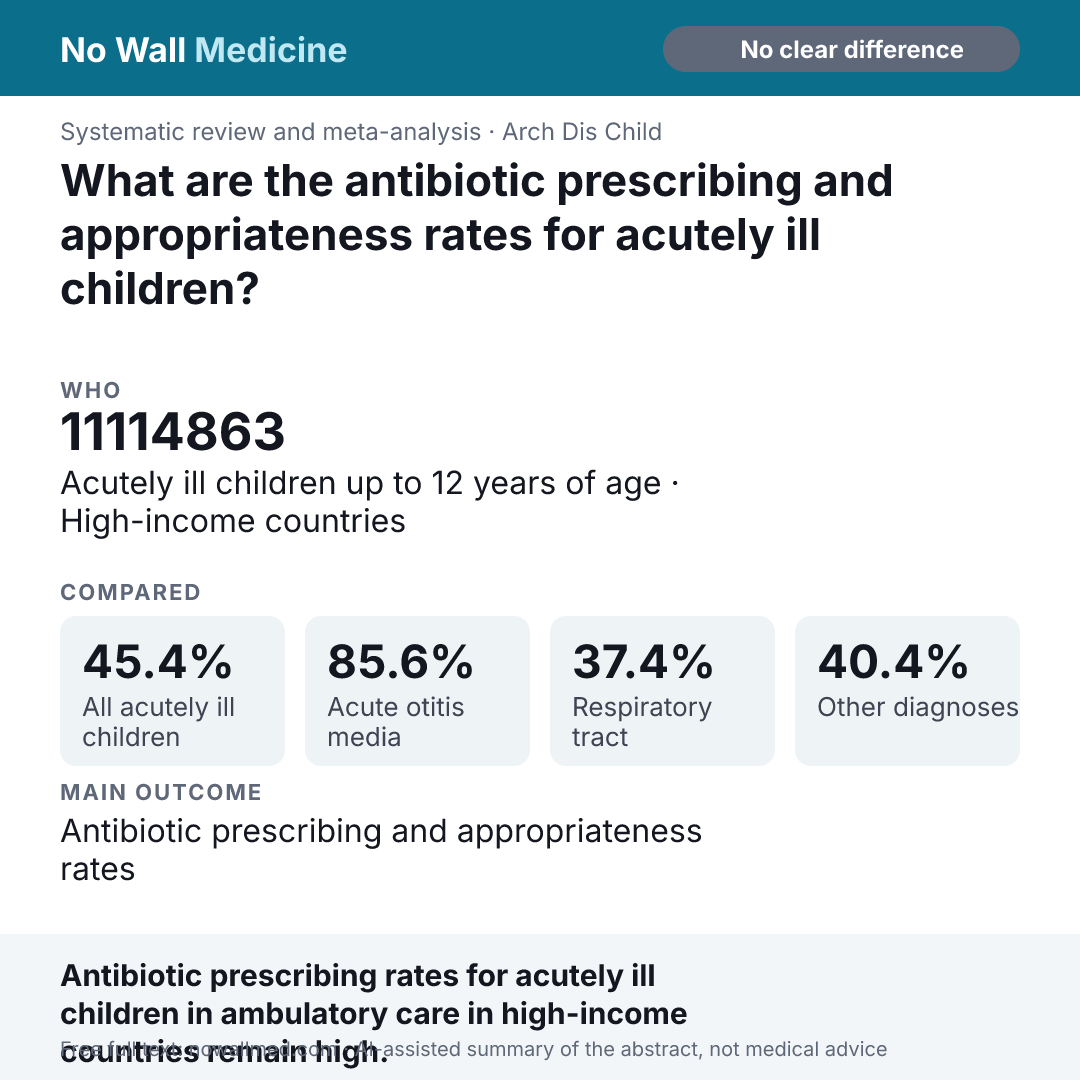
Antibiotic use in ambulatory care for acutely ill children in high-income countries: a systematic review and meta-analysis
Systematic review and meta-analysisNo clear difference
What are the antibiotic prescribing and appropriateness rates for acutely ill children?
Who
11114863
Acutely ill children up to 12 years of age · High-income countries
Compared
45.4%All acutely ill children (95% CI 38.2% to 52.8%)
85.6%Acute otitis media (95% CI 73.3% to 92.9%)
37.4%Respiratory tract infections (95% CI 30.9% to 44.3%)
40.4%Other diagnoses (95% CI 29.9% to 51.9%)
Main outcome
Antibiotic prescribing and appropriateness rates
Result: 68.5% (95% CI 55.8% to 78.9%) appropriateness rate
Bottom line: Antibiotic prescribing rates for acutely ill children in ambulatory care in high-income countries remain high.
Arch Dis Child · 2022-08-10 · Save PNG
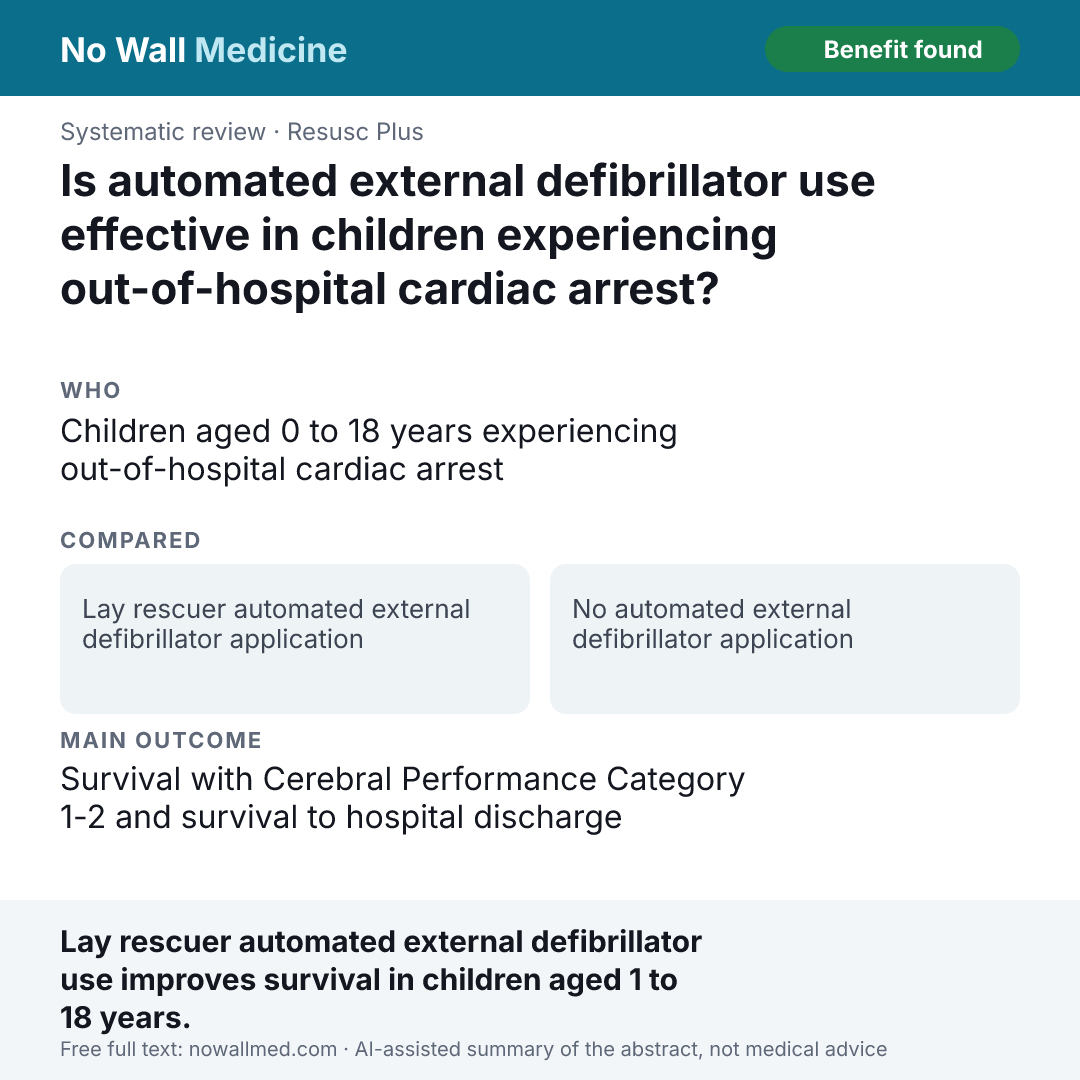
Lay rescuer use of automated external defibrillators in infants, children and adolescents: A systematic review
Systematic reviewBenefit found
Is automated external defibrillator use effective in children experiencing out-of-hospital cardiac arrest?
Who
Children aged 0 to 18 years experiencing out-of-hospital cardiac arrest
Compared
Lay rescuer automated external defibrillator application
No automated external defibrillator application
Main outcome
Survival with Cerebral Performance Category 1-2 and survival to hospital discharge
Result: RR 3.04 (95% CI 2.18 to 4.25) for survival to hospital discharge
Bottom line: Lay rescuer automated external defibrillator use improves survival in children aged 1 to 18 years.
Limitation: There are limited data for children under 1 year of age.
Resusc Plus · 2022-08-10 · Save PNG