Visual abstracts
New randomized trials and meta-analyses from leading journals at a glance: who was studied, what was compared, and what was found. Every paper is free to read in full.
All specialtiesCardiology 834Oncology 758Gastroenterology & Hepatology 306Infectious Disease 626Neurology 348Psychiatry & Mental Health 430Pulmonology 363Critical Care 240Endocrinology & Diabetes 480Pediatrics 533Surgery 317Orthopedics & Sports Medicine 160Neurosurgery 80Cardiothoracic & Vascular Surgery 86Plastic & Reconstructive Surgery 107Nephrology 197Rheumatology 108Hematology 181Dermatology 74Ophthalmology 97Obstetrics & Gynecology 261Public & Global Health 167Radiology & Imaging 93Anesthesiology 107Urology 162ENT (Otolaryngology) 82Emergency Medicine 64Allergy & Immunology 58Geriatrics 160Family Medicine & Primary Care 111Medical Genetics & Genomics 91Pathology & Laboratory Medicine 23Physical Medicine & Rehabilitation 147Palliative Care 81Nutrition 223Digital Health & AI 459General Medicine 101
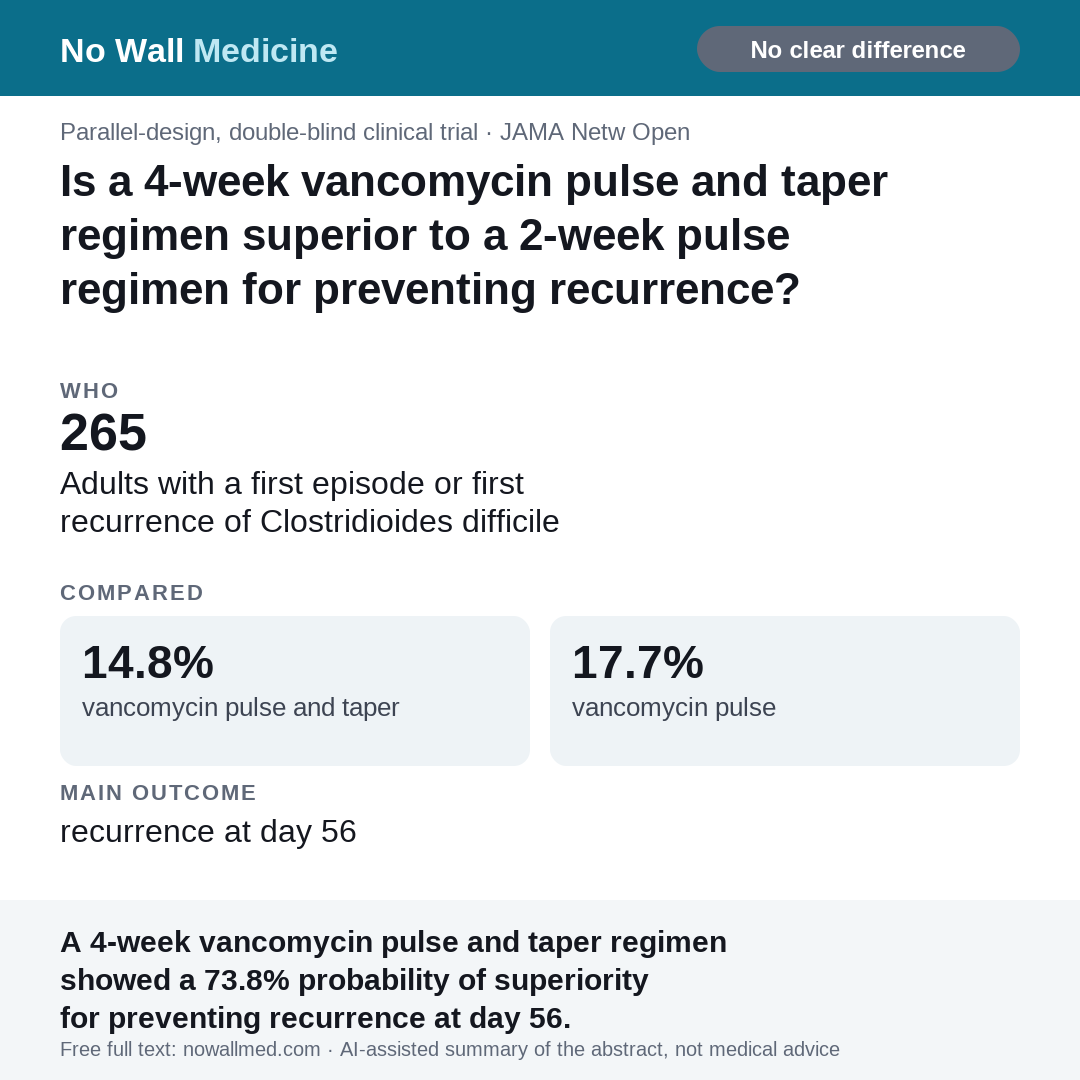
Initial Vancomycin Taper for the Prevention of Recurrent Clostridioides difficile Infection: A Randomized Clinical Trial
Parallel-design, double-blind clinical trialNo clear difference
Is a 4-week vancomycin pulse and taper regimen superior to a 2-week pulse regimen for preventing recurrence?
Who
265
Adults with a first episode or first recurrence of Clostridioides difficile infection · 12 Canadian hospitals
Compared
14.8%vancomycin pulse and taper
17.7%vancomycin pulse
Main outcome
recurrence at day 56
Result: adjusted relative risk 0.84 (95% Bayesian credible interval 0.48-1.45)
Bottom line: A 4-week vancomycin pulse and taper regimen showed a 73.8% probability of superiority for preventing recurrence at day 56.
Limitation: The trial was stopped early due to feasibility of recruitment.
JAMA Netw Open · 2026-02-02Download image
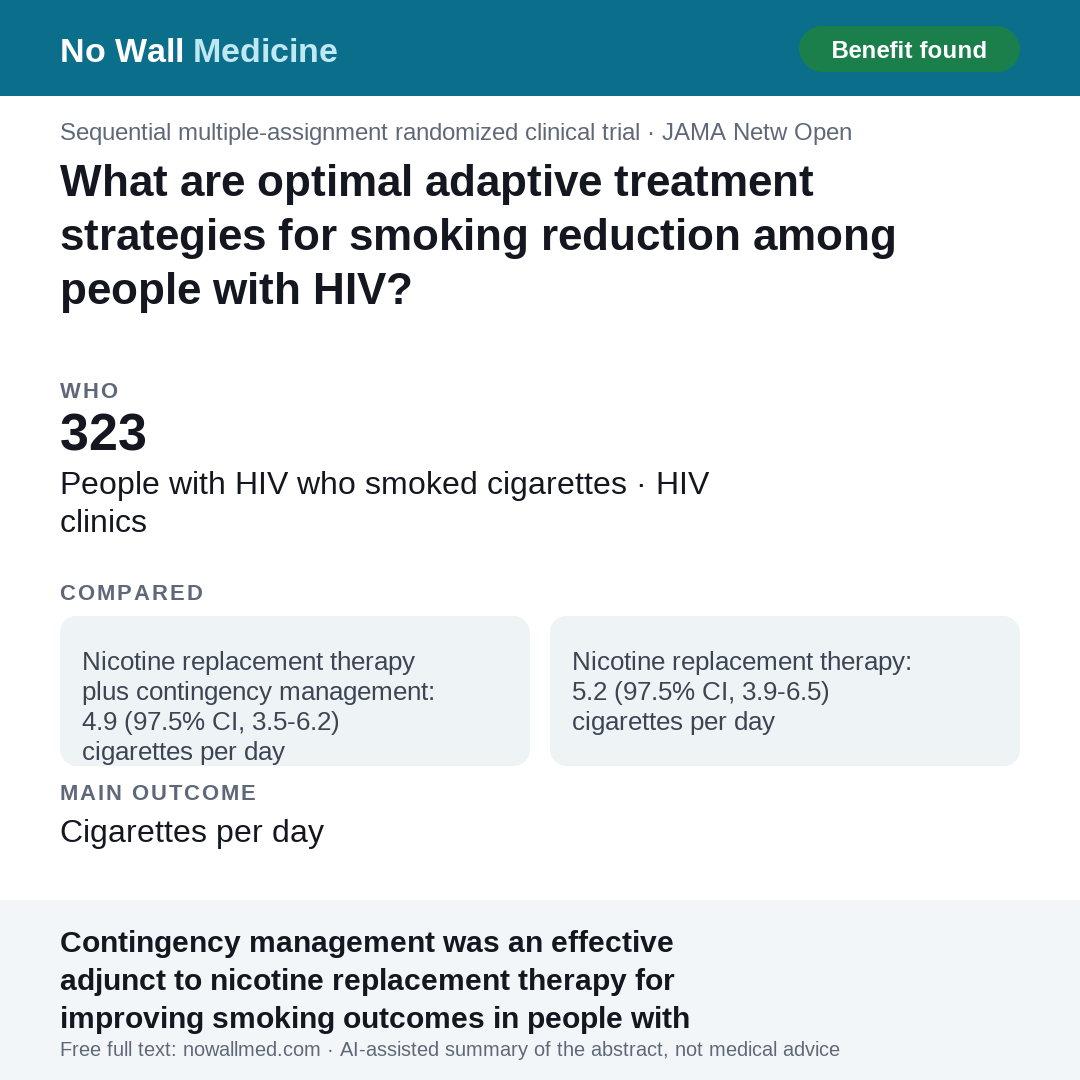
Clinical Pharmacists, Medications, and Contingency Management for Targeting Smoking in HIV Clinics: A Randomized Clinical Trial
Sequential multiple-assignment randomized clinical trialBenefit found
What are optimal adaptive treatment strategies for smoking reduction among people with HIV?
Who
323
People with HIV who smoked cigarettes · HIV clinics
Compared
Nicotine replacement therapy plus contingency management: 4.9 (97.5% CI, 3.5-6.2) cigarettes per day
Nicotine replacement therapy: 5.2 (97.5% CI, 3.9-6.5) cigarettes per day
Main outcome
Cigarettes per day
Result: adjusted LSM difference, -0.3 (97.5% CI, -1.9 to 1.3)
Bottom line: Contingency management was an effective adjunct to nicotine replacement therapy for improving smoking outcomes in people with HIV.
JAMA Netw Open · 2026-02-02Download image
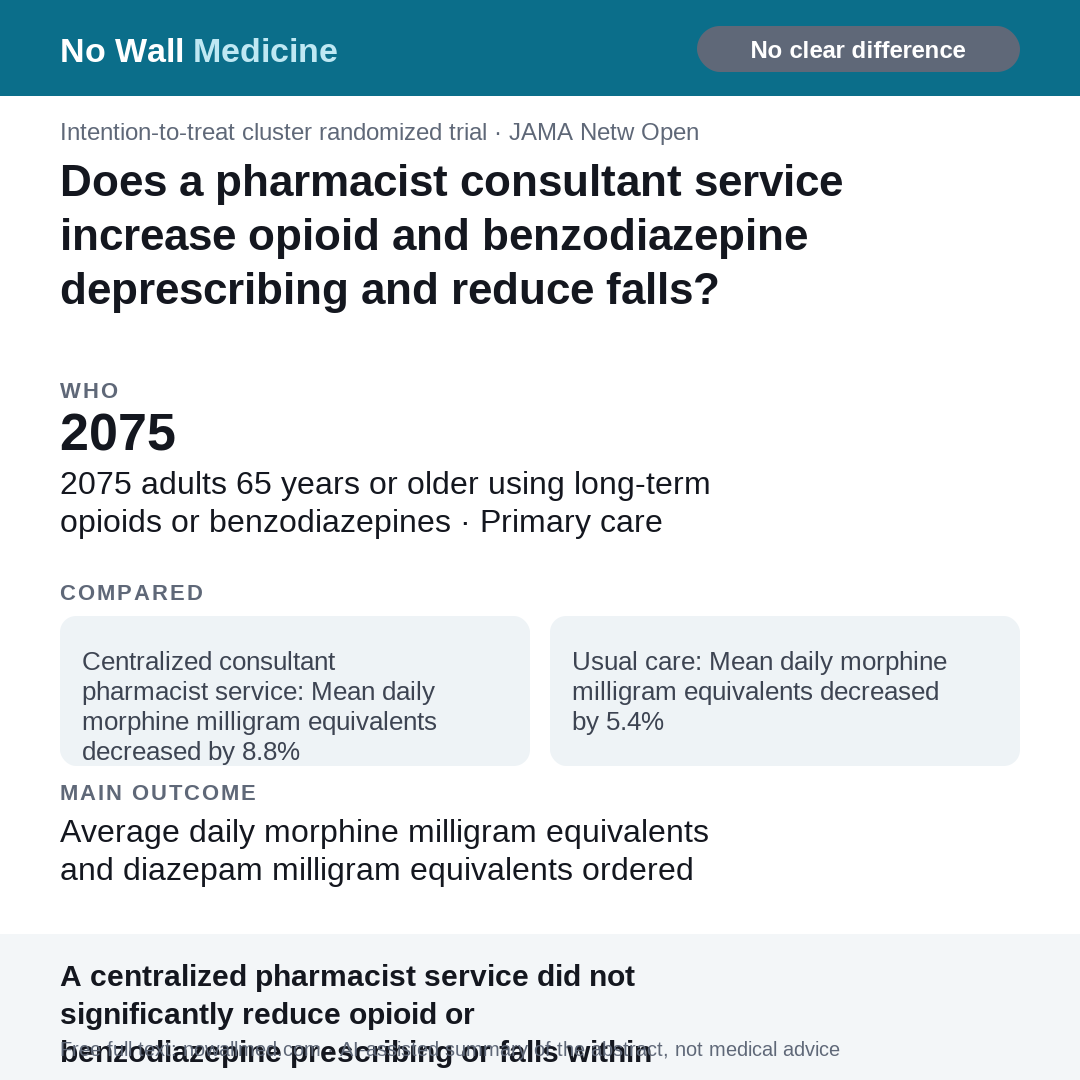
A Pharmacist Consultant Service for Deprescribing Opioids and Benzodiazepines in Older Adults: A Cluster Randomized Trial
Intention-to-treat cluster randomized trialNo clear difference
Does a pharmacist consultant service increase opioid and benzodiazepine deprescribing and reduce falls?
Who
2075
2075 adults 65 years or older using long-term opioids or benzodiazepines · Primary care clinics in University of North Carolina Health Physician Network
Compared
Centralized consultant pharmacist service: Mean daily morphine milligram equivalents decreased by 8.8%
Usual care: Mean daily morphine milligram equivalents decreased by 5.4%
Main outcome
Average daily morphine milligram equivalents and diazepam milligram equivalents ordered
Result: odds ratio 1.20 (95% CI, 0.85-1.71) for opioid discontinuation
Bottom line: A centralized pharmacist service did not significantly reduce opioid or benzodiazepine prescribing or falls within one year.
JAMA Netw Open · 2026-02-02Download image
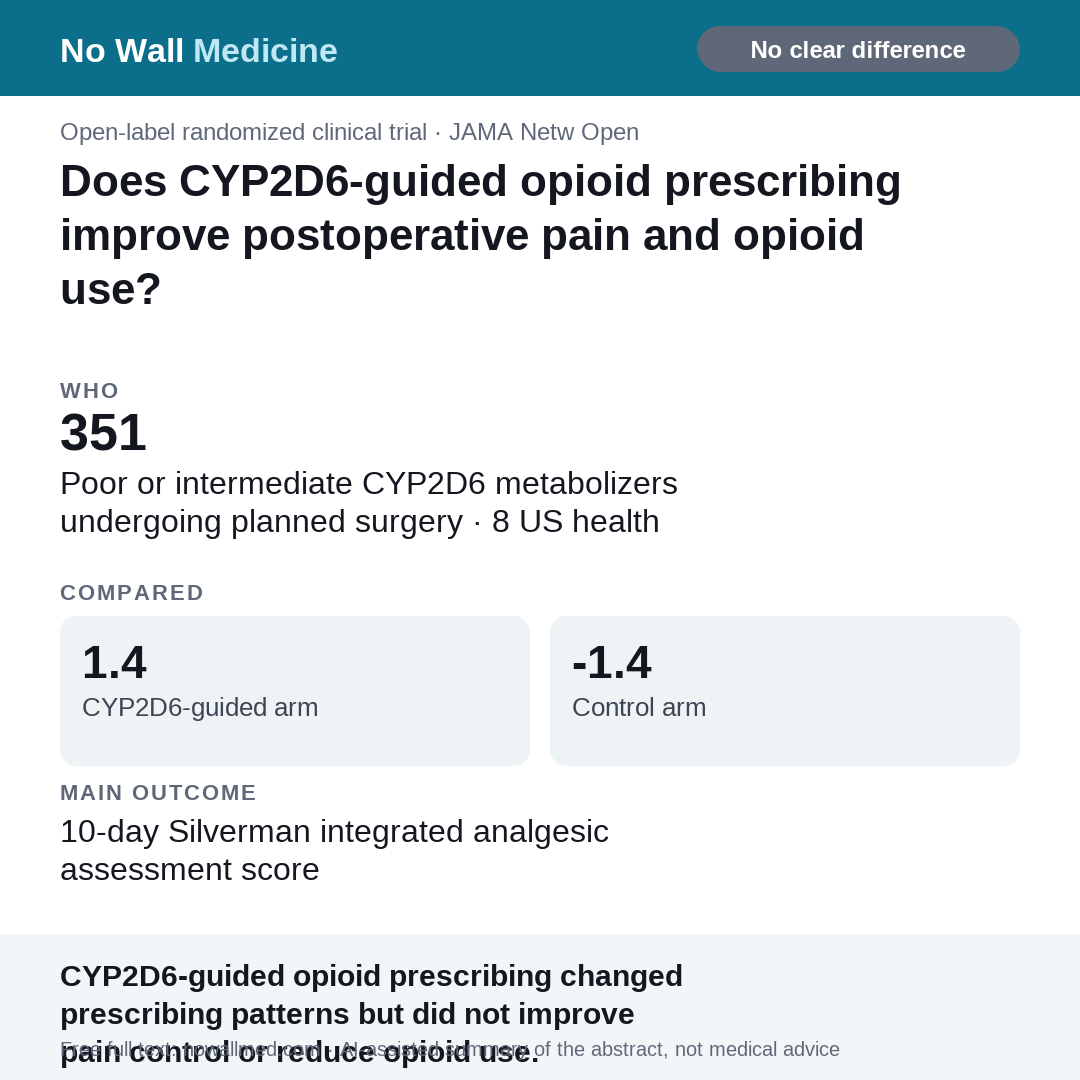
A Multicomponent Strategy to Increase Human Papillomavirus Vaccination Rates in Primary Care: A Cluster Randomized Clinical Trial
Cluster randomized clinical trialNo clear difference
Does a multicomponent strategy increase human papillomavirus vaccination rates in primary care?
Who
Patients at 20 pediatrics primary care practices · St Louis, Missouri metropolitan area
Compared
Intervention group: 82.0% (1812/2211) initiation at 36 months
Control group: 74.6% (1052/1410) initiation at 36 months
Main outcome
Proportion of patients receiving first vaccine and completing series
Result: odds ratio 1.42 (95% CI, 0.96-2.11) for initiation at 36 months
Bottom line: The multicomponent strategy did not significantly increase human papillomavirus vaccination rates by 13 years of age.
JAMA Netw Open · 2026-02-02Download image
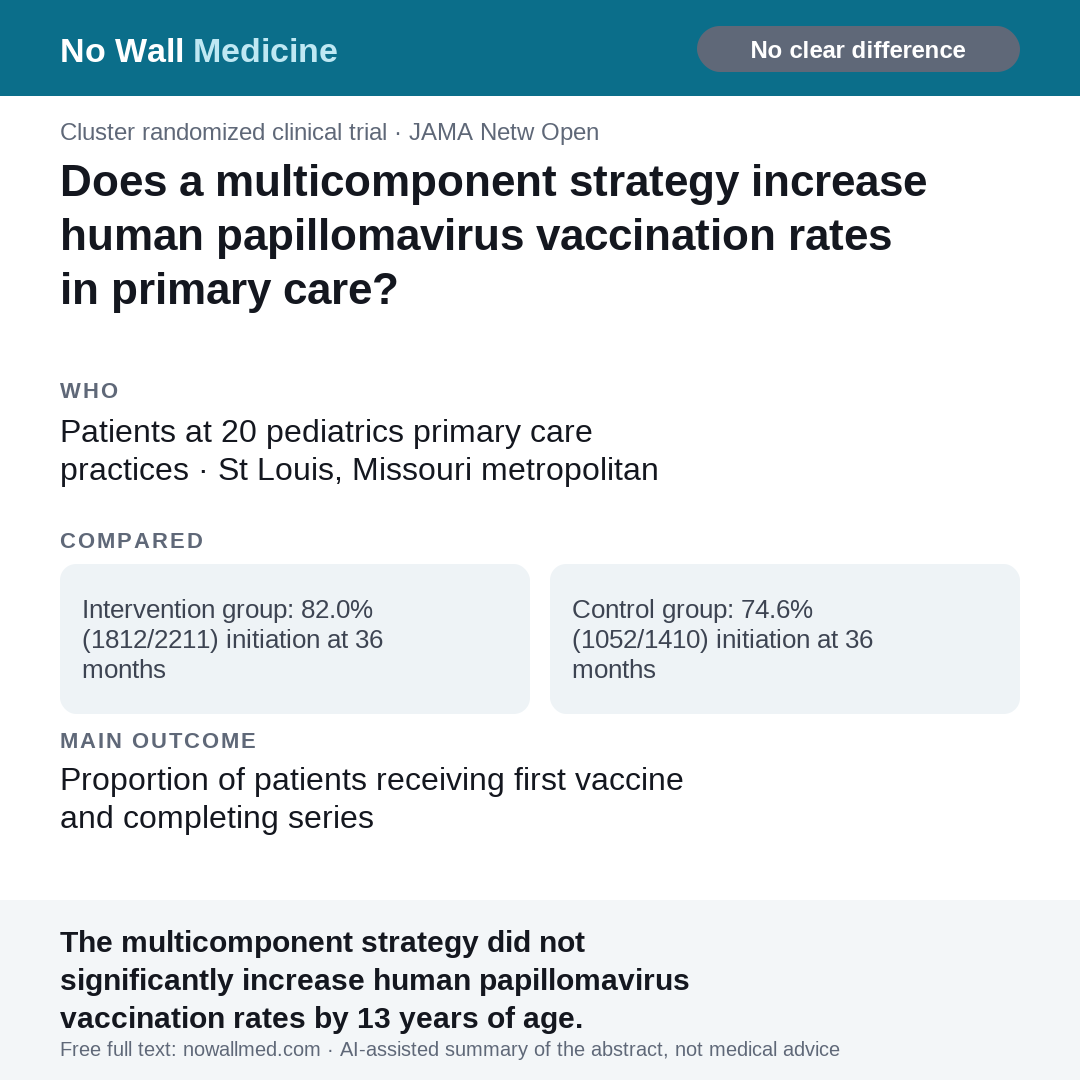
Morphine Plus Placebo vs Morphine Plus Acetaminophen for Acute Pain in the Emergency Department: A Randomized Clinical Trial
Multicenter, double-blind, randomized, placebo-controlled noninferiority clinical trialHarm found
Is morphine plus placebo noninferior to morphine plus acetaminophen for acute pain relief?
Who
430
Adults with severe acute traumatic or nontraumatic pain · 11 French emergency departments
Compared
Morphine plus placebo
Morphine plus acetaminophen
Main outcome
Mean change in numeric rating scale pain score from baseline to 30 minutes
Result: difference in mean pain score reduction 0.36 points (95% CI, -0.28 to 1.01 points)
Bottom line: Morphine plus placebo did not meet the criterion for noninferiority compared with morphine plus acetaminophen for acute pain relief.
JAMA Netw Open · 2026-02-02Download image
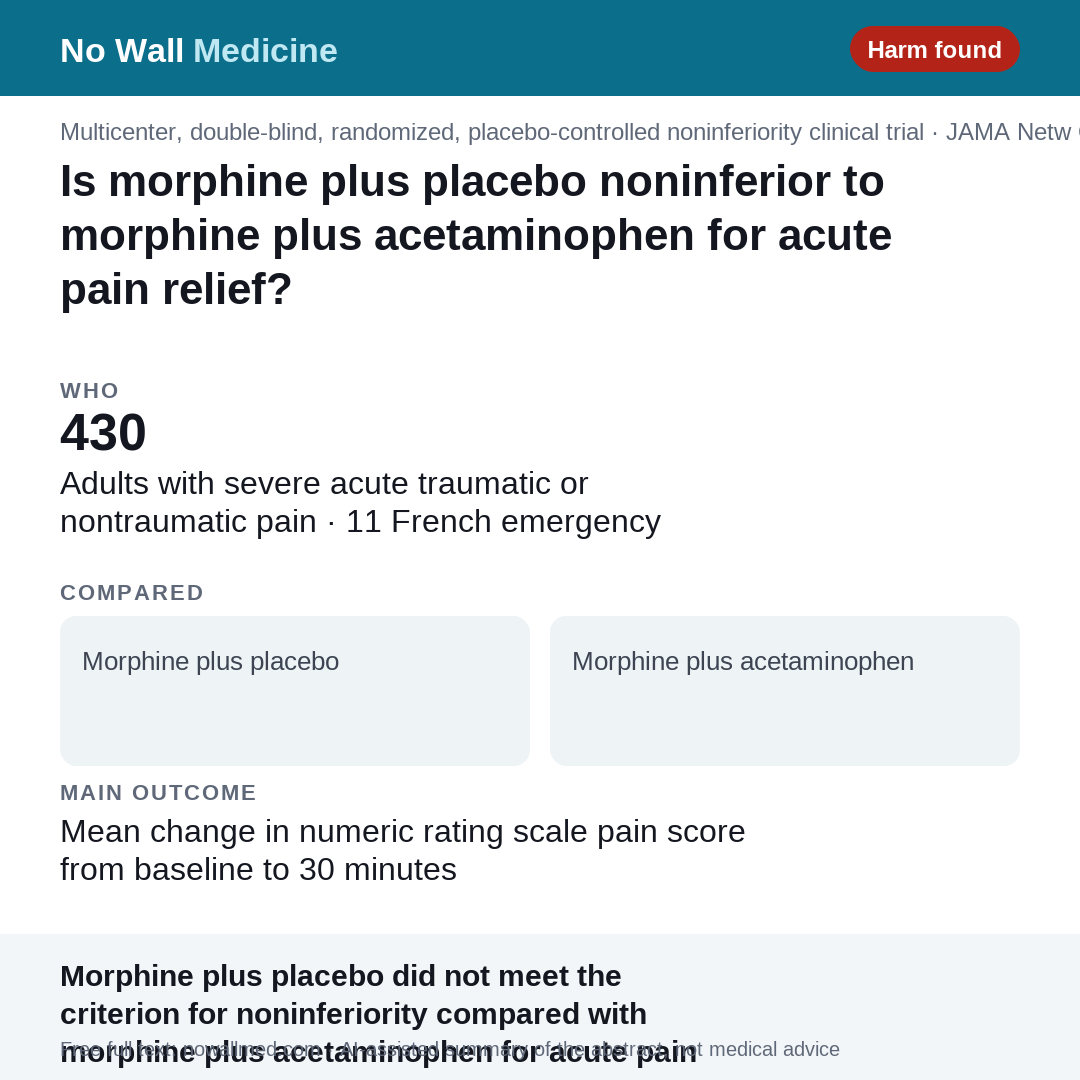
Intradiscal linezolid (PP353) treatment for chronic low back pain associated with Modic change type 1: an international, first-in-human, randomised, sham procedure-controlled, double-blind, phase 1b clinical trial
Randomised, sham-procedure controlled, double-blind, phase 1b clinical trialBenefit found
Is intradiscal linezolid safe and effective for chronic low back pain with Modic changes?
Who
40
Patients with chronic low back pain and Modic changes type 1 or mixed · United Kingdom, Spain, New Zealand and Denmark
Compared
-3.36intradiscal linezolid
-2.00placebo
Main outcome
change in low back pain Numerical Rating Scale score at 12 months
Result: -3.36 vs -2.00; 95% CI -0.19, p = 0.028
Bottom line: Intradiscal linezolid is well tolerated and significantly improved low back pain scores compared to placebo at 12 months.
Funded by: Persica Pharmaceuticals Ltd
eClinicalMedicine · 2026-02-02Download image
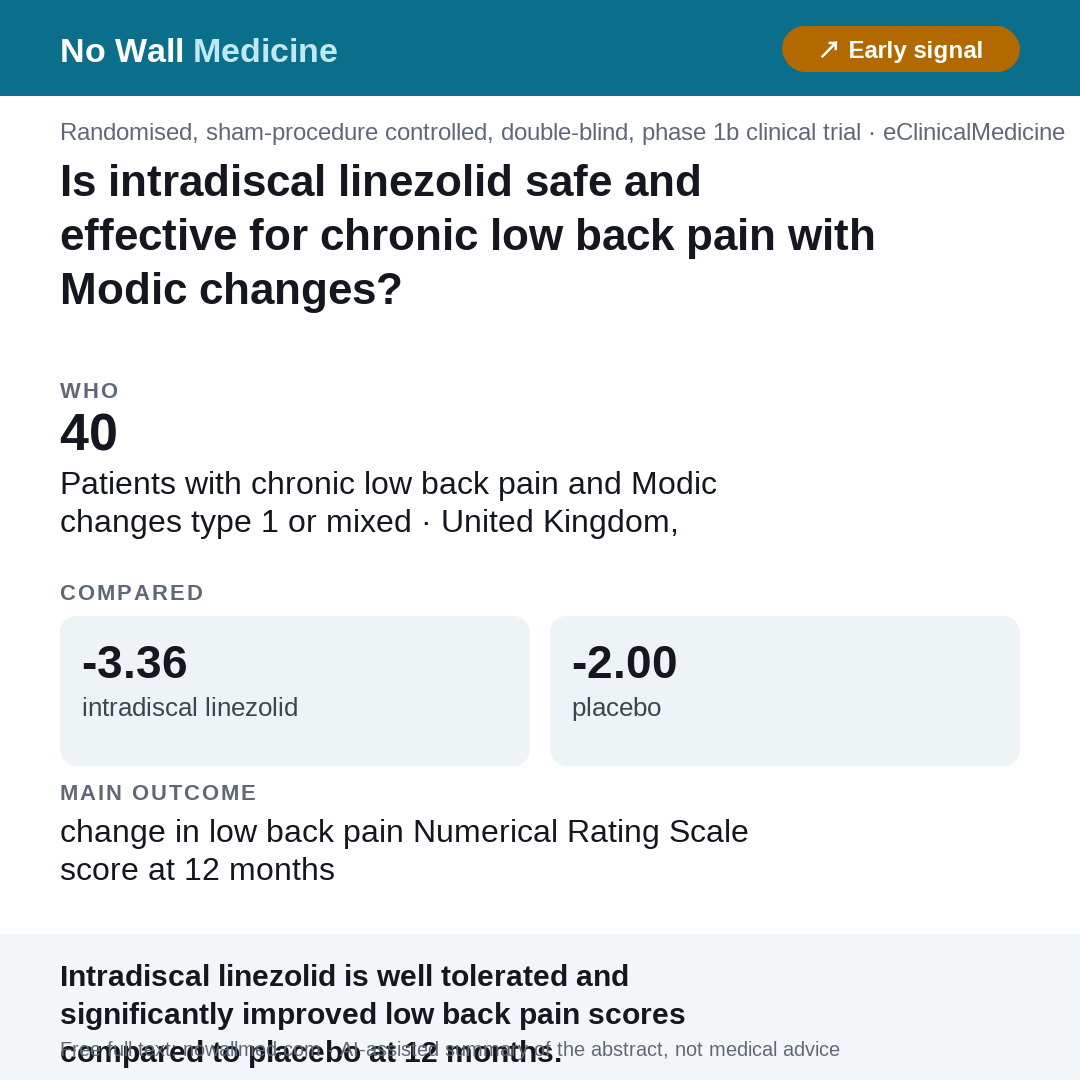
CYP2D6-Guided Opioid Management and Postoperative Pain Control: A Randomized Clinical Trial
Open-label randomized clinical trialNo clear difference
Does CYP2D6-guided opioid prescribing improve postoperative pain and opioid use?
Who
351
Poor or intermediate CYP2D6 metabolizers undergoing planned surgery · 8 US health systems
Compared
1.4CYP2D6-guided arm (95.9)
-1.4Control arm (93.1)
Main outcome
10-day Silverman integrated analgesic assessment score
Result: difference 2.8 (95% CI -18.3 to 23.8)
Bottom line: CYP2D6-guided opioid prescribing changed prescribing patterns but did not improve pain control or reduce opioid use.
JAMA Netw Open · 2026-02-02Download image
Albumin Replacement Therapy in Septic Shock: A Randomized Clinical Trial
Multicenter, open-label randomized clinical trialNo clear difference
Does albumin administration improve outcomes in patients with septic shock?
Who
440
Patients from 23 intensive care units with septic shock · 23 intensive care units in Germany
Compared
43.3%Albumin group (91 of 210)
45.9%Control group (96 of 209)
Main outcome
90-day mortality
Result: relative risk 0.94 (95% CI 0.76-1.17)
Bottom line: Albumin administration was safe but did not improve 90-day survival in patients with septic shock.
Limitation: The study was terminated prematurely due to low enrollment rates.
JAMA Netw Open · 2026-02-02Download image
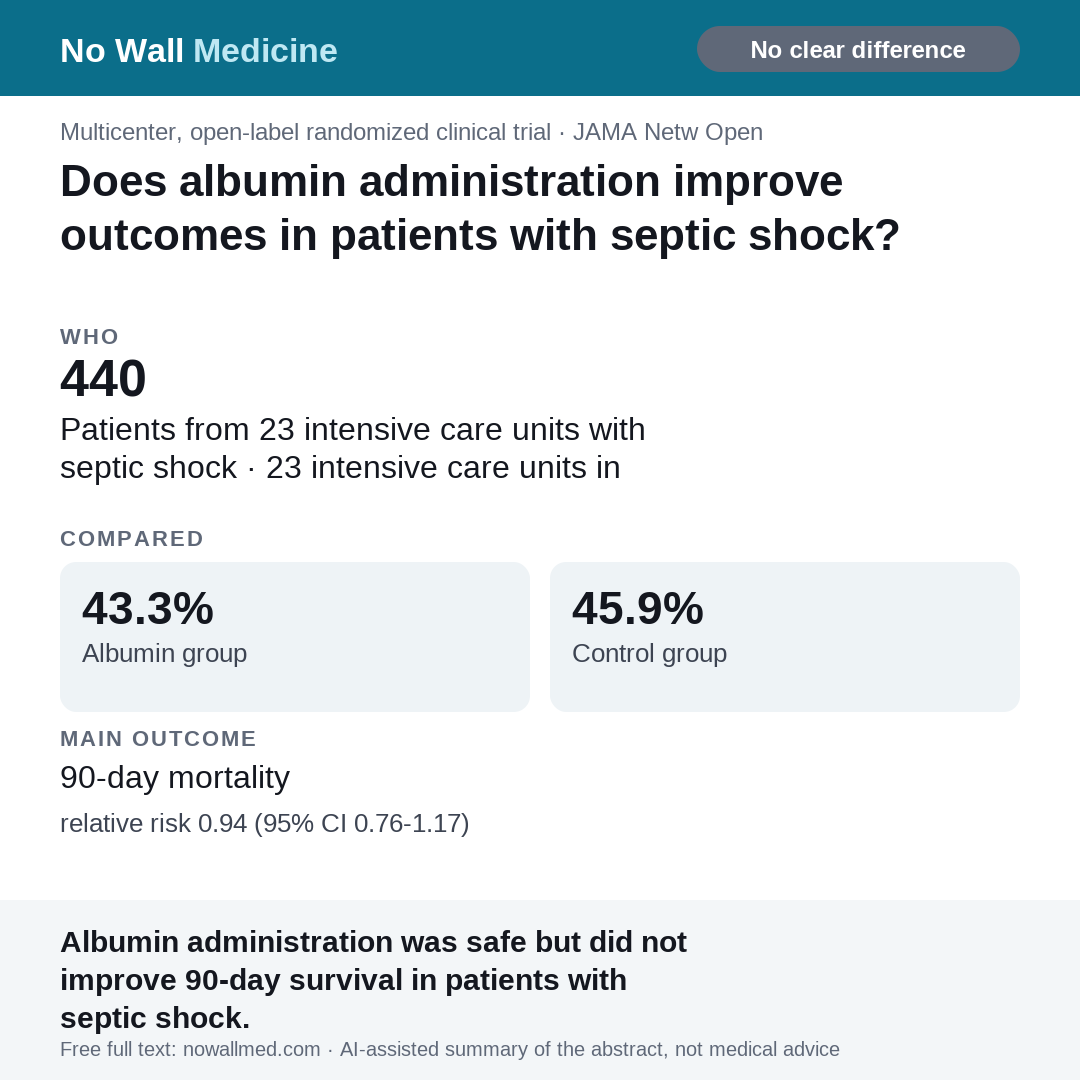
Pharmacist Intervention for Safer Prescribing in Patients With Type 2 Diabetes at High Risk: A Randomized Clinical Trial
Randomized clinical trialBenefit found
Does pharmacist outreach using a hypoglycemia-prevention algorithm result in safer prescribing for high-risk type 2 diabetes patients?
Who
191
Adults with type 2 diabetes at high risk of hypoglycemia · Kaiser Permanente Northern California
Compared
28.1%Pharmacist outreach
15.8%Usual care
Main outcome
Proportion of patients prescribed safer diabetes regimens
Result: risk difference 12.3% (95% CI, 0.6% to 24.0%)
Bottom line: Pharmacist outreach improved medication optimization and reduced hypoglycemia-related emergency or inpatient encounters in high-risk patients.
JAMA Netw Open · 2026-02-02Download image
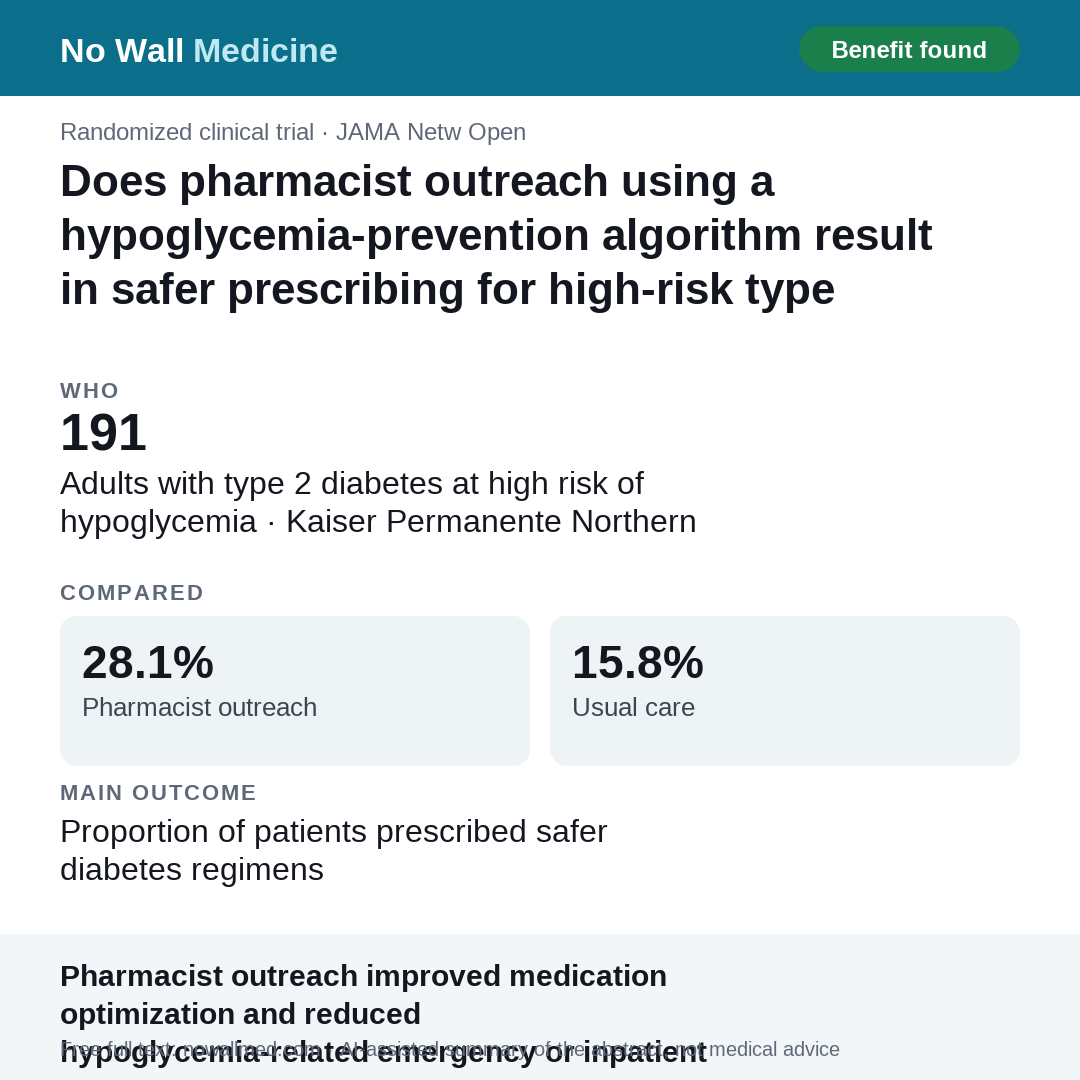
Adjuvant Pembrolizumab for Stage IIB or IIC Melanoma: A Secondary Analysis of a Randomized Clinical Trial
Multicenter double-blind, phase 3 randomized clinical trialMixed results
Does adjuvant pembrolizumab affect the incidence of new skin cancers in stage IIB or IIC melanoma?
Who
976
Participants 12 years or older with resected stage IIB or IIC cutaneous melanoma · Multicenter
Compared
7.6%Pembrolizumab
11.5%Placebo
Main outcome
Incidence of new melanoma or other cutaneous malignant neoplasm
Result: hazard ratio 0.65 (95% CI 0.52-0.80)
Bottom line: Pembrolizumab showed no difference in new melanoma incidence but nonmelanoma skin cancers were more common with placebo.
JAMA Netw Open · 2026-02-02Download image
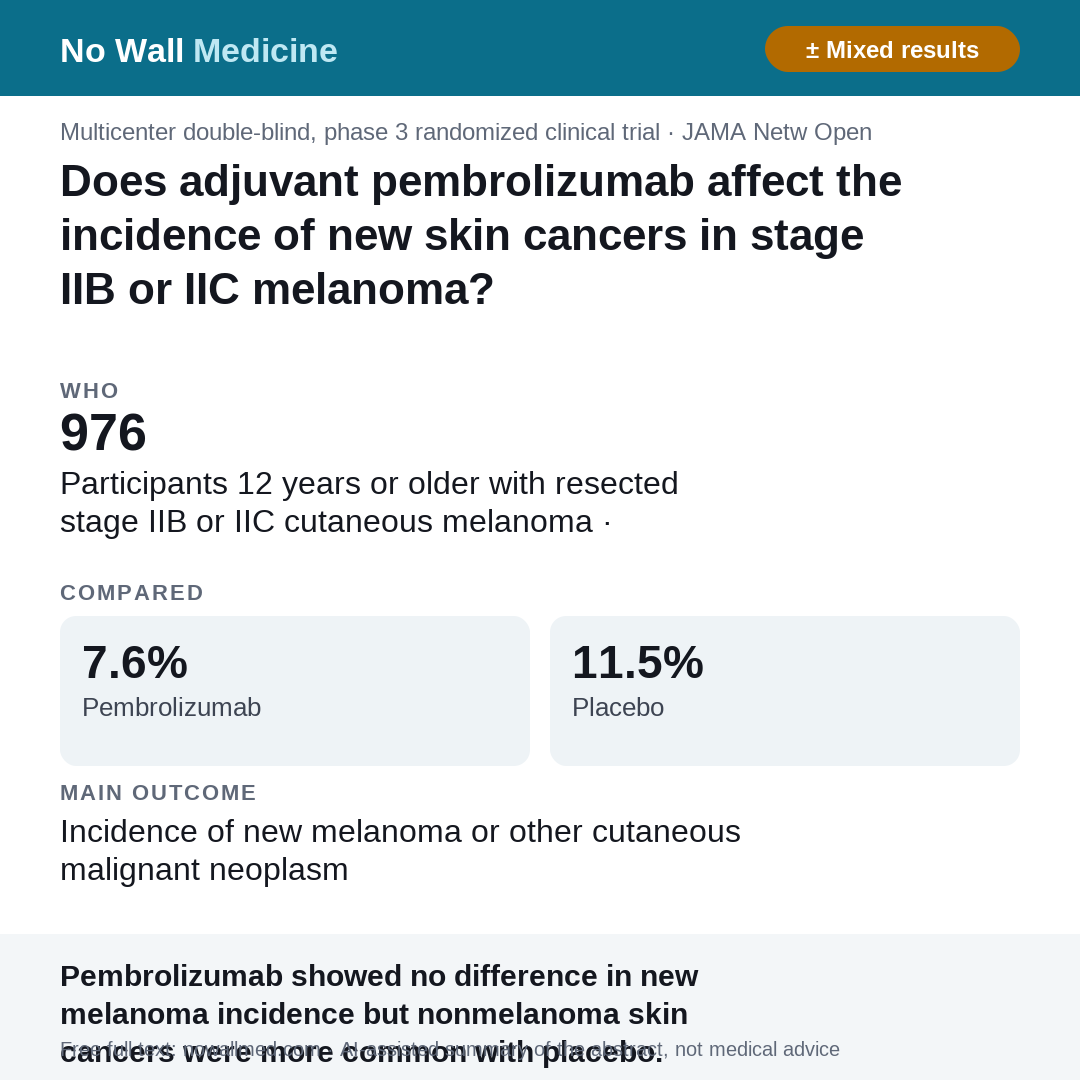
High-Intensity Circuit Training Plus Sleep Health Intervention for Sleep Improvement: A Randomized Clinical Trial
Single-blind, parallel, 4-arm randomized clinical trialBenefit found
Do combined high-intensity circuit training and sleep health interventions improve sleep and cardiometabolic health?
Who
112
Sedentary Chinese women aged 18 to 30 years with poor sleep
Compared
Combined high-intensity circuit training and sleep health
High-intensity circuit training alone
Sleep health alone
Control group
Main outcome
Subjective sleep outcomes and objective sleep outcomes
Bottom line: Combined high-intensity circuit training and sleep health interventions improved sleep outcomes more than each intervention alone.
JAMA Netw Open · 2026-02-02Download image
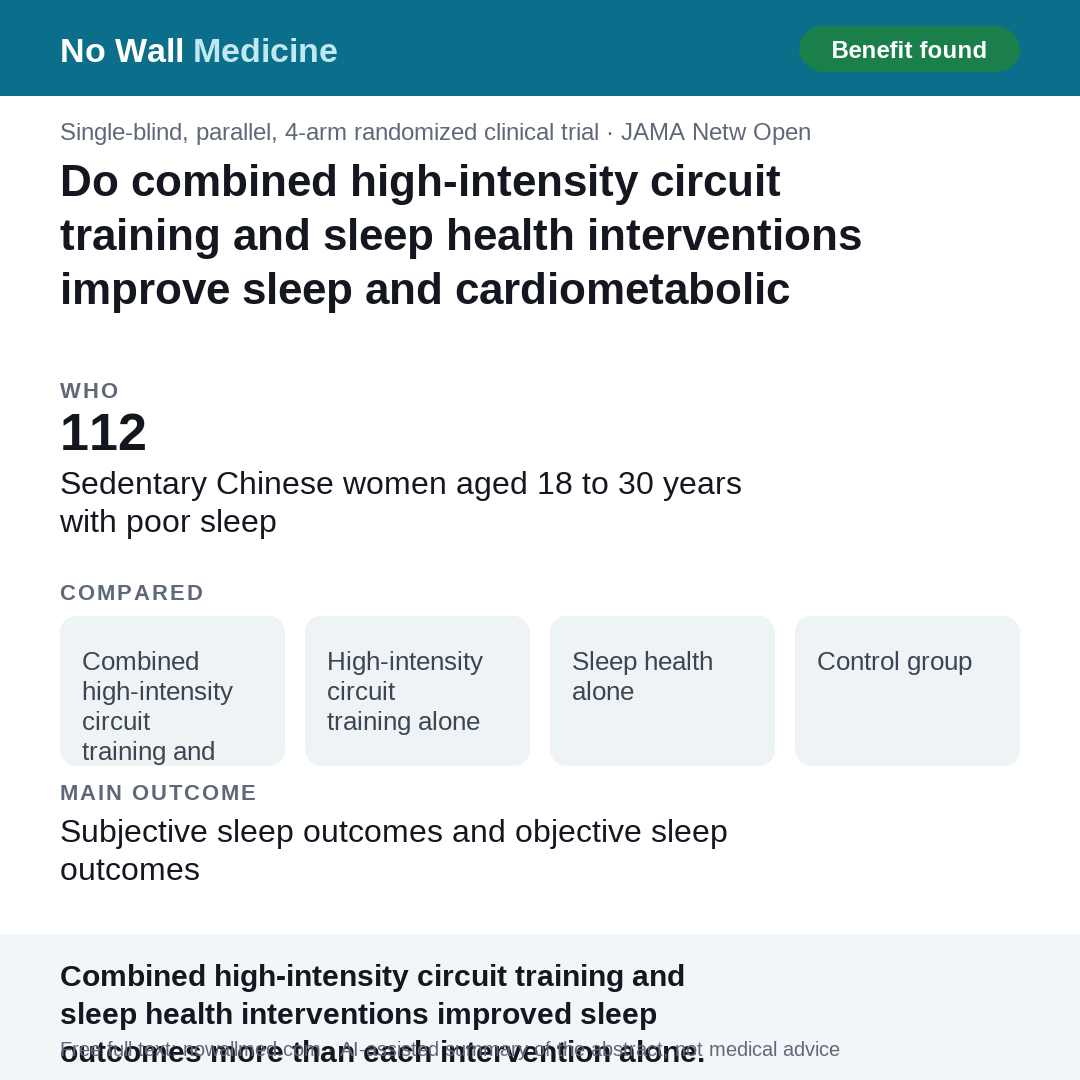
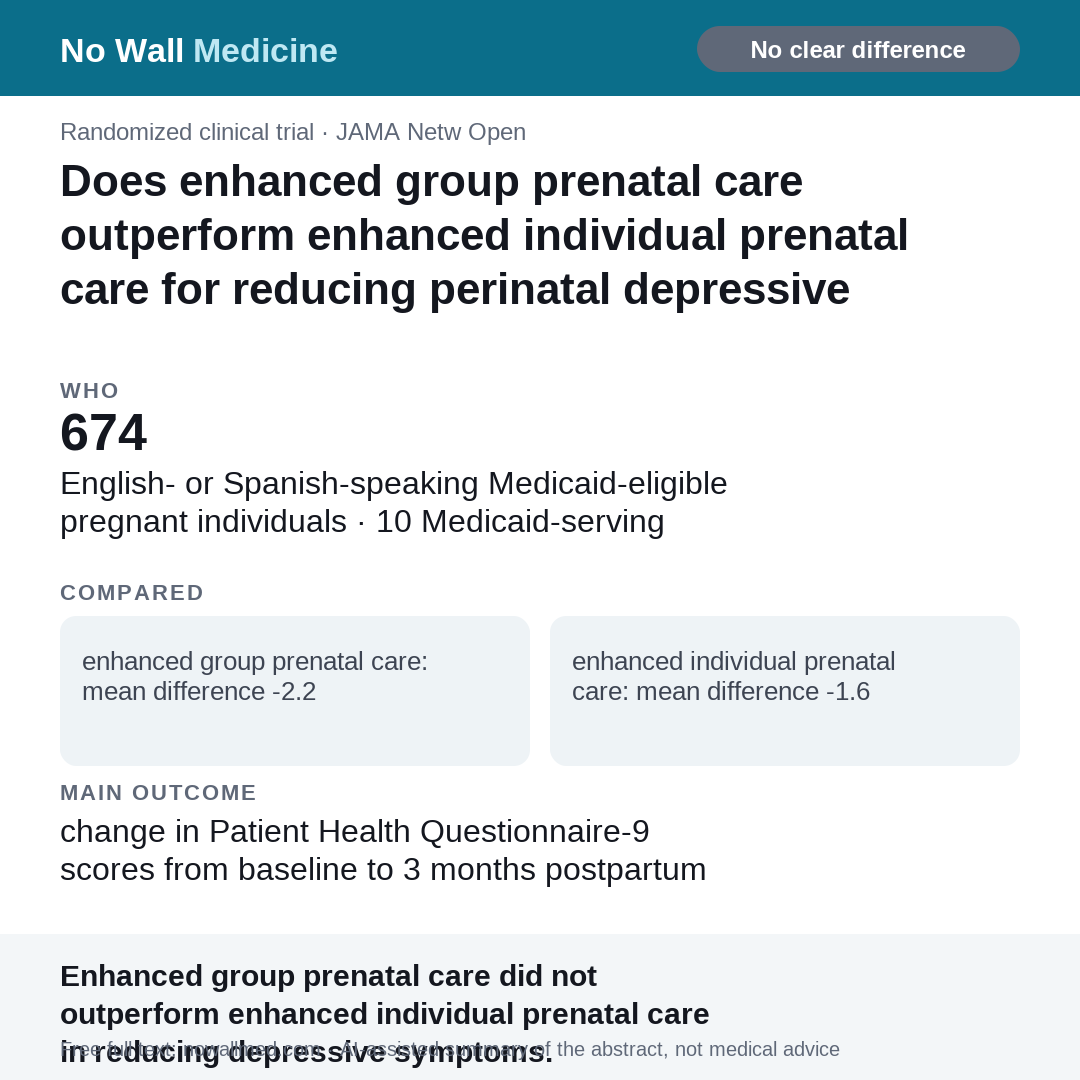
Enhanced Prenatal Care Models and Postpartum Depression: The EMBRACE Randomized Clinical Trial
Randomized clinical trialNo clear difference
Does enhanced group prenatal care outperform enhanced individual prenatal care for reducing perinatal depressive symptoms?
Who
674
English- or Spanish-speaking Medicaid-eligible pregnant individuals · 10 Medicaid-serving clinics in California's San Joaquin Valley
Compared
enhanced group prenatal care: mean difference -2.2
enhanced individual prenatal care: mean difference -1.6
Main outcome
change in Patient Health Questionnaire-9 scores from baseline to 3 months postpartum
Result: Cohen d 0.1 (95% CI, -0.1 to 0.3)
Bottom line: Enhanced group prenatal care did not outperform enhanced individual prenatal care in reducing depressive symptoms.
JAMA Netw Open · 2026-02-02Download image
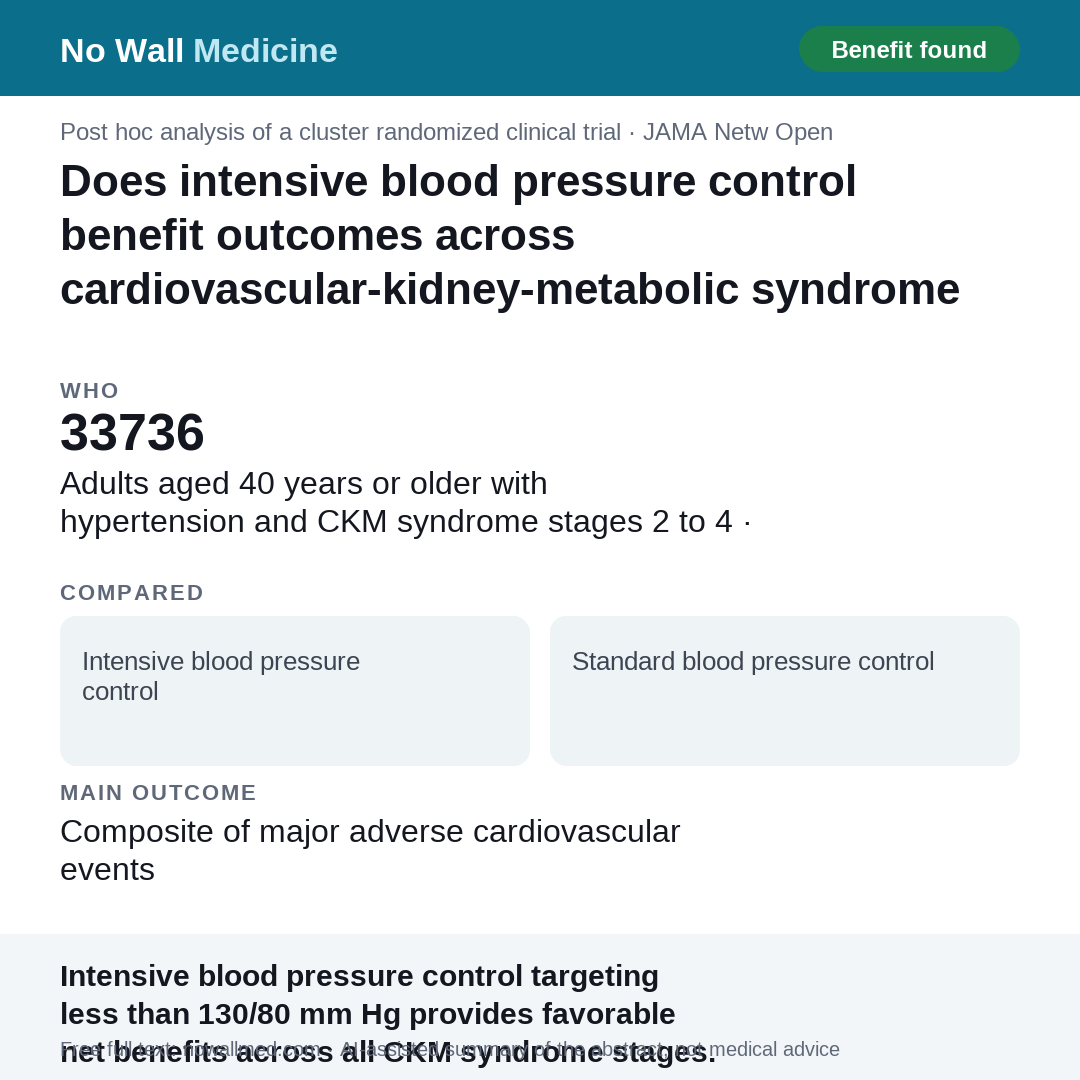
Intensive Blood Pressure Control and Cardiovascular Outcomes Across Cardiovascular-Kidney-Metabolic Syndrome Stages: A Post Hoc Analysis of the China Rural Hypertension Control Project
Post hoc analysis of a cluster randomized clinical trialBenefit found
Does intensive blood pressure control benefit outcomes across cardiovascular-kidney-metabolic syndrome stages?
Who
33736
Adults aged 40 years or older with hypertension and CKM syndrome stages 2 to 4 · China
Compared
Intensive blood pressure control
Standard blood pressure control
Main outcome
Composite of major adverse cardiovascular events
Result: hazard ratio 0.61 (95% CI, 0.50-0.73) in stage 2; 0.71 (95% CI, 0.58-0.84) in stage 3; 0.67 (95% CI, 0.58-0.76) in stage 4
Bottom line: Intensive blood pressure control targeting less than 130/80 mm Hg provides favorable net benefits across all CKM syndrome stages.
JAMA Netw Open · 2026-02-02Download image
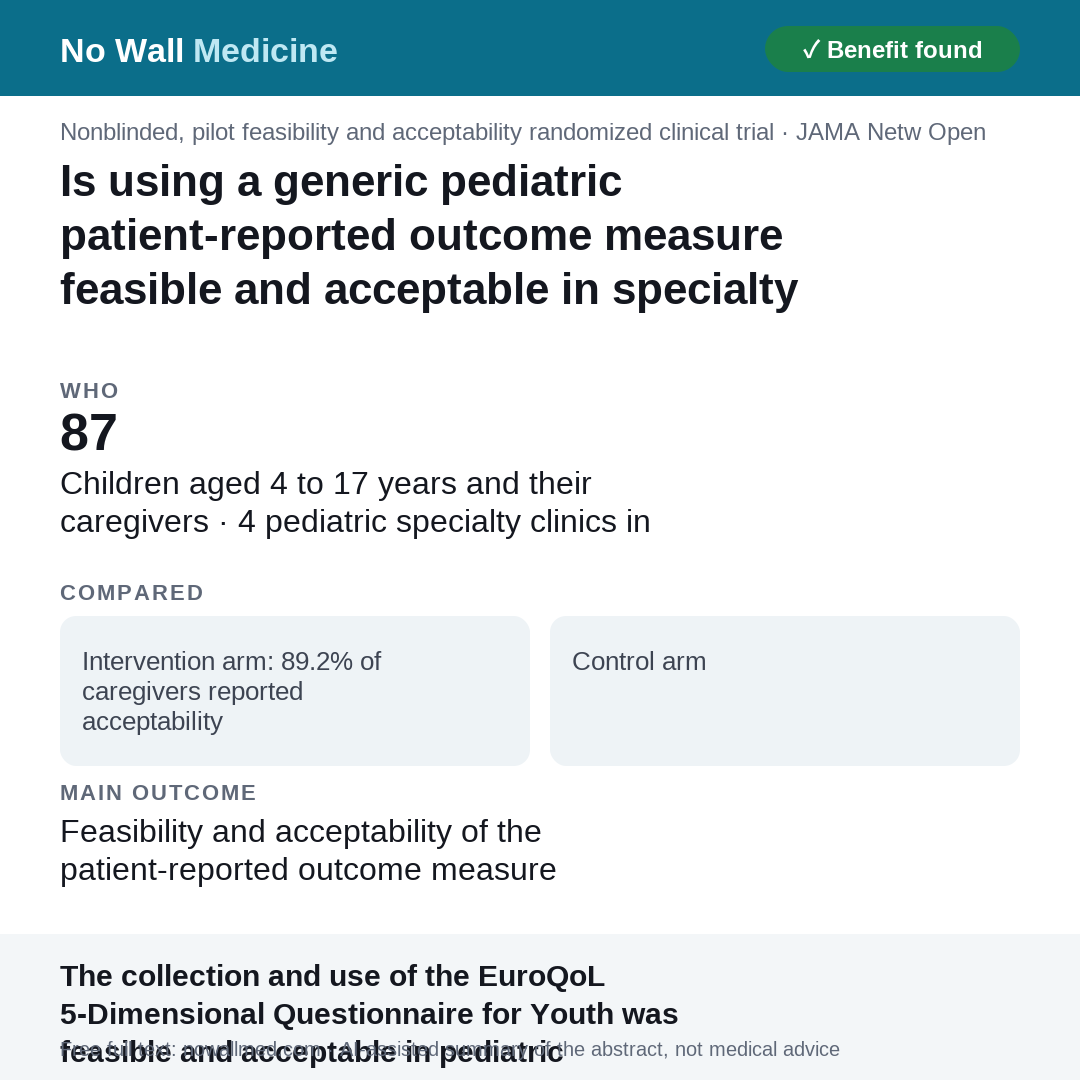
Use of Parent- and Patient-Reported Outcome Measures in Pediatric Specialty Clinics: A Pilot Randomized Clinical Trial
Nonblinded, pilot feasibility and acceptability randomized clinical trialBenefit found
Is using a generic pediatric patient-reported outcome measure feasible and acceptable in specialty clinics?
Who
87
Children aged 4 to 17 years and their caregivers · 4 pediatric specialty clinics in Melbourne, Australia
Compared
Intervention arm: 89.2% of caregivers reported acceptability
Control arm
Main outcome
Feasibility and acceptability of the patient-reported outcome measure
Bottom line: The collection and use of the EuroQoL 5-Dimensional Questionnaire for Youth was feasible and acceptable in pediatric specialty care.
Limitation: Further study should examine quantitative impacts on quality of care and outcomes over time.
JAMA Netw Open · 2026-02-02Download image
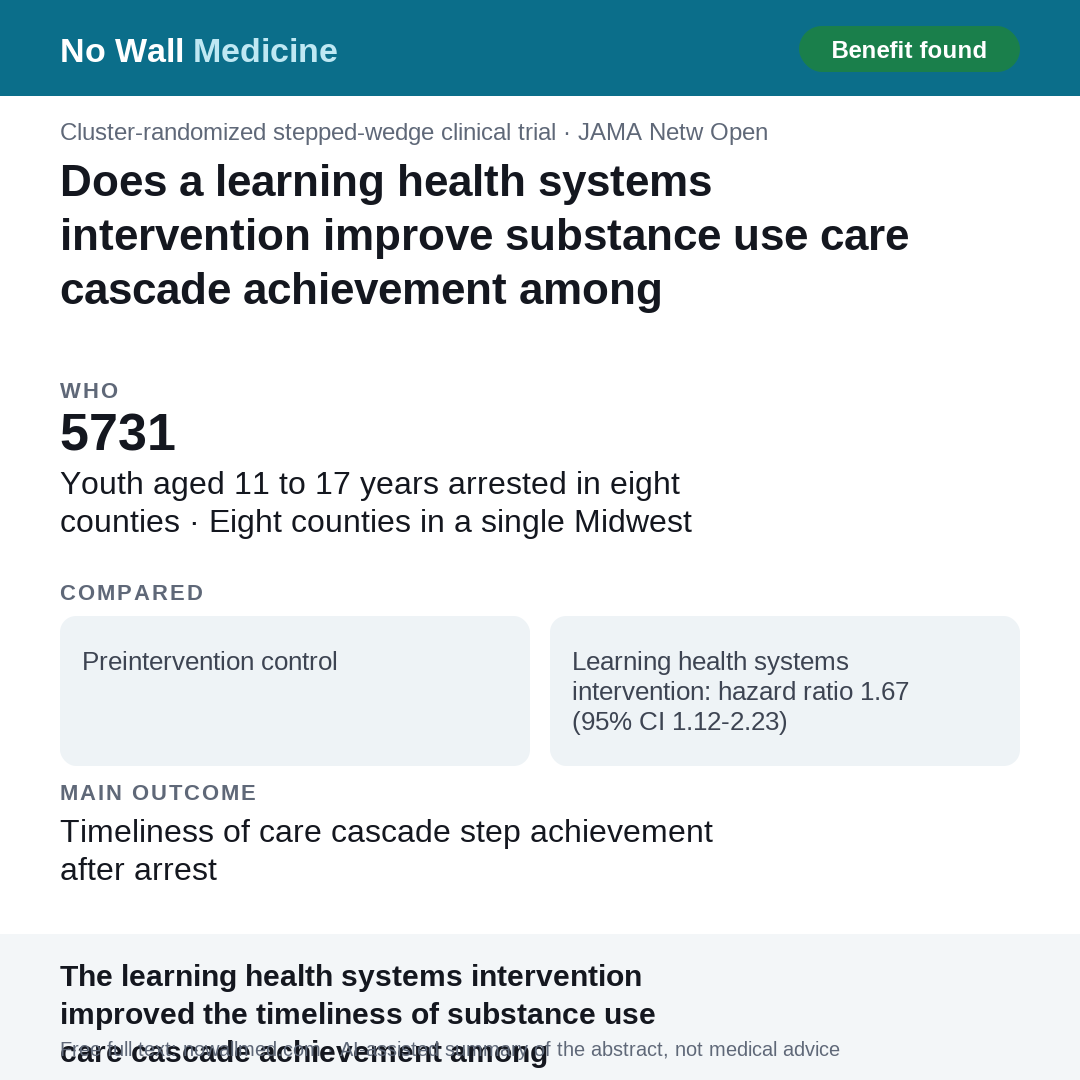
Learning Health Systems and Substance Use Care Cascade Achievement Among Justice-Involved Youth: A Cluster-Randomized Stepped-Wedge Clinical Trial
Cluster-randomized stepped-wedge clinical trialBenefit found
Does a learning health systems intervention improve substance use care cascade achievement among justice-involved youth?
Who
5731
Youth aged 11 to 17 years arrested in eight counties · Eight counties in a single Midwest state
Compared
Preintervention control
Learning health systems intervention: hazard ratio 1.67 (95% CI 1.12-2.23)
Main outcome
Timeliness of care cascade step achievement after arrest
Result: hazard ratio 1.67 (95% CI 1.12-2.23)
Bottom line: The learning health systems intervention improved the timeliness of substance use care cascade achievement among justice-involved youth.
JAMA Netw Open · 2026-02-02Download image
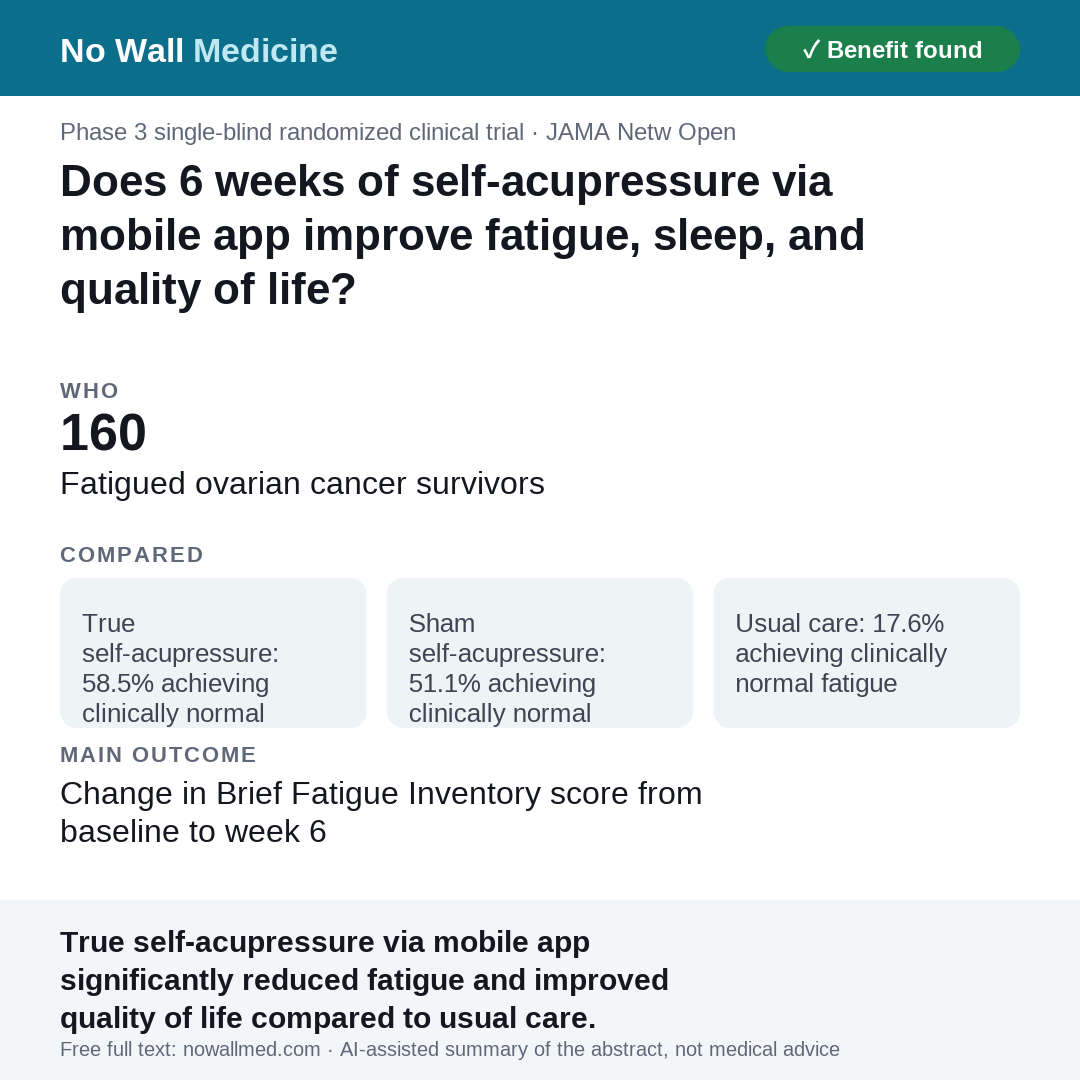
Cognitive Resilience Training to Prevent PTSD and Major Depressive Disorder in Paramedic Recruits: A Randomized Clinical Trial
Randomized clinical trialBenefit found
Does cognitive resilience training reduce PTSD and major depressive disorder in paramedic recruits?
Who
570
Student paramedics · 15 universities across England
Compared
Internet-delivered cognitive training in resilience
Psychoeducation
Standard practice
Main outcome
Rate of posttraumatic stress disorder and major depressive disorder
Result: odds ratio 0.20 (95% CI, 0.05-0.73) vs psychoeducation; odds ratio 0.25 (95% CI, 0.07-0.97) vs standard practice
Bottom line: Internet-delivered cognitive resilience training decreases the likelihood of developing posttraumatic stress disorder and major depressive disorder in paramedic trainees.
JAMA Netw Open · 2026-02-02Download image
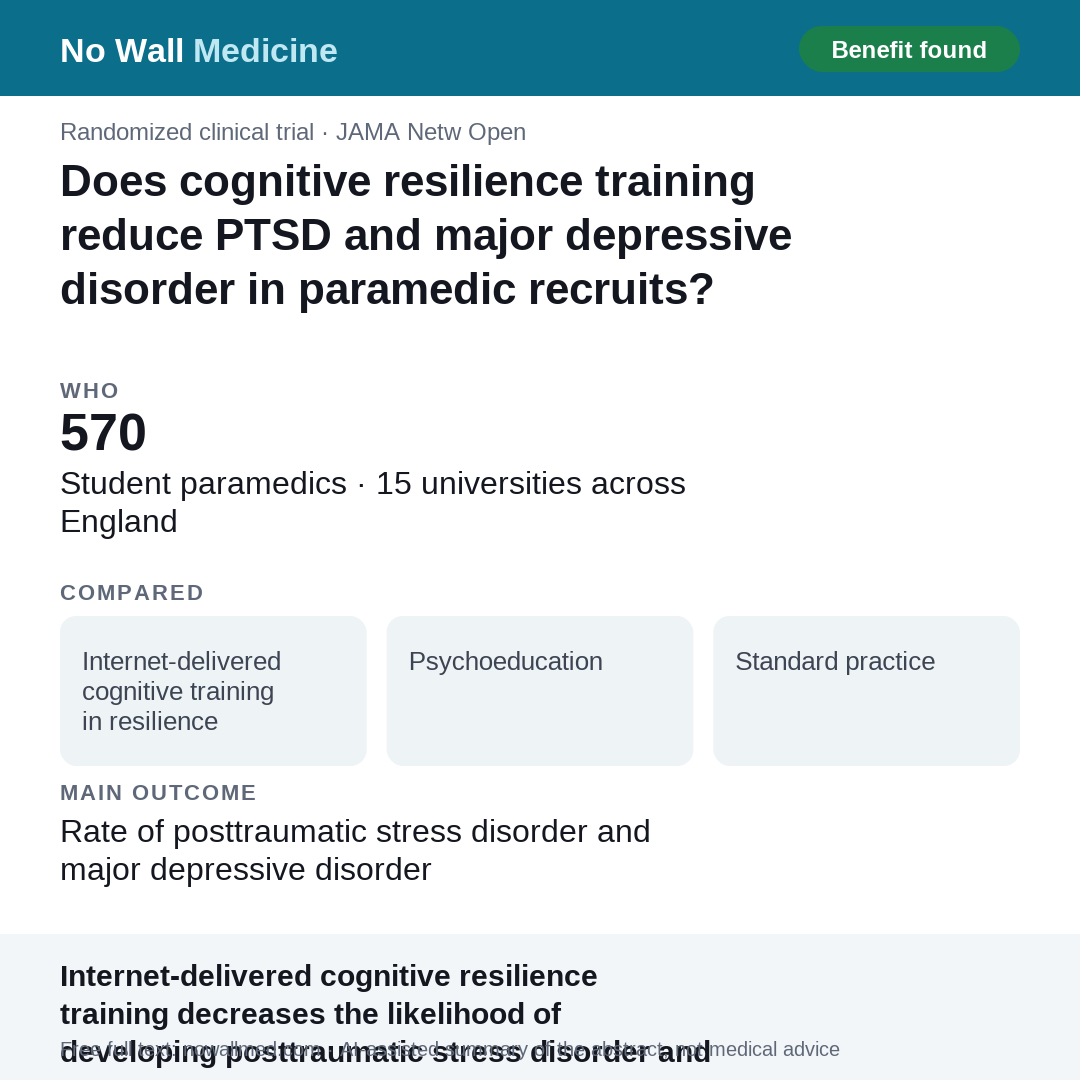
Peer Navigator Intervention and Opioid-Related Adverse Events for Emergency Department Patients: A Randomized Clinical Trial
Randomized clinical trialNo clear difference
Does a peer navigator intervention reduce opioid-related adverse events in emergency department patients?
Who
253
Adult patients presenting after opioid-involved overdose · 4 emergency departments in New York, New York
Compared
Relay arm: 3.29 [4.52] opioid-related adverse events
Site-directed care arm: 4.10 [9.36] opioid-related adverse events
Main outcome
Opioid-related adverse events in the 12 months after enrollment
Result: rate ratio 1.02 (95% CI 0.72-1.45)
Bottom line: The peer navigator intervention did not significantly reduce opioid-related adverse events compared to site-directed care.
JAMA Netw Open · 2026-02-02Download image
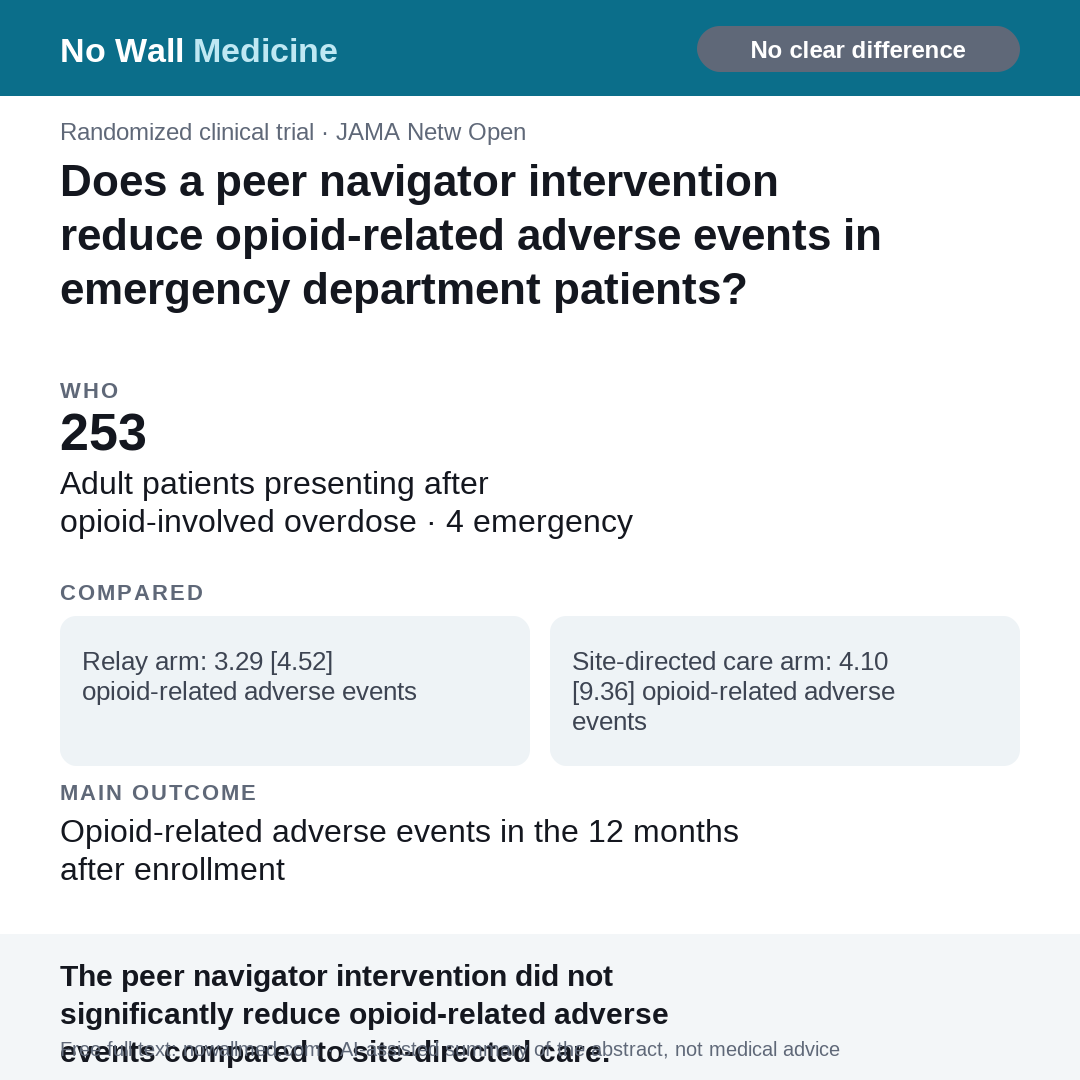
Counseling and Cardiovascular Disease Risk Factor Control in Long-Term Cancer Survivors: A Randomized Clinical Trial
Randomized clinical trialNo clear difference
Does survivorship care plan-based counseling improve cardiovascular disease risk factor control?
Who
347
Adult survivors of childhood cancer with undertreated cardiovascular risk factors · 9 US metropolitan areas
Compared
26.0%Intervention group
30.2%Enhanced care control group
Main outcome
Undertreatment of blood pressure, lipid profile, and glucose levels
Result: odds ratio 1.31 (95% CI 0.84-2.05)
Bottom line: Survivorship-based self-management counseling did not reduce cardiovascular risk factor undertreatment compared to enhanced care controls.
JAMA Netw Open · 2026-02-02Download image
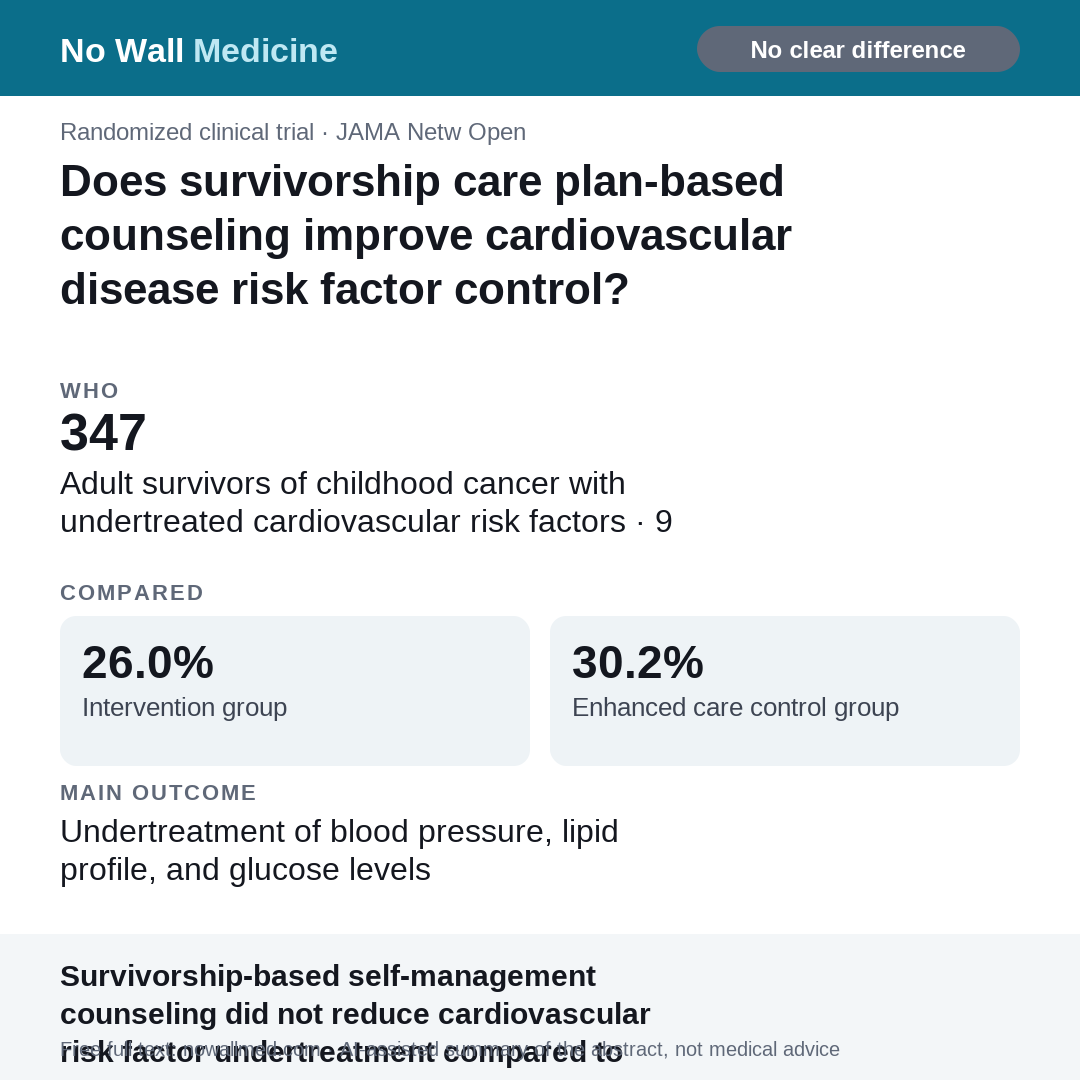
Self-Acupressure for Fatigue in Patients Surviving Ovarian Cancer: A Randomized Clinical Trial
Phase 3 single-blind randomized clinical trialBenefit found
Does 6 weeks of self-acupressure via mobile app improve fatigue, sleep, and quality of life?
Who
160
Fatigued ovarian cancer survivors
Compared
True self-acupressure: 58.5% achieving clinically normal fatigue
Sham self-acupressure: 51.1% achieving clinically normal fatigue
Usual care: 17.6% achieving clinically normal fatigue
Main outcome
Change in Brief Fatigue Inventory score from baseline to week 6
Result: adjusted mean difference -1.23 (95% CI -2.17 to -0.29)
Bottom line: True self-acupressure via mobile app significantly reduced fatigue and improved quality of life compared to usual care.
JAMA Netw Open · 2026-02-02Download image
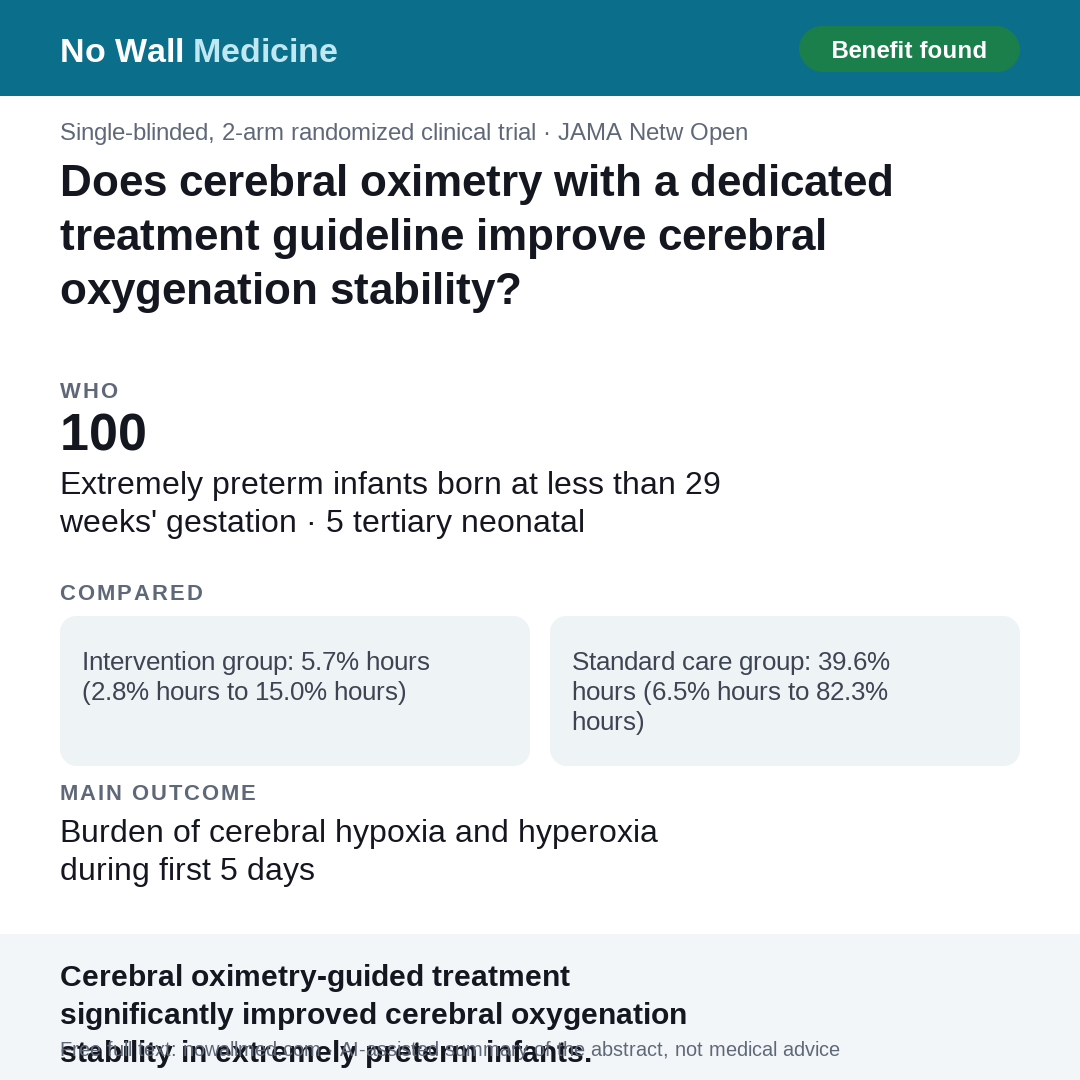
Cerebral Oximetry-Guided Treatment and Cerebral Oxygenation in Extremely Preterm Infants: A Randomized Clinical Trial
Single-blinded, 2-arm randomized clinical trialBenefit found
Does cerebral oximetry with a dedicated treatment guideline improve cerebral oxygenation stability?
Who
100
Extremely preterm infants born at less than 29 weeks' gestation · 5 tertiary neonatal intensive care units in Australia, New Zealand, and US
Compared
Intervention group: 5.7% hours (2.8% hours to 15.0% hours)
Standard care group: 39.6% hours (6.5% hours to 82.3% hours)
Main outcome
Burden of cerebral hypoxia and hyperoxia during first 5 days
Result: adjusted reduction of 42.8% hours (95% CI, 35.6% hours to 53.3% hours)
Bottom line: Cerebral oximetry-guided treatment significantly improved cerebral oxygenation stability in extremely preterm infants.
JAMA Netw Open · 2026-02-02Download image