Visual abstracts
New randomized trials and meta-analyses from leading journals at a glance: who was studied, what was compared, and what was found. Every paper is free to read in full.
All specialtiesCardiology 4763Oncology 4043Gastroenterology & Hepatology 1903Infectious Disease 3756Neurology 1872Psychiatry & Mental Health 2216Pulmonology 2044Critical Care 1319Endocrinology & Diabetes 2544Pediatrics 2889Surgery 2480Orthopedics & Sports Medicine 917Neurosurgery 525Cardiothoracic & Vascular Surgery 656Plastic & Reconstructive Surgery 574Nephrology 1107Rheumatology 810Hematology 1090Dermatology 611Ophthalmology 532Obstetrics & Gynecology 1645Public & Global Health 1037Radiology & Imaging 619Anesthesiology 958Urology 745ENT (Otolaryngology) 494Emergency Medicine 481Allergy & Immunology 309Geriatrics 972Family Medicine & Primary Care 534Medical Genetics & Genomics 659Pathology & Laboratory Medicine 156Physical Medicine & Rehabilitation 734Palliative Care 421Nutrition 1560Digital Health & AI 2137General Medicine 318
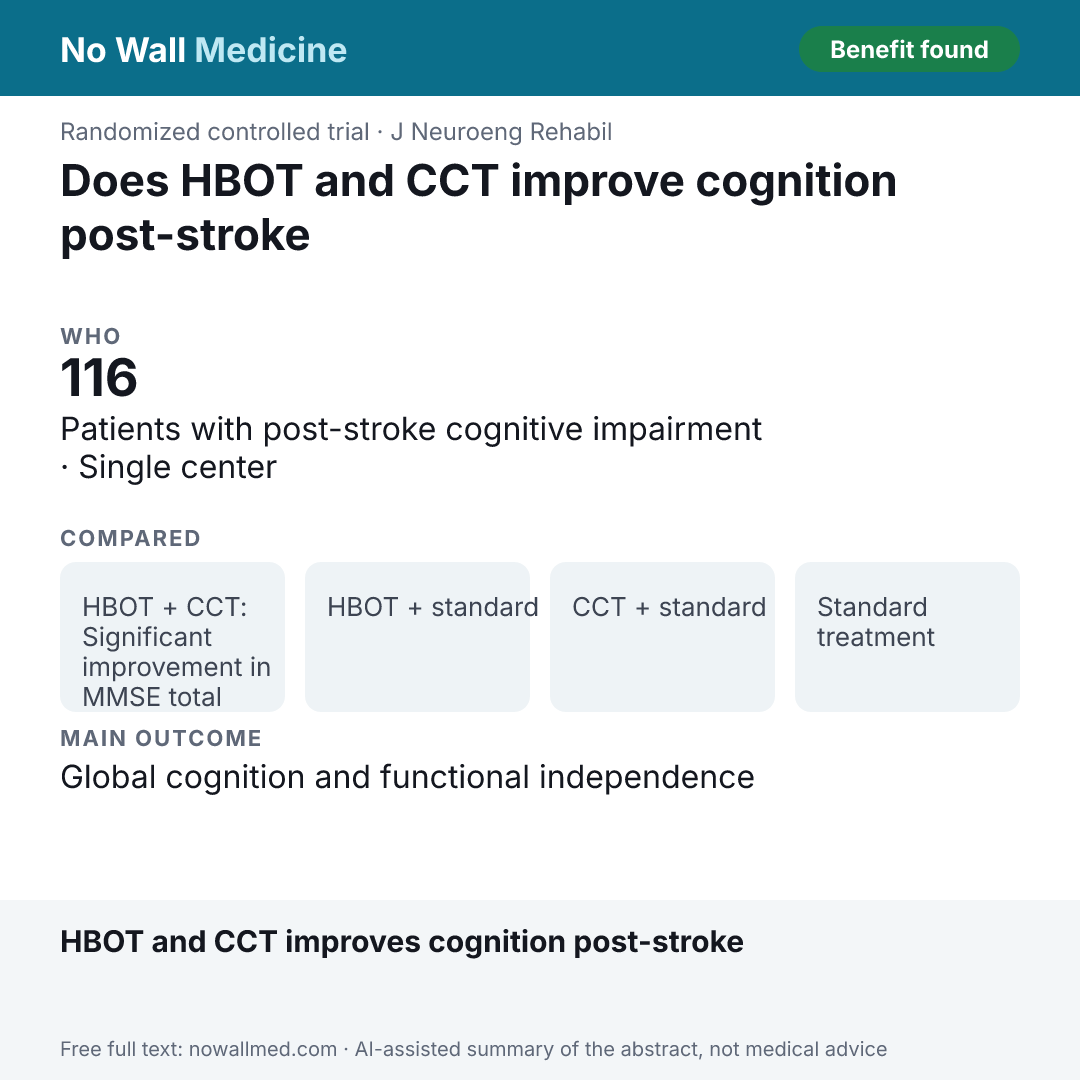
Hyperbaric oxygen therapy combined with computerized cognitive training improves global cognition and functional independence post-stroke: a randomized controlled trial
Randomized controlled trialBenefit found
Does HBOT and CCT improve cognition post-stroke
Who
116
Patients with post-stroke cognitive impairment · Single center
Compared
HBOT + CCT: Significant improvement in MMSE total scores
HBOT + standard
CCT + standard
Standard treatment
Main outcome
Global cognition and functional independence
Bottom line: HBOT and CCT improves cognition post-stroke
J Neuroeng Rehabil · 2026-04-28 · Save PNG
Deprescribing decisions in palliative care: a qualitative meta-synthesis of multi-stakeholder experiences and influencing factors
Meta-synthesis of qualitative studiesUnclear result
Deprescribing in palliative care
Who
patients, family caregivers, healthcare professionals · four countries
Compared
patients
healthcare professionals
Main outcome
deprescribing decisions
Bottom line: Communication is critical for deprescribing
BMC Palliat Care · 2026-04-28 · Save PNG

Anticipatory charging of the defibrillator: a systematic review
Systematic review of eleven studiesMixed results
Does anticipatory defibrillator charging improve outcomes compared with charging after rhythm analysis?
Who
Patients with cardiac arrest in clinical or simulation settings
Compared
Anticipatory charging: reduced pre-shock and peri-shock pauses
Charging after rhythm analysis: standard charging method
Main outcome
Survival, return of spontaneous circulation, and resuscitation performance
Bottom line: Anticipatory charging was associated with fewer interruptions but survival impact remains uncertain.
Limitation: Very low certainty of evidence due to high risk of bias and indirectness.
Resusc Plus · 2026-04-28 · Save PNG

Circulating Tumor DNA Assessment of Disease Response in Large B-Cell Lymphoma: Lisocabtagene Maraleucel Versus Autologous Stem Cell Transplantation Standard Therapy
Randomized clinical trialKey finding
Does circulating tumor DNA assessment predict disease response in large B-cell lymphoma?
Who
136
Patients with second-line large B-cell lymphoma
Compared
lisocabtagene maraleucel: achieved deeper, more durable molecular clearance
autologous stem cell transplantation standard therapy
Main outcome
event-free survival, progression-free survival, and duration of response
Bottom line: Lisocabtagene maraleucel achieved deeper, more durable molecular clearance and superior outcomes compared to standard therapy.
J Clin Oncol · 2026-04-27 · Save PNG

Multi-ancestry polygenic risk scores for the prediction of type 2 diabetes and complications in diverse ancestries
Meta-analysis of GWASKey finding
Do polygenic risk scores predict type 2 diabetes
Who
409959
Diverse global ancestries · Global
Compared
Multi-ancestry PRS
Single-ancestry PRS
Main outcome
Type 2 diabetes risk
Result: Odds ratio per SD 1·73 to 2·82
Bottom line: Polygenic risk scores improve type 2 diabetes prediction
Limitation: Poor performance in non-European populations
Funded by: National Human Genome Research Institute
Lancet Diabetes Endocrinol · 2026-04-27 · Save PNG

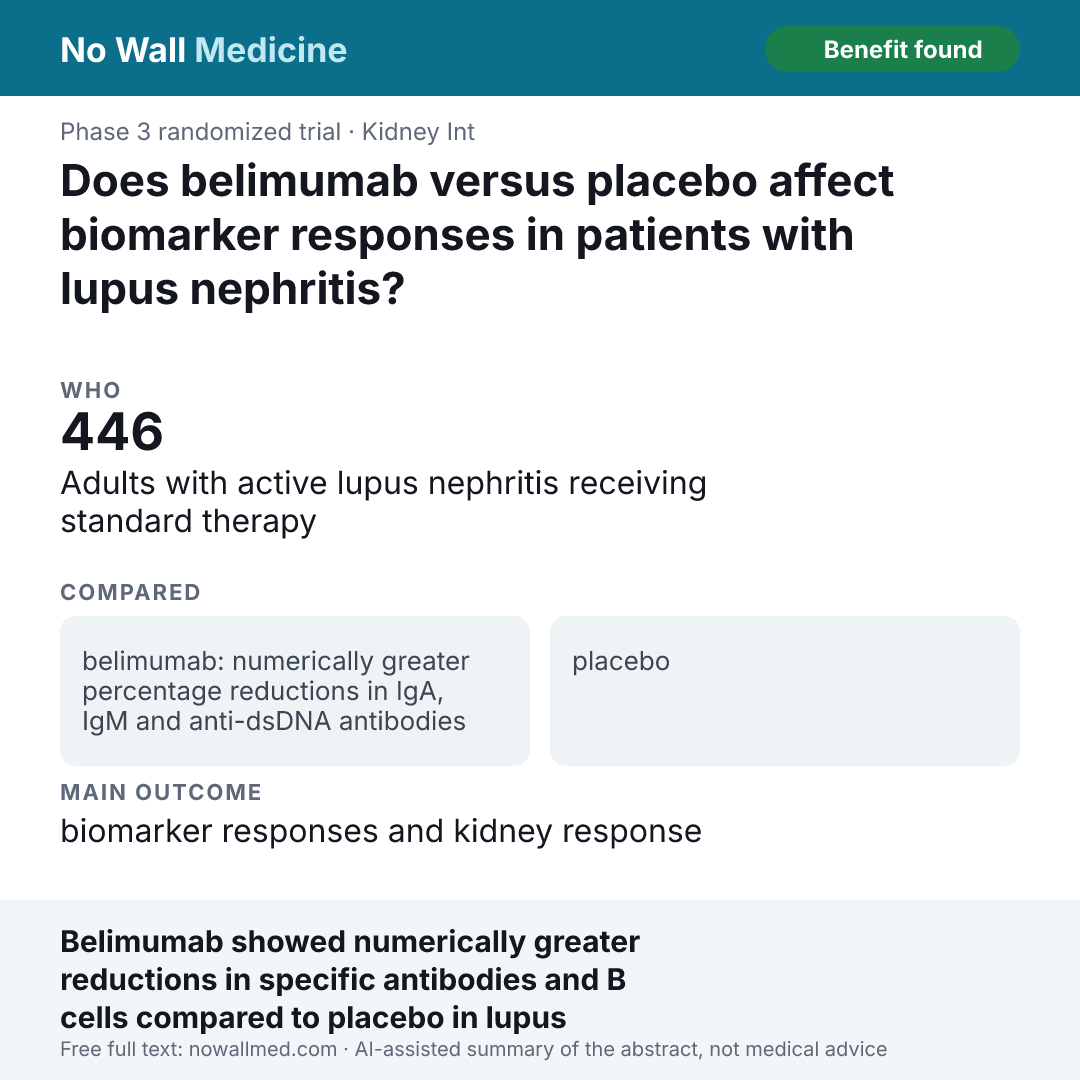
Insights from the BLISS-LN Phase 3 study of biomarker associations with kidney response to belimumab in lupus nephritis
Phase 3 randomized trialBenefit found
Does belimumab versus placebo affect biomarker responses in patients with lupus nephritis?
Who
446
Adults with active lupus nephritis receiving standard therapy
Compared
belimumab: numerically greater percentage reductions in IgA, IgM and anti-dsDNA antibodies
placebo
Main outcome
biomarker responses and kidney response
Bottom line: Belimumab showed numerically greater reductions in specific antibodies and B cells compared to placebo in lupus nephritis.
Kidney Int · 2026-04-27 · Save PNG
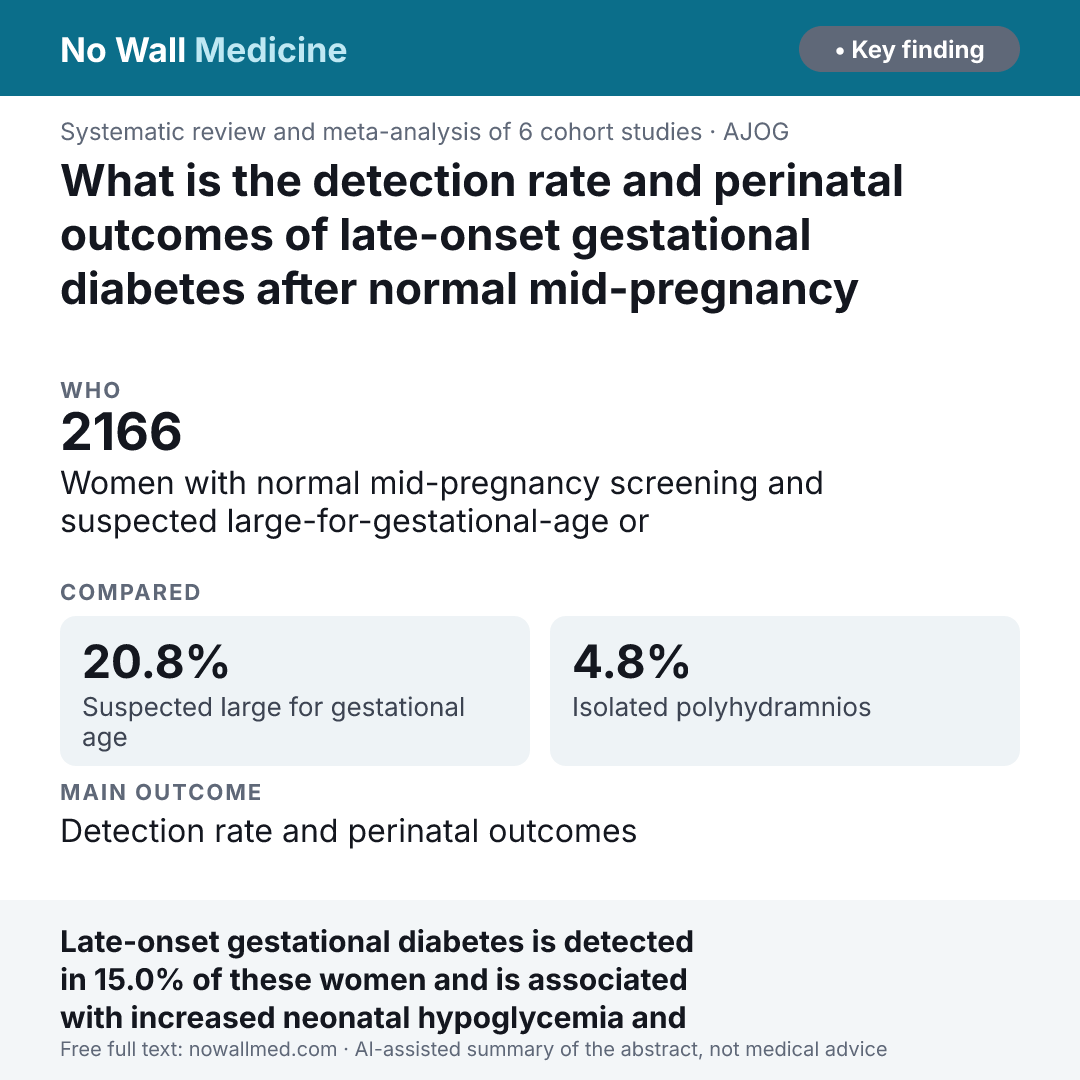
Late-onset diagnosis of gestational diabetes after normal mid-pregnancy screening in women with large for gestational age or polyhydramnios: a systematic review and meta-analysis
Systematic review and meta-analysis of 6 cohort studiesKey finding
What is the detection rate and perinatal outcomes of late-onset gestational diabetes after normal mid-pregnancy screening?
Who
2166
Women with normal mid-pregnancy screening and suspected large-for-gestational-age or polyhydramnios
Compared
20.8%Suspected large for gestational age (95% confidence interval, 17.4%-24.6%)
4.8%Isolated polyhydramnios (95% confidence interval, 2.0%-10.8%)
Main outcome
Detection rate and perinatal outcomes
Result: pooled detection rate 15.0% (95% confidence interval, 9.9%-21.0%)
Bottom line: Late-onset gestational diabetes is detected in 15.0% of these women and is associated with increased neonatal hypoglycemia and cesarean delivery.
AJOG · 2026-04-27 · Save PNG
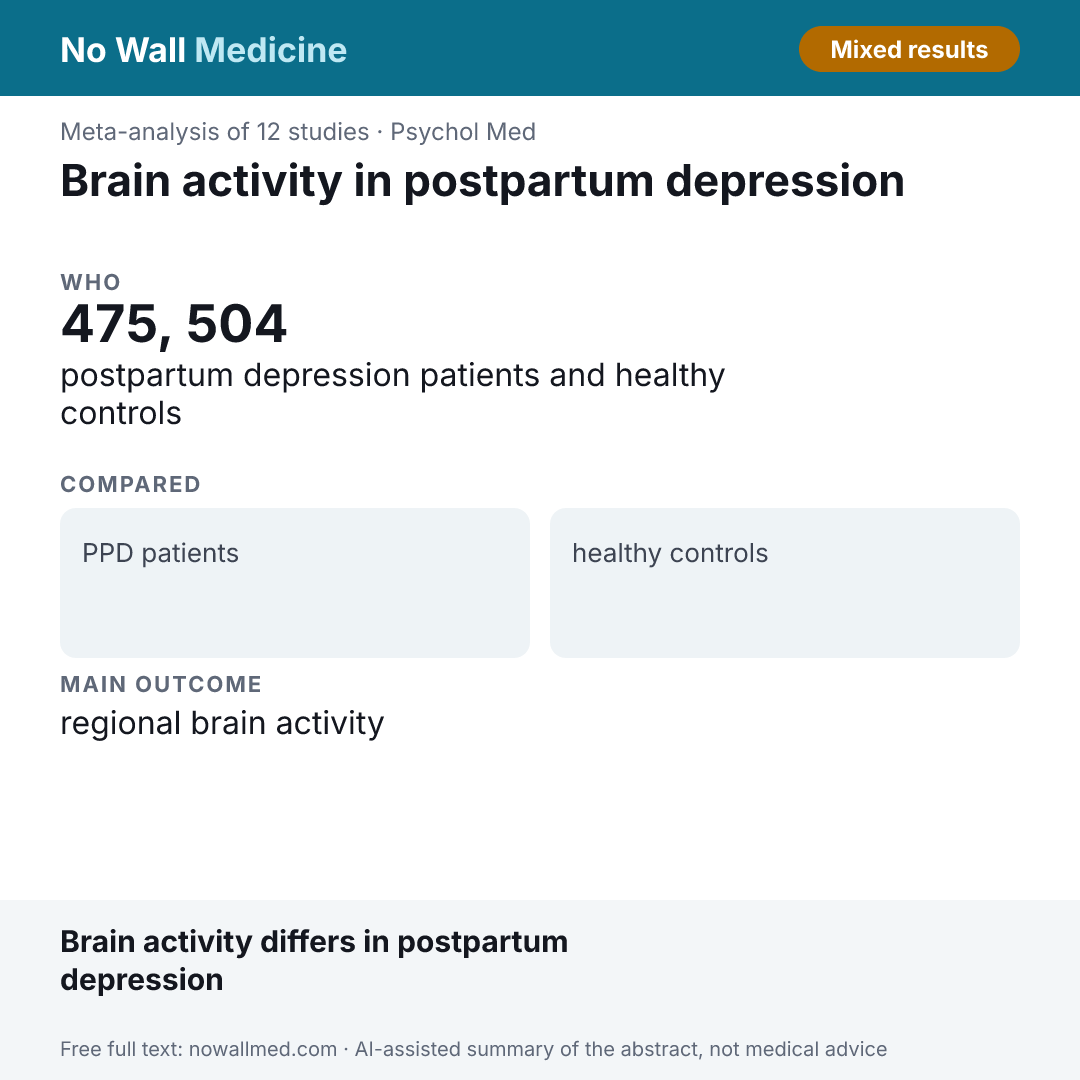
Intrinsic regional brain activity differences and its relationship with neurotransmitter and gene expression in postpartum depression: a voxel-based meta-analysis
Meta-analysis of 12 studiesMixed results
Brain activity in postpartum depression
Who
475, 504
postpartum depression patients and healthy controls
Compared
PPD patients
healthy controls
Main outcome
regional brain activity
Bottom line: Brain activity differs in postpartum depression
Psychol Med · 2026-04-27 · Save PNG
Treatment effect modifiers of virtual reality-based versus standard cognitive behavioral therapy for paranoia in schizophrenia spectrum disorders: an exploratory moderator analysis of clinical and demographic characteristics in the FaceYourFears trial
Exploratory moderator analysis of a randomized trialNo clear difference
Do baseline characteristics modify treatment effects of virtual reality versus standard cognitive behavioral therapy?
Who
254
Individuals diagnosed with schizophrenia spectrum disorders
Compared
Standard cognitive behavioral therapy for psychosis
Virtual reality-based cognitive behavioral therapy for psychosis
Main outcome
End-of-treatment paranoia
Bottom line: Both therapies appear suitable for a wide range of individuals with paranoia, though specific characteristics may modify effects.
Limitation: The study is exploratory with modest effects and largely nonsignificant findings.
Psychol Med · 2026-04-27 · Save PNG

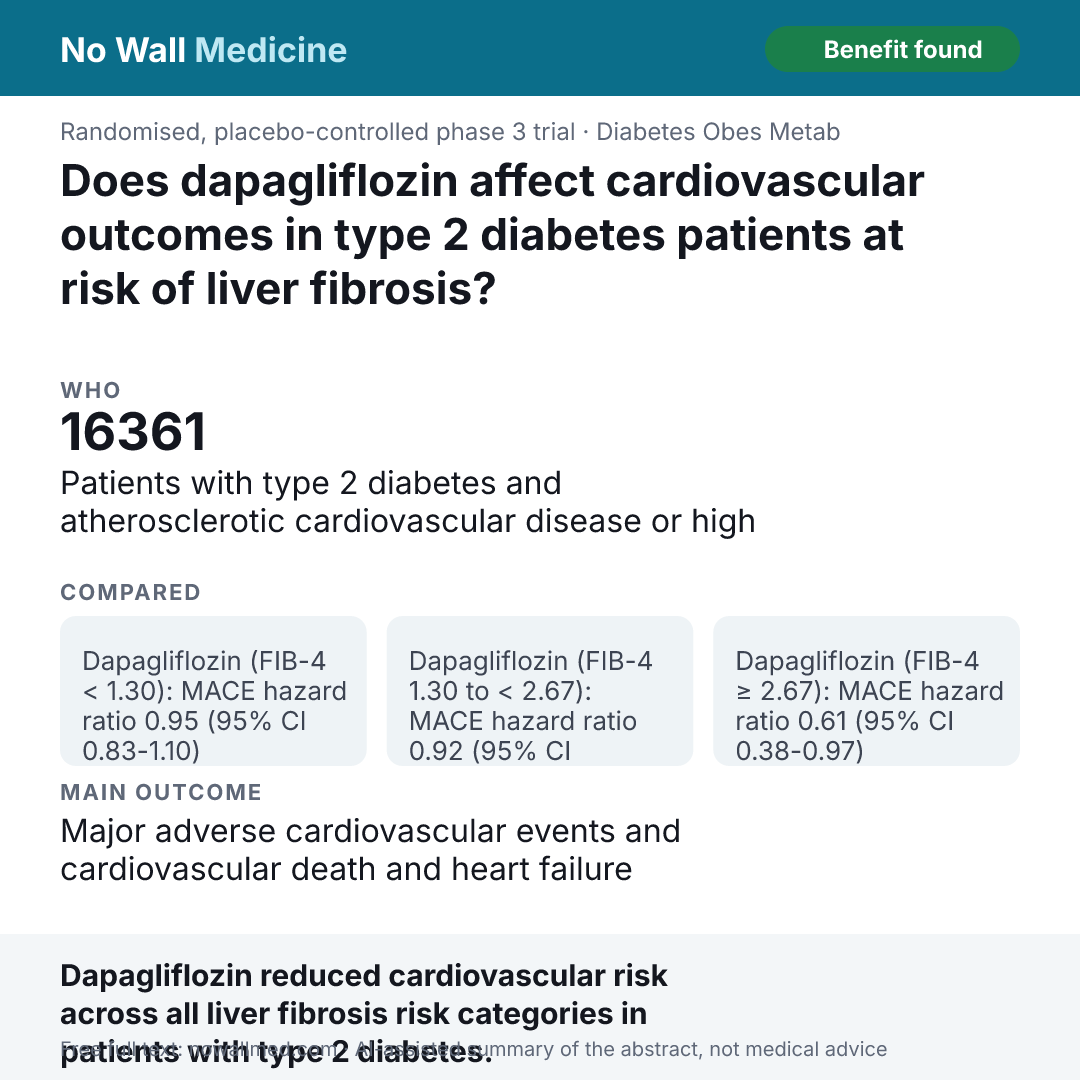
Effects of Dapagliflozin on Cardiovascular Outcomes in Patients With Type 2 Diabetes at Risk of Liver Fibrosis
Randomised, placebo-controlled phase 3 trialBenefit found
Does dapagliflozin affect cardiovascular outcomes in type 2 diabetes patients at risk of liver fibrosis?
Who
16361
Patients with type 2 diabetes and atherosclerotic cardiovascular disease or high risk
Compared
Dapagliflozin (FIB-4 < 1.30): MACE hazard ratio 0.95 (95% CI 0.83-1.10)
Dapagliflozin (FIB-4 1.30 to < 2.67): MACE hazard ratio 0.92 (95% CI 0.79-1.08)
Dapagliflozin (FIB-4 ≥ 2.67): MACE hazard ratio 0.61 (95% CI 0.38-0.97)
Main outcome
Major adverse cardiovascular events and cardiovascular death and heart failure hospitalisation
Result: MACE hazard ratio 0.61 (95% CI 0.38-0.97) in highest FIB-4 group
Bottom line: Dapagliflozin reduced cardiovascular risk across all liver fibrosis risk categories in patients with type 2 diabetes.
Diabetes Obes Metab · 2026-04-27 · Save PNG
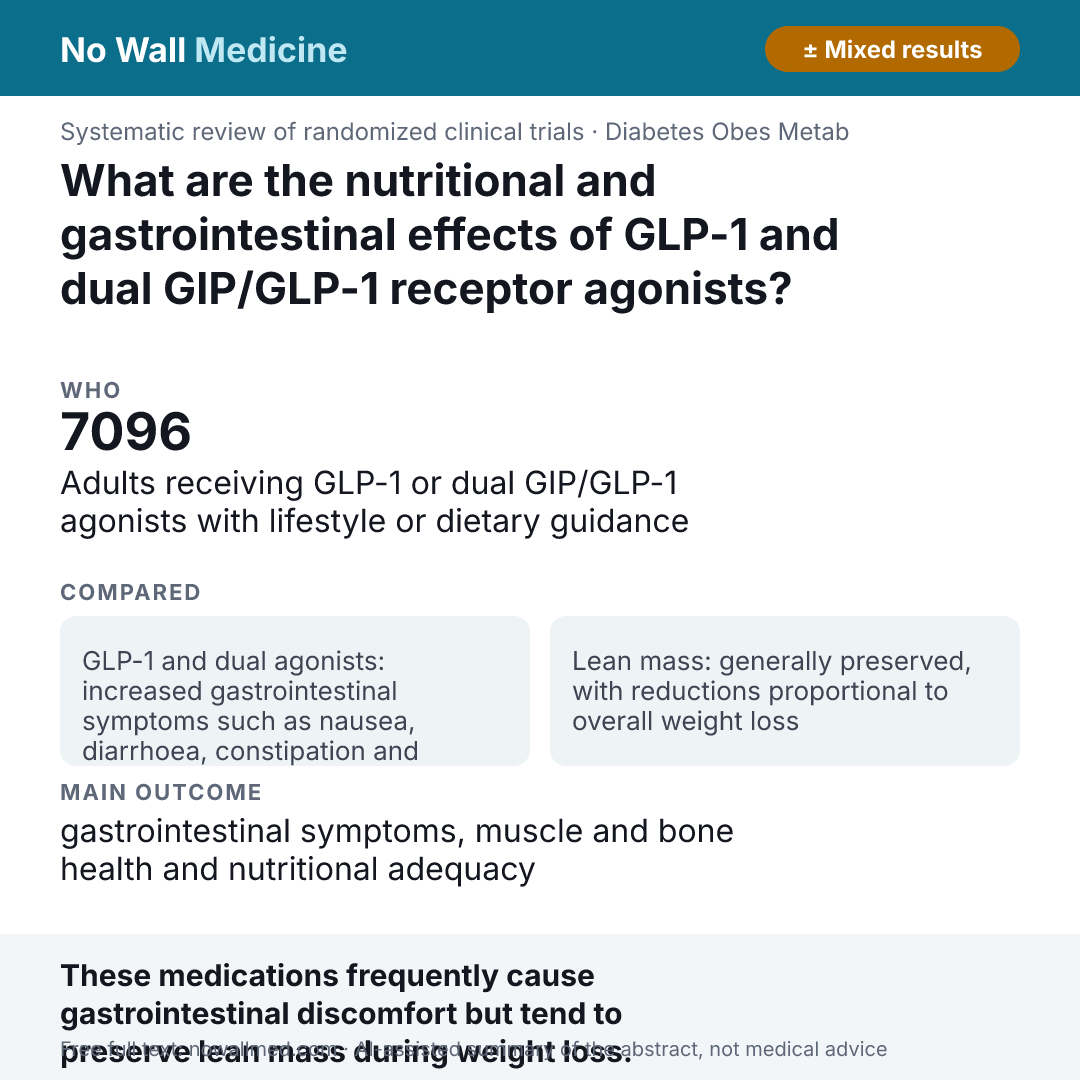
Dietary Strategies and Nutritional Management in Patients Receiving GLP-1 and Dual GIP/GLP-1 Receptor Agonists as Adjuncts to Lifestyle Interventions: A Systematic Review of Randomised Clinical Trials
Systematic review of randomized clinical trialsMixed results
What are the nutritional and gastrointestinal effects of GLP-1 and dual GIP/GLP-1 receptor agonists?
Who
7096
Adults receiving GLP-1 or dual GIP/GLP-1 agonists with lifestyle or dietary guidance
Compared
GLP-1 and dual agonists: increased gastrointestinal symptoms such as nausea, diarrhoea, constipation and vomiting
Lean mass: generally preserved, with reductions proportional to overall weight loss
Main outcome
gastrointestinal symptoms, muscle and bone health and nutritional adequacy
Bottom line: These medications frequently cause gastrointestinal discomfort but tend to preserve lean mass during weight loss.
Limitation: Evidence on optimal nutritional approaches remains limited and no study directly assessed bone health.
Diabetes Obes Metab · 2026-04-27 · Save PNG
PROductivity Study of Presbyopia Elimination in gaRment workers (PROSPER II): a randomised trial on the productivity impact of providing near glasses to Indian garment factory workers
Individually randomised, investigator-masked, controlled trialBenefit found
Does providing near glasses improve productivity in Indian garment factory workers?
Who
682
Garment factory workers aged 35 years or older with presbyopia · Karnataka, India
Compared
5.70%Intervention (immediate delivery of glasses) (95% CI 1.04% to 10.4%)
Control (identical glasses delivered at endline)
Main outcome
Work productivity defined as hourly items completed normalised to target
Result: 5.70% (95% CI 1.04% to 10.4%)
Bottom line: Providing free near glasses significantly increases work productivity among garment factory workers in India.
Br J Ophthalmol · 2026-04-27 · Save PNG

Virtual Reality Mastoidectomy as Precadaver Training for Novices: A Randomized Crossover Study
Randomized crossover studyBenefit found
Does virtual reality simulation versus cadaveric dissection training affect cognitive load and performance?
Who
24
24 core surgical trainees with no prior mastoidectomy experience
Compared
Virtual reality simulation: mean relative reaction time rising 26% from baseline
Cadaveric dissection: mean relative reaction time rising 60% from baseline
Main outcome
Cognitive load and cadaveric performance
Bottom line: Virtual reality reduces cognitive load and improves subsequent cadaveric performance in novice surgical trainees.
Laryngoscope · 2026-04-27 · Save PNG

Bacterial Lysates Add-On Therapy to Reduce Postoperative Recurrence in Nasal Polyps
Single-center randomized prospective studyBenefit found
Does OM-85 add-on therapy reduce postoperative nasal polyp recurrence?
Who
77
Patients with nasal polyps · Single-center
Compared
8.82%OM-85 add-on
27.91%Control group
Main outcome
Polyp recurrence rate
Bottom line: Adding OM-85 therapy significantly reduces postoperative nasal polyp recurrence and improves symptom scores.
Laryngoscope · 2026-04-27 · Save PNG

Effects of vitamin D on biochemical markers of osteoporosis: a meta-analysis of randomised trials
Meta-analysis of randomized studiesBenefit found
What are the effects of vitamin D supplements on bone turnover markers?
Who
2695
Participants in trials of vitamin D versus placebo
Compared
Vitamin D
Placebo
Main outcome
Plasma levels of P1NP and CTX
Result: -3.3 % (95 % CI -5.6, -1.0) for P1NP and -3.8 % (95 % CI -6.8, -0.8) for CTX
Bottom line: Vitamin D supplementation was associated with modest reductions in both P1NP and CTX bone turnover markers.
Br J Nutr · 2026-04-27 · Save PNG

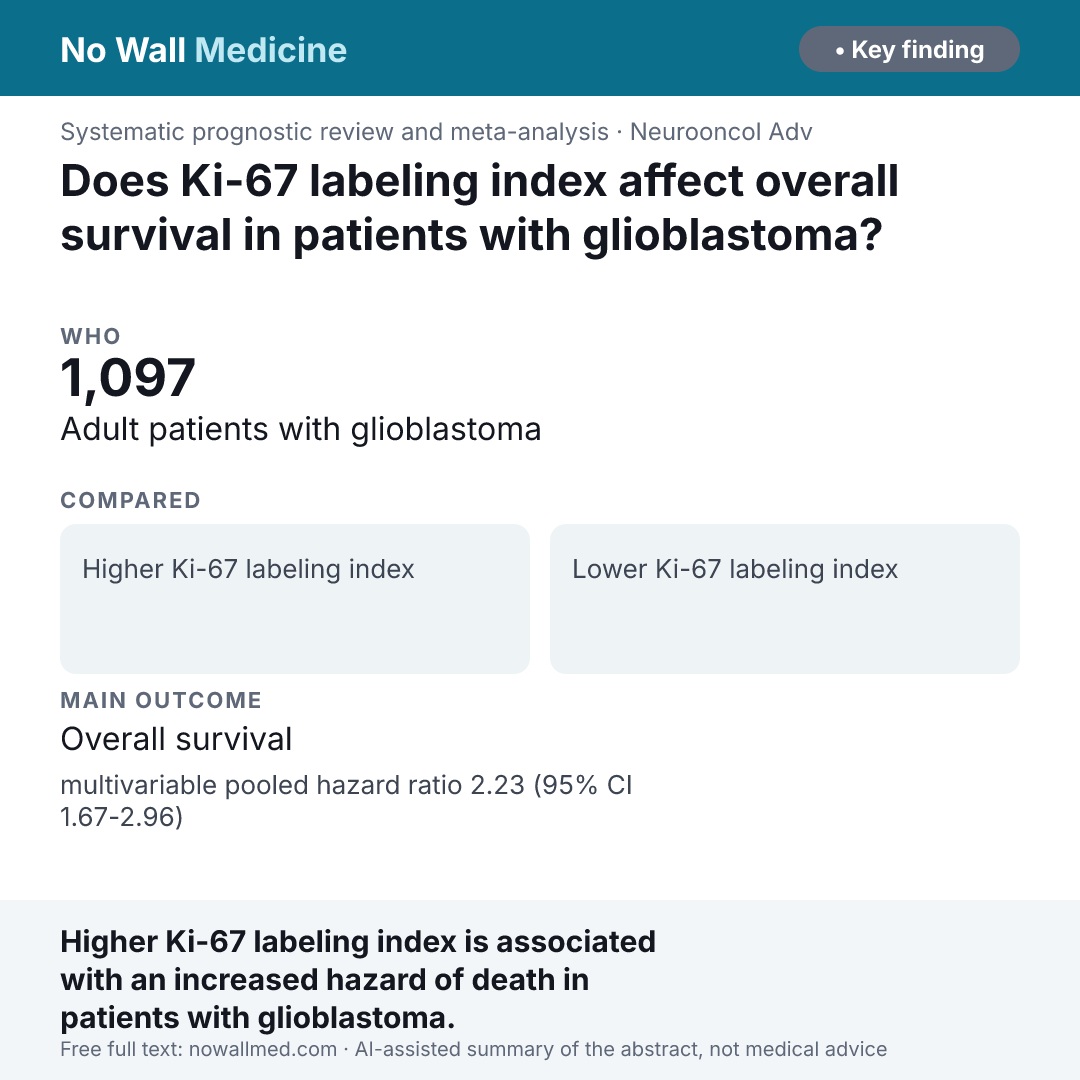
Ki-67 and overall survival in patients with glioblastoma: A systematic prognostic review and meta-analysis
Systematic prognostic review and meta-analysisKey finding
Does Ki-67 labeling index affect overall survival in patients with glioblastoma?
Who
1,097
Adult patients with glioblastoma
Compared
Higher Ki-67 labeling index
Lower Ki-67 labeling index
Main outcome
Overall survival
Result: multivariable pooled hazard ratio 2.23 (95% CI 1.67-2.96)
Bottom line: Higher Ki-67 labeling index is associated with an increased hazard of death in patients with glioblastoma.
Limitation: Concerns for selective study participation and heterogeneous Ki-67 cutoffs.
Neurooncol Adv · 2026-04-27 · Save PNG
Long-Term Outcomes of Transcatheter Aortic Valve Replacement in Low-Flow Low-Gradient Aortic Stenosis: A Reconstructed Time-to-Event and Multivariate Meta-Analysis
Reconstructed time-to-event and multivariate meta-analysisKey finding
What are the long-term outcomes of TAVR for different types of severe aortic stenosis?
Who
20493
Patients with high-gradient, classical low-flow low-gradient, or paradoxical low-flow low-gradient aortic stenosis
Compared
High-gradient aortic stenosis
Classical low-flow low-gradient aortic stenosis: hazard ratio 1.92 (95% CI 1.62-2.27)
Paradoxical low-flow low-gradient aortic stenosis: hazard ratio 1.20 (95% CI 1.07-1.34)
Main outcome
5-year all-cause mortality
Result: hazard ratio 1.92 (95% CI 1.62-2.27) for classical and 1.20 (95% CI 1.07-1.34) for paradoxical
Bottom line: Classical and paradoxical low-flow low-gradient aortic stenosis are associated with higher mortality following transcatheter aortic valve replacement.
J Am Heart Assoc · 2026-04-27 · Save PNG

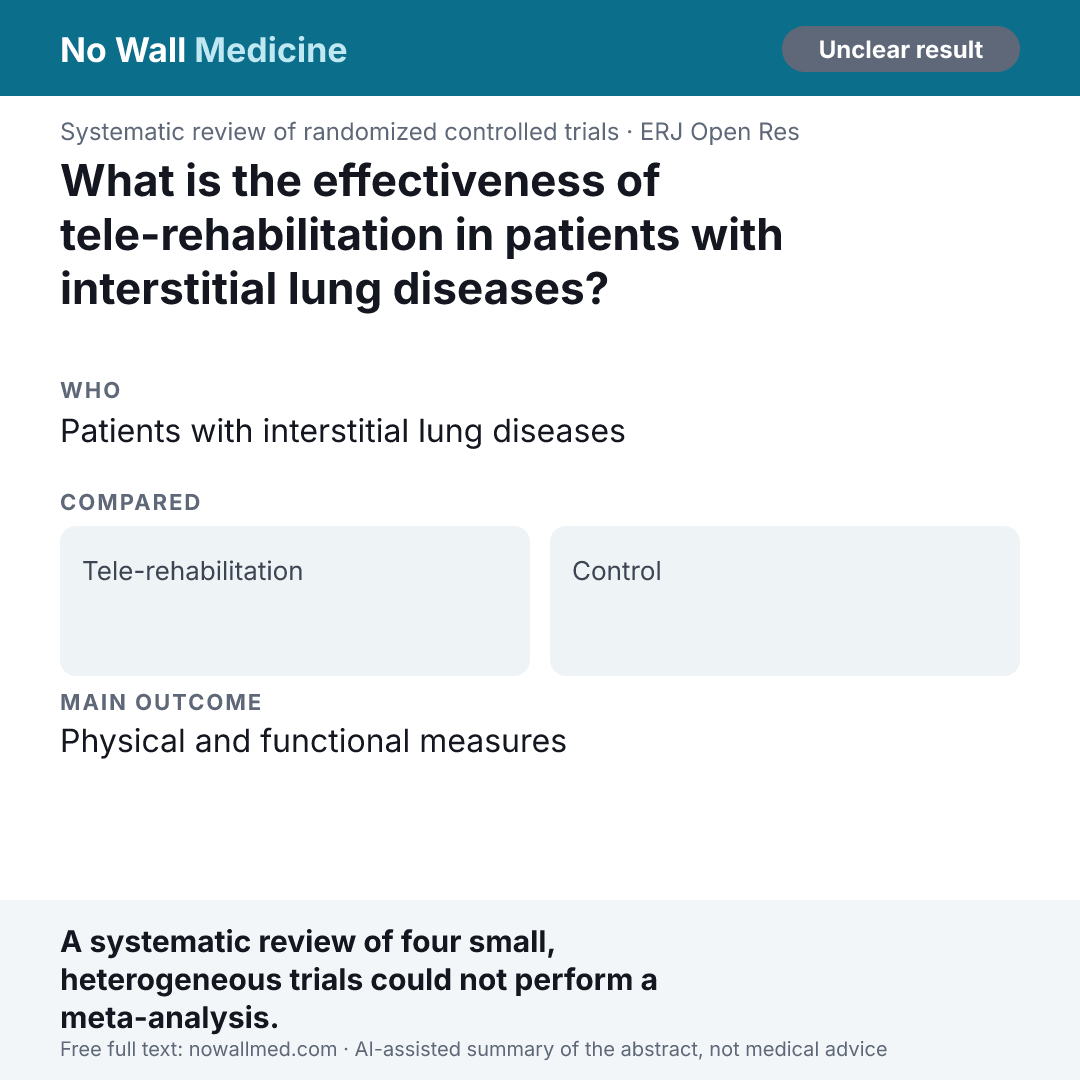
Home-based rehabilitation in interstitial lung disease: picturing the present and drawing the future through a systematic review of the literature
Systematic review of randomized controlled trialsUnclear result
What is the effectiveness of tele-rehabilitation in patients with interstitial lung diseases?
Who
Patients with interstitial lung diseases
Compared
Tele-rehabilitation
Control
Main outcome
Physical and functional measures
Bottom line: A systematic review of four small, heterogeneous trials could not perform a meta-analysis.
ERJ Open Res · 2026-04-27 · Save PNG
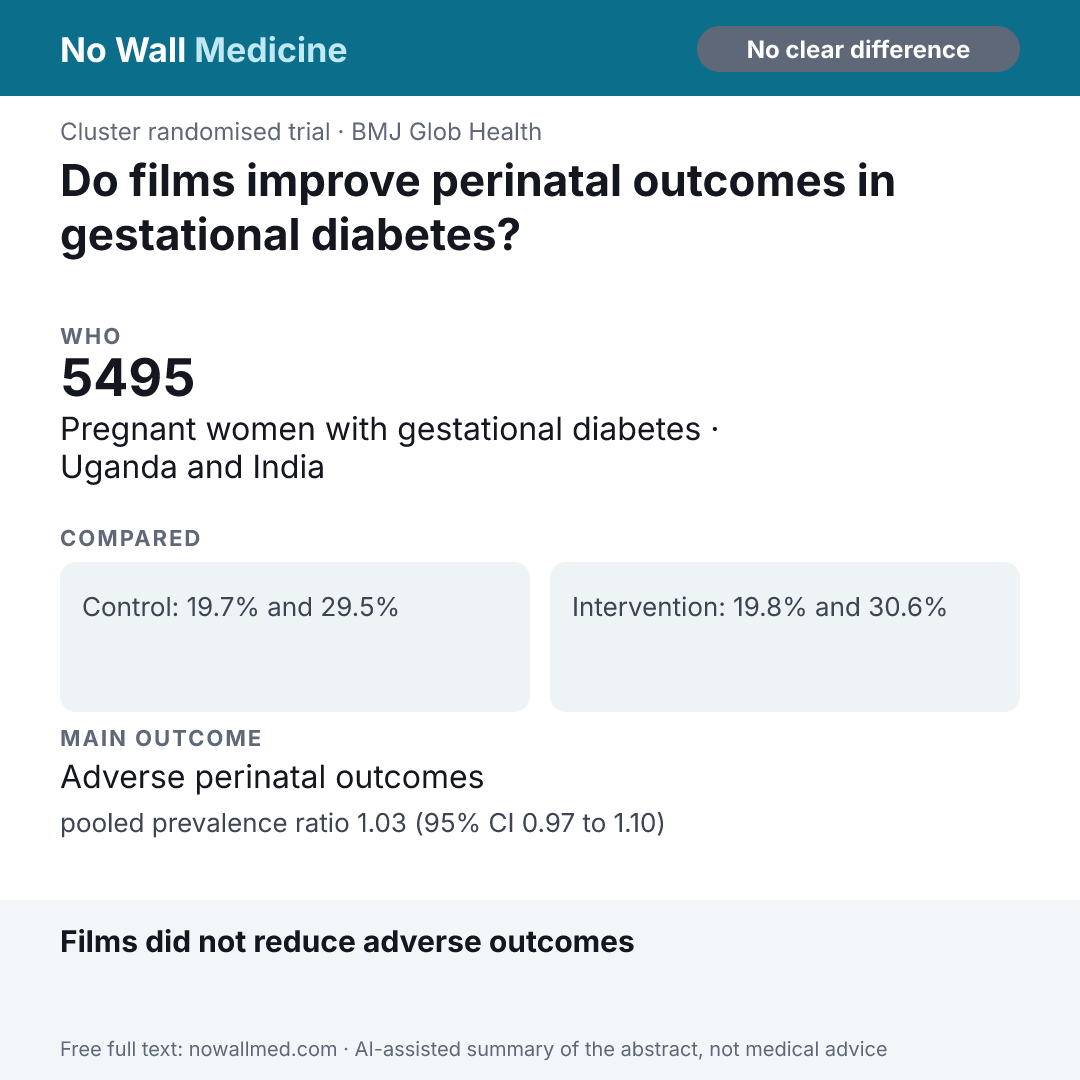
Educational films for improving perinatal outcomes associated with gestational diabetes in Uganda and India: a cluster randomised trial
Cluster randomised trialNo clear difference
Do films improve perinatal outcomes in gestational diabetes?
Who
5495
Pregnant women with gestational diabetes · Uganda and India
Compared
Control: 19.7% and 29.5%
Intervention: 19.8% and 30.6%
Main outcome
Adverse perinatal outcomes
Result: pooled prevalence ratio 1.03 (95% CI 0.97 to 1.10)
Bottom line: Films did not reduce adverse outcomes
BMJ Glob Health · 2026-04-27 · Save PNG
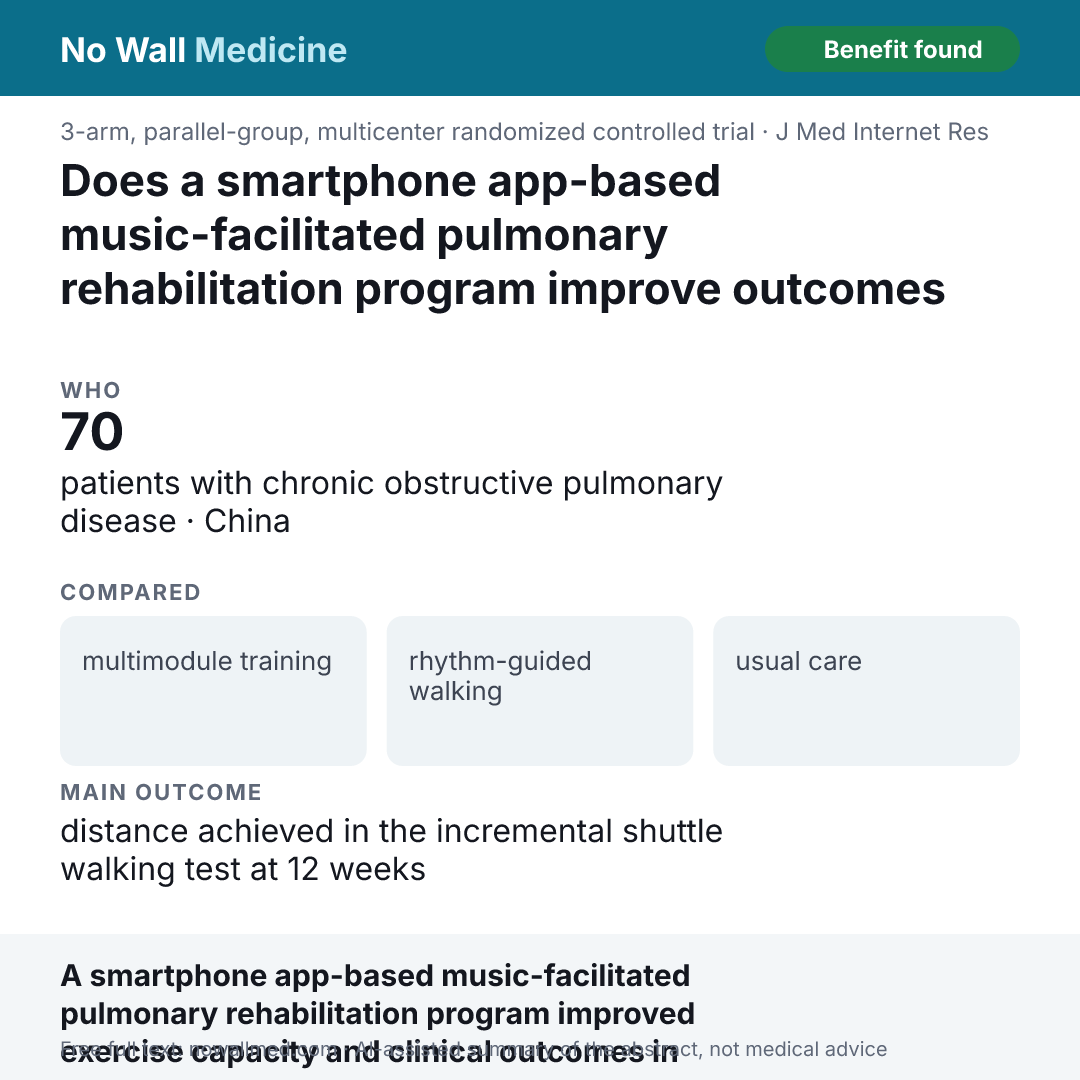
Smartphone App-Based Music-Facilitated Pulmonary Rehabilitation Program Integrating Rhythm-Guided Walking and Singing for Patients With Chronic Obstructive Pulmonary Disease: Multicenter Randomized Controlled Trial
3-arm, parallel-group, multicenter randomized controlled trialBenefit found
Does a smartphone app-based music-facilitated pulmonary rehabilitation program improve outcomes in COPD patients?
Who
70
patients with chronic obstructive pulmonary disease · China
Compared
multimodule training
rhythm-guided walking
usual care
Main outcome
distance achieved in the incremental shuttle walking test at 12 weeks
Result: mean difference 56.35 m, 95% CI 6.66-106.04 m
Bottom line: A smartphone app-based music-facilitated pulmonary rehabilitation program improved exercise capacity and clinical outcomes in patients with COPD.
J Med Internet Res · 2026-04-27 · Save PNG