Visual abstracts
New randomized trials and meta-analyses from leading journals at a glance: who was studied, what was compared, and what was found. Every paper is free to read in full.
All specialtiesCardiology 4833Oncology 4115Gastroenterology & Hepatology 1934Infectious Disease 3825Neurology 1901Psychiatry & Mental Health 2256Pulmonology 2082Critical Care 1346Endocrinology & Diabetes 2572Pediatrics 2940Surgery 2525Orthopedics & Sports Medicine 926Neurosurgery 534Cardiothoracic & Vascular Surgery 671Plastic & Reconstructive Surgery 591Nephrology 1124Rheumatology 823Hematology 1104Dermatology 620Ophthalmology 543Obstetrics & Gynecology 1684Public & Global Health 1056Radiology & Imaging 641Anesthesiology 962Urology 754ENT (Otolaryngology) 503Emergency Medicine 489Allergy & Immunology 313Geriatrics 982Family Medicine & Primary Care 541Medical Genetics & Genomics 675Pathology & Laboratory Medicine 157Physical Medicine & Rehabilitation 751Palliative Care 424Nutrition 1580Digital Health & AI 2195General Medicine 321
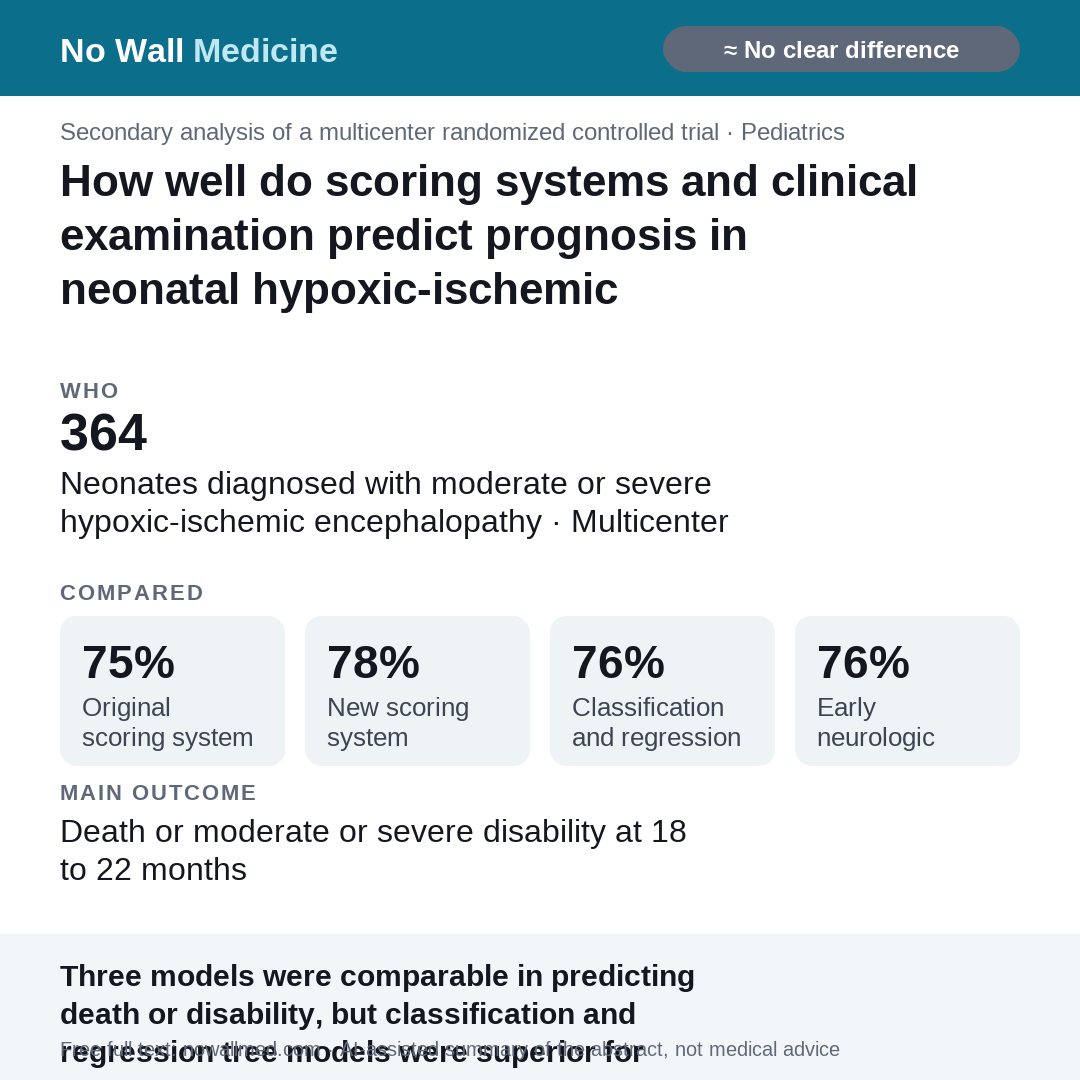
Early Determination of Prognosis in Neonatal Moderate or Severe Hypoxic-Ischemic Encephalopathy
Secondary analysis of a multicenter randomized controlled trialNo clear difference
How well do scoring systems and clinical examination predict prognosis in neonatal hypoxic-ischemic encephalopathy?
Who
364
Neonates diagnosed with moderate or severe hypoxic-ischemic encephalopathy · Multicenter
Compared
75%Original scoring system (95% confidence interval: 69%-81%)
78%New scoring system (73%-82%)
76%Classification and regression tree model (72%-81%)
76%Early neurologic clinical examination (71%-80%)
Main outcome
Death or moderate or severe disability at 18 to 22 months
Bottom line: Three models were comparable in predicting death or disability, but classification and regression tree models were superior for in-hospital death.
Pediatrics · 2021-05-13Download image
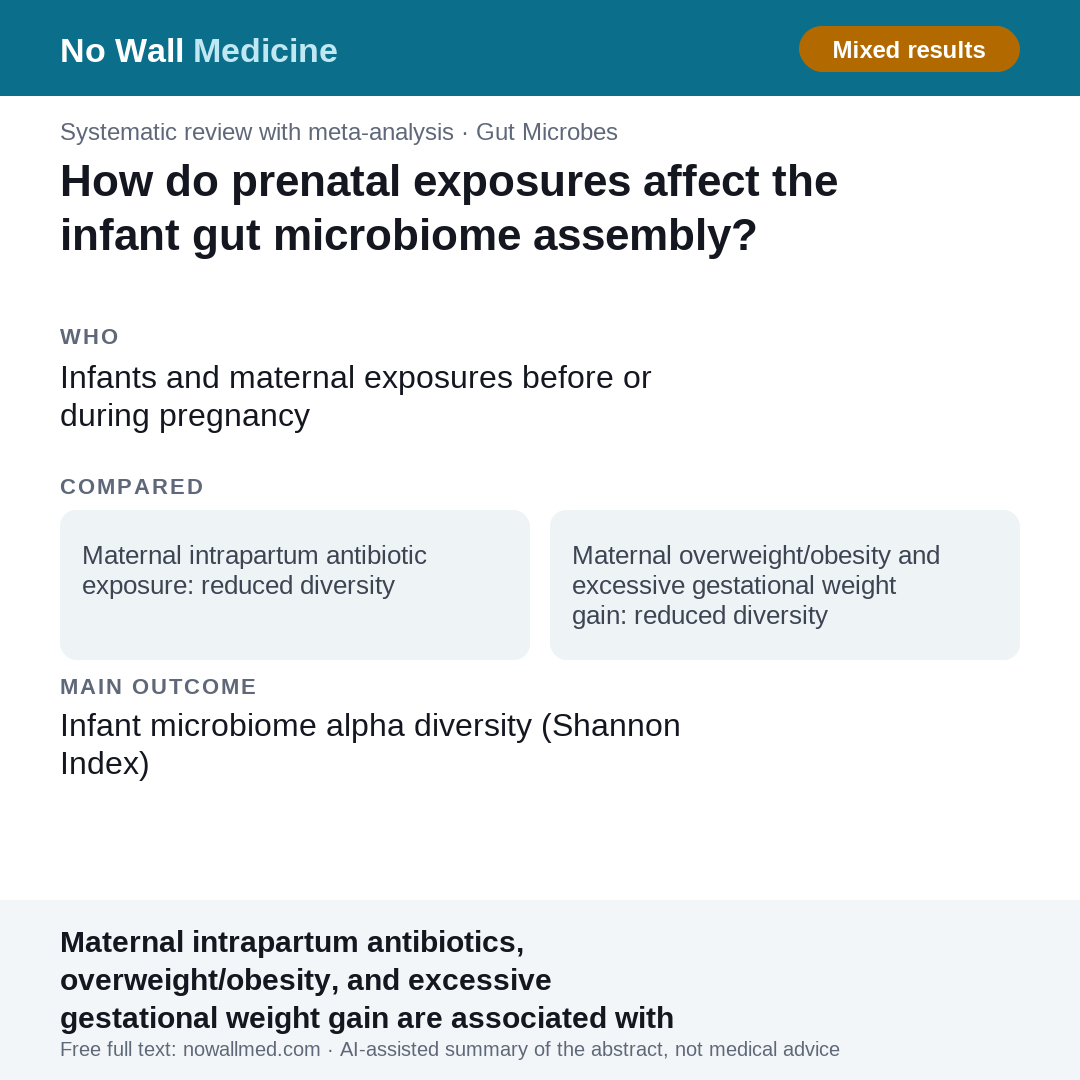
Maternal exposures and the infant gut microbiome: a systematic review with meta-analysis
Systematic review with meta-analysisMixed results
How do prenatal exposures affect the infant gut microbiome assembly?
Who
Infants and maternal exposures before or during pregnancy
Compared
Maternal intrapartum antibiotic exposure: reduced diversity
Maternal overweight/obesity and excessive gestational weight gain: reduced diversity
Main outcome
Infant microbiome alpha diversity (Shannon Index)
Bottom line: Maternal intrapartum antibiotics, overweight/obesity, and excessive gestational weight gain are associated with reduced infant microbiome diversity.
Gut Microbes · 2021-05-12Download image
Success rates in restoring hearing loss in patients with chronic otitis media: A systematic review
Systematic reviewBenefit found
How effective is tympanoplasty in restoring hearing in chronic otitis media patients?
Who
3162
Adult and pediatric patients with chronic otitis media
Compared
All patients: 70.7% had postoperative air-bone gap < 20 dB HL
14.0%Complications
Main outcome
Air-bone gap closure at minimum 12-month follow-up
Bottom line: Tympanoplasty successfully closed the air-bone gap to within 20 dB HL in 70.7% of patients.
Laryngoscope Investig Otolaryngol · 2021-05-12Download image

Effect of an Internet-Delivered Stepped-Care Program vs In-Person Cognitive Behavioral Therapy on Obsessive-Compulsive Disorder Symptoms in Children and Adolescents: A Randomized Clinical Trial
Randomized clinical noninferiority trialBenefit found
Is internet-delivered stepped-care cognitive behavioral therapy noninferior to in-person therapy for pediatric obsessive-compulsive disorder?
Who
152
Individuals aged 8 to 17 years with obsessive-compulsive disorder · 2 specialist child and adolescent mental health clinics in Sweden
Compared
11.57 pointsInternet-delivered stepped-care group
10.57 pointsIn-person cognitive behavioral therapy group
Main outcome
Children's Yale-Brown Obsessive-Compulsive Scale score at 6-month follow-up
Result: estimated mean difference 0.91 points ([1-sided 97.5% CI, -∞ to 3.28])
Bottom line: Internet-delivered stepped-care cognitive behavioral therapy was noninferior to in-person therapy for children and adolescents with obsessive-compulsive disorder.
Limitation: Further research is needed to understand the durability and generalizability of these findings.
JAMA · 2021-05-11Download image

Cost-effectiveness evidence of mental health prevention and promotion interventions: A systematic review of economic evaluations
Systematic review of economic evaluationsBenefit found
Are mental health prevention and promotion interventions cost-effective?
Who
65
Children, adolescents, adults, and older adults
Compared
Mental health prevention and promotion
Universal prevention
Main outcome
Incremental cost-effectiveness ratio or return on investment ratio
Bottom line: Most mental health prevention and promotion interventions were found to be cost-effective or cost saving.
Limitation: Varied quality and methodologies used in economic evaluations limit generalisability of conclusions.
PLOS Med · 2021-05-11Download image

Fortification of Breast Milk With Preterm Formula Powder vs Human Milk Fortifier in Preterm Neonates: A Randomized Noninferiority Trial
Open-label, noninferiority, randomized trialBenefit found
Is preterm formula powder fortification noninferior to human milk fortifier for weight gain?
Who
123
Preterm very low-birth-weight neonates receiving expressed breast milk · Level 3 neonatal unit in India
Compared
Preterm formula powder: 15.7 [3.9] g/kg/d
Human milk fortifier: 16.3 [4.0] g/kg/d
Main outcome
Weight gain until discharge or 40 weeks postmenstrual age
Result: mean difference, -0.5 g/kg/d; 95% CI, -1.9 to 0.7
Bottom line: Preterm formula powder fortification is noninferior to human milk fortifier for weight gain in preterm neonates.
JAMA Pediatr · 2021-05-11Download image

Randomized prospective evaluation of genome sequencing versus standard-of-care as a first molecular diagnostic test
Prospective randomized studyNo clear difference
Is clinical genome sequencing effective as a first genetic test for suspected monogenic disorders?
Who
202
Pediatric and adult patients with suspected monogenic disorders · Massachusetts General Hospital
Compared
18.2%Standard-of-care genetic testing only (95% CI 10.6-25.8%)
16.2%Standard-of-care and clinical genome sequencing (95% CI 8.9-23.4%)
Main outcome
Diagnostic yield
Bottom line: Clinical genome sequencing as a first test showed no significant difference in diagnostic yield compared to standard-of-care.
Genet Med · 2021-05-11Download image

How does the cam morphology develop in athletes? A systematic review and meta-analysis
Systematic review and random effects meta-analysisBenefit found
How does cam morphology develop in athletes?
Who
2,028
Athletes
Compared
Males with closed physes: higher alpha angle
Males with open physes
Main outcome
Development of cam morphology
Result: SMD 0.71 (95% CI 0.23, 1.19)
Bottom line: In adolescent male athletes, cam morphology develops during skeletal immaturity and prevalence increases with age.
Osteoarthritis Cartilage · 2021-05-11Download image

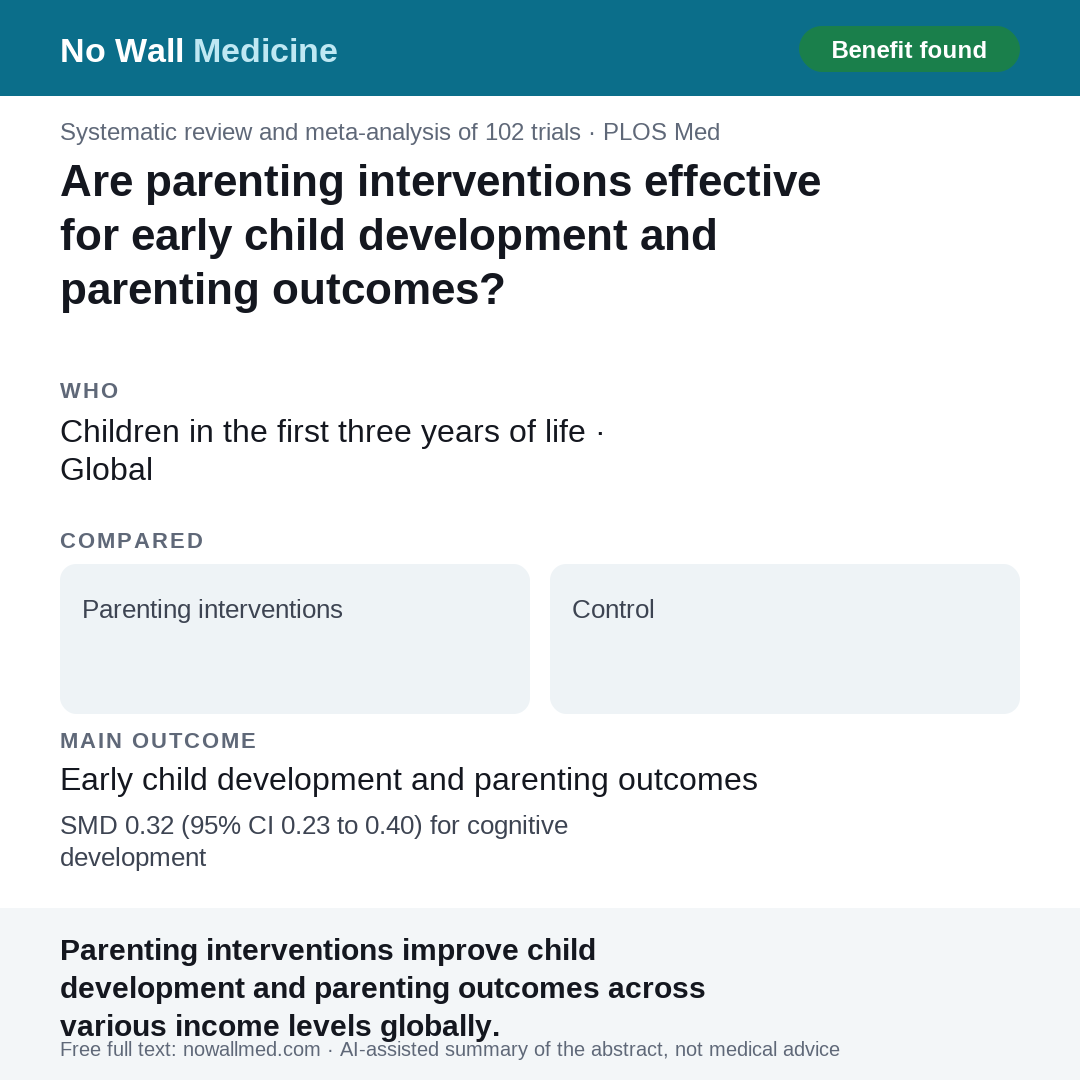
Parenting interventions to promote early child development in the first three years of life: A global systematic review and meta-analysis
Systematic review and meta-analysis of 102 trialsBenefit found
Are parenting interventions effective for early child development and parenting outcomes?
Who
Children in the first three years of life · Global
Compared
Parenting interventions
Control
Main outcome
Early child development and parenting outcomes
Result: SMD 0.32 (95% CI 0.23 to 0.40) for cognitive development
Bottom line: Parenting interventions improve child development and parenting outcomes across various income levels globally.
Limitation: Unexplained heterogeneity, inadequate reporting of intervention content, and varying quality of evidence.
PLOS Med · 2021-05-10Download image
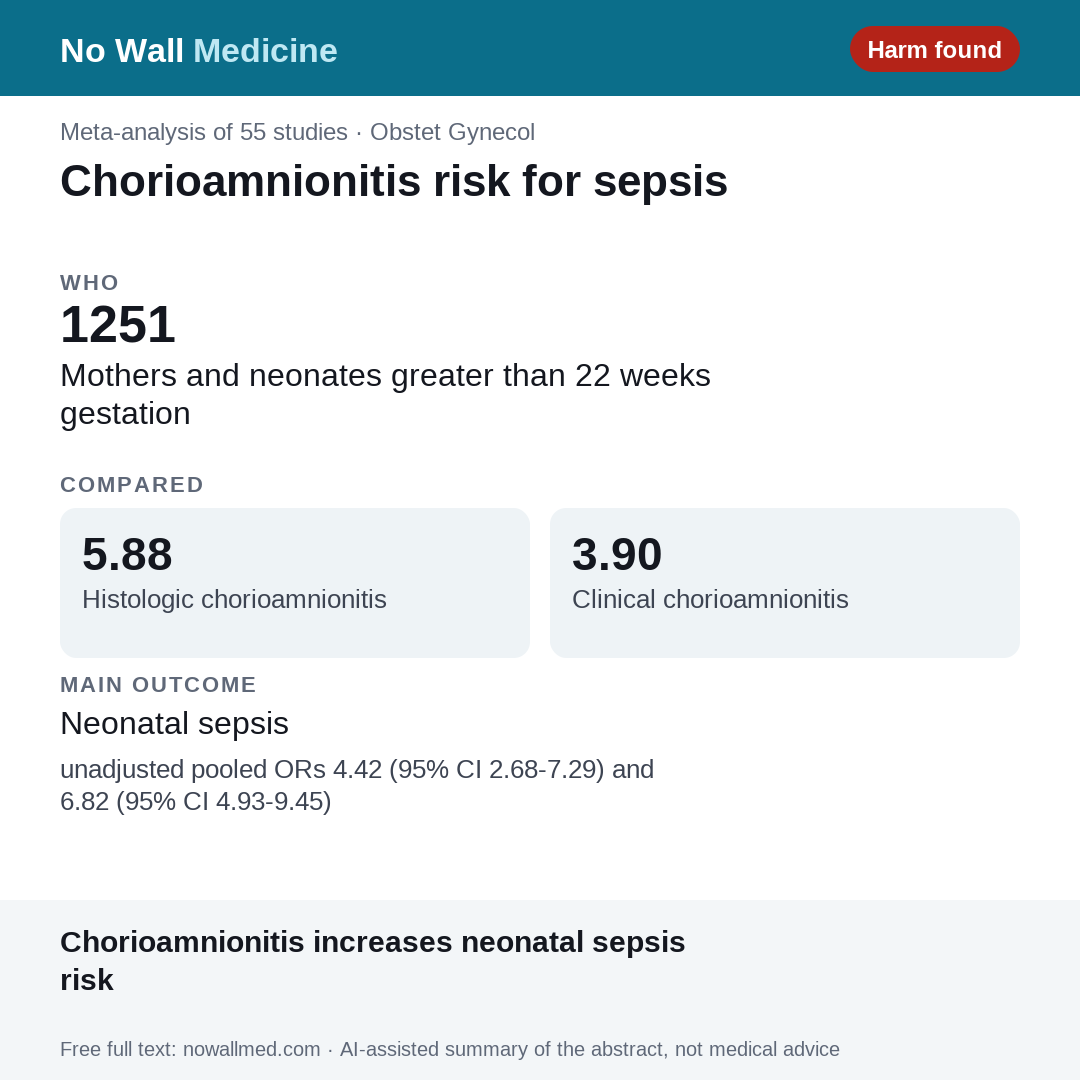
Chorioamnionitis and Risk for Maternal and Neonatal Sepsis: A Systematic Review and Meta-analysis
Meta-analysis of 55 studiesHarm found
Chorioamnionitis risk for sepsis
Who
1251
Mothers and neonates greater than 22 weeks gestation
Compared
5.88Histologic chorioamnionitis (95% CI 3.68-9.41)
3.90Clinical chorioamnionitis (95% CI 2.74-5.55)
Main outcome
Neonatal sepsis
Result: unadjusted pooled ORs 4.42 (95% CI 2.68-7.29) and 6.82 (95% CI 4.93-9.45)
Bottom line: Chorioamnionitis increases neonatal sepsis risk
Obstet Gynecol · 2021-05-07Download image
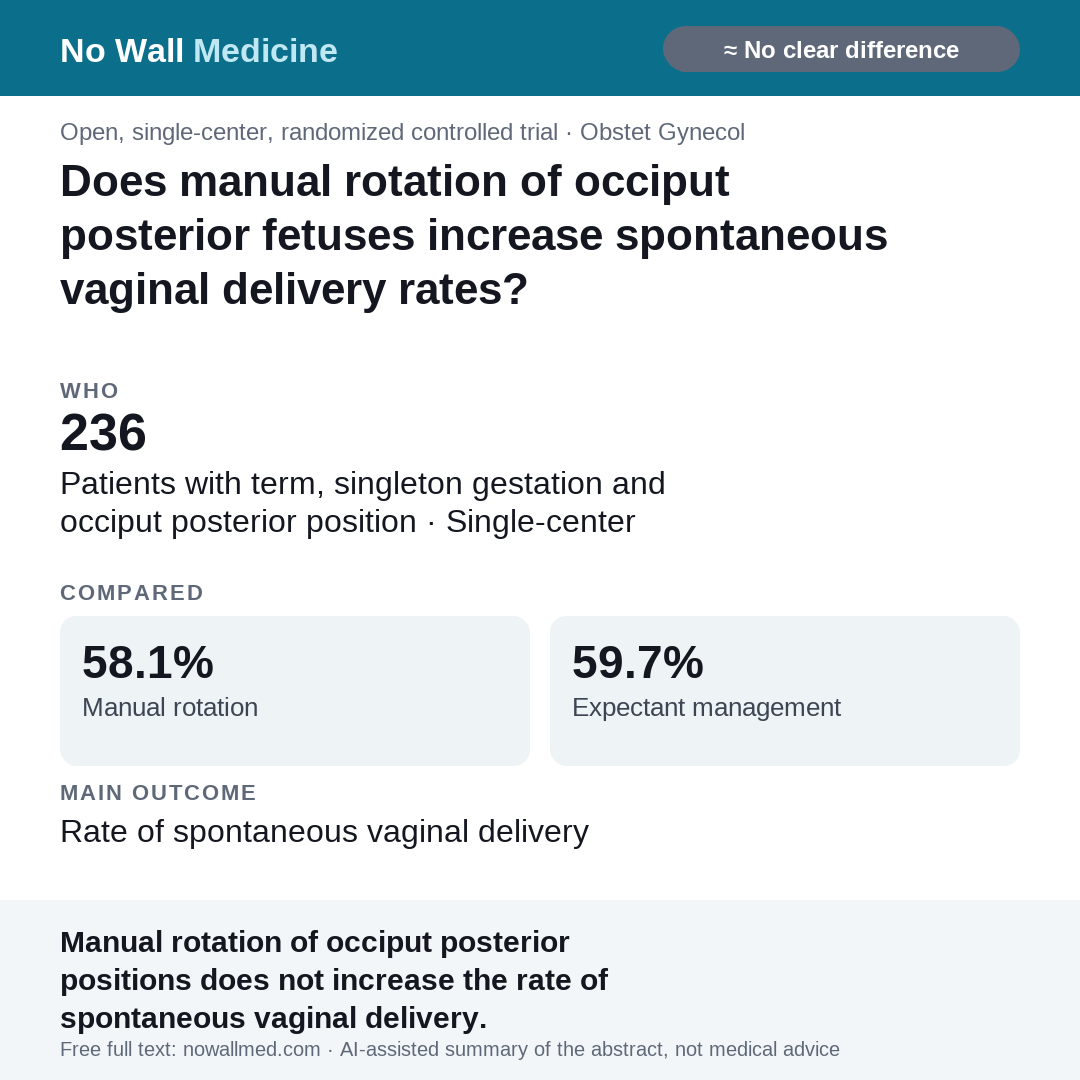
Delivery Mode After Manual Rotation of Occiput Posterior Fetal Positions: A Randomized Controlled Trial
Open, single-center, randomized controlled trialNo clear difference
Does manual rotation of occiput posterior fetuses increase spontaneous vaginal delivery rates?
Who
236
Patients with term, singleton gestation and occiput posterior position · Single-center
Compared
58.1%Manual rotation
59.7%Expectant management
Main outcome
Rate of spontaneous vaginal delivery
Result: risk difference -1.6 (95% CI -14.1 to 11.0)
Bottom line: Manual rotation of occiput posterior positions does not increase the rate of spontaneous vaginal delivery.
Obstet Gynecol · 2021-05-07Download image
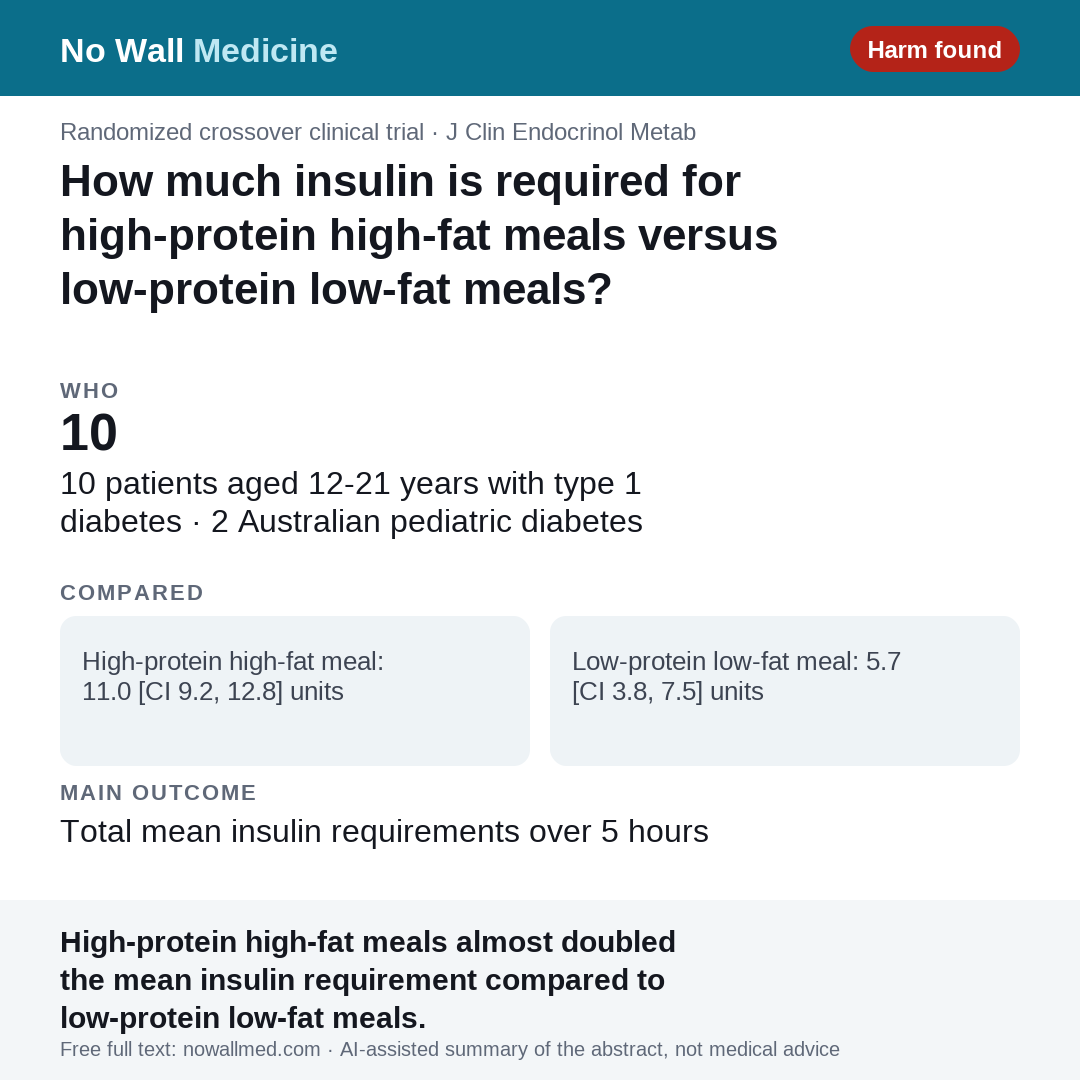
Additional Insulin Is Required in Both the Early and Late Postprandial Periods for Meals High in Protein and Fat: A Randomized Trial
Randomized crossover clinical trialHarm found
How much insulin is required for high-protein high-fat meals versus low-protein low-fat meals?
Who
10
10 patients aged 12-21 years with type 1 diabetes · 2 Australian pediatric diabetes centers
Compared
High-protein high-fat meal: 11.0 [CI 9.2, 12.8] units
Low-protein low-fat meal: 5.7 [CI 3.8, 7.5] units
Main outcome
Total mean insulin requirements over 5 hours
Bottom line: High-protein high-fat meals almost doubled the mean insulin requirement compared to low-protein low-fat meals.
J Clin Endocrinol Metab · 2021-05-07Download image
Metagenomic analysis of mother-infant gut microbiome reveals global distinct and shared microbial signatures
Metagenomic analysis of eight studiesMixed results
What are the global distinct and shared microbial signatures between mother and infant gut microbiota?
Who
468
376 mother-infant dyads · six countries
Compared
maternal gut microbiota: higher diversity at species and strain levels
infant gut microbiota: not higher diversity in metabolic functions
Main outcome
shared species and strains and metabolic functions
Bottom line: Mothers and infants share species and strains influenced by delivery mode and feeding regimen.
Gut Microbes · 2021-05-07Download image

Association of Structural Magnetic Resonance Imaging Measures With Psychosis Onset in Individuals at Clinical High Risk for Developing Psychosis: An ENIGMA Working Group Mega-analysis
Mega-analysis and meta-analysisMixed results
Are there structural neuroimaging differences in individuals at clinical high risk for psychosis?
Who
3169
Individuals at clinical high risk for psychosis and healthy controls · 31 international sites
Compared
Clinical high risk: widespread lower cortical thickness measures (mean Cohen d = -0.13)
Healthy controls
Main outcome
regional cortical thickness, surface area, and subcortical volumes
Result: mean Cohen d = -0.22; 95% CI, -0.35 to 0.10
Bottom line: Individuals at clinical high risk showed widespread lower cortical thickness, with some regions associated with psychosis conversion.
JAMA Psychiatry · 2021-05-06Download image

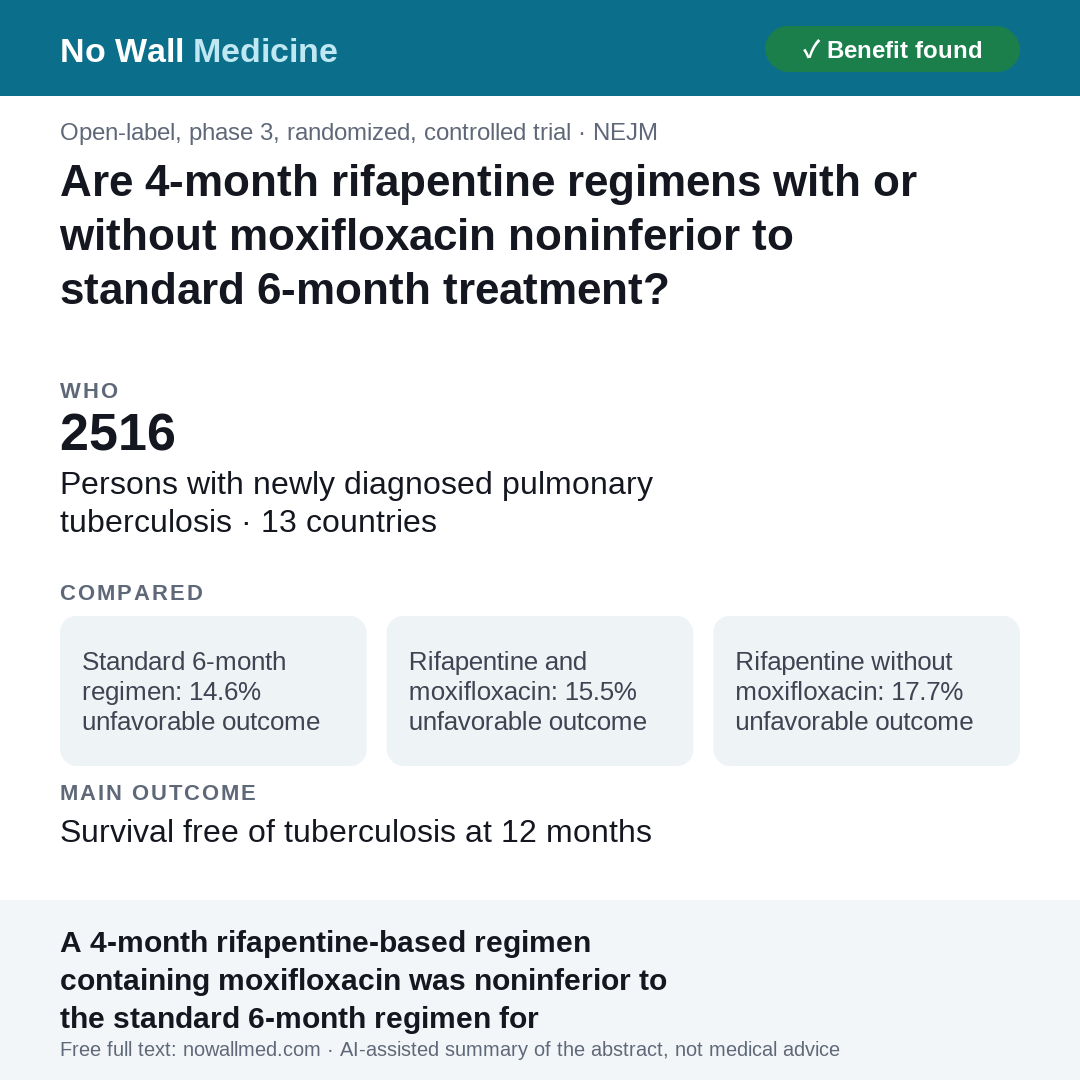
Four-Month Rifapentine Regimens with or without Moxifloxacin for Tuberculosis
Open-label, phase 3, randomized, controlled trialBenefit found
Are 4-month rifapentine regimens with or without moxifloxacin noninferior to standard 6-month treatment?
Who
2516
Persons with newly diagnosed pulmonary tuberculosis · 13 countries
Compared
Standard 6-month regimen: 14.6% unfavorable outcome
Rifapentine and moxifloxacin: 15.5% unfavorable outcome
Rifapentine without moxifloxacin: 17.7% unfavorable outcome
Main outcome
Survival free of tuberculosis at 12 months
Result: difference, 1.0 percentage point; 95% CI, -2.6 to 4.5
Bottom line: A 4-month rifapentine-based regimen containing moxifloxacin was noninferior to the standard 6-month regimen for tuberculosis.
Funded by: Centers for Disease Control and Prevention and others
NEJM · 2021-05-05Download image
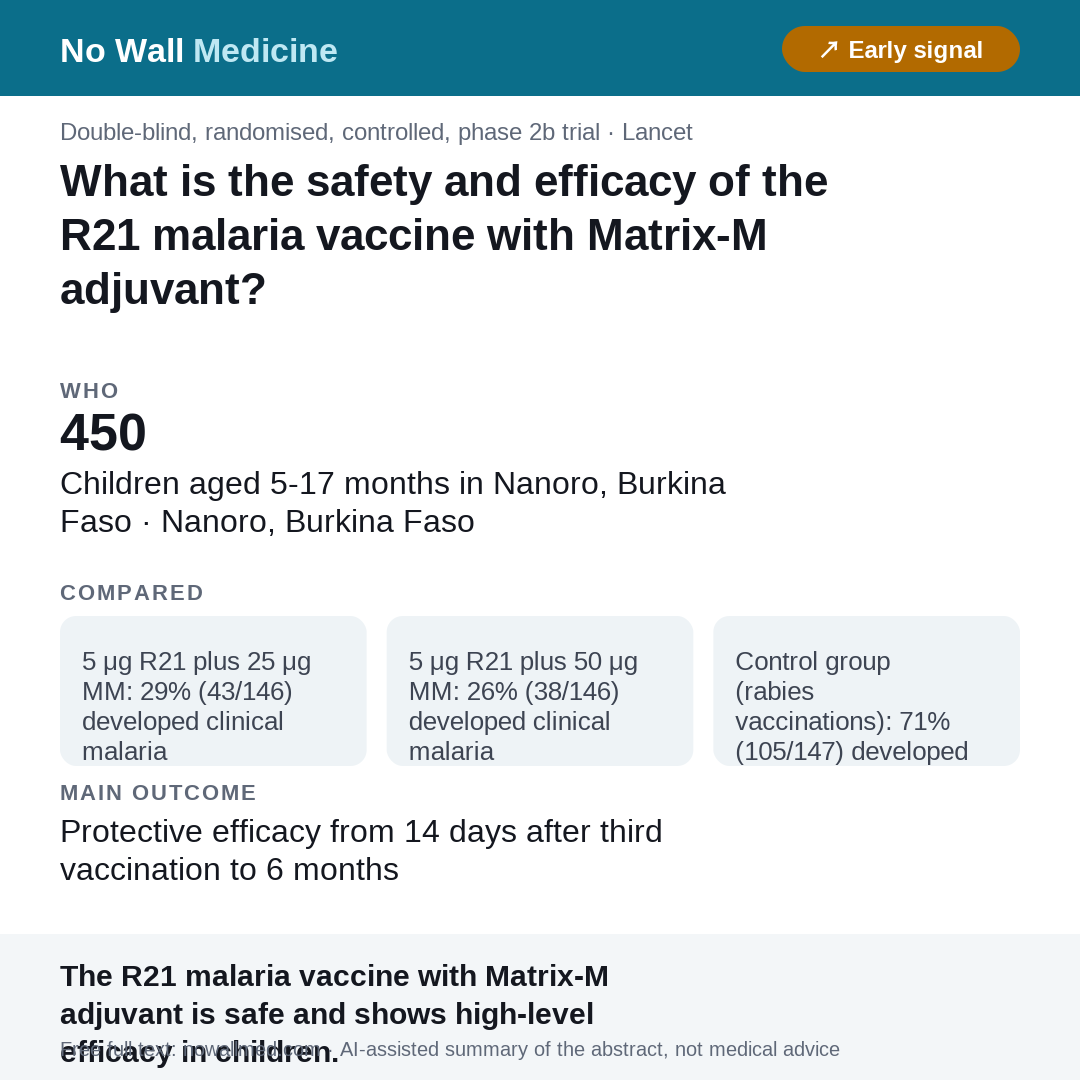
Efficacy of a low-dose candidate malaria vaccine, R21 in adjuvant Matrix-M, with seasonal administration to children in Burkina Faso: a randomised controlled trial
Double-blind, randomised, controlled, phase 2b trialEarly signal
What is the safety and efficacy of the R21 malaria vaccine with Matrix-M adjuvant?
Who
450
Children aged 5-17 months in Nanoro, Burkina Faso · Nanoro, Burkina Faso
Compared
5 μg R21 plus 25 μg MM: 29% (43/146) developed clinical malaria
5 μg R21 plus 50 μg MM: 26% (38/146) developed clinical malaria
Control group (rabies vaccinations): 71% (105/147) developed clinical malaria
Main outcome
Protective efficacy from 14 days after third vaccination to 6 months
Result: vaccine efficacy was 74% (95% CI 63-82) in group 1 and 77% (67-84) in group 2
Bottom line: The R21 malaria vaccine with Matrix-M adjuvant is safe and shows high-level efficacy in children.
Funded by: European & Developing Countries Clinical Trials Partnership, Wellcome Trust, NIHR
Lancet · 2021-05-05Download image
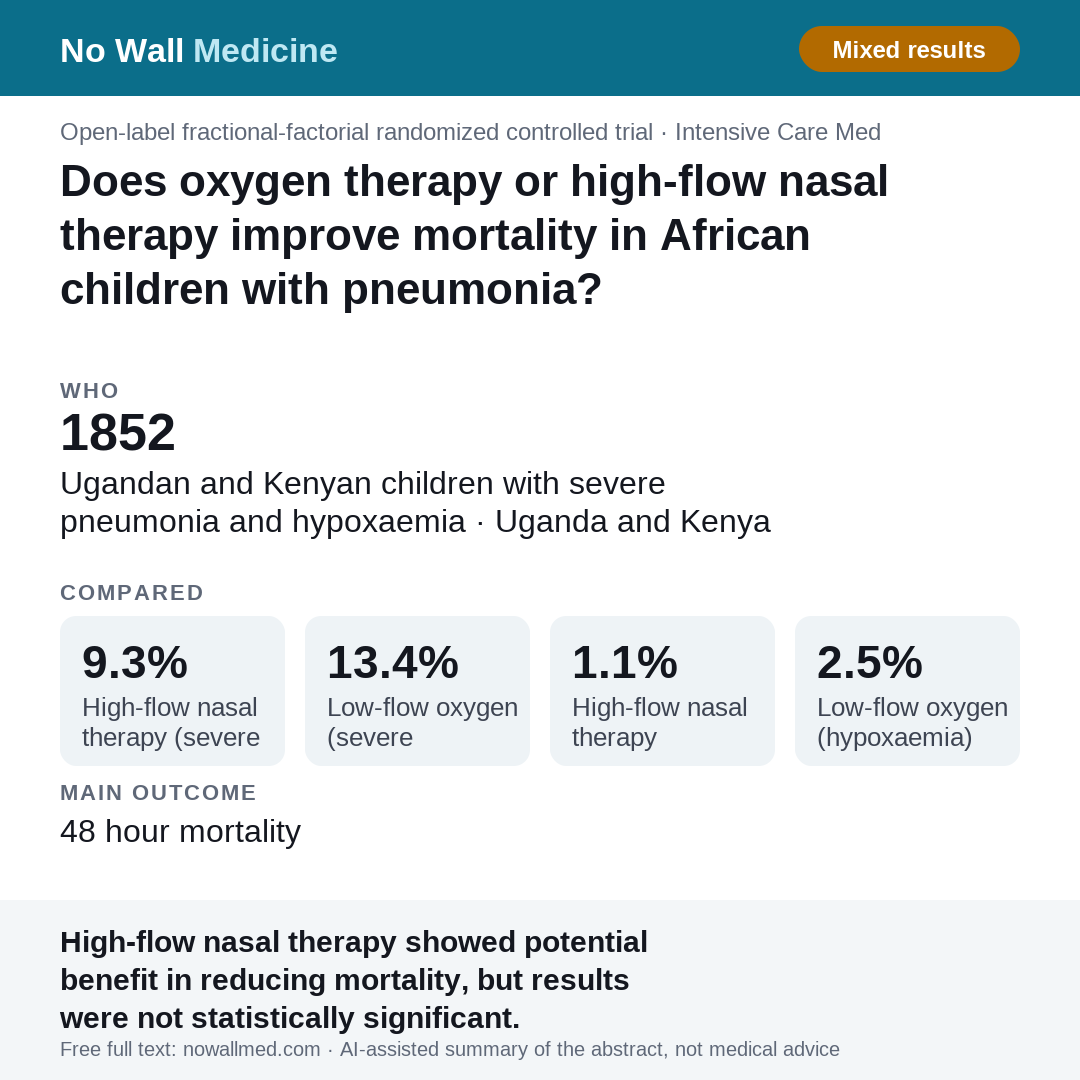
Randomised controlled trial of oxygen therapy and high-flow nasal therapy in African children with pneumonia
Open-label fractional-factorial randomized controlled trialMixed results
Does oxygen therapy or high-flow nasal therapy improve mortality in African children with pneumonia?
Who
1852
Ugandan and Kenyan children with severe pneumonia and hypoxaemia · Uganda and Kenya
Compared
9.3%High-flow nasal therapy (severe hypoxaemia)
13.4%Low-flow oxygen (severe hypoxaemia)
1.1%High-flow nasal therapy (hypoxaemia)
2.5%Low-flow oxygen (hypoxaemia)
Main outcome
48 hour mortality
Result: adjusted odds ratio HFNT vs LFO 0.60 (0.33-1.06)
Bottom line: High-flow nasal therapy showed potential benefit in reducing mortality, but results were not statistically significant.
Intensive Care Med · 2021-05-05Download image
Effect of a Scalable School-Based Intervention on Cardiorespiratory Fitness in Children: A Cluster Randomized Clinical Trial
Cluster randomized clinical trialBenefit found
Does an internet-based intervention improve cardiorespiratory fitness in children across schools?
Who
1219
Students in grades 3 and 4 · 22 government-funded elementary schools in New South Wales, Australia
Compared
Internet-based intervention: 3.32 laps (95% CI, 2.44-4.20 laps)
Control intervention: 2.11 laps (95% CI, 1.38-2.85 laps)
Main outcome
Multistage 20-m shuttle run test for cardiorespiratory fitness
Result: adjusted difference = 2.22 laps (95% CI, 0.89-3.55 laps) at 24 months
Bottom line: A low-cost internet-based school intervention improved children's cardiorespiratory fitness with sustained effects over 24 months.
JAMA Pediatr · 2021-05-04Download image

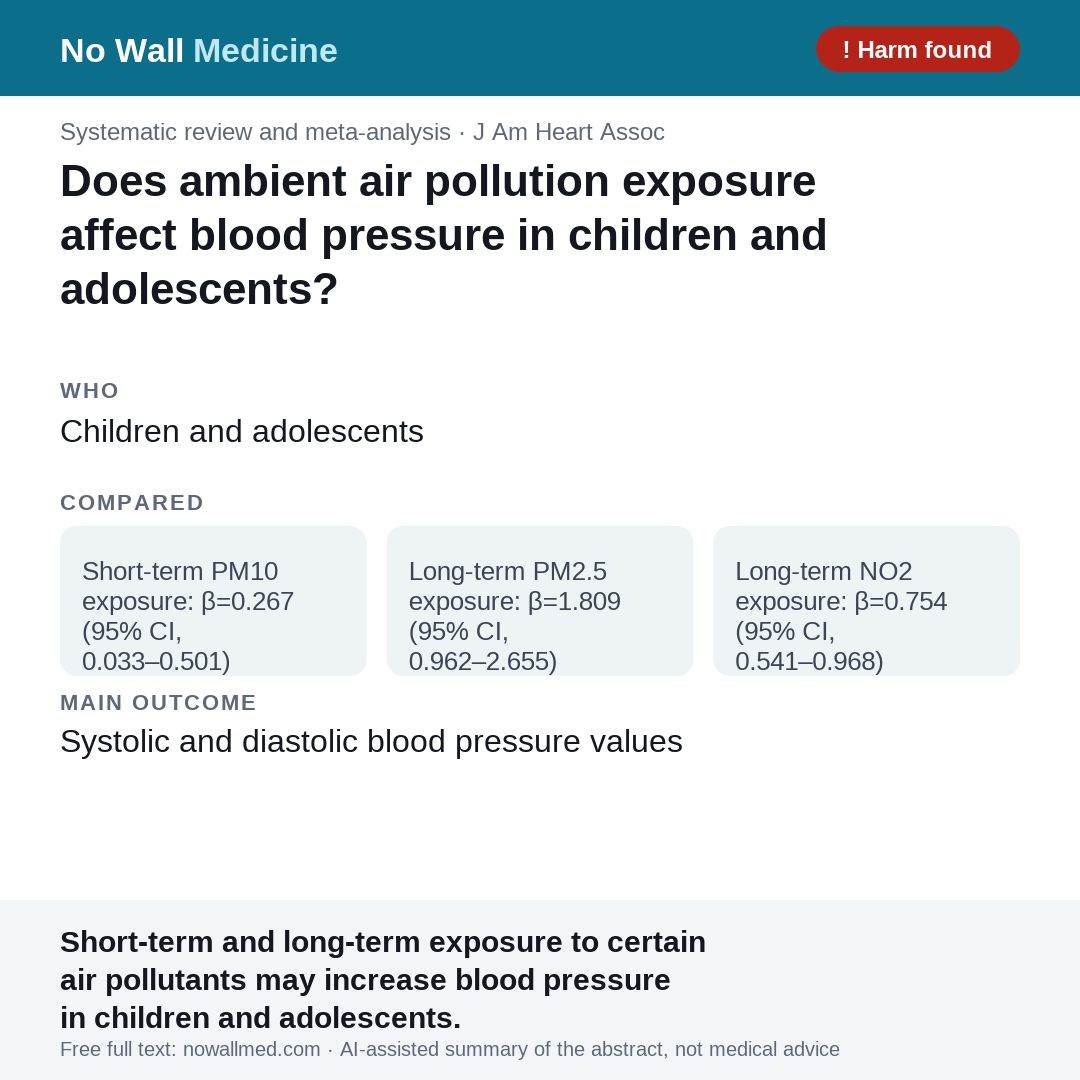
Effects of Ambient Air Pollution on Blood Pressure Among Children and Adolescents: A Systematic Review and Meta-Analysis
Systematic review and meta-analysisHarm found
Does ambient air pollution exposure affect blood pressure in children and adolescents?
Who
Children and adolescents
Compared
Short-term PM10 exposure: β=0.267 (95% CI, 0.033‒0.501)
Long-term PM2.5 exposure: β=1.809 (95% CI, 0.962‒2.655)
Long-term NO2 exposure: β=0.754 (95% CI, 0.541‒0.968)
Main outcome
Systolic and diastolic blood pressure values
Bottom line: Short-term and long-term exposure to certain air pollutants may increase blood pressure in children and adolescents.
J Am Heart Assoc · 2021-05-04Download image
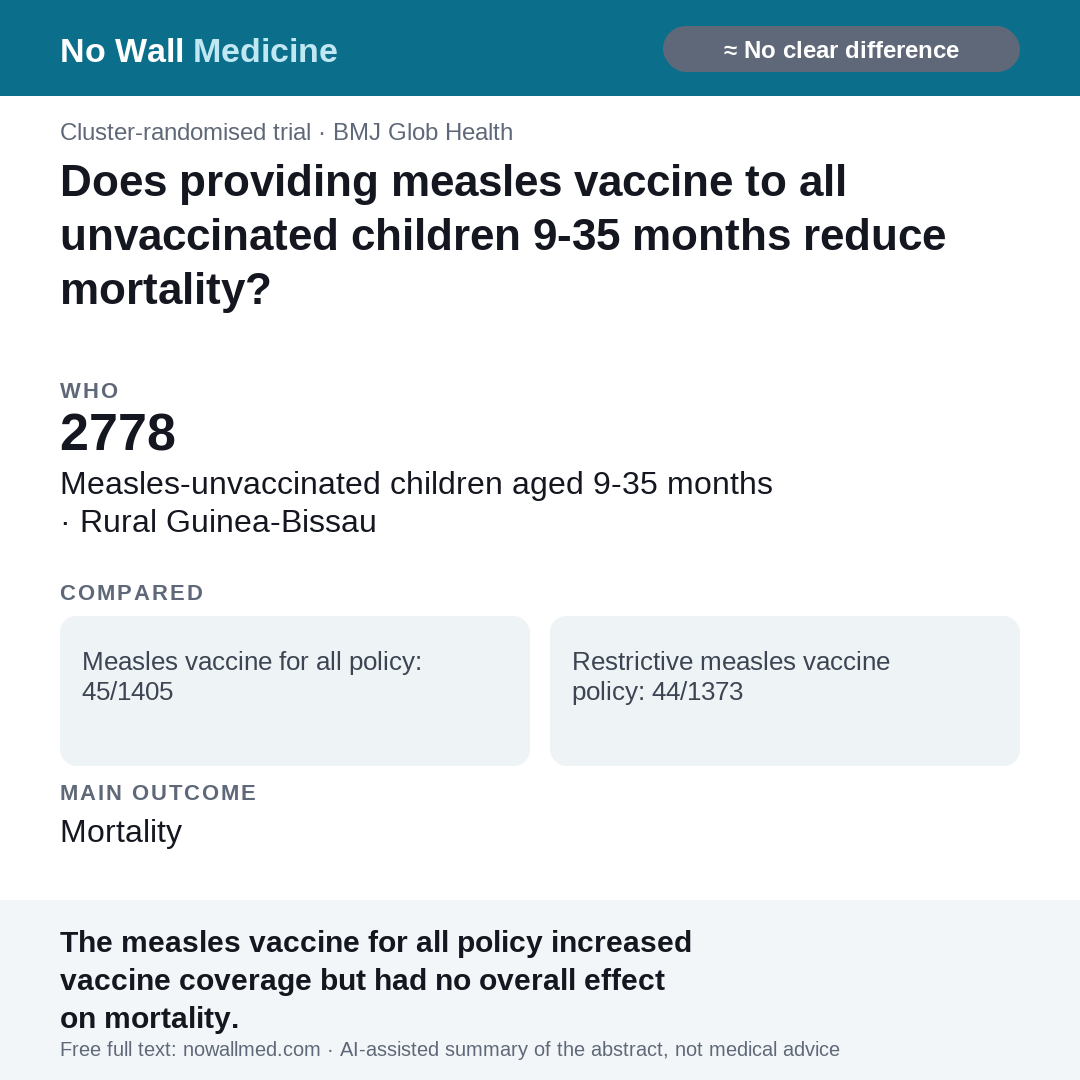
The mortality effects of disregarding the strategy to save doses of measles vaccine: a cluster-randomised trial in Guinea-Bissau
Cluster-randomised trialNo clear difference
Does providing measles vaccine to all unvaccinated children 9-35 months reduce mortality?
Who
2778
Measles-unvaccinated children aged 9-35 months · Rural Guinea-Bissau
Compared
Measles vaccine for all policy: 45/1405
Restrictive measles vaccine policy: 44/1373
Main outcome
Mortality
Result: hazard ratio 0.95 (95% CI 0.64 to 1.43)
Bottom line: The measles vaccine for all policy increased vaccine coverage but had no overall effect on mortality.
BMJ Glob Health · 2021-05-04Download image