Visual abstracts
New randomized trials and meta-analyses from leading journals at a glance: who was studied, what was compared, and what was found. Every paper is free to read in full.
All specialtiesCardiology 4763Oncology 4043Gastroenterology & Hepatology 1903Infectious Disease 3756Neurology 1872Psychiatry & Mental Health 2216Pulmonology 2044Critical Care 1319Endocrinology & Diabetes 2544Pediatrics 2889Surgery 2480Orthopedics & Sports Medicine 917Neurosurgery 525Cardiothoracic & Vascular Surgery 656Plastic & Reconstructive Surgery 574Nephrology 1107Rheumatology 810Hematology 1090Dermatology 611Ophthalmology 532Obstetrics & Gynecology 1645Public & Global Health 1037Radiology & Imaging 619Anesthesiology 958Urology 745ENT (Otolaryngology) 494Emergency Medicine 481Allergy & Immunology 309Geriatrics 972Family Medicine & Primary Care 534Medical Genetics & Genomics 659Pathology & Laboratory Medicine 156Physical Medicine & Rehabilitation 734Palliative Care 421Nutrition 1560Digital Health & AI 2137General Medicine 318
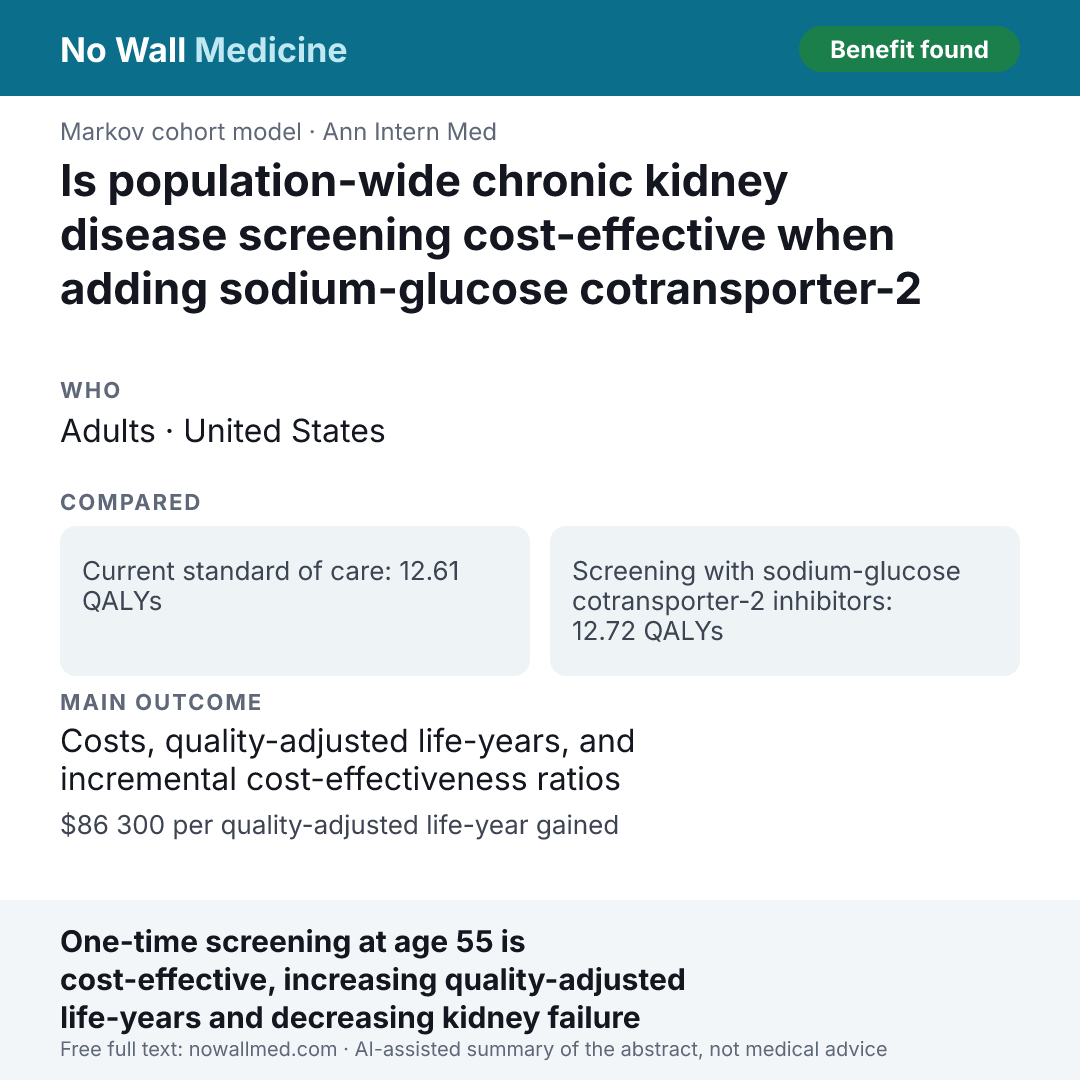
Population-Wide Screening for Chronic Kidney Disease : A Cost-Effectiveness Analysis
Markov cohort modelBenefit found
Is population-wide chronic kidney disease screening cost-effective when adding sodium-glucose cotransporter-2 inhibitors?
Who
Adults · United States
Compared
Current standard of care: 12.61 QALYs
Screening with sodium-glucose cotransporter-2 inhibitors: 12.72 QALYs
Main outcome
Costs, quality-adjusted life-years, and incremental cost-effectiveness ratios
Result: $86 300 per quality-adjusted life-year gained
Bottom line: One-time screening at age 55 is cost-effective, increasing quality-adjusted life-years and decreasing kidney failure incidence.
Limitation: The efficacy of sodium-glucose cotransporter-2 inhibitors was derived from a single randomized controlled trial.
Funded by: Agency for Healthcare Research and Quality, Veterans Affairs, and NIDDK
Ann Intern Med · 2023-05-23 · Save PNG
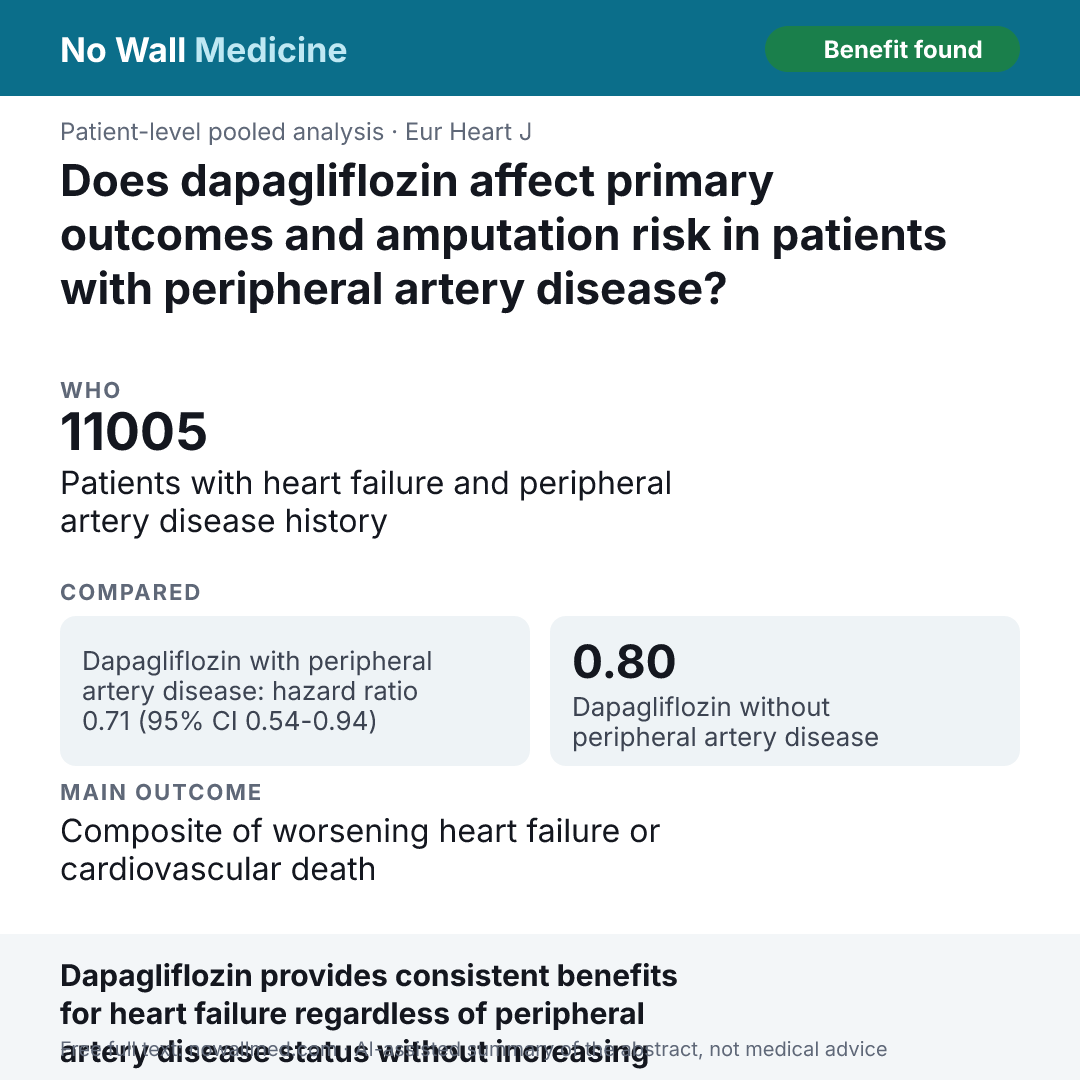
Heart failure, peripheral artery disease, and dapagliflozin: a patient-level meta-analysis of DAPA-HF and DELIVER
Patient-level pooled analysisBenefit found
Does dapagliflozin affect primary outcomes and amputation risk in patients with peripheral artery disease?
Who
11005
Patients with heart failure and peripheral artery disease history
Compared
Dapagliflozin with peripheral artery disease: hazard ratio 0.71 (95% CI 0.54-0.94)
0.80Dapagliflozin without peripheral artery disease (95% CI 0.73-0.88)
Main outcome
Composite of worsening heart failure or cardiovascular death
Result: hazard ratio 0.71 (95% CI 0.54-0.94)
Bottom line: Dapagliflozin provides consistent benefits for heart failure regardless of peripheral artery disease status without increasing amputation risk.
Eur Heart J · 2023-05-23 · Save PNG
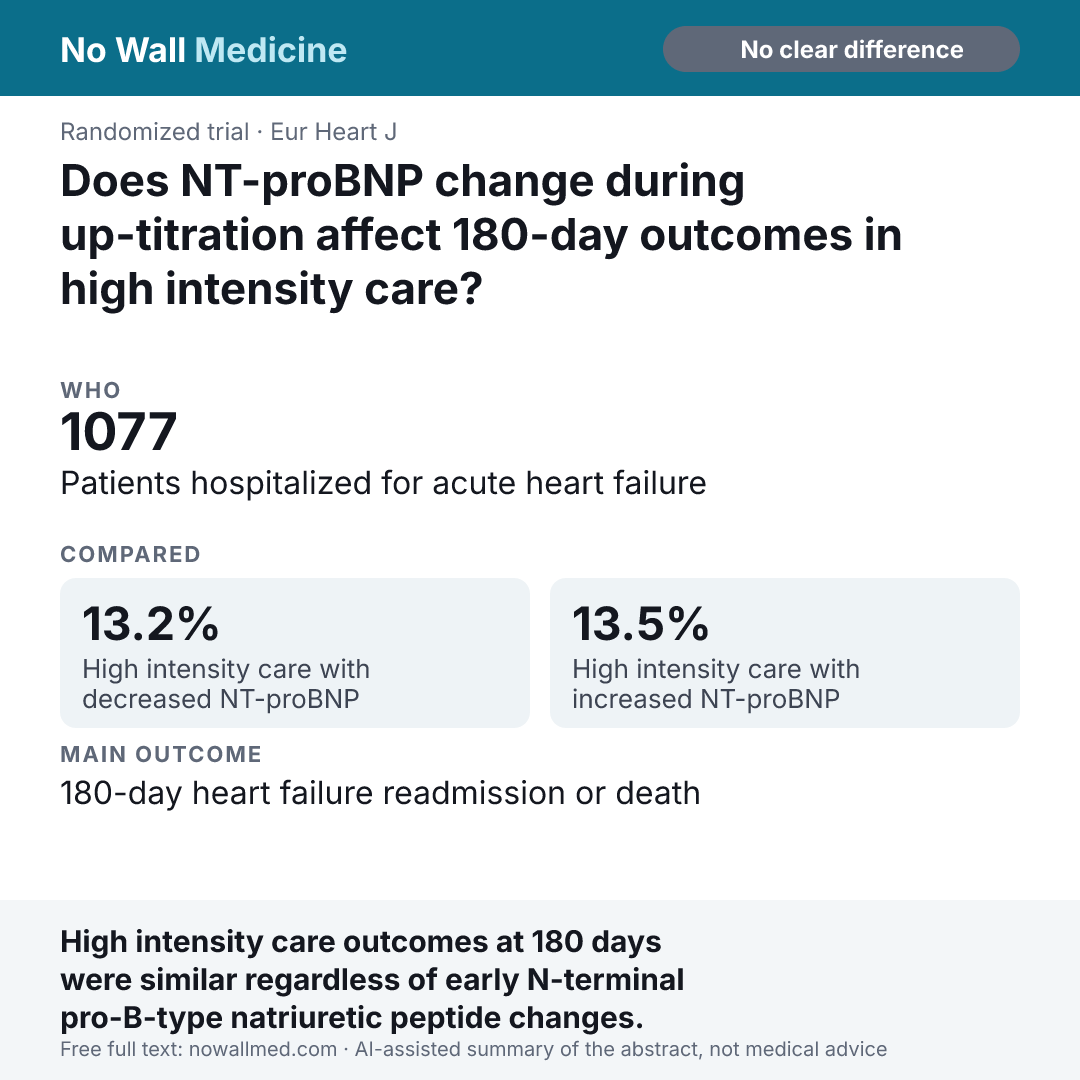
NT-proBNP and high intensity care for acute heart failure: the STRONG-HF trial
Randomized trialNo clear difference
Does NT-proBNP change during up-titration affect 180-day outcomes in high intensity care?
Who
1077
Patients hospitalized for acute heart failure
Compared
13.2%High intensity care with decreased NT-proBNP
13.5%High intensity care with increased NT-proBNP
Main outcome
180-day heart failure readmission or death
Bottom line: High intensity care outcomes at 180 days were similar regardless of early N-terminal pro-B-type natriuretic peptide changes.
Eur Heart J · 2023-05-23 · Save PNG
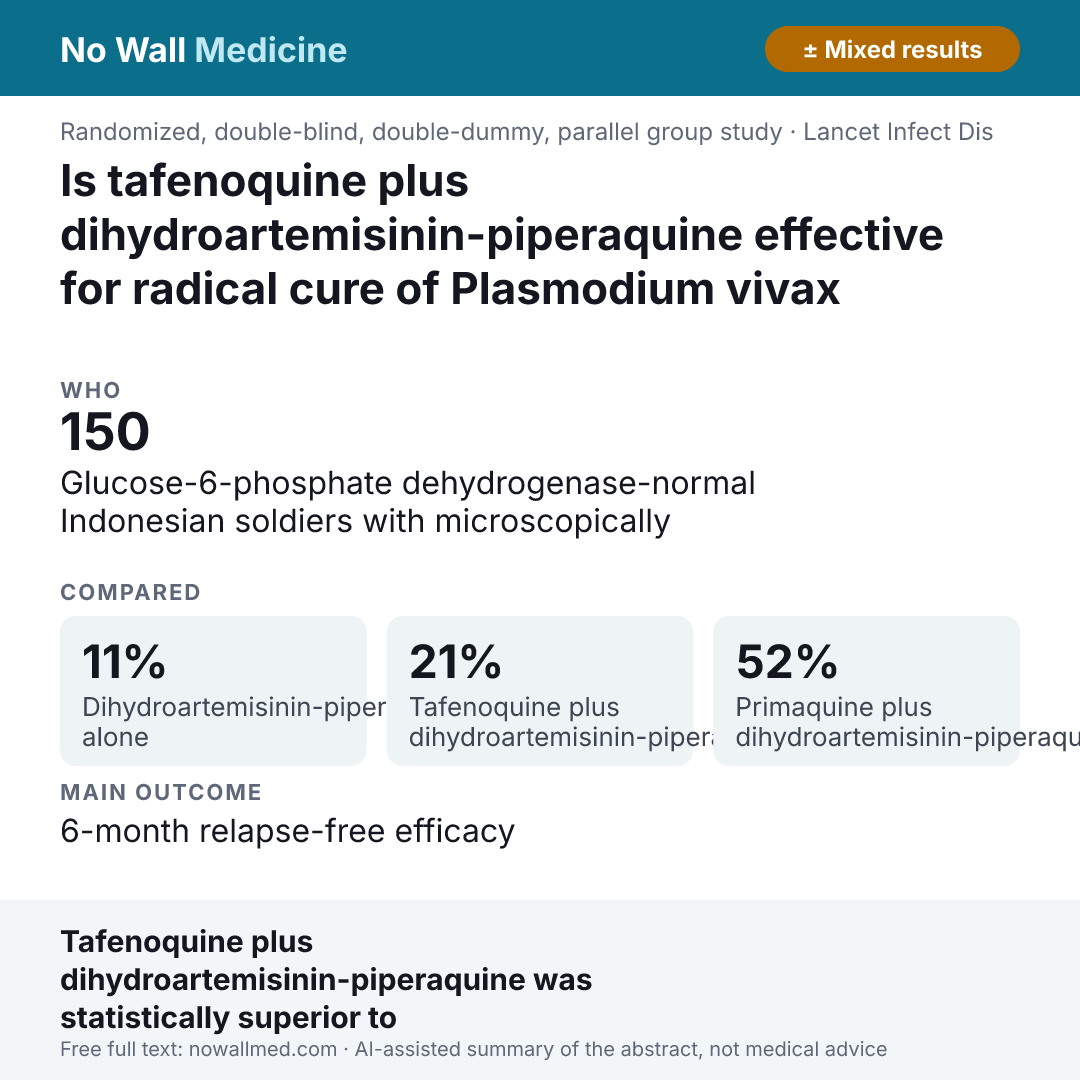
Tafenoquine co-administered with dihydroartemisinin-piperaquine for the radical cure of Plasmodium vivax malaria (INSPECTOR): a randomised, placebo-controlled, efficacy and safety study
Randomized, double-blind, double-dummy, parallel group studyMixed results
Is tafenoquine plus dihydroartemisinin-piperaquine effective for radical cure of Plasmodium vivax malaria?
Who
150
Glucose-6-phosphate dehydrogenase-normal Indonesian soldiers with microscopically confirmed Plasmodium vivax malaria · Indonesia
Compared
11%Dihydroartemisinin-piperaquine alone (95% CI 4-22)
21%Tafenoquine plus dihydroartemisinin-piperaquine (11-34)
52%Primaquine plus dihydroartemisinin-piperaquine (37-65)
Main outcome
6-month relapse-free efficacy
Result: hazard ratio 0·44 (95% CI 0·29-0·69)
Bottom line: Tafenoquine plus dihydroartemisinin-piperaquine was statistically superior to dihydroartemisinin-piperaquine alone, but the benefit was not clinically meaningful.
Lancet Infect Dis · 2023-05-23 · Save PNG
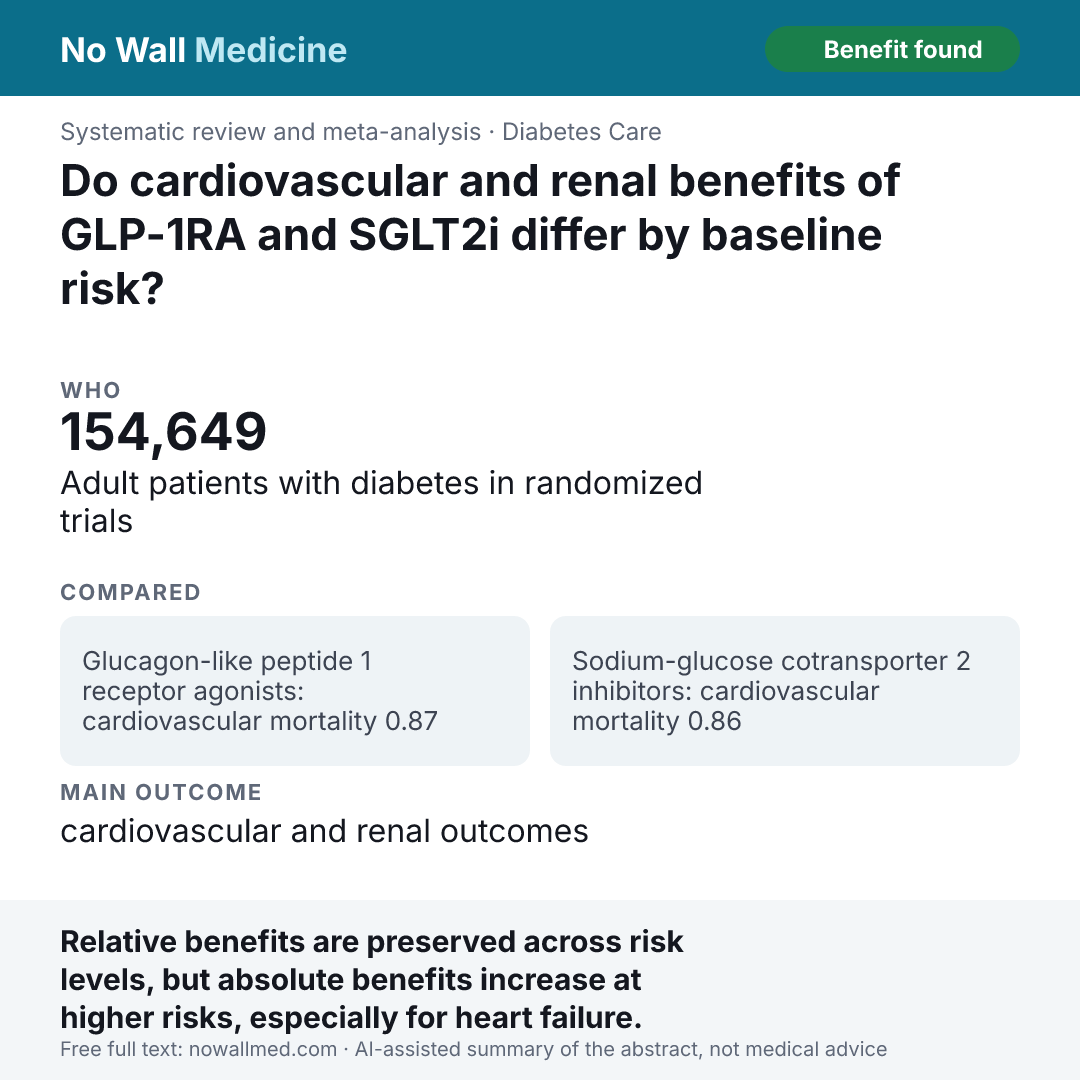
Cardiovascular and Renal Benefits of Novel Diabetes Drugs by Baseline Cardiovascular Risk: A Systematic Review, Meta-analysis, and Meta-regression
Systematic review and meta-analysisBenefit found
Do cardiovascular and renal benefits of GLP-1RA and SGLT2i differ by baseline risk?
Who
154,649
Adult patients with diabetes in randomized trials
Compared
Glucagon-like peptide 1 receptor agonists: cardiovascular mortality 0.87
Sodium-glucose cotransporter 2 inhibitors: cardiovascular mortality 0.86
Main outcome
cardiovascular and renal outcomes
Bottom line: Relative benefits are preserved across risk levels, but absolute benefits increase at higher risks, especially for heart failure.
Limitation: Lack of patient-level data, inconsistent end point definitions, and variation in mortality rates.
Diabetes Care · 2023-05-23 · Save PNG
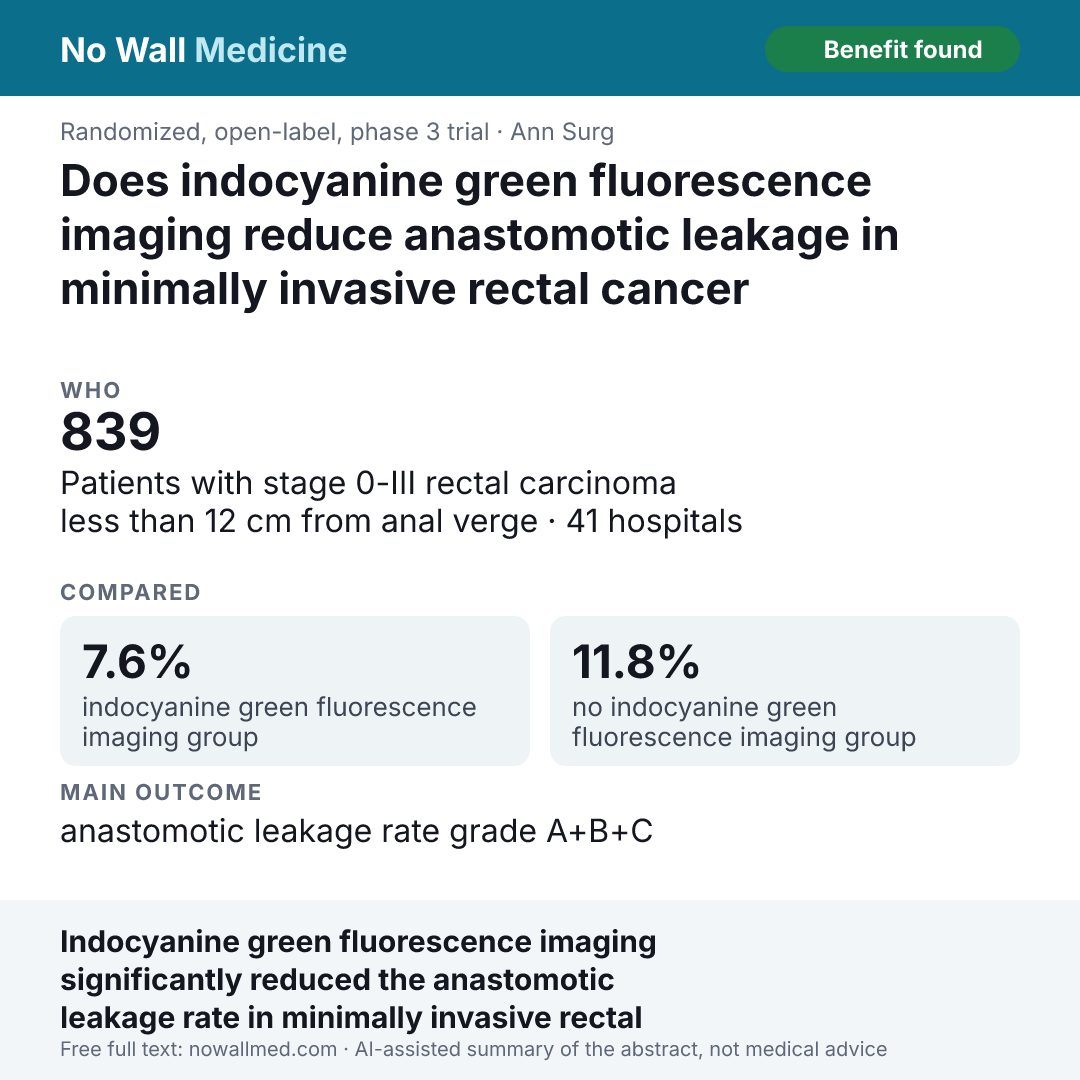
Blood Perfusion Assessment by Indocyanine Green Fluorescence Imaging for Minimally Invasive Rectal Cancer Surgery (EssentiAL trial): A Randomized Clinical Trial
Randomized, open-label, phase 3 trialBenefit found
Does indocyanine green fluorescence imaging reduce anastomotic leakage in minimally invasive rectal cancer surgery?
Who
839
Patients with stage 0-III rectal carcinoma less than 12 cm from anal verge · 41 hospitals in Japan
Compared
7.6%indocyanine green fluorescence imaging group
11.8%no indocyanine green fluorescence imaging group
Main outcome
anastomotic leakage rate grade A+B+C
Result: relative risk 0.645 (95% confidence interval 0.422-0.987)
Bottom line: Indocyanine green fluorescence imaging significantly reduced the anastomotic leakage rate in minimally invasive rectal cancer surgery.
Ann Surg · 2023-05-23 · Save PNG
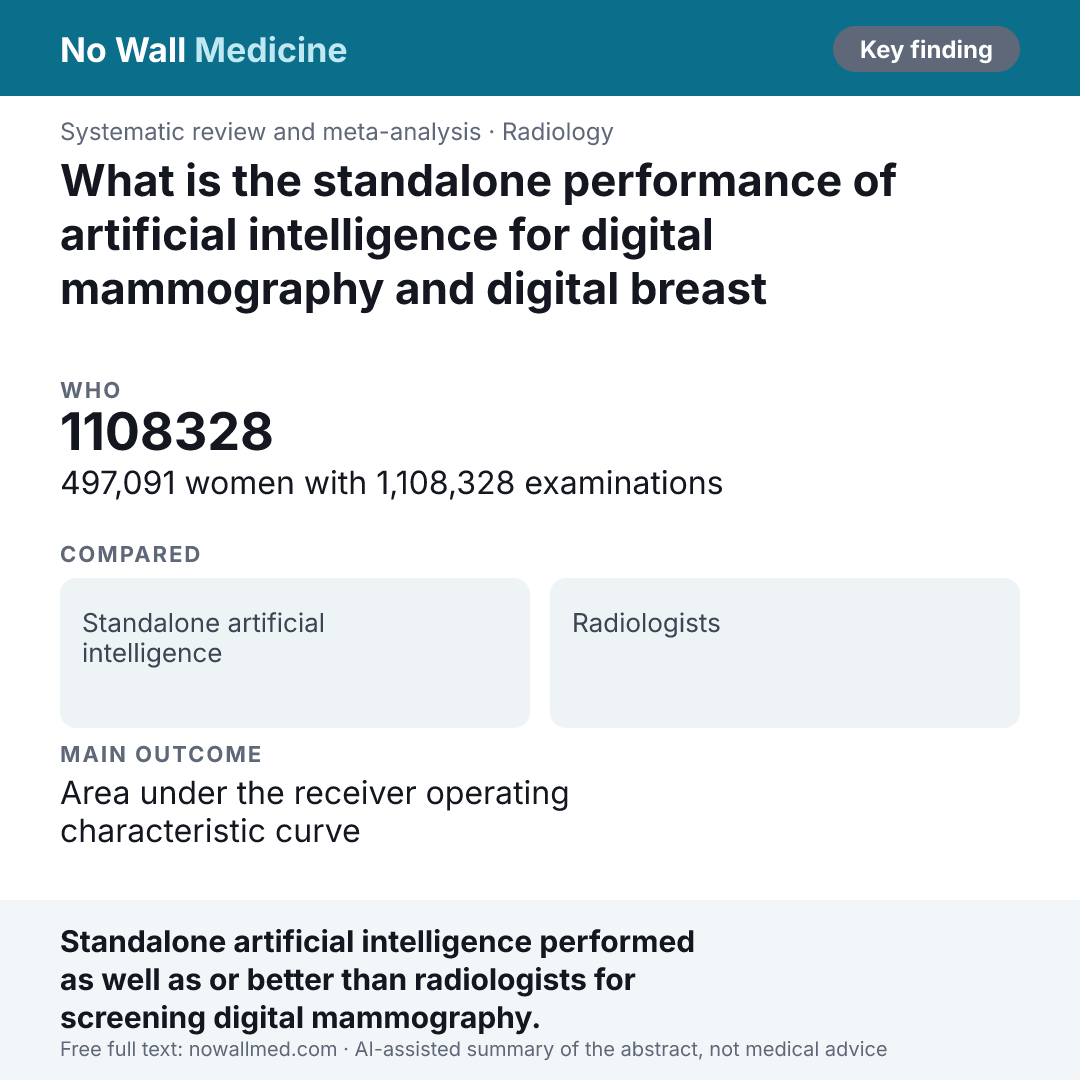
Standalone AI for Breast Cancer Detection at Screening Digital Mammography and Digital Breast Tomosynthesis: A Systematic Review and Meta-Analysis
Systematic review and meta-analysisKey finding
What is the standalone performance of artificial intelligence for digital mammography and digital breast tomosynthesis?
Who
1108328
497,091 women with 1,108,328 examinations
Compared
Standalone artificial intelligence
Radiologists
Main outcome
Area under the receiver operating characteristic curve
Bottom line: Standalone artificial intelligence performed as well as or better than radiologists for screening digital mammography.
Limitation: Insufficient number of studies to assess artificial intelligence performance in digital breast tomosynthesis screening.
Radiology · 2023-05-23 · Save PNG
Effects of Mask Reuse on the Oropharyngeal, Skin, and Mask Microbiome
Randomized trialNo clear difference
Does mask reuse affect the oropharyngeal, skin, and mask microbiome?
Who
Individuals wearing surgical masks
Compared
Fresh surgical masks daily
Masks reused for 1 week: increased richness of the skin microbiome
Main outcome
Oropharyngeal, skin, and mask microbiome
Bottom line: One week of mask reuse increases skin microbiome richness but does not impact the upper respiratory microbiome.
Limitation: Whether minor skin microbiome changes relate to maskne remains to be determined.
J Infect Dis · 2023-05-23 · Save PNG

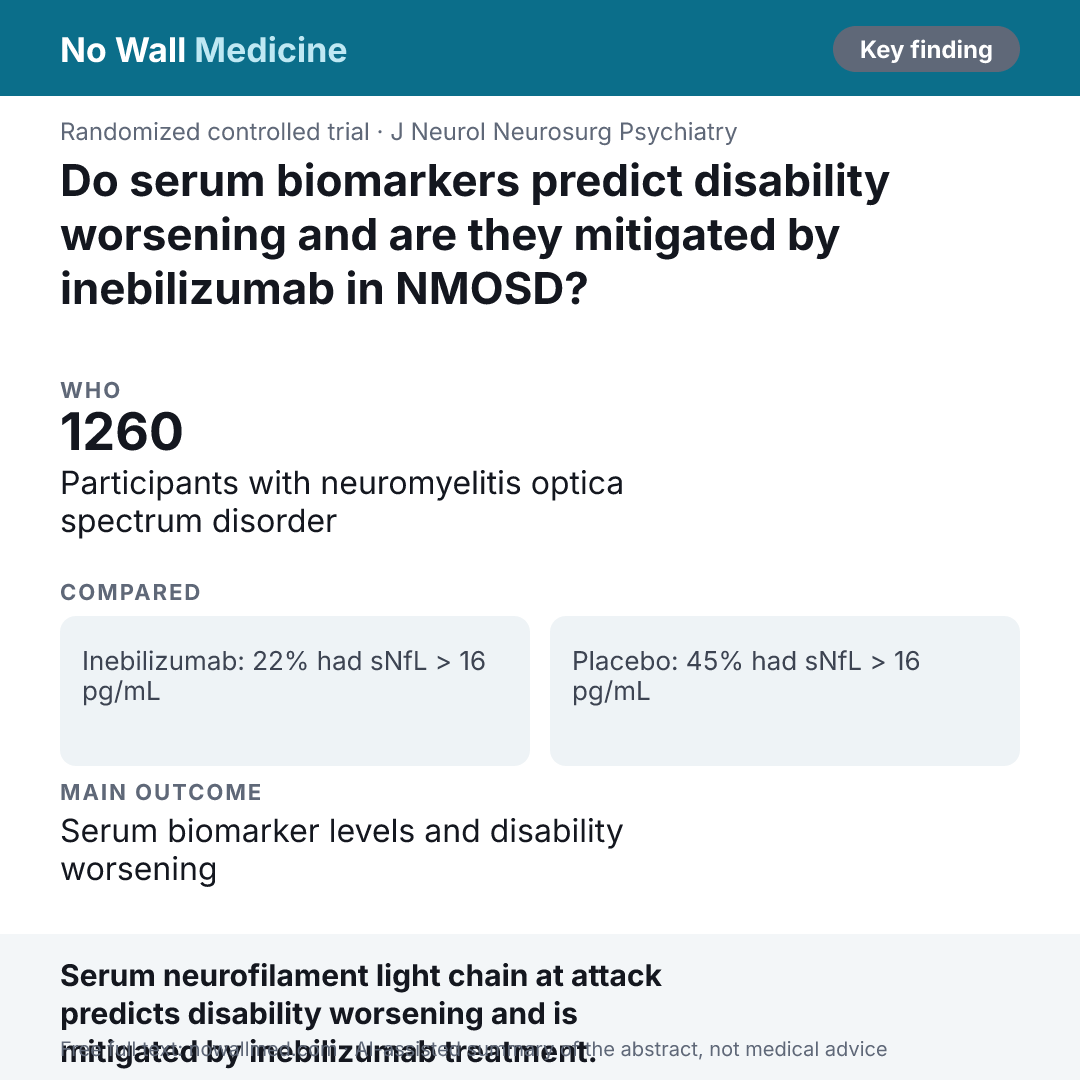
Serum neurofilament light chain levels at attack predict post-attack disability worsening and are mitigated by inebilizumab: analysis of four potential biomarkers in neuromyelitis optica spectrum disorder
Randomized controlled trialKey finding
Do serum biomarkers predict disability worsening and are they mitigated by inebilizumab in NMOSD?
Who
1260
Participants with neuromyelitis optica spectrum disorder
Compared
Inebilizumab: 22% had sNfL > 16 pg/mL
Placebo: 45% had sNfL > 16 pg/mL
Main outcome
Serum biomarker levels and disability worsening
Result: OR 0.36 (95% CI 0.17 to 0.76)
Bottom line: Serum neurofilament light chain at attack predicts disability worsening and is mitigated by inebilizumab treatment.
J Neurol Neurosurg Psychiatry · 2023-05-23 · Save PNG
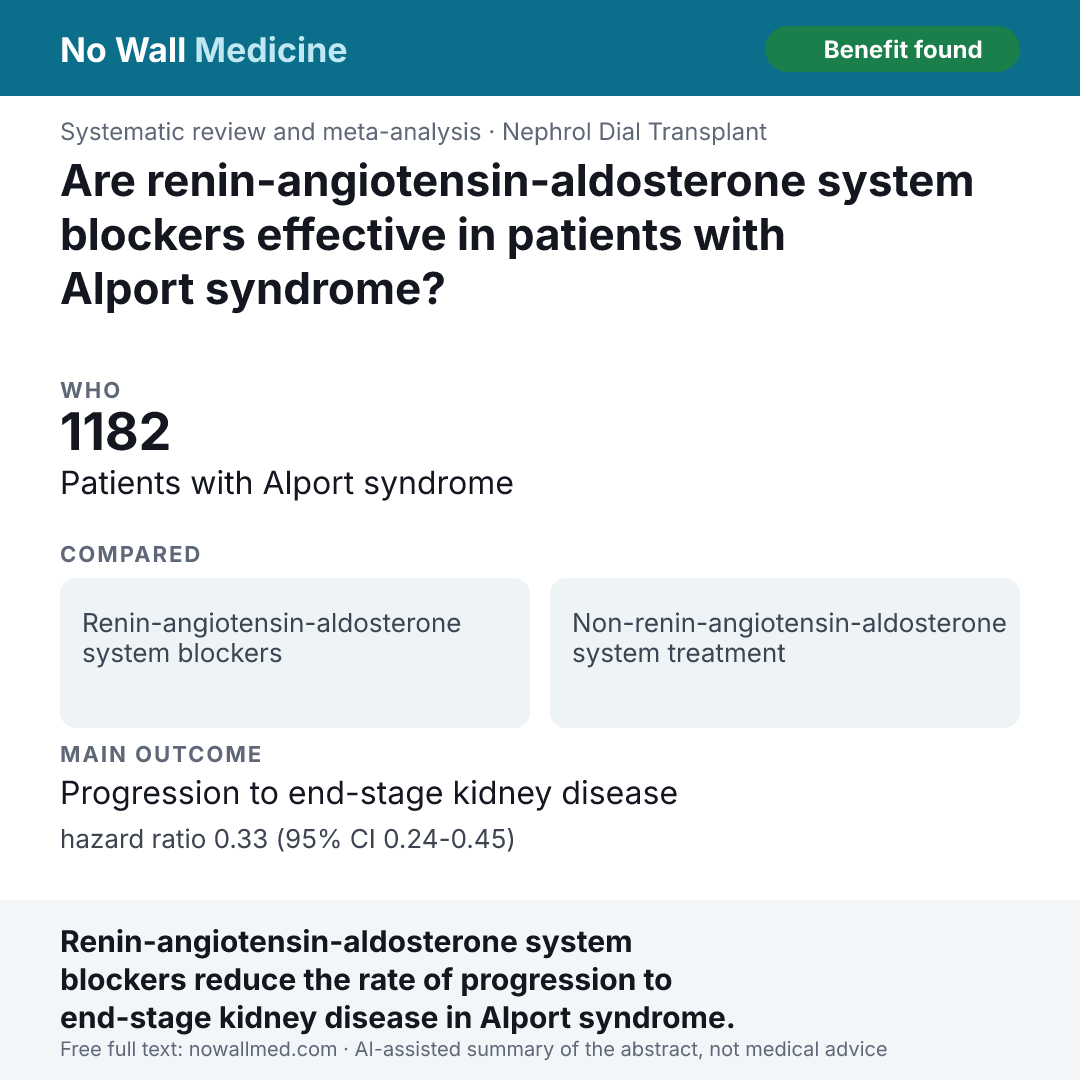
Effectiveness of renin-angiotensin-aldosterone system blockers in patients with Alport syndrome: a systematic review and meta-analysis
Systematic review and meta-analysisBenefit found
Are renin-angiotensin-aldosterone system blockers effective in patients with Alport syndrome?
Who
1182
Patients with Alport syndrome
Compared
Renin-angiotensin-aldosterone system blockers
Non-renin-angiotensin-aldosterone system treatment
Main outcome
Progression to end-stage kidney disease
Result: hazard ratio 0.33 (95% CI 0.24-0.45)
Bottom line: Renin-angiotensin-aldosterone system blockers reduce the rate of progression to end-stage kidney disease in Alport syndrome.
Nephrol Dial Transplant · 2023-05-23 · Save PNG
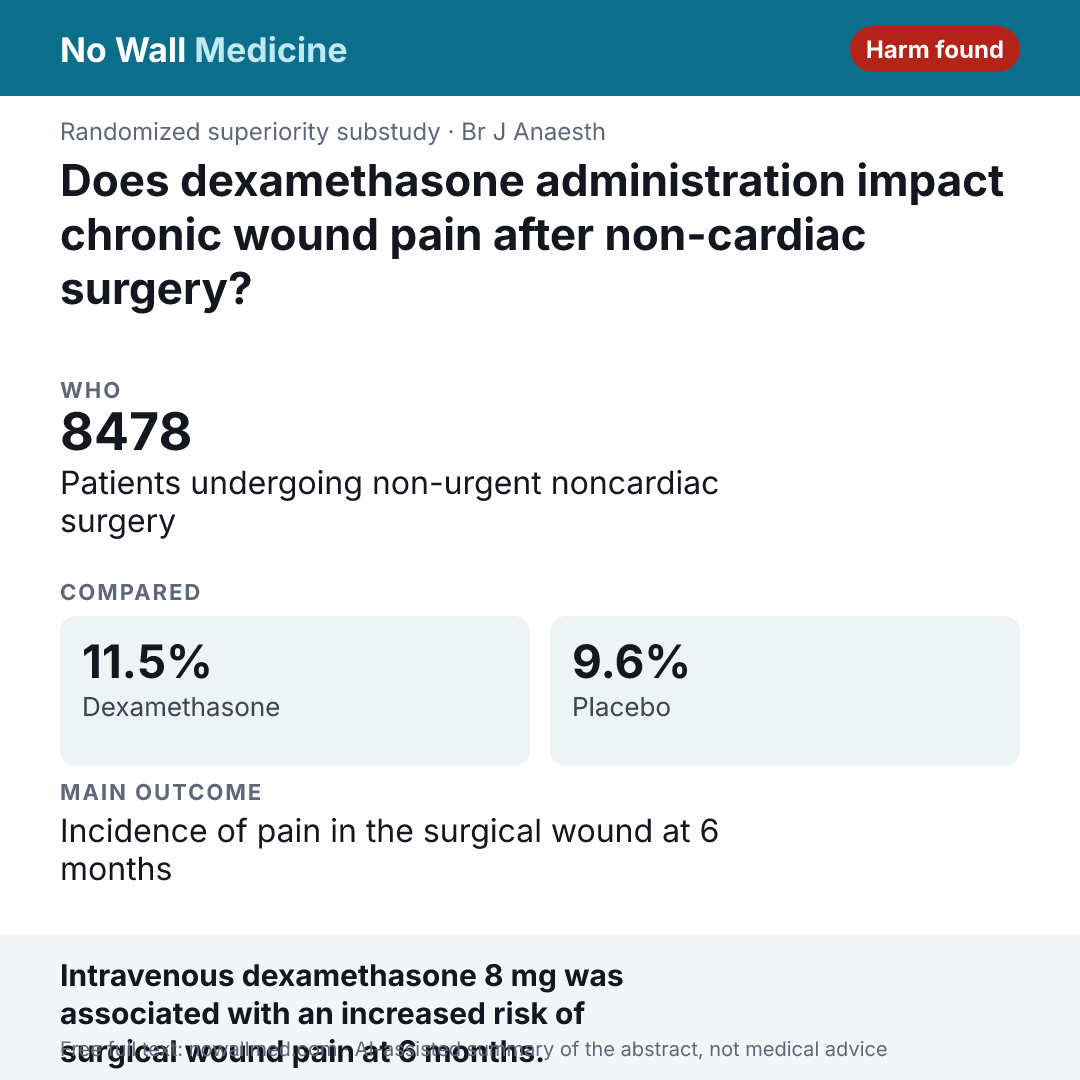
Dexamethasone and persistent wound pain: a prespecified analysis of the randomised Perioperative Administration of Dexamethasone and Infection (PADDI) trial
Randomized superiority substudyHarm found
Does dexamethasone administration impact chronic wound pain after non-cardiac surgery?
Who
8478
Patients undergoing non-urgent noncardiac surgery
Compared
11.5%Dexamethasone
9.6%Placebo
Main outcome
Incidence of pain in the surgical wound at 6 months
Result: relative risk 1.2 (95% confidence interval 1.06-1.41)
Bottom line: Intravenous dexamethasone 8 mg was associated with an increased risk of surgical wound pain at 6 months.
Br J Anaesth · 2023-05-23 · Save PNG
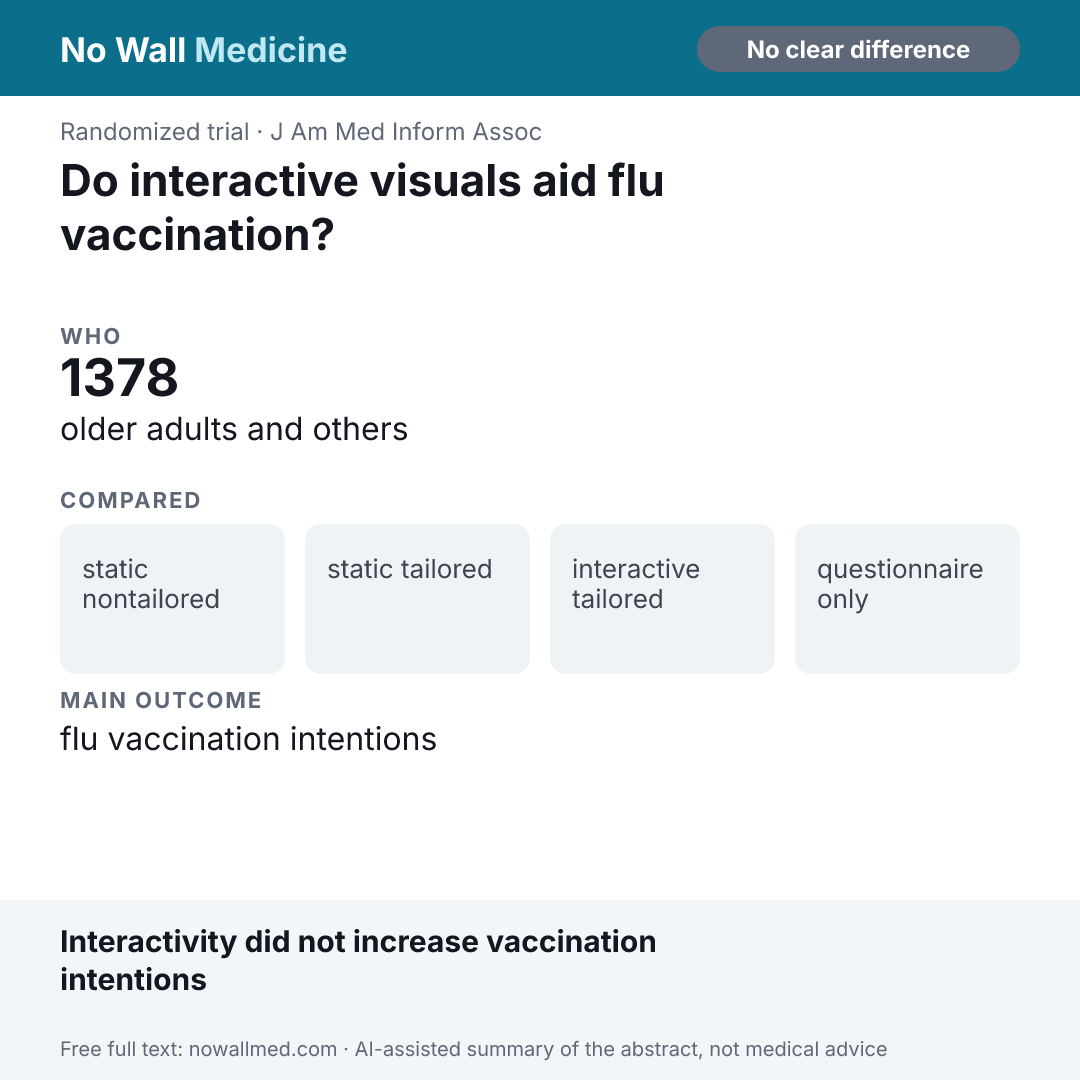
Are interactive and tailored data visualizations effective in promoting flu vaccination among the elderly? Evidence from a randomized experiment
Randomized trialNo clear difference
Do interactive visuals aid flu vaccination?
Who
1378
older adults and others
Compared
static nontailored
static tailored
interactive tailored
questionnaire only
Main outcome
flu vaccination intentions
Bottom line: Interactivity did not increase vaccination intentions
J Am Med Inform Assoc · 2023-05-23 · Save PNG
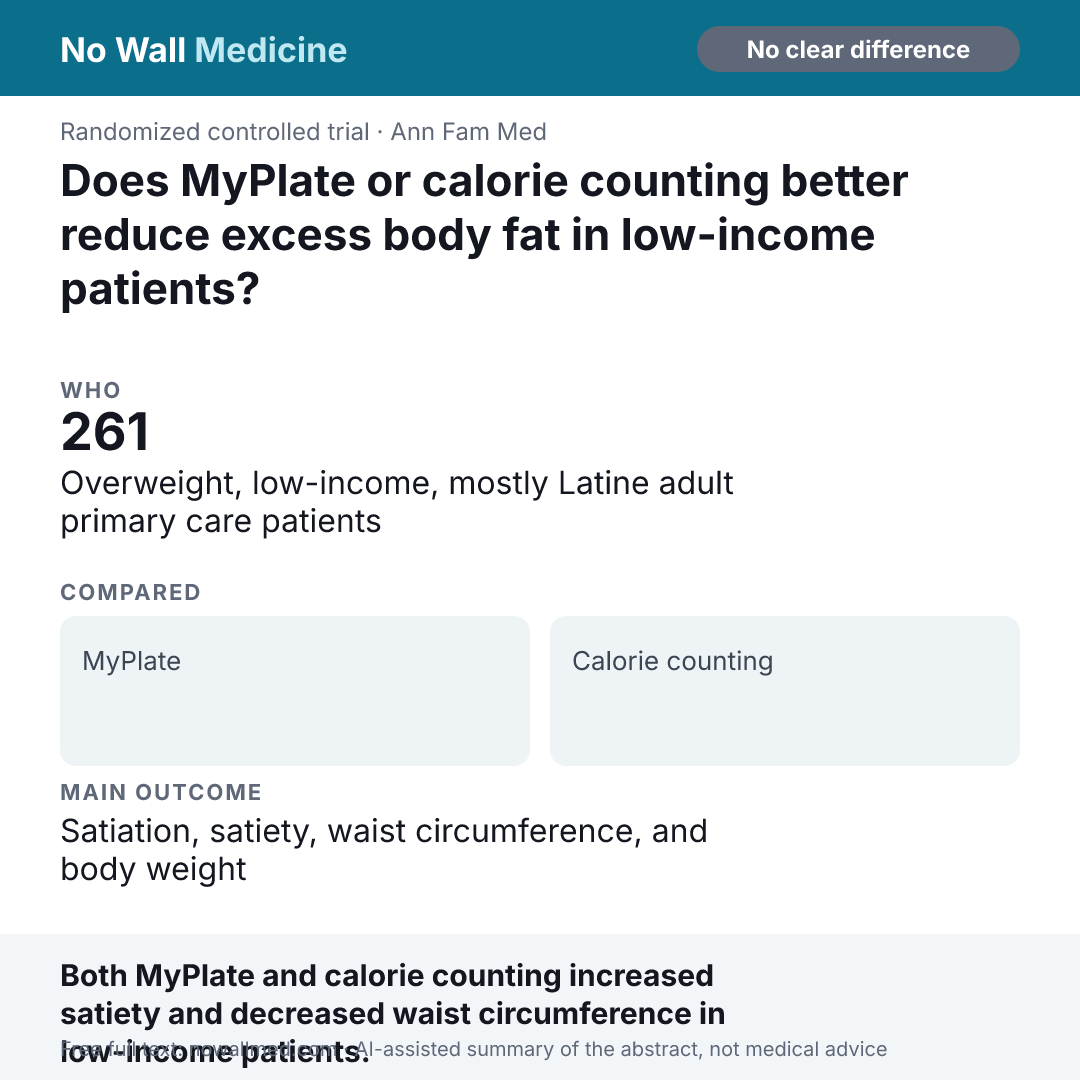
Randomized Comparative Effectiveness Trial of 2 Federally Recommended Strategies to Reduce Excess Body Fat in Overweight, Low-Income Patients: MyPlate.gov vs Calorie Counting
Randomized controlled trialNo clear difference
Does MyPlate or calorie counting better reduce excess body fat in low-income patients?
Who
261
Overweight, low-income, mostly Latine adult primary care patients
Compared
MyPlate
Calorie counting
Main outcome
Satiation, satiety, waist circumference, and body weight
Bottom line: Both MyPlate and calorie counting increased satiety and decreased waist circumference in low-income patients.
Ann Fam Med · 2023-05-23 · Save PNG
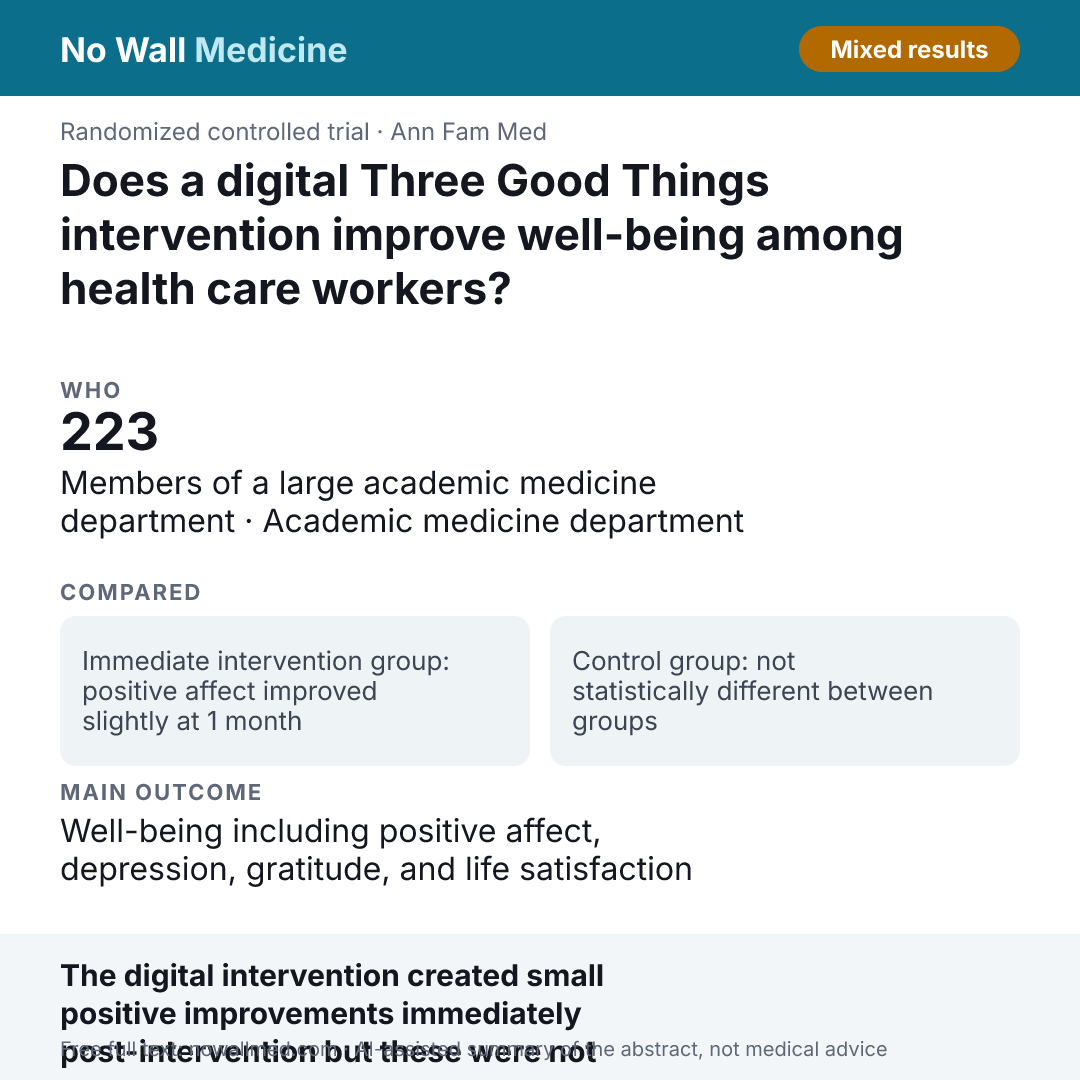
"Three Good Things" Digital Intervention Among Health Care Workers: A Randomized Controlled Trial
Randomized controlled trialMixed results
Does a digital Three Good Things intervention improve well-being among health care workers?
Who
223
Members of a large academic medicine department · Academic medicine department
Compared
Immediate intervention group: positive affect improved slightly at 1 month
Control group: not statistically different between groups
Main outcome
Well-being including positive affect, depression, gratitude, and life satisfaction
Bottom line: The digital intervention created small positive improvements immediately post-intervention but these were not sustained.
Ann Fam Med · 2023-05-23 · Save PNG
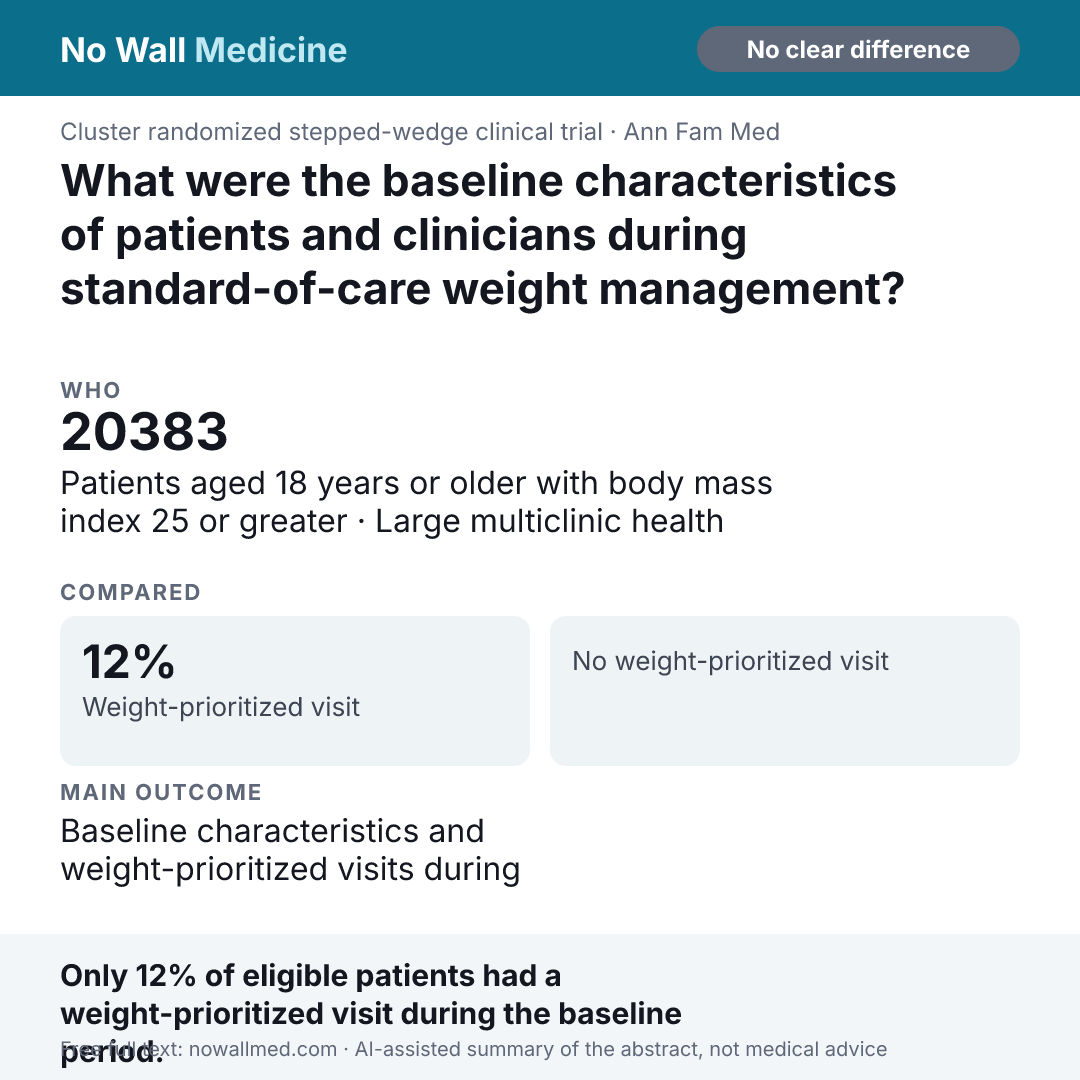
Baseline Characteristics of PATHWEIGH: A Stepped-Wedge Cluster Randomized Study for Weight Management in Primary Care
Cluster randomized stepped-wedge clinical trialNo clear difference
What were the baseline characteristics of patients and clinicians during standard-of-care weight management?
Who
20383
Patients aged 18 years or older with body mass index 25 or greater · Large multiclinic health system
Compared
12%Weight-prioritized visit
No weight-prioritized visit
Main outcome
Baseline characteristics and weight-prioritized visits during standard-of-care
Bottom line: Only 12% of eligible patients had a weight-prioritized visit during the baseline period.
Ann Fam Med · 2023-05-23 · Save PNG
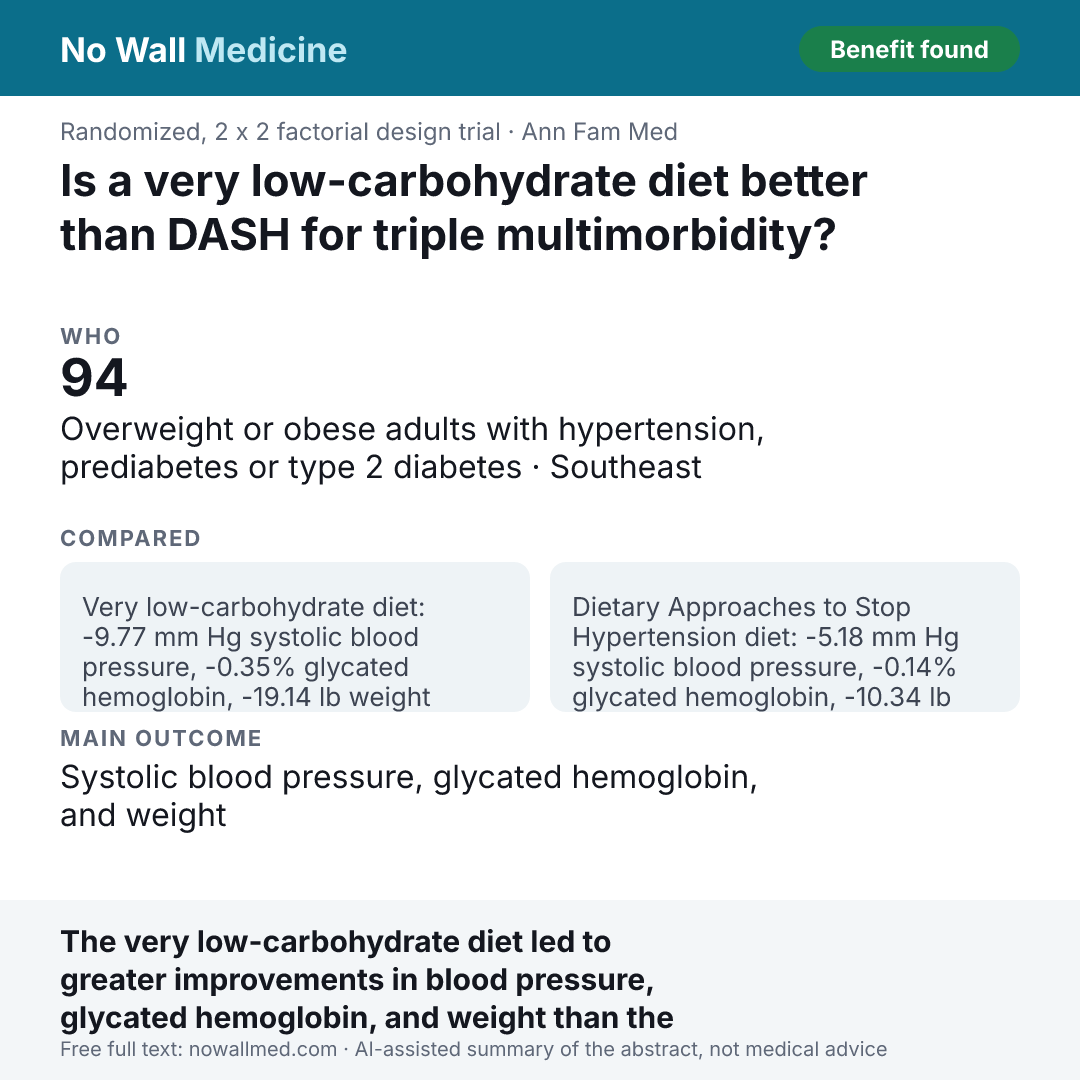
Comparing Very Low-Carbohydrate vs DASH Diets for Overweight or Obese Adults With Hypertension and Prediabetes or Type 2 Diabetes: A Randomized Trial
Randomized, 2 x 2 factorial design trialBenefit found
Is a very low-carbohydrate diet better than DASH for triple multimorbidity?
Who
94
Overweight or obese adults with hypertension, prediabetes or type 2 diabetes · Southeast Michigan
Compared
Very low-carbohydrate diet: -9.77 mm Hg systolic blood pressure, -0.35% glycated hemoglobin, -19.14 lb weight
Dietary Approaches to Stop Hypertension diet: -5.18 mm Hg systolic blood pressure, -0.14% glycated hemoglobin, -10.34 lb weight
Main outcome
Systolic blood pressure, glycated hemoglobin, and weight
Bottom line: The very low-carbohydrate diet led to greater improvements in blood pressure, glycated hemoglobin, and weight than the DASH diet.
Ann Fam Med · 2023-05-23 · Save PNG
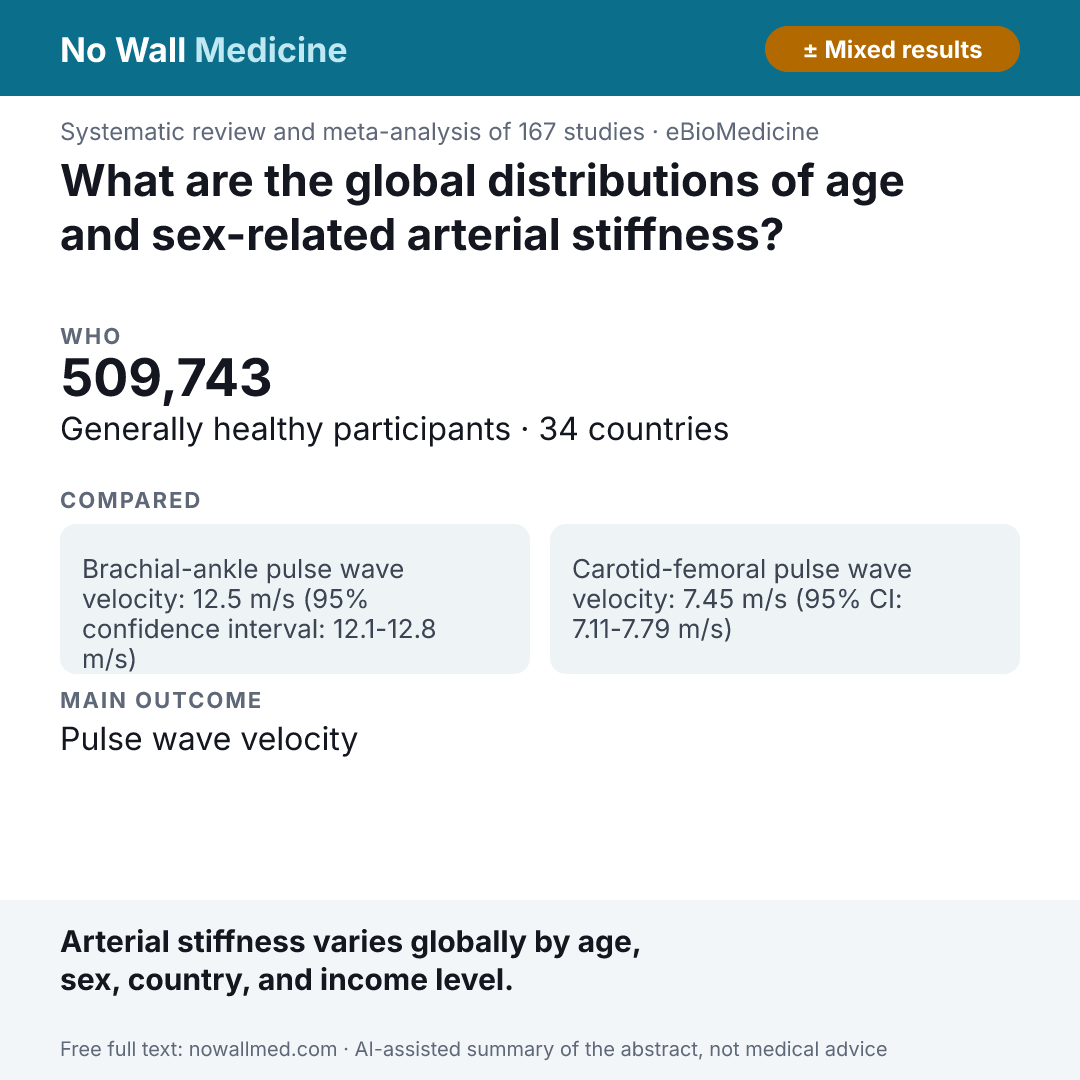
Global distributions of age- and sex-related arterial stiffness: systematic review and meta-analysis of 167 studies with 509,743 participants
Systematic review and meta-analysis of 167 studiesMixed results
What are the global distributions of age and sex-related arterial stiffness?
Who
509,743
Generally healthy participants · 34 countries
Compared
Brachial-ankle pulse wave velocity: 12.5 m/s (95% confidence interval: 12.1-12.8 m/s)
Carotid-femoral pulse wave velocity: 7.45 m/s (95% CI: 7.11-7.79 m/s)
Main outcome
Pulse wave velocity
Bottom line: Arterial stiffness varies globally by age, sex, country, and income level.
Funded by: Austrian Research Promotion Agency, National Science Foundation of China, Hunan Province
eBioMedicine · 2023-05-23 · Save PNG
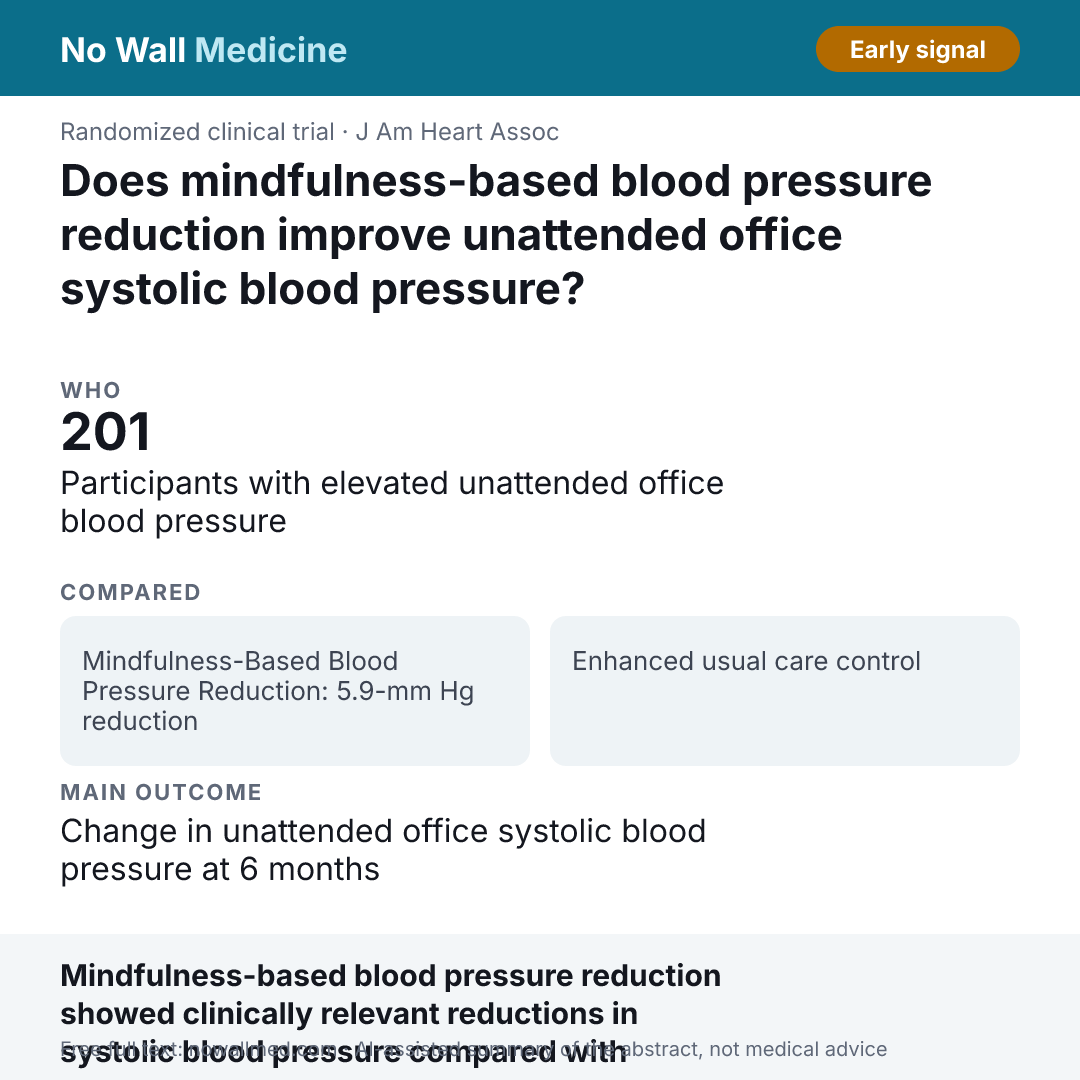
Effect of Adapted Mindfulness Training in Participants With Elevated Office Blood Pressure: The MB-BP Study: A Randomized Clinical Trial
Randomized clinical trialEarly signal
Does mindfulness-based blood pressure reduction improve unattended office systolic blood pressure?
Who
201
Participants with elevated unattended office blood pressure
Compared
Mindfulness-Based Blood Pressure Reduction: 5.9-mm Hg reduction
Enhanced usual care control
Main outcome
Change in unattended office systolic blood pressure at 6 months
Result: 4.5 mm Hg (95% CI, -9.0 to -0.1 mm Hg)
Bottom line: Mindfulness-based blood pressure reduction showed clinically relevant reductions in systolic blood pressure compared with enhanced usual care.
J Am Heart Assoc · 2023-05-23 · Save PNG
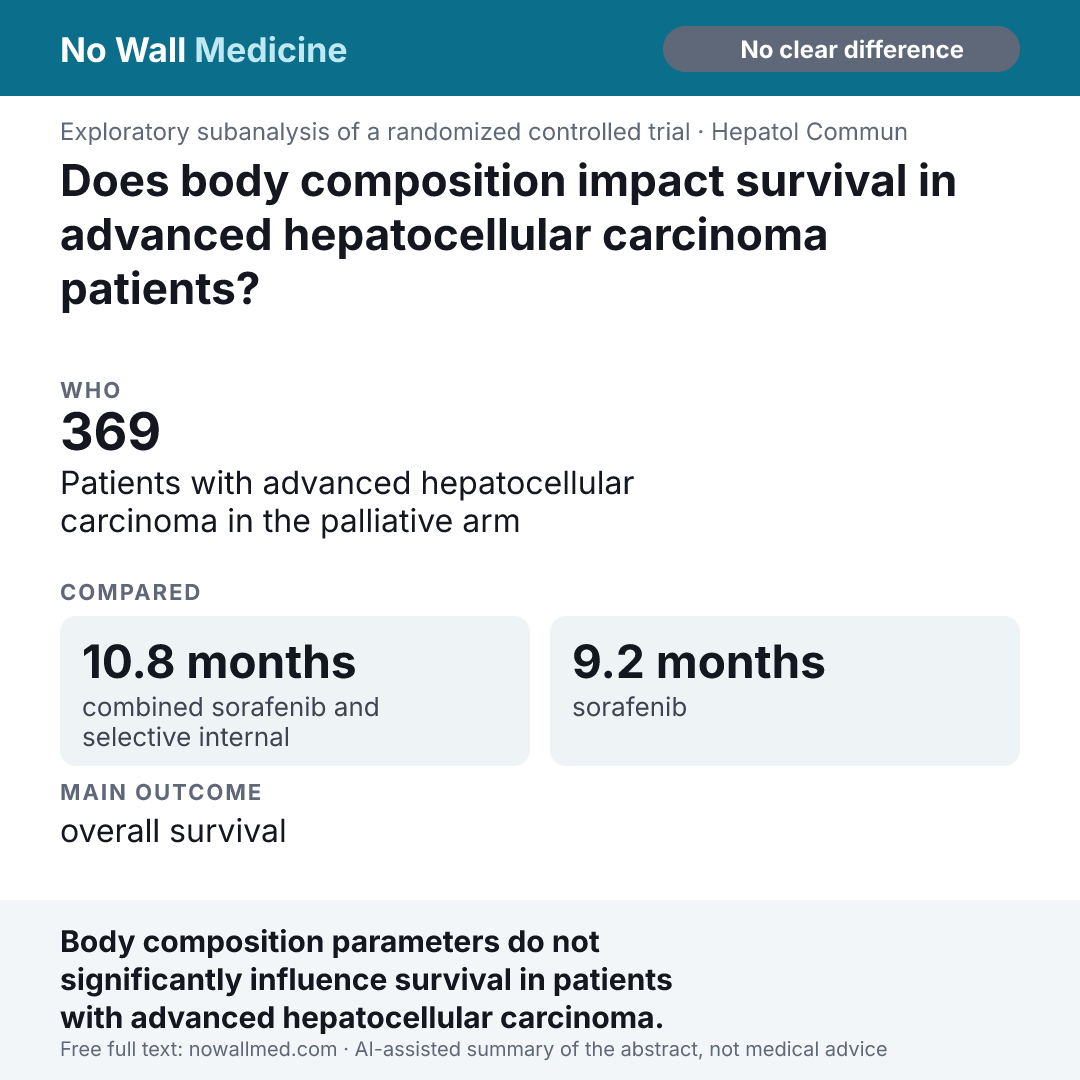
Impact of body composition in advanced hepatocellular carcinoma: A subanalysis of the SORAMIC trial
Exploratory subanalysis of a randomized controlled trialNo clear difference
Does body composition impact survival in advanced hepatocellular carcinoma patients?
Who
369
Patients with advanced hepatocellular carcinoma in the palliative arm
Compared
10.8 monthscombined sorafenib and selective internal radioembolization
9.2 monthssorafenib
Main outcome
overall survival
Bottom line: Body composition parameters do not significantly influence survival in patients with advanced hepatocellular carcinoma.
Limitation: This is an exploratory subanalysis of the prospective SORAMIC trial.
Hepatol Commun · 2023-05-23 · Save PNG
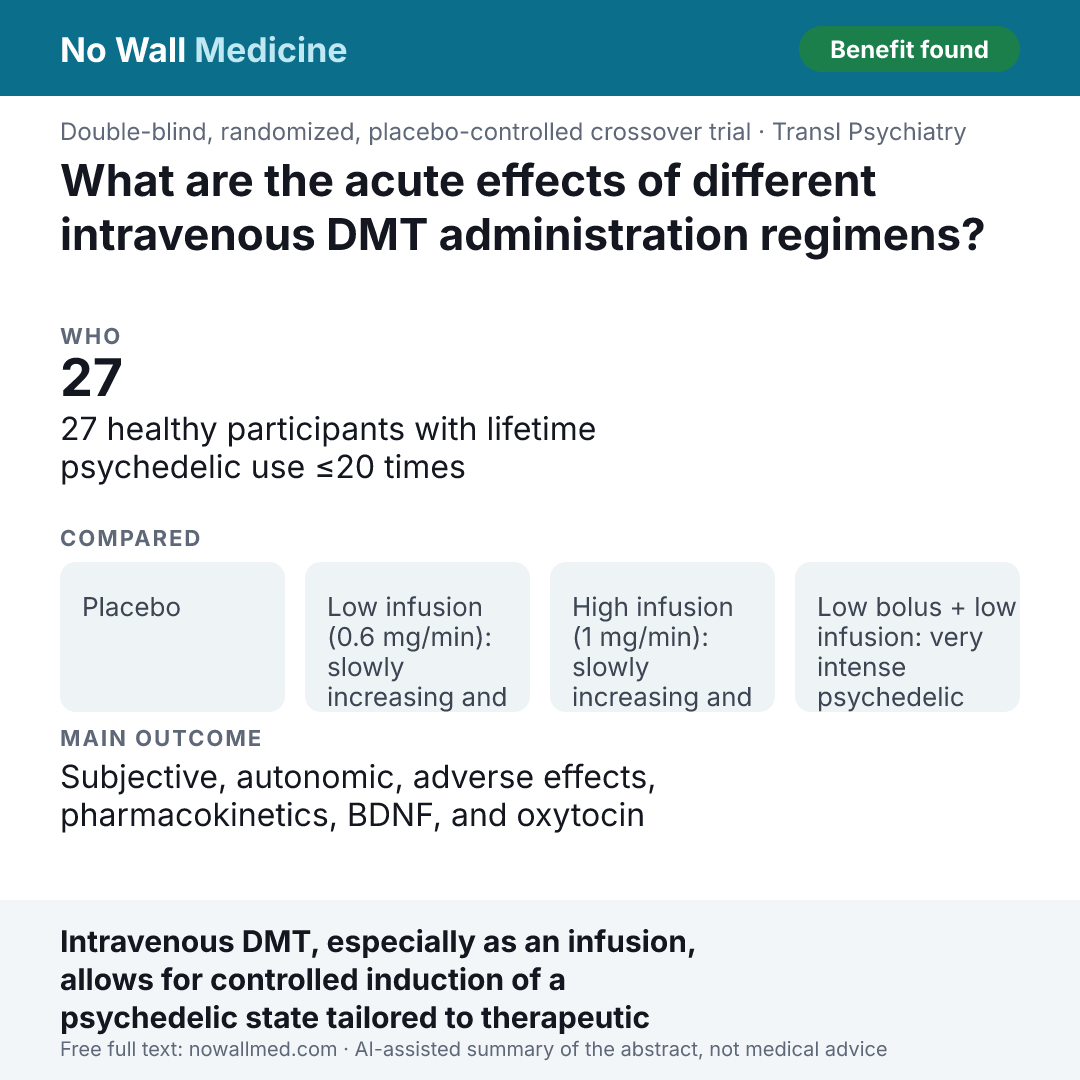
Acute effects of intravenous DMT in a randomized placebo-controlled study in healthy participants
Double-blind, randomized, placebo-controlled crossover trialBenefit found
What are the acute effects of different intravenous DMT administration regimens?
Who
27
27 healthy participants with lifetime psychedelic use ≤20 times
Compared
Placebo
Low infusion (0.6 mg/min): slowly increasing and dose-dependent psychedelic effects
High infusion (1 mg/min): slowly increasing and dose-dependent psychedelic effects
Low bolus + low infusion: very intense psychedelic effects that peaked within 2 min
Main outcome
Subjective, autonomic, adverse effects, pharmacokinetics, BDNF, and oxytocin
Bottom line: Intravenous DMT, especially as an infusion, allows for controlled induction of a psychedelic state tailored to therapeutic needs.
Transl Psychiatry · 2023-05-23 · Save PNG