Visual abstracts
New randomized trials and meta-analyses from leading journals at a glance: who was studied, what was compared, and what was found. Every paper is free to read in full.
All specialtiesCardiology 400Oncology 321Gastroenterology & Hepatology 162Infectious Disease 320Neurology 183Psychiatry & Mental Health 269Pulmonology 183Critical Care 125Endocrinology & Diabetes 241Pediatrics 192Surgery 134Orthopedics & Sports Medicine 80Neurosurgery 24Cardiothoracic & Vascular Surgery 47Plastic & Reconstructive Surgery 80Nephrology 78Rheumatology 82Hematology 95Dermatology 42Ophthalmology 69Obstetrics & Gynecology 124Public & Global Health 122Radiology & Imaging 37Anesthesiology 71Urology 91ENT (Otolaryngology) 48Emergency Medicine 41Allergy & Immunology 49Geriatrics 118Family Medicine & Primary Care 67Medical Genetics & Genomics 37Pathology & Laboratory Medicine 6Physical Medicine & Rehabilitation 98Palliative Care 61Nutrition 135Digital Health & AI 347General Medicine 49
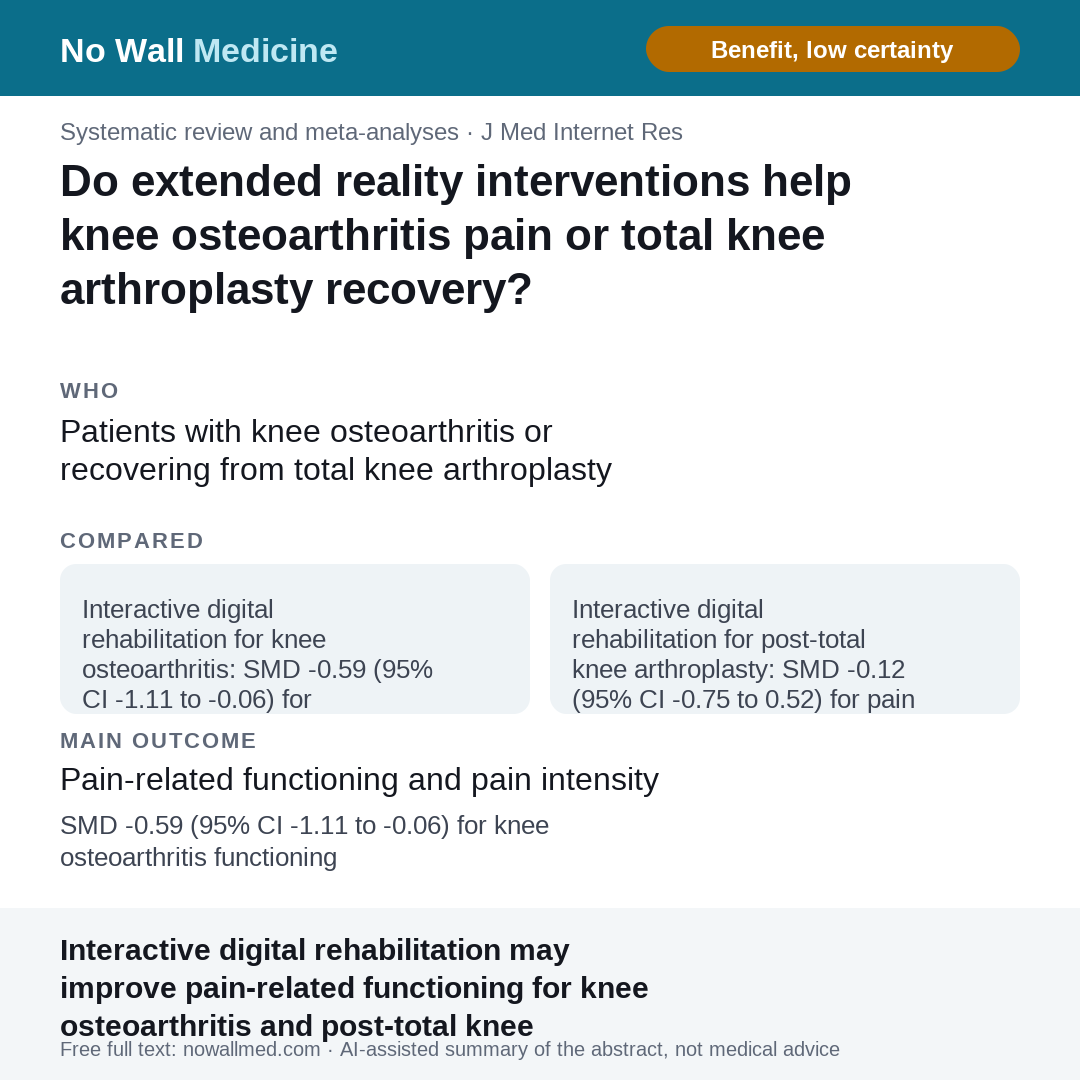
Extended Reality Interventions for Osteoarthritis of the Knee and Recovery After Total Knee Arthroplasty: Systematic Review and Meta-Analyses
Systematic review and meta-analysesBenefit found
Do extended reality interventions help knee osteoarthritis pain or total knee arthroplasty recovery?
Who
Patients with knee osteoarthritis or recovering from total knee arthroplasty
Compared
Interactive digital rehabilitation for knee osteoarthritis: SMD -0.59 (95% CI -1.11 to -0.06) for pain-related functioning
Interactive digital rehabilitation for post-total knee arthroplasty: SMD -0.12 (95% CI -0.75 to 0.52) for pain intensity
Main outcome
Pain-related functioning and pain intensity
Result: SMD -0.59 (95% CI -1.11 to -0.06) for knee osteoarthritis functioning
Bottom line: Interactive digital rehabilitation may improve pain-related functioning for knee osteoarthritis and post-total knee arthroplasty recovery.
J Med Internet Res · 2026-09-08Download image
HBsAg decline and clearance with peg-IFN therapy added to nucleos(t)ide analogues: an individual participant data meta-analysis of prospective trials (PROSPER)
Post hoc meta-analysis of individual participant dataBenefit found
What are the hepatitis B surface antigen decline and clearance rates with peg-interferon added to nucleos(t)ide analogue therapy?
Who
581
Chronic hepatitis B patients on nucleos(t)ide analogue therapy
Compared
37.7%HBsAg <100 IU/mL at start
9.8%HBsAg 100-1000 IU/mL at start
2.3%HBsAg ≥1000 IU/mL at start
Main outcome
Hepatitis B surface antigen loss at end of follow-up
Bottom line: Adding peg-interferon to nucleos(t)ide analogues achieves hepatitis B surface antigen loss, especially in patients with lower initial antigen levels.
Gut · 2026-09-07Download image

Mental health outcomes and associated factors among Myanmar refugees: systematic review
Systematic reviewMixed results
What are the common mental disorders and associated factors among Myanmar refugees?
Who
10800
Myanmar refugees in regional host countries · Bangladesh, Thailand and Malaysia
Compared
Depression prevalence: 30.0-89.0%
Anxiety prevalence: 39.3-41.8%
Post-traumatic stress disorder prevalence: 3.7-61.2%
Main outcome
Prevalence of common mental disorders
Bottom line: Myanmar refugees face a high burden of depression, anxiety, and post-traumatic stress disorder driven by various stressors.
BJPsych Open · 2026-09-07Download image

Risk of bias in network meta-analyses of interventions for knee and hip osteoarthritis published in leading general medical and specialty journals: A methodological study using the RoB NMA tool
Methodological studyHarm found
What is the risk of bias in network meta-analyses for knee and hip osteoarthritis?
Who
21
Network meta-analyses of interventions for knee and hip osteoarthritis · 22 leading general and specialty journals
Compared
62%High risk of bias
19%Some concerns
19%Low risk
Main outcome
Risk of bias using ROBIS and RoB NMA tools
Bottom line: Most network meta-analyses for knee and hip osteoarthritis in leading journals exhibit a high risk of bias.
Limitation: The study used a restricted sample of systematic reviews.
Osteoarthritis Cartilage · 2026-09-06Download image

Autologous Fat Grafting for Breast Augmentation and Breast Remodeling: A Systematic Review and Meta-analysis of Complications, Radiologic Outcomes, Graft Retention, and Patient-Reported Satisfaction
Systematic review and meta-analysis of 40 studiesBenefit found
What are the complications, radiologic outcomes, graft retention, and satisfaction of autologous fat grafting?
Who
5684
5,684 patients undergoing autologous fat grafting
Compared
All autologous fat grafting: 25.9% (95% CI, 22.4-29.6) complication rate
SVF/PRP-enriched grafts: 68.9% volume retention
Non-enriched grafts: 56.1% volume retention
Main outcome
Complications, radiologic outcomes, graft retention, and patient satisfaction
Result: 61.3% (95% CI, 57.1-65.4) twelve-month volume retention
Bottom line: Autologous fat grafting shows favorable safety, 61.3% volume retention, and 93.1% patient satisfaction.
Limitation: Oncologic outcomes were not quantitatively pooled and evidence was heterogeneous.
Aesthet Surg J · 2026-09-05Download image

Management of the Iliac Bifurcation during Endovascular Aneurysm Repair: A Systematic Review and Network Meta-analysis
Systematic review and network meta-analysisBenefit found
Endovascular strategies for iliac bifurcation management safety
Who
6291
patients undergoing endovascular aneurysm repair
Compared
Iliac branch devices
Coil and cover
Main outcome
iliac related re-interventions and endoleaks
Result: risk ratio 0.46 (95% credible intervals 0.15 - 0.93)
Bottom line: Iliac branch devices reduce re-interventions
Eur J Vasc Endovasc Surg · 2026-09-05Download image

Effectiveness of care delivery models for knee osteoarthritis in primary healthcare settings: A systematic review and meta-analysis of randomized controlled trials
Systematic review and meta-analysis of randomized controlled trialsMixed results
Are care delivery models effective for knee osteoarthritis versus usual care?
Who
2944
Patients with knee osteoarthritis in primary health care settings
Compared
Care delivery models: pain SMD -0.40, function SMD -0.26, HRQoL SMD 0.00
Usual care
Main outcome
Pain, function, and health-related quality of life
Result: pain SMD -0.40 (95% CI -0.63 to -0.16), function SMD -0.26 (95% CI -0.39 to -0.14), HRQoL SMD 0.00 (-0.10 to 0.09)
Bottom line: Care delivery models produced small improvements in pain and function, but these did not reach minimal clinically important differences.
Limitation: Only 15 trials were included and subgroup findings should be interpreted cautiously.
Osteoarthritis Cartilage · 2026-09-04Download image

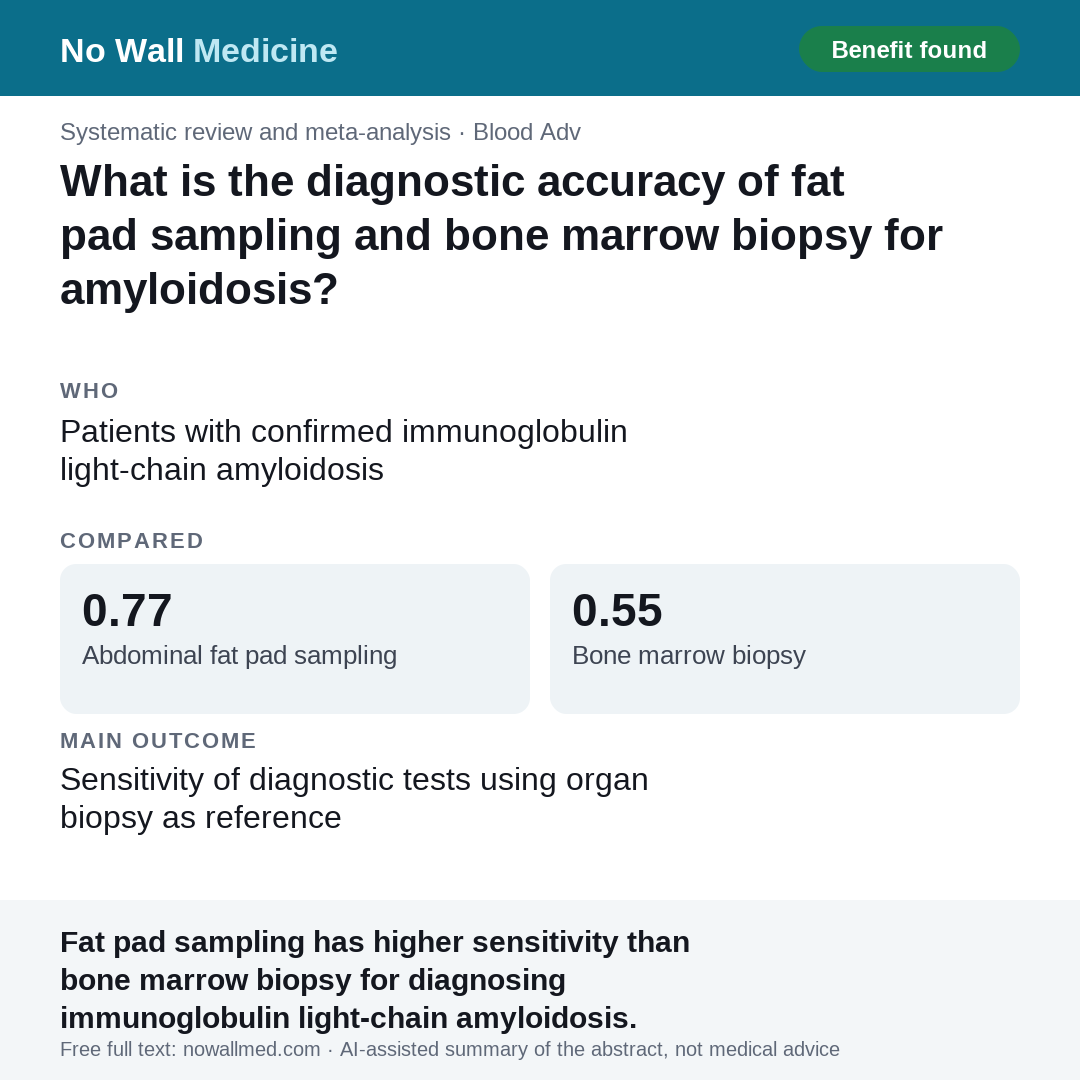
Diagnostic accuracy of fat pad sampling and bone marrow biopsy for AL amyloidosis: a systematic review and meta-analysis
Systematic review and meta-analysisBenefit found
What is the diagnostic accuracy of fat pad sampling and bone marrow biopsy for amyloidosis?
Who
Patients with confirmed immunoglobulin light-chain amyloidosis
Compared
0.77Abdominal fat pad sampling (95% confidence interval, 0.72-0.81)
0.55Bone marrow biopsy (0.46-0.63)
Main outcome
Sensitivity of diagnostic tests using organ biopsy as reference
Bottom line: Fat pad sampling has higher sensitivity than bone marrow biopsy for diagnosing immunoglobulin light-chain amyloidosis.
Limitation: Specificity was not reported in the included studies.
Blood Adv · 2026-09-04Download image
Diagnostic Performance of Machine Learning for Systemic Lupus Erythematosus: Systematic Review and Meta-Analysis
Systematic review and meta-analysisBenefit found
What is the diagnostic performance of machine learning for systemic lupus erythematosus related tasks?
Who
29
Patients with systemic lupus erythematosus, lupus nephritis, or neuropsychiatric involvement
Compared
Deep learning models: sensitivity 0.93 and specificity 0.95
Traditional machine learning models: sensitivity 0.88 and specificity 0.94
Main outcome
Diagnostic accuracy for SLE classification, lupus nephritis, and neuropsychiatric discrimination
Result: pooled sensitivity 0.91 (95% CI 0.86-0.94) and pooled specificity 0.94 (95% CI 0.91-0.96)
Bottom line: Machine learning shows promising diagnostic accuracy, but limited external validation and high risk of bias restrict real-world generalizability.
Limitation: All studies were retrospective, limited external validation, and high or unclear risk of bias in most studies.
J Med Internet Res · 2026-09-04Download image

Long-acting HIV pre-exposure prophylaxis adherence and discontinuation: a global systematic review and meta-analysis
Systematic review and meta-analysisMixed results
What are the adherence and discontinuation rates for long-acting HIV pre-exposure prophylaxis?
Who
22945
Individuals receiving long-acting injectable or intravaginal ring pre-exposure prophylaxis
Compared
Six-monthly long-acting injectable: 93.0% (95% CI: 91.6-94.3) adherence at 12 months
Two-monthly long-acting injectable: 88.1% (84.7-90.8%) adherence at 12 months
Intravaginal ring: 66.1% (42.2-83.9%) adherence at 6 months
Main outcome
Adherence and discontinuation of long-acting HIV pre-exposure prophylaxis
Bottom line: Long-acting injectable adherence remained high, but intravaginal ring showed lower adherence and higher discontinuation rates.
Funded by: National Key R&D Program of China
eClinicalMedicine · 2026-09-03Download image

Status, challenges, and future directions of machine learning in the management of epilepsy: a systematic review and meta-analysis
Systematic review and meta-analysisMixed results
What is the performance of machine learning in epilepsy management?
Who
People with clinician-confirmed diagnosis of epilepsy
Compared
0·82Antiseizure medication outcomes (95% CI 0·77-0·88)
0·82Epilepsy surgery outcomes (0·76-0·88)
0·94Epilepsy surgery candidacy (0·92-0·96)
Main outcome
Area under the receiver-operator characteristic curves
Bottom line: Machine learning shows promise in predicting epilepsy treatment outcomes, but high heterogeneity and bias limit clinical applicability.
Limitation: High heterogeneity, high risk of bias, small sample sizes, and scarcity of external validation.
Funded by: Australian Government National Health and Medical Research Council
Lancet Digit Health · 2026-09-03Download image

Applications and outcomes of virtual reality in inpatient psychiatry: A systematic review
Systematic reviewUnclear result
What are the applications and outcomes of virtual reality in inpatient psychiatry?
Who
1,004
Psychiatric inpatients · Not specified
Compared
Virtual reality applications
Control
Main outcome
Types of applications, implementation barriers, facilitators, and clinical outcomes
Bottom line: Virtual reality is feasible and safe in inpatient psychiatry, showing consistent improvements in clinical symptoms like anxiety.
Limitation: Findings remain preliminary and high-quality trials are needed.
Psychol Med · 2026-09-03Download image

Phenome- and laboratory-wide meta-analyses of sickle cell trait reveal multi-system disease associations
Phenome-wide and laboratory-wide meta-analysesMixed results
What are the multi-system disease and laboratory associations of sickle cell trait?
Who
58830
African genetic ancestry participants · Three US electronic health record-based biobanks
Compared
Sickle cell trait
No sickle cell trait
Main outcome
Phenome-wide and clinical laboratory-wide associations
Bottom line: Sickle cell trait is associated with increased risks of kidney disease, pulmonary embolism, anemia, and various laboratory parameter changes.
Am J Hum Genet · 2026-09-03Download image

Gait Speed Changes in Stroke Rehabilitation Motor Lower Extremity Randomized Controlled Trials by Intervention and Time Poststroke: A Meta-analysis
Meta-analysis of 106 randomized controlled trialsMixed results
How do lower extremity motor rehabilitation interventions affect gait speed after stroke?
Who
106
Adults with stroke
Compared
Interventions in acute/subacute phase: significant benefits
Interventions in chronic phase: none showed any significant benefit
Main outcome
Gait speed
Bottom line: Acute and subacute interventions show greater gait speed improvements than interventions in the chronic phase.
Arch Phys Med Rehabil · 2026-09-03Download image

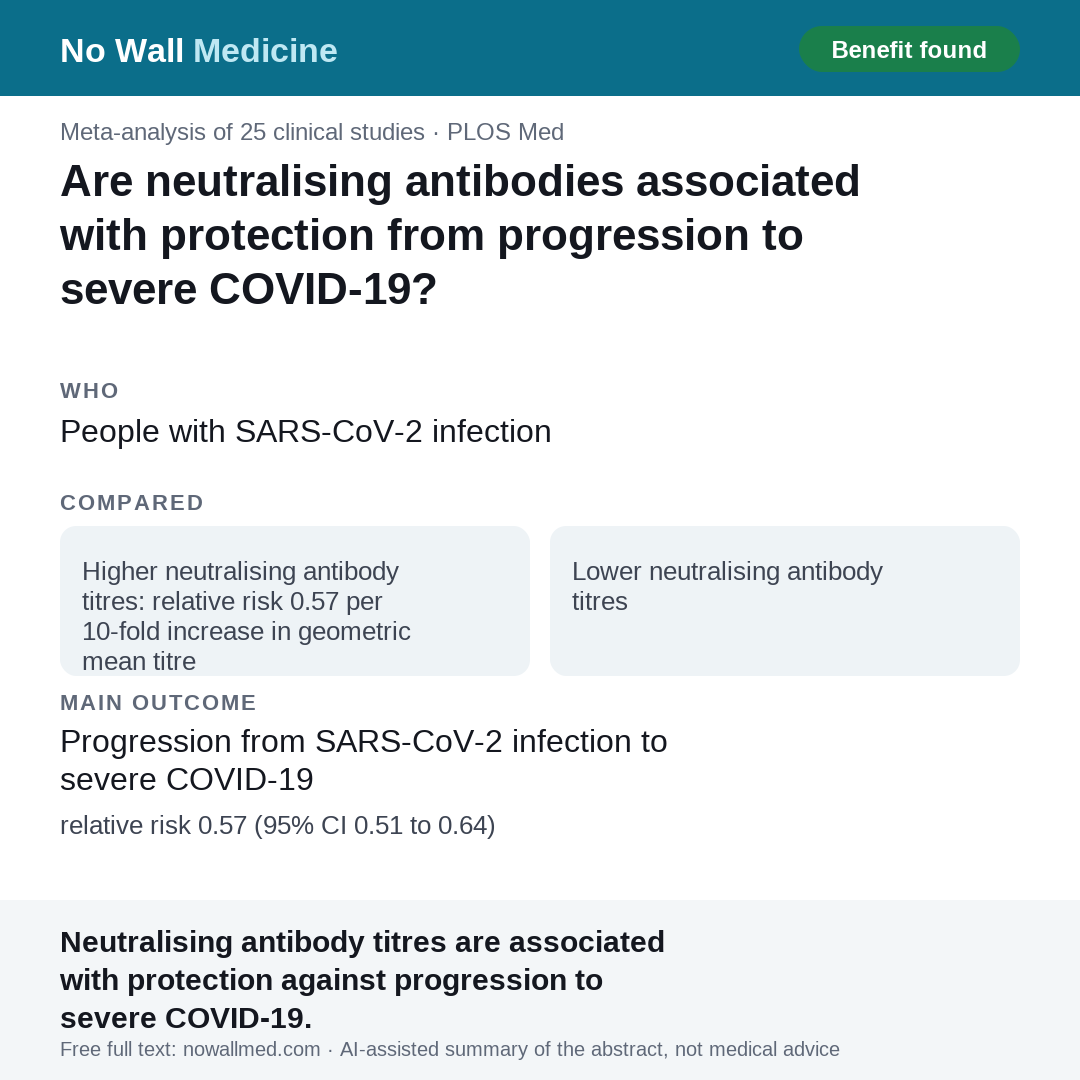
Neutralising antibodies and protection from progression to severe COVID-19: A meta-analysis
Meta-analysis of 25 clinical studiesBenefit found
Are neutralising antibodies associated with protection from progression to severe COVID-19?
Who
People with SARS-CoV-2 infection
Compared
Higher neutralising antibody titres: relative risk 0.57 per 10-fold increase in geometric mean titre
Lower neutralising antibody titres
Main outcome
Progression from SARS-CoV-2 infection to severe COVID-19
Result: relative risk 0.57 (95% CI 0.51 to 0.64)
Bottom line: Neutralising antibody titres are associated with protection against progression to severe COVID-19.
Limitation: Neutralisation titres and clinical outcomes were measured in different studies and unmeasured confounding is possible.
PLOS Med · 2026-09-02Download image
Complication Rates in Facial Feminization Surgery: A Systematic Review
Systematic reviewBenefit found
What are the complication risks of surgical procedures applied in facial feminization surgery?
Who
Transgender women and nonbinary individuals undergoing facial feminization surgery
Compared
All subgroups regarding face and neck: less than 5%
5.3%Combined surgery
Main outcome
Incidence of complications following Clavien-Dindo classification
Bottom line: Facial feminization surgery has a low incidence of complications, suggesting these are safe procedures with minimal risks.
Plast Reconstr Surg Glob Open · 2026-09-02Download image

Efficacy and Safety of Local Tranexamic Acid in Rhytidectomy: A Systematic Review and Meta-analysis
Systematic review and meta-analysisBenefit found
Does local tranexamic acid reduce blood loss and hematoma in rhytidectomy?
Who
1122
Adults undergoing rhytidectomy
Compared
Local tranexamic acid
Control
Main outcome
Estimated blood loss, drain output, and hematoma rates
Result: odds ratio 0.35 (95% CI 0.15-0.81)
Bottom line: Local tranexamic acid significantly reduces blood loss, drain output, and hematoma rates in rhytidectomy patients.
Plast Reconstr Surg Glob Open · 2026-09-02Download image

Intravenous vs Oral Iron for Treating Iron Deficiency Anemia in Pregnancy: A Systematic Review and Meta-Analysis
Systematic review and meta-analysis of 29 randomized clinical trialsBenefit found
Is intravenous or oral iron better for treating iron deficiency anemia in pregnancy?
Who
11771
Pregnant women with iron deficiency anemia
Compared
Intravenous iron
Oral iron
Main outcome
Maternal hemoglobin and ferritin levels at childbirth
Result: maternal hemoglobin WMD 0.59 g/dL (95% CI, 0.31-0.87 g/dL)
Bottom line: Intravenous iron improves maternal hemoglobin, ferritin, and neonatal ferritin while reducing blood transfusion rates compared to oral iron.
JAMA Netw Open · 2026-09-01Download image

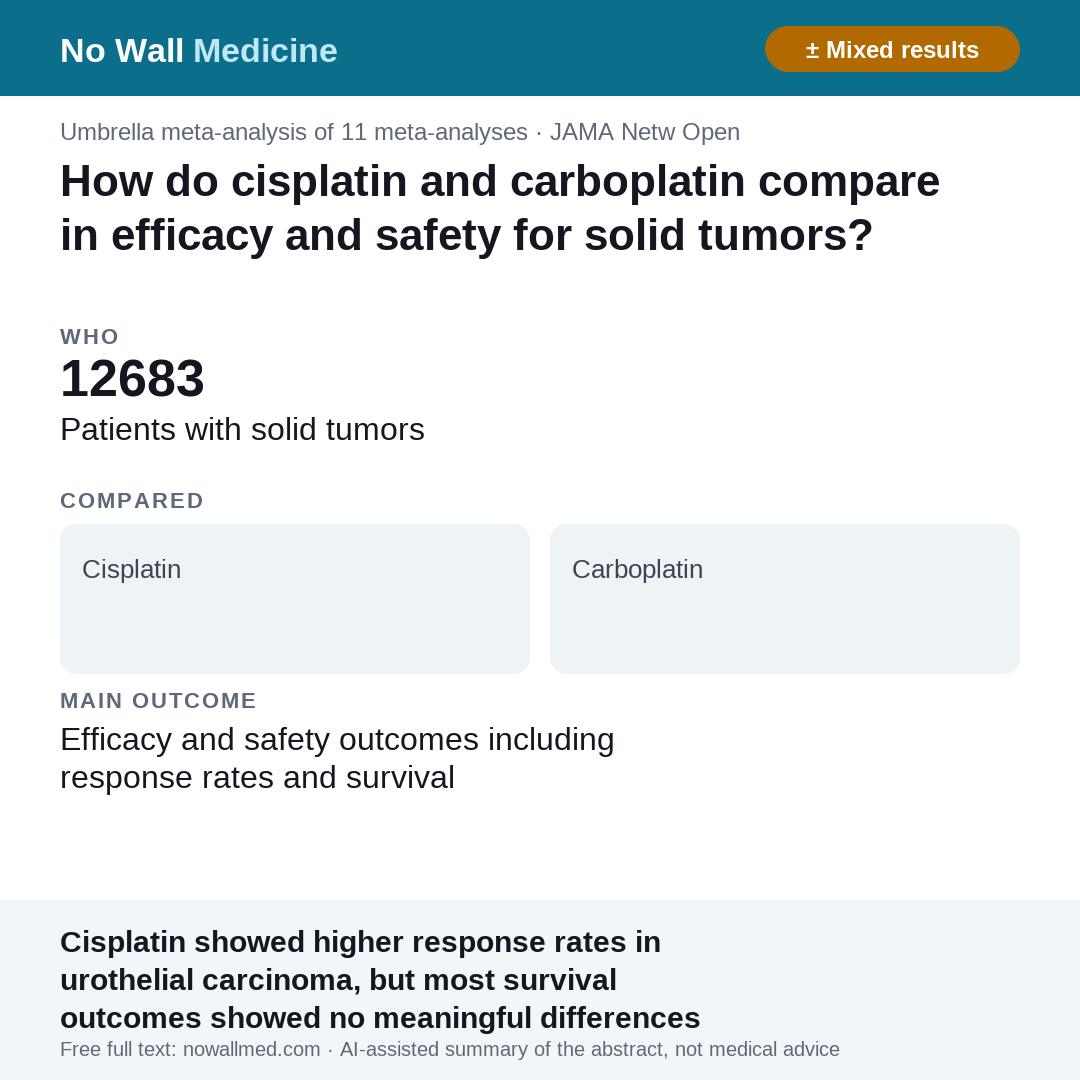
Reappraisal of Cisplatin vs Carboplatin Treatment for Solid Tumors: An Umbrella Meta-Analysis
Umbrella meta-analysis of 11 meta-analysesMixed results
How do cisplatin and carboplatin compare in efficacy and safety for solid tumors?
Who
12683
Patients with solid tumors
Compared
Cisplatin
Carboplatin
Main outcome
Efficacy and safety outcomes including response rates and survival
Bottom line: Cisplatin showed higher response rates in urothelial carcinoma, but most survival outcomes showed no meaningful differences between treatments.
JAMA Netw Open · 2026-09-01Download image
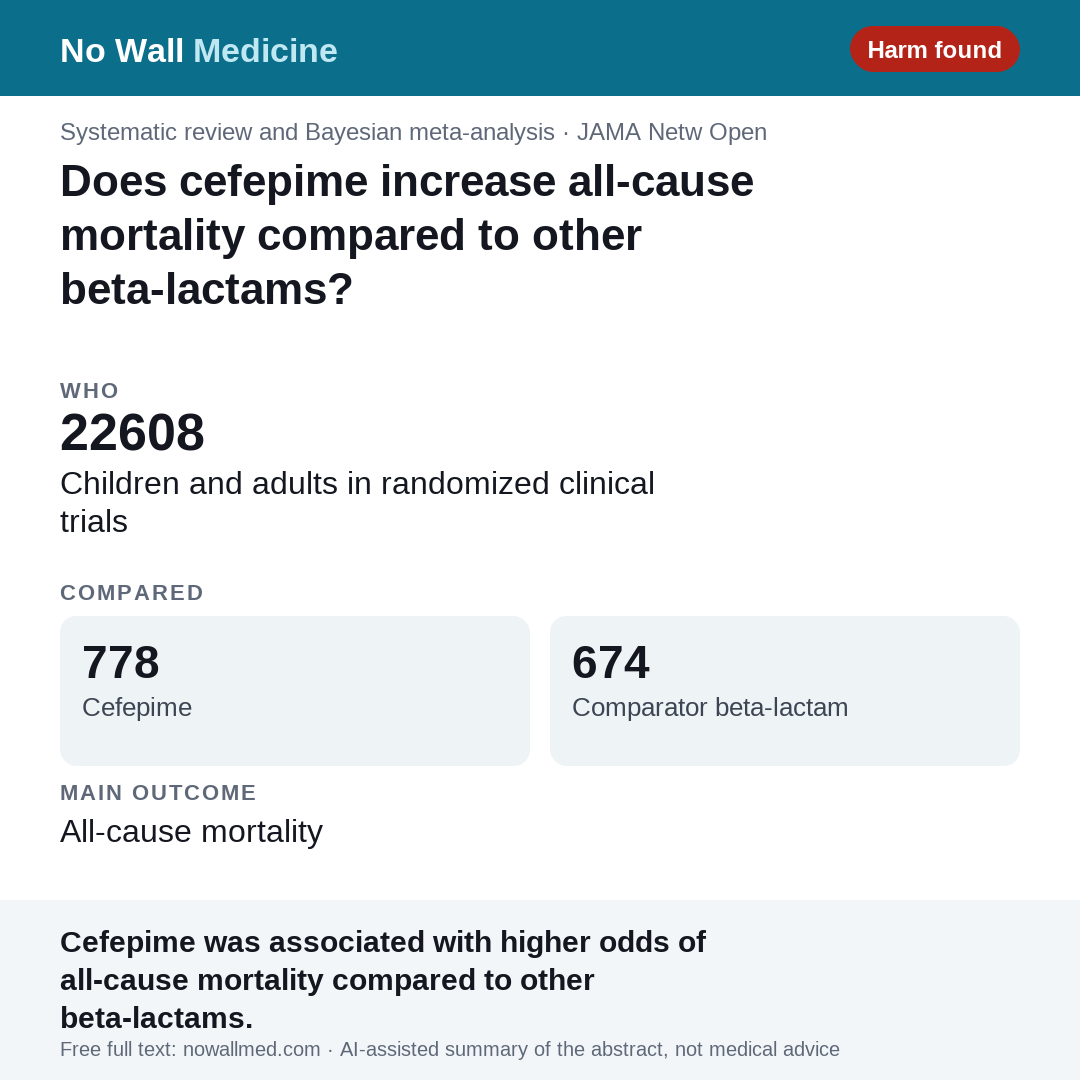
Cefepime and Mortality: A Systematic Review and Bayesian Meta-Analysis
Systematic review and Bayesian meta-analysisHarm found
Does cefepime increase all-cause mortality compared to other beta-lactams?
Who
22608
Children and adults in randomized clinical trials
Compared
778Cefepime (6.6%)
674Comparator beta-lactam (6.2%)
Main outcome
All-cause mortality
Result: odds ratio 1.10 (95% credible interval 0.98-1.24)
Bottom line: Cefepime was associated with higher odds of all-cause mortality compared to other beta-lactams.
JAMA Netw Open · 2026-09-01Download image