Visual abstracts
New randomized trials and meta-analyses from leading journals at a glance: who was studied, what was compared, and what was found. Every paper is free to read in full.
All specialtiesCardiology 4876Oncology 4133Gastroenterology & Hepatology 1942Infectious Disease 3833Neurology 1902Psychiatry & Mental Health 2273Pulmonology 2142Critical Care 1364Endocrinology & Diabetes 2579Pediatrics 2980Surgery 2556Orthopedics & Sports Medicine 931Neurosurgery 537Cardiothoracic & Vascular Surgery 674Plastic & Reconstructive Surgery 590Nephrology 1133Rheumatology 823Hematology 1109Dermatology 621Ophthalmology 543Obstetrics & Gynecology 1686Public & Global Health 1058Radiology & Imaging 648Anesthesiology 986Urology 764ENT (Otolaryngology) 503Emergency Medicine 511Allergy & Immunology 313Geriatrics 978Family Medicine & Primary Care 562Medical Genetics & Genomics 676Pathology & Laboratory Medicine 159Physical Medicine & Rehabilitation 757Palliative Care 444Nutrition 1588Digital Health & AI 2197General Medicine 319
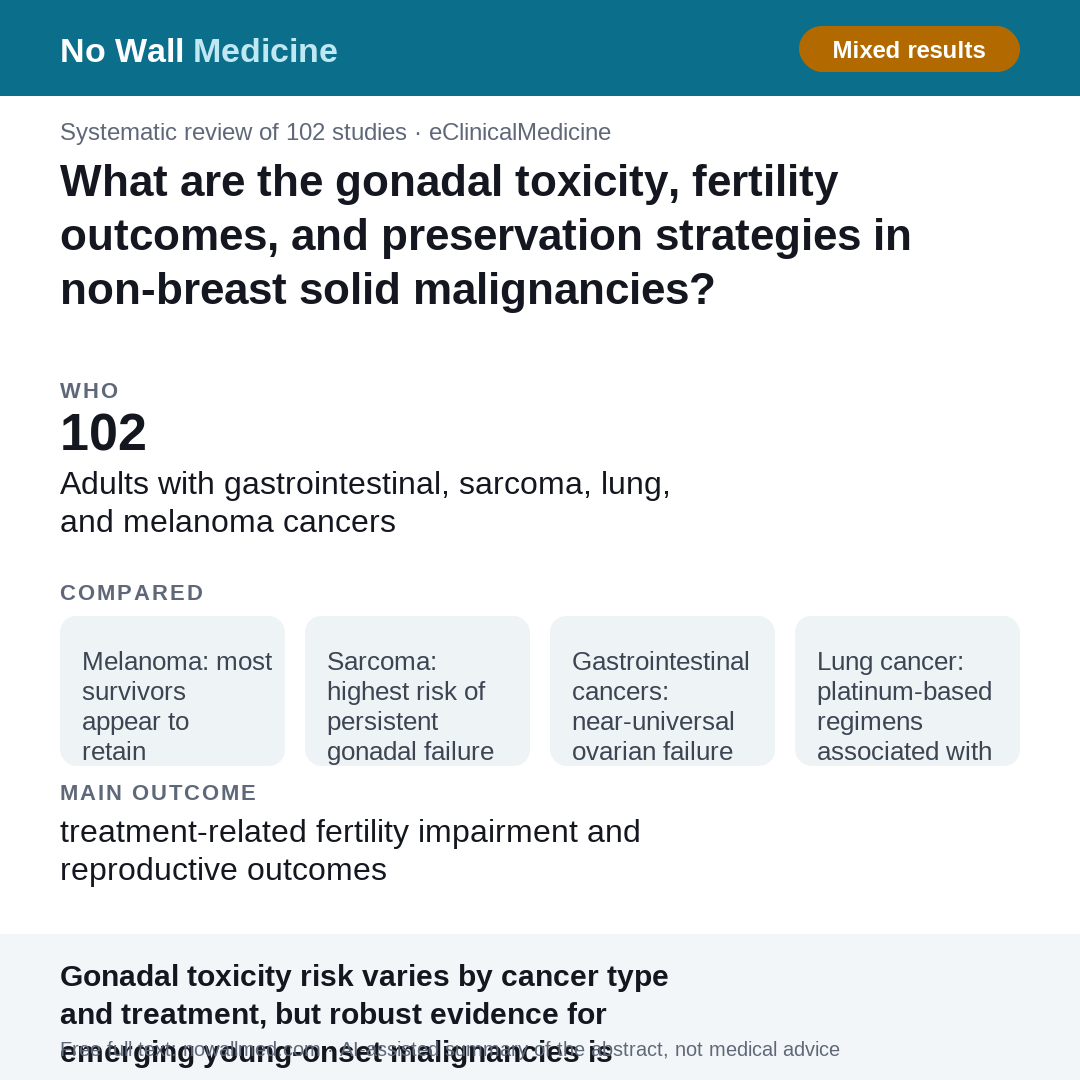
Oncofertility outcomes in early-onset patients with non-breast solid malignancies: a systematic review
Systematic review of 102 studiesMixed results
What are the gonadal toxicity, fertility outcomes, and preservation strategies in non-breast solid malignancies?
Who
102
Adults with gastrointestinal, sarcoma, lung, and melanoma cancers
Compared
Melanoma: most survivors appear to retain fertility
Sarcoma: highest risk of persistent gonadal failure
Gastrointestinal cancers: near-universal ovarian failure with pelvic radiotherapy
Lung cancer: platinum-based regimens associated with premature menopause
Main outcome
treatment-related fertility impairment and reproductive outcomes
Bottom line: Gonadal toxicity risk varies by cancer type and treatment, but robust evidence for emerging young-onset malignancies is lacking.
Limitation: High heterogeneity in design, treatment exposures, and outcome definitions; formal assessment of publication bias was not undertaken.
Funded by: internal institutional support
eClinicalMedicine · 2026-06-04Download image
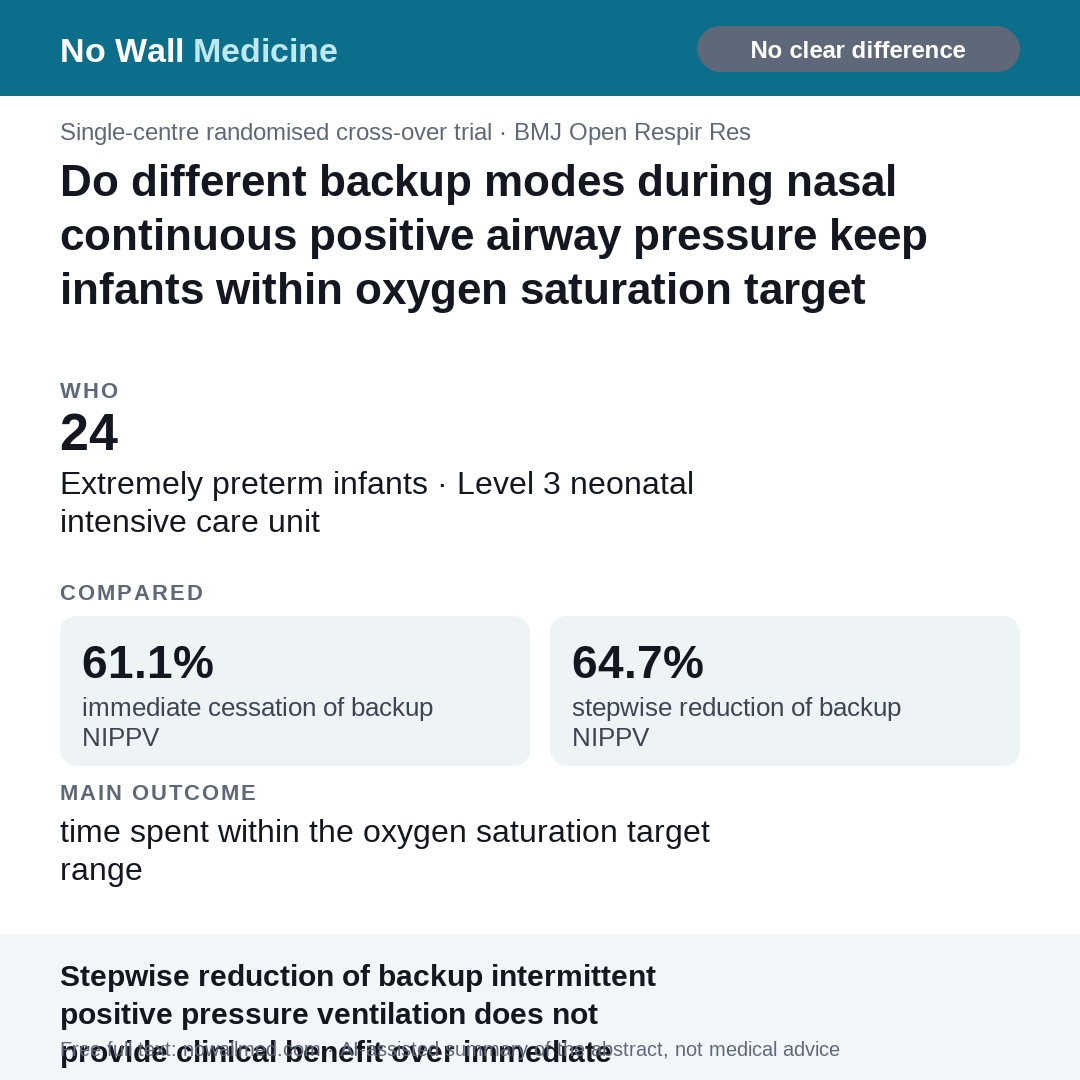
Time spent within the SpO2 target range during nasal CPAP therapy with different backup modes in extremely preterm infants: a randomised cross-over trial
Single-centre randomised cross-over trialNo clear difference
Do different backup modes during nasal continuous positive airway pressure keep infants within oxygen saturation target range?
Who
24
Extremely preterm infants · Level 3 neonatal intensive care unit
Compared
61.1%immediate cessation of backup NIPPV
64.7%stepwise reduction of backup NIPPV
Main outcome
time spent within the oxygen saturation target range
Bottom line: Stepwise reduction of backup intermittent positive pressure ventilation did not improve time spent within the oxygen saturation target range.
BMJ Open Respir Res · 2026-06-04Download image
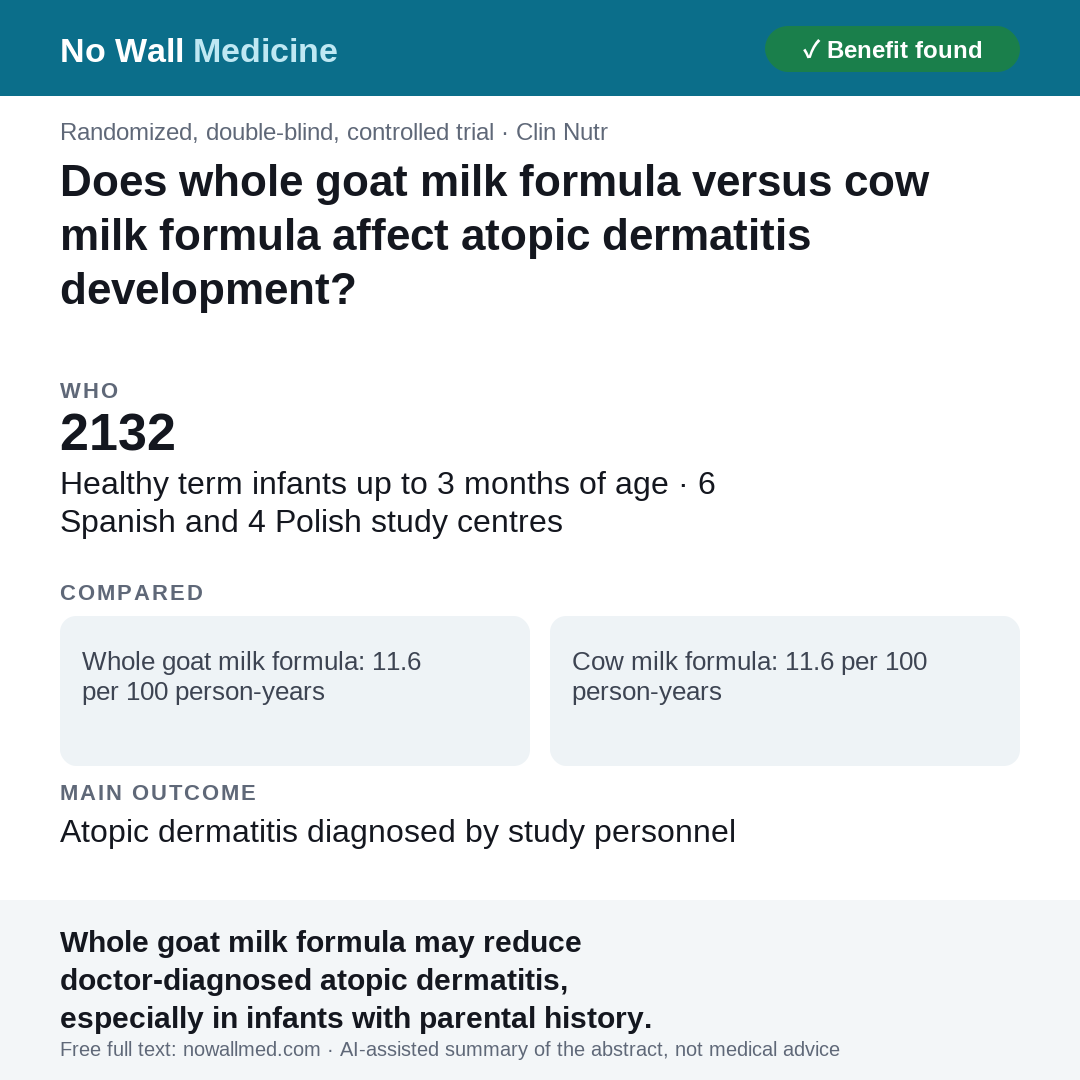
Whole goat milk versus cow milk formula and atopic dermatitis in infants: A randomized clinical trial
Randomized, double-blind, controlled trialBenefit found
Does whole goat milk formula versus cow milk formula affect atopic dermatitis development?
Who
2132
Healthy term infants up to 3 months of age · 6 Spanish and 4 Polish study centres
Compared
Whole goat milk formula: 11.6 per 100 person-years
Cow milk formula: 11.6 per 100 person-years
Main outcome
Atopic dermatitis diagnosed by study personnel
Result: incidence rate ratio 1.00 (95% CI 0.75 to 1.32)
Bottom line: Whole goat milk formula may reduce doctor-diagnosed atopic dermatitis, especially in infants with parental history.
Clin Nutr · 2026-06-03Download image
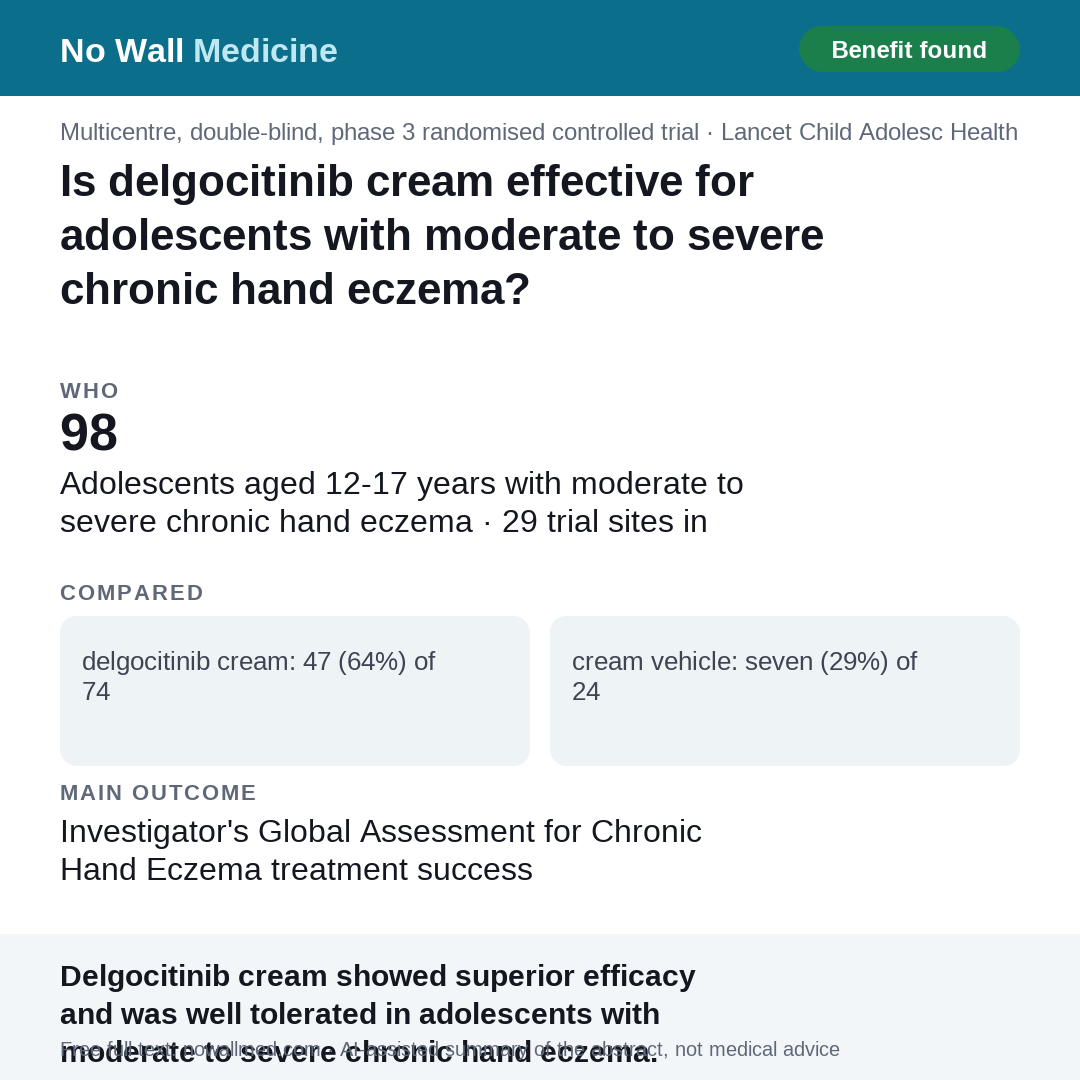
Delgocitinib cream for adolescents with moderate to severe chronic hand eczema (DELTA TEEN): a multicentre, double-blind, phase 3 randomised controlled trial
Multicentre, double-blind, phase 3 randomised controlled trialBenefit found
Is delgocitinib cream effective for adolescents with moderate to severe chronic hand eczema?
Who
98
Adolescents aged 12-17 years with moderate to severe chronic hand eczema · 29 trial sites in seven countries
Compared
delgocitinib cream: 47 (64%) of 74
cream vehicle: seven (29%) of 24
Main outcome
Investigator's Global Assessment for Chronic Hand Eczema treatment success
Result: difference 37·9%; 95% credibility interval 13·5-58·2
Bottom line: Delgocitinib cream showed superior efficacy and was well tolerated in adolescents with moderate to severe chronic hand eczema.
Funded by: LEO Pharma
Lancet Child Adolesc Health · 2026-06-03Download image
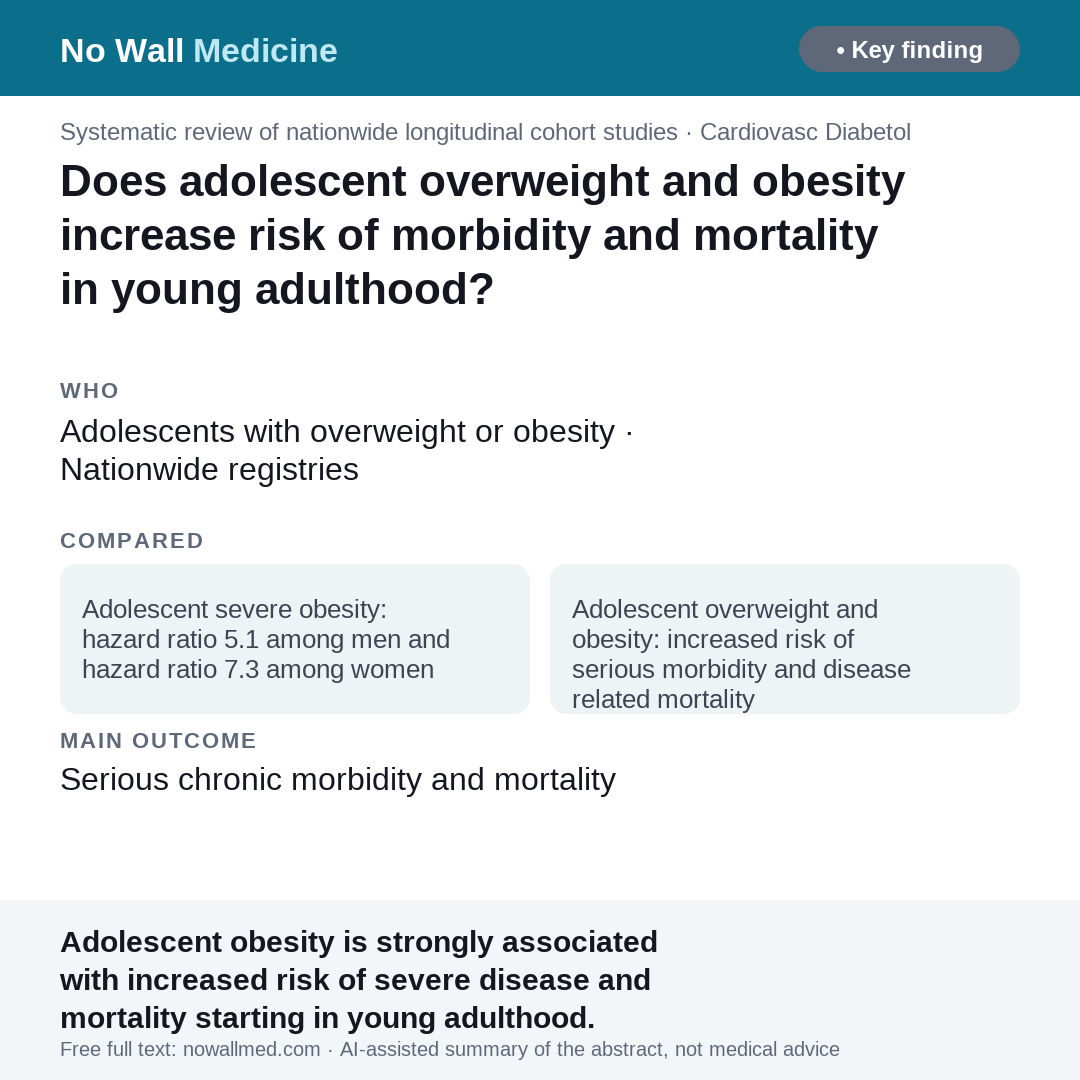
Adolescent obesity and risk of serious chronic morbidity and mortality in young adulthood: a systematic review of cohorts from national registries
Systematic review of nationwide longitudinal cohort studiesHarm found
Does adolescent overweight and obesity increase risk of morbidity and mortality in young adulthood?
Who
Adolescents with overweight or obesity · Nationwide registries
Compared
Adolescent severe obesity: hazard ratio 5.1 among men and hazard ratio 7.3 among women
Adolescent overweight and obesity: increased risk of serious morbidity and disease related mortality
Main outcome
Serious chronic morbidity and mortality
Bottom line: Adolescent obesity is strongly associated with increased risk of severe disease and mortality starting in young adulthood.
Cardiovasc Diabetol · 2026-06-03Download image
Safety and benefits of adult-worn slings and baby carriers: a narrative systematic review to inform guidance for parents
Narrative systematic reviewMixed results
What are the risks, benefits, harms, and parental motivations for adult-worn slings and carriers?
Who
Caregivers and infants using adult-worn slings and carriers · Global (North America, Europe, Africa, Asia, and Australia)
Compared
Adult-worn slings and carriers use: benefits for both caregivers and infants
Poorly fitting or positioned use: infrequent accidental infant deaths and injuries
Main outcome
Risks, benefits, harms, and parental motivations for use
Bottom line: Adult-worn slings and carriers offer benefits but carry risks of infant death or injury if poorly fitted.
Limitation: Most research involved small numbers of participants.
BMJ Paediatr Open · 2026-06-03Download image

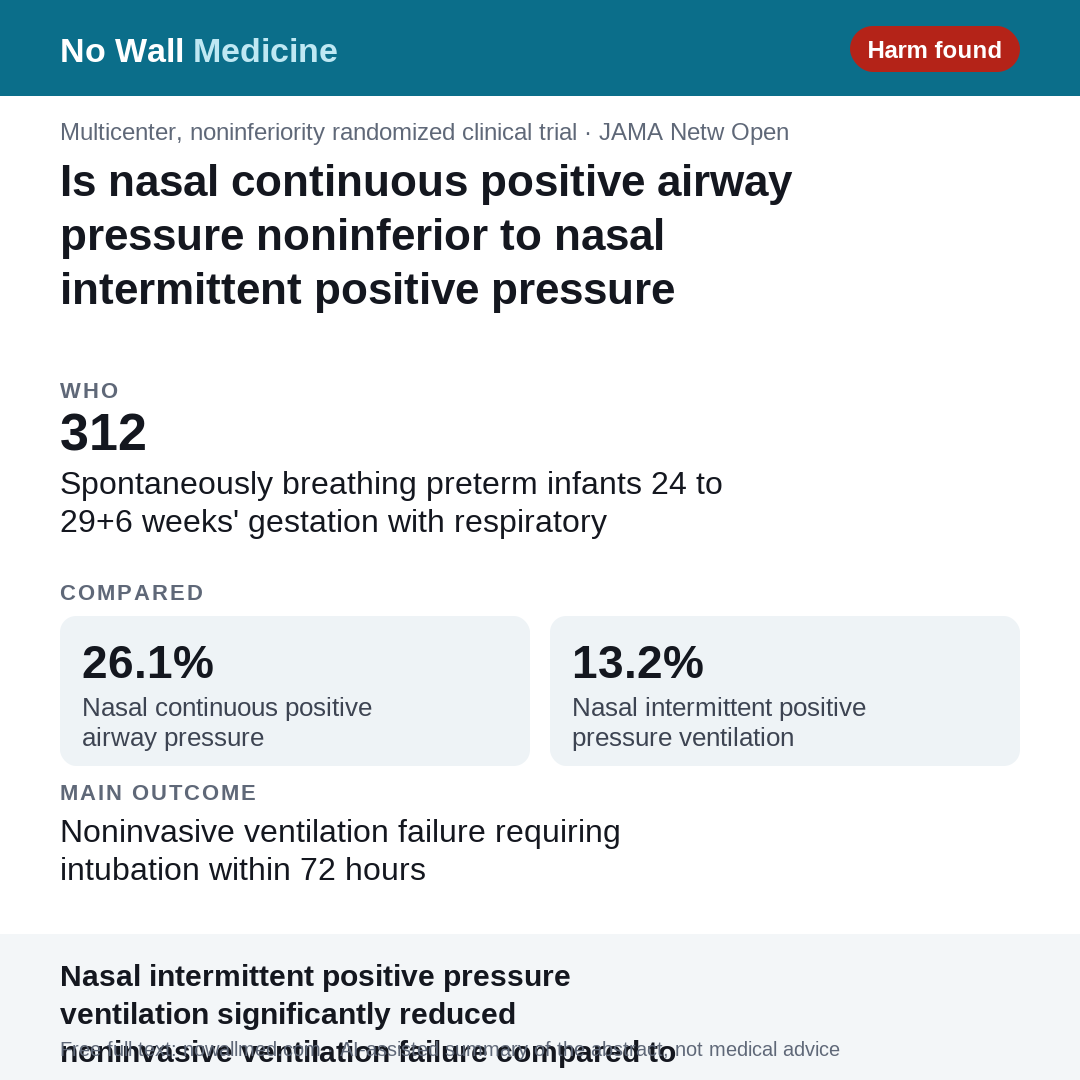
Nasal Continuous Positive Airway Pressure vs Nasal Intermittent Positive Pressure Ventilation in Preterm Infants With Respiratory Distress Syndrome: A Randomized Clinical Trial
Multicenter, noninferiority randomized clinical trialHarm found
Is nasal continuous positive airway pressure noninferior to nasal intermittent positive pressure ventilation for reducing intubation?
Who
312
Spontaneously breathing preterm infants 24 to 29+6 weeks' gestation with respiratory distress syndrome · 11 tertiary neonatal intensive care units in China
Compared
26.1%Nasal continuous positive airway pressure
13.2%Nasal intermittent positive pressure ventilation
Main outcome
Noninvasive ventilation failure requiring intubation within 72 hours
Result: adjusted risk difference, 12.8%; 95% CI, 4.2%-21.6%
Bottom line: Nasal intermittent positive pressure ventilation significantly reduced noninvasive ventilation failure compared to nasal continuous positive airway pressure in preterm infants.
JAMA Netw Open · 2026-06-01Download image
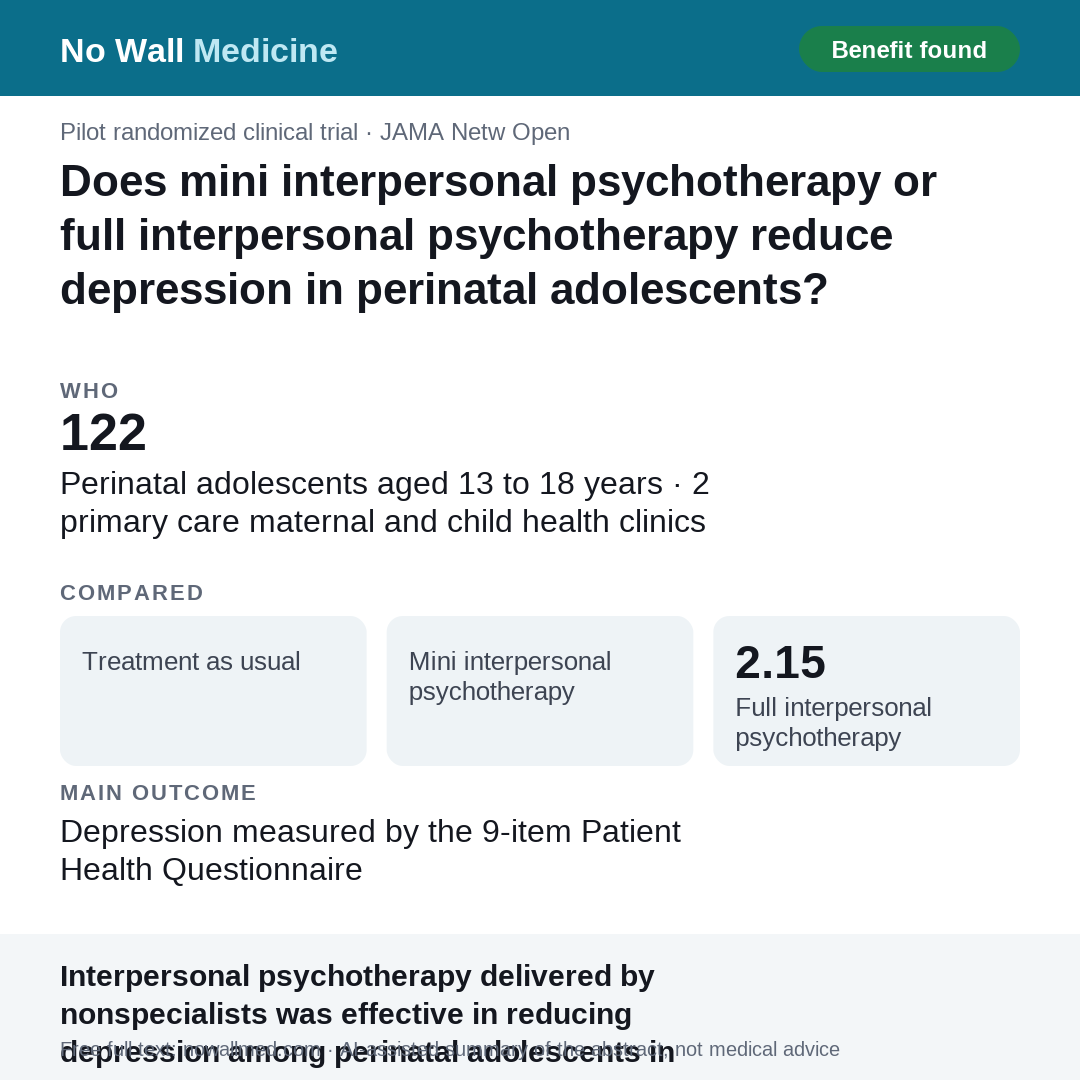
Group Interpersonal Psychotherapy for Depression in Perinatal Adolescents in Kenya: A Pilot Randomized Clinical Trial
Pilot randomized clinical trialBenefit found
Does mini or full group interpersonal psychotherapy reduce depression in perinatal adolescents?
Who
122
Perinatal adolescents aged 13 to 18 years · 2 primary care maternal and child health clinics in Nairobi, Kenya
Compared
7.94Treatment as usual (3.71)
3.94Mini group interpersonal psychotherapy (2.81)
2.15Full group interpersonal psychotherapy (1.94)
Main outcome
Depression measured by the 9-item Patient Health Questionnaire
Result: β vs TAU = -5.79 (95% CI, -7.67 to -3.91) for full IPT-G
Bottom line: Both psychotherapy arms reduced depression more than usual care, though full therapy showed more sustained benefits at 6 months.
JAMA Netw Open · 2026-06-01Download image
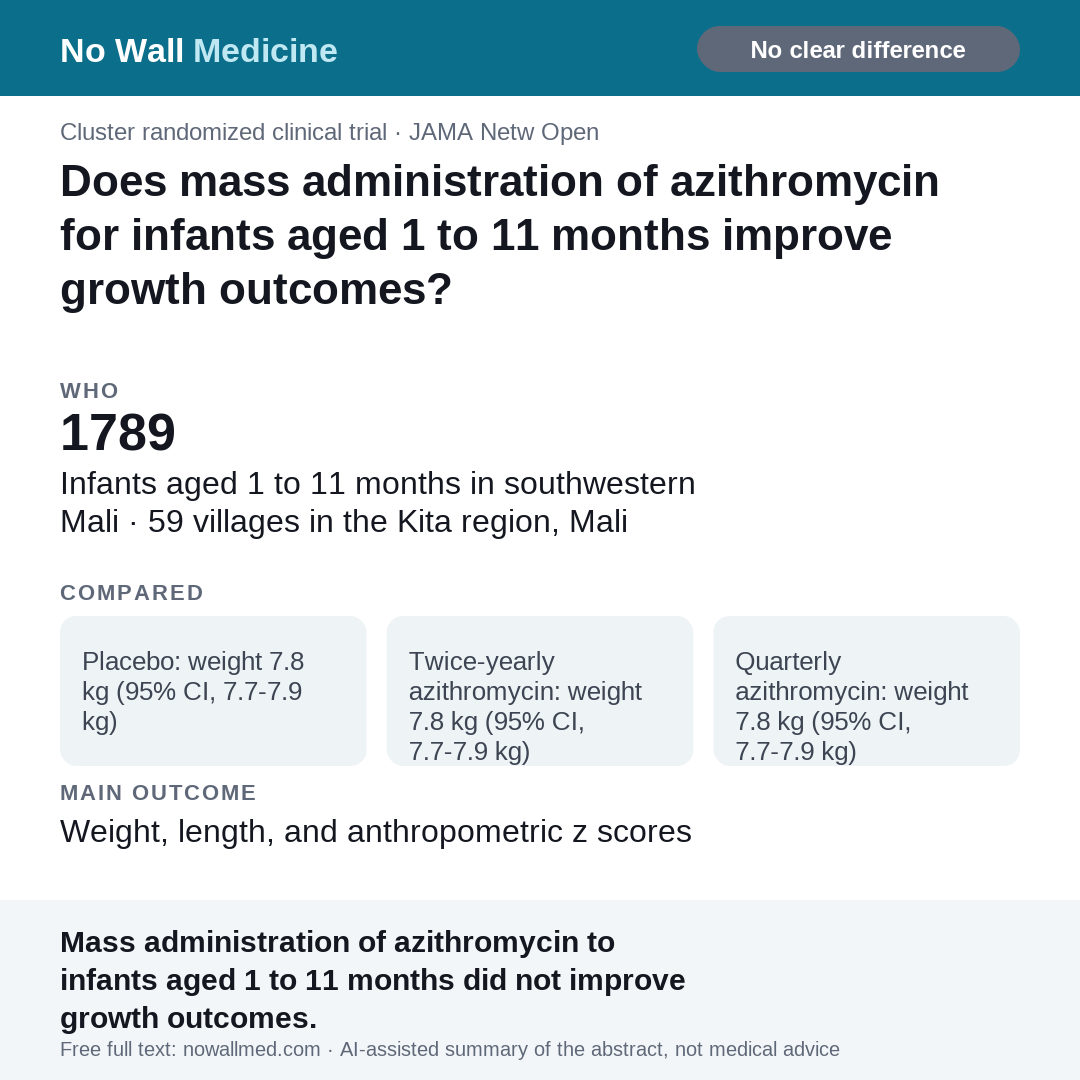
Infant Growth After Mass Administration of Azithromycin: Secondary Outcomes of a Cluster Randomized Clinical Trial
Cluster randomized clinical trialNo clear difference
Does mass administration of azithromycin for infants aged 1 to 11 months improve growth outcomes?
Who
1789
Infants aged 1 to 11 months in southwestern Mali · 59 villages in the Kita region, Mali
Compared
Placebo: weight 7.8 kg (95% CI, 7.7-7.9 kg)
Twice-yearly azithromycin: weight 7.8 kg (95% CI, 7.7-7.9 kg)
Quarterly azithromycin: weight 7.8 kg (95% CI, 7.7-7.9 kg)
Main outcome
Weight, length, and anthropometric z scores
Bottom line: Mass administration of azithromycin to infants aged 1 to 11 months did not improve growth outcomes.
JAMA Netw Open · 2026-06-01Download image
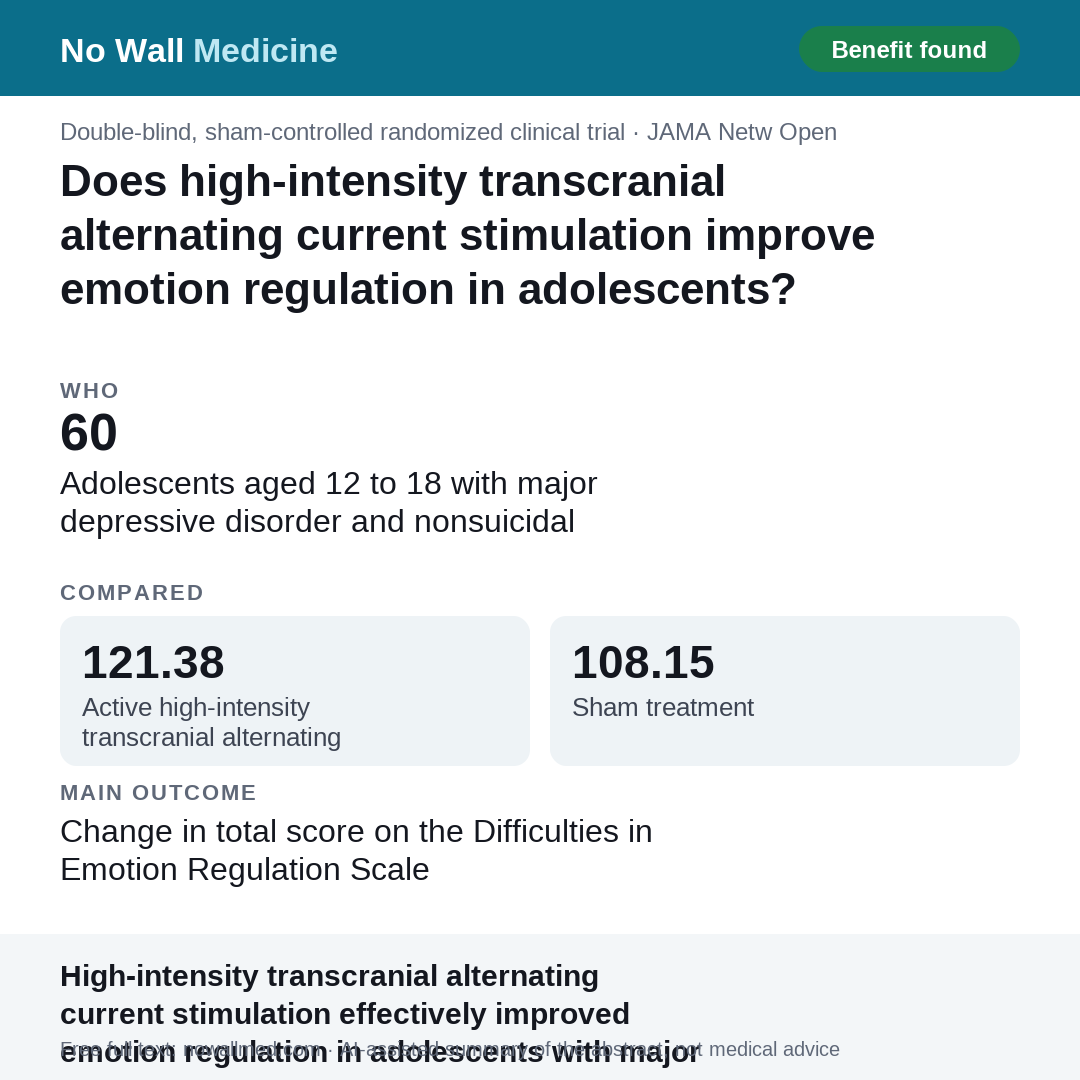
High-Intensity Transcranial Alternating Current Stimulation for Emotion Regulation and Attentional Bias in Adolescents With Nonsuicidal Self-Injury: A Randomized Clinical Trial
Double-blind, sham-controlled randomized clinical trialBenefit found
Does high-intensity transcranial alternating current stimulation improve emotion regulation and attentional bias in adolescents?
Who
60
Adolescents aged 12 to 18 with major depressive disorder and nonsuicidal self-injury · Psychiatric hospital in Western China
Compared
Active high-intensity transcranial alternating current stimulation: 121.38 [95% CI, 119.62 to 123.14]
Sham treatment: 108.15 [95% CI, 106.30 to 109.99]
Main outcome
Change in total score on the Difficulties in Emotion Regulation Scale
Result: -2.78 [95% CI, -4.12 to -1.44]
Bottom line: High-intensity transcranial alternating current stimulation improved emotion regulation, attentional bias, and depression scores in adolescents.
JAMA Netw Open · 2026-06-01Download image
Large Language Model Chatbot Conversations vs Public Health Materials and Parental HPV Vaccination Intentions: A Randomized Clinical Trial
Randomized clinical trialMixed results
Do large language model chatbot conversations increase parental intention to vaccinate children against HPV?
Who
1297
Parents with at least one HPV vaccine-eligible child · Online in the US, Canada, and the UK
Compared
No-message control
Government public health materials: Cohen d = 0.53 (95% CI, 0.36-0.70)
Default chatbot: d = 0.48 (95% CI, 0.30-0.65)
Conversational chatbot: d = 0.33 (95% CI, 0.17-0.49)
Main outcome
Self-reported likelihood of vaccinating the child against HPV within 12 months
Bottom line: Public health materials may match or exceed the impact of short chatbot conversations for HPV vaccine promotion.
JAMA Netw Open · 2026-06-01Download image

Global Prevalence of Functional Constipation Across All Age Groups According to Rome II-IV Criteria, 1999-2025: A Systematic Review and Meta-Analysis
Systematic review and meta-analysisNo clear difference
What is the global prevalence of functional constipation across all age groups?
Who
459,061
Children, adults, or older population · 44 countries
Compared
Female patients: 14.60% [12.50-17.04]
Male patients: 10.62% [8.84-12.75]
Main outcome
Pooled prevalence of functional constipation
Result: 12.14% (95% CI, 11.14-13.23)
Bottom line: The global pooled prevalence of functional constipation is 12.14% across all age groups.
Clin Transl Gastroenterol · 2026-06-01Download image

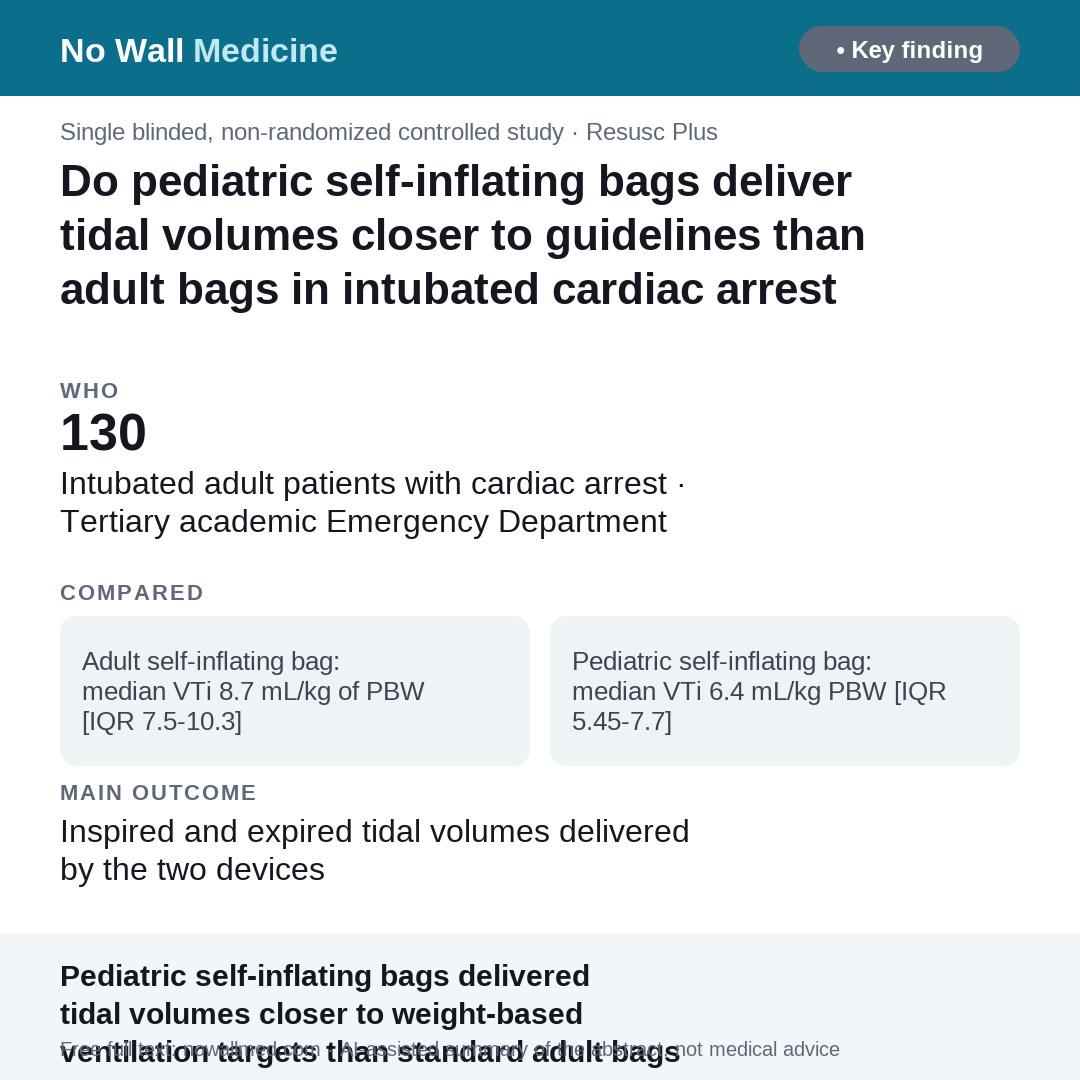
Pediatric versus adult self-inflating bags for cardiopulmonary resuscitation of adult patients with cardiac arrest - a non-randomized controlled trial
Single blinded, non-randomized controlled studyBenefit found
Do pediatric self-inflating bags deliver tidal volumes closer to guidelines than adult bags in intubated cardiac arrest patients?
Who
130
Intubated adult patients with cardiac arrest · Tertiary academic Emergency Department
Compared
Adult self-inflating bag: median VTi 8.7 mL/kg of PBW [IQR 7.5-10.3]
Pediatric self-inflating bag: median VTi 6.4 mL/kg PBW [IQR 5.45-7.7]
Main outcome
Inspired and expired tidal volumes delivered by the two devices
Result: matched-pair odds ratio 2.29; 95% CI 1.23-4.25
Bottom line: Pediatric self-inflating bags delivered tidal volumes closer to weight-based ventilation targets than standard adult bags in intubated adults.
Limitation: Clinical outcomes were not evaluated.
Resusc Plus · 2026-06-01Download image
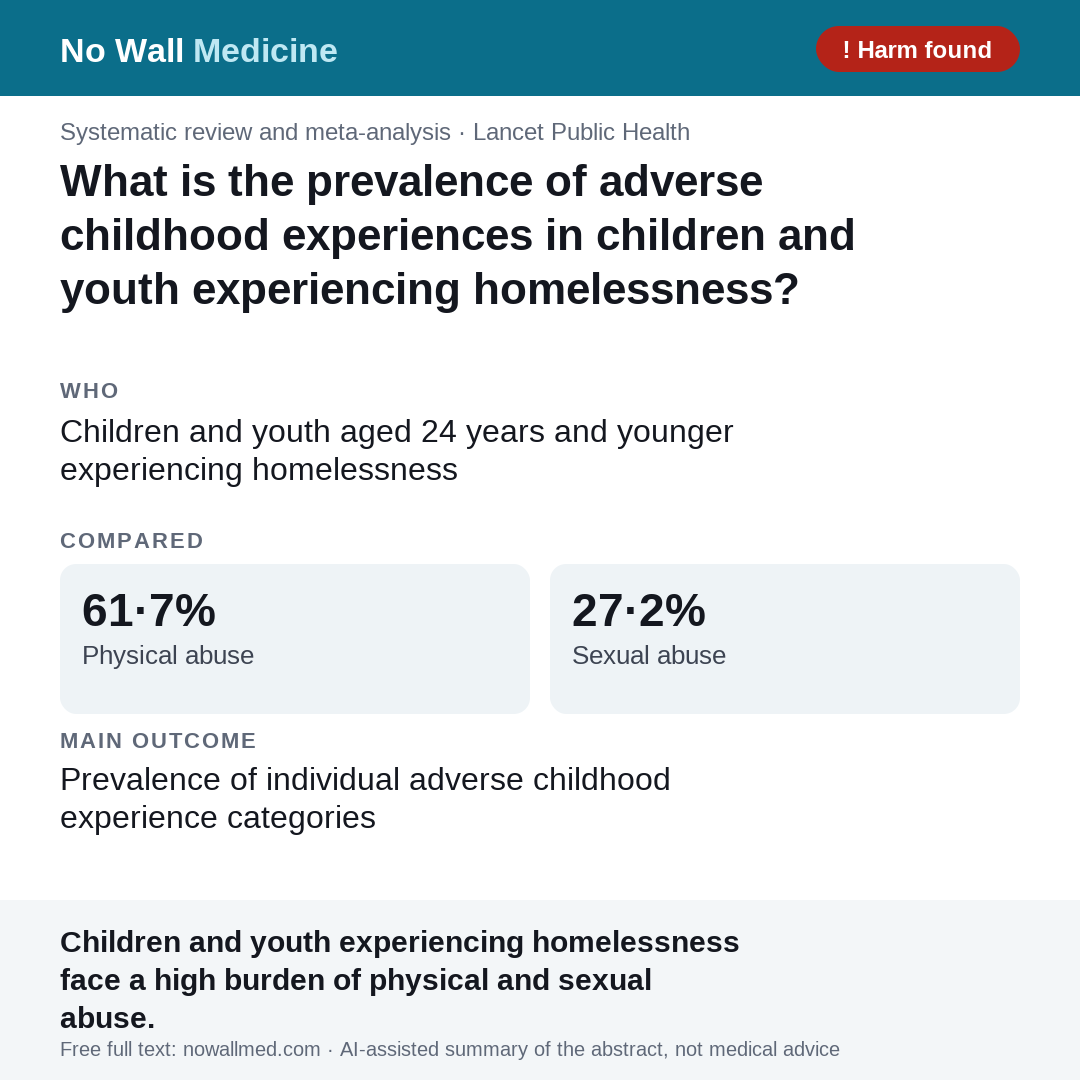
Adverse childhood experiences in children and youth experiencing homelessness: a systematic review and meta-analysis
Systematic review and meta-analysisHarm found
What is the prevalence of adverse childhood experiences in children and youth experiencing homelessness?
Who
Children and youth aged 24 years and younger experiencing homelessness
Compared
61·7%Physical abuse (95% CI 52·9-69·9)
27·2%Sexual abuse (95% CI 23·1-31·8)
Main outcome
Prevalence of individual adverse childhood experience categories
Bottom line: Children and youth experiencing homelessness face a high burden of physical and sexual abuse.
Limitation: Heterogeneity was substantial for both physical and sexual abuse prevalence estimates.
Lancet Public Health · 2026-05-29Download image
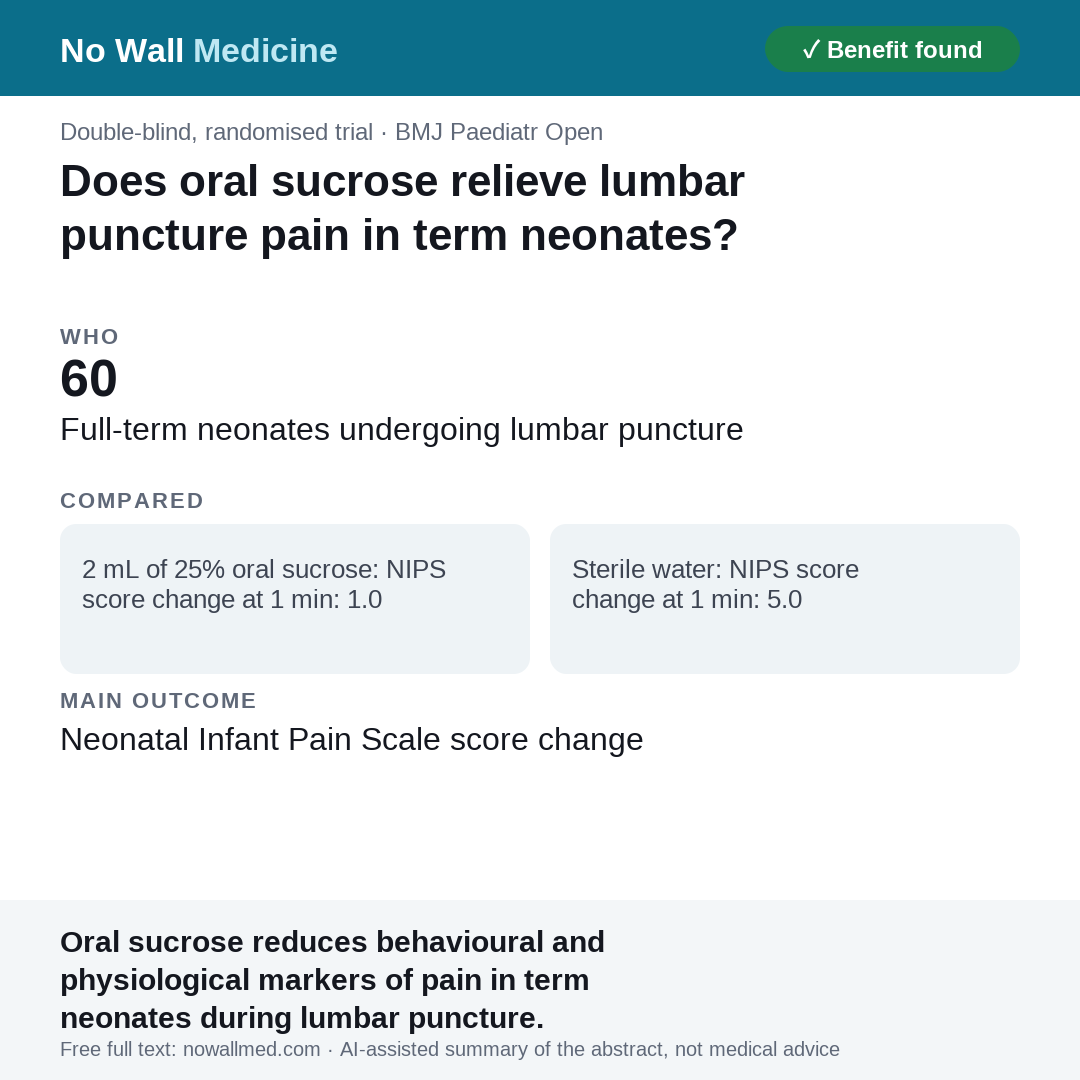
The efficacy of oral sucrose for relieving lumbar puncture pain in neonates: a randomised clinical trial
Double-blind, randomised trialBenefit found
Does oral sucrose relieve lumbar puncture pain in term neonates?
Who
60
Full-term neonates undergoing lumbar puncture
Compared
2 mL of 25% oral sucrose: NIPS score change at 1 min: 1.0
Sterile water: NIPS score change at 1 min: 5.0
Main outcome
Neonatal Infant Pain Scale score change
Bottom line: Oral sucrose reduces behavioural and physiological markers of pain in term neonates during lumbar puncture.
BMJ Paediatr Open · 2026-05-29Download image
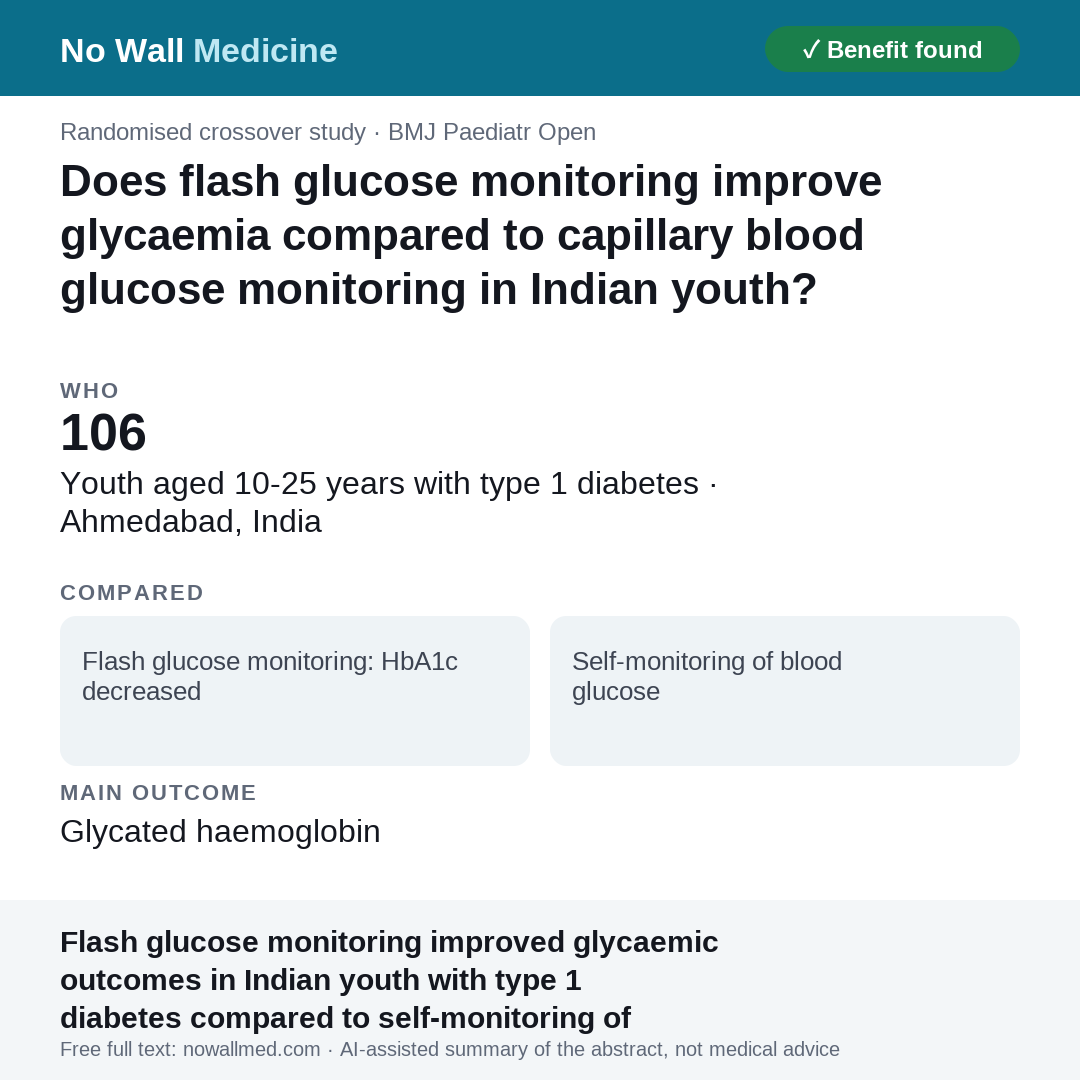
Impact of flash glucose monitoring versus capillary blood glucose monitoring on glycaemia in Indian youth with type 1 diabetes: a randomised crossover study
Randomised crossover studyBenefit found
Does flash glucose monitoring improve glycaemia compared to capillary blood glucose monitoring in Indian youth?
Who
106
Youth aged 10-25 years with type 1 diabetes · Ahmedabad, India
Compared
Flash glucose monitoring: HbA1c decreased
Self-monitoring of blood glucose
Main outcome
Glycated haemoglobin
Result: difference -0.44% (4.8 mmol/mol); p=0.006
Bottom line: Flash glucose monitoring improved glycaemic outcomes in Indian youth with type 1 diabetes compared to self-monitoring of blood glucose.
BMJ Paediatr Open · 2026-05-29Download image
Atypical cytokine profiles in people on the autism spectrum: a comprehensive systematic review and meta-analysis including 54 cytokines
Meta-analysis of 98 studiesMixed results
Cytokine levels in autism spectrum people
Who
4236, 3333
autistic and non-autistic people aged 2 to 65
Compared
autistic people
non-autistic controls
Main outcome
peripheral blood cytokine levels
Result: elevated levels of several cytokines, e.g. IL1-beta hazard ratio 0.620 (95%CI 0.32 to 0.92)
Bottom line: Atypical cytokine profiles found in autism spectrum people
Limitation: over a third of studies had high risk of bias
Mol Psychiatry · 2026-05-28Download image

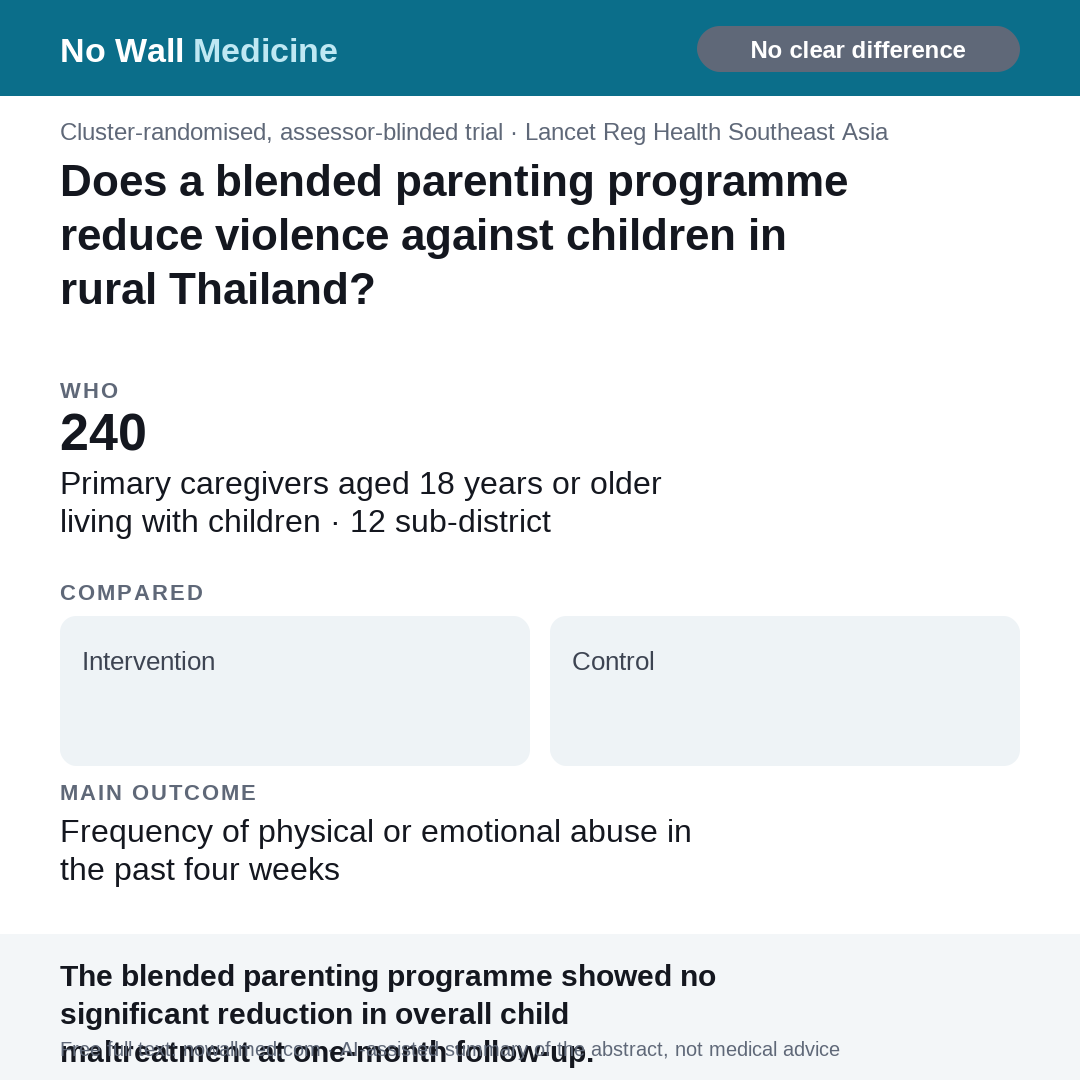
Effectiveness of a blended in-person and online parenting programme in reducing violence against children in rural Thailand: a cluster randomised controlled trial
Cluster-randomised, assessor-blinded trialNo clear difference
Does a blended parenting programme reduce violence against children in rural Thailand?
Who
240
Primary caregivers aged 18 years or older living with children · 12 sub-district health-promoting hospitals in Udon Thani, Thailand
Compared
Intervention
Control
Main outcome
Frequency of physical or emotional abuse in the past four weeks
Result: incidence rate ratio 1.46 (95% CI 0.83-2.57)
Bottom line: The blended parenting programme showed no significant reduction in overall child maltreatment at one-month follow-up.
Funded by: LEGO Foundation, Oak Foundation, and World Childhood Foundation
Lancet Reg Health Southeast Asia · 2026-05-28Download image
A Systematic Review of Pain Drawings for Perioperative Patient Management
Systematic review of 26 studiesBenefit found
Do pain drawings help patient management?
Who
5977
pediatric and adult surgical patients
Compared
Pain drawings
Standard care
Main outcome
pain management
Bottom line: Pain drawings help patient management
Limitation: heterogeneity in methodology
Plast Reconstr Surg Glob Open · 2026-05-28Download image

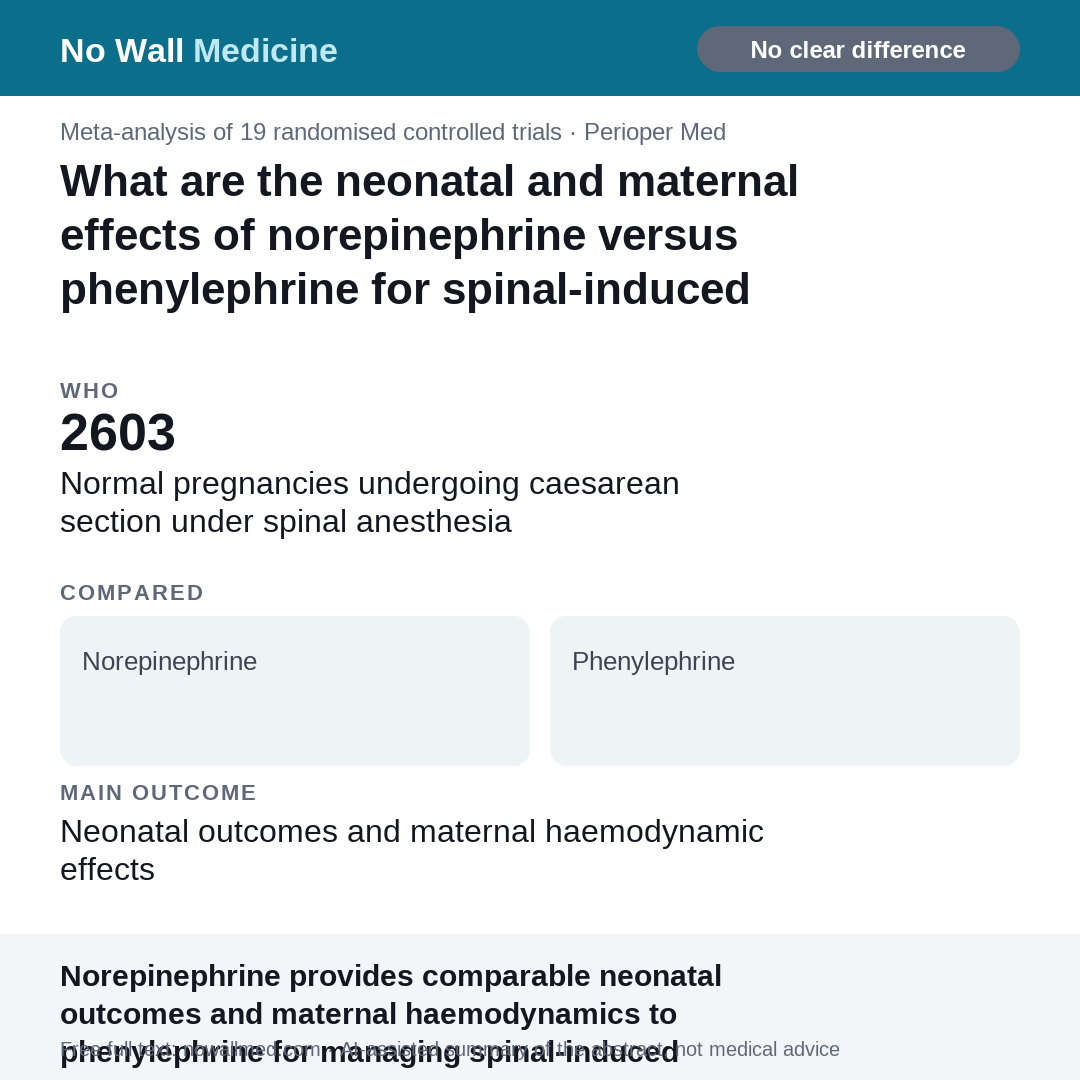
Neonatal outcome following norepinephrine versus phenylephrine for treatment of spinal-induced hypotension among women undergoing caesarean section: systematic review and meta-analysis of randomised controlled trials
Meta-analysis of 19 randomised controlled trialsNo clear difference
What are the neonatal and maternal effects of norepinephrine versus phenylephrine for spinal-induced hypotension?
Who
2603
Normal pregnancies undergoing caesarean section under spinal anesthesia
Compared
Norepinephrine
Phenylephrine
Main outcome
Neonatal outcomes and maternal haemodynamic effects
Bottom line: Norepinephrine provides comparable neonatal outcomes and maternal haemodynamics to phenylephrine for managing spinal-induced hypotension.
Perioper Med · 2026-05-28Download image